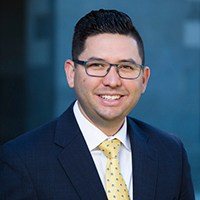
AB 438: Pupils with exceptional needs: individualized education programs: postsecondary goals and transition services.
- Session Year: 2023-2024
- House: Assembly
- Latest Version Date: 2024-09-28
Current Status:
Passed
(2024-09-28: Chaptered by Secretary of State - Chapter 901, Statutes of 2024.)
Introduced
In Committee
First Chamber
In Committee
Second Chamber
Enacted
Existing law requires local educational agencies to identify, locate, and assess individuals with exceptional needs and to provide those pupils with a free appropriate public education in the least restrictive environment, with special education and related services as reflected in an individualized education program. Existing law requires, beginning not later than the first individualized education program to be in effect when a pupil is 16 years of age, or younger if determined appropriate by the individualized education program team, and updated annually thereafter, the individualized education program to include appropriate measurable postsecondary goals and transition services, as defined, needed to assist the pupil in reaching those goals.
This bill would instead require an individualized education program, commencing July 1, 2025, to include measurable postsecondary goals and transition services, if determined appropriate by a pupils individualized education program team, beginning when an individual with exceptional needs is starting their high school experience and not later than the first individualized education program to be in effect when the pupil is 16 years of age, as provided. By imposing additional requirements on local educational agencies in relation to individualized education programs, the bill would impose a state-mandated local program.
The California Constitution requires the state to reimburse local agencies and school districts for certain costs mandated by the state. Statutory provisions establish procedures for making that reimbursement.
This bill would provide that, if the Commission on State Mandates determines that the bill contains costs mandated by the state, reimbursement for those costs shall be made pursuant to the statutory provisions noted above.
Existing law requires local educational agencies to identify, locate, and assess individuals with exceptional needs and to provide those pupils with a free appropriate public education in the least restrictive environment, with special education and related services as reflected in an individualized education program. Existing law requires, beginning not later than the first individualized education program to be in effect when a pupil is 16 years of age, or younger if determined appropriate by the individualized education program team, and updated annually thereafter, the individualized education program to include appropriate measurable postsecondary goals and transition services, as defined, needed to assist the pupil in reaching those goals.
This bill would instead require an individualized education program, commencing July 1, 2025, to include measurable postsecondary goals and transition services services, if determined appropriate by a pupils individualized education program team, beginning when an individual with exceptional needs enters grade 9. is starting their high school experience and not later than the first individualized education program to be in effect when the pupil is 16 years of age, as provided. By imposing additional requirements on local educational agencies in relation to individualized education programs, the bill would impose a state-mandated local program.
The California Constitution requires the state to reimburse local agencies and school districts for certain costs mandated by the state. Statutory provisions establish procedures for making that reimbursement.
This bill would provide that, if the Commission on State Mandates determines that the bill contains costs mandated by the state, reimbursement for those costs shall be made pursuant to the statutory provisions noted above.
Existing law requires local educational agencies to identify, locate, and assess individuals with exceptional needs and to provide those pupils with a free appropriate public education in the least restrictive environment, with special education and related services as reflected in an individualized education program. Existing law requires, beginning not later than the first individualized education program to be in effect when a pupil is 16 years of age, or younger if determined appropriate by the individualized education program team, and updated annually thereafter, the individualized education program to include appropriate measurable postsecondary goals and transition services, as defined, needed to assist the pupil in reaching those goals.
This bill would instead require an individualized education program, commencing July 1, 2025, to include measurable postsecondary goals and transition services beginning when an individual with exceptional needs is 14 years of age. enters grade 9. By imposing additional requirements on local educational agencies in relation to individualized education programs, the bill would impose a state-mandated local program.
The California Constitution requires the state to reimburse local agencies and school districts for certain costs mandated by the state. Statutory provisions establish procedures for making that reimbursement.
This bill would provide that, if the Commission on State Mandates determines that the bill contains costs mandated by the state, reimbursement for those costs shall be made pursuant to the statutory provisions noted above.
Existing law requires local educational agencies to identify, locate, and assess individuals with exceptional needs and to provide those pupils with a free appropriate public education in the least restrictive environment, with special education and related services as reflected in an individualized education program. Existing law requires, beginning not later than the first individualized education program to be in effect when a pupil is 16 years of age, or younger if determined appropriate by the individualized education program team, and updated annually thereafter, the individualized education program to include appropriate measurable postsecondary goals and transition services, as defined, needed to assist the pupil in reaching those goals.
This bill would instead require an individualized education program, commencing July 1, 2025, to include measurable postsecondary goals and transition services beginning when an individual with exceptional needs is 14 years of age. By imposing additional requirements on local educational agencies in relation to individualized education programs, the bill would impose a state-mandated local program.
The California Constitution requires the state to reimburse local agencies and school districts for certain costs mandated by the state. Statutory provisions establish procedures for making that reimbursement.
This bill would provide that, if the Commission on State Mandates determines that the bill contains costs mandated by the state, reimbursement for those costs shall be made pursuant to the statutory provisions noted above.
The primary timelines affecting special education programs are as follows:
(a)A proposed assessment plan shall be developed within 15 calendar days of referral for assessment, not counting calendar days between the pupils regular school sessions or terms or calendar days of school vacation in excess of five schooldays, from the date of receipt of the referral, unless the parent or guardian agrees in writing to an extension, pursuant to subdivision (a) of Section 56321.
(b)A parent or guardian shall have at least 15 calendar days from the receipt of the proposed assessment plan to arrive at a decision, pursuant to subdivision (c) of Section 56321.
(c)Once a child has been referred for an initial assessment to determine whether the child is an individual with exceptional needs and to determine the educational needs of the child, these determinations shall be made, and an individualized education program team meeting shall occur, within 60 days of receiving parental consent for the assessment, pursuant to subdivision (a) of Section 56302.1, except as specified in subdivision (b) of that section, and pursuant to Section 56344.
(d)The individualized education program team shall review the pupils individualized education program periodically, but not less frequently than annually, pursuant to subdivision (d) of Section 56341.1.
(e)A parent or guardian shall be notified of the individualized education program team meeting early enough to ensure an opportunity to attend, pursuant to subdivision (b) of Section 56341.5. In the case of an individual with exceptional needs who is 16 years of age or younger, if appropriate, the meeting notice shall indicate that a purpose of the meeting will be the consideration of the postsecondary goals and transition services for the individual with exceptional needs, and the meeting notice described in this subdivision shall indicate that the individual with exceptional needs is invited to attend, pursuant to subdivision (e) of Section 56341.5.
(f)(1)An individualized education program required as a result of an assessment of a pupil shall be developed within a total time not to exceed 60 calendar days, not counting days between the pupils regular school sessions, terms, or days of school vacation in excess of five schooldays, from the date of receipt of the parents or guardians written consent for assessment, unless the parent or guardian agrees in writing to an extension, pursuant to Section 56344.
(2)A meeting to develop an initial individualized education program for the pupil shall be conducted within 30 days of a determination that the child needs special education and related services pursuant to Section 300.323(c)(1) of Title 34 of the Code of Federal Regulations and in accordance with Section 56344.
(g)(1)Beginning not later than the first individualized education program to be in effect when the pupil is 16 years of age, or younger if determined appropriate by the individualized education program team, and updated annually thereafter, the individualized education program shall include appropriate measurable postsecondary goals and transition services needed to assist the pupil in reaching those goals, pursuant to paragraph (8) of subdivision (a) of Section 56345.
(2)The individualized education program for pupils in grades 7 to 12, inclusive, shall include any alternative means and modes necessary for the pupil to complete the districts prescribed course of study and to meet or exceed proficiency standards for graduation, pursuant to paragraph (1) of subdivision (b) of Section 56345.
(3)Beginning not later than one year before the pupil reaches 18 years of age, the individualized education program shall contain a statement that the pupil has been informed of the pupils rights under this part, if any, that will transfer to the pupil upon reaching 18 years of age, pursuant to Section 56041.5, subdivision (g) of Section 56345, and Section 300.520 of Title 34 of the Code of Federal Regulations.
(h)Beginning at the age of 16 years or younger, and annually thereafter, a statement of needed transition services shall be included in the pupils individualized education program, pursuant to Section 56345.1 and Section 1414(d)(1)(A)(i)(VIII) of Title 20 of the United States Code.
(i)A pupils individualized education program shall be implemented as soon as possible following the individualized education program team meeting, pursuant to Section 300.323(c)(2) of Title 34 of the Code of Federal Regulations and in accordance with Section 56344.
(j)An individualized education program team shall meet at least annually to review a pupils progress, the individualized education program, including whether the annual goals for the pupil are being achieved, the appropriateness of the placement, and to make any necessary revisions, pursuant to subdivision (d) of Section 56343. The local educational agency shall maintain procedures to ensure that the individualized education program team reviews the pupils individualized education program periodically, but not less frequently than annually, to determine whether the annual goals for the pupil are being achieved, and revises the individualized education program as appropriate to address, among other matters, the provisions specified in subdivision (d) of Section 56341.1, pursuant to subdivision (a) of Section 56380.
(k)A reassessment of a pupil shall occur not more frequently than once a year, unless the parent and the local educational agency agree otherwise in writing, and shall occur at least once every three years, unless the parent and the local educational agency agree, in writing, that a reassessment is unnecessary, pursuant to Section 56381, and in accordance with Section 1414(a)(2) of Title 20 of the United States Code.
(l)A meeting of an individualized education program team requested by a parent or guardian to review an individualized education program pursuant to subdivision (c) of Section 56343 shall be held within 30 calendar days, not counting days between the pupils regular school sessions, terms, or days of school vacation in excess of five schooldays, from the date of receipt of the parents or guardians written request, pursuant to Section 56343.5.
(m)If an individual with exceptional needs transfers from district to district within the state, the following apply pursuant to Section 56325:
(1)If the child has an individualized education program and transfers into a district from a district not operating programs under the same special education local plan area in which the child was last enrolled in a special education program within the same academic year, the local educational agency shall provide the pupil with a free appropriate public education, including services comparable to those described in the previously approved individualized education program, in consultation with a parent or guardian, for a period not to exceed 30 days, by which time the local educational agency shall adopt the previously approved individualized education program or shall develop, adopt, and implement a new individualized education program that is consistent with federal and state law, pursuant to paragraph (1) of subdivision (a) of Section 56325.
(2)If the child has an individualized education program and transfers into a district from a district operating programs under the same special education local plan area of the district in which the child was last enrolled in a special education program within the same academic year, the new district shall continue, without delay, to provide services comparable to those described in the existing approved individualized education program, unless the parent and the local educational agency agree to develop, adopt, and implement a new individualized education program that is consistent with state and federal law, pursuant to paragraph (2) of subdivision (a) of Section 56325.
(3)If the child has an individualized education program and transfers from an educational agency located outside the state to a district within the state within the same academic year, the local educational agency shall provide the pupil with a free appropriate public education, including services comparable to those described in the previously approved individualized education program, in consultation with a parent or guardian, until the local educational agency conducts an assessment as specified in paragraph (3) of subdivision (a) of Section 56325.
(4)In order to facilitate the transition for an individual with exceptional needs described in paragraphs (1) to (3), inclusive, the new school in which the pupil enrolls shall take reasonable steps to promptly obtain the pupils records, as specified, pursuant to subdivision (b) of Section 56325.
(n)The parent or guardian shall have the right and opportunity to examine all school records of the child and to receive complete copies within five business days after a request is made by the parent or guardian, either orally or in writing, and before any meeting regarding an individualized education program of the parents or guardians child or any hearing or resolution session pursuant to Chapter 5 (commencing with Section 56500), in accordance with Section 56504 and Chapter 6.5 (commencing with Section 49060) of Part 27.
(o)Upon receipt of a request from a local educational agency where an individual with exceptional needs has enrolled, a former educational agency shall send the pupils special education records, or a copy of those records, to the new local educational agency within five working days, pursuant to subdivision (a) of Section 3024 of Title 5 of the California Code of Regulations.
(p)The department shall do all of the following:
(1)Have a time limit of 60 calendar days after a complaint is filed with the state educational agency to investigate the complaint.
(2)Give the complainant the opportunity to submit additional information about the allegations in the complaint.
(3)Review all relevant information and make an independent determination as to whether there is a violation of a requirement of this part or Part B of the federal Individuals with Disabilities Education Act (20 U.S.C. Sec. 1400 et seq.).
(4)Issue a written decision pursuant to Section 300.152(a)(5) of Title 34 of the Code of Federal Regulations.
(q)A prehearing mediation conference shall be scheduled within 15 calendar days of receipt by the Superintendent of the request for mediation, and shall be completed within 30 calendar days after the request for mediation, unless both parties to the prehearing mediation conference agree to extend the time for completing the mediation, pursuant to Section 56500.3.
(r)Any request for a due process hearing arising from subdivision (a) of Section 56501 shall be filed within two years from the date the party initiating the request knew or had reason to know of facts underlying the basis for the request, except that this timeline shall not apply to a parent if the parent was prevented from requesting the due process hearing, pursuant to subdivision (l) of Section 56505.
(s)The Superintendent shall ensure that, within 45 calendar days after receipt of a written due process hearing request, the hearing is immediately commenced and completed, including any mediation requested at any point during the hearing process, and a final administrative decision is rendered, pursuant to subdivision (f) of Section 56502.
(t)If either party to a due process hearing intends to be represented by an attorney in the due process hearing, notice of that intent shall be given to the other party at least 10 calendar days before the hearing, pursuant to subdivision (a) of Section 56507.
(u)Any party to a due process hearing shall have the right to be informed by the other parties to the hearing, at least 10 calendar days before the hearing, as to what those parties believe are the issues to be decided at the hearing and their proposed resolution of those issues, pursuant to paragraph (6) of subdivision (e) of Section 56505.
(v)Any party to a due process hearing shall have the right to receive from other parties to the hearing, at least five business days before the hearing, a copy of all documents, including all assessments completed and not completed by that date, and a list of all witnesses and their general area of testimony that the parties intend to present at the hearing, pursuant to paragraph (7) of subdivision (e) of Section 56505.
(w)An appeal of a due process hearing decision shall be made within 90 calendar days of receipt of the hearing decision, pursuant to subdivision (k) of Section 56505.
(x)A complaint filed with the department shall allege a violation of the federal Individuals with Disabilities Education Act (20 U.S.C. Sec. 1400 et seq.) or a provision of this part that occurred not more than one year before the date that the complaint is received by the department, pursuant to Section 56500.2 and Section 300.153(c) of Title 34 of the Code of Federal Regulations.
(y)This section shall become inoperative on July 1, 2025, and, as of January 1, 2026, is repealed.
SEC. 2.Section 56043 is added to the Education Code, to read:56043.The primary timelines affecting special education programs are as follows:
(a)A proposed assessment plan shall be developed within 15 calendar days of referral for assessment, not counting calendar days between the pupils regular school sessions or terms or calendar days of school vacation in excess of five schooldays, from the date of receipt of the referral, unless the parent or guardian agrees in writing to an extension, pursuant to subdivision (a) of Section 56321.
(b)A parent or guardian shall have at least 15 calendar days from the receipt of the proposed assessment plan to arrive at a decision, pursuant to subdivision (c) of Section 56321.
(c)Once a child has been referred for an initial assessment to determine whether the child is an individual with exceptional needs and to determine the educational needs of the child, these determinations shall be made, and an individualized education program team meeting shall occur, within 60 days of receiving parental consent for the assessment, pursuant to subdivision (a) of Section 56302.1, except as specified in subdivision (b) of that section, and pursuant to Section 56344.
(d)The individualized education program team shall review the pupils individualized education program periodically, but not less frequently than annually, pursuant to subdivision (d) of Section 56341.1.
(e)A parent or guardian shall be notified of the individualized education program team meeting early enough to ensure an opportunity to attend, pursuant to subdivision (b) of Section 56341.5. Consistent with Section 1414(d)(1)(A)(i)(VIII) of Title 20 of the United States Code, if determined appropriate by a pupils individualized education program team, in the case of an individual with exceptional needs who is starting their high school experience and not later than when the pupil is 16 years of age or younger, as appropriate, the meeting notice shall indicate that a purpose of the meeting will be the consideration of the postsecondary goals and transition services for the individual with exceptional needs, and the meeting notice described in this subdivision shall indicate that the individual with exceptional needs is invited to attend, pursuant to subdivision (e) of Section 56341.5.
(f)(1)An individualized education program required as a result of an assessment of a pupil shall be developed within a total time not to exceed 60 calendar days, not counting days between the pupils regular school sessions, terms, or days of school vacation in excess of five schooldays, from the date of receipt of the parents or guardians written consent for assessment, unless the parent or guardian agrees in writing to an extension, pursuant to Section 56344.
(2)A meeting to develop an initial individualized education program for the pupil shall be conducted within 30 days of a determination that the child needs special education and related services pursuant to Section 300.323(c)(1) of Title 34 of the Code of Federal Regulations and in accordance with Section 56344.
(g)(1)Consistent with Section 1414(d)(1)(A)(i)(VIII) of Title 20 of the United States Code, if determined appropriate by a pupils individualized education program team, beginning when the pupil starts their high school experience or not later than the first individualized education program to be in effect when the pupil is 16 years of age or younger, as appropriate, and updated annually thereafter, the individualized education program shall include appropriate measurable postsecondary goals and transition services needed to assist the pupil in reaching those goals, pursuant to paragraph (8) of subdivision (a) of Section 56345. If the individualized education program team determines that the pupil would benefit from the postponement of the inclusion of appropriate measurable postsecondary goals and transition services until 16 years of age, rather than when the pupil begins their high school experience, the individualized education program team is encouraged to appropriately justify the basis for that postponement.
(2)The individualized education program for pupils in grades 7 to 12, inclusive, shall include any alternative means and modes necessary for the pupil to complete the districts prescribed course of study and to meet or exceed proficiency standards for graduation, pursuant to paragraph (1) of subdivision (b) of Section 56345.
(3)Beginning not later than one year before the pupil reaches 18 years of age, the individualized education program shall contain a statement that the pupil has been informed of the pupils rights under this part, if any, that will transfer to the pupil upon reaching 18 years of age, pursuant to Section 56041.5, subdivision (g) of Section 56345, and Section 300.520 of Title 34 of the Code of Federal Regulations.
(h)Pursuant to Section 1414(d)(1)(A)(i)(VIII) of Title 20 of the United States Code and Section 56345.1, if determined appropriate by the pupils individualized education program team, beginning when the pupil starts their high school experience and not later than when the pupil is 16 years of age or younger, as appropriate, and annually thereafter, a statement of needed transition services shall be included in the pupils individualized education program. If the individualized education program team determines that the pupil would benefit from the postponement of the inclusion of appropriate measurable postsecondary goals and transition services until 16 years of age, rather than when the pupil begins their high school experience, the individualized education program team is encouraged to appropriately justify the basis for that postponement.
(i)A pupils individualized education program shall be implemented as soon as possible following the individualized education program team meeting, pursuant to Section 300.323(c)(2) of Title 34 of the Code of Federal Regulations and in accordance with Section 56344.
(j)An individualized education program team shall meet at least annually to review a pupils progress, the individualized education program, including whether the annual goals for the pupil are being achieved, the appropriateness of the placement, and to make any necessary revisions, pursuant to subdivision (d) of Section 56343. The local educational agency shall maintain procedures to ensure that the individualized education program team reviews the pupils individualized education program periodically, but not less frequently than annually, to determine whether the annual goals for the pupil are being achieved, and revises the individualized education program as appropriate to address, among other matters, the provisions specified in subdivision (d) of Section 56341.1, pursuant to subdivision (a) of Section 56380.
(k)A reassessment of a pupil shall occur not more frequently than once a year, unless the parent and the local educational agency agree otherwise in writing, and shall occur at least once every three years, unless the parent and the local educational agency agree, in writing, that a reassessment is unnecessary, pursuant to Section 56381, and in accordance with Section 1414(a)(2) of Title 20 of the United States Code.
(l)A meeting of an individualized education program team requested by a parent or guardian to review an individualized education program pursuant to subdivision (c) of Section 56343 shall be held within 30 calendar days, not counting days between the pupils regular school sessions, terms, or days of school vacation in excess of five schooldays, from the date of receipt of the parents or guardians written request, pursuant to Section 56343.5.
(m)If an individual with exceptional needs transfers from district to district within the state, the following apply pursuant to Section 56325:
(1)If the child has an individualized education program and transfers into a district from a district not operating programs under the same special education local plan area in which the child was last enrolled in a special education program within the same academic year, the local educational agency shall provide the pupil with a free appropriate public education, including services comparable to those described in the previously approved individualized education program, in consultation with a parent or guardian, for a period not to exceed 30 days, by which time the local educational agency shall adopt the previously approved individualized education program or shall develop, adopt, and implement a new individualized education program that is consistent with federal and state law, pursuant to paragraph (1) of subdivision (a) of Section 56325.
(2)If the child has an individualized education program and transfers into a district from a district operating programs under the same special education local plan area of the district in which the child was last enrolled in a special education program within the same academic year, the new district shall continue, without delay, to provide services comparable to those described in the existing approved individualized education program, unless the parent and the local educational agency agree to develop, adopt, and implement a new individualized education program that is consistent with state and federal law, pursuant to paragraph (2) of subdivision (a) of Section 56325.
(3)If the child has an individualized education program and transfers from an educational agency located outside the state to a district within the state within the same academic year, the local educational agency shall provide the pupil with a free appropriate public education, including services comparable to those described in the previously approved individualized education program, in consultation with a parent or guardian, until the local educational agency conducts an assessment as specified in paragraph (3) of subdivision (a) of Section 56325.
(4)In order to facilitate the transition for an individual with exceptional needs described in paragraphs (1) to (3), inclusive, the new school in which the pupil enrolls shall take reasonable steps to promptly obtain the pupils records, as specified, pursuant to subdivision (b) of Section 56325.
(n)The parent or guardian shall have the right and opportunity to examine all school records of the child and to receive complete copies within five business days after a request is made by the parent or guardian, either orally or in writing, and before any meeting regarding an individualized education program of the parents or guardians child or any hearing or resolution session pursuant to Chapter 5 (commencing with Section 56500), in accordance with Section 56504 and Chapter 6.5 (commencing with Section 49060) of Part 27.
(o)Upon receipt of a request from a local educational agency where an individual with exceptional needs has enrolled, a former educational agency shall send the pupils special education records, or a copy of those records, to the new local educational agency within five working days, pursuant to subdivision (a) of Section 3024 of Title 5 of the California Code of Regulations.
(p)The department shall do all of the following:
(1)Have a time limit of 60 calendar days after a complaint is filed with the state educational agency to investigate the complaint.
(2)Give the complainant the opportunity to submit additional information about the allegations in the complaint.
(3)Review all relevant information and make an independent determination as to whether there is a violation of a requirement of this part or Part B of the federal Individuals with Disabilities Education Act (20 U.S.C. Sec. 1400 et seq.).
(4)Issue a written decision pursuant to Section 300.152(a)(5) of Title 34 of the Code of Federal Regulations.
(q)A prehearing mediation conference shall be scheduled within 15 calendar days of receipt by the Superintendent of the request for mediation, and shall be completed within 30 calendar days after the request for mediation, unless both parties to the prehearing mediation conference agree to extend the time for completing the mediation, pursuant to Section 56500.3.
(r)Any request for a due process hearing arising from subdivision (a) of Section 56501 shall be filed within two years from the date the party initiating the request knew or had reason to know of facts underlying the basis for the request, except that this timeline shall not apply to a parent if the parent was prevented from requesting the due process hearing, pursuant to subdivision (l) of Section 56505.
(s)The Superintendent shall ensure that, within 45 calendar days after receipt of a written due process hearing request, the hearing is immediately commenced and completed, including any mediation requested at any point during the hearing process, and a final administrative decision is rendered, pursuant to subdivision (f) of Section 56502.
(t)If either party to a due process hearing intends to be represented by an attorney in the due process hearing, notice of that intent shall be given to the other party at least 10 calendar days before the hearing, pursuant to subdivision (a) of Section 56507.
(u)Any party to a due process hearing shall have the right to be informed by the other parties to the hearing, at least 10 calendar days before the hearing, as to what those parties believe are the issues to be decided at the hearing and their proposed resolution of those issues, pursuant to paragraph (6) of subdivision (e) of Section 56505.
(v)Any party to a due process hearing shall have the right to receive from other parties to the hearing, at least five business days before the hearing, a copy of all documents, including all assessments completed and not completed by that date, and a list of all witnesses and their general area of testimony that the parties intend to present at the hearing, pursuant to paragraph (7) of subdivision (e) of Section 56505.
(w)An appeal of a due process hearing decision shall be made within 90 calendar days of receipt of the hearing decision, pursuant to subdivision (k) of Section 56505.
(x)A complaint filed with the department shall allege a violation of the federal Individuals with Disabilities Education Act (20 U.S.C. Sec. 1400 et seq.) or a provision of this part that occurred not more than one year before the date that the complaint is received by the department, pursuant to Section 56500.2 and Section 300.153(c) of Title 34 of the Code of Federal Regulations.
(y)This section shall become operative on July 1, 2025.
SEC. 3.Section 56341.5 of the Education Code is amended to read:56341.5.(a)A local educational agency convening a meeting of the individualized education program team shall take steps to ensure that no less than one of the parents or guardians of the individual with exceptional needs is present at each individualized education program meeting or are afforded the opportunity to participate.
(b)A parent or guardian shall be notified of the individualized education program meeting early enough to ensure an opportunity to attend.
(c)The individualized education program meeting shall be scheduled at a mutually agreed-upon time and place. The notice of the meeting under subdivision (b) shall indicate the purpose, time, and location of the meeting and who shall be in attendance. A parent or guardian also shall be informed in the notice of the right, pursuant to Section 300.322(b)(1)(ii) of Title 34 of the Code of Federal Regulations, to bring other people to the meeting who have knowledge or special expertise regarding the individual with exceptional needs, and shall be informed of subdivision (i) of Section 56341 relating to the participation of the infants and toddlers with disabilities service coordinator under Subchapter III (commencing with Section 1431) of the federal Individuals with Disabilities Education Act (20 U.S.C. Sec. 1400 et seq.) at the initial individualized education program team meeting for a child previously served under the Subchapter III program.
(d)As part of the participation of an individual with exceptional needs in the development of an individualized education program, as required by federal law, the individual with exceptional needs shall be allowed to provide confidential input to any representative of the individualized education program team.
(e)For an individual with exceptional needs, beginning no later than the effective date of the individualized education program in effect when the individual reaches the age of 16 years, or younger if determined appropriate by the individualized education program team, the meeting notice also shall indicate that a purpose of the meeting will be the consideration of the postsecondary goals and transition services for the individual, pursuant to Section 56345.1 and Section 1414(d)(1)(A)(i)(VIII) of Title 20 of the United States Code, and the meeting notice shall indicate that the individual with exceptional needs is invited to attend. If the pupil does not attend the individualized education program meeting, the local educational agency shall take steps to ensure that the preferences and interests of the pupil are considered in accordance with Section 300.321(b)(2) of Title 34 of the Code of Federal Regulations.
(f)The local educational agency, to the extent appropriate, with the consent of the parents or the individual with exceptional needs who has reached the age of majority, and in accordance with Section 300.321(b)(3) of Title 34 of the Code of Federal Regulations, shall invite a representative of any participating agency that is likely to be responsible for providing or paying for transition services.
(g)Pursuant to Section 300.322(c) of Title 34 of the Code of Federal Regulations, if no parent or guardian can attend the meeting, the local educational agency shall use other methods to ensure parent or guardian participation, including individual or conference telephone calls, and consistent with Section 300.328 of Title 34 of the Code of Federal Regulations, the parent or guardian and the local educational agency may agree to use alternative means of meeting participation.
(h)A meeting may be conducted without a parent or guardian in attendance if the local educational agency is unable to convince the parent or guardian that the parent or guardian should attend. In this event, the local educational agency shall maintain a record of its attempts to arrange a mutually agreed-upon time and place, such as:
(1)Detailed records of telephone calls made or attempted and the results of those calls.
(2)Copies of correspondence sent to the parent or guardian and any responses received.
(3)Detailed records of visits made to the home or place of employment of the parent or guardian and the results of those visits.
(i)The local educational agency shall take any action necessary to ensure that the parent or guardian understands the proceedings at a meeting, including arranging for an interpreter for parents or guardians with deafness or whose native language is a language other than English.
(j)The local educational agency shall give the parent or guardian a copy of the individualized education program, at no cost to the parent or guardian.
(k)This section shall become inoperative on July 1, 2025, and, as of January 1, 2026, is repealed.
SEC. 4.Section 56341.5 is added to the Education Code, to read:56341.5.(a)A local educational agency convening a meeting of the individualized education program team shall take steps to ensure that no less than one of the parents or guardians of the individual with exceptional needs is present at each individualized education program meeting or are afforded the opportunity to participate.
(b)A parent or guardian shall be notified of the individualized education program meeting early enough to ensure an opportunity to attend.
(c)The individualized education program meeting shall be scheduled at a mutually agreed-upon time and place. The notice of the meeting under subdivision (b) shall indicate the purpose, time, and location of the meeting and who shall be in attendance. A parent or guardian also shall be informed in the notice of the right, pursuant to Section 300.322(b)(1)(ii) of Title 34 of the Code of Federal Regulations, to bring other people to the meeting who have knowledge or special expertise regarding the individual with exceptional needs, and shall be informed of subdivision (i) of Section 56341 relating to the participation of the infants and toddlers with disabilities service coordinator under Subchapter III (commencing with Section 1431) of the federal Individuals with Disabilities Education Act (20 U.S.C. Sec. 1400 et seq.) at the initial individualized education program team meeting for a child previously served under the Subchapter III program.
(d)As part of the participation of an individual with exceptional needs in the development of an individualized education program, as required by federal law, the individual with exceptional needs shall be allowed to provide confidential input to any representative of the individualized education program team.
(e)Pursuant to Section 1414(d)(1)(A)(i)(VIII) of Title 20 of the United States Code and Section 56345.1, if determined appropriate by the pupils individualized education program team, beginning when the pupil starts their high school experience or not later than the first individualized education program to be in effect when the pupil is 16 years of age or younger, as appropriate, the meeting notice also shall indicate that a purpose of the meeting will be the consideration of the postsecondary goals and transition services for the individual, and the meeting notice shall indicate that the individual with exceptional needs is invited to attend. If the pupil does not attend the individualized education program meeting, the local educational agency shall take steps to ensure that the preferences and interests of the pupil are considered in accordance with Section 300.321(b)(2) of Title 34 of the Code of Federal Regulations.
(f)The local educational agency, to the extent appropriate, with the consent of the parents or the individual with exceptional needs who has reached the age of majority, and in accordance with Section 300.321(b)(3) of Title 34 of the Code of Federal Regulations, shall invite a representative of any participating agency that is likely to be responsible for providing or paying for transition services.
(g)Pursuant to Section 300.322(c) of Title 34 of the Code of Federal Regulations, if no parent or guardian can attend the meeting, the local educational agency shall use other methods to ensure parent or guardian participation, including individual or conference telephone calls, and consistent with Section 300.328 of Title 34 of the Code of Federal Regulations, the parent or guardian and the local educational agency may agree to use alternative means of meeting participation.
(h)A meeting may be conducted without a parent or guardian in attendance if the local educational agency is unable to convince the parent or guardian that the parent or guardian should attend. In this event, the local educational agency shall maintain a record of its attempts to arrange a mutually agreed-upon time and place, such as:
(1)Detailed records of telephone calls made or attempted and the results of those calls.
(2)Copies of correspondence sent to the parent or guardian and any responses received.
(3)Detailed records of visits made to the home or place of employment of the parent or guardian and the results of those visits.
(i)The local educational agency shall take any action necessary to ensure that the parent or guardian understands the proceedings at a meeting, including arranging for an interpreter for parents or guardians with deafness or whose native language is a language other than English.
(j)The local educational agency shall give the parent or guardian a copy of the individualized education program, at no cost to the parent or guardian.
(k)This section shall become operative on July 1, 2025.
SEC. 5.Section 56345 of the Education Code is amended to read:56345.(a)The individualized education program is a written statement for each individual with exceptional needs that is developed, reviewed, and revised in accordance with this section, as required by Section 1414(d) of Title 20 of the United States Code, and that includes all of the following:
(1)A statement of the individuals present levels of academic achievement and functional performance, including all of the following:
(A)The manner in which the disability of the individual affects their involvement and progress in the general education curriculum.
(B)For preschool children, as appropriate, the manner in which the disability affects their participation in appropriate activities.
(C)For individuals with exceptional needs who take alternate assessments aligned to alternate achievement standards, a description of benchmarks or short-term objectives.
(2)A statement of measurable annual goals, including academic and functional goals, designed to do both of the following:
(A)Meet the needs of the individual that result from the disability of the individual to enable the pupil to be involved in and make progress in the general education curriculum.
(B)Meet each of the other educational needs of the pupil that result from the disability of the individual.
(3)A description of the manner in which the progress of the pupil toward meeting the annual goals described in paragraph (2) will be measured and when periodic reports on the progress the pupil is making toward meeting the annual goals, such as through the use of quarterly or other periodic reports, concurrent with the issuance of report cards, will be provided.
(4)A statement of the special education and related services and supplementary aids and services, based on peer-reviewed research to the extent practicable, to be provided to the pupil, or on behalf of the pupil, and a statement of the program modifications or supports for school personnel that will be provided to enable the pupil to do all of the following:
(A)To advance appropriately toward attaining the annual goals.
(B)To be involved in and make progress in the general education curriculum in accordance with paragraph (1) and to participate in extracurricular and other nonacademic activities.
(C)To be educated and participate with other individuals with exceptional needs and nondisabled pupils in the activities described in this subdivision.
(5)An explanation of the extent, if any, to which the pupil will not participate with nondisabled pupils in the regular class and in the activities described in subparagraph (C) of paragraph (4).
(6)(A)A statement of individual appropriate accommodations that are necessary to measure the academic achievement and functional performance of the pupil on state and districtwide assessments consistent with Section 1412(a)(16)(A) of Title 20 of the United States Code.
(B)If the individualized education program team determines that the pupil shall take an alternate assessment instead of a particular state or districtwide assessment of pupil achievement, a statement of both of the following:
(i)The reason why the pupil cannot participate in the regular assessment.
(ii)The reason why the particular alternate assessment selected is appropriate for the pupil.
(7)The projected date for the beginning of the services and modifications described in paragraph (4), and the anticipated frequency, location, and duration of those services and modifications.
(8)Beginning not later than the first individualized education program to be in effect when the pupil is 16 years of age, or younger if determined appropriate by the individualized education program team, and updated annually thereafter, both of the following shall be included:
(A)Appropriate measurable postsecondary goals based upon age-appropriate transition assessments related to training, education, employment, and, where appropriate, independent living skills.
(B)The transition services, as defined in Section 56345.1, including courses of study, needed to assist the pupil in reaching those goals.
(9)(A)A description of the means by which the individualized education program will be provided under emergency conditions, as described in Section 46392, in which instruction or services, or both, cannot be provided to the pupil either at the school or in person for more than 10 schooldays. The description shall include all of the following:
(i)Special education and related services.
(ii)Supplementary aids and services.
(iii)Transition services, as defined in Section 56345.1.
(iv)Extended school year services pursuant to Section 300.106 of Title 34 of the Code of Federal Regulations.
(B)Subparagraph (A) applies, on or after the operative date of this paragraph, to the development of an initial individualized education program or the next regularly scheduled revision of an individualized education program that has not already met the requirements of subparagraph (A).
(C)Public health orders shall be taken into account in implementing subparagraph (A).
(b)If appropriate, the individualized education program shall also include, but not be limited to, all of the following:
(1)For pupils in grades 7 to 12, inclusive, any alternative means and modes necessary for the pupil to complete the prescribed course of study of the district and to meet or exceed proficiency standards for graduation.
(2)For individuals whose native language is a language other than English, linguistically appropriate goals, objectives, programs, and services.
(3)Pursuant to Section 300.106 of Title 34 of the Code of Federal Regulations, extended school year services shall be included in the individualized education program and provided to the pupil if the individualized education program team of the pupil determines, on an individual basis, that the services are necessary for the provision of a free appropriate public education to the pupil.
(4)Provision for the transition into the regular class program if the pupil is to be transferred from a special class or nonpublic, nonsectarian school into a regular class in a public school for any part of the schoolday, including both of the following:
(A)A description of activities provided to integrate the pupil into the regular education program. The description shall indicate the nature of each activity, and the time spent on the activity each day or week.
(B)A description of the activities provided to support the transition of pupils from the special education program into the regular education program.
(5)For pupils with low-incidence disabilities, specialized services, materials, and equipment, consistent with guidelines established pursuant to Section 56136.
(c)It is the intent of the Legislature in requiring individualized education programs, that the local educational agency is responsible for providing the services delineated in the individualized education program. However, the Legislature recognizes that some pupils may not meet or exceed the growth projected in the annual goals and objectives of the individualized education program of the pupil.
(d)Consistent with Section 56000.5 and Section 1414(d)(3)(B)(iv) of Title 20 of the United States Code, it is the intent of the Legislature that, in making a determination of the services that constitute an appropriate education to meet the unique needs of a deaf or hard-of-hearing pupil in the least restrictive environment, the individualized education program team shall consider the related services and program options that provide the pupil with an equal opportunity for communication access. The individualized education program team shall specifically discuss the communication needs of the pupil, consistent with Deaf Students Education Services Policy Guidance (57 Fed. Reg. 49274 (October 1992)), including all of the following:
(1)The pupils primary language mode and language, which may include the use of spoken language with or without visual cues, or the use of sign language, or a combination of both.
(2)The availability of a sufficient number of age, cognitive, and language peers of similar abilities, which may be met by consolidating services into a local plan areawide program or providing placement pursuant to Section 56361.
(3)Appropriate, direct, and ongoing language access to special education teachers and other specialists who are proficient in the pupils primary language mode and language consistent with existing law regarding teacher training requirements.
(4)Services necessary to ensure communication-accessible academic instructions, school services, and extracurricular activities consistent with the federal Rehabilitation Act of 1973 (29 U.S.C. Sec. 701 et seq.) and the federal Americans with Disabilities Act of 1990 (42 U.S.C. Sec. 12101 et seq.).
(5)In accordance with Section 300.113 of Title 34 of the Code of Federal Regulations, each public agency shall ensure that hearing aids worn in school by children with hearing impairments, including deafness, are functioning properly.
(6)Subject to paragraph (7), each public agency, pursuant to Section 300.113(b) of Title 34 of the Code of Federal Regulations, shall ensure that external components of surgically implanted medical devices are functioning properly.
(7)For a child with a surgically implanted medical device who is receiving special education and a service under Section 56363, a public agency is not responsible for the postsurgical maintenance, programming, or replacement of the medical device that has been surgically implanted, or of an external component of the surgically implanted medical device.
(e)State moneys appropriated to districts or local educational agencies may not be used for any additional responsibilities and services associated with paragraphs (1) and (2) of subdivision (d), including the training of special education teachers and other specialists, even if those additional responsibilities or services are required pursuant to a judicial or state agency determination. Those responsibilities and services shall only be funded by a local educational agency as follows:
(1)The costs of those activities shall be funded from existing programs and funding sources.
(2)Those activities shall be supported by the resources otherwise made available to those programs.
(3)Those activities shall be consistent with Sections 56240 to 56243, inclusive.
(f)It is the intent of the Legislature that the communication skills of teachers who work with hard-of-hearing and deaf children be improved. This section does not remove the discretionary authority of the local educational agency in regard to inservice activities.
(g)Beginning not later than one year before the pupil reaches 18 years of age, a statement that the pupil has been informed of the pupils rights under this part, if any, that will transfer to the pupil upon reaching 18 years of age pursuant to Section 56041.5.
(h)The individualized education program team is not required to include information under one component of a pupils individualized education program that is already contained under another component of the individualized education program.
(i)This section does not require that additional information, beyond that explicitly required by Section 1414 of Title 20 of the United States Code and this part, be included in the individualized education program of a pupil.
(j)This section shall become inoperative on July 1, 2025, and, as of January 1, 2026, is repealed.
SEC. 6.Section 56345 is added to the Education Code, to read:56345.(a)The individualized education program is a written statement for each individual with exceptional needs that is developed, reviewed, and revised in accordance with this section, as required by Section 1414(d) of Title 20 of the United States Code, and that includes all of the following:
(1)A statement of the individuals present levels of academic achievement and functional performance, including all of the following:
(A)The manner in which the disability of the individual affects their involvement and progress in the general education curriculum.
(B)For preschool children, as appropriate, the manner in which the disability affects their participation in appropriate activities.
(C)For individuals with exceptional needs who take alternate assessments aligned to alternate achievement standards, a description of benchmarks or short-term objectives.
(2)A statement of measurable annual goals, including academic and functional goals, designed to do both of the following:
(A)Meet the needs of the individual that result from the disability of the individual to enable the pupil to be involved in and make progress in the general education curriculum.
(B)Meet each of the other educational needs of the pupil that result from the disability of the individual.
(3)A description of the manner in which the progress of the pupil toward meeting the annual goals described in paragraph (2) will be measured and when periodic reports on the progress the pupil is making toward meeting the annual goals, such as through the use of quarterly or other periodic reports, concurrent with the issuance of report cards, will be provided.
(4)A statement of the special education and related services and supplementary aids and services, based on peer-reviewed research to the extent practicable, to be provided to the pupil, or on behalf of the pupil, and a statement of the program modifications or supports for school personnel that will be provided to enable the pupil to do all of the following:
(A)To advance appropriately toward attaining the annual goals.
(B)To be involved in and make progress in the general education curriculum in accordance with paragraph (1) and to participate in extracurricular and other nonacademic activities.
(C)To be educated and participate with other individuals with exceptional needs and nondisabled pupils in the activities described in this subdivision.
(5)An explanation of the extent, if any, to which the pupil will not participate with nondisabled pupils in the regular class and in the activities described in subparagraph (C) of paragraph (4).
(6)(A)A statement of individual appropriate accommodations that are necessary to measure the academic achievement and functional performance of the pupil on state and districtwide assessments consistent with Section 1412(a)(16)(A) of Title 20 of the United States Code.
(B)If the individualized education program team determines that the pupil shall take an alternate assessment instead of a particular state or districtwide assessment of pupil achievement, a statement of both of the following:
(i)The reason why the pupil cannot participate in the regular assessment.
(ii)The reason why the particular alternate assessment selected is appropriate for the pupil.
(7)The projected date for the beginning of the services and modifications described in paragraph (4), and the anticipated frequency, location, and duration of those services and modifications.
(8)Pursuant to Section 1414(d)(1)(A)(i)(VIII) of Title 20 of the United States Code and Section 56345.1, if determined appropriate by the pupils individualized education program team, beginning when the pupil starts their high school experience or not later than the first individualized education program to be in effect when the pupil is 16 years of age or younger, as appropriate, and updated annually thereafter, both of the following shall be included:
(A)Appropriate measurable postsecondary goals based upon age-appropriate transition assessments related to training, education, employment, and where appropriate, independent living skills.
(B)The transition services, as defined in Section 56345.1, including courses of study, needed to assist the pupil in reaching those goals.
(9)(A)A description of the means by which the individualized education program will be provided under emergency conditions, as described in Section 46392, in which instruction or services, or both, cannot be provided to the pupil either at the school or in person for more than 10 schooldays. The description shall include all of the following:
(i)Special education and related services.
(ii)Supplementary aids and services.
(iii)Transition services, as defined in Section 56345.1.
(iv)Extended school year services pursuant to Section 300.106 of Title 34 of the Code of Federal Regulations.
(B)Subparagraph (A) applies, on or after the operative date of this paragraph, to the development of an initial individualized education program or the next regularly scheduled revision of an individualized education program that has not already met the requirements of subparagraph (A).
(C)Public health orders shall be taken into account in implementing subparagraph (A).
(b)If appropriate, the individualized education program shall also include, but not be limited to, all of the following:
(1)For pupils in grades 7 to 12, inclusive, any alternative means and modes necessary for the pupil to complete the prescribed course of study of the district and to meet or exceed proficiency standards for graduation.
(2)For individuals whose native language is a language other than English, linguistically appropriate goals, objectives, programs, and services.
(3)Pursuant to Section 300.106 of Title 34 of the Code of Federal Regulations, extended school year services shall be included in the individualized education program and provided to the pupil if the individualized education program team of the pupil determines, on an individual basis, that the services are necessary for the provision of a free appropriate public education to the pupil.
(4)Provision for the transition into the regular class program if the pupil is to be transferred from a special class or nonpublic, nonsectarian school into a regular class in a public school for any part of the schoolday, including both of the following:
(A)A description of activities provided to integrate the pupil into the regular education program. The description shall indicate the nature of each activity, and the time spent on the activity each day or week.
(B)A description of the activities provided to support the transition of pupils from the special education program into the regular education program.
(5)For pupils with low-incidence disabilities, specialized services, materials, and equipment, consistent with guidelines established pursuant to Section 56136.
(c)It is the intent of the Legislature in requiring individualized education programs, that the local educational agency is responsible for providing the services delineated in the individualized education program. However, the Legislature recognizes that some pupils may not meet or exceed the growth projected in the annual goals and objectives of the individualized education program of the pupil.
(d)Consistent with Section 56000.5 and Section 1414(d)(3)(B)(iv) of Title 20 of the United States Code, it is the intent of the Legislature that, in making a determination of the services that constitute an appropriate education to meet the unique needs of a deaf or hard-of-hearing pupil in the least restrictive environment, the individualized education program team shall consider the related services and program options that provide the pupil with an equal opportunity for communication access. The individualized education program team shall specifically discuss the communication needs of the pupil, consistent with Deaf Students Education Services Policy Guidance (57 Fed. Reg. 49274 (October 1992)), including all of the following:
(1)The pupils primary language mode and language, which may include the use of spoken language with or without visual cues, or the use of sign language, or a combination of both.
(2)The availability of a sufficient number of age, cognitive, and language peers of similar abilities, which may be met by consolidating services into a local plan areawide program or providing placement pursuant to Section 56361.
(3)Appropriate, direct, and ongoing language access to special education teachers and other specialists who are proficient in the pupils primary language mode and language consistent with existing law regarding teacher training requirements.
(4)Services necessary to ensure communication-accessible academic instructions, school services, and extracurricular activities consistent with the federal Rehabilitation Act of 1973 (29 U.S.C. Sec. 701 et seq.) and the federal Americans with Disabilities Act of 1990 (42 U.S.C. Sec. 12101 et seq.).
(5)In accordance with Section 300.113 of Title 34 of the Code of Federal Regulations, each public agency shall ensure that hearing aids worn in school by children with hearing impairments, including deafness, are functioning properly.
(6)Subject to paragraph (7), each public agency, pursuant to Section 300.113(b) of Title 34 of the Code of Federal Regulations, shall ensure that external components of surgically implanted medical devices are functioning properly.
(7)For a child with a surgically implanted medical device who is receiving special education and a service under Section 56363, a public agency is not responsible for the postsurgical maintenance, programming, or replacement of the medical device that has been surgically implanted, or of an external component of the surgically implanted medical device.
(e)State moneys appropriated to districts or local educational agencies may not be used for any additional responsibilities and services associated with paragraphs (1) and (2) of subdivision (d), including the training of special education teachers and other specialists, even if those additional responsibilities or services are required pursuant to a judicial or state agency determination. Those responsibilities and services shall only be funded by a local educational agency as follows:
(1)The costs of those activities shall be funded from existing programs and funding sources.
(2)Those activities shall be supported by the resources otherwise made available to those programs.
(3)Those activities shall be consistent with Sections 56240 to 56243, inclusive.
(f)It is the intent of the Legislature that the communication skills of teachers who work with hard-of-hearing and deaf children be improved. This section does not remove the discretionary authority of the local educational agency in regard to inservice activities.
(g)Beginning not later than one year before the pupil reaches 18 years of age, a statement that the pupil has been informed of the pupils rights under this part, if any, that will transfer to the pupil upon reaching 18 years of age pursuant to Section 56041.5.
(h)The individualized education program team is not required to include information under one component of a pupils individualized education program that is already contained under another component of the individualized education program.
(i)This section does not require that additional information, beyond that explicitly required by Section 1414 of Title 20 of the United States Code and this part, be included in the individualized education program of a pupil.
(j)This section shall become operative on July 1, 2025.
SEC. 7.If the Commission on State Mandates determines that this act contains costs mandated by the state, reimbursement to local agencies and school districts for those costs shall be made pursuant to Part 7 (commencing with Section 17500) of Division 4 of Title 2 of the Government Code.
The primary timelines affecting special education programs are as follows:
(a)A proposed assessment plan shall be developed within 15 calendar days of referral for assessment, not counting calendar days between the pupils regular school sessions or terms or calendar days of school vacation in excess of five schooldays, from the date of receipt of the referral, unless the parent or guardian agrees in writing to an extension, pursuant to subdivision (a) of Section 56321.
(b)A parent or guardian shall have at least 15 calendar days from the receipt of the proposed assessment plan to arrive at a decision, pursuant to subdivision (c) of Section 56321.
(c)Once a child has been referred for an initial assessment to determine whether the child is an individual with exceptional needs and to determine the educational needs of the child, these determinations shall be made, and an individualized education program team meeting shall occur, within 60 days of receiving parental consent for the assessment, pursuant to subdivision (a) of Section 56302.1, except as specified in subdivision (b) of that section, and pursuant to Section 56344.
(d)The individualized education program team shall review the pupils individualized education program periodically, but not less frequently than annually, pursuant to subdivision (d) of Section 56341.1.
(e)A parent or guardian shall be notified of the individualized education program team meeting early enough to ensure an opportunity to attend, pursuant to subdivision (b) of Section 56341.5. In the case of an individual with exceptional needs who is 16 years of age or younger, if appropriate, the meeting notice shall indicate that a purpose of the meeting will be the consideration of the postsecondary goals and transition services for the individual with exceptional needs, and the meeting notice described in this subdivision shall indicate that the individual with exceptional needs is invited to attend, pursuant to subdivision (e) of Section 56341.5.
(f)(1)An individualized education program required as a result of an assessment of a pupil shall be developed within a total time not to exceed 60 calendar days, not counting days between the pupils regular school sessions, terms, or days of school vacation in excess of five schooldays, from the date of receipt of the parents or guardians written consent for assessment, unless the parent or guardian agrees in writing to an extension, pursuant to Section 56344.
(2)A meeting to develop an initial individualized education program for the pupil shall be conducted within 30 days of a determination that the child needs special education and related services pursuant to Section 300.323(c)(1) of Title 34 of the Code of Federal Regulations and in accordance with Section 56344.
(g)(1)Beginning not later than the first individualized education program to be in effect when the pupil is 16 years of age, or younger if determined appropriate by the individualized education program team, and updated annually thereafter, the individualized education program shall include appropriate measurable postsecondary goals and transition services needed to assist the pupil in reaching those goals, pursuant to paragraph (8) of subdivision (a) of Section 56345.
(2)The individualized education program for pupils in grades 7 to 12, inclusive, shall include any alternative means and modes necessary for the pupil to complete the districts prescribed course of study and to meet or exceed proficiency standards for graduation, pursuant to paragraph (1) of subdivision (b) of Section 56345.
(3)Beginning not later than one year before the pupil reaches 18 years of age, the individualized education program shall contain a statement that the pupil has been informed of the pupils rights under this part, if any, that will transfer to the pupil upon reaching 18 years of age, pursuant to Section 56041.5, subdivision (g) of Section 56345, and Section 300.520 of Title 34 of the Code of Federal Regulations.
(h)Beginning at the age of 16 years or younger, and annually thereafter, a statement of needed transition services shall be included in the pupils individualized education program, pursuant to Section 56345.1 and Section 1414(d)(1)(A)(i)(VIII) of Title 20 of the United States Code.
(i)A pupils individualized education program shall be implemented as soon as possible following the individualized education program team meeting, pursuant to Section 300.323(c)(2) of Title 34 of the Code of Federal Regulations and in accordance with Section 56344.
(j)An individualized education program team shall meet at least annually to review a pupils progress, the individualized education program, including whether the annual goals for the pupil are being achieved, the appropriateness of the placement, and to make any necessary revisions, pursuant to subdivision (d) of Section 56343. The local educational agency shall maintain procedures to ensure that the individualized education program team reviews the pupils individualized education program periodically, but not less frequently than annually, to determine whether the annual goals for the pupil are being achieved, and revises the individualized education program as appropriate to address, among other matters, the provisions specified in subdivision (d) of Section 56341.1, pursuant to subdivision (a) of Section 56380.
(k)A reassessment of a pupil shall occur not more frequently than once a year, unless the parent and the local educational agency agree otherwise in writing, and shall occur at least once every three years, unless the parent and the local educational agency agree, in writing, that a reassessment is unnecessary, pursuant to Section 56381, and in accordance with Section 1414(a)(2) of Title 20 of the United States Code.
(l)A meeting of an individualized education program team requested by a parent or guardian to review an individualized education program pursuant to subdivision (c) of Section 56343 shall be held within 30 calendar days, not counting days between the pupils regular school sessions, terms, or days of school vacation in excess of five schooldays, from the date of receipt of the parents or guardians written request, pursuant to Section 56343.5.
(m)If an individual with exceptional needs transfers from district to district within the state, the following apply pursuant to Section 56325:
(1)If the child has an individualized education program and transfers into a district from a district not operating programs under the same special education local plan area in which the child was last enrolled in a special education program within the same academic year, the local educational agency shall provide the pupil with a free appropriate public education, including services comparable to those described in the previously approved individualized education program, in consultation with a parent or guardian, for a period not to exceed 30 days, by which time the local educational agency shall adopt the previously approved individualized education program or shall develop, adopt, and implement a new individualized education program that is consistent with federal and state law, pursuant to paragraph (1) of subdivision (a) of Section 56325.
(2)If the child has an individualized education program and transfers into a district from a district operating programs under the same special education local plan area of the district in which the child was last enrolled in a special education program within the same academic year, the new district shall continue, without delay, to provide services comparable to those described in the existing approved individualized education program, unless the parent and the local educational agency agree to develop, adopt, and implement a new individualized education program that is consistent with state and federal law, pursuant to paragraph (2) of subdivision (a) of Section 56325.
(3)If the child has an individualized education program and transfers from an educational agency located outside the state to a district within the state within the same academic year, the local educational agency shall provide the pupil with a free appropriate public education, including services comparable to those described in the previously approved individualized education program, in consultation with a parent or guardian, until the local educational agency conducts an assessment as specified in paragraph (3) of subdivision (a) of Section 56325.
(4)In order to facilitate the transition for an individual with exceptional needs described in paragraphs (1) to (3), inclusive, the new school in which the pupil enrolls shall take reasonable steps to promptly obtain the pupils records, as specified, pursuant to subdivision (b) of Section 56325.
(n)The parent or guardian shall have the right and opportunity to examine all school records of the child and to receive complete copies within five business days after a request is made by the parent or guardian, either orally or in writing, and before any meeting regarding an individualized education program of the parents or guardians child or any hearing or resolution session pursuant to Chapter 5 (commencing with Section 56500), in accordance with Section 56504 and Chapter 6.5 (commencing with Section 49060) of Part 27.
(o)Upon receipt of a request from a local educational agency where an individual with exceptional needs has enrolled, a former educational agency shall send the pupils special education records, or a copy of those records, to the new local educational agency within five working days, pursuant to subdivision (a) of Section 3024 of Title 5 of the California Code of Regulations.
(p)The department shall do all of the following:
(1)Have a time limit of 60 calendar days after a complaint is filed with the state educational agency to investigate the complaint.
(2)Give the complainant the opportunity to submit additional information about the allegations in the complaint.
(3)Review all relevant information and make an independent determination as to whether there is a violation of a requirement of this part or Part B of the federal Individuals with Disabilities Education Act (20 U.S.C. Sec. 1400 et seq.).
(4)Issue a written decision pursuant to Section 300.152(a)(5) of Title 34 of the Code of Federal Regulations.
(q)A prehearing mediation conference shall be scheduled within 15 calendar days of receipt by the Superintendent of the request for mediation, and shall be completed within 30 calendar days after the request for mediation, unless both parties to the prehearing mediation conference agree to extend the time for completing the mediation, pursuant to Section 56500.3.
(r)Any request for a due process hearing arising from subdivision (a) of Section 56501 shall be filed within two years from the date the party initiating the request knew or had reason to know of facts underlying the basis for the request, except that this timeline shall not apply to a parent if the parent was prevented from requesting the due process hearing, pursuant to subdivision (l) of Section 56505.
(s)The Superintendent shall ensure that, within 45 calendar days after receipt of a written due process hearing request, the hearing is immediately commenced and completed, including any mediation requested at any point during the hearing process, and a final administrative decision is rendered, pursuant to subdivision (f) of Section 56502.
(t)If either party to a due process hearing intends to be represented by an attorney in the due process hearing, notice of that intent shall be given to the other party at least 10 calendar days before the hearing, pursuant to subdivision (a) of Section 56507.
(u)Any party to a due process hearing shall have the right to be informed by the other parties to the hearing, at least 10 calendar days before the hearing, as to what those parties believe are the issues to be decided at the hearing and their proposed resolution of those issues, pursuant to paragraph (6) of subdivision (e) of Section 56505.
(v)Any party to a due process hearing shall have the right to receive from other parties to the hearing, at least five business days before the hearing, a copy of all documents, including all assessments completed and not completed by that date, and a list of all witnesses and their general area of testimony that the parties intend to present at the hearing, pursuant to paragraph (7) of subdivision (e) of Section 56505.
(w)An appeal of a due process hearing decision shall be made within 90 calendar days of receipt of the hearing decision, pursuant to subdivision (k) of Section 56505.
(x)A complaint filed with the department shall allege a violation of the federal Individuals with Disabilities Education Act (20 U.S.C. Sec. 1400 et seq.) or a provision of this part that occurred not more than one year before the date that the complaint is received by the department, pursuant to Section 56500.2 and Section 300.153(c) of Title 34 of the Code of Federal Regulations.
(y)This section shall become inoperative on July 1, 2025, and, as of January 1, 2026, is repealed.
SEC. 2.Section 56043 is added to the Education Code, to read:56043.The primary timelines affecting special education programs are as follows:
(a)A proposed assessment plan shall be developed within 15 calendar days of referral for assessment, not counting calendar days between the pupils regular school sessions or terms or calendar days of school vacation in excess of five schooldays, from the date of receipt of the referral, unless the parent or guardian agrees in writing to an extension, pursuant to subdivision (a) of Section 56321.
(b)A parent or guardian shall have at least 15 calendar days from the receipt of the proposed assessment plan to arrive at a decision, pursuant to subdivision (c) of Section 56321.
(c)Once a child has been referred for an initial assessment to determine whether the child is an individual with exceptional needs and to determine the educational needs of the child, these determinations shall be made, and an individualized education program team meeting shall occur, within 60 days of receiving parental consent for the assessment, pursuant to subdivision (a) of Section 56302.1, except as specified in subdivision (b) of that section, and pursuant to Section 56344.
(d)The individualized education program team shall review the pupils individualized education program periodically, but not less frequently than annually, pursuant to subdivision (d) of Section 56341.1.
(e)A parent or guardian shall be notified of the individualized education program team meeting early enough to ensure an opportunity to attend, pursuant to subdivision (b) of Section 56341.5. In Consistent with Section 1414(d)(1)(A)(i)(VIII) of Title 20 of the United States Code, if determined appropriate by a pupils individualized education program team, in the case of an individual with exceptional needs who enters grade 9, is starting their high school experience and not later than when the pupil is 16 years of age or younger, as appropriate, the meeting notice shall indicate that a purpose of the meeting will be the consideration of the postsecondary goals and transition services for the individual with exceptional needs, and the meeting notice described in this subdivision shall indicate that the individual with exceptional needs is invited to attend, pursuant to subdivision (e) of Section 56341.5.
(f)(1)An individualized education program required as a result of an assessment of a pupil shall be developed within a total time not to exceed 60 calendar days, not counting days between the pupils regular school sessions, terms, or days of school vacation in excess of five schooldays, from the date of receipt of the parents or guardians written consent for assessment, unless the parent or guardian agrees in writing to an extension, pursuant to Section 56344.
(2)A meeting to develop an initial individualized education program for the pupil shall be conducted within 30 days of a determination that the child needs special education and related services pursuant to Section 300.323(c)(1) of Title 34 of the Code of Federal Regulations and in accordance with Section 56344.
(g)(1)Beginning Consistent with Section 1414(d)(1)(A)(i)(VIII) of Title 20 of the United States Code, if determined appropriate by a pupils individualized education program team, beginning when the pupil starts their high school experience or not later than the first individualized education program to be in effect when the pupil enters grade 9, is 16 years of age or younger, as appropriate, and updated annually thereafter, the individualized education program shall include appropriate measurable postsecondary goals and transition services needed to assist the pupil in reaching those goals, pursuant to paragraph (8) of subdivision (a) of Section 56345. If the individualized education program team determines that the pupil would benefit from the postponement of the inclusion of appropriate measurable postsecondary goals and transition services until 16 years of age, rather than when the pupil begins their high school experience, the individualized education program team is encouraged to appropriately justify the basis for that postponement.
(2)The individualized education program for pupils in grades 7 to 12, inclusive, shall include any alternative means and modes necessary for the pupil to complete the districts prescribed course of study and to meet or exceed proficiency standards for graduation, pursuant to paragraph (1) of subdivision (b) of Section 56345.
(3)Beginning not later than one year before the pupil reaches 18 years of age, the individualized education program shall contain a statement that the pupil has been informed of the pupils rights under this part, if any, that will transfer to the pupil upon reaching 18 years of age, pursuant to Section 56041.5, subdivision (g) of Section 56345, and Section 300.520 of Title 34 of the Code of Federal Regulations.
(h)Beginning Pursuant to Section 1414(d)(1)(A)(i)(VIII) of Title 20 of the United States Code and Section 56345.1, if determined appropriate by the pupils individualized education program team, beginning when the pupil enters grade 9, starts their high school experience and not later than when the pupil is 16 years of age or younger, as appropriate, and annually thereafter, a statement of needed transition services shall be included in the pupils individualized education program, pursuant to Section 56345.1 and Section 1414(d)(1)(A)(i)(VIII) of Title 20 of the United States Code. program. If the individualized education program team determines that the pupil would benefit from the postponement of the inclusion of appropriate measurable postsecondary goals and transition services until 16 years of age, rather than when the pupil begins their high school experience, the individualized education program team is encouraged to appropriately justify the basis for that postponement.
(i)A pupils individualized education program shall be implemented as soon as possible following the individualized education program team meeting, pursuant to Section 300.323(c)(2) of Title 34 of the Code of Federal Regulations and in accordance with Section 56344.
(j)An individualized education program team shall meet at least annually to review a pupils progress, the individualized education program, including whether the annual goals for the pupil are being achieved, the appropriateness of the placement, and to make any necessary revisions, pursuant to subdivision (d) of Section 56343. The local educational agency shall maintain procedures to ensure that the individualized education program team reviews the pupils individualized education program periodically, but not less frequently than annually, to determine whether the annual goals for the pupil are being achieved, and revises the individualized education program as appropriate to address, among other matters, the provisions specified in subdivision (d) of Section 56341.1, pursuant to subdivision (a) of Section 56380.
(k)A reassessment of a pupil shall occur not more frequently than once a year, unless the parent and the local educational agency agree otherwise in writing, and shall occur at least once every three years, unless the parent and the local educational agency agree, in writing, that a reassessment is unnecessary, pursuant to Section 56381, and in accordance with Section 1414(a)(2) of Title 20 of the United States Code.
(l)A meeting of an individualized education program team requested by a parent or guardian to review an individualized education program pursuant to subdivision (c) of Section 56343 shall be held within 30 calendar days, not counting days between the pupils regular school sessions, terms, or days of school vacation in excess of five schooldays, from the date of receipt of the parents or guardians written request, pursuant to Section 56343.5.
(m)If an individual with exceptional needs transfers from district to district within the state, the following apply pursuant to Section 56325:
(1)If the child has an individualized education program and transfers into a district from a district not operating programs under the same special education local plan area in which the child was last enrolled in a special education program within the same academic year, the local educational agency shall provide the pupil with a free appropriate public education, including services comparable to those described in the previously approved individualized education program, in consultation with a parent or guardian, for a period not to exceed 30 days, by which time the local educational agency shall adopt the previously approved individualized education program or shall develop, adopt, and implement a new individualized education program that is consistent with federal and state law, pursuant to paragraph (1) of subdivision (a) of Section 56325.
(2)If the child has an individualized education program and transfers into a district from a district operating programs under the same special education local plan area of the district in which the child was last enrolled in a special education program within the same academic year, the new district shall continue, without delay, to provide services comparable to those described in the existing approved individualized education program, unless the parent and the local educational agency agree to develop, adopt, and implement a new individualized education program that is consistent with state and federal law, pursuant to paragraph (2) of subdivision (a) of Section 56325.
(3)If the child has an individualized education program and transfers from an educational agency located outside the state to a district within the state within the same academic year, the local educational agency shall provide the pupil with a free appropriate public education, including services comparable to those described in the previously approved individualized education program, in consultation with a parent or guardian, until the local educational agency conducts an assessment as specified in paragraph (3) of subdivision (a) of Section 56325.
(4)In order to facilitate the transition for an individual with exceptional needs described in paragraphs (1) to (3), inclusive, the new school in which the pupil enrolls shall take reasonable steps to promptly obtain the pupils records, as specified, pursuant to subdivision (b) of Section 56325.
(n)The parent or guardian shall have the right and opportunity to examine all school records of the child and to receive complete copies within five business days after a request is made by the parent or guardian, either orally or in writing, and before any meeting regarding an individualized education program of the parents or guardians child or any hearing or resolution session pursuant to Chapter 5 (commencing with Section 56500), in accordance with Section 56504 and Chapter 6.5 (commencing with Section 49060) of Part 27.
(o)Upon receipt of a request from a local educational agency where an individual with exceptional needs has enrolled, a former educational agency shall send the pupils special education records, or a copy of those records, to the new local educational agency within five working days, pursuant to subdivision (a) of Section 3024 of Title 5 of the California Code of Regulations.
(p)The department shall do all of the following:
(1)Have a time limit of 60 calendar days after a complaint is filed with the state educational agency to investigate the complaint.
(2)Give the complainant the opportunity to submit additional information about the allegations in the complaint.
(3)Review all relevant information and make an independent determination as to whether there is a violation of a requirement of this part or Part B of the federal Individuals with Disabilities Education Act (20 U.S.C. Sec. 1400 et seq.).
(4)Issue a written decision pursuant to Section 300.152(a)(5) of Title 34 of the Code of Federal Regulations.
(q)A prehearing mediation conference shall be scheduled within 15 calendar days of receipt by the Superintendent of the request for mediation, and shall be completed within 30 calendar days after the request for mediation, unless both parties to the prehearing mediation conference agree to extend the time for completing the mediation, pursuant to Section 56500.3.
(r)Any request for a due process hearing arising from subdivision (a) of Section 56501 shall be filed within two years from the date the party initiating the request knew or had reason to know of facts underlying the basis for the request, except that this timeline shall not apply to a parent if the parent was prevented from requesting the due process hearing, pursuant to subdivision (l) of Section 56505.
(s)The Superintendent shall ensure that, within 45 calendar days after receipt of a written due process hearing request, the hearing is immediately commenced and completed, including any mediation requested at any point during the hearing process, and a final administrative decision is rendered, pursuant to subdivision (f) of Section 56502.
(t)If either party to a due process hearing intends to be represented by an attorney in the due process hearing, notice of that intent shall be given to the other party at least 10 calendar days before the hearing, pursuant to subdivision (a) of Section 56507.
(u)Any party to a due process hearing shall have the right to be informed by the other parties to the hearing, at least 10 calendar days before the hearing, as to what those parties believe are the issues to be decided at the hearing and their proposed resolution of those issues, pursuant to paragraph (6) of subdivision (e) of Section 56505.
(v)Any party to a due process hearing shall have the right to receive from other parties to the hearing, at least five business days before the hearing, a copy of all documents, including all assessments completed and not completed by that date, and a list of all witnesses and their general area of testimony that the parties intend to present at the hearing, pursuant to paragraph (7) of subdivision (e) of Section 56505.
(w)An appeal of a due process hearing decision shall be made within 90 calendar days of receipt of the hearing decision, pursuant to subdivision (k) of Section 56505.
(x)A complaint filed with the department shall allege a violation of the federal Individuals with Disabilities Education Act (20 U.S.C. Sec. 1400 et seq.) or a provision of this part that occurred not more than one year before the date that the complaint is received by the department, pursuant to Section 56500.2 and Section 300.153(c) of Title 34 of the Code of Federal Regulations.
(y)This section shall become operative on July 1, 2025.
SEC. 3.Section 56341.5 of the Education Code is amended to read:56341.5.(a)A local educational agency convening a meeting of the individualized education program team shall take steps to ensure that no less than one of the parents or guardians of the individual with exceptional needs is present at each individualized education program meeting or are afforded the opportunity to participate.
(b)A parent or guardian shall be notified of the individualized education program meeting early enough to ensure an opportunity to attend.
(c)The individualized education program meeting shall be scheduled at a mutually agreed-upon time and place. The notice of the meeting under subdivision (b) shall indicate the purpose, time, and location of the meeting and who shall be in attendance. A parent or guardian also shall be informed in the notice of the right, pursuant to Section 300.322(b)(1)(ii) of Title 34 of the Code of Federal Regulations, to bring other people to the meeting who have knowledge or special expertise regarding the individual with exceptional needs, and shall be informed of subdivision (i) of Section 56341 relating to the participation of the infants and toddlers with disabilities service coordinator under Subchapter III (commencing with Section 1431) of the federal Individuals with Disabilities Education Act (20 U.S.C. Sec. 1400 et seq.) at the initial individualized education program team meeting for a child previously served under the Subchapter III program.
(d)As part of the participation of an individual with exceptional needs in the development of an individualized education program, as required by federal law, the individual with exceptional needs shall be allowed to provide confidential input to any representative of the individualized education program team.
(e)For an individual with exceptional needs, beginning no later than the effective date of the individualized education program in effect when the individual reaches the age of 16 years, or younger if determined appropriate by the individualized education program team, the meeting notice also shall indicate that a purpose of the meeting will be the consideration of the postsecondary goals and transition services for the individual, pursuant to Section 56345.1 and Section 1414(d)(1)(A)(i)(VIII) of Title 20 of the United States Code, and the meeting notice shall indicate that the individual with exceptional needs is invited to attend. If the pupil does not attend the individualized education program meeting, the local educational agency shall take steps to ensure that the preferences and interests of the pupil are considered in accordance with Section 300.321(b)(2) of Title 34 of the Code of Federal Regulations.
(f)The local educational agency, to the extent appropriate, with the consent of the parents or the individual with exceptional needs who has reached the age of majority, and in accordance with Section 300.321(b)(3) of Title 34 of the Code of Federal Regulations, shall invite a representative of any participating agency that is likely to be responsible for providing or paying for transition services.
(g)Pursuant to Section 300.322(c) of Title 34 of the Code of Federal Regulations, if no parent or guardian can attend the meeting, the local educational agency shall use other methods to ensure parent or guardian participation, including individual or conference telephone calls, and consistent with Section 300.328 of Title 34 of the Code of Federal Regulations, the parent or guardian and the local educational agency may agree to use alternative means of meeting participation.
(h)A meeting may be conducted without a parent or guardian in attendance if the local educational agency is unable to convince the parent or guardian that the parent or guardian should attend. In this event, the local educational agency shall maintain a record of its attempts to arrange a mutually agreed-upon time and place, such as:
(1)Detailed records of telephone calls made or attempted and the results of those calls.
(2)Copies of correspondence sent to the parent or guardian and any responses received.
(3)Detailed records of visits made to the home or place of employment of the parent or guardian and the results of those visits.
(i)The local educational agency shall take any action necessary to ensure that the parent or guardian understands the proceedings at a meeting, including arranging for an interpreter for parents or guardians with deafness or whose native language is a language other than English.
(j)The local educational agency shall give the parent or guardian a copy of the individualized education program, at no cost to the parent or guardian.
(k)This section shall become inoperative on July 1, 2025, and, as of January 1, 2026, is repealed.
SEC. 4.Section 56341.5 is added to the Education Code, to read:56341.5.(a)A local educational agency convening a meeting of the individualized education program team shall take steps to ensure that no less than one of the parents or guardians of the individual with exceptional needs is present at each individualized education program meeting or are afforded the opportunity to participate.
(b)A parent or guardian shall be notified of the individualized education program meeting early enough to ensure an opportunity to attend.
(c)The individualized education program meeting shall be scheduled at a mutually agreed-upon time and place. The notice of the meeting under subdivision (b) shall indicate the purpose, time, and location of the meeting and who shall be in attendance. A parent or guardian also shall be informed in the notice of the right, pursuant to Section 300.322(b)(1)(ii) of Title 34 of the Code of Federal Regulations, to bring other people to the meeting who have knowledge or special expertise regarding the individual with exceptional needs, and shall be informed of subdivision (i) of Section 56341 relating to the participation of the infants and toddlers with disabilities service coordinator under Subchapter III (commencing with Section 1431) of the federal Individuals with Disabilities Education Act (20 U.S.C. Sec. 1400 et seq.) at the initial individualized education program team meeting for a child previously served under the Subchapter III program.
(d)As part of the participation of an individual with exceptional needs in the development of an individualized education program, as required by federal law, the individual with exceptional needs shall be allowed to provide confidential input to any representative of the individualized education program team.
(e)For an individual with exceptional needs, Pursuant to Section 1414(d)(1)(A)(i)(VIII) of Title 20 of the United States Code and Section 56345.1, if determined appropriate by the pupils individualized education program team, beginning no when the pupil starts their high school experience or not later than the effective date of the first individualized education program to be in effect when the individual enters grade 9, pupil is 16 years of age or younger, as appropriate, the meeting notice also shall indicate that a purpose of the meeting will be the consideration of the postsecondary goals and transition services for the individual, pursuant to Section 56345.1 and Section 1414(d)(1)(A)(i)(VIII) of Title 20 of the United States Code, and the meeting notice shall indicate that the individual with exceptional needs is invited to attend. If the pupil does not attend the individualized education program meeting, the local educational agency shall take steps to ensure that the preferences and interests of the pupil are considered in accordance with Section 300.321(b)(2) of Title 34 of the Code of Federal Regulations.
(f)The local educational agency, to the extent appropriate, with the consent of the parents or the individual with exceptional needs who has reached the age of majority, and in accordance with Section 300.321(b)(3) of Title 34 of the Code of Federal Regulations, shall invite a representative of any participating agency that is likely to be responsible for providing or paying for transition services.
(g)Pursuant to Section 300.322(c) of Title 34 of the Code of Federal Regulations, if no parent or guardian can attend the meeting, the local educational agency shall use other methods to ensure parent or guardian participation, including individual or conference telephone calls, and consistent with Section 300.328 of Title 34 of the Code of Federal Regulations, the parent or guardian and the local educational agency may agree to use alternative means of meeting participation.
(h)A meeting may be conducted without a parent or guardian in attendance if the local educational agency is unable to convince the parent or guardian that the parent or guardian should attend. In this event, the local educational agency shall maintain a record of its attempts to arrange a mutually agreed-upon time and place, such as:
(1)Detailed records of telephone calls made or attempted and the results of those calls.
(2)Copies of correspondence sent to the parent or guardian and any responses received.
(3)Detailed records of visits made to the home or place of employment of the parent or guardian and the results of those visits.
(i)The local educational agency shall take any action necessary to ensure that the parent or guardian understands the proceedings at a meeting, including arranging for an interpreter for parents or guardians with deafness or whose native language is a language other than English.
(j)The local educational agency shall give the parent or guardian a copy of the individualized education program, at no cost to the parent or guardian.
(k)This section shall become operative on July 1, 2025.
SEC. 5.Section 56345 of the Education Code is amended to read:56345.(a)The individualized education program is a written statement for each individual with exceptional needs that is developed, reviewed, and revised in accordance with this section, as required by Section 1414(d) of Title 20 of the United States Code, and that includes all of the following:
(1)A statement of the individuals present levels of academic achievement and functional performance, including all of the following:
(A)The manner in which the disability of the individual affects their involvement and progress in the general education curriculum.
(B)For preschool children, as appropriate, the manner in which the disability affects their participation in appropriate activities.
(C)For individuals with exceptional needs who take alternate assessments aligned to alternate achievement standards, a description of benchmarks or short-term objectives.
(2)A statement of measurable annual goals, including academic and functional goals, designed to do both of the following:
(A)Meet the needs of the individual that result from the disability of the individual to enable the pupil to be involved in and make progress in the general education curriculum.
(B)Meet each of the other educational needs of the pupil that result from the disability of the individual.
(3)A description of the manner in which the progress of the pupil toward meeting the annual goals described in paragraph (2) will be measured and when periodic reports on the progress the pupil is making toward meeting the annual goals, such as through the use of quarterly or other periodic reports, concurrent with the issuance of report cards, will be provided.
(4)A statement of the special education and related services and supplementary aids and services, based on peer-reviewed research to the extent practicable, to be provided to the pupil, or on behalf of the pupil, and a statement of the program modifications or supports for school personnel that will be provided to enable the pupil to do all of the following:
(A)To advance appropriately toward attaining the annual goals.
(B)To be involved in and make progress in the general education curriculum in accordance with paragraph (1) and to participate in extracurricular and other nonacademic activities.
(C)To be educated and participate with other individuals with exceptional needs and nondisabled pupils in the activities described in this subdivision.
(5)An explanation of the extent, if any, to which the pupil will not participate with nondisabled pupils in the regular class and in the activities described in subparagraph (C) of paragraph (4).
(6)(A)A statement of individual appropriate accommodations that are necessary to measure the academic achievement and functional performance of the pupil on state and districtwide assessments consistent with Section 1412(a)(16)(A) of Title 20 of the United States Code.
(B)If the individualized education program team determines that the pupil shall take an alternate assessment instead of a particular state or districtwide assessment of pupil achievement, a statement of both of the following:
(i)The reason why the pupil cannot participate in the regular assessment.
(ii)The reason why the particular alternate assessment selected is appropriate for the pupil.
(7)The projected date for the beginning of the services and modifications described in paragraph (4), and the anticipated frequency, location, and duration of those services and modifications.
(8)Beginning not later than the first individualized education program to be in effect when the pupil is 16 years of age, or younger if determined appropriate by the individualized education program team, and updated annually thereafter, both of the following shall be included:
(A)Appropriate measurable postsecondary goals based upon age-appropriate transition assessments related to training, education, employment, and, where appropriate, independent living skills.
(B)The transition services, as defined in Section 56345.1, including courses of study, needed to assist the pupil in reaching those goals.
(9)(A)A description of the means by which the individualized education program will be provided under emergency conditions, as described in Section 46392, in which instruction or services, or both, cannot be provided to the pupil either at the school or in person for more than 10 schooldays. The description shall include all of the following:
(i)Special education and related services.
(ii)Supplementary aids and services.
(iii)Transition services, as defined in Section 56345.1.
(iv)Extended school year services pursuant to Section 300.106 of Title 34 of the Code of Federal Regulations.
(B)Subparagraph (A) applies, on or after the operative date of this paragraph, to the development of an initial individualized education program or the next regularly scheduled revision of an individualized education program that has not already met the requirements of subparagraph (A).
(C)Public health orders shall be taken into account in implementing subparagraph (A).
(b)If appropriate, the individualized education program shall also include, but not be limited to, all of the following:
(1)For pupils in grades 7 to 12, inclusive, any alternative means and modes necessary for the pupil to complete the prescribed course of study of the district and to meet or exceed proficiency standards for graduation.
(2)For individuals whose native language is a language other than English, linguistically appropriate goals, objectives, programs, and services.
(3)Pursuant to Section 300.106 of Title 34 of the Code of Federal Regulations, extended school year services shall be included in the individualized education program and provided to the pupil if the individualized education program team of the pupil determines, on an individual basis, that the services are necessary for the provision of a free appropriate public education to the pupil.
(4)Provision for the transition into the regular class program if the pupil is to be transferred from a special class or nonpublic, nonsectarian school into a regular class in a public school for any part of the schoolday, including both of the following:
(A)A description of activities provided to integrate the pupil into the regular education program. The description shall indicate the nature of each activity, and the time spent on the activity each day or week.
(B)A description of the activities provided to support the transition of pupils from the special education program into the regular education program.
(5)For pupils with low-incidence disabilities, specialized services, materials, and equipment, consistent with guidelines established pursuant to Section 56136.
(c)It is the intent of the Legislature in requiring individualized education programs, that the local educational agency is responsible for providing the services delineated in the individualized education program. However, the Legislature recognizes that some pupils may not meet or exceed the growth projected in the annual goals and objectives of the individualized education program of the pupil.
(d)Consistent with Section 56000.5 and Section 1414(d)(3)(B)(iv) of Title 20 of the United States Code, it is the intent of the Legislature that, in making a determination of the services that constitute an appropriate education to meet the unique needs of a deaf or hard-of-hearing pupil in the least restrictive environment, the individualized education program team shall consider the related services and program options that provide the pupil with an equal opportunity for communication access. The individualized education program team shall specifically discuss the communication needs of the pupil, consistent with Deaf Students Education Services Policy Guidance (57 Fed. Reg. 49274 (October 1992)), including all of the following:
(1)The pupils primary language mode and language, which may include the use of spoken language with or without visual cues, or the use of sign language, or a combination of both.
(2)The availability of a sufficient number of age, cognitive, and language peers of similar abilities, which may be met by consolidating services into a local plan areawide program or providing placement pursuant to Section 56361.
(3)Appropriate, direct, and ongoing language access to special education teachers and other specialists who are proficient in the pupils primary language mode and language consistent with existing law regarding teacher training requirements.
(4)Services necessary to ensure communication-accessible academic instructions, school services, and extracurricular activities consistent with the federal Rehabilitation Act of 1973 (29 U.S.C. Sec. 701 et seq.) and the federal Americans with Disabilities Act of 1990 (42 U.S.C. Sec. 12101 et seq.).
(5)In accordance with Section 300.113 of Title 34 of the Code of Federal Regulations, each public agency shall ensure that hearing aids worn in school by children with hearing impairments, including deafness, are functioning properly.
(6)Subject to paragraph (7), each public agency, pursuant to Section 300.113(b) of Title 34 of the Code of Federal Regulations, shall ensure that external components of surgically implanted medical devices are functioning properly.
(7)For a child with a surgically implanted medical device who is receiving special education and a service under Section 56363, a public agency is not responsible for the postsurgical maintenance, programming, or replacement of the medical device that has been surgically implanted, or of an external component of the surgically implanted medical device.
(e)State moneys appropriated to districts or local educational agencies may not be used for any additional responsibilities and services associated with paragraphs (1) and (2) of subdivision (d), including the training of special education teachers and other specialists, even if those additional responsibilities or services are required pursuant to a judicial or state agency determination. Those responsibilities and services shall only be funded by a local educational agency as follows:
(1)The costs of those activities shall be funded from existing programs and funding sources.
(2)Those activities shall be supported by the resources otherwise made available to those programs.
(3)Those activities shall be consistent with Sections 56240 to 56243, inclusive.
(f)It is the intent of the Legislature that the communication skills of teachers who work with hard-of-hearing and deaf children be improved. This section does not remove the discretionary authority of the local educational agency in regard to inservice activities.
(g)Beginning not later than one year before the pupil reaches 18 years of age, a statement that the pupil has been informed of the pupils rights under this part, if any, that will transfer to the pupil upon reaching 18 years of age pursuant to Section 56041.5.
(h)The individualized education program team is not required to include information under one component of a pupils individualized education program that is already contained under another component of the individualized education program.
(i)This section does not require that additional information, beyond that explicitly required by Section 1414 of Title 20 of the United States Code and this part, be included in the individualized education program of a pupil.
(j)This section shall become inoperative on July 1, 2025, and, as of January 1, 2026, is repealed.
SEC. 6.Section 56345 is added to the Education Code, to read:56345.(a)The individualized education program is a written statement for each individual with exceptional needs that is developed, reviewed, and revised in accordance with this section, as required by Section 1414(d) of Title 20 of the United States Code, and that includes all of the following:
(1)A statement of the individuals present levels of academic achievement and functional performance, including all of the following:
(A)The manner in which the disability of the individual affects their involvement and progress in the general education curriculum.
(B)For preschool children, as appropriate, the manner in which the disability affects their participation in appropriate activities.
(C)For individuals with exceptional needs who take alternate assessments aligned to alternate achievement standards, a description of benchmarks or short-term objectives.
(2)A statement of measurable annual goals, including academic and functional goals, designed to do both of the following:
(A)Meet the needs of the individual that result from the disability of the individual to enable the pupil to be involved in and make progress in the general education curriculum.
(B)Meet each of the other educational needs of the pupil that result from the disability of the individual.
(3)A description of the manner in which the progress of the pupil toward meeting the annual goals described in paragraph (2) will be measured and when periodic reports on the progress the pupil is making toward meeting the annual goals, such as through the use of quarterly or other periodic reports, concurrent with the issuance of report cards, will be provided.
(4)A statement of the special education and related services and supplementary aids and services, based on peer-reviewed research to the extent practicable, to be provided to the pupil, or on behalf of the pupil, and a statement of the program modifications or supports for school personnel that will be provided to enable the pupil to do all of the following:
(A)To advance appropriately toward attaining the annual goals.
(B)To be involved in and make progress in the general education curriculum in accordance with paragraph (1) and to participate in extracurricular and other nonacademic activities.
(C)To be educated and participate with other individuals with exceptional needs and nondisabled pupils in the activities described in this subdivision.
(5)An explanation of the extent, if any, to which the pupil will not participate with nondisabled pupils in the regular class and in the activities described in subparagraph (C) of paragraph (4).
(6)(A)A statement of individual appropriate accommodations that are necessary to measure the academic achievement and functional performance of the pupil on state and districtwide assessments consistent with Section 1412(a)(16)(A) of Title 20 of the United States Code.
(B)If the individualized education program team determines that the pupil shall take an alternate assessment instead of a particular state or districtwide assessment of pupil achievement, a statement of both of the following:
(i)The reason why the pupil cannot participate in the regular assessment.
(ii)The reason why the particular alternate assessment selected is appropriate for the pupil.
(7)The projected date for the beginning of the services and modifications described in paragraph (4), and the anticipated frequency, location, and duration of those services and modifications.
(8)Beginning not later than the first individualized education program to be in effect Pursuant to Section 1414(d)(1)(A)(i)(VIII) of Title 20 of the United States Code and Section 56345.1, if determined appropriate by the pupils individualized education program team, beginning when the pupil enters grade 9, starts their high school experience or not later than the first individualized education program to be in effect when the pupil is 16 years of age or younger, as appropriate, and updated annually thereafter, both of the following shall be included:
(A)Appropriate measurable postsecondary goals based upon age-appropriate transition assessments related to training, education, employment, and where appropriate, independent living skills.
(B)The transition services, as defined in Section 56345.1, including courses of study, needed to assist the pupil in reaching those goals.
(9)(A)A description of the means by which the individualized education program will be provided under emergency conditions, as described in Section 46392, in which instruction or services, or both, cannot be provided to the pupil either at the school or in person for more than 10 schooldays. The description shall include all of the following:
(i)Special education and related services.
(ii)Supplementary aids and services.
(iii)Transition services, as defined in Section 56345.1.
(iv)Extended school year services pursuant to Section 300.106 of Title 34 of the Code of Federal Regulations.
(B)Subparagraph (A) applies, on or after the operative date of this paragraph, to the development of an initial individualized education program or the next regularly scheduled revision of an individualized education program that has not already met the requirements of subparagraph (A).
(C)Public health orders shall be taken into account in implementing subparagraph (A).
(b)If appropriate, the individualized education program shall also include, but not be limited to, all of the following:
(1)For pupils in grades 7 to 12, inclusive, any alternative means and modes necessary for the pupil to complete the prescribed course of study of the district and to meet or exceed proficiency standards for graduation.
(2)For individuals whose native language is a language other than English, linguistically appropriate goals, objectives, programs, and services.
(3)Pursuant to Section 300.106 of Title 34 of the Code of Federal Regulations, extended school year services shall be included in the individualized education program and provided to the pupil if the individualized education program team of the pupil determines, on an individual basis, that the services are necessary for the provision of a free appropriate public education to the pupil.
(4)Provision for the transition into the regular class program if the pupil is to be transferred from a special class or nonpublic, nonsectarian school into a regular class in a public school for any part of the schoolday, including both of the following:
(A)A description of activities provided to integrate the pupil into the regular education program. The description shall indicate the nature of each activity, and the time spent on the activity each day or week.
(B)A description of the activities provided to support the transition of pupils from the special education program into the regular education program.
(5)For pupils with low-incidence disabilities, specialized services, materials, and equipment, consistent with guidelines established pursuant to Section 56136.
(c)It is the intent of the Legislature in requiring individualized education programs, that the local educational agency is responsible for providing the services delineated in the individualized education program. However, the Legislature recognizes that some pupils may not meet or exceed the growth projected in the annual goals and objectives of the individualized education program of the pupil.
(d)Consistent with Section 56000.5 and Section 1414(d)(3)(B)(iv) of Title 20 of the United States Code, it is the intent of the Legislature that, in making a determination of the services that constitute an appropriate education to meet the unique needs of a deaf or hard-of-hearing pupil in the least restrictive environment, the individualized education program team shall consider the related services and program options that provide the pupil with an equal opportunity for communication access. The individualized education program team shall specifically discuss the communication needs of the pupil, consistent with Deaf Students Education Services Policy Guidance (57 Fed. Reg. 49274 (October 1992)), including all of the following:
(1)The pupils primary language mode and language, which may include the use of spoken language with or without visual cues, or the use of sign language, or a combination of both.
(2)The availability of a sufficient number of age, cognitive, and language peers of similar abilities, which may be met by consolidating services into a local plan areawide program or providing placement pursuant to Section 56361.
(3)Appropriate, direct, and ongoing language access to special education teachers and other specialists who are proficient in the pupils primary language mode and language consistent with existing law regarding teacher training requirements.
(4)Services necessary to ensure communication-accessible academic instructions, school services, and extracurricular activities consistent with the federal Rehabilitation Act of 1973 (29 U.S.C. Sec. 701 et seq.) and the federal Americans with Disabilities Act of 1990 (42 U.S.C. Sec. 12101 et seq.).
(5)In accordance with Section 300.113 of Title 34 of the Code of Federal Regulations, each public agency shall ensure that hearing aids worn in school by children with hearing impairments, including deafness, are functioning properly.
(6)Subject to paragraph (7), each public agency, pursuant to Section 300.113(b) of Title 34 of the Code of Federal Regulations, shall ensure that external components of surgically implanted medical devices are functioning properly.
(7)For a child with a surgically implanted medical device who is receiving special education and a service under Section 56363, a public agency is not responsible for the postsurgical maintenance, programming, or replacement of the medical device that has been surgically implanted, or of an external component of the surgically implanted medical device.
(e)State moneys appropriated to districts or local educational agencies may not be used for any additional responsibilities and services associated with paragraphs (1) and (2) of subdivision (d), including the training of special education teachers and other specialists, even if those additional responsibilities or services are required pursuant to a judicial or state agency determination. Those responsibilities and services shall only be funded by a local educational agency as follows:
(1)The costs of those activities shall be funded from existing programs and funding sources.
(2)Those activities shall be supported by the resources otherwise made available to those programs.
(3)Those activities shall be consistent with Sections 56240 to 56243, inclusive.
(f)It is the intent of the Legislature that the communication skills of teachers who work with hard-of-hearing and deaf children be improved. This section does not remove the discretionary authority of the local educational agency in regard to inservice activities.
(g)Beginning not later than one year before the pupil reaches 18 years of age, a statement that the pupil has been informed of the pupils rights under this part, if any, that will transfer to the pupil upon reaching 18 years of age pursuant to Section 56041.5.
(h)The individualized education program team is not required to include information under one component of a pupils individualized education program that is already contained under another component of the individualized education program.
(i)This section does not require that additional information, beyond that explicitly required by Section 1414 of Title 20 of the United States Code and this part, be included in the individualized education program of a pupil.
(j)This section shall become operative on July 1, 2025.
SEC. 7.If the Commission on State Mandates determines that this act contains costs mandated by the state, reimbursement to local agencies and school districts for those costs shall be made pursuant to Part 7 (commencing with Section 17500) of Division 4 of Title 2 of the Government Code.
The primary timelines affecting special education programs are as follows:
(a)A proposed assessment plan shall be developed within 15 calendar days of referral for assessment, not counting calendar days between the pupils regular school sessions or terms or calendar days of school vacation in excess of five schooldays, from the date of receipt of the referral, unless the parent or guardian agrees in writing to an extension, pursuant to subdivision (a) of Section 56321.
(b)A parent or guardian shall have at least 15 calendar days from the receipt of the proposed assessment plan to arrive at a decision, pursuant to subdivision (c) of Section 56321.
(c)Once a child has been referred for an initial assessment to determine whether the child is an individual with exceptional needs and to determine the educational needs of the child, these determinations shall be made, and an individualized education program team meeting shall occur, within 60 days of receiving parental consent for the assessment, pursuant to subdivision (a) of Section 56302.1, except as specified in subdivision (b) of that section, and pursuant to Section 56344.
(d)The individualized education program team shall review the pupils individualized education program periodically, but not less frequently than annually, pursuant to subdivision (d) of Section 56341.1.
(e)A parent or guardian shall be notified of the individualized education program team meeting early enough to ensure an opportunity to attend, pursuant to subdivision (b) of Section 56341.5. In the case of an individual with exceptional needs who is 16 years of age or younger, if appropriate, the meeting notice shall indicate that a purpose of the meeting will be the consideration of the postsecondary goals and transition services for the individual with exceptional needs, and the meeting notice described in this subdivision shall indicate that the individual with exceptional needs is invited to attend, pursuant to subdivision (e) of Section 56341.5.
(f)(1)An individualized education program required as a result of an assessment of a pupil shall be developed within a total time not to exceed 60 calendar days, not counting days between the pupils regular school sessions, terms, or days of school vacation in excess of five schooldays, from the date of receipt of the parents or guardians written consent for assessment, unless the parent or guardian agrees in writing to an extension, pursuant to Section 56344.
(2)A meeting to develop an initial individualized education program for the pupil shall be conducted within 30 days of a determination that the child needs special education and related services pursuant to Section 300.323(c)(1) of Title 34 of the Code of Federal Regulations and in accordance with Section 56344.
(g)(1)Beginning not later than the first individualized education program to be in effect when the pupil is 16 years of age, or younger if determined appropriate by the individualized education program team, and updated annually thereafter, the individualized education program shall include appropriate measurable postsecondary goals and transition services needed to assist the pupil in reaching those goals, pursuant to paragraph (8) of subdivision (a) of Section 56345.
(2)The individualized education program for pupils in grades 7 to 12, inclusive, shall include any alternative means and modes necessary for the pupil to complete the districts prescribed course of study and to meet or exceed proficiency standards for graduation, pursuant to paragraph (1) of subdivision (b) of Section 56345.
(3)Beginning not later than one year before the pupil reaches 18 years of age, the individualized education program shall contain a statement that the pupil has been informed of the pupils rights under this part, if any, that will transfer to the pupil upon reaching 18 years of age, pursuant to Section 56041.5, subdivision (g) of Section 56345, and Section 300.520 of Title 34 of the Code of Federal Regulations.
(h)Beginning at the age of 16 years or younger, and annually thereafter, a statement of needed transition services shall be included in the pupils individualized education program, pursuant to Section 56345.1 and Section 1414(d)(1)(A)(i)(VIII) of Title 20 of the United States Code.
(i)A pupils individualized education program shall be implemented as soon as possible following the individualized education program team meeting, pursuant to Section 300.323(c)(2) of Title 34 of the Code of Federal Regulations and in accordance with Section 56344.
(j)An individualized education program team shall meet at least annually to review a pupils progress, the individualized education program, including whether the annual goals for the pupil are being achieved, the appropriateness of the placement, and to make any necessary revisions, pursuant to subdivision (d) of Section 56343. The local educational agency shall maintain procedures to ensure that the individualized education program team reviews the pupils individualized education program periodically, but not less frequently than annually, to determine whether the annual goals for the pupil are being achieved, and revises the individualized education program as appropriate to address, among other matters, the provisions specified in subdivision (d) of Section 56341.1, pursuant to subdivision (a) of Section 56380.
(k)A reassessment of a pupil shall occur not more frequently than once a year, unless the parent and the local educational agency agree otherwise in writing, and shall occur at least once every three years, unless the parent and the local educational agency agree, in writing, that a reassessment is unnecessary, pursuant to Section 56381, and in accordance with Section 1414(a)(2) of Title 20 of the United States Code.
(l)A meeting of an individualized education program team requested by a parent or guardian to review an individualized education program pursuant to subdivision (c) of Section 56343 shall be held within 30 calendar days, not counting days between the pupils regular school sessions, terms, or days of school vacation in excess of five schooldays, from the date of receipt of the parents or guardians written request, pursuant to Section 56343.5.
(m)If an individual with exceptional needs transfers from district to district within the state, the following apply pursuant to Section 56325:
(1)If the child has an individualized education program and transfers into a district from a district not operating programs under the same special education local plan area in which the child was last enrolled in a special education program within the same academic year, the local educational agency shall provide the pupil with a free appropriate public education, including services comparable to those described in the previously approved individualized education program, in consultation with a parent or guardian, for a period not to exceed 30 days, by which time the local educational agency shall adopt the previously approved individualized education program or shall develop, adopt, and implement a new individualized education program that is consistent with federal and state law, pursuant to paragraph (1) of subdivision (a) of Section 56325.
(2)If the child has an individualized education program and transfers into a district from a district operating programs under the same special education local plan area of the district in which the child was last enrolled in a special education program within the same academic year, the new district shall continue, without delay, to provide services comparable to those described in the existing approved individualized education program, unless the parent and the local educational agency agree to develop, adopt, and implement a new individualized education program that is consistent with state and federal law, pursuant to paragraph (2) of subdivision (a) of Section 56325.
(3)If the child has an individualized education program and transfers from an educational agency located outside the state to a district within the state within the same academic year, the local educational agency shall provide the pupil with a free appropriate public education, including services comparable to those described in the previously approved individualized education program, in consultation with a parent or guardian, until the local educational agency conducts an assessment as specified in paragraph (3) of subdivision (a) of Section 56325.
(4)In order to facilitate the transition for an individual with exceptional needs described in paragraphs (1) to (3), inclusive, the new school in which the pupil enrolls shall take reasonable steps to promptly obtain the pupils records, as specified, pursuant to subdivision (b) of Section 56325.
(n)The parent or guardian shall have the right and opportunity to examine all school records of the child and to receive complete copies within five business days after a request is made by the parent or guardian, either orally or in writing, and before any meeting regarding an individualized education program of the parents or guardians child or any hearing or resolution session pursuant to Chapter 5 (commencing with Section 56500), in accordance with Section 56504 and Chapter 6.5 (commencing with Section 49060) of Part 27.
(o)Upon receipt of a request from a local educational agency where an individual with exceptional needs has enrolled, a former educational agency shall send the pupils special education records, or a copy of those records, to the new local educational agency within five working days, pursuant to subdivision (a) of Section 3024 of Title 5 of the California Code of Regulations.
(p)The department shall do all of the following:
(1)Have a time limit of 60 calendar days after a complaint is filed with the state educational agency to investigate the complaint.
(2)Give the complainant the opportunity to submit additional information about the allegations in the complaint.
(3)Review all relevant information and make an independent determination as to whether there is a violation of a requirement of this part or Part B of the federal Individuals with Disabilities Education Act (20 U.S.C. Sec. 1400 et seq.).
(4)Issue a written decision pursuant to Section 300.152(a)(5) of Title 34 of the Code of Federal Regulations.
(q)A prehearing mediation conference shall be scheduled within 15 calendar days of receipt by the Superintendent of the request for mediation, and shall be completed within 30 calendar days after the request for mediation, unless both parties to the prehearing mediation conference agree to extend the time for completing the mediation, pursuant to Section 56500.3.
(r)Any request for a due process hearing arising from subdivision (a) of Section 56501 shall be filed within two years from the date the party initiating the request knew or had reason to know of facts underlying the basis for the request, except that this timeline shall not apply to a parent if the parent was prevented from requesting the due process hearing, pursuant to subdivision (l) of Section 56505.
(s)The Superintendent shall ensure that, within 45 calendar days after receipt of a written due process hearing request, the hearing is immediately commenced and completed, including any mediation requested at any point during the hearing process, and a final administrative decision is rendered, pursuant to subdivision (f) of Section 56502.
(t)If either party to a due process hearing intends to be represented by an attorney in the due process hearing, notice of that intent shall be given to the other party at least 10 calendar days before the hearing, pursuant to subdivision (a) of Section 56507.
(u)Any party to a due process hearing shall have the right to be informed by the other parties to the hearing, at least 10 calendar days before the hearing, as to what those parties believe are the issues to be decided at the hearing and their proposed resolution of those issues, pursuant to paragraph (6) of subdivision (e) of Section 56505.
(v)Any party to a due process hearing shall have the right to receive from other parties to the hearing, at least five business days before the hearing, a copy of all documents, including all assessments completed and not completed by that date, and a list of all witnesses and their general area of testimony that the parties intend to present at the hearing, pursuant to paragraph (7) of subdivision (e) of Section 56505.
(w)An appeal of a due process hearing decision shall be made within 90 calendar days of receipt of the hearing decision, pursuant to subdivision (k) of Section 56505.
(x)A complaint filed with the department shall allege a violation of the federal Individuals with Disabilities Education Act (20 U.S.C. Sec. 1400 et seq.) or a provision of this part that occurred not more than one year before the date that the complaint is received by the department, pursuant to Section 56500.2 and Section 300.153(c) of Title 34 of the Code of Federal Regulations.
(y)This section shall become inoperative on July 1, 2025, and, as of January 1, 2026, is repealed.
SEC. 2.Section 56043 is added to the Education Code, to read:56043.The primary timelines affecting special education programs are as follows:
(a)A proposed assessment plan shall be developed within 15 calendar days of referral for assessment, not counting calendar days between the pupils regular school sessions or terms or calendar days of school vacation in excess of five schooldays, from the date of receipt of the referral, unless the parent or guardian agrees in writing to an extension, pursuant to subdivision (a) of Section 56321.
(b)A parent or guardian shall have at least 15 calendar days from the receipt of the proposed assessment plan to arrive at a decision, pursuant to subdivision (c) of Section 56321.
(c)Once a child has been referred for an initial assessment to determine whether the child is an individual with exceptional needs and to determine the educational needs of the child, these determinations shall be made, and an individualized education program team meeting shall occur, within 60 days of receiving parental consent for the assessment, pursuant to subdivision (a) of Section 56302.1, except as specified in subdivision (b) of that section, and pursuant to Section 56344.
(d)The individualized education program team shall review the pupils individualized education program periodically, but not less frequently than annually, pursuant to subdivision (d) of Section 56341.1.
(e)A parent or guardian shall be notified of the individualized education program team meeting early enough to ensure an opportunity to attend, pursuant to subdivision (b) of Section 56341.5. In the case of an individual with exceptional needs who is 14 years of age or younger, if appropriate, enters grade 9, the meeting notice shall indicate that a purpose of the meeting will be the consideration of the postsecondary goals and transition services for the individual with exceptional needs, and the meeting notice described in this subdivision shall indicate that the individual with exceptional needs is invited to attend, pursuant to subdivision (e) of Section 56341.5.
(f)(1)An individualized education program required as a result of an assessment of a pupil shall be developed within a total time not to exceed 60 calendar days, not counting days between the pupils regular school sessions, terms, or days of school vacation in excess of five schooldays, from the date of receipt of the parents or guardians written consent for assessment, unless the parent or guardian agrees in writing to an extension, pursuant to Section 56344.
(2)A meeting to develop an initial individualized education program for the pupil shall be conducted within 30 days of a determination that the child needs special education and related services pursuant to Section 300.323(c)(1) of Title 34 of the Code of Federal Regulations and in accordance with Section 56344.
(g)(1)Beginning not later than the first individualized education program to be in effect when the pupil is 14 years of age, or younger if determined appropriate by the individualized education program team, enters grade 9, and updated annually thereafter, the individualized education program shall include appropriate measurable postsecondary goals and transition services needed to assist the pupil in reaching those goals, pursuant to paragraph (8) of subdivision (a) of Section 56345.
(2)The individualized education program for pupils in grades 7 to 12, inclusive, shall include any alternative means and modes necessary for the pupil to complete the districts prescribed course of study and to meet or exceed proficiency standards for graduation, pursuant to paragraph (1) of subdivision (b) of Section 56345.
(3)Beginning not later than one year before the pupil reaches 18 years of age, the individualized education program shall contain a statement that the pupil has been informed of the pupils rights under this part, if any, that will transfer to the pupil upon reaching 18 years of age, pursuant to Section 56041.5, subdivision (g) of Section 56345, and Section 300.520 of Title 34 of the Code of Federal Regulations.
(h)Beginning at the age of 14 years or younger, when the pupil enters grade 9, and annually thereafter, a statement of needed transition services shall be included in the pupils individualized education program, pursuant to Section 56345.1 and Section 1414(d)(1)(A)(i)(VIII) of Title 20 of the United States Code.
(i)A pupils individualized education program shall be implemented as soon as possible following the individualized education program team meeting, pursuant to Section 300.323(c)(2) of Title 34 of the Code of Federal Regulations and in accordance with Section 56344.
(j)An individualized education program team shall meet at least annually to review a pupils progress, the individualized education program, including whether the annual goals for the pupil are being achieved, the appropriateness of the placement, and to make any necessary revisions, pursuant to subdivision (d) of Section 56343. The local educational agency shall maintain procedures to ensure that the individualized education program team reviews the pupils individualized education program periodically, but not less frequently than annually, to determine whether the annual goals for the pupil are being achieved, and revises the individualized education program as appropriate to address, among other matters, the provisions specified in subdivision (d) of Section 56341.1, pursuant to subdivision (a) of Section 56380.
(k)A reassessment of a pupil shall occur not more frequently than once a year, unless the parent and the local educational agency agree otherwise in writing, and shall occur at least once every three years, unless the parent and the local educational agency agree, in writing, that a reassessment is unnecessary, pursuant to Section 56381, and in accordance with Section 1414(a)(2) of Title 20 of the United States Code.
(l)A meeting of an individualized education program team requested by a parent or guardian to review an individualized education program pursuant to subdivision (c) of Section 56343 shall be held within 30 calendar days, not counting days between the pupils regular school sessions, terms, or days of school vacation in excess of five schooldays, from the date of receipt of the parents or guardians written request, pursuant to Section 56343.5.
(m)If an individual with exceptional needs transfers from district to district within the state, the following apply pursuant to Section 56325:
(1)If the child has an individualized education program and transfers into a district from a district not operating programs under the same special education local plan area in which the child was last enrolled in a special education program within the same academic year, the local educational agency shall provide the pupil with a free appropriate public education, including services comparable to those described in the previously approved individualized education program, in consultation with a parent or guardian, for a period not to exceed 30 days, by which time the local educational agency shall adopt the previously approved individualized education program or shall develop, adopt, and implement a new individualized education program that is consistent with federal and state law, pursuant to paragraph (1) of subdivision (a) of Section 56325.
(2)If the child has an individualized education program and transfers into a district from a district operating programs under the same special education local plan area of the district in which the child was last enrolled in a special education program within the same academic year, the new district shall continue, without delay, to provide services comparable to those described in the existing approved individualized education program, unless the parent and the local educational agency agree to develop, adopt, and implement a new individualized education program that is consistent with state and federal law, pursuant to paragraph (2) of subdivision (a) of Section 56325.
(3)If the child has an individualized education program and transfers from an educational agency located outside the state to a district within the state within the same academic year, the local educational agency shall provide the pupil with a free appropriate public education, including services comparable to those described in the previously approved individualized education program, in consultation with a parent or guardian, until the local educational agency conducts an assessment as specified in paragraph (3) of subdivision (a) of Section 56325.
(4)In order to facilitate the transition for an individual with exceptional needs described in paragraphs (1) to (3), inclusive, the new school in which the pupil enrolls shall take reasonable steps to promptly obtain the pupils records, as specified, pursuant to subdivision (b) of Section 56325.
(n)The parent or guardian shall have the right and opportunity to examine all school records of the child and to receive complete copies within five business days after a request is made by the parent or guardian, either orally or in writing, and before any meeting regarding an individualized education program of the parents or guardians child or any hearing or resolution session pursuant to Chapter 5 (commencing with Section 56500), in accordance with Section 56504 and Chapter 6.5 (commencing with Section 49060) of Part 27.
(o)Upon receipt of a request from a local educational agency where an individual with exceptional needs has enrolled, a former educational agency shall send the pupils special education records, or a copy of those records, to the new local educational agency within five working days, pursuant to subdivision (a) of Section 3024 of Title 5 of the California Code of Regulations.
(p)The department shall do all of the following:
(1)Have a time limit of 60 calendar days after a complaint is filed with the state educational agency to investigate the complaint.
(2)Give the complainant the opportunity to submit additional information about the allegations in the complaint.
(3)Review all relevant information and make an independent determination as to whether there is a violation of a requirement of this part or Part B of the federal Individuals with Disabilities Education Act (20 U.S.C. Sec. 1400 et seq.).
(4)Issue a written decision pursuant to Section 300.152(a)(5) of Title 34 of the Code of Federal Regulations.
(q)A prehearing mediation conference shall be scheduled within 15 calendar days of receipt by the Superintendent of the request for mediation, and shall be completed within 30 calendar days after the request for mediation, unless both parties to the prehearing mediation conference agree to extend the time for completing the mediation, pursuant to Section 56500.3.
(r)Any request for a due process hearing arising from subdivision (a) of Section 56501 shall be filed within two years from the date the party initiating the request knew or had reason to know of facts underlying the basis for the request, except that this timeline shall not apply to a parent if the parent was prevented from requesting the due process hearing, pursuant to subdivision (l) of Section 56505.
(s)The Superintendent shall ensure that, within 45 calendar days after receipt of a written due process hearing request, the hearing is immediately commenced and completed, including any mediation requested at any point during the hearing process, and a final administrative decision is rendered, pursuant to subdivision (f) of Section 56502.
(t)If either party to a due process hearing intends to be represented by an attorney in the due process hearing, notice of that intent shall be given to the other party at least 10 calendar days before the hearing, pursuant to subdivision (a) of Section 56507.
(u)Any party to a due process hearing shall have the right to be informed by the other parties to the hearing, at least 10 calendar days before the hearing, as to what those parties believe are the issues to be decided at the hearing and their proposed resolution of those issues, pursuant to paragraph (6) of subdivision (e) of Section 56505.
(v)Any party to a due process hearing shall have the right to receive from other parties to the hearing, at least five business days before the hearing, a copy of all documents, including all assessments completed and not completed by that date, and a list of all witnesses and their general area of testimony that the parties intend to present at the hearing, pursuant to paragraph (7) of subdivision (e) of Section 56505.
(w)An appeal of a due process hearing decision shall be made within 90 calendar days of receipt of the hearing decision, pursuant to subdivision (k) of Section 56505.
(x)A complaint filed with the department shall allege a violation of the federal Individuals with Disabilities Education Act (20 U.S.C. Sec. 1400 et seq.) or a provision of this part that occurred not more than one year before the date that the complaint is received by the department, pursuant to Section 56500.2 and Section 300.153(c) of Title 34 of the Code of Federal Regulations.
(y)This section shall become operative on July 1, 2025.
SEC. 3.Section 56341.5 of the Education Code is amended to read:56341.5.(a) A local educational agency convening a meeting of the individualized education program team shall take steps to ensure that no less than one of the parents or guardians of the individual with exceptional needs is present at each individualized education program meeting or are afforded the opportunity to participate.
(b)A parent or guardian shall be notified of the individualized education program meeting early enough to ensure an opportunity to attend.
(c)The individualized education program meeting shall be scheduled at a mutually agreed-upon time and place. The notice of the meeting under subdivision (b) shall indicate the purpose, time, and location of the meeting and who shall be in attendance. A parent or guardian also shall be informed in the notice of the right, pursuant to Section 300.322(b)(1)(ii) of Title 34 of the Code of Federal Regulations, to bring other people to the meeting who have knowledge or special expertise regarding the individual with exceptional needs, and shall be informed of subdivision (i) of Section 56341 relating to the participation of the infants and toddlers with disabilities service coordinator under Subchapter III (commencing with Section 1431) of the federal Individuals with Disabilities Education Act (20 U.S.C. Sec. 1400 et seq.) at the initial individualized education program team meeting for a child previously served under the Subchapter III program.
(d)As part of the participation of an individual with exceptional needs in the development of an individualized education program, as required by federal law, the individual with exceptional needs shall be allowed to provide confidential input to any representative of the individualized education program team.
(e)For an individual with exceptional needs, beginning no later than the effective date of the individualized education program in effect when the individual reaches the age of 16 years, or younger if determined appropriate by the individualized education program team, the meeting notice also shall indicate that a purpose of the meeting will be the consideration of the postsecondary goals and transition services for the individual, pursuant to Section 56345.1 and Section 1414(d)(1)(A)(i)(VIII) of Title 20 of the United States Code, and the meeting notice shall indicate that the individual with exceptional needs is invited to attend. If the pupil does not attend the individualized education program meeting, the local educational agency shall take steps to ensure that the preferences and interests of the pupil are considered in accordance with Section 300.321(b)(2) of Title 34 of the Code of Federal Regulations.
(f) The local educational agency, to the extent appropriate, with the consent of the parents or the individual with exceptional needs who has reached the age of majority, and in accordance with Section 300.321(b)(3) of Title 34 of the Code of Federal Regulations, shall invite a representative of any participating agency that is likely to be responsible for providing or paying for transition services.
(g)Pursuant to Section 300.322(c) of Title 34 of the Code of Federal Regulations, if no parent or guardian can attend the meeting, the local educational agency shall use other methods to ensure parent or guardian participation, including individual or conference telephone calls, and consistent with Section 300.328 of Title 34 of the Code of Federal Regulations, the parent or guardian and the local educational agency may agree to use alternative means of meeting participation.
(h)A meeting may be conducted without a parent or guardian in attendance if the local educational agency is unable to convince the parent or guardian that the parent or guardian should attend. In this event, the local educational agency shall maintain a record of its attempts to arrange a mutually agreed-upon time and place, such as:
(1)Detailed records of telephone calls made or attempted and the results of those calls.
(2)Copies of correspondence sent to the parent or guardian and any responses received.
(3)Detailed records of visits made to the home or place of employment of the parent or guardian and the results of those visits.
(i)The local educational agency shall take any action necessary to ensure that the parent or guardian understands the proceedings at a meeting, including arranging for an interpreter for parents or guardians with deafness or whose native language is a language other than English.
(j)The local educational agency shall give the parent or guardian a copy of the individualized education program, at no cost to the parent or guardian.
(k)This section shall become inoperative on July 1, 2025, and, as of January 1, 2026, is repealed.
SEC. 4.Section 56341.5 is added to the Education Code, to read:56341.5.(a)A local educational agency convening a meeting of the individualized education program team shall take steps to ensure that no less than one of the parents or guardians of the individual with exceptional needs is present at each individualized education program meeting or are afforded the opportunity to participate.
(b)A parent or guardian shall be notified of the individualized education program meeting early enough to ensure an opportunity to attend.
(c)The individualized education program meeting shall be scheduled at a mutually agreed-upon time and place. The notice of the meeting under subdivision (b) shall indicate the purpose, time, and location of the meeting and who shall be in attendance. A parent or guardian also shall be informed in the notice of the right, pursuant to Section 300.322(b)(1)(ii) of Title 34 of the Code of Federal Regulations, to bring other people to the meeting who have knowledge or special expertise regarding the individual with exceptional needs, and shall be informed of subdivision (i) of Section 56341 relating to the participation of the infants and toddlers with disabilities service coordinator under Subchapter III (commencing with Section 1431) of the federal Individuals with Disabilities Education Act (20 U.S.C. Sec. 1400 et seq.) at the initial individualized education program team meeting for a child previously served under the Subchapter III program.
(d)As part of the participation of an individual with exceptional needs in the development of an individualized education program, as required by federal law, the individual with exceptional needs shall be allowed to provide confidential input to any representative of the individualized education program team.
(e)For an individual with exceptional needs, beginning no later than the effective date of the individualized education program in effect when the individual reaches the age of 14 years, or younger if determined appropriate by the individualized education program team, enters grade 9, the meeting notice also shall indicate that a purpose of the meeting will be the consideration of the postsecondary goals and transition services for the individual, pursuant to Section 56345.1 and Section 1414(d)(1)(A)(i)(VIII) of Title 20 of the United States Code, and the meeting notice shall indicate that the individual with exceptional needs is invited to attend. If the pupil does not attend the individualized education program meeting, the local educational agency shall take steps to ensure that the preferences and interests of the pupil are considered in accordance with Section 300.321(b)(2) of Title 34 of the Code of Federal Regulations.
(f)The local educational agency, to the extent appropriate, with the consent of the parents or the individual with exceptional needs who has reached the age of majority, and in accordance with Section 300.321(b)(3) of Title 34 of the Code of Federal Regulations, shall invite a representative of any participating agency that is likely to be responsible for providing or paying for transition services.
(g)Pursuant to Section 300.322(c) of Title 34 of the Code of Federal Regulations, if no parent or guardian can attend the meeting, the local educational agency shall use other methods to ensure parent or guardian participation, including individual or conference telephone calls, and consistent with Section 300.328 of Title 34 of the Code of Federal Regulations, the parent or guardian and the local educational agency may agree to use alternative means of meeting participation.
(h)A meeting may be conducted without a parent or guardian in attendance if the local educational agency is unable to convince the parent or guardian that the parent or guardian should attend. In this event, the local educational agency shall maintain a record of its attempts to arrange a mutually agreed-upon time and place, such as:
(1)Detailed records of telephone calls made or attempted and the results of those calls.
(2)Copies of correspondence sent to the parent or guardian and any responses received.
(3)Detailed records of visits made to the home or place of employment of the parent or guardian and the results of those visits.
(i)The local educational agency shall take any action necessary to ensure that the parent or guardian understands the proceedings at a meeting, including arranging for an interpreter for parents or guardians with deafness or whose native language is a language other than English.
(j)The local educational agency shall give the parent or guardian a copy of the individualized education program, at no cost to the parent or guardian.
(k)This section shall become operative on July 1, 2025.
SEC. 5.Section 56345 of the Education Code is amended to read:56345.(a)The individualized education program is a written statement for each individual with exceptional needs that is developed, reviewed, and revised in accordance with this section, as required by Section 1414(d) of Title 20 of the United States Code, and that includes all of the following:
(1)A statement of the individuals present levels of academic achievement and functional performance, including all of the following:
(A)The manner in which the disability of the individual affects their involvement and progress in the general education curriculum.
(B)For preschool children, as appropriate, the manner in which the disability affects their participation in appropriate activities.
(C)For individuals with exceptional needs who take alternate assessments aligned to alternate achievement standards, a description of benchmarks or short-term objectives.
(2)A statement of measurable annual goals, including academic and functional goals, designed to do both of the following:
(A)Meet the needs of the individual that result from the disability of the individual to enable the pupil to be involved in and make progress in the general education curriculum.
(B)Meet each of the other educational needs of the pupil that result from the disability of the individual.
(3)A description of the manner in which the progress of the pupil toward meeting the annual goals described in paragraph (2) will be measured and when periodic reports on the progress the pupil is making toward meeting the annual goals, such as through the use of quarterly or other periodic reports, concurrent with the issuance of report cards, will be provided.
(4)A statement of the special education and related services and supplementary aids and services, based on peer-reviewed research to the extent practicable, to be provided to the pupil, or on behalf of the pupil, and a statement of the program modifications or supports for school personnel that will be provided to enable the pupil to do all of the following:
(A)To advance appropriately toward attaining the annual goals.
(B)To be involved in and make progress in the general education curriculum in accordance with paragraph (1) and to participate in extracurricular and other nonacademic activities.
(C)To be educated and participate with other individuals with exceptional needs and nondisabled pupils in the activities described in this subdivision.
(5)An explanation of the extent, if any, to which the pupil will not participate with nondisabled pupils in the regular class and in the activities described in subparagraph (C) of paragraph (4).
(6)(A)A statement of individual appropriate accommodations that are necessary to measure the academic achievement and functional performance of the pupil on state and districtwide assessments consistent with Section 1412(a)(16)(A) of Title 20 of the United States Code.
(B)If the individualized education program team determines that the pupil shall take an alternate assessment instead of a particular state or districtwide assessment of pupil achievement, a statement of both of the following:
(i)The reason why the pupil cannot participate in the regular assessment.
(ii)The reason why the particular alternate assessment selected is appropriate for the pupil.
(7)The projected date for the beginning of the services and modifications described in paragraph (4), and the anticipated frequency, location, and duration of those services and modifications.
(8)Beginning not later than the first individualized education program to be in effect when the pupil is 16 years of age, or younger if determined appropriate by the individualized education program team, and updated annually thereafter, both of the following shall be included:
(A)Appropriate measurable postsecondary goals based upon age-appropriate transition assessments related to training, education, employment, and and, where appropriate, independent living skills.
(B)The transition services, as defined in Section 56345.1, including courses of study, needed to assist the pupil in reaching those goals.
(9)(A)A description of the means by which the individualized education program will be provided under emergency conditions, as described in Section 46392, in which instruction or services, or both, cannot be provided to the pupil either at the school or in person for more than 10 schooldays. The description shall include all of the following:
(i)Special education and related services.
(ii)Supplementary aids and services.
(iii)Transition services, as defined in Section 56345.1.
(iv)Extended school year services pursuant to Section 300.106 of Title 34 of the Code of Federal Regulations.
(B)Subparagraph (A) applies, on or after the operative date of this paragraph, to the development of an initial individualized education program or the next regularly scheduled revision of an individualized education program that has not already met the requirements of subparagraph (A).
(C)Public health orders shall be taken into account in implementing subparagraph (A).
(b)If appropriate, the individualized education program shall also include, but not be limited to, all of the following:
(1)For pupils in grades 7 to 12, inclusive, any alternative means and modes necessary for the pupil to complete the prescribed course of study of the district and to meet or exceed proficiency standards for graduation.
(2)For individuals whose native language is a language other than English, linguistically appropriate goals, objectives, programs, and services.
(3)Pursuant to Section 300.106 of Title 34 of the Code of Federal Regulations, extended school year services shall be included in the individualized education program and provided to the pupil if the individualized education program team of the pupil determines, on an individual basis, that the services are necessary for the provision of a free appropriate public education to the pupil.
(4)Provision for the transition into the regular class program if the pupil is to be transferred from a special class or nonpublic, nonsectarian school into a regular class in a public school for any part of the schoolday, including both of the following:
(A)A description of activities provided to integrate the pupil into the regular education program. The description shall indicate the nature of each activity, and the time spent on the activity each day or week.
(B)A description of the activities provided to support the transition of pupils from the special education program into the regular education program.
(5)For pupils with low-incidence disabilities, specialized services, materials, and equipment, consistent with guidelines established pursuant to Section 56136.
(c)It is the intent of the Legislature in requiring individualized education programs, that the local educational agency is responsible for providing the services delineated in the individualized education program. However, the Legislature recognizes that some pupils may not meet or exceed the growth projected in the annual goals and objectives of the individualized education program of the pupil.
(d)Consistent with Section 56000.5 and Section 1414(d)(3)(B)(iv) of Title 20 of the United States Code, it is the intent of the Legislature that, in making a determination of the services that constitute an appropriate education to meet the unique needs of a deaf or hard-of-hearing pupil in the least restrictive environment, the individualized education program team shall consider the related services and program options that provide the pupil with an equal opportunity for communication access. The individualized education program team shall specifically discuss the communication needs of the pupil, consistent with Deaf Students Education Services Policy Guidance (57 Fed. Reg. 49274 (October 1992)), including all of the following:
(1)The pupils primary language mode and language, which may include the use of spoken language with or without visual cues, or the use of sign language, or a combination of both.
(2)The availability of a sufficient number of age, cognitive, and language peers of similar abilities, which may be met by consolidating services into a local plan areawide program or providing placement pursuant to Section 56361.
(3)Appropriate, direct, and ongoing language access to special education teachers and other specialists who are proficient in the pupils primary language mode and language consistent with existing law regarding teacher training requirements.
(4)Services necessary to ensure communication-accessible academic instructions, school services, and extracurricular activities consistent with the federal Rehabilitation Act of 1973 (29 U.S.C. Sec. 701 et seq.) and the federal Americans with Disabilities Act of 1990 (42 U.S.C. Sec. 12101 et seq.).
(5)In accordance with Section 300.113 of Title 34 of the Code of Federal Regulations, each public agency shall ensure that hearing aids worn in school by children with hearing impairments, including deafness, are functioning properly.
(6)Subject to paragraph (7), each public agency, pursuant to Section 300.113(b) of Title 34 of the Code of Federal Regulations, shall ensure that external components of surgically implanted medical devices are functioning properly.
(7)For a child with a surgically implanted medical device who is receiving special education and a service under Section 56363, a public agency is not responsible for the postsurgical maintenance, programming, or replacement of the medical device that has been surgically implanted, or of an external component of the surgically implanted medical device.
(e)State moneys appropriated to districts or local educational agencies may not be used for any additional responsibilities and services associated with paragraphs (1) and (2) of subdivision (d), including the training of special education teachers and other specialists, even if those additional responsibilities or services are required pursuant to a judicial or state agency determination. Those responsibilities and services shall only be funded by a local educational agency as follows:
(1)The costs of those activities shall be funded from existing programs and funding sources.
(2)Those activities shall be supported by the resources otherwise made available to those programs.
(3)Those activities shall be consistent with Sections 56240 to 56243, inclusive.
(f)It is the intent of the Legislature that the communication skills of teachers who work with hard-of-hearing and deaf children be improved. This section does not remove the discretionary authority of the local educational agency in regard to inservice activities.
(g)Beginning not later than one year before the pupil reaches 18 years of age, a statement that the pupil has been informed of the pupils rights under this part, if any, that will transfer to the pupil upon reaching 18 years of age pursuant to Section 56041.5.
(h)The individualized education program team is not required to include information under one component of a pupils individualized education program that is already contained under another component of the individualized education program.
(i)This section does not require that additional information, beyond that explicitly required by Section 1414 of Title 20 of the United States Code and this part, be included in the individualized education program of a pupil.
(j)This section shall become inoperative on July 1, 2025, and, as of January 1, 2026, is repealed.
SEC. 6.Section 56345 is added to the Education Code, to read:56345.(a)The individualized education program is a written statement for each individual with exceptional needs that is developed, reviewed, and revised in accordance with this section, as required by Section 1414(d) of Title 20 of the United States Code, and that includes all of the following:
(1)A statement of the individuals present levels of academic achievement and functional performance, including all of the following:
(A)The manner in which the disability of the individual affects their involvement and progress in the general education curriculum.
(B)For preschool children, as appropriate, the manner in which the disability affects their participation in appropriate activities.
(C)For individuals with exceptional needs who take alternate assessments aligned to alternate achievement standards, a description of benchmarks or short-term objectives.
(2)A statement of measurable annual goals, including academic and functional goals, designed to do both of the following:
(A)Meet the needs of the individual that result from the disability of the individual to enable the pupil to be involved in and make progress in the general education curriculum.
(B)Meet each of the other educational needs of the pupil that result from the disability of the individual.
(3)A description of the manner in which the progress of the pupil toward meeting the annual goals described in paragraph (2) will be measured and when periodic reports on the progress the pupil is making toward meeting the annual goals, such as through the use of quarterly or other periodic reports, concurrent with the issuance of report cards, will be provided.
(4)A statement of the special education and related services and supplementary aids and services, based on peer-reviewed research to the extent practicable, to be provided to the pupil, or on behalf of the pupil, and a statement of the program modifications or supports for school personnel that will be provided to enable the pupil to do all of the following:
(A)To advance appropriately toward attaining the annual goals.
(B)To be involved in and make progress in the general education curriculum in accordance with paragraph (1) and to participate in extracurricular and other nonacademic activities.
(C)To be educated and participate with other individuals with exceptional needs and nondisabled pupils in the activities described in this subdivision.
(5)An explanation of the extent, if any, to which the pupil will not participate with nondisabled pupils in the regular class and in the activities described in subparagraph (C) of paragraph (4).
(6)(A)A statement of individual appropriate accommodations that are necessary to measure the academic achievement and functional performance of the pupil on state and districtwide assessments consistent with Section 1412(a)(16)(A) of Title 20 of the United States Code.
(B)If the individualized education program team determines that the pupil shall take an alternate assessment instead of a particular state or districtwide assessment of pupil achievement, a statement of both of the following:
(i)The reason why the pupil cannot participate in the regular assessment.
(ii)The reason why the particular alternate assessment selected is appropriate for the pupil.
(7)The projected date for the beginning of the services and modifications described in paragraph (4), and the anticipated frequency, location, and duration of those services and modifications.
(8)Beginning not later than the first individualized education program to be in effect when the pupil is 14 years of age, or younger if determined appropriate by the individualized education program team, enters grade 9, and updated annually thereafter, both of the following shall be included:
(A)Appropriate measurable postsecondary goals based upon age-appropriate transition assessments related to training, education, employment, and where appropriate, independent living skills.
(B)The transition services, as defined in Section 56345.1, including courses of study, needed to assist the pupil in reaching those goals.
(9)(A)A description of the means by which the individualized education program will be provided under emergency conditions, as described in Section 46392, in which instruction or services, or both, cannot be provided to the pupil either at the school or in person for more than 10 schooldays. The description shall include all of the following:
(i)Special education and related services.
(ii)Supplementary aids and services.
(iii)Transition services, as defined in Section 56345.1.
(iv)Extended school year services pursuant to Section 300.106 of Title 34 of the Code of Federal Regulations.
(B)Subparagraph (A) applies, on or after the operative date of this paragraph, to the development of an initial individualized education program or the next regularly scheduled revision of an individualized education program that has not already met the requirements of subparagraph (A).
(C)Public health orders shall be taken into account in implementing subparagraph (A).
(b)If appropriate, the individualized education program shall also include, but not be limited to, all of the following:
(1)For pupils in grades 7 to 12, inclusive, any alternative means and modes necessary for the pupil to complete the prescribed course of study of the district and to meet or exceed proficiency standards for graduation.
(2)For individuals whose native language is a language other than English, linguistically appropriate goals, objectives, programs, and services.
(3)Pursuant to Section 300.106 of Title 34 of the Code of Federal Regulations, extended school year services shall be included in the individualized education program and provided to the pupil if the individualized education program team of the pupil determines, on an individual basis, that the services are necessary for the provision of a free appropriate public education to the pupil.
(4)Provision for the transition into the regular class program if the pupil is to be transferred from a special class or nonpublic, nonsectarian school into a regular class in a public school for any part of the schoolday, including both of the following:
(A)A description of activities provided to integrate the pupil into the regular education program. The description shall indicate the nature of each activity, and the time spent on the activity each day or week.
(B)A description of the activities provided to support the transition of pupils from the special education program into the regular education program.
(5)For pupils with low-incidence disabilities, specialized services, materials, and equipment, consistent with guidelines established pursuant to Section 56136.
(c)It is the intent of the Legislature in requiring individualized education programs, that the local educational agency is responsible for providing the services delineated in the individualized education program. However, the Legislature recognizes that some pupils may not meet or exceed the growth projected in the annual goals and objectives of the individualized education program of the pupil.
(d)Consistent with Section 56000.5 and Section 1414(d)(3)(B)(iv) of Title 20 of the United States Code, it is the intent of the Legislature that, in making a determination of the services that constitute an appropriate education to meet the unique needs of a deaf or hard-of-hearing pupil in the least restrictive environment, the individualized education program team shall consider the related services and program options that provide the pupil with an equal opportunity for communication access. The individualized education program team shall specifically discuss the communication needs of the pupil, consistent with Deaf Students Education Services Policy Guidance (57 Fed. Reg. 49274 (October 1992)), including all of the following:
(1)The pupils primary language mode and language, which may include the use of spoken language with or without visual cues, or the use of sign language, or a combination of both.
(2)The availability of a sufficient number of age, cognitive, and language peers of similar abilities, which may be met by consolidating services into a local plan areawide program or providing placement pursuant to Section 56361.
(3)Appropriate, direct, and ongoing language access to special education teachers and other specialists who are proficient in the pupils primary language mode and language consistent with existing law regarding teacher training requirements.
(4)Services necessary to ensure communication-accessible academic instructions, school services, and extracurricular activities consistent with the federal Rehabilitation Act of 1973 (29 U.S.C. Sec. 701 et seq.) and the federal Americans with Disabilities Act of 1990 (42 U.S.C. Sec. 12101 et seq.).
(5)In accordance with Section 300.113 of Title 34 of the Code of Federal Regulations, each public agency shall ensure that hearing aids worn in school by children with hearing impairments, including deafness, are functioning properly.
(6)Subject to paragraph (7), each public agency, pursuant to Section 300.113(b) of Title 34 of the Code of Federal Regulations, shall ensure that external components of surgically implanted medical devices are functioning properly.
(7)For a child with a surgically implanted medical device who is receiving special education and a service under Section 56363, a public agency is not responsible for the postsurgical maintenance, programming, or replacement of the medical device that has been surgically implanted, or of an external component of the surgically implanted medical device.
(e)State moneys appropriated to districts or local educational agencies may not be used for any additional responsibilities and services associated with paragraphs (1) and (2) of subdivision (d), including the training of special education teachers and other specialists, even if those additional responsibilities or services are required pursuant to a judicial or state agency determination. Those responsibilities and services shall only be funded by a local educational agency as follows:
(1)The costs of those activities shall be funded from existing programs and funding sources.
(2)Those activities shall be supported by the resources otherwise made available to those programs.
(3)Those activities shall be consistent with Sections 56240 to 56243, inclusive.
(f)It is the intent of the Legislature that the communication skills of teachers who work with hard-of-hearing and deaf children be improved. This section does not remove the discretionary authority of the local educational agency in regard to inservice activities.
(g)Beginning not later than one year before the pupil reaches 18 years of age, a statement that the pupil has been informed of the pupils rights under this part, if any, that will transfer to the pupil upon reaching 18 years of age pursuant to Section 56041.5.
(h)The individualized education program team is not required to include information under one component of a pupils individualized education program that is already contained under another component of the individualized education program.
(i)This section does not require that additional information, beyond that explicitly required by Section 1414 of Title 20 of the United States Code and this part, be included in the individualized education program of a pupil.
(j)This section shall become operative on July 1, 2025.
SEC. 7.If the Commission on State Mandates determines that this act contains costs mandated by the state, reimbursement to local agencies and school districts for those costs shall be made pursuant to Part 7 (commencing with Section 17500) of Division 4 of Title 2 of the Government Code.
The primary timelines affecting special education programs are as follows:
(a)A proposed assessment plan shall be developed within 15 calendar days of referral for assessment, not counting calendar days between the pupils regular school sessions or terms or calendar days of school vacation in excess of five schooldays, from the date of receipt of the referral, unless the parent or guardian agrees in writing to an extension, pursuant to subdivision (a) of Section 56321.
(b)A parent or guardian shall have at least 15 calendar days from the receipt of the proposed assessment plan to arrive at a decision, pursuant to subdivision (c) of Section 56321.
(c)Once a child has been referred for an initial assessment to determine whether the child is an individual with exceptional needs and to determine the educational needs of the child, these determinations shall be made, and an individualized education program team meeting shall occur occur, within 60 days of receiving parental consent for the assessment, pursuant to subdivision (a) of Section 56302.1, except as specified in subdivision (b) of that section, and pursuant to Section 56344.
(d)The individualized education program team shall review the pupils individualized education program periodically, but not less frequently than annually, pursuant to subdivision (d) of Section 56341.1.
(e)A parent or guardian shall be notified of the individualized education program team meeting early enough to ensure an opportunity to attend, pursuant to subdivision (b) of Section 56341.5. In the case of an individual with exceptional needs who is 16 years of age or younger, if appropriate, the meeting notice shall indicate that a purpose of the meeting will be the consideration of the postsecondary goals and transition services for the individual with exceptional needs, and the meeting notice described in this subdivision shall indicate that the individual with exceptional needs is invited to attend, pursuant to subdivision (e) of Section 56341.5.
(f)(1)An individualized education program required as a result of an assessment of a pupil shall be developed within a total time not to exceed 60 calendar days, not counting days between the pupils regular school sessions, terms, or days of school vacation in excess of five schooldays, from the date of receipt of the parents or guardians written consent for assessment, unless the parent or guardian agrees in writing to an extension, pursuant to Section 56344.
(2)A meeting to develop an initial individualized education program for the pupil shall be conducted within 30 days of a determination that the child needs special education and related services pursuant to Section 300.323(c)(1) of Title 34 of the Code of Federal Regulations and in accordance with Section 56344.
(g)(1)Beginning not later than the first individualized education program to be in effect when the pupil is 16 years of age, or younger if determined appropriate by the individualized education program team, and updated annually thereafter, the individualized education program shall include appropriate measurable postsecondary goals and transition services needed to assist the pupil in reaching those goals, pursuant to paragraph (8) of subdivision (a) of Section 56345.
(2)The individualized education program for pupils in grades 7 to 12, inclusive, shall include any alternative means and modes necessary for the pupil to complete the districts prescribed course of study and to meet or exceed proficiency standards for graduation, pursuant to paragraph (1) of subdivision (b) of Section 56345.
(3)Beginning not later than one year before the pupil reaches 18 years of age, the individualized education program shall contain a statement that the pupil has been informed of the pupils rights under this part, if any, that will transfer to the pupil upon reaching 18 years of age, pursuant to Section 56041.5, subdivision (g) of Section 56345, and Section 300.520 of Title 34 of the Code of Federal Regulations.
(h)Beginning at the age of 16 years or younger, and annually thereafter, a statement of needed transition services shall be included in the pupils individualized education program, pursuant to Section 56345.1 and Section 1414(d)(1)(A)(i)(VIII) of Title 20 of the United States Code.
(i)A pupils individualized education program shall be implemented as soon as possible following the individualized education program team meeting, pursuant to Section 300.323(c)(2) of Title 34 of the Code of Federal Regulations and in accordance with Section 56344.
(j)An individualized education program team shall meet at least annually to review a pupils progress, the individualized education program, including whether the annual goals for the pupil are being achieved, the appropriateness of the placement, and to make any necessary revisions, pursuant to subdivision (d) of Section 56343. The local educational agency shall maintain procedures to ensure that the individualized education program team reviews the pupils individualized education program periodically, but not less frequently than annually, to determine whether the annual goals for the pupil are being achieved, and revises the individualized education program as appropriate to address, among other matters, the provisions specified in subdivision (d) of Section 56341.1, pursuant to subdivision (a) of Section 56380.
(k)A reassessment of a pupil shall occur not more frequently than once a year, unless the parent and the local educational agency agree otherwise in writing, and shall occur at least once every three years, unless the parent and the local educational agency agree, in writing, that a reassessment is unnecessary, pursuant to Section 56381, and in accordance with Section 1414(a)(2) of Title 20 of the United States Code.
(l)A meeting of an individualized education program team requested by a parent or guardian to review an individualized education program pursuant to subdivision (c) of Section 56343 shall be held within 30 calendar days, not counting days between the pupils regular school sessions, terms, or days of school vacation in excess of five schooldays, from the date of receipt of the parents or guardians written request, pursuant to Section 56343.5.
(m)If an individual with exceptional needs transfers from district to district within the state, the following are applicable apply pursuant to Section 56325:
(1)If the child has an individualized education program and transfers into a district from a district not operating programs under the same special education local plan area in which he or she the child was last enrolled in a special education program within the same academic year, the local educational agency shall provide the pupil with a free appropriate public education, including services comparable to those described in the previously approved individualized education program, in consultation with the parents a parent or guardians, guardian, for a period not to exceed 30 days, by which time the local educational agency shall adopt the previously approved individualized education program or shall develop, adopt, and implement a new individualized education program that is consistent with federal and state law, pursuant to paragraph (1) of subdivision (a) of Section 56325.
(2)If the child has an individualized education program and transfers into a district from a district operating programs under the same special education local plan area of the district in which he or she the child was last enrolled in a special education program within the same academic year, the new district shall continue, without delay, to provide services comparable to those described in the existing approved individualized education program, unless the parent and the local educational agency agree to develop, adopt, and implement a new individualized education program that is consistent with state and federal law, pursuant to paragraph (2) of subdivision (a) of Section 56325.
(3)If the child has an individualized education program and transfers from an educational agency located outside the state to a district within the state within the same academic year, the local educational agency shall provide the pupil with a free appropriate public education, including services comparable to those described in the previously approved individualized education program, in consultation with the parents a parent or guardians, guardian, until the local educational agency conducts an assessment as specified in paragraph (3) of subdivision (a) of Section 56325.
(4)In order to facilitate the transition for an individual with exceptional needs described in paragraphs (1) to (3), inclusive, the new school in which the pupil enrolls shall take reasonable steps to promptly obtain the pupils records, as specified, pursuant to subdivision (b) of Section 56325.
(n)The parent or guardian shall have the right and opportunity to examine all school records of the child and to receive complete copies within five business days after a request is made by the parent or guardian, either orally or in writing, and before any meeting regarding an individualized education program of his the parents or her guardians child or any hearing or resolution session pursuant to Chapter 5 (commencing with Section 56500), in accordance with Section 56504 and Chapter 6.5 (commencing with Section 49060) of Part 27.
(o)Upon receipt of a request from a local educational agency where an individual with exceptional needs has enrolled, a former educational agency shall send the pupils special education records, or a copy of those records, to the new local educational agency within five working days, pursuant to subdivision (a) of Section 3024 of Title 5 of the California Code of Regulations.
(p)The department shall do all of the following:
(1)Have a time limit of 60 calendar days after a complaint is filed with the state educational agency to investigate the complaint.
(2)Give the complainant the opportunity to submit additional information about the allegations in the complaint.
(3)Review all relevant information and make an independent determination as to whether there is a violation of a requirement of this part or Part B of the federal Individuals with Disabilities Education Act (20 U.S.C. Sec. 1400 et seq.).
(4)Issue a written decision pursuant to Section 300.152(a)(5) of Title 34 of the Code of Federal Regulations.
(q)A prehearing mediation conference shall be scheduled within 15 calendar days of receipt by the Superintendent of the request for mediation, and shall be completed within 30 calendar days after the request for mediation, unless both parties to the prehearing mediation conference agree to extend the time for completing the mediation, pursuant to Section 56500.3.
(r)Any request for a due process hearing arising from subdivision (a) of Section 56501 shall be filed within two years from the date the party initiating the request knew or had reason to know of facts underlying the basis for the request, except that this timeline shall not apply to a parent if the parent was prevented from requesting the due process hearing, pursuant to subdivision (l) of Section 56505.
(s)The Superintendent shall ensure that, within 45 calendar days after receipt of a written due process hearing request, the hearing is immediately commenced and completed, including any mediation requested at any point during the hearing process, and a final administrative decision is rendered, pursuant to subdivision (f) of Section 56502.
(t)If either party to a due process hearing intends to be represented by an attorney in the due process hearing, notice of that intent shall be given to the other party at least 10 calendar days before the hearing, pursuant to subdivision (a) of Section 56507.
(u)Any party to a due process hearing shall have the right to be informed by the other parties to the hearing, at least 10 calendar days before the hearing, as to what those parties believe are the issues to be decided at the hearing and their proposed resolution of those issues, pursuant to paragraph (6) of subdivision (e) of Section 56505.
(v)Any party to a due process hearing shall have the right to receive from other parties to the hearing, at least five business days before the hearing, a copy of all documents, including all assessments completed and not completed by that date, and a list of all witnesses and their general area of testimony that the parties intend to present at the hearing, pursuant to paragraph (7) of subdivision (e) of Section 56505.
(w)An appeal of a due process hearing decision shall be made within 90 calendar days of receipt of the hearing decision, pursuant to subdivision (k) of Section 56505.
(x)A complaint filed with the department shall allege a violation of the federal Individuals with Disabilities Education Act (20 U.S.C. Sec. 1400 et seq.) or a provision of this part that occurred not more than one year before the date that the complaint is received by the department, pursuant to Section 56500.2 and Section 300.153(c) of Title 34 of the Code of Federal Regulations.
(y)This section shall become inoperative on July 1, 2025, and, as of January 1, 2026, is repealed.
SEC. 2.Section 56043 is added to the Education Code, to read:56043.The primary timelines affecting special education programs are as follows:
(a)A proposed assessment plan shall be developed within 15 calendar days of referral for assessment, not counting calendar days between the pupils regular school sessions or terms or calendar days of school vacation in excess of five schooldays, from the date of receipt of the referral, unless the parent or guardian agrees in writing to an extension, pursuant to subdivision (a) of Section 56321.
(b)A parent or guardian shall have at least 15 calendar days from the receipt of the proposed assessment plan to arrive at a decision, pursuant to subdivision (c) of Section 56321.
(c)Once a child has been referred for an initial assessment to determine whether the child is an individual with exceptional needs and to determine the educational needs of the child, these determinations shall be made, and an individualized education program team meeting shall occur, within 60 days of receiving parental consent for the assessment, pursuant to subdivision (a) of Section 56302.1, except as specified in subdivision (b) of that section, and pursuant to Section 56344.
(d)The individualized education program team shall review the pupils individualized education program periodically, but not less frequently than annually, pursuant to subdivision (d) of Section 56341.1.
(e)A parent or guardian shall be notified of the individualized education program team meeting early enough to ensure an opportunity to attend, pursuant to subdivision (b) of Section 56341.5. In the case of an individual with exceptional needs who is 14 years of age or younger, if appropriate, the meeting notice shall indicate that a purpose of the meeting will be the consideration of the postsecondary goals and transition services for the individual with exceptional needs, and the meeting notice described in this subdivision shall indicate that the individual with exceptional needs is invited to attend, pursuant to subdivision (e) of Section 56341.5.
(f)(1)An individualized education program required as a result of an assessment of a pupil shall be developed within a total time not to exceed 60 calendar days, not counting days between the pupils regular school sessions, terms, or days of school vacation in excess of five schooldays, from the date of receipt of the parents or guardians written consent for assessment, unless the parent or guardian agrees in writing to an extension, pursuant to Section 56344.
(2)A meeting to develop an initial individualized education program for the pupil shall be conducted within 30 days of a determination that the child needs special education and related services pursuant to Section 300.323(c)(1) of Title 34 of the Code of Federal Regulations and in accordance with Section 56344.
(g)(1)Beginning not later than the first individualized education program to be in effect when the pupil is 14 years of age, or younger if determined appropriate by the individualized education program team, and updated annually thereafter, the individualized education program shall include appropriate measurable postsecondary goals and transition services needed to assist the pupil in reaching those goals, pursuant to paragraph (8) of subdivision (a) of Section 56345.
(2)The individualized education program for pupils in grades 7 to 12, inclusive, shall include any alternative means and modes necessary for the pupil to complete the districts prescribed course of study and to meet or exceed proficiency standards for graduation, pursuant to paragraph (1) of subdivision (b) of Section 56345.
(3)Beginning not later than one year before the pupil reaches 18 years of age, the individualized education program shall contain a statement that the pupil has been informed of the pupils rights under this part, if any, that will transfer to the pupil upon reaching 18 years of age, pursuant to Section 56041.5, subdivision (g) of Section 56345, and Section 300.520 of Title 34 of the Code of Federal Regulations.
(h)Beginning at the age of 14 years or younger, and annually thereafter, a statement of needed transition services shall be included in the pupils individualized education program, pursuant to Section 56345.1 and Section 1414(d)(1)(A)(i)(VIII) of Title 20 of the United States Code.
(i)A pupils individualized education program shall be implemented as soon as possible following the individualized education program team meeting, pursuant to Section 300.323(c)(2) of Title 34 of the Code of Federal Regulations and in accordance with Section 56344.
(j)An individualized education program team shall meet at least annually to review a pupils progress, the individualized education program, including whether the annual goals for the pupil are being achieved, the appropriateness of the placement, and to make any necessary revisions, pursuant to subdivision (d) of Section 56343. The local educational agency shall maintain procedures to ensure that the individualized education program team reviews the pupils individualized education program periodically, but not less frequently than annually, to determine whether the annual goals for the pupil are being achieved, and revises the individualized education program as appropriate to address, among other matters, the provisions specified in subdivision (d) of Section 56341.1, pursuant to subdivision (a) of Section 56380.
(k)A reassessment of a pupil shall occur not more frequently than once a year, unless the parent and the local educational agency agree otherwise in writing, and shall occur at least once every three years, unless the parent and the local educational agency agree, in writing, that a reassessment is unnecessary, pursuant to Section 56381, and in accordance with Section 1414(a)(2) of Title 20 of the United States Code.
(l)A meeting of an individualized education program team requested by a parent or guardian to review an individualized education program pursuant to subdivision (c) of Section 56343 shall be held within 30 calendar days, not counting days between the pupils regular school sessions, terms, or days of school vacation in excess of five schooldays, from the date of receipt of the parents or guardians written request, pursuant to Section 56343.5.
(m)If an individual with exceptional needs transfers from district to district within the state, the following apply pursuant to Section 56325:
(1)If the child has an individualized education program and transfers into a district from a district not operating programs under the same special education local plan area in which the child was last enrolled in a special education program within the same academic year, the local educational agency shall provide the pupil with a free appropriate public education, including services comparable to those described in the previously approved individualized education program, in consultation with a parent or guardian, for a period not to exceed 30 days, by which time the local educational agency shall adopt the previously approved individualized education program or shall develop, adopt, and implement a new individualized education program that is consistent with federal and state law, pursuant to paragraph (1) of subdivision (a) of Section 56325.
(2)If the child has an individualized education program and transfers into a district from a district operating programs under the same special education local plan area of the district in which the child was last enrolled in a special education program within the same academic year, the new district shall continue, without delay, to provide services comparable to those described in the existing approved individualized education program, unless the parent and the local educational agency agree to develop, adopt, and implement a new individualized education program that is consistent with state and federal law, pursuant to paragraph (2) of subdivision (a) of Section 56325.
(3)If the child has an individualized education program and transfers from an educational agency located outside the state to a district within the state within the same academic year, the local educational agency shall provide the pupil with a free appropriate public education, including services comparable to those described in the previously approved individualized education program, in consultation with a parent or guardian, until the local educational agency conducts an assessment as specified in paragraph (3) of subdivision (a) of Section 56325.
(4)In order to facilitate the transition for an individual with exceptional needs described in paragraphs (1) to (3), inclusive, the new school in which the pupil enrolls shall take reasonable steps to promptly obtain the pupils records, as specified, pursuant to subdivision (b) of Section 56325.
(n)The parent or guardian shall have the right and opportunity to examine all school records of the child and to receive complete copies within five business days after a request is made by the parent or guardian, either orally or in writing, and before any meeting regarding an individualized education program of the parents or guardians child or any hearing or resolution session pursuant to Chapter 5 (commencing with Section 56500), in accordance with Section 56504 and Chapter 6.5 (commencing with Section 49060) of Part 27.
(o)Upon receipt of a request from a local educational agency where an individual with exceptional needs has enrolled, a former educational agency shall send the pupils special education records, or a copy of those records, to the new local educational agency within five working days, pursuant to subdivision (a) of Section 3024 of Title 5 of the California Code of Regulations.
(p)The department shall do all of the following:
(1)Have a time limit of 60 calendar days after a complaint is filed with the state educational agency to investigate the complaint.
(2)Give the complainant the opportunity to submit additional information about the allegations in the complaint.
(3)Review all relevant information and make an independent determination as to whether there is a violation of a requirement of this part or Part B of the federal Individuals with Disabilities Education Act (20 U.S.C. Sec. 1400 et seq.).
(4)Issue a written decision pursuant to Section 300.152(a)(5) of Title 34 of the Code of Federal Regulations.
(q)A prehearing mediation conference shall be scheduled within 15 calendar days of receipt by the Superintendent of the request for mediation, and shall be completed within 30 calendar days after the request for mediation, unless both parties to the prehearing mediation conference agree to extend the time for completing the mediation, pursuant to Section 56500.3.
(r)Any request for a due process hearing arising from subdivision (a) of Section 56501 shall be filed within two years from the date the party initiating the request knew or had reason to know of facts underlying the basis for the request, except that this timeline shall not apply to a parent if the parent was prevented from requesting the due process hearing, pursuant to subdivision (l) of Section 56505.
(s)The Superintendent shall ensure that, within 45 calendar days after receipt of a written due process hearing request, the hearing is immediately commenced and completed, including any mediation requested at any point during the hearing process, and a final administrative decision is rendered, pursuant to subdivision (f) of Section 56502.
(t)If either party to a due process hearing intends to be represented by an attorney in the due process hearing, notice of that intent shall be given to the other party at least 10 calendar days before the hearing, pursuant to subdivision (a) of Section 56507.
(u)Any party to a due process hearing shall have the right to be informed by the other parties to the hearing, at least 10 calendar days before the hearing, as to what those parties believe are the issues to be decided at the hearing and their proposed resolution of those issues, pursuant to paragraph (6) of subdivision (e) of Section 56505.
(v)Any party to a due process hearing shall have the right to receive from other parties to the hearing, at least five business days before the hearing, a copy of all documents, including all assessments completed and not completed by that date, and a list of all witnesses and their general area of testimony that the parties intend to present at the hearing, pursuant to paragraph (7) of subdivision (e) of Section 56505.
(w)An appeal of a due process hearing decision shall be made within 90 calendar days of receipt of the hearing decision, pursuant to subdivision (k) of Section 56505.
(x)A complaint filed with the department shall allege a violation of the federal Individuals with Disabilities Education Act (20 U.S.C. Sec. 1400 et seq.) or a provision of this part that occurred not more than one year before the date that the complaint is received by the department, pursuant to Section 56500.2 and Section 300.153(c) of Title 34 of the Code of Federal Regulations.
(y)This section shall become operative on July 1, 2025.
SEC. 3.Section 56341.5 of the Education Code is amended to read:56341.5.(a) Each A local educational agency convening a meeting of the individualized education program team shall take steps to ensure that no less than one of the parents or guardians of the individual with exceptional needs are is present at each individualized education program meeting or are afforded the opportunity to participate.
(b)Parents or guardians A parent or guardian shall be notified of the individualized education program meeting early enough to ensure an opportunity to attend.
(c)The individualized education program meeting shall be scheduled at a mutually agreed-upon time and place. The notice of the meeting under subdivision (b) shall indicate the purpose, time, and location of the meeting and who shall be in attendance. Parents A parent or guardians guardian also shall be informed in the notice of the right, pursuant to Section 300.322(b)(1)(ii) of Title 34 of the Code of Federal Regulations, to bring other people to the meeting who have knowledge or special expertise regarding the individual with exceptional needs, and inform the parents shall be informed of subdivision (i) of Section 56341 relating to the participation of the infants and toddlers with disabilities service coordinator under Subchapter III (commencing with Section 1431) of the federal Individuals with Disabilities Education Act (20 U.S.C. Sec. 1400 et seq.) at the initial individualized education program team meeting for a child previously served under the Subchapter III program.
(d)As part of the participation of an individual with exceptional needs in the development of an individualized education program, as required by federal law, the individual with exceptional needs shall be allowed to provide confidential input to any representative of his or her the individualized education program team.
(e)For an individual with exceptional needs, beginning no later than the effective date of the individualized education program in effect when the individual reaches the age of 16 years, or younger if determined appropriate by the individualized education program team, the meeting notice also shall indicate that a purpose of the meeting will be the consideration of the postsecondary goals and transition services for the individual, pursuant to Section 56345.1 and Section 1414(d)(1)(A)(i)(VIII) of Title 20 of the United States Code, and the meeting notice shall indicate that the individual with exceptional needs is invited to attend. If the pupil does not attend the individualized education program meeting, the local educational agency shall take steps to ensure that the preferences and interests of the pupil are considered in accordance with Section 300.321(b)(2) of Title 34 of the Code of Federal Regulations.
(f) The local educational agency, to the extent appropriate, with the consent of the parents or the individual with exceptional needs who has reached the age of majority, and in accordance with Section 300.321(b)(3) of Title 34 of the Code of Federal Regulations, shall invite a representative of any participating agency that is likely to be responsible for providing or paying for transition services.
(g)Pursuant to Section 300.322(c) of Title 34 of the Code of Federal Regulations, if no parent or guardian can attend the meeting, the local educational agency shall use other methods to ensure parent or guardian participation, including individual or conference telephone calls, and consistent with Section 300.328 of Title 34 of the Code of Federal Regulations, the parent or guardian and the local educational agency may agree to use alternative means of meeting participation.
(h)A meeting may be conducted without a parent or guardian in attendance if the local educational agency is unable to convince the parent or guardian that he the parent or she guardian should attend. In this event, the local educational agency shall maintain a record of its attempts to arrange a mutually agreed-upon time and place, such as:
(1)Detailed records of telephone calls made or attempted and the results of those calls.
(2)Copies of correspondence sent to the parents parent or guardians guardian and any responses received.
(3)Detailed records of visits made to the home or place of employment of the parent or guardian and the results of those visits.
(i)The local educational agency shall take any action necessary to ensure that the parent or guardian understands the proceedings at a meeting, including arranging for an interpreter for parents or guardians with deafness or whose native language is a language other than English.
(j)The local educational agency shall give the parent or guardian a copy of the individualized education program, at no cost to the parent or guardian.
(k)This section shall become inoperative on July 1, 2025, and, as of January 1, 2026, is repealed.
SEC. 4.Section 56341.5 is added to the Education Code, to read:56341.5.(a)A local educational agency convening a meeting of the individualized education program team shall take steps to ensure that no less than one of the parents or guardians of the individual with exceptional needs is present at each individualized education program meeting or are afforded the opportunity to participate.
(b)A parent or guardian shall be notified of the individualized education program meeting early enough to ensure an opportunity to attend.
(c)The individualized education program meeting shall be scheduled at a mutually agreed-upon time and place. The notice of the meeting under subdivision (b) shall indicate the purpose, time, and location of the meeting and who shall be in attendance. A parent or guardian also shall be informed in the notice of the right, pursuant to Section 300.322(b)(1)(ii) of Title 34 of the Code of Federal Regulations, to bring other people to the meeting who have knowledge or special expertise regarding the individual with exceptional needs, and shall be informed of subdivision (i) of Section 56341 relating to the participation of the infants and toddlers with disabilities service coordinator under Subchapter III (commencing with Section 1431) of the federal Individuals with Disabilities Education Act (20 U.S.C. Sec. 1400 et seq.) at the initial individualized education program team meeting for a child previously served under the Subchapter III program.
(d)As part of the participation of an individual with exceptional needs in the development of an individualized education program, as required by federal law, the individual with exceptional needs shall be allowed to provide confidential input to any representative of the individualized education program team.
(e)For an individual with exceptional needs, beginning no later than the effective date of the individualized education program in effect when the individual reaches the age of 14 years, or younger if determined appropriate by the individualized education program team, the meeting notice also shall indicate that a purpose of the meeting will be the consideration of the postsecondary goals and transition services for the individual, pursuant to Section 56345.1 and Section 1414(d)(1)(A)(i)(VIII) of Title 20 of the United States Code, and the meeting notice shall indicate that the individual with exceptional needs is invited to attend. If the pupil does not attend the individualized education program meeting, the local educational agency shall take steps to ensure that the preferences and interests of the pupil are considered in accordance with Section 300.321(b)(2) of Title 34 of the Code of Federal Regulations.
(f)The local educational agency, to the extent appropriate, with the consent of the parents or the individual with exceptional needs who has reached the age of majority, and in accordance with Section 300.321(b)(3) of Title 34 of the Code of Federal Regulations, shall invite a representative of any participating agency that is likely to be responsible for providing or paying for transition services.
(g)Pursuant to Section 300.322(c) of Title 34 of the Code of Federal Regulations, if no parent or guardian can attend the meeting, the local educational agency shall use other methods to ensure parent or guardian participation, including individual or conference telephone calls, and consistent with Section 300.328 of Title 34 of the Code of Federal Regulations, the parent or guardian and the local educational agency may agree to use alternative means of meeting participation.
(h)A meeting may be conducted without a parent or guardian in attendance if the local educational agency is unable to convince the parent or guardian that the parent or guardian should attend. In this event, the local educational agency shall maintain a record of its attempts to arrange a mutually agreed-upon time and place, such as:
(1)Detailed records of telephone calls made or attempted and the results of those calls.
(2)Copies of correspondence sent to the parent or guardian and any responses received.
(3)Detailed records of visits made to the home or place of employment of the parent or guardian and the results of those visits.
(i)The local educational agency shall take any action necessary to ensure that the parent or guardian understands the proceedings at a meeting, including arranging for an interpreter for parents or guardians with deafness or whose native language is a language other than English.
(j)The local educational agency shall give the parent or guardian a copy of the individualized education program, at no cost to the parent or guardian.
(k)This section shall become operative on July 1, 2025.
SEC. 5.Section 56345 of the Education Code is amended to read:56345.(a)The individualized education program is a written statement for each individual with exceptional needs that is developed, reviewed, and revised in accordance with this section, as required by Section 1414(d) of Title 20 of the United States Code, and that includes all of the following:
(1)A statement of the individuals present levels of academic achievement and functional performance, including all of the following:
(A)The manner in which the disability of the individual affects their involvement and progress in the general education curriculum.
(B)For preschool children, as appropriate, the manner in which the disability affects their participation in appropriate activities.
(C)For individuals with exceptional needs who take alternate assessments aligned to alternate achievement standards, a description of benchmarks or short-term objectives.
(2)A statement of measurable annual goals, including academic and functional goals, designed to do both of the following:
(A)Meet the needs of the individual that result from the disability of the individual to enable the pupil to be involved in and make progress in the general education curriculum.
(B)Meet each of the other educational needs of the pupil that result from the disability of the individual.
(3)A description of the manner in which the progress of the pupil toward meeting the annual goals described in paragraph (2) will be measured and when periodic reports on the progress the pupil is making toward meeting the annual goals, such as through the use of quarterly or other periodic reports, concurrent with the issuance of report cards, will be provided.
(4)A statement of the special education and related services and supplementary aids and services, based on peer-reviewed research to the extent practicable, to be provided to the pupil, or on behalf of the pupil, and a statement of the program modifications or supports for school personnel that will be provided to enable the pupil to do all of the following:
(A)To advance appropriately toward attaining the annual goals.
(B)To be involved in and make progress in the general education curriculum in accordance with paragraph (1) and to participate in extracurricular and other nonacademic activities.
(C)To be educated and participate with other individuals with exceptional needs and nondisabled pupils in the activities described in this subdivision.
(5)An explanation of the extent, if any, to which the pupil will not participate with nondisabled pupils in the regular class and in the activities described in subparagraph (C) of paragraph (4).
(6)(A)A statement of individual appropriate accommodations that are necessary to measure the academic achievement and functional performance of the pupil on state and districtwide assessments consistent with Section 1412(a)(16)(A) of Title 20 of the United States Code.
(B)If the individualized education program team determines that the pupil shall take an alternate assessment instead of a particular state or districtwide assessment of pupil achievement, a statement of both of the following:
(i)The reason why the pupil cannot participate in the regular assessment.
(ii)The reason why the particular alternate assessment selected is appropriate for the pupil.
(7)The projected date for the beginning of the services and modifications described in paragraph (4), and the anticipated frequency, location, and duration of those services and modifications.
(8)Beginning not later than the first individualized education program to be in effect when the pupil is 16 years of age, or younger if determined appropriate by the individualized education program team, and updated annually thereafter, both of the following shall be included:
(A)Appropriate measurable postsecondary goals based upon age-appropriate transition assessments related to training, education, employment, and where appropriate, independent living skills.
(B)The transition services, as defined in Section 56345.1, including courses of study, needed to assist the pupil in reaching those goals.
(9)(A)A description of the means by which the individualized education program will be provided under emergency conditions, as described in Section 46392, in which instruction or services, or both, cannot be provided to the pupil either at the school or in person for more than 10 school days. schooldays. The description shall include all of the following:
(i)Special education and related services.
(ii)Supplementary aids and services.
(iii)Transition services, as defined in Section 56345.1.
(iv)Extended school year services pursuant to Section 300.106 of Title 34 of the Code of Federal Regulations.
(B)Subparagraph (A) applies, on or after the operative date of this paragraph, to the development of an initial individualized education program or the next regularly scheduled revision of an individualized education program that has not already met the requirements of subparagraph (A).
(C)Public health orders shall be taken into account in implementing subparagraph (A).
(b)If appropriate, the individualized education program shall also include, but not be limited to, all of the following:
(1)For pupils in grades 7 to 12, inclusive, any alternative means and modes necessary for the pupil to complete the prescribed course of study of the district and to meet or exceed proficiency standards for graduation.
(2)For individuals whose native language is a language other than English, linguistically appropriate goals, objectives, programs, and services.
(3)Pursuant to Section 300.106 of Title 34 of the Code of Federal Regulations, extended school year services shall be included in the individualized education program and provided to the pupil if the individualized education program team of the pupil determines, on an individual basis, that the services are necessary for the provision of a free appropriate public education to the pupil.
(4)Provision for the transition into the regular class program if the pupil is to be transferred from a special class or nonpublic, nonsectarian school into a regular class in a public school for any part of the schoolday, including both of the following:
(A)A description of activities provided to integrate the pupil into the regular education program. The description shall indicate the nature of each activity, and the time spent on the activity each day or week.
(B)A description of the activities provided to support the transition of pupils from the special education program into the regular education program.
(5)For pupils with low-incidence disabilities, specialized services, materials, and equipment, consistent with guidelines established pursuant to Section 56136.
(c)It is the intent of the Legislature in requiring individualized education programs, that the local educational agency is responsible for providing the services delineated in the individualized education program. However, the Legislature recognizes that some pupils may not meet or exceed the growth projected in the annual goals and objectives of the individualized education program of the pupil.
(d)Consistent with Section 56000.5 and Section 1414(d)(3)(B)(iv) of Title 20 of the United States Code, it is the intent of the Legislature that, in making a determination of the services that constitute an appropriate education to meet the unique needs of a deaf or hard-of-hearing pupil in the least restrictive environment, the individualized education program team shall consider the related services and program options that provide the pupil with an equal opportunity for communication access. The individualized education program team shall specifically discuss the communication needs of the pupil, consistent with Deaf Students Education Services Policy Guidance (57 Fed. Reg. 49274 (October 1992)), including all of the following:
(1)The pupils primary language mode and language, which may include the use of spoken language with or without visual cues, or the use of sign language, or a combination of both.
(2)The availability of a sufficient number of age, cognitive, and language peers of similar abilities, which may be met by consolidating services into a local plan areawide program or providing placement pursuant to Section 56361.
(3)Appropriate, direct, and ongoing language access to special education teachers and other specialists who are proficient in the pupils primary language mode and language consistent with existing law regarding teacher training requirements.
(4)Services necessary to ensure communication-accessible academic instructions, school services, and extracurricular activities consistent with the federal Rehabilitation Act of 1973 (29 U.S.C. Sec. 701 et seq.) and the federal Americans with Disabilities Act of 1990 (42 U.S.C. Sec. 12101 et seq.).
(5)In accordance with Section 300.113 of Title 34 of the Code of Federal Regulations, each public agency shall ensure that hearing aids worn in school by children with hearing impairments, including deafness, are functioning properly.
(6)Subject to paragraph (7), each public agency, pursuant to Section 300.113(b) of Title 34 of the Code of Federal Regulations, shall ensure that external components of surgically implanted medical devices are functioning properly.
(7)For a child with a surgically implanted medical device who is receiving special education and a service under Section 56363, a public agency is not responsible for the postsurgical maintenance, programming, or replacement of the medical device that has been surgically implanted, or of an external component of the surgically implanted medical device.
(e)State moneys appropriated to districts or local educational agencies may not be used for any additional responsibilities and services associated with paragraphs (1) and (2) of subdivision (d), including the training of special education teachers and other specialists, even if those additional responsibilities or services are required pursuant to a judicial or state agency determination. Those responsibilities and services shall only be funded by a local educational agency as follows:
(1)The costs of those activities shall be funded from existing programs and funding sources.
(2)Those activities shall be supported by the resources otherwise made available to those programs.
(3)Those activities shall be consistent with Sections 56240 to 56243, inclusive.
(f)It is the intent of the Legislature that the communication skills of teachers who work with hard-of-hearing and deaf children be improved. This section does not remove the discretionary authority of the local educational agency in regard to inservice activities.
(g)Beginning not later than one year before the pupil reaches the age 18 years of 18 years, age, a statement that the pupil has been informed of the pupils rights under this part, if any, that will transfer to the pupil upon reaching the age of 18 years of age pursuant to Section 56041.5.
(h)The individualized education program team is not required to include information under one component of a pupils individualized education program that is already contained under another component of the individualized education program.
(i)This section does not require that additional information, beyond that explicitly required by Section 1414 of Title 20 of the United States Code and this part, be included in the individualized education program of a pupil.
(j)This section shall become inoperative on July 1, 2025, and, as of January 1, 2026, is repealed.
SEC. 6.Section 56345 is added to the Education Code, to read:56345.(a)The individualized education program is a written statement for each individual with exceptional needs that is developed, reviewed, and revised in accordance with this section, as required by Section 1414(d) of Title 20 of the United States Code, and that includes all of the following:
(1)A statement of the individuals present levels of academic achievement and functional performance, including all of the following:
(A)The manner in which the disability of the individual affects their involvement and progress in the general education curriculum.
(B)For preschool children, as appropriate, the manner in which the disability affects their participation in appropriate activities.
(C)For individuals with exceptional needs who take alternate assessments aligned to alternate achievement standards, a description of benchmarks or short-term objectives.
(2)A statement of measurable annual goals, including academic and functional goals, designed to do both of the following:
(A)Meet the needs of the individual that result from the disability of the individual to enable the pupil to be involved in and make progress in the general education curriculum.
(B)Meet each of the other educational needs of the pupil that result from the disability of the individual.
(3)A description of the manner in which the progress of the pupil toward meeting the annual goals described in paragraph (2) will be measured and when periodic reports on the progress the pupil is making toward meeting the annual goals, such as through the use of quarterly or other periodic reports, concurrent with the issuance of report cards, will be provided.
(4)A statement of the special education and related services and supplementary aids and services, based on peer-reviewed research to the extent practicable, to be provided to the pupil, or on behalf of the pupil, and a statement of the program modifications or supports for school personnel that will be provided to enable the pupil to do all of the following:
(A)To advance appropriately toward attaining the annual goals.
(B)To be involved in and make progress in the general education curriculum in accordance with paragraph (1) and to participate in extracurricular and other nonacademic activities.
(C)To be educated and participate with other individuals with exceptional needs and nondisabled pupils in the activities described in this subdivision.
(5)An explanation of the extent, if any, to which the pupil will not participate with nondisabled pupils in the regular class and in the activities described in subparagraph (C) of paragraph (4).
(6)(A)A statement of individual appropriate accommodations that are necessary to measure the academic achievement and functional performance of the pupil on state and districtwide assessments consistent with Section 1412(a)(16)(A) of Title 20 of the United States Code.
(B)If the individualized education program team determines that the pupil shall take an alternate assessment instead of a particular state or districtwide assessment of pupil achievement, a statement of both of the following:
(i)The reason why the pupil cannot participate in the regular assessment.
(ii)The reason why the particular alternate assessment selected is appropriate for the pupil.
(7)The projected date for the beginning of the services and modifications described in paragraph (4), and the anticipated frequency, location, and duration of those services and modifications.
(8)Beginning not later than the first individualized education program to be in effect when the pupil is 14 years of age, or younger if determined appropriate by the individualized education program team, and updated annually thereafter, both of the following shall be included:
(A)Appropriate measurable postsecondary goals based upon age-appropriate transition assessments related to training, education, employment, and where appropriate, independent living skills.
(B)The transition services, as defined in Section 56345.1, including courses of study, needed to assist the pupil in reaching those goals.
(9)(A)A description of the means by which the individualized education program will be provided under emergency conditions, as described in Section 46392, in which instruction or services, or both, cannot be provided to the pupil either at the school or in person for more than 10 schooldays. The description shall include all of the following:
(i)Special education and related services.
(ii)Supplementary aids and services.
(iii)Transition services, as defined in Section 56345.1.
(iv)Extended school year services pursuant to Section 300.106 of Title 34 of the Code of Federal Regulations.
(B)Subparagraph (A) applies, on or after the operative date of this paragraph, to the development of an initial individualized education program or the next regularly scheduled revision of an individualized education program that has not already met the requirements of subparagraph (A).
(C)Public health orders shall be taken into account in implementing subparagraph (A).
(b)If appropriate, the individualized education program shall also include, but not be limited to, all of the following:
(1)For pupils in grades 7 to 12, inclusive, any alternative means and modes necessary for the pupil to complete the prescribed course of study of the district and to meet or exceed proficiency standards for graduation.
(2)For individuals whose native language is a language other than English, linguistically appropriate goals, objectives, programs, and services.
(3)Pursuant to Section 300.106 of Title 34 of the Code of Federal Regulations, extended school year services shall be included in the individualized education program and provided to the pupil if the individualized education program team of the pupil determines, on an individual basis, that the services are necessary for the provision of a free appropriate public education to the pupil.
(4)Provision for the transition into the regular class program if the pupil is to be transferred from a special class or nonpublic, nonsectarian school into a regular class in a public school for any part of the schoolday, including both of the following:
(A)A description of activities provided to integrate the pupil into the regular education program. The description shall indicate the nature of each activity, and the time spent on the activity each day or week.
(B)A description of the activities provided to support the transition of pupils from the special education program into the regular education program.
(5)For pupils with low-incidence disabilities, specialized services, materials, and equipment, consistent with guidelines established pursuant to Section 56136.
(c)It is the intent of the Legislature in requiring individualized education programs, that the local educational agency is responsible for providing the services delineated in the individualized education program. However, the Legislature recognizes that some pupils may not meet or exceed the growth projected in the annual goals and objectives of the individualized education program of the pupil.
(d)Consistent with Section 56000.5 and Section 1414(d)(3)(B)(iv) of Title 20 of the United States Code, it is the intent of the Legislature that, in making a determination of the services that constitute an appropriate education to meet the unique needs of a deaf or hard-of-hearing pupil in the least restrictive environment, the individualized education program team shall consider the related services and program options that provide the pupil with an equal opportunity for communication access. The individualized education program team shall specifically discuss the communication needs of the pupil, consistent with Deaf Students Education Services Policy Guidance (57 Fed. Reg. 49274 (October 1992)), including all of the following:
(1)The pupils primary language mode and language, which may include the use of spoken language with or without visual cues, or the use of sign language, or a combination of both.
(2)The availability of a sufficient number of age, cognitive, and language peers of similar abilities, which may be met by consolidating services into a local plan areawide program or providing placement pursuant to Section 56361.
(3)Appropriate, direct, and ongoing language access to special education teachers and other specialists who are proficient in the pupils primary language mode and language consistent with existing law regarding teacher training requirements.
(4)Services necessary to ensure communication-accessible academic instructions, school services, and extracurricular activities consistent with the federal Rehabilitation Act of 1973 (29 U.S.C. Sec. 701 et seq.) and the federal Americans with Disabilities Act of 1990 (42 U.S.C. Sec. 12101 et seq.).
(5)In accordance with Section 300.113 of Title 34 of the Code of Federal Regulations, each public agency shall ensure that hearing aids worn in school by children with hearing impairments, including deafness, are functioning properly.
(6)Subject to paragraph (7), each public agency, pursuant to Section 300.113(b) of Title 34 of the Code of Federal Regulations, shall ensure that external components of surgically implanted medical devices are functioning properly.
(7)For a child with a surgically implanted medical device who is receiving special education and a service under Section 56363, a public agency is not responsible for the postsurgical maintenance, programming, or replacement of the medical device that has been surgically implanted, or of an external component of the surgically implanted medical device.
(e)State moneys appropriated to districts or local educational agencies may not be used for any additional responsibilities and services associated with paragraphs (1) and (2) of subdivision (d), including the training of special education teachers and other specialists, even if those additional responsibilities or services are required pursuant to a judicial or state agency determination. Those responsibilities and services shall only be funded by a local educational agency as follows:
(1)The costs of those activities shall be funded from existing programs and funding sources.
(2)Those activities shall be supported by the resources otherwise made available to those programs.
(3)Those activities shall be consistent with Sections 56240 to 56243, inclusive.
(f)It is the intent of the Legislature that the communication skills of teachers who work with hard-of-hearing and deaf children be improved. This section does not remove the discretionary authority of the local educational agency in regard to inservice activities.
(g)Beginning not later than one year before the pupil reaches 18 years of age, a statement that the pupil has been informed of the pupils rights under this part, if any, that will transfer to the pupil upon reaching 18 years of age pursuant to Section 56041.5.
(h)The individualized education program team is not required to include information under one component of a pupils individualized education program that is already contained under another component of the individualized education program.
(i)This section does not require that additional information, beyond that explicitly required by Section 1414 of Title 20 of the United States Code and this part, be included in the individualized education program of a pupil.
(j)This section shall become operative on July 1, 2025.
SEC. 7.If the Commission on State Mandates determines that this act contains costs mandated by the state, reimbursement to local agencies and school districts for those costs shall be made pursuant to Part 7 (commencing with Section 17500) of Division 4 of Title 2 of the Government Code.
REVISIONS: HeadingLine 2.|
Date
|
Status
|
|---|---|
| Sep 28, 2024 | Chaptered by Secretary of State - Chapter 901, Statutes of 2024. |
| Sep 28, 2024 | Approved by the Governor. |
| Sep 3, 2024 | Enrolled and presented to the Governor at 3:30 p.m. |
| Aug 26, 2024 | Senate amendments concurred in. To Engrossing and Enrolling. (Ayes 77. Noes 0. Page 6495.). |
| Aug 20, 2024 | In Assembly. Concurrence in Senate amendments pending. May be considered on or after August 22 pursuant to Assembly Rule 77. |
| Aug 19, 2024 | Read third time. Passed. Ordered to the Assembly. (Ayes 40. Noes 0. Page 5199.). |
| Mar 6, 2024 | Read second time. Ordered to third reading. |
| Mar 5, 2024 | Read second time and amended. Ordered returned to second reading. |
| Mar 5, 2024 | From inactive file. |
| Mar 5, 2024 | Ordered to second reading. |
| Sep 12, 2023 | Reconsideration granted. (Ayes 37. Noes 0. Page 2624.) |
| Sep 12, 2023 | Read third time. Passed. (Ayes 30. Noes 0. Page 2624.) |
| Sep 12, 2023 | Ordered to inactive file at the request of Senator Portantino. |
| Sep 11, 2023 | Ordered to third reading. |
| Sep 11, 2023 | From special consent calendar |
| Sep 8, 2023 | Ordered to special consent calendar. |
| Sep 5, 2023 | Read second time. Ordered to third reading. |
| Sep 1, 2023 | From committee: Do pass. (Ayes 7. Noes 0.) (September 1). |
| Aug 14, 2023 | In committee: Referred to APPR suspense file. |
| Jul 5, 2023 | From committee: Do pass and re-refer to Com. on APPR with recommendation: To Consent Calendar. (Ayes 7. Noes 0.) (July 5). Re-referred to Com. on APPR. |
| Jun 19, 2023 | From committee chair, with author's amendments: Amend, and re-refer to committee. Read second time, amended, and re-referred to Com. on ED. |
| Jun 14, 2023 | Referred to Com. on ED. |
| Jun 1, 2023 | In Senate. Read first time. To Com. on RLS. for assignment. |
| May 31, 2023 | Read third time. Passed. Ordered to the Senate. (Ayes 80. Noes 0. Page 1979.) |
| May 18, 2023 | Read second time. Ordered to third reading. |
| May 18, 2023 | From committee: Do pass. (Ayes 15. Noes 0.) (May 18). |
| May 18, 2023 | Coauthors revised. |
| Apr 19, 2023 | In committee: Set, first hearing. Referred to APPR. suspense file. |
| Mar 23, 2023 | From committee: Do pass and re-refer to Com. on APPR. (Ayes 7. Noes 0.) (March 22). Re-referred to Com. on APPR. |
| Mar 23, 2023 | Coauthors revised. |
| Feb 17, 2023 | Referred to Com. on ED. |
| Feb 7, 2023 | From printer. May be heard in committee March 9. |
| Feb 6, 2023 | Read first time. To print. |
|
Date
|
Description
|
Location
|
Votes
|
|
|---|---|---|---|---|
| Aug 26, 2024 | AB 438 Blanca Rubio Concurrence in Senate Amendments | Assembly Floor |
Passed |
|
| Aug 19, 2024 | Assembly 3rd Reading AB438 Blanca Rubio et al. By Portantino | Senate Floor |
Passed |
|
| Sep 12, 2023 | Assembly 3rd Reading AB438 Blanca Rubio et al. By Portantino Motion To Reconsider | Senate Floor |
Passed |
|
| Sep 12, 2023 | Assembly 3rd Reading AB438 Blanca Rubio et al. By Portantino | Senate Floor |
Passed |
|
| Sep 1, 2023 | Do pass | Senate Standing Committee on Appropriations |
Passed |
|
| Aug 14, 2023 | Placed on suspense file | Senate Standing Committee on Appropriations |
Passed |
|
| Jul 5, 2023 | Do pass, but first be re-referred to the Committee on [Appropriations] with the recommendation: To Consent Calendar | Senate Standing Committee on Education |
Passed |
|
| May 31, 2023 | AB 438 Blanca Rubio Assembly Third Reading | Assembly Floor |
Passed |
|
| May 18, 2023 | Do pass. | Assembly Standing Committee on Appropriations |
Passed |
|
| Mar 22, 2023 | Do pass and be re-referred to the Committee on [Appropriations] | Assembly Standing Committee on Education |
Passed |
This list shows positions taken on this bill by organizations on the date displayed, which is linked to the original source.
Positions by individuals are not included.
|
Organization
|
Position
|
Date
|
|---|---|---|
| Autism Speaks | ** Support | |
| California Alliance Of Child And Family Services | ** Support | |
| California Association Of School Psychologists | ** Support | |
| California School Boards Association | ** Support | |
| Center for Autism and Related Disorders | ** Support | |
| Cleaners for Kids | * Support | Aug 14, 2023 |
| East Bay Legislative Coalition | ** Support | |
| Educate. Advocate. | ** Support |
CONCURRENCE IN SENATE AMENDMENTS
CSA1 Bill Id:AB 438
Author:(Blanca Rubio)
As Amended Ver:March 5, 2024
Majority vote
SUMMARY
Lowers the age at which postsecondary transition planning for students with exceptional needs begins from age 16 to when a student starts their high school experience, if determined to be appropriate by a student's individualized education program (IEP) team, effective July 1, 2025.
Senate Amendments
- Change the point at which postsecondary transition planning would be required to begin from age 14 to when a student starts their high school experience.
- States that postsecondary goals and transition services would be required to be included in an IEP when a student starts their high school experience only if determined appropriate by a student's IEP team, and not later than the first IEP to be in effect when a student is 16 years of age.
- Encourages the IEP team, if it determines that the student would benefit from the postponement of the inclusion of appropriate measurable postsecondary goals and transition services until 16 years of age, rather than when the pupil begins their high school experience, to appropriately justify the basis for that postponement.
COMMENTS
Age of transition planning for students with disabilities. Federal law requires that, beginning not later than the first IEP to be in effect when the child is 16, and updated annually thereafter, the IEP include a postsecondary transition plan. State law restates the federal requirement to begin transition planning at 16, and in addition states, "or younger if determined appropriate by the IEP team." Federal law also requires that students be invited to IEP team meetings at which postsecondary goals are discussed.
According to the CDE, there are 128,172 students with disabilities ages 14 and 15 enrolled in the 2022-23 school year. This provides an estimate of the number of additional students to whom an earlier transition planning requirement would apply.
Most states start transition planning at age 14. A review of the age of transition planning among U.S. states and territories (Suk, 2020) found that 29 of 56 states and U.S. territories begin transition planning at age 14. According to survey data reported by the U.S. Government Accountability Office (GAO), about 32% of school districts begin transition planning when students are 14. At least one California school district, the Los Angeles Unified School District, begins transition planning for all students with IEPs at age 14.
Does earlier transition planning result in better postsecondary outcomes for students with disabilities? The following research has examined whether earlier transition planning produces improved outcomes for students with disabilities:
- A study examining the vocational outcomes of 15,000 young adults with an intellectual disability, half of whom were from states requiring transition services be addressed in IEPs by age 14 and half of whom were from states requiring transition services be addressed by age 16 found that, in each of the 4 years examined, individuals from the early transition states were more likely to be employed by the time their cases were closed than their matched peers from the later transition states. Specifically, over a 4-year period, 58.8% of participants from the early transition states became employed compared with 45.6% for individuals from later transition states. (Cimera, 2014)
- A study investigating whether receiving transition services by age 14 promoted better vocational outcomes than receiving transition services by age 16 for young adults with Autism Spectrum Disorder, found that, among 906 individuals (half of whom were from states requiring transition services be addressed by age 14, and half from states requiring services to be addressed by age 16), in each of the four years examined, individuals from the early transition states were significantly more likely to be employed than individuals from the later transition group. The study also found that early transition individuals who became employed appeared to earn more wages and cost less to serve. (Cimera, 2013)
- In 2019 the U.S. Department of Education (USDOE), in response to a GAO recommendation, examined post-school outcomes for youth in states that start transition services at age 16, as compared to those states beginning services at a younger age. This data included students with all types of disabilities. The USDOE found no statistically significant difference in outcomes for states beginning transition services at a younger age.
Taken together, this evidence suggests that the benefits of earlier transition planning are greater for specific groups of students, especially those with greater need for support in the transition to postsecondary life.
According to the Author
"For many youth with autism and other disabilities, the transition to adulthood begins with an Individualized Education Plan (IEP). However, California does not require planning to begin until age 16, when many students are half way complete with high school. As a result, the state is not providing students who have been identified as having a disability with the essential time needed to develop the appropriate skills for adult life, and the time for schools, parents, and service providers to develop meaningful individualized transition plans. California must catch up to other states, over half of whom start transition IEP's at 14 years of age, if we want to be an education leader again."
Arguments in Support
Autism Speaks writes, "The growing number of youth with autism would benefit from an earlier start in developing the appropriate goals, plans and skills for adult life. Additional planning and implementation years would enhance the ability of students' IEP teams to create and implement robust and meaningful transition plans and activities such as paid work opportunities/apprenticeships/internships, preparation for post-secondary education and/or programs, housing, etc. This earlier planning is supported by a US Government Accountability Office Report 'Youth with Autism, Federal Agencies Should Take Additional Action to Support Transition-Age-Youth,' which found that for many autistic youth, starting transition planning at 16 may be too late."
Arguments in Opposition
None on file
FISCAL COMMENTS
According to the Senate Appropriations Committee, by adding up to two years to the process of planning for and implementing postsecondary transition services for students with disabilities, this bill could result in unknown but potentially significant Proposition 98 General Fund costs to LEAs. To the extent that the Commission on State Mandates deems these activities to be a reimbursable state mandate, it could create Proposition 98 General Fund cost pressure to increase the K-12 Mandate Block Grant. However, the CDE indicates that this bill could reduce LEA costs that are associated with initiating mandatory transition planning in middle and elementary schools where mandatory transition planning is less common.
VOTES:
ASM EDUCATION: 7-0-0
YES: Muratsuchi, Megan Dahle, Juan Carrillo, Hoover, Lee, McCarty, Quirk-Silva
ASM APPROPRIATIONS: 15-0-1
YES: Holden, Megan Dahle, Bryan, Calderon, Wendy Carrillo, Dixon, Mike Fong, Hart, Lowenthal, Mathis, Papan, Pellerin, Sanchez, Weber, Ortega
ABS, ABST OR NV: Robert Rivas
ASSEMBLY FLOOR: 80-0-0
YES: Addis, Aguiar-Curry, Alanis, Alvarez, Arambula, Bains, Bauer-Kahan, Bennett, Berman, Boerner, Bonta, Bryan, Calderon, Juan Carrillo, Wendy Carrillo, Cervantes, Chen, Connolly, Megan Dahle, Davies, Dixon, Essayli, Flora, Mike Fong, Vince Fong, Friedman, Gabriel, Gallagher, Garcia, Gipson, Grayson, Haney, Hart, Holden, Hoover, Irwin, Jackson, Jones‑Sawyer, Kalra, Lackey, Lee, Low, Lowenthal, Maienschein, Mathis, McCarty, McKinnor, Muratsuchi, Stephanie Nguyen, Ortega, Pacheco, Papan, Jim Patterson, Joe Patterson, Pellerin, Petrie-Norris, Quirk-Silva, Ramos, Reyes, Luz Rivas, Robert Rivas, Rodriguez, Blanca Rubio, Sanchez, Santiago, Schiavo, Soria, Ta, Ting, Valencia, Villapudua, Waldron, Wallis, Ward, Weber, Wicks, Wilson, Wood, Zbur, Rendon
SENATE FLOOR: 40-0-0
YES: Allen, Alvarado-Gil, Archuleta, Ashby, Atkins, Becker, Blakespear, Bradford, Caballero, Cortese, Dahle, Dodd, Durazo, Eggman, Glazer, Gonzalez, Grove, Hurtado, Jones, Laird, Limón, McGuire, Menjivar, Min, Newman, Nguyen, Niello, Ochoa Bogh, Padilla, Portantino, Roth, Rubio, Seyarto, Skinner, Smallwood-Cuevas, Stern, Umberg, Wahab, Wiener, Wilk
SENATE FLOOR: 30-0-10
YES: Allen, Archuleta, Ashby, Atkins, Blakespear, Bradford, Cortese, Dahle, Dodd, Eggman, Glazer, Gonzalez, Jones, Limón, McGuire, Min, Newman, Niello, Ochoa Bogh, Padilla, Portantino, Roth, Rubio, Seyarto, Smallwood-Cuevas, Stern, Umberg, Wahab, Wiener, Wilk
ABS, ABST OR NV: Alvarado-Gil, Becker, Caballero, Durazo, Grove, Hurtado, Laird, Menjivar, Nguyen, Skinner
SENATE FLOOR: 37-0-3
YES: Allen, Alvarado-Gil, Archuleta, Ashby, Atkins, Becker, Blakespear, Bradford, Cortese, Dahle, Dodd, Durazo, Eggman, Glazer, Gonzalez, Hurtado, Jones, Laird, Limón, McGuire, Menjivar, Min, Newman, Nguyen, Niello, Ochoa Bogh, Padilla, Portantino, Roth, Rubio, Seyarto, Smallwood-Cuevas, Stern, Umberg, Wahab, Wiener, Wilk
ABS, ABST OR NV: Caballero, Grove, Skinner
UPDATED
VERSION: March 5, 2024
CONSULTANT: Tanya Lieberman / ED. / (916) 319-2087 FN: 0004217
SENATE RULES COMMITTEE Office of Senate Floor Analyses (916) 651-1520 Fax: (916) 327-4478 | AB 438 |
THIRD READING
Bill No: AB 438
Author: Blanca Rubio (D), et al.
Amended: 3/5/24 in Senate
Vote: 21
SENATE EDUCATION COMMITTEE: 7-0, 7/5/23
AYES: Newman, Ochoa Bogh, Cortese, Glazer, McGuire, Smallwood-Cuevas, Wilk
SENATE APPROPRIATIONS COMMITTEE: 7-0, 9/1/23
AYES: Portantino, Jones, Ashby, Bradford, Seyarto, Wahab, Wiener
ASSEMBLY FLOOR: 80-0, 5/31/23 - See last page for vote
SUBJECT: Pupils with exceptional needs: individualized education programs: postsecondary goals and transition services
SOURCE: Autism Speaks
DIGEST:
This bill changes the point at which postsecondary transition planning for students with exceptional needs begins from age 16 to when the student starts their high school experience and not later than when the student is 16 years of age, effective July 1, 2025.
Senate Floor Amendments of 3/5/24 clarify that an individualized education program (IEP), commencing July 1, 2025, including postsecondary goals and transition services shall be required only if determined appropriate by a student’s IEP team and beginning when a student is starting their high school experience, and not later than the first IEP to be in effect when a student is 16 years of age.
ANALYSIS:
Existing federal law:
- Defines, under federal Individuals with Disabilities Education Act (IDEA), transition services to mean a coordinated set of activities for a child with a disability that:
- Is designed to be within a results-oriented process, that is focused on improving the academic and functional achievement of the child with a disability to facilitate the child’s movement from school to post-school activities, including postsecondary education, vocational education, integrated employment (including supported employment), continuing and adult education, adult services, independent living, or community participation; and
- Is based on the individual child’s needs, taking into account the child’s strengths, preferences, and interests, and includes:
- Instruction;
- Related services;
- Community experiences;
- The development of employment and other post-school adult living objectives; and
- If appropriate, acquisition of daily living skills and provision of a functional vocational evaluation.
- States that transition services for children with disabilities may be special education, if provided as specially designed instruction, or a related service, if required to assist a child with a disability to benefit from special education.
- Requires that, beginning not later than the first IEP in effect when the child is
16, and updated annually thereafter, the IEP include:
- Appropriate measurable postsecondary goals based upon age appropriate transition assessments related to training, education, employment, and, where appropriate, independent living skills;
- The transition services (including courses of study) needed to assist the child in reaching those goals; and
- Beginning not later than one year before the child reaches the age of majority under state law, a statement that the child has been informed of the child’s rights, if any, that will transfer to the child on reaching the age of majority. (20 U.S.C. § 1400, Sec. 300.43)
- Requires that a child with a disability, at age 16, be invited to attend the child's IEP team meeting if a purpose of the meeting will be the consideration of the postsecondary goals for the child and the transition services needed to assist the child in reaching those goals.
- Requires that, if the child does not attend the IEP team meeting other steps are taken to ensure that the child's preferences and interests are considered.
Existing state law:
- Restates the transition planning requirements of IDEA, and adds “or younger if determined appropriate by the IEP team” to the description of the age at which transition planning is required to begin. (Education Code (EC) 56341.5)
- States that planning for transition from school to postsecondary environments should begin in the school system well before the student leaves the system. (EC 56460)
- Establishes the Project Workability program, which provides instruction and experiences that reinforce core curriculum concepts and skills leading to gainful employment. Authorizes the California Department of Education (CDE) to award grants to school districts, county offices of education, state special schools, and charter schools, and nonpublic, nonsectarian schools. Requires that Project Workability grant applications include the following elements: recruitment, assessment, counseling, pre-employment skills training, vocational training, student wages for try-out employment, placement in unsubsidized employment, other assistance with transition to a quality adult life, and utilization of an interdisciplinary advisory committee to enhance project goals. (EC 56470)
This bill:
- Requires, effective July 1, 2025, that a student’s IEP include the following information commencing with student starting their high school experience and not later than when the pupil is 16 years of age:
- Appropriate measurable postsecondary goals based upon age-appropriate transition assessments related to training, education, employment, and where appropriate, independent living skills; and
- The transition services, including courses of study, needed to assist the pupil in reaching those goals.
- Lowers the age at which a student would be required to be invited to an IEP team meeting if the purpose of the meeting is the consideration of the postsecondary goals for the child and the transition services needed to assist the child in reaching those goals.
Comments
- Author’s statement. According to the author, “For many youth with autism and other disabilities, the transition to adulthood begins with an Individualized Education Plan (IEP). However, California does not require planning to begin until age 16, when many students are half way complete with high school. As a result, the state is not providing students who have been identified as having a disability with the essential time needed to develop the appropriate skills for adult life, and the time for schools, parents, and service providers to develop meaningful individualized transition plans. California must catch up to other states, over half of whom start transition IEP’s at 14 years of age, if we want to be an education leader again.”
- Age of transition planning for students with disabilities. Federal law requires that, beginning no later than the first IEP to be in effect when the child is 16, and updated annually thereafter, the IEP include a postsecondary transition plan. State law restates the federal requirement to begin transition planning at 16, and in addition states, “or younger if determined appropriate by the IEP team.” Federal law also requires that students be invited to IEP team meetings at which postsecondary goals are discussed.
According to the CDE, there are 128,172 students with disabilities ages 14 and 15 enrolled in the 2022-23 school year. This provides an estimate of the number of additional students to whom an earlier transition planning requirement would apply.
- Most states start transition planning at age 14. A review of the age of transition planning among U.S. states and territories found that 29 of 56 states and U.S. territories begin transition planning at age 14. According to survey data reported by the Government Accountability Office, about 32% of school districts begin transition planning when students are 14. At least one California school district, the Los Angeles Unified School District, begins transition planning for all students with IEPs at age 14.
- IEP template workgroup recommends lowering transition planning age to 14. SB 75 (Committee on Budget, Chapter 51, Statutes of 2019) required the CDE to convene a workgroup to design a state standardized IEP template. The workgroup was comprised of representatives of the CDE, the Department of Rehabilitation, the Department of Developmental Services, local education agencies, special education local plan areas legislative staff, and relevant state and national policy experts.
The workgroup report, published in October 2021, made 25 recommendations to improve the IEP process in California and ensure that IEPs are designed to improve student outcomes, capture student needs, and inform learning strategies that support instruction that is aligned to state standards and provided in the general education setting whenever possible.
The workgroup noted the need for the IEP template to specifically and explicitly document transition planning for the many transitions that occur throughout a child’s entire public education experience. The workgroup also recognized that secondary transition planning is often focused on the goals for the student after they have exited school and neglects to focus on the needed transition supports to finish school and achieve the goal of receiving a high school diploma.
The workgroup report recommended that state law be revised to lower the required age for postsecondary transition planning from 16 to 14. The report noted that this is consistent with existing law which states “planning for transition from school to postsecondary environments should begin in the school system well before the student leaves the system.”
The report also noted that the recommendation to move the required transition planning age from 16 to 14 was not a unanimous recommendation of the workgroup. Some members expressed concern that this would create additional burden for teachers and case managers.
FISCAL EFFECT: Appropriation: No Fiscal Com.: Yes Local: Yes
According to the Senate Appropriations Committee, by adding up to two years to the process of planning for and implementing postsecondary transition services for students with disabilities, this bill could result in unknown but potentially significant Proposition 98 General Fund costs to LEAs. To the extent that the Commission on State Mandates deems these activities to be a reimbursable state mandate, it could create Proposition 98 General Fund cost pressure to increase the K-12 Mandate Block Grant. However, the CDE indicates that this bill could reduce LEA costs that are associated with initiating mandatory transition planning in middle and elementary schools where mandatory transition planning is less common.
SUPPORT: (Verified 3/4/24)
Autism Speaks (source)
California Alliance of Child and Family Services
California Association of School Psychologists
California School Boards Association
Center for Autism and Related Disorders
East Bay Legislative Coalition
OPPOSITION: (Verified 3/4/24)
ASSEMBLY FLOOR: 80-0, 5/31/23
AYES: Addis, Aguiar-Curry, Alanis, Alvarez, Arambula, Bains, Bauer-Kahan, Bennett, Berman, Boerner, Bonta, Bryan, Calderon, Juan Carrillo, Wendy Carrillo, Cervantes, Chen, Connolly, Megan Dahle, Davies, Dixon, Essayli, Flora, Mike Fong, Vince Fong, Friedman, Gabriel, Gallagher, Garcia, Gipson, Grayson, Haney, Hart, Holden, Hoover, Irwin, Jackson, Jones-Sawyer, Kalra, Lackey, Lee, Low, Lowenthal, Maienschein, Mathis, McCarty, McKinnor, Muratsuchi, Stephanie Nguyen, Ortega, Pacheco, Papan, Jim Patterson, Joe Patterson, Pellerin, Petrie-Norris, Quirk-Silva, Ramos, Reyes, Luz Rivas, Robert Rivas, Rodriguez, Blanca Rubio, Sanchez, Santiago, Schiavo, Soria, Ta, Ting, Valencia, Villapudua, Waldron, Wallis, Ward, Weber, Wicks, Wilson, Wood, Zbur, Rendon
Prepared by: Ian Johnson / ED. / (916) 651-4105
3/6/24 10:26:25
**** END ****
SENATE RULES COMMITTEE Office of Senate Floor Analyses (916) 651-1520 Fax: (916) 327-4478 | AB 438 |
THIRD READING
Bill No: AB 438
Author: Blanca Rubio (D), et al.
Amended: 6/19/23 in Senate
Vote: 21
SENATE EDUCATION COMMITTEE: 7-0, 7/5/23
AYES: Newman, Ochoa Bogh, Cortese, Glazer, McGuire, Smallwood-Cuevas, Wilk
SENATE APPROPRIATIONS COMMITTEE: 7-0, 9/1/23
AYES: Portantino, Jones, Ashby, Bradford, Seyarto, Wahab, Wiener
ASSEMBLY FLOOR: 80-0, 5/31/23 - See last page for vote
SUBJECT: Pupils with exceptional needs: individualized education programs: postsecondary goals and transition services
SOURCE: Autism Speaks
DIGEST:
This bill changes the point at which postsecondary transition planning for students with exceptional needs begins from age 16 to when the student enters grade 9, effective July 1, 2025.
ANALYSIS:
Existing federal law:
- Defines, under federal Individuals with Disabilities Education Act (IDEA), transition services to mean a coordinated set of activities for a child with a disability that:
- Is designed to be within a results-oriented process, that is focused on improving the academic and functional achievement of the child with a disability to facilitate the child’s movement from school to post-school activities, including postsecondary education, vocational education, integrated employment (including supported employment), continuing and adult education, adult services, independent living, or community participation; and
- Is based on the individual child’s needs, taking into account the child’s strengths, preferences, and interests, and includes:
- Instruction;
- Related services;
- Community experiences;
- The development of employment and other post-school adult living objectives; and
- If appropriate, acquisition of daily living skills and provision of a functional vocational evaluation.
- States that transition services for children with disabilities may be special education, if provided as specially designed instruction, or a related service, if required to assist a child with a disability to benefit from special education.
- Requires that, beginning not later than the first individualized education program (IEP) in effect when the child is 16, and updated annually thereafter, the IEP include:
- Appropriate measurable postsecondary goals based upon age appropriate transition assessments related to training, education, employment, and, where appropriate, independent living skills;
- The transition services (including courses of study) needed to assist the child in reaching those goals; and
- Beginning not later than one year before the child reaches the age of majority under state law, a statement that the child has been informed of the child’s rights, if any, that will transfer to the child on reaching the age of majority. (20 U.S.C. § 1400, Sec. 300.43)
- Requires that a child with a disability, at age 16, be invited to attend the child's IEP team meeting if a purpose of the meeting will be the consideration of the postsecondary goals for the child and the transition services needed to assist the child in reaching those goals.
- Requires that, if the child does not attend the IEP team meeting other steps are taken to ensure that the child's preferences and interests are considered.
Existing state law:
- Restates the transition planning requirements of IDEA, and adds “or younger if determined appropriate by the IEP team” to the description of the age at which transition planning is required to begin. (Education Code (EC) 56341.5)
- States that planning for transition from school to postsecondary environments should begin in the school system well before the student leaves the system. (EC 56460)
- Establishes the Project Workability program, which provides instruction and experiences that reinforce core curriculum concepts and skills leading to gainful employment. Authorizes the California Department of Education (CDE) to award grants to school districts, county offices of education (COEs), state special schools, and charter schools, and nonpublic, nonsectarian schools. Requires that Project Workability grant applications include the following elements: recruitment, assessment, counseling, pre-employment skills training, vocational training, student wages for try-out employment, placement in unsubsidized employment, other assistance with transition to a quality adult life, and utilization of an interdisciplinary advisory committee to enhance project goals. (EC 56470)
This bill:
- Requires, effective July 1, 2025, that a student’s IEP include the following information commencing with the first IEP after a student enters grade 9:
- Appropriate measurable postsecondary goals based upon age-appropriate transition assessments related to training, education, employment, and where appropriate, independent living skills; and
- The transition services, including courses of study, needed to assist the pupil in reaching those goals.
- Lowers the age at which a student would be required to be invited to an IEP team meeting if the purpose of the meeting is the consideration of the postsecondary goals for the child and the transition services needed to assist the child in reaching those goals.
Comments
- Need for the bill. According to the author, “For many youth with autism and other disabilities, the transition to adulthood begins with an Individualized Education Plan (IEP). However, California does not require planning to begin until age 16, when many students are half way complete with high school. As a result, the state is not providing students who have been identified as having a disability with the essential time needed to develop the appropriate skills for adult life, and the time for schools, parents, and service providers to develop meaningful individualized transition plans. California must catch up to other states, over half of whom start transition IEP’s at 14 years of age, if we want to be an education leader again.”
- Age of transition planning for students with disabilities. Federal law requires that, beginning not later than the first IEP to be in effect when the child is 16, and updated annually thereafter, the IEP include a postsecondary transition plan. State law restates the federal requirement to begin transition planning at 16, and in addition states, “or younger if determined appropriate by the IEP team.” Federal law also requires that students be invited to IEP team meetings at which postsecondary goals are discussed.
According to the CDE, there are 128,172 students with disabilities ages 14 and 15 enrolled in the 2022-23 school year. This provides an estimate of the number of additional students to whom an earlier transition planning requirement would apply.
- Most states start transition planning at age 14. A review of the age of transition planning among U.S. states and territories (Suk, 2020) found that 29 of 56 states and U.S. territories begin transition planning at age 14. According to survey data reported by the GAO, about 32% of school districts begin transition planning when students are 14. At least one California school district, the Los Angeles Unified School District, begins transition planning for all students with IEPs at age 14.
- IEP template workgroup recommends lowering transition planning age to 14. SB 75 (Committee on Budget, Chapter 51, Statutes of 2019) required the CDE to convene a workgroup to design a state standardized IEP template. The workgroup was comprised of representatives of the CDE, the Department of Rehabilitation (DOR), the Department of Developmental Services (DDS), LEAs, special education local plan areas (SELPAs), legislative staff, and relevant state and national policy experts.
The workgroup report, published in October, 2021, made 25 recommendations to improve the IEP process in California and ensure that IEPs are designed to improve student outcomes, capture student needs, and inform learning strategies that support instruction that is aligned to state standards and provided in the general education setting whenever possible.
The workgroup noted the need for the IEP template to specifically and explicitly document transition planning for the many transitions that occur throughout a child’s entire public education experience. The workgroup also recognized that secondary transition planning is often focused on the goals for the student after they have exited school and neglects to focus on the needed transition supports to finish school and achieve the goal of receiving a high school diploma.
The workgroup report recommended that state law be revised to lower the required age for postsecondary transition planning from 16 to 14. The report noted that this is consistent with existing law which states “planning for transition from school to postsecondary environments should begin in the school system well before the student leaves the system.”
The report also noted that the recommendation to move the required transition planning age from 16 to 14 was not a unanimous recommendation of the workgroup. Some members expressed concern that this would create additional burden for teachers and case managers.
FISCAL EFFECT: Appropriation: No Fiscal Com.: Yes Local: Yes
According to the Senate Appropriations Committee, by adding up to two years to the process of planning for and implementing postsecondary transition services for students with disabilities, this bill could result in unknown but potentially significant Proposition 98 General Fund costs to LEAs. To the extent that the Commission on State Mandates deems these activities to be a reimbursable state mandate, it could create Proposition 98 General Fund cost pressure to increase the K-12 Mandate Block Grant. However, the CDE indicates that this bill could reduce LEA costs that are associated with initiating mandatory transition planning in middle and elementary schools where mandatory transition planning is less common.
SUPPORT: (Verified 9/1/23)
Autism Speaks (source)
California Alliance of Child and Family Services
California Association of School Psychologists
California School Boards Association
Center for Autism and Related Disorders
East Bay Legislative Coalition
OPPOSITION: (Verified 9/1/23)
None received
ASSEMBLY FLOOR: 80-0, 5/31/23
AYES: Addis, Aguiar-Curry, Alanis, Alvarez, Arambula, Bains, Bauer-Kahan, Bennett, Berman, Boerner, Bonta, Bryan, Calderon, Juan Carrillo, Wendy Carrillo, Cervantes, Chen, Connolly, Megan Dahle, Davies, Dixon, Essayli, Flora, Mike Fong, Vince Fong, Friedman, Gabriel, Gallagher, Garcia, Gipson, Grayson, Haney, Hart, Holden, Hoover, Irwin, Jackson, Jones-Sawyer, Kalra, Lackey, Lee, Low, Lowenthal, Maienschein, Mathis, McCarty, McKinnor, Muratsuchi, Stephanie Nguyen, Ortega, Pacheco, Papan, Jim Patterson, Joe Patterson, Pellerin, Petrie-Norris, Quirk-Silva, Ramos, Reyes, Luz Rivas, Robert Rivas, Rodriguez, Blanca Rubio, Sanchez, Santiago, Schiavo, Soria, Ta, Ting, Valencia, Villapudua, Waldron, Wallis, Ward, Weber, Wicks, Wilson, Wood, Zbur, Rendon
Prepared by: Ian Johnson / ED. / (916) 651-4105
9/4/23 9:25:07
**** END ****
SENATE COMMITTEE ON APPROPRIATIONS
Senator Anthony Portantino, Chair
2023 - 2024 Regular Session
AB 438 (Blanca Rubio) - Pupils with exceptional needs: individualized education programs: postsecondary goals and transition services
Version: June 19, 2023 | Policy Vote: ED. 7 - 0 |
Urgency: No | Mandate: Yes |
Hearing Date: August 14, 2023 | Consultant: Lenin Del Castillo |
Bill Summary:
This bill changes the point at which postsecondary transition planning for students with exceptional needs begins from age 16 to when the student enters grade 9, effective July 1, 2025.
Fiscal Impact:
By adding up to two years to the process of planning for and implementing postsecondary transition services for students with disabilities, this bill could result in unknown but potentially significant Proposition 98 General Fund costs to LEAs. To the extent that the Commission on State Mandates deems these activities to be a reimbursable state mandate, it could create Proposition 98 General Fund cost pressure to increase the K-12 Mandate Block Grant. However, the CDE indicates that the bill could reduce LEA costs that are associated with initiating mandatory transition planning in middle and elementary schools where mandatory transition planning is less common.
Background:
Under existing federal law, the federal Individuals with Disabilities Education Act (IDEA) defines transition services to mean a coordinated set of activities for a child with a disability that:
- Is designed to be within a results-oriented process, that is focused on improving the academic and functional achievement of the child with a disability to facilitate the child’s movement from school to post-school activities, including postsecondary education, vocational education, integrated employment (including supported employment), continuing and adult education, adult services, independent living, or community participation; and
- Is based on the individual child’s needs, taking into account the child’s strengths, preferences, and interests, as specified.
Federal law requires that, beginning not later than the first IEP to be in effect when the child is 16, and updated annually thereafter, the IEP include a postsecondary transition plan. State law restates the federal requirement to begin transition planning at 16, and in addition states, “or younger if determined appropriate by the IEP team.” Federal law also requires that students be invited to IEP team meetings at which postsecondary goals are discussed. According to the CDE, there are 128,172 students with disabilities ages 14 and 15 enrolled in the 2022-23 school year.
Proposed Law:
This bill requires, effective July 1, 2025, that a student’s IEP include the following information commencing with the first IEP after a student enters grade 9: appropriate measurable postsecondary goals based upon age-appropriate transition assessments related to training, education, employment, and where appropriate, independent living skills; and the transition services, including courses of study, needed to assist the pupil in reaching those goals.
This bill lowers the age at which a student would be required to be invited to an IEP team meeting if the purpose of the meeting is the consideration of the postsecondary goals for the child and the transition services needed to assist the child in reaching those goals.
Staff Comments:
According to the California Department of Education (CDE), there are about 128,000 students with disabilities ages 14 and 15 enrolled in the 2022-23 school year. This figure could be a proxy for the number of additional students whom an earlier transition planning requirement would apply. However, some school districts already transition plan at age 14, including the Los Angeles Unified School District (LAUSD) which makes up about 10% of total school enrollment.
-- END --
SENATE COMMITTEE ON EDUCATION
Senator Josh Newman, Chair
2023 - 2024 Regular
Bill No: AB 438 Hearing Date: July 5, 2023
Author: | |||
Version: | June 19, 2023 | ||
Urgency: | No | Fiscal: | Yes |
Consultant: | Ian Johnson | ||
Subject: Pupils with exceptional needs: individualized education programs: postsecondary goals and transition services.
SUMMARY
This bill changes the point at which postsecondary transition planning for students with exceptional needs begins from age 16 to when the student enters grade 9, effective July 1, 2025.
BACKGROUND
Existing federal law:
- The federal Individuals with Disabilities Education Act (IDEA) defines transition services to mean a coordinated set of activities for a child with a disability that:
- Is designed to be within a results-oriented process, that is focused on improving the academic and functional achievement of the child with a disability to facilitate the child’s movement from school to post-school activities, including postsecondary education, vocational education, integrated employment (including supported employment), continuing and adult education, adult services, independent living, or community participation; and
- Is based on the individual child’s needs, taking into account the child’s strengths, preferences, and interests, and includes:
- Instruction;
ii) Related services;
iii) Community experiences;
iv) The development of employment and other post-school adult living objectives; and
v) If appropriate, acquisition of daily living skills and provision of a functional vocational evaluation.
- States that transition services for children with disabilities may be special education, if provided as specially designed instruction, or a related service, if required to assist a child with a disability to benefit from special education.
- Requires that, beginning not later than the first individualized education program (IEP) in effect when the child is 16, and updated annually thereafter, the IEP include:
- Appropriate measurable postsecondary goals based upon age appropriate transition assessments related to training, education, employment, and, where appropriate, independent living skills;
- The transition services (including courses of study) needed to assist the child in reaching those goals; and
- Beginning not later than one year before the child reaches the age of majority under state law, a statement that the child has been informed of the child’s rights, if any, that will transfer to the child on reaching the age of majority. (20 U.S.C. § 1400, Sec. 300.43)
- Requires that a child with a disability, at age 16, be invited to attend the child's IEP team meeting if a purpose of the meeting will be the consideration of the postsecondary goals for the child and the transition services needed to assist the child in reaching those goals.
- Requires that, if the child does not attend the IEP team meeting other steps are taken to ensure that the child's preferences and interests are considered.
Existing state law:
- Restates the transition planning requirements of IDEA, and adds “or younger if determined appropriate by the IEP team” to the description of the age at which transition planning is required to begin. (Education Code (EC) 56341.5)
- States that planning for transition from school to postsecondary environments should begin in the school system well before the student leaves the system. (EC 56460)
- Establishes the Project Workability program, which provides instruction and experiences that reinforce core curriculum concepts and skills leading to gainful employment. Authorizes the California Department of Education (CDE) to award grants to school districts, county offices of education (COEs), state special schools, and charter schools, and nonpublic, nonsectarian schools. Requires that Project Workability grant applications include the following elements: recruitment, assessment, counseling, pre-employment skills training, vocational training, student wages for try-out employment, placement in unsubsidized employment, other assistance with transition to a quality adult life, and utilization of an interdisciplinary advisory committee to enhance project goals. (EC 56470)
ANALYSIS
This bill:
- Requires, effective July 1, 2025, that a student’s IEP include the following information commencing with the first IEP after a student enters grade 9:
- Appropriate measurable postsecondary goals based upon age-appropriate transition assessments related to training, education, employment, and where appropriate, independent living skills; and
- The transition services, including courses of study, needed to assist the pupil in reaching those goals.
- Lowers the age at which a student would be required to be invited to an IEP team meeting if the purpose of the meeting is the consideration of the postsecondary goals for the child and the transition services needed to assist the child in reaching those goals.
STAFF COMMENTS
- Need for the bill. According to the author, “For many youth with autism and other disabilities, the transition to adulthood begins with an Individualized Education Plan (IEP). However, California does not require planning to begin until age 16, when many students are half way complete with high school. As a result, the state is not providing students who have been identified as having a disability with the essential time needed to develop the appropriate skills for adult life, and the time for schools, parents, and service providers to develop meaningful individualized transition plans. California must catch up to other states, over half of whom start transition IEP’s at 14 years of age, if we want to be an education leader again.”
- Age of transition planning for students with disabilities. Federal law requires that, beginning not later than the first IEP to be in effect when the child is 16, and updated annually thereafter, the IEP include a postsecondary transition plan. State law restates the federal requirement to begin transition planning at 16, and in addition states, “or younger if determined appropriate by the IEP team.” Federal law also requires that students be invited to IEP team meetings at which postsecondary goals are discussed.
According to the CDE, there are 128,172 students with disabilities ages 14 and 15 enrolled in the 2022-23 school year. This provides an estimate of the number of additional students to whom an earlier transition planning requirement would apply.
- Most states start transition planning at age 14. A review of the age of transition planning among U.S. states and territories (Suk, 2020) found that 29 of 56 states and U.S. territories begin transition planning at age 14. According to survey data reported by the GAO, about 32% of school districts begin transition planning when students are 14. At least one California school district, the Los Angeles Unified School District, begins transition planning for all students with IEPs at age 14.
- IEP template workgroup recommends lowering transition planning age to 14. SB 75 (Committee on Budget), Chapter 51, Statutes of 2019, required the CDE to convene a workgroup to design a state standardized IEP template. The workgroup was comprised of representatives of the CDE, the Department of Rehabilitation (DOR), the Department of Developmental Services (DDS), LEAs, special education local plan areas (SELPAs), legislative staff, and relevant state and national policy experts.
The workgroup report, published in October, 2021, made 25 recommendations to improve the IEP process in California and ensure that IEPs are designed to improve student outcomes, capture student needs, and inform learning strategies that support instruction that is aligned to state standards and provided in the general education setting whenever possible.
The workgroup noted the need for the IEP template to specifically and explicitly document transition planning for the many transitions that occur throughout a child’s entire public education experience. The workgroup also recognized that secondary transition planning is often focused on the goals for the student after they have exited school and neglects to focus on the needed transition supports to finish school and achieve the goal of receiving a high school diploma.
The workgroup report recommended that state law be revised to lower the required age for postsecondary transition planning from 16 to 14. The report noted that this is consistent with existing law which states “planning for transition from school to postsecondary environments should begin in the school system well before the student leaves the system.”
The report also noted that the recommendation to move the required transition planning age from 16 to 14 was not a unanimous recommendation of the workgroup. Some members expressed concern that this would create additional burden for teachers and case managers.
- Arguments in support. Autism Speaks writes, “The growing number of youth with autism would benefit from an earlier start in developing the appropriate goals, plans and skills for adult life. Additional planning and implementation years would enhance the ability of students’ IEP teams to create and implement robust and meaningful transition plans and activities such as paid work opportunities/apprenticeships/internships, preparation for post-secondary education and/or programs, housing, etc. This earlier planning is supported by a US Government Accountability Office Report ‘Youth with Autism, Federal Agencies Should Take Additional Action to Support Transition-Age-Youth,’ which found that for many autistic youth, starting transition planning at 16 may be too late.”
SUPPORT
Autism Speaks (Sponsor)
California Alliance of Child and Family Services
California Association of School Psychologists
California School Boards Association
Center for Autism and Related Disorders
East Bay Legislative Coalition
OPPOSITION
None received
-- END --
ASSEMBLY THIRD READING
ATR Bill Id:AB 438
Author:(Blanca Rubio)
As Introduced Ver:February 6, 2023
Majority vote
SUMMARY
Lowers the age at which postsecondary transition planning for students with exceptional needs begins from age 16 to age 14, effective July 1, 2025.
Major Provisions
- Requires, effective July 1, 2025, that a student's individualized education program (IEP) include the following information commencing with the first IEP after a student turns 14, instead of 16:
- Appropriate measurable postsecondary goals based upon age-appropriate transition assessments related to training, education, employment, and where appropriate, independent living skills; and
- The transition services, including courses of study, needed to assist the pupil in reaching those goals.
- Lowers the age at which a student would be required to be invited to an IEP team meeting if the purpose of the meeting is the consideration of the postsecondary goals for the child and the transition services needed to assist the child in reaching those goals.
COMMENTS
Age of transition planning for students with disabilities. Federal law requires that, beginning not later than the first IEP to be in effect when the child is 16, and updated annually thereafter, the IEP include a postsecondary transition plan. State law restates the federal requirement to begin transition planning at 16, and in addition states, "or younger if determined appropriate by the IEP team." Federal law also requires that students be invited to IEP team meetings at which postsecondary goals are discussed.
According to the CDE, there are 128,172 students with disabilities ages 14 and 15 enrolled in the 2022-23 school year. This provides an estimate of the number of additional students to whom an earlier transition planning requirement would apply.
Most states start transition planning at age 14. A review of the age of transition planning among U.S. states and territories (Suk, 2020) found that 29 of 56 states and U.S. territories begin transition planning at age 14. According to survey data reported by the U.S. Government Accountability Office (GAO), about 32% of school districts begin transition planning when students are 14. At least one California school district, the Los Angeles Unified School District, begins transition planning for all students with IEPs at age 14.
Does earlier transition planning result in better postsecondary outcomes for students with disabilities? The following research has examined whether earlier transition planning produces improved outcomes for students with disabilities:
- A study examining the vocational outcomes of 15,000 young adults with an intellectual disability, half of whom were from states requiring transition services be addressed in IEPs by age 14 and half of whom were from states requiring transition services be addressed by age 16 found that, in each of the four years examined, individuals from the early transition states were more likely to be employed by the time their cases were closed than their matched peers from the later transition states. Specifically, over a four-year period, 58.8% of participants from the early transition states became employed compared with 45.6% for individuals from later transition states. (Cimera, 2014)
- A study investigating whether receiving transition services by age 14 promoted better vocational outcomes than receiving transition services by age 16 for young adults with Autism Spectrum Disorder, found that, among 906 individuals (half of whom were from states requiring transition services be addressed by age 14, and half from states requiring services to be addressed by age 16), in each of the four years examined, individuals from the early transition states were significantly more likely to be employed than individuals from the later transition group. The study also found that early transition individuals who became employed appeared to earn more wages and cost less to serve. (Cimera, 2013)
- In 2019 the U.S. Department of Education (USDOE), in response to a GAO recommendation, examined post-school outcomes for youth in states that start transition services at age 16, as compared to those states beginning services at a younger age. This data included students with all types of disabilities. The USDOE found no statistically significant difference in outcomes for states beginning transition services at a younger age.
Taken together, this evidence suggests that the benefits of earlier transition planning are greater for specific groups of students, especially those with greater need for support in the transition to postsecondary life.
According to the Author
"For many youth with autism and other disabilities, the transition to adulthood begins with an Individualized Education Plan (IEP). However, California does not require planning to begin until age 16, when many students are half way complete with high school. As a result, the state is not providing students who have been identified as having a disability with the essential time needed to develop the appropriate skills for adult life, and the time for schools, parents, and service providers to develop meaningful individualized transition plans. California must catch up to other states, over half of whom start transition IEP's at 14 years of age, if we want to be an education leader again."
Arguments in Support
Autism Speaks writes, "The growing number of youth with autism would benefit from an earlier start in developing the appropriate goals, plans and skills for adult life. Additional planning and implementation years would enhance the ability of students' IEP teams to create and implement robust and meaningful transition plans and activities such as paid work opportunities/apprenticeships/internships, preparation for post-secondary education and/or programs, housing, etc. This earlier planning is supported by a US Government Accountability Office Report 'Youth with Autism, Federal Agencies Should Take Additional Action to Support Transition-Age-Youth,' which found that for many autistic youth, starting transition planning at 16 may be too late."
Arguments in Opposition
None on file.
FISCAL COMMENTS
According to the Assembly Appropriations Committee:
- Unknown, significant ongoing Proposition 98 General Fund costs to LEAs, potentially in the millions of dollars or more annually, to add two years to the process of planning for and implementing postsecondary transition services for students with disabilities.
According to the California Department of Education (CDE), there are about 128,000 students with disabilities ages 14 and 15 enrolled in the 2022-23 school year. It is unclear how many California LEAs already transition plan at age 14. However, Los Angeles Unified School District (LAUSD) makes up about 10% of total school enrollment and currently transition plans at age 14. Assuming 10% of students with disabilities attend LAUSD, about 115,000 students statewide would require earlier postsecondary transition services under this bill, though the number would be lower if other LEAs transition plan early, as some likely do.
The state would need to reimburse these costs to K-12 schools, if the Commission on State Mandates determines the bill's requirements to be a reimbursable state mandate.
- Minor and absorbable General Fund costs to CDE related to the reporting of related data to the California Longitudinal Pupil Achievement Data System.
VOTES
ASM EDUCATION: 7-0-0
YES: Muratsuchi, Megan Dahle, Juan Carrillo, Hoover, Lee, McCarty, Quirk-Silva
ASM APPROPRIATIONS: 15-0-1
YES: Holden, Megan Dahle, Bryan, Calderon, Wendy Carrillo, Dixon, Mike Fong, Hart, Lowenthal, Mathis, Papan, Pellerin, Sanchez, Weber, Ortega
ABS, ABST OR NV: Robert Rivas
UPDATED
VERSION: February 6, 2023
CONSULTANT: Tanya Lieberman / ED. / (916) 319-2087 FN: 0000853
Date of Hearing: April 19, 2023
ASSEMBLY COMMITTEE ON APPROPRIATIONS
Chris Holden, Chair
ABPCA Bill Id:AB 438
Author:(Blanca Rubio) – As Introduced Ver:February 6, 2023
Policy Committee: | Higher Education | Vote: | 7 – 0 |
|
| ||
|
|
Urgency: No State Mandated Local Program: Yes Reimbursable: Yes
SUMMARY:
This bill lowers the age, from age 16 to age 14, at which local educational agencies (LEAs) must begin postsecondary transition planning for students with disabilities, effective July 1, 2025.
Specifically, this bill:
- Requires, effective July 1, 2025, that a student’s individualized education program (IEP) include the following information commencing with the first IEP after a student turns 14, instead of 16: (a) appropriate measurable postsecondary goals based upon age-appropriate transition assessments related to training, education, employment, and, where appropriate, independent living skills; and (b) the transition services, including courses of study, needed to assist the pupil in reaching those goals.
- Lowers the age at which a student would be required to be invited to an IEP team meeting if the purpose of the meeting is the consideration of the postsecondary goals for the student and the transition services needed.
FISCAL EFFECT:
- Unknown, significant ongoing Proposition 98 General Fund costs to LEAs, potentially in the millions of dollars or more annually, to add two years to the process of planning for and implementing postsecondary transition services for students with disabilities.
According to the California Department of Education (CDE), there are about 128,000 students with disabilities ages 14 and 15 enrolled in the 2022-23 school year. It is unclear how many California LEAs already transition plan at age 14. However, Los Angeles Unified School District (LAUSD) makes up about 10% of total school enrollment and currently transition plans at age 14. Assuming 10% of students with disabilities attend LAUSD, about 115,000 students statewide would require earlier postsecondary transition services under this bill, though the number would be lower if other LEAs transition plan early, as some likely do.
The state would need to reimburse these costs to K-12 schools, if the Commission on State Mandates determines the bill’s requirements to be a reimbursable state mandate.
- Minor and absorbable General Fund costs to CDE related to the reporting of related data to the California Longitudinal Pupil Achievement Data System.
COMMENTS:
- Purpose. According to the author:
For many youth with autism and other disabilities, the transition to adulthood begins with an Individualized Education Plan (IEP). However, California does not require planning to begin until age 16, when many students are half way complete with high school. As a result, the state is not providing students who have been identified as having a disability with the essential time needed to develop the appropriate skills for adult life, and the time for schools, parents, and service providers to develop meaningful individualized transition plans.
- Background. Federal law requires that when a student with disabilities is 16, the student’s IEP—a federally mandated plan to determine services and supports for students with disabilities—be updated to include a postsecondary transition plan and services determined by the plan be provided. Students are invited to the IEP team meeting regarding the transition plan and the plan is to be updated annually thereafter. State law mirrors federal law, except to say postsecondary transition planning can begin earlier “if determined appropriate by the IEP team.”
- Related Legislation. AB 2427 (Rubio), of the 2021-22 Legislative Session, was substantially similar to this bill. AB 2427 was held on this committee’s suspense file.
Analysis Prepared by: Natasha Collins / APPR. / (916) 319-2081
Date of Hearing: March 22, 2023
ASSEMBLY COMMITTEE ON EDUCATION
Al Muratsuchi, Chair
ABPCA Bill Id:AB 438 (
Author:Blanca Rubio) – As Introduced Ver:February 6, 2023
SUBJECT: Pupils with exceptional needs: individualized education programs: postsecondary goals and transition services
SUMMARY: Lowers the age at which postsecondary transition planning for students with exceptional needs begins from age 16 to age 14, effective July 1, 2025. Specifically, this bill:
- Requires, effective July 1, 2025, that a student’s individualized education program (IEP) include the following information commencing with the first IEP after a student turns 14, instead of 16:
- Appropriate measurable postsecondary goals based upon age-appropriate transition assessments related to training, education, employment, and where appropriate, independent living skills; and
- The transition services, including courses of study, needed to assist the pupil in reaching those goals.
- Lowers the age at which a student would be required to be invited to an IEP team meeting if the purpose of the meeting is the consideration of the postsecondary goals for the child and the transition services needed to assist the child in reaching those goals.
- Makes conforming changes.
EXISTING LAW:
Federal law
- The federal Individuals with Disabilities Education Act (IDEA) defines transition services to mean a coordinated set of activities for a child with a disability that:
- Is designed to be within a results-oriented process, that is focused on improving the academic and functional achievement of the child with a disability to facilitate the child’s movement from school to post-school activities, including postsecondary education, vocational education, integrated employment (including supported employment), continuing and adult education, adult services, independent living, or community participation; and
- Is based on the individual child’s needs, taking into account the child’s strengths, preferences, and interests, and includes:
- Instruction;
- Related services;
- Community experiences;
- The development of employment and other post-school adult living objectives; and
- If appropriate, acquisition of daily living skills and provision of a functional vocational evaluation.
- States that transition services for children with disabilities may be special education, if provided as specially designed instruction, or a related service, if required to assist a child with a disability to benefit from special education.
- Requires that, beginning not later than the first IEP in effect when the child is 16, and updated annually thereafter, the IEP include:
- Appropriate measurable postsecondary goals based upon age appropriate transition assessments related to training, education, employment, and, where appropriate, independent living skills;
- The transition services (including courses of study) needed to assist the child in reaching those goals; and
- Beginning not later than one year before the child reaches the age of majority under state law, a statement that the child has been informed of the child’s rights, if any, that will transfer to the child on reaching the age of majority. (20 U.S.C. § 1400, Sec. 300.43)
- Requires that a child with a disability, at age 16,be invited to attend the child's IEP team meeting if a purpose of the meeting will be the consideration of the postsecondary goals for the child and the transition services needed to assist the child in reaching those goals.
- Requires that, if the child does not attend the IEP team meeting other steps are taken to ensure that the child's preferences and interests are considered.
State law
- Restates the transition planning requirements of IDEA, and adds “or younger if determined appropriate by the IEP team” to the description of the age at which transition planning is required to begin. (Education Code (EC) 56341.5)
- States that planning for transition from school to postsecondary environments should begin in the school system well before the student leaves the system. (EC 56460)
- Establishes the Project Workability program, which provides instruction and experiences that reinforce core curriculum concepts and skills leading to gainful employment. Authorizes the California Department of Education (CDE) to award grants to school districts, county offices of education (COEs), state special schools, and charter schools, and nonpublic, nonsectarian schools. Requires that Project Workability grant applications include the following elements: recruitment, assessment, counseling, pre-employment skills training, vocational training, student wages for try-out employment, placement in unsubsidized employment, other assistance with transition to a quality adult life, and utilization of an interdisciplinary advisory committee to enhance project goals. (EC 56470)
FISCAL EFFECT: This bill has been keyed a possible state-mandated local program by the Office of Legislative Counsel.
COMMENTS:
Need for the bill. According to the author, “For many youth with autism and other disabilities, the transition to adulthood begins with an Individualized Education Plan (IEP). However, California does not require planning to begin until age 16, when many students are half way complete with high school. As a result, the state is not providing students who have been identified as having a disability with the essential time needed to develop the appropriate skills for adult life, and the time for schools, parents, and service providers to develop meaningful individualized transition plans. California must catch up to other states, over half of whom start transition IEP’s at 14 years of age, if we want to be an education leader again.”
Age of transition planning for students with disabilities. Federal law requires that, beginning not later than the first IEP to be in effect when the child is 16, and updated annually thereafter, the IEP include a postsecondary transition plan. State law restates the federal requirement to begin transition planning at 16, and in addition states, “or younger if determined appropriate by the IEP team.” Federal law also requires that students be invited to IEP team meetings at which postsecondary goals are discussed.
According to the CDE, there are 128,172 students with disabilities ages 14 and 15 enrolled in the 2022-23 school year. This provides an estimate of the number of additional students to whom an earlier transition planning requirement would apply.
Does earlier transition planning result in better postsecondary outcomes for students with disabilities? The following research has examined whether earlier transition planning produces improved outcomes for students with disabilities:
- A study examining the vocational outcomes of 15,000 young adults with intellectual disability, half of whom were from states requiring transition services be addressed in IEPs by age 14 and half of whom were from states requiring transition services be addressed by age 16 found that, in each of the 4 years examined, individuals from the early transition states were more likely to be employed by the time their cases were closed than their matched peers from the later transition states. Specifically, over a 4-year period, 58.8% of participants from the early transition states became employed compared with 45.6% for individuals from later transition states. (Cimera, 2014)
- A study investigating whether receiving transition services by age 14 promoted better vocational outcomes than receiving transition services by age 16 for young adults with Autism Spectrum Disorder, found that, among 906 individuals (half of whom were from states requiring transition services be addressed by age 14, and half from states requiring services to be addressed by age 16), in each of the four years examined, individuals from the early transition states were significantly more likely to be employed than individuals from the later transition group. The study also found that early transition individuals who became employed appeared to earn more wages and cost less to serve. (Cimera, 2013)
- In 2019 the U.S. Department of Education (USDOE), in response to a Government Accounting Office (GAO) recommendation, examined post-school outcomes for youth in states that start transition services at age 16, as compared to those states beginning services at a younger age. This data included students with all types of disabilities. The USDOE found no statistically significant difference in outcomes for states beginning transition services at a younger age.
Taken together, this evidence may suggest that the benefits of earlier transition planning are greater for specific groups of students, perhaps those with greater need for support in the transition to postsecondary life.
Most states start transition planning at age 14. A review of the age of transition planning among U.S. states and territories (Suk, 2020) found that 29 of 56 states and U.S. territories begin transition planning at age 14. According to survey data reported by the GAO, about 32% of school districts begin transition planning when students are 14. At least one California school district, the Los Angeles Unified School District, begins transition planning for all students with IEPs at age 14.
Postsecondary outcomes of California students with disabilities. California reports state data regarding postsecondary outcomes of students with disabilities through the federal State Performance Plan (SPP). The SPP is a six-year plan that includes 17 indicators that are related to either IDEA compliance or student performance. States must set rigorous and measurable annual targets for each of the 17 indicators and report their progress in relation to these targets in an annual update, called the Annual Performance Report (APR). The SPP data is used by the USDOE for purposes of technical assistance and enforcement actions.
Indicator 14, Post-School Outcomes, measures the percentage of youth who are no longer in secondary school, had IEPs in effect at the time they left school, and were:
- Enrolled in higher education within one year of leaving high school;
- Enrolled in higher education or competitively employed within one year of leaving high school; and
- Enrolled in higher education or in some other postsecondary education or training program; or competitively employed or in some other employment within one year of leaving high school.
California’s 2019 APR reported the following postsecondary outcomes for California students with disabilities (note that the percentages are additive):
Measure | Number of respondent youth (additive) | FFY 2019 Data (additive) |
|---|---|---|
A. Enrolled in higher education | 11,781 | 56.67% |
B. Enrolled in higher education or competitively employed within one year of leaving high school | 15,787 | 75.94% |
C. Enrolled in higher education, or in some other postsecondary education or training program; or competitively employed or in some other employment | 19,566 | 94.11% |
SPP Indicator 13, Secondary Transition, measures the percentage of youth aged 16 and above with an IEP that includes:
- Appropriate measurable postsecondary goals that are annually updated and based upon an age appropriate transition assessment;
- Transition services, including courses of study, that will reasonably enable the student to meet those postsecondary goals; and
- Annual IEP goals related to the student’s transition service needs.
The SPP also requires evidence that students were invited to the IEP team meeting where transition services are to be discussed and evidence that, if appropriate, a representative of any participating agency was invited to the IEP team meeting with the prior consent of the parent or student who has reached the age of majority.
California’s 2019 APR reported that schools met this target for 96% of eligible students. This represents a slight year-over-year decline that CDE attributes to the COVID-19 pandemic. Performance on this indicator increased significantly over the last decade, from 45% in 2010-11.
Postsecondary outcomes of students with disabilities compared to their peers. A 2011 USDOE national analysis of postsecondary outcomes for young adults with disabilities, The Post-High School Outcomes of Young Adults With Disabilities up to 8 Years After High School: A Report From the National Longitudinal Transition Study-2, reported the following findings:
- Young adults with disabilities were less likely to have enrolled in postsecondary programs than were their peers in the general population (60% vs. 67%).
- Young adults with disabilities were more likely to have attended a 2-year college (44%) or a postsecondary vocational, technical, or business school (32%) than their peers in the general population (21% and 20%, respectively). In contrast, those with disabilities were less likely than their peers in the general population to have attended a 4-year university (19% vs. 40%).
- Postsecondary completion rates of students with disabilities were lower than those of similar-aged students in the general population (41% vs. 52%).
- Young adults with disabilities who had attended 2-year colleges were more likely to have completed their 2-year college programs than were those in the general population (41% vs. 22%); however, they were less likely than their general population peers to have completed their 4-year college programs (34% vs. 51%).
- Young adults with disabilities earned an average of $10.40 per hour compared with $11.40 per hour for young adults in the general population.
- Young adults with disabilities were less likely to live independently than were their peers in the general population (45% vs. 59%).
IEP template workgroup recommends lowering transition planning age to 14. SB 75 (Committee on Budget), Chapter 51, Statutes of 2019, required the CDE to convene a workgroup to design a state standardized IEP template. The workgroup was comprised of representatives of the CDE, the Department of Rehabilitation (DOR), the Department of Developmental Services (DDS), LEAs, special education local plan areas (SELPAs), legislative staff, and relevant state and national policy experts. It was required to do all of the following:
- Examine and make recommendations regarding the following matters: ensuring the IEP development and periodic review processes are designed to improve student outcomes by capturing student strengths and needs and informing learning strategies that support instruction aligned to state standards;
- Design a state standardized IEP template that provides information about student strengths, needs, and learning strategies;
- Support transition planning with early learning and postsecondary options;
- Assess the feasibility of a web-based statewide IEP system to house a statewide template; and
- Design a state standardized addendum to the IEP that addresses distance learning modifications and adaptations to the IEP necessitated by a state or local emergency, including best practices recommendations.
The workgroup report, published in October, 2021, made 25 recommendations to improve the IEP process in California and ensure that IEPs are designed to improve student outcomes, capture student needs, and inform learning strategies that support instruction that is aligned to state standards and provided in the general education setting whenever possible.
The workgroup noted the need for the IEP template to specifically and explicitly document transition planning for the many transitions that occur throughout a child’s entire public education experience. The workgroup also recognized that secondary transition planning is often focused on the goals for the student after they have exited school and neglects to focus on the needed transition supports to finish school and achieve the goal of receiving a high school diploma.
The workgroup report recommended that state law be revised to lower the required age for postsecondary transition planning from 16 to 14. The report noted that this is consistent with existing law which states “planning for transition from school to postsecondary environments should begin in the school system well before the student leaves the system.”
The report also noted that the recommendation to move the required transition planning age from 16 to 14 was not a unanimous recommendation of the workgroup. Some members expressed concern that this would create additional burden for teachers and case managers.
The Budget Act of 2022 appropriated $200,000 for the California Collaborative for Educational Excellence (CCEE) to convene a panel, comprised of members selected in consultation with and subject to the approval of the Executive Director of the State Board of Education, to continue refining the draft IEP template for usability. On or before June 30, 2024, the CCEE is required to provide the Legislature and other parties an update on the development of a state standardized Individualized Education Program template.
Research on effective transition services. A 2013 evidence review, Improving Post-High School Outcomes for Transition-Age Students with Disabilities: An Evidence Review (Cobb, 2013) found few rigorous studies demonstrating effective practices in achieving the IDEA goals of helping students with disabilities obtain employment, pursue postsecondary education and training, and live more independently. The study offered the following “hypotheses” relevant to effective program implementation:
- There are many more programs and bundles of strategies targeting different types of students, as well as greater experience with these programs, than when the earlier literature reviews were conducted.
- The links between transition program offerings or components may be very important. Different findings for similar programs offered in different ways suggest that, for example, work-experience activities may need to be integrated with career and technical education classes or other aspects of students’ educational programs to achieve desired benefits in post-high school outcomes.
- Participation in career and technical education and/or getting a job while in high school may be related to better employment outcomes for students with disabilities.
- Inclusive education settings in high school may ease the path to postsecondary education.
- Several strategies, such as computer-based instruction and prompting, may, by increasing the functional skills of students with intellectual disabilities help them live more independently.
Arguments in support. Autism Speaks writes, “The growing number of youth with autism would benefit from an earlier start in developing the appropriate goals, plans and skills for adult life. Additional planning and implementation years would enhance the ability of students’ IEP teams to create and implement robust and meaningful transition plans and activities such as paid work opportunities/apprenticeships/internships, preparation for post-secondary education and/or programs, housing, etc. This earlier planning is supported by a US Government Accountability Office Report ‘Youth with Autism, Federal Agencies Should Take Additional Action to Support Transition-Age-Youth,’ which found that for many autistic youth, starting transition planning at 16 may be too late.”
Related legislation. AB 2427 (Rubio) of the 2021-22 Session was substantially similar to this bill. This bill was held in the Assembly Appropriations Committee.
AB 2420 (Rubio) of the 2019-20 Session would have required an IEP to include measurable postsecondary goals and transition services beginning when an individual with exceptional needs is 6 years of age or in grade 1, whichever is applicable first, or sooner at the parent’s request. This bill was held in the Assembly Education Committee.
SB 75 (Committee on Budget), Chapter 51, Statutes of 2019, required the CDE to convene a workgroup to design a state standardized IEP template comprised of representatives of the CDE, the Department of Rehabilitation (DOR), the Department of Developmental Services (DDS), LEAs, Special Education Local Plan Areas, legislative staff, and relevant state and national policy experts.
AB 2171 (Frazier) of the 2017-18 Session would have required that the IEPs, the individual program plans (IPPs), and the individualized plans for employment (IPE) of individuals who qualify for services from the DDS or the DOR include a section on how the individuals will be supported in obtaining competitive, integrated employment; would have required the SBE and the DOR to adopt the Employment First Policy; and would have required the CDE, DDS, and DOR to regularly consult with stakeholders regarding the implementation of an agreement to promote coordination of services between the three departments. This bill was held on the Senate Floor.
REGISTERED SUPPORT / OPPOSITION:
Support
Autism Speaks (sponsor)
Center for Autism and Related Disorders
Educate. Advocate.
Opposition
None on file
Analysis Prepared by: Tanya Lieberman / ED. / (916) 319-2087

Bill Author