AB 447: Public postsecondary education: students with disabilities: inclusive college programs.
- Session Year: 2023-2024
- House: Assembly
- Latest Version Date: 2023-10-10
Current Status:
Passed
(2023-10-10: Chaptered by Secretary of State - Chapter 654, Statutes of 2023.)
Introduced
In Committee
First Chamber
In Committee
Second Chamber
Enacted
Existing law states the intent of the Legislature that public higher education in California strive to provide educationally equitable environments that give each Californian, regardless of age, economic circumstance, or certain specified characteristics, including mental disability, a reasonable opportunity to develop fully their potential.
This bill, subject to an appropriation for its purposes, would expressly authorize the California State University, and request the University of California, to establish and maintain inclusive college programs for students with intellectual and developmental disabilities at 4-year public postsecondary educational institutions, as provided. The bill would request inclusive college programs operated by the California State University, and inclusive college programs operated by the University of California, to do certain things, including, among other things, provide students with a person-centered planning process and the opportunity to pursue an educational credential, including, but not limited to, a degree, certificate, or nondegree credential issued by the institution.
Existing law states the intent of the Legislature that public higher education in California strive to provide educationally equitable environments that give each Californian, regardless of age, economic circumstance, or certain specified characteristics, including mental disability, a reasonable opportunity to develop fully their potential.
This bill, subject to an appropriation for its purposes, would require expressly authorize the California State University, and request the University of California, to establish and maintain inclusive college programs for students with intellectual and developmental disabilities at 4-year public postsecondary educational institutions, as provided. The bill would require an request inclusive college program programs operated by the California State University, and an inclusive college program programs operated by the University of California, as a condition of the receipt of funds appropriated for purposes of the bill, to meet to do certain requirements, things, including, among other requirements, providing things, provide students with a person-centered planning process and the opportunity to pursue an educational credential, including, but not limited to, a degree, certificate, or nondegree credential issued by the institution. The bill would request an inclusive college program operated by the University of California that does not receive funds appropriated for purposes of the bill to comply with those same requirements.
Existing law states the intent of the Legislature that public higher education in California strive to provide educationally equitable environments that give each Californian, regardless of age, economic circumstance, or certain specified characteristics, including mental disability, a reasonable opportunity to develop fully their potential.
This bill, subject to an appropriation for its purposes, would require the California State University, and request the University of California, to establish pilot programs to establish and maintain inclusive college programs for students with intellectual and developmental disabilities at 4-year public postsecondary educational institutions, as provided. The bill would require an inclusive college program operated by the California State University, and an inclusive college program operated by the University of California, as a condition of the receipt of funds appropriated for purposes of the bill, to meet certain requirements, including, among other requirements, providing students with a person-centered planning process and the opportunity to pursue an educational credential, including, but not limited to, a degree, certificate, or nondegree credential issued by the institution. The bill would request an inclusive college program operated by the University of California that does not receive funds appropriated for purposes of the bill to comply with those same requirements.
Existing law states the intent of the Legislature that public higher education in California strive to provide educationally equitable environments that give each Californian, regardless of age, economic circumstance, or certain specified characteristics, including mental disability, a reasonable opportunity to develop fully their potential.
This bill, subject to an appropriation for its purposes, would require the California State University, and request the University of California, to establish pilot programs to establish and maintain inclusive college programs for students with intellectual and developmental disabilities at 4-year public postsecondary educational institutions, as provided.
(a)The Legislature finds and declares that California lacks the programs to provide inclusive college opportunities for students with disabilities.
(b)It is the intent of the Legislature to establish or expand upon existing inclusive college programs with the goal of providing inclusive college programs for students with intellectual and developmental disabilities at four-year public postsecondary educational institutions.
SEC. 2.Section 66031 is added to the Education Code, to read:66031.(a)Subject to an appropriation of funds by the Legislature in the annual Budget Act or another statute for purposes of this section, the California State University may, and the University of California is requested to, establish and maintain inclusive college programs for students with intellectual and developmental disabilities at four-year public postsecondary educational institutions. Program funds may be used to establish new inclusive college programs at campuses that currently do not have a program or have a program in development, or to provide continuing support to established inclusive college programs to help those programs reach capacity and sustainability.
(b)Inclusive college programs operated by the California State University, and inclusive college programs operated by the University of California, are requested to do all of the following:
(1)Serve students with intellectual and developmental disabilities who are at least 18 years of age, even if the students are not taking courses for credit or may not be seeking a traditional degree.
(2)Provide students with a person-centered planning process and the opportunity to pursue an educational credential, including, but not limited to, a degree, certificate, or nondegree credential issued by the institution.
(3)Provide inclusive academic enrichment, socialization, independent living skills, and integrated work experiences that develop career skills that can lead to gainful employment.
(4)Provide individual supports and services for academic and social inclusion in academic courses, extracurricular activities, housing, and other aspects of campus life.
(5)Establish strategies to recruit and support students from historically underserved communities.
(c)Funds appropriated by the Legislature for purposes of this section may be used for any of the following purposes:
(1)Administrative salaries, including a program director at a campus with an inclusive pilot program and other administrative staff, including academic coordinators, employment and internship coordinators, social inclusion coordinators, and residential coordinators.
(2)Additional program staff, including instructors, peer mentors, residential support staff, and administrative assistants.
(3)Training for higher education faculty in evidence-based best practices.
(4)Augmentation of existing assistive technologies and other academic support services offered by campus disability programs and resource centers.
(5)Scholarships for student tuition, fees, and living expenses.
(6)Additional student supports, including counseling, residential needs, mentor services, and transportation services.
(7)Outreach, including internet website design, disseminating information to high school transition programs, local educational agencies, special education local plan areas, and college and career centers, and advertising placements and campaigns, including the cost of printing any materials.
(8)Data collection and dissemination.
(d)(1)An inclusive college program shall comply with the requirements for, and shall apply for, federal status as a Comprehensive Transition and Postsecondary Program so that its students can apply for federal financial aid.
(2)An inclusive college program shall investigate long-term sustainability by securing funding from multiple sources, including funds from the Department of Rehabilitation, regional centers, and financial aid programs.
(e)For purposes of this section, the following definitions apply:
(1)Intellectual and developmental disabilities has the same meaning as developmental disability, as defined in paragraph (1) of subdivision (a) of Section 4512 of the Welfare and Institutions Code.
(2)Local educational agencies means school districts, charter schools, and county offices of education.
(a)The Legislature finds and declares that California lacks the programs to provide inclusive college opportunities for students with disabilities.
(b)It is the intent of the Legislature to establish or expand upon existing inclusive college programs with the goal of providing inclusive college programs for students with intellectual and developmental disabilities at public four-year public postsecondary educational institutions.
SEC. 2.Section 66031 is added to the Education Code, to read:66031.(a)Subject to an appropriation of funds by the Legislature in the annual Budget Act or another statute for purposes of this section, the California State University may, and the University of California is requested to, establish and maintain inclusive college programs for students with intellectual and developmental disabilities at four-year public postsecondary educational institutions. Program funds may be used to establish new inclusive college programs at campuses that currently do not have a program or have a program in development, or to provide continuing support to established inclusive college programs to help those programs reach capacity and sustainability.
(b)Inclusive college programs operated by the California State University, and inclusive college programs operated by the University of California, are requested to do all of the following:
(1)Serve students with intellectual and developmental disabilities who are at least 18 years of age, even if the students are not taking courses for credit or may not be seeking a traditional degree.
(2)Provide students with a person-centered planning process and the opportunity to pursue an educational credential, including, but not limited to, a degree, certificate, or nondegree credential issued by the institution.
(3)Provide inclusive academic enrichment, socialization, independent living skills, and integrated work experiences that develop career skills that can lead to gainful employment.
(4)Provide individual supports and services for academic and social inclusion in academic courses, extracurricular activities, housing, and other aspects of campus life.
(5)Establish strategies to recruit and support students from historically underserved communities.
(c)Funds appropriated by the Legislature for purposes of this section may be used for any of the following purposes:
(1)Administrative salaries, including a program director at a campus with an inclusive pilot program and other administrative staff, including academic coordinators, employment and internship coordinators, social inclusion coordinators, and residential coordinators.
(2)Additional program staff, including instructors, peer mentors, residential support staff, and administrative assistants.
(3)Training for higher education faculty in evidence-based best practices.
(4)Augmentation of existing assistive technologies and other academic support services offered by campus disability programs and resource centers.
(5)Scholarships for student tuition, fees, and living expenses.
(6)Additional student supports, including counseling, residential needs, mentor services, and transportation services.
(7)Outreach, including internet website design, disseminating information to high school transition programs, local educational agencies, special education local plan areas, and college and career centers, and advertising placements and campaigns, including the cost of printing any materials.
(8)Data collection and dissemination.
(d)(1)An inclusive college program shall comply with the requirements for, and shall apply for, federal status as a Comprehensive Transition and Postsecondary Program so that its students can apply for federal financial aid.
(2)An inclusive college program shall investigate long-term sustainability by securing funding from multiple sources, including funds from the Department of Rehabilitation, regional centers, and financial aid programs.
(e)For purposes of this section, the following definitions apply:
(1)Intellectual and developmental disabilities has the same meaning as developmental disability, as defined in paragraph (1) of subdivision (a) of Section 4512 of the Welfare and Institutions Code.
(2)Local educational agencies means school districts, charter schools, and county offices of education.
CORRECTIONS: HeadingLine 2.(a)The Legislature finds and declares that California lacks the programs to provide inclusive college opportunities for students with disabilities.
(b)It is the intent of the Legislature to establish or expand upon existing inclusive college programs with the goal of providing inclusive college programs for students with intellectual and developmental disabilities at public four-year postsecondary educational institutions.
SEC. 2.Section 66031 is added to the Education Code, to read:66031.(a)Subject to an appropriation of funds by the Legislature in the annual Budget Act or another statute for purposes of this section, the California State University shall, may, and the University of California is requested to, establish and maintain inclusive college programs for students with intellectual and developmental disabilities at four-year public postsecondary educational institutions. Program funds may be used to establish new inclusive college programs at campuses that currently do not have a program or have a program in development, or to provide continuing support to established inclusive college programs to help those programs reach capacity and sustainability.
(b)(1)An inclusive Inclusive college program programs operated by the California State University, and an inclusive college program programs operated by the University of California, as a condition of the receipt of funds appropriated for purposes of this section, shall are requested to do all of the following:
(A)(1)Serve students with intellectual and developmental disabilities who are at least 18 years of age, even if the students are not taking courses for credit or may not be seeking a traditional degree.
(B)(2)Provide students with a person-centered planning process and the opportunity to pursue an educational credential, including, but not limited to, a degree, certificate, or nondegree credential issued by the institution.
(C)(3)Provide inclusive academic enrichment, socialization, independent living skills, and integrated work experiences that develop career skills that can lead to gainful employment.
(D)(4)Provide individual supports and services for academic and social inclusion in academic courses, extracurricular activities, housing, and other aspects of campus life.
(E)(5)Establish strategies to recruit and support students from historically underserved communities.
(2)An inclusive college program operated by the University of California that does not receive funds appropriated for purposes of this section is requested to comply with the requirements specified in paragraph (1).(c)Funds appropriated by the Legislature for purposes of this section may be used for any of the following purposes:
(1)Administrative salaries, including a program director at a campus with an inclusive pilot program and other administrative staff, including academic coordinators, employment and internship coordinators, social inclusion coordinators, and residential coordinators.
(2)Additional program staff, including instructors, peer mentors, residential support staff, and administrative assistants.
(3)Training for higher education faculty in evidence-based best practices.
(4)Augmentation of existing assistive technologies and other academic support services offered by campus disability programs and resource centers.
(5)Scholarships for student tuition, fees, and living expenses.
(6)Additional student supports, including counseling, residential needs, mentor services, and transportation services.
(7)Outreach, including internet website design, disseminating information to high school transition programs, local educational agencies, special education local plan areas, and college and career centers, and advertising placements and campaigns, including the cost of printing any materials.
(8)Data collection and dissemination.
(d)(1)An inclusive college program shall comply with the requirements for, and shall apply for, federal status as a Comprehensive Transition and Postsecondary Program so that its students can apply for federal financial aid.
(2)An inclusive college program shall investigate long-term sustainability by securing funding from multiple sources, including funds from the Department of Rehabilitation, regional centers, and financial aid programs.
(e)For purposes of this section, the following definitions apply:
(1)Intellectual and developmental disabilities has the same meaning as developmental disability, as defined in paragraph (1) of subdivision (a) of Section 4512 of the Welfare and Institutions Code.
(2)Local educational agencies means school districts, charter schools, and county offices of education.
(a)The Legislature finds and declares that California lacks the programs to provide inclusive college opportunities for students with disabilities.
(b)It is the intent of the Legislature to establish or expand upon existing inclusive college programs with the goal of providing inclusive college programs for students with intellectual and developmental disabilities at public four-year postsecondary educational institutions.
SEC. 2.Section 66031 is added to the Education Code, to read:66031.(a)Subject to an appropriation of funds by the Legislature in the annual Budget Act or another statute for purposes of this section, the California State University shall, and the University of California is requested to, establish inclusive pilot programs to establish and maintain inclusive college programs for students with intellectual and developmental disabilities at four-year public postsecondary educational institutions. Pilot program Program funds may be used to establish new inclusive college programs at campuses that currently do not have a program or have a program in development, or to provide continuing support to established inclusive college programs to help those programs reach capacity and sustainability.
(b)An (1)An inclusive college pilot program funded pursuant to this section shall program operated by the California State University, and an inclusive college program operated by the University of California, as a condition of the receipt of funds appropriated for purposes of this section, shall do all of the following:
(1)(A)Serve students with intellectual and developmental disabilities who are at least 18 years of age, even if the students are not taking courses for credit or may not be seeking a traditional degree.
(2)(B)Provide students with a person-centered planning process and the opportunity to pursue an educational credential, including, but not limited to, a degree, certificate, or nondegree credential issued by the institution.
(3)(C)Provide inclusive academic enrichment, socialization, independent living skills, and integrated work experiences that develop career skills that can lead to gainful employment.
(4)(D)Provide individual supports and services for academic and social inclusion in academic courses, extracurricular activities, housing, and other aspects of campus life.
(5)(E)Establish strategies to recruit and support students from historically underserved communities.
(2)An inclusive college program operated by the University of California that does not receive funds appropriated for purposes of this section is requested to comply with the requirements specified in paragraph (1).
(c)Pilot program funds Funds appropriated by the Legislature for purposes of this section may be used for any of the following purposes:
(1)Administrative salaries, including a program director at a campus with an inclusive pilot program and other administrative staff, including academic coordinators, employment and internship coordinators, social inclusion coordinators, and residential coordinators.
(2)Additional program staff, including instructors, peer mentors, residential support staff, and administrative assistants.
(3)Training for higher education faculty in evidence-based best practices.
(4)Augmentation of existing assistive technologies and other academic support services offered by campus disability programs and resource centers.
(5)Scholarships for student tuition, fees, and living expenses.
(6)Additional student supports, including counseling, residential needs, mentor services, and transportation services.
(7)Outreach, including internet website design, disseminating information to high school transition programs, local educational agencies, special education local planning plan areas, and college and career centers, and advertising placements and campaigns, including the cost of printing any materials.
(8)Data collection and dissemination.
(d)(1)An inclusive college pilot program shall comply with the requirements for, and shall apply for, federal status as a Comprehensive Transition and Postsecondary Program so that its students can apply for federal financial aid.
(2)An inclusive college pilot program shall investigate long-term sustainability by securing funding from multiple sources, including funds from the Department of Rehabilitation, regional centers, and financial aid programs.
(e)For purposes of this section, the following definitions apply:
(1)Intellectual and developmental disabilities has the same meaning as developmental disability, as defined in paragraph (1) of subdivision (a) of Section 4512 of the Welfare and Institutions Code.
(2)Local educational agencies means school districts, charter schools, and county offices of education.
REVISIONS: HeadingLine 2.(a)The Legislature finds and declares that California lacks the programs to provide inclusive college opportunities for students with disabilities.
(b)It is the intent of the Legislature to establish or expand upon existing inclusive college programs with the goal of providing inclusive college programs for students with intellectual and developmental disabilities at public four-year postsecondary educational institutions.
SEC. 2.Section 66031 is added to the Education Code, to read:66031.(a)Subject to an appropriation of funds by the Legislature in the annual Budget Act or another statute for purposes of this section, the California State University shall, and the University of California is requested to, establish inclusive pilot programs to establish and maintain inclusive college programs for students with intellectual and developmental disabilities at four-year public postsecondary educational institutions. Pilot program funds may be used to establish new inclusive college programs at campuses that currently do not have a program or have a program in development, or to provide continuing support to established inclusive college programs to help those programs reach capacity and sustainability.
(b)An inclusive college pilot program funded pursuant to this section shall do all of the following:
(1)Serve students with intellectual and developmental disabilities who are at least 18 years of age, even if the students are not taking courses for credit or may not be seeking a traditional degree.
(2)Provide students with a person-centered planning process and the opportunity to pursue an educational credential, including, but not limited to, a degree, certificate, or nondegree credential issued by the institution.
(3)Provide inclusive academic enrichment, socialization, independent living skills, and integrated work experiences that develop career skills that can lead to gainful employment.
(4)Provide individual supports and services for academic and social inclusion in academic courses, extracurricular activities, housing, and other aspects of campus life.
(5)Establish strategies to recruit and support students from historically underserved communities.
(c)Pilot program funds may be used for any of the following purposes:
(1)Administrative salaries, including a program director at a campus with an inclusive pilot program and other administrative staff, including academic coordinators, employment and internship coordinators, social inclusion coordinators, and residential coordinators.
(2)Additional program staff, including instructors, peer mentors, residential support staff, and administrative assistants.
(3)Training for higher education faculty in evidence-based best practices.
(4)Augmentation of existing assistive technologies and other academic support services offered by campus disability programs and resource centers.
(5)Scholarships for student tuition, fees, and living expenses.
(6)Additional student supports, including counseling, residential needs, mentor services, and transportation services.
(7)Outreach, including internet website design, disseminating information to high school transition programs, local educational agencies, special education local planning areas, and college and career centers, and advertising placements and campaigns, including the cost of printing any materials.
(8)Data collection and dissemination.
(d)(1)An inclusive college pilot program shall comply with the requirements for, and shall apply for, federal status as a Comprehensive Transition and Postsecondary Program so that its students can apply for federal financial aid.
(2)An inclusive college pilot program shall investigate long-term sustainability by securing funding from multiple sources, including funds from the Department of Rehabilitation, regional centers, and financial aid programs.
(e)For purposes of this section, the following definitions apply:
(1)Intellectual and developmental disabilities has the same meaning as developmental disability, as defined in paragraph (1) of subdivision (a) of Section 4512 of the Welfare and Institutions Code.
(2)Local educational agencies means school districts, charter schools, and county offices of education.
|
Date
|
Status
|
|---|---|
| Oct 10, 2023 | Chaptered by Secretary of State - Chapter 654, Statutes of 2023. |
| Oct 10, 2023 | Approved by the Governor. |
| Sep 20, 2023 | Enrolled and presented to the Governor at 4 p.m. |
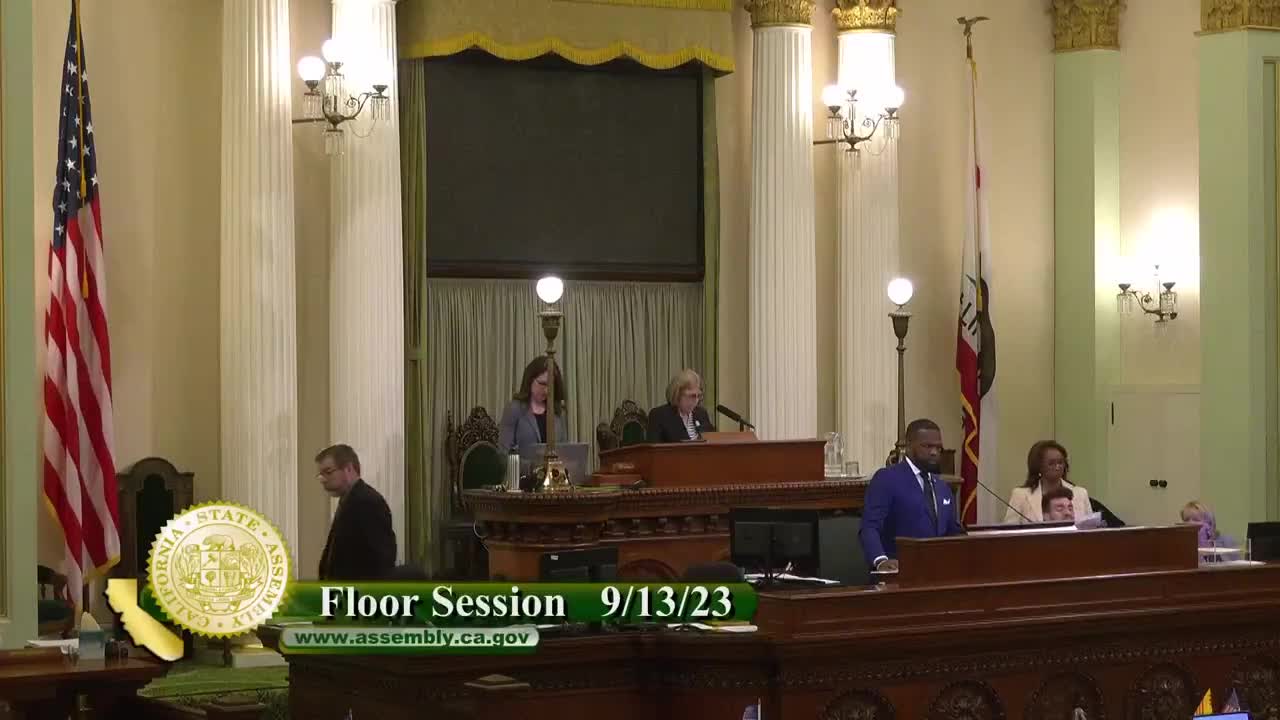
| Sep 13, 2023 | Senate amendments concurred in. To Engrossing and Enrolling. (Ayes 79. Noes 0. Page 3442.). |
| Sep 12, 2023 | In Assembly. Concurrence in Senate amendments pending. |
| Sep 12, 2023 | Read third time. Passed. Ordered to the Assembly. (Ayes 39. Noes 0. Page 2686.). |
| Sep 8, 2023 | Ordered to special consent calendar. |
| Sep 5, 2023 | Read second time. Ordered to third reading. |
| Sep 1, 2023 | From committee: Do pass. (Ayes 7. Noes 0.) (September 1). |
| Jul 3, 2023 | In committee: Referred to APPR suspense file. |
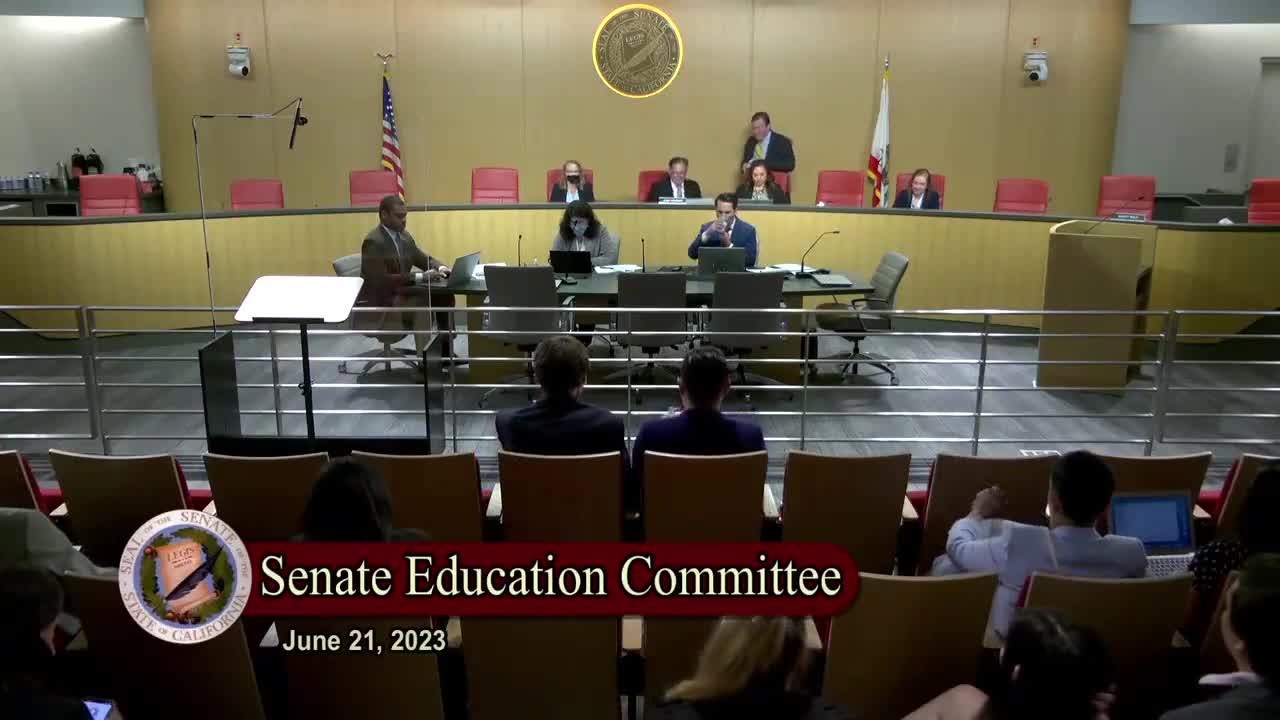
| Jun 21, 2023 | From committee: Do pass and re-refer to Com. on APPR. (Ayes 7. Noes 0.) (June 21). Re-referred to Com. on APPR. |
| Jun 14, 2023 | Measure version as amended on June 12 corrected. |
| Jun 12, 2023 | From committee chair, with author's amendments: Amend, and re-refer to committee. Read second time, amended, and re-referred to Com. on ED. |
| Jun 7, 2023 | Referred to Com. on ED. |
| May 26, 2023 | In Senate. Read first time. To Com. on RLS. for assignment. |
| May 25, 2023 | Read third time. Passed. Ordered to the Senate. (Ayes 76. Noes 0. Page 1810.) |
| May 22, 2023 | Read second time. Ordered to third reading. |
| May 18, 2023 | Read second time and amended. Ordered returned to second reading. |
| May 18, 2023 | From committee: Amend, and do pass as amended. (Ayes 11. Noes 0.) (May 18). |
| Apr 19, 2023 | In committee: Set, first hearing. Referred to APPR. suspense file. |
| Mar 22, 2023 | From committee: Do pass and re-refer to Com. on APPR. (Ayes 12. Noes 0.) (March 21). Re-referred to Com. on APPR. |
| Mar 22, 2023 | Coauthors revised. |
| Mar 15, 2023 | Re-referred to Com. on HIGHER ED. |
| Mar 14, 2023 | From committee chair, with author's amendments: Amend, and re-refer to Com. on HIGHER ED. Read second time and amended. |
| Feb 17, 2023 | Referred to Com. on HIGHER ED. |
| Feb 7, 2023 | From printer. May be heard in committee March 9. |
| Feb 6, 2023 | Read first time. To print. |
|
Date
|
Description
|
Location
|
Votes
|
|
|---|---|---|---|---|
| Sep 13, 2023 | AB 447 Arambula Concurrence in Senate Amendments | Assembly Floor |
Passed |
|
| Sep 12, 2023 | Special Consent AB447 Arambula et al. By Limón | Senate Floor |
Passed |
|
| Sep 1, 2023 | Do pass | Senate Standing Committee on Appropriations |
Passed |
|
| Jul 3, 2023 | Placed on suspense file | Senate Standing Committee on Appropriations |
Passed |
|
| Jun 21, 2023 | Do pass, but first be re-referred to the Committee on [Appropriations] | Senate Standing Committee on Education |
Passed |
|
| May 25, 2023 | AB 447 Arambula Assembly Third Reading | Assembly Floor |
Passed |
|
| May 18, 2023 | Do pass as amended. | Assembly Standing Committee on Appropriations |
Passed |
|
| Mar 21, 2023 | Do pass and be re-referred to the Committee on [Appropriations] | Assembly Standing Committee on Higher Education |
Passed |
This list shows positions taken on this bill by organizations on the date displayed, which is linked to the original source.
Positions by individuals are not included.
|
Organization
|
Position
|
Date
|
|---|---|---|
| Association Of Regional Center Agencies | ** Support | |
| California Democratic Party | ** Support | |
| California Disability Rights | * Support | Jun 21, 2023 |
| California State Council on Developmental Disabilities | ** Support | |
| Down Syndrome Association of Santa Barbara County | ** Support | |
| East Bay Legislative Coalition | ** Support | |
| Inclusive College Alliance | ** Support | |
| J Gould Consulting | ** Support | |
| Marin County | * Support | Jun 21, 2023 |
| Santa Clara County Office Of Education | ** Support | |
| UC Davis Redwood SEED Scholars Program | * Support | Jun 21, 2023 |
| Wayfinders at Fresno State | * Support | Jun 21, 2023 |
| Wayfinders at Fresno State | * Support | Jun 21, 2023 |
| Wayfinders at Fresno State | * Support | Jun 21, 2023 |
| Wayfinders at Fresno State | * Support | Jun 21, 2023 |
| Wayfinders at Fresno State | * Support | Jun 21, 2023 |
CONCURRENCE IN SENATE AMENDMENTS
CSA1 Bill Id:AB 447
Author:(Arambula and Grayson)
As Amended Ver:June 12, 2023
Majority vote
SUMMARY
Authorizes the California State University (CSU) and requests the University of
California (UC) establish and maintain inclusive college programs for students with intellectual and developmental disabilities at four-year public postsecondary educational institutions, subject to an appropriation as specified.
Senate Amendments
Amendments taken in the Senate add Assembly Member Grayson as a joint author and Assembly Member Shiavo as a coauthor.
COMMENTS
Background. Since 2011, the United States Department of Education has provided grants to institutions of higher education, or consortia of institutions of higher education to enable them to create or expand high quality, inclusive model comprehensive transition and postsecondary programs for students with intellectual disabilities through the Model Comprehensive Transition and Postsecondary Programs for Students with Intellectual Disabilities (TPSID) program.
According to the California State Council on Developmental Disabilities (SCDD), in 2016 (the most recent data available), the employment rate of people with developmental disabilities was 14.2%. The employment rate of people with all types of disabilities was 35.0%, and the employment rate of the general population was 76.5%. These rates have remained constant over time, and the situation has surely only gotten worse during the pandemic.
When looking at the Federal TPISD model, a survey of students that completed a TPISD program published in the Annual Report of the Cohort 2 TPISID Model Demonstration Projects (Year 5, 2019-2020) found that one year after completing the program, 59% of students had a paid job, and 26% of respondents reported they were pursuing further education.
The University of California (UC), Davis, Redwood SEED Scholars Program is the first four-year, residential inclusive college program in California. This is a four-year program dedicated to fully including students with intellectual disabilities onto the campus of UC Davis. It is a collaborative effort between UC Davis and UC Davis Medical Investigation of Neurodevelopmental Disorders (MIND) Institute through the UC Davis Health System. They welcomed the first cohort of students in fall of 2021. Students take foundational courses created just for them, UC Davis academic courses in their area of interest, develop independent living and communication skills while living in the dorms with other first-year students and have internship and employment opportunities on campus as well.
According to the Author
According to the author, "our state has long recognized the importance of addressing the needs of youth with disabilities in education. AB 447 will encourage California to establish inclusive college programs for students with intellectual and developmental disabilities at public four-year universities. These programs further the educational and social development for students with intellectual disabilities across the UCs and CSUs. These scholars will have an opportunity to take part in internships and jobs both on and off campus while building the skillset to enter into permanent employment. Students in these programs will have the opportunity to engage socially and live in on-campus housing as well as participate in extracurricular clubs and organizations. This will allow California to continue to be a leader in creating higher education opportunities for students with disabilities to be more inclusive."
Arguments in Support
California State Council on Developmental Disabilities, the sponsor of AB 447, wrote that "Currently, persons with developmental and intellectual (I/DD) do not have the same opportunities after high school as other students. AB 447 will provide equitable and inclusive access to higher education for our I/DD community."
"In California, I/DD youth that receive post-secondary services are 14% more likely to have paid integrated employment and earn 51% higher wages than those who did not have access to post-secondary services (Smith, et al 2018). Graduates receiving post-secondary services also use fewer government-funded support services (Cimera, et al, 2018). However, there are few UC/CSU colleges that provide inclusive college programs for youth transitioning out of high school. "
"AB 447 (Arambula) will establish and expand existing inclusive college programs for students with I/DD on public 4-year university campuses, increasing the wage-earning capacity of persons with I/DD throughout the state. By offering a sustainable funding source, AB 447 will enhance post-secondary programs for persons with I/DD, supporting their goals of obtaining both a college education and increased opportunities to gain competitive, integrated employment."
Arguments in Opposition
The Californians for Equal Rights Foundation opposed to the bill as introduced, writing that AB 447 (Arambula) "…would violate California's constitutional principle of equal treatment by instituting inclusive college pilot programs for students with intellectual and developmental disabilities with a focus on those from 'historically underserved communities'. As of 2020, among over 800,000 California students enrolled in special education programs, 7.5% were Black, 5% were Asian, 58.1% were Hispanic, 22% were White and 5% were multiracial. There are also significant variances between different counties. It is fair to say intellectual and development disabilities affect every race and ethnicity and they don't correlate with historical, group-level trends. Therefore, state assistance to disabled high school students, which is funded with taxpayer money and covers a wide range of expenses from administrative salaries to technologies, should be based on individual needs rather than group grievances."
Staff notes that AB 447 (Arambula) has since been amended to authorize, as opposed to require, the CSU to establish and maintain inclusive college programs for students with intellectual and developmental disabilities.
FISCAL COMMENTS
According to the Senate Appropriations Committee:
While this bill's provisions would be subject to an appropriation, it could result in General Fund cost pressure in the millions to low tens of millions of dollars each year to establish and maintain inclusive college programs at UC and CSU campuses. Start-up costs could at least $2 million per program but an estimate of total costs statewide would depend on the number of programs that are established. The allowable uses of funds would include administrative salaries, including a program director, residential support staff, and training for higher education faculty in evidence based best practices.
VOTES:
ASM HIGHER EDUCATION: 12-0-0
YES: Mike Fong, Ta, Addis, Arambula, Gabriel, Irwin, Low, Ortega, Sanchez, Santiago, Wallis, Weber
ASM APPROPRIATIONS: 11-0-5
YES: Holden, Bryan, Calderon, Wendy Carrillo, Mike Fong, Hart, Lowenthal, Papan, Pellerin, Weber, Ortega
ABS, ABST OR NV: Megan Dahle, Dixon, Mathis, Robert Rivas, Sanchez
ASSEMBLY FLOOR: 76-0-4
YES: Addis, Alanis, Alvarez, Arambula, Bains, Bauer-Kahan, Bennett, Berman, Boerner, Bonta, Bryan, Calderon, Juan Carrillo, Wendy Carrillo, Cervantes, Chen, Connolly, Megan Dahle, Davies, Dixon, Essayli, Flora, Mike Fong, Vince Fong, Friedman, Gabriel, Gallagher, Garcia, Gipson, Grayson, Haney, Hart, Holden, Hoover, Irwin, Jackson, Jones-Sawyer, Lackey, Lee, Low, Lowenthal, Maienschein, McCarty, McKinnor, Muratsuchi, Stephanie Nguyen, Ortega, Pacheco, Jim Patterson, Joe Patterson, Pellerin, Petrie-Norris, Quirk-Silva, Ramos, Reyes, Luz Rivas, Robert Rivas, Rodriguez, Blanca Rubio, Sanchez, Santiago, Schiavo, Soria, Ta, Ting, Valencia, Villapudua, Waldron, Wallis, Ward, Weber, Wicks, Wilson, Wood, Zbur, Rendon
ABS, ABST OR NV: Aguiar-Curry, Kalra, Mathis, Papan
UPDATED
VERSION: June 12, 2023
CONSULTANT: Kevin J. Powers / HIGHER ED. / (916) 319-3960 FN: 0002271
SENATE RULES COMMITTEE Office of Senate Floor Analyses (916) 651-1520 Fax: (916) 327-4478 | AB 447 |
THIRD READING
Bill No: AB 447
Author: Arambula (D) and Grayson (D), et al.
Amended: 6/12/23 in Senate
Vote: 21
SENATE EDUCATION COMMITTEE: 7-0, 6/21/23
AYES: Newman, Ochoa Bogh, Cortese, Glazer, McGuire, Smallwood-Cuevas, Wilk
SENATE APPROPRIATIONS COMMITTEE: 7-0, 9/1/23
AYES: Portantino, Jones, Ashby, Bradford, Seyarto, Wahab, Wiener
ASSEMBLY FLOOR: 76-0, 5/25/23 - See last page for vote
SUBJECT: Public postsecondary education: students with disabilities: inclusive college programs
SOURCE: Inclusive College Alliance
DIGEST:
This bill authorizes the California State University (CSU) and requests the University of California (UC) establish and maintain inclusive college programs for students with intellectual and developmental disabilities at four-year public postsecondary educational institutions, subject to an appropriation as specified.
ANALYSIS:
Existing law:
- Establishes the UC as a public trust to be administered by the Regents of the UC; and, grants the Regents full powers of organization and government, subject only to such legislative control as may be necessary to insure security of its funds, compliance with the terms of its endowments, statutory requirements around competitive bidding and contracts, sales of property and the purchase of materials, goods and services. (Article IX, Section (9)(a) of the California Constitution)
- Confers upon the CSU Trustees the powers, duties, and functions with respect to the management, administration, control of the CSU system and provides that the Trustees are responsible for the rule of government of their appointees and employees. (Education Code (EC) § 66606 and 89500, et seq.)
- Differentiates the missions and functions of public institutions of higher education. Under these provisions:
- The primary mission of the CSU is required to offer undergraduate and graduate instruction through the master’s degree.
- The UC is authorized to provide undergraduate and graduate instruction and has exclusive jurisdiction in public higher education over graduate instruction in the professions of law, medicine, dentistry and veterinary medicine. The UC is also the primary state-supported academic agency for research.
- The mission and function of the California Community Colleges (CCC) is the offering of academic and vocational instruction at the lower division level, and the CCC are authorized to grant the Associate in Arts and the Associate in Science degrees. The CCCs are also required to offer remedial instruction, English as a Second Language instruction, and adult noncredit instruction, and support services which help students succeed at the postsecondary level. (EC § 66010, et seq.)
- Declares the intent of the Legislature that public higher education in California strive to provide educationally equitable environments that give each Californian, regardless of age, economic circumstance, or the other characteristics as specified, a reasonable opportunity to develop fully their potential. (EC § 66030)
This bill:
- Subject to an appropriation of funds, authorizes the CSU and requests the UC to establish and maintain inclusive college programs for students with intellectual and developmental disabilities at four-year public postsecondary educational institutions and authorizes the use of program funds to establish new inclusive college programs at campuses that currently do not have a program or have a program in development, or to provide continuing support to establish inclusive college programs to help those program reach capacity and sustainability.
- Requests that inclusive college programs operated by the CSU, and those operated by the UC, do all of the following:
- Serve students with intellectual and developmental disabilities who are at least 18 years of age, even if the students are not taking courses for credit or may not be seeking a traditional degree.
- Provide students with a person-centered planning process and the opportunity to pursue an educational credential, including but not limited to, a degree certificate, or non-degree credential issued by the institution.
- Provide inclusive academic enrichment, socialization, independent living skills, and integrated work experiences that develop career skills that can lead to gainful employment.
- Provide individual supports and services for academic and social inclusion in academic courses, extracurricular activities, housing and other aspects of campus life.
- Establish strategies to recruit and support students from historically underserved communities.
- Authorizes the use of funds for purposes of the bill for any of the following purposes:
- Administrative salaries, including a program director at a campus with an inclusive pilot program and other administrative staff, including academic, employment, internship, social inclusion, and residential coordinators.
- Additional program staff, including instructors, peer mentors, residential support staff, and administrative assistants.
- Training for higher education faculty in evidence based best practices.
- Augmentation of existing assistive technologies and other academic support services offered by campus disability programs and resource centers.
- Scholarships for student tuition, fees, and living expenses.
- Additional student supports, including counseling, residential needs mentor services, and transportation services.
- Outreach, including internet website design, disseminating information to high school transition programs, local educational agencies, special educational local plan areas, and college and career centers, and advertising placements and campaigns, including the cost of print any materials.
- Data collection and dissemination.
- Requires an inclusive college program to comply with the requirements for, and apply for federal status as a Comprehensive Transition and Postsecondary Program so that its students can apply for federal financial aid and requires an inclusive college program investigate long-term sustainability by securing funding from multiple sources, including funds from the Department of Rehabilitation, regional centers, and financial aid programs.
- Defines the following terms for the purpose of the bill:
- “Intellectual and developmental disabilities” means, as defined in current law, a disability that originates before an individual attains 18 years of age, continues, or can be expected to continue, indefinitely, and constitutes a substantial disability for that individual. As defined by the Director of Developmental Services, in consultation with the Superintendent of Public Instruction, this term shall include intellectual disability, cerebral palsy, epilepsy, and autism. This term shall also include disabling conditions found to be closely related to intellectual disability or to require treatment similar to that required for individuals with an intellectual disability, but shall not include other handicapping conditions that are solely physical in nature.
- “Local educational agencies” to mean school districts, charter schools, and county offices of education.
- Makes legislative finding and declaration that California lacks the programs to provide inclusive college opportunities for students with disabilities.
- States that it is the intent of the Legislature to establish or expand upon existing inclusive college programs with the goal of providing inclusive college programs for students with intellectual and developmental disabilities at public four-year postsecondary education institutions.
Comments
- Need for the bill. According to the author, “our state has long recognized the importance of addressing the needs of youth with disabilities in education. AB 447 will encourage California to establish inclusive college programs for students with intellectual and developmental disabilities at public four-year universities. These programs further the educational and social development for students with intellectual disabilities across the UCs and CSUs. These scholars will have an opportunity to take part in internships and jobs both on and off campus while building the skillset to enter into permanent employment. Students in these programs will have the opportunity to engage socially and live in on-campus housing as well as participate in extracurricular clubs and organizations. This will allow California to continue to be a leader in creating higher education opportunities for students with disabilities to be more inclusive.”
- Comprehensive Transition and Postsecondary Program. Since 2011, the U.S. Department of Education has provided grants to institutions of higher education, or consortia of institutions of higher education to enable them to create or expand high quality, inclusive model comprehensive transition and postsecondary programs for students with intellectual disabilities through the Model Comprehensive Transition and Postsecondary Programs for Students with Intellectual Disabilities (TPSID) program.
According to the California State Council on Developmental Disabilities (SCDD), in 2016 (the most recent data available), the employment rate of people with developmental disabilities was 14.2%. The employment rate of people with all types of disabilities was 35.0%, and the employment rate of the general population was 76.5%. These rates have remained constant over time.
When looking at the Federal TPSID model, a survey of students that completed a TPSID program published in the Annual Report of the Cohort 2 TPSID Model Demonstration Projects (Year 5, 2019-2020) found that one year after completing the program, 59% of students had a paid job, and 26% of respondents reported they were pursuing further education.
The UC Davis Redwood SEED Scholars Program is the first four-year, residential inclusive college program in California. This is a four-year program dedicated to fully including students with intellectual disabilities onto the campus of UC Davis. It is a collaborative effort between UC Davis and UC Davis Medical Investigation of Neurodevelopmental Disorders (MIND) Institute through the UC Davis Health System. The MIND institution is known for its research in autism and other intellectual and development disabilities. They welcomed the first cohort of students in fall of 2021. Students take foundational courses created just for them, UC Davis academic courses in their area of interest, develop independent living and communication skills while living in the dorms with other first-year students and have internship and employment opportunities on campus as well.
This bill attempts to create a California specific program by establishing state standards for inclusive college programs in statute. Programs would have to additionally meet the federal criteria and seek federal recognition as a Comprehensive Transition and Postsecondary Program.
- Academic components of TPSID programs. Academic components required under the federal grant include, taking credit-bearing courses with students without disabilities, auditing or otherwise participating in courses with students without disabilities for which the student does not receive regular academic credit, taking non-credit bearing, non-degree courses with students without disabilities and participating in internships or work-based training in settings with individuals without disabilities. Students attending a TPSID programs must spend at least 50% of their time in one or more of these academic activities. It appears that the goal is to provide an integrated learning experience; a program may individualize a course of study based on individual students not necessarily degree attainment.
FISCAL EFFECT: Appropriation: No Fiscal Com.: Yes Local: No
According to the Senate Appropriations Committee, while the bill’s provisions would be subject to an appropriation, it could result in General Fund cost pressure in the millions to low tens of millions of dollars each year to establish and maintain inclusive college programs at UC and CSU campuses. Start-up costs could at least $2 million per program but an estimate of total costs statewide would depend on the number of programs that are established. The allowable uses of funds would include administrative salaries, including a program director, residential support staff, and training for higher education faculty in evidence based best practices.
SUPPORT: (Verified 9/1/23)
Inclusive College Alliance (source)
Association of Regional Center Agencies
California Democratic Party
California State Council on Developmental Disabilities
Down Syndrome Association of Santa Barbara County
East Bay Legislative Coalition
J Gould Consulting
Santa Clara County Office of Education
OPPOSITION: (Verified 9/1/23)
None received
ASSEMBLY FLOOR: 76-0, 5/25/23
AYES: Addis, Alanis, Alvarez, Arambula, Bains, Bauer-Kahan, Bennett, Berman, Boerner, Bonta, Bryan, Calderon, Juan Carrillo, Wendy Carrillo, Cervantes, Chen, Connolly, Megan Dahle, Davies, Dixon, Essayli, Flora, Mike Fong, Vince Fong, Friedman, Gabriel, Gallagher, Garcia, Gipson, Grayson, Haney, Hart, Holden, Hoover, Irwin, Jackson, Jones-Sawyer, Lackey, Lee, Low, Lowenthal, Maienschein, McCarty, McKinnor, Muratsuchi, Stephanie Nguyen, Ortega, Pacheco, Jim Patterson, Joe Patterson, Pellerin, Petrie-Norris, Quirk-Silva, Ramos, Reyes, Luz Rivas, Robert Rivas, Rodriguez, Blanca Rubio, Sanchez, Santiago, Schiavo, Soria, Ta, Ting, Valencia, Villapudua, Waldron, Wallis, Ward, Weber, Wicks, Wilson, Wood, Zbur, Rendon
NO VOTE RECORDED: Aguiar-Curry, Kalra, Mathis, Papan
Prepared by: Olgalilia Ramirez / ED. / (916) 651-4105
9/2/23 16:46:06
**** END ****
SENATE COMMITTEE ON APPROPRIATIONS
Senator Anthony Portantino, Chair
2023 - 2024 Regular Session
AB 447 (Arambula) - Public postsecondary education: students with disabilities: inclusive college programs
Version: June 12, 2023 | Policy Vote: ED. 7 - 0 |
Urgency: No | Mandate: No |
Hearing Date: July 3, 2023 | Consultant: Lenin Del Castillo |
Bill Summary:
This bill authorizes the California State University (CSU) and requests the University of California (UC) to establish and maintain inclusive college programs for students with intellectual and developmental disabilities at four-year public postsecondary educational institutions, subject to an appropriation.
Fiscal Impact:
While the bill’s provisions would be subject to an appropriation, it could result in General Fund cost pressure in the millions to low tens of millions of dollars each year to establish and maintain inclusive college programs at UC and CSU campuses. Start-up costs could at least $2 million per program but an estimate of total costs statewide would depend on the number of programs that are established. The allowable uses of funds would include administrative salaries, including a program director, residential support staff, and training for higher education faculty in evidence based best practices.
Background:
Since 2011, the U.S. Department of Education has provided grants to institutions of higher education, or consortia of institutions of higher education to enable them to create or expand high quality, inclusive model comprehensive transition and postsecondary programs for students with intellectual disabilities through the Model Comprehensive Transition and Postsecondary Programs for Students with Intellectual Disabilities (TPSID) program.
The Supported Education to Elevate Diversity (SEED) program at UC Davis is the first four-year residential inclusive college program in California, and received over $2 million from the U.S. Department of Education’s TPSID program. This four-year program is dedicated to fully including students with intellectual disabilities onto the campus of UC Davis. It is a collaborative effort between UC Davis and UC Davis Medical Investigation of Neurodevelopmental Disorders (MIND) Institute through the UC Davis Health System. They welcomed the first cohort of students in fall of 2021. Students take foundational courses created just for them, UC Davis academic courses in their area of interest, and develop independent living and communication skills while living in the dorms with other first-year students. Students may have internship and employment opportunities on campus as well.
Proposed Law:
This bill, subject to an appropriation of funds, authorizes the CSU and requests the UC to establish and maintain inclusive college programs for students with intellectual and developmental disabilities at four-year public postsecondary educational institutions and authorizes the use of program funds to establish new inclusive college programs at campuses that currently do not have a program or have a program in development, or to provide continuing support to establish inclusive college programs to help those program reach capacity and sustainability.
This bill requests that inclusive college programs operated by the CSU, and those operated by the UC, do all of the following:
- Serve students with intellectual and developmental disabilities who are at least 18 years of age, even if the students are not taking courses for credit or may not be seeking a traditional degree.
- Provide students with a person-centered planning process and the opportunity to pursue an educational credential, including but not limited to, a degree certificate, or non-degree credential issued by the institution.
- Provide inclusive academic enrichment, socialization, independent living skills, and integrated work experiences that develop career skills that can lead to gainful employment.
- Provide individual supports and services for academic and social inclusion in academic courses, extracurricular activities, housing and other aspects of campus life.
- Establish strategies to recruit and support students from historically underserved communities.
This bill authorizes the funds for specified activities, including administrative salaries, including a program director at a campus with an inclusive pilot program and other administrative staff, including academic, employment, internship, social inclusion, and residential coordinators; additional program staff, including instructors, peer mentors, residential support staff, and administrative assistants; and training for higher education faculty in evidence based best practices.
This bill requires an inclusive college program to comply with the requirements for, and apply for federal status as a Comprehensive Transition and Postsecondary Program so that its students can apply for federal financial aid and requires an inclusive college program investigate long-term sustainability by securing funding from multiple sources, including funds from the Department of Rehabilitation, regional centers, and financial aid programs.
Related Legislation:
AB 624 (Grayson, 2023) requires CSU, and requests UC, to cover the costs of diagnostic assessments and any required documentation, as proof for academic accommodations for students with disabilities. This bill is pending in this Committee.
AB 2920 (Arambula, 2022) was nearly identical to this bill. AB 2920 was held in the Assembly Appropriations Committee’s suspense file.
-- END --
SENATE COMMITTEE ON EDUCATION
Senator Josh Newman, Chair
2023 - 2024 Regular
Bill No: Hearing Date: June 21, 2023
Author: | Arambula | ||
Version: |
| ||
Urgency: | Fiscal: | ||
Consultant: | |||
Subject: .
SUMMARY
This bill authorizes the California State University (CSU) and requests the University of
California (UC) establish and maintain inclusive college programs for students with intellectual and developmental disabilities at four-year public postsecondary educational institutions, subject to an appropriation as specified.
BACKGROUND
Existing law:
1) Establishes the UC as a public trust to be administered by the Regents of the
UC; and, grants the Regents full powers of organization and government, subject only to such legislative control as may be necessary to insure security of its funds, compliance with the terms of its endowments, statutory requirements around competitive bidding and contracts, sales of property and the purchase of materials, goods and services. (Article IX, Section (9)(a) of the California Constitution)
2) Confers upon the CSU Trustees the powers, duties, and functions with respect to the management, administration, control of the CSU system and provides that the Trustees are responsible for the rule of government of their appointees and employees. (Education Code (EC) § 66606 and 89500, et seq.)
3) Differentiates the missions and functions of public institutions of higher education. Under these provisions:
a) The primary mission of the CSU is required to offer undergraduate and graduate instruction through the master’s degree.
b) The UC is authorized to provide undergraduate and graduate instruction and has exclusive jurisdiction in public higher education over graduate instruction in the professions of law, medicine, dentistry and veterinary medicine. The UC is also the primary state-supported academic agency for research.
c) The mission and function of the California Community Colleges (CCC) is the offering of academic and vocational instruction at the lower division level, and the CCC are authorized to grant the Associate in Arts and the Associate in Science degrees. The community colleges are also required to offer remedial instruction, English as a Second Language instruction, and adult noncredit instruction, and support services which help students succeed at the postsecondary level. (Education Code (EC) § 66010, et seq.)
4) Declares the intent of the Legislature that public higher education in California strive to provide educationally equitable environments that give each Californian, regardless of age, economic circumstance, or the other characteristics as specified, a reasonable opportunity to develop fully their potential. (EC § 66030)
ANALYSIS
This bill:
- Subject to an appropriation of funds, authorizes the CSU and requests the UC to establish and maintain inclusive college programs for students with intellectual and developmental disabilities at four-year public postsecondary educational institutions and authorizes the use of program funds to establish new inclusive college programs at campuses that currently do not have a program or have a program in development, or to provide continuing support to establish inclusive college programs to help those program reach capacity and sustainability.
- Requests that inclusive college programs operated by the CSU, and those operated by the UC, do all of the following:
- Serve students with intellectual and developmental disabilities who are
at least 18 years of age, even if the students are not taking courses for credit or may not be seeking a traditional degree.
- Provide students with a person-centered planning process and the
opportunity to pursue an educational credential, including but not limited to, a degree certificate, or non-degree credential issued by the institution.
- Provide inclusive academic enrichment, socialization, independent living
skills, and integrated work experiences that develop career skills that can lead to gainful employment.
- Provide individual supports and services for academic and social inclusion
in academic courses, extracurricular activities, housing and other aspects of campus life.
- Establish strategies to recruit and support students from historically
underserved communities.
- Authorizes the use of funds for purposes of the bill for any of the following purposes:
- Administrative salaries, including a program director at a campus with an
inclusive pilot program and other administrative staff, including academic, employment, internship, social inclusion, and residential coordinators.
- Additional program staff, including instructors, peer mentors, residential
support staff, and administrative assistants.
- Training for higher education faculty in evidence based best practices.
- Augmentation of existing assistive technologies and other academic
support services offered by campus disability programs and resource centers.
- Scholarships for student tuition, fees, and living expenses.
- Additional student supports, including counseling, residential needs
mentor services, and transportation services.
- Outreach, including internet website design, disseminating information to
high school transition programs, local educational agencies, special educational local plan areas, and college and career centers, and advertising placements and campaigns, including the cost of print any materials.
- Data collection and dissemination.
- Requires an inclusive college program to comply with the requirements for, and apply for federal status as a Comprehensive Transition and Postsecondary Program so that its students can apply for federal financial aid and requires an inclusive college program investigate long-term sustainability by securing funding from multiple sources, including funds from the Department of Rehabilitation, regional centers, and financial aid programs.
- Defines the following terms for the purpose of the bill:
- “Intellectual and developmental disabilities” means, as defined in current
law, a disability that originates before an individual attains 18 years of age, continues, or can be expected to continue, indefinitely, and constitutes a substantial disability for that individual. As defined by the Director of Developmental Services, in consultation with the Superintendent of Public Instruction, this term shall include intellectual disability, cerebral palsy, epilepsy, and autism. This term shall also include disabling conditions found to be closely related to intellectual disability or to require treatment similar to that required for individuals with an intellectual disability, but shall not include other handicapping conditions that are solely physical in nature.
- “Local educational agencies” to mean school districts, charter schools,
and county offices of education.
- Makes legislative finding and declaration that California lacks the programs to provide inclusive college opportunities for students with disabilities.
- States that it is the intent of the Legislature to establish or expand upon existing inclusive college programs with the goal of providing inclusive college programs for students with intellectual and developmental disabilities at public four-year postsecondary education institutions.
STAFF COMMENTS
- Need for the bill. According to the author, “our state has long recognized the importance of addressing the needs of youth with disabilities in education. AB 447 will encourage California to establish inclusive college programs for students with intellectual and developmental disabilities at public four-year universities. These programs further the educational and social development for students with intellectual disabilities across the UCs and CSUs. These scholars will have an opportunity to take part in internships and jobs both on and off campus while building the skillset to enter into permanent employment. Students in these programs will have the opportunity to engage socially and live in on-campus housing as well as participate in extracurricular clubs and organizations. This will allow California to continue to be a leader in creating higher education opportunities for students with disabilities to be more inclusive.”
- Comprehensive Transition and Postsecondary Program. Since 2011, the U.S. Department of Education has provided grants to institutions of higher education, or consortia of institutions of higher education to enable them to create or expand high quality, inclusive model comprehensive transition and postsecondary programs for students with intellectual disabilities through the Model Comprehensive Transition and Postsecondary Programs for Students with Intellectual Disabilities (TPSID) program.
According to the California State Council on Developmental Disabilities (SCDD), in 2016 (the most recent data available), the employment rate of people with developmental disabilities was 14.2%. The employment rate of people with all types of disabilities was 35.0%, and the employment rate of the general population was 76.5%. These rates have remained constant over time.
When looking at the Federal TPSID model, a survey of students that completed a TPSID program published in the Annual Report of the Cohort 2 TPSID Model Demonstration Projects (Year 5, 2019-2020) found that one year after completing the program, 59% of students had a paid job, and 26% of respondents reported they were pursuing further education.
The UC Davis Redwood SEED Scholars Program is the first four-year, residential inclusive college program in California. This is a four-year program dedicated to fully including students with intellectual disabilities onto the campus of UC Davis. It is a collaborative effort between UC Davis and UC Davis Medical Investigation of Neurodevelopmental Disorders (MIND) Institute through the UC Davis Health System. The MIND institution is know for its research in autism and other intellectual and development disabilities. They welcomed the first cohort of students in fall of 2021. Students take foundational courses created just for them, UC Davis academic courses in their area of interest, develop independent living and communication skills while living in the dorms with other first-year students and have internship and employment opportunities on campus as well.
This bill attempts to create a California specific program by establishing state standards for inclusive college programs in statute. Programs would have to additionally meet the federal criteria and seek federal recognition as a Comprehensive Transition and Postsecondary Program.
- Academic components of TPSID programs. Academic components required under the federal grant include, taking credit-bearing courses with students without disabilities, auditing or otherwise participating in courses with students without disabilities for which the student does not receive regular academic credit, taking non-credit bearing, non-degree courses with students without disabilities and participating in internships or work-based training in settings with individuals without disabilities. Students attending a TPSID programs must spend at least 50% of their time in one or more of these academic activities. It appears that the goal is to provide an integrated learning experience; a program may individualize a course of study based on individual students not necessarily degree attainment.
- Subject to an appropriation of funds. This bill grants authorization to CSU and the UC to engage in activities that are already within their existing scope of authority. Further, the bill’s provisions are subject to an appropriation made by the legislature. If funding is appropriated through future legislation or the budget, act fund recipients may be required to comply with the conditions outlined in the bill.
- Prior and related legislation
AB 624 (Grayson, 2023), requires CSU, and requests UC, to cover the costs of diagnostic assessments and any required documentation, as proof for academic accommodations for students with disabilities. AB 624 is scheduled to be heard by this committee on the same day as this bill.
AB 2920 (Arambula, 2022) was nearly identical to this bill. AB 2920 was held in the Assembly Appropriations Committee’s suspense file.
SUPPORT
Association of Regional Center Agencies
Down Syndrome Association of Santa Barbara County
East Bay Legislative Coalition
J Gould Consulting
OPPOSITION
None received
-- END --
ASSEMBLY THIRD READING
ATR Bill Id:AB 447
Author:(Arambula)
As Amended Ver:May 18, 2023
Majority vote
SUMMARY
Authorizes the California State University (CSU) and requests the University of
California (UC) establish and maintain inclusive college programs for students with intellectual and developmental disabilities at four-year public postsecondary educational institutions, subject to an appropriation as specified.
Major Provisions
- Specifies that, subject to an appropriation of funds by the Legislature in the annual Budget Act or another statute as specified, CSU may, and UC is requested to, establish and maintain inclusive college programs for students with intellectual and developmental disabilities at four-year public postsecondary educational institutions.
- Declares that program funds may be used to establish new inclusive college programs at campuses that currently do not have a program or have a program in development, or to provide continuing support to established inclusive college programs to help those programs reach capacity and sustainability.
- Specifies that inclusive college programs funded as specified are requested to do the following:
- Serve students with intellectual and developmental disabilities who are at least 18 years of age, even if the students are not taking courses for credit or a traditional degree;
- Provide students with a person-centered planning process and the opportunity to pursue an educational credential, including, but not limited to, a degree, certificate, or nondegree credential issued by the institution;
- Provide inclusive academic enrichment, socialization, independent living skills, and integrated work experiences that develop career skills that can lead to gainful employment;
- Provide individual supports and services for academic and social inclusion in academic courses, extracurricular activities, housing, and other aspects of campus life; and,
- Establish strategies to recruit and support students from historically underserved communities.
- Specifies that funds appropriated by the Legislature as specified may be used for any of the following purposes:
- Administrative salaries, including a program director at a campus with an inclusive program and other administrative staff, including academic coordinators, employment and internship coordinators, social inclusion coordinators, and residential coordinators;
- Additional program staff, including instructors, peer mentors, residential support staff, and administrative assistants;
- Training for higher education faculty in evidence-based best practices;
- Augmentation of existing assistive technologies and other academic support services offered by campus disability programs and resource centers;
- Scholarships for student tuition, fees, and living expenses;
- Additional student supports, including; counseling, residential needs, mentor services, and transportation services;
- Outreach, including internet website design, disseminating information to high school transition programs, local educational agencies, special education local plan areas, and college and career centers, and advertising placements and campaigns, including the cost of printing any materials; and,
- Data collection and dissemination.
- Specifies that programs must comply with the requirements for, and will apply for, federal status as a Comprehensive Transition and Postsecondary Program so that its students can apply for federal financial aid.
- Requires programs to investigate long-term sustainability by securing funding from multiple sources, including funds from the Department of Rehabilitation, regional centers, and financial aid programs.
- Establishes the following definitions:
- "Intellectual and developmental disabilities" has the same meaning as "developmental disability," as specified; and,
- "Local educational agencies" means school districts, charter schools, and county offices of education.
- Makes the Legislative finding and declaration that California lacks programs to provide inclusive college opportunities for students with disabilities.
- Specifies that it is the intent of the Legislature to establish or expand upon existing inclusive college programs with the goal of providing inclusive college programs for students with intellectual and developmental disabilities at public four-year postsecondary educational institutions.
COMMENTS
Background. Since 2011, the United States Department of Education has provided grants to institutions of higher education, or consortia of institutions of higher education to enable them to create or expand high quality, inclusive model comprehensive transition and postsecondary programs for students with intellectual disabilities through the Model Comprehensive Transition and Postsecondary Programs for Students with Intellectual Disabilities (TPSID) program.
According to the California State Council on Developmental Disabilities (SCDD), in 2016 (the most recent data available), the employment rate of people with developmental disabilities was 14.2%. The employment rate of people with all types of disabilities was 35.0%, and the employment rate of the general population was 76.5%. These rates have remained constant over time, and the situation has surely only gotten worse during the pandemic.
When looking at the Federal TPISD model, a survey of students that completed a TPISD program published in the Annual Report of the Cohort 2 TPISID Model Demonstration Projects (Year 5, 2019-2020) found that one year after completing the program, 59% of students had a paid job, and 26% of respondents reported they were pursuing further education.
The University of California (UC), Davis Redwood SEED Scholars Program is the first four-year, residential inclusive college program in California. This is a four-year program dedicated to fully including students with intellectual disabilities onto the campus of UC Davis. It is a collaborative effort between UC Davis and UC Davis Medical Investigation of Neurodevelopmental Disorders (MIND) Institute through the UC Davis Health System. They welcomed the first cohort of students in fall of 2021. Students take foundational courses created just for them, UC Davis academic courses in their area of interest, develop independent living and communication skills while living in the dorms with other first-year students and have internship and employment opportunities on campus as well.
According to the Author
According to the author, "our state has long recognized the importance of addressing the needs of youth with disabilities in education. AB 447 will encourage California to establish inclusive college programs for students with intellectual and developmental disabilities at public four-year universities. These programs further the educational and social development for students with intellectual disabilities across the UCs and CSUs. These scholars will have an opportunity to take part in internships and jobs both on and off campus while building the skillset to enter into permanent employment. Students in these programs will have the opportunity to engage socially and live in on-campus housing as well as participate in extracurricular clubs and organizations. This will allow California to continue to be a leader in creating higher education opportunities for students with disabilities to be more inclusive."
Arguments in Support
California State Council on Developmental Disabilities, the sponsor of AB 447, wrote that "Currently, persons with developmental and intellectual (I/DD) do not have the same opportunities after high school as other students. AB 447 will provide equitable and inclusive access to higher education for our I/DD community."
"In California, I/DD youth that receive post-secondary services are 14% more likely to have paid integrated employment and earn 51% higher wages than those who did not have access to post-secondary services (Smith, et al 2018). Graduates receiving post-secondary services also use fewer government-funded support services (Cimera, et al, 2018). However, there are few UC/CSU colleges that provide inclusive college programs for youth transitioning out of high school. "
"AB 447 (Arambula) will establish and expand existing inclusive college programs for students with I/DD on public 4-year university campuses, increasing the wage-earning capacity of persons with I/DD throughout the state. By offering a sustainable funding source, AB 447 will enhance post-secondary programs for persons with I/DD, supporting their goals of obtaining both a college education and increased opportunities to gain competitive, integrated employment."
Arguments in Opposition
None on file.
FISCAL COMMENTS
According to the Assembly Appropriations Committee, one-time and ongoing General Fund costs for CSU and UC, to the extent campuses choose to establish and maintain inclusive college programs for students with intellectual and developmental disabilities. Based on the example of an existing UC Davis program that would appear to qualify for funding under this bill start-up costs could be at least $2 million per program. Ongoing costs to maintain programs could also be significant, should campuses choose to establish programs.
VOTES
ASM HIGHER EDUCATION: 12-0-0
YES: Mike Fong, Ta, Addis, Arambula, Gabriel, Irwin, Low, Ortega, Sanchez, Santiago, Wallis, Weber
ASM APPROPRIATIONS: 11-0-5
YES: Holden, Bryan, Calderon, Wendy Carrillo, Mike Fong, Hart, Lowenthal, Papan, Pellerin, Weber, Ortega
ABS, ABST OR NV: Megan Dahle, Dixon, Mathis, Robert Rivas, Sanchez
UPDATED
VERSION: May 18, 2023
CONSULTANT: Kevin J. Powers / HIGHER ED. / (916) 319-3960 FN: 0000812
Date of Hearing: April 19, 2023
ASSEMBLY COMMITTEE ON APPROPRIATIONS
Chris Holden, Chair
ABPCA Bill Id:AB 447
Author:(Arambula) – As Amended Ver:March 14, 2023
Policy Committee: | Higher Education | Vote: | 12 - 0 |
|
| ||
|
|
Urgency: No State Mandated Local Program: No Reimbursable: No
SUMMARY:
This bill, subject to an appropriation, requires the California State University (CSU), and requests the University of California (UC), establish and maintain inclusive college programs for students with intellectual and developmental disabilities at four-year public postsecondary educational institutions.
Specifically, this bill:
- Requires programs funded through this bill comply with certain requirements, such as providing students with academic enrichment, socialization, independent living skills, and integrated work experiences, as well as opportunities to pursue an educational credential or take courses not-for-credit. The bill also requests that inclusive college programs operated by UC that do not receive funds appropriated by this bill comply with these requirements.
- Specifies funds appropriated for this bill may be used by programs to support various purposes, including hiring staff, providing student scholarships and conducting outreach.
- Requires programs funded through this bill to comply with the requirements for, and apply for, federal status as a Model Comprehensive Transition and Postsecondary Programs for Students with Intellectual Disabilities (TPSID) program so students may apply for federal financial aid.
- Requires programs funded through this bill to investigate long-term program sustainability by securing funding from multiple sources, including funds from the Department of Rehabilitation, regional centers, and financial aid programs.
FISCAL EFFECT:
One-time and ongoing General Fund costs for CSU and UC, likely in the millions to tens of millions of dollars, to establish and maintain inclusive college programs at several campuses for students with intellectual and developmental disabilities. Based on the example of an existing UC Davis program that would appear to qualify for funding under this bill, explained in more detail in Comment 2, start-up costs could be at least $2 million per program. Ongoing costs to maintain the program could also be significant, as allowable uses of funds include hiring additional staff, training, scholarships and other student supports, and augmenting assistive technologies.
COMMENTS:
- Purpose. According to the California State Council on Developmental Disabilities, the sponsor of this bill:
AB 447 (Arambula) will establish and expand existing inclusive college programs for students with intellectual and developmental disabilities on public 4-year university campuses, increasing the wage-earning capacity of persons with intellectual and developmental disabilities throughout the state. By offering a sustainable funding source, AB 447 will enhance post-secondary programs for persons with intellectual and developmental disabilities, supporting their goals of obtaining both a college education and increased opportunities to gain competitive, integrated employment.
- Background. Since 2011, the U.S. Department of Education has provided grants to institutions of higher education through the TPSID program to create or expand high quality, inclusive postsecondary programs for students with intellectual and developmental disabilities. The Supported Education to Elevate Diversity (SEED) program at UC Davis received over $2 million from the U.S. Department of Education’s TPSID program to develop its program. The SEED program provides a four-year program where students with developmental disabilities live on campus, attend classes and extracurricular activities, and take part in internship opportunities. UC Davis welcomed the first cohort of SEED students in fall of 2021. CSU also offers a similar two-year opportunity at Fresno State called the Wayfinders program.
This bill appears to model guidelines for the use of grant funds after the TPSID program and SEED program.
- Prior and Related Legislation. AB 624 (Grayson), of this session, requires CSU, California Community Colleges, private colleges and universities, and requests UC, to cover the costs of diagnostic assessments and any required documentation, as proof for academic accommodations for students with disabilities. This bill is currently pending in this committee.
AB 2920 (Arambula), of the 2021-2022 Legislative Session, was nearly identical to this bill. AB 2920 was held on this committee’s suspense file.
Analysis Prepared by: Natasha Collins / APPR. / (916) 319-2081
Date of Hearing: March 21, 2023
ASSEMBLY COMMITTEE ON HIGHER EDUCATION
Mike Fong, Chair
ABPCA Bill Id:AB 447 (
Author:Arambula) – As Introduced Ver:February 6, 2023
SUBJECT: Public postsecondary education: students with disabilities: inclusive college pilot programs
SUMMARY: Requires the California State University (CSU) and requests the University of
California (UC) establish and maintain inclusive college programs for students with intellectual and developmental disabilities at four-year public postsecondary educational institutions, subject to an appropriation as specified. Specifically, this bill:
- Specifies that, subject to an appropriation of funds by the Legislature in the annual Budget Act or another statute as specified, CSU will, and UC is requested to, establish and maintain inclusive college programs for students with intellectual and developmental disabilities at four-year public postsecondary educational institutions.
- Declares that program funds may be used to establish new inclusive college programs at campuses that currently do not have a program or have a program in development, or to provide continuing support to established inclusive college programs to help those programs reach capacity and sustainability.
- Specifies that an inclusive college program funded as specified will do all of the following:
- Serve students with intellectual and developmental disabilities who are at least 18 years of age, even if the students are not taking courses for credit or a traditional degree;
- Provide students with a person-centered planning process and the opportunity to pursue an educational credential, including, but not limited to, a degree, certificate, or nondegree credential issued by the institution;
- Provide inclusive academic enrichment, socialization, independent living skills, and integrated work experiences that develop career skills that can lead to gainful employment;
- Provide individual supports and services for academic and social inclusion in academic courses, extracurricular activities, housing, and other aspects of campus life; and,
- Establish strategies to recruit and support students from historically underserved communities.
- Specifies that an inclusive college program operated by the UC that does not receive funds appropriated for purposes of this bill is requested to comply with the requirements in as listed above.
- Specifies that funds appropriated by the Legislature as specified may be used for any of the following purposes:
- Administrative salaries, including a program director at a campus with an inclusive program and other administrative staff, including academic coordinators, employment and internship coordinators, social inclusion coordinators, and residential coordinators;
- Additional program staff, including instructors, peer mentors, residential support staff, and administrative assistants;
- Training for higher education faculty in evidence-based best practices;
- Augmentation of existing assistive technologies and other academic support services offered by campus disability programs and resource centers;
- Scholarships for student tuition, fees, and living expenses;
- Additional student supports, including; counseling, residential needs, mentor services, and transportation services;
- Outreach, including internet website design, disseminating information to high school transition programs, local educational agencies, special education local plan areas, and college and career centers, and advertising placements and campaigns, including the cost of printing any materials; and,
- Data collection and dissemination.
- Specifies that programs must comply with the requirements for, and will apply for, federal status as a Comprehensive Transition and Postsecondary Program so that its students can apply for federal financial aid.
- Requires programs to investigate long-term sustainability by securing funding from multiple sources, including funds from the Department of Rehabilitation, regional centers, and financial aid programs.
- Establishes the following definitions:
- “Intellectual and developmental disabilities” has the same meaning as “developmental disability,” as specified; and,
- “Local educational agencies” means school districts, charter schools, and county offices of education.
- Makes the Legislative finding and declaration that California lacks programs to provide inclusive college opportunities for students with disabilities.
- Specifies that it is the intent of the Legislature to establish or expand upon existing inclusive college programs with the goal of providing inclusive college programs for students with intellectual and developmental disabilities at public four-year postsecondary educational institutions.
EXISTING LAW:
- Establishes the UC as a public trust to be administered by the Regents of the UC; and, grants the Regents full powers of organization and government, subject only to such legislative control as may be necessary to insure security of its funds, compliance with the terms of its endowments, statutory requirements around competitive bidding and contracts, sales of property and the purchase of materials, goods and services (Article IX, Section (9)(a) of the California Constitution).
- Establishes the Donahoe Higher Education Act, setting forth the mission of the UC, CSU, and CCC (Education Code (EDC) Section 66010, et seq.).
- Confers upon the CSU Trustees the powers, duties, and functions with respect to the management, administration, control of the CSU system and provides that the Trustees are responsible for the rule of government of their appointees and employees (EDC Sections 66606 and 89500, et seq.).
- Declares the intent of the Legislature that public higher education in California strive to provide educationally equitable environments that give each Californian, regardless of age, economic circumstance, or the other characteristics as specified, a reasonable opportunity to develop fully their potential (EDC Section 66030)
FISCAL EFFECT: Unknown.
COMMENTS: Purpose. According to the author, “our state has long recognized the importance of addressing the needs of youth with disabilities in education. AB 447 will encourage California to establish inclusive college programs for students with intellectual and developmental disabilities at public four-year universities. These programs further the educational and social development for students with intellectual disabilities across the UCs and CSUs. These scholars will have an opportunity to take part in internships and jobs both on and off campus while building the skillset to enter into permanent employment. Students in these programs will have the opportunity to engage socially and live in on-campus housing as well as participate in extracurricular clubs and organizations. This will allow California to continue to be a leader in creating higher education opportunities for students with disabilities to be more inclusive.”
Background. Since 2011, the U.S. Department of Education has provided grants to institutions of higher education, or consortia of institutions of higher education to enable them to create or expand high quality, inclusive model comprehensive transition and postsecondary programs for students with intellectual disabilities through the Model Comprehensive Transition and Postsecondary Programs for Students with Intellectual Disabilities (TPSID) program.
According to the California State Council on Developmental Disabilities (SCDD), in 2016 (the most recent data available), the employment rate of people with developmental disabilities was 14.2%. The employment rate of people with all types of disabilities was 35.0%, and the employment rate of the general population was 76.5%. These rates have remained constant over time, and the situation has surely only gotten worse during the pandemic.
When looking at the Federal TPISD model, a survey of students that completed a TPISD program published in the Annual Report of the Cohort 2 TPISID Model Demonstration Projects (Year 5, 2019-2020) found that one year after completing the program, 59% of students had a paid job, and 26% of respondents reported they were pursuing further education.
The UC Davis Redwood SEED Scholars Program is the first four-year, residential inclusive college program in California. This is a four-year program dedicated to fully including students with intellectual disabilities onto the campus of UC Davis. It is a collaborative effort between UC Davis and UC Davis Medical Investigation of Neurodevelopmental Disorders (MIND) Institute through the UC Davis Health System. They welcomed the first cohort of students in fall of 2021. Students take foundational courses created just for them, UC Davis academic courses in their area of interest, develop independent living and communication skills while living in the dorms with other first-year students and have internship and employment opportunities on campus as well.
Arguments in support. California State Council on Developmental Disabilities, the sponsor of AB 447, wrote that “Currently, persons with developmental and intellectual (I/DD) do not have the same opportunities after high school as other students. AB 447 will provide equitable and inclusive access to higher education for our I/DD community.”
“In California, I/DD youth that receive post-secondary services are 14% more likely to have paid integrated employment and earn 51% higher wages than those who did not have access to post-secondary services (Smith, et al 2018). Graduates receiving post-secondary services also use fewer government-funded support services (Cimera, et al, 2018). However, there are few UC/CSU colleges that provide inclusive college programs for youth transitioning out of high school. “
“AB 447 (Arambula) will establish and expand existing inclusive college programs for students with I/DD on public 4-year university campuses, increasing the wage-earning capacity of persons with I/DD throughout the state. By offering a sustainable funding source, AB 447 will enhance post-secondary programs for persons with I/DD, supporting their goals of obtaining both a college education and increased opportunities to gain competitive, integrated employment.”
Committee comments. This bill is similar to AB 2920 (Arambula, 2022), which passed unanimously from this Committee before being held in the Assembly Committee on Appropriations. AB 447 is different in that it removes any “pilot” element from inclusive college programs established pursuant to this legislation.
The author noted that there are several inclusive higher education programs that currently exist at CSU and UC institutions, such as the UC Davis Redwood SEED Scholars Program. Given the success and existence of these programs, the author does not believe it is necessary to move forward with these programs on a provisional basis.
REGISTERED SUPPORT / OPPOSITION:
Support
California State Council on Developmental Disabilities
Opposition
None on file
Analysis Prepared by: Kevin J. Powers / HIGHER ED. / (916) 319-3960
Discussed in Hearing
View Older Hearings