AB 463: Electricity: prioritization of service: public transit vehicles.
- Session Year: 2023-2024
- House: Assembly
- Latest Version Date: 2023-02-06
Current Status:
Failed
(2024-02-01: From committee: Filed with the Chief Clerk pursuant to Joint Rule 56.)
Introduced
In Committee
First Chamber
In Committee
Second Chamber
Enacted
Existing law vests the Public Utilities Commission with regulatory authority over public utilities, including electrical corporations and gas corporations. Existing law requires the commission to establish priorities among the types or categories of customers of every electrical corporation and every gas corporation, and among the uses of electricity or gas by those customers, to determine which of those customers and uses provide the most important public benefits and serve the greatest public need, and to categorize all other customers and uses in order of descending priority based on these standards. Existing law requires the commission, in establishing those priorities, to consider, among other things, the economic, social, and other effects of a temporary discontinuance in electrical or gas service to certain customers or for certain uses, as specified. If an electrical or gas corporation experiences a shortage of capacity or capability and is unable to meet all demands by its customers, existing law requires the commission to order that service be temporarily reduced by an amount that reflects the established priorities for the duration of the shortage.
This bill would require the commission, in establishing those priorities, to also consider the economic, social equity, and mobility impacts of a temporary discontinuance in electrical service to the customers that rely on electrical service to operate public transit vehicles.
Existing law requires each electrical corporation to annually prepare and submit a wildfire mitigation plan to the Wildfire Safety Division for review and approval. The California Energy Infrastructure Safety Act establishes the Office of Energy Infrastructure Safety within the Natural Resources Agency, and provides that, on and after July 1, 2021, the Office of Energy Infrastructure Safety is the successor to, and is vested with, all of the duties, powers, and responsibilities of the Wildfire Safety Division of the commission. Existing law requires that each wildfire mitigation plan include, among other things, the electrical corporations protocols for disabling reclosers and deenergizing portions of the electrical distribution system that consider the associated impacts on public safety, including related to mitigating those public safety impacts on critical first responders, health and communication infrastructure, and customers who receive medical baseline allowances.
This bill would require that those protocols also include protocols related to mitigating those public safety impacts on public transit vehicle charging infrastructure.
Under existing law, a violation of any order, decision, rule, direction, demand, or requirement of the commission is a crime.
Because the violation of a commission action implementing some of this bills requirements would be a crime, the bill would impose a state-mandated local program.
The California Constitution requires the state to reimburse local agencies and school districts for certain costs mandated by the state. Statutory provisions establish procedures for making that reimbursement.
This bill would provide that no reimbursement is required by this act for a specified reason.
In establishing the priorities pursuant to Section 2771, the commission shall include, but not be limited to, a consideration of all the following:
(a)A determination of the customers and uses of electricity and gas, in descending order of priority, that provide the most important public benefits and serve the greatest public need.
(b)A determination of the customers and uses of electricity and gas that are not included under subdivision (a).
(c)A determination of the economic, social, and other effects of a temporary discontinuance in electrical or gas service to the customers or for the uses determined in accordance with subdivision (a) or (b).
(d)A determination of the economic, social equity, and mobility impacts of a temporary discontinuance in electrical service to the customers that rely on electrical service to operate public transit vehicles.
(d)(e)A determination of the potential effect of extreme temperatures on the health and safety of residential customers. In making this determination, the commission shall do all of the following:
(1)Consult with appropriate medical experts and review appropriate literature and research.
(2)Consider whether providing priority to customers experiencing extreme temperatures would result in increased outage frequency and duration for remaining customers and its effect on the health and safety of those remaining customers.
(3)To the extent the commission determines it is in the public interest to provide priority to customers that experience extreme temperatures, it shall provide that priority only when temperatures are extreme.
(4)Consider whether alternative measures are appropriate, including, but not limited to, reducing the duration of the outage or imposing the outage earlier or later in the day.
(e)(f)A determination of unacceptable jeopardy or imminent danger to public health and safety that creates substantial likelihood of severe health risk requiring medical attention.
(f)(g)Any curtailment or allocation rules, orders, or regulations issued by any agency of the federal government.
(g)The commission shall also consider the(h)The effect of providing a high priority to some customers on those customers who do not receive a high priority.
SEC. 2.Section 8386 of the Public Utilities Code is amended to read:8386.(a)Each electrical corporation shall construct, maintain, and operate its electrical lines and equipment in a manner that will minimize the risk of catastrophic wildfire posed by those electrical lines and equipment.
(b)Each electrical corporation shall annually prepare and submit a wildfire mitigation plan to the Wildfire Safety Division office for review and approval. In calendar year 2020, and thereafter, the plan shall cover at least a three-year period. The division office shall establish a schedule for the submission of subsequent comprehensive wildfire mitigation plans, which may allow for the staggering of compliance periods for each electrical corporation. In its discretion, the division office may allow the annual submissions to be updates to the last approved comprehensive wildfire mitigation plan; provided, that each electrical corporation shall submit a comprehensive wildfire mitigation plan at least once every three years.
(c)The wildfire mitigation plan shall include all of the following:
(1)An accounting of the responsibilities of persons responsible for executing the plan.
(2)The objectives of the plan.
(3)A description of the preventive strategies and programs to be adopted by the electrical corporation to minimize the risk of its electrical lines and equipment causing catastrophic wildfires, including consideration of dynamic climate change risks.
(4)A description of the metrics the electrical corporation plans to use to evaluate the plans performance and the assumptions that underlie the use of those metrics.
(5)A discussion of how the application of previously identified metrics to previous plan performances has informed the plan.
(6)A description of the electrical corporations protocols for disabling reclosers and deenergizing portions of the electrical distribution system that consider the associated impacts on public safety. As part of these protocols, each electrical corporation shall include protocols related to mitigating the public safety impacts of disabling reclosers and deenergizing portions of the electrical distribution system that consider the impacts on all of the following:
(A)Critical first responders.
(B)Health and communication Health, communication, and public transit vehicle charging infrastructure.
(C)Customers who receive medical baseline allowances pursuant to subdivision (c) of Section 739. The electrical corporation may deploy backup electrical resources or provide financial assistance for backup electrical resources to a customer receiving a medical baseline allowance for a customer who meets all of the following requirements:
(i)The customer relies on life-support equipment that operates on electricity to sustain life.
(ii)The customer demonstrates financial need, including through enrollment in the California Alternate Rates for Energy program continued pursuant to Section 739.1.
(iii)The customer is not eligible for backup electrical resources provided through medical services, medical insurance, or community resources.
(D)Subparagraph (C) shall not be construed as preventing does not prevent an electrical corporation from deploying backup electrical resources or providing financial assistance for backup electrical resources under any other authority.
(7)A description of the electrical corporations appropriate and feasible procedures for notifying a customer who may be impacted by the deenergizing of electrical lines, including procedures for those customers receiving medical baseline allowances as described in paragraph (6). The procedures shall direct notification to all public safety offices, critical first responders, health care facilities, and operators of telecommunications infrastructure with premises within the footprint of potential deenergization for a given event. The procedures shall comply with any orders of the commission regarding notifications of deenergization events.
(8)Identification of circuits that have frequently been deenergized pursuant to a deenergization event to mitigate the risk of wildfire and the measures taken, or planned to be taken, by the electrical corporation to reduce the need for, and impact of, future deenergization of those circuits, including, but not limited to, the estimated annual decline in circuit deenergization and deenergization impact on customers, and replacing, hardening, or undergrounding any portion of the circuit or of upstream transmission or distribution lines.
(9)Plans for vegetation management.
(10)Plans for inspections of the electrical corporations electrical infrastructure.
(11)A description of the electrical corporations protocols for the deenergization of the electrical corporations transmission infrastructure, for instances when the deenergization may impact customers who, or entities that, are dependent upon the infrastructure. The protocols shall comply with any order of the commission regarding deenergization events.
(12)A list that identifies, describes, and prioritizes all wildfire risks, and drivers for those risks, throughout the electrical corporations service territory, including all relevant wildfire risk and risk mitigation information that is part of the commissions Safety Model Assessment Proceeding (A.15-05-002, et al.) and the Risk Assessment Mitigation Phase filings. The list shall include, but not be limited to, both of the following:
(A)Risks and risk drivers associated with design, construction, operations, and maintenance of the electrical corporations equipment and facilities.
(B)Particular risks and risk drivers associated with topographic and climatological risk factors throughout the different parts of the electrical corporations service territory.
(13)A description of how the plan accounts for the wildfire risk identified in the electrical corporations Risk Assessment Mitigation Phase filing.
(14)A description of the actions the electrical corporation will take to ensure its system will achieve the highest level of safety, reliability, and resiliency, and to ensure that its system is prepared for a major event, including hardening and modernizing its infrastructure with improved engineering, system design, standards, equipment, and facilities, such as undergrounding, insulating of distribution wires, and replacing poles.
(15)A description of where and how the electrical corporation considered undergrounding electrical distribution lines within those areas of its service territory identified to have the highest wildfire risk in a commission fire threat map.
(16)A showing that the electrical corporation has an adequately sized and trained workforce to promptly restore service after a major event, taking into account employees of other utilities pursuant to mutual aid agreements and employees of entities that have entered into contracts with the electrical corporation.
(17)Identification of any geographic area in the electrical corporations service territory that is a higher wildfire threat than is currently identified in a commission fire threat map, and where the commission should consider expanding the high fire threat district based on new information or changes in the environment.
(18)A methodology for identifying and presenting enterprisewide safety risk and wildfire-related risk that is consistent with the methodology used by other electrical corporations unless the commission determines otherwise.
(19)A description of how the plan is consistent with the electrical corporations disaster and emergency preparedness plan prepared pursuant to Section 768.6, including both of the following:
(A)Plans to prepare for, and to restore service after, a wildfire, including workforce mobilization and prepositioning equipment and employees.
(B)Plans for community outreach and public awareness before, during, and after a wildfire, including language notification in English, Spanish, and the top three primary languages used in the state other than English or Spanish, as determined by the commission based on the United States Census data.
(20)A statement of how the electrical corporation will restore service after a wildfire.
(21)Protocols for compliance with requirements adopted by the commission regarding activities to support customers during and after a wildfire, outage reporting, support for low-income customers, billing adjustments, deposit waivers, extended payment plans, suspension of disconnection and nonpayment fees, repair processing and timing, access to electrical corporation representatives, and emergency communications.
(22)A description of the processes and procedures the electrical corporation will use to do all of the following:
(A)Monitor and audit the implementation of the plan.
(B)Identify any deficiencies in the plan or the plans implementation and correct those deficiencies.
(C)Monitor and audit the effectiveness of electrical line and equipment inspections, including inspections performed by contractors, carried out under the plan and other applicable statutes and commission rules.
(23)Any other information that the Wildfire Safety Division office may require.
(d)The Wildfire Safety Division office shall post all wildfire mitigation plans and annual updates on the commissions internet website before July 1, 2021, and on the offices its internet website beginning July 1, 2021, for no less than two months before the divisions or offices decision regarding approval of the plan. The division or office shall accept comments on each plan from the public, other local and state agencies, and interested parties, and verify that the plan complies with all applicable rules, regulations, and standards, as appropriate.
SEC. 3.No reimbursement is required by this act pursuant to Section 6 of Article XIIIB of the California Constitution because the only costs that may be incurred by a local agency or school district will be incurred because this act creates a new crime or infraction, eliminates a crime or infraction, or changes the penalty for a crime or infraction, within the meaning of Section 17556 of the Government Code, or changes the definition of a crime within the meaning of Section 6 of Article XIIIB of the California Constitution.
|
Date
|
Status
|
|---|---|
| Feb 1, 2024 | From committee: Filed with the Chief Clerk pursuant to Joint Rule 56. |
| Jan 31, 2024 | Died pursuant to Art. IV, Sec. 10(c) of the Constitution. |
| May 18, 2023 | In committee: Held under submission. |
| Apr 26, 2023 | In committee: Set, first hearing. Referred to APPR. suspense file. |
| Mar 23, 2023 | From committee: Do pass and re-refer to Com. on APPR. (Ayes 14. Noes 0.) (March 22). Re-referred to Com. on APPR. |
| Feb 17, 2023 | Referred to Com. on U. & E. |
| Feb 7, 2023 | From printer. May be heard in committee March 9. |
| Feb 6, 2023 | Read first time. To print. |
|
Date
|
Description
|
Location
|
Votes
|
|
|---|---|---|---|---|
| Mar 22, 2023 | Do pass and be re-referred to the Committee on [Appropriations] | Assembly Standing Committee on Utilities and Energy |
Passed |
This list shows positions taken on this bill by organizations on the date displayed, which is linked to the original source.
Positions by individuals are not included.
|
Organization
|
Position
|
Date
|
|---|---|---|
| Alameda Contra Costa Transit District | * Support | Mar 22, 2023 |
| Alameda County Transportation Commission | * Support | Mar 22, 2023 |
| California Transit Association | * Support | Mar 22, 2023 |
| California Transit Association – sponsor | ** Support | |
| CALSTART | * Support | Mar 22, 2023 |
| Monterey Salinas Transit | * Support | Mar 22, 2023 |
| Napa Valley Transportation Authority | ** Support | Mar 22, 2023 |
| San Diego Metropolitan Transit System | ** Support | |
| San Francisco Bay Area Water Emergency Transportation Authority | ** Support | |
| San Francisco Water Emergency Transportation Authority | * Support | Mar 22, 2023 |
| San Joaquin Regional Transit District | * Support | Mar 22, 2023 |
| Santa Barbara Metropolitan Transit District | ** Support | |
| The Golden Gate Bridge District | ** Support | Mar 22, 2023 |
Date of Hearing: April 26, 2023
ASSEMBLY COMMITTEE ON APPROPRIATIONS
Chris Holden, Chair
ABPCA Bill Id:AB 463
Author:(Hart) – As Introduced Ver:February 6, 2023
Policy Committee: | Utilities and Energy | Vote: | 14 - 0 |
|
| ||
|
|
Urgency: No State Mandated Local Program: Yes Reimbursable: No
SUMMARY:
This bill directs the California Public Utilities Commission (CPUC) to consider prioritizing electrical service to public transit vehicles during electrical shortages or safety-related outages.
Specifically, this bill adds the following to the items the CPUC must consider when it, pursuant to existing law, establishes priorities governing reductions of service when a utility experiences a supply shortage: the economic, social equity and mobility impacts of a temporary discontinuance in electrical service to customers that rely on electrical service to operate public transit vehicles.
Similarly, the bill adds the impact of intentional safety-related power shutoffs (public safety power shutoffs, or PSPSs) on public transit vehicle charging infrastructure to the items each electrical utility must consider as part of its wildfire mitigation plan.
FISCAL EFFECT:
The CPUC will likely need one analyst position at $210,000 annually (Public Utilities Reimbursement Account (PURA)) and a one-time consultant contract of $500,000 (PURA) to (a) determine how to rank electric charging stations for public transit vehicles on its existing prioritized list of “Essential Customers,” (b) work with electric utilities to consider how, if at all, each utility will need to adjust its statutorily required wildfire mitigation plan to accommodate prioritization of electric charging stations for public transit vehicles, and (c) coordinate with the Air Resources Board (ARB), regional transit agencies and electric utilities to determine the number and location of existing and planned-but-yet-to-be-developed circuits that power electric charging stations for public transit vehicles.
Cost to ARB to consult with CPUC should be minor and absorbable.
COMMENTS:
Background and Purpose. The author intends this bill to ensure public transit operators can provide transit services as they transition their fleets to 100% electric power, even when faced with electrical power outages.
California law establishes the goal of eliminating the state’s net emissions of greenhouse gases (GHGs) by no later than 2045. Today, the transportation sector is responsible for more of the state’s GHGs than any other individual sector, about 40% of statewide emissions. For these reasons, California is working to decarbonize transportation. To help realize this goal, ARB regulations require, by 2029, every public transit agency to purchase only zero-emission buses, with the goal of 100% fleet transformation by 2040.
In recent years, the state has experienced unstable electrical power. For the most part, this is because the electrical utilities, acting under authority granted to them by the CPUC, have enacted dozens of PSPSs that deenergize certain power lines in response to conditions, such as dry, windy weather, that elevate the risk of wildfire ignition. In addition, the California Independent System Operator (CAISO), on August 14 and 15 of 2020, during an unusually intense and extended heatwave, ordered rolling electricity blackouts that left tens of thousands without electrical power to prevent the electrical grid from collapsing. And again, during the heatwave of the late summer of 2022, the state just barely avoided more rolling blackouts.
(More recently, many areas of the state lost electrical power during windy, wet winter storms. These outages differed from PSPSs and rolling blackouts in that they were localized events caused by isolated incidents of widespread storm damage, such as a tree falling on power lines.)
This experience with unreliable electrical service has caused many to fear the state will not have the electrical supply it needs, when it needs it, especially as more economic sectors electrify.
Existing law directs regulators and utilities to foresee the harm caused by power outages and to plan to mitigate that harm to critical functions and vulnerable groups. Regarding PSPSs, the law requires the state’s electrical utilities to each include in their wildfire mitigation plans protocols related to mitigating the public safety impacts of PSPSs that consider the effects on critical first responders, health communication and certain customers with pre-identified critical medical needs.
Similarly, in the context of rolling blackouts, the law directs the CPUC to establish priorities based on CPUC’s determination of the harms that might result from an interruption of service to customers with certain attributes—those that provide law enforcement services, for example. Statute states the CPUC must use its prioritization list to modify a utility’s reduction of electrical or gas supply to customers in the face of a shortage of supply, capacity or capability.
Working off this statutory direction, the CPUC has identified many priority customer types, including government agencies that provide essential fire, police and prison services; government agencies essential to the national defense; and hospitals and skilled nursing facilities, to name just a few. Especially notable for this analysis, the CPUC has identified rail rapid transit systems as a priority customer type, and statute does not prevent the CPUC from modifying its list of priority customer type or from adding customer types to the priority customer list. Also notable, and in contrast to this bill: current law describes customer attributes—providing the most important public benefits and serving the greatest public need, for example—but does not list any specific industry or specific customer type, such as rail rapid transit systems.
The author and bill proponents—the California Transit Association (sponsor) and several regional public transit system operators—intend this bill to ensure transit riders have access to basic public transportation service and transit agencies can fulfill emergency response, support, mutual aid and recovery functions, even as the public transit fleet is electrified, and even in the face of electric power interruption. According to the author:
The instability of the electric grid that lead to rolling blackouts, public safety power shutoffs and other disruptions can jeopardize the ability of public transit operators to provide essential services…By adding transit agencies to the state’s list of essential use customers, AB 463 can help public transit fulfill important emergency functions.
Analysis Prepared by: Jay Dickenson / APPR. / (916) 319-2081
Date of Hearing: March 22, 2023
ASSEMBLY COMMITTEE ON UTILITIES AND ENERGY
Eduardo Garcia, Chair
ABPCA Bill Id:AB 463 (
Author:Hart) – As Introduced Ver:February 6, 2023
SUBJECT: Electricity: prioritization of service: public transit vehicles
SUMMARY: Requires the investor-owned utilities’ (IOUs) to add public transit operations to the list of priority customers during rotating blackouts, and the list of Critical Facilities and Critical Infrastructure during public safety power shutoffs (PSPS).
EXISTING LAW:
- Requires the CPUC to consider specified effects when establishing priorities among types or categories of electrical or gas customers for exemption from rotating blackouts. (Public Utilities Code § 2772)
- Requires each IOU to develop a wildfire mitigation plan (WMP) which must include, among the specified elements, if deenergizing (a.k.a. PSPS) is used, protocols related to mitigating the public safety impacts of deenergizing portions of the electrical distribution system, that consider the impacts on critical first responders, health and communication infrastructure, and medical baseline customers, and include procedures for notifying impacted customers who may be impacted by deenergizing. (Public Utilities Code § 8386 [c][6])
FISCAL EFFECT: Unknown. This bill is keyed fiscal and will be referred to the Assembly Committee on Appropriations for its review.
BACKGROUND:
Rotating Outages and PSPSes: What’s the Difference? – In California, rotating outages are called for a specified period of time, usually 30-90 minutes, to help ease demand on the electric grid. Their primary function is to control the risk of a larger outage occurring across the western-wide electric grid. These outages are unique from PSPSes, which are called by the IOUs to reduce wildfire risk. In PSPSes, power on at-risk circuits is shut off until a weather event (such as high wind and low humidity) is lessened and the risk of utility infrastructure sparking a wildfire is reduced. In rotating outages, power is shut off to lessen overall demand on the electric system, and the outages are rotated from area to area so no single neighborhood’s electricity is down for a prolonged period of time.
Rotating Outages and Essential Customers – Rotating outage plans go back to the 1970s. In 1973, there was a sharp reduction in the availability of fossil fuels for electric generation as a result of imported oil embargoes. At the same time, oil prices rose sharply. A drought the next year resulted in reduced availability of electricity from hydroelectric generation. To meet the potential shortages, the CPUC issued decisions in 1973 and 1974 ordering that electric IOUs to institute voluntary plans for conservation of electric energy, along with reduction of load by forced outage, if necessary.
The Public Utilities Code was amended in 1974 to require the CPUC to adopt a plan for allocating scarce electricity among customers in the event of shortages. The CPUC adopted a system of priorities for statewide reduction of electric service in 1976, with utilities filing necessary action plans. Utility action plans are filed, reviewed, and revised annually. Since 1980, specific entities providing essential services are exempt from rotating outages. Since rotating outages are implemented by blocks of customers on electric circuits, many customers are exempt from rotating outages when they are on the same circuit as an essential customer.[1]
Currently, the CPUC’s list of essential customers protected from rotating outages includes[2]:
- Government and other agencies providing essential fire, police, and prison services.
- Government agencies essential to the national defense.
- Hospitals and skilled nursing facilities.
- Communication utilities, as they relate to public health, welfare and security, including telephones.
- Navigation communication, traffic control, and landing and departure facilities for commercial air and sea operations.
- Electric utility facilities and supporting fuel and fuel transportation services critical to continuity of electric power system operation.
- Radio and television broadcasting stations used for broadcasting emergency messages, instructions, and other public information related to the electric curtailment emergency.
- Water and sewage treatment utilities may request partial or complete rotating outage exemption from electric utilities in times of emergency identified as requiring their service, such as firefighting.
- Areas served by networks, as allowed at the utility’s discretion.
- Rail rapid transit systems as necessary to protect public safety, to the extent exempted by the CPUC.
- Customers served at transmission voltages to the extent that (a) they supply power to the grid in excess of their load at the time of the rotating outage, or (b) their inclusion in rotating outages would jeopardize system integrity.
- Optional Binding Mandatory Curtailment Program (OBMC) participants, which exempts participants from rotating outages if they can consistently reduce the load on their entire circuit when needed.
- Petroleum refineries, vital ancillary facilities, and other customers in the critical fuels chain of production, to the extent exempted by the CPUC.
Public Safety Power Shutoffs and Critical Facilities & Critical Infrastructure – Over the last decade, California has experienced increased, intense, and record-breaking wildfires throughout the state. These fires have resulted in devastating loss of life and billions of dollars in damage to property and infrastructure. Electric utility infrastructure has historically been responsible for less than ten percent of reported wildfires; however, fires attributed to power lines comprise roughly half of the most destructive fires in California history. With the continuing threat of wildfire, utilities may proactively cut power to electrical lines that may fail in certain weather conditions to reduce the likelihood that the infrastructure could cause or contribute to a wildfire. This effort to reduce the risk of fires via PSPSes, can likewise leave communities and essential facilities without power, which brings its own risks and hardships, particularly for vulnerable communities and individuals. From 2013 to the end of 2019, California experienced over 57,000 wildfires (averaging 8,000 per year) and the three large IOUs conducted 33 PSPS events.
Although Pacific Gas & Electric Company effectuated a year-over-year one-third reduction in the footprint and use of PSPS from 2019 to 2020, the frequency and footprint of events in Southern California Edison territory increased dramatically in 2020 and early 2021. From May through December 2020, Edison initiated 16 PSPS events, with the majority of the events occurring in November and December, including two PSPS events during major holidays. The IOUs have developed extensive protocols since the early PSPS events in 2019 to try to reduce customer harm, including maintaining a list of Critical Facilities and Critical Infrastructure—per legislative and CPUC mandate—that receives priority notice during PSPS events and are provided assessments for backup power connectivity.
The Critical Facilities and Critical Infrastructure list has been updated over the last few years in a series of Decisions that add more sectors, industries, and considerations to the lists the IOUs must maintain.[3] Relevant to this bill, in a 2020 Decision the CPUC added transportation and transit agencies to the list as: “The transportation sector shall be included in the list of critical facilities and infrastructure to ensure transportation resilience is a priority during deenergization events. The definition of transportation facilities and infrastructure for this purpose includes facilities associated with automobile, rail, aviation, major public transportation, and maritime transportation for civilian and military purposes.”[4]
Electrifying Public Transit – The Legislature has set a number of goals to reduce greenhouse (GHG) emissions and address climate change. The Global Warming Solutions Act of 2006, AB 32 (Nunez, Chapter 488, Statutes of 2006), and subsequent companion legislation SB 32 (Pavley, Chapter 249, Statutes of 2016) requires California to reduce statewide GHG emissions to 40% below the 1990 level by 2030. AB 1279 (Muratsuchi, Chapter 337, Statutes of 2022) establishes the policy of the state to achieve carbon neutrality as soon as possible, but no later than 2045. The California Air Resources Board (CARB) is responsible for developing a Scoping Plan to detail how the state will achieve its mandated GHG emissions reduction targets across sectors.
Nearly 40% of California's GHG emissions are generated by the transportation sector, which includes both light-duty (passenger) and medium- and heavy-duty fleets. Heavy-duty diesel trucks also contribute to unhealthy levels of ozone, inhalable particulate matter, carbon monoxide, oxides of nitrogen (NOx), and sulfur dioxide, affecting local air quality. In the transportation sector, measures to reduce GHG emissions include requiring the use of low carbon fuels, cleaner vehicles, and strategies to promote sustainable communities and improved transportation choices that reduce growth in number of vehicle miles traveled.
To further these efforts, at the end of 2020, Governor Newsom issued Executive Order (EO) N-79-20 which requires 100% of in-state sales of new passenger cars and trucks to be zero-emission by 2035. EO N-79-20 charges CARB with developing and proposing passenger vehicle and truck regulations requiring increasing volumes of new zero-emission vehicles sold in the State towards that goal. EO-N-79-20 also tasked the State Energy Resources Conservation and Development Commission (also known as the Energy Commission or CEC) to update the biennial statewide assessment of zero-emission vehicle infrastructure required by AB 2127 (Ting, Chapter 365, Statutes of 2018) to support the level of EV adoption required by the EO.
For public transit, the electrification mandates come sooner. In 2018, CARB adopted the Innovative Clean Transit Regulation to require all public transit agencies to transition 100% of their fleet to zero-emission buses, with the requirement that all new purchases must be zero-emission buses by 2029, now just six years away.[5] The regulation also establishes the goal for a full fleet transition by 2040, and applies to all transit agencies that own, operate, or lease buses with a gross vehicle weight rating greater than 14,000 pounds. With the passage of SB 350 (De León, Chapter 547, Statutes of 2015) the CPUC was directed to require the electric IOUs to develop proposals to accelerate widespread transportation electrification. This has led to funding programs from the IOUs for medium- and heavy-duty charging infrastructure, including higher incentives for transit agencies seeking to electrify their operations.
COMMENTS:
- Author’s Statement. According to the author, “While the transition to 100% electric public bus fleet is important in meeting our state’s climate goals, the instability of the electric grid that lead to rolling blackouts, public safety power shutoffs and other disruptions can jeopardize the ability of public transit operators to provide essential services. Beyond providing reliable service to daily commuters, public transit operators are called upon to help aid in emergency response efforts, including evacuating residents, moving folks to warm/cooling centers, and transporting emergency supplies. By adding transit agencies to the state’s list of essential use customers, AB 463 can help public transit fulfill important emergency functions.”
- Picking winners. There has been growing concern among entities meant to comply with transportation electrification mandates that California’s electricity grid will be incapable of meeting the growing demand. There is worry among this bill’s proponents, public fleet operators, that they will be unable to charge their fleets, especially during emergency events when the electrical grid is vulnerable. It is during these very emergency events when access to public transit can be most critical, especially for low income individuals and persons of color who make up the majority of public transit ridership.
There is certainly recognized value in ensuring transit agencies are able to operate during periods of grid outage, either rolling blackouts or PSPS events. However, as noted above, the transportation sector is already included in the IOUs’ Critical Facilities and Critical Infrastructure list for PSPS emergencies; while public rail is included in the essential customers list for rotating outages. It is unclear to the committee how the modifications to PUC § 8386 proposed in this bill would improve public transit energization during PSPS events. Moreover, when asked to provide examples of how public transit had been impacted by PSPS events to date, no examples were provided.
Regardless, there is benefit in reviewing the list of essential customers for rotating outage events, as the current list is exclusive to public rail transit and that list has not been updated since 2002.[6] However the statutory change proposed by this bill would insert public transit vehicles in the list of considerations for essential customers, which currently does not include any industry- or sector-specific directive. Rather the statute offers attributes for the CPUC to consider such as prioritizing customers that “provide the most important public benefits and serve the greatest public need” or “effects…on the health and safety of residential customers.” As such, and unlike the PSPS statutes, the essential customer statute does not list industries such as hospitals, schools, or senior living facilities. This bill adds public transit vehicle operations to the statute, seemingly giving transit priority over these other sectors, when the consideration for transit that this bill seeks would already be permitted under the statutory language. An Application filed at the CPUC requesting an update to the essential customer list might have achieved the same aim as this bill.
- What it takes to update the list. According to the CPUC, to update the essential customers list for rotating outage events, the CPUC would need to make a determination regarding what priority level electric vehicle charging stations for public transit vehicles should receive within the list of essential customers. The CPUC would need to obtain data from the IOUs and statewide transit agencies related to the number of electric charging stations for public transit vehicles and which circuits they are connected to across California. The CPUC would likely need to collaborate with regional transit agencies, the six electric IOUs, and other State agencies, like CARB who oversees compliance with the Innovative Clean Transit regulation, to determine the amount and location of existing and additional circuits that power electric charging stations for public transit vehicles. This information, cross referenced to ensure that identified circuits are not already covered by the current list of essential customers, could help determine which circuits would need to be added to the exemption list in the event of rotating outages. This information would be necessary for the IOUs to determine at what point they must deenergize a public transit electric charging station, depending on its prioritization within the list of essential customers. The IOUs need to ensure that by including electric charging stations for public transit vehicles within a given category of essential customers they can still “maintain at least 40% of their load available for rotating outage to avoid involuntary load shedding and general system collapse.”[7] The CPUC notes that the issue warrants closer examination.
- Prior Legislation.
SB 167 (Dodd) requires electrical corporations to include within their wildfire mitigation plans impacts on customers enrolled in specified programs as part of the protocols for deenergizing portions of their electric distribution system. Status: Chapter 403, Statutes of 2019.
SB 1055 (Morrow) requires the CPUC when establishing priorities among types or categories of electrical or gas customers for exemption from rotating blackouts to consider specified effects. Status: Chapter 447, Statutes of 2001.
REGISTERED SUPPORT / OPPOSITION:
Support
Alameda-Contra Costa Transit District (AC Transit)
California Transit Association – sponsor
Monterey-Salinas Transit (MST)
San Diego Metropolitan Transit System
San Francisco Bay Area Water Emergency Transportation Authority
Santa Barbara Metropolitan Transit District
Opposition
None on file.
Analysis Prepared by: Laura Shybut / U. & E. / (916) 319-2083
D.01-04-006, pg. 8 ↑
D. 02-04-060 ↑
D. 19-05-042 (Appendix A, pgs. A3-A7); D. 20-05-051 (Appendix A, pg. A 10); and D. 21-06-034 (Appendix A, pgs. A5-A7) ↑
Pg. 10, D. 20-05-051 ↑
CARB, “Innovative Clean Transit Regulation Fact Sheet,” May 16, 2019; https://ww2.arb.ca.gov/resources/fact-sheets/innovative-clean-transit-ict-regulation-fact-sheet ↑
D. 02-04-060 ↑
D.02-04-060, pg. 72. ↑
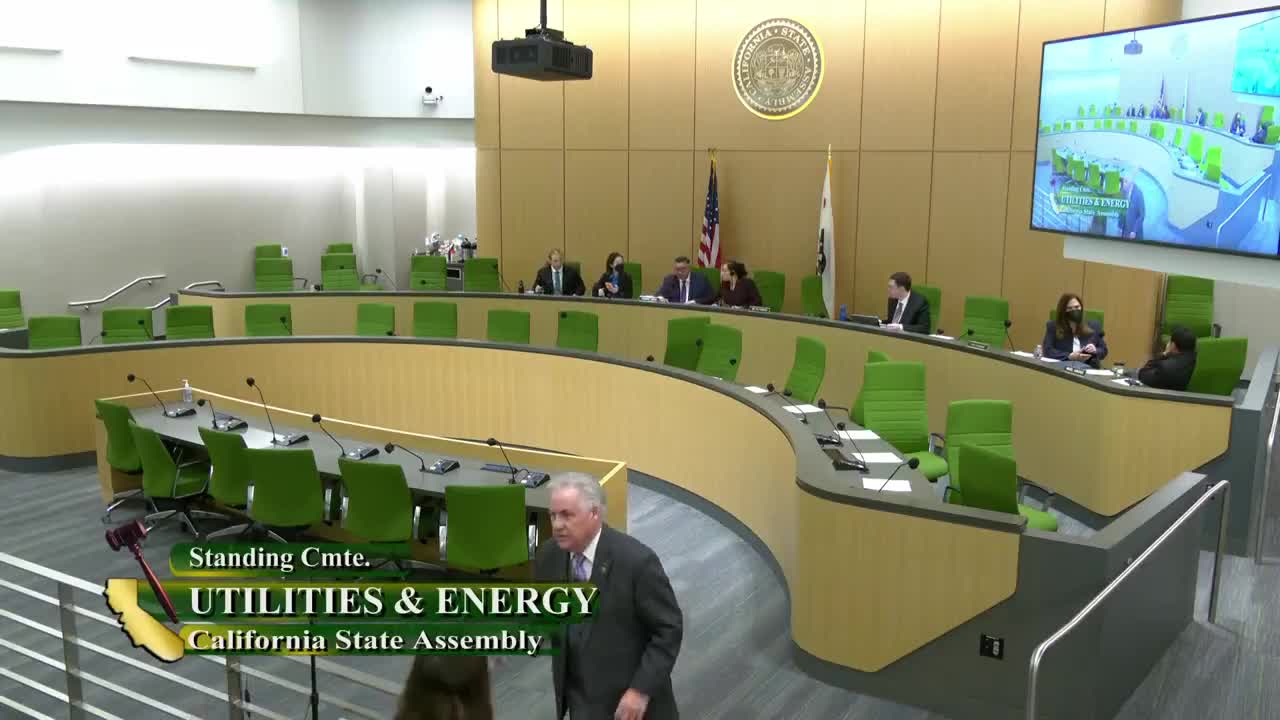
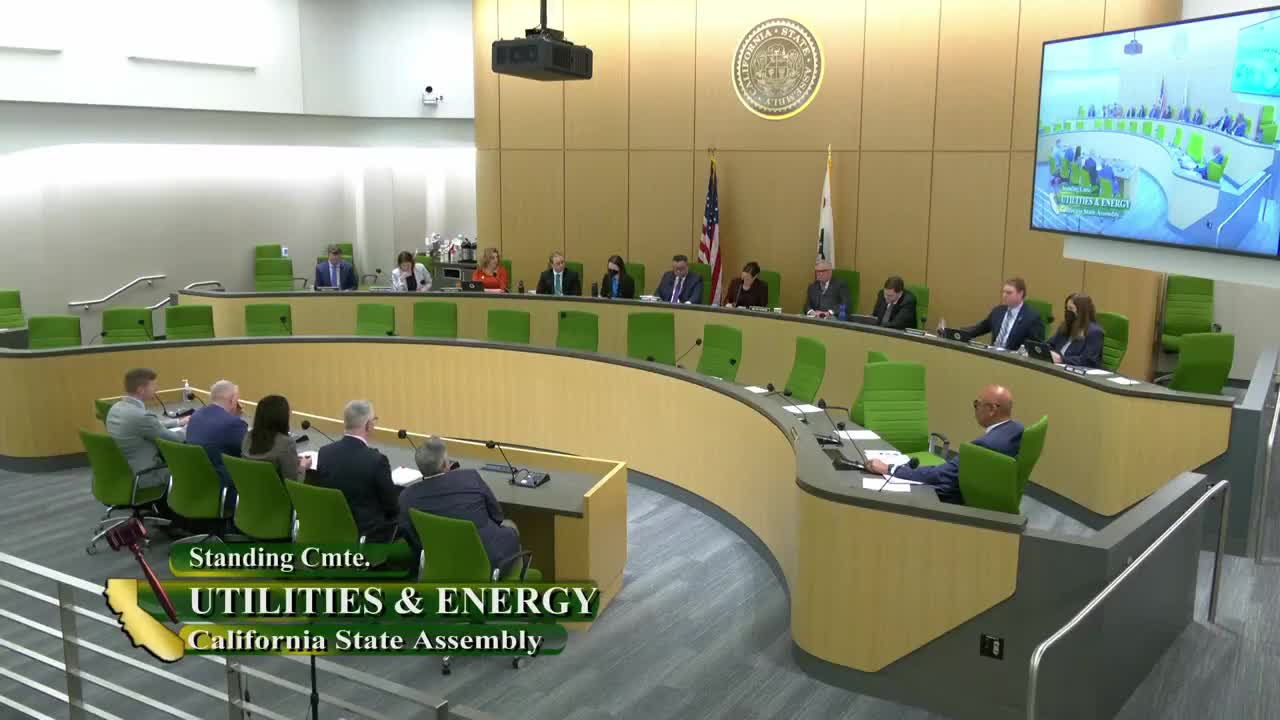
Discussed in Hearing
 7MIN
Assembly Standing Committee on Utilities and Energy
 2MIN
Assembly Standing Committee on Utilities and Energy
Bill Author

Bill Co-Author(s):