AB 494: Robert F. Kennedy Farm Workers Medical Plan.
- Session Year: 2023-2024
- House: Assembly
- Latest Version Date: 2023-10-07
Current Status:
Passed
(2023-10-07: Chaptered by Secretary of State - Chapter 333, Statutes of 2023.)
Introduced
In Committee
First Chamber
In Committee
Second Chamber
Enacted
What does this bill do?
This bill extends until January 1, 2031 the state requirement that the Department of Health Care Services reimburse the Robert F. Kennedy Farm Workers Medical Plan for plan-paid claims that exceed $70,000 for a single episode of care. The department may reimburse up to $3 million per year to cover those excess payments on behalf of eligible employees and their dependents.
The summary is provided by generative AI which can make mistakes. For original language, please view the details in the table below.
Existing law, until January 1, 2026, requires the State Department of Health Care Services to annually reimburse the Robert F. Kennedy Farm Workers Medical Plan up to $3,000,000 per year for claim payments that exceed $70,000 made by the plan on behalf of an eligible employee or dependent for a single episode of care on or after September 1, 2016. The Robert F. Kennedy Farm Workers Medical Plan is a nonprofit voluntary employees beneficiary association, organized under federal law, that provides payments for health care and other benefits to its members.
The bill would extend these provisions until January 1, 2031.
Existing law, until January 1, 2026, requires the State Department of Health Care Services to annually reimburse the Robert F. Kennedy Farm Workers Medical Plan up to $3,000,000 per year for claim payments that exceed $70,000 made by the plan on behalf of an eligible employee or dependent for a single episode of care on or after September 1, 2016. The Robert F. Kennedy Farm Workers Medical Plan is a nonprofit voluntary employees beneficiary association, organized under federal law, that provides payments for health care and other benefits to its members.
This bill would require the department to annually reimburse the Robert F. Kennedy Farm Workers Medical Plan up to $4,000,000 per year instead of $3,000,000 per year. The bill would extend these provisions until January 1, 2031.
Existing law, until January 1, 2026, requires the State Department of Health Care Services to annually reimburse the Robert F. Kennedy Farm Workers Medical Plan up to $3,000,000 per year for claim payments that exceed $70,000 made by the plan on behalf of an eligible employee or dependent for a single episode of care on or after September 1, 2016. The Robert F. Kennedy Farm Workers Medical Plan is a nonprofit voluntary employees beneficiary association, organized under federal law, that provides payments for health care and other benefits to its members.
This bill would require the department to annually reimburse the Robert F. Kennedy Farm Workers Medical Plan up to $4,000,000 per year instead of $3,000,000 per year. This bill would remove the repeal date, thereby extending these provisions indefinitely. The bill would extend these provisions until January 1, 2031.
Existing law, until January 1, 2026, requires the State Department of Health Care Services to annually reimburse the Robert F. Kennedy Farm Workers Medical Plan up to $3,000,000 per year for claim payments that exceed $70,000 made by the plan on behalf of an eligible employee or dependent for a single episode of care on or after September 1, 2016. The Robert F. Kennedy Farm Workers Medical Plan is a nonprofit voluntary employees beneficiary association, organized under federal law, that provides payments for health care and other benefits to its members.
This bill would require the department to annually reimburse the Robert F. Kennedy Farm Workers Medical Plan up to $4,000,000 per year instead of $3,000,000 per year. This bill would remove the repeal date, thereby extending these provisions indefinitely.
(a)The department shall annually reimburse the Robert F. Kennedy Farm Workers Medical Plan for claim payments that exceed seventy thousand dollars ($70,000) made by the plan on behalf of an eligible employee or dependent for a single episode of care on or after September 1, 2016. This reimbursement shall not exceed three million dollars ($3,000,000) per year.
(b)To seek reimbursement, commencing after September 1, 2017, and annually thereafter, the plan shall submit to the department completed data, verified by an independent certified public accountant, for claims paid by the plan for services during the preceding year from September 1 to August 31, inclusive.
(c)(1)If the department receives claims data from the plan pursuant to subdivision (b), the department shall analyze that data to determine the aggregate amount of claims that exceed seventy thousand dollars ($70,000) paid by the plan on behalf of an eligible employee or dependent for any single episode of care.
(2)No later than 60 days after the department receives claims data submitted by the plan, the department shall reimburse the plan the amount determined pursuant to paragraph (1), up to the amount of three million dollars ($3,000,000) per year.
(d)This section shall remain in effect only until January 1, 2031, and as of that date is repealed, unless a later enacted statute that is enacted before January 1, 2031, deletes or extends that date.
(a)The department shall annually reimburse the Robert F. Kennedy Farm Workers Medical Plan for claim payments that exceed seventy thousand dollars ($70,000) made by the plan on behalf of an eligible employee or dependent for a single episode of care on or after September 1, 2016. This reimbursement shall not exceed four three million dollars ($4,000,000) ($3,000,000) per year.
(b)To seek reimbursement, commencing after September 1, 2017, and annually thereafter, the plan shall submit to the department completed data, verified by an independent certified public accountant, for claims paid by the plan for services during the preceding year from September 1 to August 31, inclusive.
(c)(1)If the department receives claims data from the plan pursuant to subdivision (b), the department shall analyze that data to determine the aggregate amount of claims that exceed seventy thousand dollars ($70,000) paid by the plan on behalf of an eligible employee or dependent for any single episode of care.
(2)No later than 60 days after the department receives claims data submitted by the plan, the department shall reimburse the plan the amount determined pursuant to paragraph (1), up to the amount of four three million dollars ($4,000,000) ($3,000,000) per year.
(d)This section shall remain in effect only until January 1, 2031, and as of that date is repealed, unless a later enacted statute that is enacted before January 1, 2031, deletes or extends that date.
(a)The department shall annually reimburse the Robert F. Kennedy Farm Workers Medical Plan for claim payments that exceed seventy thousand dollars ($70,000) made by the plan on behalf of an eligible employee or dependent for a single episode of care on or after September 1, 2016. This reimbursement shall not exceed four million dollars ($4,000,000) per year.
(b)To seek reimbursement, commencing after September 1, 2017, and annually thereafter, the plan shall submit to the department completed data, verified by an independent certified public accountant, for claims paid by the plan for services during the preceding year from September 1 to August 31, inclusive.
(c)(1)If the department receives claims data from the plan pursuant to subdivision (b), the department shall analyze that data to determine the aggregate amount of claims that exceed seventy thousand dollars ($70,000) paid by the plan on behalf of an eligible employee or dependent for any single episode of care.
(2)No later than 60 days after the department receives claims data submitted by the plan, the department shall reimburse the plan the amount determined pursuant to paragraph (1), up to the amount of four million dollars ($4,000,000) per year.
(d)This section shall remain in effect only until January 1, 2031, and as of that date is repealed, unless a later enacted statute that is enacted before January 1, 2031, deletes or extends that date.
(a)The department shall annually reimburse the Robert F. Kennedy Farm Workers Medical Plan for claim payments that exceed seventy thousand dollars ($70,000) made by the plan on behalf of an eligible employee or dependent for a single episode of care on or after September 1, 2016. This reimbursement shall not exceed three million dollars ($3,000,000) per year. four million dollars ($4,000,000) per year.
(b)To seek reimbursement, commencing after September 1, 2017, and annually thereafter, the plan shall submit to the department completed data, verified by an independent certified public accountant, for claims paid by the plan for services during the preceding year from September 1 to August 31, inclusive.
(c)(1)If the department receives claims data from the plan pursuant to subdivision (b), the department shall analyze that data to determine the aggregate amount of claims that exceed seventy thousand dollars ($70,000) paid by the plan on behalf of an eligible employee or dependent for any single episode of care.
(2)No later than 60 days after the department receives claims data submitted by the plan, the department shall reimburse the plan the amount determined pursuant to paragraph (1), up to the amount of three million dollars ($3,000,000) per year. four million dollars ($4,000,000) per year.
(d)This section shall remain in effect only until January 1, 2026, and as of that date is repealed, unless a later enacted statute that is enacted before January 1, 2026, deletes or extends that date.|
Date
|
Status
|
|---|---|
| Oct 7, 2023 | Chaptered by Secretary of State - Chapter 333, Statutes of 2023. |
| Oct 7, 2023 | Approved by the Governor. |
| Sep 19, 2023 | Enrolled and presented to the Governor at 4 p.m. |
| Sep 12, 2023 | Senate amendments concurred in. To Engrossing and Enrolling. (Ayes 66. Noes 9. Page 3234.). |
| Sep 12, 2023 | Assembly Rule 77 suspended. (Page 3228.) |
| Sep 11, 2023 | In Assembly. Concurrence in Senate amendments pending. May be considered on or after September 13 pursuant to Assembly Rule 77. |
| Sep 11, 2023 | Read third time. Passed. Ordered to the Assembly. (Ayes 31. Noes 7. Page 2558.). |
| Sep 5, 2023 | Read second time. Ordered to third reading. |
| Sep 1, 2023 | Read second time and amended. Ordered returned to second reading. |
| Sep 1, 2023 | From committee: Amend, and do pass as amended. (Ayes 5. Noes 2.) (September 1). |
| Jul 10, 2023 | In committee: Referred to APPR. suspense file. |
| Jun 29, 2023 | From committee: Do pass and re-refer to Com. on APPR. (Ayes 10. Noes 1.) (June 28). Re-referred to Com. on APPR. |
| Jun 14, 2023 | Referred to Com. on HEALTH. |
| Jun 1, 2023 | In Senate. Read first time. To Com. on RLS. for assignment. |
| May 31, 2023 | Read third time. Passed. Ordered to the Senate. (Ayes 66. Noes 9. Page 1985.) |
| May 18, 2023 | Read second time. Ordered to third reading. |
| May 18, 2023 | From committee: Do pass. (Ayes 12. Noes 2.) (May 18). |
| Apr 19, 2023 | In committee: Set, first hearing. Referred to APPR. suspense file. |
| Mar 27, 2023 | Re-referred to Com. on APPR. |
| Mar 23, 2023 | Read second time and amended. |
| Mar 22, 2023 | From committee: Amend, and do pass as amended and re-refer to Com. on APPR. (Ayes 11. Noes 0.) (March 21). |
| Feb 17, 2023 | Referred to Com. on HEALTH. |
| Feb 8, 2023 | From printer. May be heard in committee March 10. |
| Feb 7, 2023 | Read first time. To print. |
|
Date
|
Description
|
Location
|
Votes
|
|
|---|---|---|---|---|
| Sep 12, 2023 | AB 494 Arambula Concurrence in Senate Amendments | Assembly Floor |
Passed |
|
| Sep 11, 2023 | Assembly 3rd Reading AB494 Arambula By Smallwood-Cuevas | Senate Floor |
Passed |
|
| Sep 1, 2023 | Do pass as amended | Senate Standing Committee on Appropriations |
Passed |
|
| Jul 10, 2023 | Placed on suspense file | Senate Standing Committee on Appropriations |
Passed |
|
| Jun 28, 2023 | Do pass, but first be re-referred to the Committee on [Appropriations] | Senate Standing Committee on Health |
Passed |
|
| May 31, 2023 | AB 494 Arambula Assembly Third Reading | Assembly Floor |
Passed |
|
| May 18, 2023 | Do pass. | Assembly Standing Committee on Appropriations |
Passed |
|
| Mar 21, 2023 | Do pass as amended and be re-referred to the Committee on [Appropriations] | Assembly Standing Committee on Health |
Passed |
This list shows positions taken on this bill by organizations on the date displayed, which is linked to the original source.
Positions by individuals are not included.
|
Organization
|
Position
|
Date
|
|---|---|---|
| California Health+ Advocates | ** Support | |
| California Pan-Ethnic Health Network | ** Support | |
| Department Of Finance | ** Against | |
| la Cooperativa Campesina de California | ** Support | |
| Robert F. Kennedy Medical Plan | ** Support | |
| United Farm Workers | ** Support |
CONCURRENCE IN SENATE AMENDMENTS
CSA1 Bill Id:AB 494
Author:(Arambula)
As Amended Ver:September 1, 2023
Majority vote
SUMMARY
Maintains the maximum reimbursement amount (up to $3 million) from the Department of Health Care Services (DHCS), to the Robert F. Kennedy Farm Workers Medical Plan (RFK Plan) for claim payments that exceed seventy thousand dollars ($70,000) made by the RFK Plan on behalf of an eligible employee or dependent for a single episode of care. Extends the sunset of this bill to January 1, 2031.
Senate Amendments
Decreases from $4 million to $3 million, the maximum reimbursement amount specified above.
COMMENTS
- California’s regulation of health insurance. The business of health insurance in California is subject to a complex patchwork of federal and state regulations. Different rules apply depending on whether insurance coverage is purchased directly by individuals or on behalf of a group, as in job-based health insurance. There are essentially three relevant regulatory frameworks for health insurance and they are the Department of Managed Health Care, California Department of Insurance, and for regulation of self-insured employee health benefit plans is the federal Department of Labor.
The federal Employee Retirement Income Security Act (ERISA) prohibits states from enforcing state laws relating to private sector employee benefit plans established by employers or other sponsors in order to provide health coverage. In general, ERISA requirements for employee health benefit plans are less far-reaching than the state regulations that apply to insurance carriers. Since self-insured employee benefit plans are subject only to ERISA, consumers covered by self-insured plans can have fewer consumer protections than those covered through fully insured plans that are required to comply with California’s consumer protection laws. An arrangement established pursuant to a collective bargaining agreement may be a single employer or multiemployer plan. A Taft-Hartley trust is a multiemployer plan that, in addition to being established or maintained under or pursuant to one or more collective bargaining agreements, also meets criteria outlined in the Labor-Management Relations Act of 1947 (referred to as the Taft-Hartley Act). Plans established or maintained under or pursuant to collective bargaining agreements may be governed by both the Taft-Hartley Act and ERISA. The RFK Plan is a self-funded, self-insured Taft-Hartley Plan that is subject to a collective bargaining agreement between the United Farm Workers (UFW) and multiple agricultural employers.
- Stop Loss Insurance and ACA requirements. The Patient Protection and Affordable Care Act (ACA) sets forth standards for employer-sponsored health coverage, including a prohibition on annual and lifetime benefit limits. The RFK Plan had previously imposed annual limits on benefits at $70,000. The purpose of the limit was to protect the financial solvency of the plan against high claims costs that exceeded $70,000. In light of the ACA's prohibition on annual limits, the RFK Plan is no longer allowed to keep the $70,000 limit in place. According to the UFW, the RFK Plan obtained a federal waiver allowing it to keep the $70,000 limit in place until 2014. Additionally, the RFK Plan worked with both union and employer partners to increase employer and employee contributions to the RFK Plan within the maximum allowable limits for grandfathered Taft-Hartley plans to mitigate the financial risk associated with high cost claims.
According to the California Health Care Foundation, many self-insured employers buy stop-loss insurance to reduce their risk of paying unexpectedly large medical claims. The Health Care Administrators Association defines stop-loss insurance (also known as excess insurance) as a product that provides protection against catastrophic or unpredictable losses. It is purchased by employers who have decided to self-fund their employee benefit plans, but do not want to assume 100% of the liability for losses arising from the plans. Under a stop-loss policy, the insurance company becomes liable for losses that exceed certain limits called deductibles. There are two types of self-funded insurance: a) specific Stop-Loss is the form of excess risk coverage that provides protection for the employer against a high claim on any one individual; and, b) aggregate Stop-Loss which provides a ceiling on the dollar amount of eligible expenses that an employer would pay, in total, during a contract period. The carrier reimburses the employer after the end of the contract period for aggregate claims.
At the expiration of RFK Plan’s waiver, the 2014-2015 state Budget included a $3.2 million (special fund) appropriation to the RFK Plan for the purchase of stop-loss insurance for any claims over the amount of $70,000. Another one-time appropriation of $2.5 million was included in the 2015-2016 Budget for the same purpose. According to the Assembly Budget Subcommittee #1, at that time, the RFK Plan argued that there would be off-setting savings in the Medi-Cal program. These arguments were based on an assumption that the RFK Plan would not be financially viable and dissolve without financial assistance to purchase stop-loss insurance. If the RFK Plan ceased to exist, RFK Plan's consultants assumed 50% of its members would be eligible for Medi-Cal at a state cost of $4.7 million. Also at that time, the RFK Plan argued that some of its employees would be uninsured. Rather than appropriating state funds to the RFK Plan for the purchase of stop-loss insurance, SB 145 (Pan), Chapter 712, Statutes of 2015, required the state, acting like a stop-loss insurer, to reimburse the RFK Plan for the claims that exceed $70,000 for an enrollee up to a total of $3 million.
In support of this bill, the UFW again provided updated information and analyzed state General Fund costs. This analysis included the assumption that all ages would be eligible for Medi-Cal regardless of immigration status. According to the UFW, the California Endowment estimated the following using the current RFK Plan enrollment and 2022 Medi-Cal rates: Year 1 State costs for Medi-Cal to cover eligible members would be $12.9 million; and, Year 2 State costs for Medi-Cal to cover eligible members would be $11.2 million.
According to the author, existing law caps the total reimbursement at $3 million and sunsets on January 1, 2026. The total reimbursement has not been adjusted since the passage of SB 145 in 2015. The author states that costs and reimbursements are expected to rise due to rising health care costs that will increase the total value of claims; increase of post-pandemic claims as communities continue to recover for long COVID-19 and associated illnesses; and, increased enrollment as UFW expects up to 60-75 new small and mid-sized employers contracting with UFW.
- Healthy California for All Medi-Cal expansion. According to University of California (UC), Berkeley Labor Center, California, home to the largest number of immigrants in the country, including 2.3 million undocumented individuals, is now the first state in the country to fully remove immigration status barriers to healthcare for low-income residents (SB 184 (Budget and Fiscal Review Committee), Chapter 47, Statutes of 2022). In 2016, Governor Jerry Brown extended Medi-Cal eligibility to undocumented children until age 18. Governor Gavin Newsom in 2020 expanded this policy under an initiative called Young Adult Expansion, which provided Medi-Cal access to adults under 26 regardless of immigration status. In May 2022, the next phase of the initiative, called Older Adult Expansion, was implemented and has already provided full scope Medi-Cal to 286,000 low-income undocumented residents ages 50 and older. After years of incremental policy change, the state will now close the final gap in Medi-Cal eligibility, providing access to coverage for the remaining previously excluded 700,000 undocumented Californians aged 26 to 49. SB 184, which provides full-scope Medi-Cal benefits including the opportunity for routine, preventative, and long-term care and in-home supportive services, will go into full effect on January 1, 2024. The expansion is expected to cost about $613.5 million in the fiscal year ending June 2024 and $2.2 billion each year after that once it is fully implemented. The Total Medi-Cal Expenditures estimate for fiscal year 2023-2024 is $138.9 billion. However, the UC Berkeley Labor Center projections estimate there will still be approximately 460,000 undocumented people who will remain uninsured in California. Many will be those earning relatively low annual incomes that nonetheless exceed the threshold to qualify for Medi-Cal: $17,609 for single people, $23,792 for a couple, and $36,156 for a family of four.
According to the Author
California’s farmworkers grow our economy, support our communities, and feed our families. Despite their significant contributions to our state, farm workers continue to face a range of barriers that impede their access to health care, including affordability. A recent study by the University of California Merced found that farmworkers experience low levels of health coverage and disproportionate poor health outcomes. The RFK Plan is a health plan for farmworkers, by farmworkers. The author states that with growing UFW membership and rising healthcare costs, now is the time to re-affirm our commitment to California’s farmworkers. The author concludes this bill will bolster the RFK Plan, protecting farmworkers who are insured through their union.
Arguments in Support
The RFK Plan, the sponsor, writes this bill will allow farm workers and their employers to continue contributing financially to their own health care and reduce California’s Medi-Cal costs. This bill removes the sunset and adjusts the current state reimbursement cap. UFW and contributing employers deliver basic medical care at an affordable cost. The plan is a self-funded, self-insured plan that is subject to a collective bargaining agreement between the UFW and agricultural employers, supporting over six thousand Californians, including approximately 2,000 children. With recent changes in California law, there is a reasonable expectation the number of farm workers covered by the RFK Plan will grow. RFK Plan concludes that growth will expose the plan to a greater number of high-cost illnesses and increase the state’s Medi-Cal savings from the current $11 million annually.
Arguments in Opposition
Finance is opposed to this bill because it will result in increased General Fund expenditures. Efforts to increase General Fund reimbursements to the RFK Medical Plan should be considered as part of the annual budget development process.
FISCAL COMMENTS
According to the Senate Appropriations Committee:
- General Fund costs of $3 million annually from 2026-27 through 2030-31 to reimburse the RFK Plan.
- General Fund costs of $135,000 annually from 2026-27 through 2030-31 for DHCS for state operations.
VOTES:
ASM HEALTH: 11-0-4
YES: Wood, Waldron, Aguiar-Curry, Arambula, Boerner Horvath, Maienschein, McCarty, Rodriguez, Santiago, Villapudua, Weber
ABS, ABST OR NV: Wendy Carrillo, Flora, Vince Fong, Joe Patterson
ASM APPROPRIATIONS: 12-2-2
YES: Holden, Bryan, Calderon, Wendy Carrillo, Mike Fong, Hart, Lowenthal, Mathis, Papan, Pellerin, Weber, Ortega
NO: Megan Dahle, Dixon
ABS, ABST OR NV: Robert Rivas, Sanchez
ASSEMBLY FLOOR: 66-9-5
YES: Addis, Aguiar-Curry, Alanis, Alvarez, Arambula, Bains, Bauer-Kahan, Bennett, Berman, Boerner, Bonta, Bryan, Calderon, Juan Carrillo, Wendy Carrillo, Cervantes, Connolly, Mike Fong, Friedman, Gabriel, Garcia, Gipson, Grayson, Haney, Hart, Holden, Irwin, Jackson, Jones- Sawyer, Kalra, Lee, Low, Lowenthal, Maienschein, Mathis, McCarty, McKinnor, Muratsuchi, Stephanie Nguyen, Ortega, Pacheco, Papan, Pellerin, Petrie-Norris, Quirk-Silva, Ramos, Reyes, Luz Rivas, Robert Rivas, Rodriguez, Blanca Rubio, Santiago, Schiavo, Soria, Ting, Valencia, Villapudua, Waldron, Wallis, Ward, Weber, Wicks, Wilson, Wood, Zbur, Rendon
NO: Megan Dahle, Davies, Dixon, Essayli, Flora, Vince Fong, Gallagher, Joe Patterson, Ta
ABS, ABST OR NV: Chen, Hoover, Lackey, Jim Patterson, Sanchez
SENATE FLOOR: 31-7-2
YES: Allen, Alvarado-Gil, Archuleta, Ashby, Atkins, Becker, Blakespear, Bradford, Cortese, Dodd, Durazo, Eggman, Glazer, Gonzalez, Hurtado, Laird, Limón, McGuire, Menjivar, Min, Newman, Padilla, Portantino, Roth, Rubio, Skinner, Smallwood-Cuevas, Stern, Umberg, Wahab, Wiener
NO: Dahle, Grove, Jones, Nguyen, Niello, Ochoa Bogh, Seyarto
ABS, ABST OR NV: Caballero, Wilk
UPDATED
VERSION: September 1, 2023
CONSULTANT: Kristene Mapile / HEALTH / (916) 319-2097 FN: 0001719
SENATE RULES COMMITTEE Office of Senate Floor Analyses (916) 651-1520 Fax: (916) 327-4478 | AB 494 |
THIRD READING
Bill No: AB 494
Author: Arambula (D)
Amended: 9/1/23 in Senate
Vote: 21
SENATE HEALTH COMMITTEE: 10-1, 6/28/23
AYES: Eggman, Glazer, Gonzalez, Hurtado, Limón, Menjivar, Roth, Rubio, Wahab, Wiener
NOES: Nguyen
NO VOTE RECORDED: Grove
SENATE APPROPRIATIONS COMMITTEE: 5-2, 9/1/23
AYES: Portantino, Ashby, Bradford, Wahab, Wiener
NOES: Jones, Seyarto
ASSEMBLY FLOOR: 66-9, 5/31/23 - See last page for vote
SUBJECT: Robert F. Kennedy Farm Workers Medical Plan
SOURCE: Robert F. Kennedy Medical Plan
DIGEST:
This bill extends the sunset to January 1, 2031 for state reimbursement to the Robert F. Kennedy Farmworkers Medical Plan to assist with single episode of care claim costs that exceed $70,000.
ANALYSIS:
Existing law:
- Establishes the Medi-Cal program, administered by the Department of Health Care Services (DHCS), under which low-income individuals are eligible for comprehensive medical coverage with no cost-sharing, vision, dental and long-term care. Children under age 21 also receive Early and Periodic Screening, Diagnostic, and Treatment services, which includes therapeutic behavioral health, substance use disorder services and many other services without cost-sharing. [WIC §14000, et seq.]
- Requires DHCS to annually reimburse the Robert F. Kennedy Farmworkers Medical Plan (plan) for claim payments that exceed $70,000 made by the plan on behalf of an eligible employee or dependent for a single episode of care on or after September 1, 2016. Prohibits the reimbursement from exceeding $3 million per year. Sunsets this program on January 1, 2026. [HSC §100235]
- Requires the plan to submit completed data, verified by an independent certified public accountant, for claims paid by the plan for services during the preceding year, as specified, and requires DHCS to analyze that data to determine the aggregate amount of claims that exceed $70,000 paid by the plan. [HSC §100235]
- Requires DHCS to reimburse the plan no later than 60 days after the claims data is received. [HSC §100235]
This bill extends the authority of this reimbursement requirement on DHCS another five years, from January 1, 2026 to January 1, 2031.
Comments
According to the author, California’s farmworkers grow our economy, support our communities, and feed our families. Despite their significant contributions to our state, farmworkers continue to face a range of barriers that impede their access to health care, including affordability. A recent study by UC Merced found that farmworkers experience low levels of health coverage and disproportionate poor health outcomes. The plan is a health plan for farmworkers, by farmworkers. With growing United Farmworkers (UFW) membership and rising healthcare costs, now is the time to re-affirm our commitment to California’s farmworkers. This bill will bolster the plan, protecting farmworkers that are insured through their union.
Self-Insurance Background. In a self-funded or self-insured health plan, an employer funds the cost of all health services covered by the plan. Many employers hire an administrator to handle claims payments but the employer is responsible for funding these payments. Self-funded employer plans, generally, are not subject to state insurance laws, but are subject to federal regulations. Employers who set up self-funded health plans are responsible for payment of all covered health claims, whether routine or catastrophic. Employers may buy “stop-loss” insurance to help cover high cost claims, but employers are responsible for payment of all claims until they reach the “stop-loss” level.
Taft-Hartley Trust. The plan is a joint labor-management health plan for farmworkers organized under the 1947 Taft-Hartley Act. A Taft-Hartley trust is a type of pension or benefit plan typically sponsored by a labor union and a group of employers to provide benefits to employees who are covered by a collective bargaining agreement. In the case of the plan, the UFW and contributing employers deliver “basic medical care at an affordable cost.” The plan is a self-funded/self-insured plan that is subject to a collective bargaining agreement between the UFW and agricultural employers, supporting over 6,000 Californians, including approximate 2,000 children. Taft-Hartley trusts are subject to oversight by the federal Pension Benefit Guaranty Corporation (PBGC), which oversees and insures multiemployer pension plans. If a Taft-Hartley trust becomes insolvent, the PBGC will step in to pay benefits to the beneficiaries. The PBGC has a number of tools at its disposal to help ensure that Taft-Hartley trusts remain solvent. As a self-funded plan, the plan pays claims on behalf of employees and dependents for health care services and does not use state regulated health insurance carriers. Therefore state required benefits, timely access, or network adequacy requirements do not apply to plan enrollees.
State as stop-loss insurer. Prior to the passage of the federal Affordable Care Act (ACA), which, among several other health insurance reforms, eliminates the application of annual and life-time limits by health insurers and employee welfare benefit plans, the plan had an annual benefit limit of $70,000 (meaning after the plan paid for $70,000 of health care claims, the employee or dependent would no longer be covered by the plan for the year). Since the ACA prevented the plan from having this annual limit, the plan had to change the benefit structure to comply and was given a one year waiver from the federal government. The plan decided to seek out stop-loss insurance to provide protection against catastrophic or unpredictable losses to the plan for any claims over $70,000. The 2014-15 California Budget included a $3.2 million appropriation to the plan to purchase stop-loss insurance for claims over $70,000. The 2015-16 Budget appropriated an additional $2.5 million for the same purpose. According to the plan, after a year of claims experience, claims above $70,000 were summed at $1.4 million. SB 145 (Pan, Chapter 712, Statutes of 2015) requires DHCS to annually reimburse the plan for claim payments that exceed $70,000. It was thought that the state would theoretically spend less money as the stop-loss insurer than on paying the plan the cost to buy stop-loss insurance. Additionally, the case was made by the plan that the state would save on Medi-Cal costs if plan enrollees remained in the plan instead of Medi-Cal. At that time, those costs were estimated to be $6.6 million. However, existing law does not prevent a person otherwise eligible for Medi-Cal from enrolling in Medi-Cal. Medi-Cal acts as the secondary payer of coverage or payer of last resort, covering any Medi-Cal benefits not covered by the plan if necessary, after the primary coverage pays for services covered by the plan. DHCS indicates that for each plan year, RFK submits claim files for their members where a single episode of care has exceeded $70,000. After these submissions are verified by an independent certified public accountant, DHCS reviews the files to confirm they meet the criteria defined in the statute, calculates the amount in excess of $70,000 for each eligible employee or dependent, and reimburses RFK that amount, up to $3 million annually. The most recent RFK reimbursement totaled $2,210,658.82, while prior plan years reached the full $3,000,000 reimbursement maximum. DHCS receives information only for certain RFK members, which is a small subset of the entire RFK membership. For the most recent reimbursement, DHCS received data for 24 members, six of whom were enrolled in Medi-Cal managed care.
Medi-Cal “savings.” According to background information provided by the author, the California Endowment analyzed state general fund costs if the plan ceased to exist, and determined that year one state costs for Medi-Cal to cover eligible members would be $12.9 million and year two state costs would be $11.2 million. This is based on May 2022 Medi-Cal Local Assistance Estimates and County Organized Health System managed care rates for Central California Alliance for Health (Monterey County). The analysis assumes all ages will be eligible for Medi-Cal, regardless of immigration status.
Plan details. Coverage through the plan is dependent upon which product an employer purchases. There is minimal or no premium paid by the employee. The plan shared the following summary of benefits associated with two plans. There is either 90% or 80% coverage for services like lab, X-ray, durable medical equipment, chemotherapy, chiropractic, ambulance, physical therapy, dialysis, skilled nursing, home health, well care ($15 copay then 90%/80%), and Physicals ($15 Co-pay then 100%).
Farmworker Health Study. The 2022 Farmworker Health Study (FWHS) survey was funded by the California Department of Public Health and conducted by researchers at UC Merced. The FWHS sample consisted of 1,242 participants across five major California regions, with a profile very similar to that of the broader farmworker population. The FWHS sample was largely Latino (99%), foreign-born (91%), and low-income. Some relevant findings are below:
- 49% reported being without health insurance at some point in the previous 12 months;
- 41% of those with insurance had Medi-Cal or Medi-Cal with another type of insurance plan;
- The percentage with only employer insurance was 7.3%.
- For those without health insurance, the most commonly cited reasons were they were not eligible for Medi-Cal or that it was too expensive.
- For those with children, 74% reported having insurance coverage for their children and 26% do not have coverage for their children;
- 78% reported having a usual source of care, with 58% reporting they visit a Community Health Center or a Migrant Clinic and 29% see a doctor in a clinic;
- 23% reported delaying medical care at some point in the previous 12 months; and,
- For those who reported delaying care, 66.3% cited cost or lack of insurance as a significant barrier. Approximately half (47%) of those who delayed seeking care eventually received care for their treatment, meaning that the others have never received what they perceived as needed care.
Unique farmworker coverage issues. According to FWHS, in order to access health care farmworkers have to be able to afford the care and health care must be readily available in a manner that meets their needs. Farm work is seasonal and means farmworkers will travel to regions where there is work. Many of the regions they work in are medically underserved. In some seasons there is no work. Fifty percent of farmworkers do not have health insurance in the months when they are not working. Thirty-nine percent reported needing an interpreter for medical treatment and 90% received this assistance. However, the rates tend to be lower for specialty and emergency care. The survey found that farmworker women had pregnancies that were low-weight, pre-term, and with birth defects at twice the rate as the general population. California farmworkers have lower rates of chronic health conditions but the FWHS describes research that shows because of the physical demands of farm work, those in poor health leave the workforce. There are also concerns about applying for health coverage because of changing public charge rules that could impact citizenship.
Capital & Main. Capital & Main published a story on December 15, 2022 on the plan. In the story was a description of how the plan came about and profiled one covered worker’s experience with accessing and paying for coverage for her and her family and saving to pay her premiums during the off season. The employer of this worker describes that the workforce is shrinking and aging and the company pays the $700 premium (during the work season) to maintain a stable workforce. The worker is quoted as saying “RFK has functioned well. It would be great if it paid for everything, but compared to others, it’s much better.”
Related/Prior Legislation
SB 145 (Pan, Chapter 712, Statutes of 2015) required DHCS to annually reimburse the plan for claim payments that exceed $70,000.
AB 2183 (Stone, Chapter 673, Statutes of 2022) provided that, as an alternative to a polling place election, a labor organization may be certified as the exclusive bargaining representative of a bargaining unit of agricultural employees through either a labor peace election (labor compact) or a non-labor peace election until January 1, 2028.
FISCAL EFFECT: Appropriation: No Fiscal Com.: Yes Local: No
According to the Senate Appropriations Committee:
- General Fund costs of $3 million annually from 2026-27 through 2030-31 to reimburse the RFK Plan.
- General Fund costs of $135,000 annually from 2026-27 through 2030-31 for DHCS for state operations.
SUPPORT: (Verified 8/22/23)
Robert F. Kennedy Medical Plan (source)
California Health+ Advocates
California Pan-Ethnic Health Network
La Cooperativa Campesina De California
United Farmworkers
OPPOSITION: (Verified 8/22/23)
Department of Finance
ARGUMENTS IN SUPPORT: The plan is this bill’s sponsor and writes that with recent changes in California law, there is reasonable expectation the number of farmworkers covered by the plan will grow. That growth will expose the plan to a greater number of high-cost illnesses. The growth will also increase the plan’s generated state Medi-Cal savings from the current $11 million annually. California Health+Advocates writes while many individuals enrolled in the plan now qualify for Medi-Cal, the plan is a more cost effective and culturally accessible plan. Estimates suggest net savings are valued at millions of dollars. This bill will allow farmworkers and their employers to continue contributing financially to their own health care and reduce California’s Medi-Cal costs.
ARGUMENTS IN OPPOSITION: The Department of Finance writes this bill will result in increased General Fund expenditures. Efforts to increase General Fund reimbursements to the RFK Medical Plan should be considered as part of the annual budget development process. |
ASSEMBLY FLOOR: 66-9, 5/31/23
AYES: Addis, Aguiar-Curry, Alanis, Alvarez, Arambula, Bains, Bauer-Kahan, Bennett, Berman, Boerner, Bonta, Bryan, Calderon, Juan Carrillo, Wendy Carrillo, Cervantes, Connolly, Mike Fong, Friedman, Gabriel, Garcia, Gipson, Grayson, Haney, Hart, Holden, Irwin, Jackson, Jones-Sawyer, Kalra, Lee, Low, Lowenthal, Maienschein, Mathis, McCarty, McKinnor, Muratsuchi, Stephanie Nguyen, Ortega, Pacheco, Papan, Pellerin, Petrie-Norris, Quirk-Silva, Ramos, Reyes, Luz Rivas, Robert Rivas, Rodriguez, Blanca Rubio, Santiago, Schiavo, Soria, Ting, Valencia, Villapudua, Waldron, Wallis, Ward, Weber, Wicks, Wilson, Wood, Zbur, Rendon
NOES: Megan Dahle, Davies, Dixon, Essayli, Flora, Vince Fong, Gallagher, Joe Patterson, Ta
NO VOTE RECORDED: Chen, Hoover, Lackey, Jim Patterson, Sanchez
Prepared by: Teri Boughton / HEALTH / (916) 651-4111
9/2/23 9:57:10
**** END ****
SENATE COMMITTEE ON APPROPRIATIONS
Senator Anthony Portantino, Chair
2023 - 2024 Regular Session
AB 494 (Arambula) - Robert F. Kennedy Farm Workers Medical Plan
Version: March 23, 2023 | Policy Vote: HEALTH 10 - 1 |
Urgency: No | Mandate: No |
Hearing Date: September 1, 2023 | Consultant: Agnes Lee |
Bill Summary:
AB 494 would raise the cap, from $3 million to $4 million, for state reimbursement to the Robert F. Kennedy Farmworkers Medical Plan (RFK Plan), as specified.
*********** ANALYSIS ADDENDUM – SUSPENSE FILE ***********
The following information is revised to reflect amendments
adopted by the committee on September 1, 2023
Fiscal Impact:
- General Fund costs of $3 million annually from 2026-27 through 2030-31 to reimburse the RFK Plan.
- General Fund costs of $135,000 annually from 2026-27 through 2030-31 for the Department of Health Care Services (DHCS) for state operations.
Author Amendments:
Author amendments revise the reimbursement amount from $4 million to $3 million.
-- END --
SENATE COMMITTEE ON
Senator Anthony Portantino, Chair
2023 - 2024 Regular Session
AB 494 (Arambula) - Robert F. Kennedy Farm Workers Medical Plan
Version: | Policy Vote: |
Urgency: | Mandate: |
Hearing Date: | Consultant: |
Bill Summary:
AB 494 would raise the cap, from $3 million to $4 million, for state reimbursement to the Robert F. Kennedy Farmworkers Medical Plan (RFK Plan), as specified.
Fiscal Impact:
The Department of Health Care Services (DHCS) estimates the following General Fund costs:
- $4 million annually from 2026-27 through 2030-31 to reimburse the RFK Plan;
- $1 million annually in 2024-25 and 2025-26 to reimburse the RFK Plan at the higher level (from $3 million to $4 million); and
- $135,000 annually from 2026-27 through 2030-31 for state operations.
Background:
The RFK Plan is a joint labor-management health plan for farmworkers organized under the federal Taft-Hartley Act. A Taft-Hartley trust is a type of pension or benefit plan typically sponsored by a labor union and a group of employers to provide benefits to employees who are covered by a collective bargaining agreement. In the case of the RFK Plan, the UFW and contributing employers deliver “basic medical care at an affordable cost.” The RFK Plan is a self-funded/self-insured plan that is subject to a collective bargaining agreement between the United Farm Workers (UFW) and agricultural employers, supporting over 6,000 Californians, including approximately 2,000 children.
In a self-funded or self-insured health plan, an employer funds the cost of all health services covered by the plan. Employers who set up self-funded health plans are responsible for payment of all covered health claims, whether routine or catastrophic. Employers may buy “stop-loss” insurance to help cover high cost claims, but employers are responsible for payment of all claims until they reach the “stop-loss” level.
The RFK Plan sought and received state funding through legislation to purchase stop-loss insurance to provide protection against catastrophic or unpredictable losses to the plan for any claims over $70,000. Current law requires DHCS to annually reimburse the RFK Plan for claim payments that exceed $70,000 made by the plan on behalf of an eligible employee or dependent for a single episode of care on or after September 1, 2016. Current law prohibits the reimbursement from exceeding $3 million per year and sunsets this program on January 1, 2026.
Proposed Law:
Specific provisions of the bill would:
- Extend the authority of this reimbursement another five years, from January 1, 2026 to January 1, 2031.
- Increase the amount DHCS is required to reimburse the plan when costs for an eligible employee or dependent single episode of care exceed $70,000, from $3 million to up to $4 million per year.
-- END --
SENATE COMMITTEE ON HEALTH
Senator Dr. Susan Talamantes Eggman, Chair
BILL NO: AB 494
AUTHOR: | Arambula | ||
VERSION: | March 23, 2023 | ||
HEARING DATE: | June 28, 2023 | ||
CONSULTANT: | Teri Boughton | ||
SUBJECT: Robert F. Kennedy Farmworkers Medical Plan
SUMMARY:
Raises the cap, from $3 million to $4 million, for state reimbursement to the Robert F. Kennedy Farmworkers Medical Plan to assist with single episode of care claim costs that exceed $70,000. Extends the sunset on this requirement to January 1, 2031.
Existing law:
- Establishes the Medi-Cal program, administered by the Department of Health Care Services (DHCS), under which low-income individuals are eligible for comprehensive medical coverage with no cost-sharing, vision, dental and long-term care. Children under age 21 also receive Early and Periodic Screening, Diagnostic, and Treatment services, which includes therapeutic behavioral health, substance use disorder services and many other services without cost-sharing. [WIC §14000, et seq.]
- Requires DHCS to annually reimburse the Robert F. Kennedy Farmworkers Medical Plan (plan) for claim payments that exceed $70,000 made by the plan on behalf of an eligible employee or dependent for a single episode of care on or after September 1, 2016. Prohibits the reimbursement from exceeding $3 million per year. Sunsets this program on January 1, 2026. [HSC §100235]
- Requires the plan to submit completed data, verified by an independent certified public accountant, for claims paid by the plan for services during the preceding year, as specified, and requires DHCS to analyze that data to determine the aggregate amount of claims that exceed $70,000 paid by the plan. [HSC §100235]
- Requires DHCS to reimburse the plan no later than 60 days after the claims data is received. [HSC §100235]
This bill:
- Increases the amount DHCS is required to reimburse the plan when costs for an eligible employee or dependent single episode of care exceed $70,000, from $3 million to up to $4 million per year.
- Extends the authority of this reimbursement another five years, from January 1, 2026 to January 1, 2031.
FISCAL EFFECT:
According to the Assembly Appropriations Committee, costs of up to $4 million per year to DHCS to reimburse the plan for episodes of high-cost care incurred by plan enrollees (General Fund).
PRIOR VOTES:
Assembly Floor: | 66 - 9 |
Assembly Appropriations Committee: | 12 - 2 |
Assembly Health Committee: | 11 - 0 |
COMMENTS:
- Author’s statement. According to the author, California’s farmworkers grow our economy, support our communities, and feed our families. Despite their significant contributions to our state, farmworkers continue to face a range of barriers that impede their access to health care, including affordability. A recent study by UC Merced found that farmworkers experience low levels of health coverage and disproportionate poor health outcomes. The plan is a health plan for farmworkers, by farmworkers. With growing United Farmworkers (UFW) membership and rising healthcare costs, now is the time to re-affirm our commitment to California’s farmworkers. This bill will bolster the plan, protecting farmworkers that are insured through their union.
- Self-Insurance Background. In a self-funded or self-insured health plan, an employer funds the cost of all health services covered by the plan. Many employers hire an administrator to handle claims payments but the employer is responsible for funding these payments. Self-funded employer plans, generally, are not subject to state insurance laws, but are subject to several federal regulations. Employers who set up self-funded health plans are responsible for payment of all covered health claims, whether routine or catastrophic. Employers may buy “stop-loss” insurance to help cover high cost claims, but employers are responsible for payment of all claims until they reach the “stop-loss” level.
- Taft-Hartley Trust. The plan is a joint labor-management health plan for farmworkers organized under the 1947 Taft-Hartley Act. A Taft-Hartley trust is a type of pension or benefit plan typically sponsored by a labor union and a group of employers to provide benefits to employees who are covered by a collective bargaining agreement. In the case of the plan, the UFW and contributing employers deliver “basic medical care at an affordable cost.” The plan is a self-funded/self-insured plan that is subject to a collective bargaining agreement between the UFW and agricultural employers, supporting over 6,000 Californians, including approximate 2,000 children. Taft-Hartley trusts are subject to oversight by the federal Pension Benefit Guaranty Corporation (PBGC), which oversees and insures multiemployer pension plans. If a Taft-Hartley trust becomes insolvent, the PBGC will step in to pay benefits to the beneficiaries. The PBGC has a number of tools at its disposal to help ensure that Taft-Hartley trusts remain solvent. As a self-funded plan, the plan pays claims on behalf of employees and dependents for health care services and does not use state regulated health insurance carriers. Therefore state required benefits, timely access, or network adequacy requirements do not apply to plan enrollees.
- State as stop-loss insurer. Prior to the passage of the federal Affordable Care Act (ACA), which, among several other health insurance reforms, eliminates the application of annual and life-time limits by health insurers and employee welfare benefit plans, the plan had an annual benefit limit of $70,000 (meaning after the plan paid for $70,000 of health care claims, the employee or dependent would no longer be covered by the plan for the year). Since the ACA prevented the plan from having this annual limit, the plan had to change the benefit structure to comply and was given a one year waiver from the federal government. The plan decided to seek out stop-loss insurance to provide protection against catastrophic or unpredictable losses to the plan for any claims over $70,000. The 2014-15 California Budget included a $3.2 million appropriation to the plan to purchase stop-loss insurance for claims over $70,000. The 2015-16 Budget appropriated an additional $2.5 million for the same purpose. According to the plan, after a year of claims experience, claims above $70,000 were summed at $1.4 million. SB 145 (Pan, Chapter 712, Statutes of 2015) requires DHCS to annually reimburse the plan for claim payments that exceed $70,000. It was thought that the state would theoretically spend less money as the stop-loss insurer than on paying the plan the cost to buy stop-loss insurance. Additionally, the case was made by the plan that the state would save on Medi-Cal costs if plan enrollees remained in the plan instead of Medi-Cal. At that time, those costs were estimated to be $6.6 million. However, existing law does not prevent a person otherwise eligible for Medi-Cal from enrolling in Medi-Cal. Medi-Cal acts as the secondary payer of coverage or payer of last resort, covering any Medi-Cal benefits not covered by the plan if necessary, after the primary coverage pays for services covered by the plan. DHCS indicates that for each plan year, RFK submits claim files for their members where a single episode of care has exceeded $70,000. After these submissions are verified by an independent certified public accountant, DHCS reviews the files to confirm they meet the criteria defined in the statute, calculates the amount in excess of $70,000 for each eligible employee or dependent, and reimburses RFK that amount, up to $3 million annually. The most recent RFK reimbursement totaled $2,210,658.82, while prior plan years reached the full $3,000,000 reimbursement maximum. DHCS receives information only for certain RFK members, which is a small subset of the entire RFK membership. For the most recent reimbursement, DHCS received data for 24 members, six of whom were enrolled in Medi-Cal managed care.
- Medi-Cal “savings.” According to background information provided by the author, the California Endowment analyzed state general fund costs if the plan ceased to exist, and determined that year one state costs for Medi-Cal to cover eligible members would be $12.9 million and year two state costs would be $11.2 million. This is based on May 2022 Medi-Cal Local Assistance Estimates and County Organized Health System managed care rates for Central California Alliance for Health (Monterey County). The analysis assumes all ages will be eligible for Medi-Cal, regardless of immigration status, and the following:
- 70% of adults are in families with children;
- 60% of adults are under 109% federal poverty level (FPL);
- 70% of children are under 138% FPL;
- 25% of children are between 138% and 250% FPL;
- 5% of children are over 250% FPL;
- 60% of adults have legal status;
- 40% of adults undocumented; and,
- 100% of children have legal status.
Average monthly participants:
CA Children | 1688 |
CA Adults | 4306 |
CA Seniors | 309 |
Total | 6303 |
CA children 0-17 | 1303 |
CA Adults 18-26 | 1238 |
CA Adults 26-49 | 1794 |
CA Adults 50+ | 1968 |
Total | 6303 |
- Plan details. Coverage through the plan is dependent upon which product an employer purchases. There is minimal or no premium paid by the employee. The plan shared the following summary of benefits associated with two plans. There is either 90% or 80% coverage for services like lab, X-ray, durable medical equipment, chemotherapy, chiropractic, ambulance, physical therapy, dialysis, skilled nursing, home health, well care ($15 copay then 90%/80%), and Physicals ($15 Co-pay then 100%). Other services are listed below:
Physician Services – All visits subject to penalties if care is received outside of PPO Network. Additional visits subject to Deductible and Coinsurance | $25 Co-pay first 5 visits (includes lab & x-ray if part of office visit and services rendered in physician’s office) $15 co-pay then 90% (Plan 1)/80% (Plan 2) |
Major Medical: Deductible | $115 Max 2 per family |
Inpatient hospital (requires precertification) | $575 Co-pay then 90%/80% |
ER (co-pay waived if admitted) | $325 Co-pay, then 90%/80% for Acute Illness/Injury/Life Threatening Condition or $660 Co-pay, then 90%/80% for all other conditions |
Surgery (requires precertification) | $285 Co-pay then 90%/80% |
Injections (in doctor’s office) | $15 Co-pay 90%/80% |
Substance Abuse In-Patient & Severe Mental Health In-Patient | $575 Co-pay then 90%/80% |
Substance Abuse Out-Patient | $15 Co-pay then 90%/80% |
Severe Mental Health Out-Patient | $25 Co-pay |
Out of Network charges when hospital or physician is within 40 miles of participant or for emergency that is not life threatening | Percent payable is up to 50% of the lesser of Usual, Customary, and Reasonable or Total Charge |
Rx (mandatory step therapy) | $15-$35 depending upon formulary/generic/brand/mail order |
Non participating Retail Pharmacies | 90%/80% reimbursement if covered subject to deductible |
- Farmworker Health Study. The 2022 Farmworker Health Study (FWHS) survey was funded by the California Department of Public Health and conducted by researchers at UC Merced. The FWHS sample consisted of 1,242 participants across five major California regions, with a profile very similar to that of the broader farmworker population. The FWHS sample was largely Latino (99%), foreign-born (91%), and low-income. Some relevant findings are below:
- 49% reported being without health insurance at some point in the previous 12 months;
- 41% of those with insurance had Medi-Cal or Medi-Cal with another type of insurance plan;
- The percentage with only employer insurance was 7.3%.
- For those without health insurance, the most commonly cited reasons were they were not eligible for Medi-Cal or that it was too expensive.
- For those with children, 74% reported having insurance coverage for their children and 26% do not have coverage for their children;
- 78% reported having a usual source of care, with 58% reporting they visit a Community Health Center or a Migrant Clinic and 29% see a doctor in a clinic;
- 23% reported delaying medical care at some point in the previous 12 months; and,
- For those who reported delaying care, 66.3% cited cost or lack of insurance as a significant barrier. Approximately half (47%) of those who delayed seeking care eventually received care for their treatment, meaning that the others have never received what they perceived as needed care.
- Unique farmworker coverage issues. According to FWHS, in order to access health care farmworkers have to be able to afford the care and health care must be readily available in a manner that meets their needs. Farm work is seasonal and means farmworkers will travel to regions where there is work. Many of the regions they work in are medically underserved. In some seasons there is no work. Fifty percent of farmworkers do not have health insurance in the months when they are not working. Thirty-nine percent reported needing an interpreter for medical treatment and 90% received this assistance. However, the rates tend to be lower for specialty and emergency care. The survey found that farmworker women had pregnancies that were low-weight, pre-term, and with birth defects at twice the rate as the general population. California farmworkers have lower rates of chronic health conditions but the FWHS describes research that shows because of the physical demands of farm work, those in poor health leave the workforce. There are also concerns about applying for health coverage because of changing public charge rules that could impact citizenship.
- Capital & Main. Capital & Main published a story on December 15, 2022 on the plan. In the story was a description of how the plan came about and profiled one covered worker’s experience with accessing and paying for coverage for her and her family and saving to pay her premiums during the off season. The employer of this worker describes that the workforce is shrinking and aging and the company pays the $700 premium (during the work season) to maintain a stable workforce. The worker is quoted as saying “RFK has functioned well. It would be great if it paid for everything, but compared to others, it’s much better.”
- Prior legislation. SB 145 (Pan, Chapter 712, Statutes of 2015) requires DHCS to annually reimburse the plan for claim payments that exceed $70,000.
AB 2183 (Stone, Chapter 673, Statutes of 2022) provides that, as an alternative to a polling place election, a labor organization may be certified as the exclusive bargaining representative of a bargaining unit of agricultural employees through either a labor peace election (labor compact) or a non-labor peace election until January 1, 2028. - Support. The plan is this bill’s sponsor and writes that with recent changes in California law, there is reasonable expectation the number of farmworkers covered by the plan will grow. That growth will expose the plan to a greater number of high-cost illnesses. The growth will also increase the plan’s generated state Medi-Cal savings from the current $11 million annually. California Health+Advocates writes while many individuals enrolled in the plan now qualify for Medi-Cal, the plan is a more cost effective and culturally accessible plan. Estimates suggest net savings are valued at millions of dollars. This bill will allow farmworkers and their employers to continue contributing financially to their own health care and reduce California’s Medi-Cal costs.
SUPPORT AND OPPOSITION:
Support: Robert F. Kennedy Medical Plan (sponsor)
California Health+ Advocates
California Pan-Ethnic Health Network
La Cooperativa Campesina De California
United Farmworkers
Oppose: None received
-- END --
ASSEMBLY THIRD READING
ATR Bill Id:AB 494
Author:(Arambula)
As Amended Ver:March 23, 2023
Majority vote
SUMMARY
Increases from $3 million to $4 million, the maximum reimbursement amount from the Department of Health Care Services (DHCS), to the Robert F. Kennedy Farm Workers Medical Plan (RFK Plan) for claim payments that exceed seventy thousand dollars ($70,000) made by the RFK Plan on behalf of an eligible employee or dependent for a single episode of care. Extends the sunset of this bill to January 1, 2031.
Major Provisions
COMMENTS
- California’s regulation of health insurance. The business of health insurance in California is subject to a complex patchwork of federal and state regulations. Different rules apply depending on whether insurance coverage is purchased directly by individuals or on behalf of a group, as in job-based health insurance. There are essentially three relevant regulatory frameworks for health insurance and they are the Department of Managed Health Care, California Department of Insurance, and for regulation of self-insured employee health benefit plans is the federal Department of Labor.
The federal Employee Retirement Income Security Act (ERISA) prohibits states from enforcing state laws relating to private sector employee benefit plans established by employers or other sponsors in order to provide health coverage. In general, ERISA requirements for employee health benefit plans are less far-reaching than the state regulations that apply to insurance carriers. Since self-insured employee benefit plans are subject only to ERISA, consumers covered by self-insured plans can have fewer consumer protections than those covered through fully insured plans that are required to comply with California’s consumer protection laws. An arrangement established pursuant to a collective bargaining agreement may be a single employer or multiemployer plan. A Taft-Hartley trust is a multiemployer plan that, in addition to being established or maintained under or pursuant to one or more collective bargaining agreements, also meets criteria outlined in the Labor-Management Relations Act of 1947 (referred to as the Taft-Hartley Act). Plans established or maintained under or pursuant to collective bargaining agreements may be governed by both the Taft-Hartley Act and ERISA. The RFK Plan is a self-funded, self-insured Taft-Hartley Plan that is subject to a collective bargaining agreement between the United Farm Workers (UFW) and multiple agricultural employers.
- Stop Loss Insurance and ACA requirements. The Patient Protection and Affordable Care Act (ACA) sets forth standards for employer-sponsored health coverage, including a prohibition on annual and lifetime benefit limits. The RFK Plan had previously imposed annual limits on benefits at $70,000. The purpose of the limit was to protect the financial solvency of the plan against high claims costs that exceeded $70,000. In light of the ACA's prohibition on annual limits, the RFK Plan is no longer allowed to keep the $70,000 limit in place. According to the UFW, the RFK Plan obtained a federal waiver allowing it to keep the $70,000 limit in place until 2014. Additionally, the RFK Plan worked with both union and employer partners to increase employer and employee contributions to the RFK Plan within the maximum allowable limits for grandfathered Taft-Hartley plans to mitigate the financial risk associated with high cost claims.
According to the California Health Care Foundation, many self-insured employers buy stop-loss insurance to reduce their risk of paying unexpectedly large medical claims. The Health Care Administrators Association defines stop-loss insurance (also known as excess insurance) as a product that provides protection against catastrophic or unpredictable losses. It is purchased by employers who have decided to self-fund their employee benefit plans, but do not want to assume 100% of the liability for losses arising from the plans. Under a stop-loss policy, the insurance company becomes liable for losses that exceed certain limits called deductibles. There are two types of self-funded insurance: a) specific Stop-Loss is the form of excess risk coverage that provides protection for the employer against a high claim on any one individual; and, b) aggregate Stop-Loss which provides a ceiling on the dollar amount of eligible expenses that an employer would pay, in total, during a contract period. The carrier reimburses the employer after the end of the contract period for aggregate claims.
At the expiration of RFK Plan’s waiver, the 2014-2015 state Budget included a $3.2 million (special fund) appropriation to the RFK Plan for the purchase of stop-loss insurance for any claims over the amount of $70,000. Another one-time appropriation of $2.5 million was included in the 2015-2016 Budget for the same purpose. According to the Assembly Budget Subcommittee #1, at that time, the RFK Plan argued that there would be off-setting savings in the Medi-Cal program. These arguments were based on an assumption that the RFK Plan would not be financially viable and dissolve without financial assistance to purchase stop-loss insurance. If the RFK Plan ceased to exist, RFK Plan's consultants assumed 50% of its members would be eligible for Medi-Cal at a state cost of $4.7 million. Also at that time, the RFK Plan argued that some of its employees would be uninsured. Rather than appropriating state funds to the RFK Plan for the purchase of stop-loss insurance, SB 145 (Pan), Chapter 712, Statutes of 2015, required the state, acting like a stop-loss insurer, to reimburse the RFK Plan for the claims that exceed $70,000 for an enrollee up to a total of $3 million.
In support of this bill, the UFW again provided updated information and analyzed state General Fund costs. This analysis included the assumption that all ages would be eligible for Medi-Cal regardless of immigration status. According to the UFW, the California Endowment estimated the following using the current RFK Plan enrollment and 2022 Medi-Cal rates: Year 1 State costs for Medi-Cal to cover eligible members would be $12.9 million; and, Year 2 State costs for Medi-Cal to cover eligible members would be $11.2 million.
According to the author, existing law caps the total reimbursement at $3 million and sunsets on January 1, 2026. The total reimbursement has not been adjusted since the passage of SB 145 in 2015. The author states that costs and reimbursements are expected to rise due to rising health care costs that will increase the total value of claims; increase of post-pandemic claims as communities continue to recover for long COVID-19 and associated illnesses; and, increased enrollment as UFW expects up to 60-75 new small and mid-sized employers contracting with UFW.
- Healthy California for All Medi-Cal expansion. According to UC Berkeley Labor Center, California, home to the largest number of immigrants in the country, including 2.3 million undocumented individuals, is now the first state in the country to fully remove immigration status barriers to healthcare for low-income residents (SB 184 (Committee on Budget and Fiscal Review), Chapter 47, Statutes of 2022). In 2016, Governor Jerry Brown extended Medi-Cal eligibility to undocumented children until age 18. Governor Gavin Newsom in 2020 expanded this policy under an initiative called Young Adult Expansion, which provided Medi-Cal access to adults under 26 regardless of immigration status. In May 2022, the next phase of the initiative, called Older Adult Expansion, was implemented and has already provided full scope Medi-Cal to 286,000 low-income undocumented residents ages 50 and older. After years of incremental policy change, the state will now close the final gap in Medi-Cal eligibility, providing access to coverage for the remaining previously excluded 700,000 undocumented Californians aged 26 to 49. SB 184, which provides full-scope Medi-Cal benefits including the opportunity for routine, preventative, and long-term care and in-home supportive services, will go into full effect on January 1, 2024. The expansion is expected to cost about $613.5 million in the fiscal year ending June 2024 and $2.2 billion each year after that once it is fully implemented. The Total Medi-Cal Expenditures estimate for fiscal year 2023-2024 is $138.9 billion. However, the UC Berkeley Labor Center projections estimate there will still be approximately 460,000 undocumented people who will remain uninsured in California. Many will be those earning relatively low annual incomes that nonetheless exceed the threshold to qualify for Medi-Cal: $17,609 for single people, $23,792 for a couple, and $36,156 for a family of four.
According to the Author
California’s farmworkers grow our economy, support our communities, and feed our families. Despite their significant contributions to our state, farm workers continue to face a range of barriers that impede their access to health care, including affordability. A recent study by the University of California Merced found that farmworkers experience low levels of health coverage and disproportionate poor health outcomes. The RFK Plan is a health plan for farmworkers, by farmworkers. The author states that with growing UFW membership and rising healthcare costs, now is the time to re-affirm our commitment to California’s farmworkers. The author concludes this bill will bolster the RFK Plan, protecting farmworkers who are insured through their union.
Arguments in Support
The RFK Plan, the sponsor, writes this bill will allow farm workers and their employers to continue contributing financially to their own health care and reduce California’s Medi-Cal costs. This bill removes the sunset and adjusts the current state reimbursement cap. UFW and contributing employers deliver basic medical care at an affordable cost. The plan is a self-funded, self-insured plan that is subject to a collective bargaining agreement between the UFW and agricultural employers, supporting over six thousand Californians, including approximately 2,000 children. With recent changes in California law, there is a reasonable expectation the number of farm workers covered by the RFK Plan will grow. RFK Plan concludes that growth will expose the plan to a greater number of high-cost illnesses and increase the state’s Medi-Cal savings from the current $11 million annually.
Arguments in Opposition
There is no known opposition to this bill.
FISCAL COMMENTS
According to the Assembly Appropriations Committee, costs of up to $4 million per year to DHCS to reimburse the RFK Plan for episodes of high-cost care incurred by RFK Plan enrollees (General Fund).
VOTES
ASM HEALTH: 11-0-4
YES: Wood, Waldron, Aguiar-Curry, Arambula, Boerner Horvath, Maienschein, McCarty, Rodriguez, Santiago, Villapudua, Weber
ABS, ABST OR NV: Wendy Carrillo, Flora, Vince Fong, Joe Patterson
ASM APPROPRIATIONS: 12-2-2
YES: Holden, Bryan, Calderon, Wendy Carrillo, Mike Fong, Hart, Lowenthal, Mathis, Papan, Pellerin, Weber, Ortega
NO: Megan Dahle, Dixon
ABS, ABST OR NV: Robert Rivas, Sanchez
UPDATED
VERSION: March 23, 2023
CONSULTANT: Kristene Mapile / HEALTH / (916) 319-2097 FN: 0000555
Date of Hearing: April 19, 2023
ASSEMBLY COMMITTEE ON APPROPRIATIONS
Chris Holden, Chair
ABPCA Bill Id:AB 494
Author:(Arambula) – As Amended Ver:March 23, 2023
Policy Committee: | Health | Vote: | 11 - 0 |
|
| ||
|
|
Urgency: No State Mandated Local Program: No Reimbursable: No
SUMMARY:
This bill requires the Department of Health Care Services (DHCS) to annually reimburse the Robert F. Kennedy Farm Workers Medical Plan (RFK Medical Plan) up to $4 million per year, instead of $3 million per year, for claims exceeding $70,000 the RFK Medical Plan pays on behalf of eligible employees or dependents for a single episode of care. This bill also extends the repeal date for the reimbursement requirement, from 2026 to 2031.
FISCAL EFFECT:
Costs of up to $4 million per year to DHCS to reimburse the RFK Medical Plan for episodes of high-cost care incurred by RFK Medical Plan enrollees (General Fund).
COMMENTS:
- Purpose. According to the author:
California’s farmworkers grow our economy, support our communities, and feed our families. Despite their significant contributions to our state, farm workers continue to face a range of barriers that impede their access to health care, including affordability. A recent study by UC Merced found that farmworkers experience low levels of health coverage and disproportionate poor health outcomes. The RFK Medical Plan is a health plan for farmworkers, by farmworkers. With growing [United Farm Workers (UFW)] membership and rising healthcare costs, now is the time to re-affirm our commitment to California’s farmworkers. AB 494 will bolster the RFK Medical Plan, protecting farmworkers that are insured through their union.”
- Background.
- RKF Medical Plan. The RKF Medical Plan is a joint labor-management health plan for farmworkers organized under Section 302(c)(5) of the federal Labor Management Relations Act of 1947. The RFK Medical Plan is self-funded and self-insured, and is subject to a collective bargaining agreement between the UFW and multiple agricultural employers. Under the federal Employee Retirement Income Security Act of 1974, the RFK Medical Plan is exempt from state insurance laws.
The RFK Medical Plan is required to submit to DHCS verified data for claim payments exceeding $70,000 paid by the RFK Medical Plan on behalf of an eligible employee or dependent for a single episode of care, and to seek reimbursement. DHCS is required to annually analyze the payments data to determine the aggregate amount and reimburse the RFK Plan up to $3 million per year (Health and Safety Code (HSC) §100235). - Federal Patient Protection and Affordable Care Act (ACA) requirements. The ACA sets forth standards for employer-sponsored health coverage, including a prohibition on annual and lifetime benefit limits. The RFK Medical Plan had previously imposed annual limits on benefits at $70,000. According to the UFW, the RFK Medical Plan obtained a federal waiver allowing it to keep the $70,000 limit in place until 2014. Additionally, the RFK Plan worked with both union and employer partners to increase employer and employee contributions to the RFK Plan within the maximum allowable limits.
- Stop-Loss Insurance. Stop-loss insurance (also known as excess insurance) provides protection against catastrophic or unpredictable losses. Employers purchase stop-loss insurance if they self-fund their employee benefit plans, but do not want to assume 100% of the liability for losses arising from the plans. Under a stop-loss policy, the insurance company becomes liable for losses that exceed certain limits called deductibles.
- State as a Stop-Loss Insurer. At the expiration of RFK Medical Plan’s federal waiver, the 2014-2015 state budget included a $3.2 million appropriation to the RFK Medical Plan for the purchase of stop-loss insurance for any claims over the amount of $70,000. Another one-time appropriation of $2.5 million was included in the 2015-2016 budget for the same purpose. Rather than appropriating state funds to the RFK Plan for the purchase of stop-loss insurance, SB 145 (Pan), Chapter 712, Statutes of 2015, required the state, acting like a stop-loss insurer, to reimburse the RFK Plan for the claims that exceed $70,000 per enrollee, up to a total of $3 million.
- RKF Medical Plan. The RKF Medical Plan is a joint labor-management health plan for farmworkers organized under Section 302(c)(5) of the federal Labor Management Relations Act of 1947. The RFK Medical Plan is self-funded and self-insured, and is subject to a collective bargaining agreement between the UFW and multiple agricultural employers. Under the federal Employee Retirement Income Security Act of 1974, the RFK Medical Plan is exempt from state insurance laws.
Analysis Prepared by: Allegra Kim / APPR. / (916) 319-2081
Date of Hearing: March 21, 2023
ASSEMBLY COMMITTEE ON HEALTH
Jim Wood, Chair
ABPCA Bill Id:AB 494
Author:(Arambula) – As Introduced Ver:February 7, 2023
SUBJECT: Robert F. Kennedy Farm Workers Medical Plan.
SUMMARY: Increases from $3 million to $4 million, the maximum reimbursement amount from the Department of Health Care Services (DHCS), to the Robert F. Kennedy Farm Workers Medical Plan (RFK Plan) for claim payments that exceed seventy thousand dollars ($70,000) made by the RFK Plan on behalf of an eligible employee or dependent for a single episode of care. Deletes the January 1, 2026 sunset to make the provisions of this bill permanent.
EXISTING LAW:
- Establishes, pursuant to federal law, the Employee Retirement Income Security Act of 1974 (ERISA), which sets minimum standards for most voluntarily established pension and health plans in private industry to provide protection for individuals in these plans. ERISA prevents states from regulating employer health benefits directly but does allow states to regulate health insurance purchased by employers. [29 United States Code 1001, et seq.]
- Prohibits, under the federal Patient Protection and Affordable Care Act (ACA), plans and issuers from imposing lifetime or annual limits on the dollar value of essential health benefits. [Code of Federal Regulations §2590.715-2711]
- Establishes DHCS to administer the Medi-Cal program. [Welfare and Institutions Code §14000, et seq.]
- Requires DHCS to annually reimburse the RFK Plan for claim payments that exceed $70,000 made by the RFK Plan on behalf of an eligible employee or dependent for a single episode of care on or after September 1, 2016. Prohibits this reimbursement from exceeding $3 million per year. [Health and Safety Code (HSC) §100235]
- Requires the RFK Plan to submit to DHCS completed data, verified by an independent certified public accountant, for claims paid by the RFK Plan for services during the preceding year from September 1 to August 31, inclusive, and to seek reimbursement, commencing after September 1, 2017, and annually thereafter. [HSC §100235(b)]
- Requires DHCS to analyze the data in 5) above to determine the aggregate amount of claims that exceed $70,000 paid by the plan on behalf of an eligible employee or dependent for any single episode of care, if DHCS receives claims data from the plan pursuant to 5) above. [HSC §100235(c)]
- Requires DHCS to reimburse the RFK Plan the amount determined pursuant to 6) above, up to the amount of $3 million per year no later than 60 days after DHCS receives claims data submitted by the RFK Plan. [HSC §100235(c)(2)]
- Sunsets 4) to 7) above, on January 1, 2026. [HSC §100235(d)]
FISCAL EFFECT: Unknown. This bill has not yet been analyzed by a fiscal committee.
COMMENTS:
- PURPOSE OF THIS BILL. According to the author, California’s farmworkers grow our economy, support our communities, and feed our families. Despite their significant contributions to our state, farm workers continue to face a range of barriers that impede their access to health care, including affordability. A recent study by the University of California Merced found that farmworkers experience low levels of health coverage and disproportionate poor health outcomes. The RFK Plan is a health plan for farmworkers, by farmworkers. The author states that with growing United Farm Workers (UFW) membership and rising healthcare costs, now is the time to re-affirm our commitment to California’s farmworkers. The author concludes this bill will bolster the RFK Plan, protecting farmworkers who are insured through their union.
- BACKGROUND.
- California’s regulation of health insurance. The business of health insurance in California is subject to a complex patchwork of federal and state regulations. Different rules apply depending on whether insurance coverage is purchased directly by individuals or on behalf of a group, as in job-based health insurance. There are essentially three relevant regulatory frameworks for health insurance and they are DMHC, CDI, and for regulation of self-insured employee health benefit plans is the federal Department of Labor.
ERISA prohibits states from enforcing state laws relating to private sector employee benefit plans established by employers or other sponsors in order to provide health coverage. In general, ERISA requirements for employee health benefit plans are less far-reaching than the state regulations that apply to insurance carriers. Since self-insured employee benefit plans are subject only to ERISA, consumers covered by self-insured plans can have fewer consumer protections than those covered through fully insured plans that are required to comply with California’s consumer protection laws.
An arrangement established pursuant to a collective bargaining agreement may be a single employer or multiemployer plan. A Taft-Hartley trust is a multiemployer plan that, in addition to being established or maintained under or pursuant to one or more collective bargaining agreements, also meets criteria outlined in the Labor-Management Relations Act of 1947 (referred to as the Taft-Hartley Act). Plans established or maintained under or pursuant to collective bargaining agreements may be governed by both the Taft-Hartley Act and ERISA. The RFK Plan is a self-funded, self-insured Taft-Hartley Plan that is subject to a collective bargaining agreement between the UFW and multiple agricultural employers.
- Stop Loss Insurance and ACA requirements. The ACA sets forth standards for employer-sponsored health coverage, including a prohibition on annual and lifetime benefit limits. The RFK Plan had previously imposed annual limits on benefits at $70,000. The purpose of the limit was to protect the financial solvency of the plan against high claims costs that exceeded $70,000. In light of the ACA's prohibition on annual limits, the RFK Plan is no longer allowed to keep the $70,000 limit in place. According to the UFW, the RFK Plan obtained a federal waiver allowing it to keep the $70,000 limit in place until 2014. Additionally, the RFK Plan worked with both union and employer partners to increase employer and employee contributions to the RFK Plan within the maximum allowable limits for grandfathered Taft-Hartley plans to mitigate the financial risk associated with high cost claims.
According to the California Health Care Foundation, many self-insured employers buy stop-loss insurance to reduce their risk of paying unexpectedly large medical claims. The Health Care Administrators Association defines stop-loss insurance (also known as excess insurance) as a product that provides protection against catastrophic or unpredictable losses. It is purchased by employers who have decided to self-fund their employee benefit plans, but do not want to assume 100% of the liability for losses arising from the plans. Under a stop-loss policy, the insurance company becomes liable for losses that exceed certain limits called deductibles. There are two types of self-funded insurance: i) specific Stop-Loss is the form of excess risk coverage that provides protection for the employer against a high claim on any one individual; and, ii) aggregate Stop-Loss which provides a ceiling on the dollar amount of eligible expenses that an employer would pay, in total, during a contract period. The carrier reimburses the employer after the end of the contract period for aggregate claims.
At the expiration of RFK Plan’s waiver, the 2014-2015 state Budget included a $3.2 million (special fund) appropriation to the RFK Plan for the purchase of stop-loss insurance for any claims over the amount of $70,000. Another one-time appropriation of $2.5 million was included in the 2015-2016 Budget for the same purpose. According to the Assembly Budget Subcommittee #1, at that time, the RFK Plan argued that there would be off-setting savings in the Medi-Cal program. These arguments were based on an assumption that the RFK Plan would not be financially viable and dissolve without financial assistance to purchase stop-loss insurance. If the RFK Plan ceased to exist, RFK Plan's consultants assumed 50% of its members would be eligible for Medi-Cal at a state cost of $4.7 million. Also at that time, the RFK Plan argued that some of its employees would be uninsured. Rather than appropriating state funds to the RFK Plan for the purchase of stop-loss insurance, SB 145 (Pan), Chapter 712, Statutes of 2015, required the state, acting like a stop-loss insurer, to reimburse the RFK Plan for the claims that exceed $70,000 for an enrollee up to a total of $3 million.
In support of this bill, the UFW again provided updated information and analyzed state General Fund costs. This analysis included the assumption that all ages would be eligible for Medi-Cal regardless of immigration status. According to the UFW, the California Endowment estimated the following using the current RFK Plan enrollment and 2022 Medi-Cal rates: Year 1 State costs for Medi-Cal to cover eligible members would be $12.9 million; and, Year 2 State costs for Medi-Cal to cover eligible members would be $11.2 million. The analysis included the following assumptions:
- Demographics:
- Seventy percent of adults are in families with children;
- Sixty percent of adults are under 109% of the federal poverty level (FPL);
- Seventy percent of children are under 138% FPL;
- Twenty-five percent of children are between 138% and 250% FPL;
- Five percent of children are over 250% FPL;
- Sixty percent of adults have legal status;
- Forty percent of adults undocumented; and,
- One hundred percent of children have legal status.
- Demographics:
According to the author, existing law caps the total reimbursement at $3 million and sunsets on January 1, 2026. The total reimbursement has not been adjusted since the passage of SB 145 in 2015. The author states that costs and reimbursements are expected to rise due to rising health care costs that will increase the total value of claims; increase of post-pandemic claims as communities continue to recover for long COVID-19 and associated illnesses; and, increased enrollment as UFW expects up to 60-75 new small and mid-sized employers contracting with UFW.
- Healthy California for All Medi-Cal expansion. According to UC Berkeley Labor Center, California, home to the largest number of immigrants in the country, including 2.3 million undocumented individuals, is now the first state in the country to fully remove immigration status barriers to healthcare for low-income residents (SB 184 (Committee on Budget and Fiscal Review), Chapter 47, Statutes of 2022). In 2016, Governor Jerry Brown extended Medi-Cal eligibility to undocumented children until age 18. Governor Gavin Newsom in 2020 expanded this policy under an initiative called Young Adult Expansion, which provided Medi-Cal access to adults under 26 regardless of immigration status. In May 2022, the next phase of the initiative, called Older Adult Expansion, was implemented and has already provided full scope Medi-Cal to 286,000 low-income undocumented residents ages 50 and older. After years of incremental policy change, the state will now close the final gap in Medi-Cal eligibility, providing access to coverage for the remaining previously excluded 700,000 undocumented Californians aged 26 to 49. SB 184, which provides full-scope Medi-Cal benefits including the opportunity for routine, preventative, and long-term care and in-home supportive services, will go into full effect on January 1, 2024. The expansion is expected to cost about $613.5 million in the fiscal year ending June 2024 and $2.2 billion each year after that once it is fully implemented. The Total Medi-Cal Expenditures estimate for fiscal year 2023-2024 is $138.9 billion. However, the UC Berkeley Labor Center projections estimate there will still be approximately 460,000 undocumented people who will remain uninsured in California. Many will be those earning relatively low annual incomes that nonetheless exceed the threshold to qualify for Medi-Cal: $17,609 for single people, $23,792 for a couple, and $36,156 for a family of four.
- SUPPORT. The RFK Plan, the sponsor, writes this bill will allow farm workers and their employers to continue contributing financially to their own health care and reduce California’s Medi-Cal costs. This bill removes the sunset and adjusts the current state reimbursement cap. UFW and contributing employers deliver basic medical care at an affordable cost. The plan is a self-funded, self-insured plan that is subject to a collective bargaining agreement between the UFW and agricultural employers, supporting over six thousand Californians, including approximately 2,000 children. With recent changes in California law, there is a reasonable expectation the number of farm workers covered by the RFK Plan will grow. RFK Plan concludes that growth will expose the plan to a greater number of high-cost illnesses and increase the state’s Medi-Cal savings from the current $11 million annually.
- RELATED LEGISLATION.
- AB 4 (Arambula) deletes the requirement that limits coverage for specified individuals to the California qualified health plans. Specifies that contingent upon federal approval of the waiver AB 4 would become operative on January 1, 2025, for coverage effective for qualified health plans beginning January 1, 2026. AB 4 is pending in Assembly Health Committee.
- AB 1208 (Schiavo) requires Covered California to annually update the proposed program design for cost-sharing reduction, as specified, and requires Covered California, in developing benefit designs, to maximize the number of low- and middle-income Californians with zero deductibles. AB 1208 is pending in Assembly Health Committee.
- PREVIOUS LEGISLATION.
- SB 184 establishes the Office of Health Care Affordability (OHCA) within the Department of Health Care Access and Information (HCAI). Identifies OHCAs three primary responsibilities: managing spending targets, monitoring system performance, and assessing market consolidation. Requires OHCA to collect, analyze, and publicly report data on total health care expenditures, and enforce spending targets set by a Health Care Affordability Board. SB 184 extends Medi-Cal eligibility for the full scope of Medi-Cal benefits to an individual who is 26 to 49 years of age, inclusive, and who does not have satisfactory immigrant status if they are otherwise eligible for those benefits.
- AB 2530 (Wood), Chapter 695, Statutes of 2022, requires California's state based exchange (the Exchange or Covered California), upon appropriation by the Legislature, to administer a financial assistance program to help Californians obtain and maintain health benefits through the Exchange if the individual loses employer health care coverage as a result of a labor dispute, beginning July 1, 2023.
- SB 840 (Mitchell), Chapter 29, Statutes of 2018, extends to January 1, 2026, state reimbursement for RFK Plan claims.
- SB 145 (Pan), Chapter 712, Statutes of 2015 requires, until January 1, 2021, DHCS to annually reimburse RFK Plan up to $3 million per year for claim payments that exceed $70,000 made by RFK Plan on behalf of an eligible employee or dependent for a single episode of care on or after September 1, 2016.
- SB 75 (Committee on Budget and Fiscal Review), Chapter 18, Statutes of 2015, requires DHCS to allocate $2.5 million in one-time funds from the Major Risk Medical Insurance Fund to the RFK Medical Plan for purposes of purchasing stop-loss insurance.
- SB 870 (Committee on Budget and Fiscal Review), Chapter 40, Statutes of 2014, provides $3.2 million in one-time funds from the Major Risk Medical Insurance Fund to the RFK Medical Plan for purposes of purchasing stop-loss insurance.
- SB 161 (Ed Hernandez), Chapter 414, Statutes of 2013, establishes regulatory requirements for stop-loss insurance for small employers, including on or after January 1, 2016, setting an individual attachment point of $40,000 or greater and an aggregate attachment point of the greater of $5,000 times the total number of group members, 120% of expected claims, or $40,000; and, exempts small employer stop-loss insurance issued prior to September 1, 2013, from these attachment point requirements.
- COMMITTEE AMENDMENT. The Committee is proposing an amendment to extend the sunset on this bill from 2026 until 2031 to address concerns that the state will continue to act as a stop-loss insurer on a permanent basis. As noted above, OHCA is tasked with collecting data and conducting cost and market impacts to ensure that all Californians receive health care that is accessible, affordable, equitable, high-quality, and universal. OHCA will allow for an evaluation of the current health care system (and the high cost claims paid by payers) as health care spending in California has reached $10,299 per capita and $405 billion overall in 2020, up 30% from 2015.
REGISTERED SUPPORT / OPPOSITION:
Support
Robert F. Kennedy Medical Plan (sponsor)
United Farm Workers
Opposition
None on file.
Analysis Prepared by: Kristene Mapile / HEALTH / (916) 319-2097
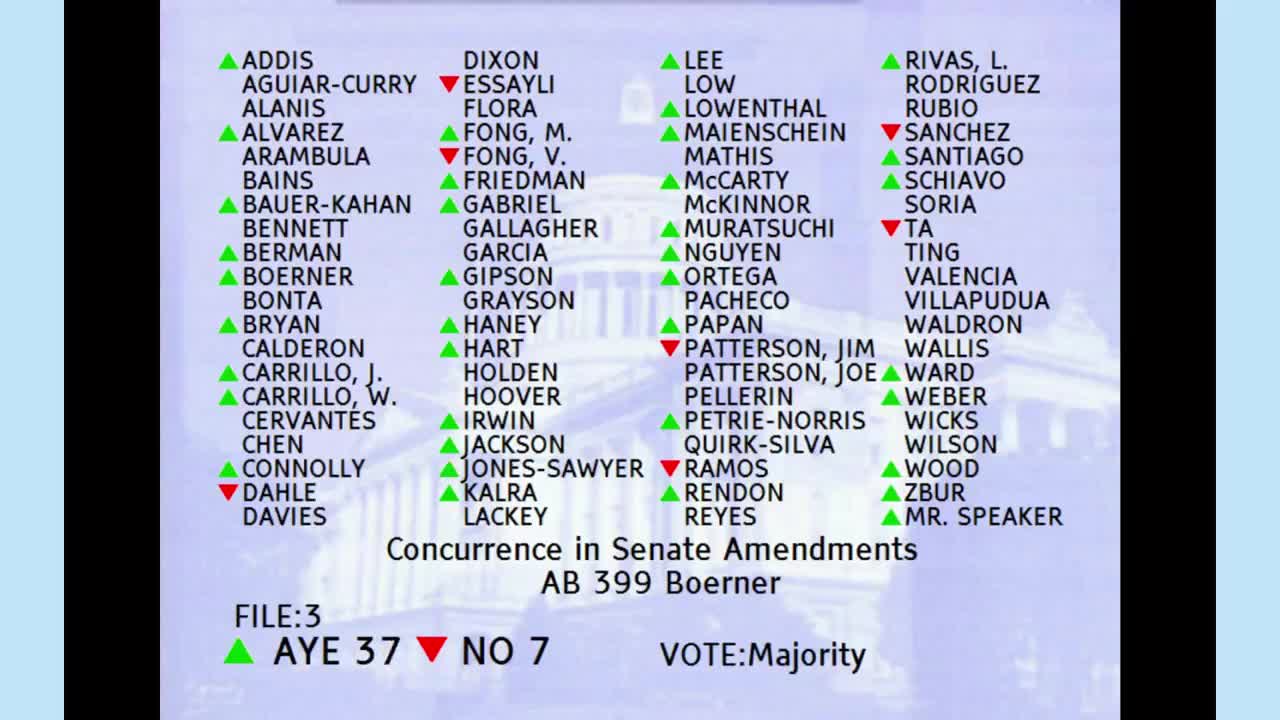
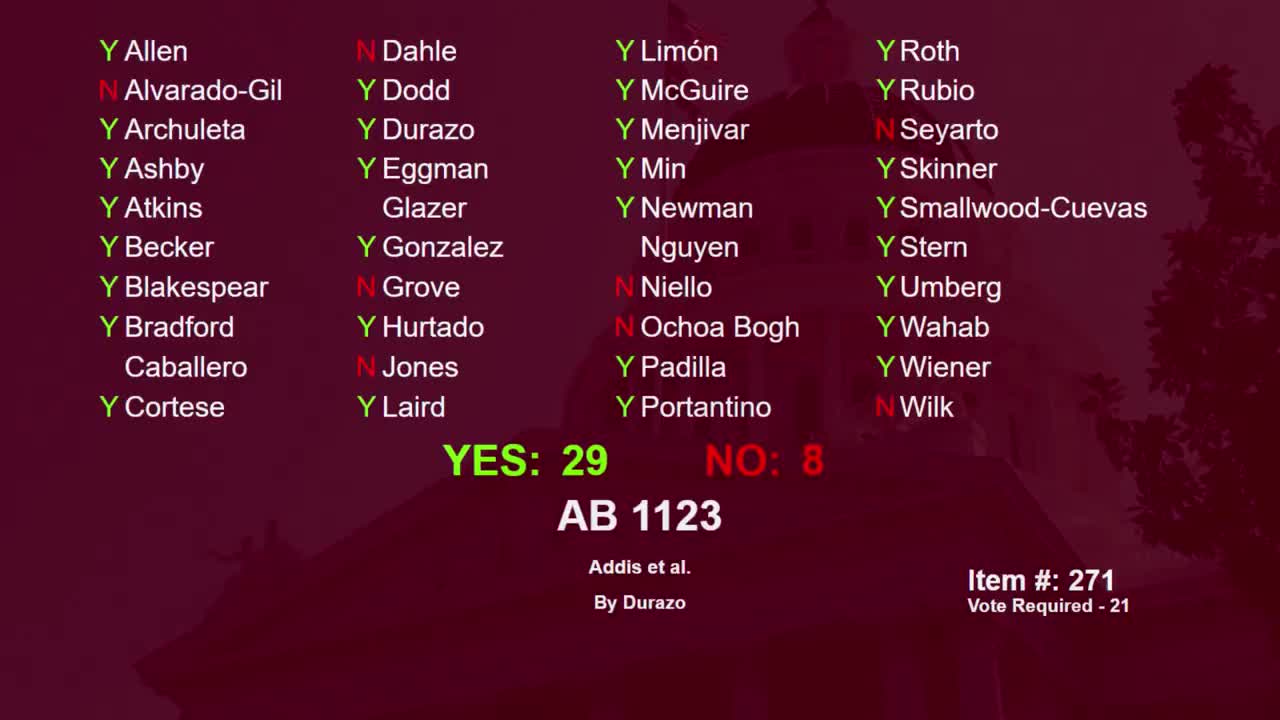
Bill Author

Bill Co-Author(s):