AB 498: Tribal gaming: compact ratification.
- Session Year: 2023-2024
- House: Assembly
- Latest Version Date: 2023-05-22
Current Status:
Passed
(2023-05-22: Chaptered by Secretary of State - Chapter 9, Statutes of 2023.)
Introduced
In Committee
First Chamber
In Committee
Second Chamber
Enacted
The existing federal Indian Gaming Regulatory Act of 1988 provides for the negotiation and execution of tribal-state gaming compacts for the purpose of authorizing certain types of gaming on Indian lands within a state. The California Constitution authorizes the Governor to negotiate and conclude tribal-state gaming compacts, subject to ratification by the Legislature. Existing law expressly ratifies a number of tribal-state gaming compacts between the State of California and specified Indian tribes.
The California Environmental Quality Act (CEQA) requires a lead agency to prepare, or cause to be prepared, and certify the completion of, an environmental impact report on a project, as defined, that it proposes to carry out or approve that may have a significant effect on the environment, as defined, or to adopt a negative declaration if it finds that the project will not have that effect.
This bill would ratify the tribal-state gaming compact entered into between the State of California and the Federated Indians of Graton Rancheria, executed on March 9, 2023. The bill would provide that, in deference to tribal sovereignty, certain actions related to this compact are not projects for purposes of CEQA.
This bill would declare that it is to take effect immediately as an urgency statute.
The existing federal Indian Gaming Regulatory Act of 1988 provides for the negotiation and execution of tribal-state gaming compacts for the purpose of authorizing certain types of gaming on Indian lands within a state. The California Constitution authorizes the Governor to negotiate and conclude tribal-state gaming compacts, subject to ratification by the Legislature. Existing law expressly ratifies a number of tribal-state gaming compacts between the State of California and specified Indian tribes.
The California Environmental Quality Act (CEQA) requires a lead agency to prepare, or cause to be prepared, and certify the completion of, an environmental impact report on a project, as defined, that it proposes to carry out or approve that may have a significant effect on the environment, as defined, or to adopt a negative declaration if it finds that the project will not have that effect.
This bill would ratify the tribal-state gaming compact entered into between the State of California and the Federated Indians of Graton Rancheria, executed on March 9, 2023. The bill would provide that, in deference to tribal sovereignty, certain actions related to this compact are not projects for purposes of CEQA.
Existing law establishes the California Horse Racing Board, and gives that board specified duties, including authorizing a licensed quarter horse racing association that is conducting a live racing meeting in this state to accept wagers on specified races, including the American Quarter Horse Racing Challenge.This bill would authorize the board to authorize a licensed quarter horse racing association that is conducting a live racing meeting in this state to accept wagers on a quarter horse stakes race with a purse equal to or greater than $100,000. The bill would also make nonsubstantive changes.Existing law establishes the California Horse Racing Board, and gives that board specified duties, including authorizing a licensed quarter horse racing association that is conducting a live racing meeting in this state to accept wagers on specified races, including the American Quarter Horse Racing Challenge.
This bill would authorize the board to authorize a licensed quarter horse racing association that is conducting a live racing meeting in this state to accept wagers on a quarter horse stakes race with a purse equal to or greater than $100,000. The bill would also make nonsubstantive changes.
Existing law ratifies various tribal-state gaming compacts entered into or amended in accordance with the federal Indian Gaming Regulatory Act of 1988.This bill would make technical, nonsubstantive changes to those provisions.Existing law ratifies various tribal-state gaming compacts entered into or amended in accordance with the federal Indian Gaming Regulatory Act of 1988.
This bill would make technical, nonsubstantive changes to those provisions.
(a)The tribal-state gaming compact entered into in accordance with the federal Indian Gaming Regulatory Act of 1988 (18 U.S.C. Secs. 1166 to 1168, inclusive, and 25 U.S.C. Sec. 2701 et seq.) between the State of California and the Federated Indians of Graton Rancheria, executed on March 9, 2023, is hereby ratified.
(b)(1)In deference to tribal sovereignty, none of the following shall be deemed a project for purposes of the California Environmental Quality Act (Division 13 (commencing with Section 21000) of the Public Resources Code):
(A)The execution of the tribal-state gaming compact ratified by this section.
(B)The execution of an amendment to the tribal-state gaming compact ratified by this section.
(C)The execution of an intergovernmental agreement between the tribe and a county or city government negotiated pursuant to the express authority of, or as expressly referenced in, the tribal-state gaming compact ratified by this section.
(D)The execution of an intergovernmental agreement between the tribe and the Department of Transportation, or other state agency, negotiated pursuant to the express authority of, or as expressly referenced in, the tribal-state gaming compact ratified by this section.
(E)The on-reservation impacts of compliance with the terms of the tribal-state gaming compact ratified by this section.
(2)Except as expressly provided in this section, this subdivision does not exempt a city, county, or city and county, or the Department of Transportation, or any state agency or local jurisdiction, from the requirements of the California Environmental Quality Act.
SEC. 2.This act is an urgency statute necessary for the immediate preservation of the public peace, health, or safety within the meaning of Article IV of the California Constitution and shall go into immediate effect. The facts constituting the necessity are:
In order to enhance the economic development, stability, and self-sufficiency of the Federated Indians of Graton Rancheria, and to protect the interests of the tribe and its members, the surrounding communities, and the California public at the earliest possible time, it is necessary that this act take effect immediately.
(a)The tribal-state gaming compact entered into in accordance with the federal Indian Gaming Regulatory Act of 1988 (18 U.S.C. Secs. 1166 to 1168, inclusive, and 25 U.S.C. Sec. 2701 et seq.) between the State of California and the Federated Indians of Graton Rancheria, executed on March 9, 2023, is hereby ratified.
(b)(1)In deference to tribal sovereignty, none of the following shall be deemed a project for purposes of the California Environmental Quality Act (Division 13 (commencing with Section 21000) of the Public Resources Code):
(A)The execution of the tribal-state gaming compact ratified by this section.
(B)The execution of an amendment to the tribal-state gaming compact ratified by this section.
(C)The execution of an intergovernmental agreement between the tribe and a county or city government negotiated pursuant to the express authority of, or as expressly referenced in, the tribal-state gaming compact ratified by this section.
(D)The execution of an intergovernmental agreement between the tribe and the Department of Transportation, or other state agency, negotiated pursuant to the express authority of, or as expressly referenced in, the tribal-state gaming compact ratified by this section.
(E)The on-reservation impacts of compliance with the terms of the tribal-state gaming compact ratified by this section.
(2)Except as expressly provided in this section, this subdivision does not exempt a city, county, or city and county, or the Department of Transportation, or any state agency or local jurisdiction, from the requirements of the California Environmental Quality Act.
SECTION 1.Section 19596 of the Business and Professions Code is amended to read:19596.(a)Notwithstanding any other law, the board may do any of the following:(1)Authorize a licensed harness racing association that is conducting a live racing meeting in this state to accept wagers on the full card of races conducted by another racing association on the day that other association conducts the Breeders Crown Stakes, the Meadowlands Pace, the Hambletonian, the Cane Pace, the Kentucky Futurity, or the North American Cup.(2)Authorize a licensed quarter horse racing association that is conducting a live racing meeting in this state to accept wagers on any of the following:(A)Races conducted by the racing association that conducts the American Quarter Horse Racing Challenge, if the races are conducted on the same day as the American Quarter Horse Racing Challenge.(B)The full card of races conducted by another racing association on the day that other association conducts the Texas Classic Futurity and Remington Park Futurity.(C)A quarter horse stakes race with a purse equal to or greater than one hundred thousand dollars ($100,000).(3)Authorize the inclusion of wagers authorized pursuant to this section in the parimutuel pools of the out-of-state association that conducts the races on which the wagers are placed.(b)The board authorization may be granted under this section only if both of the following conditions are met:(1)The authorization complies with federal laws, including, but not limited to, the Interstate Horseracing Act of 1978 (15 U.S.C. Sec. 3001 et seq.).(2)Wagering is offered only within the racing enclosure and only within seven days of the running of the out-of-state race.(a)Notwithstanding any other provision of law, the board may do any of the following:
(1)Authorize a licensed harness racing association that is conducting a live racing meeting in this state to accept wagers on the full card of races conducted by another racing association on the day that other association conducts the Breeders Crown Stakes, the Meadowlands Pace, the Hambletonian, the Cane Pace, the Kentucky Futurity, or the North American Cup.
(2)Authorize a licensed quarter horse racing association that is conducting a live racing meeting in this state to accept wagers on either any of the following:
(A)Races conducted by the racing association that conducts the American Quarter Horse Racing Challenge, if the races are conducted on the same day as the American Quarter Horse Racing Challenge.
(B)The full card of races conducted by another racing association on the day that other association conducts the Texas Classic Futurity and Remington Park Futurity.
(C)A quarter horse stakes race with a purse equal to or greater than one hundred thousand dollars ($100,000).
(3)Authorize the inclusion of wagers authorized pursuant to this section in the parimutuel pools of the out-of-state association that conducts the races on which the wagers are placed.
(b)The board authorization may be granted under this section only if both of the following conditions are met:
(1)The authorization complies with federal laws, including, but not limited to, Chapter 57 (commencing with Section 3001) of Title 15 of the United States Code. the Interstate Horseracing Act of 1978 (15 U.S.C. Sec. 3001 et seq.).
(2)Wagering is offered only within the racing enclosure and only within seven days of the running of the out-of-state race.
SECTION 1.Section 12012.97 of the Government Code is amended to read:12012.97.(a)The following tribal-state gaming compacts, entered into in accordance with the federal Indian Gaming Regulatory Act of 1988 (18 U.S.C. Secs. 1166 to 1168, inclusive, and 25 U.S.C. Sec. 2701 et seq.), are hereby ratified:(1)The compact between the State of California and the La Jolla Band of Luiseno Indians, executed on August 1, 2018.(2)The compact between the State of California and the Mechoopda Indian Tribe of Chico Rancheria, executed on August 8, 2018.(3)The compact between the State of California and the San Pasqual Band of Mission Indians, executed on August 8, 2018.(4)The compact between the State of California and the Torres-Martinez Desert Cahuilla Indians, executed on August 16, 2018.(5)The compact between the State of California and the Twenty-Nine Palms Band of Mission Indians, executed on August 8, 2018.(b)The following amendments to the tribal-state gaming compacts, entered into in accordance with the federal Indian Gaming Regulatory Act of 1988 (18 U.S.C. Secs. 1166 to 1168, inclusive, and 25 U.S.C. Sec. 2701 et seq.), are hereby ratified:(1)The amendment to the compact between the State of California and the Dry Creek Rancheria Band of Pomo Indians, executed on August 1, 2018.(2)The amendment to the compact between the State of California and the Karuk Tribe, executed on August 1, 2018.(c)(1)In deference to tribal sovereignty, none of the following shall be deemed a project for purposes of the California Environmental Quality Act (Division 13 (commencing with Section 21000) of the Public Resources Code):(A)The execution of a tribal-state gaming compact ratified by this section.(B)The execution of an amendment to a tribal-state gaming compact ratified by this section.(C)The execution of an intergovernmental agreement between a tribe and a county or city government negotiated pursuant to the express authority of, or as expressly referenced in, a tribal-state gaming compact or an amended tribal-state gaming compact ratified by this section.(D)The execution of an intergovernmental agreement between a tribe and the Department of Transportation, or other state agency, negotiated pursuant to the express authority of, or as expressly referenced in, a tribal-state gaming compact or an amended tribal-state gaming compact ratified by this section.(E)The on-reservation impacts of compliance with the terms of a tribal-state gaming compact or an amended tribal-state gaming compact ratified by this section.(2)Except as expressly provided in this section, this subdivision does not exempt a city, county, or city and county, the Department of Transportation, or any state agency or local jurisdiction, from the requirements of the California Environmental Quality Act.(a)The following tribal-state gaming compacts compacts, entered into in accordance with the federal Indian Gaming Regulatory Act of 1988 (18 U.S.C. Secs. 1166 to 1168, inclusive, and 25 U.S.C. Sec. 2701 et seq.) seq.), are hereby ratified:
(1)The compact between the State of California and the La Jolla Band of Luiseno Indians, executed on August 1, 2018.
(2)The compact between the State of California and the Mechoopda Indian Tribe of Chico Rancheria, executed on August 8, 2018.
(3)The compact between the State of California and the San Pasqual Band of Mission Indians, executed on August 8, 2018.
(4)The compact between the State of California and the Torres-Martinez Desert Cahuilla Indians, executed on August 16, 2018.
(5)The compact between the State of California and the Twenty-Nine Palms Band of Mission Indians, executed on August 8, 2018.
(b)The following amendments to the tribal-state gaming compacts compacts, entered into in accordance with the federal Indian Gaming Regulatory Act of 1988 (18 U.S.C. Secs. 1166 to 1168, inclusive, and 25 U.S.C. Sec. 2701 et seq.) seq.), are hereby ratified:
(1)The amendment to the compact between the State of California and the Dry Creek Rancheria Band of Pomo Indians, executed on August 1, 2018.
(2)The amendment to the compact between the State of California and the Karuk Tribe, executed on August 1, 2018.
(c)(1)In deference to tribal sovereignty, none of the following shall be deemed a project for purposes of the California Environmental Quality Act (Division 13 (commencing with Section 21000) of the Public Resources Code):
(A)The execution of a tribal-state gaming compact ratified by this section.
(B)The execution of an amendment to a tribal-state gaming compact ratified by this section.
(C)The execution of an intergovernmental agreement between a tribe and a county or city government negotiated pursuant to the express authority of, or as expressly referenced in, a tribal-state gaming compact or an amended tribal-state gaming compact ratified by this section.
(D)The execution of an intergovernmental agreement between a tribe and the Department of Transportation, or other state agency, negotiated pursuant to the express authority of, or as expressly referenced in, a tribal-state gaming compact or an amended tribal-state gaming compact ratified by this section.
(E)The on-reservation impacts of compliance with the terms of a tribal-state gaming compact or an amended tribal-state gaming compact ratified by this section.
(2)Except as expressly provided in this section, this subdivision does not exempt a city, county, or city and county, or the Department of Transportation, or any state agency or local jurisdiction, from the requirements of the California Environmental Quality Act.
|
Date
|
Status
|
|---|---|
| May 22, 2023 | Chaptered by Secretary of State - Chapter 9, Statutes of 2023. |
| May 22, 2023 | Approved by the Governor. |
| May 18, 2023 | Enrolled and presented to the Governor at 2 p.m. |
| May 11, 2023 | In Assembly. Ordered to Engrossing and Enrolling. |
| May 11, 2023 | Read third time. Urgency clause adopted. Passed. Ordered to the Assembly. (Ayes 39. Noes 0. Page 1053.). |
| May 10, 2023 | Read second time. Ordered to third reading. |
| May 9, 2023 | Withdrawn from committee. |
| May 9, 2023 | Ordered to second reading. |
| May 2, 2023 | In Senate. Read first time. To Com. on RLS. for assignment. |
| May 1, 2023 | Read third time. Urgency clause adopted. Passed. Ordered to the Senate. (Ayes 78. Noes 0. Page 1407.). |
| Apr 24, 2023 | Read third time and amended. Ordered to third reading. (Page 1298.) |
| Apr 18, 2023 | Read second time. Ordered to third reading. |
| Apr 17, 2023 | Withdrawn from committee. |
| Apr 17, 2023 | Ordered to second reading. |
| Apr 17, 2023 | Assembly Rule 96 suspended. (Page 1167.) |
| Apr 4, 2023 | Re-referred to Com. on G.O. |
| Apr 3, 2023 | From committee chair, with author's amendments: Amend, and re-refer to Com. on G.O. Read second time and amended. |
| Mar 6, 2023 | Re-referred to Com. on G.O. |
| Mar 2, 2023 | Referred to Com. on G.O. |
| Mar 2, 2023 | From committee chair, with author's amendments: Amend, and re-refer to Com. on G.O. Read second time and amended. |
| Feb 8, 2023 | From printer. May be heard in committee March 10. |
| Feb 7, 2023 | Read first time. To print. |
|
Date
|
Description
|
Location
|
Votes
|
|
|---|---|---|---|---|
| May 11, 2023 | Assembly 3rd Reading AB498 Aguiar-Curry By Dodd Urgency Clause | Senate Floor |
Passed |
|
| May 1, 2023 | AB 498 Aguiar-Curry Third Reading Urgency | Assembly Floor |
Passed |
This list shows positions taken on this bill by organizations on the date displayed, which is linked to the original source.
Positions by individuals are not included.
|
Organization
|
Position
|
Date
|
|---|---|---|
| Federated Indians Of Graton Rancheria | * Indeterminate | Apr 12, 2023 |
| Gaming Workers Union in North America | * Indeterminate | Apr 12, 2023 |
| San Diego Band of Chumash Indians | * Support | Apr 12, 2023 |
| San Manuel Band Of Mission Indians | * Support | Apr 12, 2023 |
SENATE RULES COMMITTEE Office of Senate Floor Analyses (916) 651-1520 Fax: (916) 327-4478 | AB 498 |
THIRD READING
Bill No: AB 498
Author: Aguiar-Curry (D)
Amended: 4/24/23 in Assembly
Vote: 27 - Urgency
NOTE: On May 9, 2023, the Senate Governmental Organization Committee held an informational hearing on the tribal state gaming compact between the State of California and the Federated Indians of Graton Rancheria, California.
ASSEMBLY FLOOR: 78-0, 5/1/23 - See last page for vote
SUBJECT: Tribal gaming: compact ratification
SOURCE: Author
DIGEST:
This bill ratifies the tribal-state gaming compact between the State of California and the Federated Indians of Graton Rancheria (Tribe).
ANALYSIS:
Existing law:
- Provides, under the Indian Gaming Regulatory Act (IGRA), for the negotiation and conclusion of compacts between federally recognized Indian tribes and the State for the purpose of conducting Class III gaming activities on Indian lands within a State as a means of promoting tribal economic development, self-sufficiency, and strong tribal governments.
- Authorizes expressly a number of tribal-state gaming compacts between the State of California and specified Indian tribes.
- Authorizes the conduct of Class III gaming activities to the extent such activities are permitted by state law, a gaming compact has been concluded by a federally recognized tribe and the State, and the compact has been approved by the Secretary of the Interior.
- Limits the operation of Class III gaming activities to Indian lands acquired on or before October 17, 1988. Provides, for certain exceptions to conduct gaming activities on Indian lands acquired after October 17, 1988.
- Defines “Indian lands” to mean all lands within the limits of any Indian reservation, and any lands title to which is either held in trust by the United States for the benefit of any Indian tribe, or individual, or held by any Indian tribe or individual subject to restriction by the U.S. against alienation and over which an Indian tribe exercises governmental power.
- Requires the State to negotiate to conclude a compact in good faith with an Indian tribe having jurisdiction over the Indian lands upon which the Class III gaming activity is to be conducted. Provides the U.S. district courts with jurisdiction over any cause of action initiated by a tribal government alleging that the State failed to negotiate in good faith to conclude a compact. Prescribes the remedy, mediation supervised by the courts, if it is found that the State failed to negotiate in good faith to conclude a compact.
- Authorizes the Governor, under the California Constitution, to negotiate and conclude compacts, subject to ratification by the Legislature.
This bill:
- Ratifies the tribal-state gaming compact between the State of California and the Tribe.
- Provides that, in deference to tribal sovereignty, certain actions are not deemed projects for purposes of the California Environmental Quality Act (CEQA); and, stipulate, except as expressly provided, that none of the provisions shall be construed to exempt a city, county, or city and county, or the Department of Transportation, or any state agency or local jurisdiction, from CEQA requirements.
- Contains an urgency clause.
Background
The Tribal-State Gaming Compact between the State of California and the Tribe was executed on March 9, 2023.
The Compact authorizes the Tribe to operate a maximum of 6,00 slot machines (an increase from 3,000) at no more than two gaming facilities, one of which has a primary purpose other than gaming and operates no more than 50 slot machines, located on eligible Indian lands held in trust for the Tribe, and located within the boundaries of the Tribe’s reservation.
The Tribe has agreed to pay, into the Special Distribution Fund (SDF), the State its pro rata share of costs the State incurs for the performance of its duties under the Compact. If the balance after five years becomes insufficient to reduce or eliminate the pro rata contribution of limited-gaming tribes, then the Tribe is required to pay an additional $500,000 into the SDF.
The Compact requires the Tribe to pay into the Revenue Sharing Trust Fund (RSTF) or the Tribal Nation Grant Fund (TNGF), on a quarterly basis, pursuant to the following schedule:
Up to 3,000 Gaming Devices $2,000,000
3,001 – 4,000 Gaming Devices $2,125,000
4,001 – 5,000 Gaming Devices $2,437,500
5,001 – 6,000 Gaming Devices $2,750,000
The Compact also provides for supplementary contribution to the RSTF to provide additional distributions to limited and non-gaming tribes above the $1.1 million annual amount, , on a quarterly basis, pursuant to the following schedule:
Up to 3,000 Gaming Devices $0
3,001 – 3,500 Gaming Devices $125,000
3,501 – 4,000 Gaming Devices $250,000
4,001 – 4,500 Gaming Devices $375,000
4,501 – 5,000 Gaming Devices $625,000
5,001 – 5,500 Gaming Devices $875,000
5,501 - 6,000 Gaming Devices $1,750,000
The Compact also requires the Tribe to distribute at least 2.0% of Net Win to neighboring jurisdictions to mitigate impacts upon those jurisdictions resulting from the operation of the gaming facility, and other purposes as the Tribe and a jurisdiction may agree.
Certain terms of the Compact related to licensing, regulatory, patron protection, and public health provisions are substantially the same as recent compacts. Specifically, the Compact includes a Tribal Labor Relations Ordinance (TLRO), which provides that gaming may commence only after the Tribe has adopted a TLRO that allows for a secret ballot election and union neutrality. The Tribe has an existing collective bargaining agreement that is enforceable under the federal Labor Management Relations Act.
The Compact’s preamble notes that the Tribe and the State have concluded that this compact protects the interests of the Tribe and its members, the surrounding community, and the California public, and will promote and secure long-term stability, mutual respect, and mutual benefit.
The Federated Indians of Graton Rancheria, California, formerly known as the Federated Coast Miwok, is a federally recognized American Indian tribe of Coast Miwok and Southern Pomo Indians. The Tribe is comprised of nearly 1,500 members with government offices located in Rothnert Park, California. The Tribe currently owns and operates the Graton Resort & Casino, which opened on November 5, 2013. The resort & Casino offers 3,000 slot machines, over 140 table games including Blackjack, Pai Gow Poker, and Baccarat, a live poker room, and VIP gaming salons.
Once effective (legislative ratification and federal approval required), this Compact will be in full force and effect for 25 years following the effective date.
Brief History of the Tribe. The Federated Indians of Graton Rancheria, California, formerly known as the Federated Coast Miwok, is a federally recognized American Indian tribe of Coast Miwok and Southern Pomo Indians. The Tribe is comprised of nearly 1,500 members with government offices located in Rothnert Park, California. The Tribe is governed by a seven member Tribal Council who is elected to two-year terms by the adult tribal membership. Tribal government programs and services include sacred sites preservation and protection, Indian housing, Indian education, membership, cultural arts, social services, and tribal health.
In 1966, the federal government terminated its relationship with the Tribe pursuant to the California Rancheria Act of 1958 and transferred title to the lands known as the Graton Rancheria into private ownership. In 2000, Congress restored federal recognition to the Tribe pursuant to the Graton Rancheria Restoration Act. In 2010, the Bureau of Indian Affairs of the United States Department of the Interior accepted a 254 Acre Parcel trust on behalf of the Tribe as the Tribe’s reservation.
In 2012, the State and the Tribe completed negotiations for a compact, the first of the “post-Rincon era” compacts, which allowed the operation of 3,000 gaming devices and directed up to 15% of the casino’s net win towards local communities and gambling mitigation and regulation.
The 2012 compact provided financial incentives for the Tribe to enter into agreements with local agencies to provide funding to mitigate the off-reservation impacts of the casino on the surrounding community. Furthermore, it created the TNGF, which provided for the distribution of funds to non-gaming and limited-gaming tribes for purposes related to effective self-governance, self-determined community, and economic development. All subsequent compacts have provided for contributions to the TNGF. The Tribe’s 2012 compact and ratified in 2017 to address participation in the State workers’ compensation program and other specific matters.
The Tribe owns and operates the Graton Resort & Casino, which opened on November 5, 2013. According to the Tribe’s website, the casino’s presence in the heart of wine country gives its visitors an experience like none other. The resort & Casino offers 3,000 slot machines, over 140 table games including Blackjack, Pai Gow Poker, and Baccarat, a live poker room, and VIP gaming salons. The gaming resort offers fine and casual dining as well as entertainment options for both locals and tourists. A 200-room hotel, meeting rooms, and a ballroom were added to the gaming resort in November 2016. A spa, fitness center, outdoor pool, and other amenities were also included in this expansion. The Tribe’s gaming operation is one of Sonoma County’s largest private employers, with more than 2,000 employees.
KEY PROVISIONS OF THE COMPACT:
Scope of Class III Gaming Authorized. The Tribe is authorized to operate up to 6,000 slot machines (an increase from 3,000), banking or percentage card games, and any devices or games that are authorized under state law to the California State Lottery, provided that the Tribe will not offer such games through use of the Internet unless others in the state not affiliated with or licensed by the California State Lottery are permitted to do so under state and federal law. The Tribe can operate off-track wagering on horse races at a satellite wagering facility pursuant to the requirements outlined in the Compact. The Tribe shall not engage in Class III Gaming that is not expressly authorized in the Compact.
Authorized Gaming Facility. The Tribe may establish and operate no more than two gaming facilities, one of which has a primary purpose other than gaming and operates no more than 50 slot machine. The Tribe may engage in Class III gaming only on eligible Indian lands held in trust for the Tribe, located within the boundaries of the Tribe’s reservation.
Payments to the Special Distribution Fund (SDF). The Tribe shall pay to the State, on a pro rata basis, the costs the State incurs for the performance of all its duties under this Compact, as established by the monies appropriated in the annual Budget Act for the performance of their duties under the Class III Gaming Compacts. The State shall provide the Tribe notice if it determines that the SDF will not be sufficient to meet specified mandates under current law for the next fiscal year. If at the time of the State’s notice the Tribe operates more than 3,000 slot machines, it shall pay $500,000 into the SDF for that next fiscal year in addition to the Tribe’s pro rata share payment obligation as described above.
Payments to the RSTF or the TNGF. The Tribe is required to pay into the RSTF or the TNGF, on a quarterly basis, pursuant to the following schedule:
Up to 3,000 Gaming Devices $2,000,000
3,001 – 4,000 Gaming Devices $2,125,000
4,001 – 5,000 Gaming Devices $2,437,500
5,001 – 6,000 Gaming Devices $2,750,000
All payments made by the Tribe to the State Gaming Agency shall be deposited into the RSTF and the TNGF in a proportion to be determined by the Legislature, provided that if there are insufficient monies in the RSTF to pay $1,100,000 per year to each eligible non-gaming tribe and limited-gaming tribe, the State Gaming Agency shall deposit all payments into the RSTF, as specified.
Supplementary Payments to Non-Gaming and Limited-Gaming Tribes. To provide non-gaming tribes and limited-gaming tribes with additional funding above and beyond the $1,100,000, the Tribe shall, on a quarterly basis, pay into the RSTF pursuant to the following schedule:
Up to 3,000 Gaming Devices $0
3,001 – 3,500 Gaming Devices $125,000
3,501 – 4,000 Gaming Devices $250,000
4,001 – 4,500 Gaming Devices $375,000
4,501 – 5,000 Gaming Devices $625,000
5,001 – 5,500 Gaming Devices $875,000
5,501 - 6,000 Gaming Devices $1,750,000
The State will separately track the Tribe’s payments into the RSTF and disburse, upon appropriation by the Legislature, for the next fiscal year the full amount in quarterly payments to each eligible recipient non-gaming tribe and limited-gaming tribe, as specified.
Distribution to Local Governments. The Tribe has agreed to provide financial assistance to non-tribal law enforcement, emergency services, and service agencies with demonstrated impacts from the Gaming Facilities. To that end, the Tribe is required to distribute at least 2% of Net Win to neighboring jurisdictions to mitigate impacts upon those jurisdictions resulting from the operation of the Gaming Facility, and other purposes as the Tribe and a jurisdiction may agree.
Labor Provisions. The Tribe has entered into an agreement under the federal Labor Management Relations Act and has maintained the TLRO from its 2012 compact. Under the TLRO, if the tribe employs 250 or more persons in a tribal casino facility, then the provisions of the TLRO become effective. The TLRO makes it clear that employees shall have the right to self-organization, to form, to join, or assist employee organizations, to bargain collectively through representatives of their own choosing. The TLRO provides for a secret ballot election and union neutrality. After verification that 30% of the eligible employees in a bargaining unit have expressed an interest in the union, a notice of election shall be issued and the election shall be concluded within 30 calendar days thereafter. Union representation requires a majority of all votes cast.
FISCAL EFFECT: Appropriation: No Fiscal Com.: Yes Local: No
SUPPORT: (Verified 5/10/23)
None received
OPPOSITION: (Verified 5/10/23)
None received
ASSEMBLY FLOOR: 78-0, 5/1/23
AYES: Addis, Aguiar-Curry, Alanis, Alvarez, Arambula, Bains, Bauer-Kahan, Bennett, Berman, Boerner, Bonta, Bryan, Calderon, Juan Carrillo, Wendy Carrillo, Cervantes, Chen, Connolly, Megan Dahle, Davies, Dixon, Essayli, Flora, Mike Fong, Vince Fong, Friedman, Gabriel, Gallagher, Garcia, Gipson, Grayson, Haney, Hart, Holden, Hoover, Irwin, Jackson, Jones-Sawyer, Kalra, Lackey, Lee, Low, Lowenthal, Maienschein, Mathis, McCarty, Muratsuchi, Stephanie Nguyen, Ortega, Pacheco, Papan, Jim Patterson, Joe Patterson, Pellerin, Petrie-Norris, Quirk-Silva, Ramos, Reyes, Luz Rivas, Robert Rivas, Rodriguez, Blanca Rubio, Sanchez, Santiago, Schiavo, Ta, Ting, Valencia, Villapudua, Waldron, Wallis, Ward, Weber, Wicks, Wilson, Wood, Zbur, Rendon
NO VOTE RECORDED: McKinnor, Soria
Prepared by: Felipe Lopez / G.O. / (916) 651-1530
5/10/23 15:19:56
**** END ****
ASSEMBLY THIRD READING
ATR Bill Id:AB 498
Author:(Aguiar-Curry)
As Amended Ver:April 24, 2023
2/3 vote. Urgency
SUMMARY
This bill ratifies a Tribal-State Gaming Compact (Compact) between the State of California (State) and the Federated Indians of Graton Rancheria (Tribe) pursuant to the Indian Gaming Regulatory Act of 1988 (IGRA).
Major Provisions
- Ratify the tribal-state gaming compact between the State of California and the Federated Indians of Graton Rancheria, executed on March 9, 2023.
- Provide that, in deference to tribal sovereignty, certain actions are not deemed projects for purposes of the California Environmental Quality Act (CEQA); and, stipulate, except as expressly provided, that none of the provisions shall be construed to exempt a city, county, or city and county, or the Department of Transportation, or any state agency or local jurisdiction, from CEQA requirements.
- Provide, once effective (legislative ratification and federal approval required), the compact will be in full force and effect for 25 years following the effective date.
- Contains an urgency clause.
EXISTING LAW:
- Provides, under the IGRA, for the negotiation and conclusion of compacts between federally recognized Indian tribes and the State for the purpose of conducting Class III gaming activities on Indian lands within a State as a means of promoting tribal economic development, self-sufficiency, and strong tribal governments.
- Authorizes expressly a number of tribal-state gaming compacts between the State and specified Indian tribes.
- Authorizes the conduct of Class III gaming activities to the extent such activities are permitted by state law, a gaming compact has been concluded by a federally recognized tribe and the State, and the compact has been approved by the Secretary of the Interior.
- Limits the operation of Class III gaming activities to Indian lands acquired on or before October 17, 1988. Provides exceptions to conduct gaming activities on Indian lands acquired after October 17, 1988.
- Defines Indian lands to mean all lands within the limits of any Indian reservation, and any lands title to which is either held in trust by the United States (U.S.) for the benefit of any Indian tribe, or individual, or held by any Indian tribe or individual subject to restriction by the U.S. against alienation and over which an Indian tribe exercises governmental power.
- Requires the State to negotiate to conclude a compact in good faith with an Indian tribe having jurisdiction over the Indian lands upon which the Class III gaming activity is to be conducted. Provides the U.S. district courts with jurisdiction over any cause of action initiated by a tribal government alleging that the State failed to negotiate in good faith to conclude a compact. Prescribes the remedy, mediation supervised by the courts, if it is found that the State failed to negotiate in good faith to conclude a compact.
- Authorizes the Governor, under the California Constitution, to negotiate and conclude compacts, subject to ratification by the Legislature.
COMMENTS
Background:
The Compact between the State and the Tribe was executed on March 9, 2023. Under the terms of this new Compact, the Tribe may operate up to 6,000 gaming machines in total (an increase from 3,000 to 6,000) at two facilities, one of which may only host 50 machines. According to reports, the expansion will allow the Tribe to eventually have the second-largest number of slot machines of any tribal casino operation in the state.
The Tribe will reimburse the State for its regulatory costs on a pro rata basis by making payments into the Indian Gaming Special Distribution Fund (IGSDF). If the IGSDF balance after five years becomes insufficient to reduce or eliminate the pro rata contribution of limited-gaming tribes, then the Tribe will pay an additional $500,000 into the IGSDF.
The Tribe will contribute quarterly payments to the Revenue Sharing Trust Fund (RSTF) based on the number of gaming devices in operation:
- 0-3,000 Gaming devices: $2 million
- 3,001-4,000 Gaming devices: $2,125,000
- 4,001-5,000 Gaming devices: $2,437,500
- 5,001-6,000 Gaming devices: $2.75 million
The Compact also provides for supplementary contributions to the RSTF to provide additional distributions to limited- and non-gaming tribes above the $1.1 million annual amount. The quarterly contribution is based on the number of gaming devices in operation:
- 0-3,000 Gaming devices: $0
- 3,001-3,500 Gaming devices: $125,000
- 3,501-4,000 Gaming devices: $250,000
- 4,001-4,500 Gaming devices: $375,000
- 4,501-5,000 Gaming devices: $625,000
- 5,001-5,500 Gaming devices: $875,000
- 5,501-6,000 Gaming devices: $1.75 million
The Compact also requires the Tribe to distribute at least 2% of Net Win to neighboring jurisdictions to mitigate impacts upon those jurisdictions resulting from the operation of the gaming facility, and other purposes as the Tribe and a jurisdiction may agree.
The Compact states that in the event of a force majeure beyond the Tribe's control that cause the Tribes gaming facility to be inoperable or operate at significantly less capacity, the Tribe and the State agree to meet and confer for the purposes of discussing the event and appropriate actions.
The Class III gaming compact with the Tribe includes provisions addressing public health and safety, gaming licensing and regulation, patron and labor protections, and review of potential off-reservation impacts. The Compact includes a Tribal Labor Relations Ordinance (TLRO), which provides that gaming may commence only after the Tribe has adopted a TLRO that allows for a secret ballot election and union neutrality. The Tribe has an existing collective bargaining agreement (UNITE HERE) that is enforceable under the federal Labor Management Relations Act.
The Compact's preamble notes the State and the Tribe share an interest in creating a framework within which the gaming facility can operate successfully to generate revenue for essential government programs for tribal members while ensuring that other interests are also furthered, subject to IGRA.
According to the Tribe, "We are happy to improve our compact with the State and continue to provide needed community funds for the City of Rohnert Park, Sonoma County and our state. This Compact allows the Tribe to grow as a self-sustaining sovereign nation and continue to support our mission of social justice and environmental stewardship."
The Compact goes into effect following legislative ratification and approval by the U.S. Secretary of the Interior. The Compact will be in full force and effect for 25 years following the effective date.
Brief History and Background on the Tribe:
The Federated Indians of Graton Rancheria, formerly known as the Federated Coast Miwok, is a federally recognized American Indian tribe of Coast Miwok and Southern Pomo Indians. The Tribe is comprised of nearly 1,500 members with government offices located in Rohnert Park, California. The Tribe is governed by a seven member Tribal Council who is elected to two-year terms by the adult tribal membership. Tribal governmental programs and services include sacred sites preservation and protection, Indian housing, Indian education, membership, cultural arts, social services, and tribal health.
In 1966, the federal government terminated its relationship with the Tribe pursuant to the California Rancheria Act of 1958 (Public Law 88-453) and transferred title to the lands known as the Graton Rancheria into private ownership.
In 2000, Congress restored federal recognition to the Tribe pursuant to the Graton Rancheria Restoration Act (Public Law 106-568, 25 United States Code Section 1300(n) et seq.). In 2010, the Bureau of Indian Affairs of the United States Department of the Interior accepted a 254 Acre Parcel into trust on behalf of the Tribe as the Tribe's reservation.
In 2012, the State and the Tribe completed negotiations for a compact that protects the interests of the Tribe and its members, the surrounding community, and the California public, and promotes and secures long-term stability, mutual respect, and mutual benefits. The 2012 compact, the first of the "post-Rincon era" compacts (see below), allowed the operation of 3,000 gaming devices and directed up to 15% of the casino's net win towards local communities and gambling mitigation and regulation. The 2012 compact provided financial incentives for the Tribe to enter into agreements with local agencies to provide funding to mitigate the off-reservation impacts of the casino on the surrounding community. Furthermore, it created the Tribal Nation Grant Fund (TNGF), which provided for the distribution of funds to non-gaming and limited-gaming tribes for purposes related to effective self-governance, self-determined community, and economic development. All subsequent compacts have provided for contributions to the TNGF. The Tribe's 2012 compact was amended and ratified in 2017 to address participation in the State workers' compensation program and other specific matters.
The Tribe owns and operates the Graton Resort & Casino, which opened on November 5, 2013. It's presence in the heart of wine country gives its visitors an experience like none other. The Resort & Casino offers incomparable entertainment featuring table games and the latest slot machines (3,000), over 140 table games including Blackjack, Pai Gow Poker, and Baccarat, a live poker room, and VIP gaming salons. The gaming resort offers fine and casual dining as well as entertainment options for both locals and tourists. A 200-room hotel, meeting rooms, and a ballroom were added to the gaming resort in November 2016. A spa, fitness center, outdoor pool, and other amenities were also included in this expansion. The Tribe's gaming operation is one of Sonoma County's largest private employers, with more than 2,000 employees.
Key Provisions of the Compact:
Scope of Class III Gaming Authorized. The Tribe is authorized to operate up to 6,000 gaming devices, banking or percentage card games, and any devices or games that are authorized under state law to the California State Lottery, provided that the Tribe will not offer such games through use of the Internet unless others in the state not affiliated with or licensed by the Lottery are permitted to do so under state and federal law. The Tribe can operate off-track wagering on horse races at a satellite wagering facility pursuant to the requirements outlined in the Compact. The Tribe shall not engage in Class III gaming that is not expressly authorized in the Compact.
Authorized Gaming Facility. The Tribe may establish and operate not more than two gaming facilities, one of which has a primary purpose other than gaming and operates no more than 50 gaming devices, and engage in Class III Gaming only on gaming eligible Indian lands on the 254 Acre Parcel as it is legally described in and represented on the map at Appendix A in the Compact. The Tribe may combine and operate in its gaming facilities any forms and kinds of gaming permitted under law, except to the extent limited under IGRA, this Compact, or the Tribe's Gaming Ordinance.
Payments to the Indian Gaming Special Distribution Fund (IGSDF). The Tribe shall pay to the State, on a pro rata basis, the costs the State incurs for the performance of all its duties under this Compact, as established by the monies appropriated in the annual Budget Act for duties under the Class III gaming compacts. The State shall provide the Tribe notice if it determines that the IGSDF will not be sufficient to meet specified mandates under current law for the next fiscal year. If at the time of the State's notice the Tribe operates more than 3,000 gaming devices, it shall pay $500,000 into the IGSDF for that next fiscal year in addition to the Tribe's pro rata share payment obligation as described above.
Payments to the RSTF or the TNGF. The Tribe shall pay into the Revenue Sharing Trust Fund or the Tribal Nation Grant Fund, on a quarterly basis, pursuant to above referenced schedule. All payments made by the Tribe to the State Gaming Agency and shall be deposited into the RSTF and the TNGF in a proportion to be determined by the Legislature, provided that if there are insufficient monies in the RSTF to pay $1.1 million per year to each eligible non-gaming tribe and limited-gaming tribe, the State Gaming Agency shall deposit all payments into the RSTF, as specified.
Supplementary Payments to Non-Gaming and Limited-Gaming Tribes. To provide non-gaming tribes and limited-gaming tribes with additional funding above and beyond the $1.1 million the Tribe shall pay into the RSTF pursuant the above referenced schedule. The State will separately track the Tribe's payments into the RSTF and disburse, upon appropriation by the Legislature, for the next fiscal year the full amount in quarterly payments to each eligible recipient non-gaming tribe and limited-gaming tribe, as specified.
Tribal Distributions to Mitigate Impacts of Gaming on Local Governments. The Tribe recognizes that activities associated with operation of its gaming facilities may impact law enforcement, emergency services, and other public services of neighboring jurisdictions and place an increased burden on them. The Tribe agrees to provide financial assistance to non-tribal law enforcement, emergency services, and service agencies with demonstrated impacts from the gaming facilities. To that end, the Tribe shall distribute at least 2% of Net Win to neighboring jurisdictions to mitigate impacts upon those jurisdictions resulting from the operation of the gaming facility, and other purposes as the Tribe and a jurisdiction may agree.
Exclusivity. In the event the exclusive right of Indian tribes to operate Gaming Devices in California is abrogated by the enactment, amendment, or repeal of a state statute or constitutional provision, or the conclusive and dispositive judicial construction of a statute or the State Constitution by a California appellate court after the effective date of this Compact that gaming devices may lawfully be operated by another person, organization, or entity (other than an Indian tribe operating pursuant to a Class III Gaming compact or Secretarial Procedures) within California, the Tribe shall have the right to terminate this Compact or continue under this Compact under renegotiated amendments, as defined.
Labor Provisions. The Tribe has entered into an agreement under the federal Labor Management Relations Act and has maintained the Tribal Labor Relations Ordinance (TLRO) from its 2012 compact. Under that TLRO in Appendix B, if the Tribe employs 250 or more persons in a tribal casino facility, then the provisions of the TLRO become effective. The TLRO makes it clear that employees shall have the right to self-organization, to form, to join, or assist employee organizations, to bargain collectively through representatives of their own choosing. The TLRO provides for a secret ballot election and union neutrality. After verification that 30% of the eligible employees in a bargaining unit have expressed an interest in the union, a notice of election shall be issued and the election shall be concluded within 30 calendar days thereafter. Union representation requires a majority of all votes cast.
Local Agreements. According to reports, the Tribe will provide the City of Rohnert Park and Sonoma County millions each year to mitigate the impacts of the gaming facility. According to the Compact, 2% of the Tribe's Net Win from gaming operations, as defined, would be disbursed to the county and Rohnert Park. The municipalities are not aware of what that percentage equates to because it is unclear how much the Tribe's net revenue will be.
According to the Author
The Compact's preamble notes that the State recognizes that the Tribe has a long history of positive relations with the State of California, Sonoma County, the City of Rohnert Park, and the surrounding community, and provides a wide-range of substantial benefits to non-tribal members as well as tribal members. The State and the Tribe agree that all terms of this Compact are intended to be binding and enforceable.
Arguments in Support
None on file.
Arguments in Opposition
None on file.
FISCAL COMMENTS
Unknown.
VOTES
No relevant votes.
UPDATED
VERSION: April 24, 2023
CONSULTANT: Eric Johnson / G.O. / (916) 319-2531 FN: 0000220
ASSEMBLY THIRD READING
ATR Bill Id:AB 498
Author:(Aguiar-Curry)
As Amended Ver:April 3, 2023
Majority vote
SUMMARY
This bill ratifies a Tribal-State Gaming Compact (Compact) between the State of California (State) and the Federated Indians of Graton Rancheria (Tribe) pursuant to the Indian Gaming Regulatory Act of 1988 (IGRA).
Major Provisions
- Ratify the tribal-state gaming compact between the State of California and the Federated Indians of Graton Rancheria, executed on March 9, 2023.
- Provide that, in deference to tribal sovereignty, certain actions are not deemed projects for purposes of the California Environmental Quality Act (CEQA); and, stipulate, except as expressly provided, that none of the provisions shall be construed to exempt a city, county, or city and county, or the Department of Transportation, or any state agency or local jurisdiction, from CEQA requirements.
- Provide, once effective (legislative ratification and federal approval required), the compact will be in full force and effect for 25 years following the effective date.
- Contains an urgency clause.
EXISTING LAW:
- Provides, under the Indian Gaming Regulatory Act (IGRA), for the negotiation and conclusion of compacts between federally recognized Indian tribes and the State for the purpose of conducting Class III gaming activities on Indian lands within a State as a means of promoting tribal economic development, self-sufficiency, and strong tribal governments.
- Authorizes expressly a number of tribal-state gaming compacts between the State of California and specified Indian tribes.
- Authorizes the conduct of Class III gaming activities to the extent such activities are permitted by state law, a gaming compact has been concluded by a federally recognized tribe and the State, and the compact has been approved by the Secretary of the Interior.
- Limits the operation of Class III gaming activities to Indian lands acquired on or before October 17, 1988. Provides exceptions to conduct gaming activities on Indian lands acquired after October 17, 1988.
- Defines Indian lands to mean all lands within the limits of any Indian reservation, and any lands title to which is either held in trust by the United States (U.S.) for the benefit of any Indian tribe, or individual, or held by any Indian tribe or individual subject to restriction by the U.S. against alienation and over which an Indian tribe exercises governmental power.
- Requires the State to negotiate to conclude a compact in good faith with an Indian tribe having jurisdiction over the Indian lands upon which the Class III gaming activity is to be conducted. Provides the U.S. district courts with jurisdiction over any cause of action initiated by a tribal government alleging that the State failed to negotiate in good faith to conclude a compact. Prescribes the remedy, mediation supervised by the courts, if it is found that the State failed to negotiate in good faith to conclude a compact.
- Authorizes the Governor, under the California Constitution, to negotiate and conclude compacts, subject to ratification by the Legislature.
COMMENTS
Background:
The Tribal-State Gaming Compact (Compact) between the State of California (State) and the Federated Indians of Graton Rancheria (Tribe) was executed on March 9, 2023. Under the terms of this new Compact, the Tribe may operate up to 6,000 gaming machines in total (an increase from 3,000 to 6,000) at two facilities, one of which may only host 50 machines. According to reports, the expansion will allow the Tribe to eventually have the second-largest number of slot machines of any tribal casino operation in the state.
The Tribe will reimburse the State for its regulatory costs on a pro rata basis by making payments into the Indian Gaming Special Distribution Fund (IGSDF). If the IGSDF balance after five years becomes insufficient to reduce or eliminate the pro rata contribution of limited-gaming tribes, then the Tribe will pay an additional $500,000 into the IGSDF.
The Tribe will contribute quarterly payments to the Revenue Sharing Trust Fund (RSTF) based on the number of gaming devices in operation:
- 0-3,000 Gaming devices: $2 million
- 3,001-4,000 Gaming devices: $2,125,000
- 4,001-5,000 Gaming devices: $2,437,500
- 5,001-6,000 Gaming devices: $2.75 million
The Compact also provides for supplementary contributions to the RSTF to provide additional distributions to limited- and non-gaming tribes above the $1.1 million annual amount. The quarterly contribution is based on the number of gaming devices in operation:
- 0-3,000 Gaming devices: $0
- 3,001-3,500 Gaming devices: $125,000
- 3,501-4,000 Gaming devices: $250,000
- 4,001-4,500 Gaming devices: $375,000
- 4,501-5,000 Gaming devices: $625,000
- 5,001-5,500 Gaming devices: $875,000
- 5,501-6,000 Gaming devices: $1,750,000
The Compact also requires the Tribe to distribute at least 2% of Net Win to neighboring jurisdictions to mitigate impacts upon those jurisdictions resulting from the operation of the gaming facility, and other purposes as the Tribe and a jurisdiction may agree.
The Compact states that in the event of a force majeure beyond the Tribe's control that cause the Tribes gaming facility to be inoperable or operate at significantly less capacity, the Tribe and the State agree to meet and confer for the purposes of discussing the event and appropriate actions.
The Class III gaming compact with the Tribe includes provisions addressing public health and safety, gaming licensing and regulation, patron and labor protections, and review of potential off-reservation impacts. The Compact includes a Tribal Labor Relations Ordinance (TLRO), which provides that gaming may commence only after the Tribe has adopted a TLRO that allows for a secret ballot election and union neutrality. The Tribe has an existing collective bargaining agreement (UNITE HERE) that is enforceable under the federal Labor Management Relations Act.
The Compact's preamble notes the State and the Tribe share an interest in creating a framework within which the gaming facility can operate successfully to generate revenue for essential government programs for tribal members while ensuring that other interests are also furthered, subject to IGRA.
According to the Tribe, "We are happy to improve our compact with the State and continue to provide needed community funds for the City of Rohnert Park, Sonoma County and our state. This Compact allows the Tribe to grow as a self-sustaining sovereign nation and continue to support our mission of social justice and environmental stewardship."
The Compact goes into effect following legislative ratification and approval by the U.S. Secretary of the Interior. The Compact will be in full force and effect for 25 years following the effective date.
Brief History and Background on the Tribe:
The Federated Indians of Graton Rancheria, formerly known as the Federated Coast Miwok, is a federally recognized American Indian tribe of Coast Miwok and Southern Pomo Indians. The Tribe is comprised of nearly 1,500 members with government offices located in Rohnert Park, California. The Tribe is governed by a seven member Tribal Council who is elected to two-year terms by the adult tribal membership. Tribal governmental programs and services include sacred sites preservation and protection, Indian housing, Indian education, membership, cultural arts, social services, and tribal health.
In 1966, the federal government terminated its relationship with the Tribe pursuant to the California Rancheria Act of 1958 (Pub. L. 88-453) and transferred title to the lands known as the Graton Rancheria into private ownership.
In 2000, Congress restored federal recognition to the Tribe pursuant to the Graton Rancheria Restoration Act (Pub. L. 106-568, 25 U.S.C. § 1300n et seq.). In 2010, the Bureau of Indian Affairs of the United States Department of the Interior accepted a 254 Acre Parcel into trust on behalf of the Tribe as the Tribe's reservation.
In 2012, the State and the Tribe completed negotiations for a compact that protects the interests of the Tribe and its members, the surrounding community, and the California public, and promotes and secures long-term stability, mutual respect, and mutual benefits. The 2012 compact, the first of the "post-Rincon era" compacts (see below), allowed the operation of 3,000 gaming devices and directed up to 15% of the casino's net win towards local communities and gambling mitigation and regulation. The 2012 compact provided financial incentives for the Tribe to enter into agreements with local agencies to provide funding to mitigate the off-reservation impacts of the casino on the surrounding community. Furthermore, it created the Tribal Nation Grant Fund (TNGF), which provided for the distribution of funds to non-gaming and limited-gaming tribes for purposes related to effective self-governance, self-determined community, and economic development. All subsequent compacts have provided for contributions to the TNGF. The Tribe's 2012 compact was amended and ratified in 2017 to address participation in the State workers' compensation program and other specific matters.
The Tribe owns and operates the Graton Resort & Casino, which opened on November 5, 2013. It's presence in the heart of wine country gives its visitors an experience like none other. The Resort & Casino offers incomparable entertainment featuring table games and the latest slot machines (3,000), over 140 table games including Blackjack, Pai Gow Poker, and Baccarat, a live poker room, and VIP gaming salons. The gaming resort offers fine and casual dining as well as entertainment options for both locals and tourists. A 200-room hotel, meeting rooms, and a ballroom were added to the gaming resort in November 2016. A spa, fitness center, outdoor pool, and other amenities were also included in this expansion. The Tribe's gaming operation is one of Sonoma County's largest private employers, with more than 2,000 employees.
Key Provisions of the Compact:
Scope of Class III Gaming Authorized. The Tribe is authorized to operate up to 6,000 gaming devices, banking or percentage card games, and any devices or games that are authorized under state law to the California State Lottery, provided that the Tribe will not offer such games through use of the Internet unless others in the state not affiliated with or licensed by the Lottery are permitted to do so under state and federal law. The Tribe can operate off-track wagering on horse races at a satellite wagering facility pursuant to the requirements outlined in the Compact. The Tribe shall not engage in Class III gaming that is not expressly authorized in the Compact.
Authorized Gaming Facility. The Tribe may establish and operate not more than two gaming facilities, one of which has a primary purpose other than gaming and operates no more than 50 gaming devices, and engage in Class III Gaming only on gaming eligible Indian lands on the 254 Acre Parcel as it is legally described in and represented on the map at Appendix A in the Compact. The Tribe may combine and operate in its gaming facilities any forms and kinds of gaming permitted under law, except to the extent limited under IGRA, this Compact, or the Tribe's Gaming Ordinance.
Payments to the Indian Gaming Special Distribution Fund (IGSDF). The Tribe shall pay to the State, on a pro rata basis, the costs the State incurs for the performance of all its duties under this Compact, as established by the monies appropriated in the annual Budget Act for duties under the Class III gaming compacts. The State shall provide the Tribe notice if it determines that the IGSDF will not be sufficient to meet specified mandates under current law for the next fiscal year. If at the time of the State's notice the Tribe operates more than 3,000 gaming devices, it shall pay $500,000 into the IGSDF for that next fiscal year in addition to the Tribe's pro rata share payment obligation as described above.
Payments to the RSTF or the TNGF. The Tribe shall pay into the Revenue Sharing Trust Fund or the Tribal Nation Grant Fund, on a quarterly basis, pursuant to above referenced schedule. All payments made by the Tribe to the State Gaming Agency and shall be deposited into the RSTF and the TNGF in a proportion to be determined by the Legislature, provided that if there are insufficient monies in the RSTF to pay $1.1 million per year to each eligible non-gaming tribe and limited-gaming tribe, the State Gaming Agency shall deposit all payments into the RSTF, as specified.
Supplementary Payments to Non-Gaming and Limited-Gaming Tribes. To provide non-gaming tribes and limited-gaming tribes with additional funding above and beyond the $1.1 million the Tribe shall pay into the RSTF pursuant the above referenced schedule. The State will separately track the Tribe's payments into the RSTF and disburse, upon appropriation by the Legislature, for the next fiscal year the full amount in quarterly payments to each eligible recipient non-gaming tribe and limited-gaming tribe, as specified.
Tribal Distributions to Mitigate Impacts of Gaming on Local Governments. The Tribe recognizes that activities associated with operation of its gaming facilities may impact law enforcement, emergency services, and other public services of neighboring jurisdictions and place an increased burden on them. The Tribe agrees to provide financial assistance to non-tribal law enforcement, emergency services, and service agencies with demonstrated impacts from the gaming facilities. To that end, the Tribe shall distribute at least 2% of Net Win to neighboring jurisdictions to mitigate impacts upon those jurisdictions resulting from the operation of the gaming facility, and other purposes as the Tribe and a jurisdiction may agree.
Exclusivity. In the event the exclusive right of Indian tribes to operate Gaming Devices in California is abrogated by the enactment, amendment, or repeal of a state statute or constitutional provision, or the conclusive and dispositive judicial construction of a statute or the State Constitution by a California appellate court after the effective date of this Compact that gaming devices may lawfully be operated by another person, organization, or entity (other than an Indian tribe operating pursuant to a Class III Gaming compact or Secretarial Procedures) within California, the Tribe shall have the right to terminate this Compact or continue under this Compact under renegotiated amendments, as defined.
Labor Provisions. The Tribe has entered into an agreement under the federal Labor Management Relations Act and has maintained the Tribal Labor Relations Ordinance (TLRO) from its 2012 compact. Under that TLRO in Appendix B, if the Tribe employs 250 or more persons in a tribal casino facility, then the provisions of the TLRO become effective. The TLRO makes it clear that employees shall have the right to self-organization, to form, to join, or assist employee organizations, to bargain collectively through representatives of their own choosing. The TLRO provides for a secret ballot election and union neutrality. After verification that 30% of the eligible employees in a bargaining unit have expressed an interest in the union, a notice of election shall be issued and the election shall be concluded within 30 calendar days thereafter. Union representation requires a majority of all votes cast.
Local Agreements. According to reports, the Tribe will provide the City of Rohnert Park and Sonoma County millions each year to mitigate the impacts of the gaming facility. According to the Compact, 2% of the Tribe's Net Win from gaming operations, as defined, would be disbursed to the county and Rohnert Park. The municipalities are not aware of what that percentage equates to because it is unclear how much the Tribe's net revenue will be.
Prior Legislation. SB 559 (Hurtado), Chapter 467, Statutes of 2022. This bill ratified the tribal-state gaming compact between the State of California and the Santa Rosa Indian Community of the Santa Rosa Rancheria, California.
SB 898 (Dodd), Chapter 19, Statutes of 2022. This bill ratified 29 separate amendments to extend the terms, up to 18 months, of the 1999 tribal-state gaming compacts between the State of California and specified tribes.
SB 900 (Hurtado), Chapter 18, Statutes of 2022. This bill ratified the tribal-state gaming compacts entered into between the State of California and the following Indian tribes: the Santa Rosa Indian Community of the Santa Rosa Rancheria and the Middletown Rancheria of Pomo Indians of California.
SB 910 (Hurtado), Chapter 470, Statutes of 2022. This bill ratified the tribal-state gaming compact entered into between the State of California and the Tejon Indian Tribe.
SB 626 (Dodd), Chapter 465, Statutes of 2017. Ratified amendments to the tribal-state gaming compact entered into between the State of California and the Federated Indians of Graton Rancheria, executed on August 18, 2017.
AB 517 (Hall), Chapter 12, Statutes of 2012, ratified the tribal-state gaming compact entered into between the State of California and the Federated Indians of Graton Rancheria of Sonoma County, executed on March 27, 2012.
According to the Author
The Compact's preamble notes that the State recognizes that the Tribe has a long history of positive relations with the State of California, Sonoma County, the City of Rohnert Park, and the surrounding community, and provides a wide-range of substantial benefits to non-tribal members as well as tribal members. The State and the Tribe agree that all terms of this Compact are intended to be binding and enforceable.
Arguments in Support
None on file.
Arguments in Opposition
None on file.
FISCAL COMMENTS
Unknown.
VOTES
No relevant votes.
UPDATED
VERSION: April 3, 2023
CONSULTANT: Eric Johnson / G.O. / (916) 319-2531 FN: 0000211
Discussed in Hearing
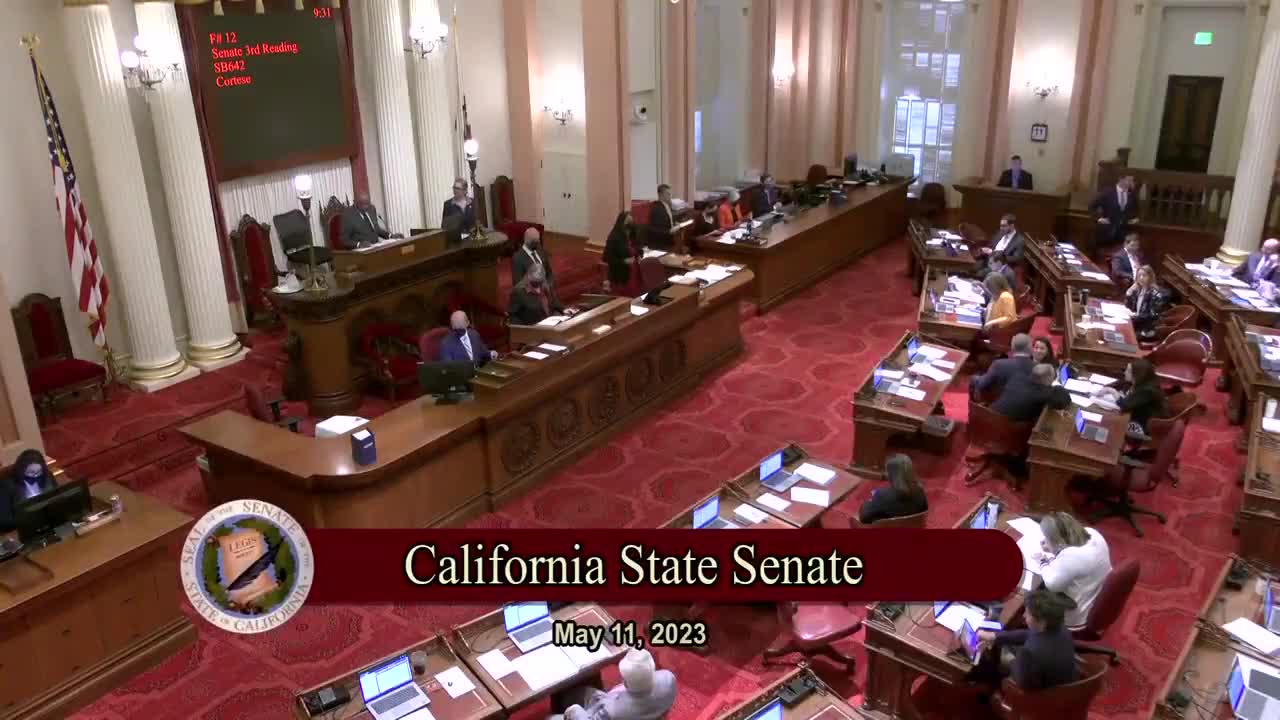 2MIN
Senate Floor
 1MIN
Assembly Floor
 1MIN
Assembly Floor
 24MIN
Assembly Standing Committee on Governmental Organization
Bill Author

Bill Co-Author(s):