AB 502: Food delivery platforms: disclosure.
- Session Year: 2023-2024
- House: Assembly
- Latest Version Date: 2023-09-08
Current Status:
Passed
(2023-09-08: Chaptered by Secretary of State - Chapter 164, Statutes of 2023.)
Introduced
In Committee
First Chamber
In Committee
Second Chamber
Enacted
What does this bill do?
The bill stops very large listing websites (those with 100 million or more unique monthly visitors) from showing a restaurant’s phone number or other direct contact if the site knows the call will be forwarded, and requires the site to clearly say if calling or using that interface may produce a fee or commission payable to someone other than the restaurant and to name that party. It also requires food delivery platforms to not charge customers more than the restaurant’s posted price, to pass tips on in full to the intended recipient, and to give a clear, itemized breakdown of all fees and charges to customers and the restaurant.
The summary is provided by generative AI which can make mistakes. For original language, please view the details in the table below.
Existing law, the Fair Food Delivery Act of 2020, defines a food delivery platform as an online business that acts as an intermediary between consumers and multiple food facilities, as defined, to submit food orders and arrange for the delivery of the order. Existing law prohibits a food delivery platform from arranging for the delivery of an order from a food facility without first obtaining an agreement with the food facility.
This bill would prohibit a listing website, as defined, from associating a telephone number or other method of direct communication with a food facility on their internet website or application that the listing website knows would result in a forwarded call, as defined. The bill would require the listing website to clearly and conspicuously, as defined, disclose if an order placed through a telephone number or other interface on their internet website or application may result in a fee, commission, or cost paid to a party other than the food facility, and identify that other party.
Existing law, the Fair Food Delivery Act of 2020, defines a food delivery platform as an online business that acts as an intermediary between consumers and multiple food facilities, as defined, to submit food orders and arrange for the delivery of the order. Existing law prohibits a food delivery platform from arranging for the delivery of an order from a food facility without first obtaining an agreement with the food facility.
Existing law requires a food delivery platform to disclose to the customer and the food facility a cost breakdown of each transaction, including, among other things, a notice, if applicable, that the food delivery platform charges a fee, commission, or cost to the food facility, unless the food facility directs that the food delivery platform disclose to customers the delivery fee charged to the food facility and each fee, commission, or cost charged to the food facility.This bill would enact the Food Delivery Transparency Act which would, instead, require the food delivery platform to disclose any fee, commission, or cost the food delivery platform charges to the food facility, regardless of whether the food facility directs the food delivery platform disclose to customers fees, commissions, or costs charged to the food facility.This bill would prohibit a listing website, as defined, from associating a telephone number or other method of direct communication with a food facility on their internet website or application that the listing website knows would result in a forwarded call, as defined. The bill would require the listing website to clearly and conspicuously, as defined, disclose if an order placed through a telephone number or other interface on their internet website or application may result in a fee, commission, or cost paid to a party other than the food facility, and identify that other party.
Existing law, the Fair Food Delivery Act of 2020, defines a food delivery platform as an online business that acts as an intermediary between consumers and multiple food facilities, as defined, to submit food orders and arrange for the delivery of the order. Existing law prohibits a food delivery platform from arranging for the delivery of an order from a food facility without first obtaining an agreement with the food facility.
Existing law requires a food delivery platform to disclose to the customer and the food facility a cost breakdown of each transaction, including, among other things, a notice, if applicable, that the food delivery platform charges a fee, commission, or cost to the food facility, unless the food facility directs that the food delivery platform disclose to customers the delivery fee charged to the food facility and each fee, commission, or cost charged to the food facility.
This bill would enact the Food Delivery Transparency Act which would, instead, require the food delivery platform to disclose any fee, commission, or cost the food delivery platform charges to the food facility, regardless of whether the food facility directs the food delivery platform disclose to customers fees, commissions, or costs charged to the food facility.
This bill would prohibit a listing website, as defined, from associating a telephone number or other method of direct communication with a food facility on their internet website or application that the listing website knows would result in a forwarded call, as defined. The bill would require the listing website to clearly and conspicuously, as defined, disclose if an order placed through a telephone number or other interface on their internet website or application may result in a fee, commission, or cost paid to a party other than the food facility, and identify that other party.
This act shall be known, and may be cited, as the Food Delivery Transparency Act.
SEC. 2.Section 22598 of the Business and Professions Code is amended to read:22598.As used in this chapter:
(a)Clearly and conspicuously means in a font no smaller than boldface, 14-point type, clearly separate from any other language on the page. For an audio disclosure, clearly and conspicuously means in a volume and cadence sufficient to be readily audible and understandable.
(b)Food delivery platform means an online business that acts as an intermediary between consumers and multiple food facilities to submit food orders from a consumer to a participating food facility, and to arrange for the delivery of the order from the food facility to the consumer.
(c)Food facility means a food facility, as defined in Section 113789 of the Health and Safety Code.
(d)Forwarded call means a communication made by a consumer and intended for a food facility, by telephone call or other means of communication, that has been routed by a food delivery platform, or a routing service under the direction of the food delivery platform, to the intended food facility.
(e)Listing website means an internet website or application that lists, or produces through search results, telephone numbers associated with food facilities, and that has 100,000,000 or more unique monthly visitors.
(f)Online order means an order for food or beverage placed by a customer through or with the assistance of a food delivery platform, including, but not limited to, a telephone order, for delivery.
(g)Purchase price means the price, as listed on the menu, for the items contained in an online order. This definition does not include taxes or gratuities that may make up the total amount charged to the customer of an online order.
SEC. 3.Section 22599.1 of the Business and Professions Code is amended to read:22599.1.(a)It is unlawful for a food delivery platform to do either of the following:
(1)Charge a customer any purchase price for food or beverage that is higher than the price posted on the food delivery platforms internet website by the food facility at the time of the order.
(2)Retain any portion of amounts designated as a tip or gratuity. Any tip or gratuity for a delivery order shall be paid by a food delivery platform, in its entirety, to the person delivering the food or beverage. Any tip or gratuity for a pickup order shall be paid by a food delivery platform, in its entirety, to the food facility.
(b)A food delivery platform shall disclose to the customer and to the food facility an accurate, clearly identified, and itemized cost breakdown of each transaction, including, but not limited to, the following information:
(1)The purchase price of the food and beverage.
(2)A notice, if applicable, that the food delivery platform charges a fee, commission, or cost to the food facility, unless the food facility directs that the food delivery platform disclose to customers the delivery fee charged to the food facility and each fee, commission, or cost charged to the food facility.
(3)Each fee, commission, or cost charged to the customer by the food delivery platform.
(4)Any tip or gratuity.
(c)(1)A listing website shall not associate a telephone number or other method of direct communication with a food facility on their internet website or application if the listing website knows the use of that telephone number or other method of direct communication will result in a forwarded call.
(2)A listing website shall clearly and conspicuously disclose if an order placed through a telephone number or other interface on their internet website or application may result in a fee, commission, or cost paid to a party other than the food facility, and shall identify that other party.
This act shall be known, and may be cited, as the Food Delivery Transparency Act.
SEC. 2.Section 22598 of the Business and Professions Code is amended to read:22598.As used in this chapter:
(a)Clearly and conspicuously means in a font no smaller than boldface, 14-point type, clearly separate from any other language on the page. For an audio disclosure, clearly and conspicuously means in a volume and cadence sufficient to be readily audible and understandable.
(b)Food delivery platform means an online business that acts as an intermediary between consumers and multiple food facilities to submit food orders from a consumer to a participating food facility, and to arrange for the delivery of the order from the food facility to the consumer.
(c)Food facility means a food facility, as defined in Section 113789 of the Health and Safety Code.
(d)Forwarded call means a communication made by a consumer and intended for a food facility, by telephone call or other means of communication, that has been routed by a food delivery platform, or a routing service under the direction of the food delivery platform, to the intended food facility.
(e)Listing website means an internet website or application that lists, or produces through search results, telephone numbers associated with food facilities, and that has 100,000,000 or more unique monthly visitors.
(f)Online order means an order for food or beverage placed by a customer through or with the assistance of a food delivery platform, including, but not limited to, a telephone order, for delivery.
(g)Purchase price means the price, as listed on the menu, for the items contained in an online order. This definition does not include taxes or gratuities that may make up the total amount charged to the customer of an online order.
SEC. 3.Section 22599.1 of the Business and Professions Code is amended to read:22599.1.(a)It is unlawful for a food delivery platform to do either of the following:
(1)Charge a customer any purchase price for food or beverage that is higher than the price posted on the food delivery platforms internet website by the food facility at the time of the order.
(2)Retain any portion of amounts designated as a tip or gratuity. Any tip or gratuity for a delivery order shall be paid by a food delivery platform, in its entirety, to the person delivering the food or beverage. Any tip or gratuity for a pickup order shall be paid by a food delivery platform, in its entirety, to the food facility.
(b)A food delivery platform shall disclose to the customer and to the food facility an accurate, clearly identified, and itemized cost breakdown of each transaction, including, but not limited to, the following information:
(1)The purchase price of the food and beverage.
(2)Any fee, commission, or cost the food delivery platform charges to the food facility.(2)A notice, if applicable, that the food delivery platform charges a fee, commission, or cost to the food facility, unless the food facility directs that the food delivery platform disclose to customers the delivery fee charged to the food facility and each fee, commission, or cost charged to the food facility.
(3)Each fee, commission, or cost charged to the customer by the food delivery platform.
(4)Any tip or gratuity.
(c)(1)A listing website shall not associate a telephone number or other method of direct communication with a food facility on their internet website or application if the listing website knows the use of that telephone number or other method of direct communication will result in a forwarded call.
(2)A listing website shall clearly and conspicuously disclose if an order placed through a telephone number or other interface on their internet website or application may result in a fee, commission, or cost paid to a party other than the food facility, and shall identify that other party.
This act shall be known, and may be cited, as the Food Delivery Transparency Act.
SEC. 2.Section 22598 of the Business and Professions Code is amended to read:22598.As used in this chapter:
(a)Clearly and conspicuously means in a font no smaller than boldface, 14-point type, clearly separate from any other language on the page. For an audio disclosure, clearly and conspicuously means in a volume and cadence sufficient to be readily audible and understandable.
(a)
(b)Food delivery platform means an online business that acts as an intermediary between consumers and multiple food facilities to submit food orders from a consumer to a participating food facility, and to arrange for the delivery of the order from the food facility to the consumer.
(b)
(c)Food facility means a food facility, as defined in Section 113789 of the Health and Safety Code.
(d)Forwarded call means a communication made by a consumer and intended for a food facility, by telephone call or other means of communication, that has been routed by a food delivery platform, or a routing service under the direction of the food delivery platform, to the intended food facility.
(e)Listing website means an internet website or application that lists, or produces through search results, telephone numbers associated with food facilities, and that has 100,000,000 or more unique monthly visitors.
(c)
(f)Online order means an order for food or beverage placed by a customer through or with the assistance of a food delivery platform, including, but not limited to, a telephone order, for delivery.
(d)
(g)Purchase price means the price, as listed on the menu, for the items contained in an online order. This definition does not include taxes or gratuities that may make up the total amount charged to the customer of an online order.
SEC. 3.Section 22599.1 of the Business and Professions Code is amended to read:22599.1.(a)It is unlawful for a food delivery platform to do either of the following:
(1)Charge a customer any purchase price for food or beverage that is higher than the price posted on the food delivery platforms internet website by the food facility at the time of the order.
(2)Retain any portion of amounts designated as a tip or gratuity. Any tip or gratuity for a delivery order shall be paid by a food delivery platform, in its entirety, to the person delivering the food or beverage. Any tip or gratuity for a pickup order shall be paid by a food delivery platform, in its entirety, to the food facility.
(b)A food delivery platform shall disclose to the customer and to the food facility an accurate, clearly identified, and itemized cost breakdown of each transaction, including, but not limited to, the following information:
(1)The purchase price of the food and beverage.
(2)A notice, if applicable, that the food delivery platform charges a Any fee, commission, or cost the food delivery platform charges to the food facility, unless the food facility directs that the food delivery platform disclose to customers the delivery fee charged to the food facility and each fee, commission, or cost charged to the food facility.
(3)Each fee, commission, or cost charged to the customer by the food delivery platform.
(4)Any tip or gratuity.
(c)(1)A listing website shall not associate a telephone number or other method of direct communication with a food facility on their internet website or application if the listing website knows the use of that telephone number or other method of direct communication will result in a forwarded call.
(2)A listing website shall clearly and conspicuously disclose if an order placed through a telephone number or other interface on their internet website or application may result in a fee, commission, or cost paid to a party other than the food facility, and shall identify that other party.
|
Date
|
Status
|
|---|---|
| Sep 8, 2023 | Chaptered by Secretary of State - Chapter 164, Statutes of 2023. |
| Sep 8, 2023 | Approved by the Governor. |
| Aug 30, 2023 | Enrolled and presented to the Governor at 2:15 p.m. |
| Aug 24, 2023 | In Assembly. Ordered to Engrossing and Enrolling. |
| Aug 24, 2023 | Read third time. Passed. Ordered to the Assembly. (Ayes 40. Noes 0. Page 2182.). |
| Aug 22, 2023 | Ordered to special consent calendar. |
| Jun 20, 2023 | Read second time. Ordered to third reading. |
| Jun 19, 2023 | From committee: Do pass. (Ayes 12. Noes 0.) (June 19). |
| Jun 14, 2023 | From committee: Do pass and re-refer to Com. on B., P. & E. D. with recommendation: To Consent Calendar. (Ayes 10. Noes 0.) (June 13). Re-referred to Com. on B., P. & E. D. |
| May 3, 2023 | Referred to Coms. on JUD. and B., P. & E. D. |
| Apr 10, 2023 | In Senate. Read first time. To Com. on RLS. for assignment. |
| Apr 10, 2023 | Read third time. Passed. Ordered to the Senate. (Ayes 68. Noes 0. Page 1076.) |
| Mar 27, 2023 | Read second time. Ordered to third reading. |
| Mar 23, 2023 | Read second time and amended. Ordered returned to second reading. |
| Mar 22, 2023 | From committee: Amend, and do pass as amended. (Ayes 11. Noes 0.) (March 21). |
| Feb 17, 2023 | Referred to Com. on P. & C.P. |
| Feb 8, 2023 | From printer. May be heard in committee March 10. |
| Feb 7, 2023 | Read first time. To print. |
|
Date
|
Description
|
Location
|
Votes
|
|
|---|---|---|---|---|
| Aug 24, 2023 | Special Consent AB502 Lee et al. | Senate Floor |
Passed |
|
| Jun 19, 2023 | Do pass | Senate Standing Committee on Business, Professions and Economic Development |
Passed |
|
| Jun 13, 2023 | Do pass, but first be re-referred to the Committee on [Business, Professions and Economic Development] with the recommendation: To Consent Calendar | Senate Standing Committee on Judiciary |
Passed |
|
| Apr 10, 2023 | AB 502 Lee Assembly Third Reading | Assembly Floor |
Passed |
|
| Mar 21, 2023 | Do pass as amended. | Assembly Standing Committee on Privacy and Consumer Protection |
Passed |
This list shows positions taken on this bill by organizations on the date displayed, which is linked to the original source.
Positions by individuals are not included.
|
Organization
|
Position
|
Date
|
|---|---|---|
| California Asian Pacific Chamber Of Commerce | ** Against | |
| Digital Restaurant Association | ** Support | |
| Hispanic Chamber of Commerce Silicon Valley | ** Support | |
| Latino Restaurant Association | ** Against | |
| Para | ** Support | |
| Technet | * Against Unless Amend | Mar 21, 2023 |
SENATE COMMITTEE ON
BUSINESS, PROFESSIONS AND ECONOMIC DEVELOPMENT
Senator Richard Roth, Chair
2023 - 2024 Regular
Bill No: AB 502 Hearing Date: June 19, 2023
Author: | Lee | ||
Version: | March 23, 2023 | ||
Urgency: | No | Fiscal: | No |
Consultant: | Dana Shaker | ||
Subject: Food delivery platforms: disclosure
SUMMARY:
Prohibits a listing website, as defined, from associating a telephone number or other method of direct communication with a food facility on their internet website or application that the listing website knows would result in a forwarded call, as defined. Requires the listing website to clearly and conspicuously disclose if an order placed through a telephone number or other interface on their internet website or application may result in a fee, commission, or cost paid to a party other than the food facility, and identify that other party.
NOTE:
This bill was heard in the Senate Judiciary Committee on June 13, 2023 and passed on a 10-0 vote.
Existing law:
- Prohibits food delivery platforms, as defined, from arranging for the delivery of an order from a food facility, as defined, without first obtaining an agreement with the food facility expressly authorizing the food delivery platform to take orders and deliver meals prepared by the food facility. (Business and Professions Code (BPC) § 22599)
- Defines:
- “Food delivery platform” as an online business that acts as an intermediary between consumers and multiple food facilities to submit food orders from a consumer to a participating food facility and to arrange for the delivery of the order from the food facility to consumer. (BPC § 22598(a))
- “Food facility,” via a cross reference to Health and Safety Code section 113789, which generally defines that term as an operation that stores, prepares, packages, serves, vends, or otherwise provides food for human consumption at the retail level, as specified. (BPC § 22598(b))
- Establishes the Unfair Competition Law, which provides a statutory cause of action for any unlawful, unfair, or fraudulent business act or practice and unfair, deceptive, untrue, or misleading advertising, including over the internet. (BPC § 17200 et seq.)
This bill:
- Defines “clearly and conspicuously” as in a font no smaller than boldface, 14-point type, clearly separate from any other language on the page. Defines “clearly and conspicuously” for an audio disclosure as meaning in a volume and cadence sufficient to be readily audible and understandable.
- Defines “forwarded call” as a communication made by a consumer and intended for a food facility, by telephone call or other means of communication, that has been routed by a food delivery platform, or a routing service under the direction of the food delivery platform, to the intended food facility.
- Defines “listing website” as an internet website or application that lists, or produces through search results, telephone numbers associated with food facilities, and that has 100,000,000 or more unique monthly visitors.
- Prohibits a listing website from associating a telephone number or other method of direct communication with a food facility on their internet website or application if the listing website knows the use of that telephone number or other method of direct communication will result in a forwarded call.
- Requires a listing website to clearly and conspicuously disclose if an order placed through a telephone number or other interface on their internet website or application may result in a fee, commission, or cost paid to a party other than the food facility, and shall identify that other party.
FISCAL EFFECT:
Unknown. This bill is not keyed fiscal by Legislative Counsel.
COMMENTS:
- Purpose. The Author is the Sponsor of this bill. According to the Author, “There is nothing in existing law that prohibits a listing service, such as Yelp or Google, to post a phone number under a food facility that routes to a third-party food delivery service app, in order to collect a referral commission, instead of providing clear and accurate information about contacting a food facility directly. This was actually a practice in 2021 when Yelp and Grubhub began a partnership and Yelp started forwarding calls from their website to Grubhub. Grubhub was then able to charge a commission on these orders. Yelp stopped this practice after the introduction of AB 1444 (Lee, 2021) which called out and aimed to stop this practice.
Existing law also does not prohibit food delivery platforms from charging a food facility a fee for a forwarded call that does not directly result in a paid order.
This bill seeks to codify a prohibition on this call forwarding.”
- Background.
Food Delivery Platforms and How Prices and Costs on the Apps are Set. Food delivery platforms provide an alternative for restaurants that may not wish to employ their own delivery professionals, but want to be able to serve customers at home. However, because the delivery platforms are businesses, there are fees attached to deliveries—and not just for consumers, but also for restaurants. As one can imagine, different apps have different approaches to setting prices both for consumers and in terms of the fees they charge businesses. On the consumer side, Mel Magazine reported in 2018 that some apps like GrubHub permitted the restaurants to set delivery fees; DoorDash charged a delivery fee to a consumer depending on the restaurant; and Postmates charged a flat delivery fee. On the business side, the magazine reported apps took home about 20-40% of the profits. Those numbers are similar to the fees today—where apps take home anywhere between 10-30% of the profits according to some reports. Unfortunately, not a lot of information exists as to how these prices and fees are set in the first place.
One Example of How A Food Delivery Platform Can Work. While each food delivery platform is different, one platform provided insight on its current business model, including details about what the arrangement between an online food delivery platform and a food facility might look like.
Generally speaking, the food delivery platform enters into a written contract with independent restaurants who choose to use its services. Potential agreements and contracts are not freely available on its website—a restaurant must create an account with the food delivery platform to be provided with more information about a partnership. While the food delivery platform advised that independent restaurants could negotiate, change, modify, or otherwise alter agreements, details on how a restaurant owner might do so remain unclear. The food delivery platform indicates that a partner restaurant or company is eligible to terminate an agreement within only a few days, and advised that restaurants are able to pause their account at any time without incurring charges.
The issue of disputing payments for services provided by the food delivery platform has been raised. In response, the food delivery platform noted both that restaurants are able to dispute charges they incur if the platform forwards a call from its website or application and that restaurants have the ability to listen to any phone call and then within the platform, click in order to request it be a “no charge call.” It remains unclear what happens if there is a dispute (in the event the food delivery platform and restaurant did not agree about whether the restaurant was subject to a fee) and unclear what would happen in the event the dispute went to arbitration or court.
Food Delivery Platforms and Diverted Communication. Consumers may unknowingly be diverted to food delivery services without understanding the costs to restaurants when they search for restaurant contact information online. According to a 2019 Vice article, some food delivery platforms have created particular phone numbers that automatically forward to the restaurant in question to better track calls that resulted from their marketing. As the article describes:
As it turns out, the number listed for “General Questions” in the Yelp app is the restaurant’s real number. The number listed for “Delivery or Takeout” is owned by Yelp partner Grubhub. […] Even though restaurants are capable of taking orders directly – after all, both numbers are routed to the same place – Yelp is pushing customers to Grubhub-owned phone numbers in order to facilitate what Grubhub calls a “referral fee” of between 15 percent and 20 percent of the order total ….
Yelp has historically functioned like an enhanced Yellow Pages, listing direct phone numbers for restaurants along with photos, information about the space, menus, and user reviews. But Yelp began prompting customers to call Grubhub phone numbers in October 2018 after the two companies announced a “long-term partnership.”
The article notes that this practice often results in erroneously charged referral fees for calls that do not result in orders. Interestingly, in early 2021 when AB 1444 (Lee, 2021) was first introduced, Yelp no longer allowed Grubhub’s tracking numbers to be used on Yelp’s website.
Restaurants in particular have experienced hardship. Millions of employees have been laid off or furloughed, approximately four out of every ten restaurants has closed, and it is estimated that anywhere from 20-80% will close permanently. However, sales through third-party online delivery services grew dramatically in 2020, growing by 122% in an industry that saw major growth prior to the pandemic. Although these services can conveniently and safely connect restaurants with homebound customers, they can be expensive. Commissions are often around 30 percent of the sale price, and there may be additional fees. These services can also be a poor fit for some restaurants. In an industry known for thin profit margins, this impact to revenues can be a formidable barrier to sustained financial viability. However, partnering with a third-party delivery service has been the only way for many restaurants to continue operating in the midst of the pandemic.
Local and State Reponses Regarding Third-Party Apps During the Pandemic. Three food delivery platforms currently play the biggest role in the online food delivery industry. The use of these platforms increased significantly in light of stay-at-home orders initiated at the beginning of the COVID-19 pandemic. As restaurants continued to suffer, many jurisdictions began implementing local ordinances to set limits on fees that third-party delivery companies could charge restaurants. San Francisco set one in April 2020, setting the fee below 15% while shelter in place orders were in effect. Other major cities followed, including New York, Seattle, Chicago, Denver, and Portland. In June 2021, San Francisco became the first city in the country to pass a permanent cap on the fees that food delivery platforms can charge. Many platforms charge fees between 10-30%, and company worth estimates that have engaged in these charges in recent years include DoorDash at $12.6 billion; UberEats, where Uber is worth $47 billion; and GrubHub with a $3.6 billion market cap. When DoorDash went public in December, the SF Business Times reported its CEO made $413.67 million in 2019-2020. According to SF Eater, “[t]hroughout the pandemic, delivery apps have added restaurants to their platforms without their consent, poured millions of dollars into opposing driver benefits, paid drivers pennies in hazard pay, threatened to raise delivery fees for customers, and ultimately raised delivery fees for customers.”
In response to lawsuits filed across the country for unfair business practices, labor violations, and similar concerns, particularly one predatory practice involving listing restaurants on food delivery websites without their consent, the state Legislature passed AB 2149 (Gonzalez, Chapter 125, Statutes of 2020). The bill prohibits a food delivery platform from arranging for the delivery of an order from a food facility without first obtaining an agreement with the food facility expressly authorizing the food delivery platform to take orders and deliver meals prepared by the food facility. A violation of the law constitutes an unfair business practice under the Unfair Competition Law (UCL).
AB 1444. In 2021, the Author carried a very similar bill, AB 1444. (Lee, 2021). While this measure passed the Legislature, it was vetoed. The Governor’s Veto Message noted:
“I am returning Assembly Bill 1444 without my signature.
This bill would impose requirements on the specific information included and formatting of agreements between a food delivery platform and a food facility entered into or modified after January 1, 2022, and prohibit food delivery platforms from charging a food facility for certain forwarded calls.
Third party apps and listing websites have created opportunities for consumers to find and support more of their local dining places. We have significantly increased oversight of food delivery companies in recent years. Last year I signed AB 2149 (Chapter 125, Statutes of 2020), which required a food delivery platform to first obtain an agreement with a food facility prior to taking orders or delivering meals on their behalf. It has been less than one year since these provisions took effect. AB 1444 would prescribe the specific content and format of these agreements, triggering companies to again modify their contracts without a clear, additional public benefit.
Further, companies have stated that call forwarding tracking numbers, a focus of AB 1444, are no longer used. I appreciate these companies voluntarily ceasing the practice of charging restaurants simply for connecting calls, as many small businesses, particularly restaurants, survive on small margins.”
The Author has removed a number of provisions from AB 1444 and has changed a few key components between AB 1444 and this measure. This bill now clarifies that a listing platform is expressly prohibited from associating a telephone number or other method of direct communication with a food facility on their website or application, rather than just a telephone number as AB 1444 specified. The bill also adds cost to the information that has to be clearly and conspicuously disclosed by a listing website, and strikes a section from AB 1444 that the disclosure must include a direct link to the telephone number of the food facility and related provisions to having a posted direct link.
- Arguments in Support. The Digital Restaurant Association, The Hispanic Chamber of Commerce, Para writes in support: “Consumers are kept in the dark on the fees food delivery platforms charge, and consumers, restaurants, and delivery drivers are often unaware how much of their money actually goes toward the delivery service, versus supporting local restaurant businesses. Consumers have a right to know where their money goes, and the lack of transparency around food delivery platform charges makes informed choice difficult.
This bill will create more transparency surrounding the online third-party ordering ecosystem and ban the practice of rerouting calls to a third party platform that should go directly to a restaurant, and require a disclosure of any fees that are paid to a party outside of the restaurant. This information will ensure consumers know where their money is going so they can make informed choices.”
- Arguments in Opposition. The California Asian Pacific Chamber of Commerce (CalAsian Chamber) writes in opposition: “Requiring the disclosure of confidential contracts would not only undermine the ability of restaurant owners to negotiate their own unique terms with delivery platforms, but it would also set a dangerous precedent for other industries. The confidentiality of business contracts is essential to protecting the interests of both parties involved and ensuring that businesses can operate competitively in the market.”
SUPPORT AND OPPOSITION:
Support:
Digital Restaurant Association
Hispanic Chamber of Commerce Silicon Valley
Para
Opposition:
California Asian Pacific Chamber of Commerce
-- END --
SENATE RULES COMMITTEE Office of Senate Floor Analyses (916) 651-1520 Fax: (916) 327-4478 | AB 502 |
THIRD READING
Bill No: AB 502
Author: Lee (D), et al.
Amended: 3/23/23 in Assembly
Vote: 21
SENATE JUDICIARY COMMITTEE: 10-0, 6/13/23
AYES: Umberg, Wilk, Allen, Ashby, Caballero, Durazo, Laird, Min, Niello, Wiener
NO VOTE RECORDED: Stern
SENATE BUS., PROF. & ECON. DEV. COMMITTEE: 12-0, 6/19/23
AYES: Roth, Nguyen, Alvarado-Gil, Archuleta, Ashby, Dodd, Eggman, Glazer, Niello, Smallwood-Cuevas, Wahab, Wilk
NO VOTE RECORDED: Becker
ASSEMBLY FLOOR: 68-0, 4/10/23 - See last page for vote
SUBJECT: Food delivery platforms: disclosure
SOURCE: Author
DIGEST:
This bill prohibits, with respect to consumer communications intended for food facilities placed through a listing website, such websites from associating methods of communication with a food facility where they know that use of that method will result in a “forwarded call,” as defined. This bill also requires certain disclosures with respect to fees, commissions, and other costs in connection with orders placed through such websites.
ANALYSIS:
Existing law:
- Establishes the Fair Food Delivery Act of 2020 (Bus. & Prof Code § 22598 et seq.)[1], which prohibits food delivery platforms, as defined, from arranging for the delivery of an order from a food facility, as defined, without first obtaining an agreement with the food facility expressly authorizing the food delivery platform to take orders and deliver meals prepared by the food facility (§ 22599).
- Defines “food delivery platform” as an online business that acts as an intermediary between consumers and multiple food facilities to submit food orders from a consumer to a participating food facility and to arrange for the delivery of the order from the food facility to consumer. (§ 22598.)
- Makes it unlawful for a food delivery platform to do the following:
- Charge a customer any purchase price for food or beverage that is higher than the price posted on the food delivery platform’s website by the food facility at the time of the order;
- Retain any portion of amounts designated as a tip or gratuity. Any tip or gratuity for a delivery order shall be paid by a food delivery platform, in its entirety, to the person delivering the food or beverage. Any tip or gratuity for a pickup order shall be paid by a food delivery platform, in its entirety, to the food facility. (§ 22599.1(a).)
- Requires a food delivery platform to disclose to the customer and to the food facility an accurate, clearly identified, and itemized cost breakdown of each transaction, including specified information. (§ 22599.1(b).)
- Establishes the Unfair Competition Law, which provides a statutory cause of action for any unlawful, unfair, or fraudulent business act or practice and unfair, deceptive, untrue, or misleading advertising, including over the internet. (§ 17200 et seq.)
This bill:
- Establishes the Food Delivery Transparency Act.
- Prohibits a listing website from associating a telephone number or other method of direct communication with a food facility on their internet website or application if the listing website knows the use of that telephone number or other method of direct communication will result in a forwarded call.
- Requires a listing website to clearly and conspicuously disclose if an order placed through a telephone number or other interface on their website or application may result in a fee, commission, or cost paid to a party other than the food facility, and shall identify that other party.
- Defines:
- “Clearly and conspicuously” to mean in a font no smaller than boldface, 14-point type, clearly separate from any other language on the page. For an audio disclosure, “clearly and conspicuously” means in a volume and cadence sufficient to be readily audible and understandable;
- “Forwarded call” as a communication made by a consumer and intended for a food facility, by telephone call or other means of communication, that has been routed by a food delivery platform, or a routing service under the direction of the food delivery platform, to the intended food facility; and
- “Listing website” as an internet website or application that lists, or produces through search results, telephone numbers associated with food facilities, and that has 100,000,000 or more unique monthly visitors.
Background
The COVID-19 pandemic has devastated the restaurant industry and made consumers and restaurants alike increasingly reliant on online food delivery options. While third party app-based food delivery companies, such as DoorDash, Uber Eats, and Grubhub, offer the promise of convenient and safe access to a variety of restaurants at the click of a button, these companies often impose hefty commissions and onerous terms that can add to the struggles of ailing restaurants. To protect restaurants and customers, the Legislature enacted the Fair Food Delivery Act of 2020 (AB 2149, Gonzalez, Chapter 125, Statutes of 2020), which prohibits food delivery platforms from arranging for the delivery of an order from a food facility without first obtaining an agreement authorizing the food delivery platform to take orders and deliver meals prepared by the food facility.
This bill seeks to expand the Act by prohibiting the practice in which various methods of communications are associated with food facilities on listing websites that route such communications intended for food facilities. This bill also requires clear disclosures where an order placed through a listing website will result in a fee, commission, or other costs paid to a third party other than the food facility.
This bill is author-sponsored. It is supported by various business and restaurant associations, including the Digital Restaurant Association. There is no known opposition. (NOTE: See the Senate Judiciary Committee analysis for more detail.)
Comments
The author writes:
Listing services, such as Yelp and Google, have historically functioned like an enhanced “Yellow Pages” – listing direct phone numbers for restaurants along with photos, information about the space, menus and user reviews. A few years ago, Yelp began re-routing customers calling restaurants to Grubhub phone lines after the two companies agreed to a “long-term partnership.”
This bill will ban the practice of re-routing calls to a third party platform that should go directly to a restaurant, and require a disclosure of any fees that are paid to a party outside of the restaurant.
This will protect our local small businesses and ensure consumers are informed and aware of where their money is going.
Food delivery platforms and the Fair Food Delivery Act of 2020
Three major companies control the online food delivery industry. In April of 2021, 56 percent of meal delivery sales were through DoorDash and its subsidiaries, 26 percent were through Uber Eats and its subsidiaries (including Drizly and Postmates[2]), and 18 percent were through Grubhub.[3] These companies have strongholds in different metro areas: for instance, whereas DoorDash had 74 percent of sales in San Francisco, it had just 41 percent of sales in Los Angeles where Uber Eats and Postmates collectively had 44 percent.[4] The companies also vie for partnerships with the nation’s top chain restaurants. While large corporate partners have the bargaining power to pay lower fees, many smaller restaurants that rely heavily on delivery services have reportedly operated at a loss because of fees from delivery services.[5] Several major cities to adopt temporary ordinances capping service fees.[6] In response, the Legislature adopted the Fair Food Delivery Act of 2020. The Act prohibits food delivery platforms from arranging for the delivery of an order from a food facility without first obtaining an agreement with the food facility expressly authorizing the food delivery platform to take orders and deliver meals prepared by the food facility. (§ 22599.) A violation of the Act constitutes an unfair business practice under the Unfair Competition Law.
Last session, AB 286 (Gonzalez, Chapter 513, Statutes of 2021) expanded the Act by prohibiting a food delivery platform from marking up the price of the food and beverages it delivers or retaining tips or gratuities it receives. AB 286 also required food delivery platforms to provide itemized cost breakdowns to customers and food facilities that includes the purchase price of the food and beverage; a notice, if applicable, that the food delivery platform charges a fee, commission, or cost to the food facility, except as specified; each fee, commission, or cost charged to the customer by the food delivery platform; and any tip or gratuity.
How food delivery platforms intermediate communications between consumers and restaurants
Customers who go online to search for and contact restaurants may be unwittingly diverted to food delivery services without understanding the costs to the restaurant they intend to support. According to a 2019 Vice article, some food delivery platforms create specialized phone numbers that automatically forward to the restaurant of interest in order to more effectively track the calls that resulted from their marketing. As the article describes:
As it turns out, the number listed for “General Questions” in the Yelp app is the restaurant’s real number. The number listed for “Delivery or Takeout” is owned by Yelp partner Grubhub. […] Even though restaurants are capable of taking orders directly – after all, both numbers are routed to the same place – Yelp is pushing customers to Grubhub-owned phone numbers in order to facilitate what Grubhub calls a “referral fee” of between 15 percent and 20 percent of the order total ….
Yelp has historically functioned like an enhanced Yellow Pages, listing direct phone numbers for restaurants along with photos, information about the space, menus, and user reviews. But Yelp began prompting customers to call Grubhub phone numbers in October 2018 after the two companies announced a “long-term partnership.”[7]
The article notes that this often results in erroneously charged referral fees for calls that do not result in orders.[8] Yelp no longer engages in this practice.
Efforts to expand the Act to regulate call-forwarding and associated practices
Last session, AB 1444 (Lee, 2021) sought to augment the Act in order to address identified issues. The bill would have required agreements between food delivery platforms and food facilities to be written and apply to pickup orders in addition to deliveries. It would have prohibited food delivery platforms from charging a food facility a fee for a forwarded call unless that forwarded call directly resulted in a paid order, or an order paid for with a coupon or other promotional offer provided by the food delivery platform, from that food facility that will be delivered, or arranged for delivery or pickup, to the consumer by the food delivery platform.
AB 1444 would also have prohibited a listing website from associating a telephone number with a food facility on their website or application if the listing website knows the use of that telephone number will result in a forwarded call, unless the listing website clearly and conspicuously discloses if an order placed through a telephone number or other interface on their Internet website or application may result in a commission or fee paid to a party other than the food facility, identifies the party to which that commission or fee may be paid, and includes in the disclosure a direct link to the telephone number of the food facility. The listing website would have been prohibited from levying a charge or fee on the food facility for posting the link, and required to disclose that the link does not result in any such charge or fee.
AB 1444 would have defined “forwarded call” as a communication made by a consumer and intended for a food facility, by telephone call or other means of communication, that has been routed by a food delivery platform, or a routing service under the direction of the food delivery platform, to the intended food facility. It would have defined “listing website” as a website or application that lists, or produces through search results, telephone numbers associated with food facilities, and that has 100,000,000 or more unique monthly visitors.
AB 1444 was passed by the Legislature, but vetoed by Governor Newsom. In his veto message, he stated:
This bill would impose requirements on the specific information included and formatting of agreements between a food delivery platform and a food facility entered into or modified after January 1, 2022, and prohibit food delivery platforms from charging a food facility for certain forwarded calls.
Third party apps and listing websites have created opportunities for consumers to find and support more of their local dining places. We have significantly increased oversight of food delivery companies in recent years. Last year I signed AB 2149 (Chapter 125, Statutes of 2020), which required a food delivery platform to first obtain an agreement with a food facility prior to taking orders or delivering meals on their behalf. It has been less than one year since these provisions took effect. AB 1444 would prescribe the specific content and format of these agreements, triggering companies to again modify their contracts without a clear, additional public benefit.
Further, companies have stated that call forwarding tracking numbers, a focus of AB 1444, are no longer used. I appreciate these companies voluntarily ceasing the practice of charging restaurants simply for connecting calls, as many small businesses, particularly restaurants, survive on small margins.
This bill is a narrower version of AB 1444 that hones in on forwarded calls and pricing transparency. This bill first prohibits a listing website from associating methods of direct communication with a food facility on their websites or applications if it knows that use of that method will result in a forwarded call.
This bill further requires listing websites to clearly and conspicuously disclose if an order placed through a telephone number or other interface on their website or application may result in a fee, commission, or cost paid to a party other than the food facility. The listing website is required to also identify that other party if applicable. It uses identical definitions for “listing website” and “forwarded call” as in AB 1444.
FISCAL EFFECT: Appropriation: No Fiscal Com.: No Local: No
SUPPORT: (Verified 6/21/23)
Digital Restaurant Association
Hispanic Chamber of Commerce Silicon Valley
Para
OPPOSITION: (Verified 6/21/23)
None received
ARGUMENTS IN SUPPORT: The Hispanic Chamber of Commerce Silicon Valley explains its support for this bill, “This bill will create more transparency surrounding the online third-party ordering ecosystem and ban the practice of rerouting calls to a third party platform that should go directly to a restaurant, and require a disclosure of any fees that are paid to a party outside of the restaurant. This information will ensure consumers know where their money is going so they can make informed choices.”
ASSEMBLY FLOOR: 68-0, 4/10/23
AYES: Addis, Aguiar-Curry, Alanis, Alvarez, Arambula, Bains, Bennett, Berman, Boerner Horvath, Bonta, Calderon, Juan Carrillo, Wendy Carrillo, Cervantes, Connolly, Megan Dahle, Dixon, Flora, Mike Fong, Vince Fong, Friedman, Gabriel, Gallagher, Garcia, Gipson, Grayson, Haney, Hart, Holden, Hoover, Irwin, Jackson, Jones-Sawyer, Kalra, Lackey, Lee, Low, Lowenthal, Maienschein, Mathis, McCarty, Muratsuchi, Stephanie Nguyen, Ortega, Pacheco, Papan, Joe Patterson, Pellerin, Ramos, Reyes, Luz Rivas, Robert Rivas, Rodriguez, Blanca Rubio, Santiago, Schiavo, Soria, Ta, Ting, Villapudua, Waldron, Wallis, Ward, Weber, Wicks, Wood, Zbur, Rendon
NO VOTE RECORDED: Bauer-Kahan, Bryan, Chen, Davies, Essayli, McKinnor, Jim Patterson, Petrie-Norris, Quirk-Silva, Sanchez, Valencia, Wilson
Prepared by: Christian Kurpiewski / JUD. / (916) 651-41136/21/23 14:29:23
**** END ****
All further section references are to the Business and Professions Code unless otherwise indicated. ↑
Before Uber acquired Postmates, Uber and Grubhub discussed a possible merger. (Ed Hammond, Uber Approaches Grubhub With Takeover Offer, (May 12, 2020) Bloomberg, available at https://www.bloomberg.com/news/articles/2020-05-12/uber-is-said-to-approach-grubhub-with-takeover-offer. ↑
Liyin Yeo, Which company is winning the restaurant food delivery war? (May 14, 2021) Bloomberg Second Measure, available at https://secondmeasure.com/datapoints/food-delivery-services-grubhub-uber-eats-doordash-postmates//. ↑
Id. ↑
Supriya Yelimeli, Berkeley limits service fees for third-party food delivery apps (July 13, 2020) Berkeleyside, https://www.berkeleyside.org/2020/07/13/food-delivery-berkeley. ↑
Id. ↑
Adrianne Jeffries, Yelp is Screwing Over Restaurants By Quietly Replacing Their Phone Numbers (Aug. 6, 2019) https://www.vice.com/amp/en/article/wjwebw/yelp-is-sneakily-replacing-restaurants-phone-numbers-so-grubhub-can-take-a-cut. ↑
Id. ↑
Senator Thomas Umberg, Chair
2023-2024 Regular Session
Bill No: AB 502 (Author:Lee)
Version: March 23, 2023
Hearing Date: June 13, 2023
Fiscal: No
Urgency: No
Consultant: CK
SUBJECT
Food delivery platforms: disclosure
DIGEST
This bill, with respect to consumer communications intended for food facilities placed through a listing website, prohibits such websites from associating methods of communication with a food facility where they know that use of that method will result in a “forwarded call,” as defined. The bill also requires certain disclosures with respect to fees, commissions, and other costs in connection with orders placed through such websites.
EXECUTIVE SUMMARY
The COVID-19 pandemic has devastated the restaurant industry and made consumers and restaurants alike increasingly reliant on online food delivery options. While third party app-based food delivery companies, such as DoorDash, Uber Eats, and Grubhub, offer the promise of convenient and safe access to a variety of restaurants at the click of a button, these companies often impose hefty commissions and onerous terms that can add to the struggles of ailing restaurants. To protect restaurants and customers, the Legislature enacted the Fair Food Delivery Act of 2020 (AB 2149 (Gonzalez, Ch. 125, Stats. 2020) (Act), which prohibits food delivery platforms from arranging for the delivery of an order from a food facility without first obtaining an agreement authorizing the food delivery platform to take orders and deliver meals prepared by the food facility.
This bill seeks to expand the Act by prohibiting the practice in which various methods of communications are associated with food facilities on listing websites that route such communications intended for food facilities. The bill also requires clear disclosures where an order placed through a listing website will result in a fee, commission, or other costs paid to a third party other than the food facility.
The bill is author-sponsored. It is supported by various business and restaurant associations, including the Digital Restaurant Association. There is no known opposition. If the bill passes this Committee, it will be heard in the Senate Committee on Business, Professions, and Economic Development.
PROPOSED CHANGES TO THE LAW
Existing law:
- Establishes the Act (Bus. & Prof Code § 22598 et seq.)[1], which prohibits food delivery platforms, as defined, from arranging for the delivery of an order from a food facility, as defined, without first obtaining an agreement with the food facility expressly authorizing the food delivery platform to take orders and deliver meals prepared by the food facility (§ 22599).
- Defines:
- “food delivery platform” as an online business that acts as an intermediary between consumers and multiple food facilities to submit food orders from a consumer to a participating food facility and to arrange for the delivery of the order from the food facility to consumer;
- “food facility,” via a cross reference to Health and Safety Code section 113789, which generally defines that term as an operation that stores, prepares, packages, serves, vends, or otherwise provides food for human consumption at the retail level, as specified;
- “online order” as an order for food or beverage placed by a customer through or with the assistance of a food delivery platform, including, but not limited to, a telephone order, for delivery; and
- “purchase price” as the price, as listed on the menu, for the items contained in an online order. This definition does not include taxes or gratuities that may make up the total amount charged to the customer of an online order. (§ 22598.)
- Makes it unlawful for a food delivery platform to do the following:
- charge a customer any purchase price for food or beverage that is higher than the price posted on the food delivery platform’s website by the food facility at the time of the order;
- retain any portion of amounts designated as a tip or gratuity. Any tip or gratuity for a delivery order shall be paid by a food delivery platform, in its entirety, to the person delivering the food or beverage. Any tip or gratuity for a pickup order shall be paid by a food delivery platform, in its entirety, to the food facility. (§ 22599.1(a).)
- Requires a food delivery platform to disclose to the customer and to the food facility an accurate, clearly identified, and itemized cost breakdown of each transaction, including the following information:
- the purchase price of the food and beverage;
- a notice, if applicable, that the food delivery platform charges a fee, commission, or cost to the food facility, unless the food facility directs that the food delivery platform disclose to customers the delivery fee charged to the food facility and each fee, commission, or cost charged to the food facility;
- each fee, commission, or cost charged to the customer by the food delivery platform; and
- any tip or gratuity. (§ 22599.1(b).)
- Establishes the Unfair Competition Law, which provides a statutory cause of action for any unlawful, unfair, or fraudulent business act or practice and unfair, deceptive, untrue, or misleading advertising, including over the internet. (§ 17200 et seq.)
This bill:
- Establishes the Food Delivery Transparency Act.
- Prohibits a listing website from associating a telephone number or other method of direct communication with a food facility on their internet website or application if the listing website knows the use of that telephone number or other method of direct communication will result in a forwarded call.
- Requires a listing website to clearly and conspicuously disclose if an order placed through a telephone number or other interface on their website or application may result in a fee, commission, or cost paid to a party other than the food facility, and shall identify that other party.
- Defines:
- “clearly and conspicuously” to mean in a font no smaller than boldface, 14-point type, clearly separate from any other language on the page. For an audio disclosure, “clearly and conspicuously” means in a volume and cadence sufficient to be readily audible and understandable;
- “forwarded call” as a communication made by a consumer and intended for a food facility, by telephone call or other means of communication, that has been routed by a food delivery platform, or a routing service under the direction of the food delivery platform, to the intended food facility; and
- “listing website” as an internet website or application that lists, or produces through search results, telephone numbers associated with food facilities, and that has 100,000,000 or more unique monthly visitors.
COMMENTS
- Author’s statement
The author writes:
Listing services, such as Yelp and Google, have historically functioned like an enhanced “Yellow Pages” – listing direct phone numbers for restaurants along with photos, information about the space, menus and user reviews. A few years ago, Yelp began re-routing customers calling restaurants to Grubhub phone lines after the two companies agreed to a “long-term partnership.”
This bill will ban the practice of re-routing calls to a third party platform that should go directly to a restaurant, and require a disclosure of any fees that are paid to a party outside of the restaurant.
This will protect our local small businesses and ensure consumers are informed and aware of where their money is going.
- Food delivery platforms and the Fair Food Delivery Act of 2020
The COVID-19 pandemic decimated the restaurant industry. Millions of employees were laid off or furloughed, approximately four in 10 restaurants have closed, and it has been estimated that anywhere from 20 to 80 percent will close permanently.[2] Meanwhile, sales through third-party online delivery services, already a major growth industry before the pandemic, surged dramatically, growing by 122 percent in 2020.[3] Although these services can conveniently and safely connect restaurants with homebound customers, they can be costly—commissions are often around 30 percent of the sale price, and there may be additional fees[4]—and a poor fit for some restaurants.[5] In an industry known for thin profit margins, this impact to revenues can be a formidable barrier to sustained financial viability. Yet for many restaurants, partnering with a third-party delivery service has been the only way to continue operating in the midst of the pandemic.
Three major companies control the online food delivery industry. In April of 2021, 56 percent of meal delivery sales were through DoorDash and its subsidiaries, 26 percent were through Uber Eats and its subsidiaries (including Drizly and Postmates[6]), and 18 percent were through Grubhub.[7] Despite rapid growth and skyrocketing valuations, the companies are not making money.[8] As more consumers get vaccinated and restrictions ease, the industry stands to lose business from customers eager to resume dining on-premises.[9]
These companies have strongholds in different metro areas: for instance, whereas DoorDash had 74 percent of sales in San Francisco, it had just 41 percent of sales in Los Angeles where Uber Eats and Postmates collectively had 44 percent.[10] The companies also vie for partnerships with the nation’s top chain restaurants. Uber Eats has a contract with Starbucks, Postmates with Popeye’s, Grubhub with Taco Bell and KFC. While large corporate partners have the bargaining power to pay lower fees, many smaller restaurants that rely heavily on delivery services have reportedly operated at a loss because of fees from delivery services.[11] This prompted several major cities to adopt temporary ordinances capping service fees.[12]
Several lawsuits against food delivery platforms have been filed across the country alleging, among other unscrupulous behaviors, unfair business practices, labor violations, and the misuse of restaurants’ names and logos.[13] One type of predatory practice involved listing restaurants on food delivery websites without their consent,[14] which risks overwhelming restaurant operations, creating quality and safety problems, and eroding customer bases.
In response, the Legislature adopted the Fair Food Delivery Act of 2020. The Act prohibits food delivery platforms from arranging for the delivery of an order from a food facility without first obtaining an agreement with the food facility expressly authorizing the food delivery platform to take orders and deliver meals prepared by the food facility. (§ 22599.) A violation of the Act constitutes an unfair business practice under the Unfair Competition Law.[15]
Last session, AB 286 (Gonzalez, Ch. 513, Stats. 2021) expanded the Act by prohibiting a food delivery platform from marking up the price of the food and beverages it delivers or retaining tips or gratuities it receives. AB 286 also requires food delivery platforms to provide itemized cost breakdowns to customers and food facilities that includes the purchase price of the food and beverage; a notice, if applicable, that the food delivery platform charges a fee, commission, or cost to the food facility, except as specified; each fee, commission, or cost charged to the customer by the food delivery platform; and any tip or gratuity.
- How food delivery platforms intermediate communications between consumers and restaurants
Customers who go online to search for and contact restaurants may be unwittingly diverted to food delivery services without understanding the costs to the restaurant they intend to support. According to a 2019 Vice article, some food delivery platforms create specialized phone numbers that automatically forward to the restaurant of interest in order to more effectively track the calls that resulted from their marketing. As the article describes:
As it turns out, the number listed for “General Questions” in the Yelp app is the restaurant’s real number. The number listed for “Delivery or Takeout” is owned by Yelp partner Grubhub. […] Even though restaurants are capable of taking orders directly – after all, both numbers are routed to the same place – Yelp is pushing customers to Grubhub-owned phone numbers in order to facilitate what Grubhub calls a “referral fee” of between 15 percent and 20 percent of the order total ….
Yelp has historically functioned like an enhanced Yellow Pages, listing direct phone numbers for restaurants along with photos, information about the space, menus, and user reviews. But Yelp began prompting customers to call Grubhub phone numbers in October 2018 after the two companies announced a “long-term partnership.”[16]
The article notes that this often results in erroneously charged referral fees for calls that do not result in orders.[17] Yelp no longer engages in this practice.
- Efforts to expand the Act to regulate call-forwarding and associated practices
Last session, AB 1444 (Lee, 2021) sought to augment the Act in order to address the above issues. The bill would have required agreements between food delivery platforms and food facilities to be written and apply to pickup orders in addition to deliveries. It would have prohibited food delivery platforms from charging a food facility a fee for a forwarded call unless that forwarded call directly resulted in a paid order, or an order paid for with a coupon or other promotional offer provided by the food delivery platform, from that food facility that will be delivered, or arranged for delivery or pickup, to the consumer by the food delivery platform.
AB 1444 would also have prohibited a listing website from associating a telephone number with a food facility on their website or application if the listing website knows the use of that telephone number will result in a forwarded call, unless the listing website clearly and conspicuously discloses if an order placed through a telephone number or other interface on their Internet website or application may result in a commission or fee paid to a party other than the food facility, identifies the party to which that commission or fee may be paid, and includes in the disclosure a direct link to the telephone number of the food facility. The listing website would have been prohibited from levying a charge or fee on the food facility for posting the link, and required to disclose that the link does not result in any such charge or fee.
AB 1444 defined “forwarded call” as a communication made by a consumer and intended for a food facility, by telephone call or other means of communication, that has been routed by a food delivery platform, or a routing service under the direction of the food delivery platform, to the intended food facility. It defined “listing website” as a website or application that lists, or produces through search results, telephone numbers associated with food facilities, and that has 100,000,000 or more unique monthly visitors.
AB 1444 was passed by the Legislature, but vetoed by Governor Newsom. In his veto message, he stated:
This bill would impose requirements on the specific information included and formatting of agreements between a food delivery platform and a food facility entered into or modified after January 1, 2022, and prohibit food delivery platforms from charging a food facility for certain forwarded calls.
Third party apps and listing websites have created opportunities for consumers to find and support more of their local dining places. We have significantly increased oversight of food delivery companies in recent years. Last year I signed AB 2149 (Chapter 125, Statutes of 2020), which required a food delivery platform to first obtain an agreement with a food facility prior to taking orders or delivering meals on their behalf. It has been less than one year since these provisions took effect. AB 1444 would prescribe the specific content and format of these agreements, triggering companies to again modify their contracts without a clear, additional public benefit.
Further, companies have stated that call forwarding tracking numbers, a focus of AB 1444, are no longer used. I appreciate these companies voluntarily ceasing the practice of charging restaurants simply for connecting calls, as many small businesses, particularly restaurants, survive on small margins.
This bill is a narrower version of AB 1444 that hones in on forwarded calls and pricing transparency. The bill first prohibits a listing website from associating methods of direct communication with a food facility on their websites or applications if it knows that use of that method will result in a forwarded call.
The bill further requires listing websites to clearly and conspicuously disclose if an order placed through a telephone number or other interface on their website or application may result in a fee, commission, or cost paid to a party other than the food facility. The listing website is required to also identify that other party if applicable. It uses identical definitions for “listing website” and “forwarded call” as in AB 1444.
The Hispanic Chamber of Commerce Silicon Valley explains its support for the bill:
In addition to requiring greater fee transparency, it would also prohibit a listing service from posting a phone number under a restaurant that does not go directly to the restaurant, and would require a disclosure to the consumer if an order they are placing will result in a cost to the restaurant.
The COVID pandemic continues to impose hardship on local restaurants and food establishments, with delivery app fees taking up to a 30% commission. However, partnering with third-party ordering systems was the only way many businesses stayed open throughout the pandemic, thus creating a disparity in bargaining power between the platforms and restaurants.
The current third-party ordering ecosystem is alarming; as fees have ratcheted up, restaurants and small business owners have been fighting a losing battle. California is leading in the number of restaurant closures in the nation, while market revenue for food delivery in the US has increased 205% over the past five years, totaling $26.5 billion.
A few years ago, Yelp began rerouting customers calling restaurants on Yelp to Grubhub phone lines after the two companies agreed to a “long-term partnership.” While they eventually stopped this practice, which resulted in numerous fees to restaurants, it is important to codify this in statute and prevent any other listing service from participating in this practice. Consumers may be financially benefiting food delivery platforms at the expense of restaurants without their consent or knowledge.
Consumers are kept in the dark on the relationship between food delivery platforms and restaurants, and are often unaware how much of their money actually goes toward supporting their local businesses. Consumers have a right to know where their money goes, and the lack of transparency around food delivery platform charge makes informed choice difficult.
This bill will create more transparency surrounding the online third-party ordering ecosystem and ban the practice of rerouting calls to a third party platform that should go directly to a restaurant, and require a disclosure of any fees that are paid to a party outside of the restaurant. This information will ensure consumers know where their money is going so they can make informed choices.
SUPPORT
Digital Restaurant Association
Hispanic Chamber of Commerce Silicon Valley
Para
OPPOSITION
None known
RELATED LEGISLATION
Pending Legislation: AB 375 (Davies, 2023) requires a food delivery platform to provide specified information to a consumer about their delivery driver and the driver’s vehicle. This bill is currently in the Assembly Privacy and Consumer Protection Committee.
Prior Legislation:
AB 286 (Gonzalez, Ch. 513, Stats. 2021) See Comment 2.
AB 1444 (Lee, 2021) See Comment 3.
AB 2149 (Gonzalez, Ch. 125, Stats. 2020) See Executive Summary.
AB 3336 (Carrillo, Ch. 105, Stats. 2020) requires ready-to-eat food delivered by third-party food delivery services to be transported in a manner that protects the food from contamination and spoilage, including by requiring the interior floor, sides, and top of the food holding area to be clean, requiring the food to be maintained at a holding temperature necessary to prevent spoilage, and by requiring bags or containers to be closed with a tamper-evident method prior to the food deliverer taking possession of the ready-to-eat food.
AB 1360 (Ting, 2019) would have established requirements on food delivery platforms that deliver food to consumers from a grocery establishment, a retail store with a grocery department, or a grocery warehouse, including requiring that a food delivery driver has specified training, and that the food delivery platform maintains liability insurance. The bill died on the Senate floor.
PRIOR VOTES:
Assembly Floor (Ayes 68, Noes 0)
Assembly Privacy and Consumer Protection Committee (Ayes 11, Noes 0)
**************
All further section references are to the Business and Professions Code unless otherwise indicated. ↑
National Restaurant Association, Letter to Congress (Apr. 20, 2020), see https://www.cnbc.com/2020/04/20/coronavirus-restaurants-describe-huge-shortfalls-with-government-aid.html; Matt Goulding, An Extinction Event for America’s Restaurants (June 19, 2020) The Atlantic, available at https://www.theatlantic.com/culture/archive/2020/06/what-will-happen-restaurants/613141/. All internet citations are current as of June 1, 2023. ↑
Chris Crowley, 5 Big Reasons the Delivery ‘Boom’ May Soon Go Bust (May 5, 2021) New York Magazine, available at https://www.grubstreet.com/2021/05/5-reasons-the-food-delivery-boom-may-soon-go-bust.html. ↑
For the top five food delivery platforms, total markups range from 17 percent to 40.5 percent of the restaurant’s list price. (Noah Lichtenstein, The hidden cost of food delivery, (Mar. 16, 2020) TechCrunch, available at https://techcrunch.com/2020/03/16/the-hidden-cost-of-food-delivery/. ↑
Many restaurants use their own online ordering and delivery systems to ensure quality control and cost-effectiveness. Boutique restaurants may lack the capacity to absorb extra orders and may be unwilling to risk entrusting an unknown, unregulated third party to handle an order properly and deliver it promptly. ↑
Before Uber acquired Postmates, Uber and Grubhub discussed a possible merger. (Ed Hammond, Uber Approaches Grubhub With Takeover Offer, (May 12, 2020) Bloomberg, available at https://www.bloomberg.com/news/articles/2020-05-12/uber-is-said-to-approach-grubhub-with-takeover-offer. ↑
Liyin Yeo, Which company is winning the restaurant food delivery war? (May 14, 2021) Bloomberg Second Measure, available at https://secondmeasure.com/datapoints/food-delivery-services-grubhub-uber-eats-doordash-postmates//. ↑
5 Big Reasons the Delivery ‘Boom’ May Soon Go Bust, supra, fn. 3. ↑
Which company is winning the restaurant food delivery war?, supra, fn. 7. ↑
Id. ↑
Supriya Yelimeli, Berkeley limits service fees for third-party food delivery apps (July 13, 2020) Berkeleyside, https://www.berkeleyside.org/2020/07/13/food-delivery-berkeley. ↑
Id. ↑
See Jaya Saxena Who’s Paying for the Great Delivery Wars? (Jan. 21, 2021) Eater.com, available at https://www.eater.com/22224695/uber-eats-postmates-grubhub-delivery-wars-2021. ↑
Janelle Bitker & Shwanika Narayan, Grubhub, DoorDash rush to add restaurants. Customers and drivers pay the price (Feb. 2, 2020) San Francisco Chronicle, available at https://www.sfchronicle.com/business/article/Grubhub-DoorDash-rush-to-add-restaurants-15023372.php. ↑
Business and Professions Code section 17200 prohibits unfair competition, including unlawful, unfair, and fraudulent business acts. The UCL covers a wide range of conduct, making any business practice prohibited by law independently actionable as an unfair competitive practice. (Medical Marijuana, Inc. v. ProjectCBD.com (2020) 46 Cal.App.5th 869, 896, citing Korea Supply Co. v. Lockheed Martin Corp. (2003) 29 Cal.4th 1134, 1143.) However, “a practice may violate the UCL even if it is not prohibited by another statute. Unfair and fraudulent practices are alternate grounds for relief.” (Medical Marijuana, Inc. v. ProjectCBD.com, supra, 46 Cal.App.5th at 896, quoting Zhang v. Superior Court (2013) 57 Cal.4th 364, 370 [citations and nested quotation marks omitted].) ↑
Adrianne Jeffries, Yelp is Screwing Over Restaurants By Quietly Replacing Their Phone Numbers (Aug. 6, 2019) https://www.vice.com/amp/en/article/wjwebw/yelp-is-sneakily-replacing-restaurants-phone-numbers-so-grubhub-can-take-a-cut. ↑
Id. ↑
ASSEMBLY THIRD READING
ATR Bill Id:AB 502
Author:(Lee)
As Amended Ver:March 23, 2023
Majority vote
SUMMARY
Prohibits internet websites that list restaurants from associating a telephone number with a restaurant that is different from the restaurant's actual telephone number in order to charge a fee or make a commission when the call is forwarded.
Major Provisions
- Defines a "listing website" as an internet website or application that lists, or produces through search results, telephone numbers associated with food facilities and that has 100,000,000 or more unique monthly visitors.
- Prohibits a listing website from posting on their internet website or application a telephone number that the listing website knows will result in a forwarded call.
COMMENTS
Ensuring consumers have adequate information to support businesses they want to support, and not those they do not, is a significant consumer protection issue. That consumers may be misled by postings on listing websites to believe they are calling the restaurant directly, when they are actually unknowingly facilitating fee payment to a food delivery platform, is anathema to the objective of consumer choice. This bill seeks to address this issue by prohibiting a food delivery platform from charging a fee for a call that does not result in an order, and by prohibiting a listing website from posting a phone number that they know will result in a forwarded call.
Food delivery platforms, COVID-19, and the transition to digital dining. According to the California Restaurant Association, the restaurant industry suffered the most significant sales and job losses of any industry once the COVID-19 outbreak began. (California Restaurant Association, Coronavirus Information and Resources (Apr. 30, 2020), available at https://restaurant.org/Covid19.) Coincident with the hardship faced by the restaurant industry, the use of food delivery platforms, which facilitate food orders, pick-up, and delivery from restaurants and other food facilities, saw a marked increase as food delivery continued to accommodate a population that was either sheltering-in-place or wary of in-person dining.
Though accelerated by the COVID-19 pandemic, the transition away from in-person dining and to digital ordering for take-out or delivery long preceded the pandemic's limitations on dining-in. According to a report by NPD Group, a market research firm, from 2013-2019, restaurant digital orders grew at an average annual rate of 23%, and were expected to triple in volume by the end of 2020 even before any knowledge of the impending pandemic. (NPD Group, Mobile Apps Now Represent the Bulk of Restaurant Digital Orders and Restaurant Branded Apps Dominate Press Release (February 4, 2019) available at https://www.npd.com/wps/portal/npd/us/news/press-releases/2019/mobile-apps-now-represent-the-bulk-of-restaurant-digital-orders-and-restaurant-branded-apps-dominate/.) However, often operating on razor-thin margins, and now facing post-pandemic economic hardship, many small restaurants lack the staff capacity and logistical resources to transition from primarily dine-in operations to in-house managed delivery services.
Forwarded calls. Despite the success of previous legislation in eliminating practices through which food delivery platforms capitalized on consumer relationships with restaurants without the knowledge of the restaurant or the consumer, one practice through which consumers may be unwittingly supporting food delivery platforms at the expense of restaurants is the use of forwarded calls. According to a 2019 Vice article, as part of their "marketing services," some food delivery platforms create new phone numbers that automatically forward to the restaurant of interest under the auspices of more effectively tracking the calls that resulted from their marketing. The restaurants are then charged a "referral fee" of between 15 and 20% of the order for the forwarded call. (Adrianne Jeffries, Yelp is Screwing Over Restaurants By Quietly Replacing Their Phone Numbers (Aug. 6, 2019) Vice, available at https://www.vice.com/amp/en/article/wjwebw/yelp-is-sneakily-replacing-restaurants-phone-numbers-so-grubhub-can-take-a-cut.)
A result of this practice is that many consumers who have no intention of doing business with a food delivery platform place an order from a restaurant that has no knowledge of the intervention of the platform, and the platform ultimately charges the restaurant a fee for that order. Though the platforms argue that the purchase was made due to the marketing provided by their posting of the phone number, that is not discernably true, since the consumer would have presumably called whichever number was listed on the website, where they were browsing to begin with. Additionally, some consumers will call a restaurant with the intention of ordering, but will not ultimately place an order. Even so, in these circumstances, the restaurant is often charged the same referral fee, and the onus is on them to dispute it, a costly and time-consuming endeavor.
According to the Author
Consumers have a right to know exactly where their money is going and AB 502, the Food Delivery Transparency Act, will protect consumers and small businesses by prohibiting the practice of a third party re-routing phone calls in order to collect a commission through listing websites, such as Yelp.
Arguments in Support
In support of this bill, the Hispanic Chamber of Commerce of Silicon Valley writes:
The current third-party ordering ecosystem is alarming; as fees have ratcheted up, restaurants and small business owners have been fighting a losing battle. California is leading in the number of restaurant closures in the nation, while market revenue for food delivery in the US has increased 205% over the past five years, totaling $26.5 billion.
A few years ago, Yelp began rerouting customers calling restaurants on Yelp to Grubhub phone lines after the two companies agreed to a "long-term partnership." While they eventually stopped this practice, which resulted in numerous fees to restaurants, it is important to codify this in statute and prevent any other listing service from participating in this practice. Consumers may be financially benefiting food delivery platforms at the expense of restaurants without their consent or knowledge.
Arguments in Opposition
There is no opposition on file.
FISCAL COMMENTS
None.
VOTES
ASM PRIVACY AND CONSUMER PROTECTION: 11-0-0
YES: Gabriel, Joe Patterson, Bauer-Kahan, Bennett, Essayli, Vince Fong, Irwin, Lowenthal, Papan, Wicks, Wilson
UPDATED
VERSION: March 23, 2023
CONSULTANT: Julie Salley / P. & C.P. / (916) 319-2200 FN: 0000172
Date of Hearing: March 21, 2023
ASSEMBLY COMMITTEE ON PRIVACY AND CONSUMER PROTECTION
Jesse Gabriel, Chair
ABPCA Bill Id:AB 502 (
Author:Lee) – As Introduced Ver:February 7, 2023
As Proposed to be Amended
SUBJECT: Food delivery platforms: disclosure
SYNOPSIS
Once amended, this bill is intended to prohibit websites from substituting a restaurant’s actual phone number for a different phone number that would result in calls being routed through a third party that charges a commission to forward the phone call. This bill stems from a practice instituted by Yelp several years ago where that company swapped out restaurant telephone numbers on its website for an alternative number that required calls to be forwarded to the restaurant for a fee. Yelp has since stopped the practice. However, this bill would insure that other platforms do not reroute calls in order to receive a commission from restaurants.
This bill appears to be a commonsense measure that will protect small businesses and consumers by allowing customers to contact restaurants directly without going through a third party.
This bill is opposed by the Latino Restaurant Association. However author’s amendments address the concern expressed in their letter.
A substantially similar bill, AB 1444 (Lee) passed out of this committee in 2021 on a 9-0-2 vote. That bill was subsequently vetoed by the Governor.
SUMMARY: Prohibits listing websites, as defined, from posting on their app or website a telephone number that the listing website knows will result in a forwarded call. Specifically, this bill:
- Prohibits a listing website from posting on their internet website or application a telephone number that the listing website knows will result in a forwarded call.
- Defines a “listing website” as an internet website or application that lists, or produces through search results, telephone numbers associated with food facilities and that has 100,000,000 or more unique monthly visitors.
EXISTING LAW:
- Prohibits a food delivery platform, as defined, from arranging for the delivery of an order from a food facility, as defined, without first obtaining an agreement with the food facility expressly authorizing the food delivery platform to take orders and deliver meals prepared by the food facility. (Bus. & Prof. Code § 22599.)
- Prohibits a food delivery platform from doing either of the following:
- Charging customers any purchase price for food or beverage that is higher than the price posted on the platform’s internet website.
- Retaining any portion of amounts designated as a tip or gratuity. (Bus. & Prof. Code § 22599.1(a))
- Requires a food delivery platform to disclose to the customer and to the food facility an accurate, clearly identified, and itemized cost breakdown of each transaction, including, but not limited to, the following information:
- The purchase price of the food and beverage.
- A notice, if applicable, that the food delivery platform charges a fee, commission, or cost to the food facility, unless the food facility directs that the food delivery platform disclose to customers the delivery fee charged to the food facility and each fee, commission, or cost charged to the food facility.
- Each fee, commission, or cost charged to the customer by the food delivery platform.
- Any tip or gratuity. (Bus. & Prof. Code § 22599.1(b))
FISCAL EFFECT: As currently in print, this bill is keyed non-fiscal.
COMMENTS:
1) Purpose of the bill. The intent of this bill is to prohibit internet websites, such as Yelp, from associating a telephone number with a restaurant that is different from the restaurant’s actual telephone number.
2) Author’s statement. According to the author:
Consumers have a right to know exactly where their money is going and AB 502, the Food Delivery Transparency Act, will protect consumers and small businesses by prohibiting the practice of a third party re-routing phone calls in order to collect a commission through listing websites, such as Yelp.
3) Food delivery platforms, COVID-19, and the transition to digital dining. According to the California Restaurant Association, the restaurant industry suffered the most significant sales and job losses of any industry once the COVID-19 outbreak began. (California Restaurant Association, Coronavirus Information and Resources (Apr. 30, 2020), available at https://restaurant.org/Covid19.) More than 8 million restaurant employees had been laid off or furloughed, and the industry lost approximately $80 billion in sales, as of the end of April 2020. Coincident with the hardship faced by the restaurant industry, the use of food delivery platforms, which facilitate food orders, pick-up, and delivery from restaurants and other food facilities, saw a marked increase as food delivery continued to accommodate a population that was either sheltering-in-place or wary of in-person dining.
Though accelerated by the COVID-19 pandemic, the transition away from in-person dining and to digital ordering for take-out or delivery long preceded the pandemic’s limitations on dining-in. According to a report by NPD Group, a market research firm, from 2013-2019, restaurant digital orders grew at an average annual rate of 23%, and were expected to triple in volume by the end of 2020 even before any knowledge of the impending pandemic. (NPD Group, Mobile Apps Now Represent the Bulk of Restaurant Digital Orders and Restaurant Branded Apps Dominate Press Release (Feb. 4, 2019) available at https://www.npd.com/wps/portal/npd/us/news/press-releases/2019/mobile-apps-now-represent-the-bulk-of-restaurant-digital-orders-and-restaurant-branded-apps-dominate/.) However, often operating on razor-thin margins, and now facing post-pandemic economic hardship, many small restaurants lack the staff capacity and logistical resources to transition from primarily dine-in operations to in-house managed delivery services.
4) Forwarded calls. Despite the success of previous legislation in eliminating practices through which food delivery platforms capitalized on consumer relationships with restaurants without the knowledge of the restaurant or the consumer, one practice through which consumers may be unwittingly supporting food delivery platforms at the expense of restaurants is the use of forwarded calls. According to a 2019 Vice article, as part of their “marketing services,” some food delivery platforms create new phone numbers that automatically forward to the restaurant of interest in order to more effectively track the calls that resulted from their marketing. As the article describes:
As it turns out, the number listed for “General Questions” in the Yelp app is the restaurant’s real number. The number listed for “Delivery or Takeout” is owned by Yelp partner Grubhub. […] Even though restaurants are capable of taking orders directly–after all, both numbers are routed to the same place–Yelp is pushing customers to Grubhub-owned phone numbers in order to facilitate what Grubhub calls a “referral fee” of between 15 percent and 20 percent of the order total.
Yelp has historically functioned like an enhanced Yellow Pages, listing direct phone numbers for restaurants along with photos, information about the space, menus, and user reviews. But Yelp began prompting customers to call Grubhub phone numbers in October 2018 after the two companies announced a “long-term partnership.” (Adrianne Jeffries, Yelp is Screwing Over Restaurants By Quietly Replacing Their Phone Numbers (Aug. 6, 2019) Vice, available at https://www.vice.com/amp/en/article/wjwebw/yelp-is-sneakily-replacing-restaurants-phone-numbers-so-grubhub-can-take-a-cut.)
A result of this practice is that many consumers who have no intention of doing business with a food delivery platform place an order from a restaurant that has no knowledge of the intervention of the platform, and the platform ultimately charges the restaurant a fee for that order. Though the platforms argue that the purchase was made due to the marketing provided by their posting of the phone number, that is not discernably true, since the consumer would have presumably called whichever number was listed on the website, where they were browsing to begin with. Additionally, some consumers will call a restaurant with the intention of ordering, but will not ultimately place an order. Even so, in these circumstances, the restaurant is often charged the same referral fee, and the onus is on them to dispute it, a costly and time-consuming endeavor. As the Hispanic Chamber of Commerce of Silicon Valley explains in support of the bill:
The current third-party ordering ecosystem is alarming; as fees have ratcheted up, restaurants and small business owners have been fighting a losing battle. California is leading in the number of restaurant closures in the nation, while market revenue for food delivery in the US has increased 205% over the past five years, totaling $26.5 billion.
A few years ago, Yelp began rerouting customers calling restaurants on Yelp to Grubhub phone lines after the two companies agreed to a “long-term partnership.” While they eventually stopped this practice, which resulted in numerous fees to restaurants, it is important to codify this in statute and prevent any other listing service from participating in this practice. Consumers may be financially benefiting food delivery platforms at the expense of restaurants without their consent or knowledge.
Ensuring consumers have adequate information to support businesses they want to support, and not those they do not, is a significant consumer protection issue. That consumers may be misled by postings on listing websites to believe they are calling the restaurant directly, when they are actually unknowingly facilitating fee payment to a food delivery platform, is anathema to this objective of consumer choice. AB 502 seeks to address this issue by prohibiting a food delivery platform from charging a fee for a call that does not result in an order, and by prohibiting a listing website from posting a phone number that they know will result in a forwarded call.
5) Author’s amendments. Author’s amendments to the bill delete the text of the original bill that would have required food delivery platforms to disclose any fee, commission, or cost the food delivery platform charges to the food facility, regardless of whether the food facility directs the food delivery platform disclose to customers fees, commissions, or costs charged to the food facility.
22599.1. […]
(b) A food delivery platform shall disclose to the customer and to the food facility an accurate, clearly identified, and itemized cost breakdown of each transaction, including, but not limited to, the following information:
(1) The purchase price of the food and beverage.
(2) Any A notice, if applicable that the food delivery platform charges a fee, commission, or cost the food delivery platform charges to the to the food facility, unless the food facility directs that the food delivery platform disclose to customers the delivery fee charged to the food facility and each, fee, commission or cost charged to the food facility.
(3) Each fee, commission, or cost charged to the customer by the food delivery platform.
[…]
With these amendments, Business and Professions Code § 22599.1(b)(2) will remain unchanged.
6) Related legislation. AB 1444 (Lee, 2021), a substantially similar bill would have expanded the Fair Food Delivery Act of 2020 by regulating the practice in which consumer communications intended for food facilities placed through a listing website are re-routed to a food delivery platform. That bill passed the Legislature but was vetoed by the Governor.
AB 286 (Lorena Gonzalez, Ch. 513, Stat. 2021), among other provisions, prohibited a food delivery platform from charging a customer any purchase price for food or beverage higher than the price set by the food facility and prohibited a food delivery platform from retaining any portion of amounts designated as a tip or gratuity. The bill also required any tip or gratuity for a delivery order to be paid by a food delivery platform, in its entirety, to the person delivering the food or beverage.
AB 2149 (Lorena Gonzalez, Ch. 125, Stats. 2020) prohibited a food delivery platform, as defined, from arranging for the delivery of an order from a food facility without first obtaining an agreement with the food facility expressly authorizing the food delivery platform to take orders and deliver meals prepared by the food facility.
AB 3336 (Carrillo, Ch. 105, Stats. 2020) required ready-to-eat food delivered by third-party food delivery services to be transported in a manner that protects the food from contamination and spoilage, including by requiring the interior floor, sides, and top of the food holding area to be clean, requiring the food to be maintained at a holding temperature necessary to prevent spoilage, and by requiring bags or containers to be closed with a tamper-evident method prior to the food deliverer taking possession of the ready-to-eat food.
AB 1360 (Ting, 2019) would have established requirements on food delivery platforms that deliver food to consumers from a grocery establishment, a retail store with a grocery department, or a grocery warehouse, including requiring that a food delivery driver has specified training, and that the food delivery platform maintains liability insurance. The bill died on the Senate floor.
ARGUMENTS IN SUPPORT:
In support of the bill, the Digital Restaurant Association echoes the sentiment of others in support when it writes:
A few years ago, Yelp began rerouting customers calling restaurants on Yelp to Grubhub phone lines after the two companies agreed to a “long-term partnership.” While they eventually stopped this practice, which resulted in numerous fees to restaurants, it is important to codify this in statute and prevent any other listing service from participating in this practice. Consumers may be financially benefiting food delivery platforms at the expense of restaurants without their consent or knowledge.
ARGUMENTS IN OPPOSITION:
In opposition to the bill, the Latino Restaurant Association writes:
When restaurants choose to partner with delivery companies, they agree to pay fees for a wide range of optional services, not just for delivery and pick-up service, but for services such as advertising and marketing to reach new customers. All of the fees a restaurant pays are voluntary and confidential, and thus, disclosure of these fees is unnecessary.
This concern is addressed by the author’s amendments discussed above.
REGISTERED SUPPORT / OPPOSITION:
Support
Digital Restaurant Association
Hispanic Chamber of Commerce Silicon Valley
Para
Opposition
Latino Restaurant Association
Analysis Prepared by: Julie Salley / P. & C.P. / (916) 319-2200
Discussed in Hearing
 2MIN
Senate Standing Committee on Business, Professions and Economic Development
 1MIN
Assembly Floor
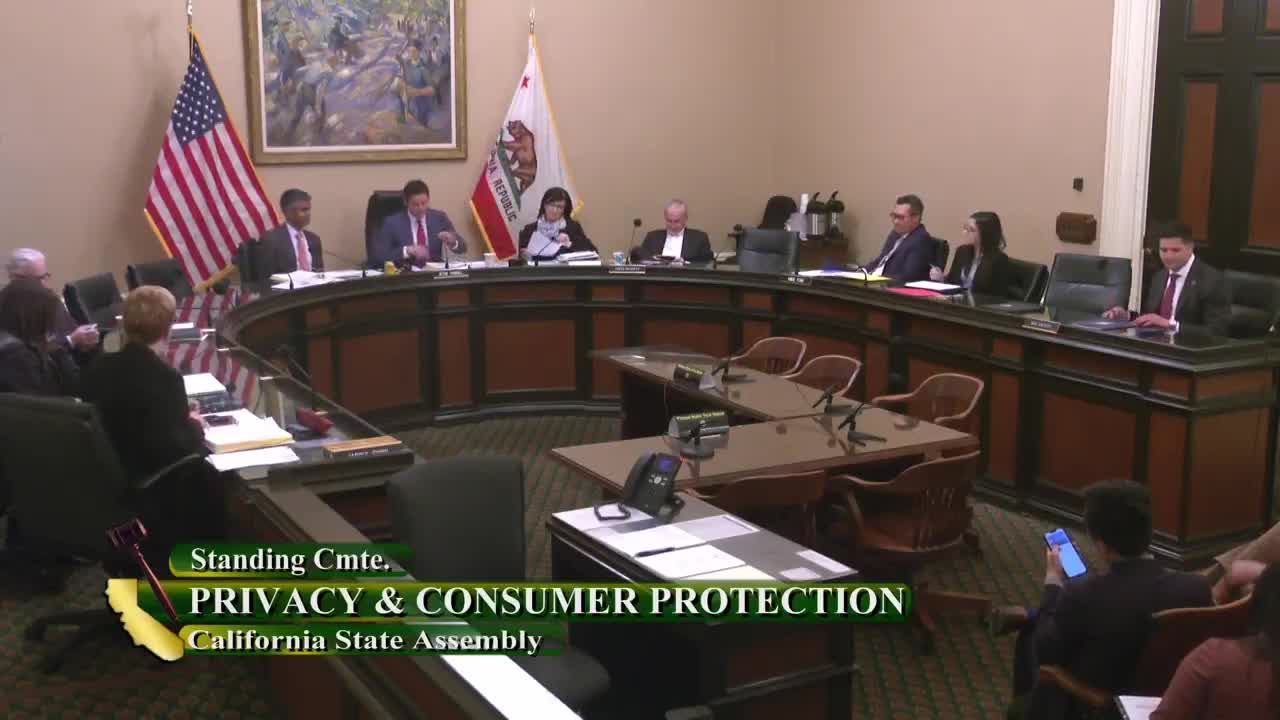 5MIN
Assembly Standing Committee on Privacy and Consumer Protection
Bill Author

Bill Co-Author(s):
