AB 520: Employment: public entities.
- Session Year: 2023-2024
- House: Assembly
- Latest Version Date: 2023-10-10
Current Status:
Passed
(2023-10-10: Chaptered by Secretary of State - Chapter 656, Statutes of 2023.)
Introduced
In Committee
First Chamber
In Committee
Second Chamber
Enacted
Existing law establishes in the Department of Industrial Relations the Division of Labor Standards Enforcement under the direction of the Labor Commissioner. Existing law authorizes the Labor Commissioner to investigate employee complaints and to provide for a hearing in any action to recover wages, penalties, and other demands for compensation.
Under existing law, any individual or business entity that contracts for services in the property services or long-term care industries is jointly and severally liable for any unpaid wages, including interest, where the individual or business entity has been provided notice, by any party, of any proceeding or investigation by the Labor Commissioner in which the employer is found liable for those unpaid wages, to the extent the amounts are for services performed under that contract, as provided, and except as specified.
This bill would additionally provide that any public entity, defined as a city, county, city and county, district, public authority, public agency, and any other political subdivision or public corporation in the state, is jointly and severally liable for any unpaid wages, as provided in the above paragraph.
The bill would include findings that changes proposed by this bill address a matter of statewide concern rather than a municipal affair and, therefore, apply to all cities, including charter cities.
Existing law establishes in the Department of Industrial Relations the Division of Labor Standards Enforcement under the direction of the Labor Commissioner. Existing law authorizes the Labor Commissioner to investigate employee complaints and to provide for a hearing in any action to recover wages, penalties, and other demands for compensation.
Under existing law, any individual or business entity that contracts for services in the property services or long-term care industries is jointly and severally liable for any unpaid wages, including interest, where the individual or business entity has been provided notice, by any party, of any proceeding or investigation by the Labor Commissioner in which the employer is found liable for those unpaid wages, to the extent the amounts are for services performed under that contract, as provided, and except as specified.
This bill would additionally provide that any public entity, defined as the state, a city, county, city and county, district, public authority, public agency, and any other political subdivision or public corporation in the state, is jointly and severally liable for any unpaid wages, as provided in the above paragraph.
This bill would, if property services labor is performed within a building a public entity owns or leases by any individual who is not an employee of the public entity, require the public entity to allow, and include as a stipulation in a contract for property services work awarded on or after January 1, 2024, representatives from a recognized or certified collective bargaining agent, as specified, to have access to the workers within that building during the workers normal workday to conduct specified training. By imposing new duties on local agencies, the bill would impose a state-mandated local program.The bill would include findings that changes proposed by this bill address a matter of statewide concern rather than a municipal affair and, therefore, apply to all cities, including charter cities.
The California Constitution requires the state to reimburse local agencies and school districts for certain costs mandated by the state. Statutory provisions establish procedures for making that reimbursement.This bill would provide that no reimbursement shall be made pursuant to these statutory provisions for costs mandated by the state pursuant to this act, but would recognize that a local agency or school district may pursue any available remedies to seek reimbursement for these costs.Existing law establishes in the Department of Industrial Relations the Division of Labor Standards Enforcement under the direction of the Labor Commissioner. Existing law authorizes the Labor Commissioner to investigate employee complaints and to provide for a hearing in any action to recover wages, penalties, and other demands for compensation.
Under existing law, any individual or business entity that contracts for services in the property services or long-term care industries is jointly and severally liable for any unpaid wages, including interest, where the individual or business entity has been provided notice, by any party, of any proceeding or investigation by the Labor Commissioner in which the employer is found liable for those unpaid wages, to the extent the amounts are for services performed under that contract, as provided, and except as specified.
This bill would additionally provide that any public entity, defined as the state, a city, county, city and county, district, public authority, public agency, and any other political subdivision or public corporation in the state, is jointly and severally liable for any unpaid wages, as provided in the above paragraph.
This bill would, if property services labor is performed within a building a public entity owns or leases by any individual who is not an employee of the public entity, require the public entity to allow, and include as a stipulation in a contract for property services work, work awarded on or after January 1, 2024, representatives from a recognized or certified collective bargaining agent, as specified, to have access to the workers within that building during the workers normal workday to conduct specified training. By imposing new duties on local agencies, the bill would impose a state-mandated local program.
The bill would include findings that changes proposed by this bill address a matter of statewide concern rather than a municipal affair and, therefore, apply to all cities, including charter cities.
The California Constitution requires the state to reimburse local agencies and school districts for certain costs mandated by the state. Statutory provisions establish procedures for making that reimbursement.
This bill would provide that no reimbursement shall be made pursuant to these statutory provisions for costs mandated by the state pursuant to this act, but would recognize that a local agency or school district may pursue any available remedies to seek reimbursement for these costs.
Existing law establishes in the Department of Industrial Relations the Division of Labor Standards Enforcement under the direction of the Labor Commissioner. Existing law authorizes the Labor Commissioner to investigate employee complaints and to provide for a hearing in any action to recover wages, penalties, and other demands for compensation.
Under existing law, any individual or business entity that contracts for services in the property services or long-term care industries is jointly and severally liable for any unpaid wages, including interest, where the individual or business entity has been provided notice, by any party, of any proceeding or investigation by the Labor Commissioner in which the employer is found liable for those unpaid wages, to the extent the amounts are for services performed under that contract, as provided, and except as specified.
This bill would make nonsubstantive changes to these provisions. additionally provide that any public entity, defined as the state, a city, county, city and county, district, public authority, public agency, and any other political subdivision or public corporation in the state, is jointly and severally liable for any unpaid wages, as provided in the above paragraph.
This bill would, if property services labor is performed within a building a public entity owns or leases by any individual who is not an employee of the public entity, require the public entity to allow, and include as a stipulation in a contract for property services work, representatives from a recognized or certified collective bargaining agent, as specified, to have access to the workers within that building during the workers normal workday to conduct specified training. By imposing new duties on local agencies, the bill would impose a state-mandated local program.
The bill would include findings that changes proposed by this bill address a matter of statewide concern rather than a municipal affair and, therefore, apply to all cities, including charter cities.
The California Constitution requires the state to reimburse local agencies and school districts for certain costs mandated by the state. Statutory provisions establish procedures for making that reimbursement.
This bill would provide that no reimbursement shall be made pursuant to these statutory provisions for costs mandated by the state pursuant to this act, but would recognize that a local agency or school district may pursue any available remedies to seek reimbursement for these costs.
Existing law establishes in the Department of Industrial Relations the Division of Labor Standards Enforcement under the direction of the Labor Commissioner. Existing law authorizes the Labor Commissioner to investigate employee complaints and to provide for a hearing in any action to recover wages, penalties, and other demands for compensation.
Under existing law, any individual or business entity that contracts for services in the property services or long-term care industries is jointly and severally liable for any unpaid wages, including interest, where the individual or business entity has been provided notice, by any party, of any proceeding or investigation by the Labor Commissioner in which the employer is found liable for those unpaid wages, to the extent the amounts are for services performed under that contract, as provided, and except as specified.
This bill would make nonsubstantive changes to these provisions.
(a)(1)Any individual, business entity, or public entity, regardless of its form, that, as part of its business, contracts for services in the property services or long-term care industries shall be jointly and severally liable for any unpaid wages, including interest, where the individual, business entity, or public entity has been provided notice, by any party, of any proceeding or investigation by the Labor Commissioner in which the employer is found liable for those unpaid wages, to the extent the amounts are for services performed under that contract.
(2)The issue of joint and several liability under this section shall be determined (A) in a proceeding under Section 98 if the contracting individual, business entity, or public entity is provided notice in the administrative complaint alleging such liability and named a defendant in the course of the Section 98 proceeding, (B) in an administrative proceeding brought by the Labor Commissioner to investigate, prosecute, or recover unpaid wages and interest pursuant to a citation, or in a court action brought by the Labor Commissioner, if the contracting individual, business entity, or public entity is provided preliminary notice by the Labor Commissioner of joint and several liability under this section at least 30 days prior to issuance of a citation, or filing of a court action, or (C) by a court in an action pursuant to Section 98.2. No action for a violation or enforcement of this section shall be brought under Part 13 (commencing with Section 2698) of Division 2.
(b)The joint and several liability provided by this section shall not apply to unpaid wages owed to employees covered by a bona fide collective bargaining agreement, if the agreement expressly provides for wages, hours of work, working conditions, a process to resolve disputes concerning nonpayment of wages, and a waiver of the joint and several liability provided by this section.
(c)An employer that contracts to provide services in the property services or long-term care industries shall, before entering into such a contract, provide written notice to the other party to the prospective contract of any unsatisfied final judgments against the employer for nonpayment of wages. The notice shall also provide the text of this section. The failure of the employer to provide notice under this subdivision shall not be a defense to the joint and several liability provided by this section.
(d)An employer that contracts to provide services in the property services or long-term care industries shall provide, within 30 days of the entry of the judgment, written notice of any unsatisfied final judgments against the employer for nonpayment of wages to any parties with which the employer is presently under contract to provide services in the property services or long-term care industries. The failure of the employer to provide notice under this subdivision shall not be a defense to the joint and several liability provided by this section.
(e)For the purposes of this section, the following definitions apply:
(1)Property services means janitorial, security guard, valet parking, landscaping, and gardening services.
(2)Long-term care has the same definition as in Section 238.4.
(3)Public entity means a city, county, city and county, district, public authority, public agency, and any other political subdivision or public corporation in the state, but does not include the state.
(f)This section shall not be interpreted to impose joint liability on an individual or the owner of a home-based business, for any property services, to the extent that the property services are provided at the individual or home-based business owners primary residence, provided that the primary residence does not have multiple housing units.
SEC. 2.(a)The Legislature finds and declares that joint and several liability for unpaid wages is a law of general application that applies to all industries in both the private and public sectors, and therefore does not interfere with a localitys ability to set wages.
(b)The Legislature finds and declares that ensuring the payment of wages to workers is a matter of statewide concern and is not a municipal affair as that term is used in Section 5 of Article XI of the California Constitution. Therefore, Section 1 of this act amending Section 238.5 of the Labor Code applies to all cities, including charter cities.
(a)(1)Any individual, business entity, or public entity, regardless of its form, that, as part of its business, contracts for services in the property services or long-term care industries shall be jointly and severally liable for any unpaid wages, including interest, where the individual, business entity, or public entity has been provided notice, by any party, of any proceeding or investigation by the Labor Commissioner in which the employer is found liable for those unpaid wages, to the extent the amounts are for services performed under that contract.
(2)The issue of joint and several liability under this section shall be determined (A) in a proceeding under Section 98 if the contracting individual, business entity, or public entity is provided notice in the administrative complaint alleging such liability and named a defendant in the course of the Section 98 proceeding, (B) in an administrative proceeding brought by the Labor Commissioner to investigate, prosecute, or recover unpaid wages and interest pursuant to a citation, or in a court action brought by the Labor Commissioner, if the contracting individual, business entity, or public entity is provided preliminary notice by the Labor Commissioner of joint and several liability under this section at least 30 days prior to issuance of a citation, or filing of a court action, or (C) by a court in an action pursuant to Section 98.2. No action for a violation or enforcement of this section shall be brought under Part 13 (commencing with Section 2698) of Division 2.
(b)The joint and several liability provided by this section shall not apply to unpaid wages owed to employees covered by a bona fide collective bargaining agreement, if the agreement expressly provides for wages, hours of work, working conditions, a process to resolve disputes concerning nonpayment of wages, and a waiver of the joint and several liability provided by this section.
(c)An employer that contracts to provide services in the property services or long-term care industries shall, before entering into such a contract, provide written notice to the other party to the prospective contract of any unsatisfied final judgments against the employer for nonpayment of wages. The notice shall also provide the text of this section. The failure of the employer to provide notice under this subdivision shall not be a defense to the joint and several liability provided by this section.
(d)An employer that contracts to provide services in the property services or long-term care industries shall provide, within 30 days of the entry of the judgment, written notice of any unsatisfied final judgments against the employer for nonpayment of wages to any parties with which the employer is presently under contract to provide services in the property services or long-term care industries. The failure of the employer to provide notice under this subdivision shall not be a defense to the joint and several liability provided by this section.
(e)For the purposes of this section, the following definitions apply:
(1)Property services means janitorial, security guard, valet parking, landscaping, and gardening services.
(2)Long-term care has the same definition as in Section 238.4.
(3)Public entity means the state, a city, county, city and county, district, public authority, public agency, and any other political subdivision or public corporation in the state. state, but does not include the state.
(f)This section shall not be interpreted to impose joint liability on an individual or the owner of a home-based business, for any property services, to the extent that the property services are provided at the individual or home-based business owners primary residence, provided that the primary residence does not have multiple housing units.
SEC. 2.(a)The Legislature finds and declares that joint and several liability for unpaid wages is a law of general application that applies to all industries in both the private and public sectors, and therefore does not interfere with a localitys ability to set wages.
(b)The Legislature finds and declares that ensuring the payment of wages to workers is a matter of statewide concern and is not a municipal affair as that term is used in Section 5 of Article XI of the California Constitution. Therefore, Section 1 of this act amending Section 238.5 of the Labor Code applies to all cities, including charter cities.
(a)(1)Any individual, business entity, or public entity, regardless of its form, that, as part of its business, contracts for services in the property services or long-term care industries shall be jointly and severally liable for any unpaid wages, including interest, where the individual, business entity, or public entity has been provided notice, by any party, of any proceeding or investigation by the Labor Commissioner in which the employer is found liable for those unpaid wages, to the extent the amounts are for services performed under that contract.
(2)The issue of joint and several liability under this section shall be determined (A) in a proceeding under Section 98 if the contracting individual, business entity, or public entity is provided notice in the administrative complaint alleging such liability and named a defendant in the course of the Section 98 proceeding, (B) in an administrative proceeding brought by the Labor Commissioner to investigate, prosecute, or recover unpaid wages and interest pursuant to a citation, or in a court action brought by the Labor Commissioner, if the contracting individual, business entity, or public entity is provided preliminary notice by the Labor Commissioner of joint and several liability under this section at least 30 days prior to issuance of a citation, or filing of a court action, or (C) by a court in an action pursuant to Section 98.2. No action for a violation or enforcement of this section shall be brought under Part 13 (commencing with Section 2698) of Division 2.
(b)The joint and several liability provided by this section shall not apply to unpaid wages owed to employees covered by a bona fide collective bargaining agreement, if the agreement expressly provides for wages, hours of work, working conditions, a process to resolve disputes concerning nonpayment of wages, and a waiver of the joint and several liability provided by this section.
(c)An employer that contracts to provide services in the property services or long-term care industries shall, before entering into such a contract, provide written notice to the other party to the prospective contract of any unsatisfied final judgments against the employer for nonpayment of wages. The notice shall also provide the text of this section. The failure of the employer to provide notice under this subdivision shall not be a defense to the joint and several liability provided by this section.
(d)An employer that contracts to provide services in the property services or long-term care industries shall provide, within 30 days of the entry of the judgment, written notice of any unsatisfied final judgments against the employer for nonpayment of wages to any parties with which the employer is presently under contract to provide services in the property services or long-term care industries. The failure of the employer to provide notice under this subdivision shall not be a defense to the joint and several liability provided by this section.
(e)For the purposes of this section, the following definitions apply:
(1)Property services means janitorial, security guard, valet parking, landscaping, and gardening services.
(2)Long-term care has the same definition as in Section 238.4.
(3)Public entity means the state, a city, county, city and county, district, public authority, public agency, and any other political subdivision or public corporation in the state.
(f)This section shall not be interpreted to impose joint liability on an individual or the owner of a home-based business, for any property services, to the extent that the property services are provided at the individual or home-based business owners primary residence, provided that the primary residence does not have multiple housing units.
SEC. 2.Section 239 is added to the Labor Code, to read:239.(a)If property services labor is performed, within a building owned or leased by a public entity, by any individual who is not an employee of the public entity, the public entity shall allow representatives from a recognized or certified collective bargaining agent that represents property services workers and qualified organizations under Section 1429.5 to have access to the workers within the building owned or leased by the public entity during the workers normal workday to conduct training on workplace health and safety, sexual harassment, and workers rights, including biennial sexual violence and harassment prevention training required under Section 1429.5.(b)A public entity awarding a contract for property services work on or after January 1, 2024, shall include in the contract a stipulation requiring the public entity to comply with subdivision (a).(c)For purposes of this section, the following definitions apply:(1)Property services means janitorial, security guard, valet parking, landscaping, and gardening services.(2)Public entity means the state, a city, county, city and county, district, public authority, public agency, and any other political subdivision or public corporation in the state.SEC. 3.SEC. 2.(a)The Legislature finds and declares that joint and several liability for unpaid wages is a law of general application that applies to all industries in both the private and public sectors, and therefore does not interfere with a localitys ability to set wages.
(b)The Legislature finds and declares that ensuring the payment of wages to workers and that workers have access to a safe workplace free of harassment is a matter of statewide concern and is not a municipal affair as that term is used in Section 5 of Article XI of the California Constitution. Therefore, Section 1 of this act amending Section 238.5 of the Labor Code and Section 2 of this act adding Section 239 to the Labor Code apply applies to all cities, including charter cities.
SEC. 4.No reimbursement shall be made pursuant to Part 7 (commencing with Section 17500) of Division 4 of Title 2 of the Government Code for costs mandated by the state pursuant to this act. It is recognized, however, that a local agency or school district may pursue any remedies to obtain reimbursement available to it under Part 7 (commencing with Section 17500) and any other law.(a)(1)Any individual, business entity, or public entity, regardless of its form, that, as part of its business, contracts for services in the property services or long-term care industries shall be jointly and severally liable for any unpaid wages, including interest, where the individual, business entity, or public entity has been provided notice, by any party, of any proceeding or investigation by the Labor Commissioner in which the employer is found liable for those unpaid wages, to the extent the amounts are for services performed under that contract.
(2)The issue of joint and several liability under this section shall be determined (A) in a proceeding under Section 98 if the contracting individual, business entity, or public entity is provided notice in the administrative complaint alleging such liability and named a defendant in the course of the Section 98 proceeding, (B) in an administrative proceeding brought by the Labor Commissioner to investigate, prosecute, or recover unpaid wages and interest pursuant to a citation, or in a court action brought by the Labor Commissioner, if the contracting individual, business entity, or public entity is provided preliminary notice by the Labor Commissioner of joint and several liability under this section at least 30 days prior to issuance of a citation, or filing of a court action, or (C) by a court in an action pursuant to Section 98.2. No action for a violation or enforcement of this section shall be brought under Part 13 (commencing with Section 2698) of Division 2.
(b)The joint and several liability provided by this section shall not apply to unpaid wages owed to employees covered by a bona fide collective bargaining agreement, if the agreement expressly provides for wages, hours of work, working conditions, a process to resolve disputes concerning nonpayment of wages, and a waiver of the joint and several liability provided by this section.
(c)An employer that contracts to provide services in the property services or long-term care industries shall, before entering into such a contract, provide written notice to the other party to the prospective contract of any unsatisfied final judgments against the employer for nonpayment of wages. The notice shall also provide the text of this section. The failure of the employer to provide notice under this subdivision shall not be a defense to the joint and several liability provided by this section.
(d)An employer that contracts to provide services in the property services or long-term care industries shall provide, within 30 days of the entry of the judgment, written notice of any unsatisfied final judgments against the employer for nonpayment of wages to any parties with which the employer is presently under contract to provide services in the property services or long-term care industries. The failure of the employer to provide notice under this subdivision shall not be a defense to the joint and several liability provided by this section.
(e)For the purposes of this section, the following definitions apply:
(1)Property services means janitorial, security guard, valet parking, landscaping, and gardening services.
(2)Long-term care has the same definition as in Section 238.4.
(3)Public entity means the state, a city, county, city and county, district, public authority, public agency, and any other political subdivision or public corporation in the state.
(f)This section shall not be interpreted to impose joint liability on an individual or the owner of a home-based business, for any property services, to the extent that the property services are provided at the individual or home-based business owners primary residence, provided that the primary residence does not have multiple housing units.
SEC. 2.Section 239 is added to the Labor Code, to read:239.(a)If property services labor is performed, within a building owned or leased by a public entity, by any individual who is not an employee of the public entity, the public entity shall allow representatives from a recognized or certified collective bargaining agent that represents property services workers and qualified organizations under Section 1429.5 to have access to the workers within the building owned or leased by the public entity during the workers normal workday to conduct training on workplace health and safety, sexual harassment, and workers rights, including biennial sexual violence and harassment prevention training required under Section 1429.5.
(b)A public entity awarding a contract for property services work on or after January 1, 2024, shall include in the contract a stipulation requiring the public entity to comply with subdivision (a).
(c)For purposes of this section, the following definitions apply:
(1)Property services means janitorial, security guard, valet parking, landscaping, and gardening services.
(2)Public entity means the state, a city, county, city and county, district, public authority, public agency, and any other political subdivision or public corporation in the state.
SEC. 3.(a)The Legislature finds and declares that joint and several liability for unpaid wages is a law of general application that applies to all industries in both the private and public sectors, and therefore does not interfere with a localitys ability to set wages.
(b)The Legislature finds and declares that ensuring the payment of wages to workers and that workers have access to a safe workplace free of harassment is a matter of statewide concern and is not a municipal affair as that term is used in Section 5 of Article XI of the California Constitution. Therefore, Section 1 of this act amending Section 238.5 of the Labor Code and Section 2 of this act adding Section 239 to the Labor Code apply to all cities, including charter cities.
SEC. 4.No reimbursement shall be made pursuant to Part 7 (commencing with Section 17500) of Division 4 of Title 2 of the Government Code for costs mandated by the state pursuant to this act. It is recognized, however, that a local agency or school district may pursue any remedies to obtain reimbursement available to it under Part 7 (commencing with Section 17500) and any other law.
(a)(1)Any individual or individual, business entity, or public entity, regardless of its form, that, as part of its business, contracts for services in the property services or long-term care industries shall be jointly and severally liable for any unpaid wages, including interest, where the individual or business entity individual, business entity, or public entity has been provided notice, by any party, of any proceeding or investigation by the Labor Commissioner in which the employer is found liable for those unpaid wages, to the extent the amounts are for services performed under that contract.
(2)The issue of joint and several liability under this section shall be determined (A) in a proceeding under Section 98 if the individual or contracting individual, business entity, or public entity is provided notice in the administrative complaint alleging such liability and named a defendant in the course of the Section 98 proceeding, (B) in an administrative proceeding brought by the Labor Commissioner to investigate, prosecute, or recover unpaid wages and interest pursuant to a citation, or in a court action brought by the Labor Commissioner, if the contracting individual or individual, business entity, or public entity is provided preliminary notice by the Labor Commissioner of joint and several liability under this section at least 30 days prior to issuance of a citation, or filing of a court action, or (C) by a court in an action pursuant to Section 98.2. No action for a violation or enforcement of this section shall be brought under Part 13 (commencing with Section 2698) of Division 2.
(b)The joint and several liability provided by this section shall not apply to unpaid wages owed to employees covered by a bona fide collective bargaining agreement, if the agreement expressly provides for wages, hours of work, working conditions, a process to resolve disputes concerning nonpayment of wages, and a waiver of the joint and several liability provided by this section.
(c)An employer that contracts to provide services in the property services or long-term care industries shall, before entering into such a contract, provide written notice to the other party to the prospective contract of any unsatisfied final judgments against the employer for nonpayment of wages. The notice shall also provide the text of this section. The failure of the employer to provide notice under this subdivision shall not be a defense to the joint and several liability provided by this section.
(d)An employer that contracts to provide services in the property services or long-term care industries shall provide, within 30 days of the entry of the judgment, written notice of any unsatisfied final judgments against the employer for nonpayment of wages to any parties with which the employer is presently under contract to provide services in the property services or long-term care industries. The failure of the employer to provide notice under this subdivision shall not be a defense to the joint and several liability provided by this section.
(e)For the purposes of this section, the following definitions apply:
(1)Property services means janitorial, security guard, valet parking, landscaping, and gardening services.
(2)Long-term care has the same definition as in Section 238.4.
(3)Public entity means the state, a city, county, city and county, district, public authority, public agency, and any other political subdivision or public corporation in the state.
(f)This section shall not be interpreted to impose joint liability on an individual or the owner of a home-based business, for any property services, to the extent that the property services are provided at the individual or home-based business owners primary residence, provided that the primary residence does not have multiple housing units.
SEC. 2.Section 239 is added to the Labor Code, to read:239.(a)If property services labor is performed, within a building owned or leased by a public entity, by any individual who is not an employee of the public entity, the public entity shall allow representatives from a recognized or certified collective bargaining agent that represents property services workers and qualified organizations under Section 1429.5 to have access to the workers within the building owned or leased by the public entity during the workers normal workday to conduct training on workplace health and safety, sexual harassment, and workers rights, including biennial sexual violence and harassment prevention training required under Section 1429.5.
(b)A public entity awarding a contract for property services work shall include in the contract a stipulation requiring the public entity to comply with subdivision (a).
(c)For purposes of this section, the following definitions apply:
(1)Property services means janitorial, security guard, valet parking, landscaping, and gardening services.
(2)Public entity means the state, a city, county, city and county, district, public authority, public agency, and any other political subdivision or public corporation in the state.
SEC. 3.(a)The Legislature finds and declares that joint and several liability for unpaid wages is a law of general application that applies to all industries in both the private and public sectors, and therefore does not interfere with a localitys ability to set wages.
(b)The Legislature finds and declares that ensuring the payment of wages to workers and that workers have access to a safe workplace free of harassment is a matter of statewide concern and is not a municipal affair as that term is used in Section 5 of Article XI of the California Constitution. Therefore, Section 1 of this act amending Section 238.5 of the Labor Code and Section 2 of this act adding Section 239 to the Labor Code apply to all cities, including charter cities.
SEC. 4.No reimbursement shall be made pursuant to Part 7 (commencing with Section 17500) of Division 4 of Title 2 of the Government Code for costs mandated by the state pursuant to this act. It is recognized, however, that a local agency or school district may pursue any remedies to obtain reimbursement available to it under Part 7 (commencing with Section 17500) and any other law.
(a)(1)Any individual or business entity, regardless of its form, that, as part of its business, contracts for services in the property services or long-term care industries shall be jointly and severally liable for any unpaid wages, including interest, where the individual or business entity has been provided notice, by any party, of any proceeding or investigation by the Labor Commissioner in which the employer is found liable for those unpaid wages, to the extent the amounts are for services performed under that contract.
(2)The issue of joint and several liability under this section shall be determined (A) in a proceeding under Section 98 if the individual or contracting business is provided notice in the administrative complaint alleging such liability and named a defendant in the course of the Section 98 proceeding, (B) in an administrative proceeding brought by the Labor Commissioner to investigate, prosecute, or recover unpaid wages and interest pursuant to a citation, or in a court action brought by the Labor Commissioner, if the contracting individual or business is provided preliminary notice by the Labor Commissioner of joint and several liability under this section at least 30 days prior to issuance of a citation, or filing of a court action, or (C) by a court in an action pursuant to Section 98.2. No action for a violation or enforcement of this section shall be brought under Part 13 (commencing with Section 2698) of Division 2.
(b)The joint and several liability provided by this section shall not apply to unpaid wages owed to employees covered by a bona fide collective bargaining agreement, if the agreement expressly provides for wages, hours of work, working conditions, a process to resolve disputes concerning nonpayment of wages, and a waiver of the joint and several liability provided by this section.
(c)An employer that contracts to provide services in the property services or long-term care industries shall, prior to before entering into such a contract, provide written notice to the other party to the prospective contract of any unsatisfied final judgments against the employer for nonpayment of wages. The notice shall also provide the text of this section. The failure of the employer to provide notice under this subdivision shall not be a defense to the joint and several liability provided by this section.
(d)An employer that contracts to provide services in the property services or long-term care industries shall provide, within 30 days of the entry of the judgment, written notice of any unsatisfied final judgments against the employer for nonpayment of wages to any parties with which the employer is presently under contract to provide services in the property services or long-term care industries. The failure of the employer to provide notice under this subdivision shall not be a defense to the joint and several liability provided by this section.
(e)For the purposes of this section, the following apply definitions apply:
(1)Property services means janitorial, security guard, valet parking, landscaping, and gardening services.
(2)Long-term care has the same definition as in Section 238.4.
(f)This section shall not be interpreted to impose joint liability on an individual or the owner of a home-based business, for any property services, to the extent that the property services are provided at the individual or home-based business owners primary residence, provided that the primary residence does not have multiple housing units.
|
Date
|
Status
|
|---|---|
| Oct 10, 2023 | Chaptered by Secretary of State - Chapter 656, Statutes of 2023. |
| Oct 10, 2023 | Approved by the Governor. |
| Sep 20, 2023 | Enrolled and presented to the Governor at 4 p.m. |
| Sep 13, 2023 | Senate amendments concurred in. To Engrossing and Enrolling. (Ayes 66. Noes 13. Page 3373.). |
| Sep 12, 2023 | In Assembly. Concurrence in Senate amendments pending. |
| Sep 12, 2023 | Read third time. Passed. Ordered to the Assembly. (Ayes 32. Noes 6. Page 2621.). |
| Sep 5, 2023 | Read second time. Ordered to third reading. |
| Sep 1, 2023 | Read second time and amended. Ordered returned to second reading. |
| Sep 1, 2023 | From committee: Amend, and do pass as amended. (Ayes 5. Noes 2.) (September 1). |
| Aug 14, 2023 | In committee: Referred to APPR suspense file. |
| Jul 12, 2023 | From committee: Do pass and re-refer to Com. on APPR. (Ayes 5. Noes 0.) (July 12). Re-referred to Com. on APPR. |
| Jun 21, 2023 | From committee chair, with author's amendments: Amend, and re-refer to committee. Read second time, amended, and re-referred to Com. on L., P.E. & R. |
| Jun 14, 2023 | Referred to Com. on L., P.E. & R. |
| Jun 1, 2023 | In Senate. Read first time. To Com. on RLS. for assignment. |
| Jun 1, 2023 | Read third time. Passed. Ordered to the Senate. (Ayes 66. Noes 13. Page 2124.) |
| May 18, 2023 | Read second time. Ordered to third reading. |
| May 18, 2023 | From committee: Do pass. (Ayes 13. Noes 2.) (May 18). |
| May 10, 2023 | In committee: Set, first hearing. Referred to APPR. suspense file. |
| Apr 27, 2023 | From committee: Do pass and re-refer to Com. on APPR. (Ayes 7. Noes 0.) (April 26). Re-referred to Com. on APPR. |
| Apr 19, 2023 | Re-referred to Com. on L. & E. |
| Apr 18, 2023 | From committee chair, with author's amendments: Amend, and re-refer to Com. on L. & E. Read second time and amended. |
| Mar 27, 2023 | Re-referred to Com. on L. & E. |
| Mar 23, 2023 | Referred to Com. on L. & E. |
| Mar 23, 2023 | From committee chair, with author's amendments: Amend, and re-refer to Com. on L. & E. Read second time and amended. |
| Feb 8, 2023 | From printer. May be heard in committee March 10. |
| Feb 7, 2023 | Read first time. To print. |
|
Date
|
Description
|
Location
|
Votes
|
|
|---|---|---|---|---|
| Sep 13, 2023 | AB 520 Santiago Concurrence in Senate Amendments | Assembly Floor |
Passed |
|
| Sep 12, 2023 | Assembly 3rd Reading AB520 Santiago By Becker | Senate Floor |
Passed |
|
| Sep 1, 2023 | Do pass as amended | Senate Standing Committee on Appropriations |
Passed |
|
| Aug 14, 2023 | Placed on suspense file | Senate Standing Committee on Appropriations |
Passed |
|
| Jul 12, 2023 | Do pass, but first be re-referred to the Committee on [Appropriations] | Senate Standing Committee on Labor, Public Employment and Retirement |
Passed |
|
| Jun 1, 2023 | AB 520 Santiago Assembly Third Reading | Assembly Floor |
Passed |
|
| May 18, 2023 | Do pass. | Assembly Standing Committee on Appropriations |
Passed |
|
| Apr 26, 2023 | Do pass and be re-referred to the Committee on [Appropriations] | Assembly Standing Committee on Labor and Employment |
Passed |
This list shows positions taken on this bill by organizations on the date displayed, which is linked to the original source.
Positions by individuals are not included.
|
Organization
|
Position
|
Date
|
|---|---|---|
| ACCE Action | ** Support | |
| Alliance San Diego | ** Support | |
| American Friends Service Committee | ** Support | |
| Building Skills Partnership | ** Support | |
| California Labor Federation, Afl-Cio | ** Support | |
| CSA San Diego County | ** Support | |
| Espacio Migrante | ** Support | |
| LAANE | ** Support | |
| Santa Clara County Wage Theft Coalition | ** Support | |
| SEIU California | ** Support | |
| Working Partnerships USA | ** Support |
CONCURRENCE IN SENATE AMENDMENTS
CSA1 Bill Id:AB 520
Author:(Santiago)
As Amended Ver:September 1, 2023
Majority vote
SUMMARY
Extends existing labor law provisions applicable to the private sector to make a "public entity," as defined, jointly and severally liable for unpaid wages when the public entity contracts for services in the property or long-term care industries and where the public entity has been provided notice of such liability by the Labor Commissioner (LC).
Senate Amendments
- Remove the requirement for a public entity to allow representatives from certified collective bargaining agents and qualified organizations access to non-employee workers providing property services in a building that is owned or leased by the public entity.
- Exclude the state from the definition of public entity.
COMMENTS
According to a 2022 report by the UCLA Labor Center, "About 37% of private sector janitors in California are subcontracted, meaning that they are employed by building services companies that contract with building owners, managers, and tenants to provide janitorial services, not by the owners or tenants of the buildings themselves. The estimate for subcontracted janitors also includes janitors who clean government buildings, but are employed by a building services company that contracts with the governmental entity that controls the buildings where the janitors work. In such a scenario, the janitor's employer of record is the private sector building services company, not the governmental entity."[1]
Additionally, the report noted that "Since the janitorial services industry has very few barriers to entry and requires minimal special skills and equipment, the number of small undifferentiated janitorial companies has dramatically grown, outpacing the number of cleaning contracts that are available. This has created a highly competitive market, in which the primary source of competition is price. As such, building services companies often lower wages for workers and violate minimal standards and labor laws to remain competitive in this environment."[2]
According to the Author
"Private-sector property service workers are an essential part of California's workforce, yet despite playing a crucial role in our economy, they are some of the most vulnerable and exploited workers in the service industry. Public entities contract out this work to the lowest bidder and an array of unaccountable service providers, which perpetuates the worst of the worst employment practices: wage theft, retaliation, harassment, and even assault. [This bill] would hold public entities jointly liable for wage theft committed by their property service contractors.
Under current law, private entities are jointly liable for wage theft committed by property service companies. In order to discourage exploitative employment practices across the entire industry, public entities must be held equally accountable."
In addition the author points out that this bill will promote equity and maximize benefits for underserved and marginalized communities because, "Property service workers are among the most marginalized members of our communities. The industry's employment practices are associated with especially poor economic outcomes for workers, such as food and housing insecurity. [This bill] would discourage public entities from perpetuating the exploitation of these communities by discouraging contracts with businesses that abuse workers."
Arguments in Support
According to SEIU California, sponsor of this bill, "Under existing law, Labor Code § 238.5, a private business that contracts for property services is jointly liable for the wage theft violations of the service contractor. However, public entities who contract for the same services are not jointly liable. Over the past few decades, public employers have shifted from direct employment to contracting with private businesses for property services. The property service industry includes some of the lowest-paid workers who are especially vulnerable to wage theft, sexual harassment, and workplace injuries. The subcontracted nature of the janitorial industry fuels unfair competition by awarding contracts to businesses with the lowest labor costs. Public entities are no exception to this practice.
[This bill] would discourage public entities from perpetuating the exploitative practices of the property services industry by 1) holding public entities jointly liable for wage theft violations and 2) providing access to conduct workplace health, safety, and workers' rights training for propertyservice workers who clean public spaces."
Arguments in Opposition
None on file.
FISCAL COMMENTS
According to the Senate Appropriations Committee, the Department of Industrial Relations (DIR) indicates that it would incur first-year administrative costs of $107,000, and $96,000 annually thereafter, to undertake additional enforcement actions if a public entity is jointly and severally liable for unpaid wages (Labor Enforcement and Compliance Fund).
The bill would result in unknown court workload cost pressures by authorizing the Labor Commissioner to bring a court action against a public entity for unpaid wages and the right of the public entity to appeal.
VOTES:
ASM LABOR AND EMPLOYMENT: 7-0-0
YES: Kalra, Flora, Chen, Haney, Ortega, Reyes, Ward
ASM APPROPRIATIONS: 13-2-1
YES: Holden, Bryan, Calderon, Wendy Carrillo, Mike Fong, Hart, Lowenthal, Mathis, Papan, Pellerin, Sanchez, Weber, Ortega
NO: Megan Dahle, Dixon
ABS, ABST OR NV: Robert Rivas
ASSEMBLY FLOOR: 66-13-1
YES: Addis, Aguiar-Curry, Alanis, Alvarez, Arambula, Bains, Bauer-Kahan, Bennett, Berman, Boerner, Bonta, Bryan, Calderon, Juan Carrillo, Wendy Carrillo, Cervantes, Connolly, Mike Fong, Friedman, Garcia, Gipson, Grayson, Haney, Hart, Holden, Irwin, Jackson, Jones- Sawyer, Kalra, Lackey, Lee, Low, Lowenthal, Maienschein, Mathis, McCarty, McKinnor, Muratsuchi, Stephanie Nguyen, Ortega, Pacheco, Papan, Pellerin, Petrie-Norris, Quirk-Silva, Ramos, Reyes, Luz Rivas, Robert Rivas, Rodriguez, Blanca Rubio, Sanchez, Santiago, Schiavo, Soria, Ting, Valencia, Villapudua, Waldron, Ward, Weber, Wicks, Wilson, Wood, Zbur, Rendon
NO: Chen, Megan Dahle, Davies, Dixon, Essayli, Flora, Vince Fong, Gallagher, Hoover, Jim Patterson, Joe Patterson, Ta, Wallis
ABS, ABST OR NV: Gabriel
UPDATED
VERSION: September 1, 2023
CONSULTANT: Martin Vindiola / L. & E. / (916) 319-2091 FN: 0002289
SENATE RULES COMMITTEE Office of Senate Floor Analyses (916) 651-1520 Fax: (916) 327-4478 | AB 520 |
THIRD READING
Bill No: AB 520
Author: Santiago (D)
Amended: 6/21/23 in Senate
Vote: 21
SENATE LABOR, PUB. EMP. & RET. COMMITTEE: 5-0, 7/12/23
AYES: Cortese, Wilk, Durazo, Laird, Smallwood-Cuevas
SENATE APPROPRIATIONS COMMITTEE: 5-2, 9/1/23
AYES: Portantino, Ashby, Bradford, Wahab, Wiener
NOES: Jones, Seyarto
ASSEMBLY FLOOR: 66-13, 6/1/23 - See last page for vote
SUBJECT: Employment: public entities
SOURCE: SEIU California
DIGEST:
This bill extends existing labor law provisions applicable to the private sector to make a “public entity,” as defined, jointly and severally liable for unpaid wages when the public entity contracts for services in the property or long-term care industries and where the public entity has been provided notice of such liability by the Labor Commissioner.
ANALYSIS:
Existing law:
- Establishes the Division of Labor Standards and Enforcement (DLSE), within the Department of Industrial Relations and under the direction of the Labor Commissioner (LC), and empowers the LC with ensuring a just day’s pay in every workplace and promotes economic justice through robust enforcement of labor laws. (Labor Code §79-107)
- Requires the LC and authorized deputies, upon the filing of a claim by an employee, as specified, to, among other things, take assignments of:
- Wage claims and incidental expense accounts and advances.
- Mechanics’ and other liens of employees.
- Claims based on “stop orders” for wages and on bonds for labor.
- Claims for damages for misrepresentations of conditions of employment.
- Claims for penalties for nonpayment of wages.
- Claims for vacation, severance, or other supplemental compensation, as specified.
- Claims for loss of wages from discharge from employment for the garnishment of wages.
- Claims for loss of wages as the result of demotion, suspension, or discharge from employment for lawful conduct occurring during nonworking hours away from the employer’s premises. (Labor Code §96)
- Provides that any individual or business entity that contracts for services in the property services or long-term care industries is jointly and severally liable for any unpaid wages, including interest, where the individual or business entity has been provided notice, by any party, of any proceeding or investigation by the LC in which the employer is found liable for those unpaid wages, to the extent the amounts are for services performed under that contract, as specified. (Labor Code §238.5 (a)(1))
- Requires an employer that contracts to provide services in the property services or long-term care industries to, prior to entering into such a contract, provide written notice to the other party to the prospective contract of any unsatisfied final judgments against the employer for nonpayment of wages, as specified. (Labor Code, § 238.5 (c))
- Defines “property services” as janitorial, security guard, valet parking, landscaping, and gardening services. (Labor Code § 238.5 (e)(1))
- Defines “long-term care” as the operation of a skilled nursing facility, intermediate care facility, congregate living health facility, hospice facility, adult residential facility, residential care facility for persons with chronic life-threatening illness, residential care facility for the elderly, continuing care retirement community, home health agency, or home care organization. (Labor Code §238.5 (e)(2))
- Provides that these joint and several liability provisions do not apply to unpaid wages owed to employees covered by a bona fide collective bargaining agreement, if the agreement expressly provides for wages, hours of work, working conditions, a process to resolve disputes concerning nonpayment of wages, and a waiver of the joint and several liability provided by this section. (Labor Code, § 238.5 (b).)
- Requires an employer that contracts to provide services in the property services or long-term care industries to provide, within 30 days of the entry of the judgment, written notice of any unsatisfied final judgments against the employer for nonpayment of wages to any parties with which the employer is presently under contract for these services; and specifies that failure of the employer to provide such notice shall not be a defense to the joint and several liability requirements. (Labor Code, § 238.5 (d))
This bill:
- Extends the above-described joint several liability provisions to public entities that contract for property services or long-term care industries.
- Defines “public entity” as a city, county, city and county, district, public authority, public agency, and any other political subdivision or public corporation in the state, but does not include the state.
- Provides that any “public entity” that hires contractors for services in the property services or long-term care industries, as defined, is jointly and severally liable for any unpaid wages if they have been notified of an investigation by the LC in which the employer is found liable for those unpaid wages, to the extent that the amounts are for services performed under that contract.
- Finds and declares that:
- joint and several liability for unpaid wages is a law of general application that applies to all industries in both the private and public sectors, and therefore does not interfere with a locality’s ability to set wages and is a matter of statewide concern.
- ensuring the payment of wages to workers is a matter of statewide concern rather than a municipal affair and, therefore, apply to all cities, including charter cities.
Background
Contracting for Property Services: According to a 2022 report by the UCLA Labor Center, “About 37% of private sector janitors in California are subcontracted, meaning that they are employed by building services companies that contract with building owners, managers, and tenants to provide janitorial services, not by the owners or tenants of the buildings themselves. The estimate for subcontracted janitors also includes janitors who clean government buildings, but are employed by a building services company that contracts with the governmental entity that controls the buildings where the janitors work. In such a scenario, the janitor’s employer of record is the private sector building services company, not the governmental entity.”[1]
Additionally, the report noted “Since the janitorial services industry has very few barriers to entry and requires minimal special skills and equipment, the number of small undifferentiated janitorial companies has dramatically grown, outpacing the number of cleaning contracts that are available. This has created a highly competitive market, in which the primary source of competition is price. As such, building services companies often lower wages for workers and violate minimal standards and labor laws to remain competitive in this environment.”[2]
As noted above, existing Labor Code Section 238.5 (SB 588, De León, Chapter 803, Statutes of 2015) requires, among other things, that any individual or business entity that contracts for services in the property services or long-term care industries to be jointly and severally liable for any unpaid wages, as specified. Public entities who contract for the same services are not currently included under these provisions and, therefore, not held jointly and severally liable for owed wages of contracted employees. This bill will replicate existing law to hold public entities jointly liable for wage theft violations of property services workers in public spaces.
Need for this bill? According to the author, “Private-sector property service workers are an essential part of California’s workforce, yet despite playing a crucial role in our economy, they are some of the most vulnerable and exploited workers in the service industry. Public entities contract out this work to the lowest bidder and an array of unaccountable service providers, which perpetuates the worst of the worst employment practices: wage theft, retaliation, harassment, and even assault. AB 520 would hold public entities jointly liable for wage theft committed by their property service contractors.”
Related/Prior Legislation
SB 588 (De León, Chapter 803, Statutes of 2015) required, among other things, that any individual or business entity that contracts for services in the property services or long-term care industries to be jointly and severally liable for any unpaid wages, as specified.
FISCAL EFFECT: Appropriation: No Fiscal Com.: Yes Local: No
According to the Senate Appropriations Committee:
- The Department of Industrial Relations (DIR) indicates that it would incur first-year administrative costs of $107,000, and $96,000 annually thereafter, to undertake additional enforcement actions if a public entity is jointly and severally liable for unpaid wages (Labor Enforcement and Compliance Fund).
- This bill would result in unknown court workload cost pressures by authorizing the Labor Commissioner to bring a court action against a public entity for unpaid wages and the right of the public entity to appeal. (Trial Court Trust Fund and General Fund, See Staff Comments).
SUPPORT: (Verified 9/1/23)
SEIU California (source)
ACCE Action
Alliance San Diego
American Friends Service Committee
Building Skills Partnership
California Labor Federation, AFL-CIO
CSA San Diego County
Espacio Migrante
LAANE
Santa Clara County Wage Theft Coalition
Working Partnerships USA
OPPOSITION: (Verified 9/1/23)
None received
ARGUMENTS IN SUPPORT: The sponsors of this bill, SEIU California, argues that this bill will discourage public entities from contracting with property service companies that commit wage theft by applying existing joint liability laws to public entities. They write, “Over the past few decades, public employers have shifted from direct employment to contracting with private businesses for property services. The property service industry includes some of the lowest-paid workers who are especially vulnerable to wage theft, sexual harassment, and workplace injuries. The subcontracted nature of the janitorial industry fuels unfair competition by awarding contracts to businesses with the lowest labor costs. Public entities are no exception to this practice.
“When public entities contract out property services, they eliminate any responsibility to protect workers from wage theft or ensure safe working conditions. As a result, property service workers employed by private companies are likelier to experience workplace violations, including wage theft, sexual harassment, and assault. Contracting out property services to reduce costs rewards exploitative businesses that use wage theft to keep labor costs low. This practice doesn’t just hurt workers and their families; it drives down working conditions for every worker due to unfair competition. AB 520 would discourage public entities from perpetuating the exploitative practices of the property services industry by holding public entities jointly liable for wage theft violations.”
ASSEMBLY FLOOR: 66-13, 6/1/23
AYES: Addis, Aguiar-Curry, Alanis, Alvarez, Arambula, Bains, Bauer-Kahan, Bennett, Berman, Boerner, Bonta, Bryan, Calderon, Juan Carrillo, Wendy Carrillo, Cervantes, Connolly, Mike Fong, Friedman, Garcia, Gipson, Grayson, Haney, Hart, Holden, Irwin, Jackson, Jones-Sawyer, Kalra, Lackey, Lee, Low, Lowenthal, Maienschein, Mathis, McCarty, McKinnor, Muratsuchi, Stephanie Nguyen, Ortega, Pacheco, Papan, Pellerin, Petrie-Norris, Quirk-Silva, Ramos, Reyes, Luz Rivas, Robert Rivas, Rodriguez, Blanca Rubio, Sanchez, Santiago, Schiavo, Soria, Ting, Valencia, Villapudua, Waldron, Ward, Weber, Wicks, Wilson, Wood, Zbur, Rendon
NOES: Chen, Megan Dahle, Davies, Dixon, Essayli, Flora, Vince Fong, Gallagher, Hoover, Jim Patterson, Joe Patterson, Ta, Wallis
NO VOTE RECORDED: Gabriel
Prepared by: Alma Perez-Schwab / L., P.E. & R. / (916) 651-1556
9/2/23 16:58:07
SENATE COMMITTEE ON
Senator Anthony Portantino, Chair
2023 - 2024 Regular Session
AB 520 (Santiago) - Employment: public entities
Version: | Policy Vote: |
Urgency: | Mandate: |
Hearing Date: | Consultant: |
Bill Summary:
AB 520 would make a public entity jointly and severally liable for unpaid wages when it contracts for services in the property services or long-term care industries.
*********** ANALYSIS ADDENDUM – SUSPENSE FILE ***********
The following information is revised to reflect amendments
adopted by the committee on September 1, 2023
Fiscal Impact:
- The Department of Industrial Relations (DIR) indicates that it would incur first-year administrative costs of $107,000, and $96,000 annually thereafter, to undertake additional enforcement actions if a public entity is jointly and severally liable for unpaid wages (Labor Enforcement and Compliance Fund).
- The bill would result in unknown court workload cost pressures by authorizing the Labor Commissioner to bring a court action against a public entity for unpaid wages and the right of the public entity to appeal. (Trial Court Trust Fund and General Fund, See Staff Comments).
Author Amendments:
Remove the State of California from the definition of “public entity.”
-- END --
SENATE COMMITTEE ON APPROPRIATIONS
Senator Anthony Portantino, Chair
2023 - 2024 Regular Session
AB 520 (Santiago) - Employment: public entities
Version: June 21, 2023 | Policy Vote: L., P.E. & R. 5 - 0 |
Urgency: No | Mandate: No |
Hearing Date: August 14, 2023 | Consultant: Robert Ingenito |
Bill Summary:
AB 520 would make a public entity jointly and severally liable for unpaid wages when it contracts for services in the property services or long-term care industries.
Fiscal Impact:
- The Department of Industrial Relations (DIR) indicates that it would incur first-year administrative costs of $107,000, and $96,000 annually thereafter, to undertake additional enforcement actions if a public entity is jointly and severally liable for unpaid wages (Labor Enforcement and Compliance Fund).
- The bill would result in unknown court workload cost pressures by authorizing the Labor Commissioner to bring a court action against a public entity for unpaid wages and the right of the public entity to appeal. (Trial Court Trust Fund and General Fund, See Staff Comments).
- To the extent that they are found liable for unpaid wages as a public entity, this bill would result in unknown, potentially significant costs to state agencies (General Fund and special funds, See Staff Comments).
Background:
Current law requires, among other things, that any individual or business entity that contracts for services in the property services or long-term care industries to be jointly and severally liable for any unpaid wages, as specified. Public entities who contract for the same services are not currently included under these provisions and, therefore, not held jointly and severally liable for owed wages of contracted employees.
Proposed Law:
This bill would, among other things, do the following:
- Extend joint several liability provisions to public entities that contract for property services or long-term care industries.
- Provide that any “public entity” that hires contractors for services in the property services or long-term care industries, as defined, is jointly and severally liable for any unpaid wages if they have been notified by any party of an investigation by the Labor Commissioner in which the contractor employer is found liable for those unpaid wages, to the extent that the amounts are for services performed under that contract.
- Define “public entity” as the state, a city, county, city and county, district, public authority, public agency, and any other political subdivision or public corporation in the State.
Related Legislation:
SB 588 (De León, Chapter 803, Statutes of 2015) requires, among other things, that any individual or business entity that contracts for services in the property services or long-term care industries to be jointly and severally liable for any unpaid wages, as specified.
Staff Comments:
Staff notes that this bill could have a significant fiscal impact to the State. It would shift the burden of unpaid wage liabilities from a private company to the taxpayers (who funds state spending), even though taxpayers have already paid the company for its services.
The Department of General Services (DGS) notes that, if the bill is interpreted to create liability for the State in cases where it is merely a tenant in a building, and the building owner or manager contracts for janitorial, landscaping, or security guard services, state agencies in leased space may face unexpected (and uncontrollable) claims for unpaid wages that should have been paid by a company they did not select and with which they do not have a contract. Potential state liability would depend on several factors, including (1) the number of workers owed back wages, (2) magnitude of those wages. Such costs are unknown, and cannot be predicted in advance. There would also be additional legal costs associated with the defense of a claim for back wages.
DGS further notes that if the State were held independently liable for the full amount of damages, it could seek recovery from the parties that are primarily responsible. However, the Department lacks the staffing and expertise to pursue legal action or collection against lessors for unpaid wages by their contractors. Moreover, because it has no contractual relationship with the lessor’s contractor or the lessor’s contractor’s employees, it is not clear how the State would obtain the information needed to pursue recovery.
It is unknown how many additional actions would be brought as a result of the implementation of this bill. However, it generally costs about $8,000 to operate a courtroom for one eight-hour day. Although courts are not funded on the basis of workload, increased pressure on the trial courts and staff may create a need for increased funding for courts from the General Fund to perform existing duties. Numerous trial court operations are funded through the imposition and collection of criminal fines and fees. However, the Legislature has reduced and eliminated criminal fines and fees over the past decade. As a result, the 2023-24 budget includes an ongoing annual allocation of $105 million backfill from the General Fund in order to address declining revenue to the Trial Court Trust Fund.
-- END --
SENATE COMMITTEE ON LABOR, PUBLIC EMPLOYMENT AND RETIREMENT
Senator Dave Cortese, Chair
2023 - 2024 Regular
Bill No: AB 520 Hearing Date: July 12, 2023
Author: | Santiago | ||
Version: | June 21, 2023 | ||
Urgency: | No | Fiscal: | Yes |
Consultant: | Alma Perez-Schwab | ||
SUBJECT: Employment: public entities
KEY ISSUE
Should joint and several liability provisions of existing law, which make individuals or business entities that contract out for property services or long-term care industries jointly liable for contracted workers unpaid wages, be extended to public entities contracting for such services?
ANALYSIS
Existing law:
- Establishes the Division of Labor Standards and Enforcement (DLSE), within the Department of Industrial Relations and under the direction of the Labor Commissioner, and empowers the LC with ensuring a just day’s pay in every workplace and promotes economic justice through robust enforcement of labor laws. (Labor Code §79-107)
- Requires the LC and authorized deputies and representatives, upon the filing of a claim by an employee, as specified, to, among other things, take assignments of:
- Wage claims and incidental expense accounts and advances.
- Mechanics’ and other liens of employees.
- Claims based on “stop orders” for wages and on bonds for labor.
- Claims for damages for misrepresentations of conditions of employment.
- Claims for penalties for nonpayment of wages.
- Claims for vacation, severance, or other supplemental compensation, as specified.
- Claims for loss of wages from discharge from employment for the garnishment of wages.
- Claims for loss of wages as the result of demotion, suspension, or discharge from employment for lawful conduct occurring during nonworking hours away from the employer’s premises. (Labor Code §96)
- Provides that any individual or business entity that contracts for services in the property services or long-term care industries is jointly and severally liable for any unpaid wages, including interest, where the individual or business entity has been provided notice, by any party, of any proceeding or investigation by the LC in which the employer is found liable for those unpaid wages, to the extent the amounts are for services performed under that contract, as specified. (Labor Code §238.5 (a)(1))
- Requires an employer that contracts to provide services in the property services or long-term care industries to, prior to entering into such a contract, provide written notice to the other party to the prospective contract of any unsatisfied final judgments against the employer for nonpayment of wages, as specified. (Labor Code, § 238.5 (c))
- Defines “property services” as janitorial, security guard, valet parking, landscaping, and gardening services. (Labor Code § 238.5 (e)(1))
- Defines “long-term care” as the operation of a skilled nursing facility, intermediate care facility, congregate living health facility, hospice facility, adult residential facility, residential care facility for persons with chronic life-threatening illness, residential care facility for the elderly, continuing care retirement community, home health agency, or home care organization. (Labor Code §238.5 (e)(2))
- Provides that these joint and several liability provisions do not apply to unpaid wages owed to employees covered by a bona fide collective bargaining agreement, if the agreement expressly provides for wages, hours of work, working conditions, a process to resolve disputes concerning nonpayment of wages, and a waiver of the joint and several liability provided by this section. (Labor Code, § 238.5 (b).)
- Requires an employer that contracts to provide services in the property services or long-term care industries to provide, within 30 days of the entry of the judgment, written notice of any unsatisfied final judgments against the employer for nonpayment of wages to any parties with which the employer is presently under contract for these services; and specifies that failure of the employer to provide such notice shall not be a defense to the joint and several liability requirements. (Labor Code, § 238.5 (d))
This bill:
- Extends the above-described joint several liability provisions to public entities that contract for property services or long-term care industries.
- Provides that any “public entity” that hires contractors for services in the property services or long-term care industries, as defined, is jointly and severally liable for any unpaid wages if they have been notified by any party of an investigation by the Labor Commissioner (LC) in which the contractor employer is found liable for those unpaid wages, to the extent that the amounts are for services performed under that contract.
- Defines “public entity” as the state, a city, county, city and county, district, public authority, public agency, and any other political subdivision or public corporation in the state.
- Finds and declares that joint and several liability for unpaid wages is a law of general application that applies to all industries in both the private and public sectors, and therefore does not interfere with a locality’s ability to set wages and is a matter of statewide concern.
COMMENTS
1. Background: Contracting for Property Services
According to a 2022 report by the UCLA Labor Center, “About 37% of private sector janitors in California are subcontracted, meaning that they are employed by building services companies that contract with building owners, managers, and tenants to provide janitorial services, not by the owners or tenants of the buildings themselves. The estimate for subcontracted janitors also includes janitors who clean government buildings, but are employed by a building services company that contracts with the governmental entity that controls the buildings where the janitors work. In such a scenario, the janitor’s employer of record is the private sector building services company, not the governmental entity.”[1]
Additionally, the report noted “Since the janitorial services industry has very few barriers to entry and requires minimal special skills and equipment, the number of small undifferentiated janitorial companies has dramatically grown, outpacing the number of cleaning contracts that are available. This has created a highly competitive market, in which the primary source of competition is price. As such, building services companies often lower wages for workers and violate minimal standards and labor laws to remain competitive in this environment.”[2]
As noted above, existing Labor Code section 238.5 [SB 588 (De León, Chapter 803, Statutes of 2015] requires, among other things, that any individual or business entity that contracts for services in the property services or long-term care industries to be jointly and severally liable for any unpaid wages, as specified. Public entities who contract for the same services are not currently included under these provisions and, therefore, not held jointly and severally liable for owed wages of contracted employees. The bill will replicate existing law to hold public entities jointly liable for wage theft violations of property services workers in public spaces.
2. Need for this bill?
According to the author, “Private-sector property service workers are an essential part of California’s workforce, yet despite playing a crucial role in our economy, they are some of the most vulnerable and exploited workers in the service industry. Public entities contract out this work to the lowest bidder and an array of unaccountable service providers, which perpetuates the worst of the worst employment practices: wage theft, retaliation, harassment, and even assault. AB 520 would hold public entities jointly liable for wage theft committed by their property service contractors. Under current law, private entities are jointly liable for wage theft committed by property service companies. In order to discourage exploitative employment practices across the entire industry, public entities must be held equally accountable. AB 520 also provides access for the purposes of workplace health and safety training to help protect the workers who keep our public spaces clean and safe.”
3. Proponent Arguments:
The sponsors of the measure, SEIU California, argues that this bill will discourage public entities from contracting with property service companies that commit wage theft by applying existing joint liability laws to public entities. They write, “Under existing law, Labor Code § 238.5, a private business that contracts for property services is jointly liable for the wage theft violations of the service contractor. However, public entities who contract for the same services are not jointly liable. Over the past few decades, public employers have shifted from direct employment to contracting with private businesses for property services.
The property service industry includes some of the lowest-paid workers who are especially vulnerable to wage theft, sexual harassment, and workplace injuries. The subcontracted nature of the janitorial industry fuels unfair competition by awarding contracts to businesses with the lowest labor costs. Public entities are no exception to this practice.
When public entities contract out property services, they eliminate any responsibility to protect workers from wage theft or ensure safe working conditions. As a result, property service workers employed by private companies are likelier to experience workplace violations, including wage theft, sexual harassment, and assault. Contracting out property services to reduce costs rewards exploitative businesses that use wage theft to keep labor costs low. This practice doesn’t just hurt workers and their families; it drives down working conditions for every worker due to unfair competition. AB 520 would discourage public entities from perpetuating the exploitative practices of the property services industry by holding public entities jointly liable for wage theft violations.”
4. Opponent Arguments:
None received.
5. Prior Legislation:
SB 588 (De León, Chapter 803, Statutes of 2015) requires, among other things, that any individual or business entity that contracts for services in the property services or long-term care industries to be jointly and severally liable for any unpaid wages, as specified.
SUPPORT
SEIU California (Sponsor)
ACCE Action
Alliance San Diego
American Friends Service Committee
Building Skills Partnership
California Labor Federation, AFL-CIO
CSA San Diego County
Espacio Migrante
LAANE
Santa Clara County Wage Theft Coalition
Working Partnerships USA
OPPOSITION
None received
-- END --
ASSEMBLY THIRD READING
ATR Bill Id:AB 520
Author:(Santiago)
As Amended Ver:April 18, 2023
Majority vote
SUMMARY
Provides that any "public entity," as defined, that hires contractors for services in the property services or long-term care industries, as defined, is jointly and severally liable for any unpaid wages if they have been notified by any party of an investigation by the Labor Commissioner (LC) in which the contractor employer is found liable for those unpaid wages, to the extent that the amounts are for services performed under that contract.
Major Provisions
- Finds and declares, among other things, that joint and several liability for unpaid wages is a law of general application that applies to all industries in both the private and public sectors, and therefore does not interfere with a locality’s ability to set wages.
- Defines "public entity" as the state, a city, county, city and county, district, public authority, public agency, and any other political subdivision or public corporation in the state.
- Provides that if a public entity owns or leases a building and hires non-employee workers for property services, the public entity must allow representatives from certified collective bargaining agents and qualified organizations, as specified, to have access to workers, within the building owned or leased by the public entity, during their normal workday to provide specified training.
- Requires a public entity awarding a contract for property services on or after January 1, 2024, to include in the contract a stipulation requiring the public entity to comply with this provision.
COMMENTS
According to a 2022 report by the UCLA Labor Center, "About 37% of private sector janitors in California are subcontracted, meaning that they are employed by building services companies that contract with building owners, managers, and tenants to provide janitorial services, not by the owners or tenants of the buildings themselves. The estimate for subcontracted janitors also includes janitors who clean government buildings, but are employed by a building services company that contracts with the governmental entity that controls the buildings where the janitors work. In such a scenario, the janitor’s employer of record is the private sector building services company, not the governmental entity."[1]
Additionally, the report noted that "Since the janitorial services industry has very few barriers to entry and requires minimal special skills and equipment, the number of small undifferentiated janitorial companies has dramatically grown, outpacing the number of cleaning contracts that are available. This has created a highly competitive market, in which the primary source of competition is price. As such, building services companies often lower wages for workers and violate minimal standards and labor laws to remain competitive in this environment."[2]
According to the Author
"Private-sector property service workers are an essential part of California's workforce, yet despite playing a crucial role in our economy, they are some of the most vulnerable and exploited workers in the service industry. Public entities contract out this work to the lowest bidder and an array of unaccountable service providers, which perpetuates the worst of the worst employment practices: wage theft, retaliation, harassment, and even assault. [This bill] would hold public entities jointly liable for wage theft committed by their property service contractors.
Under current law, private entities are jointly liable for wage theft committed by property service companies. In order to discourage exploitative employment practices across the entire industry, public entities must be held equally accountable."
In addition the author points out that this bill will promote equity and maximize benefits for underserved and marginalized communities because, "Property service workers are among the most marginalized members of our communities. The industry's employment practices are associated with especially poor economic outcomes for workers, such as food and housing insecurity. [This bill] would discourage public entities from perpetuating the exploitation of these communities by discouraging contracts with businesses that abuse workers."
Arguments in Support
According to SEIU California, sponsor of this bill, "Under existing law, Labor Code Section 238.5, a private business that contracts for property services is jointly liable for the wage theft violations of the service contractor. However, public entities who contract for the same services are not jointly liable. Over the past few decades, public employers have shifted from direct employment to contracting with private businesses for property services. The property service industry includes some of the lowest-paid workers who are especially vulnerable to wage theft, sexual harassment, and workplace injuries. The subcontracted nature of the janitorial industry fuels unfair competition by awarding contracts to businesses with the lowest labor costs. Public entities are no exception to this practice.
[This bill] would discourage public entities from perpetuating the exploitative practices of the property services industry by 1) holding public entities jointly liable for wage theft violations and 2) providing access to conduct workplace health, safety, and workers’ rights training for property service workers who clean public spaces."
Arguments in Opposition
None on file.
FISCAL COMMENTS
According to the Assembly Appropriations Committee:
- Annual costs of an unknown, but likely significant amount, potentially in excess of $150,000, to the LC to undertake additional enforcement actions if a public entity is jointly and severally liable for unpaid wages (special fund).
- Annual cost pressures (General Fund (GF) or Trial Court Trust Fund) of an unknown amount, potentially in the low hundreds of thousands of dollars or more, to the courts in additional workload. This bill authorizes the LC to bring a court action against a public entity for unpaid wages and the right of the public entity to appeal. It is unclear how many actions may be filed statewide, but the estimated workload cost of one hour of court time is $1,000. If 10 cases are filed statewide resulting in 20 hours of court time for each case, costs would be approximately $200,000. Although courts are not funded on the basis of workload, increased pressure on staff and the TCTF may create a need for increased court funding from the (GF to perform existing duties. The Governor's 2023-24 state budget already proposes $109.3 million in ongoing GF revenue to continue backfilling the TCTF for expected revenue declines.
- GF costs of an unknown, but potentially significant, amount to the extent the state is subject to litigation or found liable for unpaid wages as a "public entity." According to this bill's sponsor, the state utilizes the types of services covered by this bill.
- By requiring a local agency to execute contracts in a specified manner, this bill likely creates a state-mandated local program. Although this bill specifies that the state shall not reimburse local entities for mandated costs, this bill simultaneously recognizes that a local agency may pursue any available remedies to seek reimbursement for these costs. If the Commission on State Mandates determines the provisions of this bill create a new program or impose a higher level of service for which the state must reimburse local costs, local agencies could claim reimbursement from the state (GF). Additionally, local agencies may incur non-reimbursable costs to the extent they are subject to litigation or found liable for unpaid wages as a "public entity."
VOTES
ASM LABOR AND EMPLOYMENT: 7-0-0
YES: Kalra, Flora, Chen, Haney, Ortega, Reyes, Ward
ASM APPROPRIATIONS: 13-2-1
YES: Holden, Bryan, Calderon, Wendy Carrillo, Mike Fong, Hart, Lowenthal, Mathis, Papan, Pellerin, Sanchez, Weber, Ortega
NO: Megan Dahle, Dixon
ABS, ABST OR NV: Robert Rivas
UPDATED
VERSION: April 18, 2023
CONSULTANT: Martin Vindiola / L. & E. / (916) 319-2091 FN: 0000501
Date of Hearing: May 10, 2023
ASSEMBLY COMMITTEE ON APPROPRIATIONS
Chris Holden, Chair
ABPCA Bill Id:AB 520
Author:(Santiago) – As Amended Ver:April 18, 2023
Policy Committee: | Labor and Employment | Vote: | 7 - 0 |
|
| ||
|
|
Urgency: No State Mandated Local Program: Yes Reimbursable: Yes
SUMMARY:
This bill makes a public entity jointly and severally liable for unpaid wages when the public entity contracts for services in the property services or long-term care industries and the public entity has been provided notice of a proceeding or investigation by the Labor Commissioner (LC) finding the contracting employer liable for those unpaid wages.
This bill also requires the public entity to include as a stipulation in a contract for property services work awarded on or after January 1, 2024, that a collective bargaining agent must be granted access to non-employee workers providing contracted property services labor during the workers’ normal workday to conduct training on workplace health and safety, sexual harassment, and workers’ rights.
FISCAL EFFECT:
- Annual costs of an unknown, but likely significant amount, potentially in excess of $150,000, to the LC to undertake additional enforcement actions if a public entity is jointly and severally liable for unpaid wages (special fund).
- Annual cost pressures (General Fund (GF) or Trial Court Trust Fund) of an unknown amount, potentially in the low hundreds of thousands of dollars or more, to the courts in additional workload. This bill authorizes the LC to bring a court action against a public entity for unpaid wages and the right of the public entity to appeal. It is unclear how many actions may be filed statewide, but the estimated workload cost of one hour of court time is $1,000. If 10 cases are filed statewide resulting in 20 hours of court time for each case, costs would be approximately $200,000. Although courts are not funded on the basis of workload, increased pressure on staff and the TCTF may create a need for increased court funding from the (GF to perform existing duties. The Governor’s 2023-24 state budget already proposes $109.3 million in ongoing GF revenue to continue backfilling the TCTF for expected revenue declines.
- GF costs of an unknown, but potentially significant, amount to the extent the state is subject to litigation or found liable for unpaid wages as a “public entity.” According to this bill’s sponsor, the state utilizes the types of services covered by this bill.
- By requiring a local agency to execute contracts in a specified manner, this bill likely creates a state-mandated local program. Although this bill specifies that the state shall not reimburse local entities for mandated costs, this bill simultaneously recognizes that a local agency may pursue any available remedies to seek reimbursement for these costs. If the Commission on State Mandates determines the provisions of this bill create a new program or impose a higher level of service for which the state must reimburse local costs, local agencies could claim reimbursement from the state (GF). Additionally, local agencies may incur non-reimbursable costs to the extent they are subject to litigation or found liable for unpaid wages as a “public entity.”
COMMENTS:
- Purpose. According to the author:
Private-sector property service workers are an essential part of California’s workforce, yet despite playing a crucial role in our economy, they are some of the most vulnerable and exploited workers in the service industry. Public entities contract out this work to the lowest bidder and an array of unaccountable service providers, which perpetuates the worst of the worst employment practices: wage theft, retaliation, harassment, and even assault. [This bill] would hold public entities jointly liable for wage theft committed by their property service contractors.
This bill is sponsored by SEIU California and supported by other labor organizations.
- Private Sector Janitorial Services. According to a 2022 report by the UCLA Labor Center:
Since the janitorial services industry has very few barriers to entry and requires minimal special skills and equipment, the number of small undifferentiated janitorial companies has dramatically grown, outpacing the number of cleaning contracts that are available. This has created a highly competitive market, in which the primary source of competition is price. As such, building services companies often lower wages for workers and violate minimal standards and labor laws to remain competitive in this environment…
About 37% of private sector janitors in California are subcontracted, meaning that they are employed by building services companies that contract with building owners, managers, and tenants to provide janitorial services, not by the owners or tenants of the buildings themselves…
The estimate for subcontracted janitors also includes janitors who clean government buildings, but are employed by a building services company that contracts with the governmental entity that controls the buildings where the janitors work. In such a scenario, the janitor’s employer of record is the private sector building services company, not the governmental entity.
This bill makes a public entity jointly and severally liable for unpaid wages when the public entity contracts for services in the property services, which means janitorial, security guard, valet parking, landscaping, and gardening services, or long-term care industries. This bill also requires the public entity to grant a collective bargaining agent access to non-employee workers providing contracted property services labor during the workers’ normal workday. As noted in the Assembly Labor and Employment Committee’s analysis of this bill, this latter provision may be preempted by the National Labor Relations Act limiting union access to employees to non-working hours and partially duplicative of existing state law requiring janitorial employers to provide employees with similar sexual harassment prevention training.
Analysis Prepared by: Irene Ho / APPR. / (916) 319-2081
Date of Hearing: April 26, 2023
ASSEMBLY COMMITTEE ON LABOR AND EMPLOYMENT
Ash Kalra, Chair
ABPCA Bill Id:AB 520 (
Author:Santiago) – As Amended Ver:April 18, 2023
SUBJECT: Employment: public entities
SUMMARY: Provides that any “public entity,” as defined, that hires contractors for services in the property services or long-term care industries, as defined, is jointly and severally liable for any unpaid wages if they have been notified by any party of an investigation by the Labor Commissioner (LC) in which the contractor employer is found liable for those unpaid wages, to the extent that the amounts are for services performed under that contract. Specifically, this bill:
- Finds and declares, among other things, that joint and several liability for unpaid wages is a law of general application that applies to all industries in both the private and public sectors, and therefore does not interfere with a locality’s ability to set wages.
- Defines “public entity” as the state, a city, county, city and county, district, public authority, public agency, and any other political subdivision or public corporation in the state.
- Provides that if a public entity owns or leases a building and hires non-employee workers for property services, the public entity must allow representatives from certified collective bargaining agents and qualified organizations, as specified, to have access to workers, within the building owned or leased by the public entity, during their normal workday to provide specified training.
- Requires a public entity awarding a contract for property services on or after January 1, 2024, to include in the contract a stipulation requiring the public entity to comply with this provision.
EXISTING LAW:
- Establishes the Division of Labor Standards and Enforcement (DLSE) under the direction of LC and authorizes the LC to investigate employee complaints and enforce labor laws, as specified. (Labor Code, § 79 et seq.)
- Requires the LC and authorized deputies and representatives, upon the filing of a claim by an employee, as specified, to, among other things, take assignments of:
- Wage claims and incidental expense accounts and advances.
- Mechanics’ and other liens of employees.
- Claims based on “stop orders” for wages and on bonds for labor.
- Claims for damages for misrepresentations of conditions of employment.
- Claims for penalties for nonpayment of wages.
- Claims for vacation, severance, or other supplemental compensation, as specified.
- Claims for loss of wages as the result of discharge from employment for the garnishment of wages.
- Claims for loss of wages as the result of demotion, suspension, or discharge from employment for lawful conduct occurring during nonworking hours away from the employer’s premises. (Labor Code, § 96.)
- Wage claims and incidental expense accounts and advances.
- Defines property services as janitorial, security guard, valet parking, landscaping, and gardening services. (Labor Code § 238.5 (e)(1).)
- Defines long-term care as the operation of a skilled nursing facility, intermediate care facility, congregate living health facility, hospice facility, adult residential facility, residential care facility for persons with chronic life-threatening illness, residential care facility for the elderly, continuing care retirement community, home health agency, or home care organization. (Lab. Code, § 238.5 (e)(2).)
- Provides that any individual or business entity that contracts for services in the property services or long-term care industries is jointly and severally liable for any unpaid wages, including interest, where the individual or business entity has been provided notice, by any party, of any proceeding or investigation by the LC in which the employer is found liable for those unpaid wages, to the extent the amounts are for services performed under that contract, as specified. (Labor Code, § 238.5 (a)(1).)
- Provides that joint and several liability does not apply to unpaid wages owed to employees covered by a bona fide collective bargaining agreement, if the agreement expressly provides for wages, hours of work, working conditions, a process to resolve disputes concerning nonpayment of wages, and a waiver of the joint and several liability provided by this section. (Labor Code, § 238.5 (b).)
- Provides that joint and several liability does not apply to unpaid wages owed to employees covered by a bona fide collective bargaining agreement, if the agreement expressly provides for wages, hours of work, working conditions, a process to resolve disputes concerning nonpayment of wages, and a waiver of the joint and several liability provided by this section. (Labor Code, § 238.5 (b).)
- Requires an employer that contracts to provide services in the property services or long-term care industries to, prior to entering into such a contract, provide written notice to the other party to the prospective contract of any unsatisfied final judgments against the employer for nonpayment of wages, as specified. (Labor Code, § 238.5 (c).)
- Requires an employer that contracts to provide services in the property services or long-term care industries to provide, within 30 days of the entry of the judgment, written notice of any unsatisfied final judgments against the employer for nonpayment of wages to any parties with which the employer is presently under contract to provide services in the property services or long-term care industries. (Labor Code, § 238.5 (d).)
FISCAL EFFECT: Unknown
COMMENTS: According to a 2022 report by the UCLA Labor Center, “About 37% of private sector janitors in California are subcontracted, meaning that they are employed by building services companies that contract with building owners, managers, and tenants to provide janitorial services, not by the owners or tenants of the buildings themselves. The estimate for subcontracted janitors also includes janitors who clean government buildings, but are employed by a building services company that contracts with the governmental entity that controls the buildings where the janitors work. In such a scenario, the janitor’s employer of record is the private sector building services company, not the governmental entity.”[1]
Additionally, the report noted that “Since the janitorial services industry has very few barriers to entry and requires minimal special skills and equipment, the number of small undifferentiated janitorial companies has dramatically grown, outpacing the number of cleaning contracts that are available. This has created a highly competitive market, in which the primary source of competition is price. As such, building services companies often lower wages for workers and violate minimal standards and labor laws to remain competitive in this environment.”[2]
According to the author, “Private-sector property service workers are an essential part of California’s workforce, yet despite playing a crucial role in our economy, they are some of the most vulnerable and exploited workers in the service industry. Public entities contract out this work to the lowest bidder and an array of unaccountable service providers, which perpetuates the worst of the worst employment practices: wage theft, retaliation, harassment, and even assault. [This bill] would hold public entities jointly liable for wage theft committed by their property service contractors.
Under current law, private entities are jointly liable for wage theft committed by property service companies. In order to discourage exploitative employment practices across the entire industry, public entities must be held equally accountable.”
In addition the author points out that this bill will promote equity and maximize benefits for underserved and marginalized communities because, “Property service workers are among the most marginalized members of our communities. The industry's employment practices are associated with especially poor economic outcomes for workers, such as food and housing insecurity. [This bill] would discourage public entities from perpetuating the exploitation of these communities by discouraging contracts with businesses that abuse workers.”
Arguments in Support
According to SEIU California, sponsor of this bill, “Under existing law, Labor Code § 238.5, a private business that contracts for property services is jointly liable for the wage theft violations of the service contractor. However, public entities who contract for the same services are not jointly liable. Over the past few decades, public employers have shifted from direct employment to contracting with private businesses for property services. The property service industry includes some of the lowest-paid workers who are especially vulnerable to wage theft, sexual harassment, and workplace injuries. The subcontracted nature of the janitorial industry fuels unfair competition by awarding contracts to businesses with the lowest labor costs. Public entities are no exception to this practice.
[This bill] would discourage public entities from perpetuating the exploitative practices of the property services industry by 1) holding public entities jointly liable for wage theft violations and 2) providing access to conduct workplace health, safety, and workers’ rights training for property
service workers who clean public spaces.”
Committee Comments
Committee staff notes that the provision of this bill requiring public entities that own or lease a building and hire non-employee workers for property services to allow representatives from certified collective bargaining agents and qualified organizations to access workers during their normal workday may be preempted by the National Labor Relations Act (NLRA) because it regulates union access to employees by limiting it to non-working hours and to specific areas of the workplace.
Additionally, committee staff notes that allowing recognized or certified collective bargaining agents that represent property services workers and qualified organizations to have access to workers to provide biennial sexual violence and harassment prevention training is partially duplicative of existing law. Existing law already requires janitorial employers to register with the LC’s office and to provide their janitorial employees sexual harassment prevention training once every two years. If it is the intent of the author that all property service workers, as defined in the bill, receive the biennial sexual violence and harassment training, specified in Labor Code Section 1429.5, they may wish to amend the bill to achieve that intent.
Related & Prior Legislation
AB 547 (Gonzalez) Chapter 715, Statutes of 2019 required, among other things, the director of the Department of Industrial Relations (DIR) to convene a training advisory committee to assist in compiling a list of qualified organizations and peer trainers that janitorial employers would be required to use to provide a biennial in-person sexual violence and harassment prevention training.
AB 1978 (Gonzalez) Chapter 373, Statutes of 2016 created a registration process for janitorial employers and required sexual harassment and violence prevention training for janitorial workers.
SB 588 (De León) Chapter 803, Statutes of 2015 requires, among other things, that any individual or business entity that contracts for services in the property services or long-term care industries to be jointly and severally liable for any unpaid wages, as specified.
SB 20 (Alarcon) Chapter 795, Statutes of 2001 established the Displaced Janitor Opportunity Act and requires a contractor who enters into a contract for janitorial and building maintenance services at a job site to retain the employees of a former contractor providing such services at the job site during a 60-day transition employment period.
REGISTERED SUPPORT / OPPOSITION:
Support
California State Council of Service Employees International Union (SEIU California) (Sponsor)
ACCE Action
Alliance San Diego
American Friends Service Committee
CSA San Diego County
LAANE
Santa Clara County Wage Theft Coalition
Opposition
None on file.
Analysis Prepared by: Martin Vindiola / L. & E. /
Discussed in Hearing
 1MIN
Assembly Floor
 2MIN
Senate Floor
 1MIN
Senate Standing Committee on Appropriations
 7MIN
Senate Standing Committee on Labor, Public Employment and Retirement
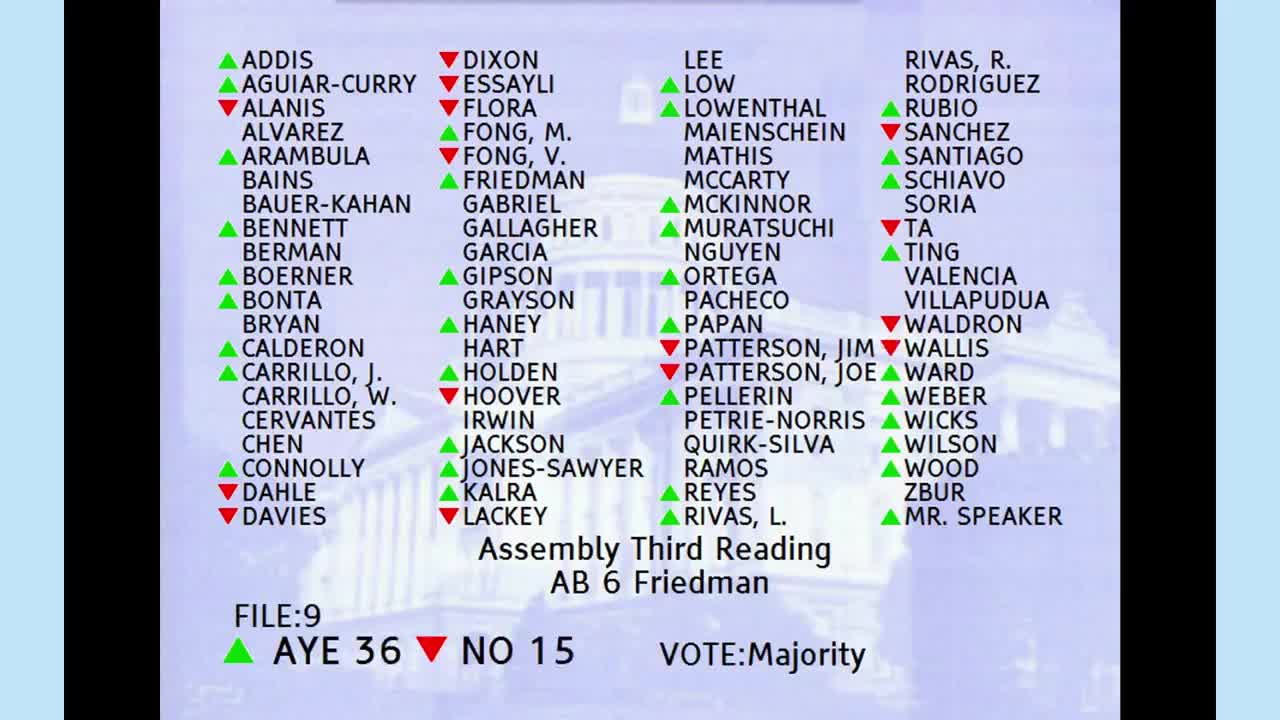 53SEC
Assembly Floor
 6MIN
Assembly Standing Committee on Labor and Employment
Bill Author

Bill Co-Author(s):