AB 545: Elections: access for voters with disabilities.
- Session Year: 2023-2024
- House: Assembly
- Latest Version Date: 2023-10-10
Current Status:
Passed
(2023-10-10: Chaptered by Secretary of State - Chapter 658, Statutes of 2023.)
Introduced
In Committee
First Chamber
In Committee
Second Chamber
Enacted
What does this bill do?
The bill requires polling places to provide assistive items such as handheld magnifying glasses and a signature guide. It lets voters who cannot mark their ballots bring up to two people they choose to help without having to swear an oath. It also allows a voter with a disability to vote a regular ballot outside the polling place, requires signs and a way to contact poll workers there, and directs counties to explain the option on their websites and in voter guides.
The summary is provided by generative AI which can make mistakes. For original language, please view the details in the table below.
(1)Existing law requires elections officials to furnish each polling place with specified supplies for an election.
This bill would expand the list of required supplies to include specified items to assist voters with disabilities.
(2)Existing law restricts who may be within the voting booth area and who may occupy a voting both or compartment. Existing law allows a voter, after declaring under oath before a member of the precinct board that the voter is unable to mark a ballot, to receive assistance of up to two persons selected by the voter, as specified.
This bill would eliminate the requirement that the voter issue a declaration under oath before receiving assistance, as specified.
(3)In certain inaccessible polling places, existing law allows a voter with a disability to appear outside the polling place and vote by regular ballot. Where it is impractical to vote a regular ballot outside the polling place, existing law requires vote by mail ballots to be provided in sufficient numbers to accommodate voters with disabilities who present themselves on election day, and authorizes a voter with a disability to vote a vote by mail ballot in the same manner as a regular ballot may be voted by that person outside the polling place.
This bill would expand that authority to allow a voter with a disability to vote by regular ballot outside any polling place, regardless of whether the polling place is inaccessible. The bill would require the posting of signage in specified areas indicating that the option is available for a voter with a disability to vote there, and the establishment of a method for a voter with a disability to contact a precinct board member in order to vote outside the polling place. The bill would require elections officials to include information regarding this option in the county elections internet website and the county voter information guide.
(4)By imposing additional duties on local elections officials, this bill would impose a state-mandated local program.
The California Constitution requires the state to reimburse local agencies and school districts for certain costs mandated by the state. Statutory provisions establish procedures for making that reimbursement.
This bill would provide that, if the Commission on State Mandates determines that the bill contains costs mandated by the state, reimbursement for those costs shall be made pursuant to the statutory provisions noted above.
The elections official shall furnish to each polling place all of the following:
(a)At least one accessible copy of the voter list.
(b)Necessary printed blanks for the roster, tally sheets, voter list, declarations, and returns.
(c)Not fewer than 6 nor more than 12 instruction cards to each polling place for the guidance of voters in obtaining and marking their ballots. On each card shall be printed necessary instructions and the provisions of Sections 14225, 14279, 14280, 14287, 14291, 14295, 15271, 15272, 15273, 15276, 15277, 15278, 18370, 18380, 18403, 18563, and 18569.
(d)A digest of the election laws with any further instructions the county elections official may desire to make.
(e)An American flag of sufficient size to adequately assist the voter in identifying the polling place. The flag is to be erected at or near the polling place.
(f)A ballot container, properly marked on the outside indicating its contents. If it is necessary to supply additional ballot containers, these additional containers shall also be marked on the outside indicating their contents.
(g)At least one copy of the certified write-in list, if applicable.
(h)A sufficient number of cards to each polling place containing the telephone number of the office to which a voter may call to obtain information about the voters polling place. The card shall state that the voter may call collect during polling hours.
(i)An identifying badge or insignia for each member of the precinct board. The member shall print the members name on the badge or insignia, and shall wear the badge or insignia at all times in the performance of duties, so as to be readily identified as a member of the precinct board by all persons entering the polling place.
(j)Facsimile copies of the ballot containing ballot measures and ballot instructions printed in Spanish or other languages as provided in Section 14201.
(k)Sufficient copies of the notices to be posted on the voter list used at the polls. The notice shall read as follows: This voter list shall not be marked in any manner except by a member of the precinct board acting pursuant to Section 14297. Any person who removes, tears, marks, or otherwise defaces this voter list with the intent to falsify or prevent others from readily ascertaining the name, address, or political affiliation of any voter, or the fact that a voter has or has not voted, is guilty of a misdemeanor.
(l)A roster for each polling place in the form prescribed in Section 14107.
(m)Printed copies of the Voter Bill of Rights, as supplied by the Secretary of State. The Voter Bill of Rights shall be conspicuously posted both inside and outside every polling place.
(n)For a partisan primary election, printed copies of the posters or other materials described in Section 14105.2. The posters or other materials shall be conspicuously posted both inside and outside every polling place.
(o)Handheld magnifying glasses, displayed and available at the table or desk used by the precinct board.
(p)A signature guide card, to assist persons while signing their names on the roster, displayed and available at the table or desk used by the precinct board.
SEC. 2.Section 14282 of the Elections Code is amended to read:14282.(a)If a voter is unable to mark a paper ballot or the ballot marking device, the voter shall receive the assistance of not more than two persons selected by the voter, other than the voters employer, an agent of the voters employer, or an officer or agent of the union of which the voter is a member.
(b)The county elections official shall provide information on the county elections internet website and in the county voter information guide informing voters that a voter who is unable to mark a ballot may bring up to two individuals to the polls to assist them in voting as specified in subdivision (a), and that a voter with a disability may vote a regular ballot outside a polling place in accordance with subdivision (d). The information shall be available in all languages for which the county has requirements under Section 14201 of this code and Section 203 of the federal Voting Rights Act of 1965 (52 U.S.C. Sec. 10101 et seq.).
(c)A person assisting a voter shall not divulge any information regarding the marking of the ballot.
(d)(1)A voter with a disability may appear outside the polling place and vote a regular ballot. The person may vote the ballot in a place that is as near as possible to the polling place and that is accessible to people with disabilities. A precinct board member shall take a regular ballot or ballot marking device to that person, qualify that person to vote, and return the voted ballot to the polling place.
(2)A precinct board member may satisfy paragraph (1) by only bringing a regular ballot outside to the voter if the county does not have the capability to bring the ballot marking device outside of the polling place.
(3)Signage shall be posted outside the polling place and adjacent to the area where the voter may appear to vote indicating that the option is available for a voter with a disability to vote there. The polling place shall establish a method for a voter with a disability to contact a precinct board member in order to vote outside the polling place, such as a posted phone number, doorbell device, or the stationing of a precinct board member outside the polling place.
SEC. 3.If the Commission on State Mandates determines that this act contains costs mandated by the state, reimbursement to local agencies and school districts for those costs shall be made pursuant to Part 7 (commencing with Section 17500) of Division 4 of Title 2 of the Government Code.
The elections official shall furnish to each polling place all of the following:
(a)At least one accessible copy of the voter list.
(b)Necessary printed blanks for the roster, tally sheets, voter list, declarations, and returns.
(c)Not fewer than 6 nor more than 12 instruction cards to each polling place for the guidance of voters in obtaining and marking their ballots. On each card shall be printed necessary instructions and the provisions of Sections 14225, 14279, 14280, 14287, 14291, 14295, 15271, 15272, 15273, 15276, 15277, 15278, 18370, 18380, 18403, 18563, and 18569.
(d)A digest of the election laws with any further instructions the county elections official may desire to make.
(e)An American flag of sufficient size to adequately assist the voter in identifying the polling place. The flag is to be erected at or near the polling place.
(f)A ballot container, properly marked on the outside indicating its contents. If it is necessary to supply additional ballot containers, these additional containers shall also be marked on the outside indicating their contents.
(g)At least one copy of the certified write-in list, if applicable.
(h)A sufficient number of cards to each polling place containing the telephone number of the office to which a voter may call to obtain information about the voters polling place. The card shall state that the voter may call collect during polling hours.
(i)An identifying badge or insignia for each member of the precinct board. The member shall print the members name on the badge or insignia, and shall wear the badge or insignia at all times in the performance of duties, so as to be readily identified as a member of the precinct board by all persons entering the polling place.
(j)Facsimile copies of the ballot containing ballot measures and ballot instructions printed in Spanish or other languages as provided in Section 14201.
(k)Sufficient copies of the notices to be posted on the voter list used at the polls. The notice shall read as follows: This voter list shall not be marked in any manner except by a member of the precinct board acting pursuant to Section 14297. Any person who removes, tears, marks, or otherwise defaces this voter list with the intent to falsify or prevent others from readily ascertaining the name, address, or political affiliation of any voter, or the fact that a voter has or has not voted, is guilty of a misdemeanor.
(l)A roster for each polling place in the form prescribed in Section 14107.
(m)Printed copies of the Voter Bill of Rights, as supplied by the Secretary of State. The Voter Bill of Rights shall be conspicuously posted both inside and outside every polling place.
(n)For a partisan primary election, printed copies of the posters or other materials described in Section 14105.2. The posters or other materials shall be conspicuously posted both inside and outside every polling place.
(o)Handheld magnifying glasses, displayed and available at the table or desk used by the precinct board.
(p)A signature guide card, to assist persons while signing their names on the roster, displayed and available at the table or desk used by the precinct board.
SEC. 2.Section 14282 of the Elections Code is amended to read:14282.(a)If a voter is unable to mark a paper ballot or the ballot marking device, the voter shall receive the assistance of not more than two persons selected by the voter, other than the voters employer, an agent of the voters employer, or an officer or agent of the union of which the voter is a member.
(b)The county elections official shall provide information on the county elections internet website and in the county voter information guide informing voters that a voter who is unable to mark a ballot may bring up to two individuals to the polls to assist them in voting as specified in subdivision (a), and that a voter with a disability may vote a regular ballot outside a polling place in accordance with subdivision (d). The information shall be available in all languages for which the county has requirements under Section 14201 of this code and Section 203 of the federal Voting Rights Act of 1965 (52 U.S.C. Sec. 10101 et seq.).
(c)A person assisting a voter shall not divulge any information regarding the marking of the ballot.
(d)(1)A voter with a disability may appear outside the polling place and vote a regular ballot. The person may vote the ballot in a place that is as near as possible to the polling place and that is accessible to people with disabilities. A precinct board member shall take a regular ballot or ballot marking device to that person, qualify that person to vote, and return the voted ballot to the polling place. Signage
(2)A precinct board member may satisfy paragraph (1) by only bringing a regular ballot outside to the voter if the county does not have the capability to bring the ballot marking device outside of the polling place.
(3)Signage shall be posted outside the polling place and adjacent to the area where the voter may appear to vote indicating that the option is available for a voter with a disability to vote there. The polling place shall establish a method for a voter with a disability to contact a precinct board member in order to vote outside the polling place, such as a posted phone number, doorbell device, or the stationing of a precinct board member outside the polling place.
SEC. 3.If the Commission on State Mandates determines that this act contains costs mandated by the state, reimbursement to local agencies and school districts for those costs shall be made pursuant to Part 7 (commencing with Section 17500) of Division 4 of Title 2 of the Government Code.
The elections official shall furnish to each polling place all of the following:
(a)At least one accessible copy of the voter list.
(b)Necessary printed blanks for the roster, tally sheets, voter list, declarations, and returns.
(c)Not fewer than 6 nor more than 12 instruction cards to each polling place for the guidance of voters in obtaining and marking their ballots. On each card shall be printed necessary instructions and the provisions of Sections 14225, 14279, 14280, 14287, 14291, 14295, 15271, 15272, 15273, 15276, 15277, 15278, 18370, 18380, 18403, 18563, and 18569.
(d)A digest of the election laws with any further instructions the county elections official may desire to make.
(e)An American flag of sufficient size to adequately assist the voter in identifying the polling place. The flag is to be erected at or near the polling place.
(f)A ballot container, properly marked on the outside indicating its contents. If it is necessary to supply additional ballot containers, these additional containers shall also be marked on the outside indicating their contents.
(g)At least one copy of the certified write-in list, if applicable.
(h)A sufficient number of cards to each polling place containing the telephone number of the office to which a voter may call to obtain information about his or her the voters polling place. The card shall state that the voter may call collect during polling hours.
(i)An identifying badge or insignia for each member of the precinct board. The member shall print his or her the members name on the badge or insignia, and shall wear the badge or insignia at all times in the performance of duties, so as to be readily identified as a member of the precinct board by all persons entering the polling place.
(j)Facsimile copies of the ballot containing ballot measures and ballot instructions printed in Spanish or other languages as provided in Section 14201.
(k)Sufficient copies of the notices to be posted on the voter list used at the polls. The notice shall read as follows: This voter list shall not be marked in any manner except by a member of the precinct board acting pursuant to Section 14297. Any person who removes, tears, marks, or otherwise defaces this voter list with the intent to falsify or prevent others from readily ascertaining the name, address, or political affiliation of any voter, or the fact that a voter has or has not voted, is guilty of a misdemeanor.
(l)A roster for each polling place in the form prescribed in Section 14107.
(m)Printed copies of the Voter Bill of Rights, as supplied by the Secretary of State. The Voter Bill of Rights shall be conspicuously posted both inside and outside every polling place.
(n)For a partisan primary election, printed copies of the posters or other materials described in Section 14105.2. The posters or other materials shall be conspicuously posted both inside and outside every polling place.
(o)Handheld magnifying glasses, displayed and available at the table or desk used by the precinct board.
(p)A signature guide card, to assist persons while signing their names on the roster, displayed and available at the table or desk used by the precinct board.
SEC. 2.Section 14282 of the Elections Code is amended to read:14282.(a)When a voter declares under oath, administered by any member of the precinct board at the time the voter appears at the polling place to vote, that the voter is then If a voter is unable to mark a ballot, paper ballot or the ballot marking device, the voter shall receive the assistance of not more than two persons selected by the voter, other than the voters employer, an agent of the voters employer, or an officer or agent of the union of which the voter is a member.
(b)The county elections official shall provide information on the county elections Internet Web site internet website and in the county voter information guide informing voters that a voter who is unable to mark a ballot may bring up to two individuals to the polls to assist them in voting as specified in subdivision (a). (a), and that a voter with a disability may vote a regular ballot outside a polling place in accordance with subdivision (d). The information shall be available in all languages for which the county has requirements under Section 14201 of this code and Section 203 of the federal Voting Rights Act of 1965 (52 U.S.C. Sec. 10101 et seq.).
(c)A person assisting a voter shall not divulge any information regarding the marking of the ballot.
(d)In those polling places that are inaccessible under the guidelines promulgated by the Secretary of State for accessibility by the physically handicapped, a physically handicapped person A voter with a disability may appear outside the polling place and vote a regular ballot. The person may vote the ballot in a place that is as near as possible to the polling place and that is accessible to the physically handicapped. people with disabilities. A precinct board member shall take a regular ballot or ballot marking device to that person, qualify that person to vote, and return the voted ballot to the polling place. In those precincts in which it is impractical to vote a regular ballot outside the polling place, vote by mail ballots shall be provided in sufficient numbers to accommodate physically handicapped persons who present themselves on election day. The vote by mail ballot shall be presented to and voted by a physically handicapped person in the same manner as a regular ballot may be voted by that person outside the polling place. Signage shall be posted outside the polling place and adjacent to the area where the voter may appear to vote indicating that the option is available for a voter with a disability to vote there. The polling place shall establish a method for a voter with a disability to contact a precinct board member in order to vote outside the polling place, such as a posted phone number, doorbell device, or the stationing of a precinct board member outside the polling place.
SEC. 3.If the Commission on State Mandates determines that this act contains costs mandated by the state, reimbursement to local agencies and school districts for those costs shall be made pursuant to Part 7 (commencing with Section 17500) of Division 4 of Title 2 of the Government Code.
|
Date
|
Status
|
|---|---|
| Oct 10, 2023 | Chaptered by Secretary of State - Chapter 658, Statutes of 2023. |
| Oct 10, 2023 | Approved by the Governor. |
| Sep 13, 2023 | Enrolled and presented to the Governor at 3 p.m. |
| Sep 6, 2023 | In Assembly. Ordered to Engrossing and Enrolling. |
| Sep 6, 2023 | Read third time. Passed. Ordered to the Assembly. (Ayes 33. Noes 3. Page 2432.). |
| Sep 5, 2023 | Read second time. Ordered to third reading. |
| Sep 1, 2023 | From committee: Do pass. (Ayes 5. Noes 2.) (September 1). |
| Jul 3, 2023 | In committee: Referred to APPR suspense file. |
| Jun 20, 2023 | From committee: Do pass and re-refer to Com. on APPR. (Ayes 6. Noes 0.) (June 20). Re-referred to Com. on APPR. |
| Jun 14, 2023 | Referred to Com. on E. & C.A. |
| Jun 1, 2023 | In Senate. Read first time. To Com. on RLS. for assignment. |
| May 31, 2023 | Read third time. Passed. Ordered to the Senate. (Ayes 67. Noes 6. Page 2055.) |
| May 22, 2023 | Read third time and amended. Ordered to third reading. (Page 1684.) |
| May 18, 2023 | Read second time. Ordered to third reading. |
| May 18, 2023 | From committee: Do pass. (Ayes 13. Noes 2.) (May 18). |
| Apr 19, 2023 | In committee: Set, first hearing. Referred to APPR. suspense file. |
| Mar 15, 2023 | From committee: Do pass and re-refer to Com. on APPR. (Ayes 5. Noes 0.) (March 15). Re-referred to Com. on APPR. |
| Feb 17, 2023 | Referred to Com. on ELECTIONS. |
| Feb 9, 2023 | From printer. May be heard in committee March 11. |
| Feb 8, 2023 | Read first time. To print. |
|
Date
|
Description
|
Location
|
Votes
|
|
|---|---|---|---|---|
| Sep 6, 2023 | Assembly 3rd Reading AB545 Pellerin | Senate Floor |
Passed |
|
| Sep 1, 2023 | Do pass | Senate Standing Committee on Appropriations |
Passed |
|
| Jul 3, 2023 | Placed on suspense file | Senate Standing Committee on Appropriations |
Passed |
|
| Jun 20, 2023 | Do pass, but first be re-referred to the Committee on [Appropriations] | Senate Standing Committee on Elections and Constitutional Amendments |
Passed |
|
| May 31, 2023 | AB 545 Pellerin Assembly Third Reading | Assembly Floor |
Passed |
|
| May 18, 2023 | Do pass. | Assembly Standing Committee on Appropriations |
Passed |
|
| Mar 15, 2023 | Do pass and be re-referred to the Committee on [Appropriations] | Assembly Standing Committee on Elections |
Passed |
This list shows positions taken on this bill by organizations on the date displayed, which is linked to the original source.
Positions by individuals are not included.
|
Organization
|
Position
|
Date
|
|---|---|---|
| AARP California | ** Support | |
| Advisory Council for Sourcewise | ** Support | |
| Alameda County Election Integrity Team | * Against | Mar 15, 2023 |
| Alameda Election Integrity | * Against | Mar 15, 2023 |
| Asian Americans Advancing Justice Asian Law Caucus | ** Support | |
| California Association of Clerks and Election Officials | ** Support | |
| California Council Of The Blind | ** Support | |
| California Democratic Party | ** Support | |
| California Environmental Voters | ** Support | |
| California Foundation For Independent Living Centers | ** Support | |
| California State Council on Developmental Disabilities | ** Support | |
| Disability Rights California | ** Support | |
| Election Integrity Project | * Support | Mar 15, 2023 |
| Election Integrity Project | * Against | Mar 15, 2023 |
| Election Integrity Project of California | * Against | Mar 15, 2023 |
| Election Integrity Project of California | * Against | Mar 15, 2023 |
| Election Integrity Team Alameda County | * Against | Mar 15, 2023 |
| League Of Women Voters Of California | ** Support | |
| Los Angeles County | * Against | Jun 20, 2023 |
| RespectAbility | ** Support | |
| Santa Clara Valley Water District | ** Support |
SENATE RULES COMMITTEE Office of Senate Floor Analyses (916) 651-1520 Fax: (916) 327-4478 | AB 545 |
THIRD READING
Bill No: AB 545
Author: Pellerin (D)
Amended: 5/22/23 in Assembly
Vote: 21
SENATE ELECTIONS & C.A. COMMITTEE: 6-0, 6/20/23
AYES: Glazer, Allen, McGuire, Menjivar, Newman, Umberg
NO VOTE RECORDED: Nguyen
SENATE APPROPRIATIONS COMMITTEE: 5-2, 9/1/23
AYES: Portantino, Ashby, Bradford, Wahab, Wiener
NOES: Jones, Seyarto
ASSEMBLY FLOOR: 67-6, 5/31/23 - See last page for vote
SUBJECT: Elections: access for voters with disabilities
SOURCE: Disability Rights California
DIGEST:
This bill permits a voter with a disability to vote by regular ballot outside any polling place (also referred to as “curbside” voting). This bill also eliminates provisions of law that require a voter to declare under oath that they are unable to mark their ballot in order to receive assistance marking their ballot.
ANALYSIS:
Existing federal law:
- Provides, in general, protections to people with disabilities that are similar to protections provided to individuals on the basis of race, color, sex, national origin, age, and religion. Requires state and local governments to ensure people with disabilities have a full and equal opportunity to vote and applies to all aspects of voting, including voter registration, site selection, and the casting of ballots, whether on Election Day or during an early voting process.
- Requires an election official to allow a voter who is blind or has another disability to receive assistance from a person of the voter’s choice (other than the voter's employer or its agent or an officer or agent of the voter's union). Prohibits conditioning the right to vote on a citizen being able to read or write, attaining a particular level of education, or passing an interpretation test.
- Requires, in general, accessible polling places in federal elections for elderly individuals and people with disabilities. Provides that where no accessible location is available to serve as a polling place, an alternate means of casting a ballot on the day of the election must be provided. Requires states to make available registration and voting aids for disabled and elderly voters, including information by telecommunications devices for the deaf.
- Requires jurisdictions responsible for conducting federal elections to provide at least one accessible voting system for persons with disabilities at each polling place in federal elections. Requires the accessible voting system to provide the same opportunity for access and participation, including privacy and independence.
Existing state law:
- Provides that a person entitled to register to vote shall be a United States citizen, a resident of California, not in prison for the conviction of a felony, and at least 18 years of age at the time of the next election.
- Requires an elections official furnish to each polling place with all of the following:
- At least one accessible copy of the voter list.
- Necessary printed blanks for the roster, tally sheets, voter list, declarations, and returns.
- Not fewer than six nor more than twelve instruction cards to each polling place for the guidance of voters in obtaining and marking their ballots.
- A digest of the election laws with any further instructions the county elections official may desire to make.
- An American flag of sufficient size to adequately assist the voter in identifying the polling place.
- A ballot container properly marked on the outside indicating its contents.
- At least one copy of the certified write-in list, if applicable.
- A sufficient number of cards to each polling place containing the telephone number of the office to which a voter may call to obtain information about their polling place.
- An identifying badge or insignia for each member of the precinct board.
- Facsimile copies of the ballot containing ballot measures and ballot instructions printed in Spanish or other languages in accordance with existing law.
- Sufficient copies of the notices to be posted on the voter list used at the polls.
- A roster for each polling place in the form prescribed in accordance with existing law.
- Printed copies of the Voter Bill of Rights, as supplied by the Secretary of State (SOS).
- For a partisan primary election, printed copies of the posters or other materials pursuant to existing law.
- Requires an elections official, when designating polling places, to undertake necessary measures in the locating of polling places to ensure that polling places meet the guidelines promulgated by the SOS for accessibility by the physically handicapped.
- Requires a voter, if a voter declares under oath, administered by any member of the precinct board at the time the voter appears at the polling place to vote, that the voter is unable to mark a ballot, to receive the assistance of not more than two persons selected by the voter, other than the voter’s employer, an agent of the voter’s employer, or an officer or agent of the union of which the voter is a member.
- Requires a county elections official to provide information on the county elections Internet Web site and in the county voter information guide informing voters that a voter who is unable to mark a ballot may bring up to two individuals to the polls to assist them in voting.
- Prohibits a person assisting a voter from divulging any information regarding the marking of the ballot.
- Provides that in those polling places that are inaccessible under the guidelines promulgated by the SOS for accessibility by the physically handicapped, a physically handicapped person may appear outside the polling place and vote a regular ballot.
- Permits the person to vote the ballot in a place that is as near as possible to the polling place and that is accessible to the physically handicapped. Requires a precinct board member to take a regular ballot to that person, qualify that person to vote, and return the voted ballot to the polling place.
- Requires vote by mail (VBM) ballots, in those precincts in which it is impractical to vote a regular ballot outside the polling place, to be provided in sufficient numbers to accommodate physically handicapped persons who present themselves on Election Day. Requires the VBM ballot to be presented to and voted by a physically handicapped person in the same manner as a regular ballot may be voted by that person outside the polling place.
This bill:
- Expands the list of supplies an elections official is required to provide at each polling place to assist a voter with a disability to include handheld magnifying glasses displayed and available at the table or desk used by the precinct board, and a signature guide card to assist persons while signing their names on the roster displayed and available at the table or desk used by the precinct board.
- Deletes a provision of law that requires a voter, in order to receive assistance marking their ballot, to declare under oath, administered by any precinct member at the time the voter appears at the polling place to vote, that the voter is unable to mark their ballot, and instead allows a voter that is unable to mark a paper ballot or the ballot marking device to receive assistance without taking that oath.
- Repeals provisions of law that require a polling place to be inaccessible under the accessibility guidelines promulgated by the SOS in order for a voter with a disability be allowed to vote a regular ballot outside of the polling place (curbside voting). Repeals provisions of law that require a VBM ballot to be provided if it is impractical to vote a regular ballot outside a polling place, and instead permits a voter with a disability to vote a regular ballot outside any polling place. Provides that a precinct board member may bring a regular ballot outside to the voter if the county does not have the capability to bring a ballot marking device outside of the polling place, as specified.
- Requires a county elections official to provide information on the county elections official’s internet website informing a voter with a disability that they may vote a regular ballot outside any polling place.
- Requires signage to be posted outside a polling place and adjacent to the area where the voter may appear to vote indicating that the option is available for a voter with a disability to vote there. Requires a polling place to establish a method for a voter with a disability to contact a precinct board member in order to vote outside the polling place, such as a posted phone number, doorbell device, or the stationing of a precinct board member outside the polling place.
- Modernizes terminology used to describe a voter with a disability.
- Makes corresponding and technical changes.
Background
Curbside Voting. Voting outside of the polling location enables a voter to have a voting experience outside the voting area when a polling place is not accessible. In other words, under existing law any voter who cannot reach the voting area at the polling place because of architectural barriers or physical limitations may be allowed to vote “curbside.” In practice, voters may use curbside voting from their vehicle or along the path of travel to the voting area. An elections official will qualify the voter, bring a ballot, and any other voting materials the voter may need to cast their ballot privately and independently. This bill expands access to voters with disabilities by allowing a voter with a disability to vote a regular ballot outside any polling place, regardless of whether the polling place is inaccessible. Additionally, this bill deletes a requirement that a voter, in order to receive assistance to mark their ballot, must issue a declaration under oath that they are unable to mark their ballot before receiving assistance.
Previous Legislation. Due to concerns that conducting in-person voting during the spread of COVID-19 could threaten the health and safety of voters, election workers, and the public generally, the Legislature approved and Governor Newsom signed bills that made significant changes to the way that the state conducted the November 2020 presidential general election. Those changes were largely enacted through two bills — AB 860 (Berman, Chapter 4, Statutes of 2020) and SB 423 (Umberg, Chapter 31, Statutes of 2020). Notably, those bills required that a mail ballot be sent to every active registered voter, provided voters in all counties with the ability to track their ballot, authorized changes to in-person voting requirements, and made other changes to facilitate the expected surge in voting by mail at the November election. Among other provisions, SB 423 urged each county to provide drive-through ballot drop-off or voting locations. In practice one of the ways a county elections official complied with this provision was by providing curbside voting.
Secretary of State Accessibility Guidelines. The SOS, in coordination with the California Department of Rehabilitation, designs Polling Place Accessibility Guidelines to help elections officials ensure polling places are accessible to voters with disabilities to the extent possible. California polling places and vote centers provide voters with disabilities the opportunity to vote their ballot privately and independently. All voting locations are surveyed in advance to ensure they are accessible to voters with disabilities. This includes ensuring that accessible voting technology is available to all voters, there is designated accessible parking as close to the voting area as possible, and curbside voting. In practice, telephone numbers are posted at polling locations informing voters how to contact election workers to let them know the voter requires assistance.
Comments
According to the author, although curbside voting, signature guides, and magnifying glasses are available at many voting locations to help voters with disabilities, minimal requirements in the Elections Code create inconsistency of these aides for voting centers across California. AB 545 takes important steps to ensure that the voting process is accessible to voters with disabilities. Specifically, it requires that all in-person voting locations offer curbside voting and establishes uniform requirements for curbside voting statewide. AB 545 also clarifies requirements relating to supplies, services, and procedures at voting locations. Lastly, AB 545 removes the outdated requirement that voters with disabilities swear under oath that they need assistance completing a ballot. AB 545 will make low-cost yet impactful improvements to the accessibility of in-person voting for voters with disabilities.
Related/Prior Legislation
SB 1480 (Glazer) of 2022 would have authorized the SOS to certify a remote accessible vote by mail system that allows a voter with a qualifying disability, as defined, to return their ballot electronically. SB 1480 would have also required a county elections official, upon certification of such a remote accessible vote by mail system, to permit a voter with a qualifying disability to use the certified remote accessible vote by mail to return their completed ballot electronically. Finally, SB 1480 would have permitted a voter with a qualifying disability to return their completed remote accessible vote by mail ballot by facsimile until the SOS certifies a remote accessible vote by mail system that allows electronic return of a completed ballot. SB 1480 passed the Senate, but was not heard in the Assembly Committee on Elections.
FISCAL EFFECT: Appropriation: No Fiscal Com.: Yes Local: Yes
According to the Senate Appropriations Committee:
- By requiring a county elections official to procure specified tools and facilitate curbside voting to assist voters with disabilities, this bill creates a state-mandated local program. To the extent the Commission on State Mandates determines that the provisions of this bill create a new program or impose a higher level of service on local agencies, local agencies could claim reimbursement of those costs (General Fund). The magnitude is unknown, but potentially in excess of $50,000 annually.
- This bill would not have a fiscal impact to the Secretary of State (SOS).
SUPPORT: (Verified 9/1/23)
Disability Rights California (source)
AARP California
Advisory Council for Sourcewise
Asian Americans Advancing Justice – Asian Law Caucus
California Association of Clerks and Election Officials
California Council of the Blind
California Democratic Party
California Environmental Voters
California Foundation for Independent Living Centers
California State Council on Developmental Disabilities
League of Women Voters of California
Santa Clara Valley Water District
RespectAbility
OPPOSITION: (Verified 9/1/23)
None received
ASSEMBLY FLOOR: 67-6, 5/31/23
AYES: Addis, Aguiar-Curry, Alanis, Alvarez, Arambula, Bains, Bauer-Kahan, Bennett, Berman, Boerner, Bonta, Bryan, Calderon, Juan Carrillo, Wendy Carrillo, Cervantes, Connolly, Dixon, Mike Fong, Friedman, Gabriel, Garcia, Gipson, Grayson, Haney, Hart, Holden, Hoover, Irwin, Jackson, Jones-Sawyer, Kalra, Lee, Low, Lowenthal, Maienschein, Mathis, McCarty, McKinnor, Muratsuchi, Stephanie Nguyen, Ortega, Pacheco, Papan, Pellerin, Petrie-Norris, Quirk-Silva, Ramos, Reyes, Luz Rivas, Robert Rivas, Rodriguez, Blanca Rubio, Santiago, Schiavo, Soria, Ting, Valencia, Villapudua, Wallis, Ward, Weber, Wicks, Wilson, Wood, Zbur, Rendon
NOES: Megan Dahle, Essayli, Gallagher, Joe Patterson, Sanchez, Waldron
NO VOTE RECORDED: Chen, Davies, Flora, Vince Fong, Lackey, Jim Patterson, Ta
Prepared by: Scott Matsumoto / E. & C.A. / (916) 651-4106
9/2/23 12:38:39
**** END ****
SENATE COMMITTEE ON APPROPRIATIONS
Senator Anthony Portantino, Chair
2023 - 2024 Regular Session
AB 545 (Pellerin) - Elections: access for voters with disabilities
Version: May 22, 2023 | Policy Vote: E. & C.A. 6 - 0 |
Urgency: No | Mandate: Yes |
Hearing Date: July 3, 2023 | Consultant: Robert Ingenito |
Bill Summary:
AB 545 would (1) permit a voter with a disability to vote by regular ballot outside any polling place, and (2) eliminate provisions of law that require a voter to declare under oath that they are unable to mark their ballot in order to receive assistance marking their ballot.
Fiscal Impact:
- By requiring a county elections official to procure specified tools and facilitate curbside voting to assist voters with disabilities, this bill creates a state-mandated local program. To the extent the Commission on State Mandates determines that the provisions of this bill create a new program or impose a higher level of service on local agencies, local agencies could claim reimbursement of those costs (General Fund). The magnitude is unknown, but potentially in excess of $50,000 annually.
- This bill would not have a fiscal impact to the Secretary of State (SOS).
Background: Under current law, any voter who cannot reach the voting area at the polling place because of architectural barriers or physical limitations may be allowed to vote “curbside.” In practice, voters may use curbside voting from their vehicle or along the path of travel to the voting area. An elections official will qualify the voter, bring a ballot and any other voting materials the voter may need to cast a ballot privately and independently.
As a result of health concerns from the COVID-19 pandemic, the Legislature enacted bills that made significant changes to the way that the State conducted the November 2020 General Election. Notably, those bills, AB 860 (Berman) and SB 423 (Umberg) required that a mail ballot be sent to every active registered voter, provided voters in all counties with the ability to track their ballot, authorized changes to in-person voting requirements, and made other changes to accommodate the surge in voting by mail. Among other provisions, SB 423 urged each county to provide drive-through ballot drop-off or voting locations. In practice, one of the ways a county elections official complied with this provision was by providing curbside voting.
SOS, in coordination with the California Department of Rehabilitation, designs Polling Place Accessibility Guidelines to help elections officials ensure polling places are accessible to voters with disabilities to the extent possible. California polling places and vote centers provide voters with disabilities the opportunity to vote their ballot privately and independently. All voting locations are surveyed in advance to ensure they are accessible to voters with disabilities, including ensuring (1) that accessible voting technology is available to all voters, (2) that there is designated accessible parking as close to the voting area as possible, and (3) curbside voting. In practice, telephone numbers are posted at polling locations informing voters how to contact election workers to let them know when assistance is needed.
Proposed Law:
This bill would, among other things, do the following:
- Expand the list of supplies an elections official is required to provide at each polling place to assist a voter with a disability to include (1) handheld magnifying glasses displayed and available at the table or desk used by the precinct board, and (2) a signature guide card to assist persons while signing their names on the roster displayed and available at the table or desk used by the precinct board.
- Delete a provision of law that requires a voter, in order to receive assistance marking their ballot, to declare under oath, administered by any precinct member at the time the voter appears at the polling place to vote, that the voter is unable to mark their ballot, and instead allows a voter that is unable to mark a paper ballot or the ballot marking device to receive assistance without taking that oath.
- Repeal provisions of law that require a polling place to be inaccessible under the accessibility guidelines promulgated by SOS in order for a voter with a disability be allowed to vote a regular ballot outside of the polling place (curbside voting).
- Repeal provisions of law that require a VBM ballot to be provided if it is impractical to vote a regular ballot outside a polling place, and instead permit a voter with a disability to vote a regular ballot outside any polling place.
- Provide that a precinct board member may bring a regular ballot outside to the voter if the county does not have the capability to bring a ballot marking device outside of the polling place, as specified.
- Require a county elections official to provide information on the county elections official’s internet website informing a voter with a disability that they may vote a regular ballot outside any polling place.
- Require signage to be posted outside a polling place and adjacent to the area where the voter may appear to vote indicating that the option is available for a voter with a disability to vote there. Requires a polling place to establish a method for a voter with a disability to contact a precinct board member in order to vote outside the polling place, such as a posted phone number, doorbell device, or the stationing of a precinct board member outside the polling place.
Related Legislation:
SB 1480 (Glazer, 2022) would have (1) authorized SOS to certify a remote accessible vote by mail system that allows a voter with a qualifying disability, as defined, to return their ballot electronically, (2) required a county elections official, upon certification of such a remote accessible vote by mail system, to permit a voter with a qualifying disability to use the certified remote accessible vote by mail to return their completed ballot electronically, and (3) permitted a voter with a qualifying disability to return their completed remote accessible vote by mail ballot by facsimile until the SOS certifies a remote accessible vote by mail system that allows electronic return of a completed ballot. The bill was not heard in the Assembly Committee on Elections.
Staff Comments:
As noted above, this bill would expand access to voters with disabilities by allowing a voter with a disability to vote a regular ballot outside any polling place, regardless of whether the polling place is inaccessible. Individual counties estimate one-time and per-election costs ranging from the low thousands of dollars to several hundreds of thousands of dollars for tools and staff time to provide and publicize curbside voting at all polling places.
-- END --
SENATE COMMITTEE ON
ELECTIONS AND CONSTITUTIONAL AMENDMENTS
Senator Steven Glazer, Chair
2023 - 2024 Regular
Bill No: 545 Hearing Date: 6/20/23
Author: | Pellerin | ||
Version: |
| ||
Urgency: | Fiscal: | ||
Consultant: | |||
Subject:
DIGEST
This bill permits a voter with a disability to vote by regular ballot outside any polling place (also referred to as “curbside” voting). This bill also eliminates provisions of law that require a voter to declare under oath that they are unable to mark their ballot in order to receive assistance marking their ballot.
ANALYSIS
Existing federal law:
- Provides, in general, protections to people with disabilities that are similar to protections provided to individuals on the basis of race, color, sex, national origin, age, and religion. Requires state and local governments to ensure people with disabilities have a full and equal opportunity to vote and applies to all aspects of voting, including voter registration, site selection, and the casting of ballots, whether on Election Day or during an early voting process.
- Requires an election official to allow a voter who is blind or has another disability to receive assistance from a person of the voter’s choice (other than the voter's employer or its agent or an officer or agent of the voter's union). Prohibits conditioning the right to vote on a citizen being able to read or write, attaining a particular level of education, or passing an interpretation test.
- Requires, in general, accessible polling places in federal elections for elderly individuals and people with disabilities. Provides that where no accessible location is available to serve as a polling place, an alternate means of casting a ballot on the day of the election must be provided. Requires states to make available registration and voting aids for disabled and elderly voters, including information by telecommunications devices for the deaf.
- Requires jurisdictions responsible for conducting federal elections to provide at least one accessible voting system for persons with disabilities at each polling place in federal elections. Requires the accessible voting system to provide the same opportunity for access and participation, including privacy and independence.
Existing state law:
- Provides that a person entitled to register to vote shall be a United States citizen, a resident of California, not in prison for the conviction of a felony, and at least 18 years of age at the time of the next election.
- Requires an elections official furnish to each polling place with all of the following:
- At least one accessible copy of the voter list.
- Necessary printed blanks for the roster, tally sheets, voter list, declarations, and returns.
- Not fewer than six nor more than twelve instruction cards to each polling place for the guidance of voters in obtaining and marking their ballots.
- A digest of the election laws with any further instructions the county elections official may desire to make.
- An American flag of sufficient size to adequately assist the voter in identifying the polling place.
- A ballot container properly marked on the outside indicating its contents.
- At least one copy of the certified write-in list, if applicable.
- A sufficient number of cards to each polling place containing the telephone number of the office to which a voter may call to obtain information about their polling place.
- An identifying badge or insignia for each member of the precinct board.
- Facsimile copies of the ballot containing ballot measures and ballot instructions printed in Spanish or other languages in accordance with existing law.
- Sufficient copies of the notices to be posted on the voter list used at the polls.
- A roster for each polling place in the form prescribed in accordance with existing law.
- Printed copies of the Voter Bill of Rights, as supplied by the Secretary of State (SOS).
- For a partisan primary election, printed copies of the posters or other materials pursuant to existing law.
- Requires an elections official, when designating polling places, to undertake necessary measures in the locating of polling places to ensure that polling places meet the guidelines promulgated by the SOS for accessibility by the physically handicapped.
- Requires a voter, if a voter declares under oath, administered by any member of the precinct board at the time the voter appears at the polling place to vote, that the voter is unable to mark a ballot, to receive the assistance of not more than two persons selected by the voter, other than the voter’s employer, an agent of the voter’s employer, or an officer or agent of the union of which the voter is a member.
- Requires a county elections official to provide information on the county elections Internet Web site and in the county voter information guide informing voters that a voter who is unable to mark a ballot may bring up to two individuals to the polls to assist them in voting.
- Prohibits a person assisting a voter from divulging any information regarding the marking of the ballot.
- Provides that in those polling places that are inaccessible under the guidelines promulgated by the SOS for accessibility by the physically handicapped, a physically handicapped person may appear outside the polling place and vote a regular ballot.
- Permits the person to vote the ballot in a place that is as near as possible to the polling place and that is accessible to the physically handicapped. Requires a precinct board member to take a regular ballot to that person, qualify that person to vote, and return the voted ballot to the polling place.
- Requires vote by mail (VBM) ballots, in those precincts in which it is impractical to vote a regular ballot outside the polling place, to be provided in sufficient numbers to accommodate physically handicapped persons who present themselves on Election Day. Requires the VBM ballot to be presented to and voted by a physically handicapped person in the same manner as a regular ballot may be voted by that person outside the polling place.
This bill:
- Expands the list of supplies an elections official is required to provide at each polling place to assist a voter with a disability to include handheld magnifying glasses displayed and available at the table or desk used by the precinct board, and a signature guide card to assist persons while signing their names on the roster displayed and available at the table or desk used by the precinct board.
- Deletes a provision of law that requires a voter, in order to receive assistance marking their ballot, to declare under oath, administered by any precinct member at the time the voter appears at the polling place to vote, that the voter is unable to mark their ballot, and instead allows a voter that is unable to mark a paper ballot or the ballot marking device to receive assistance without taking that oath.
- Repeals provisions of law that require a polling place to be inaccessible under the accessibility guidelines promulgated by the SOS in order for a voter with a disability be allowed to vote a regular ballot outside of the polling place (curbside voting). Repeals provisions of law that require a VBM ballot to be provided if it is impractical to vote a regular ballot outside a polling place, and instead permits a voter with a disability to vote a regular ballot outside any polling place. Provides that a precinct board member may bring a regular ballot outside to the voter if the county does not have the capability to bring a ballot marking device outside of the polling place, as specified.
- Requires a county elections official to provide information on the county elections official’s internet website informing a voter with a disability that they may vote a regular ballot outside any polling place.
- Requires signage to be posted outside a polling place and adjacent to the area where the voter may appear to vote indicating that the option is available for a voter with a disability to vote there. Requires a polling place to establish a method for a voter with a disability to contact a precinct board member in order to vote outside the polling place, such as a posted phone number, doorbell device, or the stationing of a precinct board member outside the polling place.
- Modernizes terminology used to describe a voter with a disability.
- Makes corresponding and technical changes.
BACKGROUND
Curbside Voting. Voting outside of the polling location enables a voter to have a voting experience outside the voting area when a polling place is not accessible. In other words, under existing law any voter who cannot reach the voting area at the polling place because of architectural barriers or physical limitations may be allowed to vote “curbside.” In practice, voters may use curbside voting from their vehicle or along the path of travel to the voting area. An elections official will qualify the voter, bring a ballot, and any other voting materials the voter may need to cast their ballot privately and independently. This bill expands access to voters with disabilities by allowing a voter with a disability to vote a regular ballot outside any polling place, regardless of whether the polling place is inaccessible. Additionally, this bill deletes a requirement that a voter, in order to receive assistance to mark their ballot, must issue a declaration under oath that they are unable to mark their ballot before receiving assistance.
Previous Legislation. Due to concerns that conducting in-person voting during the spread of COVID-19 could threaten the health and safety of voters, election workers, and the public generally, the Legislature approved and Governor Newsom signed bills that made significant changes to the way that the state conducted the November 2020 presidential general election. Those changes were largely enacted through two bills — AB 860 (Berman), Chapter 4, Statutes of 2020 and SB 423 (Umberg), Chapter 31, Statutes of 2020. Notably, those bills required that a mail ballot be sent to every active registered voter, provided voters in all counties with the ability to track their ballot, authorized changes to in-person voting requirements, and made other changes to facilitate the expected surge in voting by mail at the November election. Among other provisions, SB 423 urged each county to provide drive-through ballot drop-off or voting locations. In practice one of the ways a county elections official complied with this provision was by providing curbside voting.
Secretary of State Accessibility Guidelines. The SOS, in coordination with the California Department of Rehabilitation, designs Polling Place Accessibility Guidelines to help elections officials ensure polling places are accessible to voters with disabilities to the extent possible. California polling places and vote centers provide voters with disabilities the opportunity to vote their ballot privately and independently. All voting locations are surveyed in advance to ensure they are accessible to voters with disabilities. This includes ensuring that accessible voting technology is available to all voters, there is designated accessible parking as close to the voting area as possible, and curbside voting. In practice, telephone numbers are posted at polling locations informing voters how to contact election workers to let them know the voter requires assistance.
COMMENTS
- According to the author: Although curbside voting, signature guides, and magnifying glasses are available at many voting locations to help voters with disabilities, minimal requirements in the Elections Code create inconsistency of these aides for voting centers across California. AB 545 takes important steps to ensure that the voting process is accessible to voters with disabilities. Specifically, it requires that all in-person voting locations offer curbside voting and establishes uniform requirements for curbside voting statewide. AB 545 also clarifies requirements relating to supplies, services, and procedures at voting locations. Lastly, AB 545 removes the outdated requirement that voters with disabilities swear under oath that they need assistance completing a ballot. AB 545 will make low-cost yet impactful improvements to the accessibility of in-person voting for voters with disabilities.
- Argument in Support. In a letter supporting AB 545, the California State Council on Developmental Disabilities stated, in part, the following:
The accessibility of curbside voting and the availability of auxiliary accessibility aids provided for voters with disabilities varies widely across voting locations. Minimal requirements in the Elections Code leads to a lack of standardization across the state. In many counties, signage providing information about curbside voting is not prominently displayed and voters with disabilities are often unsure how to attract the attention of poll workers. Accessibility aids are often forgotten in boxes behind the voter check-in station, rather than being prominently displayed. In 2020, curbside voting was required at all voting locations to mitigate the health risks of voting during a pandemic, proving that it’s feasible. AB 545 would make accessible voting more available by requiring all in-person voting locations to offer curbside voting and would remove the outdated requirement that voters with disabilities must swear under oath that they are unable to mark a ballot.
- Argument in Opposition. In a letter opposing AB 545, Election Integrity Project California, Inc., stated, in part, the following:
The sole reason for our opposition is in the elimination of the first sentence in 14282 (a) of Sec. 2.
The administering of the oath to a voter needing assistance protects the voter from unwanted intimidation. Any voter being forced to accept unwanted “help” from an accompanying person will have the protection of the elections officials to vote independently without duress by simply refusing to take the oath, or by naming a different assisting individual in taking the oath.
If the mandate for the assisted voter oath is eliminated, voters may lose their right to vote independently or to receive assistance from the individual of their choice.
RELATED/PRIOR LEGISLATION
SB 1480 (Glazer) of 2022 would have authorized the SOS to certify a remote accessible vote by mail system that allows a voter with a qualifying disability, as defined, to return their ballot electronically. SB 1480 would have also required a county elections official, upon certification of such a remote accessible vote by mail system, to permit a voter with a qualifying disability to use the certified remote accessible vote by mail to return their completed ballot electronically. Finally, SB 1480 would have permitted a voter with a qualifying disability to return their completed remote accessible vote by mail ballot by facsimile until the SOS certifies a remote accessible vote by mail system that allows electronic return of a completed ballot. SB 1480 passed the Senate, but was not heard in the Assembly Committee on Elections.
PRIOR ACTION
Assembly Floor: | 67 - 6 |
Assembly Appropriations Committee: | 13 - 2 |
Assembly Committee: | 5 - 0 |
POSITIONS
Sponsor: Disability Rights California
Support: Asian Americans Advancing Justice – Asian Law Caucus
California Association of Clerks and Election Officials
California Council of the Blind
California Environmental Voters
California Foundation for Independent Living Centers
California State Council on Developmental Disabilities
League of Women Voters of California
RespectAbility
Oppose: None received
-- END --
ASSEMBLY THIRD READING
ATR Bill Id:AB 545
Author:(Pellerin)
As Amended Ver:May 22, 2023
Majority vote
SUMMARY
Permits a voter with a disability to vote by regular ballot outside any polling place (also referred to as "curbside" voting). Eliminates provisions of law that require a voter to declare under oath that they are unable to mark their ballot in order to receive assistance marking their ballot.
Major Provisions
- Requires an elections official to furnish each polling place with handheld magnifying glasses and a signature guide card to assist people signing their names on the roster, and requires these items to be displayed and available at the table or desk used by the precinct board.
- Allows a voter with a disability to vote by regular ballot outside any polling place ("curbside voting"), instead of at inaccessible polling places only. Requires a polling place to have signage indicating curbside voting is available and how a voter with a disability can contact a precinct board member to exercise the option. Requires the county elections internet website and the voter information guide to include this information.
- Repeals a requirement that a voter declare under oath that they are unable to mark a ballot before the voter is allowed to select individuals to provide assistance at the polling place.
COMMENTS
Due to concerns that conducting in-person voting during the spread of COVID-19 could threaten the health and safety of voters, election workers, and the public generally, in 2020 the Legislature approved and Governor Newsom signed bills that made significant changes to the way that the state conducted the November 2020 presidential general election. Those changes largely were enacted through two bills – AB 860 (Berman), Chapter 4, Statutes of 2020, and SB 423 (Umberg), Chapter 31, Statutes of 2020. Notably, those bills required that a mail ballot be sent to every active registered voter, provided voters in all counties with the ability to track their ballot, authorized changes to in-person voting requirements, and made other changes to facilitate the expected surge in voting by mail at the November election. Among other provisions, SB 423 urged each county to provide drive-through ballot drop-off or voting locations. In practice one of the ways a county elections official complied with this provision was by providing curbside voting.
Please see the policy committee analysis for a full discussion on this bill.
According to the Author
"Although curbside voting, signature guides, and magnifying glasses are available at many voting locations to help voters with disabilities, minimal requirements in the Elections Code create inconsistency of these [aids] for voting centers across California. AB 545 takes important steps to ensure that the voting process is accessible to voters with disabilities. Specifically, it requires that all in-person voting locations offer curbside voting and establishes uniform requirements for curbside voting statewide. AB 545 also clarifies requirements relating to supplies, services, and procedures at voting locations. Lastly, AB 545 removes the outdated requirement that voters with disabilities swear under oath that they need assistance completing a ballot. AB 545 will make low-cost yet impactful improvements to the accessibility of in-person voting for voters with disabilities."
Arguments in Support
The sponsor of this bill, Disability Rights California (DRC), writes: "Although only required at locations that are not accessible, curbside voting has long been offered in some counties for voters with disabilities…But even in the counties where it is available, there is no or limited signage, uneven levels of staff training, and no way for voters to contact election workers inside the voting location…Since 2018, DRC’s poll monitoring has consistently demonstrated the uneven availability of handheld magnifiers and signature guides at voting locations…We would like it to be a clear requirement for these voting supplies to be at all voting locations and displayed at the voter check-in table…Finally, voters with disabilities should be allowed to get assistance with marking their ballot without swearing an oath to an election worker that they are unable to complete a ballot. DRC believes this is rarely required in practice. It is an overly burdensome requirement for voters with disabilities which should be removed."
Arguments in Opposition
With an oppose unless amended position, the Election Integrity Project California, Inc. writes, "The sole reason for our opposition is in the elimination of the [declaration under oath requirement]…The administering of the oath to a voter needing assistance protects the voter from unwanted intimidation. Any voter being forced to accept unwanted ‘help’ from an accompanying person will have the protection of the elections officials to vote independently without duress by simply refusing to take the oath, or by naming a different assisting individual in taking the oath. If the mandate for the assisted voter oath is eliminated, voters may lose their right to vote independently or to receive assistance from the individual of their choice."
FISCAL COMMENTS
According to the Assembly Appropriations Committee:
- By requiring a county elections official to procure specified tools and facilitate curbside voting to assist voters with disabilities, this bill may create a state-mandated local program. If the Commission on State Mandates determines the provisions of this bill create a new program or impose a higher level of service for which the state must reimburse local costs, the county could claim reimbursement from the state (General Fund). Individual counties estimate one-time and per-election costs ranging from the low thousands of dollars to several hundreds of thousands of dollars for tools and staff time to provide and publicize curbside voting at all polling places.
- Minor and absorbable costs to the Secretary of State (SOS) to update informational materials reflecting specified changes to election procedures. If a significant number of other bills necessitating such updates become law, SOS notes additional resources may be needed to address the aggregate impact.
VOTES
ASM ELECTIONS: 5-0-3
YES: Bryan, Lee, Low, Pellerin, Blanca Rubio
ABS, ABST OR NV: Lackey, Bennett, Essayli
ASM APPROPRIATIONS: 13-2-1
YES: Holden, Bryan, Calderon, Wendy Carrillo, Dixon, Mike Fong, Hart, Lowenthal, Mathis, Papan, Pellerin, Weber, Ortega
NO: Megan Dahle, Sanchez
ABS, ABST OR NV: Robert Rivas
UPDATED
VERSION: May 22, 2023
CONSULTANT: Nichole Becker / ELECTIONS / (916) 319-2094 FN: 0000966
ASSEMBLY THIRD READING
ATR Bill Id:AB 545
Author:(Pellerin)
As Introduced Ver:February 8, 2023
Majority vote
SUMMARY
Permits a voter with a disability to vote by regular ballot outside any polling place (also referred to as "curbside" voting). Eliminates provisions of law that require a voter to declare under oath that they are unable to mark their ballot in order to receive assistance marking their ballot.
Major Provisions
- Requires an elections official to furnish each polling place with handheld magnifying glasses and a signature guide card to assist people signing their names on the roster, and requires these items to be displayed and available at the table or desk used by the precinct board.
- Allows a voter with a disability to vote by regular ballot outside any polling place ("curbside voting"), instead of at inaccessible polling places only. Requires a polling place to have signage indicating curbside voting is available and how a voter with a disability can contact a precinct board member to exercise the option. Requires the county elections internet website and the voter information guide to include this information.
- Repeals a requirement that a voter declare under oath that they are unable to mark a ballot before the voter is allowed to select individuals to provide assistance at the polling place.
COMMENTS
Due to concerns that conducting in-person voting during the spread of COVID-19 could threaten the health and safety of voters, election workers, and the public generally, in 2020 the Legislature approved and Governor Newsom signed bills that made significant changes to the way that the state conducted the November 2020 presidential general election. Those changes largely were enacted through two bills—AB 860 (Berman), Chapter 4, Statutes of 2020 and SB 423 (Umberg), Chapter 31, Statutes of 2020. Notably, those bills required that a mail ballot be sent to every active registered voter, provided voters in all counties with the ability to track their ballot, authorized changes to in-person voting requirements, and made other changes to facilitate the expected surge in voting by mail at the November election. Among other provisions, SB 423 urged each county to provide drive-through ballot drop-off or voting locations. In practice one of the ways a county elections official complied with this provision was by providing curbside voting.
Please see the policy committee analysis for a full discussion on this bill.
According to the Author
"Although curbside voting, signature guides, and magnifying glasses are available at many voting locations to help voters with disabilities, minimal requirements in the Elections Code create inconsistency of these [aids] for voting centers across California. AB 545 takes important steps to ensure that the voting process is accessible to voters with disabilities. Specifically, it requires that all in-person voting locations offer curbside voting and establishes uniform requirements for curbside voting statewide. AB 545 also clarifies requirements relating to supplies, services, and procedures at voting locations. Lastly, AB 545 removes the outdated requirement that voters with disabilities swear under oath that they need assistance completing a ballot. AB 545 will make low-cost yet impactful improvements to the accessibility of in-person voting for voters with disabilities."
Arguments in Support
The sponsor of this bill, Disability Rights California (DRC), writes: "Although only required at locations that are not accessible, curbside voting has long been offered in some counties for voters with disabilities…But even in the counties where it is available, there is no or limited signage, uneven levels of staff training, and no way for voters to contact election workers inside the voting location…Since 2018, DRC's poll monitoring has consistently demonstrated the uneven availability of handheld magnifiers and signature guides at voting locations…We would like it to be a clear requirement for these voting supplies to be at all voting locations and displayed at the voter check-in table…Finally, voters with disabilities should be allowed to get assistance with marking their ballot without swearing an oath to an election worker that they are unable to complete a ballot. DRC believes this is rarely required in practice. It is an overly burdensome requirement for voters with disabilities which should be removed."
Arguments in Opposition
With an oppose unless amended position, the Election Integrity Project California, Inc. writes, "The sole reason for our opposition is in the elimination of the [declaration under oath requirement]…The administering of the oath to a voter needing assistance protects the voter from unwanted intimidation. Any voter being forced to accept unwanted 'help' from an accompanying person will have the protection of the elections officials to vote independently without duress by simply refusing to take the oath, or by naming a different assisting individual in taking the oath. If the mandate for the assisted voter oath is eliminated, voters may lose their right to vote independently or to receive assistance from the individual of their choice."
FISCAL COMMENTS
According to the Assembly Appropriations Committee:
By requiring a county elections official to procure specified tools and facilitate curbside voting to assist voters with disabilities, this bill may create a state-mandated local program. If the Commission on State Mandates determines the provisions of this bill create a new program or impose a higher level of service for which the state must reimburse local costs, the county could claim reimbursement from the state (General Fund). Individual counties estimate one-time and per-election costs ranging from the low thousands of dollars to several hundreds of thousands of dollars for tools and staff time to provide and publicize curbside voting at all polling places.
Minor and absorbable costs to the Secretary of State (SOS) to update informational materials reflecting specified changes to election procedures. If a significant number of other bills necessitating such updates become law, SOS notes additional resources may be needed to address the aggregate impact.
VOTES
ASM ELECTIONS: 5-0-3
YES: Bryan, Lee, Low, Pellerin, Blanca Rubio
ABS, ABST OR NV: Lackey, Bennett, Essayli
ASM APPROPRIATIONS: 13-2-1
YES: Holden, Bryan, Calderon, Wendy Carrillo, Dixon, Mike Fong, Hart, Lowenthal, Mathis, Papan, Pellerin, Weber, Ortega
NO: Megan Dahle, Sanchez
ABS, ABST OR NV: Robert Rivas
UPDATED
VERSION: February 8, 2023
CONSULTANT: Nichole Becker / ELECTIONS / (916) 319-2094 FN: 0000465
Date of Hearing: April 19, 2023
ASSEMBLY COMMITTEE ON APPROPRIATIONS
Chris Holden, Chair
ABPCA Bill Id:AB 545
Author:(Pellerin) – As Introduced Ver:February 8, 2023
Policy Committee: | Elections | Vote: | 5 - 0 |
|
| ||
|
|
Urgency: No State Mandated Local Program: Yes Reimbursable: Yes
SUMMARY:
This bill modifies election procedures to assist voters with disabilities.
Specifically, this bill:
- Requires an elections official to furnish each polling place with handheld magnifying glasses and a signature guide card to assist people signing their names on the roster. These items must be displayed and available at the table or desk used by the precinct board.
- Allows a voter with a disability to vote by regular ballot outside any polling place (“curbside voting”), instead of at inaccessible polling places only. The polling place must have signage indicating such an option is available and how a voter with a disability can contact a precinct board member to exercise the option. The county elections internet website and voter information guide must also include this information.
- Repeals the requirement that a voter declare under oath that they are unable to mark a ballot before the voter is allowed to select individuals to provide assistance at the polling place.
FISCAL EFFECT:
- By requiring a county elections official to procure specified tools and facilitate curbside voting to assist voters with disabilities, this bill may create a state-mandated local program. If the Commission on State Mandates determines the provisions of this bill create a new program or impose a higher level of service for which the state must reimburse local costs, the county could claim reimbursement from the state (General Fund). Individual counties estimate one-time and per-election costs ranging from the low thousands of dollars to several hundreds of thousands of dollars for tools and staff time to provide and publicize curbside voting at all polling places.
- Minor and absorbable costs to the Secretary of State (SOS) to update informational materials reflecting specified changes to election procedures. If a significant number of other bills necessitating such updates become law, SOS notes additional resources may be needed to address the aggregate impact.
COMMENTS:
- Purpose. According to the author:
Although curbside voting, signature guides, and magnifying glasses are available at many voting locations to help voters with disabilities, minimal requirements in the Elections Code create inconsistency of these [aids] for voting centers across California.
- Support and Opposition. This bill is sponsored by Disability Rights California, which argues this bill “will make impactful and low-cost improvements to in-person accessible voting for voters with disabilities.” This bill is also supported by the California Association of Clerks and Election Officials and other groups representing individuals with disabilities.
This bill is opposed, unless amended, by Election Integrity Project California, which argues against the provision of this bill repealing the declaration under oath requirement, stating “Voters needing assistance deserve the same right to privacy and an uninfluenced vote as all other voters.”
- SOS Accessibility Guidelines. The SOS, in coordination with the California Department of Rehabilitation, designs Polling Place Accessibility Guidelines to help elections officials ensure polling places are accessible to voters with disabilities, so all voters can cast their ballot privately and independently. All voting locations are surveyed in advance to ensure each location has accessible voting technology, designated accessible parking as close to the voting area as possible, and curbside voting. Curbside voting is the practice of voting outside the polling location, in the voter’s vehicle or along the path of travel to the voting area, when a polling place is not accessible because of architectural barriers or other physical limitations. This bill allows a voter with a disability to cast a ballot outside any polling place, regardless of whether the polling place is inaccessible, and allows a voter to receive assistance at the polling place without first declaring under oath that the voter is unable to mark their own ballot. This bill also requires an elections official to furnish each polling place with specified tools to assist voters with disabilities.
Analysis Prepared by: Irene Ho / APPR. / (916) 319-2081
Date of Hearing: March 15, 2023
ASSEMBLY COMMITTEE ON ELECTIONS
Isaac G. Bryan, Chair
ABPCA Bill Id:AB 545 (
Author:Pellerin) – As Introduced Ver:February 8, 2023
SUBJECT: Elections: access for voters with disabilities.
SUMMARY: Permits a voter with a disability to vote by regular ballot outside any polling place (also referred to as “curbside” voting). Eliminates provisions of law that require a voter to declare under oath that they are unable to mark their ballot in order to receive assistance marking their ballot. Specifically, this bill:
- Expands the list of supplies an elections official is required to provide at each polling place to assist a voter with a disability to include handheld magnifying glasses, displayed and available at the table or desk used by the precinct board, and a signature guide card, to assist persons while signing their names on the roster, displayed and available at the table or desk used by the precinct board.
- Deletes a provision of law that requires a voter, in order to receive assistance marking their ballot, to declare under oath, administered by any precinct member at the time the voter appears at the polling place to vote, that the voter is unable to mark their ballot, and instead allows a voter that is unable to mark a paper ballot or the ballot marking device to receive assistance without taking that oath.
- Repeals provisions of law that require a polling place to be inaccessible under the accessibility guidelines promulgated by the Secretary of State (SOS) in order for a voter with a disability be allowed to vote a regular ballot outside of the polling place (curbside voting). Repeals provisions of law that require a vote by mail (VBM) ballot to be provided if it is impractical to vote a regular ballot outside a polling place, and instead permits a voter with a disability to vote a regular ballot outside any polling place.
- Requires a county elections official to provide information on the county elections official’s internet website informing a voter with a disability that they may vote a regular ballot outside any polling place.
- Requires signage to be posted outside a polling place and adjacent to the area where the voter may appear to vote indicating that the option is available for a voter with a disability to vote there. Requires a polling place to establish a method for a voter with a disability to contact a precinct board member in order to vote outside the polling place, such as a posted phone number, doorbell device, or the stationing of a precinct board member outside the polling place.
- Modernizes terminology used to describe a voter with a disability.
- Makes corresponding changes.
EXISTING STATE LAW:
- Provides that a person entitled to register to vote shall be a United States citizen, a resident of California, not in prison for the conviction of a felony, and at least 18 years of age at the time of the next election. (California Constitution Article II, §§2, 4)
- Requires an elections official to furnish to each polling place all of the following:
- At least one accessible copy of the voter list.
- Necessary printed blanks for the roster, tally sheets, voter list, declarations, and returns.
- Not fewer than six nor more than twelve instruction cards to each polling place for the guidance of voters in obtaining and marking their ballots.
- A digest of the election laws with any further instructions the county elections official may desire to make.
- An American flag of sufficient size to adequately assist the voter in identifying the polling place.
- A ballot container, properly marked on the outside indicating its contents.
- At least one copy of the certified write-in list, if applicable.
- A sufficient number of cards to each polling place containing the telephone number of the office to which a voter may call to obtain information about their polling place.
- An identifying badge or insignia for each member of the precinct board.
- Facsimile copies of the ballot containing ballot measures and ballot instructions printed in Spanish or other languages in accordance with existing law.
- Sufficient copies of the notices to be posted on the voter list used at the polls.
- A roster for each polling place in the form prescribed in accordance with existing law.
- Printed copies of the Voter Bill of Rights, as supplied by the SOS.
- For a partisan primary election, printed copies of the posters or other materials pursuant to existing law. (Elections Code §14105)
- At least one accessible copy of the voter list.
- Requires an elections official, when designating polling places, to undertake necessary measures in the locating of polling places to ensure that polling places meet the guidelines promulgated by the SOS for accessibility by the physically handicapped. (Elections Code §12280)
- Requires a voter, if a voter declares under oath, administered by any member of the precinct board at the time the voter appears at the polling place to vote, that the voter is unable to mark a ballot, to receive the assistance of not more than two persons selected by the voter, other than the voter’s employer, an agent of the voter’s employer, or an officer or agent of the union of which the voter is a member. (Elections Code §14282(a))
- Requires a county elections official to provide information on the county elections Internet Web site and in the county voter information guide informing voters that a voter who is unable to mark a ballot may bring up to two individuals to the polls to assist them in voting. (Elections Code §14282(b))
- Prohibits a person assisting a voter from divulging any information regarding the marking of the ballot. (Elections Code §14282(c))
- Provides that in those polling places that are inaccessible under the guidelines promulgated by the SOS for accessibility by the physically handicapped, a physically handicapped person may appear outside the polling place and vote a regular ballot. Permits the person to vote the ballot in a place that is as near as possible to the polling place and that is accessible to the physically handicapped. Requires a precinct board member to take a regular ballot to that person, qualify that person to vote, and return the voted ballot to the polling place. (Elections Code §14282(d))
- Requires VBM ballots, in those precincts in which it is impractical to vote a regular ballot outside the polling place, to be provided in sufficient numbers to accommodate physically handicapped persons who present themselves on election day. Requires the VBM ballot to be presented to and voted by a physically handicapped person in the same manner as a regular ballot may be voted by that person outside the polling place. (Elections Code §14282(d))
EXISTING FEDERAL LAW:
- Provides, in general, protections to people with disabilities that are similar to protections provided to individuals on the basis of race, color, sex, national origin, age, and religion. Requires state and local governments to ensure people with disabilities have a full and equal opportunity to vote and applies to all aspects of voting, including voter registration, site selection, and the casting of ballots, whether on election day or during an early voting process. (42 U.S.C. §12101 et seq.)
- Requires an election official to allow a voter who is blind or has another disability to receive assistance from a person of the voter’s choice (other than the voter's employer or its agent or an officer or agent of the voter's union). Prohibits conditioning the right to vote on a citizen being able to read or write, attaining a particular level of education, or passing an interpretation test. (52 U.S.C. §10101 et seq.)
- Requires, in general, accessible polling places in federal elections for elderly individuals and people with disabilities. Provides that where no accessible location is available to serve as a polling place, an alternate means of casting a ballot on the day of the election must be provided. Requires states to make available registration and voting aids for disabled and elderly voters, including information by telecommunications devices for the deaf. (52 U.S.C. §20101 et seq.)
- Requires jurisdictions responsible for conducting federal elections to provide at least one accessible voting system for persons with disabilities at each polling place in federal elections. Requires the accessible voting system to provide the same opportunity for access and participation, including privacy and independence, that other voters receive. (52 U.S.C. §21081 et seq.)
FISCAL EFFECT: Unknown. State-mandated local program; contains reimbursement direction.
COMMENTS:
- Purpose of the Bill: According to the author:
Although curbside voting, signature guides, and magnifying glasses are available at many voting locations to help voters with disabilities, minimal requirements in the Elections Code create inconsistency of these [aids] for voting centers across California. AB 545 takes important steps to ensure that the voting process is accessible to voters with disabilities. Specifically, it requires that all in-person voting locations offer curbside voting and establishes uniform requirements for curbside voting statewide. AB 545 also clarifies requirements relating to supplies, services, and procedures at voting locations. Lastly, AB 545 removes the outdated requirement that voters with disabilities swear under oath that they need assistance completing a ballot. AB 545 will make low-cost yet impactful improvements to the accessibility of in-person voting for voters with disabilities.
- Curbside Voting: Voting outside of the polling location (also known as “curbside” voting) enables a voter to have a voting experience outside the voting area when a polling place is not accessible. In other words, under existing law any voter who cannot reach the voting area at the polling place because of architectural barriers or physical limitations may be allowed to vote “curbside.” In practice, voters may use curbside voting from their vehicle or along the path of travel to the voting area. An elections official will qualify the voter, bring a ballot, and any other voting materials the voter may need to cast their ballot privately and independently. This bill expands access to voters with disabilities by allowing a voter with a disability to vote a regular ballot outside any polling place, regardless of whether the polling place is inaccessible. Additionally, this bill deletes a requirement that a voter, in order to receive assistance to mark their ballot, must issue a declaration under oath that they are unable to mark their ballot before receiving assistance.
- Previous Legislation: Due to concerns that conducting in-person voting during the spread of COVID-19 could threaten the health and safety of voters, election workers, and the public generally, in 2020 the Legislature approved and Governor Newsom signed bills that made significant changes to the way that the state conducted the November 2020 presidential general election. Those changes largely were enacted through two bills—AB 860 (Berman), Chapter 4, Statutes of 2020 and SB 423 (Umberg), Chapter 31, Statutes of 2020. Notably, those bills required that a mail ballot be sent to every active registered voter, provided voters in all counties with the ability to track their ballot, authorized changes to in-person voting requirements, and made other changes to facilitate the expected surge in voting by mail at the November election. Among other provisions, SB 423 urged each county to provide drive-through ballot drop-off or voting locations. In practice one of the ways a county elections official complied with this provision was by providing curbside voting.
- Secretary of State Accessibility Guidelines: The SOS, in coordination with the California Department of Rehabilitation, designs Polling Place Accessibility Guidelines to help elections officials ensure polling places are accessible to voters with disabilities to the extent possible. California polling places and vote centers provide voters with disabilities the opportunity to vote their ballot privately and independently. All voting locations are surveyed in advance to ensure they are accessible to voters with disabilities, including accessible voting technology available to all voters; designated accessible parking as close to the voting area as possible; and, curbside voting. In practice, telephone numbers are posted at polling locations informing voters how to contact election workers to let them know the voter requires assistance.
- Arguments in Support: The sponsors of this bill, Disability Rights California (DRC), writes:
Although only required at locations that are not accessible, curbside voting has long been offered in some counties for voters with disabilities. In 2020, pandemic related changes made curbside voting available at all voting locations for the November General Election. Many counties have continued to make curbside voting available, or will provide it if asked, even though there is no on-going requirement. Curbside voting is important for some voters with disabilities because it makes in-person voting more practical…The availability of curbside voting varies county to county. But even in the counties where it is available, there is no or limited signage, uneven levels of staff training, and no way for voters to contact election workers inside the voting location. Many counties that currently offer curbside voting have no means for voters to easily get the attention of election workers that they would like to vote curbside.
Recent poll monitoring demonstrates the need for curbside requirements. Curbside voting availability was surveyed during a large-scale poll monitoring project by a Northern California non-profit during the November 2022 General Election. The poll monitoring project observed 247 voting locations in 17 counties. Only about half of the voting locations had signage posted. Five of the counties had no signage at any voting locations. …
Since 2018, DRC’s poll monitoring has consistently demonstrated the uneven availability of handheld magnifiers and signature guides at voting locations. A best practice is to make these devices available and prominently displayed on the voter check in table. Many counties have handheld magnifiers and signature guides at voting locations but it is not a requirement to do so…We would like it to be a clear requirement for these voting supplies to be at all voting locations and displayed at the voter check-in table. These supplies are low cost for election administration and very useful for voters with disabilities. Handheld magnifiers can help voters better navigate the voter check-in process and complete their ballot. Signature guides are simple devices that help some people with disabilities provide a signature. It is a plastic card with a cut out box for lining up over a signature line. This allows some people with disabilities to more easily sign their name in the required area.
Finally, voters with disabilities should be allowed to get assistance with marking their ballot without swearing an oath to an election worker that they are unable to complete a ballot. DRC believes this is rarely required in practice. It is an overly burdensome requirement for voters with disabilities which should be removed.
- Arguments in Opposition: With an oppose unless amended position, the Election Integrity Project California, Inc. writes:
The sole reason for our opposition is in the elimination of the first sentence in 14282 (a) of Sec. 2.
The administering of the oath to a voter needing assistance protects the voter from unwanted intimidation. Any voter being forced to accept unwanted “help” from an accompanying person will have the protection of the elections officials to vote independently without duress by simply refusing to take the oath, or by naming a different assisting individual in taking the oath.
If the mandate for the assisted voter oath is eliminated, voters may lose their right to vote independently or to receive assistance from the individual of their choice.
REGISTERED SUPPORT / OPPOSITION:
Support
Disability Rights California (Sponsor)
California Association of Clerks and Election Officials
California Council of the Blind
California Environmental Voters
League of Women Voters of California
RespectAbility
Opposition
Election Integrity Project California, Inc. (unless amended)
Analysis Prepared by: Nichole Becker / ELECTIONS / (916) 319-2094
Discussed in Hearing
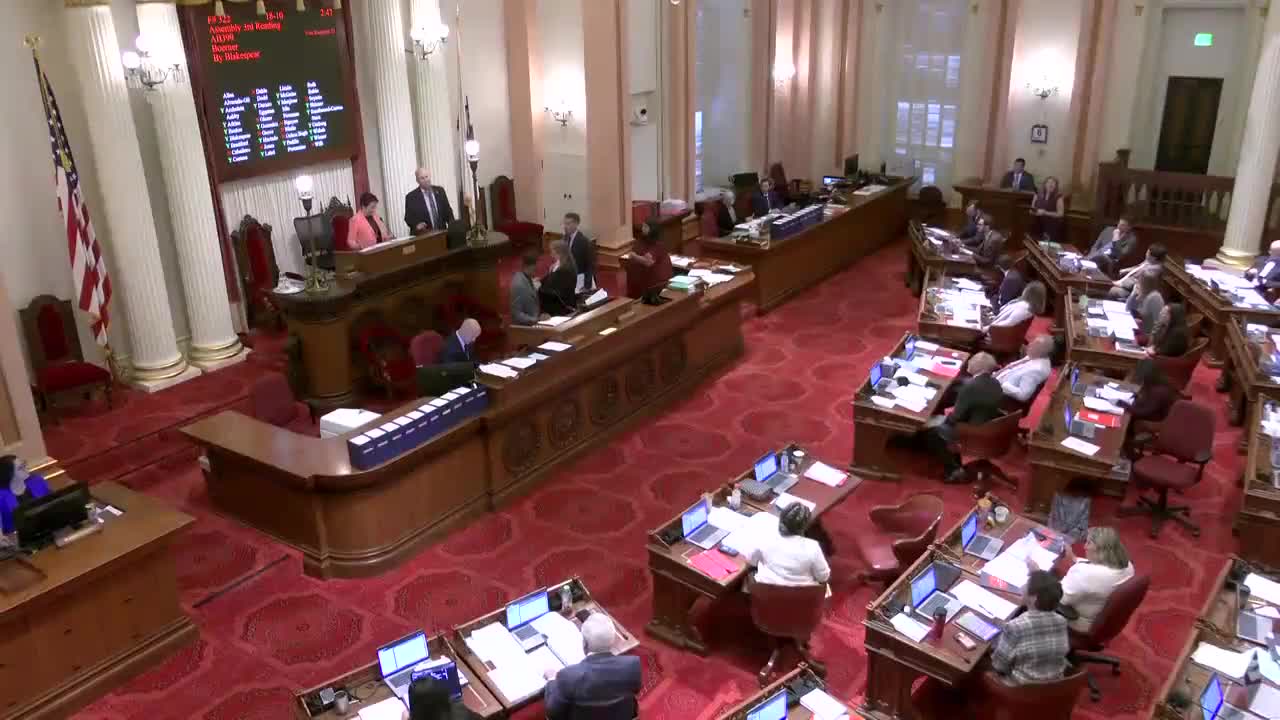 3MIN
Senate Floor
 6MIN
Senate Standing Committee on Elections and Constitutional Amendments
 16MIN
Assembly Standing Committee on Elections
Bill Author

Bill Co-Author(s):