AB 548: State Housing Law: inspection.
- Session Year: 2023-2024
- House: Assembly
- Latest Version Date: 2023-10-11
Current Status:
Passed
(2023-10-11: Chaptered by Secretary of State - Chapter 744, Statutes of 2023.)
Introduced
In Committee
First Chamber
In Committee
Second Chamber
Enacted
What does this bill do?
The bill requires local building enforcement agencies to adopt policies for inspecting multiunit buildings when an inspector finds a unit that is unsafe or otherwise violating the state housing code and the defect might affect other units. Those policies must give criteria for deciding when a problem could spread, require inspectors to try checking at least units next to, above, and below the problem unit and allow inspecting the whole building if defects are severe. Agencies must notify the owner about needed repairs and schedule a reinspection to confirm the violations are fixed.
The summary is provided by generative AI which can make mistakes. For original language, please view the details in the table below.
Existing law, the State Housing Law, a violation of which is a crime, establishes statewide construction and occupancy standards for buildings used for human habitation. Existing law authorizes an officer, employee, or agent of an enforcement agency to enter and inspect any building or premises whenever necessary to secure compliance with, or prevent a violation of, any provision of the State Housing Law, the building standards published in the State Building Standards Code, and other rules and regulations promulgated pursuant to the provisions of the State Housing Law that the enforcement agency has the power to enforce.
Existing law deems a building, portion of a building, or premises on which a building is located to be a substandard building if any one of specified conditions exists to the extent that it endangers the life, limb, health, property, safety, or welfare of the public or its occupants. Existing law deems a building, portion of a building, or premises on which a building is located to be in violation of the State Housing Law if it contains lead hazards, as specified, that are likely to endanger the health of the public or the occupants.
This bill would require local enforcement agencies, by January 1, 2025, to develop policies and procedures for inspecting a building with multiple units if an inspector or code enforcement officer has determined that a unit is substandard or is in violation of the State Housing Law, and the inspector or code enforcement officer determines that the defects or violations have the potential to affect other units of the building, as specified. If the local enforcement agency determines the substandard condition could reasonably affect other units, the bill would require notice be given to the property owner, as specified, and the units reinspected to verify correction of the violations. By imposing new duties on local government officials, the bill would impose a state-mandated local program.
The California Constitution requires the state to reimburse local agencies and school districts for certain costs mandated by the state. Statutory provisions establish procedures for making that reimbursement.
This bill would provide that, if the Commission on State Mandates determines that the bill contains costs mandated by the state, reimbursement for those costs shall be made pursuant to the statutory provisions noted above.
Existing law, the State Housing Law, a violation of which is a crime, establishes statewide construction and occupancy standards for buildings used for human habitation. Existing law authorizes an officer, employee, or agent of an enforcement agency to enter and inspect any building or premises whenever necessary to secure compliance with, or prevent a violation of, any provision of the State Housing Law, the building standards published in the State Building Standards Code, and other rules and regulations promulgated pursuant to the provisions of the State Housing Law that the enforcement agency has the power to enforce.
Existing law deems a building, portion of a building, or premises on which a building is located to be a substandard building if any one of specified conditions exists to the extent that it endangers the life, limb, health, property, safety, or welfare of the public or its occupants. Existing law deems a building, portion of a building, or premises on which a building is located to be in violation of the State Housing Law if it contains lead hazards, as specified, that are likely to endanger the health of the public or the occupants.
This bill would require local enforcement agencies, by January 1, 2025, to develop policies and procedures for inspecting a building with multiple units if an inspector or code enforcement officer has determined that a unit is substandard or is in violation of the State Housing Law, and the inspector or code enforcement officer determines that the defects or violations have the potential to affect other units of the building, as specified. If the local enforcement agency determines the substandard condition could reasonably affect other units, the bill would require notice be given to the property owner, as specified, and the units reinspected to verify correction of the violations. By imposing new duties on local government officials, this the bill would impose a state-mandated local program.
The California Constitution requires the state to reimburse local agencies and school districts for certain costs mandated by the state. Statutory provisions establish procedures for making that reimbursement.
This bill would provide that, if the Commission on State Mandates determines that the bill contains costs mandated by the state, reimbursement for those costs shall be made pursuant to the statutory provisions noted above.
Existing law, the State Housing Law, a violation of which is a crime, establishes statewide construction and occupancy standards for buildings used for human habitation. Existing law authorizes an officer, employee, or agent of an enforcement agency to enter and inspect any building or premises whenever necessary to secure compliance with, or prevent a violation of, any provision of the State Housing Law, the building standards published in the State Building Standards Code, and other rules and regulations promulgated pursuant to the provisions of the State Housing Law that the enforcement agency has the power to enforce.
Existing law deems a building, portion of a building, or premises on which a building is located to be a substandard building if any one of specified conditions exists to the extent that it endangers the life, limb, health, property, safety, or welfare of the public or its occupants. Existing law deems a building, portion of a building, or premises on which a building is located to be in violation of the State Housing Law if it contains lead hazards, as specified, that are likely to endanger the health of the public or the occupants.
This bill would require local enforcement agencies agencies, by January 1, 2025, to develop policies and procedures for inspecting a building with multiple units if an inspector or code enforcement officer has determined that a unit is substandard or is in violation of the State Housing Law, and the inspector or code enforcement officer determines that the defects or violations have the potential to affect other units of the building, as specified. If the enforcement agency determines the substandard condition could reasonably affect other units, the bill would require notice be given to the property owner, as specified, and the units reinspected to verify correction of the violations. By imposing new duties on local government officials, this bill would impose a state-mandated local program.
The California Constitution requires the state to reimburse local agencies and school districts for certain costs mandated by the state. Statutory provisions establish procedures for making that reimbursement.
This bill would provide that, if the Commission on State Mandates determines that the bill contains costs mandated by the state, reimbursement for those costs shall be made pursuant to the statutory provisions noted above.
Existing law, the State Housing Law, a violation of which is a crime, establishes statewide construction and occupancy standards for buildings used for human habitation. Existing law authorizes an officer, employee, or agent of an enforcement agency to enter and inspect any building or premises whenever necessary to secure compliance with, or prevent a violation of, any provision of the State Housing Law, the building standards published in the State Building Standards Code, and other rules and regulations promulgated pursuant to the provisions of the State Housing Law that the enforcement agency has the power to enforce.
Existing law deems a building, portion of a building, or premises on which a building is located to be a substandard building if any one of specified conditions exists to the extent that it endangers the life, limb, health, property, safety, or welfare of the public or its occupants. Existing law deems a building, portion of a building, or premises on which a building is located to be in violation of the State Housing Law if it contains lead hazards, as specified, that are likely to endanger the health of the public or the occupants.
This bill would require local enforcement agencies to develop policies and procedures for inspecting a building with multiple units if an inspector or code enforcement officer has determined that a unit is substandard or is in violation of the State Housing Law, and the inspector or code enforcement officer determines that the defects or violations have the potential to affect other units of the building, as specified. By imposing new duties on local government officials, this bill would impose a state-mandated local program.
The California Constitution requires the state to reimburse local agencies and school districts for certain costs mandated by the state. Statutory provisions establish procedures for making that reimbursement.
This bill would provide that, if the Commission on State Mandates determines that the bill contains costs mandated by the state, reimbursement for those costs shall be made pursuant to the statutory provisions noted above.
(a)By January 1, 2025, local enforcement agencies shall develop policies and procedures for inspecting a building with multiple units if an inspector or code enforcement officer has determined that a unit is substandard pursuant to Section 17920.3, or is in violation of Section 17920.10, and the inspector or code enforcement officer determines that the defects or violations have the potential to affect other units of the building.
(b)The policies and procedures developed pursuant to subdivision (a) shall meet all of the following requirements:
(1)Include criteria that inspectors or code enforcement officers shall use to determine if the substandard condition could reasonably affect other units, taking into account factors, including, but not limited to, the building type, age, size, type of construction, cause of the substandard condition, and history of violations.
(2)Require inspectors or code enforcement officers to reasonably attempt to inspect additional units at the property, including at least units adjacent to, above, and below the unit in which the defect or violation was found, consistent with existing law and inspection practices.
(3)Allow for the inspection of all of the units on the premises if severe, buildingwide defects or violations are found.
(c)(1)Upon determining that a substandard condition in a unit could reasonably affect other units, the local enforcement agency shall provide the property owner with a notice or order to repair or abate within a reasonable time after the inspection is completed.
(2)The local enforcement agency shall advise the owner or operator of each known violation and of each action required to remedy the violation and schedule a reinspection to verify correction of the violations.
SEC. 2.If the Commission on State Mandates determines that this act contains costs mandated by the state, reimbursement to local agencies and school districts for those costs shall be made pursuant to Part 7 (commencing with Section 17500) of Division 4 of Title 2 of the Government Code.
(a)By January 1, 2025, local enforcement agencies shall develop policies and procedures for inspecting a building with multiple units if an inspector or code enforcement officer has determined that a unit is substandard pursuant to Section 17920.3, or is in violation of Section 17920.10, and the inspector or code enforcement officer determines that the defects or violations have the potential to affect other units of the building.
(b)The policies and procedures developed pursuant to subdivision (a) shall meet all of the following requirements:
(1)Include criteria that inspectors or code enforcement officers shall use to determine if the substandard condition could reasonably affect other units, taking into account factors factors, including, but not limited to, the building type, age, size, construction method, type of construction, cause of the substandard condition, and history of violations.
(2)Require inspectors or code enforcement officers to reasonably attempt to inspect additional units at the property, including at least units adjacent to, above, and below the unit in which the defect or violation was found, consistent with existing law and inspection practices.
(3)Allow for the inspection of all of the units on the premises if severe, buildingwide defects or violations are found.
(c)(1)Upon determining that a substandard condition in a unit could reasonably affect other units, the local enforcement agency shall provide the property owner with a notice or order to repair or abate within a reasonable time after the inspection is completed.
(2)The local enforcement agency shall advise the owner or operator of each known violation and of each action required to remedy the violation and schedule a reinspection to verify correction of the violations.
SEC. 2.If the Commission on State Mandates determines that this act contains costs mandated by the state, reimbursement to local agencies and school districts for those costs shall be made pursuant to Part 7 (commencing with Section 17500) of Division 4 of Title 2 of the Government Code.
(a)Local By January 1, 2025, local enforcement agencies shall develop policies and procedures for inspecting a building with multiple units if an inspector or code enforcement officer has determined that a unit is substandard pursuant to Section 17920.3, or is in violation of Section 17920.10, and the inspector or code enforcement officer determines that the defects or violations have the potential to affect other units of the building.
(b)The policies and procedures developed pursuant to subdivision (a) shall meet all of the following requirements:
(1)Include criteria that inspectors or code enforcement officers shall use to determine if the substandard condition could reasonably affect other units, taking into account factors including, but not limited to, the building type, age, size, construction method, cause of the substandard condition, and history of violations.
(2)Require the inspection of inspectors or code enforcement officers to reasonably attempt to inspect additional units at the property, including at least units adjacent to, above, and below the unit in which the defect or violation was found. found, consistent with existing law and inspection practices.
(3)Allow for the inspection of all of the units on the premises if severe, buildingwide defects or violations are found.
(c)(1)Upon determining that a substandard condition in a unit could reasonably affect other units, the enforcement agency shall provide the property owner with a notice or order to repair or abate within a reasonable time after the inspection is completed.
(2)The local agency shall advise the owner or operator of each known violation and of each action required to remedy the violation and schedule a reinspection to verify correction of the violations.
SEC. 2.If the Commission on State Mandates determines that this act contains costs mandated by the state, reimbursement to local agencies and school districts for those costs shall be made pursuant to Part 7 (commencing with Section 17500) of Division 4 of Title 2 of the Government Code.
(a)Local enforcement agencies shall develop policies and procedures for inspecting a building with multiple units if an inspector or code enforcement officer has determined that a unit is substandard pursuant to Section 17920.3, or is in violation of Section 17920.10, and the inspector or code enforcement officer determines that the defects or violations have the potential to affect other units of the building.
(b)The policies and procedures developed pursuant to subdivision (a) shall meet all of the following requirements:
(1)Include criteria that inspectors or code enforcement officers shall use to determine if the substandard condition could reasonably affect other units, taking into account factors including, but not limited to, the building type, age, size, construction method, cause of the substandard condition, and history of violations.
(2)Require the inspection of additional units at the property, including at least units adjacent to, above, and below the unit in which the defect or violation was found.
(3)Allow for the inspection of all of the units on the premises if severe, buildingwide defects or violations are found.
SEC. 2.If the Commission on State Mandates determines that this act contains costs mandated by the state, reimbursement to local agencies and school districts for those costs shall be made pursuant to Part 7 (commencing with Section 17500) of Division 4 of Title 2 of the Government Code.
CORRECTIONS: HeadingLine 1. DigestPage 1.(a)Local enforcement agencies shall develop policies and procedures for inspecting a building with multiple units if an inspector or code enforcement officer has determined that a unit is substandard pursuant to Section 17920.3, or is in violation of Section 17920.10, and the inspector or code enforcement officer determines that the defects or violations have the potential to affect other units of the building.
(b)The policies and procedures developed pursuant to subdivision (a) shall meet all of the following requirements:
(1)Include criteria that inspectors or code enforcement officers shall use to determine if the substandard condition could reasonably affect other units, taking into account the building type, age, size, and history of violations.
(2)Require the inspection of additional units at the property, including at least units adjacent to, above, and below the unit in which the defect or violation was found.
(3)Allow for the inspection of all of the units on the premises if severe, buildingwide defects or violations are found.
SEC. 2.If the Commission on State Mandates determines that this act contains costs mandated by the state, reimbursement to local agencies and school districts for those costs shall be made pursuant to Part 7 (commencing with Section 17500) of Division 4 of Title 2 of the Government Code.
|
Date
|
Status
|
|---|---|
| Oct 11, 2023 | Chaptered by Secretary of State - Chapter 744, Statutes of 2023. |
| Oct 11, 2023 | Approved by the Governor. |
| Sep 19, 2023 | Enrolled and presented to the Governor at 4 p.m. |
| Sep 12, 2023 | Senate amendments concurred in. To Engrossing and Enrolling. (Ayes 59. Noes 16. Page 3234.). |
| Sep 12, 2023 | Assembly Rule 77 suspended. (Page 3228.) |
| Sep 11, 2023 | In Assembly. Concurrence in Senate amendments pending. May be considered on or after September 13 pursuant to Assembly Rule 77. |
| Sep 11, 2023 | Read third time. Passed. Ordered to the Assembly. (Ayes 30. Noes 9. Page 2558.). |
| Sep 5, 2023 | Read second time. Ordered to third reading. |
| Sep 1, 2023 | Read second time and amended. Ordered returned to second reading. |
| Sep 1, 2023 | From committee: Amend, and do pass as amended. (Ayes 5. Noes 2.) (September 1). |
| Jul 3, 2023 | In committee: Referred to APPR suspense file. |
| Jun 22, 2023 | Read second time and amended. Re-referred to Com. on APPR. |
| Jun 21, 2023 | From committee: Amend, and do pass as amended and re-refer to Com. on APPR. (Ayes 9. Noes 1.) (June 20). |
| Jun 14, 2023 | Referred to Com. on HOUSING. |
| Jun 1, 2023 | In Senate. Read first time. To Com. on RLS. for assignment. |
| May 31, 2023 | Read third time. Passed. Ordered to the Senate. (Ayes 57. Noes 17. Page 2055.) |
| May 18, 2023 | Read second time. Ordered to third reading. |
| May 18, 2023 | From committee: Do pass. (Ayes 11. Noes 3.) (May 18). |
| Apr 26, 2023 | In committee: Set, first hearing. Referred to APPR. suspense file. |
| Apr 20, 2023 | Measure version as amended on April 13 corrected. |
| Apr 17, 2023 | Re-referred to Com. on APPR. |
| Apr 13, 2023 | Read second time and amended. |
| Apr 12, 2023 | From committee: Amend, and do pass as amended and re-refer to Com. on APPR. (Ayes 6. Noes 0.) (April 12). |
| Feb 17, 2023 | Referred to Com. on H. & C.D. |
| Feb 9, 2023 | From printer. May be heard in committee March 11. |
| Feb 8, 2023 | Read first time. To print. |
|
Date
|
Description
|
Location
|
Votes
|
|
|---|---|---|---|---|
| Sep 12, 2023 | AB 548 Boerner Concurrence in Senate Amendments | Assembly Floor |
Passed |
|
| Sep 11, 2023 | Assembly 3rd Reading AB548 Boerner et al. By Blakespear | Senate Floor |
Passed |
|
| Sep 1, 2023 | Do pass as amended | Senate Standing Committee on Appropriations |
Passed |
|
| Jul 3, 2023 | Placed on suspense file | Senate Standing Committee on Appropriations |
Passed |
|
| Jun 20, 2023 | Do pass as amended, but first amend, and re-refer to the Committee on [Appropriations] | Senate Standing Committee on Housing |
Passed |
|
| May 31, 2023 | AB 548 Boerner Assembly Third Reading | Assembly Floor |
Passed |
|
| May 18, 2023 | Do pass. | Assembly Standing Committee on Appropriations |
Passed |
|
| Apr 12, 2023 | Do pass as amended and be re-referred to the Committee on [Appropriations] | Assembly Standing Committee on Housing and Community Development |
Passed |
This list shows positions taken on this bill by organizations on the date displayed, which is linked to the original source.
Positions by individuals are not included.
|
Organization
|
Position
|
Date
|
|---|---|---|
| Asthma Management and Prevention | * Support | Jun 20, 2023 |
| California Apartment Association | ** Against | |
| California Association Of Realtors | ** Against | |
| California Rural Legal Assistance Foundation | ** Support | |
| Children Now | ** Support | |
| Coalition for Economic Survival | ** Support | |
| Community Action to Fight Asthma | ** Support | |
| Healing and Justice Center | ** Support | |
| Human Impact Partners | ** Support | |
| Law Foundation of Silicon Valley | ** Support | |
| Regional Asthma Management and Prevention | ** Support | |
| western center on law and poverty | ** Support |
CONCURRENCE IN SENATE AMENDMENTS
CSA1 Bill Id:AB 548
Author:(Boerner)
As Amended Ver:September 1, 2023
Majority vote
SUMMARY
Requires local enforcement agencies to develop policies and procedures for inspecting multiple units in a building if an inspector or code enforcement officer has determined that a unit in that building is substandard or is in violation of state habitability standards.
Senate Amendments:
- Delay implementation of this bill until January 1, 2025.
- Require an enforcement agency to provide a property owner with a notice or order to repair or abate within a reasonable amount of time after an inspection determines that a substandard condition in a unit could reasonably affect other units.
- Require a local agency to advise the owner or operator of each known violation and of each action required to remedy the violation, and to schedule a reinspection to verify correction of the violations.
COMMENTS
Background: California's Health and Safety Code defines a substandard building as any building or part of a building with specified problems that endanger the life, limb, health, property, safety, or welfare of the public or the buildings occupants. Examples of substandard building conditions include sanitation deficiencies (e.g., pests, lack of water or heat, the presence of mold, etc.), structural problems, fire hazards, and lack of sufficient exits (Health and Safety Code Section 17920.3 et seq). Substandard conditions can create serious health and safety risks for the people living in a building and for the larger community. Code enforcement officers conduct an inspection and cite any violations on a complaint basis. When violations are so severe that an order to vacate the property is issued, the property owner is required to pay relocation costs for tenants while remediation or demolition occurs.
According to the United States (US) Census Bureau's 2021 American Housing Survey, over 538,000 homes in California have severely or moderately inadequate plumbing and heating, over 1 million have signs of mice, over 1.4 million report having cockroaches, over 1.5 million identified plumbing or other water leaks, and over 350,000 have mold. Renters are 3.1 times more likely to live in moderately inadequate housing compared to owners. More households of color rent than own housing in the state, so these inequities are more acutely experienced by communities of color.
Inspections are most often complaint-based due to a variety of factors, including limited capacity of local code enforcement agencies and officers to do proactive enforcement. Some tenants may be hesitant to raise health and safety concerns to their landlord or property manager due to fears of retaliation or interference with existing disputes about other matters, so the law allows complaints of possible violations of habitability laws to be reported by a tenant directly to code enforcement. To identify a violation, local officials must generally secure access to the property with the consent of the property owner or tenant, or must be able to identify violations from outside the property without extraordinary effort. With probable cause, local officials can secure an inspection warrant to enter a property without the owner's consent. If inspection reveals a condition potentially affecting multiple tenants, residents, or occupants, including conditions related to the premises, common areas, or structural features, then the law requires a city or county to provide free copies of the inspection report and citations issued to all potentially affected tenants, residents, occupants, or their agents.
The author and sponsor of this bill point out that many jurisdictions do not have a local ordinance or policy to proactively inspect additional units in a multi-unit building where a violation may have been reported or identified in one unit and could possibly have spread to other nearby units. They contend that merely notifying other tenants in the building of the existence of the violation may not be enough to prompt additional inspection requests to uncover issues that have spread beyond one unit. This bill would therefore require local enforcement agencies to develop policies and procedures for identifying criteria that should trigger an attempt to perform inspections of other units that might be impacted by the substandard condition in the same building. This multi-unit inspection procedure is modeled on an ordinance adopted by the City of Fremont which lays out detailed criteria their inspectors can follow when identifying issues that have a likelihood of being present in multiple other units on a property.
According to the Author
"AB 548 would establish a standard of practice by allowing code enforcement officers to inspect additional units when uncovering severely substandard conditions during an inspection. By supplementing a complaint-based inspection with additional inspections when needed, jurisdictions will be able to catch problems that previously went unreported or before the problems could grow into more significant health hazards."
Arguments in Support
According to Regional Asthma Management and Prevention, the bill's sponsor, "Existing state and local laws require landlords to adequately maintain their rental housing while designating local code enforcement agencies responsible for enforcing these health and safety standards. Because most jurisdictions rely on tenant complaints to identify potential substandard housing conditions, enforcement of health and safety issues generally do not happen until families experience lead poisoning, asthma, or other harms. Recognizing this challenge, AB 548 seeks a modest change to existing complaint-based enforcement systems which can improve their ability to catch the most severe problems. Because we know, in the context of multi-family housing, a substandard condition in one unit indicates an increased risk of substandard conditions in other units in the same property, this bill would require local code enforcement agencies to inspect additional units when uncovering severely substandard conditions during an inspection. By supplementing a complaint-based inspection with additional inspections when needed, jurisdictions will be able to catch problems that previously went unreported or before the problems could grow into even more significant health hazards."
Arguments in Opposition
According to the California Association of Realtors, "[This bill] is an unnecessary measure that undermines the negotiated agreement reached with the author and sponsors of AB 838 (Friedman, Statutes of 2021). AB 838 took years of work starting with AB 3352 (Friedman) in order to ensure that state law included a mechanism for processing complaints regarding lead hazards and substandard building conditions that worked for local governments, small housing providers, and tenants. AB 548 unnecessarily changes the rules less than two years after they were enacted."
FISCAL COMMENTS
According to the Assembly Appropriations Committee:
- HCD indicates ongoing General Fund (GF) costs of $179,000 annually for one additional staff position to respond to technical assistance requests from local jurisdictions regarding California Code of Regulations Title 24 and Title 25, as well as applicable state laws, when developing policies and procedures.
- Cost to local agencies, possibly in the low-hundreds of thousands of dollars, across all cities and counties to develop policies and procedures for code enforcement agencies to inspect a building with multiple units per this bill. Considering there are 58 counties and almost 500 cities across the state, costs to comply with this bill could be in the tens of thousands of dollars to hundreds of thousands of dollars statewide. These costs are potentially reimbursable by the state, subject to a determination by the Commission on State Mandates.
- Potential costs to cities and counties of an unknown amount, but potentially significant, for additional inspections as a result of this bill. These costs will depend on the number of additional multi-unit inspections needed. These costs are not likely reimbursable by the state because local agencies can charge fees for building inspections.
VOTES:
ASM HOUSING AND COMMUNITY DEVELOPMENT: 6-0-2
YES: Wicks, Wendy Carrillo, Gabriel, Kalra, Quirk-Silva, Ward
ABS, ABST OR NV: Joe Patterson, Sanchez
ASM APPROPRIATIONS: 11-3-2
YES: Holden, Bryan, Calderon, Wendy Carrillo, Mike Fong, Hart, Lowenthal, Papan, Pellerin, Weber, Ortega
NO: Megan Dahle, Dixon, Mathis
ABS, ABST OR NV: Robert Rivas, Sanchez
ASSEMBLY FLOOR: 57-17-6
YES: Addis, Aguiar-Curry, Arambula, Bains, Bauer-Kahan, Bennett, Berman, Boerner, Bonta, Bryan, Calderon, Juan Carrillo, Wendy Carrillo, Cervantes, Connolly, Mike Fong, Friedman, Gabriel, Garcia, Gipson, Haney, Hart, Holden, Irwin, Jackson, Jones-Sawyer, Kalra, Lee, Low, Lowenthal, Maienschein, McCarty, McKinnor, Muratsuchi, Ortega, Pacheco, Papan, Pellerin, Petrie-Norris, Quirk-Silva, Reyes, Luz Rivas, Robert Rivas, Rodriguez, Blanca Rubio, Santiago, Schiavo, Soria, Ting, Villapudua, Ward, Weber, Wicks, Wilson, Wood, Zbur, Rendon
NO: Alanis, Alvarez, Megan Dahle, Davies, Dixon, Essayli, Flora, Vince Fong, Gallagher, Hoover, Lackey, Mathis, Jim Patterson, Joe Patterson, Sanchez, Ta, Waldron
ABS, ABST OR NV: Chen, Grayson, Stephanie Nguyen, Ramos, Valencia, Wallis
SENATE FLOOR: 30-9-1
YES: Allen, Alvarado-Gil, Ashby, Atkins, Becker, Blakespear, Bradford, Cortese, Dodd, Durazo, Eggman, Glazer, Gonzalez, Hurtado, Laird, Limón, McGuire, Menjivar, Min, Newman, Padilla, Portantino, Roth, Rubio, Skinner, Smallwood-Cuevas, Stern, Umberg, Wahab, Wiener
NO: Archuleta, Dahle, Grove, Jones, Nguyen, Niello, Ochoa Bogh, Seyarto, Wilk
ABS, ABST OR NV: Caballero
UPDATED
VERSION: September 1, 2023
CONSULTANT: Nicole Restmeyer / H. & C.D. / (916) 319-2085 FN: 0002058
SENATE RULES COMMITTEE Office of Senate Floor Analyses (916) 651-1520 Fax: (916) 327-4478 | AB 548 |
THIRD READING
Bill No: AB 548
Author: Boerner (D), et al.
Amended: 9/1/23 in Senate
Vote: 21
SENATE HOUSING COMMITTEE: 9-1, 6/20/23
AYES: Wiener, Blakespear, Caballero, Cortese, McGuire, Padilla, Skinner, Umberg, Wahab
NOES: Seyarto
NO VOTE RECORDED: Ochoa Bogh
SENATE APPROPRIATIONS COMMITTEE: 5-2, 9/1/23
AYES: Portantino, Ashby, Bradford, Wahab, Wiener
NOES: Jones, Seyarto
ASSEMBLY FLOOR: 57-17, 5/31/23 - See last page for vote
SUBJECT: State Housing Law: inspection
SOURCE: Regional Asthma Management and Prevention
DIGEST:
This bill requires local enforcement agencies to develop policies and procedures for inspecting multiple units in a building if an inspector or code enforcement officer has determined that a unit in that building is substandard or is in violation of state habitability standards.
ANALYSIS:
Existing law:
- Defines a substandard building as any building or portion thereof in which there exists specified conditions that endanger the life, limb, health, property, safety, or welfare of the public or the occupants thereof, including:
- Inadequate sanitation;
- Structural hazards or inadequate structural resistance to horizontal forces;
- Any nuisance;
- Hazardous wiring, mechanical equipment, or construction equipment;
- Plumbing that is not in good and safe condition;
- Faulty weather protection;
- Any building, device, equipment, combustible waste, or vegetation that, in the opinion of the fire department, could cause a fire or explosion or provide fuel to augment the spread and intensity of fire or explosion;
- Accumulations of weeds, vegetation, junk, dead organic matter, debris, garbage, offal, rodent habitats, stagnant water, combustible materials, and similar materials or conditions that constitute fire, health, or safety hazards; and
- Buildings that have been inadequately maintained per the California Building Code (CBC), that are not provided with adequate exit facilities, that lack fire-resistive construction or fire-extinguishing systems or equipment required by code, or are occupied for living, sleeping, cooking, or dining purposes that were not intended or designed to be used for those occupancies.
- Grants authority to any officer, employee, or agent of an enforcement agency to enter and inspect any building or premises whenever necessary to secure compliance with, or prevent a violation of, any provision of statewide habitability standards, the building standards published in the CBC, and other rules and regulations which an enforcement agency has the power to enforce.
- Requires a city or county that receives a complaint from a tenant, resident, or occupant, or an agent of a tenant, resident, or occupant, regarding a potential violation of state habitability standards, to do all of the following:
- Inspect the building or portion thereof intended for human occupancy, including any dwelling unit, guestroom, or suite of rooms, or the premises on which it is located, that may be in violation or substandard;
- Document any violations that would be discovered based upon a reasonably competent and diligent visual inspection of the property and identify any building or portion thereof intended for human occupancy that is determined to be substandard. Requires the documentation to be included in an inspection report; and
- As applicable, advise the owner or operator of each violation and of each action that is required to be taken to remedy the violation and schedule a re-inspection to verify corrections of the violations.
- Requires a city or county to provide free, certified copies of an inspection report and citations issued, if any, to the complaining tenant, resident, occupant, or their agent. If inspection reveals a condition potentially affecting multiple tenants, residents, or occupants, then the city or county is required to provide free copies of the inspection report and citations issued to all potentially affected tenants, residents, occupants, or their agents.
- Requires, whenever an enforcement agency has inspected a building and has determined that the building is a substandard building or in violation of state habitability standards, that the enforcement agency commence proceedings to abate the violation by repair, rehabilitation, vacation, or demolition of the building.
- Requires any tenant who is displaced or subject to displacement from a residential rental unit as a result of an order to vacate or an order requiring the vacation of a residential unit by a local enforcement agency as a result of a violation so extensive and of such a nature that the immediate health and safety of the residents is endangered, to receive relocation benefits from the owner. Requires the local enforcement agency to determine the eligibility of tenants for such relocation benefits.
- Requires the relocation payment to be made by the owner or designated agent to the tenant in each residential unit and in an amount equal to two months of the established fair market rent for the area as determined by the Department of Housing and Urban Development, as specified. Specifies the relocation benefits shall be payable on a per residential unit basis.
This bill:
- Requires local enforcement agencies, by January 1, 2025, to develop policies and procedures for inspecting a building with multiple units if an inspector or code enforcement officer has determined that a unit is substandard or is in violation of state habitability standards and the inspector or code enforcement officer determines that the defects or violations have the potential to affect other units of the building.
- Requires the policies and procedures to meet all of the following requirements:
- Include criteria that inspectors or code enforcement officers shall use to determine if the substandard condition could reasonably affect other units, taking into account factors including, but not limited to, the building type, age, size, type of contruction cause of the substandard condition, and history of violations;
- Requires inspectors or code enforcement officers to reasonably attempt to inspect of additional units at the property, including at least units adjacent to, above, and below the unit in which the defect or violation was found, consistent with existing law and inspection practices; and
- Allow for the inspection of all of the units on the premises if severe, building-wide defects or violations are found.
- Requires, upon determining that a substandard condition in a unit could reasonably affect other units, the enforcement agency to provide the property owner with a notice or order to repair or abate within a reasonable time after the inspection is completed. The local agency shall advise the owner or operator of each known violation and of each action required to remedy the violation and schedule a reinspection to verify correction of the violations.
Background
State Housing Law. The State Housing Law defines a substandard building as any building or part of a building with specified problems that endanger the life, limb, health, property, safety, or welfare of the public or the buildings occupants. Examples of substandard building conditions include sanitation deficiencies (e.g., pests, lack of water or heat, the presence of mold, etc.), structural problems, fire hazards, and lack of sufficient exits. Substandard conditions can create serious health and safety risks for the people living in a building and for the larger community. Code enforcement officers conduct an inspection and cite any violations on a complaint basis. When violations are so severe that an order to vacate the property is issued, the property owner is required to pay relocation costs for tenants while remediation or demolition occurs.
According to the US Census Bureau’s 2021 American Housing Survey, over 538,000 homes in California have severely or moderately inadequate plumbing and heating, over one million have signs of mice, over 1.4 million report having cockroaches, over 1.5 million identified plumbing or other water leaks, and over 350,000 households have mold. Renters are three times more likely to live in moderately inadequate housing compared to owners. More households of color rent than own housing in the state, so these inequities are more acutely experienced by communities of color than by white households.
Comments
- Code enforcement inspections. Inspections are most often complaint-based due to a variety of factors, including limited capacity of local code enforcement agencies and officers to do proactive enforcement. Some tenants may be hesitant to raise health and safety concerns to their landlord or property manager due to fears of retaliation or interference with existing disputes about other matters, so the law allows complaints of possible violations of habitability laws to be reported by a tenant directly to code enforcement. To identify a violation, local officials must generally secure access to the property with the consent of the property owner or tenant, or must be able to identify violations from outside the property without extraordinary effort. With probable cause, local officials can secure an inspection warrant to enter a property without the owner’s consent. If inspection reveals a condition potentially affecting multiple tenants, residents, or occupants, including conditions related to the premises, common areas, or structural features, then the law requires a city or county to provide free copies of the inspection report and citations issued to all potentially affected tenants, residents, occupants, or their agents.
- Proactive notice requirements. The author and sponsor of this bill point out that many jurisdictions do not have a local ordinance or policy to proactively inspect additional units in a multi-unit building where a violation may have been reported or identified in one unit and could possibly have spread to other nearby units. They contend that merely notifying other tenants in the building of the existence of the violation may not be enough to prompt additional inspection requests to uncover issues that have spread beyond one unit. This bill would therefore require local enforcement agencies to develop these policies and procedures for identifying criteria that should trigger an attempt to perform inspections of other units that might be impacted by the substandard condition in the same building. This multi-unit inspection procedure is modeled on an ordinance adopted by the City of Fremont, which lays out detailed criteria their inspectors can follow when identifying issues that have a likelihood of being present in multiple other units on a property.
- Senate Appropriations amendments. Senate Appropriations Committee amendments make technical, clarifying changes to the bill.
FISCAL EFFECT: Appropriation: No Fiscal Com.: Yes Local: Yes
According to the Senate Appropriations Committee:
- The Department of Housing and Community Development estimates ongoing costs of approximately $179,000 annually for 1.0 PY of staff within its State Housing Law program to respond to additional technical assistance requests from local jurisdictions regarding the CBC and applicable Health and Safety Code statutes when developing policies and procedures, and when conducting ongoing code enforcement activities. (General Fund)
- Unknown, potentially significant reimbursable state-mandated costs for all city and county enforcement agencies to develop and adopt policies and procedures for inspecting multiple units in a building when a violation or defect may affect other units, as specified. These local costs are likely to be reimbursable from the General Fund, subject to a determination by the Commission on State Mandates that this bill imposes costs mandated by the state. (General Fund)
SUPPORT: (Verified 9/1/23)
Regional Asthma Management and Prevention (source)
California Rural Legal Assistance Foundation
Children Now
Coalition for Economic Survival
Community Action to Fight Asthma
Healing and Justice Center
Human Impact Partners
Law Foundation of Silicon Valley
Western Center on Law and Poverty
OPPOSITION: (Verified 9/1/23)
California Association of Realtors
ARGUMENTS IN SUPPORT: According to the author, “AB 548 would establish a standard of practice by allowing code enforcement officers to inspect additional units when uncovering severely substandard conditions during an inspection. By supplementing a complaint-based inspection with additional inspections when needed, jurisdictions will be able to catch problems that previously went unreported or before the problems could grow into more significant health hazards.”
ARGUMENTS IN OPPOSITION: Writing in opposition, the California Association of Realtors, writing on a prior version of the bill, assert this bill is unnecessary.
ASSEMBLY FLOOR: 57-17, 5/31/23
AYES: Addis, Aguiar-Curry, Arambula, Bains, Bauer-Kahan, Bennett, Berman, Boerner, Bonta, Bryan, Calderon, Juan Carrillo, Wendy Carrillo, Cervantes, Connolly, Mike Fong, Friedman, Gabriel, Garcia, Gipson, Haney, Hart, Holden, Irwin, Jackson, Jones-Sawyer, Kalra, Lee, Low, Lowenthal, Maienschein, McCarty, McKinnor, Muratsuchi, Ortega, Pacheco, Papan, Pellerin, Petrie-Norris, Quirk-Silva, Reyes, Luz Rivas, Robert Rivas, Rodriguez, Blanca Rubio, Santiago, Schiavo, Soria, Ting, Villapudua, Ward, Weber, Wicks, Wilson, Wood, Zbur, Rendon
NOES: Alanis, Alvarez, Megan Dahle, Davies, Dixon, Essayli, Flora, Vince Fong, Gallagher, Hoover, Lackey, Mathis, Jim Patterson, Joe Patterson, Sanchez, Ta, Waldron
NO VOTE RECORDED: Chen, Grayson, Stephanie Nguyen, Ramos, Valencia, Wallis
Prepared by: Alison Hughes / HOUSING / (916) 651-4124
9/2/23 16:58:07
**** END ****
SENATE COMMITTEE ON APPROPRIATIONS
Senator Anthony Portantino, Chair
2023 - 2024 Regular Session
AB 548 (Boerner) - State Housing Law: inspection
Version: June 22, 2023 | Policy Vote: HOUSING 9 - 1 |
Urgency: No | Mandate: Yes |
Hearing Date: September 1, 2023 | Consultant: Mark McKenzie |
Bill Summary:
AB 548 would require local enforcement agencies to develop policies and procedures for inspecting multiple units in a building, if an inspector or code enforcement officer has determined that a unit is substandard or in violation of habitability standards, and the defects or violations may affect other units.
*********** ANALYSIS ADDENDUM – SUSPENSE FILE ***********
The following information is revised to reflect amendments
adopted by the committee on September 1, 2023
Fiscal Impact:
- The Department of Housing and Community Development (HCD) estimates ongoing costs of approximately $179,000 annually for 1.0 PY of staff within its State Housing Law program to respond to additional technical assistance requests from local jurisdictions regarding the California Building Code and applicable Health and Safety Code statutes when developing policies and procedures, and when conducting ongoing code enforcement activities. (General Fund)
- Unknown, potentially significant reimbursable state-mandated costs for all city and county enforcement agencies to develop and adopt policies and procedures for inspecting multiple units in a building when a violation or defect may affect other units, as specified. These local costs are likely to be reimbursable from the General Fund, subject to a determination by the Commission on State Mandates that the bill imposes costs mandated by the state. (General Fund)
Author Amendments:
Make several technical and clarifying changes including replacing “construction method” with “type of construction” as a factor that inspectors consider, and clarifying that a local enforcement agency, rather than a local agency, is required to advise an owner of any violations.
-- END --
SENATE COMMITTEE ON APPROPRIATIONS
Senator Anthony Portantino, Chair
2023 - 2024 Regular Session
AB 548 (Boerner) - State Housing Law: inspection
Version: June 22, 2023 | Policy Vote: HOUSING 9 - 1 |
Urgency: No | Mandate: Yes |
Hearing Date: July 3, 2023 | Consultant: Mark McKenzie |
Bill Summary:
AB 548 would require local enforcement agencies to develop policies and procedures for inspecting multiple units in a building, if an inspector or code enforcement officer has determined that a unit is substandard or in violation of habitability standards, and the defects or violations may affect other units.
Fiscal Impact:
- The Department of Housing and Community Development (HCD) estimates ongoing costs of approximately $179,000 annually for 1.0 PY of staff within its State Housing Law program to respond to additional technical assistance requests from local jurisdictions regarding the California Building Code and applicable Health and Safety Code statutes when developing policies and procedures, and when conducting ongoing code enforcement activities. (General Fund)
- Unknown, potentially significant reimbursable state-mandated costs for all city and county enforcement agencies to develop and adopt policies and procedures for inspecting multiple units in a building when a violation or defect may affect other units, as specified. These local costs are likely to be reimbursable from the General Fund, subject to a determination by the Commission on State Mandates that the bill imposes costs mandated by the state. (General Fund)
Background:
Existing law requires the building department of each city and county to enforce within its jurisdiction all provisions of the State Building Standards Code and provisions of the State Housing Law pertaining to the construction, alteration, repair, demolition, or arrangement of apartment houses, hotels, or dwellings. Existing law defines a substandard building as any building or a portion thereof in which there exists specified conditions to an extent that endangers the life, limb, health, property, safety, or welfare of the public or building occupants, as specified. Examples of substandard conditions include structural hazards, noncompliant electrical wiring and plumbing, faulty weather protection, fire hazards, lead hazards, and inadequate sanitation (including a lack of hot and cold water, lack of appropriate toilets, sinks, and bathing facilities, growth of mold, infestations of insects, rodents, or vermin, and a lack of required heating and lighting).
Local enforcement agencies are authorized to enter and inspect any building whenever necessary to secure compliance with the State Housing Law, building standards, or other rules the agency has the power to enforce. To identify a violation, local officials must generally secure access to the property with the consent of the property owner, or must be able to identify violations from outside the property without extraordinary effort. With probable cause, local officials can secure an inspection warrant to enter a property without the owner’s consent. If inspection reveals a condition potentially affecting multiple tenants, residents, or occupants, including conditions related to the premises, common areas, or structural features, existing law requires a city or county to provide free copies of the inspection report and citations issued to all potentially affected tenants, residents, occupants, or their agents.
Existing law specifically authorizes local governments to charge fees for a variety of building, fire, and code enforcement inspections, including for all of the following:
- The abatement of public nuisances.
- The correction of any violation of habitability standards.
- The enforcement of zoning ordinances.
- Inspections and abatement of violations of fire safety standards, the State Housing Law, the building code, and local ordinances and regulations that implement any of the above.
In addition to fees, local agencies can charge fines to property owners and place liens on property to recover costs associated with abating nuisances or remedying code violations, and some local governments also opt to spend local general funds on code enforcement or inspection activities.
Proposed Law:
AB 548 would require local enforcement agencies, by January 1, 2025, to develop policies and procedures for inspecting multiple units in a building, if an inspector or code enforcement officer has determined that a unit is substandard or in violation of habitability standards, and the inspector or code enforcement officer determines that the defects or violations may affect other units of the building.
The bill would require the policies and procedures to meet all of the following requirements:
- Include criteria that inspectors or code enforcement officers must use to determine if a substandard condition could reasonably affect other units, accounting for factors that include building type, age, size, construction method, cause of the substandard condition, and history of violations.
- Require inspectors or code enforcement officers to reasonably attempt to inspect additional units at the property, including at least units adjacent to, above, and below the unit in which the defect or violation was found, as specified.
- Allow for the inspection of all of the units on the premises, if severe, building-wide defects or violations are found.
AB 548 would also require the enforcement agency, upon determining that a substandard condition could reasonably affect other units, to provide the property owner with a notice or order to repair or abate the condition within a reasonable amount of time. The local agency must advise the owner or operator of each known violation, and of each action required to remedy the violation, and schedule a re-inspection to verify that the violations have been corrected.
Related Legislation:
AB 838 (Friedman), Chap. 351/2021, required cities and counties to conduct building inspections upon receiving a complaint regarding a potential lead hazard or substandard condition, and provide free copies of inspection reports and citations to the complainant and other affected persons, as specified.
Staff Comments:
In addition to the likely state-reimbursable costs noted above for local agencies to develop and adopt specified policies and procedures, this bill would also result in additional costs for city and county enforcement agencies to conduct inspections of multiple units in a building when an inspector or code enforcement officer determines that the defects or violations identified in a unit may affect other units. These local costs for additional inspections are not state-reimbursable because existing law explicitly authorizes local governments to charge fees to cover inspection costs, and to charge fines to property owners for abating nuisances or remedying code violations.
-- END --
SENATE COMMITTEE ON HOUSING
Senator Scott Wiener, Chair
2023 - 2024 Regular
Bill No: AB 548 Hearing Date: 6/20/2023
Author: | Boerner | ||
Version: | 4/13/2023 | ||
Urgency: | No | Fiscal: | Yes |
Consultant: | Alison Hughes | ||
SUBJECT: State Housing Law: inspection
DIGEST: This bill requires local enforcement agencies to develop policies and procedures for inspecting multiple units in a building if an inspector or code enforcement officer has determined that a unit in that building is substandard or is in violation of state habitability standards.
ANALYSIS:
Existing law:
- Defines a substandard building as any building or portion thereof in which there exists specified conditions that endanger the life, limb, health, property, safety, or welfare of the public or the occupants thereof, including:
- Inadequate sanitation;
- Structural hazards or inadequate structural resistance to horizontal forces;
- Any nuisance;
- Hazardous wiring, mechanical equipment, or construction equipment;
- Plumbing that is not in good and safe condition;
- Faulty weather protection;
- Any building, device, equipment, combustible waste, or vegetation that, in the opinion of the fire department, could cause a fire or explosion or provide fuel to augment the spread and intensity of fire or explosion;
- Accumulations of weeds, vegetation, junk, dead organic matter, debris, garbage, offal, rodent habitats, stagnant water, combustible materials, and similar materials or conditions that constitute fire, health, or safety hazards; and
- Buildings that have been inadequately maintained per the California Building Code (CBC), that are not provided with adequate exit facilities, that lack fire-resistive construction or fire-extinguishing systems or equipment required by code, or are occupied for living, sleeping, cooking, or dining purposes that were not intended or designed to be used for those occupancies.
- Grants authority to any officer, employee, or agent of an enforcement agency to enter and inspect any building or premises whenever necessary to secure compliance with, or prevent a violation of, any provision of statewide habitability standards, the building standards published in the CBC, and other rules and regulations which an enforcement agency has the power to enforce.
- Requires a city or county that receives a complaint from a tenant, resident, or occupant, or an agent of a tenant, resident, or occupant, regarding a potential violation of state habitability standards, to do all of the following:
- Inspect the building or portion thereof intended for human occupancy, including any dwelling unit, guestroom, or suite of rooms, or the premises on which it is located, that may be in violation or substandard;
- Document any violations that would be discovered based upon a reasonably competent and diligent visual inspection of the property and identify any building or portion thereof intended for human occupancy that is determined to be substandard. Requires the documentation to be included in an inspection report; and
- As applicable, advise the owner or operator of each violation and of each action that is required to be taken to remedy the violation and schedule a re-inspection to verify corrections of the violations.
- Requires a city or county to provide free, certified copies of an inspection report and citations issued, if any, to the complaining tenant, resident, occupant, or their agent. If inspection reveals a condition potentially affecting multiple tenants, residents, or occupants, then the city or county is required to provide free copies of the inspection report and citations issued to all potentially affected tenants, residents, occupants, or their agents.
- Requires, whenever an enforcement agency has inspected a building and has determined that the building is a substandard building or in violation of state habitability standards, that the enforcement agency commence proceedings to abate the violation by repair, rehabilitation, vacation, or demolition of the building.
- Requires any tenant who is displaced or subject to displacement from a residential rental unit as a result of an order to vacate or an order requiring the vacation of a residential unit by a local enforcement agency as a result of a violation so extensive and of such a nature that the immediate health and safety of the residents is endangered, to receive relocation benefits from the owner. Requires the local enforcement agency to determine the eligibility of tenants for such relocation benefits.
- Requires the relocation payment to be made by the owner or designated agent to the tenant in each residential unit and in an amount equal to two months of the established fair market rent for the area as determined by the Department of Housing and Urban Development, as specified. Specifies the relocation benefits shall be payable on a per residential unit basis.
This bill:
- Requires local enforcement agencies to develop policies and procedures for inspecting a building with multiple units if an inspector or code enforcement officer has determined that a unit is substandard or is in violation of state habitability standards and the inspector or code enforcement officer determines that the defects or violations have the potential to affect other units of the building.
- Requires the policies and procedures to meet all of the following requirements:
- Include criteria that inspectors or code enforcement officers shall use to determine if the substandard condition could reasonably affect other units, taking into account factors including, but not limited to, the building type, age, size, construction method, cause of the substandard condition, and history of violations;
- Require the inspection of additional units at the property, including at least units adjacent to, above, and below the unit in which the defect or violation was found; and
- Allow for the inspection of all of the units on the premises if severe, building-wide defects or violations are found.
COMMENTS:
- Author’s statement. “AB 548 would establish a standard of practice by allowing code enforcement officers to inspect additional units when uncovering severely substandard conditions during an inspection. By supplementing a complaint-based inspection with additional inspections when needed, jurisdictions will be able to catch problems that previously went unreported or before the problems could grow into more significant health hazards.”
- Background: State Housing Law. The State Housing Law defines a substandard building as any building or part of a building with specified problems that endanger the life, limb, health, property, safety, or welfare of the public or the buildings occupants. Examples of substandard building conditions include sanitation deficiencies (e.g., pests, lack of water or heat, the presence of mold, etc.), structural problems, fire hazards, and lack of sufficient exits. Substandard conditions can create serious health and safety risks for the people living in a building and for the larger community. Code enforcement officers conduct an inspection and cite any violations on a complaint basis. When violations are so severe that an order to vacate the property is issued, the property owner is required to pay relocation costs for tenants while remediation or demolition occurs.
According to the US Census Bureau’s 2021 American Housing Survey, over 538,000 homes in California have severely or moderately inadequate plumbing and heating, over 1 million have signs of mice, over 1.4 million report having cockroaches, over 1.5 million identified plumbing or other water leaks, and over 350,000 households have mold. Renters are three times more likely to live in moderately inadequate housing compared to owners. More households of color rent than own housing in the state, so these inequities are more acutely experienced by communities of color than by white households.
- Code enforcement inspections. Inspections are most often complaint-based due to a variety of factors, including limited capacity of local code enforcement agencies and officers to do proactive enforcement. Some tenants may be hesitant to raise health and safety concerns to their landlord or property manager due to fears of retaliation or interference with existing disputes about other matters, so the law allows complaints of possible violations of habitability laws to be reported by a tenant directly to code enforcement. To identify a violation, local officials must generally secure access to the property with the consent of the property owner or tenant, or must be able to identify violations from outside the property without extraordinary effort. With probable cause, local officials can secure an inspection warrant to enter a property without the owner’s consent. If inspection reveals a condition potentially affecting multiple tenants, residents, or occupants, including conditions related to the premises, common areas, or structural features, then the law requires a city or county to provide free copies of the inspection report and citations issued to all potentially affected tenants, residents, occupants, or their agents.
- Proactive notice requirements. The author and sponsor of this bill point out that many jurisdictions do not have a local ordinance or policy to proactively inspect additional units in a multi-unit building where a violation may have been reported or identified in one unit and could possibly have spread to other nearby units. They contend that merely notifying other tenants in the building of the existence of the violation may not be enough to prompt additional inspection requests to uncover issues that have spread beyond one unit. This bill would therefore require local enforcement agencies to develop these policies and procedures for identifying criteria that should trigger an attempt to perform inspections of other units that might be impacted by the substandard condition in the same building. This multi-unit inspection procedure is modeled on an ordinance adopted by the City of Fremont, which lays out detailed criteria their inspectors can follow when identifying issues that have a likelihood of being present in multiple other units on a property.
- Opposition. CAA notes that code enforcement officials are already required to “inspect [a]building or portion thereof intended for human occupancy, including any dwelling unit, guestroom, or suite of rooms, or the premises on which it is located, that may be in violation or substandard” if a tenant makes a complaint. Additionally, the local agency is required to share free inspection reports and citations to all potentially affected tenants if the inspection reveals a condition potentially affecting multiple tenants or residents. CAA has proposed amends that would give the owner notice to conduct any necessary repairs. CAR is also opposed, noting that the bill is unnecessary.
In order to address concerns raised by the opposition, due to time constraints, the committee may wish to consider adopting the proposed author’s amends:
- Delayed implementation until Jan 1, 2025
- Clarify occupants in adjacent units will be given reasonable notice by the code enforcement officer.
- Only inspect additional units when determined by code enforcement that these units could be reasonable affected by or caused by defect or violation.
In order to ensure the owner is provided notice of any findings of a substandard condition and be able to complete any work necessary, the author will accept the following committee amendments:
(1) Upon determining that a substandard condition in a unit could reasonably affect other units, the enforcement agency shall provide the property owner with a notice or order to repair or abate within a reasonable time after the inspection is completed.
(2) The local agency shall advise the owner or operator of each known violation and of each action required to remedy the violation and schedule a re-inspection to verify correction of the violations.
Related Legislation:
AB 838 (Friedman, Chapter 351, Statutes of 2021) — required local governments to respond to lead hazard and substandard building complaints from tenants and specified other parties and to provide free copies of inspection reports and citations to the requestor and others who may be impacted.
FISCAL EFFECT: Appropriation: Fiscal Com.: Local:
POSITIONS: (Communicated to the committee before noon on Wednesday,
June 14, 2023.)
SUPPORT:
Regional Asthma Management and Prevention (RAMP) (Sponsor)
Children Now
Coalition for Economic Survival (CES)
Community Action to Fight Asthma
Healing and Justice Center
Human Impact Partners
Law Foundation of Silicon Valley
OPPOSITION:
California Apartment Association
California Association of Realtors
-- END --
ASSEMBLY THIRD READING
ATR Bill Id:AB 548
Author:(Boerner)
As Amended Ver:April 13, 2023
Majority vote
SUMMARY
Requires local enforcement agencies to develop policies and procedures for inspecting multiple units in a building if an inspector or code enforcement officer has determined that a unit in that building is substandard or is in violation of state habitability standards.
Major Provisions
- Requires local enforcement agencies to develop policies and procedures for inspecting a building with multiple units if an inspector or code enforcement officer has determined that a unit is substandard or is in violation of state habitability standards and the inspector or code enforcement officer determines that the defects or violations have the potential to affect other units of the building.
- Requires the policies and procedures to meet all of the following requirements:
- Include criteria that inspectors or code enforcement officers shall use to determine if the substandard condition could reasonably affect other units, taking into account factors including, but not limited to, the building type, age, size, construction method, cause of the substandard condition, and history of violations;
- Require the inspection of additional units at the property, including at least units adjacent to, above, and below the unit in which the defect or violation was found; and
- Allow for the inspection of all of the units on the premises if severe, building-wide defects or violations are found.
- States that if the Commission on State Mandates determines that this bill contains costs mandated by the state, local agencies and school districts shall be eligible for reimbursement under existing law.
COMMENTS
Background: California's Health and Safety Code defines a substandard building as any building or part of a building with specified problems that endanger the life, limb, health, property, safety, or welfare of the public or the buildings occupants. Examples of substandard building conditions include sanitation deficiencies (e.g., pests, lack of water or heat, the presence of mold, etc.), structural problems, fire hazards, and lack of sufficient exits (Health and Safety Code Section 17920.3 et seq). Substandard conditions can create serious health and safety risks for the people living in a building and for the larger community. Code enforcement officers conduct an inspection and cite any violations on a complaint basis. When violations are so severe that an order to vacate the property is issued, the property owner is required to pay relocation costs for tenants while remediation or demolition occurs.
According to the US Census Bureau's 2021 American Housing Survey, over 538,000 homes in California have severely or moderately inadequate plumbing and heating, over 1 million have signs of mice, over 1.4 million report having cockroaches, over 1.5 million identified plumbing or other water leaks, and over 350,000 have mold. Renters are 3.1 times more likely to live in moderately inadequate housing compared to owners. More households of color rent than own housing in the state, so these inequities are more acutely experienced by communities of color.
Inspections are most often complaint-based due to a variety of factors, including limited capacity of local code enforcement agencies and officers to do proactive enforcement. Some tenants may be hesitant to raise health and safety concerns to their landlord or property manager due to fears of retaliation or interference with existing disputes about other matters, so the law allows complaints of possible violations of habitability laws to be reported by a tenant directly to code enforcement. To identify a violation, local officials must generally secure access to the property with the consent of the property owner or tenant, or must be able to identify violations from outside the property without extraordinary effort. With probable cause, local officials can secure an inspection warrant to enter a property without the owner's consent. If inspection reveals a condition potentially affecting multiple tenants, residents, or occupants, including conditions related to the premises, common areas, or structural features, then the law requires a city or county to provide free copies of the inspection report and citations issued to all potentially affected tenants, residents, occupants, or their agents.
The author and sponsor of this bill point out that many jurisdictions do not have a local ordinance or policy to proactively inspect additional units in a multi-unit building where a violation may have been reported or identified in one unit and could possibly have spread to other nearby units. They contend that merely notifying other tenants in the building of the existence of the violation may not be enough to prompt additional inspection requests to uncover issues that have spread beyond one unit. This bill would therefore require local enforcement agencies to develop policies and procedures for identifying criteria that should trigger an attempt to perform inspections of other units that might be impacted by the substandard condition in the same building. This multi-unit inspection procedure is modeled on an ordinance adopted by the City of Fremont which lays out detailed criteria their inspectors can follow when identifying issues that have a likelihood of being present in multiple other units on a property.
According to the Author
"AB 548 would establish a standard of practice by allowing code enforcement officers to inspect additional units when uncovering severely substandard conditions during an inspection. By supplementing a complaint-based inspection with additional inspections when needed, jurisdictions will be able to catch problems that previously went unreported or before the problems could grow into more significant health hazards."
Arguments in Support
According to Regional Asthma Management and Prevention, the bill's sponsor, "Existing state and local laws require landlords to adequately maintain their rental housing while designating local code enforcement agencies responsible for enforcing these health and safety standards. Because most jurisdictions rely on tenant complaints to identify potential substandard housing conditions, enforcement of health and safety issues generally do not happen until families experience lead poisoning, asthma, or other harms. Recognizing this challenge, AB 548 seeks a modest change to existing complaint-based enforcement systems which can improve their ability to catch the most severe problems. Because we know, in the context of multi-family housing, a substandard condition in one unit indicates an increased risk of substandard conditions in other units in the same property, this bill would require local code enforcement agencies to inspect additional units when uncovering severely substandard conditions during an inspection. By supplementing a complaint-based inspection with additional inspections when needed, jurisdictions will be able to catch problems that previously went unreported or before the problems could grow into even more significant health hazards."
Arguments in Opposition
According to the California Apartment Association, "Existing state and local laws require landlords to adequately maintain their rental housing while designating local code enforcement agencies responsible for enforcing these health and safety standards. For example, subdivision (a) of Section 17970.5 of the Health and Safety Code allows code enforcement to 'Inspect the building or portion thereof intended for human occupancy, including any dwelling unit, guestroom, or suite of rooms, or the premises on which it is located' when a tenant makes a complaint. Therefore, code enforcement is currently able to inspect additional units upon a property when any tenant upon that property makes a complaint. The law was written in such a way as to ensure the privacy of tenants. As such, AB 548 is requiring local governments to do a job they are already empowered to do and so long as a tenant agrees to the inspection."
FISCAL COMMENTS
According to the Assembly Committee on Appropriations:
- HCD indicates ongoing General Fund (GF) costs of $179,000 annually for one additional staff position to respond to technical assistance requests from local jurisdictions regarding California Code Regulation Title 24 and Title 25, as well as applicable state laws, when developing policies and procedures.
- Cost to local agencies, possibly in the low-hundreds of thousands of dollars, across all cities and counties to develop policies and procedures for code enforcement agencies to inspect a building with multiple units per this bill. Considering there are 58 counties and almost 500 cities across the state, costs to comply with this bill could be in the tens of thousands of dollars to hundreds of thousands of dollars statewide. These costs are potentially reimbursable by the state, subject to a determination by the Commission on State Mandates.
- Potential costs to cities and counties of an unknown amount, but potentially significant, for additional inspections as a result of this bill. These costs will depend on the number of additional multi-unit inspections needed. These costs are not likely reimbursable by the state because local agencies can charge fees for building inspections.
VOTES
ASM HOUSING AND COMMUNITY DEVELOPMENT: 6-0-2
YES: Wicks, Wendy Carrillo, Gabriel, Kalra, Quirk-Silva, Ward
ABS, ABST OR NV: Joe Patterson, Sanchez
ASM APPROPRIATIONS: 11-3-2
YES: Holden, Bryan, Calderon, Wendy Carrillo, Mike Fong, Hart, Lowenthal, Papan, Pellerin, Weber, Ortega
NO: Megan Dahle, Dixon, Mathis
ABS, ABST OR NV: Robert Rivas, Sanchez
UPDATED
VERSION: April 13, 2023
CONSULTANT: Nicole Restmeyer / H. & C.D. / (916) 319-2085 FN: 0000479
Date of Hearing: April 26, 2023
ASSEMBLY COMMITTEE ON APPROPRIATIONS
Chris Holden, Chair
ABPCA Bill Id:AB 548
Author:(Boerner Horvath) – As Amended Ver:April 13, 2023
Policy Committee: | Housing and Community Development | Vote: | 6 - 0 |
|
| ||
|
|
Urgency: No State Mandated Local Program: Yes Reimbursable: Yes
SUMMARY:
This bill requires a local enforcement agency to develop policies and procedures for inspecting multiple units in a building if an inspector or code enforcement officer has determined a unit in the building is substandard or is in violation of state habitability standards.
Specifically, this bill:
- Requires a local enforcement agency to develop policies and procedures for inspecting a building with multiple units if an inspector or code enforcement officer has determined a unit within the building is substandard or is in violation of state habitability standards and the inspector or code enforcement officer determines the defects or violations have the potential to affect other units of the building.
- Requires the policies and procedures to do all of the following:
- Include criteria inspectors or code enforcement officers must use to determine if the substandard condition could reasonably affect other units, taking into account specified factors.
- Require the inspection of additional units at the property, including at least units adjacent to, above, and below the unit in which the defect or violation was found.
- Allow for the inspection of all of the units on the premises if severe, building-wide defects or violations are found.
FISCAL EFFECT:
- HCD indicates ongoing General Fund (GF) costs of $179,000 annually for one additional staff position to respond to technical assistance requests from local jurisdictions regarding California Code Regulation Title 24 and Title 25, as well as applicable state laws, when developing policies and procedures.
- Cost to local agencies, possibly in the low-hundreds of thousands of dollars, across all cities and counties to develop policies and procedures for code enforcement agencies to inspect a building with multiple units per this bill. Considering there are 58 counties and almost 500 cities across the state, costs to comply with this bill could be in the tens of thousands of dollars to hundreds of thousands of dollars statewide. These costs are potentially reimbursable by the state, subject to a determination by the Commission on State Mandates determines.
- Potential costs to cities and counties of an unknown amount, but potentially significant, for additional inspections as a result of this bill. These costs will depend on the number of additional multi-unit inspections needed. These costs are not likely reimbursable by the state because local agencies can charge fees for building inspections.
COMMENTS:
- Purpose. This bill seeks to improve protections for renters residing in buildings where a substandard condition has been identified, and other units in the same building might be affected by the substandard condition. According to the author:
[This bill] would establish a standard of practice by allowing code enforcement officers to inspect additional units when uncovering severely substandard conditions during an inspection. By supplementing a complaint-based inspection with additional inspections when needed, jurisdictions will be able to catch problems that previously went unreported or before the problems could grow into more significant health hazards.
- Background. Existing law requires the building department of each city and county to enforce within its jurisdiction all provisions of the State Building Standards Code and provisions of the State Housing Law pertaining to the construction, repair or demolition, of apartments, hotels, or dwellings. Existing law defines a substandard building as any building or a portion thereof in which there exists specified conditions to an extent that endangers the life, limb, health, property, safety, or welfare of the public or building occupants. Examples of substandard conditions include pests, lack of water or heat, the presence of mold, structural problems, fire hazards, and lack of sufficient exits.
Code enforcement officers typically conduct inspections and cite any violations on a complaint basis. Due to fears of retaliation of some tenants by landlords, existing law allows complaints of possible violations of habitability laws to be reported by a tenant directly to code enforcement. Local enforcement agencies may enter and inspect any building whenever necessary to secure compliance with the State Housing Law, building standards, or other rules the agency has the power to enforce. If an inspection reveals a condition potentially affecting multiple tenants, residents, or occupants, including conditions related to the premises, common areas, or structural features, existing law requires a city or county to provide free copies of the inspection report and citations issued to all potentially affected tenants, residents, occupants, or their agents.
The author and sponsor of this bill point out that many jurisdictions do not have a local ordinance or policy to proactively inspect additional units in a multi-unit building where a violation may have been reported or identified in one unit and could possibly have spread to other nearby units. They contend that merely notifying other tenants in the building of the existence of the violation may not be enough to prompt additional inspection requests to uncover issues that have spread beyond one unit.
This bill requires local enforcement agencies to develop policies and procedures for identifying criteria that, when a substandard condition has been identified, trigger an attempted inspection of other units that might be impacted by the substandard condition in the same building.
- Prior Legislation. AB 838 (Friedman), Chapter 351, Statutes of 2021, required local governments to respond to lead hazard and substandard building complaints from tenants and specified other parties, and to provide free copies of inspection reports and citations to the requestor and others who may be impacted.
Analysis Prepared by: Jennifer Swenson / APPR. / (916) 319-2081
Date of Hearing: April 12, 2023
ASSEMBLY COMMITTEE ON HOUSING AND COMMUNITY DEVELOPMENT
Buffy Wicks, Chair
ABPCA Bill Id:AB 548 (
Author:Boerner Horvath) – As Introduced Ver:February 8, 2023
SUBJECT: State Housing Law: inspection
SUMMARY: Requires local enforcement agencies to develop policies and procedures for inspecting multiple units in a building if an inspector or code enforcement officer has determined that a unit in that building is substandard or is in violation of state habitability standards. Specifically, this bill:
- Requires local enforcement agencies to develop policies and procedures for inspecting a building with multiple units if an inspector or code enforcement officer has determined that a unit is substandard or is in violation of state habitability standards and the inspector or code enforcement officer determines that the defects or violations have the potential to affect other units of the building.
- Requires the policies and procedures to meet all of the following requirements:
- Include criteria that inspectors or code enforcement officers shall use to determine if the substandard condition could reasonably affect other units, taking into account the building type, age, size, and history of violations;
- Require the inspection of additional units at the property, including at least units adjacent to, above, and below the unit in which the defect or violation was found; and
- Allow for the inspection of all of the units on the premises if severe, building-wide defects or violations are found.
- States that if the Commission on State Mandates determines that this bill contains costs mandated by the state, local agencies and school districts shall be eligible for reimbursement under existing law.
EXISTING LAW:
- Defines a substandard building as any building or portion thereof in which there exists specified conditions that endanger the life, limb, health, property, safety, or welfare of the public or the occupants thereof, including:
- Inadequate sanitation;
- Structural hazards or inadequate structural resistance to horizontal forces;
- Any nuisance;
- Hazardous wiring, mechanical equipment, or construction equipment;
- Plumbing that is not in good and safe condition;
- Faulty weather protection;
- Any building, device, equipment, combustible waste, or vegetation that, in the opinion of the fire department, could cause a fire or explosion or provide fuel to augment the spread and intensity of fire or explosion;
- Accumulations of weeds, vegetation, junk, dead organic matter, debris, garbage, offal, rodent habitats, stagnant water, combustible materials, and similar materials or conditions that constitute fire, health, or safety hazards; and
- Buildings that have been inadequately maintained per the California Building Code (CBC), that are not provided with adequate exit facilities, that lack fire-resistive construction or fire-extinguishing systems or equipment required by code, or are occupied for living, sleeping, cooking, or dining purposes that were not intended or designed to be used for those occupancies. (Health and Safety Code (HSC) Section 17920.3)
- Grants authority to any officer, employee, or agent of an enforcement agency to enter and inspect any building or premises whenever necessary to secure compliance with, or prevent a violation of, any provision of statewide habitability standards, the building standards published in the CBC, and other rules and regulations which an enforcement agency has the power to enforce. (HSC 17970)
- Requires a city or county that receives a complaint from a tenant, resident, or occupant, or an agent of a tenant, resident, or occupant, regarding a potential violation of state habitability standards, to do all of the following:
- Inspect the building or portion thereof intended for human occupancy, including any dwelling unit, guestroom, or suite of rooms, or the premises on which it is located, that may be in violation or substandard;
- Document any violations that would be discovered based upon a reasonably competent and diligent visual inspection of the property and identify any building or portion thereof intended for human occupancy that is determined to be substandard. Requires the documentation to be included in an inspection report; and
- As applicable, advise the owner or operator of each violation and of each action that is required to be taken to remedy the violation and schedule a re-inspection to verify corrections of the violations. (HSC 17970.5)
- Requires a city or county to provide free, certified copies of an inspection report and citations issued, if any, to the complaining tenant, resident, occupant, or their agent. If inspection reveals a condition potentially affecting multiple tenants, residents, or occupants, then the city or county is required to provide free copies of the inspection report and citations issued to all potentially affected tenants, residents, occupants, or their agents. (HSC 17970.5)
- Requires, whenever an enforcement agency has inspected a building and has determined that the building is a substandard building or in violation of state habitability standards, that the enforcement agency commence proceedings to abate the violation by repair, rehabilitation, vacation, or demolition of the building. (HSC 17980)
- Requires any tenant who is displaced or subject to displacement from a residential rental unit as a result of an order to vacate or an order requiring the vacation of a residential unit by a local enforcement agency as a result of a violation so extensive and of such a nature that the immediate health and safety of the residents is endangered, to receive relocation benefits from the owner. Requires the local enforcement agency to determine the eligibility of tenants for such relocation benefits. (HSC 17975)
- Requires the relocation payment to be made by the owner or designated agent to the tenant in each residential unit and in an amount equal to two months of the established fair market rent for the area as determined by the Department of Housing and Urban Development pursuant to Section 1437f of Title 42 of the United States Code. Specifies the relocation benefits shall be payable on a per residential unit basis. (HSC 17975.2)
FISCAL EFFECT: Unknown.
COMMENTS:
Author’s Statement: According to the author, “AB 548 would establish a standard of practice by allowing code enforcement officers to inspect additional units when uncovering severely substandard conditions during an inspection. By supplementing a complaint-based inspection with additional inspections when needed, jurisdictions will be able to catch problems that previously went unreported or before the problems could grow into more significant health hazards.”
Background: California’s Health and Safety Code defines a substandard building as any building or part of a building with specified problems that endanger the life, limb, health, property, safety, or welfare of the public or the buildings occupants. Examples of substandard building conditions include sanitation deficiencies (e.g., pests, lack of water or heat, the presence of mold, etc.), structural problems, fire hazards, and lack of sufficient exits (Health and Safety Code Section 17920.3 et seq). Substandard conditions can create serious health and safety risks for the people living in a building and for the larger community. Code enforcement officers conduct an inspection and cite any violations on a complaint basis. When violations are so severe that an order to vacate the property is issued, the property owner is required to pay relocation costs for tenants while remediation or demolition occurs.
According to the US Census Bureau’s 2021 American Housing Survey, over 538,000 homes in California have severely or moderately inadequate plumbing and heating, over 1 million have signs of mice, over 1.4 million report having cockroaches, over 1.5 million identified plumbing or other water leaks, and over 350,000 households have mold. Renters are 3.1 times more likely to live in moderately inadequate housing compared to owners. More households of color rent than own housing in the state, so these inequities are more acutely experienced by communities of color than by white households.
Inspections are most often complaint-based due to a variety of factors, including limited capacity of local code enforcement agencies and officers to do proactive enforcement. Some tenants may be hesitant to raise health and safety concerns to their landlord or property manager due to fears of retaliation or interference with existing disputes about other matters, so the law allows complaints of possible violations of habitability laws to be reported by a tenant directly to code enforcement. To identify a violation, local officials must generally secure access to the property with the consent of the property owner or tenant, or must be able to identify violations from outside the property without extraordinary effort. With probable cause, local officials can secure an inspection warrant to enter a property without the owner’s consent. If inspection reveals a condition potentially affecting multiple tenants, residents, or occupants, including conditions related to the premises, common areas, or structural features, then the law requires a city or county to provide free copies of the inspection report and citations issued to all potentially affected tenants, residents, occupants, or their agents.
The author and sponsor of this bill point out that many jurisdictions do not have a local ordinance or policy to proactively inspect additional units in a multi-unit building where a violation may have been reported or identified in one unit and could possibly have spread to other nearby units. They contend that merely notifying other tenants in the building of the existence of the violation may not be enough to prompt additional inspection requests to uncover issues that have spread beyond one unit. This bill would therefore require local enforcement agencies to develop these policies and procedures for identifying criteria that should trigger an attempt to perform inspections of other units that might be impacted by the substandard condition in the same building. This multi-unit inspection procedure is modeled on an ordinance adopted by the City of Fremont which lays out detailed criteria their inspectors can follow when identifying issues that have a likelihood of being present in multiple other units on a property.
Arguments in Support: According to Regional Asthma Management and Prevention, the bill’s sponsor, “Existing state and local laws require landlords to adequately maintain their rental housing while designating local code enforcement agencies responsible for enforcing these health and safety standards. Because most jurisdictions rely on tenant complaints to identify potential substandard housing conditions, enforcement of health and safety issues generally do not happen until families experience lead poisoning, asthma, or other harms. Recognizing this challenge, AB 548 seeks a modest change to existing complaint-based enforcement systems which can improve their ability to catch the most severe problems. Because we know, in the context of multi-family housing, a substandard condition in one unit indicates an increased risk of substandard conditions in other units in the same property, this bill would require local code enforcement agencies to inspect additional units when uncovering severely substandard conditions during an inspection. By supplementing a complaint-based inspection with additional inspections when needed, jurisdictions will be able to catch problems that previously went unreported or before the problems could grow into even more significant health hazards.”
Arguments in Opposition: According to the California Apartment Association, “Existing state and local laws require landlords to adequately maintain their rental housing while designating local code enforcement agencies responsible for enforcing these health and safety standards. For example, subdivision (a) of Section 17970.5 of the Health and Safety Code allows code enforcement to “Inspect the building or portion thereof intended for human occupancy, including any dwelling unit, guestroom, or suite of rooms, or the premises on which it is located” when a tenant makes a complaint. Therefore, code enforcement is currently able to inspect additional units upon a property when any tenant upon that property makes a complaint. The law was written in such a way as to ensure the privacy of tenants. As such, AB 548 is requiring local governments to do a job they are already empowered to do and so long as a tenant agrees to the inspection.”
Committee Amendments: Committee staff recommends the following amendments:
- Expand the factors in Section 1 of the bill that must be considered by local agencies in crafting the inspection policies and procedures.
Section 17970.7(b)(1). Include criteria code enforcement officers shall use to determine if the substandard condition could reasonably affect other units, taking into account factors that shall include, but are not limited to, the building type, age, size, construction methods, cause of the substandard condition, and history of violations.
Related Legislation:
AB 1858 (Quirk-Silva) of the 2021-2022 Session would have expanded the definition of a substandard building to include any structure used for human habitation, regardless of the zoning or approved use of the building. AB 1858 was held in the Assembly Appropriations Committee.
AB 838 (Friedman) Chapter 351, Statutes of 2021 required local governments to respond to lead hazard and substandard building complaints from tenants and specified other parties and to provide free copies of inspection reports and citations to the requestor and others who may be impacted.
SB 296 (Limon), Chapter 637, Statutes of 2021 required each local jurisdiction that employs code enforcement officers to develop safety standards appropriate for the code enforcement officers employed in their jurisdiction.
REGISTERED SUPPORT / OPPOSITION:
Support
Regional Asthma Management and Prevention (Sponsor)
Children Now
Coalition for Economic Survival
Community Action to Fight Asthma
Healing and Justice Center
Law Foundation of Silicon Valley
Opposition
California Apartment Association
Analysis Prepared by: Nicole Restmeyer / H. & C.D. / (916) 319-2085
Discussed in Hearing
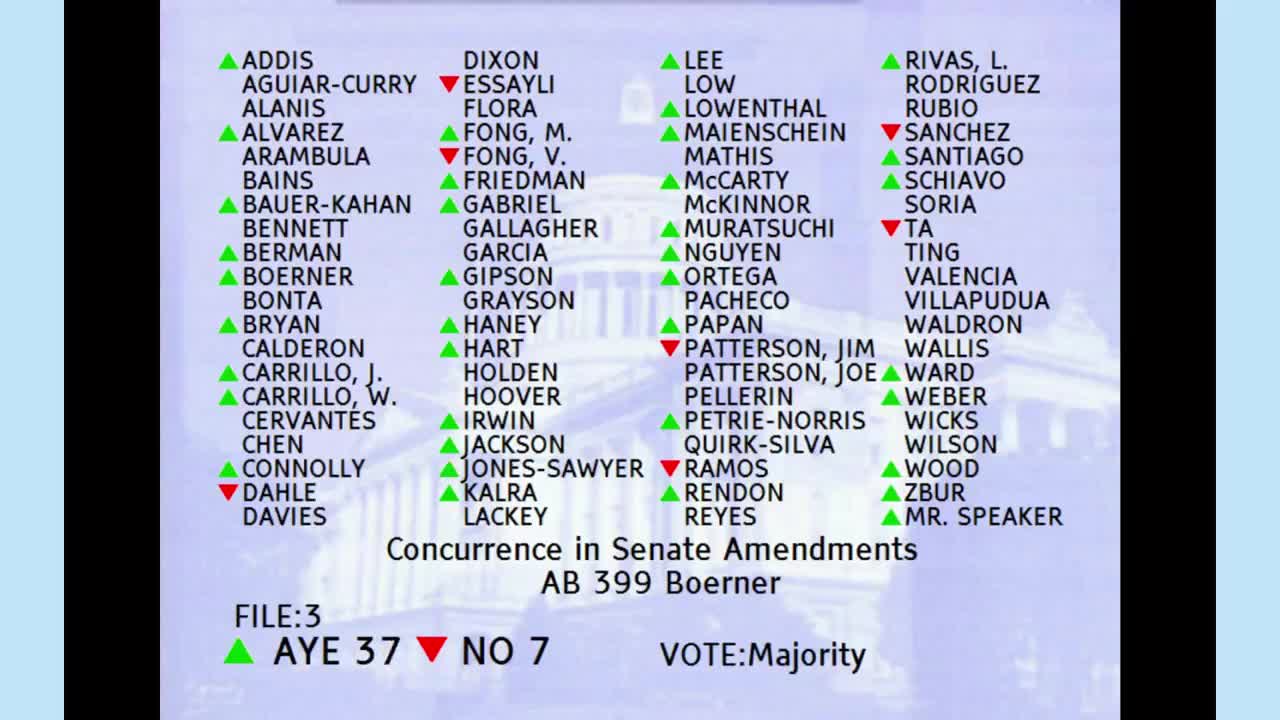 1MIN
Assembly Floor
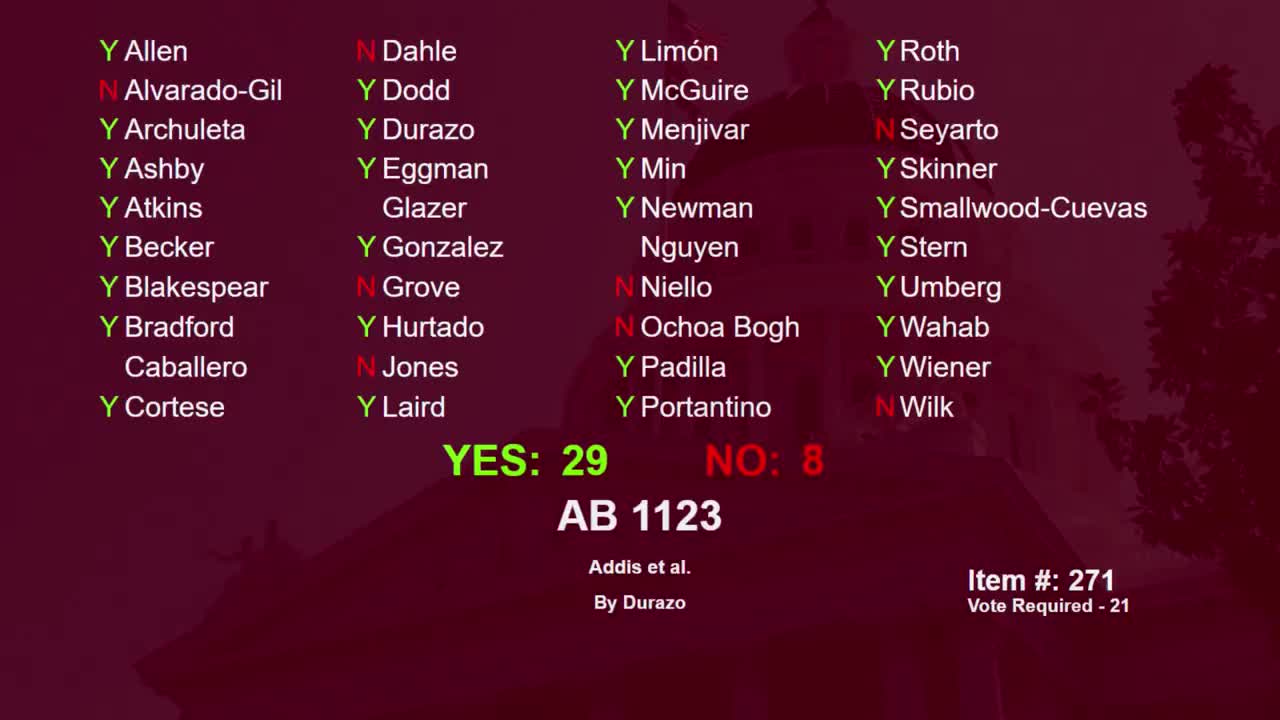 2MIN
Senate Floor
 14MIN
Senate Standing Committee on Housing
 9MIN
Assembly Standing Committee on Housing and Community Development
Bill Author

Bill Co-Author(s):
