AB 553: Department of Justice: Bureau of Gambling Control.
- Session Year: 2023-2024
- House: Assembly
- Latest Version Date: 2023-10-08
Current Status:
Passed
(2023-10-08: Chaptered by Secretary of State - Chapter 533, Statutes of 2023.)
Introduced
In Committee
First Chamber
In Committee
Second Chamber
Enacted
Existing law establishes the Bureau of Gambling Control within the Department of Justice. Existing law also establishes the Indian Gaming Special Distribution Fund for the receipt and deposit of moneys received by the state from Indian tribes pursuant to the terms of tribal-state gaming compacts, to be available for appropriation by the Legislature for, among other things, regulatory costs incurred by the state in connection with the implementation and administration of tribal gaming.
This bill would require the Department of Justice, by no later than June 1, 2025, to develop and implement a formal time tracking policy and procedure for employees assigned to the Bureau of Gambling Control to track those hours and other expenses that can be charged to the Indian Gaming Special Distribution Fund. The bill would, commencing January 1, 2026, require quarterly audits of timekeeping to ensure that only those hours and expenses directly related to tribal gaming are charged to the fund.
Existing law establishes the Bureau of Gambling Control within the Department of Justice. Existing law also establishes the Indian Gaming Special Distribution Fund for the receipt and deposit of moneys received by the state from Indian tribes pursuant to the terms of tribal-state gaming compacts, to be available for appropriation by the Legislature for, among other things, regulatory costs incurred by the state in connection with the implementation and administration of tribal gaming.
This bill would require the Department of Justice, by no later than June 1, 2024, 2025, to develop and implement a formal time tracking policy and procedure for employees assigned to the Bureau of Gambling Control to track those hours and other expenses that can be charged to the Indian Gaming Special Distribution Fund. The bill would, commencing January 1, 2025, 2026, require quarterly audits of timekeeping to ensure that only those hours and expenses directly related to tribal gaming are charged to the fund.
Existing law establishes the Bureau of Gambling Control within the Department of Justice. Existing law also establishes the Indian Gaming Special Distribution Fund for the receipt and deposit of moneys received by the state from Indian tribes pursuant to the terms of tribal-state gaming compacts, to be available for appropriation by the Legislature for, among other things, regulatory costs incurred by the state in connection with the implementation and administration of tribal gaming.
This bill would require the Department of Justice, by no later than June 1, 2024, to develop and implement a formal time tracking policy and procedure for employees assigned to the Bureau of Gambling Control to track those hours and other expenses that can be charged to the Indian Gaming Special Distribution Fund. The bill would, commencing January 1, 2025, require quarterly audits of timekeeping to ensure that only those hours and expenses directly related to tribal gaming are charged to the fund.
(a)By no later than June 1, 2025, the department shall develop and implement a policy and procedure for employees assigned to the Bureau of Gambling Control to formally track those hours and other expenses that can be charged to the Indian Gaming Special Distribution Fund.
(b)The policy and procedure described in subdivision (a) shall, without limitation, include all of the following:
(1)A requirement that all hours and expenses related to tribal gaming regulatory activities be recorded with reasonable detail.
(2)A requirement that no hours or expenses unrelated to tribal gaming regulatory activity be charged to the fund.
(3)A requirement that the individual timekeeping records created by each employee be reviewed and approved by a supervisor.
(c)Commencing on January 1, 2026, and quarterly thereafter, the bureau shall conduct an audit of employee timekeeping records to ensure compliance with this section.
(a)By no later than June 1, 2024, 2025, the department shall develop and implement a policy and procedure for employees assigned to the Bureau of Gambling Control to formally track those hours and other expenses that can be charged to the Indian Gaming Special Distribution Fund.
(b)The policy and procedure described in subdivision (a) shall, without limitation, include all of the following:
(1)A requirement that all hours and expenses related to tribal gaming regulatory activities be recorded with reasonable detail.
(2)A requirement that no hours or expenses unrelated to tribal gaming regulatory activity be charged to the fund.
(3)A requirement that the individual timekeeping records created by each employee be reviewed and approved by a supervisor.
(c)Commencing on January 1, 2025, 2026, and quarterly thereafter, the bureau shall conduct an audit of employee timekeeping records to ensure compliance with this section.
(a)By no later than June 1, 2024, the department shall develop and implement a policy and procedure for employees assigned to the Bureau of Gambling Control to formally track those hours and other expenses that can be charged to the Indian Gaming Special Distribution Fund.
(b)The policy and procedure described in subdivision (a) shall, without limitation, include all of the following:
(1)A requirement that all hours and expenses related to tribal gaming regulatory activities be recorded with reasonable detail.
(2)A requirement that no hours or expenses unrelated to tribal gaming regulatory activity be charged to the fund.
(3)A requirement that the individual timekeeping records created by each employee be reviewed and approved by a supervisor.
(c)Commencing on January 1, 2025, and quarterly thereafter, the bureau shall conduct an audit of employee timekeeping records to ensure compliance with this section.
|
Date
|
Status
|
|---|---|
| Oct 8, 2023 | Chaptered by Secretary of State - Chapter 533, Statutes of 2023. |
| Oct 8, 2023 | Approved by the Governor. |
| Sep 21, 2023 | Enrolled and presented to the Governor at 3:30 p.m. |
| Sep 14, 2023 | Senate amendments concurred in. To Engrossing and Enrolling. (Ayes 80. Noes 0. Page 3547.). |
| Sep 13, 2023 | In Assembly. Concurrence in Senate amendments pending. |
| Sep 13, 2023 | Read third time. Passed. Ordered to the Assembly. (Ayes 39. Noes 0. Page 2765.). |
| Sep 8, 2023 | Ordered to special consent calendar. |
| Sep 5, 2023 | Read second time. Ordered to third reading. |
| Sep 1, 2023 | Read second time and amended. Ordered returned to second reading. |
| Sep 1, 2023 | From committee: Amend, and do pass as amended. (Ayes 7. Noes 0.) (September 1). |
| Aug 14, 2023 | In committee: Referred to APPR suspense file. |
| Jul 11, 2023 | From committee: Do pass and re-refer to Com. on APPR with recommendation: To Consent Calendar. (Ayes 14. Noes 0.) (July 11). Re-referred to Com. on APPR. |
| Jun 14, 2023 | Referred to Com. on G.O. |
| Jun 1, 2023 | In Senate. Read first time. To Com. on RLS. for assignment. |
| May 31, 2023 | Read third time. Passed. Ordered to the Senate. (Ayes 80. Noes 0. Page 2056.) |
| May 18, 2023 | Read second time. Ordered to third reading. |
| May 18, 2023 | From committee: Do pass. (Ayes 15. Noes 0.) (May 18). |
| May 3, 2023 | In committee: Set, first hearing. Referred to APPR. suspense file. |
| Apr 26, 2023 | In committee: Hearing postponed by committee. |
| Apr 13, 2023 | From committee: Do pass and re-refer to Com. on APPR. with recommendation: To Consent Calendar. (Ayes 19. Noes 0.) (April 12). Re-referred to Com. on APPR. |
| Feb 17, 2023 | Referred to Com. on G.O. |
| Feb 9, 2023 | From printer. May be heard in committee March 11. |
| Feb 8, 2023 | Read first time. To print. |
|
Date
|
Description
|
Location
|
Votes
|
|
|---|---|---|---|---|
| Sep 14, 2023 | AB 553 Ramos Concurrence in Senate Amendments | Assembly Floor |
Passed |
|
| Sep 13, 2023 | Special Consent AB553 Ramos et al. | Senate Floor |
Passed |
|
| Sep 1, 2023 | Do pass as amended | Senate Standing Committee on Appropriations |
Passed |
|
| Aug 14, 2023 | Placed on suspense file | Senate Standing Committee on Appropriations |
Passed |
|
| Jul 11, 2023 | Do pass, but first be re-referred to the Committee on [Appropriations] with the recommendation: To Consent Calendar | Senate Standing Committee on Governmental Organization |
Passed |
|
| May 31, 2023 | AB 553 Ramos Assembly Third Reading | Assembly Floor |
Passed |
|
| May 18, 2023 | Do pass. | Assembly Standing Committee on Appropriations |
Passed |
|
| Apr 12, 2023 | Do pass and be re-referred to the Committee on [Appropriations] with recommendation: To Consent Calendar | Assembly Standing Committee on Governmental Organization |
Passed |
This list shows positions taken on this bill by organizations on the date displayed, which is linked to the original source.
Positions by individuals are not included.
|
Organization
|
Position
|
Date
|
|---|---|---|
| Cachil Dehe Band of Wintun Indians of the Colusa Indian Community | ** Support | |
| California Nations Indian Gaming Association | ** Support | |
| Chukchansi Economic Development Authority | ** Support | |
| Federated Indians Of Graton Rancheria | ** Support | |
| Morongo Band Of Mission Indians | ** Support | |
| Picayune Rancheria of the Chukchansi Indians | ** Support | |
| Santa Rosa Rancheria Tachi Yokut Tribe | ** Support | |
| Yocha Dehe Wintun Nation | ** Support |
CONCURRENCE IN SENATE AMENDMENTS
CSA1 Bill Id:AB 553
Author:(Ramos and Garcia)
As Amended Ver:September 1, 2023
Majority vote
SUMMARY
Requires, by June 1, 2025, the Department of Justice (DOJ) to develop and implement a policy and procedure for employees assigned to the Bureau of Gambling Control (BGC) to formally track those hours and other expenses that can be charged to the Indian Gaming Special Distribution Fund (SDF), as specified. Specifically, this bill:
- Requires DOJ, no later than June 1, 2025, to develop and implement a policy and procedure for employees assigned to the Bureau to formally track those hours and other expenses that can be charged to the SDF.
- Requires the policy and procedure to include all of the following:
- A requirement that all hours and expenses related to tribal gaming regulatory activities be recorded with reasonable detail.
- A requirement that no hours or expenses unrelated to tribal gaming regulatory activity be charged to the fund.
- A requirement that the individual timekeeping records created by each employee be reviewed and approved by a supervisor.
- Requires the Bureau, beginning on January 1, 2026, and quarterly thereafter, to conduct an audit of employee timekeeping records to ensure compliance with the provisions of this bill.
Senate Amendments
- Changes the date from June 1, 2024, to June 1, 2025, for DOJ to implement a policy and procedure for employees assigned to the Bureau to formally track those hours and other expenses that can be charged to the SDF.
- Changes the commencing date from January 1, 2025 to January 1, 2026 for quarterly audits of timekeeping to ensure that only those hours and expenses directly related to tribal gaming are charged to the fund.
COMMENTS
Background.
The State entered into 61 tribal compacts starting in 1999. Among other things, the compacts mandated that tribes contribute to the IGSDF. Since then, the State has signed new compacts and revised existing ones, all of which call for various amounts of contributions from the tribes into the IGSDF. According to state law, the Legislature may appropriate funds from the IGSDF to meet four needs in a priority order. Currently, 76 Tribes have signed and ratified tribal-state gaming compacts with the State of California, and there are Secretarial Procedures in place with four Tribes. There are currently 64 Tribes operating 67 casinos.
The Bureau of Gambling Control within the DOJ is the State law enforcement authority with special jurisdiction over gambling activities within the State of California. The Bureau is also the entity that receives applications and fees and conducts criminal background investigations and audits.
Indian Gaming Special Distribution Fund. There is hereby created in the State Treasury a fund called the "Indian Gaming Special Distribution Fund" for the receipt and deposit of moneys received by the state from Indian tribes pursuant to the terms of tribal-state gaming compacts. These moneys shall be available for appropriation by the Legislature. Priority for funding from the IGSDF is in the following descending order:
- Payments to cover shortfalls in the RSTF, which distributes funding to tribes that do not significantly participate in gaming activities.
- Make grants for programs to address gambling addiction.
- The amount appropriated in the annual Budget Act for allocation between the DOJ and the CGCC for regulatory functions that directly relates to Indian gaming.
- Appropriations to support local government agencies impacted by tribal gaming.
Audit of the Fund. On August 25, 2022, the California State Auditor (CSA) released a report titled "Indian Gaming Special Distribution Fund." The State Auditor reviewed records and processes at the CGCC, the Department of Finance, the DOJ, and the CDPH. The report concluded that the State could better manage the IGSDF and its problem gambling programs. The audit concluded the Fund has an excessive reserve of $127 million, which is enough to pay for nearly four years of expenditures.
As it pertains to the intent of this bill, the CSA audit found DOJ inappropriately charged staff time to the Fund for activities not related to tribal gaming regulatory activities. The report recommended DOJ formalize employee time tracking procedures, including training on which activities can be charged to the Fund, and conduct quarterly audits of employee timekeeping to ensure compliance by both employees and supervisors tasked with review. This bill implements these specific CSA recommendations.
According to the Author
According to the author's office, "my bill, AB 553, follows recommendations made from a State Audit report released in 2022. The report details misuse and mishandling of reserves in the SDF. AB 553 is about government accountability and will look to eliminate misuse of funds that came from California Tribes."
Arguments in Support
According to the California Nations Indian Gaming Association, "AB 553 seeks to increase transparency by putting in place a policy and procedure for tracking employee hours at the Bureau of Gambling Control to ensure that tribal and cardroom funding is spent on their respective issues and that one isn't funding enforcement and oversight of the other. It also would ensure, [through] quarterly audits of timekeeping, that charges to the SDF would only be directly related to tribal taming as is mandated by law."
Arguments in Opposition
None on file.
FISCAL COMMENTS
According to the Senate Appropriations Committee, "The DOJ reports unknown, potentially significant costs to its Public Rights Division/Indian and Gaming Law Section (SDF). The DOJ notes there is the potential for litigation concerning the use of Fund monies, the fiscal impact of which is unquantifiable at this time. To the extent this litigation is significant, there will likely be a corresponding need for additional staff resources to address administrative and legal workload and ensure compliance with the bill's auditing requirements. The Gambling Control Commission reports no fiscal impact."
VOTES:
ASM GOVERNMENTAL ORGANIZATION: 19-0-3
YES: Santiago, Lackey, Aguiar-Curry, Berman, Cervantes, Megan Dahle, Davies, Gipson, Jones-Sawyer, Low, Mathis, McCarty, McKinnor, Quirk-Silva, Ramos, Robert Rivas, Blanca Rubio, Ta, Villapudua
ABS, ABST OR NV: Bryan, Garcia, Jim Patterson
ASM APPROPRIATIONS: 15-0-1
YES: Holden, Megan Dahle, Bryan, Calderon, Wendy Carrillo, Dixon, Mike Fong, Hart, Lowenthal, Mathis, Papan, Pellerin, Sanchez, Weber, Ortega
ABS, ABST OR NV: Robert Rivas
ASSEMBLY FLOOR: 80-0-0
YES: Addis, Aguiar-Curry, Alanis, Alvarez, Arambula, Bains, Bauer-Kahan, Bennett, Berman, Boerner, Bonta, Bryan, Calderon, Juan Carrillo, Wendy Carrillo, Cervantes, Chen, Connolly, Megan Dahle, Davies, Dixon, Essayli, Flora, Mike Fong, Vince Fong, Friedman, Gabriel, Gallagher, Garcia, Gipson, Grayson, Haney, Hart, Holden, Hoover, Irwin, Jackson, Jones‑Sawyer, Kalra, Lackey, Lee, Low, Lowenthal, Maienschein, Mathis, McCarty, McKinnor, Muratsuchi, Stephanie Nguyen, Ortega, Pacheco, Papan, Jim Patterson, Joe Patterson, Pellerin, Petrie-Norris, Quirk-Silva, Ramos, Reyes, Luz Rivas, Robert Rivas, Rodriguez, Blanca Rubio, Sanchez, Santiago, Schiavo, Soria, Ta, Ting, Valencia, Villapudua, Waldron, Wallis, Ward, Weber, Wicks, Wilson, Wood, Zbur, Rendon
SENATE FLOOR: 39-0-1
YES: Allen, Alvarado-Gil, Archuleta, Ashby, Atkins, Becker, Blakespear, Bradford, Cortese, Dahle, Dodd, Durazo, Eggman, Glazer, Gonzalez, Grove, Hurtado, Jones, Laird, Limón, McGuire, Menjivar, Min, Newman, Nguyen, Niello, Ochoa Bogh, Padilla, Portantino, Roth, Rubio, Seyarto, Skinner, Smallwood-Cuevas, Stern, Umberg, Wahab, Wiener, Wilk
ABS, ABST OR NV: Caballero
UPDATED
VERSION: September 1, 2023
CONSULTANT: Eric Johnson / G.O. / (916) 319-2531 FN: 0001990
SENATE RULES COMMITTEE Office of Senate Floor Analyses (916) 651-1520 Fax: (916) 327-4478 | AB 553 |
THIRD READING
Bill No: AB 553
Author: Ramos (D) and Garcia (D)
Amended: 9/1/23 in Senate
Vote: 21
SENATE GOVERNMENTAL ORG. COMMITTEE: 14-0, 7/11/23
AYES: Dodd, Wilk, Alvarado-Gil, Archuleta, Ashby, Bradford, Glazer, Jones, Ochoa Bogh, Padilla, Portantino, Roth, Rubio, Seyarto
NO VOTE RECORDED: Grove
SENATE APPROPRIATIONS COMMITTEE: 7-0, 9/1/23
AYES: Portantino, Jones, Ashby, Bradford, Seyarto, Wahab, Wiener
ASSEMBLY FLOOR: 80-0, 5/31/23 - See last page for vote
SUBJECT: Department of Justice: Bureau of Gambling Control
SOURCE: California Nations Indian Gaming Association
DIGEST: This bill requires the Department of Justice (DOJ) to develop and implement a policy and procedure for employees assigned to the Bureau of Gambling Control (Bureau) to formally track those hours and other expenses that can be charged to the Indian Gaming Special Distribution Fund (SDF), as specified.
ANALYSIS:
Existing law:
- Establishes the Bureau within DOJ. The Bureau, California Gambling Control Commission (Commission) and California Tribal Gaming Agencies (TGA) are jointly responsible for ensuring the fair and honest operation of tribal gaming in California in accordance with the Indian Gaming Regulatory Act of 1998 (IGRA).
- Provides, under IGRA, for the negotiation and execution of compacts for the purpose of authorizing Class III gaming on Indian lands within a state.
- Authorizes the Governor, under the California Constitution, to negotiate and conclude compacts, subject to ratification by the Legislature.
- Establishes the SDF for the receipt and deposit of moneys received by the state from Indian tribes pursuant to the terms of tribal-state gaming compacts, to be available for appropriation by the Legislature for, among other things, regulatory costs incurred by the state in connection with the implementation and administration of tribal gaming.
- Ratifies a number of tribal-state gaming compacts, and amendments of tribal-state gaming compacts, between the State of California and various specified Indian tribes.
- Provides, under the Gambling Control Act (Act), for the licensure and regulation of various legalized gambling activities and gambling establishments by the Commission and the enforcement of those activities and establishments by the Bureau.
This bill:
- Requires DOJ, no later than June 1, 2025, to develop and implement a policy and procedure for employees assigned to the Bureau to formally track those hours and other expenses that can be charged to the SDF.
- Requires the policy and procedure to include all of the following:
- A requirement that all hours and expenses related to tribal gaming regulatory activities be recorded with reasonable detail.
- A requirement that no hours or expenses unrelated to tribal gaming regulatory activity be charged to the fund.
- A requirement that the individual timekeeping records created by each employee be reviewed and approved by a supervisor.
- Requires the Bureau, beginning on January 1, 2026, and quarterly thereafter, to conduct an audit of employee timekeeping records to ensure compliance with the provisions of this bill.
Background
Author Statement. According to the author’s office, “my bill, AB 553, follows recommendations made from a State Audit report released in 2022. The report details misuse and mishandling of reserves in the SDF. AB 553 is about government accountability and will look to eliminate misuse of funds that came from California Tribes.”
State Auditor Report. On August 25, 2022, the California State Auditor (Auditor) released a report titled, Indian Gaming Distribution Fund: The State Could Better Manage Its Distribution Fund and Is Problem Gaming Programs.
As it pertains to the intent of this bill, the audit found that the DOJ inappropriately charged staff time to the SDF for activities that were not related to its tribal gaming regulatory activities. The report included the following recommendations to ensure that the DOJ/Bureau employees allocate their activities to the correct funding source: (1) formalize procedures for employees on how to properly track their time, including which activities are charged to the SDF, and provide training on those procedures; (2) conduct quarterly audits of employee timekeeping to ensure that employees appropriately track their time and that supervisors appropriately review and approve employee timesheets; and (3) continue with its planned rollout of new timekeeping systems and ensure that the new system does not allow employees to charge non-tribal activities to the SDF.
The Auditor’s report further stated that, “to ensure that it uses the distribution fund only for appropriate purposes, the Bureau should cease its use of the fund to pay for non-tribal activities and instead pay for those activities using an appropriate source, such as the General Fund.”
Indian Gaming Special Distribution Fund. Existing law creates the SDF in the State Treasury for the receipt of revenue contributions made by tribal governments pursuant to Tribal-State Gaming Compacts and authorizes the Legislature to appropriate money from the SDF for the following purposes: grants for programs designed to address gambling addiction; grants for the support of state and local government agencies impacted by tribal government gaming; compensation for regulatory costs incurred by the Commission and the DOJ in connection with the implementation and administration of compacts; payment of shortfalls that may occur in the Revenue Sharing Trust Fund (RSTF); disbursements for the purpose of implementing the terms of tribal labor relations ordinances promulgated in accordance with the terms of tribal-state gaming compacts; and, any other purpose specified by law.
Bureau of Gambling Control. The Bureau, Commission, and TGAs work together to ensure the fair and honest operation of tribal gaming in California in accordance with IGRA. Tribal-state gaming compacts between California Indian Tribes and the Governor of California establish a state certification process whereby all gaming resource suppliers, financial sources, management contractors, and key employees that are issued gaming licenses by the various TGAs in California are required to submit a finding of suitability application to the Bureau.
The Bureau conducts a background investigation pursuant to tribal-state gaming compacts to determine whether the applicant is considered suitable for licensing pursuant to the Act. Upon conclusion of the investigation, the Bureau makes a finding of suitability recommendation to the Commission. The Commission determination of suitability is based largely on the Bureau’s written recommendation, and takes into consideration a number of factors specified in the Act, including an applicant’s honesty, general character, and financial and criminal histories.
Related/Prior Legislation
AB 880 (Gray, Chapter 801, Statutes of 2018) established the Tribal Nation Grant Fund (TNGF) Panel and the TNGF Program, and authorized the TNGF Panel to award grants from available funds in the TNGF to nongaming and limited-gaming tribes, as specified.
AB 1355 (Gray, Chapter 118, Statutes of 2016) specified that the TNGF reflects a vision of facilitating the development of tribal institutions and improving the quality of life of tribal people throughout the state.
AB 2914 (Governmental Organization Committee, Chapter 110, Statutes of 2016) clarified provisions in law relating to the RSTF for the purpose of making distributions to eligible Indian Tribes.
AB 1916 (Hall, Chapter 600, Statutes of 2014) created the TGNF in the State Treasury, to be administered by the Commission, for the receipt and deposit of moneys received by the state from Indian tribes, pursuant to terms of tribal-state gaming compacts.
AB 1417 (Governmental Organization, Chapter 736, Statutes of 2011) appropriated $9.1 million form the SDF to the Commission to provide grants to local agencies for the purpose of mitigating the adverse impacts of tribal gaming.
AB 158 (Torrico, Chapter 754, Statutes of 2008) enacted several recommendations proposed by the Auditor relative to the allocation and uses of proceeds from the SDF.
AB 621 (Battin, Chapter 858, Statutes of 2003) established priorities and procedures for funding to local governments from the SDF for the purpose of mitigating impacts form tribal casinos.
AB 673 (Horton, Chapter 210, Statutes of 2003) provided for allocation of funds from the SDF for the purpose of backfilling shortfalls in the RSTF, for problem gambling prevention programs.
FISCAL EFFECT: Appropriation: No Fiscal Com.: Yes Local: No
According to the Senate Appropriations Committee:
- The DOJ reports unknown, potentially significant costs to its Public Rights Division/Indian and Gaming Law Section (Indian Gaming Special Distribution Fund). The DOJ notes there is the potential for litigation concerning the use of Fund monies, the fiscal impact of which is unquantifiable at this time. To the extent this litigation is significant, there will likely be a corresponding need for additional staff resources to address administrative and legal workload and ensure compliance with the bill’s auditing requirements.
- The Gambling Control Commission reports no fiscal impact.
SUPPORT: (Verified 9/1/23)
California Nations Indian Gaming Association (source)
Cachil Dehe Band of Wintun Indians of the Colusa Indian Community
Chukchansi Economic Development Authority
Federated Indians of Graton Rancheria
Morongo Band of Mission Indians
Picayune Rancheria of the Chuckchanshi Indians
Santa Rosa Rancheria Tachi Yokut Tribe
Yocha Dehe Wintun Nation
OPPOSITION: (Verified 9/1/23)
None received
ARGUMENTS IN SUPPORT: According to the California Nations Indian Gaming Association, “AB 553 seeks to increase transparency by putting in place a policy and procedure for tracking employee hours at the Bureau of Gambling Control to ensure that tribal and cardroom funding is spent on their respective issues and that one isn’t funding enforcement and oversight of the other. It also would ensure, [through] quarterly audits of timekeeping, that charges to the SDF would only be directly related to tribal taming as is mandated by law.”
ASSEMBLY FLOOR: 80-0, 5/31/23
AYES: Addis, Aguiar-Curry, Alanis, Alvarez, Arambula, Bains, Bauer-Kahan, Bennett, Berman, Boerner, Bonta, Bryan, Calderon, Juan Carrillo, Wendy Carrillo, Cervantes, Chen, Connolly, Megan Dahle, Davies, Dixon, Essayli, Flora, Mike Fong, Vince Fong, Friedman, Gabriel, Gallagher, Garcia, Gipson, Grayson, Haney, Hart, Holden, Hoover, Irwin, Jackson, Jones-Sawyer, Kalra, Lackey, Lee, Low, Lowenthal, Maienschein, Mathis, McCarty, McKinnor, Muratsuchi, Stephanie Nguyen, Ortega, Pacheco, Papan, Jim Patterson, Joe Patterson, Pellerin, Petrie-Norris, Quirk-Silva, Ramos, Reyes, Luz Rivas, Robert Rivas, Rodriguez, Blanca Rubio, Sanchez, Santiago, Schiavo, Soria, Ta, Ting, Valencia, Villapudua, Waldron, Wallis, Ward, Weber, Wicks, Wilson, Wood, Zbur, Rendon
Prepared by: Felipe Lopez / G.O. / (916) 651-1530
9/2/23 16:58:08
**** END ****
SENATE COMMITTEE ON
Senator Anthony Portantino, Chair
2023 - 2024 Regular Session
AB 553 (Ramos) - Department of Justice: Bureau of Gambling Control
Version: | Policy Vote: |
Urgency: | Mandate: |
Hearing Date: | Consultant: |
Bill Summary:
AB 553 requires, by June 1, 2024, the Department of Justice (DOJ) to develop and implement a policy and procedure for employees assigned to the Bureau of Gambling Control (BGC) to formally track those hours and other expenses that can be charged to the Indian Gaming Special Distribution Fund, as specified.
*********** ANALYSIS ADDENDUM – SUSPENSE FILE ***********
The following information is revised to reflect amendments
adopted by the committee on September 1, 2023
Fiscal Impact:
- The DOJ reports unknown, potentially significant costs to its Public Rights Division/Indian and Gaming Law Section (Indian Gaming Special Distribution Fund). The DOJ notes there is the potential for litigation concerning the use of Fund monies, the fiscal impact of which is unquantifiable at this time. To the extent this litigation is significant, there will likely be a corresponding need for additional staff resources to address administrative and legal workload and ensure compliance with the bill’s auditing requirements.
- The Gambling Control Commission reports no fiscal impact.
Author Amendments:
- Push the deadline, from June 1, 2024 to June 1, 2025, for DOJ to develop and implement the policy and procedure to track BGC employee hours and expenses charged to the Fund.
- Delay the quarterly audit requirement by one year.
-- END --
SENATE COMMITTEE ON
Senator Anthony Portantino, Chair
2023 - 2024 Regular Session
AB 553 (Ramos) - Department of Justice: Bureau of Gambling Control
Version: | Policy Vote: |
Urgency: | Mandate: |
Hearing Date: | Consultant: |
Bill Summary:
AB 553 requires, by June 1, 2024, the Department of Justice (DOJ) to develop and implement a policy and procedure for employees assigned to the Bureau of Gambling Control (BGC) to formally track those hours and other expenses that can be charged to the Indian Gaming Special Distribution Fund, as specified.
Fiscal Impact:
The DOJ reports unknown, potentially significant costs to its Public Rights Division/Indian and Gaming Law Section (Indian Gaming Special Distribution Fund). The DOJ notes there is the potential for litigation concerning the use of Fund monies, the fiscal impact of which is unquantifiable at this time. To the extent this litigation is significant, there will likely be a corresponding need for additional staff resources to address administrative and legal workload and ensure compliance with the bill’s auditing requirements.
The Gambling Control Commission (GCC) reports no fiscal impact.
Background:
The Indian Gaming Special Distribution Fund (Fund) receives revenue contributions made by tribal governments pursuant to tribal-state gaming compacts, and funds specific activities related to tribal gaming, such as:
- Grants for programs designed to address gambling addiction.
- Grants for the support of state and local government agencies impacted by tribal government gaming.
- Compensation for regulatory costs incurred by the GCC and the DOJ in connection with the implementation and administration of tribal-state gaming compacts.
- Payment of shortfalls that may occur in the Revenue Sharing Trust Fund.
- Disbursement for the purpose of implementing the terms of tribal labor relations ordinances promulgated in accordance with the terms of tribal-state gaming compacts.
The GCC, DOJ, and the California Department of Public Health each have significant responsibilities that the Fund financially supports. The BGC conducts background investigations pursuant to tribal-state gaming compacts to determine whether an applicant is considered suitable for licensing. Upon conclusion of an investigation, the BGC makes a finding of suitability recommendation to the GCC. The GCC then makes a determination of suitability, based largely on the BGC’s written recommendation, and takes into consideration a number of factors, including an applicant’s honesty, general character, and financial and criminal histories.
On August 25, 2022, the State Auditor released a report titled Indian Gaming Distribution Fund: The State Could Better Manage Its Distribution Fund and Is Problem Gaming Programs. Among other things, the Auditor’s report found that the DOJ inappropriately charged staff time to the Fund for activities that were not related to its tribal gaming regulatory activities. The report included the following recommendations to ensure that the DOJ and BGC employees allocate their activities to the correct funding source:
- Formalize procedures for employees on how to properly track their time, including which activities are charged to the Fund and provide training on those procedures.
- Conduct quarterly audits of employee timekeeping to ensure that employees appropriately track their time and that supervisors appropriately review and approve employee timesheets.
- Continue with its planned rollout of new timekeeping systems and ensure that the new system does not allow employees to charge non-tribal activities to the Fund.
Proposed Law:
- By June 1, 2024, requires the DOJ to develop and implement a policy and procedure for employees assigned to the BGC to formally track those hours and other expenses that can be charged to the Indian Gaming Special Distribution Fund.
- Specifies the policy and procedure must include all of the following requirements, without limitation:
- All hours and expenses related to tribal gaming regulatory activities be recorded with reasonable detail.
- No hours or expenses unrelated to tribal gaming regulatory activity be charged to the fund.
- The individual timekeeping records created by each employee be reviewed and approved by a supervisor.
- Beginning January 1, 2025 and quarterly thereafter, requires the BGC to conduct an audit of employee timekeeping records to ensure compliance.
-- END --
SENATE COMMITTEE ON GOVERNMENTAL ORGANIZATION
Senator Bill Dodd
Chair
2023 - 2024 Regular
Bill No: AB Hearing Date: 7/11/2023
Author: | Ramos | ||
Version: | Introduced | ||
Urgency: | Fiscal: | ||
Consultant: | |||
SUBJECT:
DIGEST: This bill requires the Department of Justice (DOJ) to develop and implement a policy and procedure for employees assigned to the Bureau of Gambling Control (Bureau) to formally track those hours and other expenses that can be charged to the Indian Gaming Special Distribution Fund (SDF), as specified.
ANALYSIS:
Existing law:
- Establishes the Bureau within DOJ. The Bureau, California Gambling Control Commission (Commission) and California Tribal Gaming Agencies (TGA) are jointly responsible for ensuring the fair and honest operation of tribal gaming in California in accordance with the Indian Gaming Regulatory Act of 1998 (IGRA).
- Provides, under IGRA, for the negotiation and execution of compacts for the purpose of authorizing Class III gaming on Indian lands within a state.
- Authorizes the Governor, under the California Constitution, to negotiate and conclude compacts, subject to ratification by the Legislature.
- Establishes the SDF for the receipt and deposit of moneys received by the state from Indian tribes pursuant to the terms of tribal-state gaming compacts, to be available for appropriation by the Legislature for, among other things, regulatory costs incurred by the state in connection with the implementation and administration of tribal gaming.
- Ratifies a number of tribal-state gaming compacts, and amendments of tribal-state gaming compacts, between the State of California and various specified Indian tribes.
- Provides, under the Gambling Control Act (Act), for the licensure and regulation of various legalized gambling activities and gambling establishments by the Commission and the enforcement of those activities and establishments by the Bureau.
This bill:
- Requires DOJ, no later than June 1, 2024, to develop and implement a policy and procedure for employees assigned to the Bureau to formally track those hours and other expenses that can be charged to the SDF.
- Requires the policy and procedure to include all of the following:
- A requirement that all hours and expenses related to tribal gaming regulatory activities be recorded with reasonable detail.
- A requirement that no hours or expenses unrelated to tribal gaming regulatory activity be charged to the fund.
- A requirement that the individual timekeeping records created by each employee be reviewed and approved by a supervisor.
- Requires the Bureau, beginning on January 1, 2025, and quarterly thereafter, to conduct an audit of employee timekeeping records to ensure compliance with the provisions of this bill.
Background
Author Statement. According to the author’s office, “my bill, AB 553, follows recommendations made from a State Audit report released in 2022. The report details misuse and mishandling of reserves in the SDF. AB 553 is about government accountability and will look to eliminate misuse of funds that came from California Tribes.”
State Auditor Report. On August 25, 2022, the California State Auditor (Auditor) released a report titled, Indian Gaming Distribution Fund: The State Could Better Manage Its Distribution Fund and Is Problem Gaming Programs.
As it pertains to the intent of this bill, the audit found that the DOJ inappropriately charged staff time to the SDF for activities that were not related to its tribal gaming regulatory activities. The report included the following recommendations to ensure that the DOJ/Bureau employees allocate their activities to the correct funding source: 1) Formalize procedures for employees on how to properly track their time, including which activities are charged to the SDF, and provide training on those procedures; 2) Conduct quarterly audits of employee timekeeping to ensure that employees appropriately track their time and that supervisors appropriately review and approve employee timesheets; and 3) Continue with its planned rollout of new timekeeping systems and ensure that the new system does not allow employees to charge non-tribal activities to the SDF.
The Auditor’s report further stated that, “to ensure that it uses the distribution fund only for appropriate purposes, the Bureau should cease its use of the fund to pay for non-tribal activities and instead pay for those activities using an appropriate source, such as the General Fund.”
Indian Gaming Special Distribution Fund. Existing law creates the SDF in the State Treasury for the receipt of revenue contributions made by tribal governments pursuant to Tribal-State Gaming Compacts and authorizes the Legislature to appropriate money from the SDF for the following purposes: grants for programs designed to address gambling addiction; grants for the support of state and local government agencies impacted by tribal government gaming; compensation for regulatory costs incurred by the Commission and the DOJ in connection with the implementation and administration of compacts; payment of shortfalls that may occur in the Revenue Sharing Trust Fund (RSTF); disbursements for the purpose of implementing the terms of tribal labor relations ordinances promulgated in accordance with the terms of tribal-state gaming compacts; and, any other purpose specified by law.
Bureau of Gambling Control. The Bureau, Commission, and TGAs work together to ensure the fair and honest operation of tribal gaming in California in accordance with IGRA. Tribal-state gaming compacts between California Indian Tribes and the Governor of California establish a state certification process whereby all gaming resource suppliers, financial sources, management contractors, and key employees that are issued gaming licenses by the various TGAs in California are required to submit a finding of suitability application to the Bureau.
The Bureau conducts a background investigation pursuant to tribal-state gaming compacts to determine whether the applicant is considered suitable for licensing pursuant to the Act. Upon conclusion of the investigation, the Bureau makes a finding of suitability recommendation to the Commission. The Commission determination of suitability is based largely on the Bureau’s written recommendation, and takes into consideration a number of factors specified in the Act, including an applicant’s honesty, general character, and financial and criminal histories.
Prior/Related Legislation
AB 880 (Gray, Chapter 801, Statutes of 2018) established the Tribal Nation Grant Fund (TNGF) Panel and the TNGF Program, and authorized the TNGF Panel to award grants from available funds in the TNGF to nongaming and limited-gaming tribes, as specified.
AB 1355 (Gray, Chapter 118, Statutes of 2016) specified that the TNGF reflects a vision of facilitating the development of tribal institutions and improving the quality of life of tribal people throughout the state.
AB 2914 (Governmental Organization Committee, Chapter 110, Statutes of 2016) clarified provisions in law relating to the RSTF for the purpose of making distributions to eligible Indian Tribes.
AB 1916 (Hall, Chapter 600, Statutes of 2014) created the TGNF in the State Treasury, to be administered by the Commission, for the receipt and deposit of moneys received by the state from Indian tribes, pursuant to terms of tribal-state gaming compacts.
AB 1417 (Governmental Organization, Chapter 736, Statutes of 2011) appropriated $9.1 million form the SDF to the Commission to provide grants to local agencies for the purpose of mitigating the adverse impacts of tribal gaming.
AB 158 (Torrico, Chapter 754, Statutes of 2008) enacted several recommendations proposed by the Auditor relative to the allocation and uses of proceeds from the SDF.
AB 621 (Battin, Chapter 858, Statutes of 2003) established priorities and procedures for funding to local governments from the SDF for the purpose of mitigating impacts form tribal casinos.
AB 673 (Horton, Chapter 210, Statutes of 2003) provided for allocation of funds from the SDF for the purpose of backfilling shortfalls in the RSTF, for problem gambling prevention programs.
FISCAL EFFECT: Appropriation: No Fiscal Com.: Yes Local: No
SUPPORT:
California Nations Indian Gaming Association (Source)
Cachil Dehe Band of Wintun Indians of the Colusa Indian Community
Chukchansi Economic Development Authority
Federated Indians of Graton Rancheria
Morongo Band of Mission Indians
Picayune Rancheria of the Chuckchanshi Indians
Santa Rosa Rancheria Tachi Yokut Tribe
Yocha Dehe Wintun Nation
OPPOSITION:
None received
ARGUMENTS IN SUPPORT: According to the California Nations Indian Gaming Association, “AB 553 seeks to increase transparency by putting in place a policy and procedure for tracking employee hours at the Bureau of Gambling Control to ensure that tribal and cardroom funding is spent on their respective issues and that one isn’t funding enforcement and oversight of the other. It also would ensure, [through] quarterly audits of timekeeping, that charges to the SDF would only be directly related to tribal taming as is mandated by law.”
ASSEMBLY THIRD READING
ATR Bill Id:AB 553
Author:(Ramos and Garcia)
As Introduced Ver:February 8, 2023
Majority vote
SUMMARY
Requires the Department of Justice (DOJ), by no later than June 1, 2024, to develop and implement a formal time tracking policy and procedure for employees assigned to the Bureau of Gambling Control (Bureau) to track those hours and other expenses that can be charged to the Indian Gaming Special Distribution Fund (IGSDF). In addition, to ensure that only those hours and expenses specifically related to tribal gaming are charged to the fund, the bill mandates quarterly audits of timekeeping beginning on January 1, 2025.
Major Provisions
1) Provides by no later than June 1, 2024, the DOJ shall develop and implement a policy and procedure for employees assigned to the Bureau to formally track those hours and other expenses that can be charged to the IGSDF.
2) Provide that the policy and procedure, as described, shall, without limitation, include all of the following:
a) A requirement that all hours and expenses related to tribal gaming regulatory activities be recorded with reasonable detail.
b) A requirement that no hours or expenses unrelated to tribal gaming regulatory activity be charged to the fund.
c) A requirement that the individual timekeeping records created by each employee be reviewed and approved by a supervisor.
3) Provides that commencing on January 1, 2025, and quarterly thereafter, the Bureau shall conduct an audit of employee timekeeping records to ensure compliance with this section.
COMMENTS
Background.
The State entered into 61 tribal compacts starting in 1999. Among other things, the compacts mandated that tribes contribute to the IGSDF. Since then, the State has signed new compacts and revised existing ones, all of which call for various amounts of contributions from the tribes into the IGSDF. According to state law, the Legislature may appropriate funds from the IGSDF to meet four needs in a priority order. Currently, 76 Tribes have signed and ratified tribal-state gaming compacts with the State of California, and there are Secretarial Procedures in place with four Tribes. There are currently 64 Tribes operating 67 casinos.
The Bureau of Gambling Control within the DOJ is the State law enforcement authority with special jurisdiction over gambling activities within the State of California. The Bureau is also the entity that receives applications and fees and conducts criminal background investigations and audits.
Indian Gaming Special Distribution Fund. There is hereby created in the State Treasury a fund called the "Indian Gaming Special Distribution Fund" for the receipt and deposit of moneys received by the state from Indian tribes pursuant to the terms of tribal-state gaming compacts. These moneys shall be available for appropriation by the Legislature. Priority for funding from the IGSDF is in the following descending order:
- Payments to cover shortfalls in the RSTF, which distributes funding to tribes that do not significantly participate in gaming activities.
- Make grants for programs to address gambling addiction.
- The amount appropriated in the annual Budget Act for allocation between the DOJ and the CGCC for regulatory functions that directly relates to Indian gaming.
- Appropriations to support local government agencies impacted by tribal gaming.
Audit of the Fund. On August 25, 2022, the California State Auditor (CSA) released a report titled "Indian Gaming Special Distribution Fund." The State Auditor reviewed records and processes at the CGCC, the Department of Finance, the DOJ, and the CDPH. The report concluded that the State could better manage the IGSDF and its problem gambling programs. The audit concluded the Fund has an excessive reserve of $127 million, which is enough to pay for nearly four years of expenditures.
As it pertains to the intent of AB 553, the CSA audit found DOJ inappropriately charged staff time to the Fund for activities not related to tribal gaming regulatory activities. The report recommended DOJ formalize employee time tracking procedures, including training on which activities can be charged to the Fund, and conduct quarterly audits of employee timekeeping to ensure compliance by both employees and supervisors tasked with review. This bill implements these specific CSA recommendations.
According to the Author
According to the author's office, this bill will require the DOJ to develop and implement a formal time tracking policy and procedure for employees assigned by the Bureau to track those hours and other expenses that can be properly charged to the IGSDF. AB 553 is in response to specific recommendations made in an August 2022 CSA's report. The report titled "Indian Gaming Special Distribution Fund - The State Could Better Manage Its Distribution Fund and Its Problem Gambling Programs" details key findings and recommendations that the Legislature should implement pertaining to the management and use of the IGSDF. The CSA determined the State has not effectively managed the distribution fund, and it has allowed the fund to accumulate an excessive reserve. One key finding in the report was that the DOJ continues to incorrectly charged staff time to the IGSDF for activities that were not related to its tribal gaming regulation activities.
According to the author's office, AB 553 is about government accountability and eliminating the misuse of funds that were and continue to be paid by California's gaming tribes into the IGSDF.
Arguments in Support
According to the California Nations Indian Gaming Association (CNIGA), "CSA's 2022 audit report revealed that it is unclear just how much the IGSDF is being improperly used for non-tribal gaming regulatory activities because of opaque accounting practices at the Bureau (pp. 24-25). Without formal policies and procedures for tracking employee hours at the Bureau, it is not possible to identify and rectify the misuse of IGSDF monies for non-tribal gaming purposes. AB 553 seeks to increase transparency by putting in place a policy and procedure for tracking employee hours at the Bureau to ensure that tribal and cardroom funding is spent on their respective issues and that one isn't funding the enforcement and oversight of the other. Additionally, the bill would require quarterly audits of timekeeping to ensure that only those hours and expenses directly related to tribal gaming are charged to the fund."
The Morongo Band of Mission Indians writes, "As pointed out in the recent CSA audit report, the Bureau is unable to track hours and expenditures, which calls into question how IGSDF funds are being spent. By establishing a tracking system, AB 553 would create greater transparency and accountability to ensure that the IGSDF funds are spent wisely and in accordance of law.
Arguments in Opposition
None on file.
FISCAL COMMENTS
According to the Assembly Committee on Appropriations analysis, "Costs of an unknown, but potentially significant amount, in excess of $150,000, to the BGC (Fund). DOJ anticipates needing to hire an unknown number of additional Deputy Attorneys General and legal support staff to comply with this bill's training and audit requirements in a manner that deters litigation, although litigation concerning use of the Fund remains likely."
VOTES
ASM GOVERNMENTAL ORGANIZATION: 19-0-3
YES: Santiago, Lackey, Aguiar-Curry, Berman, Cervantes, Megan Dahle, Davies, Gipson, Jones-Sawyer, Low, Mathis, McCarty, McKinnor, Quirk-Silva, Ramos, Robert Rivas, Blanca Rubio, Ta, Villapudua
ABS, ABST OR NV: Bryan, Garcia, Jim Patterson
ASM APPROPRIATIONS: 15-0-1
YES: Holden, Megan Dahle, Bryan, Calderon, Wendy Carrillo, Dixon, Mike Fong, Hart, Lowenthal, Mathis, Papan, Pellerin, Sanchez, Weber, Ortega
ABS, ABST OR NV: Robert Rivas
UPDATED
VERSION: February 8, 2023
CONSULTANT: Eric Johnson / G.O. / (916) 319-2531 FN: 0000495
Date of Hearing: May 3, 2023
ASSEMBLY COMMITTEE ON APPROPRIATIONS
Chris Holden, Chair
ABPCA Bill Id:AB 553
Author:(Ramos) – As Introduced Ver:February 8, 2023
Policy Committee: | Governmental Organization | Vote: | 19 - 0 |
|
| ||
|
|
Urgency: No State Mandated Local Program: No Reimbursable: No
SUMMARY:
This bill requires, by June 1, 2024, the Department of Justice (DOJ) to develop and implement a formal policy, with specified minimum requirements, for employees assigned to the Bureau of Gambling Control (BGC) when charging hours and expenses to the Indian Gaming Special Distribution Fund (Fund).
Beginning January 1, 2025, the BGC must conduct quarterly audits of employee timekeeping records to ensure compliance with the policy.
FISCAL EFFECT:
Costs of an unknown, but potentially significant amount, in excess of $150,000, to the BGC (Fund). DOJ anticipates needing to hire an unknown number of additional Deputy Attorneys General and legal support staff to comply with this bill’s training and audit requirements in a manner that deters litigation, although litigation concerning use of the Fund remains likely.
COMMENTS:
- Purpose. According to the author, this bill will help keep government accountable and eliminate the misuse of funds paid by California’s gaming tribes into the Fund. The author notes a key finding in the recent California State Auditor (Auditor) report regarding the Fund was that DOJ continues to incorrectly charge staff time to the Fund for activities not related to its tribal gaming regulation activities. This bill is supported by the California Nations Indian Gaming Association and the Morongo Band of Mission Indians.
- Background.
Purpose of the Fund. Existing law allows the Governor to negotiate and enter into a compact with a tribe authorizing gaming on tribal lands in California, all of which include a requirement for such a tribe to contribute to the Fund. Appropriations from the Fund are prioritized as follows: (a) payments to cover Indian Gaming Revenue Sharing Trust Fund, which distributes funding to tribes that do not significantly participate in gaming activities, (b) grants for programs to address gambling addiction, (c) the amount appropriated in the annual Budget Act for allocation between DOJ and the California Gambling Control Commission (CGCC), and (d) appropriations to support local government agencies impacted by tribal gambling.
Audit of the Fund. The Auditor’s August 25, 2022, report on the Fund reviewed records and processes at CGCC, the Department of Finance, DOJ, and the California Department of Public Health, concluding the state could better manage the Fund and problem gambling programs. The audit concluded the Fund has an excessive reserve of $127 million, which is enough to pay for nearly four years of expenditures. At the same time, the audit found DOJ inappropriately charged staff time to the Fund for activities not related to tribal gaming regulatory activities. The report recommended DOJ formalize employee time tracking procedures, including training on which activities can be charged to the Fund, and conduct quarterly audits of employee timekeeping to ensure compliance by both employees and supervisors tasked with review. This bill implements these specific Auditor recommendations.
Analysis Prepared by: Irene Ho / APPR. / (916) 319-2081
Date of Hearing: April 12, 2023
ASSEMBLY COMMITTEE ON GOVERNMENTAL ORGANIZATION
Miguel Santiago, Chair
ABPCA Bill Id:AB 553 (
Author:Ramos) – As Introduced Ver:February 8, 2023
SUBJECT: Department of Justice: Bureau of Gambling Control
SUMMARY: Requires the Department of Justice (DOJ), by no later than June 1, 2024, to develop and implement a formal time tracking policy and procedure for employees assigned to the Bureau of Gambling Control (Bureau) to track those hours and other expenses that can be charged to the Indian Gaming Special Distribution Fund (IGSDF). In addition, to ensure that only those hours and expenses specifically related to tribal gaming are charged to the fund, the bill mandates quarterly audits of timekeeping beginning on January 1, 2025. Specifically, this bill:
1) Provides by no later than June 1, 2024, the DOJ shall develop and implement a policy and procedure for employees assigned to the Bureau to formally track those hours and other expenses that can be charged to the IGSDF.
2) Provide that the policy and procedure, as described, shall, without limitation, include all of the following:
a) A requirement that all hours and expenses related to tribal gaming regulatory activities be recorded with reasonable detail.
b) A requirement that no hours or expenses unrelated to tribal gaming regulatory activity be charged to the fund.
c) A requirement that the individual timekeeping records created by each employee be reviewed and approved by a supervisor.
3) Provides that commencing on January 1, 2025, and quarterly thereafter, the Bureau shall conduct an audit of employee timekeeping records to ensure compliance with this section.
EXISTING LAW:
1) Provides, under the federal Indian Gaming Regulatory Act of 1988, for the negotiation and execution of compacts for the purpose of authorizing class III gaming on Indian lands within a state. Additionally, the California Constitution authorizes the Governor to negotiate and conclude compacts, subject to ratification by the Legislature.
2) Provides, under the Gambling Control Act (Act), for the licensure and regulation of various legalized gambling activities and gambling establishments by the CGCC and the investigation and enforcement of those activities and establishments by the Bureau. (Business and Professions § 19811)
3) Ratifies a number of tribal-state gaming compacts, and amendments of tribal-state gaming compacts, between the State of California and specified Indian tribes. (California Government Code § 12012.105)
4) Creates the IGSDF in the State Treasury and authorizes the Legislature to appropriate money to pay for specific activities related to tribal gaming, such as regulating tribal casinos and providing services to people suffering from problem gambling. Tribes that engage in gaming activities pay fees to the IGSDF that must be used by the state for specific activities. The CGCC, the DOJ, and the California Department of Public Health (CDPH) each have exclusive responsibilities that the distribution fund financially supports. (California Government Code § 12012.85)
5) Creates in the State Treasury the Indian Gaming Revenue Sharing Trust Fund (IGRSTF) for the receipt and deposit of moneys derived from gaming device license fees that are paid into the IGRSTF pursuant to the terms of specified tribal-state gaming compacts. Monies in the IGRSTF is available to the CGCC, upon appropriation by the Legislature, for making distributions of $1.1 million annually to tribes that do not have compacts or that have compacts and operate fewer than 350 gaming devices. (California Government Code § 12012.75)
6) Establishes the Tribal Nation Grant Panel (Panel) and the Tribal Nation Grant Fund Program, and authorizes the Panel to award grants from available funds in the Tribal Nation Grant Fund (TNGF) to nongaming and limited-gaming tribes, as specified. (California Government Code § 11126.4.5 12019.60 12019.35 and 12019.40)
FISCAL EFFECT: This bill is keyed fiscal by Legislative Counsel.
COMMENTS:
Purpose of the bill. According to the author’s office, this bill will require the DOJ to develop and implement a formal time tracking policy and procedure for employees assigned by the Bureau to track those hours and other expenses that can be properly charged to the IGSDF. AB 553 is in response to specific recommendations made in an August 2022 California State Auditor's report. The report titled “Indian Gaming Special Distribution Fund - The State Could Better Manage Its Distribution Fund and Its Problem Gambling Programs” details key findings and recommendations that the Legislature should implement pertaining to the management and use of the IGSDF. The CSA determined the State has not effectively managed the distribution fund, and it has allowed the fund to accumulate an excessive reserve. One key finding in the report was that the DOJ continues to incorrectly charged staff time to the IGSDF for activities that were not related to its tribal gaming regulation activities.
According to the author's office, AB 553 is about government accountability and eliminating the misuse of funds that were and continue to be paid by California’s gaming tribes into the IGSDF.
Background.
In the March 2000 statewide primary election, voters approved Proposition 1A, which amended the California Constitution to allow the Governor to negotiate and enter into compacts authorizing gaming on tribal lands in California, subject to ratification by the Legislature. The statutory framework for the compacts had been established in 1988, when the U.S. Congress enacted the Indian Gaming Regulatory Act (IGRA). Before the IGRA, there was no federal gaming structure. Only federally recognized tribes have the right to operate casinos and to conduct other gaming activities under the IGRA. The stated purposes of IGRA include providing a legislative basis for the operation/regulation of Indian gaming, protecting gaming as a means of generating revenue for the tribes, encouraging economic development of these tribes, and protecting the enterprises from negative influences. IGRA authorizes Indian gaming through compacts between the State and federally recognized Indian tribes.
The State entered into 61 tribal compacts starting in 1999. Among other things, the compacts mandated that tribes contribute to the IGSDF. Since then, the State has signed new compacts and revised existing ones, all of which call for various amounts of contributions from the tribes into the IGSDF. According to state law, the Legislature may appropriate funds from the IGSDF to meet four needs in a priority order. Currently, 76 Tribes have signed and ratified tribal-state gaming compacts with the State of California, and there are Secretarial Procedures in place with four Tribes. There are currently 64 Tribes operating 67 casinos.
The Bureau of Gambling Control within the DOJ is the State law enforcement authority with special jurisdiction over gambling activities within the State of California. The Bureau is also the entity that receives applications and fees and conducts criminal background investigations and audits.
Indian Gaming Special Distribution Fund. There is hereby created in the State Treasury a fund called the "Indian Gaming Special Distribution Fund" for the receipt and deposit of moneys received by the state from Indian tribes pursuant to the terms of tribal-state gaming compacts. These moneys shall be available for appropriation by the Legislature. Priority for funding from the IGSDF is in the following descending order:
• Payments to cover shortfalls in the RSTF, which distributes funding to tribes that do not significantly participate in gaming activities.
• Make grants for programs to address gambling addiction.
• The amount appropriated in the annual Budget Act for allocation between the DOJ and the CGCC for regulatory functions that directly relates to Indian gaming.
• Appropriations to support local government agencies impacted by tribal gaming.
Revenue Sharing Trust Fund. Existing law establishes the RSTF in the State Treasury for the receipt and deposit of funds from gaming device license fees paid into the RSTF in accordance with the terms of specific tribal-state gaming compacts in order to make distributions to designated tribes. Revenue in the RSTF is available to CGCC, upon appropriation by the Legislature, for making distributions of $1.1 million annually to limited gaming (a tribe that operates fewer than 350 gaming devices) and non-compact tribes.
Tribal Nation Grant Fund. This particular fund (referenced in recent compacts) was created to complement the RSTF by awarding grants and make other distributions from the fund to eligible tribes, as defined. The fund reflects a vision of facilitating tribal self-governance and improving the quality of life of tribal people throughout the state. Only non-gaming and limited gaming (350 or fewer gaming devices) tribes are eligible for these funds. Eligible tribes can apply for more than one grant, and more than one eligible tribe can apply jointly, but the funds cannot be used for gaming or per capita payments. Eligible purposes or projects may include, but are not limited to, development of curricula in a tribal language or culture, housing, support for compliance with the federal Indian Child Welfare Act, vocational training, community development, investments in tribal schools and colleges, support of tribal government institutions and tribal courts, non-gaming economic diversification, or investment in public health, information technology, renewable energy, water conservation, cultural preservation or awareness, educational programs, or scholarships. Grant allocations from the TNGF began in FY 2019-20.
2022 California State Auditor Audit of IGSDF. On August 25, 2022, the California State Auditor (CSA) released a report titled "Indian Gaming Special Distribution Fund." The State Auditor reviewed records and processes at the CGCC, the Department of Finance, the DOJ, and the CDPH. The report concluded that the State could better manage the IGSDF and its problem gambling programs.
As it pertains to the intent of AB 553, the audit stated that the DOJ and Public Health have not appropriately used some distribution funds. For instance, DOJ inappropriately charged staff time to the distribution fund for activities that were not related to its tribal gaming regulatory activities. The report included the following recommendations to ensure that DOJ/Bureau employees allocate their activities to the correct funding sources: 1) Formalize procedures for employees on how to properly track their time, including which activities may be charged to the distribution fund, and provide training on those procedures by October 2022; 2) Conduct quarterly audits of employee timekeeping to ensure that employees appropriately track their time and that supervisors appropriately review and approve employee timesheets, beginning with the first quarter of fiscal year 2022–23; and 3) Continue with its planned rollout of a new timekeeping system in January 2025 and ensure that the new system does not allow employees to charge non-tribal activities to the IGSDF.
The CSA audit further stated, “To ensure that it uses the distribution fund only for appropriate purposes, the Bureau should cease its use of the fund to pay for non-tribal activities and instead pay for those activities using an appropriate source, such as the General Fund.”
In summary, the CSA’s report general conclusions were as follows: 1) The State has allowed the IGSDF to accumulate an excessive reserve of $127 million, which is enough to pay for nearly four years of expenditures; 2) The State collected from tribes $34 million more in distribution fund fees than it spent on regulatory costs in 2021, contributing to the distribution fund’s excessive reserve. Additionally, some tribes with similarly sized gaming operations pay significantly different amounts in distribution fund fees; 3) Despite our previous report that found a similar problem, Justice incorrectly charged staff time to the distribution fund for activities that were not related to its tribal gaming regulation activities; and 4) Public Health’s Office of Problem Gambling (OPG) has not effectively monitored or evaluated its programs, and it is unable to identify whether it is providing effective services. Further, the OPG does not have the data it needs to assess the reach of its services, such as the number of individuals who are currently suffering from or who have recently suffered from problem gambling.
In support. According to the California Nations Indian Gaming Association (CNIGA), “a 2022 CSA’s audit report revealed that it is unclear just how much the IGSDF is being improperly used for non-tribal gaming regulatory activities because of opaque accounting practices at the Bureau (pp. 24-25). Without formal policies and procedures for tracking employee hours at the Bureau, it is not possible to identify and rectify the misuse of IGSDF monies for non-tribal gaming purposes. AB 553 seeks to increase transparency by putting in place a policy and procedure for tracking employee hours at the Bureau to ensure that tribal and cardroom funding is spent on their respective issues and that one isn’t funding the enforcement and oversight of the other. Additionally, the bill would require quarterly audits of timekeeping to ensure that only those hours and expenses directly related to tribal gaming are charged to the fund.”
The Morongo Band of Mission Indians writes, “As pointed out in the recent CSA audit report, the Bureau is unable to track hours and expenditures, which calls into question how IGSDF funds are being spent. By establishing a tracking system, AB 553 would create greater transparency and accountability to ensure that the IGSDF funds are spent wisely and in accordance of law.
Prior legislation. AB 880 (Gray), Chapter 801, Statutes of 2018. Established the TNGF Panel and the TNGF Program, and authorized the Panel to award grants from available funds in the TNGF to nongaming and limited-gaming tribes, as specified. In addition, this bill established the Office of the Governor’s Tribal Advisor.
AB 1355 (Gray), Chapter 118, Statutes of 2016. Specified that the TNGF reflects a vision of facilitating the development of tribal institutions and improving the quality of life of tribal people throughout the state.
AB 2914 (Governmental Organization Committee), Chapter 110, Statutes of 2016. Clarified provisions in current law relating to the RSTF for the purpose of making distributions to eligible Indian tribes.
AB 1916 (Hall), Chapter 600, Statutes of 2014. Created the TNGF in the State Treasury, to be administered by the Commission, for the receipt and deposit of moneys received by the state from Indian tribes, pursuant to the terms of tribal-state gaming compacts.
AB 1417 (Governmental Organization Committee), Chapter 736, Statutes of 2011. Appropriated $9.1 million from the IGSDF to the CGCC to provide grants to local agencies for the purpose of mitigating the adverse impacts of tribal gaming.
AB 158 (Torrico), Chapter 754, Statutes of 2008. Enacted several recommendations proposed by the California State Auditor relative to the allocation and uses of proceeds from the IGSDF.
SB 621 (Battin), Chapter 858, Statutes of 2003. Established priorities and procedures for funding to local governments from the IGSDF for the purpose of mitigating impacts from tribal casinos.
AB 673 (Horton), Chapter 210, Statutes of 2003. Provided for allocation of funds from the IGSDF for the purpose of backfilling shortfalls in the RSTF, for problem gambling prevention programs.
REGISTERED SUPPORT / OPPOSITION:
Support
California Nations Indian Gaming Association (CNIGA)
Morongo Band of Mission Indians
Opposition
None on file.
Analysis Prepared by: Eric Johnson / G.O. / (916) 319-2531
Discussed in Hearing
View Older Hearings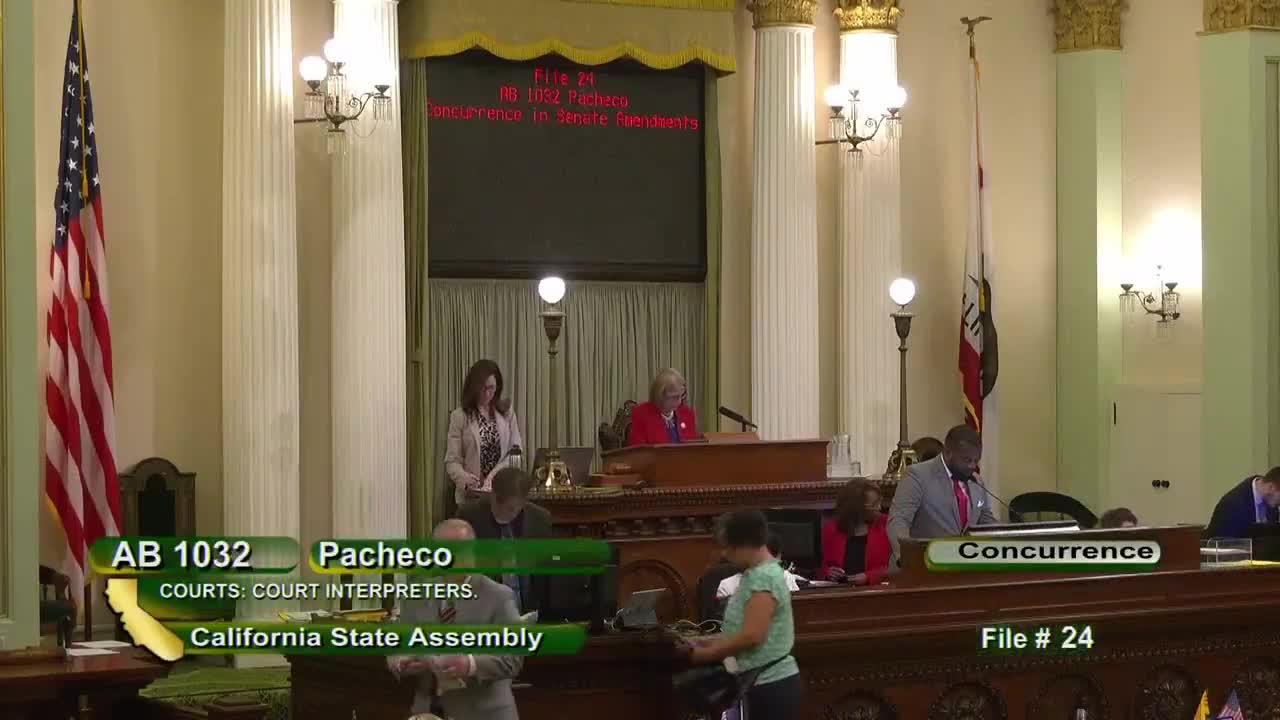

Bill Co-Author(s):