AB 569: California State University: Cybersecurity Regional Alliances and Multistakeholder Partnerships Pilot Program.
- Session Year: 2023-2024
- House: Assembly
- Latest Version Date: 2023-07-27
Current Status:
Passed
(2023-07-27: Chaptered by Secretary of State - Chapter 117, Statutes of 2023.)
Introduced
In Committee
First Chamber
In Committee
Second Chamber
Enacted
Existing law establishes the Cybersecurity Regional Alliances and Multistakeholder Partnerships Pilot Program to address the cybersecurity workforce gap. Existing law requires the office of the Chancellor of the California State University to select any number of California State University campuses, with preference given to campuses that have or are developing regional pipeline programs in cybersecurity with the California Community Colleges, to participate in the pilot program through an application and selection process. Existing law requires each selected campus to create a pilot program with goals and metrics, measure the impact and results of its pilot program, and annually share the impact and results with the chancellors office. Existing law requires the chancellors office to annually report the impact and results from each selected campuss pilot program to the Legislature.
This bill would require the chancellors office, on or before July 1, 2028, to submit a report to the Legislature on the pilot program, as provided.
Existing law establishes the Department of Veterans Affairs, which is responsible for administering various programs and services for the benefit of veterans. Existing law also establishes, in state government, an educational institution known as the California Veterans Educational Institute, under the management and control of the department, for the purpose of providing opportunities for veterans to continue their education.Existing law establishes the Cybersecurity Regional Alliances and Multistakeholder Partnerships Pilot Program to address the cybersecurity workforce gap, as specified. Existing law requires the office of the Chancellor of the California State University to select any number of California State University campuses, with preference given to campuses that have or are developing regional pipeline programs in cybersecurity with the California Community Colleges, to participate in the pilot program through an application process, which the bill would require the chancellors office to develop on or before March 1, 2023.This bill would require the Department of Veterans Affairs, the Department of Technology, the California Community Colleges, and the California State University to develop a cybersecurity apprenticeship program for veterans at California community colleges and the California State University to receive training in and be able to enter the cybersecurity field. The bill would require those entities to make determinations by January 1, 2025, related to program eligibility criteria, length, and curriculum, program certification, whether participants shall receive salaries, stipends, or benefits, and program funding. The bill would require the developed program to be implemented on or before January 1, 2027.Existing law establishes the Department of Veterans Affairs, which is responsible for administering various programs and services for the benefit of veterans. Existing law also establishes, in state government, an educational institution known as the California Veterans Educational Institute, under the management and control of the department, for the purpose of providing opportunities for veterans to continue their education.
Existing law establishes the Cybersecurity Regional Alliances and Multistakeholder Partnerships Pilot Program to address the cybersecurity workforce gap, as specified. Existing law requires the office of the Chancellor of the California State University to select any number of California State University campuses, with preference given to campuses that have or are developing regional pipeline programs in cybersecurity with the California Community Colleges, to participate in the pilot program through an application process, which the bill would require the chancellors office to develop on or before March 1, 2023.
This bill would require the Department of Veterans Affairs, the Department of Technology, the California Community Colleges, and the California State University to develop a cybersecurity apprenticeship program for veterans at California community colleges and the California State University to receive training in and be able to enter the cybersecurity field. The bill would require those entities to make determinations by January 1, 2025, related to program eligibility criteria, length, and curriculum, program certification, whether participants shall receive salaries, stipends, or benefits, and program funding. The bill would require the developed program to be implemented on or before January 1, 2027.
(a)The Cybersecurity Regional Alliances and Multistakeholder Partnerships Pilot Program is hereby established in order to address the cybersecurity workforce gap by doing all of the following:
(1)Stimulating cybersecurity education and workforce development by bringing together stakeholders in the cybersecurity ecosystem.
(2)Aligning the cybersecurity workforce needs of employers with the education and training provided by institutions of higher education.
(3)Increasing the pipeline of students pursuing cybersecurity careers.
(4)Developing the cybersecurity workforce to meet industry needs within local or regional economies.
(b)On or before March 1, 2023, the office of the Chancellor of the California State University shall develop an application process, selection process, and criteria for California State University campuses seeking to participate in the pilot program. Preference shall be given to California State University campuses that have or are developing regional pipeline programs in cybersecurity with the California Community Colleges.
(c)The office of the Chancellor of the California State University shall select any number of campuses to participate in the pilot program.
(d)Each selected California State University campus shall do all of the following:
(1)Create a pilot program with goals and metrics.
(2)Develop strategies and tactics for building successful regional alliances and multistakeholder partnerships.
(3)Measure the impact and results of its pilot program and annually share the impact and results with the office of the Chancellor of the California State University.
(e)The office of the Chancellor of the California State University shall annually report the impact and results from each selected campuss pilot program to the Legislature, pursuant to Section 9795 of the Government Code.
(f)(1)On or before July 1, 2028, the office of the Chancellor of the California State University shall submit a comprehensive report on the pilot program to the Legislature, pursuant to Section 9795 of the Government Code. The report shall include all of the following:
(A)Recommendations on how to improve the pilot program.
(B)Data on enrollment in the pilot program.
(C)Data on how many different groups of people have been served by the pilot program.
(D)Data on the number of veterans that have participated in the pilot program.
(E)Recommendations on how to recruit more veterans to participate in the pilot program.
(2)The requirement for submitting a report imposed under paragraph (1) is inoperative on July 1, 2032, pursuant to Section 10231.5 of the Government Code.
(a)The Cybersecurity Regional Alliances and Multistakeholder Partnerships Pilot Program is hereby established in order to address the cybersecurity workforce gap by doing all of the following:
(1)Stimulating cybersecurity education and workforce development by bringing together stakeholders in the cybersecurity ecosystem.
(2)Aligning the cybersecurity workforce needs of employers with the education and training provided by institutions of higher education.
(3)Increasing the pipeline of students pursuing cybersecurity careers.
(4)Developing the cybersecurity workforce to meet industry needs within local or regional economies.
(b)On or before March 1, 2023, the office of the Chancellor of the California State University shall develop an application process, selection process, and criteria for California State University campuses seeking to participate in the pilot program. Preference shall be given to California State University campuses that have or are developing regional pipeline programs in cybersecurity with the California Community Colleges.
(c)The office of the Chancellor of the California State University shall select any number of campuses to participate in the pilot program.
(d)Each selected California State University campus shall do all of the following:
(1)Create a pilot program with goals and metrics.
(2)Develop strategies and tactics for building successful regional alliances and multistakeholder partnerships.
(3)Measure the impact and results of its pilot program and annually share the impact and results with the office of the Chancellor of the California State University.
(e)The office of the Chancellor of the California State University shall annually report the impact and results from each selected campuss pilot program to the Legislature. Legislature, pursuant to Section 9795 of the Government Code.
(f)(1)On or before July 1, 2028, the office of the Chancellor of the California State University shall submit a comprehensive report on the pilot program to the Legislature, pursuant to Section 9795 of the Government Code. The report shall include all of the following:
(A)Recommendations on how to improve the pilot program.
(B)Data on enrollment in the pilot program.
(C)Data on how many different groups of people have been served by the pilot program.
(D)Data on the number of veterans that have participated in the pilot program.
(E)Recommendations on how to recruit more veterans to participate in the pilot program.
(2)The requirement for submitting a report imposed under paragraph (1) is inoperative on July 1, 2032, pursuant to Section 10231.5 of the Government Code.
SECTION 1.Article 8.5 (commencing with Section 89275) is added to Chapter 2 of Part 55 of Division 8 of Title 3 of the Education Code, to read:8.5.Veterans Cybersecurity Apprenticeship Program89275.(a)The Department of Veterans Affairs, the Department of Technology, the California Community Colleges, and the California State University shall develop a cybersecurity apprenticeship program for veterans at California community colleges and the California State University to receive training in and be able to enter the cybersecurity field. This program development shall include determinations related to all of the following:(1)Program eligibility criteria, length, and curriculum.(2)A program certification process.(3)Salary, stipend, or benefits, if any, for program participants.(4)The funding necessary to establish and maintain the program.(b)The cybersecurity program described in subdivision (a) shall be developed on or before January 1, 2025, and fully implemented on or before January 1, 2027.(a)The Department of Veterans Affairs, the Department of Technology, the California Community Colleges, and the California State University shall develop a cybersecurity apprenticeship program for veterans at California community colleges and the California State University to receive training in and be able to enter the cybersecurity field. This program development shall include determinations related to all of the following:
(1)Program eligibility criteria, length, and curriculum.
(2)A program certification process.
(3)Salary, stipend, or benefits, if any, for program participants.
(4)The funding necessary to establish and maintain the program.
(b)The cybersecurity program described in subdivision (a) shall be developed on or before January 1, 2025, and fully implemented on or before January 1, 2027.
|
Date
|
Status
|
|---|---|
| Jul 27, 2023 | Chaptered by Secretary of State - Chapter 117, Statutes of 2023. |
| Jul 27, 2023 | Approved by the Governor. |
| Jul 25, 2023 | Enrolled and presented to the Governor at 4 p.m. |
| Jul 13, 2023 | In Assembly. Ordered to Engrossing and Enrolling. |
| Jul 13, 2023 | Read third time. Passed. Ordered to the Assembly. (Ayes 37. Noes 0. Page 2039.). |
| Jul 11, 2023 | Read second time. Ordered to Consent Calendar. |
| Jul 10, 2023 | From committee: Be ordered to second reading file pursuant to Senate Rule 28.8 and ordered to Consent Calendar. |
| Jun 28, 2023 | From committee: Do pass and re-refer to Com. on APPR with recommendation: To Consent Calendar. (Ayes 7. Noes 0.) (June 28). Re-referred to Com. on APPR. |
| Jun 14, 2023 | Referred to Com. on ED. |
| Jun 1, 2023 | In Senate. Read first time. To Com. on RLS. for assignment. |
| May 31, 2023 | Read third time. Passed. Ordered to the Senate. (Ayes 80. Noes 0. Page 2058.) |
| May 18, 2023 | Read second time. Ordered to third reading. |
| May 18, 2023 | From committee: Do pass. (Ayes 15. Noes 0.) (May 18). |
| May 10, 2023 | In committee: Set, first hearing. Referred to APPR. suspense file. |
| Apr 26, 2023 | From committee: Do pass and re-refer to Com. on APPR. with recommendation: To Consent Calendar. (Ayes 12. Noes 0.) (April 25). Re-referred to Com. on APPR. |
| Mar 29, 2023 | From committee: Do pass and re-refer to Com. on HIGHER ED. (Ayes 11. Noes 0.) (March 28). Re-referred to Com. on HIGHER ED. |
| Mar 20, 2023 | Re-referred to Com. on M. & V.A. |
| Mar 16, 2023 | From committee chair, with author's amendments: Amend, and re-refer to Com. on M. & V.A. Read second time and amended. |
| Feb 17, 2023 | Referred to Coms. on M. & V.A. and HIGHER ED. |
| Feb 9, 2023 | From printer. May be heard in committee March 11. |
| Feb 8, 2023 | Read first time. To print. |
|
Date
|
Description
|
Location
|
Votes
|
|
|---|---|---|---|---|
| Jul 13, 2023 | Consent Calendar AB569 Garcia | Senate Floor |
Passed |
|
| Jun 28, 2023 | Do pass, but first be re-referred to the Committee on [Appropriations] with the recommendation: To Consent Calendar | Senate Standing Committee on Education |
Passed |
|
| May 31, 2023 | AB 569 Garcia Assembly Third Reading | Assembly Floor |
Passed |
|
| May 18, 2023 | Do pass. | Assembly Standing Committee on Appropriations |
Passed |
|
| Apr 25, 2023 | Do pass and be re-referred to the Committee on [Appropriations] with recommendation: To Consent Calendar | Assembly Standing Committee on Higher Education |
Passed |
|
| Mar 28, 2023 | Do pass and be re-referred to the Committee on [Higher Education] | Assembly Standing Committee on Military and Veterans Affairs |
Passed |
This list shows positions taken on this bill by organizations on the date displayed, which is linked to the original source.
Positions by individuals are not included.
|
Organization
|
Position
|
Date
|
|---|---|---|
| California Chamber Of Commerce | ** Support | |
| Reeb Government Relations | * Indeterminate | Mar 28, 2023 |
SENATE RULES COMMITTEE Office of Senate Floor Analyses (916) 651-1520 Fax: (916) 327-4478 | AB 569 |
THIRD READING
Bill No: AB 569
Author: Garcia (D)
Amended: 3/16/23 in Assembly
Vote: 21
SENATE EDUCATION COMMITTEE: 7-0, 6/28/23
AYES: Newman, Ochoa Bogh, Cortese, Glazer, McGuire, Smallwood-Cuevas, Wilk
SENATE APPROPRIATIONS COMMITTEE: Senate Rule 28.8
ASSEMBLY FLOOR: 80-0, 5/31/23 - See last page for vote
SUBJECT: California State University: Cybersecurity Regional Alliances and Multistakeholder Partnerships Pilot Program
SOURCE: Author
DIGEST:
This bill requires the California State University (CSU) Chancellor’s Office, on or before July 1, 2028, to submit a report to the Legislature on the Cybersecurity Regional Alliances and Multistakeholder Partnerships pilot program, as provided.
ANALYSIS:
Existing law:
- Establishes the Cybersecurity Regional Alliances and Multistakeholder Partnerships Pilot Program in order to address the cybersecurity workforce gap by doing all of the following:
- Stimulating cybersecurity education and workforce development by bringing together stakeholders in the cybersecurity ecosystem.
- Aligning the cybersecurity workforce needs of employers with the education and training provided by institutions of higher education.
- Increasing the pipeline of students pursuing cybersecurity careers.
- Developing the cybersecurity workforce to meet industry needs within local or regional economies. (Education Code (EC) § 89270)
- Requires that on or before March 1, 2023, the CSU Chancellor’s Office develop an application process, selection process, and criteria for CSU campuses seeking to participate in the pilot program, with preference given to CSU campuses that have or are developing regional pipeline programs in cybersecurity with the California Community Colleges (CCC). (EC § 89270)
- Requires the CSU Chancellor’s Office to select any number of campuses to participate in the pilot program. (EC § 89270)
- Requires that each selected CSU campus do all of the following:
- Create a pilot program with goals and metrics.
- Develop strategies and tactics for building successful regional alliances and multistakeholder partnerships.
- Measure the impact and results of its pilot program and annually share the impact and results with the CSU Chancellor’s Office. (EC § 89270)
- Requires the CSU Chancellor’s Office to annually report the impact and results from each selected campus’s pilot program to the Legislature. (EC § 89270)
This bill requires, on or before July 1, 2028, the CSU Chancellor’s Office to submit a comprehensive report on the Cybersecurity Regional Alliances and Multistakeholder Partnerships Pilot Program to the Legislature and requires that the report include all of the following information:
- Recommendations on how to improve the pilot program.
- Data on enrollment in the pilot program.
- Data on how many different groups of people have been served by the pilot program.
- Data on the number of veterans that have participated in the pilot program.
- Recommendations on how to recruit more veterans to participate in the pilot program.
Comments
- Need for the bill. According to the author, “cybersecurity and privacy issues are quickly moving to the forefront of homeland security, state priorities, and state-federal policies. State legislatures have taken major action to bolster the cybersecurity of their infrastructure amid new and increasing threats. Some measures have sought to increase cybersecurity investments from the public and private sector, or create or expand state agency authorities to better deal with cyber threats. These investments should also include developing a well-trained workforce to meet the demand for cybersecurity experts. Veterans and transitioning military personnel who served and protected the nation are very well positioned to transition into these open cybersecurity jobs.”
- Adds reporting requirements to the existing program. The 2022 Budget Act provided $4 million in one-time General Fund to create the Cybersecurity Regional Alliances and Multistakeholder Partnerships Pilot Program. The CSU is to award grants to campuses that take steps through educational programs and partnerships with employers to develop a cybersecurity workforce. Committee staff understands that CSU is in the process of implementing the program and identifying a campus lead. As noted in the background of this analysis, current law requires the CSU Chancellor’s Office to annually report the impact and results from each selected campus’s pilot program to the Legislature. This bill requires the chancellor’s office to report different information, including veteran-related information and to provide the Legislature with recommendations about how to improve the program.
FISCAL EFFECT: Appropriation: No Fiscal Com.: Yes Local: No
SUPPORT: (Verified 7/10/23)
California Chamber of Commerce
OPPOSITION: (Verified 7/10/23)
None received
ASSEMBLY FLOOR: 80-0, 5/31/23
AYES: Addis, Aguiar-Curry, Alanis, Alvarez, Arambula, Bains, Bauer-Kahan, Bennett, Berman, Boerner, Bonta, Bryan, Calderon, Juan Carrillo, Wendy Carrillo, Cervantes, Chen, Connolly, Megan Dahle, Davies, Dixon, Essayli, Flora, Mike Fong, Vince Fong, Friedman, Gabriel, Gallagher, Garcia, Gipson, Grayson, Haney, Hart, Holden, Hoover, Irwin, Jackson, Jones-Sawyer, Kalra, Lackey, Lee, Low, Lowenthal, Maienschein, Mathis, McCarty, McKinnor, Muratsuchi, Stephanie Nguyen, Ortega, Pacheco, Papan, Jim Patterson, Joe Patterson, Pellerin, Petrie-Norris, Quirk-Silva, Ramos, Reyes, Luz Rivas, Robert Rivas, Rodriguez, Blanca Rubio, Sanchez, Santiago, Schiavo, Soria, Ta, Ting, Valencia, Villapudua, Waldron, Wallis, Ward, Weber, Wicks, Wilson, Wood, Zbur, Rendon
Prepared by: Olgalilia Ramirez / ED. / (916) 651-4105
7/12/23 14:16:48
**** END ****
SENATE COMMITTEE ON EDUCATION
Senator Josh Newman, Chair
2023 - 2024 Regular
Bill No: AB 569 Hearing Date: June 28, 2023
Author: | |||
Version: | March 16, 2023 | ||
Urgency: | No | Fiscal: | Yes |
Consultant: | Olgalilia Ramirez | ||
Subject: California State University: Cybersecurity Regional Alliances and Multistakeholder Partnerships Pilot Program.
SUMMARY
This bill requires the California State University (CSU) Chancellor’s office, on or before July 1, 2028, to submit a report to the Legislature on the Cybersecurity Regional Alliances and Multistakeholder Partnerships pilot program, as provided.
BACKGROUND
1) Establishes the Cybersecurity Regional Alliances and Multistakeholder Partnerships Pilot Program in order to address the cybersecurity workforce gap by doing all of the following:
a) Stimulating cybersecurity education and workforce development by bringing together stakeholders in the cybersecurity ecosystem.
b) Aligning the cybersecurity workforce needs of employers with the education and training provided by institutions of higher education.
c) Increasing the pipeline of students pursuing cybersecurity careers.
d) Developing the cybersecurity workforce to meet industry needs within local or regional economies. (Education Code (EC) § 89270)
2) Requires that on or before March 1, 2023, the CSU Chancellor’s develop an application process, selection process, and criteria for CSU campuses seeking to participate in the pilot program, with preference given to CSU campuses that have or are developing regional pipeline programs in cybersecurity with the California Community Colleges (CCC). (EC § 89270)
3) Requires the CSU Chancellor’s office to select any number of campuses to participate in the pilot program. (EC § 89270)
4) Requires that each selected CSU campus do all of the following:
a) Create a pilot program with goals and metrics.
b) Develop strategies and tactics for building successful regional alliances and multistakeholder partnerships.
c) Measure the impact and results of its pilot program and annually share the impact and results with the CSU Chancellor’s office. (EC § 89270)
5) Requires the office of the CSU Chancellor’s office to annually report the impact and results from each selected campus’s pilot program to the Legislature. (EC § 89270)
ANALYSIS
This bill:
- Requires, on or before July 1, 2028, the CSU Chancellor’s office to submit a comprehensive report on the Cybersecurity Regional Alliances and Multistakeholder Partnerships Pilot Program to the Legislature and requires that the report include all of the following information:
- Recommendations on how to improve the pilot program.
- Data on enrollment in the pilot program.
- Data on how many different groups of people have been served by the
pilot program.
- Data on the number of veterans that have participated in the pilot
program.
- Recommendations on how to recruit more veterans to participate in the
pilot program.
STAFF COMMENTS
- Need for the bill. According to the author, “cybersecurity and privacy issues are quickly moving to the forefront of homeland security, state priorities, and state-federal policies. State legislatures have taken major action to bolster the cybersecurity of their infrastructure amid new and increasing threats. Some measures have sought to increase cybersecurity investments from the public and private sector, or create or expand state agency authorities to better deal with cyber threats. These investments should also include developing a well-trained workforce to meet the demand for cybersecurity experts. Veterans and transitioning military personnel who served and protected the nation are very well positioned to transition into these open cybersecurity jobs.”
- Adds reporting requirements to the existing program. The 2022 Budget Act provided $4 million in one-time General Fund to create the Cybersecurity Regional Alliances and Multistakeholder Partnerships Pilot Program. The CSU is to award grants to campuses that take steps through educational programs and partnerships with employers to develop a cybersecurity workforce. Committee staff understands that CSU is in the process of implementing the program and identifying a campus lead. As noted in the background of this analysis, current law requires the CSU Chancellor’s Office to annually report the impact and results from each selected campus’s pilot program to the Legislature. This bill requires the chancellor’s office to report different information, including veteran-related information and to provide the Legislature with recommendations about how to improve the program.
SUPPORT
California Chamber of Commerce
OPPOSITION
None received
-- END --
ASSEMBLY THIRD READING
ATR Bill Id:AB 569
Author:(Garcia)
As Amended Ver:March 16, 2023
Majority vote
SUMMARY
Requires, by July 1, 2028, the California State University (CSU) Chancellor's Office to submit a report on the Cybersecurity Regional Alliances and Multistakeholder Partnerships Pilot Program. The report is to include recommendations on how to improve the pilot program and other information.
Major Provisions
- Requires that on or before July 1, 2028, the Office of the Chancellor of the CSU submit a comprehensive report to the legislature on the Cybersecurity Regional Alliances and Multistakeholder Partnerships Pilot Program.
- Specifies that the report must include:
- Recommendations on how to improve the pilot program;
- Data on enrollment in the pilot program;
- Data on how many different groups of people have been served by the pilot program;
- Data on the number of veterans that have participated in the pilot program; and,
- Recommendations on how to recruit more veterans to participate in the pilot program.
COMMENTS
The Cybersecurity Regional Alliances and Multistakeholder Partnerships Pilot Program was established in last year's budget in order to fill a purported shortage of people sufficiently qualified to work in cybersecurity jobs. The program began with $4 million in one-time funding to address this shortage through the creation of cybersecurity education and workforce pilot programs on CSU campuses, with preference given to CSU campuses that are developing regional pathways programs from the CCC to CSU.
According to the California Cybersecurity Workforce Development and Education Strategy published in September 2020, "global demand for cybersecurity and information security professionals and personnel has been mounting for decades and reaching a critical point. It is imperative in this modern and information-rich era to have a strong cadre of qualified and prepared cybersecurity specialists and specialized workforce (from technicians through managers) flowing into the labor pool. Based on the reliance of technology in today's digital environment, we need coordinated and linked education, training, and workforce development programs to increase statewide cybersecurity capabilities and enhance cyber-resiliency."
In September 2016, the National Initiative for Cybersecurity Education, led by the National Institute of Standards and Technology in the United States Department of Commerce, awarded funding for five pilot programs for Regional Alliances and Multistakeholder Partnerships to Stimulate Cybersecurity Education and Workforce Development. Through this federal funding opportunity, it was found that effective multi-stakeholder workforce partnerships focused on organizing multiple employers with skill shortages in specific occupations to focus on developing the skilled workforce to meet industry needs within the local or regional economy. It was also found that bringing together multiple stakeholders in the cybersecurity ecosystem – industry, government, and educational institutions – can help communities address many of the cybersecurity workforce challenges that they face today.
According to the Author
"Cybersecurity and privacy issues are quickly moving to the forefront of homeland security, state priorities, and state-federal policies. State legislatures have taken major action to bolster the cybersecurity of their infrastructure amid new and increasing threats. Some measures have sought to increase cybersecurity investments from the public and private sector, or create or expand state agency authorities to better deal with cyber threats. These investments should also include developing a well-trained workforce to meet the demand for cybersecurity experts. Veterans and transitioning military personnel who served and protected the nation are very well positioned to transition into these open cybersecurity jobs."
Arguments in Support
The California Chamber of Commerce states, "Cybersecurity is a growing field – and a necessary one for the state to improve its pipeline. But with all new state programs, legislative oversight will improve outcomes."
Arguments in Opposition
None on file.
FISCAL COMMENTS
According to the Assembly Appropriations Committee, minor one-time General Fund costs to the CSU Chancellor's Office to prepare the report.
VOTES
ASM MILITARY AND VETERANS AFFAIRS: 11-0-0
YES: Soria, Davies, Addis, Alvarez, Boerner Horvath, Juan Carrillo, Mathis, Muratsuchi, Petrie-Norris, Ta, Valencia
ASM HIGHER EDUCATION: 12-0-0
YES: Mike Fong, Ta, Addis, Arambula, Gabriel, Irwin, Low, Ortega, Sanchez, Santiago, Wallis, Weber
ASM APPROPRIATIONS: 15-0-1
YES: Holden, Megan Dahle, Bryan, Calderon, Wendy Carrillo, Dixon, Mike Fong, Hart, Lowenthal, Mathis, Papan, Pellerin, Sanchez, Weber, Ortega
ABS, ABST OR NV: Robert Rivas
UPDATED
VERSION: March 16, 2023
CONSULTANT: Christian Burkin / M. & V.A. / (916) 319-3550 FN: 0000621
Date of Hearing: May 10, 2023
ASSEMBLY COMMITTEE ON APPROPRIATIONS
Chris Holden, Chair
ABPCA Bill Id:AB 569
Author:(Garcia) – As Amended Ver:March 16, 2023
Policy Committee: | Military and Veterans Affairs | Vote: | 11 - 0 |
Higher Education | 12 - 0 | ||
|
|
Urgency: No State Mandated Local Program: No Reimbursable: No
SUMMARY:
This bill requires, by July 1, 2028, the California State University (CSU) Chancellor’s Office to submit a report on the Cybersecurity Regional Alliances and Multistakeholder Partnerships Pilot Program. The report is to include recommendations on how to improve the pilot program and other information.
FISCAL EFFECT:
Minor one-time General Fund costs to the CSU Chancellor’s Office to prepare the report.
It is the policy of this committee to place any bill the committee concludes has the primary purpose of creating a task force, a commission, a work group, a pilot project or a pilot project extension, a report or a study, on the committee’s suspense file, regardless of cost.
COMMENTS:
Background. The 2022 Budget Act provided $4 million in one-time General Fund to create the Cybersecurity Regional Alliances and Multistakeholder Partnerships Pilot Program. The CSU is to award grants to campuses that take steps through educational programs and partnerships with employers to develop a cybersecurity workforce. Current law requires the CSU Chancellor’s Office to annually report the impact and results from each selected campus’s pilot program to the Legislature. This bill requires the chancellor’s office to report different information and to provide the Legislature with recommendations about how to improve the program.
Analysis Prepared by: Natasha Collins / APPR. / (916) 319-2081
Date of Hearing: April 25, 2023
ASSEMBLY COMMITTEE ON HIGHER EDUCATION
Mike Fong, Chair
ABPCA Bill Id:AB 569 (
Author:Garcia) – As Amended Ver:March 16, 2023
SUBJECT: California State University: Cybersecurity Regional Alliances and Multistakeholder Partnerships Pilot Program
SUMMARY: This bill requires that the Chancellor of the California State University (CSU) report to the Legislature on the Cybersecurity Regional Alliances and Multistakeholder Partnerships Pilot Program with specified program data and recommendations on how to improve the program. Specifically, this bill:
- Requires that on or before July 1, 2028, the Office of the Chancellor of the CSU submit a comprehensive report to the legislature on the Cybersecurity Regional Alliances and Multistakeholder Partnerships Pilot Program.
- Specifies that the report must include:
- Recommendations on how to improve the pilot program;
- Data on enrollment in the pilot program;
- Data on how many different groups of people have been served by the pilot program;
- Data on the number of veterans that have participated in the pilot program; and,
- Recommendations on how to recruit more veterans to participate in the pilot program.
- States that the reporting requirement imposed by the bill is rendered inoperative on July 1,
2032, pursuant to Section 10231.5 of the Government Code.
EXISTING LAW:
- Establishes the Cybersecurity Regional Alliances and Multistakeholder Partnerships Pilot Program in order to address the cybersecurity workforce gap by doing all of the following:
- Stimulating cybersecurity education and workforce development by bringing together stakeholders in the cybersecurity ecosystem;
- Aligning the cybersecurity workforce needs of employers with the education and training provided by institutions of higher education;
- Increasing the pipeline of students pursuing cybersecurity careers; and,
- Developing the cybersecurity workforce to meet industry needs within local or regional economies. (Education Code (EDC) Section 89270)
- Requires that on or before March 1, 2023, the office of the Chancellor of the California State University develop an application process, selection process, and criteria for California State University campuses seeking to participate in the pilot program, with preference given to California State University campuses that have or are developing regional pipeline programs in cybersecurity with the California Community Colleges. (EDC Section 89270)
- Requires the office of the Chancellor of the California State University to select any number of campuses to participate in the pilot program. (EDC Section 89270)
- Requires that each selected California State University campus do all of the following:
- Create a pilot program with goals and metrics;
- Develop strategies and tactics for building successful regional alliances and multistakeholder partnerships; and,
- Measure the impact and results of its pilot program and annually share the impact and results with the office of the Chancellor of the California State University. (EDC Section 89270)
- Requires the office of the Chancellor of the California State University to annually report the impact and results from each selected campus’s pilot program to the Legislature. (EDC Section 89270)
FISCAL EFFECT: Unknown.
COMMENTS: Purpose. According to the author, “cybersecurity and privacy issues are quickly moving to the forefront of homeland security, state priorities, and state-federal policies. State legislatures have taken major action to bolster the cybersecurity of their infrastructure amid new and increasing threats. Some measures have sought to increase cybersecurity investments from the public and private sector, or create or expand state agency authorities to better deal with cyber threats. These investments should also include developing a well-trained workforce to meet the demand for cybersecurity experts. Veterans and transitioning military personnel who served and protected the nation are very well positioned to transition into these open cybersecurity jobs.”
Background. According to the California Cybersecurity Workforce Development and Education Strategy published in September 2020, “global demand for cybersecurity and information security professionals and personnel has been mounting for decades and reaching a critical point. It is imperative in this modern and information-rich era to have a strong cadre of qualified and prepared cybersecurity specialists and specialized workforce (from technicians through managers) flowing into the labor pool. Based on the reliance of technology in today’s digital environment, we need coordinated and linked education, training, and workforce development programs to increase statewide cybersecurity capabilities and enhance cyber-resiliency.”
In September 2016, the National Initiative for Cybersecurity Education, led by the National Institute of Standards and Technology in the U.S. Department of Commerce, awarded funding for five pilot programs for Regional Alliances and Multistakeholder Partnerships to Stimulate Cybersecurity Education and Workforce Development. Through this federal funding opportunity, it was found that effective multi-stakeholder workforce partnerships focused on organizing multiple employers with skill shortages in specific occupations to focus on developing the skilled workforce to meet industry needs within the local or regional economy. It was also found that bringing together multiple stakeholders in the cybersecurity ecosystem – industry, government, and educational institutions – can help communities address many of the cybersecurity workforce challenges that they face today.
Cybersecurity collaboration. The September 2020 California Cybersecurity Workforce Development and Education Strategy report describes the design, development, and implementation phases of the California Cybersecurity Career Education Pipeline and Pathway Project (CCCEPPP) to transform statewide cyber education and workforce development. The CCCEPPP is an initiative of the California Cybersecurity Task Force (CCTF) Workforce Development and Education Subcommittee (WDE).
The strategy report noted that, “the California Cybersecurity Workforce Development and Education Strategy discusses the alignment and coordination of cybersecurity K-12 and Higher Education model curriculum, academic standards, extra-curricular activities, cyber competitions, professional/career development, apprenticeships, and related areas to build a solid, linked cybersecurity pipeline/pathway to serve the State of California. To be successful, public and private sector key partners/major stakeholders must collaborate and work together earnestly to design education and workforce development programs that assure prospective employers program graduates can demonstrate the necessary knowledge, skills, abilities, and competencies to meet minimum job requirements upon pipeline/pathway completion and graduation.”
Committee comments. The pilot program implemented in the 2022-2023 State Budget, which granted $4 million one-time, has the potential to align local industry with students pursuing cybersecurity careers, and does including annual reporting requirements. Yet the pilot program does not include a comprehensive report capturing best practices. AB 569 (Garcia) looks to bridge the gap between annual reporting and a true comprehensive report that could better prepare CSU to scale up these programs in the future.
Prior legislation. AB 2695 (Berman, 2022) would have established the Cybersecurity Regional Alliances and Multistakeholder Partnerships pilot program described above. Held in Assembly Appropriations, the bill’s content was included in the budget trailer bill AB 183, which was signed by the Governor.
REGISTERED SUPPORT / OPPOSITION:
Support
California Chamber of Commerce
Opposition
None on file
Analysis Prepared by: Kevin J. Powers / HIGHER ED. / (916) 319-3960
Date of Hearing: March 28, 2023
ASSEMBLY COMMITTEE ON MILITARY AND VETERANS AFFAIRS
Esmeralda Soria, Chair
ABPCA Bill Id:AB 569 (
Author:Garcia) – As Amended Ver:March 16, 2023
SUBJECT: California State University: Cybersecurity Regional Alliances and Multistakeholder Partnerships Pilot Program
SUMMARY: This bill requires that the Chancellor of the California State University report to the legislature on the Cybersecurity Regional Alliances and Multistakeholder Partnerships Pilot Program with specified program data and recommendations on how to improve the program. Specifically, this bill:
- Requires that on or before July 1, 2028, the office of the Chancellor of the California State University submit a comprehensive report to the legislature on the Cybersecurity Regional Alliances and Multistakeholder Partnerships Pilot Program.
- Specifies that the report must include:
- Recommendations on how to improve the pilot program.
- Data on enrollment in the pilot program.
- Data on how many different groups of people have been served by the pilot program.
- Data on the number of veterans that have participated in the pilot program.
- Recommendations on how to recruit more veterans to participate in the pilot program.
- States that the reporting requirement imposed by the bill is rendered inoperative on July 1, 2032, pursuant to Section 10231.5 of the Government Code.
EXISTING LAW:
- Establishes the Cybersecurity Regional Alliances and Multistakeholder Partnerships Pilot Program is hereby established in order to address the cybersecurity workforce gap by doing all of the following:
- Stimulating cybersecurity education and workforce development by bringing together stakeholders in the cybersecurity ecosystem.
- Aligning the cybersecurity workforce needs of employers with the education and training provided by institutions of higher education.
- Increasing the pipeline of students pursuing cybersecurity careers.
- Developing the cybersecurity workforce to meet industry needs within local or regional economies. (Education Code §89270)
- Requires that on or before March 1, 2023, the office of the Chancellor of the California State University develop an application process, selection process, and criteria for California State University campuses seeking to participate in the pilot program, with preference given to California State University campuses that have or are developing regional pipeline programs in cybersecurity with the California Community Colleges. (Education Code §89270)
- Requires the office of the Chancellor of the California State University to select any number of campuses to participate in the pilot program. (Education Code §89270)
- Requires that each selected California State University campus do all of the following:
- Create a pilot program with goals and metrics.
- Develop strategies and tactics for building successful regional alliances and multistakeholder partnerships.
- Measure the impact and results of its pilot program and annually share the impact and results with the office of the Chancellor of the California State University. (Education Code §89270)
- Requires the office of the Chancellor of the California State University to annually report the impact and results from each selected campus’s pilot program to the Legislature. (Education Code §89270)
FISCAL EFFECT: This bill is keyed fiscal.
COMMENTS: There are a number of educational programs offered to eligible veterans in order to ease their transition to civilian life. The largest, popularly known as the “G.I. Bill,” was established in 1944 with the passage of the Servicemen’s Readjustment Act. The G.I. Bill has changed over the decades since its creation through a few reiterations – the Montgomery G.I. Bill, the Post-9/11 G.I. Bill, the Forever G.I. Bill, etc. -- but it remains an educational support program geared towards college and post-graduate education, though not exclusively.
With the passage in 2017 of the Forever G.I. Bill, Congress required the U.S. Dept. of Veterans Affairs to develop a pilot program to provide tuition and other financial support to eligible veterans who enroll in high-technology education programs through eligible training providers. USDVA’s response to this mandate is the Veterans Employment Through Technology Education Courses pilot, or VET TEC program.
VET TEC
A five-year pilot program launched in 2019, VET TEC provides vocational education assistance to veterans and active duty members within 180 days of separation, who must otherwise meet the same eligibility criteria as required under the G.I. Bill, with a minimum of one day of unexpended GI Bill entitlement remaining to them. VET TEC generally covers tuition and fees by reimbursing training providers using a milestone-based payment system: 25 percent at enrollment, 25 percent at completion, and the remaining 50 percent when a participant finds meaningful employment within 180 days of program completion.
Cybersecurity Regional Alliances and Multistakeholder Partnerships Pilot Program
This program was established in last year’s budget in order to fill a purported shortage of people sufficiently qualified to work in cybersecurity jobs. The program began with $4 million in one-time funding to address this shortage through the creation of cybersecurity education and workforce pilot programs on CSU campuses, with preference given to CSU campuses that are developing regional pathways programs from the CCC to CSU.
According to the author:
“Cybersecurity and privacy issues are quickly moving to the forefront of homeland security, state priorities, and state-federal policies. State legislatures have taken major action to bolster the cybersecurity of their infrastructure amid new and increasing threats. Some measures have sought to increase cybersecurity investments from the public and private sector, or create or expand state agency authorities to better deal with cyber threats. These investments should also include developing a well-trained workforce to meet the demand for cybersecurity experts. Veterans and transitioning military personnel who served and protected the nation are very well positioned to transition into these open cybersecurity jobs.”
Equity Impact Analysis
In background materials, the author’s staff states that trends in cybercrime indicate the poor and other members of identified vulnerable and disadvantaged groups are also more likely to become the victims of computer/internet-based crime.
As this bill introduces a novel reporting requirement, it is unlikely to have a disparate impact in itself, and may even aid in the discovery and measurement of disparate impact.
Past legislation
AB 2695 (Berman, 2022) would have established the Cybersecurity Regional Alliances and Multistakeholder Partnerships pilot program described above. Held in Assembly Appropriations, the bill’s content was included in the budget trailer bill AB 183, which was signed by the governor.
REGISTERED SUPPORT / OPPOSITION:
Support
None on file.
Opposition
None on file.
Analysis Prepared by: Christian Burkin / M. & V.A. / (916) 319-3550
Discussed in Hearing
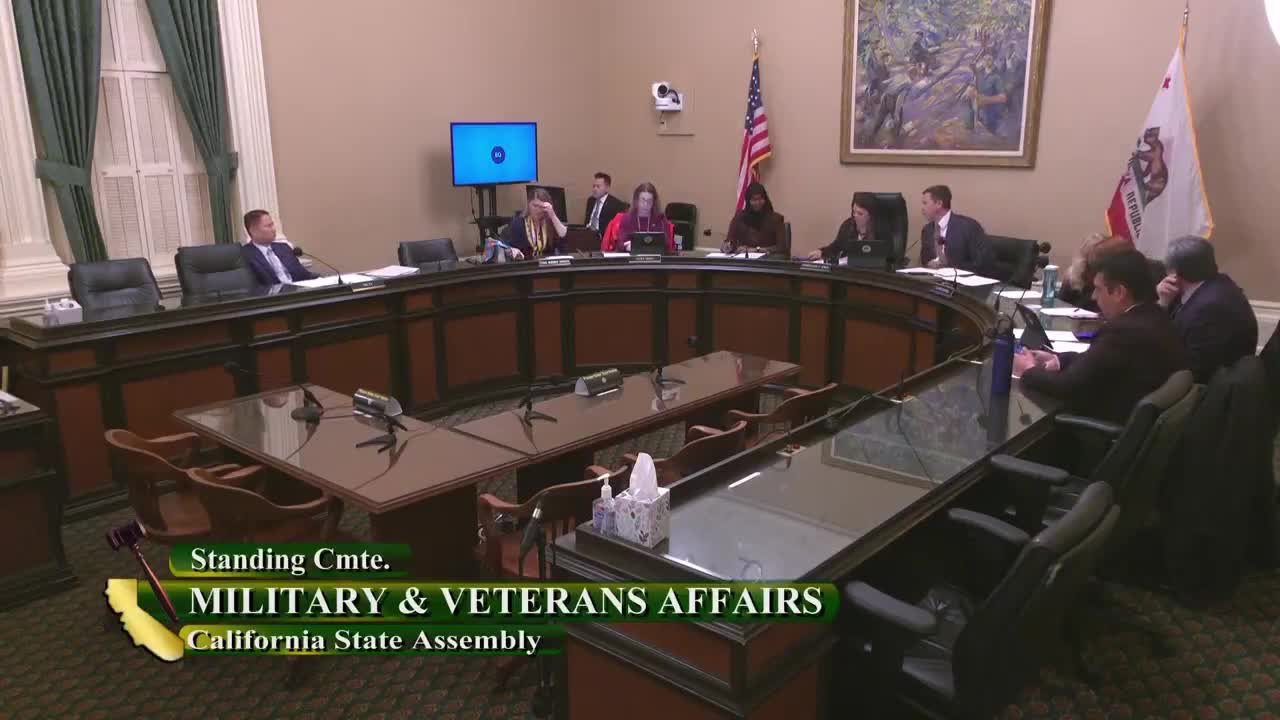 2MIN
Assembly Standing Committee on Military and Veterans Affairs
Bill Author

Bill Co-Author(s):