AB 570: Fire protection: Special District Fire Response Fund: county service areas.
- Session Year: 2023-2024
- House: Assembly
- Latest Version Date: 2023-10-07
Current Status:
Passed
(2023-10-07: Chaptered by Secretary of State - Chapter 334, Statutes of 2023.)
Introduced
In Committee
First Chamber
In Committee
Second Chamber
Enacted
The California Constitution establishes the Special District Fire Response Fund as a subaccount within the California Fire Response Fund within the State Treasury. The California Constitution requires moneys in the Special District Fire Response Fund to be appropriated by the Legislature for the purpose of funding fire suppression staffing in underfunded special districts that provide fire protection services, as provided.
Existing law creates within the office of the Governor the Office of Emergency Services. Existing law requires the Office of Emergency Services to administer the Special District Fire Response Fund and, in coordination with the board of directors of the FIRESCOPE Program, to develop a standard grant application form, establish an annual timeline to apply for grants, employ strategies to ensure that underfunded special districts that provide fire protection services are aware of the availability of the Special District Fire Response Fund, establish reporting requirements for grant recipients, and develop metrics for consideration of grant applications, as specified.
This bill would define, for purposes of receiving grants that are funded by the Special District Fire Response Fund, a special district that provides fire protection services to include a county service area, as described, formed exclusively for fire protection services.
The California Constitution establishes the Special District Fire Response Fund as a subaccount within the California Fire Response Fund within the State Treasury. The California Constitution requires moneys in the Special District Fire Response Fund to be appropriated by the Legislature for the purpose of funding fire suppression staffing in underfunded special districts that provide fire protection services, as provided.
Existing law creates within the office of the Governor the Office of Emergency Services. Existing law requires the Office of Emergency Services to administer the Special District Fire Response Fund and, in cooperation with the board of directors of the FIRESCOPE Program, to develop a standard grant application form, establish an annual timeline to apply for grants, employ strategies to ensure that underfunded special districts that provide fire protection services are aware of the availability of the Special District Fire Response Fund, establish reporting requirements for grant recipients, and develop metrics for consideration of grant applications, as specified.
This bill would define, for purposes of receiving grants under the FIRESCOPE Program that are funded by the Special District Fire Response Fund, a special district that provides fire protection services to include a county service area, as described, formed exclusively for fire protection services.
Existing law creates within the office of the Governor, the Office of Emergency Services. Existing law also tasks the Office of Emergency Services with establishing and administering the FIRESCOPE Program (FIrefighting RESources of California Organized for Potential Emergencies), to maintain and enhance the efficiency and effectiveness of managing multiagency firefighting resources in responding to an incident. Existing law requires the Office of Emergency Services to carry out its responsibilities with respect to the FIRESCOPE Program in cooperation with the Department of Forestry and Fire Protection and the Office of the State Fire Marshal, and with the advice of the Fire and Rescue Service Advisory Committee/FIRESCOPE Board of Directors.
The California Constitution establishes the Special District Fire Response Fund as a subaccount within the California Fire Response Fund within the State Treasury. The California Constitution requires moneys in the Special District Fire Response Fund to be appropriated by the Legislature for the purpose of funding fire suppression staffing in underfunded special districts that provide fire protection services, as provided.
Existing law requires the Office of Emergency Services to administer the Special District Fire Response Fund and, in cooperation with the board of directors of the FIRESCOPE Program, to develop a standard grant application form, establish an annual timeline to apply for grants, employ strategies to ensure that underfunded special districts that provide fire protection services are aware of the availability of the Special District Fire Response Fund, establish reporting requirements for grant recipients, and develop metrics for consideration of grant applications, as specified.
This bill would define, for purposes of receiving grants under the FIRESCOPE Program that are funded by the Special District Fire Response Fund, a special district that provides fire protection services to include a county service area, as described, formed exclusively for fire protection services.
(a)The Office of Emergency Services shall administer the Special District Fire Response Fund established pursuant to paragraph (2) of subdivision (f) of Section 2.2 of Article XIIIA of the California Constitution.
(b)The office shall, in coordination with the board of directors of the FIRESCOPE Program, established pursuant to Chapter 3 (commencing with Section 13070) of Part 1 of Division 12 of the Health and Safety Code, do all of the following:
(1)Develop a standard application form to be used by special districts that provide fire protection services to apply for grants from the Special District Fire Response Fund that includes, but is not limited to, all of the following:
(A)Description of a special districts eligibility to receive a grant pursuant to the criteria contained in paragraph (2) of subdivision (f) of Section 2.2 of Article XIIIA of the California Constitution.
(B)Specification of the number of additional fire suppression staff that would be supported by the grant.
(C)Identification of the benefits to firefighter health and safety and community response in the special district, if the grant is funded.
(D)Identification of opportunities to leverage other funding sources, if the grant is funded.
(2)Establish an annual timeline for special districts that provide fire protection services to apply for grants from the Special District Fire Response Fund.
(3)Employ strategies to ensure that underfunded special districts that provide fire protection services are aware of the availability of the Special District Fire Response Fund to expand and increase fire suppression staffing in qualified districts.
(4)Establish reporting requirements for special districts that are awarded grants from the Special District Fire Response Fund.
(5)Develop metrics for consideration of grant applications consistent with paragraphs (3) and (4) of Subdivision (f) of Section 2.2 of Article XIIIA of the California Constitution.
(c)Notwithstanding any law, including Section 25210.7, for purposes of receiving grants that are funded by the Special District Fire Response Fund, special district that provides fire protection services includes a county service area, as described in Chapter 2.5 (commencing with Section 25210) of Part 2 of Division 2 of Title 3, formed exclusively for fire protection services.
(a)The Office of Emergency Services shall administer the Special District Fire Response Fund established pursuant to paragraph (2) of subdivision (f) of Section 2.2 of Article XIIIA of the California Constitution.
(b)The office shall, in coordination with the board of directors of the FIRESCOPE Program, established pursuant to Chapter 3 (commencing with Section 13070) of Part 1 of Division 12 of the Health and Safety Code, do all of the following:
(1)Develop a standard application form to be used by special districts that provide fire protection services to apply for grants from the Special District Fire Response Fund that includes, but is not limited to, all of the following:
(A)Description of a special districts eligibility to receive a grant pursuant to the criteria contained in paragraph (2) of subdivision (f) of Section 2.2 of Article XIIIA of the California Constitution.
(B)Specification of the number of additional fire suppression staff that would be supported by the grant.
(C)Identification of the benefits to firefighter health and safety and community response in the special district, if the grant is funded.
(D)Identification of opportunities to leverage other funding sources, if the grant is funded.
(2)Establish an annual timeline for special districts that provide fire protection services to apply for grants from the Special District Fire Response Fund.
(3)Employ strategies to ensure that underfunded special districts that provide fire protection services are aware of the availability of the Special District Fire Response Fund to expand and increase fire suppression staffing in qualified districts.
(4)Establish reporting requirements for special districts that are awarded grants from the Special District Fire Response Fund.
(5)Develop metrics for consideration of grant applications consistent with paragraphs (3) and (4) of Subdivision (f) of Section 2.2 of Article XIIIA of the California Constitution.
(c)Notwithstanding any law, including Section 25210.7, for purposes of receiving grants under the FIRESCOPE Program that are funded by the Special District Fire Response Fund, special district that provides fire protection services includes a county service area, as described in Chapter 2.5 (commencing with Section 25210) of Part 2 of Division 2 of Title 3, formed exclusively for fire protection services.
|
Date
|
Status
|
|---|---|
| Oct 7, 2023 | Chaptered by Secretary of State - Chapter 334, Statutes of 2023. |
| Oct 7, 2023 | Approved by the Governor. |
| Sep 13, 2023 | Enrolled and presented to the Governor at 3 p.m. |
| Sep 7, 2023 | In Assembly. Ordered to Engrossing and Enrolling. |
| Sep 7, 2023 | Read third time. Passed. Ordered to the Assembly. (Ayes 40. Noes 0. Page 2483.). |
| Jun 27, 2023 | Read second time. Ordered to third reading. |
| Jun 26, 2023 | From committee: Be ordered to second reading pursuant to Senate Rule 28.8. |
| Jun 13, 2023 | From committee: Do pass and re-refer to Com. on APPR. (Ayes 14. Noes 0.) (June 13). Re-referred to Com. on APPR. |
| May 10, 2023 | Referred to Com. on G.O. |
| Apr 27, 2023 | In Senate. Read first time. To Com. on RLS. for assignment. |
| Apr 27, 2023 | Read third time. Passed. Ordered to the Senate. (Ayes 79. Noes 0. Page 1370.) |
| Apr 24, 2023 | Read second time. Ordered to Consent Calendar. |
| Apr 20, 2023 | Read second time and amended. Ordered returned to second reading. |
| Apr 19, 2023 | From committee: Amend, and do pass as amended. To Consent Calendar. (Ayes 14. Noes 0.) (April 19). |
| Mar 14, 2023 | From committee: Do pass and re-refer to Com. on APPR. with recommendation: To Consent Calendar. (Ayes 7. Noes 0.) (March 13). Re-referred to Com. on APPR. |
| Feb 17, 2023 | Referred to Com. on E.M. |
| Feb 9, 2023 | From printer. May be heard in committee March 11. |
| Feb 8, 2023 | Read first time. To print. |
|
Date
|
Description
|
Location
|
Votes
|
|
|---|---|---|---|---|
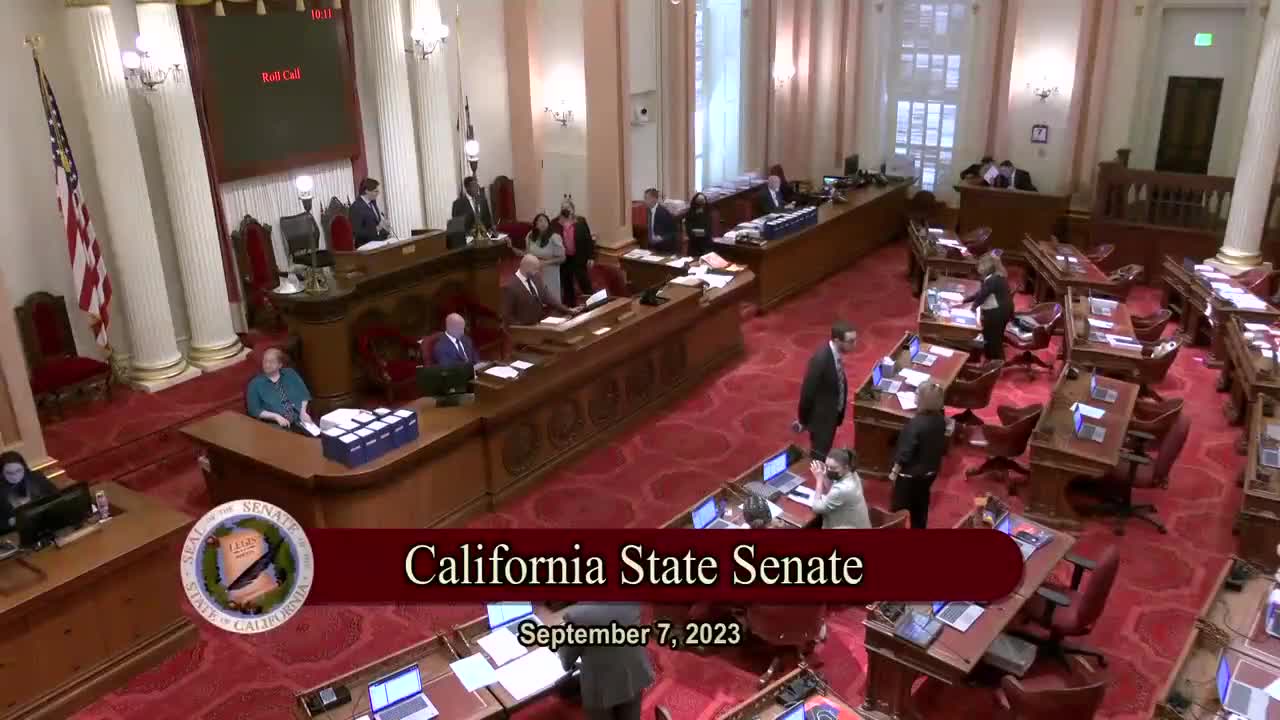
| Sep 7, 2023 | Assembly 3rd Reading AB570 Gallagher By Niello | Senate Floor |
Passed |
|
| Jun 13, 2023 | Do pass, but first be re-referred to the Committee on [Appropriations] | Senate Standing Committee on Governmental Organization |
Passed |
|
| Apr 27, 2023 | AB 570 Gallagher Consent Calendar Second Day Regular Session | Assembly Floor |
Passed |
|
| Apr 19, 2023 | Do pass as amended. To Consent Calendar. | Assembly Standing Committee on Appropriations |
Passed |
|
| Mar 13, 2023 | Do pass and be re-referred to the Committee on [Appropriations] with recommendation: To Consent Calendar | Assembly Standing Committee on Emergency Management |
Passed |
This list shows positions taken on this bill by organizations on the date displayed, which is linked to the original source.
Positions by individuals are not included.
|
Organization
|
Position
|
Date
|
|---|---|---|
| County of Sutter Board of Supervisors | ** Support | |
| Sutter County Board of Supervisors | ** Support | |
| Sutter County Fire | * Support | Jun 13, 2023 |
SENATE RULES COMMITTEE Office of Senate Floor Analyses (916) 651-1520 Fax: (916) 327-4478 | AB 570 |
THIRD READING
Bill No: AB 570
Author: Gallagher (R)
Amended: 4/20/23 in Assembly
Vote: 21
SENATE GOVERNMENTAL ORG. COMMITTEE: 14-0, 6/13/23
AYES: Dodd, Wilk, Alvarado-Gil, Archuleta, Ashby, Bradford, Glazer, Nguyen, Ochoa Bogh, Padilla, Portantino, Roth, Rubio, Seyarto
NO VOTE RECORDED: Jones
SENATE APPROPRIATIONS COMMITTEE: Senate Rule 28.8
ASSEMBLY FLOOR: 79-0, 4/27/23 (Consent) - See last page for vote
SUBJECT: Fire protection: Special District Fire Response Fund: county service areas
SOURCE: Sutter County Board of Supervisors
DIGEST:
This bill makes county service areas (CSAs) that are formed exclusively for fire protection services eligible for receiving grants that are funded by the Special District Fire Response (SDFR) Fund, as specified.
ANALYSIS:
Existing law:
- Establishes the SDFR Fund, as a subaccount within the California Fire Response Fund, within the Treasury.
- Defines “county service area” to mean a CSA formed pursuant to existing County Service Area Law as a way to provide alternative organizations and methods to finance and provide needed public facilities and services to the residents and property owners of unincorporated areas, as specified.
- Regulates the forming and modifying CSAs within a county’s unincorporated regions and details the types of territories that can be included, the necessary permissions for annexation, and guidelines for including agricultural lands, as specified.
This bill:
- Defines, for the purposes of receiving grants that are funded by the SDFR, a “special district that provides fire protection services” to include a CSA, as specified, formed exclusively for fire protection services.
- Makes other non-substantive technical changes.
Background
Author Statement. According to the author’s office, “equal access to funding and resources for fire protection is crucial for the safety and wellbeing of all communities. CSAs formed for fire protection perform the same functions as fire districts but are not eligible to receive grants from the Special District Fire Response Fund due to their legal distinction from special districts under current law. The Fund was created to help support fire protection in the State’s most underfunded areas and AB 570 furthers this purpose by correcting an oversight that excluded CSAs from being able to access these important funds. The bill does not change any of the eligibility criteria under the program, but simply ensures that all underfunded districts and CSAs can apply for funding.”
Proposition 19. In November of 2020, California voters approved Proposition 19, the “Home Protection for Seniors, Severely Disabled, Families, and Victims of Wildfire or Natural Disasters Act.” Proposition 19 significantly changed Constitutional rules for property tax assessment transfers, granting eligible homeowners – persons over 55, persons with severe disabilities, and victims of natural disasters or hazardous waste contamination – the ability to transfer their tax assessments to a different home of the same or lesser market value. This essentially allows these homeowners to move without paying higher property taxes.
Proposition 19 also made changes to the “intergenerational transfer exclusion,” dictating rules for the transfer of family homes between parents and children, and grandparents and grandchildren. The additional revenues generated from Proposition 19 are to be used to reimburse counties for revenue losses related to the measure’s property tax changes, and to fund wildfire suppression efforts.
Proposition 19 created a new section of the California Constitution (Article XIII A, Section 2.2) to allocate any additional revenues or savings to the state resulting from the tax changes to the California Fire Response Fund and the County Revenue Protection Fund, and continuously appropriate moneys to those funds.
Specifically, this section requires the Director of Finance (DOF) to calculate and certify the additional revenues and net savings to the state resulting from the measure during the preceding fiscal year. Upon certification, the State Controller is required to transfer 75% of the amount to the California Fire Response Fund. Revenue in the California Fire Response Fund are subject to appropriation by the Legislature according to a specified methodology, which states funds must be used to expand fire suppression staffing in underfunded special districts that provide fire suppression staffing, and must not supplant existing state or local funds utilized for those purposes, and further:
- Allocates 20% to the Department of Forestry and Fire Protection (Cal FIRE) to fund fire suppression staffing.
- Sends 80% to the SDFR Fund for districts that provide fire protection services, as specified.
Last year, SB 450 (Hertzberg, Chapter 466, Statutes of 2022) directed the California Office of Emergency Services (OES) to administer the SDFR Fund and to establish a grant application process, resolves some of the ambiguity in Proposition 19 in terms of how it would become operative for eligible fire districts. SB 450 requires OES and the Board of Directors of the Firefighting Resources of California Organized for Potential Emergencies (FIRESCOPE) Program to implement strategies to raise awareness about the SDFR Fund among underfunded districts, ensuring equitable access to resources. Neither Proposition 19 nor SB 450 contemplated CSAs that provide fire protection services.
County Service Areas. CSAs are a special taxing area in California, which bear a special assessment or service charge for particular types of extended services. The County Service Area Law was established in the 1950s to provide a means of extending service levels in areas where residents are willing to pay for the extra service, by creating a direct assessment that is used to fund the cost of operations and maintenance of particular services. CSAs can fund and provide a wide range of services and facilities, typically but not exclusively in unincorporated areas.
Expanding Eligibility. This bill expands eligibility for grants through the SDFR Fund to include a “special district that provides fire protection services.” According to the author’s office, in some counties “CSAs were established expressly to provide fire protection services, similar to special districts formed for this purpose. Many of these CSAs are also under-resourced. For example, the Sutter County CSA is funded via a flat parcel tax on benefitting landowners. Due to development freezes, the CSA has been unable to keep pace with the cost of running fire stations.”
Many CSAs, much like the Sutter County example, are under-resourced due to fixed revenues that can’t match the increasing operational costs. While this bill broadens eligibility for the SDRF Fund, it is important to note that it does not change the fund’s size, therefore increased competition for limited resources may result.
Related/Prior Legislation
SB 450 (Hertzberg, Chapter 466, Statutes of 2022) required OES to administer the SDFR Fund and develop a standard grant application form, as specified.
SB 539 (Hertzberg, Chapter 427, Statutes of 2022) enacted two new sections of property tax law to assist with implementation of Propositions 19, as specified.
AB 2819 (Cooley, 2022) would have established the Rural California Infrastructure Program for the purpose of making competitive grant awards to eligible local agencies for rural infrastructure projects, as prescribed. (Held on the Assembly Appropriations Suspense File)
AB 1956 (Limon, Chapter 632, Statutes of 2018) required Cal FIRE to establish a local grants program and established the criteria for those grants, including prioritizing projects that are multi-year. Grants to local public are to be prioritized based on those entities’ activities that result in being considered “fire adapted communities” on a list maintained by Cal FIRE.
FISCAL EFFECT: Appropriation: No Fiscal Com.: Yes Local: No
SUPPORT: (Verified 6/26/23)
Sutter County Board of Supervisors (source)
OPPOSITION: (Verified 6/26/23)
None received
ARGUMENTS IN SUPPORT: In support of this bill, the Sutter County Board of Supervisors writes that, “[i]n the case of Sutter County, there are three county service areas organized to provide fire suppression services. Two are in communities, which operate primarily with volunteers, East Nicolaus and Pleasant Grove. Sutter County Service Area F (CSA-F), formed in 1996, funds a fulltime fire department protecting almost half of Sutter County, including the City of Live Oak and the Sutter Buttes. This county service area meets all other grant eligibility criteria, but under existing law it appears to be ineligible to apply for a FIRESCOPE grant.”
Further, the sponsor notes that the “flat parcel tax that is designed to fund CSA-F is inadequate to pay for the existing level of services, and Sutter County is currently using money out of its General Fund to maintain those levels. Passage of AB 570 would allow Sutter County CSA-F to compete with other underfunded special fire districts in the state for the resources to maintain professional fire suppression services to half of the County. AB 570 would put all rural communities on an equal footing. It would clarify that if they meet all other criteria for grant consideration, county service areas organized for purposes of fire suppression would be eligible for grant consideration alongside independent special districts formed for the same purpose.”
ASSEMBLY FLOOR: 79-0, 4/27/23
AYES: Addis, Aguiar-Curry, Alanis, Alvarez, Arambula, Bains, Bauer-Kahan, Bennett, Berman, Boerner, Bonta, Bryan, Calderon, Juan Carrillo, Wendy Carrillo, Cervantes, Chen, Connolly, Megan Dahle, Davies, Dixon, Essayli, Flora, Mike Fong, Vince Fong, Friedman, Gabriel, Gallagher, Garcia, Gipson, Grayson, Haney, Hart, Holden, Hoover, Irwin, Jackson, Jones-Sawyer, Kalra, Lackey, Lee, Low, Lowenthal, Maienschein, Mathis, McCarty, McKinnor, Muratsuchi, Stephanie Nguyen, Ortega, Pacheco, Papan, Joe Patterson, Pellerin, Petrie-Norris, Quirk-Silva, Ramos, Reyes, Luz Rivas, Robert Rivas, Rodriguez, Blanca Rubio, Sanchez, Santiago, Schiavo, Soria, Ta, Ting, Valencia, Villapudua, Waldron, Wallis, Ward, Weber, Wicks, Wilson, Wood, Zbur, Rendon
NO VOTE RECORDED: Jim Patterson
Prepared by: Brian Duke / G.O. / (916) 651-1530
6/28/23 11:06:29
SENATE COMMITTEE ON GOVERNMENTAL ORGANIZATION
Senator Bill Dodd
Chair
2023 - 2024 Regular
Bill No: AB Hearing Date: 6/13/2023
Author: | Gallagher | ||
Version: | Amended | ||
Urgency: | Fiscal: | ||
Consultant: | |||
SUBJECT:
DIGEST: This bill makes county service areas (CSAs) that are formed exclusively for fire protection services eligible for receiving grants that are funded by the Special District Fire Response (SDFR) Fund, as specified.
ANALYSIS:
Existing law:
- Establishes the SDFR Fund, as a subaccount within the California Fire Response Fund, within the Treasury.
- Defines “county service area” to mean a CSA formed pursuant to existing County Service Area Law as a way to provide alternative organizations and methods to finance and provide needed public facilities and services to the residents and property owners of unincorporated areas, as specified.
- Regulates the forming and modifying CSAs within a county’s unincorporated regions and details the types of territories that can be included, the necessary permissions for annexation, and guidelines for including agricultural lands, as specified.
This bill:
- Defines, for the purposes of receiving grants that are funded by the SDFR, a “special district that provides fire protection services” to include a CSA, as specified, formed exclusively for fire protection services.
- Makes other non-substantive technical changes.
Background
Author Statement. According to the author’s office, “equal access to funding and resources for fire protection is crucial for the safety and wellbeing of all communities. CSAs formed for fire protection perform the same functions as fire districts but are not eligible to receive grants from the Special District Fire Response Fund due to their legal distinction from special districts under current law. The Fund was created to help support fire protection in the State’s most underfunded areas and AB 570 furthers this purpose by correcting an oversight that excluded CSAs from being able to access these important funds. The bill does not change any of the eligibility criteria under the program, but simply ensures that all underfunded districts and CSAs can apply for funding.”
Proposition 19. In November of 2020, California voters approved Proposition 19, the “Home Protection for Seniors, Severely Disabled, Families, and Victims of Wildfire or Natural Disasters Act.” Proposition 19 significantly changed Constitutional rules for property tax assessment transfers, granting eligible homeowners – persons over 55, persons with severe disabilities, and victims of natural disasters or hazardous waste contamination – the ability to transfer their tax assessments to a different home of the same or lesser market value. This essentially allows these homeowners to move without paying higher property taxes.
Proposition 19 also made changes to the “intergenerational transfer exclusion,” dictating rules for the transfer of family homes between parents and children, and grandparents and grandchildren. The additional revenues generated from Proposition 19 are to be used to reimburse counties for revenue losses related to the measure’s property tax changes, and to fund wildfire suppression efforts.
Proposition 19 created a new section of the California Constitution (Article XIII A, Section 2.2) to allocate any additional revenues or savings to the state resulting from the tax changes to the California Fire Response Fund and the County Revenue Protection Fund, and continuously appropriate moneys to those funds.
Specifically, this section requires the Director of Finance (DOF) to calculate and certify the additional revenues and net savings to the state resulting from the measure during the preceding fiscal year. Upon certification, the State Controller is required to transfer 75% of the amount to the California Fire Response Fund. Revenue in the California Fire Response Fund are subject to appropriation by the Legislature according to a specified methodology, which states funds must be used to expand fire suppression staffing in underfunded special districts that provide fire suppression staffing, and must not supplant existing state or local funds utilized for those purposes, and further:
- Allocates 20% to the Department of Forestry and Fire Protection (Cal FIRE) to fund fire suppression staffing.
- Sends 80% to the SDFR Fund for districts that provide fire protection services, as specified.
Last year, SB 450 (Hertzberg, Chapter 466, Statutes of 2022) directed the California Office of Emergency Services (OES) to administer the SDFR Fund and to establish a grant application process, resolves some of the ambiguity in Proposition 19 in terms of how it would become operative for eligible fire districts. SB 450 requires OES and the Board of Directors of the Firefighting Resources of California Organized for Potential Emergencies (FIRESCOPE) Program to implement strategies to raise awareness about the SDFR Fund among underfunded districts, ensuring equitable access to resources. Neither Proposition 19 nor SB 450 contemplated CSAs that provide fire protection services.
County Service Areas. CSAs are a special taxing area in California, which bear a special assessment or service charge for particular types of extended services. The County Service Area Law was established in the 1950s to provide a means of extending service levels in areas where residents are willing to pay for the extra service, by creating a direct assessment that is used to fund the cost of operations and maintenance of particular services. CSAs can fund and provide a wide range of services and facilities, typically but not exclusively in unincorporated areas.
Expanding Eligibility. This bill expands eligibility for grants through the SDFR Fund to include a “special district that provides fire protection services.” According to the author’s office, in some counties “CSAs were established expressly to provide fire protection services, similar to special districts formed for this purpose. Many of these CSAs are also under-resourced. For example, the Sutter County CSA is funded via a flat parcel tax on benefitting landowners. Due to development freezes, the CSA has been unable to keep pace with the cost of running fire stations.”
Many CSAs, much like the Sutter County example, are under-resourced due to fixed revenues that can’t match the increasing operational costs. While this bill broadens eligibility for the SDRF Fund, it is important to note that it does not change the fund’s size, therefore increased competition for limited resources may result.
Prior/Related Legislation
SB 450 (Hertzberg, Chapter 466, Statutes of 2022) requires OES to administer the SDFR Fund and develop a standard grant application form, as specified.
SB 539 (Hertzberg, Chapter 427, Statutes of 2022) enacted two new sections of property tax law to assist with implementation of Propositions 19, as specified.
AB 2819 (Cooley, 2022) would have established the Rural California Infrastructure Program for the purpose of making competitive grant awards to eligible local agencies for rural infrastructure projects, as prescribed. (Held on the Assembly Appropriations Suspense File)
AB 1956 (Limon, Chapter 632, Statutes of 2018) required Cal FIRE to establish a local grants program and established the criteria for those grants, including prioritizing projects that are multi-year. Grants to local public are to be prioritized based on those entities’ activities that result in being considered “fire adapted communities” on a list maintained by Cal FIRE.
FISCAL EFFECT: Appropriation: No Fiscal Com.: Yes Local: No
SUPPORT:
Sutter County Board of Supervisors (Source)
OPPOSITION:
None received
ARGUMENTS IN SUPPORT: In support of the bill, the Sutter County Board of Supervisors write that, “[i]n the case of Sutter County, there are three county service areas organized to provide fire suppression services. Two are in communities, which operate primarily with volunteers, East Nicolaus and Pleasant Grove. Sutter County Service Area F (CSA-F), formed in 1996, funds a fulltime fire department protecting almost half of Sutter County, including the City of Live Oak and the Sutter Buttes. This county service area meets all other grant eligibility criteria, but under existing law it appears to be ineligible to apply for a FIRESCOPE grant.”
Further, the sponsors note that the “flat parcel tax that is designed to fund CSA-F is inadequate to pay for the existing level of services, and Sutter County is currently using money out of its General Fund to maintain those levels. Passage of AB 570 would allow Sutter County CSA-F to compete with other underfunded special fire districts in the state for the resources to maintain professional fire suppression services to half of the County. AB 570 would put all rural communities on an equal footing. It would clarify that if they meet all other criteria for grant consideration, county service areas organized for purposes of fire suppression would be eligible for grant consideration alongside independent special districts formed for the same purpose.”
Date of Hearing: April 19, 2023
ASSEMBLY COMMITTEE ON APPROPRIATIONS
Chris Holden, Chair
ABPCA Bill Id:AB 570
Author:(Gallagher) – As Introduced Ver:February 8, 2023
Policy Committee: | Emergency Management | Vote: | 7 - 0 |
|
| ||
|
|
Urgency: No State Mandated Local Program: No Reimbursable: No
SUMMARY:
This bill specifies a county service area (CSA) formed exclusively for fire protection services is eligible to receive grants under the FIRESCOPE Program funded by the Special District Fire Response Fund (Fund).
FISCAL EFFECT:
Minor and absorbable costs to OES as the Fund administrator, since a CSA should already be eligible for grants.
COMMENTS:
- Purpose. According to the author:
[CSAs] formed for fire protection perform the same functions as fire districts but are not eligible to receive grants from the [Fund] due to their legal distinction from special districts under current law. The Fund was created to help support fire protection in the State’s most underfunded areas and AB 570 furthers this purpose by correcting an oversight that excluded CSAs from being able to access these important funds. The bill does not change any of the eligibility criteria under the program, but simply ensures that all underfunded districts and CSAs can apply for funding.
This bill is sponsored by the Board of Supervisors, County of Sutter.
- CSA vs. Fire District. Existing law specifies a “district” or “special district” includes a CSA (Government Code Section 56036). A CSA is a dependent special district governed by a county board of supervisors. Fire protection services are one of many services a CSA can provide. However, fire protection services are more commonly provided by fire districts, independent special districts governed by a separately elected board.
- Implementing Proposition 19 (2022). Proposition 19 limited the intergenerational transfer property tax reassessment exclusion to apply only to transfers between parents and children of a family home with a value of up to $1 million. Revenue gain from this provision of Proposition 19 must be used to backfill county revenue loss and also fund fire services through creation of the California Fire Response Fund, with 20% appropriated to the Department of Forestry and Fire Protection to fund fire suppression staffing and 80% deposited in the Fund subaccount for further appropriation to special districts’ fire suppression staffing.
Although Proposition 19 requires Fund money to be appropriated in the form of grants for funding fire suppression staffing in underfunded special districts that provide fire protection services, neither CSAs nor fire districts are explicitly specified, although both are special districts. According to the Committee on Emergency Management’s analysis of this bill, some CSAs are being denied access to the Fund’s grant program, despite being eligible, due to ambiguity stemming from absence of the word “district” from CSA.
- Intent of This Bill. This bill specifies a CSA formed exclusively for fire protection services is eligible for FIRESCOPE Program grants funded by the Fund. Although the FIRESCOPE Program’s board of directors (comprised of federal, state, local, and private fire service entities) must coordinate with OES to administer grants supported by the Fund, existing law specifies the grants are for fire suppression staffing, not the FIRESCOPE Program. Thus, this bill’s reference to the FIRESCOPE Program should be stricken to minimize confusion.
Analysis Prepared by: Irene Ho / APPR. / (916) 319-2081
Date of Hearing: March 13, 2023
ASSEMBLY COMMITTEE ON EMERGENCY MANAGEMENT
Freddie Rodriguez, Chair
ABPCA Bill Id:AB 570 (
Author:Gallagher) – As Introduced Ver:February 8, 2023
SUBJECT: Fire protection: Special District Fire Response Fund: county service areas
SUMMARY: This bill clarifies that County Service Areas that exclusively provide fire protection services are eligible for Special District Fire Response Fund grants. Specifically, this bill:
- This bill would define, for purposes of receiving grants under the FIRESCOPE Program that are funded by the Special District Fire Response Fund, a “special district that provides fire protection services” to include a county service area, as described, formed exclusively for fire protection services.
EXISTING LAW:
- Establishes in state government, within the office of the Governor, Cal OES. Requires Cal OES to be under the supervision of the Director of Emergency Services, who has all rights and powers of a head of an office and is referred to as the Director of Emergency Services. (Government Code 8550)
- Requires Cal OES to be responsible for the state’s emergency and disaster response services for natural, technological, or man-made disasters and emergencies, including responsibility for activities necessary to prevent, respond to, recover from, and mitigate the effects of emergencies and disasters to people and property. (Government Code 8550)
- Requires Cal OES to establish and administer the FIRESCOPE Program (Firefighting Resources of California Organized for Potential Emergencies) to enhance multiagency firefighting capabilities. (Health And Safety Code 13071)
- Requires Cal OES to coordinate with the Department of Forestry and Fire Protection (Cal FIRE) in carrying out its responsibilities with respect to the FIRESCOPE Program. (Health And Safety Code 13073)
- Establishes the Special District Fire Response Fund as a subaccount within the California Fire Response Fund to be appropriated by the Legislature for the purpose of funding fire suppression staffing in underfunded special districts that provide fire protection services, as specified (Cons Article XIII A, Sec. 2.2)
- Specifies that funds in the California Fire Response Fund are subject to appropriation by the Legislature according to a specified methodology, which states funds must be used to expand fire suppression staffing in underfunded special districts that provide fire suppression staffing, and must not supplant existing state or local funds utilized for these purpose. (Cons Article XIII A, Sec. 2.2)
- Allocates 20% of the above described moneys to Cal FIRE to fund fire suppression staffing, and 80% to the SDFR Fund, a subaccount, for districts that provide fire protection services in accordance with the following criteria: (Cons Article XIII A, Sec. 2.2)
- 50% for districts formed after July 1, 1978, and employ full-time or full-time-equivalent station-based personnel who are immediately available to comprise at least 50% of an initial full alarm assignment.
- 25% for districts formed before July 1, 1978, are underfunded due to a disproportionately low share of property tax revenue and an increase in service level demands since July 1, 1978, and employ full-time or full-time-equivalent station-based personnel who are immediately available to comprise at least 50% of an initial full alarm assignment.
- 25% for districts that provide fire protection services and employ full-time or full-time-equivalent station-based personnel who are immediately available to comprise between 30% and 50% of an initial full alarm assignment.
- Authorizes forming a county service area that includes the entire unincorporated area of a county to provide services and facilities, as specified, if the county does not provide those services and facilities to the same extent to the entire area of the county. (Government Code 25210.3)
- Provides the authority for the organization and powers of fire protection districts. (Health And Safety Code 13803)
FISCAL EFFECT: A fiscal committee has not analyzed this bill.
COMMENTS:
Purpose of this bill: According to the author, “Equal access to funding and resources for fire protection is crucial for the safety and wellbeing of all communities. County service areas (CSAs) formed for fire protection perform the same functions as fire districts but are not eligible to receive grants from the Special District Fire Response Fund due to their legal distinction from special districts under current law. The Fund was created to help support fire protection in the State’s most underfunded areas and AB 570 furthers this purpose by correcting an oversight that excluded CSAs from being able to access these important funds. The bill does not change any of the eligibility criteria under the program, but simply ensures that all underfunded districts and CSAs can apply for funding.”
Equity Impact: According to the author’s staff, “This measure will level the “playing field” for districts and CSAs that are both underfunded.”
Proposition 19 of 2022: Assembly Constitutional Amendment 11 (ACA 11, Chapter 31, Statutes of 2020) was approved on November 3, 2020 as Proposition 19, entitled “The Home Protection for Seniors, Severely Disabled, Families, and Victims of Wildlife or Natural Disasters Act.” Proposition 19 significantly changed Constitutional rules for property tax assessment transfers, granting eligible homeowners – persons over 55, persons with severe disabilities, and victims of natural disasters or hazardous waste contamination – the ability to transfer their tax assessments to a different home of the same or lesser market value. This essentially allows these homeowners to move without paying higher property taxes.
Proposition 19 also made changes to the “intergenerational transfer exclusion,” dictating rules for the transfer of family homes between parents and children, and grandparents and grandchildren. The additional revenues generated from Proposition 19 are to be used to reimburse counties for revenue losses related to the measure’s property tax changes, and to fund wildfire suppression efforts.
Proposition 19 created a new section of the California Constitution (Article XIII A, Section 2.2) to allocate any additional revenues or savings to the state resulting from the tax changes to the California Fire Response Fund and the County Revenue Protection Fund, and continuously appropriate moneys to those funds.
Specifically, this section requires the Director of Finance to calculate and certify the additional revenues and net savings to the state resulting from the measure during the preceding fiscal year. Upon certification, the State Controller is required to transfer 75% of the amount to the California Fire Response Fund. Revenue in the California Fire Response Fund are subject to appropriation by the Legislature according to a specified methodology, which states funds must be used to expand fire suppression staffing in underfunded special districts that provide fire suppression staffing, and must not supplant existing state or local funds utilized for those purposes, and further:
a. Allocates 20% to the Department of Forestry and Fire Protection to fund fire suppression staffing.
b. Sends 80% to the Special District Fire Response Fund, for districts that provide fire protection services, as specified.
SB 450 and the Administration of the Special District Fire Response Fund: SB 450 (Hertzberg) Chapter 466, Statutes of 2022, directed Cal OES to administer the Special District Fire Response Fund and establish a grant application process. This bill resolved some of the ambiguity in Proposition 19 in terms of how it would become operative for eligible fire districts.
County Service Areas (CSA): CSA’s are dependent special districts as they are governed by a County Board of Supervisors. A CSA allows a community to fund a government service, or services, through direct assessments or property taxes. Fire protection services are one of the many services a CSA can provide. However, it is much more common for independent Fire Districts to provide fire protection services.
Fire Districts: Fire Districts are mostly independent special districts as independently elected boards govern them. Fire Districts exclusively provide fire protection services to their unincorporated area and are usually funded through direct assessments or property taxes.
Special District Fire Response Fund Eligibility: Proposition 19 and SB 450 declares districts that provide fire protection services are eligible for the Special District Fire Response Fund. While CSAs that provide fire protection services and Fire Districts are not explicitly defined as eligible, they are both considered special districts in statute. In theory, CSAs are eligible to apply for these grants, but in reality, some CSA’s are being denied access to this grant program. The ambiguity appears to stem around the word district, which is absent from the formal title of CSA, but present in Fire District. This bill clarifies CSAs that exclusively provide fire protection services are also eligible for these funds.
FIRESCOPE: FIRESCOPE’s vision is to continue national leadership in the development of all-hazard incident management and multi-agency coordination systems, to enhance and encourage full participation by the California fire service in the statewide Fire and Rescue Mutual Aid System, and to provide a common voice for the California fire service relating to these issues.
Currently, the FIRESCOPE Board of Directors is comprised of the following entities: Cal OES; Cal FIRE, the State Fire Marshall, Orange County Fire Authority, El Dorado Hills Fire Department, Kern County Fire Department, Los Angeles Fire Department, Santa Barbara County Fire Department, U.S. Forest Service, Los Angeles County Fire Department, U.S. Bureau of Land Management, San Francisco Fire Department, San Diego Fire Department, San Bernardino County Fire Department, National Park Service, Williams Protection District, Ventura County Fire Department, California Professional Firefighters, and California State Firefighters’ Association.
Arguments in Support: According to the County of Sutter Board of Supervisors, “AB 570 would put all rural communities on an equal footing. It would clarify that if they meet all other criteria for grant consideration, county service areas organized for purposes of fire suppression would be eligible for grant consideration alongside independent special districts formed for the same purpose.”
Prior Legislation:
SB 450 (Hertzberg) Chapter 466, Statutes of 2022: This bill requires the California Office of Emergency Services (Cal OES) to administer the Special District Fire Response Fund.
REGISTERED SUPPORT / OPPOSITION:
Support
County of Sutter Board of Supervisors (Sponsor)
Opposition
None on file.
Analysis Prepared by: Ryan Fleming / E.M. / (916) 319-3802
Discussed in Hearing
 3MIN
Senate Floor
 5MIN
Senate Standing Committee on Governmental Organization
Bill Author

Bill Co-Author(s):