AB 58: Deferred entry of judgment pilot program.
- Session Year: 2023-2024
- House: Assembly
- Latest Version Date: 2023-10-08
Current Status:
Passed
(2023-10-08: Chaptered by Secretary of State - Chapter 418, Statutes of 2023.)
Introduced
In Committee
First Chamber
In Committee
Second Chamber
Enacted
Existing law authorizes, until January 1, 2024, the Counties of Alameda, Butte, Napa, Nevada, Santa Clara, and Ventura to establish a pilot program to operate a deferred entry of judgment program for eligible defendants. Existing law authorizes a defendant to participate in the program within the countys juvenile hall if that person is charged with committing a felony offense, except as specified, pleads guilty to the charge or charges, and the probation department determines that the person meets prescribed requirements, including that the defendant meets the age requirements. Existing law requires each participating county to establish a multidisciplinary team to meet periodically to review and discuss the implementation, practices, and impact of the program, and to submit data on the pilot program to the Board of State and Community Corrections. Existing law requires the board to conduct an evaluation of the pilot programs impact and effectiveness, as specified, and would require, no later than December 31, 2022, the evaluation to be combined into a comprehensive report and submitted to the Assembly and Senate Committees on Public Safety.
This bill would remove the Counties of Napa and Ventura from the counties authorized to establish a pilot program. The bill would extend the pilot program to January 1, 2026, and would instead require, no later than December 31, 2024, counties to conduct the above-specified evaluation and to submit a report based on that evaluation to the Assembly and Senate Committees on Public Safety.
Existing law authorizes, until January 1, 2024, the Counties of Alameda, Butte, Napa, Nevada, Santa Clara, and Ventura to establish a pilot program to operate a deferred entry of judgment program for eligible defendants. Existing law authorizes a defendant to participate in the program within the countys juvenile hall if that person is charged with committing a felony offense, except as specified, pleads guilty to the charge or charges, and the probation department determines that the person meets prescribed requirements, including that the defendant meets the age requirements. Existing law requires each participating county to establish a multidisciplinary team to meet periodically to review and discuss the implementation, practices, and impact of the program, and to submit data on the pilot program to the Board of State and Community Corrections. Existing law requires the board to conduct an evaluation of the pilot programs impact and effectiveness, as specified, and would require, no later than December 31, 2022, the evaluation to be combined into a comprehensive report and submitted to the Assembly and Senate Committees on Public Safety.
This bill would remove the County of Ventura Counties of Napa and Ventura from the counties authorized to establish a pilot program. The bill would extend the pilot program to January 1, 2026, and would instead require, no later than December 31, 2024, the above-specified comprehensive report to be submitted counties to conduct the above-specified evaluation and to submit a report based on that evaluation to the Assembly and Senate Committees on Public Safety.
Existing law authorizes, until January 1, 2024, the Counties of Alameda, Butte, Napa, Nevada, Santa Clara, and Ventura to establish a pilot program to operate a deferred entry of judgment program for eligible defendants. Existing law authorizes a defendant to participate in the program within the countys juvenile hall if that person is charged with committing a felony offense, except as specified, pleads guilty to the charge or charges, and the probation department determines that the person meets prescribed requirements, including that the defendant meets the age requirements. Existing law requires each participating county to establish a multidisciplinary team to meet periodically to review and discuss the implementation, practices, and impact of the program, and to submit data on the pilot program to the Board of State and Community Corrections. Existing law requires the board to conduct an evaluation of the pilot programs impact and effectiveness, as specified, and would require, no later than December 31, 2022, the evaluation to be combined into a comprehensive report and submitted to the Assembly and Senate Committees on Public Safety.
This bill would remove the County of Ventura from the counties authorized to establish a pilot program. The bill would extend the pilot program to January 1, 2026, and would instead require, no later than December 31, 2024, the above-specified comprehensive report to be submitted to the Assembly and Senate Committees on Public Safety.
Existing law requires the Department of Industrial Relations to complete and publish an annual report containing statistics on state work injuries and occupational diseases and fatalities by industry classifications by December 31 of the following calendar year.This bill would require the report to include within industry classifications subcategories separated by the ethnicity, race, and gender of affected individuals.Existing law requires the Department of Industrial Relations to complete and publish an annual report containing statistics on state work injuries and occupational diseases and fatalities by industry classifications by December 31 of the following calendar year.
This bill would require the report to include within industry classifications subcategories separated by the ethnicity, race, and gender of affected individuals.
(a)The following counties may establish a pilot program pursuant to this section to operate a deferred entry of judgment pilot program for eligible defendants described in subdivision (b):
(1)County of Alameda.
(2)County of Butte.
(3)County of Nevada.
(4)County of Santa Clara.
(b)A defendant may participate in a deferred entry of judgment pilot program within the countys juvenile hall if that person is charged with committing a felony offense, other than the offenses listed under subdivision (d), pleads guilty to the charge or charges, and the probation department determines that the person meets all of the following requirements:
(1)Is 18 years of age or older, but under 21 years of age on the date the offense was committed. A defendant who is 21 years of age or older, but under 25 years of age on the date the offense was committed, may participate in the program with the approval of the multidisciplinary team established pursuant to paragraph (2) of subdivision (m).
(2)Is suitable for the program after evaluation using a risk assessment tool, as described in subdivision (c).
(3)Shows the ability to benefit from services generally reserved for delinquents, including, but not limited to, cognitive behavioral therapy, other mental health services, and age-appropriate educational, vocational, and supervision services, that are currently deployed under the jurisdiction of the juvenile court.
(4)Meets the rules of the juvenile hall developed in accordance with the applicable regulations set forth in Title 15 of the California Code of Regulations.
(5)Does not have a prior or current conviction for committing an offense listed under subdivision (c) of Section 1192.7 or subdivision (c) of Section 667.5, or subdivision (b) of Section 707 of the Welfare and Institutions Code.
(6)Is not required to register as a sex offender pursuant to Chapter 5.5 (commencing with Section 290) of Title 9 of Part 1.
(c)The probation department, in consultation with the superior court, district attorney, and sheriff of the county or the governmental body charged with operating the county jail, shall develop an evaluation process using a risk assessment tool to determine eligibility for the program.
(d)A defendant is ineligible for the program if the defendant is required to register as a sex offender pursuant to Chapter 5.5 (commencing with Section 290) of Title 9 of Part 1 or has been convicted of one or more of the following offenses:
(1)An offense listed under subdivision (c) of Section 1192.7.
(2)An offense listed under subdivision (c) of Section 667.5.
(3)An offense listed under subdivision (b) of Section 707 of the Welfare and Institutions Code.
(e)The court shall grant deferred entry of judgment if an eligible defendant consents to participate in the program, waives the right to a speedy trial or a speedy preliminary hearing, pleads guilty to the charge or charges, and waives time for the pronouncement of judgment.
(f)(1)If the probation department determines that the defendant is ineligible for the deferred entry of judgment pilot program or the defendant does not consent to participate in the program, the proceedings shall continue as in any other case.
(2)If it appears to the probation department that the defendant is performing unsatisfactorily in the program as a result of the commission of a new crime or the violation of any of the rules of the juvenile hall, or that the defendant is not benefiting from the services in the program, the probation department may make a motion for entry of judgment. After notice to the defendant, the court shall hold a hearing to determine whether judgment should be entered. If the court finds that the defendant is performing unsatisfactorily in the program or that the defendant is not benefiting from the services in the program, the court shall render a finding of guilt to the charge or charges pleaded, enter judgment, and schedule a sentencing hearing as otherwise provided in this code, and the probation department, in consultation with the county sheriff, shall remove the defendant from the program and return the defendant to custody in county jail. The mechanism of when and how the defendant is moved from custody in juvenile hall to custody in a county jail shall be determined by the local multidisciplinary team specified in paragraph (2) of subdivision (m).
(3)If the defendant has performed satisfactorily during the period in which deferred entry of judgment was granted, at the end of that period, the court shall dismiss the criminal charge or charges.
(g)A defendant shall serve no longer than one year in custody within a countys juvenile hall pursuant to the program.
(h)The probation department shall develop a plan for reentry services, including, but not limited to, housing, employment, and education services, as a component of the program.
(i)The probation department shall submit data relating to the effectiveness of the program to the Division of Recidivism Reduction and Re-Entry, within the Department of Justice, including recidivism rates for program participants as compared to recidivism rates for similar populations in the adult system within the county.
(j)A defendant participating in this program shall not come into contact with minors within the juvenile hall for any purpose, including, but not limited to, housing, recreation, or education.
(k)Before establishing a pilot program pursuant to this section, the county shall apply to the Board of State and Community Corrections for approval of a county institution as a suitable place for confinement for the purpose of the pilot program. The board shall review and approve or deny the application of the county within 30 days of receiving notice of this proposed use. In its review, the board shall take into account the available programming, capacity, and safety of the institution as a place for the confinement and rehabilitation of individuals within the jurisdiction of the criminal court, and those within the jurisdiction of the juvenile court.
(l)The Board of State and Community Corrections shall review a countys pilot program to ensure compliance with requirements of the federal Juvenile Justice and Delinquency Prevention Act of 1974 (34 U.S.C. Sec. 11101 et seq.), as amended, relating to sight and sound separation between juveniles and adult inmates.
(m)(1)This section applies to a defendant who would otherwise serve time in custody in a county jail. Participation in a program pursuant to this section shall not be authorized as an alternative to a sentence involving community supervision.
(2)Each county shall establish a multidisciplinary team that shall meet periodically to review and discuss the implementation, practices, and impact of the program. The team shall include representatives from all of the following:
(A)Probation department.
(B)The district attorneys office.
(C)The public defenders office.
(D)The sheriffs department.
(E)Courts located in the county.
(F)The county board of supervisors.
(G)The county health and human services department.
(H)A youth advocacy group.
(n)(1)A county that establishes a pilot program pursuant to this section shall conduct an evaluation of the pilot programs impact and effectiveness in their county. The evaluation shall include, but not be limited to, evaluating the pilot programs impact on sentencing and impact on opportunities for community supervision, monitoring the programs effect on minors in the juvenile facility, if any, and its effectiveness with respect to program participants, including outcome-related data for program participants compared to young adult offenders sentenced for comparable crimes.
(2)Each county shall prepare a report based on the evaluation conducted pursuant to paragraph (1) and shall submit the report to the Assembly and Senate Committees on Public Safety, no later than December 31, 2024.
(3)Counties may contract with an independent entity, including, but not limited to, the Regents of the University of California, for the purposes of conducting the evaluation and preparing the report pursuant to this subdivision.
(4)To continue to participate in the pilot program, authorized counties shall comply with the reporting requirement in paragraph (2).
(o)This chapter shall remain in effect only until January 1, 2026, and as of that date is repealed, unless a later enacted statute, that is enacted before January 1, 2026, deletes or extends that date.
(a)The following counties may establish a pilot program pursuant to this section to operate a deferred entry of judgment pilot program for eligible defendants described in subdivision (b):
(1)County of Alameda.
(2)County of Butte.
(3)County of Napa.(4)(3)County of Nevada.
(5)(4)County of Santa Clara.
(b)A defendant may participate in a deferred entry of judgment pilot program within the countys juvenile hall if that person is charged with committing a felony offense, other than the offenses listed under subdivision (d), pleads guilty to the charge or charges, and the probation department determines that the person meets all of the following requirements:
(1)Is 18 years of age or older, but under 21 years of age on the date the offense was committed. A defendant who is 21 years of age or older, but under 25 years of age on the date the offense was committed, may participate in the program with the approval of the multidisciplinary team established pursuant to paragraph (2) of subdivision (m).
(2)Is suitable for the program after evaluation using a risk assessment tool, as described in subdivision (c).
(3)Shows the ability to benefit from services generally reserved for delinquents, including, but not limited to, cognitive behavioral therapy, other mental health services, and age-appropriate educational, vocational, and supervision services, that are currently deployed under the jurisdiction of the juvenile court.
(4)Meets the rules of the juvenile hall developed in accordance with the applicable regulations set forth in Title 15 of the California Code of Regulations.
(5)Does not have a prior or current conviction for committing an offense listed under subdivision (c) of Section 1192.7 or subdivision (c) of Section 667.5, or subdivision (b) of Section 707 of the Welfare and Institutions Code.
(6)Is not required to register as a sex offender pursuant to Chapter 5.5 (commencing with Section 290) of Title 9 of Part 1.
(c)The probation department, in consultation with the superior court, district attorney, and sheriff of the county or the governmental body charged with operating the county jail, shall develop an evaluation process using a risk assessment tool to determine eligibility for the program.
(d)A defendant is ineligible for the program if the defendant is required to register as a sex offender pursuant to Chapter 5.5 (commencing with Section 290) of Title 9 of Part 1 or has been convicted of one or more of the following offenses:
(1)An offense listed under subdivision (c) of Section 1192.7.
(2)An offense listed under subdivision (c) of Section 667.5.
(3)An offense listed under subdivision (b) of Section 707 of the Welfare and Institutions Code.
(e)The court shall grant deferred entry of judgment if an eligible defendant consents to participate in the program, waives the right to a speedy trial or a speedy preliminary hearing, pleads guilty to the charge or charges, and waives time for the pronouncement of judgment.
(f)(1)If the probation department determines that the defendant is ineligible for the deferred entry of judgment pilot program or the defendant does not consent to participate in the program, the proceedings shall continue as in any other case.
(2)If it appears to the probation department that the defendant is performing unsatisfactorily in the program as a result of the commission of a new crime or the violation of any of the rules of the juvenile hall, or that the defendant is not benefiting from the services in the program, the probation department may make a motion for entry of judgment. After notice to the defendant, the court shall hold a hearing to determine whether judgment should be entered. If the court finds that the defendant is performing unsatisfactorily in the program or that the defendant is not benefiting from the services in the program, the court shall render a finding of guilt to the charge or charges pleaded, enter judgment, and schedule a sentencing hearing as otherwise provided in this code, and the probation department, in consultation with the county sheriff, shall remove the defendant from the program and return the defendant to custody in county jail. The mechanism of when and how the defendant is moved from custody in juvenile hall to custody in a county jail shall be determined by the local multidisciplinary team specified in paragraph (2) of subdivision (m).
(3)If the defendant has performed satisfactorily during the period in which deferred entry of judgment was granted, at the end of that period, the court shall dismiss the criminal charge or charges.
(g)A defendant shall serve no longer than one year in custody within a countys juvenile hall pursuant to the program.
(h)The probation department shall develop a plan for reentry services, including, but not limited to, housing, employment, and education services, as a component of the program.
(i)The probation department shall submit data relating to the effectiveness of the program to the Division of Recidivism Reduction and Re-Entry, within the Department of Justice, including recidivism rates for program participants as compared to recidivism rates for similar populations in the adult system within the county.
(j)A defendant participating in this program shall not come into contact with minors within the juvenile hall for any purpose, including, but not limited to, housing, recreation, or education.
(k)Before establishing a pilot program pursuant to this section, the county shall apply to the Board of State and Community Corrections for approval of a county institution as a suitable place for confinement for the purpose of the pilot program. The board shall review and approve or deny the application of the county within 30 days of receiving notice of this proposed use. In its review, the board shall take into account the available programming, capacity, and safety of the institution as a place for the confinement and rehabilitation of individuals within the jurisdiction of the criminal court, and those within the jurisdiction of the juvenile court.
(l)The Board of State and Community Corrections shall review a countys pilot program to ensure compliance with requirements of the federal Juvenile Justice and Delinquency Prevention Act of 1974 (34 U.S.C. Sec. 11101 et seq.), as amended, relating to sight and sound separation between juveniles and adult inmates.
(m)(1)This section applies to a defendant who would otherwise serve time in custody in a county jail. Participation in a program pursuant to this section shall not be authorized as an alternative to a sentence involving community supervision.
(2)Each county shall establish a multidisciplinary team that shall meet periodically to review and discuss the implementation, practices, and impact of the program. The team shall include representatives from all of the following:
(A)Probation department.
(B)The district attorneys office.
(C)The public defenders office.
(D)The sheriffs department.
(E)Courts located in the county.
(F)The county board of supervisors.
(G)The county health and human services department.
(H)A youth advocacy group.
(n)(1)A county that establishes a pilot program pursuant to this section shall submit data regarding the pilot program to the Board of State and Community Corrections. The data submitted shall be used for the purposes of paragraph (2).(2)The board shall conduct an evaluation of the pilot programs impact and effectiveness. The evaluation shall include, but not be limited to, evaluating each pilot programs impact on sentencing and impact on opportunities for community supervision, monitoring the programs effect on minors in the juvenile facility, if any, and its effectiveness with respect to program participants, including outcome-related data for program participants compared to young adult offenders sentenced for comparable crimes.(n)(1)A county that establishes a pilot program pursuant to this section shall conduct an evaluation of the pilot programs impact and effectiveness in their county. The evaluation shall include, but not be limited to, evaluating the pilot programs impact on sentencing and impact on opportunities for community supervision, monitoring the programs effect on minors in the juvenile facility, if any, and its effectiveness with respect to program participants, including outcome-related data for program participants compared to young adult offenders sentenced for comparable crimes.
(3)(2)Each evaluation shall be combined into a comprehensive report and submitted county shall prepare a report based on the evaluation conducted pursuant to paragraph (1) and shall submit the report to the Assembly and Senate Committees on Public Safety, no later than December 31, 2024.
(4)The board(3)Counties may contract with an independent entity, including, but not limited to, the Regents of the University of California, for the purposes of carrying out the duties of the board conducting the evaluation and preparing the report pursuant to this subdivision.
(4)To continue to participate in the pilot program, authorized counties shall comply with the reporting requirement in paragraph (2).
(o)This chapter shall remain in effect only until January 1, 2026, and as of that date is repealed, unless a later enacted statute, that is enacted before January 1, 2026, deletes or extends that date.
(a)The following counties may establish a pilot program pursuant to this section to operate a deferred entry of judgment pilot program for eligible defendants described in subdivision (b):
(1)County of Alameda.
(2)County of Butte.
(3)County of Napa.
(4)County of Nevada.
(5)County of Santa Clara.
(6)County of Ventura.(b)A defendant may participate in a deferred entry of judgment pilot program within the countys juvenile hall if that person is charged with committing a felony offense, other than the offenses listed under subdivision (d), pleads guilty to the charge or charges, and the probation department determines that the person meets all of the following requirements:
(1)Is 18 years of age or older, but under 21 years of age on the date the offense was committed. A defendant who is 21 years of age or older, but under 25 years of age on the date the offense was committed, may participate in the program with the approval of the multidisciplinary team established pursuant to paragraph (2) of subdivision (m).
(2)Is suitable for the program after evaluation using a risk assessment tool, as described in subdivision (c).
(3)Shows the ability to benefit from services generally reserved for delinquents, including, but not limited to, cognitive behavioral therapy, other mental health services, and age-appropriate educational, vocational, and supervision services, that are currently deployed under the jurisdiction of the juvenile court.
(4)Meets the rules of the juvenile hall developed in accordance with the applicable regulations set forth in Title 15 of the California Code of Regulations.
(5)Does not have a prior or current conviction for committing an offense listed under subdivision (c) of Section 1192.7 or subdivision (c) of Section 667.5, or subdivision (b) of Section 707 of the Welfare and Institutions Code.
(6)Is not required to register as a sex offender pursuant to Chapter 5.5 (commencing with Section 290) of Title 9 of Part 1.
(c)The probation department, in consultation with the superior court, district attorney, and sheriff of the county or the governmental body charged with operating the county jail, shall develop an evaluation process using a risk assessment tool to determine eligibility for the program.
(d)A defendant is ineligible for the program if the defendant is required to register as a sex offender pursuant to Chapter 5.5 (commencing with Section 290) of Title 9 of Part 1 or has been convicted of one or more of the following offenses:
(1)An offense listed under subdivision (c) of Section 1192.7.
(2)An offense listed under subdivision (c) of Section 667.5.
(3)An offense listed under subdivision (b) of Section 707 of the Welfare and Institutions Code.
(e)The court shall grant deferred entry of judgment if an eligible defendant consents to participate in the program, waives the right to a speedy trial or a speedy preliminary hearing, pleads guilty to the charge or charges, and waives time for the pronouncement of judgment.
(f)(1)If the probation department determines that the defendant is ineligible for the deferred entry of judgment pilot program or the defendant does not consent to participate in the program, the proceedings shall continue as in any other case.
(2)If it appears to the probation department that the defendant is performing unsatisfactorily in the program as a result of the commission of a new crime or the violation of any of the rules of the juvenile hall, or that the defendant is not benefiting from the services in the program, the probation department may make a motion for entry of judgment. After notice to the defendant, the court shall hold a hearing to determine whether judgment should be entered. If the court finds that the defendant is performing unsatisfactorily in the program or that the defendant is not benefiting from the services in the program, the court shall render a finding of guilt to the charge or charges pleaded, enter judgment, and schedule a sentencing hearing as otherwise provided in this code, and the probation department, in consultation with the county sheriff, shall remove the defendant from the program and return the defendant to custody in county jail. The mechanism of when and how the defendant is moved from custody in juvenile hall to custody in a county jail shall be determined by the local multidisciplinary team specified in paragraph (2) of subdivision (m).
(3)If the defendant has performed satisfactorily during the period in which deferred entry of judgment was granted, at the end of that period, the court shall dismiss the criminal charge or charges.
(g)A defendant shall serve no longer than one year in custody within a countys juvenile hall pursuant to the program.
(h)The probation department shall develop a plan for reentry services, including, but not limited to, housing, employment, and education services, as a component of the program.
(i)The probation department shall submit data relating to the effectiveness of the program to the Division of Recidivism Reduction and Re-Entry, within the Department of Justice, including recidivism rates for program participants as compared to recidivism rates for similar populations in the adult system within the county.
(j)A defendant participating in this program shall not come into contact with minors within the juvenile hall for any purpose, including, but not limited to, housing, recreation, or education.
(k)Before establishing a pilot program pursuant to this section, the county shall apply to the Board of State and Community Corrections for approval of a county institution as a suitable place for confinement for the purpose of the pilot program. The board shall review and approve or deny the application of the county within 30 days of receiving notice of this proposed use. In its review, the board shall take into account the available programming, capacity, and safety of the institution as a place for the confinement and rehabilitation of individuals within the jurisdiction of the criminal court, and those within the jurisdiction of the juvenile court.
(l)The Board of State and Community Corrections shall review a countys pilot program to ensure compliance with requirements of the federal Juvenile Justice and Delinquency Prevention Act of 1974 (34 U.S.C. Sec. 11101 et seq.), as amended, relating to sight and sound separation between juveniles and adult inmates.
(m)(1)This section applies to a defendant who would otherwise serve time in custody in a county jail. Participation in a program pursuant to this section shall not be authorized as an alternative to a sentence involving community supervision.
(2)Each county shall establish a multidisciplinary team that shall meet periodically to review and discuss the implementation, practices, and impact of the program. The team shall include representatives from all of the following:
(A)Probation department.
(B)The district attorneys office.
(C)The public defenders office.
(D)The sheriffs department.
(E)Courts located in the county.
(F)The county board of supervisors.
(G)The county health and human services department.
(H)A youth advocacy group.
(n)(1)A county that establishes a pilot program pursuant to this section shall submit data regarding the pilot program to the Board of State and Community Corrections. The data submitted shall be used for the purposes of paragraph (2).
(2)The board shall conduct an evaluation of the pilot programs impact and effectiveness. The evaluation shall include, but not be limited to, evaluating each pilot programs impact on sentencing and impact on opportunities for community supervision, monitoring the programs effect on minors in the juvenile facility, if any, and its effectiveness with respect to program participants, including outcome-related data for program participants compared to young adult offenders sentenced for comparable crimes.
(3)Each evaluation shall be combined into a comprehensive report and submitted to the Assembly and Senate Committees on Public Safety, no later than December 31, 2022. 2024.
(4)The board may contract with an independent entity, including, but not limited to, the Regents of the University of California, for the purposes of carrying out the duties of the board pursuant to this subdivision.
(o)This chapter shall remain in effect only until January 1, 2024, 2026, and as of that date is repealed, unless a later enacted statute, that is enacted before January 1, 2024, 2026, deletes or extends that date.
SECTION 1.Section 156 of the Labor Code is amended to read:156.The department shall complete and publish an annual report containing statistics on California work injuries and occupational diseases and fatalities by industry classification, with subcategories separated by the ethnicity, race, and gender of affected individuals, no later than December 31 of the following calendar year. All of the reports and statistics shall be available to the public.An The department shall complete and publish an annual report containing statistics on California work injuries and occupational diseases and fatalities by industry classifications shall be completed and published by the department classification, with subcategories separated by the ethnicity, race, and gender of affected individuals, no later than December 31 of the following calendar year. All of the reports and statistics shall be available to the public.
|
Date
|
Status
|
|---|---|
| Oct 8, 2023 | Chaptered by Secretary of State - Chapter 418, Statutes of 2023. |
| Oct 8, 2023 | Approved by the Governor. |
| Sep 20, 2023 | Enrolled and presented to the Governor at 4 p.m. |
| Sep 13, 2023 | Senate amendments concurred in. To Engrossing and Enrolling. (Ayes 62. Noes 11. Page 3488.). |
| Sep 13, 2023 | Re-referred to Com. on PUB. S. pursuant to Assembly Rule 77.2. |
| Sep 13, 2023 | Joint Rule 62(a), file notice suspended. (Page 3436.) |
| Sep 13, 2023 | In Assembly. Concurrence in Senate amendments pending. |
| Sep 13, 2023 | From committee: That the Senate amendments be concurred in. (Ayes 5. Noes 0.) (September 13). |
| Sep 13, 2023 | Read third time. Passed. Ordered to the Assembly. (Ayes 29. Noes 8. Page 2718.). |
| Sep 11, 2023 | Read second time. Ordered to third reading. |
| Sep 8, 2023 | Read third time and amended. Ordered to second reading. |
| Aug 15, 2023 | Read second time. Ordered to third reading. |
| Aug 14, 2023 | From committee: Be ordered to second reading pursuant to Senate Rule 28.8. |
| Jul 12, 2023 | From committee: Do pass and re-refer to Com. on APPR. (Ayes 3. Noes 1.) (July 11). Re-referred to Com. on APPR. |
| Jun 21, 2023 | Re-referred to Com. on PUB S. |
| Jun 20, 2023 | Withdrawn from committee. |
| Jun 20, 2023 | Re-referred to Com. on RLS. |
| Jun 19, 2023 | From committee chair, with author's amendments: Amend, and re-refer to committee. Read second time, amended, and re-referred to Com. on L., P.E. & R. |
| May 31, 2023 | Referred to Com. on L., P.E. & R. |
| May 23, 2023 | In Senate. Read first time. To Com. on RLS. for assignment. |
| May 22, 2023 | Read third time. Passed. Ordered to the Senate. (Ayes 62. Noes 7. Page 1691.) |
| May 11, 2023 | Read second time. Ordered to third reading. |
| May 10, 2023 | From committee: Do pass. (Ayes 12. Noes 2.) (May 10). |
| Apr 27, 2023 | From committee: Do pass and re-refer to Com. on APPR. (Ayes 5. Noes 0.) (April 26). Re-referred to Com. on APPR. |
| Jan 26, 2023 | Referred to Com. on L. & E. |
| Jan 4, 2023 | Read first time. |
| Dec 7, 2022 | From printer. May be heard in committee January 6. |
| Dec 6, 2022 | Introduced. To print. |
|
Date
|
Description
|
Location
|
Votes
|
|
|---|---|---|---|---|
| Sep 13, 2023 | AB 58 Kalra Concurrence in Senate Amendments | Assembly Floor |
Passed |
|
| Sep 13, 2023 | Assembly 3rd Reading AB58 Kalra By Cortese | Senate Floor |
Passed |
|
| Sep 13, 2023 | With recommendation: That Senate amendments be concurred in. | Assembly Standing Committee on Public Safety |
Passed |
|
| Jul 11, 2023 | Do pass, but first be re-referred to the Committee on [Appropriations] | Senate Standing Committee on Public Safety |
Passed |
|
| May 22, 2023 | AB 58 Kalra Assembly Third Reading | Assembly Floor |
Passed |
|
| May 10, 2023 | Do pass. | Assembly Standing Committee on Appropriations |
Passed |
|
| Apr 26, 2023 | Do pass and be re-referred to the Committee on [Appropriations] | Assembly Standing Committee on Labor and Employment |
Passed |
This list shows positions taken on this bill by organizations on the date displayed, which is linked to the original source.
Positions by individuals are not included.
|
Organization
|
Position
|
Date
|
|---|---|---|
| Ask Me California | * Support | Sep 13, 2023 |
| California Judges Association | ** Support | |
| California Nurses Association | * Support | Apr 26, 2023 |
| California Public Defenders Association | ** Support | |
| Chief Probation Officers Of California | ** Support | |
| Housing Contractors of CA | ** Against | |
| Santa Clara County District Attorney's Office | * Support | Jul 11, 2023 |
| Santa Clara County Public Defenders Office | * Support | Jul 11, 2023 |
CONCURRENCE IN SENATE AMENDMENTS
CSA2 Bill Id:AB 58
Author:(Kalra)
As Amended Ver:September 8, 2023
Majority vote
SUMMARY
Original Committee of Reference: L. & E.
Extends the operative date of the Transitional Age Youth deferred entry of judgment pilot program to January 1, 2026.
Senate Amendments
Current Committee Recommendation: Concur
- Delete the Assembly version of this bill and extend this young adult deferred entry of judgment pilot program from January 1, 2024 to January 1, 2026.
- Remove Napa and Ventura counties from the pilot program.
- Remove the reporting requirements of the Board of State and Community Corrections (BSCC) and instead requires a county that establishes a pilot program to conduct an evaluation on the impact and effectiveness of the pilot program, as specified, and submit a report to the Assembly and Senate Public Safety Committees by December 31, 2024.
- Prohibit continued participation in the pilot program if the participating county does not comply with the reporting requirement.
COMMENTS
- Transition Age Youth (TAY) Pilot Program: SB 1004 (Hill) Chapter 865, Statutes of 2016, authorized several counties to operate a pilot program in which certain young adult offenders would serve their time in juvenile hall instead of jail. The bill recognized that although the participants are legally adults, "young offenders…are still undergoing significant brain development and…may be better served by the juvenile justice system with corresponding age appropriate intensive services." (Senate Public Safety Committee, Analysis of SB 1004 (2016) as amended on March 28, 2016.)
- The pilot program is a deferred entry of judgment program, meaning that participants have to plead guilty in order to be eligible for the program. If they succeed in the program then the criminal charges are dismissed. To be eligible, the defendant must be between the ages of 18 and 21, or be under the age of 25 at the time of the commission of the offense and receive approval from a multi-disciplinary team. In addition, the individual must not have a prior or current conviction for a serious, violent, or sex offense. Participants must consent to participate in the program, be assessed and found suitable for the program, and show the ability to benefit from the services generally provided to juvenile hall youth. The probation department is required to develop a plan for reentry services, including, but not limited to, housing, employment, and education services, as a component of the program. Finally, a person participating in the program cannot serve more than one year in juvenile hall. (Penal Code Section 1000.7.)
This bill extends the operation date of the TAY pilot program to January 1, 2026.
- BSCC Evaluation Reports: Participating counties are required to submit data regarding their program to the BSCC, and the BSCC is then required to evaluate the pilot program’s impact and effectiveness. Two reports have since been published by the BSCC. The second report focused on impact on sentencing and recidivism. (BSCC, Transition Age Youth Pilot Program Evaluation Report #2 (Sept. 2021) < https://www.bscc.ca.gov/wp-content/uploads/Transition-Age-Youth-Pilot-Program-Evaluation-Report_Report-2-Final.pdf > [as of Jun. 26, 2023].) The report notes that because of limitations with regards to identifying comparison groups and time points for determining recividism based outcomes, the results of the report should be viewed with caution. (Id. at pp. ii-iii.) However, the reported noted the following with regards to the TAY programs impact on sentencing and on reducing recividism.
With regards to impact on sentencing, the report notes:
When comparing the participant group to the "before TAY" group, differences in sentence proportions were statistically significant for jail and probation, diversion/deferral, and acquitted/dismissed. Specifically, the participant group experienced a significantly smaller proportion of jail and probation sentences (7.9%) than both the before (72.4%) and after (62.8%) TAY comparison groups. These results indicate that proportional differences between these sentencing options are correlated with the implementation of the TAY pilot program.
(Id. at p. 18.)
Additionally, in comparing those participants who spent time in juvenile hall versus those who did not, the report found that while there was no statistical significance, "a larger proportion of participants who did not receive the in-custody portion of the program had successful TAY program completions compared with those who spent some time in juvenile hall (e.g., 63.5% of those who experienced an in-custody stay were successful compared with 75.0% of those without a juvenile hall stay)."
(Id. at pp. 20-21.)
With regards to impact on recividism, the study concluded:
There were statistically significant differences between groups with new arrests within six months of program exit, accounting for a smaller proportion of outcomes for TAY participants than for the pre-TAY comparison group. For new violations, there were significant differences between TAY participants and the post-TAY comparison group, with TAY participants experiencing 13% fewer violations within six months than the post-TAY comparison group. In addition, there were statistically significant differences in violations between the post- and pre-TAY comparison groups, with the post-TAY group experiencing a larger proportion of violations within six months. There were no statistically significant differences between groups for new convictions. . . . .
[T]he analysis revealed a statistically significant difference between new arrests, new convictions, and new violations for people who were successful in completing TAY programming compared with people who were identified as unsuccessful. Over 60% of those who did not successfully complete the program were rearrested within six months compared with only 9% of those who successfully completed it. In addition, almost 60% of those identified as unsuccessful and almost 3% of successful individuals were convicted within six months.
(Id. at pp. 12-14.)
Finally, the report anecdotally noted that most TAY staff and stakeholders generally indicated that the TAY program was beneficial to young adults in their community and is worthy of the effort. (Id. at p. 21.)
This bill would discontinue the reporting requirements of the BSCC and instead shift that responsibility to the counties participating in the program. This bill would require county compliance with the reporting requirement in order to continue participation in the pilot program.
- Removal of Ventura and Napa Counties: Participation in the TAY pilot programs varies significantly by county.
Distinct TAY Program Participants by Participating County
County | # | % |
Alameda | 9 | 3.9% |
Butte | 64 | 28.1% |
Napa | 3 | 1.3% |
Nevada | 18 | 7.9% |
Santa Clara | 134 | 58.8% |
Total | 228 | 100.00% |
The most recent BSCC report states that Ventura County chose not to participate in the pilot program. (See TAY Pilot Program Evaluation Report #2, supra, Executive Summary, p. i, fn. 1.) Accordingly, this bill removes Ventura County from the pilot program.
In addition, Napa County has informed both the author and this committee that it requests removal from the program. Accordingly, this bill also removes Napa County.
If the pilot program is extended in the future, should other counties be considered for removal based on insignificant participation, or should different counties be considered for participation?
According to the Author
"Studies have shown that young adults between the ages of 18-25 are still undergoing significant brain development and developing their decision making skills. To that extent, although these individual are legal adults, they could be better serviced by the juvenile justice system where they would receive age appropriate services as opposed to rehabilitation in an adult facility.
"AB 58 would extend the sunset date until January 1, 2026, for the Young Adult Deferred Entry Judgement Program that authorizes selected counties to offer age appropriate services for offenders between the ages of 18 and 25. This pilot program has shown to have a positive impact in young adults as an alternative to adult incarceration. Extending the sunset to continue this program will give transitional age youth an opportunity to receive supportive services geared for them."
Arguments in Support
According to the California Judges Association, "AB 58 would extend the sunset dates in each of these counties, except Ventura. This bill allows young adults between the ages of 18 – 25, who meet specific criteria, to participate in a deferred entry program with the approval of a multidisciplinary team established by this bill. This allows these young adults with access to age-appropriate services, such as mental health, vocational, educational, and reentry services.
"Young adults who complete the program would be eligible to have their charge(s) dropped and have access to housing, employment, and education reentry services to combat recidivism and ensure they are given the best chance to succeed post-incarceration. Program efficacy will be determined through participating county’s data collection submitted to the Division of Recidivism Reduction and Re-Entry within the Department of Justice.
"The California Judges Association believes AB 58 is a common-sense bill that improves the lives of these participating young adults in these specified counties. CJA remains committed to preserving access to justice for many Californians and are committed to continuing to work with all stakeholders."
Arguments in Opposition
Not applicable.
FISCAL COMMENTS
According to the Senate Appropriations Committee, pursuant to Senate Rule 28.8, negligible state costs.
VOTES
ASM LABOR AND EMPLOYMENT: 5-0-2
YES: Kalra, Haney, Ortega, Reyes, Ward
ABS, ABST OR NV: Flora, Chen
ASM APPROPRIATIONS: 12-2-2
YES: Holden, Bryan, Calderon, Wendy Carrillo, Mike Fong, Addis, Lowenthal, Papan, Pellerin, Robert Rivas, Weber, Wilson
NO: Megan Dahle, Sanchez
ABS, ABST OR NV: Dixon, Mathis
ASSEMBLY FLOOR: 62-7-11
YES: Addis, Aguiar-Curry, Alanis, Alvarez, Arambula, Bains, Bauer-Kahan, Bennett, Berman, Boerner, Bonta, Bryan, Calderon, Juan Carrillo, Wendy Carrillo, Cervantes, Connolly, Mike Fong, Friedman, Gabriel, Garcia, Gipson, Grayson, Haney, Hart, Holden, Irwin, Jackson, Jones-Sawyer, Kalra, Lee, Low, Lowenthal, Maienschein, McCarty, McKinnor, Muratsuchi, Stephanie Nguyen, Ortega, Pacheco, Papan, Pellerin, Petrie-Norris, Ramos, Reyes, Luz Rivas, Robert Rivas, Rodriguez, Blanca Rubio, Santiago, Schiavo, Soria, Ting, Valencia, Villapudua, Ward, Weber, Wicks, Wilson, Wood, Zbur, Rendon
NO: Megan Dahle, Essayli, Vince Fong, Gallagher, Mathis, Joe Patterson, Sanchez
ABS, ABST OR NV: Chen, Davies, Dixon, Flora, Hoover, Lackey, Jim Patterson, Quirk-Silva, Ta, Waldron, Wallis
ASM PUBLIC SAFETY: 5-0-3
YES: Jones-Sawyer, Bonta, Ortega, Santiago, Zbur
ABS, ABST OR NV: Alanis, Bryan, Lackey
UPDATED
VERSION: September 8, 2023
CONSULTANT: Sandy Uribe / PUB. S. / (916) 319-3744 FN: 0002444
SENATE RULES COMMITTEE Office of Senate Floor Analyses (916) 651-1520 Fax: (916) 327-4478 | AB 58 |
THIRD READING
Bill No: AB 58
Author: Kalra (D)
Amended: 9/8/23 in Senate
Vote: 21
SENATE PUBLIC SAFETY COMMITTEE: 3-1, 7/11/23
AYES: Bradford, Skinner, Wiener
NOES: Ochoa Bogh
NO VOTE RECORDED: Wahab
SENATE APPROPRIATIONS COMMITTEE: Senate Rule 28.8
ASSEMBLY FLOOR: 62-7, 5/22/23 - See last page for vote
SUBJECT: Deferred entry of judgment pilot program
SOURCE: Author
DIGEST:
This bill extends the operation of the Transition Age Youth Pilot Program in the Counties of Alameda, Butte, Napa, and Santa Clara until January 1, 2026.
Senate Floor Amendments of 9/8/23 shift responsibility for conducting an evaluation of the pilot program and providing a report to the Legislature from Board of State and Community Corrections to each county participating in the pilot program and removes Napa County as one of the authorized counties.
ANALYSIS:
Existing law:
- Provides that the counties of Alameda, Butte, Napa, Nevada, Santa Clara and Ventura may establish a pilot program to operate a deferred entry of judgment pilot program until January 1, 2024 for certain eligible defendants. (Pen. Code, § 1000.7, subd. (a).)
- Provides that a defendant may participate in a deferred entry of judgment pilot program within the county’s juvenile hall if that person is charged with committing a felony offense, except as specified, they plead guilty to the charge or charges, and the probation department determines that the person meets all of the following requirements:
- Is 18 years of age or older, but under 21 years of age on the date the offense was committed, or is 21 years of age or older, but under 25 years of age on the date the offense was committed with the approval of the county multidisciplinary team established pursuant to this pilot program;
- Is suitable for the program after evaluation using a risk assessment tool, as specified;
- Shows the ability to benefit from services generally reserved for delinquents, including but not limited to, cognitive behavioral therapy, other mental health services, and age-appropriate educational, vocational, and supervision services, that are currently deployed under the jurisdiction of the juvenile court;
- Meets the rules of the juvenile hall developed in accordance with the applicable regulations;
- Does not have a prior or current conviction for committing certain specified offenses; and,
- Is not required to register as a sex offender, as specified. (Pen. Code, § 1000.7, subd. (b).)
- Requires the probation department, in consultation with the superior court, district attorney, and sheriff of the county or the governmental body charged with operating the county jail, to develop an evaluation process using a risk assessment tool to determine eligibility for the program. (Pen. Code, § 1000.7, subd. (c).)
- Makes ineligible for the deferred entry of judgment pilot program a defendant who is required to register as a sex offender, as specified, or who has been convicted of one or more of the following offenses:
- A “serious” felony, as that term is defined by law;
- A “violent” felony, as that term is defined by law; or,
- A serious or violent crime as that term is defined pertaining to juveniles. (Pen. Code, § 1000.7, subd. (d).)
- Provides that the court must grant deferred entry of judgment if an eligible defendant consents to participate in the program, waives their right to a speedy trial or a speedy preliminary hearing, pleads guilty to the charge or charges, and waives time for the pronouncement of judgment. (Pen. Code, § 1000.7, subd. (e).)
- Provides that if the probation department determines that the defendant is not eligible for the deferred entry of judgment pilot program or the defendant does not consent to participate in the program, the proceedings shall continue as in any other case. (Pen. Code, § 1000.7, subd. (f)(1).)
- States that if it appears to the probation department that the defendant is performing unsatisfactorily in the program as a result of the commission of a new crime or the violation of any of the rules of the juvenile hall or that the defendant is not benefiting from the services in the program, the probation department may make a motion for entry of judgment. After notice to the defendant, the court is required to hold a hearing to determine whether judgment should be entered. (Pen. Code, § 1000.7, subd. (f)(2).)
- states that if the court finds that the defendant is performing unsatisfactorily in the program or that the defendant is not benefiting from the services in the program, the court is required to render a finding of guilt to the charge or charges pleaded, enter judgment, and schedule a sentencing hearing, and the probation department, in consultation with the county sheriff, is required to remove the defendant from the program and return him or her to custody in county jail. The mechanism of when and how the defendant is moved from custody in juvenile hall to custody in a county jail shall be determined by the local multidisciplinary team, as specified. (Id.)
- Provides that if the defendant has performed satisfactorily during the period in which deferred entry of judgment was granted, at the end of that period, the court is required to dismiss the criminal charge or charges. (Pen. Code, § 1000.7, subd. (f)(3).)
- Prohibits a defendant participating in this program from serving longer than one year in juvenile hall. (Pen. Code, § 1000.7, subd. (g).)
- Requires the probation department to develop a plan for reentry services, including, but not limited to, housing, employment, and education services, as a component of the program. (Pen. Code, § 1000.7, subd. (h).)
- Requires the probation department to submit data relating to the effectiveness of the program to the Division of Recidivism Reduction and Re-Entry, within the Department of Justice, including recidivism rates for program participants as compared to recidivism rates for similar populations in the adult system within the county. (Pen. Code, § 1000.7, subd. (i).)
- Prohibits a defendant participating in the program from coming into contact with minors within the juvenile hall for any purpose, including, but not limited to, housing, recreation, or education. (Pen. Code, § 1000.7, subd. (j).)
- Provides that prior to establishing a pilot program pursuant to this section, the county is required to apply to the Board of State and Community Corrections (BSCC) for approval of a county institution as a suitable place for confinement for the purpose of the pilot program. The BSCC is required to review and approve or deny the application of the county within 30 days of receiving notice of this proposed use. In its review, the BSCC is required to take into account the available programming, capacity, and safety of the institution as a place for the confinement and rehabilitation of individuals within the jurisdiction of the criminal court, and those within the jurisdiction of the juvenile court. (Pen. Code, § 1000.7, subd. (k).)
- Requires the BSCC to review a county’s pilot program to ensure compliance with requirements of the federal law, relating to “sight and sound” separation between juveniles and adult inmates. (Pen. Code, § 1000.7, subd. (l).)
- Provides that the statutes related to this pilot program apply to a defendant who would otherwise serve time in custody in a county jail. Participation in this pilot program is prohibited as an alternative to a sentence involving community supervision. (Pen. Code, § 1000.7, subd. (m)(1).)
- Requires that each county establish a multidisciplinary team that shall meet periodically to review and discuss the implementation, practices, and impact of the program. The team shall include representatives from the following entities:
- The probation department;
- The district attorney’s office;
- The public defender’s office;
- The sheriff’s department;
- Courts located in the county;
- The county board of supervisors;
- The county health and human services department; and,
- A youth advocacy group. (Pen. Code, § 1000.7, subd. (m)(2).)
- Requires a county that establishes a pilot program pursuant to this section to submit data regarding the pilot program to the BSCC. (Pen. Code, § 1000.7, subd. (n)(1).)
- Requires the BSCC to conduct an evaluation of the pilot program’s impact and effectiveness. The evaluation is required to include, but not limited to:
- Evaluating each pilot program’s impact on sentencing and impact on opportunities for community supervision;
- Monitoring the program’s effect on minors in the juvenile facility, if any; and,
- Its effectiveness with respect to program participants, including outcome-related data for program participants compared to young adult offenders sentenced for comparable crimes. (Pen. Code, § 1000.7, subd. (n)(2).)
- Requires BSCC’s evaluation of each participating county to be combined into a comprehensive report and submitted to the Assembly and Senate Committees on Public Safety, no later than December 31, 2022. (Pen. Code, § 1000.7, subd. (n)(3).)
This bill:
- Extends the operative date of the Transition Age Youth Pilot Program in the authorized counties, except the Counties of Napa and Ventura, until January 1, 2026.
- Shifts responsibility from BSCC to the counties participating in the pilot program to conduct the required evaluation.
- States that the counties shall prepare a report based on the evaluation and to submit a report to the Assembly and Senate Committees on Public Safety, no later than December 31, 2024.
- Provides that in order to continue to participate in the pilot program, authorized counties shall comply with the reporting requirements of this bill.
Comments
According to the author of this bill:
Studies have shown that young adults between the ages of 18-25 are still undergoing significant brain development and developing their decision making skills. To that extent, although these individual are legal adults, they could be better serviced by the juvenile justice system where they would receive age appropriate services as opposed to rehabilitation in an adult facility.
AB 58 would extend the sunset date until January 1, 2026, for the Young Adult Deferred Entry Judgement Program that authorizes selected counties to offer age appropriate services for offenders between the ages of 18 and 25. This pilot program has shown to have a positive impact in young adults as an alternative to adult incarceration. Extending the sunset to continue this program will give transitional age youth an opportunity to receive supportive services geared for them.
FISCAL EFFECT: Appropriation: No Fiscal Com.: Yes Local: No
SUPPORT: (Verified 9/8/23)
AFSCME, AFL-CIO California
AFSCME Local 1587 Santa Clara County Probation Peace Officers Union
California Judges Association
California Public Defenders Association
Chief Probation Officers' of California (CPOC)
OPPOSITION: (Verified 9/8/23)
None received
ASSEMBLY FLOOR: 62-7, 5/22/23
AYES: Addis, Aguiar-Curry, Alanis, Alvarez, Arambula, Bains, Bauer-Kahan, Bennett, Berman, Boerner, Bonta, Bryan, Calderon, Juan Carrillo, Wendy Carrillo, Cervantes, Connolly, Mike Fong, Friedman, Gabriel, Garcia, Gipson, Grayson, Haney, Hart, Holden, Irwin, Jackson, Jones-Sawyer, Kalra, Lee, Low, Lowenthal, Maienschein, McCarty, McKinnor, Muratsuchi, Stephanie Nguyen, Ortega, Pacheco, Papan, Pellerin, Petrie-Norris, Ramos, Reyes, Luz Rivas, Robert Rivas, Rodriguez, Blanca Rubio, Santiago, Schiavo, Soria, Ting, Valencia, Villapudua, Ward, Weber, Wicks, Wilson, Wood, Zbur, Rendon
NOES: Megan Dahle, Essayli, Vince Fong, Gallagher, Mathis, Joe Patterson, Sanchez
NO VOTE RECORDED: Chen, Davies, Dixon, Flora, Hoover, Lackey, Jim Patterson, Quirk-Silva, Ta, Waldron, Wallis
Prepared by: Stella Choe / PUB. S. /
9/11/23 12:24:40
**** END ****
SENATE RULES COMMITTEE Office of Senate Floor Analyses (916) 651-1520 Fax: (916) 327-4478 | AB 58 |
THIRD READING
Bill No: AB 58
Author: Kalra (D)
Amended: 6/19/23 in Senate
Vote: 21
SENATE PUBLIC SAFETY COMMITTEE: 3-1, 7/11/23
AYES: Bradford, Skinner, Wiener
NOES: Ochoa Bogh
NO VOTE RECORDED: Wahab
SENATE APPROPRIATIONS COMMITTEE: Senate Rule 28.8
ASSEMBLY FLOOR: 62-7, 5/22/23 - See last page for vote
SUBJECT: Deferred entry of judgment pilot program
SOURCE: Author
DIGEST:
This bill extends the operation of the Transition Age Youth Pilot Program in the Counties of Alameda, Butte, Napa, and Santa Clara until January 1, 2026.
ANALYSIS:
Existing law:
- Provides that the counties of Alameda, Butte, Napa, Nevada, Santa Clara and Ventura may establish a pilot program to operate a deferred entry of judgment pilot program until January 1, 2024, for certain eligible defendants. (Pen. Code, § 1000.7, subd. (a).)
- Provides that a defendant may participate in a deferred entry of judgment pilot program within the county’s juvenile hall if that person is charged with committing a felony offense, except as specified, they plead guilty to the charge or charges, and the probation department determines that the person meets all of the following requirements:
- Is 18 years of age or older, but under 21 years of age on the date the offense was committed, or is 21 years of age or older, but under 25 years of age on the date the offense was committed with the approval of the county multidisciplinary team established pursuant to this pilot program;
- Is suitable for the program after evaluation using a risk assessment tool, as specified;
- Shows the ability to benefit from services generally reserved for delinquents, including but not limited to, cognitive behavioral therapy, other mental health services, and age-appropriate educational, vocational, and supervision services, that are currently deployed under the jurisdiction of the juvenile court;
- Meets the rules of the juvenile hall developed in accordance with the applicable regulations;
- Does not have a prior or current conviction for committing certain specified offenses; and,
- Is not required to register as a sex offender, as specified. (Pen. Code, § 1000.7, subd. (b).)
- Requires the probation department, in consultation with the superior court, district attorney, and sheriff of the county or the governmental body charged with operating the county jail, to develop an evaluation process using a risk assessment tool to determine eligibility for the program. (Pen. Code, § 1000.7, subd. (c).)
- Makes ineligible for the deferred entry of judgment pilot program a defendant who is required to register as a sex offender, as specified, or who has been convicted of one or more of the following offenses:
- A “serious” felony, as that term is defined by law;
- A “violent” felony, as that term is defined by law; or,
- A serious or violent crime as that term is defined pertaining to juveniles. (Pen. Code, § 1000.7, subd. (d).)
- Provides that the court must grant deferred entry of judgment if an eligible defendant consents to participate in the program, waives their right to a speedy trial or a speedy preliminary hearing, pleads guilty to the charge or charges, and waives time for the pronouncement of judgment. (Pen. Code, § 1000.7, subd. (e).)
- Provides that if the probation department determines that the defendant is not eligible for the deferred entry of judgment pilot program or the defendant does not consent to participate in the program, the proceedings shall continue as in any other case. (Pen. Code, § 1000.7, subd. (f)(1).)
- States that if it appears to the probation department that the defendant is performing unsatisfactorily in the program as a result of the commission of a new crime or the violation of any of the rules of the juvenile hall or that the defendant is not benefiting from the services in the program, the probation department may make a motion for entry of judgment. After notice to the defendant, the court is required to hold a hearing to determine whether judgment should be entered. (Pen. Code, § 1000.7, subd. (f)(2).)
- States that if the court finds that the defendant is performing unsatisfactorily in the program or that the defendant is not benefiting from the services in the program, the court is required to render a finding of guilt to the charge or charges pleaded, enter judgment, and schedule a sentencing hearing, and the probation department, in consultation with the county sheriff, is required to remove the defendant from the program and return him or her to custody in county jail. The mechanism of when and how the defendant is moved from custody in juvenile hall to custody in a county jail shall be determined by the local multidisciplinary team, as specified. (Id.)
- Provides that if the defendant has performed satisfactorily during the period in which deferred entry of judgment was granted, at the end of that period, the court is required to dismiss the criminal charge or charges. (Pen. Code, § 1000.7, subd. (f)(3).)
- Prohibits a defendant participating in this program from serving longer than one year in juvenile hall. (Pen. Code, § 1000.7, subd. (g).)
- Requires the probation department to develop a plan for reentry services, including, but not limited to, housing, employment, and education services, as a component of the program. (Pen. Code, § 1000.7, subd. (h).)
- Requires the probation department to submit data relating to the effectiveness of the program to the Division of Recidivism Reduction and Re-Entry, within the Department of Justice, including recidivism rates for program participants as compared to recidivism rates for similar populations in the adult system within the county. (Pen. Code, § 1000.7, subd. (i).)
- Prohibits a defendant participating in the program from coming into contact with minors within the juvenile hall for any purpose, including, but not limited to, housing, recreation, or education. (Pen. Code, § 1000.7, subd. (j).)
- Provides that prior to establishing a pilot program pursuant to this section, the county is required to apply to the Board of State and Community Corrections (BSCC) for approval of a county institution as a suitable place for confinement for the purpose of the pilot program. The BSCC is required to review and approve or deny the application of the county within 30 days of receiving notice of this proposed use. In its review, the BSCC is required to take into account the available programming, capacity, and safety of the institution as a place for the confinement and rehabilitation of individuals within the jurisdiction of the criminal court, and those within the jurisdiction of the juvenile court. (Pen. Code, § 1000.7, subd. (k).)
- Requires the BSCC to review a county’s pilot program to ensure compliance with requirements of the federal law, relating to “sight and sound” separation between juveniles and adult inmates. (Pen. Code, § 1000.7, subd. (l).)
- Provides that the statutes related to this pilot program apply to a defendant who would otherwise serve time in custody in a county jail. Participation in this pilot program is prohibited as an alternative to a sentence involving community supervision. (Pen. Code, § 1000.7, subd. (m)(1).)
- Requires that each county establish a multidisciplinary team that shall meet periodically to review and discuss the implementation, practices, and impact of the program. The team shall include representatives from the following entities:
- The probation department;
- The district attorney’s office;
- The public defender’s office;
- The sheriff’s department;
- Courts located in the county;
- The county board of supervisors;
- The county health and human services department; and,
- A youth advocacy group. (Pen. Code, § 1000.7, subd. (m)(2).)
- Requires a county that establishes a pilot program pursuant to this section to submit data regarding the pilot program to the BSCC. (Pen. Code, § 1000.7, subd. (n)(1).)
- Requires the BSCC to conduct an evaluation of the pilot program’s impact and effectiveness. The evaluation is required to include, but not limited to:
- Evaluating each pilot program’s impact on sentencing and impact on opportunities for community supervision;
- Monitoring the program’s effect on minors in the juvenile facility, if any; and,
- Its effectiveness with respect to program participants, including outcome-related data for program participants compared to young adult offenders sentenced for comparable crimes. (Pen. Code, § 1000.7, subd. (n)(2).)
- Requires BSCC’s evaluation of each participating county to be combined into a comprehensive report and submitted to the Assembly and Senate Committees on Public Safety, no later than December 31, 2022. (Pen. Code, § 1000.7, subd. (n)(3).)
This bill extends the operative date of the Transition Age Youth Pilot Program in the authorized counties, except Ventura County, until January 1, 2026, and requires BSCC’s comprehensive report to be submitted no later than December 31, 2024.
Comments
According to the author of this bill:
Studies have shown that young adults between the ages of 18-25 are still undergoing significant brain development and developing their decision making skills. To that extent, although these individual are legal adults, they could be better serviced by the juvenile justice system where they would receive age appropriate services as opposed to rehabilitation in an adult facility.
AB 58 would extend the sunset date until January 1, 2026, for the Young Adult Deferred Entry Judgement Program that authorizes selected counties to offer age appropriate services for offenders between the ages of 18 and 25. This pilot program has shown to have a positive impact in young adults as an alternative to adult incarceration. Extending the sunset to continue this program will give transitional age youth an opportunity to receive supportive services geared for them.
FISCAL EFFECT: Appropriation: No Fiscal Com.: Yes Local: No
SUPPORT: (Verified 8/14/23)
AFSCME Local 1587 Santa Clara County Probation Peace Officers Union
AFSCME, AFL-CIO California
California Judges Association
California Public Defenders Association
Chief Probation Officers of California
OPPOSITION: (Verified 8/14/23)
None received
ASSEMBLY FLOOR: 62-7, 5/22/23
AYES: Addis, Aguiar-Curry, Alanis, Alvarez, Arambula, Bains, Bauer-Kahan, Bennett, Berman, Boerner, Bonta, Bryan, Calderon, Juan Carrillo, Wendy Carrillo, Cervantes, Connolly, Mike Fong, Friedman, Gabriel, Garcia, Gipson, Grayson, Haney, Hart, Holden, Irwin, Jackson, Jones-Sawyer, Kalra, Lee, Low, Lowenthal, Maienschein, McCarty, McKinnor, Muratsuchi, Stephanie Nguyen, Ortega, Pacheco, Papan, Pellerin, Petrie-Norris, Ramos, Reyes, Luz Rivas, Robert Rivas, Rodriguez, Blanca Rubio, Santiago, Schiavo, Soria, Ting, Valencia, Villapudua, Ward, Weber, Wicks, Wilson, Wood, Zbur, Rendon
NOES: Megan Dahle, Essayli, Vince Fong, Gallagher, Mathis, Joe Patterson, Sanchez
NO VOTE RECORDED: Chen, Davies, Dixon, Flora, Hoover, Lackey, Jim Patterson, Quirk-Silva, Ta, Waldron, Wallis
Prepared by: Stella Choe / PUB. S. /
8/16/23 14:38:17
SENATE COMMITTEE ON PUBLIC SAFETY
Senator Aisha Wahab, Chair
2023 - 2024 Regular
Bill No: AB 58 Hearing Date: July 11, 2023
Author: | Kalra | ||
Version: | June 19, 2023 | ||
Urgency: | No | Fiscal: | Yes |
Consultant: | SC | ||
Subject: Deferred entry of judgment pilot program
HISTORY
Source: Author
Prior Legislation: AB 1318 (Stone), Ch. 210, Stats. 2021
AB 1390 (Stone), Ch. 129, Stats. 2019
SB 1106 (Hill) Ch. 1007, Stats. 2018
SB 1004 (Hill) Ch. 865, Stats. 2016
Support: California Judges Association; California Public Defenders Association; Chief Probation Officers of California; Santa Clara County Probation Peace Officers’ Union AFSCME Local 1587; Santa Clara County Supervisor, District 2; Santa Clara County Supervisor, District 3
Opposition: None known
Assembly Floor Vote: Not relevant
PURPOSE
The purpose of this bill is to extend the operation of the Transition Age Youth Pilot Program in the Counties of Alameda, Butte, Napa, and Santa Clara until January 1, 2026.
Existing law provides that the counties of Alameda, Butte, Napa, Nevada, Santa Clara and Ventura may establish a pilot program to operate a deferred entry of judgment pilot program until January 1, 2024 for certain eligible defendants. (Pen. Code, § 1000.7, subd. (a).)
Existing law provides that a defendant may participate in a deferred entry of judgment pilot program within the county’s juvenile hall if that person is charged with committing a felony offense, except as specified, they plead guilty to the charge or charges, and the probation department determines that the person meets all of the following requirements:
- Is 18 years of age or older, but under 21 years of age on the date the offense was committed, or is 21 years of age or older, but under 25 years of age on the date the offense was committed with the approval of the county multidisciplinary team established pursuant to this pilot program;
- Is suitable for the program after evaluation using a risk assessment tool, as specified;
- Shows the ability to benefit from services generally reserved for delinquents, including but not limited to, cognitive behavioral therapy, other mental health services, and age-appropriate educational, vocational, and supervision services, that are currently deployed under the jurisdiction of the juvenile court;
- Meets the rules of the juvenile hall developed in accordance with the applicable regulations;
- Does not have a prior or current conviction for committing certain specified offenses; and,
- Is not required to register as a sex offender, as specified. (Pen. Code, § 1000.7, subd. (b).)
Existing law requires the probation department, in consultation with the superior court, district attorney, and sheriff of the county or the governmental body charged with operating the county jail, to develop an evaluation process using a risk assessment tool to determine eligibility for the program. (Pen. Code, § 1000.7, subd. (c).)
Existing law makes ineligible for the deferred entry of judgment pilot program a defendant who is required to register as a sex offender, as specified, or who has been convicted of one or more of the following offenses:
- A “serious” felony, as that term is defined by law;
- A “violent” felony, as that term is defined by law; or,
- A serious or violent crime as that term is defined pertaining to juveniles. (Pen. Code, § 1000.7, subd. (d).)
Existing law provides that the court must grant deferred entry of judgment if an eligible defendant consents to participate in the program, waives their right to a speedy trial or a speedy preliminary hearing, pleads guilty to the charge or charges, and waives time for the pronouncement of judgment. (Pen. Code, § 1000.7, subd. (e).)
Existing law provides that if the probation department determines that the defendant is not eligible for the deferred entry of judgment pilot program or the defendant does not consent to participate in the program, the proceedings shall continue as in any other case. (Pen. Code, § 1000.7, subd. (f)(1).)
Existing law states that if it appears to the probation department that the defendant is performing unsatisfactorily in the program as a result of the commission of a new crime or the violation of any of the rules of the juvenile hall or that the defendant is not benefiting from the services in the program, the probation department may make a motion for entry of judgment. After notice to the defendant, the court is required to hold a hearing to determine whether judgment should be entered. (Pen. Code, § 1000.7, subd. (f)(2).)
Existing law states that if the court finds that the defendant is performing unsatisfactorily in the program or that the defendant is not benefiting from the services in the program, the court is required to render a finding of guilt to the charge or charges pleaded, enter judgment, and schedule a sentencing hearing, and the probation department, in consultation with the county
sheriff, is required to remove the defendant from the program and return him or her to custody in county jail. The mechanism of when and how the defendant is moved from custody in juvenile hall to custody in a county jail shall be determined by the local multidisciplinary team, as specified. (Id.)
Existing law provides that if the defendant has performed satisfactorily during the period in which deferred entry of judgment was granted, at the end of that period, the court is required to dismiss the criminal charge or charges. (Pen. Code, § 1000.7, subd. (f)(3).)
Existing law prohibits a defendant participating in this program from serving longer than one year in juvenile hall. (Pen. Code, § 1000.7, subd. (g).)
Existing law requires the probation department to develop a plan for reentry services, including, but not limited to, housing, employment, and education services, as a component of the program. (Pen. Code, § 1000.7, subd. (h).)
Existing law requires the probation department to submit data relating to the effectiveness of the program to the Division of Recidivism Reduction and Re-Entry, within the Department of Justice, including recidivism rates for program participants as compared to recidivism rates for similar populations in the adult system within the county. (Pen. Code, § 1000.7, subd. (i).)
Existing law prohibits a defendant participating in the program from coming into contact with minors within the juvenile hall for any purpose, including, but not limited to, housing, recreation, or education. (Pen. Code, § 1000.7, subd. (j).)
Existing law provides that prior to establishing a pilot program pursuant to this section, the county is required to apply to the Board of State and Community Corrections (BSCC) for approval of a county institution as a suitable place for confinement for the purpose of the pilot program. The BSCC is required to review and approve or deny the application of the county within 30 days of receiving notice of this proposed use. In its review, the BSCC is required to take into account the available programming, capacity, and safety of the institution as a place for the confinement and rehabilitation of individuals within the jurisdiction of the criminal court, and those within the jurisdiction of the juvenile court. (Pen. Code, § 1000.7, subd. (k).)
Existing law requires the BSCC to review a county’s pilot program to ensure compliance with requirements of the federal law, relating to “sight and sound” separation between juveniles and adult inmates. (Pen. Code, § 1000.7, subd. (l).)
Existing law provides that the statutes related to this pilot program apply to a defendant who would otherwise serve time in custody in a county jail. Participation in this pilot program is prohibited as an alternative to a sentence involving community supervision. (Pen. Code, § 1000.7, subd. (m)(1).)
Existing law requires that each county establish a multidisciplinary team that shall meet periodically to review and discuss the implementation, practices, and impact of the program. The team shall include representatives from the following entities:
- The probation department;
- The district attorney’s office;
- The public defender’s office;
- The sheriff’s department;
- Courts located in the county;
- The county board of supervisors;
- The county health and human services department; and,
- A youth advocacy group. (Pen. Code, § 1000.7, subd. (m)(2).)
Existing law requires a county that establishes a pilot program pursuant to this section to submit data regarding the pilot program to the BSCC. (Pen. Code, § 1000.7, subd. (n)(1).)
Existing law requires the BSCC to conduct an evaluation of the pilot program’s impact and effectiveness. The evaluation is required to include, but not limited to:
- Evaluating each pilot program’s impact on sentencing and impact on opportunities for community supervision;
- Monitoring the program’s effect on minors in the juvenile facility, if any; and,
- Its effectiveness with respect to program participants, including outcome-related data for program participants compared to young adult offenders sentenced for comparable crimes. (Pen. Code, § 1000.7, subd. (n)(2).)
Existing law requires BSCC’s evaluation of each participating county to be combined into a comprehensive report and submitted to the Assembly and Senate Committees on Public Safety, no later than December 31, 2022. (Pen. Code, § 1000.7, subd. (n)(3).)
This bill extends the operative date of the Transition Age Youth Pilot Program in the authorized counties, except Ventura County, until January 1, 2026 and requires BSCC’s comprehensive report to be submitted no later than December 31, 2024.
COMMENTS
- Need for This Bill
According to the author of this bill:
Studies have shown that young adults between the ages of 18-25 are still undergoing significant brain development and developing their decision making skills. To that extent, although these individual are legal adults, they could be better serviced by the juvenile justice system where they would receive age appropriate services as opposed to rehabilitation in an adult facility.
AB 58 would extend the sunset date until January 1, 2026, for the Young Adult Deferred Entry Judgement Program that authorizes selected counties to offer age appropriate services for offenders between the ages of 18 and 25. This pilot program has shown to have a positive impact in young adults as an alternative to adult incarceration. Extending the sunset to continue this program will give transitional age youth an opportunity to receive supportive services geared for them.
- Transition Age Youth (TAY) Pilot Program
SB 1004 (Hill) Chapter 865, Statutes of 2016, authorized five counties -- Alameda, Butte, Napa, Nevada, and Santa Clara -- to operate a deferred entry of judgement pilot program until January, 1 2020 in which certain young adult offenders would serve their time in juvenile hall instead of jail. The bill recognized that although 18 to 21 year olds are legally adults, “young offenders…are still undergoing significant brain development and…may be better served by the juvenile justice system with corresponding age appropriate intensive services.” (Sen. Com. on Public Safety, Analysis of Sen. Bill No. 1004 (2015-2016 Reg. Sess.) as amended on Mar. 28, 2016.) Subsequently, SB 1106 (Hill), Chapter 1007, Statutes of 2018, extended the sunset date on the pilot program to January 1, 2022 and added the County of Ventura to the list of counties authorized to operate the pilot program, although ultimately Ventura chose not to participate in the pilot program.
Program eligibility was expanded by AB 1390 (Mark Stone), Chapter 129, Statutes of 2019, to include young adults who were between the age of 21 and 24 at the time of their arresting offense. Program participation by an individual in this age group must first be approved locally by the jurisdiction’s multidisciplinary team established for this project. The operation of the pilot program was again extended by AB 1318 (Mark Stone), Chapter 210, Statutes of 2021 to January 1, 2024.
Prior to establishing a pilot program, the county is required to apply to BSCC for approval of a county institution as a suitable place for confinement for the purpose of the pilot program. To be eligible, the defendant must be between the ages of 18 and 21, and must not have a prior or current conviction for a serious, violent, or sex offense. As stated above, individuals between the age of 21 and 24 may participate in the program with approval of the local multidisciplinary team. Participants must consent to participate in the program, be assessed and found suitable for the program, and show the ability to benefit from the services generally provided to juvenile hall youth. The probation department is required to develop a plan for reentry services, including, but not limited to, housing, employment, and education services, as a component of the program. Finally, a person participating in the program cannot serve more than one year in juvenile hall.
The pilot program is a deferred entry of judgment program, meaning that participants have to plead guilty in order to be eligible for the program. If they succeed in the program then the criminal charges are dismissed. If the individual is found to perform unsatisfactorily in the program, the probation department may file a motion of entry of judgement. Once it receives the motion, the court conducts a hearing to establish whether a judgment should be entered. If the court determines that an individual was not benefiting from the services and supports included in the program or is performing unsatisfactorily in the program, the court may render a verdict of guilty to the charge or charges and schedule a sentencing hearing.
This bill extends the operation date of the TAY Pilot Program to January 1, 2026.
- BSCC: TAY Pilot Program Evaluation Report
Existing law requires participating counties to report data on the pilot program to BSCC which BSCC is required to use to conduct an evaluation of the program’s impact and effectiveness. Specifically, the law requires the evaluation to include, but not be limited to, evaluating each pilot program’s impact on sentencing and impact on opportunities for community supervision, monitoring the program’s effect on minors in the juvenile facility, if any, and its effectiveness with respect to program participants, including outcome-related data for program participants compared to young adult offenders sentenced for comparable crimes.
BSCC contracted with Evident Change to conduct this evaluation which has submitted two reports thus far. The first report focused on impact on juvenile halls since the data needed to make an evaluation on impacts on sentencing and recidivism were not available. (BSCC, Transition Age Youth Pilot Program Evaluation Report #2 (Dec. 2020) < https://www.bscc.ca.gov/wp-content/uploads/Transition-Age-Youth-Pilot-Program-Evaluation-Report.pdf > [as of Jun. 26, 2023].) The first report found that TAY programs had minimal impact on youth in juvenile hall outside of counties having to develop policies and practices to specifically address participants’ presence in the juvenile facility and how they would be kept separate from youth:
Providing housing and programming for TAY participants in the juvenile facilities required TAY pilot counties to develop and implement policies and procedures to keep detained juveniles and incarcerated adults apart from each other and to meet federal and state regulations regarding sight and sound separation.7 TAY county representatives reported minimal, if any, impacts of the TAY program and participants on the youth in their respective juvenile facilities. This assessment is supported by a low number of sight and sound incident reports—for a total of three reports submitted to the BSCC—all of which were for minor, brief incidents that the BSCC determined did not violate federal regulations.
(Id. at pp. iii; 9-13.)
The second report focused on impact on sentencing and recidivism (BSCC, Transition Age Youth Pilot Program Evaluation Report #2 (Sept. 2021) < https://www.bscc.ca.gov/wp-content/uploads/Transition-Age-Youth-Pilot-Program-Evaluation-Report_Report-2-Final.pdf > [as of Jun. 26, 2023]):
TAY Program’s Impact on Sentencing
Differences were statistically significant between the TAY participant group and the “after TAY” group for jail or prison only, jail and probation, diversion/deferral, and acquitted/dismissed. When comparing the participant group to the “before TAY” group, differences in sentence proportions were statistically significant for jail and probation, diversion/deferral, and acquitted/dismissed. Specifically, the participant group experienced a significantly smaller proportion of jail and probation sentences (7.9%) than both the before (72.4%) and after (62.8%) TAY comparison groups. These results indicate that proportional differences between these sentencing options are correlated with the implementation of the TAY pilot program.
(Id. at p. 18.) On issues related to net widening, the report stated that the data did not indicate a definitive impact of net widening from the existence of the program, but that “discretion within the counties as described in staff interviews and surveys allowed for enrollment of participants who may not have been arrested for an eligible offense.” (Id. at p. 20.) Additionally, in comparing those participants who spent time in juvenile hall versus those who did not, the report found that while there was no statistical significance, “a larger proportion of participants who did not receive the in-custody portion of the program had successful TAY program completions compared with those who spent some time in juvenile hall (e.g., 63.5% of those who experienced an in-custody stay were successful compared with 75.0% of those without a juvenile hall stay).” (Id. at pp. 20-21.)
TAY Pilot Program’s Effectiveness in Reducing Recidivism
There were statistically significant differences between groups with new arrests within six months of program exit, accounting for a smaller proportion of outcomes for TAY participants than for the pre-TAY comparison group. For new violations, there were significant differences between TAY participants and the post-TAY comparison group, with TAY participants experiencing 13% fewer violations within six months than the postTAY comparison group. In addition, there were statistically significant differences in violations between the post- and pre-TAY comparison groups, with the post-TAY group experiencing a larger proportion of violations within six months. There were no statistically significant differences between groups for new convictions.
. . . .
[T]he analysis revealed a statistically significant difference between new arrests, new convictions, and new violations for people who were successful in completing TAY programming compared with people who were identified as unsuccessful. Over 60% of those who did not successfully complete the program were rearrested within six months compared with only 9% of those who successfully completed it. In addition, almost 60% of those identified as unsuccessful and almost 3% of successful individuals were convicted within six months
(Id. at pp. 12-14.) The report also noted that most TAY staff and stakeholders generally indicated that the TAY program was beneficial to young adults in their community and is worthy of the effort. (Id. at p. 21.)
- Argument in Support
According to California Judges Association:
AB 58 would extend the sunset dates in each of these counties, except Ventura. This bill allows young adults between the ages of 18 – 25, who meet specific criteria, to participate in a deferred entry program with the approval of a multidisciplinary team established by this bill. This allows these young adults with access to age-appropriate services, such as mental health, vocational, educational, and reentry services.
Young adults who complete the program would be eligible to have their charge(s) dropped and have access to housing, employment, and education reentry services to combat recidivism and ensure they are given the best chance to succeed post-incarceration. Program efficacy will be determined through participating county’s data collection submitted to the Division of Recidivism Reduction and Re-Entry within the Department of Justice.
The California Judges Association believes AB 58 is a common-sense bill that improves the lives of these participating young adults in these specified counties. CJA remains committed to preserving access to justice for many Californians and are committed to continuing to work with all stakeholders.
-- END –
ASSEMBLY THIRD READING
ATR Bill Id:AB 58
Author:(Kalra)
As Introduced Ver:December 6, 2022
Majority vote
SUMMARY
Requires the Department of Industrial Relations (DIR) to include in its annual report on occupational injuries, diseases, and fatalities, industry classification information separated by the ethnicity, race, and gender of affected individuals.
Major Provisions
See summary.
COMMENTS
According to the Author
"Collecting workplace injury data with demographic specific subcategories helps to identify patterns and trends in workplace injuries and illnesses, which can then be used to develop targeted prevention strategies. By collecting this data, [this bill] will further help to promote workplace safety, identify and address potential discriminatory practices, and ensure legal compliance."
In addition, the author points out that this bill will promote equity solutions and maximize benefits for underserved and marginalized communities because, "If certain groups consistently experience a higher incidence of workplace injuries, it may be an indication of bias or unequal treatment. By identifying and addressing these issues, companies can promote a workplace that is safe for everyone."
Arguments in Support
None on file.
Arguments in Opposition
The Housing Contractors of California, in opposition, state, "[This bill] continues the problem of the state requiring reports that are intrusive on employees, and very difficult to compile and present credible information. Most of the information [this bill] is seeking forces employers or state agents to pursue information from employees that those persons may not want to provide. Employers and state agents are then put in a position of guessing the answer, which leads to information that is not credible."
FISCAL COMMENTS
According to the Assembly Appropriations Committee minor and absorbable costs to DIR, as DIR already has the demographic data of affected individuals and would just need to reorganize the report into specified subcategories.
VOTES
ASM LABOR AND EMPLOYMENT: 5-0-2
YES: Kalra, Haney, Ortega, Reyes, Ward
ABS, ABST OR NV: Flora, Chen
ASM APPROPRIATIONS: 12-2-2
YES: Holden, Bryan, Calderon, Wendy Carrillo, Mike Fong, Addis, Lowenthal, Papan, Pellerin, Robert Rivas, Weber, Wilson
NO: Megan Dahle, Sanchez
ABS, ABST OR NV: Dixon, Mathis
UPDATED
VERSION: December 6, 2022
CONSULTANT: Martin Vindiola / L. & E. / (916) 319-2091 FN: 0000340
Date of Hearing: May 10, 2023
ASSEMBLY COMMITTEE ON APPROPRIATIONS
Chris Holden, Chair
ABPCA Bill Id:AB 58
Author:(Kalra) – As Introduced Ver:December 6, 2022
Policy Committee: | Labor and Employment | Vote: | 5 - 0 |
|
| ||
|
|
Urgency: No State Mandated Local Program: No Reimbursable: No
SUMMARY:
This bill requires the annual report published by the Department of Industrial Relations (DIR) containing statistics on work injuries and occupational diseases and fatalities by industry classification to be organized in subcategories separated by the ethnicity, race, and gender of the affected individuals.
FISCAL EFFECT:
Minor and absorbable costs to DIR, as DIR already has the demographic data of affected individuals and would just need to reorganize the report into specified subcategories.
COMMENTS:
- Purpose. According to the author:
Collecting workplace injury data with demographic specific subcategories helps to identify patterns and trends in workplace injuries and illnesses, which can then be used to develop targeted prevention strategies. By collecting this data, [this bill] will further help to promote workplace safety, identify and address potential discriminatory practices, and ensure legal compliance.
- Support and Opposition. There is no registered support on file for this bill.
This bill is opposed by the Housing Contractors of California, which argues this bill “continues the problem of the state requiring reports that are intrusive on employees, and very difficult to compile and present credible information.”
- More Detailed Report. Existing law establishes the Division of Occupational Safety and Health (Cal/OSHA) within DIR to protect the health and safety of workers by setting and enforcing labor standards. An employer must immediately report to Cal/OSHA any serious injury or illness or death of an employee occurring in a place of employment or in connection with employment. DIR must annually compile and publish an annual report on such injuries, illnesses, and fatalities by industry classification. This bill specifies the data presented in this report must be organized in subcategories separated by the ethnicity, race, and gender of the affected individuals.
Analysis Prepared by: Irene Ho / APPR. / (916) 319-2081
Date of Hearing: April 26, 2023
ASSEMBLY COMMITTEE ON LABOR AND EMPLOYMENT
Ash Kalra, Chair
ABPCA Bill Id:AB 58 (
Author:Kalra) – As Introduced Ver:December 6, 2022
SUBJECT: Labor statistics: annual report
SUMMARY: Requires the Department of Industrial Relations (DIR) to include in its annual report on occupational injuries, diseases, and fatalities, industry classification information separated by the ethnicity, race, and gender of affected individuals.
EXISTING LAW:
- Establishes DIR in the Labor and Workforce Development Agency (LWDA), and vests DIR with various powers and duties to foster, promote, and develop the welfare of the wage earners of California, to improve their working conditions, and to advance their opportunities for profitable employment. (Labor Code, § 50.5.)
- Requires DIR to collect, compile and present facts and statistics relating to the condition of labor in the state, including, among other things, information on industrial accidents and safety. (Labor Code, § 150 (a).)
- Requires DIR to complete and publish an annual report, made available to the public, containing statistics on state work injuries and occupational diseases and fatalities by industry classifications by December 31 of the following calendar year. (Labor Code, § 156.)
- Establishes the Division of Occupational Safety and Health (Cal/OSHA) within the DIR to protect and improve the health and safety of workers by setting and enforcing standards, providing outreach, education, and assistance, and issuing permits, licenses and registrations. (Lab. Code, § 6300 et seq.)
- Requires every employer to immediately report, to Cal/OSHA, any serious injury or illness, or death, of an employee occurring in a place of employment or in connection with any employment. (Title 8 CCR §342 (a).)
- Provides that any employer who fails to timely report an employee's injury or illness, or death, to Cal/OSHA, as specified, shall be assessed a minimum penalty of $5,000. (Title 8 CCR § 336 (a)(6).)
FISCAL EFFECT: Unknown
COMMENTS: According to the author, “Collecting workplace injury data with demographic specific subcategories helps to identify patterns and trends in workplace injuries and illnesses, which can then be used to develop targeted prevention strategies. By collecting this data, [this bill] will further help to promote workplace safety, identify and address potential discriminatory practices, and ensure legal compliance.”
In addition, the author points out that this bill will promote equity solutions and maximize benefits for underserved and marginalized communities because, “If certain groups consistently experience a higher incidence of workplace injuries, it may be an indication of bias or unequal treatment. By identifying and addressing these issues, companies can promote a workplace that is safe for everyone.”
Arguments in Opposition
The Housing Contractors of California, in opposition, state, “[This bill] continues the problem of the state requiring reports that are intrusive on employees, and very difficult to compile and present credible information. Most of the information [this bill] is seeking forces employers or state agents to pursue information from employees that those persons may not want to provide. Employers and state agents are then put in a position of guessing the answer, which leads to information that is not credible.”
Related and Prior Legislation
SB 335 (Cortese) of 2023 would require the annual report of work injuries, occupational diseases, and fatalities published by DIR to be submitted to the Legislature and the Governor. This bill is currently pending a hearing in the Senate Appropriations Committee.
SB 1278 (Cortese) of 2022 would have required the annual report of work injuries, occupational diseases, and fatalities published by DIR to be submitted to the Legislature and the Governor. This bill died without further action in the Assembly Appropriations Committee.
REGISTERED SUPPORT / OPPOSITION:
Support
None on file.
Opposition
Housing Contractors of CA
Analysis Prepared by: Martin Vindiola / L. & E. /
Discussed in Hearing
 12MIN
Assembly Standing Committee on Public Safety
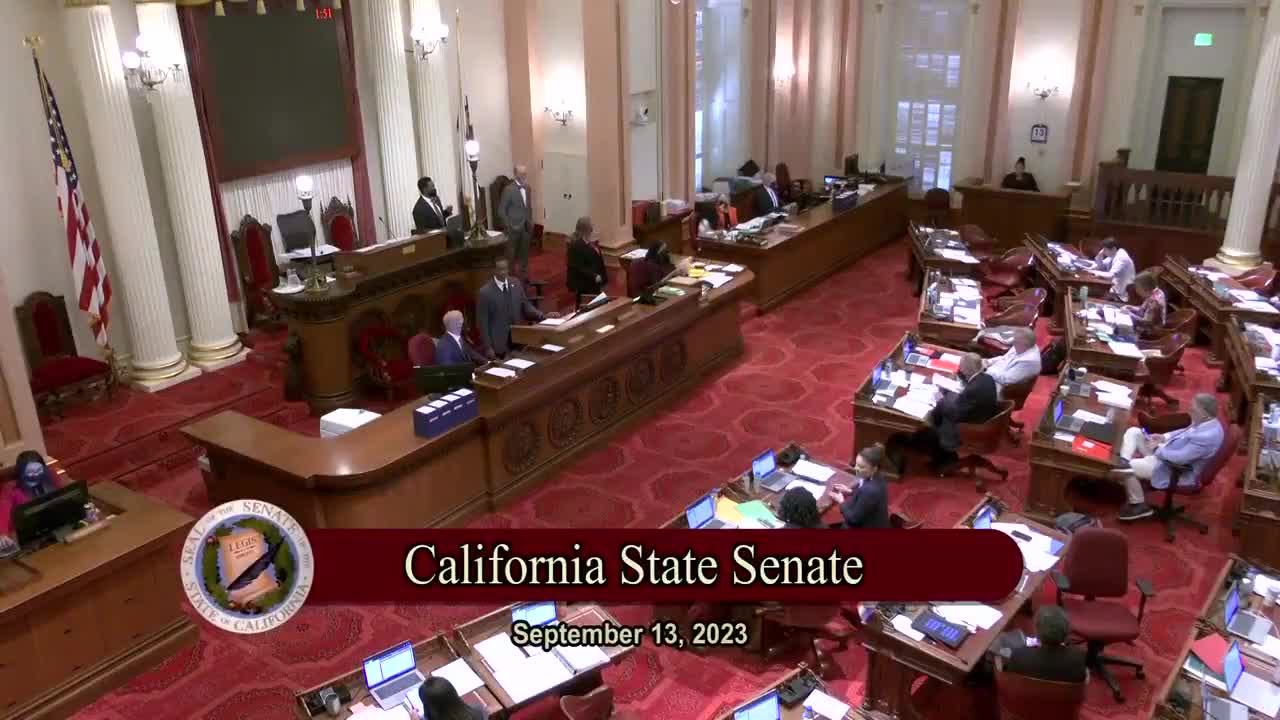 3MIN
Senate Floor
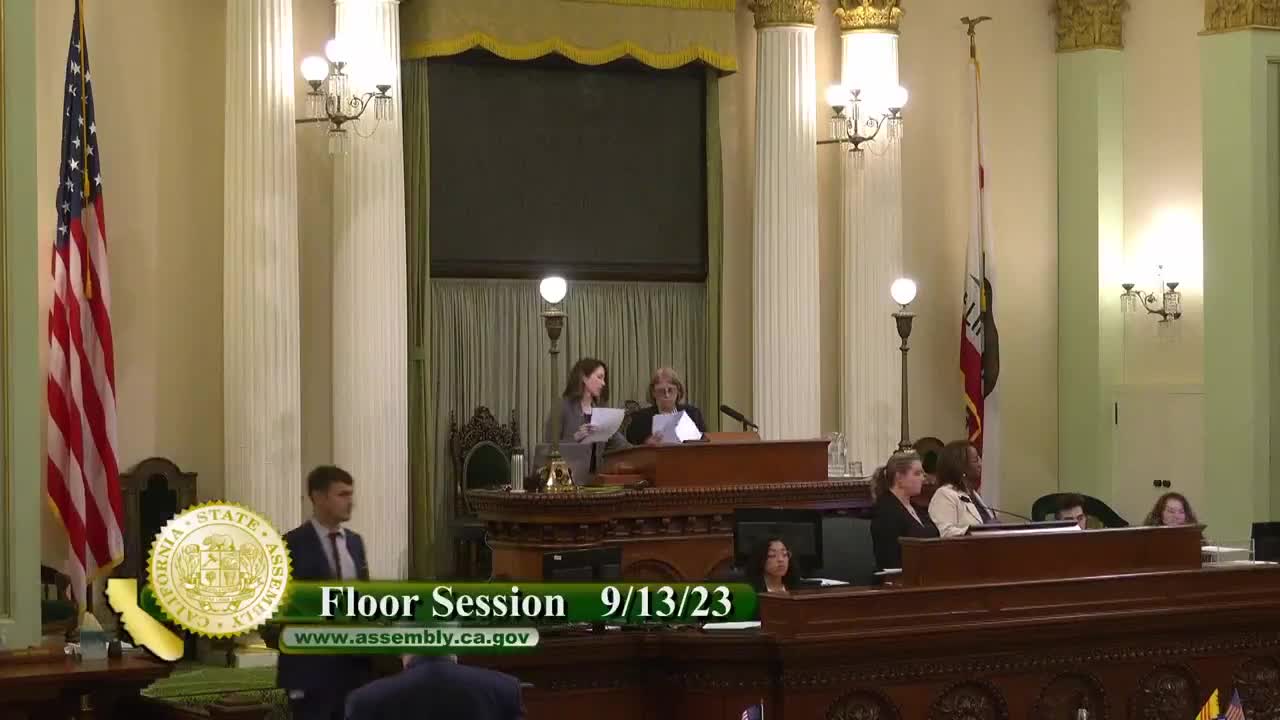 1MIN
Assembly Floor
 4MIN
Senate Standing Committee on Public Safety
 1MIN
Assembly Floor
 56SEC
Assembly Standing Committee on Appropriations
 3MIN
Assembly Standing Committee on Labor and Employment
Bill Author

Bill Co-Author(s):