AB 605: CalFresh Fruit and Vegetable Supplemental Benefits Expansion Program.
- Session Year: 2023-2024
- House: Assembly
- Latest Version Date: 2023-03-22
Current Status:
Failed
(2024-02-01: From committee: Filed with the Chief Clerk pursuant to Joint Rule 56.)
Introduced
In Committee
First Chamber
In Committee
Second Chamber
Enacted
What does this bill do?
Creates a CalFresh Fruit and Vegetable Supplemental Benefits Expansion Program that lets CalFresh recipients receive extra funds on their EBT cards when they buy fresh fruits and vegetables, and enrolls stores, farmers markets, and other authorized retailers to deliver those extras. The bill sets initial funding caps for retailers ($40 million for large chains, $20 million for small stores, $30 million for direct farm-to-consumer outlets), authorizes up to $1 million for small-store technology grants, requires the state to develop wireless EBT solutions and outreach materials, and directs agencies to report to the Legislature and seek any needed federal approvals.
The summary is provided by generative AI which can make mistakes. For original language, please view the details in the table below.
Existing federal law establishes the federal Supplemental Nutrition Assistance Program (SNAP), known in California as CalFresh, under which supplemental nutrition assistance benefits allocated to the state by the federal government are distributed to eligible individuals by each county. Existing law establishes a statewide electronic benefits transfer (EBT) system, administered by the State Department of Social Services, for the purpose of providing financial and food assistance benefits, including CalFresh benefits.
Existing law establishes the California Fruit and Vegetable EBT Pilot Project and requires the department, in consultation with the Department of Food and Agriculture and specified stakeholders, to include within the EBT system a supplemental benefits mechanism that allows an authorized retailer to deliver and redeem supplemental benefits. Existing law defines the term supplemental benefits for these purposes to mean additional funds delivered to a CalFresh recipients EBT card upon purchase of California-grown fresh fruits and vegetables using CalFresh benefits. Existing law requires the department, upon the deposit of sufficient moneys into the California Fruit and Vegetable EBT Grant Fund, and upon the appropriation of moneys from the fund by the Legislature for this purpose, to provide a minimum of 3 grants to nonprofit organizations or governmental agencies for pilot projects to implement and test the supplemental benefits mechanism, as specified.
This bill would establish the California CalFresh Fruit and Vegetable Supplemental Benefits Expansion Program and create the California CalFresh Fruit and Vegetable EBT Expansion Fund in the State Treasury. The program would include a process and guidelines for the State Department of Social Services to, upon the deposit of sufficient moneys in the fund, enroll authorized retailers to enable those authorized retailers to provide supplemental benefits to CalFresh recipients who purchase fresh fruits and vegetables. The bill would authorize the department to initially allocate from any appropriation made for the purposes of the program, $140,000,000 $40,000,000 for large authorized retailers that are not direct farm-to-consumer authorized retailers to provide supplemental benefits, $40,000,000 $20,000,000 for small authorized retailers that are not direct farm-to-consumer authorized retailers to provide supplemental benefits, and $60,000,000 $30,000,000 for direct farm-to-consumer authorized retailers to provide supplemental benefits. The bill would also require the department to provide grants to small authorized retailers that are not direct farm-to-consumer authorized retailers to offset the cost of technological upgrades required to offer supplemental benefits and would authorize the department to allocate up to $1,000,000 from any appropriation made for the purposes of the program to provide those grants. The bill would authorize the department, 6 months or later after the enrollment of authorized retailers as a result of the first round of application solicitation, to reallocate those funds. The bill would require supplemental benefits to be provided using the EBT system supplemental benefits mechanism established for purposes of the California Fruit and Vegetable EBT Pilot Project.
The bill would also require the department, as part of the program, to contract with one or more vendors to develop at least 2 technology solutions that allow authorized retailers to wirelessly accept EBT CalFresh benefits and offer supplemental benefits, to develop marketing materials that authorized retailers that have been enrolled in the program and community groups can use for outreach efforts to promote supplemental benefits, and to submit specified reports to the Legislature. The bill would require, if the department fails to submit one of the reports, if the report recommends stopping further expansion of supplemental benefits programs, or if supplemental benefits are not distributed pursuant to the California Fruit and Vegetable EBT Pilot Project, all unencumbered state funds in the California CalFresh Fruit and Vegetable EBT Expansion Fund to revert to the General Fund.
The bill would require the Department of Food and Agriculture to develop a grant program to award funds to nonprofit organizations to recruit, train, and support authorized retailers participating in supplemental benefit programs.
The bill would require the State Department of Social Services to seek any necessary federal waivers or approvals to implement these provisions.
Existing federal law establishes the federal Supplemental Nutrition Assistance Program (SNAP), known in California as CalFresh, under which supplemental nutrition assistance benefits allocated to the state by the federal government are distributed to eligible individuals by each county. Existing law establishes a statewide electronic benefits transfer (EBT) system, administered by the State Department of Social Services, for the purpose of providing financial and food assistance benefits, including CalFresh benefits.
Existing law establishes the California Fruit and Vegetable EBT Pilot Project and requires the department, in consultation with the Department of Food and Agriculture and specified stakeholders, to include within the EBT system a supplemental benefits mechanism that allows an authorized retailer to deliver and redeem supplemental benefits. Existing law defines the term supplemental benefits for these purposes to mean additional funds delivered to a CalFresh recipients EBT card upon purchase of California-grown fresh fruits and vegetables using CalFresh benefits. Existing law requires the department, upon the deposit of sufficient moneys into the California Fruit and Vegetable EBT Grant Fund, and upon the appropriation of moneys from the fund by the Legislature for this purpose, to provide a minimum of 3 grants to nonprofit organizations or governmental agencies for pilot projects to implement and test the supplemental benefits mechanism, as specified.
This bill would establish the California Fruit and Vegetable Supplemental Benefits Expansion Program and create the California Fruit and Vegetable EBT Expansion Fund in the State Treasury. The program would include a process and guidelines for the State Department of Social Services to, upon the deposit of sufficient moneys in the fund, enroll authorized retailers to enable those authorized retailers to provide supplemental benefits to CalFresh recipients who purchase fresh fruits and vegetables. The bill would authorize the department to initially allocate from any appropriation made for the purposes of the program, $140,000,000 for large authorized retailers that are not direct farm-to-consumer authorized retailers to provide supplemental benefits, $40,000,000 for small authorized retailers that are not direct farm-to-consumer authorized retailers to provide supplemental benefits, and $60,000,000 for direct farm-to-consumer authorized retailers to provide supplemental benefits. The bill would also require the department to provide grants to small authorized retailers that are not direct farm-to-consumer authorized retailers to offset the cost of technological upgrades required to offer supplemental benefits and would authorize the department to allocate up to $1,000,000 from any appropriation made for the purposes of the program to provide those grants. The bill would authorize the department, 6 months or later after the enrollment of authorized retailers as a result of the first round of application solicitation, to reallocate those funds. The bill would require supplemental benefits to be provided using the EBT system supplemental benefits mechanism established for purposes of the California Fruit and Vegetable EBT Pilot Project.
The bill would also require the department, as part of the program, to contract with one or more vendors to develop at least 2 technology solutions that allow authorized retailers to wirelessly accept EBT CalFresh benefits and offer supplemental benefits, to develop marketing materials that authorized retailers that have been enrolled in the program and community groups can use for outreach efforts to promote supplemental benefits, and to submit specified reports to the Legislature. The bill would require, if the department fails to submit one of the reports, if the report recommends stopping further expansion of supplemental benefits programs, or if supplemental benefits are not distributed pursuant to the California Fruit and Vegetable EBT Pilot Project, all unencumbered state funds in the California Fruit and Vegetable EBT Expansion Fund to revert to the General Fund.
The bill would require the Department of Food and Agriculture to develop a grant program to award funds to nonprofit organizations to recruit, train, and support authorized retailers participating in supplemental benefit programs.
The bill would require the State Department of Social Services to seek any necessary federal waivers or approvals to implement these provisions.
The Legislature finds and declares all of the following:
(a)Despite Californias wealth and agricultural abundance, millions of Californians struggle daily to make ends meet and provide their families with enough food. This food insecurity has only worsened since the onset of the COVID-19 pandemic.
(b)This inequity has deeply negative impacts on the health of California families, contributing to high levels of food insecurity and diet-related disease.
(c)Clear evidence indicates that increasing consumption of fruits and vegetables can help improve health outcomes, yet millions of low-income Californians report that they cannot consistently afford to purchase fruits and vegetables.
(d)Numerous studies and evaluations have found that the CalFresh benefit amount, which is set by the federal government, is inadequate to support the purchase of nutritious foods that support a healthy diet, particularly fruits and vegetables.
(e)Studies also indicate that older adults, in particular Black older adults, report eating far less fruits and vegetables than their peers.
(f)During the COVID-19 pandemic, most CalFresh households have received a temporary boost in CalFresh benefits through federally authorized emergency allotments. When those expire, most households will face drastic reductions in their monthly benefits. The state should act to mitigate further spikes in hunger and hardship.
(g)In the past decade, programs piloted by numerous organizations in California and nationwide have demonstrated that when families with a low income have additional money for fruits and vegetables, they buy and consume more fruits and vegetables. These supplemental benefit programs, also known as healthy food incentive programs, have been funded with grants from the Specialty Crop Block Grant Program, Californias Nutrition Incentive Matching Grant Program, the United States Department of Agricultures Food Insecurity Nutrition Incentive Grant Program, and Gus Schumacher Nutrition Incentive Program, private philanthropy, and other sources.
(h)In California, these nutrition incentive programs were pioneered by certified farmers markets and have been adopted in a diverse geography at more than 250 direct-to-consumer locations across the state. Small and large grocery retailers now also offer these programs at more than 50 locations throughout California.
(i)These CalFresh nutrition incentive programs support Californias farmers and agricultural sector by increasing sales of California-grown produce. Research published by agricultural economists in 2021 estimates that the economic multiplier of these supplemental benefits is higher than most other government spending programs, with the California economy seeing a $1.70 to $3 in economic contribution each time a CalFresh household spends $1 in supplemental benefits.
(j)This same research demonstrates that supplemental benefit programs have the greatest multiplier and economic impact to the state economy when provided by farmers markets and other direct farm-to-consumer outlets.
(k)In terms of broad reach, nationally over 90 percent of Supplemental Nutrition Assistance Program (SNAP) benefits are spent at grocery stores, supermarkets, and superstores, which provides an opportunity to deliver supplemental benefits to hundreds of thousands of CalFresh families via these brick-and-mortar locations.
(l)Supplemental benefit programs should expand the purchasing power of Californians with low incomes and the Legislature does not intend for this program to be paired with any proposal that would restrict what food, or categories of food, can be purchased with standard CalFresh benefits.
(m)The expansion of California CalFresh Fruit and Vegetable Supplemental Benefits to more retail locations throughout the state will further help the state reduce hunger, improve public health, and support California agriculture.
(n)It is the intent of the Legislature in enacting this act to do all of the following:
(1)Broaden both the number and geographic diversity of individuals and families participating in CalFresh that can access supplemental benefits through participating food retailers, thereby increasing the programs positive impacts in reducing hunger and improving health.
(2)Further support the states farming economy by increasing the purchasing power of CalFresh participants for California-grown fruits and vegetables vegetables, often and sometimes solely grown by California farmers, through both direct-to-consumer marketing channels, such as farmers markets, where the state sees the greatest economic multipliers, as well as through traditional grocery stores that source fresh fruits and vegetables from California farmers through wholesale channels.
(3)Build the foundation for the state, in the future, to make supplemental benefits available to CalFresh participants throughout California as a permanent supplement to the CalFresh program.
SEC. 2.Article 5 (commencing with Section 10085) is added to Chapter 3 of Part 1 of Division 9 of the Welfare and Institutions Code, to read:5.California CalFresh Fruit and Vegetable Supplemental Benefits Expansion Program10085.This article shall be known, and may be cited, as the California CalFresh Fruit and Vegetable Supplemental Benefits Expansion Program.
10086.For the purposes of this article, the following definitions apply:
(a)Authorized retailer means any retail establishment that is authorized to accept CalFresh benefits, including, but not limited to, grocery stores, corner stores, farmers markets, farm stands, and mobile markets.
(b)Direct farm-to-consumer outlet means a certified farmers markets, farmers, community supported agriculture (CSA), and mobile markets and farm stands that source directly from farmers, as those terms are defined in Chapter 10.5 (commencing with Section 47000) of Division 17 of the Food and Agricultural Code, and approved third-party EBT operators operating at any of these locations.
(c)Fresh fruits and vegetables means any variety of whole or cut fruits and vegetables without added sugars, fats, oils, or salt and that have not been processed with heat, drying, canning, or freezing.
(d)Supplemental benefits means additional funds delivered to a CalFresh recipients EBT card upon purchase of fresh fruits and vegetables using CalFresh benefits, and to be redeemed only for purchases allowed under the CalFresh program at an authorized retailer.
10087.(a)There is hereby created in the State Treasury the California CalFresh Fruit and Vegetable EBT Expansion Fund. The fund shall consist of moneys from state, federal, and other public and private sources.
(b)Upon the deposit of sufficient moneys into the California CalFresh Fruit and Vegetable EBT Expansion Fund, as determined by the department, and upon the appropriation of moneys from the fund by the Legislature for this purpose, the department shall enroll authorized retailers into the California CalFresh Fruit and Vegetable Supplemental Benefits Expansion Program and provide the grants described in this article.
10088.(a)There is hereby established the California CalFresh Fruit and Vegetable Supplemental Benefits Expansion Program. As part of the program, the department shall enroll authorized retailers into the California CalFresh Fruit and Vegetable Supplemental Benefits Expansion Program to enable those authorized retailers to provide supplemental benefits to CalFresh recipients.
(b)The department, in consultation with the Department of Food and Agriculture, shall develop and adopt guidelines for enrolling authorized retailers, which shall include, at a minimum, all of the following:
(1)A competitive application process for those authorized retailers described in paragraph (1) of subdivision (c).
(2)An application process for those authorized retailers described in paragraph (2) of subdivision (c). The application process may be competitive if the department determines that budgetary or other considerations require a competitive selection process.
(3)At least two rounds of application solicitation.
(c)The department shall enroll authorized retailers that reflect a diversity of sizes and types, including both grocery stores and direct farm-to-consumer authorized retailers, consistent with both of the following:
(1)(A)Among authorized retailers that are not direct farm-to-consumer authorized retailers, the department shall prioritize enrolling those that can demonstrate that their participation will expand the geographic availability of supplemental benefits to communities and counties where retailers are not currently offering supplemental benefits.
(B)For authorized retailers described in this paragraph that have more than 50 retail locations in California, including all retail locations under common ownership, or that redeem more than fifty million dollars ($50,000,000) in CalFresh benefits annually across all retail locations under common ownership in California, both of the following apply:
(i)Of any appropriation by the Legislature for the purposes of this article, the department shall initially allocate no more than one hundred forty million dollars ($140,000,000) ($40,000,000) for authorized retailers described in this subparagraph to provide supplemental benefits.
(ii)An authorized retailer described in this subparagraph shall not be eligible to receive funding to offset the cost of any technological upgrades required to offer supplemental benefits.
(C)For authorized retailers described in this paragraph that have 50 or fewer retail locations in California, including all retail locations under common ownership, and that redeem 50 million dollars ($50,000,000) or less in CalFresh benefits annually across all retail locations under common ownership in California, both of the following apply:
(i)Of any appropriation by the Legislature for the purposes of this article, the department shall initially allocate no more than forty million dollars ($40,000,000) twenty million dollars ($20,000,000) for authorized retailers described in this subparagraph to provide supplemental benefits.
(ii)(I)The department shall provide grants to authorized retailers described in this subparagraph to offset the cost of technological upgrades required to offer supplemental benefits.
(II)In selecting grantees to receive technological upgrade funding, the department shall prioritize those that propose using technological upgrades that have a large market share and those that are in a region of California with a high proportion of CalFresh beneficiaries and no other authorized retailers offering incentives or supplemental benefits.
(III)Of any appropriation by the Legislature for the purposes of this article, no more than one million dollars ($1,000,000) shall be spent to provide funding for technological upgrades for authorized retailers described in this subparagraph.
(2)A direct farm-to-consumer outlet shall only be eligible for enrollment if it sells fresh fruits and vegetables. Of any appropriation by the Legislature for the purposes of this article, the department shall initially allocate no more than sixty million dollars ($60,000,000) thirty million dollars ($30,000,000) for authorized retailers described in this paragraph to provide supplemental benefits.
(d)The department shall ensure that authorized retailers who were enrolled as a result of the first round of application solicitation are distributing supplemental benefits no later than April 1, 2024.
(e)Six months or later after the enrollment of authorized retailers as a result of the first round of application solicitation, the department may reallocate remaining funds initially allocated to each category of authorized retailers in subdivision (c) if the department determines that there is a lack of acceptable applications for a particular category of authorized retailers and there is unlikely to be sufficient acceptable applications for a particular category of authorized retailers in a second or subsequent round of applications. If the department reallocates funds pursuant to this subdivision, the department shall seek to maximize the number of retail locations offering supplemental benefits or the number of CalFresh recipients who would have access to supplemental benefits.
(f)The department shall provide supplemental benefits to CalFresh recipients who have purchased fresh fruits and vegetables through authorized retailers once the department has certified that the authorized retailers can process supplemental benefits. The department shall use the EBT system supplemental benefits mechanism established for purposes of the California Fruit and Vegetable EBT Pilot Project, which shall continue to allow an authorized retailer to deliver and redeem supplemental benefits, to be compatible with operational procedures at farmers markets with centralized point-of-sale terminals and at grocery stores with integrated point-of-sale terminals, and ensure all of the following:
(1)Supplemental benefits can be transferable across any authorized retailer.
(2)Supplemental benefits can be accrued, tracked, and redeemed by CalFresh recipients in a seamless, integrated process through the EBT system.
(3)Supplemental benefits can only be accrued by CalFresh recipients through the purchase of fresh fruits and vegetables from an authorized retailer.
(4)Supplemental benefits can only be redeemed to make eligible purchases under the CalFresh program from an authorized retailer.
(5)The supplemental benefits mechanism complies with all applicable state and federal laws governing procedures to ensure privacy and confidentiality.
(6)Authorized retailers that use EBT-only point-of-sale terminals, such as farmers markets, and those that use integrated point-of-sale terminals, such as grocery stores, shall be able to integrate the new supplemental benefits mechanism into their existing systems, including the free state-issued hardware provided to certified farmers markets and farmers.
(7)The supplemental benefits mechanism provides a CalFresh benefits to supplemental benefits match ratio of at least 1:1.
(8)A CalFresh household may only accrue up to a limited amount of supplemental benefits, as determined by the department.
(9)There shall be no expiration date for use of supplemental benefits, but the benefits may be expunged in accordance with federal Supplemental Nutrition Assistance Program (SNAP) regulations.
10089.The department shall, as part of the California CalFresh Fruit and Vegetable Supplemental Benefits Expansion Program, contract with one or more vendors to develop at least two technology solutions, which may include a mobile application, such as software that works on an existing mobile phone or tablet operating system, or a mobile point-of-sale system, such as a combination of hardware and software provided by a single vendor, that allows authorized retailers to wirelessly accept EBT CalFresh benefits and offer supplemental benefits. These technology solutions shall be in addition to the mobile EBT device the state currently provides farmers markets free of charge. The technology solutions shall be developed in consultation with the department, the Department of Food and Agricultures Office of Farm to Fork, and stakeholders that would like to use the resultant technology solution, including, but not limited to, farmers market vendors and corner stores. Of any appropriation by the Legislature for the purposes of this article, no more than seven hundred fifty thousand dollars ($750,000) shall be allocated for the purposes of this section.
10090.(a)The department shall, as part of the California CalFresh Fruit and Vegetable Supplemental Benefits Expansion Program and through the CalFresh Healthy Living Program, develop marketing materials that authorized retailers that have been enrolled pursuant to Section 10088 and community groups can use for outreach efforts to promote supplemental benefits. In developing the materials, the department shall ensure that the materials include information targeted to those populations that, on average, receive a low amount of CalFresh benefits, including, but not limited to, older adults, and that the materials are made available in a diverse range of languages and reflect the diverse cultural identities found in California.
(b)The materials described in subdivision (a) shall be made available to participating retailers that have received a grant pursuant to Section 10088 at no cost.
10091.The Department of Food and Agriculture shall develop a grant program to award funds to nonprofit organizations to recruit, train, and support authorized retailers participating in supplemental benefit programs. Of any appropriation by the Legislature for the purposes of this article, no more than one million dollars ($1,000,000) shall be allocated to the Department of Food and Agriculture for the purposes of this section.
10092.(a)(1)The department shall submit a report to the Legislature with an initial progress report two months after the first supplemental benefits are distributed pursuant to the California Fruit and Vegetable EBT Pilot Project, or March 1, 2024, whichever comes first. The department shall include in the report recommendations regarding both of the following:
(A)Whether the technology used to provide supplemental benefits can support further expansion.
(B)Whether any aspects of the program design should be changed as part of the program expansion.
(2)If the department fails to submit the report required pursuant to paragraph (1), if the report includes a recommendation to stop further expansion of supplemental benefits programs, or if supplemental benefits are not distributed pursuant to the California Fruit and Vegetable EBT Pilot Project, the unencumbered state funds in the California CalFresh Fruit and Vegetable EBT Expansion Fund shall revert to the General Fund.
(b)Beginning three months after an authorized retailer first provides supplemental benefits after being enrolled pursuant to Section 10088, the department shall quarterly publish, on its internet website, data on program utilization, including, but not limited to, the number of CalFresh households and individuals who have received supplemental benefits, the average amount of supplemental benefits earned by each CalFresh household each month, and the amount of supplemental benefits earned at each category of authorized retailers.
(c)Within nine months after an authorized retailer that has been enrolled pursuant to Section 10088 first provides supplemental benefits, the department shall submit a report to the Legislature examining what could be improved in expanding access to supplemental benefits, implementing technological upgrades to provide supplemental benefits, communications and marketing regarding supplemental benefits, CalFresh participant experience accessing and using supplemental benefits, and retailer experience providing supplemental benefits.
(d)A report to be submitted pursuant to this section shall be submitted in compliance with Section 9795 of the Government Code.
10093.The department shall seek any necessary federal waivers or approvals to implement this article.
The Legislature finds and declares all of the following:
(a)Despite Californias wealth and agricultural abundance, millions of Californians struggle daily to make ends meet and provide their families with enough food. This food insecurity has only worsened since the onset of the COVID-19 pandemic.
(b)This inequity has deeply negative impacts on the health of California families, contributing to high levels of food insecurity and diet-related disease.
(c)Clear evidence indicates that increasing consumption of fruits and vegetables can help improve health outcomes, yet millions of low-income Californians report that they cannot consistently afford to purchase fruits and vegetables.
(d)Numerous studies and evaluations have found that the CalFresh benefit amount, which is set by the federal government, is inadequate to support the purchase of nutritious foods that support a healthy diet, particularly fruits and vegetables.
(e)Studies also indicate that older adults, in particular Black older adults, report eating far less fruits and vegetables than their peers.
(f)During the COVID-19 pandemic, most CalFresh households have received a temporary boost in CalFresh benefits through federally authorized emergency allotments. When those expire, most households will face drastic reductions in their monthly benefits. The state should act to mitigate further spikes in hunger and hardship.
(g)In the past decade, programs piloted by numerous organizations in California and nationwide have demonstrated that when families with a low income have additional money for fruits and vegetables, they buy and consume more fruits and vegetables. These supplemental benefit programs, also known as healthy food incentive programs, have been funded with grants from the Specialty Crop Block Grant Program, Californias Nutrition Incentive Matching Grant Program, the United States Department of Agricultures Food Insecurity Nutrition Incentive Grant Program, and Gus Schumacher Nutrition Incentive Program, private philanthropy, and other sources.
(h)In California, these nutrition incentive programs were pioneered by certified farmers markets and have been adopted in a diverse geography at more than 250 direct-to-consumer locations across the state. Small and large grocery retailers now also offer these programs at more than 50 locations throughout California.
(i)These CalFresh nutrition incentive programs support Californias farmers and agricultural sector by increasing sales of California-grown produce. Research published by agricultural economists in 2021 estimates that the economic multiplier of these supplemental benefits is higher than most other government spending programs, with the California economy seeing a $1.70 to $3 in economic contribution each time a CalFresh household spends $1 in supplemental benefits.
(j)This same research demonstrates that supplemental benefit programs have the greatest multiplier and economic impact to the state economy when provided by farmers markets and other direct farm-to-consumer outlets.
(k)In terms of broad reach, nationally over 90 percent of Supplemental Nutrition Assistance Program (SNAP) benefits are spent at grocery stores, supermarkets, and superstores, which provides an opportunity to deliver supplemental benefits to hundreds of thousands of CalFresh families via these brick-and-mortar locations.
(l)Supplemental benefit programs should expand the purchasing power of Californians with low incomes and the Legislature does not intend for this program to be paired with any proposal that would restrict what food, or categories of food, can be purchased with standard CalFresh benefits.
(m)The expansion of California Fruit and Vegetable Supplemental Benefits to more retail locations throughout the state will further help the state reduce hunger, improve public health, and support California agriculture.
(n)It is the intent of the Legislature in enacting this act to do all of the following:
(1)Broaden both the number and geographic diversity of individuals and families participating in CalFresh that can access supplemental benefits through participating food retailers, thereby increasing the programs positive impacts in reducing hunger and improving health.
(2)Further support the states farming economy by increasing the purchasing power of CalFresh participants for California-grown fruits and vegetables through both direct-to-consumer marketing channels, such as farmers markets, where the state sees the greatest economic multipliers, as well as through traditional grocery stores that source fresh fruits and vegetables from California farmers through wholesale channels.
(3)Build the foundation for the state, in the future, to make supplemental benefits available to CalFresh participants throughout California as a permanent supplement to the CalFresh program.
SEC. 2.Article 5 (commencing with Section 10085) is added to Chapter 3 of Part 1 of Division 9 of the Welfare and Institutions Code, to read:5.California Fruit and Vegetable Supplemental Benefits Expansion Program10085.This article shall be known, and may be cited, as the California Fruit and Vegetable Supplemental Benefits Expansion Program.
10086.For the purposes of this article, the following definitions apply:
(a)Authorized retailer means any retail establishment that is authorized to accept CalFresh benefits, including, but not limited to, grocery stores, corner stores, farmers markets, farm stands, and mobile markets.
(b)Direct farm-to-consumer outlet means a certified farmers markets, farmers, community supported agriculture (CSA), and mobile markets and farm stands that source directly from farmers, as those terms are defined in Chapter 10.5 (commencing with Section 47000) of Division 17 of the Food and Agricultural Code, and approved third-party EBT operators operating at any of these locations.
(c)Fresh fruits and vegetables means any variety of whole or cut fruits and vegetables without added sugars, fats, oils, or salt and that have not been processed with heat, drying, canning, or freezing.
(d)Supplemental benefits means additional funds delivered to a CalFresh recipients EBT card upon purchase of fresh fruits and vegetables using CalFresh benefits, and to be redeemed only for purchases allowed under the CalFresh program at an authorized retailer.
10087.(a)There is hereby created in the State Treasury the California Fruit and Vegetable EBT Expansion Fund. The fund shall consist of moneys from state, federal, and other public and private sources.
(b)Upon the deposit of sufficient moneys into the California Fruit and Vegetable EBT Expansion Fund, as determined by the department, and upon the appropriation of moneys from the fund by the Legislature for this purpose, the department shall enroll authorized retailers into the California Fruit and Vegetable Supplemental Benefits Expansion Program and provide the grants described in this article.
10088.(a)There is hereby established the California Fruit and Vegetable Supplemental Benefits Expansion Program. As part of the program, the department shall enroll authorized retailers into the California Fruit and Vegetable Supplemental Benefits Expansion Program to enable those authorized retailers to provide supplemental benefits to CalFresh recipients.
(b)The department, in consultation with the Department of Food and Agriculture, shall develop and adopt guidelines for enrolling authorized retailers, which shall include, at a minimum, all of the following:
(1)A competitive application process for those authorized retailers described in paragraph (1) of subdivision (c).
(2)An application process for those authorized retailers described in paragraph (2) of subdivision (c). The application process may be competitive if the department determines that budgetary or other considerations require a competitive selection process.
(3)At least two rounds of application solicitation.
(c)The department shall enroll authorized retailers that reflect a diversity of sizes and types, including both grocery stores and direct farm-to-consumer authorized retailers, consistent with both of the following:
(1)(A)Among authorized retailers that are not direct farm-to-consumer authorized retailers, the department shall prioritize enrolling those that can demonstrate that their participation will expand the geographic availability of supplemental benefits to communities and counties where retailers are not currently offering supplemental benefits.
(B)For authorized retailers described in this paragraph that have more than 50 retail locations in California, including all retail locations under common ownership, or that redeem more than fifty million dollars ($50,000,000) in CalFresh benefits annually across all retail locations under common ownership in California, both of the following apply:
(i)Of any appropriation by the Legislature for the purposes of this article, the department shall initially allocate no more than one hundred forty million dollars ($140,000,000) for authorized retailers described in this subparagraph to provide supplemental benefits.
(ii)An authorized retailer described in this subparagraph shall not be eligible to receive funding to offset the cost of any technological upgrades required to offer supplemental benefits.
(C)For authorized retailers described in this paragraph that have 50 or fewer retail locations in California, including all retail locations under common ownership, and that redeem 50 million dollars ($50,000,000) or less in CalFresh benefits annually across all retail locations under common ownership in California, both of the following apply:
(i)Of any appropriation by the Legislature for the purposes of this article, the department shall initially allocate no more than forty million dollars ($40,000,000) for authorized retailers described in this subparagraph to provide supplemental benefits.
(ii)(I)The department shall provide grants to authorized retailers described in this subparagraph to offset the cost of technological upgrades required to offer supplemental benefits.
(II)In selecting grantees to receive technological upgrade funding, the department shall prioritize those that propose using technological upgrades that have a large market share and those that are in a region of California with a high proportion of CalFresh beneficiaries and no other authorized retailers offering incentives or supplemental benefits.
(III)Of any appropriation by the Legislature for the purposes of this article, no more than one million dollars ($1,000,000) shall be spent to provide funding for technological upgrades for authorized retailers described in this subparagraph.
(2)A direct farm-to-consumer outlet shall only be eligible for enrollment if it sells fresh fruits and vegetables. Of any appropriation by the Legislature for the purposes of this article, the department shall initially allocate no more than sixty million dollars ($60,000,000) for authorized retailers described in this paragraph to provide supplemental benefits.
(d)The department shall ensure that authorized retailers who were enrolled as a result of the first round of application solicitation are distributing supplemental benefits no later than April 1, 2024.
(e)Six months or later after the enrollment of authorized retailers as a result of the first round of application solicitation, the department may reallocate remaining funds initially allocated to each category of authorized retailers in subdivision (c) if the department determines that there is a lack of acceptable applications for a particular category of authorized retailers and there is unlikely to be sufficient acceptable applications for a particular category of authorized retailers in a second or subsequent round of applications. If the department reallocates funds pursuant to this subdivision, the department shall seek to maximize the number of retail locations offering supplemental benefits or the number of CalFresh recipients who would have access to supplemental benefits.
(f)The department shall provide supplemental benefits to CalFresh recipients who have purchased fresh fruits and vegetables through authorized retailers once the department has certified that the authorized retailers can process supplemental benefits. The department shall use the EBT system supplemental benefits mechanism established for purposes of the California Fruit and Vegetable EBT Pilot Project, which shall continue to allow an authorized retailer to deliver and redeem supplemental benefits, to be compatible with operational procedures at farmers markets with centralized point-of-sale terminals and at grocery stores with integrated point-of-sale terminals, and ensure all of the following:
(1)Supplemental benefits can be transferable across any authorized retailer.
(2)Supplemental benefits can be accrued, tracked, and redeemed by CalFresh recipients in a seamless, integrated process through the EBT system.
(3)Supplemental benefits can only be accrued by CalFresh recipients through the purchase of fresh fruits and vegetables from an authorized retailer.
(4)Supplemental benefits can only be redeemed to make eligible purchases under the CalFresh program from an authorized retailer.
(5)The supplemental benefits mechanism complies with all applicable state and federal laws governing procedures to ensure privacy and confidentiality.
(6)Authorized retailers that use EBT-only point-of-sale terminals, such as farmers markets, and those that use integrated point-of-sale terminals, such as grocery stores, shall be able to integrate the new supplemental benefits mechanism into their existing systems, including the free state-issued hardware provided to certified farmers markets and farmers.
(7)The supplemental benefits mechanism provides a CalFresh benefits to supplemental benefits match ratio of at least 1:1.
(8)A CalFresh household may only accrue up to a limited amount of supplemental benefits, as determined by the department.
(9)There shall be no expiration date for use of supplemental benefits, but the benefits may be expunged in accordance with federal Supplemental Nutrition Assistance Program (SNAP) regulations.
10089.The department shall, as part of the California Fruit and Vegetable Supplemental Benefits Expansion Program, contract with one or more vendors to develop at least two technology solutions, which may include a mobile application, such as software that works on an existing mobile phone or tablet operating system, or a mobile point-of-sale system, such as a combination of hardware and software provided by a single vendor, that allows authorized retailers to wirelessly accept EBT CalFresh benefits and offer supplemental benefits. These technology solutions shall be in addition to the mobile EBT device the state currently provides farmers markets free of charge. The technology solutions shall be developed in consultation with the department, the Department of Food and Agricultures Office of Farm to Fork, and stakeholders that would like to use the resultant technology solution, including, but not limited to, farmers market vendors and corner stores. Of any appropriation by the Legislature for the purposes of this article, no more than seven hundred fifty thousand dollars ($750,000) shall be allocated for the purposes of this section.
10090.(a)The department shall, as part of the California Fruit and Vegetable Supplemental Benefits Expansion Program and through the CalFresh Healthy Living Program, develop marketing materials that authorized retailers that have been enrolled pursuant to Section 10088 and community groups can use for outreach efforts to promote supplemental benefits. In developing the materials, the department shall ensure that the materials include information targeted to those populations that, on average, receive a low amount of CalFresh benefits, including, but not limited to, older adults, and that the materials are made available in a diverse range of languages and reflect the diverse cultural identities found in California.
(b)The materials described in subdivision (a) shall be made available to participating retailers that have received a grant pursuant to Section 10088 at no cost.
10091.The Department of Food and Agriculture shall develop a grant program to award funds to nonprofit organizations to recruit, train, and support authorized retailers participating in supplemental benefit programs. Of any appropriation by the Legislature for the purposes of this article, no more than one million dollars ($1,000,000) shall be allocated to the Department of Food and Agriculture for the purposes of this section.
10092.(a)(1)The department shall submit a report to the Legislature with an initial progress report two months after the first supplemental benefits are distributed pursuant to the California Fruit and Vegetable EBT Pilot Project, or March 1, 2024, whichever comes first. The department shall include in the report recommendations regarding both of the following:
(A)Whether the technology used to provide supplemental benefits can support further expansion.
(B)Whether any aspects of the program design should be changed as part of the program expansion.
(2)If the department fails to submit the report required pursuant to paragraph (1), if the report includes a recommendation to stop further expansion of supplemental benefits programs, or if supplemental benefits are not distributed pursuant to the California Fruit and Vegetable EBT Pilot Project, the unencumbered state funds in the California Fruit and Vegetable EBT Expansion Fund shall revert to the General Fund.
(b)Beginning three months after an authorized retailer first provides supplemental benefits after being enrolled pursuant to Section 10088, the department shall quarterly publish, on its internet website, data on program utilization, including, but not limited to, the number of CalFresh households and individuals who have received supplemental benefits, the average amount of supplemental benefits earned by each CalFresh household each month, and the amount of supplemental benefits earned at each category of authorized retailers.
(c)Within nine months after an authorized retailer that has been enrolled pursuant to Section 10088 first provides supplemental benefits, the department shall submit a report to the Legislature examining what could be improved in expanding access to supplemental benefits, implementing technological upgrades to provide supplemental benefits, communications and marketing regarding supplemental benefits, CalFresh participant experience accessing and using supplemental benefits, and retailer experience providing supplemental benefits.
(d)A report to be submitted pursuant to this section shall be submitted in compliance with Section 9795 of the Government Code.
10093.The department shall seek any necessary federal waivers or approvals to implement this article.
|
Date
|
Status
|
|---|---|
| Feb 1, 2024 | From committee: Filed with the Chief Clerk pursuant to Joint Rule 56. |
| Jan 31, 2024 | Died pursuant to Art. IV, Sec. 10(c) of the Constitution. |
| May 18, 2023 | In committee: Held under submission. |
| Apr 19, 2023 | In committee: Set, first hearing. Referred to APPR. suspense file. |
| Mar 29, 2023 | From committee: Do pass and re-refer to Com. on APPR. with recommendation: To Consent Calendar. (Ayes 11. Noes 0.) (March 29). Re-referred to Com. on APPR. |
| Mar 23, 2023 | Re-referred to Com. on AGRI. |
| Mar 22, 2023 | From committee chair, with author's amendments: Amend, and re-refer to Com. on AGRI. Read second time and amended. |
| Mar 14, 2023 | From committee: Do pass and re-refer to Com. on AGRI. (Ayes 8. Noes 0.) (March 14). Re-referred to Com. on AGRI. |
| Feb 17, 2023 | Referred to Coms. on HUM. S. and AGRI. |
| Feb 10, 2023 | From printer. May be heard in committee March 12. |
| Feb 9, 2023 | Read first time. To print. |
|
Date
|
Description
|
Location
|
Votes
|
|
|---|---|---|---|---|
| Mar 29, 2023 | Do pass and be re-referred to the Committee on [Appropriations] with recommendation: To Consent Calendar | Assembly Standing Committee on Agriculture |
Passed |
|
| Mar 14, 2023 | Do pass and be re-referred to the Committee on [Agriculture] | Assembly Standing Committee on Human Services |
Passed |
This list shows positions taken on this bill by organizations on the date displayed, which is linked to the original source.
Positions by individuals are not included.
|
Organization
|
Position
|
Date
|
|---|---|---|
| Agricultural Institute of Marin | ** Support | |
| Alameda County Community Food Bank | ** Support | |
| American Heart Association | ** Support | |
| California Association Of Food Banks | ** Support | |
| California Catholic Conference | ** Support | |
| California Farm Bureau Federation | ** Support | |
| California Fresh Fruit Association | ** Support | |
| California Grocers Association | ** Support | |
| California Retailers Association | ** Support | |
| Coalition of California Welfare Rights Organizations | ** Support | |
| Community Action Partnership of Orange County | ** Support | |
| Compass Family Services | ** Support | |
| Ecology Center Berkeley | ** Support | |
| Food Bank of Contra Costa & Solano | ** Support | |
| Food for People, the Food Bank for Humboldt County | ** Support | |
| Glide | ** Support | |
| Hunger Action Los Angeles INC | ** Support | |
| LA Raza Community Resource Center | ** Support | |
| Lighthouse Public Affairs | * Support | Mar 14, 2023 |
| Long Beach Alliance for Food and Fitness | ** Support | |
| Los Angeles Regional Food Bank | ** Support | |
| National Association of Social Workers California Chapter | * Support | Mar 14, 2023 |
| Nourish California | ** Support | |
| Open Heart Kitchen | ** Support | |
| San Diego Hunger Coalition | ** Support | |
| Second Harvest Food Bank of Orange County | ** Support | |
| Second Harvest of Silicon Valley | ** Support | |
| Slo Food Bank | ** Support | |
| SPUR | ** Support | |
| western center on law & poverty | ** Support |
Date of Hearing: April 19, 2023
ASSEMBLY COMMITTEE ON APPROPRIATIONS
Chris Holden, Chair
ABPCA Bill Id:AB 605
Author:(Arambula) – As Amended Ver:March 22, 2023
Policy Committee: | Human Services | Vote: | 8 - 0 |
Agriculture | 11 - 0 | ||
|
|
Urgency: No State Mandated Local Program: No Reimbursable: No
SUMMARY:
This bill establishes the CalFresh Fruit and Vegetable Supplemental Benefit Expansion Program to provide supplemental benefits to CalFresh recipients who purchase California-grown fresh fruits and vegetables.
Specifically, among this bill’s provisions:
- Establishes the CalFresh Fruit and Vegetable Supplemental Benefits Expansion Program and creates the Electronic Benefits Transfer (EBT) Expansion Fund in the State Treasury, consisting of state, federal, public, and private sources.
- Requires CDSS, in consultation with CDFA, to develop and adopt guidelines for enrolling authorized retailers, and to enroll authorized retailers into the program upon the deposit of sufficient money into the EBT Expansion Fund.
- Requires CDSS to provide supplemental benefits using the EBT system supplemental benefits mechanism.
- Requires CDSS to contract with one or more vendors to develop at least two technology solutions, as specified, that allow authorized retailers to accept EBT CalFresh benefits and offer supplemental benefits wirelessly. Further, requires this technology to be developed in consultation with CDSS, CDFA's Office of Farm to Fork, and stakeholders.
- Requires CDSS to develop marketing materials authorized retailers and community groups can use for outreach efforts to promote supplemental benefits at no cost.
- Requires CDSS to submit specified reports to the Legislature, including an initial progress report two months after the first supplemental benefits are distributed, or March 1, 2024, whichever comes first. Further, requires the report to include recommendations on whether the technology used can support additional expansion and whether any aspects of the program design should be changed as part of the program expansion.
- Requires CDFA to develop a grant program to award funds to nonprofit organizations to recruit, train and support authorized retailers participating in the supplemental benefits program and requires that no more than $1 million be allocated for this purpose.
FISCAL EFFECT:
Upon appropriation of the Legislature, the following costs would be incurred:
- Estimated ongoing General Fund (GF) costs in the low-hundreds of millions of dollars annually, to provide supplemental benefits to CalFresh recipients. Because these benefits are beyond the scope of the federal benefit program, the state must cover the costs. This bill authorizes an initial allocation of up to $40 million for large authorized retailers, up to $20 million for small authorized retailers, and no more than $30 million for direct farm-to-consumer authorized retailers from any allocation by the Legislature for this program.
- Estimated one-time GF automation costs of an unknown amount, but likely significant, to CDSS for programming changes. Knowing these changes is dependent on the outcome of the current pilot program whose purpose is, in part, to inform the automation necessary for statewide implementation.
- Estimated one-time GF costs of an unknown amount, likely in the hundreds of thousands of dollars, to CDSS to contract with one or more vendors to develop technology that allows authorized retailers to wirelessly accept EBT CalFresh benefits and offer supplemental benefits, and to develop marketing materials and submit specified reports to the Legislature.
- Estimated ongoing GF costs of up to $1 million to CDFA to develop a grant program that awards funds to nonprofits to recruit, train, and support authorized retailers participating in the program. This bill authorizes up to $1 million to CDFA for the grant program from any allocation by the Legislature for purposes of this program.
(The author is also pursuing this proposal in the budget.)
COMMENTS:
- Purpose. The author intends this bill to help alleviate hunger by expanding access and funding for supplemental benefits to recipients of CalFresh who purchase fresh fruits and vegetables. According to the author:
Despite all of the pandemic-era efforts to mitigate food insecurity in the state’s most vulnerable populations, food insecurity challenges impact 18.2% of communities of color. This is double the 9.9% observed before the pandemic. [This bill] helps mitigate some of this lost support for these families. By expanding the number of retailers integrating the EBT supplemental benefits payment systems, families can more efficiently access supplemental help. This bill is the foundation and start of an automated supplemental food system that can scale more efficiently and effectively for this and future benefits.
- Food Insecurity in California. California produces nearly half of the nation’s fruits and vegetables, yet, according to the United States Census Bureau, one of every ten California adults report struggling with food insecurity. The California Association of Food Banks defines “food insecurity” as the occasional or constant lack of access to the food one needs for a healthy, active life; it is impacted by various factors, including access to healthy foods, the price of food and the ability to store and prepare food. Data show the number of Californians experiencing food insecurity is almost 2.5 times higher than before the COVID-19 pandemic.
- Increasing Access to Nutritious Foods through EBT. The EBT system automates the delivery, redemption, and reconciliation of multiple public assistance benefits programs, including CalFresh, CalWORKs, and General Assistance. One of the most successful projects in California to address food insecurity has been EBT utilization at farmers’ markets, allowing individuals to use CalFresh benefits to purchase fresh fruits and vegetables. Some farmers’ markets also offer Market Match, which doubles the value of a purchase using CalFresh.
AB 1811 (Committee on Budget), Chapter 35, Statutes of 2018, created the California Fruit and Vegetable EBT Pilot Program to develop and refine a scalable model for increasing the purchase of California-grown fresh fruits and vegetables amongst CalFresh recipients. The pilot requires CDSS to include within the EBT system a supplemental benefits mechanism that allows an authorized retailer to deliver and redeem supplemental benefits and to report to the Legislature on how to further refine the supplemental benefits mechanism. The report was due January 1, 2022, but the COVID-19 pandemic delayed program implementation. Because of the delay, the Legislature has yet to receive the report with recommendations on expanding the supplemental benefits mechanism. There are currently seven farmers markets and four brick-and-mortar organizations participating in the pilot.
This bill creates a new, statewide CalFresh Fruit and Vegetable Supplemental Benefit Expansion Program prior to the Legislature receiving implementation recommendations based on the pilot.
- Prior Legislation. SB 907 (Pan), Chapter 605, Statutes of 2022, requires CDSS and CDFA to establish a non-competitive grant program designed to expand the use of EBT acceptance systems at farmers' markets.
AB 2153 (Arambula), of the 2021-22 Legislative Session, would have established the California Fruit and Vegetable Supplemental Benefits Expansion Program and was substantially similar to this bill. AB 2153 was held on this committee’s suspense file.
Analysis Prepared by: Jennifer Swenson / APPR. / (916) 319-2081
Date of Hearing: March 29, 2023
ASSEMBLY COMMITTEE ON AGRICULTURE
Robert Rivas, Chair
ABPCA Bill Id:AB 605
Author:(Arambula) – As Amended Ver:March 22, 2023
SUBJECT: California Fruit and Vegetable Supplemental Benefits Expansion Program
SUMMARY: Establishes the CalFresh Fruit and Vegetable Supplemental Benefit Expansion Program and creates the Electronic Benefits Transfer (EBT) Expansion Fund; additionally requires the California Department of Social Services (CDSS) to enroll authorized retailers to enable them to provide supplemental benefits to CalFresh recipients who purchase fresh fruits and vegetables, as specified. Specifically, this bill:
- Makes legislative findings and declarations related to food insecurity in California.
- Establishes the “CalFresh Fruit and Vegetable Supplemental Benefits Expansion Program” and requires CDSS to enroll authorized retailers into the program.
- Defines the following:
- “Authorized retailer” as any retail establishment that is authorized to accept CalFresh, including but not limited to grocery stores, corner stores, farmers' markets, farm stands, and mobile markets.
- “Direct farm-to-consumer-outlet” to mean a certified farmers' market, farmers, community-supported agriculture (CSA), mobile markets, and farm stands that source directly from farmers. Further, includes an approved third-party EBT operator at any of the previously listed locations.
- “Fresh fruit and vegetables” as a variety of whole or cut fruits and vegetables without added sugars, fats, oils, or salt and that has not been processed with heat, dye, canning, or freezing.
- “Supplemental benefits” as additional funds delivered to a CalFresh recipient's EBT card upon purchase of California-grown fresh fruits and vegetables using CalFresh benefits and redeemed only for purchases allowed under the CalFresh program at an authorized retailer.
- Establishes the “California Fruit and Vegetable EBT Expansion Fund” within the State Treasury, consisting of state, federal, public, and private sources.
- Requires CDSS to enroll authorized retailers into the California Fruit and Vegetable Supplemental Benefit Expansion Program upon the deposit of sufficient money into the program fund within the State Treasury.
- Establishes the “CalFresh Fruit and Vegetable Supplemental Benefits Expansion Program”.
- Requires CDSS, in consultation with the California Department of Food and Agriculture (CDFA), to develop and adopt guidelines for enrolling authorized retailers, including the following:
- A competitive application process for authorized retailers, as specified;
- An application process that may be competitive at the department's discretion for additional authorized retailers, as specified; and,
- At least two rounds of application solicitation.
- Requires CDSS to enroll authorized retailers that reflect a diversity of sizes and types, including both grocery stores and direct farm-to-consumer authorized retailers as follows:
- Requires that CDSS prioritize enrolling retailers to demonstrate that their participation will expand the geographic availability of supplemental benefits to communities and counties where benefits are currently unavailable.
- Provides for authorized retailers that have more than 50 retail locations in California or that redeem more than $50 million in CalFresh benefits annually across all locations, that both of the following must apply:
- Of any appropriation by the Legislature, CDSS must initially allocate no more than $40 million for authorized retailers; and,
- CDSS must provide grants to authorized retailers, as specified; to offset the cost of technological upgrades required to offer supplemental benefits.
- Of any appropriation by the Legislature, CDSS must initially allocate no more than $40 million for authorized retailers; and,
- Provides for authorized retailers that have 50 or fewer retail locations in California that redeem $50 million or less in CalFresh benefits annually across all retail locations under common ownership in California, that both of the following must apply:
- Of any appropriation by the Legislature for the purposes of this article, the department shall initially allocate no more than $20 million dollars for authorized retailers.
- Provides that no more than $1 million should be spent to provide funding for technological upgrades for authorized retailers.
- Of any appropriation by the Legislature for the purposes of this article, the department shall initially allocate no more than $20 million dollars for authorized retailers.
- Provides that a direct farmer-to-consumer outlet may only be eligible for enrollment if it sells California-grown fresh fruits and vegetables. Further, it allows CDSS to allocate no more than $30 million for these authorized retailers.
- Requires CDSS to ensure that authorized retailers who were enrolled as a result of the first round of application solicitation are distributing supplemental benefits no later than April 1, 2024.
- Permits reallocation of funds to authorized retailers by CDSS, as specified.
- Requires that CDSS provide supplemental benefits using the EBT system supplemental benefits mechanism to ensure all of the following:
- Supplemental benefits can be transferrable across any authorized retailer;
- Supplemental benefits can be accrued, tracked, and redeemed by CalFresh recipients in a seamless, integrated process through the EBT system;
- Supplemental benefits can only be accrued by CalFresh recipients through the purchase of California-grown fresh fruits and vegetables from an authorized retailer;
- Supplemental benefits can only be redeemed to make eligible purchases under the CalFresh program from an authorized retailer;
- The supplemental benefits mechanism complies with all applicable state and federal laws governing procedures to ensure privacy and confidentiality;
- Allows retailers that use EBT-only point-of-sale terminals, such as farmers' markets, and those that use integrated point-of-sale terminals, such as grocery stores, shall be able to integrate the new supplemental benefits mechanism into their existing systems, including the free state-issued hardware provided to certified farmers' markets and farmers;
- The supplemental benefits mechanism provides CalFresh benefits to supplemental benefits match ratio of at least 1:1;
- A CalFresh household may only accrue up to a limited amount of supplemental benefits, as determined by the department; and,
- Requires no expiration date for the use of supplemental benefits, but the benefits may be expunged, as specified.
- Requires CDSS to contract with one or more vendors to develop at least two technology solutions, as specified, that allow authorized retailers to accept EBT CalFresh benefits and offer supplemental benefits wirelessly. Further, requires the development of this technology in consultation with CDSS, CDFA's Office of Farm to Fork, and stakeholders, as specified.
- Requires CDSS to develop marketing materials that authorized retailers and community groups can use for outreach efforts to promote supplemental benefits at no cost. Further, requires the material to contain information targeted to populations that receive a low amount of CalFresh benefits, as specified.
- Requires CDFA to develop a grant program to award funds to nonprofit organizations to recruit, train, and support authorized retailers participating in the CalFresh supplemental benefits program and allocates no more than $1 million be for this purpose.
- Requires CDSS to submit a report to the Legislature, as specified, with the initial progress two months after the first supplemental benefits are distributed through the program, or March 1, 2024, whichever comes first. Further, requires the report to include recommendations on whether the technology used can support additional expansion and whether any aspects of the program design need changes as part of the program expansion.
- Stipulates that if CDSS fails to submit the required report, if the report includes a recommendation to stop further expansion of the program or if supplemental benefits are not distributed as required by the program, the remaining unencumbered funds in the State Treasury Fund shall revert to the General Fund.
- Requires CDSS to publish data on program utilization quarterly, as specified, beginning three months after an authorized retailer first provides supplemental benefits.
- Requires CDSS, as specified, to submit a report to the Legislature examining improvements in expanding access to supplemental benefits, implementing technological upgrades to provide supplemental benefits, communications and marketing regarding supplemental benefits, CalFresh participant experience accessing and using supplemental benefits, and retailer experience providing supplemental benefits.
EXISTING LAW:
- Establishes the federal “Supplemental Nutrition Assistance Program” (SNAP) pursuant to the Food Stamps Act of 1964 to provide benefits to families and individuals meeting specified criteria. 7 United States Code Section [U.S.C.] 2011 et seq.
- Establishes the CalFresh program for the administration of federal SNAP benefits to eligible individuals. Provides program requirements and eligibility, as specified. Welfare and Institutions Code Section [WIC] 18900 et seq
- Establishes the “EBT Act” and defines the EBT system as the program designed to provide benefits to those eligible to receive public assistance benefits such as CalWORKs and CalFresh. WIC 10065 et seq
- Establishes CDFA to promote and protect the agricultural industry of the state, enhance, protect, and perpetuate the ability of the private sector to produce food in a way that benefits the general welfare and the economy of the state, and seek to maintain the economic well-being of agriculturally dependent rural communities in the state. Food and Agriculture Code Section 100 et seq
- Establishes the “California Fruit and Vegetable EBT Pilot Project”, which includes within the EBT system a supplemental benefits mechanism that allows an authorized retailer to deliver and redeem supplemental benefits, which must be compatible with operational procedures at farmers' markets with centralized point-of-sale (POS) terminals and at grocery stores with integrated POS terminals, as specified. WIC 10072.3
FISCAL EFFECT: Unknown
COMMENTS: California produces nearly half of the nation’s fruits and vegetables, yet 1 in 5 currently struggle with food insecurity. The California Associations of Food Banks define "food insecurity" as the occasional or constant lack of access to the food one needs for a healthy, active life. Food security can be impacted by various factors, including access to local healthy foods, the price of food, and the ability to store and prepare food. Individuals who face food insecurity are often forced to decide between nurturing their physical health and maintaining other aspects of their lives, leading to serious health effects.
In California, SNAP funds are administered through the CalFresh program. SNAP is the federal program that provides states funds to offer nutritional benefits to low-income individuals and families. The benefit is meant to assist with access to healthy and nutritious foods and is distributed through various sources, depending on the state. Formerly known as food stamps, the program provides specific eligibility requirements and funding to states, planning and implementing at the local level. In this state, CalFresh is under the purview of CDSS and facilitated through the county human services agencies. The EBT system automates the delivery, redemption, and reconciliation of multiple types of public assistance benefits, including CalFresh, CalWORKs, and General Assistance.
As California continues to seek flexibilities and implement policy changes to increase access to nutritional benefits, one of the most successful projects has been EBT utilization at farmers' markets. When individuals wish to use CalFresh benefits at a farmers’ market to purchase fresh fruits and vegetables. Additionally, some certified farmers' markets offer Market Match, which doubles the value of an individual's CalFresh purchases at participating farmers' markets. In 2020, CalFresh customers utilized a match of $13,836 of funds—providing expanded access in a time of increased food insecurity.
In 2018, the California Fruit and Vegetable EBT Pilot Program was established to develop and refine a scalable model for increasing the purchase of California-grown fresh fruits and vegetables to CalFresh recipients. The pilot requires CDSS, in partnership with CalFresh, OSI, and CDFA, to include within the EBT system a supplemental benefits mechanism that allows an authorized retailer to deliver and redeem supplemental benefits. The program also required CDSS to evaluate the pilot, make recommendations to the Legislature to further refine the supplemental benefits mechanism, and submit a report to the Legislature no later than January 1, 2022. The Coronavirus pandemic caused a delay in implementation and delayed the report.
According to the author, "This bill will bolster households' food budgets and help make California-grown fresh fruits and vegetables more affordable for Californians with low incomes. [This bill] would expand the availability and diversity of retail locations where CalFresh participants earn fruit and vegetable supplemental benefits, thereby helping reduce hunger, improving health, and supporting the state's agricultural economy."
Supporters state that expanding California Fruit and Vegetable Supplemental Benefits to be available to hundreds of thousands of households across the state will, in the short-term, help families afford the foods they need to stay healthy and help alleviate the economic strain farmers are currently facing. In the long-term, it will position the program to become permanently available to CalFresh families throughout California. [This bill] is a “win- win-win” that reduces hunger, improves public health, and boosts California’s agricultural economy.
The Ecology Center, who has a support if amended position, recommends request the following amendments to further help market match for direct farm to consumer operations:
- Build-in 2:1 matching (spent $1 get $2) at direct farm-to-consumer outlets to leverage the additional benefits to our economy and local food system when shopping at farmers' markets and other farm-direct outlets.
- Include operational costs for the central-point-of-sale model used at farmers’ markets, especially ones with high volume CalFresh-use so that they may continue to offer incentives to CalFresh shoppers.
- Ensure farmers’ markets and other farm-direct outlets are given more than 6 months to enroll and ramp up this program before funding is reallocated to other retailer types.
RELATED AND PRIOR LEGISLATION:
AB 2153 (Arambula) of 2022, would have established the “California Fruit and Vegetable Supplemental Benefits Expansion Program” and was substantially similar to this bill. AB 2153 was held on the Assembly Appropriations Committee suspense file.
SB 907 (Pan), Chapter 605, Statutes of 2022, requires CDSS and CDFA to establish a non-competitive grant program designed to expand the use of EBT acceptance systems at farmers' markets.
AB 534 (Mayes) of 2019 would have established the "Envision a Hunger-Free California Act of 2019" and would have required CDSS, California Department of Public Health (CDPH), the California Department of Education (CDE), and CDFA to develop a plan to end hunger, which would have included the identification of barriers to food access. AB 534 was held on the Assembly Appropriations Committee suspense file.
AB 1952 (Mayes) of 2018 would have established the "Envision a Hunger-Free California Act of 2018" by requiring CDSS, CDPH, CDE, and CDFA to develop a plan to end hunger. AB 1952 was held on the Senate Appropriations Committee suspense file.
AB 1811 (Committee on Budget), Chapter 35, Statutes of 2018, created the "California Fruit and Vegetable EBT Pilot Project" to increase the purchase and consumption of California-grown fruits and vegetables that are financially out-of-reach for low-income residents.
SB 900 (Wiener) of 2018 would have established the "California Fruit and Vegetable EBT Pilot Project" to include within the EBT system a mechanism that would have enabled an authorized retailer to deliver and redeem supplemental CalFresh benefits. SB 918 was set to be heard by the Assembly Human Services Committee but the hearing was cancelled at the request of the author.
SB 675 (Skinner) of 2017 would have required the EBT system to only permit online purchase of food from retailers that comply with various specified requirements and the EBT system to prohibit payment of delivery fees for online food purchases using CalFresh benefits. SB 675 died on the Assembly Inactive File.
AB 1321 (Ting), Chapter 442, Statutes of 2015, established the Nutrition Incentive Matching Grant (NIMG) Program to scale up Market Match programs would create an incentive for more families to utilize their SNAP benefits and ensure more Californians can afford to eat what is grown locally.
REGISTERED SUPPORT / OPPOSITION:
Support
Nourish California (Co-Sponsor)
Spur (Co-Sponsor)
Alameda County Community Food Bank
American Heart Association
California Association of Food Banks
California Catholic Conference
California Farm Bureau Federation
California Fresh Fruit Association
California Grocers Association
California Retailers Association
Coalition of California Welfare Rights Organizations
Community Action Partnership of Orange County
Compass Family Services
Food Bank of Contra Costa & Solano
Food for People, the Food Bank for Humboldt County
Glide
Hunger Action Los Angeles INC
LA Raza Community Resource Center
Long Beach Alliance for Food and Fitness
Los Angeles Regional Food Bank
Open Heart Kitchen
San Diego Hunger Coalition
Second Harvest Food Bank of Orange County
Second Harvest of Silicon Valley
SLO Food Bank
Western Center on Law & Poverty
Support If Amended
Agricultural Institute of Marin
Ecology Center, Berkeley
Opposition
None on file
Analysis Prepared by: Victor Francovich / AGRI. / (916) 319-2084
Date of Hearing: March 14, 2023
ASSEMBLY COMMITTEE ON HUMAN SERVICES
Corey A. Jackson, Chair
ABPCA Bill Id:AB 605 (
Author:Arambula) – As Introduced Ver:February 9, 2023
SUBJECT: California Fruit and Vegetable Supplemental Benefits Expansion Program
SUMMARY: Establishes the “California Fruit and Vegetable Supplemental Benefit Expansion Program” and creates the “Electronic Benefits Transfer (EBT) Expansion Fund” in the State Treasury; requires the California Department of Social Services (CDSS) to enroll authorized retailers to enable them to provide supplemental benefits to CalFresh recipients who purchase fresh fruits and vegetables, as specified. Specifically, this bill:
- Makes Legislative findings and declarations related to food insecurity in California.
- Establishes the “California Fruit and Vegetable Supplemental Benefits Expansion Program” and requires CDSS to enroll authorized retailers.
- Defines the following:
- "Authorized retailer" as any retail establishment that is authorized to accept CalFresh, including, but not limited to, grocery stores, corner stores, farmers' markets, farm stands, and mobile markets.
- "Direct farm-to-consumer-outlet" to mean a certified farmers' market, farmers, community-supported agriculture (CSA), mobile markets, and farm stands that source directly from farmers. Further, includes an approved third-party EBT operator at any of the previously listed locations.
- "Fresh fruit and vegetables" as a variety of whole or cut fruits and vegetables without added sugars, fats, oils, or salt and that has not been processed with heat, dye, canning, or freezing.
- "Supplemental benefits" as additional funds delivered to a CalFresh recipient's EBT card upon purchase of California-grown fresh fruits and vegetables using CalFresh benefits and redeemed only for purchases allowed under the CalFresh program at an authorized retailer.
- Establishes the “California Fruit and Vegetable EBT Expansion Fund” within the State Treasury, consisting of state, federal, public, and private funding sources.
- Requires CDSS to enroll authorized retailers into the California Fruit and Vegetable Supplemental Benefit Expansion Program upon the deposit of sufficient money into the program fund within the State Treasury.
- Establishes the “California Fruit and Vegetable Supplemental Benefits Expansion Program”.
- Requires CDSS, in consultation with the California Department of Food and Agriculture (CDFA), to develop and adopt guidelines for enrolling authorized retailers, including the following:
- A competitive application process for authorized retailers, as described in 8) -10) below;
- An application process that may be competitive at the department's discretion for additional authorized retailers, as specified; and,
- At least two rounds of application solicitation.
- Requires CDSS to enroll authorized retailers that reflect a diversity of sizes and types, including grocery stores and direct farm-to-consumer authorized retailers consistent with the following:
- Requires that the department prioritize enrolling retailers to demonstrate that their participation will expand the geographic availability of supplemental benefits to communities and counties where benefits are currently unavailable.
- Provides for authorized retailers that have more than 50 retail locations in California or that redeem more than $50 million in CalFresh benefits annually across all locations, that both of the following must apply:
- Of any appropriation by the Legislature, CDSS must initially allocate no more than $40 million for authorized retailers; and,
- CDSS must provide grants to authorized retailers, as specified, to offset the cost of technological upgrades required to offer supplemental benefits.
- Provides for authorized retailers that have 50 or fewer retail locations in California that redeem $50 million or less in CalFresh benefits annually across all retail locations under common ownership in California, that both of the following must apply:
- Of any appropriation by the Legislature for the purposes of this article, the department shall initially allocate no more than $40 million dollars for authorized retailers.
- Requires CDSS to provide, no more than $1 million, in grants to offset costs of technological upgrades; and prioritize grantees with a large market share and those in a region of California with a high proportion of CalFresh beneficiaries and no other authorized retailers offering supplemental benefits to receive technological upgrade funding.
- Of any appropriation by the Legislature for the purposes of this article, the department shall initially allocate no more than $40 million dollars for authorized retailers.
- Provides that a direct farmer-to-consumer outlet may only be eligible for enrollment if it sells fresh fruits and vegetables and receive no more than $60 million.
- Requires CDSS to ensure that authorized retailers enrolled as a result of the first application solicitation, are distributing supplemental benefits no later than April 1, 2024.
- Permits reallocation of funds to authorized retailers by CDSS, as specified.
- Requires that CDSS provide supplemental benefits using the EBT system supplemental benefits mechanism to ensure all of the following;
- Supplemental benefits can be transferrable across any authorized retailer;
- Supplemental benefits can be accrued, tracked, and redeemed by CalFresh recipients in a seamless, integrated process through the EBT system;
- Supplemental benefits can only be accrued by CalFresh recipients through the purchase of California-grown fresh fruits and vegetables from an authorized retailer;
- Supplemental benefits can only be redeemed to make eligible purchases under the CalFresh program from an authorized retailer;
- The supplemental benefits mechanism complies with all applicable state and federal laws governing procedures to ensure privacy and confidentiality;
- Authorized retailers that use EBT-only point-of-sale terminals, such as farmers' markets, and those that use integrated point-of-sale terminals, such as grocery stores, shall be able to integrate the new supplemental benefits mechanism into their existing systems, including the free state-issued hardware provided to certified farmers' markets and farmers;
- The supplemental benefits mechanism provides a CalFresh benefits to supplemental benefits match ratio of at least 1:1;
- A CalFresh household may only accrue up to a limited amount of supplemental benefits, as determined by the department; and,
- There shall be no expiration date for the use of supplemental benefits, but the benefits may be expunged in accordance with federal Supplemental Nutrition Assistance Program (SNAP) regulations.
- Requires CDSS to contract with one or more vendors to develop at least two technology solutions that allows authorized retailers to wirelessly accept EBT CalFresh benefits. Further, requires this technology to be developed in consultation with CDSS, CDFA's Office of Farm to Fork, and stakeholders and limits allocation to $750,000.
- Requires CDSS to develop marketing materials that authorized retailers and community groups can use for outreach efforts to promote supplemental benefits at no cost. Further, requires the material to contain information targeted to populations that receive a low amount of CalFresh benefits, as specified.
- Requires CDFA to develop a grant program to award funds to nonprofit organizations to recruit, train and support authorized retailers participating in the supplemental benefits program and requires that no more than $1 million be allocated for this purpose.
- Requires CDSS to submit a report to the Legislature, as specified, with the initial progress two months after the first supplemental benefits are distributed through the program, or March 1, 2024, whichever comes first. Further, requires the report to include recommendations on whether the technology used can support additional expansion and whether any aspects of the program design should be changed as part of the program expansion.
- Stipulates that if the department fails to submit the required report, if the report includes a recommendation to stop further expansion of the program, or if supplemental benefits are not distributed as required by the program, the remaining unencumbered funds in the State Treasury Fund shall revert back to the General Fund.
- Requires CDSS to publish data on program utilization quarterly, as specified, beginning three months after an authorized retailer first provides supplemental benefits.
- Requires CDSS, as specified, to submit a report to the Legislature examining what could be improved in expanding access to supplemental benefits, implementing technological upgrades to provide supplemental benefits, communications and marketing regarding supplemental benefits, CalFresh participant experience accessing and using supplemental benefits, and retailer experience providing supplemental benefits.
- Requires CDSS to seek any necessary federal waivers or approvals to implement the program.
EXISTING LAW:
- Establishes the federal “Supplemental Nutrition Assistance Program”, pursuant to the Food Stamps Act of 1964, to provide benefits to families and individuals meeting specified criteria. (7 United States Code Section [U.S.C.] 2011 et seq.)
- Establishes the CalFresh program for the administration of federal SNAP benefits to eligible individuals. Provides program requirements and eligibility, as specified. (Welfare and Institutions Code Section [WIC] 18900 et seq.)
- Establishes the “EBT Act” and defines the EBT system as the program designed to provide benefits to those eligible to receive public assistance benefits such as CalWORKs and CalFresh. (WIC 10065 et seq.)
- Places a number of requirements on the EBT system, including, but not limited to, requirements that the system: be designed, to the maximum extent feasible, to be compatible with EBT systems in other states; provide reasonable access to benefits to recipients who demonstrate an inability to use an EBT card because of disability, language, lack of access, or other barrier; and, have a 24-hour per day toll-free telephone hotline for the reporting of lost or stolen cards that will provide recipients, at no additional cost to the recipient, with information on how to have the card and personal identification number replaced, among others. (WIC 10072)
- Makes Legislative findings and declarations related to EBT, including that one of the primary goals of EBT is to reduce the cost of delivering benefits to recipients, to ensure that all systems within California are compatible, and to afford public social services recipients the opportunity to better and more securely manage their financial affairs. (WIC 10065(b))
- Establishes CDFA to promote and protect the agricultural industry of the state, enhance, protect, and perpetuate the ability of the private sector to produce food in a way that benefits the general welfare and the economy of the state, and seek to maintain the economic well-being of agriculturally dependent rural communities in the state. (Food and Agriculture Code Section 100 et seq.)
- Makes Legislative findings and declarations related to the importance of flea markets, farmers' markets, and certified farmers' markets and their goal of providing low-cost produce for Californians needing food assistance. (WIC 10072.1)
- Establishes the “California Fruit and Vegetable EBT Pilot Project,” which requires CDSS, in consultation with CDFA, county CalFresh administrators, and stakeholders, to include within the EBT system a supplemental benefits mechanism that allows an authorized retailer to deliver and redeem supplemental benefits, which must be compatible with operational procedures at farmers' markets with centralized point-of-sale (POS) terminals and at grocery stores with integrated POS terminals, as specified. (WIC 10072.3)
FISCAL EFFECT: Unknown, this bill has not been analyzed by a fiscal committee.
COMMENTS:
Background: Food Insecurity. According to the United States Census Bureau, one of every ten California adults report struggling with food insecurity. The California Association of Food Banks defines "food insecurity" as the occasional or constant lack of access to food for a healthy, active life. Food security can be impacted by various factors, including access to local healthy foods, the price of food, and the ability to store and prepare food. Individuals who face food insecurity are often forced to decide between nurturing their physical health and maintaining other aspects of their lives, leading to serious health effects.
As the complications of the coronavirus pandemic continue to influence all parts of daily life, individuals across the state struggle to find safe and reliable access to fresh foods. Data show that the number of Californians experiencing food insecurity is almost 2.5 times higher than before the pandemic. High unemployment rates, supply chain delays, and lockdown stockpiles made it difficult for many to secure the proper quality and quantity of food for themselves and their families.
The pandemic further highlighted the racial and ethnic health disparities in communities of color’s experience with food access. A 2020 study in Los Angeles County showed that Non-Hispanic White residents had the lowest rates of food insecurity from April to December 2020. The relationship between race and food insecurity is complex; however, research suggests that the concentration of social and economic disadvantage among minorities is a significant predictor of their higher rates of food insecurity.
This bill could positively impact those facing food insecurity particularly in more rural areas. Rural areas face unique barriers in accessing every day essentials like food. Expanding access to CalFresh benefits to areas that are not currently served will further access and help reduce food insecurity.
Pandemic Hunger Cliff: At the beginning of the coronavirus pandemic, the federal government approved SNAP emergency allotments and flexibilities to states, resulting in a temporary benefit increase for recipients. Since early 2020, this change has allowed our most vulnerable residents to receive additional monthly money for healthy food. The 2022 federal spending bill ended the SNAP emergency allotment, with the USDA announcing that the February 2023 payment would be the last. CDSS estimates that some households will lose up to $200 monthly in benefits, pushing recipients back to early 2020 payment levels. This dramatic reduction in assistance combined with rising inflation is causing concern for many advocates, including those from agriculture and local government. Not only will this “hunger cliff” hinder individuals’ access to healthy food, local economies—including farmers' markets— that have begun to thrive due to the influx of additional CalFresh dollars will feel the impact.
CalFresh. In California, SNAP funds are administered through the CalFresh program. SNAP is the federal program that provides states funding to offer nutritional benefits to low-income individuals and families. SNAP eligibility standards are set by the United States Department of Agriculture (USDA) and include income tests, work requirements, and required documentation. The current maximum allowable gross income to be eligible for CalFresh is 200% of the Federal Poverty Level (FPL); however, households with members who are elderly or have disabilities are instead subject to a net monthly income at or below 100% of the FPL. As of October 1, 2022, the maximum monthly benefit amount for a one-person household in California is $281, while a family of three may receive up to $658.
The benefit is meant to assist with access to healthy and nutritious foods and is distributed through various sources, depending on the state. Formerly known as food stamps, the program provides specific eligibility requirements and funding to states, planning and implementing at the local level. In California, CalFresh is under the purview of CDSS and facilitated through county human services agencies. Federal, state, and local governments share in the financial obligation of program administration. Individuals can complete the CalFresh application online, over the phone, in-person at their county CalFresh office, or through the mail. Eligible individuals in the state receive benefits through electronic cards, known as EBT cards. EBT cards can be used at any accepting retailer; however, due to technological limits there are many areas that struggle to accept cards and make it more difficult for recipients to access benefits.
The EBT system automates the delivery, redemption, and reconciliation of multiple types of public assistance benefits, including CalFresh, CalWORKs, and General Assistance. Recipients who receive benefits on an EBT card can use their funds at authorized vendors across the state, or for specific benefit programs at an ATM to withdraw cash. The California Office of Systems Integration (OSI) is responsible for developing and maintaining California's EBT system. Changes to the EBT system, such as online access to transaction history and account balances, are implemented and overseen by OSI.
CalFresh & Farmers' Markets: As California continues to seek flexibilities and implement policy changes to increase access to nutritional benefits, one of the most successful projects has been EBT utilization at farmers' markets. When individuals wish to use CalFresh benefits at a farmers’ market to purchase fresh fruits and vegetables, the market establishes a central point-of-sale model, which allows the individual to purchase scrip or vouchers that can then be used to purchase food from vendors. CalFresh recipients use their vouchers to purchase fresh fruit and vegetables from the approved market, and farmers are then reimbursed for the dollar amount of vouchers used to purchase their items. Additionally, some certified farmers' markets offer Market Match, which is a federally-funded incentive program that doubles the value of an individual's CalFresh purchases at participating farmers' markets; for every dollar in CalFresh scrip that a customer purchases, they are given an extra Market Match dollar that can be spent only on fruits and vegetables. In 2020, CalFresh customers utilized a match of $13,836 of funds—providing expanded access in a time of increased food insecurity.
California Fruit and Vegetable EBT Pilot Project: In 2018, the California Fruit and Vegetable EBT Pilot Program was established through Legislative action to develop and refine a scalable model for increasing the purchase and consumption of California-grown fresh fruits and vegetables by delivering supplemental benefits to CalFresh recipients. The pilot requires CDSS, in partnership with CalFresh, OSI, and CDFA, to include within the EBT system a supplemental benefits mechanism that allows an authorized retailer to deliver and redeem supplemental benefits. The program also required CDSS to evaluate the pilot, make recommendations to the Legislature to further refine the supplemental benefits mechanism, and submit a report to the Legislature no later than January 1, 2022. According to the department, the coronavirus pandemic has caused a significant delay in implementation of the pilot. Because of the delay in implementation, the Legislature has yet to receive the report with recommendations on expanding the supplemental benefits mechanism, however, there are currently 7 farmers markets and 4 brick and mortar organizations participating in the pilot.
Author’s statement: According to the author, “Despite all of the pandemic-era efforts to mitigate food insecurity in the state’s most vulnerable populations, food insecurity challenges impact 18.2% of communities of color. This is double the 9.9% observed before the pandemic. As of October 11th, according to California Food Banks, 24.2% of Black, 32.1% of Latinx, and 17.6% of Asian families with children reported food insecurity. Nearly 1 in 5 Californians, disproportionally low-income communities of color, don’t know where their next meal is coming from.
“[This bill] helps mitigate some of this lost support for these families. By expanding the number of retailers integrating the EBT supplemental benefits payment systems, families can more efficiently access supplemental help. This bill is the foundation and start of an automated supplemental food system that can scale more efficiently and effectively for this and future benefits.”
Need for this bill: This bill seeks to expand access and funding to provide supplemental benefits to recipients of CalFresh who purchase fresh fruits and vegetables. While several local or regional programs in California provide additional support to CalFresh recipients, these programs do not necessarily have benefits transferrable throughout the state, nor do they reach the entire population of individuals relying on CalFresh to put food on the table. To ensure that folks have access to fresh fruits and vegetables regardless of where they are located in the state, it is vital that we support flexible community-based options like farm stands and farmers' markets to provide equal access to those receiving public benefits.
Food insecurity continues to rise as prices and cost of living increase, with more than one in four low-income individuals having difficulty accessing fresh and affordable food. Studies show that additional support to purchase fresh fruits and vegetables drives similar trends in healthy choices for those participating in nutrition assistance programs like SNAP. By leveraging the existing EBT system and funding the existing pilot structure, this bill could increase the availability and diversity of supplemental benefits for CalFresh recipients across the state while supporting local vendors. Ensuring equitable access to fresh fruits and vegetables to food-insecure Californians requires more from the state than providing EBT benefits; we must provide options to use these benefits that fit easily into the everyday lives of those using them.
Staff comments: This bill requires retailers who received funding as a result of the first application solicitation to distribute supplemental benefits no later than April 1, 2024. Should this bill pass both houses of the Legislature and be signed by Governor Newsom, the provisions of this bill would take effective on January 1, 2024. The author may wish to allow retailers more time to establish processes to distribute funds.
Double referral: This bill will be referred to the Assembly Agriculture Committee should it pass out of this committee.
RELATED AND PRIOR LEGISLATION:
AB 2153 (Arambula) of 2022, would have established the “California Fruit and Vegetable Supplemental Benefits Expansion Program” and was substantially similar to this bill. AB 2153 was held on the Assembly Appropriations Committee suspense file.
SB 907 (Pan), Chapter 605, Statutes of 2022, requires CDSS and CDFA to establish a non-competitive grant program designed to expand the use of EBT acceptance systems at farmers' markets.
AB 534 (Mayes) of 2019, would have established the "Envision a Hunger-Free California Act of 2019" and would have required CDSS, the California Department of Public Health (CDPH), the California Department of Education (CDE), and CDFA to develop a plan to end hunger, which would have included the identification of barriers to food access. AB 534 was held on the Assembly Appropriations Committee suspense file.
AB 1952 (Mayes) of 2018, would have established the "Envision a Hunger-Free California Act of 2018" by requiring CDSS, CDPH, CDE, and CDFA to develop a plan to end hunger. AB 1952 was held on the Senate Appropriations Committee suspense file.
AB 1811 (Committee on Budget), Chapter 35, Statutes of 2018, created the "California Fruit and Vegetable EBT Pilot Project" to increase the purchase and consumption of California-grown fruits and vegetables that are financially out-of-reach for low-income residents.
SB 900 (Wiener) of 2018, would have established the "California Fruit and Vegetable EBT Pilot Project" to include within the EBT system a mechanism that would have enabled an authorized retailer to deliver and redeem supplemental CalFresh benefits. SB 918 was set to be heard by this committee but the hearing was cancelled by the author.
SB 675 (Skinner) of 2017, would have required the EBT system to only permit online purchase of food from retailers that comply with various specified requirements and the EBT system to prohibit payment of delivery fees for online food purchases using CalFresh benefits. SB 675 died on the Assembly Inactive File.
REGISTERED SUPPORT / OPPOSITION:
Support
Nourish California (Co-Sponsor)
SPUR (Co-Sponsor)
Alameda County Community Food Bank
California Association of Food Banks
California Fresh Fruit Association
California Grocers Association
California Retailers Association
Coalition of California Welfare Rights Organizations
Community Action Partnership of Orange County
Compass Family Services
Food Bank of Contra Costa & Solano
Food for People, the Food Bank for Humboldt County
Glide
Hunger Action Los Angeles INC
LA Raza Community Resource Center
Long Beach Alliance for Food and Fitness
Los Angeles Regional Food Bank
Open Heart Kitchen
San Diego Hunger Coalition
Second Harvest of Silicon Valley
Slo Food Bank
Western Center on Law & Poverty
Opposition
None on file
Analysis Prepared by: Emmalynn Mathis / HUM. S. / (916) 319-2089
Discussed in Hearing
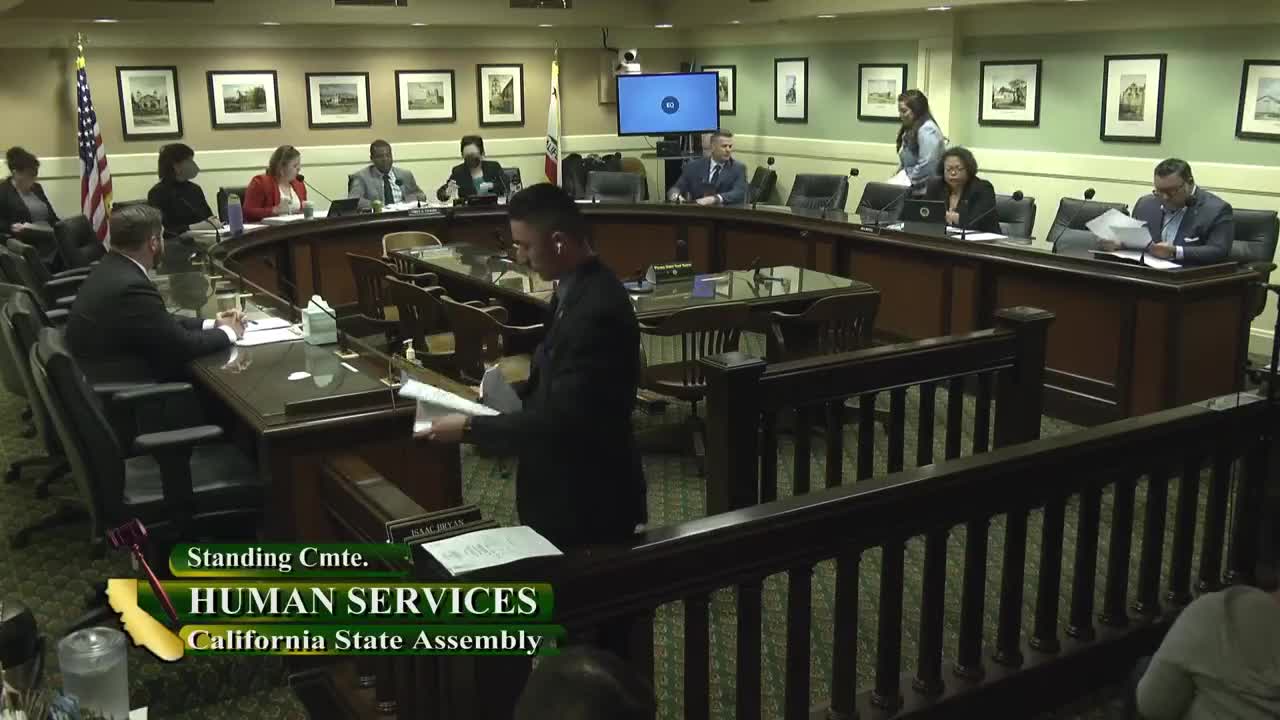 11MIN
Assembly Standing Committee on Human Services
Bill Author


