AB 634: Community colleges: career development and college preparation courses.
- Session Year: 2023-2024
- House: Assembly
- Latest Version Date: 2023-10-08
Current Status:
Passed
(2023-10-08: Chaptered by Secretary of State - Chapter 450, Statutes of 2023.)
Introduced
In Committee
First Chamber
In Committee
Second Chamber
Enacted
What does this bill do?
This bill changes which noncredit community college career development and college-prep courses can get state funding by making them eligible when they are offered both in-person and through distance education. It covers classes like basic skills, English as a second language, and short-term job-training programs that lead to certificates, better job prospects, or transfer to higher college programs.
The summary is provided by generative AI which can make mistakes. For original language, please view the details in the table below.
Existing law establishes the California Community Colleges, under the administration of the Board of Governors of the California Community Colleges, as one of the segments of public postsecondary education in this state. Existing law makes specified community college career development and college preparation courses and classes for which credit is not given, and that are offered in a sequence of courses leading to certain outcomes, eligible for state funding.
This bill would instead make the same courses and classes for which credit is not given eligible for state funding if those courses are offered in both face-to-face and distance education instructional methods.
Existing law establishes the California Community Colleges, under the administration of the Board of Governors of the California Community Colleges, as one of the segments of public postsecondary education in this state. Existing law makes specified community college career development and college preparation courses and classes for which credit is not given, and that are offered in a sequence of courses leading to certain outcomes, eligible for state funding.
This bill would instead make the same courses and classes for which credit is not given eligible for state funding if those courses and classes are offered as a complement of courses, through in both face-to-face and distance education instructional methods.
Existing law establishes the California Community Colleges, under the administration of the Board of Governors of the California Community Colleges, as one of the segments of public postsecondary education in this state. Existing law makes specified community college career development and college preparation courses and specified classes for which credit is not given given, and that are offered in a sequence of courses leading to certain outcomes, eligible for state funding.
This bill would require the board of governors to adopt regulations, no later than May 31, 2024, requiring the accounting, for purposes of state funding of community colleges, of students enrolled in certain types of courses to be conducted by positive attendance count or on a census date basis in accord with certain computational requirements. To the extent these provisions would add additional duties on community college districts, the bill would impose a state-mandated local program.The California Constitution requires the state to reimburse local agencies and school districts for certain costs mandated by the state. Statutory provisions establish procedures for making that reimbursement.This bill would provide that, if the Commission on State Mandates determines that the bill contains costs mandated by the state, reimbursement for those costs shall be made pursuant to the statutory provisions noted above.This bill would instead make the same courses and classes for which credit is not given eligible for state funding if those courses and classes are offered as a complement of courses, through both face-to-face and distance education instructional methods.
Existing law establishes the California Community Colleges, under the administration of the Board of Governors of the California Community Colleges, as one of the segments of public postsecondary education in this state. Existing law makes specified community college career development and college preparation courses and specified classes for which credit is not given eligible for state funding.
This bill would require the board of governors to adopt regulations, no later than May 31, 2024, requiring the accounting, for purposes of state funding of community colleges, of students enrolled in certain types of courses to be conducted by positive attendance count or on a census date basis in accord with certain computational requirements. To the extent these provisions would add additional duties on community college districts, the bill would impose a state-mandated local program.
The California Constitution requires the state to reimburse local agencies and school districts for certain costs mandated by the state. Statutory provisions establish procedures for making that reimbursement.
This bill would provide that, if the Commission on State Mandates determines that the bill contains costs mandated by the state, reimbursement for those costs shall be made pursuant to the statutory provisions noted above.
(a)For purposes of this chapter, the following career development and college preparation courses and classes for which credit is not given, and courses that are offered in both face-to-face and distance education instructional methods, leading to a certificate of completion, that lead to improved employability or job placement opportunities, or to a certificate of competency in a recognized career field by articulating with college-level coursework, completion of an associate of arts degree, or for transfer to a four-year degree program, are eligible for funding subject to subdivision (b):
(1)Classes and courses in elementary and secondary basic skills.
(2)Classes and courses for students, eligible for educational services in workforce preparation classes, in the basic skills of speaking, listening, reading, writing, mathematics, decisionmaking, and problem solving skills that are necessary to participate in job-specific technical training.
(3)Short-term vocational programs with high employment potential, as determined by the chancellor in consultation with the Employment Development Department using job demand data provided by that department.
(4)Classes and courses in English as a second language and vocational English as a second language.
(b)The board of governors shall adopt criteria and standards for the identification of career development and college preparation courses and the eligibility of these courses for funding, including the definition of courses eligible for funding pursuant to subdivision (a). The criteria and standards shall be based on recommendations from the chancellor, the statewide academic senate, and the statewide association of chief instructional officers. The career and college preparation courses to be identified for this higher rate of funding should include suitable courses that meet one or more of the qualifications described in subdivision (a).
(c)A district that offers courses described in subdivision (a), but that is not eligible for funding under subdivision (b), shall be eligible for funding under Section 84757.
(d)The chancellor, in consultation with the Department of Finance and the Legislative Analysts Office, shall develop specific outcome measures for career development and college preparation courses for incorporation into the annual report required by subdivision (b) of Section 84754.5.
(e)The chancellor shall prepare and submit to the Department of Finance and the Legislature, on or before November 1 of each year, a report that details, at a minimum, the following:
(1)The amount of FTES claimed by each community college district for career development and college preparation courses and classes.
(2)The specific certificate programs and course titles of career development and college preparation courses and classes receiving additional funding pursuant to this section, and the number of those courses and classes receiving additional funding.
(a)For purposes of this chapter, the following career development and college preparation courses and classes for which credit is not given, and courses that are offered as a complement of courses, through in both face-to-face and distance education instructional methods, leading to a certificate of completion, that lead to improved employability or job placement opportunities, or to a certificate of competency in a recognized career field by articulating with college-level coursework, completion of an associate of arts degree, or for transfer to a four-year degree program, are eligible for funding subject to subdivision (b):
(1)Classes and courses in elementary and secondary basic skills.
(2)Classes and courses for students, eligible for educational services in workforce preparation classes, in the basic skills of speaking, listening, reading, writing, mathematics, decisionmaking, and problem solving skills that are necessary to participate in job-specific technical training.
(3)Short-term vocational programs with high employment potential, as determined by the chancellor in consultation with the Employment Development Department using job demand data provided by that department.
(4)Classes and courses in English as a second language and vocational English as a second language.
(b)The board of governors shall adopt criteria and standards for the identification of career development and college preparation courses and the eligibility of these courses for funding, including the definition of courses eligible for funding pursuant to subdivision (a). The criteria and standards shall be based on recommendations from the chancellor, the statewide academic senate, and the statewide association of chief instructional officers. The career and college preparation courses to be identified for this higher rate of funding should include suitable courses that meet one or more of the qualifications described in subdivision (a).
(c)A district that offers courses described in subdivision (a), but that is not eligible for funding under subdivision (b), shall be eligible for funding under Section 84757.
(d)The chancellor, in consultation with the Department of Finance and the Legislative Analysts Office, shall develop specific outcome measures for career development and college preparation courses for incorporation into the annual report required by subdivision (b) of Section 84754.5.
(e)The chancellor shall prepare and submit to the Department of Finance and the Legislature, on or before November 1 of each year, a report that details, at a minimum, the following:
(1)The amount of FTES claimed by each community college district for career development and college preparation courses and classes.
(2)The specific certificate programs and course titles of career development and college preparation courses and classes receiving additional funding pursuant to this section, and the number of those courses and classes receiving additional funding.
(a)For purposes of this chapter, the following career development and college preparation courses and classes for which credit is not given, and that are offered as a complement of courses, through both face-to-face and distance education instructional methods, leading to a certificate of completion, that lead to improved employability or job placement opportunities, or to a certificate of competency in a recognized career field by articulating with college-level coursework, completion of an associate of arts degree, or for transfer to a four-year degree program, are eligible for funding subject to subdivision (b):
(1)Classes and courses in elementary and secondary basic skills.
(2)Classes and courses for students, eligible for educational services in workforce preparation classes, in the basic skills of speaking, listening, reading, writing, mathematics, decisionmaking, and problem solving skills that are necessary to participate in job-specific technical training.
(3)Short-term vocational programs with high employment potential, as determined by the chancellor in consultation with the Employment Development Department using job demand data provided by that department.
(4)Classes and courses in English as a second language and vocational English as a second language.
(b)The board of governors shall adopt criteria and standards for the identification of career development and college preparation courses and the eligibility of these courses for funding, including the definition of courses eligible for funding pursuant to subdivision (a). The criteria and standards shall be based on recommendations from the chancellor, the statewide academic senate, and the statewide association of chief instructional officers. The career and college preparation courses to be identified for this higher rate of funding should include suitable courses that meet one or more of the qualifications described in subdivision (a).
(c)A district that offers courses described in subdivision (a), but that is not eligible for funding under subdivision (b), shall be eligible for funding under Section 84757.
(d)The chancellor, in consultation with the Department of Finance and the Legislative Analysts Office, shall develop specific outcome measures for career development and college preparation courses for incorporation into the annual report required by subdivision (b) of Section 84754.5.
(e)The chancellor shall prepare and submit to the Department of Finance and the Legislature, on or before November 1 of each year, a report that details, at a minimum, the following:
(1)The amount of FTES claimed by each community college district for career development and college preparation courses and classes.
(2)The specific certificate programs and course titles of career development and college preparation courses and classes receiving additional funding pursuant to this section, as well as and the number of those courses and classes receiving additional funding.
(f)(1)Accounting of FTES for students enrolled in term-length career development and college preparation courses that meet one or more of the qualifications described in subdivision (a) shall be conducted, for courses offered pursuant to subdivision (a) that are not open entry-open exit courses, on a census date basis or a positive attendance count basis pursuant to the following:(A)For courses scheduled coterminously with the term, the units of FTES shall be computed by dividing actual student contact hours of attendance by 525, or by multiplying the weekly number of student contact hours of students in active enrollment as of Monday of the week nearest to one-fifth of the length of the term, unless another week is specified by the chancellor to incorporate past practice, by the term length multiplier, and dividing by 525.(B)For courses scheduled to meet for five or more days and scheduled regularly with respect to the number of hours during each scheduled day, or scheduled during the summer or other intersession, but not scheduled coterminously with the colleges primary term, the units of FTES, exclusive of independent study and cooperative work experience education courses, shall be computed by dividing actual student contact hours of attendance by 525, or by multiplying the daily student contact hours of students in active enrollment as of the census day nearest to one-fifth of the length of the course by the number of days the course is scheduled to meet, and dividing by 525.(2)The board of governors shall adopt regulations to implement this subdivision no later than May 31, 2024.(3)As used in this subdivision:(A)Student contact hour means a scheduled class period in which one student is enrolled. A class period for this purpose is not less than 50 minutes nor more than 60 minutes.(B)Term length multiplier means the number of weeks in which at least three days of instruction or examination in term-length courses of the community college are scheduled.SEC. 2.If the Commission on State Mandates determines that this act contains costs mandated by the state, reimbursement to local agencies and school districts for those costs shall be made pursuant to Part 7 (commencing with Section 17500) of Division 4 of Title 2 of the Government Code.(a)For purposes of this chapter, the following career development and college preparation courses and classes for which credit is not given, and that are offered in as a sequence of courses complement of courses, through both face-to-face and distance education instructional methods, leading to a certificate of completion, that lead to improved employability or job placement opportunities, or to a certificate of competency in a recognized career field by articulating with college-level coursework, completion of an associate of arts degree, or for transfer to a four-year degree program, are eligible for funding subject to subdivision (b):
(1)Classes and courses in elementary and secondary basic skills.
(2)Classes and courses for students, eligible for educational services in workforce preparation classes, in the basic skills of speaking, listening, reading, writing, mathematics, decisionmaking, and problem solving skills that are necessary to participate in job-specific technical training.
(3)Short-term vocational programs with high employment potential, as determined by the chancellor in consultation with the Employment Development Department utilizing using job demand data provided by that department.
(4)Classes and courses in English as a second language and vocational English as a second language.
(b)The board of governors shall adopt criteria and standards for the identification of career development and college preparation courses and the eligibility of these courses for funding, including the definition of courses eligible for funding pursuant to subdivision (a). The criteria and standards shall be based on recommendations from the chancellor, the statewide academic senate, and the statewide association of chief instructional officers. The career and college preparation courses to be identified for this higher rate of funding should include suitable courses that meet one or more of the qualifications described in subdivision (a).
(c)A district that offers courses described in subdivision (a), but that is not eligible for funding under subdivision (b), shall be eligible for funding under Section 84757.
(d)The chancellor, in consultation with the Department of Finance and the Office of the Legislative Analyst, Legislative Analysts Office, shall develop specific outcome measures for career development and college preparation courses for incorporation into the annual report required by subdivision (b) of Section 84754.5.
(e)The chancellor shall prepare and submit to the Department of Finance and the Legislature, on or before November 1 of each year, a report that details, at a minimum, the following:
(1)The amount of FTES claimed by each community college district for career development and college preparation courses and classes.
(2)The specific certificate programs and course titles of career development and college preparation courses and classes receiving additional funding pursuant to this section, as well as the number of those courses and classes receiving additional funding.
(f)(1)Accounting of FTES for students enrolled in term-length career development and college preparation courses that meet one or more of the qualifications described in subdivision (a) shall be conducted, for courses offered pursuant to subdivision (a) that are not open entry-open exit courses, on a census date basis or a positive attendance count basis pursuant to the following:
(A)For courses scheduled coterminously with the term, the units of FTES shall be computed by dividing actual student contact hours of attendance by 525, or by multiplying the weekly number of student contact hours of students in active enrollment as of Monday of the week nearest to one-fifth of the length of the term, unless another week is specified by the chancellor to incorporate past practice, by the term length multiplier, and dividing by 525.
(B)For courses scheduled to meet for five or more days and scheduled regularly with respect to the number of hours during each scheduled day, or scheduled during the summer or other intersession, but not scheduled coterminously with the colleges primary term, the units of FTES, exclusive of independent study and cooperative work experience education courses, shall be computed by dividing actual student contact hours of attendance by 525, or by multiplying the daily student contact hours of students in active enrollment as of the census day nearest to one-fifth of the length of the course by the number of days the course is scheduled to meet, and dividing by 525.
(2)The board of governors shall adopt regulations to implement this subdivision no later than May 31, 2024.
(3)As used in this subdivision:
(A)Student contact hour means a scheduled class period in which one student is enrolled. A class period for this purpose is not less than 50 minutes nor more than 60 minutes.
(B)Term length multiplier means the number of weeks in which at least three days of instruction or examination in term-length courses of the community college are scheduled.
SEC. 2.If the Commission on State Mandates determines that this act contains costs mandated by the state, reimbursement to local agencies and school districts for those costs shall be made pursuant to Part 7 (commencing with Section 17500) of Division 4 of Title 2 of the Government Code.
|
Date
|
Status
|
|---|---|
| Oct 8, 2023 | Chaptered by Secretary of State - Chapter 450, Statutes of 2023. |
| Oct 8, 2023 | Approved by the Governor. |
| Sep 21, 2023 | Enrolled and presented to the Governor at 3:30 p.m. |
| Sep 14, 2023 | Senate amendments concurred in. To Engrossing and Enrolling. (Ayes 80. Noes 0. Page 3548.). |
| Sep 13, 2023 | In Assembly. Concurrence in Senate amendments pending. |
| Sep 13, 2023 | Read third time. Passed. Ordered to the Assembly. (Ayes 39. Noes 0. Page 2766.). |
| Sep 8, 2023 | Ordered to special consent calendar. |
| Sep 5, 2023 | Read second time. Ordered to third reading. |
| Sep 1, 2023 | Read second time and amended. Ordered returned to second reading. |
| Sep 1, 2023 | From committee: Amend, and do pass as amended. (Ayes 7. Noes 0.) (September 1). |
| Jun 26, 2023 | In committee: Referred to APPR. suspense file. |
| Jun 14, 2023 | From committee chair, with author's amendments: Amend, and re-refer to committee. Read second time, amended, and re-referred to Com. on APPR. |
| Jun 7, 2023 | From committee: Do pass and re-refer to Com. on APPR with recommendation: To Consent Calendar. (Ayes 7. Noes 0.) (June 7). Re-referred to Com. on APPR. |
| May 31, 2023 | Referred to Com. on ED. |
| May 23, 2023 | In Senate. Read first time. To Com. on RLS. for assignment. |
| May 22, 2023 | Read third time. Passed. Ordered to the Senate. (Ayes 76. Noes 0. Page 1711.) |
| May 18, 2023 | Read second time. Ordered to third reading. |
| May 18, 2023 | From committee: Do pass. (Ayes 15. Noes 0.) (May 18). |
| Apr 19, 2023 | In committee: Set, first hearing. Referred to APPR. suspense file. |
| Mar 22, 2023 | From committee: Do pass and re-refer to Com. on APPR. (Ayes 10. Noes 0.) (March 21). Re-referred to Com. on APPR. |
| Feb 17, 2023 | Referred to Com. on HIGHER ED. |
| Feb 10, 2023 | From printer. May be heard in committee March 12. |
| Feb 9, 2023 | Read first time. To print. |
|
Date
|
Description
|
Location
|
Votes
|
|
|---|---|---|---|---|
| Sep 14, 2023 | AB 634 Ward Concurrence in Senate Amendments | Assembly Floor |
Passed |
|
| Sep 13, 2023 | Special Consent AB634 Ward By Smallwood-Cuevas | Senate Floor |
Passed |
|
| Sep 1, 2023 | Do pass as amended | Senate Standing Committee on Appropriations |
Passed |
|
| Jun 26, 2023 | Placed on suspense file | Senate Standing Committee on Appropriations |
Passed |
|
| Jun 7, 2023 | Do pass, but first be re-referred to the Committee on [Appropriations] with the recommendation: To Consent Calendar | Senate Standing Committee on Education |
Passed |
|
| May 22, 2023 | AB 634 Ward Assembly Third Reading | Assembly Floor |
Passed |
|
| May 18, 2023 | Do pass. | Assembly Standing Committee on Appropriations |
Passed |
|
| Mar 21, 2023 | Do pass and be re-referred to the Committee on [Appropriations] | Assembly Standing Committee on Higher Education |
Passed |
This list shows positions taken on this bill by organizations on the date displayed, which is linked to the original source.
Positions by individuals are not included.
|
Organization
|
Position
|
Date
|
|---|---|---|
| Association Of Community And Continuing Education | ** Support | |
| California Community College Association For Occupational Education | * Support | Mar 21, 2023 |
| Cerritos College | ** Support | |
| Citrus College | ** Support | |
| Citrus Community College | ** Support | |
| Community College League of California | * Support | Mar 21, 2023 |
| Contra Costa Community College District | ** Support | |
| Faculty Association Of California Community Colleges | ** Support | |
| Kern Community College District | ** Support | |
| Los Angeles College Faculty Guild | ** Support | Mar 21, 2023 |
| Los Angeles College Faculty Guild | ** Support | |
| Los Angeles College Faculty Guild, Local 1521 | ** Support | |
| Mt. San Antonio College | ** Support | |
| North Orange Community College District | ** Support | |
| Peralta Community College District | ** Support | |
| San Diego Community College District | ** Support | |
| San Diego Unified School District | ** Support | |
| W Strategies LLC | * Support | Mar 21, 2023 |
| Yuba Community College District | ** Support |
CONCURRENCE IN SENATE AMENDMENTS
CSA1 Bill Id:AB 634
Author:(Ward)
As Amended Ver:September 1, 2023
Majority vote
SUMMARY
Specifies that California Community College (CCC) Career Development and College Preparation (CDCP) program courses and classes, for which credit is not given, are eligible for state funding if those courses are offered in both face-to-face and distance education instructional methods.
Senate Amendments
- Require the CCC Chancellor, in consultation with the Department of Finance and the Legislative Analyst's Office (LAO), to develop specific outcome measures for CDCP courses for incorporation into an annual report, as specified.
- Require the CCC Chancellor to prepare and submit to the Department of Finance and the Legislature, on or before November 1 of each year, a report that details, at a minimum, the following:
- The amount of FTES claimed by each community college district for CDCP courses and classes; and,
- The specific certificate programs and course titles of career CDCP courses and classes receiving additional funding, as specified, and the number of those courses and classes receiving additional funding.
- Provide that the same courses and classes for which credit is not given are eligible for state funding if those courses are offered in both face-to-face and distance education instructional methods.
- Specify the following CDCP classes and courses that are eligible for funding, as specified:
- Classes and courses in elementary and secondary basic skills;
- Classes and courses for students, eligible for educational services in workforce preparation classes, in the basic skills of speaking, listening, reading, writing, mathematics, decisionmaking, and problem solving skills that are necessary to participate in job-specific technical training;
- Short-term vocational programs with high employment potential, as determined by the chancellor in consultation with the Employment Development Department using job demand data provided by that department; and,
- Classes and courses in English as a second language and vocational English as a second language.
- Requires the CCC the Board of Governors to adopt criteria and standards for the identification of CDCP courses and the eligibility of these courses for funding, including the definition of courses eligible.
- Make clarifying and technical amendments.
COMMENTS
Background on credit, noncredit and CDCP. According to the LAO, community colleges in general, fulfill their mission of offering the first two years of college instruction in academic and vocational subjects through credit instruction, whereas they use noncredit instruction to address much of their precollegiate adult education mission. Regulations, however, permit colleges to offer some precollegiate instruction on a credit basis, including some ESL, secondary English and math courses, and many vocational education courses.
Though CCC credit and noncredit instruction overlap, they differ in certain ways. For example, credit courses may be in any academic or vocational subject, whereas noncredit instruction is limited to ten categories. Additionally, noncredit courses may be open-entry, open-exit. Students are charged enrollment fees only for credit courses, and the state funds some noncredit courses at a lower rate than credit courses and calculates attendance differently.
Credit instruction, which all CCCs offer, accounts for 94% of FTES enrollment and noncredit instruction accounts for 5%. To note, the remaining 1% is tutoring. As aforementioned, state law permits CCCs to offer noncredit courses in ten instructional areas. Four of these instructional areas are eligible for the CDCP designation: elementary and secondary education, ESL, short‑term vocational programs, and workforce preparation (such as communication skills). In addition to being in an eligible instructional area, a course must be offered as part of a sequence of related courses leading to a noncredit certificate (such as certificates in basic reading skills and healthcare careers preparation) to qualify as CDCP.
The state provides CCCs funding for instructing CCC students at three different rates. For the 2020-21 academic year, the rate are as follows: (a) $3,381 for noncredit courses per-student; (b) $5,622 for enhanced noncredit courses per student, also known as "career development and college preparation" courses; and (c) $4,009 for credit courses per student, with additional funding of up to $1,648 based on student demographics and student achievement. (Noncredit courses typically are pre-collegiate-level courses in basic math and English skills and English in a second language. Enhanced noncredit courses typically are pre-collegiate-level courses in short-term vocational programs and other programs leading to certificates or transfer. Credit courses are collegiate-level courses that lead to an associate's degree or transfer to a four-year university.)
Census date versus positive attendance. The number of FTES is a main component for determining CCC funding. The FTES represents the number of enrolled students whom attend 15 hours each week during the semester (or a group of students who, together, attend 15 hours each week). In an academic year, these hypothetical full-time students generate 525 student contact hours each. Even though not all students are full-time and not all classes are scheduled for the same number of weeks, FTES provides a unit of measure applicable to all classes and calendar types and is used for funding calculations only.
However, the way in which FTES is calculated depends on the course section because attendance accounting procedures vary. The meeting schedule of the course section determines the procedure. Typically, attendance is determined on a weekly census basis, meaning student attendance is measured on a single census date in the term. For courses that are irregularly scheduled, including noncredit courses, a positive attendance basis is used, meaning the classroom or lab hours that students attend must be tracked and reported.
Colleges use "census day attendance accounting" rules to generate funding for all credit CCC course enrollments. For example, if ten students are enrolled in a CCC credit course but only eight students attend the course on average, the CCC still receives funding for ten students. The rationale for this approach is that there are fixed costs associated with offering a course, regardless of how many students show up for every class. Moreover, this method is easier than positive attendance to administer because faculty do not have to record and report attendance for every class period.
According to the Author
"Under current law, community college CDCP courses are funded based on positive attendance. In contrast, community college credit courses are funded based on a census date, which recognizes that there are up-front costs to offering a course regardless of whether or not all students show up daily."
The author states, "While CDCP noncredit courses and credit courses receive the same funding per full-time student, CDCP noncredit courses generate less funding than credit courses because of attendance recording requirements."
Further, the author contends that, "AB 634 will align funding for noncredit CDCP courses by authorizing the attendance of those courses to be taken according to a census date rather than on positive attendance. This measure will accurately compensate community colleges for courses that are essential to California's workforce and minority communities."
Arguments in Support
According to the Faculty Association of California Community College (FACCC), "The bill would change student accounting practices for Managed Enrollment (ME) Career Development and College Preparation Courses (CDCP) (certain noncredit courses) by allowing attendance to be counted using a census date model. Noncredit is now more important than ever, as our State attempts to aid our most vulnerable community members during the COVID-19 pandemic. Noncredit offers low-cost and short-term vocational training for re-employment. Noncredit programs are typically the only alternative for underrepresented, disproportionately impacted students to train for immediate employment in a field with career advancement or transition to college. Noncredit short-term programs allow students to enter the workplace and immediately earn wages while providing a future career path that builds upon the entry level skills attained."
Arguments in Opposition
None on file.
FISCAL COMMENTS
According to the Senate Committee Appropriations, the bill could create additional, unknown Proposition 98 General Fund costs for community college districts to update course catalogs, curriculum, and other policies related to CDCP programs. There could also be additional one-time General Fund costs of $37,000 to $117,000 for the Chancellor's Office to update Title 5 regulations, make the necessary changes to the Program and Course Approval Handbook, issue guidance, and provide technical assistance.
VOTES:
ASM HIGHER EDUCATION: 10-0-2
YES: Mike Fong, Ta, Addis, Arambula, Gabriel, Irwin, Ortega, Sanchez, Santiago, Wallis
ABS, ABST OR NV: Low, Weber
ASM APPROPRIATIONS: 15-0-1
YES: Holden, Megan Dahle, Bryan, Calderon, Wendy Carrillo, Dixon, Mike Fong, Hart, Lowenthal, Mathis, Papan, Pellerin, Sanchez, Weber, Ortega
ABS, ABST OR NV: Robert Rivas
ASSEMBLY FLOOR: 76-0-4
YES: Addis, Aguiar-Curry, Alanis, Alvarez, Arambula, Bains, Bauer-Kahan, Bennett, Berman, Boerner, Bonta, Bryan, Calderon, Juan Carrillo, Wendy Carrillo, Cervantes, Connolly, Megan Dahle, Davies, Dixon, Essayli, Flora, Mike Fong, Vince Fong, Friedman, Gabriel, Gallagher, Garcia, Gipson, Grayson, Haney, Hart, Holden, Hoover, Irwin, Jackson, Jones-Sawyer, Kalra, Lee, Low, Lowenthal, Maienschein, Mathis, McCarty, McKinnor, Muratsuchi, Stephanie Nguyen, Ortega, Pacheco, Papan, Jim Patterson, Joe Patterson, Pellerin, Petrie-Norris, Ramos, Reyes, Luz Rivas, Robert Rivas, Rodriguez, Blanca Rubio, Sanchez, Santiago, Schiavo, Soria, Ta, Ting, Valencia, Villapudua, Waldron, Wallis, Ward, Weber, Wilson, Wood, Zbur, Rendon
ABS, ABST OR NV: Chen, Lackey, Quirk-Silva, Wicks
SENATE FLOOR: 39-0-1
YES: Allen, Alvarado-Gil, Archuleta, Ashby, Atkins, Becker, Blakespear, Bradford, Cortese, Dahle, Dodd, Durazo, Eggman, Glazer, Gonzalez, Grove, Hurtado, Jones, Laird, Limón, McGuire, Menjivar, Min, Newman, Nguyen, Niello, Ochoa Bogh, Padilla, Portantino, Roth, Rubio, Seyarto, Skinner, Smallwood-Cuevas, Stern, Umberg, Wahab, Wiener, Wilk
ABS, ABST OR NV: Caballero
UPDATED
VERSION: September 1, 2023
CONSULTANT: Jeanice Warden / HIGHER ED. / (916) 319-3960 FN: 0002324
SENATE RULES COMMITTEE Office of Senate Floor Analyses (916) 651-1520 Fax: (916) 327-4478 | AB 634 |
THIRD READING
Bill No: AB 634
Author: Ward (D)
Amended: 9/1/23 in Senate
Vote: 21
SENATE EDUCATION COMMITTEE: 7-0, 6/7/23
AYES: Newman, Ochoa Bogh, Cortese, Glazer, McGuire, Smallwood-Cuevas, Wilk
SENATE APPROPRIATIONS COMMITTEE: 7-0, 9/1/23
AYES: Portantino, Jones, Ashby, Bradford, Seyarto, Wahab, Wiener
ASSEMBLY FLOOR: 76-0, 5/22/23 - See last page for vote
SUBJECT: Community colleges: career development and college preparation courses
SOURCE: San Diego Community College District
DIGEST:
This bill specifies that community college Career Development and College Preparation (CDCP) program courses and classes, for which credit is not given, are eligible for state funding if those courses are offered in both face-to-face and distance education instructional methods.
ANALYSIS:
Existing law:
- Requires the California community colleges (CCC) Board of Governors (BOG) develop criteria and standards for the purpose of making the annual budget request for the CCC to the Governor and the Legislature, and for the purpose of allocating the state general apportionment revenues. Stipulates the BOG shall develop the criteria and standards within the following statewide minimum requirements:
- The calculations of each community college district’s (CCDs) revenue level for each fiscal year shall be based on the level of general apportionment revenues, state and local, the community college district received for the prior year plus any amount attributed to a deficit from the adopted standards to be developed pursuant to this section, with revenue adjustments being made for increases or decreases in full-time equivalent students (FTES), for equalization of funding per credit FTES, for necessary alignment of funding per FTES between credit and noncredit programs, for inflation, and for other purposes authorized by law; and,
- Commencing with the 2006–07 fiscal year, the funding mechanism developed shall recognize the need for CCDs to receive an annual allocation based on the number of colleges and comprehensive centers in the community college district. In addition to this basic allocation, the marginal amount of credit revenue allocated per FTES shall be funded at a rate not less than $4,367, as adjusted for the change in the cost of living in subsequent annual budget acts. (Education Code (EC) Section 84750.5)
- Funds noncredit instruction, except for CDCP courses, at an established rate per FTES and adjusts the rate annually for the change in the cost of living. (EC Section 84750.5(d)(3))
- Provides that CDCP courses, which are also noncredit, shall be funded at the same level as the credit rate, as established pursuant to all of (1) above. (EC Section 84750(d)(4)(A)(ii))
- Stipulates that the following courses and classes, for which no credit is given, and that are offered in a sequence of courses leading to a certificate of completion, that lead to improved employability or job placement opportunities, or to a certificate of competency in a recognized career field by providing a transition to college-level coursework, completion of an associate of arts degree, or for transfer to a four-year degree program, and that meet funding criteria established by the CCC BOG, shall be eligible for funding, as CDCP courses, at the credit rate as established in (3) above:
- Classes and courses in elementary and secondary basic skills;
- Classes and courses for students, eligible for educational services in workforce preparation classes, in the basic skills of speaking, listening, reading, writing, mathematics, decision making, and problem-solving skills that are necessary to participate in job-specific technical training;
- Short-term vocational programs with high-employment potential, as determined by the chancellor in consultation with the Employment Development Department utilizing job demand data provided by that department; and,
- Classes and courses in English as a second language (ESL) and vocational ESL. (EC Section 84760.5)
To note, CCDs offering courses described above, but not eligible for funding at the credit rate are eligible for funding at the noncredit rate per (2) above.
- Encourages CCDs to expedite the development of targeted credit or noncredit short-term workforce training programs, in accordance with all of the following:
- Short-term workforce training programs that focus on economic recovery and result in job placement;
- Short-term workforce training programs that focus on the reskilling and upskilling of individuals; and,
- Short-term workforce training programs that have at least one proven employer partner, demonstrate job vacancies, and submit verification to the chancellor’s office.
- Specifies that verification includes the projected number of individuals served, completion rates, and job placement rates. Further, states Legislative intent that, where possible, short-term noncredit workforce training programs should be utilized to be responsive to the workforce training needs of employers, with the ability to transition to credit or noncredit courses and programs upon successful completion of a program established. Colleges are encouraged to develop workforce training that utilizes competency-based approaches, and applies credit for prior learning where possible. (EC Section 88821)
- Requires districts to compute FTES units for credit courses scheduled coterminously with the term by multiplying the student contact hours of active enrollment as of Monday of the week nearest to one-fifth of the length of the term (the census date) by the term length multiplier, and dividing by 525. (Title 5, California Code of Regulations (CCR) Section 58003.1(b))
- Requires districts to compute FTES units for credit courses scheduled to meet for five or more days and scheduled regularly with respect to the number of hours during each scheduled day, but not scheduled coterminously with the college's primary term, or scheduled during the summer or other intersession, by multiplying the daily student contact hours of active enrollment as of the census days nearest to one fifth of the length of the course by the number of days the course is scheduled to meet, and dividing by 525. (Title 5, CCR Section 58003(c))
- Authorizes a district, in lieu of applying (6) or (7) above, to use positive attendance count, i.e. to compute FTES units for any credit course by dividing the actual student contact hours of attendance by 525. (Title 5, CCR Section 58003(g))
- Requires that the FTES units, for any noncredit course, except for distance education courses, or for any open-exit, open-entry course, be determined using a positive attendance count. (Title 5, CCR Section 58006)
This bill specifies that community college CDCP program courses and classes, for which credit is not given, are eligible for state funding if those courses are offered in both face-to-face and distance education instructional methods.
Comments
- Need for the bill. According to the author, “Under current law, community college CDCP courses are funded based on positive attendance. In contrast, community college credit courses are funded based on a census date, which recognizes that there are up-front costs to offering a course regardless of whether or not all students show up daily.”
The author states, “While CDCP noncredit courses and credit courses receive the same funding per full-time student, CDCP noncredit courses generate less funding than credit courses because of attendance recording requirements.”
Further, the author contends that, “AB 634 will align funding for noncredit CDCP courses by authorizing the attendance of those courses to be taken according to a census date rather than on positive attendance. This measure will accurately compensate community colleges for courses that are essential to California's workforce and minority communities.”
- Background on credit, noncredit, and CDCP. According to the Legislative Analyst’s Office, community colleges in general, fulfill their mission of offering the first two years of college instruction in academic and vocational subjects through credit instruction, whereas they use noncredit instruction to address much of their precollegiate adult education mission. Regulations, however, permit colleges to offer some precollegiate instruction on a credit basis, including some ESL, secondary English and math courses, and many vocational education courses.
Though CCC credit and noncredit instruction overlap, they differ in certain ways. For example, credit courses may be in any academic or vocational subject, whereas noncredit instruction is limited to ten categories. Additionally, noncredit courses may be open-entry, open-exit. Students are charged enrollment fees only for credit courses, and the state funds some noncredit courses at a lower rate than credit courses and calculates attendance differently.
Credit instruction, which all CCCs offer, accounts for 94% of FTES enrollment and noncredit instruction accounts for 5%. To note, the remaining 1% is tutoring. As aforementioned, state law permits CCCs to offer noncredit courses in ten instructional areas. Four of these instructional areas are eligible for the CDCP designation: elementary and secondary education, ESL, short‑term vocational programs, and workforce preparation (such as communication skills). In addition to being in an eligible instructional area, a course must be offered as part of a sequence of related courses leading to a noncredit certificate (such as certificates in basic reading skills and healthcare careers preparation) to qualify as CDCP.
The state provides CCCs funding for instructing CCC students at three different rates. For the 2020-21 academic year, the rate are as follows: (a) $3,381 for noncredit courses per-student; (b) $5,622 for enhanced noncredit courses per student, also known as “career development and college preparation” courses; and (c) $4,009 for credit courses per student, with additional funding of up to $1,648 based on student demographics and student achievement. Noncredit courses typically are pre-collegiate-level courses in basic math and English skills and English as a second language. Enhanced noncredit courses typically are pre-collegiate-level courses in short-term vocational programs and other programs leading to certificates or transfer. Credit courses are collegiate-level courses that lead to an associate’s degree or transfer to a four-year university.
- Funding calculations depend on attendance accounting procedure used. One of the main components for calculating community college funding is determining the number of FTES. The FTES represents the number of enrolled students whom attend 15 hours each week during the semester (or a group of students who, together, attend 15 hours each week). In an academic year, these hypothetical full-time students generate 525 student contact hours each. Even though not all students are full-time and not all classes are scheduled for the same number of weeks, FTES provides a unit of measure applicable to all classes and calendar types and is used for funding calculations only.
The way in which FTES is calculated depends on the course section, as the attendance accounting procedures can vary. The meeting schedule of the course section determines the procedure. Typically, attendance is determined on a weekly census basis, meaning student attendance is measured on a single census date in the term. For courses that are irregularly scheduled, including noncredit courses, a positive attendance basis is used, meaning the actual hours that students attend must be tracked and reported.
FISCAL EFFECT: Appropriation: No Fiscal Com.: Yes Local: No
According to the Senate Appropriations Committee, the bill could create additional, unknown Proposition 98 General Fund costs for community college districts to update course catalogs, curriculum, and other policies related to CDCP programs. There could also be additional one-time General Fund costs of $37,000 to $117,000 for the Chancellor’s Office to update Title 5 regulations, make the necessary changes to the Program and Course Approval Handbook, issue guidance, and provide technical assistance.
SUPPORT: (Verified 9/1/23)
San Diego Community College District (source)
Association of Community and Continuing Education
Cerritos College
Citrus College
Contra Costa Community College District
Faculty Association of California Community Colleges
Kern Community College District
Los Angeles College Faculty Guild
Mt. San Antonio College
North Orange Community College District
Peralta Community College District
San Diego Unified School District
Yuba Community College District
OPPOSITION: (Verified 9/1/23)
None received
ASSEMBLY FLOOR: 76-0, 5/22/23
AYES: Addis, Aguiar-Curry, Alanis, Alvarez, Arambula, Bains, Bauer-Kahan, Bennett, Berman, Boerner, Bonta, Bryan, Calderon, Juan Carrillo, Wendy Carrillo, Cervantes, Connolly, Megan Dahle, Davies, Dixon, Essayli, Flora, Mike Fong, Vince Fong, Friedman, Gabriel, Gallagher, Garcia, Gipson, Grayson, Haney, Hart, Holden, Hoover, Irwin, Jackson, Jones-Sawyer, Kalra, Lee, Low, Lowenthal, Maienschein, Mathis, McCarty, McKinnor, Muratsuchi, Stephanie Nguyen, Ortega, Pacheco, Papan, Jim Patterson, Joe Patterson, Pellerin, Petrie-Norris, Ramos, Reyes, Luz Rivas, Robert Rivas, Rodriguez, Blanca Rubio, Sanchez, Santiago, Schiavo, Soria, Ta, Ting, Valencia, Villapudua, Waldron, Wallis, Ward, Weber, Wilson, Wood, Zbur, Rendon
NO VOTE RECORDED: Chen, Lackey, Quirk-Silva, Wicks
Prepared by: Ian Johnson / ED. / (916) 651-4105
9/2/23 14:46:01
**** END ****
SENATE COMMITTEE ON
Senator Anthony Portantino, Chair
2023 - 2024 Regular Session
AB 634 (Ward) - Community colleges: career development and college preparation courses
Version: | Policy Vote: |
Urgency: | Mandate: |
Hearing Date: | Consultant: |
Bill Summary:
This bill replaces the term “sequence of courses” with “complement of courses” as they relate to noncredit courses for Career Development and College Preparation (CDCP) programs.
*********** ANALYSIS ADDENDUM – SUSPENSE FILE ***********
The following information is revised to reflect amendments
adopted by the committee on September 1, 2023
Fiscal Impact:
The bill could create additional, unknown Proposition 98 General Fund costs for community college districts to update course catalogs, curriculum, and other policies related to CDCP programs. There could also be additional one-time General Fund costs of $37,000 to $117,000 for the Chancellor’s Office to update Title 5 regulations, make the necessary changes to the Program and Course Approval Handbook, issue guidance, and provide technical assistance.
Author Amendments:
Provide that the same courses and classes for which credit is not given are eligible for state funding if those courses are offered in both face-to-face and distance education instructional methods.
-- END --
SENATE COMMITTEE ON
Senator Anthony Portantino, Chair
2023 - 2024 Regular Session
AB 634 (Ward) - Community colleges: career development and college preparation courses
Version: | Policy Vote: |
Urgency: | Mandate: |
Hearing Date: | Consultant: |
Bill Summary:
This bill replaces the term “sequence of courses” with “complement of courses” as they relate to noncredit courses for Career Development and College Preparation (CDCP) programs.
Fiscal Impact:
The Chancellor’s Office indicates that to the extent community college districts restructure their CDCP programs to offer courses as a complement of course instead of sequenced, this bill will create additional costs for districts to update course catalogs, curriculum, and other policies related to CDCP programs. These costs would range from $1,200 to $2,900 per district, or between $86,400 and $208,800 across 72 districts.
The Chancellor’s Office also estimates one-time General Fund workload costs of between $37,000 and $117,000 to update Title 5 regulations, make the necessary changes to the Program and Course Approval Handbook, issue guidance, and provide technical assistance.
Background:
Existing law makes specified community college CDCP courses and classes for which credit is not given, and that are offered in a sequence of courses leading to certain outcomes, eligible for state funding. Though CCC credit and noncredit instruction overlap, they differ in certain ways. For example, credit courses may be in any academic or vocational subject, whereas noncredit instruction is limited to ten categories. Additionally, noncredit courses may be open-entry, open-exit. Students are charged enrollment fees only for credit courses, and the state funds some noncredit courses at a lower rate than credit courses and calculates attendance differently. State law permits CCCs to offer noncredit courses in ten instructional areas. Four of these instructional areas are eligible for the CDCP designation: elementary and secondary education, ESL, short‑term vocational programs, and workforce preparation (such as communication skills). In addition to being in an eligible instructional area, a course must be offered as part of a sequence of related courses leading to a noncredit certificate (such as certificates in basic reading skills and healthcare careers preparation) to qualify as CDCP.
Proposed Law:
This bill would instead make the same courses and classes for which credit is not given eligible for state funding if those courses and classes are offered as a complement of courses, through both face-to-face and distance education instructional methods.
Related Legislation:
AB 1727 (Weber, 2019) proposed to allow the funding determination for career development and college preparation (CDCP) courses to be calculated based on either ongoing attendance counts or a census date count. The bill was vetoed by Governor Newsom, who stated:
“This bill requires the Board of Governors of the California Community Colleges to adopt regulations that authorize the use of a census date attendance accounting method to compute full-time equivalent students for certain noncredit courses known as Career Development and College Preparation courses. This bill changes how enrollment in these courses is tracked and would likely increase costs by tens of millions of dollars. For this reason, I am unable to sign this bill.”
Staff Comments:
The state provides CCCs funding for instructing CCC students at three different rates. For the 2020-21 academic year, the rate are as follows: (a) $3,381 for noncredit courses per-student; (b) $5,622 for enhanced noncredit courses per student, also known as “career development and college preparation” courses; and (c) $4,009 for credit courses per student, with additional funding of up to $1,648 based on student demographics and student achievement. Noncredit courses typically are pre-collegiate-level courses in basic math and English skills and English as a second language. Enhanced noncredit courses typically are pre-collegiate-level courses in short-term vocational programs and other programs leading to certificates or transfer. Credit courses are collegiate-level courses that lead to an associate’s degree or transfer to a four-year university.
This bill would instead make the same courses and classes for which credit is not given eligible for state funding if those courses and classes are offered as a complement of courses, through both face-to-face and distance education instructional methods.
-- END --
SENATE COMMITTEE ON EDUCATION
Senator Josh Newman, Chair
2023 - 2024 Regular
Bill No: AB 634 Hearing Date: June 7, 2023
Author: | |||
Version: | February 9, 2023 | ||
Urgency: | No | Fiscal: | Yes |
Consultant: | Ian Johnson | ||
Subject: Community colleges: career development and college preparation courses.
SUMMARY
This bill requires the Board of Governors (BOG) of the California Community Colleges (CCCs) to adopt regulations allowing the funding determination for career development and college preparation (CDCP) courses to be calculated based on either ongoing attendance counts or a census date count, as specified.
BACKGROUND
Existing law:
- Requires the CCC BOG develop criteria and standards for the purpose of making the annual budget request for the CCC to the Governor and the Legislature, and for the purpose of allocating the state general apportionment revenues. Stipulates the BOG shall develop the criteria and standards within the following statewide minimum requirements:
- The calculations of each community college district’s (CCDs) revenue level for each fiscal year shall be based on the level of general apportionment revenues, state and local, the community college district received for the prior year plus any amount attributed to a deficit from the adopted standards to be developed pursuant to this section, with revenue adjustments being made for increases or decreases in full-time equivalent students (FTES), for equalization of funding per credit FTES, for necessary alignment of funding per FTES between credit and noncredit programs, for inflation, and for other purposes authorized by law; and,
- Commencing with the 2006–07 fiscal year, the funding mechanism developed shall recognize the need for CCDs to receive an annual allocation based on the number of colleges and comprehensive centers in the community college district. In addition to this basic allocation, the marginal amount of credit revenue allocated per FTES shall be funded at a rate not less than $4,367, as adjusted for the change in the cost of living in subsequent annual budget acts. (Education Code (EC) Section 84750.5)
- Funds noncredit instruction, except for CDCP courses, at an established rate per FTES and adjusts the rate annually for the change in the cost of living. (EC Section 84750.5(d)(3))
- Provides that CDCP courses, which are also noncredit, shall be funded at the same level as the credit rate, as established pursuant to all of (1) above. (EC Section 84750(d)(4)(A)(ii))
- Stipulates that the following courses and classes, for which no credit is given, and that are offered in a sequence of courses leading to a certificate of completion, that lead to improved employability or job placement opportunities, or to a certificate of competency in a recognized career field by providing a transition to college-level coursework, completion of an associate of arts degree, or for transfer to a four-year degree program, and that meet funding criteria established by the CCC BOG, shall be eligible for funding, as CDCP courses, at the credit rate as established in (3) above:
- Classes and courses in elementary and secondary basic skills;
- Classes and courses for students, eligible for educational services in workforce preparation classes, in the basic skills of speaking, listening, reading, writing, mathematics, decisionmaking, and problem-solving skills that are necessary to participate in job-specific technical training;
- Short-term vocational programs with high-employment potential, as determined by the chancellor in consultation with the Employment Development Department utilizing job demand data provided by that department; and,
- Classes and courses in English as a second language (ESL) and vocational ESL. (EC Section 84760.5)
To note, CCDs offering courses described above, but not eligible for funding at the credit rate are eligible for funding at the noncredit rate per (2) above.
- Encourages CCDs to expedite the development of targeted credit or noncredit short-term workforce training programs, in accordance with all of the following:
- Short-term workforce training programs that focus on economic recovery and result in job placement;
- Short-term workforce training programs that focus on the reskilling and upskilling of individuals; and,
- Short-term workforce training programs that have at least one proven employer partner, demonstrate job vacancies, and submit verification to the chancellor’s office.
- Specifies that verification includes the projected number of individuals served, completion rates, and job placement rates. Further, states Legislative intent that, where possible, short-term noncredit workforce training programs should be utilized to be responsive to the workforce training needs of employers, with the ability to transition to credit or noncredit courses and programs upon successful completion of a program established. Colleges are encouraged to develop workforce training that utilizes competency-based approaches, and applies credit for prior learning where possible. (EC Section 88821)
- Requires districts to compute FTES units for credit courses scheduled coterminously with the term by multiplying the student contact hours of active enrollment as of Monday of the week nearest to one-fifth of the length of the term (the census date) by the term length multiplier, and dividing by 525. (Title 5, California Code of Regulations (CCR) Section 58003.1(b))
- Requires districts to compute FTES units for credit courses scheduled to meet for five or more days and scheduled regularly with respect to the number of hours during each scheduled day, but not scheduled coterminously with the college's primary term, or scheduled during the summer or other intersession, by multiplying the daily student contact hours of active enrollment as of the census days nearest to one fifth of the length of the course by the number of days the course is scheduled to meet, and dividing by 525. (Title 5, CCR Section 58003(c))
- Authorizes a district, in lieu of applying (6) or (7) above, to use positive attendance count, i.e. to compute FTES units for any credit course by dividing the actual student contact hours of attendance by 525. (Title 5, CCR Section 58003(g))
- Requires that the FTES units, for any noncredit course, except for distance education courses, or for any open-exit, open-entry course, be determined using a positive attendance count. (Title 5, CCR Section 58006)
ANALYSIS
This bill:
- Authorizes a CCC to claim state attendance funding based on census day attendance accounting rules for a student enrolled in an enhanced noncredit course, including a distance education course, at a CCC that is not an open-entry, open-exit courses.
- Specifies a CCC may continue to claim state attendance funding using positive attendance accounting if a CCC chooses.
3) Requires the CCC BOG to adopt regulations to implement this change no later than May 31, 2024.
STAFF COMMENTS
- Need for the bill. According to the author, “Under current law, community college CDCP courses are funded based on positive attendance. In contrast, community college credit courses are funded based on a census date, which recognizes that there are up-front costs to offering a course regardless of whether or not all students show up daily.”
The author states, “While CDCP noncredit courses and credit courses receive the same funding per full-time student, CDCP noncredit courses generate less funding than credit courses because of attendance recording requirements.”
Further, the author contends that, “AB 634 will align funding for noncredit CDCP courses by authorizing the attendance of those courses to be taken according to a census date rather than on positive attendance. This measure will accurately compensate community colleges for courses that are essential to California's workforce and minority communities.”
- Background on credit, noncredit, and CDCP. According to the Legislative Analyst’s Office, community colleges in general, fulfill their mission of offering the first two years of college instruction in academic and vocational subjects through credit instruction, whereas they use noncredit instruction to address much of their precollegiate adult education mission. Regulations, however, permit colleges to offer some precollegiate instruction on a credit basis, including some ESL, secondary English and math courses, and many vocational education courses.
Though CCC credit and noncredit instruction overlap, they differ in certain ways. For example, credit courses may be in any academic or vocational subject, whereas noncredit instruction is limited to ten categories. Additionally, noncredit courses may be open-entry, open-exit. Students are charged enrollment fees only for credit courses, and the state funds some noncredit courses at a lower rate than credit courses and calculates attendance differently.
Credit instruction, which all CCCs offer, accounts for 94% of FTES enrollment and noncredit instruction accounts for 5%. To note, the remaining 1% is tutoring. As aforementioned, state law permits CCCs to offer noncredit courses in ten instructional areas. Four of these instructional areas are eligible for the CDCP designation: elementary and secondary education, ESL, short‑term vocational programs, and workforce preparation (such as communication skills). In addition to being in an eligible instructional area, a course must be offered as part of a sequence of related courses leading to a noncredit certificate (such as certificates in basic reading skills and healthcare careers preparation) to qualify as CDCP.
The state provides CCCs funding for instructing CCC students at three different rates. For the 2020-21 academic year, the rate are as follows: (a) $3,381 for noncredit courses per-student; (b) $5,622 for enhanced noncredit courses per student, also known as “career development and college preparation” courses; and (c) $4,009 for credit courses per student, with additional funding of up to $1,648 based on student demographics and student achievement. Noncredit courses typically are pre-collegiate-level courses in basic math and English skills and English as a second language. Enhanced noncredit courses typically are pre-collegiate-level courses in short-term vocational programs and other programs leading to certificates or transfer. Credit courses are collegiate-level courses that lead to an associate’s degree or transfer to a four-year university.
- Funding calculations depend on attendance accounting procedure used. One of the main components for calculating community college funding is determining the number of FTES. The FTES represents the number of enrolled students whom attend 15 hours each week during the semester (or a group of students who, together, attend 15 hours each week). In an academic year, these hypothetical full-time students generate 525 student contact hours each. Even though not all students are full-time and not all classes are scheduled for the same number of weeks, FTES provides a unit of measure applicable to all classes and calendar types and is used for funding calculations only.
The way in which FTES is calculated depends on the course section, as the attendance accounting procedures can vary. The meeting schedule of the course section determines the procedure. Typically, attendance is determined on a weekly census basis, meaning student attendance is measured on a single census date in the term. For courses that are irregularly scheduled, including noncredit courses, a positive attendance basis is used, meaning the actual hours that students attend must be tracked and reported.
- Prior legislation
AB 1727 (Weber, 2019) was virtually identical to this measure. The bill was vetoed by Governor Newsom, who stated:
“This bill requires the Board of Governors of the California Community Colleges to adopt regulations that authorize the use of a census date attendance accounting method to compute full-time equivalent students for certain noncredit courses known as Career Development and College Preparation courses. This bill changes how enrollment in these courses is tracked and would likely increase costs by tens of millions of dollars. For this reason, I am unable to sign this bill.”
SUPPORT
San Diego Community College District (sponsor)
Contra Costa Community College District
Kern Community College District
Los Angeles College Faculty Guild
Peralta Community College District
Yuba Community College District
OPPOSITION
None received
-- END --
ASSEMBLY THIRD READING
ATR Bill Id:AB 634
Author:(Ward)
As Introduced Ver:February 9, 2023
Majority vote
SUMMARY
Requires changes to the way a California Community College (CCC) may take attendance for certain noncredit courses.
Major Provisions
- Authorizes a CCC to claim state attendance funding based on census day attendance accounting rules for a student enrolled in an enhanced noncredit course, including a distance education course, at a CCC that is not an open-entry, open-exit courses.
- Specifies a CCC may continue to claim state attendance funding using positive attendance accounting if a CCC chooses.
- Requires the CCC Board of Governors (BOG) to adopt regulations to implement this change no later than May 31, 2024.
- Makes clarifying and technical amendments to existing law.
COMMENTS
Background on credit, noncredit and CDCP. According to the Legislative Analyst’s Office, community colleges in general, fulfill their mission of offering the first two years of college instruction in academic and vocational subjects through credit instruction, whereas they use noncredit instruction to address much of their precollegiate adult education mission. Regulations, however, permit colleges to offer some precollegiate instruction on a credit basis, including some ESL, secondary English and math courses, and many vocational education courses.
Though CCC credit and noncredit instruction overlap, they differ in certain ways. For example, credit courses may be in any academic or vocational subject, whereas noncredit instruction is limited to ten categories. Additionally, noncredit courses may be open-entry, open-exit. Students are charged enrollment fees only for credit courses, and the state funds some noncredit courses at a lower rate than credit courses and calculates attendance differently.
Credit instruction, which all CCCs offer, accounts for 94% of full-time equivalent students (FTES) enrollment and noncredit instruction accounts for 5%. To note, the remaining 1% is tutoring. As aforementioned, state law permits CCCs to offer noncredit courses in ten instructional areas. Four of these instructional areas are eligible for the CDCP designation: elementary and secondary education, English as a second language (ESL), short‑term vocational programs, and workforce preparation (such as communication skills). In addition to being in an eligible instructional area, a course must be offered as part of a sequence of related courses leading to a noncredit certificate (such as certificates in basic reading skills and healthcare careers preparation) to qualify as CDCP.
The state provides CCCs funding for instructing CCC students at three different rates. For the 2020-21 academic year, the rate are as follows: a) $3,381 for noncredit courses per-student; b) $5,622 for enhanced noncredit courses per student, also known as “career development and college preparation” courses; and c) $4,009 for credit courses per student, with additional funding of up to $1,648 based on student demographics and student achievement. (Noncredit courses typically are pre-collegiate-level courses in basic math and English skills and English in a second language. Enhanced noncredit courses typically are pre-collegiate-level courses in short-term vocational programs and other programs leading to certificates or transfer. Credit courses are collegiate-level courses that lead to an associate’s degree or transfer to a four-year university.)
Census date versus positive attendance. The number of FTES is a main component for determining CCC funding. The FTES represents the number of enrolled students whom attend 15 hours each week during the semester (or a group of students who, together, attend 15 hours each week). In an academic year, these hypothetical full-time students generate 525 student contact hours each. Even though not all students are full-time and not all classes are scheduled for the same number of weeks, FTES provides a unit of measure applicable to all classes and calendar types and is used for funding calculations only.
However, the way in which FTES is calculated depends on the course section because attendance accounting procedures vary. The meeting schedule of the course section determines the procedure. Typically, attendance is determined on a weekly census basis, meaning student attendance is measured on a single census date in the term. For courses that are irregularly scheduled, including noncredit courses, a positive attendance basis is used, meaning the classroom or lab hours that students attend must be tracked and reported.
Colleges use “census day attendance accounting” rules to generate funding for all credit CCC course enrollments. For example, if ten students are enrolled in a CCC credit course but only eight students attend the course on average, the CCC still receives funding for ten students. The rationale for this approach is that there are fixed costs associated with offering a course, regardless of how many students show up for every class. Moreover, this method is easier than positive attendance to administer because faculty do not have to record and report attendance for every class period.
This bill would allow colleges to use census day attendance accounting for enhanced noncredit courses that are not open-entry, open-exit (also known as “managed enrollment” courses), if they choose.
The rationale for this change is the same as for credit courses: colleges experience fixed costs and the administrative burdens of positive attendance accounting can be high for faculty. In addition, there is some evidence this change could incentivize CCCs to offer more managed enrollment courses, which could lead to better student outcomes when compared to open-entry, open-exit courses.
According to the Author
“Under current law, community college CDCP courses are funded based on positive attendance. In contrast, community college credit courses are funded based on a census date, which recognizes that there are up-front costs to offering a course regardless of whether or not all students show up daily.”
The author states, “While CDCP noncredit courses and credit courses receive the same funding per full-time student, CDCP noncredit courses generate less funding than credit courses because of attendance recording requirements.”
Further, the author contends that, “AB 634 will align funding for noncredit CDCP courses by authorizing the attendance of those courses to be taken according to a census date rather than on positive attendance. This measure will accurately compensate community colleges for courses that are essential to California's workforce and minority communities.”
Arguments in Support
According to the Faculty Association of California Community College (FACCC), “The bill would change student accounting practices for Managed Enrollment (ME) Career Development and College Preparation Courses (CDCP) (certain noncredit courses) by allowing attendance to
be counted using a census date model. Noncredit is now more important than ever, as our State attempts to aid our most vulnerable community members during the COVID-19 pandemic. Noncredit offers low-cost and short-term vocational training for re-employment. Noncredit programs are typically the only alternative for underrepresented, disproportionately impacted
students to train for immediate employment in a field with career advancement or transition to college. Noncredit short-term programs allow students to enter the workplace and immediately earn wages while providing a future career path that builds upon the entry level skills attained.”
Arguments in Opposition
None on file.
FISCAL COMMENTS
According to the Assembly Committee on Appropriations:
- Ongoing Proposition 98 General Fund costs in the tens of millions annually.
According to the CCC Chancellor’s Office, for the 2021-22 academic year, there were 37,670 students generating funding for CCCs in enhanced noncredit courses through CCC’s use of positive attendance accounting rules (explained below). Assuming (a) all courses switch to positive attendance accounting rules, (b) none are open-entry, open-exit courses and, (c) a 9% absence factor, these courses would generate funding for 41,060 students using a census day attendance accounting rules (also explained below). This is an increase of 3,390 students each generating funding of $6,788 (the enhanced noncredit rate as of the 2022-23 academic year), or about $23 million annually. However, using different assumptions, costs could be lower. According to a survey conducted by Mt. San Antonio College, about half of enhanced noncredit courses are open-entry, open-exit courses. If this is the case, costs would roughly half to about $11 million annually. Lastly, many community colleges are currently under hold harmless funding provisions, meaning they will receive the same amount of state funding for a period of time, regardless of enrollment, in order to smooth a potential funding cliff. To the extent community colleges affected by this bill are currently held harmless, costs of the bill would be less.
To the extent this bill adds additional duties to CCCs to report attendance differently, it could be a reimbursable state mandate.
- One-time General Fund costs to the CCC Chancellor’s Office of between $24,000 and $62,000 to make the necessary changes to regulations, issue guidance, and provide technical assistance to CCCs.
VOTES
ASM HIGHER EDUCATION: 10-0-2
YES: Mike Fong, Ta, Addis, Arambula, Gabriel, Irwin, Ortega, Sanchez, Santiago, Wallis
ABS, ABST OR NV: Low, Weber
ASM APPROPRIATIONS: 15-0-1
YES: Holden, Megan Dahle, Bryan, Calderon, Wendy Carrillo, Dixon, Mike Fong, Hart, Lowenthal, Mathis, Papan, Pellerin, Sanchez, Weber, Ortega
ABS, ABST OR NV: Robert Rivas
UPDATED
VERSION: February 9, 2023
CONSULTANT: Jeanice Warden / HIGHER ED. / (916) 319-3960 FN: 0000743
Date of Hearing: April 19, 2023
ASSEMBLY COMMITTEE ON APPROPRIATIONS
Chris Holden, Chair
ABPCA Bill Id:AB 634
Author:(Ward) – As Introduced Ver:February 9, 2023
Policy Committee: | Higher Education | Vote: | 10 - 0 |
|
| ||
|
|
Urgency: No State Mandated Local Program: Yes Reimbursable: Yes
SUMMARY:
This bill requires changes to the way a California Community College (CCC) may take attendance for certain noncredit courses.
Specifically, this bill allows a CCC to claim state attendance funding based on census day attendance accounting rules for a student enrolled in an enhanced noncredit course, including a distance education course, at a CCC that is not an open-entry, open-exit courses. The bill specifies a CCC may continue to claim state attendance funding using positive attendance accounting if it chooses. The bill further requires the CCC Board of Governors to adopt regulations to implement this change no later than May 31, 2024.
FISCAL EFFECT:
- Ongoing Proposition 98 General Fund costs in the tens of millions annually.
According to the CCC Chancellor’s Office, for the 2021-22 academic year, there were 37,670 students generating funding for CCCs in enhanced noncredit courses through CCC’s use of positive attendance accounting rules (explained below). Assuming (a) all courses switch to positive attendance accounting rules, (b) none are open-entry, open-exit courses and, (c) a 9% absence factor, these courses would generate funding for 41,060 students using a census day attendance accounting rules (also explained below). This is an increase of 3,390 students each generating funding of $6,788 (the enhanced noncredit rate as of the 2022-23 academic year), or about $23 million annually. However, using different assumptions, costs could be lower. According to a survey conducted by Mt. San Antonio College, about half of enhanced noncredit courses are open-entry, open-exit courses. If this is the case, costs would roughly half to about $11 million annually. Lastly, many community colleges are currently under hold harmless funding provisions, meaning they will receive the same amount of state funding for a period of time, regardless of enrollment, in order to smooth a potential funding cliff. To the extent community colleges affected by this bill are currently held harmless, costs of the bill would be less.
To the extent this bill adds additional duties to CCCs to report attendance differently, it could be a reimbursable state mandate.
- One-time General Fund costs to the CCC Chancellor’s Office of between $24,000 and $62,000 to make the necessary changes to regulations, issue guidance, and provide technical assistance to CCCs.
COMMENTS:
- Background. The state provides CCCs funding for instructing CCC students at three different rates. According to the CCC Chancellor’s Office, for the 2022-23 academic year, the rate are as follows: (a) $4,062 for noncredit courses per-student; (b) $6,788 for enhanced noncredit courses per student, also known as “career development and college preparation” courses; and (c) $4,840 for credit courses per student, with additional funding based on student demographics and student achievement. (Noncredit courses typically are pre-collegiate-level courses in basic math and English skills and English as a second language. Enhanced noncredit courses typically are pre-collegiate-level courses in short-term vocational programs and other programs leading to certificates or transfer. Credit courses are collegiate-level courses that lead to an associate’s degree or transfer to a four-year university.)
CCCs must report attendance to the state to generate per-student funding. Current law requires CCCs to use two different methods for reporting attendance, depending on whether the course is noncredit or credit. All noncredit CCC course enrollments are calculated for funding purposes using “positive attendance accounting” rules. Positive attendance accounting provides CCCs funding based on the average daily attendance of its students. For example, if ten students are enrolled in a CCC noncredit course but only eight students attend the course on average, the CCC receives funding for only eight students. The rationale for this approach is that many districts can have open-entry, open-exit courses that easily allow noncredit students to move between courses once they have mastered certain course material.
Colleges use “census day attendance accounting” rules to generate funding for all credit CCC course enrollments. For example, if ten students are enrolled in a CCC credit course but only eight students attend the course on average, the CCC still receives funding for ten students. The rationale for this approach is that there are fixed costs associated with offering a course, regardless of how many students show up for every class. Moreover, this method is easier than positive attendance to administer because faculty do not have to record and report attendance for every class period.
This bill would allow colleges to use census day attendance accounting for enhanced noncredit courses that are not open-entry open-exit (also known as “managed enrollment” courses), if they choose. The rationale for this change is the same as for credit courses: colleges experience fixed costs and the administrative burdens of positive attendance accounting can be high for faculty. In addition, there is some evidence this change could incentivize CCCs to offer more managed enrollment courses, which could lead to better student outcomes when compared to open-entry, open-exit courses.
- Prior Legislation. SB 860 (Senate Committee on Budget and Fiscal Review), Chapter 34, Statutes of 2014, increased the state’s funding rate for enhanced noncredit courses to 100% of the credit rate, beginning in the 2015-16 academic year.
AB 421 (Ward), of the 2021-22 Legislative Session, was almost identical to this bill. AB 421 was amended to contain different contents after passing from this committee.
AB 1727 (Weber), of the 2019-20 Legislative Session, is substantially similar to this bill. AB 1727 was vetoed for cost.
Analysis Prepared by: Natasha Collins / APPR. / (916) 319-2081
Date of Hearing: March 21, 2023
ASSEMBLY COMMITTEE ON HIGHER EDUCATION
Mike Fong, Chair
ABPCA Bill Id:AB 634 (
Author:Ward) – As Introduced Ver:February 9, 2023
SUBJECT: Community colleges: career development and college preparation courses.
SUMMARY: Requires changes to the way a California Community College (CCC) may take attendance for certain noncredit courses. Specifically, this bill:
- Authorizes a CCC to claim state attendance funding based on census day attendance accounting rules for a student enrolled in an enhanced noncredit course, including a distance education course, at a CCC that is not an open-entry, open-exit courses.
- Specifies a CCC may continue to claim state attendance funding using positive attendance accounting if a CCC chooses.
- Requires the CCC Board of Governors (BOG) to adopt regulations to implement this change no later than May 31, 2024.
- Makes clarifying and technical amendments to existing law.
EXISTING LAW:
- Requires the CCC BOG develop criteria and standards for the purpose of making the annual budget request for the CCC to the Governor and the Legislature, and for the purpose of allocating the state general apportionment revenues. Stipulates the BOG shall develop the criteria and standards within the following statewide minimum requirements:
- The calculations of each community college district’s (CCDs) revenue level for each fiscal year shall be based on the level of general apportionment revenues, state and local, the community college district received for the prior year plus any amount attributed to a deficit from the adopted standards to be developed pursuant to this section, with revenue adjustments being made for increases or decreases in full-time equivalent students (FTES), for equalization of funding per credit FTES, for necessary alignment of funding per FTES between credit and noncredit programs, for inflation, and for other purposes authorized by law; and,
- Commencing with the 2006–07 fiscal year, the funding mechanism developed shall recognize the need for CCDs to receive an annual allocation based on the number of colleges and comprehensive centers in the community college district. In addition to this basic allocation, the marginal amount of credit revenue allocated per FTES shall be funded at a rate not less than $4,367, as adjusted for the change in the cost of living in subsequent annual budget acts (Education Code (EC) Section 84750.5).
- Funds noncredit instruction, except for career development and college preparation (CDCP) courses, at an established rate per FTES and adjusts the rate annually for the change in the cost of living (EC Section 84750.5(d)(3)).
- Provides that CDCP courses, which are also noncredit, shall be funded at the same level as the credit rate, as established pursuant to all of (1) above (EC Section 84750(d)(4)(A)(ii)).
- Stipulates that the following courses and classes, for which no credit is given, and that are offered in a sequence of courses leading to a certificate of completion, that lead to improved employability or job placement opportunities, or to a certificate of competency in a recognized career field by providing a transition to college-level coursework, completion of an associate of arts degree, or for transfer to a four-year degree program, and that meet funding criteria established by the CCC BOG, shall be eligible for funding, as CDCP courses, at the credit rate as established in (3) above:
- Classes and courses in elementary and secondary basic skills;
- Classes and courses for students, eligible for educational services in workforce preparation classes, in the basic skills of speaking, listening, reading, writing, mathematics, decisionmaking, and problem-solving skills that are necessary to participate in job-specific technical training;
- Short-term vocational programs with high-employment potential, as determined by the chancellor in consultation with the Employment Development Department utilizing job demand data provided by that department; and,
- Classes and courses in English as a second language (ESL) and vocational English as a second language (EC Section 84760.5).
To note, CCDs offering courses described above, but not eligible for funding at the credit rate are eligible for funding at the noncredit rate per (2) above.
- Encourages CCDs to expedite the development of targeted credit or noncredit short-term workforce training programs, in accordance with all of the following:
- Short-term workforce training programs that focus on economic recovery and result in job placement;
- Short-term workforce training programs that focus on the reskilling and upskilling of individuals; and,
- Short-term workforce training programs that have at least one proven employer partner, demonstrate job vacancies, and submit verification to the chancellor’s office.
Specifies that verification includes the projected number of individuals served, completion rates, and job placement rates. Further, states Legislative intent that, where possible, short-term noncredit workforce training programs should be utilized to be responsive to the workforce training needs of employers, with the ability to transition to credit or noncredit courses and programs upon successful completion of a program established. Colleges are encouraged to develop workforce training that utilizes competency-based approaches, and applies credit for prior learning where possible (EC Section 88821).
- Requires districts to compute FTES units for credit courses scheduled coterminously with the term by multiplying the student contact hours of active enrollment as of Monday of the week nearest to one-fifth of the length of the term (the census date) by the term length multiplier, and dividing by 525 (Title 5, California Code of Regulations (CCR) Section 58003.1(b)).
- Requires districts to compute FTES units for credit courses scheduled to meet for five or more days and scheduled regularly with respect to the number of hours during each scheduled day, but not scheduled coterminously with the college's primary term, or scheduled during the summer or other intersession, by multiplying the daily student contact hours of active enrollment as of the census days nearest to one fifth of the length of the course by the number of days the course is scheduled to meet, and dividing by 525 (Title 5, CCR Section 58003(c)).
- Authorizes a district, in lieu of applying (6) or (7) above, to use positive attendance count, i.e. to compute FTES units for any credit course by dividing the actual student contact hours of attendance by 525 (Title 5, CCR Section 58003(g)).
- Requires that the FTES units, for any noncredit course, except for distance education courses, or for any open-exit, open-entry course, be determined using a positive attendance count (Title 5, CCR Section 58006).
FISCAL EFFECT: Unknown. However, according to the Assembly Committee on Appropriations fiscal analysis of AB 421 (Ward) of 2021-2022, a measure initially identical to this measure:
- Ongoing Proposition 98 General Fund (GF) costs of between $16 million and $20 million annually.
- According to the CCC Chancellor’s Office, for the 2020-21 academic year, there were 31,665 students generating funding for CCCs in enhanced noncredit courses through CCC’s use of positive attendance accounting rules. The vast majority of these courses are not open-entry, open-exit courses. Assuming (a) all courses switch to use positive attendance accounting rules, (b) none are open-entry, open-exit courses and (c) a 9% absence factor, these courses would generate funding for 34,515 students using a census day attendance accounting rules. This is an increase of 2,850 students each generating funding of $5,622 annually, or about $16 million total. CCC enrollment dropped in the 2020-21 academic year, but typical enrollment in these courses is higher. In the 2018-19 academic year, about 39,000 students generated funding for these courses. If student enrollment rebounds in future years to this level, costs would be about $20 million annually.
- To the extent this bill adds additional duties to CCCs to report attendance differently, it could be a reimbursable state mandate.
COMMENTS: Background on credit, noncredit and CDCP. According to the Legislative Analyst’s Office, community colleges in general, fulfill their mission of offering the first two years of college instruction in academic and vocational subjects through credit instruction, whereas they use noncredit instruction to address much of their precollegiate adult education mission. Regulations, however, permit colleges to offer some precollegiate instruction on a credit basis, including some ESL, secondary English and math courses, and many vocational education courses.
Though CCC credit and noncredit instruction overlap, they differ in certain ways. For example, credit courses may be in any academic or vocational subject, whereas noncredit instruction is limited to ten categories. Additionally, noncredit courses may be open-entry, open-exit. Students are charged enrollment fees only for credit courses, and the state funds some noncredit courses at a lower rate than credit courses and calculates attendance differently.
Credit instruction, which all CCCs offer, accounts for 94% of FTES enrollment and noncredit instruction accounts for 5%. To note, the remaining 1% is tutoring. As aforementioned, state law permits CCCs to offer noncredit courses in ten instructional areas. Four of these instructional areas are eligible for the CDCP designation: elementary and secondary education, ESL, short‑term vocational programs, and workforce preparation (such as communication skills). In addition to being in an eligible instructional area, a course must be offered as part of a sequence of related courses leading to a noncredit certificate (such as certificates in basic reading skills and healthcare careers preparation) to qualify as CDCP.
The state provides CCCs funding for instructing CCC students at three different rates. For the 2020-21 academic year, the rate are as follows: (a) $3,381 for noncredit courses per-student; (b) $5,622 for enhanced noncredit courses per student, also known as “career development and college preparation” courses; and (c) $4,009 for credit courses per student, with additional funding of up to $1,648 based on student demographics and student achievement. (Noncredit courses typically are pre-collegiate-level courses in basic math and English skills and English in a second language. Enhanced noncredit courses typically are pre-collegiate-level courses in short-term vocational programs and other programs leading to certificates or transfer. Credit courses are collegiate-level courses that lead to an associate’s degree or transfer to a four-year university.)
Purpose of this measure. According to the author, “Under current law, community college CDCP courses are funded based on positive attendance. In contrast, community college credit courses are funded based on a census date, which recognizes that there are up-front costs to offering a course regardless of whether or not all students show up daily.”
The author states, “While CDCP noncredit courses and credit courses receive the same funding per full-time student, CDCP noncredit courses generate less funding than credit courses because of attendance recording requirements.”
Further, the author contends that, “AB 634 will align funding for noncredit CDCP courses by authorizing the attendance of those courses to be taken according to a census date rather than on positive attendance. This measure will accurately compensate community colleges for courses that are essential to California's workforce and minority communities.”
Census date versus positive attendance. The number of FTES is a main component for determining CCC funding. The FTES represents the number of enrolled students whom attend 15 hours each week during the semester (or a group of students who, together, attend 15 hours each week). In an academic year, these hypothetical full-time students generate 525 student contact hours each. Even though not all students are full-time and not all classes are scheduled for the same number of weeks, FTES provides a unit of measure applicable to all classes and calendar types and is used for funding calculations only.
However, the way in which FTES is calculated depends on the course section because attendance accounting procedures vary. The meeting schedule of the course section determines the procedure. Typically, attendance is determined on a weekly census basis, meaning student attendance is measured on a single census date in the term. For courses that are irregularly scheduled, including noncredit courses, a positive attendance basis is used, meaning the classroom or lab hours that students attend must be tracked and reported.
Colleges use “census day attendance accounting” rules to generate funding for all credit CCC course enrollments. For example, if ten students are enrolled in a CCC credit course but only eight students attend the course on average, the CCC still receives funding for ten students. The rationale for this approach is that there are fixed costs associated with offering a course, regardless of how many students show up for every class. Moreover, this method is easier than positive attendance to administer because faculty do not have to record and report attendance for every class period.
This bill would allow colleges to use census day attendance accounting for enhanced noncredit courses that are not open-entry, open-exit (also known as “managed enrollment” courses), if they choose.
The rationale for this change is the same as for credit courses: colleges experience fixed costs and the administrative burdens of positive attendance accounting can be high for faculty. In addition, there is some evidence this change could incentivize CCCs to offer more managed enrollment courses, which could lead to better student outcomes when compared to open-entry, open-exit courses.
Committee comments. Committee Staff understands that the CCC Chancellor’s Office (CCCCO) has questioned if the provisions of this measure diminish the ability of the BOG to temporarily suspend or modify regulations.
According to the CCCCO, during the COVID-19 State of Emergency, the BOG authorized colleges to use alternative accounting procedures for noncredit courses. Additionally, the CCCCO contends that the BOG may not have been able to authorize the alternative accounting procedures if this measure had been existing law.
Moving forward, the author may wish to work closely with the CCCCO in order to address the concerns raised by the CCCCO.
Prior legislation. AB 421 (Ward) of 2021-22, as heard and passed unanimously by this Committee on March 24, 2021, was virtually identical to this measure.
However, on May 2, 2022, this measure was amended to update procedures for changing gender and sex identifiers on official documents, addressing internal inconsistencies as a result of chaptering amendments taken to AB 218 (Ward), Chapter 577, Statutes 2021. AB 421 was subsequently chaptered (Chapter 40, Statutes of 2022).
AB 1727 (Weber) of 2019, which passed unanimously from this Committee on April 9, 2019, was virtually identical to this measure.
AB 1727 was vetoed by the Governor with the following message:
“This bill requires the Board of Governors of the California Community Colleges to adopt regulations that authorize the use of a census date attendance accounting method to compute full-time equivalent students for certain noncredit courses known as Career Development and College Preparation courses. This bill changes how enrollment in these courses is tracked and would likely increase costs by tens of millions of dollars. For this reason, I am unable to sign this bill.”
SB 361 (Scott), Chapter 631, Statutes of 2006, created the enhanced noncredit course category and raised the state funding rate for these courses to 71% of the credit rate, compared with 60% of the credit rate for other types of noncredit instruction.
SB 860 (Senate Committee on Budget and Fiscal Review), Chapter 34, Statutes of 2014, increased the state’s funding rate for enhanced noncredit courses to 100% of the credit rate, effective beginning in the 2015-16 academic year.
REGISTERED SUPPORT / OPPOSITION:
Support
Citrus Community College
Faculty Association of California Community Colleges
Kern Community College District
Los Angeles College Faculty Guild, Local 1521
North Orange Community College District
Peralta Community College District
San Diego Community College District
Yuba Community College District
Opposition
None on file.
Analysis Prepared by: Jeanice Warden / HIGHER ED. / (916) 319-3960
Discussed in Hearing
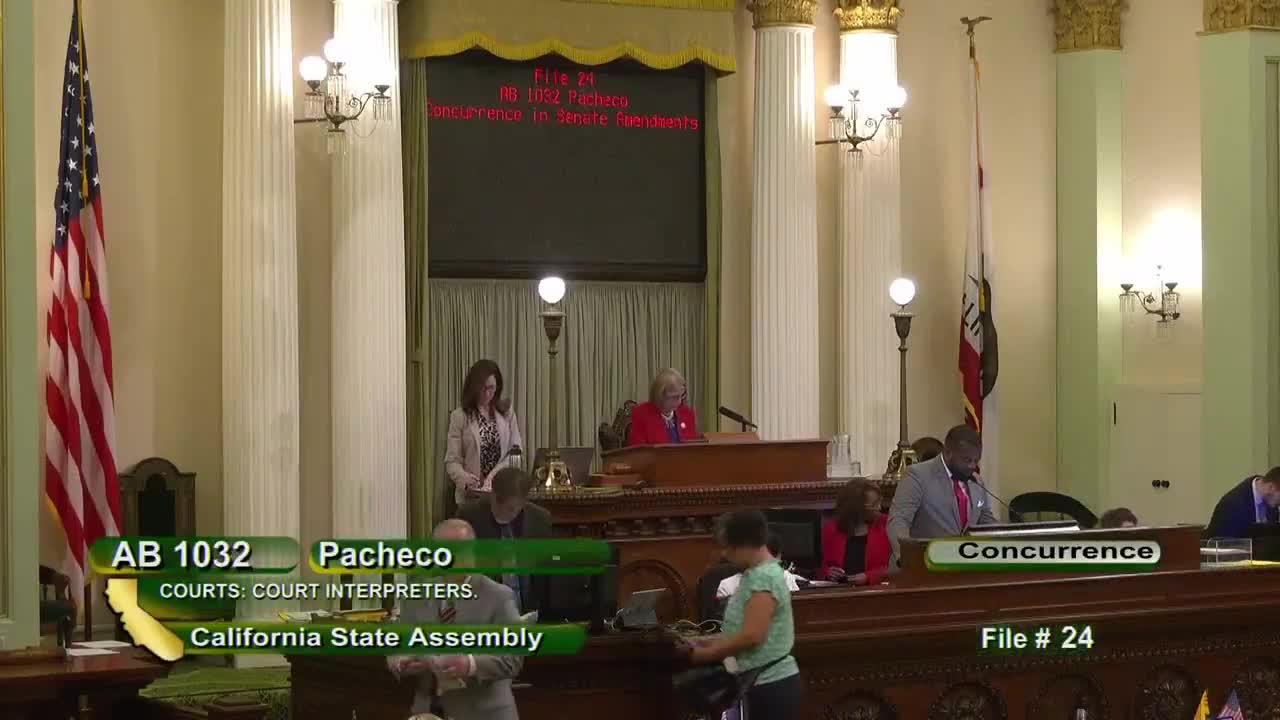 46SEC
Assembly Floor
 1MIN
Assembly Floor
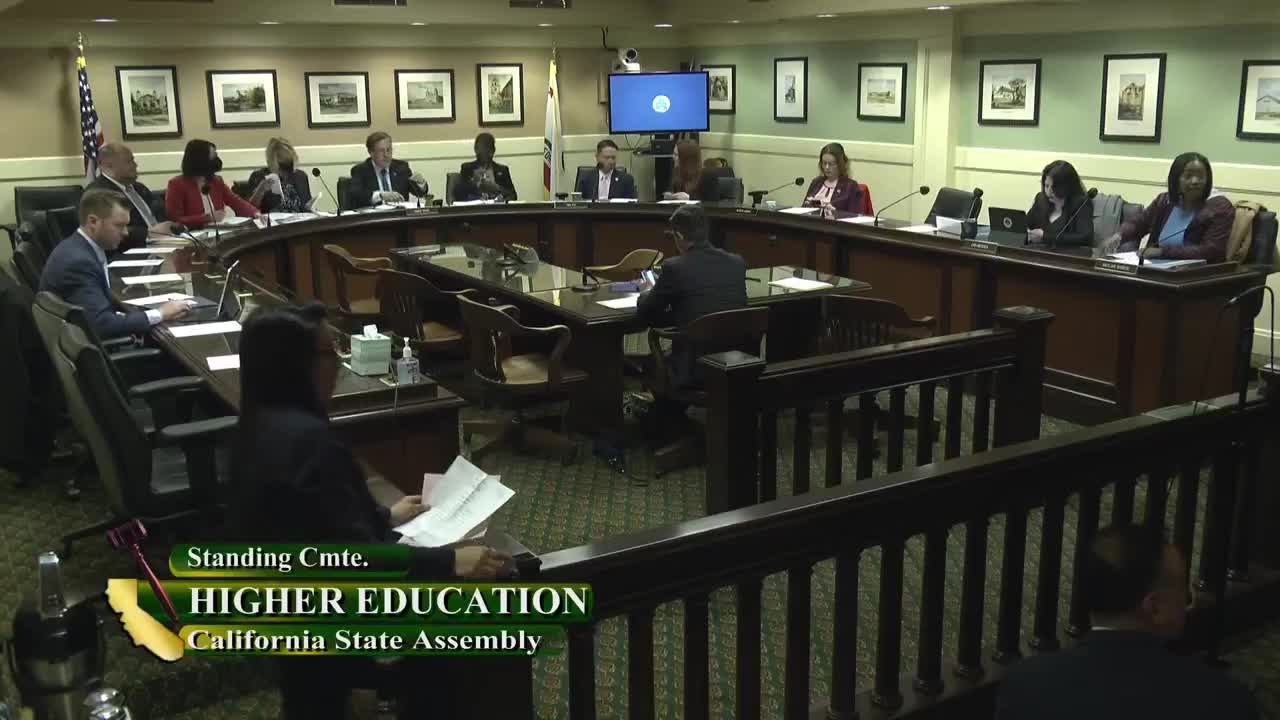 5MIN
Assembly Standing Committee on Higher Education
Bill Author
Bill Co-Author(s):