AB 636: Employers: agricultural employees: required disclosures.
- Session Year: 2023-2024
- House: Assembly
- Latest Version Date: 2023-10-08
Current Status:
Passed
(2023-10-08: Chaptered by Secretary of State - Chapter 451, Statutes of 2023.)
Introduced
In Committee
First Chamber
In Committee
Second Chamber
Enacted
What does this bill do?
The bill requires employers to add to the hiring notice whether a recent federal or state emergency or disaster declaration affects the county where the worker will work, and it requires employers of H‑2A agricultural visa workers to give those workers a separate Spanish-language notice (and English if requested) listing California workplace rights and protections. Employers who hire both H‑2A and non‑H‑2A workers may choose which notice to give non‑H‑2A workers, and H‑2A workers covered by a union contract that pays at least the federal H‑2A program wage are excluded from the H‑2A notice requirement.
The summary is provided by generative AI which can make mistakes. For original language, please view the details in the table below.
Existing law requires an employer to provide an employee, at the time of hiring, a written notice including specified information in the language that the employer normally uses to communicate employment-related information to the employee. Existing law requires the Labor Commissioner to prepare a template that includes the information and to make the template available to employers in a manner as determined by the commissioner.
This bill would require an employer to include in the written notice information regarding the existence of a federal or state disaster declaration applicable to the county or counties in which the employee will be employed, as specified.
This bill would require an employer, beginning on March 15, 2024, to give an employee admitted pursuant to the federal H-2A agricultural visa, on the day that the H-2A employee begins work for the employer in the state or on the first day that the employee begins work for another H-2A employer, additional information in a separate and distinct section of the notice described above, in Spanish, and, if requested by the employee, in English, describing an agricultural employees additional rights and protection under California law, as specified. The bill would provide employers who employ both H-2A and non-H-2A employees with the option to provide the notice to non-H-2A employees in English or Spanish, at the employees request, or in the language that the employer normally uses to communicate employment-related information to non-H-2A employees. The bill would require the Labor Commissioner to create a template for the notice that complies with this requirement and to post the template on its internet website commencing March 1, 2024.
Existing law specifies that for purposes of these provisions, the term employee does not include, among other persons, an employee who is covered by a valid collective bargaining agreement if the agreement expressly provides for the wages, hours of work, and working conditions of the employee, and if the agreement provides premium wage rates for all overtime hours worked and a regular hourly rate wage.
This bill would, in addition, exclude an H-2A employee from the definition of employee if they are covered by an agreement that provides for wage rates of not less than the federal H-2A program wage required to be paid during the contract period.
Existing law requires an employer to provide an employee, at the time of hiring, a written notice including specified information in the language that the employer normally uses to communicate employment-related information to the employee. Existing law requires the Labor Commissioner to prepare a template that includes the information and to make the template available to employers in a manner as determined by the commissioner.
This bill would require an employer to include in the written notice information regarding the existence of a federal or state disaster declaration applicable to the county or counties in which the employee will be employed, as specified.
This bill would require an employer, beginning on March 15, 2024, to give an employee admitted pursuant to the federal H-2A agricultural visa, on the day that the H-2A employee begins work for the employer in the state or on the first day that the employee begins work for another H-2A employer, additional information in a separate and distinct section of the notice described above, in Spanish, and, if requested by the employee, in English, describing an agricultural employees additional rights and protection under California law, as specified. The bill would require the Labor Commissioner to create a template for the notice that complies with this requirement and to post the template on its internet website commencing March 1, 2024.
Existing law specifies that for purposes of these provisions, the term employee does not include, among other persons, an employee who is covered by a valid collective bargaining agreement if the agreement expressly provides for the wages, hours of work, and working conditions of the employee, and if the agreement provides premium wage rates for all overtime hours worked and a regular hourly rate wage.
This bill would, in addition, exclude an H-2A employee from the definition of employee if they are covered by an agreement that provides for wage rates of not less than the federal H-2A program wage required to be paid during the contract period.
The Legislature finds and declare all of the following:
(a)In 2011, Californias Wage Theft Prevention Act was signed into law, requiring most employers in California to provide a notice of basic wage and hour information to all employees at the time of hire. In subsequent years, the act was amended to require employers to advise workers of their right to accrue and take sick leave without fear of retaliation and to file a complaint to remedy a violation of that right. The act was also amended to require employers of temporary workers to provide additional business location and contact information because this workforce is seen as uniquely vulnerable to workplace violations.
(b)This act continues the evolution of the notice requirements described above to protect vulnerable workers from a lack of key information about work conditions by placing new requirements on employers of farmworkers who are brought into California for work in agriculture under the federal H-2A agricultural worker visa program.
(c)The notice required by this act is intended to create a California H-2A farmworker legal rights and disclosure requirement that would allow each H-2A farmworker to readily comprehend their employers obligations under important California law and regulations, equip workers with the knowledge needed to quickly ascertain whether those laws are being complied with in their workplaces, and provide workers with information about how to initiate complaints covering possible violations with state and federal agencies, their collective bargaining representatives, or nonprofit legal assistance organizations that represent farmworkers.
(d)The Legislature finds that the notice required by this act is necessary because more than 43,000 foreign agricultural temporary workers were admitted to California in the 2022 federal fiscal year under the federal H-2A visa program, a number that has grown dramatically in recent years. Many of these farmworkers have never worked in California, and are believed to speak and read little or no English. Fewer still are believed to be familiar with their basic legal rights and remedies under California law, and many are provided false or misleading information about California laws in the federal job order approved for their admissions.
(e)Although all employers of H-2A farmworkers are required to comply with federal, state, and local law, neither the United States Department of Labor nor the Employment Development Department, which both administer the program, require H-2A employers to accurately disclose in writing to H-2A farmworkers any information about fundamental California labor, housing, health and safety, and other laws that afford them greater protections than federal law. Neither the United States Department of Labor, nor the Employment Development Department, require H-2A employers to inform H-2A farmworkers of the existence of either federal or state emergency or disaster declarations that may affect their health and safety during their employment in California. Because of the recent COVID-19 pandemic, the Legislature finds that notice of these declarations is in workers interests and in keeping with prior amendments to the important Worker Right to Know statute.
SEC. 2.Section 2810.5 of the Labor Code is amended to read:2810.5.(a)(1)At the time of hiring, an employer shall provide to each employee a written notice, in the language the employer normally uses to communicate employment-related information to the employee, containing the following information:
(A)The rate or rates of pay and basis thereof, whether paid by the hour, shift, day, week, salary, piece, commission, or otherwise, including any rates for overtime, as applicable.
(B)Allowances, if any, claimed as part of the minimum wage, including meal or lodging allowances.
(C)The regular payday designated by the employer in accordance with the requirements of this code.
(D)The name of the employer, including any doing business as names used by the employer.
(E)The physical address of the employers main office or principal place of business, and a mailing address, if different.
(F)The telephone number of the employer.
(G)The name, address, and telephone number of the employers workers compensation insurance carrier.
(H)That an employee: may accrue and use sick leave; has a right to request and use accrued paid sick leave; may not be terminated or retaliated against for using or requesting the use of accrued paid sick leave; and has the right to file a complaint against an employer who retaliates.
(I)The existence of a federal or state emergency or disaster declaration applicable to the county or counties where the employee is to be employed, and that was issued within 30 days before the employees first day of employment, that may affect their health and safety during their employment.
(J)Any other information the Labor Commissioner deems material and necessary.
(2)The Labor Commissioner shall prepare templates for the required notices that comply with the requirements of paragraphs (1) and (4). The templates shall be made available to employers in a manner as determined by the Labor Commissioner, and as set forth in subdivision (d). Commencing March 1, 2024, the template developed pursuant to paragraph (4) shall be posted on the Labor Commissioners internet website.
(3)If the employer is a temporary services employer, as defined in Section 201.3, the notice described in paragraph (1) shall also include the name, the physical address of the main office, the mailing address if different from the physical address of the main office, and the telephone number of the legal entity for whom the employee will perform work, and any other information the Labor Commissioner deems material and necessary. The requirements of this paragraph do not apply to a security services company that is licensed by the Department of Consumer Affairs and that solely provides security services.
(4)(A)If an employee is admitted under the federal H-2A agricultural visa program pursuant to Section 1188 of Title 8 of the United States Code, the notice described in paragraph (1) shall also include, in Spanish, a separate and distinct section containing nonduplicative information succinctly describing an agricultural employees additional rights and protections under California law and regulations, including, but not limited to, information addressing the federal H-2A program wage rate required to be paid during the contract period; overtime wage rates; frequency of pay; pay for piece rate workers; 10-minute rest periods; 30-minute meal periods; transportation travel time compensation when required, including transportation from housing to work sites; employee housing rights; nonretaliation protections for complaints or organizing; contents of itemized wage statements; sexual harassment prohibitions; toilets; requirements regarding availability of potable water and handwashing facilities; requirements relating to hot weather working conditions and the availability of shade; pesticide exposure protections; workplace safety requirements, training and correction of hazards; transportation in defined farm labor vehicles; prohibitions against tool or equipment charges, prohibitions against deductions for meals not taken; training and necessary equipment and lighting for night work; prohibitions against use of short-handled hoes and limits on hand weeding; employee-paid health insurance; right to accrue and take sick leave; workers compensation coverage, disability pay, and medical care for injuries; and the right to complain to state or federal agencies and to seek advice from collective bargaining representatives or legal assistance organizations.
(B)(i)Notwithstanding paragraph (1), an employer shall provide the notice required by subparagraph (A) in Spanish to the H-2A employee on the day that the H-2A employee begins work in the state or on the first day that the employee begins work for another H-2A employer. An H-2A employee may request that the employer also provide the notice in English.
(ii)An employer who employs both H-2A and non-H-2A employees at the same time may satisfy the requirements of paragraph (1) with respect to the employers non-H-2A employees by opting to provide those employees with the notice required by subparagraph (A) or by providing the notice required by paragraph (1).
(b)An employer shall notify their employees in writing of any changes to the information set forth in the notice within seven calendar days after the time of the changes, unless one of the following applies:
(1)All changes are reflected on a timely wage statement furnished in accordance with Section 226.
(2)Notice of all changes is provided in another writing required by law within seven days of the changes.
(c)For purposes of this section, employee does not include any of the following:
(1)An employee directly employed by the state or any political subdivision thereof, including any city, county, city and county, or special district.
(2)An employee who is exempt from the payment of overtime wages by statute or the wage orders of the Industrial Welfare Commission.
(3)An employee who is covered by a valid collective bargaining agreement if the agreement expressly provides for the wages, hours of work, and working conditions of the employee, and if the agreement provides premium wage rates for all overtime hours worked and a regular hourly rate of pay for those employees of not less than 30 percent more than the state minimum wage. This subdivision applies to employees admitted to the federal H-2A program only if the collective bargaining agreement provides for wage rates of not less than the federal H-2A program wage required to be paid during the contract period.
(d)Commencing March 15, 2024, an employer of an employee admitted pursuant to the federal H-2A agricultural visa program shall comply with subdivision (a) by giving workers a copy of the template developed by the Labor Commissioner in accordance with paragraph (4) of subdivision (a).
The Legislature finds and declare all of the following:
(a)In 2011, Californias Wage Theft Prevention Act was signed into law, requiring most employers in California to provide a notice of basic wage and hour information to all employees at the time of hire. In subsequent years, the act was amended to require employers to advise workers of their right to accrue and take sick leave without fear of retaliation and to file a complaint to remedy a violation of that right. The act was also amended to require employers of temporary workers to provide additional business location and contact information because this workforce is seen as uniquely vulnerable to workplace violations.
(b)This act continues the evolution of the notice requirements described above to protect vulnerable workers from a lack of key information about work conditions by placing new requirements on employers of farm workers farmworkers who are brought into California for work in agriculture under the federal H-2A agricultural worker visa program.
(c)The notice required by this act is intended to create a California H-2A farm worker farmworker legal rights and disclosure requirement that would allow each H-2A farm worker farmworker to readily comprehend their employers obligations under important California law and regulations, equip workers with the knowledge needed to quickly ascertain whether those laws are being complied with in their workplaces, and provide workers with information about how to initiate complaints covering possible violations with state and federal agencies, their collective bargaining representatives, or nonprofit legal assistance organizations that represent farm workers. farmworkers.
(d)The Legislature finds that the notice required by this act is necessary because more than 43,000 foreign agricultural temporary workers were admitted to California in the 2022 federal fiscal year under the federal H-2A visa program, a number that has grown dramatically in recent years. Many of these farm workers farmworkers have never worked in California, and are believed to speak and read little or no English. Fewer still are believed to be familiar with their basic legal rights and remedies under California law, and many are provided false or misleading information about California laws in the federal job order approved for their admissions.
(e)Although all employers of H-2A farm workers farmworkers are required to comply with federal, state, and local law, neither the United States Department of Labor nor the Employment Development Department, which both administer the program, require H-2A employers to accurately disclose in writing to H-2A farm workers farmworkers any information about fundamental California labor, housing, health and safety, and other laws that afford them greater protections than federal law. Neither the United States Department of Labor, nor the Employment Development Department, require H-2A employers to inform H-2A farm workers farmworkers of the existence of either federal or state emergency or disaster declarations that may affect their health and safety during their employment in California. Because of the recent COVID-19 pandemic, the Legislature finds that notice of these declarations is in workers interests and in keeping with prior amendments to the important Worker Right to Know statute.
SEC. 2.Section 2810.5 of the Labor Code is amended to read:2810.5.(a)(1)At the time of hiring, an employer shall provide to each employee a written notice, in the language the employer normally uses to communicate employment-related information to the employee, containing the following information:
(A)The rate or rates of pay and basis thereof, whether paid by the hour, shift, day, week, salary, piece, commission, or otherwise, including any rates for overtime, as applicable.
(B)Allowances, if any, claimed as part of the minimum wage, including meal or lodging allowances.
(C)The regular payday designated by the employer in accordance with the requirements of this code.
(D)The name of the employer, including any doing business as names used by the employer.
(E)The physical address of the employers main office or principal place of business, and a mailing address, if different.
(F)The telephone number of the employer.
(G)The name, address, and telephone number of the employers workers compensation insurance carrier.
(H)That an employee: may accrue and use sick leave; has a right to request and use accrued paid sick leave; may not be terminated or retaliated against for using or requesting the use of accrued paid sick leave; and has the right to file a complaint against an employer who retaliates.
(I)The existence of a federal or state emergency or disaster declaration applicable to the county or counties where the employee is to be employed, and that was issued within 30 days before the employees first day of employment, that may affect their health and safety during their employment.
(J)Any other information the Labor Commissioner deems material and necessary.
(2)The Labor Commissioner shall prepare templates for the required notices that comply with the requirements of paragraphs (1) and (4). The templates shall be made available to employers in a manner as determined by the Labor Commissioner, and as set forth in subdivision (d). Commencing March 1, 2024, the template developed pursuant to paragraph (4) shall be posted on the Labor Commissioners internet website.
(3)If the employer is a temporary services employer, as defined in Section 201.3, the notice described in paragraph (1) shall also include the name, the physical address of the main office, the mailing address if different from the physical address of the main office, and the telephone number of the legal entity for whom the employee will perform work, and any other information the Labor Commissioner deems material and necessary. The requirements of this paragraph do not apply to a security services company that is licensed by the Department of Consumer Affairs and that solely provides security services.
(4)(A)If an employee is admitted under the federal H-2A agricultural visa program pursuant to Section 1188 of Title 8 of the United States Code, the notice described in paragraph (1) shall also include, in Spanish, a separate and distinct section containing nonduplicative information succinctly describing an agricultural employees additional rights and protections under California law and regulations, including, but not limited to, information addressing the federal H-2A program wage rate required to be paid during the contract period; overtime wage rates; frequency of pay; pay for piece rate workers; 10-minute rest periods; 30-minute meal periods; transportation travel time compensation when required, including transportation from housing to work sites; employee housing rights; nonretaliation protections for complaints or organizing; contents of itemized wage statements; sexual harassment prohibitions; toilets; requirements regarding availability of potable water and handwashing facilities; requirements relating to hot weather working conditions and the availability of shade; pesticide exposure protections; workplace safety requirements, training and correction of hazards; transportation in defined farm labor vehicles; prohibitions against tool or equipment charges, prohibitions against deductions for meals not taken; training and necessary equipment and lighting for night work; prohibitions against use of short-handled hoes and limits on hand weeding; employee-paid health insurance; right to accrue and take sick leave; workers compensation coverage, disability pay, and medical care for injuries; and the right to complain to state or federal agencies and to seek advice from collective bargaining representatives or legal assistance organizations.
(B)An (i)Notwithstanding paragraph (1), an employer shall provide the required notice required by subparagraph (A) in Spanish to the H-2A employee on the day that the H-2A employee begins work in the state or on the first day that the employee begins work for another H-2A employer. An H-2A employee may request that the employer also provide the notice in English.
(ii)An employer who employs both H-2A and non-H-2A employees at the same time may satisfy the requirements of paragraph (1) with respect to the employers non-H-2A employees by opting to provide those employees with the notice required by subparagraph (A) or by providing the notice required by paragraph (1).
(b)An employer shall notify their employees in writing of any changes to the information set forth in the notice within seven calendar days after the time of the changes, unless one of the following applies:
(1)All changes are reflected on a timely wage statement furnished in accordance with Section 226.
(2)Notice of all changes is provided in another writing required by law within seven days of the changes.
(c)For purposes of this section, employee does not include any of the following:
(1)An employee directly employed by the state or any political subdivision thereof, including any city, county, city and county, or special district.
(2)An employee who is exempt from the payment of overtime wages by statute or the wage orders of the Industrial Welfare Commission.
(3)An employee who is covered by a valid collective bargaining agreement if the agreement expressly provides for the wages, hours of work, and working conditions of the employee, and if the agreement provides premium wage rates for all overtime hours worked and a regular hourly rate of pay for those employees of not less than 30 percent more than the state minimum wage. This subdivision applies to employees admitted to the federal H-2A program only if the collective bargaining agreement provides for wage rates of not less than the federal H-2A program wage required to be paid during the contract period.
(d)Commencing March 15, 2024, an employer of an employee admitted pursuant to the federal H-2A agricultural visa program shall comply with subdivision (a) by giving workers a copy of the template developed by the Labor Commissioner in accordance with paragraph (4) of subdivision (a).
The Legislature finds and declare all of the following:
(a)In 2011, Californias Wage Theft Prevention Act was signed into law, requiring most employers in California to provide a notice of basic wage and hour information to all employees at the time of hire. In subsequent years, the act was amended to require employers to advise workers of their right to accrue and take sick leave without fear of retaliation and to file a complaint to remedy a violation of that right. The act was also amended to require employers of temporary workers to provide additional business location and contact information because this workforce is seen as uniquely vulnerable to workplace violations.
(b)This act continues the evolution of the notice requirements described above to protect vulnerable workers from a lack of key information about work conditions by placing new requirements on employers of farm workers who are brought into California for work in agriculture under the federal H-2A agricultural worker visa program.
(c)The notice required by this act is intended to create a California H-2A farm worker legal rights and disclosure requirement that would allow each H-2A farm worker to readily comprehend their employers obligations under important California law and regulations, equip workers with the knowledge needed to quickly ascertain whether those laws are being complied with in their workplaces, and provide workers with information about how to initiate complaints covering possible violations with state and federal agencies, their collective bargaining representatives, or nonprofit legal assistance organizations that represent farm workers.
(d)The Legislature finds that the notice required by this act is necessary because more than 43,000 foreign agricultural temporary workers were admitted to California in the 2022 federal fiscal year under the federal H-2A visa program, a number that has grown dramatically in recent years. Many of these farm workers have never worked in California, and are believed to speak and read little or no English. Fewer still are believed to be familiar with their basic legal rights and remedies under California law, and many are provided false or misleading information about California laws in the federal job order approved for their admissions.
(e)Although all employers of H-2A farm workers are required to comply with federal, state, and local law, neither the United States Department of Labor nor the Employment Development Department, which both administer the program, require H-2A employers to accurately disclose in writing to H-2A farm workers any information about fundamental California labor, housing, health and safety, and other laws that afford them greater protections than federal law. Neither the United States Department of Labor, nor the Employment Development Department, require H-2A employers to inform H-2A farm workers of the existence of either federal or state emergency or disaster declarations that may affect their health and safety during their employment in California. Because of the recent COVID-19 pandemic, the Legislature finds that notice of these declarations is in workers interests and in keeping with prior amendments to the important Worker Right to Know statute.
SEC. 2.Section 2810.5 of the Labor Code is amended to read:2810.5.(a)(1)At the time of hiring, an employer shall provide to each employee a written notice, in the language the employer normally uses to communicate employment-related information to the employee, containing the following information:
(A)The rate or rates of pay and basis thereof, whether paid by the hour, shift, day, week, salary, piece, commission, or otherwise, including any rates for overtime, as applicable.
(B)Allowances, if any, claimed as part of the minimum wage, including meal or lodging allowances.
(C)The regular payday designated by the employer in accordance with the requirements of this code.
(D)The name of the employer, including any doing business as names used by the employer.
(E)The physical address of the employers main office or principal place of business, and a mailing address, if different.
(F)The telephone number of the employer.
(G)The name, address, and telephone number of the employers workers compensation insurance carrier.
(H)That an employee: may accrue and use sick leave; has a right to request and use accrued paid sick leave; may not be terminated or retaliated against for using or requesting the use of accrued paid sick leave; and has the right to file a complaint against an employer who retaliates.
(I)The existence of a federal or state emergency or disaster declaration applicable to the county or counties where the employee is to be employed, and that was issued within 30 days before the employees first day of employment, that may affect their health and safety during their employment.
(I)(J)Any other information the Labor Commissioner deems material and necessary.
(2)The Labor Commissioner shall prepare a template that complies templates for the required notices that comply with the requirements of paragraph (1). paragraphs (1) and (4). The template templates shall be made available to employers in such a manner as determined by the Labor Commissioner. Commissioner, and as set forth in subdivision (d). Commencing March 1, 2024, the template developed pursuant to paragraph (4) shall be posted on the Labor Commissioners internet website.
(3)If the employer is a temporary services employer, as defined in Section 201.3, the notice described in paragraph (1) must shall also include the name, the physical address of the main office, the mailing address if different from the physical address of the main office, and the telephone number of the legal entity for whom the employee will perform work, and any other information the Labor Commissioner deems material and necessary. The requirements of this paragraph do not apply to a security services company that is licensed by the Department of Consumer Affairs and that solely provides security services.
(4)(A)If an employee is admitted under the federal H-2A agricultural visa program pursuant to Section 1188 of Title 8 of the United States Code, the notice described in paragraph (1) shall also include, in Spanish, a separate and distinct section containing nonduplicative information succinctly describing an agricultural employees additional rights and protections under California law and regulations, including, but not limited to, information addressing the federal H-2A program wage rate required to be paid during the contract period; overtime wage rates; frequency of pay; pay for piece rate workers; 10-minute rest periods; 30-minute meal periods; transportation travel time compensation when required, including transportation from housing to work sites; employee housing rights; nonretaliation protections for complaints or organizing; contents of itemized wage statements; sexual harassment prohibitions; toilets; requirements regarding availability of potable water and handwashing facilities; requirements relating to hot weather working conditions and the availability of shade; pesticide exposure protections; workplace safety requirements, training and correction of hazards; transportation in defined farm labor vehicles; prohibitions against tool or equipment charges, prohibitions against deductions for meals not taken; training and necessary equipment and lighting for night work; prohibitions against use of short-handled hoes and limits on hand weeding; employee-paid health insurance; right to accrue and take sick leave; workers compensation coverage, disability pay, and medical care for injuries; and the right to complain to state or federal agencies and to seek advice from collective bargaining representatives or legal assistance organizations.
(B)An employer shall provide the required notice in Spanish to the H-2A employee on the day that the H-2A employee begins work in the state or on the first day that the employee begins work for another H-2A employer. An H-2A employee may request that the employer also provide the notice in English.
(b)An employer shall notify his or her their employees in writing of any changes to the information set forth in the notice within seven calendar days after the time of the changes, unless one of the following applies:
(1)All changes are reflected on a timely wage statement furnished in accordance with Section 226.
(2)Notice of all changes is provided in another writing required by law within seven days of the changes.
(c)For purposes of this section, employee does not include any of the following:
(1)An employee directly employed by the state or any political subdivision thereof, including any city, county, city and county, or special district.
(2)An employee who is exempt from the payment of overtime wages by statute or the wage orders of the Industrial Welfare Commission.
(3)An employee who is covered by a valid collective bargaining agreement if the agreement expressly provides for the wages, hours of work, and working conditions of the employee, and if the agreement provides premium wage rates for all overtime hours worked and a regular hourly rate of pay for those employees of not less than 30 percent more than the state minimum wage. This subdivision applies to employees admitted to the federal H-2A program only if the collective bargaining agreement provides for wage rates of not less than the federal H-2A program wage required to be paid during the contract period.
(d)Commencing March 15, 2024, an employer of an employee admitted pursuant to the federal H-2A agricultural visa program shall comply with subdivision (a) by giving workers a copy of the template developed by the Labor Commissioner in accordance with paragraph (4) of subdivision (a).
|
Date
|
Status
|
|---|---|
| Oct 8, 2023 | Chaptered by Secretary of State - Chapter 451, Statutes of 2023. |
| Oct 8, 2023 | Approved by the Governor. |
| Sep 12, 2023 | Enrolled and presented to the Governor at 2 p.m. |
| Sep 5, 2023 | In Assembly. Ordered to Engrossing and Enrolling. |
| Sep 5, 2023 | Read third time. Passed. Ordered to the Assembly. (Ayes 31. Noes 7. Page 2358.). |
| Aug 15, 2023 | Read second time. Ordered to third reading. |
| Aug 14, 2023 | From committee: Be ordered to second reading pursuant to Senate Rule 28.8. |
| Jul 12, 2023 | From committee: Do pass and re-refer to Com. on APPR. (Ayes 4. Noes 0.) (July 12). Re-referred to Com. on APPR. |
| May 31, 2023 | Referred to Com. on L., P.E. & R. |
| May 18, 2023 | In Senate. Read first time. To Com. on RLS. for assignment. |
| May 18, 2023 | Read third time. Passed. Ordered to the Senate. (Ayes 59. Noes 5. Page 1589.) |
| May 11, 2023 | Read third time and amended. Ordered to third reading. (Page 1521.) |
| Apr 27, 2023 | Read second time. Ordered to third reading. |
| Apr 26, 2023 | From committee: Do pass. (Ayes 12. Noes 2.) (April 26). |
| Apr 13, 2023 | From committee: Do pass and re-refer to Com. on APPR. (Ayes 5. Noes 0.) (April 12). Re-referred to Com. on APPR. |
| Feb 17, 2023 | Referred to Com. on L. & E. |
| Feb 10, 2023 | From printer. May be heard in committee March 12. |
| Feb 9, 2023 | Read first time. To print. |
|
Date
|
Description
|
Location
|
Votes
|
|
|---|---|---|---|---|
| Sep 5, 2023 | Assembly 3rd Reading AB636 Kalra By Durazo | Senate Floor |
Passed |
|
| Jul 12, 2023 | Do pass, but first be re-referred to the Committee on [Appropriations] | Senate Standing Committee on Labor, Public Employment and Retirement |
Passed |
|
| May 18, 2023 | AB 636 Kalra Assembly Third Reading | Assembly Floor |
Passed |
|
| Apr 26, 2023 | Do pass. | Assembly Standing Committee on Appropriations |
Passed |
|
| Apr 12, 2023 | Do pass and be re-referred to the Committee on [Appropriations] | Assembly Standing Committee on Labor and Employment |
Passed |
This list shows positions taken on this bill by organizations on the date displayed, which is linked to the original source.
Positions by individuals are not included.
|
Organization
|
Position
|
Date
|
|---|---|---|
| California Alliance For Retired Americans | ** Support | |
| California Coalition For Rural Housing | ** Support | |
| California Employment Lawyers Association | ** Support | |
| California Federation of Teachers, AFL-CIO | ** Support | |
| California Food & Farming Network | ** Support | |
| California Immigrant Policy Center | ** Support | |
| California Institute for Rural Studies | ** Support | |
| California Labor Federation | ** Support | |
| California Rural Legal Assistance Foundation | ** Support | |
| California Teamsters Public Affairs Council | ** Support | |
| Californians for Pesticide Reform | ** Support | |
| Central California Environmental Justice Network | ** Support | |
| Central Coast Alliance United for a Sustainable Economy | ** Support | |
| Centro Binacional de Desarrollo Indigena Oaxaqueño | ** Support | |
| Centro De Los Derechos Del Migrante | ** Support | |
| Consumer Attorneys Of California | ** Support | |
| Employee Rights Center | ** Support | |
| Equal Rights Advocates | ** Support | |
| Farmworker Justice | ** Support | |
| North Bay Jobs with Justice | ** Support | |
| Pesticide Action Network | ** Support | |
| Santa Clara County Wage Theft Coalition | ** Support | |
| Sunita Jain Anti-Trafficking Policy Initiative | ** Support | |
| UFCW Western States Council | ** Support | |
| Women's Employment Rights Clinic | ** Support | |
| Worksafe | ** Support |
SENATE RULES COMMITTEE Office of Senate Floor Analyses (916) 651-1520 Fax: (916) 327-4478 | AB 636 |
THIRD READING
Bill No: AB 636
Author: Kalra (D)
Amended: 5/11/23 in Assembly
Vote: 21
SENATE LABOR, PUB. EMP. & RET. COMMITTEE: 4-0, 7/12/23
AYES: Cortese, Durazo, Laird, Smallwood-Cuevas
NO VOTE RECORDED: Wilk
SENATE APPROPRIATIONS COMMITTEE: Senate Rule 28.8
ASSEMBLY FLOOR: 59-5, 5/18/23 - See last page for vote
SUBJECT: Employers: agricultural employees: required disclosures
SOURCE: California Rural Legal Assistance Foundation
DIGEST:
This bill requires agricultural employers to provide employees at the time of hire, information on the existence of a federal or state disaster declaration applicable to the county or counties where the employee will be employed if the emergency or disaster may affect the employee’s health and safety during employment. Additionally, this bill requires an H-2A visa employer to provide an employee, on their first day of work or upon transfer, the notice of basic employment related information with a separate section in Spanish, and if requested by the employee, in English, describing an agricultural employee’s rights and protections.
ANALYSIS:
Existing federal law:
- Establishes the federal H-2A program allowing U.S. employers or agents who meet specific regulatory requirements for foreign nationals to fill temporary agricultural jobs. Among other things, existing federal law specifies that as a condition for approval of such a petition, the U.S. Department of Labor Secretary must certify:
- There are not sufficient domestic persons who are able, willing, and qualified, and who will be available at the time and place needed, to perform the labor or services involved in the petition, and
- The employment of the foreign agricultural worker will not adversely affect the wages and working conditions of those similarly employed in the United States.
- Exempts agricultural and related seasonal employees from the Fair Labor Standards Act minimum wage and overtime requirements, as specified.
Existing state law:
- Requires the Division of Labor Standards Enforcement (DLSE) within the Department of Industrial Relations (DIR) to enforce, among other things, wage and hour law, anti-retaliation provisions, and employer notice requirements and vests the Labor Commissioner (LC) with the title of Chief of DLSE.
- Establishes the Division of Occupational Safety and Health within DIR to protect and improve the health and safety of workers by setting and enforcing standards, providing outreach, education, and assistance, and issuing permits, licenses, and registrations and requires an employer to ensure a safe and healthful workplace by providing, among other things, bathroom access, meal and rest break areas to its employees, and protections against high heat or pesticide exposure.
- Requires that employers, at the time of hire, provide each employee with a written notice, in the language the employer normally uses to communicate employment-related information, containing the following:
- The rate(s) of pay and basis thereof, whether paid by the hour, shift, day, week, salary, piece, commission, or otherwise, including any applicable overtime.
- Allowances, if any, including meal or lodging.
- The regular payday designated by the employer.
- The name of the employer, including any “doing business as” names used.
- The physical address of the employer’s main office or principal place of business, a mailing address, if different, and the telephone number.
- The name, address, and telephone number of the employer’s workers’ compensation insurance carrier.
- The right to accrue and use sick leave and file a complaint against an employer that retaliates for the use of sick leave.
- Any other information the LC deems material and necessary.
- Specifies that an employer shall notify its employees in writing of any changes to the information in the notice within seven calendar days after the time of the changes, unless all changes are reflected on a timely wage statement, as defined, or notice of all changes is provided on another document within seven days of the changes.
- Requires the LC to develop a template for employers to comply with the notice requirements and make that document available to employers.
This bill:
- Adds to the written notice of basic employment related information provided to an employee at the time of hiring, the existence of a federal or state disaster declaration applicable to the county or counties where the employee will be employed if the emergency or disaster may affect the employee’s health and safety during employment.
- Requires an employer, beginning on March 15, 2024, to provide an H-2A visa employee on their first day of work in California or upon transfer, the notice of basic employment-related information with a separate and distinct section in Spanish, and, if requested by the employee, in English, describing an agricultural employee’s additional rights and protections under California law, including but not limited to:
- Overtime wage rates;
- Pay for piece rate workers;
- Transportation travel time compensation when required, including transportation from housing to work sites;
- Protections from retaliation for complaints or organizing;
- Availability of potable water and handwashing facilities;
- Requirements relating to hot weather working conditions and the availability of shade;
- Training and necessary equipment and lighting for night work;
- Prohibitions against the use of short-handled hoes and limits on hand weeding;
- Right to accrue and take sick leave; and
- Right to complain to state or federal agencies and to seek advice from collective bargaining representatives or legal assistance organizations.
- Authorizes an employer who employs both H2-A and non-H-2A employees to provide non-H-2A employees with the H-2A notice in 2).
- Specifies that the exemption from the notice requirement for employees covered by a collective bargaining agreement with specified provisions only applies to an H-2A worker if the collective bargaining agreement provides for wage rates of not less than the federal H-2A program wage required to be paid during the contract period.
- Requires the LC to post on their website by March 1, 2024, the templates for employers to provide to employees upon hire.
- Makes Legislative findings and declarations.
Background
The H-2A temporary agricultural program allows agricultural employers who anticipate a shortage of domestic labor to bring nonimmigrant foreign workers to the states to perform seasonal or temporary work. Seasonal employment is tied to a certain time of year, such as an annual cultivation cycle. Employment is of a temporary nature when the employer's need to fill the position with a temporary worker will generally last no longer than a year. For an H-2A visa to be approved, the federal Department of Labor determines there are not sufficient able, willing, and qualified U.S. workers available to perform the labor or services of a temporary or seasonal nature for which an employer desires to hire foreign workers. Additionally, the employer must certify that employment of the H-2A workers will not adversely affect the wages and working conditions of those similarly employed in the U.S. Last year, more than 43,000 H-2A farm workers came to work in California.
Comments
Purpose of this bill. According to the author, “AB 636 will help advise H-2A workers of their rights under California law by ensuring adequate notice on their first day of work or when they are transferred to another employer. The notice shall include information on employment rights such as the right to meal and rest periods, overtime, rest period compensation for piece rate workers, compensable transportation time, prohibited deductions, worker health and safety protections, sexual harassment training, and timely payment of wages. The written notice would also inform H-2A workers of their right to report a violation of California law, how to report violations, and their right to be free from retaliation. In doing so, AB 636 will create safer, more legally compliant workplaces and reduce any incentive unscrupulous H-2A employers may have to hire workers who they can underpay and mistreat because the workers are not aware of their rights or how to have them enforced.”
Related/Prior Legislation
AB 857 (Kalra, 2022) would have required H-2A visa employers to provide notice of specified state and federal employment rights in Spanish, and if requested, in English, to all H-2A farm workers on their first day of work or when they are transferred to another employer. The bill was vetoed by Governor Newsom.
SB 1102 (Monning, 2020) would have required employers to include in their written workplace rights notice to all employees, specified information in the event of a federal or state emergency or disaster declaration that may affect their health and safety. Additionally, this bill required employers of agricultural employees coming to work in California under the federal H-2A Program for temporary agricultural workers to give each employee an H-2A employee specific written notice on labor rights and obligations under federal and state law, including notice of emergency or disaster declarations. The bill was vetoed by Governor Newsom.
AB 469 (Swanson, Chapter 655, Statutes of 2011) required an employer to provide each employee, at the time of hiring, with a notice that specifies the rate and the basis, whether hourly, salary, commission, or otherwise, of the employee’s wages.
FISCAL EFFECT: Appropriation: No Fiscal Com.: Yes Local: No
SUPPORT: (Verified 8/15/23)
California Rural Legal Assistance Foundation (source)
California Alliance for Retired Americans
California Coalition for Rural Housing
California Employment Lawyers Association
California Federation of Teachers AFL-CIO
California Food & Farming Network
California Immigrant Policy Center
California Institute for Rural Studies
California Labor Federation
California Teamsters Public Affairs Council
Californians for Pesticide Reform
Central California Environmental Justice Network
Central Coast Alliance United for a Sustainable Economy
Centro Binacional de Desarrollo Indigena Oaxaqueño
Centro de los Derechos del Migrante
Consumer Attorneys of California
Employee Rights Center
Equal Rights Advocates
Farmworker Justice
North Bay Jobs with Justice
Pesticide Action Network
Santa Clara County Wage Theft Coalition
Sunita Jain Anti-Trafficking Policy Initiative (Loyola Law School)
UFCW, Western States Council
Women’s Employment Rights Clinic (Golden Gate School of Law)
Worksafe
OPPOSITION: (Verified 8/15/23)
None received
ARGUMENTS IN SUPPORT: The California Rural Legal Assistance Foundation states,
AB 636 simply requires that H-2A employers provide their H-2A farm worker employees with a written notice that pulls together into a single document key information about approximately two dozen California laws and regulations that are not required to be disclosed to them under the federal H-2A visa program, and which often afford them significantly greater protections than federal law. Recent amendments permit employers to provide non-H-2A employees with either the existing Labor Code Section 2810.5 notice or the new AB 636 notice at the time of hire.
The Need for an Effective California H-2A Farm Worker Legal Rights Disclosure Notice Is Critical in Light of Weak Federal Requirements
Last year, more than 43,000 H-2A farm workers entered California under job orders approved by the U.S. Dept. of Labor (DOL). They worked under written contracts that often created confusion about, as well as misrepresented, fundamental state law protections that applied to these workers.
H-2A workers, once they enter California, are under the near total control of their California employers and have no independent means of informing themselves of their rights here. Given the high degree of misinformation affecting their understanding of fundamental protections, requiring a comprehensive notice of key protections could create more legally compliant workplaces now and in the future.
Deceptive or Misleading H-2A Contracts Approved by US DOL Implicitly Condone Wage Theft and Oppressive Workplace Conditions
Rural legal services programs have recently settled wage theft actions for hundreds of H-2A workers that exceed 3 million dollars. A number of similar legal actions are pending, on behalf of over 6,000 workers, including one major H-2A worker rights case brought by the Division of Labor Standards Enforcement.
These workers have had to seek assistance from legal services law firms or the State of California in order to be paid overtime wages or to recover illegal deductions made for tools or equipment; for charges for meals that were not taken; for meal and rest periods that were denied to them; and for uncompensated travel time pay when riding in vehicles to work sites while under the control of the employer.
When asked by legal services attorneys if they knew that they had the right to be paid for overtime, or to be paid while being transported from the employer’s housing to the job when that was required, many H-2A farm workers replied that they were unaware of these rights. And, even when workers were aware that their rights were being violated, many stated that they were afraid to complain because they knew they could be fired and sent back to their country at any time.
AB 636 amends Labor Code Section 2810.5 to Give the Labor Commissioner the Authority to Develop an H-2A Farm Worker Notice to be Provided by their Employers
AB 636 fills a fundamental gap in the federal H-2A visa program’s minimal requirements. By failing to require any state law information to be disclosed to farm workers, even if, as in the case of California, its laws are significantly more protective, the federal program puts these vulnerable guest workers at unnecessary risk. Widespread abuses of these workers might be reduced if they got timely, accurate information that allows them to readily understand their California rights. It is expected that AB 636 will give workers ready access to this information in easy to understand Spanish, or English if they request it, and puts them in a position to both understand their rights, but also to seek to vindicate them if violations occur.
Compliance with AB 636’s Notice Requirements will be Neither Burdensome nor Costly for the approximately 200 H-2A Employers Now Operating in California
Under AB 636 as introduced, the California Labor Commissioner is required to merge a workers’ rights disclosure already required of most employers under Labor Code Section 2810.5 with a new notice that addresses key information pertinent to H-2A farm workers. She is required to post it on her website on March 1, 2024 and H-2A employers will be required to give it to each H-2A farm worker on their first day of work.
ASSEMBLY FLOOR: 59-5, 5/18/23
AYES: Addis, Aguiar-Curry, Alvarez, Arambula, Bains, Bauer-Kahan, Bennett, Berman, Boerner, Bonta, Bryan, Calderon, Juan Carrillo, Wendy Carrillo, Connolly, Mike Fong, Gabriel, Garcia, Gipson, Grayson, Haney, Hart, Holden, Irwin, Jackson, Kalra, Lee, Low, Lowenthal, Maienschein, McCarty, McKinnor, Muratsuchi, Stephanie Nguyen, Ortega, Pacheco, Papan, Pellerin, Petrie-Norris, Quirk-Silva, Ramos, Reyes, Luz Rivas, Robert Rivas, Rodriguez, Blanca Rubio, Santiago, Schiavo, Soria, Ting, Valencia, Villapudua, Wallis, Ward, Weber, Wicks, Wood, Zbur, Rendon
NOES: Megan Dahle, Davies, Dixon, Essayli, Gallagher
NO VOTE RECORDED: Alanis, Cervantes, Chen, Flora, Vince Fong, Friedman, Hoover, Jones-Sawyer, Lackey, Mathis, Jim Patterson, Joe Patterson, Sanchez, Ta, Waldron, Wilson
Prepared by: Dawn Clover / L., P.E. & R. / (916) 651-1556
8/16/23 10:14:36
**** END ****
SENATE COMMITTEE ON LABOR, PUBLIC EMPLOYMENT AND RETIREMENT
Senator Dave Cortese, Chair
2023 - 2024 Regular
Bill No: AB 636 Hearing Date: July 12, 2023
Author: | Kalra | ||
Version: | May 11, 2023 | ||
Urgency: | No | Fiscal: | Yes |
Consultant: | Dawn Clover | ||
SUBJECT: Employers: agricultural employees: required disclosures
KEY ISSUE
Should the legislature require agricultural employers to provide employees at the time of hire, information on the existence of a federal or state disaster declaration applicable to the county or counties where the employee will be employed if the emergency or disaster may affect the employee’s health and safety during employment?
Should the Legislature require an H-2A visa employer to provide an employee, on their first day of work, the notice of basic employment related information with a separate section in Spanish, and if requested by the employee, in English, describing an agricultural employee’s rights and protections under California law.
ANALYSIS
Existing Federal Law:
- Establishes the federal H-2A program allowing U.S. employers or agents who meet specific regulatory requirements for foreign nationals to fill temporary agricultural jobs. Among other things, existing federal law specifies that as a condition for approval of such a petition, the U.S. Department of Labor Secretary must certify:
- There are not sufficient domestic persons who are able, willing, and qualified, and who will be available at the time and place needed, to perform the labor or services involved in the petition, and
- The employment of the foreign agricultural worker will not adversely affect the wages and working conditions of those similarly employed in the United States. (8 USC §1101, §1188)
- There are not sufficient domestic persons who are able, willing, and qualified, and who will be available at the time and place needed, to perform the labor or services involved in the petition, and
- Exempts agricultural and related seasonal employees from the Fair Labor Standards Act minimum wage and overtime requirements, as specified. (29 USC §213)
Existing State Law:
- Requires the Division of Labor Standards Enforcement (DLSE) within the Department of Industrial Relations (DIR) to enforce, among other things, wage and hour law, anti-retaliation provisions, and employer notice requirements and vests the Labor Commissioner with the title of Chief of DLSE. (Labor Code §§79)
- Establishes the Division of Occupational Safety and Health (CalOSHA) within DIR to protect and improve the health and safety of workers by setting and enforcing standards, providing outreach, education, and assistance, and issuing permits, licenses, and registrations and requires an employer to ensure a safe and healthful workplace by providing, among other things, bathroom access, meal and rest break areas to its employees, and protections against high heat or pesticide exposure. (Labor Code §§6300)
- Requires that employers, at the time of hire, provide each employee with a written notice, in the language the employer normally uses to communicate employment-related information, containing the following:
- The rate(s) of pay and basis thereof, whether paid by the hour, shift, day, week, salary, piece, commission, or otherwise, including any applicable overtime.
- Allowances, if any, including meal or lodging.
- The regular payday designated by the employer.
- The name of the employer, including any “doing business as” names used.
- The physical address of the employer’s main office or principal place of business, a mailing address, if different, and the telephone number.
- The name, address, and telephone number of the employer’s workers’ compensation insurance carrier.
- The right to accrue and use sick leave and file a complaint against an employer that retaliates for the use of sick leave.
- Any other information the Labor Commissioner deems material and necessary. (Labor Code §2810.5(a))
- The rate(s) of pay and basis thereof, whether paid by the hour, shift, day, week, salary, piece, commission, or otherwise, including any applicable overtime.
- Specifies that an employer shall notify its employees in writing of any changes to the information in the notice within seven calendar days after the time of the changes, unless one of the following applies:
- All changes are reflected on a timely wage statement, as defined.
- Notice of all changes is provided in another writing required by law within seven days of the changes. (Labor Code §2810.5(b))
- All changes are reflected on a timely wage statement, as defined.
- Requires the Labor Commissioner to develop a template for employers to comply with Labor Code §2810.5(a) and make that document available to employers.
This bill:
- Adds to the written notice of basic employment related information provided to an employee at the time of hiring, the existence of a federal or state disaster declaration applicable to the county or counties where the employee will be employed if the emergency or disaster may affect the employee’s health and safety during employment.
- Requires an employer, beginning on March 15, 2024, to give to an H-2A visa employee on their first day of work in California or upon transfer, the notice of basic employment-related information with a separate and distinct section in Spanish, and, if requested by the employee, in English, describing an agricultural employee’s additional rights and protections under California law, including but not limited to:
- Overtime wage rates;
- Pay for piece rate workers;
- Transportation travel time compensation when required, including transportation from housing to work sites;
- Protections from retaliation for complaints or organizing;
- Availability of potable water and handwashing facilities;
- Requirements relating to hot weather working conditions and the availability of shade;
- Training and necessary equipment and lighting for night work;
- Prohibitions against the use of short-handled hoes and limits on hand weeding;
- Right to accrue and take sick leave, and;
- Right to complain to state or federal agencies and to seek advice from collective bargaining representatives or legal assistance organizations.
- Overtime wage rates;
- Authorizes an employer who employs both H2-A and non-H-2A employees at the same time to provide non-H-2A employees with the H-2A notice provided in 2).
- Specifies that the exemption from the notice requirement for employees covered by a collective bargaining agreement with specified provisions only applies to an H-2A worker if the collective bargaining agreement provides for wage rates of not less than the federal H-2A program wage required to be paid during the contract period.
- Requires the Labor Commissioner to post on their website by March 1, 2024, the templates for employers to provide to employees upon hire.
- Makes the following findings and declarations:
- In 2011, California’s “Wage Theft Prevention Act” was signed into law, requiring most employers in California to provide a notice of basic wage and hour information to all employees at the time of hire. In subsequent years, the act was amended to require employers to advise workers of their right to accrue and take sick leave without fear of retaliation and to file a complaint to remedy a violation of that right. The act was also amended to require employers of temporary workers to provide additional business location and contact information because this workforce is seen as uniquely vulnerable to workplace violations.
- This [bill] continues the evolution of the notice requirements described above to protect vulnerable workers from a lack of key information about work conditions by placing new requirements on employers of farmworkers who are brought into California for work in agriculture under the federal H-2A agricultural worker visa program.
- The notice required by this act is intended to create a California H-2A farmworker legal rights and disclosure requirement that would allow each H-2A farmworker to readily comprehend their employer’s obligations under important California law and regulations, equip workers with the knowledge needed to quickly ascertain whether those laws are being complied with in their workplaces, and provide workers with information about how to initiate complaints covering possible violations with state and federal agencies, their collective bargaining representatives, or nonprofit legal assistance organizations that represent farmworkers.
- The Legislature finds that the notice required by this act is necessary because more than 43,000 foreign agricultural temporary workers were admitted to California in the 2022 federal fiscal year under the federal H-2A visa program, a number that has grown dramatically in recent years. Many of these farmworkers have never worked in California, and are believed to speak and read little or no English. Fewer still are believed to be familiar with their basic legal rights and remedies under California law, and many are provided false or misleading information about California laws in the federal job order approved for their admissions.
- Although all employers of H-2A farmworkers are required to comply with federal, state, and local law, neither the United States Department of Labor nor the Employment Development Department, which both administer the program, require H-2A employers to accurately disclose in writing to H-2A farmworkers any information about fundamental California labor, housing, health and safety, and other laws that afford them greater protections than federal law. Neither the United States Department of Labor, nor the Employment Development Department, require H-2A employers to inform H-2A farmworkers of the existence of either federal or state emergency or disaster declarations that may affect their health and safety during their employment in California. Because of the recent COVID-19 pandemic, the Legislature finds that notice of these declarations is in workers’ interests and in keeping with prior amendments to the important “Worker Right to Know” statute.
- In 2011, California’s “Wage Theft Prevention Act” was signed into law, requiring most employers in California to provide a notice of basic wage and hour information to all employees at the time of hire. In subsequent years, the act was amended to require employers to advise workers of their right to accrue and take sick leave without fear of retaliation and to file a complaint to remedy a violation of that right. The act was also amended to require employers of temporary workers to provide additional business location and contact information because this workforce is seen as uniquely vulnerable to workplace violations.
COMMENTS
1. Background
The H-2A temporary agricultural program allows agricultural employers who anticipate a shortage of domestic labor to bring nonimmigrant foreign workers to the states to perform seasonal or temporary work. Seasonal employment is tied to a certain time of year, such as an annual cultivation cycle. Employment is of a temporary nature when the employer's need to fill the position with a temporary worker will generally last no longer than a year. For an H-2A visa to be approved, the federal Department of Labor must determine that there are not sufficient able, willing, and qualified U.S. workers available to perform the agricultural labor or services of a temporary or seasonal nature for which an employer desires to hire foreign workers. Additionally, the employer must certify that employment of the H-2A workers will not adversely affect the wages and working conditions of workers similarly employed in the U.S.
Federal law provides worker protections and employer requirements concerning wages and working conditions. The Employment and Training Administration's Office of Foreign Labor Certification is responsible for administering the H-2A program, including reviewing applications and issuing temporary labor certifications. The Wage and Hour Division is responsible for investigating and enforcing obligations applicable to the employment of H-2A workers and workers in corresponding employment, including obligations to offer employment to eligible U.S. workers.
2. Need for this bill
According to the author, “AB 636 will help advise H-2A workers of their rights under California law by ensuring adequate notice on their first day of work or when they are transferred to another employer. The notice shall include information on employment rights such as the right to meal and rest periods, overtime, rest period compensation for piece rate workers, compensable transportation time, prohibited deductions, worker health and safety protections, sexual harassment training, and timely payment of wages.
The written notice would also inform H-2A workers of their right to report a violation of California law, how to report violations, and their right to be free from retaliation. In doing so, AB 636 will create safer, more legally compliant workplaces and reduce any incentive unscrupulous H-2A employers may have to hire workers who they can underpay and mistreat because the workers are not aware of their rights or how to have them enforced.”
3. Proponent Arguments
The California Rural Legal Assistance Foundation states “AB 636 simply requires that H-2A employers provide their H-2A farm worker employees with a written notice that pulls together into a single document key information about approximately two dozen California laws and regulations that are not required to be disclosed to them under the federal H-2A visa program, and which often afford them significantly greater protections than federal law. Recent amendments permit employers to provide non-H-2A employees with either the existing Labor Code Section 2810.5 notice or the new AB 636 notice at the time of hire.
The Need for an Effective California H-2A Farm Worker Legal Rights Disclosure Notice Is Critical in Light of Weak Federal Requirements
Last year, more than 43,000 H-2A farm workers entered California under job orders approved by the U.S. Dept. of Labor (DOL). They worked under written contracts that often created confusion about, as well as misrepresented, fundamental state law protections that applied to these workers.
H-2A workers, once they enter California, are under the near total control of their California employers and have no independent means of informing themselves of their rights here. Given the high degree of misinformation affecting their understanding of fundamental protections, requiring a comprehensive notice of key protections could create more legally compliant workplaces now and in the future.
Deceptive or Misleading H-2A Contracts Approved by US DOL Implicitly Condone Wage Theft and Oppressive Workplace Conditions
Rural legal services programs have recently settled wage theft actions for hundreds of H-2A workers that exceed 3 million dollars. A number of similar legal actions are pending, on behalf of over 6,000 workers, including one major H-2A worker rights case brought by the Division of Labor Standards Enforcement.
These workers have had to seek assistance from legal services law firms or the State of California in order to be paid overtime wages or to recover illegal deductions made for tools or equipment; for charges for meals that were not taken; for meal and rest periods that were denied to them; and for uncompensated travel time pay when riding in vehicles to work sites while under the control of the employer.
When asked by legal services attorneys if they knew that they had the right to be paid for overtime, or to be paid while being transported from the employer’s housing to the job when that was required, many H-2A farm workers replied that they were unaware of these rights. And, even when workers were aware that their rights were being violated, many stated that they were afraid to complain because they knew they could be fired and sent back to their country at any time.
AB 636 amends Labor Code Section 2810.5 to Give the Labor Commissioner the Authority to Develop an H-2A Farm Worker Notice to be Provided by their Employers
AB 636 fills a fundamental gap in the federal H-2A visa program’s minimal requirements. By failing to require any state law information to be disclosed to farm workers, even if, as in the case of California, its laws are significantly more protective, the federal program puts these vulnerable guest workers at unnecessary risk. Widespread abuses of these workers might be reduced if they got timely, accurate information that allows them to readily understand their California rights. It is expected that AB 636 will give workers ready access to this information in easy to understand Spanish, or English if they request it, and puts them in a position to both understand their rights, but also to seek to vindicate them if violations occur.
Compliance with AB 636’s Notice Requirements will be Neither Burdensome nor Costly for the approximately 200 H-2A Employers Now Operating in California
Under AB 636 as introduced, the California Labor Commissioner is required to merge a workers’ rights disclosure already required of most employers under Labor Code Section 2810.5 with a new notice that addresses key information pertinent to H-2A farm workers. She is required to post it on her website on March 1, 2024 and H-2A employers will be required to give it to each H-2A farm worker on their first day of work.”
4. Opponent Arguments:
None received.
5. Prior Legislation:
AB 857 (Kalra, 2022) would have required H-2A visa employers to provide notice of specified state and federal employment rights in Spanish, and if requested, in English, to all H-2A farm workers on their first day of work or when they are transferred to another employer. This measure was vetoed by Governor Newsom.
SB 1102 (Monning, 2020) would have required employers to include in their written workplace rights notice to all employees, specified information in the event of a federal or state emergency or disaster declaration that may affect their health and safety. Additionally, this bill required employers of agricultural employees coming to work in California under the federal H-2A Program for temporary agricultural workers to give each employee an H-2A employee specific written notice on labor rights and obligations under federal and state law, including notice of emergency or disaster declarations. This bill was vetoed by Governor Newsom, who stated “While I applaud the intent of this bill to create accessible and easy to understand notifications, this statutory construction departs from previous H2-A notice requirements like those found in Labor Code Section 2810.5 and prevents the agency from amending the template when new laws are passed or new court decisions affect the rights and obligations of H2-A employers and workers.”
AB 469 (Swanson - Chapter 655, Statutes of 2011) required an employer to provide each employee, at the time of hiring, with a notice that specifies the rate and the basis, whether hourly, salary, commission, or otherwise, of the employee’s wages.
SUPPORT
California Rural Legal Assistance Foundation (Sponsor)
California Alliance for Retired Americans
California Coalition for Rural Housing
California Food and Farming Network
Californians for Pesticide Reform
California Employment Lawyers Association
California Immigrant Policy Center
California Institute for Rural Studies
California Labor Federation California
Central California Environmental Justice Network
Central Coast Alliance United for a Sustainable Economy
Centro Binacional Para El Desarrollo Indigena Oaxaqueno
Centro de los Derechos del Migrante
Consumer Attorneys of California
Employee Rights Center
Equal Rights Advocates
Farmworker Justice
North Bay Jobs with Justice
Pesticide Action Network
Santa Clara County Wage Theft Coalition
Sunita Jain Anti-Trafficking Policy Initiative (Loyola Law School)
Teamsters Public Affairs Council
UFCW, Western States Council
Women’s Employment Rights Clinic (Golden Gate School of Law)
Worksafe
OPPOSITION
None received
-- END --
ASSEMBLY THIRD READING
ATR Bill Id:AB 636
Author:(Kalra)
As Amended Ver:May 11, 2023
Majority vote
SUMMARY
Requires an H-2A visa employer, beginning on March 15, 2024, to give to an employee on their first day of work in California or upon transfer, the notice of basic employment-related information with a separate and distinct section in Spanish, and, if requested by the employee, in English, describing an agricultural employee's additional rights and protections under California law.
Major Provisions
- Adds to the written notice of basic employment-related information given to an employee at the time of hiring information regarding the existence of a federal or state disaster declaration applicable to the county or counties in which the employee with be employed, as specified.
- Requires an employer, beginning on March 15, 2024, to give to an H-2A visa employee on their first day of work in California or upon transfer, the notice of basic employment-related information with a separate and distinct section in Spanish, and, if requested by the employee, in English, describing an agricultural employee's additional rights and protections under California law, including but not limited to, information addressing:
- overtime wage rates;
- pay for piece rate workers;
- transportation travel time compensation when required, including transportation from housing to work sites;
- nonretaliation protections for complaints or organizing;
- availability of potable water and handwashing facilities;
- requirements relating to hot weather working conditions and the availability of shade;
- training and necessary equipment and lighting for night work;
- prohibitions against use of short-handled hoes and limits on hand weeding;
- right to accrue and take sick leave; and
- the right to complain to state or federal agencies and to seek advice from collective bargaining representatives or legal assistance organizations.
- Provides that if an employer employs both H-2A and non-H-2A employees at the same time, the employer may satisfy the notice requirement with respect to its' non-H-2A employees by opting to provide those employees with the notice for H-2A employees as specified in 2) above or by providing the basic written notice generally required for employees.
- Requires the Labor Commissioner (LC) to prepare a template for the notices in 1), above, and to post the template on its internet website commencing March 1, 2024.
- Specifies that the exemption from the notice requirement for employees covered by a collective bargaining agreement with specified provisions only applies to an H-2A worker if the collective bargaining agreement provides for wage rates of not less than the federal H-2A program wage required to be paid during the contract period.
COMMENTS
More than 43,000 H-2A farm workers came to California last year to support our agricultural industry. These workers are admitted through a federal program that temporarily allows them to work in the United States, provided local workers are not available to fill these positions. The H-2A program requires that a worker be tied to a specific employer, thereby giving the worker little control over their housing, transportation, or working conditions. Their jobs are low-wage, with 14 percent of H-2A workers in the United States making less than $10,000 a year.[1] In addition, working in agriculture is highly dangerous compared to other industries and the COVID-19 pandemic has elevated the risks associated with overcrowded and largely unsanitary working conditions. In June of 2020 there was a significant outbreak of the virus at farm worker housing in Ventura County with nearly a hundred workers testing positive.[2] Such an outbreak is extremely serious given that few farm workers have health insurance, the means to obtain medical care, or paid sick leave available for a two-week quarantine.
Other factors contribute to the precarious nature of H-2A farm work. A 2020 study by the Centro De Los Derechos Del Migrante found that many workers are subject to economic coercion by their employer-sponsor. The majority of surveyed H-2A workers reported that they started their employment in debt and 43% reported that the salary they received was less than what they were promised.[3] Over 60% had to take out a loan just to come to the United States.[4]
According to the Author
"AB 636 will help advise H-2A workers of their rights under California law by ensuring adequate notice on their first day of work or when they are transferred to another employer. The notice shall include information on employment rights such as the right to meal and rest periods, overtime, rest period compensation for piece rate workers, compensable transportation time, prohibited deductions, worker health and safety protections, sexual harassment training, and timely payment of wages.
The written notice would also inform H-2A workers of their right to report a violation of California law, how to report violations, and their right to be free from retaliation. In doing so, AB 636 will create safer, more legally compliant workplaces and reduce any incentive unscrupulous H-2A employers may have to hire workers who they can underpay and mistreat because the workers are not aware of their rights or how to have them enforced. With increased enforcement, AB 636 will promote economic equity for this vulnerable workforce."
Arguments in Support
A coalition of labor and legal services organizations, including the California Rural Legal Assistance Foundation, sponsor of the bill, states, "Rural legal services programs have recently settled wage theft actions for hundreds of H-2A workers that exceed 3 million dollars. A number of similar legal actions are pending, on behalf of over 6,000 workers, including one major H-2A worker rights case brought by the Division of Labor Standards Enforcement.
These workers have had to seek assistance from legal services law firms or the State of California in order to be paid overtime wages or to recover illegal deductions made for tools or equipment; for charges for meals that were not taken; for meal and rest periods that were denied to them; and for uncompensated travel time pay when riding in vehicles to work sites while under the control of the employer.
When asked by legal services attorneys if they knew that they had the right to be paid for overtime, or to be paid while being transported from the employer's housing to the job when that was required, many H-2A farm workers replied that they were unaware of these rights. And, even when workers were aware that their rights were being violated, many stated that they were afraid to complain because they knew they could be fired and sent back to their country at any time."
Arguments in Opposition
None on file.
FISCAL COMMENTS
According to the Assembly Appropriations Committee, minor and absorbable costs to the LC, also known as the Division of Labor Standards Enforcement (DLSE), as this bill does not contain a clear enforcement mechanism.
VOTES
ASM LABOR AND EMPLOYMENT: 5-0-2
YES: Kalra, Haney, Ortega, Reyes, Ward
ABS, ABST OR NV: Flora, Chen
ASM APPROPRIATIONS: 12-2-2
YES: Holden, Bryan, Calderon, Wendy Carrillo, Mike Fong, Hart, Lowenthal, Papan, Pellerin, Robert Rivas, Weber, Wilson
NO: Megan Dahle, Dixon
ABS, ABST OR NV: Mathis, Sanchez
UPDATED
VERSION: May 11, 2023
CONSULTANT: Megan Lane / L. & E. / (916) 319-2091 FN: 0000338
National Agricultural Worker Survey. Fiscal years 2015-2016. https://www.doleta.gov/naws/research/docs/NAWS_Research_Report_13.pdf. ↑
Press Release: County of Ventura, Public Health Department, "COVID-19 Outbreak in Farmworker Community in Oxnard," June 29, 2020. ↑
"Ripe for Reform: Abuses of Agricultural Workers in the H-2A Visa Program," Centro De Los Derechos Del Migrante, Inc., p. 5 (updated in 2020 to reflect the COVID-19 pandemic). ↑
Id. at 7. ↑
ASSEMBLY THIRD READING
ATR Bill Id:AB 636
Author:(Kalra)
As Introduced Ver:February 9, 2023
Majority vote
SUMMARY
Requires an H-2A visa employer, beginning on March 15, 2024, to give to an employee on their first day of work in California or upon transfer, the notice of basic employment-related information with a separate and distinct section in Spanish, and, if requested by the employee, in English, describing an agricultural employee’s additional rights and protections under California law.
Major Provisions
- Adds to the written notice of basic employment-related information given to an employee at the time of hiring information regarding the existence of a federal or state disaster declaration applicable to the county or counties in which the employee with be employed, as specified.
- Requires an employer, beginning on March 15, 2024, to give to an H-2A visa employee on their first day of work in California or upon transfer, the notice of basic employment-related information with a separate and distinct section in Spanish, and, if requested by the employee, in English, describing an agricultural employee’s additional rights and protections under California law, including but not limited to, information addressing:
- overtime wage rates;
- pay for piece rate workers;
- transportation travel time compensation when required, including transportation from housing to work sites;
- nonretaliation protections for complaints or organizing;
- availability of potable water and handwashing facilities;
- requirements relating to hot weather working conditions and the availability of shade;
- training and necessary equipment and lighting for night work;
- prohibitions against use of short-handled hoes and limits on hand weeding;
- right to accrue and take sick leave; and
- the right to complain to state or federal agencies and to seek advice from collective bargaining representatives or legal assistance organizations.
- Requires the Labor Commissioner (LC) to prepare a template for the notices in 1), above, and to post the template on its internet website commencing March 1, 2024.
- Specifies that the exemption from the notice requirement for employees covered by a collective bargaining agreement with specified provisions only applies to an H-2A worker if the collective bargaining agreement provides for wage rates of not less than the federal H-2A program wage required to be paid during the contract period.
COMMENTS
More than 43,000 H-2A farm workers came to California last year to support our agricultural industry. These workers are admitted through a federal program that temporarily allows them to work in the United States, provided local workers are not available to fill these positions. The H-2A program requires that a worker be tied to a specific employer, thereby giving the worker little control over their housing, transportation, or working conditions. Their jobs are low-wage, with 14 percent of H-2A workers in the United States making less than $10,000 a year.[1] In addition, working in agriculture is highly dangerous compared to other industries and the COVID-19 pandemic has elevated the risks associated with overcrowded and largely unsanitary working conditions. In June of 2020 there was a significant outbreak of the virus at farm worker housing in Ventura County with nearly a hundred workers testing positive.[2] Such an outbreak is extremely serious given that few farm workers have health insurance, the means to obtain medical care, or paid sick leave available for a two-week quarantine.
Other factors contribute to the precarious nature of H-2A farm work. A 2020 study by the Centro De Los Derechos Del Migrante found that many workers are subject to economic coercion by their employer-sponsor. The majority of surveyed H-2A workers reported that they started their employment in debt and 43% reported that the salary they received was less than what they were promised.[3] Over 60% had to take out a loan just to come to the United States.[4]
According to the Author
"AB 636 will help advise H-2A workers of their rights under California law by ensuring adequate notice on their first day of work or when they are transferred to another employer. The notice shall include information on employment rights such as the right to meal and rest periods, overtime, rest period compensation for piece rate workers, compensable transportation time, prohibited deductions, worker health and safety protections, sexual harassment training, and timely payment of wages.
The written notice would also inform H-2A workers of their right to report a violation of California law, how to report violations, and their right to be free from retaliation. In doing so, AB 636 will create safer, more legally compliant workplaces and reduce any incentive unscrupulous H-2A employers may have to hire workers who they can underpay and mistreat because the workers are not aware of their rights or how to have them enforced. With increased enforcement, AB 636 will promote economic equity for this vulnerable workforce."
Arguments in Support
A coalition of labor and legal services organizations, including the California Rural Legal Assistance Foundation, sponsor of the bill, states, "Rural legal services programs have recently settled wage theft actions for hundreds of H-2A workers that exceed 3 million dollars. A number of similar legal actions are pending, on behalf of over 6,000 workers, including one major H-2A worker rights case brought by the Division of Labor Standards Enforcement.
These workers have had to seek assistance from legal services law firms or the State of California in order to be paid overtime wages or to recover illegal deductions made for tools or equipment; for charges for meals that were not taken; for meal and rest periods that were denied to them; and for uncompensated travel time pay when riding in vehicles to work sites while under the control of the employer.
When asked by legal services attorneys if they knew that they had the right to be paid for overtime, or to be paid while being transported from the employer’s housing to the job when that was required, many H-2A farm workers replied that they were unaware of these rights. And, even when workers were aware that their rights were being violated, many stated that they were afraid to complain because they knew they could be fired and sent back to their country at any time."
Arguments in Opposition
None on file.
FISCAL COMMENTS
According to the Assembly Appropriations Committee, minor and absorbable costs to the LC, also known as the Division of Labor Standards Enforcement (DLSE), as this bill does not contain a clear enforcement mechanism.
VOTES
ASM LABOR AND EMPLOYMENT: 5-0-2
YES: Kalra, Haney, Ortega, Reyes, Ward
ABS, ABST OR NV: Flora, Chen
UPDATED
VERSION: February 9, 2023
CONSULTANT: Megan Lane / L. & E. / (916) 319-2091 FN: 0000245
National Agricultural Worker Survey. Fiscal years 2015-2016. https://www.doleta.gov/naws/research/docs/NAWS_Research_Report_13.pdf. ↑
Press Release: County of Ventura, Public Health Department, "COVID-19 Outbreak in Farmworker Community in Oxnard," June 29, 2020. ↑
"Ripe for Reform: Abuses of Agricultural Workers in the H-2A Visa Program," Centro De Los Derechos Del Migrante, Inc., p. 5 (updated in 2020 to reflect the COVID-19 pandemic). ↑
Id. at 7. ↑
Date of Hearing: April 26, 2023
ASSEMBLY COMMITTEE ON APPROPRIATIONS
Chris Holden, Chair
ABPCA Bill Id:AB 636
Author:(Kalra) – As Introduced Ver:February 9, 2023
Policy Committee: | Labor and Employment | Vote: | 5 - 0 |
|
| ||
|
|
Urgency: No State Mandated Local Program: No Reimbursable: No
SUMMARY:
This bill requires disclosure of specified information to H-2A agricultural workers.
Specifically, this bill:
- Requires an employer to include in an existing written notice provided to each employee, at the time of hiring, information regarding a federal or state emergency or disaster declaration that may affect the employee’s health and safety, applicable to the county or counties in which the employee will work.
- Requires, if the employee is an H-2A visa holder, an employer to provide additional Spanish-language information to the employee as part of the above-described notice on the first day of work. The additional notice information must succinctly describe the employee’s rights and protections under state law, including overtime wage rates, compensation for transportation travel time when required, workers’ compensation coverage, and many other specified provisions. The Labor Commissioner (LC) must create a template for this notice and post the template online beginning March 1, 2024.
- Modifies the definition of “employee” to exclude an H-2A employee, if the person is covered by a collective bargaining agreement providing for wage rates not less than the federal required wage during the contract period.
FISCAL EFFECT:
Minor and absorbable costs to the LC, also known as the Division of Labor Standards Enforcement (DLSE), as this bill does not contain a clear enforcement mechanism.
COMMENTS:
- Purpose. According to the author:
The written notice would also inform H-2A workers of their right to report a violation of California law, how to report violations, and their right to be free from retaliation. In doing so, AB 636 will create safer, more legally compliant workplaces and reduce any incentive unscrupulous H-2A employers may have to hire workers who they can underpay and mistreat because the workers are not aware of their rights or how to have them enforced.
This bill is sponsored by the California Rural Legal Assistance Foundation and supported by a large coalition of social justice and workers’ rights groups.
- H-2A Program. The H-2A program is structured to ensure adequate labor supply to farmers and other agricultural employers. Once an employer demonstrates that the domestic labor force cannot meet the employer’s workforce needs, the employer applies for temporary labor verification with the US Department of Labor (DOL). If approved, the employer then completes an H-2A visa petition with the US Citizenship and Immigration Services. After this process, a worker may apply for the H-2A visa and, if approved, can then travel to the worksite. In 2022, more than 43,000 H-2A farmworkers came to California.
DOL regulations require an employer to display an H-2A poster in a location where employees can see it. This poster covers a range of topics, including an H-2A’s visa holder’s rights related to wages, transportation, and housing. This bill requires the provision of additional Spanish-language disclosures to H-2A workers describing workers’ rights under state law. This bill also updates an existing written notice provided to all employees to include specified health and safety information related to a declared federal or state emergency in the county where the employee works. However, it is unclear whether this bill requires provision of these new revised notices beginning January 1, 2024, or March 15, 2024, despite specifying the LC must post the Spanish-language template online beginning March 1, 2024.
- Prior Legislation. AB 857 (Kalra), of the 2021-22 Legislative Session, was similar to this bill, but AB 857 prescribed more specifically what the LC must include in the template. AB 857 was vetoed by Governor Newsom, who stated:
While I support providing workers notice of their rights, this bill departs from existing notice requirements regarding workplace rights and protections like those found in Labor Code section 2810.5. Additionally, the prescribed topic headings deprive the Labor Commissioner the discretion to ensure the notice provides clear and accurate information to workers about their rights.
SB 1102 (Monning), of the 2019-20 Legislative Session, was substantially similar to AB 857. SB 1102 was also vetoed by Governor Newsom for similar reasons.
Analysis Prepared by: Irene Ho / APPR. / (916) 319-2081
Date of Hearing: April 12, 2023
ASSEMBLY COMMITTEE ON LABOR AND EMPLOYMENT
Ash Kalra, Chair
ABPCA Bill Id:AB 636 (
Author:Kalra) – As Introduced Ver:February 9, 2023
SUBJECT: Employers: agricultural employees: required disclosures
SUMMARY: Requires an H-2A visa employer, beginning on March 15, 2024, to give to an employee on their first day of work in California or upon transfer, the notice of basic employment-related information with a separate and distinct section in Spanish, and, if requested by the employee, in English, describing an agricultural employee’s additional rights and protections under California law.
Specifically, this bill:
- Adds to the written notice of basic employment-related information given to an employee at the time of hiring information regarding the existence of a federal or state disaster declaration applicable to the county or counties in which the employee with be employed, as specified.
- Requires an employer, beginning on March 15, 2024, to give to an H-2A visa employee on their first day of work in California or upon transfer, the notice of basic employment-related information with a separate and distinct section in Spanish, and, if requested by the employee, in English, describing an agricultural employee’s additional rights and protections under California law, including but not limited to, information addressing:
- overtime wage rates;
- pay for piece rate workers;
- transportation travel time compensation when required, including transportation from housing to work sites;
- nonretaliation protections for complaints or organizing;
- availability of potable water and handwashing facilities;
- requirements relating to hot weather working conditions and the availability of shade;
- training and necessary equipment and lighting for night work;
- prohibitions against use of short-handled hoes and limits on hand weeding;
- right to accrue and take sick leave; and
- the right to complain to state or federal agencies and to seek advice from collective bargaining representatives or legal assistance organizations.
- Requires the Labor Commissioner (LC) to prepare a template for the notices in 1) above and to post the template on its internet website commencing March 1, 2024.
- Specifies that the exemption from the notice requirement for employees covered by a collective bargaining agreement with specified provisions only applies to an H-2A worker if the collective bargaining agreement provides for wage rates of not less than the federal H-2A program wage required to be paid during the contract period.
EXISTING STATE LAW:
- Establishes the LC within the Department of Indutrial Relations (DIR), to enforce, among other things, wage and hour law, anti-retaliation provisions, and employer notice requirements. Labor Code §79 et seq.
- Requires that employers, at the time of hire, provide to each employee a written notice, in the language the employer normally uses to communicate employment-related information to the employee, containing, among other things, the following information:
- The rate(s) of pay and basis thereof, whether paid by the hour, shift, day, week, salary, piece, commission, or otherwise, including any applicable overtime rate.
- Allowances, if any, including meal or lodging allowances.
- The regular payday designated by the employer.
- The name of the employer, including any “doing business as” names used.
- The physical address of the employer’s main office or principal place of business, and a mailing address, if different, and the telephone number of the employer.
- The name, address, and telephone number of the employer’s workers’ compensation insurance carrier.
- The right to accrue and use sick leave. Labor Code §2810.5(a)(1).
- Requires the LC to prepare, and make available to employers, a template with the above information. Labor Code §2810.5(a)(2).
- Specifies that an employer shall notify its employees in writing of any changes to the information set forth in the notice within seven calendar days after the time of the changes, unless one of the following applies:
- All changes are reflected on a timely wage statement, as defined.
- Notice of all changes is provided in another writing required by law within seven days of the changes. Labor Code §2810.5(b).
- Establishes the Division of Occupational Safety and Health (Cal/OSHA) within the DIR to protect and improve the health and safety of workers by setting and enforcing standards, providing outreach, education, and assistance, and issuing permits, licenses and registrations. Labor Code § 6300.
- Requires an employer to ensure a safe and healthful workplace by providing, among other things, bathroom access, meal and rest break areas to its employees, and protections against high heat or pesticide exposure. Labor Code § 6300 et seq.
EXISTING FEDERAL LAW:
Establishes the federal H-2A Program for Temporary Agricultural Workers allowing U.S. employers or U.S. agents who meet specific regulatory requirements to bring foreign nationals to the United States to fill temporary agricultural jobs. Among other things, existing federal law specifies that as a condition for approval of such a petition, the Secretary of Labor must certify that:
- There are not sufficient workers who are able, willing, and qualified, and who will be available at the time and place needed, to perform the labor or services involved in the petition, and
- The employment of the foreign agricultural worker in such labor or services will not adversely affect the wages and working conditions of workers in the United States similarly employed. 8 U.S.C. 1101 (a)(15)(H)(ii)(a).
FISCAL EFFECT: Unknown
COMMENTS: More than 43,000 H-2A farm workers came to California last year to support our agricultural industry. These workers are admitted through a federal program that temporarily allows them to work in the United States, provided local workers are not available to fill these positions. The H-2A program requires that a worker be tied to a specific employer, thereby giving the worker little control over their housing, transportation, or working conditions. Their jobs are low-wage, with 14 percent of H-2A workers in the U.S. making less than $10,000 a year.[1] In addition, working in agriculture is highly dangerous compared to other industries and the COVID-19 pandemic has elevated the risks associated with overcrowded and largely unsanitary working conditions. In June of 2020 there was a significant outbreak of the virus at farm worker housing in Ventura County with nearly a hundred workers testing positive.[2] Such an outbreak is extremely serious given that few farm workers have health insurance, the means to obtain medical care, or paid sick leave available for a two-week quarantine.
Other factors contribute to the precarious nature of H-2A farm work. A 2020 study by the Centro De Los Derechos Del Migrante found that many workers are subject to economic coercion by their employer-sponsor. The majority of surveyed H-2A workers reported that they started their employment in debt and forty-three percent reported that the salary they received was less than what they were promised.[3] Over sixty percent had to take out a loan just to come to the United States.[4]
According to the author, “AB 636 will help advise H-2A workers of their rights under California law by ensuring adequate notice on their first day of work or when they are transferred to another employer. The notice shall include information on employment rights such as the right to meal and rest periods, overtime, rest period compensation for piece rate workers, compensable transportation time, prohibited deductions, worker health and safety protections, sexual harassment training, and timely payment of wages.
The written notice would also inform H-2A workers of their right to report a violation of California law, how to report violations, and their right to be free from retaliation. In doing so, AB 636 will create safer, more legally compliant workplaces and reduce any incentive unscrupulous H-2A employers may have to hire workers who they can underpay and mistreat because the workers are not aware of their rights or how to have them enforced. With increased enforcement, AB 636 will promote economic equity for this vulnerable workforce.”
Arguments in Support
A coalition of labor and legal services organizations, including the California Rural Legal Assistance Foundation, sponsor of the bill, states, “Rural legal services programs have recently settled wage theft actions for hundreds of H-2A workers that exceed 3 million dollars. A number of similar legal actions are pending, on behalf of over 6,000 workers, including one major H-2A worker rights case brought by the Division of Labor Standards Enforcement.
These workers have had to seek assistance from legal services law firms or the State of California in order to be paid overtime wages or to recover illegal deductions made for tools or equipment; for charges for meals that were not taken; for meal and rest periods that were denied to them; and for uncompensated travel time pay when riding in vehicles to work sites while under the control of the employer.
When asked by legal services attorneys if they knew that they had the right to be paid for overtime, or to be paid while being transported from the employer’s housing to the job when that was required, many H-2A farm workers replied that they were unaware of these rights. And, even when workers were aware that their rights were being violated, many stated that they were afraid to complain because they knew they could be fired and sent back to their country at any time.”
Arguments in Opposition
None on file.
Related and Prior Legislation
AB 857 (Kalra) of 2022 would require H-2A visa employers to provide notice of specified state and federal employment rights in Spanish, and if requested, in English, to all H-2A farm workers on their first day of work or when they are transferred to another employer. This measure was vetoed by Governor Newsom.
AB 364 (Rodriguez) of 2021 would extend licensing requirements to foreign labor contractors who recruit or solicit agricultural workers. This measure was vetoed by Governor Newsom.
SB 1102 (Monning) of 2020 was substantially similar to this bill. It was vetoed by Governor Newsom.
AB 469 (Swanson) Chapter 655, Statutes of 2011, requires an employer to provide each employee, at the time of hiring, with a notice that specifies the rate and the basis, whether hourly, salary, commission, or otherwise, of the employee’s wages.
REGISTERED SUPPORT / OPPOSITION:
Support
California Rural Legal Assistance Foundation (Sponsor)
California Alliance for Retired Americans
California Coalition for Rural Housing
California Employment Lawyers Association
California Immigrant Policy Center
California Labor Federation
California Teamsters Public Affairs Council
Californians for Pesticide Reform
Central Coast Alliance United for a Sustainable Economy
Centro Binacional Para El Desarrollo Indigena Oaxaqueno
Centro de los Derechos Del Migrante
Consumers Attorneys of California
Employee Rights Center
Equal Rights Advocates
Farmworker Justice
North Bay Jobs with Justice
Pesticide Action Network
Santa Clara County Wage Theft Coalition
Sunita Jain Anti-Trafficking Policy Initiative, Loyola Law School
UFCW, Western State Council
Women's Employment Rights Clinic, Golden Gate School of Law
Worksafe
Opposition
None on file.
Analysis Prepared by: Megan Lane / L. & E. /
National Agricultural Worker Survey. Fiscal years 2015-2016. https://www.doleta.gov/naws/research/docs/NAWS_Research_Report_13.pdf. ↑
Press Release: County of Ventura, Public Health Department, “COVID-19 Outbreak in Farmworker Community in Oxnard,” June 29, 2020. ↑
“Ripe for Reform: Abuses of Agricultural Workers in the H-2A Visa Program,” Centro De Los Derechos Del Migrante, Inc., p. 5 (updated in 2020 to reflect the COVID-19 pandemic). ↑
Id. at 7. ↑
Discussed in Hearing
 3MIN
Senate Floor
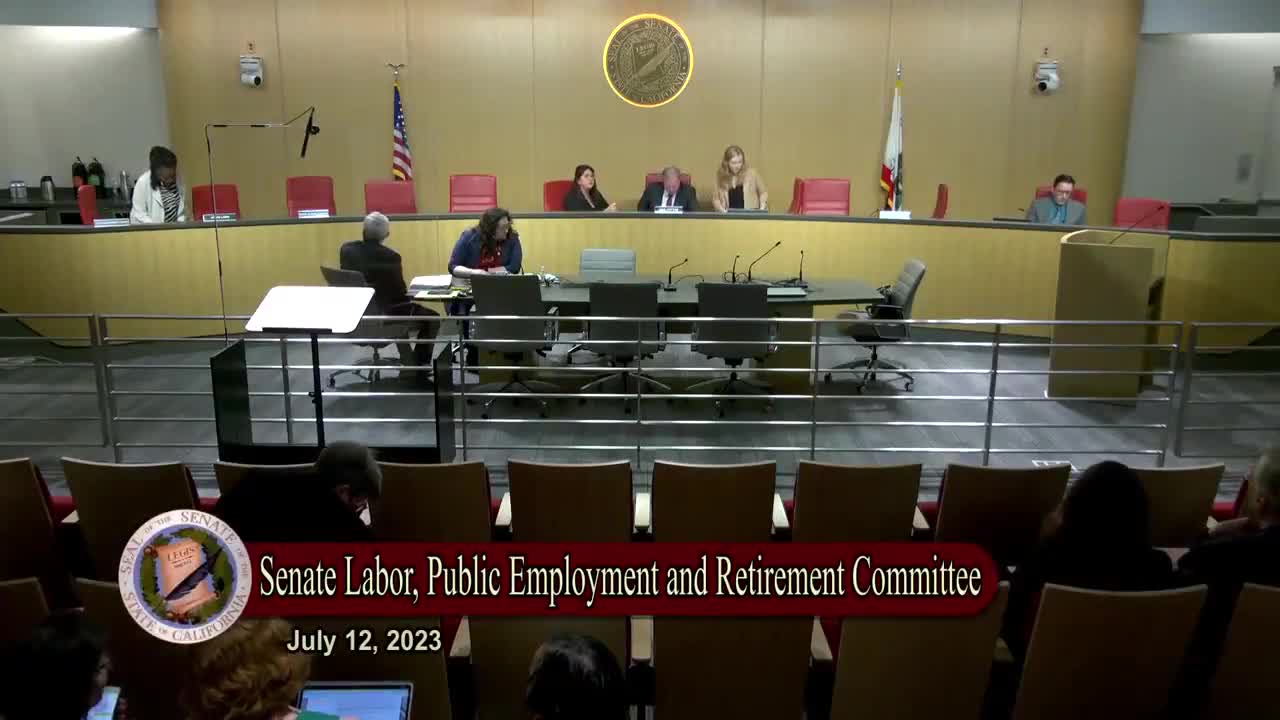 10MIN
Senate Standing Committee on Labor, Public Employment and Retirement
 1MIN
Assembly Floor
 1MIN
Assembly Floor
 2MIN
Assembly Standing Committee on Appropriations
 7MIN
Assembly Standing Committee on Labor and Employment
Bill Author

Bill Co-Author(s):