AB 641: Automobile dismantlers: catalytic converters.
- Session Year: 2023-2024
- House: Assembly
- Latest Version Date: 2023-10-08
Current Status:
Passed
(2023-10-08: Chaptered by Secretary of State - Chapter 537, Statutes of 2023.)
Introduced
In Committee
First Chamber
In Committee
Second Chamber
Enacted
Existing law defines an automobile dismantler as a person who is engaged in the business of buying, selling, or dealing in vehicles that are required to be registered under the Vehicle Code, for the purpose of dismantling the vehicles, who buys or sells the integral parts and component materials of those vehicles, or deals in used motor vehicle parts, as specified. The definition of automobile dismantler also includes a person who keeps or maintains on property owned by the person, or under their possession or control, 2 or more unregistered motor vehicles no longer intended for, or in condition for, legal use on the highways, as specified. Existing law makes it a crime for a person to act as an automobile dismantler without having an established place of business, meeting specified requirements, and having a current, valid license or temporary permit issued by the Department of Motor Vehicles.
This bill would revise the definition of an automobile dismantler to include a person who keeps or maintains on property owned by the person, or under their possession or control, for any of the above-described purposes 9 or more used catalytic converters that have been cut from a motor vehicle using a sharp implement. The bill would make a first violation of acting as an automobile dismantler due to possessing 9 or more catalytic converters as described above punishable as an infraction, and subsequent violations punishable as a misdemeanor, as specified. By expanding the definition of an automobile dismantler, the bill would expand the scope of an existing crime, thereby imposing a state-mandated local program. The bill would exclude from the revised definition of an automobile dismantler a junk dealer, recycler, commercial enterprise, or core recycler, as specified, that has 9 or more of these used catalytic converters.
Existing law excludes from the definition of an automobile dismantler the owner or operator of any premises on which 2 or more unregistered and inoperable vehicles are held or stored, if the vehicles are used for restoration or replacement parts or otherwise, in conjunction with specified businesses, including the operation and maintenance of any fleet of motor vehicles used for the transportation of persons or property.
This bill would also exclude from the definition of an automobile dismantler a person who possesses 9 or more catalytic converters that are used in the same manner as the unregistered and inoperable vehicles.
The California Constitution requires the state to reimburse local agencies and school districts for certain costs mandated by the state. Statutory provisions establish procedures for making that reimbursement.
This bill would provide that no reimbursement is required by this act for a specified reason.
Existing law defines an automobile dismantler as a person who is engaged in the business of buying, selling, or dealing in vehicles that are required to be registered under the Vehicle Code, for the purpose of dismantling the vehicles, buys or sells the integral parts and component materials of those vehicles, or deals in used motor vehicle parts, as specified. The definition of automobile dismantler also includes a person who keeps or maintains on property owned by the person, or under their possession or control, 2 or more unregistered motor vehicles no longer intended for, or in condition for, legal use on the highways, as specified. Existing law makes it a crime for a person to act as an automobile dismantler without having an established place of business, meeting specified requirements, and having a current, valid license or temporary permit issued by the Department of Motor Vehicles.
This bill would revise the definition of an automobile dismantler to include a person who keeps or maintains on property owned by the person, or under their possession or control, for any of the above-described purposes 6 9 or more used catalytic converters that have been cut from a motor vehicle using a sharp implement. The bill would make a first violation of acting as an automobile dismantler due to possessing 9 or more catalytic converters as described above punishable as an infraction, and subsequent violations punishable as a misdemeanor, as specified. By expanding the definition of an automobile dismantler, the bill would expand the scope of an existing crime, thereby imposing a state-mandated local program. The bill would exclude from the revised definition of an automobile dismantler a junk dealer, recycler, commercial enterprise, or core recycler, as specified, that has 6 9 or more of these used catalytic converters.
Existing law excludes from the definition of an automobile dismantler the owner or operator of any premises on which 2 or more unregistered and inoperable vehicles are held or stored, if the vehicles are used for restoration or replacement parts or otherwise, in conjunction with specified businesses, including the operation and maintenance of any fleet of motor vehicles used for the transportation of persons or property.
This bill would also exclude from the definition of an automobile dismantler a person who possesses 6 9 or more catalytic converters that are used in the same manner as the unregistered and inoperable vehicles.
The California Constitution requires the state to reimburse local agencies and school districts for certain costs mandated by the state. Statutory provisions establish procedures for making that reimbursement.
This bill would provide that no reimbursement is required by this act for a specified reason.
Existing law defines an automobile dismantler as a person who is engaged in the business of buying, selling, or dealing in vehicles that are required to be registered under the Vehicle Code, for the purpose of dismantling the vehicles, buys or sells the integral parts and component materials of those vehicles, or deals in used motor vehicle parts, as specified. The definition of automobile dismantler also includes a person who keeps or maintains on property owned by the person, or under their possession or control, 2 or more unregistered motor vehicles no longer intended for, or in condition for, legal use on the highways, as specified. Existing law makes it a crime for a person to act as an automobile dismantler without having an established place of business, meeting specified requirements, and having a current, valid license or temporary permit issued by the Department of Motor Vehicles.
This bill would revise the definition of an automobile dismantler to include a person who keeps or maintains on property owned by the person, or under their possession or control, for any of the above-described purposes 2 6 or more used catalytic converters that have been cut from a motor vehicle using a sharp implement. By expanding the definition of an automobile dismantler, the bill would expand the scope of an existing crime, thereby imposing a state-mandated local program. The bill would exclude from the revised definition of an automobile dismantler a junk dealer, recycler, commercial enterprise, or core recycler, as specified, that has 6 or more of these used catalytic converters.
Existing law excludes from the definition of an automobile dismantler the owner or operator of any premises on which 2 or more unregistered and inoperable vehicles are held or stored, if the vehicles are used for restoration or replacement parts or otherwise, in conjunction with specified businesses, including the operation and maintenance of any fleet of motor vehicles used for the transportation of persons or property.
This bill would also exclude from the definition of an automobile dismantler a person who possesses 6 or more catalytic converters that are used in the same manner as the unregistered and inoperable vehicles.
The California Constitution requires the state to reimburse local agencies and school districts for certain costs mandated by the state. Statutory provisions establish procedures for making that reimbursement.
This bill would provide that no reimbursement is required by this act for a specified reason.
Existing law defines an automobile dismantler as a person who is engaged in the business of buying, selling, or dealing in vehicles that are required to be registered under the Vehicle Code, for the purpose of dismantling the vehicles, buys or sells the integral parts and component materials of those vehicles, or deals in used motor vehicle parts, as specified. The definition of automobile dismantler also includes a person who keeps or maintains on property owned by the person, or under their possession or control, 2 or more unregistered motor vehicles no longer intended for, or in condition for, legal use on the highways, as specified. Existing law makes it a crime for a person to act as an automobile dismantler without having an established place of business, meeting specified requirements, and having a current, valid license or temporary permit issued by the Department of Motor Vehicles.
This bill would revise the definition of an automobile dismantler to include a person who keeps or maintains on property owned by the person, or under their possession or control, for any of the above-described purposes 2 or more used catalytic converters that have been cut from a motor vehicle using a sharp implement. By expanding the definition of an automobile dismantler, the bill would expand the scope of an existing crime, thereby imposing a state-mandated local program.
The California Constitution requires the state to reimburse local agencies and school districts for certain costs mandated by the state. Statutory provisions establish procedures for making that reimbursement.
This bill would provide that no reimbursement is required by this act for a specified reason.
(a)An automobile dismantler is a person not otherwise expressly excluded by Section 221 who is engaged in the business of buying, selling, or dealing in vehicles of a type required to be registered under this code, including nonrepairable vehicles, for the purpose of dismantling the vehicles, who buys or sells the integral parts and component materials thereof, in whole or in part, or deals in used motor vehicle parts. This section does not apply to the occasional and incidental dismantling of vehicles by dealers who have secured dealer plates from the department for the current year whose principal business is buying and selling new and used vehicles, or by owners who desire to dismantle not more than three personal vehicles within any 12-month period.
(b)Notwithstanding subdivision (a), automobile dismantler includes a person not otherwise expressly excluded by Section 221 who keeps or maintains on real property owned by the person, or under their possession or control, either of the following vehicles or catalytic converters, whether for the purpose of resale of used parts, for the purpose of reclaiming for use some or all of the materials, whether metal, glass, fabric, or otherwise, or to dispose of them, or for any other purpose:
(1)Two or more unregistered motor vehicles no longer intended for, or in condition for, legal use on the highways.
(2)Nine or more used catalytic converters that have been cut from a motor vehicle using a sharp implement.
(c)(1)Notwithstanding paragraph (2) of subdivision (b), a junk dealer, as defined in Section 21601 of the Business and Professions Code, a recycler, as defined in Section 21605 of the Business and Professions Code, or a commercial enterprise or core recycler, as defined in Section 21610 of the Business and Professions Code, is not an automobile dismantler even if it possesses nine or more used catalytic converters that have been cut from a motor vehicle using a sharp implement.
(2)This subdivision does not apply to a commercial enterprise described in subparagraph (A) of paragraph (2) of subdivision (a) of Section 21610 of the Business and Professions Code.
SEC. 2.Section 221 of the Vehicle Code is amended to read:221.(a)The term automobile dismantler does not include any of the following:
(1)The owner or operator of any premises on which two or more unregistered and inoperable vehicles are held or stored, or a person who possesses nine or more catalytic converters, if the vehicles or catalytic converters are used for restoration or replacement parts or otherwise, in conjunction with any of the following:
(A)Any business of a licensed dealer, manufacturer, or transporter.
(B)The operation and maintenance of any fleet of motor vehicles used for the transportation of persons or property.
(C)Any agricultural, farming, mining, or ranching business that does not sell parts of the vehicles, except for either of the following purposes:
(i)For use in repairs performed by that business.
(ii)For use by a licensed dismantler or an entity described in paragraph (3).
(D)Any motor vehicle repair business registered with the Bureau of Automotive Repair, or those exempt from registration under the Business and Professions Code or applicable regulations, that does not sell parts of the vehicles, except for either of the following purposes:
(i)For use in repairs performed by that business.
(ii)For use by a licensed dismantler or an entity described in paragraph (3).
(2)A person engaged in the restoration of vehicles of the type described in Section 5004 or in the restoration of other vehicles having historic or classic significance.
(3)The owner of a steel mill, scrap metal processing facility, or similar establishment purchasing vehicles of a type subject to registration, not for the purpose of selling the vehicles, in whole or in part, but exclusively for the purpose of reducing the vehicles to their component materials, if either the facility obtains, on a form approved or provided by the department, a certification by the person from whom the vehicles are obtained that each of the vehicles has been cleared for dismantling pursuant to Section 5500 or 11520, or the facility complies with Section 9564.
(4)Any person who acquires used parts or components for resale from vehicles which have been previously cleared for dismantling pursuant to Section 5500 or 11520.
Nothing in this paragraph permits a dismantler to acquire or sell used parts or components during the time the dismantler license is under suspension.
(b)Any vehicle acquired for the purpose specified in paragraph (3) of subdivision (a) from other than a licensed dismantler, or from other than an independent hauler who obtained the vehicle, or parts thereof from a licensed dismantler, shall be accompanied by either a receipt issued by the department evidencing proof of clearance for dismantling under Section 5500, or a copy of the ordinance or order issued by a local authority for the abatement of the vehicle pursuant to Section 22660. The steel mill, scrap metal processing facility, or similar establishment acquiring the vehicle shall attach the form evidencing clearance or abatement to the certification required pursuant to this section.
All forms specified in paragraph (3) of subdivision (a) and in this subdivision shall be available for inspection by a peace officer during business hours.
SEC. 3.Section 11500 of the Vehicle Code is amended to read:11500.(a)(1)It shall be unlawful for any person to act as an automobile dismantler without first having an established place of business that meets the requirements set forth in Section 11514 and without first having procured a license or temporary permit issued by the department, or when such license or temporary permit has been canceled, suspended, revoked, invalidated, expired, or the terms and conditions of an agreement effected pursuant to Section 11509.1 have not been fulfilled. A violation of this subdivision is a misdemeanor, and is subject to the penalties described in paragraph (2).
(2)Notwithstanding Section 42002, a person convicted of a first violation of subdivision (a) for any reason other than described in paragraph (3) shall be punished by a fine of not less than two hundred fifty dollars ($250). A person convicted of a second separate violation of subdivision (a) for this reason shall be punished by a fine of not less than five hundred dollars ($500). A person convicted of a third or subsequent violation of subdivision (a) for this reason shall be punished by a fine of not less than one thousand dollars ($1,000).
(3)A person who violates subdivision (a) due to possessing nine or more catalytic converters that have been cut from a vehicle pursuant to Section 220 is, for a first violation, guilty of an infraction punishable by a fine of not more than one hundred dollars ($100). A person convicted of a second separate violation of subdivision (a) for this reason is guilty of a misdemeanor punishable by a fine of not less than two hundred fifty dollars ($250). A person convicted of a third separate violation of subdivision (a) for this reason is guilty of a misdemeanor punishable by a fine of not less than five hundred dollars ($500). A person convicted of a fourth or subsequent violation of subdivision (a) for this reason shall be punished by a fine of not less than one thousand dollars ($1,000).
(b)(1)A building or place used for the purpose of automobile dismantling in violation of subdivision (a) is a public nuisance subject to being enjoined, abated, and prevented, and for which damages may be recovered by any public body or officer.
(2)As used in this section, public body means any state agency, county, city, district, or any other political subdivision of the state.
SEC. 4.No reimbursement is required by this act pursuant to Section 6 of Article XIIIB of the California Constitution because the only costs that may be incurred by a local agency or school district will be incurred because this act creates a new crime or infraction, eliminates a crime or infraction, or changes the penalty for a crime or infraction, within the meaning of Section 17556 of the Government Code, or changes the definition of a crime within the meaning of Section 6 of Article XIIIB of the California Constitution.
(a)An automobile dismantler is a person not otherwise expressly excluded by Section 221 who is engaged in the business of buying, selling, or dealing in vehicles of a type required to be registered under this code, including nonrepairable vehicles, for the purpose of dismantling the vehicles, who buys or sells the integral parts and component materials thereof, in whole or in part, or deals in used motor vehicle parts. This section does not apply to the occasional and incidental dismantling of vehicles by dealers who have secured dealer plates from the department for the current year whose principal business is buying and selling new and used vehicles, or by owners who desire to dismantle not more than three personal vehicles within any 12-month period.
(b)Notwithstanding subdivision (a), automobile dismantler includes a person not otherwise expressly excluded by Section 221 who keeps or maintains on real property owned by the person, or under their possession or control, either of the following vehicles or catalytic converters, whether for the purpose of resale of used parts, for the purpose of reclaiming for use some or all of the materials, whether metal, glass, fabric, or otherwise, or to dispose of them, or for any other purpose:
(1)Two or more unregistered motor vehicles no longer intended for, or in condition for, legal use on the highways.
(2)Nine or more used catalytic converters that have been cut from a motor vehicle using a sharp implement.
(c)(1)Notwithstanding paragraph (2) of subdivision (b), a junk dealer, as defined in Section 21601 of the Business and Professions Code, a recycler, as defined in Section 21605 of the Business and Professions Code, or a commercial enterprise or core recycler, as defined in Section 21610 of the Business and Professions Code, is not an automobile dismantler even if it possesses nine or more used catalytic converters that have been cut from a motor vehicle using a sharp implement.
(2)This subdivision does not apply to a commercial enterprise described in subparagraph (A) of paragraph (2) of subdivision (a) of Section 21610 of the Business and Professions Code.
SEC. 2.Section 221 of the Vehicle Code is amended to read:221.(a)The term automobile dismantler does not include any of the following:
(1)The owner or operator of any premises on which two or more unregistered and inoperable vehicles are held or stored, or a person who possesses nine or more catalytic converters, if the vehicles or catalytic converters are used for restoration or replacement parts or otherwise, in conjunction with any of the following:
(A)Any business of a licensed dealer, manufacturer, or transporter.
(B)The operation and maintenance of any fleet of motor vehicles used for the transportation of persons or property.
(C)Any agricultural, farming, mining, or ranching business that does not sell parts of the vehicles, except for either of the following purposes:
(i)For use in repairs performed by that business.
(ii)For use by a licensed dismantler or an entity described in paragraph (3).
(D)Any motor vehicle repair business registered with the Bureau of Automotive Repair, or those exempt from registration under the Business and Professions Code or applicable regulations, that does not sell parts of the vehicles, except for either of the following purposes:
(i)For use in repairs performed by that business.
(ii)For use by a licensed dismantler or an entity described in paragraph (3).
(2)Any A person engaged in the restoration of vehicles of the type described in Section 5004 or in the restoration of other vehicles having historic or classic significance.
(3)The owner of a steel mill, scrap metal processing facility, or similar establishment purchasing vehicles of a type subject to registration, not for the purpose of selling the vehicles, in whole or in part, but exclusively for the purpose of reducing the vehicles to their component materials, if either the facility obtains, on a form approved or provided by the department, a certification by the person from whom the vehicles are obtained that each of the vehicles has been cleared for dismantling pursuant to Section 5500 or 11520, or the facility complies with Section 9564.
(4)Any person who acquires used parts or components for resale from vehicles which have been previously cleared for dismantling pursuant to Section 5500 or 11520.
Nothing in this paragraph permits a dismantler to acquire or sell used parts or components during the time the dismantler license is under suspension.
(b)Any vehicle acquired for the purpose specified in paragraph (3) of subdivision (a) from other than a licensed dismantler, or from other than an independent hauler who obtained the vehicle, or parts thereof from a licensed dismantler, shall be accompanied by either a receipt issued by the department evidencing proof of clearance for dismantling under Section 5500, or a copy of the ordinance or order issued by a local authority for the abatement of the vehicle pursuant to Section 22660. The steel mill, scrap metal processing facility, or similar establishment acquiring the vehicle shall attach the form evidencing clearance or abatement to the certification required pursuant to this section.
All forms specified in paragraph (3) of subdivision (a) and in this subdivision shall be available for inspection by a peace officer during business hours.
SEC. 3.Section 11500 of the Vehicle Code is amended to read:11500.(a)(1)It shall be unlawful for any person to act as an automobile dismantler without first having an established place of business that meets the requirements set forth in Section 11514 and without first having procured a license or temporary permit issued by the department, or when such license or temporary permit has been canceled, suspended, revoked, invalidated, expired, or the terms and conditions of an agreement effected pursuant to Section 11509.1 have not been fulfilled. A violation of this subdivision is a misdemeanor, and is subject to the penalties described in paragraph (2).
(2)Notwithstanding Section 42002, a person convicted of a first violation of subdivision (a) for any reason other than described in paragraph (3) shall be punished by a fine of not less than two hundred fifty dollars ($250). A person convicted of a second separate violation of subdivision (a) for this reason shall be punished by a fine of not less than five hundred dollars ($500). A person convicted of a third or subsequent violation of subdivision (a) for this reason shall be punished by a fine of not less than one thousand dollars ($1,000).
(3)A person who violates subdivision (a) due to possessing nine or more catalytic converters that have been cut from a vehicle pursuant to Section 220 is, for a first violation, guilty of an infraction punishable by a fine of not more than one hundred dollars ($100). A person convicted of a second separate violation of subdivision (a) for this reason is guilty of a misdemeanor punishable by a fine of not less than two hundred fifty dollars ($250). A person convicted of a third separate violation of subdivision (a) for this reason is guilty of a misdemeanor punishable by a fine of not less than five hundred dollars ($500). A person convicted of a fourth or subsequent violation of subdivision (a) for this reason shall be punished by a fine of not less than one thousand dollars ($1,000).
(b)(1)A building or place used for the purpose of automobile dismantling in violation of subdivision (a) is a public nuisance subject to being enjoined, abated, and prevented, and for which damages may be recovered by any public body or officer.
(2)As used in this section, public body means any state agency, county, city, district, or any other political subdivision of the state.
SEC. 4.No reimbursement is required by this act pursuant to Section 6 of Article XIIIB of the California Constitution because the only costs that may be incurred by a local agency or school district will be incurred because this act creates a new crime or infraction, eliminates a crime or infraction, or changes the penalty for a crime or infraction, within the meaning of Section 17556 of the Government Code, or changes the definition of a crime within the meaning of Section 6 of Article XIIIB of the California Constitution.
(a)An automobile dismantler is a person not otherwise expressly excluded by Section 221 who is engaged in the business of buying, selling, or dealing in vehicles of a type required to be registered under this code, including nonrepairable vehicles, for the purpose of dismantling the vehicles, who buys or sells the integral parts and component materials thereof, in whole or in part, or deals in used motor vehicle parts. This section does not apply to the occasional and incidental dismantling of vehicles by dealers who have secured dealer plates from the department for the current year whose principal business is buying and selling new and used vehicles, or by owners who desire to dismantle not more than three personal vehicles within any 12-month period.
(b)Notwithstanding subdivision (a), automobile dismantler includes a person not otherwise expressly excluded by Section 221 who keeps or maintains on real property owned by the person, or under their possession or control, either of the following vehicles or catalytic converters, whether for the purpose of resale of used parts, for the purpose of reclaiming for use some or all of the materials, whether metal, glass, fabric, or otherwise, or to dispose of them, or for any other purpose:
(1)Two or more unregistered motor vehicles no longer intended for, or in condition for, legal use on the highways.
(2)Six Nine or more used catalytic converters that have been cut from a motor vehicle using a sharp implement.
(c)(1)Notwithstanding paragraph (2) of subdivision (b), a junk dealer, as defined in Section 21601 of the Business and Professions Code, a recycler, as defined in Section 21605 of the Business and Professions Code, or a commercial enterprise or core recycler, as defined in Section 21610 of the Business and Professions Code, is not an automobile dismantler even if it possesses six nine or more used catalytic converters that have been cut from a motor vehicle using a sharp implement.
(2)This subdivision does not apply to a commercial enterprise described in subparagraph (A) of paragraph (2) of subdivision (a) of Section 21610 of the Business and Professions Code.
SEC. 2.Section 221 of the Vehicle Code is amended to read:221.(a)The term automobile dismantler does not include any of the following:
(1)The owner or operator of any premises on which two or more unregistered and inoperable vehicles are held or stored, or a person who possesses six nine or more catalytic converters, if the vehicles or catalytic converters are used for restoration or replacement parts or otherwise, in conjunction with any of the following:
(A)Any business of a licensed dealer, manufacturer, or transporter.
(B)The operation and maintenance of any fleet of motor vehicles used for the transportation of persons or property.
(C)Any agricultural, farming, mining, or ranching business that does not sell parts of the vehicles, except for either of the following purposes:
(i)For use in repairs performed by that business.
(ii)For use by a licensed dismantler or an entity described in paragraph (3).
(D)Any motor vehicle repair business registered with the Bureau of Automotive Repair, or those exempt from registration under the Business and Professions Code or applicable regulations, that does not sell parts of the vehicles, except for either of the following purposes:
(i)For use in repairs performed by that business.
(ii)For use by a licensed dismantler or an entity described in paragraph (3).
(2)Any person engaged in the restoration of vehicles of the type described in Section 5004 or in the restoration of other vehicles having historic or classic significance.
(3)The owner of a steel mill, scrap metal processing facility, or similar establishment purchasing vehicles of a type subject to registration, not for the purpose of selling the vehicles, in whole or in part, but exclusively for the purpose of reducing the vehicles to their component materials, if either the facility obtains, on a form approved or provided by the department, a certification by the person from whom the vehicles are obtained that each of the vehicles has been cleared for dismantling pursuant to Section 5500 or 11520, or the facility complies with Section 9564.
(4)Any person who acquires used parts or components for resale from vehicles which have been previously cleared for dismantling pursuant to Section 5500 or 11520.
Nothing in this paragraph permits a dismantler to acquire or sell used parts or components during the time the dismantler license is under suspension.
(b)Any vehicle acquired for the purpose specified in paragraph (3) of subdivision (a) from other than a licensed dismantler, or from other than an independent hauler who obtained the vehicle, or parts thereof from a licensed dismantler, shall be accompanied by either a receipt issued by the department evidencing proof of clearance for dismantling under Section 5500, or a copy of the ordinance or order issued by a local authority for the abatement of the vehicle pursuant to Section 22660. The steel mill, scrap metal processing facility, or similar establishment acquiring the vehicle shall attach the form evidencing clearance or abatement to the certification required pursuant to this section.
All forms specified in paragraph (3) of subdivision (a) and in this subdivision shall be available for inspection by a peace officer during business hours.
SEC. 3.Section 11500 of the Vehicle Code is amended to read:11500.(a)(1)It shall be unlawful for any person to act as an automobile dismantler without first having an established place of business that meets the requirements set forth in Section 11514 and without first having procured a license or temporary permit issued by the department, or when such license or temporary permit has been canceled, suspended, revoked, invalidated, expired, or the terms and conditions of an agreement effected pursuant to Section 11509.1 have not been fulfilled. A violation of this subdivision is a misdemeanor, and is subject to the penalties described in paragraph (2).
(2)Notwithstanding Section 42002, a person convicted of a first violation of subdivision (a) for any reason other than described in paragraph (3) shall be punished by a fine of not less than two hundred fifty dollars ($250). A person convicted of a second separate violation of subdivision (a) for this reason shall be punished by a fine of not less than five hundred dollars ($500). A person convicted of a third or subsequent violation of subdivision (a) for this reason shall be punished by a fine of not less than one thousand dollars ($1,000).
(3)A person who violates subdivision (a) due to possessing nine or more catalytic converters that have been cut from a vehicle pursuant to Section 220 is, for a first violation, guilty of an infraction punishable by a fine of not more than one hundred dollars ($100). A person convicted of a second separate violation of subdivision (a) for this reason is guilty of a misdemeanor punishable by a fine of not less than two hundred fifty dollars ($250). A person convicted of a third separate violation of subdivision (a) for this reason is guilty of a misdemeanor punishable by a fine of not less than five hundred dollars ($500). A person convicted of a fourth or subsequent violation of subdivision (a) for this reason shall be punished by a fine of not less than one thousand dollars ($1,000).
(b)(1)A building or place used for the purpose of automobile dismantling in violation of subdivision (a) is a public nuisance subject to being enjoined, abated, and prevented, and for which damages may be recovered by any public body or officer.
(2)As used in this section, public body means any state agency, county, city, district, or any other political subdivision of the state.
SEC. 3.SEC. 4.No reimbursement is required by this act pursuant to Section 6 of Article XIIIB of the California Constitution because the only costs that may be incurred by a local agency or school district will be incurred because this act creates a new crime or infraction, eliminates a crime or infraction, or changes the penalty for a crime or infraction, within the meaning of Section 17556 of the Government Code, or changes the definition of a crime within the meaning of Section 6 of Article XIIIB of the California Constitution.
(a)An automobile dismantler is a person not otherwise expressly excluded by Section 221 who is engaged in the business of buying, selling, or dealing in vehicles of a type required to be registered under this code, including nonrepairable vehicles, for the purpose of dismantling the vehicles, who buys or sells the integral parts and component materials thereof, in whole or in part, or deals in used motor vehicle parts. This section does not apply to the occasional and incidental dismantling of vehicles by dealers who have secured dealer plates from the department for the current year whose principal business is buying and selling new and used vehicles, or by owners who desire to dismantle not more than three personal vehicles within any 12-month period.
(b)Notwithstanding subdivision (a), automobile dismantler includes a person not otherwise expressly excluded by Section 221 who keeps or maintains on real property owned by the person, or under their possession or control, two either of the following vehicles or catalytic converters, whether for the purpose of resale of used parts, for the purpose of reclaiming for use some or all of the materials, whether metal, glass, fabric, or otherwise, or to dispose of them, or for any other purpose:
(1)Two or more unregistered motor vehicles no longer intended for, or in condition for, legal use on the highways, or two highways.
(2)Six or more used catalytic converters that have been cut from a motor vehicle using a sharp implement, whether for the purpose of resale of used parts, for the purpose of reclaiming for use some or all of the materials, whether metal, glass, fabric, or otherwise, or to dispose of them, or for any other purpose. implement.
(c)(1)Notwithstanding paragraph (2) of subdivision (b), a junk dealer, as defined in Section 21601 of the Business and Professions Code, a recycler, as defined in Section 21605 of the Business and Professions Code, or a commercial enterprise or core recycler, as defined in Section 21610 of the Business and Professions Code, is not an automobile dismantler even if it possesses six or more used catalytic converters that have been cut from a motor vehicle using a sharp implement.
(2)This subdivision does not apply to a commercial enterprise described in subparagraph (A) of paragraph (2) of subdivision (a) of Section 21610 of the Business and Professions Code.
SEC. 2.Section 221 of the Vehicle Code is amended to read:221.(a)The term automobile dismantler does not include any of the following:
(1)The owner or operator of any premises on which two or more unregistered and inoperable vehicles are held or stored, or a person who possesses six or more catalytic converters, if the vehicles or catalytic converters are used for restoration or replacement parts or otherwise, in conjunction with any of the following:
(A)Any business of a licensed dealer, manufacturer, or transporter.
(B)The operation and maintenance of any fleet of motor vehicles used for the transportation of persons or property.
(C)Any agricultural, farming, mining, or ranching business that does not sell parts of the vehicles, except for either of the following purposes:
(i)For use in repairs performed by that business.
(ii)For use by a licensed dismantler or an entity described in paragraph (3).
(D)Any motor vehicle repair business registered with the Bureau of Automotive Repair, or those exempt from registration under the Business and Professions Code or applicable regulations, that does not sell parts of the vehicles, except for either of the following purposes:
(i)For use in repairs performed by that business.
(ii)For use by a licensed dismantler or an entity described in paragraph (3).
(2)Any person engaged in the restoration of vehicles of the type described in Section 5004 or in the restoration of other vehicles having historic or classic significance.
(3)The owner of a steel mill, scrap metal processing facility, or similar establishment purchasing vehicles of a type subject to registration, not for the purpose of selling the vehicles, in whole or in part, but exclusively for the purpose of reducing the vehicles to their component materials, if either the facility obtains, on a form approved or provided by the department, a certification by the person from whom the vehicles are obtained that each of the vehicles has been cleared for dismantling pursuant to Section 5500 or 11520, or the facility complies with Section 9564.
(4)Any person who acquires used parts or components for resale from vehicles which have been previously cleared for dismantling pursuant to Section 5500 or 11520.
Nothing in this paragraph permits a dismantler to acquire or sell used parts or components during the time the dismantler license is under suspension.
(b)Any vehicle acquired for the purpose specified in paragraph (3) of subdivision (a) from other than a licensed dismantler, or from other than an independent hauler who obtained the vehicle, or parts thereof from a licensed dismantler, shall be accompanied by either a receipt issued by the department evidencing proof of clearance for dismantling under Section 5500, or a copy of the ordinance or order issued by a local authority for the abatement of the vehicle pursuant to Section 22660. The steel mill, scrap metal processing facility, or similar establishment acquiring the vehicle shall attach the form evidencing clearance or abatement to the certification required pursuant to this section.
All forms specified in paragraph (3) of subdivision (a) and in this subdivision shall be available for inspection by a peace officer during business hours.
SEC. 2.SEC. 3.No reimbursement is required by this act pursuant to Section 6 of Article XIIIB of the California Constitution because the only costs that may be incurred by a local agency or school district will be incurred because this act creates a new crime or infraction, eliminates a crime or infraction, or changes the penalty for a crime or infraction, within the meaning of Section 17556 of the Government Code, or changes the definition of a crime within the meaning of Section 6 of Article XIIIB of the California Constitution.
REVISIONS: HeadingLine 4.(a)An automobile dismantler is any a person not otherwise expressly excluded by Section 221 who: who is engaged in the business of buying, selling, or dealing in vehicles of a type required to be registered under this code, including nonrepairable vehicles, for the purpose of dismantling the vehicles, who buys or sells the integral parts and component materials thereof, in whole or in part, or deals in used motor vehicle parts. This section does not apply to the occasional and incidental dismantling of vehicles by dealers who have secured dealer plates from the department for the current year whose principal business is buying and selling new and used vehicles, or by owners who desire to dismantle not more than three personal vehicles within any 12-month period.
(a)Is engaged in the business of buying, selling, or dealing in vehicles of a type required to be registered under this code, including nonrepairable vehicles, for the purpose of dismantling the vehicles, who buys or sells the integral parts and component materials thereof, in whole or in part, or deals in used motor vehicle parts. This section does not apply to the occasional and incidental dismantling of vehicles by dealers who have secured dealers plates from the department for the current year whose principal business is buying and selling new and used vehicles, or by owners who desire to dismantle not more than three personal vehicles within any 12-month period.(b)Notwithstanding the provisions of subdivision (a), automobile dismantler includes a person not otherwise expressly excluded by Section 221 who keeps or maintains on real property owned by him, or under his the person, or under their possession or control, two or more unregistered motor vehicles no longer intended for, or in condition for, legal use on the highways, or two or more used catalytic converters that have been cut from a motor vehicle using a sharp implement, whether for the purpose of resale of used parts, for the purpose of reclaiming for use some or all of the materials, whether metal, glass, fabric, or otherwise, or to dispose of them, or for any other purpose.
SEC. 2.No reimbursement is required by this act pursuant to Section 6 of Article XIIIB of the California Constitution because the only costs that may be incurred by a local agency or school district will be incurred because this act creates a new crime or infraction, eliminates a crime or infraction, or changes the penalty for a crime or infraction, within the meaning of Section 17556 of the Government Code, or changes the definition of a crime within the meaning of Section 6 of Article XIIIB of the California Constitution.
|
Date
|
Status
|
|---|---|
| Oct 8, 2023 | Chaptered by Secretary of State - Chapter 537, Statutes of 2023. |
| Oct 8, 2023 | Approved by the Governor. |
| Sep 15, 2023 | Enrolled and presented to the Governor at 4 p.m. |
| Sep 11, 2023 | Senate amendments concurred in. To Engrossing and Enrolling. (Ayes 80. Noes 0. Page 3191.). |
| Sep 7, 2023 | In Assembly. Concurrence in Senate amendments pending. May be considered on or after September 9 pursuant to Assembly Rule 77. |
| Sep 7, 2023 | Read third time. Passed. Ordered to the Assembly. (Ayes 40. Noes 0. Page 2484.). |
| Aug 22, 2023 | Read second time. Ordered to third reading. |
| Aug 21, 2023 | From committee: Be ordered to second reading pursuant to Senate Rule 28.8. |
| Aug 14, 2023 | From committee chair, with author's amendments: Amend, and re-refer to committee. Read second time, amended, and re-referred to Com. on APPR. |
| Jul 26, 2023 | In committee: Hearing postponed by committee. |
| Jul 13, 2023 | Read second time and amended. Re-referred to Com. on APPR. |
| Jul 12, 2023 | From committee: Amend, and do pass as amended and re-refer to Com. on APPR. (Ayes 16. Noes 0.) (July 11). |
| Jun 21, 2023 | In committee: Set, first hearing. Hearing canceled at the request of author. |
| Jun 7, 2023 | Referred to Com. on TRANS. |
| May 26, 2023 | In Senate. Read first time. To Com. on RLS. for assignment. |
| May 25, 2023 | Read third time. Passed. Ordered to the Senate. (Ayes 77. Noes 0. Page 1800.) |
| May 18, 2023 | Read second time. Ordered to third reading. |
| May 18, 2023 | Joint Rule 62(a), file notice suspended. (Page 1580.) |
| May 18, 2023 | From committee: Do pass. (Ayes 15. Noes 0.) (May 18). |
| May 17, 2023 | In committee: Set, first hearing. Referred to APPR. suspense file. |
| May 3, 2023 | In committee: Hearing postponed by committee. |
| Apr 18, 2023 | From committee: Do pass and re-refer to Com. on APPR. (Ayes 15. Noes 0.) (April 17). Re-referred to Com. on APPR. |
| Apr 18, 2023 | Coauthors revised. |
| Apr 11, 2023 | Re-referred to Com. on TRANS. |
| Apr 10, 2023 | From committee chair, with author's amendments: Amend, and re-refer to Com. on TRANS. Read second time and amended. |
| Feb 17, 2023 | Referred to Com. on TRANS. |
| Feb 10, 2023 | From printer. May be heard in committee March 12. |
| Feb 9, 2023 | Read first time. To print. |
|
Date
|
Description
|
Location
|
Votes
|
|
|---|---|---|---|---|
| Sep 11, 2023 | AB 641 Vince Fong Concurrence in Senate Amendments | Assembly Floor |
Passed |
|
| Sep 7, 2023 | Assembly 3rd Reading AB641 Vince Fong et al. By Archuleta | Senate Floor |
Passed |
|
| Jul 11, 2023 | Do pass as amended, but first amend, and re-refer to the Committee on [Appropriations] | Senate Standing Committee on Transportation |
Passed |
|
| May 25, 2023 | AB 641 Vince Fong Assembly Third Reading | Assembly Floor |
Passed |
|
| May 18, 2023 | Do pass. | Assembly Standing Committee on Appropriations |
Passed |
|
| Apr 17, 2023 | Do pass and be re-referred to the Committee on [Appropriations] | Assembly Standing Committee on Transportation |
Passed |
This list shows positions taken on this bill by organizations on the date displayed, which is linked to the original source.
Positions by individuals are not included.
|
Organization
|
Position
|
Date
|
|---|---|---|
| Arcadia Police Officers' Association | ** Support | |
| Auto Club of Southern California | ** Support | |
| Burbank Police Officers' Association | ** Support | |
| California Association Of Local Conservation Corps | ** Support | |
| California Coalition of School Safety Professionals | ** Support | |
| California District Attorneys Association | ** Support | |
| California Law Enforcement Association of Records Supervisors | ** Support | |
| California New Car Dealers Association | ** Support | |
| California Police Chiefs Association | ** Support | |
| California Reserve Peace Officers Association | ** Support | |
| California State Sheriffs' Association | ** Support | |
| California Vanpool Authority | ** Support | |
| CarMax | ** Support | |
| Carmax Auto Superstores West Coast Inc. | ** Support | |
| City of Alameda | ** Support | |
| CLAREMONT POLICE OFFICERS ASSOCIATION | ** Support | |
| Corona Police Officers Association | ** Support | |
| Culver City Police Officers' Association | ** Support | |
| Deputy Sheriffs Association of Monterey County | ** Support | |
| Fullerton Police Officers' Association | ** Support | |
| los angeles school police officers association | ** Support | |
| Murrieta Police Officers' Association | ** Support | |
| National Insurance Crime Bureau | ** Support | |
| Newport Beach Police Association | ** Support | |
| Novato Police Officers Association | ** Support | |
| Palos Verdes Police Officers Association | ** Support | |
| PLACER COUNTY DEPUTY SHERIFFS ASSOCIATION | ** Support | |
| Pomona Police Officers' Association | ** Support | |
| RIVERSIDE POLICE OFFICERS ASSOCIATION | ** Support | |
| Riverside Sheriffs' Association | ** Support | |
| Santa Ana Police Officers Association | ** Support | |
| Upland Police Officers Association | ** Support |
CONCURRENCE IN SENATE AMENDMENTS
CSA1 Bill Id:AB 641
Author:(Vince Fong)
As Amended Ver:August 14, 2023
Majority vote
SUMMARY
Makes it a misdemeanor for a person to possess nine or more used catalytic converters that have been cut from a vehicle unless they are a licensed automobile dismantler or are expressly excluded from having to be a licensed automobile dismantler.
Senate Amendments
- Increased the number of cut catalytic converters in a person's possession from six to nine in order to show the person is an unlicensed automobile dismantler.
- Provides that the crime is a misdemeanor on the second offense. The first offense is an infraction to be punishable with a fine up to $100.
COMMENTS
Catalytic converter thefts are on the rise. The Bureau of Automotive Repair (BAR) reported about 1,600 converter thefts per month statewide in 2021. According to data provided by the Personal Insurance Federation of California, insurance claims for catalytic converter thefts in California have gone up from a monthly average of 183 in 2020 to 477 claims in January of 2022. Claims rose by 308% from 2019 to 2020 and 100% from 2020 to 2021. California had the highest number of claims in the United States, accounting for 28% of all theft claims in the country. The insurance industry paid over $23 million in repair costs for catalytic converters in 2021 alone, an 11.5% increase from the year before.
A catalytic converter is an exhaust emission control device that converts toxic gases and pollutants in exhaust gas from an internal combustion engine into less-toxic pollutants.
Catalytic converter theft has been on the rise because they are coated with precious metals such as rhodium that is valued at over $14,000 per ounce and palladium which is valued at $2,500 per ounce. Toyota and Honda vehicles have been particularly attractive to thieves, because the location of the converters on certain vehicles that make it so that a thief can steal one with basic tools, such as a pipe wrench or cordless saw, in a manner of minutes.
The increase in theft, combined with supply chain issues has resulted in a shortage of replacement catalytic converters. This is likely to grow worse because of the war in Ukraine and Russia being the world's largest producer of palladium.
BAR has made several recommendations to deter theft of catalytic converters, including parking cars in well-lit areas, installing motion-sensing alarm systems, installing theft prevention devices like steel cages, and etching the converter shell with a VIN or license plate number.
Last year the Legislature passed and the Governor signed AB 1740 (Muratsuchi), Chapter 513, Statutes of 2022, and SB 1087 (Gonzalez), Chapter 514, Statutes of 2022, which prohibits a core recycler from entering into a transaction to purchase or receive a catalytic converter from any person that is not a commercial enterprise, as defined, or verifiable owner of the vehicle from which the catalytic converter was removed. These two laws place strict record keeping requirements on core recyclers on where they got their catalytic converters from. The goal of that legislation is to make it harder for catalytic converter thieves to be able to sell their stolen catalytic converters to smelting operations. This removes the impetus to steal the catalytic converter to begin with as their value is not in the attachment of the device to another vehicle, but rather in the precious metals they contain.
It is already a crime to steal a catalytic converter, sell stolen property, and knowingly receive stolen property. Law enforcement has indicated to the Committee that they have had a difficult time catching catalytic converter thieves in the act. As a result, there have been numerous bills introduced in the past two legislative sessions to make it a crime to possess a detached catalytic converter, and several cities have passed ordinances making it a crime to merely possess a catalytic converter.
According to the Author
"Families, especially low-income Californians, are financially strained with inflation and the high cost of everything from rent to energy to groceries. Catalytic converter theft costs them money that could have gone to pay the bills, and loopholes must be closed to stop these rampant thefts. AB 641 will give law enforcement the tool they need to crack down on catalytic converter theft and unlicensed dismantling. Thieves caught with converters should be charged with unlicensed vehicle dismantling, at a minimum. This bill will discourage catalytic converter thieves, and bring relief to California motorists."
Arguments in Support
The California District Attorney's Association, writing in support of this bill, argues "AB 641 will improve public safety and give law enforcement the tools they need to hold thieves
accountable. By requiring individuals in possession of six or more catalytic converters to register as automobile dismantlers, thieves caught with converters could be charged with unlicensed vehicle dismantling, regardless of whether the catalytic converters can be tracked to a victim. Unlicensed vehicle dismantling is currently a misdemeanor with fines ranging from $250 to $1,000 per offense."
Arguments in Opposition
No opposition on file
FISCAL COMMENTS
According to the Senate Appropriations Committee, pursuant to Senate Rule 28.8, negligible state costs.
VOTES:
ASM TRANSPORTATION: 15-0-0
YES: Friedman, Vince Fong, Berman, Juan Carrillo, Davies, Gipson, Hart, Jackson, Kalra, Lowenthal, Stephanie Nguyen, Sanchez, Wallis, Ward, Wicks
ASM APPROPRIATIONS: 15-0-1
YES: Holden, Megan Dahle, Bryan, Calderon, Wendy Carrillo, Dixon, Mike Fong, Hart, Lowenthal, Mathis, Papan, Pellerin, Sanchez, Weber, Ortega
ABS, ABST OR NV: Robert Rivas
ASSEMBLY FLOOR: 77-0-3
YES: Addis, Alanis, Alvarez, Arambula, Bains, Bauer-Kahan, Bennett, Berman, Boerner, Bonta, Bryan, Calderon, Juan Carrillo, Wendy Carrillo, Cervantes, Chen, Connolly, Megan Dahle, Davies, Dixon, Essayli, Flora, Mike Fong, Vince Fong, Friedman, Gabriel, Gallagher, Garcia, Gipson, Grayson, Haney, Hart, Holden, Hoover, Irwin, Jackson, Jones‑Sawyer, Kalra, Lackey, Lee, Low, Lowenthal, Maienschein, McCarty, McKinnor, Muratsuchi, Stephanie Nguyen, Ortega, Pacheco, Jim Patterson, Joe Patterson, Pellerin, Petrie‑Norris, Quirk-Silva, Ramos, Reyes, Luz Rivas, Robert Rivas, Rodriguez, Blanca Rubio, Sanchez, Santiago, Schiavo, Soria, Ta, Ting, Valencia, Villapudua, Waldron, Wallis, Ward, Weber, Wicks, Wilson, Wood, Zbur, Rendon
ABS, ABST OR NV: Aguiar-Curry, Mathis, Papan
SENATE FLOOR: 40-0-0
YES: Allen, Alvarado-Gil, Archuleta, Ashby, Atkins, Becker, Blakespear, Bradford, Caballero, Cortese, Dahle, Dodd, Durazo, Eggman, Glazer, Gonzalez, Grove, Hurtado, Jones, Laird, Limón, McGuire, Menjivar, Min, Newman, Nguyen, Niello, Ochoa Bogh, Padilla, Portantino, Roth, Rubio, Seyarto, Skinner, Smallwood-Cuevas, Stern, Umberg, Wahab, Wiener, Wilk
UPDATED
VERSION: August 14, 2023
CONSULTANT: David Sforza / TRANS. / (916) 319-2093 FN: 0001954
SENATE RULES COMMITTEE Office of Senate Floor Analyses (916) 651-1520 Fax: (916) 327-4478 | AB 641 |
THIRD READING
Bill No: AB 641
Author: Vince Fong (R), et al.
Amended: 8/14/23 in Senate
Vote: 21
SENATE TRANSPORTATION COMMITTEE: 16-0, 7/11/23
AYES: Gonzalez, Niello, Allen, Archuleta, Becker, Blakespear, Cortese, Dahle, Durazo, Laird, Limón, McGuire, Newman, Nguyen, Seyarto, Umberg
SENATE APPROPRIATIONS COMMITTEE: Senate Rule 28.8
ASSEMBLY FLOOR: 77-0, 5/25/23 - See last page for vote
SUBJECT: Automobile dismantlers: catalytic converters
SOURCE: Author
DIGEST:
This bill revises the definition of automobile dismantler thereby making it a misdemeanor for a person to possess nine or more used catalytic converters that have been cut from a vehicle unless they are a licensed automobile dismantler.
ANALYSIS:
Existing law:
- Defines an “automobile dismantler” as a person who: (Vehicle Code (VEH) §220)
- Is engaged in the business of buying, selling, or dealing in vehicles, including nonrepairable vehicles, for the purpose of dismantling the vehicles or buys or sells the integral parts and component materials thereof;
- Deals in used motor vehicle parts; or
- Keeps or maintains on real property they own or control, two or more unregistered motor vehicles no longer intended for, or in condition for, legal use on the highways.
- Excludes from the definition of automobile dismantler:
- The occasional and incidental dismantling of vehicles by dealers who have secured dealers plates from the department for the current year whose principal business is buying and selling new and used vehicles;
- Owners who dismantle not more than three personal vehicles within any 12-month period; and
- The owner or operator of any premises on which two or more unregistered and inoperable vehicles are held, if the vehicles are used for restoration or replacement parts or otherwise, in conjunction with: (VEH §221)
- Any business of a licensed dealer, manufacturer, or transporter;
- The operation and maintenance of any fleet of motor vehicles used for the transportation of persons or property;
- Any agricultural, farming, mining, or ranching business that does not sell parts of the vehicles, except for repairs or use by a licensed dismantler;
- Any motor vehicle repair business registered with the Bureau of Automotive Repair, or those exempt from registration under the applicable regulations, that does not sell parts of the vehicles;
- Any person engaged in the restoration of vehicles having historic or classic significance;
- The owner of a steel mill, scrap metal processing facility, or similar establishment purchasing vehicles of a type subject to registration, exclusively for the purpose of reducing the vehicles to their component materials; or
- Any person who acquires used parts or components for resale from vehicles which have been previously cleared for dismantling.
- Makes it a misdemeanor for a person to act as an automobile dismantler without first having an established place of business and without first having procured a license or temporary permit from the Department of Motor Vehicles. Creates a fine of at least $250 ($1150 with penalty assessments) for first offense, $500 ($2,130 with penalty assessments) for a second offense and $1,000 ($4,180 with penalty assessments) for a third offense. (VEH §11500).
- Provides that no person shall install, sell, offer for sale, or advertise any device, apparatus, or mechanism intended for use with, or as a part of, a required motor vehicle pollution control device or system, including catalytic converters, that alters or modifies the original design or performance of the motor vehicle pollution control device or system. If the court finds that a person has willfully violated this section, the court shall impose the maximum fine that may be imposed in the case, and no part of the fine may be suspended. (VEH §27156 and §38391)
This bill:
- Modifies the definition of automobile dismantler to include a person who keeps or maintains, on real property owned by them, nine or more used catalytic converters that have been cut from a motor vehicle using a sharp implement. Thereby making it a crime to possess that many catalytic converters unless possessing an automobile dismantler license.
- Specifies that the first violation of this new law shall be an infraction punishable by a fine of not more than $100 and that subsequent isolations shall be misdemeanors punishable by fines of not less than $250, $500, and $1,000 for second, third, and subsequent violations, respectively.
- Provides that a junk dealer, recycler, commercial enterprise, or core recycler shall not be considered an automobile dismantler even if it possesses nine or more used catalytic converters that were cut from a motor vehicle unless they are a commercial enterprise.
- Exempts from the definition of automobile dismantler a person who possesses nine or more catalytic converters if they are used for restoration or replacement parts or otherwise, in conjunction with any of the businesses or behaviors described in VEH Section 221 that exempts the owner of two or more unregistered and inoperable vehicles from the definition.
Comments
- Purpose of bill. According to the author “Families, especially low-income Californians, are financially strained with inflation and the high cost of everything from rent to energy to groceries. Catalytic converter theft costs them money that could have gone to pay the bills, and loopholes must be closed to stop these rampant thefts. AB 641 will give law enforcement the tool they need to crack down on catalytic converter theft and unlicensed dismantling. Thieves caught with converters should be charged with unlicensed vehicle dismantling, at a minimum. This bill will discourage catalytic converter thieves, and bring relief to California motorists.”
- Catalytic converters clean car emissions. Catalytic converters are an essential and required component of motor vehicle exhaust systems. They are responsible for changing toxic emissions from the combustion engine into less-toxic alternatives before they are released into the air. Catalytic converters work by using the chemical properties of small amounts of precious metals such as rhodium, palladium and platinum to promote a chemical reaction in exhaust fumes that degrades the toxic pollutants.
- Catalytic converters are attractive targets for thieves. Catalytic converters are often located in readily accessible locations in a vehicle’s undercarriage. With simple equipment, a potential thief can saw off most catalytic converters in minutes, likely damaging the car in the process. The converters can then be quickly sold to scrap yards who then sell them to recyclers who reclaim the precious metals. According to a 2021 report by the Congressional Research Service titled Addressing Catalytic Converter Theft, stolen catalytic converters can be sold by thieves for anywhere from $25 to $500 depending on the type and model of vehicle they were stolen from. Replacing a catalytic converter, especially if additional components were damaged during the removal, can cost a consumer thousands of dollars.
- Catalytic converter thefts spiked during the pandemic. Palladium and rhodium, the precious metals in catalytic converters, have become particularly valuable recently due to scarcity and disruptions in the supply chain related to the COVID-19 pandemic. While the prices have been dropping from their largest spikes over the last two years, they remain quite high. According to online price trackers, the price of palladium as of March 1, 2023 was $1453 per ounce, down 39% from its price two years prior, but up 46% from its price on the same date in 2018. Rhodium follows a similar trend, costing 74% less than it did in 2021, but 46% more than in 2018. The spike in value of palladium and rhodium increased the value of stolen converters, encouraging their theft. The pandemic may also have created more opportunities for thieves to target unattended vehicles as people traveled less.
Whatever the cause, the number of catalytic converter thefts dramatically increased over the recent years, according to an analysis from National Insurance Crime Bureau (NICB) of submitted insurance claims. According to the NICB, which is a U.S. insurance industry trade association focused on preventing insurance fraud and vehicle theft, the number of reported catalytic converter thefts nationwide has increased from 1,489 in 2018 to 64,701 in 2022. The increase in thefts has leveled off in recent years as rare metal prices have fallen, but remain much higher than they used to be. This spike in thefts is particularly notable in California, which accounted for nearly 37% of all thefts in 2022 and experienced a 40-fold increase in thefts from 2018. These numbers are based on insurance claims filings so they likely underreport the true number of thefts.
- The Legislature acted to reduce thefts. In the previous legislative session a slew of bills were introduced to address the problem of increased catalytic converter thefts. The two bills that were enacted (SB 1087, Gonzalez, Chapter 514, Statutes of 2022, and AB 1740, Muratsuchi, Chapter 513, Statutes of 2022) addressed this problem by focusing on the point of sale for stolen converters. They prohibited the purchase of used catalytic converters except from certain sellers and required core recyclers to track additional information about the vehicle the converter was removed from in order to better track the ownership of the converter. One of the pieces of information that was newly required to be tracked is the VIN marked on the converter, if the converter is marked. These changes were made to make it more difficult for thieves to sell stolen converters and disincentive the thefts. SB 366 (Umberg, Chapter 601, Statutes of 2021) reconstituted the Vehicle Dismantling Industry Strike Team and required a study of the number of unlicensed automobile dismantlers investigated and the number of investigations that resulted in an enforcement action for the theft of catalytic converters. These bills have only been in statute for a short period of time, so it is too soon to say if they are successfully reducing thefts.
- Criminalizing ownership. It is already a crime to steal a catalytic converter, sell stolen property, and knowingly receive stolen property. It is also already illegal to knowingly buy, sell, or possess any property from which any distinguishing number or identification mark has been removed. Despite these provisions, law enforcement has indicated that they have had a difficult time catching catalytic converter thieves in the act. As a result, there have been numerous bills introduced in the past two legislative sessions to make it a crime to possess a detached catalytic converter, and several cities have passed ordinances making it a crime to merely possess a catalytic converter. Making possession itself a criminal act is unusual for an item that is not inherently dangerous. However, it is difficult to think of why an average car owner would need to have more than nine catalytic converters without needing to obtain an automobile dismantler license. Even if they undergo repair work on their personal vehicles, current law requires someone who repairs more than three personal vehicles in a year to obtain a dismantler license. This bill also provides some flexibility by making a first violation an infraction, rather than a misdemeanor.
- Dismantling definitions. Rather than making possessing catalytic converters a new crime this bill takes the approach of expanding the definition of an automobile dismantler, so that if someone has stolen multiple converters and is discovered with them they can be charged with operating as a dismantler without a license. This charge is a misdemeanor that today is not currently commonly prosecuted, likely because the cost and effort of holding a trial is not usually worth enforcing a licensing violation. It is unclear if prosecutors will begin pursuing more cases created by this bill, given the penalty remains only a misdemeanor.
FISCAL EFFECT: Appropriation: No Fiscal Com.: Yes Local: Yes
SUPPORT: (Verified 8/21/23)
Arcadia Police Officers' Association
Auto Club of Southern California
Burbank Police Officers' Association
California Coalition of School Safety Professionals
California District Attorneys Association
California Law Enforcement Association of Records Supervisors
California New Car Dealers Association
California Police Chiefs Association
California Reserve Peace Officers Association
California State Sheriffs' Association
California Vanpool Authority
CarMax
CarMax Auto Superstores West Coast, Inc.
City of Alameda
Claremont Police Officers Association
Corona Police Officers Association
Culver City Police Officers' Association
Deputy Sheriffs' Association of Monterey County
Fullerton Police Officers' Association
Los Angeles School Police Officers Association
Murrieta Police Officers' Association
National Insurance Crime Bureau
Newport Beach Police Association
Novato Police Officers Association
Palos Verdes Police Officers Association
Placer County Deputy Sheriffs' Association
Pomona Police Officers' Association
Riverside Police Officers Association
Riverside Sheriffs' Association
Santa Ana Police Officers Association
Upland Police Officers Association
OPPOSITION: (Verified 8/21/23)
None received
ASSEMBLY FLOOR: 77-0, 5/25/23
AYES: Addis, Alanis, Alvarez, Arambula, Bains, Bauer-Kahan, Bennett, Berman, Boerner, Bonta, Bryan, Calderon, Juan Carrillo, Wendy Carrillo, Cervantes, Chen, Connolly, Megan Dahle, Davies, Dixon, Essayli, Flora, Mike Fong, Vince Fong, Friedman, Gabriel, Gallagher, Garcia, Gipson, Grayson, Haney, Hart, Holden, Hoover, Irwin, Jackson, Jones-Sawyer, Kalra, Lackey, Lee, Low, Lowenthal, Maienschein, McCarty, McKinnor, Muratsuchi, Stephanie Nguyen, Ortega, Pacheco, Jim Patterson, Joe Patterson, Pellerin, Petrie-Norris, Quirk-Silva, Ramos, Reyes, Luz Rivas, Robert Rivas, Rodriguez, Blanca Rubio, Sanchez, Santiago, Schiavo, Soria, Ta, Ting, Valencia, Villapudua, Waldron, Wallis, Ward, Weber, Wicks, Wilson, Wood, Zbur, Rendon
NO VOTE RECORDED: Aguiar-Curry, Mathis, Papan
Prepared by: Jacob O'Connor / TRANS. / (916) 651-4121
8/23/23 14:42:48
**** END ****
SENATE COMMITTEE ON TRANSPORTATION
Senator Lena Gonzalez, Chair
2023 - 2024 Regular
Bill No: AB 641 Hearing Date: 7/11/2023
Author: | Vince Fong | ||
Version: | 4/10/2023 Amended | ||
Urgency: | No | Fiscal: | Yes |
Consultant: | Jacob O'Connor | ||
SUBJECT: Automobile dismantlers: catalytic converters
DIGEST: This bill revises the definition of automobile dismantler thereby making it a misdemeanor for a person to possess six or more used catalytic converters that have been cut from a vehicle unless they are a licensed automobile dismantler.
ANALYSIS:
Existing law:
- Defines an “automobile dismantler” as a person who: (Vehicle Code (VEH) 220)
- Is engaged in the business of buying, selling, or dealing in vehicles, including nonrepairable vehicles, for the purpose of dismantling the vehicles or buys or sells the integral parts and component materials thereof;
- Deals in used motor vehicle parts; or
- Keeps or maintains on real property they own or control, two or more unregistered motor vehicles no longer intended for, or in condition for, legal use on the highways.
- Excludes from the definition of automobile dismantler:
- The occasional and incidental dismantling of vehicles by dealers who have secured dealers plates from the department for the current year whose principal business is buying and selling new and used vehicles;
- Owners who dismantle not more than three personal vehicles within any 12-month period;
- The owner or operator of any premises on which two or more unregistered and inoperable vehicles are held, if the vehicles are used for restoration or replacement parts or otherwise, in conjunction with: (VEH 221)
- Any business of a licensed dealer, manufacturer, or transporter;
- The operation and maintenance of any fleet of motor vehicles used for the transportation of persons or property;
- Any agricultural, farming, mining, or ranching business that does not sell parts of the vehicles, except for repairs or use by a licensed dismantler;
- Any motor vehicle repair business registered with the Bureau of Automotive Repair, or those exempt from registration under the applicable regulations, that does not sell parts of the vehicles;
- Any person engaged in the restoration of vehicles having historic or classic significance;
- The owner of a steel mill, scrap metal processing facility, or similar establishment purchasing vehicles of a type subject to registration, exclusively for the purpose of reducing the vehicles to their component materials; or
- Any person who acquires used parts or components for resale from vehicles which have been previously cleared for dismantling.
- Makes it a misdemeanor for a person to act as an automobile dismantler without first having an established place of business and without first having procured a license or temporary permit from DMV. Creates a fine of at least $250 ($1150 with penalty assessments) for first offense, $500 ($2130 with penalty assessments) for a second offense and $1000 ($4180 with penalty assessments) for a third offense. (VEH 11500).
- Provides that no person shall install, sell, offer for sale, or advertise any device, apparatus, or mechanism intended for use with, or as a part of, a required motor vehicle pollution control device or system, including catalytic converters, that alters or modifies the original design or performance of the motor vehicle pollution control device or system. If the court finds that a person has willfully violated this section, the court shall impose the maximum fine that may be imposed in the case, and no part of the fine may be suspended. (VEH 27156 and 38391)
This bill:
- Modifies the definition of automobile dismantler to include a person who keeps or maintains on real property owned by them six or more used catalytic converters that have been cut from a motor vehicle using a sharp implement.
- Provides that a junk dealer, recycler, commercial enterprise, or core recycler shall not be considered an automobile dismantler even if it possesses six or more used catalytic converters that were cut from a motor vehicle unless they are a commercial enterprise.
- Exempts from the definition of automobile dismantler a person who possesses six or more catalytic converters if they are used for restoration or replacement parts or otherwise, in conjunction with any of the businesses or behaviors described in VEH 221 that exempts the owner of two or more unregistered and inoperable vehicles from the definition.
COMMENTS:
- Purpose of bill. According to the author “Families, especially low-income Californians, are financially strained with inflation and the high cost of everything from rent to energy to groceries. Catalytic converter theft costs them money that could have gone to pay the bills, and loopholes must be AB 641 Page 5 closed to stop these rampant thefts. AB 641 will give law enforcement the tool they need to crack down on catalytic converter theft and unlicensed dismantling. Thieves caught with converters should be charged with unlicensed vehicle dismantling, at a minimum. This bill will discourage catalytic converter thieves, and bring relief to California motorists.”
- Catalytic converters clean car emissions. Catalytic converters are an essential and required component of motor vehicle exhaust systems. They are responsible for changing toxic emissions from the combustion engine into less-toxic alternatives before they are released into the air. Catalytic converters work by using the chemical properties of small amounts of precious metals such as rhodium, palladium and platinum to promote a chemical reaction in exhaust fumes that degrades the toxic pollutants.
- Catalytic converters are attractive targets for thieves. Catalytic converters are often located in readily accessible locations in a vehicle’s undercarriage. With simple equipment, a potential thief can saw off most catalytic converters in minutes, likely damaging the car in the process. The converters can then be quickly sold to scrap yards who then sell them to recyclers who reclaim the precious metals. According to a 2021 report by the Congressional Research Service titled Addressing Catalytic Converter Theft, stolen catalytic converters can be sold by thieves for anywhere from $25 to $500 depending on the type and model of vehicle they were stolen from. Replacing a catalytic converter, especially if additional components were damaged during the removal, can cost a consumer thousands of dollars.
- Catalytic converter thefts spiked during the pandemic. Palladium and rhodium, the precious metals in catalytic converters, have become particularly valuable recently due to scarcity and disruptions in the supply chain related to the COVID-19 pandemic. While the prices have been dropping from their largest spikes over the last two years, they remain quite high. According to online price trackers, the price of palladium as of March 1st, 2023 was $1453 per ounce, down 39% from its price two years prior, but up 46% from its price on the same date in 2018. Rhodium follows a similar trend, costing 74% less than it did in 2021, but 46% more than in 2018. The spike in value of palladium and rhodium increased the value of stolen converters, encouraging their theft. The pandemic may also have created more opportunities for thieves to target unattended vehicles as people traveled less.
Whatever the cause, the number of catalytic converter thefts dramatically increased over the recent years, according to an analysis from National Insurance Crime Bureau (NICB) of submitted insurance claims. According to the NICB, which is a U.S. insurance industry trade association focused on preventing insurance fraud and vehicle theft, the number of reported catalytic converter thefts nationwide has increased from 1,489 in 2018 to 64,701 in 2022. The increase in thefts has leveled off in recent years as rare metal prices have fallen, but remain much higher than they used to be. This spike in thefts is particularly notable in California, which accounted for nearly 37% of all thefts in 2022 and experienced a 40-fold increase in thefts from 2018. These numbers are based on insurance claims filings so they likely underreport the true number of thefts.
- The Legislature acted to reduce thefts. In the previous legislative session a slew of bills were introduced to address the problem of increased catalytic converter thefts. The two bills that were enacted (SB 1087 (Gonzalez) and AB 1740 (Muratsuchi)) addressed this problem by focusing on the point of sale for stolen converters. They prohibited the purchase of used catalytic converters except from certain sellers and required core recyclers to track additional information about the vehicle the converter was removed from in order to better track the ownership of the converter. One of the pieces of information that was newly required to be tracked is the VIN marked on the converter, if the converter is marked. These changes were made to make it more difficult for thieves to sell stolen converters and disincentive the thefts. SB 366 (Umberg, Chapter 601, Statutes of 2021) reconstituted the Vehicle Dismantling Industry Strike Team and required a study of the number of unlicensed automobile dismantlers investigated and the number of investigations that resulted in an enforcement action for the theft of catalytic converters. These bills have only been in statute for a short period of time, so it is too soon to say if they are successfully reducing thefts.
- Criminalizing ownership. It is already a crime to steal a catalytic converter, sell stolen property, and knowingly receive stolen property. It is also already illegal to knowingly buy, sell, or possess any property from which any distinguishing number or identification mark has been removed. Despite these provisions, law enforcement has indicated that they have had a difficult time catching catalytic converter thieves in the act. As a result, there have been numerous bills introduced in the past two legislative sessions to make it a crime to possess a detached catalytic converter, and several cities have passed ordinances making it a crime to merely possess a catalytic converter. Making possession itself a criminal act is unusual for an item that is not inherently dangerous. While it is difficult to think of why an average car owner would need to have more than six catalytic converters, there are car hobbyists who might have that many for completely legal reasons. For example, currently hobbyists who dismantle three or fewer personal vehicles in a year do not need to obtain a dismantlers license. As some vehicles have as multiple catalytic converters is possible hobbyists, and not just thieves, could run afoul of this new law. Opponents to these measures have raised concerns that these measures may be used to further police minority communities. The committee and author may want to amend the bill to increase the threshold from six to nine catalytic converters and make the first violation of this bill an infraction punishable by a fine of at most $100 rather than a misdemeanor.
- Dismantling definitions. Rather than make possessing catalytic converters a new crime this bill takes the approach of expanding the definition of an automobile dismantler, so that if someone has stolen multiple converters and is discovered with them they can be charged with operating as a dismantler without a license. This charge is a misdemeanor that today is not currently commonly prosecuted, likely because the cost and effort of holding a trial is not usually worth enforcing a licensing violation. It is unclear if this bill passes if prosecutors will begin pursuing more cases under this section, given the penalty remains only a misdemeanor.
Related Legislation:
SB 55 (Umberg) would prohibit motor vehicle dealers from selling a vehicle equipped with a catalytic converter unless the converter has been permanently marked with the vehicle’s identification number, the vehicle is sold for dismantling or salvage, the vehicle is sold at a wholesale auction or a buyer declines the marking offered by the dealer. The bill is pending in the Assembly Transportation Committee.
AB 1519 (Bains) would makes it a misdemeanor for a person to alter a vehicle identification number etched on a catalytic converter or to possess three or more catalytic converters that have been so altered. AB 641 passed this committee and is set to be heard by the Senate Committee on Public Safety.
SB 1087 (Gonzalez, Chapter 514, Statutes of 2022) – Prohibited any person from purchasing a used catalytic converter from anybody other than specified sellers or the verifiable owner of the vehicle and makes a violation punishable as an infraction.
AB 1740 (Muratsuchi, Chapter 513, Statutes of 2022) – Prohibited core recyclers form purchasing or receiving a catalytic converter from any person that is not a commercial enterprise or verifiable owner of the vehicle from which the catalytic converter was removed.
AB 1653 (Patterson, Chapter 105, Statutes of 2022) added vehicle burglary and theft of vehicle parts and accessories to the California Highway Patrol regional property crimes task force for organized retail theft.
SB 986 (Umberg, 2022) – Would have required a traceable method of payment for catalytic converters and prohibited dealers from selling a vehicle equipped with a catalytic converter unless the converter was engraved with the vehicle’s VIN. This bill failed passage on the Assembly floor.
SB 366 (Umberg, Chapter 601, Statutes of 2021) reconstituted the Vehicle Dismantling Industry Strike Team (VDIST), which amongst other things, requires a study the number of unlicensed automobile dismantlers investigated and the number of investigations that resulted in an enforcement action for the theft of catalytic converters.
FISCAL EFFECT: Appropriation: Fiscal Com.: Local:
According to the Assembly Appropriations Committee, this bill will create potential cost pressures (General Fund (GF) or Trial Court Trust Fund (TCTF)) in the tens of thousands of dollars annually to the trial courts in increased workload, given this bill creates a new crime for possession of six or more catalytic converters. If five new crimes are filed annually statewide and proceed to trial resulting in two days of court time, at an estimated cost of approximately $8,000 for an eight-hour court day, the approximate annual cost to the courts is $80,000. It will also result in potential non-reimbursable costs in the tens of thousands of dollars annually for increased incarceration costs, as misdemeanors are generally punishable by up to six months in county jail or $1,000 in fines.
POSITIONS: (Communicated to the committee before noon on Wednesday,
July 5th.)
SUPPORT:
Arcadia Police Officers' Association
Auto Club of Southern California (AAA)
Burbank Police Officers' Association
California Association of Local Conservation Corps
California Coalition of School Safety Professionals
California District Attorneys Association
California Law Enforcement Association of Records Supervisors (CLEARS)
California New Car Dealers Association
California Police Chiefs Association
California Reserve Peace Officers Association
California State Sheriffs' Association
Carmax
Carmax Auto Superstores West Coast, INC.
City of Alameda
Claremont Police Officers Association
Corona Police Officers Association
Culver City Police Officers' Association
Deputy Sheriffs' Association of Monterey County
Fullerton Police Officers' Association
Los Angeles School Police Officers Association
Murrieta Police Officers' Association
National Insurance Crime Bureau
Newport Beach Police Association
Novato Police Officers Association
Palos Verdes Police Officers Association
Placer County Deputy Sheriffs' Assocation
Pomona Police Officers' Association
Riverside Police Officers Association
Riverside Sheriffs' Association
Santa Ana Police Officers Association
Upland Police Officers Association
OPPOSITION:
None received
-- END --
SENATE COMMITTEE ON TRANSPORTATION
Senator Lena Gonzalez, Chair
2023 - 2024 Regular
Bill No: AB 641 Hearing Date: 6/27/2023
Author: | Vince Fong | ||
Version: | 4/10/2023 Amended | ||
Urgency: | No | Fiscal: | Yes |
Consultant: | Jacob O'Connor | ||
SUBJECT: Automobile dismantlers: catalytic converters
DIGEST: This bill revises the definition of automobile dismantler thereby making it a misdemeanor for a person to possess six or more used catalytic converters that have been cut from a vehicle unless they are a licensed automobile dismantler.
ANALYSIS:
Existing law:
- Defines an “automobile dismantler” as a person who: (Vehicle Code (VEH) 220)
- Is engaged in the business of buying, selling, or dealing in vehicles, including nonrepairable vehicles, for the purpose of dismantling the vehicles or buys or sells the integral parts and component materials thereof;
- Deals in used motor vehicle parts; or
- Keeps or maintains on real property they own or control, two or more unregistered motor vehicles no longer intended for, or in condition for, legal use on the highways.
- Excludes from the definition of automobile dismantler:
- The occasional and incidental dismantling of vehicles by dealers who have secured dealers plates from the department for the current year whose principal business is buying and selling new and used vehicles;
- Owners who dismantle not more than three personal vehicles within any 12-month period;
- The owner or operator of any premises on which two or more unregistered and inoperable vehicles are held, if the vehicles are used for restoration or replacement parts or otherwise, in conjunction with: (VEH 221)
- Any business of a licensed dealer, manufacturer, or transporter;
- The operation and maintenance of any fleet of motor vehicles used for the transportation of persons or property;
- Any agricultural, farming, mining, or ranching business that does not sell parts of the vehicles, except for repairs or use by a licensed dismantler;
- Any motor vehicle repair business registered with the Bureau of Automotive Repair, or those exempt from registration under the applicable regulations, that does not sell parts of the vehicles;
- Any person engaged in the restoration of vehicles having historic or classic significance;
- The owner of a steel mill, scrap metal processing facility, or similar establishment purchasing vehicles of a type subject to registration, exclusively for the purpose of reducing the vehicles to their component materials; or
- Any person who acquires used parts or components for resale from vehicles which have been previously cleared for dismantling.
- Makes it a misdemeanor for a person to act as an automobile dismantler without first having an established place of business and without first having procured a license or temporary permit from DMV. Creates a fine of at least $250 ($1150 with penalty assessments) for first offense, $500 ($2130 with penalty assessments) for a second offense and $1000 ($4180 with penalty assessments) for a third offense. (VEH 11500).
- Provides that no person shall install, sell, offer for sale, or advertise any device, apparatus, or mechanism intended for use with, or as a part of, a required motor vehicle pollution control device or system, including catalytic converters, that alters or modifies the original design or performance of the motor vehicle pollution control device or system. If the court finds that a person has willfully violated this section, the court shall impose the maximum fine that may be imposed in the case, and no part of the fine may be suspended. (VEH 27156 and 38391)
This bill:
- Modifies the definition of automobile dismantler to include a person who keeps or maintains on real property owned by them six or more used catalytic converters that have been cut from a motor vehicle using a sharp implement.
- Provides that a junk dealer, recycler, commercial enterprise, or core recycler shall not be considered an automobile dismantler even if it possesses six or more used catalytic converters that were cut from a motor vehicle unless they are a commercial enterprise.
- Exempts from the definition of automobile dismantler a person who possesses six or more catalytic converters if they are used for restoration or replacement parts or otherwise, in conjunction with any of the businesses or behaviors described in VEH 221 that exempts the owner of two or more unregistered and inoperable vehicles from the definition.
COMMENTS:
- Purpose of bill. According to the author “”
- Catalytic converters clean car emissions. Catalytic converters are an essential and required component of motor vehicle exhaust systems. They are responsible for changing toxic emissions from the combustion engine into less-toxic alternatives before they are released into the air. Catalytic converters work by using the chemical properties of small amounts of precious metals such as rhodium, palladium and platinum to promote a chemical reaction in exhaust fumes that degrades the toxic pollutants.
- Catalytic converters are attractive targets for thieves. Catalytic converters are often located in readily accessible locations in a vehicle’s undercarriage. With simple equipment, a potential thief can saw off most catalytic converters in minutes, likely damaging the car in the process. The converters can then be quickly sold to scrap yards who then sell them to recyclers who reclaim the precious metals. According to a 2021 report by the Congressional Research Service titled Addressing Catalytic Converter Theft, stolen catalytic converters can be sold by thieves for anywhere from $25 to $500 depending on the type and model of vehicle they were stolen from. Replacing a catalytic converter, especially if additional components were damaged during the removal, can cost a consumer thousands of dollars.
- Catalytic converter thefts spiked during the pandemic. Palladium and rhodium, the precious metals in catalytic converters, have become particularly valuable recently due to scarcity and disruptions in the supply chain related to the COVID-19 pandemic. While the prices have been dropping from their largest spikes over the last two years, they remain quite high. According to online price trackers, the price of palladium as of March 1st, 2023 was $1453 per ounce, down 39% from its price two years prior, but up 46% from its price on the same date in 2018. Rhodium follows a similar trend, costing 74% less than it did in 2021, but 46% more than in 2018. The spike in value of palladium and rhodium increased the value of stolen converters, encouraging their theft. The pandemic may also have created more opportunities for thieves to target unattended vehicles as people traveled less.
Whatever the cause, the number of catalytic converter thefts dramatically increased over the recent years, according to an analysis from National Insurance Crime Bureau (NICB) of submitted insurance claims. According to the NICB, which is a U.S. insurance industry trade association focused on preventing insurance fraud and vehicle theft, the number of reported catalytic converter thefts nationwide has increased from 1,489 in 2018 to 64,701 in 2022. The increase in thefts has leveled off in recent years as rare metal prices have fallen, but remain much higher than they used to be. This spike in thefts is particularly notable in California, which accounted for nearly 37% of all thefts in 2022 and experienced a 40-fold increase in thefts from 2018. These numbers are based on insurance claims filings so they likely underreport the true number of thefts.
- The Legislature acted to reduce thefts. In the previous legislative session a slew of bills were introduced to address the problem of increased catalytic converter thefts. The two bills that were enacted (SB 1087 (Gonzalez) and AB 1740 (Muratsuchi)) addressed this problem by focusing on the point of sale for stolen converters. They prohibited the purchase of used catalytic converters except from certain sellers and required core recyclers to track additional information about the vehicle the converter was removed from in order to better track the ownership of the converter. One of the pieces of information that was newly required to be tracked is the VIN marked on the converter, if the converter is marked. These changes were made to make it more difficult for thieves to sell stolen converters and disincentive the thefts. SB 366 (Umberg, Chapter 601, Statutes of 2021) reconstituted the Vehicle Dismantling Industry Strike Team and required a study of the number of unlicensed automobile dismantlers investigated and the number of investigations that resulted in an enforcement action for the theft of catalytic converters. These bills have only been in statute for a short period of time, so it is too soon to say if they are successfully reducing thefts.
- Criminalizing ownership. It is already a crime to steal a catalytic converter, sell stolen property, and knowingly receive stolen property. It is also already illegal to knowingly buy, sell, or possess any property from which any distinguishing number or identification mark has been removed. Despite these provisions, law enforcement has indicated that they have had a difficult time catching catalytic converter thieves in the act. As a result, there have been numerous bills introduced in the past two legislative sessions to make it a crime to possess a detached catalytic converter, and several cities have passed ordinances making it a crime to merely possess a catalytic converter. While it is difficult to think of why an average car owner would need to have more than six catalytic converters, making possession itself a criminal act is unusual for an item that is not inherently dangerous. Opponents to these measures have raised concerns that these measures may be used to further police minority communities. The Legislature should consider if the benefit of easing charging catalytic converter thieves with misdemeanors is worth that risk.
- Dismantling definitions. Rather than make possessing catalytic converters a new crime this bill takes the approach of expanding the definition of an automobile dismantler, so that if someone has stolen multiple converters and is discovered with them they can be charged with operating as a dismantler without a license. This charge is a misdemeanor that today is not currently commonly prosecuted, likely because the cost and effort of holding a trial is not usually worth enforcing a licensing violation. It is unclear if this bill passes if prosecutors will begin pursuing more cases under this section, given the penalty remains only a misdemeanor.
Related Legislation:
SB 55 (Umberg) would prohibit motor vehicle dealers from selling a vehicle equipped with a catalytic converter unless the converter has been permanently marked with the vehicle’s identification number, the vehicle is sold for dismantling or salvage, the vehicle is sold at a wholesale auction or a buyer declines the marking offered by the dealer. The bill is pending in the Assembly Transportation Committee.
AB 1519 (Bains) would makes it a misdemeanor for a person to alter a vehicle identification number etched on a catalytic converter or to possess three or more catalytic converters that have been so altered. AB 641 is pending in this committee.
SB 1087 (Gonzalez, Chapter 514, Statutes of 2022) – Prohibited any person from purchasing a used catalytic converter from anybody other than specified sellers or the verifiable owner of the vehicle and makes a violation punishable as an infraction.
AB 1740 (Muratsuchi, Chapter 513, Statutes of 2022) – Prohibited core recyclers form purchasing or receiving a catalytic converter from any person that is not a commercial enterprise or verifiable owner of the vehicle from which the catalytic converter was removed.
AB 1653 (Patterson, Chapter 105, Statutes of 2022) added vehicle burglary and theft of vehicle parts and accessories to the California Highway Patrol regional property crimes task force for organized retail theft.
SB 986 (Umberg, 2022) – Would have required a traceable method of payment for catalytic converters and prohibited dealers from selling a vehicle equipped with a catalytic converter unless the converter was engraved with the vehicle’s VIN. This bill failed passage on the Assembly floor.
SB 366 (Umberg, Chapter 601, Statutes of 2021) reconstituted the Vehicle Dismantling Industry Strike Team (VDIST), which amongst other things, requires a study the number of unlicensed automobile dismantlers investigated and the number of investigations that resulted in an enforcement action for the theft of catalytic converters.
FISCAL EFFECT: Appropriation: Fiscal Com.: Local:
According to the Assembly Appropriations Committee, this bill will create potential cost pressures (General Fund (GF) or Trial Court Trust Fund (TCTF)) in the tens of thousands of dollars annually to the trial courts in increased workload, given this bill creates a new crime for possession of six or more catalytic converters. If five new crimes are filed annually statewide and proceed to trial resulting in two days of court time, at an estimated cost of approximately $8,000 for an eight-hour court day, the approximate annual cost to the courts is $80,000. It will also result in potential non-reimbursable costs in the tens of thousands of dollars annually for increased incarceration costs, as misdemeanors are generally punishable by up to six months in county jail or $1,000 in fines
POSITIONS: (Communicated to the committee before noon on Wednesday, June 21st.)
SUPPORT:
Arcadia Police Officers' Association
Auto Club of Southern California (AAA)
Burbank Police Officers' Association
California Coalition of School Safety Professionals
California District Attorneys Association
California Law Enforcement Association of Records Supervisors (CLEARS)
California New Car Dealers Association
California Police Chiefs Association
California State Sheriffs' Association
Carmax Auto Superstores West Coast, INC.
City of Alameda
Claremont Police Officers Association
Corona Police Officers Association
Culver City Police Officers' Association
Deputy Sheriffs' Association of Monterey County
Fullerton Police Officers' Association
Los Angeles School Police Officers Association
Murrieta Police Officers' Association
National Insurance Crime Bureau
Newport Beach Police Association
Palos Verdes Police Officers Association
Placer County Deputy Sheriffs' Assocation
Pomona Police Officers' Association
Riverside Police Officers Association
Riverside Sheriffs' Association
Santa Ana Police Officers Association
Upland Police Officers Association
OPPOSITION:
None recieved
-- END --
ASSEMBLY THIRD READING
ATR Bill Id:AB 641
Author:(Vince Fong)
As Amended Ver:April 10, 2023
Majority vote
SUMMARY
Makes it a misdemeanor for a person to possess six or more used catalytic converters that have been cut from a vehicle unless they are a licensed automobile dismantler or are expressly excluded from having to be a licensed automobile dismantler.
Major Provisions
- Provides that a junk dealer or recycler, or core recycler does not have to have an automobile dismantler license if they possess six or more catalytic converters.
- Provides that automobile dismantler does not include a person who possesses six or more catalytic converters if they are a business of a licensed dealer, manufacturer, or transporter; they operate and maintain any fleet of motor vehicles used for the transportation of persons or property, they are an agricultural, farming, mining, or ranching business that does not sell parts of the vehicles with exceptions, any motor vehicle repair business registered with the Bureau of Automotive Repair, or those exempt from registration that does not sell parts of vehicles, with exceptions, any person engaged in the restoration of vehicles having historic or classic significance, the owner of a steel mill, scrap metal processing facility, or similar establishment purchasing vehicles of a type subject to registration, not for the purposes of selling the vehicles, in whole or in part, but exclusively for the purposes of reducing the vehicles to their component materials, if either the facility obtains, on a form approved by the Department of Motor Vehicles (DMV), that has been cleared for dismantling, or any person who acquires used parts or components for resale from vehicles which have been previously cleared for dismantling.
COMMENTS
Catalytic converter thefts are on the rise. The Bureau of Automotive Repair (BAR) reported about 1,600 converter thefts per month statewide in 2021. According to data provided by the Personal Insurance Federation of California, insurance claims for catalytic converter thefts in California have gone up from a monthly average of 183 in 2020 to 477 claims in January of 2022. Claims rose by 308% from 2019 to 2020 and 100% from 2020 to 2021. California had the highest number of claims in the United States, accounting for 28% of all theft claims in the country. The insurance industry paid over $23 million in repair costs for catalytic converters in 2021 alone, an 11.5% increase from the year before.
A catalytic converter is an exhaust emission control device that converts toxic gases and pollutants in exhaust gas from an internal combustion engine into less-toxic pollutants.
Catalytic converter theft has been on the rise because they are coated with precious metals such as rhodium that is valued at over $14,000 per ounce and palladium which is valued at $2,500 per ounce. Toyota and Honda vehicles have been particularly attractive to thieves, because the location of the converters on certain vehicles that make it so that a thief can steal one with basic tools, such as a pipe wrench or cordless saw, in a manner of minutes.
The increase in theft, combined with supply chain issues has resulted in a shortage of replacement catalytic converters. This is likely to grow worse because of the war in Ukraine and Russia being the world's largest producer of palladium.
BAR has made several recommendations to deter theft of catalytic converters, including parking cars in well-lit areas, installing motion-sensing alarm systems, installing theft prevention devices like steel cages, and etching the converter shell with a VIN or license plate number.
Last year the Legislature passed and the Governor signed AB 1740 (Muratsuchi), Chapter 513, Statutes of 2022 and SB 1087 (Gonzalez), Chapter 514, Statutes of 2022 which prohibits a core recycler from entering into a transaction to purchase or receive a catalytic converter from any person that is not a commercial enterprise, as defined, or verifiable owner of the vehicle from which the catalytic converter was removed. These two laws place strict record keeping requirements on core recyclers on where they got their catalytic converters from. The goal of that legislation is to make it harder for catalytic converter thieves to be able to sell their stolen catalytic converters to smelting operations. This removes the impetus to steal the catalytic converter to begin with as their value is not in the attachment of the device to another vehicle, but rather in the precious metals they contain.
It is already a crime to steal a catalytic converter, sell stolen property, and knowingly receive stolen property. Law enforcement has indicated to the Committee that they have had a difficult time catching catalytic converter thieves in the act. As a result, there have been numerous bills introduced in the past two legislative sessions to make it a crime to possess a detached catalytic converter, and several cities have passed ordinances making it a crime to merely possess a catalytic converter.
According to the Author
"Families, especially low-income Californians, are financially strained with inflation and the high cost of everything from rent to energy to groceries. Catalytic converter theft costs them money that could have gone to pay the bills, and loopholes must be closed to stop these rampant thefts. AB 641 will give law enforcement the tool they need to crack down on catalytic converter theft and unlicensed dismantling. Thieves caught with converters should be charged with unlicensed vehicle dismantling, at a minimum. This bill will discourage catalytic converter thieves, and bring relief to California motorists."
Arguments in Support
The California District Attorney's Association, writing in support of this bill, argues "AB 641 will improve public safety and give law enforcement the tools they need to hold thieves
accountable. By requiring individuals in possession of six or more catalytic converters to register as automobile dismantlers, thieves caught with converters could be charged with unlicensed vehicle dismantling, regardless of whether the catalytic converters can be tracked to a victim. Unlicensed vehicle dismantling is currently a misdemeanor with fines ranging from $250 to $1,000 per offense."
Arguments in Opposition
No opposition on file.
FISCAL COMMENTS
According to Assembly Appropriations Committee:
- Potential cost pressures (General Fund (GF) or Trial Court Trust Fund (TCTF)) in the tens of thousands of dollars annually to the trial courts in increased workload, given this bill creates a new crime for possession of six or more catalytic converters, as described above. A defendant charged with a misdemeanor is entitled to no-cost legal representation and a jury trial. If five new crimes are filed annually statewide and proceed to trial resulting in two days of court time, at an estimated cost of approximately $8,000 for an eight-hour court day, the approximate annual cost to the courts is $80,000. Although courts are not funded on the basis of workload, increased pressure on staff and the TCTF may create a need for increased court funding from the GF to perform existing duties. The Governor's 2023-24 state budget already proposes $109.3 million in ongoing GF revenue to continue backfilling the TCTF for expected revenue declines.
- Potential non-reimbursable costs in the tens of thousands of dollars annually for increased incarceration costs, as misdemeanors are generally punishable by up to six months in county jail or $1,000 in fines. The average annual cost to incarcerate a defendant in county jail is approximately $29,000. California county jails are increasingly overcrowded – particularly since the enactment of the Realignment Act in 2011. Jail overcrowding since 2011 has resulted in court-mandated population caps and increased rates of inmate violence and death. Overcrowding has also resulted in significant state funding for additional jail construction. Although new crimes are not considered reimbursable state mandates pursuant to Proposition 30 (2012), overcrowding in county jails creates cost pressure on the GF because the state has historically granted new funding to counties to offset overcrowding after the 2011 Realignment Act.
VOTES
ASM TRANSPORTATION: 15-0-0
YES: Friedman, Vince Fong, Berman, Juan Carrillo, Davies, Gipson, Hart, Jackson, Kalra, Lowenthal, Stephanie Nguyen, Sanchez, Wallis, Ward, Wicks
ASM APPROPRIATIONS: 15-0-1
YES: Holden, Megan Dahle, Bryan, Calderon, Wendy Carrillo, Dixon, Mike Fong, Hart, Lowenthal, Mathis, Papan, Pellerin, Sanchez, Weber, Ortega
ABS, ABST OR NV: Robert Rivas
UPDATED
VERSION: April 10, 2023
CONSULTANT: David Sforza / TRANS. / (916) 319-2093 FN: 0000890
Date of Hearing: May 17, 2023
ASSEMBLY COMMITTEE ON APPROPRIATIONS
Chris Holden, Chair
ABPCA Bill Id:AB 641
Author:(Vince Fong) – As Amended Ver:April 10, 2023
Policy Committee: | Transportation | Vote: | 15 - 0 |
|
| ||
|
|
Urgency: No State Mandated Local Program: Yes Reimbursable: No
SUMMARY:
This bill makes it a misdemeanor for a person to possess six of more detached catalytic converters that have been cut from a vehicle unless the person is a licensed automobile dismantler or are expressly excluded from having to be a licensed automobile dismantler.
FISCAL EFFECT:
- Potential cost pressures (General Fund (GF) or Trial Court Trust Fund (TCTF)) in the tens of thousands of dollars annually to the trial courts in increased workload, given this bill creates a new crime for possession of six or more catalytic converters, as described above. A defendant charged with a misdemeanor is entitled to no-cost legal representation and a jury trial. If five new crimes are filed annually statewide and proceed to trial resulting in two days of court time, at an estimated cost of approximately $8,000 for an eight-hour court day, the approximate annual cost to the courts is $80,000. Although courts are not funded on the basis of workload, increased pressure on staff and the TCTF may create a need for increased court funding from the GF to perform existing duties. The Governor’s 2023-24 state budget already proposes $109.3 million in ongoing GF revenue to continue backfilling the TCTF for expected revenue declines.
- Potential non-reimbursable costs in the tens of thousands of dollars annually for increased incarceration costs, as misdemeanors are generally punishable by up to six months in county jail or $1,000 in fines. The average annual cost to incarcerate a defendant in county jail is approximately $29,000. California county jails are increasingly overcrowded – particularly since the enactment of the Realignment Act in 2011. Jail overcrowding since 2011 has resulted in court-mandated population caps and increased rates of inmate violence and death. Overcrowding has also resulted in significant state funding for additional jail construction. Although new crimes are not considered reimbursable state mandates pursuant to Proposition 30 (2012), overcrowding in county jails creates cost pressure on the GF because the state has historically granted new funding to counties to offset overcrowding after the 2011 Realignment Act.
COMMENTS:
- Background and Purpose. Catalytic converters are devices that reduce pollution-causing emissions. Since 1975, all vehicles produced in the United States must have a catalytic converter as part of the exhaust system to help reduce contaminants from the exhaust. The precious metals inside act as catalysts; when hot exhaust enters the converter, a chemical reaction occurs that renders toxic gases, such as carbon monoxide and hydrocarbons, into less harmful emissions.
According to the National Insurance Crime Bureau (NICB), catalytic converters can be melted down to extract rhodium, palladium and platinum, highly valued precious metals, making them easy and popular targets for theft.
Based on a study of reported thefts, NCIB found that there were approximately 1,203 thefts of catalytic converters per month in 2020, compared to 108 per month in 2018. Over the three-year period, the highest number of thefts occurred in California, followed by Texas, Minnesota, North Carolina and Illinois. The frequency of thefts accelerated throughout the COVID-19 pandemic.
Recently, the Legislature has taken several actions in response to the rash of catalytic converter thefts. Legislation enacted in 2022 (a) prohibits a “core recycler” from entering into a transaction to purchase or receive a catalytic converter from any person that is not a commercial enterprise or a verifiable owner of the vehicle from which the catalytic converter was removed, (b) adds vehicle burglary and theft of vehicle parts and accessories to topics to be addressed by the California Highway Patrol regional property crimes task force for organized retail theft, (c) increased fines for being an unlicensed automobile dismantler and (d) reconstituted the Vehicle Dismantling Industry Strike Team (VDIST), which, among other things, is to study the number of unlicensed automobile dismantlers investigated and the number of investigations that resulted in an enforcement action for the theft of catalytic converters.
The author contends still more must be done. According to the author:
Families, especially low-income Californians, are financially strained with inflation and the high cost of everything from rent to energy to groceries. Catalytic converter theft costs them money that could have gone to pay the bills, and loopholes must be closed to stop these rampant thefts. AB 641 will give law enforcement the tool they need to crack down on catalytic converter theft and unlicensed dismantling. Thieves caught with converters should be charged with unlicensed vehicle dismantling, at a minimum. This bill will discourage catalytic converter thieves, and bring relief to California motorists.
- Related Legislation. AB 1519 (Baines) creates new misdemeanor crimes for (a) removing, altering or obfuscating any vehicle identification number (VIN) or other unique marking that has been added to a catalytic converter and (b) possession of three or more catalytic converters that have the vehicle identification number or other unique marking removed, altered, or obfuscated. The bill is pending in this committee.
Analysis Prepared by: Jay Dickenson / APPR. / (916) 319-2081
Date of Hearing: April 17, 2023
ASSEMBLY COMMITTEE ON TRANSPORTATION
Laura Friedman, Chair
ABPCA Bill Id:AB 641 (
Author:Vince Fong) – As Amended Ver:April 10, 2023
SUBJECT: Automobile dismantlers: catalytic converters
SUMMARY: Makes it a misdemeanor for a person to possess six or more used catalytic converters that have been cut from a vehicle unless they are a licensed automobile dismantler or are expressly excluded from having to be a licensed automobile dismantler. Specifically, this bill:
- Provides that a junk dealer or recycler, or core recycler does not have to have an automobile dismantler license if they possess six or more catalytic converters.
- Provides that automobile dismantler does not include a person who possesses six or more catalytic converters if:
- They are a business of a licensed dealer, manufacturer, or transporter.
- They operate and maintain any fleet of motor vehicles used for the transportation of persons or property.
- They are an agricultural, farming, mining, or ranching business that does not sell parts of the vehicles except for either of the following purposes:
- For use in repairs performed by that business.
- For use by a licensed dismantler.
- Any motor vehicle repair business registered with the Bureau of Automotive Repair, or those exempt from registration that does not sell parts of vehicles, except for either of the following purposes:
- For use in repairs performed by that business.
- For use by a licensed dismantler.
- Any person engaged in the restoration of vehicles having historic or classic significance.
- The owner of a steel mill, scrap metal processing facility, or similar establishment purchasing vehicles of a type subject to registration, not for the purposes of selling the vehicles, in whole or in part, but exclusively for the purposes of reducing the vehicles to their component materials, if either the facility obtains, on a form approved by the Department of Motor Vehicles (DMV), that has been cleared for dismantling.
- Any person who acquires used parts or components for resale from vehicles which have been previously cleared for dismantling.
EXISTING LAW:
- Defines an “automobile dismantler” as a person not expressly excluded who is engaged in the business of buying, selling, or dealing in vehicles of a type required to be registered under this code, including nonrepairable vehicles, for the purpose of dismantling the vehicles, who buys or sells the integral parts and component materials thereof, in whole or in part, or deals in used motor vehicle parts. This section does not apply to the occasional and incidental dismantling of vehicles by dealers who have secured dealers plates from the department for the current year whose principal business is buying and selling new and used vehicles, or by owners who desire to dismantle not more than three personal vehicles within any 12-month period or who keeps or maintains on real property owned by them, or under their possession or control, two or more unregistered motor vehicles no longer intended for, or in condition for, legal use on the highways, whether for the purpose of resale or used parts, or for the purpose of reclaiming for use some or all of the materials, whether metal, glass, fabric or otherwise, or to dispose of them, or for any other purpose. (Vehicle Code Section (VEH) 220)
- The term “automobile dismantler” does not include any of the following:
- The owner or operator of any premises on which two or more unregistered and inoperable vehicles are held or stored, if the vehicles are used for restoration or replacement parts or otherwise, in conjunction with any of the following:
- Any business of a licensed dealer, manufacturer, or transporter.
- The operation and maintenance of any fleet of motor vehicles used for the transportation of persons or property.
- Any agricultural, farming, mining, or ranching business that does not sell parts of the vehicles, except for either of the following purposes:
- For use in repairs performed by that business.
- Any motor vehicle repair business registered with the Bureau of Automotive Repair, or those exempt from registration under the Business and Professions Code or applicable regulations, that does not sell parts of the vehicles, as provided.
- Any person engaged in the restoration of vehicles of the type described in Section 5004 or in the restoration of other vehicles having historic or classic significance.
- The owner of a steel mill, scrap metal processing facility, or similar establishment purchasing vehicles of a type subject to registration, not for the purpose of selling the vehicles, in whole or in part, but exclusively for the purpose of reducing the vehicles to their component materials, if either the facility obtains, on a form approved or provided by the department, a certification by the person from whom the vehicles are obtained that each of the vehicles has been cleared for dismantling pursuant to Section 5500 or 11520, or the facility complies with Section 9564.
- The owner or operator of any premises on which two or more unregistered and inoperable vehicles are held or stored, if the vehicles are used for restoration or replacement parts or otherwise, in conjunction with any of the following:
- Any person who acquires used parts or components for resale from vehicles which have been previously cleared for dismantling. (VEH 221)
- Makes it a misdemeanor for a person to act as an automobile dismantler without first having an established place of business and without first having procured a license or temporary permit from DMV. Creates a fine of at least $250 ($1150 with penalty assessments) for first offense, $500 ($2130 with penalty assessments) for a second offense and $1000 ($4180 with penalty assessments) for a third offense. (VEH 11500).
- Provides that no person shall install, sell, offer for sale, or advertise any device, apparatus, or mechanism intended for use with, or as a part of, a required motor vehicle pollution control device or system, including catalytic converters, that alters or modifies the original design or performance of the motor vehicle pollution control device or system. If the court finds that a person has willfully violated this section, the court shall impose the maximum fine that may be imposed in the case, and no part of the fine may be suspended. (VEH 27156 and 38391)
- States that no person shall either individually or in association with one or more other persons, willfully injure or tamper with any vehicle or the contents thereof or break or remove any part of a vehicle without the consent of the owner. This offense is a misdemeanor, punishable by imprisonment in the county jail not exceeding six months, or by fine not exceeding $1,000, or by both. (VEH 40000.9)
- States that no person shall with intent to commit any malicious mischief, injury, or other crime, climb into or upon a vehicle whether it is in motion or at rest, nor shall any person attempt to manipulate any of the levers, starting mechanism, brakes, or other mechanism or device of a vehicle while the same is at rest and unattended, nor shall any person set in motion any vehicle while the same is at rest and unattended. This offense is a misdemeanor, punishable by imprisonment in the county jail not exceeding six months, or by fine not exceeding $1,000, or by both. (VEH 10853, 40000.9)
- Provides that every person who defaces, damages or destroys real or personal property that is not their own, is guilty of vandalism. If the amount of the damage is less than $400, the offense is a misdemeanor, punishable by imprisonment in a county jail, not exceeding one year, or by a fine of $1,000 or by both. If the amount of the damage is $400 or more, the offense is a felony, punishable imprisonment in a county jail not exceeding one year, or by a fine of not more than $10,000, or both. (Penal code section (PEN) 594).
- Defines “Receiving stolen property” as buying or receiving any property that has been stolen knowing the property is stolen, or concealing, selling, or withholding any property from the owner, knowing the property is stolen. Receiving stolen property that does not exceed $950 is a misdemeanor, as specified, and receiving stolen property that exceeds $950 is a wobbler. (PEN 496)
- Defines “Grand theft” as theft that is committed when the money, labor, or real or personal property taken is of a value exceeding $950, except as specified, and states that grand theft is a wobbler. (PEN 487, 488, 489)
- Defines “Petty theft” as obtaining any property by theft where the value of the money, labor, real or personal property taken does not exceed $950 and states that petty theft is a misdemeanor, punishable by a fine not exceeding $1,000 or by imprisonment in the county jail not exceeding six months, or both. (PEN 490, 490.2)
- Exempts the following persons from being required to be an automotive repair dealer:
- An employee of an automotive repair dealer if the employee repairs motor vehicles only as an employee.
- A person who solely engages in the business of repairing the motor vehicles of one or more commercial, industrial, or governmental establishments.
- A person who is registered as an electronic and appliance repair dealer and whose work is limited to the installation or replacement of a motor vehicle radio, antenna, audio recorder, audio playback equipment, ignition interlock device, or burglar alarm.
- A person whose primary business is the wholesale supply of new or rebuilt automotive parts who solely engages in the remachining of individual automotive parts without compensation for warranty adjustments to those parts and who does not engage in repairing or diagnosing malfunctions of motor vehicles or motorcycles.
FISCAL EFFECT: Unknown
COMMENTS:
Catalytic converter thefts are on the rise. The Bureau of Automotive Repair (BAR) reported about 1,600 converter thefts per month statewide in 2021. According to data provided by the Personal Insurance Federation of California, insurance claims for catalytic converter thefts in California have gone up from a monthly average of 183 in 2020 to 477 claims in January of 2022. Claims rose by 308% from 2019 to 2020 and 100% from 2020 to 2021. California had the highest number of claims in the United States, accounting for 28% of all theft claims in the country. The insurance industry paid over $23 million in repair costs for catalytic converters in 2021 alone, an 11.5% increase from the year before.
A catalytic converter is an exhaust emission control device that converts toxic gases and pollutants in exhaust gas from an internal combustion engine into less-toxic pollutants.
Catalytic converter theft has been on the rise because they are coated with precious metals such as rhodium that is valued at over $14,000 per ounce and palladium which is valued at $2,500 per ounce. Toyota and Honda vehicles have been particularly attractive to thieves, because the location of the converters on certain vehicles that make it so that a thief can steal one with basic tools, such as a pipe wrench or cordless saw, in a manner of minutes.
The increase in theft, combined with supply chain issues has resulted in a shortage of replacement catalytic converters. This is likely to grow worse because of the war in Ukraine and Russia being the world’s largest producer of palladium.
According to the author, “Families, especially low-income Californians, are financially strained with inflation and the high cost of everything from rent to energy to groceries. Catalytic converter theft costs them money that could have gone to pay the bills, and loopholes must be closed to stop these rampant thefts. AB 641 will give law enforcement the tool they need to crack down on catalytic converter theft and unlicensed dismantling. Thieves caught with converters should be charged with unlicensed vehicle dismantling, at a minimum. This bill will discourage catalytic converter thieves, and bring relief to California motorists.”
BAR has made several recommendations to deter theft of catalytic converters, including parking cars in well-lit areas, installing motion-sensing alarm systems, installing theft prevention devices like steel cages, and etching the converter shell with a VIN or license plate number.
The California District Attorney’s Association, writing in support of this bill, argues “AB 641 will improve public safety and give law enforcement the tools they need to hold thieves
accountable. By requiring individuals in possession of six or more catalytic converters to register as automobile dismantlers, thieves caught with converters could be charged with unlicensed vehicle dismantling, regardless of whether the catalytic converters can be tracked to a victim. Unlicensed vehicle dismantling is currently a misdemeanor with fines ranging from $250 to $1,000 per offense.”
Committee concerns: Last year the Legislature passed and the Governor signed AB 1740 (Muratsuchi), Chapter 513, Statutes of 2022 and SB 1087 (Gonzalez), Chapter 514, Statutes of 2022 which prohibits a core recycler from entering into a transaction to purchase or receive a catalytic converter from any person that is not a commercial enterprise, as defined, or verifiable owner of the vehicle from which the catalytic converter was removed. These two laws place strict record keeping requirements on core recyclers on where they got their catalytic converters from. The goal of that legislation is to make it harder for catalytic converter thieves to be able to sell their stolen catalytic converters to smelting operations. This removes the impetus to steal the catalytic converter to begin with as their value is not in the attachment of the device to another vehicle, but rather in the precious metals they contain.
Nonetheless, two bills have been introduced this session to make it a crime to possess a catalytic converter. It is already a crime to steal a catalytic converter, sell stolen property, and knowingly receive stolen property. Law enforcement has indicated to the Committee that they have had a difficult time catching catalytic converter thieves in the act. As a result, there have been numerous bills introduced in the past two legislative sessions to make it a crime to possess a detached catalytic converter, and several cities have passed ordinances making it a crime to merely possess a catalytic converter.
While AB 1519 (Bains) of 2023 makes it a misdemeanor to knowingly possess a catalytic converter that has had a vehicle identification number (VIN) or other identifier removed, this bill makes it a misdemeanor to be in possession of six or more used catalytic converters. Doing so may help a police officer arrest a person in possession of multiple catalytic converters; however, it also may have the potential to criminalize otherwise legal behavior by legitimate businesses that may be transporting used catalytic converters.
AB 1519 has the additional criminal element of having to show a VIN number was removed from a catalytic converter. VINs are added to catalytic converters so law enforcement can find a victim in the case of a potential theft, a purpose that would be defeated by a person removing the VIN to avoid being tied to a theft.
This bill would essentially place a person in possession of a legal item in a situation where they are forced to prove their innocence to an officer to avoid a criminal charge that carries jail time, regardless of whether law enforcement can identify an actual victim or show that the person had knowledge that they were in possession of a stolen item. There are many legitimate business reasons a person may possess multiple used catalytic converters, including the exemptions this bill lays out. However, a person stopped by a police officer would be placed in a situation where they would have to prove their innocence by meeting the exemptions, a notion contrary to American jurisprudence that is fundamentally based on the notion that a person is innocent until proven guilty.
Related Legislation:
SB 55 (Umberg) requires a person holding a retail seller’s permit to sell new or used vehicles equipped with a catalytic converter to etch the catalytic converter with a VIN unless the buyer declines to have the VIN etched at the point of sale. SB 55 passed out of Senate Transportation Committee and is pending before Senate Public Safety Committee.
AB 1519 (Bains) makes it a misdemeanor to remove a VIN number from a catalytic converter and to knowingly possess three or more catalytic converters where a VIN number has been removed. AB 1519 is set to be heard in this Committee on April 17, 2023.
Previous Legislation:
AB 1740 (Muratsuchi), Chapter 513, Statutes of 2022 and SB 1087 (Gonzalez), Chapter 514, Statutes of 2022 which prohibits a core recycler from entering into a transaction to purchase or receive a catalytic converter from any person that is not a commercial enterprise, as defined, or verifiable owner of the vehicle from which the catalytic converter was removed.
AB 1653 (Patterson), Chapter 105, statutes of 2022 adds vehicle burglary and theft of vehicle parts and accessories to the California Highway Patrol regional property crimes task force for organized retail theft.
SB 366 (Umberg) Chapter 601, Statutes of 2021 increased the fines for being an unlicensed automobile dismantler and reconstituted the Vehicle Dismantling Industry Strike Team (VDIST), which amongst other things, requires a study the number of unlicensed automobile dismantlers investigated and the number of investigations that resulted in an enforcement action for the theft of catalytic converters.
SB 986 (Umberg of 2022) would have required a traceable method of payment for catalytic converters and prohibits a dealer or retailer from selling a new or used motor vehicle equipped with a catalytic converter unless the catalytic converter has been engraved or etched with the vehicle identification number (VIN) of the vehicle to which it is attached, punishable by an infraction, with exceptions. That bill died on the Assembly Floor.
AB 1622 (Chen of 2022) would have required the Department of Consumer Affairs to provide a licensed smog check station with a sign informing customers about strategies for deterring catalytic converter theft, including the etching of identifying information on the catalytic converter, and require the sign to be posted conspicuously in all licensed smog check stations in an area frequented by customers. The bill would also authorize stations where licensed smog check technician repairs are performed to offer and recommend to customers the etching as an optional service provided in conjunction with the smog check. That bill died in the Assembly Transportation Committee.
AB 1659 (Patterson of 2022) would have revised the definition of an “automobile dismantler” to include a person who keeps or maintains two or more used catalytic converters that are not attached to a motor vehicle on property owned by the person, or under their possession or control, for specified purposes. That bill died in the Assembly Transportation Committee.
AB 1984 (Choi of 2022) would have prohibited the purchase, sale, receipt, or possession of a stolen catalytic converter, as specified. The bill specifies that a peace officer would need not to have actual knowledge that the catalytic converter is stolen to establish probable cause for arrest, and that for prosecution, circumstantial evidence may be used to prove the stolen nature of the catalytic converter. That bill died in the Assembly Transportation Committee.
AB 2398 (Villapudua of 2022) would have made possession of a detached catalytic converter a wobbler, punishable by imprisonment in a county jail for not more than one year, or in the county jail for 16 months, or two, or three years. That bill failed passage in the Assembly Public Safety Committee.
AB 2407 (O’Donnell of 2022) would have required a core recycler to report specified information about the purchase and sale of catalytic converters to the chief of police or the sheriff, as prescribed, and to request to receive theft alert notifications regarding the theft of catalytic converters from a specified theft alert system. The bill would also require a core recycler to obtain the thumbprint of a seller of a catalytic converter and to preserve the thumbprint for two years. The bill would limit the inspection or seizure of a thumbprint to that performed by law enforcement pursuant to a criminal search warrant based upon probable cause. AB 2407 was held on suspense in Senate Appropriations Committee.
AB 2682 (Gray of 2022) would have required any automotive repair dealer that installs or replaces a catalytic converter on a motor vehicle to ensure that the catalytic converter is permanently marked with the vehicle identification number (VIN) of the vehicle on which it is being installed, as specified, with cost recovery and penalties, as specified. Requires a smog check station to notify a customer whether the catalytic converter is permanently marked, as specified. Prohibits a person from removing, altering, or obfuscating any VIN or other unique marking that has been added to a catalytic converter, or possessing a catalytic converter whether the VIN has been removed, altered, or obfuscated, and provides exceptions, as specified, and provides penalties, as specified. Requires no manufacturer shall deliver a new vehicle assembled after January 1, 2024, equipped with a catalytic converter for sale in this state unless the catalytic converter has been permanently marked with the VIN of the vehicle to which it is attached. That bill was held on suspense in Senate Appropriations Committee.
SB 919 (Jones of 2022) would have prohibited a core recycler from purchasing or otherwise receiving any catalytic converter that is not engraved, etched, or otherwise permanently marked with the VIN of the vehicle that it was removed from. The bill would require a core recycler to maintain a log that includes a description of all catalytic converters purchased or received by the core recycler, as specified. The bill would prohibit a person from buying, selling, receiving, or possessing a stolen catalytic converter as well as removing, altering, or obfuscating a VIN or other unique marking that has been added to a catalytic converter. This bill would prohibit a dealer or retail seller from selling a motor vehicle equipped with a catalytic converter unless the catalytic converter has been engraved, etched, or otherwise permanently marked with the VIN of the vehicle to which it is attached. SB 919 passed Senate Business, Professions and Economic Development Committee and died in Senate Public Safety Committee.
REGISTERED SUPPORT / OPPOSITION:
Support
Arcadia Police Officers' Association
Auto Club of Southern California (AAA)
Burbank Police Officers' Association
California Coalition of School Safety Professionals
California District Attorneys Association
California Law Enforcement Association of Records Supervisors
California New Car Dealers Association
California State Sheriffs' Association
CARMAX
Claremont Police Officers Association
Corona Police Officers Association
Culver City Police Officers' Association
Deputy Sheriffs' Association of Monterey County
Fullerton Police Officers' Association
Los Angeles School Police Officers Association
Murrieta Police Officers' Association
Newport Beach Police Association
Palos Verdes Police Officers Association
Placer County Deputy Sheriffs' Association
Pomona Police Officers' Association
Riverside Police Officers Association
Riverside Sheriffs' Association
Santa Ana Police Officers Association
Upland Police Officers Association
Opposition
None on file
Analysis Prepared by: David Sforza / TRANS. / (916) 319-2093
Discussed in Hearing
 51SEC
Assembly Floor
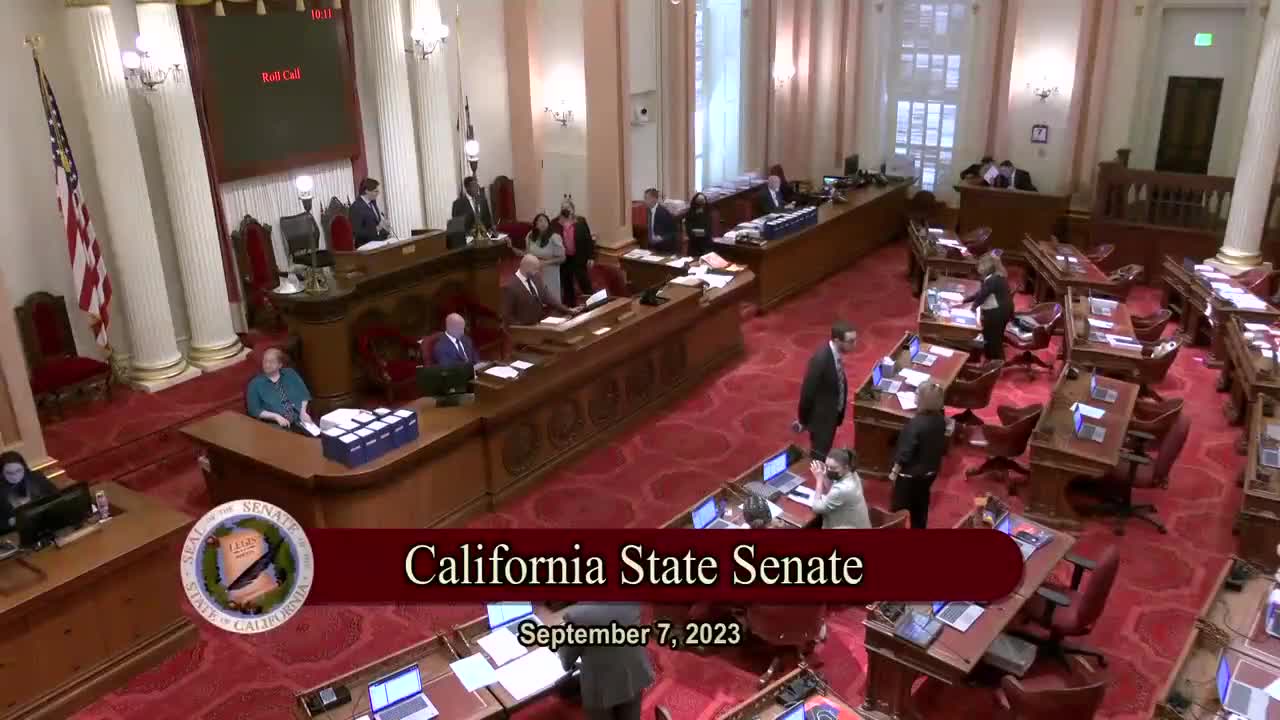 2MIN
Senate Floor
 5MIN
Senate Standing Committee on Transportation
Bill Author