AB 675: Controlled substances.
- Session Year: 2023-2024
- House: Assembly
- Latest Version Date: 2023-05-03
Current Status:
Failed
(2024-02-01: From committee: Filed with the Chief Clerk pursuant to Joint Rule 56.)
Introduced
In Committee
First Chamber
In Committee
Second Chamber
Enacted
What does this bill do?
The bill makes it a felony for anyone to possess heroin analogs, fentanyl, or fentanyl analogs while armed with a loaded, operable firearm, punishable by two, three, or four years in state prison. For substances containing fentanyl or a fentanyl analog, the law requires that the person actually know the substance is fentanyl or a fentanyl analog before they can be charged. People convicted under this section are not eligible for diversion or delayed-sentencing programs.
The summary is provided by generative AI which can make mistakes. For original language, please view the details in the table below.
Existing law classifies certain substances, including cocaine, heroin, and fentanyl, as controlled substances and generally prohibits the possession, sale, transportation, and use of these substances. Existing law additionally prohibits the possession of certain of these controlled substances including cocaine, heroin, and methamphetamine while armed with a loaded and operable firearm. A violation of this prohibition is punishable as a felony punishable by incarceration in the state prison.
This bill would additionally prohibit the possession of a heroin analog, fentanyl, and a fentanyl analog while armed with a loaded and operable firearm. The bill would require that, for purposes of this crime, a person possessing a substance containing fentanyl or a fentanyl analog must have knowledge that the substance is fentanyl or a fentanyl analog. By expanding the application of an existing crime, this bill would impose a state-mandated local program.
The California Constitution requires the state to reimburse local agencies and school districts for certain costs mandated by the state. Statutory provisions establish procedures for making that reimbursement.
This bill would provide that no reimbursement is required by this act for a specified reason.
Existing law classifies certain substances, including cocaine, heroin, and fentanyl, as controlled substances and generally prohibits the possession, sale, transportation, and use of these substances. Existing law additionally prohibits the possession of certain of these controlled substances including cocaine, heroin, and methamphetamine while armed with a loaded and operable firearm. A violation of this prohibition is punishable as a felony punishable by incarceration in the state prison.
This bill would additionally prohibit the possession of a heroin analog, fentanyl, and a fentanyl analog while armed with a loaded and operable firearm. By expanding the application of an existing crime, this bill would impose a state-mandated local program.
The California Constitution requires the state to reimburse local agencies and school districts for certain costs mandated by the state. Statutory provisions establish procedures for making that reimbursement.
This bill would provide that no reimbursement is required by this act for a specified reason.
Existing law establishes the California Health and Human Services Agency, under the direction of the Secretary of California Health and Human Services, which includes, among other departments, the State Department of Public Health and the State Department of Health Care Services. Existing law provides for various programs to reduce the use of, and harm caused by, controlled substances, including opioids. Existing law requires the agency to establish a grant program to reduce fentanyl overdoses and use throughout the state by giving out 6 one-time grants to increase local efforts in education, testing, recovery, and support services, as specified.This bill would make a technical, nonsubstantive change to that provision.Existing law establishes the California Health and Human Services Agency, under the direction of the Secretary of California Health and Human Services, which includes, among other departments, the State Department of Public Health and the State Department of Health Care Services. Existing law provides for various programs to reduce the use of, and harm caused by, controlled substances, including opioids. Existing law requires the agency to establish a grant program to reduce fentanyl overdoses and use throughout the state by giving out 6 one-time grants to increase local efforts in education, testing, recovery, and support services, as specified.
This bill would make a technical, nonsubstantive change to that provision.
(a) (1)Notwithstanding Section 11350 or 11377 or any other provision of law, law and except as provided in paragraph (2), every person who unlawfully possesses any amount of a substance containing cocaine base, a substance containing cocaine, a substance containing heroin, a substance containing a heroin analog, a substance containing fentanyl, a substance containing a fentanyl analog, a substance containing methamphetamine, a crystalline substance containing phencyclidine, a liquid substance containing phencyclidine, plant material containing phencyclidine, or a hand-rolled cigarette treated with phencyclidine while armed with a loaded, operable firearm is guilty of a felony punishable by imprisonment in the state prison for two, three, or four years.
(2)Where the substance possessed is one containing fentanyl or containing a fentanyl analog, the person must have knowledge that the specific controlled substance possessed is fentanyl or a fentanyl analog.
As(3)As used in this subdivision, armed with means having available for immediate offensive or defensive use.
(b)Any A person who is convicted under this section shall be ineligible for diversion or deferred entry of judgment under Chapter 2.5 (commencing with Section 1000) of Title 6 of Part 2 of the Penal Code.
SEC. 2.No reimbursement is required by this act pursuant to Section 6 of Article XIIIB of the California Constitution because the only costs that may be incurred by a local agency or school district will be incurred because this act creates a new crime or infraction, eliminates a crime or infraction, or changes the penalty for a crime or infraction, within the meaning of Section 17556 of the Government Code, or changes the definition of a crime within the meaning of Section 6 of Article XIIIB of the California Constitution.
(a) Notwithstanding Section 11350 or 11377 or any other provision of law, every person who unlawfully possesses any amount of a substance containing cocaine base, a substance containing cocaine, a substance containing heroin, a substance containing a heroin analog, a substance containing fentanyl, a substance containing a fentanyl analog, a substance containing methamphetamine, a crystalline substance containing phencyclidine, a liquid substance containing phencyclidine, plant material containing phencyclidine, or a hand-rolled cigarette treated with phencyclidine while armed with a loaded, operable firearm is guilty of a felony punishable by imprisonment in the state prison for two, three, or four years.
As used in this subdivision, armed with means having available for immediate offensive or defensive use.
(b) Any person who is convicted under this section shall be ineligible for diversion or deferred entry of judgment under Chapter 2.5 (commencing with Section 1000) of Title 6 of Part 2 of the Penal Code.
SEC. 2.No reimbursement is required by this act pursuant to Section 6 of Article XIIIB of the California Constitution because the only costs that may be incurred by a local agency or school district will be incurred because this act creates a new crime or infraction, eliminates a crime or infraction, or changes the penalty for a crime or infraction, within the meaning of Section 17556 of the Government Code, or changes the definition of a crime within the meaning of Section 6 of Article XIIIB of the California Constitution.
SECTION 1.Section 3200 of the Welfare and Institutions Code is amended to read:3200.(a)The California Health and Human Services Agency shall establish a grant program to reduce fentanyl overdoses and use throughout the state. Six one-time grants shall be made: two in northern California, two in the central valley, and two in southern California.(b)Grant moneys may be used for any of the following purposes:(1)Education programs in local schools.(2)Increasing testing abilities for fentanyl.(3)Overdose prevention and recovery programs, including making naloxone or other overdose recovery drugs more available in the community.(4)Increasing social services and substance use recovery services to those addicted to fentanyl or other opioids.(c)A local jurisdiction or agency, or a group comprised of local jurisdictions and agencies working in concert, shall submit an application and plan to the state agency in a form required by the state agency. The state agency shall award grants based on need, evidence-based likelihood of success, and the number of people proposed to be served.(a)The California Health and Human Services Agency shall establish a grant program to reduce fentanyl overdoses and use throughout the state. Six one-time grants shall be made; made: two in northern California, two in the central valley, and two in southern California.
(b)Grant moneys may be used for any of the following purposes:
(1)Education programs in local schools.
(2)Increasing testing abilities for fentanyl.
(3)Overdose prevention and recovery programs, including making naloxone or other overdose recovery drugs more available in the community.
(4)Increasing social services and substance use recovery services to those addicted to fentanyl or other opioids.
(c)A local jurisdiction or agency, or a group comprised of local jurisdictions and agencies working in concert, shall submit an application and plan to the state agency in a form required by the state agency. The state agency shall award grants based on need, evidence-based likelihood of success, and the number of people proposed to be served.
|
Date
|
Status
|
|---|---|
| Feb 1, 2024 | From committee: Filed with the Chief Clerk pursuant to Joint Rule 56. |
| Jan 31, 2024 | Died pursuant to Art. IV, Sec. 10(c) of the Constitution. |
| May 18, 2023 | In committee: Held under submission. |
| May 10, 2023 | In committee: Set, first hearing. Referred to APPR. suspense file. |
| May 4, 2023 | Re-referred to Com. on APPR. |
| May 3, 2023 | Read second time and amended. |
| May 2, 2023 | From committee: Amend, and do pass as amended and re-refer to Com. on APPR. (Ayes 5. Noes 0.) (April 27). |
| Mar 27, 2023 | Re-referred to Com. on PUB. S. |
| Mar 23, 2023 | From committee chair, with author's amendments: Amend, and re-refer to Com. on PUB. S. Read second time and amended. |
| Mar 23, 2023 | Referred to Com. on PUB. S. |
| Feb 14, 2023 | From printer. May be heard in committee March 16. |
| Feb 13, 2023 | Read first time. To print. |
|
Date
|
Description
|
Location
|
Votes
|
|
|---|---|---|---|---|
| Apr 27, 2023 | Do pass as amended and be re-referred to the Committee on [Appropriations] | Assembly Standing Committee on Public Safety |
Passed |
This list shows positions taken on this bill by organizations on the date displayed, which is linked to the original source.
Positions by individuals are not included.
|
Organization
|
Position
|
Date
|
|---|---|---|
| Aclu California Action | * Against | Apr 27, 2023 |
| All of Us or None | * Against | Apr 27, 2023 |
| Anti Recidivism Coalition | * Against | Apr 27, 2023 |
| Arcadia Police Officers' Association | ** Support | |
| Association For Los Angeles Deputy Sheriffs | * Support | Apr 27, 2023 |
| Being Alive - Los Angeles | ** Against | |
| Broken No More | * Against | Apr 27, 2023 |
| Broken No More | ** Against | |
| Burbank Police Officers' Association | ** Support | |
| Calfornia Police Chief's Association | * Support | Apr 27, 2023 |
| California Alliance for Youth and Community Justice | ** Against | |
| California Attorneys For Criminal Justice | ** Against | |
| California District Attorneys Association | * Support | Apr 27, 2023 |
| California Drug Policy Alliance | * Against | Apr 27, 2023 |
| California Peace Officer's Association | * Support | Apr 27, 2023 |
| California Public Defender's Association | * Against | Apr 27, 2023 |
| California State Sheriffs' Association | * Support | Apr 27, 2023 |
| CLAREMONT POLICE OFFICERS ASSOCIATION | ** Support | |
| Communities United for Restorative Youth Justice | ** Against | |
| Corona Police Officers Association | ** Support | |
| County of Merced | * Support | Apr 27, 2023 |
| Culver City Police Officers' Association | ** Support | |
| Deputy Sheriffs Association of Monterey County | ** Support | |
| Ella Baker Center For Human Rights | * Against | Apr 27, 2023 |
| Friends Committee of Legislation of California | * Against | Apr 27, 2023 |
| Fullerton Police Officers' Association | ** Support | |
| HealthRight 360 | * Against | Apr 27, 2023 |
| Initiate Justice | ** Against | |
| Initiate Justice Action | ** Against | |
| Murrieta Police Officers' Association | ** Support | |
| National Harm Reduction Coalition | ** Against | |
| Newport Beach Police Association | ** Support | |
| Palos Verdes Police Officers Association | ** Support | |
| PLACER COUNTY DEPUTY SHERIFFS ASSOCIATION | ** Support | |
| Pomona Police Officers' Association | ** Support | |
| Prisoners with Children | * Against | Apr 27, 2023 |
| RIVERSIDE POLICE OFFICERS ASSOCIATION | ** Support | |
| Riverside Sheriffs' Association | ** Support | |
| San Diegans Against Crime | ** Support | |
| San Diego Deputy District Attorneys Association | ** Support | |
| San Francisco Public Defender | ** Against | |
| Santa Ana Police Officers Association | ** Support | |
| Sister Warriors Freedom Coalition | * Against | Apr 27, 2023 |
| Smart Justice California | * Against | Apr 27, 2023 |
| The Gubbio Project | ** Against | |
| The Sidewalk Project | ** Against | |
| transitions clinic network | ** Against | |
| Upland Police Officers Association | ** Support | |
| Young Women's Freedom Center | * Against | Apr 27, 2023 |
Date of Hearing: May 10, 2023
ASSEMBLY COMMITTEE ON APPROPRIATIONS
Chris Holden, Chair
ABPCA Bill Id:AB 675
Author:(Soria) – As Amended Ver:May 3, 2023
Policy Committee: | Public Safety | Vote: | 5 - 0 |
|
| ||
|
|
Urgency: No State Mandated Local Program: Yes Reimbursable: No
SUMMARY:
This bill makes it a felony for a person to be in possession of any substance containing a heroin analog, fentanyl, or a fentanyl analog while armed with a loaded and operable firearm. This felony is punishable by a state prison sentence of two, three, or four years.
FISCAL EFFECT:
- Costs (Trial Court Trust Fund, General Fund) to the courts to adjudicate the expanded felony created by this bill. A defendant charged with a felony is entitled to no-cost legal representation and a jury trial. Although courts are not funded on the basis of workload, increased pressure on the Trial Court Trust Fund may create a need for increased funding for courts from the General Fund. If funding is not provided for the new workload created by this bill, it may result in delays and prioritization of court cases.
- Incarceration costs in the millions of dollars annually (General Fund) to the California Department of Corrections and Rehabilitation (CDCR). According to a 2022 estimate by the Legislative Analyst’s Office, the average annual cost per CDCR inmate is $106,000. If 15 defendants are convicted of the felony expanded by this bill and each serve two years in prison, the cost to the general fund would be $3.18 million over two years.
COMMENTS:
- Author’s Statement. According to the author:
Fentanyl poisoning is the #1 killer for individuals ages 18-45. Nationwide, over 150 people die every day from fentanyl overdoses and poisonings. In the three counties I represent, Fresno, Madera and Merced, there have been over 130 deaths linked to fentanyl in 2021 alone. Current law clearly states that the possession of HEROIN and a loaded firearm is punishable by a felony. However, while FENTANYL is 50 times more powerful than HEROIN and 2 milligrams can kill an individual, it is NOT punishable by a felony when coupled with a loaded firearm. This unequal treatment of possession of a loaded firearm and fentanyl deserves immediate correction to address the fentanyl crisis sweeping across our State and Nation.
- Background. Under current law, possession of specified controlled substances, including heroin and fentanyl, is generally a misdemeanor. However, possession of any amount of a substance containing cocaine base, cocaine, heroin, methamphetamine, or PCP while armed with a loaded, operable firearm is a felony punishable by imprisonment in state prison for two, three, or four years. This bill would add any substance containing a heroin analog, fentanyl, or a fentanyl analog to that felony list, making possession of those substances while armed with a loaded firearm a felony offense punishable by a state prison term.
- Deterrence. Studies have shown that, in most circumstances, lengthy criminal sentences do not effectively deter crime. According to the Committee on Revision of the Penal Code, a “major analysis of more than 100 studies concluded that it was a ‘criminological fact’ that incarceration is no better at reducing reoffending than noncustodial sanctions such as probation.” (Committee on Revision of the Penal Code, “Annual Report and Recommendations,” 2021.) In light of the growing cost of incarceration and its limited utility in deterring crime, both the Little Hoover Commission and the Committee on Revision of the Penal Code have encouraged sentencing reform in California. Additionally, in 2014, the Little Hoover Commission highlighted several evidence-based approaches to reducing crime, including programs and treatment that address underlying factors that can contribute to crime, such as poverty, homeless, mental health issues, and substance and alcohol abuse disorders. Research has shown that, unlike lengthy prison terms, these approaches have improved public safety outcomes.
- Support and Opposition. According to the California State Sheriffs’ Association:
Existing law makes it a felony to possess any amount of cocaine, heroin, methamphetamine, or other controlled substances while armed with a loaded, operable firearm. According to the United States Drug Enforcement Agency, fentanyl is a schedule II narcotic that is 100 times more potent than morphine and 50 times more potent than heroin. As our nation grapples with a widespread opioid epidemic, California, like many other states, has experienced an increase in drug-related deaths and overdoses. Law enforcement agencies up and down the state have seen counterfeit prescription drugs and fentanyl become growing problems that have devastated entire communities.
According to the ACLU:
This bill is rooted on outdated War on Drugs mentality and would end up creating more harm than it would prevent. Relying on ever increasing penalties for drug offenses has been extensively researched, and we can therefore make some educated predictions about the outcome of bills like AB 675: it would not reduce the distribution of fentanyl, nor would it prevent overdoses; it would reduce neither the supply of drugs or the demand for them; and worse, it could discourage effective methods of dealing with the opioid crisis. Societal harms associated with drugs are not alleviated by ever longer prison sentences. Rather, these increased penalties impose their own harm, devastating vulnerable communities, particularly communities of color.
Analysis Prepared by: Annika Carlson / APPR. / (916) 319-2081
Date of Hearing:
Counsel: Cheryl Anderson
ASSEMBLY COMMITTEE ON PUBLIC SAFETY
Reginald Byron Jones-Sawyer, Sr., Chair
ABPCA Bill Id:AB 675
Author:(Soria) – As Amended Ver:March 23, 2023
SUMMARY:
Adds a substance containing a heroin analog, a substance containing fentanyl, and a substance containing a fentanyl analog to the list of controlled substances for which possession of those substances while armed with a loaded and operable firearm is a felony punishable in state prison by two, three, or four years.
EXISTING LAW:
- Makes it unlawful to possess several specified controlled substances, including heroin, cocaine, cocaine base, opium, hydrocodone, and fentanyl. Provides that the punishment is imprisonment in the county jail for not more than one year unless the person has one or more prior convictions for a serious or violent felony, as specified, or for an offense requiring sex offender registration, in which case it is punishable as a felony. (Health & Saf. Code, § 11350, subd. (a).)
- Makes it unlawful to possess several specified controlled substances, including methamphetamine, amphetamine, phencyclidine (PCP), and gamma hydroxybutyric acid (GHB). Provides that the punishment is imprisonment in the county jail for not more than one year unless the person has one or more prior convictions for a serious or violent felony, as specified, or for an offense requiring sex offender registration, in which case it is punishable as a felony. (Health & Saf. Code, § 11377, subd. (a).)
- Makes it unlawful for a person to possess for sale, or purchase for purpose of sale, several specified controlled substances, including heroin, cocaine, cocaine base, opium, and fentanyl. Provides that the punishment is imprisonment in the county jail for two, three, or four years. (Health & Saf. Code, §§ 11351, 11351.5.)
- Makes it unlawful for a person to transport, import, sell, furnish, administer, or give away, or offer or attempt to transport, import, sell, furnish, administer, or give away several specified controlled substances, including cocaine, cocaine base, heroin, and fentanyl. Provides that the punishment is imprisonment in the county jail for three, four, or five years. Provides that the punishment for transporting those specified controlled substances within the state between noncontiguous counties is imprisonment in the county jail for three, six, or nine years. (Health & Saf. Code, § 11352.)
- Makes it unlawful to possess for sale several specified controlled substances, including methamphetamine, amphetamine, and GHB. Provides that the punishment is imprisonment in the county jail for 16 months, two years, or three years. (Health & Saf. Code, § 11378.)
- Makes it unlawful to possess for sale PCP. Provides that the punishment is imprisonment in the county jail for three, four, or five years. (Health & Saf. Code, § 11378.5.)
- Makes it unlawful for a person to transport, import into this state, sell, furnish, administer, or give away, or offer to transport, import into this state, sell, furnish, administer, or give away, or attempt to import into this state or transport specified controlled substances, including methamphetamine, amphetamine, and GHB. Provides that the punishment is imprisonment in the county jail for two, three, or four years. Provides that the punishment for transporting those specified controlled substances within the state between noncontiguous counties is imprisonment in the county jail for three, six, or nine years. (Health & Saf. Code, § 11379.)
- Makes it unlawful for a person to transport, import into this state, sell, furnish, administer, or give away, or offer to transport, import into this state, sell, furnish, administer, or give away, or attempt to import into this state or transport PCP. Provides that the punishment is imprisonment in the county jail for three, four, or five years. Provides that the punishment for transporting those specified controlled substances within the state between noncontiguous counties is imprisonment in the county jail for three, six, or nine years. (Health & Saf. Code, § 11379.5.)
- Provides, notwithstanding any other provision of law, that every person who unlawfully possesses any amount of a substance containing cocaine base, a substance containing cocaine, a substance containing heroin, a substance containing methamphetamine, a crystalline substance containing phencyclidine, a liquid substance containing phencyclidine, plant material containing phencyclidine, or a hand-rolled cigarette treated with phencyclidine while armed with a loaded, operable firearm is guilty of a felony punishable by imprisonment in the state prison for two, three, or four years. (Health & Saf. Code, § 11370.1, subd. (a).)
- Defines “armed with” to mean having available for immediate offensive or defensive use. (Health & Saf. Code, § 11370.1, subd. (a).)
- Provides that any person who is convicted of the above offense is ineligible for diversion or deferred entry of judgment, as described. (Health & Saf. Code, § 11370.1, subd. (b).)
- Provides that, except as specified, the term "controlled substance analog" means either of the following:
- A substance the chemical structure of which is substantially similar to the chemical structure of specified controlled substances; or
- A substance which has, is represented as having, or is intended to have a stimulant, depressant, or hallucinogenic effect on the central nervous system that is substantially similar to, or greater than, the stimulant, depressant, or hallucinogenic effect on the central nervous system of specified controlled substances. (Health & Saf. Code, § 11401, subd. (b)(1) & (2).)
- Specifies that the term “controlled substance analog” does not mean “any substance for which there is an approved new drug application as specified under the federal Food, Drug, and Cosmetic Act or which is generally recognized as safe and effective as specified by the federal Food, Drug, and Cosmetic Act.” (Health & Saf. Code, § 11401, subd. (c)(1).)
- Regulates firearms, the possession of firearms, and the carrying of firearms. (Pen. Code §§ 23500 et seq.)
- Provides for an additional year of punishment for a person who is armed with a firearm in the commission or attempted commission of a felony, unless being armed is an element of the offense. (Pen. Code, § 12022, subd. (a)(1).)
FISCAL EFFECT:
Unknown
COMMENTS:
- Author's Statement: According to the author, “Fentanyl poisoning is the #1 killer for individuals ages 18-45.
“Nationwide, over 150 people die every day from fentanyl overdoses and poisonings.
“In the three counties I represent, Fresno, Madera and Merced, there have been over 130 deaths linked to fentanyl in 2021 alone.
“Current law clearly states that the possession of HEROIN and a loaded firearm is punishable by a felony.
“However, while FENTANYL is 50 times more powerful than HEROIN and 2 milligrams can kill an individual, it is NOT punishable by a felony when coupled with a loaded firearm.
“This unequal treatment of possession of a loaded firearm and fentanyl deserves immediate correction to address the fentanyl crisis sweeping across our State and Nation.” - Possession of a Controlled Substance While Armed: Under current law, possession of specified controlled substances, including heroin and fentanyl, is generally a misdemeanor. (See Health & Saf. Code, §§ 11377 & 11350.) However, possession of any amount of a substance containing cocaine base, cocaine, heroin, methamphetamine, or PCP while armed with a loaded, operable firearm is a felony punishable by imprisonment in the state prison for two, three, or four years. (Health & Saf. Code, § 11370.1, subd. (a).)
Notably, this law does not require that the firearm be unlawfully possessed or that the person otherwise be engaged in unlawful activity related to the firearm. In other words, a person in lawful possession of a loaded, operable firearm who is also in possession of one of the specified controlled substances can be charged with a felony. Moreover, the person is considered armed with the firearm even if it is not on their person. They do not even need to know that it is loaded and operable, just that it is in a readily accessible place. (See CALCRIM No. 2303; People v. White (2016) 243 Cal.App.4th 1354, 1362.)
The controlled substance need only be a “usable amount.” A “usable amount” is defined as “a quantity that is enough to be used by someone as a controlled substance. Useless traces [or debris] are not usable amounts. On the other hand, a usable amount does not have to be enough, in either amount or strength, to affect the user.” (See CALCRIM No. 2303.)
Though these specific controlled substances are singled out in statute for enhanced punishment if the person has an accessible firearm that may be lawfully possessed, there is no requirement that the person know which specific controlled substance they actually possess. They need only know the substance’s nature or character as a controlled substance. (People v. Palaschak (1995) 9 Cal.4th 1236, 1242; People v. Horn (1960) 187 Cal.App.2d 68, 74-75; CALCRIM No. 2303.)
This bill would add a substance containing a heroin analog, a substance containing fentanyl, and a substance containing a fentanyl analog to the list of controlled substances in this statute. What this bill does is punish the personal possession of these substances if there is a firearm accessible. Possession for sales, sales, and distribution of these controlled substances are already felonies under current law. A person who possesses these substances for purposes of sales is guilty of a felony punishable in the county jail by two, three, or four years. (Health & Saf. Code, § 11351.) If the person is armed with a firearm, an additional year may be added. (Pen. Code, § 12022, subd. (a)(1).) If a person transports, sells, furnishes, administers, or gives away, any of these substances, the punishment is three, six, or nine years in state prison. (Health & Saf. Code, § 11352.) Again, if they are armed, an additional year may be added. (Pen. Code, § 12022, subd. (a)(1).) - Harsher Sentences Unlikely to Reduce Drug Use or Deter Criminal Conduct: Ample research on the impact of increasing penalties for drug offenses on criminal behavior has called into question the effectiveness of such measures. In a report examining the relationship between prison terms and drug misuse, PEW Charitable Trusts found “[n]o relationship between drug imprisonment rates and states’ drug problems,” finding that “higher rates of drug imprisonment did not translate into lower rates of drug use, arrests, or overdose deaths.” (https://www.pewtrusts.org/en/research-and-analysis/issue-briefs/2018/03/more-imprisonment-does-not-reduce-state-drug-problems; see https://www.ccjrc.org/wp-content/uploads/2016/02/Correctional_and_Sentencing_Reform_for_Drug_Offenders.pdf)
This may be because of the limited deterrent effect of harsher sentences generally. According the U.S. Department of Justice, “Laws and policies designed to deter crime by focusing mainly on increasing the severity of punishment are ineffective partly because criminals know little about the sanctions for specific crimes. More severe punishments do not ‘chasten’ individuals convicted of crimes, and prisons may exacerbate recidivism.” (https://nij.ojp.gov/topics/articles/five-things-about-deterrence)
According to PEW, “[A] large body of prior research…cast[s] doubt on the theory that stiffer prison terms deter drug misuse, distribution, and other drug-law violations.” (PEW, supra.) PEW concludes:
Putting more drug-law violators behind bars for longer periods of time has generated enormous costs for taxpayers, but it has not yielded a convincing public safety return on those investments. Instead, more imprisonment for drug offenders has meant limited funds are siphoned away from programs, practices, and policies that have been proved to reduce drug use and crime. (Ibid.)
Will applying enhanced punishment to a person who possess one of these controlled substances for personal use, while having access to what may be a lawfully possessed firearm, reduce the amount drugs on California streets or reduce the threat of injury from a firearm? The evidence to date suggests that it will not. How will this enhanced punishment for having a firearm and fentanyl prevent the accidental overdoses referenced in the author’s statement?
- Argument in Support: According to the San Diego District Attorneys Association, “Current law recognizes that a person armed with a loaded, operable firearm possessing methamphetamine, heroin or cocaine may be willing to resort to use of that weapon to avoid arrest or will use the firearm to maintain their illicit stash putting the public and police at risk. Furthermore, the legislature has recognized that people who have controlled substances, like methamphetamine, make their immediate access to a loaded, operable firearm more of a threat to public safety than a possessor of controlled substances who does not have a loaded firearm.
“Yet, Health and Safety Code section 11370.1 currently excludes fentanyl, a deadly controlled substance that has killed over 70,000 citizens per year from the list of drugs where individuals are prohibited from simultaneously possessing a firearm. Because of the value of the fentanyl, it is common to find guns, both traceable and ghost guns, in the possession of those in possession of fentanyl for the reasons stated above. Those who are armed with a firearm and in possession of fentanyl pose a deadly threat to the public and to law enforcement officers.” - Argument in Opposition: According to Initiate Justice, “We are all concerned with the impact that fentanyl is having on the drug supply and we understand the intent behind the bill about the need to take measures to reduce the harms associated with fentanyl use. However, further criminalizing the possession of fentanyl while carrying a firearm will not prevent fentanyl from entering the U.S. or disrupt the fentanyl trade, as drugs are brought through legal ports of entry or mail service.
“This bill is rooted on outdated War on Drugs mentality and would end up creating more harm than it would prevent. Relying on ever increasing penalties for drug offenses has been extensively researched, and we can therefore make some educated predictions about the outcome of bills like AB 675: it would not reduce the distribution of fentanyl, nor would it prevent overdoses; it would reduce neither the supply of drugs or the demand for them ; and worse, it could actually discourage effective methods of dealing with the opioid crisis.
“In practice, the proposed policy could subject a person struggling with drug use to serve a longer sentence because they had a gun even if the gun was never used. Specifically, the mere presence of the firearm would be enough for a conviction, even if the firearm was legally owned and properly and safely stored. This will not only represent a miscarriage of justice but also will push people farther away from needed services. In midst of an overdose crisis, the state must create the environment to facilitate access to health-based services and harm reduction tools, such as making Narcan and drug checking widely available.
“It’s important for California to continue to lead on gun control laws, unfortunately we believe that AB 675 will not have the desired effect. Data shows that suicides have long accounted for the majority of U.S. gun deaths. In 2020, 54% of all gun-related deaths in the U.S. were suicides.
“Adopting a public model to curb the overdose rates and resources to treat mental illness has proven to be a more effective approach. California voters have signaled, again and again, their preference for using a health approach to drug offenses, and their desire to unwind the failed War on Drugs. Reversing course and increasing criminal penalties not only flies in the face of multiple statewide elections, but it is also simply bad policy. Societal harms associated with drugs are not alleviated by ever longer prison sentences. Rather, these increased penalties impose their own harm, devastating vulnerable communities, particularly communities of color.” - Related Legislation: SB 226 (Alvarado-Gil) would add fentanyl to the list of controlled substances for which possession of those substances while armed with a loaded and operable firearm is a felony. SB 226 is pending in the Senate Public Safety Committee.
- Prior Legislation: SB 1070 (Melendez), of the 2021-2022 Legislative Session, would have added oxycodone and fentanyl to the list of controlled substances for which possession of those substances while armed with a loaded and operable firearm is a felony. Hearing on SB 1070 in the Senate Public Safety Committee was canceled at the request of the author.
REGISTERED SUPPORT / OPPOSITION:
Support
Arcadia Police Officers' Association
Burbank Police Officers' Association
California District Attorneys Association
California Police Chiefs Association
California State Sheriffs' Association
Claremont Police Officers Association
Corona Police Officers Association
Culver City Police Officers' Association
Deputy Sheriffs' Association of Monterey County
Fullerton Police Officers' Association
Murrieta Police Officers' Association
Newport Beach Police Association
Palos Verdes Police Officers Association
Placer County Deputy Sheriffs' Association
Pomona Police Officers' Association
Riverside Police Officers Association
Riverside Sheriffs' Association
San Diegans Against Crime
San Diego Deputy District Attorneys Association
Santa Ana Police Officers Association
Upland Police Officers Association
3 Private Individuals
Oppose
Being Alive - Los Angeles
Broken No More
California Alliance for Youth and Community Justice
California Attorneys for Criminal Justice
California Public Defenders Association (CPDA)
Communities United for Restorative Youth Justice (CURYJ)
Drug Policy Alliance
Ella Baker Center for Human Rights
Initiate Justice
Initiate Justice Action
Legal Services for Prisoners With Children
National Harm Reduction Coalition
San Francisco Public Defender
Sister Warriors Freedom Coalition
The Gubbio Project
The Sidewalk Project
Transitions Clinic Network
Young Women's Freedom Center
Analysis Prepared by:
Cheryl Anderson / PUB. S. / (916) 319-3744
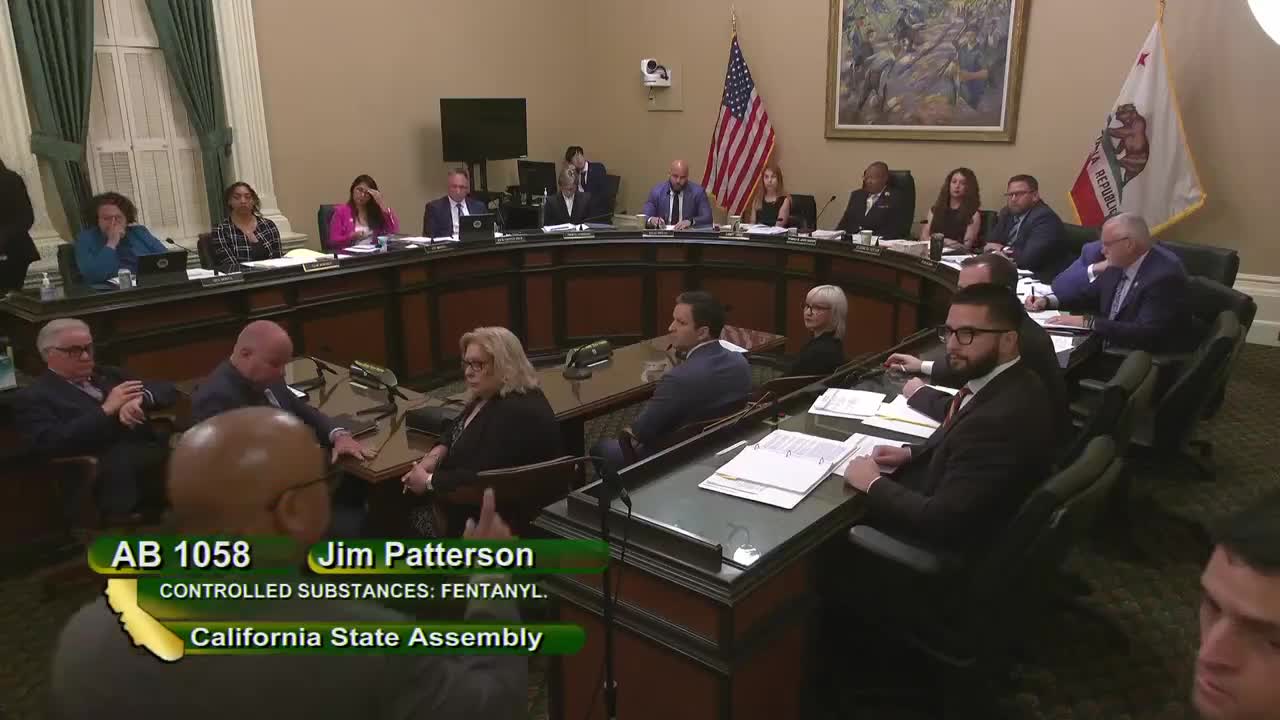
Discussed in Hearing
 38MIN
Assembly Standing Committee on Public Safety
Bill Author
Bill Co-Author(s):