AB 695: Juvenile Detention Facilities Improvement Grant Program.
- Session Year: 2023-2024
- House: Assembly
- Latest Version Date: 2023-09-18
Current Status:
Failed
(2024-01-25: Consideration of Governor's veto stricken from file.)
Introduced
In Committee
First Chamber
In Committee
Second Chamber
Enacted
Existing law requires the Board of State and Community Corrections to adopt minimum standards for the operation and maintenance of juvenile halls for the confinement of minors. Existing law requires the judge of the juvenile court of the county to annually inspect any jail or juvenile hall that was used for the confinement of any minor and to notify the operator of the jail or juvenile hall of any observed noncompliance with the minimum standards of the juvenile facility adopted by the board. Existing law defines a county of the first class as a county containing a population of 4,000,000 and over.
Upon appropriation by the Legislature, this bill would create the Juvenile Detention Facilities Improvement Grant Program, to be administered by the board, to provide grants to a county of the first class to address the critical infrastructure needs of the states detained and supervised youth in the county. The bill would require, as a condition for receiving a grant, a county of the first class to prepare a juvenile detention facilities improvement plan for the expenditure of funds for capital improvements that are necessary to preserve and protect the countys juvenile detention facilities to enhance each facilitys rehabilitation function. The bill would require the plan to be approved by both the board and the governing body of the county. The bill would require the board, by January 1, 2025, to submit a report to the budget and public safety committees of the Legislature detailing the grants awarded and the projects funded through the program.
This bill would make legislative findings and declarations as to the necessity of a special statute for the County of Los Angeles.
Existing law requires the Board of State and Community Corrections to adopt minimum standards for the operation and maintenance of juvenile halls for the confinement of minors. Existing law requires the judge of the juvenile court of the county to annually inspect any jail or juvenile hall that was used for the confinement of any minor and to notify the operator of the jail or juvenile hall of any observed noncompliance with the minimum standards of the juvenile facility adopted by the board. Existing law defines a county of the first class as a county containing a population of 4,000,000 and over.
Upon appropriation by the Legislature, this bill would create the Juvenile Detention Facilities Improvement Grant Program, to be administered by the Office of Youth and Community Restoration, board, to provide grants to a county of the first class to address the critical infrastructure needs of the states detained and supervised youth in the county. The bill would require, as a condition for receiving a grant, a county of the first class to prepare a juvenile detention facilities improvement plan for the expenditure of funds for capital improvements that are necessary to preserve and protect the countys juvenile detention facilities to enhance each facilitys rehabilitation function. The bill would require the plan to be approved by both the office board and the governing body of the county. The bill would require the office, board, by January 1, 2025, to submit a report to the budget and public safety committees of the Legislature detailing the grants awarded and the projects funded through the program.
This bill would make legislative findings and declarations as to the necessity of a special statute for the County of Los Angeles.
Existing law requires the Board of State and Community Corrections to adopt minimum standards for the operation and maintenance of juvenile halls for the confinement of minors. Existing law requires the judge of the juvenile court of the county to annually inspect any jail or juvenile hall that was used for the confinement of any minor and to notify the operator of the jail or juvenile hall of any observed noncompliance with the minimum standards of the juvenile facility adopted by the board. Existing law defines a county of the first class as a county containing a population of 4,000,000 and over.
This
Upon appropriation by the Legislature, this bill would create the Juvenile Detention Facilities Improvement Grant Program, to be administered by the Office of Youth and Community Restoration, to provide grants to a county of the first class to address the critical infrastructure needs of the states detained and supervised youth in the county. The bill would require, as a condition for receiving a grant, a county of the first class to prepare a juvenile detention facilities improvement plan for the expenditure of funds for capital improvements that are necessary to preserve and protect the countys juvenile detention facilities to enhance each facilitys rehabilitation function. The bill would require the plan to be approved by both the office and the governing body of the county. The bill would require the office, by January 1, 2025, to submit a report to the budget and public safety committees of the Legislature detailing the grants awarded and the projects funded through the program. The bill would appropriate an unspecified sum of money from the General Fund to the board to provide grants in accordance with the provisions of the program.
This bill would make legislative findings and declarations as to the necessity of a special statute for the County of Los Angeles.
Existing law requires the Board of State and Community Corrections to adopt minimum standards for the operation and maintenance of juvenile halls for the confinement of minors. Existing law requires the judge of the juvenile court of the county to annually inspect any jail or juvenile hall that was used for the confinement of any minor and to notify the operator of the jail or juvenile hall of any observed noncompliance with the minimum standards of the juvenile facility adopted by the board. Existing law defines a county of the first class as a county containing a population of 4,000,000 and over.
This bill would create the Juvenile Detention Facilities Improvement Grant Program, to be administered by the Board of State and Community Corrections, Office of Youth and Community Restoration, to provide grants to a county of the first class to address the critical infrastructure needs of the states detained and supervised youth in the county. The bill would require, as a condition for receiving a grant, a county of the first class to prepare a juvenile detention facilities improvement plan for the expenditure of funds for capital improvements that are necessary to preserve and protect the countys juvenile detention facilities to enhance each facilitys rehabilitation function. The bill would require the plan to be approved by both the office and the governing body of the county. The bill would require the board, office, by January 1, 2025, to submit a report to the budget and public safety committees of the Legislature detailing the grants awarded and the projects funded through the program. The bill would appropriate an unspecified sum of money from the General Fund to the board to provide grants in accordance with the provisions of the program.
This bill would make legislative findings and declarations as to the necessity of a special statute for the County of Los Angeles.
Existing law requires the Board of State and Community Corrections to adopt minimum standards for the operation and maintenance of juvenile halls for the confinement of minors. Existing law requires the judge of the juvenile court of the county to annually inspect any jail or juvenile hall that was used for the confinement of any minor and to notify the operator of the jail or juvenile hall of any observed noncompliance with the minimum standards of the juvenile facility adopted by the board. Existing law defines a county of the first class as a county containing a population of 4,000,000 and over.
This bill would create the Juvenile Detention Facilities Improvement Grant Program, to be administered by the Board of State and Community Corrections, to provide grants to a county of the first class to address the critical infrastructure needs of the states detained and supervised youth in the county. The bill would require, as a condition for receiving a grant, a county of the first class to prepare a juvenile detention facilities improvement plan for the expenditure of funds for capital improvements that are necessary to preserve and protect the countys juvenile detention facilities to enhance each facilitys rehabilitation function. The bill would require the board, by January 1, 2025, to submit a report to the Legislature detailing the grants awarded and the projects funded through the program. The bill would appropriate an unspecified sum of money from the General Fund to the board to provide grants in accordance with the provisions of the program.
This bill would make legislative findings and declarations as to the necessity of a special statute for the County of Los Angeles.
The Legislature finds and declares all of the following:
(a)Counties and their probation departments are charged with providing rehabilitation services for minors and youth adjudicated under provisions of the Welfare and Institutions Code. A county of the first class within this state is charged with supervision and housing responsibility for the largest concentration of adjudicated youth in the state.
(b)Despite housing the largest concentration of detained juveniles in the juvenile justice system, facilities in a county of the first class are in critical need of basic infrastructure improvement to meet the basic needs of detained youth and, more critically, to meet the expanded requirement of providing a homelike environment that enhances rehabilitation.
(c)The Legislature must act to positively impact facilities and infrastructure improvement for a county of the first class to address the critical need for secure and youth-centered facilities that enhance the rehabilitation function of these departments.
(d)A Juvenile Detention Facilities Improvement Grant Program is required to address the critical need for infrastructure improvements in a county of the first class.
(e)Failing to act now to address the significant problem of inadequate and dilapidated facilities will fail to provide critically needed rehabilitative services for a vulnerable population.
(f)A comprehensive, reasonable Juvenile Detention Facilities Improvement Grant Program will ensure that the needs of adjudicated youth are addressed and will distribute the economic impact of funding required for these improvements.
SEC. 2.Chapter 1.55 (commencing with Section 1979) is added to Division 2.5 of the Welfare and Institutions Code, to read:1.55.Juvenile Detention Facilities Improvement Grant Program1979.Upon appropriation by the Legislature, there is hereby established the Juvenile Detention Facilities Improvement Grant Program within the Board of State and Community Corrections. The board shall provide grants pursuant to this chapter to a county of the first class, as defined in Section 28022 of the Government Code, to address the critical infrastructure needs of the states detained and supervised youth in the county.
1979.1.(a)It is the intent of the Legislature that a county of the first class meet the preliminary performance outcomes for infrastructure improvements of their juvenile detention facilities as developed by the board.
(b)The board shall award grants based on the priorities for infrastructure improvement. The board shall establish minimum standards, funding schedules, and procedures for awarding grants that prioritize projects with the highest critical infrastructure need that shall further the purposes of this chapter.
1979.2.(a)To be eligible for grants from the program, a county of the first class shall prepare a juvenile detention facilities improvement plan for the expenditure of funds for capital improvements that are necessary to preserve and protect the countys juvenile detention facilities to enhance each facilitys rehabilitation function. The plan shall include a description of how it will contribute to the countys ability to provide trauma-informed, culturally appropriate programming in a homelike environment.
(b)Funds shall only be used for newly constructed living space for youths, projects that would modernize housing units and sleeping rooms to comply with existing building standards and achieve a homelike environment, or space to provide rehabilitative or educational programming for youths.
(c)Facility improvements made as part of this grant program shall not result in a net increase in county rated capacity.
(d)The plan shall be submitted to, and approved by, both the board and the governing body of the county. The board shall disburse awarded funds to the governing body of the county.
1979.3.The board shall submit a report to the budget and public safety policy committees of the Legislature, on or before January 1, 2025, detailing the grants awarded and the projects funded through the program.
SEC. 3.The Legislature finds and declares that a special statute is necessary and that a general statute cannot be made applicable within the meaning of Section 16 of Article IV of the California Constitution because of the unique need to address the significant problem of inadequate and dilapidated juveniles facilities in the County of Los Angeles.
The Legislature finds and declares all of the following:
(a)Counties and their probation departments are charged with providing rehabilitation services for minors and youth adjudicated under provisions of the Welfare and Institutions Code. A county of the first class within this state is charged with supervision and housing responsibility for the largest concentration of adjudicated youth in the state.
(b)Despite housing the largest concentration of detained juveniles in the juvenile justice system, facilities in a county of the first class are in critical need of basic infrastructure improvement to meet the basic needs of detained youth and, more critically, to meet the expanded requirement of providing a homelike environment that enhances rehabilitation.
(c)The Legislature must act to positively impact facilities and infrastructure improvement for a county of the first class to address the critical need for secure and youth-centered facilities that enhance the rehabilitation function of these departments.
(d)A Juvenile Detention Facilities Improvement Grant Program is required to address the critical need for infrastructure improvements in a county of the first class.
(e)Failing to act now to address the significant problem of inadequate and dilapidated facilities will fail to provide critically needed rehabilitative services for a vulnerable population.
(f)A comprehensive, reasonable Juvenile Detention Facilities Improvement Grant Program will ensure that the needs of adjudicated youth are addressed and will distribute the economic impact of funding required for these improvements.
SEC. 2.Chapter 1.55 (commencing with Section 1979) is added to Division 2.5 of the Welfare and Institutions Code, to read:1.55.Juvenile Detention Facilities Improvement Grant Program1979.Upon appropriation by the Legislature, there is hereby established the Juvenile Detention Facilities Improvement Grant Program within the Office of Youth and Community Restoration. Board of State and Community Corrections. The office board shall provide grants pursuant to this chapter to a county of the first class, as defined in Section 28022 of the Government Code, to address the critical infrastructure needs of the states detained and supervised youth in the county.
1979.1.(a)It is the intent of the Legislature that a county of the first class meet the preliminary performance outcomes for infrastructure improvements of their juvenile detention facilities as developed by the office. board.
(b)The office board shall award grants based on the priorities for infrastructure improvement. The office board shall establish minimum standards, funding schedules, and procedures for awarding grants that prioritize projects with the highest critical infrastructure need that shall further the purposes of this chapter.
1979.2.(a)To be eligible for grants from the program, a county of the first class shall prepare a juvenile detention facilities improvement plan for the expenditure of funds for capital improvements that are necessary to preserve and protect the countys juvenile detention facilities to enhance each facilitys rehabilitation function. The plan shall include a description of how it will contribute to the countys ability to provide trauma-informed, culturally appropriate programming in a homelike environment.
(b)Funds shall only be used for newly constructed living space for youths, projects that would modernize housing units and sleeping rooms to comply with existing building standards and achieve a homelike environment, or space to provide rehabilitative or educational programming for youths.
(c)Facility improvements made as part of this grant program shall not result in a net increase in county rated capacity.
(d)The plan shall be submitted to, and approved by, both the office board and the governing body of the county. The office board shall disburse awarded funds to the governing body of the county.
1979.3.The office board shall submit a report to the budget and public safety policy committees of the Legislature, on or before January 1, 2025, detailing the grants awarded and the projects funded through the program.
SEC. 3.The Legislature finds and declares that a special statute is necessary and that a general statute cannot be made applicable within the meaning of Section 16 of Article IV of the California Constitution because of the unique need to address the significant problem of inadequate and dilapidated juveniles facilities in the County of Los Angeles.
The Legislature finds and declares all of the following:
(a)Counties and their probation departments are charged with providing rehabilitation services for minors and youth adjudicated under provisions of the Welfare and Institutions Code. A county of the first class within this state is charged with supervision and housing responsibility for the largest concentration of adjudicated youth in the state.
(b)Despite housing the largest concentration of detained juveniles in the juvenile justice system, facilities in a county of the first class are in critical need of basic infrastructure improvement to meet the basic needs of detained youth and, more critically, to meet the expanded requirement of providing a homelike environment that enhances rehabilitation.
(c)The Legislature must act to positively impact facilities and infrastructure improvement for a county of the first class to address the critical need for secure and youth-centered facilities that enhance the rehabilitation function of these departments.
(d)A Juvenile Detention Facilities Improvement Grant Program is required to address the critical need for infrastructure improvements in a county of the first class.
(e)Failing to act now to address the significant problem of inadequate and dilapidated facilities will fail to provide critically needed rehabilitative services for a vulnerable population.
(f)A comprehensive, reasonable Juvenile Detention Facilities Improvement Grant Program will ensure that the needs of adjudicated youth are addressed and will distribute the economic impact of funding required for these improvements.
SEC. 2.Chapter 1.55 (commencing with Section 1979) is added to Division 2.5 of the Welfare and Institutions Code, to read:1.55.Juvenile Detention Facilities Improvement Grant Program1979.There Upon appropriation by the Legislature, there is hereby established the Juvenile Detention Facilities Improvement Grant Program within the Office of Youth and Community Restoration to Restoration. The office shall provide grants pursuant to this chapter to a county of the first class, as defined in Section 28022 of the Government Code, to address the critical infrastructure needs of the states detained and supervised youth in the county.
1979.1.(a)It is the intent of the Legislature that a county of the first class meet the preliminary performance outcomes for infrastructure improvements of their juvenile detention facilities as developed by the office.
(b)The office shall award grants based on the priorities for infrastructure improvement. The office shall establish minimum standards, funding schedules, and procedures for awarding grants that prioritize projects with the highest critical infrastructure need that shall further the purposes of this chapter.
1979.2.(a)To be eligible for grants from the program, a county of the first class shall prepare a juvenile detention facilities improvement plan for the expenditure of funds for capital improvements that are necessary to preserve and protect the countys juvenile detention facilities to enhance each facilitys rehabilitation function. The plan shall include a description of how it will contribute to the countys ability to provide trauma-informed, culturally appropriate programming in a homelike environment.
(b)Funds shall only be used for newly constructed living space for youths, projects that would modernize housing units and sleeping rooms to comply with existing building standards and achieve a homelike environment, or space to provide rehabilitative or educational programming for youths.
(c)Facility improvements made as part of this grant program shall not result in a net increase in county rated capacity.
(d)The plan shall be submitted to, and approved by, both the office and the governing body of the county. The office shall disburse awarded funds to the governing body of the county.
1979.3.The office shall submit a report to the budget and public safety policy committees of the Legislature, on or before January 1, 2025, detailing the grants awarded and the projects funded through the program.
SEC. 3.The sum of ____ is hereby appropriated from the General Fund to the Office of Youth and Community Restoration for the purpose of providing grants pursuant to the Juvenile Detention Facilities Improvement Grant Program under Chapter 1.55 (commencing with Section 1979) of Division 2.5 of the Welfare and Institutions Code. SEC. 4.SEC. 3.The Legislature finds and declares that a special statute is necessary and that a general statute cannot be made applicable within the meaning of Section 16 of Article IV of the California Constitution because of the unique need to address the significant problem of inadequate and dilapidated juveniles facilities in the County of Los Angeles.
The Legislature finds and declares all of the following:
(a)Counties and their probation departments are charged with providing rehabilitation services for minors and youth adjudicated under provisions of the Welfare and Institutions Code. A county of the first class within this state is charged with supervision and housing responsibility for the largest concentration of adjudicated youth in the state.
(b)Despite housing the largest concentration of detained juveniles in the juvenile justice system, facilities in a county of the first class are in critical need of basic infrastructure improvement to meet the basic needs of detained youth and, more critically, to meet the expanded requirement of providing a homelike environment that enhances rehabilitation.
(c)The Legislature must act to positively impact facilities and infrastructure improvement for a county of the first class to address the critical need for secure and youth-centered facilities that enhance the rehabilitation function of these departments.
(d)A Juvenile Detention Facilities Improvement Grant Program is required to address the critical need for infrastructure improvements in a county of the first class.
(e)Failing to act now to address the significant problem of inadequate and dilapidated facilities will fail to provide critically needed rehabilitative services for a vulnerable population.
(f)A comprehensive, reasonable Juvenile Detention Facilities Improvement Grant Program will ensure that the needs of adjudicated youth are addressed and will distribute the economic impact of funding required for these improvements.
SEC. 2.Chapter 1.55 (commencing with Section 1979) is added to Division 2.5 of the Welfare and Institutions Code, to read:1.55.Juvenile Detention Facilities Improvement Grant Program1979.There is hereby established the Juvenile Detention Facilities Improvement Grant Program within the Board of State and Community Corrections Office of Youth and Community Restoration to provide grants pursuant to this chapter to a county of the first class, as defined in Section 28022 of the Government Code, to address the critical infrastructure needs of the states detained and supervised youth in the county.
1979.1.(a)It is the intent of the Legislature that a county of the first class meet the preliminary performance outcomes for infrastructure improvements of their juvenile detention facilities as developed by the board. office.
(b)The board office shall award grants based on the priorities for infrastructure improvement. The board office shall establish minimum standards, funding schedules, and procedures for awarding grants that prioritize projects with the highest critical infrastructure need that shall further the purposes of this chapter.
1979.2.(a)To be eligible for grants from the program, a county of the first class shall prepare a juvenile detention facilities improvement plan for the expenditure of funds for capital improvements that are necessary to preserve and protect the countys juvenile detention facilities to enhance each facilitys rehabilitation function. The plan shall include a description of how it will contribute to the countys ability to provide trauma-informed, culturally appropriate programming in a homelike environment.
(b)Funds shall only be used for improvements that are necessary to preserve and protect the countys juvenile detention facilities to enhance each facilitys rehabilitation function. newly constructed living space for youths, projects that would modernize housing units and sleeping rooms to comply with existing building standards and achieve a homelike environment, or space to provide rehabilitative or educational programming for youths.
(c)Facility improvements made as part of this grant program shall not result in a net increase in county rated capacity.
(d)The plan shall be submitted to, and approved by, both the office and the governing body of the county. The office shall disburse awarded funds to the governing body of the county.
1979.3.The board office shall submit a report to the budget and public safety policy committees of the Legislature, on or before January 1, 2025, detailing the grants awarded and the projects funded through the program. The report required by this section shall be submitted in compliance with Section 9795 of the Government Code.
SEC. 3.The sum of ____ is hereby appropriated from the General Fund to the Board of State and Community Corrections Office of Youth and Community Restoration for the purpose of providing grants pursuant to the Juvenile Detention Facilities Improvement Grant Program under Chapter 1.55 (commencing with Section 1979) of Division 2.5 of the Welfare and Institutions Code.
SEC. 4.The Legislature finds and declares that a special statute is necessary and that a general statute cannot be made applicable within the meaning of Section 16 of Article IV of the California Constitution because of the unique need to address the significant problem of inadequate and dilapidated juveniles facilities in the County of Los Angeles.
The Legislature finds and declares all of the following:
(a)Counties and their probation departments are charged with providing rehabilitation services for minors and youth adjudicated under provisions of the Welfare and Institutions Code. A county of the first class within this state is charged with supervision and housing responsibility for the largest concentration of adjudicated youth in the state.
(b)Despite housing the largest concentration of detained juveniles in the juvenile justice system, facilities in a county of the first class are in critical need of basic infrastructure improvement to meet the basic needs of detained youth and, more critically, to meet the expanded requirement of providing a homelike environment that enhances rehabilitation.
(c)The Legislature must act to positively impact facilities and infrastructure improvement for a county of the first class to address the critical need for secure and youth-centered facilities that enhance the rehabilitation function of these departments.
(d)A Juvenile Detention Facilities Improvement Grant Program is required to address the critical need for infrastructure improvements in a county of the first class.
(e)Failing to act now to address the significant problem of inadequate and dilapidated facilities will fail to provide critically needed rehabilitative services for a vulnerable population.
(f)A comprehensive, reasonable Juvenile Detention Facilities Improvement Grant Program will ensure that the needs of adjudicated youth are addressed and will distribute the economic impact of funding required for these improvements.
SEC. 2.Chapter 1.55 (commencing with Section 1979) is added to Division 2.5 of the Welfare and Institutions Code, to read:1.55.Juvenile Detention Facilities Improvement Grant Program1979.There is hereby established the Juvenile Detention Facilities Improvement Grant Program within the Board of State and Community Corrections to provide grants pursuant to this chapter to a county of the first class, as defined in Section 28022 of the Government Code, to address the critical infrastructure needs of the states detained and supervised youth in the county.
1979.1.(a)It is the intent of the Legislature that a county of the first class meet the preliminary performance outcomes for infrastructure improvements of their juvenile detention facilities as developed by the board.
(b)The board shall award grants based on the priorities for infrastructure improvement. The board shall establish minimum standards, funding schedules, and procedures for awarding grants that prioritize projects with the highest critical infrastructure need that shall further the purposes of this chapter.
1979.2.(a)To be eligible for grants from the program, a county of the first class shall prepare a juvenile detention facilities improvement plan for the expenditure of funds for capital improvements that are necessary to preserve and protect the countys juvenile detention facilities to enhance each facilitys rehabilitation function.
(b)Funds shall only be used for improvements that are necessary to preserve and protect the countys juvenile detention facilities to enhance each facilitys rehabilitation function.
1979.3.The board shall submit a report to the Legislature, on or before January 1, 2025, detailing the grants awarded and the projects funded through the program. The report required by this section shall be submitted in compliance with Section 9795 of the Government Code.
SEC. 3.The sum of ____ is hereby appropriated from the General Fund to the Board of State and Community Corrections for the purpose of providing grants pursuant to the Juvenile Detention Facilities Improvement Grant Program under Chapter 1.55 (commencing with Section 1979) of Division 2.5 of the Welfare and Institutions Code.
SEC. 4.The Legislature finds and declares that a special statute is necessary and that a general statute cannot be made applicable within the meaning of Section 16 of Article IV of the California Constitution because of the unique need to address the significant problem of inadequate and dilapidated juveniles facilities in the County of Los Angeles.
|
Date
|
Status
|
|---|---|
| Jan 25, 2024 | Consideration of Governor's veto stricken from file. |
| Jan 3, 2024 | Consideration of Governor's veto pending. |
| Oct 8, 2023 | Vetoed by Governor. |
| Sep 21, 2023 | Enrolled and presented to the Governor at 3:30 p.m. |
| Sep 14, 2023 | Senate amendments concurred in. To Engrossing and Enrolling. (Ayes 75. Noes 0. Page 3539.). |
| Sep 13, 2023 | In Assembly. Concurrence in Senate amendments pending. |
| Sep 13, 2023 | Read third time. Passed. Ordered to the Assembly. (Ayes 30. Noes 6. Page 2728.). |
| Sep 11, 2023 | Read second time. Ordered to third reading. |
| Sep 8, 2023 | Read third time and amended. Ordered to second reading. |
| Sep 5, 2023 | Read second time. Ordered to third reading. |
| Sep 1, 2023 | From committee: Do pass. (Ayes 6. Noes 0.) (September 1). |
| Jul 3, 2023 | In committee: Referred to APPR suspense file. |
| Jun 20, 2023 | From committee: Do pass and re-refer to Com. on APPR. (Ayes 3. Noes 0.) (June 20). Re-referred to Com. on APPR. |
| Jun 7, 2023 | Referred to Com. on PUB S. |
| May 31, 2023 | In Senate. Read first time. To Com. on RLS. for assignment. |
| May 30, 2023 | Read third time. Passed. Ordered to the Senate. (Ayes 72. Noes 1. Page 1910.) |
| May 22, 2023 | Read second time. Ordered to third reading. |
| May 18, 2023 | Read second time and amended. Ordered returned to second reading. |
| May 18, 2023 | From committee: Amend, and do pass as amended. (Ayes 14. Noes 1.) (May 18). |
| May 10, 2023 | In committee: Set, first hearing. Referred to APPR. suspense file. |
| Apr 27, 2023 | Re-referred to Com. on APPR. |
| Apr 26, 2023 | Read second time and amended. |
| Apr 25, 2023 | From committee: Amend, and do pass as amended and re-refer to Com. on APPR. (Ayes 7. Noes 0.) (April 25). |
| Mar 21, 2023 | In committee: Hearing postponed by committee. |
| Feb 23, 2023 | Referred to Com. on PUB. S. |
| Feb 14, 2023 | From printer. May be heard in committee March 16. |
| Feb 13, 2023 | Read first time. To print. |
|
Date
|
Description
|
Location
|
Votes
|
|
|---|---|---|---|---|
| Sep 14, 2023 | AB 695 Pacheco Concurrence in Senate Amendments | Assembly Floor |
Passed |
|
| Sep 13, 2023 | Assembly 3rd Reading AB695 Pacheco By Umberg | Senate Floor |
Passed |
|
| Sep 1, 2023 | Do pass | Senate Standing Committee on Appropriations |
Passed |
|
| Jul 3, 2023 | Placed on suspense file | Senate Standing Committee on Appropriations |
Passed |
|
| Jun 20, 2023 | Do pass, but first be re-referred to the Committee on [Appropriations] | Senate Standing Committee on Public Safety |
Passed |
|
| May 30, 2023 | AB 695 Pacheco Assembly Third Reading | Assembly Floor |
Passed |
|
| May 18, 2023 | Do pass as amended. | Assembly Standing Committee on Appropriations |
Passed |
|
| Apr 25, 2023 | Do pass as amended and be re-referred to the Committee on [Appropriations] | Assembly Standing Committee on Public Safety |
Passed |
This list shows positions taken on this bill by organizations on the date displayed, which is linked to the original source.
Positions by individuals are not included.
|
Organization
|
Position
|
Date
|
|---|---|---|
| 2-1-1 los angeles county | * Support | Jun 20, 2023 |
| Aclu California Action | ** Against | |
| Afcsme District Council 36 | ** Support | |
| AFSCME District Council 36 | ** Support | |
| Arts for Healing and Justice Network | ** Against | |
| Association Of Orange County Deputy Sheriffs | ** Support | |
| BU 702- SEIU 721 Joint Council | ** Support | |
| California Coalition for Women Prisoners | ** Against | |
| California Public Defenders Association | * Against | Apr 25, 2023 |
| Californians United for a Responsible Budget | ** Against | |
| Care First California | ** Against | |
| Center on Juvenile and Criminal Justice | ** Against | |
| Children’s Defense Fund – CA | ** Against | |
| Coalition of County Unions | ** Support | |
| Communities United for Restorative Youth Justice | ** Against | |
| Decarcerate Sacramento | ** Against | |
| Dignity and Power Now | ** Against | |
| Fresno Barrios Unidos | ** Against | |
| Immigrant Legal Resource Center | ** Against | |
| Interfaith Movement for Human Integrity | ** Against | |
| LA Defensa | ** Against | |
| Legal Services for Prisoners with Children | ** Against | |
| Liberty Hill Foundation | ** Against | |
| Los Angeles County Federation of Labor | ** Support | |
| Los Angeles County Probation Managers Association Afscme Local 1967 | ** Support | |
| Los Angeles County Probation Officers Union Afscme Local 685 | ** Support | |
| Los Angeles County Professional Peace Officers Association | ** Support | |
| milpa | ** Against | |
| Pacific Juvenile Defender Center | ** Against | |
| San Francisco Public Defender | * Against | Apr 25, 2023 |
| Sister Warriors Freedom Coalition | ** Against | |
| Starting Over, Inc. | ** Against | |
| State Building and Construction Trades Council of California, AFL-CIO Supervisor Kathryn Barger, Los Angeles County Board of Supervisors | ** Support | |
| Supervisor Holly Mitchell, Los Angeles County Board of Supervisors | ** Against | |
| Supervisor Janice Hahn | ** Support | |
| Supervisor Kathryn Barger, Fifth District, County of Los Angeles | ** Support | |
| Supervisor Lindsey Horvath, Los Angeles County Board of Supervisors | ** Against | |
| The W. Haywood Burns Institute | ** Against | |
| Urban Peace Institute | ** Against | |
| Young Women's Freedom Center | ** Against | |
| Youth Justice at Children's Defense Fund – CA | * Against | Jun 20, 2023 |
| Youth Justice Education Clinic, Center for Juvenile Law and Policy, Loyola Law School | ** Against | |
| Youth Leadership Institute | ** Against |
GOVERNOR'S VETO
GV Bill Id:AB 695
Author:(Pacheco)
As Enrolled Ver:September 18, 2023
2/3 vote
SUMMARY
Establishes the Juvenile Detention Facilities Improvement Grant Program to address the inadequate and dilapidated state of county juvenile detention facilities.
Senate Amendments
Change responsibility for administrative duties and reporting requirements related to the grant program from the Office of Youth and Community Restoration to the Board of State and Community Corrections.
Governor’s Veto Message
This bill creates, upon appropriation, the Juvenile Detention Facilities . Improvement Grant Program, to be administered by the Office of Youth and Community Restoration, to provide grants to a county of the first class (counties containing a population of 4,000,000) to address the infrastructure needs of the state's detained and supervised youth in the county.
New grant programs such as the program proposed in this bill must be considered and evaluated in the annual budget process in the context of all state funding priorities.
In partnership with the Legislature, we enacted a budget that closed a shortfall of more than $30 billion through balanced solutions that avoided deep program cuts and protected education, health care, climate, public safety, and social service programs that are relied on by millions of Californians. This year, however, the Legislature sent me bills outside of this budget process that, if all enacted, would add nearly $19 billion of unaccounted costs in the budget, of which $11 billion would be ongoing.
With our state facing continuing economic risk and revenue uncertainty, it is important to remain disciplined when considering bills with significant fiscal implications, such as this measure.
COMMENTS
As Passed by The Assembly: This bill established the Juvenile Detention Facilities Improvement Grant Program to address the inadequate and dilapidated state of county juvenile detention facilities.
Major Provisions
- Established the Juvenile Detention Facilities Improvement Grant Program within the Office of Youth and Community Restoration (OYCR) to provide grants to a county of the first class to address the critical infrastructure needs of county juvenile detention facilities.
- Made the grant program subject to an appropriation by the Legislature.
- Defined "county of the first class" as "counties containing a population of 4,000,000 and over."
- Required the OYCR to award grants based on the priorities for infrastructure improvement.
- Required the OYCR to establish minimum standards, funding schedules, and procedures for awarding the grants which shall prioritize the projects with the highest critical infrastructure need.
- Stated that to be eligible for the grants, a county of the first class must prepare a facilities improvement plan for the expenditure of funds for capital improvements that are necessary to preserve and protect the county's juvenile detention facilities to enhance each facility's rehabilitation function.
- Required the plan to include a description of how it will contribute to the county's ability to provide trauma-informed, culturally appropriate programming in a home-like environment.
- Provided that funds shall only be used for:
- Newly-constructed living space for youths;
- Projects that would modernize housing units and sleeping rooms to comply with existing building standards and achieve a homelike environment; or,
- Space to provide rehabilitative or educational programming for youths.
- Stated that facility improvements made as part of this grant program cannot result in a new increase in county rated capacity.
- Stated that the plan must be submitted to, and approved by, both the OYCR and the governing body of the county.
- Required the OYCR to disburse awarded funds to the governing body of the county.
- Mandated the OYCR submit a report to the Legislature, on or before January 1, 2025, detailing the grants awarded and the projects funded through the program.
- Stated that a special statute is necessary because of the unique need to address the significant problems of inadequate and dilapidated juvenile facilities in Los Angeles County.
According to the Author
"Los Angeles Probation Department is staffed by thousands of dedicated public servants who have committed their professional lives to achieving successful outcomes for the youth they serve. However, with independent reports dating back ten years outlining the critical need for major infrastructure improvements and current research forming the bases of a true trauma-informed care model, it is well past the time to make substantial renovations. Further, it is past time to modernize the training of probation officers to assure that they have the skills necessary to provide care-first, trauma informed rehabilitative services for youth and young adults remanded to their care by the courts.
"The Los Angeles Probation Department's juvenile detention facilities are badly outdated and in need of critical renovations with almost all of its physical plants in significant dilapidation. In their current state, LA Probation facilities are not adequate to meet the basic State law requirement of a "homelike" environment much less meet the current care-first, intensive rehabilitation model that juvenile justice requires.
"It is our responsibility to ensure that every possible effort is made to provide a positive outcome for youth that have been remanded to the care of our probation department. This measure exposes an honest and blunt truth: the tools and facilities are hindering the ability to provide the care these kids deserve.
"Assembly Bill 695 will ensure that our justice-involved youth have the tools needed for their rehabilitation – they deserve no less."
Arguments in Support
According to the Los Angeles County Probation Officers Union, AFSCME Local 685, the sponsor of this bill, "AB 695 addresses the need for modern, secure, and youth-centered facilities that enhance the rehabilitation function of the Los Angeles County Probation Department to meet the basic needs of detained youth and, more critically, to meet the expanded requirement of providing a "home-like" environment that enhances rehabilitation. The measure would establish a grant to fund these critical modifications, specifically to construct a new training facility for the [Los Angeles (L.A.)] County Probation Department and to renovate Central Juvenile Hall, Camp Joseph Paige or Dorothy Kirby Center, and Barry J. Nidorf Juvenile Hall.
"We strongly believe that DJJ youth should only have to be in these facilities until new ones are constructed. These facilities were constructed decades ago. They are dilapidated, prison-like, and unsuitable for our collective vision to rehabilitate troubled youth and young adults. Nevertheless, we are doing our best with what we have, but our mission to provide second chances for youth and young adults in a trauma-informed, care-first setting is severely compromised with the current facilities. We cannot stay silent – we know what the problems are, and we believe that, as probation professionals, it is our responsible to identify the problems and work collaboratively to come up with the right solution so society is a better place for all of us to exist.
"Please consider these facts:
- Research shows that justice-involved youth will be motivated to change their lives for the better based on their physical environmental and specially designed programming to meet their mental, emotional, and psychological needs.
- Justice-involved youth and staff need to feel safe and secure to work in a stable, transformational rehabilitative environment.
- Unlike the Youth Transition Center in San Diego, L.A. County Probation facilities are aged, and do not provide adequate safe and secure spaces for programming, counselling, dental and eye care, and/or trauma-informed psychological assessment for challenged youth.
- The L.A. County Probation Training is not adequate to meet the modern-day juvenile reform training goals for Probation Officers, which have undergraduate and graduate degrees in social work and treatment and counselling with challenged youth.
- Unless the State supports and allocates funding for the L.A. County Probation Department to have a Secure Youth Treatment Facility (SYTF) and Probation Training Academy, the justice-involved youth that are housed in these aged juvenile living facilities will not feel safe and secure, nor will they be challenged to change their lives for the better."
Arguments in Opposition
According to the Pacific Juvenile Defender Center, "AB 695 would not address the root cause of the abysmal treatment of young people incarcerated in LA County, it would in fact only further line the pockets of the very department responsible for creating the crisis we see in Los Angeles today. The abuses faced by youth in LA's halls and camps are not happening because the probation department lacks funds or training; LA County has poured resources into this department for decades, but conditions have only worsened despite year over year increases in funding. AB 695 will only serve to bolster LA County probation's dysfunction and abuse. We respectfully ask you join us in opposing this misguided endeavor which further funds the root cause of the crisis facing our youth….
"The LA County probation department is the largest in the country, if not the world, in size and budget. The county's FY 2021-22 adopted budget still allots over $1 billion to Probation, with close to half allocated to the youth division. Despite the decline in youth incarceration and arrests, Probation's youth division consistently receives greater and greater funding from the county. For the last decade, the youth advocacy community has been fighting to address and highlight Probation's oversized budget and well-documented abuses related to punishment-based practices. The egregious physical, sexual and emotional abuse committed by Los Angeles County's juvenile probation officers and supervisors has been well documented, including over 300 individuals who have come forward with harrowing allegations of sexual abuse in LA halls and camps, a history of physical abuse and cover ups, and multiple oversight agencies uncovering inappropriate use of force and overreliance on tear gas and solitary confinement by LA juvenile probation.
"Starting in 2006 and continuing to the present day, LA County's juvenile probation department has been under the eye of various federal, state, and local bodies. In 2006, the federal Department of Justice began monitoring LA halls and camps due to substandard conditions and remained in an oversight function for a decade. In 2018, the state Attorney General launched an investigation into LA halls and camps and found numerous abuses committed by probation officers – these included officers using tear gas a first resort without any de-escalation, officers using tear gas on youth in mental health crisis, officers violating use of force and solitary confinement policies, and officers ignoring young people's pleas to use the bathroom, resulting in young people urinating into milk cartons and towels in their cells overnight. In 2020, LA County halls were out of compliance with the Title 15 Minimum Standards and have cycled in and out of compliance to this day. On April 12, 2023 the Attorney General filed a motion to compel LA County probation to comply with a settlement agreement which LA County probation has been flagrantly violating for several months – the Attorney general noted 'as a result of low staffing levels, youth have been forced to urinate and defecate in their cells overnight' in addition to youth being denied education and fresh air.
"None of the above abuses are the result of a lack of funds or training, none of these abuses can be addressed with physical improvements to the facilities, none of these abuses can be addressed with an unnecessary 'training center' for officers. These abuses are happening at the hands of individual probation officers and management who are committed to bucking any oversight or consequences. Despite this years-long pattern of abuse, the LA County probation department has received increased funding every year for training and reform – it has made no difference. The abuses are systemic and deep-rooted in the culture of this department. After the horrendous treatment of young people at the hands of LA County probation, a cash infusion of close to a billion dollars is the last thing this department needs.
"LA County has already chartered a path to addressing the decades-long dysfunction in the LA halls and camps – it is called Youth Justice Reimagined and it envisions an eventual phase out of reliance on halls and camps in favor of community alternatives and safe and secure healing centers. Youth Justice Reimagined is the result of years of collaboration among advocates and impacted communities and the LA Board of Supervisors has approved the plan unanimously. Pouring close to a billion dollars into LA's halls and camps is the antithesis of Youth Justice Reimagined; LA County has already committed to a model that shifts the focus away from youth incarceration facilities and AB 695 is a transparent attempt to undermine the County's vision for supporting young people."
FISCAL COMMENTS
According to the Senate Appropriations Committee:
- Unknown cost pressures, likely in the high hundreds of millions for grant funding to Los Angeles County to address infrastructure needs in juvenile facilities (General Fund). Costs to address the critical needs of the juvenile facilities in Los Angeles have been estimated at $1 billion.
- Ongoing annual costs of approximately $160,000 to OYCR for additional staff resources in order to administer the grant program (General Fund). OYCR anticipates needing 1.0 permanent Staff Services Manager II in order to implement this bill.
VOTES
ASM PUBLIC SAFETY: 7-0-1
YES: Jones-Sawyer, Alanis, Bonta, Lackey, Ortega, Santiago, Zbur
ABS, ABST OR NV: Bryan
ASM APPROPRIATIONS: 14-1-1
YES: Holden, Bryan, Calderon, Wendy Carrillo, Dixon, Mike Fong, Hart, Lowenthal, Mathis, Papan, Pellerin, Sanchez, Weber, Ortega
NO: Megan Dahle
ABS, ABST OR NV: Robert Rivas
ASSEMBLY FLOOR: 72-1-7
YES: Addis, Aguiar-Curry, Alanis, Alvarez, Arambula, Bains, Bennett, Berman, Boerner, Calderon, Juan Carrillo, Wendy Carrillo, Cervantes, Chen, Connolly, Dixon, Essayli, Flora, Mike Fong, Vince Fong, Friedman, Gabriel, Gallagher, Garcia, Gipson, Grayson, Haney, Hart, Holden, Hoover, Irwin, Jones-Sawyer, Lackey, Lee, Low, Maienschein, Mathis, McCarty, McKinnor, Muratsuchi, Stephanie Nguyen, Ortega, Pacheco, Papan, Jim Patterson, Joe Patterson, Pellerin, Petrie-Norris, Quirk‑Silva, Ramos, Reyes, Luz Rivas, Robert Rivas, Rodriguez, Blanca Rubio, Sanchez, Santiago, Schiavo, Soria, Ta, Ting, Valencia, Villapudua, Waldron, Wallis, Ward, Weber, Wicks, Wilson, Wood, Zbur, Rendon
NO: Megan Dahle
ABS, ABST OR NV: Bauer-Kahan, Bonta, Bryan, Davies, Jackson, Kalra, Lowenthal
SENATE FLOOR: 30-6-4
YES: Alvarado-Gil, Archuleta, Ashby, Atkins, Becker, Blakespear, Bradford, Cortese, Dodd, Durazo, Glazer, Hurtado, Jones, Laird, Limón, McGuire, Min, Newman, Nguyen, Ochoa Bogh, Padilla, Portantino, Roth, Rubio, Seyarto, Stern, Umberg, Wahab, Wiener, Wilk
NO: Allen, Eggman, Gonzalez, Menjivar, Skinner, Smallwood-Cuevas
ABS, ABST OR NV: Caballero, Dahle, Grove, Niello
ASSEMBLY FLOOR: 75-0-5
YES: Addis, Aguiar-Curry, Alanis, Alvarez, Arambula, Bains, Bauer-Kahan, Bennett, Berman, Boerner, Calderon, Juan Carrillo, Wendy Carrillo, Cervantes, Chen, Connolly, Megan Dahle, Dixon, Essayli, Flora, Mike Fong, Vince Fong, Gallagher, Garcia, Gipson, Grayson, Haney, Hart, Holden, Hoover, Irwin, Jackson, Jones-Sawyer, Kalra, Lackey, Lee, Low, Lowenthal, Maienschein, Mathis, McCarty, McKinnor, Muratsuchi, Stephanie Nguyen, Ortega, Pacheco, Papan, Jim Patterson, Joe Patterson, Pellerin, Petrie‑Norris, Quirk-Silva, Ramos, Rendon, Reyes, Luz Rivas, Rodriguez, Blanca Rubio, Sanchez, Santiago, Schiavo, Soria, Ta, Ting, Valencia, Villapudua, Waldron, Wallis, Ward, Weber, Wicks, Wilson, Wood, Zbur, Robert Rivas
ABS, ABST OR NV: Bonta, Bryan, Davies, Friedman, Gabriel
UPDATED
VERSION: September 18, 2023
CONSULTANT: Sandy Uribe / PUB. S. / (916) 319-3744 FN: 0002559
CONCURRENCE IN SENATE AMENDMENTS
CSA1 Bill Id:AB 695
Author:(Pacheco)
As Amended Ver:September 8, 2023
Majority vote
SUMMARY
Establishes the Juvenile Detention Facilities Improvement Grant Program to address the inadequate and dilapidated state of county juvenile detention facilities.
Senate Amendments
Change responsibility for administrative duties and reporting requirements related to the grant program from the Office of Youth and Community Restoration to the Board of State and Community Corrections.
COMMENTS
As Passed by The Assembly: This bill established the Juvenile Detention Facilities Improvement Grant Program to address the inadequate and dilapidated state of county juvenile detention facilities.
Major Provisions
- Established the Juvenile Detention Facilities Improvement Grant Program within the Office of Youth and Community Restoration (OYCR) to provide grants to a county of the first class to address the critical infrastructure needs of county juvenile detention facilities.
- Made the grant program subject to an appropriation by the Legislature.
- Defined "county of the first class" as "counties containing a population of 4,000,000 and over."
- Required the OYCR to award grants based on the priorities for infrastructure improvement.
- Required the OYCR to establish minimum standards, funding schedules, and procedures for awarding the grants which shall prioritize the projects with the highest critical infrastructure need.
- Stated that to be eligible for the grants, a county of the first class must prepare a facilities improvement plan for the expenditure of funds for capital improvements that are necessary to preserve and protect the county's juvenile detention facilities to enhance each facility's rehabilitation function.
- Required the plan to include a description of how it will contribute to the county's ability to provide trauma-informed, culturally appropriate programming in a home-like environment.
- Provided that funds shall only be used for:
- Newly-constructed living space for youths;
- Projects that would modernize housing units and sleeping rooms to comply with existing building standards and achieve a homelike environment; or,
- Space to provide rehabilitative or educational programming for youths.
- Stated that facility improvements made as part of this grant program cannot result in a new increase in county rated capacity.
- Stated that the plan must be submitted to, and approved by, both the OYCR and the governing body of the county.
- Required the OYCR to disburse awarded funds to the governing body of the county.
- Mandated the OYCR submit a report to the Legislature, on or before January 1, 2025, detailing the grants awarded and the projects funded through the program.
- Stated that a special statute is necessary because of the unique need to address the significant problems of inadequate and dilapidated juvenile facilities in Los Angeles County.
According to the Author
"Los Angeles Probation Department is staffed by thousands of dedicated public servants who have committed their professional lives to achieving successful outcomes for the youth they serve. However, with independent reports dating back ten years outlining the critical need for major infrastructure improvements and current research forming the bases of a true trauma-informed care model, it is well past the time to make substantial renovations. Further, it is past time to modernize the training of probation officers to assure that they have the skills necessary to provide care-first, trauma informed rehabilitative services for youth and young adults remanded to their care by the courts.
"The Los Angeles Probation Department's juvenile detention facilities are badly outdated and in need of critical renovations with almost all of its physical plants in significant dilapidation. In their current state, LA Probation facilities are not adequate to meet the basic State law requirement of a "homelike" environment much less meet the current care-first, intensive rehabilitation model that juvenile justice requires.
"It is our responsibility to ensure that every possible effort is made to provide a positive outcome for youth that have been remanded to the care of our probation department. This measure exposes an honest and blunt truth: the tools and facilities are hindering the ability to provide the care these kids deserve.
"Assembly Bill 695 will ensure that our justice-involved youth have the tools needed for their rehabilitation – they deserve no less."
Arguments in Support
According to the Los Angeles County Probation Officers Union, AFSCME Local 685, the sponsor of this bill, "AB 695 addresses the need for modern, secure, and youth-centered facilities that enhance the rehabilitation function of the Los Angeles County Probation Department to meet the basic needs of detained youth and, more critically, to meet the expanded requirement of providing a "home-like" environment that enhances rehabilitation. The measure would establish a grant to fund these critical modifications, specifically to construct a new training facility for the [Los Angeles (L.A.)] County Probation Department and to renovate Central Juvenile Hall, Camp Joseph Paige or Dorothy Kirby Center, and Barry J. Nidorf Juvenile Hall.
"We strongly believe that DJJ youth should only have to be in these facilities until new ones are constructed. These facilities were constructed decades ago. They are dilapidated, prison-like, and unsuitable for our collective vision to rehabilitate troubled youth and young adults. Nevertheless, we are doing our best with what we have, but our mission to provide second chances for youth and young adults in a trauma-informed, care-first setting is severely compromised with the current facilities. We cannot stay silent – we know what the problems are, and we believe that, as probation professionals, it is our responsible to identify the problems and work collaboratively to come up with the right solution so society is a better place for all of us to exist.
"Please consider these facts:
- Research shows that justice-involved youth will be motivated to change their lives for the better based on their physical environmental and specially designed programming to meet their mental, emotional, and psychological needs.
- Justice-involved youth and staff need to feel safe and secure to work in a stable, transformational rehabilitative environment.
- Unlike the Youth Transition Center in San Diego, L.A. County Probation facilities are aged, and do not provide adequate safe and secure spaces for programming, counselling, dental and eye care, and/or trauma-informed psychological assessment for challenged youth.
- The L.A. County Probation Training is not adequate to meet the modern-day juvenile reform training goals for Probation Officers, which have undergraduate and graduate degrees in social work and treatment and counselling with challenged youth.
- Unless the State supports and allocates funding for the L.A. County Probation Department to have a Secure Youth Treatment Facility (SYTF) and Probation Training Academy, the justice-involved youth that are housed in these aged juvenile living facilities will not feel safe and secure, nor will they be challenged to change their lives for the better."
Arguments in Opposition
According to the Pacific Juvenile Defender Center, "AB 695 would not address the root cause of the abysmal treatment of young people incarcerated in LA County, it would in fact only further line the pockets of the very department responsible for creating the crisis we see in Los Angeles today. The abuses faced by youth in LA's halls and camps are not happening because the probation department lacks funds or training; LA County has poured resources into this department for decades, but conditions have only worsened despite year over year increases in funding. AB 695 will only serve to bolster LA County probation's dysfunction and abuse. We respectfully ask you join us in opposing this misguided endeavor which further funds the root cause of the crisis facing our youth….
"The LA County probation department is the largest in the country, if not the world, in size and budget. The county's FY 2021-22 adopted budget still allots over $1 billion to Probation, with close to half allocated to the youth division. Despite the decline in youth incarceration and arrests, Probation's youth division consistently receives greater and greater funding from the county. For the last decade, the youth advocacy community has been fighting to address and highlight Probation's oversized budget and well-documented abuses related to punishment-based practices. The egregious physical, sexual and emotional abuse committed by Los Angeles County's juvenile probation officers and supervisors has been well documented, including over 300 individuals who have come forward with harrowing allegations of sexual abuse in LA halls and camps, a history of physical abuse and cover ups, and multiple oversight agencies uncovering inappropriate use of force and overreliance on tear gas and solitary confinement by LA juvenile probation.
"Starting in 2006 and continuing to the present day, LA County's juvenile probation department has been under the eye of various federal, state, and local bodies. In 2006, the federal Department of Justice began monitoring LA halls and camps due to substandard conditions and remained in an oversight function for a decade. In 2018, the state Attorney General launched an investigation into LA halls and camps and found numerous abuses committed by probation officers – these included officers using tear gas a first resort without any de-escalation, officers using tear gas on youth in mental health crisis, officers violating use of force and solitary confinement policies, and officers ignoring young people's pleas to use the bathroom, resulting in young people urinating into milk cartons and towels in their cells overnight. In 2020, LA County halls were out of compliance with the Title 15 Minimum Standards and have cycled in and out of compliance to this day. On April 12, 2023 the Attorney General filed a motion to compel LA County probation to comply with a settlement agreement which LA County probation has been flagrantly violating for several months – the Attorney general noted 'as a result of low staffing levels, youth have been forced to urinate and defecate in their cells overnight' in addition to youth being denied education and fresh air.
"None of the above abuses are the result of a lack of funds or training, none of these abuses can be addressed with physical improvements to the facilities, none of these abuses can be addressed with an unnecessary 'training center' for officers. These abuses are happening at the hands of individual probation officers and management who are committed to bucking any oversight or consequences. Despite this years-long pattern of abuse, the LA County probation department has received increased funding every year for training and reform – it has made no difference. The abuses are systemic and deep-rooted in the culture of this department. After the horrendous treatment of young people at the hands of LA County probation, a cash infusion of close to a billion dollars is the last thing this department needs.
"LA County has already chartered a path to addressing the decades-long dysfunction in the LA halls and camps – it is called Youth Justice Reimagined and it envisions an eventual phase out of reliance on halls and camps in favor of community alternatives and safe and secure healing centers. Youth Justice Reimagined is the result of years of collaboration among advocates and impacted communities and the LA Board of Supervisors has approved the plan unanimously. Pouring close to a billion dollars into LA's halls and camps is the antithesis of Youth Justice Reimagined; LA County has already committed to a model that shifts the focus away from youth incarceration facilities and AB 695 is a transparent attempt to undermine the County's vision for supporting young people."
FISCAL COMMENTS
According to the Senate Appropriations Committee:
- Unknown cost pressures, likely in the high hundreds of millions for grant funding to Los Angeles County to address infrastructure needs in juvenile facilities (General Fund). Costs to address the critical needs of the juvenile facilities in Los Angeles have been estimated at $1 billion.
- Ongoing annual costs of approximately $160,000 to OYCR for additional staff resources in order to administer the grant program (General Fund). OYCR anticipates needing 1.0 permanent Staff Services Manager II in order to implement AB 695.
VOTES:
ASM PUBLIC SAFETY: 7-0-1
YES: Jones-Sawyer, Alanis, Bonta, Lackey, Ortega, Santiago, Zbur
ABS, ABST OR NV: Bryan
ASM APPROPRIATIONS: 14-1-1
YES: Holden, Bryan, Calderon, Wendy Carrillo, Dixon, Mike Fong, Hart, Lowenthal, Mathis, Papan, Pellerin, Sanchez, Weber, Ortega
NO: Megan Dahle
ABS, ABST OR NV: Robert Rivas
ASSEMBLY FLOOR: 72-1-7
YES: Addis, Aguiar-Curry, Alanis, Alvarez, Arambula, Bains, Bennett, Berman, Boerner, Calderon, Juan Carrillo, Wendy Carrillo, Cervantes, Chen, Connolly, Dixon, Essayli, Flora, Mike Fong, Vince Fong, Friedman, Gabriel, Gallagher, Garcia, Gipson, Grayson, Haney, Hart, Holden, Hoover, Irwin, Jones-Sawyer, Lackey, Lee, Low, Maienschein, Mathis, McCarty, McKinnor, Muratsuchi, Stephanie Nguyen, Ortega, Pacheco, Papan, Jim Patterson, Joe Patterson, Pellerin, Petrie-Norris, Quirk-Silva, Ramos, Reyes, Luz Rivas, Robert Rivas, Rodriguez, Blanca Rubio, Sanchez, Santiago, Schiavo, Soria, Ta, Ting, Valencia, Villapudua, Waldron, Wallis, Ward, Weber, Wicks, Wilson, Wood, Zbur, Rendon
NO: Megan Dahle
ABS, ABST OR NV: Bauer-Kahan, Bonta, Bryan, Davies, Jackson, Kalra, Lowenthal
SENATE FLOOR: 30-6-4
YES: Alvarado-Gil, Archuleta, Ashby, Atkins, Becker, Blakespear, Bradford, Cortese, Dodd, Durazo, Glazer, Hurtado, Jones, Laird, Limón, McGuire, Min, Newman, Nguyen, Ochoa Bogh, Padilla, Portantino, Roth, Rubio, Seyarto, Stern, Umberg, Wahab, Wiener, Wilk
NO: Allen, Eggman, Gonzalez, Menjivar, Skinner, Smallwood-Cuevas
ABS, ABST OR NV: Caballero, Dahle, Grove, Niello
UPDATED
VERSION: September 8, 2023
CONSULTANT: Sandy Uribe / PUB. S. / (916) 319-3744 FN: 0002292
SENATE RULES COMMITTEE Office of Senate Floor Analyses (916) 651-1520 Fax: (916) 327-4478 | AB 695 |
THIRD READING
Bill No: AB 695
Author: Pacheco (D)
Amended: 9/8/23 in Senate
Vote: 21
SENATE PUBLIC SAFETY COMMITTEE: 3-0, 6/20/23
AYES: Wahab, Bradford, Wiener
NO VOTE RECORDED: Ochoa Bogh, Skinner
SENATE APPROPRIATIONS COMMITTEE: 6-0, 9/1/23
AYES: Portantino, Ashby, Bradford, Seyarto, Wahab, Wiener
NO VOTE RECORDED: Jones
ASSEMBLY FLOOR: 72-1, 5/30/23 - See last page for vote
SUBJECT: Juvenile Detention Facilities Improvement Grant Program
SOURCE: BU 702- SEIU 721 Joint Council
Los Angeles County Probation Managers Association, AFSCME Local 1967
Los Angeles County Probation Officers Union, AFSCME Local 685
DIGEST:
This bill creates, upon appropriation by the Legislature, the Juvenile Detention Facilities Improvement Grant Program, to be administered by the Office of Youth and Community Restoration, to provide grants to a county of the first class to address the critical infrastructure needs of the state’s detained and supervised youth in the county.
Senate Floor Amendments of 9/8/23 change all references in the bill from the Office of Youth and Community Restoration to the Board of State and Community Corrections.
ANALYSIS:
Existing law:
- Requires the board of supervisors in every county to provide and maintain, at county expense, in a location approved by the presiding judge of the juvenile court, a suitable house or place for the detention of wards and dependent children of the juvenile court and of persons alleged to come within the jurisdiction of the juvenile court. Provides that such house or place be known as the “juvenile hall.” (Welf. & Inst. Code, § 850.)
- Prohibits the juvenile halls from being deemed to be, or treated as, penal institutions. Requires that juvenile halls be safe and supportive homelike environments. (Welf. & Inst. Code, § 851.)
- Provides that the juvenile hall is under the management and control of the probation officer. (Welf. & Inst. Code, § 852.)
- Requires the Board of State and Community Corrections (BSCC) to adopt minimum standards for the operation and maintenance of juvenile halls for the confinement of minors. (Welf. & Inst. Code, § 210.)
- Establishes the Office of Youth and Community Restoration (OYCR) in the California Health and Human Services Agency. Provides that the OYCR’s whose mission is to promote trauma responsive, culturally informed services for youth involved in the juvenile justice system that support their successful transition to adulthood and help them become responsible, thriving, and engaged members of the community. (Welf. & Inst. Code, § 2200, subds. (a) & (b).)
- Requires the OYCR to have an ombudsman who has the authority to investigate complaints from youth, families, staff, and others about harmful conditions or practices, violations of law and regulations governing facilities, and circumstances presenting an emergency. (Welf. & Inst. Code, § 2200, subd. (d).)
- Defines “physical confinement” as placement in a juvenile hall, ranch, camp, forestry camp or secure juvenile home, or in a secure youth treatment facility, or in any institution operated by the California Department of Corrections and Rehabilitation, Division of Juvenile Justice (DJJ). (Welf. & Inst. Code, § 726, subd. (d)(5).)
- Authorizes the juvenile court judge, when a minor is adjudged a ward of the court, to commit the minor to a juvenile home, ranch, camp, or forestry camp. Provides that if there is no county juvenile home, ranch, camp, or forestry camp within the county, the court may commit the minor to the county juvenile hall. (Welf. & Inst. Code, § 730, subd. (a)(1).)
- Prohibits a ward of the juvenile court from being committed to DJJ on or after July 1, 2021, except as specified. (Welf. & Inst. Code, § 733.1, subd. (a).)
- Defines “secure youth treatment facility” as a secure facility that is operated, utilized, or accessed by the county of commitment to provide appropriate programming, treatment, and education for wards having been adjudicated for specified offenses. (Welf. & Inst. Code, § 875, subd. (g)(1).)
- Moves all juvenile justice grant administration functions in the BSCC to OYCR no later than January 1, 2025. (Welf. & Inst. Code, § 2200, subd. (h).)
- Establishes the Regional Youth Programs and Facilities Grant program, which appropriates $9,600,000 to award one-time grants to counties for the purposes of providing resources for infrastructure related needs and improvements to counties. (Welf. & Inst. Code, § 2250, subd. (a).)
- Establishes the Juvenile Justice Realignment Block Grant program for the purpose of providing county based custody, care, and supervision of youth who are realigned from DJJ or who were otherwise eligible for commitment to DJJ prior to its closure. (Welf. & Inst. Code, § 1990.)
- Designates counties containing a population of 4,000,000 and over as counties of the first class. (Gov. Code, § 28022.)
This bill:
- Establishes, upon an appropriation by the Legislature, the Juvenile Detention Facilities Improvement Grant Program within the OYCR.
- Requires the OYCR to provide grants to a county of the first class, as defined, to address the critical infrastructure needs of the state’s detained and supervised youth in the county.
- Provides that it is the intent of the Legislature that a county of the first class meet the preliminary performance outcomes for infrastructure improvements of their juvenile detention facilities as developed by the OYCR.
- Requires the OYCR to award grants based on the priorities for infrastructure improvement. Requires the OYCR to establish minimum standards, funding schedules, and procedures for awarding grants that prioritize projects with the highest critical infrastructure need.
- Requires a county of the first class to prepare a juvenile detention facilities improvement plan for the expenditure of funds for capital improvements that are necessary to preserve and protect the county’s juvenile detention facilities to enhance each facility’s rehabilitation function to be eligible for grants from the program.
- Requires the plan to include a description of how it will contribute to the county’s ability to provide trauma-informed, culturally appropriate programming in a homelike environment.
- Provides that funds shall only be used for newly constructed living space for youths, projects that would modernize housing units and sleeping rooms to comply with existing building standards and achieve a homelike environment, or space to provide rehabilitative or educational programming for youths.
- Prohibits facility improvements made as part of this grant program from resulting in a net increase in county rated capacity.
- Requires the plan to be submitted to, and approved by, both the OYCR and the governing body of the county. Requires the OYCR to disburse awarded funds to the governing body of the county.
- Requires the OYCR to submit a report to the budget and public safety policy committees of the Legislature, on or before January 1, 2025, detailing the grants awarded and the projects funded through the program.
- Includes legislative findings and declarations.
Background
There are currently two juvenile halls operating in Los Angeles County, Central Juvenile Hall and Barry J. Nidorf Juvenile Hall. In 2013, the Los Angeles County Civil Grand Jury inspected the conditions of the facilities at the county’s juvenile halls. (Los Angeles County Civil Grand Jury, Maintenance Issues and Living Conditions at Juvenile Halls, 2013-2014 Los Angeles County Civil Grand Jury Final Report (hereinafter CGY Report) available at <grandjury.co.la.ca.us/pdf/2013-2014_Final.pdf [as of Jun. 14, 2023].)
The Central Juvenile Hall is the oldest of the juvenile facilities operated in Los Angeles County. The Central Juvenile Hall complex was originally established in 1912 as the first juvenile detention facility in Los Angeles County. (CGY Report, supra, p. 183.) An inspection of the girls secured housing unit, revealed:
[C]eiling tiles in the corridor had been removed and not replaced. One cell in the Girls SHU [special handling unit] was uninhabited due to leaking pipes that seeped water into the corridor. Bath towels and duct tape were used in a futile attempt to repair broken pipes and prevent seepage. There was an indistinct foul odor in the hallway suggesting that sewage or stagnant water was present. (Id. at pp. 183-184.)
As to the boys SHU, the report noted, “The Boys SHU was clean but poorly lighted. Windows were etched so severely that it was impossible to see inside some of the individual cells, none of which had toilets or sinks.” (Id. at p. 184.)
The grand jury report called for a new facility to replace the existing one:
Central Juvenile Hall is in severe disrepair. It is a financial drain on the maintenance budget of the Probation Department. Constant need for repairs of basic utilities and infrastructure is costly. Rather than keeping the site operational through on-going remedial repairs, the Probation Department would save money and better serve the minors with a modern facility. Replacing the facility would alleviate safety issues caused by the present dilapidated buildings. (Id. at p. 185.)
Barry J. Nidorf Juvenile Hall houses both general population minors as well as minors classified as high-risk offenders. (CGY Report, supra, p. 186.) When the Civil Grand Jury inspected the facilities in 2013, it found, “The housing units visited by the sub-committee were clean and sanitary. Showers were operable and void of mold and soap residue. The units that housed minors were configured in a dorm setting with a central intake area where initial processing occurs.” (Ibid.) Several of the housing units were being painted at the time and new beds which were constructed without bars to prevent suicides were being installed. (Id. at p. 187.) The inspection reported noted that some areas needed attention, including repairs to the flooring in both the girls and boys gyms, as well as holes, erosion, and rust on the roof throughout the facilities. (Ibid.)
On May 23, 2023, the BSCC found the county’s juvenile halls unsuitable and gave the county sixty days to move approximately 280 youths out of the halls. (Rebecca Ellis and James Queally, State Orders L.A. County to Move Nearly 300 Youths Out of “Unsuitable” Juvenile Halls (May 23, 2023) available at <https://www.latimes.com/california/story/2023-05-23/la-county-juvenile-halls-unsuitable .) The Probation Department announced plans to move the entire population into Los Padrinos Juvenile Hall, which was closed in 2019. (Ibid.) Two months prior to the unsuitability finding by the BSCC, the Chief Probation Officers of California issued a press release asking state and county leaders to put Los Angeles County’s juvenile facilities into a narrowly tailored court receivership. (https://www.cpoc.org/post/chief-probation-officers-california-call-immediate-limited-court-receivership-los-angeles.)
Juvenile Justice Facilities Requirements. California juvenile facilities must comply with physical plant and facility requirements set forth in California Code of Regulations Title 15 (Minimum Standards for Local Detention Facilities) and Title 24 (Building Standards Code). The physical plant requirements for juvenile halls are dependent on when the facility was activated—some facilities have to comply with the 1998 version of Title 24, others have to comply with more recent versions. Counties that choose to close their halls, even if only temporarily, may have to comply with more updated regulations if they decide to reopen. (See California State Association of Counties, Juvenile Justice Facilities in California: Report and Toolkit (Nov. 2019), p. 22 available at <https://www.counties.org/sites/main/files/file-attachments/juvenile_hall_report_and_toolkit_2019.pdf [as of Jun. 14, 2023].)
The Central Juvenile Hall in Los Angeles was temporarily shut down by the probation department when it was facing a re-inspection by the BSCC that it knew it would fail after reviewing footage from security cameras in the facility. The BSCC had previously made a determination that the hall was out of compliance with several regulations and had been deemed unsuitable for housing youth. (James Queally, ‘We’re Screwed’: L.A. County Empties Troubled Juvenile Hall Ahead of State Board’s Inspection (Mar. 16, 2022) available at <https://www.latimes.com/california/story/2022-03-16/la-county-empties-central-juvenile-hall-ahead-of-state-inspection [as of Jun. 14, 2023].) Beginning in February 2021, Central Juvenile Hall had been found to be out of compliance with regulations, which required development of a corrective action plan. During re-inspection, BSCC investigators found additional areas of non-compliance. The BSCC advised the probation department that it would be conducting another re-inspection in March of 2022. However, before the re-inspection, the probation department told the BSCC that it was suspending operations for 90 days and transferring the youth to Barry J. Nidorf juvenile hall so that it could “assist in facilitating leadership changes, training for staff and needed repairs to the facility.” (See BSCC finds LA Central Unsuitable (Jun. 9, 2022) available at <https://www.bscc.ca.gov/news/bscc-finds-la-central-unsuitable/ [as of Jun. 14, 2023].)
Recent Funding Provided to the Counties for Juvenile Facility Improvements. SB 823 (Committee on Budget and Fiscal Review, Chapter 337, Statutes of 2020) began the closure of DJJ, realigning those state functions to county governments. Under SB 823, DJJ intake closed for most youth on July 1, 2021, and counties became fully responsible for housing, programming, and treatment of youth who can no longer be committed to DJJ. Consequently, SB 823 also:
[E]stablishes a Juvenile Justice Realignment Block Grant based on a formula that includes a county’s share of the state’s total youth population, total youth adjudicated for more serious offenses and prior DJJ usage to allocate funding to counties. Funding is contingent on the submission of a plan by counties as outlined. Juvenile grants will be awarded in concurrence with the Board of State and Community Corrections and the OYCR. All juvenile justice grant administration functions in the Board of State and Community Corrections shall be moved to the OYCR no later than January 1, 2025. The bill provides $9.6 million to establish the Regional Youth Programs and Facilities Grant Program. (Assem. Floor Analysis of Sen. Bill 823 (2019-2020 Reg. Sess.) as amended Aug. 28, 2020, p. 1.)
More recently, the fiscal year 2022-23 state budget allocated $100 million to county probation departments to be disbursed no later than August 31, 2022, for the renovation, repair, and improvement of county juvenile facilities, pursuant to AB 178 (Committee on Budget, Chapter 45, Statutes of 2022).
FISCAL EFFECT: Appropriation: No Fiscal Com.: Yes Local: No
According to the Senate Appropriations Committee:
- Unknown cost pressures, likely in the high hundreds of millions for grant funding to Los Angeles County to address infrastructure needs in juvenile facilities (General Fund). Costs to address the critical needs of the juvenile facilities in Los Angeles have been estimated at $1 billion.
- Ongoing annual costs of approximately $160,000 to OYCR for additional staff resources in order to administer the grant program (General Fund). OYCR anticipates needing 1.0 permanent Staff Services Manager II in order to implement this bill.
SUPPORT: (Verified 9/8/23)
BU 702- SEIU 721 Joint Council (co-source)
Los Angeles County Probation Managers Association, AFSCME Local 1967 (co-source)
Los Angeles County Probation Officers Union, AFSCME Local 685 (co-source)
AFSCME District Council 36
Association of Orange County Deputy Sheriffs
Coalition of County Unions
Los Angeles County Federation of Labor
Los Angeles County Professional Peace Officers Association
State Building and Construction Trades Council of California, AFL-CIO Supervisor Kathryn Barger, Los Angeles County Board of Supervisors
Supervisor Hilda Solis, Los Angeles County Board of Supervisors
OPPOSITION: (Verified 9/8/23)
ACLU California Action
Arts for Healing and Justice Network
California Coalition for Women Prisoners
Californians United for A Responsible Budget
Care First California
Center on Juvenile and Criminal Justice
Children’s Defense Fund – CA
Communities United for Restorative Youth Justice
Dignity and Power Now
Immigrant Legal Resource Center
Interfaith Movement for Human Integrity
LA Defensa
Liberty Hill Foundation
MILPA
Sister Warriors Freedom Coalition
Supervisor Lindsey Horvath, Los Angeles County Board of Supervisors
Supervisor Holly Mitchell, Los Angeles County Board of Supervisors
Urban Peace Institute
Youth Justice Education Clinic, Center for Juvenile Law and Policy, Loyola Law School
Youth Leadership Institute
ASSEMBLY FLOOR: 72-1, 5/30/23
AYES: Addis, Aguiar-Curry, Alanis, Alvarez, Arambula, Bains, Bennett, Berman, Boerner, Calderon, Juan Carrillo, Wendy Carrillo, Cervantes, Chen, Connolly, Dixon, Essayli, Flora, Mike Fong, Vince Fong, Friedman, Gabriel, Gallagher, Garcia, Gipson, Grayson, Haney, Hart, Holden, Hoover, Irwin, Jones-Sawyer, Lackey, Lee, Low, Maienschein, Mathis, McCarty, McKinnor, Muratsuchi, Stephanie Nguyen, Ortega, Pacheco, Papan, Jim Patterson, Joe Patterson, Pellerin, Petrie-Norris, Quirk-Silva, Ramos, Reyes, Luz Rivas, Robert Rivas, Rodriguez, Blanca Rubio, Sanchez, Santiago, Schiavo, Soria, Ta, Ting, Valencia, Villapudua, Waldron, Wallis, Ward, Weber, Wicks, Wilson, Wood, Zbur, Rendon
NOES: Megan Dahle
NO VOTE RECORDED: Bauer-Kahan, Bonta, Bryan, Davies, Jackson, Kalra, Lowenthal
Prepared by: Stephanie Jordan / PUB. S. /
9/11/23 13:47:09
**** END ****
SENATE RULES COMMITTEE Office of Senate Floor Analyses (916) 651-1520 Fax: (916) 327-4478 | AB 695 |
THIRD READING
Bill No: AB 695
Author: Pacheco (D)
Amended: 5/18/23 in Assembly
Vote: 21
SENATE PUBLIC SAFETY COMMITTEE: 3-0, 6/20/23
AYES: Wahab, Bradford, Wiener
NO VOTE RECORDED: Ochoa Bogh, Skinner
SENATE APPROPRIATIONS COMMITTEE: 6-0, 9/1/23
AYES: Portantino, Ashby, Bradford, Seyarto, Wahab, Wiener
NO VOTE RECORDED: Jones
ASSEMBLY FLOOR: 72-1, 5/30/23 - See last page for vote
SUBJECT: Juvenile Detention Facilities Improvement Grant Program
SOURCE: BU 702- SEIU 721 Joint Council
Los Angeles County Probation Managers Association, AFSCME Local 1967
Los Angeles County Probation Officers Union, AFSCME Local 685
DIGEST:
This bill creates, upon appropriation by the Legislature, the Juvenile Detention Facilities Improvement Grant Program, to be administered by the Office of Youth and Community Restoration, to provide grants to a county of the first class to address the critical infrastructure needs of the state’s detained and supervised youth in the county.
ANALYSIS:
Existing law:
- Requires the board of supervisors in every county to provide and maintain, at county expense, in a location approved by the presiding judge of the juvenile court, a suitable house or place for the detention of wards and dependent children of the juvenile court and of persons alleged to come within the jurisdiction of the juvenile court. Provides that such house or place be known as the “juvenile hall.” (Welf. & Inst. Code, § 850.)
- Prohibits the juvenile halls from being deemed to be, or treated as, penal institutions. Requires that juvenile halls be safe and supportive homelike environments. (Welf. & Inst. Code, § 851.)
- Provides that the juvenile hall is under the management and control of the probation officer. (Welf. & Inst. Code, § 852.)
- Requires the Board of State and Community Corrections (BSCC) to adopt minimum standards for the operation and maintenance of juvenile halls for the confinement of minors. (Welf. & Inst. Code, § 210.)
- Establishes the Office of Youth and Community Restoration (OYCR) in the California Health and Human Services Agency. Provides that the OYCR’s whose mission is to promote trauma responsive, culturally informed services for youth involved in the juvenile justice system that support their successful transition to adulthood and help them become responsible, thriving, and engaged members of the community. (Welf. & Inst. Code, § 2200, subds. (a) & (b).)
- Requires the OYCR to have an ombudsman who has the authority to investigate complaints from youth, families, staff, and others about harmful conditions or practices, violations of law and regulations governing facilities, and circumstances presenting an emergency. (Welf. & Inst. Code, § 2200, subd. (d).)
- Defines “physical confinement” as placement in a juvenile hall, ranch, camp, forestry camp or secure juvenile home, or in a secure youth treatment facility, or in any institution operated by the California Department of Corrections and Rehabilitation, Division of Juvenile Justice (DJJ). (Welf. & Inst. Code, § 726, subd. (d)(5).)
- Authorizes the juvenile court judge, when a minor is adjudged a ward of the court, to commit the minor to a juvenile home, ranch, camp, or forestry camp. Provides that if there is no county juvenile home, ranch, camp, or forestry camp within the county, the court may commit the minor to the county juvenile hall. (Welf. & Inst. Code, § 730, subd. (a)(1).)
- Prohibits a ward of the juvenile court from being committed to DJJ on or after July 1, 2021, except as specified. (Welf. & Inst. Code, § 733.1, subd. (a).)
- Defines “secure youth treatment facility” as a secure facility that is operated, utilized, or accessed by the county of commitment to provide appropriate programming, treatment, and education for wards having been adjudicated for specified offenses. (Welf. & Inst. Code, § 875, subd. (g)(1).)
- Moves all juvenile justice grant administration functions in the BSCC to OYCR no later than January 1, 2025. (Welf. & Inst. Code, § 2200, subd. (h).)
- Establishes the Regional Youth Programs and Facilities Grant program, which appropriates $9,600,000 to award one-time grants to counties for the purposes of providing resources for infrastructure related needs and improvements to counties. (Welf. & Inst. Code, § 2250, subd. (a).)
- Establishes the Juvenile Justice Realignment Block Grant program for the purpose of providing county based custody, care, and supervision of youth who are realigned from DJJ or who were otherwise eligible for commitment to DJJ prior to its closure. (Welf. & Inst. Code, § 1990.)
- Designates counties containing a population of 4,000,000 and over as counties of the first class. (Gov. Code, § 28022.)
This bill:
- Establishes, upon an appropriation by the Legislature, the Juvenile Detention Facilities Improvement Grant Program within the OYCR.
- Requires the OYCR to provide grants to a county of the first class, as defined, to address the critical infrastructure needs of the state’s detained and supervised youth in the county.
- Provides that it is the intent of the Legislature that a county of the first class meet the preliminary performance outcomes for infrastructure improvements of their juvenile detention facilities as developed by the OYCR.
- Requires the OYCR to award grants based on the priorities for infrastructure improvement. Requires the OYCR to establish minimum standards, funding schedules, and procedures for awarding grants that prioritize projects with the highest critical infrastructure need.
- Requires a county of the first class to prepare a juvenile detention facilities improvement plan for the expenditure of funds for capital improvements that are necessary to preserve and protect the county’s juvenile detention facilities to enhance each facility’s rehabilitation function to be eligible for grants from the program.
- Requires the plan to include a description of how it will contribute to the county’s ability to provide trauma-informed, culturally appropriate programming in a homelike environment.
- Provides that funds shall only be used for newly constructed living space for youths, projects that would modernize housing units and sleeping rooms to comply with existing building standards and achieve a homelike environment, or space to provide rehabilitative or educational programming for youths.
- Prohibits facility improvements made as part of this grant program from resulting in a net increase in county rated capacity.
- Requires the plan to be submitted to, and approved by, both the OYCR and the governing body of the county. Requires the OYCR to disburse awarded funds to the governing body of the county.
- Requires the OYCR to submit a report to the budget and public safety policy committees of the Legislature, on or before January 1, 2025, detailing the grants awarded and the projects funded through the program.
- Includes legislative findings and declarations.
Background
There are currently two juvenile halls operating in Los Angeles County, Central Juvenile Hall and Barry J. Nidorf Juvenile Hall. In 2013, the Los Angeles County Civil Grand Jury inspected the conditions of the facilities at the county’s juvenile halls. (Los Angeles County Civil Grand Jury, Maintenance Issues and Living Conditions at Juvenile Halls, 2013-2014 Los Angeles County Civil Grand Jury Final Report (hereinafter CGY Report) available at <grandjury.co.la.ca.us/pdf/2013-2014_Final.pdf [as of Jun. 14, 2023].)
The Central Juvenile Hall is the oldest of the juvenile facilities operated in Los Angeles County. The Central Juvenile Hall complex was originally established in 1912 as the first juvenile detention facility in Los Angeles County. (CGY Report, supra, p. 183.) An inspection of the girls secured housing unit, revealed:
[C]eiling tiles in the corridor had been removed and not replaced. One cell in the Girls SHU [special handling unit] was uninhabited due to leaking pipes that seeped water into the corridor. Bath towels and duct tape were used in a futile attempt to repair broken pipes and prevent seepage. There was an indistinct foul odor in the hallway suggesting that sewage or stagnant water was present. (Id. at pp. 183-184.)
As to the boys SHU, the report noted, “The Boys SHU was clean but poorly lighted. Windows were etched so severely that it was impossible to see inside some of the individual cells, none of which had toilets or sinks.” (Id. at p. 184.)
The grand jury report called for a new facility to replace the existing one:
Central Juvenile Hall is in severe disrepair. It is a financial drain on the maintenance budget of the Probation Department. Constant need for repairs of basic utilities and infrastructure is costly. Rather than keeping the site operational through on-going remedial repairs, the Probation Department would save money and better serve the minors with a modern facility. Replacing the facility would alleviate safety issues caused by the present dilapidated buildings. (Id. at p. 185.)
Barry J. Nidorf Juvenile Hall houses both general population minors as well as minors classified as high-risk offenders. (CGY Report, supra, p. 186.) When the Civil Grand Jury inspected the facilities in 2013, it found, “The housing units visited by the sub-committee were clean and sanitary. Showers were operable and void of mold and soap residue. The units that housed minors were configured in a dorm setting with a central intake area where initial processing occurs.” (Ibid.) Several of the housing units were being painted at the time and new beds which were constructed without bars to prevent suicides were being installed. (Id. at p. 187.) The inspection reported noted that some areas needed attention, including repairs to the flooring in both the girls and boys gyms, as well as holes, erosion, and rust on the roof throughout the facilities. (Ibid.)
On May 23, 2023, the BSCC found the county’s juvenile halls unsuitable and gave the county sixty days to move approximately 280 youths out of the halls. (Rebecca Ellis and James Queally, State Orders L.A. County to Move Nearly 300 Youths Out of “Unsuitable” Juvenile Halls (May 23, 2023) available at <https://www.latimes.com/california/story/2023-05-23/la-county-juvenile-halls-unsuitable .) The Probation Department announced plans to move the entire population into Los Padrinos Juvenile Hall, which was closed in 2019. (Ibid.) Two months prior to the unsuitability finding by the BSCC, the Chief Probation Officers of California issued a press release asking state and county leaders to put Los Angeles County’s juvenile facilities into a narrowly tailored court receivership. (https://www.cpoc.org/post/chief-probation-officers-california-call-immediate-limited-court-receivership-los-angeles.)
Juvenile Justice Facilities Requirements. California juvenile facilities must comply with physical plant and facility requirements set forth in California Code of Regulations Title 15 (Minimum Standards for Local Detention Facilities) and Title 24 (Building Standards Code). The physical plant requirements for juvenile halls are dependent on when the facility was activated—some facilities have to comply with the 1998 version of Title 24, others have to comply with more recent versions. Counties that choose to close their halls, even if only temporarily, may have to comply with more updated regulations if they decide to reopen. (See California State Association of Counties, Juvenile Justice Facilities in California: Report and Toolkit (Nov. 2019), p. 22 available at <https://www.counties.org/sites/main/files/file-attachments/juvenile_hall_report_and_toolkit_2019.pdf [as of Jun. 14, 2023].)
The Central Juvenile Hall in Los Angeles was temporarily shut down by the probation department when it was facing a re-inspection by the BSCC that it knew it would fail after reviewing footage from security cameras in the facility. The BSCC had previously made a determination that the hall was out of compliance with several regulations and had been deemed unsuitable for housing youth. (James Queally, ‘We’re Screwed’: L.A. County Empties Troubled Juvenile Hall Ahead of State Board’s Inspection (Mar. 16, 2022) available at <https://www.latimes.com/california/story/2022-03-16/la-county-empties-central-juvenile-hall-ahead-of-state-inspection [as of Jun. 14, 2023].) Beginning in February 2021, Central Juvenile Hall had been found to be out of compliance with regulations, which required development of a corrective action plan. During re-inspection, BSCC investigators found additional areas of non-compliance. The BSCC advised the probation department that it would be conducting another re-inspection in March of 2022. However, before the re-inspection, the probation department told the BSCC that it was suspending operations for 90 days and transferring the youth to Barry J. Nidorf juvenile hall so that it could “assist in facilitating leadership changes, training for staff and needed repairs to the facility.” (See BSCC finds LA Central Unsuitable (Jun. 9, 2022) available at <https://www.bscc.ca.gov/news/bscc-finds-la-central-unsuitable/ [as of Jun. 14, 2023].)
Recent Funding Provided to the Counties for Juvenile Facility Improvements. SB 823 (Committee on Budget and Fiscal Review, Chapter 337, Statutes of 2020) began the closure of DJJ, realigning those state functions to county governments. Under SB 823, DJJ intake closed for most youth on July 1, 2021, and counties became fully responsible for housing, programming, and treatment of youth who can no longer be committed to DJJ. Consequently, SB 823 also:
[E]stablishes a Juvenile Justice Realignment Block Grant based on a formula that includes a county’s share of the state’s total youth population, total youth adjudicated for more serious offenses and prior DJJ usage to allocate funding to counties. Funding is contingent on the submission of a plan by counties as outlined. Juvenile grants will be awarded in concurrence with the Board of State and Community Corrections and the OYCR. All juvenile justice grant administration functions in the Board of State and Community Corrections shall be moved to the OYCR no later than January 1, 2025. The bill provides $9.6 million to establish the Regional Youth Programs and Facilities Grant Program. (Assem. Floor Analysis of Sen. Bill 823 (2019-2020 Reg. Sess.) as amended Aug. 28, 2020, p. 1.)
More recently, the fiscal year 2022-23 state budget allocated $100 million to county probation departments to be disbursed no later than August 31, 2022, for the renovation, repair, and improvement of county juvenile facilities, pursuant to AB 178 (Committee on Budget, Chapter 45, Statutes of 2022).
FISCAL EFFECT: Appropriation: No Fiscal Com.: Yes Local: No
According to the Senate Appropriations Committee:
- Unknown cost pressures, likely in the high hundreds of millions for grant funding to Los Angeles County to address infrastructure needs in juvenile facilities (General Fund). Costs to address the critical needs of the juvenile facilities in Los Angeles have been estimated at $1 billion.
- Ongoing annual costs of approximately $160,000 to OYCR for additional staff resources in order to administer the grant program (General Fund). OYCR anticipates needing 1.0 permanent Staff Services Manager II in order to implement this bill.
SUPPORT: (Verified 9/1/23)
BU 702- SEIU 721 Joint Council (co-source)
Los Angeles County Probation Managers Association, AFSCME Local 1967 (co-source)
Los Angeles County Probation Officers Union, AFSCME Local 685 (co-source)
AFSCME District Council 36
Association of Orange County Deputy Sheriffs
Coalition of County Unions
Los Angeles County Federation of Labor
Los Angeles County Professional Peace Officers Association
State Building and Construction Trades Council of California, AFL-CIO Supervisor Kathryn Barger, Los Angeles County Board of Supervisors
Supervisor Hilda Solis, Los Angeles County Board of Supervisors
OPPOSITION: (Verified 9/1/23)
ACLU California Action
Arts for Healing and Justice Network
California Coalition for Women Prisoners
Californians United for A Responsible Budget
Care First California
Center on Juvenile and Criminal Justice
Children’s Defense Fund – CA
Communities United for Restorative Youth Justice
Dignity and Power Now
Immigrant Legal Resource Center
Interfaith Movement for Human Integrity
LA Defensa
Liberty Hill Foundation
MILPA
Sister Warriors Freedom Coalition
Supervisor Lindsey Horvath, Los Angeles County Board of Supervisors
Supervisor Holly Mitchell, Los Angeles County Board of Supervisors
Urban Peace Institute
Youth Justice Education Clinic, Center for Juvenile Law and Policy, Loyola Law School
Youth Leadership Institute
ASSEMBLY FLOOR: 72-1, 5/30/23
AYES: Addis, Aguiar-Curry, Alanis, Alvarez, Arambula, Bains, Bennett, Berman, Boerner, Calderon, Juan Carrillo, Wendy Carrillo, Cervantes, Chen, Connolly, Dixon, Essayli, Flora, Mike Fong, Vince Fong, Friedman, Gabriel, Gallagher, Garcia, Gipson, Grayson, Haney, Hart, Holden, Hoover, Irwin, Jones-Sawyer, Lackey, Lee, Low, Maienschein, Mathis, McCarty, McKinnor, Muratsuchi, Stephanie Nguyen, Ortega, Pacheco, Papan, Jim Patterson, Joe Patterson, Pellerin, Petrie-Norris, Quirk-Silva, Ramos, Reyes, Luz Rivas, Robert Rivas, Rodriguez, Blanca Rubio, Sanchez, Santiago, Schiavo, Soria, Ta, Ting, Valencia, Villapudua, Waldron, Wallis, Ward, Weber, Wicks, Wilson, Wood, Zbur, Rendon
NOES: Megan Dahle
NO VOTE RECORDED: Bauer-Kahan, Bonta, Bryan, Davies, Jackson, Kalra, Lowenthal
Prepared by: Stephanie Jordan / PUB. S. /
9/5/23 9:33:31
**** END ****
SENATE COMMITTEE ON
Senator Anthony Portantino, Chair
2023 - 2024 Regular Session
AB 695 (Pacheco) - Juvenile Detention Facilities Improvement Grant Program
Version: | Policy Vote: |
Urgency: | Mandate: |
Hearing Date: | Consultant: |
Bill Summary:
AB 695 would, upon appropriation by the Legislature, create the Juvenile Detention Facilities Improvement Grant Program, to be administered by the Office of Youth and Community Restoration (OYCR), to provide grants to Los Angeles County to address the infrastructure needs of detained and supervised youth in that county.
Fiscal Impact:
- Unknown cost pressures, likely in the high hundreds of millions for grant funding to Los Angeles County to address infrastructure needs in juvenile facilities (General Fund). Costs to address the critical needs of the juvenile facilities in Los Angeles have been estimated at $1 billion.
- Ongoing annual costs of approximately $160,000 to OYCR for additional staff resources in order to administer the grant program (General Fund). OYCR anticipates needing 1.0 permanent Staff Services Manager II in order to implement AB 695.
Background:
There are currently two juvenile halls operating in Los Angeles County, Central Juvenile Hall and Barry J. Nidorf Juvenile Hall. The conditions in these facilities, Central Juvenile Hall in particular, have been heavily criticized for at least a decade. On May 23, 2023, the Board of State and Community Corrections (BSCC) found the county’s juvenile halls unsuitable and gave the county sixty days to move approximately 280 youths out of the halls. The Probation Department announced plans to move the entire population into Los Padrinos Juvenile Hall, which was closed in 2019. Two months prior to the unsuitability finding by the BSCC, the Chief Probation Officers of California issued a press release asking state and county leaders to put Los Angeles County’s juvenile facilities into a narrowly tailored court receivership.
SB 823 (Committee on Budget and Fiscal Review), Chapter 337, Statutes of 2020 began the closure of the Division of Juvenile Justice (DJJ), realigning those state functions to county governments. Under SB 823, DJJ intake closed for most youth on July 1, 2021, and counties became fully responsible for housing, programming, and treatment of youth who can no longer be committed to DJJ. SB 823 also established a Juvenile Justice Realignment Block Grant based on a formula that includes a county’s share of the state’s total youth population, total youth adjudicated for more serious offenses and prior DJJ usage to allocate funding to counties. Funding is contingent on the submission of a plan by counties as outlined. Juvenile grants will be awarded in concurrence with the BSCC and the OYCR. All juvenile justice grant administration functions in the BSCC shall be moved to the OYCR no later than January 1, 2025. The bill provides $9.6 million to establish the Regional Youth Programs and Facilities Grant Program. More recently, the FY 2022-23 state budget allocated $100 million to county probation departments to be disbursed no later than August 31, 2022, for the renovation, repair, and improvement of county juvenile facilities.
Proposed Law:
- Establishes, upon an appropriation by the Legislature, the Juvenile Detention Facilities Improvement Grant Program within the OYCR.
- Requires the OYCR to provide grants to a county of the first class, as defined, to address the critical infrastructure needs of the state’s detained and supervised youth in the county.
- Provides that it is the intent of the Legislature that a county of the first class meet the preliminary performance outcomes for infrastructure improvements of their juvenile detention facilities as developed by the OYCR.
- Requires the OYCR to award grants based on the priorities for infrastructure improvement. Requires the OYCR to establish minimum standards, funding schedules, and procedures for awarding grants that prioritize projects with the highest critical infrastructure need.
- Requires a county of the first class to prepare a juvenile detention facilities improvement plan for the expenditure of funds for capital improvements that are necessary to preserve and protect the county’s juvenile detention facilities to enhance each facility’s rehabilitation function to be eligible for grants from the program.
- Requires the plan to include a description of how it will contribute to the county’s ability to provide trauma-informed, culturally appropriate programming in a homelike environment.
- Provides that funds shall only be used for newly constructed living space for youths, projects that would modernize housing units and sleeping rooms to comply with existing building standards and achieve a homelike environment, or space to provide rehabilitative or educational programming for youths.
- Prohibits facility improvements made as part of this grant program from resulting in a net increase in county rated capacity.
- Requires the plan to be submitted to, and approved by, both the OYCR and the governing body of the county. Requires the OYCR to disburse awarded funds to the governing body of the county.
- Requires the OYCR to submit a report to the budget and public safety policy committees of the Legislature, on or before January 1, 2025, detailing the grants awarded and the projects funded through the program.
Related Legislation:
- AB 505 (Ting), would transfer all juvenile justice related functions from the BSCC to the OYCR. AB 505 is pending in the Senate Public Safety Committee.
- AB 898 (Lackey), would require probation departments to annually report to the BSCC all injuries to juvenile hall staff and juvenile hall residents resulting from an interaction with staff and a resident. AB 898 is pending in the Senate Public Safety Committee.
- AB 178 (Committee on Budget), Chapter 45, Statutes of 2022, in pertinent part, allocated $100 million to county probation departments no later than August 31, 2022, for the renovation, repair, and improvement of county juvenile facilities.
- SB 823 (Committee on Budget and Fiscal Review), Chapter 337, Statutes of 2020, closed DJJ effective July 1, 2021, and as of that date, shifted the responsibility for all youth adjudged a ward of the court to county governments. SB 823 also provided annual funding for county governments to fulfill this responsibility.
-- END --
SENATE COMMITTEE ON PUBLIC SAFETY
Senator Aisha Wahab, Chair
2023 - 2024 Regular
Bill No: AB 695 Hearing Date: June 20, 2023
Author: | Pacheco | ||
Version: | May 18, 2023 | ||
Urgency: | No | Fiscal: | Yes |
Consultant: | SJ | ||
Subject: Juvenile Detention Facilities Improvement Grant Program
HISTORY
Source: Los Angeles County Probation Managers Association, AFSCME Local 1967
Los Angeles County Probation Officers Union, AFSCME Local 685
BU 702- SEIU 721 Joint Council
Prior Legislation: AB 178 (Comm. on Budget), Ch. 45, Stats. 2022
SB 823 (Comm. on Budget & Fiscal Rev.), Ch. 337, Stats. 2020
Support: AFSCME; AFSCME District Council 36; Association of Orange County Deputy Sheriffs; Coalition of County Unions; Los Angeles County Federation of Labor; Los Angeles County Professional Peace Officers Association; State Building and Construction Trades Council of California, AFL-CIO; Supervisor Hilda Solis, Los Angeles County Board of Supervisors
Opposition: ACLU California Action; Arts for Healing and Justice Network; California Coalition for Women Prisoners; Californians United for A Responsible Budget
Care First California; Center on Juvenile and Criminal Justice; Children's Defense Fund – CA; Communities United for Restorative Youth Justice; Dignity and Power Now; Immigrant Legal Resource Center; Interfaith Movement for Human Integrity; LA Defensa; Liberty Hill Foundation; MILPA; Sister Warriors Freedom Coalition; Urban Peace Institute; Youth Justice Education Clinic, Center for Juvenile Law and Policy, Loyola Law School; Youth Leadership Institute
Assembly Floor Vote: 72 - 1
PURPOSE
The purpose of this bill is to create, upon appropriation by the Legislature, the Juvenile Detention Facilities Improvement Grant Program, to be administered by the Office of Youth and Community Restoration, to provide grants to a county of the first class to address the critical infrastructure needs of the state’s detained and supervised youth in the county.
Existing law requires the board of supervisors in every county to provide and maintain, at county expense, in a location approved by the presiding judge of the juvenile court, a suitable house or place for the detention of wards and dependent children of the juvenile court and of persons alleged to come within the jurisdiction of the juvenile court. Provides that such house or place be known as the “juvenile hall.” (Welf. & Inst. Code, § 850.)
Existing law prohibits the juvenile halls from being deemed to be, or treated as, penal institutions. Requires that juvenile halls be safe and supportive homelike environments. (Welf. & Inst. Code, § 851.)
Existing law provides that the juvenile hall is be under the management and control of the probation officer. (Welf. & Inst. Code, § 852.)
Existing law requires the Board of State and Community Corrections (BSCC) to adopt minimum standards for the operation and maintenance of juvenile halls for the confinement of minors. (Welf. & Inst. Code, § 210.)
Existing law establishes the Office of Youth and Community Restoration (OYCR) in the California Health and Human Services Agency. Provides that the OYCR’s whose mission is to promote trauma responsive, culturally informed services for youth involved in the juvenile justice system that support their successful transition to adulthood and help them become responsible, thriving, and engaged members of the community. (Welf. & Inst. Code, § 2200, subds. (a) & (b).)
Existing law requires the OYCR to have an ombudsman who has the authority to investigate complaints from youth, families, staff, and others about harmful conditions or practices, violations of law and regulations governing facilities, and circumstances presenting an emergency. (Welf. & Inst. Code, § 2200, subd. (d).)
Existing law defines “physical confinement” as placement in a juvenile hall, ranch, camp, forestry camp or secure juvenile home, or in a secure youth treatment facility, or in any institution operated by the California Department of Corrections and Rehabilitation, Division of Juvenile Justice (DJJ). (Welf. & Inst. Code, § 726, subd. (d)(5).)
Existing law authorizes the juvenile court judge, when a minor is adjudged a ward of the court, to commit the minor to a juvenile home, ranch, camp, or forestry camp. Provides that if there is no county juvenile home, ranch, camp, or forestry camp within the county, the court may commit the minor to the county juvenile hall. (Welf. & Inst. Code, § 730, subd. (a)(1).)
Existing law prohibits a ward of the juvenile court from being committed to DJJ on or after July 1, 2021, except as specified. (Welf. & Inst. Code, § 733.1, subd. (a).)
Existing law defines “secure youth treatment facility” as a secure facility that is operated, utilized, or accessed by the county of commitment to provide appropriate programming, treatment, and education for wards having been adjudicated for specified offenses. (Welf. & Inst. Code, § 875, subd. (g)(1).)
Existing law moves all juvenile justice grant administration functions in the BSCC to OYCR no later than January 1, 2025. (Welf. & Inst. Code, § 2200, subd. (h).)
Existing law establishes the Regional Youth Programs and Facilities Grant program, which appropriates $9,600,000 to award one-time grants to counties for the purposes of providing resources for infrastructure related needs and improvements to counties. (Welf. & Inst. Code, § 2250, subd. (a).)
Existing law establishes the Juvenile Justice Realignment Block Grant program for the purpose of providing county based custody, care, and supervision of youth who are realigned from DJJ or who were otherwise eligible for commitment to DJJ prior to its closure. (Welf. & Inst. Code, § 1990.)
Existing law designates counties containing a population of 4,000,000 and over as counties of the first class. (Gov. Code, § 28022.)
This bill establishes, upon an appropriation by the Legislature, the Juvenile Detention Facilities Improvement Grant Program within the OYCR.
This bill requires the OYCR to provide grants to a county of the first class, as defined, to address the critical infrastructure needs of the state’s detained and supervised youth in the county.
This bill provides that it is the intent of the Legislature that a county of the first class meet the preliminary performance outcomes for infrastructure improvements of their juvenile detention facilities as developed by the OYCR.
This bill requires the OYCR to award grants based on the priorities for infrastructure improvement. Requires the OYCR to establish minimum standards, funding schedules, and procedures for awarding grants that prioritize projects with the highest critical infrastructure need.
This bill requires a county of the first class to prepare a juvenile detention facilities improvement plan for the expenditure of funds for capital improvements that are necessary to preserve and protect the county’s juvenile detention facilities to enhance each facility’s rehabilitation function to be eligible for grants from the program.
This bill requires the plan to include a description of how it will contribute to the county’s ability to provide trauma-informed, culturally appropriate programming in a homelike environment.
This bill provides that funds shall only be used for newly constructed living space for youths, projects that would modernize housing units and sleeping rooms to comply with existing building standards and achieve a homelike environment, or space to provide rehabilitative or educational programming for youths.
This bill prohibits facility improvements made as part of this grant program from resulting in a net increase in county rated capacity.
This bill requires the plan to be submitted to, and approved by, both the OYCR and the governing body of the county. Requires the OYCR to disburse awarded funds to the governing body of the county.
This bill requires the OYCR to submit a report to the budget and public safety policy committees of the Legislature, on or before January 1, 2025, detailing the grants awarded and the projects funded through the program.
This bill includes several legislative findings and declarations.
COMMENTS
- Need For This Bill
According to the author:
Los Angeles Probation Department is staffed by thousands of dedicated public servants who have committed their professional lives to achieving successful outcomes for the youth they serve. However, with independent reports dating back ten years outlining the critical need for major infrastructure improvements and current research forming the bases of a true trauma-informed care model, it is well past the time to make substantial renovations.
The Los Angeles Probation Department’s juvenile detention facilities are badly outdated and in need of critical renovations with almost all of its physical plants in significant dilapidation. In their current state, LA Probation facilities are not adequate to meet the basic state law requirement of a “homelike” environment much less meet the current care-first, intensive rehabilitation model that juvenile justice requires.
It is our responsibility to ensure that every possible effort is made to provide a positive outcome for youth that have been remanded to the care of our probation department. This measure exposes an honest and blunt truth: the tools and facilities are hindering the ability to provide the care these kids deserve.
Assembly Bill 695 will ensure that our justice-involved youth have the tools needed for their rehabilitation – they deserve no less.
- Los Angeles County Juvenile Halls
There are currently two juvenile halls operating in Los Angeles County, Central Juvenile Hall and Barry J. Nidorf. In 2013, the Los Angeles County Civil Grand Jury inspected the conditions of the facilities at the county’s juvenile halls. (Los Angeles County Civil Grand Jury, Maintenance Issues and Living Conditions at Juvenile Halls, 2013-2014 Los Angeles County Civil Grand Jury Final Report (hereinafter CGY Report) available at <grandjury.co.la.ca.us/pdf/2013-2014_Final.pdf> [as of Jun. 14, 2023].)
The Central Juvenile Hall is the oldest of the juvenile facilities operated in Los Angeles County. The Central Juvenile Hall complex was originally established in 1912 as the first juvenile detention facility in Los Angeles County. (CGY Report, supra, p. 183.) An inspection of the girls secured housing unit, revealed:
[C]eiling tiles in the corridor had been removed and not replaced. One cell in the Girls SHU [special handling unit] was uninhabited due to leaking pipes that seeped water into the corridor. Bath towels and duct tape were used in a futile attempt to repair broken pipes and prevent seepage. There was an indistinct foul odor in the hallway suggesting that sewage or stagnant water was present. (Id. at pp. 183-184.)
As to the boys SHU, the report noted, “The Boys SHU was clean but poorly lighted. Windows were etched so severely that it was impossible to see inside some of the individual cells, none of which had toilets or sinks.” (Id. at p. 184.)
The grand jury report called for a new facility to replace the existing one:
Central Juvenile Hall is in severe disrepair. It is a financial drain on the maintenance budget of the Probation Department. Constant need for repairs of basic utilities and infrastructure is costly. Rather than keeping the site operational through on-going remedial repairs, the Probation Department would save money and better serve the minors with a modern facility. Replacing the facility would alleviate safety issues caused by the present dilapidated buildings. (Id. at p. 185.)
Barry J. Nidorf Juvenile Hall houses both general population minors as well as minors classified as high-risk offenders. (CGY Report, supra, p. 186.) When the Civil Grand Jury inspected the facilities in 2013, it found, “The housing units visited by the sub-committee were clean and sanitary. Showers were operable and void of mold and soap residue. The units that housed minors were configured in a dorm setting with a central intake area where initial processing occurs.” (Ibid.) Several of the housing units were being painted at the time and new beds which were constructed without bars to prevent suicides were being installed. (Id. at p. 187.) The inspection reported noted that some areas needed attention, including repairs to the flooring in both the girls and boys gyms, as well as holes, erosion, and rust on the roof throughout the facilities. (Ibid.)
On May 23, 2023, the BSCC found the county’s juvenile halls unsuitable and gave the county sixty days to move approximately 280 youths out of the halls. (Rebecca Ellis and James Queally, State Orders L.A. County to Move Nearly 300 Youths Out of “Unsuitable” Juvenile Halls (May 23, 2023) available at <https://www.latimes.com/california/story/2023-05-23/la-county-juvenile-halls-unsuitable>.) The Probation Department announced plans to move the entire population into Los Padrinos Juvenile Hall which was closed in 2019. (Ibid.) Two months prior to the unsuitability finding by the BSCC, the Chief Probation Officers of California issued a press release asking state and county leaders to put Los Angeles County’s juvenile facilities into a narrowly tailored court receivership. (https://www.cpoc.org/post/chief-probation-officers-california-call-immediate-limited-court-receivership-los-angeles.)
- Juvenile Justice Facilities Requirements
California juvenile facilities must comply with physical plant and facility requirements set forth in California Code of Regulations Title 15 (Minimum Standards for Local Detention Facilities) and Title 24 (Building Standards Code). The physical plant requirements for juvenile halls are dependent on when the facility was activated—some facilities have to comply with the 1998 version of Title 24, others have to comply with more recent versions. Counties that choose to close their halls, even if only temporarily, may have to comply with more updated regulations if they decide to reopen. (See California State Association of Counties, Juvenile Justice Facilities in California: Report and Toolkit (Nov. 2019), p. 22 available at <https://www.counties.org/sites/main/files/file-attachments/juvenile_hall_report_and_toolkit_2019.pdf> [as of Jun. 14, 2023].)
The Central Juvenile Hall in Los Angeles was temporarily shut down by the probation department when it was facing a re-inspection by the BSCC that it knew it would fail after reviewing footage from security cameras in the facility. The BSCC had previously made a determination that the hall was out of compliance with several regulations and had been deemed unsuitable for housing youth. (James Queally, ‘We’re Screwed’: L.A. County Empties Troubled Juvenile Hall Ahead of State Board’s Inspection (Mar. 16, 2022) available at <https://www.latimes.com/california/story/2022-03-16/la-county-empties-central-juvenile-hall-ahead-of-state-inspection> [as of Jun. 14, 2023].) Beginning in February 2021, Central Juvenile Hall had been found to be out of compliance with regulations, which required development of a corrective action plan. During re-inspection, BSCC investigators found additional areas of non-compliance. The BSCC advised the probation department that it would be conducting another re-inspection in March of 2022. However, before the re-inspection, the probation department told the BSCC that it was suspending operations for 90 days and transferring the youth to Barry J. Nidorf juvenile hall so that it could “assist in facilitating leadership changes, training for staff and needed repairs to the facility.” (See BSCC finds LA Central Unsuitable (Jun. 9, 2022) available at <https://www.bscc.ca.gov/news/bscc-finds-la-central-unsuitable/> [as of Jun. 14, 2023].)
Given the age of Central Juvenile Hall, it is unclear whether that temporary shutdown or suspension in operations by the probation department may have triggered compliance with the more recent version of Title 24’s building standards if it is to continue to house minors.
- Recent Funding Provided to the Counties for Juvenile Facility Improvements
SB 823 (Committee on Budget and Fiscal Review), Chapter 337, Statutes of 2020 began the closure of DJJ, realigning those state functions to county governments. Under SB 823, DJJ intake closed for most youth on July 1, 2021, and counties became fully responsible for housing, programming, and treatment of youth who can no longer be committed to DJJ. Consequently, SB 823 also:
[E]stablishes a Juvenile Justice Realignment Block Grant based on a formula that includes a county’s share of the state’s total youth population, total youth adjudicated for more serious offenses and prior DJJ usage to allocate funding to counties. Funding is contingent on the submission of a plan by counties as outlined. Juvenile grants will be awarded in concurrence with the Board of State and Community Corrections and the OYCR. All juvenile justice grant administration functions in the Board of State and Community Corrections shall be moved to the OYCR no later than January 1, 2025. The bill provides $9.6 million to establish the Regional Youth Programs and Facilities Grant Program. (Assem. Floor Analysis of Sen. Bill 823 (2019-2020 Reg. Sess.) as amended Aug. 28, 2020, p. 1.)
More recently, the FY 2022-23 state budget allocated $100 million to county probation departments to be disbursed no later than August 31, 2022, for the renovation, repair, and improvement of county juvenile facilities. (See AB 178 (Committee on Budget), Chapter 45, Statutes of 2022.)
This bill establishes, upon an appropriation by the Legislature, the Juvenile Detention Facilities Improvement Grant Program within the OYCR to provide grants to a county to address the critical infrastructure needs of the state’s detained and supervised youth in the county. This bill additionally requires a county to prepare a juvenile detention facility’s improvement plan for the expenditure of funds for capital improvements, and requires the plan to include a description of how it will contribute to the county’s ability to provide trauma-informed, culturally appropriate programming in a homelike environment. This bill only permits grant funds to be used for newly constructed living space, or projects that would modernize housing units or rehabilitative or educational programming space.
Eligibility for grant funding is limited to counties of the first class, defined as counties with a population of more than 4,000,000 people. Los Angeles County is a county of the first class.
- Argument in Support
According to the Los Angeles County Probation Officers Union, AFSCME Local 685, Los Angeles County Probation Managers Association, AFSCME Local 1967, and BU 702- SEIU 721 Joint Council, the bill’s co-sponsors:
On May 23, 2023, the California Board of State and Community Corrections (BSCC) issued a “Notice of Unsuitability” to the County of Los Angeles requiring that all probation wards be removed from Barry J. Nidorf and Central Juvenile Halls effective July 23, 2023. With a prolonged hiring freeze and more than 40% of staff out on industrial leave, the basis for the BSCC’s unsuitability determination is the persistent and unresolved lack of staffing, as well as decrepit and unsafe facilities. …
The LA County Probation Department is now in the process of readying Los Padrinos Juvenile Hall for the probation wards. …While this facility may provide a temporary solution to the State’s unsuitability determination with the other two juvenile halls, it does not solve the key issue of lack of staffing to provide the required rehabilitative services that our justice-involved youth deserve. Further, this does not resolve the fact that the County’s juvenile halls are neither secure not care-first as required for the Secure Youth Treatment Facilities youth.
The BSCC’s action comes after decades of neglect by the Los Angeles County Board of Supervisors and their appointed executives. … The Board of Supervisors has persistently failed to hire, properly train, and assure a safe environment for youth and staff. There are currently more than 1,000 vacancies in the LA County Probation Department due to the Board of Supervisors’ hiring freeze.
Probation-Peace Officers assigned to the juvenile division are faced with daily youth-on-youth and youth-on-staff assaults, and more than 40% of the staff in the juvenile division are now out on injury leave. To make up for the staffing shortfalls, staff have been compelled to work 18- to 24-hour shifts … We are simply doing the best we can with limited resources and exhaustion.
…[D]espite cries from officers, stakeholders, and even the Grand Jury, the Board of Supervisors has failed to modernize the prison-like juvenile facilities.
…
In May 2023, a California court ruled in favor of CA Attorney General Bonta’s request for enforcement action against the County of Los Angeles to “remedy illegal and unsafe conditions” in the two juvenile halls. …
…AB 695 aims to address the concerns raised by Probation-Peace Officers regarding the need for rehabilitative programs and safer facilities for youth, officers, teachers, and service providers….Specifically, AB 695—subject to legislative appropriation—would provide the funding and oversight for state-of-the-art, home-like facilities that promote care first treatment, therapeutics, and rehabilitation.
…Urgent action must be taken to establish modern and secure probation facilities…It is imperative that we recognize the pressing need to create a safe environment where young individuals can fulfill court-mandated requirements, while simultaneously accessing the crucial rehabilitative programs necessary to positively transform their lives. Equally important is our commitment to safeguarding the victims affected by their offenses. Assembly Bill 695 (Pacheco), coupled with an aggressive hiring plan to fill vacancies and backfill attrition, accomplishes these critical goals.
…
Investing in these modern and secure probation facilities…signifies an unwavering dedication to LA’s children. It is a step toward creating an environment that empowers young individuals to reclaim their lives, while simultaneously addressing the needs of victims impacted by their actions.
- Argument in Opposition
The Children’s Defense Fund-California writes:
AB 695 would not address the root cause of the abysmal treatment of young people incarcerated in LA County, it would in fact only further line the pockets of the very department responsible for creating the crisis we see in Los Angeles today. The abuses faced by youth in LA’s halls and camps are not happening because the probation department lacks funds or training; LA County has poured resources into this department for decades, but conditions have only worsened despite year over year increases in funding. AB 695 will only serve to bolster LA County probation’s dysfunction and abuse. …
The LA County probation department is the largest in the country, if not the world, in size and budget. The county’s FY 2021-22 adopted budget still allots over $1 billion to Probation, with close to half allocated to the youth division. Despite the decline in youth incarceration and arrests, Probation’s youth division consistently receives greater and greater funding from the county. For the last decade, the youth advocacy community has been fighting to address and highlight Probation’s oversized budget and well-documented abuses related to punishment-based practices. The egregious physical, sexual and emotional abuse committed by Los Angeles County’s juvenile probation officers and supervisors has been well documented, including over 300 individuals who have come forward with harrowing allegations of sexual abuse in LA halls and camps, a history of physical abuse and cover ups, and multiple oversight agencies uncovering inappropriate use of force and overreliance on tear gas and solitary confinement by LA juvenile probation.
Starting in 2006 and continuing to the present day, LA County’s juvenile probation department has been under the eye of various federal, state, and local bodies. In 2006, the federal Department of Justice began monitoring LA halls and camps due to substandard conditions and remained in an oversight function for a decade. In 2018, the state Attorney General launched an investigation into LA halls and camps and found numerous abuses committed by probation officers – these included officers using tear gas a first resort without any de-escalation, officers using tear gas on youth in mental health crisis, officers violating use of force and solitary confinement policies, and officers ignoring young people’s pleas to use the bathroom, resulting in young people urinating into milk cartons and towels in their cells overnight. On April 12, 2023 the Attorney General filed a motion to compel LA County probation to comply with a settlement agreement which LA County probation has been flagrantly violating for several months – the Attorney general noted ‘as a result of low staffing levels, youth have been forced to urinate and defecate in their cells overnight’ in addition to youth being denied education and fresh air.
On May 23, 2023, the Board of State and Community Corrections found Los Angeles juvenile halls unsuitable for confining youth, citing the following violations of the Title 15 Minimum Standards: “LA County has been unable to correct items of noncompliance that threaten the well-being of youth, including inadequate safety checks,; room confinement that extends beyond what is outlined in regulations; the lack of programs, recreation, and exercise; inadequate staffing; and use of force.” These violations were not the result of physical structures within the facilities.
None of the above abuses are the result of a lack of funds or training, and none of these abuses can be addressed with physical improvements to the facilities. These abuses are happening at the hands of individual probation officers and management who are committed to bucking any oversight or consequences. Despite this years-long pattern of abuse, the LA County probation department has received increased funding every year for training and reform – it has made no difference. The abuses are systemic and deep-rooted in the culture of this department. After the horrendous treatment of young people at the hands of LA County probation, a cash infusion of a billion dollars is the last thing this department needs.
LA County has already chartered a path to addressing the decades-long dysfunction in the LA halls and camps – it is called Youth Justice Reimagined and it envisions an eventual phase out of reliance on halls and camps in favor of community alternatives and safe and secure healing centers. Youth Justice Reimagined is the result of years of collaboration among advocates and impacted communities and the LA Board of Supervisors has approved the plan unanimously. Pouring close to a billion dollars into LA’s halls and camps is the antithesis of Youth Justice Reimagined; LA County has already committed to a model that shifts the focus away from youth incarceration facilities and AB 695 is a transparent attempt to undermine the County’s vision for supporting young people.
-- END --
ASSEMBLY THIRD READING
ATR Bill Id:AB 695
Author:(Pacheco)
As Amended Ver:May 18, 2023
Majority vote
SUMMARY
Establishes the Juvenile Detention Facilities Improvement Grant Program to address the inadequate and dilapidated state of county juvenile detention facilities.
Major Provisions
- Establishes the Juvenile Detention Facilities Improvement Grant Program within the Office of Youth and Community Restoration (OYCR) to provide grants to a county of the first class to address the critical infrastructure needs of county juvenile detention facilities.
- Makes the grant program subject to an appropriation by the Legislature.
- Defines "county of the first class" as "counties containing a population of 4 million and over."
- Requires the OYCR to award grants based on the priorities for infrastructure improvement.
- Requires the OYCR to establish minimum standards, funding schedules, and procedures for awarding the grants which shall prioritize the projects with the highest critical infrastructure need.
- States that to be eligible for the grants, a county of the first class must prepare a facilities improvement plan for the expenditure of funds for capital improvements that are necessary to preserve and protect the county's juvenile detention facilities to enhance each facility's rehabilitation function.
- Requires the plan to include a description of how it will contribute to the county's ability to provide trauma-informed, culturally appropriate programming in a home-like environment.
- Provides that funds shall only be used for:
- Newly-constructed living space for youths;
- Projects that would modernize housing units and sleeping rooms to comply with existing building standards and achieve a homelike environment; or,
- Space to provide rehabilitative or educational programming for youths.
- States that facility improvements made as part of this grant program cannot result in a new increase in county rated capacity.
- States that the plan must be submitted to, and approved by, both the OYCR and the governing body of the county.
- Requires the OYCR to disburse awarded funds to the governing body of the county.
- Mandates the OYCR submit a report to the Legislature, on or before January 1, 2025, detailing the grants awarded and the projects funded through the program.
- States that a special statute is necessary because of the unique need to address the significant problems of inadequate and dilapidated juvenile facilities in Los Angeles County.
COMMENTS
According to the Author
"Los Angeles Probation Department is staffed by thousands of dedicated public servants who have committed their professional lives to achieving successful outcomes for the youth they serve. However, with independent reports dating back ten years outlining the critical need for major infrastructure improvements and current research forming the bases of a true trauma-informed care model, it is well past the time to make substantial renovations. Further, it is past time to modernize the training of probation officers to assure that they have the skills necessary to provide care-first, trauma informed rehabilitative services for youth and young adults remanded to their care by the courts.
"The Los Angeles Probation Department's juvenile detention facilities are badly outdated and in need of critical renovations with almost all of its physical plants in significant dilapidation. In their current state, LA Probation facilities are not adequate to meet the basic State law requirement of a "homelike" environment much less meet the current care-first, intensive rehabilitation model that juvenile justice requires.
"It is our responsibility to ensure that every possible effort is made to provide a positive outcome for youth that have been remanded to the care of our probation department. This measure exposes an honest and blunt truth: the tools and facilities are hindering the ability to provide the care these kids deserve.
"Assembly Bill 695 will ensure that our justice-involved youth have the tools needed for their rehabilitation – they deserve no less."
Arguments in Support
According to the Los Angeles (L.A.) County Probation Officers Union, AFSCME Local 685, the sponsor of this bill, "AB 695 addresses the need for modern, secure, and youth-centered facilities that enhance the rehabilitation function of the Los Angeles County Probation Department to meet the basic needs of detained youth and, more critically, to meet the expanded requirement of providing a "home-like" environment that enhances rehabilitation. The measure would establish a grant to fund these critical modifications, specifically to construct a new training facility for the L.A. County Probation Department and to renovate Central Juvenile Hall, Camp Joseph Paige or Dorothy Kirby Center, and Barry J. Nidorf Juvenile Hall.
"We strongly believe that DJJ youth should only have to be in these facilities until new ones are constructed. These facilities were constructed decades ago. They are dilapidated, prison-like, and unsuitable for our collective vision to rehabilitate troubled youth and young adults. Nevertheless, we are doing our best with what we have, but our mission to provide second chances for youth and young adults in a trauma-informed, care-first setting is severely compromised with the current facilities. We cannot stay silent – we know what the problems are, and we believe that, as probation professionals, it is our responsible to identify the problems and work collaboratively to come up with the right solution so society is a better place for all of us to exist.
"Please consider these facts:
- Research shows that justice-involved youth will be motivated to change their lives for the better based on their physical environmental and specially designed programming to meet their mental, emotional, and psychological needs.
- Justice-involved youth and staff need to feel safe and secure to work in a stable, transformational rehabilitative environment.
- Unlike the Youth Transition Center in San Diego, L.A. County Probation facilities are aged, and do not provide adequate safe and secure spaces for programming, counselling, dental and eye care, and/or trauma-informed psychological assessment for challenged youth.
- The L.A. County Probation Training is not adequate to meet the modern-day juvenile reform training goals for Probation Officers, which have undergraduate and graduate degrees in social work and treatment and counselling with challenged youth.
- Unless the State supports and allocates funding for the L.A. County Probation Department to have a Secure Youth Treatment Facility (SYTF) and Probation Training Academy, the justice-involved youth that are housed in these aged juvenile living facilities will not feel safe and secure, nor will they be challenged to change their lives for the better."
Arguments in Opposition
According to the Pacific Juvenile Defender Center, "AB 695 would not address the root cause of the abysmal treatment of young people incarcerated in LA County, it would in fact only further line the pockets of the very department responsible for creating the crisis we see in Los Angeles today. The abuses faced by youth in LA's halls and camps are not happening because the probation department lacks funds or training; LA County has poured resources into this department for decades, but conditions have only worsened despite year over year increases in funding. AB 695 will only serve to bolster LA County probation's dysfunction and abuse. We respectfully ask you join us in opposing this misguided endeavor which further funds the root cause of the crisis facing our youth…
"The LA County probation department is the largest in the country, if not the world, in size and budget. The county's FY 2021-22 adopted budget still allots over $1 billion to Probation, with close to half allocated to the youth division. Despite the decline in youth incarceration and arrests, Probation's youth division consistently receives greater and greater funding from the county. For the last decade, the youth advocacy community has been fighting to address and highlight Probation's oversized budget and well-documented abuses related to punishment-based practices. The egregious physical, sexual and emotional abuse committed by Los Angeles County's juvenile probation officers and supervisors has been well documented, including over 300 individuals who have come forward with harrowing allegations of sexual abuse in LA halls and camps, a history of physical abuse and cover ups, and multiple oversight agencies uncovering inappropriate use of force and overreliance on tear gas and solitary confinement by LA juvenile probation.
"Starting in 2006 and continuing to the present day, LA County's juvenile probation department has been under the eye of various federal, state, and local bodies. In 2006, the federal Department of Justice began monitoring LA halls and camps due to substandard conditions and remained in an oversight function for a decade. In 2018, the state Attorney General launched an investigation into LA halls and camps and found numerous abuses committed by probation officers – these included officers using tear gas a first resort without any de-escalation, officers using tear gas on youth in mental health crisis, officers violating use of force and solitary confinement policies, and officers ignoring young people's pleas to use the bathroom, resulting in young people urinating into milk cartons and towels in their cells overnight. In 2020, LA County halls were out of compliance with the Title 15 Minimum Standards and have cycled in and out of compliance to this day. On April 12, 2023 the Attorney General filed a motion to compel LA County probation to comply with a settlement agreement which LA County probation has been flagrantly violating for several months – the Attorney general noted 'as a result of low staffing levels, youth have been forced to urinate and defecate in their cells overnight' in addition to youth being denied education and fresh air.
"None of the above abuses are the result of a lack of funds or training, none of these abuses can be addressed with physical improvements to the facilities, none of these abuses can be addressed with an unnecessary 'training center' for officers. These abuses are happening at the hands of individual probation officers and management who are committed to bucking any oversight or consequences. Despite this years-long pattern of abuse, the LA County probation department has received increased funding every year for training and reform – it has made no difference. The abuses are systemic and deep-rooted in the culture of this department. After the horrendous treatment of young people at the hands of LA County probation, a cash infusion of close to a billion dollars is the last thing this department needs.
"LA County has already chartered a path to addressing the decades-long dysfunction in the LA halls and camps – it is called Youth Justice Reimagined and it envisions an eventual phase out of reliance on halls and camps in favor of community alternatives and safe and secure healing centers. Youth Justice Reimagined is the result of years of collaboration among advocates and impacted communities and the LA Board of Supervisors has approved the plan unanimously. Pouring close to a billion dollars into LA's halls and camps is the antithesis of Youth Justice Reimagined; LA County has already committed to a model that shifts the focus away from youth incarceration facilities and AB 695 is a transparent attempt to undermine the County's vision for supporting young people."
FISCAL COMMENTS
According to the Assembly Appropriations Committee:
- Costs (General Fund) of an unknown but significant amount. This bill establishes a grant program within OYCR upon appropriation by the Legislature. The grant program will provide funding of an unspecified amount to counties for juvenile detention facilities.
- Ongoing costs (General Fund) to OYCR to administer the grant program. OYCR reported ongoing annual costs of approximately $158,000 for one additional manager to establish and run this grant program. To the extent the program requires additional staffing, materials, or overhead, costs to OYCR may be higher.
The author submitted a budget request of $1 billion to fulfill the requirements of this bill.
VOTES
ASM PUBLIC SAFETY: 7-0-1
YES: Jones-Sawyer, Alanis, Bonta, Lackey, Ortega, Santiago, Zbur
ABS, ABST OR NV: Bryan
ASM APPROPRIATIONS: 14-1-1
YES: Holden, Bryan, Calderon, Wendy Carrillo, Dixon, Mike Fong, Hart, Lowenthal, Mathis, Papan, Pellerin, Sanchez, Weber, Ortega
NO: Megan Dahle
ABS, ABST OR NV: Robert Rivas
UPDATED
VERSION: May 18, 2023
CONSULTANT: Sandy Uribe / PUB. S. / (916) 319-3744 FN: 0000863
Date of Hearing: May 10, 2023
ASSEMBLY COMMITTEE ON APPROPRIATIONS
Chris Holden, Chair
ABPCA Bill Id:AB 695
Author:(Pacheco) – As Amended Ver:April 26, 2023
Policy Committee: | Public Safety | Vote: | 7 - 0 |
|
| ||
|
|
Urgency: No State Mandated Local Program: No Reimbursable: No
SUMMARY:
This bill establishes the Juvenile Detention Facilities Improvement Grant Program administered by the Office of Youth and Community Restoration (OYCR) to address the inadequate condition of county juvenile detention facilities.
Specifically, this bill:
- Establishes the Juvenile Detention Facilities Improvement Grant Program within OYCR to provide grants to a county with a population over four million to address the critical infrastructure needs of county youth detention facilities.
- Requires OYCR to award grants based on the priorities for infrastructure improvement and establish standards and procedures for awarding grants.
- Requires a county applying for a grant to prepare a facilities improvement plan of capital improvements that are necessary to preserve and protect the county’s juvenile detention facilities, enhance each facility’s rehabilitation function, and help the county provide trauma-informed, culturally-appropriate programming in a homelike environment.
- Provides that funds shall be used only for:
- Newly-constructed living space for youths.
- Projects that would modernize housing units and sleeping rooms to comply with existing building standards and achieve a homelike environment.
- Space to provide rehabilitative or educational programming for youths.
- Newly-constructed living space for youths.
- States that facility improvements made as part of this grant program cannot result in a new increase in county rated capacity.
- Mandates OYCR submit a report to the Legislature, on or before January 1, 2025, detailing the grants awarded and the projects funded through the program.
- Appropriates an unspecified amount from the General Fund for purposes of providing grants under this program.
FISCAL EFFECT:
- Costs (General Fund) of an unknown but significant amount for grant funding to be issued to counties. The bill contains an unspecified appropriation from the General Fund to OYCR.
- Ongoing costs (General Fund) to OYCR to administer the grant program. OYCR reported ongoing annual costs of approximately $158,000 for one additional manager to establish and run this grant program. To the extent the program requires additional staffing, materials, or overhead, costs to OYCR may be higher.
The author submitted a budget request of $1 billion to fulfill the requirements of this bill.
COMMENTS:
- Author’s Statement. According to the author:
Los Angeles Probation Department is staffed by thousands of dedicated public servants who have committed their professional lives to achieving successful outcomes for the youth they serve. However, with independent reports dating back ten years outlining the critical need for major infrastructure improvements and current research forming the bases of a true trauma-informed care model, it is well past the time to make substantial renovations…In their current state, LA Probation facilities are not adequate to meet the basic State law requirement of a “homelike” environment much less meet the current care-first, intensive rehabilitation model that juvenile justice requires.
It is our responsibility to ensure that every possible effort is made to provide a positive outcome for youth that have been remanded to the care of our probation department. This measure exposes an honest and blunt truth: the tools and facilities are hindering the ability to provide the care these kids deserve.
- Juvenile Justice Realignment. Juvenile justice realignment laws transferred juvenile custodial responsibilities from the state Division of Juvenile Justice (DJJ) to county juvenile probation departments. SB 823 (Committee on Budget), Chapter 337, Statutes of 2020, closed intake of juveniles into DJJ facilities and diverted juveniles convicted of certain crimes to county juvenile detention facilities. One of the goals of juvenile justice realignment is to house youth offenders in local facilities close to family and other sources of support, rather than removing them to remote state facilities run by DJJ. Recent legislation has also provided significant funding to improve juvenile facilities and aid the goals of juvenile justice realignment. SB 823 provided $9.6 million for youth facilities and programs grants to counties. The FY 2022-23 budget also included $100 million for county probation departments to repair, renovate, and improve county juvenile facilities. Despite these investments, the quality of many juvenile facilities remains dismal. As detailed in the analysis of this bill by the Assembly Committee on Public Safety, juvenile detention facilities in Los Angeles County (the only county currently eligible for the grant program created by this bill) have long been dilapidated and unfit for juvenile housing.
SB 823 also established OYCR within the California Health and Human Services Agency. The goal of OYCR is to support the transition of juveniles from within the juvenile justice system into the community statewide. This bill, which includes an unspecified appropriation, establishes and authorizes OYCR to administer the Juvenile Detention Facilities Improvement Grant Program to provide additional state funding for county juvenile detention facility improvements. The program is available to any county with a population above four million people, which currently limits the program to Los Angeles County.
- Related Legislation. AB 505 (Ting) transfers all juvenile justice-related functions from the Board of State and Community Corrections to OYCR. AB 505 is pending hearing in this committee.
- Prior Legislation. AB 178 (Committee on Budget), Chapter 45, Statutes of 2022, in pertinent part, allocated $100 million to county probation departments by August 31, 2022, for the renovation, repair, and improvement of county juvenile facilities.
Analysis Prepared by: Annika Carlson / APPR. / (916) 319-2081
Date of Hearing:
Chief Counsel: Sandy Uribe
ASSEMBLY COMMITTEE ON PUBLIC SAFETY
Reginald Byron Jones-Sawyer, Sr., Chair
ABPCA Bill Id:AB 695
Author:(Pacheco) – As Introduced Ver:February 13, 2023
As Proposed to be Amended in Committee
SUMMARY:
Establishes the Juvenile Detention Facilities Improvement Grant Program to address the inadequate and dilapidated state of county juvenile detention facilities. Specifically, this bill:
- Establishes the Juvenile Detention Facilities Improvement Grant Program within the Office of Youth and Community Restoration (OYCR) to provide grants, pursuant to this chapter, to a county of the first class to address the critical infrastructure needs of the state’s supervised youth who are detained in county facilities.
- Defines “county of the first class” as “counties containing a population of 4,000,000 and over.”
- Requires the OYCR to award grants based on the priorities for infrastructure improvement.
- Requires the OYCR to establish minimum standards, funding schedules, and procedures for awarding the grants which shall prioritize the projects with the highest critical infrastructure need.
- States that to be eligible for the grants, a county of the first class must prepare a facilities improvement plan for the expenditure of funds for capital improvements that are necessary to preserve and protect the county’s juvenile detention facilities to enhance each facility’s rehabilitation function.
- Requires the plan to include a description of how it will contribute to the county’s ability to provide trauma-informed, culturally appropriate programming in a home-like environment.
- Provides that funds shall only be used for:
- Newly-constructed living space for youths;
- Projects that would modernize housing units and sleeping rooms to comply with existing building standards and achieve a homelike environment; or,
- Space to provide rehabilitative or educational programming for youths.
- Newly-constructed living space for youths;
- States that facility improvements made as part of this grant program cannot result in a new increase in county rated capacity.
- States that the plan must be submitted to, and approved by, both the OYCR and the governing body of the county.
- Requires the OYCR to disburse awarded funds to the governing body of the county.
- Mandates the OYCR submit a report to the Legislature, on or before January 1, 2025, detailing the grants awarded and the projects funded through the program.
- Appropriates an unspecified amount from the General Fund for purposes of providing grants under this program.
- States that a special statute is necessary because of the unique need to address the significant problems of inadequate and dilapidated juvenile facilities in Los Angeles County.
- Contains legislative findings and declarations, and a statement of legislative intent.
EXISTING LAW:
- Requires the board of supervisors in every county to provide and maintain, at county expense, in a location approved by the presiding judge of the juvenile court, a suitable house or place for the detention of wards and dependent children of the juvenile court and of persons alleged to come within the jurisdiction of the juvenile court. Such house or place shall be known as the “juvenile hall.” (Welf. & Inst. Code, § 850.)
- Provides that juvenile halls shall not be deemed to be, nor be treated as, penal institutions and that juvenile halls shall be safe and supportive homelike environments. (Welf. & Inst. Code, § 851.)
- States that the juvenile hall shall be under the management and control of the probation officer. (Welf. & Inst. Code, § 852.)
- Requires the Board of State and Community Corrections (BSCC) to adopt minimum standards for the operation and maintenance of juvenile halls for the confinement of minors. (Welf. & Inst. Code, § 210.)
- Establishes the OYCR in the California Health and Human Services Agency, whose mission is to promote trauma responsive, culturally informed services for youth involved in the juvenile justice system that support their successful transition to adulthood and help them become responsible, thriving, and engaged members of the community. (Welf. & Inst. Code, § 2200, subds. (a) & (b).)
- Requires the OYCR to have an ombudsman who shall have the authority to investigate complaints from youth, families, staff, and others about harmful conditions or practices, violations of law and regulations governing facilities, and circumstances presenting an emergency. (Welf. & Inst. Code, § 2200, subd. (d).)
- Defines “physical confinement” as placement in a juvenile hall, ranch, camp, forestry camp or secure juvenile home, or in a secure youth treatment facility, or in any institution operated by the California Department of Corrections and Rehabilitation, Division of Juvenile Justice (DJJ). (Welf. & Inst. Code, § 726, subd. (d)(5).)
- Authorizes the juvenile court judge, when a minor is adjudged a ward of the court, to commit the minor to a juvenile home, ranch, camp, or forestry camp. If there is no county juvenile home, ranch, camp, or forestry camp within the county, the court may commit the minor to the county juvenile hall. (Welf. & Inst. Code, § 730, subd. (a)(1).)
- Provides that on or after July 1, 2021, a ward of the juvenile court shall not be committed to the DJJ, except as specified. (Welf. & Inst. Code, § 733.1, subd. (a).)
- Defines “secure youth treatment facility” as a secure facility that is operated, utilized, or accessed by the county of commitment to provide appropriate programming, treatment, and education for wards having been adjudicated for specified offenses. (Welf. & Inst. Code, § 875, subd. (g)(1).)
- Provides that all juvenile justice grant administration functions in the BSCC shall be moved to the OYCR no later than January 1, 2025. (Welf. & Inst. Code, § 2200, subd. (f).)
- Establishes the Regional Youth Programs and Facilities Grant program, which appropriates $9,600,000 to award one-time grants to counties for the purposes of providing resources for infrastructure related needs and improvements to counties. (Welf. & Inst. Code, § 2200, subds. (a).)
- Establishes the Juvenile Justice Realignment Block Grant program for the purpose of providing county based custody, care, and supervision of youth who are realigned from the DJJ. (Welf. & Inst. Code, § 1990.)
FISCAL EFFECT:
Unknown
COMMENTS:
- Author's Statement: According to the author, “Los Angeles Probation Department is staffed by thousands of dedicated public servants who have committed their professional lives to achieving successful outcomes for the youth they serve. However, with independent reports dating back ten years outlining the critical need for major infrastructure improvements and current research forming the bases of a true trauma-informed care model, it is well past the time to make substantial renovations. Further, it is past time to modernize the training of probation officers to assure that they have the skills necessary to provide care-first, trauma informed rehabilitative services for youth and young adults remanded to their care by the courts.
“The Los Angeles Probation Department’s juvenile detention facilities are badly outdated and in need of critical renovations with almost all of its physical plants in significant dilapidation. In their current state, LA Probation facilities are not adequate to meet the basic State law requirement of a “homelike” environment much less meet the current care-first, intensive rehabilitation model that juvenile justice requires.
“It is our responsibility to ensure that every possible effort is made to provide a positive outcome for youth that have been remanded to the care of our probation department. This measure exposes an honest and blunt truth: the tools and facilities are hindering the ability to provide the care these kids deserve.
“Assembly Bill 695 will ensure that our justice-involved youth have the tools needed for their rehabilitation – they deserve no less.” - Condition of Los Angeles County Juvenile Halls: There are currently two juvenile halls operating in Los Angeles County: Central Juvenile Hall in central Los Angeles and Barry J. Nidorf in Sylmar. In 2013-2014, the Los Angeles County Civil Grand Jury inspected the conditions of the facilities at the county’s juvenile halls, including both Central and Nidorf. (See Maintenance Issues and Living Conditions at Juvenile Halls, 2013-2014 Los Angeles County Civil Grand Jury Final Report, (hereinafter CGY Report), p. 179, 2013-2014_Final.pdf (la.ca.us) [as of March 12, 2023].)
The Central Juvenile Hall is the oldest of the juvenile facilities operated in Los Angeles County. The Central Juvenile Hall complex was originally established in 1912 as the first juvenile detention facility in Los Angeles County. (CGY Report, supra, p. 183.) An inspection of the girls secured housing unit, revealed:
[C]eiling tiles in the corridor had been removed and not replaced. One cell in the Girls SHU [special handling unit] was uninhabited due to leaking pipes that seeped water into the corridor. Bath towels and duct tape were used in a futile attempt to repair broken pipes and prevent seepage. There was an indistinct foul odor in the hallway suggesting that sewage or stagnant water was present. (Id. at pp. 183-184.)
As to the boys SHU, the report noted, “The Boys SHU was clean but poorly lighted. Windows were etched so severely that it was impossible to see inside some of the individual cells, none of which had toilets or sinks.” (Id. at p. 184.)
The grand jury report called for the facilities to be torn down and a new facility built in its place:
Central Juvenile Hall is in severe disrepair. It is a financial drain on the maintenance budget of the Probation Department. Constant need for repairs of basic utilities and infrastructure is costly. Rather than keeping the site operational through on-going remedial repairs, the Probation Department would save money and better serve the minors with a modern facility. Replacing the facility would alleviate safety issues caused by the present dilapidated buildings. (Id. at p. 185.)
Barry J. Nidorf Juvenile Hall houses both general population minors as well as minors classified as high-risk offenders. (CGY Report, supra, p. 186.) According to a letter submitted by the sponsors of this bill, Nidorf Juvenile Hall “is the largest and most jail-like County-run youth juvenile facility in the nation.” When the Civil Grand Jury inspected the facilities in 2013, it found, “The housing units visited by the sub-committee were clean and sanitary. Showers were operable and void of mold and soap residue. The units that housed minors were configured in a dorm setting with a central intake area where initial processing occurs.” (Id. at p. 186.) [1] Several of the housing units were being painted at the time and new beds which were constructed without bars to prevent suicides were being installed. (Id. at p. 187.) The inspection reported noted that some areas needed attention, including repairs to the flooring in both the girls and boys gyms, as well as holes, erosion, and rust on the roof throughout the facilities. (Ibid.)
On April 13, 2023, the BSCC gave the county another month to fix the juvenile halls or be shut down. (J. Henry, State Gives LA County Another Month to Fix Juvenile Halls, Orange County Register, April 13, 2023, State gives LA County another month to fix juvenile halls or be shut down – Orange County Register (ocregister.com)) And recently, the Chief Probation Officers of California issued a press release asking state and county leaders to put Los Angeles County’s juvenile facilities into a narrowly tailored court receivership. (https://www.cpoc.org/post/chief-probation-officers-california-call-immediate-limited-court-receivership-los-angeles [as of April 16, 2023.)
- Juvenile Justice Facilities Requirements: California juvenile facilities must comply with physical plant and facility requirements set forth in California Code of Regulations Title 15 (Minimum Standards for Local Detention Facilities) and Title 24 (Building Standards Code). The physical plant requirements for juvenile halls are dependent on when the facility was activated - some facilities have to comply with the 1998 version of Title 24, others have to comply with more recent versions. Counties that choose to close their halls, even if only temporarily, may have to comply with more updated regulations if they decide to reopen. (See Juvenile Justice Facilities in California: Report and Toolkit, California State Association of Counties, Nov. 2019, p. 22.)
The Central Juvenile Hall in Los Angeles was temporarily shut down by the probation department when it was facing a re-inspection by the BSCC that it knew it would fail after reviewing footage from security cameras in the facility. BSCC previously had made a determination that the hall was out of compliance with several regulations and had been deemed unsuitable for housing youth. (See ‘We’re Screwed’: L.A. County Empties Troubled Juvenile Hall Ahead of State Board’s Inspection, J. Queally, Los Angeles Times, March 16, 2022, https://www.latimes.com/california/story/2022-03-16/la-county-empties-central-juvenile-hall-ahead-of-state-inspection [as of March 13, 2023].) Beginning in February 2021, Central Juvenile Hall had been found to be out of compliance with regulations, which required development of a corrective action plan. During re-inspection, BSCC investigators found additional areas of non-compliance.[2] The BSCC advised the probation department that it would be conducting another re-inspection in March of 2022. However, before the re-inspection, the probation department told the BSCC that it was suspending operations for 90 days and transferring the youth to Barry J. Nidorf juvenile hall so that it could “assist in facilitating leadership changes, training for staff and needed repairs to the facility.” (See BSCC finds LA Central Unsuitable, June 9, 2022, https://www.bscc.ca.gov/news/bscc-finds-la-central-unsuitable/ [as of March 13, 2023].)
Given the age of Central Juvenile Hall, it is unclear whether that temporary shutdown or suspension in operations by the probation department may have triggered compliance with the more recent version of Title 24’s building standards if it is to continue to house minors. - Recent Funding Provided to the Counties for Facility Improvements: SB 823 (Committee on Budget and Fiscal Review), Chapter 337, Statutes of 2020 began the closure of DJJ, realigning those state functions to county governments. Under SB 823, DJJ intake closed for most youth on July 1, 2021, and counties became fully responsible for housing, programming, and treatment of youth who can no longer be committed to DJJ. Consequently, SB 823 also:
[E]stablishes a Juvenile Justice Realignment Block Grant based on a formula that includes a county's share of the state's total youth population, total youth adjudicated for more serious offenses and prior DJJ usage to allocate funding to counties. Funding is contingent on the submission of a plan by counties as outlined. Juvenile grants will be awarded in concurrence with the Board of State and Community Corrections and the OYCR. All juvenile justice grant administration functions in the Board of State and Community Corrections shall be moved to the OYCR no later than January 1, 2025. The bill provides $9.6 million to establish the Regional Youth Programs and Facilities Grant Program. (Assembly Floor Analysis for SB 823, Aug. 30, 2020, Bill Analysis - SB-823 Juvenile justice realignment: Office of Youth and Community Restoration. (ca.gov))
More recently, the FY 2022-23 state budget allocated $100 million to county probation departments to be disbursed no later than August 31, 2022, for the renovation, repair, and improvement of county juvenile facilities. (See AB 178 (Committee on Budget), Chapter 45, Statutes of 2022.)
This bill would appropriate an unspecified amount from the General Fund for purposes of providing grants to address the inadequate and dilapidated state of county juvenile detention facilities. The grant funding is limited to counties of the first class, those being ones with a population of more than 4,000,000 people. Los Angeles County is a county of the first class. Moreover, this bill says that a special statute is necessary “because of the unique need to address the significant problem of inadequate and dilapidated juvenile facilities in the County of Los Angeles.” So, the intended recipient of the unspecified amount of funds is Los Angeles County.
Los Angeles County received $17 million of the $100 million allocated to improving juvenile facilities in last year’s budget. It is unclear how those monies are being spent. However, as noted above, the Central Juvenile Hall facility in Los Angeles County is in deplorable condition. While Barry J. Nidorf is in better condition than Central, it too is far from an optimal environment for housing and rehabilitating youth. And neither are conducive to delivering the “LA Model” model of care – “a small-group treatment model that is youth-centered and embodies a culture of care rather than a culture of control.” (https://probation.lacounty.gov/campus-kilpatrick/. [as of March 16, 2023].) Campus Kilpatrick, which embodies the LA Model, cost $48 million to construct. (Ibid.; see also Los Angeles Times editorial, Is L.A.’s New Juvenile Jail Really Worth $48 Million? Yes. Here’s Why, June 29, 2017, https://www.latimes.com/opinion/editorials/la-ed-kilpatrick-20170629-story.html.)
- Argument in Support: According to the Los Angeles County Probation Officers Union, AFSCME Local 685, the sponsor of this bill, “AB 695 addresses the need for modern, secure, and youth-centered facilities that enhance the rehabilitation function of the Los Angeles County Probation Department to meet the basic needs of detained youth and, more critically, to meet the expanded requirement of providing a “home-like” environment that enhances rehabilitation. The measure would establish a grant to fund these critical modifications, specifically to construct a new training facility for the L.A. County Probation Department and to renovate Central Juvenile Hall, Camp Joseph Paige or Dorothy Kirby Center, and Barry J. Nidorf Juvenile Hall.
“We strongly believe that DJJ youth should only have to be in these facilities until new ones are constructed. These facilities were constructed decades ago. They are dilapidated, prison-like, and unsuitable for our collective vision to rehabilitate troubled youth and young adults. Nevertheless, we are doing our best with what we have, but our mission to provide second chances for youth and young adults in a trauma-informed, care-first setting is severely compromised with the current facilities. We cannot stay silent – we know what the problems are, and we believe that, as probation professionals, it is our responsible to identify the problems and work collaboratively to come up with the right solution so society is a better place for all of us to exist.
“Please consider these facts:
- Research shows that justice-involved youth will be motivated to change their lives for the better based on their physical environmental and specially designed programming to meet their mental, emotional, and psychological needs.
- Justice-involved youth and staff need to feel safe and secure to work in a stable, transformational rehabilitative environment.
- Unlike the Youth Transition Center in San Diego, L.A. County Probation facilities are aged, and do not provide adequate safe and secure spaces for programming, counselling, dental and eye care, and/or trauma-informed psychological assessment for challenged youth.
- The L.A. County Probation Training is not adequate to meet the modern-day juvenile reform training goals for Probation Officers, which have undergraduate and graduate degrees in social work and treatment and counselling with challenged youth.
- Unless the State supports and allocates funding for the L.A. County Probation Department to have a Secure Youth Treatment Facility (SYTF) and Probation Training Academy, the justice-involved youth that are housed in these aged juvenile living facilities will not feel safe and secure, nor will they be challenged to change their lives for the better.”
- Argument in Opposition: According to the Pacific Juvenile Defender Center, “AB 695 would not address the root cause of the abysmal treatment of young people incarcerated in LA County, it would in fact only further line the pockets of the very department responsible for creating the crisis we see in Los Angeles today. The abuses faced by youth in LA’s halls and camps are not happening because the probation department lacks funds or training; LA County has poured resources into this department for decades, but conditions have only worsened despite year over year increases in funding. AB 695 will only serve to bolster LA County probation’s dysfunction and abuse. We respectfully ask you join us in opposing this misguided endeavor which further funds the root cause of the crisis facing our youth….
“The LA County probation department is the largest in the country, if not the world, in size and budget. The county’s FY 2021-22 adopted budget still allots over $1 billion to Probation, with close to half allocated to the youth division. Despite the decline in youth incarceration and arrests, Probation’s youth division consistently receives greater and greater funding from the county. For the last decade, the youth advocacy community has been fighting to address and highlight Probation’s oversized budget and well-documented abuses related to punishment-based practices. The egregious physical, sexual and emotional abuse committed by Los Angeles County’s juvenile probation officers and supervisors has been well documented, including over 300 individuals who have come forward with harrowing allegations of sexual abuse in LA halls and camps, a history of physical abuse and cover ups, and multiple oversight agencies uncovering inappropriate use of force and overreliance on tear gas and solitary confinement by LA juvenile probation.
“Starting in 2006 and continuing to the present day, LA County’s juvenile probation department has been under the eye of various federal, state, and local bodies. In 2006, the federal Department of Justice began monitoring LA halls and camps due to substandard conditions and remained in an oversight function for a decade. In 2018, the state Attorney General launched an investigation into LA halls and camps and found numerous abuses committed by probation officers – these included officers using tear gas a first resort without any de-escalation, officers using tear gas on youth in mental health crisis, officers violating use of force and solitary confinement policies, and officers ignoring young people’s pleas to use the bathroom, resulting in young people urinating into milk cartons and towels in their cells overnight. In 2020, LA County halls were out of compliance with the Title 15 Minimum Standards and have cycled in and out of compliance to this day. On April 12, 2023 the Attorney General filed a motion to compel LA County probation to comply with a settlement agreement which LA County probation has been flagrantly violating for several months – the Attorney general noted ‘as a result of low staffing levels, youth have been forced to urinate and defecate in their cells overnight’ in addition to youth being denied education and fresh air.
“None of the above abuses are the result of a lack of funds or training, none of these abuses can be addressed with physical improvements to the facilities, none of these abuses can be addressed with an unnecessary ‘training center’ for officers. These abuses are happening at the hands of individual probation officers and management who are committed to bucking any oversight or consequences. Despite this years-long pattern of abuse, the LA County probation department has received increased funding every year for training and reform – it has made no difference. The abuses are systemic and deep-rooted in the culture of this department. After the horrendous treatment of young people at the hands of LA County probation, a cash infusion of close to a billion dollars is the last thing this department needs.
“LA County has already chartered a path to addressing the decades-long dysfunction in the LA halls and camps – it is called Youth Justice Reimagined and it envisions an eventual phase out of reliance on halls and camps in favor of community alternatives and safe and secure healing centers. Youth Justice Reimagined is the result of years of collaboration among advocates and impacted communities and the LA Board of Supervisors has approved the plan unanimously. Pouring close to a billion dollars into LA’s halls and camps is the antithesis of Youth Justice Reimagined; LA County has already committed to a model that shifts the focus away from youth incarceration facilities and AB 695 is a transparent attempt to undermine the County’s vision for supporting young people.” - Related Legislation:
- AB 505 (Ting), would transfer all juvenile justice related functions from the BSCC to the OYCR. AB 505 is pending hearing in the Assembly Appropriations Committee.
- AB 702 (Jackson), would redirect Juvenile Justice Crime Prevention Act funding, and changes the composition of juvenile justice coordinating councils to include more community representatives. AB 702 is pending hearing in this Committee.
- AB 898 (Lackey), would require probation departments to annually report to the BSCC all injuries to juvenile hall staff and juvenile hall residents resulting from an interaction with staff and a resident. AB 898 is pending in the Assembly Appropriations Committee.
- AB 505 (Ting), would transfer all juvenile justice related functions from the BSCC to the OYCR. AB 505 is pending hearing in the Assembly Appropriations Committee.
- Prior Legislation:
- AB 178 (Committee on Budget), Chapter 45, Statutes of 2022, in pertinent part, allocated $100 million to county probation departments no later than August 31, 2022, for the renovation, repair, and improvement of county juvenile facilities.
- SB 823 (Committee on Budget and Fiscal Review), Chapter 337, Statutes of 2020, closed DJJ effective July 1, 2021, and as of that date, shifted the responsibility for all youth adjudged a ward of the court to county governments. Also provided annual funding for county governments to fulfill this responsibility.
- AB 178 (Committee on Budget), Chapter 45, Statutes of 2022, in pertinent part, allocated $100 million to county probation departments no later than August 31, 2022, for the renovation, repair, and improvement of county juvenile facilities.
REGISTERED SUPPORT / OPPOSITION:
Support
Los Angeles County Probation Managers Association Afscme Local 1967 (Co-Sponsor)
Los Angeles County Probation Officers Union, Afscme Local 685 (Co-Sponsor)
Seiu Local 1021 (Co-Sponsor)
Afcsme District Council 36
American Federation of State, County and Municipal Employees (AFSCME), AFL-CIO
Association of Orange County Deputy Sheriffs
Coalition of County Unions
Los Angeles / Orange Counties Building and Construction Trades Council
Los Angeles County Federation of Labor
Los Angeles Professional Peace Officers Association
State Building and Construction Trades Council of CA
Supervisor Janice Hahn
Supervisor Kathryn Barger, Fifth District, County of Los Angeles
Opposition
California Public Defenders Association
Children's Defense Fund - CA
Communities United for Restorative Youth Justice
Decarcerate Sacramento
Dignity and Power Now
Fresno Barrios Unidos
Legal Services for Prisoners With Children
MILPA (Motivating Individual Leadership for Public Advancement)
Pacific Juvenile Defender Center
San Francisco Public Defender
Starting Over, INC.
The W. Haywood Burns Institute
Urban Peace Institute
Young Women's Freedom Center
Youth Justice Education Clinic, Center for Juvenile Law and Policy, Loyola Law School
Analysis Prepared by:
Sandy Uribe / PUB. S. / (916) 319-3744
Date of Hearing:
Chief Counsel: Sandy Uribe
ASSEMBLY COMMITTEE ON PUBLIC SAFETY
Reginald Byron Jones-Sawyer, Sr., Chair
ABPCA Bill Id:AB 695
Author:(Pacheco) – As Introduced Ver:February 13, 2023
As Proposed to be Amended in Committee
SUMMARY:
Establishes the Juvenile Detention Facilities Improvement Grant Program to address the inadequate and dilapidated state of county juvenile detention facilities. Specifically, this bill:
- Establishes the Juvenile Detention Facilities Improvement Grant Program within the Office of Youth and Community Restoration to provide grants, pursuant to this chapter, to a county of the first class to address the critical infrastructure needs of the state’s supervised youth who are detained in county facilities.
- Defines “county of the first class” as “counties containing a population of 4,000,000 and over.”
- Requires the office to award grants based on the priorities for infrastructure improvement.
- Requires the office to establish minimum standards, funding schedules, and procedures for awarding the grants which shall prioritize the projects with the highest critical infrastructure need.
- States that to be eligible for the grants, a county of the first class must prepare a facilities improvement plan for the expenditure of funds for capital improvements that are necessary to preserve and protect the county’s juvenile detention facilities to enhance each facility’s rehabilitation function.
- Provides that funds shall only be used for:
- Newly-constructed living space for youths;
- Projects that would modernize housing units and sleeping rooms to comply with existing building standards; or
- Which provide rehabilitative or educational programming for youths.
- Newly-constructed living space for youths;
- States that facility improvements made as part of this grant program cannot result in a new increase in county rated capacity.
- Requires the office to submit a report to the Legislature, on or before January 1, 2025, detailing the grants awarded and the projects funded through the program.
- Appropriates an unspecified amount from the General Fund for purposes of providing grants under this program.
- States that a special statute is necessary because of the unique need to address the significant problems of inadequate and dilapidated juvenile facilities in Los Angeles County.
- Contains legislative findings and declarations, and a statement of legislative intent.
EXISTING LAW:
- Requires the board of supervisors in every county to provide and maintain, at county expense, in a location approved by the presiding judge of the juvenile court, a suitable house or place for the detention of wards and dependent children of the juvenile court and of persons alleged to come within the jurisdiction of the juvenile court. Such house or place shall be known as the “juvenile hall.” (Welf. & Inst. Code, § 850.)
- Provides that juvenile halls shall not be deemed to be, nor be treated as, penal institutions and that juvenile halls shall be safe and supportive homelike environments. (Welf. & Inst. Code, § 851.)
- States that the juvenile hall shall be under the management and control of the probation officer. (Welf. & Inst. Code, § 852.)
- Requires the Board of State and Community Corrections (BSCC) to adopt minimum standards for the operation and maintenance of juvenile halls for the confinement of minors. (Welf. & Inst. Code, § 210.)
- Establishes the Office of Youth and Community Restoration (OYCR) in the California Health and Human Services Agency, whose mission is to promote trauma responsive, culturally informed services for youth involved in the juvenile justice system that support their successful transition to adulthood and help them become responsible, thriving, and engaged members of the community. (Welf. & Inst. Code, § 2200, subds. (a) & (b).)
- Requires the OYCR to have an ombudsman who shall have the authority to investigate complaints from youth, families, staff, and others about harmful conditions or practices, violations of law and regulations governing facilities, and circumstances presenting an emergency. (Welf. & Inst. Code, § 2200, subd. (d).)
- Defines “physical confinement” as placement in a juvenile hall, ranch, camp, forestry camp or secure juvenile home, or in a secure youth treatment facility, or in any institution operated by the California Department of Corrections and Rehabilitation, Division of Juvenile Justice (DJJ). (Welf. & Inst. Code, § 726, subd. (d)(5).)
- Authorizes the juvenile court judge, when a minor is adjudged a ward of the court, to commit the minor to a juvenile home, ranch, camp, or forestry camp. If there is no county juvenile home, ranch, camp, or forestry camp within the county, the court may commit the minor to the county juvenile hall. (Welf. & Inst. Code, § 730, subd. (a)(1).)
- Provides that on or after July 1, 2021, a ward of the juvenile court shall not be committed to the DJJ, except as specified. (Welf. & Inst. Code, § 733.1, subd. (a).)
- Defines “secure youth treatment facility” as a secure facility that is operated, utilized, or accessed by the county of commitment to provide appropriate programming, treatment, and education for wards having been adjudicated for specified offenses. (Welf. & Inst. Code, § 875, subd. (g)(1).)
- Provides that all juvenile justice grant administration functions in the BSCC shall be moved to the OYCR no later than January 1, 2025. (Welf. & Inst. Code, § 2200, subd. (f).)
- Establishes the Regional Youth Programs and Facilities Grant program, which appropriates $9,600,000 to award one-time grants to counties for the purposes of providing resources for infrastructure related needs and improvements to counties. (Welf. & Inst. Code, § 2200, subds. (a).)
- Establishes the Juvenile Justice Realignment Block Grant program for the purpose of providing county based custody, care, and supervision of youth who are realigned from the DJJ. (Welf. & Inst. Code, § 1990.)
FISCAL EFFECT:
Unknown
COMMENTS:
- Author's Statement: According to the author, “Los Angeles Probation Department is staffed by thousands of dedicated public servants who have committed their professional lives to achieving successful outcomes for the youth they serve. However, with independent reports dating back ten years outlining the critical need for major infrastructure improvements and current research forming the bases of a true trauma-informed care model, it is well past the time to make substantial renovations. Further, it is past time to modernize the training of probation officers to assure that they have the skills necessary to provide care-first, trauma informed rehabilitative services for youth and young adults remanded to their care by the courts.
“The Los Angeles Probation Department’s juvenile detention facilities are badly outdated and in need of critical renovations with almost all of its physical plants in significant dilapidation. In their current state, LA Probation facilities are not adequate to meet the basic State law requirement of a “homelike” environment much less meet the current care-first, intensive rehabilitation model that juvenile justice requires.
“It is our responsibility to ensure that every possible effort is made to provide a positive outcome for youth that have been remanded to the care of our probation department. This measure exposes an honest and blunt truth: the tools and facilities are hindering the ability to provide the care these kids deserve.
“Assembly Bill 695 will ensure that our justice-involved youth have the tools needed for their rehabilitation – they deserve no less.” - Condition of Los Angeles County Juvenile Halls: There are currently two juvenile halls operating in Los Angeles County Central Juvenile Hall in central Los Angeles and Barry J. Nidorf in Sylmar. In 2013-2014, the Los Angeles County Civil Grand Jury inspected the conditions of the faclities at the county’s juvenile halls, including both Central and Nidorf. (See Maintenance Issues and Living Conditions at Juvenile Halls, 2013-2014 Los Angeles County Civil Grand Jury Final Report, (hereinafter CGY Report), p. 179, 2013-2014_Final.pdf (la.ca.us) [as of March 12, 2023].)
The Central Juvenile Hall is the oldest of the juvenile facilities operated in Los Angeles County. The Central Juvenile Hall complex was originally established in 1912 as the first juvenile detention facility in Los Angeles County. (CGY Report, supra, p. 183.) An inspection of the girls secured housing unit, revealed:
[C]eiling tiles in the corridor had been removed and not replaced. One cell in the Girls SHU [special handling unit] was uninhabited due to leaking pipes that seeped water into the corridor. Bath towels and duct tape were used in a futile attempt to repair broken pipes and prevent seepage. There was an indistinct foul odor in the hallway suggesting that sewage or stagnant water was present. (Id. at pp. 183-184.)
As to the boys SHU, the report noted, “The Boys SHU was clean but poorly lighted. Windows were etched so severely that it was impossible to see inside some of the individual cells, none of which had toilets or sinks.” (Id. at p. 184.)
The grand jury report called for the facilities to be torn down and a new facility built in its place:
Central Juvenile Hall is in severe disrepair. It is a financial drain on the maintenance budget of the Probation Department. Constant need for repairs of basic utilities and infrastructure is costly. Rather than keeping the site operational through on-going remedial repairs, the Probation Department would save money and better serve the minors with a modern facility. Replacing the facility would alleviate safety issues caused by the present dilapidated buildings. (Id. at p. 185.)
Barry J. Nidorf Juvenile Hall houses both general population minors as well as minors classified as high-risk offenders. (CGY Report, supra, p. 186.) According to a letter submitted by the sponsors of this bill, Nidorf Juvenile Hall “is the largest and most jail-like County-run youth juvenile facility in the nation.” When the Civil Grand Jury inspected the facilities in 2013, it found, “The housing units visited by the sub-committee were clean and sanitary. Showers were operable and void of mold and soap residue. The units that housed minors were configured in a dorm setting with a central intake area where initial processing occurs.” (Id. at p. 186.) [1] Several of the housing units were being painted at the time and new beds which were constructed without bars to prevent suicides were being installed. (Id. at p. 187.) The inspection reported noted that some areas needed attention, including repairs to the flooring in both the girls and boys gyms, as well as holes, erosion, and rust on the roof throughout the facilities. (Ibid.)
- Juvenile Justice Facilities Requirements: California juvenile facilities must comply with physical plant and facility requirements set forth in California Code of Regulations Title 15 (Minimum Standards for Local Detention Facilities) and Title 24 (Building Standards Code). The physical plant requirements for juvenile halls are dependent on when the facility was activated - some facilities have to comply with the 1998 version of Title 24, others have to comply with more recent versions. Counties that choose to close their halls, even if only temporarily, may have to comply with more updated regulations if they decide to reopen. (See Juvenile Justice Facilities in California: Report and Toolkit, California State Association of Counties, Nov. 2019, p. 22.)
The Central Juvenile Hall in Los Angeles was temporarily shut down by the probation department when it was facing a re-inspection by the BSCC that it knew it would fail after reviewing footage from security cameras in the facility. BSCC previously had made a determination that the hall was out of compliance with several regulations and had been deemed unsuitable for housing youth. (See ‘We’re Screwed’: L.A. County Empties Troubled Juvenile Hall Ahead of State Board’s Inspection, J. Queally, Los Angeles Times, March 16, 2022, https://www.latimes.com/california/story/2022-03-16/la-county-empties-central-juvenile-hall-ahead-of-state-inspection [as of March 13, 2023].) Beginning in February 2021, Central Juvenile Hall had been found to be out of compliance with regulations, which required development of a corrective action plan. During re-inspection, BSCC investigators found additional areas of non-compliance.[2] The BSCC advised the probation department that it would be conducting another re-inspection in March of 2022. However, before the re-inspection, the probation department told the BSCC that it was suspending operations for 90 days and transferring the youth to Barry J. Nidorf juvenile hall so that it could “assist in facilitating leadership changes, training for staff and needed repairs to the facility.” (See BSCC finds LA Central Unsuitable, June 9, 2022, https://www.bscc.ca.gov/news/bscc-finds-la-central-unsuitable/ [as of March 13, 2023].)
Given the age of Central Juvenile Hall, it is unclear whether that temporary shutdown or suspension in operations by the probation department may have triggered compliance with the more recent version of Title 24’s building standards if it is to continue to house minors. - Recent Funding Provided to the Counties for Facility Improvements: SB 823 (Committee on Budget and Fiscal Review), Chapter 337, Statutes of 2020 began the closure of DJJ, realigning those state functions to county governments. Under SB 823, DJJ intake closed for most youth on July 1, 2021, and counties became fully responsible for housing, programming, and treatment of youth who can no longer be committed to DJJ. Consequently, SB 823 also:
[E]stablishes a Juvenile Justice Realignment Block Grant based on a formula that includes a county's share of the state's total youth population, total youth adjudicated for more serious offenses and prior DJJ usage to allocate funding to counties. Funding is contingent on the submission of a plan by counties as outlined. Juvenile grants will be awarded in concurrence with the Board of State and Community Corrections and the OYCR. All juvenile justice grant administration functions in the Board of State and Community Corrections shall be moved to the OYCR no later than January 1, 2025. The bill provides $9.6 million to establish the Regional Youth Programs and Facilities Grant Program. (Assembly Floor Analysis for SB 823, Aug. 30, 2020, Bill Analysis - SB-823 Juvenile justice realignment: Office of Youth and Community Restoration. (ca.gov))
More recently, the FY 2022-23 state budget allocated $100 million to county probation departments to be disbursed no later than August 31, 2022, for the renovation, repair, and improvement of county juvenile facilities. (See AB 178 (Committee on Budget), Chapter 45, Statutes of 2022.)
This bill would appropriate an unspecified amount from the General Fund for purposes of providing grants to address the inadequate and dilapidated state of county juvenile detention facilities. The grant funding is limited to counties of the first class, those being ones with a population of more than 4,000,000 people. Los Angeles County is a county of the first class. Moreover, this bill says that a special statute is necessary “because of the unique need to address the significant problem of inadequate and dilapidated juvenile facilities in the County of Los Angeles.” So, the intended recipient of the unspecified amount of funds is Los Angeles County.
Los Angeles County received $17 million of the $100 million allocated to improving juvenile facilities in last year’s budget. It is unclear how those monies are being spent. However, as noted above, the Central Juvenile Hall facilities in Los Angeles County is in deplorable conditions. While Barry J. Nidorf is in better condition than Central, it too is far from an optimal environment for housing and rehabilitating youth. And neither are conducive to delivering the “LA Model” model of care – “a small-group treatment model that is youth-centered and embodies a culture of care rather than a culture of control.” (https://probation.lacounty.gov/campus-kilpatrick/. [as of March 16, 2023].) Campus Kilpatrick, which embodies the LA Model, cost $48 million to construct. (Ibid.; see also Los Angeles Times editorial, Is L.A.’s New Juvenile Jail Really Worth $48 Million? Yes. Here’s Why, June 29, 2017, https://www.latimes.com/opinion/editorials/la-ed-kilpatrick-20170629-story.html.)
- Argument in Support: According to the Los Angeles County Probation Officers Union, AFSCME Local 685, the sponsor of this bill, “AB 695 addresses the need for modern, secure, and youth-centered facilities that enhance the rehabilitation function of the Los Angeles County Probation Department to meet the basic needs of detained youth and, more critically, to meet the expanded requirement of providing a “home-like” environment that enhances rehabilitation. The measure would establish a grant to fund these critical modifications, specifically to construct a new training facility for the L.A. County Probation Department and to renovate Central Juvenile Hall, Camp Joseph Paige or Dorothy Kirby Center, and Barry J. Nidorf Juvenile Hall.
“We strongly believe that DJJ youth should only have to be in these facilities until new ones are constructed. These facilities were constructed decades ago. They are dilapidated, prison-like, and unsuitable for our collective vision to rehabilitate troubled youth and young adults. Nevertheless, we are doing our best with what we have, but our mission to provide second chances for youth and young adults in a trauma-informed, care-first setting is severely compromised with the current facilities. We cannot stay silent – we know what the problems are, and we believe that, as probation professionals, it is our responsible to identify the problems and work collaboratively to come up with the right solution so society is a better place for all of us to exist.
“Please consider these facts:
- Research shows that justice-involved youth will be motivated to change their lives for the better based on their physical environmental and specially designed programming to meet their mental, emotional, and psychological needs.
- Justice-involved youth and staff need to feel safe and secure to work in a stable, transformational rehabilitative environment.
- Unlike the Youth Transition Center in San Diego, L.A. County Probation facilities are aged, and do not provide adequate safe and secure spaces for programming, counselling, dental and eye care, and/or trauma-informed psychological assessment for challenged youth.
- The L.A. County Probation Training is not adequate to meet the modern-day juvenile reform training goals for Probation Officers, which have undergraduate and graduate degrees in social work and treatment and counselling with challenged youth.
- Unless the State supports and allocates funding for the L.A. County Probation Department to have a Secure Youth Treatment Facility (SYTF) and Probation Training Academy, the justice-involved youth that are housed in these aged juvenile living facilities will not feel safe and secure, nor will they be challenged to change their lives for the better.”
- Related Legislation:
- AB 898 (Lackey), would require probation departments to annually report to the BSCC all injuries to juvenile hall staff and juvenile hall residents resulting from an interaction with staff and a resident AB 898 is pending hearing in this committee today.
- AB 1582 (Dixon), would eliminate the requirement that the adjudication of specified serious offenses committed when the juvenile was 14 years of age or older be the most recent offense for which the ward has been adjudicated in order to be placed in a secured treatment facility. AB 1582 is pending hearing in this committee.
- SB 448 (Becker), would prohibit the juvenile court from making a decision to detain a minor to be based on their county of residence. SB 448 is pending in the Senate Public Safety Committee.
- AB 898 (Lackey), would require probation departments to annually report to the BSCC all injuries to juvenile hall staff and juvenile hall residents resulting from an interaction with staff and a resident AB 898 is pending hearing in this committee today.
- Prior Legislation:
- AB 178 (Committee on Budget), Chapter 45, Statutes of 2022, in pertinent part, allocated $100 million to county probation departments no later than August 31, 2022, for the renovation, repair, and improvement of county juvenile facilities.
- SB 823 (Committee on Budget and Fiscal Review), Chapter 337, Statutes of 2020, closed DJJ effective July 1, 2021, and as of that date, shifted the responsibility for all youth adjudged a ward of the court to county governments. Also provided annual funding for county governments to fulfill this responsibility.
- AB 178 (Committee on Budget), Chapter 45, Statutes of 2022, in pertinent part, allocated $100 million to county probation departments no later than August 31, 2022, for the renovation, repair, and improvement of county juvenile facilities.
REGISTERED SUPPORT / OPPOSITION:
Support
Los Angeles County Probation Managers Association Afscme Local 1967 (Co-Sponsor)
Los Angeles County Probation Officers Union, Afscme Local 685 (Co-Sponsor)
Seiu Local 1021 (Co-Sponsor)
Afcsme District Council 36
American Federation of State, County and Municipal Employees (AFSCME), Afl-cio
Coalition of County Unions
Los Angeles County Federation of Labor
Los Angeles/Orange Counties Building and Construction Trades Council
Los Angeles Professional Peace Officers Association
State Building and Construction Trades Council of CA
Opposition
None
Analysis Prepared by:
Sandy Uribe / PUB. S. / (916) 319-3744
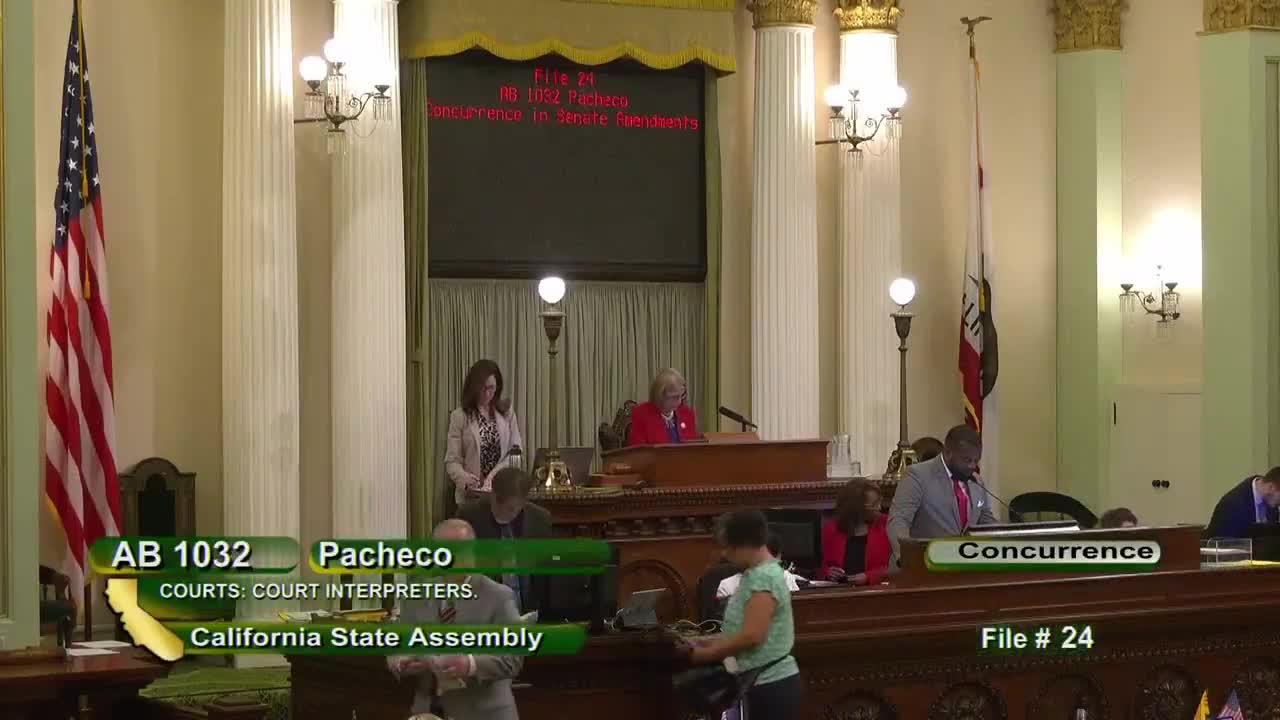
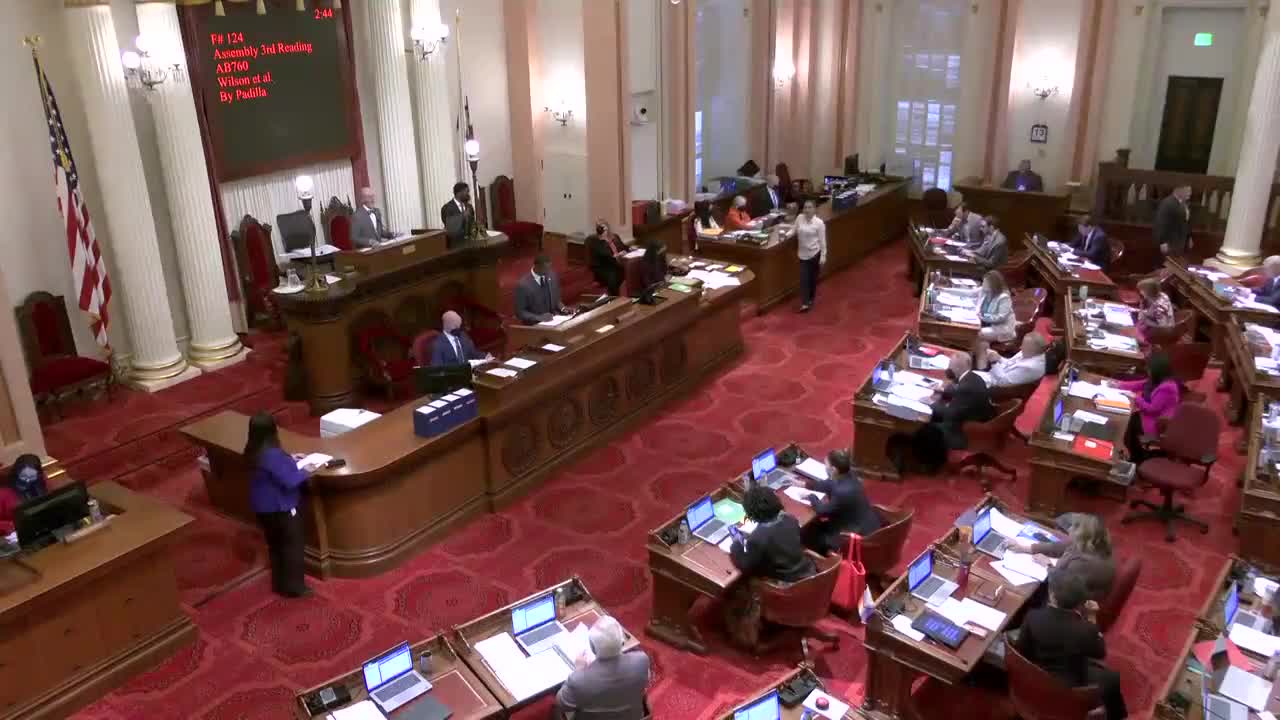


Bill Author

Bill Co-Author(s):