AB 7: Transportation: planning: project selection processes.
- Session Year: 2023-2024
- House: Assembly
- Latest Version Date: 2023-09-01
Current Status:
Failed
(2023-09-11: Ordered to inactive file at the request of Senator Blakespear.)
Introduced
In Committee
First Chamber
In Committee
Second Chamber
Enacted
(1)Existing law establishes within state government the Transportation Agency, which consists of the Department of the California Highway Patrol, the California Transportation Commission, the Department of Motor Vehicles, the Department of Transportation, the High-Speed Rail Authority, and the Board of Pilot Commissioners for the Bays of San Francisco, San Pablo, and Suisun. The agency is under the supervision of the Secretary of Transportation, who has the power of general supervision over each department within the agency. The secretary, among other duties, is charged with developing and reporting to the Governor on legislative, budgetary, and administrative programs to accomplish coordinated planning and policy formulation in matters of public interest, including transportation projects.
On and after January 1, 2025, and to the extent applicable applicable, feasible, and cost effective, this bill would require the agency, the Department of Transportation, and the California Transportation Commission to incorporate specified principles into their existing goals into program funding guidelines and processes.
(2)Existing law requires the Department of Transportation to prepare the California Transportation Plan for submission to the Governor and the Legislature, to complete the 3rd update to the plan by December 31, 2025, and to update the plan every 5 years thereafter, as a long-range planning document that incorporates various elements and is consistent with specified expressions of legislative intent.
This bill would require the California Transportation plan to include a financial element, as specified, and, to the extent applicable, applicable and feasible, an analysis of how certain entities are achieving principles outlined in the Climate Action Plan for Transportation Infrastructure, the federal Infrastructure Investment and Jobs Act of 2021, and the federal Justice40 initiative, as provided.
(1)Existing law establishes within state government the Transportation Agency, which consists of the Department of the California Highway Patrol, the California Transportation Commission, the Department of Motor Vehicles, the Department of Transportation, the High-Speed Rail Authority, and the Board of Pilot Commissioners for the Bays of San Francisco, San Pablo, and Suisun. The agency is under the supervision of the Secretary of Transportation, who has the power of general supervision over each department within the agency. The secretary, among other duties, is charged with developing and reporting to the Governor on legislative, budgetary, and administrative programs to accomplish coordinated planning and policy formulation in matters of public interest, including transportation projects.
On and after January 1, 2025, and to the extent possible, feasible, applicable, applicable and cost effective, this bill would require the agency, the Department of Transportation, and the California Transportation Commission to incorporate specified principles into their processes for project development, selection, and implementation. existing program funding guidelines and processes.
(2)Existing law requires the Department of Transportation to prepare the California Transportation Plan for submission to the Governor and the Legislature, to complete the 3rd update to the plan by December 31, 2025, and to update the plan every 5 years thereafter, as a long-range planning document that incorporates various elements and is consistent with specified expressions of legislative intent.
This bill would require the California Transportation plan to include a financial element, as specified, and and, to the extent applicable, an analysis of how certain entities are achieving principles outlined in the Climate Action Plan for Transportation Infrastructure, the federal Infrastructure Investment and Jobs Act of 2021, and the federal Justice40 initiative. initiative, as provided.
(1)Existing law establishes within state government the Transportation Agency, which consists of the Department of the California Highway Patrol, the California Transportation Commission, the Department of Motor Vehicles, the Department of Transportation, the High-Speed Rail Authority, and the Board of Pilot Commissioners for the Bays of San Francisco, San Pablo, and Suisun. The agency is under the supervision of the Secretary of Transportation, who has the power of general supervision over each department within the agency. The secretary, among other duties, is charged with developing and reporting to the Governor on legislative, budgetary, and administrative programs to accomplish coordinated planning and policy formulation in matters of public interest, including transportation projects.
This bill would require, on and after January 1, 2025, the project selection process for each transportation project that would be funded, at least partially, from specified funding sources, including the State Highway Account, the Road Maintenance and Rehabilitation Account, and the Trade Corridor Enhancement Account, to incorporate specified principles. The bill would require the agency, on or before January 1, 2026, and annually thereafter, to submit a report to the Legislature on how those transportation projects that were completed during the prior year incorporated those principles.To the extent this bill would impose new duties on a local government, the bill would create a state-mandated local program.The California Constitution requires the state to reimburse local agencies and school districts for certain costs mandated by the state. Statutory provisions establish procedures for making that reimbursement.This bill would provide that, if the Commission on State Mandates determines that the bill contains costs mandated by the state, reimbursement for those costs shall be made pursuant to the statutory provisions noted above.On and after January 1, 2025, and to the extent possible, feasible, applicable, and cost effective, this bill would require the agency, the Department of Transportation, and the California Transportation Commission to incorporate specified principles into their processes for project development, selection, and implementation.
(2)Existing law requires the Department of Transportation to prepare the California Transportation Plan for submission to the Governor and the Legislature, to complete the 3rd update to the plan by December 31, 2025, and to update the plan every 5 years thereafter, as a long-range planning document that incorporates various elements and is consistent with specified expressions of legislative intent.
This bill would require the California Transportation plan to include a financial element, as specified, and an analysis of how certain entities are achieving principles outlined in the Climate Action Plan for Transportation Infrastructure, the federal Infrastructure Investment and Jobs Act of 2021, and the federal Justice40 initiative.
Existing law establishes within state government the Transportation Agency, which consists of the Department of the California Highway Patrol, the California Transportation Commission, the Department of Motor Vehicles, the Department of Transportation, the High-Speed Rail Authority, and the Board of Pilot Commissioners for the Bays of San Francisco, San Pablo, and Suisun. The agency is under the supervision of the Secretary of Transportation, who has the power of general supervision over each department within the agency. The secretary, among other duties, is charged with developing and reporting to the Governor on legislative, budgetary, and administrative programs to accomplish coordinated planning and policy formulation in matters of public interest, including transportation projects.
This bill would require, on and after January 1, 2025, the project selection process for each transportation project that would be funded, at least partially, from specified funding sources, including the State Highway Account, the Road Maintenance and Rehabilitation Account, and the Trade Corridor Enhancement Account, to incorporate specified principles. The bill would require the agency, on or before January 1, 2026, and annually thereafter, to submit a report to the Legislature on how those transportation projects that were completed during the prior year incorporated those principles.
To the extent this bill would impose new duties on a local government, the bill would create a state-mandated local program.
The California Constitution requires the state to reimburse local agencies and school districts for certain costs mandated by the state. Statutory provisions establish procedures for making that reimbursement.
This bill would provide that, if the Commission on State Mandates determines that the bill contains costs mandated by the state, reimbursement for those costs shall be made pursuant to the statutory provisions noted above.
Existing law requires the Department of Transportation to improve and maintain the states highways, and establishes various programs to fund the development, construction, and repair of local roads, bridges, and other critical transportation infrastructure in the state.This bill would state the intent of the Legislature to enact subsequent legislation that would eliminate single occupancy vehicle freeway capacity projects, and allow capacity projects only for bus rapid transit, rail, active transportation purposes, projects that significantly add safety, and projects that significantly reduce congestion, without interfering with existing maintenance and rehabilitation needs.Existing law requires the Department of Transportation to improve and maintain the states highways, and establishes various programs to fund the development, construction, and repair of local roads, bridges, and other critical transportation infrastructure in the state.
This bill would state the intent of the Legislature to enact subsequent legislation that would eliminate single occupancy vehicle freeway capacity projects, and allow capacity projects only for bus rapid transit, rail, active transportation purposes, projects that significantly add safety, and projects that significantly reduce congestion, without interfering with existing maintenance and rehabilitation needs.
The Legislature finds and declares all the following:
(a)State transportation accounts for approximately $30,000,000,000 of spending between state and local funds annually, and contributes approximately 40 percent of the states greenhouse gas emissions.
(b)President Bidens Executive Order No. 14052 (E.O. 14052), titled Implementation of the Infrastructure Investment and Jobs Act (IIJA), says that the IIJA is a once-in-a-generation investment in our Nations infrastructure and competitiveness. E.O. 14052 also says that the programs and funding enabled through IIJA will help rebuild Americas roads, bridges, and rails; expand access to clean drinking water; work to ensure access to high-speed internet throughout the Nation; tackle the climate crisis; advance environmental justice; and invest in communities that have too often been left behind and that it will accomplish all of this while driving the creation of good-paying union jobs and growing the economy sustainably and equitably for decades to come.
(c)Under Governor Gavin Newsoms Climate Action Plan for Transportation Infrastructure (CAPTI), California is committed to investing billions of discretionary transportation dollars to combat and adapt to climate change while supporting other vital state goals, including the economy, the environment, quality of life, public health, high-quality resilient infrastructure, safety, accessibility, and equity.
SEC. 2.Section 65072 of the Government Code is amended to read:65072.The California Transportation Plan shall include all of the following:
(a)A policy element that describes the states transportation policies and system performance objectives. These policies and objectives shall be consistent with legislative intent described in Sections 14000, 14000.5, 14000.6, and 65088.
(b)A strategies element that shall incorporate the broad system concepts and strategies synthesized from the adopted regional transportation plans prepared pursuant to Section 65080. The California Transportation Plan shall not be project specific.
(c)A financial element that summarizes the full cost of the implementation of the California Transportation Plan, a summary of available revenues through the planning period, and an analysis of what is feasible within the plan if constrained by a realistic projection of available revenues. The financial element shall also evaluate the feasibility of any policy assumptions or scenarios included in the plan. The financial element may include a discussion of tradeoffs within the plan considering financial constraints.
(d)To the extent applicable, applicable and feasible, an analysis of how the Transportation Agency, Department of Transportation, and California Transportation Commission are achieving principles outlined in the Climate Action Plan for Transportation Infrastructure, the federal Infrastructure Investment and Jobs Act of 2021 (Public Law 117-58), and the federal Justice40 initiative. At a minimum, the analysis shall include both of the following:
(1)A list of example projects completed under each applicable program.(2)(1)How the program advances the priorities identified by the Climate Action Plan for Transportation Infrastructure, the federal Infrastructure Investment and Jobs Act of 2021 (Public Law 117-58), and the federal Justice40 initiative, as applicable.
(3)(2)The percentage of the programs funds program funds included in the Climate Action Plan for Transportation Infrastructure that benefit disadvantaged communities.
(e)A recommendations element that includes economic forecasts and recommendations to the Legislature and the Governor to achieve the plans broad system concepts, strategies, and performance objectives.
SEC. 3.Section 13985 is added to the Government Code, to read:13985.On and after January 1, 2025, to the extent applicable applicable, feasible, and cost effective, the Transportation Agency, Department of Transportation, and California Transportation Commission shall incorporate the following goals related to the Climate Action Plan for Transportation Infrastructure adopted by the Transportation Agency into their existing program funding guidelines and planning processes the following principles: processes:
(a)Building toward an integrated, statewide rail and transit network, centered around the existing California State Rail Plan, that leverages the California Integrated Travel Project to provide seamless, affordable, multimodal travel options in all contexts, including suburban and rural settings, to all users.(b)Investing in networks of safe and accessible bicycle and pedestrian infrastructure, particularly by closing gaps on portions of the state highway system that intersect local active transportation and transit networks or serve as small town or rural main streets, with a focus on investments in low-income and disadvantaged communities throughout the state.(c)Including investments in light-, medium-, and heavy-duty zero-emission vehicle (ZEV) infrastructure as part of larger transportation projects. Supporting the innovation in and development of the ZEV market and help ensure ZEVs are accessible to all, particularly to those in more rural or remote communities.(d)Strengthening our commitment to social and racial equity by reducing public health and economic harms and maximizing community benefits to disproportionately impacted disadvantaged communities, low-income communities, and Black, Indigenous, and People of Color (BIPOC) communities in urbanized and rural regions, and involving these communities early in decisionmaking. Investments should also avoid placing new or exacerbating existing burdens on these communities, even if unintentional.(e)Making safety improvements to reduce fatalities and severe injuries of all users towards zero on our roadways, railways, and transit systems by focusing on context-appropriate speeds, prioritizing vulnerable user safety to support mode shift, designing roadways to accommodate for potential human error and injury tolerances, and ultimately implementing a safe systems approach.(f)Assessing physical climate risk as standard practice for transportation infrastructure projects to enable informed decisionmaking, especially in communities that are most vulnerable to climate-related health and safety risks.(g)Promoting projects that do not significantly increase passenger vehicle travel, particularly in congested urbanized settings where other mobility options can be provided and where projects are shown to induce significant auto travel. These projects should generally aim to reduce vehicle miles traveled (VMT) and not induce significant VMT growth. When addressing congestion, consider alternatives to highway capacity expansion, such as providing multimodal options in the corridor, employing pricing strategies, and using technology to optimize operations.(h)Promoting compact infill development while protecting residents and businesses from displacement by funding transportation projects that support housing for low-income residents near job centers, provide walkable communities, and address affordability to reduce the housing-transportation cost burden and auto trips.(i)Developing a zero-emission freight transportation system that avoids and mitigates environmental justice impacts, reduces criteria and toxic air pollutants, improves freights economic competitiveness and efficiency, and integrates multimodal design and planning into infrastructure development on freight corridors.(j)Protecting natural and working lands from conversion to more intensified uses and enhance biodiversity by supporting local and regional conservation planning that focuses development where it already exists and aligns transportation investments with conservation priorities to reduce transportations impact on the natural environment.(a)Build toward an integrated, statewide rail and transit network.
(b)Invest in networks of safe and accessible bicycle and pedestrian infrastructure.
(c)Include investments in light-, medium-, and heavy-duty zero-emission vehicle infrastructure.
(d)Develop a zero-emission freight transportation system.
(e)Reduce public health and economic harms and maximize community benefits.
(f)Make safe improvements to reduce fatalities and severe injuries of all users toward zero.
(g)Assess and integrate assessments of physical climate risk.
(h)Promote projects that do not significantly increase passenger vehicle travel.
(i)Promote compact infill development while protecting residents and businesses from displacement.
(j)Protect natural and working lands.
The Legislature finds and declares all the following:
(a)State transportation accounts for approximately $30,000,000,000 of spending between state and local funds, funds annually, and contributes approximately 40 percent of the states greenhouse gas emissions.
(b)President Bidens Executive Order No. 14052 (E.O. 14052), titled Implementation of the Infrastructure Investment and Jobs Act (IIJA), says that the IIJA is a once-in-a-generation investment in our Nations infrastructure and competitiveness. E.O. 14052 also says that the programs and funding enabled through IIJA will help rebuild Americas roads, bridges, and rails; expand access to clean drinking water; work to ensure access to high-speed internet throughout the Nation; tackle the climate crisis; advance environmental justice; and invest in communities that have too often been left behind and that it will accomplish all of this while driving the creation of good-paying union jobs and growing the economy sustainably and equitably for decades to come.
(c)Effective implementation by the executive departments and agencies with statutory responsibilities designated in the IIJA will be critical to achieving these goals.(d)It is the intent of the state to implement federal guidance from the IIJA to the utmost and fullest extent in order for the state to be competitive for future federal funding, and to improve the lives of all Californians.(e)(c)Under Governor Gavin Newsoms Climate Action Plan for Transportation Infrastructure (CAPTI), California is committed to investing billions of discretionary transportation dollars to combat and adapt to climate change while supporting other vital state goals, including the economy, the environment, quality of life, public health, high-quality resilient infrastructure, safety, accessibility, and equity.
SEC. 2.Section 65072 of the Government Code is amended to read:65072.The California Transportation Plan shall include all of the following:
(a)A policy element that describes the states transportation policies and system performance objectives. These policies and objectives shall be consistent with legislative intent described in Sections 14000, 14000.5, 14000.6, and 65088.
(b)A strategies element that shall incorporate the broad system concepts and strategies synthesized from the adopted regional transportation plans prepared pursuant to Section 65080. The California Transportation Plan shall not be project specific.
(c)A financial element that summarizes the full cost of the implementation of the California Transportation Plan, a summary of available revenues through the planning period, and an analysis of what is feasible within the plan if constrained by a realistic projection of available revenues. The financial element shall also evaluate the feasibility of any policy assumptions or scenarios included in the plan. The financial element may include a discussion of tradeoffs within the plan considering financial constraints.
(d)An To the extent applicable, an analysis of how the Transportation Agency, Department of Transportation, and California Transportation Commission are achieving principles outlined in the Climate Action Plan for Transportation Infrastructure, the federal Infrastructure Investment and Jobs Act of 2021 (Public Law 117-58), and the federal Justice40 initiative. At a minimum, the analysis shall include the following:
(1)A list of example projects completed under each applicable program.
(2)How the program advances the priorities identified by the Climate Action Plan for Transportation Infrastructure, the federal Infrastructure Investment and Jobs Act of 2021 (Public Law 117-58), and the federal Justice40 initiative, as applicable.
(3)The percentage of the programs funds that benefit disadvantaged communities.
(e)A recommendations element that includes economic forecasts and recommendations to the Legislature and the Governor to achieve the plans broad system concepts, strategies, and performance objectives.
SEC. 3.Section 13985 is added to the Government Code, to read:13985.On and after January 1, 2025, to the extent possible, feasible, applicable, applicable and cost effective, the Transportation Agency, Department of Transportation, and California Transportation Commission shall incorporate into their processes for project development, selection, and implementation all of existing program funding guidelines and planning processes the following principles:
(a)Improving the condition, resilience, and safety of road and bridge assets consistent with asset management plans, including investing in preservation of those assets, consistent with Section 119 of Title 23 of the United States Code.(b)Promoting and improving safety for all road users, particularly vulnerable users, and supporting major actions and goals consistent with the federal Department of Transportations January 2022 National Roadway Safety Strategy for safer people, safer roads, safer vehicles, safer speeds, and enhanced post-crash care, consistent with Section 148 of Title 23 of the United States Code.(c)Supporting accelerated project delivery and an efficient environmental review process through the One Federal Decision framework and by continuing to coordinate with other federal partners to ensure that the benefits of projects are realized as soon as possible, consistent with Section 139 of Title 23 of the United States Code.(d)Making streets and other transportation facilities accessible to all users and compliant with the Americans with Disabilities Act, consistent with Part 37 (commencing with Section 37.1) of Title 49 of the Code of Federal Regulations.(e)Addressing environmental impacts ranging from stormwater runoff to the emissions of greenhouse gases, consistent with Sections 175 and 176 of Title 23 of the United States Code.(f)Prioritizing infrastructure that is less vulnerable and more resilient to a changing climate, consistent with Sections 101, 119, 176, and 520 of Title 23 of the United States Code.(g)Future-proofing transportation infrastructure by accommodating new and emerging technologies such as electric vehicle charging stations, renewable energy generation, and broadband deployment in transportation rights-of-way, consistent with Part 645 (commencing with Section 645.101) of Title 23 of the Code of Federal Regulations and Section 151 of Title 23 of the United States Code.(h)Reconnecting communities and reflecting the inclusion of disadvantaged and underrepresented groups in the planning, project selection, and design process, consistent with Section 11509 of the federal Infrastructure Investment and Jobs Act (Public Law 117-58).(i)(a)Building toward an integrated, statewide rail and transit network, centered around the existing California State Rail Plan, that leverages the California Integrated Travel Project to provide seamless, affordable, multimodal travel options in all contexts, including suburban and rural settings, to all users.
(j)(b)Investing in networks of safe and accessible bicycle and pedestrian infrastructure, particularly by closing gaps on portions of the state highway system that intersect local active transportation and transit networks or serve as small town or rural main streets, with a focus on investments in low-income and disadvantaged communities throughout the state.
(k)(c)Including investments in light, medium, light-, medium-, and heavy-duty zero-emission vehicle (ZEV) infrastructure as part of larger transportation projects. Supporting the innovation in and development of the ZEV market and help ensure ZEVs are accessible to all, particularly to those in more rural or remote communities.
(l)Strengthening(d)Strengthening our commitment to social and racial equity by reducing public health and economic harms and maximizing community benefits to disproportionately impacted disadvantaged communities, low-income communities, and Black, Indigenous, and People of Color (BIPOC) communities in urbanized and rural regions, and involving these communities early in decisionmaking. Investments should also avoid placing new or exacerbating existing burdens on these communities, even if unintentional.
(m)(e)Making safety improvements to reduce fatalities and severe injuries of all users towards zero on our roadways, railways, and transit systems by focusing on context-appropriate speeds, prioritizing vulnerable user safety to support mode shift, designing roadways to accommodate for potential human error and injury tolerances, and ultimately implementing a safe systems approach.
(n)(f)Assessing physical climate risk as standard practice for transportation infrastructure projects to enable informed decisionmaking, especially in communities that are most vulnerable to climate-related health and safety risks.
(o)(g)Promoting projects that do not significantly increase passenger vehicle travel, particularly in congested urbanized settings where other mobility options can be provided and where projects are shown to induce significant auto travel. These projects should generally aim to reduce vehicle miles traveled (VMT) and not induce significant VMT growth. When addressing congestion, consider alternatives to highway capacity expansion, such as providing multimodal options in the corridor, employing pricing strategies, and using technology to optimize operations.
(p)(h)Promoting compact infill development while protecting residents and businesses from displacement by funding transportation projects that support housing for low-income residents near job centers, provide walkable communities, and address affordability to reduce the housing-transportation cost burden and auto trips.
(q)(i)Developing a zero-emission freight transportation system that avoids and mitigates environmental justice impacts, reduces criteria and toxic air pollutants, improves freights economic competitiveness and efficiency, and integrates multimodal design and planning into infrastructure development on freight corridors.
(r)(j)Protecting natural and working lands from conversion to more intensified uses and enhance biodiversity by supporting local and regional conservation planning that focuses development where it already exists and aligns transportation investments with conservation priorities to reduce transportations impact on the natural environment.
The Legislature finds and declares all the following:
(a)State transportation accounts for approximately $30,000,000,000 of spending between state and local funds, and contributes approximately 40 percent of the states greenhouse gas emissions.
(b)President Bidens Executive Order No. 14052 (E.O. 14052), titled Implementation of the Infrastructure Investment and Jobs Act (IIJA), says that the IIJA is a once-in-a-generation investment in our Nations infrastructure and competitiveness. E.O. 14052 also says that the programs and funding enabled through IIJA will help rebuild Americas roads, bridges, and rails; expand access to clean drinking water; work to ensure access to high-speed internet throughout the Nation; tackle the climate crisis; advance environmental justice; and invest in communities that have too often been left behind and that it will accomplish all of this while driving the creation of good-paying union jobs and growing the economy sustainably and equitably for decades to come.
(c)Effective implementation by the executive departments and agencies with statutory responsibilities designated in the IIJA will be critical to achieving these goals.
(d)It is the intent of the state to implement federal guidance from the IIJA to the utmost and fullest extent in order for the state to be competitive for future federal funding, and to improve the lives of all Californians.
(e)Under Governor Gavin Newsoms Climate Action Plan for Transportation Infrastructure (CAPTI), California is committed to investing billions of discretionary transportation dollars to combat and adapt to climate change while supporting other vital state goals, including the economy, the environment, quality of life, public health, high-quality resilient infrastructure, safety, accessibility, and equity.
SEC. 2.Section 65072 of the Government Code is amended to read:65072.The California Transportation Plan shall include all of the following:
(a)A policy element that describes the states transportation policies and system performance objectives. These policies and objectives shall be consistent with legislative intent described in Sections 14000, 14000.5, 14000.6, and 65088.
(b)A strategies element that shall incorporate the broad system concepts and strategies synthesized from the adopted regional transportation plans prepared pursuant to Section 65080. The California Transportation Plan shall not be project specific.
(c)A financial element that summarizes the full cost of the implementation of the California Transportation Plan, a summary of available revenues through the planning period, and an analysis of what is feasible within the plan if constrained by a realistic projection of available revenues. The financial element shall also evaluate the feasibility of any policy assumptions or scenarios included in the plan. The financial element may include a discussion of tradeoffs within the plan considering financial constraints.
(d)An analysis of how the Transportation Agency, Department of Transportation, and California Transportation Commission are achieving principles outlined in the Climate Action Plan for Transportation Infrastructure, the federal Infrastructure Investment and Jobs Act of 2021 (Public Law 117-58), and the federal Justice40 initiative.
(c)(e)A recommendations element that includes economic forecasts and recommendations to the Legislature and the Governor to achieve the plans broad system concepts, strategies, and performance objectives.
SECTION 1.SEC. 3.Section 13985 is added to the Government Code, to read:13985.(a)On and after January 1, 2025, the project selection process for each transportation project that would be funded, at least partially, from a funding source specified in subdivision (b) shall incorporate the principles specified in subdivision (c). to the extent possible, feasible, applicable, and cost effective, the Transportation Agency, Department of Transportation, and California Transportation Commission shall incorporate into their processes for project development, selection, and implementation all of the following principles:
(b)This section shall only apply to a transportation project funded, at least partially, from one or more of the following sources:(1)The State Highway Account described in Section 182 of the Streets and Highways Code.(2)The Road Maintenance and Rehabilitation Account created pursuant to Section 2031 of the Streets and Highways Code.(3)A local transportation fund established by a county pursuant to Article 11 (commencing with Section 29530) of Chapter 2 of Division 3 of Title 3.(4)The Highway Safety, Traffic Reduction, Air Quality, and Port Security Fund of 2006 created pursuant to Section 8879.23.(5)The Highway Users Tax Account described in Section 2100 of the Streets and Highways Code.(6)The Trade Corridor Enhancement Account created pursuant to Section 2192.4 of the Streets and Highways Code.(c)The following principles shall be incorporated into the project selection processes described in subdivision (a):(1)(a)Improving the condition, resilience, and safety of road and bridge assets consistent with asset management plans, including investing in preservation of those assets, consistent with Section 119 of Title 23 of the United States Code.
(2)(b)Promoting and improving safety for all road users, particularly vulnerable users, and supporting major actions and goals consistent with the federal Department of Transportations January 2022 National Roadway Safety Strategy for safer people, safer roads, safer vehicles, safer speeds, and enhanced post-crash care, consistent with Section 148 of Title 23 of the United States Code.
(3)(c)Supporting accelerated project delivery and an efficient environmental review process through the One Federal Decision framework and by continuing to coordinate with other federal partners to ensure that the benefits of projects are realized as soon as possible, consistent with Section 139 of Title 23 of the United States Code.
(4)(d)Making streets and other transportation facilities accessible to all users and compliant with the Americans with Disabilities Act, consistent with Part 37 (commencing with Section 37.1) of Title 49 of the Code of Federal Regulations.
(5)(e)Addressing environmental impacts ranging from storm water stormwater runoff to the emissions of greenhouse gases, consistent with Sections 175 and 176 of Title 23 of the United States Code.
(6)(f)Prioritizing infrastructure that is less vulnerable and more resilient to a changing climate, consistent with Sections 101, 119, 176, and 520 of Title 23 of the United States Code.
(7)(g)Future-proofing transportation infrastructure by accommodating new and emerging technologies such as electric vehicle charging stations, renewable energy generation, and broadband deployment in transportation rights-of-way, consistent with Part 645 (commencing with Section 645.101) of Title 23 of the Code of Federal Regulations and Section 151 of Title 23 of the United States Code.
(8)(h)Reconnecting communities and reflecting the inclusion of disadvantaged and underrepresented groups in the planning, project selection, and design process, consistent with Section 11509 of the federal Infrastructure Investment and Jobs Act (Public Law 117-58).
(d)(1)On or before January 1, 2026, and annually thereafter, the agency shall submit a report to the Legislature on how each transportation project described in subdivision (a) that was completed during the prior year incorporated the principles specified in subdivision (c).(2)A report to be submitted pursuant to this subdivision shall be submitted in compliance with Section 9795.(i)Building toward an integrated, statewide rail and transit network, centered around the existing California State Rail Plan, that leverages the California Integrated Travel Project to provide seamless, affordable, multimodal travel options in all contexts, including suburban and rural settings, to all users.
(j)Investing in networks of safe and accessible bicycle and pedestrian infrastructure, particularly by closing gaps on portions of the state highway system that intersect local active transportation and transit networks or serve as small town or rural main streets, with a focus on investments in low-income and disadvantaged communities throughout the state.
(k)Including investments in light, medium, and heavy-duty zero-emission vehicle (ZEV) infrastructure as part of larger transportation projects. Supporting the innovation in and development of the ZEV market and help ensure ZEVs are accessible to all, particularly to those in more rural or remote communities.
(l)Strengthening our commitment to social and racial equity by reducing public health and economic harms and maximizing community benefits to disproportionately impacted disadvantaged communities, low-income communities, and Black, Indigenous, and People of Color (BIPOC) communities in urbanized and rural regions, and involving these communities early in decisionmaking. Investments should also avoid placing new or exacerbating existing burdens on these communities, even if unintentional.
(m)Making safety improvements to reduce fatalities and severe injuries of all users towards zero on our roadways, railways, and transit systems by focusing on context-appropriate speeds, prioritizing vulnerable user safety to support mode shift, designing roadways to accommodate for potential human error and injury tolerances, and ultimately implementing a safe systems approach.
(n)Assessing physical climate risk as standard practice for transportation infrastructure projects to enable informed decisionmaking, especially in communities that are most vulnerable to climate-related health and safety risks.
(o)Promoting projects that do not significantly increase passenger vehicle travel, particularly in congested urbanized settings where other mobility options can be provided and where projects are shown to induce significant auto travel. These projects should generally aim to reduce vehicle miles traveled (VMT) and not induce significant VMT growth. When addressing congestion, consider alternatives to highway capacity expansion, such as providing multimodal options in the corridor, employing pricing strategies, and using technology to optimize operations.
(p)Promoting compact infill development while protecting residents and businesses from displacement by funding transportation projects that support housing for low-income residents near job centers, provide walkable communities, and address affordability to reduce the housing-transportation cost burden and auto trips.
(q)Developing a zero-emission freight transportation system that avoids and mitigates environmental justice impacts, reduces criteria and toxic air pollutants, improves freights economic competitiveness and efficiency, and integrates multimodal design and planning into infrastructure development on freight corridors.
(r)Protecting natural and working lands from conversion to more intensified uses and enhance biodiversity by supporting local and regional conservation planning that focuses development where it already exists and aligns transportation investments with conservation priorities to reduce transportations impact on the natural environment.
SEC. 2.If the Commission on State Mandates determines that this act contains costs mandated by the state, reimbursement to local agencies and school districts for those costs shall be made pursuant to Part 7 (commencing with Section 17500) of Division 4 of Title 2 of the Government Code.(a)On and after January 1, 2025, the project selection process for each transportation project that would be funded, at least partially, from a funding source specified in subdivision (b) shall incorporate the principles specified in subdivision (c).
(b)This section shall only apply to a transportation project funded, at least partially, from one or more of the following sources:
(1)The State Highway Account described in Section 182 of the Streets and Highways Code.
(2)The Road Maintenance and Rehabilitation Account created pursuant to Section 2031 of the Streets and Highways Code.
(3)A local transportation fund established by a county pursuant to Article 11 (commencing with Section 29530) of Chapter 2 of Division 3 of Title 3.
(4)The Highway Safety, Traffic Reduction, Air Quality, and Port Security Fund of 2006 created pursuant to Section 8879.23.
(5)The Highway Users Tax Account described in Section 2100 of the Streets and Highways Code.
(6)The Trade Corridor Enhancement Account created pursuant to Section 2192.4 of the Streets and Highways Code.
(c)The following principles shall be incorporated into the project selection processes described in subdivision (a):
(1)Improving the condition, resilience, and safety of road and bridge assets consistent with asset management plans, including investing in preservation of those assets, consistent with Section 119 of Title 23 of the United States Code.
(2)Promoting and improving safety for all road users, particularly vulnerable users, and supporting major actions and goals consistent with the federal Department of Transportations January 2022 National Roadway Safety Strategy for safer people, safer roads, safer vehicles, safer speeds, and enhanced post-crash care, consistent with Section 148 of Title 23 of the United States Code.
(3)Supporting accelerated project delivery and an efficient environmental review process through the One Federal Decision framework and by continuing to coordinate with other federal partners to ensure that the benefits of projects are realized as soon as possible, consistent with Section 139 of Title 23 of the United States Code.
(4)Making streets and other transportation facilities accessible to all users and compliant with the Americans with Disabilities Act, consistent with Part 37 (commencing with Section 37.1) of Title 49 of the Code of Federal Regulations.
(5)Addressing environmental impacts ranging from storm water runoff to the emissions of greenhouse gases, consistent with Sections 175 and 176 of Title 23 of the United States Code.
(6)Prioritizing infrastructure that is less vulnerable and more resilient to a changing climate, consistent with Sections 101, 119, 176, and 520 of Title 23 of the United States Code.
(7)Future-proofing transportation infrastructure by accommodating new and emerging technologies such as electric vehicle charging stations, renewable energy generation, and broadband deployment in transportation rights-of-way, consistent with Part 645 (commencing with Section 645.101) of Title 23 of the Code of Federal Regulations and Section 151 of Title 23 of the United States Code.
(8)Reconnecting communities and reflecting the inclusion of disadvantaged and underrepresented groups in the planning, project selection, and design process, consistent with Section 11509 of the federal Infrastructure Investment and Jobs Act (Public Law 117-58).
(d)(1)On or before January 1, 2026, and annually thereafter, the agency shall submit a report to the Legislature on how each transportation project described in subdivision (a) that was completed during the prior year incorporated the principles specified in subdivision (c).
(2)A report to be submitted pursuant to this subdivision shall be submitted in compliance with Section 9795.
SEC. 2.If the Commission on State Mandates determines that this act contains costs mandated by the state, reimbursement to local agencies and school districts for those costs shall be made pursuant to Part 7 (commencing with Section 17500) of Division 4 of Title 2 of the Government Code.
SECTION 1.It is the intent of the Legislature to enact subsequent legislation that would eliminate single occupancy vehicle freeway capacity projects, and allow capacity projects only for bus rapid transit, rail, active transportation purposes, projects that significantly add safety, and projects that significantly reduce congestion, without interfering with existing maintenance and rehabilitation needs.It is the intent of the Legislature to enact subsequent legislation that would eliminate single occupancy vehicle freeway capacity projects, and allow capacity projects only for bus rapid transit, rail, active transportation purposes, projects that significantly add safety, and projects that significantly reduce congestion, without interfering with existing maintenance and rehabilitation needs.
|
Date
|
Status
|
|---|---|
| Sep 11, 2023 | Ordered to inactive file at the request of Senator Blakespear. |
| Sep 5, 2023 | Read second time. Ordered to third reading. |
| Sep 1, 2023 | Read second time and amended. Ordered returned to second reading. |
| Sep 1, 2023 | From committee: Amend, and do pass as amended. (Ayes 5. Noes 2.) (September 1). |
| Aug 28, 2023 | In committee: Referred to APPR suspense file. |
| Jul 12, 2023 | From committee: Do pass and re-refer to Com. on APPR. (Ayes 10. Noes 4.) (July 11). Re-referred to Com. on APPR. |
| Jun 28, 2023 | From committee chair, with author's amendments: Amend, and re-refer to committee. Read second time, amended, and re-referred to Com. on TRANS. |
| Jun 14, 2023 | Referred to Com. on TRANS. |
| Jun 1, 2023 | In Senate. Read first time. To Com. on RLS. for assignment. |
| May 31, 2023 | Read third time. Passed. Ordered to the Senate. (Ayes 54. Noes 17. Page 1961.) |
| May 25, 2023 | Read third time and amended. Ordered to third reading. (Ayes 53. Noes 16. Page 1744.) |
| May 18, 2023 | Read second time. Ordered to third reading. |
| May 18, 2023 | From committee: Do pass. (Ayes 12. Noes 3.) (May 18). |
| May 10, 2023 | In committee: Set, first hearing. Referred to APPR. suspense file. |
| May 3, 2023 | In committee: Hearing postponed by committee. |
| Apr 26, 2023 | In committee: Hearing postponed by committee. |
| Mar 28, 2023 | From committee: Do pass and re-refer to Com. on APPR. (Ayes 11. Noes 4.) (March 27). Re-referred to Com. on APPR. |
| Mar 20, 2023 | Re-referred to Com. on TRANS. |
| Mar 16, 2023 | Referred to Com. on TRANS. |
| Mar 16, 2023 | From committee chair, with author's amendments: Amend, and re-refer to Com. on TRANS. Read second time and amended. |
| Dec 6, 2022 | From printer. May be heard in committee January 5. |
| Dec 5, 2022 | Read first time. To print. |
|
Date
|
Description
|
Location
|
Votes
|
|
|---|---|---|---|---|
| Sep 1, 2023 | Do pass as amended | Senate Standing Committee on Appropriations |
Passed |
|
| Aug 28, 2023 | Placed on suspense file | Senate Standing Committee on Appropriations |
Passed |
|
| Jul 11, 2023 | Do pass, but first be re-referred to the Committee on [Appropriations] | Senate Standing Committee on Transportation |
Passed |
|
| May 31, 2023 | AB 7 Friedman Assembly Third Reading | Assembly Floor |
Passed |
|
| May 25, 2023 | AB 7 Friedman Assembly Third Reading Amendment Set #1 | Assembly Floor |
Passed |
|
| May 18, 2023 | Do pass. | Assembly Standing Committee on Appropriations |
Passed |
|
| Mar 27, 2023 | Do pass and be re-referred to the Committee on [Appropriations] | Assembly Standing Committee on Transportation |
Passed |
This list shows positions taken on this bill by organizations on the date displayed, which is linked to the original source.
Positions by individuals are not included.
|
Organization
|
Position
|
Date
|
|---|---|---|
| 350 Bay Area Action | ** Support | |
| Abundant Housing LA | ** Support | |
| American Council of Engineering Companies | * Support | Jul 11, 2023 |
| American Lung Association in California | ** Support | |
| BizFed | ** Against | |
| Breathe California | ** Support | |
| California Association of Bicycling Organizations | * Support | Jul 11, 2023 |
| California Association Of Port Authorities | ** Against | |
| California Bicycle Coalition | ** Support | |
| California Building Industry Association | ** Against | |
| California Business Properties Association | * Against | Jul 11, 2023 |
| California Business Roundtable | * Against | Jul 11, 2023 |
| California Coalition of Public and Private Sector Organizations | ** Against | |
| California Environmental Voters | ** Support | |
| California Forward Action Fund | ** Support | |
| California State Building and Construction Trades Council | * Indeterminate | Mar 27, 2023 |
| California Walks | ** Support | |
| Citizens Climate Lobby San Fernando Valley | ** Support | |
| City of Gilroy Council Member Zach Hilton | ** Support | |
| Civicwell fka the Local Government Commission | ** Support | |
| Coachella Valley Association of Governments | ** Against | |
| Coalition For Clean Air | ** Support | |
| Council of Infill Builders | ** Support | |
| Greater Conejo Valley Chamber of Commerce | ** Against | |
| Greater Riverside Chambers of Commerce | ** Against | |
| HDR | ** Against | |
| HNTB | ** Against | |
| Imperial County Transportation Commission | ** Against | |
| Industry Business Council and Chamber of Commerce | ** Against | |
| Inland Empire Chamber Alliance | ** Against | |
| Inland Empire Economic Partnership | * Against | Jul 11, 2023 |
| Jacobs | ** Against | |
| Los Angeles Area Chamber Of Commerce | ** Against | |
| Los Angeles County Business Federation | * Against | Jul 11, 2023 |
| Mayor Steinberg's Office | * Support | Mar 27, 2023 |
| Michael Baker Intl | ** Against | |
| Mobility 21 | ** Against | |
| Moffatt & Nichol | ** Against | |
| Natural Resources Defense Council | ** Support | |
| Natural Resources Defense Council (NRDC) | * Support | Mar 27, 2023 |
| Nature Concervancy | * Support | Jul 11, 2023 |
| Orange County Business Council | ** Against | |
| Orange County Transportation Authority | ** Against | |
| Parsons | ** Against | |
| Planning And Conservation League | ** Support | |
| Rebuild Socal Partnership | ** Against | |
| Riverside County Transportation Commission | ** Against | |
| San Bernardino County Transportation Authority | ** Against | |
| San Gabriel Valley Council Of Governments | ** Against | |
| San Gabriel Valley Economic Partnership | ** Against | |
| Self Help Counties Coalition | * Indeterminate | Mar 27, 2023 |
| SKANSKA | ** Against | |
| Southern California Association Of Governments | ** Against | |
| Streets Are For Everyone | ** Support | |
| Streets for All | ** Support | |
| The Greenlining Institute | ** Support | |
| The Nature Conservancy | ** Support | |
| Tri County Chamber Alliance | ** Against | |
| USGBC Los Angeles | ** Support | |
| VALLEY INDUSTRY AND COMMERCE ASSOCIATION | ** Against | |
| WSP | ** Against |
SENATE RULES COMMITTEE Office of Senate Floor Analyses (916) 651-1520 Fax: (916) 327-4478 | AB 7 |
THIRD READING
Bill No: AB 7
Author: Friedman (D)
Amended: 9/1/23 in Senate
Vote: 21
SENATE TRANSPORTATION COMMITTEE: 10-4, 7/11/23
AYES: Gonzalez, Allen, Archuleta, Becker, Blakespear, Cortese, Durazo, Laird, Limón, McGuire
NOES: Niello, Dahle, Nguyen, Seyarto
NO VOTE RECORDED: Newman, Umberg
SENATE APPROPRIATIONS COMMITTEE: 5-0, 9/1/23
AYES: Portantino, Ashby, Bradford, Wahab, Wiener
NO VOTE RECORDED: Jones, Seyarto
ASSEMBLY FLOOR: 54-17, 5/31/23 - See last page for vote
SUBJECT: Transportation: planning: project selection processes
SOURCE: Author
DIGEST:
This bill requires California State Transportation Agency (CalSTA), California Department of Transportation (Caltrans), and the California Transportation Commission (CTC), on or after January 1, 2025, to the extent feasible, applicable, and cost effective, to incorporate the goals related to the Climate Action Plan for Transportation Infrastructure (CAPTI) into program funding guidelines and planning processes, as specified. This bill requires the California Transportation Plan (CTP) to include a financial element, and an analysis of how CalSTA, Caltrans, and CTC are achieving principles outlined in the CAPTI, the federal Infrastructure Investment and Jobs Act of 2021 (IIJA), and the federal Justice 40 initiative.
ANALYSIS:
Existing law:
- Vests Caltrans with the full possession and control of all state highways and all property and rights in property acquired for state highway purposes.
- Creates the CalSTA and vests it various responsibilities including, but not limited to, the implementation and programming of the Transit and Intercity Rail Capital (TIRCP) program, which is a competitive program to fund transformative transit capital improvements that will modernize California’s intercity, commuter, and urban rail systems and bus and ferry transit systems.
- Creates the CTC and vests it with various responsibilities, including programming and allocating funds for the construction of highway, passenger rail, transit, and active transportation improvements through various transportation programs.
- Enacts the Road Repair and Accountability Act of 2017, SB 1 (Beall, Chapter 5, Statutes of 2017), which provides roughly $5.2 billion annually to fund the state’s highways, local streets and roads, public transportation, and active transportation programs. SB 1 created new transportation competitive programs, to be allocated by the CTC, including:
- Local Partnership Program (LPP), funded at $200 million annually, for local or regional transportation agencies that have sought and received voter approval of taxes or that have imposed certain fees, for which those taxes or fees are dedicated solely to transportation improvements.
- Trade Corridor Enhancement Program (TCEP), funded at $300 million annually, for infrastructure improvements on federally designated Trade Corridors of National and Regional Significance, on the Primary Freight Network, and along other corridors that have a high volume of freight movement.
- Solutions for Congested Corridors (SCCP), funded at $250 million annually, for projects that implement specific transportation performance improvements and are part of a comprehensive corridor plan, by providing more transportation choices while preserving the character of local communities and creating opportunities for neighborhood enhancement.
- Requires Caltrans to develop the State Highway Operations and Protection Program (SHOPP) based on the Transportation Asset Management Plan, to guide expenditures of federal and state funds for major capital improvements to preserve and maintain the state highway system. Limits SHOPP projects to capital improvements relative to maintenance, safety, and rehabilitation of state highways and bridges that do not add a new lane to the system.
- Requires Caltrans to produce, and update every five years, the CTP, a long-range transportation planning document intended to integrate state and regional transportation planning while considering specified pertinent subject areas.
- Requires, Caltrans to update the CTP, as specified, and requires the Strategic Growth Council (SGC), by January 31, 2022, to submit a report to the Legislature on interactions of the CTP and Sustainable Communities Strategies (SCS) plans, and a review of the potential impacts and opportunities for coordination between specified programs.
- Establishes the California Air Resources Board (ARB) as the air pollution control agency in California and requires ARB, among other things, to control emissions from a wide array of mobile sources and coordinate, encourage, and review the efforts of all levels of government as they affect air quality.
- Requires ARB to determine the 1990 statewide greenhouse gas (GHG) emissions level, and achieve that same level by 2020 (AB 32 (Nunez, Chapter 488, Statutes of 2006)), and achieve a 40% reduction from that level by 2030 (SB 32 (Pavley, Chapter 249, Statutes of 2016)).
This bill:
- Contains findings and declarations related to state and federal transportation principles.
- Requires the CTP to include a financial element that contains:
- A summary of the full cost of the implementation of the plan.
- A summary of available revenues through the planning period.
- An analysis of what is feasible within the plan if constrained by a realistic projection of available revenues.
- An evaluation of the feasibility of any policy assumptions or scenarios included in the plan.
Provides that the financial element may also include a discussion of tradeoffs within the plan considering financial constraints.
- Requires the CTP to also include, to the extent applicable and feasible, an analysis of how CalSTA, Caltrans, and CTC are achieving principles outlined in the CAPTI, the federal IIJA and the federal Justice 40 initiative. Requires the analysis to include, at a minimum:
- How the program advances the priorities identified by CAPTI, IIJA, and Justice40 initiative, as applicable; and
- The percentage of program funds included in the CAPTI that benefit disadvantaged communities.
- Requires CalSTA, Caltrans, and the CTC, on or after January 1, 2025, to the extent applicable, feasible, and cost effective, to incorporate the following goals related to CAPTI, adopted by CalSTA, into program funding guidelines and planning processes:
- Build toward an integrated, statewide rail and transit network.
- Invest in networks of safe and accessible bicycle and pedestrian infrastructure.
- Include investments in light-, medium-, and heavy-duty zero-emission vehicle infrastructure.
- Develop a zero-emission freight transportation system.
- Reduce public health and economic harms and maximize community benefits.
- Make safe improvements to reduce fatalities and severe injuries of all users toward zero.
- Assess and integrate assessments of physical climate risk.
- Promote projects that do not significantly increase passenger vehicle travel.
- Promote compact infill development while protecting residents and businesses from displacement.
- Protect natural and working lands.
Comments
- Purpose of the bill. According to the author, “AB 7 seeks to balance the state's climate, maintenance, and safety goals in order to build a transportation system that improves every Californian’s way of life. To achieve our climate and equity vision, there must be action and change from all levels of government and across all institutions that shape the transportation system. AB 7 begins that process by requiring CAPTI principles be incorporated into the guideline and planning processes, and requires transparency and accountability for how state climate and equity goals are being achieved at the state level.”
- Transportation and climate change. California’s transportation network consists of streets, highways, railways, bicycle routes, and pedestrian pathways. This network provides people and businesses the ability to access destinations and move goods and services throughout the state. Construction, operations, and maintenance responsibilities are shared amongst state, regional, tribal and local governments. Funding for these activities comes from federal, state, and local taxes, fees and assessments, private investments and tribal investments. Currently, roughly $35 billion (federal, state, and local funds combined) is spent annually in California on building and maintaining the transportation network. Additionally, with the passage of the federal IIJA, California is expected to receive approximately $40 billion over five years.
Emissions from the transportation sector, the state’s largest source of GHGs, are still on the rise despite statewide GHG emission reduction efforts and increasingly ambitious targets. According to ARB’s GHG emission inventory, the transportation sector emissions have grown to 41% of California’s total emissions as of 2017. ARB’s 2022 Scoping Plan scenario for achieving 85% GHG emission reductions by 2045 calls for a 25% reduction in vehicles miles traveled (VMT) by 2030 and a 30% reduction in VMT by 2045.
- What is CAPTI? On September 20, 2019, Governor Newsom issued Executive Order (EO) N-19-19, which called for actions from multiple state agencies to reduce GHG emissions and mitigate the impacts of climate change. The EO detailed the role the transportation sector must play in combating climate change. Specifically, the EO directed CalSTA to work to align transportation spending with the state’s Climate Change Scoping Plan, where feasible; direct investments to strategically support smart growth to increase infill housing production; reduce congestion through strategies that encourage a reduction in driving and invest further in walking, biking, and transit; and ensure that overall transportation costs for low-income Californians do not increase as a result of these policies.
To that end, CalSTA adopted the CAPTI in July 2021. The CAPTI is the action plan to implement the EO. Specifically, the CAPTI is “a framework and statement of intent for aligning state transportation infrastructure investments with state climate, health, and social equity goals, built on the foundation of the ‘fix-it-first’ approach established in SB 1.” Additionally, CalSTA notes that CAPTI is a living document that can “adapt, pivot, and modify approaches and actions, as needed.” The CAPTI contains an overall transportation investment framework and specific strategies to implement the plan through state agency actions. In August 2021, the CTC endorsed CAPTI's framework and strategies and began a process of incorporating it into program guidelines for the programs they administer.
- AB 285 report says we need to better align traditional funding programs with state climate goals. AB 285 (Friedman, Chapter 605, Statutes of 2019), required the SGC to develop a report to look at various aspects of state and regional transportation planning and funding. The California Transportation Assessment Report was developed through work of the University of California Institute for Transportation Studies (UCITS). The report includes findings and provides recommendations to help the state align transportation funding with state climate goals. Specifically, the report suggest this could be done through, “the reviewing and prioritizing various state goals within transportation funding program guidelines or statute”.
- SB 1 and “fix-it-first.” In 2017, the Legislature passed and Governor Brown signed into law SB 1, which provides roughly $5.2 billion annually for highways, local streets and roads, public transit, and bicycle and pedestrian facilities. SB 1’s guiding principle was “fix-it-first,” or focusing the state’s transportation spending to maintain a state of good repair of the existing system. Specifically, SB 1 included specific performance outcomes for Caltrans to meet for the state highway system by 2027, through investments in the SHOPP and maintenance programs. SB 1 also created new competitive programs to focus on key areas, including 1) TCEP, funded at $300 million annually, for infrastructure improvements on federally designated Trade Corridors of National and Regional Significance, on the Primary Freight Network, and along other corridors that have a high volume of freight movement; 2) SCCP, funded at $250 million annually, for projects that implement specific transportation performance improvements and are part of a comprehensive corridor plan, by providing more transportation choices while preserving the character of local communities and creating opportunities for neighborhood enhancement; and 3) LPP, funded at $200 million annually, for local or regional transportation agencies that have sought and received voter approval of taxes or that have imposed certain fees, for which those taxes or fees are dedicated solely to transportation improvements.
The state’s climate goals are already reflected in some of the SB 1 programs statutory criteria, especially the SCCP, which includes “furtherance of state and federal ambient air standards and GHG emissions reduction standards,” as scoring criteria for project awards. Additionally, SB 1 called for both the TCEP and SCCP to require that nominated projects must be included in a regional transportation plan, including a sustainable communities strategy if in an Metropolitan Planning Organization (MPO) area.
- This bill would codify the goals of the CAPTI. One of the recommendations of the AB 285 report is to “align existing funding programs with state goals.” This bill implements this by requiring that, on or after January 1, 2025, CalSTA, Caltrans, and the CTC incorporate the goals related to CAPTI into their program funding guidelines and planning processes, to the extent feasible, applicable, and cost effective.
As mentioned, the CAPTI details specific strategies relevant to various state transportation programs. For example, one of the ten CAPTI principles is “Assessing physical climate risk as standard practice for transportation infrastructure projects to enable informed decision making, especially in communities that are most vulnerable to climate-related health and safety risks.”
Then, as an action item, the CAPTI recommends Caltrans, “Update the 2023 State Highway System Management Plan (SHSMP)’s SHOPP and maintenance investment strategies and performance outcomes to align with CAPTI investment framework. The update will include the following approaches or considerations, at a minimum: active transportation, climate resiliency, nature-based solutions, greenhouse gas emission reduction, and climate smart decision-making.”
Recent amendments to this bill modify the CAPTI goals to match those approved earlier this summer as part of Governor Newsom’s Infrastructure Package, SB 149 (Caballero, Chapter 60, Statutes of 2023), which establishes procedures for expedited administrative review and judicial review under the California Environmental Quality Act (CEQA), for four categories of public and private “infrastructure” projects, including transportation projects that advance goals related to CAPTI adopted by CalSTA. As previously noted, the CalSTA describes the CAPTI as a living document that can “adapt, pivot, and modify approaches and actions, as needed.” It is unclear how codifying specific goals of the 2021 version may affect the agency’s ability to update and modify the plan and how that would be incorporated into these programs.
- The work is already underway. Much of the work required by this has already begun or been adopted. In December 2022, CalSTA released the CAPTI Annual Progress Report. The report details the status of the 31 original actions included in the CAPTI. Overall, CalSTA reports that 35% of the actions are complete; 53% are underway, meaning the action has made significant progress; and 12% show early progress, meaning discussions regarding how to initiate the action are underway or in the very early stages of implementation.
For example, the report notes that, “the SB1 Program Guidelines for Cycle 3 of
Solutions for Congested Corridors Program (SCCP) and Trade Corridors Enhancement Program (TCEP) have been updated to align with the CAPTI framework. Guidelines changes include incentives to prioritize multi-modal projects or projects that encourage a mode shift, support zero-emission vehicle infrastructure projects, pro-housing considerations, enhanced community engagement processes, and deliver technical assistance to applicants.”
Specifically, at their June 2023 meeting, the CTC awarded roughly $1.7 billion in SB 1 program grants for the TCEP, SCCP, and LPP, to 47 projects with total costs of $7.5 billion. CTC staff noted that, “every short-term strategy identified in CAPTI with CTC as the lead agency has been implemented and work is underway on the medium-term strategies.” This includes specific evaluation criteria for the programs. Many of the project awards reflect the changes. For the first time, CTC received applications for TCEP for zero-emission vehicle (ZEV) charging infrastructure. For example, they awarded $41 million to Caltrans for a partnership with Nikola to build and operate a network of heavy-duty hydrogen refueling stations across California.
- Fiscally constrain the CTP. Approved in February of 2021, the latest update of the CTP, CTP 2050, is the state’s statutorily fiscally unconstrained long-range transportation roadmap for policy change. CTP 2050 is designed to provide a unifying and foundational policy framework for making effective, transparent, and transformational transportation decisions in California and identify a timeline, roles, and responsibilities for each plan recommendation. The CTP does not contain specific projects, but rather policies and strategies to close the gap between what regional plans aim to achieve and how much more is required to meet 2050 goals. The CTP is seen as an aspirational document and is difficult to evaluate when compared to regional plans that are required to provide an assessment of expected future funding to implement the plan. One of the recommendations of the AB 285 report that is universally supported by stakeholders is “updating and better aligning among existing state and regional plans,” including adding a fiscal constraint analysis to the CTP. This bill requires the CTP to include a financial element that summarizes the full cost of plan implementation constrained by a realistic projection of available revenues. Additionally, the financial element may include a discussion of tradeoffs with the plan considering financial constraints.
- This bill calls for an analysis of how it’s going. This bill requires the next update of the CTP to include an analysis of how CalSTA, Caltrans, and the CTC are achieving the principles outlined in CAPTI; and also principles from IIJA and the federal Justice 40 initiative. Specifically, the Federal Highway Administration issued policy guidance for the overall implementation of IIJA funding. The most recent update, February 2023, entitled, Policy on Using Bipartisan Infrastructure Law Resources to Build a Better America, stating that “The maintenance of existing roads and highways in a state of good repair is an important tool to ensure the effective use of Federal funding while also improving transportation safety, reducing surface transportation-related greenhouse gas emissions, delivering equitable transportation options and access, and accommodating new and emerging technologies by upgrading the nation's existing infrastructure.” The memo also detailed goals supported by the Biden Administration, such as improving resiliency of the road network, increasing safety for all users, addressing environmental impacts including GHG emissions, accommodating new technologies, such as ZEV charging, and reconnecting communities. The IIJA principles align with the CAPTI.
Additionally, Justice 40 is a new federal policy goal that 40% of the overall benefits of certain Federal investments, including specific programs from IIJA, flow to disadvantaged communities that are marginalized, underserved, and overburdened by pollution. The categories of investments include climate change, clean energy and energy efficiency, clean transit, affordable and sustainable housing, training and workforce development, remediation and reduction of legacy pollution, and the development of critical clean water and wastewater infrastructure. This bill requires the analysis to include how the program advances the priorities from the three initiatives, and the percentage of the program’s funds included in the CAPTI that benefit disadvantaged communities.
As detailed above, the CTP is the state’s statutorily fiscally unconstrained long-range transportation roadmap for policy change. The 20-30 year horizon planning document, updated every five years, may not be the best place for the analysis called for in this bill. Additionally, CalSTA is producing both a CAPTI annual report and a new project level analysis report by the Mineta Transportation Institute (MTI). These reports will likely include many of the details called for in this bill’s analysis.
Also, the requirement for the analysis to include the percentage of the program funds that benefit disadvantaged communities may be difficult to determine. Disadvantaged communities is undefined in this bill. Numerous California funding programs use the disadvantaged communities designation, mostly those funded by the state’s cap-and-trade program. That definition is based on CalEnviroScreen, developed by the California Environmental Protection Agency. However, the CTC currently utilizes a broader definition of disadvantaged communities as part of the Active Transportation Program, which also includes factors such as median household income and participation in the national school lunch program. CalSTA notes that the upcoming MTI report will include a geospatial analysis of the types of transportation investments likely to benefit disadvantaged communities and contribute to social equity. MTI plans to use CalEnviroScreen.
FISCAL EFFECT: Appropriation: No Fiscal Com.: Yes Local: No
According to the Senate Appropriations Committee:
- The California Transportation Agency (CalSTA) estimates ongoing costs of approximately $300,000 annually for 2.0 PY of staff to incorporate additional analysis in the CTP of how it is advancing CAPTI principles, and to implement requirements of the new financial element. (State Highway Account)
- The California Transportation Commission (CTC) estimates costs of approximately $174,000 annually for three years for 1.0 PY of limited-term staff to implement changes to the CTP and conduct an additional full update to the CTP guidelines. (State Highway Account and Public Transportation Account)
- The Department of Transportation (Caltrans) indicates that it would incur unknown, potentially significant costs on an ongoing basis to implement necessary changes, including modifications of databases and software, and to capture and report data for thousands of projects to track and record how each of the CAPTI principles are achieved on projects, and determine how those projects benefit disadvantaged communities. (State Highway Account)
SUPPORT: (Verified 9/1/23)
350 Bay Area Action
Abundant Housing LA
American Lung Association in California
Breathe California
California Bicycle Coalition
California Environmental Voters
California Forward Action Fund
California Walks
Citizens Climate Lobby San Fernando Valley
City of Gilroy Council Member Zach Hilton
Civicwell fka the Local Government Commission
Coalition for Clean Air
Council of Infill Builders
Natural Resources Defense Council
Planning and Conservation League
Streets are For Everyone
Streets for All
The Greenlining Institute
The Nature Conservancy
USGBC Los Angeles
OPPOSITION: (Verified 9/1/23)
California Association of Port Authorities
California Building Industry Association
California Coalition of Public and Private Sector Organizations
Coachella Valley Association of Governments
Greater Conejo Valley Chamber of Commerce
Greater Riverside Chambers of Commerce
Industry Business Council and Chamber of Commerce
Inland Empire Chamber Alliance
Los Angeles Area Chamber of Commerce
Mobility 21
Orange County Business Council
Orange County Transportation Authority
Rebuild SoCal Partnership
Riverside County Transportation Commission
San Bernardino County Transportation Authority
San Gabriel Valley Council of Governments
San Gabriel Valley Economic Partnership
Southern California Association of Governments
Transportation California (oppose unless amended)
Tri County Chamber Alliance
Valley Industry and Commerce Association
ARGUMENTS IN SUPPORT: The American Lung Association in California notes, “AB 7 will advance guidelines that prioritize multiple modes of transportation beyond passenger vehicles, utilize zero-emission technology to reduce emissions, and strengthen the state’s equity commitments to disadvantaged communities. Under AB 7, the California Transportation Plan would include analysis of progress in integrating applicable CAPTI, IIJA, and Justice 40 priorities within transportation guidelines and investments. AB 7 will help ensure transportation decisions evolve to support – not harm – community health and equity, and the path to achieving health-protective air and climate standards, with reporting on California Transportation Plan investments in disadvantaged communities.”
ARGUMENTS IN OPPOSITION: Writing in opposition, the California Coalition of Public and Private Sector Organizations state, “Given these continued inconsistencies and lack of clarity and scope, the Coalition, continues to have strong concerns with AB 7 and the negative impact it would have on transportation funding and planning throughout the State. The resulting outcome of AB 7 will exacerbate our congested transportation systems and will result in far-reaching, negative economic impacts. AB 7 continues to add state mandated layers to local issues and proposes a very narrow approach to transportation funding guidelines leaving many regions and communities behind and local sales tax dollars unmatched, thereby halting and canceling many voter-approved local transportation projects.”
ASSEMBLY FLOOR: 54-17, 5/31/23
AYES: Addis, Aguiar-Curry, Alvarez, Arambula, Bauer-Kahan, Bennett, Berman, Boerner, Bonta, Bryan, Calderon, Juan Carrillo, Wendy Carrillo, Connolly, Mike Fong, Friedman, Gabriel, Garcia, Gipson, Haney, Holden, Jackson, Jones-Sawyer, Kalra, Lee, Low, Lowenthal, Maienschein, McCarty, McKinnor, Muratsuchi, Stephanie Nguyen, Ortega, Pacheco, Papan, Pellerin, Petrie-Norris, Quirk-Silva, Reyes, Luz Rivas, Robert Rivas, Rodriguez, Santiago, Schiavo, Soria, Ting, Villapudua, Ward, Weber, Wicks, Wilson, Wood, Zbur, Rendon
NOES: Alanis, Chen, Megan Dahle, Davies, Dixon, Essayli, Vince Fong, Gallagher, Hoover, Lackey, Mathis, Jim Patterson, Joe Patterson, Sanchez, Ta, Waldron, Wallis
NO VOTE RECORDED: Bains, Cervantes, Flora, Grayson, Hart, Irwin, Ramos, Blanca Rubio, Valencia
Prepared by: Melissa White / TRANS. / (916) 651-4121
9/5/23 9:13:24
**** END ****
SENATE COMMITTEE ON APPROPRIATIONS
Senator Anthony Portantino, Chair
2023 - 2024 Regular Session
AB 7 (Friedman) - Transportation: planning: project selection processes
Version: June 28, 2023 | Policy Vote: TRANS. 10 - 4 |
Urgency: No | Mandate: No |
Hearing Date: September 1, 2023 | Consultant: Mark McKenzie |
Bill Summary:
AB 7 would require specified state transportation entities to incorporate the Climate Action Plan for Transportation Infrastructure (CAPTI) principles into their existing program guidelines and planning processes, on or after January 1, 2025, and to the extent applicable and cost effective. The bill would also require the California Transportation Plan (CTP) to include a financial element and an analysis of how specified state transportation entities are achieving principles outlined in CAPTI, the federal Infrastructure Investment and Jobs Act (IIJA), and the federal Justice 40 initiative.
*********** ANALYSIS ADDENDUM – SUSPENSE FILE ***********
The following information is revised to reflect amendments
adopted by the committee on September 1, 2023
Fiscal Impact:
- The California Transportation Agency (CalSTA) estimates ongoing costs of approximately $300,000 annually for 2.0 PY of staff to incorporate additional analysis in the CTP of how it is advancing CAPTI principles, and to implement requirements of the new financial element. (State Highway Account)
- The California Transportation Commission (CTC) estimates costs of approximately $174,000 annually for three years for 1.0 PY of limited-term staff to implement changes to the CTP and conduct an additional full update to the CTP guidelines. See staff comments. (State Highway Account and Public Transportation Account)
- The Department of Transportation (Caltrans) indicates that it would incur unknown, potentially significant costs on an ongoing basis to implement necessary changes, including modifications of databases and software, and to capture and report data for thousands of projects to track and record how each of the CAPTI principles are achieved on projects, and determine how those projects benefit disadvantaged communities. (State Highway Account)
Author Amendments:
- Specify that CalSTA, Caltrans, and the CTC are only required to incorporate CAPTI principles into program guidelines and planning processes, and to include an analysis in the CTP of how CAPTI, IIJA, and Justice40 principles are being achieved, to the extent those actions are feasible.
- Delete the requirement to include a list of example projects completed under each applicable program from the analysis in the CTP of how CalSTA and CTC are achieving CAPTI, IIJA, and Justice40 principles.
- Simplify the description of the CAPTI goals to conform to provisions in the recently-enacted infrastructure package by SB 149 (Caballero), Chap. 60/2023.
-- END --
SENATE COMMITTEE ON APPROPRIATIONS
Senator Anthony Portantino, Chair
2023 - 2024 Regular Session
AB 7 (Friedman) - Transportation: planning: project selection processes
Version: June 28, 2023 | Policy Vote: TRANS. 10 - 4 |
Urgency: No | Mandate: No |
Hearing Date: August 28, 2023 | Consultant: Mark McKenzie |
Bill Summary:
AB 7 would require specified state transportation entities to incorporate the Climate Action Plan for Transportation Infrastructure (CAPTI) principles into their existing program guidelines and planning processes, on or after January 1, 2025, and to the extent applicable and cost effective. The bill would also require the California Transportation Plan (CTP) to include a financial element and an analysis of how specified state transportation entities are achieving principles outlined in CAPTI, the federal Infrastructure Investment and Jobs Act (IIJA), and the federal Justice 40 initiative.
Fiscal Impact:
- The California Transportation Agency (CalSTA) estimates ongoing costs of approximately $300,000 annually for 2.0 PY of staff to incorporate additional analysis in the CTP of how it is advancing CAPTI principles, and to implement requirements of the new financial element. (State Highway Account)
- The California Transportation Commission (CTC) estimates costs of approximately $174,000 annually for three years for 1.0 PY of limited-term staff to implement changes to the CTP and conduct an additional full update to the CTP guidelines. See staff comments. (State Highway Account and Public Transportation Account)
- The Department of Transportation (Caltrans) indicates that it would incur unknown, potentially significant costs on an ongoing basis to implement necessary changes, including modifications of databases and software, and to capture and report data for thousands of projects to track and record how each of the CAPTI principles are achieved on projects, and determine how those projects benefit disadvantaged communities. (State Highway Account)
Background:
California spends in excess of $30 billion annually (federal, state and local funds combined) to maintain and expand its transportation infrastructure. In addition, with the passage of the federal Infrastructure Investment and Jobs Act (IIJA), California is expected to receive approximately $40 billion in federal funding over five years. These funds are allocated through various plans and projects that are implemented by federal, state, regional and local agencies. Among those plans is the State Transportation Plan, which, prepared by the Department of Transportation (Caltrans) and updated every five years, provides a fiscally unrestrained long-term road map of California’s transportation goals and how to achieve them.
In March, 2021, CalSTA released the draft Climate Action Plan for Transportation Infrastructure (CAPTI). The plan details how the state recommends investing billions of discretionary transportation dollars annually to aggressively combat and adapt to climate change while supporting public health, safety and equity. CAPTI builds on executive orders signed by Governor Gavin Newsom in 2019 and 2020 targeted at reducing greenhouse gas (GHG) emissions in transportation, which account for more than 40 percent of all emissions, to reach the state's climate goals. CalSTA adopted the CAPTI in July 2021 as an action plan to implement the Executive Orders. Specifically, the CAPTI is “a framework and statement of intent for aligning state transportation infrastructure investments with state climate, health, and social equity goals, built on the foundation of the ‘fix-it-first’ approach established in SB1.” Additionally, CalSTA notes that CAPTI is a living document that can “adapt, pivot, and modify approaches and actions, as needed.” The CAPTI contains an overall transportation investment framework and specific strategies to implement the plan through state agency actions. In August 2021, the CTC endorsed CAPTI's framework and strategies and began a process of incorporating it into program guidelines for the programs they administer.
Existing law, as enacted by AB 285 (Friedman), Chap. 605/2019, required the Strategic Growth Council (SGC) to report to the Legislature by January 31, 2022 with an overview of the STP and all sustainable communities strategies and an assessment of how implementation of those strategies will influence the configuration of the statewide multimodal transportation system, and a review of certain transportation funding programs and recommendations for improvements to align the programs with long-term goals. Early last year, the SGC completed its AB 285 report, the California Transportation Assessment Report, which includes numerous recommendations to better align transportation funding and the state’s climate goals. Specifically, the report suggest this could be done through, “the reviewing and prioritizing various state goals within transportation funding program guidelines or statute. For example, the statute that governs State Highway Operation and Protection Program (SHOPP) and State Transportation Improvement Program (STIP) funding has its goals based on rehabilitation and maintenance, safety, operations, and expansion, but no reference to climate or equity. This revisiting of goals could also involve ensuring that additional funds or future funds (including federal infrastructure funds) are spent in ways that align with priority goals.”
Following the passage of the federal IIJA, the Federal Highway Administration has issued policy guidance for the implementation of IIJA funding, noting specified goals, including improving the resiliency of the road network, increasing safety for all users, addressing environmental impacts such as greenhouse gas emissions, accommodating new technologies, such as electric vehicle charging, and reconnecting communities. The IIJA goals are in alignment with the CAPTI principles. In addition, Justice40 is a new federal initiative with a goal that 40% of the overall benefits of certain federal investments, including specific programs from IIJA, flow to disadvantaged communities that are marginalized, underserved, and overburdened by pollution.
Proposed Law:
AB 7 would require the CTP to include the following:
- A financial element that may include a discussion of tradeoffs within the plan and contains the following:
- A summary of the full cost of the implementation of the plan.
- A summary of available revenues through the planning period.
- An analysis of what is feasible within the plan if constrained by a realistic projection of available revenues.
- An evaluation of the feasibility of any policy assumptions or scenarios included in the plan.
- An analysis, to the extent applicable, of how CalSTA, Caltrans, and the CTC are achieving principles outlines in the CAPTI, the federal IIJA, and the federal Justice40 initiative. At a minimum, the analysis must include a list of example projects completed under each applicable program, how the program advances the priorities identified by the CAPTI, IIJA, and Justice40 initiative, and the percentage of the program’s funds that benefit disadvantaged communities.
AB 7 would also require CalSTA, Caltrans, and the CTC, on or after January 1, 2025 and to the extent applicable and cost-effective, to incorporate the following principles into their existing program funding guidelines and planning processes:
- Building toward an integrated, statewide rail and transit network, centered around the existing California State Rail Plan, that leverages the California Integrated Travel Project to provide seamless, affordable, multimodal travel options in all contexts, including suburban and rural settings, to all users.
- Investing in networks of safe and accessible bicycle and pedestrian infrastructure, particularly by closing gaps on portions of the state highway system that intersect local active transportation and transit networks or serve as small town or rural main streets, with a focus on investments in low-income and disadvantaged communities.
- Including investments in light, medium, light-, medium-, and heavy-duty zero-emission vehicle (ZEV) infrastructure as part of larger transportation projects. Supporting the innovation in and development of the ZEV market and help ensure ZEVs are accessible to all, particularly to those in more rural or remote communities.
- Strengthening our commitment to social and racial equity by reducing public health and economic harms and maximizing community benefits to disproportionately impacted disadvantaged communities, low-income communities, and Black, Indigenous, and People of Color communities in urbanized and rural regions, and involving these communities early in decision making. Investments should also avoid placing new or exacerbating existing burdens on these communities.
- Making safety improvements to reduce fatalities and severe injuries of all users towards zero on our roadways, railways, and transit systems by focusing on context-appropriate speeds, prioritizing vulnerable user safety to support mode shift, designing roadways to accommodate for potential human error and injury tolerances, and ultimately implementing a safe systems approach.
- Assessing physical climate risk as standard practice for transportation infrastructure projects to enable informed decision making, especially in communities that are most vulnerable to climate-related health and safety risks.
- Promoting projects that do not significantly increase passenger vehicle travel, particularly in congested urbanized settings where other mobility options can be provided and where projects are shown to induce significant auto travel. These projects should generally aim to reduce vehicle miles traveled (VMT) and not induce significant VMT growth. When addressing congestion, consider alternatives to highway capacity expansion, such as providing multimodal options in the corridor, employing pricing strategies, and using technology to optimize operations.
- Promoting compact infill development while protecting residents and businesses from displacement by funding transportation projects that support housing for low-income residents near job centers, provide walkable communities, and address affordability to reduce the housing-transportation cost burden and auto trips.
- Developing a zero-emission freight transportation system that avoids and mitigates environmental justice impacts, reduces criteria and toxic air pollutants, improves freight’s economic competitiveness and efficiency, and integrates multimodal design and planning into infrastructure development on freight corridors.
- Protecting natural and working lands from conversion to more intensified uses and enhance biodiversity by supporting local and regional conservation planning that focuses development where it already exists and aligns transportation investments with conservation priorities to reduce transportation impacts on the natural environment.
Related Legislation:
SB 149 (Caballero), Chap. 60/2023, included provisions that establish procedures for expedited administrative review and judicial review under the California Environmental Quality Act (CEQA), as specified, for four categories of public and private “infrastructure” projects, including transportation projects that advance goals related to CAPTI adopted by CalSTA.
AB 2438 (Friedman), which was vetoed by the Governor last year, would have required various state transportation programs to incorporate strategies from the CAPTI into program guidelines, and for various state agencies to establish new transparency and accountability guidelines for certain transportation funding programs, as specified. The veto message included the following statements:
While I share the goal of addressing the impacts of the transportation sector on climate change, this bill is unnecessary. Work is well under way at CalSTA, Caltrans, and the CTC to align funding programs in the bill with CAPTI, with several actions already completed. CalSTA is committed to reviewing outcomes and integrating public feedback in future years to make modifications to CAPTI, as necessary, to meet the needs of the statewide transportation system. Linking these programs in statute to a specific iteration of this plan inhibits the state's ability to appropriately respond to the evolution of the state's response to climate change.
AB 285 (Friedman), Chap. 605/2019, updated requirements of the CTP to reflect the state's recent environmental legislation and required SGC to review implementation of CTP.
Staff Comments:
The CTC recently completed its update to the CTP guidelines and adopted the 2023 CTP guidelines at its June 2023 Commission meeting. The most recent update to the guidelines included extensive stakeholder outreach, multiple workshops, a public review period for draft guidelines, and updates the guidelines based upon outreach and public comment. The CTC indicates that it has subsequently initiated updates to the Regional Transportation Plan (RTP) guidelines to account for the changes to the CTP guidelines. The changes proposed in this bill to require the CTP to include a financial element and additional analysis of how CalSTA, Caltrans, and the CTC are achieving principles outlines in the CAPTI, IIJA, and the Justice40 initiative would require CTC staff to conduct another update to the recently adopted CTP guidelines at a cost of approximately $174,000 annually for three years. In addition, conducting another update to the CTP guidelines may delay the ongoing update to the RTP guidelines.
-- END --
SENATE COMMITTEE ON TRANSPORTATION
Senator Lena Gonzalez, Chair
2023 - 2024 Regular
Bill No: AB 7 Hearing Date: 7/11/2023
Author: | Friedman | ||
Version: | 6/28/2023 Amended | ||
Urgency: | No | Fiscal: | Yes |
Consultant: | Melissa White | ||
SUBJECT: Transportation: planning: project selection processes
DIGEST: This bill requires California State Transportation Agency (CalSTA), California Department of Transportation (Caltrans), and the California Transportation Commission (CTC), on or after, January 1, 2025, to the extent applicable and cost effective, to incorporate the Climate Action Plan for Transportation Infrastructure (CAPTI) principles into their existing program guidelines and planning processes, as specified. Requires the California Transportation Plan (CTP) to include a financial element, and an analysis of how CalSTA, Caltrans, and CTC are achieving principles outlined in the CAPTI, the federal Infrastructure Investment and Jobs Act of 2021, and the federal Justice 40 initiative.
ANALYSIS:
Existing law:
- Vests the California Department of Transportation (Caltrans) with the full possession and control of all state highways and all property and rights in property acquired for state highway purposes.
- Creates the California State Transportation Agency (CalSTA) and vests it various responsibilities including, but not limited to, the implementation and programming of the Transit and Intercity Rail Capital (TIRCP) program, which is a competitive program to fund transformative transit capital improvements that will modernize California’s intercity, commuter, and urban rail systems and bus and ferry transit systems.
- Creates the California Transportation Commission (CTC) and vests it with various responsibilities, including programming and allocating funds for the construction of highway, passenger rail, transit, and active transportation improvements through various transportation programs.
- Enacts the Road Repair and Accountability Act of 2017, SB 1 (Beall, Chapter 5, Statutes of 2017), which provides roughly $5.2 billion annually to fund the state’s highways, local streets and roads, public transportation, and active transportation programs. SB 1 created new transportation competitive programs, to be allocated by the CTC, including:
- Local Partnership Program (LPP), funded at $200 million annually, for local or regional transportation agencies that have sought and received voter approval of taxes or that have imposed certain fees, for which those taxes or fees are dedicated solely to transportation improvements.
- Trade Corridor Enhancement Program (TCEP), funded at $300 million annually, for infrastructure improvements on federally designated Trade Corridors of National and Regional Significance, on the Primary Freight Network, and along other corridors that have a high volume of freight movement.
- Solutions for Congested Corridors (SCCP), funded at $250 million annually, for projects that implement specific transportation performance improvements and are part of a comprehensive corridor plan, by providing more transportation choices while preserving the character of local communities and creating opportunities for neighborhood enhancement.
- Requires Caltrans to develop the State Highway Operations and Protection Program (SHOPP) based on the Transportation Asset Management Plan, to guide expenditures of federal and state funds for major capital improvements to preserve and maintain the state highway system. Limits SHOPP projects to capital improvements relative to maintenance, safety, and rehabilitation of state highways and bridges that do not add a new lane to the system.
- Requires Caltrans to produce, and update every five years, the California Transportation Plan (CTP), a long-range transportation planning document intended to integrate state and regional transportation planning while considering specified pertinent subject areas.
- Requires, Caltrans to update the CTP, as specified, and requires the Strategic Growth Council (SGC), by January 31, 2022, to submit a report to the Legislature on interactions of the CTP and SCS/APS plans, and a review of the potential impacts and opportunities for coordination between specified programs.
- Establishes the California Air Resources Board (ARB) as the air pollution control agency in California and requires ARB, among other things, to control emissions from a wide array of mobile sources and coordinate, encourage, and review the efforts of all levels of government as they affect air quality.
- Requires ARB to determine the 1990 statewide greenhouse gas (GHG) emissions level, and achieve that same level by 2020 (AB 32), and achieve a 40% reduction from that level by 2030 (SB 32).
This bill:
- Contains findings and declarations related to state and federal transportation principles.
- Requires the CTP to include a financial element that contains:
- A summary of the full cost of the implementation of the plan.
- A summary of available revenues through the planning period.
- An analysis of what is feasible within the plan if constrained by a realistic projection of available revenues.
- An evaluation of the feasibility of any policy assumptions or scenarios included in the plan.
The financial element may also include a discussion of tradeoffs within the plan considering financial constraints.
- Requires the CTP to also include, to the extent applicable, an analysis of how CalSTA, Caltrans, and CTC are achieving principles outlined in the Climate Action Plan for Transportation Infrastructure (CAPTI), the federal Infrastructure Investment and Jobs Act of 2021 (IIJA, P. L. 117-58), and the federal Justice 40 initiative. Requires the analysis to include, at a minimum:
- A list of example projects completed under each applicable program.
- How the program advances the priorities identified by CAPTI, IIJA, and Justice40 initiative, as applicable.
- The percentage of the program’s funds that benefit disadvantaged communities.
- Requires CalSTA, Caltrans, and the CTC, on or after, January 1, 2025, to the extent applicable and cost effective, to incorporate the following CAPTI principles into their existing program guidelines and planning processes:
- Building toward an integrated, statewide rail and transit network, centered around the existing California State Rail Plan that leverages the California Integrated Travel Project (Cal-ITP) to provide seamless, affordable, multimodal travel options in all contexts, including suburban and rural settings, to all users.
- Investing in networks of safe and accessible bicycle and pedestrian infrastructure, particularly by closing gaps on portions of the state highway system that intersect local active transportation and transit networks or serve as small town or rural main streets, with a focus on investments in low-income and disadvantaged communities throughout the state.
- Including investments in light, medium, light-, medium-, and heavy-duty zero-emission vehicle (ZEV) infrastructure as part of larger transportation projects. Supporting the innovation in and development of the ZEV market and help ensure ZEVs are accessible to all, particularly to those in more rural or remote communities.
- Strengthening our commitment to social and racial equity by reducing public health and economic harms and maximizing community benefits to disproportionately impacted disadvantaged communities, low-income communities, and Black, Indigenous, and People of Color (BIPOC) communities in urbanized and rural regions, and involving these communities early in decision making. Investments should also avoid placing new or exacerbating existing burdens on these communities, even if unintentional.
- Making safety improvements to reduce fatalities and severe injuries of all users towards zero on our roadways, railways, and transit systems by focusing on context-appropriate speeds, prioritizing vulnerable user safety to support mode shift, designing roadways to accommodate for potential human error and injury tolerances, and ultimately implementing a safe systems approach.
- Assessing physical climate risk as standard practice for transportation infrastructure projects to enable informed decision making, especially in communities that are most vulnerable to climate-related health and safety risks.
- Promoting projects that do not significantly increase passenger vehicle travel, particularly in congested urbanized settings where other mobility options can be provided and where projects are shown to induce significant auto travel. These projects should generally aim to reduce vehicle miles traveled (VMT) and not induce significant VMT growth. When addressing congestion, consider alternatives to highway capacity expansion, such as providing multimodal options in the corridor, employing pricing strategies, and using technology to optimize operations.
- Promoting compact infill development while protecting residents and businesses from displacement by funding transportation projects that support housing for low-income residents near job centers, provide walkable communities, and address affordability to reduce the housing-transportation cost burden and auto trips.
- Developing a zero-emission freight transportation system that avoids and mitigates environmental justice impacts, reduces criteria and toxic air pollutants, improves freight’s economic competitiveness and efficiency, and integrates multimodal design and planning into infrastructure development on freight corridors.
- Protecting natural and working lands from conversion to more intensified uses and enhance biodiversity by supporting local and regional conservation planning that focuses development where it already exists and aligns transportation investments with conservation priorities to reduce transportation’s impact on the natural environment.
COMMENTS:
- Purpose of the bill. According to the author, “AB 7 seeks to balance the state's climate, maintenance, and safety goals in order to build a transportation system that improves every Californian’s way of life. To achieve our climate and equity vision, there must be action and change from all levels of government and across all institutions that shape the transportation system. AB 7 begins that process by requiring CAPTI principles be incorporated into the guideline and planning processes, and requires transparency and accountability for how state climate and equity goals are being achieved at the state level.”
- Transportation and climate change. California’s transportation network consists of streets, highways, railways, bicycle routes, and pedestrian pathways. This network provides people and businesses the ability to access destinations and move goods and services throughout the state. Construction, operations, and maintenance responsibilities are shared amongst state, regional, tribal and local governments. Funding for these activities comes from federal, state, and local taxes, fees and assessments, private investments and tribal investments. This collaborative effort results in a well-integrated transportation network that provides mobility for 40 million people, while helping California sustain its position as the world’s fourth largest economy. Currently, roughly $35 billion (federal, state, and local funds combined) is spent annually in California on building and maintaining the transportation network. Additionally, with the passage of the federal Infrastructure Investment and Jobs Act (IIJA, P.L. 117-58), California is expected to receive approximately $40 billion over five years.
Emissions from the transportation sector, the state’s largest source of GHGs, are still on the rise despite statewide GHG emission reduction efforts and increasingly ambitious targets. According to ARB’s GHG emission inventory, the transportation sector emissions have grown to 41% of California’s total emissions as of 2017. A 2018 Legislative Analyst’s Office report found that roughly 90% of the transportation sector’s emissions were from on-road sources – 69% passenger vehicles and 22% heavy-duty vehicles. Within the transportation sector, measures to reduce GHG emissions include requiring the use of low carbon fuels, cleaner vehicles, and strategies to promote sustainable communities and improved transportation choices that reduce growth in the number of VMT. ARB’s 2022 Scoping Plan scenario for achieving 85% GHG emission reductions by 2045 calls for a 25% reduction in VMT by 2030 and a 30% reduction in VMT by 2045.
- What is CAPTI? On September 20, 2019, Governor Newsom issued Executive Order (EO) N-19-19, which called for actions from multiple state agencies to reduce GHG emissions and mitigate the impacts of climate change. The EO detailed the role the transportation sector must play in combating climate change.
Specifically, the EO empowered CalSTA to leverage the more than $5 billion in annual state transportation spending for construction, operations, and maintenance to help reverse the trend of increased fuel consumption and reduce GHG emissions associated with the transportation sector. The EO directed CalSTA to work to align transportation spending with the state’s Climate Change Scoping Plan, where feasible; direct investments to strategically support smart growth to increase infill housing production; reduce congestion through strategies that encourage a reduction in driving and invest further in walking, biking, and transit; and ensure that overall transportation costs for low-income Californians do not increase as a result of these policies.
To that end, CalSTA adopted the CAPTI in July 2021. The CAPTI is the action plan to implement the EO. Specifically, the CAPTI is “a framework and statement of intent for aligning state transportation infrastructure investments with state climate, health, and social equity goals, built on the foundation of the ‘fix-it-first’ approach established in SB 1.” Additionally, CalSTA notes that CAPTI is a living document that can “adapt, pivot, and modify approaches and actions, as needed.” The CAPTI contains an overall transportation investment framework and specific strategies to implement the plan through state agency actions.
In August 2021, the CTC endorsed CAPTI's framework and strategies and began a process of incorporating it into program guidelines for the programs they administer.
- AB 285 report says we need to better align traditional funding programs with state climate goals. AB 285 (Friedman, Chapter 605, Statutes of 2019), required the SGC to develop a report to look at various aspects of state and regional transportation planning and funding. The California Transportation Assessment Report was developed through work of the University of California Institute for Transportation Studies (UCITS). Specifically, the report includes findings and provides recommendations to help the state align transportation funding with state climate goals.
The report focused on transportation programs funded mostly through the state’s cap-and trade program. According to the report, these “newer” programs only make up roughly 2% of transportation funding expenditures -- the Sustainable Transportation Planning Grant program (STPG), Transformative Climate Communities (TCC), Affordable Housing and Sustainable Communities (AHSC), Transit Intercity Rail Capital Program (TIRCP), and Low-Carbon Transit Operations Program (LCTOP). STPG, TCC, and TIRCP were all found to have a high levels of alignment with state goals and particularly with climate adaptation goals, reducing GHG emissions and VMT, transitioning away from fossil fuels, and improving air quality to enable healthy vibrant communities. The report also purported that other, more long-standing funding programs, including the SHOPP and Interregional Transportation Improvement Program (ITIP), tend to be in higher alignment with other state goals, such as “fix it first” maintenance. The report states that “the state’s contemporary commitments to values such as environmental sustainability and social justice have attached more goals to the more recently enacted programs without necessarily providing more funding or by providing only modest amounts.”
The report includes numerous recommendations to better align transportation funding and the state’s climate goals. Specifically, the report suggest this could be done through, “the reviewing and prioritizing various state goals within transportation funding program guidelines or statute. For example, the statute that governs SHOPP and State Transportation Improvement Program (STIP) funding has its goals based on rehabilitation and maintenance, safety, operations, and expansion, but no reference to climate or equity. This revisiting of goals could also involve ensuring that additional funds or future funds (including federal infrastructure funds) are spent in ways that align with priority goals.”
- SB 1 and “fix it first.” In 2017, the Legislature passed and Governor Brown signed into law, SB 1 (Beall, Chapter 5, Statutes of 2017), which provides roughly $5.2 billion annually for highways, local streets and roads, public transit, and bicycle and pedestrian facilities. SB1’s guiding principle was “fix it first,” or focusing the state’s transportation spending to maintain a state of good repair of the existing system. Specifically, SB 1 included specific performance outcomes for Caltrans to meet for the state highway system by 2027, through investments in the SHOPP and maintenance programs, including not less than 98 percent of pavement on the state highway system in good or fair condition; not less than 90 percent level of service achieved for maintenance of potholes, spalls, and cracks; not less than 90 percent of culverts in good or fair condition; not less than 90 percent of the transportation management system units in good condition; and to fix not less than an additional 500 bridges.
SB 1 created new competitive programs to focus on key areas, including 1) TCEP, funded at $300 million annually, for infrastructure improvements on federally designated Trade Corridors of National and Regional Significance, on the Primary Freight Network, and along other corridors that have a high volume of freight movement; 2) SCCP, funded at $250 million annually, for projects that implement specific transportation performance improvements and are part of a comprehensive corridor plan, by providing more transportation choices while preserving the character of local communities and creating opportunities for neighborhood enhancement; and 3) LPP, funded at $200 million annually, for local or regional transportation agencies that have sought and received voter approval of taxes or that have imposed certain fees, for which those taxes or fees are dedicated solely to transportation improvements.
The state’s climate goals are already reflected in some of the SB 1 programs statutory criteria, especially the SCCP, which includes “furtherance of state and federal ambient air standards and GHG emissions reduction standards,” as scoring criteria for project awards. Additionally, SB 1 called for both the TCEP and SCCP to require that nominated projects must be included in a regional transportation plan, including a sustainable communities strategy if in an MPO area.
- AB 7 codifies the CAPTI. One of the recommendations of the AB 285 report is to “align existing funding programs with state goals.” AB 7 tries to implement this goal by requiring that, on or after January 1, 2025, CalSTA, Caltrans and the CTC incorporate the ten CAPTI principles into their program guidelines and planning processes.
As mentioned, the CAPTI represents a new state transportation investment framework. The CAPTI principles are broad policy goals. The CAPTI then details specific strategies to implement the principles relevant to various state transportation programs. For example, one of the ten CAPTI principles is “Assessing physical climate risk as standard practice for transportation infrastructure projects to enable informed decision making, especially in communities that are most vulnerable to climate-related health and safety risks.”
Then, as an action item, the CAPTI recommends Caltrans, “Update the 2023 the State Highway System Management Plan (SHSMP)’s SHOPP and maintenance investment strategies and performance outcomes to align with CAPTI investment framework. The update will include the following approaches or considerations, at a minimum: active transportation, climate resiliency, nature-based solutions, greenhouse gas emission reduction, and climate smart decision-making.”
Further, another CAPTI principle calls for, “Including investments in light, medium, light-, medium-, and heavy-duty zero-emission vehicle (ZEV) infrastructure as part of larger transportation projects. Supporting the innovation in and development of the ZEV market and help ensure ZEVs are accessible to all, particularly to those in more rural or remote communities.” The CAPTI then recommends for the TCEP, “pursue updated TCEP Guidelines to prioritize projects that improve trade corridors by demonstrating a significant benefit to improving the movement of freight and also reduce emissions by creating or improving zero-emission vehicle charging or fueling infrastructure either within the project itself or within the larger trade corridor.”
Additionally, some of the CAPTI strategies are intended to be cross cutting, focusing on multiple principles, by recommending actions to change processes, not only changes to specific programs. For example, the CAPTI recommends that CTC, Caltrans, and other agencies establish a transportation equity and environmental justice advisory committee focused on transportation equity.
As previously noted, the CalSTA describes the CAPTI as a living document that can “adapt, pivot, and modify approaches and actions, as needed.” It is unclear how codifying specific principles of the 2021 version may affect the agency’s ability to update and modify the plan and how that would be incorporated into these programs.
- The work is already underway. Much of the work required by AB 7 has already begun or been adopted. In December 2022, CalSTA released the CAPTI Annual Progress Report. The report details the status of the 31 original actions included in the CAPTI. Overall, CalSTA reports that 35% of the actions are complete; 53% are underway, meaning the action has made significant progress; and 12% show early progress, meaning discussions regarding how to initiate the action are underway or in the very early stages of implementation.
For example, the report notes that, “the SB1 Program Guidelines for Cycle 3 of
Solutions for Congested Corridors Program (SCCP) and Trade Corridors Enhancement Program (TCEP) have been updated to align with the CAPTI framework. Guidelines changes include incentives to prioritize multi-modal projects or projects that encourage a mode shift, support zero-emission vehicle infrastructure projects, pro-housing considerations, enhanced community engagement processes, and deliver technical assistance to applicants.”
Additionally, CalSTA reports on some of the cross cutting recommendations noting that, “an Interagency Transportation Equity Advisory Committee was established to elevate diverse and historically marginalized voices to advise transportation state agencies on how to achieve meaningful outcomes in transportation equity, environmental justice, and equitable economic opportunities in transportation planning and funding programs.”
The report also details a new partnership between CalSTA, Caltrans and the Mineta Institute for Transportation Studies (MTI) to develop a set of quantitative and qualitative metrics to track program level outcomes through the implementation of CAPTI to determine how the state transportation investments are shifting. The study will evaluate the projected changes in emissions, economic factors, and social equity benefits of the transportation investments funded with each program. According to CalSTA, the MTI report is anticipated to be released this fall.
More recently, at their June 2023 meeting, the CTC awarded roughly $1.7 billion in SB 1 program grants for the TCEP, SCCP, and LPP, to 47 projects with total costs of $7.5 billion. As part of the awards, CTC noted that, “The recommended projects reduce greenhouse gas emissions, improve air quality, foster economic growth, and make California’s transportation system more equitable by delivering new transportation options to underserved communities. For the first time in the SB 1 Programs, the Commission’s recently formed Interagency Equity Advisory Committee supported the evaluation of projects, helping to ensure that funding decisions provide more equitable outcomes. Cycle 3 is also the first program cycle since the release of the Governor’s Climate Action Plan for Transportation Infrastructure, with an updated project selection process that supports the state’s climate, public health, safety, equity and economic vitality goals.”
CTC staff noted that, “every short-term strategy identified in CAPTI with CTC as the lead agency has been implemented and work is underway on the medium-term strategies.” This includes specific evaluation criteria for the programs. Many of the project awards reflect the changes. For the first time, CTC received applications for TCEP for ZEV charging infrastructure. For example, they awarded $41 million to Caltrans for a partnership with Nikola to build and operate a network of heavy-duty hydrogen refueling stations across California. Additionally, nearly all of the SCCP awards went to projects that included an active transportation component or were transit projects, such as $30 million for the Sonoma-Marin Area Rail Transit (SMART) Windsor Rail System Extension project which is a three-mile extension from the northern terminus of SMART’s current commuter rail system at Sonoma County, Airport Station to the Town of Windsor.
As for Caltrans, at the March 2022 CTC meeting, changes to the SHOPP guidelines were presented, which include a requirement that, "Caltrans shall take Climate Action Plan for Transportation Infrastructure (CAPTI) strategies as well as the Caltrans Equity Statement into consideration in the development and implementation of the State Highway System Management Plan.”
In fact, in the 2021 State Highway System Management Plans (SHSMP), for the first time, Caltrans included needs identified for the statewide expansion of bicycle and pedestrian facilities and to address statewide sea level rise impacts associated with climate change. In 2023 SHSMP, Caltrans estimates the cost to operate and maintain state highways for the next 10 years will be $112.7 billion. Caltrans also estimates that only $62.9 billion in funding will be available, leaving an annual deficit of $5 billion. The addition of climate adaptation and active transportation considerations increased the funding needed by roughly $29 billion over 10 years. Building these components into the future needs for the SHOPP is important for a holistic look and understanding of the possible competing priorities of the state.
- Fiscally constrain the CTP. Approved in February of 2021, the latest update of the California Transportation Plan, CTP 2050, is the state’s statutorily fiscally unconstrained long-range transportation roadmap for policy change. CTP 2050 is designed to provide a unifying and foundational policy framework for making effective, transparent, and transformational transportation decisions in California and identify a timeline, roles, and responsibilities for each plan recommendation. The CTP does not contain specific projects, but rather policies and strategies to close the gap between what regional plans aim to achieve and how much more is required to meet 2050 goals. The CTP is seen as an aspirational document and is difficult to evaluate when compared to regional plans that are required to provide an assessment of expected future funding to implement the plan.
One of the recommendations of the AB 285 report that is universally supported by stakeholders is “updating and better aligning among existing state and regional plans,” including adding a fiscal constraint analysis to the CTP. AB 7 requires the CTP to include a financial element that summarizes the full cost of plan implementation constrained by a realistic projection of available revenues. Additionally, the financial element may include a discussion of tradeoffs with the plan considering financial constraints.
The CTC is currently developing guidelines for the next CTP. Included in the draft guidelines, published March 2023, is a requirement for the CTP to include a financial analysis. Specifically, “The CTP should incorporate an analysis between the plan’s unconstrained vision and available resources and policy constraints.”
Further, “The CTP should articulate the vision and the baseline scenario(s) to provide context to readers on the resources that may be necessary to implement the plan. Caltrans should work with stakeholders to explore tradeoffs between the unconstrained vision and the baseline scenario, address the challenges of implementing the plan, and identify what is needed to achieve the vision, such as additional financial resources or policy change.”
- AB 7 calls for an analysis of how it’s going. AB 7 requires the next update of the CTP to include an analysis of how CalSTA, Caltrans, and the CTC are achieving the principles outlined in CAPTI; and also principles from IIJA and the federal Justice 40 initiative. Specifically, the Federal Highway Administration has issued numerous policy guidance for the overall implementation of IIJA funding. The most recent update, February 2023, entitled, Policy on Using Bipartisan Infrastructure Law Resources to Build a Better America, stating that “The maintenance of existing roads and highways in a state of good repair is an important tool to ensure the effective use of Federal funding while also improving transportation safety, reducing surface transportation-related greenhouse gas emissions, delivering equitable transportation options and access, and accommodating new and emerging technologies by upgrading the nation's existing infrastructure.” The memo also detailed goals supported by the Biden Administration, such as improving resiliency of the road network, increasing safety for all users, addressing environmental impacts including GHG emissions, accommodating new technologies, such as ZEV charging, and reconnecting communities. The IIJA principles align with the CAPTI.
Additionally, Justice 40 is a new federal policy goal that 40% of the overall benefits of certain Federal investments, including specific programs from IIJA, flow to disadvantaged communities that are marginalized, underserved, and overburdened by pollution. The categories of investments include climate change, clean energy and energy efficiency, clean transit, affordable and sustainable housing, training and workforce development, remediation and reduction of legacy pollution, and the development of critical clean water and wastewater infrastructure.
AB 7 requires the analysis to include a list of example projects completed under each program; how the program advances the priorities from the three initiatives; and the percentage of the program’s funds that benefit disadvantaged communities.
As detailed above, the CTP is the state’s statutorily fiscally unconstrained long-range transportation roadmap for policy change. The 20-30 year horizon planning document, updated every five years, may not be the best place for the analysis called for in the bill. As mentioned, CalSTA is producing both a CAPTI annual report and a new project level analysis report by MTI. These reports will likely include many of the details called for in the AB 7 analysis.
Also, the requirement for the analysis to include the percentage of the program funds that benefit disadvantaged communities may be difficult to determine. Disadvantaged communities is undefined in AB 7. Numerous California funding programs use the disadvantaged communities designation, mostly those funded by the state’s cap-and-trade program. That definition is based on CalEnviroScreen, developed by the California Environmental Protection Agency. However, the CTC currently utilizes a broader definition of disadvantaged communities as part of the Active Transportation Program, which also includes factors such as median household income and participation in the national school lunch program. The CTC’s Interagency Transportation Equity Advisory Committee may be able to provide more clarity on this issue for implementation. CalSTA notes that the upcoming MTI report will include a geospatial analysis of the types of transportation investments likely to benefit disadvantaged communities and contribute to social equity. MTI plans to use CalEnviroScreen.
- Arguments in support. The American Lung Association notes, “AB 7 will advance guidelines that prioritize multiple modes of transportation beyond passenger vehicles, utilize zero-emission technology to reduce emissions, and strengthen the state’s equity commitments to disadvantaged communities. Under AB 7, the California Transportation Plan would include analysis of progress in integrating applicable CAPTI, IIJA, and Justice 40 priorities within transportation guidelines and investments. AB 7 will help ensure transportation decisions evolve to support – not harm – community health and equity, and the path to achieving health-protective air and climate standards, with reporting on California Transportation Plan investments in disadvantaged communities.”
- Arguments in opposition. Writing in opposition, the California Coalition of Public and Private Sector organizations state, “Given these continued inconsistencies and lack of clarity and scope, the Coalition, continues to have strong concerns with AB 7 and the negative impact it would have on transportation funding and planning throughout the State. The resulting outcome of AB 7 will exacerbate our congested transportation systems and will result in far-reaching, negative economic impacts. AB 7 continues to add state mandated layers to local issues and proposes a very narrow approach to transportation funding guidelines leaving many regions and communities behind and local sales tax dollars unmatched, thereby halting and canceling many voter-approved local transportation projects.
The consequences and implications of this bill are too great and unknown and will have significant impacts on transportation and mobility for businesses, workforce, supply chain, goods movement and more. After seven months of this working group taking place, the amendments to AB 7 are at the last minute and extensive. They do not include acceptable, consensus-based language from all stakeholders, and we continue to have strong concern that the due process to achieve consensus has been circumvented as is evident by the lack of inclusion of critical stakeholders and timing of each step of the development of this bill.”
Related/PREVIOUS Legislation:
AB 2438 (Friedman, 2022) -- Would have required various state transportation programs to incorporate strategies from the CAPTI into program guidelines, and for various state agencies to establish new transparency and accountability guidelines for certain transportation funding programs, as specified. AB 2438 was vetoed by Governor Newsom.
AB 285 (Friedman, Chapter 605, Statutes, 2019) — Updated requirements of CTP to reflect the state's recent environmental legislation and requires SGC to review implementation of CTP.
SB 1 (Beall, Chapter 5, Statutes of 2017) – Increased several taxes and fees to raise the equivalent of roughly $5 billion per year in new transportation revenues and makes adjustments for inflation every year; directs the funding to be used towards deferred maintenance on the state highways and local streets and roads, and to improve the state's trade corridors, transit, and active transportation facilities.
FISCAL EFFECT: Appropriation: Fiscal Com.: Local:
POSITIONS: (Communicated to the committee before noon on Wednesday,
July 5, 2023.)
SUPPORT:
350 Bay Area Action
Abundant Housing LA
American Lung Association in California
Breathe California
California Bicycle Coalition
California Environmental Voters
California Walks
Citizens Climate Lobby San Fernando Valley
City of Gilroy Council Member Zach Hilton
Civicwell
Coalition for Clean Air
Council of Infill Builders
Greenlining Institute; the
Natural Resources Defense Council (NRDC)
The Nature Conservancy
Streets for All
OPPOSITION:
BizFed
California Association of Port Authorities
California Building Industry Association
Coachella Valley Association of Governments
Greater Conejo Valley Chamber of Commerce
Greater Riverside Chambers of Commerce
HDR
HNTB
Imperial County Transportation Commission
Industry Business Council and Chamber of Commerce
Inland Empire Chamber Alliance
Jacobs
Los Angeles Area Chamber of Commerce
Michael Baker Intl
Mobility 21
Moffatt & Nichol
Orange County Business Council
Orange County Transportation Authority
Parsons
Rebuild SoCal Partnership
Riverside County Transportation Commission (RCTC)
San Bernardino County Transportation Authority
San Gabriel Valley Council of Governments
San Gabriel Valley Economic Partnership
Skanska
Southern California Association of Governments
Tri-County Chamber Alliance of San Luis Obispo, Santa Barbara and Ventura
WSP
Transportation California (oppose unless amended)
-- END --
ASSEMBLY THIRD READING
ATR Bill Id:AB 7
Author:(Friedman)
As Amended Ver:May 25, 2023
Majority vote
SUMMARY
Requires the California Transportation Agency (CalSTA), Department of Transportation (Caltrans), and the California Transportation Commission (CTC) to incorporate principles from the Climate Action Plan on Transportation Infrastructure (CAPTI) and the federal Infrastructure Investment and Jobs Act (IIJA), into processes for project development, selection, and implementation, as feasible, and requires additional policy analyses be added to the California Transportation Plan (CTP).
Major Provisions
- Establishes findings and declarations related to transportation funding, implementation of the Governor Newsom's CAPTI and IIJA.
- Requires CTP to include a summary of available revenues, an analysis of what is feasible, and a discussion of tradeoffs with the plans, among other requirements.
- Requires an analysis in the CTP of how CalSTA, Caltrans, and CTC are achieving the principles outlined in CAPTI, IIJA, and the federal Justice40 initiative.
- Requires, to the extent possible, feasible, applicable, and cost effective, for CalSTA, Caltrans, and CTC to incorporate the following principles from IIJA and CAPTI into their processes for project development, selection, and implementation:
- Improving the condition, resilience, and safety of road and bridge assets consistent with asset management plans, including investing in preservation of those assets, consistent with United States Code (USC) Title 23 Section 119;
- Promoting and improving safety for all road users, particularly vulnerable users, consistent with the federal Department of Transportation's January 2022 National Roadway Safety Strategy and with USC Title 23 Section 148;
- Supporting accelerated project delivery and an efficient environmental review process through the One Federal Decision framework and by continuing to coordinate with other federal partners consistent with USC Title 23 Section 139;
- Making streets and other transportation facilities accessible to all users and compliant with the Americans with Disabilities Act, consistent with Code of Federal Regulations (CFR) Title 49 Section 37.1;
- Addressing environmental impacts ranging from storm water runoff to the emissions of greenhouse gases, consistent with USC Title 23 Sections 175 and 176;
- Prioritizing infrastructure that is less vulnerable and more resilient to a changing climate, consistent with USC Title 23 Sections 101, 119, 176, and 520;
- Future-proofing transportation infrastructure by accommodating new and emerging technologies such as electric vehicle charging stations, renewable energy generation, and broadband deployment in transportation rights-of-way, consistent with CFR Title 23 Section 645.101 and USC Title 23 Section 151;
- Reconnecting communities and reflecting the inclusion of disadvantaged and underrepresented groups in the planning, project selection, and design process, consistent with Infrastructure Investment and Jobs Act Section 11509 (Public Law 117-58);
- Building toward an integrated, statewide rail and transit network, centered around the California State Rail Plan;
- Investing in networks of safe and accessible bicycle and pedestrian infrastructure, particularly by closing gaps on portions of the State Highway System that intersect local active transportation and transit networks or serve as small town or rural main streets, with a focus on investments in low-income and disadvantaged communities throughout the state;
- Including investments in light, medium, and heavy-duty zero-emission vehicle (ZEV) infrastructure as part of larger transportation projects. Support the innovation in and development of the ZEV market and help ensure ZEVs are accessible to all, particularly to those in more rural or remote communities;
- Strengthening our commitment to social and racial equity by reducing public health and economic harms and maximizing community benefits to disproportionately impacted disadvantaged communities, low-income communities, and Black, Indigenous, and People of Color communities, in urbanized and rural regions, and involve these communities early in decision-making;
- Assessing physical climate risk as standard practice for transportation infrastructure projects to enable informed decision-making, especially in communities that are most vulnerable to climate-related health and safety risks;
- Promoting projects that do not significantly increase passenger vehicle travel, particularly in congested urbanized settings where other mobility options can be provided and where projects are shown to induce significant auto travel. These projects should generally aim to reduce VMT and not induce significant VMT growth. When addressing congestion, consider alternatives to highway capacity expansion, such as providing multimodal options in the corridor, employing pricing strategies, and using technology to optimize operations;
- Promoting infill development while protecting residents and businesses from displacement by funding transportation projects that support housing for low-income residents near job centers, provide walkable communities, and address affordability to reduce the housing-transportation cost burden and auto trips;
- Developing a zero-emission freight transportation system that avoids and mitigates environmental justice impacts, reduces criteria and toxic air pollutants, improves freight's economic competitiveness and efficiency, and integrates multimodal design and planning into infrastructure development on freight corridors; and,
- Protecting natural and working lands from conversion to more intensified uses and enhance biodiversity by supporting local and regional conservation planning that focuses development where it already exists and align transportation investments with conservation priorities to reduce transportation's impact on the natural environment.
COMMENTS
California has invested in transportation infrastructure that includes local streets and roads, state highways, bridges, railways, bicycle routes, and pedestrian paths. Funding for these projects comes from federal, state, and local taxes, fees and assessments, private investments, and tribal investments. Currently, roughly $35 billion (federal, state, and local funds combined) is spent annually in California on building and maintaining the transportation investments.
Nearly 40% of California's greenhouse gas (GHG) emissions are generated by the transportation sector, which includes both the light-duty (passenger) and medium- and heavy-duty fleets. In the transportation sector, measures to reduce GHG emissions include requiring the use of low carbon fuels, cleaner vehicles, and strategies to promote sustainable communities and improved transportation choices that reduce growth in number of vehicle miles traveled (VMT). How regions in the state plan sustainable communities and promote improved transportation choices can reduce VMT in a region.
The California Air Resources Board's (CARB) 2022 Scoping Plan scenario for achieving 85% GHG emission reductions by 2045 calls for a 25% reduction in VMT by 2030 and a 30% reduction in VMT by 2045. By contrast, CARB assumes continuing with current policies would lead to only a 4% reduction in VMT by 2045. Well below what is necessary to achieve the state's climate goals.
Consistent with these goals, CalSTA released the Climate Action Plan for Transportation Infrastructure (CAPTI) in 2021. The plan describes how the state recommends investing billions of discretionary transportation dollars annually to aggressively combat and adapt to climate change while supporting public health, safety and equity. This bill seeks to codify the principles outlined in CAPTI.
State commitment to climate in transportation. Caltrans is in a significant leadership role to ensure the state makes meaningful investments in transportation projects advance the state's climate goals. Caltrans released its draft interim Caltrans System Investment Strategy (CSIS) in March of 2022. The CSIS implements one of CAPTI's key actions and is envisioned to be an investment framework through a data- and performance-driven approach that guides transportation investments and decisions. This framework includes methodologies and processes for how Caltrans should invest billions of dollars of highly competitive fund programs that will address transportation deficiencies while also achieving the CAPTI Guiding Principles.
Federal partners. This bill seeks to codify the eight principles represented in the federal IIJA passed in 2021. IIJA allocates $1.2 trillion (including $550 billion in new spending) for transportation purposes over five-years.
System change. AB 285 (Friedman), Chapter 605, Statutes of 2019 required the Strategic Growth Council to examine and report on various aspects of state and regional transportation planning and funding. The report includes findings and recommendations to help the state align transportation funding with state climate goals. Specifically, the report suggest this could be done through, "the reviewing and prioritizing various state goals within transportation funding program guidelines or statute…This revisiting of goals could also involve ensuring that additional funds or future funds (including federal infrastructure funds) are spent in ways that align with priority goals."
According to CARB's SB 150 Report, Californians are driving more leading to more pollution, higher costs, and worse day-to-day experiences despite State planning statutes that encourage better transportation and planning decisions. The core problem is that even well-made plans too often remain as plans, rather than becoming realities. The gap between intention and action impairs our daily quality of life, and harms are worst in communities that have already borne the brunt of car-dependent planning in the past. Changing this status quo demands sustained investments in housing, transit, and walking and biking, as well as durable changes in how State, regional, and local governments fund and implement transportation and land use policies and projects.
According to the Author
"AB 7 seeks to balance the state's climate, maintenance, and safety goals in order to build a transportation system that improves every Californians way of life. To achieve our climate and equity vision, there must be action and change from all levels of government and across all institutions that shape the transportation system. AB 7 begins that process by requiring IIJA principles be incorporated into the project selection process."
Arguments in Support
California Environmental Voters writes, "We must focus our transportation investments on projects and programs that increase affordable, clean mobility choices for all while supporting well-paying transportation jobs."
Arguments in Opposition
Mobility 21 writes, "…introduces a new layer of project selection criteria that must be incorporated into the selection process for transportation projects funded by specified local, state and federal sources. These provisions create a new and overly complex burden on the project selection process."
FISCAL COMMENTS
Unknown.
VOTES
ASM TRANSPORTATION: 11-4-0
YES: Friedman, Berman, Juan Carrillo, Gipson, Hart, Jackson, Kalra, Lowenthal, Stephanie Nguyen, Ward, Wicks
NO: Vince Fong, Davies, Sanchez, Wallis
ASM APPROPRIATIONS: 12-3-1
YES: Holden, Bryan, Calderon, Wendy Carrillo, Mike Fong, Hart, Lowenthal, Mathis, Papan, Pellerin, Weber, Ortega
NO: Megan Dahle, Dixon, Sanchez
ABS, ABST OR NV: Robert Rivas
UPDATED
VERSION: May 25, 2023
CONSULTANT: Julia Kingsley / TRANS. / (916) 319-2093 FN: 0001008
ASSEMBLY THIRD READING
ATR Bill Id:AB 7
Author:(Friedman)
As Amended Ver:March 16, 2023
Majority vote
SUMMARY
Requires starting January 1, 2025 the transportation project selection process for specified funding sources, to incorporate principles from the 2021 federal Infrastructure Investment and Jobs Act (IIJA).
Major Provisions
- Requires the following transportation funding sources:
- The State Highway Account (SHA),
- The Road Maintenance and Rehabilitation Account (RMRA),
- A local transportation fund established by a county,
- The Highway Safety, Traffic Reduction, Air Quality, and Port Security Fund of 2006 (Proposition 1B),
- The Highway Users Tax Account (HUTA); and,
- The Trade Corridor Enhancement Account (TCEA)
- Incorporate the following principles in the project selection process:
- Improving the condition, resilience, and safety of road and bridge assets consistent with asset management plans, including investing in preservation of those assets.
- Promoting and improving safety for all road users, particularly vulnerable users, particularly vulnerable users, and supporting major actions and goals consistent with the federal Department of Transportation's 2022 National Roadway Safety Strategy for safer people, safer roads, safer speeds, and enhanced post-crash care.
- Supporting accelerated project delivery and an efficient environmental review process through the One Federal Decision framework and by continuing to coordinate with other federal partners to ensure that the benefits of projects are realized as soon as possible.
- Making streets and other transportation facilities accessible to all users and compliant with the Americans with Disabilities Act.
- Addressing environmental impacts ranging from storm water runoff to the emissions of greenhouse gases.
- Prioritizing infrastructure that is less vulnerable and more resilient to a changing climate.
- Future-proofing transportation infrastructure by accommodating new and emerging technologies such as electric vehicle charging stations, renewable energy generation, and broadband deployment in transportation rights-of-way.
- Reconnecting communities and reflecting the inclusion of disadvantaged and underrepresented groups in the planning, project selection, and design.
COMMENTS
California's has invested in various types of transportation infrastructure including streets, state highways, bridges, railways, bicycle routes, and pedestrian paths. Funding for these projects comes from federal, state, and local taxes, fees and assessments, private investments and tribal investments. Currently, roughly $35 billion (federal, state, and local funds combined) is spent annually in California on building and maintaining the transportation investments.
Nearly 40% of California's greenhouse gas (GHG) emissions are generated by the transportation sector, which includes both the light-duty (passenger) and medium- and heavy-duty fleets. In the transportation sector, measures to reduce GHG emissions include requiring the use of low carbon fuels, cleaner vehicles, and strategies to promote sustainable communities and improved transportation choices that reduce growth in number of vehicle miles traveled (VMT). How regions in the state plan sustainable communities and promote improved transportation choices can reduce VMT in a region.
The California Air Resources Board's (CARB) 2022 Scoping Plan scenario for achieving 85% GHG emission reductions by 2045 calls for a 25% reduction in VMT by 2030 and a 30% reduction in VMT by 2045. By contrast, CARB assumes continuing with current policies would lead to only a 4% reduction in VMT by 2045. Well below what is necessary to achieve the state's climate goals.
Consistent with these goals, CalSTA released the Climate Action Plan for Transportation Infrastructure (CAPTI) 2021. The plan describes how the state recommends investing billions of discretionary transportation dollars annually to aggressively combat and adapt to climate change while supporting public health, safety and equity.
State transportation funding. Funding for California's state transportation projects comes from many sources. This bill focuses on six transportation fund sources; SHA, RMRA, local transportation funds established by counties, the Highway Safety, Traffic Reduction, Air Quality, and Port Security Fund of 2006, HUTA, and TCEA. Caltrans, CTC, or CalSTA allocates money from these fund sources to transportation projects.
The majority of funds flowing from the six funds identified in this bill go to the State Highway Operation and Protection Program (SHOPP), the State Transportation Improvement Program (STIP), and local streets and roads. These programs represent predominantly discretionary monies, and local governments and state choose which projects are funded by these programs.
State commitment to climate in transportation. Caltrans is in a significant leadership role to ensure the state makes meaningful investments in transportation projects advance the state's climate goals. Caltrans released its draft interim Caltrans System Investment Strategy (CSIS) in March of 2022. The CSIS implements one of CAPTI's key actions and is envisioned to be an investment framework through a data- and performance-driven approach that guides transportation investments and decisions. This framework includes methodologies and processes for how Caltrans should invest billions of dollars of highly competitive fund programs that will address transportation deficiencies while also achieving the CAPTI Guiding Principles.
Federal partners. This bill seeks to codify the eight principles represented in the federal Infrastructure Investment and Jobs Act (IIJA). President Joe Biden signed into law the IIJA on November 15, 2021, allocating $1.2 trillion (including $550 billion in new spending) for transportation purposes over a five-year span. The IIJA is the largest long-term investment in the nation's infrastructure and focuses on making the U.S. economy more sustainable, resilient, and equitable. Under IIJA, California is estimated to receive guaranteed formula transportation funding over five years as follows:
- $25.3 billion for federal-aid highway apportioned programs;
- $4.2 billion from a new bridge program;
- $384 million to support the expansion of electric vehicle charging network;
- $9.5 billion to improve public transportation
Additionally, the IIJA creates new transportation discretionary grant programs and increases funding for existing discretionary grant programs.
Discretionary dollars. Most federal transportation funding is apportioned annually to states by formula to support highways (including roads, bridges, active transportation, and related investments) and public transportation. IIJA increased formula funding for highways and public transportation by approximately 30% each. The law also increased competitive funding for highways, transit, and passenger rail, both expanding the size and scope of existing programs and adding more than a dozen new ones targeting various priorities. The majority of California's transportation spending is used at the discretion of state and local governments, and mostly for roads.
System change. AB 285 (Friedman), Chapter 605, Statutes of 2019 required the Strategic Growth Council to examine and report on various aspects of state and regional transportation planning and funding. The report includes findings and recommendations to help the state align transportation funding with state climate goals. Specifically, the report suggest this could be done through, "the reviewing and prioritizing various state goals within transportation funding program guidelines or statute…This revisiting of goals could also involve ensuring that additional funds or future funds (including federal infrastructure funds) are spent in ways that align with priority goals."
According to CARB's SB 150 Report, Californians are driving more leading to more pollution, higher costs, and worse day-to-day experiences despite State planning statutes that encourage better transportation and planning decisions. The core problem is that even well-made plans too often remain as plans, rather than becoming realities. The gap between intention and action impairs our daily quality of life, and harms are worst in communities that have already borne the brunt of car-dependent planning in the past. Changing this status quo demands sustained investments in housing, transit, and walking and biking, as well as durable changes in how State, regional, and local governments fund and implement transportation and land use policies and projects.
According to the Author
"AB 7 seeks to balance the state's climate, maintenance, and safety goals in order to build a transportation system that improves every Californians way of life. To achieve our climate and equity vision, there must be action and change from all levels of government and across all institutions that shape the transportation system. AB 7 begins that process by requiring IIJA principles be incorporated into the project selection process."
Arguments in Support
California Environmental Voters writes, "We must focus our transportation investments on projects and programs that increase affordable, clean mobility choices for all while supporting well-paying transportation jobs."
Arguments in Opposition
Mobility 21 writes, "..introduces a new layer of project selection criteria that must be incorporated into the selection process for transportation projects funded by specified local, state and federal sources. These provisions create a new and overly complex burden on the project selection process."
FISCAL COMMENTS
According to the Assembly Appropriations Committee:
- This bill will change the way the state selects projects for transportation funding. This may affect the allocation of billions of dollars in state transportation funding. For example, in fiscal year 2021-22, the state expended over $9 billion from the funds named in this bill, as shown below, as provided by the Legislative Analyst's Office:

VOTES
ASM TRANSPORTATION: 11-4-0
YES: Friedman, Berman, Juan Carrillo, Gipson, Hart, Jackson, Kalra, Lowenthal, Stephanie Nguyen, Ward, Wicks
NO: Vince Fong, Davies, Sanchez, Wallis
ASM APPROPRIATIONS: 12-3-1
YES: Holden, Bryan, Calderon, Wendy Carrillo, Mike Fong, Hart, Lowenthal, Mathis, Papan, Pellerin, Weber, Ortega
NO: Megan Dahle, Dixon, Sanchez
ABS, ABST OR NV: Robert Rivas
UPDATED
VERSION: March 16, 2023
CONSULTANT: Julia Kingsley / TRANS. / (916) 319-2093 FN: 0000606
Date of Hearing: May 10, 2023
ASSEMBLY COMMITTEE ON APPROPRIATIONS
Chris Holden, Chair
ABPCA Bill Id:AB 7
Author:(Friedman) – As Amended Ver:March 16, 2023
Policy Committee: | Transportation | Vote: | 11 - 4 |
|
| ||
|
|
Urgency: No State Mandated Local Program: Yes Reimbursable: No
SUMMARY:
This bill requires the project selection process for each transportation project funded by the state’s major sources of transportation funding to incorporate certain principles regarding—very generally—resilience, safety, timeliness, accessibility, the environment and climate change, and other topics.
Specifically, this bill requires the project selection process for each transportation project funded by any of the following—(a) State Highway Account (SHA), (b) Road Maintenance and Rehabilitation Account (RMRA); (c) local transportation fund established by a county; (d) Highway Safety, Traffic Reduction, Air Quality and Port Security Fund of 2006 (Proposition 1B); (e) Highway Users Tax Account (HUTA); and (f) Trade Corridor Enhancement Account (TCEA)—incorporate the following principles, as specified:
- Improving the condition, resilience and safety of road and bridge assets consistent with asset management plans, including investing in preservation of those assets, as specified.
- Promoting and improving safety for all road users, particularly vulnerable users, and supporting major actions and goals consistent with the federal Department of Transportation’s January 2022 National Roadway Safety Strategy for safer people, safer roads, safer vehicles, safer speeds and enhanced post-crash care.
- Supporting accelerated project delivery and an efficient environmental review process through the “One Federal Decision” framework and by continuing to coordinate with other federal partners to ensure that the benefits of projects are realized as soon as possible.
- Making streets and other transportation facilities accessible to all users and compliant with the Americans with Disabilities Act.
- Addressing environmental impacts ranging from storm water runoff to the emissions of greenhouse gases.
- Prioritizing infrastructure that is less vulnerable and more resilient to a changing climate.
- Future-proofing transportation infrastructure.
- Reconnecting communities and reflecting the inclusion of disadvantaged and underrepresented groups in the planning, project selection and design process.
The bill requires the California State Transportation Agency (CalSTA) to report to the Legislature annually, starting January 1, 2026, on how each transportation project funded from one of the sources listed above and completed in the prior year incorporated the principles.
FISCAL EFFECT:
This bill will change the way the state selects projects for transportation funding. This may affect the allocation of billions of dollars in state transportation funding. For example, in fiscal year 2021-22, the state expended over $9 billion from the funds named in this bill, as shown below, as provided by the Legislative Analyst’s Office:
Account | Amounts |
State Highway Account | $4,585,214 |
Road Maintenance and Rehabilitation Account | $2,714,920 |
Trade Corridor Enhancement Account | $273,772 |
Highways Users Tax Account | $1,611,085 |
Proposition 1B | $20,337 |
Total | $9,205,328 |
COMMENTS:
- Background. The state has ambitious policy goals, none more so than the state’s goals concerning climate change. At the same time, the state spends tens of billions of dollars each year maintaining and expanding its transportation infrastructure to ensure the safety and mobility of Californians. Often, this transportation spending conflicts with the state’s climate goals. For example, according to a review by the Air Resources Board (ARB) of one of the state’s principal programs to reduce per-person vehicle miles travelled (VMT), the Sustainable Communities and Climate Protection Program, California VMT has increased, the efforts of the program notwithstanding.
The Strategic Growth Council, in response to AB 285 (Friedman), Chapter 605, Statutes of 2019, released in February of last year a document, the California Transportation Assessment Report, to, as the council described it, assess:
How transportation planning and funding in California supports long-term common goals, including building and maintaining a transportation system that advances State climate goals and meets the transportation needs of all Californians.
The report made a number of findings, not least among them that there exists “a gap between the vision for a more climate friendly and equitable transportation system and actions and infrastructure spending decisions.” To remedy this gap, the report recommends aligning existing infrastructure funding programs, especially those program funding transportation, with state goals.
In 2021, the federal Infrastructure Investment and Jobs Act (IIJA) became law. IIJA allocates $1.2 trillion for transportation purposes over five years, and California expects to receive tens of billions of those dollars.
The author intends this bill to place in state law the eight principles iterated in the federal Infrastructure Investment and Jobs Act (IIJA). According to the author:
AB 7 seeks to balance the state’s climate, maintenance, and safety goals in order to build a transportation system that improves every Californians way of life. The priorities we choose in transportation will determine how effectively we tackle our state’s largest challenges, including climate, equity, and affordability. To achieve our climate and equity vision, there must be action and change from all levels of government and across all institutions that shape the transportation system. AB 7 begins that process by requiring IIJA principles be incorporated into the project selection process.
The author intends the bill to apply comprehensively to transportation funding in the state, and it seems the bill captures every transportation funding source in California, except for the Public Transit Account. According the analysis of this bill by the Assembly Committee on Transportation, author’s office is undertaking “a robust stakeholder process to develop this bill” and significant changes to the bill are to be expected.
- Prior Legislation.
- AB 2438 (Friedman), of the 2021-22 Legislative Session, would have required various state transportation programs to incorporate strategies from the California State Transportation Agency’s Climate Action Plan for Transportation Infrastructure (CAPTI) into program guidelines. The Governor vetoed AB 2438, writing:
While I share the goal of addressing the impacts of the transportation sector on climate change, this bill is unnecessary…
CalSTA is committed to reviewing outcomes and integrating public feedback in future years to make modifications to CAPTI, as necessary, to meet the needs of the statewide transportation system. Linking these programs in statute to a specific iteration of this plan inhibits the state's ability to appropriately respond to the evolution of the state's response to climate change.
- AB 285 (Friedman), Chapter 605, Statues of 2019, updated requirements of the California Transportation Plan to reflect the state’s environmental legislation and requires a review of the implementation of the CTP.
Analysis Prepared by: Jay Dickenson / APPR. / (916) 319-2081
Date of Hearing: March 27, 2023
ASSEMBLY COMMITTEE ON TRANSPORTATION
Laura Friedman, Chair
ABPCA Bill Id:AB 7 (
Author:Friedman) – As Amended Ver:March 16, 2023
SUBJECT: Transportation: project selection processes.
SUMMARY: Requires starting January 1, 2025 the transportation project selection process for specified funding sources, to incorporate principles from the 2021 federal Infrastructure Investment and Jobs Act (IIJA). Specifically, this bill:
- Requires the following transportation funding sources:
- The State Highway Account (SHA),
- The Road Maintenance and Rehabilitation Account (RMRA),
- A local transportation fund established by a county,
- The Highway Safety, Traffic Reduction, Air Quality, and Port Security Fund of 2006 (Proposition 1B),
- The Highway Users Tax Account (HUTA); and,
- The Trade Corridor Enhancement Account (TCEA)
- Incorporate the following principles in the project selection process:
- Improving the condition, resilience, and safety of road and bridge assets consistent with asset management plans, including investing in preservation of those assets.
- Promoting and improving safety for all road users, particularly vulnerable users, particularly vulnerable users, and supporting major actions and goals consistent with the federal Department of Transportation’s 2022 National Roadway Safety Strategy for safer people, safer roads, safer speeds, and enhanced post-crash care.
- Supporting accelerated project delivery and an efficient environmental review process through the One Federal Decision framework and by continuing to coordinate with other federal partners to ensure that the benefits of projects are realized as soon as possible.
- Making streets and other transportation facilities accessible to all users and compliant with the Americans with Disabilities Act.
- Addressing environmental impacts ranging from storm water runoff to the emissions of greenhouse gases.
- Prioritizing infrastructure that is less vulnerable and more resilient to a changing climate.
- Future-proofing transportation infrastructure by accommodating new and emerging technologies such as electric vehicle charging stations, renewable energy generation, and broadband deployment in transportation rights-of-way.
- Reconnecting communities and reflecting the inclusion of disadvantaged and underrepresented groups in the planning, project selection, and design.
EXISTING LAW:
- Establishes the California State Transportation Agency (CalSTA), including powers and duties to develop, report on, and coordinate planning and policy formulation in transportation policies (Government Code (GOV) Code 13975-13980)
- Establishes the California Department of Transportation (Caltrans) including the powers and duties to develop the full potential of all resources and opportunities that are now, and may become, available to the state and to regional and local agencies for meeting California’s transportation needs. (GOV Code 14000-14005, 14030)
- Establishes the California Transportation Commission, including the powers and duties to advise and assist the Secretary of Transportation and the Legislature in formulating and evaluating state policies and plans for transportation programs in the state. (GOV Code 14500-14518)
FISCAL EFFECT: Unknown
COMMENTS: California's has invested in various types of transportation infrastructure including streets, state highways, bridges, railways, bicycle routes, and pedestrian paths. Funding for these projects comes from federal, state, and local taxes, fees and assessments, private investments and tribal investments. Currently, roughly $35 billion (federal, state, and local funds combined) is spent annually in California on building and maintaining the transportation investments. Additionally, with the passage of the federal Infrastructure Investment and Jobs Act (IIJA) in 2021, California is expected to receive approximately $40 billion in additional funding over five years.
Nearly 40% of California's greenhouse gas (GHG) emissions are generated by the transportation sector, which includes both the light-duty (passenger) and medium- and heavy-duty fleets. Heavy-duty diesel trucks also contribute to unhealthy levels of ozone, inhalable particulate matter, carbon monoxide, NOx, and sulfur dioxide, affecting local air quality. In the transportation sector, measures to reduce GHG emissions include requiring the use of low carbon fuels, cleaner vehicles, and strategies to promote sustainable communities and improved transportation choices that reduce growth in number of vehicle miles traveled (VMT). How regions in the state plan sustainable communities and promote improved transportation choices can reduce VMT in a region.
The California Air Resources Board’s (CARB) 2022 Scoping Plan scenario for achieving 85% GHG emission reductions by 2045 calls for a 25% reduction in VMT by 2030 and a 30% reduction in VMT by 2045. By contrast, CARB assumes continuing with current policies would lead to only a 4% reduction in VMT by 2045. Well below what is necessary to achieve the state’s climate goals.
Consistent with these goals, CalSTA released the Climate Action Plan for Transportation Infrastructure (CAPTI) 2021. The plan describes how the state recommends investing billions of discretionary transportation dollars annually to aggressively combat and adapt to climate change while supporting public health, safety and equity. CAPTI builds on executive orders signed by Governor Gavin Newsom in 2019 and 2020 targeted at GHG emissions in transportation, which account for more than 40 percent of all emissions, to reach the state's ambitious climate goals. The CAPTI supports the California Transportation Plan 2050 which is the state’s broad vision for the future of the transportation system in California, with a focus on advancing equity and climate priorities by expanding Californians.
State transportation funding. Funding for California’s state transportation projects comes from many sources. This bill focuses on six transportation fund sources; SHA, RMRA, local transportation funds established by counties, the Highway Safety, Traffic Reduction, Air Quality, and Port Security Fund of 2006, HUTA, and TCEA. Caltrans, CTC, or CalSTA allocates money from these fund sources to transportation projects. Below is a chart that illustrates the source of funding for four of the fund sources identified in this bill—SHA, RMRA, local transportation fund established by a county, and TCEA.

Below is a chart that illustrates where the funding for the HUTA originates and where it flows.

The majority of funds flowing from the six funds identified in this bill go to the State Highway Operation and Protection Program (SHOPP), the State Transportation Improvement Program (STIP), and local streets and roads. These programs represent predominantly discretionary monies, and local governments and state choose which projects are funded by these programs.
State commitment to climate in transportation. Caltrans is in a significant leadership role to ensure the state makes meaningful investments in transportation projects advance the state’s climate goals. Caltrans released its draft interim Caltrans System Investment Strategy (CSIS) in March of 2022. The CSIS implements one of CAPTI’s key actions and is envisioned to be an investment framework through a data- and performance-driven approach that guides transportation investments and decisions. This framework includes methodologies and processes for how Caltrans should invest billions of dollars of highly competitive fund programs that will address transportation deficiencies while also achieving the CAPTI Guiding Principles.
The CSIS presents a transparent decision-making framework that guides statewide transportation investments from planning to programming and project delivery. By linking State policies and goals from various statewide guiding documents (CTP 2050, CAPTI, Caltrans Strategic Plan) with transportation needs from Caltrans six modal plans, Caltrans can leverage federal and state discretionary funding through the project nomination process, using standardized methodologies and protocols to evaluate, prioritize, and nominate projects for competitive fund programs.
Ultimately, the CSIS would guide how Caltrans nominates the best projects that include multimodal transportation options to expand mode choices and reduce transportation-related emissions. Through the prioritization process, Caltrans can make well-informed investment decisions and communicate to stakeholders the value of those investments in the communities served.
Federal partners. This bill seeks to codify the eight principles represented in the federal Infrastructure Investment and Jobs Act (IIJA). President Joe Biden signed into law the IIJA on November 15, 2021, allocating $1.2 trillion (including $550 billion in new spending) for transportation purposes over a five-year span. The IIJA is the largest long-term investment in the nation's infrastructure and focuses on making the U.S. economy more sustainable, resilient, and equitable. This is a historic investment that will modernize our roads, bridges, transit, rail, ports, airports, broadband, and drinking water and wastewater infrastructure. Under IIJA, California is estimated to receive guaranteed formula transportation funding over five years as follows:
- $25.3 billion for federal-aid highway apportioned programs;
- $4.2 billion from a new bridge program;
- $384 million to support the expansion of electric vehicle charging network;
- $9.5 billion to improve public transportation
Additionally, the IIJA creates new transportation discretionary grant programs and increases funding for existing discretionary grant programs. The table below illustrates where funding from IIJA is estimated to flow into state and local programs in the 2022 federal fiscal year.

Discretionary dollars. Most federal transportation funding is apportioned annually to states by formula to support highways (including roads, bridges, active transportation, and related investments) and public transportation. IIJA increased formula funding for highways and public transportation by approximately 30% each. The law also increased competitive funding for highways, transit, and passenger rail, both expanding the size and scope of existing programs and adding more than a dozen new ones targeting various priorities. The majority of California’s transportation spending is used at the discretion of state and local governments, and mostly for roads.
System change. AB 285 (Friedman), Chapter 605, Statutes of 2019 required the Strategic Growth Council to examine and report on various aspects of state and regional transportation planning and funding. The California Transportation Assessment Report was developed through work of the University of California Institute for Transportation Studies (UCITS). The report includes findings and recommendations to help the state align transportation funding with state climate goals. Specifically, the report suggest this could be done through, "the reviewing and prioritizing various state goals within transportation funding program guidelines or statute. For example, the statute that governs SHOPP and State Transportation Improvement Program (STIP) funding has its goals based on rehabilitation and maintenance, safety, operations, and expansion, but no reference to climate or equity. This revisiting of goals could also involve ensuring that additional funds or future funds (including federal infrastructure funds) are spent in ways that align with priority goals."
According to CARB’s SB 150 Report, Californians are driving more leading to more pollution, higher costs, and worse day-to-day experiences despite State planning statutes that encourage better transportation and planning decisions. The core problem is that even well-made plans too often remain as plans, rather than becoming realities. The gap between intention and action impairs our daily quality of life, and harms are worst in communities that have already borne the brunt of car-dependent planning in the past. Changing this status quo demands sustained investments in housing, transit, and walking and biking, as well as durable changes in how State, regional, and local governments fund and implement transportation and land use policies and projects. Many efforts are already identifying solutions, and putting hundreds of millions of dollars in funding behind them, but the worsening and immediate climate and air quality challenges ahead warrant faster action.
The author’s office is undergoing a robust stakeholder process to develop this bill and has informed the committee the current language of the bill may change significantly as a result of these discussions. The author seeks to balance climate, safety, mobility options, and community needs in the state’s transportation system. The author is committed to working in partnership across geographies and trust-building across sectors to tackle major structural challenges such as auto-dependent land use patterns, fragmented funding streams, and decentralized and outdated governance systems and decision-making. While the State has been moving in a direction to tackle many of these, there is a need for state leadership in transportation policy, solutions that are co-designed, and viable alternatives to driving.
According to the author, “AB 7 seeks to balance the state’s climate, maintenance, and safety goals in order to build a transportation system that improves every Californians way of life. The priorities we choose in transportation will determine how effectively we tackle our state’s largest challenges, including climate, equity, and affordability. To achieve our climate and equity vision, there must be action and change from all levels of government and across all institutions that shape the transportation system. AB 7 begins that process by requiring IIJA principles be incorporated into the project selection process.”
In support, California Environmental Voters writes, “California will receive an average increase of $2.2 billion annually in federal road and transit formula funding through 2025-26 from the Federal Infrastructure Investment and Jobs Act (IIJA). We must focus our transportation investments on projects and programs that increase affordable, clean mobility choices for all while supporting well-paying transportation jobs.”
Previous legislation. AB 2438 (Friedman of 2022) would have required various state transportation programs to incorporate strategies from the Climate Action Plan for Transportation Infrastructure (CAPTI) into program guidelines, and for various state agencies to establish new transparency and accountability guidelines for certain transportation funding programs, as specified.
SB 198 (Senate Committee on Budget and Fiscal Review), Chapter 71, Statutes of 2022, among other policies, stablishes three programs that are intended to fund activities necessary to help the state and local governments identify and fund projects to adapt transportation infrastructure to climate change.
AB 285 (Friedman), Chapter 605, Statues of 2019 updates requirements of the California Transportation Plan (CTP) to reflect the state's recent environmental legislation and requires a review of the implementation of the CTP.
SB 1 (Beall), Chapter 5, Statutes of 2017 increases several taxes and fees to raise the equivalent of roughly $52.4 billion over ten years in new transportation revenues and makes adjustments for inflation every year; directs the funding to be used towards deferred maintenance on the state highways and local streets and roads, and to improve the state's trade corridors, transit, and active transportation facilities.
SB 150 (Allen), Chapter 646, Statutes of 2017 establishes new requirements for setting regional greenhouse gas (GHG) emission reduction targets and requires the state Air Resources Board (ARB) to monitor regions’ progress in attaining these targets
SB 375 (Steinberg), Chapter 728, Statutes of 2008 requires metropolitan planning organizations to include sustainable communities strategies, as defined, in their regional transportation plans for the purpose of reducing greenhouse gas emissions, aligns planning for transportation and housing, and creates specified incentives for the implementation of the strategies.
AB 32 (Nunez), Chapter 488, Statutes of 2006 creates a statewide greenhouse gas (GHG) emission limit that would reduce emissions by 25% by 2020.
REGISTERED SUPPORT / OPPOSITION:
Support
California Environmental Voters
City of Gilroy Council Member Zach Hilton
Civicwell
Coalition for Clean Air
Streets for All
Opposition
None on file
Analysis Prepared by: Julia Kingsley / TRANS. / (916) 319-2093
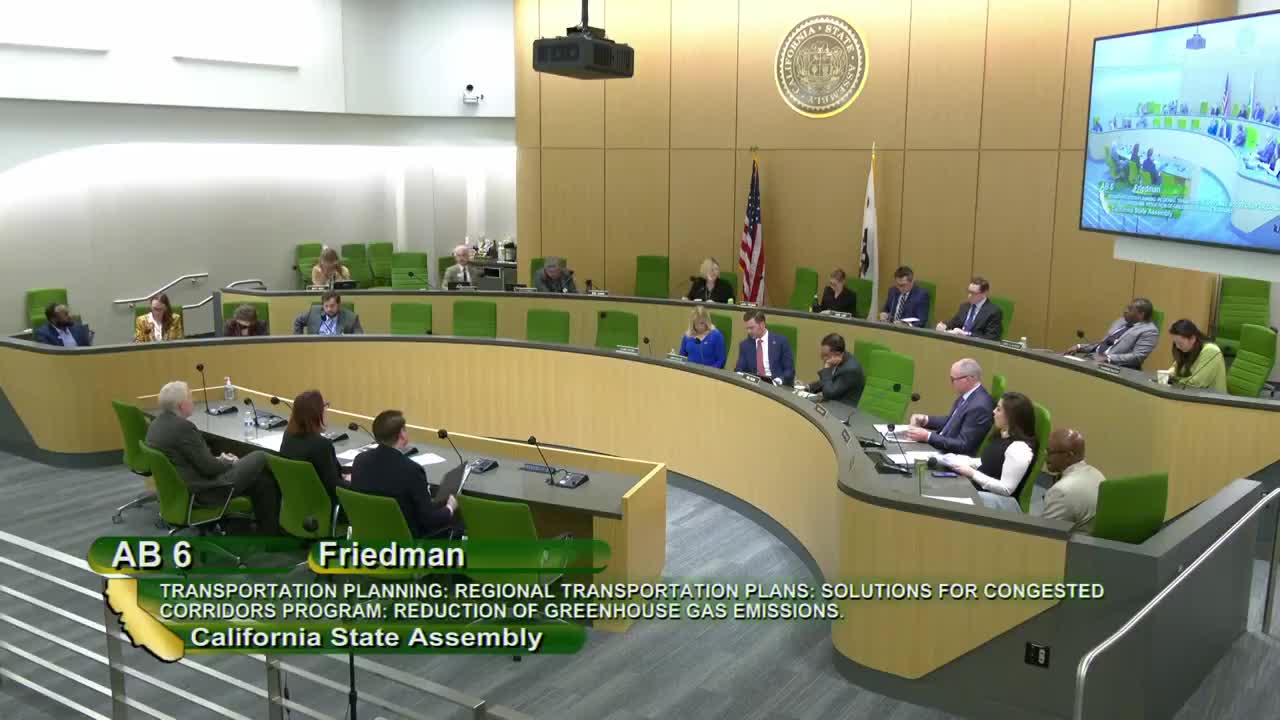
Bill Author

Bill Co-Author(s):