AB 71: Pupil instruction: bleeding control.
- Session Year: 2023-2024
- House: Assembly
- Latest Version Date: 2023-06-22
Current Status:
Failed
(2023-09-01: In committee: Held under submission.)
Introduced
In Committee
First Chamber
In Committee
Second Chamber
Enacted
What does this bill do?
The bill requires the State Department of Education to post a list of bleeding‑control resources and teaching materials on its website for school districts. It also directs the Instructional Quality Commission to consider adding information on how to stop severe bleeding to the Health Framework, using materials like the Stop the Bleed program, the American Red Cross, or similar expert sources.
The summary is provided by generative AI which can make mistakes. For original language, please view the details in the table below.
Existing law authorizes a school district or school to provide a comprehensive program in first aid or cardiopulmonary resuscitation training, or both, to pupils and employees in accordance with specified guidelines. Existing law requires the Instructional Quality Commission to recommend curriculum frameworks for adoption by the State Board of Education in accordance with regulations.
This bill would require, on or before July 1, 2024, the State Department of Education to make available to school districts on the departments internet website a list of resources and instructional materials on bleeding control, as specified. The bill would require, when the Health Framework for California Public Schools is next revised after January 1, 2024, the Instructional Quality Commission to consider including information on bleeding control in that framework, as specified.
Existing law authorizes a school district or school to provide a comprehensive program in first aid or cardiopulmonary resuscitation training, or both, to pupils and employees in accordance with specified guidelines. Existing law requires each pupil completing grade 12 to satisfy certain requirements as a condition of receiving a diploma of graduation from high school. These requirements include the completion of designated coursework in grades 9 to 12, inclusive. Existing law authorizes a governing board of a school district to adopt other coursework requirements.This bill would require, commencing with the 202526 school year, the governing board of a school district or the governing body of a charter school that requires a course in health education for graduation from high school to include in that course instruction in bleeding control, as provided. The bill would require the State Department of Education to provide guidance on how to implement these provisions, including, but not limited to, who may provide instruction. The bill would provide that a local agency, entity of state or local government, or other public or private organization that sponsors, authorizes, supports, finances, or supervises, and a public employee who provides or facilitates, the instruction of pupils in bleeding control pursuant to the bill shall not be liable for any civil damages alleged to result from the acts or omissions of an individual who received such instruction, except as provided.Existing law authorizes a school district or school to provide a comprehensive program in first aid or cardiopulmonary resuscitation training, or both, to pupils and employees in accordance with specified guidelines. Existing law requires each pupil completing grade 12 to satisfy certain requirements as a condition of receiving a diploma of graduation from high school. These requirements include the completion of designated coursework in grades 9 to 12, inclusive. Existing law authorizes a governing board of a school district to adopt other coursework requirements.
This bill would require, commencing with the 202526 school year, the governing board of a school district or the governing body of a charter school that requires a course in health education for graduation from high school to include in that course instruction in bleeding control, as provided. The bill would require the State Department of Education to provide guidance on how to implement these provisions, including, but not limited to, who may provide instruction. The bill would provide that a local agency, entity of state or local government, or other public or private organization that sponsors, authorizes, supports, finances, or supervises, and a public employee who provides or facilitates, the instruction of pupils in bleeding control pursuant to the bill shall not be liable for any civil damages alleged to result from the acts or omissions of an individual who received such instruction, except as provided.
When the Health Framework for California Public Schools (health framework) is next revised after January 1, 2024, the commission shall consider including information on bleeding control in that health framework, including which may include information developed by the Stop the Bleed national awareness campaign of the United States Department of Homeland Security or the American College of Surgeons Committee on Trauma, the American Red Cross, the Committee for Tactical Emergency Casualty Care, or any other partner of the United States Department of Defense.
SEC. 2.Section 51225.61 is added to the Education Code, immediately following Section 51225.6, to read:51225.61.On or before July 1, 2024, the department shall make available to school districts on the departments internet website a list of resources and instructional materials on bleeding control, including which may include information developed by the Stop the Bleed national awareness campaign of the United States Department of Homeland Security or the American College of Surgeons Committee on Trauma, the American Red Cross, the Committee for Tactical Emergency Casualty Care, or any other partner of the United States Department of Defense.
When the Health Framework for California Public Schools (health framework) is next revised after January 1, 2024, the commission shall consider including information on bleeding control in that health framework, including information developed by the Stop the Bleed national awareness campaign of the United States Department of Homeland Security or the American College of Surgeons Committee on Trauma, the American Red Cross, the Committee for Tactical Emergency Casualty Care, or any other partner of the United States Department of Defense.
SEC. 2.Section 51225.61 is added to the Education Code, immediately following Section 51225.6, to read:51225.61.On or before July 1, 2024, the department shall make available to school districts on the departments internet website a list of resources and instructional materials on bleeding control, including information developed by the Stop the Bleed national awareness campaign of the United States Department of Homeland Security or the American College of Surgeons Committee on Trauma, the American Red Cross, the Committee for Tactical Emergency Casualty Care, or any other partner of the United States Department of Defense.
SECTION 1.Section 51225.61 is added to the Education Code, immediately following Section 51225.6, to read:51225.61.(a)(1)If the governing board of a school district or the governing body of a charter school requires a course in health education for graduation from high school, the governing board of a school district or the governing body of a charter school shall include, commencing with the 202526 school year, instruction in the methods of bleeding control.(2)This instruction shall include information developed by the Stop the Bleed national awareness campaign of the United States Department of Homeland Security or the American College of Surgeons Committee on Trauma, the American Red Cross, the Committee for Tactical Emergency Casualty Care, or any other partner of the United States Department of Defense.(3)Schoolsites that are required to have trauma kits pursuant to Section 19310 of the Health and Safety Code shall use trauma kits to aid in the instruction of bleeding control methods.(b)Before the commencement of the 202425 school year, the department shall provide guidance on how to implement this section, including, but not limited to, who may provide instruction pursuant to this section.(c)The governing board of a school district or the governing body of a charter school may adopt policies to implement this section.(d)(1)The governing board of a school district or the governing body of a charter school providing instruction in bleeding control pursuant to this section is encouraged to use the most cost-effective means possible to implement that requirement.(2)This section shall not be construed to require the governing board of a school district or the governing body of a charter school to make any purchases.(e)(1)A local agency, entity of state or local government, or other public or private organization that sponsors, authorizes, supports, finances, or supervises the instruction of pupils in bleeding control pursuant to this section shall not be liable for any civil damages alleged to result from the acts or omissions of an individual who received such instruction.(2)A public employee who provides or facilitates the instruction of pupils in bleeding control pursuant to this section shall not be liable for any civil damages alleged to result from the acts or omissions of an individual who received such instruction.(3)This subdivision shall not be construed to grant immunity from civil damages to any person who provides or facilitates the instruction of pupils in bleeding control in a manner that constitutes gross negligence or willful or wanton misconduct.(a)(1)If the governing board of a school district or the governing body of a charter school requires a course in health education for graduation from high school, the governing board of a school district or the governing body of a charter school shall include, commencing with the 202526 school year, instruction in the methods of bleeding control.
(2)This instruction shall include information developed by the Stop the Bleed national awareness campaign of the United States Department of Homeland Security or the American College of Surgeons Committee on Trauma, the American Red Cross, the Committee for Tactical Emergency Casualty Care, or any other partner of the United States Department of Defense.
(3)Schoolsites that are required to have trauma kits pursuant to Section 19310 of the Health and Safety Code shall use trauma kits to aid in the instruction of bleeding control methods.
(b)Before the commencement of the 202425 school year, the department shall provide guidance on how to implement this section, including, but not limited to, who may provide instruction pursuant to this section.
(c)The governing board of a school district or the governing body of a charter school may adopt policies to implement this section.
(d)(1)The governing board of a school district or the governing body of a charter school providing instruction in bleeding control pursuant to this section is encouraged to use the most cost-effective means possible to implement that requirement.
(2)This section shall not be construed to require the governing board of a school district or the governing body of a charter school to make any purchases.
(e)(1)A local agency, entity of state or local government, or other public or private organization that sponsors, authorizes, supports, finances, or supervises the instruction of pupils in bleeding control pursuant to this section shall not be liable for any civil damages alleged to result from the acts or omissions of an individual who received such instruction.
(2)A public employee who provides or facilitates the instruction of pupils in bleeding control pursuant to this section shall not be liable for any civil damages alleged to result from the acts or omissions of an individual who received such instruction.
(3)This subdivision shall not be construed to grant immunity from civil damages to any person who provides or facilitates the instruction of pupils in bleeding control in a manner that constitutes gross negligence or willful or wanton misconduct.
|
Date
|
Status
|
|---|---|
| Sep 1, 2023 | In committee: Held under submission. |
| Jul 10, 2023 | In committee: Referred to APPR. suspense file. |
| Jun 22, 2023 | Read second time and amended. Re-referred to Com. on APPR. |
| Jun 21, 2023 | From committee: Amend, and do pass as amended and re-refer to Com. on APPR. (Ayes 7. Noes 0.) (June 21). |
| May 24, 2023 | Referred to Com. on ED. |
| May 11, 2023 | In Senate. Read first time. To Com. on RLS. for assignment. |
| May 11, 2023 | Read third time. Passed. Ordered to the Senate. (Ayes 66. Noes 0. Page 1522.) |
| May 4, 2023 | Read second time. Ordered to Consent Calendar. |
| May 3, 2023 | From committee: Do pass. To Consent Calendar. (Ayes 16. Noes 0.) (May 3). |
| Apr 18, 2023 | Re-referred to Com. on APPR. |
| Apr 17, 2023 | Read second time and amended. |
| Apr 13, 2023 | From committee: Amend, and do pass as amended and re-refer to Com. on APPR. (Ayes 7. Noes 0.) (April 12). |
| Jan 26, 2023 | Referred to Com. on ED. |
| Jan 4, 2023 | Read first time. |
| Dec 13, 2022 | From printer. May be heard in committee January 12. |
| Dec 12, 2022 | Introduced. To print. |
|
Date
|
Description
|
Location
|
Votes
|
|
|---|---|---|---|---|
| Jul 10, 2023 | Placed on suspense file | Senate Standing Committee on Appropriations |
Passed |
|
| Jun 21, 2023 | Do pass as amended, but first amend, and re-refer to the Committee on [Appropriations] | Senate Standing Committee on Education |
Passed |
|
| May 11, 2023 | AB 71 Rodriguez Consent Calendar Second Day Regular Session | Assembly Floor |
Passed |
|
| May 3, 2023 | Do pass. To Consent Calendar. | Assembly Standing Committee on Appropriations |
Passed |
|
| Apr 12, 2023 | Do pass as amended and be re-referred to the Committee on [Appropriations] | Assembly Standing Committee on Education |
Passed |
This list shows positions taken on this bill by organizations on the date displayed, which is linked to the original source.
Positions by individuals are not included.
|
Organization
|
Position
|
Date
|
|---|---|---|
| American College of Surgeons | * Support | Jun 21, 2023 |
| American College of Surgeons - California Chapters | * Support | Jun 21, 2023 |
| American College of Surgeons - Northern California Chapter | * Support | Jun 21, 2023 |
| American Red Cross | * Support | Jun 21, 2023 |
| California School Board Assocation | * Support | Jun 21, 2023 |
| California Teachers Asociation | * Support | Jun 21, 2023 |
| Emergency Nurses Association, California State Council | ** Support | |
| Loma Linda University Medical Center | * Support | Apr 12, 2023 |
| Los Angeles County Office Of Education | * Support | Jun 21, 2023 |
| UC Davis | * Support | Jun 21, 2023 |
SENATE COMMITTEE ON APPROPRIATIONS
Senator Anthony Portantino, Chair
2023 - 2024 Regular Session
AB 71 (Rodriguez) - Pupil instruction: bleeding control
Version: June 22, 2023 | Policy Vote: ED. 7 - 0 |
Urgency: No | Mandate: No |
Hearing Date: July 10, 2023 | Consultant: Lenin Del Castillo |
Bill Summary:
This bill requires the Instructional Quality Commission (IQC), when the Health Framework is next revised after January 1, 2024, to consider including bleeding control, and requires the California Department of Education (CDE) to post on its website information regarding bleeding control on or before July 1, 2024.
Fiscal Impact:
Local education agencies (LEAs) could incur additional local costs depending on how they choose to implement the new instruction. To the extent that they elect to purchase tourniquets and provide additional training to staff and students as needed to implement the instruction, statewide costs could be in the hundreds of thousands to low millions of dollars on a one-time basis. It is unclear whether the Commission on State Mandates would deem this activities to be reimbursable.
The CDE indicates that the bill’s requirement for the IQC to consider increasing content for the Health Framework would not result in additional costs for the state.
Background:
Existing law provides the IQC and the State Board of Education (SBE) with the authority to develop and adopt state curricula and instructional materials. The IQC develops curriculum frameworks in each subject by convening expert panels, developing drafts, and holding public hearings to solicit input. Changes are frequently made in response to public comments. The SBE then adopts the frameworks in a public meeting. The SBE also adopts, in a public process, instructional materials aligned to those frameworks for grades K-8. School district governing boards and charter schools adopt instructional materials aligned to these standards and frameworks. This process occurs on a regular schedule, giving schools a predictable timetable to plan and budget for changes to the curriculum. Local adoption of new curricula involves significant local costs and investment of resources in professional development.
These existing processes involve practitioners and experts who have an in-depth understanding of curriculum and instruction, including the full scope and sequence of the curriculum in each subject and at each grade level, constraints on instructional time and resources, and the relationship of curriculum to state assessments and other measures of student progress.
Proposed Law:
This bill requires, when the Health Framework is next revised after January 1, 2024, the IQC to consider including information on bleeding control, which may include information developed by the Stop the Bleed national awareness campaign of the United States Department of Homeland Security or the American College of Surgeons Committee on Trauma, the American Red Cross, the Committee for Tactical Emergency Casualty Care, or any other partner of the United States Department of Defense.
This bill requires the CDE to make available on its website, on or before July 1, 2024, a list of resources and instructional materials on bleeding control, which may include information developed by the Stop the Bleed national awareness campaign of the United States Department of Homeland Security or the American College of Surgeons Committee on Trauma, the American Red Cross, the Committee for Tactical Emergency Casualty Care, or any other partner of the United States Department of Defense.
Related Legislation:
SB 868 (Wilk, 2023) upon an appropriation commencing with the 2024–25 school year, this bill would require each LEA, COE, and charter school to equip each classroom at each of its schoolsites with a trauma kit. This bill is pending in the Assembly Judiciary Committee.
AB 2260 (Rodriguez, Chapter 586, Statutes 2022) requires certain buildings constructed on or after January 1, 2023, with an occupancy of 200 or more, to have at least six trauma kits on the premises of the building or facility.
AB 1747 (Rodriguez, Chapter 806, Statutes of 2018) expanded the required elements of school safety plans, including procedures to respond to active shooter situations, required schools to conduct annual active shooter drills, and required the CDE to provide additional guidance and oversight of safety plans.
Staff Comments:
This bill is intended to provide information developed by the Stop the Bleed national awareness campaign of the United States Department of Homeland Security or the American College of Surgeons Committee on Trauma, the American Red Cross, the Committee for Tactical Emergency Casualty Care, or any other partner of the United States Department of Defense. The costs for school districts will depend on how they choose to implement the new instruction and whether any additional training for staff and students will be provided. Further, it may be difficult to implement a meaningful course that includes bleeding control without purchasing new instructional materials and equipment, including tourniquets. It is unclear whether the Commission on State Mandates would deem these activities to be reimbursable.
-- END --
SENATE COMMITTEE ON EDUCATION
Senator Josh Newman, Chair
2023 - 2024 Regular
Bill No: AB 71 Hearing Date: June 21, 2023
Author: | |||
Version: | April 17, 2023 | ||
Urgency: | No | Fiscal: | Yes |
Consultant: | Kordell Hampton | ||
Subject: Pupil instruction: bleeding control.
SUMMARY
This bill requires the Instructional Quality Commission (IQC), when the Health Framework is next revised after January 1, 2024, to consider including bleeding control, and requires the California Department of Education (CDE) to post on its website information regarding bleeding control on or before July 1, 2024.
BACKGROUND
Existing law:
Education Code (EC)
- Requires each local educational agency (LEA) and county office of education (COE) to be responsible for the overall development of all comprehensive school safety plans for its schools operating in kindergarten or any grades 1 through 12. (EC § 32281(a))
- Specifies that the schoolsite council or a school safety planning committee is responsible for developing the comprehensive school safety plan. (EC § 32281(b))
- Specifies that the comprehensive school safety plan must include an assessment of the current status of school crime committed on school campuses and at school-related functions and identification of appropriate strategies and programs to provide or maintain a high level of school safety and address the school’s procedures for complying with existing laws related to school safety, including child abuse reporting procedures; disaster procedures; an earthquake emergency procedure system; policies regarding pupils who commit specified acts that would lead to suspension or expulsion; procedures to notify teachers of dangerous pupils; a discrimination and harassment policy; the provisions of any schoolwide dress code; procedures for safe ingress and egress of pupils, parents, and school employees to and from school; a safe and orderly environment conducive to learning; and rules and procedures on school discipline. (EC § 32282(a))
- Requires the comprehensive school safety plan to be evaluated at least once a year. (EC § 32282(d))
- Requires the comprehensive school safety plan to include, but not be limited to, procedures for conducting tactical responses to criminal incidents, including procedures related to individuals with guns on school campuses and at school-related functions. (EC § 32282(a)(2)(J))
Health and Safety Code (HSC)
- Defines “trauma kit” as a first aid response kit that contains at least all of the following:
- One tourniquet endorsed by the Committee on Tactical Combat Casualty Care;
- One bleeding control bandage;
- One pair of non-latex protective gloves and a marker;
- One pair of scissors; and
- Instructional documents developed by the Stop the Bleed national awareness campaign of the United States Department of Homeland Security or the American College of Surgeons Committee on Trauma, the American Red Cross, the Committee for Tactical Emergency Casualty Care, or any other partner of the United States Department of Defense. (HSC § 19305)
ANALYSIS
This bill requires the IQC, when the Health Framework is next revised after January 1, 2024, to consider including bleeding control, and requires the CDE to post on its website information regarding bleeding control on or before July 1, 2024. Specifically, this bill:
- Requires, when the Health Framework is next revised after January 1, 2024, the IQC to consider including information on bleeding control, including information developed by the Stop the Bleed national awareness campaign of the United States Department of Homeland Security or the American College of Surgeons Committee on Trauma, the American Red Cross, the Committee for Tactical Emergency Casualty Care, or any other partner of the United States Department of Defense.
- Require the CDE to make available on its website, on or before July 1, 2024, a list of resources and instructional materials on bleeding control, including information developed by the Stop the Bleed national awareness campaign of the United States Department of Homeland Security or the American College of Surgeons Committee on Trauma, the American Red Cross, the Committee for Tactical Emergency Casualty Care, or any other partner of the United States Department of Defense.
STAFF COMMENTS
- Need for the bill. According to the author, “In 2016, I authored AB 1719, which required CPR training as a standard part of high school health curriculum. Now, I find it critical that we train our students to serve as immediate responders should they ever be faced with life-threatening blood loss. Our students are our future leaders, and providing them with these life-saving skills now will empower them through adulthood. As a career first responder, I know that empowering bystanders to help stop a hemorrhage while waiting for professional help to arrive can effect a victim’s survival rate. AB 71 would train students with this life-saving skill so that they are able to step up as an immediate responder in the classroom, or in any other environment they may find themselves in.”
- Stop The Bleed Campaign. According to its website, Stop The Beed is the result of a collaborative effort led by the American College of Surgeons Committee on Trauma (ACS COT) to bring bleeding control to the public. After the broad adoption of tourniquets and tourniquet training by the military during the Iraq and Afghanistan conflicts, their use was reviewed a clear survival benefit was identified. A follow-up study 2014 led by the ACS COT emergency medical services subcommittee showed similar benefits related to tourniquet use among civilians. It introduced direct pressure and wound packing to the list of simple but effective skills that could be used to control active bleeding in an emergency. It also became clear that time was a critical factor, and outcomes were directly related to how quickly bleeding control was achieved. These findings helped establish the bystander as necessary in saving lives due to severe bleeding. The curriculum was developed into what is known as the Bleeding Control Basic course (B-CON), released to the public in 2014, which is the foundation of today’s Stop The Bleed course.
- How Curriculum, Standards, Frameworks, and Model Curricula Are Created and Adopted. The Legislature has vested the IQC and State Board of Education (SBE) with the authority to develop and adopt state curricula and instructional materials. The IQC develops curriculum frameworks in each subject by convening expert panels, developing drafts, and holding public hearings to solicit input. Changes are frequently made in response to public comments. The SBE then adopts the frameworks in a public meeting. The SBE also adopts, in a public process, instructional materials aligned to those frameworks for grades K-8. School district governing boards and charter schools adopt instructional materials aligned to these standards and frameworks. This process occurs on a regular schedule, giving schools a predictable timetable to plan and budget for changes to the curriculum. Local adoption of new curricula involves significant local costs and investment of resources in professional development.
These existing processes involve practitioners and experts who have an in-depth understanding of curriculum and instruction, including the full scope and sequence of the curriculum in each subject and at each grade level, constraints on instructional time and resources, and the relationship of curriculum to state assessments and other measures of student progress.
Model curricula were first developed in the 1990s to provide educators the means to teach about a topic in an in-depth manner voluntarily. At that time, few Internet resources were available for this purpose. Until 2016, only two model curricula were required to be developed.
Recent legislation has required the development of numerous model curricula. In 2021, the state changed the process for developing model curricula through the budget. COEs are now responsible for producing model curricula through open-source, accessible resources available to California schools. The IQC and SBE no longer develop or approves model curricula.
The committee on March 15, 2023, adopted the joint Assembly and Senate curriculum policy of 2023-24 that discourages the introduction of policy bills that propose to require, or require consideration of, modifications to state curriculum frameworks to require that specified content be taught or to require the development of new model curricula. This bill does not violate the joint curriculum policy as it requires the IQC to consider including information related to bleeding control in the next revision of the Health Framework.
- Bleeding Control is Mentioned in the Health Curriculum. Bleeding control is included in both the Health Education Content Standards, adopted in 2008, and the Health Education Framework, adopted in 2019:
- The Health Education content standard 1.10.S: “Describe procedures for emergency care and lifesaving, including CPR, first aid, and control of bleeding.”
- The Health Education Framework includes Essential Concepts: 9–12.1.10.S “Describe procedures for emergency care and lifesaving, including CPR, first aid, and control of bleeding.”
This bill attempts to provide additional information developed by the Stop the Bleed national awareness campaign of the United States Department of Homeland Security or the American College of Surgeons Committee on Trauma, the American Red Cross, the Committee for Tactical Emergency Casualty Care, or any other partner of the United States Department of Defense.
- Committee Amendment. The committee recommends, and the author has agreed to, the following amendment.
- Clarify that IQC may include information from the Stop the Bleed national awareness campaign of the United States Department of Homeland Security or the American College of Surgeons Committee on Trauma, the American Red Cross, the Committee for Tactical Emergency Casualty Care, or any other partner of the United States Department of Defense in the next revision of the Health Framework related to bleeding control.
- Clarify the CDE may include information from the Stop the Bleed national awareness campaign of the United States Department of Homeland Security or the American College of Surgeons Committee on Trauma, the American Red Cross, the Committee for Tactical Emergency Casualty Care, or any other partner of the United States Department of Defense on its website related to bleeding control on or before July 1, 2024.
- Related Legislation
SB 868 (Wilk, 2023) upon an appropriation commencing with the 2024–25 school year, this bill would require each LEA, COE, and charter school to equip each classroom at each of its schoolsites with a trauma kit.
AB 1747 (Rodriguez) Chapter 806, Statutes of 2018, expanded the required elements of school safety plans, including procedures to respond to active shooter situations, required schools to conduct annual active shooter drills, and required the CDE to provide additional guidance and oversight of safety plans.
AB 2260 (Rodriguez) Chapter 586, Statutes 2022, requires certain buildings constructed on or after January 1, 2023, with an occupancy of 200 or more, to have at least six trauma kits on the premises of the building or facility.
SB 63 (Price, 2011) would have required each school with any of grades 9-12 to have an automatic external defibrillator in a centralized location on campus and at athletic events, prepare an emergency preparedness plan, and require anyone expected to use a defibrillator to complete specified training. This bill was held in Senate Appropriations Committee.
SUPPORT
American College of Surgeons (Co-Sponsor)
American Red Cross California Chapter (Co-Sponsor)
American College of Surgeons Northern California
American College of Surgeons, Southern California Chapter
California Teachers Association
Emergency Nurses Association, California State Council
Los Angeles County Office of Education
San Diego - Imperial Chapter of the American College of Surgeons
OPPOSITION
None received
-- END --
Date of Hearing: May 3, 2023
ASSEMBLY COMMITTEE ON APPROPRIATIONS
Chris Holden, Chair
ABPCA Bill Id:AB 71
Author:(Rodriguez) – As Amended Ver:April 17, 2023
Policy Committee: | Education | Vote: | 7 - 0 |
|
| ||
|
|
Urgency: No State Mandated Local Program: No Reimbursable: No
SUMMARY:
This bill requires, when the Health Framework for California Public Schools is next revised after January 1, 2024, the Instructional Quality Commission (IQC) to consider including information on bleeding control in the framework. Specifically, the bill requires the IQC to consider including information developed by the Stop the Bleed national awareness campaign of the United States Department of Homeland Security or the American College of Surgeons Committee on Trauma, the American Red Cross, the Committee for Tactical Emergency Casualty Care, or any other partner of the United States Department of Defense.
In addition, the bill requires the California Department of Education (CDE) to make available on its website to local educational agencies (LEAs) a list of resources and instructional materials on bleeding control.
FISCAL EFFECT:
Minor and absorbable General Fund costs to CDE to advise the IQC on updating the health framework and to list certain resources and instructional materials on its website.
COMMENTS:
- Background. The IQC is a state advisory body responsible for advising the State Board of Education on matters related to curriculum and instruction. Among other activities, the IQC develops California’s curriculum frameworks for schools. Curriculum frameworks provide guidance to schools for implementing the standards adopted by the State Board of Education. When the IQC last revised the curriculum framework for health education (known as the Health Framework for California Public Schools) in 2019, it included bleeding control.
This bill requires the IQC to consider including information about bleeding control in its next revision of the health education curriculum framework and to include information related to bleeding control developed specifically by the Stop the Bleed national awareness campaign of the United States Department of Homeland Security or the American College of Surgeons Committee on Trauma, the American Red Cross, the Committee for Tactical Emergency Casualty Care, or any other partner of the United States Department of Defense.
- Prior Legislation. AB 1719 (Maienschein), Chapter 556, Statutes of 2016, requires a course in health education include, commencing with the 2018-19 school year, instruction in performing compression-only CPR if the governing board of a school district or the governing body of a charter school requires such a course for graduation from high school.
Analysis Prepared by: Natasha Collins / APPR. / (916) 319-2081
Date of Hearing: April 12, 2023
ASSEMBLY COMMITTEE ON EDUCATION
Al Muratsuchi, Chair
ABPCA Bill Id:AB 71 (
Author:Rodriguez) – As Introduced Ver:December 12, 2022
SUBJECT: Pupil instruction: bleeding control
SUMMARY: Requires a school district or charter school which requires a course in health education for graduation from high school to include instruction in the methods of bleeding control in that course, commencing in the 2025-26 school year, and requires the California Department of Education (CDE) to provide guidance on how to implement this requirement, including who may provide instruction. Specifically, this bill:
- Requires, if the governing board of a school district or the governing body of a charter school requires a course in health education for graduation from high school, the governing board or body to include, commencing with the 2025–26 school year, instruction in the methods of bleeding control.
- Requires this instruction to include information developed by the Stop the Bleed national awareness campaign of the U.S. Department of Homeland Security or the American College of Surgeons Committee on Trauma, the American Red Cross, the Committee for Tactical Emergency Casualty Care, or any other partner of the U.S. Department of Defense.
- Requires schoolsites that are required to have trauma kits pursuant to Section 19310 of the Health and Safety Code to use trauma kits to aid in the instruction of bleeding control methods.
- Requires the CDE, before the beginning of the 2024–25 school year, to provide guidance on how to implement this requirement, including who may provide instruction.
- Authorizes the governing board of a school district or the governing body of a charter school to adopt policies to implement this requirement.
- Encourages the governing board of a school district or the governing body of a charter school to use the most cost-effective means possible to implement this requirement.
- States that this section may not be construed to require the governing board of a school district or the governing body of a charter school to make any purchases.
- Makes any local agency, entity of state or local government, or other public or private organization that sponsors, authorizes, supports, finances, or supervises the instruction of pupils in bleeding control not be liable for any civil damages alleged to result from the acts or omissions of an individual who received such instruction.
- States that a public employee who provides or facilitates the instruction of pupils in bleeding control pursuant to this requirement shall not be liable for any civil damages alleged to result from the acts or omissions of an individual who received such instruction.
- States that this subdivision may not be construed to grant immunity from civil damages to any person who provides or facilitates the instruction of pupils in bleeding control in a manner that constitutes gross negligence or willful or wanton misconduct.
EXISTING LAW:
- Requires each school district, county office of education (COE), state special school, and charter school that offers one or more courses in health education to pupils in middle school or high school include in those courses instruction in mental health, as specified. (Education Code (EC) 51925)
- Requires that, if the governing board of a school district requires a course in health education for graduation from high school, the governing board of the school district include instruction in sexual harassment and violence, including information on the affirmative consent standard, as defined. (EC 51225.36)
- Requires that, if the governing board of a school district or the governing body of a charter school requires a course in health education for graduation from high school, it include, commencing with the 2018–19 school year, instruction in performing compression-only cardiopulmonary resuscitation (CPR), as specified. (EC 51225.6)
FISCAL EFFECT: Unknown
COMMENTS:
Need for the bill. “In 2016, I authored AB 1719, which required CPR training as a standard part of high school health curriculum. Now, I find it critical that we train our students to serve as immediate responders should they ever be faced with life-threatening blood loss. Our students are our future leaders, and providing them with these life-saving skills now will empower them through adulthood. As a career first responder, I know that empowering bystanders to help stop a hemorrhage while waiting for professional help to arrive can affect a victim’s survival rate. AB 71 would train students with this life-saving skill so that they are able to step up as an immediate responder in the classroom, or in any other environment they may find themselves in.”
Bleeding control in Health Education curriculum. Bleeding control is included in both the Health Education Content Standards, adopted in 2008, and the Health Education Framework, adopted in 2019:
- The Health Education content standard 1.10.S: “Describe procedures for emergency care and lifesaving, including CPR, first aid, and control of bleeding.”
- The Health Education Framework includes Essential Concepts: 9–12.1.10.S “Describe procedures for emergency care and lifesaving, including CPR, first aid, and control of bleeding.”
Bleeding control training for students. According to the author, in response to the mass shooting at Sandy Hook Elementary School in 2012, a group of doctors convened a panel of national experts from law enforcement, fire departments, emergency medical services, and the military to create an improved response system focused on the control of life-threatening blood loss. The group of experts concluded, in the publications Hartford Consensus II and III, that immediate responders (bystanders) should be trained to stop a hemorrhage, because emergency medical responders are not typically allowed to assist victims until the scene is secure. This bill is intended to ensure that students are trained and empowered with these skills, better preparing them for an emergency in any setting.
Stop the Bleed is a grassroots national awareness campaign of the U.S Department of Homeland Security which encourages bystanders to become trained to help in a bleeding emergency before professional help arrives. There are several training programs in bleeding control which are appropriate for high school students, including the Stop the Bleed training developed by the American College of Surgeons, which is offered in-person and online and takes no more than 90 minutes to complete, and the American Red Cross’ First Aid for Severe Bleeding course, which is offered in-person and online and lasts 30 minutes.
An interventional pilot study of 286 students from a community with high levels of violence who had taken a Stop the Bleed training found increased comfort level, willingness, and preparedness to act to control bleeding. (Okereke, 2022) Another, small study of the effects of the Stop the Bleed training on high school students found that comfort with bleeding control, willingness to provide bleeding injury first aid, and knowledge of bleeding control principles improved after the training. After the training, no participants were concerned about it being harmful, and participants with a personal or family history of trauma did not have increased concern about potential harm. (Deming, 2021)
State and local graduation requirements. This bill would require, if the governing board of a school district or the governing body of a charter school requires a course in health education for graduation from high school, the governing board or body to include, commencing with the 2025–26 school year, instruction in the methods of bleeding control.
Current law establishes state high school graduation requirements, including the equivalent of three year-long courses in social studies. These courses must include U.S. history and geography; world history, culture, and geography; a one-semester course in American government and civics, and a one-semester course in economics. Beginning in 2029-30, pupils must also complete a one-semester course in ethnic studies.
Current law also permits school districts to establish local graduation requirements which exceed those of the state. Some school districts, like the Los Angeles Unified School District, require a health course for graduation. The state does not track local graduation requirements so no statewide data on locally required health courses is available.
Recommended amendments. Staff recommends that this bill be amended to remove the requirement that this content be included in health courses required for graduation, and instead 1) require the CDE to post information and instructional resources on bleeding control on its website for use by LEAs, and 2) require that the next time the Health Education curriculum framework is revised, the Instructional Quality Commission consider including additional information about bleeding control. For both requirements, the amendments would reference information developed by the Stop the Bleed national awareness campaign of the U.S. Department of Homeland Security or the American College of Surgeons Committee on Trauma, the American Red Cross, the Committee for Tactical Emergency Casualty Care, or any other partner of the U. S. Department of Defense.
Arguments in support. The Los Angeles County Office of Education writes, “AB 71 would ensure students in high school health education classes will receive education on how individuals should respond if ever faced with life-threatening blood loss. Having the knowledge and skills to respond to blood loss will empower students with life-saving skills that they will carry on throughout their adulthood. The bill would also provide guidance from the State Department of Education on how to implement this training, including who may provide the instruction. If someone is teaching bleeding control as part of this course, they will not be liable for any damages from the instruction, except under certain circumstances.”
Related legislation. AB 1473 (Maienschein) of the 2023-24 Session would require school districts and charter schools to include instruction in compression-only CPR and the use of an automated external defibrillator (AED) in health and physical education courses required for graduation from high school.
SB 224 (Portantino), Chapter 675, Statutes of 2022, requires schools that offer one or more courses in health education to pupils in middle school or high school to include in those courses instruction in mental health, as specified.
SB 1135 (Jones) of the 2021-22 Session would have required the CDE to establish the California Youth Cardiac Screening Pilot Program, to provide free cardiac screening for pupils in selected schools in grades 5-12 for the 2022-23 to 2024-25 school years, contingent upon an appropriation for this purpose. This bill was held in the Assembly Appropriations Committee.
AB 1719 (Maienschein), Chapter 556, Statutes of 2016, requires, if the governing board of a school district or the governing body of a charter school requires a course in health education for graduation from high school, it include, commencing with the 2018–19 school year, instruction in performing compression-only CPR.
AB 1639 (Maienschein), Chapter 792, Statutes of 2016 establishes the Eric Paredes Sudden Cardiac Arrest Prevention Act; requires the CDE to make available specified guidelines and materials on sudden cardiac arrest (SCA); requires students and parents to sign informational materials before athletic participation; requires training of coaches; and sets requirements for action in the event a pupil experiences specified symptoms.
REGISTERED SUPPORT / OPPOSITION:
Support
Emergency Nurses Association, California State Council
Los Angeles County Office of Education
Opposition
None on file
Analysis Prepared by: Tanya Lieberman / ED. / (916) 319-2087
Discussed in Hearing
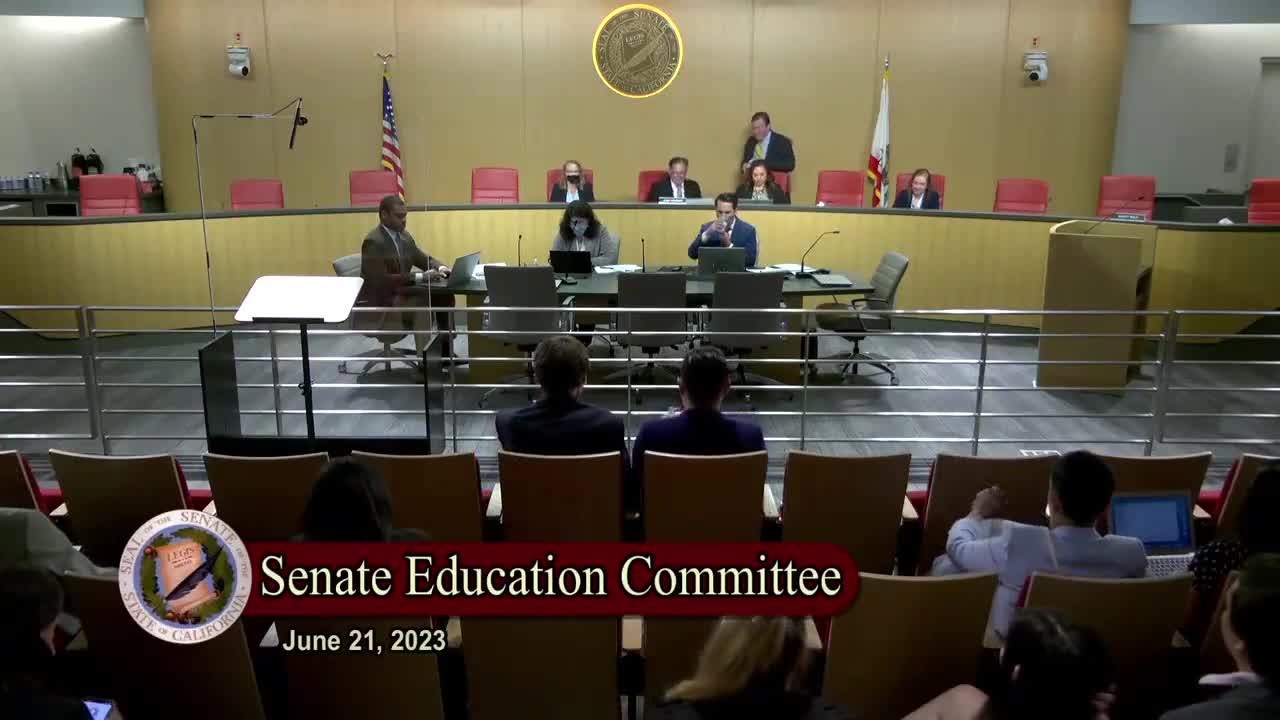 11MIN
Senate Standing Committee on Education
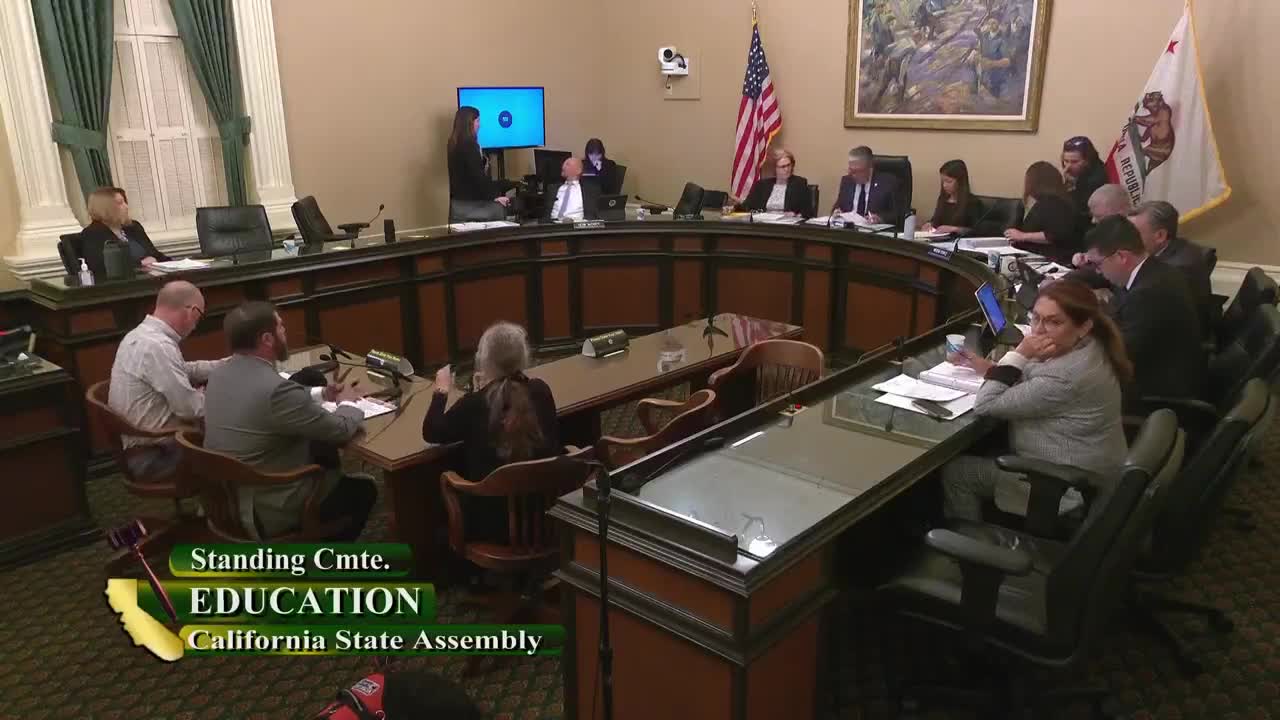 10MIN
Assembly Standing Committee on Education
Bill Author

Bill Co-Author(s):