AB 719: Medi-Cal: nonmedical and nonemergency medical transportation.
- Session Year: 2023-2024
- House: Assembly
- Latest Version Date: 2023-09-14
Current Status:
Failed
(2024-01-25: Consideration of Governor's veto stricken from file.)
Introduced
In Committee
First Chamber
In Committee
Second Chamber
Enacted
Existing law establishes the Medi-Cal program, which is administered by the State Department of Health Care Services and under which qualified low-income individuals receive health care services. The Medi-Cal program is, in part, governed and funded by federal Medicaid program provisions. Existing law establishes a schedule of benefits under the Medi-Cal program, including medical transportation and nonmedical transportation for a beneficiary to obtain covered Medi-Cal services. Existing law requires nonmedical transportation to be provided by the beneficiarys managed care plan or by the department for a Medi-Cal fee-for-service beneficiary.
This bill would require the department to require Medi-Cal managed care plans that are contracted to provide nonmedical transportation or nonemergency medical transportation to contract with public paratransit service operators who are enrolled Medi-Cal providers for the purpose of establishing reimbursement rates for nonmedical and nonemergency medical transportation trips provided by a public paratransit service operator. The bill would require the rates reimbursed by the managed care plan to the public paratransit service operator to be based on the departments fee-for-service rates for nonmedical and nonemergency medical transportation service, as specified. The bill would condition implementation of these provisions on receipt of any necessary federal approvals and the availability of federal financial participation.
Existing law establishes the Medi-Cal program, which is administered by the State Department of Health Care Services and under which qualified low-income individuals receive health care services. The Medi-Cal program is, in part, governed and funded by federal Medicaid program provisions. Existing law establishes a schedule of benefits under the Medi-Cal program, including medical transportation and nonmedical transportation for a beneficiary to obtain covered Medi-Cal services. Existing law requires nonmedical transportation to be provided by the beneficiarys managed care plan or by the department for a Medi-Cal fee-for-service beneficiary.
This bill would require the department to require Medi-Cal managed care plans that are contracted to provide nonmedical transportation or nonemergency medical transportation to contract with public paratransit service operators who are enrolled Medi-Cal providers for the purpose of establishing reimbursement rates for nonmedical and nonemergency medical transportation trips provided by a public paratransit service operator. The bill would require the rates reimbursed by the managed care plan to the public paratransit service operator to be based on the departments fee-for-service rates for nonmedical and nonemergency medical transportation service, as specified. The bill would condition implementation of these provisions on receipt of any necessary federal approvals and the availability of federal financial participation.
Existing law establishes the Medi-Cal program, which is administered by the State Department of Health Care Services and under which qualified low-income individuals receive health care services. The Medi-Cal program is, in part, governed and funded by federal Medicaid program provisions. Existing law establishes a schedule of benefits under the Medi-Cal program, including medical transportation and nonmedical transportation for a beneficiary to obtain covered Medi-Cal services. Existing law requires nonmedical transportation to be provided by the beneficiarys managed care plan or by the department for a Medi-Cal fee-for-service beneficiary.
This bill would require the department to require Medi-Cal managed care plans to contract with public transit paratransit service operators for the purpose of establishing reimbursement rates for nonmedical and nonemergency medical transportation trips provided by a public transit paratransit service operator. The bill would require the rates reimbursed by the managed care plan to the public transit paratransit service operator to be based on the departments fee-for-service rates for nonmedical and nonemergency medical transportation service. service, as specified.
Existing law establishes the Medi-Cal program, which is administered by the State Department of Health Care Services and under which qualified low-income individuals receive health care services. The Medi-Cal program is, in part, governed and funded by federal Medicaid program provisions. Existing law establishes a schedule of benefits under the Medi-Cal program, including nonmedical transportation for a beneficiary to obtain covered Medi-Cal services. Existing law requires nonmedical transportation to be provided by the beneficiarys managed care plan or by the department for a Medi-Cal fee-for-service beneficiary.
This bill would require the department to require managed care plans to contract with public transit operators for the purpose of establishing reimbursement rates for nonmedical and nonemergency medical transportation trips provided by a public transit operator. The bill would require the rates reimbursed by the managed care plan to the public transit operator to be based on the departments fee-for-service rates for nonmedical and nonemergency medical transportation service.
(a)The department shall require Medi-Cal managed care plans that are contracted to provide nonemergency medical transportation or nonmedical transportation pursuant to Section 14132 to contract with public paratransit service operators who are enrolled Medi-Cal providers for the purpose of establishing reimbursement rates for nonemergency medical transportation and nonmedical transportation trips provided by a public paratransit service operator.
(b)Notwithstanding any other law, rates reimbursed by the managed care plan to the public paratransit service operator shall be based on the departments fee-for-service rates for nonemergency medical transportation or nonmedical transportation service that does not include fixed-route transportation service. The Legislature finds and declares that the reimbursement of the passengers fare does not equal the fee-for-service rate.
(c)This section shall be implemented only to the extent that any necessary federal approvals are obtained and federal financial participation is available and not otherwise jeopardized.
(a)The department shall require Medi-Cal managed care plans that are contracted to provide nonemergency medical transportation or nonmedical transportation pursuant to Section 14132 to contract with public paratransit service operators who are enrolled Medi-Cal providers for the purpose of establishing reimbursement rates for nonemergency medical transportation and nonmedical transportation trips provided by a public paratransit service operator.
(b)Notwithstanding any other law, rates reimbursed by the managed care plan to the public paratransit service operator shall be based on the departments fee-for-service rates for nonemergency medical transportation or nonmedical transportation service that does not include fixed-route transportation service. The Legislature finds and declares that the reimbursement of the passengers fare does not equal the fee-for-service rate.
(c)This section shall be implemented only to the extent that any necessary federal approvals are obtained and federal financial participation is available and not otherwise jeopardized.
All matter omitted in this version of the bill appears in the bill as amended in the Senate, June 26, 2023. (JR11)The following is the schedule of benefits under this chapter:
(a)Outpatient services are covered as follows:
Physician, hospital or clinic outpatient, surgical center, respiratory care, optometric, chiropractic, psychology, podiatric, occupational therapy, physical therapy, speech therapy, audiology, acupuncture to the extent federal matching funds are provided for acupuncture, and services of persons rendering treatment by prayer or healing by spiritual means in the practice of any church or religious denomination insofar as these can be encompassed by federal participation under an approved plan, subject to utilization controls.
(b)(1)Inpatient hospital services, including, but not limited to, physician and podiatric services, physical therapy, and occupational therapy, are covered subject to utilization controls.
(2)For a Medi-Cal fee-for-service beneficiary, emergency services and care that are necessary for the treatment of an emergency medical condition and medical care directly related to the emergency medical condition. This paragraph does not change the obligation of Medi-Cal managed care plans to provide emergency services and care. For the purposes of this paragraph, emergency services and care and emergency medical condition have the same meanings as those terms are defined in Section 1317.1 of the Health and Safety Code.
(c)Nursing facility services, subacute care services, and services provided by any category of intermediate care facility for the developmentally disabled, including podiatry, physician, nurse practitioner services, and prescribed drugs, as described in subdivision (d), are covered subject to utilization controls. Respiratory care, physical therapy, occupational therapy, speech therapy, and audiology services for patients in nursing facilities and any category of intermediate care facility for persons with developmental disabilities are covered subject to utilization controls.
(d)(1)Purchase of prescribed drugs is covered subject to the Medi-Cal List of Contract Drugs and utilization controls.
(2)Purchase of drugs used to treat erectile dysfunction or any off-label uses of those drugs are covered only to the extent that federal financial participation is available.
(3)(A)To the extent required by federal law, the purchase of outpatient prescribed drugs, for which the prescription is executed by a prescriber in written, nonelectronic form on or after April 1, 2008, is covered only when executed on a tamper resistant prescription form. The implementation of this paragraph shall conform to the guidance issued by the federal Centers for Medicare and Medicaid Services, but shall not conflict with state statutes on the characteristics of tamper resistant prescriptions for controlled substances, including Section 11162.1 of the Health and Safety Code. The department shall provide providers and beneficiaries with as much flexibility in implementing these rules as allowed by the federal government. The department shall notify and consult with appropriate stakeholders in implementing, interpreting, or making specific this paragraph.
(B)Notwithstanding Chapter 3.5 (commencing with Section 11340) of Part 1 of Division 3 of Title 2 of the Government Code, the department may take the actions specified in subparagraph (A) by means of a provider bulletin or notice, policy letter, or other similar instructions without taking regulatory action.
(4)(A)(i)For the purposes of this paragraph, nonlegend has the same meaning as defined in subdivision (a) of Section 14105.45.
(ii)Nonlegend acetaminophen-containing products, including childrens acetaminophen-containing products, selected by the department are covered benefits.
(iii)Nonlegend cough and cold products selected by the department are covered benefits.
(B)Notwithstanding Chapter 3.5 (commencing with Section 11340) of Part 1 of Division 3 of Title 2 of the Government Code, the department may take the actions specified in subparagraph (A) by means of a provider bulletin or notice, policy letter, or other similar instruction without taking regulatory action.
(e)Outpatient dialysis services and home hemodialysis services, including physician services, medical supplies, drugs, and equipment required for dialysis, are covered, subject to utilization controls.
(f)Anesthesiologist services when provided as part of an outpatient medical procedure, nurse anesthetist services when rendered in an inpatient or outpatient setting under conditions set forth by the director, outpatient laboratory services, and x-ray services are covered, subject to utilization controls. This subdivision does not require prior authorization for anesthesiologist services provided as part of an outpatient medical procedure or for portable x-ray services in a nursing facility or any category of intermediate care facility for the developmentally disabled.
(g)Blood and blood derivatives are covered.
(h)(1)Emergency and essential diagnostic and restorative dental services, except for orthodontic, fixed bridgework, and partial dentures that are not necessary for balance of a complete artificial denture, are covered, subject to utilization controls. The utilization controls shall allow emergency and essential diagnostic and restorative dental services and prostheses that are necessary to prevent a significant disability or to replace previously furnished prostheses that are lost or destroyed due to circumstances beyond the beneficiarys control. Notwithstanding the foregoing, the director may by regulation provide for certain fixed artificial dentures necessary for obtaining employment or for medical conditions that preclude the use of removable dental prostheses, and for orthodontic services in cleft palate deformities administered by the departments California Childrens Services program.
(2)For persons 21 years of age or older, the services specified in paragraph (1) shall be provided subject to the following conditions:
(A)Periodontal treatment is not a benefit.
(B)Endodontic therapy is not a benefit except for vital pulpotomy.
(C)Laboratory processed crowns are not a benefit.
(D)Removable prosthetics shall be a benefit only for patients as a requirement for employment.
(E)The director may, by regulation, provide for the provision of fixed artificial dentures that are necessary for medical conditions that preclude the use of removable dental prostheses.
(F)Notwithstanding the conditions specified in subparagraphs (A) to (E), inclusive, the department may approve services for persons with special medical disorders subject to utilization review.
(3)Paragraph (2) shall become inoperative on July 1, 1995.
(i)(1)Medical transportation is covered, subject to utilization controls.
(2)(A)The department shall require Medi-Cal managed care plans to contract with public paratransit service operators for the purpose of establishing reimbursement rates for nonemergency medical transportation trips provided by a public paratransit service operator.
(B)Notwithstanding any other law, rates reimbursed by the managed care plan to the public paratransit service operator shall be based on the departments fee-for-service rates for nonemergency medical transportation service that does not include fixed-route transportation service. The Legislature finds and declares that the reimbursement of the passengers fare does not equal the fee-for-service rate.
(j)Home health care services are covered, subject to utilization controls.
(k)(1)Prosthetic and orthotic devices and eyeglasses are covered, subject to utilization controls. Utilization controls shall allow replacement of prosthetic and orthotic devices and eyeglasses necessary because of loss or destruction due to circumstances beyond the beneficiarys control. Frame styles for eyeglasses replaced pursuant to this subdivision shall not change more than once every two years, unless the department so directs.
(2)Orthopedic and conventional shoes are covered when provided by a prosthetic and orthotic supplier on the prescription of a physician and when at least one of the shoes will be attached to a prosthesis or brace, subject to utilization controls. Modification of stock conventional or orthopedic shoes when medically indicated is covered, subject to utilization controls. If there is a clearly established medical need that cannot be satisfied by the modification of stock conventional or orthopedic shoes, custom-made orthopedic shoes are covered, subject to utilization controls.
(3)Therapeutic shoes and inserts are covered when provided to a beneficiary with a diagnosis of diabetes, subject to utilization controls, to the extent that federal financial participation is available.
(l)Hearing aids are covered, subject to utilization controls. Utilization controls shall allow replacement of hearing aids necessary because of loss or destruction due to circumstances beyond the beneficiarys control.
(m)Durable medical equipment and medical supplies are covered, subject to utilization controls. The utilization controls shall allow the replacement of durable medical equipment and medical supplies when necessary because of loss or destruction due to circumstances beyond the beneficiarys control. The utilization controls shall allow authorization of durable medical equipment needed to assist a disabled beneficiary in caring for a child for whom the disabled beneficiary is a parent, stepparent, foster parent, or legal guardian, subject to the availability of federal financial participation. The department shall adopt emergency regulations to define and establish criteria for assistive durable medical equipment in accordance with the rulemaking provisions of the Administrative Procedure Act (Chapter 3.5 (commencing with Section 11340) of Part 1 of Division 3 of Title 2 of the Government Code).
(n)Family planning services are covered, subject to utilization controls. However, for Medi-Cal managed care plans, utilization controls shall be subject to Section 1367.25 of the Health and Safety Code.
(o)Inpatient intensive rehabilitation hospital services, including respiratory rehabilitation services, in a general acute care hospital are covered, subject to utilization controls, when either of the following criteria are met:
(1)A patient with a permanent disability or severe impairment requires an inpatient intensive rehabilitation hospital program as described in Section 14064 to develop function beyond the limited amount that would occur in the normal course of recovery.
(2)A patient with a chronic or progressive disease requires an inpatient intensive rehabilitation hospital program as described in Section 14064 to maintain the patients present functional level as long as possible.
(p)(1)Adult day health care is covered in accordance with Chapter 8.7 (commencing with Section 14520).
(2)Commencing 30 days after the effective date of the act that added this paragraph, and notwithstanding the number of days previously approved through a treatment authorization request, adult day health care is covered for a maximum of three days per week.
(3)As provided in accordance with paragraph (4), adult day health care is covered for a maximum of five days per week.
(4)As of the date that the director makes the declaration described in subdivision (g) of Section 14525.1, paragraph (2) shall become inoperative and paragraph (3) shall become operative.
(q)(1)Application of fluoride, or other appropriate fluoride treatment as defined by the department, and other prophylaxis treatment for children 17 years of age and under are covered.
(2)All dental hygiene services provided by a registered dental hygienist, registered dental hygienist in extended functions, and registered dental hygienist in alternative practice licensed pursuant to Sections 1753, 1917, 1918, and 1922 of the Business and Professions Code may be covered as long as they are within the scope of Denti-Cal benefits and they are necessary services provided by a registered dental hygienist, registered dental hygienist in extended functions, or registered dental hygienist in alternative practice.
(r)(1)Paramedic services performed by a city, county, or special district, or pursuant to a contract with a city, county, or special district, and pursuant to a program established under former Article 3 (commencing with Section 1480) of Chapter 2.5 of Division 2 of the Health and Safety Code by a paramedic certified pursuant to that article, and consisting of defibrillation and those services specified in subdivision (3) of former Section 1482 of the article.
(2)A provider enrolled under this subdivision shall satisfy all applicable statutory and regulatory requirements for becoming a Medi-Cal provider.
(3)This subdivision shall be implemented only to the extent funding is available under Section 14106.6.
(s)(1)In-home medical care services are covered when medically appropriate and subject to utilization controls, for a beneficiary who would otherwise require care for an extended period of time in an acute care hospital at a cost higher than in-home medical care services. The director shall have the authority under this section to contract with organizations qualified to provide in-home medical care services to those persons. These services may be provided to a patient placed in a shared or congregate living arrangement, if a home setting is not medically appropriate or available to the beneficiary.
(2)As used in this subdivision, in-home medical care service includes utility bills directly attributable to continuous, 24-hour operation of life-sustaining medical equipment, to the extent that federal financial participation is available.
(3)As used in this subdivision, in-home medical care services include, but are not limited to:
(A)Level-of-care and cost-of-care evaluations.
(B)Expenses, directly attributable to home care activities, for materials.
(C)Physician fees for home visits.
(D)Expenses directly attributable to home care activities for shelter and modification to shelter.
(E)Expenses directly attributable to additional costs of special diets, including tube feeding.
(F)Medically related personal services.
(G)Home nursing education.
(H)Emergency maintenance repair.
(I)Home health agency personnel benefits that permit coverage of care during periods when regular personnel are on vacation or using sick leave.
(J)All services needed to maintain antiseptic conditions at stoma or shunt sites on the body.
(K)Emergency and nonemergency medical transportation.
(L)Medical supplies.
(M)Medical equipment, including, but not limited to, scales, gurneys, and equipment racks suitable for paralyzed patients.
(N)Utility use directly attributable to the requirements of home care activities that are in addition to normal utility use.
(O)Special drugs and medications.
(P)Home health agency supervision of visiting staff that is medically necessary, but not included in the home health agency rate.
(Q)Therapy services.
(R)Household appliances and household utensil costs directly attributable to home care activities.
(S)Modification of medical equipment for home use.
(T)Training and orientation for use of life-support systems, including, but not limited to, support of respiratory functions.
(U)Respiratory care practitioner services as defined in Sections 3702 and 3703 of the Business and Professions Code, subject to prescription by a physician and surgeon.
(4)A beneficiary receiving in-home medical care services is entitled to the full range of services within the Medi-Cal scope of benefits as defined by this section, subject to medical necessity and applicable utilization control. Services provided pursuant to this subdivision, which are not otherwise included in the Medi-Cal schedule of benefits, shall be available only to the extent that federal financial participation for these services is available in accordance with a home- and community-based services waiver.
(t)Home- and community-based services approved by the United States Department of Health and Human Services are covered to the extent that federal financial participation is available for those services under the state plan or waivers granted in accordance with Section 1315 or 1396n of Title 42 of the United States Code. The director may seek waivers for any or all home- and community-based services approvable under Section 1315 or 1396n of Title 42 of the United States Code. Coverage for those services shall be limited by the terms, conditions, and duration of the federal waivers.
(u)Comprehensive perinatal services, as provided through an agreement with a health care provider designated in Section 14134.5 and meeting the standards developed by the department pursuant to Section 14134.5, subject to utilization controls.
The department shall seek any federal waivers necessary to implement the provisions of this subdivision. The provisions for which appropriate federal waivers cannot be obtained shall not be implemented. Provisions for which waivers are obtained or for which waivers are not required shall be implemented notwithstanding any inability to obtain federal waivers for the other provisions. No provision of this subdivision shall be implemented unless matching funds from Subchapter XIX (commencing with Section 1396) of Chapter 7 of Title 42 of the United States Code are available.
(v)Early and periodic screening, diagnosis, and treatment for any individual under 21 years of age is covered, consistent with the requirements of Subchapter XIX (commencing with Section 1396) of Chapter 7 of Title 42 of the United States Code.
(w)Hospice service that is Medicare-certified hospice service is covered, subject to utilization controls. Coverage shall be available only to the extent that no additional net program costs are incurred.
(x)When a claim for treatment provided to a beneficiary includes both services that are authorized and reimbursable under this chapter and services that are not reimbursable under this chapter, that portion of the claim for the treatment and services authorized and reimbursable under this chapter shall be payable.
(y)Home- and community-based services approved by the United States Department of Health and Human Services for a beneficiary with a diagnosis of Acquired Immune Deficiency Syndrome (AIDS) or AIDS-related complex, who requires intermediate care or a higher level of care.
Services provided pursuant to a waiver obtained from the Secretary of the United States Department of Health and Human Services pursuant to this subdivision, and that are not otherwise included in the Medi-Cal schedule of benefits, shall be available only to the extent that federal financial participation for these services is available in accordance with the waiver, and subject to the terms, conditions, and duration of the waiver. These services shall be provided to a beneficiary in accordance with the clients needs as identified in the plan of care, and subject to medical necessity and applicable utilization control.
The director may, under this section, contract with organizations qualified to provide, directly or by subcontract, services provided for in this subdivision to an eligible beneficiary. Contracts or agreements entered into pursuant to this division shall not be subject to the Public Contract Code.
(z)Respiratory care when provided in organized health care systems as defined in Section 3701 of the Business and Professions Code, and as an in-home medical service as outlined in subdivision (s).
(aa)(1)There is hereby established in the department a program to provide comprehensive clinical family planning services to any person who has a family income at or below 200 percent of the federal poverty level, as revised annually, and who is eligible to receive these services pursuant to the waiver identified in paragraph (2). This program shall be known as the Family Planning, Access, Care, and Treatment (Family PACT) Program.
(2)The department shall seek a waiver in accordance with Section 1315 of Title 42 of the United States Code, or a state plan amendment adopted in accordance with Section 1396a(a)(10)(A)(ii)(XXI) of Title 42 of the United States Code, which was added to Section 1396a of Title 42 of the United States Code by Section 2303(a)(2) of the federal Patient Protection and Affordable Care Act (PPACA) (Public Law 111-148), for a program to provide comprehensive clinical family planning services as described in paragraph (8). Under the waiver, the program shall be operated only in accordance with the waiver and the statutes and regulations in paragraph (4) and subject to the terms, conditions, and duration of the waiver. Under the state plan amendment, which shall replace the waiver and shall be known as the Family PACT successor state plan amendment, the program shall be operated only in accordance with this subdivision and the statutes and regulations in paragraph (4). The state shall use the standards and processes imposed by the state on January 1, 2007, including the application of an eligibility discount factor to the extent required by the federal Centers for Medicare and Medicaid Services, for purposes of determining eligibility as permitted under Section 1396a(a)(10)(A)(ii)(XXI) of Title 42 of the United States Code. To the extent that federal financial participation is available, the program shall continue to conduct education, outreach, enrollment, service delivery, and evaluation services as specified under the waiver. The services shall be provided under the program only if the waiver and, when applicable, the successor state plan amendment are approved by the federal Centers for Medicare and Medicaid Services and only to the extent that federal financial participation is available for the services. This section does not prohibit the department from seeking the Family PACT successor state plan amendment during the operation of the waiver.
(3)Solely for the purposes of the waiver or Family PACT successor state plan amendment and notwithstanding any other law, the collection and use of an individuals social security number shall be necessary only to the extent required by federal law.
(4)Sections 14105.3 to 14105.39, inclusive, 14107.11, 24005, and 24013, and any regulations adopted under these statutes shall apply to the program provided for under this subdivision. No other law under the Medi-Cal program or the State-Only Family Planning Program shall apply to the program provided for under this subdivision.
(5)Notwithstanding Chapter 3.5 (commencing with Section 11340) of Part 1 of Division 3 of Title 2 of the Government Code, the department may implement, without taking regulatory action, the provisions of the waiver after its approval by the federal Centers for Medicare and Medicaid Services and the provisions of this section by means of an all-county letter or similar instruction to providers. Thereafter, the department shall adopt regulations to implement this section and the approved waiver in accordance with the requirements of Chapter 3.5 (commencing with Section 11340) of Part 1 of Division 3 of Title 2 of the Government Code. Beginning six months after the effective date of the act adding this subdivision, the department shall provide a status report to the Legislature on a semiannual basis until regulations have been adopted.
(6)If the Department of Finance determines that the program operated under the authority of the waiver described in paragraph (2) or the Family PACT successor state plan amendment is no longer cost effective, this subdivision shall become inoperative on the first day of the first month following the issuance of a 30-day notification of that determination in writing by the Department of Finance to the chairperson in each house that considers appropriations, the chairpersons of the committees, and the appropriate subcommittees in each house that considers the State Budget, and the Chairperson of the Joint Legislative Budget Committee.
(7)If this subdivision ceases to be operative, all persons who have received or are eligible to receive comprehensive clinical family planning services pursuant to the waiver described in paragraph (2) shall receive family planning services under the Medi-Cal program pursuant to subdivision (n) if they are otherwise eligible for Medi-Cal with no share of cost, or shall receive comprehensive clinical family planning services under the program established in Division 24 (commencing with Section 24000) either if they are eligible for Medi-Cal with a share of cost or if they are otherwise eligible under Section 24003.
(8)For purposes of this subdivision, comprehensive clinical family planning services means the process of establishing objectives for the number and spacing of children, and selecting the means by which those objectives may be achieved. These means include a broad range of acceptable and effective methods and services to limit or enhance fertility, including contraceptive methods, federal Food and Drug Administration-approved contraceptive drugs, devices, and supplies, natural family planning, abstinence methods, and basic, limited fertility management. Comprehensive clinical family planning services include, but are not limited to, preconception counseling, maternal and fetal health counseling, general reproductive health care, including diagnosis and treatment of infections and conditions, including cancer, that threaten reproductive capability, medical family planning treatment and procedures, including supplies and followup, and informational, counseling, and educational services. Comprehensive clinical family planning services shall not include abortion, pregnancy testing solely for the purposes of referral for abortion or services ancillary to abortions, or pregnancy care that is not incident to the diagnosis of pregnancy. Comprehensive clinical family planning services shall be subject to utilization control and include all of the following:
(A)Family planning related services and male and female sterilization. Family planning services for men and women shall include emergency services and services for complications directly related to the contraceptive method, federal Food and Drug Administration-approved contraceptive drugs, devices, and supplies, and followup, consultation, and referral services, as indicated, which may require treatment authorization requests.
(B)All United States Department of Agriculture, federal Food and Drug Administration-approved contraceptive drugs, devices, and supplies that are in keeping with current standards of practice and from which the individual may choose.
(C)Culturally and linguistically appropriate health education and counseling services, including informed consent, that include all of the following:
(i)Psychosocial and medical aspects of contraception.
(ii)Sexuality.
(iii)Fertility.
(iv)Pregnancy.
(v)Parenthood.
(vi)Infertility.
(vii)Reproductive health care.
(viii)Preconception and nutrition counseling.
(ix)Prevention and treatment of sexually transmitted infection.
(x)Use of contraceptive methods, federal Food and Drug Administration-approved contraceptive drugs, devices, and supplies.
(xi)Possible contraceptive consequences and followup.
(xii)Interpersonal communication and negotiation of relationships to assist individuals and couples in effective contraceptive method use and planning families.
(D)A comprehensive health history, updated at the next periodic visit (between 11 and 24 months after initial examination) that includes a complete obstetrical history, gynecological history, contraceptive history, personal medical history, health risk factors, and family health history, including genetic or hereditary conditions.
(E)A complete physical examination on initial and subsequent periodic visits.
(F)Services, drugs, devices, and supplies deemed by the federal Centers for Medicare and Medicaid Services to be appropriate for inclusion in the program.
(G)(i)Home test kits for sexually transmitted diseases, including any laboratory costs of processing the kit, that are deemed medically necessary or appropriate and ordered directly by an enrolled Medi-Cal or Family PACT clinician or furnished through a standing order for patient use based on clinical guidelines and individual patient health needs.
(ii)For purposes of this subparagraph, home test kit means a product used for a test recommended by the federal Centers for Disease Control and Prevention guidelines or the United States Preventive Services Task Force that has been CLIA-waived, FDA-cleared or -approved, or developed by a laboratory in accordance with established regulations and quality standards, to allow individuals to self-collect specimens for STDs, including HIV, remotely at a location outside of a clinical setting.
(iii)Reimbursement under this subparagraph shall be contingent upon the addition of codes specific to home test kits in the Current Procedural Terminology or Healthcare Common Procedure Coding System to comply with Health Insurance Portability and Accountability Act requirements. The home test kit shall be sent by the enrolled Family PACT provider to a Medi-Cal-enrolled laboratory with fee based on Medicare Clinical Diagnostic Laboratory Tests Payment System Final Rule.
(9)In order to maximize the availability of federal financial participation under this subdivision, the director shall have the discretion to implement the Family PACT successor state plan amendment retroactively to July 1, 2010.
(ab)(1)Purchase of prescribed enteral nutrition products is covered, subject to the Medi-Cal list of enteral nutrition products and utilization controls.
(2)Purchase of enteral nutrition products is limited to those products to be administered through a feeding tube, including, but not limited to, a gastric, nasogastric, or jejunostomy tube. A beneficiary under the Early and Periodic Screening, Diagnostic, and Treatment Program shall be exempt from this paragraph.
(3)Notwithstanding paragraph (2), the department may deem an enteral nutrition product, not administered through a feeding tube, including, but not limited to, a gastric, nasogastric, or jejunostomy tube, a benefit for patients with diagnoses, including, but not limited to, malabsorption and inborn errors of metabolism, if the product has been shown to be neither investigational nor experimental when used as part of a therapeutic regimen to prevent serious disability or death.
(4)Notwithstanding Chapter 3.5 (commencing with Section 11340) of Part 1 of Division 3 of Title 2 of the Government Code, the department may implement the amendments to this subdivision made by the act that added this paragraph by means of all-county letters, provider bulletins, or similar instructions, without taking regulatory action.
(5)The amendments made to this subdivision by the act that added this paragraph shall be implemented June 1, 2011, or on the first day of the first calendar month following 60 days after the date the department secures all necessary federal approvals to implement this section, whichever is later.
(ac)Diabetic testing supplies are covered when provided by a pharmacy, subject to utilization controls.
(ad)(1)Nonmedical transportation is covered, subject to utilization controls and permissible time and distance standards, for a beneficiary to obtain covered Medi-Cal services.
(2)(A)(i)Nonmedical transportation includes, at a minimum, round trip transportation for a beneficiary to obtain covered Medi-Cal services by passenger car, taxicab, or any other form of public or private conveyance, and mileage reimbursement when conveyance is in a private vehicle arranged by the beneficiary and not through a transportation broker, bus passes, taxi vouchers, or train tickets.
(ii)Nonmedical transportation does not include the transportation of a sick, injured, invalid, convalescent, infirm, or otherwise incapacitated beneficiary by ambulance, litter van, or wheelchair van licensed, operated, and equipped in accordance with state and local statutes, ordinances, or regulations.
(B)(i)Nonmedical transportation shall be provided for a beneficiary who can attest in a manner to be specified by the department that other currently available resources have been reasonably exhausted. For a beneficiary enrolled in a managed care plan, nonmedical transportation shall be provided by the beneficiarys managed care plan. For a Medi-Cal fee-for-service beneficiary, the department shall provide nonmedical transportation when those services are not available to the beneficiary under Sections 14132.44 and 14132.47.
(ii)The department shall require managed care plans to contract with public transit operators for the purpose of establishing reimbursement rates for nonmedical and nonemergency medicaltransportation trips provided by a public transit operator.(iii)Rates reimbursed by the managed care plan to the public transit operator shall be based on the departments fee-for-service rates for nonmedical and nonemergency medical transportation service.(ii)The department shall require Medi-Cal managed care plans to contract with public paratransit service operators for the purpose of establishing reimbursement rates for nonmedical transportation trips provided by a public paratransit service operator.
(iii)Notwithstanding any other law, rates reimbursed by the managed care plan to the public paratransit service operator shall be based on the departments fee-for-service rates for nonmedical transportation service that does not include fixed-route transportation service. The Legislature finds and declares that the reimbursement of the passengers fare does not equal the fee-for-service rate.
(3)Nonmedical transportation shall be provided in a form and manner that is accessible, in terms of physical and geographic accessibility, for the beneficiary and consistent with applicable state and federal disability rights laws.
(4)It is the intent of the Legislature in enacting this subdivision to affirm the requirement under Section 431.53 of Title 42 of the Code of Federal Regulations, in which the department is required to provide necessary transportation, including nonmedical transportation, for recipients to and from covered services. This subdivision shall not be interpreted to add a new benefit to the Medi-Cal program.
(5)The department shall seek any federal approvals that may be required to implement this subdivision, including, but not limited to, approval of revisions to the existing state plan that the department determines are necessary to implement this subdivision.
(6)This subdivision shall be implemented only to the extent that federal financial participation is available and not otherwise jeopardized and any necessary federal approvals have been obtained.
(7)Prior to the effective date of any necessary federal approvals, nonmedical transportation was not a Medi-Cal managed care benefit with the exception of when provided as an Early and Periodic Screening, Diagnostic, and Treatment service.
(8)Notwithstanding Chapter 3.5 (commencing with Section 11340) of Part 1 of Division 3 of Title 2 of the Government Code, the department, without taking any further regulatory action, shall implement, interpret, or make specific this subdivision by means of all-county letters, plan letters, plan or provider bulletins, or similar instructions until the time regulations are adopted. By July 1, 2018, the department shall adopt regulations in accordance with the requirements of Chapter 3.5 (commencing with Section 11340) of Part 1 of Division 3 of Title 2 of the Government Code. Commencing January 1, 2018, and notwithstanding Section 10231.5 of the Government Code, the department shall provide a status report to the Legislature on a semiannual basis, in compliance with Section 9795 of the Government Code, until regulations have been adopted.
(9)This subdivision shall not be implemented until July 1, 2017.
(ae)(1)No sooner than January 1, 2022, Rapid Whole Genome Sequencing, including individual sequencing, trio sequencing for a parent or parents and their baby, and ultra-rapid sequencing, is a covered benefit for any Medi-Cal beneficiary who is one year of age or younger and is receiving inpatient hospital services in an intensive care unit.
(2)Notwithstanding Chapter 3.5 (commencing with Section 11340) of Part 1 of Division 3 of Title 2 of the Government Code, the department, without taking any further regulatory action, shall implement, interpret, or make specific this subdivision by means of all-county letters, plan letters, plan or provider bulletins, or similar instructions until the time regulations are adopted.
(3)This subdivision shall be implemented only to the extent that any necessary federal approvals are obtained, and federal financial participation is available and not otherwise jeopardized.
(af)(1)Home test kits for sexually transmitted diseases that are deemed medically necessary or appropriate and ordered directly by an enrolled Medi-Cal clinician or furnished through a standing order for patient use based on clinical guidelines and individual patient health needs.
(2)For purposes of this subdivision, home test kit means a product used for a test recommended by the federal Centers for Disease Control and Prevention guidelines or the United States Preventive Services Task Force that has been CLIA-waived, FDA-cleared or -approved, or developed by a laboratory in accordance with established regulations and quality standards, to allow individuals to self-collect specimens for STDs, including HIV, remotely at a location outside of a clinical setting.
(3)Reimbursement under this subparagraph shall be contingent upon the addition of codes specific to home test kits in the Current Procedural Terminology or Healthcare Common Procedure Coding System to comply with Health Insurance Portability and Accountability Act requirements. The home test kit shall be sent by the enrolled Medi-Cal provider to a Medi-Cal-enrolled laboratory with fee based on Medicare Clinical Diagnostic Laboratory Tests Payment System Final Rule.
(4)This subdivision shall be implemented only to the extent that federal financial participation is available and not otherwise jeopardized, and any necessary federal approvals have been obtained.
(5)Notwithstanding Chapter 3.5 (commencing with Section 11340) of Part 1 of Division 3 of Title 2 of the Government Code, the State Department of Health Care Services may implement this subdivision by means of all-county letters, plan letters, plan or provider bulletins, or similar instructions, without taking any further regulatory action.
(ag)(1)Violence prevention services are covered, subject to medical necessity and utilization controls.
(2)Notwithstanding Chapter 3.5 (commencing with Section 11340) of Part 1 of Division 3 of Title 2 of the Government Code, the department, without taking any further regulatory action, may implement, interpret, or make specific this subdivision by means of all-county letters, plan letters, plan or provider bulletins, or similar instructions until the time regulations are adopted.
(3)This subdivision shall be implemented only to the extent that any necessary federal approvals are obtained, and federal financial participation is available and not otherwise jeopardized.
(4)The department shall post on its internet website the date upon which violence prevention services may be provided and billed pursuant to this subdivision.
(5)Violence prevention services means evidence-based, trauma-informed, and culturally responsive preventive services provided to reduce the incidence of violent injury or reinjury, trauma, and related harms and promote trauma recovery, stabilization, and improved health outcomes.
The following is the schedule of benefits under this chapter:
(a)Outpatient services are covered as follows:
Physician, hospital or clinic outpatient, surgical center, respiratory care, optometric, chiropractic, psychology, podiatric, occupational therapy, physical therapy, speech therapy, audiology, acupuncture to the extent federal matching funds are provided for acupuncture, and services of persons rendering treatment by prayer or healing by spiritual means in the practice of any church or religious denomination insofar as these can be encompassed by federal participation under an approved plan, subject to utilization controls.
(b)(1)Inpatient hospital services, including, but not limited to, physician and podiatric services, physical therapy, and occupational therapy, are covered subject to utilization controls.
(2)For a Medi-Cal fee-for-service beneficiary, emergency services and care that are necessary for the treatment of an emergency medical condition and medical care directly related to the emergency medical condition. This paragraph does not change the obligation of Medi-Cal managed care plans to provide emergency services and care. For the purposes of this paragraph, emergency services and care and emergency medical condition have the same meanings as those terms are defined in Section 1317.1 of the Health and Safety Code.
(c)Nursing facility services, subacute care services, and services provided by any category of intermediate care facility for the developmentally disabled, including podiatry, physician, nurse practitioner services, and prescribed drugs, as described in subdivision (d), are covered subject to utilization controls. Respiratory care, physical therapy, occupational therapy, speech therapy, and audiology services for patients in nursing facilities and any category of intermediate care facility for persons with developmental disabilities are covered subject to utilization controls.
(d)(1)Purchase of prescribed drugs is covered subject to the Medi-Cal List of Contract Drugs and utilization controls.
(2)Purchase of drugs used to treat erectile dysfunction or any off-label uses of those drugs are covered only to the extent that federal financial participation is available.
(3)(A)To the extent required by federal law, the purchase of outpatient prescribed drugs, for which the prescription is executed by a prescriber in written, nonelectronic form on or after April 1, 2008, is covered only when executed on a tamper resistant prescription form. The implementation of this paragraph shall conform to the guidance issued by the federal Centers for Medicare and Medicaid Services, but shall not conflict with state statutes on the characteristics of tamper resistant prescriptions for controlled substances, including Section 11162.1 of the Health and Safety Code. The department shall provide providers and beneficiaries with as much flexibility in implementing these rules as allowed by the federal government. The department shall notify and consult with appropriate stakeholders in implementing, interpreting, or making specific this paragraph.
(B)Notwithstanding Chapter 3.5 (commencing with Section 11340) of Part 1 of Division 3 of Title 2 of the Government Code, the department may take the actions specified in subparagraph (A) by means of a provider bulletin or notice, policy letter, or other similar instructions without taking regulatory action.
(4)(A)(i)For the purposes of this paragraph, nonlegend has the same meaning as defined in subdivision (a) of Section 14105.45.
(ii)Nonlegend acetaminophen-containing products, including childrens acetaminophen-containing products, selected by the department are covered benefits.
(iii)Nonlegend cough and cold products selected by the department are covered benefits.
(B)Notwithstanding Chapter 3.5 (commencing with Section 11340) of Part 1 of Division 3 of Title 2 of the Government Code, the department may take the actions specified in subparagraph (A) by means of a provider bulletin or notice, policy letter, or other similar instruction without taking regulatory action.
(e)Outpatient dialysis services and home hemodialysis services, including physician services, medical supplies, drugs, and equipment required for dialysis, are covered, subject to utilization controls.
(f)Anesthesiologist services when provided as part of an outpatient medical procedure, nurse anesthetist services when rendered in an inpatient or outpatient setting under conditions set forth by the director, outpatient laboratory services, and x-ray services are covered, subject to utilization controls. This subdivision does not require prior authorization for anesthesiologist services provided as part of an outpatient medical procedure or for portable x-ray services in a nursing facility or any category of intermediate care facility for the developmentally disabled.
(g)Blood and blood derivatives are covered.
(h)(1)Emergency and essential diagnostic and restorative dental services, except for orthodontic, fixed bridgework, and partial dentures that are not necessary for balance of a complete artificial denture, are covered, subject to utilization controls. The utilization controls shall allow emergency and essential diagnostic and restorative dental services and prostheses that are necessary to prevent a significant disability or to replace previously furnished prostheses that are lost or destroyed due to circumstances beyond the beneficiarys control. Notwithstanding the foregoing, the director may by regulation provide for certain fixed artificial dentures necessary for obtaining employment or for medical conditions that preclude the use of removable dental prostheses, and for orthodontic services in cleft palate deformities administered by the departments California Childrens Services program.
(2)For persons 21 years of age or older, the services specified in paragraph (1) shall be provided subject to the following conditions:
(A)Periodontal treatment is not a benefit.
(B)Endodontic therapy is not a benefit except for vital pulpotomy.
(C)Laboratory processed crowns are not a benefit.
(D)Removable prosthetics shall be a benefit only for patients as a requirement for employment.
(E)The director may, by regulation, provide for the provision of fixed artificial dentures that are necessary for medical conditions that preclude the use of removable dental prostheses.
(F)Notwithstanding the conditions specified in subparagraphs (A) to (E), inclusive, the department may approve services for persons with special medical disorders subject to utilization review.
(3)Paragraph (2) shall become inoperative on July 1, 1995.
(i)Medical transportation is covered, subject to utilization controls.
(j)Home health care services are covered, subject to utilization controls.
(k)(1)Prosthetic and orthotic devices and eyeglasses are covered, subject to utilization controls. Utilization controls shall allow replacement of prosthetic and orthotic devices and eyeglasses necessary because of loss or destruction due to circumstances beyond the beneficiarys control. Frame styles for eyeglasses replaced pursuant to this subdivision shall not change more than once every two years, unless the department so directs.
(2)Orthopedic and conventional shoes are covered when provided by a prosthetic and orthotic supplier on the prescription of a physician and when at least one of the shoes will be attached to a prosthesis or brace, subject to utilization controls. Modification of stock conventional or orthopedic shoes when medically indicated is covered, subject to utilization controls. If there is a clearly established medical need that cannot be satisfied by the modification of stock conventional or orthopedic shoes, custom-made orthopedic shoes are covered, subject to utilization controls.
(3)Therapeutic shoes and inserts are covered when provided to a beneficiary with a diagnosis of diabetes, subject to utilization controls, to the extent that federal financial participation is available.
(l)Hearing aids are covered, subject to utilization controls. Utilization controls shall allow replacement of hearing aids necessary because of loss or destruction due to circumstances beyond the beneficiarys control.
(m)Durable medical equipment and medical supplies are covered, subject to utilization controls. The utilization controls shall allow the replacement of durable medical equipment and medical supplies when necessary because of loss or destruction due to circumstances beyond the beneficiarys control. The utilization controls shall allow authorization of durable medical equipment needed to assist a disabled beneficiary in caring for a child for whom the disabled beneficiary is a parent, stepparent, foster parent, or legal guardian, subject to the availability of federal financial participation. The department shall adopt emergency regulations to define and establish criteria for assistive durable medical equipment in accordance with the rulemaking provisions of the Administrative Procedure Act (Chapter 3.5 (commencing with Section 11340) of Part 1 of Division 3 of Title 2 of the Government Code).
(n)Family planning services are covered, subject to utilization controls. However, for Medi-Cal managed care plans, utilization controls shall be subject to Section 1367.25 of the Health and Safety Code.
(o)Inpatient intensive rehabilitation hospital services, including respiratory rehabilitation services, in a general acute care hospital are covered, subject to utilization controls, when either of the following criteria are met:
(1)A patient with a permanent disability or severe impairment requires an inpatient intensive rehabilitation hospital program as described in Section 14064 to develop function beyond the limited amount that would occur in the normal course of recovery.
(2)A patient with a chronic or progressive disease requires an inpatient intensive rehabilitation hospital program as described in Section 14064 to maintain the patients present functional level as long as possible.
(p)(1)Adult day health care is covered in accordance with Chapter 8.7 (commencing with Section 14520).
(2)Commencing 30 days after the effective date of the act that added this paragraph, and notwithstanding the number of days previously approved through a treatment authorization request, adult day health care is covered for a maximum of three days per week.
(3)As provided in accordance with paragraph (4), adult day health care is covered for a maximum of five days per week.
(4)As of the date that the director makes the declaration described in subdivision (g) of Section 14525.1, paragraph (2) shall become inoperative and paragraph (3) shall become operative.
(q)(1)Application of fluoride, or other appropriate fluoride treatment as defined by the department, and other prophylaxis treatment for children 17 years of age and under are covered.
(2)All dental hygiene services provided by a registered dental hygienist, registered dental hygienist in extended functions, and registered dental hygienist in alternative practice licensed pursuant to Sections 1753, 1917, 1918, and 1922 of the Business and Professions Code may be covered as long as they are within the scope of Denti-Cal benefits and they are necessary services provided by a registered dental hygienist, registered dental hygienist in extended functions, or registered dental hygienist in alternative practice.
(r)(1)Paramedic services performed by a city, county, or special district, or pursuant to a contract with a city, county, or special district, and pursuant to a program established under former Article 3 (commencing with Section 1480) of Chapter 2.5 of Division 2 of the Health and Safety Code by a paramedic certified pursuant to that article, and consisting of defibrillation and those services specified in subdivision (3) of former Section 1482 of the article.
(2)A provider enrolled under this subdivision shall satisfy all applicable statutory and regulatory requirements for becoming a Medi-Cal provider.
(3)This subdivision shall be implemented only to the extent funding is available under Section 14106.6.
(s)(1)In-home medical care services are covered when medically appropriate and subject to utilization controls, for a beneficiary who would otherwise require care for an extended period of time in an acute care hospital at a cost higher than in-home medical care services. The director shall have the authority under this section to contract with organizations qualified to provide in-home medical care services to those persons. These services may be provided to a patient placed in a shared or congregate living arrangement, if a home setting is not medically appropriate or available to the beneficiary.
(2)As used in this subdivision, in-home medical care service includes utility bills directly attributable to continuous, 24-hour operation of life-sustaining medical equipment, to the extent that federal financial participation is available.
(3)As used in this subdivision, in-home medical care services include, but are not limited to:
(A)Level-of-care and cost-of-care evaluations.
(B)Expenses, directly attributable to home care activities, for materials.
(C)Physician fees for home visits.
(D)Expenses directly attributable to home care activities for shelter and modification to shelter.
(E)Expenses directly attributable to additional costs of special diets, including tube feeding.
(F)Medically related personal services.
(G)Home nursing education.
(H)Emergency maintenance repair.
(I)Home health agency personnel benefits that permit coverage of care during periods when regular personnel are on vacation or using sick leave.
(J)All services needed to maintain antiseptic conditions at stoma or shunt sites on the body.
(K)Emergency and nonemergency medical transportation.
(L)Medical supplies.
(M)Medical equipment, including, but not limited to, scales, gurneys, and equipment racks suitable for paralyzed patients.
(N)Utility use directly attributable to the requirements of home care activities that are in addition to normal utility use.
(O)Special drugs and medications.
(P)Home health agency supervision of visiting staff that is medically necessary, but not included in the home health agency rate.
(Q)Therapy services.
(R)Household appliances and household utensil costs directly attributable to home care activities.
(S)Modification of medical equipment for home use.
(T)Training and orientation for use of life-support systems, including, but not limited to, support of respiratory functions.
(U)Respiratory care practitioner services as defined in Sections 3702 and 3703 of the Business and Professions Code, subject to prescription by a physician and surgeon.
(4)A beneficiary receiving in-home medical care services is entitled to the full range of services within the Medi-Cal scope of benefits as defined by this section, subject to medical necessity and applicable utilization control. Services provided pursuant to this subdivision, which are not otherwise included in the Medi-Cal schedule of benefits, shall be available only to the extent that federal financial participation for these services is available in accordance with a home- and community-based services waiver.
(t)Home- and community-based services approved by the United States Department of Health and Human Services are covered to the extent that federal financial participation is available for those services under the state plan or waivers granted in accordance with Section 1315 or 1396n of Title 42 of the United States Code. The director may seek waivers for any or all home- and community-based services approvable under Section 1315 or 1396n of Title 42 of the United States Code. Coverage for those services shall be limited by the terms, conditions, and duration of the federal waivers.
(u)Comprehensive perinatal services, as provided through an agreement with a health care provider designated in Section 14134.5 and meeting the standards developed by the department pursuant to Section 14134.5, subject to utilization controls.
The department shall seek any federal waivers necessary to implement the provisions of this subdivision. The provisions for which appropriate federal waivers cannot be obtained shall not be implemented. Provisions for which waivers are obtained or for which waivers are not required shall be implemented notwithstanding any inability to obtain federal waivers for the other provisions. No provision of this subdivision shall be implemented unless matching funds from Subchapter XIX (commencing with Section 1396) of Chapter 7 of Title 42 of the United States Code are available.
(v)Early and periodic screening, diagnosis, and treatment for any individual under 21 years of age is covered, consistent with the requirements of Subchapter XIX (commencing with Section 1396) of Chapter 7 of Title 42 of the United States Code.
(w)Hospice service that is Medicare-certified hospice service is covered, subject to utilization controls. Coverage shall be available only to the extent that no additional net program costs are incurred.
(x)When a claim for treatment provided to a beneficiary includes both services that are authorized and reimbursable under this chapter and services that are not reimbursable under this chapter, that portion of the claim for the treatment and services authorized and reimbursable under this chapter shall be payable.
(y)Home- and community-based services approved by the United States Department of Health and Human Services for a beneficiary with a diagnosis of Acquired Immune Deficiency Syndrome (AIDS) or AIDS-related complex, who requires intermediate care or a higher level of care.
Services provided pursuant to a waiver obtained from the Secretary of the United States Department of Health and Human Services pursuant to this subdivision, and that are not otherwise included in the Medi-Cal schedule of benefits, shall be available only to the extent that federal financial participation for these services is available in accordance with the waiver, and subject to the terms, conditions, and duration of the waiver. These services shall be provided to a beneficiary in accordance with the clients needs as identified in the plan of care, and subject to medical necessity and applicable utilization control.
The director may, under this section, contract with organizations qualified to provide, directly or by subcontract, services provided for in this subdivision to an eligible beneficiary. Contracts or agreements entered into pursuant to this division shall not be subject to the Public Contract Code.
(z)Respiratory care when provided in organized health care systems as defined in Section 3701 of the Business and Professions Code, and as an in-home medical service as outlined in subdivision (s).
(aa)(1)There is hereby established in the department a program to provide comprehensive clinical family planning services to any person who has a family income at or below 200 percent of the federal poverty level, as revised annually, and who is eligible to receive these services pursuant to the waiver identified in paragraph (2). This program shall be known as the Family Planning, Access, Care, and Treatment (Family PACT) Program.
(2)The department shall seek a waiver in accordance with Section 1315 of Title 42 of the United States Code, or a state plan amendment adopted in accordance with Section 1396a(a)(10)(A)(ii)(XXI) of Title 42 of the United States Code, which was added to Section 1396a of Title 42 of the United States Code by Section 2303(a)(2) of the federal Patient Protection and Affordable Care Act (PPACA) (Public Law 111-148), for a program to provide comprehensive clinical family planning services as described in paragraph (8). Under the waiver, the program shall be operated only in accordance with the waiver and the statutes and regulations in paragraph (4) and subject to the terms, conditions, and duration of the waiver. Under the state plan amendment, which shall replace the waiver and shall be known as the Family PACT successor state plan amendment, the program shall be operated only in accordance with this subdivision and the statutes and regulations in paragraph (4). The state shall use the standards and processes imposed by the state on January 1, 2007, including the application of an eligibility discount factor to the extent required by the federal Centers for Medicare and Medicaid Services, for purposes of determining eligibility as permitted under Section 1396a(a)(10)(A)(ii)(XXI) of Title 42 of the United States Code. To the extent that federal financial participation is available, the program shall continue to conduct education, outreach, enrollment, service delivery, and evaluation services as specified under the waiver. The services shall be provided under the program only if the waiver and, when applicable, the successor state plan amendment are approved by the federal Centers for Medicare and Medicaid Services and only to the extent that federal financial participation is available for the services. This section does not prohibit the department from seeking the Family PACT successor state plan amendment during the operation of the waiver.
(3)Solely for the purposes of the waiver or Family PACT successor state plan amendment and notwithstanding any other law, the collection and use of an individuals social security number shall be necessary only to the extent required by federal law.
(4)Sections 14105.3 to 14105.39, inclusive, 14107.11, 24005, and 24013, and any regulations adopted under these statutes shall apply to the program provided for under this subdivision. No other law under the Medi-Cal program or the State-Only Family Planning Program shall apply to the program provided for under this subdivision.
(5)Notwithstanding Chapter 3.5 (commencing with Section 11340) of Part 1 of Division 3 of Title 2 of the Government Code, the department may implement, without taking regulatory action, the provisions of the waiver after its approval by the federal Centers for Medicare and Medicaid Services and the provisions of this section by means of an all-county letter or similar instruction to providers. Thereafter, the department shall adopt regulations to implement this section and the approved waiver in accordance with the requirements of Chapter 3.5 (commencing with Section 11340) of Part 1 of Division 3 of Title 2 of the Government Code. Beginning six months after the effective date of the act adding this subdivision, the department shall provide a status report to the Legislature on a semiannual basis until regulations have been adopted.
(6)If the Department of Finance determines that the program operated under the authority of the waiver described in paragraph (2) or the Family PACT successor state plan amendment is no longer cost effective, this subdivision shall become inoperative on the first day of the first month following the issuance of a 30-day notification of that determination in writing by the Department of Finance to the chairperson in each house that considers appropriations, the chairpersons of the committees, and the appropriate subcommittees in each house that considers the State Budget, and the Chairperson of the Joint Legislative Budget Committee.
(7)If this subdivision ceases to be operative, all persons who have received or are eligible to receive comprehensive clinical family planning services pursuant to the waiver described in paragraph (2) shall receive family planning services under the Medi-Cal program pursuant to subdivision (n) if they are otherwise eligible for Medi-Cal with no share of cost, or shall receive comprehensive clinical family planning services under the program established in Division 24 (commencing with Section 24000) either if they are eligible for Medi-Cal with a share of cost or if they are otherwise eligible under Section 24003.
(8)For purposes of this subdivision, comprehensive clinical family planning services means the process of establishing objectives for the number and spacing of children, and selecting the means by which those objectives may be achieved. These means include a broad range of acceptable and effective methods and services to limit or enhance fertility, including contraceptive methods, federal Food and Drug Administration-approved contraceptive drugs, devices, and supplies, natural family planning, abstinence methods, and basic, limited fertility management. Comprehensive clinical family planning services include, but are not limited to, preconception counseling, maternal and fetal health counseling, general reproductive health care, including diagnosis and treatment of infections and conditions, including cancer, that threaten reproductive capability, medical family planning treatment and procedures, including supplies and followup, and informational, counseling, and educational services. Comprehensive clinical family planning services shall not include abortion, pregnancy testing solely for the purposes of referral for abortion or services ancillary to abortions, or pregnancy care that is not incident to the diagnosis of pregnancy. Comprehensive clinical family planning services shall be subject to utilization control and include all of the following:
(A)Family planning related services and male and female sterilization. Family planning services for men and women shall include emergency services and services for complications directly related to the contraceptive method, federal Food and Drug Administration-approved contraceptive drugs, devices, and supplies, and followup, consultation, and referral services, as indicated, which may require treatment authorization requests.
(B)All United States Department of Agriculture, federal Food and Drug Administration-approved contraceptive drugs, devices, and supplies that are in keeping with current standards of practice and from which the individual may choose.
(C)Culturally and linguistically appropriate health education and counseling services, including informed consent, that include all of the following:
(i)Psychosocial and medical aspects of contraception.
(ii)Sexuality.
(iii)Fertility.
(iv)Pregnancy.
(v)Parenthood.
(vi)Infertility.
(vii)Reproductive health care.
(viii)Preconception and nutrition counseling.
(ix)Prevention and treatment of sexually transmitted infection.
(x)Use of contraceptive methods, federal Food and Drug Administration-approved contraceptive drugs, devices, and supplies.
(xi)Possible contraceptive consequences and followup.
(xii)Interpersonal communication and negotiation of relationships to assist individuals and couples in effective contraceptive method use and planning families.
(D)A comprehensive health history, updated at the next periodic visit (between 11 and 24 months after initial examination) that includes a complete obstetrical history, gynecological history, contraceptive history, personal medical history, health risk factors, and family health history, including genetic or hereditary conditions.
(E)A complete physical examination on initial and subsequent periodic visits.
(F)Services, drugs, devices, and supplies deemed by the federal Centers for Medicare and Medicaid Services to be appropriate for inclusion in the program.
(G)(i)Home test kits for sexually transmitted diseases, including any laboratory costs of processing the kit, that are deemed medically necessary or appropriate and ordered directly by an enrolled Medi-Cal or Family PACT clinician or furnished through a standing order for patient use based on clinical guidelines and individual patient health needs.
(ii)For purposes of this subparagraph, home test kit means a product used for a test recommended by the federal Centers for Disease Control and Prevention guidelines or the United States Preventive Services Task Force that has been CLIA-waived, FDA-cleared or -approved, or developed by a laboratory in accordance with established regulations and quality standards, to allow individuals to self-collect specimens for STDs, including HIV, remotely at a location outside of a clinical setting.
(iii)Reimbursement under this subparagraph shall be contingent upon the addition of codes specific to home test kits in the Current Procedural Terminology or Healthcare Common Procedure Coding System to comply with Health Insurance Portability and Accountability Act requirements. The home test kit shall be sent by the enrolled Family PACT provider to a Medi-Cal-enrolled laboratory with fee based on Medicare Clinical Diagnostic Laboratory Tests Payment System Final Rule.
(9)In order to maximize the availability of federal financial participation under this subdivision, the director shall have the discretion to implement the Family PACT successor state plan amendment retroactively to July 1, 2010.
(ab)(1)Purchase of prescribed enteral nutrition products is covered, subject to the Medi-Cal list of enteral nutrition products and utilization controls.
(2)Purchase of enteral nutrition products is limited to those products to be administered through a feeding tube, including, but not limited to, a gastric, nasogastric, or jejunostomy tube. A beneficiary under the Early and Periodic Screening, Diagnostic, and Treatment Program shall be exempt from this paragraph.
(3)Notwithstanding paragraph (2), the department may deem an enteral nutrition product, not administered through a feeding tube, including, but not limited to, a gastric, nasogastric, or jejunostomy tube, a benefit for patients with diagnoses, including, but not limited to, malabsorption and inborn errors of metabolism, if the product has been shown to be neither investigational nor experimental when used as part of a therapeutic regimen to prevent serious disability or death.
(4)Notwithstanding Chapter 3.5 (commencing with Section 11340) of Part 1 of Division 3 of Title 2 of the Government Code, the department may implement the amendments to this subdivision made by the act that added this paragraph by means of all-county letters, provider bulletins, or similar instructions, without taking regulatory action.
(5)The amendments made to this subdivision by the act that added this paragraph shall be implemented June 1, 2011, or on the first day of the first calendar month following 60 days after the date the department secures all necessary federal approvals to implement this section, whichever is later.
(ac)Diabetic testing supplies are covered when provided by a pharmacy, subject to utilization controls.
(ad)(1)Nonmedical transportation is covered, subject to utilization controls and permissible time and distance standards, for a beneficiary to obtain covered Medi-Cal services.
(2)(A)(i)Nonmedical transportation includes, at a minimum, round trip transportation for a beneficiary to obtain covered Medi-Cal services by passenger car, taxicab, or any other form of public or private conveyance, and mileage reimbursement when conveyance is in a private vehicle arranged by the beneficiary and not through a transportation broker, bus passes, taxi vouchers, or train tickets.
(ii)Nonmedical transportation does not include the transportation of a sick, injured, invalid, convalescent, infirm, or otherwise incapacitated beneficiary by ambulance, litter van, or wheelchair van licensed, operated, and equipped in accordance with state and local statutes, ordinances, or regulations.
(B)(i)Nonmedical transportation shall be provided for a beneficiary who can attest in a manner to be specified by the department that other currently available resources have been reasonably exhausted. For a beneficiary enrolled in a managed care plan, nonmedical transportation shall be provided by the beneficiarys managed care plan. For a Medi-Cal fee-for-service beneficiary, the department shall provide nonmedical transportation when those services are not available to the beneficiary under Sections 14132.44 and 14132.47.
(ii)The department shall require managed care plans to contract with public transit operators for the purpose of establishing reimbursement rates for nonmedical and nonemergency medical transportation trips provided by a public transit operator.
(iii)Rates reimbursed by the managed care plan to the public transit operator shall be based on the departments fee-for-service rates for nonmedical and nonemergency medical transportation service.
(3)Nonmedical transportation shall be provided in a form and manner that is accessible, in terms of physical and geographic accessibility, for the beneficiary and consistent with applicable state and federal disability rights laws.
(4)It is the intent of the Legislature in enacting this subdivision to affirm the requirement under Section 431.53 of Title 42 of the Code of Federal Regulations, in which the department is required to provide necessary transportation, including nonmedical transportation, for recipients to and from covered services. This subdivision shall not be interpreted to add a new benefit to the Medi-Cal program.
(5)The department shall seek any federal approvals that may be required to implement this subdivision, including, but not limited to, approval of revisions to the existing state plan that the department determines are necessary to implement this subdivision.
(6)This subdivision shall be implemented only to the extent that federal financial participation is available and not otherwise jeopardized and any necessary federal approvals have been obtained.
(7)Prior to the effective date of any necessary federal approvals, nonmedical transportation was not a Medi-Cal managed care benefit with the exception of when provided as an Early and Periodic Screening, Diagnostic, and Treatment service.
(8)Notwithstanding Chapter 3.5 (commencing with Section 11340) of Part 1 of Division 3 of Title 2 of the Government Code, the department, without taking any further regulatory action, shall implement, interpret, or make specific this subdivision by means of all-county letters, plan letters, plan or provider bulletins, or similar instructions until the time regulations are adopted. By July 1, 2018, the department shall adopt regulations in accordance with the requirements of Chapter 3.5 (commencing with Section 11340) of Part 1 of Division 3 of Title 2 of the Government Code. Commencing January 1, 2018, and notwithstanding Section 10231.5 of the Government Code, the department shall provide a status report to the Legislature on a semiannual basis, in compliance with Section 9795 of the Government Code, until regulations have been adopted.
(9)This subdivision shall not be implemented until July 1, 2017.
(ae)(1)No sooner than January 1, 2022, Rapid Whole Genome Sequencing, including individual sequencing, trio sequencing for a parent or parents and their baby, and ultra-rapid sequencing, is a covered benefit for any Medi-Cal beneficiary who is one year of age or younger and is receiving inpatient hospital services in an intensive care unit.
(2)Notwithstanding Chapter 3.5 (commencing with Section 11340) of Part 1 of Division 3 of Title 2 of the Government Code, the department, without taking any further regulatory action, shall implement, interpret, or make specific this subdivision by means of all-county letters, plan letters, plan or provider bulletins, or similar instructions until the time regulations are adopted.
(3)This subdivision shall be implemented only to the extent that any necessary federal approvals are obtained, and federal financial participation is available and not otherwise jeopardized.
(af)(1)Home test kits for sexually transmitted diseases that are deemed medically necessary or appropriate and ordered directly by an enrolled Medi-Cal clinician or furnished through a standing order for patient use based on clinical guidelines and individual patient health needs.
(2)For purposes of this subdivision, home test kit means a product used for a test recommended by the federal Centers for Disease Control and Prevention guidelines or the United States Preventive Services Task Force that has been CLIA-waived, FDA-cleared or -approved, or developed by a laboratory in accordance with established regulations and quality standards, to allow individuals to self-collect specimens for STDs, including HIV, remotely at a location outside of a clinical setting.
(3)Reimbursement under this subparagraph shall be contingent upon the addition of codes specific to home test kits in the Current Procedural Terminology or Healthcare Common Procedure Coding System to comply with Health Insurance Portability and Accountability Act requirements. The home test kit shall be sent by the enrolled Medi-Cal provider to a Medi-Cal-enrolled laboratory with fee based on Medicare Clinical Diagnostic Laboratory Tests Payment System Final Rule.
(4)This subdivision shall be implemented only to the extent that federal financial participation is available and not otherwise jeopardized, and any necessary federal approvals have been obtained.
(5)Notwithstanding Chapter 3.5 (commencing with Section 11340) of Part 1 of Division 3 of Title 2 of the Government Code, the State Department of Health Care Services may implement this subdivision by means of all-county letters, plan letters, plan or provider bulletins, or similar instructions, without taking any further regulatory action.
(ag)(1)Violence prevention services are covered, subject to medical necessity and utilization controls.
(2)Notwithstanding Chapter 3.5 (commencing with Section 11340) of Part 1 of Division 3 of Title 2 of the Government Code, the department, without taking any further regulatory action, may implement, interpret, or make specific this subdivision by means of all-county letters, plan letters, plan or provider bulletins, or similar instructions until the time regulations are adopted.
(3)This subdivision shall be implemented only to the extent that any necessary federal approvals are obtained, and federal financial participation is available and not otherwise jeopardized.
(4)The department shall post on its internet website the date upon which violence prevention services may be provided and billed pursuant to this subdivision.
(5)Violence prevention services means evidence-based, trauma-informed, and culturally responsive preventive services provided to reduce the incidence of violent injury or reinjury, trauma, and related harms and promote trauma recovery, stabilization, and improved health outcomes.
CORRECTIONS: HeadingLine 1. DigestPage 1.|
Date
|
Status
|
|---|---|
| Jan 25, 2024 | Consideration of Governor's veto stricken from file. |
| Jan 3, 2024 | Consideration of Governor's veto pending. |
| Oct 7, 2023 | Vetoed by Governor. |
| Sep 19, 2023 | Enrolled and presented to the Governor at 4 p.m. |
| Sep 12, 2023 | Senate amendments concurred in. To Engrossing and Enrolling. (Ayes 77. Noes 0. Page 3241.). |
| Sep 12, 2023 | Assembly Rule 77 suspended. (Page 3228.) |
| Sep 11, 2023 | In Assembly. Concurrence in Senate amendments pending. May be considered on or after September 13 pursuant to Assembly Rule 77. |
| Sep 11, 2023 | Read third time. Passed. Ordered to the Assembly. (Ayes 39. Noes 0. Page 2554.). |
| Sep 5, 2023 | Read second time. Ordered to third reading. |
| Sep 1, 2023 | From committee: Do pass. (Ayes 7. Noes 0.) (September 1). |
| Aug 14, 2023 | In committee: Referred to APPR suspense file. |
| Jul 10, 2023 | Read second time and amended. Re-referred to Com. on APPR. |
| Jul 6, 2023 | From committee: Amend, and do pass as amended and re-refer to Com. on APPR. (Ayes 12. Noes 0.) (July 5). |
| Jun 26, 2023 | From committee chair, with author's amendments: Amend, and re-refer to committee. Read second time, amended, and re-referred to Com. on HEALTH. |
| Jun 7, 2023 | Referred to Com. on HEALTH. |
| May 31, 2023 | In Senate. Read first time. To Com. on RLS. for assignment. |
| May 30, 2023 | Read third time. Passed. Ordered to the Senate. (Ayes 65. Noes 0. Page 1865.) |
| May 18, 2023 | Read second time. Ordered to third reading. |
| May 18, 2023 | From committee: Do pass. (Ayes 11. Noes 1.) (May 18). |
| May 3, 2023 | In committee: Set, first hearing. Referred to APPR. suspense file. |
| Apr 26, 2023 | In committee: Hearing postponed by committee. |
| Apr 20, 2023 | Introduced measure version corrected. |
| Apr 12, 2023 | From committee: Do pass and re-refer to Com. on APPR. (Ayes 11. Noes 0.) (April 11). Re-referred to Com. on APPR. |
| Feb 23, 2023 | Referred to Com. on HEALTH. |
| Feb 14, 2023 | From printer. May be heard in committee March 16. |
| Feb 13, 2023 | Read first time. To print. |
|
Date
|
Description
|
Location
|
Votes
|
|
|---|---|---|---|---|
| Sep 12, 2023 | AB 719 Boerner Concurrence in Senate Amendments | Assembly Floor |
Passed |
|
| Sep 11, 2023 | Assembly 3rd Reading AB719 Boerner By Limón | Senate Floor |
Passed |
|
| Sep 1, 2023 | Do pass | Senate Standing Committee on Appropriations |
Passed |
|
| Aug 14, 2023 | Placed on suspense file | Senate Standing Committee on Appropriations |
Passed |
|
| Jul 5, 2023 | Do pass as amended, but first amend, and re-refer to the Committee on [Appropriations] | Senate Standing Committee on Health |
Passed |
|
| May 30, 2023 | AB 719 Boerner Assembly Third Reading | Assembly Floor |
Passed |
|
| May 18, 2023 | Do pass. | Assembly Standing Committee on Appropriations |
Passed |
|
| Apr 11, 2023 | Do pass and be re-referred to the Committee on [Appropriations] | Assembly Standing Committee on Health |
Passed |
This list shows positions taken on this bill by organizations on the date displayed, which is linked to the original source.
Positions by individuals are not included.
|
Organization
|
Position
|
Date
|
|---|---|---|
| Access Services | ** Support | |
| Alameda Contra Costa Transit District | * Support | Jul 5, 2023 |
| America'S Health Insurance Plans | ** Against | |
| Association Of California Life And Health Insurance Companies | ** Against | |
| Association Of Regional Center Agencies | ** Support | |
| California Academy Of Family Physicians | ** Support | |
| California Association for Coordinated Transportation | ** Support | |
| California Association Of Health Plans | ** Against | |
| California Special Districts Association | ** Support | |
| California Transit Association | ** Support | |
| City and County of San Francisco | ** Support | |
| Gold Coast Transit | * Support | Jul 5, 2023 |
| Gold Coast Transit District | ** Support | |
| Local Health Plans Of California | ** Against | |
| Monterey-Salinas Transit District | ** Support | |
| North County Transit District | ** Support | |
| Orange County Transportation Authority | ** Support | |
| Palo Verde Valley Transit Agency | ** Support | |
| San Diego Metropolitan Transit System | ** Support | |
| San Francisco Bay Area Rapid Transit District | ** Support | |
| Via Transportation, Inc. | ** Support |
GOVERNOR'S VETO
GV Bill Id:AB 719
Author:(Boerner)
As Enrolled Ver:September 14, 2023
2/3 vote
SUMMARY
Requires Medi-Cal managed care plans to contract with and reimburse public paratransit service operators for covered nonemergency medical transportation and nonmedical transportation services.
Senate Amendments
- Narrow this bill to apply only to paratransit services.
- Explicitly condition implementation on federal approval and the availability of federal financial participation
Governor’s Veto Message
This bill would require Medi-Cal managed care plans that provide nonemergency or nonmedical transportation to contract with public paratransit service operators for the purpose of establishing reimbursement rates, if federal approvals are obtained.
I support efforts to encourage more public paratransit service operators to enroll as nonmedical transportation providers in Medi-Cal, which is permitted under existing law. It would be beneficial to have more options for nonmedical transportation in the Medi-Cal system. This bill takes a different approach, however, requiring the Department of Health Care Services (DHCS) to pursue a series of federal approvals that are not currently allowable under federal guidance. It would not be prudent to use state resources for this purpose.
COMMENTS
- Medi-Cal Transportation Coverage. Medi-Cal is California's safety net health care program, covering about one-third of the state's population. Medi-Cal covers a comprehensive set of health benefits. Pursuant to federal regulation, Medi-Cal also covers both medical and nonmedical transportation that is needed in order to access other covered benefits.
Medical transportation can be on an emergency or non-emergency basis:
- Emergency medical transportation is provided when necessary to obtain program covered benefits when the beneficiary's condition is acute and severe, necessitating immediate medical diagnosis and treatment in order to prevent death or disability. Such transportation does not require prior authorization and is always by ambulance.
- Nonemergency medical transportation trips (NEMT) is provided when necessary to obtain program covered medical services and when the beneficiary's medical and physical condition is such that transport by ordinary means of private or public conveyance is medically contraindicated. This type of medical transportation is subject to prior authorization. Each authorization request for such transportation must be accompanied by either a prescription or order signed by a physician, dentist, or podiatrist, which describes the medical reasons necessitating the use of NEMT. Authorization is granted only for the lowest cost type of medical transport that is adequate for the patient's medical needs and is available to transport the patient at the time transportation is required. NEMT is specialized transportation by ambulance, litter van, and wheelchair van services.
In contrast, the state has defined nonmedical medical transportation (NMT) as the transportation of members to access covered services by passenger car, taxicabs, or other forms of public or private conveyances.
- Other State Medicaid Programs. According to a Kaiser Family Foundation issue brief, "Medicaid Non-Emergency Medical Transportation: Overview and Key Issues in Medicaid Expansion Waivers," state Medicaid agencies have considerable latitude in how they administer NEMT/NMT benefits. Most states use third-party brokerage firms to coordinate transportation for beneficiaries in return for a capitated payment, while some states deliver services directly via FFS reimbursements, and still others rely on a mix of capitated brokerage, direct delivery, and public transit voucher programs as appropriate based on geographic and beneficiary needs. States may also contract with managed care plans to provide transportation for their enrollees.
According to the Medicaid and Children's Health Insurance Program Payment and Access Commission (MacPAC), a federal entity that tracks and advises on Medicaid policy, use of public transportation for NEMT/NMT purposes varies considerably across states and even within states as public transportation is not available in all areas. MacPAC indicates although the scope of the benefit varies by state, NEMT/NMT generally covers a broad range of transportation services including trips in taxis, buses, vans, and personal vehicles belonging to beneficiaries and their family or friends.
- Federal Americans with Disabilities Act (ADA) requirements. Independent of Medi-Cal, the federal ADA obligates transit agencies to ensure that their policies and practices do not discriminate against individuals with disabilities. This includes offering so-called demand-responsive services such as dial-a-ride and paratransit services that are comparable to the level of service provided to individuals without disabilities who use the fixed route system.
- Experience of California Transit Agencies. According to the California Transit Association (CTA), cosponsor of this bill, public transit operators provide both NMT and NEMT to Medi-Cal managed care plan enrollees to access medically necessary Medi-Cal covered services, such as travel to appointments for medically necessary covered services; picking up drug prescriptions that cannot be mailed directly to the enrollee; or, picking up medical supplies like prosthetics, orthotics, and other equipment.
According to the CTA, before the enactment of AB 2394 (Garcia), Chapter 615, Statutes of 2016, which specified managed care plans were responsible for providing NMT to their beneficiaries, Medi-Cal directly reimbursed transit agencies for covered transportation services. However, the CTA asserts, since the responsibility was transferred to managed care plans, and plans do not appear required to reimburse transit providers, plans are placed under little to no pressure at all to partner with transportation providers. CTA indicates, for some agencies, transportation reimbursement has been a sizable revenue source, providing hundreds of thousands to several millions of dollars that enable them to continue offering NMT and NEMT services. Without it, CTA explains, agencies absorb the costs of these services, which may impact other services.
According to recent reporting, public transit ridership in California has not recovered since plummeting during the pandemic. Transit agencies have been experiencing a drop in ridership and revenue. Combined with the end of federal aid, many transit agencies expect that without additional public subsidies, they will need to impose higher fares and/or service cuts. Transit agencies that are more reliant on revenue collected from passenger fares to fund operations are at higher financial risk.
The role of public transit agencies is unique. From a fiscal perspective, there are significant public subsidies inherent in the public transit system. Transit agencies also have independent mandates to ensure the availability of nondiscriminatory transportation. This distinguishes these agencies from private providers such as taxis or Uber, and may, as this bill's sponsors suggest, undermine the ability of these agencies to negotiate and reach contractual agreements with plans because, by definition, these agencies must provide requested services pursuant to federal requirements, regardless of another payer's responsibility to cover the service.
- Department of Health Care Services (DHCS) Guidance. On May 18, 2022, DHCS issued All Plan Letter (APL) 22-008 to provide Medi-Cal managed care health plans with guidance regarding NEMT and NMT services. Although it seems reasonable to infer the least costly method would at times be the public transit agency, the APL does not specifically address availability of public transit for Medi-Cal beneficiaries or specify whether the plan has a responsibility to contract with or reimburse transit agencies.
According to the Author
Public transit operators provide NMT and NEMT for medically necessary Medi-Cal covered services, for which the transit operators are supposed to be reimbursed. The author asserts that AB 2394 (Garcia), Chapter 615, Statutes of 2016, built transportation costs into Medi-Cal managed care plan rates, but did not include a corresponding requirement to reimburse public transit operators. With no requirement or incentive to reimburse public transit operators for Medi-Cal transportation services, the author states, the plan is responsible to pay for, transit operators are often left with little recourse to recoup the costs for their services. This bill seeks to correct that by requiring managed care plans, under the direction of DHCS, to contract with public transit operators for the purpose of establishing reimbursement rates for NMT and NEMT trips provided by a public transit operator.
Arguments in Support
Transit agencies and advocates support this bill to ensure transit agencies can be reimbursed for providing covered services that Medi-Cal managed care plans are financially responsible to provide. One supporter, Gold Coast Transit District (GCTD), indicates prior to 2016, it worked collaboratively with the County of Ventura to secure Medi-Cal reimbursement which, at its peak, provided approximately $300,000 annually to help GCTD's paratransit system provide Medi-Cal eligible transportation to individuals. Under current local practices in Ventura County, the plan uses a private transportation broker to provide trips, and does not currently have a process to accept reimbursement requests from the public transportation providers who provide similar services.
Arguments in Opposition
Opponents, including the California Association of Health Plans, the Association of California Life and Health Insurance Companies, and America's Health Insurance Plans, write to oppose this bill as one of 23 bills mandating coverage or restricting cost-sharing and utilization management. These opposing organizations urge legislators to consider the cumulative impacts that these mandates may have on premiums and access to coverage. Local Health Plans of California (LHPC) opposes this bill, stating this bill overreaches in imposing a contracting mandate between Medi-Cal managed care plans and public transit operators without any clear benefit to Medi-Cal beneficiary access to care. Additionally, LHPC notes, this bill will drive significant increase in Medi-Cal managed care transportation costs, as it requires that plans reimburse public transit operators at Medi-Cal FFS rates which are often higher than fair market value.
FISCAL COMMENTS
According to the Senate Appropriations Committee, unknown ongoing costs, likely hundreds of thousands, to DHCS for state administration (General Fund and federal funds).
VOTES
ASM HEALTH: 11-0-4
YES: Wood, Aguiar-Curry, Arambula, Boerner Horvath, Wendy Carrillo, Maienschein, McCarty, Rodriguez, Santiago, Villapudua, Weber
ABS, ABST OR NV: Waldron, Flora, Vince Fong, Joe Patterson
ASM APPROPRIATIONS: 11-1-4
YES: Holden, Bryan, Calderon, Wendy Carrillo, Mike Fong, Hart, Lowenthal, Papan, Pellerin, Weber, Ortega
NO: Megan Dahle
ABS, ABST OR NV: Dixon, Mathis, Robert Rivas, Sanchez
ASSEMBLY FLOOR: 65-0-15
YES: Addis, Aguiar-Curry, Alvarez, Arambula, Bains, Bauer-Kahan, Bennett, Berman, Boerner, Bonta, Bryan, Calderon, Juan Carrillo, Wendy Carrillo, Cervantes, Connolly, Davies, Dixon, Mike Fong, Friedman, Gabriel, Garcia, Gipson, Grayson, Haney, Hart, Holden, Irwin, Jackson, Jones-Sawyer, Kalra, Lee, Low, Lowenthal, Maienschein, McCarty, McKinnor, Muratsuchi, Stephanie Nguyen, Ortega, Pacheco, Papan, Pellerin, Petrie-Norris, Quirk-Silva, Ramos, Reyes, Luz Rivas, Robert Rivas, Rodriguez, Blanca Rubio, Santiago, Schiavo, Soria, Ta, Ting, Valencia, Villapudua, Ward, Weber, Wicks, Wilson, Wood, Zbur, Rendon
ABS, ABST OR NV: Alanis, Chen, Megan Dahle, Essayli, Flora, Vince Fong, Gallagher, Hoover, Lackey, Mathis, Jim Patterson, Joe Patterson, Sanchez, Waldron, Wallis
SENATE FLOOR: 39-0-1
YES: Allen, Alvarado-Gil, Archuleta, Ashby, Atkins, Becker, Blakespear, Bradford, Cortese, Dahle, Dodd, Durazo, Eggman, Glazer, Gonzalez, Grove, Hurtado, Jones, Laird, Limón, McGuire, Menjivar, Min, Newman, Nguyen, Niello, Ochoa Bogh, Padilla, Portantino, Roth, Rubio, Seyarto, Skinner, Smallwood-Cuevas, Stern, Umberg, Wahab, Wiener, Wilk
ABS, ABST OR NV: Caballero
ASSEMBLY FLOOR: 77-0-3
YES: Addis, Aguiar-Curry, Alanis, Alvarez, Arambula, Bains, Bauer-Kahan, Bennett, Berman, Boerner, Bonta, Bryan, Calderon, Juan Carrillo, Wendy Carrillo, Cervantes, Chen, Connolly, Megan Dahle, Davies, Dixon, Flora, Mike Fong, Vince Fong, Friedman, Gabriel, Gallagher, Garcia, Gipson, Grayson, Haney, Hart, Holden, Hoover, Irwin, Jackson, Jones-Sawyer, Kalra, Lee, Low, Lowenthal, Maienschein, Mathis, McCarty, McKinnor, Muratsuchi, Stephanie Nguyen, Ortega, Pacheco, Papan, Jim Patterson, Joe Patterson, Pellerin, Petrie-Norris, Quirk-Silva, Ramos, Rendon, Reyes, Luz Rivas, Rodriguez, Blanca Rubio, Santiago, Schiavo, Soria, Ta, Ting, Valencia, Villapudua, Waldron, Wallis, Ward, Weber, Wicks, Wilson, Wood, Zbur, Robert Rivas
ABS, ABST OR NV: Essayli, Lackey, Sanchez
UPDATED
VERSION: September 14, 2023
CONSULTANT: Lisa Murawski / HEALTH / (916) 319-2097 FN: 0002540
CONCURRENCE IN SENATE AMENDMENTS
CSA1 Bill Id:AB 719
Author:(Boerner)
As Amended Ver:July 10, 2023
Majority vote
SUMMARY
Requires Medi-Cal managed care plans to contract with and reimburse public paratransit service operators for covered nonemergency medical transportation and nonmedical transportation services.
Senate Amendments
- Narrow this bill to apply only to paratransit services.
- Explicitly condition implementation on federal approval and the availability of federal financial participation.
COMMENTS
- Medi-Cal Transportation Coverage. Medi-Cal is California's safety net health care program, covering about one-third of the state's population. Medi-Cal covers a comprehensive set of health benefits. Pursuant to federal regulation, Medi-Cal also covers both medical and nonmedical transportation that is needed in order to access other covered benefits.
Medical transportation can be on an emergency or non-emergency basis:
- Emergency medical transportation is provided when necessary to obtain program covered benefits when the beneficiary's condition is acute and severe, necessitating immediate medical diagnosis and treatment in order to prevent death or disability. Such transportation does not require prior authorization and is always by ambulance.
- Nonemergency medical transportation trips (NEMT) is provided when necessary to obtain program covered medical services and when the beneficiary's medical and physical condition is such that transport by ordinary means of private or public conveyance is medically contraindicated. This type of medical transportation is subject to prior authorization. Each authorization request for such transportation must be accompanied by either a prescription or order signed by a physician, dentist, or podiatrist, which describes the medical reasons necessitating the use of NEMT. Authorization is granted only for the lowest cost type of medical transport that is adequate for the patient's medical needs and is available to transport the patient at the time transportation is required. NEMT is specialized transportation by ambulance, litter van, and wheelchair van services.
In contrast, the state has defined nonmedical medical transportation (NMT) as the transportation of members to access covered services by passenger car, taxicabs, or other forms of public or private conveyances.
- Other State Medicaid Programs. According to a Kaiser Family Foundation issue brief, "Medicaid Non-Emergency Medical Transportation: Overview and Key Issues in Medicaid Expansion Waivers," state Medicaid agencies have considerable latitude in how they administer NEMT/NMT benefits. Most states use third-party brokerage firms to coordinate transportation for beneficiaries in return for a capitated payment, while some states deliver services directly via FFS reimbursements, and still others rely on a mix of capitated brokerage, direct delivery, and public transit voucher programs as appropriate based on geographic and beneficiary needs. States may also contract with managed care plans to provide transportation for their enrollees.
According to the Medicaid and Children's Health Insurance Program Payment and Access Commission (MacPAC), a federal entity that tracks and advises on Medicaid policy, use of public transportation for NEMT/NMT purposes varies considerably across states and even within states as public transportation is not available in all areas. MacPAC indicates although the scope of the benefit varies by state, NEMT/NMT generally covers a broad range of transportation services including trips in taxis, buses, vans, and personal vehicles belonging to beneficiaries and their family or friends.
- Federal Americans with Disabilities Act (ADA) requirements. Independent of Medi-Cal, the federal ADA obligates transit agencies to ensure that their policies and practices do not discriminate against individuals with disabilities. This includes offering so-called demand-responsive services such as dial-a-ride and paratransit services that are comparable to the level of service provided to individuals without disabilities who use the fixed route system.
- Experience of California Transit Agencies. According to the California Transit Association (CTA), cosponsor of this bill, public transit operators provide both NMT and NEMT to Medi-Cal managed care plan enrollees to access medically necessary Medi-Cal covered services, such as travel to appointments for medically necessary covered services; picking up drug prescriptions that cannot be mailed directly to the enrollee; or, picking up medical supplies like prosthetics, orthotics, and other equipment.
According to the CTA, before the enactment of AB 2394 (Garcia), Chapter 615, Statutes of 2016, which specified managed care plans were responsible for providing NMT to their beneficiaries, Medi-Cal directly reimbursed transit agencies for covered transportation services. However, the CTA asserts, since the responsibility was transferred to managed care plans, and plans do not appear required to reimburse transit providers, plans are placed under little to no pressure at all to partner with transportation providers. CTA indicates, for some agencies, transportation reimbursement has been a sizable revenue source, providing hundreds of thousands to several millions of dollars that enable them to continue offering NMT and NEMT services. Without it, CTA explains, agencies absorb the costs of these services, which may impact other services.
According to recent reporting, public transit ridership in California has not recovered since plummeting during the pandemic. Transit agencies have been experiencing a drop in ridership and revenue. Combined with the end of federal aid, many transit agencies expect that without additional public subsidies, they will need to impose higher fares and/or service cuts. Transit agencies that are more reliant on revenue collected from passenger fares to fund operations are at higher financial risk.
The role of public transit agencies is unique. From a fiscal perspective, there are significant public subsidies inherent in the public transit system. Transit agencies also have independent mandates to ensure the availability of nondiscriminatory transportation. This distinguishes these agencies from private providers such as taxis or Uber, and may, as this bill's sponsors suggest, undermine the ability of these agencies to negotiate and reach contractual agreements with plans because, by definition, these agencies must provide requested services pursuant to federal requirements, regardless of another payer's responsibility to cover the service.
- Department of Health Care Services (DHCS) Guidance. On May 18, 2022, DHCS issued All Plan Letter (APL) 22-008 to provide Medi-Cal managed care health plans with guidance regarding NEMT and NMT services. Although it seems reasonable to infer the least costly method would at times be the public transit agency, the APL does not specifically address availability of public transit for Medi-Cal beneficiaries or specify whether the plan has a responsibility to contract with or reimburse transit agencies.
According to the Author
Public transit operators provide NMT and NEMT for medically necessary Medi-Cal covered services, for which the transit operators are supposed to be reimbursed. The author asserts that AB 2394 (Garcia), Chapter 615, Statutes of 2016, built transportation costs into Medi-Cal managed care plan rates, but did not include a corresponding requirement to reimburse public transit operators. With no requirement or incentive to reimburse public transit operators for Medi-Cal transportation services, the author states, the plan is responsible to pay for, transit operators are often left with little recourse to recoup the costs for their services. This bill seeks to correct that by requiring managed care plans, under the direction of DHCS, to contract with public transit operators for the purpose of establishing reimbursement rates for NMT and NEMT trips provided by a public transit operator.
Arguments in Support
Transit agencies and advocates support this bill to ensure transit agencies can be reimbursed for providing covered services that Medi-Cal managed care plans are financially responsible to provide. One supporter, Gold Coast Transit District (GCTD), indicates prior to 2016, it worked collaboratively with the County of Ventura to secure Medi-Cal reimbursement which, at its peak, provided approximately $300,000 annually to help GCTD's paratransit system provide Medi-Cal eligible transportation to individuals. Under current local practices in Ventura County, the plan uses a private transportation broker to provide trips, and does not currently have a process to accept reimbursement requests from the public transportation providers who provide similar services.
Arguments in Opposition
Opponents, including the California Association of Health Plans, the Association of California Life and Health Insurance Companies, and America's Health Insurance Plans, write to oppose this bill as one of 23 bills mandating coverage or restricting cost-sharing and utilization management. These opposing organizations urge legislators to consider the cumulative impacts that these mandates may have on premiums and access to coverage. Local Health Plans of California (LHPC) opposes this bill, stating this bill overreaches in imposing a contracting mandate between Medi-Cal managed care plans and public transit operators without any clear benefit to Medi-Cal beneficiary access to care. Additionally, LHPC notes, this bill will drive significant increase in Medi-Cal managed care transportation costs, as it requires that plans reimburse public transit operators at Medi-Cal FFS rates which are often higher than fair market value.
FISCAL COMMENTS
According to the Senate Appropriations Committee, unknown ongoing costs, likely hundreds of thousands, to DHCS for state administration (General Fund and federal funds).
VOTES:
ASM HEALTH: 11-0-4
YES: Wood, Aguiar-Curry, Arambula, Boerner Horvath, Wendy Carrillo, Maienschein, McCarty, Rodriguez, Santiago, Villapudua, Weber
ABS, ABST OR NV: Waldron, Flora, Vince Fong, Joe Patterson
ASM APPROPRIATIONS: 11-1-4
YES: Holden, Bryan, Calderon, Wendy Carrillo, Mike Fong, Hart, Lowenthal, Papan, Pellerin, Weber, Ortega
NO: Megan Dahle
ABS, ABST OR NV: Dixon, Mathis, Robert Rivas, Sanchez
ASSEMBLY FLOOR: 65-0-15
YES: Addis, Aguiar-Curry, Alvarez, Arambula, Bains, Bauer-Kahan, Bennett, Berman, Boerner, Bonta, Bryan, Calderon, Juan Carrillo, Wendy Carrillo, Cervantes, Connolly, Davies, Dixon, Mike Fong, Friedman, Gabriel, Garcia, Gipson, Grayson, Haney, Hart, Holden, Irwin, Jackson, Jones-Sawyer, Kalra, Lee, Low, Lowenthal, Maienschein, McCarty, McKinnor, Muratsuchi, Stephanie Nguyen, Ortega, Pacheco, Papan, Pellerin, Petrie-Norris, Quirk-Silva, Ramos, Reyes, Luz Rivas, Robert Rivas, Rodriguez, Blanca Rubio, Santiago, Schiavo, Soria, Ta, Ting, Valencia, Villapudua, Ward, Weber, Wicks, Wilson, Wood, Zbur, Rendon
ABS, ABST OR NV: Alanis, Chen, Megan Dahle, Essayli, Flora, Vince Fong, Gallagher, Hoover, Lackey, Mathis, Jim Patterson, Joe Patterson, Sanchez, Waldron, Wallis
SENATE FLOOR: 39-0-1
YES: Allen, Alvarado-Gil, Archuleta, Ashby, Atkins, Becker, Blakespear, Bradford, Cortese, Dahle, Dodd, Durazo, Eggman, Glazer, Gonzalez, Grove, Hurtado, Jones, Laird, Limón, McGuire, Menjivar, Min, Newman, Nguyen, Niello, Ochoa Bogh, Padilla, Portantino, Roth, Rubio, Seyarto, Skinner, Smallwood-Cuevas, Stern, Umberg, Wahab, Wiener, Wilk
ABS, ABST OR NV: Caballero
UPDATED
VERSION: July 10, 2023
CONSULTANT: Lisa Murawski / HEALTH / (916) 319-2097 FN: 0002339
SENATE RULES COMMITTEE Office of Senate Floor Analyses (916) 651-1520 Fax: (916) 327-4478 | AB 719 |
THIRD READING
Bill No: AB 719
Author: Boerner (D)
Amended: 7/10/23 in Senate
Vote: 21
SENATE HEALTH COMMITTEE: 12-0, 7/5/23
AYES: Eggman, Nguyen, Glazer, Gonzalez, Grove, Hurtado, Limón, Menjivar, Roth, Rubio, Wahab, Wiener
SENATE APPROPRIATIONS COMMITTEE: 7-0, 9/1/23
AYES: Portantino, Jones, Ashby, Bradford, Seyarto, Wahab, Wiener
ASSEMBLY FLOOR: 65-0, 5/30/23 - See last page for vote
SUBJECT: Medi-Cal: nonmedical and nonemergency medical transportation
SOURCE: California Transit Association
San Diego Metropolitan Transit System
DIGEST:
- This bill requires the Department of Health Care Services (DHCS) to require Medi-Cal managed care plans to contract with public paratransit service operators who are enrolled Medi-Cal providers for the purpose of establishing reimbursement rates for nonemergency medical transportation (NEMT) and nonmedical transportation (NMT) trips provided by a public paratransit service operator. This bill requires the rates reimbursed by the managed care plan to be based on the DHCS’s fee-for-service rates for NEMT and NMT services that do not include fixed-route transportation service.
ANALYSIS:
Existing law:
- Establishes the Medi-Cal program, administered by DHCS, under which low-income individuals are eligible for medical coverage. [WIC §14000, et seq.]
- Establishes a schedule of benefits under the Medi-Cal program, which includes benefits required under federal law and benefits provided at state option but for which federal financial participation through Medicaid is available. The schedule of benefits includes NEMT and NMT for a beneficiary to obtain covered Medi-Cal services, subject to utilization controls. [WIC §14132]
- Requires the coverage of NMT when a beneficiary attests that other currently available resources have been reasonably exhausted, and includes, at a minimum, round trip transportation by passenger car, taxicab, or any other form of public or private conveyance, and mileage reimbursement when conveyance is in a private vehicle arranged by the beneficiary and not through a transportation broker, bus passes, taxi vouchers, or train tickets. [WIC §14132]
This bill:
- Requires DHCS to require Medi-Cal managed care plans to contract with public paratransit service operators who are enrolled Medi-Cal providers for the purpose of establishing reimbursement rates for NEMT and NMT trips provided by a public paratransit service operator.
- Requires the rates reimbursed by the managed care plan to the public paratransit service operator to be based on the DHCS’s fee-for-service rates for NEMT and NMT services that do not include fixed-route transportation service. Makes a legislative finding that the reimbursement of the passenger’s fare does not equal the fee-for-service rate.
- Conditions implementation of this bill on the receipt of any necessary federal approvals and the continuation of federal financial participation.
Comments
- Author’s statement. According to the author, public transit operators provide NMT and NEMT for medically necessary Medi-Cal covered services, for which the transit operators are supposed to be reimbursed. AB 2394 (Garcia, Chapter 615, Statutes of 2016) built transportation costs into Medi-Cal managed care plan rates, but did not include a corresponding requirement to reimburse public transit operators. With no requirement or incentive to reimburse public transit operators for Medi-Cal transportation services that the plan is responsible to pay for, transit operators are often left with little recourse to recoup the costs for their services. This bill seeks to correct that by requiring Medi-Cal managed care plans, under the direction of DHCS, to contract with public transit operators for the purpose of establishing reimbursement rates for NMT and NEMT trips provided by a public transit operator.
- Medi-Cal transportation services. Medi-Cal provides coverage for three different types of transportation. The first two, emergency medical transportation and NEMT, have long been recognized as Medi-Cal benefits. Prior to 2017, DHCS only provided guidance to cover NMT for children under age 21 through the federally-mandated Early and Periodic Screening, Diagnostic and Treatment benefit, and for dually eligible beneficiaries enrolled in the CalMediConnect demonstration project, which combined Medicare and Medi-Cal benefits in one health plan and operated in seven counties. CalMediConnect beneficiaries received up to 30 one-way trips per year with no co-payment. Because federal regulation had long required coverage of NMT, in 2016 AB 2394 added NMT to the Medi-Cal schedule of benefits with language stating that it should not be interpreted as adding a new benefit to the Medi-Cal program. It also specified that for Medi-Cal recipients enrolled in a Medi-Cal managed care plan, the plan would be responsible for providing the transportation services.
- NEMT. NEMT is transportation by ambulance, litter van, wheelchair van, or by air to get to and from covered Medi-Cal services. NEMT is provided only in situations when the enrollee cannot utilize ordinary means of public or private transportation, such as bus, passenger car, or taxicab due to their medical, mental health, or physical condition. NEMT services are subject to prior written authorization by a licensed practitioner. The provider must submit a treatment authorization request (TAR) for the services that includes: (a) the purpose of the transportation; (b) the frequency of medical visits/trips or the inclusive dates of the requested transportation; and, (c) the medical, mental health, or physical condition that makes normal public or private transportation inadvisable. Once requests are approved, managed care plans are required to authorize the lowest cost type of NEMT that is adequate for the member’s medical or mental health needs.
- NMT. NMT is round trip transportation for beneficiaries to access covered Medi-Cal services by private car, cab, bus, taxi, train, or other forms of public or private transportation. NMT is available to travel to appointments or visits for medically necessary covered services; picking up drug prescriptions that cannot be mailed directly to the enrollee; picking up medical supplies like prosthetics, orthotics, and other equipment; or for visiting a sick child in the hospital. Enrollees using NMT can use a wheelchair but must be able to walk or otherwise get themselves from place to place without assistance from the driver. Enrollees using NMT services must attest, typically over the phone, that other available transportation resources have been reasonably exhausted. Unlike for NEMT, a provider’s authorization and signature is not required for NMT authorization. The NMT requested must be the least costly method of transportation that meets the enrollee’s needs.
- Changes to NEMT and NMT services since AB 2394. After the passage of AB 2394, DHCS began requiring Medi-Cal managed care plans to provide all NEMT and NMT services. According to a May 2022 guidance published by DHCS, this includes transportation to services that the plan does not cover, such as transportation needed for carved out mental health services provided by a county mental health plan or to pick up prescriptions (outpatient prescriptions are provided through DHCS’s Medi-Cal Rx, not the managed care plan). According to California Transit Association, a co-sponsor of this bill, before the enactment of AB 2394, Medi-Cal directly reimbursed transit agencies for covered transportation services. However since the responsibility was transferred to managed care plans, and plans do not appear required to reimburse transit providers, plans are placed under little to no pressure at all to partner with transportation providers. The California Transit Association states that for some agencies, this transportation reimbursement is a sizable revenue source, providing hundreds of thousands to several millions of dollars that enable them to continue offering NMT and NEMT services, as well as maintain the other transportation services they provide.
According to an October 2020 California Health Care Foundation report on Medi-Cal’s transportation benefit, for NMT in particular, most Medi-Cal managed care plans delegate the benefit to transportation brokers, which is similar to how the benefit is handled in other states. Additionally, the vast majority of NMT trips are provided by rideshare drivers such as Lyft and Uber. Data from three of the plans had rideshare trips accounting for 89% of the NMT trips, though that can vary by plan and over time. NEMT companies, by contrast, are required to be enrolled as Medi-Cal providers and the drivers must be credentialed which includes background checks, first aid/CPR certification, passenger assistance training, HIPAA compliance attestation, and among other required verifications. The report did find that Medi-Cal enrollees are still facing challenges in accessing the benefit, particularly in rural areas, or for riders with limited mobility who were given transportation in rideshare vehicles.
- Decline in transit ridership since COVID-19. Lack of payment from Medi-Cal managed care providers is not the only financial strain on the state’s public transit agencies. According to an April 5, 2023 article in CalMatters, statewide, monthly ridership dropped from 100 million in February 2019 to about 20 million in June 2020. As of June 2022, the numbers rebounded to about 60 million, but varied by region and transportation mode. Transit agencies across California are grappling with a “fiscal cliff” — a decline in revenue and the end of federal funding that has been a lifeline for the last three years. Without the state stepping in, they say they may have to cut service or increase fares.
- Policy comment. Federal Medicaid managed care regulations generally preclude states from directing a managed care plan’s expenditures under their contracts; however, they do allow states to adopt a minimum fee schedule for network providers that provide a particular service under the contract. In this case, both the rate and the entity that the managed care plan must contract with would be dictated by the state, though this bill does not preclude managed care companies from using other entities as well. Such a requirement on a plan may require federal approval or a waiver.
FISCAL EFFECT: Appropriation: No Fiscal Com.: Yes Local: No
According to the Senate Appropriations Committee, this bill would have unknown ongoing costs, likely hundreds of thousands, for DHCS for state administration (General Fund and federal funds).
SUPPORT: (Verified 8/22/23)
California Transit Association (co-source)
San Diego Metropolitan Transit System (co-source)
Access Services
Association of Regional Center Agencies
California Academy of Family Physicians
California Association for Coordinated Transportation
California Special Districts Association
City and County of San Francisco
Gold Coast Transit District
Monterey-Salinas Transit District
North County Transit District
Orange County Transportation Authority
Palo Verde Valley Transit Agency
San Francisco Bay Area Rapid Transit District
Via Transportation, Inc.
OPPOSITION: (Verified 8/22/23)
America's Health Insurance Plans
Association of California Life and Health Insurance Companies
California Association of Health Plans
Local Health Plans of California
ARGUMENTS IN SUPPORT: Co-sponsor of this bill, the California Transit Association, writes since Medi-Cal transportation reimbursement is now included in the capitated rate a Medi-Cal managed care plan receives, if the customer does not notify their plan and submit a request, then transportation providers are responsible for acquiring reimbursement from the plan on their own. As a result, plans are placed under little to no pressure at all to partner with transportation providers because they can instead capture the transportation reimbursement funds. Co-sponsor San Diego Metropolitan Transit System writes that prior to AB 2394, their paratransit service, MTS Access, transported more than 500,000 customer trips annually. Approximately 200,000, or 40% of those trips, were determined to be eligible for Medi-Cal reimbursement under the transportation cost reimbursement program within Medi-Cal. The transit agency was partially reimbursed for these services under an agreement with the County of San Diego’s Health and Human Services Agency and DHCS. MTS was receiving up to approximately $3 million in revenue per year through this Medi-Cal transportation reimbursement. After the enactment of AB 2394, MTS was no longer compensated for Medi-Cal eligible access trips, even though MTS Access continued to provide transportation service for many of these customers, and for trips that would still be eligible for reimbursement. MTS has been unsuccessful in establishing working agreements directly with the managed care plans to ensure MTS receives reimbursement for these Medi-Cal eligible trips, which has caused them to lose millions of dollars that would normally have been reimbursed to MTS for providing Medi-Cal eligible transportation trips.
ARGUMENTS IN OPPOSITION: The Local Health Plans of California write in opposition stating that this bill overreaches to impose a contracting mandate between Medi-Cal managed care plans and public transit operators without any clear benefit to Medi-Cal beneficiary access to care. This bill will drive significant increase in Medi-Cal managed care transportation costs, as it requires that plans reimburse public transit operators at Medi-Cal fee-for-service rates which are often higher than fair market value or above the rates charged to the general public for the same services. They state that it is not standard practice nor appropriate to mandate a contracting relationship with a specific entity, and similar mandates do not exist for other types of providers. The mandate to contract puts plans in a precarious position to be beholden to transportation agencies. This bill also does not consider valid reasons a plan may choose to not contract with a public transit operator including medical appropriateness, quality concerns or inability to comply with the requirements of Medi-Cal.
ASSEMBLY FLOOR: 65-0, 5/30/23
AYES: Addis, Aguiar-Curry, Alvarez, Arambula, Bains, Bauer-Kahan, Bennett, Berman, Boerner, Bonta, Bryan, Calderon, Juan Carrillo, Wendy Carrillo, Cervantes, Connolly, Davies, Dixon, Mike Fong, Friedman, Gabriel, Garcia, Gipson, Grayson, Haney, Hart, Holden, Irwin, Jackson, Jones-Sawyer, Kalra, Lee, Low, Lowenthal, Maienschein, McCarty, McKinnor, Muratsuchi, Stephanie Nguyen, Ortega, Pacheco, Papan, Pellerin, Petrie-Norris, Quirk-Silva, Ramos, Reyes, Luz Rivas, Robert Rivas, Rodriguez, Blanca Rubio, Santiago, Schiavo, Soria, Ta, Ting, Valencia, Villapudua, Ward, Weber, Wicks, Wilson, Wood, Zbur, Rendon
NO VOTE RECORDED: Alanis, Chen, Megan Dahle, Essayli, Flora, Vince Fong, Gallagher, Hoover, Lackey, Mathis, Jim Patterson, Joe Patterson, Sanchez, Waldron, Wallis
Prepared by: Jen Flory / HEALTH / (916) 651-4111
9/2/23 12:38:44
**** END ****
SENATE COMMITTEE ON APPROPRIATIONS
Senator Anthony Portantino, Chair
2023 - 2024 Regular Session
AB 719 (Boerner) - Medi-Cal: nonmedical and nonemergency medical transportation
Version: July 10, 2023 | Policy Vote: HEALTH 12 - 0 |
Urgency: No | Mandate: No |
Hearing Date: August 14, 2023 | Consultant: Agnes Lee |
Bill Summary:
AB 719 would require the Department of Health Care Services (DHCS) to require Medi-Cal managed care plans to contract with public paratransit service operators for the provision of nonemergency medical transportation (NEMT) and nonmedical transportation (NMT) trips, as specified.
Fiscal Impact:
Unknown ongoing costs, likely hundreds of thousands, for DHCS for state administration (General Fund and federal funds).
Background:
The Medi-Cal program, administered by DHCS, provides medical coverage for eligible low-income individuals. Current law establishes a schedule of benefits under the Medi-Cal program, which includes benefits required under federal law and benefits provided at state option but for which federal financial participation through Medicaid is available. The schedule of benefits includes NEMT and NMT for a beneficiary to obtain covered Medi-Cal services, subject to utilization controls.
NEMT is transportation by ambulance, litter van, wheelchair van, or by air to get to and from covered Medi-Cal services. NEMT is provided only in situations when the enrollee cannot utilize ordinary means of public or private transportation, such as bus, passenger car, or taxicab due to their medical, mental health, or physical condition. NEMT services are subject to prior written authorization by a licensed practitioner. The provider must submit a treatment authorization request for the services that includes: (1) the purpose of the transportation; (2) the frequency of medical visits/trips or the inclusive dates of the requested transportation; and, (3) the medical, mental health, or physical condition that makes normal public or private transportation inadvisable. Once requests are approved, managed care plans are required to authorize the lowest cost type of NEMT that is adequate for the member’s medical or mental health needs.
NMT is round trip transportation for beneficiaries to access covered Medi-Cal services by private car, cab, bus, taxi, train, or other forms of public or private transportation. NMT is available to travel to appointments or visits for medically necessary covered services; picking up drug prescriptions that cannot be mailed directly to the enrollee; picking up medical supplies like prosthetics, orthotics, and other equipment; or for visiting a sick child in the hospital. Enrollees using NMT can use a wheelchair but must be able to walk or otherwise get themselves from place to place without assistance from the driver. Enrollees using NMT services must attest, typically over the phone, that other available transportation resources have been reasonably exhausted. Unlike for NEMT, a provider’s authorization and signature is not required for NMT authorization. The NMT requested must be the least costly method of transportation that meets the enrollee’s needs.
Proposed Law:
Specific provisions of the bill would:
- Require DHCS to require Medi-Cal managed care plans that are contracted to provide NEMT or NMT services to contract with public paratransit service operators who are enrolled Medi-Cal providers for the purpose of establishing reimbursement rates for NEMT and NMT trips provided by a public paratransit service operator.
- Require the rates reimbursed by the managed care plan to the public paratransit service operator to be based on the DHCS’s fee-for-service rates for NEMT and NMT services that do not include fixed-route transportation service.
- Condition implementation on receipt of any necessary federal approvals and the availability of federal financial participation.
-- END --
SENATE COMMITTEE ON HEALTH
Senator Dr. Susan Talamantes Eggman, Chair
BILL NO: AB 719
AUTHOR: | Boerner | ||
VERSION: | June 26, 2023 | ||
HEARING DATE: | July 5, 2023 | ||
CONSULTANT: | Jen Flory | ||
SUBJECT: Medi-Cal: nonmedical and nonemergency medical transportation
SUMMARY:
- Requires the Department of Health Care Services (DHCS) to require Medi-Cal managed care plans to contract with public paratransit service operators for the purpose of establishing reimbursement rates for nonemergency medical transportation (NEMT) and nonmedical transportation (NMT) trips provided by a public paratransit service operator. Requires the rates reimbursed by the managed care plan to be based on the DHCS’s fee-for-service rates for NEMT and NMT services that do not include fixed-route transportation service.
Existing law:
- Establishes the Medi-Cal program, administered by DHCS, under which low-income individuals are eligible for medical coverage. [WIC §14000, et seq.]
- Establishes a schedule of benefits under the Medi-Cal program, which includes benefits required under federal law and benefits provided at state option but for which federal financial participation through Medicaid is available. The schedule of benefits includes NEMT and NMT for a beneficiary to obtain covered Medi-Cal services, subject to utilization controls. [WIC §14132]
- Requires the coverage of NMT when a beneficiary attests that other currently available resources have been reasonably exhausted, and includes, at a minimum, round trip transportation by passenger car, taxicab, or any other form of public or private conveyance, and mileage reimbursement when conveyance is in a private vehicle arranged by the beneficiary and not through a transportation broker, bus passes, taxi vouchers, or train tickets. [WIC §14132]
This bill:
- Requires DHCS to require Medi-Cal managed care plans to contract with public paratransit service operators for the purpose of establishing reimbursement rates for NEMT and NMT trips provided by a public paratransit service operator.
- Requires the rates reimbursed by the managed care plan to the public paratransit service operator to be based on the DHCS’s fee-for-service rates for NEMT and NMT services that do not include fixed-route transportation service. Makes a legislative finding that the reimbursement of the passenger’s fare does not equal the fee-for-service rate.
FISCAL EFFECT:
According to the Assembly Appropriations Committee, this bill has costs of an unknown amount, potentially in the low hundreds of thousands of dollars to DHCS to develop guidance and, possibly, promulgate a new regulation to implement this bill (General Fund and federal funds).
PRIOR VOTES:
Assembly Floor: | 65 - 0 |
Assembly Appropriations Committee: | 11 - 1 |
Assembly Health Committee: | 11 - 0 |
COMMENTS:
- Author’s statement. According to the author, public transit operators provide NMT and NEMT for medically necessary Medi-Cal covered services, for which the transit operators are supposed to be reimbursed. AB 2394 (Garcia, Chapter 615, Statutes of 2016) built transportation costs into Medi-Cal managed care plan rates, but did not include a corresponding requirement to reimburse public transit operators. With no requirement or incentive to reimburse public transit operators for Medi-Cal transportation services that the plan is responsible to pay for, transit operators are often left with little recourse to recoup the costs for their services. This bill seeks to correct that by requiring Medi-Cal managed care plans, under the direction of DHCS, to contract with public transit operators for the purpose of establishing reimbursement rates for NMT and NEMT trips provided by a public transit operator.
- Medi-Cal transportation services. Medi-Cal provides coverage for three different types of transportation. The first two, emergency medical transportation and NEMT, have long been recognized as Medi-Cal benefits. Prior to 2017, DHCS only provided guidance to cover NMT for children under age 21 through the federally-mandated Early and Periodic Screening, Diagnostic and Treatment benefit, and for dually eligible beneficiaries enrolled in the CalMediConnect demonstration project, which combined Medicare and Medi-Cal benefits in one health plan and operated in seven counties. CalMediConnect beneficiaries received up to 30 one-way trips per year with no co-payment. Because federal regulation had long required coverage of NMT, in 2016 AB 2394 added NMT to the Medi-Cal schedule of benefits with language stating that it should not be interpreted as adding a new benefit to the Medi-Cal program. It also specified that for Medi-Cal recipients enrolled in a Medi-Cal managed care plan, the plan would be responsible for providing the transportation services.
- NEMT. NEMT is transportation by ambulance, litter van, wheelchair van, or by air to get to and from covered Medi-Cal services. NEMT is provided only in situations when the enrollee cannot utilize ordinary means of public or private transportation, such as bus, passenger car, or taxicab due to their medical, mental health, or physical condition. NEMT services are subject to prior written authorization by a licensed practitioner. The provider must submit a treatment authorization request (TAR) for the services that includes: (1) the purpose of the transportation; (2) the frequency of medical visits/trips or the inclusive dates of the requested transportation; and, (3) the medical, mental health, or physical condition that makes normal public or private transportation inadvisable. Once requests are approved, managed care plans are required to authorize the lowest cost type of NEMT that is adequate for the member’s medical or mental health needs.
- NMT. NMT is round trip transportation for beneficiaries to access covered Medi-Cal services by private car, cab, bus, taxi, train, or other forms of public or private transportation. NMT is available to travel to appointments or visits for medically necessary covered services; picking up drug prescriptions that cannot be mailed directly to the enrollee; picking up medical supplies like prosthetics, orthotics, and other equipment; or for visiting a sick child in the hospital. Enrollees using NMT can use a wheelchair but must be able to walk or otherwise get themselves from place to place without assistance from the driver. Enrollees using NMT services must attest, typically over the phone, that other available transportation resources have been reasonably exhausted. Unlike for NEMT, a provider’s authorization and signature is not required for NMT authorization. The NMT requested must be the least costly method of transportation that meets the enrollee’s needs.
- Changes to NEMT and NMT services since AB 2394. After the passage of AB 2394, DHCS began requiring Medi-Cal managed care plans to provide all NEMT and NMT services. According to a May 2022 guidance published by DHCS, this includes transportation to services that the plan does not cover, such as transportation needed for carved out mental health services provided by a county mental health plan or to pick up prescriptions (outpatient prescriptions are provided through DHCS’s Medi-Cal Rx, not the managed care plan). According to California Transit Association, a co-sponsor of this bill, before the enactment of AB 2394, Medi-Cal directly reimbursed transit agencies for covered transportation services. However since the responsibility was transferred to managed care plans, and plans do not appear required to reimburse transit providers, plans are placed under little to no pressure at all to partner with transportation providers. The California Transit Association states that for some agencies, this transportation reimbursement is a sizable revenue source, providing hundreds of thousands to several millions of dollars that enable them to continue offering NMT and NEMT services, as well as maintain the other transportation services they provide.
According to an October 2020 California Health Care Foundation report on Medi-Cal’s transportation benefit, for NMT in particular, most Medi-Cal managed care plans delegate the benefit to transportation brokers, which is similar to how the benefit is handled in other states. Additionally, the vast majority of NMT trips are provided by rideshare drivers such as Lyft and Uber. Data from three of the plans had rideshare trips accounting for 89% of the NMT trips, though that can vary by plan and over time. NEMT companies, by contrast, are required to be enrolled as Medi-Cal providers and the drivers must be credentialed which includes background checks, first aid/CPR certification, passenger assistance training, HIPAA compliance attestation, and among other required verifications. The report did find that Medi-Cal enrollees are still facing challenges in accessing the benefit, particularly in rural areas, or for riders with limited mobility who were given transportation in rideshare vehicles.
- Decline in transit ridership since COVID-19. Lack of payment from Medi-Cal managed care providers is not the only financial strain on the state’s public transit agencies. According to an April 5, 2023 article in CalMatters, statewide, monthly ridership dropped from 100 million in February 2019 to about 20 million in June 2020. As of June 2022, the numbers rebounded to about 60 million, but varied by region and transportation mode. Transit agencies across California are grappling with a “fiscal cliff” — a decline in revenue and the end of federal funding that has been a lifeline for the last three years. Without the state stepping in, they say they may have to cut service or increase fares.
- Prior legislation. AB 2394 (Garcia, Chapter 615, Statutes of 2016) added NMT services to the Medi-Cal schedule of benefits while specifying that such services are not a new benefit.
AB 1231 (Wood of 2015), was substantially similar to AB 2394. Along with five other bills, AB 1231 was vetoed by the Governor, who stated these bills unnecessarily codify certain existing health care benefits or require the expansion or development of new benefits and procedures in the Medi-Cal program. Taken together, these bills would require new spending at a time when there is considerable uncertainty in the funding of this program.
- Support. Co-sponsor the California Transit Association writes since Medi-Cal transportation reimbursement is now included in the capitated rate a Medi-Cal managed care plan receives, if the customer does not notify their plan and submit a request, then transportation providers are responsible for acquiring reimbursement from the plan on their own. As a result, plans are placed under little to no pressure at all to partner with transportation providers because they can instead capture the transportation reimbursement funds. Co-sponsor San Diego Metropolitan Transit Agency writes that prior to AB 2394, their paratransit service, MTS Access, transported more than 500,000 customer trips annually. Approximately 200,000, or 40% of those trips, were determined to be eligible for Medi-Cal reimbursement under the transportation cost reimbursement program within Medi-Cal. The transit agency was partially reimbursed for these services under an agreement with the County of San Diego’s Health and Human Services Agency and DHCS. MTS was receiving up to approximately $3 million in revenue per year through this Medi-Cal transportation reimbursement. After the enactment of AB 2394, MTS was no longer compensated for Medi-Cal eligible access trips, even though MTS Access continued to provide transportation service for many of these customers, and for trips that would still be eligible for reimbursement. MTS has been unsuccessful in establishing working agreements directly with the managed care plans to ensure MTS receives reimbursement for these Medi-Cal eligible trips, which has caused them to lose millions of dollars that would normally have been reimbursed to MTS for providing Medi-Cal eligible transportation trips.
- Opposition. The Local Health Plans of California write in opposition stating that this bill overreaches to impose a contracting mandate between Medi-Cal managed care plans and public transit operators without any clear benefit to Medi-Cal beneficiary access to care. This bill will drive significant increase in Medi-Cal managed care transportation costs, as it requires that plans reimburse public transit operators at Medi-Cal fee-for-service rates which are often higher than fair market value or above the rates charged to the general public for the same services. They state that it is not standard practice nor appropriate to mandate a contracting relationship with a specific entity, and similar mandates do not exist for other types of providers. The mandate to contract puts plans in a precarious position to be beholden to transportation agencies. This bill also does not consider valid reasons a plan may choose to not contract with a public transit operator including medical appropriateness, quality concerns or inability to comply with the requirements of Medi-Cal.
- Policy comment. Federal Medicaid managed care regulations generally preclude states from directing a managed care plan’s expenditures under their contracts; however, they do allow states to adopt a minimum fee schedule for network providers that provide a particular service under the contract. In this case, both the rate and the entity that the managed care plan must contract with would be dictated by the state, though the bill does not preclude managed care companies from using other entities as well. Such a requirement on a plan may require federal approval or a waiver. Public transit providers would also have to be enrolled Medi-Cal providers in order to contract with a managed care plan.
- Amendments. The contents of this bill should be moved from the Medi-Cal schedule of benefits, where it currently resides, to Article 6.3 governing Medi-Cal managed care plans of the same chapter, as this is a contracting requirement, not a Medi-Cal benefit.
SUPPORT AND OPPOSITION:
Support: California Transit Association (co-sponsor)
San Diego Metropolitan Transit System (co-sponsor)
Access Services
Association of Regional Center Agencies
California Academy of Family Physicians
California Association for Coordinated Transportation
California Special Districts Association
Gold Coast Transit District
Monterey-Salinas Transit District
San Francisco Bay Area Rapid Transit District
Oppose: America's Health Insurance Plans
Association of California Life and Health Insurance Companies
California Association of Health Plans
Local Health Plans of California
-- END --
ASSEMBLY THIRD READING
ATR Bill Id:AB 719
Author:(Boerner)
As Introduced Ver:February 13, 2023
Majority vote
SUMMARY
Requires Medi-Cal managed care plans to contract with and reimburse transit agencies for covered transportation services.
Major Provisions
COMMENTS
- Medi-Cal Transportation Coverage. Medi-Cal is California's safety net health care program, covering about one-third of the state's population. Medi-Cal covers a comprehensive set of health benefits. Pursuant to federal regulation, Medi-Cal also covers both medical and nonmedical transportation that is needed in order to access other covered benefits.
Medical transportation can be on an emergency or non-emergency basis:
- Emergency medical transportation is provided when necessary to obtain program covered benefits when the beneficiary's condition is acute and severe, necessitating immediate medical diagnosis and treatment in order to prevent death or disability. Such transportation does not require prior authorization and is always by ambulance.
- Nonemergency medical transportation trips (NEMT) is provided when necessary to obtain program covered medical services and when the beneficiary's medical and physical condition is such that transport by ordinary means of private or public conveyance is medically contraindicated. This type of medical transportation is subject to prior authorization. Each authorization request for such transportation must be accompanied by either a prescription or order signed by a physician, dentist, or podiatrist, which describes the medical reasons necessitating the use of NEMT. Authorization is granted only for the lowest cost type of medical transport that is adequate for the patient's medical needs and is available to transport the patient at the time transportation is required. NEMT is specialized transportation by ambulance, litter van, and wheelchair van services.
In contrast, the state has defined nonmedical medical transportation (NMT) as the transportation of members to access covered services by passenger car, taxicabs, or other forms of public or private conveyances.
- Other State Medicaid Programs. According to a Kaiser Family Foundation issue brief, "Medicaid Non-Emergency Medical Transportation: Overview and Key Issues in Medicaid Expansion Waivers," state Medicaid agencies have considerable latitude in how they administer NEMT/NMT benefits. Most states use third-party brokerage firms to coordinate transportation for beneficiaries in return for a capitated payment, while some states deliver services directly via FFS reimbursements, and still others rely on a mix of capitated brokerage, direct delivery, and public transit voucher programs as appropriate based on geographic and beneficiary needs. States may also contract with managed care plans to provide transportation for their enrollees.
According to the Medicaid and Children's Health Insurance Program Payment and Access Commission (MacPAC), a federal entity that tracks and advises on Medicaid policy, use of public transportation for NEMT/NMT purposes varies considerably across states and even within states as public transportation is not available in all areas. MacPAC indicates although the scope of the benefit varies by state, NEMT/NMT generally covers a broad range of transportation services including trips in taxis, buses, vans, and personal vehicles belonging to beneficiaries and their family or friends.
- Federal Americans with Disabilities Act (ADA) requirements. Independent of Medi-Cal, the federal ADA obligates transit agencies to ensure that their policies and practices do not discriminate against individuals with disabilities. This includes offering so-called demand-responsive services such as dial-a-ride and paratransit services that are comparable to the level of service provided to individuals without disabilities who use the fixed route system.
- Experience of California Transit Agencies. According to the California Transit Association (CTA), cosponsor of this bill, public transit operators provide both NMT and NEMT to Medi-Cal managed care plan enrollees to access medically necessary Medi-Cal covered services, such as travel to appointments for medically necessary covered services; picking up drug prescriptions that cannot be mailed directly to the enrollee; or, picking up medical supplies like prosthetics, orthotics, and other equipment.
According to the CTA, before the enactment of AB 2394, which specified managed care plans were responsible for providing NMT to their beneficiaries, Medi-Cal directly reimbursed transit agencies for covered transportation services. However, the CTA asserts, since the responsibility was transferred to managed care plans, and plans do not appear required to reimburse transit providers, plans are placed under little to no pressure at all to partner with transportation providers. CTA indicates, for some agencies, transportation reimbursement has been a sizable revenue source, providing hundreds of thousands to several millions of dollars that enable them to continue offering NMT and NEMT services. Without it, CTA explains, agencies absorb the costs of these services, which may impact other services.
According to recent reporting, public transit ridership in California has not recovered since plummeting during the pandemic. Transit agencies have been experiencing a drop in ridership and revenue. Combined with the end of federal aid, many transit agencies expect that without additional public subsidies, they will need to impose higher fares and/or service cuts. Transit agencies that are more reliant on revenue collected from passenger fares to fund operations are at higher financial risk.
The role of public transit agencies is unique. From a fiscal perspective, there are significant public subsidies inherent in the public transit system. Transit agencies also have independent mandates to ensure the availability of nondiscriminatory transportation. This distinguishes these agencies from private providers such as taxis or Uber, and may, as this bill's sponsors suggest, undermine the ability of these agencies to negotiate and reach contractual agreements with plans because, by definition, these agencies must provide requested services pursuant to federal requirements, regardless of another payer's responsibility to cover the service.
- Department of Health Care Services (DHCS) Guidance. On May 18, 2022, DHCS issued All Plan Letter (APL) 22-008 to provide Medi-Cal managed care health plans with guidance regarding NEMT and NMT services. Although it seems reasonable to infer the least costly method would at times be the public transit agency, the APL does not specifically address availability of public transit for Medi-Cal beneficiaries or specify whether the plan has a responsibility to contract with or reimburse transit agencies.
According to the Author
Public transit operators provide NMT and NEMT for medically necessary Medi-Cal covered services, for which the transit operators are supposed to be reimbursed. The author asserts that AB 2394 (Garcia), Chapter 615, Statutes of 2016, built transportation costs into Medi-Cal managed care plan rates, but did not include a corresponding requirement to reimburse public transit operators. With no requirement or incentive to reimburse public transit operators for Medi-Cal transportation services, the author states, the plan is responsible to pay for, transit operators are often left with little recourse to recoup the costs for their services. This bill seeks to correct that by requiring managed care plans, under the direction of DHCS, to contract with public transit operators for the purpose of establishing reimbursement rates for NMT and NEMT trips provided by a public transit operator.
Arguments in Support
Transit agencies and advocates support this bill to ensure transit agencies can be reimbursed for providing covered services that Medi-Cal managed care plans are financially responsible to provide. One supporter, Gold Coast Transit District (GCTD), indicates prior to 2016, it worked collaboratively with the County of Ventura to secure Medi-Cal reimbursement which, at its peak, provided approximately $300,000 annually to help GCTD's paratransit system provide Medi-Cal eligible transportation to individuals. Under current local practices in Ventura County, the plan uses a private transportation broker to provide trips, and does not currently have a process to accept reimbursement requests from the public transportation providers who provide similar services.
Arguments in Opposition
Opponents, including the California Association of Health Plans, the Association of California Life and Health Insurance Companies, and America's Health Insurance Plans, write to oppose this bill as one of 23 bills mandating coverage or restricting cost-sharing and utilization management. These opposing organizations urge legislators to consider the cumulative impacts that these mandates may have on premiums and access to coverage.
FISCAL COMMENTS
According to the Assembly Appropriations Committee, this bill would have costs of an unknown amount, potentially in the low hundreds of thousands of dollars to DHCS to develop guidance and, possibly, promulgate a new regulation to implement this bill (General Fund and federal funds).
VOTES
ASM HEALTH: 11-0-4
YES: Wood, Aguiar-Curry, Arambula, Boerner Horvath, Wendy Carrillo, Maienschein, McCarty, Rodriguez, Santiago, Villapudua, Weber
ABS, ABST OR NV: Waldron, Flora, Vince Fong, Joe Patterson
ASM APPROPRIATIONS: 11-1-4
YES: Holden, Bryan, Calderon, Wendy Carrillo, Mike Fong, Hart, Lowenthal, Papan, Pellerin, Weber, Ortega
NO: Megan Dahle
ABS, ABST OR NV: Dixon, Mathis, Robert Rivas, Sanchez
UPDATED
VERSION: February 13, 2023
CONSULTANT: Lisa Murawski / HEALTH / (916) 319-2097 FN: 0000719
Date of Hearing: May 3, 2023
ASSEMBLY COMMITTEE ON APPROPRIATIONS
Chris Holden, Chair
ABPCA Bill Id:AB 719
Author:(Boerner Horvath) – As Introduced Ver:February 13, 2023
Policy Committee: | Health | Vote: | 11 - 0 |
|
| ||
|
|
Urgency: No State Mandated Local Program: No Reimbursable: No
SUMMARY:
This bill requires the Department of Health Care Services (DHCS) to require Medi-Cal managed care plans to contract with public transit operators for the purpose of establishing reimbursement rates for nonmedical medical transportation (NMT) and nonemergency medical transportation trips (NEMT) provided by a public transit operator. The bill further requires rates reimbursed by the managed care plan to the public transit operator to be based on fee-for-service (FFS) Medi-Cal rates for NMT and NEMT services.
FISCAL EFFECT:
Costs of an unknown amount, potentially in the low hundreds of thousands of dollars to DHCS to develop guidance and, possibly, promulgate a new regulation to implement this bill (General Fund and federal funds).
COMMENTS:
- Purpose. This bill is sponsored by the California Transit Association and the San Diego Metropolitan Transit System (MTS) to ensure Medi-Cal reimbursement despite enrollment of individuals into Medi-Cal managed care plans. According to the author:
Public transit operators provide non-medical paratransit transportation mandated by federal law for medically necessary Medi-Cal covered services, for which the transit operators are supposed to be reimbursed. AB 2394 (Garcia), Chapter 615, Statutes of 2016, had the unintended consequence of these transportation costs being sent directly to the managed care plan (MCP) as part of the customer’s overall capitated health care coverage. With no requirement or incentive to reimburse public transit operators, they are often left with little recourse to recoup the costs for their services. This bill seeks to correct that by requiring MCPs, under the direction of Department of Health Care Services, to contract with public transit operators for the purpose of establishing reimbursement rates for NMT and NEMT trips provided by a public transit operator.
- Background. Pursuant to federal regulation, Medi-Cal covers both medical and nonmedical transportation that is needed in order to access other covered benefits. NMT is defined as the transportation of members to access covered services by passenger car, taxicabs, or other forms of public or private conveyances.
NEMT is specialized transportation by ambulance, litter van, or wheelchair van services. NEMT is provided when necessary to obtain program-covered medical services and when the beneficiary’s medical and physical condition contraindicates transport by ordinary means of private or public conveyance. NEMT is subject to prior authorization. Each authorization request for such transportation must be accompanied by a prescription or order describing the medical reasons necessitating the use of NEMT, signed by a physician, dentist, or podiatrist. Authorization is granted only for the lowest cost type of medical transport that is adequate for the patient’s medical needs and is available to transport the patient at the time transportation is required. - Support. According to the California Transit Association (CTA), cosponsor of this bill, public transit operators provide both NMT and NEMT to Medi-Cal managed care plan enrollees to access Medi-Cal covered services by assisting with travel to appointments, picking up drug prescriptions that cannot be mailed directly to the enrollee, and picking up medical supplies like prosthetics, orthotics, and other equipment.
The CTA states that, before the enactment of AB 2394, which specified managed care plans were responsible for providing NMT to their beneficiaries, Medi-Cal directly reimbursed transit agencies for covered transportation services. However, the CTA asserts, since the responsibility was transferred to managed care plans, and plans do not appear required to reimburse transit providers, plans are under little to no pressure to partner with transportation providers. CTA indicates transportation reimbursement was a sizable revenue source for some agencies, providing hundreds of thousands to several millions of dollars that enabled the agencies to continue offering NMT and NEMT services. The San Diego Metropolitan Transit System estimates it has lost $7.3 million in revenue over the past four fiscal years for Medi-Cal eligible NMT and NEMT paratransit services. Without reimbursement, CTA explains, agencies absorb the costs of these services, which may impact other services. - Prior Legislation.
- AB 2394 (Garcia), Chapter 615, Statutes of 2016, added to the Medi-Cal schedule of benefits nonmedical transportation subject to utilization controls and permissible time and distance standards.
- AB 1231 (Wood), of the 2015-16 Legislative Session, was substantially similar to AB 2394 and would have added NMT as a Medi-Cal benefit. AB 1231, along with five other bills, was vetoed by the Governor, who stated:
These bills unnecessarily codify certain existing health care benefits or require the expansion or development of new benefits and procedures in the Medi-Cal program. Taken together, these bills would require new spending at a time when there is considerable uncertainty in the funding of this program. Until the fiscal outlook for Medi-Cal is stabilized, I cannot support these measures.
Analysis Prepared by: Allegra Kim / APPR. / (916) 319-2081
Date of Hearing: April 11, 2023
ASSEMBLY COMMITTEE ON HEALTH
Jim Wood, Chair
ABPCA Bill Id:AB 719
Author:(Boerner Horvath) – As Introduced Ver:February 13, 2023
SUBJECT: Medi-Cal benefits.
SUMMARY: Requires Medi-Cal managed care plans to contract with and reimburse transit agencies for covered transportation services. Specifically, this bill:
- Requires the Department of Health Care Services (DHCS) to require Medi-Cal managed care plans to contract with public transit operators for the purpose of establishing reimbursement rates for nonmedical medical transportation (NMT) and nonemergency medical transportation trips (NEMT) provided by a public transit operator.
- Requires rates reimbursed by the managed care plan to the public transit operator to be based on DHCS’s fee-for-service (FFS) rates for nonmedical and nonemergency medical transportation service.
EXISTING LAW:
- Requires, under federal regulations, issued by the Centers for Medicare & Medicaid Services, states to ensure necessary transportation for beneficiaries to and from providers. [Title 42, Code of Federal Regulations, §431.53]
- Establishes the Medi-Cal Program, administered by DHCS, to provide comprehensive health benefits to low-income individuals who meet specified eligibility criteria. [Welfare and Institutions Code (WIC) § 14000 et seq.]
- Establishes a schedule of benefits under the Medi-Cal program, which includes federally required and optional Medicaid benefits. [WIC §14132]
- Defines, under state regulations, a NEMT as ambulance, litter van, and wheelchair van services, which are to be provided when the beneficiary’s medical and physical condition is such that transport by ordinary means of public or private conveyance is medically contraindicated, and transportation is required for the purpose of obtaining needed medical care. [Title 22, California Code of Regulations §51151.7]
- Requires Medi-Cal to cover NMT, subject to utilization controls and permissible time and distance standards, for a beneficiary to obtain covered Medi-Cal services. [WIC §14132 (ad)]
- States that NMT includes, at a minimum, round trip transportation for a beneficiary to obtain covered Medi-Cal services by passenger car, taxicab, or any other form of public or private conveyance, and mileage reimbursement when conveyance is in a private vehicle arranged by the beneficiary and not through a transportation broker, bus passes, taxi vouchers, or train tickets. [WIC §14132 (ad)]
- Excludes from NMT the transportation of the sick, injured, invalid, convalescent, infirm, or otherwise incapacitated beneficiaries by ambulance, litter van, or wheelchair van licensed, operated, and equipped in accordance with state and local statutes, ordinances, or regulations. [WIC §14132 (ad)]
- Requires NMT to be provided for a beneficiary who can attest that other currently available resources have been reasonably exhausted. Provides that for beneficiaries enrolled in a managed care plan, NMT must be provided by the plan. Requires, for Medi-Cal FFS beneficiaries, DHCS to provide NMT when those services are not available to the beneficiary. [WIC §14132 (ad)]
- Requires NMT to be provided in a form and manner that is accessible in terms of physical and geographic accessibility, for the beneficiary and consistent with applicable state and federal disability rights laws. [WIC §14132 (ad)]
- States it is the intent of the Legislature to affirm federal requirements, in which DHCS is required to provide necessary transportation, including NMT, for recipients to and from covered services, and that the addition of statutory requirements are not to be interpreted to add a new benefit to the Medi-Cal program. [WIC §14132 (ad)]
- States, prior to the effective date of any necessary federal approvals, NMT was not a Medi-Cal managed care benefit with the exception of when provided as an Early and Periodic Screening, Diagnostic, and Treatment service. [WIC §14132 (ad)]
FISCAL EFFECT: Unknown. This bill has not yet been analyzed by a fiscal committee.
COMMENTS:
- PURPOSE OF THIS BILL. This bill is sponsored by the California Transit Association and the San Diego Metropolitan Transit System (MTS) to ensure Medi-Cal reimbursement despite enrollment of individuals into Medi-Cal managed care plans. According to the author, public transit operators provide NMT and NEMT for medically necessary Medi-Cal covered services, for which the transit operators are supposed to be reimbursed. The author asserts that AB 2394 (Garcia), Chapter 615, Statutes of 2016, had the unintended consequence of these transportation costs being built into Medi-Cal managed care plan rates, but did not include a corresponding requirement to reimburse public transit operators. With no requirement or incentive to reimburse public transit operators for Medi-Cal transportation services, the author states, the plan is responsible to pay for, transit operators are often left with little recourse to recoup the costs for their services. This bill seeks to correct that by requiring managed care plans, under the direction of DHCS, to contract with public transit operators for the purpose of establishing reimbursement rates for NMT and NEMT trips provided by a public transit operator.
- BACKGROUND.
- Medi-Cal Transportation Coverage. Medi-Cal is California’s safety net health care program, covering about one-third of the state’s population. Medi-Cal covers a comprehensive set of health benefits. Pursuant to federal regulation, Medi-Cal also covers both medical and nonmedical transportation that is needed in order to access other covered benefits.
Medical transportation can be on an emergency or non-emergency basis:- Emergency medical transportation is provided when necessary to obtain program covered benefits when the beneficiary’s condition is acute and severe, necessitating immediate medical diagnosis and treatment in order to prevent death or disability. Such transportation does not require prior authorization and is always by ambulance.
- NEMT is provided when necessary to obtain program covered medical services and when the beneficiary’s medical and physical condition is such that transport by ordinary means of private or public conveyance is medically contraindicated. This type of medical transportation is subject to prior authorization. Each authorization request for such transportation must be accompanied by either a prescription or order signed by a physician, dentist, or podiatrist, which describes the medical reasons necessitating the use of NEMT. Authorization is granted only for the lowest cost type of medical transport that is adequate for the patient’s medical needs and is available to transport the patient at the time transportation is required. NEMT is specialized transportation by ambulance, litter van, and wheelchair van services.
- Medi-Cal Transportation Coverage. Medi-Cal is California’s safety net health care program, covering about one-third of the state’s population. Medi-Cal covers a comprehensive set of health benefits. Pursuant to federal regulation, Medi-Cal also covers both medical and nonmedical transportation that is needed in order to access other covered benefits.
In contrast, the state has defined NMT as the transportation of members to access covered services by passenger car, taxicabs, or other forms of public or private conveyances.
- Other State Medicaid Programs. According to a Kaiser Family Foundation issue brief, “Medicaid Non-Emergency Medical Transportation: Overview and Key Issues in Medicaid Expansion Waivers,” state Medicaid agencies have considerable latitude in how they administer NEMT/NMT benefits. Most states use third-party brokerage firms to coordinate transportation for beneficiaries in return for a capitated payment, while some states deliver services directly via FFS reimbursements, and still others rely on a mix of capitated brokerage, direct delivery, and public transit voucher programs as appropriate based on geographic and beneficiary needs. States may also contract with managed care plans to provide transportation for their enrollees.
According to the Medicaid and Children's Health Insurance Program Payment and Access Commission (MacPAC), a federal entity that tracks and advises on Medicaid policy, use of public transportation for NEMT/NMT purposes varies considerably across states and even within states as public transportation is not available in all areas. MacPAC indicates although the scope of the benefit varies by state, NEMT/NMT generally covers a broad range of transportation services including trips in taxis, buses, vans, and personal vehicles belonging to beneficiaries and their family or friends.
- Federal Americans with Disabilities Act (ADA) requirements. Independent of Medi-Cal, the federal ADA obligates transit agencies to ensure that their policies and practices do not discriminate against individuals with disabilities. This includes offering so-called demand-responsive services such as dial-a-ride and paratransit services that are comparable to the level of service provided to individuals without disabilities who use the fixed route system.
- Experience of California Transit Agencies. According to the California Transit Association (CTA), cosponsor of this bill, public transit operators provide both NMT and NEMT to Medi-Cal managed care plan enrollees to access medically necessary Medi-Cal covered services, such as travel to appointments for medically necessary covered services; picking up drug prescriptions that cannot be mailed directly to the enrollee; or, picking up medical supplies like prosthetics, orthotics, and other equipment.
According to the CTA, before the enactment of AB 2394, which specified managed care plans were responsible for providing NMT to their beneficiaries, Medi-Cal directly reimbursed transit agencies for covered transportation services. However, the CTA asserts, since the responsibility was transferred to managed care plans, and plans do not appear required to reimburse transit providers, plans are placed under little to no pressure at all to partner with transportation providers. CTA indicates, for some agencies, transportation reimbursement has been a sizable revenue source, providing hundreds of thousands to several millions of dollars that enable them to continue offering NMT and NEMT services. Without it, CTA explains, agencies absorb the costs of these services, which may impact other services.
According to recent reporting, public transit ridership in California has not recovered since plummeting during the pandemic. Transit agencies have been experiencing a drop in ridership and revenue. Combined with the end of federal aid, many transit agencies expect without additional public subsidies, they need to impose higher fares and/or service cuts. Transit agencies more reliant on revenue collected from passenger fares to fund operations are at higher financial risk.
The role of public transit agencies is unique. From a fiscal perspective, there are significant public subsidies inherent in the public transit system. For instance, San Diego MTS, a cosponsor of this bill, indicates a transit agency may charge a rider $5 for a paratransit ride that costs the agency $60 to provide. The balance of the cost to the transit agency is generally covered by local, state, and federal revenue. This dynamic creates some level of murkiness about whether appropriate reimbursement from a plan is what the transit agency charges a consumer, which is heavily subsidized, or something closer to the actual cost of providing the service. Transit agencies also have independent mandates to ensure the availability of nondiscriminatory transportation. This distinguishes these agencies from private providers such as taxis or Uber, and may, as this bill’s sponsors suggest, undermine the ability of these agencies to negotiate and reach contractual agreements with plans because, by definition, these agencies must provide requested services pursuant to federal requirements, regardless of another payer’s responsibility to cover the service.
- DHCS Guidance. On May 18, 2022, DHCS issued All Plan Letter (APL) 22-008 to provide Medi-Cal managed care health plans with guidance regarding NEMT and NMT services. The APL:
- Details coverage requirements for NMT and NEMT, generally restating statutory and regulatory requirements for transportation coverage, and clarifying processes and plan responsibility for monitoring and oversight;
- Requires plans to provide transportation to Medi-Cal covered services, whether the covered service is covered by the plan or by a different delivery system, like a county;
- Specifies plans may subcontract with transportation brokers for the provision of the NEMT or NMT services;
- States NEMT services are subject to prior authorization, with some exceptions, and allows plans to require prior authorization for NMT; and,
- Requires plans to authorize, at a minimum, the lowest cost type of NEMT service, and requires the NMT service requested to be the least costly method of transportation that meets the member’s needs.
- DHCS Guidance. On May 18, 2022, DHCS issued All Plan Letter (APL) 22-008 to provide Medi-Cal managed care health plans with guidance regarding NEMT and NMT services. The APL:
Although it seems reasonable to infer the least costly method would at times be the public transit agency, the APL does not specifically address availability of public transit for Medi-Cal beneficiaries or specify whether the plan has a responsibility to contract with or reimburse transit agencies.
- SUPPORT. Transit agencies and advocates support this bill to ensure transit agencies can be reimbursed for providing covered services that Medi-Cal managed care plans are financially responsible to provide. One supporter, Gold Coast Transit District (GCTD), indicates prior to 2016, it worked collaboratively with the County of Ventura to secure Medi-Cal reimbursement which, at its peak, provided approximately $300,000 annually to help GCTD’s paratransit system provide Medi-Cal eligible transportation to individuals. Under current local practices in Ventura County, the plan uses a private transportation broker to provide trips, and does not currently have a process to accept reimbursement requests from the public transportation providers who provide similar services.
- PREVIOUS LEGISLATION.
- AB 2394 added to the schedule of benefits nonmedical transportation, as defined, effective July 1, 2017, subject to utilization controls and permissible time and distance standards, for a beneficiary to obtain covered Medi-Cal services.
- AB 1231 (Wood) of 2015 was substantially similar to AB 2394 and would have added NMT as a Medi-Cal benefit. Along with five other bills, AB 1231 was vetoed by the Governor, who stated that, “These bills unnecessarily codify certain existing health care benefits or require the expansion or development of new benefits and procedures in the Medi-Cal program. Taken together, these bills would require new spending at a time when there is considerable uncertainty in the funding of this program. Until the fiscal outlook for Medi-Cal is stabilized, I cannot support these measures.”
REGISTERED SUPPORT / OPPOSITION:
Support
California Transit Association (cosponsor)
San Diego Metropolitan Transit System (cosponsor)
Access Services
California Association for Coordinated Transportation (CALACT)
Gold Coast Transit District
Opposition
None on file.
Analysis Prepared by: Lisa Murawski / HEALTH / (916) 319-2097
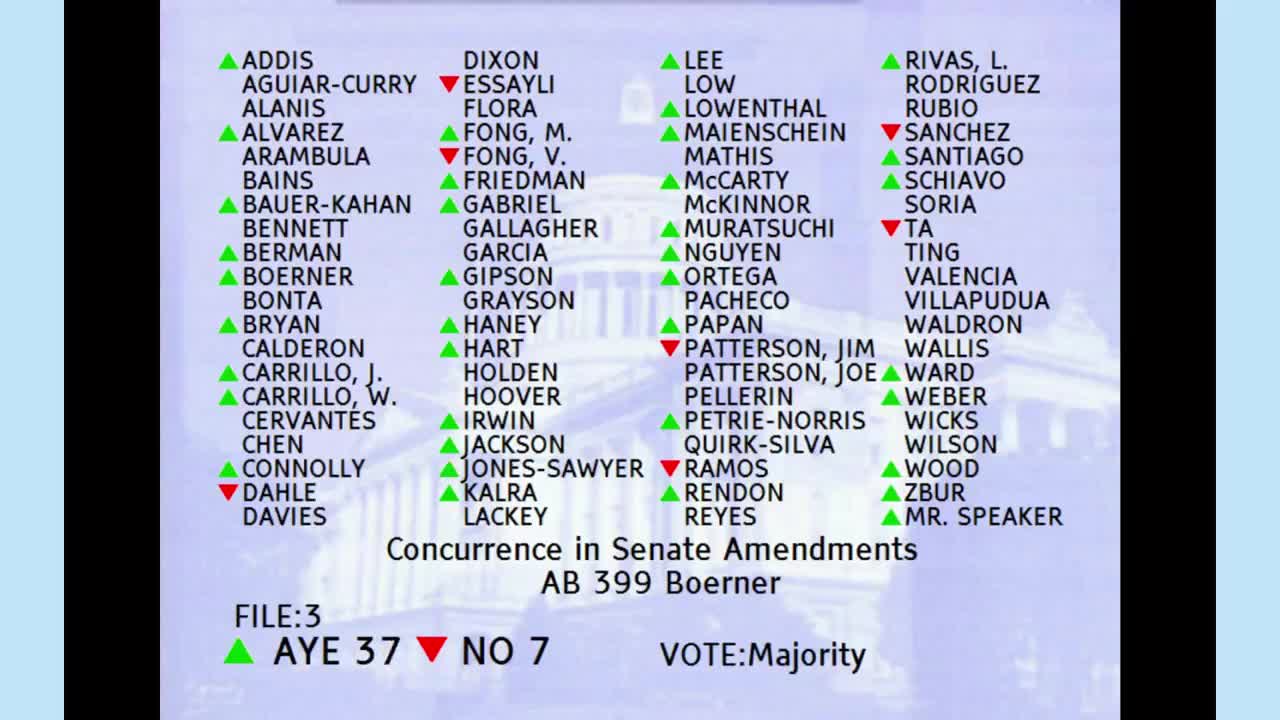
Bill Author

Bill Co-Author(s):