AB 725: Firearms: reporting of lost and stolen firearms.
- Session Year: 2023-2024
- House: Assembly
- Latest Version Date: 2023-09-26
Current Status:
Passed
(2023-09-26: Chaptered by Secretary of State - Chapter 239, Statutes of 2023.)
Introduced
In Committee
First Chamber
In Committee
Second Chamber
Enacted
Existing law requires a person to report any lost or stolen firearm to a law enforcement agency, as specified. A violation of this provision is punishable as an infraction or misdemeanor. Existing law also requires the sheriff or chief of the law enforcement agency receiving such a report to enter a description of the lost or stolen firearm into the Department of Justice Automated Firearms System. Existing law defines a firearm for purposes of these provisions.
This bill would, commencing on July 1, 2026, amend how a firearm is defined for purposes of these provisions to include the frame or receiver of the weapon, including both a completed frame or receiver, or a firearm precursor part.
By expanding the definition of firearm, this bill would expand the applicability of a crime and impose a state-mandated local program. Also, by imposing new duties on local law enforcement, this bill would impose a state-mandated local program.
This bill would incorporate additional changes to Section 16520 of the Penal Code proposed by AB 733 to be operative only if this bill and AB 733 are enacted and this bill is enacted last.
The California Constitution requires the state to reimburse local agencies and school districts for certain costs mandated by the state. Statutory provisions establish procedures for making that reimbursement.
This bill would provide that with regard to certain mandates no reimbursement is required by this act for a specified reason.
With regard to any other mandates, this bill would provide that, if the Commission on State Mandates determines that the bill contains costs so mandated by the state, reimbursement for those costs shall be made pursuant to the statutory provisions noted above.
Existing law requires a person to report any lost or stolen firearm to a law enforcement agency, as specified. A violation of this provision is punishable as an infraction or misdemeanor. Existing law also requires the sheriff or chief of the law enforcement agency receiving such a report to enter a description of the lost or stolen firearm into the Department of Justice Automated Firearms System. Existing law defines a firearm for purposes of these provisions.
This bill would would, commencing on July 1, 2026, amend how a firearm is defined for purposes of these provisions to include the frame or receiver of the weapon, including both a completed frame or receiver, or a firearm precursor part.
By expanding the definition of firearm, this bill would expand the applicability of a crime and impose a state-mandated local program. Also, by imposing new duties on local law enforcement, this bill would impose a state-mandated local program.
The California Constitution requires the state to reimburse local agencies and school districts for certain costs mandated by the state. Statutory provisions establish procedures for making that reimbursement.
This bill would provide that with regard to certain mandates no reimbursement is required by this act for a specified reason.
With regard to any other mandates, this bill would provide that, if the Commission on State Mandates determines that the bill contains costs so mandated by the state, reimbursement for those costs shall be made pursuant to the statutory provisions noted above.
Existing law requires a person to report any lost or stolen firearm to a law enforcement agency, as specified. A violation of this provision is punishable as an infraction or misdemeanor. Existing law also requires the sheriff or chief of the law enforcement agency receiving such a report to enter a description of the lost or stolen firearm into the Department of Justice Automated Firearms System. Existing law defines a firearm for purposes of these provisions.
This bill would amend how a firearm is defined for purposes of these provisions to include the frame or receiver of the weapon, including both a completed frame or receiver, or a firearm precursor part.
By expanding the definition of firearm, this bill would expand the applicability of a crime and impose a state-mandated local program. Also, by imposing new duties on local law enforcement, this bill would impose a state-mandated local program.
The California Constitution requires the state to reimburse local agencies and school districts for certain costs mandated by the state. Statutory provisions establish procedures for making that reimbursement.
This bill would provide that with regard to certain mandates no reimbursement is required by this act for a specified reason.
With regard to any other mandates, this bill would provide that, if the Commission on State Mandates determines that the bill contains costs so mandated by the state, reimbursement for those costs shall be made pursuant to the statutory provisions noted above.
(a)As used in this part, firearm means a device, designed to be used as a weapon, from which is expelled through a barrel, a projectile by the force of an explosion or other form of combustion.
(b)As used in the following provisions, firearm includes the frame or receiver of the weapon, including both a completed frame or receiver, or a firearm precursor part:
(1)Section 136.2.
(2)Section 646.91.
(3)Sections 16515 and 16517.
(4)Section 16550.
(5)Section 16730.
(6)Section 16960.
(7)Section 16990.
(8)Section 17070.
(9)Section 17310.
(10)Sections 18100 to 18500, inclusive.
(11)Section 23690.
(12)Sections 23900 to 23925, inclusive.
(13)Commencing on July 1, 2026, Sections 25250 to 25275, inclusive.
(14)Sections 26500 to 26590, inclusive.
(15)Sections 26600 to 27140, inclusive.
(16)Sections 27200 to 28490, inclusive.
(17)Sections 29010 to 29150, inclusive.
(18)Section 29185.
(19)Sections 29610 to 29750, inclusive.
(20)Sections 29800 to 29905, inclusive.
(21)Sections 30150 to 30165, inclusive.
(22)Section 31615.
(23)Sections 31700 to 31830, inclusive.
(24)Sections 34355 to 34370, inclusive.
(25)Sections 527.6 to 527.9, inclusive, of the Code of Civil Procedure.
(26)Sections 8100 to 8108, inclusive, of the Welfare and Institutions Code.
(27)Section 15657.03 of the Welfare and Institutions Code.
(c)As used in the following provisions, firearm also includes a rocket, rocket propelled projectile launcher, or similar device containing an explosive or incendiary material, whether or not the device is designed for emergency or distress signaling purposes:
(1)Section 16750.
(2)Subdivision (b) of Section 16840.
(3)Section 25400.
(4)Sections 25850 to 26025, inclusive.
(5)Subdivisions (a), (b), and (c) of Section 26030.
(6)Sections 26035 to 26055, inclusive.
(d)As used in the following provisions, firearm does not include an unloaded antique firearm:
(1)Section 16730.
(2)Section 16550.
(3)Section 16960.
(4)Section 17310.
(5)Subdivision (b) of Section 23920.
(6)Section 25135.
(7)Chapter 6 (commencing with Section 26350) of Division 5 of Title 4.
(8)Chapter 7 (commencing with Section 26400) of Division 5 of Title 4.
(9)Sections 26500 to 26588, inclusive.
(10)Sections 26700 to 26915, inclusive.
(11)Section 27510.
(12)Section 27530.
(13)Section 27540.
(14)Section 27545.
(15)Sections 27555 to 27585, inclusive.
(16)Sections 29010 to 29150, inclusive.
(17)Section 29180.
(e)As used in Sections 34005 and 34010, firearm does not include a destructive device.
(f)As used in Sections 17280 and 24680, firearm has the same meaning as in Section 922 of Title 18 of the United States Code.
(g)As used in Sections 29180 to 29184, inclusive, firearm includes the completed frame or receiver of a weapon.
SEC. 1.5.Section 16520 of the Penal Code is amended to read:16520.(a)As used in this part, firearm means a device, designed to be used as a weapon, from which is expelled through a barrel, a projectile by the force of an explosion or other form of combustion.
(b)As used in the following provisions, firearm includes the frame or receiver of the weapon, including both a completed frame or receiver, or a firearm precursor part:
(1)Section 136.2.
(2)Section 646.91.
(3)Sections 16515 and 16517.
(4)Section 16550.
(5)Section 16730.
(6)Section 16960.
(7)Section 16990.
(8)Section 17070.
(9)Section 17310.
(10)Sections 18100 to 18500, inclusive.
(11)Section 23690.
(12)Sections 23900 to 23925, inclusive.
(13)Commencing on July 1, 2026, Sections 25250 to 25275, inclusive.
(14)Sections 26500 to 26590, inclusive.
(15)Sections 26600 to 27140, inclusive.
(16)Sections 27200 to 28490, inclusive.
(17)Sections 29010 to 29150, inclusive.
(18)Section 29185.
(19)Section 29550.
(20)Sections 29610 to 29750, inclusive.
(21)Sections 29800 to 29905, inclusive.
(22)Sections 30150 to 30165, inclusive.
(23)Section 31615.
(24)Sections 31700 to 31830, inclusive.
(25)Sections 34355 to 34370, inclusive.
(26)Sections 527.6 to 527.9, inclusive, of the Code of Civil Procedure.
(27)Sections 8100 to 8108, inclusive, of the Welfare and Institutions Code.
(28)Section 15657.03 of the Welfare and Institutions Code.
(c)As used in the following provisions, firearm also includes a rocket, rocket propelled projectile launcher, or similar device containing an explosive or incendiary material, whether or not the device is designed for emergency or distress signaling purposes:
(1)Section 16750.
(2)Subdivision (b) of Section 16840.
(3)Section 25400.
(4)Sections 25850 to 26025, inclusive.
(5)Subdivisions (a), (b), and (c) of Section 26030.
(6)Sections 26035 to 26055, inclusive.
(d)As used in the following provisions, firearm does not include an unloaded antique firearm:
(1)Section 16730.
(2)Section 16550.
(3)Section 16960.
(4)Section 17310.
(5)Subdivision (b) of Section 23920.
(6)Section 25135.
(7)Chapter 6 (commencing with Section 26350) of Division 5 of Title 4.
(8)Chapter 7 (commencing with Section 26400) of Division 5 of Title 4.
(9)Sections 26500 to 26588, inclusive.
(10)Sections 26700 to 26915, inclusive.
(11)Section 27510.
(12)Section 27530.
(13)Section 27540.
(14)Section 27545.
(15)Sections 27555 to 27585, inclusive.
(16)Sections 29010 to 29150, inclusive.
(17)Section 29180.
(e)As used in Sections 34005 and 34010, firearm does not include a destructive device.
(f)As used in Sections 17280 and 24680, firearm has the same meaning as in Section 922 of Title 18 of the United States Code.
(g)As used in Sections 29180 to 29184, inclusive, firearm includes the completed frame or receiver of a weapon.
SEC. 2.Section 1.5 of this bill incorporates amendments to Section 16520 of the Penal Code proposed by both this bill and Assembly Bill 733. That section shall only become operative if (1) both bills are enacted and become effective on or before January 1, 2024, (2) each bill amends Section 16520 of the Penal Code, and (3) this bill is enacted after Assembly Bill 733, in which case Section 1 of this bill shall not become operative.
SEC. 3.No reimbursement is required by this act pursuant to Section 6 of Article XIIIB of the California Constitution for certain costs that may be incurred by a local agency or school district because, in that regard, this act creates a new crime or infraction, eliminates a crime or infraction, or changes the penalty for a crime or infraction, within the meaning of Section 17556 of the Government Code, or changes the definition of a crime within the meaning of Section 6 of Article XIIIB of the California Constitution.
However, if the Commission on State Mandates determines that this act contains other costs mandated by the state, reimbursement to local agencies and school districts for those costs shall be made pursuant to Part 7 (commencing with Section 17500) of Division 4 of Title 2 of the Government Code.
(a)As used in this part, firearm means a device, designed to be used as a weapon, from which is expelled through a barrel, a projectile by the force of an explosion or other form of combustion.
(b)As used in the following provisions, firearm includes the frame or receiver of the weapon, including both a completed frame or receiver, or a firearm precursor part:
(1)Section 136.2.
(2)Section 646.91.
(3)Sections 16515 and 16517.
(4)Section 16550.
(5)Section 16730.
(6)Section 16960.
(7)Section 16990.
(8)Section 17070.
(9)Section 17310.
(10)Sections 18100 to 18500, inclusive.
(11)Section 23690.
(12)Sections 23900 to 23925, inclusive.
(13)Commencing on July 1, 2026, Sections 25250 to 25275, inclusive.
(14)Sections 26500 to 26590, inclusive.
(15)Sections 26600 to 27140, inclusive.
(16)Sections 27200 to 28490, inclusive.
(17)Sections 29010 to 29150, inclusive.
(18)Section 29185.
(19)Sections 29610 to 29750, inclusive.
(20)Sections 29800 to 29905, inclusive.
(21)Sections 30150 to 30165, inclusive.
(22)Section 31615.
(23)Sections 31700 to 31830, inclusive.
(24)Sections 34355 to 34370, inclusive.
(25)Sections 527.6 to 527.9, inclusive, of the Code of Civil Procedure.
(26)Sections 8100 to 8108, inclusive, of the Welfare and Institutions Code.
(27)Section 15657.03 of the Welfare and Institutions Code.
(c)As used in the following provisions, firearm also includes a rocket, rocket propelled projectile launcher, or similar device containing an explosive or incendiary material, whether or not the device is designed for emergency or distress signaling purposes:
(1)Section 16750.
(2)Subdivision (b) of Section 16840.
(3)Section 25400.
(4)Sections 25850 to 26025, inclusive.
(5)Subdivisions (a), (b), and (c) of Section 26030.
(6)Sections 26035 to 26055, inclusive.
(d)As used in the following provisions, firearm does not include an unloaded antique firearm:
(1)Section 16730.
(2)Section 16550.
(3)Section 16960.
(4)Section 17310.
(5)Subdivision (b) of Section 23920.
(6)Section 25135.
(7)Chapter 6 (commencing with Section 26350) of Division 5 of Title 4.
(8)Chapter 7 (commencing with Section 26400) of Division 5 of Title 4.
(9)Sections 26500 to 26588, inclusive.
(10)Sections 26700 to 26915, inclusive.
(11)Section 27510.
(12)Section 27530.
(13)Section 27540.
(14)Section 27545.
(15)Sections 27555 to 27585, inclusive.
(16)Sections 29010 to 29150, inclusive.
(17)Section 29180.
(e)As used in Sections 34005 and 34010, firearm does not include a destructive device.
(f)As used in Sections 17280 and 24680, firearm has the same meaning as in Section 922 of Title 18 of the United States Code.
(g)As used in Sections 29180 to 29184, inclusive, firearm includes the completed frame or receiver of a weapon.
SEC. 1.5.Section 16520 of the Penal Code is amended to read:16520.(a)As used in this part, firearm means a device, designed to be used as a weapon, from which is expelled through a barrel, a projectile by the force of an explosion or other form of combustion.
(b)As used in the following provisions, firearm includes the frame or receiver of the weapon, including both a completed frame or receiver, or a firearm precursor part:
(1)Section 136.2.
(2)Section 646.91.
(3)Sections 16515 and 16517.
(4)Section 16550.
(5)Section 16730.
(6)Section 16960.
(7)Section 16990.
(8)Section 17070.
(9)Section 17310.
(10)Sections 18100 to 18500, inclusive.
(11)Section 23690.
(12)Section Sections 23900 to 23925, inclusive.
(13)Commencing on July 1, 2026, Sections 25250 to 25275, inclusive.
(13)(14)Sections 26500 to 26590, inclusive.
(14)(15)Sections 26600 to 27140, inclusive.
(15)(16)Sections 27200 to 28490, inclusive.
(16)(17)Sections 29010 to 29150, inclusive.
(17)(18)Section 29185.
(19)Section 29550.
(18)(20)Sections 29610 to 29750, inclusive.
(19)(21)Sections 29800 to 29905, inclusive.
(20)(22)Sections 30150 to 30165, inclusive.
(21)(23)Section 31615.
(22)(24)Sections 31700 to 31830, inclusive.
(23)(25)Sections 34355 to 34370, inclusive.
(24)(26)Sections 527.6 to 527.9, inclusive, of the Code of Civil Procedure.
(25)(27)Sections 8100 to 8108, inclusive, of the Welfare and Institutions Code.
(26)(28)Section 15657.03 of the Welfare and Institutions Code.
(c)As used in the following provisions, firearm also includes a rocket, rocket propelled projectile launcher, or similar device containing an explosive or incendiary material, whether or not the device is designed for emergency or distress signaling purposes:
(1)Section 16750.
(2)Subdivision (b) of Section 16840.
(3)Section 25400.
(4)Sections 25850 to 26025, inclusive.
(5)Subdivisions (a), (b), and (c) of Section 26030.
(6)Sections 26035 to 26055, inclusive.
(d)As used in the following provisions, firearm does not include an unloaded antique firearm:
(1)Section 16730.
(2)Section 16550.
(3)Section 16960.
(4)Section 17310.
(5)Subdivision (b) of Section 23920.
(6)Section 25135.
(7)Chapter 6 (commencing with Section 26350) of Division 5 of Title 4.
(8)Chapter 7 (commencing with Section 26400) of Division 5 of Title 4.
(9)Sections 26500 to 26588, inclusive.
(10)Sections 26700 to 26915, inclusive.
(11)Section 27510.
(12)Section 27530.
(13)Section 27540.
(14)Section 27545.
(15)Sections 27555 to 27585, inclusive.
(16)Sections 29010 to 29150, inclusive.
(17)Section 29180.
(e)As used in Sections 34005 and 34010, firearm does not include a destructive device.
(f)As used in Sections 17280 and 24680, firearm has the same meaning as in Section 922 of Title 18 of the United States Code.
(g)As used in Sections 29180 to 29184, inclusive, firearm includes the completed frame or receiver of a weapon.
SEC. 2.Section 1.5 of this bill incorporates amendments to Section 16520 of the Penal Code proposed by both this bill and Assembly Bill 733. That section shall only become operative if (1) both bills are enacted and become effective on or before January 1, 2024, (2) each bill amends Section 16520 of the Penal Code, and (3) this bill is enacted after Assembly Bill 733, in which case Section 1 of this bill shall not become operative.
SEC. 2.SEC. 3.No reimbursement is required by this act pursuant to Section 6 of Article XIIIB of the California Constitution for certain costs that may be incurred by a local agency or school district because, in that regard, this act creates a new crime or infraction, eliminates a crime or infraction, or changes the penalty for a crime or infraction, within the meaning of Section 17556 of the Government Code, or changes the definition of a crime within the meaning of Section 6 of Article XIIIB of the California Constitution.
However, if the Commission on State Mandates determines that this act contains other costs mandated by the state, reimbursement to local agencies and school districts for those costs shall be made pursuant to Part 7 (commencing with Section 17500) of Division 4 of Title 2 of the Government Code.
(a)As used in this part, firearm means a device, designed to be used as a weapon, from which is expelled through a barrel, a projectile by the force of an explosion or other form of combustion.
(b)As used in the following provisions, firearm includes the frame or receiver of the weapon, including both a completed frame or receiver, or a firearm precursor part:
(1)Section 136.2.
(2)Section 646.91.
(3)Sections 16515 and 16517.
(4)Section 16550.
(5)Section 16730.
(6)Section 16960.
(7)Section 16990.
(8)Section 17070.
(9)Section 17310.
(10)Sections 18100 to 18500, inclusive.
(11)Section 23690.
(12) Sections 23900 to 23925, inclusive.
(13)Sections Commencing on July 1, 2026, Sections 25250 to 25275, inclusive.
(14)Sections 26500 to 26590, inclusive.
(15)Sections 26600 to 27140, inclusive.
(16)Sections 27200 to 28490, inclusive.
(17)Sections 29010 to 29150, inclusive.
(18)Section 29185.
(19)Sections 29610 to 29750, inclusive.
(20)Sections 29800 to 29905, inclusive.
(21)Sections 30150 to 30165, inclusive.
(22)Section 31615.
(23)Sections 31700 to 31830, inclusive.
(24)Sections 34355 to 34370, inclusive.
(25)Sections 527.6 to 527.9, inclusive, of the Code of Civil Procedure.
(26)Sections 8100 to 8108, inclusive, of the Welfare and Institutions Code.
(27)Section 15657.03 of the Welfare and Institutions Code.
(c)As used in the following provisions, firearm also includes a rocket, rocket propelled projectile launcher, or similar device containing an explosive or incendiary material, whether or not the device is designed for emergency or distress signaling purposes:
(1)Section 16750.
(2)Subdivision (b) of Section 16840.
(3)Section 25400.
(4)Sections 25850 to 26025, inclusive.
(5)Subdivisions (a), (b), and (c) of Section 26030.
(6)Sections 26035 to 26055, inclusive.
(d)As used in the following provisions, firearm does not include an unloaded antique firearm:
(1)Section 16730.
(2)Section 16550.
(3)Section 16960.
(4)Section 17310.
(5)Subdivision (b) of Section 23920.
(6)Section 25135.
(7)Chapter 6 (commencing with Section 26350) of Division 5 of Title 4.
(8)Chapter 7 (commencing with Section 26400) of Division 5 of Title 4.
(9)Sections 26500 to 26588, inclusive.
(10)Sections 26700 to 26915, inclusive.
(11)Section 27510.
(12)Section 27530.
(13)Section 27540.
(14)Section 27545.
(15)Sections 27555 to 27585, inclusive.
(16)Sections 29010 to 29150, inclusive.
(17)Section 29180.
(e)As used in Sections 34005 and 34010, firearm does not include a destructive device.
(f)As used in Sections 17280 and 24680, firearm has the same meaning as in Section 922 of Title 18 of the United States Code.
(g)As used in Sections 29180 to 29184, inclusive, firearm includes the completed frame or receiver of a weapon.
SEC. 2.No reimbursement is required by this act pursuant to Section 6 of Article XIIIB of the California Constitution for certain costs that may be incurred by a local agency or school district because, in that regard, this act creates a new crime or infraction, eliminates a crime or infraction, or changes the penalty for a crime or infraction, within the meaning of Section 17556 of the Government Code, or changes the definition of a crime within the meaning of Section 6 of Article XIIIB of the California Constitution.
However, if the Commission on State Mandates determines that this act contains other costs mandated by the state, reimbursement to local agencies and school districts for those costs shall be made pursuant to Part 7 (commencing with Section 17500) of Division 4 of Title 2 of the Government Code.
(a)As used in this part, firearm means a device, designed to be used as a weapon, from which is expelled through a barrel, a projectile by the force of an explosion or other form of combustion.
(b)As used in the following provisions, firearm includes the frame or receiver of the weapon, including both a completed frame or receiver, or a firearm precursor part:
(1)Section 136.2.
(2)Section 646.91.
(3)Sections 16515 and 16517.
(4)Section 16550.
(5)Section 16730.
(6)Section 16960.
(7)Section 16990.
(8)Section 17070.
(9)Section 17310.
(10)Sections 18100 to 18500, inclusive.
(11)Section 23690.
(12)Section Sections 23900 to 23925, inclusive.
(13)Sections 25250 to 25275, inclusive.
(13)(14)Sections 26500 to 26590, inclusive.
(14)(15)Sections 26600 to 27140, inclusive.
(15)(16)Sections 27200 to 28490, inclusive.
(16)(17)Sections 29010 to 29150, inclusive.
(17)(18)Section 29185.
(18)(19)Sections 29610 to 29750, inclusive.
(19)(20)Sections 29800 to 29905, inclusive.
(20)(21)Sections 30150 to 30165, inclusive.
(21)(22)Section 31615.
(22)(23)Sections 31700 to 31830, inclusive.
(23)(24)Sections 34355 to 34370, inclusive.
(24)(25)Sections 527.6 to 527.9, inclusive, of the Code of Civil Procedure.
(25)(26)Sections 8100 to 8108, inclusive, of the Welfare and Institutions Code.
(26)(27)Section 15657.03 of the Welfare and Institutions Code.
(c)As used in the following provisions, firearm also includes a rocket, rocket propelled projectile launcher, or similar device containing an explosive or incendiary material, whether or not the device is designed for emergency or distress signaling purposes:
(1)Section 16750.
(2)Subdivision (b) of Section 16840.
(3)Section 25400.
(4)Sections 25850 to 26025, inclusive.
(5)Subdivisions (a), (b), and (c) of Section 26030.
(6)Sections 26035 to 26055, inclusive.
(d)As used in the following provisions, firearm does not include an unloaded antique firearm:
(1)Section 16730.
(2)Section 16550.
(3)Section 16960.
(4)Section 17310.
(5)Subdivision (b) of Section 23920.
(6)Section 25135.
(7)Chapter 6 (commencing with Section 26350) of Division 5 of Title 4.
(8)Chapter 7 (commencing with Section 26400) of Division 5 of Title 4.
(9)Sections 26500 to 26588, inclusive.
(10)Sections 26700 to 26915, inclusive.
(11)Section 27510.
(12)Section 27530.
(13)Section 27540.
(14)Section 27545.
(15)Sections 27555 to 27585, inclusive.
(16)Sections 29010 to 29150, inclusive.
(17)Section 29180.
(e)As used in Sections 34005 and 34010, firearm does not include a destructive device.
(f)As used in Sections 17280 and 24680, firearm has the same meaning as in Section 922 of Title 18 of the United States Code.
(g)As used in Sections 29180 to 29184, inclusive, firearm includes the completed frame or receiver of a weapon.
SEC. 2.No reimbursement is required by this act pursuant to Section 6 of Article XIIIB of the California Constitution for certain costs that may be incurred by a local agency or school district because, in that regard, this act creates a new crime or infraction, eliminates a crime or infraction, or changes the penalty for a crime or infraction, within the meaning of Section 17556 of the Government Code, or changes the definition of a crime within the meaning of Section 6 of Article XIIIB of the California Constitution.
However, if the Commission on State Mandates determines that this act contains other costs mandated by the state, reimbursement to local agencies and school districts for those costs shall be made pursuant to Part 7 (commencing with Section 17500) of Division 4 of Title 2 of the Government Code.
|
Date
|
Status
|
|---|---|
| Sep 26, 2023 | Chaptered by Secretary of State - Chapter 239, Statutes of 2023. |
| Sep 26, 2023 | Approved by the Governor. |
| Sep 20, 2023 | Enrolled and presented to the Governor at 4 p.m. |
| Sep 13, 2023 | Senate amendments concurred in. To Engrossing and Enrolling. (Ayes 62. Noes 13. Page 3419.). |
| Sep 12, 2023 | In Assembly. Concurrence in Senate amendments pending. |
| Sep 12, 2023 | Read third time. Passed. Ordered to the Assembly. (Ayes 30. Noes 7. Page 2666.). |
| Sep 11, 2023 | Read second time. Ordered to third reading. |
| Sep 8, 2023 | Read third time and amended. Ordered to second reading. |
| Sep 5, 2023 | Read second time. Ordered to third reading. |
| Sep 1, 2023 | Read second time and amended. Ordered returned to second reading. |
| Sep 1, 2023 | From committee: Amend, and do pass as amended. (Ayes 5. Noes 2.) (September 1). |
| Jul 3, 2023 | In committee: Referred to APPR suspense file. |
| Jun 20, 2023 | From committee: Do pass and re-refer to Com. on APPR. (Ayes 4. Noes 1.) (June 20). Re-referred to Com. on APPR. |
| Jun 7, 2023 | Referred to Com. on PUB S. |
| May 31, 2023 | In Senate. Read first time. To Com. on RLS. for assignment. |
| May 30, 2023 | Read third time. Passed. Ordered to the Senate. (Ayes 63. Noes 11. Page 1866.) |
| May 18, 2023 | Read second time. Ordered to third reading. |
| May 18, 2023 | From committee: Do pass. (Ayes 11. Noes 3.) (May 18). |
| May 3, 2023 | In committee: Set, first hearing. Referred to APPR. suspense file. |
| Apr 26, 2023 | In committee: Hearing postponed by committee. |
| Mar 22, 2023 | From committee: Do pass and re-refer to Com. on APPR. (Ayes 7. Noes 1.) (March 21). Re-referred to Com. on APPR. |
| Feb 23, 2023 | Referred to Com. on PUB. S. |
| Feb 14, 2023 | From printer. May be heard in committee March 16. |
| Feb 13, 2023 | Read first time. To print. |
|
Date
|
Description
|
Location
|
Votes
|
|
|---|---|---|---|---|
| Sep 13, 2023 | AB 725 Lowenthal Concurrence in Senate Amendments | Assembly Floor |
Passed |
|
| Sep 12, 2023 | Assembly 3rd Reading AB725 Lowenthal By Blakespear | Senate Floor |
Passed |
|
| Sep 1, 2023 | Do pass as amended | Senate Standing Committee on Appropriations |
Passed |
|
| Jul 3, 2023 | Placed on suspense file | Senate Standing Committee on Appropriations |
Passed |
|
| Jun 20, 2023 | Do pass, but first be re-referred to the Committee on [Appropriations] | Senate Standing Committee on Public Safety |
Passed |
|
| May 30, 2023 | AB 725 Lowenthal Assembly Third Reading | Assembly Floor |
Passed |
|
| May 18, 2023 | Do pass. | Assembly Standing Committee on Appropriations |
Passed |
|
| Mar 21, 2023 | Do pass and be re-referred to the Committee on [Appropriations] | Assembly Standing Committee on Public Safety |
Passed |
This list shows positions taken on this bill by organizations on the date displayed, which is linked to the original source.
Positions by individuals are not included.
|
Organization
|
Position
|
Date
|
|---|---|---|
| California Conference of Bar Associations | ** Support | |
| Defendingconstitutionalrights.com | ** Against | |
| Friends Committee On Legislation Of California | * Support | Jun 20, 2023 |
| Gun Owners Of California Inc | ** Against | |
| Los Angeles County District Attorney'S Office | * Support | Jun 20, 2023 |
| Prosecutors Alliance California | ** Support | |
| Women for American Values and Ethics Action Fund | ** Support |
CONCURRENCE IN SENATE AMENDMENTS
CSA1 Bill Id:AB 725
Author:(Lowenthal)
As Amended Ver:September 8, 2023
Majority vote
SUMMARY
Requires, commencing July 1, 2026, that firearm frames, receivers, and precursor parts be defined as a "firearm" for purposes of reporting a lost or stolen firearm, and makes the failure to do so punishable as an infraction.
Senate Amendments
- Delay the implementation of these provisions until July 1, 2026.
- Double joint this bill with AB 733 (Mike Fong) of the current legislative session in order to avoid chaptering out issues.
COMMENTS
According to the Author
"While frames and receivers are considered firearms for purposes of registration and licensing under current law, they are not treated as such when it comes to requirements for reporting lost or stolen firearms. AB 725 closes this loophole by making failure to report a lost or stolen frame or receiver the same infraction as failure to report a firearm."
Arguments in Support
According to this bill's sponsor, the Conference of California Bar Associations, "According to the bill's sponsor, the Conference of California Bar Associations, "Currently, the law requires only that a lost or stolen gun be reported to law enforcement. However, a gun frame or gun receiver has a firing mechanism and is considered a firearm under both federal and state law. (18 [United States Code Section] 921(a)(3)(B); [California Penal Code Sections] 16520, 26500, [and] 29180.). Additionally, state law requires that gun frames and receivers be registered, and they have serial numbers just as a fully built firearm has.
Gun frames and receivers are used to build new guns or to change existing guns, and stolen frames and receivers are often used to build ghost guns. Thus, it makes sense to require that frames and receivers be reported lost or stolen for a few reasons. The reporting requirement will make it easier for law enforcement find stolen or lost guns and make it more difficult for criminals to use stolen frames and receivers to build new guns because of the greater likelihood of getting caught. The reporting requirement will also help ensure that gun owners are responsible for their firearms. By requiring that a lost or stolen receiver be reported to law enforcement just as a fully built lost or stolen gun needs to be reported, gun owners will have a greater incentive to keep their firearms secured and accounted for."
Arguments in Opposition
According to the Gun Owners of California, "This proposal is problematic, given that the Department of Justice has not fully determined the totality of what constitutes pre-cursor parts. Federal law is also vague on this matter as to what parts qualify. Something as benign as a pin or a spring – each of which can be purchased at any local hardware store – are oftentimes used in the assembly of many non-firearm-related products. It's an overreach that such items could conceivably fall under such a broad definitional umbrella. This will lead to significant and unnecessary confusion and could put well-meaning individuals unintentionally cross-wise with the law.
"I believe it's time to get down to the business of reducing crime, rather than penalizing the lawful for the misdeeds of the unlawful – it will never have its anticipated resolution. For those who are interested in stemming the tide of criminal firearm use, we share a common desire, and GOC believes we can cooperatively move towards this goal. I would be more than happy to discuss this and other related issues at your convenience."
FISCAL COMMENTS
According to the Senate Appropriations Committee:
- The Department of Justice (DOJ) reports costs of $807,000 in 2023-24, $2.7 million in 2024-25, $2.9 million in 2025-26, and $873,000 annually thereafter (Dealer Record of Sale Fund, General Fund).
- Unknown, potentially reimbursable costs to local law enforcement agencies to process reports of lost and stolen precursor parts and enter them into the Automated Firearms Systems (AFS) database (local funds, General Fund). General Fund costs will depend on whether the duties imposed by this bill constitute a reimbursable state mandate, as determined by the Commission on State Mandates.
VOTES:
ASM PUBLIC SAFETY: 7-1-0
YES: Jones-Sawyer, Alanis, Bonta, Bryan, Ortega, Santiago, Zbur
NO: Lackey
ASM APPROPRIATIONS: 11-3-2
YES: Holden, Bryan, Calderon, Wendy Carrillo, Mike Fong, Hart, Lowenthal, Papan, Pellerin, Weber, Ortega
NO: Megan Dahle, Dixon, Sanchez
ABS, ABST OR NV: Mathis, Robert Rivas
ASSEMBLY FLOOR: 63-11-6
YES: Addis, Aguiar-Curry, Alanis, Alvarez, Arambula, Bains, Bauer-Kahan, Bennett, Berman, Boerner, Bonta, Bryan, Calderon, Juan Carrillo, Wendy Carrillo, Cervantes, Connolly, Mike Fong, Friedman, Gabriel, Garcia, Gipson, Grayson, Haney, Hart, Holden, Irwin, Jackson, Jones‑Sawyer, Kalra, Lee, Low, Lowenthal, Maienschein, McCarty, McKinnor, Muratsuchi, Stephanie Nguyen, Ortega, Pacheco, Papan, Pellerin, Petrie-Norris, Quirk-Silva, Ramos, Reyes, Luz Rivas, Robert Rivas, Rodriguez, Blanca Rubio, Santiago, Schiavo, Soria, Ting, Valencia, Villapudua, Ward, Weber, Wicks, Wilson, Wood, Zbur, Rendon
NO: Megan Dahle, Davies, Dixon, Vince Fong, Hoover, Lackey, Jim Patterson, Joe Patterson, Sanchez, Ta, Waldron
ABS, ABST OR NV: Chen, Essayli, Flora, Gallagher, Mathis, Wallis
UPDATED
VERSION: September 8, 2023
CONSULTANT: Mureed Rasool / PUB. S. / (916) 319-3744 FN: 0002321
SENATE RULES COMMITTEE Office of Senate Floor Analyses (916) 651-1520 Fax: (916) 327-4478 | AB 725 |
THIRD READING
Bill No: AB 725
Author: Lowenthal (D)
Amended: 9/8/23 in Senate
Vote: 21
SENATE PUBLIC SAFETY COMMITTEE: 4-1, 6/20/23
AYES: Wahab, Bradford, Skinner, Wiener
NOES: Ochoa Bogh
SENATE APPROPRIATIONS COMMITTEE: 5-2, 9/1/23
AYES: Portantino, Ashby, Bradford, Wahab, Wiener
NOES: Jones, Seyarto
ASSEMBLY FLOOR: 63-11, 5/30/23 - See last page for vote
SUBJECT: Firearms: reporting of lost and stolen firearms
SOURCE: California Conference of Bar Associations
DIGEST:
This bill, commencing July 1, 2026, clarifies that firearm frames, receivers and precursor parts fall under the definition of “firearm” for the purposes of existing law relating to the reporting of a lost or stolen firearm, and makes failure to do so punishable as an infraction.
Senate Floor Amendments of 9/8/23 address potential chaptering issues with AB 733 (M. Fong).
ANALYSIS:
Existing law:
- Defines a “firearm,” in certain provisions of the Penal Code, such as those relating to firearm enhancements and requirements related to lost and stolen firearms, as, “a device, designed to be used as a weapon, from which is expelled through a barrel, a projectile by the force of an explosion or other form of combustion.” (Pen. Code, § 16520, subd. (a).)
- Defines a firearm, for other specified provisions of the Penal Code, such as those relating to prohibitions on possession and transfer, among others, as the frame or receiver of the weapon, including both a completed frame or receiver or a firearm precursor part. (Pen. Code, §16520, subd. (b).)
- Defines a “firearm precursor part” as “any forging, casting, printing, extrusion, machined body, or similar article that has reached a stage in manufacture where it may readily be completed, assembled or converted to be used as the frame or receiver of a functional firearm, or that is marketed or sold to the public to become or be used as the frame or receiver of a functional firearm once completed, assembled or converted.” (Pen. Code, § 16531, subd. (a).)
- Provides that prior to manufacturing or assembling a firearm (not including precursor parts) that does not have a valid state or federal serial number, a person must:
- Apply to the Department of Justice (DOJ) for a serial number.
- Describe the firearm they intend to assemble, and;
- Provide their date of birth, address, and full name. (Pen. Code, § 29180, subd. (b)(1).)
- Requires that within 10 days of manufacturing or assembling a firearm (not including precursor parts), the manufacturer must engrave or permanently affix the serial number previously provided to them by the DOJ and notify the DOJ of such. (Pen. Code, § 29180, subd. (b)(2)-(3).)
- Requires every person to report the loss or theft of a firearm he or she owns or possesses to a local law enforcement agency in the jurisdiction in which the theft or loss occurred within five days of the time he or she knew or reasonably should have known that the firearm had been stolen or lost. (Pen. Code, §25250, subd. (a).)
- Provides that every person who has reported a firearm lost or stolen pursuant to the above shall notify local law enforcement within 5 days if the firearm is subsequently recovered. (Pen. Code, §25250, subd. (b).)
- Specifies that a person is not required to report the loss of an antique firearm, as defined. (Pen. Code, §25250, subd. (c).)
- Exempts peace officers acting within the course and scope of their duties from reporting the theft or loss of a firearm if they reported it to their employing agency. Also exempts members of the U.S. Armed Forces, and other specified persons, if they lost the firearm while engage in their official duties, as well as firearms lost or stolen prior to July 1, 2017. (Pen. Code, § 25255.)
- Requires law enforcement officials to submit a description of the reported lost or stolen firearm into the DOJ Automated Firearms System. (Pen. Code, § 25260.)
- Punishes the failure to report a lost or stolen firearm as an infraction with a fine up to $100 for a first offense and up to $1,000 for a second offense, and as a misdemeanor for any subsequent offense. (Pen. Code, § 25265.)
- Provides that every person reporting a lost or stolen firearm shall report the make, model and serial number of the firearm, if known by the person, and any additional relevant information required by the local law enforcement agency taking the report. (Pen. Code, § 25270.)
- Makes it an infraction to report to a local law enforcement agency that a firearm has been lost or stolen, knowing the report to be false, and punishes a first violation by a fine not exceeding $250 and by a fine not exceeding $1,000 for any second or subsequent offense. (Pen. Code, § 25275.)
- Requires licensed firearms dealers to post a sign in a conspicuous place that informs persons of the requirement to report a lost or stolen firearm to law enforcement within 5 days of knowing or when they reasonably should have known. (Pen. Code, § 26835, subd. (a)(9).)
This bill provides that, commencing July 1, 2026, for the provisions of law above relating to lost or stolen firearms, the definition of “firearm” includes the frame or receiver of the weapon, including both a completed frame or receiver, or a firearm precursor part.
Comments
According to the author, “While frames and receivers are considered firearms for purposes of registration and licensing under current law, they are not treated as such when it comes to requirements for reporting lost or stolen firearms. AB 725 closes this loophole by making failure to report a lost or stolen frame or receiver the same infraction as failure to report a firearm.”
In 2016, California voters approved Proposition 63, the Safety for All Act, which contained several provisions related to firearms and ammunition. Among these provisions was a requirement that lost or stolen firearms be reported to law enforcement in the jurisdiction where the loss or theft occurred within five days of the time the owner/person possessing the firearm discovered or reasonably should have discovered the loss or theft. However, when it updated the definition of “firearm” to include precursor parts and completed frames or receivers, AB 1621 did not apply that definition to the statute requiring the reporting of lost or stolen firearms. Thus, under existing law, for the purposes of that statute, firearm is defined as “a device, designed to be used as a weapon, from which is expelled through a barrel, a projectile by the force of an explosion or other form of combustion.”
This bill applies the AB 1621 definition of “firearm” to existing requirements regarding lost or stolen firearms. Thus, under this bill, lost or stolen precursor parts, as well as completed frames or receivers, must be reported to law enforcement within 5 days of when the person owning or possessing the firearm knew or should have known of the loss or theft. Failure to report a lost or stolen precursor part or completed frame or receiver, like failure to report a firearm under existing law, would be punishable as an infraction for the first two offenses, and as a misdemeanor for any third and subsequent offense.
FISCAL EFFECT: Appropriation: No Fiscal Com.: Yes Local: Yes
According to the Senate Appropriations Committee:
- The DOJ reports costs of $807,000 in 2023-24, $2.7 million in 2024-25, $2.9 million in 2025-26, and $873,000 annually thereafter (Dealer Record of Sale Fund, General Fund).
- Unknown, potentially reimbursable costs to local law enforcement agencies to process reports of lost and stolen precursor parts and enter them into the Automated Firearms Systems (AFS) database (local funds, General Fund). General Fund costs will depend on whether the duties imposed by this bill constitute a reimbursable state mandate, as determined by the Commission on State Mandates.
SUPPORT: (Verified 9/8/23)
California Conference of Bar Associations (source)
Prosecutors Alliance California
Women for American Values and Ethics Action Fund
OPPOSITION: (Verified 9/8/23)
Defendingconstitutionalrights.com
Gun Owners of California, Inc.
ASSEMBLY FLOOR: 63-11, 5/30/23
AYES: Addis, Aguiar-Curry, Alanis, Alvarez, Arambula, Bains, Bauer-Kahan, Bennett, Berman, Boerner, Bonta, Bryan, Calderon, Juan Carrillo, Wendy Carrillo, Cervantes, Connolly, Mike Fong, Friedman, Gabriel, Garcia, Gipson, Grayson, Haney, Hart, Holden, Irwin, Jackson, Jones-Sawyer, Kalra, Lee, Low, Lowenthal, Maienschein, McCarty, McKinnor, Muratsuchi, Stephanie Nguyen, Ortega, Pacheco, Papan, Pellerin, Petrie-Norris, Quirk-Silva, Ramos, Reyes, Luz Rivas, Robert Rivas, Rodriguez, Blanca Rubio, Santiago, Schiavo, Soria, Ting, Valencia, Villapudua, Ward, Weber, Wicks, Wilson, Wood, Zbur, Rendon
NOES: Megan Dahle, Davies, Dixon, Vince Fong, Hoover, Lackey, Jim Patterson, Joe Patterson, Sanchez, Ta, Waldron
NO VOTE RECORDED: Chen, Essayli, Flora, Gallagher, Mathis, Wallis
Prepared by: Alex Barnett / PUB. S. /
9/11/23 12:48:36
**** END ****
SENATE RULES COMMITTEE Office of Senate Floor Analyses (916) 651-1520 Fax: (916) 327-4478 | AB 725 |
THIRD READING
Bill No: AB 725
Author: Lowenthal (D)
Amended: 9/1/23 in Senate
Vote: 21
SENATE PUBLIC SAFETY COMMITTEE: 4-1, 6/20/23
AYES: Wahab, Bradford, Skinner, Wiener
NOES: Ochoa Bogh
SENATE APPROPRIATIONS COMMITTEE: 5-2, 9/1/23
AYES: Portantino, Ashby, Bradford, Wahab, Wiener
NOES: Jones, Seyarto
ASSEMBLY FLOOR: 63-11, 5/30/23 - See last page for vote
SUBJECT: Firearms: reporting of lost and stolen firearms
SOURCE: California Conference of Bar Associations
DIGEST:
This bill, commencing July 1, 2026, clarifies that firearm frames, receivers and precursor parts fall under the definition of “firearm” for the purposes of existing law relating to the reporting of a lost or stolen firearm, and makes failure to do so punishable as an infraction.
ANALYSIS:
Existing law:
- Defines a “firearm,” in certain provisions of the Penal Code, such as those relating to firearm enhancements and requirements related to lost and stolen firearms, as, “a device, designed to be used as a weapon, from which is expelled through a barrel, a projectile by the force of an explosion or other form of combustion.” (Pen. Code, § 16520, subd. (a).)
- Defines a firearm, for other specified provisions of the Penal Code, such as those relating to prohibitions on possession and transfer, among others, as the frame or receiver of the weapon, including both a completed frame or receiver or a firearm precursor part. (Pen. Code, §16520, subd. (b).)
- Defines a “firearm precursor part” as “any forging, casting, printing, extrusion, machined body, or similar article that has reached a stage in manufacture where it may readily be completed, assembled or converted to be used as the frame or receiver of a functional firearm, or that is marketed or sold to the public to become or be used as the frame or receiver of a functional firearm once completed, assembled or converted.” (Pen. Code, § 16531, subd. (a).)
- Provides that prior to manufacturing or assembling a firearm (not including precursor parts) that does not have a valid state or federal serial number, a person must:
- Apply to the Department of Justice (DOJ) for a serial number.
- Describe the firearm they intend to assemble, and;
- Provide their date of birth, address, and full name. (Pen. Code, § 29180, subd. (b)(1).)
- Requires that within 10 days of manufacturing or assembling a firearm (not including precursor parts), the manufacturer must engrave or permanently affix the serial number previously provided to them by the DOJ and notify the DOJ of such. (Pen. Code, § 29180, subd. (b)(2)-(3).)
- Requires every person to report the loss or theft of a firearm he or she owns or possesses to a local law enforcement agency in the jurisdiction in which the theft or loss occurred within five days of the time he or she knew or reasonably should have known that the firearm had been stolen or lost. (Pen. Code, §25250, subd. (a).)
- Provides that every person who has reported a firearm lost or stolen pursuant to the above shall notify local law enforcement within 5 days if the firearm is subsequently recovered. (Pen. Code, §25250, subd. (b).)
- Specifies that a person is not required to report the loss of an antique firearm, as defined. (Pen. Code, §25250, subd. (c).)
- Exempts peace officers acting within the course and scope of their duties from reporting the theft or loss of a firearm if they reported it to their employing agency. Also exempts members of the U.S. Armed Forces, and other specified persons, if they lost the firearm while engage in their official duties, as well as firearms lost or stolen prior to July 1, 2017. (Pen. Code, § 25255.)
- Requires law enforcement officials to submit a description of the reported lost or stolen firearm into the DOJ Automated Firearms System. (Pen. Code, § 25260.)
- Punishes the failure to report a lost or stolen firearm as an infraction with a fine up to $100 for a first offense and up to $1,000 for a second offense, and as a misdemeanor for any subsequent offense. (Pen. Code, § 25265.)
- Provides that every person reporting a lost or stolen firearm shall report the make, model and serial number of the firearm, if known by the person, and any additional relevant information required by the local law enforcement agency taking the report. (Pen. Code, § 25270.)
- Makes it an infraction to report to a local law enforcement agency that a firearm has been lost or stolen, knowing the report to be false, and punishes a first violation by a fine not exceeding $250 and by a fine not exceeding $1,000 for any second or subsequent offense. (Pen. Code, § 25275.)
- Requires licensed firearms dealers to post a sign in a conspicuous place that informs persons of the requirement to report a lost or stolen firearm to law enforcement within 5 days of knowing or when they reasonably should have known. (Pen. Code, § 26835, subd. (a)(9).)
This bill provides that, commencing July 1, 2026, for the provisions of law above relating to lost or stolen firearms, the definition of “firearm” includes the frame or receiver of the weapon, including both a completed frame or receiver, or a firearm precursor part.
Comments
According to the author, “While frames and receivers are considered firearms for purposes of registration and licensing under current law, they are not treated as such when it comes to requirements for reporting lost or stolen firearms. AB 725 closes this loophole by making failure to report a lost or stolen frame or receiver the same infraction as failure to report a firearm.”
In 2016, California voters approved Proposition 63, the Safety for All Act, which contained several provisions related to firearms and ammunition. Among these provisions was a requirement that lost or stolen firearms be reported to law enforcement in the jurisdiction where the loss or theft occurred within 5 days of the time the owner/person possessing the firearm discovered or reasonably should have discovered the loss or theft. However, when it updated the definition of “firearm” to include precursor parts and completed frames or receivers, AB 1621 did not apply that definition to the statute requiring the reporting of lost or stolen firearms. Thus, under existing law, for the purposes of that statute, firearm is defined as “a device, designed to be used as a weapon, from which is expelled through a barrel, a projectile by the force of an explosion or other form of combustion.”
This bill applies the AB 1621 definition of “firearm” to existing requirements regarding lost or stolen firearms. Thus, under this bill, lost or stolen precursor parts, as well as completed frames or receivers, must be reported to law enforcement within 5 days of when the person owning or possessing the firearm knew or should have known of the loss or theft. Failure to report a lost or stolen precursor part or completed frame or receiver, like failure to report a firearm under existing law, would be punishable as an infraction for the first two offenses, and as a misdemeanor for any third and subsequent offense.
FISCAL EFFECT: Appropriation: No Fiscal Com.: Yes Local: Yes
According to the Senate Appropriations Committee:
- The Department of Justice (DOJ) reports costs of $807,000 in 2023-24, $2.7 million in 2024-25, $2.9 million in 2025-26, and $873,000 annually thereafter (Dealer Record of Sale Fund, General Fund).
- Unknown, potentially reimbursable costs to local law enforcement agencies to process reports of lost and stolen precursor parts and enter them into the Automated Firearms Systems (AFS) database (local funds, General Fund). General Fund costs will depend on whether the duties imposed by this bill constitute a reimbursable state mandate, as determined by the Commission on State Mandates.
SUPPORT: (Verified 9/1/23)
California Conference of Bar Associations (source)
Prosecutors Alliance California
Women for American Values and Ethics Action Fund
OPPOSITION: (Verified 9/1/23)
Defendingconstitutionalrights.com
Gun Owners of California, Inc.
ASSEMBLY FLOOR: 63-11, 5/30/23
AYES: Addis, Aguiar-Curry, Alanis, Alvarez, Arambula, Bains, Bauer-Kahan, Bennett, Berman, Boerner, Bonta, Bryan, Calderon, Juan Carrillo, Wendy Carrillo, Cervantes, Connolly, Mike Fong, Friedman, Gabriel, Garcia, Gipson, Grayson, Haney, Hart, Holden, Irwin, Jackson, Jones-Sawyer, Kalra, Lee, Low, Lowenthal, Maienschein, McCarty, McKinnor, Muratsuchi, Stephanie Nguyen, Ortega, Pacheco, Papan, Pellerin, Petrie-Norris, Quirk-Silva, Ramos, Reyes, Luz Rivas, Robert Rivas, Rodriguez, Blanca Rubio, Santiago, Schiavo, Soria, Ting, Valencia, Villapudua, Ward, Weber, Wicks, Wilson, Wood, Zbur, Rendon
NOES: Megan Dahle, Davies, Dixon, Vince Fong, Hoover, Lackey, Jim Patterson, Joe Patterson, Sanchez, Ta, Waldron
NO VOTE RECORDED: Chen, Essayli, Flora, Gallagher, Mathis, Wallis
Prepared by: Alex Barnett / PUB. S. /
9/2/23 9:51:49
**** END ****
SENATE COMMITTEE ON APPROPRIATIONS
Senator Anthony Portantino, Chair
2023 - 2024 Regular Session
AB 725 (Lowenthal) - Firearms: reporting of lost and stolen firearms
Version: February 13, 2023 | Policy Vote: PUB. S. 4 - 1 |
Urgency: No | Mandate: Yes |
Hearing Date: September 1, 2023 | Consultant: Matthew Fleming |
Bill Summary:
AB 725 would clarify that firearm frames, receivers, and precursor parts fall under the definition of a firearm for the purposes of the requirement that every person report a lost or theft of a firearm to law enforcement within five days.
*********** ANALYSIS ADDENDUM – SUSPENSE FILE ***********
The following information is revised to reflect amendments
adopted by the committee on September 1, 2023
Fiscal Impact:
- The Department of Justice (DOJ) reports costs of $807,000 in 2023-24, $2.7 million in 2024-25, $2.9 million in 2025-26, and $873,000 annually thereafter (Dealer Record of Sale Fund, General Fund).
- Unknown, potentially reimbursable costs to local law enforcement agencies to process reports of lost and stolen precursor parts and enter them into the Automated Firearms Systems (AFS) database (local funds, General Fund). General Fund costs will depend on whether the duties imposed by this bill constitute a reimbursable state mandate, as determined by the Commission on State Mandates.
Author Amendments:
Delay implementation until July 1, 2026.
-- END --
SENATE COMMITTEE ON
Senator Anthony Portantino, Chair
2023 - 2024 Regular Session
AB 725 (Lowenthal) - Firearms: reporting of lost and stolen firearms
Version: | Policy Vote: |
Urgency: | Mandate: |
Hearing Date: | Consultant: |
Bill Summary:
AB 725 would clarify that firearm frames, receivers, and precursor parts fall under the definition of “firearm” for the purposes of the requirement that every person report a lost or theft of a firearm to law enforcement within five days of the loss/theft, as specified.
Fiscal Impact:
- The Department of Justice (DOJ) reports costs of $807,000 in 2023-24, $2.7 million in 2024-25, $2.9 million in 2025-26, and $873,000 annually thereafter (Dealer Record of Sale Fund, General Fund). See Staff Comments for additional detail.
- Unknown, potentially reimbursable costs to local law enforcement agencies to process reports of lost and stolen precursor parts and enter them into the Automated Firearms Systems (AFS) database (local funds, General Fund). General Fund costs will depend on whether the duties imposed by this bill constitute a reimbursable state mandate, as determined by the Commission on State Mandates.
Background:
In the United States, traditional firearms are produced by licensed manufacturers and sold through licensed gun dealers. Federal law requires all guns manufactured in the United States and imported from abroad to have serial numbers, typically displayed on the back of the frame. By contrast, “ghost guns” may be manufactured in parts – also known as “firearm precursor parts” – which can be acquired without a background check and can easily be assembled by an unlicensed buyer. Ghost guns are designed to avoid regulation by being sold as component parts, which, individually, are unregulated, but when assembled form a fully functional firearm. Ghost guns are unserialized, meaning they are more difficult to trace.
Last year the Legislature passed AB 1621 (Gipson, Ch. 76, Stats. of 2022). AB 1621 enacted a host of reforms which, taken together, render the sale, transfer and manufacture of precursor parts subject to the same rules as fully assembled firearms. AB 1621 also redefined “firearm precursor part” in the Penal Code as “any forging, casting, printing, extrusion, machined body or similar article that has reached a stage in manufacture where it may readily be completed, assembled or converted to be used as the frame or receiver of a functional firearm, or that is marketed or sold to the public to become or be used as the frame or receiver of a functional firearm once completed, assembled or converted.”
This bill would apply the AB 1621 definition of “firearm” to existing requirements regarding lost or stolen firearms. Thus, under this bill, lost or stolen precursor parts, as well as completed frames or receivers, must be reported to law enforcement within 5 days of when the person owning or possessing the firearm knew or should have known of the loss or theft. Failure to report a lost or stolen precursor part or completed frame or receiver, like failure to report a firearm under existing law, would be punishable as an infraction for the first two offenses, and as a misdemeanor for any third and subsequent offense.
Proposed Law:
Provides that, for the provisions of law relating to lost or stolen firearms, the definition of “firearm” includes the frame or receiver of the weapon, including both a completed frame or receiver, or a firearm precursor part.
Related Legislation:
- AB 1621 (Gipson) Chapter 76, Statutes of 2021-2022, required, in part, that firearm precursor parts be defined as firearms for various purposes.
- SB 61 (Portantino), Chapter 737, Statutes of 2019-2020, exempts firearm owners who reported their firearm as lost or stolen from the 30-day waiting requirement to purchase more than one firearm.
- Proposition 63 of the November 2016 general election, required, in part, that every person owning or possessing a firearm must report its theft or loss to law enforcement within five days of when they reasonably should have known it was lost or stolen.
Staff Comments:
In order to implement AB 725 the DOJ will likely require IT enhancements to update several systems including the Dealer Record of Sale Entry System (DES) and the . The project would likely require several permanent IT positions and numerous temporary and consulting hours. The project would need to go through the Department of Technology Project Approval Lifecycle (PAL) and would take approximately 28 months to complete. The DOJ notes a need for delayed implementation until July 1, 2026 in order to implement AB 725.
-- END --
SENATE COMMITTEE ON PUBLIC SAFETY
Senator Aisha Wahab, Chair
2023 - 2024 Regular
Bill No: AB 725 Hearing Date: June 20, 2023
Author: | Lowenthal | ||
Version: | February 13, 2023 | ||
Urgency: | No | Fiscal: | Yes |
Consultant: | AB | ||
Subject: Firearms: reporting of lost and stolen firearms
HISTORY
Source: Conference of California Bar Associations
Prior Legislation: AB 1621 (Gipson, Ch. 76, Stats. of 2022)
SB 61 (Portantino, Ch. 737, Stats. of 2019)
SB 894 (Jackson, 2016), vetoed by the Governor
SB 299 (DeSaulnier, 2013), vetoed by the Governor
SB 1366 (DeSaulnier, 2012), vetoed by the Governor
SB 59 (Lowenthal, 2005), vetoed by the Governor
Support: Prosecutors Alliance California; Women for American Values and Ethics Action Fund
Opposition: Gun Owners of California, Inc.
Assembly Floor Vote: 63 - 11
PURPOSE
The purpose of this bill is to clarify that firearm frames, receivers and precursor parts fall under the definition of “firearm” for the purposes of existing law relating to the reporting of a lost or stolen firearm, and makes failure to do so punishable as an infraction.
Existing law defines a “firearm,” in certain provisions of the Penal Code, such as those relating to firearm enhancements and requirements related to lost and stolen firearms, as, “a device, designed to be used as a weapon, from which is expelled through a barrel, a projectile by the force of an explosion or other form of combustion.” (Pen. Code, § 16520, subd. (a).)
Existing law defines a firearm, for other specified provisions of the Penal Code, such as those relating to prohibitions on possession and transfer, among others, as the frame or receiver of the weapon, including both a completed frame or receiver or a firearm precursor part. (Pen. Code, §16520, subd. (b).)
Existing law defines a “firearm precursor part” as “any forging, casting, printing, extrusion, machined body, or similar article that has reached a stage in manufacture where it may readily be completed, assembled or converted to be used as the frame or receiver of a functional firearm, or that is marketed or sold to the public to become or be used as the frame or receiver of a functional firearm once completed, assembled or converted.” (Pen. Code, § 16531, subd. (a).)
Existing law provides that prior to manufacturing or assembling a firearm (not including precursor parts) that does not have a valid state or federal serial number, a person must:
- Apply to the Department of Justice (DOJ) for a serial number;
- Describe the firearm they intend to assemble, and;
- Provide their date of birth, address, and full name. (Pen. Code, § 29180, subd. (b)(1).)
Existing law requires that within 10 days of manufacturing or assembling a firearm (not including precursor parts), the manufacturer must engrave or permanently affix the serial number previously provided to them by the DOJ and notify the DOJ of such. (Pen. Code, § 29180, subd. (b)(2)-(3).)
Existing law requires every person to report the loss or theft of a firearm he or she owns or possesses to a local law enforcement agency in the jurisdiction in which the theft or loss occurred within five days of the time he or she knew or reasonably should have known that the firearm had been stolen or lost. (Pen. Code, §25250, subd. (a).)
Existing law provides that every person who has reported a firearm lost or stolen pursuant to the above shall notify local law enforcement within 5 days if the firearm is subsequently recovered. (Pen. Code, §25250, subd. (b).)
Existing law specifies that a person is not required to report the loss of an antique firearm, as defined. (Pen. Code, §25250, subd. (c).)
Existing law exempts peace officers acting within the course and scope of their duties from reporting the theft or loss of a firearm if they reported it to their employing agency. Also exempts members of the U.S. Armed Forces, and other specified persons, if they lost the firearm while engage in their official duties, as well as firearms lost or stolen prior to July 1, 2017. (Pen. Code, § 25255.)
Existing law requires law enforcement officials to submit a description of the reported lost or stolen firearm into the DOJ Automated Firearms System. (Pen. Code, § 25260.)
Existing law punishes the failure to report a lost or stolen firearm as an infraction with a fine up to $100 for a first offense and up to $1,000 for a second offense, and as a misdemeanor for any subsequent offense. (Pen. Code, § 25265.)
Existing law provides that every person reporting a lost or stolen firearm shall report the make, model and serial number of the firearm, if known by the person, and any additional relevant information required by the local law enforcement agency taking the report. (Pen. Code, § 25270.)
Existing law makes it an infraction to report to a local law enforcement agency that a firearm has been lost or stolen, knowing the report to be false, and punishes a first violation by a fine not exceeding $250 and by a fine not exceeding $1,000 for any second or subsequent offense. (Pen. Code, § 25275.)
Existing law requires licensed firearms dealers to post a sign in a conspicuous place that informs persons of the requirement to report a lost or stolen firearm to law enforcement within 5 days of knowing or when they reasonably should have known. (Pen. Code, § 26835, subd. (a)(9).)
This bill provides that, for the provisions of law above relating to lost or stolen firearms, the definition of “firearm” includes the frame or receiver of the weapon, including both a completed frame or receiver, or a firearm precursor part.
COMMENTS
- Need for This Bill
According to the Author:
While frames and receivers are considered firearms for purposes of registration and licensing under current law, they are not treated as such when it comes to requirements for reporting lost or stolen firearms. AB 725 closes this loophole by making failure to report a lost or stolen frame or receiver the same infraction as failure to report a firearm.
- The Rise of Ghost Guns
In the United States, traditional firearms are produced by licensed manufacturers and sold through licensed gun dealers. Federal law requires all guns manufactured in the United States and imported from abroad to have serial numbers, typically displayed on the back of the frame. By contrast, “ghost guns” are manufactured in parts – also known as “firearm precursor parts – which can be acquired without a background check and can easily be assembled by an unlicensed buyer. Ghost guns are designed to avoid regulation by being sold in DIY kits containing their component parts, which, individually, are unregulated, but when assembled form a fully functional firearm. Ghost guns are also unserialized, meaning they cannot be traced by law enforcement.
Advances in home firearm manufacturing technology and the general untraceability of ghost guns have made them the weapon of choice for those seeking to commit crime. And California remains at the epicenter of the ghost gun crisis: in Los Angeles alone, the LAPD recovered 1,921 ghost guns in 2021, more than double the amount recovered in 2020.[1] In 2022, DOJ agents recovered 54 ghost guns as part of the Armed Prohibited Persons System Program, representing a 575% increase since 2018, when only 8 ghost guns were seized.[2]
On June 30, 2022, Governor Newsom signed AB 1621 (Gipson, Ch. 76, Stats. of 2022), a comprehensive measure aimed at curbing the ghost gun epidemic, in large part via the strict regulation of precursor parts. AB 1621 enacted a host of reforms, most of which went into effect immediately (others take effect Jan 1, 2023) and which, taken together, render the sale, transfer and manufacture of both completed and unfinished frames and receivers (another way of referring to firearm precursor parts) subject to the same rules as fully assembled firearms. Critically, this means that all people currently prohibited from possessing or purchasing a firearm are also prohibited from possessing or purchasing firearm precursor parts. AB 1621 also redefined “firearm precursor part” in the Penal Code as “any forging, casting, printing, extrusion, machined body or similar article that has reached a stage in manufacture where it may readily be completed, assembled or converted to be used as the frame or receiver of a functional firearm, or that is marketed or sold to the public to become or be used as the frame or receiver of a functional firearm once completed, assembled or converted.”[3]
- Lost or Stolen Firearms and Effect of This Bill
In 2016, California voters approved Proposition 63, the Safety for All Act, which contained several provisions related to firearms and ammunition. Among these provisions was a requirement that lost or stolen firearms be reported to law enforcement in the jurisdiction where the loss or theft occurred within 5 days of the time the owner/person possessing the firearm discovered or reasonably should have discovered the loss or theft.[4] However, when it updated the definition of “firearm” to include precursor parts and completed frames or receivers, AB 1621 did not apply that definition to the statute requiring the reporting of lost or stolen firearms. Thus, under existing law, for the purposes of that statute, firearm is defined as “a device, designed to be used as a weapon, from which is expelled through a barrel, a projectile by the force of an explosion or other form of combustion.”
This bill would apply the AB 1621 definition of “firearm” to existing requirements regarding lost or stolen firearms. Thus, under this bill, lost or stolen precursor parts, as well as completed frames or receivers, must be reported to law enforcement within 5 days of when the person owning or possessing the firearm knew or should have known of the loss or theft. Failure to report a lost or stolen precursor part or completed frame or receiver, like failure to report a firearm under existing law, would be punishable as an infraction for the first two offenses, and as a misdemeanor for any third and subsequent offense.
- Argument in Support
According to Prosecutors Alliance California, writing in support of the bill:
According to Giffords Law Center to Prevent Gun Violence “The ghost gun industry has skirted the law and fueled violence by creating a dangerous market in gun build kits and other products that allow people to arm themselves and assemble untraceable weapons without background checks or other protections.” The ghost gun industry has developed gun build kits and related products that allow untrained amateurs to quickly and easily assemble their own firearms from unregulated parts—including frames and receivers that are left just unfinished enough to escape the definition of “firearm” under state or federal gun safety laws. The frame or receiver is an integral part of the weapon’s design and function.
Existing law requires a person to report any lost or stolen firearm to a law enforcement agency. Existing law also requires the law enforcement agency receiving such a report to enter a description of the lost or stolen firearm into the Department of Justice Automated Firearms System. California law generally treats the sale, transfer, and manufacture of both completed and unfinished frames or receivers the same way state law treats the sale, transfer, and manufacture of fully assembled guns.
AB 725 will classify frames and receivers as firearms for purposes of the statute requiring lost and stolen firearms be reported to law enforcement. By requiring such items be reported to law enforcement if lost or stolen, AB 725 will help to track firearms/key component parts.
- Argument in Opposition
According to Gun Owners of California, Inc., which writes in opposition:
This proposal is problematic, given that the Department of Justice has not fully determined the totality of what constitutes pre-cursor parts. Federal law is also vague on this matter as to what parts qualify. Something as benign as a pin or a spring – each of which can be purchased at any local hardware store – are oftentimes used in the assembly of many non-firearm-related products. It’s an overreach that such items could conceivably fall under such a broad definitional umbrella. This will lead to significant and unnecessary confusion and could put well-meaning individuals unintentionally cross-wise with the law.
“I believe it’s time to get down to the business of reducing crime, rather than penalizing the lawful for the misdeeds of the unlawful – it will never have its anticipated resolution. For those who are interested in stemming the tide of criminal firearm use, we share a common desire, and GOC believes we can cooperatively move towards this goal. I would be more than happy to discuss this and other related issues at your convenience.
-- END –
“Ghost Guns Recoveries and Shootings.” Published by Everytown for Gun Safety. Last Updated 8 April 2022. Ghost Guns Recoveries and Shootings | Everytown Research & Policy ↑
California Department of Justice Releases 2022 Armed and Prohibited Persons System Program Annual Report | State of California - Department of Justice - Office of the Attorney General ↑
Penal Code §16531(a) ↑
Penal Code §25250 ↑
ASSEMBLY THIRD READING
ATR Bill Id:AB 725
Author:(Lowenthal)
As Introduced Ver:February 13, 2023
Majority vote
SUMMARY
Requires that firearm frames, receivers, and precursor parts be defined as a "firearm" for purposes of reporting a lost or stolen firearm, and makes the failure to do so punishable as an infraction.
Major Provisions
COMMENTS
According to the Author
"While frames and receivers are considered firearms for purposes of registration and licensing under current law, they are not treated as such when it comes to requirements for reporting lost or stolen firearms. AB 725 closes this loophole by making failure to report a lost or stolen frame or receiver the same infraction as failure to report a firearm."
Arguments in Support
According to the bill’s sponsor, the Conference of California Bar Associations, "According to the bill’s sponsor, the Conference of California Bar Associations, "Currently, the law requires only that a lost or stolen gun be reported to law enforcement. However, a gun frame or gun receiver has a firing mechanism and is considered a firearm under both federal and state law. (18 United States Code Section 921(a)(3)(B); California Penal Code Sections 16520, 26500, and 29180.). Additionally, state law requires that gun frames and receivers be registered, and they have serial numbers just as a fully built firearm has.
Gun frames and receivers are used to build new guns or to change existing guns, and stolen frames and receivers are often used to build ghost guns. Thus, it makes sense to require that frames and receivers be reported lost or stolen for a few reasons. The reporting requirement will make it easier for law enforcement find stolen or lost guns and make it more difficult for criminals to use stolen frames and receivers to build new guns because of the greater likelihood of getting caught. The reporting requirement will also help ensure that gun owners are responsible for their firearms. By requiring that a lost or stolen receiver be reported to law enforcement just as a fully built lost or stolen gun needs to be reported, gun owners will have a greater incentive to keep their firearms secured and accounted for."
Arguments in Opposition
According to the Gun Owners of California, "This proposal is problematic, given that the Department of Justice has not fully determined the totality of what constitutes pre-cursor parts. Federal law is also vague on this matter as to what parts qualify. Something as benign as a pin or a spring – each of which can be purchased at any local hardware store – are oftentimes used in the assembly of many non-firearm-related products. It’s an overreach that such items could conceivably fall under such a broad definitional umbrella. This will lead to significant and unnecessary confusion and could put well-meaning individuals unintentionally cross-wise with the law.
"I believe it’s time to get down to the business of reducing crime, rather than penalizing the lawful for the misdeeds of the unlawful – it will never have its anticipated resolution. For those who are interested in stemming the tide of criminal firearm use, we share a common desire, and GOC believes we can cooperatively move towards this goal. I would be more than happy to discuss this and other related issues at your convenience."
FISCAL COMMENTS
According to the Assembly Appropriations Committee:
- Costs to the Department of Justice (DOJ) (General Fund) of an unknown but potentially significant amount. The bill would require DOJ to add and track precursor and similar firearm parts to and in its Automated Firearms System (AFS). DOJ reports that it cannot make those changes to its system until related system changes are made by the National Law Enforcement Telecommunications System.
- Costs to law enforcement agencies (local funds, General fund) to process reports of lost and stolen precursor parts and enter them into the AFS database. Additional costs of an unknown amount to enforce the new infraction created by this bill. The bill states that local costs due to the creation of a new infraction are not subject to state reimbursement. However, the costs incurred by agencies reporting information about lost or stolen firearm parts through the AFS may be reimbursable. General Fund costs will depend on whether the duties imposed by this bill constitute a reimbursable state mandate, as determined by the Commission on State Mandates.
- Cost pressures to the courts (Trial Court Trust Fund, General Fund) to process and adjudicate new infractions charged under this bill. As noted below, it is unclear how many infractions would actually be issued as a result of this bill. Although courts are not funded on the basis of workload, increased pressure on the Trial Court Trust Fund may create a need for increased funding for courts from the General Fund. If funding is not provided for the new workload created by this bill, it may result in delays and prioritization of court cases.
VOTES
ASM PUBLIC SAFETY: 7-1-0
YES: Jones-Sawyer, Alanis, Bonta, Bryan, Ortega, Santiago, Zbur
NO: Lackey
ASM APPROPRIATIONS: 11-3-2
YES: Holden, Bryan, Calderon, Wendy Carrillo, Mike Fong, Hart, Lowenthal, Papan, Pellerin, Weber, Ortega
NO: Megan Dahle, Dixon, Sanchez
ABS, ABST OR NV: Mathis, Robert Rivas
UPDATED
VERSION: February 13, 2023
CONSULTANT: Mureed Rasool / PUB. S. / (916) 319-3744 FN: 0000817
Date of Hearing: May 3, 2023
ASSEMBLY COMMITTEE ON APPROPRIATIONS
Chris Holden, Chair
ABPCA Bill Id:AB 725
Author:(Lowenthal) – As Introduced Ver:February 13, 2023
Policy Committee: | Public Safety | Vote: | 7 - 1 |
|
| ||
|
|
Urgency: No State Mandated Local Program: Yes Reimbursable: Yes
SUMMARY:
This bill requires a person to report lost or stolen firearm frames, receivers, and precursor parts in the same way that lost or stolen firearms are required to be reported. The bill makes failure to report a lost or stolen firearm frame, receiver, or precursor part punishable as an infraction.
FISCAL EFFECT:
- Costs to the Department of Justice (DOJ) (General Fund) of an unknown but potentially significant amount. The bill would require DOJ to add and track precursor and similar firearm parts to and in its Automated Firearms System (AFS). DOJ reports that it cannot make those changes to its system until related system changes are made by the National Law Enforcement Telecommunications System.
- Costs to law enforcement agencies (local funds, General fund) to process reports of lost and stolen precursor parts and enter them into the AFS database. Additional costs of an unknown amount to enforce the new infraction created by this bill. The bill states that local costs due to the creation of a new infraction are not subject to state reimbursement. However, the costs incurred by agencies reporting information about lost or stolen firearm parts through the AFS may be reimbursable. General Fund costs will depend on whether the duties imposed by this bill constitute a reimbursable state mandate, as determined by the Commission on State Mandates.
- Cost pressures to the courts (Trial Court Trust Fund, General Fund) to process and adjudicate new infractions charged under this bill. As noted below, it is unclear how many infractions would actually be issued as a result of this bill. Although courts are not funded on the basis of workload, increased pressure on the Trial Court Trust Fund may create a need for increased funding for courts from the General Fund. If funding is not provided for the new workload created by this bill, it may result in delays and prioritization of court cases.
COMMENTS:
- Author’s Statement: According to the author:
While frames and receivers are considered firearms for purposes of registration and licensing under current law, they are not treated as such when it comes to requirements for reporting lost or stolen firearms. AB 725 closes this loophole by making failure to report a lost or stolen frame or receiver the same infraction as failure to report a firearm.
- Firearm Precursor Parts. Firearm frames, receivers, and precursor parts are component parts that can be assembled into a self-manufactured firearm. Once these parts are assembled into a firearm, the firearm must be registered with the DOJ and assigned a serial number, which allows the firearm to be traced and regulated by DOJ and other law enforcement agencies. Self-manufactured firearms that are authorized by the DOJ are subject to the same laws as commercially-purchased firearms. It is illegal to possess a self-manufactured firearm that is not authorized by the DOJ; such a firearm is also known as a “ghost gun” because tit does not have a serial number and is untraceable by law enforcement agencies.
This bill requires the owner of a firearm frame, receiver, or precursor part to make a report to a law enforcement agency if their firearm part is stolen or goes missing. The bill makes failure to report lost or stolen firearm frames, receivers, or precursor parts punishable as an infraction. Firearm owners are currently required to make similar reports if their firearms are lost or missing, and are subject to an infraction if they fail to do so. As noted in the analysis of this bill by the Assembly Committee on Public Safety, prosecution of the new infraction created by this bill would be difficult in practice. Unassembled precursor parts are not individually serialized. If someone buys a precursor part and then it goes missing or is stolen, it could likely not be traced back to the purchaser for the purpose of holding them accountable for failure to report the missing or stolen part.
Analysis Prepared by: Annika Carlson / APPR. / (916) 319-2081
Date of Hearing: March 21, 2023
Counsel: Mureed Rasool
ASSEMBLY COMMITTEE ON
Reginald Byron Jones-Sawyer, Sr., Chair
ABPCA Bill Id:
Author:() – As Ver:
SUMMARY:
Requires that firearm frames, receivers, and precursor parts be defined as a “firearm” for purposes of reporting a lost or stolen firearm, and makes the failure to do so punishable as an infraction.
EXISTING LAW:
- Defines a “firearm,” in certain parts of the Penal Code for purposes such as firearm enhancements, as, “a device, designed to be used as a weapon, from which is expelled through a barrel, a projectile by the force of an explosion or other form of combustion.” (Pen. Code, § 16520, subd. (a).)
- Defines a “firearm” for purposes such as prohibitions on possessing in public, as including the frame or receiver, or a firearm precursor part; excludes the provision governing the reporting of lost or stolen firearms. (Pen. Code, §16520, subd. (b).)
- Defines a “firearm precursor part” as “any forging, casting, printing, extrusion, machined body, or similar article that has reached a stage in manufacture where it may readily be completed, assembled or converted to be used as the frame or receiver of a functional firearm, or that is marketed or sold to the public to become or be used as the frame or receiver of a functional firearm once completed, assembled or converted.” (Pen. Code, § 16531, subd. (a).)
- States that prior to manufacturing or assembling a firearm (not including precursor parts) that does not have a valid state or federal serial number, a person must:
- Apply to the Department of Justice (DOJ) for a serial number,
- Describe the firearm they intend to assemble, and;
- Provide their date of birth, address, and full name. (Pen. Code, § 29180, subd. (b)(1).)
- Requires that within 10 days of manufacturing or assembling a firearm (not including precursor parts), they must engrave or permanently affix the serial number previously provided to them by the DOJ and notify the DOJ of such. (Pen. Code, § 29180, subd. (b)(2)-(3).)
- Requires every person owning or possessing a firearm to report the loss or theft of the firearm, including the serial number of the firearm, to a local law enforcement agency within five days of when they knew or reasonably should have known that the firearm had been stolen or lost. (Pen. Code, §§ 25250 & 25270.)
- Exempts peace officers acting within the course and scope of their duties from reporting the theft or loss of a firearm if they reported it to their employing agency. Also exempts members of the U.S. Armed Forces, and other specified persons, if they lost the firearm while engage in their official duties. (Pen. Code, § 25255.)
- Requires law enforcement officials to submit a description of the reported lost or stolen firearm into the DOJ Automated Firearms System. (Pen. Code, § 25260.)
- Punishes the failure to report a lost or stolen firearm as an infraction with a fine up to $100 for a first offense, up to $1,000 for a second offense, and as a misdemeanor for any subsequent offenses. (Pen. Code, § 25265.)
- States that a person who knowingly submits a false report to law enforcement that a firearm has been lost or stolen is guilty of an infraction with a fine up to $250 for a first offense, and a fine up to $1,000 for any subsequent offenses. States that this does not preclude prosecution under any other law. (Pen. Code, § 25275.)
- Requires licensed firearms dealers to post a sign in a conspicuous place that informs persons of the requirement to report a lost or stolen firearm to law enforcement within five days of knowing or when they reasonably should have known. (Pen. Code, § 26835, subd. (a)(9).)
FISCAL EFFECT:
Unknown
COMMENTS:
- Author's Statement: According to the author, “While frames and receivers are considered firearms for purposes of registration and licensing under current law, they are not treated as such when it comes to requirements for reporting lost or stolen firearms. AB 725 closes this loophole by making failure to report a lost or stolen frame or receiver the same infraction as failure to report a firearm.”
- Regulation of Precursor Parts in California: In the United States, most firearms are produced by licensed manufacturers and sold through licensed gun dealers. Federal law requires all guns manufactured in the United States and imported from abroad to have serial numbers, typically displayed on the back of the frame. By contrast, “ghost guns” are manufactured in parts which can be acquired without a background check and can easily be assembled by the purchaser. Ghost guns are designed to avoid regulation by being sold in DIY kits containing their component parts, which, individually, are unregulated, but when assembled form a fully functional firearm. These DIY kits generally included an uncompleted frame or receiver of a gun, or a “precursor part.” According to the New York Times:
The criminal underground has long relied on stolen weapons with filed-off serial numbers, but ghost guns represent a digital-age upgrade, and they are especially prevalent in coastal blue states with strict firearm laws. Nowhere is that truer than in California, where their proliferation has reached epidemic proportions […] Over the past 18 months, the officials said, ghost guns accounted for 25 to 50 percent of firearms recovered at crime scenes. The vast majority of suspects caught with them were legally prohibited from having guns.
(New York Times. ’Ghost Guns’: Firearm Kits Bought Online Fuel Epidemic of Violence. (Nov. 2021) <https://www.nytimes.com/2021/11/14/us/ghost-guns-homemade-firearms.html> [as of Mar. 14, 2023].)
In 2022, California enacted AB 1621 (Gipson) Chapter 76, Statutes of 2021-2022, which required, in part, that firearm precursor parts be treated as firearms for various purposes such as prohibitions on carrying in public and manufacturing. According to the findings and declarations in the bill, the intent was to curb the proliferation of unserialized ghost guns built from precursor parts. However, it did not include precursor parts, or completed frames or receivers, in the California statute that requires anyone who owns or possesses a firearm to report when that firearm has been lost or stolen. (Pen. Code, § 25250.)
This bill would include precursor parts, as well as completed frames or receivers, to the currently existing requirements for reporting lost or stolen firearms, and accordingly would punish the failure to do so in the same manner as the failure to report a firearm under existing law. By doing so, this bill attempts to further curb the proliferation of ghost guns.
Arguably, prosecuting an individual for failure to report a lost or stolen precursor part will be challenging. Current law does not require precursor parts be serialized until they have been assembled. (Pen. Code, § 29180.) So, it would be difficult to trace a specific part back to a particular individual.
- Argument in Support: None submitted.
- Argument in Opposition: According to the Gun Owners of California, “This proposal is problematic, given that the Department of Justice has not fully determined the totality of what constitutes pre-cursor parts. Federal law is also vague on this matter as to what parts qualify. Something as benign as a pin or a spring – each of which can be purchased at any local hardware store – are oftentimes used in the assembly of many non-firearm-related products. It’s an overreach that such items could conceivably fall under such a broad definitional umbrella. This will lead to significant and unnecessary confusion and could put well-meaning individuals unintentionally cross-wise with the law.
“I believe it’s time to get down to the business of reducing crime, rather than penalizing the lawful for the misdeeds of the unlawful – it will never have its anticipated resolution. For those who are interested in stemming the tide of criminal firearm use, we share a common desire, and GOC believes we can cooperatively move towards this goal. I would be more than happy to discuss this and other related issues at your convenience.” - Related Legislation:
- SB 2 (Portantino), would, among other provisions, disqualify an individual from the ability to obtain a concealed carry (CCW) permit if they failed to report the loss of their firearm as required by any local, state, or federal law. SB 2 is currently pending hearing in the Senate Public Safety Committee.
- SB 8 (Blakespear), would hold any firearm owner civilly liable for incidences of property damage or bodily injury that results from use of their firearm unless they previously reported their firearm lost or stolen. SB 8 is currently pending referral in the Senate Rules Committee.
- AB 574 (Jones-Sawyer), would a person purchasing a firearm to affirm that they have checked and confirmed possession of any firearms they own or possess. AB 574 is currently pending hearing in the Assembly Public Safety Committee.
- SB 2 (Portantino), would, among other provisions, disqualify an individual from the ability to obtain a concealed carry (CCW) permit if they failed to report the loss of their firearm as required by any local, state, or federal law. SB 2 is currently pending hearing in the Senate Public Safety Committee.
- Prior Legislation:
- AB 1621 (Gipson) Chapter 76, Statutes of 2021-2022, required, in part, that firearm precursor parts be defined as firearms for various purposes.
- SB 61 (Portantino), Chapter 737, Statutes of 2019-2020, exempts firearm owners who reported their firearm as lost or stolen from the 30-day waiting requirement to purchase more than one firearm.
- Proposition 63 of the November 2016 general election, required, in part, that every person owning or possessing a firearm must report its theft or loss to law enforcement within five days of when they reasonably should have known it was lost or stolen.
- SB 894 (Jackson) of the 2015-2016 Legislative Session, would have made it a crime to fail to report the theft or loss of a firearm to a local law enforcement agency within five days of the time the owner knew, or reasonably should have known, that the firearm was lost or stolen. SB 894 was vetoed.
- SB 299 (Desaulnier) of the 2013-2014 Legislative Session, would have made it a crime to fail to report the theft or loss of a firearm to a local law enforcement agency within seven days of the time the owner knew, or reasonably should have known, that the firearm was lost or stolen. SB 299 was vetoed.
- SB 1366 (DeSaulnier) of the 2011-2012 Legislative Session, would have made it a crime to fail to report the theft or loss of a firearm he/she owns or possesses to law enforcement agency within 48 hours of the time he/she knew or reasonably should have known that the firearm had been stolen or lost. SB 1366 was vetoed.
- SB 59 (Lowenthal), of the 2005-2006 Legislative Session, would have required a gun owner to report a lost or stolen firearm within five working days. SB 59 was vetoed.
- AB 1621 (Gipson) Chapter 76, Statutes of 2021-2022, required, in part, that firearm precursor parts be defined as firearms for various purposes.
REGISTERED SUPPORT / OPPOSITION:
Support
None.
Opposition
Gun Owners of California, INC.
Analysis Prepared by:
Discussed in Hearing
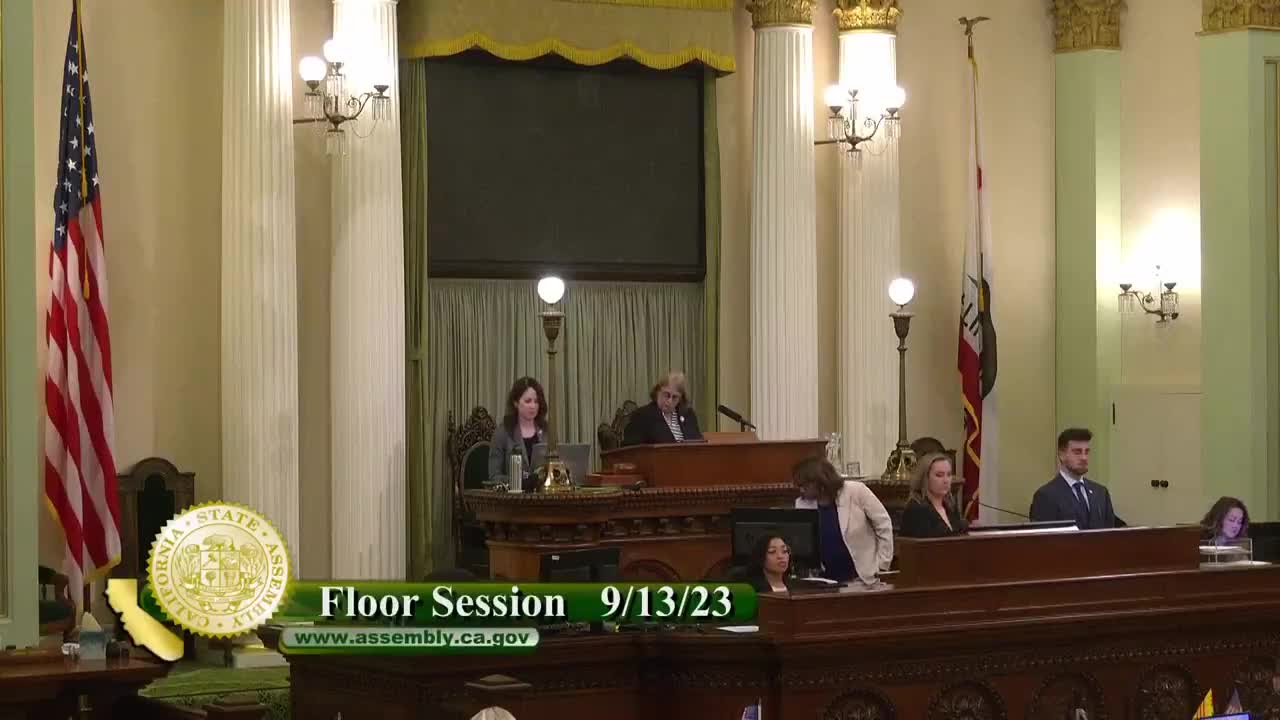 41SEC
Assembly Floor
 2MIN
Senate Floor
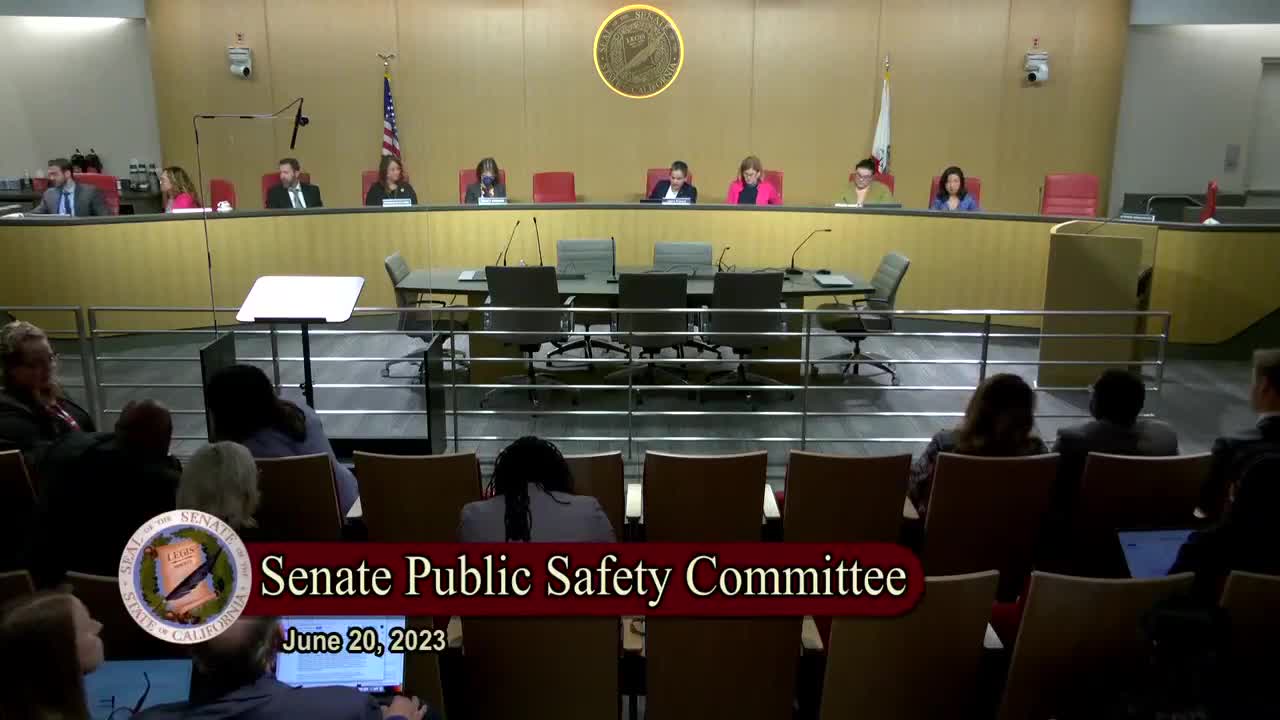 7MIN
Senate Standing Committee on Public Safety
 1MIN
Assembly Floor
 5MIN
Assembly Standing Committee on Public Safety
 5MIN
Assembly Standing Committee on Public Safety
Bill Author

Bill Co-Author(s):