AB 73: Vehicles: required stops: bicycles.
- Session Year: 2023-2024
- House: Assembly
- Latest Version Date: 2023-03-09
Current Status:
Failed
(2023-07-11: In committee: Set, first hearing. Hearing canceled at the request of author.)
Introduced
In Committee
First Chamber
In Committee
Second Chamber
Enacted
What does this bill do?
The bill lets people 18 and older riding a bicycle on a two‑lane road treat an intersection with stop signs on all approaches as a yield: they must give way to vehicles that have stopped, entered, or are close enough to be a hazard, and to pedestrians, and may then proceed when reasonably safe. Drivers of motor vehicles must yield to a bicycle that has properly yielded and entered the intersection, and bicyclists under 18 who fail to stop receive a warning for a first offense. The California Highway Patrol must report to the Legislature on safety and crash effects.
The summary is provided by generative AI which can make mistakes. For original language, please view the details in the table below.
Existing law requires the driver of any vehicle, including a person riding a bicycle, when approaching a stop sign at the entrance of an intersection, to stop before entering the intersection. A violation of this requirement is an infraction.
This bill would require a person who is 18 years of age or older riding a bicycle upon a two-lane highway when approaching a stop sign at the entrance of an intersection with another roadway with two or fewer lanes, where stop signs are erected upon all approaches, to yield the right-of-way to any vehicles that have either stopped at or entered the intersection, or that are approaching on the intersecting highway close enough to constitute an immediate hazard, and to pedestrians, as specified, and continue to yield the right-of-way to those vehicles and pedestrians until reasonably safe to proceed. The bill would require other vehicles to yield the right-of-way to a bicycle that, having yielded as prescribed, has entered the intersection. The bill would state that these provisions do not affect the liability of a driver of a motor vehicle as a result of the drivers negligent or wrongful act or omission in the operation of a motor vehicle. The bill would impose a warning citation for a first violation by a person who is under 18 years of age and fails to stop when approaching a stop sign at the entrance of an intersection.
The bill would also require the Commissioner of the California Highway Patrol to submit a report to the Legislature, as specified, regarding the effects of this bill.
These provisions would be repealed on January 1, 2031.
By changing the elements of an existing crime, this bill would impose a state-mandated local program.
The California Constitution requires the state to reimburse local agencies and school districts for certain costs mandated by the state. Statutory provisions establish procedures for making that reimbursement.
This bill would provide that no reimbursement is required by this act for a specified reason.
Existing law requires the driver of any vehicle, including a person riding a bicycle, when approaching a stop sign at the entrance of an intersection, to stop before entering the intersection. A violation of this requirement is an infraction.This bill would state the intent of the Legislature to enact legislation relating to a stop-as-yield pilot program seeking to improve the flow of traffic by allowing both drivers and bicyclists to move safely at an intersection where there is a stop sign.Existing law requires the driver of any vehicle, including a person riding a bicycle, when approaching a stop sign at the entrance of an intersection, to stop before entering the intersection. A violation of this requirement is an infraction.
This bill would state the intent of the Legislature to enact legislation relating to a stop-as-yield pilot program seeking to improve the flow of traffic by allowing both drivers and bicyclists to move safely at an intersection where there is a stop sign.
(a)The driver of a vehicle approaching an intersection shall yield the right-of-way to any vehicle which that has entered the intersection from a different highway. highway, including a bicycle that has entered the intersection after yielding as required by subdivision (d) of Section 22450.
(b)(1)When two vehicles enter an intersection from different highways at the same time, the driver of the vehicle on the left shall yield the right-of-way to the vehicle on his or her their immediate right, except that the driver of any vehicle on a terminating highway shall yield the right-of-way to any vehicle on the intersecting continuing highway.
(2)For the purposes of this section, terminating highway means a highway which that intersects, but does not continue beyond the intersection, with another highway which that does continue beyond the intersection.
(c)When two vehicles enter an intersection from different highways at the same time and the intersection is controlled from all directions by stop signs, the driver of the vehicle on the left shall yield the right-of-way to the vehicle on his or her their immediate right.
(d)(1)The driver of any vehicle approaching an intersection which that has official traffic control signals that are inoperative shall stop at the intersection, and may proceed with caution when it is safe to do so.
(2)When two vehicles enter an intersection from different highways at the same time, and the official traffic control signals for the intersection are inoperative, the driver of the vehicle on the left shall yield the right-of-way to the vehicle on his or her their immediate right, except that the driver of any vehicle on a terminating highway shall yield the right-of-way to any vehicle on the intersecting continuing highway.
(e)This section does not apply to any of the following:
(1)Any intersection controlled by an official traffic control signal or yield right-of-way sign.
(2)Any intersection controlled by stop signs from less than all directions.
(3)When vehicles are approaching each other from opposite directions and the driver of one of the vehicles intends to make, or is making, a left turn.
(f)This section shall remain in effect only until January 1, 2031, and as of that date is repealed.
SEC. 2.Section 21800 is added to the Vehicle Code, to read:21800.(a)The driver of a vehicle approaching an intersection shall yield the right-of-way to any vehicle that has entered the intersection from a different highway.
(b)(1)When two vehicles enter an intersection from different highways at the same time, the driver of the vehicle on the left shall yield the right-of-way to the vehicle on their immediate right, except that the driver of any vehicle on a terminating highway shall yield the right-of-way to any vehicle on the intersecting continuing highway.
(2)For the purposes of this section, terminating highway means a highway that intersects, but does not continue beyond the intersection, with another highway that does continue beyond the intersection.
(c)When two vehicles enter an intersection from different highways at the same time and the intersection is controlled from all directions by stop signs, the driver of the vehicle on the left shall yield the right-of-way to the vehicle on their immediate right.
(d)(1)The driver of any vehicle approaching an intersection that has official traffic control signals that are inoperative shall stop at the intersection, and may proceed with caution when it is safe to do so.
(2)When two vehicles enter an intersection from different highways at the same time, and the official traffic control signals for the intersection are inoperative, the driver of the vehicle on the left shall yield the right-of-way to the vehicle on their immediate right, except that the driver of any vehicle on a terminating highway shall yield the right-of-way to any vehicle on the intersecting continuing highway.
(e)This section does not apply to any of the following:
(1)Any intersection controlled by an official traffic control signal or yield right-of-way sign.
(2)Any intersection controlled by stop signs from less than all directions.
(3)When vehicles are approaching each other from opposite directions and the driver of one of the vehicles intends to make, or is making, a left turn.
(f)This section shall become operative on January 1, 2031.
SEC. 3.Section 22450 of the Vehicle Code is amended to read:22450.(a)The Except as otherwise provided in subdivision (d), the driver of any vehicle approaching a stop sign at the entrance to, or within, an intersection shall stop at a limit line, if marked, otherwise before entering the crosswalk on the near side of the intersection.
If there is no limit line or crosswalk, the driver shall stop at the entrance to the intersecting roadway.
(b)The driver of a vehicle approaching a stop sign at a railroad grade crossing shall stop at a limit line, if marked, otherwise before crossing the first track or entrance to the railroad grade crossing.
(c)Notwithstanding any other provision of law, a local authority may adopt rules and regulations by ordinance or resolution providing for the placement of a stop sign at any location on a highway under its jurisdiction where the stop sign would enhance traffic safety.
(d)A person who is 18 years of age or older riding a bicycle upon a two-lane highway approaching a stop sign at the entrance to, or within, an intersection with another roadway with two or fewer lanes, where stop signs are erected upon all approaches to the intersection shall, upon arriving at the sign, yield the right-of-way to any vehicles that have stopped at the entrance to the intersection, have entered the intersection, or that are approaching on the intersecting highway close enough to constitute an immediate hazard, and to pedestrians as required by Section 21950, and shall continue to yield the right-of-way to those vehicles and pedestrians until it is reasonably safe to proceed.
(e)(1)The Commissioner of the California Highway Patrol shall submit a report to the Legislature, on or before January 1, 2029, about the effects of bicycles operating under the provisions of subdivision (d) and subdivision (a) of Section 21800. The report shall include, without limitation, information about statewide injury and fatal traffic crash data and any associated traffic-related safety issues, including, but not limited to, a detailed analysis of the following issues:
(A)Changes in the frequency of collisions.
(B)Changes in the severity of collisions.
(C)Causes of and contributing factors in collisions.
(D)Location of collisions, including an analysis of collision data.
(E)Time of day of collisions.
(F)Ages of bicyclists involved, including a breakdown of minors versus adults.
(G)Types of bicycles involved in collisions, specifically differences between traditional bicycles and electric bicycles.
(2)The report required by this subdivision shall be submitted in compliance with Section 9795 of the Government Code.
(f)This section does not affect the liability of a driver of a motor vehicle as a result of the drivers negligent or wrongful act or omission in the operation of a motor vehicle.
(g)A person who is under 18 years of age riding a bicycle who fails to stop as required in subdivision (a) shall receive a warning citation for a first violation.
(h)This section shall remain in effect only until January 1, 2031, and as of that date is repealed.
SEC. 4.Section 22450 is added to the Vehicle Code, to read:22450.(a)The driver of any vehicle approaching a stop sign at the entrance to, or within, an intersection shall stop at a limit line, if marked, otherwise before entering the crosswalk on the near side of the intersection.
If there is no limit line or crosswalk, the driver shall stop at the entrance to the intersecting roadway.
(b)The driver of a vehicle approaching a stop sign at a railroad grade crossing shall stop at a limit line, if marked, otherwise before crossing the first track or entrance to the railroad grade crossing.
(c)Notwithstanding any other provision of law, a local authority may adopt rules and regulations by ordinance or resolution providing for the placement of a stop sign at any location on a highway under its jurisdiction where the stop sign would enhance traffic safety.
(d) This section shall become operative on January 1, 2031.
SEC. 5.No reimbursement is required by this act pursuant to Section 6 of Article XIIIB of the California Constitution because the only costs that may be incurred by a local agency or school district will be incurred because this act creates a new crime or infraction, eliminates a crime or infraction, or changes the penalty for a crime or infraction, within the meaning of Section 17556 of the Government Code, or changes the definition of a crime within the meaning of Section 6 of Article XIIIB of the California Constitution.
SECTION 1.It is the intent of the Legislature to enact legislation relating to a stop-as-yield pilot program seeking to improve the flow of traffic by allowing both drivers and bicyclists to move safely at an intersection where there is a stop sign. CORRECTIONS: HeadingLine 1. DigestPage 1. REVISIONS: HeadingLine 1.It is the intent of the Legislature to enact legislation relating to a stop-as-yield pilot program seeking to improve the flow of traffic by allowing both drivers and bicyclists to move safely at an intersection where there is a stop sign.
|
Date
|
Status
|
|---|---|
| Jul 11, 2023 | In committee: Set, first hearing. Hearing canceled at the request of author. |
| Jun 14, 2023 | Referred to Com. on TRANS. |
| Jun 1, 2023 | In Senate. Read first time. To Com. on RLS. for assignment. |
| May 31, 2023 | Read third time. Passed. Ordered to the Senate. (Ayes 56. Noes 17. Page 1958.) |
| May 18, 2023 | Read second time. Ordered to third reading. |
| May 17, 2023 | From committee: Do pass. (Ayes 12. Noes 4.) (May 17). |
| Apr 25, 2023 | Coauthors revised. |
| Apr 25, 2023 | From committee: Do pass and re-refer to Com. on APPR. (Ayes 10. Noes 3.) (April 24). Re-referred to Com. on APPR. |
| Apr 20, 2023 | Measure version as amended on March 9 corrected. |
| Mar 23, 2023 | In committee: Hearing postponed by committee. |
| Mar 13, 2023 | Re-referred to Com. on TRANS. |
| Mar 9, 2023 | From committee chair, with author's amendments: Amend, and re-refer to Com. on TRANS. Read second time and amended. |
| Mar 9, 2023 | Referred to Com. on TRANS. |
| Jan 4, 2023 | Read first time. |
| Dec 14, 2022 | From printer. May be heard in committee January 13. |
| Dec 13, 2022 | Introduced. To print. |
|
Date
|
Description
|
Location
|
Votes
|
|
|---|---|---|---|---|
| May 31, 2023 | AB 73 Boerner Assembly Third Reading | Assembly Floor |
Passed |
|
| May 17, 2023 | Do pass. | Assembly Standing Committee on Appropriations |
Passed |
|
| Apr 24, 2023 | Do pass and be re-referred to the Committee on [Appropriations] | Assembly Standing Committee on Transportation |
Passed |
This list shows positions taken on this bill by organizations on the date displayed, which is linked to the original source.
Positions by individuals are not included.
|
Organization
|
Position
|
Date
|
|---|---|---|
| California Association of Bicycling Organizations | ** Support | |
| California Bicycle Coalition | ** Support | |
| California Coalition for Children's Safety and Health | ** Against | |
| Children's Advocacy Institute at University of San Diego School of Law | ** Against | |
| City of Encinitas | ** Support | |
| City Of Los Angeles | ** Support | |
| City Of San Diego | ** Support | |
| CivicWell | ** Support | |
| Encinitas City Of | ** Support | |
| San Diego City Of | ** Support | |
| Streets for All | ** Support |
SENATE COMMITTEE ON TRANSPORTATION
Senator Lena Gonzalez, Chair
2023 - 2024 Regular
Bill No: Hearing Date: 7/11/2023
Author: | Boerner | ||
Version: | 3/9/2023 Amended | ||
Urgency: | No | Fiscal: | Yes |
Consultant: | Jacob O'Connor | ||
SUBJECT:
DIGEST: This bill would permit a person, 18 years of age or older, to treat stop signs as yield signs when riding a bicycle through an all-way stop intersection of roads with two or fewer lanes.
ANALYSIS:
Existing law:
- Provides that a bicyclist has all the rights and is subject to all laws applicable to drivers of motor vehicles, including stopping at stop lights and stop signs. (Vehicle Code (VEH) §21200)
- Requires a driver of a vehicle to stop at the marked limit line for a red light or a stop sign, and allows a driver to proceed with a right hand turn or left hand turn from a one-way street onto a one-way street after stopping, if no vehicles or pedestrians have approached or are approaching the intersection. (VEH §22450)
- Requires a vehicle approaching a “yield right-of-way” sign to yield the right-of-way to any vehicles which have entered or which are approaching the intersection, and to continue to yield the right-of-way until they can proceed with reasonable safety. (VEH §21803)
This bill:
- Exempts a person who is 18 years of age or older riding a bicycle from having to stop and instead requiring them to yield when approaching a stop sign at an intersection with another roadway with two or fewer lanes where stop signs are erected upon all approaches. They must yield the right-of-way to any vehicles that have either stopped at or entered the intersection, or that are approaching on the intersecting highway close enough to constitute an immediate hazard, and to pedestrians, as specified, and continue to yield the right-of-way to those vehicles and pedestrians until reasonably safe to proceed.
- Requires other vehicles to yield the right-of-way to a bicycle that, having yielded as prescribed, has entered the intersection.
- Provides that the changes made by this bill shall not affect the liability of a driver of a motor vehicle as a result of the driver's negligent or wrongful act or omission in the operation of a motor vehicle.
- Provides that a bicyclist under 18 that failed to stop at a stop sign shall receive a warning ticket for their first violation.
- Requires California Highway Patrol (CHP) report to the Legislature on January 1, 2029, on the safety effects of this bill, including information about statewide injury and fatal traffic crash data and an analysis of any changes in the frequency or severity of collisions.
- Repeals the provisions of this bill on January 1, 2031.
COMMENTS:
- Purpose of bill. According to the author “As ridership continues to increase, it is imperative we make stops at intersections safer for bicyclists. Yielding is already law in California. AB 73 uses this common understanding of a yield sign to allow bicyclists, 18 year of age or older, approaching an intersection with a stop sign to slow down, evaluate the traffic flow, and yield to any cars and pedestrians already at the intersection. If it is safe to do so, bicyclists can then proceed through the intersection without making a complete stop. Last year, the U.S. Department of Transportation National Highway Traffic Safety Administration released a “Stop as Yield Safety Fact Sheet” noting that bicyclist stop-as-yield laws allow cyclists to mitigate risk to their advantage, increase their visibility to drivers, and reduce exposure. Ten states and Washington DC have already adopted stop as yield laws. It is time to decriminalize a current riding behavior in California and make a bicyclist’s behavior more predictable for drivers at such intersections.”
- Bicycle traffic safety. As California continues to encourage adoption of bicycling as a low-emission, healthy, and fun mode of transportation the number of cyclists in the state is likely to increase. Encouragingly, during the COVID-19 pandemic there was a dramatic spike in the number of bicycle sales. However as the number of cyclists in California continues to increase, concerns about safety will become even more pressing. When a crash occurs between a motor vehicle and a bicycle, it’s the cyclist who is most likely to be injured. According to the National Highway Traffic Safety Administration (NHTSA), over the last decade cyclist fatalities per year increased by 42% from 682 in 2011 to 966 in 2021.
There are many contributing factors that lead to bicycle collisions, accidents, and fatalities. Aggressive driving, failing to yield, lack of visibility, and neglecting to wear helmets or other safety gear are some of the most common culprits. Intersections, where the policies of this bill would come into effect, are particularly dangerous locations for bicyclist. In 2020, 26% of bicyclist and other cyclist fatalities occurred at intersections.
- The “Idaho stop” and the “Delaware yield”. According to NHSTA’s 2020 report “Impact Analysis of Bicycle Safety Laws,” “Starting from a dead stop requires substantially more physical effort from bicyclists than drivers in motor vehicles. At intersections, this can translate into longer wait times for motorists, and an annoyance to bicyclists… Not requiring bicyclists to come to a complete stop decreases the time required to proceed through an intersection and is believed by some to make intersections safer for bicyclists.”
Based on this reasoning Idaho enacted a law in 1982 allowing a bicyclist who approaches a stop sign to treat the stop sign as a yield sign. In addition, Idaho cyclists can treat a red light as a stop sign if traveling through the intersection, and as a yield sign if making a right hand turn. As a result, this policy is often referred to as the “Idaho stop.”
Idaho stood alone with such a law until 2017, when Delaware passed what some refer to as the “Delaware yield.” Unlike the Idaho stop, Delaware’s law allows cyclists to treat stop signs as yield signs only on two lane roads. In 2019, Arkansas joined Idaho in becoming the second state to allow bicyclists to treat stop signs as yield signs and traffic lights as stop signs. Oregon became the third state to adopt the Idaho stop the same year. In 2020 Washington joined Delaware in introducing the “Delaware yield.” However, unlike Delaware, Washington’s law is applicable on all roads and does not contain a sunset clause. In 2021, Oklahoma, Utah and North Dakota have also passed a version of the Idaho Stop or Delaware Yield as law. In 2022 Colorado and Washington D.C. authorized the Idaho stop, allowing cyclist to treat stop signs as yield signs and red lights as stop signs.
This bill follows the “Delaware yield” model, allowing cyclists to treat stop signs as yield signs, but not allowing them to treat stop lights as stop signs.
- Early evidence shows no increase in risk. The safety benefits of “Idaho stop” and its derivative laws have been the subject of much debate and some research. A 2010 non-peer reviewed analysis of crash data found that after Idaho adopted the law, bicyclist injuries from traffic crashes declined by 14.5% the following year. However a later study by NHSTA found that there was an unavailability of comparable data to thoroughly analyze the law’s impacts but that what data is available “implies that related crashes in Idaho neither increased nor decreased over time.” Early research of Delaware’s yielding law similarly found traffic crashes involving bicyclists at stop sign intersections fell by 23% in the 30 months after the law’s passage, but analysis of long-term effects is not yet possible.
California has significantly more bicyclists and motorists on the road than Idaho, Delaware, or these other states, so these results may not be applicable. More generalizable research evaluating the efficacy of all of the recently enacted “stop” or “yield” laws in other states cannot yet be performed. According to the NHSTA study, “as more localities begin to adopt this legal framework, this relationship will become testable in five to 10 years.”
- Third time’s the charm? In 2021, AB 122 (Boerner Horvath), which was substantially similar to AB 73, was vetoed by Governor Newsom. The veto message stated in part, “while I share the author's intent to increase bicyclist safety, I am concerned this bill will have the opposite effect. The approach in AB 122 may be especially concerning for children, who may not know how to judge vehicle speeds or exercise the necessary caution to yield to traffic when appropriate.”
To address the concerns raised by the Governor, the author ran another bill in 2022, AB 1713, which only authorized cyclists over 18 to treat stop signs as a yield signs. Cyclists under 18 would still have to stop at stop signs or face a $238 ticket. Additionally, AB 1713 was narrower as it only allowed a cyclist to yield at a stop sign if they are on a two lane road approaching an intersection with stop signs at every intersection. AB 1713 made it to the Senate floor but was not taken up for a vote.
This bill is substantially similar to AB 1713.
- Recognizing behaviors or encouraging them? The author contends that changing the law to remove the requirement for cyclists to stop at stop signs recognizes the behavior of cyclists today. This is supported by research conducted at DePaul University, which observed the behavior of nearly 900 cyclists in Chicago and found only 4% of cyclists came to a full stop at four-way stops. The report also found that 65% of cyclists stopped at traffic lights and then proceed through them, regardless of the light, if there is no cross traffic, and that 66% of cyclists yielded at stop signs when cross traffic was present. By aligning current law with actual cyclist behavior this bill may help educate motorists about standard cyclists habits, which may lead to the same reduction in crashes observed in Idaho and Delaware. Though this goal may be slightly undercut by the age limit, which might force motorists to attempt to distinguish the age of a cyclists and determine if they are going to yield or stop. Furthermore it is usually not common for the Legislature to remove laws simply because they are not being followed. If bicyclists gain the ability to circumvent this rule of the road it may lead to bicyclists ignoring other rules.
According to CHP, since 2015, a total of 3,543 crashes have occurred involving bicycles at an intersection, in which the primary crash factor and cause were failure to stop at a stop sign. In 25 of the 30 crashes (83 percent) in which a fatal injury was sustained, the investigation determined the bicyclist was at fault for failure to stop at a stop sign. In 1,995 of the 3,188 crashes (63 percent) that resulted in injuries, the investigation determined the bicyclist was at fault for failure to stop at a stop sign. This data illustrates that when bicyclists fail to stop at a stop sign and comply with the rules of the road, accidents occur. There is currently no evidence suggesting that instituting a “Delaware yield” would increase the rates of cyclists failing to appropriately stop (or yield) or lead to increases in crashes or fatalities.
- Learning the new rules. This change would represent a major departure from the standard California has followed: bicyclists must abide by the rules of the road followed by motorists. AB 1713 does not provide any public information campaigning to inform California motorists and bicyclists of this change in law so it seems quite possible that motorists may misjudge a bicyclist’s behavior, leading to a collision. Opponents have also raised concerns that even though children are excluded from this law, practically speaking children will learn bicycling behavior form the adults around them and engage in “Delaware yield” riding despite the law. This would raises concerns about a child’s ability to safely assess risk for yielding and lead to crashes and injuries that are similar to those stated in the Governor’s veto message.
- A statewide pilot? The provisions of this bill direct the CHP to report on the impacts of its provisions and repeal them by 2031, effectively running a statewide pilot project of the “Delaware yield.” Given the sheer size of California’s bicycling population and diversity of intersections this seems like an ambitious size for such a program. It is easy to think of many intersections where low visibility could potentially make it difficult for bicyclists to accurately assess the need to yield or where irresponsible driving habits have led to drivers routinely rolling through or otherwise ignoring stop signs. Potentially this pilot could be made much more limited, only focusing on a few ideal intersection selected and monitored by local jurisdictions. However such an approach would be contrary to the general policy of the state to create unified traffic laws across invisible boundaries, in order to prevent confusion and improve safety. It would likely be quite confusing for drivers and bicyclists to have to determine at each intersection if the pilot is in effect or not.
Related Legislation:
AB 1713 (Boerner Horvath, 2022) was substantially similar to this bill. That bill made it to the Senate floor but was not taken up for a vote.
AB 122 (Boerner Horvath, 2021) was substantially similar to this bill, though it applied to all cyclists regardless of age and applied to all stop signs, not just those on two-lane roads. That bill was vetoed by Governor Newsom.
AB 1103 (Olbernolte, 2017) would have allowed a person operating a bicycle to make a turn or to proceed through an intersection without stopping if no vehicle or pedestrian is in the intersection. That bill died in the Assembly Transportation Committee.
FISCAL EFFECT: Appropriation: No Fiscal Com.: Yes Local: Yes
According to the Assembly Appropriations Committee, this bill will result in minor, absorbable costs for CHP to collect data and prepare a report to the Legislature.
POSITIONS: (Communicated to the committee before noon on Wednesday,
July 5th.)
SUPPORT:
California Association of Bicycling Organizations
California Bicycle Coalition
City of Encinitas
City of Los Angeles
City of San Diego
Civicwell (formally the Local Government Commission)
Encinitas; City of
San Diego; City of
Streets for All
OPPOSITION:
California Coalition for Children's Safety and Health
Children's Advocacy Institute, University of San Diego School of Law
ARGUMENTS IN SUPPORT: According to the California Bicycle Coalition (CalBike), “People on bikes desiring a reasonably convenient way to travel face two choices: legally use a dangerous, high-speed arterial; or use a quiet, safe side street and slow and yield carefully to get through intersections where you are legally required to come to a complete stop. For people who are tired after a long shift at work, or who may not be very athletic or fit, or whose only bike is old and inefficient, having to stop and restart repeatedly is not an insignificant deterrent to bicycling and research has found that it reduces the distance that people are willing to ride.
Studies indicate changing this law makes bicycling safer. It is well proven that bicycling away from high-speed traffic, as on a stop sign controlled side street, is much safer than bicycling on a higher-speed arterial. Two separate studies of Boise, Idaho, the capital city of the first state to implement a “safety stop” law, found a reduction in the frequency and severity of bicycle crashes after the law was implemented...
Not only must we consider safety for all cyclists on the road, cyclists of color are often imposed with additional safety concerns. Studies and data show that there is rampant discrimination in who is detained and cited by law enforcement for bicycle infractions. Black people, and people of color, across California are disproportionately stopped and cited by law enforcement for vehicle code infractions, including when riding a bike. AB 73 will improve equity among California residents by providing clarity to the law and prohibit law enforcement from using harmless infractions as pretext to detain and cite, while also decreasing potentially lethal interactions with law enforcement. We must do all we can to protect our most vulnerable road users from a long history of over-policing and traumatic criminalization.”
ARGUMENTS IN OPPOSITION: According to the California Coalition for Children’s Safety and Health, “This bill will create not only unsafe bicycle riding behaviors in adults but is especially dangerous for children and teenagers learning to ride through stop signs by watching adult riders do so. Child and teenager behavioral experts will tell you children and teens have less ability to make safe riding decisions due to where they are in their brain development. Teenagers take more risks and children have less experience and ability to gauge vehicle speed and distance. These factors make riding through stop signs dangerous. Teenagers are also entering the age where they will receive their first driver’s license and we do not want them becoming novice drivers with a learned behavior that it is safe to not stop at stop signs.”
“The bill would not just create opportunities for children and teens to learn dangerous bicycle riding behaviors as they observe adults not stopping at stop signs, it is an unproductive distraction from the work of building coalitions around how to create more and safer bicycle riding. There are far more productive ways we all can work together to make bicycle riding safer in our state, as AB 73 is divergent from what we should all be focused on regarding bicycle riding safety. The bill is once again being sold selflessly as necessary to allow bicycle riders to “keep their momentum up” when riding through intersections rather than stopping for safety.”
-- END --
ASSEMBLY THIRD READING
ATR Bill Id:AB 73
Author:(Boerner and Friedman)
As Amended Ver:March 9, 2023
Majority vote
SUMMARY
Permits a person over 18 years of age riding a bicycle approaching a stop sign on a two-lane road with stop signs at all intersections to yield the right-of-way to any vehicles that have stopped at the entrance of the intersection, have entered the intersection, or are approaching the intersection, and to continue to yield the right-of-way until it is reasonable to proceed.
Major Provisions
COMMENTS
One of the impediments towards increased bicycle use is traffic safety. Traffic collisions killed 455 cyclists in California between 2016 and 2018, the highest rate in any three-year period since the mid-1990s. According to the National Highway Traffic Safety Administration (NHSTA), 27% of cyclist fatalities occur at intersections.
According to NHTSA's report, Impact of Bicycle Safety Laws, "Starting from a dead stop requires substantially more physical effort from bicyclists than drivers in motor vehicles. At intersections, this can translate into longer wait times for motorists, and an annoyance to bicyclists. The Idaho Stop law was enacted in its titular State in 1982 to combat this. The Idaho Stop law allows for bicyclists to treat stop signs as yield signs and traffic signals as stop signs, provided they visually scan the intersecting roadway and determine that it is safe to proceed. Not requiring bicyclists to come to a complete stop decreases the time required to proceed through an intersection and is believed by some to make intersections safer for bicyclists."
At a Vision Zero Cities conference taking place New York last year, NHTSA's acting administrator, Ann Carlson, said her agency has been reviewing the data on the Idaho stop for several years and has concluded that "it provides additional safety benefits for cyclists. The Idaho stop allows cyclists to manage risks to their advantage. It increases their visibility to drivers and reduces their exposure. It also promotes safety in numbers by encouraging more people to bike which reduces cyclists overall risks."
Yielding under law requires slowing down while approaching a sign and coming to a complete stop if there is oncoming traffic.
Failing to come to a complete stop at a stop sign makes up a very small portion of the number of cyclists killed every year in California. Between 2015 and 2020, 25 cyclists have died as a result of failing to stop at a stop sign. California Highway Patrol (CHP) data places the fault with the cyclist in 22 of the 25 cases. In addition, 2,744 cyclists have been injured as a result of someone failing to stop at a stop sign, 1,729 of which law enforcement attributed the cyclist to be at fault.
The CHP issues very few tickets for cyclists failing to stop at a stop sign. According to CHP, 767 cyclists have received a ticket for failing to stop at a stop sign between 2015 and 2020. Those numbers have been steadily declining, with 267 tickets being issued in 2015 to 191 being issued in 2019 and 51 in 2020. In comparison, CHP issued 14,461 tickets for vehicles failing to stop at a stop sign in 2020 alone.
In order to enhance cyclist safety at intersections, Idaho enacted a law in 1982 providing that instead of being required to stop at a stop sign, cyclists in Idaho are permitted to yield at a stop sign. In addition, cyclists can treat a red light as a stop sign if traveling through the intersection, and as a yield sign if making a right hand turn. As a result, this law is often referred to as the "Idaho stop."
Idaho stood alone in such a law until 2017, when Delaware passed what some refer to as the "Delaware yield." Unlike the Idaho stop, Delaware's law allows cyclists to treat stop signs as yield signs only on two lane roads. In 2019, Arkansas joined Idaho in becoming the second state to allow bicyclists to treat stop signs as yield signs and traffic lights as stop signs. Oregon became the third state to adopt the Idaho stop the same year. In 2020 Washington joined Delaware in introducing the "Delaware yield." However, unlike Delaware, Washington's law is applicable on all roads and does not contain a sunset clause. In 2021, Oklahoma, Utah and North Dakota have also passed a version of the Idaho Stop or Delaware Yield as law. In 2022 Colorado authorized the Idaho stop, allowing cyclist to treat stop signs as yield signs and red lights as stop signs.
Changing the law to remove the requirement for cyclists to stop at stop signs recognizes the behavior of cyclists today. According to research conducted at DePaul University, where it observed the behavior of nearly 900 cyclists in Chicago, only 4% of cyclists come to a full stop at four-way stops. The report also found that 65% of cyclists stop at traffic lights and then proceed through them, regardless of the light, if there is no cross traffic, and that 66% of cyclists yield at stop signs when cross traffic is present.
In 2021 the Legislature passed AB 122 (Boerner Horvath), which was nearly identical to this bill. Governor Gavin Newsom vetoed the bill, stating:
"While I share the author's intent to increase bicyclist safety, I am concerned this bill will have the opposite effect. The approach in AB 122 may be especially concerning for children, who may not know how to judge vehicle speeds or exercise the necessary caution to yield to traffic when appropriate.
Fatalities and serious injuries have been on the rise on the state's roads since 2010. The Statewide Integrated Traffic Records System shows that, since 2015, there were 3,059 crashes involving bicycles at an intersection in which the primary collision factor was failure to stop at a stop sign. The data indicates bicyclists were determined to be at fault for 88 percent of the collisions resulting in fatalities and 63% of those involving injuries.
I fully support safe and equitable access to the state's transportation network for bicyclists. The California Climate Action Plan for Transportation Infrastructure describes how the state will invest in the transportation network to create safe and accessible bicycle and pedestrian infrastructure. The Department of Transportation (Caltrans) and the California State Transportation Agency are increasing active transportation investments and will release design guidance on traffic calming measures this year to encourage more walking and biking through a safe systems approach. For these reasons, I am returning this bill."
To address concerns raised by the Governor in the veto message, this version of the bill only authorizes cyclists over 18 to perform the Delaware yield, As a result, those under the age of 18 who follow the normal behavior of cyclists will face a $238 ticket from law enforcement. Law enforcement will be required to distinguish the age of a cyclist when enforcing the law.
In addition, the author narrowed the scope of the bill, providing that a cyclist may only yield at a stop sign if they are on a two-lane road approaching an intersection with stop signs at every intersection. Delaware's law only applied to two-lane roads, but applied at any stop sign regardless of whether there was a stop sign at every intersection.
According to the Author
"We must do a better job in improving a bicyclist's safety at stop signs. Yielding is already law in California. AB 73 uses this common understanding of a yield sign to require bicyclists, 18 year of age or older, approaching an intersection on a two-lane road with a stop sign on all sides, to slow down, evaluate the traffic flow, and yield to any cars and pedestrians already at the intersection. If it is safe to do so, bicyclists can then proceed through the intersection without making a complete stop."
Arguments in Support
Civcwell, writing in support of this bill, argues "Under current law, cycling is made more arduous and less convenient, thereby deterring more trips. Coming to a complete stop instead of safely yielding at an intersection requires expending 25% more energy. In addition, existing law is less safe for bike riders. It exposes the exposure time of bike riders to cross traffic and impedes traffic flow for everyone by increasing wait times.
Current law causes cyclists to break the law even though safely yielding provides a better practice and occurs millions of times a day without incident across the country. Moreover, current law is subject to arbitrary and inconsistent enforcement while taking the time of law enforcement personnel away from more dangerous and threatening behavior. Fines for those cited are the same as for motorists even though the danger created is far less."
Arguments in Opposition
According to the California Coalition for Children's Safety and Health, "Law enforcement and local government costs involve the confusion such a proposal would create for traffic safety officers and local traffic courts. Anytime there are safety laws only applicable to some bicycle riders and some vehicle drivers but not others, it will increase traffic safety enforcement complications and more contested enforcement stops at the scene or being adjudicated in local traffic court settings."
FISCAL COMMENTS
According to Assembly Appropriations Committee, "Minor, absorbable costs for CHP to collect data and prepare a report to the Legislature."
VOTES
ASM TRANSPORTATION: 10-3-2
YES: Friedman, Berman, Juan Carrillo, Hart, Jackson, Kalra, Lowenthal, Wallis, Ward, Wicks
NO: Vince Fong, Davies, Sanchez
ABS, ABST OR NV: Gipson, Stephanie Nguyen
ASM APPROPRIATIONS: 12-4-0
YES: Holden, Bryan, Calderon, Wendy Carrillo, Mike Fong, Hart, Lowenthal, Papan, Pellerin, Robert Rivas, Weber, Ortega
NO: Megan Dahle, Dixon, Mathis, Sanchez
UPDATED
VERSION: March 9, 2023
CONSULTANT: David Sforza / TRANS. / (916) 319-2093 FN: 0000396
Date of Hearing: May 17, 2023
ASSEMBLY COMMITTEE ON APPROPRIATIONS
Chris Holden, Chair
ABPCA Bill Id:AB 73
Author:(Boerner) – As Amended Ver:March 9, 2023
Policy Committee: | Transportation | Vote: | 10 - 3 |
|
| ||
|
|
Urgency: No State Mandated Local Program: Yes Reimbursable: No
SUMMARY:
This bill authorizes a person, 18 years of age or older and on a bicycle who approaches a stop sign to, instead of coming to a complete stop, yield the right-of-way to any other vehicle in or approaching the intersection, and requires a vehicle that approaches the intersection subsequent to the bicyclist having entered the intersection to yield to the bicyclist. The bill also requires the California Highway Patrol (CHP) to submit a report to the Legislature, by January 1, 2029, on the effects of changes made by the bill, including injuries, death and safety. Finally, the bill remains in effect only through January 1, 2031
FISCAL EFFECT:
Minor, absorbable costs for CHP to collect data and prepare a report to the Legislature.
COMMENTS:
- Background. Existing California law requires any vehicle, including a bicycle, that approaches an intersection with a stop sign to make a complete stop before entering the intersection. This may be the law, but it seems seldom to be the practice, as many, if not most, bicycle riders slow when approaching a stop sign, but proceed through the intersection when no other vehicle is present. This practice is so common that many states have codified it, in one way or another, perhaps most notably the state of Idaho, which, since 1982, has allowed the rider of a bicycle who approaches a stop sign to treat the sign as a yield sign, and to treat a traffic signal as a stop sign when no other traffic is present and as a yield sign when making a right turn. More recently, other states have followed Idaho’s suit, more or less. For example, Delaware, in 2017, changed its laws to allow a bicyclist travelling on a one-lane or two-lane road to treat a stop sign as a yield sign. Now, the states of Arkansas, Oregon and Washington have road rules similar, with some variation, to the “Idaho stop” or the “Delaware yield.”
This bill, like AB 122 and AB 1713 before it, which were each introduced by the author in 2021 and 2022, respectively, is more Delaware than Idaho. It allows a bicyclist to treat a stop sign as a yield sign, but makes no special provisions for a bicycle approaching a traffic signal. Cycling involves danger. As noted in the policy committee analysis of this bill, traffic collisions killed 455 cyclist in California between 2016 and 2018. Yet, again as reported in the policy analysis, between 2015 and 2020, only 25 cyclists have died as a result of failing
Analysis Prepared by: Jay Dickenson / APPR. / (916) 319-2081
Date of Hearing: April 24, 2023
ASSEMBLY COMMITTEE ON TRANSPORTATION
Laura Friedman, Chair
ABPCA Bill Id:AB 73 (
Author:Boerner) – As Amended Ver:March 9, 2023
SUBJECT: Vehicles: required stops: bicycles
SUMMARY: Permits a person over 18 years of age riding a bicycle approaching a stop sign on a two-lane road with stop signs at all intersections to yield the right-of-way to any vehicles that have stopped at the entrance of the intersection, have entered the intersection, or are approaching the intersection, and to continue to yield the right-of-way until it is reasonable to proceed. Specifically, this bill:
- Requires California Highway Patrol (CHP) report to the Legislature on January 1, 2028, on the safety effects of this bill.
- Provide that the changes made by this bill shall not affect the liability of a driver of a motor vehicle as a result of the driver's negligent or wrongful act or omission in the operation of a motor vehicle.
- Provides that a bicyclist under 18 that failed to stop at a stop sign shall receive a warning ticket for their first violation.
- Repeals the provisions of this bill on January 1, 2031.
EXISTING LAW:
- Provides that a bicyclist has all the rights and is subject to all laws applicable to drivers of motor vehicles, including stopping at stop lights and stop signs (Vehicle Code (VEH) Section 21200)
- Requires a driver of a vehicle to stop at the marked limit line for a red light or a stop sign, and allows a driver to proceed with a right hand turn or left hand turn from a one-way street onto a one-way street after stopping, if no vehicles or pedestrians have approached or are approaching the intersection. (VEH 22450).
- Requires a vehicle approaching a “yield right-of-way” sign to yield the right-of-way to any vehicles which have entered the intersection, which have entered the intersection, or which are approaching the intersection, and to continue to yield the right-of-way until they can proceed with reasonable safety (VEH 21800).
FISCAL EFFECT: Unknown
COMMENTS: One of the impediments towards increased bicycle use is traffic safety. Traffic collisions killed 455 cyclists in California between 2016 and 2018, the highest rate in any three-year period since the mid-1990s. According to the National Highway Traffic Safety Administration (NHSTA), 27% of cyclist fatalities occur at intersections.
According to NHTSA’s report, Impact of Bicycle Safety Laws, “Starting from a dead stop requires substantially more physical effort from bicyclists than drivers in motor vehicles. At intersections, this can translate into longer wait times for motorists, and an annoyance to bicyclists. The Idaho Stop law was enacted in its titular State in 1982 to combat this. The Idaho Stop law allows for bicyclists to treat stop signs as yield signs and traffic signals as stop signs, provided they visually scan the intersecting roadway and determine that it is safe to proceed. Not requiring bicyclists to come to a complete stop decreases the time required to proceed through an intersection and is believed by some to make intersections safer for bicyclists.”
At a Vision Zero Cities conference taking place New York last year, NHTSA’s acting administrator, Ann Carlson, said her agency has been reviewing the data on the Idaho stop for several years and has concluded that “it provides additional safety benefits for cyclists. The Idaho stop allows cyclists to manage risks to their advantage. It increases their visibility to drivers and reduces their exposure. It also promotes safety in numbers by encouraging more people to bike which reduces cyclists overall risks.”
According to the author, “We must do a better job in improving a bicyclist’s safety at stop signs. Yielding is already law in California. AB 73 uses this common understanding of a yield sign to require bicyclists, 18 year of age or older, approaching an intersection on a two-lane road with a stop sign on all sides, to slow down, evaluate the traffic flow, and yield to any cars and pedestrians already at the intersection. If it is safe to do so, bicyclists can then proceed through the intersection without making a complete stop.”
Yielding under law requires slowing down while approaching a sign and coming to a complete stop if there is oncoming traffic.
Failing to come to a complete stop at a stop sign makes up a very small portion of the number of cyclists killed every year in California. Between 2015 and 2020, 25 cyclists have died as a result of failing to stop at a stop sign. CHP data places the fault with the cyclist in 22 of the 25 cases. In addition, 2,744 cyclists have been injured as a result of someone failing to stop at a stop sign, 1,729 of which law enforcement attributed the cyclist to be at fault.
The CHP issues very few tickets for cyclists failing to stop at a stop sign. According to CHP, 767 cyclists have received a ticket for failing to stop at a stop sign between 2015 and 2020. Those numbers have been steadily declining, with 267 tickets being issued in 2015 to 191 being issued in 2019 and 51 in 2020. In comparison, CHP issued 14,461 tickets for vehicles failing to stop at a stop sign in 2020 alone.
In order to enhance cyclist safety at intersections, Idaho enacted a law in 1982 providing that instead of being required to stop at a stop sign, cyclists in Idaho are permitted to yield at a stop sign. In addition, cyclists can treat a red light as a stop sign if traveling through the intersection, and as a yield sign if making a right hand turn. As a result, this law is often referred to as the “Idaho stop.”
Idaho stood alone in such a law until 2017, when Delaware passed what some refer to as the “Delaware yield.” Unlike the Idaho stop, Delaware’s law allows cyclists to treat stop signs as yield signs only on two lane roads. In 2019, Arkansas joined Idaho in becoming the second state to allow bicyclists to treat stop signs as yield signs and traffic lights as stop signs. Oregon became the third state to adopt the Idaho stop the same year. In 2020 Washington joined Delaware in introducing the “Delaware yield.” However, unlike Delaware, Washington’s law is applicable on all roads and does not contain a sunset clause. In 2021, Oklahoma, Utah and North Dakota have also passed a version of the Idaho Stop or Delaware Yield as law. In 2022 Colorado authorized the Idaho stop, allowing cyclist to treat stop signs as yield signs and red lights as stop signs.
Changing the law to remove the requirement for cyclists to stop at stop signs recognizes the behavior of cyclists today. According to research conducted at DePaul University, where it observed the behavior of nearly 900 cyclists in Chicago, only 4% of cyclists come to a full stop at four-way stops. The report also found that 65% of cyclists stop at traffic lights and then proceed through them, regardless of the light, if there is no cross traffic, and that 66% of cyclists yield at stop signs when cross traffic is present.
In 2021 the Legislature passed AB 122 (Boerner Horvath), which was nearly identical to this bill. Governor Gavin Newsom vetoed the bill, stating:
“While I share the author's intent to increase bicyclist safety, I am concerned this bill will have the opposite effect. The approach in AB 122 may be especially concerning for children, who may not know how to judge vehicle speeds or exercise the necessary caution to yield to traffic when appropriate.
Fatalities and serious injuries have been on the rise on the state's roads since 2010. The Statewide Integrated Traffic Records System shows that, since 2015, there were 3,059 crashes involving bicycles at an intersection in which the primary collision factor was failure to stop at a stop sign. The data indicates bicyclists were determined to be at fault for 88 percent of the collisions resulting in fatalities and 63% of those involving injuries.
I fully support safe and equitable access to the state's transportation network for bicyclists. The California Climate Action Plan for Transportation Infrastructure describes how the state will invest in the transportation network to create safe and accessible bicycle and pedestrian infrastructure. The Department of Transportation (Caltrans) and the California State Transportation Agency are increasing active transportation investments and will release design guidance on traffic calming measures this year to encourage more walking and biking through a safe systems approach. For these reasons, I am returning this bill.”
To address concerns raised by the Governor in the veto message, this version of the bill only authorizes cyclists over 18 to perform the Delaware yield, As a result, those under the age of 18 who follow the normal behavior of cyclists will face a $238 ticket from law enforcement. Law enforcement will be required to distinguish the age of a cyclist when enforcing the law.
In addition, the author narrowed the scope of the bill, providing that a cyclist may only yield at a stop sign if they are on a two-lane road approaching an intersection with stop signs at every intersection. Delaware’s law only applied to two-lane roads, but applied at any stop sign regardless of whether there was a stop sign at every intersection.
Civcwell, writing in support of this bill, argues “Under current law, cycling is made more arduous and less convenient, thereby deterring more trips. Coming to a complete stop instead of safely yielding at an intersection requires expending 25% more energy. In addition, existing law is less safe for bike riders. It exposes the exposure time of bike riders to cross traffic and impedes traffic flow for everyone by increasing wait times.
Current law causes cyclists to break the law even though safely yielding provides a better practice and occurs millions of times a day without incident across the country. Moreover, current law is subject to arbitrary and inconsistent enforcement while taking the time of law enforcement personnel away from more dangerous and threatening behavior. Fines for those cited are the same as for motorists even though the danger created is far less.”
Committee Comments: Changing the law to reflect the behavior of 96% of cyclists has shown to decrease, not increase injuries, as it makes drivers more aware of traditional bicycling behaviors. Bike Delaware, a cycling advocacy group behind the "Delaware Yield" collected data from the Delaware State Police both 30 months before and 30 months after the passage of the Delaware Yield. Both prior to and after the change, zero cyclists were involved in fatal crashes at a stop sign-controlled intersection. In addition, injury crashes involving cyclists at a stop sign-controlled intersection decreased by 23%, helping contribute to an 11% decrease overall for all crashes involving cyclists.
Contrary to the Governor’s veto message, there is no evidence that this change in law will increase fatalities. While law enforcement data points to 88% of bicyclist fatalities at an intersection being the fault of the bicyclist failing to stop at a stop sign, it is important to note that the bicyclist killed by the driver that struck them is unable to contest their fault determination, and the surviving witness is the driver who was driving at a speed high enough to kill the bicyclist.
More recently, a study by NHTSA on the Idaho stop noted that “the timing of the Idaho Stop law and the unavailability of comparable data prevent a thorough analysis of the law on bicyclist safety. However, if the Idaho Stop law were associated with positive or negative effects on safety at the time of its enactment and exerted different effects over time, such changes would have manifested in a significant “Time since law in effect” coefficient. The fact that this coefficient was not statistically significant from zero implies that related crashes in Idaho neither increased nor decreased over time. Because this law is unique to Idaho and the statistical models were estimated with State-specific intercepts, it was not possible to quantify the difference in States’ Idaho Stop-related crashes associated with the law. As more localities begin to adopt this legal framework, this relationship will become testable in five to 10 years.”
While this bill understandably carved out individuals under 18 from the pilot in an attempt to address the Governor’s veto message, it may defeat the purpose of this bill, which was to provide more direction to motorists about traditional cyclist behavior at intersections with stop signs. A driver may be forced to distinguish the age of the cyclist and make a determination if the cyclist is going to yield or stop at the stop sign.
There has been a proposal for this bill to be amended to be a multicity pilot that would require a traffic engineer and police officer to sign off on individual intersections where cyclist may yield instead of stop. Such an amendment may be contrary to the goals of this bill, as it would add confusion both for cyclists and for motorists on the cyclist behavior allowed at a specific intersection. California has long recognized the importance of uniform traffic laws across invisible boundaries. The Vehicle Code explicitly prohibits local authorities from enacting or enforcing an ordinance or resolution on matters covered by this code unless expressly authorized. The California Manual for Traffic Control Devices recognizes this principle, stating “Procedures and devices that are not uniform might cause confusion among pedestrians and other road users, prompt wrong decisions, and contribute to crashes.” Authorizing stop signs to mean “yield” for cyclists in a uniform manner across the state provides more surety for all road users than a city by city and intersection by intersection standard.
Previous Legislation:
AB 1713 (Boerner Horvath of 2022) was substantially similar to this bill. That bill made it to the Senate floor but was not taken up for a vote.
AB 122 (Boerner Horvath of 2021) was substantially similar to this bill. That bill was vetoed by the Governor.
AB 1103 (Olbernolte of 2017) would have allowed a person operating a bicycle to make a turn or to proceed through an intersection without stopping if no vehicle or pedestrian is in the intersection or constitutes an immediate hazard to the cyclist while they are in the intersection. That bill died in the Assembly Transportation Committee.
REGISTERED SUPPORT / OPPOSITION:
Support
California Association of Bicycling Organizations
California Bicycle Coalition
City of San Diego
Civicwell
Streets for All
Opposition
None on file
Analysis Prepared by: David Sforza / TRANS. / (916) 319-2093
Discussed in Hearing
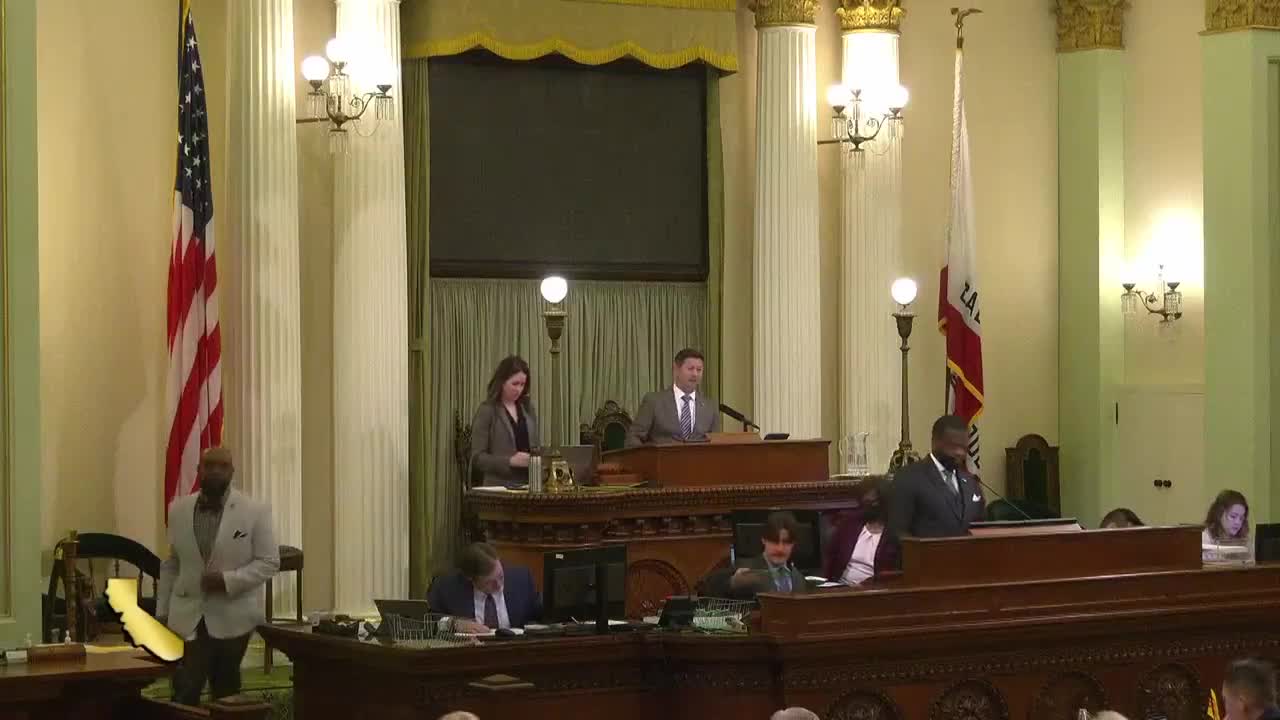 3MIN
Assembly Floor
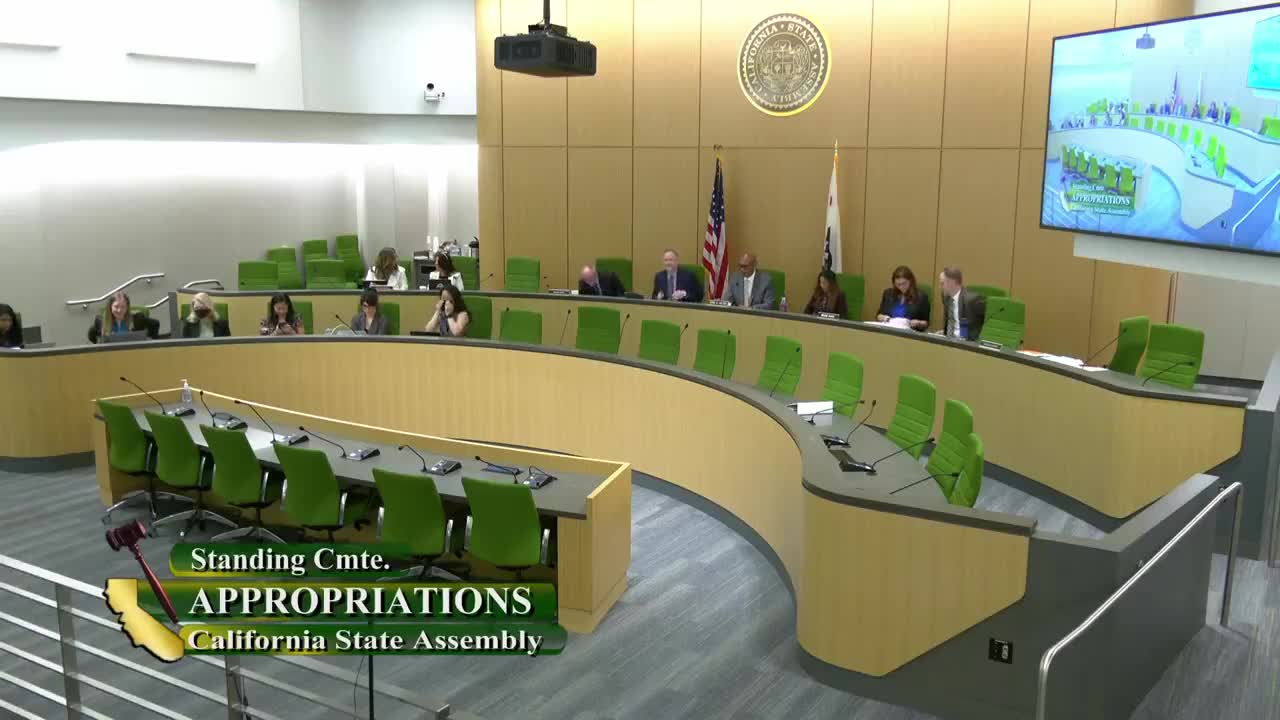 1MIN
Assembly Standing Committee on Appropriations
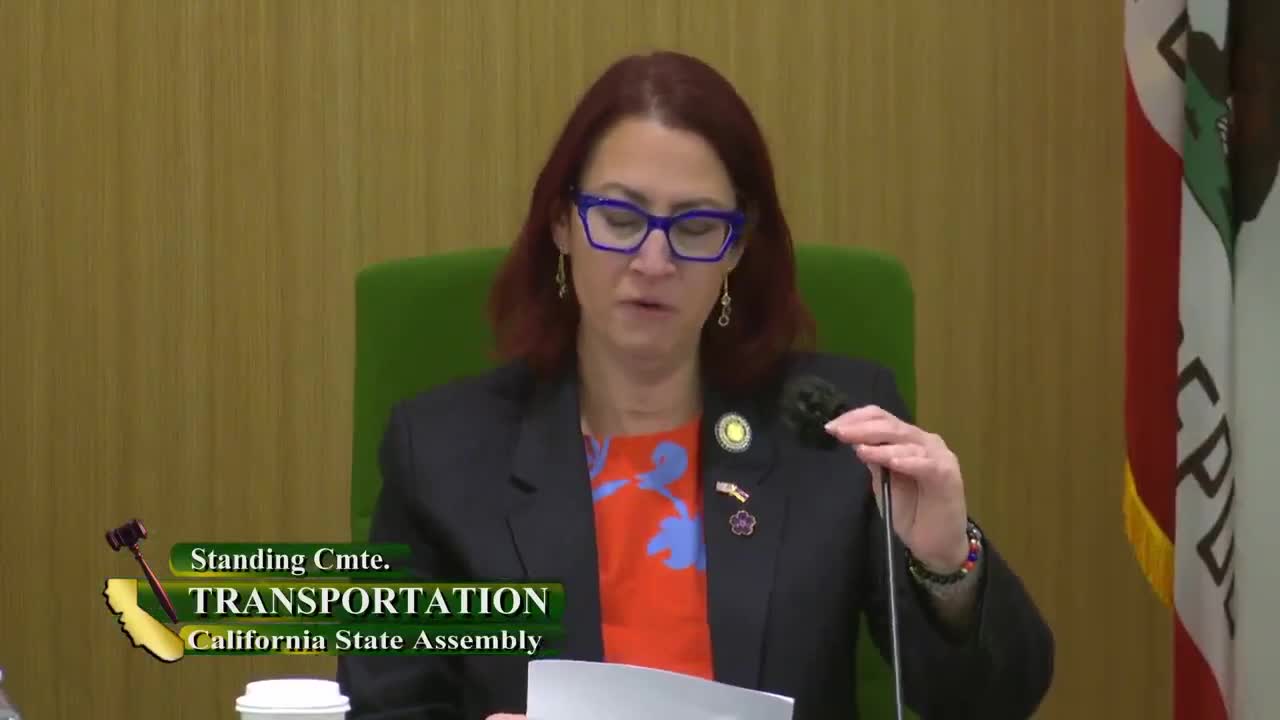 9MIN
Assembly Standing Committee on Transportation


Bill Co-Author(s):