AB 756: Department of Transportation: contaminated stormwater runoff: salmon and steelhead trout bearing surface waters.
- Session Year: 2023-2024
- House: Assembly
- Latest Version Date: 2023-03-02
Current Status:
Failed
(2024-02-01: From committee: Filed with the Chief Clerk pursuant to Joint Rule 56.)
Introduced
In Committee
First Chamber
In Committee
Second Chamber
Enacted
Existing law vests the Department of Transportation with full possession and control of all state highways.
This bill would require the department, in consultation with the State Water Resources Control Board, the Department of Toxic Substances Control, and the Department of Fish and Wildlife, to develop a programmatic environmental review process to prevent 6PPD and 6PPD-quinone from entering salmon and steelhead trout bearing surface waters of the state. The bill would require the departments 6PPD and 6PPD-quinone programmatic environmental review process to include, among other specified components, a pilot project at a particular highway crossing over the San Mateo Creek to study the effectiveness and cost effectiveness of installing and maintaining bioretention and biofiltration comparatively along department rights-of-way to eliminate the discharge of 6PPD and 6PPD-quinone into surface waters of the state, as specified. The bill would require, no later than December 31, 2026, the Director of Transportation to submit a report to the Legislature describing the departments strategy to eliminate the discharge of 6PPD and 6PPD-quinone by the department to all salmon and steelhead trout bearing surface waters of the state.
This bill would require, commencing January 1, 2027, the department to annually install bioretention or biofiltration controls at 10% of specified locations for 10 years, until the department has installed bioretention or biofiltration controls at all locations where the department is likely to discharge stormwater into salmon or steelhead trout bearing surface waters of the state. The bill would require the director to prepare an annual status report to be given to the Legislature describing the status of the departments progress in preventing the discharge of 6PPD and 6PPD-quinone on or before October 31 of each year, through October 31, 2038.
Existing law provides for the Department of Transportation to include $15,000,000 in its annual proposed budget for highway-railroad grade separation projects. Existing law requires the Public Utilities Commission to establish an annual priority list for expenditure of these funds, which may be allocated by the California Transportation Commission for various kinds of projects, including alteration of existing grade separations, construction of new grade separations for existing or proposed grade crossings, and removal or relocation of highways or railroad tracks to eliminate existing grade crossings. Existing law defines highway for these purposes.This bill would make a nonsubstantive change to that definition.Existing law provides for the Department of Transportation to include $15,000,000 in its annual proposed budget for highway-railroad grade separation projects. Existing law requires the Public Utilities Commission to establish an annual priority list for expenditure of these funds, which may be allocated by the California Transportation Commission for various kinds of projects, including alteration of existing grade separations, construction of new grade separations for existing or proposed grade crossings, and removal or relocation of highways or railroad tracks to eliminate existing grade crossings. Existing law defines highway for these purposes.
This bill would make a nonsubstantive change to that definition.
For the purposes of this article, the following terms have the following meanings:
(a)6PPD means the chemical compound N-(1,3-Dimethylbutyl)-N-phenyl-p-phenylenediamine commonly contained in motor vehicle tires.
(b)6PPD-quinone means the reaction product of 6PPD that is acutely toxic to aquatic life.
(c)Biofiltration means the effect of vegetated treatment facilities that reduce stormwater pollutant discharges by intercepting rainfall on vegetative canopy, and through incidental infiltration or evapotranspiration, and filtration.
(d)Bioretention means the effect of engineered facilities that store and treat stormwater by passing it through a specified soil profile, and either retain or detain the treated stormwater for flow attenuation.
(e)Consultation means the meaningful and timely process of seeking, discussing, and considering carefully the views of others, in a manner that is cognizant of all parties cultural values and, where feasible, seeking agreement. Consultation between government agencies and Native American tribes shall be conducted in a way that is mutually respectful of each partys sovereignty. Consultation shall also recognize the tribes potential needs for confidentiality with respect to places that have traditional tribal cultural significance.
(f)Tribal community means a community within a federally recognized California Native American tribe or nonfederally recognized Native American tribe on the contact list maintained by the Native American Heritage Commission for the purposes of Chapter 905 of the Statutes of 2004.
156.7.(a)The department, in consultation with the State Water Resources Control Board, the Department of Toxic Substances Control, and the Department of Fish and Wildlife, shall develop a programmatic environmental review process to prevent 6PPD and 6PPD-quinone from entering salmon and steelhead trout bearing surface waters of the state.
(b)The departments 6PPD and 6PPD-quinone programmatic environmental review process shall include all of the following:
(1)The pilot project, as described in subdivision (c), to study the effectiveness and cost effectiveness of installing and maintaining bioretention and biofiltration comparatively along department rights-of-way to eliminate the discharge of 6PPD and 6PPD-quinone into surface waters of the state.
(2)The map of all locations where the department is likely to discharge stormwater into salmon or steelhead trout bearing surface waters of the state, as described in subdivision (d).
(3)The strategy to eliminate, by December 31, 2037, the discharge of 6PPD and 6PPD-quinone by the department into salmon and steelhead trout bearing surface waters of the state, as required to be reported pursuant to subdivision (d).
(c)No later than December 31, 2025, the department shall construct a pilot project at the location where Highway 101 crosses the San Mateo Creek, in the City of San Mateo, to study the highest performance and most cost-effective methods to install bioretention and biofiltration comparatively as a method to eliminate 6PPD and 6PPD-quinone from entering salmon and steelhead trout bearing surface waters of the state. The study shall also measure the effectiveness of bioretention and biofiltration to control the discharge of microplastics from state highways into surface waters of the state.
(d)No later than December 31, 2026, the director shall submit a report to the Legislature describing the departments strategy to eliminate the discharge of 6PPD and 6PPD-quinone to all salmon and steelhead trout bearing surface waters of the state. The report shall include a map identifying all locations where the department is likely to discharge stormwater into salmon or steelhead trout bearing surface waters of the state.
(e)The department shall provide consultation on a government-to-government basis with tribal communities, as appropriate, in order to allow tribal officials the opportunity to provide meaningful and timely input in the development of the departments strategy to eliminate 6PPD and 6PPD-quinone from all salmon and steelhead treat bearing surface waters of the state.
(f)(1)The requirement for submitting a report imposed under subdivision (d) is inoperative on January 1, 2028, pursuant to Section 10231.5 of the Government Code.
(2)A report to be submitted pursuant to subdivision (d) shall be submitted in compliance with Section 9795 of the Government Code.
156.8.(a)Commencing January 1, 2027, the department shall annually install bioretention or biofiltration controls at 10 percent of the locations identified in the map and strategy developed pursuant to Section 156.7 for 10 years, until the department has installed bioretention or biofiltration controls at all locations where the department is likely to discharge stormwater into salmon or steelhead trout bearing surface waters of the state.
(b)Notwithstanding Section 10231.5 of the Government Code, the director shall prepare an annual status report describing the status of the departments progress in preventing the discharge of 6PPD and 6PPD-quinone. This report shall be given to the Legislature on or before October 31 of each year, through October 31, 2038. A report to be submitted pursuant to this section shall be submitted in compliance with Section 9795 of the Government Code.
SECTION 1.Section 2450 of the Streets and Highways Code is amended to read:2450.For purposes of this chapter:(a)Grade separation means, for the purpose of calculating the railroad contribution to the project, the theoretical structure necessary to separate the roadway from the railroad grade for the number of lanes on the existing highway and for the full width of the railroad corridor, in accordance with the current design standards of the department.(b)Project means the grade separation and other structures that actually separate the vehicular roadway from the railroad tracks, and all approaches, ramps, connections, drainage, and other construction required to make the grade separation operable and to effect the separation of grades. A grade separation project may include provision for separation of nonmotorized traffic from the vehicular roadway and the railroad tracks. If a separation of nonmotorized traffic is not to be included in a project, there shall be an affirmative finding that the separation of nonmotorized traffic is not in the public interest. On any project where there is only one railroad track in existence, the project shall be built so as to provide for expansion to two tracks when the Director of Transportation determines that the project is on an existing or potential major railroad passenger corridor. The project may consist of:(1)The alteration or reconstruction of existing grade separations.(2)The construction of new grade separations to eliminate existing grade crossings.(c)Highway means city street, a county highway, or a state highway that is not a freeway as defined in Section 257.(d)Railroad means a railroad corporation.For purposes of this chapter:
(a)Grade separation means, for the purpose of calculating the railroad contribution to the project, the theoretical structure necessary to separate the roadway from the railroad grade for the number of lanes on the existing highway and for the full width of the railroad corridor, in accordance with the current design standards of the department.
(b)Project means the grade separation and other structures that actually separate the vehicular roadway from the railroad tracks, and all approaches, ramps, connections, drainage, and other construction required to make the grade separation operable and to effect the separation of grades. A grade separation project may include provision for separation of nonmotorized traffic from the vehicular roadway and the railroad tracks. If a separation of nonmotorized traffic is not to be included in a project, there shall be an affirmative finding that the separation of nonmotorized traffic is not in the public interest. On any project where there is only one railroad track in existence, the project shall be built so as to provide for expansion to two tracks when the Director of Transportation determines that the project is on an existing or potential major railroad passenger corridor. The project may consist of:
(1)The alteration or reconstruction of existing grade separations.
(2)The construction of new grade separations to eliminate existing grade crossings.
(c)Highway means city street, a county highway, or a state highway which that is not a freeway as defined in Section 257.
(d)Railroad means a railroad corporation.
|
Date
|
Status
|
|---|---|
| Feb 1, 2024 | From committee: Filed with the Chief Clerk pursuant to Joint Rule 56. |
| Jan 31, 2024 | Died pursuant to Art. IV, Sec. 10(c) of the Constitution. |
| May 18, 2023 | In committee: Held under submission. |
| May 18, 2023 | Joint Rule 62(a), file notice suspended. (Page 1580.) |
| May 17, 2023 | In committee: Set, first hearing. Referred to APPR. suspense file. |
| May 10, 2023 | In committee: Hearing postponed by committee. |
| Apr 19, 2023 | From committee: Do pass and re-refer to Com. on APPR. (Ayes 7. Noes 0.) (April 18). Re-referred to Com. on APPR. |
| Mar 28, 2023 | From committee: Do pass and re-refer to Com. on E.S. & T.M. (Ayes 11. Noes 1.) (March 27). Re-referred to Com. on E.S. & T.M. |
| Mar 6, 2023 | Re-referred to Com. on TRANS. |
| Mar 2, 2023 | From committee chair, with author's amendments: Amend, and re-refer to Com. on TRANS. Read second time and amended. |
| Mar 2, 2023 | Referred to Coms. on TRANS. and E.S. & T.M. |
| Feb 14, 2023 | From printer. May be heard in committee March 16. |
| Feb 13, 2023 | Read first time. To print. |
|
Date
|
Description
|
Location
|
Votes
|
|
|---|---|---|---|---|
| Apr 18, 2023 | Do pass and be re-referred to the Committee on [Appropriations] | Assembly Standing Committee on Environmental Safety and Toxic Materials |
Passed |
|
| Mar 27, 2023 | Do pass and be re-referred to the Committee on [Environmental Safety and Toxic Materials] | Assembly Standing Committee on Transportation |
Passed |
This list shows positions taken on this bill by organizations on the date displayed, which is linked to the original source.
Positions by individuals are not included.
|
Organization
|
Position
|
Date
|
|---|---|---|
| California Coastkeeper Alliance | * Support | Apr 18, 2023 |
| California Trout | ** Support | |
| Clean Water Action | * Support | Apr 18, 2023 |
| Coachella Valley Waterkeeper | ** Support | |
| Defenders Of Wildlife | ** Support | |
| Environment California | * Support | Apr 18, 2023 |
| Heal The Bay | * Support | Apr 18, 2023 |
| Humboldt Baykeeper | ** Support | |
| Inland Empire Waterkeeper | ** Support | |
| LAANE | ** Support | |
| Los Angeles Waterkeeper | ** Support | |
| Monterey Bay Aquarium | ** Support | |
| Monterey Waterkeeper | ** Support | |
| Orange County Coastkeeper | ** Support | |
| Orange County Waterkeeper | ** Support | |
| Pacific Coast Federation of Fishermen's Association | ** Support | |
| Planning And Conservation League | ** Support | |
| Restore the Delta | ** Support | |
| Russian Riverkeeper | ** Support | |
| San Diego Coastkeeper | ** Support | |
| San Francisco Baykeeper | ** Support | |
| Santa Barbara Channelkeeper | ** Support | |
| Sierra Club California | ** Support | |
| South Yuba River Citizens League | ** Support | |
| The Nature Conservancy | ** Support | |
| The Otter Project | ** Support | |
| Trout Unlimited | * Support | Apr 18, 2023 |
| u.s. tire manufacturers association | ** Support | |
| Ventura Coastkeeper | ** Support | |
| Water Climate Trust | ** Support | |
| Wishtoyo Chumash Foundation | ** Support | |
| Yuba River Waterkeeper | ** Support |
Date of Hearing: May 17, 2023
ASSEMBLY COMMITTEE ON APPROPRIATIONS
Chris Holden, Chair
ABPCA Bill Id:AB 756
Author:(Papan) – As Amended Ver:March 2, 2023
Policy Committee: | Transportation | Vote: | 11 - 1 |
Environmental Safety and Toxic Materials | 7 - 0 | ||
|
|
Urgency: No State Mandated Local Program: No Reimbursable: No
SUMMARY:
This bill requires the California Department of Transportation (Caltrans) to develop a programmatic environmental review process to prevent N-(1,3-dimethylbutyl)-N'-phenyl-p-phenylenediamine (6PPD) and 6PPD-quinone from entering salmon and steelhead trout bearing surface waters of the state, install bioretention or biofiltration controls at specified locations, and report to the Legislature.
Specifically, this bill, among other things:
1) Requires Caltrans, in consultation with the State Water Resources Control Board (State Water Board), the Department of Toxic Substances Control (DTSC), and the Department of Fish and Wildlife (DFW), to develop a programmatic environmental review process to prevent 6PPD and 6PPD-quinone from entering salmon and steelhead trout bearing surface waters of the state.
2) Requires Caltrans, by December 31, 2025, to construct a pilot project at a specified location to study the highest performance and most cost-effective methods to install bioretention and biofiltration as a method to eliminate 6PPD and 6PPD-quinone from entering salmon and steelhead trout bearing surface waters of the state.
3) Requires the director of Caltrans, by December 31, 2026, to submit a report to the Legislature describing Caltrans's strategy to eliminate the discharge of 6PPD and 6PPD-quinone, including a map identifying all locations where Caltrans is likely to discharge stormwater into salmon or steelhead trout bearing surface waters of the state.
4) Requires Caltrans to provide consultation on a government-to-government basis with tribal communities, as appropriate, in order to allow tribal officials the opportunity to provide meaningful and timely input in the development of Caltrans' strategy pursuant to 3).
5) Requires Caltrans, commencing January 1, 2027, to annually install bioretention and biofiltration controls at 10% of the locations identified in its map and strategy for 10 years, until Caltrans has installed bioretention or biofiltration controls at all locations where Caltrans is likely to discharge stormwater, as identified in 3).
6) Requires the director of Caltrans, until October 31, 2038, to submit an annual report to the Legislature describing the status of Caltrans’ progress in preventing the discharge of 6PPD and 6PPD-quinone.
FISCAL EFFECT:
1) Caltrans anticipates costs of an unknown but significant amount, likely ranging from the tens of millions of dollars to hundreds of millions of dollars, to engineer and implement bioretention and biofiltration controls over a 10-year period and maintain these controls in perpetuity (State Highway Account). Caltrans notes its fiscal impact will depend on the extent of the problem and the engineering and efficacy of control solutions. See comments below for more detail.
2) The State Water Board estimates ongoing annual costs of approximately $225,000 for regional water board staff to conduct inspections during the construction and maintenance of management measures (Waste Discharge Permit Fund or General Fund).
3) Minor and absorbable costs to DTSC.
COMMENTS:
1) Purpose. According to the author:
There are many dangers facing our waterways, including micro-particle pollutants and toxic storm water runoff that threaten native species and ecosystems. One such pollutant is known as 6PPD-Q and it is extremely dangerous for salmon and trout populations native to California surface waters. This toxic chemical is introduced to our environment every time we drive, as 6PPD is a prominent ingredient in vehicle tires. Fortunately, biofiltration and bioretention systems, readily available storm water filtration management practices, effectively treat the runoff of 6PPD in terms of both toxic chemical exposure and salmon spawner survival. Assembly Bill (AB) 756 which will require the Department of Transportation to develop and implement a strategy to eliminate 6PPD-Q from storm water discharges into our California aquatic systems.
2) Background. In May 2022, DTSC initiated a rulemaking to list motor vehicle tires containing 6PPD as a Priority Product under its Safer Consumer Products Regulations. DTSC notes 6PPD has been used as an anti-degradant for decades and is found in most, if not all, motor vehicle tires. While 6PPD performs the critical function of protecting rubber from reactions with ozone and oxygen, which can lead to cracks, 6PPD is toxic to aquatic organisms at multiple trophic levels, can impair wildlife survival, and is toxic to algae. 6PPD-quinone, a reaction product of 6PPD, is acutely toxic to coho salmon and kills fish within a few hours after exposure. While little is known about the effect of 6PPD-quinone on other organisms, 6PPD-quinone may also be toxic to closely related species such as steelhead and chinook. DTSC further notes the loss of coho salmon in California has significantly impacted Native American tribes that have traditionally relied on the species as an important food source.
According to supporters of the bill:
Biofiltration and bioretention systems, readily available green infrastructure practices, effectively treat the runoff of 6PPD in terms of both toxic chemical exposure and salmon spawner survival. Biofiltration will not only prevent 6PPD from killing our endangered salmon and steelhead species, but can also prevent other stormwater pollutants – such as microplastics and toxic metals – from entering our waterways. In fact, biofiltration might be the only strategy, besides plastics source control, for preventing microplastics from running off our highways and into our waterways.
Supporters of the bill contend that Caltrans’ stormwater permit requires a commitment from the department to invest at least $145 million to address its stormwater exceedances and requires Caltrans to implement controls – very likely the same controls this bill requires – to address 1,650 acres of its property annually. Supporters argue Caltrans can simultaneously implement this bill and address its existing stormwater permit requirements through the installation of biofiltration along its highways that discharge stormwater to salmon or steelhead bearing streams.
Conversely, Caltrans contends that requirements to specifically monitor or control 6PPD and 6PPD-quinone are not currently in its stormwater permit and, therefore, additional staff and resources will be needed to, among other things, develop monitoring requirements and control mechanisms, engineer bioretention and biofiltration measures and study their efficacy and cost effectiveness, develop and deploy required mapping, and submit required reports. Caltrans notes its exact costs are relatively unknown at this time because, in its view, bioretention and biofiltration measures are just beginning to be developed and evaluated, and testing protocols for 6PPD and 6PPD-quinone are just becoming standardized.
Analysis Prepared by: Nikita Koraddi / APPR. / (916) 319-2081
Date of Hearing: April 18, 2023
ASSEMBLY COMMITTEE ON ENVIRONMENTAL SAFETY AND TOXIC MATERIALS
Alex Lee, Chair
ABPCA Bill Id:AB 756 (
Author:Papan) – As Amended Ver:March 2, 2023
SUBJECT: Department of Transportation: contaminated stormwater runoff: salmon and steelhead trout bearing surface waters
SUMMARY: Requires the California Department of Transportation (CalTrans), to develop a programmatic environmental review process to prevent 6PPD and 6PPD-quinone from motor vehicle tires from entering salmon and steelhead trout bearing surface waters of the state. Specifically, this bill:
1) Defines "6PPD" as the chemical compound N-(1,3-Dimethylbutyl)-N'-phenyl-p-phenylenediamine, commonly contained in motor vehicle tires.
2) Defines "6PPD-quinone" as the reaction product of 6PPD that is acutely toxic to aquatic life.
3) Defines "biofiltration" as the effect of vegetated treatment facilities that reduce stormwater pollutant discharges by intercepting rainfall on vegetative canopy, and through incidental infiltration of evapotranspiration and filtration.
4) Defines "bioretention" as the effect of engineered facilities that store and treat stormwater by passing it through a specified soil profile, and either retain or detain the treated stormwater for flow attenuation.
5) Requires CalTrans, in consultation with the State Water Resources Control Board (State Water Board), the Department of Toxic Substances Control (DTSC), and the Department of Fish and Wildlife (DFW), to develop a programmatic environmental review process to prevent 6PPD and 6PPD-quinone from entering salmon and steelhead trout bearing surface waters of the state.
6) Requires CalTrans's 6PPD and 6PPD-quinone programmatic environmental review (6PPD environmental review) process to include all of the following:
a) The pilot project, as further described, to study the effectiveness and cost effectiveness of installing and maintaining bioretention and biofiltration comparatively along CalTran's rights-of-way to eliminate the discharge of 6PPD and 6PPD-quinone into surface waters of the state;
b) The map of all locations where CalTrans is likely to discharge stormwater into salmon or steelhead trout bearing surface waters of the state; and,
c) The strategy to eliminate, by December 31, 2037, the discharge of 6PPD and 6PPD-quinone by CalTrans into salmon and steelhead trout bearing surface waters of the state.
7) Requires, no later than December 31, 2025, CalTrans, to construct a pilot project at the location where Highway 101 crosses the San Mateo Creek, in the City of San Mateo, to study the highest performance and most cost-effective methods to install bioretention and biofiltration comparatively as a method to eliminate 6PPD and 6PPD-quinone from entering salmon and steelhead trout bearing surface waters of the state.
8) Requires, no later than December 31, 2026, the director of CalTrans to submit a report to the Legislature describing CalTrans's strategy to eliminate the discharge of 6PPD and 6PPD-quinone to all salmon and steelhead trout bearing surface waters of the state.
9) Requires CalTrans to provide consultation on a government-to-government basis with tribal communities, as appropriate, in order to allow tribal officials the opportunity to provide meaningful and timely input in the development of CalTrans's strategy to eliminate 6PPD and 6PPD-quinone from all salmon and steelhead trout bearing surface waters of the state.
10) Requires, commencing January 1, 2027, CalTrans to annually install bioretention and biofiltration controls at 10 percent of the locations identified in the map and strategy developed in the 6PPD environmental review process for 10 years, until CalTrans has installed bioretention or biofiltration controls at all locations where CalTrans is likely to discharge stormwater into salmon or steelhead trout bearing surface waters of the state.
11) Requires the director of CalTrans to prepare an annual report describing the status of CalTrans's progress in preventing the discharge of 6PPD and 6PPD-quinone. Requires this report to be given to the Legislature on or before October 31 of each year, through October 31, 2028.
EXISTING LAW:
1) Establishes the federal Clean Water Act (CWA) to regulate discharges of pollutants into the waters of the United States and to regulate quality standards for surface waters. (33 United States Code (U.S.C.) §1251 et seq.)
2) Establishes the National Pollutant Discharge Elimination System (NPDES) permit program requiring the State Water Board and the nine California Regional Water Quality Control Boards (Regional Water Boards) to prescribe waste discharge requirements which, among other things, regulate the discharge of pollutants in stormwater, including municipal stormwater systems. (33 USC § 1342)
3) Establishes the Porter-Cologne Water Quality Control Act, which prohibits the discharge of pollutants to surface waters unless the discharger obtains a permit from the State Water Board. (Water Code § 13000 et seq.)
4) Requires DTSC to adopt regulations to establish a process to identify and prioritize chemicals and chemical ingredients that may be considered chemicals of concern; establish a process to evaluate chemicals of concern and potential alternatives to those chemicals of concern to determine how to best limit exposure or to reduce the level of hazard posed by a chemical of concern; and, specify the range of potential regulatory responses that DTSC may take after the alternatives analysis is completed. (Health & Safety Code § 25252, et. seq.)
FISCAL EFFECT: Unknown.
COMMENTS:
Need for the bill: According to the author, "To build a strong, safe, and sustainable future for California we must take action to preserve the health and safety of rivers and streams. There are many dangers facing our waterways, including micro-particle pollutants and toxic storm water runoff that threaten native species and ecosystems. One such pollutant is known as 6PPD-Q and it is extremely dangerous for salmon and trout populations native to California surface waters. This toxic chemical is introduced to our environment every time we drive, as 6PPD is a prominent ingredient in vehicle tires. Fortunately, biofiltration and bioretention systems, readily available storm water filtration management practices, effectively treat the runoff of 6PPD in terms of both toxic chemical exposure and salmon spawner survival. Assembly Bill (AB) 756 which will require the Department of Transportation to develop and implement a strategy to eliminate 6PPD-Q from storm water discharges into our California aquatic systems. This is just one step towards preserving the health and wellness of our water system in California."
Stormwater: Stormwater is water from rain or snow melt that runs off surfaces such as rooftops, paved streets, highways, or parking lots. As stormwater moves through, it picks up contaminants, such as oil, pesticides, herbicides, sediment, trash, bacteria, and metals, ultimately resulting in a toxic soup of runoff entering California's water ways. The runoff can then drain directly into a local stream, lake, or bay. Both the US EPA and the Regional Water Boards have determined that stormwater and urban runoff are significant sources of water pollution that can threaten aquatic life and public health. However, stormwater may also act as a resource and recharge groundwater when properly managed.
Stormwater pollution in California's water bodies: In Los Angeles County, approximately 100 million gallons of contaminated water and debris drain through the storm drain system each dry day. On rainy days the daily flow can increase to 10 billion gallons per day. Because stormwater drains directly into local water bodies, contamination of water bodies throughout the state by various pollutants is continuous. According to the State Water Board, 1,357 of the 2,623 segments of water bodies in California contain harmful levels of one or more types of pollutants, such as bacteria, metals, and pesticides. Excessive amounts of these pollutants can detrimentally affect the environment, as well as the health of humans and aquatic life.
Biofiltration and bioretention: According to the Los Angeles County NPDES Municipal Separate Storm Sewer System Permit, "Biofiltration" means a low-impact development (LID) best management practice (BMP) that reduces stormwater pollutant discharges by intercepting rainfall on vegetative canopy, and through incidental infiltration and/or evapotranspiration, and filtration, and "Bioretention" means a LID BMP that reduces stormwater runoff by intercepting rainfall on vegetative canopy, and through evapotranspiration and infiltration. The bioretention system typically includes a minimum two-foot (2′) top layer of a specified soil and compost mixture underlain by a gravel-filled temporary storage pit dug into the in-situ soil.
Green Chemistry in California: In 2008, the California legislature recognized the principle of Green Chemistry by enacting two landmark pieces of legislation, AB 1879 (Feuer and Huffman, Chapter 559, Statutes of 2008) and SB 509 (Simitian, Chapter 560, Statutes of 2008). These bills lay the statutory foundation for the state's Green Chemistry program and intend to establish a comprehensive approach to chemicals policy.
The structure for regulatory action required by the Green Chemistry legislation is broad and general. Rather than specifying particular chemicals or explicit regulatory action on those chemicals, the statutes authorize state agencies, primarily DTSC, to set up a process to identify and evaluate chemicals of concern and the products in which they are found, and to impose appropriate regulatory action for those chemicals and products in order to protect people and the environment. This unique statutory approach anticipated state agencies playing a greater role in developing strategies and policies designed to meet the general objectives of the statute.
AB 1879 requires DTSC to adopt regulations that fulfill two major requirements: 1) establish a process to identify and prioritize chemicals or chemical ingredients in consumer products that may be considered a chemical of concern; and, 2) establish a process for evaluating chemicals of concern in consumer products, and their potential alternatives, to determine how best to limit exposure or to reduce the level of hazard posed by the chemical.
The Safer Consumer Products regulatory process: To implement the Green Chemistry statutes, DTSC created what it called a "four-step continuous, science-based, iterative" regulatory process, which it deemed the "Safer Consumer Products" (SCP) regulations. The SCP regulations were adopted October 2013, and follow the process below:
- Candidate Chemicals – The regulations establish a list of "candidate chemicals" based on the work already done by other authoritative organizations, and specify a process for DTSC to identify additional chemicals as candidate chemicals.
- Priority Products – The regulations require DTSC to evaluate and prioritize product/candidate chemical combinations to develop a list of "priority products" for which alternatives analyses must be conducted. A candidate chemical that is the basis for a product being listed as a priority product is designated as a chemical of concern for that product and any alternative considered or selected to replace that product.
- Alternatives Analysis – The regulations require responsible entities (manufacturers, importers, assemblers, and retailers) to notify DTSC when their product is listed as a priority product. DTSC will post this information on its website. Manufacturers (or other responsible entities) of a product listed as a priority product must perform an alternatives analysis for the product and the chemicals of concern in the product to determine how best to limit exposures to, or reduce the level of adverse public health and environmental impacts posed by, the chemicals of concern in the product.
- Regulatory Responses – The regulations require DTSC to identify and implement regulatory responses designed to protect public health and/or the environment, and maximize the use of acceptable and feasible alternatives of least concern. DTSC may require regulatory responses for a priority product (if the manufacturer decides to retain the priority product), or for an alternative product selected to replace the priority product.
DTSC proposes Motor Vehicle Tires Containing 6PPD as a priority product: On May 20, 2022, DTSC initiated rulemaking to list motor vehicle tires containing N-(1,3-dimethylbutyl)-N'-phenyl-p-phenylenediamine (6PPD) as a Priority Product under the Safer Consumer Products (SCP) Regulations. As background for listing 6PPD as a priority product, DTSC's website provides the following summary:
"The tire antidegradant 6PPD and its reaction product 6PPD-quinone are highly toxic to aquatic organisms. 6PPD has been used as an antidegradant for decades and is found in most, if not all, motor vehicle tires. 6PPD performs the critical function of protecting rubber from reactions with ozone and oxygen, which can lead to cracks.
However, 6PPD is toxic to aquatic organisms at multiple trophic levels, can impair wildlife survival, and is toxic to algae. 6PPD-quinone, a reaction product of 6PPD, is acutely toxic to coho salmon and kills fish within a few hours after exposure. While little is known about the effect of 6PPD-quinone on other organisms, 6PPD-quinone may also be toxic to closely related species such as steelhead and chinook. Tires release 6PPD-quinone into the aquatic environment, sometimes at levels lethal to coho salmon.
Over the life of a tire, 6PPD continuously migrates to the surface, where it provides protection from degradation caused by ozone and oxygen. Tire wear particles (TWP) are generated during use as tires roll across the road surface, particularly as vehicles brake, accelerate, and turn. TWP, and the 6PPD they contain, can then enter the aquatic environment from road dust into surface runoff and stormwater.
While it is unclear exactly where and how 6PPD-quinone is formed, detections of 6PPD-quinone in California waterways clearly indicate that it is sufficiently persistent in aquatic systems for aquatic organisms to be exposed to the chemical at levels that may cause harm. 6PPD-quinone has been measured in California streams at concentrations above those shown to kill at least half of coho salmon in laboratory experiments.
Based on the criteria in the Safer Consumer Product Regulations, DTSC has determined that aquatic organisms can be exposed to 6PPD and 6PPD-quinone derived from motor vehicle tires. This exposure may cause or contribute to significant adverse impacts to aquatic organisms, including two populations of coho salmon in California, one of which is endangered, the other threatened. 6PPD-quinone is present in California runoff and waterways above concentrations that kill coho in laboratory studies. Exposure to 6PPD and 6PPD-quinone may jeopardize the recovery of coho salmon and other imperiled species. The loss of coho salmon in California has significantly impacted Native American tribes in California that have traditionally relied on the species as an important food source. The loss of core traditional food sources for tribal communities has been linked to loss of culture, increased physical and mental health issues, and increased poverty."
This bill: AB 756 requires CalTrans to develop strategies to prevent the harmful chemicals 6PPD and 6PPD-quinone from entering salmon and steelhead trout bearing surface waters of the state. The bill, appropriately requires CalTrans to consult with the various state agencies with knowledge and expertise around these chemicals, related aquatic species and best management practices for reducing pollutants in stormwater. It is important to note that while DTSC has initiated a rulemaking to list 6PPD as a priority product, it is a process that could take several years before there is a regulatory response dealing with this chemical in tires. Additionally, it is unknown what, if any, regulatory action would be taken by DTSC. In the meantime, this bill seeks to prevent 6PPD and 6PPD-quinone from entering surface waters and negatively impacting aquatic species.
Arguments in support: According to Clean Water Action, "AB 756 would require Caltrans to develop and implement a strategy to eliminate 6PPD – a known fish killing chemical compound – from stormwater discharges into salmon and steelhead trout bearing waters. Puget Sound researchers identified a connection between stormwater from watersheds near roads and salmon deaths – the coho mortality phenomenon - decades ago. In 2020 the University of Washington released a report that identified the toxic chemical responsible for the fish kills as 6PPD-quinone.
AB 756 would require Caltrans to eliminate the exposure of 6PPD by identifying where state highways cross salmon and steelhead bearing waters and cost-effective biofiltration and bioretention systems in order to install such systems throughout the state. The legislation would require Caltrans, starting in 2027, to install biofiltration at 10% of its salmon or steelhead water-bearing crossings for 10 years until all crossings have biofiltration to prevent 6PPD from reaching surface waters of the state.
There are numerous reasons to support AB 756, which include protecting salmon and steelhead populations, promoting environmental justice and anti-racism by protecting subsistence and tribal consumers of these species, maintaining water quality, and addressing multiple contaminants in addition to 6 PPD."
Arguments in opposition:
None on file.
Related legislation:
AB 2106 (Robert Rivas, 2022). Would have required the State Water Board to modernize its stormwater tracking system, on or before December 31, 2025, and to establish a statewide commercial, industrial, and institutional national pollutant discharge elimination system order. This bill was vetoed by the Governor.
REGISTERED SUPPORT / OPPOSITION:
Support
California Coastkeeper Alliance
California Trout
Clean Water Action
Coachella Valley Waterkeeper
Defenders of Wildlife
Heal the Bay
Humboldt Baykeeper
Inland Empire Waterkeeper
Laane (Los Angeles Alliance for A New Economy)
Los Angeles Waterkeeper
Monterey Bay Aquarium
Monterey Waterkeeper
Orange County Coastkeeper
Pacific Coast Federation of Fishermen's Association
Planning and Conservation League
Restore the Delta
Russian Riverkeeper
San Diego Coastkeeper
San Francisco Baykeeper
Santa Barbara Channelkeeper
Sierra Club California
South Yuba River Citizens League
The Nature Conservancy
The Otter Project
Trout Unlimited
U.S. Tire Manufacturers Association
Ventura Coastkeeper
Water Climate Trust
Wishtoyo Chumash Foundation
Yuba River Waterkeeper
Opposition
None on file.
Analysis Prepared by: Josh Tooker / E.S. & T.M. /
Date of Hearing: March 27, 2023
ASSEMBLY COMMITTEE ON TRANSPORTATION
Laura Friedman, Chair
ABPCA Bill Id:AB 756 (
Author:Papan) – As Amended Ver:March 2, 2023
SUBJECT: Department of Transportation: contaminated stormwater runoff: salmon and steelhead trout bearing surface waters
SUMMARY: Requires the California Department of Transportation (Caltrans), in consultation with the State Water Resources Control Board (SWRCB) and the Department of Toxic Substances Control (DTSC), to develop a programmatic environmental review process to prevent 6PPD and 6PPD-quinone (Q) from entering salmon and steelhead trout bearing surface waters of the state. Specifically, this bill:
- Defines “6PPD” as the chemical compound N-(1,3-Dimethylbutyl)-N′-phenyl-p-phenylenediamine commonly contained in motor vehicle tires.
- “6PPD-quinone” means the reaction product of 6PPD that is acutely toxic to aquatic life.
- “Biofiltration” means the effect of vegetated treatment facilities that reduce stormwater pollutant discharges by intercepting rainfall on vegetative canopy, and through incidental infiltration or evapotranspiration, and filtration.
- “Bioretention” means the effect of engineered facilities that store and treat stormwater by passing it through a specified soil profile, and either retain or detain the treated stormwater for flow attenuation.
- “Consultation” means the meaningful and timely process of seeking, discussing, and considering carefully the views of others, in a manner that is cognizant of all parties’ cultural values and, where feasible, seeking agreement. Consultation between government agencies and Native American tribes shall be conducted in a way that is mutually respectful of each party’s sovereignty. Consultation shall also recognize the tribes potential needs for confidentiality with respect to places that have traditional tribal cultural significance.
- “Tribal community” means a community within a federally recognized California Native American tribe or nonfederally recognized Native American tribe on the contact list maintained by the Native American Heritage Commission for the purposes of Chapter 905 of the Statutes of 2004.
- Requires Caltrans’ 6PPD and 6PPD-quinone programmatic environmental review process to include:
- A pilot project no later than December 31, 2025 in the city of San Mateo where Highway 101 crosses the San Mateo Creek to study the effectiveness and cost effectiveness of installing and maintaining bioretention and biofiltration comparatively along department rights-of-way to eliminate the discharge of 6PPD and 6PPD-Q into surface waters of the state.
- A map of all locations where Caltrans is likely to discharge stormwater into salmon or steelhead trout bearing surface waters of the state. A report to the Legislature no later than December 31, 2026 describing the strategy to eliminate, by December 31, 2037, the discharge of 6PPD and 6PPD-Q by the department into salmon and steelhead trout bearing surface waters of the state. States this report requirement is inoperative on January 1, 2028.
- Requires Caltrans to provide consultation on a government-to-government basis with tribal communities, as appropriate, in order to allow tribal officials the opportunity to provide meaningful and timely input in the development of the department’s strategy to eliminate 6PPD and 6PPD-Q from all salmon and steelhead treat bearing surface waters of the state.
- Requires Caltrans, beginning January 1, 2027, to annually install bioretention or biofiltration controls at 10% of the locations identified in the map for 10 years, until the department has installed bioretention or biofiltration controls at all locations where it is likely to discharge stormwater into salmon or steelhead trout bearing surface waters of the state.
- Requires the Director of Caltrans to prepare an annual status report describing the status of the department’s progress in preventing the discharge of 6PPD and 6PPD-Q and give this report to the Legislature on or before October 31 of each year, through October 31, 2038.
EXISTING LAW:
- Establishes Caltrans and provides that it has full possession and control of all state highways and property and rights in property acquired for state highway purposes. (Streets and Highways Code (SHC) 90)
- Requires Caltrans to prepare an annual report to the Legislature describing the status of progress in locating, assessing, funding, and remediating barriers to fish passage, and requires an assessment of potential barriers to fish passage prior to commencing project design (SHC 156 et seq.).
- Implements and maintains a state highway system which supports the goals and priorities determined through the transportation planning process, which is in conformity with comprehensive statewide and regional transportation plans, and which is compatible with statewide and regional socioeconomic and environmental goals, priorities and available resources. (Government Code 14000.5)
- Establishes the federal Clean Water Act (CWA) to regulate discharges of pollutants into the waters of the United States and to regulate quality standards for surface waters. (United States Code (USC) 1251 et seq.)
- Establishes the National Pollutant Discharge Elimination System (NPDES) permit program requiring the State Water Board and the nine California Regional Water Boards to prescribe waste discharge requirements which, among other things, regulate the discharge of pollutants in stormwater, including municipal stormwater systems. (USC Code 1342)
FISCAL EFFECT: Unknown
COMMENTS:
In lowland Puget Sound, many urban streams in the vicinity of the city of Seattle were the focus of extensive physical and biological restoration activities in the 1990s. These efforts restored wild salmon access to urban streams. However, in follow-up studies of these restored urban habitats, salmon populations experienced high mortalities. Researchers found that this die-off coincided with high storm water run-off from roads, and they identified 6PPD-Q as the causal toxin.
6PPD is an antioxidant added to vehicle tires that improve their longevity by making them resistant to degradation when exposed to the oxygen in our atmosphere. The reaction between 6PPD and ozone that confers its protective effects also creates a toxic by-product known as 6PPD-Q. 6PPD-Q is acutely toxic to Coho Salmon, Pacific Steelhead Trout and Chinook salmon populations.
Storm water is defined by US Environmental Protection Agency (EPA) as the runoff generated when precipitation from rain and snowmelt events flows over land or impervious surfaces without percolating into the ground. Storm water mobilizes pollutants such as motor oil and trash. In most cases, storm water flows directly to water bodies through sewer systems, contributing a major source of pollution to rivers, lakes, and the ocean.
Storm water discharges in California are regulated through National Pollutant Discharge Elimination System (NPDES) permits. The permit regulates storm water discharges from: (1) all Caltrans-owned municipal separate storm sewer systems;(2) Caltrans-owned right of way, parking, storage and maintenance facilities, including equipment cleaning operations and any other non-industrial facilities with activities that have the potential of generating significant quantities of pollutants; and (3) certain non-stormwater discharge, and requires that Caltrans’ construction program complies with specific requirements issued by the SWRCB. Caltrans’ Stormwater Management Program provides water quality monitoring, best management practices development along with implementing guidance and tools.
The SWRCB regulates stormwater and non-stormwater discharges in several ways. It requires Caltrans to comply with existing total maximum daily loads (TMDLs) established by the United States Environmental Protection Agency (U.S. EPA) or adopted by the Regional Water Quality Control Boards (Regional Water Boards. The SWRCB also identifies stormwater discharges from the Department’s transportation system as a source of pollutants that impair receiving water and requires Caltrans to comply with a total of 88 TMDLs per TMDL-specific waste load allocations and associated compliance deadlines. Caltrans is required to implement stormwater pollutant control measures (e.g., best management practices, cooperative agreements, etc.) to address its contribution to the water quality impairment of the receiving water. At this time, Caltrans has not taken specific actions to reduce the discharge of 6PPD-Q into salmon or steelhead trout-bearing surface waters of the state.
In the 2016 Statewide Stormwater Management Plan, biofiltration is listed as one of the 11 best management practices approved for use by Caltrans. Caltrans has tested biofiltrantion strategies that involve polluted stormwater passing through vegetation, sedimentation, or soil and determined them to be a “fiscally reasonable and technically feasible” approach to reducing stormwater pollution. Preliminary results published in a report by the Washington State Department of Ecology, observed that 6PPD and 6PPD-Q clung to the soil, suggesting this might be a viable strategy.
According to the author, “To build a strong, safe, and sustainable future for California we must take action to preserve the health and safety of rivers and streams. For that reason, we are required to address the many dangers facing our waterways including micro-particle pollutants and toxic storm water runoff that threaten native species and ecosystems. One such pollutant is known as 6PPD-Q and it is extremely dangerous for salmon and trout populations native to California surface waters. This comes from our vehicle tires every time we drive. Biofiltration and bioretention systems, readily available storm water filtration management practices, effectively treat the runoff of 6PPD in terms of both toxic chemical exposure and salmon spawner survival. Therefore, I am proposing Assembly Bill (AB) 756 which will require the Department of Transportation to develop and implement a strategy to eliminate 6PPD-Q from storm water discharges into our California aquatic systems. This is just one step towards preserving the health and wellness of our water system in California.”
Committee comments: This bill establishes a pilot project to study to the cost effectiveness of various approaches to capturing 6PPD and 6PPD-Q to in order to reduce toxic stormwater runoff, followed by a requirement that the Caltrans install bioretention or biofiltration controls at 10% of the priority sites identified for each of the next 10 years beginning in 2027.
Caltrans has a responsibility to ensure that its roads do not contribute to negative environmental impacts; however, it has not taken specific actions to address this toxin. It will be important for SWRCB to assess this relatively new toxin and work with Caltrans to help to determine the best way to minimize its negative impacts.
Installing the proposed control systems will likely be of significant cost to Caltrans and it is reasonable to consider the source of the pollutant, which is tires, and if tire manufacturers have a responsibility to contribute to the cost of managing the toxins released by their tires.
U.S. Tire Manufacturers Association (USTMA) writing in support states, “USTMA and its members care deeply about this issue and are committed to collaborating with researchers, regulators, and stakeholders to better understand these distinct compounds (6PPD and 6PPD-Quinone); fill relevant knowledge gaps to support the development of potential alternatives and mitigation strategies; advance an alternatives analysis of 6PPD in tires under California’s Safer Consumer Products Regulations; and increase the use of effective mitigation strategies.”
Previous legislation: SB 1263 (Portantino), Chapter 609, Statutes of 2018 requires the Ocean Protection Council to adopt and Implement a Statewide Microplastics Strategy to address microplastic materials that pose an emerging concern for ocean health.
SB 541 (Allen), Chapter 811, Statutes of 2017 requires specified state and regional entities to consult on and recommend best design and use practices for storm water and dry weather runoff capture that can generally be applied to all new, reconstructed, or altered public schools.
AB 2379 (Bloom of 2018) would have required that clothing made from fabric that is composed of more than 50% synthetic material bear a conspicuous label that is visible to the consumer at the point of sale, as specified, including a statement that the garment sheds plastic microfibers when washed. AB 2379 is currently on the Assembly inactive file. Died on inactive file.
REGISTERED SUPPORT / OPPOSITION:
Support
California Coastkeeper Alliance
Clean Water Action
Coachella Valley Waterkeeper
Heal the Bay
Humboldt Baykeeper
Inland Empire Waterkeeper
Laane
Monterey Bay Aquarium
Monterey Waterkeeper
Orange County Coastkeeper
Orange County Waterkeeper
Planning and Conservation League
Restore the Delta
Russian Riverkeeper
San Diego Coastkeeper
Santa Barbara Channelkeeper
South Yuba River Citizens League
The Otter Project
U.s. Tire Manufacturers Association
Water Climate Trust
Wishtoyo Chumash Foundation
Yuba River Waterkeeper
Opposition
None on file
Analysis Prepared by: Dirk Spencer / TRANS. / (916) 319-2093
Discussed in Hearing
 10MIN
Assembly Standing Committee on Environmental Safety and Toxic Materials
 6MIN
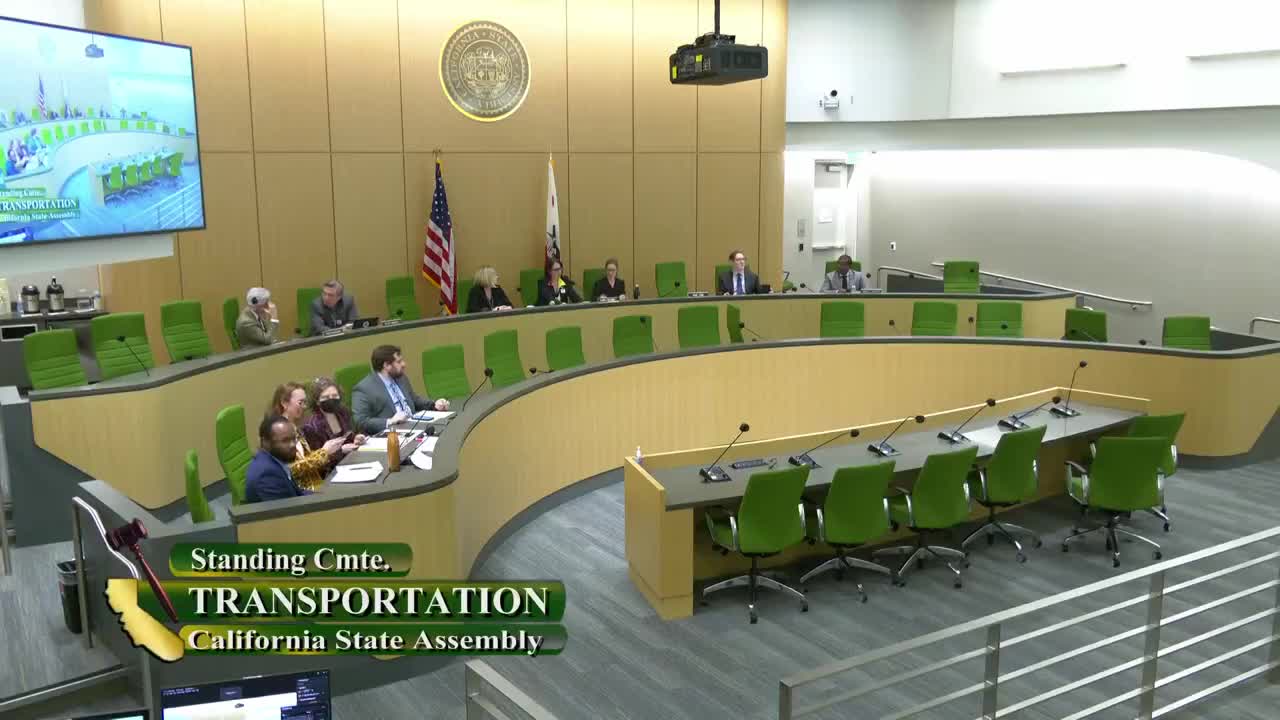
Assembly Standing Committee on Transportation
Bill Author

Bill Co-Author(s):