AB 765: Physicians and surgeons: medical specialty titles.
- Session Year: 2023-2024
- House: Assembly
- Latest Version Date: 2023-04-17
Current Status:
Failed
(2024-02-01: From committee: Filed with the Chief Clerk pursuant to Joint Rule 56.)
Introduced
In Committee
First Chamber
In Committee
Second Chamber
Enacted
Existing law, the Medical Practice Act, establishes the Medical Board of California for the licensure and regulation of physicians and surgeons. Existing law makes it a misdemeanor for a person who is not licensed as a physician and surgeon under the act, except as specified, to use certain words, letters, and phrases or any other terms that imply that the person is authorized to practice medicine as a physician and surgeon.
This bill would enact the California Patient Protection, Safety, Disclosure, and Transparency Act. The bill would would, except as prescribed, make it a misdemeanor for a person who does not have a valid, unrevoked, and unsuspended certificate as a physician and surgeon to use any medical specialty title, as specified, or any titles, terms, letters, words, abbreviations, description of services, designations, or insignia indicating or implying that the person is licensed to practice under the act. The bill would make related legislative findings and declarations. By creating a new crime, this bill would impose a state-mandated local program.
The California Constitution requires the state to reimburse local agencies and school districts for certain costs mandated by the state. Statutory provisions establish procedures for making that reimbursement.
This bill would provide that no reimbursement is required by this act for a specified reason.
Existing law, the Medical Practice Act, provides establishes the Medical Board of California for the licensure and regulation of physicians and surgeons by the Medical Board of California. surgeons. Existing law makes it a misdemeanor for a person who is not licensed as a physician and surgeon under the act, except as specified, to use certain words, letters, and phrases or any other terms that imply that the person is authorized to practice medicine as a physician and surgeon.
This bill would enact the California Patient Protection, Safety, Disclosure, and Transparency Act. The bill would make it a misdemeanor for a person who does not have a valid, unrevoked, and unsuspended certificate as a physician and surgeon to use any medical specialty title, as specified, or any titles, terms, letters, words, abbreviations, description of services, designations, or insignia indicating or implying that the person is licensed to practice under the act. The bill would make related legislative findings and declarations. By creating a new crime, this bill would impose a state-mandated local program.
The California Constitution requires the state to reimburse local agencies and school districts for certain costs mandated by the state. Statutory provisions establish procedures for making that reimbursement.
This bill would provide that no reimbursement is required by this act for a specified reason.
Existing law, the Medical Practice Act, provides for the licensure and regulation of physicians and surgeons by the Medical Board of California. Existing law makes it a misdemeanor for a person who is not licensed as a physician and surgeon under the act, except as specified, to use certain words, letters, and phrases or any other terms that imply that the person is authorized to practice medicine as a physician and surgeon.
This bill would enact the California Patient Protection, Safety, Disclosure, and Transparency Act. The bill would make it a misdemeanor for a person who does not have a valid, unrevoked, and unsuspended certificate as a physician and surgeon to use any medical specialty title, as specified, or any titles, terms, letters, words, abbreviations, description of services, designations, or insignia indicating or implying that the person is licensed to practice under the act. The bill would make related legislative findings and declarations. By creating a new crime, this bill would impose a state-mandated local program.
The California Constitution requires the state to reimburse local agencies and school districts for certain costs mandated by the state. Statutory provisions establish procedures for making that reimbursement.
This bill would provide that no reimbursement is required by this act for a specified reason.
This act shall be known, and may be cited, as the California Patient Protection, Safety, Disclosure, and Transparency Act.
SEC. 2.The Legislature finds and declares all of the following:
(a)Consumer protection is the highest priority of all boards, bureaus, and commissions within the Department of Consumer Affairs.
(b)Health care consumers can be confused and misled about the differences between the qualifications and education of various types of health care providers.
(c)Misuse of health care provider titles can cause patients to mistakenly believe they are meeting with physicians and surgeons, such as medical doctors or doctors of osteopathic medicine, when they are not.
(d)According to the American Medical Associations Truth in Advertising surveys, patients want their health care professional to clearly designate their education and training.
(e)According to the American Medical Associations Truth in Advertising surveys, 88 percent of patient respondents agree that only licensed medical doctors or doctors of osteopathic medicine should be able to use the title of physician.
(f)According to the American Medical Associations Truth in Advertising surveys, 79 percent of patient respondents would support legislation in their state to require all health care advertising materials to clearly designate the level of education, skills, and training of all health care professionals promoting their services.
(g)Patients deserve to have increased clarity and transparency in the education and training of their health care providers.
(h)Confusing or misleading health care advertising and communications have the potential to put patient safety at risk.
(i)Requiring health care providers to communicate and display their proper title, credentials, and capabilities allows patients to make informed choices about their health care.
(j)Uninformed health care choices can lead to unintended and potentially dangerous consequences.
SEC. 3.Section 2054 of the Business and Professions Code is amended to read:2054.(a)Any person who uses in any sign, business card, or letterhead, or, in an advertisement, the words doctor or physician, the letters or prefix Dr., the initials M.D. or D.O., or any other terms or letters indicating or implying that the person is a physician and surgeon, physician, surgeon, or practitioner under the terms of this or any other law, or that the person is entitled to practice hereunder, or who represents or holds themselves out as a physician and surgeon, physician, surgeon, or practitioner under the terms of this or any other law, without having at the time of so doing a valid, unrevoked, and unsuspended certificate as a physician and surgeon under this chapter, is guilty of a misdemeanor.
(b)Notwithstanding subdivision (a), any of the following persons may use the words doctor or physician, the letters or prefix Dr., or the initials M.D. or D.O.:
(1)A graduate of a medical or an osteopathic medical school approved or recognized by the medical or osteopathic medical board while enrolled in a postgraduate training program approved by the board.
(2)A graduate of a medical or an osteopathic medical school who does not have a certificate as a physician and surgeon under this chapter if the individual meets all of the following requirements:
(A)If issued a license to practice medicine in any jurisdiction, has not had that license revoked or suspended by that jurisdiction.
(B)Does not otherwise hold themselves out as a physician and surgeon entitled to practice medicine in this state except to the extent authorized by this chapter.
(C)Does not engage in any of the acts prohibited by Section 2060.
(3)A person authorized to practice medicine under Section 2111 or 2113 subject to the limitations set forth in those sections.
(4)A person holding a current and active license under another chapter of this division, to the extent the use of the title is consistent with the act governing the practice of that license.
(5)A person whose use of the word doctor or the prefix Dr. is not associated with any claim of entitlement to practice medicine or any other professional service for which the use of the title would be untrue or misleading pursuant to Section 17500.
(c)(1)A person shall not use any medical specialty title, including the names or titles anesthesiologist, cardiologist, dermatologist, doctor of osteopathic medicine, emergency physician, endocrinologist, family physician, gastroenterologist, general practitioner, gynecologist, hematologist, hospitalist, internist, interventional pain medicine physician, laryngologist, medical doctor, nephrologist, neurologist, obstetrician, oncologist, ophthalmologist, orthopedic surgeon, orthopaedic surgeon, orthopedist, orthopaedist, osteopathic physician, otologist, otolaryngologist, otorhinolaryngologist, pathologist, pediatrician, perinatologist, plastic surgeon, primary care physician, proctologist, psychiatrist, radiologist, reproductive endocrinologist, rheumatologist, rhinologist, surgeon, urogynecologist, or urologist, or any other titles, terms, letters, words, abbreviations, description of services, designations, or insignia, alone or in combination with any other title, indicating or implying that the person is licensed under this chapter to practice as such, unless the person has at the time of so doing a valid, unrevoked, and unsuspended certificate as a physician and surgeon under this chapter. A person who violates this subdivision is guilty of a misdemeanor.
(2)This subdivision does not prevent a person holding a current and active license under another chapter of this division from using any term identified on their license, certificate, or registration, or from making any truthful statement that they specialize in a service or field that is within their licensed scope of practice and that does not contain any of the medical specialty titles specified in paragraph (1).
(3)This subdivision does not prevent an individual licensed under this chapter from using the term surgeon as long as that individual has been granted privileges to perform surgery in a health care facility licensed pursuant to Chapter 2 (commencing with Section 1250) of Division 2 of the Health and Safety Code, a surgical clinic licensed pursuant to paragraph (1) of subdivision (b) of Section 1204 of the Health and Safety Code, an outpatient setting accredited by an accreditation agency, as defined in Section 1248 of the Health and Safety Code, or an ambulatory surgical center certified to participate in the Medicare Program under Title XVIII of the federal Social Security Act (42 U.S.C. Sec. 1395 et seq.).
(4)Paragraph (1) does not apply to any person who possesses a license pursuant to Section 1626, or holds a special permit under Section 1640, when using a dental specialty or discipline title, as defined in Section 1640.1.
SEC. 4.No reimbursement is required by this act pursuant to Section 6 of Article XIIIB of the California Constitution because the only costs that may be incurred by a local agency or school district will be incurred because this act creates a new crime or infraction, eliminates a crime or infraction, or changes the penalty for a crime or infraction, within the meaning of Section 17556 of the Government Code, or changes the definition of a crime within the meaning of Section 6 of Article XIIIB of the California Constitution.
This act shall be known, and may be cited, as the California Patient Protection, Safety, Disclosure, and Transparency Act.
SEC. 2.The Legislature finds and declares all of the following:
(a)Consumer protection is the highest priority of all boards, bureaus, and commissions within the Department of Consumer Affairs.
(b)Health care consumers can be confused and misled about the differences between the qualifications and education of various types of health care providers.
(c)Misuse of health care provider titles can cause patients to mistakenly believe they are meeting with physicians and surgeons, such as medical doctors or doctors of osteopathic medicine, when they are not.
(d)According to the American Medical Associations Truth in Advertising surveys, patients want their health care professional to clearly designate their education and training.
(e)According to the American Medical Associations Truth in Advertising surveys, 88 percent of patient respondents agree that only licensed medical doctors or doctors of osteopathic medicine should be able to use the title of physician.
(f)According to the American Medical Associations Truth in Advertising surveys, 79 percent of patient respondents would support legislation in their state to require all health care advertising materials to clearly designate the level of education, skills, and training of all health care professionals promoting their services.
(g)Patients deserve to have increased clarity and transparency in the education and training of their health care providers.
(h)Confusing or misleading health care advertising and communications have the potential to put patient safety at risk.
(i)Requiring health care providers to communicate and display their proper title, credentials, and capabilities allows patients to make informed choices about their health care.
(j)Uninformed health care choices can lead to unintended and potentially dangerous consequences.
SEC. 3.Section 2054 of the Business and Professions Code is amended to read:2054.(a)Any person who uses in any sign, business card, or letterhead, or, in an advertisement, the words doctor or physician, the letters or prefix Dr., the initials M.D. or D.O., or any other terms or letters indicating or implying that the person is a physician and surgeon, physician, surgeon, or practitioner under the terms of this or any other law, or that the person is entitled to practice hereunder, or who represents or holds themselves out as a physician and surgeon, physician, surgeon, or practitioner under the terms of this or any other law, without having at the time of so doing a valid, unrevoked, and unsuspended certificate as a physician and surgeon under this chapter, is guilty of a misdemeanor.
(b)Notwithstanding subdivision (a), any of the following persons may use the words doctor or physician, the letters or prefix Dr., or the initials M.D. or D.O.:
(1)A graduate of a medical or an osteopathic medical school approved or recognized by the medical or osteopathic medical board while enrolled in a postgraduate training program approved by the board.
(2)A graduate of a medical or an osteopathic medical school who does not have a certificate as a physician and surgeon under this chapter if the individual meets all of the following requirements:
(A)If issued a license to practice medicine in any jurisdiction, has not had that license revoked or suspended by that jurisdiction.
(B)Does not otherwise hold themselves out as a physician and surgeon entitled to practice medicine in this state except to the extent authorized by this chapter.
(C)Does not engage in any of the acts prohibited by Section 2060.
(3)A person authorized to practice medicine under Section 2111 or 2113 subject to the limitations set forth in those sections.
(4)A person holding a current and active license under another chapter of this division, to the extent the use of the title is consistent with the act governing the practice of that license.
(5)A person whose use of the word doctor or the prefix Dr. is not associated with any claim of entitlement to practice medicine or any other professional service for which the use of the title would be untrue or misleading pursuant to Section 17500.
(c)(1)A person shall not use any medical specialty title, including the names or titles anesthesiologist, cardiologist, dermatologist, doctor of osteopathy, osteopathic medicine, emergency physician, endocrinologist, family physician, gastroenterologist, general practitioner, gynecologist, hematologist, hospitalist, internist, interventional pain medicine physician, laryngologist, medical doctor, nephrologist, neurologist, obstetrician, oncologist, ophthalmologist, orthopedic surgeon, orthopaedic surgeon, orthopedist, orthopaedist, osteopath, otologist, otolaryngologist, otorhinolaryngologist, pathologist, pediatrician, perinatologist, plastic surgeon, primary care physician, proctologist, psychiatrist, radiologist, reproductive endocrinologist, rheumatologist, rhinologist, surgeon, urogynecologist, or urologist, or any other titles, terms, letters, words, abbreviations, description of services, designations, or insignia, alone or in combination with any other title, indicating or implying that the person is licensed under this chapter to practice as such, unless the person has at the time of so doing a valid, unrevoked, and unsuspended certificate as a physician and surgeon under this chapter. A person who violates this subdivision is guilty of a misdemeanor.
(2)This subdivision does not prevent a person holding a current and active license under another chapter of this division from using any term identified on their license, certificate, or registration, or from making any truthful statement that they specialize in a service or field that is within their licensed scope of practice and that does not contain any of the medical specialty titles specified in paragraph (1).
SEC. 4.No reimbursement is required by this act pursuant to Section 6 of Article XIIIB of the California Constitution because the only costs that may be incurred by a local agency or school district will be incurred because this act creates a new crime or infraction, eliminates a crime or infraction, or changes the penalty for a crime or infraction, within the meaning of Section 17556 of the Government Code, or changes the definition of a crime within the meaning of Section 6 of Article XIIIB of the California Constitution.
This act shall be known, and may be cited, as the California Patient Protection, Safety, Disclosure, and Transparency Act.
SEC. 2.The Legislature finds and declares all of the following:
(a)Consumer protection is the highest priority of all boards, bureaus, and commissions within the Department of Consumer Affairs.
(b)Health care consumers can be confused and misled about the differences between the qualifications and education of various types of health care providers.
(c)Misuse of health care provider titles can cause patients to mistakenly believe they are meeting with physicians and surgeons, such as medical doctors or doctors of osteopathic medicine, when they are not.
(d)According to the American Medical Associations Truth in Advertising surveys, patients want their health care professional to clearly designate their education and training.
(e)According to the American Medical Associations Truth in Advertising surveys, 88 percent of patient respondents agree that only licensed medical doctors or doctors of osteopathic medicine should be able to use the title of physician.
(f)According to the American Medical Associations Truth in Advertising surveys, 79 percent of patient respondents would support legislation in their state to require all health care advertising materials to clearly designate the level of education, skills, and training of all health care professionals promoting their services.
(g)Patients deserve to have increased clarity and transparency in the education and training of their health care providers.
(h)Confusing or misleading health care advertising and communications have the potential to put patient safety at risk.
(i)Requiring health care providers to communicate and display their proper title, credentials, and capabilities allows patients to make informed choices about their health care.
(j)Uninformed health care choices can lead to unintended and potentially dangerous consequences.
SEC. 3.Section 2054 of the Business and Professions Code is amended to read:2054.(a)Any person who uses in any sign, business card, or letterhead, or, in an advertisement, the words doctor or physician, the letters or prefix Dr., the initials M.D., M.D. or D.O., or any other terms or letters indicating or implying that he or she the person is a physician and surgeon, physician, surgeon, or practitioner under the terms of this or any other law, or that he or she the person is entitled to practice hereunder, or who represents or holds himself or herself themselves out as a physician and surgeon, physician, surgeon, or practitioner under the terms of this or any other law, without having at the time of so doing a valid, unrevoked, and unsuspended certificate as a physician and surgeon under this chapter, is guilty of a misdemeanor.
(b)Notwithstanding subdivision (a), any of the following persons may use the words doctor or physician, the letters or prefix Dr., or the initials M.D.: M.D. or D.O.:
(1)A graduate of a medical or an osteopathic medical school approved or recognized by the medical or osteopathic medical board while enrolled in a postgraduate training program approved by the board.
(2)A graduate of a medical or an osteopathic medical school who does not have a certificate as a physician and surgeon under this chapter if he or she the individual meets all of the following requirements:
(A)If issued a license to practice medicine in any jurisdiction, has not had that license revoked or suspended by that jurisdiction.
(B)Does not otherwise hold himself or herself themselves out as a physician and surgeon entitled to practice medicine in this state except to the extent authorized by this chapter.
(C)Does not engage in any of the acts prohibited by Section 2060.
(3)A person authorized to practice medicine under Section 2111 or 2113 subject to the limitations set forth in those sections.
(c)A person shall not use any medical specialty title, including the names or titles anesthesiologist, cardiologist, dermatologist, doctor of osteopathy, emergency physician, endocrinologist, family physician, gastroenterologist, general practitioner, gynecologist, hematologist, hospitalist, internist, interventional pain medicine physician, laryngologist, medical doctor, nephrologist, neurologist, obstetrician, oncologist, ophthalmologist, orthopedic surgeon, orthopaedic surgeon, orthopedist, orthopaedist, osteopath, otologist, otolaryngologist, otorhinolaryngologist, pathologist, pediatrician, primary care physician, proctologist, psychiatrist, radiologist, rheumatologist, rhinologist, surgeon, or urologist, or any other titles, terms, letters, words, abbreviations, description of services, designations, or insignia, alone or in combination with any other title, indicating or implying that the person is licensed under this chapter to practice as such, unless the person has at the time of so doing a valid, unrevoked, and unsuspended certificate as a physician and surgeon under this chapter. A person who violates this subdivision is guilty of a misdemeanor.
SEC. 4.No reimbursement is required by this act pursuant to Section 6 of Article XIIIB of the California Constitution because the only costs that may be incurred by a local agency or school district will be incurred because this act creates a new crime or infraction, eliminates a crime or infraction, or changes the penalty for a crime or infraction, within the meaning of Section 17556 of the Government Code, or changes the definition of a crime within the meaning of Section 6 of Article XIIIB of the California Constitution.
|
Date
|
Status
|
|---|---|
| Feb 1, 2024 | From committee: Filed with the Chief Clerk pursuant to Joint Rule 56. |
| Jan 31, 2024 | Died pursuant to Art. IV, Sec. 10(c) of the Constitution. |
| May 18, 2023 | In committee: Held under submission. |
| May 3, 2023 | In committee: Set, first hearing. Referred to APPR. suspense file. |
| Apr 18, 2023 | Re-referred to Com. on APPR. |
| Apr 17, 2023 | From committee chair, with author's amendments: Amend, and re-refer to Com. on APPR. Read second time and amended. |
| Apr 17, 2023 | Re-referred to Com. on APPR. |
| Apr 12, 2023 | Read second time and amended. |
| Apr 11, 2023 | From committee: Amend, and do pass as amended and re-refer to Com. on APPR. (Ayes 16. Noes 0.) (April 11). |
| Feb 23, 2023 | Referred to Com. on B. & P. |
| Feb 14, 2023 | From printer. May be heard in committee March 16. |
| Feb 13, 2023 | Read first time. To print. |
|
Date
|
Description
|
Location
|
Votes
|
|
|---|---|---|---|---|
| Apr 11, 2023 | Do pass as amended and be re-referred to the Committee on [Appropriations] | Assembly Standing Committee on Business and Professions |
Passed |
This list shows positions taken on this bill by organizations on the date displayed, which is linked to the original source.
Positions by individuals are not included.
|
Organization
|
Position
|
Date
|
|---|---|---|
| American Academy of Dermatology Association | ** Support | |
| American Association of Naturopathic Physicians | ** Against | |
| American Board of Naturopathic Oncology | * Against | Apr 11, 2023 |
| American College Of Obstetricians And Gynecologists District Ix | ** Support | |
| American Federation of State, County, and Municipal Employees | ** Support | |
| American Medical Association | ** Support | |
| AMERICAN SOCIETY OF ANESTHESIOLOGISTS | ** Support | |
| Association Of Northern California Oncologists | ** Support | |
| California Academy of Eye Physicians and Surgeons | ** Support | |
| California Ambulatory Surgery Association | ** Support | |
| California Association of Nurse Anesthetists | ** Against | |
| California Chapter American College Of Cardiology | ** Support | |
| California Chapter of the American College of Emergency Physicians | ** Support | |
| California Medical Association | ** Support | |
| California Naturopathic Doctors Association | ** Against | |
| California Nurses Association | ** Against | |
| California Optometric Association | ** Against | |
| California Orthopaedic Association | ** Support | |
| California Radiological Society | ** Support | |
| California Rheumatology Alliance | ** Support | |
| California Society Of Anesthesiologists | ** Support | |
| California Society Of Dermatology & Dermatologic Surgery | ** Support | |
| California Society Of Plastic Surgeons | ** Support | |
| California State Association of Psychiatrists | ** Support | |
| Consumer Attorneys Of California | ** Support | |
| Kaiser Permanante | * Support | Apr 11, 2023 |
| Medical Board of California | ** Support | |
| Osteopathic Physicians And Surgeons Of California | ** Support |
Date of Hearing: May 3, 2023
ASSEMBLY COMMITTEE ON APPROPRIATIONS
Chris Holden, Chair
ABPCA Bill Id:AB 765
Author:(Wood) – As Amended Ver:April 17, 2023
Policy Committee: | Business and Professions | Vote: | 16 - 0 |
|
| ||
|
|
Urgency: No State Mandated Local Program: Yes Reimbursable: No
SUMMARY:
This bill makes it a misdemeanor for a person who does not have a valid, unrevoked, and unsuspended certificate as a physician and surgeon (physician) to use “doctor,” “physician,” “Dr.,” “M.D.,” or “D.O.,” or any other terms or letters indicating or implying that the person is a physician licensed to practice under the Medical Practice Act.
The bill also makes it a misdemeanor for a person who is not a physician to use a medical specialty title, such as anesthesiologist or pediatrician, unless that person is licensed under the Medical Practice Act to practice as such a specialist.
The Medical Board of California, Dental Board of California, Acupuncture Board, and California Board of Occupational Therapy do not anticipate costs from this bill.
The Osteopathic Medical Board (OMB) will need to update regulations for citation and fine authority, but expects the costs to be minor and absorbable within current resources.
The California Board of Naturopathic Medicine (Board) states it will need to conduct outreach to educate specialists and address the increase in complaints. The Board anticipates 24 additional complaints for specialists using prohibited specialized titles that would require investigations and increase enforcement costs by $120,000 per year. To do this work, the Board estimates it will need to add one full-time, analyst in 2024-25 and 2025-26 and one part-time analyst in 2026-27 and ongoing. The Board estimates costs of $282,000 in fiscal year (FY) 2024-25, $274,000 in FY 2025-26 and $199,000 in FY 2026-27 and ongoing to support the implementation of this bill (Naturopathic Doctor’s Fund).
COMMENTS:
- Purpose. This bill is sponsored by the California Medical Association. According to the author:
Health care consumers deserve to know what types of providers are delivering their care. Trust, transparency and honest in licensure status, education and training is critical in promoting and protecting patient safety. California has adopted many scope of practice expansions and I was the author of one for nurse practitioners (NP). These expansions, including my NP bill, have called for clear representation of a practitioner’s license so the public is aware should they prefer to receive care from a different type of licensed provider. This bill further clarifies and strengthens this disclosure by assuring consumers that if certain terms are used in a title, consumers know the care they are seeking or receiving is being provided by a physician.
- Background. The Medical Practice Act prohibits any person from practicing or advertising as practicing medicine without a valid, unrevoked, and unsuspended license. It is a misdemeanor for any unlicensed person to use the words “doctor” or “physician,” the letters or prefix “Dr.,” the initials “M.D.,” or any other terms or letters indicating or implying that the person is a licensed physician and surgeon on any sign, business card, or letterhead, or, in an advertisement.
Statutes governing health professional licensing boards make it unlawful for any healing arts licensee to publically communicate any false, fraudulent, misleading, or deceptive statement, claim, or image for the purpose of rendering professional services in connection with their licensed practice. Statute specifically prohibits a licensee from using
any professional card, professional announcement card, office sign, letterhead, telephone directory listing, medical list, medical directory listing, or a similar professional notice or device if it includes a statement or claim that is false, fraudulent, misleading, or deceptive.
Additionally, Section 17500 of the Business and Professions Code broadly prohibits false advertising of a product or service. While this code section covers a wide range of false advertisements by sellers of goods or services, its provisions are applicable to health care licensees.
The Medical Practice Act expressly reserves use of the words “doctor” or “physician” for actively licensed physicians. However, podiatrists are independently licensed by the Podiatric Medical Board of California, and their formal title is “doctors of podiatric medicine.” The California Board of Naturopathic Medicine licenses and regulates a profession statutorily referred to as “naturopathic doctors.” Optometrists, dentists, chiropractors, psychologists, and other practitioners possessing professional doctorates are also expressly authorized by law to use the term “doctor.” “Dr.” is also commonly used as a social honorific for anyone who has received a doctoral degree, including research doctorates not associated with licensure.
- Concerns. The Board of Naturopathic Examiners writes:
AB 765 undermines the specialty titles that naturopathic doctors (NDs) who are additionally trained in the respective board-certified specialties are allowed to use. Many NDs coming in from other states, or who provide these specialty services within California, have been advertising with the ability to use these specialty titles for over 15 years, with no violations for the illegal or inappropriate use of the title by a licensee who does not have the additional training in the specialty.…
AB 765 places the Board in a very precarious position. There is an anticipation that the Board would be subject to lawsuits for prohibiting the use of earned titles within the naturopathic medicine profession after use of these titles has been long-established. Further there is question of whether this is in direct violation of the Federal Trade Commission's (FTC) non-compete policies. The impacted naturopathic medicine specialties are used commonly and within naturopathic medicine standards in all regulating authorities within North America.
The California Association of Nurse Anesthetists (CANA) opposes this bill, writing:
There is no actual evidence of patient confusion or safety risk, let alone harm. The bill author has provided results from a survey completed by the American Medical Association…which did not measure or report any outcomes relative to utilization of the terms or abbreviations “Dr.” or anesthesiologist. It simply supported the idea that providers should clearly designate their level of education and training.
- Related Legislation. AB 1564 (Low) prohibits a person who has earned a Master of Divinity from displaying the title “MDiv” or “M.D.i.v.” in relation to the person’s practice unless the title is clearly distinguishable from “MD” or “M.D.” AB 1564 is pending in this committee.
Analysis Prepared by: Allegra Kim / APPR. / (916) 319-2081
Date of Hearing: April 11, 2023
ASSEMBLY COMMITTEE ON BUSINESS AND PROFESSIONS
Marc Berman, Chair
ABPCA Bill Id:AB 765
Author:(Wood) – As Introduced Ver:February 13, 2023
SUBJECT: Physicians and surgeons.
SUMMARY: Prohibits any person who is not a licensed physician and surgeon from using various medical specialty titles or otherwise implying that they are a physician and surgeon.
EXISTING LAW:
- Enacts the Medical Practice Act, which provides for the licensure and regulation of physicians and surgeons. (Business and Professions Code (BPC) §§ 2000 et seq.)
- Establishes the Medical Board of California (MBC), a regulatory board within the Department of Consumer Affairs (DCA) comprised of 15 appointed members. (BPC § 2001)
- Enacts the Osteopathic Act, which provides for the licensure and regulation of osteopathic physicians and surgeons. (BPC §§ 2450 et seq.)
- Establishes the Osteopathic Medical Board of California (OMBC), which regulates osteopathic physicians and surgeons who possess effectively the same practice privileges and prescription authority as those regulated by the MBC. (BPC § 2450)
- Declares that protection of the public shall be the highest priority for both the MBC and the OMBC in exercising their respective licensing, regulatory, and disciplinary functions, and that whenever the protection of the public is inconsistent with other interests sought to be promoted, the protection of the public shall be paramount. (BPC § 2001.1; § 2450.1)
- Provides that any person who practices or attempts to practice, or who advertises or holds themselves out as practicing, any system or mode of treating the sick or afflicted in California, or who diagnoses, treats, operates for, or prescribes for any ailment, blemish, deformity, disease, disfigurement, disorder, injury, or other physical or mental condition of any person, without having at the time of so doing a valid, unrevoked, or unsuspended certificate as a physician and surgeon or without being otherwise authorized to perform the act is guilty of a crime. (BPC § 2052)
- Requires a person who provides certain alternative or complementary to healing arts services and who is not a licensed physician and surgeon to make a written disclosure to the client that they are not a licensed physician and that the services to be provided are not licensed by the state, among other disclosures. (BPC § 2053.6)
- Prohibits any person who does not have a valid, unrevoked, and unsuspended certificate as a physician and surgeon from the MBC from using the words “doctor” or “physician,” the letters or prefix “Dr.,” the initials “M.D.,” or any other terms or letters indicating or implying that they are a physician and surgeon, with certain exceptions. (BPC § 2054)
- Allows a person who has been issued a physician’s and surgeon’s certificate by the MBC to use the initials “M.D.” (BPC § 2055)
- Provides that nothing in the Medical Practice Act shall be construed as limiting the practice of other persons licensed, certified, or registered under any other provision of healing arts law when that person is engaged in their authorized and licensed practice. (BPC § 2061)
- Makes it unlawful for any healing arts licensee to publically communicate a false, fraudulent, misleading, or deceptive statement, claim, or image for the purpose of or likely to induce, directly or indirectly, the rendering of professional services in connection with the professional practice or business for which they are licensed. (BPC § 651)
- Makes it unlawful for any person to make or disseminate any statement in the advertising of services, professional or otherwise, which is untrue or misleading. (BPC § 17500)
THIS BILL:
- Adds references to osteopathic physicians and surgeons licensed by the OMBC to provisions of existing law generally prohibiting use of the terms “doctor,” “physician,” “Dr.,” and “M.D.” by persons who are not licensed physicians and surgeons.
- Further prohibits a person who is not licensed as a physician and surgeon from using any medical specialty title, and specifically prohibits use of the following names or titles: “anesthesiologist,” “cardiologist,” “dermatologist,” “doctor of osteopathy,” “emergency physician,” “endocrinologist,” “family physician,” “gastroenterologist,” “general practitioner,” “gynecologist,” “hematologist,” “hospitalist,” “internist,” “interventional pain medicine physician,” “laryngologist,” “medical doctor,” “nephrologist,” “neurologist,” “obstetrician,” “oncologist,” “ophthalmologist,” “orthopedic surgeon,” “orthopaedic surgeon,” “orthopedist,” “orthopaedist,” “osteopath,” “otologist,” “otolaryngologist,” “otorhinolaryngologist,” “pathologist,” “pediatrician,” “primary care physician,” “proctologist,” “psychiatrist,” “radiologist,” “rheumatologist,” “rhinologist,” “surgeon,” or “urologist.”
- Broadly prohibits a person who is not licensed as a physician and surgeon from using any other titles, terms, letters, words, abbreviations, description of services, designations, or insignia, alone or in combination with any other title, indicating or implying that the person is licensed as a physician and surgeon.
- Declares that the law enacted by the bill shall be known as the California Patient Protection, Safety, Disclosure, and Transparency Act and makes various findings and declarations in support of its provisions.
FISCAL EFFECT: Unknown; this bill is keyed fiscal by the Legislative Counsel.
COMMENTS:
Purpose. This bill is sponsored by the California Medical Association. According to the author:
“Health care consumers deserve to know what types of providers are delivering their care. Trust, transparency and honest in licensure status, education and training is critical in promoting and protecting patient safety. California has adopted many scope of practice expansions and I was the author of one for nurse practitioners (NP). These expansions, including my NP bill, have called for clear representation of a practitioner’s license so the public is aware should they prefer to receive care from a different type of licensed provider. This bill further clarifies and strengthens this disclosure by assuring consumers that if certain terms are used in a title, consumers know the care they are seeking or receiving is being provided by a physician.”
Background.
Early History of Medical Practice and Title Regulation. Prior to the Progressive Era, a myriad of healing disciplines competed for recognition in the field of medicine, including homeopathy, magnetopathy, naprapathy, naturopathy, neuropathy, osteopathy, and physcultopathy. During this period, terms such as “physician” and doctor” were broadly used across these disciplines. In 1878, California created three boards to regulate medical practice, each appointed by a different society: the Medical Society, the Eclectic Medical Society, and the Homeopathic Medical Society. These boards were consolidated into a single Board of Medical Examiners in 1901, and the Governor was subsequently required to select appointments from lists of names presented by those societies, along with the Osteopathic Association and the Association of Naturopaths.
In 1913, the Board of Medical Examiners was again reconstituted with the role of societies and associations removed. The new board was authorized to issue two forms of certificates: a “physician and surgeon” certificate that granted the holder the authority to use drugs, medical preparations, and surgical procedures to treat patients; and a “drugless practitioner certificate.” Under the revised Medical Practice Act, individuals practicing within any of the natural or noninvasive medical systems were required to hold a certificate as a drugless practitioner. Drugless practitioners were explicitly prohibited from using the letters “M.D.,” the words “doctor of medicine,” or variations of the term “physician and surgeon” in connection with their practice or “upon any sign, card, advertisement, or announcement.”
The enactment of the 1913 legislation reflected the national rise of allopathy as the dominant medical practice—the evidence-based system utilizing drugs and surgery to treat patients that some would come to term “modern medicine.” Representatives of the professions that had been downgraded to drugless practitioner status immediately resisted the law. Chinese herbalists and nonreligious faith healers unsuccessfully challenged its constitutionality. In 1914, Proposition 46 was placed on the ballot to create a Board of Examiners for Drugless Physicians. The initiative would have allowed practitioners who treated patients without drugs or medicine to be regarded as physicians, outside the jurisdiction of the Board of Medical Examiners. While supporters argued that the initiative would give each Californian “the right to choose his or her own doctor without any interference by unfair or drastic laws,” it was rejected by 67 percent of voters.
In 1922, chiropractic and osteopathic practitioners each respectively sponsored ballot measures to regulate their professions separately from the Board of Medical Examiners. Arguments in favor accused medical doctors on the board of being “biased and prejudiced,” viewing practitioners within other medical systems as competitors and seeking to “destroy” and “suppress” those systems. Opponents argued that if chiropractors and osteopaths each received their own special board, then new boards could be established for “the other twenty-five drugless cults,” which “would result in a chaotic condition constantly menacing the public health.” Both of the initiatives passed. A similar ballot measure to create a “naturopathic physician’s license” was later rejected in 1934; that profession ultimately negotiated the right to be licensed as “naturopathic doctors” in 2003.
Modern Regulation of Medical Titles. The Medical Practice Act currently prohibits any person from practicing or advertising as practicing medicine without a license. Statute specifically makes it a misdemeanor for any unlicensed person to use the words “doctor” or “physician,” the letters or prefix “Dr.,” the initials “M.D.,” or any other terms or letters indicating or implying that the person is a licensed physician and surgeon on any sign, business card, or letterhead, or, in an advertisement. To use these words, prefixes, or initials, a person’s license must be valid, unrevoked, and unsuspended. The statute features three limited exceptions for individuals who are trained as physicians but not currently licensed in California.
General provisions governing health professional licensing boards make it unlawful for any healing arts licensee to publically communicate any false, fraudulent, misleading, or deceptive statement, claim, or image for the purpose of rendering professional services in connection with their licensed practice. Statute specifically prohibits a licensee from using “any professional card, professional announcement card, office sign, letterhead, telephone directory listing, medical list, medical directory listing, or a similar professional notice or device if it includes a statement or claim that is false, fraudulent, misleading, or deceptive.” Practitioners may advertise that they are certified or that they limit their practice to specific fields; however, the term “board certified” reserve for physicians certified by an American Board of Medical Specialties member board.
Additionally, Section 17500 of the Business and Professions Code broadly prohibits false advertising of a product or service. Specifically, this law makes it unlawful for any person to make any statement or advertisement with intent to perform services, professional or otherwise, that is untrue or misleading. While this code section covers a wide range of false advertisements by sellers of goods or services, its provisions would be applicable to health care licensees.
While the Medical Practice Act expressly reserves use of the words “doctor” or “physician” for actively licensed physicians, this provision does not comprehensively reflect the current state of the law. For example, while podiatrists are independently licensed by the Podiatric Medical Board of California, their formal title is “doctors of podiatric medicine.” Similarly, the California Board of Naturopathic Medicine licenses and regulates a profession statutorily referred to as “naturopathic doctors.” Optometrists, dentists, chiropractors, psychologists, and other practitioners possessing professional doctorates are also expressly authorized by law to use the term “doctor.” “Dr.” is also commonly used as a social honorific for anyone who has received a doctoral degree, including research doctorates not associated with licensure.
In 2009, the American Medical Association (AMA) launched an initiative branded by the organization as the “Truth in Advertising campaign.” According to the AMA, the goal of the campaign is to address confusion among patients regarding the qualifications of health providers from whom they receive care. A survey published by the AMA in 2018 found that “only half of patients surveyed believe that it is easy to identify who is a physician—and who is not—by reading what services they offer, their title, and other licensing credentials in advertising and marketing materials.”
Following the publication of its survey results, the AMA embarked on a campaign to seek both national and state legislation to reserve various professional titles for licensed physicians and surgeons. A model bill, the “Health Care Professional Transparency Act,” has been introduced and passed in a number of states. Generally, the legislation requires all health care professionals to clearly and accurately describe their license type in advertisements, during patient encounters, and on name tags, and reserves the use of certain titles.
The author of this bill contends that the risk of patient confusion in California has increased as non-physician health professionals have recently been empowered to address a national decline in the number of accessible primary care providers. A recent study found that between 2010 and 2019, the number of primary care physicians in proportion to population remained largely unchanged nationally, and that counties with a high proportion of minorities saw a decline during that period. During the 2019-20 legislative session, the author this bill authored legislation to increase the ability of qualified nurse practitioners to independently practice in certain settings without standardized procedures or physician supervision. While that bill required nurse practitioners to verbally inform all new patients that they are not licensed physicians, the author has committed to resolving any increased potential for misconstruction or misrepresentation.
The changes this bill proposes to make to subdivisions (a) and (b) in current law are simply clarifying. Because osteopathic physicians and surgeons have the same scope of practice as physicians and surgeons licensed by the MBC and are regulated under the same chapter of code, it naturally follows that they should receive the same title protection for the initials “D.O.” that licensees of the MBC receive for “M.D.” Additionally, the bill clarifies that exemptions in current law for graduates of medical schools apply equally to graduates of osteopathic medical schools. This bill makes no further changes or additions to the existing restrictions on the unlicensed use of “doctor,” “physician,” and associated terms.
The bill would then add a new subdivision (c) to the current law, which would additionally prohibit a series of medical specialty titles and other terms that the author and supporters of the bill argue would be misleading to patients if used by non-physicians. There are currently 24 certifying boards represented by the American Board of Medical Specialties, which offer certification in 40 specialty and 88 subspecialty areas. Although physicians and surgeons receive plenary licenses in California, voluntary board certification is an additional way to demonstrate competence and expertise in a particular specialty.
Physicians who advertise that their practice is limited to specified fields of medicine, or who have received board certification in a specialty, have been historically identified with certain titles representative of that practice. For example, a physician certified by the American Board of Pediatrics is commonly referred to as a “pediatrician,” and a physician certified by the American Board of Dermatology would likely present themselves as a “dermatologist.” Current statute does not expressly restrict the use of these terms to physicians; however, provisions of existing law generally prohibiting false or misleading statements in the advertisement of professional services would potentially apply if these terms were used by a non-physician health professional to imply that they are a licensed physician and surgeon.
By prohibiting the use of specific medical specialty titles, this bill would further ensure that patients may correctly assume that a provider is a licensed physician if they present themselves using terms commonly associated with that profession. The bill would also prohibit persons who are not licensed physicians from using “any other titles, terms, letters, words, abbreviations, description of services, designations, or insignia, alone or in combination with any other title, indicating or implying that the person is licensed under this chapter to practice as such.” This broader language is intended to ensure that the bill’s expressed listing of titles would not be interpreted as limiting enforcement against individuals posing as physicians to cases where those specific titles are used. However, the author has reiterated that the intent of the bill is to allow other health professions to accurately describe their specialties, while simultaneously providing patients with greater clarity.
Prior Related Legislation. AB 890 (Wood, Chapter 265, Statutes of 2020) authorized a nurse practitioner to provide specified services in specified settings, without standardized procedures, if the nurse practitioner meets additional education, examination, and training requirements.
ARGUMENTS IN SUPPORT:
The California Medical Association (CMA) and a coalition of physician specialty associations, colleges, and societies write in support of this bill: “Existing laws already prevent non-physicians from using the term “physician” – but that is not sufficient because there are many other equivalent terms and titles that can be used that imply the provider is a physician. This bill would fix that problem by making sure that anyone who is not a physician is also prohibited from using those other “physician-equivalent” terms that could be misleading.” The coalition argues that “as the California Legislature continues to expand the scope of practice for some healthcare practitioners, it is more important than ever that patients understand the skills, qualifications, and licensure status of their healthcare providers.”
The Consumer Attorneys of California (CAOC) also supports this bill. The CAOC writes: “Health care consumers deserve to know what types of providers are delivering their care. Trust, transparency and honesty in licensure status, education and training is critical in promoting and protecting patient safety. California has adopted many scope of practice expansions but these expansions have also called for clear representation of practitioner’s license so the public is aware should they prefer to receive care from a different type of licensed provider.
ARGUMENTS IN OPPOSITION:
The California Association of Nurse Anesthetists (CANA) opposes this bill. According to CANA: “There is no actual evidence of patient confusion or safety risk, let alone harm. The bill author has provided results from a survey completed by the American Medical Association (“Truth in Advertising”) which did not measure or report any outcomes relative to utilization of the terms or abbreviations “Dr.” or anesthesiologist. It simply supported the idea that providers should clearly designate their level of education and training. CRNAs are licensed by California to practice anesthesiology to the full extent of their education and training.” CANA further argues that “AB765 restricts the constitutional commercial speech rights of the nurse anesthesiology community to effectively describe their profession and practice.”
The California Naturopathic Doctors Association (CNDA) opposes this bill, raising a concern that “AB765 would prevent Naturopathic Doctors from referring to themselves as ‘doctor,’ despite having doctoral training and licensing, superseding language in our Act that allows us to call ourselves ‘doctor.’ This would be true for dentists, podiatrists, chiropractors, veterinarians, and many other healthcare practitioners with doctoral-level training.” The CNDA further argues that “some Naturopathic Doctors are Board-Certified with Specialty Associations with rigorous requirements and should be able to refer to themselves as such, e.g. FABNO (Naturopathic Oncologist), FABNP (Naturopathic Pediatrician) and this would become illegal with the passage of this bill. Many MDs and DOs call themselves by specialist titles when they are not Board Certified and this bill would not prevent that. There is NO actual evidence of patient confusion or safety risk, and there is NO evidence of harm due to lack of clarity in provider identification. Limiting those with terminal doctoral degrees and those who employ accurate descriptors in conjunction with their state approved licensure decreases transparency to patients.”
POLICY ISSUE(S) FOR CONSIDERATION:
Lack of Clarity in Existing Law. Concerns have been raised that this bill would prohibit individuals with doctorates from using the term “doctor” unless they are currently licensed as physicians and surgeons. As previously discussed, restriction of the use of the word “doctor” or the prefix “Dr.” is contained in a provision of existing law, and this bill does not substantively change or expand the scope of that restriction. However, it is arguable that language in current law does not accurately reflect the authority granted to other licensed health practitioners in their governing laws to use those terms. Nor does current law expressly exempt individuals who do not imply any authority to practice a healing art but who use the honorific “Dr.” to recognize a nonprofessional doctorate or as part of an established nickname.
For example, Dr. Dre is an American rapper and entrepreneur whose debut record as a solo performer, The Chronic, is widely recognized as a seminal hip hop album of the 1990s and credited with popularizing the G-funk rap subgenre. Born Andre Romell Young, the artist’s moniker was inspired Julius Erving, a professional basketball player for the Philadelphia 76ers who is considered to be one of the greatest dunkers of all time and who is known by his nickname “Dr. J.” Neither Dr. Dre nor Dr. J is a graduate of any medical school and neither holds a current license as a physician and surgeon from a state medical board. However, the MBC has not prosecuted Dr. Dre or Dr. J for violating the Medical Practice Act, likely because they are clearly not implying that they are physicians, which is the obvious intent of the law.
Under the status quo, it is apparent that a non-physician may safely use the term “doctor” and its associated prefix without fear of incurring a misdemeanor conviction if they are authorized by another law to use that title (e.g. a person licensed under the Naturopathic Doctors Act); in possession of a doctoral degree (e.g. Dr. Jill Biden, Ed.D.); or clearly not implying any qualification to practice medicine (e.g. Dr. Demento). However, current law does not expressly reference any of these exemptions, and opponents to the bill argue that by making even technical changes to the statute, the Legislature could be implying that it should be enforced as drafted. The author may wish to reassure those organizations by updating current law to reflect cases where the prohibition does not apply.
Constitutionality. Opposition to this bill has argued that its proposed ban on the use of medical specialty titles by non-physicians would violate the First Amendment of the Constitution as an infringement on free speech. The use of certain terms in the advertisement of professional services falls under the definition of “commercial speech.” The Supreme Court of the United States established a test for determining whether the regulation of commercial speech violates the First Amendment of the Constitution in Central Hudson Gas & Elec v. Public Service Comm of New York 447 U.S. 557 (1980). In this case, the Court recognized commercial speech as constitutionally protected, but established a multi-pronged test for determining whether restrictions are permissible. In its decision, the Court ruled that in order for the government to limit commercial speech, it must pass intermediate scrutiny and each of the following must be demonstrated:
- The government must have a substantial interest;
- The regulation must directly and materially advance the government’s substantial interest; and
- The regulation must not be more extensive than necessary.
The substantial interest that this bill would advance is presumably the protection of patients from being misled regarding the licensed credentials of a health provider. An argument could be made that the addition of the “any other titles, terms, letters, words, abbreviations, description of services, designations, or insignia” language renders the bill inappropriately tailored. However, similar language is already in existing law, prohibiting the use of “any other terms or letters” implying that a person is a licensed physician.
Opposition to this bill has pointed to what they believe to be an analogous case that was decided by the Fifth Circuit Court of Appeals. In American Academy of Implant Dentistry v. Parker, 860 F.3d 300 (5th Cir. 2017), a Texas law had prohibited dentists from advertising as specialists in areas that the American Dental Association does not recognized as specialties; the Fifth Circuit ruled that the state failed to demonstrate that this prohibition was not more extensive than necessary to serve its interest. The Fifth Circuit actually pointed to California’s existing restrictions on use of the term “board certified” as an example of what it believed would be permissible—as represented in the Ninth Circuit Court of Appeals decision American Board of Pain Management v. Joseph, 353 F.3d 1099 (9th Cir. 2004).
If this bill were to be challenged following enactment, the courts could find that its provisions pass the Central Hudson test consistent with the Ninth Circuit’s decision regarding California’s restrictions on medical specialty claims. There is also an argument that a court would not conclude that use of medical specialty titles by a non-physician is not “inherently misleading” if the title is commonly associated only with physicians. While it is arguably most likely that this bill would be considered constitutional, that cannot be assured unless it is indeed challenged following enactment.
Potential Overbreadth. As previously discussed, this bill goes beyond banning the use of specified titles, but additionally bans “any other titles, terms, letters, words, abbreviations, description of services, designations, or insignia” implying licensure as a physician. Opponents to the bill have argued that even if a healing arts licensee accurately describes their training without using one of the specifically prohibited titles, it could be considered unlawful due to the broad nature of the “any other” language.
For example, this bill would prohibit a licensee of the California Board of Naturopathic Medicine who is a member of the Pediatric Association of Naturopathic Physicians from referring to themselves as a “naturopathic pediatrician.” However, the author has indicated that the intent of the bill is to allow that licensee to represent themselves as “a naturopathic doctor who specializes in pediatrics.” While there will likely be a persistent policy debate over whether to allow for titles like “nurse anesthesiologist” or “naturopathic oncologist,” amendments to the bill may be helpful to resolve concerns that the bill goes beyond that form of limitation and prohibits other statements of specialization that the author is not seeking to prohibit.
Non-Physician Osteopaths. This bill would ban use of the term “osteopath” by someone who is not a physician. While an “osteopathic physician and surgeon” is a specific term for a D.O. licensed by the OMBC, the general term “osteopathy” may still refer to more traditional healing techniques. These “non-physician osteopaths” lawfully practice what is regarded by the Medical Practice Act as “alternative or complementary medicine” and have arguably used the title “osteopath” since the practice of osteopathy was founded in 1874. While it appears that only a small number of non-physician osteopaths may be currently practicing in California, it may be inappropriate to ban their use of the term “osteopath” without further policy discussion.
AMENDMENTS:
- To clarify that existing law does not prohibit other healing arts licensees who are authorized by the laws governing their profession to use the terms described in subdivision (a) and to clarify that existing law does not prohibit other persons from using those terms when there is no claim of entitlement to practice medicine, subdivision (b) of Section 2054 should be amended to add the following exemptions:
(4) A person holding a current and active license under another chapter of this division, to the extent the use of the title is consistent with the act governing the practice of that license.
(5) A person whose use of the word “doctor” or the prefix “Dr.” is not associated with any claim of entitlement to practice medicine or any other professional service for which use of the title would be untrue or misleading pursuant to Section 17500.
- To add additional medical specialty titles consistent with language currently in the bill, the proposed subdivision (c) should be amended to add the titles “perinatologist,” “plastic surgeon,” “reproductive endocrinologist,” and “urogynecologist.”
- To allow for further debate about whether it is appropriate for a non-physician to continue to use the title “osteopath,” the proposed subdivision (c) should be amended to strike reference to that term.
- To clarify that non-physician healing arts licensees may continue to use terms that accurately describe their practice, the following paragraphs should be added to the proposed subdivision (c):
(2) Nothing in this subdivision shall prevent a person holding a current and active license under another chapter of this division from using any term identified on their license, certificate or registration, or from making any truthful statement that they specialize in a service or field that is within their licensed scope of practice and that does not contain any of the medical specialty titles specified in paragraph (1).
(3) Nothing in this subdivision shall prevent an individual licensed under this chapter to use the term “surgeon” as long as that individual has been granted privileges to perform surgery in a health care facility licensed pursuant to Chapter 2 (commencing with Section 1250) of Division 2 of the Health and Safety Code, a surgical clinic licensed pursuant to paragraph (1) of subdivision (b) of Section 1204 of the Health and Safety Code, an outpatient setting accredited by an accreditation agency, as defined in Section 1248 of the Health and Safety Code, or an ambulatory surgical center certified to participate in the Medicare Program under Title XVIII of the federal Social Security Act (42 U.S.C. Sec. 1395 et seq.).
(4) This subdivision does not apply to any person who possesses a license pursuant to Section 1626, or holds a special permit under Section 1640, when using a dental specialty or discipline title as defined in Section 1640.1.
REGISTERED SUPPORT:
California Medical Association (Sponsor)
American Academy of Dermatology Association
American College of Obstetricians and Gynecologists District IX
American Federation of State, County, and Municipal Employees
American Medical Association
American Society of Anesthesiologists
Association of Northern California Oncologists
California Academy of Eye Physicians and Surgeons
California Ambulatory Surgery Association
California Chapter, American College of Cardiology
California Chapter of the American College of Emergency Physicians
California Orthopaedic Association
California Radiological Society
California Rheumatology Alliance
California Society of Anesthesiologists
California Society of Dermatology & Dermatologic Surgery
California Society of Plastic Surgeons
California State Association of Psychiatrists
Consumer Attorneys of California
Medical Board of California
Osteopathic Physicians and Surgeons of California
REGISTERED OPPOSITION:
American Association of Naturopathic Physicians
California Association of Nurse Anesthetists
California Naturopathic Doctors Association
California Nurses Association
California Optometric Association
Analysis Prepared by: Robert Sumner / B. & P. / (916) 319-3301
Discussed in Hearing
 22MIN
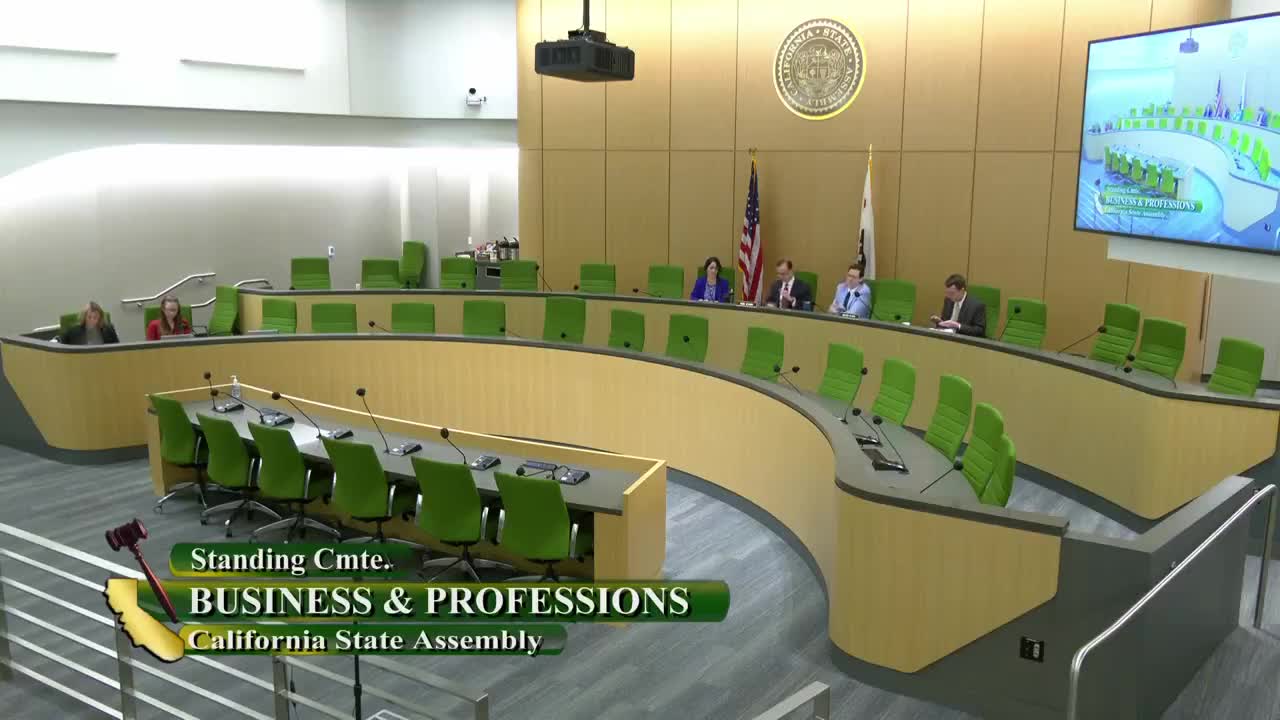
Assembly Standing Committee on Business and Professions
Bill Author

Bill Co-Author(s):