AB 776: Route 210.
- Session Year: 2023-2024
- House: Assembly
- Latest Version Date: 2023-10-08
Current Status:
Passed
(2023-10-08: Chaptered by Secretary of State - Chapter 543, Statutes of 2023.)
Introduced
In Committee
First Chamber
In Committee
Second Chamber
Enacted
Existing law vests the Department of Transportation with full possession and control of all state highways. Existing law describes the authorized routes in the state highway system, including that for Route 210. Existing law requires the department to keep and repair all objects or markers adjacent to a state highway that have been erected to mark registered historical places.
This bill would require the department, through the erection of highway signs and appropriate markers, to provide recognition of the historical and cultural importance of the California tribes local to, or historically located in, the Counties of Los Angeles and San Bernardino. The bill would require the department to work with certain entities, including, but not limited to, California tribes local to, or historically located along, Route 210, to name Route 210 and to identify appropriate locations for signs to recognize tribal lands along Route 210 in the Counties of Los Angeles and San Bernardino. The bill would require the department to erect those signs and other appropriate markers at the appropriate locations on Route 210, as part of the departments regularly scheduled replacement, modification, and maintenance of highway signs. The bill would specify that Route 210 shall be known and designated as the Southern California Native American Freeway or by the name developed by the department with the specified entities.
Existing law vests the Department of Transportation with full possession and control of all state highways. Existing law describes the authorized routes in the state highway system, including that for Route 210. Existing law requires the department to keep and repair all objects or markers adjacent to a state highway that have been erected to mark registered historical places.
This bill would require the department, through the erection of highway signs and appropriate markers, to provide recognition of the historical and cultural importance of the California tribes local to, or historically located in, the Counties of Los Angeles and San Bernardino. The bill would require the department to work with certain entities, including, but not limited to, California tribes local to, or historically located along, Route 210, to name Route 210 and to identify appropriate locations for signs to recognize tribal lands along Route 210 in the Counties of Los Angeles and San Bernardino. The bill would require the department to erect those signs and other appropriate markers at the appropriate locations on Route 210. 210, as part of the departments regularly scheduled replacement, modification, and maintenance of highway signs. The bill would specify that Route 210 shall be known and designated as the Southern California Native American Freeway or by the name developed by the department with the specified entities.
Existing law vests the Department of Transportation with full possession and control of all state highways. Existing law describes the authorized routes in the state highway system, including that for Route 210. Existing law requires the department to keep and repair all objects or markers adjacent to a state highway that have been erected to mark registered historical places.
This bill would require the department, through the erection of highway signs and appropriate markers, to provide recognition of the historical and cultural importance of the California Indian tribes local to, or historically located in, the Counties of Los Angeles and San Bernardino. The bill would require the department to work with certain entities, including, but not limited to, California Indian tribes local to, or historically located along, Route 210, to name Route 210 and to identify appropriate locations for signs to recognize tribal lands along Route 210 in the Counties of Los Angeles and San Bernardino. The bill would require the department to erect those signs and other appropriate markers at the appropriate locations on Route 210. The bill would specify that Route 210 shall be known and designated as the Southern California Native American Freeway or by the name developed by the department with the specified entities.
Existing law vests the Department of Transportation with full possession and control of all state highways. Existing law describes the authorized routes in the state highway system, including that for Route 210. Existing law requires the department to keep and repair all objects or markers adjacent to a state highway that have been erected to mark registered historical places.
This bill would require the department, through the erection of highway signs and appropriate markers, to provide recognition of the historical and cultural importance of the California Indian tribes local to, or historically located in, the Counties of Los Angeles and San Bernardino. The bill would require the department to work with certain entities, including, but not limited to, California Indian tribes local to, or historically located along, Route 210, to name Route 210 and to identify appropriate locations for signs to recognize tribal lands along Route 210 in the Counties of Los Angeles and San Bernardino. The bill would specify that Route 210 shall be known and designated as the Southern California Native American Freeway. Freeway or by the name developed by the department with the specified entities.
Existing law vests the Department of Transportation with full possession and control of all state highways. Existing law describes the authorized routes in the state highway system, including that for Route 210. Existing law requires the department to keep and repair all objects or markers adjacent to a state highway that have been erected to mark registered historical places.
This bill would make nonsubstantive changes to the latter provision.This bill would require the department, through the erection of highway signs and appropriate markers, to provide recognition of the historical and cultural importance of the California Indian tribes local to, or historically located in, the Counties of Los Angeles and San Bernardino. The bill would require the department to work with certain entities, including, but not limited to, California Indian tribes local to, or historically located along, Route 210, to identify appropriate locations for signs to recognize tribal lands along Route 210 in the Counties of Los Angeles and San Bernardino. The bill would specify that Route 210 shall be known and designated as the Southern California Native American Freeway.
Existing law vests the Department of Transportation with full possession and control of all state highways. Existing law describes the authorized routes in the state highway system, including that for Route 210.
This bill would make nonsubstantive changes to the latter provision.
The Legislature finds and declares all of the following:
(a)Throughout our countrys history, Native Americans have played an important role in our culture and successes.
(b)In the State of California, a state rich with Native American culture and history, we are fortunate to have organizations involved in preserving Native American culture.
(c)Southern California tribal cultural affiliations along Route 210 include Cahuilla, Chumash, Gabrieleno/Tongva, Fernandeno/Tataviam, and Serrano.
(d)Californias highway and thoroughfare system dates back thousands of years before European contact because there were indigenous routes long before Europeans arrived.
(e)Before Europeans arrived, Native Americans had a long history of traveling and trading. These routes were critical trade routes that brought communities together.
(f)The Native American community has helped dramatically in the preservation of tangible aspects of the heritage that has shaped us as a people.
(g)Native Americans were the original inhabitants of the land that now constitutes the United States.
(h)Native Americans have made distinct and important contributions to the United States and the rest of the world in many fields, including agriculture, medicine, music, language, and art.
(i)Native Americans deserve to be recognized for their individual contributions to the United States as local and national leaders, artists, athletes, and scholars.
SEC. 2.Section 101.19 is added to the Streets and Highways Code, to read:101.19.(a)The Department of Transportation shall work with the Native American Heritage Commission, the California Advisory Committee on Geographic Names, the Counties of Los Angeles and San Bernardino, and California tribes local to, or historically located along, Route 210, to identify appropriate locations for signs to recognize tribal lands along Route 210 and to name Route 210.
(b)The Department of Transportation shall, through the erection of highway signs and appropriate markers, provide recognition of the historical and cultural importance of the California tribes local to, or historically located in, the Counties of Los Angeles and San Bernardino. The department shall erect those signs and other appropriate markers at the appropriate locations on Route 210, as part of the departments regularly scheduled replacement, modification, and maintenance of highway signs.
(c)The Legislature encourages the Counties of Los Angeles and San Bernardino to adopt resolutions to ensure that all people learn about the approved highway signs.
SEC. 3.Section 510 of the Streets and Highways Code is amended to read:510.(a)Route 210 is from:
(1)Route 5 near Tunnel Station to Route 57 near the City of San Dimas via the vicinity of the City of San Fernando.
(2)Route 57 near the City of San Dimas to Route 10 in the City of Redlands via the vicinity of the City of Highland.
(b)Route 210 may be known and designated as the Southern California Native American Freeway or by the name described in subdivision (a) of Section 101.19.
The Legislature finds and declares all of the following:
(a)Throughout our countrys history, Native Americans have played an important role in our culture and successes.
(b)In the State of California, a state rich with Native American culture and history, we are fortunate to have organizations involved in preserving Native American culture.
(c)Southern California tribal cultural affiliations along Route 210 include Cahuilla, Chumash, Gabrieleno/Tongva, Fernandeno/Tataviam, and Serrano.
(d)Californias highway and thoroughfare system dates back thousands of years before European contact because there were indigenous routes long before Europeans arrived.
(e)Before Europeans arrived, Native Americans had a long history of traveling and trading. These routes were critical trade routes that brought communities together.
(f)The Native American community has helped dramatically in the preservation of tangible aspects of the heritage that has shaped us as a people.
(g)Native Americans were the original inhabitants of the land that now constitutes the United States.
(h)Native Americans have made distinct and important contributions to the United States and the rest of the world in many fields, including agriculture, medicine, music, language, and art.
(i)Native Americans deserve to be recognized for their individual contributions to the United States as local and national leaders, artists, athletes, and scholars.
SEC. 2.Section 101.19 is added to the Streets and Highways Code, to read:101.19.(a)The Department of Transportation shall work with the Native American Heritage Commission, the California Advisory Committee on Geographic Names, the Counties of Los Angeles and San Bernardino, and California tribes local to, or historically located along, Route 210, to identify appropriate locations for signs to recognize tribal lands along Route 210 and to name Route 210.
(b)The Department of Transportation shall, through the erection of highway signs and appropriate markers, provide recognition of the historical and cultural importance of the California tribes local to, or historically located in, the Counties of Los Angeles and San Bernardino. The department shall erect those signs and other appropriate markers at the appropriate locations on Route 210. 210, as part of the departments regularly scheduled replacement, modification, and maintenance of highway signs.
(c)The Legislature encourages the Counties of Los Angeles and San Bernardino to adopt resolutions to ensure that all people learn about the approved highway signs.
SEC. 3.Section 510 of the Streets and Highways Code is amended to read:510.(a)Route 210 is from:
(1)Route 5 near Tunnel Station to Route 57 near the City of San Dimas via the vicinity of the City of San Fernando.
(2)Route 57 near the City of San Dimas to Route 10 in the City of Redlands via the vicinity of the City of Highland.
(b)Route 210 may be known and designated as the Southern California Native American Freeway or by the name described in subdivision (a) of Section 101.19.
The Legislature finds and declares all of the following:
(a)Throughout our countrys history, Native Americans have played an important role in our culture and successes.
(b)In the State of California, a state rich with Native American culture and history, we are fortunate to have organizations involved in preserving Native American culture.
(c)Southern California tribal cultural affiliations along Route 210 include Cahuilla, Chumash, Gabrieleno/Tongva, Fernandeno/Tataviam, and Serrano.
(d)Californias highway and thoroughfare system dates back thousands of years before European contact because there were indigenous routes long before Europeans arrived.
(e)Before Europeans arrived, Native Americans had a long history of traveling and trading. These routes were critical trade routes that brought communities together.
(f)The Native American community has helped dramatically in the preservation of tangible aspects of the heritage that has shaped us as a people.
(g)Native Americans were the original inhabitants of the land that now constitutes the United States.
(h)Native Americans have made distinct and important contributions to the United States and the rest of the world in many fields, including agriculture, medicine, music, language, and art.
(i)Native Americans deserve to be recognized for their individual contributions to the United States as local and national leaders, artists, athletes, and scholars.
SEC. 2.Section 101.19 is added to the Streets and Highways Code, to read:101.19.(a)The Department of Transportation shall work with the Native American Heritage Commission, the California Advisory Committee on Geographic Names, the Counties of Los Angeles and San Bernardino, and California Indian tribes local to, or historically located along, Route 210, to identify appropriate locations for signs to recognize tribal lands along Route 210 and to name Route 210.
(b)The Department of Transportation shall, through the erection of highway signs and appropriate markers, provide recognition of the historical and cultural importance of the California Indian tribes local to, or historically located in, the Counties of Los Angeles and San Bernardino. The department shall erect those signs and other appropriate markers at the appropriate locations on Route 210.
(c)The Legislature encourages the Counties of Los Angeles and San Bernardino to adopt resolutions to ensure that all people learn about the approved highway signage. signs.
SEC. 3.Section 510 of the Streets and Highways Code is amended to read:510.(a)Route 210 is from:
(1)Route 5 near Tunnel Station to Route 57 near the City of San Dimas via the vicinity of the City of San Fernando.
(2)Route 57 near the City of San Dimas to Route 10 in the City of Redlands via the vicinity of the City of Highland.
(b)Route 210 may be known and designated as the Southern California Native American Freeway or by the name described in subdivision (a) of Section 101.19.
The Legislature finds and declares all of the following:
(a)Throughout our countrys history, Native Americans have played an important role in our culture and successes.
(b)In the State of California, a state rich with Native American culture and history, we are fortunate to have organizations involved in preserving their Native American culture.
(c)Southern California tribal cultural affiliations along Route 210 include Cahuilla, Chumash, Gabrieleno/Tongva, Fernandeno/Tataviam Gabrieleno/Tongva, Fernandeno/Tataviam, and Serrano.
(d)Californias highway and thoroughfare system dates back thousands of years before European contact because there were indigenous routes long before Europeans arrived.
(e)Before Europeans arrived, Native Americans had a long history of traveling and trading. These routes were critical trade routes that brought communities together.
(f)The Native American community has helped dramatically in the preservation of tangible aspects of the heritage that has shaped us as a people.
(g)Native Americans were the original inhabitants of the land that now constitutes the United States.
(h)Native Americans have made distinct and important contributions to the United States and the rest of the world in many fields, including agriculture, medicine, music, language, and art.
(i)Native Americans deserve to be recognized for their individual contributions to the United States as local and national leaders, artists, athletes, and scholars.
SEC. 2.Section 101.19 is added to the Streets and Highways Code, to read:101.19.(a)The Department of Transportation shall work with the Native American Heritage Commission, the California Advisory Committee on Geographic Names, the Counties of Los Angeles and San Bernardino, and California Indian tribes local to, or historically located along, Route 210, to identify appropriate locations for signs to recognize tribal lands along Route 210 and to name Route 210.
(b)The Department of Transportation shall, through the erection of highway signs and appropriate markers, provide recognition of the historical and cultural importance of the California Indian tribes local to, or historically located in, the Counties of Los Angeles and San Bernardino. In order to implement this subdivision, the department shall determine the cost of signs and other appropriate markers, consistent with the signing requirements for the state highway system, and, upon receiving donations from nonstate sources sufficient to cover the cost, The department shall erect those signs and other appropriate markers at the appropriate locations on Route 210.
(c)The Legislature encourages the Counties of Los Angeles and San Bernardino to adopt resolutions to ensure that all people learn about the approved highway signage.
SEC. 3.Section 510 of the Streets and Highways Code is amended to read:510.(a)Route 210 is from:
(1)Route 5 near Tunnel Station to Route 57 near the City of San Dimas via the vicinity of the City of San Fernando.
(2)Route 57 near the City of San Dimas to Route 10 in the City of Redlands via the vicinity of the City of Highland.
(b)Route 210 may be known and designated as the Southern California Native American Freeway or by the name described in subdivision (a) of Section 101.19.
The Legislature finds and declares all of the following:
(a)Throughout our countrys history, Native Americans have played an important role in our culture and successes.
(b)In the State of California, a state rich with Native American culture and history, we are fortunate to have organizations involved in preserving their Native American culture.
(c)Southern California tribal cultural affiliations along Route 210 include Cahuilla, Chumash, Gabrieleno/Tongva, Fernandeno/Tataviam and Serrano.
(d)Californias highway and thoroughfare system dates back thousands of years before European contact because there were indigenous routes long before Europeans arrived.
(e)Before Europeans arrived, Native Americans had a long history of traveling and trading. These routes were critical trade routes that brought communities together.
(f)The Native American community has helped dramatically in the preservation of tangible aspects of the heritage that has shaped us as a people.
(g)Native Americans were the original inhabitants of the land that now constitutes the United States.
(h)Native Americans have made distinct and important contributions to the United States and the rest of the world in many fields, including agriculture, medicine, music, language, and art.
(i)Native Americans deserve to be recognized for their individual contributions to the United States as local and national leaders, artists, athletes, and scholars.
SEC. 2.Section 101.16 is added to the Streets and Highways Code, to read:SEC. 2.Section 101.19 is added to the Streets and Highways Code, to read:101.16.101.19.(a)The Department of Transportation shall work with the Native American Heritage Commission, the California Advisory Committee on Geographic Names, the Counties of Los Angeles and San Bernardino, and California Indian tribes local to, or historically located along, Route 210, to identify appropriate locations for signs to recognize tribal lands along Route 210. 210 and to name Route 210.
(b)The Department of Transportation shall, through the erection of highway signs and appropriate markers, provide recognition of the historical and cultural importance of the California Indian tribes local to, or historically located in, the Counties of Los Angeles and San Bernardino. In order to implement this subdivision, the department shall determine the cost of signs and other appropriate markers, consistent with the signing requirements for the state highway system, and, upon receiving donations from nonstate sources sufficient to cover the cost, shall erect those signs and other appropriate markers at the appropriate locations on Route 210.
(c)The Legislature encourages the Counties of Los Angeles and San Bernardino to adopt resolutions to ensure that all people learn about the approved highway signage.
SEC. 3.Section 510 of the Streets and Highways Code is amended to read:510.(a)Route 210 is from:
(1)Route 5 near Tunnel Station to Route 57 near the City of San Dimas via the vicinity of the City of San Fernando.
(2)Route 57 near the City of San Dimas to Route 10 in the City of Redlands via the vicinity of the City of Highland.
(b)Route 210 shall may be known and designated as the Southern California Native American Freeway. Freeway or by the name described in subdivision (a) of Section 101.19.
The Legislature finds and declares all of the following:
(a)Throughout our countrys history, Native Americans have played an important role in our culture and successes.
(b)In the State of California, a state rich with Native American culture and history, we are fortunate to have organizations involved in preserving their Native American culture.
(c)Southern California tribal cultural affiliations along Route 210 include Cahuilla, Chumash, Gabrieleno/Tongva, Fernandeno/Tataviam and Serrano.
(d)Californias highway and thoroughfare system dates back thousands of years before European contact because there were indigenous routes long before Europeans arrived.
(e)Before Europeans arrived, Native Americans had a long history of traveling and trading. These routes were critical trade routes that brought communities together.
(f)The Native American community has helped dramatically in the preservation of tangible aspects of the heritage that has shaped us as a people.
(g)Native Americans were the original inhabitants of the land that now constitutes the United States.
(h)Native Americans have made distinct and important contributions to the United States and the rest of the world in many fields, including agriculture, medicine, music, language, and art.
(i)Native Americans deserve to be recognized for their individual contributions to the United States as local and national leaders, artists, athletes, and scholars.
SEC. 2.Section 101.16 is added to the Streets and Highways Code, to read:101.16.(a)The Department of Transportation shall work with the Native American Heritage Commission, the California Advisory Committee on Geographic Names, the Counties of Los Angeles and San Bernardino, and California Indian tribes local to, or historically located along, Route 210, to identify appropriate locations for signs to recognize tribal lands along Route 210.
(b)The Department of Transportation shall, through the erection of highway signs and appropriate markers, provide recognition of the historical and cultural importance of the California Indian tribes local to, or historically located in, the Counties of Los Angeles and San Bernardino. In order to implement this subdivision, the department shall determine the cost of signs and other appropriate markers, consistent with the signing requirements for the state highway system, and, upon receiving donations from nonstate sources sufficient to cover the cost, shall erect those signs and other appropriate markers at the appropriate locations on Route 210.
(c)The Legislature encourages the Counties of Los Angeles and San Bernardino to adopt resolutions to ensure that all people learn about the approved highway signage.
SECTION 1.SEC. 3.Section 510 of the Streets and Highways Code is amended to read:510.(a)Route 210 is from:
(a)(1)Route 5 near Tunnel Station to Route 57 near the City of San Dimas via the vicinity of the City of San Fernando.
(b)(2)Route 57 near the City of San Dimas to Route 10 in the City of Redlands via the vicinity of the City of Highland.
(b)Route 210 shall be known and designated as the Southern California Native American Freeway.
Route 210 is from:
(a)Route 5 near Tunnel Station to Route 57 near the City of San Dimas via the vicinity of the City of San Fernando.
(b)Route 57 near the City of San Dimas to Route 10 in the City of Redlands via the vicinity of the City of Highland.
|
Date
|
Status
|
|---|---|
| Oct 8, 2023 | Chaptered by Secretary of State - Chapter 543, Statutes of 2023. |
| Oct 8, 2023 | Approved by the Governor. |
| Sep 20, 2023 | Enrolled and presented to the Governor at 4 p.m. |
| Sep 13, 2023 | Senate amendments concurred in. To Engrossing and Enrolling. (Ayes 80. Noes 0. Page 3347.). |
| Sep 12, 2023 | Assembly Rule 77 suspended. (Page 3228.) |
| Sep 11, 2023 | In Assembly. Concurrence in Senate amendments pending. May be considered on or after September 13 pursuant to Assembly Rule 77. |
| Sep 11, 2023 | Read third time. Passed. Ordered to the Assembly. (Ayes 38. Noes 0. Page 2585.). |
| Sep 7, 2023 | Read second time. Ordered to third reading. |
| Sep 6, 2023 | Read third time and amended. Ordered to second reading. |
| Sep 5, 2023 | Read second time. Ordered to third reading. |
| Sep 1, 2023 | From committee: Do pass. (Ayes 7. Noes 0.) (September 1). |
| Jul 10, 2023 | In committee: Referred to APPR. suspense file. |
| Jul 3, 2023 | From committee chair, with author's amendments: Amend, and re-refer to committee. Read second time, amended, and re-referred to Com. on APPR. |
| Jun 28, 2023 | From committee: Do pass and re-refer to Com. on APPR with recommendation: To Consent Calendar. (Ayes 16. Noes 0.) (June 27). Re-referred to Com. on APPR. |
| Jun 7, 2023 | Referred to Com. on TRANS. |
| May 31, 2023 | In Senate. Read first time. To Com. on RLS. for assignment. |
| May 30, 2023 | Read third time. Passed. Ordered to the Senate. (Ayes 80. Noes 0. Page 1914.) |
| May 25, 2023 | Read third time and amended. Ordered to third reading. (Page 1753.) |
| May 22, 2023 | Read second time. Ordered to third reading. |
| May 18, 2023 | Read second time and amended. Ordered returned to second reading. |
| May 18, 2023 | From committee: Amend, and do pass as amended. (Ayes 11. Noes 0.) (May 18). |
| May 10, 2023 | In committee: Set, first hearing. Referred to APPR. suspense file. |
| May 3, 2023 | In committee: Hearing postponed by committee. |
| Apr 26, 2023 | In committee: Hearing postponed by committee. |
| Mar 21, 2023 | From committee: Do pass and re-refer to Com. on APPR. with recommendation: To Consent Calendar. (Ayes 15. Noes 0.) (March 20). Re-referred to Com. on APPR. |
| Mar 16, 2023 | Re-referred to Com. on TRANS. |
| Mar 15, 2023 | From committee chair, with author's amendments: Amend, and re-refer to Com. on TRANS. Read second time and amended. |
| Mar 6, 2023 | Re-referred to Com. on TRANS. |
| Mar 2, 2023 | Referred to Com. on TRANS. |
| Mar 2, 2023 | From committee chair, with author's amendments: Amend, and re-refer to Com. on TRANS. Read second time and amended. |
| Feb 14, 2023 | From printer. May be heard in committee March 16. |
| Feb 13, 2023 | Read first time. To print. |
|
Date
|
Description
|
Location
|
Votes
|
|
|---|---|---|---|---|
| Sep 13, 2023 | AB 776 Holden Concurrence in Senate Amendments | Assembly Floor |
Passed |
|
| Sep 11, 2023 | Assembly 3rd Reading AB776 Holden et al. By Rubio | Senate Floor |
Passed |
|
| Sep 1, 2023 | Do pass | Senate Standing Committee on Appropriations |
Passed |
|
| Jul 10, 2023 | Placed on suspense file | Senate Standing Committee on Appropriations |
Passed |
|
| Jun 27, 2023 | Do pass, but first be re-referred to the Committee on [Appropriations] with the recommendation: To Consent Calendar | Senate Standing Committee on Transportation |
Passed |
|
| May 30, 2023 | AB 776 Holden Assembly Third Reading | Assembly Floor |
Passed |
|
| May 18, 2023 | Do pass as amended. | Assembly Standing Committee on Appropriations |
Passed |
|
| Mar 20, 2023 | Do pass and be re-referred to the Committee on [Appropriations] with recommendation: To Consent Calendar | Assembly Standing Committee on Transportation |
Passed |
This list shows positions taken on this bill by organizations on the date displayed, which is linked to the original source.
Positions by individuals are not included.
|
Organization
|
Position
|
Date
|
|---|---|---|
| California Native Vote Project | ** Support | |
| Claremont United Church of Christ | ** Support | |
| County of Los Angeles Board of Supervisors | ** Support | |
| Gabrielino Tongva Indians of California | ** Support | |
| Long Beach Community College District | ** Support | |
| Native American Student Center at Cal Poly Pomona | ** Support | |
| No Canyon Hills | ** Support | |
| Presbytery of San Gabriel | ** Support | |
| San Gabriel Band of Mission Indians Gabrieleno/Tongva | ** Support | |
| San Gabriel Valle Progressives | ** Support | |
| Tongva Taraxat Paxaavxa Conservancy | ** Support |
CONCURRENCE IN SENATE AMENDMENTS
CSA1 Bill Id:AB 776
Author:(Holden, et al.)
As Amended Ver:September 6, 2023
Majority vote
SUMMARY
Requires the California Department of Transportation (Caltrans) to work with specified entities to identify appropriate locations for highway signs and markers to recognize the historical and cultural importance of California tribes and tribal lands along State Route (SR) 210 in the Counties of Los Angeles and San Bernardino, and to erect those signs and markers. The bill would also designate SR 210 as the "Southern California Native American Freeway," or other appropriate name, as specified.
Senate Amendments
Add locations of historical and cultural importance to California tribes be included in the types of highway signs allowed by legislative resolution as designated in the California Manual on Uniform Traffic Control Devices (MUTCD).
COMMENTS
Existing law identifies the California state highway system through a description of segments of the state's regional and interregional roads that are owned and operated by Caltrans. Existing law identifies SR 210 as two segments, the first of which is from the western terminus at Interstate 5 near Tunnel Station to SR 57 near the City of San Dimas, and the second of which is from SR 57 to the eastern terminus of the highway at Interstate 10 in the City of Redlands. SR 210 follows the foothills of the San Gabriel Mountains for approximately 85 miles, connecting the northeastern suburbs of Los Angeles with the Inland Empire. Legislative resolutions have been enacted over the years to designate SR 210 as the "Foothill Freeway," and to designate specified portions of the SR 210 as the "Jackie Robinson Memorial Highway," the "Pasadena Police Agent Richard Morris Memorial Highway," and the "Martin A. Matich Highway," respectively.
The costs associated with this bill are primarily related to the placement of specified land acknowledgement signs and other appropriate signs and markers recognizing the cultural and historical significance of California tribes, as well as the modification, replacement, and/or addition of directional signage to accommodate the naming of SR 210. Caltrans notes that the costs for changes to directional signage that includes the new freeway name would largely depend upon the length of the new name that is chosen collaboratively by Caltrans and the other specified entities noted in the bill. These costs could be relatively minor if the name is short enough to allow existing signs to be altered with simple overlays of the new name, but if larger directional signage is needed to accommodate the new freeway name, the bill could result in costs in the low millions of dollars for sign replacement or construction of new signs on multiple overhead freeway sign structures.
According to the Author
"Indigenous Peoples are not just part of the past, but part of the greater Los Angeles County community. Los Angeles County is home to the largest concentration of persons of any part American Indian descent in the United States. AB 776 seeks to rename Interstate 210, to be known as the Southern California Native American Freeway. The Department of Transportation will work with California Indian tribes local to the region or tribes historically located in the region to identify appropriate locations of signs to recognize tribal lands along Interstate 210. It needs to be clear that Indigenous Peoples are still here, and they have not left their ancestral lands. The State Legislature has taken a number of positive actions to acknowledge past transgressions against Indigenous Peoples and AB 776 is another step to increase cultural understanding, sensitivity and empathy for Tribes that have cultural ties to the Los Angeles and San Bernardino region."
Arguments in Support
County of Los Angeles Board of Supervisors writes, "In the spirit of progress, The County of Los Angeles is honored to support AB 776 which will significantly increase awareness of the Native American Communities in Los Angeles and San Bernardino counties."
Arguments in Opposition
None on file.
FISCAL COMMENTS
According to the Senate Appropriations Committee:
Caltrans estimates one-time costs to modify, replace, and potentially add new "directional" signage to accommodate the naming of SR 210 could range from the tens of thousands of dollars to low millions of dollars. Actual costs would depend upon the length of the name chosen for the SR 210, a determination of which signs would need to be removed, modified, replaced, or added, inspections of existing and new signage locations, and the design plan for each sign. See Staff Comments. (State Highway Account)
Caltrans estimates one-time costs to add new "land acknowledgement" signs that recognize tribal lands along SR 210 would likely range from the tens of thousands to the low hundreds of thousands of dollars, depending on a determination of the number of signs to be erected, and the size and features of each sign. (State Highway Account)
Unknown additional one-time costs, likely in the hundreds of thousands of dollars, to erect highway signs and appropriate markers that recognize the cultural and historical importance of California tribes local to Los Angeles and San Bernardino Counties. (State Highway Account)
Likely minor and absorbable administrative costs for Caltrans, the Native American Heritage Commission, and the California Advisory Committee on Geographic Names to coordinate and identify appropriate locations for land acknowledgement signs and to determine an appropriate name for SR 210. (State Highway Account and other special funds)
VOTES:
ASM TRANSPORTATION: 15-0-0
YES: Friedman, Vince Fong, Berman, Juan Carrillo, Davies, Gipson, Hart, Jackson, Kalra, Lowenthal, Stephanie Nguyen, Sanchez, Wallis, Ward, Wicks
ASM APPROPRIATIONS: 11-0-5
YES: Holden, Bryan, Calderon, Wendy Carrillo, Mike Fong, Hart, Lowenthal, Papan, Pellerin, Weber, Ortega
ABS, ABST OR NV: Megan Dahle, Dixon, Mathis, Robert Rivas, Sanchez
ASSEMBLY FLOOR: 80-0-0
YES: Addis, Aguiar-Curry, Alanis, Alvarez, Arambula, Bains, Bauer-Kahan, Bennett, Berman, Boerner, Bonta, Bryan, Calderon, Juan Carrillo, Wendy Carrillo, Cervantes, Chen, Connolly, Megan Dahle, Davies, Dixon, Essayli, Flora, Mike Fong, Vince Fong, Friedman, Gabriel, Gallagher, Garcia, Gipson, Grayson, Haney, Hart, Holden, Hoover, Irwin, Jackson, Jones‑Sawyer, Kalra, Lackey, Lee, Low, Lowenthal, Maienschein, Mathis, McCarty, McKinnor, Muratsuchi, Stephanie Nguyen, Ortega, Pacheco, Papan, Jim Patterson, Joe Patterson, Pellerin, Petrie-Norris, Quirk-Silva, Ramos, Reyes, Luz Rivas, Robert Rivas, Rodriguez, Blanca Rubio, Sanchez, Santiago, Schiavo, Soria, Ta, Ting, Valencia, Villapudua, Waldron, Wallis, Ward, Weber, Wicks, Wilson, Wood, Zbur, Rendon
SENATE FLOOR: 39-0-1
YES: Allen, Alvarado-Gil, Archuleta, Ashby, Atkins, Becker, Blakespear, Bradford, Cortese, Dahle, Dodd, Durazo, Eggman, Glazer, Gonzalez, Grove, Hurtado, Jones, Laird, Limón, McGuire, Menjivar, Min, Newman, Nguyen, Niello, Ochoa Bogh, Padilla, Portantino, Roth, Rubio, Seyarto, Skinner, Smallwood-Cuevas, Stern, Umberg, Wahab, Wiener, Wilk
ABS, ABST OR NV: Caballero
UPDATED
VERSION: September 6, 2023
CONSULTANT: Julia Kingsley / TRANS. / (916) 319-2093 FN: 0002376
SENATE RULES COMMITTEE Office of Senate Floor Analyses (916) 651-1520 Fax: (916) 327-4478 | AB 776 |
THIRD READING
Bill No: AB 776
Author: Holden (D), Ramos (D) and Luz Rivas (D), et al.
Amended: 9/6/23 in Senate
Vote: 21
SENATE TRANSPORTATION COMMITTEE: 16-0, 6/27/23
AYES: Gonzalez, Niello, Allen, Archuleta, Becker, Blakespear, Cortese, Dahle, Dodd, Limón, McGuire, Newman, Nguyen, Seyarto, Umberg, Wahab
SENATE APPROPRIATIONS COMMITTEE: 7-0, 9/1/23
AYES: Portantino, Jones, Ashby, Bradford, Seyarto, Wahab, Wiener
ASSEMBLY FLOOR: 80-0, 5/30/23 - See last page for vote
SUBJECT: Route 210
SOURCE: Author
DIGEST:
This bill requires the California Department of Transportation to work with specified organizations including California Indian tribes local to, or historically located along Route 210, to identify an appropriate name for the route and appropriate locations for signs that recognize the tribal lands along the route.
Senate Floor Amendments of 9/6/23 add an additional coauthor and specify that the modification or erection of signage along Route 210 as a result of the bill should be performed as part of Caltrans’ regularly scheduled maintenance of the existing signs, in order to reduce implementation costs.
ANALYSIS:
Existing law:
- Establishes California Department of Transportation (Caltrans) and provides that the department has full possession and control of all state highways and property and rights in property acquired for state highway purposes. (Streets and Highways Code (SHC) §90)
- Identifies, statutorily, state highway system routes through a description of segments of the state’s regional and interregional roads that are owned and operated by Caltrans. (SHC Article 3)
- Defines Route 210 as from Route 5 near Tunnel Station to Route 27 near the City of San Dimas via the vicinity of the City of San Fernando to Route 10 in the City of Redlands via the vicinity of the city of Highland. (SHC §510)
- Existing law requires Caltrans to keep and repair all objects or markers adjacent to a state highway that have been erected to mark registered historical places. (SHC §101.12)
This bill:
- Directs Caltrans to work with the Native American Heritage Commission, the California Advisory Committee on Geographic Names, the Counties of Los Angeles and San Bernadino, and California tribes local to, or historically located along Route 210, to identify appropriate locations to recognize tribal lands along the route and to name the route.
- Directs Caltrans to provide recognition of the historical and cultural importance of the tribes currently or historically located in Los Angeles and San Bernadino County using highway signs and appropriate markers along Route 210 as part of their regularly scheduled replacement, modification, and maintenance of highway signs.
- Encourages the Counties of Los Angeles and San Bernadino to adopt resolutions educating about the new highway signs.
- Authorizes Route 210 to be known and designated as the Southern California Native American Freeway or by the name selected by Caltrans in coordination with the previously described groups.
Comments
- Purpose of bill. According to the author, “Indigenous Peoples are not just part of the past, but part of the greater Los Angeles County community. Los Angeles County is home to the largest concentration of persons of any part American Indian descent in the United States. AB 776 seeks to rename Interstate 210 by requiring the Department of Transportation to work with California Indian tribes local to the region or tribes historically located in the region to identify appropriate locations of signs to recognize tribal lands along Interstate 210 and rename the route. It needs to be clear that Indigenous Peoples are still here, and they have not left their ancestral lands. The State Legislature has taken a number of positive actions to acknowledge past transgressions against Indigenous Peoples and AB 776 is another step to increase cultural understanding, sensitivity and empathy for Tribes that have cultural ties to the Los Angeles and San Bernardino region.”
- Californian indigenous people. California is home to more people of Native American/Alaska Native heritage than any other state. There are currently 109 federally recognized Indian tribes in California and several non-federally recognized tribes petitioning for federal recognition through the Bureau of Indian Affairs-Office of Federal Recognition. Tribes in California currently have nearly 100 separate reservations or Rancherias. There are also a number of individual Indian trust allotments. From 1851 to 1852 Indian commissioners produced 18 original treaties with at least 139 Californian tribes. Under these treaties the federal government promised to reserve 7,466,000 acres of land to the dispossessed Indians, though the state Senate refused to ratify the treaties. Today, California tribes collectively possess about 7% of their unratified treaty territory.
On June 18, 2019, Governor Gavin Newsom issued Executive Order N-15-19, which acknowledges and apologizes on behalf of the State for the historical “violence, exploitation, dispossession and the attempted destruction of tribal communities” which dislocated California Native Americans from their ancestral land and sacred practices. It is the policy of the Newsom administration to “support California tribes’ co-management of and access to natural lands that are within a California tribe’s ancestral land and under the ownership or control of the State of California, and to work cooperatively with California tribes that are interested in acquiring natural lands in excess of State needs.”
- Land acknowledgements. According to the National Museum of the American Indian, “land acknowledgment is a traditional custom that dates back centuries in many Native nations and communities. Today, land acknowledgments are used by Native Peoples and non-Natives to recognize Indigenous Peoples who are the original stewards of the lands on which we now live.”
“After millennia of Native history, and centuries of displacement and dispossession, acknowledging original Indigenous inhabitants is complex. Many places in the Americas have been home to different Native Nations over time, and many Indigenous people no longer live on lands to which they have ancestral ties. Even so, Native Nations, communities, families, and individuals today sustain their sense of belonging to ancestral homelands and protect these connections through Indigenous languages, oral traditions, ceremonies, and other forms of cultural expression.”
The museum recommends reaching out directly to local Indigenous communities and Native Nations forcibly removed from an area in the past to ask how they want to be recognized. Not all communities necessarily want or appreciate a land acknowledgement. While well-meaning land acknowledgements can ring hollow if not made part of larger effort to recognize and rectify the injustices indigenous people currently face. This bill is mindful of this by limiting this effort to a specific region and requiring Caltrans to consult with the relevant tribes, both federally and state recognized, and expert groups to reach a consensus of where and how best to acknowledge the land along Route 206.
- What’s in a name? Every year the Legislature hears and passes several resolutions naming state highways or structures. These resolutions require the person being honored to be deceased, have provided an exemplary contribution to the public good, be connected to the area of the structure or highway, the segment of highway be less than five miles in length, and the costs of signs for renaming be done without cost to the state.
This is a policy bill, rather than a resolution, and so departs from standard committee policy. It covers a much longer stretch of highway, will involve naming the highway after communities historically but also currently present near the highway, and shall be done at cost to the state. The reason for using a policy process rather than a resolution is, in part, due to the need for Caltrans to develop a collaborative process to determine with the tribes where identifying signs should be located and what the name of the highway should be. Requiring Caltrans to provide the funds for the renaming is also policy decision that must be evaluated.
Some of Route 210 is already named. The portion of the freeway from Route 5 to Route 10 is named the "Foothill Freeway”. In addition, legislators have used resolutions and the memorial highway naming process to name portions of Route 210. These names include: "Jackie Robinson Memorial Highway" in Los Angeles County, "Pasadena Police Agent Richard Morris Memorial Highway" in the city of Pasadena, and "Martin A. Matich Highway" in the city of Redlands.
- Why this route? Route 210 is located in Los Angeles (L.A.) County, which the 2020 Census estimated is home to around 156,500 persons identifying as fully or partly American Indian or Alaskan Native, the largest number of any county in the United States. Three tribes in L.A. County are recognized by the State of California, the Ventureño, Gabrieleño-Tongva and Fernandeño peoples. The footpaths of the Tongva through the Sepulveda Basin became the basis for the 405 Freeway. Yaanga, the Tongva people’s largest village in the area, was in what is now downtown Los Angeles near Union Station. This makes L.A. County a good area to pilot the process of engaging with tribes who historically lived on land highways pass through to determine how signage can be used to acknowledge that history.
FISCAL EFFECT: Appropriation: No Fiscal Com.: Yes Local: No
According to the Senate Appropriations Committee, “Caltrans estimates one-time costs to modify, replace, and potentially add new “directional” signage to accommodate the naming of SR 210 could range from the tens of thousands of dollars to low millions of dollars. Actual costs would depend upon the length of the name chosen for the SR 210, a determination of which signs would need to be removed, modified, replaced, or added, inspections of existing and new signage locations, and the design plan for each sign. Caltrans estimates one-time costs to add new “land acknowledgement” signs that recognize tribal lands along SR 210 would likely range from the tens of thousands to the low hundreds of thousands of dollars, depending on a determination of the number of signs to be erected, and the size and features of each sign. Unknown additional one-time costs, likely in the hundreds of thousands of dollars, to erect highway signs and appropriate markers that recognize the cultural and historical importance of California tribes local to Los Angeles and San Bernardino Counties. Likely minor and absorbable administrative costs for Caltrans, the Native American Heritage Commission, and the California Advisory Committee on Geographic Names to coordinate and identify appropriate locations for land acknowledgement signs and to determine an appropriate name for SR 210.”
SUPPORT: (Verified 9/6/23)
Claremont United Church of Christ
County of Los Angeles Board of Supervisors
Gabrielino Tongva Indians of California
Long Beach Community College District
Presbytery of San Gabriel
San Gabriel Band of Mission Indians Gabrieleno/Tongva
Tongva Taraxat Paxaavxa Conservancy
OPPOSITION: (Verified 9/6/23)
None received
ASSEMBLY FLOOR: 80-0, 5/30/23
AYES: Addis, Aguiar-Curry, Alanis, Alvarez, Arambula, Bains, Bauer-Kahan, Bennett, Berman, Boerner, Bonta, Bryan, Calderon, Juan Carrillo, Wendy Carrillo, Cervantes, Chen, Connolly, Megan Dahle, Davies, Dixon, Essayli, Flora, Mike Fong, Vince Fong, Friedman, Gabriel, Gallagher, Garcia, Gipson, Grayson, Haney, Hart, Holden, Hoover, Irwin, Jackson, Jones-Sawyer, Kalra, Lackey, Lee, Low, Lowenthal, Maienschein, Mathis, McCarty, McKinnor, Muratsuchi, Stephanie Nguyen, Ortega, Pacheco, Papan, Jim Patterson, Joe Patterson, Pellerin, Petrie-Norris, Quirk-Silva, Ramos, Reyes, Luz Rivas, Robert Rivas, Rodriguez, Blanca Rubio, Sanchez, Santiago, Schiavo, Soria, Ta, Ting, Valencia, Villapudua, Waldron, Wallis, Ward, Weber, Wicks, Wilson, Wood, Zbur, Rendon
Prepared by: Jacob O'Connor / TRANS. / (916) 651-4121
9/8/23 14:32:34
**** END ****
SENATE RULES COMMITTEE Office of Senate Floor Analyses (916) 651-1520 Fax: (916) 327-4478 | AB 776 |
THIRD READING
Bill No: AB 776
Author: Holden (D), Ramos (D) and Luz Rivas (D)
Amended: 7/3/23 in Senate
Vote: 21
SENATE TRANSPORTATION COMMITTEE: 16-0, 6/27/23
AYES: Gonzalez, Niello, Allen, Archuleta, Becker, Blakespear, Cortese, Dahle, Dodd, Limón, McGuire, Newman, Nguyen, Seyarto, Umberg, Wahab
SENATE APPROPRIATIONS COMMITTEE: 7-0, 9/1/23
AYES: Portantino, Jones, Ashby, Bradford, Seyarto, Wahab, Wiener
ASSEMBLY FLOOR: 80-0, 5/30/23 - See last page for vote
SUBJECT: Route 210
SOURCE: Author
DIGEST:
This bill requires the California Department of Transportation to work with specified organizations including California Indian tribes local to, or historically located along Route 210, to identify an appropriate name for the route and appropriate locations for signs that recognize the tribal lands along the route.
ANALYSIS:
Existing law:
- Establishes California Department of Transportation (Caltrans) and provides that the department has full possession and control of all state highways and property and rights in property acquired for state highway purposes. (Streets and Highways Code (SHC) §90)
- Identifies, statutorily, state highway system routes through a description of segments of the state’s regional and interregional roads that are owned and operated by Caltrans. (SHC Article 3)
- Defines Route 210 as from Route 5 near Tunnel Station to Route 27 near the City of San Dimas via the vicinity of the City of San Fernando to Route 10 in the City of Redlands via the vicinity of the city of Highland. (SHC §510)
- Requires Caltrans to keep and repair all objects or markers adjacent to a state highway that have been erected to mark registered historical places. (SHC §101.12)
This bill:
- Directs Caltrans to work with the Native American Heritage Commission, the California Advisory Committee on Geographic Names, the Counties of Los Angeles and San Bernadino, and California tribes local to, or historically located along Route 210, to identify appropriate locations to recognize tribal lands along the route and to name the route.
- Directs Caltrans to provide recognition of the historical and cultural importance of the tribes currently or historically located in Los Angeles and San Bernadino County using highway signs and appropriate markers along Route 210.
- Encourages the Counties of Los Angeles and San Bernadino to adopt resolutions educating about the new highway signs.
- Authorizes Route 210 to be known and designated as the Southern California Native American Freeway or by the name selected by Caltrans in coordination with the previously described groups.
Comments
- Purpose of bill. According to the author, “Indigenous Peoples are not just part of the past, but part of the greater Los Angeles County community. Los Angeles County is home to the largest concentration of persons of any part American Indian descent in the United States. AB 776 seeks to rename Interstate 210 by requiring the Department of Transportation to work with California Indian tribes local to the region or tribes historically located in the region to identify appropriate locations of signs to recognize tribal lands along Interstate 210 and rename the route. It needs to be clear that Indigenous Peoples are still here, and they have not left their ancestral lands. The State Legislature has taken a number of positive actions to acknowledge past transgressions against Indigenous Peoples and AB 776 is another step to increase cultural understanding, sensitivity and empathy for Tribes that have cultural ties to the Los Angeles and San Bernardino region.”
- Californian indigenous people. California is home to more people of Native American/Alaska Native heritage than any other state. There are currently 109 federally recognized Indian tribes in California and several non-federally recognized tribes petitioning for federal recognition through the Bureau of Indian Affairs-Office of Federal Recognition. Tribes in California currently have nearly 100 separate reservations or Rancherias. There are also a number of individual Indian trust allotments. From 1851 to 1852 Indian commissioners produced 18 original treaties with at least 139 Californian tribes. Under these treaties the federal government promised to reserve 7,466,000 acres of land to the dispossessed Indians, though the state Senate refused to ratify the treaties. Today, California tribes collectively possess about 7% of their unratified treaty territory.
On June 18, 2019, Governor Gavin Newsom issued Executive Order N-15-19, which acknowledges and apologizes on behalf of the State for the historical “violence, exploitation, dispossession and the attempted destruction of tribal communities” which dislocated California Native Americans from their ancestral land and sacred practices. It is the policy of the Newsom administration to “support California tribes’ co-management of and access to natural lands that are within a California tribe’s ancestral land and under the ownership or control of the State of California, and to work cooperatively with California tribes that are interested in acquiring natural lands in excess of State needs.”
- Land acknowledgements. According to the National Museum of the American Indian, “land acknowledgment is a traditional custom that dates back centuries in many Native nations and communities. Today, land acknowledgments are used by Native Peoples and non-Natives to recognize Indigenous Peoples who are the original stewards of the lands on which we now live.
“After millennia of Native history, and centuries of displacement and dispossession, acknowledging original Indigenous inhabitants is complex. Many places in the Americas have been home to different Native Nations over time, and many Indigenous people no longer live on lands to which they have ancestral ties. Even so, Native Nations, communities, families, and individuals today sustain their sense of belonging to ancestral homelands and protect these connections through Indigenous languages, oral traditions, ceremonies, and other forms of cultural expression.”
The museum recommends reaching out directly to local Indigenous communities and Native Nations forcibly removed from an area in the past to ask how they want to be recognized. Not all communities necessarily want or appreciate a land acknowledgement. While well-meaning land acknowledgements can ring hollow if not made part of larger effort to recognize and rectify the injustices indigenous people currently face. This bill is mindful of this by limiting this effort to a specific region and requiring Caltrans to consult with the relevant tribes, both federally and state recognized, and expert groups to reach a consensus of where and how best to acknowledge the land along Route 206.
- What’s in a name? Every year the Legislature hears and passes several resolutions naming state highways or structures. These resolutions require the person being honored to be deceased, have provided an exemplary contribution to the public good, be connected to the area of the structure or highway, the segment of highway be less than five miles in length, and the costs of signs for renaming be done without cost to the state.
This is a policy bill, rather than a resolution, and so departs from standard committee policy. It covers a much longer stretch of highway, will involve naming the highway after communities historically but also currently present near the highway, and shall be done at cost to the state. The reason for using a policy process rather than a resolution is, in part, due to the need for Caltrans to develop a collaborative process to determine with the tribes where identifying signs should be located and what the name of the highway should be. Requiring Caltrans to provide the funds for the renaming is also policy decision that must be evaluated.
Some of Route 210 is already named. The portion of the freeway from Route 5 to Route 10 is named the "Foothill Freeway”. In addition, legislators have used resolutions and the memorial highway naming process to name portions of Route 210. These names include: "Jackie Robinson Memorial Highway" in Los Angeles County, "Pasadena Police Agent Richard Morris Memorial Highway" in the city of Pasadena, and "Martin A. Matich Highway" in the city of Redlands.
- Why this route? Route 210 is located in Los Angeles (L.A.) County, which the 2020 Census estimated is home to around 156,500 persons identifying as fully or partly American Indian or Alaskan Native, the largest number of any county in the United States. Three tribes in L.A. County are recognized by the State of California, the Ventureño, Gabrieleño-Tongva and Fernandeño peoples. The footpaths of the Tongva through the Sepulveda Basin became the basis for the 405 Freeway. Yaanga, the Tongva people’s largest village in the area, was in what is now downtown Los Angeles near Union Station. This makes L.A. County a good area to pilot the process of engaging with tribes who historically lived on land highways pass through to determine how signage can be used to acknowledge that history.
FISCAL EFFECT: Appropriation: No Fiscal Com.: Yes Local: No
According to the Senate Appropriations Committee, Caltrans estimates one-time costs to modify, replace, and potentially add new “directional” signage to accommodate the naming of Route 210 could range from the tens of thousands of dollars to low millions of dollars. Actual costs would depend upon the length of the name chosen for the Route 210, a determination of which signs would need to be removed, modified, replaced, or added, inspections of existing and new signage locations, and the design plan for each sign. Caltrans estimates one-time costs to add new “land acknowledgement” signs that recognize tribal lands along Route 210 would likely range from the tens of thousands to the low hundreds of thousands of dollars, depending on a determination of the number of signs to be erected, and the size and features of each sign. Unknown additional one-time costs, likely in the hundreds of thousands of dollars, to erect highway signs and appropriate markers that recognize the cultural and historical importance of California tribes local to Los Angeles and San Bernardino Counties. Likely minor and absorbable administrative costs for Caltrans, the Native American Heritage Commission, and the California Advisory Committee on Geographic Names to coordinate and identify appropriate locations for land acknowledgement signs and to determine an appropriate name for Route 210.
SUPPORT: (Verified 9/1/23)
California Native Vote Project
Claremont United Church of Christ
Gabrielino Tongva Indians of California
Long Beach Community College District
Los Angeles County Board of Supervisors
Native American Student Center at Cal Poly Pomona
No Canyon Hills
Presbytery of San Gabriel
San Gabriel Band of Mission Indians Gabrieleno/Tongva
San Gabriel Valle Progressives
Tongva Taraxat Paxaavxa Conservancy
OPPOSITION: (Verified 9/1/23)
None received
ASSEMBLY FLOOR: 80-0, 5/30/23
AYES: Addis, Aguiar-Curry, Alanis, Alvarez, Arambula, Bains, Bauer-Kahan, Bennett, Berman, Boerner, Bonta, Bryan, Calderon, Juan Carrillo, Wendy Carrillo, Cervantes, Chen, Connolly, Megan Dahle, Davies, Dixon, Essayli, Flora, Mike Fong, Vince Fong, Friedman, Gabriel, Gallagher, Garcia, Gipson, Grayson, Haney, Hart, Holden, Hoover, Irwin, Jackson, Jones-Sawyer, Kalra, Lackey, Lee, Low, Lowenthal, Maienschein, Mathis, McCarty, McKinnor, Muratsuchi, Stephanie Nguyen, Ortega, Pacheco, Papan, Jim Patterson, Joe Patterson, Pellerin, Petrie-Norris, Quirk-Silva, Ramos, Reyes, Luz Rivas, Robert Rivas, Rodriguez, Blanca Rubio, Sanchez, Santiago, Schiavo, Soria, Ta, Ting, Valencia, Villapudua, Waldron, Wallis, Ward, Weber, Wicks, Wilson, Wood, Zbur, Rendon
Prepared by: Jacob O'Connor / TRANS. / (916) 651-4121
9/4/23 8:55:10
**** END ****
SENATE COMMITTEE ON APPROPRIATIONS
Senator Anthony Portantino, Chair
2023 - 2024 Regular Session
AB 776 (Holden) - Route 210
Version: July 3, 2023 | Policy Vote: TRANS. 16 - 0 |
Urgency: No | Mandate: No |
Hearing Date: September 1, 2023 | Consultant: Mark McKenzie |
Bill Summary:
AB 776 would require the Department of Transportation (Caltrans) to work with specified entities to identify appropriate locations for highway signs and markers to recognize the historical and cultural importance of California tribes and tribal lands along State Route (SR) 210 in the Counties of Los Angeles and San Bernardino, and to erect those signs and markers. The bill would also designate SR 210 as the “Southern California Native American Freeway,” or other appropriate name, as specified.
*********** ANALYSIS ADDENDUM – SUSPENSE FILE ***********
The following information is revised to reflect amendments
adopted by the committee on September 1, 2023
Fiscal Impact:
- Caltrans estimates one-time costs over multiple years to modify, replace, and potentially add new “directional” signage to accommodate the naming of SR 210 could range from the tens of thousands of dollars to low millions of dollars. Actual costs would depend upon the length of the name chosen for the SR 210, a determination of which signs would need to be removed, modified, replaced, or added, inspections of existing and new signage locations, and the design plan for each sign. (State Highway Account)
- Caltrans estimates one-time costs to add new “land acknowledgement” signs that recognize tribal lands along SR 210 would likely range from the tens of thousands to the low hundreds of thousands of dollars, depending on a determination of the number of signs to be erected, and the size and features of each sign. (State Highway Account)
- Unknown additional one-time costs, likely in the hundreds of thousands of dollars, to erect highway signs and appropriate markers that recognize the cultural and historical importance of California tribes local to Los Angeles and San Bernardino Counties. (State Highway Account)
Author Amendments:
Require Caltrans to erect signs and markers as part of its regularly scheduled replacement, modification, and maintenance of highway signs.
-- END --
SENATE COMMITTEE ON APPROPRIATIONS
Senator Anthony Portantino, Chair
2023 - 2024 Regular Session
AB 776 (Holden) - Route 210
Version: July 3, 2023 | Policy Vote: TRANS. 16 - 0 |
Urgency: No | Mandate: No |
Hearing Date: July 10, 2023 | Consultant: Mark McKenzie |
Bill Summary:
AB 776 would require the Department of Transportation (Caltrans) to work with specified entities to identify appropriate locations for highway signs and markers to recognize the historical and cultural importance of California tribes and tribal lands along State Route (SR) 210 in the Counties of Los Angeles and San Bernardino, and to erect those signs and markers. The bill would also designate SR 210 as the “Southern California Native American Freeway,” or other appropriate name, as specified.
Fiscal Impact:
- Caltrans estimates one-time costs to modify, replace, and potentially add new “directional” signage to accommodate the naming of SR 210 could range from the tens of thousands of dollars to low millions of dollars. Actual costs would depend upon the length of the name chosen for the SR 210, a determination of which signs would need to be removed, modified, replaced, or added, inspections of existing and new signage locations, and the design plan for each sign. See Staff Comments. (State Highway Account)
- Caltrans estimates one-time costs to add new “land acknowledgement” signs that recognize tribal lands along SR 210 would likely range from the tens of thousands to the low hundreds of thousands of dollars, depending on a determination of the number of signs to be erected, and the size and features of each sign. (State Highway Account)
- Unknown additional one-time costs, likely in the hundreds of thousands of dollars, to erect highway signs and appropriate markers that recognize the cultural and historical importance of California tribes local to Los Angeles and San Bernardino Counties. (State Highway Account)
- Likely minor and absorbable administrative costs for Caltrans, the Native American Heritage Commission, and the California Advisory Committee on Geographic Names to coordinate and identify appropriate locations for land acknowledgement signs and to determine an appropriate name for SR 210. (State Highway Account and other special funds)
Background:
Existing law identifies the California state highway system through a description of segments of the state’s regional and interregional roads that are owned and operated by Caltrans. Existing law identifies SR 210 as two segments, the first of which is from the western terminus at Interstate 5 near Tunnel Station to SR 57 near the City of San Dimas, and the second of which is from SR 57 to the eastern terminus of the highway at Interstate 10 in the City of Redlands. SR 210 follows the foothills of the San Gabriel Mountains for approximately 85 miles, connecting the northeastern suburbs of Los Angeles with the Inland Empire. Legislative resolutions have been enacted over the years to designate SR 210 as the “Foothill Freeway,” and to designate specified portions of the SR 210 as the “Jackie Robinson Memorial Highway,” the “Pasadena Police Agent Richard Morris Memorial Highway,” and the “Martin A. Matich Highway,” respectively.
Proposed Law:
AB 776 would do the following:
- Require Caltrans to work with the Native American Heritage Commission, the California Advisory Committee on Geographic Names, the Counties of Los Angeles and San Bernardino, and California tribes local to, or historically located along SR 210 to identify appropriate locations for signs to recognize tribal lands along the SR 210, and to name the highway.
- Require Caltrans to erect highway signs and markers at appropriate locations on SR 210 to provide recognition of the historical and cultural importance of California tribes local to, or historically located in Los Angeles and San Bernardino Counties.
- Encourage Los Angeles and San Bernardino Counties to adopt resolutions to ensure that all people learn about the approved highway signs.
- Designate SR 210 as the “Southern California Native American Freeway,” or by a name selected by Caltrans through coordination with the specified entities noted above.
- Make specified legislative findings and declarations regarding the historical and cultural significance of Native Americans, including an acknowledgement that Southern California tribal cultural affiliations along SR 210 include Cahuilla, Chumash, Gabrieleno/Tongva, Fernandeno/Tataviam and Serrano.
Related Legislation:
ACR 197 (Gatto/Holden), Chap. 165/2016, designated the portion of SR 210 from Gould Avenue to Orange Grove Boulevard in the County of Los Angeles, near where Jackie Robinson grew up, as the "Jackie Robinson Memorial Highway."
ACR 170 (Holden), Chap. 181/2014, designated the portion of SR 210 from Allen Avenue on the west to Rosemead Boulevard on the east in the City of Pasadena as the "Pasadena Police Agent Richard Morris Memorial Highway.”
ACR 156 (Emmerson/Bogh), Chap. 144/2006, designated the interchange of SR 210 and SR 215, in the City of San Bernardino, to the existing interchange of SR 210 and Interstate 10, in the City of Redlands, as the "Martin A. Matich Highway.”
AJR 96 (Martinez), Statutes of 1994, recognized the Gabrielinos as the aboriginal tribe of the Los Angeles Basin and memorialized the President and Congress to give similar recognition to the Gabrielinos.
SCR 29 (Leonard), Chap. 128/1991, designated SR 210 from Interstate 5 to Interstate 10 as the “Foothill Freeway.”
Staff Comments:
The costs associated with this bill are primarily related to the placement of specified land acknowledgement signs and other appropriate signs and markers recognizing the cultural and historical significance of California tribes, as well as the modification, replacement, and/or addition of directional signage to accommodate the naming of SR 210. Caltrans notes that the costs for changes to directional signage that includes the new freeway name would largely depend upon the length of the new name that is chosen collaboratively by Caltrans and the other specified entities noted in the bill. These costs could be relatively minor if the name is short enough to allow existing signs to be altered with simple overlays of the new name, but if larger directional signage is needed to accommodate the new freeway name, the bill could result in costs in the low millions of dollars for sign replacement or construction of new signs on multiple overhead freeway sign structures.
-- END --
SENATE COMMITTEE ON TRANSPORTATION
Senator Lena Gonzalez, Chair
2023 - 2024 Regular
Bill No: Hearing Date: 6/27/23
Author: | Holden | ||
Version: | 5/25/2023 Amended | ||
Urgency: | No | Fiscal: | Yes |
Consultant: | Jacob O'Connor | ||
SUBJECT:
DIGEST: This bill requires the California Department of Transportation to work with specified organizations including California Indian tribes local to, or historically located along Route 210, to identify an appropriate name for the route and appropriate locations for signs that recognize the tribal lands along the route.
ANALYSIS:
Existing law:
- Establishes California Department of Transportation (Caltrans) and provides that the department has full possession and control of all state highways and property and rights in property acquired for state highway purposes. (Streets and Highways Code (SHC) §90)
- Statutorily identifies state highway system routes through a description of segments of the state’s regional and interregional roads that are owned and operated by Caltrans. (SHC Article 3)
- Defines Route 210 as from Route 5 near Tunnel Station to Route 27 near the City of San Dimas via the vicinity of the City of San Fernando to Route 10 in the City of Redlands via the vicinity of the city of Highland. (SHC §510)
- Existing law requires Caltrans to keep and repair all objects or markers adjacent to a state highway that have been erected to mark registered historical places. (SHC §101.12)
This bill:
- Directs Caltrans to work with the Native American Heritage Commission, the California Advisory Committee on Geographic Names, the Counties of Los Angeles and San Bernadino, and California Indian tribes local to, or historically located along Route 210, to identify appropriate locations to recognize tribal lands along the route and to name the route.
- Directs Caltrans to provide recognition of the historical and cultural importance of the tribes currently or historically located in Los Angeles and San Bernadino county using highway signs and appropriate markers along Route 210.
- Encourages the Counties of Los Angeles and San Bernadino to adopt resolutions educating about the new highway signs.
- Authorizes Route 210 to be known and designated as the Southern California Native American Freeway or by the name selected by Caltrans in coordination with the previously described groups.
COMMENTS:
- Purpose of bill. According to the author, “Indigenous Peoples are not just part of the past, but part of the greater Los Angeles County community. Los Angeles County is home to the largest concentration of persons of any part American Indian descent in the United States. AB 776 seeks to rename Interstate 210 by requiring the Department of Transportation to work with California Indian tribes local to the region or tribes historically located in the region to identify appropriate locations of signs to recognize tribal lands along Interstate 210 and rename the route. It needs to be clear that Indigenous Peoples are still here, and they have not left their ancestral lands. The State Legislature has taken a number of positive actions to acknowledge past transgressions against Indigenous Peoples and AB 776 is another step to increase cultural understanding, sensitivity and empathy for Tribes that have cultural ties to the Los Angeles and San Bernardino region.”
- Californian indigenous people. California is home to more people of Native American/Alaska Native heritage than any other state. There are currently 109 federally recognized Indian tribes in California and several non-federally recognized tribes petitioning for federal recognition through the Bureau of Indian Affairs-Office of Federal Recognition. Tribes in California currently have nearly 100 separate reservations or Rancherias. There are also a number of individual Indian trust allotments. From 1851 to 1852 Indian commissioners produced 18 original treaties with at least 139 Californian tribes. Under these treaties the federal government promised to reserve 7,466,000 acres of land to the dispossessed Indians, though the state Senate refused to ratify the treaties. Today, California tribes collectively possess about 7% of their unratified treaty territory.
On June 18, 2019, Governor Gavin Newsom issued Executive Order N-15-19, which acknowledges and apologizes on behalf of the State for the historical “violence, exploitation, dispossession and the attempted destruction of tribal communities” which dislocated California Native Americans from their ancestral land and sacred practices. It is the policy of the Newsom administration to “support California tribes’ co-management of and access to natural lands that are within a California tribe’s ancestral land and under the ownership or control of the State of California, and to work cooperatively with California tribes that are interested in acquiring natural lands in excess of State needs.”
- Land acknowledgements. According to the National Museum of the American Indian, “land acknowledgment is a traditional custom that dates back centuries in many Native nations and communities. Today, land acknowledgments are used by Native Peoples and non-Natives to recognize Indigenous Peoples who are the original stewards of the lands on which we now live.”
“After millennia of Native history, and centuries of displacement and dispossession, acknowledging original Indigenous inhabitants is complex. Many places in the Americas have been home to different Native Nations over time, and many Indigenous people no longer live on lands to which they have ancestral ties. Even so, Native Nations, communities, families, and individuals today sustain their sense of belonging to ancestral homelands and protect these connections through Indigenous languages, oral traditions, ceremonies, and other forms of cultural expression.”
The museum recommends reaching out directly to local Indigenous communities and Native Nations forcibly removed from an area in the past to ask how they want to be recognized. Not all communities necessarily want or appreciate a land acknowledgement. While well-meaning land acknowledgements can ring hollow if not made part of larger effort to recognize and rectify the injustices indigenous people currently face. This bill is mindful of this by limiting this effort to a specific region and requiring Caltrans to consult with the relevant tribes, both federally and state recognized, and expert groups to reach a consensus of where and how best to acknowledge the land along Route 206.
- What’s in a name? Every year the Legislature hears and passes several resolutions naming state highways or structures. These resolutions require the person being honored to be deceased, have provided an exemplary contribution to the public good, be connected to the area of the structure or highway, the segment of highway be less than five miles in length, and the costs of signs for renaming be done without cost to the state.
This is a policy bill, rather than a resolution, and so departs from standard committee policy. It covers a much longer stretch of highway, will involve naming the highway after communities historically but also currently present near the highway, and shall be done at cost to the state. The reason for using a policy process rather than a resolution is, in part, due to the need for Caltrans to develop a collaborative process to determine with the tribes where identifying signs should be located and what the name of the highway should be. Requiring Caltrans to provide the funds for the renaming is also policy decision that must be evaluated.
Some of Route 210 is already named. The portion of the freeway from Route 5 to Route 10 is named the "Foothill Freeway”. In addition, legislators have used resolutions and the memorial highway naming process to name portions of Route 210. These names include: "Jackie Robinson Memorial Highway" in Los Angeles County, "Pasadena Police Agent Richard Morris Memorial Highway" in the city of Pasadena, and "Martin A. Matich Highway" in the city of Redlands.
- Why this route? Route 210 is located in Los Angeles (L.A.) County, which the 2020 Census estimated is home to around 156,500 persons identifying as fully or partly American Indian or Alaskan Native, the largest number of any county in the United States. Three tribes in L.A. County are recognized by the State of California, the Ventureño, Gabrieleño-Tongva and Fernandeño peoples. The footpaths of the Tongva through the Sepulveda Basin became the basis for the 405 Freeway. Yaanga, the Tongva people’s largest village in the area, was in what is now downtown Los Angeles near Union Station. This makes L.A. County a good area to pilot the process of engaging with tribes who historically lived on land highways pass through to determine how signage can be used to acknowledge that history.
Related Legislation:
ACR 177 (Bloom, Chapter 175, Statutes of 2022) requested that the Department of Transportation remove the "The Christopher Columbus Transcontinental Highway" designation from the portion of Interstate 10 in the state, as well as any signage and markers memorializing that designation, and advise the Federal Highway Administration of the state's action.
ACR 197 (Gatto, Holden, Chapter 165, Statutes of 2016),designates the portion of Route 210 from Gould Avenue to Orange Grove Boulevard in the County of Los Angeles (~ LA R20.59 to LA R24.64) near where Jackie Robinson grew up is named the "Jackie Robinson Memorial Highway."
ACR 170 (Holden, Chapter 181, Statutes of 2014) designates the portion of Route 210 from Allen Avenue on the west to Rosemead Boulevard on the east in the City of Pasadena (~ LA R27.435 to LA R29.496) as the "Pasadena Police Agent Richard Morris Memorial Highway".
ACR 156 (Emmerson, Bogh, Chapter 144, Statutes of 2006) designates the interchange of Route 210 and Route 215, in the City of San Bernardino at SBD 21.84, to the existing interchange of Route 210 and Route 10, in the City of Redlands at SBD 33, as the "Martin A. Matich Highway".
AJR 96 (Martinez, Statutes of 1994) recognizes the Gabrielinos as the aboriginal tribe of the Los Angeles Basin and memorializes the President and Congress give similar recognition to the Gabrielinos.
SCR 29 (Leonard, Chapter 128, Statutes of 1991) establishes Route 210 from Route 5 to Route 10 in as the Foothill Freeway.
FISCAL EFFECT: Appropriation: No Fiscal Com.: Yes Local: No
According to the Assembly Appropriations Committee, this bill will result in significant, though unknown, costs to Caltrans (special fund). Caltrans warns the cost to modify any such directional sign can vary greatly, from the tens of thousands of dollars to the millions of dollars, per sign.
POSITIONS: (Communicated to the committee before noon on Wednesday,
June 21st.)
SUPPORT:
Claremont United Chuch of Christ
Gabrielino Tongva Indians of California
Presbytery of San Gabriel
San Gabriel Band of Mission Indians Gabrieleno/tongva
Tongva Taraxat Paxaavxa Conservancy
OPPOSITION:
None received
-- END --
ASSEMBLY THIRD READING
ATR Bill Id:AB 776
Author:(Holden)
As Amended Ver:May 25, 2023
Majority vote
SUMMARY
Requires the California Department of Transportation (Caltrans) to work with certain entities, including, but not limited to, California Indian tribes local to, or historically located along Route 210, to identify locations for signs to recognize tribal lands along Route 210 in Los Angeles and San Bernardino counties.
Major Provisions
- Includes findings and declarations related to the role Native Americans have played in the state and country's culture and success.
- Requires Caltrans to work with the Native American Heritage Commission, the California Advisory Committee on Geographic Names, the Counties of Los Angeles and San Bernardino, and California Indian tribes local to, or historically located along Route 210, to identify locations for signs to recognize tribal lands along Route 210.
- Requires Caltrans, through the erection of highway signs and appropriate markers, to provide recognition of the historical and cultural importance of the California Indian tribes local to, or historically located in, the Counties of Los Angeles and San Bernardino.
- Requires Caltrans to erect signs and other appropriate markers at the appropriate locations on Route 210.
- Establishes the intent of the Legislature to designate Route 210 as the Southern California Native American Freeway, or a name appropriate and pertaining to the process outlined in this bill.
COMMENTS
California is home to more people of Native American/ Alaska Native heritage than any other state. There are currently 109 federally recognized Indian tribes in California and several non-federally recognized tribes petitioning for federal recognition through the Bureau of Indian Affairs-Office of Federal Recognition. Tribes in California currently have nearly 100 separate reservations or Rancherias. There are also a number of individual Indian trust allotments. Had the 18 original treaties with California Indian tribes been honored by the State and federal government, California Indian tribes would possess over 7.5 million acres of land. Today, California tribes collectively possess about 7% of their unratified treaty territory.
Los Angeles (L.A.) County is home to more than 140,000 Native American people. Three tribes in L.A. County are recognized by the State of California. More than 2,000 years before European settlers arrived, L.A. County was home to the Ventureño, Gabrieleño-Tongva and Fernandeño/Tatavian and Serrano peoples. The footpaths of the Tongva through the Sepulveda Basin became the basis for the 405 Freeway. Yaanga, the Tongva people's largest village in the area, was in what is now downtown Los Angeles near Union Station.
The Gabrieleño inhabited the southern portion of what is today L.A. County, the northern portion of Orange County, and some western portion of both San Bernardino and Riverside counties. There were an estimated 5,000 to 10,000 Gabrieleño living in the region when the first Spanish settlers arrived in 1781 to establish Los Angeles. Beginning in the 1980s, Gabrieleño descendants began organizing for formal tribal recognition. In 1994, the California Assembly, by resolution, recognized the "Gabrielinos as the aboriginal tribe of the Los Angeles Basin."
Route 210 and Naming. There are two segments of Route 210. State statute establishes Route 210 from 1) Route 5 near Tunnel Station to Route 57 near San Dimas via the vicinity of San Fernando, and from 2) Route 57 near San Dimas to Route 10 in Redlands via the vicinity of Highland as shown in the two figures below.


The portion of the State Route 210 from Route 5 to Route 10 is named the "Foothill Freeway". In addition, legislators have used resolutions and the memorial highway naming process to name portions of Route 210. These names include: "Jackie Robinson Memorial Highway" in Los Angeles County, "Pasadena Police Agent Richard Morris Memorial Highway" in the city of Pasadena, and "Martin A. Matich Highway" in the city of Redlands.
In September 2020, the California Natural Resources Agency, the California Department of State Parks, and Caltrans announced "Steps to Address Discriminatory Names, Inequities in State Parks and Transportation System Features." This announcement includes that, "Caltrans will carry out a detailed review of all named assets located on the state transportation system and develop a proposal identifying those to be renamed or rescinded."
Land acknowledgement. Land acknowledgment is a traditional custom that dates back centuries in many Native nations and communities. Today, land acknowledgments are used by Native Peoples and non-Natives to recognize Indigenous Peoples who are the original stewards of the lands on which we now live. This is an act of conciliation that makes a statement recognizing the traditional land of the indigenous people who have called and still call the land home before and after the arrival of settlers. Usually, land acknowledgments take the form of written and/or verbal statements.
The acknowledgment of indigenous lands ultimately provides exposure and a learning opportunity for individuals who may have never heard the names of the tribes that have and continue to live and learn from the land they are standing on. It is also worth noting that acknowledging the land is indigenous/tribal protocol and the practice establishes a respectful routine and habit of supporting reconciliation.
According to the Gabrielino-Tongva Indian Tribe, a California Indian Tribe Know As San Gabriel Band of Mission Indians, there are a variety of local historical landmarks in the Los Angeles basin that recognize traditions of the indigenous people who have lived in this region for thousands of years, including; San Gabriel Mission, Tongva Peak,. Cahuenga Peak, Gabrielino Trail, Tongva Park, Hahamongna Watershed Park, Heritage Park, Rio Vista Park, Smith Park, Long Beach VA Hospital, San Dimas California City Hall, Gold Line Bridge, Tongva Memorial, and Soapstone Quarry - Airport in the Sky.
This bill acknowledges the tribal cultural affiliations along Route 210 including Cahuilla, Chumash, Gabrieleno/Tongva, Fernandeno/Tataviam and Serrano. Additionally, the bill requires Caltrans to work with the Native American Heritage Commission, the California Advisory Committee on Geographic Names, the Counties of Los Angeles and San Bernardino, and California Indian tribes local to, or historically located along, Route 210, to identify appropriate locations for signs to recognize tribal lands along Route 210, including an appropriate name for Route 210 beyond the Southern California Native American Freeway.
On June 18, 2019, Governor Gavin Newsom issued Executive Order N-15-19, which acknowledges and apologizes on behalf of the State for the historical "violence, exploitation, dispossession and the attempted destruction of tribal communities" which dislocated California Native Americans from their ancestral land and sacred practices. The destructive impacts of this forceful separation persist today, and meaningful, reparative action from the State of California (State) can begin to address these wrongs in an effort to heal its relationship with California Native Americans. It is the policy of this administration to support California tribes' co-management of and access to natural lands that are within a California tribe's ancestral land and under the ownership or control of the State of California, and to work cooperatively with California tribes that are interested in acquiring natural lands in excess of State needs.
According to the Author
"Indigenous Peoples are not just part of the past, but part of the greater Los Angeles County community. Los Angeles County is home to the largest concentration of persons of any part American Indian descent in the United States. AB 776 seeks to rename Interstate 210, to be known as the Southern California Native American Freeway. It needs to be clear that Indigenous Peoples are still here, and they have not left their ancestral lands. The State Legislature has taken a number of positive actions to acknowledge past transgressions against Indigenous Peoples and AB 776 is another step to increase cultural understanding, sensitivity and empathy for Tribes that have cultural ties to the Los Angeles and San Bernardino region."
Arguments in Support
San Gabriel Band of Mission Indians Gabrieleno/Tongva writes, "We are the tribe that was recognized by the State of California in 1994 and are eager to increase our visibility on our Ancestral Land. We are encouraged by this step of recognition by Assemblyman Holden and view this as a first step in supporting our tribe and the First People of Los Angeles. For these reasons and many more the San Gabriel Band of Mission Indians Gabrieleno/Tongva are proud to support AB 776."
Arguments in Opposition
None on file.
FISCAL COMMENTS
According to the Assembly Appropriations Committee:
Costs to Caltrans of a significant, though unknown, amount (special fund). Caltrans acknowledges that the bill directs it to erect highway signs and markers only upon receipt of donations from nonstate sources to cover the costs of doing so. However, Caltrans observes, the bill does not specify a funding source for the cost of changes to "directional signage," such as those that overhang the highway. Caltrans warns the cost to modify any such directional sign can vary greatly, from the tens of thousands of dollars to the millions of dollars, per sign.
VOTES
ASM TRANSPORTATION: 15-0-0
YES: Friedman, Vince Fong, Berman, Juan Carrillo, Davies, Gipson, Hart, Jackson, Kalra, Lowenthal, Stephanie Nguyen, Sanchez, Wallis, Ward, Wicks
ASM APPROPRIATIONS: 11-0-5
YES: Holden, Bryan, Calderon, Wendy Carrillo, Mike Fong, Hart, Lowenthal, Papan, Pellerin, Weber, Ortega
ABS, ABST OR NV: Megan Dahle, Dixon, Mathis, Robert Rivas, Sanchez
UPDATED
VERSION: May 25, 2023
CONSULTANT: Julia Kingsley / TRANS. / (916) 319-2093 FN: 0001009
ASSEMBLY THIRD READING
ATR Bill Id:AB 776
Author:(Holden)
As Amended Ver:May 18, 2023
Majority vote
SUMMARY
This bill requires the California Department of Transportation (Caltrans) to work with certain entities, including, but not limited to, California Indian tribes local to, or historically located along, Route 210, to identify appropriate locations for signs to recognize tribal lands along Route 210 in Los Angeles and San Bernardino counties to provide recognition of their historical and cultural importance.
Major Provisions
- Includes findings and declarations related to the role Native Americans have played in the state and country's culture and success.
- Requires Caltrans to work with the Native American Heritage Commission, the California Advisory Committee on Geographic Names, the Counties of Los Angeles and San Bernardino, and California Indian tribes local to, or historically located along, Route 210, to identify appropriate locations for signs to recognize tribal lands along Route 210.
- Requires Caltrans, through the erection of highway signs and appropriate markers, to provide recognition of the historical and cultural importance of the California Indian tribes local to, or historically located in, the Counties of Los Angeles and San Bernardino.
- Requires Caltrans to erect signs and other appropriate markers at the appropriate locations on Route 210.
- Establishes the intent of the legislature to designate Route 210 as the Southern California Native American Freeway, or a name appropriate and pertaining to the process outlined in this bill.
COMMENTS
California is home to more people of Native American/ Alaska Native heritage than any other state. There are currently 109 federally recognized Indian tribes in California and several non-federally recognized tribes petitioning for federal recognition through the Bureau of Indian Affairs-Office of Federal Recognition. Tribes in California currently have nearly 100 separate reservations or Rancherias. There are also a number of individual Indian trust allotments. Had the 18 original treaties with California Indian tribes been honored by the State and federal government, California Indian tribes would possess over 7.5 million acres of land. Today, California tribes collectively possess about 7% of their unratified treaty territory.
Los Angeles (L.A.) County is home to more than 140,000 Native American people. Three tribes in L.A. County are recognized by the State of California. More than 2,000 years before European settlers arrived, L.A. County was home to the Ventureño, Gabrieleño-Tongva and Fernandeño/Tatavian and Serrano peoples. The footpaths of the Tongva through the Sepulveda Basin became the basis for the 405 Freeway. Yaanga, the Tongva people's largest village in the area, was in what is now downtown Los Angeles near Union Station.
The Gabrieleño inhabited the southern portion of what is today L.A. County, the northern portion of Orange County, and some western portion of both San Bernardino and Riverside counties. There were an estimated 5,000 to 10,000 Gabrieleño living in the region when the first Spanish settlers arrived in 1781 to establish Los Angeles. Beginning in the 1980s, Gabrieleño descendants began organizing for formal tribal recognition. In 1994, the California Assembly, by resolution, recognized the "Gabrielinos as the aboriginal tribe of the Los Angeles Basin."
Route 210 and Naming. There are two segments of Route 210. State statute establishes Route 210 from 1) Route 5 near Tunnel Station to Route 57 near San Dimas via the vicinity of San Fernando, and from 2) Route 57 near San Dimas to Route 10 in Redlands via the vicinity of Highland as shown in the two figures below.
The portion of the State Route 210 from Route 5 to Route 10 is named the "Foothill Freeway”. In addition, legislators have used resolutions and the memorial highway naming process to name portions of Route 210. These names include: "Jackie Robinson Memorial Highway" in Los Angeles County, "Pasadena Police Agent Richard Morris Memorial Highway" in the city of Pasadena, and "Martin A. Matich Highway" in the city of Redlands.
In September 2020, the California Natural Resources Agency, the California Department of State Parks, and Caltrans announced "Steps to Address Discriminatory Names, Inequities in State Parks and Transportation System Features.” This announcement includes that, “Caltrans will carry out a detailed review of all named assets located on the state transportation system and develop a proposal identifying those to be renamed or rescinded."
Land acknowledgement. Land acknowledgment is a traditional custom that dates back centuries in many Native nations and communities. Today, land acknowledgments are used by Native Peoples and non-Natives to recognize Indigenous Peoples who are the original stewards of the lands on which we now live. This is an act of conciliation that makes a statement recognizing the traditional land of the indigenous people who have called and still call the land home before and after the arrival of settlers. Usually, land acknowledgments take the form of written and/or verbal statements.
The acknowledgment of indigenous lands ultimately provides exposure and a learning opportunity for individuals who may have never heard the names of the tribes that have and continue to live and learn from the land they are standing on. It is also worth noting that acknowledging the land is indigenous/tribal protocol and the practice establishes a respectful routine and habit of supporting reconciliation.
According to the Gabrielino-Tongva Indian Tribe, a California Indian Tribe Know As San Gabriel Band of Mission Indians, there are a variety of local historical landmarks in the Los Angeles basin that recognize traditions of the indigenous people who have lived in this region for thousands of years, including; San Gabriel Mission, Tongva Peak,. Cahuenga Peak, Gabrielino Trail, Tongva Park, Hahamongna Watershed Park, Heritage Park, Rio Vista Park, Smith Park, Long Beach VA Hospital, San Dimas California City Hall, Gold Line Bridge, Tongva Memorial, and Soapstone Quarry - Airport in the Sky.
This bill acknowledges the tribal cultural affiliations along Route 210 including Cahuilla, Chumash, Gabrieleno/Tongva, Fernandeno/Tataviam and Serrano. Additionally, the bill requires Caltrans to work with the Native American Heritage Commission, the California Advisory Committee on Geographic Names, the Counties of Los Angeles and San Bernardino, and California Indian tribes local to, or historically located along, Route 210, to identify appropriate locations for signs to recognize tribal lands along Route 210, including an appropriate name for Route 210 beyond the Southern California Native American Freeway.
On June 18, 2019, Governor Gavin Newsom issued Executive Order N-15-19, which
acknowledges and apologizes on behalf of the State for the historical "violence, exploitation, dispossession and the attempted destruction of tribal communities" which dislocated California Native Americans from their ancestral land and sacred practices. The destructive impacts of this forceful separation persist today, and meaningful, reparative action from the State of California (State) can begin to address these wrongs in an effort to heal its relationship with California Native Americans. It is the policy of this administration to support California tribes' co-management of and access to natural lands that are within a California tribe's ancestral land and under the ownership or control of the State of California, and to work cooperatively with California tribes that are interested in acquiring natural lands in excess of State needs.
According to the Author
"Indigenous Peoples are not just part of the past, but part of the greater Los Angeles County community. Los Angeles County is home to the largest concentration of persons of any part American Indian descent in the United States. AB 776 seeks to rename Interstate 210, to be known as the Southern California Native American Freeway. It needs to be clear that Indigenous Peoples are still here, and they have not left their ancestral lands. The State Legislature has taken a number of positive actions to acknowledge past transgressions against Indigenous Peoples and AB 776 is another step to increase cultural understanding, sensitivity and empathy for Tribes that have cultural ties to the Los Angeles and San Bernardino region."
Arguments in Support
San Gabriel Band of Mission Indians Gabrieleno/Tongva writes, "We are the tribe that was recognized by the State of California in 1994 and are eager to increase our visibility on our Ancestral Land. We are encouraged by this step of recognition by Assemblyman Holden and view this as a first step in supporting our tribe and the First People of Los Angeles. For these reasons and many more the San Gabriel Band of Mission Indians Gabrieleno/Tongva are proud to support AB 776."
Arguments in Opposition
No opposition on file.
FISCAL COMMENTS
According to the Assembly Appropriations Committee, costs to Caltrans of a significant, though unknown, amount (special fund). Caltrans acknowledges that the bill directs it to erect highway signs and markers only upon receipt of donations from nonstate sources to cover the costs of doing so. However, Caltrans observes, the bill does not specify a funding source for the cost of changes to "directional signage," such as those that overhang the highway. Caltrans warns the cost to modify any such directional sign can vary greatly, from the tens of thousands of dollars to the millions of dollars, per sign.
VOTES
ASM TRANSPORTATION: 15-0-0
YES: Friedman, Vince Fong, Berman, Juan Carrillo, Davies, Gipson, Hart, Jackson, Kalra, Lowenthal, Stephanie Nguyen, Sanchez, Wallis, Ward, Wicks
ASM APPROPRIATIONS: 11-0-5
YES: Holden, Bryan, Calderon, Wendy Carrillo, Mike Fong, Hart, Lowenthal, Papan, Pellerin, Weber, Ortega
ABS, ABST OR NV: Megan Dahle, Dixon, Mathis, Robert Rivas, Sanchez
UPDATED
VERSION: May 18, 2023
CONSULTANT: Julia Kingsley / TRANS. / (916) 319-2093 FN: 0000929
Date of Hearing: May 10, 2023
ASSEMBLY COMMITTEE ON APPROPRIATIONS
Chris Holden, Chair
ABPCA Bill Id:AB 776
Author:(Holden) – As Amended Ver:March 15, 2023
Policy Committee: | Transportation | Vote: | 15 - 0 |
|
| ||
|
|
Urgency: No State Mandated Local Program: No Reimbursable: No
SUMMARY:
This bill authorizes State Route (SR) 210 to be known and designated as the Southern California Native American Freeway.
Specifically, this bill:
- Authorizes SR 210 to be known and designated as the Southern California Native American Freeway, or another name resulting from the Department of Transportation (Caltrans) working with the Native American Heritage Commission, the California Advisory Committee on Geographic Names, the Counties of Los Angeles and San Bernardino, and California Indian tribes local to, or historically located along, SR 210.
- Requires Caltrans to erect highway signs and markers to recognize the historical and cultural importance of California Indian tribes local to, or historically located in, Los Angeles County and San Bernardino County.
- Directs Caltrans to erect highway signs and markers, as described above, but only upon receipt of donations from nonstate sources to cover the costs of doing so, as determined by Caltrans.
- Expresses the Legislature’s encouragement of the two counties to adopt resolutions to ensure all people learn about the approved highway signage.
FISCAL EFFECT:
Costs to Caltrans of a significant, though unknown, amount (special fund). Caltrans acknowledges that the bill directs it to erect highway signs and markers only upon receipt of donations from nonstate sources to cover the costs of doing so. However, Caltrans observes, the bill does not specify a funding source for the cost of changes to “directional signage,” such as those that overhang the highway. Caltrans warns the cost to modify any such directional sign can vary greatly, from the tens of thousands of dollars to the millions of dollars, per sign.
COMMENTS:
- Purpose. The author intends this bill to “increase cultural understanding, sensitivity and empathy for Tribes that have cultural ties to the Los Angeles and San Bernardino region.” According to the author:
Indigenous Peoples are not just part of the past, but part of the greater Los Angeles County community. Los Angeles County is home to the largest concentration of persons of any part American Indian descent in the United States. AB 776 seeks to rename Interstate 210, to be known as the Southern California Native American Freeway. The Department of Transportation will work with California Indian tribes local to the region or tribes historically located in the region to identify appropriate locations of signs to recognize tribal lands along Interstate 210. It needs to be clear that Indigenous Peoples are still here, and they have not left their ancestral lands.
- Background. SR 210 is a highway in Southern California that edges along the San Gabriel Mountains. One section of SR 210 runs from SR 5 near Tunnel Station to SR 57 near San Dimas via the vicinity of San Fernando; the other section runs from SR 57 near San Dimas to SR 10 in Redlands via the vicinity of Highland. Legislative resolution designates the highway as the Foothill Freeway and certain segments as the Jackie Robinson Memorial Highway, the Pasadena Police Agent Richard Morris Memorial Highway and the Martin A. Matich Highway.
People have long inhabited the land around the area on which SR 210 sits. Many of their descendants live in the region. The San Gabriel Band of Mission Indians Gabrieleno/Tongva writes, “We are the tribe that was recognized by the State of California in 1994 and are eager to increase our visibility on our Ancestral Land. We work to ensure cultural preservation, education and awareness that we are here. We are encouraged by this step of recognition by Assemblyman Holden and view this as a first step in supporting our tribe and the First People of Los Angeles.”
Analysis Prepared by: Jay Dickenson / APPR. / (916) 319-2081
Date of Hearing: March 20, 2023
ASSEMBLY COMMITTEE ON TRANSPORTATION
Laura Friedman, Chair
ABPCA Bill Id:AB 776 (
Author:Holden) – As Amended Ver:March 15, 2023
SUBJECT: Route 210
SUMMARY: This bill requires the California Department of Transportation (Caltrans) to work with certain entities, including, but not limited to, California Indian tribes local to, or historically located along, Route 210, to identify appropriate locations for signs to recognize tribal lands along Route 210 in Los Angeles and San Bernardino counties to provide recognition of their historical and cultural importance. Specifically, this bill:
- Includes findings and declarations related to the role Native Americans have played in the state and country’s culture and success.
- Requires Caltrans to work with the Native American Heritage Commission, the California Advisory Committee on Geographic Names, the Counties of Los Angeles and San Bernardino, and California Indian tribes local to, or historically located along, Route 210, to identify appropriate locations for signs to recognize tribal lands along Route 210.
- Requires Caltrans, through the erection of highway signs and appropriate markers, to provide recognition of the historical and cultural importance of the California Indian tribes local to, or historically located in, the Counties of Los Angeles and San Bernardino.
- Requires Caltrans to determine the cost of signs and other appropriate markers, consistent with the signing requirements for the state highway system, and, upon receiving donations from nonstate sources sufficient to cover the cost, shall erect those signs and other appropriate markers at the appropriate locations on Route 210.
- Established the intent of the legislature to designate Route 210 as the Southern California Native American Freeway, or a name appropriate and pertaining to the process outlined in this bill.
EXISTING LAW:
- Existing law vests Caltrans with full possession and control of all state highways. (Streets and Highways Code (SHC) Section 90)
- Existing law describes the authorized routes in the state highway system, including that for Route 210. (SHC Sections 250-635)
- Existing law requires Caltrans to keep and repair all objects or markers adjacent to a state highway that have been erected to mark registered historical places. (SHC 101.12)
FISCAL EFFECT: Unknown
COMMENTS: California is home to more people of Native American/ Alaska Native heritage than any other state. There are currently 109 federally recognized Indian tribes in California and several non-federally recognized tribes petitioning for federal recognition through the Bureau of Indian Affairs-Office of Federal Recognition. Tribes in California currently have nearly 100 separate reservations or Rancherias. There are also a number of individual Indian trust allotments. Had the 18 original treaties with California Indian tribes been honored by the State and federal government, California Indian tribes would possess over 7.5 million acres of land. Today, California tribes collectively possess about 7% of their unratified treaty territory.
Los Angeles (L.A.) County is home to more than 140,000 Native American people. Three tribes in L.A. County are recognized by the State of California. More than 2,000 years before European settlers arrived, L.A. County was home to the Ventureño, Gabrieleño-Tongva and Fernandeño peoples. The footpaths of the Tongva through the Sepulveda Basin became the basis for the 405 Freeway. Yaanga, the Tongva people’s largest village in the area, was in what is now downtown Los Angeles near Union Station.
The Gabrieleño inhabited the southern portion of what is today L.A. County, the northern portion of Orange County, and some western portion of both San Bernardino and Riverside counties. There were an estimated 5,000 to 10,000 Gabrieleño living in the region when the first Spanish settlers arrived in 1781 to establish Los Angeles. Beginning in the 1980s, Gabrieleño descendants began organizing for formal tribal recognition. In 1994, the California Assembly, by resolution, recognized the "Gabrielinos as the aboriginal tribe of the Los Angeles Basin."
Route 210 and Naming. There are two segments of Route 210. State statute establishes Route 210 from 1) Route 5 near Tunnel Station to Route 57 near San Dimas via the vicinity of San Fernando, and from 2) Route 57 near San Dimas to Route 10 in Redlands via the vicinity of Highland as shown in the two figures below.
Some of Route 210 is already named. The portion of the freeway from Route 5 to Route 10 is named the "Foothill Freeway”. In addition, legislators have used resolutions and the memorial highway naming process to name portions of Route 210. These names include: "Jackie Robinson Memorial Highway" in Los Angeles County, "Pasadena Police Agent Richard Morris Memorial Highway" in the city of Pasadena, and "Martin A. Matich Highway" in the city of Redlands.
In September 2020, the California Natural Resources Agency, the California Department of State Parks, and Caltrans announced “Steps to Address Discriminatory Names, Inequities in State Parks and Transportation System Features.” This announcement includes that, “Caltrans will carry out a detailed review of all named assets located on the state transportation system and develop a proposal identifying those to be renamed or rescinded.”
It is the intent of the Assembly Transportation Committee to use the memorial highway naming process to honor deceased Californians who have made significant public service contributions and also to reflect the diversity of our state. Currently, most named highways in California are for fallen male public safety officers, who made the ultimate sacrifice, and for whom we are indebted. However, these names do not fully represent the wide range of types of public service contributions, as well as the gender and racial diversity of California’s communities. The Assembly Transportation Committee is committed to working with Caltrans to improve the naming process to ensure greater equity and to better represent the diversity of California.
Land acknowledgement. Land acknowledgment is a traditional custom that dates back centuries in many Native nations and communities. Today, land acknowledgments are used by Native Peoples and non-Natives to recognize Indigenous Peoples who are the original stewards of the lands on which we now live. This is an act of conciliation that makes a statement recognizing the traditional land of the indigenous people who have called and still call the land home before and after the arrival of settlers. Usually, land acknowledgments take the form of written and/or verbal statements.
The acknowledgment of indigenous lands ultimately provides exposure and a learning opportunity for individuals who may have never heard the names of the tribes that have and continue to live and learn from the land they are standing on. It is also worth noting that acknowledging the land is indigenous/tribal protocol and the practice establishes a respectful routine and habit of supporting reconciliation.
According to the Gabrielino-Tongva Indian Tribe, a California Indian Tribe Know As San Gabriel Band of Mission Indians, there are a variety of local historical landmarks in the Los Angeles basin that recognize traditions of the indigenous people who have lived in this region for thousands of years, including; San Gabriel Mission, Tongva Peak,. Cahuenga Peak, Gabrielino Trail, Tongva Park, Hahamongna Watershed Park, Heritage Park, Rio Vista Park, Smith Park, Long Beach VA Hospital, San Dimas California City Hall, Gold Line Bridge, Tongva Memorial, and Soapstone Quarry - Airport in the Sky.
This bill acknowledges the tribal cultural affiliations along Route 210 including Cahuilla, Chumash, Gabrieleno/Tongva, Fernandeno/Tataviam and Serrano. Additionally, the bill requires Caltrans to work with the Native American Heritage Commission, the California Advisory Committee on Geographic Names, the Counties of Los Angeles and San Bernardino, and California Indian tribes local to, or historically located along, Route 210, to identify appropriate locations for signs to recognize tribal lands along Route 210, including an appropriate name for Route 210 beyond the Southern California Native American Freeway.
On June 18, 2019, Governor Gavin Newsom issued Executive Order N-15-19, which
acknowledges and apologizes on behalf of the State for the historical “violence, exploitation, dispossession and the attempted destruction of tribal communities” which dislocated California Native Americans from their ancestral land and sacred practices. The destructive impacts of this forceful separation persist today, and meaningful, reparative action from the State of California (State) can begin to address these wrongs in an effort to heal its relationship with California Native Americans. It is the policy of this administration to support California tribes’ co-management of and access to natural lands that are within a California tribe’s ancestral land and under the ownership or control of the State of California, and to work cooperatively with California tribes that are interested in acquiring natural lands in excess of State needs.
While increased awareness for native people is critical, it is advised the author continues to engage with the local tribes of the Los Angeles basin, the Governor’s Office of Tribal Affairs, and Caltrans, to create impact beyond highway naming.
According to the author, “Indigenous Peoples are not just part of the past, but part of the greater Los Angeles County community. Los Angeles County is home to the largest concentration of persons of any part American Indian descent in the United States. AB 776 seeks to rename Interstate 210, to be known as the Southern California Native American Freeway. The Department of Transportation will work with California Indian tribes local to the region or tribes historically located in the region to identify appropriate locations of signs to recognize tribal lands along Interstate 210. It needs to be clear that Indigenous Peoples are still here, and they have not left their ancestral lands. The State Legislature has taken a number of positive actions to acknowledge past transgressions against Indigenous Peoples and AB 776 is another step to increase cultural understanding, sensitivity and empathy for Tribes that have cultural ties to the Los Angeles and San Bernardino region.”
In support, the San Gabriel Band of Mission Indians Gabrieleno/Tongva writes, “We are the tribe that was recognized by the State of California in 1994 and are eager to increase our visibility on our Ancestral Land. We work to ensure cultural preservation, education and awareness that we are here. We are encouraged by this step of recognition by Assemblyman Holden and view this as a first step in supporting our tribe and the First People of Los Angeles. For these reasons and many more the San Gabriel Band of Mission Indians Gabrieleno/Tongva are proud to support AB 776.”
Previous legislation. ACR 177 (Bloom) Chapter 175, Statutes of 2022, requests that the Department of Transportation remove the "The Christopher Columbus Transcontinental Highway" designation from the portion of Interstate 10 in the state, as well as any signage and markers memorializing that designation, and advise the Federal Highway Administration of the state's action.
ACR 197 (Gatto, Holden) Chapter 165, Statutes of 2016, designates the portion of Route 210 from Gould Avenue to Orange Grove Boulevard in the County of Los Angeles (~ LA R20.59 to LA R24.64) near where Jackie Robinson grew up is named the "Jackie Robinson Memorial Highway."
ACR 170 (Holden) Chapter 181, Statutes of 2014, designates the portion of Route 210 from Allen Avenue on the west to Rosemead Boulevard on the east in the City of Pasadena (~ LA R27.435 to LA R29.496) as the "Pasadena Police Agent Richard Morris Memorial Highway".
ACR 156 (Emmerson, Bogh) Chapter 144, Statutes of 2006, designates the interchange of Route 210 and Route 215, in the City of San Bernardino at SBD 21.84, to the existing interchange of Route 210 and Route 10, in the City of Redlands at SBD 33, as the "Martin A. Matich Highway".
AJR 96 (Martinez) Statutes of 1994, recognizes the Gabrielinos as the aboriginal tribe of the Los Angeles Basin and memorializes the President and Congress give similar recognition to the Gabrielinos.
SCR 29 (Leonard) Chapter 128, Statutes of 1991, establishes Route 210 from Route 5 to Route 10 in as the Foothill Freeway.
REGISTERED SUPPORT / OPPOSITION:
Support
Claremont United Church of Christ
Presbytery of San Gabriel
San Gabriel Band of Mission Indians Gabrieleno/Tongva
Opposition
None on file
Analysis Prepared by: Julia Kingsley / TRANS. / (916) 319-2093
Discussed in Hearing
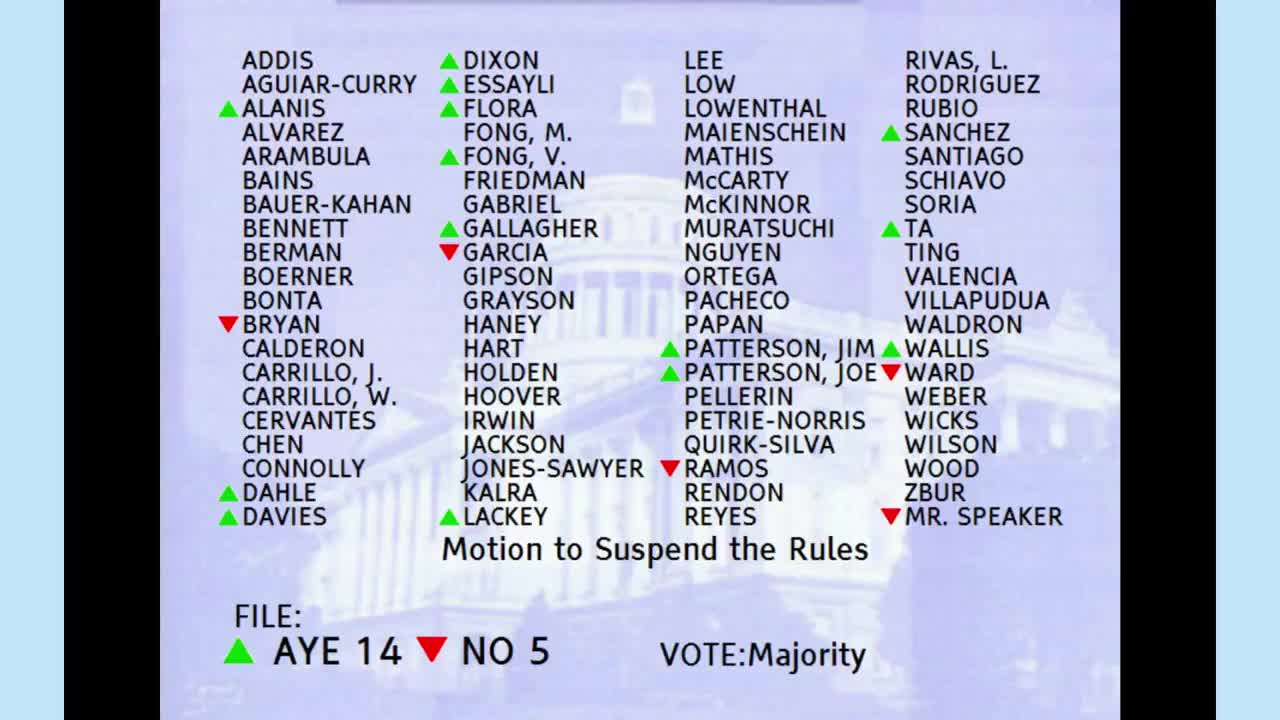 46SEC
Assembly Floor
 50SEC
Senate Floor
 1MIN
Assembly Floor
1MIN
Assembly Floor


Bill Co-Author(s):
