AB 806: Criminal procedure: crimes in multiple jurisdictions.
- Session Year: 2023-2024
- House: Assembly
- Latest Version Date: 2023-10-10
Current Status:
Passed
(2023-10-10: Chaptered by Secretary of State - Chapter 666, Statutes of 2023.)
Introduced
In Committee
First Chamber
In Committee
Second Chamber
Enacted
Under existing law, if more than one violation of specified crimes, including unlawful intercourse with a minor and child abuse, occurs in more than one jurisdictional territory and the defendant and the victim are the same for all offenses, the jurisdiction of any of those offenses, and for any other offenses properly joinable with that offense, is in any jurisdiction where at least one of the offenses occurred. Existing law makes joinder of other specified crimes, including rape and rape of a minor, in any jurisdiction where at least one of the offenses occurred, subject to a hearing on consolidation of the offenses.
This bill would also make this provision applicable to any crime of domestic violence, as defined, and would also make the joinder in the jurisdiction where at least one of the crimes occurred subject to a hearing on consolidation of the offenses.
Under existing law, if more than one violation of specified crimes, including unlawful intercourse with a minor and child abuse, occurs in more than one jurisdictional territory and the defendant and the victim are the same for all offenses, the jurisdiction of any of those offenses, and for any other offenses properly joinable with that offense, is in any jurisdiction where at least one of the offenses occurred. Existing law makes joinder of other specified crimes, including rape and rape of a minor, in any jurisdiction where at least one of the offenses occurred, subject to a hearing on consolidation of the offenses.
This bill would also make this provision applicable to any crime of domestic violence, as defined. defined, and would also make the joinder in the jurisdiction where at least one of the crimes occurred subject to a hearing on consolidation of the offenses.
Under existing law, if more than one violation of specified crimes, including unlawful intercourse with a minor and child abuse, occurs in more than one jurisdictional territory and the defendant and the victim are the same for all offenses, the jurisdiction of any of those offenses, and for any other offenses properly joinable with that offense, is in any jurisdiction where at least one of the offenses occurred.
This bill would also make this provision applicable to any crime of domestic violence, as defined.
(a)If more than one violation of Section 220, except assault with intent to commit mayhem, 261, 264.1, 269, 286, 287, 288, 288.5, 288.7, or 289 or former Section 262 or 288a occurs in more than one jurisdictional territory, the jurisdiction of any of those offenses, and for any offenses properly joinable with that offense, is in any jurisdiction where at least one of the offenses occurred, subject to a hearing pursuant to Section 954 in the jurisdiction of the proposed trial. At the hearing pursuant to Section 954, the prosecution shall present written evidence that all district attorneys in counties with jurisdiction over the offenses agree to the venue. Charged offenses from jurisdictions where there is not a written agreement from the district attorney shall be returned to that jurisdiction.
(b)If more than one violation of Section 243.4, 261.5, 273a, 273.5, 646.9, or any crime of domestic violence as defined in subdivision (b) of Section 13700 occurs in more than one jurisdictional territory, and the defendant and the victim are the same for all of the offenses, the jurisdiction of any of those offenses and for any offenses properly joinable with that offense is in any jurisdiction where at least one of the offenses occurred, subject to a hearing pursuant to Section 954 in the jurisdiction of the proposed trial. At the hearing pursuant to Section 954, the prosecution shall present written evidence that all district attorneys in counties with jurisdiction over the offenses agree to the venue. Charged offenses from jurisdictions where there is not a written agreement from the district attorney shall be returned to that jurisdiction.
(c)If more than one violation of Section 236.1, 266h, or 266i occurs in more than one jurisdictional territory, the jurisdiction of any of those offenses, and for any offenses properly joinable with that offense, is in any jurisdiction where at least one of the offenses occurred, subject to a hearing pursuant to Section 954 in the jurisdiction of the proposed trial. At the hearing pursuant to Section 954, the prosecution shall present written evidence that all district attorneys in counties with jurisdiction over the offenses agree to the venue. Charged offenses from jurisdictions where there is not a written agreement from the district attorney shall be returned to that jurisdiction. In determining whether all counts in the complaint should be joined in one county for prosecution, the court shall consider the location and complexity of the likely evidence, where the majority of the offenses occurred, the rights of the defendant and the people, and the convenience of, or hardship to, the victim or victims and witnesses.
(a)If more than one violation of Section 220, except assault with intent to commit mayhem, 261, 264.1, 269, 286, 287, 288, 288.5, 288.7, or 289 or former Section 262 or 288a occurs in more than one jurisdictional territory, the jurisdiction of any of those offenses, and for any offenses properly joinable with that offense, is in any jurisdiction where at least one of the offenses occurred, subject to a hearing, pursuant to Section 954, within hearing pursuant to Section 954 in the jurisdiction of the proposed trial. At the Section 954 hearing, hearing pursuant to Section 954, the prosecution shall present written evidence that all district attorneys in counties with jurisdiction of over the offenses agree to the venue. Charged offenses from jurisdictions where there is not a written agreement from the district attorney shall be returned to that jurisdiction.
(b)If more than one violation of Section 243.4, 261.5, 273a, 273.5, 646.9, or any crime of domestic violence as defined in subdivision (b) of Section 13700 occurs in more than one jurisdictional territory, and the defendant and the victim are the same for all of the offenses, the jurisdiction of any of those offenses and for any offenses properly joinable with that offense, offense is in any jurisdiction where at least one of the offenses occurred. occurred, subject to a hearing pursuant to Section 954 in the jurisdiction of the proposed trial. At the hearing pursuant to Section 954, the prosecution shall present written evidence that all district attorneys in counties with jurisdiction over the offenses agree to the venue. Charged offenses from jurisdictions where there is not a written agreement from the district attorney shall be returned to that jurisdiction.
(c)If more than one violation of Section 236.1, 266h, or 266i occurs in more than one jurisdictional territory, the jurisdiction of any of those offenses, and for any offenses properly joinable with that offense, is in any jurisdiction where at least one of the offenses occurred, subject to a hearing pursuant to Section 954, within 954 in the jurisdiction of the proposed trial. At the Section 954 hearing, hearing pursuant to Section 954, the prosecution shall present written evidence that all district attorneys in counties with jurisdiction of over the offenses agree to the venue. Charged offenses from jurisdictions where there is not a written agreement from the district attorney shall be returned to that jurisdiction. In determining whether all counts in the complaint should be joined in one county for prosecution, the court shall consider the location and complexity of the likely evidence, where the majority of the offenses occurred, the rights of the defendant and the people, and the convenience of, or hardship to, the victim or victims and witnesses.
(a)If more than one violation of Section 220, except assault with intent to commit mayhem, 261, 264.1, 269, 286, 287, 288, 288.5, 288.7, or 289 or former Section 262 or 288a occurs in more than one jurisdictional territory, the jurisdiction of any of those offenses, and for any offenses properly joinable with that offense, is in any jurisdiction where at least one of the offenses occurred, subject to a hearing, pursuant to Section 954, within the jurisdiction of the proposed trial. At the Section 954 hearing, the prosecution shall present written evidence that all district attorneys in counties with jurisdiction of the offenses agree to the venue. Charged offenses from jurisdictions where there is not a written agreement from the district attorney shall be returned to that jurisdiction.
(b)If more than one violation of Section 243.4, 261.5, 273a, 273.5, or 646.9 646.9, or any crime of domestic violence as defined in subdivision (b) of Section 13700 occurs in more than one jurisdictional territory, and the defendant and the victim are the same for all of the offenses, the jurisdiction of any of those offenses and for any offenses properly joinable with that offense, is in any jurisdiction where at least one of the offenses occurred.
(c)If more than one violation of Section 236.1, 266h, or 266i occurs in more than one jurisdictional territory, the jurisdiction of any of those offenses, and for any offenses properly joinable with that offense, is in any jurisdiction where at least one of the offenses occurred, subject to a hearing pursuant to Section 954, within the jurisdiction of the proposed trial. At the Section 954 hearing, the prosecution shall present written evidence that all district attorneys in counties with jurisdiction of the offenses agree to the venue. Charged offenses from jurisdictions where there is not a written agreement from the district attorney shall be returned to that jurisdiction. In determining whether all counts in the complaint should be joined in one county for prosecution, the court shall consider the location and complexity of the likely evidence, where the majority of the offenses occurred, the rights of the defendant and the people, and the convenience of, or hardship to, the victim or victims and witnesses.
|
Date
|
Status
|
|---|---|
| Oct 10, 2023 | Chaptered by Secretary of State - Chapter 666, Statutes of 2023. |
| Oct 10, 2023 | Approved by the Governor. |
| Sep 14, 2023 | Enrolled and presented to the Governor at 4:30 p.m. |
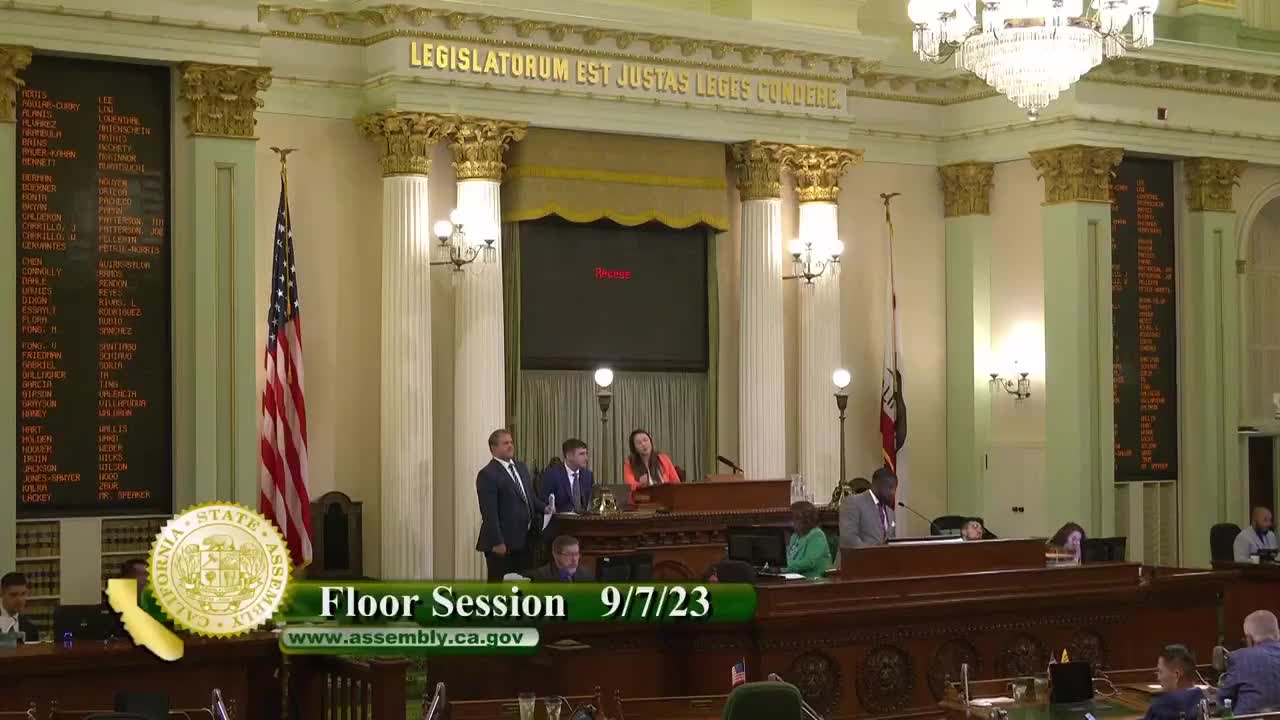
| Sep 7, 2023 | Senate amendments concurred in. To Engrossing and Enrolling. (Ayes 77. Noes 2. Page 3023.). |
| Sep 5, 2023 | In Assembly. Concurrence in Senate amendments pending. May be considered on or after September 7 pursuant to Assembly Rule 77. |
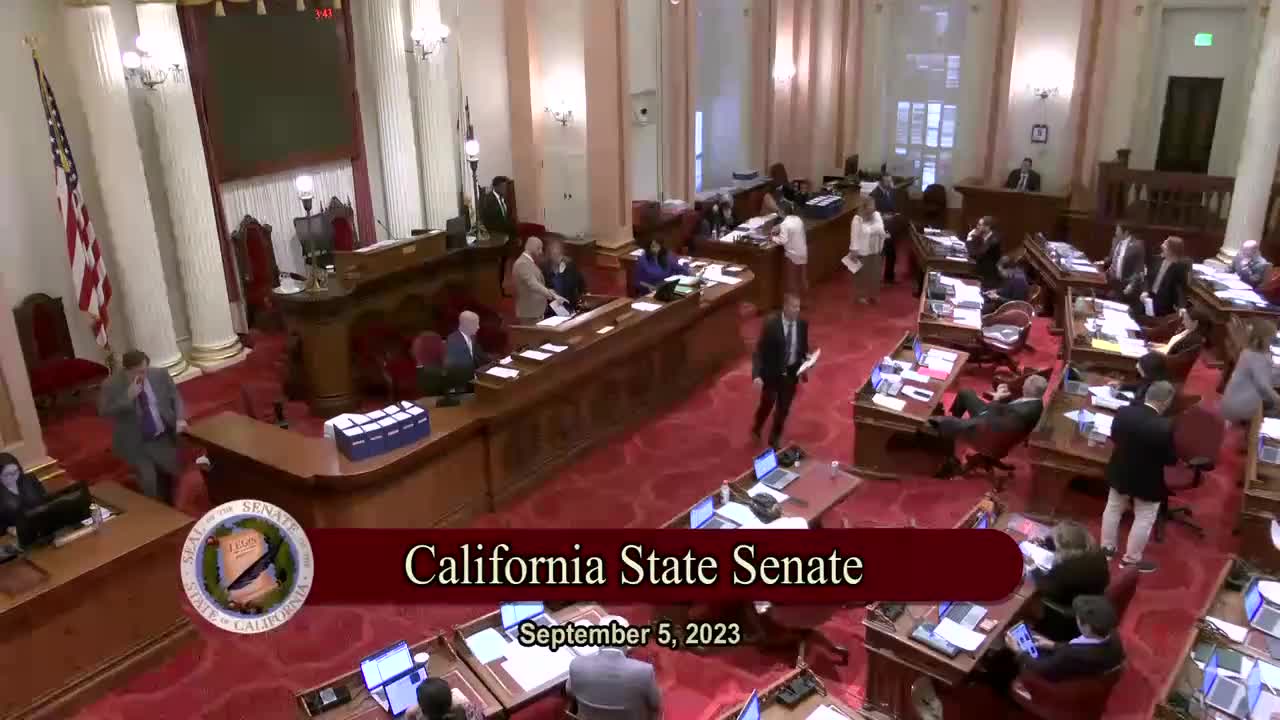
| Sep 5, 2023 | Read third time. Passed. Ordered to the Assembly. (Ayes 39. Noes 0. Page 2366.). |
| Jun 7, 2023 | Read second time and amended. Ordered to third reading. |
| Jun 6, 2023 | From committee: Amend, and do pass as amended. (Ayes 5. Noes 0.) (June 6). |
| May 3, 2023 | Referred to Com. on PUB S. |
| Apr 10, 2023 | In Senate. Read first time. To Com. on RLS. for assignment. |
| Apr 10, 2023 | Read third time. Passed. Ordered to the Senate. (Ayes 68. Noes 0. Page 1074.) |
| Mar 23, 2023 | Read second time. Ordered to third reading. |
| Mar 22, 2023 | From committee: Do pass. (Ayes 8. Noes 0.) (March 21). |
| Feb 23, 2023 | Referred to Com. on PUB. S. |
| Feb 14, 2023 | From printer. May be heard in committee March 16. |
| Feb 13, 2023 | Read first time. To print. |
|
Date
|
Description
|
Location
|
Votes
|
|
|---|---|---|---|---|
| Sep 7, 2023 | AB 806 Maienschein Concurrence in Senate Amendments | Assembly Floor |
Passed |
|
| Sep 5, 2023 | Assembly 3rd Reading AB806 Maienschein By Blakespear | Senate Floor |
Passed |
|
| Jun 6, 2023 | Do pass as amended | Senate Standing Committee on Public Safety |
Passed |
|
| Apr 10, 2023 | AB 806 Maienschein Assembly Third Reading | Assembly Floor |
Passed |
|
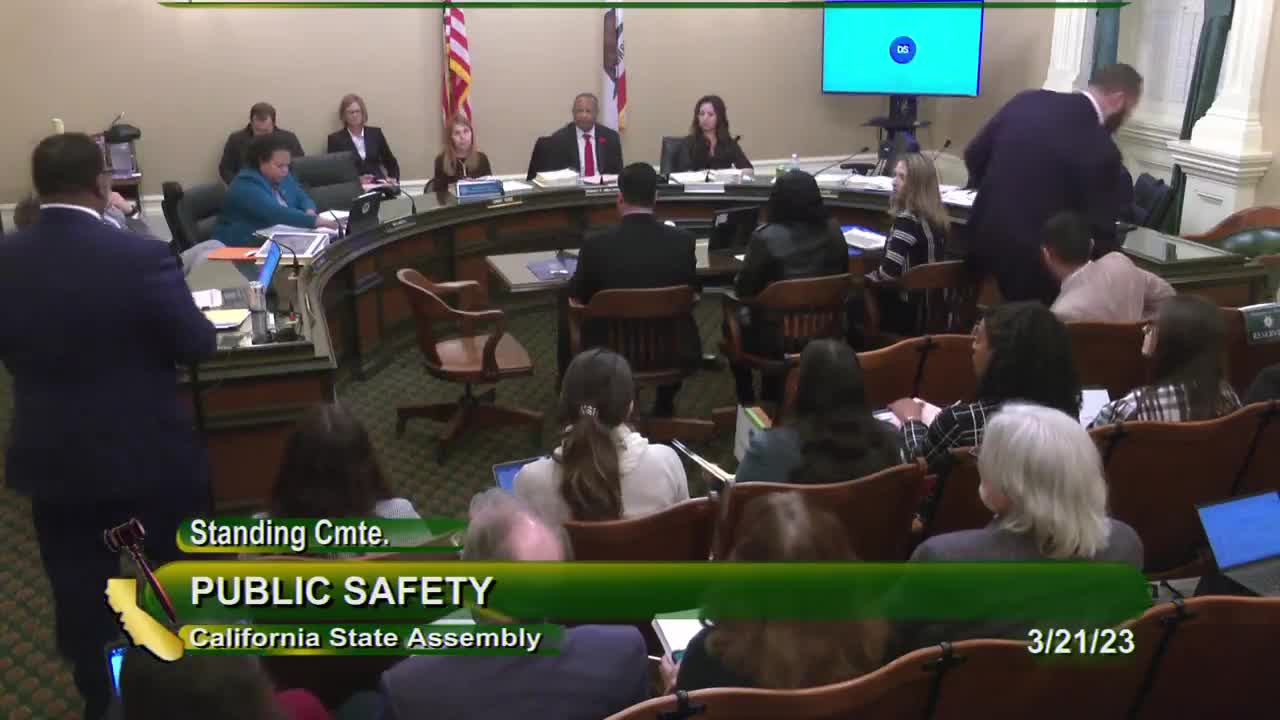
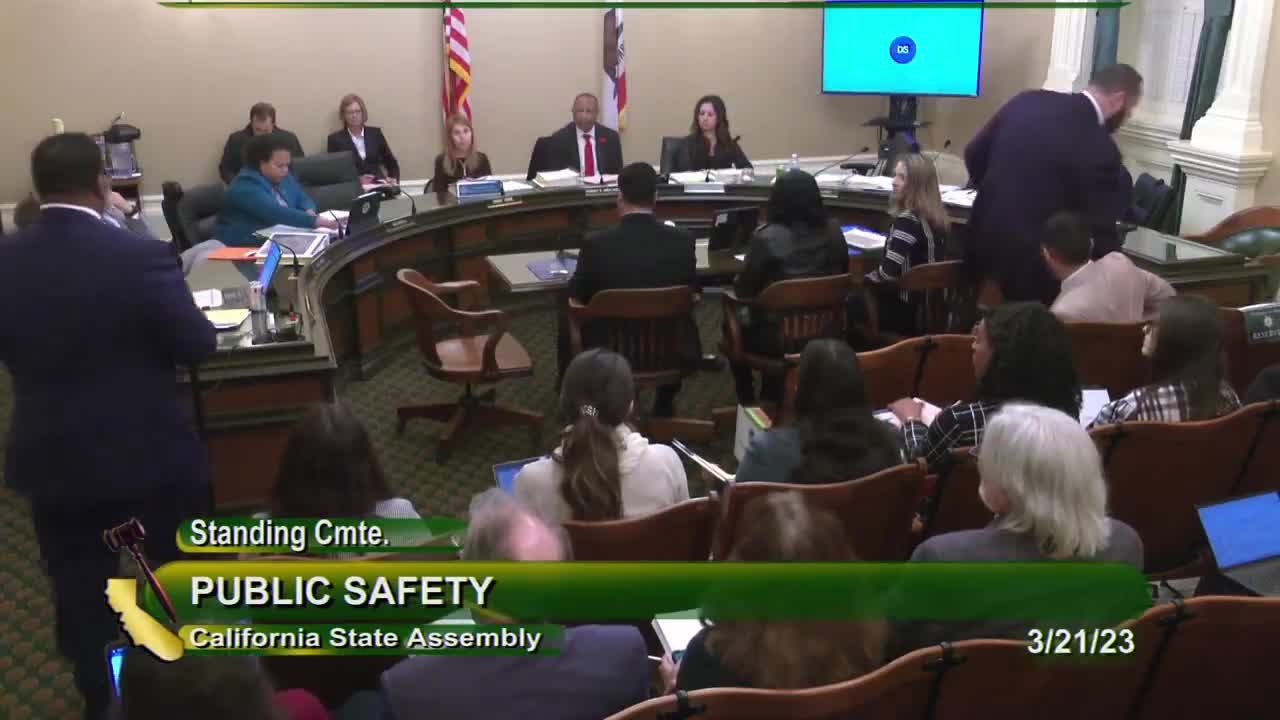
| Mar 21, 2023 | Do pass. | Assembly Standing Committee on Public Safety |
Passed |
This list shows positions taken on this bill by organizations on the date displayed, which is linked to the original source.
Positions by individuals are not included.
|
Organization
|
Position
|
Date
|
|---|---|---|
| Alliance For Hope | ** Support | |
| Alliance for Hope International | ** Support | |
| California Attorneys For Criminal Justice | ** Against | |
| California District Attorneys Association | ** Support | |
| California Sexual Assault Forensic Examiners Association | ** Support | |
| Center for Community Solutions | ** Support | |
| Crime Victims United | ** Support | |
| Korean Prosecutors Association | ** Support | |
| Los Angeles County District AttorneyS Office | ** Support | |
| Napa County District Attorney's Office | * Support | Jun 6, 2023 |
| National Asian Pacific Islander Prosecutors Association | ** Support | |
| Riverside County District Attorney | ** Support | |
| Riverside County District Attorney's Office | ** Support | |
| San Diego County District Attorney | ** Support | |
| Women’s Resource Center of Oceanside | ** Support |
CONCURRENCE IN SENATE AMENDMENTS
CSA1 Bill Id:AB 806
Author:(Maienschein)
As Amended Ver:June 7, 2023
Majority vote
SUMMARY
Expands the definition of domestic violence offenses that may be consolidated in a single trial in any county where at least one of the offenses occurred, if the defendant and the victim are the same for all of the offenses.
Senate Amendments
- Specify the consolidation is subject to a procedural hearing governing charging more than one count or offense.
- Require written evidence that all district attorneys in the counties with jurisdiction of the offenses agree to the venue.
COMMENTS
As Passed by the Assembly: this bill expanded the definition of domestic violence offenses that may be consolidated in a single trial in any county where at least one of the offenses occurred, if the defendant and the victim are the same for all of the offenses.
Major Provisions
- Expanded the crimes permitting joinder of offenses occurring in different jurisdictions that can be consolidated in one trial where the victim and the defendant are the same to include "any crime of domestic violence."
- Defined "any crime of domestic violence" as abuse committed against an adult or a minor who is a spouse, former spouse, cohabitant, former cohabitant, or person with whom the suspect has had a child or is having or has had a dating or engagement relationship."
- Specified "abuse" means "intentionally or recklessly causing or attempting to cause bodily injury, or placing another person in reasonable apprehension of imminent serious bodily injury to himself or herself, or another."
According to the Author
"AB 806 seeks to expand the list of domestic violence related crimes that can be joined and tried in one jurisdiction when the defendant and victim are the same. Current law allows for certain domestic violence crimes to be joined and tried in one jurisdiction. However, as written, the statute overlooks several common domestic violence crimes, including strangulation without injury, criminal threats, witness dissuasion and protective order violations.
"Without an amendment to the statute to allow for other crimes of domestic violence to be tried in one jurisdiction, victims may be subjected to many levels of exposure and involvement with prosecution and trial, the very issue the original statute was enacted to prevent. This proposal aims to protect repeat victims of domestic violence by including crimes not currently recognized by the statute."
Arguments in Support
According to the San Diego County District Attorney, a sponsor of this bill, "By expanding the law to include all crimes of domestic violence, victims will be spared from the trauma of testifying in front of their abuser, on different occasions, in multiple jurisdictions, regarding varying acts of domestic violence. Solving this problem was the foundation of the original legislative intent.
"A Senate floor analysis by the Senate Rules Committee regarding the original measure, which originated as Assembly Bill 2734, offered the author’s statement of the purpose of the bill:
[Assembly Bill] 2734 seeks to provide for the ability to combine trials when the victim and the defendant are the same for all the offenses. In crimes of domestic violence and child abuse or molestation, there is a high degree of mobility. The first offense may happen in one county, and then the victim moves to another county. The defendant follows them and commits the same crime again. Because of the repeat offenses, the victim is faced with the possibility of multiple trials. (Sen. Rules Com., Off. of Sen. Floor Analyses, 3d reading analysis of Assem. Bill 2734, as amended June 15, 1998.)
"Not only does Assembly Bill 806 act to unify the current statute with its original legislative intent, it also aligns with the legislative intent behind Evidence Code section 1109, which allows for evidence of uncharged domestic violence offenses to be cross-admissible in trial. Thus, much of what AB 806 seeks to change will already be part admissible in any one criminal case, making this bills solution a logical one that will save the time of jurors and maximize valuable court resources."
Arguments in Opposition
According to the California Attorneys for Criminal Justice, "[T]his bill attempts to expand this jurisdiction significantly: to any crime of domestic violence as broadly defined by Penal Code section 13700. Penal Code section 13700's definition, unlike current law, has no requirement that any violence occur. See Penal Code section 13700 subd. (a) [defining "[a]buse" to include "placing another person in reasonable apprehension" of injury].) In addition, Courts have held that any crime that on its face is unrelated to domestic violence can qualify as crimes involving domestic violence under section 13700, depending on the facts of the case. (See e.g., People v. James (2010) 191 Cal.App.4th 478 ["Although the crime of burglary is not a crime of domestic violence on its face, the trial court properly found that under the facts of the case, the burglary was a qualifying offense" under the definition set forth in Penal Code 13700].)
"Charges of domestic violence, however defined, are, of course, serious. Such accusations often arise between individuals who have decided to move far away from one another. Expanding this particularly jurisdictional loophole to include any crime under the sun that might be characterized as involving broadly defined domestic violence threatens to place significant additional burdens on victims, defendants, and other witnesses, who may be forced into court in a distant county for incidents that occurred in their county of residence."
FISCAL COMMENTS
Unknown. This bill is keyed non-fiscal by the Legislative Counsel.
VOTES:
ASM PUBLIC SAFETY: 8-0-0
YES: Jones-Sawyer, Alanis, Bonta, Bryan, Lackey, Ortega, Santiago, Zbur
ASSEMBLY FLOOR: 68-0-12
YES: Addis, Aguiar-Curry, Alanis, Alvarez, Arambula, Bains, Bennett, Berman, Boerner Horvath, Bonta, Calderon, Juan Carrillo, Wendy Carrillo, Cervantes, Connolly, Megan Dahle, Dixon, Flora, Mike Fong, Vince Fong, Friedman, Gabriel, Gallagher, Garcia, Gipson, Grayson, Haney, Hart, Holden, Hoover, Irwin, Jackson, Jones-Sawyer, Kalra, Lackey, Lee, Low, Lowenthal, Maienschein, Mathis, McCarty, Muratsuchi, Stephanie Nguyen, Ortega, Pacheco, Papan, Joe Patterson, Pellerin, Ramos, Reyes, Luz Rivas, Robert Rivas, Rodriguez, Blanca Rubio, Santiago, Schiavo, Soria, Ta, Ting, Villapudua, Waldron, Wallis, Ward, Weber, Wicks, Wood, Zbur, Rendon
ABS, ABST OR NV: Bauer-Kahan, Bryan, Chen, Davies, Essayli, McKinnor, Jim Patterson, Petrie-Norris, Quirk-Silva, Sanchez, Valencia, Wilson
SENATE FLOOR: 39-0-1
YES: Allen, Alvarado-Gil, Archuleta, Ashby, Atkins, Becker, Blakespear, Bradford, Caballero, Cortese, Dahle, Dodd, Durazo, Eggman, Glazer, Gonzalez, Grove, Hurtado, Jones, Laird, Limón, McGuire, Menjivar, Min, Newman, Nguyen, Niello, Ochoa Bogh, Portantino, Roth, Rubio, Seyarto, Skinner, Smallwood-Cuevas, Stern, Umberg, Wahab, Wiener, Wilk
ABS, ABST OR NV: Padilla
UPDATED
VERSION: June 7, 2023
CONSULTANT: Cheryl Anderson / PUB. S. / (916) 319-3744 FN: 0001764
SENATE RULES COMMITTEE Office of Senate Floor Analyses (916) 651-1520 Fax: (916) 327-4478 | AB 806 |
THIRD READING
Bill No: AB 806
Author: Maienschein (D)
Amended: 6/7/23 in Senate
Vote: 21
SENATE PUBLIC SAFETY COMMITTEE: 5-0, 6/6/23
AYES: Wahab, Ochoa Bogh, Bradford, Skinner, Wiener
ASSEMBLY FLOOR: 68-0, 4/10/23 - See last page for vote
SUBJECT: Criminal procedure: crimes in multiple jurisdictions
SOURCE: San Diego County District Attorney
DIGEST:
This bill expands the types of domestic violence offenses that may be consolidated into a single trial in any county where at least one of the offenses occurred and where the victim and the defendant are the same for all of the offenses.
ANALYSIS:
Existing law:
- States that, except as otherwise provided by law, the jurisdiction of every public offense is in any competent court within the jurisdictional territory of which it is committed. (Pen. Code, § 777.)
- States that when a public offense is committed in part in one jurisdictional territory and in part in another, or the acts constituting or requisite to committing the offense occur in more than one territorial jurisdiction, the jurisdiction of the offense is in any competent court within either jurisdiction. (Pen. Code, § 781.)
- Defines “domestic violence” for purposes of law enforcement response as abuse committed against an adult or a minor who is a spouse, former spouse, cohabitant, former cohabitant, or person with whom the suspect has had a child or is having or has had a dating or engagement relationship. (Pen. Code, §13700, subd. (b).)
- Specifies that “cohabitant” means “two unrelated adult persons living together for a substantial period of time, resulting in some permanency of relationship. Factors that may determine whether persons are cohabiting include, but are not limited to: sexual relations between the parties while sharing the same living quarters; sharing of income or expenses; joint use or ownership of property; whether the parties hold themselves out as spouses; the continuity of the relationship; and the length of the relationship. (Pen. Code, § 13700, subd. (b).)
- States that if one or more violation of specified sex offenses occurs in more than one jurisdictional territory, the jurisdiction of any of those offenses, and for any offenses properly joinable with that offense is in any jurisdiction where at least one of the offenses occurred, subject to a hearing pursuant to Penal Code Section 954, within the jurisdiction of the proposed trial. At the Section 954 hearing, the prosecution shall present written evidence that all district attorneys in counties with jurisdiction of the offenses agree to the venue. Charged offenses from jurisdictions where there is not a written agreement from the district attorney shall be returned to that jurisdiction. (Pen. Code, § 784.7, subd. (a).)
- States that if one or more violation of human trafficking or pimping and pandering occurs in more than one jurisdictional territory, the jurisdiction of any of those offenses, and for any offenses properly joinable with that offense, is in any jurisdiction where at least one of the offenses occurred, subject to a hearing pursuant to Penal Code Section 954, within the jurisdiction of the proposed trial. At the Section 954 hearing, the prosecution shall present written evidence that all district attorneys in counties with jurisdiction of the offenses agree to the venue. Charged offenses from jurisdictions where there is not a written agreement from the district attorney shall be returned to that jurisdiction. In determining whether all counts in the complaint should be joined in one county for prosecution, the court shall consider the location and complexity of the likely evidence, where the majority of the offenses occurred, the rights of the defendant and the people, and the convenience of, or hardship to, the victim or victims and witnesses. (Pen. Code, § 784.7, subd. (c).)
- Permits consolidation of different offenses which do not relate to same transaction or event but are connected together in their commission, or are the same class of crimes or offenses. (Pen. Code, § 954.)
- States a trial court may, in its discretion, order that multiple criminal charges be severed and tried individually, provided good cause is shown and fairness so necessitates. (Pen. Code, § 954.)
- States that if more than one violation of sexual battery, statutory rape, child endangerment, domestic violence involving injury, or stalking occurs in more than one jurisdictional territory, and the defendant and the victim are the same for all of the offenses, the jurisdiction of any of those offenses and for any offenses properly joinable with that offense, is in any jurisdiction where at least one of the offenses occurred. (Pen. Code, § 784.7, subd. (b).)
This bill:
- Expands the type of domestic violence offenses that may be consolidated into one jurisdiction where the victim and the defendant are the same offenses by referencing domestic violence crimes as defined in Penal Code Section 13700.
- Requires the consolidation to be subject to a hearing pursuant to Penal Code Section 954 and requires written evidence that all district attorneys in the counties with jurisdiction of the offenses agree to the venue.
Comments
According to the author:
AB 806 seeks to expand the list of domestic violence related crimes that can be joined and tried in one jurisdiction when the defendant and victim are the same. Current law allows for certain domestic violence crimes to be joined and tried in one jurisdiction. However, as written, the statute overlooks several common domestic violence crimes, including strangulation without injury, criminal threats, witness dissuasion and protective order violations.
Without an amendment to the statute to allow for other crimes of domestic violence to be tried in one jurisdiction, victims may be subjected to many levels of exposure and involvement with prosecution and trial, the very issue the original statute was enacted to prevent. This proposal aims to protect repeat victims of domestic violence by including crimes not currently recognized by the statute.
FISCAL EFFECT: Appropriation: No Fiscal Com.: No Local: No
SUPPORT: (Verified 6/7/23)
San Diego County District Attorney (source)
Alliance for Hope
California District Attorneys Association
California Sexual Assault Forensic Examiner Association
Center for Community Solutions
Crime Victims United
Korean Prosecutor’s Association
Los Angeles County District Attorney’s Office
National Asian Pacific Islander Prosecutors Association
Riverside County District Attorney’s Office
Women’s Resource Center of Oceanside
OPPOSITION: (Verified 6/7/23)
California Attorneys for Criminal Justice
ARGUMENTS IN SUPPORT: According to the San Diego County District Attorney, the sponsor of this bill:
AB 806’s expansion of current law protects victims of domestic violence by decreasing their exposure to the justice system by eliminating simultaneous prosecutions in multiple jurisdictions. Often when criminal charges for domestic violence are filed, a criminal protective order is issued by a judicial officer. Due to the “high degree of mobility” involved in domestic violence crimes, victims attempt to physically distance themselves from their abusers. This results in changing phone numbers, leaving the county where the abuse took place, or permanently moving from one home to another. This separation can put the victim – and their children – in increased danger by a desperate abuser who will make every effort to contact the victim either in person or through other means. Violations of protective orders often do not amount to physical injury but nonetheless causes a victim to continually fear for their life. AB 806 will allow for the prosecution of these crimes by the original prosecuting agency handling the underlying domestic violence case.
This expansion does not create a mandate, but rather allows Offices of the District Attorney the discretion to unify prosecutions when it is in the best interest of justice and lessen the trauma for the victim. In granting the ability to vest territorial jurisdiction for all domestic violence crimes where the victim and defendant are the same, the amount of time a victim will be involved in the criminal justice process, including being subject to investigation, testifying at trials, and attending court hearings, will be reduced.
ARGUMENTS IN OPPOSITION: According to California Attorneys for Criminal Justice:
[T]his bill attempts to expand . . . jurisdiction significantly: to any crime of domestic violence as broadly defined by Penal Code section 13700. Penal Code section 13700’s definition, unlike current law, has no requirement that any violence occur. See Penal Code section 13700 subd. (a) [defining “[a]buse” to include “placing another person in reasonable apprehension” of injury].) In addition, Courts have held that any crime that on its face is unrelated to domestic violence can qualify as crimes involving domestic violence under section 13700, depending on the facts of the case. (See e.g., People v. James (2010) 191 Cal.App.4th 478 [“Although the crime of burglary is not a crime of domestic violence on its face, the trial court properly found that under the facts of the case, the burglary was a qualifying offense” under the definition set forth in Penal Code 13700].)
Charges of domestic violence, however defined, are, of course, serious. Such accusations often arise between individuals who have decided to move far away from one another. Expanding this particularly jurisdictional loophole to include any crime under the sun that might be characterized as involving broadly defined domestic violence threatens to place significant additional burdens on victims, defendants, and other witnesses, who may be forced into court in a distant county for incidents that occurred in their county of residence.
ASSEMBLY FLOOR: 68-0, 4/10/23
AYES: Addis, Aguiar-Curry, Alanis, Alvarez, Arambula, Bains, Bennett, Berman, Boerner Horvath, Bonta, Calderon, Juan Carrillo, Wendy Carrillo, Cervantes, Connolly, Megan Dahle, Dixon, Flora, Mike Fong, Vince Fong, Friedman, Gabriel, Gallagher, Garcia, Gipson, Grayson, Haney, Hart, Holden, Hoover, Irwin, Jackson, Jones-Sawyer, Kalra, Lackey, Lee, Low, Lowenthal, Maienschein, Mathis, McCarty, Muratsuchi, Stephanie Nguyen, Ortega, Pacheco, Papan, Joe Patterson, Pellerin, Ramos, Reyes, Luz Rivas, Robert Rivas, Rodriguez, Blanca Rubio, Santiago, Schiavo, Soria, Ta, Ting, Villapudua, Waldron, Wallis, Ward, Weber, Wicks, Wood, Zbur, Rendon
NO VOTE RECORDED: Bauer-Kahan, Bryan, Chen, Davies, Essayli, McKinnor, Jim Patterson, Petrie-Norris, Quirk-Silva, Sanchez, Valencia, Wilson
Prepared by: Stella Choe / PUB. S. /
6/7/23 15:04:36
**** END ****
SENATE COMMITTEE ON PUBLIC SAFETY
Senator Aisha Wahab, Chair
2023 - 2024 Regular
Bill No: AB 806 Hearing Date: June 6, 2023
Author: | Maienschein | ||
Version: | February 13, 2023 | ||
Urgency: | No | Fiscal: | No |
Consultant: | SC | ||
Subject: Criminal procedure: crimes in multiple jurisdictions
HISTORY
Source: San Diego District Attorney
Prior Legislation: AB 1746 (Cervantes), Ch. 962, Stats. 2018
AB 362 (Muratsuchi), Ch. 379, Stats. 2017
SB 939 (Block), Ch. 246, Stats. 2014
AB 2252 (Cohn), Ch. 194, Stats. 2002
AB 2734 (Pacheco), Ch. 302, Stats. 1998
Support: Alliance for Hope; California District Attorneys Association; California Sexual Assault Forensic Examiner Association; Center for Community Solutions; Crime Victims United; Korean Prosecutor’s Association; Los Angeles County District Attorney’s Office; National Asian Pacific Islander Prosecutors Association; Riverside County District Attorney’s Office; Women’s Resource Center of Oceanside
Opposition: California Attorneys for Criminal Justice
Assembly Floor Vote: 68 - 0
PURPOSE
The purpose of this bill is to expand the types of domestic violence offenses that may be consolidated into a single trial in any county where at least one of the offenses occurred and where the victim and the defendant are the same for all of the offenses.
Existing law states that, except as otherwise provided by law, the jurisdiction of every public offense is in any competent court within the jurisdictional territory of which it is committed. (Pen. Code, § 777.)
Existing law states that when a public offense is committed in part in one jurisdictional territory and in part in another, or the acts constituting or requisite to committing the offense occur in more than one territorial jurisdiction, the jurisdiction of the offense is in any competent court within either jurisdiction. (Pen. Code, § 781)
Existing law defines “domestic violence” for purposes of law enforcement __ as abuse committed against an adult or a minor who is a spouse, former spouse, cohabitant, former cohabitant, or person with whom the suspect has had a child or is having or has had a dating or engagement relationship. (Pen. Code, §13700, subd. (b).)
Existing law specifies that “cohabitant” means “two unrelated adult persons living together for a substantial period of time, resulting in some permanency of relationship. Factors that may determine whether persons are cohabiting include, but are not limited to: sexual relations between the parties while sharing the same living quarters; sharing of income or expenses; joint use or ownership of property; whether the parties hold themselves out as spouses; the continuity of the relationship; and the length of the relationship. (Pen. Code, § 13700, subd. (b).)
Existing law states that if one or more violation of specified sex offenses occurs in more than one jurisdictional territory, the jurisdiction of any of those offenses, and for any offenses properly joinable with that offense is in any jurisdiction where at least one of the offenses occurred, subject to a hearing pursuant to Penal Code section 954, within the jurisdiction of the proposed trial. At the Section 954 hearing, the prosecution shall present written evidence that all district attorneys in counties with jurisdiction of the offenses agree to the venue. Charged offenses from jurisdictions where there is not a written agreement from the district attorney shall be returned to that jurisdiction. (Pen. Code, § 784.7, subd. (a).)
Existing law states that if one or more violation of human trafficking or pimping and pandering occurs in more than one jurisdictional territory, the jurisdiction of any of those offenses, and for any offenses properly joinable with that offense, is in any jurisdiction where at least one of the offenses occurred, subject to a hearing pursuant to Penal Code Section 954, within the jurisdiction of the proposed trial. At the Section 954 hearing, the prosecution shall present written evidence that all district attorneys in counties with jurisdiction of the offenses agree to the venue. Charged offenses from jurisdictions where there is not a written agreement from the district attorney shall be returned to that jurisdiction. In determining whether all counts in the complaint should be joined in one county for prosecution, the court shall consider the location and complexity of the likely evidence, where the majority of the offenses occurred, the rights of the defendant and the people, and the convenience of, or hardship to, the victim or victims and witnesses. (Pen. Code, § 784.7, subd. (c).)
Existing law permits consolidation of different offenses which do not relate to same transaction or event but are connected together in their commission, or are the same class of crimes or offenses. (Pen. Code, § 954.)
Existing law states a trial court may, in its discretion, order that multiple criminal charges be severed and tried individually, provided good cause is shown and fairness so necessitates. (Pen. Code, § 954.)
Existing law states that if more than one violation of sexual battery, statutory rape, child endangerment, domestic violence involving injury, or stalking occurs in more than one jurisdictional territory, and the defendant and the victim are the same for all of the offenses, the jurisdiction of any of those offenses and for any offenses properly joinable with that offense, is in any jurisdiction where at least one of the offenses occurred. (Pen. Code, § 784.7, subd. (b).)
This bill expands the type of domestic violence offenses that may be consolidated into one jurisdiction where the victim and the defendant are the same offenses by referencing domestic violence crimes as defined in Penal Code section 13700.
This bill requires the consolidation to be subject to a hearing pursuant to Penal Code section 954 and requires written evidence that all district attorneys in the counties with jurisdiction of the offenses agree to the venue.
COMMENTS
- Need for This Bill
According to the author of this bill:
AB 806 seeks to expand the list of domestic violence related crimes that can be joined and tried in one jurisdiction when the defendant and victim are the same. Current law allows for certain domestic violence crimes to be joined and tried in one jurisdiction. However, as written, the statute overlooks several common domestic violence crimes, including strangulation without injury, criminal threats, witness dissuasion and protective order violations.
Without an amendment to the statute to allow for other crimes of domestic violence to be tried in one jurisdiction, victims may be subjected to many levels of exposure and involvement with prosecution and trial, the very issue the original statute was enacted to prevent. This proposal aims to protect repeat victims of domestic violence by including crimes not currently recognized by the statute.
- Constitutional Right to a Jury Trial: Venue compared to Vicinage
The U.S. Constitution guarantees criminal defendants the right to be tried “by an impartial jury of the state and district wherein the crime shall have been committed, which district shall have been previously ascertained by law . . ..” (U.S. Const., 6th Amend., italics added.) The California Supreme Court has held that “[t]he Legislature may determine the venue for trial except to the extent the vicinage or due process provisions of the state or federal Constitution circumscribe that authority.” (Price v. Superior Court (2001) 25 Cal. 4th 1046, 1056.)
Venue refers to the territorial jurisdiction in which a case may be brought to trial, in other words, the location where the trial is held. Vicinage is the right to trial by a jury drawn from residents of the area in which the charged offense allegedly was committed.
In Price v. Superior Court, supra, the California Supreme Court explained these concepts as applied to criminal prosecutions.
The concepts of venue and vicinage are closely related, as a jury pool ordinarily is selected from the area in which the trial is to be held. The concepts have different origins and purposes, however. Venue is historically significant from a national perspective because, as discussed below, the pre-Revolutionary practice of transporting colonists who were charged with crimes in the colonies to either England or other English colonies for trial was among the principal complaints of the colonists against England. Objections to that practice led to the inclusion of Article III, Section 2 in the United States Constitution. That provision limits the place of trial in federal criminal proceedings to the state in which the crime was committed. Most California venue statutes serve a similar purpose in reducing the potential burden on a defendant who might otherwise be required to stand trial in a distant location that is not reasonably related to the alleged criminal conduct.
. . . [T]he general rule of territorial jurisdiction over felonies is that stated in section 777: “except as otherwise provided by law the jurisdiction of every public offense is in any competent court within the jurisdictional territory of which it is committed.” Ordinarily the jurisdictional territory of a superior court is the county in which it sits. (Pen. Code, § 691, subd. (b).) Venue or territorial jurisdiction establishes the proper place for trial, but is not an aspect of the fundamental subject matter jurisdiction of the court and does not affect the power of a court to try a case.
When the Legislature creates an exception to the rule of section 777, the venue statute is remedial and for that reason is construed liberally to achieve the legislative purpose of expanding criminal jurisdiction. Section 784.7 is such an exception and the legislative purpose is clear. (People v. Price, supra, 25 Cal.4th at pp. 1054-1056, internal citations omitted.)
As to the right of vicinage, the Supreme Court explained:
Because a vicinage guarantee does not serve the purpose of protecting a criminal defendant from government oppression and is not necessary to ensure a fair trial, it is not a necessary feature of the right to jury trial. For that reason we conclude that the vicinage clause of the Sixth Amendment is not applicable to the states through the Fourteenth Amendment. (Price v. Superior Court, supra, 25 Cal. 4th p. at 1065.)
Rather, the Court explained, the right of vicinage in California is derived from the right to a jury trial guaranteed in the California Constitution and is effectively limited to a requirement that there be a reasonable nexus between the crime and the county of trial:
The right to a trial by a jury of the vicinage, as guaranteed by the California Constitution, is not violated by trial in county having a reasonable relationship to the offense or to other crimes committed by the defendant against the same victim. We do not hold here that a crime may be tried anywhere. The Legislature’s power to designate the place for trial of a criminal offense is limited by the requirement that there be a reasonable relationship or nexus between the place designated for trial and the commission of the offense. Repeated abuse of the same child or spouse in more than one county creates that nexus. The venue authorized by Penal Code section 784.7 is not arbitrary. It is reasonable for the Legislature to conclude that this pattern of conduct is akin to a continuing offense and to conclude that the victim and other witnesses should not be burdened with having to testify in multiple trials in different counties. (Price v. Superior Court, supra, 25 Cal.4th. at p. 1075.)
- Consolidation of Charges from Different Jurisdictions
The general rule in California is that the district attorney prosecutes an offense in the jurisdiction where the crime occurred. If part of the commission of the crime occurs in one county but the crime is completed in another county, the proper jurisdiction is in either of the counties.
The Legislature has created several exceptions to the rule that the territorial jurisdiction of the case is where the offense occurred. These exceptions include sex crimes, domestic violence, child abuse, and human trafficking cases. For sex offense cases, the court has ruled that the cases that can be joined do not have to be violations of the same offense. (People v. Nguyen (2010) 184 Cal.App.4th 1096.) Rather, the sex offenses currently listed in Penal Code section 784.7 are of the same class of crimes and therefore any combination of the listed sex crimes may be properly joined. (Id. at 1113.)
As currently written, subdivision (b) of Penal Code section 784.7 allows consolidation of domestic violence offenses with injury (Penal Code section 273.5) that occurred in multiple jurisdictions where the defendant and the victim are the same for all offenses. According to the proponents of this bill, victims of domestic violence end up moving to different jurisdictions only to have the perpetrator of violence continue to follow them and commit domestic violence crimes that are not covered by Penal Code section 784.7, such as witness dissuasion, assault without injury, and violations of retraining orders. This bill adds domestic violence offense as defined in Penal Code section 13700 which generally includes “abuse committed against an adult or a minor who is a spouse, former spouse, cohabitant, former cohabitant, or person with whom the suspect has had a child or is having or has had a dating or engagement relationship.”
Section 784.7 also allows consolidation of specified sex offenses (subdivision (a)) and consolidation of human trafficking offenses (subdivision (c)) subject to a joinder hearing pursuant to Penal Code section 954 and requires the prosecution to present written evidence that all district attorneys in counties with jurisdiction of the offenses agree to the venue. Charged offense from the jurisdictions where there is not a written agreement from the district attorney shall be returned to that jurisdiction. The joinder hearing is also where a defendant may argue that the cases should not be consolidated because of substantial prejudice to the defendant, and the court has discretion to order certain charges to be tried separately.
Should this bill be amended to require the consolidation of domestic violence offenses to also be subject to the joinder hearing pursuant to Penal Code section 954 and to require written agreement from all district attorneys in counties with jurisdiction of offenses committed outside the jurisdiction of the proposed trial?
- Argument in Support
According to the San Diego District Attorney, the sponsor of this bill:
AB 806’s expansion of current law protects victims of domestic violence by decreasing their exposure to the justice system by eliminating simultaneous prosecutions in multiple jurisdictions. Often when criminal charges for domestic violence are filed, a criminal protective order is issued by a judicial officer. Due to the “high degree of mobility” involved in domestic violence crimes, victims attempt to physically distance themselves from their abusers. This results in changing phone numbers, leaving the county where the abuse took place, or permanently moving from one home to another. This separation can put the victim – and their children – in increased danger by a desperate abuser who will make every effort to contact the victim either in person or through other means. Violations of protective orders often do not amount to physical injury but nonetheless causes a victim to continually fear for their life. AB 806 will allow for the prosecution of these crimes by the original prosecuting agency handling the underlying domestic violence case.
This expansion does not create a mandate, but rather allows Offices of the District Attorney the discretion to unify prosecutions when it is in the best interest of justice and lessen the trauma for the victim. In granting the ability to vest territorial jurisdiction for all domestic violence crimes where the victim and defendant are the same, the amount of time a victim will be involved in the criminal justice process, including being subject to investigation, testifying at trials, and attending court hearings, will be reduced.
- Argument in Opposition
According to California Attorneys for Criminal Justice:
[T]his bill attempts to expand . . . jurisdiction significantly: to any crime of domestic violence as broadly defined by Penal Code section 13700. Penal Code section 13700’s definition, unlike current law, has no requirement that any violence occur. See Penal Code section 13700 subd. (a) [defining “[a]buse” to include “placing another person in reasonable apprehension” of injury].) In addition, Courts have held that any crime that on its face is unrelated to domestic violence can qualify as crimes involving domestic violence under section 13700, depending on the facts of the case. (See e.g., People v. James (2010) 191 Cal.App.4th 478 [“Although the crime of burglary is not a crime of domestic violence on its face, the trial court properly found that under the facts of the case, the burglary was a qualifying offense” under the definition set forth in Penal Code 13700].)
Charges of domestic violence, however defined, are, of course, serious. Such accusations often arise between individuals who have decided to move far away from one another. Expanding this particularly jurisdictional loophole to include any crime under the sun that might be characterized as involving broadly defined domestic violence threatens to place significant additional burdens on victims, defendants, and other witnesses, who may be forced into court in a distant county for incidents that occurred in their county of residence.
-- END –
ASSEMBLY THIRD READING
ATR Bill Id:AB 806
Author:(Maienschein)
As Introduced Ver:February 13, 2023
Majority vote
SUMMARY
Expands the definition of domestic violence offenses that may be consolidated in a single trial in any county where at least one of the offenses occurred, if the defendant and the victim are the same for all of the offenses.
Major Provisions
- Expands the crimes permitting joinder of offenses occurring in different jurisdictions that can be consolidated in one trial where the victim and the defendant are the same to include "any crime of domestic violence."
- Defines "any crime of domestic violence" as abuse committed against an adult or a minor who is a spouse, former spouse, cohabitant, former cohabitant, or person with whom the suspect has had a child or is having or has had a dating or engagement relationship."
- Specifies "abuse" means "intentionally or recklessly causing or attempting to cause bodily injury, or placing another person in reasonable apprehension of imminent serious bodily injury to himself or herself, or another."
COMMENTS
According to the Author
"AB 806 seeks to expand the list of domestic violence related crimes that can be joined and tried in one jurisdiction when the defendant and victim are the same. Current law allows for certain domestic violence crimes to be joined and tried in one jurisdiction. However, as written, the statute overlooks several common domestic violence crimes, including strangulation without injury, criminal threats, witness dissuasion and protective order violations.
"Without an amendment to the statute to allow for other crimes of domestic violence to be tried in one jurisdiction, victims may be subjected to many levels of exposure and involvement with prosecution and trial, the very issue the original statute was enacted to prevent. This proposal aims to protect repeat victims of domestic violence by including crimes not currently recognized by the statute."
Arguments in Support
According to the San Diego County District Attorney, a sponsor of this bill, "By expanding the law to include all crimes of domestic violence, victims will be spared from the trauma of testifying in front of their abuser, on different occasions, in multiple jurisdictions, regarding varying acts of domestic violence. Solving this problem was the foundation of the original legislative intent.
"A Senate floor analysis by the Senate Rules Committee regarding the original measure, which originated as Assembly Bill 2734, offered the author's statement of the purpose of the bill:
"[Assembly Bill] 2734 seeks to provide for the ability to combine trials when the victim and the defendant are the same for all the offenses. In crimes of domestic violence and child abuse or molestation, there is a high degree of mobility. The first offense may happen in one county, and then the victim moves to another county. The defendant follows them and commits the same crime again. Because of the repeat offenses, the victim is faced with the possibility of multiple trials. (Sen. Rules Com., Off. of Sen. Floor Analyses, 3d reading analysis of Assem. Bill 2734, as amended June 15, 1998.)
"Not only does Assembly Bill 806 act to unify the current statute with its original legislative intent, it also aligns with the legislative intent behind Evidence Code section 1109, which allows for evidence of uncharged domestic violence offenses to be cross-admissible in trial. Thus, much of what AB 806 seeks to change will already be part admissible in any one criminal case, making this bills solution a logical one that will save the time of jurors and maximize valuable court resources."
Arguments in Opposition
According to the California Attorneys for Criminal Justice, "[T]his bill attempts to expand this jurisdiction significantly: to any crime of domestic violence as broadly defined by Penal Code section 13700. Penal Code section 13700's definition, unlike current law, has no requirement that any violence occur. See Penal Code section 13700 subd. (a) [defining "[a]buse" to include "placing another person in reasonable apprehension" of injury].) In addition, Courts have held that any crime that on its face is unrelated to domestic violence can qualify as crimes involving domestic violence under section 13700, depending on the facts of the case. (See e.g., People v. James (2010) 191 Cal.App.4th 478 ["Although the crime of burglary is not a crime of domestic violence on its face, the trial court properly found that under the facts of the case, the burglary was a qualifying offense" under the definition set forth in Penal Code 13700].)
"Charges of domestic violence, however defined, are, of course, serious. Such accusations often arise between individuals who have decided to move far away from one another. Expanding this particularly jurisdictional loophole to include any crime under the sun that might be characterized as involving broadly defined domestic violence threatens to place significant additional burdens on victims, defendants, and other witnesses, who may be forced into court in a distant county for incidents that occurred in their county of residence."
FISCAL COMMENTS
Unknown. This bill is keyed non-fiscal by the Legislative Counsel.
VOTES
ASM PUBLIC SAFETY: 8-0-0
YES: Jones-Sawyer, Alanis, Bonta, Bryan, Lackey, Ortega, Santiago, Zbur
UPDATED
VERSION: February 13, 2023
CONSULTANT: Cheryl Anderson / PUB. S. / (916) 319-3744 FN: 0000162
Date of Hearing:
Counsel: Cheryl Anderson
ASSEMBLY COMMITTEE ON PUBLIC SAFETY
Reginald Byron Jones-Sawyer, Sr., Chair
ABPCA Bill Id:AB 806
Author:(Maienschein) – As Introduced Ver:February 13, 2023
SUMMARY:
Expands the definition of domestic violence offenses that may be consolidated in a single trial in any county where at least one of the offenses occurred, if the defendant and the victim are the same for all of the offenses. Specifically, this bill:
- Expands the crimes permitting joinder of offenses occurring in different jurisdictions that can be consolidated in one trial where the victim and the defendant are the same to include “any crime of domestic violence.”
- Defines “any crime of domestic violence” as abuse committed against an adult or a minor who is a spouse, former spouse, cohabitant, former cohabitant, or person with whom the suspect has had a child or is having or has had a dating or engagement relationship.”
- Specifies “abuse” means “intentionally or recklessly causing or attempting to cause bodily injury, or placing another person in reasonable apprehension of imminent serious bodily injury to himself or herself, or another.”
EXISTING LAW:
- States that, except as otherwise provided by law, the jurisdiction of every public offense is in any competent court within the jurisdictional territory of which it is committed. (Pen. Code, § 777.)
- States that when a public offense is committed in part in one jurisdictional territory and in part in another, or the acts constituting or requisite to committing the offense occur in more than one territorial jurisdiction, the jurisdiction of the offense is in any competent court within either jurisdiction. (Pen. Code, § 781.)
- Provides that if one or more violations of specified sex offenses occurs in more than one jurisdictional territory, the jurisdiction of any of those offenses, and for any offenses properly joinable with that offense, is in any jurisdiction where at least one of the offenses occurred, subject to the following conditions:
- Consolidation of the cases is subject to a joinder hearing, within the jurisdiction of the proposed trial court;
- The prosecution presents written evidence that all district attorneys in counties with jurisdiction of the offenses agree to the venue; and,
- Charged offenses from jurisdictions in which there is no written agreement from the district attorney must be returned to that county. (Pen. Code, § 784.7, subd. (a).)
- Provides that if specified domestic violence offenses occur in more than one jurisdiction, and the defendant and the victim are the same for all the offenses, the jurisdiction of any of the offenses and for any offenses properly joinable with that offense is the jurisdiction where at least one of the offenses occurred. (Pen. Code, § 784.7, subd. (b).)
- Provides that if one or more specified human trafficking, pimping, and pandering offenses occurs in more than one jurisdictional territory, the jurisdiction of any of those offenses, and for any offenses properly joinable with that offense, is in any jurisdiction where at least one of the offenses occurred, subject to the following conditions:
- Consolidation of the cases is subject to a joinder hearing, within the jurisdiction of the proposed trial court;
- The prosecution presents written evidence that all district attorneys in counties with jurisdiction of the offenses agree to the venue;
- Charged offenses from jurisdictions in which there is no written agreement from the district attorney must be returned to that county; and,
- The court must consider the location and complexity of the likely evidence, where the majority of the offenses occurred, the rights of the defendant and the people, and the convenience of, or hardship to, the victim or victims and witnesses. (Pen. Code, § 784.7, subd. (c).)
- Allows property crimes occurring in one jurisdictional territory if property is taken to another jurisdictional territory and an arrest is made there, to be prosecuted in either jurisdiction. (Pen. Code, § 786.)
- Permits consolidation of different offenses which do not relate to same transaction or event where there is common element of substantial importance in their commission, such as the same class of crimes. (Pen. Code, § 954.)
- Makes it a crime to willfully inflict corporal injury resulting in a traumatic condition upon a present or former spouse, present or former cohabitant, present or former fiancé/fiancée, present or former dating partner, or parent of child. (Pen. Code, § 273.5, subds. (a) & (b).)
- Defines “traumatic condition” as “a condition of the body, such as a wound, or external or internal injury, including, but not limited to, injury as a result of strangulation or suffocation, whether of a minor or serious nature, caused by a physical force.” (Pen. Code, § 273.5, subds. (d).)
- Defines “domestic violence” as “abuse committed against an adult or a minor who is a spouse, former spouse, cohabitant, former cohabitant, or person with whom the suspect has had a child or is having or has had a dating or engagement relationship.” (Pen. Code, § 13700, subd. (b).)
- Specifies that “cohabitant” means “two unrelated adult persons living together for a substantial period of time, resulting in some permanency of relationship. Factors that may determine whether persons are cohabiting include, but are not limited to: sexual relations between the parties while sharing the same living quarters; sharing of income or expenses; joint use or ownership of property; whether the parties hold themselves out as spouses; the continuity of the relationship; and the length of the relationship. (Pen. Code, § 13700, subd. (b).)
- Defines “abuse” as “intentionally or recklessly causing or attempting to cause bodily injury, or placing another person in reasonable apprehension of imminent serious bodily injury to himself or herself, or another.” (Pen. Code, § 13700, subd. (a).)
FISCAL EFFECT:
Unknown
COMMENTS:
- Author's Statement: According to the author, “AB 806 seeks to expand the list of domestic violence related crimes that can be joined and tried in one jurisdiction when the defendant and victim are the same. Current law allows for certain domestic violence crimes to be joined and tried in one jurisdiction. However, as written, the statute overlooks several common domestic violence crimes, including strangulation without injury, criminal threats, witness dissuasion and protective order violations.
“Without an amendment to the statute to allow for other crimes of domestic violence to be tried in one jurisdiction, victims may be subjected to many levels of exposure and involvement with prosecution and trial, the very issue the original statute was enacted to prevent. This proposal aims to protect repeat victims of domestic violence by including crimes not currently recognized by the statute.” - Territorial Jurisdiction and Vicinage: Territorial jurisdiction is the location in which a case may be brought to trial. Ordinarily, the territorial jurisdiction of a superior court is the county in which it sits. (Pen. Code, § 691, subd. (b).) The general rule of territorial jurisdiction is stated in section 777: “except as otherwise provided by law the jurisdiction of every public offense is in any competent court within the jurisdictional territory of which it is committed.” When the Legislature creates an exception to the rule of section 777, the statute is remedial and is construed liberally to achieve the legislative purpose of expanding criminal jurisdiction. (Price v. Superior Court (2001) 25 Cal.4th 1046, 1055.)
Vicinage is the right to trial by a jury drawn from residents of the area where the offense was committed. Venue and vicinage are closely related, as a jury pool is selected from the area in which the trial is to be held. Vicinage is not a necessary feature to the right of a jury trial as guaranteed by the Sixth Amendment to the United States Constitution because it “does not serve the purpose of protecting a criminal defendant from government oppression and is not necessary to ensure a fair trial.” (Price, supra, 25 Cal. 4th 1046, 1065-1069.) This does not mean that a state has the right to try a defendant anywhere it chooses. Rather, the right of vicinage in California is derived from the right to jury trial as guaranteed in the California Constitution. (Id. at p. 1071.) As the Supreme Court explained, the right to a trial by a jury of the vicinage, as guaranteed by the California Constitution, requires trial in a county that has a reasonable relationship to the offense or to other crimes committed by the defendant against the same victim. Thus, the Legislature’s power to designate the place for trial of a criminal offense is limited by the requirement that there be a reasonable relationship or nexus between the place designated for trial and the commission of the offense. (Id.at p. 1075.)
The Legislature has created several exceptions to the general rule that a case must be tried in the jurisdiction where the offense was committed if a defendant commits multiple offenses in different jurisdictions. As relevant here, Penal Code section 784.7, subdivision (b), permits more than one violation of specified domestic violence offenses that occur in more than one territorial jurisdiction to be consolidated in a single trial in any county where at least one of the offenses occurred, if the defendant and the victim are all the same. Regarding this provision as set forth in former Penal Code section 784.7, the Supreme Court has stated:
The Legislature’s power to designate the place for trial of a criminal offense is limited by the requirement that there be a reasonable relationship or nexus between the place designated for trial and the commission of the offense. Repeated abuse of the same child or spouse in more than one county creates that nexus. The venue authorized by Penal Code section 784.7 is not arbitrary. It is reasonable for the Legislature to conclude that this pattern of conduct is akin to a continuing offense and to conclude that the victim and other witnesses should not be burdened with having to testify in multiple trials in different counties.
(People v. Price, supra, 25 Cal.4th. at p. 1075.)
This bill would expand the definition of domestic violence offenses that may be consolidated in a single trial in any county pursuant to Penal Code section 784.7, subdivision (b). Specifically, it would include in the list of offenses that may be consolidated any domestic violence offense as defined in Penal Code section 13700, subdivision (b). This subdivision defines “domestic violence” as “abuse committed against an adult or a minor who is a spouse, former spouse, cohabitant, former cohabitant, or person with whom the suspect has had a child or is having or has had a dating or engagement relationship.” Subdivision (a) of section 13700 defines “abuse” as “intentionally or recklessly causing or attempting to cause bodily injury, or placing another person in reasonable apprehension of imminent serious bodily injury to himself or herself, or another.”
Use of the broader definition of domestic violence offense appears to include the same class of domestic violence offenses currently excepted from the general rule under Penal Code section 784.7, subdivision (b) – e.g., Penal Code section 273.5 (infliction of injury on present or former spouse, present or former cohabitant, present or former fiancé/fiancée, present or former dating partner, or parent of child). It would also be consistent with the definition of domestic violence used by the Legislature in other statutes. (See e.g. Evid. Code, § 1109, subd. (d)(3) [evidence of prior acts of domestic violence]; Pen. Code, § 1001.95, § subd. (e)(2) [domestic violence offenses excluded from court-initiated misdemeanor probation].)
- Argument in Support: According to the San Diego County District Attorney, a sponsor of this bill, “By expanding the law to include all crimes of domestic violence, victims will be spared from the trauma of testifying in front of their abuser, on different occasions, in multiple jurisdictions, regarding varying acts of domestic violence. Solving this problem was the foundation of the original legislative intent.
“A Senate floor analysis by the Senate Rules Committee regarding the original measure, which originated as Assembly Bill 2734, offered the author’s statement of the purpose of the bill:
“[Assembly Bill] 2734 seeks to provide for the ability to combine trials when the victim and the defendant are the same for all the offenses. In crimes of domestic violence and child abuse or molestation, there is a high degree of mobility. The first offense may happen in one county, and then the victim moves to another county. The defendant follows them and commits the same crime again. Because of the repeat offenses, the victim is faced with the possibility of multiple trials. (Sen. Rules Com., Off. of Sen. Floor Analyses, 3d reading analysis of Assem. Bill 2734, as amended June 15, 1998.)
“Not only does Assembly Bill 806 act to unify the current statute with its original legislative intent, it also aligns with the legislative intent behind Evidence Code section 1109, which allows for evidence of uncharged domestic violence offenses to be cross-admissible in trial. Thus, much of what AB 806 seeks to change will already be part admissible in any one criminal case, making this bills solution a logical one that will save the time of jurors and maximize valuable court resources.”
- Argument in Opposition: According to the California Attorneys for Criminal Justice, “[T]his bill attempts to expand this jurisdiction significantly: to any crime of domestic violence as broadly defined by Penal Code section 13700. Penal Code section 13700’s definition, unlike current law, has no requirement that any violence occur. See Penal Code section 13700 subd. (a) [defining “[a]buse” to include “placing another person in reasonable apprehension” of injury].) In addition, Courts have held that any crime that on its face is unrelated to domestic violence can qualify as crimes involving domestic violence under section 13700, depending on the facts of the case. (See e.g., People v. James (2010) 191 Cal.App.4th 478 [“Although the crime of burglary is not a crime of domestic violence on its face, the trial court properly found that under the facts of the case, the burglary was a qualifying offense” under the definition set forth in Penal Code 13700].)
“Charges of domestic violence, however defined, are, of course, serious. Such accusations often arise between individuals who have decided to move far away from one another. Expanding this particularly jurisdictional loophole to include any crime under the sun that might be characterized as involving broadly defined domestic violence threatens to place significant additional burdens on victims, defendants, and other witnesses, who may be forced into court in a distant county for incidents that occurred in their county of residence.” - Related Legislation: AB 329 (Ta), would expand the territorial jurisdiction in which the Attorney General can prosecute specified theft offenses and associated offenses connected together in their commission to include cargo theft. AB 329 is being heard in this committee today.
- Prior Legislation:
- AB 1746 (Cervantes), Chapter 962, Statutes of 2018, added sexual battery and unlawful sexual intercourse to the list of offenses that may be consolidated in a single trial in any county where at least one of the offenses occurred, if the defendant and the victim are the same for all of the offenses.
- AB 368 (Muratsuchi), Chapter 379, Statutes of 2017, added felony sexual intercourse, sodomy, oral copulation or sexual penetration with a child 10 years of age or younger occurring in two or more jurisdictions to the list of applicable offenses that may be consolidated in a single trial.
- SB 939 (Block), Chapter 246, Statutes of 2014, permitted the consolidation of human-trafficking-related charges occurring in different counties to be joined in a single trial if all the district attorneys agree.
- AB 2252 (Cohn), Chapter 194, Statutes of 2002, amended territorial jurisdiction of sex crimes to remove the requirement that consolidated offenses involve a single victim, and added specified crimes to the list of applicable charges.
- AB 2734 (Pacheco), Chapter 302, Statutes of 1998, vested territorial jurisdiction for specified offenses, such as spousal abuse and stalking, that occur in more than one territorial jurisdiction in any jurisdiction where at least one offense occurred, if the defendant and the victim are the same for all the offenses.
REGISTERED SUPPORT / OPPOSITION:
Support
Alliance for Hope International (Sponsor)
California Sexual Assault Forensic Examiner Association (Sponsor)
Center for Community Solutions (Sponsor)
Korean Prosecutors Association (Sponsor)
National Asian Pacific Islander Prosecutors Association (NAPIPA) (Sponsor)
San Diego County District Attorney's Office (Sponsor)
Women's Resource Center (WRC) of Oceanside (Sponsor)
California District Attorneys Association
Crime Victims United
Riverside County District Attorney
Opposition
California Attorneys for Criminal Justice
Analysis Prepared by:
Cheryl Anderson / PUB. S. / (916) 319-3744
Bill Author

Bill Co-Author(s):