AB 833: Freeway caps.
- Session Year: 2023-2024
- House: Assembly
- Latest Version Date: 2023-06-19
Current Status:
Failed
(2023-07-11: In committee: Set, first hearing. Hearing canceled at the request of author.)
Introduced
In Committee
First Chamber
In Committee
Second Chamber
Enacted
What does this bill do?
The bill requires the Department of Transportation to make a plan to add caps — decks or parks built over freeways — where highways split disadvantaged, underrepresented urban communities. The plan must map those locations, list which caps are feasible, and estimate the cost and time needed to build each one.
The summary is provided by generative AI which can make mistakes. For original language, please view the details in the table below.
Existing law establishes the Department of Transportation and provides that the department has full possession and control of all state highways and all property and rights in property acquired for state highway purposes and authorizes and directs the department to lay out and construct all state highways between the termini designated by law and on the locations as determined by the commission.
This bill would require the department to prepare a plan for adding caps to freeway segments that divide disadvantaged, underrepresented, urban communities, as specified. The bill would require the department to submit the plan to the Legislature by January 1, 2030. The bill would repeal these provisions on January 1, 2031.
Existing law designates all parks, public campgrounds, monument sites, landmark sites, and sites of historical interest established or acquired by the state, or that are under its control, as the state park system, except as specified. Under existing law, the Department of Parks and Recreation controls the state park system, which is made up of units, one of which is the Rio de Los Angeles State Park.This bill would require the department to collaborate and coordinate with the County of Los Angeles, the City of Los Angeles, other cities along the Los Angeles River, the Santa Monica Mountains Conservancy, the Mountains Recreation and Conservation Authority, and the San Gabriel and Lower Los Angeles Rivers and Mountains Conservancy to develop a plan to expand the Rio de Los Angeles State Park on lands along the Los Angeles River and its tributaries, as specified.Existing law designates all parks, public campgrounds, monument sites, landmark sites, and sites of historical interest established or acquired by the state, or that are under its control, as the state park system, except as specified. Under existing law, the Department of Parks and Recreation controls the state park system, which is made up of units, one of which is the Rio de Los Angeles State Park.
This bill would require the department to collaborate and coordinate with the County of Los Angeles, the City of Los Angeles, other cities along the Los Angeles River, the Santa Monica Mountains Conservancy, the Mountains Recreation and Conservation Authority, and the San Gabriel and Lower Los Angeles Rivers and Mountains Conservancy to develop a plan to expand the Rio de Los Angeles State Park on lands along the Los Angeles River. River and its tributaries, as specified.
Existing law designates all parks, public campgrounds, monument sites, landmark sites, and sites of historical interest established or acquired by the state, or that are under its control, as the state park system, except as specified. Under existing law, the Department of Parks and Recreation controls the state park system, which is made up of units, one of which is the Rio de Los Angeles State Park.
This bill would require the department to collaborate and coordinate with the County of Los Angeles, the City of Los Angeles, other cities along the Los Angeles River, the Santa Monica Mountains Conservancy, and the San Gabriel and Lower Los Angeles Rivers and Mountains Conservancy to develop a plan to expand the Rio de Los Angeles State Park on lands along the Los Angeles River.
(a)The department shall prepare a plan for adding caps to freeway segments that divide disadvantaged, underrepresented, urban communities. The plan shall include, but is not limited to, all of the following:
(1)The location of each freeway segment that divides a disadvantaged, underrepresented, urban community.
(2)A list of the freeway segments, derived from those identified pursuant to paragraph (1), where constructing a cap is feasible.
(3)For each freeway segment identified pursuant to paragraph (2), an estimate of the cost and time required to construct the cap.
(b)The department shall submit the plan to the Legislature, in compliance with Section 9795 of the Government Code, by January 1, 2030.
898.5.This chapter shall remain in effect only until January 1, 2031, and as of that date is repealed.
SECTION 1.Section 5006.43 is added to the Public Resources Code, to read:5006.43.(a)(1)The department shall collaborate and coordinate with the County of Los Angeles, the City of Los Angeles, other cities along the Los Angeles River, the Santa Monica Mountains Conservancy, the Mountains Recreation and Conservation Authority, and the San Gabriel and Lower Los Angeles Rivers and Mountains Conservancy to develop a plan to expand the Rio de Los Angeles State Park on lands along the Los Angeles River and its tributaries.(2)The plan shall, at a minimum, consider all of the following:(A)The development of multibenefit parks and recreation spaces that are climate resilient and increase park equity.(B)An assessment of the present and future demand for parks and recreation spaces along the Los Angeles River and its tributaries.(C)How to prioritize implementation of the elements of the plan.(D)Recommendations for future funding needs.(b)The department shall include opportunities for public input and engagement in the development of the plan.(c)The department shall, when feasible, coordinate the plan with existing plans, studies, and reports.(a)(1)The department shall collaborate and coordinate with the County of Los Angeles, the City of Los Angeles, other cities along the Los Angeles River, the Santa Monica Mountains Conservancy, the Mountains Recreation and Conservation Authority, and the San Gabriel and Lower Los Angeles Rivers and Mountains Conservancy to develop a plan to expand the Rio de Los Angeles State Park on lands along the Los Angeles River. River and its tributaries.
(2)The plan shall, at a minimum, consider all of the following:
(A)The development of multibenefit parks and recreation spaces that are climate resilient and increase park equity.
(B)An assessment of the present and future demand for parks and recreation spaces along the Los Angeles River and its tributaries.
(C)How to prioritize implementation of the elements of the plan.
(D)Recommendations for future funding needs.
(b)The department shall include opportunities for public input and engagement in the development of the plan.
(c)The department shall, when feasible, coordinate the plan with existing plans, studies, and reports.
The department shall collaborate and coordinate with the County of Los Angeles, the City of Los Angeles, other cities along the Los Angeles River, the Santa Monica Mountains Conservancy, and the San Gabriel and Lower Los Angeles Rivers and Mountains Conservancy to develop a plan to expand the Rio de Los Angeles State Park on lands along the Los Angeles River.
|
Date
|
Status
|
|---|---|
| Jul 11, 2023 | In committee: Set, first hearing. Hearing canceled at the request of author. |
| Jun 21, 2023 | Re-referred to Com. on TRANS. |
| Jun 20, 2023 | Withdrawn from committee. |
| Jun 20, 2023 | Re-referred to Com. on RLS. |
| Jun 19, 2023 | From committee chair, with author's amendments: Amend, and re-refer to committee. Read second time, amended, and re-referred to Com. on N.R. & W. |
| Jun 7, 2023 | Referred to Com. on N.R. & W. |
| May 31, 2023 | In Senate. Read first time. To Com. on RLS. for assignment. |
| May 30, 2023 | Read third time. Passed. Ordered to the Senate. (Ayes 80. Noes 0. Page 1874.) |
| May 18, 2023 | Read second time. Ordered to third reading. |
| May 18, 2023 | From committee: Do pass. (Ayes 15. Noes 0.) (May 18). |
| May 3, 2023 | In committee: Set, first hearing. Referred to APPR. suspense file. |
| Apr 24, 2023 | Re-referred to Com. on APPR. |
| Apr 20, 2023 | Read second time and amended. |
| Apr 19, 2023 | From committee: Amend, and do pass as amended and re-refer to Com. on APPR. (Ayes 14. Noes 0.) (April 18). |
| Feb 23, 2023 | Referred to Com. on W., P., & W. |
| Feb 15, 2023 | From printer. May be heard in committee March 17. |
| Feb 14, 2023 | Read first time. To print. |
|
Date
|
Description
|
Location
|
Votes
|
|
|---|---|---|---|---|
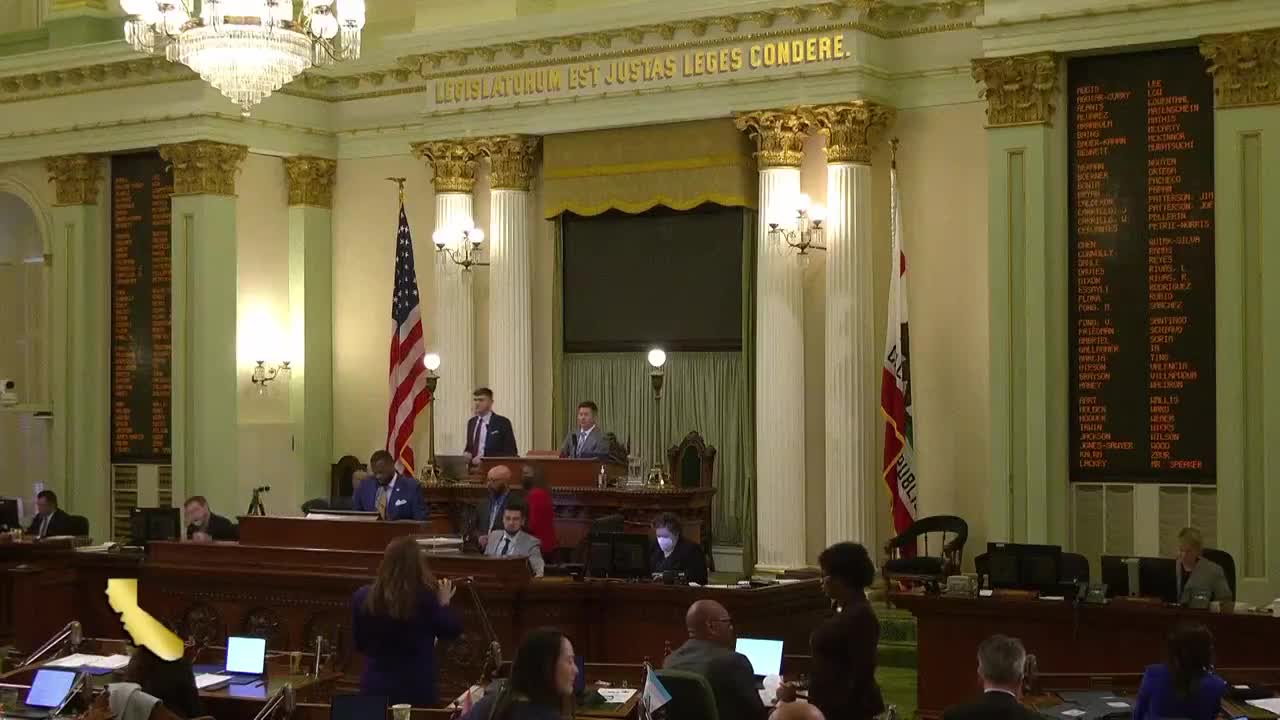
| May 30, 2023 | AB 833 Luz Rivas Assembly Third Reading | Assembly Floor |
Passed |
|
| May 18, 2023 | Do pass. | Assembly Standing Committee on Appropriations |
Passed |
|
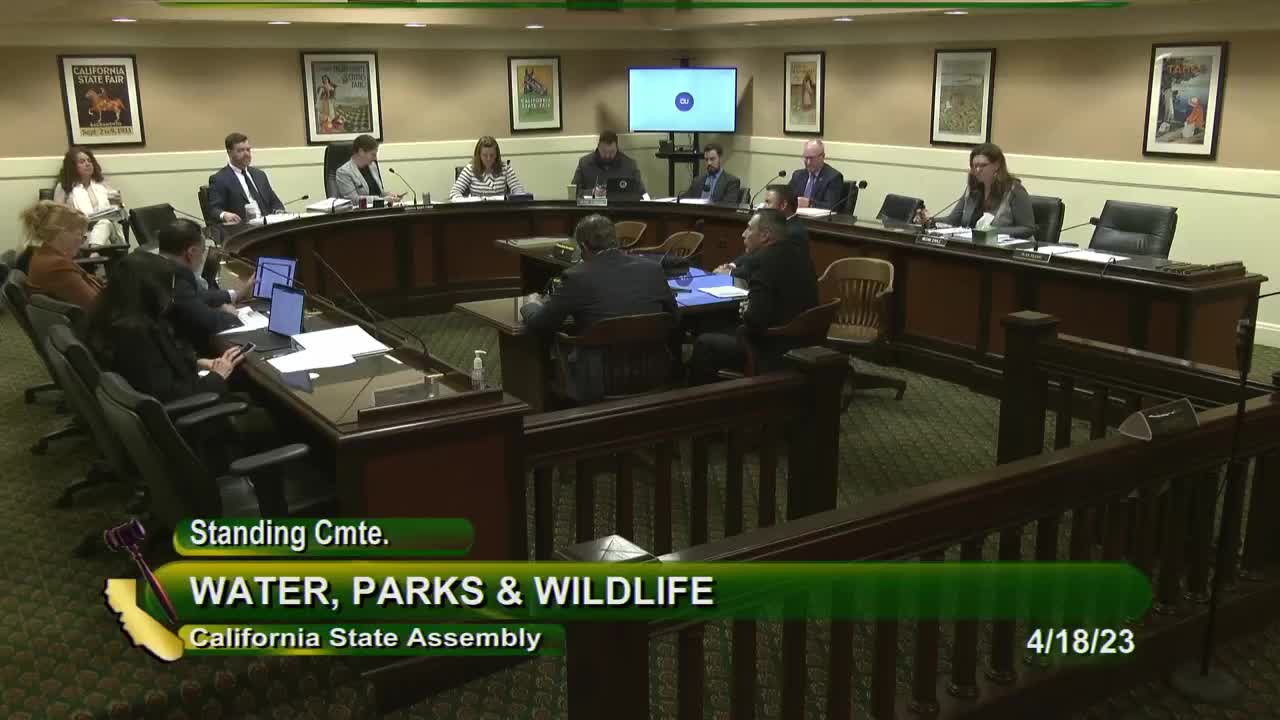
| Apr 18, 2023 | Do pass as amended and be re-referred to the Committee on [Appropriations] | Assembly Standing Committee on Water, Parks, and Wildlife |
Passed |
This list shows positions taken on this bill by organizations on the date displayed, which is linked to the original source.
Positions by individuals are not included.
|
Organization
|
Position
|
Date
|
|---|---|---|
| Heal The Bay | * Support | Apr 18, 2023 |
| Los Angeles Waterkeeper | ** Support | |
| Nature Conservancy | * Support | Apr 18, 2023 |
SENATE COMMITTEE ON TRANSPORTATION
Senator Lena Gonzalez, Chair
2023 - 2024 Regular
Bill No: AB 833 Hearing Date: 7/11/2023
Author: | Rendon | ||
Version: | 6/19/2023 Amended | ||
Urgency: | No | Fiscal: | Yes |
Consultant: | Jacob O'Connor | ||
SUBJECT: Freeway caps
DIGEST: This bill requires the Department of Transportation to submit to the Legislature by 2030 a plan for adding caps to freeway segments that divide disadvantaged, underrepresented, and urban communities
ANALYSIS:
Existing law:
- Establishes Caltrans and provides that the department has full possession and control of all state highways and property and rights in property acquired for state highway purposes. (Streets and Highways Code (SHC) §90)
- Requires Caltrans to improve and maintain the state highways, including all traversable highways which have been adopted or designated as state highways by the commission. (SHC §91)
- Establishes the Reconnecting Communities: Highways to Boulevards (RC:H2B) Pilot Program to be administered by Caltrans, with guidance from specified agencies, to provide funding, upon appropriation by the Legislature, to award competitive grants to eligible entities for planning or implementing the conversion or transformation of underutilized state highways into multimodal corridors that serve residents of underserved communities. (SHC §104.3)
- Establishes the purpose of RC:H2B as achieving the following goals:
- Restore community connectivity through the removal, retrofit, mitigation, or replacement of eligible transportation infrastructure facilities that create barriers to mobility, access, or economic development;
- Provide matching funding for potential federal grant funds;
- Advance health and equity outcomes for underserved communities by removing health, safety, and access barriers associated with transportation infrastructure within communities;
- Improve access to opportunity by improving travel options and reducing combined household transportation and housing costs for underserved communities;
- Create opportunities for implementation of affordable housing and affirmatively furthering fair housing;
- Avoid or minimize direct and indirect displacement effects from project implementation; and
- Advance community-based or community-driven transportation planning.
- Specifies that eligible projects under the program include, but are not limited to:
- Conversion or capping of an access-controlled state-operated transportation route to increase access for bicycles, pedestrians, and transit;
- Conversion of a state highway serving as a main street into a multimodal surface street that allows for bicycle, pedestrian, and transit access;
- A project that significantly enhances multimodal connectivity along or across a state highway without conversion or capping;
- Implementation of early action implementation plans; or
- Other implementation activities authorized for funding under the federal Reconnecting Communities Pilot Program.
This bill:
- Requires the Caltrans to prepare a plan for adding caps to freeway segments that divide disadvantaged, underrepresented, urban communities. The plan shall at least include:
- The location of each freeway segment that divides a disadvantaged, underrepresented, urban community;
- A list of those freeway segments where constructing a cap is feasible; and
- An estimate of the cost and time required to construct the cap;
- Requires the plan be submitted to the Legislature January 1, 2030.
COMMENTS:
- Purpose of bill. According to the author “Across California, communities endure division and adverse health effects because of the freeways running through them. Historically, disadvantaged and urban areas suffer disproportionately from this unfortunate circumstance. AB 833 will task Caltrans with preparing a feasibility assessment for adding caps or connective measures to existing freeways that divide these disadvantaged urban communities. This bill will take the initial steps to help alleviate this situation by reconnecting our neighborhoods and providing them with beneficial spaces such as bike lanes and pedestrian connectors as well as parks and other communal gathering places. Once completed by January 1, 2030, such an assessment will create a roadmap for bridging historical divides and promoting greater well-being for the residents of these communities.”
- Separating communities. United States housing and transportation policies have significant impacts on the livelihood of communities across the country, creating both opportunities and barriers. Federal housing policies in the 1930s addressed a national housing crisis following the Great Depression through low-cost mortgages and low-interest loans, while federal transportation policies in the 1950s developed and constructed a network of transcontinental highways to spur growth in interstate commerce and suburbanization. These policies were products of a time when social impacts of projects, particularly on communities of color, were not considered or were ignored. Because of where new developments were built and who was able to access the benefits of these programs, communities of color were physically and economically dispersed and segregated as a side-effect of these programs.
The Federal-Aid Highway Act of 1956 called for the construction of 41,000 miles of interstate highway in the US by 1970. Homes and businesses were razed in order to construct these highways. In many cities throughout the US, freeways were built directly, and sometimes purposefully, to bisect communities with significant populations of Black and Latino residents, displacing thousands of families and breaking apart communities. Racial zoning was being repealed by courts during this time, but some highways were built on the same boundary lines used for racial zoning as way to create a barrier between white and racial minority communities. These communities were left fragmented; essential linkages to work, school, shopping, and healthcare were severed. Home values were reduced, and land-use patterns shifted to accommodate the new placement of freeways, specifically becoming more attractive to commercial and industrial activities. Air quality in these communities became worse due to the high concentration of nearby vehicles. These negative impacts have continued to persist to the present and will continue to harm these communities if left unaddressed.
- Reconnecting communities. The need to address these historic injustices have been recognized by the Biden administration and the California Legislature. In 2021, the Infrastructure Investment and Jobs Act (IIJA) established a new $1 billion discretionary grant program to reconnect communities divided by transportation infrastructure. This federal Reconnecting Communities Pilot (RCP) grant program supports planning, capital construction, and technical assistance to restore community connectivity through the removal, retrofit, mitigation or replacement of eligible transportation infrastructure that create barriers in communities. On February 28, 2023, U.S. Transportation Secretary Pete Buttigieg announced $185 million in grant awards for 45 projects through the RCP. These projects include converting urban freeways into landscaped local roadways, lowering interchange ramps to street level, constructing bridge or pedestrian tunnels, and providing support for analysis and design of related projects. Caltrans and the cities of Long Beach, Pasadena, Fresno, and San Jose have each obtained awards through the RCP.
Last year the Legislature established the Reconnecting Communities: Highways to Boulevard Pilot program (RC:H2B) in Caltrans to achieve a similar set of goals at the state level. The RC:H2B pilot program will award $149 million in competitive grants to eligible entities in partnership with Caltrans for planning and capital construction projects that convert or transform underutilized state highways into multimodal corridors that serve residents of underserved communities. The grants will be awarded based upon a competitive “Call for Communities”. Caltrans anticipates granting awards to three communities, one in an urban area, one in a rural area, and one along a corridor. Selection will be based on how their applications address the needs of the community while aligning with the program goals The RC:H2B pilot program aligns with the Climate Action Plan for Transportation Infrastructure (CAPTI) Strategy, which focuses on addressing California’s housing crisis, ensuring transportation programming dollars help incentivize smart housing and infill development, and providing opportunities for technical assistance on State transportation funding programs.
- Put a lid on it. One method to reconnect communities without disrupting the essential operations of highways is to construct overpasses, commonly referred to as highway caps or highway lids. These large overpasses create new routes of transportation over the highway that has divided the communities, and creates space that can be used for parks, housing, or businesses. These spaces can add new economic or recreational opportunities for the area and serve as a way of reconnecting and revitalizing the community divided by the highway.
While highway caps do offer new routes and venues to reconnect communities, they do not completely solve the problems created by freeways adjacent to vulnerable communities. Air pollution from the freeway will likely not be significantly mitigated by a cap. Additionally if the neighborhoods the cap is connecting are already primarily industrial, or lack bike paths, transit, and other transportation devices, the cap itself will likely be insufficient to connect the communities. As such highway cap construction has been criticized by some as an expensive attempt to “greenwash” highways, mitigating their impacts instead of addressing the root problem. However, there has been interest in several communities in California to use highway caps to help address the community impact of freeways and stimulate economic and community growth.
In California two major highway cap projects currently exist. In the 1990s, residents in San Diego organized to demand freeway coverage that connects the east and west sides of I-15. In response Caltrans approved a two-block freeway in 2001. Because the area had been park-deficient the land over the highway included land for a park, today called Teralta Park. This cap also has served as a place for the construction of bikeways and of a transit line, delivering on the promise of helping reconnect neighborhoods. At Teralta Park Caltrans owns the infrastructure but has entered into a maintenance agreement with the city to manage upkeep of the park and maintenance of the local street and traffic lights. The other example is Memorial Park in La Cañada Flintridge, which is located on a cap that crosses over I-210. Outside of California lid projects have been used for other purposes than parks, including convention centers, government offices, housing, and commercial spaces.
- Defining the issue. The language provided in this bill provides little guidance to Caltrans about the goals of the lids and the meanings of key terms. Without this guidance Caltrans may have difficulty determining what communities the author intends for them to assess and how to determine of construction of a cap in these facilities is feasible. For example, construction of a lid that holds a park would probably be far less costly and more feasible than the construction of a lid that holds a convention center or housing complex. The author and committee may wish to amend the bill to specify that Caltrans should consider the feasibility of highway caps designed to hold parks and multimodal transportation routes and to provide clarifying definitions for key terms such as “disadvantaged communities”.
Related Legislation:
SB 198 (Committee on Budget and Fiscal Review, Chapter 71, Statutes of 2022), among other budget provisions, established the Reconnecting Communities: Highways to Boulevards Pilot Program in Caltrans.
FISCAL EFFECT: Appropriation: Fiscal Com.: Local:
POSITIONS: (Communicated to the committee before noon on Wednesday,
July 5th.)
SUPPORT:
None received
OPPOSITION:
None received
-- END --
ASSEMBLY THIRD READING
ATR Bill Id:AB 833
Author:(Luz Rivas)
As Amended Ver:April 20, 2023
Majority vote
SUMMARY
Requires the Department of Parks and Recreation (State Parks) to develop a plan to expand the Rio de Los Angeles State Park on lands along the Los Angeles River (LA River) and its tributaries.
Major Provisions
- Requires State Parks to collaborate and coordinate with the County of Los Angeles, the City of Los Angeles, other cities along the LA River, the Santa Monica Mountains Conservancy, the Mountains Recreation and Conservation Authority (MRCA), and the San Gabriel and Lower Los Angeles Rivers and Mountains Conservancy to develop a plan to expand the Rio de Los Angeles State Park on lands along the LA River and its tributaries.
- Requires the plan, at a minimum, to consider all of the following: (a) the development of multibenefit parks and recreation spaces that are climate resilient and increase park equity; (b) an assessment of the present and future demand for parks and recreation spaces along the LA River and its tributaries; (c) how to prioritize implementation of the elements of the plan; and (d) recommendations for future funding needs.
- Requires State Parks to include opportunities for public input and engagement in the development of the plan.
COMMENTS
The LA River is 51 miles long, contained entirely within the County of Los Angeles, and passes through 13 cities, including 32 miles that stretch across the City of Los Angeles. The communities along the LA River are some of the most underserved and environmentally burdened in the state. Industrial land uses, which are often incompatible with river park uses and community health, can cause increased pollution and are common along the river in many neighborhoods. The land surrounding the LA River is owned and maintained by various jurisdictions.
The existing Rio de Los Angeles State Park is located along the LA River north of downtown Los Angeles in the neighborhood of Glassell Park. The park includes restored wetlands featuring native plants as well as sports fields, a children's playground, and a recreation building. The park was built on Taylor Yard, an abandoned freight-switching facility used by the Union Pacific Railroad and later by the Southern Pacific Railroad from the 1920s until 1985. In 2003, State Parks began working with the community to develop the Rio de Los Angeles State Park General Plan and environmental impact report for the site, to serve as a guide for future parkland development. Concurrently, State Parks began a joint planning process with the City of Los Angeles to design the first 40-acre phase of the park, which opened in 2007 as Rio de Los Angeles State Park. This phase is classified as a state recreation area and is managed in partnership with the City of Los Angeles Department of Parks and Recreation.
The Rio de Los Angeles State Park General Plan contemplates future expansion of the 40 acre site, but primarily in the areas adjacent to the existing park property. The park is considered an important component of the regional goal to link open space in such a way as to enhance the aesthetic, recreational, and habitat values of the park, the LA River corridor, and the existing regional open space. This bill requires State Parks to coordinate with a number of local and state entities to develop a plan to expand the Rio de Los Angeles State Park on lands along the LA River and its tributaries.
According to the Author
"The Los Angeles River and its tributaries offer a great opportunity to improve park equity across Los Angeles County. In the last 20 years, many public agencies have planned and developed park space along the River or its tributaries, but the division among those agencies creates inequitable access to parks along the River. [This bill] allows State Parks to demonstrate its leadership in building collaboration with and among local public agencies to create a plan, or a vision, for riverside parks throughout the LA River’s watershed."
Arguments in Support
Los Angeles Waterkeeper writes in support, stating that "embarking on a planning process to expand the Rio de Los Angeles State Park would be a vital step to ensure disadvantaged communities near the River have access to greenspace and much needed recreational amenities. Parks along the River would also be instrumental in reducing flood risks in the River and adjacent communities."
Arguments in Opposition
No opposition on file.
FISCAL COMMENTS
According to the Assembly Appropriations Committee, State Parks estimates costs of approximately $1.4 million (General Fund) over three years for a consultant contract, public outreach meetings, and two limited-term positions to develop the required plan. State Parks notes these costs are limited to the development of a plan and not to any projects, environmental reviews, or acquisitions recommended in the plan.
VOTES
ASM WATER, PARKS, AND WILDLIFE: 14-0-1
YES: Bauer-Kahan, Mathis, Alanis, Bennett, Megan Dahle, Davies, Friedman, Hart, Kalra, Pellerin, Blanca Rubio, Schiavo, Villapudua, Weber
ABS, ABST OR NV: Ward
ASM APPROPRIATIONS: 15-0-1
YES: Holden, Megan Dahle, Bryan, Calderon, Wendy Carrillo, Dixon, Mike Fong, Hart, Lowenthal, Mathis, Papan, Pellerin, Sanchez, Weber, Ortega
ABS, ABST OR NV: Robert Rivas
UPDATED
VERSION: April 20, 2023
CONSULTANT: Keith Cialino / W., P., & W. / (916) 319-2096 FN: 0000504
Date of Hearing: May 3, 2023
ASSEMBLY COMMITTEE ON APPROPRIATIONS
Chris Holden, Chair
ABPCA Bill Id:AB 833
Author:(Luz Rivas) – As Amended Ver:April 20, 2023
Policy Committee: | Water, Parks and Wildlife | Vote: | 14 - 0 |
|
| ||
|
|
Urgency: No State Mandated Local Program: No Reimbursable: No
SUMMARY:
This bill requires the Department of Parks and Recreation (State Parks) to develop a plan to expand the Rio de Los Angeles State Park on lands along the LA River and its tributaries.
Specifically, this bill:
1) Requires State Parks to collaborate and coordinate with the County of LA, the City of LA, other cities along the LA River, the Santa Monica Mountains Conservancy, the Mountains Recreation and Conservation Authority (MRCA), and the San Gabriel and Lower Los Angeles Rivers and Mountains Conservancy to develop a plan to expand the Rio de Los Angeles State Park on lands along the LA River and its tributaries.
2) Requires the plan, at a minimum, to consider all of the following: (a) the development of multibenefit parks and recreation spaces that are climate resilient and increase park equity; (b) an assessment of the present and future demand for parks and recreation spaces along the Los Angeles River and its tributaries; (c) how to prioritize implementation of the elements of the plan; and (d) recommendations for future funding needs.
3) Requires State Parks to include opportunities for public input and engagement in the development of the plan.
4) Requires State Parks, when feasible, to coordinate the plan with existing plans, studies, and reports.
FISCAL EFFECT:
State Parks estimates costs of approximately $1.4 million (General Fund) over three years for a consultant contract, public outreach meetings, and two limited-term positions to develop the required plan. State Parks notes these costs are limited to the development of a plan and not to any projects, environmental reviews, or acquisitions recommended in the plan.
COMMENTS:
1) Purpose. According to the author:
The Los Angeles River and its tributaries offer a great opportunity to improve park equity across Los Angeles County. In the last 20 years, many public agencies have planned and developed park space along the River or its tributaries, but the division among those agencies creates inequitable access to parks along the River. [This bill] allows State Parks to demonstrate its leadership in building collaboration with and among local public agencies to create a plan, or a vision, for riverside parks throughout the LA River’s watershed.
2) Background. The LA River is 51 miles long, contained entirely within the County of LA, and passes through 13 cities, including 32 miles that stretch across the City of LA. The communities along the LA River are some of the most underserved and environmentally burdened in the state. Industrial land uses, which are often incompatible with river park uses and community health, can cause increased pollution and are common along the river in many neighborhoods. The land surrounding the LA River is owned and maintained by various jurisdictions.
Rio de Los Angeles State Park. The existing Rio de Los Angeles State Park is located along the LA River north of downtown LA in the neighborhood of Glassell Park. The park includes restored wetlands featuring native plants as well as sports fields, a children’s playground, and a recreation building. The park was built on Taylor Yard, an abandoned freight-switching facility used by the Union Pacific Railroad and later by the Southern Pacific Railroad from the 1920s until 1985. In 2003, State Parks began working with the community to develop the Rio de Los Angeles State Park General Plan and environmental impact report for the site, to serve as a guide for future parkland development. Concurrently, State Parks began a joint planning process with the City of LA to design the first 40-acre phase of the park, which opened in 2007 as Rio de Los Angeles State Park. This phase is classified as a state recreation area and is managed in partnership with the City of LA Department of Parks and Recreation.
The Rio de Los Angeles State Park General Plan contemplates future expansion of the 40 acre site, but primarily in the areas adjacent to the existing park property. The park is considered an important component of the regional goal to link open space in such a way as to enhance the aesthetic, recreational, and habitat values of the park, the LA River corridor, and the existing regional open space. This bill requires State Parks to coordinate with a number of local and state entities to develop a plan to expand the Rio de Los Angeles State Park on lands along the LA River and its tributaries.
Related Efforts. The 100 Acre Partnership is an agreement between city and state agencies to collaborate on revitalizing 100 acres of the former Taylor Yard railyard into a contiguous public green space along the LA River. The partnership is comprised of, among other elements, the Rio de Los Angeles State Park and The Bowtie (G-1), an 18-acre parcel owned by State Parks.
The County of LA began a process that, after considerable input from stakeholders and community outreach, resulted in the Los Angeles River Master Plan in 1996. The 2022 Los Angeles River Master Plan is an update of the 1996 Master Plan. The LA City Council established its own ad hoc committee on the river in 2002 and released the LA River Revitalization Master Plan in 2007. Continuing the long-term goals of the county master plan, the Revitalization Master Plan promoted the river as a multi-benefit solution to addressing and enhancing water quality and flood control while enabling safe access to the river and restoring a functional river ecosystem. Other entities, like the local conservancies, have also released studies, reports, and plans for the LA River.
The state has allocated significant funding to support revitalization efforts at the LA River, including from Proposition 68, Proposition 1, and the General Fund. For example, in 2022, State Parks announced a $1.5 million grant from Proposition 68 to enhance Rio de Los Angeles State Park with three soccer fields, a picnic area, landscaping, lighting, security cameras, and an upgraded ADA-accessible parking lot.
Analysis Prepared by: Nikita Koraddi / APPR. / (916) 319-2081
Discussed in Hearing
 56SEC
Assembly Floor
 3MIN
Assembly Standing Committee on Water, Parks, and Wildlife


Bill Co-Author(s):