AB 843: Electronic benefits transfer system.
- Session Year: 2023-2024
- House: Assembly
- Latest Version Date: 2023-09-14
Current Status:
Failed
(2024-01-30: Consideration of Governor's veto stricken from file.)
Introduced
In Committee
First Chamber
In Committee
Second Chamber
Enacted
What does this bill do?
This bill puts into law that people who get CalFresh or other EBT benefits cannot lose benefits when those funds are stolen electronically— for example, by using account numbers or PINs without the physical EBT card—and requires prompt replacement. It requires the state to create a single, statewide reporting and replacement process with online and phone options and gives recipients at least 90 days to report the theft. The bill also says a suspected fraud referral cannot delay replacement and allows the state to issue mass reimbursements after a data breach with approval from the Department of Finance.
The summary is provided by generative AI which can make mistakes. For original language, please view the details in the table below.
Existing law provides for the establishment of a statewide electronic benefits transfer (EBT) system, administered by the State Department of Social Services, for the purpose of providing financial and food assistance benefits. Existing law requires the department to establish a protocol for recipients to report electronic theft of cash benefits that, among other things, ensures the prompt replacement of benefits. Existing law provides that a recipient shall not incur any loss of cash benefits that are taken by an unauthorized withdrawal, removal, or use of benefits that does not occur by the use of a physical EBT card issued to the recipient or authorized third party, as specified, and requires the prompt replacement of those cash benefits. Existing regulations also require food benefits that are stolen in this manner to be replaced.
This bill would instead prohibit a recipient from incurring any loss of electronic benefits stolen in that manner, thereby codifying the existing regulation described above. The bill would require the protocol described above to be integrated and unified to ensure uniform consistent procedures and outcomes across the state and benefit programs to reduce program complexity and administrative delay for counties and recipients. The bill would prohibit a referral for a suspected fraud investigation from delaying the prompt replacement of benefits.
By imposing new duties on counties relating to the administration of benefits, this bill would impose a state-mandated local program.
The California Constitution requires the state to reimburse local agencies and school districts for certain costs mandated by the state. Statutory provisions establish procedures for making that reimbursement.
This bill would provide that, if the Commission on State Mandates determines that the bill contains costs mandated by the state, reimbursement for those costs shall be made pursuant to the statutory provisions noted above.
Existing law provides for the establishment of a statewide electronic benefits transfer (EBT) system, administered by the State Department of Social Services, for the purpose of providing financial and food assistance benefits. Existing law requires the department to establish a protocol for recipients to report electronic theft of cash benefits that, among other things, ensures the prompt replacement of benefits. Existing law provides that a recipient shall not incur any loss of cash benefits that are taken by an unauthorized withdrawal, removal, or use of benefits that does not occur by the use of a physical EBT card issued to the recipient or authorized third party, as specified, and requires the prompt replacement of those cash benefits. Existing regulations also require food benefits that are stolen in this manner to be replaced.
This bill would instead prohibit a recipient from incurring any loss of electronic benefits stolen in that manner, thereby codifying the existing regulation described above. The bill would require the protocol described above to be integrated and unified to ensure uniform consistent procedures and outcomes across the state and benefit programs to reduce program complexity and administrative delay for counties and recipients. The bill would prohibit a referral for a suspected fraud investigation from delaying the prompt replacement of benefits. The bill would require the EBT Customer Service Helpline and a county welfare department to immediately notify one another of recipient theft reports and adopt procedures to promptly and proactively initiate necessary follow-up communication and administration with the recipient without requiring the recipient to separately report the theft to both offices.
Existing federal law requires the United States Secretary of Agriculture to use specified funds to require states to replace benefits that are determined by a state agency to have been stolen through card skimming, card cloning, or similar fraudulent methods if the state agency submits a plan for prior approval to the Secretary that, among other conditions, includes appropriate procedures for the timely submission of claims, timely validation of claims, and replacement issuance. Existing federal law requires that the state plan only apply to benefits stolen between October 1, 2022, and September 30, 2024.This bill would require the department to undertake a proactive review of electronic theft claims submitted from October 1, 2022, to the date that the state plan is approved and implemented. The bill would require the department to identify and reimburse any claims for the replacement of electronically stolen food benefits that become retroactively eligible for a larger benefit replacement than was permitted prior to approval of the state plan, as specified.By imposing new duties on counties relating to the administration of benefits, this bill would impose a state-mandated local program.
The California Constitution requires the state to reimburse local agencies and school districts for certain costs mandated by the state. Statutory provisions establish procedures for making that reimbursement.
This bill would provide that, if the Commission on State Mandates determines that the bill contains costs mandated by the state, reimbursement for those costs shall be made pursuant to the statutory provisions noted above.
Existing law provides for the establishment of a statewide electronic benefits transfer (EBT) system, administered by the State Department of Social Services, for the purpose of providing financial and food assistance benefits. Existing law requires the department to establish a protocol for recipients to report electronic theft of cash benefits that, among other things, ensures the prompt replacement of benefits. Existing law provides that a recipient shall not incur any loss of cash benefits that are taken by an unauthorized withdrawal, removal, or use of benefits that does not occur by the use of a physical EBT card issued to the recipient or authorized third party, as specified, and requires the prompt replacement of those cash benefits. Existing regulations also require food benefits that are stolen in this manner to be replaced.
This bill would instead prohibit a recipient from incurring any loss of electronic benefits stolen in that manner, thereby codifying the existing regulation described above. To the extent this bill would expand county duties relating to the administration of food benefits, this bill would impose a state-mandated local program. The bill would require the protocol described above to be integrated and unified to ensure uniform consistent procedures and outcomes across the state and benefit programs to reduce program complexity and administrative delay for counties and recipients. The bill would prohibit a referral for a suspected fraud investigation from delaying the prompt replacement of benefits. The bill would require the EBT Customer Service Helpline and a county welfare department to immediately notify one another of recipient theft reports and adopt procedures to promptly and proactively initiate necessary follow-up communication and administration with the recipient without requiring the recipient to separately report the theft to both offices.
Existing federal law requires the United States Secretary of Agriculture to use specified funds to require states to replace benefits that are determined by a state agency to have been stolen through card skimming, card cloning, or similar fraudulent methods if the state agency submits a plan for prior approval to the Secretary that, among other conditions, includes appropriate procedures for the timely submission of claims, timely validation of claims, and replacement issuance. Existing federal law requires that the state plan only apply to benefits stolen between October 1, 2022, and September 30, 2024.
This bill would require the department to undertake a proactive review of electronic theft claims submitted from October 1, 2022, to the date that the state plan is approved and implemented. The bill would require the department to identify and reimburse any claims for the replacement of electronically stolen food benefits that become retroactively eligible for a larger benefit replacement than was permitted prior to approval of the state plan, as specified.
By imposing new duties on counties relating to the administration of benefits, this bill would impose a state-mandated local program.
The California Constitution requires the state to reimburse local agencies and school districts for certain costs mandated by the state. Statutory provisions establish procedures for making that reimbursement.
This bill would provide that, if the Commission on State Mandates determines that the bill contains costs mandated by the state, reimbursement for those costs shall be made pursuant to the statutory provisions noted above.
Existing law provides for the establishment of a statewide electronic benefits transfer (EBT) system, administered by the State Department of Social Services, for the purpose of providing financial and food assistance benefits. Existing law provides that a recipient shall not incur any loss of cash benefits that are taken by an unauthorized withdrawal, removal, or use of benefits that does not occur by the use of a physical EBT card issued to the recipient or authorized third party, as specified, and requires the prompt replacement of those cash benefits. Existing regulations also require food benefits that are stolen in this manner to be replaced.
This bill would instead prohibit a recipient from incurring any loss of electronic benefits stolen in that manner, thereby codifying the existing regulation described above. To the extent this bill would expand county duties relating to the administration of food benefits, this bill would impose a state-mandated local program.
The California Constitution requires the state to reimburse local agencies and school districts for certain costs mandated by the state. Statutory provisions establish procedures for making that reimbursement.
This bill would provide that, if the Commission on State Mandates determines that the bill contains costs mandated by the state, reimbursement for those costs shall be made pursuant to the statutory provisions noted above.
(a)The Legislature finds and declares all of the following:
(1)CalFresh is a program that provides food benefits to Californians with low incomes with federal funding provided through the federal Supplemental Nutrition Assistance Program (SNAP).
(2)Federal law requires these benefits to be issued via an electronic benefits transfer (EBT) system.
(3)Federal SNAP law requires the state to timely reissue benefits when a persons EBT card or personal identification number (PIN) are stolen, but only for the amount of benefits stolen after a report of the stolen card or PIN was made to the state or county.
(4)Federal law does not require reimbursement when benefits are stolen electronically before a report, but permits states to make such reimbursements.
(5)Federal laws requiring the replacement of stolen benefits predates the implementation of the EBT system in California and the advent of electronic skimming, a type of theft that does not require the theft of a persons physical EBT card.
(6)Electronic theft of EBT benefits is devastating to the low-income families who depend on those benefits to prevent hunger, homelessness, and other basic needs.
(7)In 2012, in response to litigation in the matter of Carpio v. Lightbourne (Case No. BS135127), Assembly Bill 2035 established the rights of an EBT consumer to be reimbursed for electronically stolen cash benefits.
(8)In November of 2020, the California Court of Appeal in Ortega v. Johnson (2020) 57 Cal.App.5th 552 held that CalFresh recipients also have the right to have their food benefits timely replaced when they are electronically stolen.
(b)It is the intent of the Legislature to enact legislation to codify the decision in Ortega v. Johnson (2020) 57 Cal.App.5th 552 to ensure timely reimbursement of CalFresh benefits that were stolen electronically.
SEC. 2.Section 10072 of the Welfare and Institutions Code is amended to read:10072.The electronic benefits transfer system required by this chapter shall be designed to do, but not be limited to, all of the following:
(a)To the extent permitted by federal law and the rules of the program providing the benefits, recipients who are required to receive their benefits using an electronic benefits transfer system shall be permitted to gain access to the benefits in any part of the state where electronic benefits transfers are accepted. All electronic benefits transfer systems in this state shall be designed to allow recipients to gain access to their benefits by using every other electronic benefits transfer system.
(b)To the maximum extent feasible, electronic benefits transfer systems shall be designed to be compatible with the electronic benefits transfer systems in other states.
(c)All reasonable measures shall be taken in order to ensure that recipients have access to electronically issued benefits through systems, including, but not limited to, automated teller machines, point-of-sale devices, or other devices that accept electronic benefits transfer transactions. Benefits provided under Chapter 2 (commencing with Section 11200) of Part 3 shall be staggered over a period of three calendar days, unless a county requests a waiver from the department and the waiver is approved, or in cases of hardship pursuant to subdivision (p).
(d)The system shall provide for reasonable access to benefits to recipients who demonstrate an inability to use an electronic benefits transfer card or other aspect of the system because of disability, language, lack of access, or other barrier. These alternative methods shall conform to the requirements of the federal Americans with Disabilities Act of 1990 (42 U.S.C. Sec. 12101, et seq.), including reasonable accommodations for recipients who, because of physical or mental disabilities, are unable to operate or otherwise make effective use of the electronic benefits transfer system.
(e)The system shall permit a recipient the option to choose a personal identification number, also known as a PIN number, to assist the recipient to remember the number in order to allow access to benefits. Whenever an institution, authorized representative, or other third party not part of the recipient household or assistance unit has been issued an electronic benefits transfer card, either in lieu of, or in addition to, the recipient, the third party shall have a separate card and personal identification number. At the option of the recipient, the recipient may designate whether restrictions apply to the third partys access to the recipients benefits. At the option of the recipient head of household or assistance unit, the county shall provide one electronic benefits transfer card to each adult member to enable them to access benefits.
(f)The system shall have a 24-hour-per-day toll-free telephone hotline for the reporting of lost or stolen cards that will provide recipients, at no additional cost to the recipient, with information on how to have the card and personal identification number replaced, and that will allow an authorized representative or head of household to access, over the telephone, the transaction history detail for at least the last 10 transactions and to request that the transaction history detail for at least the past two months be sent by mail.
(g)The system shall have an internet website that will provide recipients, at no additional cost to the recipient, with information on how to have the card and personal identification number replaced, and that will allow an authorized representative or head of household to view the transaction history detail for at least the last 10 transactions and to request that the transaction history detail for at least the past two months be sent by mail.
(h)In addition to the ability to receive transaction history detail pursuant to subdivisions (f) and (g), a county human services agency shall make available to an authorized representative or head of household, at no additional cost to the authorized representative or head of household, all electronic benefits transaction history details that are available to the county human services agency within 10 business days after a request has been received by the agency.
(i)(1)A recipient shall not incur any loss of benefits after reporting that the recipients electronic benefits transfer card or personal identification number has been lost or stolen. The system shall provide for the prompt replacement of lost or stolen electronic benefits transfer cards and personal identification numbers. Electronic benefits for which the case was determined eligible and that were not withdrawn by transactions using an authorized personal identification number for the account shall also be promptly replaced. Benefits lost or stolen in the manner described in this paragraph shall be promptly replaced in accordance with the protocol established by the department pursuant to paragraph (3).
(2)(A)Except as provided in subparagraph (B), a recipient shall not incur any loss of electronic benefits that are taken by an unauthorized contact, withdrawal, removal, or use of benefits, including, but not limited to, use that results from an unauthorized solicitation, request, or representation that does not occur by the use of a physical electronic benefits transfer card issued to the recipient or authorized third party to directly access the benefits. Benefits taken as described in this subparagraph shall be promptly replaced in accordance with the protocol established by the department pursuant to paragraph (3).
(B)If a recipient knowingly provides the recipients electronic benefits transfer card number and personal identification number to an unauthorized third party that the recipient mistakenly believes to be the contracted electronic benefits transfer vendor, an approved retailer, or a governmental entity, any benefits taken as described in subparagraph (A) shall be promptly replaced in accordance with the protocol established by the department pursuant to paragraph (3), but not more than one time in a 36-month period.
(3)(A)The State Department of Social Services shall establish a protocol for recipients to report electronic theft of electronic benefits that minimizes the burden on recipients, ensures prompt replacement of benefits in order to minimize the harm to recipients, and ensures program integrity. This protocol may include the automatic replacement of benefits without the need for recipient reporting and verification.
(B)A recipient shall have at least 90 days from when they discover the loss to report that the theft of electronic benefits has occurred, as permitted by federal law.
(C)(i)The protocol shall be integrated and unified to ensure uniform consistent procedures and outcomes across the state and benefit programs to reduce program complexity and administrative delay for counties and recipients.
(ii)The protocol shall include providing recipients the option to fill out an online form to request reimbursement. The department shall consult with stakeholder advocates and counties to develop the online forms and processes.
(D)The department shall accept and provide electronic and telephonic options for the completion and signing of any forms required for reimbursement.
(E)A referral for a suspected fraud investigation shall not delay the prompt replacement of benefits under this section.
(4)(A)Notwithstanding paragraphs (2) and (3), the State Department of Social Services may issue mass reimbursements to recipients for the loss of electronic benefits if the department finds that the benefits of multiple recipients were taken by an unauthorized withdrawal, removal, or use of benefits in which the recipients electronic benefits transfer card numbers or personal identification numbers were obtained by means of a data breach.
(B)A mass reimbursement made pursuant to subparagraph (A) requires the approval of the Department of Finance with notice given to the Joint Legislative Budget Committee.
(j)Electronic benefits transfer system consumers shall be informed on how to use electronic benefits transfer cards, how to protect their cards from misuse, and where consumers can use their cards to withdraw benefits without incurring a fee, charge, or surcharge.
(k)The electronic benefits transfer system shall be designed to inform recipients when the electronic benefits transfer system does not function or is expected not to function for more than a one-hour period between 6 a.m. and midnight during any 24-hour period. This information shall be made available in the recipients preferred language if the electronic benefits transfer system vendor contract provides for services in that language.
(l)Procedures shall be developed for error resolution.
(m)A fee shall not be charged by the state, a county, or an electronic benefits processor certified by the state to retailers participating in the electronic benefits transfer system.
(n)Except for CalFresh transactions, a recipient may be charged a fee, not to exceed the amount allowed by applicable state and federal law and customarily charged to other customers, for cash withdrawal transactions that exceed four per month.
(o)The electronic benefits transfer system shall be designed to ensure that recipients of benefits under Chapter 2 (commencing with Section 11200) of Part 3 have access to using or withdrawing benefits with minimal fees or charges, including an opportunity to access benefits with no fee or charges.
(p)A county shall exempt an individual from the three-day staggering requirement under subdivision (c) on a case-by-case basis for hardship. Hardship includes, but is not limited to, the incurrence of late charges on an individuals housing payments.
(q)A county shall use information provided by the department to inform recipients of benefits under Chapter 2 (commencing with Section 11200) of Part 3 of all of the following:
(1)The methods of electronic delivery of benefits available, including distribution of benefits through the electronic benefits transfer system or direct deposit pursuant to Section 11006.2.
(2)Applicable fees and charges, including surcharges, consumer and privacy protections, and liability for theft associated with the electronic benefits transfer system.
(3)How to avoid fees and charges, including opting for delivery of benefits by direct deposit and using the electronic benefits transfer card solely at surcharge free locations.
(4)Where to withdraw benefits without a surcharge when using the electronic benefits transfer system.
(5)That a recipient may authorize any available method of electronic delivery of benefits and instructions regarding how the recipient may select or change the recipients preferred method of electronic delivery of benefits and that the recipient shall be given the opportunity to select the method prior to the first payment.
(6)That a recipient may be entitled to an alternative method of delivery if the recipient demonstrates an inability to use an electronic benefits transfer card or other aspect of the system because of disability, language, lack of access, or other barrier pursuant to subdivision (d) and instructions regarding how to determine whether the recipient qualifies for an alternative method of delivery.
(7)That a recipient may be entitled to an exemption from the three-day staggering requirement under subdivision (c) on a case-by-case basis for hardship pursuant to subdivision (p) and instructions regarding how to determine whether the recipient qualifies for the exemption.
(r)A county is in compliance with subdivision (q) if it provides the recipient a copy of the information developed by the department. A county may provide a recipient information, in addition to the copy of the information developed by the department, pursuant to subdivision (q), either verbally or in writing, if the county determines the additional information will benefit the recipients understanding of the information provided.
SEC. 3.If the Commission on State Mandates determines that this act contains costs mandated by the state, reimbursement to local agencies and school districts for those costs shall be made pursuant to Part 7 (commencing with Section 17500) of Division 4 of Title 2 of the Government Code.
(a)The Legislature finds and declares all of the following:
(1)CalFresh is a program that provides food benefits to Californians with low incomes with federal funding provided through the federal Supplemental Nutrition Assistance Program (SNAP).
(2)Federal law requires these benefits to be issued via an electronic benefits transfer (EBT) system.
(3)Federal SNAP law requires the state to timely reissue benefits when a persons EBT card or personal identification number (PIN) are stolen, but only for the amount of benefits stolen after a report of the stolen card or PIN was made to the state or county.
(4)Federal law does not require reimbursement when benefits are stolen electronically before a report, but permits states to make such reimbursements.
(5)Federal laws requiring the replacement of stolen benefits predates the implementation of the EBT system in California and the advent of electronic skimming, a type of theft that does not require the theft of a persons physical EBT card.
(6)Electronic theft of EBT benefits is devastating to the low-income families who depend on those benefits to prevent hunger, homelessness, and other basic needs.
(7)In 2012, in response to litigation in the matter of Carpio v. Lightbourne (Case No. BS135127), Assembly Bill 2035 established the rights of an EBT consumer to be reimbursed for electronically stolen cash benefits.
(8)In November of 2020, the California Court of Appeal in Ortega v. Johnson (2020) 57 Cal.App.5th 552 held that CalFresh recipients also have the right to have their food benefits timely replaced when they are electronically stolen.
(b)It is the intent of the Legislature to enact legislation to codify the decision in Ortega v. Johnson (2020) 57 Cal.App.5th 552 to ensure timely reimbursement of CalFresh benefits that were stolen electronically.
SEC. 2.Section 10072 of the Welfare and Institutions Code is amended to read:10072.The electronic benefits transfer system required by this chapter shall be designed to do, but not be limited to, all of the following:
(a)To the extent permitted by federal law and the rules of the program providing the benefits, recipients who are required to receive their benefits using an electronic benefits transfer system shall be permitted to gain access to the benefits in any part of the state where electronic benefits transfers are accepted. All electronic benefits transfer systems in this state shall be designed to allow recipients to gain access to their benefits by using every other electronic benefits transfer system.
(b)To the maximum extent feasible, electronic benefits transfer systems shall be designed to be compatible with the electronic benefits transfer systems in other states.
(c)All reasonable measures shall be taken in order to ensure that recipients have access to electronically issued benefits through systems, including, but not limited to, automated teller machines, point-of-sale devices, or other devices that accept electronic benefits transfer transactions. Benefits provided under Chapter 2 (commencing with Section 11200) of Part 3 shall be staggered over a period of three calendar days, unless a county requests a waiver from the department and the waiver is approved, or in cases of hardship pursuant to subdivision (p).
(d)The system shall provide for reasonable access to benefits to recipients who demonstrate an inability to use an electronic benefits transfer card or other aspect of the system because of disability, language, lack of access, or other barrier. These alternative methods shall conform to the requirements of the federal Americans with Disabilities Act of 1990 (42 U.S.C. Sec. 12101, et seq.), including reasonable accommodations for recipients who, because of physical or mental disabilities, are unable to operate or otherwise make effective use of the electronic benefits transfer system.
(e)The system shall permit a recipient the option to choose a personal identification number, also known as a PIN number, to assist the recipient to remember the number in order to allow access to benefits. Whenever an institution, authorized representative, or other third party not part of the recipient household or assistance unit has been issued an electronic benefits transfer card, either in lieu of, or in addition to, the recipient, the third party shall have a separate card and personal identification number. At the option of the recipient, the recipient may designate whether restrictions apply to the third partys access to the recipients benefits. At the option of the recipient head of household or assistance unit, the county shall provide one electronic benefits transfer card to each adult member to enable them to access benefits.
(f)The system shall have a 24-hour-per-day toll-free telephone hotline for the reporting of lost or stolen cards that will provide recipients, at no additional cost to the recipient, with information on how to have the card and personal identification number replaced, and that will allow an authorized representative or head of household to access, over the telephone, the transaction history detail for at least the last 10 transactions and to request that the transaction history detail for at least the past two months be sent by mail.
(g)The system shall have an internet website that will provide recipients, at no additional cost to the recipient, with information on how to have the card and personal identification number replaced, and that will allow an authorized representative or head of household to view the transaction history detail for at least the last 10 transactions and to request that the transaction history detail for at least the past two months be sent by mail.
(h)In addition to the ability to receive transaction history detail pursuant to subdivisions (f) and (g), a county human services agency shall make available to an authorized representative or head of household, at no additional cost to the authorized representative or head of household, all electronic benefits transaction history details that are available to the county human services agency within 10 business days after a request has been received by the agency.
(i)(1)A recipient shall not incur any loss of benefits after reporting that the recipients electronic benefits transfer card or personal identification number has been lost or stolen. The system shall provide for the prompt replacement of lost or stolen electronic benefits transfer cards and personal identification numbers. Electronic benefits for which the case was determined eligible and that were not withdrawn by transactions using an authorized personal identification number for the account shall also be promptly replaced. Benefits lost or stolen in the manner described in this paragraph shall be promptly replaced in accordance with the protocol established by the department pursuant to paragraph (3).
(2)(A)Except as provided in subparagraph (B), a recipient shall not incur any loss of electronic benefits that are taken by an unauthorized contact, withdrawal, removal, or use of benefits, including, but not limited to, use that results from an unauthorized solicitation, request, or representation that does not occur by the use of a physical electronic benefits transfer card issued to the recipient or authorized third party to directly access the benefits. Benefits taken as described in this subparagraph shall be promptly replaced in accordance with the protocol established by the department pursuant to paragraph (3).
(B)If a recipient knowingly provides the recipients electronic benefits transfer card number and personal identification number to an unauthorized third party that the recipient mistakenly believes to be the contracted electronic benefits transfer vendor, an approved retailer, or a governmental entity, any benefits taken as described in subparagraph (A) shall be promptly replaced in accordance with the protocol established by the department pursuant to paragraph (3), but not more than one time in a 36-month period.
(3)(A)The State Department of Social Services shall establish a protocol for recipients to report electronic theft of electronic benefits that minimizes the burden on recipients, ensures prompt replacement of benefits in order to minimize the harm to recipients, and ensures program integrity. This protocol may include the automatic replacement of benefits without the need for recipient reporting and verification.
(B)A recipient shall have at least 90 days from when they discover the loss to report that the theft of electronic benefits has occurred. occurred, as permitted by federal law.
(C)(i)The protocol shall be integrated and unified to ensure uniform consistent procedures and outcomes across the state and benefit programs to reduce program complexity and administrative delay for counties and recipients.
(ii)The protocol shall include providing recipients the option to fill out an online form to request reimbursement. The department shall consult with stakeholder advocates and counties to develop the online forms and processes.
(iii)The protocol shall not include any practice of automatically referring reports of benefit theft for fraud investigations based on a dollar amount threshold or based on the number of instances of theft within a set time period.(D)The department shall accept and provide electronic and telephonic options for the completion and signing of any forms required for reimbursement.
(E)The EBT Customer Service Helpline and a county welfare department shall immediately notify one another of recipient theft reports and adopt procedures to promptly and proactively initiate necessary follow-up communication and administration with the recipient without requiring the recipient to separately report the theft to both offices.(F)To ensure prompt relief to victim households, county supervisor review of theft claims shall not be required for claim processing and approval.(G)For purposes of this section, prompt replacement means the third day following the date that a completed theft claim is submitted to ensure that the recipient is able to pay for housing, food, and other basic living expenses. (H)(E)A referral for a suspected fraud investigation shall not delay the prompt replacement of benefits under this section.
(I)(i)For purposes of this subparagraph, state plan means the state plan for the replacement of stolen EBT benefits submitted to the United States Secretary of Agriculture pursuant to Section 501(b) of Title IV of Division HH of the federal Consolidated Appropriations Act, 2023 (Public Law 117-328).(ii)The department shall undertake a proactive review of electronic theft claims submitted from October 1, 2022, to the date that the state plan is approved and implemented. The department shall identify and reimburse any claims for the replacement of electronically stolen food benefits that become retroactively eligible for a larger benefit replacement than was permitted prior to approval of the state plan, including claims that were denied due to untimely theft reporting that would have been timely under the approved state plan.(iii)The department shall restore any additional food benefits up to the maximum amount allowed by the approved state plan to eligible households without requiring the households to submit a further request or application for the additional or retroactive food benefit restoration. The department shall issue the additional restored food benefits to the household case number originally listed on the electronic theft report and provide a notice of action to the household informing them of the action taken.(4)(A)Notwithstanding paragraphs (2) and (3), the State Department of Social Services may issue mass reimbursements to recipients for the loss of electronic benefits if the department finds that the benefits of multiple recipients were taken by an unauthorized withdrawal, removal, or use of benefits in which the recipients electronic benefits transfer card numbers or personal identification numbers were obtained by means of a data breach.
(B)A mass reimbursement made pursuant to subparagraph (A) requires the approval of the Department of Finance with notice given to the Joint Legislative Budget Committee.
(j)Electronic benefits transfer system consumers shall be informed on how to use electronic benefits transfer cards, how to protect their cards from misuse, and where consumers can use their cards to withdraw benefits without incurring a fee, charge, or surcharge.
(k)The electronic benefits transfer system shall be designed to inform recipients when the electronic benefits transfer system does not function or is expected not to function for more than a one-hour period between 6 a.m. and midnight during any 24-hour period. This information shall be made available in the recipients preferred language if the electronic benefits transfer system vendor contract provides for services in that language.
(l)Procedures shall be developed for error resolution.
(m)A fee shall not be charged by the state, a county, or an electronic benefits processor certified by the state to retailers participating in the electronic benefits transfer system.
(n)Except for CalFresh transactions, a recipient may be charged a fee, not to exceed the amount allowed by applicable state and federal law and customarily charged to other customers, for cash withdrawal transactions that exceed four per month.
(o)The electronic benefits transfer system shall be designed to ensure that recipients of benefits under Chapter 2 (commencing with Section 11200) of Part 3 have access to using or withdrawing benefits with minimal fees or charges, including an opportunity to access benefits with no fee or charges.
(p)A county shall exempt an individual from the three-day staggering requirement under subdivision (c) on a case-by-case basis for hardship. Hardship includes, but is not limited to, the incurrence of late charges on an individuals housing payments.
(q)A county shall use information provided by the department to inform recipients of benefits under Chapter 2 (commencing with Section 11200) of Part 3 of all of the following:
(1)The methods of electronic delivery of benefits available, including distribution of benefits through the electronic benefits transfer system or direct deposit pursuant to Section 11006.2.
(2)Applicable fees and charges, including surcharges, consumer and privacy protections, and liability for theft associated with the electronic benefits transfer system.
(3)How to avoid fees and charges, including opting for delivery of benefits by direct deposit and using the electronic benefits transfer card solely at surcharge free locations.
(4)Where to withdraw benefits without a surcharge when using the electronic benefits transfer system.
(5)That a recipient may authorize any available method of electronic delivery of benefits and instructions regarding how the recipient may select or change the recipients preferred method of electronic delivery of benefits and that the recipient shall be given the opportunity to select the method prior to the first payment.
(6)That a recipient may be entitled to an alternative method of delivery if the recipient demonstrates an inability to use an electronic benefits transfer card or other aspect of the system because of disability, language, lack of access, or other barrier pursuant to subdivision (d) and instructions regarding how to determine whether the recipient qualifies for an alternative method of delivery.
(7)That a recipient may be entitled to an exemption from the three-day staggering requirement under subdivision (c) on a case-by-case basis for hardship pursuant to subdivision (p) and instructions regarding how to determine whether the recipient qualifies for the exemption.
(r)A county is in compliance with subdivision (q) if it provides the recipient a copy of the information developed by the department. A county may provide a recipient information, in addition to the copy of the information developed by the department, pursuant to subdivision (q), either verbally or in writing, if the county determines the additional information will benefit the recipients understanding of the information provided.
SEC. 3.If the Commission on State Mandates determines that this act contains costs mandated by the state, reimbursement to local agencies and school districts for those costs shall be made pursuant to Part 7 (commencing with Section 17500) of Division 4 of Title 2 of the Government Code.
(a)The Legislature finds and declares all of the following:
(1)CalFresh is a program that provides food benefits to Californians with low incomes with federal funding provided through the federal Supplemental Nutrition Assistance Program (SNAP).
(2)Federal law requires these benefits to be issued via an electronic benefits transfer (EBT) system.
(3)Federal SNAP law requires the state to timely reissue benefits when a persons EBT card or personal identification number (PIN) are stolen, but only for the amount of benefits stolen after a report of the stolen PIN or card card or PIN was made to the state or county.
(4)Federal law does not require reimbursement when benefits are stolen electronically before a report, but permits states to make such reimbursements.
(5)Federal laws requiring the replacement of stolen benefits predates the implementation of the EBT system in California and the advent of electronic skimming, a type of theft that does not require the theft of a persons physical EBT card.
(6)Electronic theft of EBT benefits is devastating to the low-income families who depend on those benefits to prevent hunger, homelessness, and other basic needs.
(7)In 2012, in response to litigation in the matter of Carpio v. Lightbourne (Case No. BS135127), Assembly Bill 2035 established the rights of an EBT consumer to be reimbursed for electronically stolen cash benefits.
(8)In November of 2020, the California Court of Appeal in Ortega v. Johnson (2020) 57 Cal.App.5th 552 held that CalFresh recipients also have the right to have their food benefits timely replaced when they are electronically stolen.
(b)It is the intent of the Legislature to enact legislation to codify the decision in Ortega v. Johnson (2020) 57 Cal.App.5th 552 to ensure timely reimbursement of CalFresh benefits that were stolen electronically.
SEC. 2.Section 10072 of the Welfare and Institutions Code is amended to read:10072.The electronic benefits transfer system required by this chapter shall be designed to do, but not be limited to, all of the following:
(a)To the extent permitted by federal law and the rules of the program providing the benefits, recipients who are required to receive their benefits using an electronic benefits transfer system shall be permitted to gain access to the benefits in any part of the state where electronic benefits transfers are accepted. All electronic benefits transfer systems in this state shall be designed to allow recipients to gain access to their benefits by using every other electronic benefits transfer system.
(b)To the maximum extent feasible, electronic benefits transfer systems shall be designed to be compatible with the electronic benefits transfer systems in other states.
(c)All reasonable measures shall be taken in order to ensure that recipients have access to electronically issued benefits through systems, including, but not limited to, automated teller machines, point-of-sale devices, or other devices that accept electronic benefits transfer transactions. Benefits provided under Chapter 2 (commencing with Section 11200) of Part 3 shall be staggered over a period of three calendar days, unless a county requests a waiver from the department and the waiver is approved, or in cases of hardship pursuant to subdivision (p).
(d)The system shall provide for reasonable access to benefits to recipients who demonstrate an inability to use an electronic benefits transfer card or other aspect of the system because of disability, language, lack of access, or other barrier. These alternative methods shall conform to the requirements of the federal Americans with Disabilities Act of 1990 (42 U.S.C. Sec. 12101, et seq.), including reasonable accommodations for recipients who, because of physical or mental disabilities, are unable to operate or otherwise make effective use of the electronic benefits transfer system.
(e)The system shall permit a recipient the option to choose a personal identification number, also known as a PIN number, to assist the recipient to remember the number in order to allow access to benefits. Whenever an institution, authorized representative, or other third party not part of the recipient household or assistance unit has been issued an electronic benefits transfer card, either in lieu of, or in addition to, the recipient, the third party shall have a separate card and personal identification number. At the option of the recipient, the recipient may designate whether restrictions apply to the third partys access to the recipients benefits. At the option of the recipient head of household or assistance unit, the county shall provide one electronic benefits transfer card to each adult member to enable them to access benefits.
(f)The system shall have a 24-hour per day 24-hour-per-day toll-free telephone hotline for the reporting of lost or stolen cards that will provide recipients, at no additional cost to the recipient, with information on how to have the card and personal identification number replaced, and that will allow an authorized representative or head of household to access, over the telephone, the transaction history detail for at least the last 10 transactions and to request that the transaction history detail for at least the past two months be sent by mail.
(g)The system shall have an internet website that will provide recipients, at no additional cost to the recipient, with information on how to have the card and personal identification number replaced, and that will allow an authorized representative or head of household to view the transaction history detail for at least the last 10 transactions and to request that the transaction history detail for at least the past two months be sent by mail.
(h)In addition to the ability to receive transaction history detail pursuant to subdivisions (f) and (g), a county human services agency shall make available to an authorized representative or head of household, at no additional cost to the authorized representative or head of household, all electronic benefit benefits transaction history details that are available to the county human services agency within 10 business days after a request has been received by the agency.
(i)(1)A recipient shall not incur any loss of benefits after reporting that the recipients electronic benefits transfer card or personal identification number has been lost or stolen. The system shall provide for the prompt replacement of lost or stolen electronic benefits transfer cards and personal identification numbers. Electronic benefits for which the case was determined eligible and that were not withdrawn by transactions using an authorized personal identification number for the account shall also be promptly replaced. Benefits lost or stolen in the manner described in this paragraph shall be promptly replaced in accordance with the protocol established by the department pursuant to paragraph (3).
(2)(A)Except as provided in subparagraph (B), a recipient shall not incur any loss of electronic benefits that are taken by an unauthorized contact, withdrawal, removal, or use of benefits, including, but not limited to, use that results from an unauthorized solicitation, request, or representation that does not occur by the use of a physical electronic benefits transfer card issued to the recipient or authorized third party to directly access the benefits. Benefits taken as described in this subparagraph shall be promptly replaced in accordance with the protocol established by the department pursuant to paragraph (3).
(B)If a recipient knowingly provides the recipients electronic benefits transfer card number and personal identification number to an unauthorized third party that the recipient mistakenly believes to be the contracted electronic benefits transfer vendor, an approved retailer, or a governmental entity, any benefits taken as described in subparagraph (A) shall be promptly replaced in accordance with the protocol established by the department pursuant to paragraph (3), but not more than one time in a 36-month period.
(3)(A)The State Department of Social Services shall establish a protocol for recipients to report electronic theft of electronic benefits that minimizes the burden on recipients, ensures prompt replacement of benefits in order to minimize the harm to recipients, and ensures program integrity. This protocol may include the automatic replacement of benefits without the need for recipient reporting and verification.
(B)A recipient shall have at least 90 days from when they discover the loss to report that the theft of electronic benefits has occurred.
(C)(i)The protocol shall be integrated and unified to ensure uniform consistent procedures and outcomes across the state and benefit programs to reduce program complexity and administrative delay for counties and recipients.
(ii)The protocol shall include providing recipients the option to fill out an online form to request reimbursement. The department shall consult with stakeholder advocates and counties to develop the online forms and processes.
(iii)The protocol shall not include any practice of automatically referring reports of benefit theft for fraud investigations based on a dollar amount threshold or based on the number of instances of theft within a set time period.
(D)The department shall accept and provide electronic and telephonic options for the completion and signing of any forms required for reimbursement.
(E)The EBT Customer Service Helpline and a county welfare department shall immediately notify one another of recipient theft reports and adopt procedures to promptly and proactively initiate necessary follow-up communication and administration with the recipient without requiring the recipient to separately report the theft to both offices.
(F)To ensure prompt relief to victim households, county supervisor review of theft claims shall not be required for claim processing and approval.
(G)For purposes of this section, prompt replacement means the third day following the date that a completed theft claim is submitted to ensure that the recipient is able to pay for housing, food, and other basic living expenses.
(H)A referral for a suspected fraud investigation shall not delay the prompt replacement of benefits under this section.
(I)(i)For purposes of this subparagraph, state plan means the state plan for the replacement of stolen EBT benefits submitted to the United States Secretary of Agriculture pursuant to Section 501(b) of Title IV of Division HH of the federal Consolidated Appropriations Act, 2023 (Public Law 117-328).
(ii)The department shall undertake a proactive review of electronic theft claims submitted from October 1, 2022, to the date that the state plan is approved and implemented. The department shall identify and reimburse any claims for the replacement of electronically stolen food benefits that become retroactively eligible for a larger benefit replacement than was permitted prior to approval of the state plan, including claims that were denied due to untimely theft reporting that would have been timely under the approved state plan.
(iii)The department shall restore any additional food benefits up to the maximum amount allowed by the approved state plan to eligible households without requiring the households to submit a further request or application for the additional or retroactive food benefit restoration. The department shall issue the additional restored food benefits to the household case number originally listed on the electronic theft report and provide a notice of action to the household informing them of the action taken.
(4)(A)Notwithstanding paragraphs (2) and (3), the State Department of Social Services may issue mass reimbursements to recipients for the loss of electronic benefits if the department finds that the benefits of multiple recipients were taken by an unauthorized withdrawal, removal, or use of benefits in which the recipients electronic benefits transfer card numbers or personal identification numbers were obtained by means of a data breach.
(B)A mass reimbursement made pursuant to subparagraph (A) requires the approval of the Department of Finance with notice given to the Joint Legislative Budget Committee.
(j)Electronic benefits transfer system consumers shall be informed on how to use electronic benefits transfer cards, how to protect their cards from misuse, and where consumers can use their cards to withdraw benefits without incurring a fee, charge, or surcharge.
(k)The electronic benefits transfer system shall be designed to inform recipients when the electronic benefits transfer system does not function or is expected not to function for more than a one-hour period between 6 a.m. and midnight during any 24-hour period. This information shall be made available in the recipients preferred language if the electronic benefits transfer system vendor contract provides for services in that language.
(l)Procedures shall be developed for error resolution.
(m)A fee shall not be charged by the state, a county, or an electronic benefits processor certified by the state to retailers participating in the electronic benefits transfer system.
(n)Except for CalFresh transactions, a recipient may be charged a fee, not to exceed the amount allowed by applicable state and federal law and customarily charged to other customers, for cash withdrawal transactions that exceed four per month.
(o)The electronic benefits transfer system shall be designed to ensure that recipients of benefits under Chapter 2 (commencing with Section 11200) of Part 3 have access to using or withdrawing benefits with minimal fees or charges, including an opportunity to access benefits with no fee or charges.
(p)A county shall exempt an individual from the three-day staggering requirement under subdivision (c) on a case-by-case basis for hardship. Hardship includes, but is not limited to, the incurrence of late charges on an individuals housing payments.
(q)A county shall use information provided by the department to inform recipients of benefits under Chapter 2 (commencing with Section 11200) of Part 3 of all of the following:
(1)The methods of electronic delivery of benefits available, including distribution of benefits through the electronic benefits transfer system or direct deposit pursuant to Section 11006.2.
(2)Applicable fees and charges, including surcharges, consumer and privacy protections, and liability for theft associated with the electronic benefits transfer system.
(3)How to avoid fees and charges, including opting for delivery of benefits by direct deposit and using the electronic benefits transfer card solely at surcharge free locations.
(4)Where to withdraw benefits without a surcharge when using the electronic benefits transfer system.
(5)That a recipient may authorize any available method of electronic delivery of benefits and instructions regarding how the recipient may select or change the recipients preferred method of electronic delivery of benefits and that the recipient shall be given the opportunity to select the method prior to the first payment.
(6)That a recipient may be entitled to an alternative method of delivery if the recipient demonstrates an inability to use an electronic benefits transfer card or other aspect of the system because of disability, language, lack of access, or other barrier pursuant to subdivision (d) and instructions regarding how to determine whether the recipient qualifies for an alternative method of delivery.
(7)That a recipient may be entitled to an exemption from the three-day staggering requirement under subdivision (c) on a case-by-case basis for hardship pursuant to subdivision (p) and instructions regarding how to determine whether the recipient qualifies for the exemption.
(r)A county is in compliance with subdivision (q) if it provides the recipient a copy of the information developed by the department. A county may provide a recipient information, in addition to the copy of the information developed by the department, pursuant to subdivision (q), either verbally or in writing, if the county determines the additional information will benefit the recipients understanding of the information provided.
SEC. 3.If the Commission on State Mandates determines that this act contains costs mandated by the state, reimbursement to local agencies and school districts for those costs shall be made pursuant to Part 7 (commencing with Section 17500) of Division 4 of Title 2 of the Government Code.
(a)The Legislature finds and declares all of the following:
(1)CalFresh is a program that provides food benefits to Californians with low incomes with federal funding provided through the federal Supplemental Nutrition Assistance Program (SNAP).
(2)Federal law requires these benefits to be issued via an electronic benefits transfer (EBT) system.
(3)Federal SNAP law requires the state to timely reissue benefits when a persons EBT card or personal identification number (PIN) are stolen, but only for the amount of benefits stolen after a report of the stolen PIN or card was made to the state or county.
(4)Federal law does not require reimbursement when benefits are stolen electronically before a report, but permits states to make such reimbursements.
(5)Federal laws requiring the replacement of stolen benefits predates the implementation of the EBT system in California and the advent of electronic skimming, a type of theft that does not require the theft of a persons EBT card.
(6)Electronic theft of EBT benefits is devastating to the low-income families who depend on those benefits to prevent hunger, homelessness, and other basic needs.
(7)In 2012, in response to litigation in the matter of Carpio v. Lightbourne (Case No. BS135127), Assembly Bill 2035 established the rights of an EBT consumer to be reimbursed for electronically stolen cash benefits.
(8)In November of 2020, the California Court of Appeal in Ortega v. Johnson (2020) 57 Cal.App.5th 552 held that CalFresh recipients also have the right to have their benefits timely replaced when they are electronically stolen.
(b)It is the intent of the Legislature to enact legislation to codify the decision in Ortega v. Johnson (2020) 57 Cal.App.5th 552 to ensure timely reimbursement of CalFresh benefits that were stolen electronically.
SEC. 2.Section 10072 of the Welfare and Institutions Code is amended to read:10072.The electronic benefits transfer system required by this chapter shall be designed to do, but not be limited to, all of the following:
(a)To the extent permitted by federal law and the rules of the program providing the benefits, recipients who are required to receive their benefits using an electronic benefits transfer system shall be permitted to gain access to the benefits in any part of the state where electronic benefits transfers are accepted. All electronic benefits transfer systems in this state shall be designed to allow recipients to gain access to their benefits by using every other electronic benefits transfer system.
(b)To the maximum extent feasible, electronic benefits transfer systems shall be designed to be compatible with the electronic benefits transfer systems in other states.
(c)All reasonable measures shall be taken in order to ensure that recipients have access to electronically issued benefits through systems, including, but not limited to, automated teller machines, point-of-sale devices, or other devices that accept electronic benefits transfer transactions. Benefits provided under Chapter 2 (commencing with Section 11200) of Part 3 shall be staggered over a period of three calendar days, unless a county requests a waiver from the department and the waiver is approved, or in cases of hardship pursuant to subdivision (p).
(d)The system shall provide for reasonable access to benefits to recipients who demonstrate an inability to use an electronic benefits transfer card or other aspect of the system because of disability, language, lack of access, or other barrier. These alternative methods shall conform to the requirements of the federal Americans with Disabilities Act of 1990 (42 U.S.C. Sec. 12101, et seq.), including reasonable accommodations for recipients who, because of physical or mental disabilities, are unable to operate or otherwise make effective use of the electronic benefits transfer system.
(e)The system shall permit a recipient the option to choose a personal identification number, also known as a PIN number, to assist the recipient to remember his or her the number in order to allow access to benefits. Whenever an institution, authorized representative, or other third party not part of the recipient household or assistance unit has been issued an electronic benefits transfer card, either in lieu of, or in addition to, the recipient, the third party shall have a separate card and personal identification number. At the option of the recipient, he or she the recipient may designate whether restrictions apply to the third partys access to the recipients benefits. At the option of the recipient head of household or assistance unit, the county shall provide one electronic benefits transfer card to each adult member to enable them to access benefits.
(f)The system shall have a 24-hour per day toll-free telephone hotline for the reporting of lost or stolen cards that will provide recipients, at no additional cost to the recipient, with information on how to have the card and personal identification number replaced, and that will allow an authorized representative or head of household to access, over the telephone, the transaction history detail for at least the last 10 transactions and to request that the transaction history detail for at least the past two months be sent by mail.
(g)The system shall have an Internet Web site internet website that will provide recipients, at no additional cost to the recipient, with information on how to have the card and personal identification number replaced, and that will allow an authorized representative or head of household to view the transaction history detail for at least the last 10 transactions and to request that the transaction history detail for at least the past two months be sent by mail.
(h)In addition to the ability to receive transaction history detail pursuant to subdivisions (f) and (g), a county human services agency shall make available to an authorized representative or head of household, at no additional cost to the authorized representative or head of household, all electronic benefit transaction history details that are available to the county human services agency within 10 business days after a request has been received by the agency.
(i)(1)A recipient shall not incur any loss of electronic benefits after reporting that his or her the recipients electronic benefits transfer card or personal identification number has been lost or stolen. The system shall provide for the prompt replacement of lost or stolen electronic benefits transfer cards and personal identification numbers. Electronic benefits for which the case was determined eligible and that were not withdrawn by transactions using an authorized personal identification number for the account shall also be promptly replaced.
(2)(A)Except as provided in subparagraph (B), a recipient shall not incur any loss of cash electronic benefits that are taken by an unauthorized contact, withdrawal, removal, or use of benefits, including, but not limited to, use that results from an unauthorized solicitation, request, or representation that does not occur by the use of a physical electronic benefits transfer card issued to the recipient or authorized third party to directly access the benefits. Benefits taken as described in this subparagraph shall be promptly replaced in accordance with the protocol established by the department pursuant to paragraph (3).
(B)If a recipient knowingly provides his or her the recipients electronic benefits transfer card number and personal identification number to an unauthorized third party that the recipient mistakenly believes to be the contracted electronic benefits transfer vendor, an approved retailer, or a governmental entity, any benefits taken as described in subparagraph (A) shall be promptly replaced in accordance with the protocol established by the department pursuant to paragraph (3), but not more than one time in a 36-month period.
(3)The State Department of Social Services shall establish a protocol for recipients to report electronic theft of cash electronic benefits that minimizes the burden on recipients, ensures prompt replacement of benefits in order to minimize the harm to recipients, and ensures program integrity. This protocol may include the automatic replacement of benefits without the need for recipient reporting and verification.
(4)(A)Notwithstanding paragraphs (2) and (3), the State Department of Social Services may issue mass reimbursements to recipients for the loss of cash electronic benefits if the department finds that the benefits of multiple recipients were taken by an unauthorized withdrawal, removal, or use of benefits in which the recipients electronic benefits transfer card numbers or personal identification numbers were obtained by means of a data breach.
(B)A mass reimbursement made pursuant to subparagraph (A) requires the approval of the Department of Finance with notice given to the Joint Legislative Budget Committee.
(j)Electronic benefits transfer system consumers shall be informed on how to use electronic benefits transfer cards, how to protect their cards from misuse, and where consumers can use their cards to withdraw benefits without incurring a fee, charge, or surcharge.
(k)The electronic benefits transfer system shall be designed to inform recipients when the electronic benefits transfer system does not function or is expected not to function for more than a one-hour period between 6 a.m. and midnight during any 24-hour period. This information shall be made available in the recipients preferred language if the electronic benefits transfer system vendor contract provides for services in that language.
(l)Procedures shall be developed for error resolution.
(m)A fee shall not be charged by the state, a county, or an electronic benefits processor certified by the state to retailers participating in the electronic benefits transfer system.
(n)Except for CalFresh transactions, a recipient may be charged a fee, not to exceed the amount allowed by applicable state and federal law and customarily charged to other customers, for cash withdrawal transactions that exceed four per month.
(o)The electronic benefits transfer system shall be designed to ensure that recipients of benefits under Chapter 2 (commencing with Section 11200) of Part 3 have access to using or withdrawing benefits with minimal fees or charges, including an opportunity to access benefits with no fee or charges.
(p)A county shall exempt an individual from the three-day staggering requirement under subdivision (c) on a case-by-case basis for hardship. Hardship includes, but is not limited to, the incurrence of late charges on an individuals housing payments.
(q)A county shall use information provided by the department to inform recipients of benefits under Chapter 2 (commencing with Section 11200) of Part 3 of all of the following:
(1)The methods of electronic delivery of benefits available, including distribution of benefits through the electronic benefits transfer system or direct deposit pursuant to Section 11006.2.
(2)Applicable fees and charges, including surcharges, consumer and privacy protections, and liability for theft associated with the electronic benefits transfer system.
(3)How to avoid fees and charges, including opting for delivery of benefits by direct deposit and using the electronic benefits transfer card solely at surcharge free locations.
(4)Where to withdraw benefits without a surcharge when using the electronic benefits transfer system.
(5)That a recipient may authorize any available method of electronic delivery of benefits and instructions regarding how the recipient may select or change his or her the recipients preferred method of electronic delivery of benefits and that the recipient shall be given the opportunity to select the method prior to the first payment.
(6)That a recipient may be entitled to an alternative method of delivery if the recipient demonstrates an inability to use an electronic benefits transfer card or other aspect of the system because of disability, language, lack of access, or other barrier pursuant to subdivision (d) and instructions regarding how to determine whether the recipient qualifies for an alternative method of delivery.
(7)That a recipient may be entitled to an exemption from the three-day staggering requirement under subdivision (c) on a case-by-case basis for hardship pursuant to subdivision (p) and instructions regarding how to determine whether the recipient qualifies for the exemption.
(r)A county is in compliance with subdivision (q) if it provides the recipient a copy of the information developed by the department. A county may provide a recipient information, in addition to the copy of the information developed by the department, pursuant to subdivision (q), either verbally or in writing, if the county determines the additional information will benefit the recipients understanding of the information provided.
SEC. 3.If the Commission on State Mandates determines that this act contains costs mandated by the state, reimbursement to local agencies and school districts for those costs shall be made pursuant to Part 7 (commencing with Section 17500) of Division 4 of Title 2 of the Government Code.
|
Date
|
Status
|
|---|---|
| Jan 30, 2024 | Consideration of Governor's veto stricken from file. |
| Jan 3, 2024 | Consideration of Governor's veto pending. |
| Oct 8, 2023 | Vetoed by Governor. |
| Sep 19, 2023 | Enrolled and presented to the Governor at 4 p.m. |
| Sep 12, 2023 | Senate amendments concurred in. To Engrossing and Enrolling. (Ayes 80. Noes 0. Page 3288.). |
| Sep 12, 2023 | Assembly Rule 77 suspended. (Page 3228.) |
| Sep 11, 2023 | In Assembly. Concurrence in Senate amendments pending. May be considered on or after September 13 pursuant to Assembly Rule 77. |
| Sep 11, 2023 | Read third time. Passed. Ordered to the Assembly. (Ayes 39. Noes 0. Page 2592.). |
| Sep 7, 2023 | Read second time. Ordered to third reading. |
| Sep 6, 2023 | Read third time and amended. Ordered to second reading. |
| Sep 5, 2023 | Read second time. Ordered to third reading. |
| Sep 1, 2023 | From committee: Do pass. (Ayes 7. Noes 0.) (September 1). |
| Jul 3, 2023 | In committee: Referred to APPR suspense file. |
| Jun 20, 2023 | From committee: Do pass and re-refer to Com. on APPR with recommendation: To Consent Calendar. (Ayes 5. Noes 0.) (June 19). Re-referred to Com. on APPR. |
| Jun 14, 2023 | From committee chair, with author's amendments: Amend, and re-refer to committee. Read second time, amended, and re-referred to Com. on HUMAN S. |
| Jun 7, 2023 | Referred to Com. on HUMAN S. |
| May 31, 2023 | In Senate. Read first time. To Com. on RLS. for assignment. |
| May 30, 2023 | Read third time. Passed. Ordered to the Senate. (Ayes 80. Noes 0. Page 1875.) |
| May 18, 2023 | Read second time. Ordered to third reading. |
| May 18, 2023 | From committee: Do pass. (Ayes 15. Noes 0.) (May 18). |
| May 10, 2023 | In committee: Set, first hearing. Referred to APPR. suspense file. |
| May 3, 2023 | In committee: Hearing postponed by committee. |
| Apr 19, 2023 | From committee: Do pass and re-refer to Com. on APPR. with recommendation: To Consent Calendar. (Ayes 7. Noes 0.) (April 18). Re-referred to Com. on APPR. |
| Feb 23, 2023 | Referred to Com. on HUM. S. |
| Feb 15, 2023 | From printer. May be heard in committee March 17. |
| Feb 14, 2023 | Read first time. To print. |
|
Date
|
Description
|
Location
|
Votes
|
|
|---|---|---|---|---|
| Sep 12, 2023 | AB 843 Juan Carrillo Concurrence in Senate Amendments | Assembly Floor |
Passed |
|
| Sep 11, 2023 | Assembly 3rd Reading AB843 Juan Carrillo By Limón | Senate Floor |
Passed |
|
| Sep 1, 2023 | Do pass | Senate Standing Committee on Appropriations |
Passed |
|
| Jul 3, 2023 | Placed on suspense file | Senate Standing Committee on Appropriations |
Passed |
|
| Jun 19, 2023 | Do pass, but first be re-referred to the Committee on [Appropriations] with the recommendation: To Consent Calendar | Senate Standing Committee on Human Services |
Passed |
|
| May 30, 2023 | AB 843 Juan Carrillo Assembly Third Reading | Assembly Floor |
Passed |
|
| May 18, 2023 | Do pass. | Assembly Standing Committee on Appropriations |
Passed |
|
| Apr 18, 2023 | Do pass and be re-referred to the Committee on [Appropriations] with recommendation: To Consent Calendar | Assembly Standing Committee on Human Services |
Passed |
This list shows positions taken on this bill by organizations on the date displayed, which is linked to the original source.
Positions by individuals are not included.
|
Organization
|
Position
|
Date
|
|---|---|---|
| California Immigrant Policy Center | ** Support | |
| Coalition of California Welfare Rights Organizations | ** Support | |
| western center on law & poverty | ** Support |
GOVERNOR'S VETO
GV Bill Id:AB 843
Author:(Juan Carrillo)
As Enrolled Ver:September 14, 2023
2/3 vote
SUMMARY
Clarifies California Department of Social Services' (CDSS) reporting and replacement protocol responsibilities when benefits issued via the Electronic Benefits Transfer (EBT) system is lost or stolen from a recipient, and requires a prompt replacement.
Senate amendments
- Required benefits lost or stolen in an unauthorized manner to be promptly replaced in accordance with the protocol established by CDSS;
- Required recipients to report the theft of electronic benefits at least 90 days from when they discover the loss, as permitted by federal law;
- Required the protocol to be integrated and unified to ensure consistent procedures and outcomes across state and benefit programs to reduce program complexity and administrative delay for counties and recipients;
- Required the protocol to provide recipients the option to fill out an online form to request reimbursement and requires CDSS to consult with stakeholder advocates and counties to develop the online forms and processes;
- Required CDSS to accept and provide electronic and telephonic options for completion and signing of any forms required for reimbursement; and,
- Prohibited a referral for a suspected fraud investigation to delay the prompt replacement of benefits.
Governor’s Veto Message
This bill would require the California Department of Social Services (CDSS) to promptly reimburse any benefits issued via the electronic benefits transfer (EBT) system when electronically stolen or lost, including cash and food benefits.
I appreciate the author's desire to remedy lost EBT cards, as these supports are important resources for the people that receive them. As such, CDSS has been working with counties since 2021 to implement policies to replace electronically stolen CalFresh benefits, and the department has taken several measures to prevent theft in the future. CDSS partners with local, state, and federal law enforcement agencies to conduct investigations against EBT fraud, blocks early morning and out...:of-state ATM withdrawals unless requested, and provides client educational materials informing of the risks of electronic theft and prevention measures. Further, CDSS is launching the ebtEDGE mobile app this year, so cardholders can freeze their card, reset their PIN, and request a new card easily, and additionally will be replacing EBT cards with Chip EMV /Tap cards beginning May 2024.
This bill, however, would create a new mandate for CDSS to reimburse a wider scope of benefits beyond CalFresh, resulting in significant General Fund costs in the tens of millions annually that are not included in the state's budget. Additionally, this bill may create a state-reimbursable mandate for county welfare departments because it requires a higher level of service.
In partnership with the Legislature, we enacted a budget that closed a shortfall of more than $30 billion through balanced solutions that avoided deep program cuts and protected education, health care, climate, public safety, and social service programs that are relied on by millions of Californians. This year, however, the Legislature sent me bills outside of this budget process that, if all enacted, would add nearly $19 billion of unaccounted costs in the budget, of which $11 billion would be ongoing.
With our state facing continuing economic risk and revenue uncertainty, it is important to remain disciplined when considering bills with significant fiscal implications, such as this measure.
COMMENTS
CalFresh. In California, SNAP is known as CalFresh, and its primary goal is to provide food access to low-income individuals who meet certain eligibility criteria. CalFresh benefits are federally funded, and administration at the federal level lies with the United States Department of Agriculture (USDA); as such, it is the responsibility of the USDA to set specific eligibility requirements for SNAP programs across the country, such as gross and net income tests, work requirements, and other documentation requirements. Currently, the maximum allowable gross income is 200% of the Federal Poverty Level, although households with elderly members or members with disabilities are not subject to gross income criteria. Effective October 1, 2022, through September 30, 2023, the maximum annual gross income for a household size of three is $46,080.
CalFresh benefits are made available on a monthly basis using an EBT card, which is similar to an automated teller machine (ATM) card. Unlike an ATM card, CalFresh benefits may not be withdrawn in cash at point-of-sale (POS) terminals; instead, recipients may only use the card to purchase certain eligible foods from stores that accept EBT. Cash benefits provided through the CalWORKs program are also made available using EBT cards and cash benefits, unlike food benefits, may be withdrawn as cash at ATMs.
Electronic Benefits Transfer Theft. In recent years, EBT users in California, but also across the nation, have experienced an uptick in stolen benefits as a result of organized criminal enterprises specifically targeting social safety net funds. A January 2023 article from CalMatters states that from July 2021 through September 2022, "Californians reported $29.7 million in cash welfare stolen, and $4.7 million in food aid [was] stolen…[CDSS] estimates that an average of $6 million a month will be stolen this fiscal year, rising to $8 million a month in the year that begins in July."
A key security feature that EBT cards lack is the security chip that many non-EBT credit and debit cards have. Because this missing component requires EBT users to swipe their cards at POS devices, EBT card users are particularly vulnerable to "skimming," which occurs when thieves attached illegal devices onto card readers that, when swiped, copy a person's information from the EBT card's magnetic strip. Thieves can then create counterfeit EBT cards to access funds almost immediately after they are deposited. A February 8, 2023, Los Angeles (L.A.) Times article states, "They strike early in the morning on the first few days of every month – hours, sometimes minutes after the state deposits funds onto the cards. They do the same with food stamps, which the state also deposits on EBT cards, then rack up mammoth bills at grocery stores. Some of the county's poorest residents will wake up to discover a month of food or rent money they were relying on has vanished – even though their EBT card never left their wallet."
Ortega v. Johnson. In 2020, the California Court of Appeal found that CalFresh recipients are entitled to replacement of their CalFresh benefits when they are electronically stolen from recipients. The lawsuit was filed by two CalFresh recipients, Ms. Ortega and Mr. Soza, who had their food benefits stolen in L.A. County by people who obtained their account numbers and PIN. The victims promptly reported the theft, as required by CDSS; however, reissuance of benefits was denied by the L.A. County Department of Public Social Services, and the denial was upheld by CDSS during a later administrative hearing. The victims later filed a petition in superior court against CDSS.
In the petition, Ms. Ortega and Mr. Soza argued that the CDSS Manual of Policy and Procedures contained regulations that clarified they were owed reissuance of benefits lost through the electronic theft. In response, CDSS argued that:
- There is no California or federal statute authorizing the replacement of CalFresh benefits lost through electronic theft;
- There is no federal or state funding for such replacement; and,
- Requiring CDSS to replace those benefits would violate federal statutes, regulations, or guidance.
While the trial court ruled in favor of CDSS' interpretation of the regulations, in November 2020, the California Court of Appeal heard the case and reversed the decision of the trial court, thereby ruling in favor of Ms. Ortega and Mr. Soza. As a result, the appellate court found that CalFresh recipients are entitled to replacement of their benefits when benefits are lost due to electronic theft, provided that the request is made within ten days of the loss.
ACL 21-133 issued by CDSS on October 29, 2021, states that "Unlike CalWORKs policy, which provides 90 calendar days to report the theft of CalWORKs cash benefits…CalFresh recipients must report the loss within 10 calendar days…Assuming the report was made timely and upon receipt of a complete EBT 2259, the [county welfare department] has 10 business days to issue a benefit replacement. This processing time period applies whether the theft is due to skimming or scamming."
The provisions of this bill would codify the Ortega decision in state statute by changing existing references to "cash" benefits to "electronic" benefits, in order to encapsulate both CalWORKs and CalFresh benefits as being eligible for replacement when all other replacement requirements are met.
This bill is substantially similar to SB 1140 (Umberg) of 2022, which was vetoed by Governor Newsom. In response to the Governor's veto message, the author states, "Last year the Governor vetoed SB 1140 (Umberg) based on the potential impact of our state's general fund. This year, I introduced [this bill] based on recent action taken by Congress and the Governor's January budget. In December of 2022, Congress took action and passed an omnibus bill that included provisions that provided federal funding for states that restore SNAP benefits that have been electronically stolen. Prior to this action, California was restoring stolen benefits through general funds due to the court case Ortega v Johnson.
"In January, Governor Newsom proposed $50 million to strengthen the software and protections of EBT cards. This investment by the state will significantly decrease electronic theft that public benefit recipients are facing today which will ultimately result in saving funds to the state's general fund. [This bill] is a critical piece to the collective effort that is moving forward today to protect public benefit recipients from electronic theft."
According to the Author
"CalFresh has provided life-saving support for millions of Californians experiencing food insecurity and just this past year, our state has seen a dramatic increase in benefits being stolen electronically through 'skimming' and phishing crimes. In 2019, the Attorney General prosecuted Jawuan Gipson for electronically stealing $500,000 in EBT benefits. Like all payment cards, EBT cardholders are subject to the same kind of electronic theft that other payment cards are subject to; however, they do not have the same federal protections. The way that CalFresh recipients typically find out that their benefits have been stolen is while at the grocery store, assuming they have their expected balance on their card, only to find out that their benefits have been wiped out when they try to pay for their groceries. And for some people, EBT is the only way to survive.
"Federal Regulation exempts EBT consumers from the protections provided to other payment card holders when a theft occurs. Federal SNAP law requires the state to timely reissue benefits when a persons' CalFresh Card or PIN are stolen, but only for the amount of benefits stolen after a report of the stolen PIN or card was made to the state or county. If the benefits are stolen electronically before a report, federal law does not require reimbursement, but rather, permits states to make their own rules. In November 2020, the California Court of Appeal held that CalFresh recipients also have the right to have their benefits timely replaced when they are electronically stolen. As more frequent reports of stolen EBT benefits are brought to lift, we must make changes to ensure our most vulnerable populations are not left without vital support if they fall victim to these crimes.
"[This bill] would enact modern-day security measures to protect people from electronic theft of EBT benefits by codifying regulations that make it more challenging to steal these funds. By doing so, we can ensure that thousands of beneficiaries of the CalFresh program can continue to benefit from this assistance and provide healthy nutritious food for their families.”
Arguments in Support
California Immigrant Policy Center writes in support, "Thousands of innocent individuals continue to have the funds they rely on to put food on the table stolen without their knowledge, including immigrants and refugees who rely on these programs for themselves and their families. [This bill], in order to reduce the harm caused to victims, modernizes current law and creates easier pathways for victims to be promptly reimbursed."
Arguments in Opposition
No opposition on file.
FISCAL COMMENTS
According to the Senate Appropriations Committee on July 3, 2023:
- The California Department of Social Services (CDSS) indicates there are unknown, potentially significant state costs to the extent federal funding would not be available to cover all the replacement costs for stolen food benefits.
- Cost to counties for administration would be potentially reimbursable by the state, subject to a determination by the Commission on State Mandates.
VOTES
ASM HUMAN SERVICES: 7-0-1
YES: Jackson, Sanchez, Alanis, Arambula, Bryan, Calderon, Garcia
ABS, ABST OR NV: Bonta
ASM APPROPRIATIONS: 15-0-1
YES: Holden, Megan Dahle, Bryan, Calderon, Wendy Carrillo, Dixon, Mike Fong, Hart, Lowenthal, Mathis, Papan, Pellerin, Sanchez, Weber, Ortega
ABS, ABST OR NV: Robert Rivas
ASSEMBLY FLOOR: 80-0-0
YES: Addis, Aguiar-Curry, Alanis, Alvarez, Arambula, Bains, Bauer-Kahan, Bennett, Berman, Boerner, Bonta, Bryan, Calderon, Juan Carrillo, Wendy Carrillo, Cervantes, Chen, Connolly, Megan Dahle, Davies, Dixon, Essayli, Flora, Mike Fong, Vince Fong, Friedman, Gabriel, Gallagher, Garcia, Gipson, Grayson, Haney, Hart, Holden, Hoover, Irwin, Jackson, Jones-Sawyer, Kalra, Lackey, Lee, Low, Lowenthal, Maienschein, Mathis, McCarty, McKinnor, Muratsuchi, Stephanie Nguyen, Ortega, Pacheco, Papan, Jim Patterson, Joe Patterson, Pellerin, Petrie-Norris, Quirk-Silva, Ramos, Reyes, Luz Rivas, Robert Rivas, Rodriguez, Blanca Rubio, Sanchez, Santiago, Schiavo, Soria, Ta, Ting, Valencia, Villapudua, Waldron, Wallis, Ward, Weber, Wicks, Wilson, Wood, Zbur, Rendon
SENATE FLOOR: 39-0-1
YES: Allen, Alvarado-Gil, Archuleta, Ashby, Atkins, Becker, Blakespear, Bradford, Cortese, Dahle, Dodd, Durazo, Eggman, Glazer, Gonzalez, Grove, Hurtado, Jones, Laird, Limón, McGuire, Menjivar, Min, Newman, Nguyen, Niello, Ochoa Bogh, Padilla, Portantino, Roth, Rubio, Seyarto, Skinner, Smallwood-Cuevas, Stern, Umberg, Wahab, Wiener, Wilk
ABS, ABST OR NV: Caballero
ASSEMBLY FLOOR: 80-0-0
YES: Addis, Aguiar-Curry, Alanis, Alvarez, Arambula, Bains, Bauer-Kahan, Bennett, Berman, Boerner, Bonta, Bryan, Calderon, Juan Carrillo, Wendy Carrillo, Cervantes, Chen, Connolly, Megan Dahle, Davies, Dixon, Essayli, Flora, Mike Fong, Vince Fong, Friedman, Gabriel, Gallagher, Garcia, Gipson, Grayson, Haney, Hart, Holden, Hoover, Irwin, Jackson, Jones-Sawyer, Kalra, Lackey, Lee, Low, Lowenthal, Maienschein, Mathis, McCarty, McKinnor, Muratsuchi, Stephanie Nguyen, Ortega, Pacheco, Papan, Jim Patterson, Joe Patterson, Pellerin, Petrie-Norris, Quirk-Silva, Ramos, Rendon, Reyes, Luz Rivas, Rodriguez, Blanca Rubio, Sanchez, Santiago, Schiavo, Soria, Ta, Ting, Valencia, Villapudua, Waldron, Wallis, Ward, Weber, Wicks, Wilson, Wood, Zbur, Robert Rivas
UPDATED
VERSION: September 14, 2023
CONSULTANT: Bri-Ann Hernandez / HUM. S. / (916) 319-2089 FN: 0002515
CONCURRENCE IN SENATE AMENDMENTS
CSA1 Bill Id:AB 843
Author:(Juan Carrillo)
As Amended Ver:September 6, 2023
Majority vote
SUMMARY
Clarifies California Department of Social Services' (CDSS) reporting and replacement protocol responsibilities when benefits issued via the Electronic Benefits Transfer (EBT) system is lost or stolen from a recipient, and requires a prompt replacement.
Senate Amendments
- Require benefits lost or stolen in an unauthorized manner to be promptly replaced in accordance with the protocol established by CDSS;
- Require recipients to report the theft of electronic benefits at least 90 days from when they discover the loss, as permitted by federal law;
- Require the protocol to be integrated and unified to ensure consistent procedures and outcomes across state and benefit programs to reduce program complexity and administrative delay for counties and recipients;
- Require the protocol to provide recipients the option to fill out an online form to request reimbursement and requires CDSS to consult with stakeholder advocates and counties to develop the online forms and processes;
- Require CDSS to accept and provide electronic and telephonic options for completion and signing of any forms required for reimbursement; and,
- Prohibit a referral for a suspected fraud investigation to delay the prompt replacement of benefits.
COMMENTS
CalFresh. In California, SNAP is known as CalFresh, and its primary goal is to provide food access to low-income individuals who meet certain eligibility criteria. CalFresh benefits are federally funded, and administration at the federal level lies with the United States Department of Agriculture (USDA); as such, it is the responsibility of the USDA to set specific eligibility requirements for SNAP programs across the country, such as gross and net income tests, work requirements, and other documentation requirements. Currently, the maximum allowable gross income is 200% of the Federal Poverty Level, although households with elderly members or members with disabilities are not subject to gross income criteria. Effective October 1, 2022, through September 30, 2023, the maximum annual gross income for a household size of three is $46,080.
CalFresh benefits are made available on a monthly basis using an EBT card, which is similar to an automated teller machine (ATM) card. Unlike an ATM card, CalFresh benefits may not be withdrawn in cash at point-of-sale (POS) terminals; instead, recipients may only use the card to purchase certain eligible foods from stores that accept EBT. Cash benefits provided through the CalWORKs program are also made available using EBT cards and cash benefits, unlike food benefits, may be withdrawn as cash at ATMs.
Electronic Benefits Transfer Theft. In recent years, EBT users in California, but also across the nation, have experienced an uptick in stolen benefits as a result of organized criminal enterprises specifically targeting social safety net funds. A January 2023 article from CalMatters states that from July 2021 through September 2022, "Californians reported $29.7 million in cash welfare stolen, and $4.7 million in food aid [was] stolen…[CDSS] estimates that an average of $6 million a month will be stolen this fiscal year, rising to $8 million a month in the year that begins in July."
A key security feature that EBT cards lack is the security chip that many non-EBT credit and debit cards have. Because this missing component requires EBT users to swipe their cards at POS devices, EBT card users are particularly vulnerable to "skimming," which occurs when thieves attached illegal devices onto card readers that, when swiped, copy a person's information from the EBT card's magnetic strip. Thieves can then create counterfeit EBT cards to access funds almost immediately after they are deposited. A February 8, 2023, Los Angeles (L.A.) Times article states, "They strike early in the morning on the first few days of every month – hours, sometimes minutes after the state deposits funds onto the cards. They do the same with food stamps, which the state also deposits on EBT cards, then rack up mammoth bills at grocery stores. Some of the county's poorest residents will wake up to discover a month of food or rent money they were relying on has vanished – even though their EBT card never left their wallet."
Ortega v. Johnson. In 2020, the California Court of Appeal found that CalFresh recipients are entitled to replacement of their CalFresh benefits when they are electronically stolen from recipients. The lawsuit was filed by two CalFresh recipients, Ms. Ortega and Mr. Soza, who had their food benefits stolen in L.A. County by people who obtained their account numbers and PIN. The victims promptly reported the theft, as required by CDSS; however, reissuance of benefits was denied by the L.A. County Department of Public Social Services, and the denial was upheld by CDSS during a later administrative hearing. The victims later filed a petition in superior court against CDSS.
In the petition, Ms. Ortega and Mr. Soza argued that the CDSS Manual of Policy and Procedures contained regulations that clarified they were owed reissuance of benefits lost through the electronic theft. In response, CDSS argued that:
- There is no California or federal statute authorizing the replacement of CalFresh benefits lost through electronic theft;
- There is no federal or state funding for such replacement; and,
- Requiring CDSS to replace those benefits would violate federal statutes, regulations, or guidance.
While the trial court ruled in favor of CDSS' interpretation of the regulations, in November 2020, the California Court of Appeal heard the case and reversed the decision of the trial court, thereby ruling in favor of Ms. Ortega and Mr. Soza. As a result, the appellate court found that CalFresh recipients are entitled to replacement of their benefits when benefits are lost due to electronic theft, provided that the request is made within ten days of the loss.
ACL 21-133 issued by CDSS on October 29, 2021, states that "Unlike CalWORKs policy, which provides 90 calendar days to report the theft of CalWORKs cash benefits…CalFresh recipients must report the loss within 10 calendar days…Assuming the report was made timely and upon receipt of a complete EBT 2259, the [county welfare department] has 10 business days to issue a benefit replacement. This processing time period applies whether the theft is due to skimming or scamming."
The provisions of this bill would codify the Ortega decision in state statute by changing existing references to "cash" benefits to "electronic" benefits, in order to encapsulate both CalWORKs and CalFresh benefits as being eligible for replacement when all other replacement requirements are met.
This bill is substantially similar to SB 1140 (Umberg) of 2022, which was vetoed by Governor Newsom. In response to the Governor's veto message, the author states, "Last year the Governor vetoed SB 1140 (Umberg) based on the potential impact of our state's general fund. This year, I introduced [this bill] based on recent action taken by Congress and the Governor's January budget. In December of 2022, Congress took action and passed an omnibus bill that included provisions that provided federal funding for states that restore SNAP benefits that have been electronically stolen. Prior to this action, California was restoring stolen benefits through general funds due to the court case Ortega v Johnson.
"In January, Governor Newsom proposed $50 million to strengthen the software and protections of EBT cards. This investment by the state will significantly decrease electronic theft that public benefit recipients are facing today which will ultimately result in saving funds to the state's general fund. [This bill] is a critical piece to the collective effort that is moving forward today to protect public benefit recipients from electronic theft."
According to the Author
"CalFresh has provided life-saving support for millions of Californians experiencing food insecurity and just this past year, our state has seen a dramatic increase in benefits being stolen electronically through 'skimming' and phishing crimes. In 2019, the Attorney General prosecuted Jawuan Gipson for electronically stealing $500,000 in EBT benefits. Like all payment cards, EBT cardholders are subject to the same kind of electronic theft that other payment cards are subject to; however, they do not have the same federal protections. The way that CalFresh recipients typically find out that their benefits have been stolen is while at the grocery store, assuming they have their expected balance on their card, only to find out that their benefits have been wiped out when they try to pay for their groceries. And for some people, EBT is the only way to survive.
"Federal Regulation E exempts EBT consumers from the protections provided to other payment card holders when a theft occurs. Federal SNAP law requires the state to timely reissue benefits when a persons' CalFresh Card or PIN are stolen, but only for the amount of benefits stolen after a report of the stolen PIN or card was made to the state or county. If the benefits are stolen electronically before a report, federal law does not require reimbursement, but rather, permits states to make their own rules. In November 2020, the California Court of Appeal held that CalFresh recipients also have the right to have their benefits timely replaced when they are electronically stolen. As more frequent reports of stolen EBT benefits are brought to lift, we must make changes to ensure our most vulnerable populations are not left without vital support if they fall victim to these crimes.
"[This bill] would enact modern-day security measures to protect people from electronic theft of EBT benefits by codifying regulations that make it more challenging to steal these funds. By doing so, we can ensure that thousands of beneficiaries of the CalFresh program can continue to benefit from this assistance and provide healthy nutritious food for their families."
Arguments in Support
California Immigrant Policy Center writes in support, "Thousands of innocent individuals continue to have the funds they rely on to put food on the table stolen without their knowledge, including immigrants and refugees who rely on these programs for themselves and their families. [This bill], in order to reduce the harm caused to victims, modernizes current law and creates easier pathways for victims to be promptly reimbursed."
Arguments in Opposition
No opposition on file
FISCAL COMMENTS
According to the Senate Appropriations Committee on July 3, 2023:
- The California Department of Social Services (CDSS) indicates there are unknown, potentially significant state costs to the extent federal funding would not be available to cover all the replacement costs for stolen food benefits.
- Cost to counties for administration would be potentially reimbursable by the state, subject to a determination by the Commission on State Mandates.
VOTES:
ASM HUMAN SERVICES: 7-0-1
YES: Jackson, Sanchez, Alanis, Arambula, Bryan, Calderon, Garcia
ABS, ABST OR NV: Bonta
ASM APPROPRIATIONS: 15-0-1
YES: Holden, Megan Dahle, Bryan, Calderon, Wendy Carrillo, Dixon, Mike Fong, Hart, Lowenthal, Mathis, Papan, Pellerin, Sanchez, Weber, Ortega
ABS, ABST OR NV: Robert Rivas
ASSEMBLY FLOOR: 80-0-0
YES: Addis, Aguiar-Curry, Alanis, Alvarez, Arambula, Bains, Bauer-Kahan, Bennett, Berman, Boerner, Bonta, Bryan, Calderon, Juan Carrillo, Wendy Carrillo, Cervantes, Chen, Connolly, Megan Dahle, Davies, Dixon, Essayli, Flora, Mike Fong, Vince Fong, Friedman, Gabriel, Gallagher, Garcia, Gipson, Grayson, Haney, Hart, Holden, Hoover, Irwin, Jackson, Jones-Sawyer, Kalra, Lackey, Lee, Low, Lowenthal, Maienschein, Mathis, McCarty, McKinnor, Muratsuchi, Stephanie Nguyen, Ortega, Pacheco, Papan, Jim Patterson, Joe Patterson, Pellerin, Petrie-Norris, Quirk-Silva, Ramos, Reyes, Luz Rivas, Robert Rivas, Rodriguez, Blanca Rubio, Sanchez, Santiago, Schiavo, Soria, Ta, Ting, Valencia, Villapudua, Waldron, Wallis, Ward, Weber, Wicks, Wilson, Wood, Zbur, Rendon
SENATE FLOOR: 39-0-1
YES: Allen, Alvarado-Gil, Archuleta, Ashby, Atkins, Becker, Blakespear, Bradford, Cortese, Dahle, Dodd, Durazo, Eggman, Glazer, Gonzalez, Grove, Hurtado, Jones, Laird, Limón, McGuire, Menjivar, Min, Newman, Nguyen, Niello, Ochoa Bogh, Padilla, Portantino, Roth, Rubio, Seyarto, Skinner, Smallwood-Cuevas, Stern, Umberg, Wahab, Wiener, Wilk
ABS, ABST OR NV: Caballero
UPDATED
VERSION: September 6, 2023
CONSULTANT: Alexandria Smith / HUM. S. / (916) 319-2089 FN: 0002202
SENATE RULES COMMITTEE Office of Senate Floor Analyses (916) 651-1520 Fax: (916) 327-4478 | AB 843 |
THIRD READING
Bill No: AB 843
Author: Juan Carrillo (D)
Amended: 9/6/23 in Senate
Vote: 21
SENATE HUMAN SERVICES COMMITTEE: 5-0, 6/19/23
AYES: Alvarado-Gil, Ochoa Bogh, Hurtado, Menjivar, Wahab
SENATE APPROPRIATIONS COMMITTEE: 7-0, 9/1/23
AYES: Portantino, Jones, Ashby, Bradford, Seyarto, Wahab, Wiener
ASSEMBLY FLOOR: 80-0, 5/30/23 - See last page for vote
SUBJECT: Electronic benefits transfer system
SOURCE: Coalition of California Welfare Rights Organizations (CCWRO)
Western Center on Law & Poverty
DIGEST:
This bill codifies the California Court of Appeals decision in Ortega v. Johnson (2020), allowing for timely reimbursement of a CalFresh recipient’s benefits when they are stolen electronically.
Senate Floor Amendments of 9/6/23 reduce requirements imposed on the State Department of Social Services (CDSS) and county welfare departments associated with implementation of reimbursement protocols for Electronic Benefits Transfer (EBT) benefit theft.
ANALYSIS:
Existing law:
- Establishes under federal law the Supplemental Nutrition Assistance Program (SNAP) to promote the general welfare and to safeguard the health and wellbeing of the nation’s population by raising the levels of nutrition among low-income households. (7 USC 2011 et seq.)
- Establishes in state law the CalFresh program to administer the provisions of federal SNAP benefits to families and individuals meeting specific criteria. (WIC 18900 et seq.)
- Establishes in the EBT Act a system for the distribution and use of public assistance benefits, including CalFresh, California Work Opportunity and Responsibility to Kids (CalWORKs), General Assistance/General Relief, and requires EBT access to be provided through automated teller machines (ATMs), point-of-sale devices, and other devices that accept EBT transactions. (42 USC 6-1 et seq.; WIC 10065 et seq.)
- Carries out the purposes of the federal Electronic Fund Transfer Act (Act), which establishes the basic rights, liabilities, and responsibilities of consumers who use electronic fund transfer and remittance transfer services and of financial institutions or other persons that offer these services. Further provides that the primary objective of the Act is the protection of individual consumers engaging in electronic fund transfers and remittance transfers. (12 USC 5601; 15 USC 1693(o)(1))
- Prohibits a recipient from incurring any loss of cash benefits that are taken by an unauthorized withdrawal, removal, or use of benefits that does not occur by the use of a physical EBT card issued to the recipient or authorized third party to directly access the benefits. Further requires that benefits taken be promptly replaced in accordance with protocols developed by CDSS. (WIC 10072(i)(1); 10072(2)(a))
This bill establishes legislative intent to enact legislation that codifies the decision in Ortega v. Johnson, adds electronic benefits to those that a recipient shall not incur any loss of when benefits are taken in an unauthorized manner, and imposes requirements on CDSS to establish protocols for reporting electronic theft of electronic benefits and allows CDSS to issue reimbursement to recipients for the loss of electronic benefits.
Comments
According to the author, “Many Californians have turned to our social safety nets because they have found themselves in a time of hardship and it is our responsibly as a state to ensure that our safety net programs are as strong and don’t allow anyone accessing them to fall through the cracks for any reason. AB 843 strengthens the CalFresh program placing into law the practice of restoring CalFresh benefits that have been electronically stolen from recipients of the program in a timely manner. Many Californians currently accessing food assistance are living in food insecure environments and the theft of their benefits creates a much wider gap in connecting the recipients to accessing food.”
CalFresh
CalFresh, California’s version of federal SNAP benefits, provides monthly food benefits to qualified low-income individuals and families to assist with the purchase of the food they need to maintain adequate nutrition levels. CalFresh is the largest nutrition assistance program in California, with over 4.6 million people receiving benefits during fiscal year (FY) 2021–22. The program is administered by CDSS at the state level and California’s 58 counties are responsible for administering CalFresh at the local level. CalFresh benefits are federally funded and national income eligibility standards and benefit levels are established by the federal government. Although benefits are federally funded, costs to administer the program are shared by state, county, and federal governments.
EBT Cards
The EBT system automates the delivery, redemption and reconciliation of multiple types of public assistance benefits, including CalFresh, CalWORKs, and General Assistance/General Relief. These magnetic strip EBT cards are similar to ATM cards. EBT card holders can access their benefits via point-of-sale terminals at federally approved vendor locations and via ATM machines. EBT cards may be used at more than 27,000 businesses and over 38,000 ATMs across California in all 58 counties, according to CDSS. One of the primary purposes of the EBT card is to provide recipients a more inclusive and convenient way to use their benefits at a variety of businesses.
Electronic EBT Theft
Electronic theft occurs when a recipient or their authorized representative has not lost physical possession of their EBT card, but benefits are stolen from their account electronically. There are primarily two types of electronic theft: “skimming” and “scamming.” Skimming involves the use of electronic equipment to capture a recipient’s EBT card information without the recipient’s knowledge. This can occur when devices are illegally installed on ATMs, point-of-sale devices, or terminals and capture data or record cardholders’ PINs. Criminals use the data to create fake EBT, debit, or credit cards, and then steal from the owners’ accounts. The Federal Bureau of Investigation estimates that skimming costs financial institutions and consumers more than $1 billion each year. Scamming involves deceiving or misleading a recipient to unwittingly provide their account information. In both cases, perpetrators steal the recipient’s benefits by creating a counterfeit card or by conducting a key-entered transaction through the numeric keypad on the point-of-sale device without the use of a physical EBT card. Over the last several years, both types of crimes have increased.
Electronic Fund Transfer Act (EFTA)
The EFTA passed in 1978, is a federal law to protect consumers when they transfer funds electronically, including by using debit cards, ATMs, and automatic withdrawals from a bank account. Among other protections, the EFTA provides a way for consumers to correct transaction errors and limits the liability resulting from a lost or stolen card. According to the Federal Consumer Financial Protection Bureau, Federal Regulation E implemented the EFTA and established a basic framework of the rights, liabilities, and responsibilities of participants in the electronic fund and remittance transfer systems. However, under Federal Regulation E, EBT consumers are excluded from the guaranteed protections provided to other payment card holders when a theft occurs. Excluded benefits include: CalFresh/SNAP benefits, Temporary Assistance for Needy Families (TANF), and Special Supplemental Nutrition Program for Women, Infant and Children (WIC) benefits.
Although excluded from protection under Federal Regulation E for electronic transactions, federal law does require states to reissue benefits in a timely manner when a person’s CalFresh EBT card or PIN are stolen. Prior to the recent California Court of Appeals case, Ortega v. Johnson, only the amount of benefits stolen after a report of a PIN or card theft to the state or county social services office are covered. Under federal law, if the benefits are stolen before a report is made to the state or county, current federal policy does not require states to reimburse recipients for this loss, but does permit states to make their own rules surrounding reimbursement. If a state choses to reimburse electronic theft of benefits, states must use their own funds. Prior to the Ortega v. Johnson ruling, no California or federal statute authorized replacement of CalFresh benefits lost through electronic theft. Existing law authorizes the reimbursement of cash benefits provided to recipients through an EBT card. Thus, existing law allows for the reimbursement of CalWORKs benefits provided through an EBT card, but not CalFresh benefits.
Ortega v. Johnson
According to court records, Ortega and Soza, both victims of electronic theft, each requested that their lost benefits be replaced. However, their initial requests were denied, as well as a petition in superior court arguing that their county social services department was required to replace the lost CalFresh benefits, consistent with federal and California law. In November 2020, the California Court of Appeals for the Second Appellate District heard the Ortega v. Johnson case and ruled in favor of the recipients to have their benefits replaced due to the electronic theft. The Court found that CDSS regulations did require the replacement of CalFresh benefits that were lost when a recipients account number and PIN were stolen after receipt. As a result of this ruling, CDSS issued All County Letter (ACL) No. 21-133, which provides guidance to counties on the process of replacing a recipient’s CalFresh benefits stolen electronically.
This bill codifies the Ortega v. Johnson ruling into California statute, codifying case law and ACL 21-135 guidance that allows CalFresh benefits stolen electronically to be replaced by the county or CDSS. Prior to the Ortega v. Johnson ruling, no California or federal statute authorized replacement of CalFresh benefits lost through electronic theft. Existing law only authorizes the reimbursement of cash benefits (e.g., CalWORKs and General Assistance) provided to recipients through an EBT card, and not CalFresh food benefits. This bill adds electronic benefits to those benefits that a recipient will not incur a loss for in specified instances, such as after they report that their PIN has been stolen; and, when benefits are taken by an unauthorized contact, withdrawn, removed, or used, including instances that do not occur by physical use of their EBT card. The bill also requires CDSS to establish protocols for electronic benefits in a way that minimizes the recipient’s burden of reporting electronic theft of benefits and ensures prompt replacement of benefits in order to minimize harm. CDSS has published guidance to counties on how to process CalFresh related electronic benefit theft in ACL No. 21-133 as a result of the Ortega v. Johnson ruling.
Related/Prior Legislation
SB 1140 (Umberg, 2022) would have codified the California Court of Appeals decision in Ortega v. Johnson (2020), allowing for timely reimbursement of a CalFresh recipient’s benefits when they are stolen electronically. SB 1140 was vetoed by Governor Newsom.
SB 33 (Skinner, 2020) would have required CDSS to form a workgroup with stakeholders to review online purchases using the EBT system and make recommendations to CDSS to ensure that consumer protections are in place for individuals making online purchases using the EBT system. The bill was held in the Assembly Appropriations Committee.
AB 2313 (Stone, Chapter 712, Statutes of 2018) established protections for recipients of public benefits who are victims of electronic benefit theft by specifying that an unauthorized use of benefits includes, but is not limited to, use that results from an unauthorized solicitation, request, or representation and if the recipient knowingly provides their benefit card number and their personal identification number to an unauthorized third party that the recipient mistakenly believed to be an authorized party. The bill also authorized the CDSS to issue mass reimbursements to recipients for the loss of cash benefits due to a data breach, as specified.
FISCAL EFFECT: Appropriation: No Fiscal Com.: Yes Local: Yes
According to the Senate Appropriations Committee:
- CDSS indicates there are unknown, potentially significant state costs to the extent federal funding would not be available to cover all the replacement costs for stolen food benefits.
- Cost to counties for administration would be potentially reimbursable by the state, subject to a determination by the Commission on State Mandates.
SUPPORT: (Verified 9/7/23)
California Immigrant Policy Center
Coalition of California Welfare Rights Organizations
Western Center on Law & Poverty
OPPOSITION: (Verified 9/7/23)
None received
ASSEMBLY FLOOR: 80-0, 5/30/23
AYES: Addis, Aguiar-Curry, Alanis, Alvarez, Arambula, Bains, Bauer-Kahan, Bennett, Berman, Boerner, Bonta, Bryan, Calderon, Juan Carrillo, Wendy Carrillo, Cervantes, Chen, Connolly, Megan Dahle, Davies, Dixon, Essayli, Flora, Mike Fong, Vince Fong, Friedman, Gabriel, Gallagher, Garcia, Gipson, Grayson, Haney, Hart, Holden, Hoover, Irwin, Jackson, Jones-Sawyer, Kalra, Lackey, Lee, Low, Lowenthal, Maienschein, Mathis, McCarty, McKinnor, Muratsuchi, Stephanie Nguyen, Ortega, Pacheco, Papan, Jim Patterson, Joe Patterson, Pellerin, Petrie-Norris, Quirk-Silva, Ramos, Reyes, Luz Rivas, Robert Rivas, Rodriguez, Blanca Rubio, Sanchez, Santiago, Schiavo, Soria, Ta, Ting, Valencia, Villapudua, Waldron, Wallis, Ward, Weber, Wicks, Wilson, Wood,
Zbur, Rendon
Prepared by: Diana Dominguez / HUMAN S. / (916) 651-1524
9/8/23 14:41:58
**** END ****
SENATE RULES COMMITTEE Office of Senate Floor Analyses (916) 651-1520 Fax: (916) 327-4478 | AB 843 |
THIRD READING
Bill No: AB 843
Author: Juan Carrillo (D)
Amended: 6/14/23 in Senate
Vote: 21
SENATE HUMAN SERVICES COMMITTEE: 5-0, 6/19/23
AYES: Alvarado-Gil, Ochoa Bogh, Hurtado, Menjivar, Wahab
SENATE APPROPRIATIONS COMMITTEE: 7-0, 9/1/23
AYES: Portantino, Jones, Ashby, Bradford, Seyarto, Wahab, Wiener
ASSEMBLY FLOOR: 80-0, 5/30/23 - See last page for vote
SUBJECT: Electronic benefits transfer system
SOURCE: Author
DIGEST:
This bill codifies the California Court of Appeals decision in Ortega v. Johnson (2020), allowing for timely reimbursement of a CalFresh recipient’s benefits when they are stolen electronically.
ANALYSIS:
Existing law:
- Establishes under federal law the Supplemental Nutrition Assistance Program (SNAP) to promote the general welfare and to safeguard the health and wellbeing of the nation’s population by raising the levels of nutrition among low-income households. (7 USC 2011 et seq.)
- Establishes in state law the CalFresh program to administer the provisions of federal SNAP benefits to families and individuals meeting specific criteria. (WIC 18900 et seq.)
- Establishes in the Electronic Benefits Transfer (EBT) Act a system for the distribution and use of public assistance benefits, including CalFresh, California Work Opportunity and Responsibility to Kids (CalWORKs), General Assistance/General Relief, and requires EBT access to be provided through automated teller machines (ATMs), point-of-sale devices, and other devices that accept EBT transactions. (42 USC 6-1 et seq.; WIC 10065 et seq.)
- Carries out the purposes of the federal Electronic Fund Transfer Act (Act), which establishes the basic rights, liabilities, and responsibilities of consumers who use electronic fund transfer and remittance transfer services and of financial institutions or other persons that offer these services. Further provides that the primary objective of the Act is the protection of individual consumers engaging in electronic fund transfers and remittance transfers. (12 USC 5601; 15 USC 1693(o)(1))
- Prohibits a recipient from incurring any loss of cash benefits that are taken by an unauthorized withdrawal, removal, or use of benefits that does not occur by the use of a physical EBT card issued to the recipient or authorized third party to directly access the benefits. Further requires that benefits taken be promptly replaced in accordance with protocols developed by California Department of Social Services (CDSS). (WIC 10072(i)(1); 10072(2)(a))
This bill establishes legislative intent to enact legislation that codifies the decision in Ortega v. Johnson, adds electronic benefits to those that a recipient shall not incur any loss of when benefits are taken in an unauthorized manner, and imposes requirements on CDSS to establish protocols for reporting electronic theft of electronic benefits and allows CDSS to issue reimbursement to recipients for the loss of electronic benefits.
Comments
According to the author, “Many Californians have turned to our social safety nets because they have found themselves in a time of hardship and it is our responsibly as a state to ensure that our safety net programs are as strong and don’t allow anyone accessing them to fall through the cracks for any reason. AB 843 strengthens the CalFresh program placing into law the practice of restoring CalFresh benefits that have been electronically stolen from recipients of the program in a timely manner. Many Californians currently accessing food assistance are living in food insecure environments and the theft of their benefits creates a much wider gap in connecting the recipients to accessing food.”
CalFresh
CalFresh, California’s version of federal SNAP benefits, provides monthly food benefits to qualified low-income individuals and families to assist with the purchase of the food they need to maintain adequate nutrition levels. CalFresh is the largest nutrition assistance program in California, with over 4.6 million people receiving benefits during fiscal year (FY) 2021-22. The program is administered by CDSS at the state level and California’s 58 counties are responsible for administering CalFresh at the local level. CalFresh benefits are federally funded and national income eligibility standards and benefit levels are established by the federal government. Although benefits are federally funded, costs to administer the program are shared by state, county, and federal governments.
EBT Cards
The EBT system automates the delivery, redemption and reconciliation of multiple types of public assistance benefits, including CalFresh, CalWORKs, and General Assistance/General Relief. These magnetic strip EBT cards are similar to ATM cards. EBT card holders can access their benefits via point-of-sale terminals at federally approved vendor locations and via ATM machines. EBT cards may be used at more than 27,000 businesses and over 38,000 ATMs across California in all 58 counties, according to CDSS. One of the primary purposes of the EBT card is to provide recipients a more inclusive and convenient way to use their benefits at a variety of businesses.
Electronic EBT Theft
Electronic theft occurs when a recipient or their authorized representative has not lost physical possession of their EBT card, but benefits are stolen from their account electronically. There are primarily two types of electronic theft: “skimming” and “scamming.” Skimming involves the use of electronic equipment to capture a recipient’s EBT card information without the recipient’s knowledge. This can occur when devices are illegally installed on ATMs, point-of-sale devices, or terminals and capture data or record cardholders’ PINs. Criminals use the data to create fake EBT, debit, or credit cards, and then steal from the owners’ accounts. The Federal Bureau of Investigation estimates that skimming costs financial institutions and consumers more than $1 billion each year. Scamming involves deceiving or misleading a recipient to unwittingly provide their account information. In both cases, perpetrators steal the recipient’s benefits by creating a counterfeit card or by conducting a key-entered transaction through the numeric keypad on the point-of-sale device without the use of a physical EBT card. Over the last several years, both types of crimes have increased.
Electronic Fund Transfer Act (EFTA)
The EFTA passed in 1978, is a federal law to protect consumers when they transfer funds electronically, including by using debit cards, ATMs, and automatic withdrawals from a bank account. Among other protections, the EFTA provides a way for consumers to correct transaction errors and limits the liability resulting from a lost or stolen card. According to the Federal Consumer Financial Protection Bureau, Federal Regulation E implemented the EFTA and established a basic framework of the rights, liabilities, and responsibilities of participants in the electronic fund and remittance transfer systems. However, under Federal Regulation E, EBT consumers are excluded from the guaranteed protections provided to other payment card holders when a theft occurs. Excluded benefits include: CalFresh/SNAP benefits, Temporary Assistance for Needy Families (TANF), and Special Supplemental Nutrition Program for Women, Infant and Children (WIC) benefits.
Although excluded from protection under Federal Regulation E for electronic transactions, federal law does require states to reissue benefits in a timely manner when a person’s CalFresh EBT card or PIN are stolen. Prior to the recent California Court of Appeals case, Ortega v. Johnson, only the amount of benefits stolen after a report of a PIN or card theft to the state or county social services office are covered. Under federal law, if the benefits are stolen before a report is made to the state or county, current federal policy does not require states to reimburse recipients for this loss, but does permit states to make their own rules surrounding reimbursement. If a state choses to reimburse electronic theft of benefits, states must use their own funds. Prior to the Ortega v. Johnson ruling, no California or federal statute authorized replacement of CalFresh benefits lost through electronic theft. Existing law authorizes the reimbursement of cash benefits provided to recipients through an EBT card. Thus, existing law allows for the reimbursement of CalWORKs benefits provided through an EBT card, but not CalFresh benefits.
Ortega v. Johnson
According to court records, Ortega and Soza, both victims of electronic theft, each requested that their lost benefits be replaced. However, their initial requests were denied, as well as a petition in superior court arguing that their county social services department was required to replace the lost CalFresh benefits, consistent with federal and California law. In November 2020, the California Court of Appeals for the Second Appellate District heard the Ortega v. Johnson case and ruled in favor of the recipients to have their benefits replaced due to the electronic theft. The Court found that CDSS regulations did require the replacement of CalFresh benefits that were lost when a recipients account number and PIN were stolen after receipt. As a result of this ruling, CDSS issued All County Letter (ACL) No. 21-133, which provides guidance to counties on the process of replacing a recipient’s CalFresh benefits stolen electronically.
This bill codifies the Ortega v. Johnson ruling into California statute, codifying case law and ACL 21-135 guidance that allows CalFresh benefits stolen electronically to be replaced by the county or CDSS. Prior to the Ortega v. Johnson ruling, no California or federal statute authorized replacement of CalFresh benefits lost through electronic theft. Existing law only authorizes the reimbursement of cash benefits (e.g., CalWORKs and General Assistance) provided to recipients through an EBT card, and not CalFresh food benefits. This bill adds electronic benefits to those benefits that a recipient will not incur a loss for in specified instances, such as after they report that their PIN has been stolen; and, when benefits are taken by an unauthorized contact, withdrawn, removed, or used, including instances that do not occur by physical use of their EBT card. The bill also requires CDSS to establish protocols for electronic benefits in a way that minimizes the recipient’s burden of reporting electronic theft of benefits and ensures prompt replacement of benefits in order to minimize harm. CDSS has published guidance to counties on how to process CalFresh related electronic benefit theft in All County Letter (ALC) No. 21-133 as a result of the Ortega v. Johnson ruling.
Timely Reimbursement of Stolen Benefits
According to the Coalition of California Welfare Rights Organizations (CCWRO), victims of electronic EBT theft have waited over 30 days to get a replacement of skimmed benefits. Ortega v. Johnson ruled that CalFresh recipients are entitled to a replacement of benefits within 10 days of the loss. This bill changes the deadline for replacement of benefits to within three days from when theft claim is submitted. Additionally, as amended, this bill makes specific requirements for CDSS to develop protocols for reporting electronic theft of electronic benefits, including, but not limited to: the period within which a recipient may report a loss due to theft, requires online and telephone options for reporting a loss, and requires coordination between the EBT Customer Service Helpline and a county welfare department.
Related/Prior Legislation
SB 1140 (Umberg, 2022) would have codified the California Court of Appeals decision in Ortega v. Johnson (2020), allowing for timely reimbursement of a CalFresh recipient’s benefits when they are stolen electronically. SB 1140 was vetoed by Governor Newsom.
SB 33 (Skinner, 2020) would have required CDSS to form a workgroup with stakeholders to review online purchases using the EBT system and make recommendations to CDSS to ensure that consumer protections are in place for individuals making online purchases using the EBT system. The bill was held in the Assembly Appropriations Committee.
AB 2313 (Stone, Chapter 712, Statutes of 2018) established protections for recipients of public benefits who are victims of electronic benefit theft by specifying that an unauthorized use of benefits includes, but is not limited to, use that results from an unauthorized solicitation, request, or representation and if the recipient knowingly provides their benefit card number and their personal identification number to an unauthorized third party that the recipient mistakenly believed to be an authorized party. The bill also authorized the CDSS to issue mass reimbursements to recipients for the loss of cash benefits due to a data breach, as specified.
FISCAL EFFECT: Appropriation: No Fiscal Com.: Yes Local: Yes
According to the Senate Appropriations Committee:
- CDSS indicates there are unknown, potentially significant state costs to the extent federal funding would not be available to cover all the replacement costs for stolen food benefits.
- Cost to counties for administration would be potentially reimbursable by the state, subject to a determination by the Commission on State Mandates.
SUPPORT: (Verified 9/2/23)
California Immigrant Policy Center
Coalition of California Welfare Rights Organizations
Western Center on Law & Poverty
OPPOSITION: (Verified 9/2/23)
None received
ASSEMBLY FLOOR: 80-0, 5/30/23
AYES: Addis, Aguiar-Curry, Alanis, Alvarez, Arambula, Bains, Bauer-Kahan, Bennett, Berman, Boerner, Bonta, Bryan, Calderon, Juan Carrillo, Wendy Carrillo, Cervantes, Chen, Connolly, Megan Dahle, Davies, Dixon, Essayli, Flora, Mike Fong, Vince Fong, Friedman, Gabriel, Gallagher, Garcia, Gipson, Grayson, Haney, Hart, Holden, Hoover, Irwin, Jackson, Jones-Sawyer, Kalra, Lackey, Lee, Low, Lowenthal, Maienschein, Mathis, McCarty, McKinnor, Muratsuchi, Stephanie Nguyen, Ortega, Pacheco, Papan, Jim Patterson, Joe Patterson, Pellerin, Petrie-Norris, Quirk-Silva, Ramos, Reyes, Luz Rivas, Robert Rivas, Rodriguez, Blanca Rubio, Sanchez, Santiago, Schiavo, Soria, Ta, Ting, Valencia, Villapudua, Waldron, Wallis, Ward, Weber, Wicks, Wilson, Wood, Zbur, Rendon
Prepared by: Diana Dominguez / HUMAN S. / (916) 651-1524
9/4/23 8:55:08
**** END ****
SENATE COMMITTEE ON APPROPRIATIONS
Senator Anthony Portantino, Chair
2023 - 2024 Regular Session
AB 843 (Juan Carrillo) - Electronic benefits transfer system
Version: June 14, 2023 | Policy Vote: HUMAN S. 5 - 0 |
Urgency: No | Mandate: Yes |
Hearing Date: July 3, 2023 | Consultant: Agnes Lee |
Bill Summary:
AB 843 would expand on the existing law that prohibits a recipient from incurring any loss of stolen electronic benefits, as specified.
Fiscal Impact:
- The California Department of Social Services (CDSS) indicates there are unknown, potentially significant state costs to the extent federal funding would not be available to cover all the replacement costs for stolen food benefits.
- Cost to counties for administration would be potentially reimbursable by the state, subject to a determination by the Commission on State Mandates.
Background:
The Electronic Benefits Transfer (EBT) system automates the delivery, redemption and reconciliation of multiple types of public assistance benefits, including CalFresh, CalWORKs, and General Assistance/General Relief. These magnetic strip EBT cards are similar to ATM cards. EBT card holders can access their benefits via point-of-sale terminals at federally approved vendor locations and via ATM machines.
Current law requires CDSS to establish a protocol for recipients to report electronic theft of cash benefits that, among other things, ensures the prompt replacement of benefits. Current law also prohibits a recipient from incurring any loss of cash benefits that are taken by an unauthorized withdrawal, removal, or use of benefits that does not occur by the use of a physical EBT card issued to the recipient or authorized third party to directly access the benefits and requires the prompt replacement of those cash benefits. These current law provisions do not address the electronic theft of food benefits.
The federal Consolidated Appropriations Act of 2023 included a provision for the replacement of stolen federal Supplemental Nutrition Assistance Program (SNAP) benefits. Specifically, the act requires the U.S. Food and Nutrition Service (FNS) to issue guidance to states and promulgate regulations to protect and replace SNAP benefits stolen via card skimming, card cloning, and other similar fraudulent methods. The FNS rules will determine the extent to which federal funding is available to California for the replacement of stolen electronic CalFresh food benefits.
Proposed Law:
Specific provisions of the bill would:
- Expand the existing law that prohibits a recipient from incurring any loss of electronically stolen benefits by applying the provision to other, not just cash, benefits.
- Expand the existing protocol established by CDSS by specifying that the protocol be used to report electronic theft of other, not just cash, benefits; and add additional protocol requirements, as specified.
- Require CDSS to undertake a proactive review of electronic theft claims for food benefits, as specified, and reimburse any claims for the replacement of electronically stolen food benefits, as specified.
Related Legislation:
SB 1140 (Umberg, 2022) included similar provisions. The bill was vetoed by the Governor.
-- END --
SENATE COMMITTEE ON HUMAN SERVICES
Senator Alvarado-Gil, Chair
2023 - 2024 Regular
Bill No: | AB 843 | ||
Author: | Juan Carrillo | ||
Version: | February 14, 2023 | Hearing Date: | June 19, 2023 |
Urgency: | No | Fiscal: | Yes |
Consultant: | Diana Dominguez | ||
Subject: Electronic benefits transfer system
SUMMARY
This bill codifies the California Court of Appeals decision in Ortega v. Johnson (2020), allowing for timely reimbursement of a CalFresh recipient’s benefits when they are stolen electronically.
ABSTRACT
Existing law:
- Establishes under federal law the Supplemental Nutrition Assistance Program (SNAP) to promote the general welfare and to safeguard the health and wellbeing of the nation’s population by raising the levels of nutrition among low-income households. (7 USC 2011 et seq.)
- Establishes in state law the CalFresh program to administer the provisions of federal SNAP benefits to families and individuals meeting specific criteria. (WIC 18900 et seq.)
- Establishes in the Electronic Benefits Transfer (EBT) Act a system for the distribution and use of public assistance benefits, including CalFresh, California Work Opportunity and Responsibility to Kids (CalWORKs), General Assistance/General Relief, and requires EBT access to be provided through automated teller machines (ATMs), point-of-sale devices, and other devices that accept EBT transactions. (42 USC 6-1 et seq.; WIC 10065 et seq.)
- Carries out the purposes of the federal Electronic Fund Transfer Act (Act), which establishes the basic rights, liabilities, and responsibilities of consumers who use electronic fund transfer and remittance transfer services and of financial institutions or other persons that offer these services. Further provides that the primary objective of the Act is the protection of individual consumers engaging in electronic fund transfers and remittance transfers. (12 USC 5601; 15 USC 1693(o)(1))
- Prohibits a recipient from incurring any loss of cash benefits that are taken by an unauthorized withdrawal, removal, or use of benefits that does not occur by the use of a physical EBT card issued to the recipient or authorized third party to directly access the benefits. Further requires that benefits taken be promptly replaced in accordance with protocols developed by California Department of Social Services (CDSS). (WIC 10072(i)(1); 10072(2)(a))
This bill:
- Makes a series of findings and declarations about the need to address a recipient’s loss of benefits due to electronic skimming and federal law concerning replacement of benefits.
- States a legislative finding and declaration regarding the California Court of Appeal’s decision in Ortega v. Johnson (2020) 57 Cal.App.5th 552, which held that CalFresh recipients have the right to have their benefits timely replaced when they are electronically stolen.
- States legislative intent to enact legislation that codifies the decision in Ortega v. Johnson, ensuring timely reimbursement of CalFresh benefits that were stolen electronically.
- Adds electronic benefits to those that a recipient shall not incur any loss of after reporting that their EBT card or PIN has been lost or stolen.
- Adds electronic benefits to those that a recipient shall not incur any loss of when benefits are taken by an unauthorized contact, withdrawal, removal, or use of benefits, including those taken as a result of an unauthorized solicitation, request, or representation that does not occur by the use of a physical EBT card issued to the recipient or authorized third party to directly access the benefits, among other things as provided.
- Adds electronic benefits to those that CDSS must establish protocols for recipients of those benefits in a way that minimizes the recipient’s burden of reporting electronic theft of benefits, and ensure prompt replacement of benefits in order to minimize harm, as specified.
- Makes specific requirements for the CDSS protocols for reporting electronic theft of electronic benefits, including:
- Requires a CalFresh recipient to have at least 90 days from when they discover the loss to report that the theft has occurred.
- Requires CDSS to provide recipients the option to complete forms online to request reimbursement, and to consult with stakeholder advocates and counties to develop online forms and processes.
- Prohibits the protocol from including a practice of automatically referring reports of benefit theft for fraud investigation based on a dollar amount threshold or the number of instances of theft within a set time period.
- Requires CDSS to accept and provide electronic and telephonic options for completing any forms required for reimbursement.
- Requires the EBT Customer Service Helpline and a county welfare department to immediately notify one another of recipient theft reports and adopt procedures to promptly initiate necessary follow-up communication with the recipient.
- Specifies county supervisor review of theft claims shall not be required for claim processing and approval.
- Defines “prompt replacement” as the third day following the date that a completed theft claim is submitted.
- Specifies a referral for a suspected fraud investigation shall not delay the prompt replacement of benefits.
- Defines “state plan” as the state plan for the replacement of stolen EBT benefits submitted to the U.S. Secretary of Agriculture pursuant to Section 501(b) of Title IV of Division HH of the federal Consolidated Appropriations Act, 2023 (Public Law 117-328).
- Requires CDSS to undertake a proactive review of electronic theft claims submitted from October 1, 2022, to the date the state plan is approved and implemented, and requires CDSS to identify and reimburse any claims for the replacement of electronically stolen food benefits that become retroactively eligible for a larger benefit replacement than was permitted prior to the approval of the state plan.
- Requires CDSS to restore any additional food benefits up to the maximum amount allowed under the approved state plan to eligible households without requiring the households to submit an additional request for the retroactive benefit restoration.
- Requires a CalFresh recipient to have at least 90 days from when they discover the loss to report that the theft has occurred.
- Adds electronic benefits to those for which CDSS may issue mass reimbursement to recipients for the loss of electronic benefits, if the department finds that the benefits of multiple recipients were taken by unauthorized withdrawal, removal, or use of benefits during a data breach, as specified.
- Requires the state to reimburse local agencies and school districts for cost associated with state mandates, as specified.
FISCAL IMPACT
According to the Assembly Appropriations Committee, CDSS estimates General Fund (GF) costs of $193,000 in the first year and $182,000 ongoing, for one position to support increased workload. CDSS estimates onetime costs of up to $1 million (GF) for automation changes necessary to implement the bill. Automation is unlikely to be implemented until 2024, after statewide implementation of the statewide automated welfare system (CalSAWS) is complete. Estimated GF costs, of an unknown but likely minor amount, to restore lost EBT benefits, primarily CalWORKs ancillary benefits, newly eligible for reimbursement under this bill. CDSS receives an annual budget allocation to reimburse electronically stolen CalWORKs cash benefits and county general assistance and general relief, which are eligible for reimbursement under current law.
No additional state costs to replace electronically stolen CalFresh benefits. CDSS is required to reimburse these benefits as a result of the Ortega decision. This bill codifies the existing regulations regarding this requirement. Recent federal action provides federal funding for this purpose, as well as for benefit theft prevention. The State has submitted a plan to secure these funds and is awaiting a response.
Estimated costs to counties, of an unknown amount, for administrative workload to investigate claims for reimbursement of benefits and to track recipient claims and benefit reimbursement for cases subject to electronic benefit theft. These costs are potentially reimbursable by the state, subject to a determination by the Commission on State Mandates.
Costs associated with this bill are not provided for in the state budget. However, the Governor’s January budget proposal allocates $50 million over the next three years to update the software and protections for EBT cards that could significantly curb electronic benefit theft.
BACKGROUND AND DISCUSSION
Purpose of the bill:
According to the author, “Many Californians have turned to our social safety nets because they have found themselves in a time of hardship and it is our responsibly as a state to ensure that our safety net programs are as strong and don’t allow anyone accessing them to fall through the cracks for any reason. AB 843 strengthens the CalFresh program placing into law the practice of restoring CalFresh benefits that have been electronically stolen from recipients of the program in a timely manner. Many Californians currently accessing food assistance are living in food insecure environments and the theft of their benefits creates a much wider gap in connecting the recipients to accessing food.”
CalFresh
CalFresh, California’s version of federal SNAP benefits, provides monthly food benefits to qualified low-income individuals and families to assist with the purchase of the food they need to maintain adequate nutrition levels. CalFresh is the largest nutrition assistance program in California, with over 4.6 million people receiving benefits during fiscal year (FY) 2021-22. The program is administered by CDSS at the state level and California’s 58 counties are responsible for administering CalFresh at the local level. CalFresh benefits are federally funded and national income eligibility standards and benefit levels are established by the federal government. Although benefits are federally funded, costs to administer the program are shared by state, county, and federal governments.
EBT Cards
The EBT system automates the delivery, redemption and reconciliation of multiple types of public assistance benefits, including CalFresh, CalWORKs, and General Assistance/General Relief. These magnetic strip EBT cards are similar to ATM cards. EBT card holders can access their benefits via point-of-sale terminals at federally approved vendor locations and via ATM machines. EBT cards may be used at more than 27,000 businesses and over 38,000 ATMs across California in all 58 counties, according to CDSS. One of the primary purposes of the EBT card is to provide recipients a more inclusive and convenient way to use their benefits at a variety of businesses.
Electronic EBT Theft
Electronic theft occurs when a recipient or their authorized representative has not lost physical possession of their EBT card, but benefits are stolen from their account electronically. There are primarily two types of electronic theft: “skimming” and “scamming.” Skimming involves the use of electronic equipment to capture a recipient’s EBT card information without the recipient’s knowledge. This can occur when devices are illegally installed on ATMs, point-of-sale devices, or terminals and capture data or record cardholders’ PINs. Criminals use the data to create fake EBT, debit, or credit cards, and then steal from the owners’ accounts. The Federal Bureau of Investigation estimates that skimming costs financial institutions and consumers more than $1 billion each year. Scamming involves deceiving or misleading a recipient to unwittingly provide their account information. In both cases, perpetrators steal the recipient’s benefits by creating a counterfeit card or by conducting a key-entered transaction through the numeric keypad on the point-of-sale device without the use of a physical EBT card. Over the last several years, both types of crimes have increased.
Electronic Fund Transfer Act (EFTA)
The EFTA passed in 1978, is a federal law to protect consumers when they transfer funds electronically, including by using debit cards, ATMs, and automatic withdrawals from a bank account. Among other protections, the EFTA provides a way for consumers to correct transaction errors and limits the liability resulting from a lost or stolen card. According to the Federal Consumer Financial Protection Bureau, Federal Regulation E implemented the EFTA and established a basic framework of the rights, liabilities, and responsibilities of participants in the electronic fund and remittance transfer systems.[1] However, under Federal Regulation E, EBT consumers are excluded from the guaranteed protections provided to other payment card holders when a theft occurs. Excluded benefits include: CalFresh/SNAP benefits, Temporary Assistance for Needy Families (TANF), and Special Supplemental Nutrition Program for Women, Infant and Children (WIC) benefits.
Although excluded from protection under Federal Regulation E for electronic transactions, federal law does require states to reissue benefits in a timely manner when a person’s CalFresh EBT card or PIN are stolen. Prior to the recent California Court of Appeals case, Ortega v. Johnson, only the amount of benefits stolen after a report of a PIN or card theft to the state or county social services office are covered. Under federal law, if the benefits are stolen before a report is made to the state or county, current federal policy does not require states to reimburse recipients for this loss, but does permit states to make their own rules surrounding reimbursement. If a state choses to reimburse electronic theft of benefits, states must use their own funds. Prior to the Ortega v. Johnson ruling, no California or federal statute authorized replacement of CalFresh benefits lost through electronic theft. Existing law authorizes the reimbursement of cash benefits provided to recipients through an EBT card. Thus, existing law allows for the reimbursement of CalWORKs benefits provided through an EBT card, but not CalFresh benefits.
Ortega v. Johnson
According to court records, Ortega and Soza, both victims of electronic theft, each requested that the benefits they had lost due to the theft be replaced. However, their initial requests were denied by the Los Angeles County Department of Public Social Services (LAC DPSS) and also later denied in CDSS administrative hearings. In response, Ortega and Soza filed a new petition together in superior court arguing that LAC DPSS was required to replace the lost CalFresh benefits, consistent with federal and California law. The trial court ruled against Ortega and Soza, in favor of CDSS. In November 2020, a California Court of Appeals, for the Second Appellate District, heard the Ortega v. Johnson case and ruled in favor of the recipients to have their benefits replaced due to the electronic theft. The Court found that CDSS regulations did require the replacement of CalFresh benefits that were lost when a recipients account number and PIN were stolen after receipt. As a result of this ruling, CDSS issued All County Letter (ACL) No. 21-133, which provides guidance to counties on the process of replacing a recipient’s CalFresh benefits stolen electronically.
This bill codifies the Ortega v. Johnson ruling into California statute, codifying case law and ACL 21-135 guidance that allows CalFresh benefits stolen electronically to be replaced by the county or CDSS. Prior to the Ortega v. Johnson ruling, no California or federal statute authorized replacement of CalFresh benefits lost through electronic theft. Existing law only authorizes the reimbursement of cash benefits (e.g., CalWORKs and General Assistance) provided to recipients through an EBT card, and not CalFresh food benefits. This bill adds electronic benefits to those benefits that a recipient will not incur a loss for in specified instances, such as after they report that their PIN has been stolen; and, when benefits are taken by an unauthorized contact, withdrawn, removed, or used, including instances that do not occur by physical use of their EBT card. The bill also requires CDSS to establish protocols for electronic benefits in a way that minimizes the recipient’s burden of reporting electronic theft of benefits and ensures prompt replacement of benefits in order to minimize harm. CDSS has published guidance to counties on how to process CalFresh related electronic benefit theft in All County Letter (ALC) No. 21-133 as a result of the Ortega v. Johnson ruling.
Timely Reimbursement of Stolen Benefits
According to the Coalition of California Welfare Rights Organizations (CCWRO), victims of electronic EBT theft have waited over 30 days to get a replacement of skimmed benefits. Ortega v. Johnson ruled that CalFresh recipients are entitled to a replacement of benefits within 10 days of the loss. This bill changes the deadline for replacement of benefits to within three days from when theft claim is submitted. Additionally, as amended, this bill makes specific requirements for CDSS to develop protocols for reporting electronic theft of electronic benefits, including, but not limited to: the period within which a recipient may report a loss due to theft, requires online and telephone options for reporting a loss, and requires coordination between the EBT Customer Service Helpline and a county welfare department.
Related legislation:
SB 1140 (Umberg, 2022) would have codified the California Court of Appeals decision in Ortega v. Johnson (2020), allowing for timely reimbursement of a CalFresh recipient’s benefits when they are stolen electronically. SB 1140 was vetoed by Governor Newsom.
SB 33 (Skinner, 2020) would have required CDSS to form a workgroup with stakeholders to review online purchases using the EBT system and make recommendations to CDSS to ensure that consumer protections are in place for individuals making online purchases using the EBT system. The bill was held in the Assembly Appropriations Committee.
AB 2313 (Stone, Chapter 712, Statutes of 2018) established protections for recipients of public benefits who are victims of electronic benefit theft by specifying that an unauthorized use of benefits includes, but is not limited to, use that results from an unauthorized solicitation, request, or representation and if the recipient knowingly provides their benefit card number and their personal identification number to an unauthorized third party that the recipient mistakenly believed to be an authorized party. The bill also authorized the CDSS to issue mass reimbursements to recipients for the loss of cash benefits due to a data breach, as specified.
AB 1614 (Stone, Chapter 270, Statutes 2014) required users of EBT cards to be provided access to transaction history via a toll-free telephone hotline and Internet Web site, among other methods. The bill also required the EBT system to be designed so that users are informed when the system is down and funds are not accessible, as specified. Additionally, the bill required users of the EBT card to be informed of where they can use their cards to withdraw funds without fees, and other information regarding fees.
AB 1280 (Perez, Chapter 557, Statutes 2013) authorized the direct deposit of public assistance payments by electronic transfer into a qualifying account and required those accounts to meet specified consumer protection regulations.
AB 2035 (Bradford, Chapter 319, Statutes 2012) provided that a recipient would not incur any loss of cash benefits that are taken by an unauthorized withdrawal, removal, or use of benefits that does not occur by the use of a physical EBT card issued to the recipient or authorized third party to directly access the benefits.
AB 1542 (Ducheny, Chapter 270, Statutes of 1997) established the authority for a statewide EBT system to issue food stamp benefits and, at county option, the issuance of cash benefits.
COMMENTS
As the bill is currently written, the term “cash benefits” is stricken from existing law and replaced with the term “electronic benefits.” The term “electronic benefits” is somewhat unclear as to which benefits the author is referring to, as it could be interpreted to mean any benefits provided to a recipient through an EBT card, rather than the CalWORKs and General Assistance benefits covered under existing law and CalFresh benefits included through the implementation of the Ortega v. Johnson ruling. The author may consider adding more specific language to the bill, such as “cash and food benefits,” if the intent is to simply codify the Ortega ruling. This would keep with the intent of AB 2035 (Bradford, Chapter 319, Statutes of 2012), which added “cash benefits” to those that could be reimbursed if stolen electronically, and with the implementation of the current ruling that was specific to reimbursement of CalFresh benefits that were stolen through EBT card fraud.
Governor Newsom’s 2023 January Budget proposal noted the increase in electronic theft of CalWORKs and CalFresh benefits and included $50 million over three years for CDSS to “pursue security upgrades and EBT card technology enhancements”.[2]
PRIOR VOTES
| |
Assembly Floor: | 80 - 0 |
Assembly Appropriations Committee: | 15 - 0 |
Assembly Human Services Committee: | 7 - 0 |
POSITIONS
Support:
None received
Oppose:
None received
-- END --
ASSEMBLY THIRD READING
ATR Bill Id:AB 843
Author:(Juan Carrillo)
As Introduced Ver:February 14, 2023
Majority vote
SUMMARY
Amends existing provisions on the requirements of the state Electronic Benefits Transfer (EBT) system to clarify reporting and loss procedures for benefits stolen from a recipient.
Major Provisions
- States legislative intent to enact legislation that would codify the decision of Ortega v. Johnson (2020) 57 Cal. App. 5th 552, which ensures that timely benefit reimbursement is provided to recipients who had them stolen electronically.
- Deletes reference to "electronic" in provisions regarding the requirement that the EBT system ensure a recipient does not incur any loss of benefits that has occurred when an EBT card or personal identification number (PIN) has been stolen.
- Replaces the term "cash" with "electronic" in provisions requiring the EBT system to ensure a recipient does not incur any loss of benefits that has occurred by unauthorized withdrawal.
- Replaces the term "cash" with "electronic" in provisions requiring the EBT system to establish theft reporting and reimbursement protocols.
COMMENTS
CalFresh. In California, SNAP is known as CalFresh, and its primary goal is to provide food access to low-income individuals who meet certain eligibility criteria. CalFresh benefits are federally funded, and administration at the federal level lies with the United States Department of Agriculture (USDA); as such, it is the responsibility of the USDA to set specific eligibility requirements for SNAP programs across the country, such as gross and net income tests, work requirements, and other documentation requirements. Currently, the maximum allowable gross income is 200% of the Federal Poverty Level, although households with elderly members or members with disabilities are not subject to gross income criteria. Effective October 1, 2022, through September 30, 2023, the maximum annual gross income for a household size of three is $46,080.
CalFresh benefits are made available on a monthly basis using an EBT card, which is similar to an automated teller machine (ATM) card. Unlike an ATM card, CalFresh benefits may not be withdrawn in cash at point-of-sale (POS) terminals; instead, recipients may only use the card to purchase certain eligible foods from stores that accept EBT. Cash benefits provided through the CalWORKs program are also made available using EBT cards and cash benefits, unlike food benefits, may be withdrawn as cash at ATMs.
Electronic Benefits Transfer Theft. In recent years, EBT users in California, but also across the nation, have experienced an uptick in stolen benefits as a result of organized criminal enterprises specifically targeting social safety net funds. A January 2023 article from CalMatters states that from July 2021 through September 2022, "Californians reported $29.7 million in cash welfare stolen, and $4.7 million in food aid [was] stolen…[CDSS] estimates that an average of $6 million a month will be stolen this fiscal year, rising to $8 million a month in the year that begins in July."
A key security feature that EBT cards lack is the security chip that many non-EBT credit and debit cards have. Because this missing component requires EBT users to swipe their cards at POS devices, EBT card users are particularly vulnerable to "skimming," which occurs when thieves attached illegal devices onto card readers that, when swiped, copy a person's information from the EBT card's magnetic strip. Thieves can then create counterfeit EBT cards to access funds almost immediately after they are deposited. A February 8, 2023, Los Angeles (L.A.) Times article states, "They strike early in the morning on the first few days of every month – hours, sometimes minutes after the state deposits funds onto the cards. They do the same with food stamps, which the state also deposits on EBT cards, then rack up mammoth bills at grocery stores. Some of the county’s poorest residents will wake up to discover a month of food or rent money they were relying on has vanished – even though their EBT card never left their wallet."
Ortega v. Johnson. In 2020, the California Court of Appeal found that CalFresh recipients are entitled to replacement of their CalFresh benefits when they are electronically stolen from recipients. The lawsuit was filed by two CalFresh recipients, Ms. Ortega and Mr. Soza, who had their food benefits stolen in L.A. County by people who obtained their account numbers and PIN. The victims promptly reported the theft, as required by CDSS; however, reissuance of benefits was denied by the L.A. County Department of Public Social Services, and the denial was upheld by CDSS during a later administrative hearing. The victims later filed a petition in superior court against CDSS.
In the petition, Ms. Ortega and Mr. Soza argued that the CDSS Manual of Policy and Procedures contained regulations that clarified they were owed reissuance of benefits lost through the electronic theft. In response, CDSS argued that:
- There is no California or federal statute authorizing the replacement of CalFresh benefits lost through electronic theft;
- There is no federal or state funding for such replacement; and,
- Requiring CDSS to replace those benefits would violate federal statutes, regulations, or guidance.
While the trial court ruled in favor of CDSS' interpretation of the regulations, in November 2020, the California Court of Appeal heard the case and reversed the decision of the trial court, thereby ruling in favor of Ms. Ortega and Mr. Soza. As a result, the appellate court found that CalFresh recipients are entitled to replacement of their benefits when benefits are lost due to electronic theft, provided that the request is made within ten days of the loss.
ACL 21-133 issued by CDSS on October 29, 2021, states that "Unlike CalWORKs policy, which provides 90 calendar days to report the theft of CalWORKs cash benefits…CalFresh recipients must report the loss within 10 calendar days…Assuming the report was made timely and upon receipt of a complete EBT 2259, the [county welfare department] has 10 business days to issue a benefit replacement. This processing time period applies whether the theft is due to skimming or scamming."
The provisions of this bill would codify the Ortega decision in state statute by changing existing references to "cash" benefits to "electronic" benefits, in order to encapsulate both CalWORKs and CalFresh benefits as being eligible for replacement when all other replacement requirements are met.
This bill is substantially similar to SB 1140 (Umberg) of 2022, which was vetoed by Governor Newsom. In response to the Governor's veto message, the author states, "Last year the Governor vetoed SB 1140 (Umberg) based on the potential impact of our state's general fund. This year, I introduced [this bill] based on recent action taken by Congress and the Governor's January budget. In December of 2022, Congress took action and passed an omnibus bill that included provisions that provided federal funding for states that restore SNAP benefits that have been electronically stolen. Prior to this action, California was restoring stolen benefits through general funds due to the court case Ortega v Johnson.
"In January, Governor Newsom proposed $50 million to strengthen the software and protections of EBT cards. This investment by the state will significantly decrease electronic theft that public benefit recipients are facing today which will ultimately result in saving funds to the state's general fund. [This bill] is a critical piece to the collective effort that is moving forward today to protect public benefit recipients from electronic theft."
Equity Implications: The provisions of this bill seek to address equity by ensuring that the low-income households that rely on CalFresh benefits are not penalized for being victims of electronic theft. In order to qualify for CalFresh, the maximum allowable gross income is 200% of the FPL; under this rule, a family of three may not have a gross income higher than $46,080 and still receive CalFresh benefits. A February 2023 brief by the Center on Budget and Policy Priorities states that, in California, more than 61% of SNAP participants are in families with children, more than 19% are in families with members who are older adults or are disabled, and more than 40% are in working families. Additionally, in California, 9.6% of all households were food insecure, 15.8% of children lived below the poverty line, and 11.1% of older adults lived below the poverty line. By codifying the Ortega decision and requiring CDSS to establish a process to reimburse CalFresh recipients whose benefits were stolen, this bill seeks to prevent hunger and food insecurity among the low-income families that rely on CalFresh benefits to make ends meet.
According to the Author
"CalFresh has provided life-saving support for millions of Californians experiencing food insecurity and just this past year, our state has seen a dramatic increase in benefits being stolen electronically through 'skimming' and phishing crimes. In 2019, the Attorney General prosecuted Jawuan Gipson for electronically stealing $500,000 in EBT benefits. Like all payment cards, EBT cardholders are subject to the same kind of electronic theft that other payment cards are subject to; however, they do not have the same federal protections. The way that CalFresh recipients typically find out that their benefits have been stolen is while at the grocery store, assuming they have their expected balance on their card, only to find out that their benefits have been wiped out when they try to pay for their groceries. And for some people, EBT is the only way to survive.
"Federal Regulation E exempts EBT consumers from the protections provided to other payment card holders when a theft occurs. Federal SNAP law requires the state to timely reissue benefits when a persons' CalFresh Card or PIN are stolen, but only for the amount of benefits stolen after a report of the stolen PIN or card was made to the state or county. If the benefits are stolen electronically before a report, federal law does not require reimbursement, but rather, permits states to make their own rules. In November 2020, the California Court of Appeal held that CalFresh recipients also have the right to have their benefits timely replaced when they are electronically stolen. As more frequent reports of stolen EBT benefits are brought to lift, we must make changes to ensure our most vulnerable populations are not left without vital support if they fall victim to these crimes.
"[This bill] would enact modern-day security measures to protect people from electronic theft of EBT benefits by codifying regulations that make it more challenging to steal these funds. By doing so, we can ensure that thousands of beneficiaries of the CalFresh program can continue to benefit from this assistance and provide healthy nutritious food for their families."
Arguments in Support
The Western Center on Law and Poverty, the bill's co-sponsor, writes that, "Electronic theft has increasingly become a more targeted practice for scammers and criminal enterprises. In 2019 the California Attorney General arrested Jawuan Antonio Gibson for stealing roughly $750,000 in EBT benefits from an estimated 655 Californians from across the state. AB 843 will strengthen protections for victims of electronic theft by extending the statute's stolen benefit restoration provisions to include victims of food benefit skimming, where there is currently a gap. This statutory revision will also simplify and unify the electronic benefit theft reporting and restoration process for County Welfare Departments. By strengthening these protections, we ensure that victims are able to secure food in a timely manner, so they are not left hungry for no fault of their own."
Arguments in Opposition
None on file.
FISCAL COMMENTS
According to the Assembly Appropriations Committee on May 10, 2023:
- CDSS estimates General Fund (GF) costs of $193,000 in the first year and $182,000 ongoing, for one position to support increased workload.
- CDSS estimates onetime costs of up to $1 million (GF) for automation changes necessary to implement the bill. Automation is unlikely to be implemented until 2024, after statewide implementation of the statewide automated welfare system (CalSAWS) is complete.
- Estimated GF costs, of an unknown but likely minor amount, to restore lost EBT benefits, primarily CalWORKs ancillary benefits, newly eligible for reimbursement under this bill. CDSS receives an annual budget allocation to reimburse electronically stolen CalWORKs cash benefits and county general assistance and general relief, which are eligible for reimbursement under current law.
- No additional state costs to replace electronically stolen CalFresh benefits. CDSS is required to reimburse these benefits as a result of the Ortega decision. This bill codifies the existing regulations regarding this requirement. Recent federal action provides federal funding for this purpose, as well as for benefit theft prevention. The State has submitted a plan to secure these funds and is awaiting a response.
- Estimated costs to counties, of an unknown amount, for administrative workload to investigate claims for reimbursement of benefits and to track recipient claims and benefit reimbursement for cases subject to electronic benefit theft. These costs are potentially reimbursable by the state, subject to a determination by the Commission on State Mandates.
Costs associated with this bill are not provided for in the state budget. However, the Governor's January budget proposal allocates $50 million over the next three years to update the software and protections for EBT cards that could significantly curb electronic benefit theft.
VOTES
ASM HUMAN SERVICES: 7-0-1
YES: Jackson, Sanchez, Alanis, Arambula, Bryan, Calderon, Garcia
ABS, ABST OR NV: Bonta
ASM APPROPRIATIONS: 15-0-1
YES: Holden, Megan Dahle, Bryan, Calderon, Wendy Carrillo, Dixon, Mike Fong, Hart, Lowenthal, Mathis, Papan, Pellerin, Sanchez, Weber, Ortega
ABS, ABST OR NV: Robert Rivas
UPDATED
VERSION: February 14, 2023
CONSULTANT: Alexandria Smith / HUM. S. / (916) 319-2089 FN: 0000622
Date of Hearing: May 10, 2023
ASSEMBLY COMMITTEE ON APPROPRIATIONS
Chris Holden, Chair
ABPCA Bill Id:AB 843
Author:(Juan Carrillo) – As Introduced Ver:February 14, 2023
Policy Committee: | Human Services | Vote: | 7 - 0 |
|
| ||
|
|
Urgency: No State Mandated Local Program: Yes Reimbursable: Yes
SUMMARY:
This bill expands the existing requirement that the California Department of Social Services (CDSS) replace cash benefits electronically stolen from electronic benefits transfer (EBT) card recipients, to instead require CDSS to replace any electronic benefits electronically stolen from EBT card recipients.
Specifically, this bill:
- Deletes reference to “electronic” in provisions regarding the requirement that the EBT system ensure a recipient does not incur any loss of benefits that has occurred when an EBT card or personal identification number (PIN) has been stolen.
- Replaces the term “cash” with “electronic” in provisions requiring the EBT system to ensure a recipient does not incur any loss of benefits that has occurred by unauthorized withdrawal.
- Replaces the term “cash” with “electronic” in provisions requiring the EBT system to establish theft reporting and reimbursement protocols.
- States legislative intent to enact legislation that codifies the California Court of Appeal’s decision in Ortega v. Johnson (2020) 57 Cal.App.5th 552, to ensure timely replacement of CalFresh benefits electronically stolen.
FISCAL EFFECT:
- CDSS estimates General Fund (GF) costs of $193,000 in the first year and $182,000 ongoing, for one position to support increased workload.
- CDSS estimates onetime costs of up to $1 million (GF) for automation changes necessary to implement the bill. Automation is unlikely to be implemented until 2024, after statewide implementation of the statewide automated welfare system (CalSAWS) is complete.
- Estimated GF costs, of an unknown but likely minor amount, to restore lost EBT benefits, primarily CalWORKs ancillary benefits, newly eligible for reimbursement under this bill. CDSS receives an annual budget allocation to reimburse electronically stolen CalWORKs cash benefits and county general assistance and general relief, which are eligible for reimbursement under current law.
- No additional state costs to replace electronically stolen CalFresh benefits. CDSS is required to reimburse these benefits as a result of the Ortega decision. This bill codifies the existing regulations regarding this requirement. Recent federal action provides federal funding for this purpose, as well as for benefit theft prevention. The State has submitted a plan to secure these funds and is awaiting a response.
- Estimated costs to counties, of an unknown amount, for administrative workload to investigate claims for reimbursement of benefits and to track recipient claims and benefit reimbursement for cases subject to electronic benefit theft. These costs are potentially reimbursable by the state, subject to a determination by the Commission on State Mandates.
Costs associated with this bill are not provided for in the state budget. However, the Governor’s January budget proposal allocates $50 million over the next three years to update the software and protections for EBT cards that could significantly curb electronic benefit theft.
COMMENTS:
- Purpose. This bill seeks to ensure that an individual receiving public benefits via an EBT card can be reimbursed promptly if their benefits are stolen electronically.
- Background. Existing law provides for a statewide EBT system administered by CDSS for providing public assistance benefits including CalFresh, California Food Assistance Program (CFAP), and cash aid to needy Californians. All 58 counties use the EBT system to deliver these and other benefits. EBT card holders can access benefits via point-of-sale terminals at federally approved vendor locations and via ATM machines.
Electronic EBT Theft. Electronic theft occurs when a recipient has not lost physical possession of their EBT card, but benefits are stolen from their account electronically. EBT card users are particularly vulnerable to “skimming,” which occurs when thieves attach illegal devices onto card readers that, when swiped, copy a person’s information from the EBT card’s magnetic strip. A January 2023 article from CalMatters states that from July 2021 through September 2022, “Californians reported $29.7 million in cash welfare stolen, and $4.7 million in food aid [was] stolen. [CDSS] estimates an average of $6 million a month will be stolen this fiscal year, rising to $8 million a month in the year that begins in July.”
Under existing law, when a recipient reports to the county their EBT card or personal identification number (PIN) as lost or stolen, the recipient does not incur additional loss of electronic benefits and the lost or stolen EBT card or PIN is required to be promptly replaced. Further, existing law requires the prompt replacement of cash benefits, such as CalWORKs cash grants, taken from an EBT card by an unauthorized withdrawal, removal, or use of those benefits, provided the activity didn’t occur by use of the physical card.
Restoration of CalFresh Benefits. In November 2020, Ortega v. Johnson held that recipients of CalFresh are entitled to have food benefits restored when benefits are lost due to electronic theft, provided a request for replacement is made within 10 days of the loss. This requirement is currently implemented by CDSS through state regulations. Lost benefits are replaced from the state General Fund.
In December 2022, Congress passed the federal Consolidated Appropriations Act, 2023, which permits reimbursement of and provides federal funding for CalFresh electronic theft. CDSS submitted to the U.S. Department of Agriculture (USDA) in February 2023 a draft California State Plan to implement the reimbursement of electronically stolen CalFresh benefits, which is currently undergoing federal review. CDSS expects to receive a response from federal partners on this State Plan in the coming months (some other states have had similar plans approved already) but does not have a firm timetable.
- Scope of This Bill. In addition to providing food and cash aid, EBT cards are used by counties to provide funds to CalWORKs Welfare-to-Work (WTW) participants to cover “necessary costs” for ancillary services that participants need to meet the requirements of their WTW plan. Ancillary services could include transportation, work uniforms, and books and supplies, among other items. Statute provides counties flexibility to provide such funds as necessary, and funds vary from person to person and county to county.
This bill contains intent language stating the bill intends to codify existing regulations resulting from the 2020 Ortega decision regarding the replacement of electronically stolen CalFresh benefits. As written, the bill applies more broadly to all electronic benefits.
- Prior Legislation. SB 1140 (Umberg), of the 2021-22 Legislative Session, was substantially similar to this bill and was vetoed by Governor Newsom, who cited GF costs concerns.
AB 2313 (Stone), Chapter 712, Statutes of 2018, established protections for recipients of public benefits who are victims of electronic benefit theft.
Analysis Prepared by: Jennifer Swenson / APPR. / (916) 319-2081
Date of Hearing: April 18, 2023
ASSEMBLY COMMITTEE ON HUMAN SERVICES
Corey A. Jackson, Chair
ABPCA Bill Id:AB 843 (
Author:Juan Carrillo) – As Introduced Ver:February 14, 2023
SUBJECT: Electronic benefits transfer system
SUMMARY: Amends existing provisions on the requirements of the state Electronic Benefits Transfer (EBT) system to clarify reporting and loss procedures for benefits stolen from a recipient. Specifically, this bill:
- Makes legislative findings and declarations regarding electronic benefits, the electronic theft of benefits, and the timely reimbursements as required by the California Court of Appeals.
- States legislative intent to enact legislation that would codify the decision of Ortega v. Johnson (2020) 57 Cal.App.5th 552, which ensures that timely benefit reimbursement is provided to recipients who had them stolen electronically.
- Deletes reference to “electronic” in provisions regarding the requirement that the EBT system ensure a recipient does not incur any loss of benefits that has occurred when an EBT card or personal identification number (PIN) has been stolen.
- Replaces the term “cash” with “electronic” in provisions requiring the EBT system to ensure a recipient does not incur any loss of benefits that has occurred by unauthorized withdrawal.
- Replaces the term “cash” with “electronic” in provisions requiring the EBT system to establish theft reporting and reimbursement protocols.
EXISTING LAW:
- Establishes the federal "Supplemental Nutrition Assistance Program" (SNAP), pursuant to the Food Stamps Act of 1964, to provide benefits to families and individuals meeting specified criteria. (7 United States Code Section [USC] 2011)
- Establishes the “CalFresh” program to administer federal SNAP benefits to eligible individuals. Provides program requirements and eligibility, as specified. (Welfare and Institutions Code Section [WIC] 18900 et seq.)
- Establishes the federal “Temporary Assistance for Needy Families” (TANF) program that delivers aid and welfare-to-work (WTW) services to eligible families. (42 USC 601 et seq.)
- Requires that in California, TANF funding for WTW services be administered through the California Work Opportunity and Responsibility to Kids (CalWORKs) program. (WIC 11200 et seq.)
- Establishes the "EBT Act" and defines the EBT system as the program designed to provide benefits to those eligible to receive public assistance benefits such as CalWORKs and CalFresh. (WIC 10065 et seq.)
- Establishes the California Food Assistance Program (CFAP), which provides state-funded nutrition assistance to certain legal immigrants who meet all other CalFresh benefit requirements, as specified. (WIC 18930 et seq.)
- Makes legislative findings and declarations related to EBT, including that one of the primary goals of EBT is to reduce the cost of delivering benefits to recipients, to ensure that all systems within California are compatible, and to afford public social services recipients the opportunity to better and more securely manage their financial affairs. (WIC 10065(b))
- Delineates the requirements for the EBT system, including that it be designed in a way that: allows recipients to access their benefits in any part of the state where the benefits are accepted, is compatible with EBT systems in other states, and provides reasonable access to benefits to recipients who demonstrate an inability to use an EBT card because of disability, language, lack of access, or other barriers, among others. Further, requires the EBT system have a 24-hour per day toll-free telephone hotline for the reporting of lost or stolen cards that will provide recipients, at no additional cost to the recipient, with information on how to have the card and personal identification number replaced. (WIC 10072 et seq.)
- Prohibits a recipient from incurring any loss of cash benefits that are taken by an unauthorized withdrawal, removal, or use of benefits that do not occur by the use of a physical EBT card issued to the recipient or authorized third party to access the benefits directly. Further, requires that benefits are taken be promptly replaced in accordance with protocols developed by the California Department of Social Services (CDSS). (WIC 10072 (i)(1))
FISCAL EFFECT: Unknown, this bill has not been analyzed by a fiscal committee..
COMMENTS:
Background: CalFresh. In California, SNAP is known as CalFresh, and its primary goal is to provide food access to low-income individuals who meet certain eligibility criteria. CalFresh benefits are federally funded, and administration at the federal level lies with the United States Department of Agriculture (USDA); as such, it is the responsibility of the USDA to set specific eligibility requirements for SNAP programs across the country, such as gross and net income tests, work requirements, and other documentation requirements. Currently, the maximum allowable gross income is 200% of the Federal Poverty Level, although households with elderly members or members with disabilities are not subject to gross income criteria. Effective October 1, 2022, through September 30, 2023, the maximum annual gross income for a household size of three is $46,080.
CalFresh benefits are made available on a monthly basis using an EBT card, which is similar to an automated teller machine (ATM) card. Unlike an ATM card, CalFresh benefits may not be withdrawn in cash at point-of-sale (POS) terminals; instead, recipients may only use the card to purchase certain eligible foods from stores that accept EBT. Cash benefits provided through the CalWORKs program are also made available using EBT cards and cash benefits, unlike food benefits, may be withdrawn as cash at ATMs.
Electronic Benefits Transfer Theft. In recent years, EBT users in California, but also across the nation, have experienced an uptick in stolen benefits as a result of organized criminal enterprises specifically targeting social safety net funds. A January 2023 article from CalMatters states that from July 2021 through September 2022, “Californians reported $29.7 million in cash welfare stolen, and $4.7 million in food aid [was] stolen…[CDSS] estimates that an average of $6 million a month will be stolen this fiscal year, rising to $8 million a month in the year that begins in July.”
A key security feature that EBT cards lack is the security chip that many non-EBT credit and debit cards have. Because this missing component requires EBT users to swipe their cards at POS devices, EBT card users are particularly vulnerable to “skimming,” which occurs when thieves attached illegal devices onto card readers that, when swiped, copy a person’s information from the EBT card’s magnetic strip. Thieves can then create counterfeit EBT cards to access funds almost immediately after they are deposited. A February 8, 2023, Los Angeles (L.A.) Times article states, “They strike early in the morning on the first few days of every month – hours, sometimes minutes after the state deposits funds onto the cards. They do the same with food stamps, which the state also deposits on EBT cards, then rack up mammoth bills at grocery stores. Some of the county’s poorest residents will wake up to discover a month of food or rent money they were relying on has vanished – even though their EBT card never left their wallet.”
Ortega v. Johnson. In 2020, the California Court of Appeal found that CalFresh recipients are entitled to replacement of their CalFresh benefits when they are electronically stolen from recipients. The lawsuit was filed by two CalFresh recipients, Ms. Ortega and Mr. Soza, who had their food benefits stolen in L.A. County by people who obtained their account numbers and PIN. The victims promptly reported the theft, as required by CDSS; however, reissuance of benefits was denied by the L.A. County Department of Public Social Services, and the denial was upheld by CDSS during a later administrative hearing. The victims later filed a petition in superior court against CDSS.
In the petition, Ms. Ortega and Mr. Soza argued that the CDSS Manual of Policy and Procedures contained regulations that clarified they were owed reissuance of benefits lost through the electronic theft. In response, CDSS argued that:
- There is no California or federal statute authorizing the replacement of CalFresh benefits lost through electronic theft;
- There is no federal or state funding for such replacement; and,
- Requiring CDSS to replace those benefits would violate federal statutes, regulations, or guidance.
While the trial court ruled in favor of CDSS’ interpretation of the regulations, in November 2020, the California Court of Appeal heard the case and reversed the decision of the trial court, thereby ruling in favor of Ms. Ortega and Mr. Soza. As a result, the appellate court found that CalFresh recipients are entitled to replacement of their benefits when benefits are lost due to electronic theft, provided that the request is made within ten days of the loss.
ACL 21-133 issued by CDSS on October 29, 2021, states that “Unlike CalWORKs policy, which provides 90 calendar days to report the theft of CalWORKs cash benefits…CalFresh recipients must report the loss within 10 calendar days…Assuming the report was made timely and upon receipt of a complete EBT 2259, the [county welfare department] has 10 business days to issue a benefit replacement. This processing time period applies whether the theft is due to skimming or scamming.”
The provisions of this bill would codify the Ortega decision in state statute by changing existing references to “cash” benefits to “electronic” benefits, in order to encapsulate both CalWORKs and CalFresh benefits as being eligible for replacement when all other replacement requirements are met.
Governor’s veto message: This bill is substantially similar to SB 1140 (Umberg) of 2022, which was vetoed by Governor Newsom. In his veto message, the Governor stated:
“The bill would require [CDSS] to establish a process for recipients to report electronic theft of electronic benefits and requires the replacement of such benefits after the recipient reports their EBT card or PIN lost or stolen. This bill also authorizes the automatic replacement of benefits without the need for recipient reporting and verification.
“The electronic theft of benefits affects families and individuals who need help the most, which his why CDSS has an existing process to replace CalFresh benefits when stolen from an EBT card. I applaud the author for his efforts to expand this process to include the replacement of all benefits on an EBT card in a worthy effort to minimize the harm to recipients. However, this proposal would require millions of dollars in General Fund expenditures that were not accounted for in the budget.
“Protecting recipients and ensuring timely replacement of lost or stolen benefits is a priority for my Administration. The California Health and Human Services Agency and CDSS are working in partnership with counties and the advocate community on several initiatives to improve existing processes, including simplifying the process for reporting and requesting replacement benefits and removing overly burdensome requirements. We welcome the Legislatures’ continued partnership in efforts to reduce EBT theft and fraud.
“With our state facing lower-than-expected revenues over the first few months of this fiscal year, it is important to remain disciplined when it comes to spending, particularly spending that is ongoing. We must prioritize existing obligations and priorities, including education, health care, public safety, and safety-net programs.
“The Legislature sent measures with potential costs of well over $20 billion in one-time spending commitments and more than $10 billion in ongoing commitments not accounted for in the state budget. Bills with significant fiscal impact, such as this measure, should be considered and accounted for as part of the annual budget process. For these reasons, I cannot sign this bill.”
In response to the Governor’s veto message, the author states, “Last year the Governor vetoed SB 1140 (Umberg) based on the potential impact of our state's general fund. This year, I introduced [this bill] based on recent action taken by Congress and the Governor's January budget. In December of 2022, Congress took action and passed an omnibus bill that included provisions that provided federal funding for states that restore SNAP benefits that have been electronically stolen. Prior to this action, California was restoring stolen benefits through general funds due to the court case Ortega v Johnson.
“In January, Governor Newsom proposed $50 million to strengthen the software and protections of EBT cards. This investment by the state will significantly decrease electronic theft that public benefit recipients are facing today which will ultimately result in saving funds to the state’s general fund. [This bill] is a critical piece to the collective effort that is moving forward today to protect public benefit recipients from electronic theft.”
Need for this bill: The provisions of this bill seek to ensure that CalFresh recipients who are victims of electronic theft are reimbursed for their loss by codifying the decision of the appellate court in Ortega v. Johnson. By codifying the Ortega decision, this bill seeks to ensure that victims of theft are timely reimbursed by requiring CDSS to establish a protocol for recipients to report electronic theft of electronic benefits, and by permitting CDSS to issue mass reimbursements for the loss of electronic benefits if certain criteria are met.
Author’s Statement: According to the Author, “CalFresh has provided life-saving support for millions of Californians experiencing food insecurity and just this past year, our state has seen a dramatic increase in benefits being stolen electronically through ‘skimming’ and phishing crimes. In 2019, the Attorney General prosecuted Jawuan Gipson for electronically stealing $500,000 in EBT benefits. Like all payment cards, EBT cardholders are subject to the same kind of electronic theft that other payment cards are subject to; however, they do not have the same federal protections. The way that CalFresh recipients typically find out that their benefits have been stolen is while at the grocery store, assuming they have their expected balance on their card, only to find out that their benefits have been wiped out when they try to pay for their groceries. And for some people, EBT is the only way to survive.
“Federal Regulation E exempts EBT consumers from the protections provided to other payment card holders when a theft occurs. Federal SNAP law requires the state to timely reissue benefits when a persons’ CalFresh Card or PIN are stolen, but only for the amount of benefits stolen after a report of the stolen PIN or card was made to the state or county. If the benefits are stolen electronically before a report, federal law does not require reimbursement, but rather, permits states to make their own rules. In November 2020, the California Court of Appeal held that CalFresh recipients also have the right to have their benefits timely replaced when they are electronically stolen. As more frequent reports of stolen EBT benefits are brought to lift, we must make changes to ensure our most vulnerable populations are not left without vital support if they fall victim to these crimes.
“[This bill] would enact modern-day security measures to protect people from electronic theft of EBT benefits by codifying regulations that make it more challenging to steal these funds. By doing so, we can ensure that thousands of beneficiaries of the CalFresh program can continue to benefit from this assistance and provide healthy nutritious food for their families.”
Equity Implications: The provisions of this bill seek to address equity by ensuring that the low-income households that rely on CalFresh benefits are not penalized for being victims of electronic theft. In order to qualify for CalFresh, the maximum allowable gross income is 200% of the FPL; under this rule, a family of three may not have a gross income higher than $46,080 and still receive CalFresh benefits. A February 2023 brief by the Center on Budget and Policy Priorities states that, in California, more than 61% of SNAP participants are in families with children, more than 19% are in families with members who are older adults or are disabled, and more than 40% are in working families. Additionally, in California, 9.6% of all households were food insecure, 15.8% of children lived below the poverty line, and 11.1% of older adults lived below the poverty line. By codifying the Ortega decision and requiring CDSS to establish a process to reimburse CalFresh recipients whose benefits were stolen, this bill seeks to prevent hunger and food insecurity among the low-income families that rely on CalFresh benefits to make ends meet.
RELATED AND PRIOR LEGISLATION:
SB 1140 (Umberg) of 2022, would have amended the EBT system provisions to clarify the reporting and loss procedures for stolen benefits. SB 1140 was substantially similar to this bill and was vetoed by Governor Newsom.
SB 33 (Skinner) of 2020, would have required CDSS to form a workgroup with stakeholders to review online purchases using the EBT system and make recommendations to CDSS to ensure that consumer protections are in place for individuals making online purchases using the EBT system. SB 33 was held on the Assembly Appropriations Committee suspense file.
AB 2313 (Stone), Chapter 712, Statutes of 2018, established protections for recipients of public benefits who are victims of electronic benefit theft by specifying that an unauthorized use of benefits includes, but is not limited to, use that results from an unauthorized solicitation, request, or representation and if the recipient knowingly provides their benefit card number and their PIN to an unauthorized third party that the recipient mistakenly believed to be an authorized party. AB 2313 also authorized the CDSS to issue mass reimbursements to recipients for the loss of cash benefits due to a data breach, as specified.
AB 1614 (Stone), Chapter 270, Statutes 2014, required users of EBT cards to be provided access to transaction history via a toll-free telephone hotline and internet website, among other methods.
AB 1614 also required the EBT system to be designed so that users are informed when the system is down and funds are not accessible, as specified. Additionally, AB 1614 required users of the EBT card to be informed of where they can use their cards to withdraw funds without fees, and other information regarding fees.
AB 1280 (Perez), Chapter 557, Statutes 2013, authorized the direct deposit of public assistance payments by electronic transfer into a qualifying account and required those accounts to meet specified consumer protection regulations.
AB 2035 (Bradford), Chapter 319, Statutes 2012, provided that a recipient would not incur any loss of cash benefits that are taken by an unauthorized withdrawal, removal, or use of benefits that does not occur by the use of a physical EBT card issued to the recipient or authorized third party to directly access the benefits.
AB 1542 (Ducheny), Chapter 270, Statutes of 1997, establishes the authority for a statewide EBT system to issue food stamp benefits and, at county option, the issuance of cash benefits.
REGISTERED SUPPORT / OPPOSITION:
Support
Western Center on Law & Poverty (Sponsor)
Coalition of California Welfare Rights Organizations (Co-Sponsor)
California Immigrant Policy Center
Opposition
None on file
Analysis Prepared by: Alexandria Smith / HUM. S. / (916) 319-2089
Discussed in Hearing
View Older Hearings
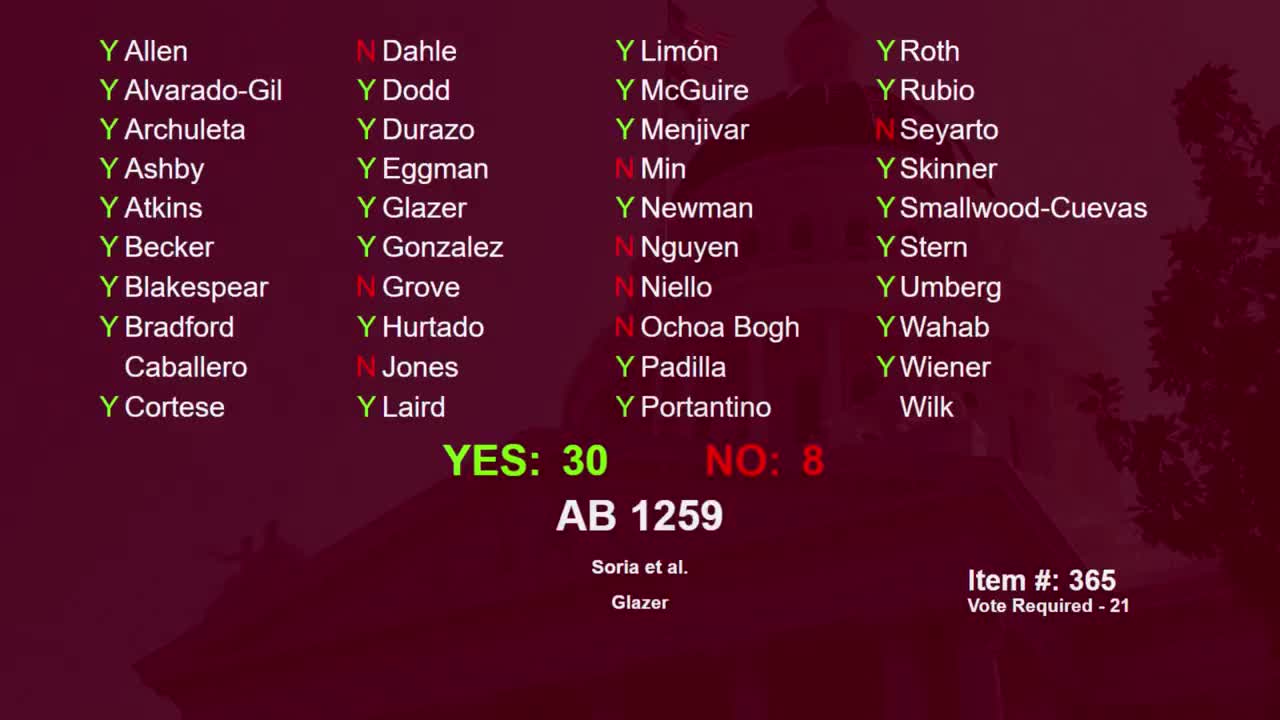
Bill Author

Bill Co-Author(s):