AB 88: Criminal procedure: victims’ rights.
- Session Year: 2023-2024
- House: Assembly
- Latest Version Date: 2023-10-13
Current Status:
Passed
(2023-10-13: Chaptered by Secretary of State - Chapter 795, Statutes of 2023.)
Introduced
In Committee
First Chamber
In Committee
Second Chamber
Enacted
What does this bill do?
The bill requires crime victims who want to speak about a defendant’s resentencing to notify the prosecutor within 15 days of being told resentencing is being sought, and it requires the court to give the victim an opportunity to be heard. It also caps the amount of advance notice the Department of Corrections may require from victims, next of kin, family members, victim representatives, their lawyers, or victim support persons who plan to attend a parole hearing at no more than 15 days.
The summary is provided by generative AI which can make mistakes. For original language, please view the details in the table below.
Existing law authorizes a court, under specified circumstances, to resentence a defendant convicted of a felony offense. Under existing law, resentencing can be granted without a hearing upon stipulation of the parties.
This bill would require a victim of the crime who wishes to be heard regarding the resentencing to notify the prosecution of their request for a hearing within 15 days of being notified that resentencing is being sought, and would require the court to provide an opportunity for the victim to be heard.
Existing law requires any person, except the victim, who is entitled to attend a parole hearing and intends to do so, to provide at least 30 days notice to the Board of Parole Hearings. Existing regulations of the Department of Corrections and Rehabilitation require victims, the victims next of kin, members of the victims family, victim representatives, counsel for any of these persons, and victim support persons to give notice of their intention to attend, to the department, as specified.
This bill would limit the amount of notice that the department may require from any of these persons to no more than 15 days.
This bill would incorporate additional changes to Section 1172.1 of the Penal Code proposed by AB 600 to be operative only if this bill and AB 600 are enacted and this bill is enacted last.
Existing law authorizes a court, under specified circumstances, to resentence a defendant convicted of a felony offense. Under existing law, resentencing can be granted without a hearing upon stipulation of the parties.
This bill would require a victim of the crime who wishes to be heard regarding the resentencing to notify the prosecution of their request for a hearing within 15 days of being notified that resentencing is being sought, and would require the court to provide an opportunity for the victim to be heard.
Existing law requires any person, except the victim, who is entitled to attend a parole hearing and intends to do so, to provide at least 30 days notice to the Board of Parole Hearings. Existing regulations of the Department of Corrections and Rehabilitation require victims, the victims next of kin, members of the victims family, victim representatives, counsel for any of these persons, and victim support persons to give notice of their intention to attend, to the department, as specified.
This bill would limit the amount of notice that the department may require from any of these persons to no more than 15 days.
(a)(1)When a defendant, upon conviction for a felony offense, has been committed to the custody of the Secretary of the Department of Corrections and Rehabilitation or to the custody of the county correctional administrator pursuant to subdivision (h) of Section 1170, the court may, within 120 days of the date of commitment on its own motion, at any time upon the recommendation of the secretary or the Board of Parole Hearings in the case of a defendant incarcerated in state prison, the county correctional administrator in the case of a defendant incarcerated in county jail, the district attorney of the county in which the defendant was sentenced, or the Attorney General if the Department of Justice originally prosecuted the case, recall the sentence and commitment previously ordered and resentence the defendant in the same manner as if they had not previously been sentenced, whether or not the defendant is still in custody, and provided the new sentence, if any, is no greater than the initial sentence.
(2)The court, in recalling and resentencing under this subdivision, shall apply the sentencing rules of the Judicial Council and apply any changes in law that reduce sentences or provide for judicial discretion so as to eliminate disparity of sentences and to promote uniformity of sentencing.
(3)The resentencing court may, in the interest of justice and regardless of whether the original sentence was imposed after a trial or plea agreement, do the following:
(A) Reduce a defendants term of imprisonment by modifying the sentence.
(B)Vacate the defendants conviction and impose judgment on any necessarily included lesser offense or lesser related offense, whether or not that offense was charged in the original pleading, and then resentence the defendant to a reduced term of imprisonment, with the concurrence of both the defendant and the district attorney of the county in which the defendant was sentenced or the Attorney General if the Department of Justice originally prosecuted the case.
(4)In recalling and resentencing pursuant to this provision, the court may consider postconviction factors, including, but not limited to, the disciplinary record and record of rehabilitation of the defendant while incarcerated, evidence that reflects whether age, time served, and diminished physical condition, if any, have reduced the defendants risk for future violence, and evidence that reflects that circumstances have changed since the original sentencing so that continued incarceration is no longer in the interest of justice. The court shall consider if the defendant has experienced psychological, physical, or childhood trauma, including, but not limited to, abuse, neglect, exploitation, or sexual violence, if the defendant was a victim of intimate partner violence or human trafficking prior to or at the time of the commission of the offense, or if the defendant is a youth or was a youth as defined under subdivision (b) of Section 1016.7 at the time of the commission of the offense, and whether those circumstances were a contributing factor in the commission of the offense.
(5)Credit shall be given for time served.
(6)The court shall state on the record the reasons for its decision to grant or deny recall and resentencing.
(7)(A)Resentencing may be granted without a hearing upon stipulation by the parties.
(B)Notwithstanding subparagraph (A), if a victim of a crime wishes to be heard pursuant to the provisions of Section 28 of Article I of the California Constitution, or pursuant to any other provision of law applicable to the hearing, the victim shall notify the prosecution of their request to be heard within 15 days of being notified that resentencing is being sought and the court shall provide an opportunity for the victim to be heard.
(8)Resentencing shall not be denied, nor a stipulation rejected, without a hearing where the parties have an opportunity to address the basis for the intended denial or rejection. If a hearing is held, the defendant may appear remotely and the court may conduct the hearing through the use of remote technology, unless counsel requests their physical presence in court.
(b)If a resentencing request pursuant to subdivision (a) is from the Secretary of the Department of Corrections and Rehabilitation, the Board of Parole Hearings, a county correctional administrator, a district attorney, or the Attorney General, all of the following shall apply:
(1)The court shall provide notice to the defendant and set a status conference within 30 days after the date that the court received the request. The courts order setting the conference shall also appoint counsel to represent the defendant.
(2)There shall be a presumption favoring recall and resentencing of the defendant, which may only be overcome if a court finds the defendant is an unreasonable risk of danger to public safety, as defined in subdivision (c) of Section 1170.18.
SEC. 1.5.Section 1172.1 of the Penal Code is amended to read:1172.1.(a)(1)When a defendant, upon conviction for a felony offense, has been committed to the custody of the Secretary of the Department of Corrections and Rehabilitation or to the custody of the county correctional administrator pursuant to subdivision (h) of Section 1170, the court may, on its own motion, within 120 days of the date of commitment or at any time if the applicable sentencing laws at the time of original sentencing are subsequently changed by new statutory authority or case law, at any time upon the recommendation of the secretary or the Board of Parole Hearings in the case of a defendant incarcerated in state prison, the county correctional administrator in the case of a defendant incarcerated in county jail, the district attorney of the county in which the defendant was sentenced, or the Attorney General if the Department of Justice originally prosecuted the case, recall the sentence and commitment previously ordered and resentence the defendant in the same manner as if they had not previously been sentenced, whether or not the defendant is still in custody, and provided the new sentence, if any, is no greater than the initial sentence. Recall and resentencing under this section may be initiated by the original sentencing judge, a judge designated by the presiding judge, or any judge with jurisdiction in the case.
(2)The court, in recalling and resentencing under this subdivision, shall apply the sentencing rules of the Judicial Council and apply any changes in law that reduce sentences or provide for judicial discretion so as to eliminate disparity of sentences and to promote uniformity of sentencing.
(3)The resentencing court may, in the interest of justice and regardless of whether the original sentence was imposed after a trial or plea agreement, do the following:
(A) Reduce a defendants term of imprisonment by modifying the sentence.
(B)Vacate the defendants conviction and impose judgment on any necessarily included lesser offense or lesser related offense, whether or not that offense was charged in the original pleading, with the concurrence of the defendant, and then resentence the defendant to a reduced term of imprisonment.
(4)If the court has recalled the sentence on its own motion, the court shall not impose a judgment on any necessarily included lesser offense or lesser related offense if the conviction was a result of a plea bargain without the concurrence of both the defendant and the district attorney of the county in which the defendant was sentenced, or the Attorney General if the Department of Justice originally prosecuted the case.
(5)In recalling and resentencing pursuant to this provision, the court shall consider postconviction factors, including, but not limited to, the disciplinary record and record of rehabilitation of the defendant while incarcerated, evidence that reflects whether age, time served, and diminished physical condition, if any, have reduced the defendants risk for future violence, and evidence that reflects that circumstances have changed since the original sentencing so that continued incarceration is no longer in the interest of justice. Evidence that the defendants incarceration is no longer in the interest of justice includes, but is not limited to, evidence that the defendants constitutional rights were violated in the proceedings related to the conviction or sentence at issue, and any other evidence that undermines the integrity of the underlying conviction or sentence. The court shall consider if the defendant has experienced psychological, physical, or childhood trauma, including, but not limited to, abuse, neglect, exploitation, or sexual violence, if the defendant was a victim of intimate partner violence or human trafficking prior to or at the time of the commission of the offense, or if the defendant is a youth or was a youth as defined under subdivision (b) of Section 1016.7 at the time of the commission of the offense, and whether those circumstances were a contributing factor in the commission of the offense.
(6)Credit shall be given for time served.
(7)The court shall state on the record the reasons for its decision to grant or deny recall and resentencing.
(8)(A)Resentencing may be granted without a hearing upon stipulation by the parties.
(B)Notwithstanding subparagraph (A), if a victim of a crime wishes to be heard pursuant to the provisions of Section 28 of Article I of the California Constitution, or pursuant to any other provision of law applicable to the hearing, the victim shall notify the prosecution of their request to be heard within 15 days of being notified that resentencing is being sought and the court shall provide an opportunity for the victim to be heard.
(9)Resentencing shall not be denied, nor a stipulation rejected, without a hearing where the parties have an opportunity to address the basis for the intended denial or rejection. If a hearing is held, the defendant may appear remotely and the court may conduct the hearing through the use of remote technology, unless counsel requests their physical presence in court.
(b)If a resentencing request pursuant to subdivision (a) is from the Secretary of the Department of Corrections and Rehabilitation, the Board of Parole Hearings, a county correctional administrator, a district attorney, or the Attorney General, all of the following shall apply:
(1)The court shall provide notice to the defendant and set a status conference within 30 days after the date that the court received the request. The courts order setting the conference shall also appoint counsel to represent the defendant.
(2)There shall be a presumption favoring recall and resentencing of the defendant, which may only be overcome if a court finds the defendant currently poses an unreasonable risk of danger to public safety, as defined in subdivision (c) of Section 1170.18.
(c)A defendant is not entitled to file a petition seeking relief from the court under this section. If a defendant requests consideration for relief under this section, the court is not required to respond.
(d)After ruling on a referral authorized by this section, the court shall advise the defendant of their right to appeal and the necessary steps and time for taking an appeal.
SEC. 2.Section 3043 of the Penal Code is amended to read:3043.(a)(1)Upon request to the Department of Corrections and Rehabilitation and verification of the identity of the requester, notice of any hearing to review or consider the parole suitability for any inmate in a state prison shall be given by telephone, certified mail, regular mail, or electronic mail, using the method of communication selected by the requesting party, if that method is available, by the Board of Parole Hearings at least 90 days before the hearing to any victim of any crime committed by the inmate, or to the next of kin of the victim if the victim has died, to include the commitment crimes, determinate term commitment crimes for which the inmate has been paroled, and any other felony crimes or crimes against the person for which the inmate has been convicted. The requesting party shall keep the board apprised of their current contact information in order to receive the notice.
(2)No later than 30 days before the date selected for the hearing, any person entitled to attend the hearing, other than the victim, victims next of kin, member of the victims family, victims representative, counsel representing any of these persons, or victim support persons, shall inform the board of their intention to attend the hearing and the name and identifying information of any other person entitled to attend the hearing who will accompany them.
(3)No later than 14 days before the date selected for the hearing, the board shall notify every person entitled to attend the hearing confirming the date, time, and place of the hearing.
(4)The department and the board may require no more than 15 days notice by a victim, victims next of kin, member of the victims family, victims representative, counsel representing any of these persons, or victim support persons, of their intention to attend the hearing.
(b)(1)The victim, next of kin, members of the victims family, and two representatives designated as provided in paragraph (2) of this subdivision have the right to appear, personally or by counsel, at the hearing and to adequately and reasonably express their views concerning the inmate and the case, including, but not limited to the commitment crimes, determinate term commitment crimes for which the inmate has been paroled, any other felony crimes or crimes against the person for which the inmate has been convicted, the effect of the enumerated crimes on the victim and the family of the victim, the person responsible for these enumerated crimes, and the suitability of the inmate for parole.
(2)Any statement provided by a representative designated by the victim or next of kin may cover any subject about which the victim or next of kin has the right to be heard including any recommendation regarding the granting of parole. The representatives shall be designated by the victim or, in the event that the victim is deceased or incapacitated, by the next of kin. They shall be designated in writing for the particular hearing before the hearing.
(c)A representative designated by the victim or the victims next of kin for purposes of this section may be any adult person selected by the victim or the family of the victim. The board shall permit a representative designated by the victim or the victims next of kin to attend a particular hearing, to provide testimony at a hearing, and to submit a statement to be included in the hearing as provided in Section 3043.2, even though the victim, next of kin, or a member of the victims immediate family is present at the hearing, and even though the victim, next of kin, or a member of the victims immediate family has submitted a statement as described in Section 3043.2.
(d)The board, in deciding whether to release the person on parole, shall consider the entire and uninterrupted statements of the victim or victims, next of kin, immediate family members of the victim, and the designated representatives of the victim or next of kin, if applicable, made pursuant to this section and shall include in its report a statement whether the person would pose a threat to public safety if released on parole.
(e)In those cases where there are more than two immediate family members of the victim who wish to attend any hearing covered in this section, the board shall allow attendance of additional immediate family members to include the following: spouse, children, parents, siblings, grandchildren, and grandparents.
SEC. 3.Section 1.5 of this bill incorporates amendments to Section 1172.1 of the Penal Code proposed by both this bill and Assembly Bill 600. That section shall only become operative if (1) both bills are enacted and become effective on or before January 1, 2024, (2) each bill amends Section 1172.1 of the Penal Code, and (3) this bill is enacted after Assembly Bill 600, in which case Section 1 of this bill shall not become operative.
(a)(1)When a defendant, upon conviction for a felony offense, has been committed to the custody of the Secretary of the Department of Corrections and Rehabilitation or to the custody of the county correctional administrator pursuant to subdivision (h) of Section 1170, the court may, within 120 days of the date of commitment on its own motion, at any time upon the recommendation of the secretary or the Board of Parole Hearings in the case of a defendant incarcerated in state prison, the county correctional administrator in the case of a defendant incarcerated in county jail, the district attorney of the county in which the defendant was sentenced, or the Attorney General if the Department of Justice originally prosecuted the case, recall the sentence and commitment previously ordered and resentence the defendant in the same manner as if they had not previously been sentenced, whether or not the defendant is still in custody, and provided the new sentence, if any, is no greater than the initial sentence.
(2)The court, in recalling and resentencing under this subdivision, shall apply the sentencing rules of the Judicial Council and apply any changes in law that reduce sentences or provide for judicial discretion so as to eliminate disparity of sentences and to promote uniformity of sentencing.
(3)The resentencing court may, in the interest of justice and regardless of whether the original sentence was imposed after a trial or plea agreement, do the following:
(A) Reduce a defendants term of imprisonment by modifying the sentence.
(B)Vacate the defendants conviction and impose judgment on any necessarily included lesser offense or lesser related offense, whether or not that offense was charged in the original pleading, and then resentence the defendant to a reduced term of imprisonment, with the concurrence of both the defendant and the district attorney of the county in which the defendant was sentenced or the Attorney General if the Department of Justice originally prosecuted the case.
(4)In recalling and resentencing pursuant to this provision, the court may consider postconviction factors, including, but not limited to, the disciplinary record and record of rehabilitation of the defendant while incarcerated, evidence that reflects whether age, time served, and diminished physical condition, if any, have reduced the defendants risk for future violence, and evidence that reflects that circumstances have changed since the original sentencing so that continued incarceration is no longer in the interest of justice. The court shall consider if the defendant has experienced psychological, physical, or childhood trauma, including, but not limited to, abuse, neglect, exploitation, or sexual violence, if the defendant was a victim of intimate partner violence or human trafficking prior to or at the time of the commission of the offense, or if the defendant is a youth or was a youth as defined under subdivision (b) of Section 1016.7 at the time of the commission of the offense, and whether those circumstances were a contributing factor in the commission of the offense.
(5)Credit shall be given for time served.
(6)The court shall state on the record the reasons for its decision to grant or deny recall and resentencing.
(7)(A)Resentencing may be granted without a hearing upon stipulation by the parties.
(B)Notwithstanding subparagraph (A), if a victim of a crime wishes to be heard pursuant to the provisions of Section 28 of Article I of the California Constitution, or pursuant to any other provision of law applicable to the hearing, the victim shall notify the prosecution of their request to be heard within 15 days of being notified that resentencing is being sought and the court shall provide an opportunity for the victim to be heard.
(8)Resentencing shall not be denied, nor a stipulation rejected, without a hearing where the parties have an opportunity to address the basis for the intended denial or rejection. If a hearing is held, the defendant may appear remotely and the court may conduct the hearing through the use of remote technology, unless counsel requests their physical presence in court.
(b)If a resentencing request pursuant to subdivision (a) is from the Secretary of the Department of Corrections and Rehabilitation, the Board of Parole Hearings, a county correctional administrator, a district attorney, or the Attorney General, all of the following shall apply:
(1)The court shall provide notice to the defendant and set a status conference within 30 days after the date that the court received the request. The courts order setting the conference shall also appoint counsel to represent the defendant.
(2)There shall be a presumption favoring recall and resentencing of the defendant, which may only be overcome if a court finds the defendant is an unreasonable risk of danger to public safety, as defined in subdivision (c) of Section 1170.18.
SEC. 1.5.Section 1172.1 of the Penal Code is amended to read:1172.1.(a)(1)When a defendant, upon conviction for a felony offense, has been committed to the custody of the Secretary of the Department of Corrections and Rehabilitation or to the custody of the county correctional administrator pursuant to subdivision (h) of Section 1170, the court may, on its own motion, within 120 days of the date of commitment on its own motion, or at any time if the applicable sentencing laws at the time of original sentencing are subsequently changed by new statutory authority or case law, at any time upon the recommendation of the secretary or the Board of Parole Hearings in the case of a defendant incarcerated in state prison, the county correctional administrator in the case of a defendant incarcerated in county jail, the district attorney of the county in which the defendant was sentenced, or the Attorney General if the Department of Justice originally prosecuted the case, recall the sentence and commitment previously ordered and resentence the defendant in the same manner as if they had not previously been sentenced, whether or not the defendant is still in custody, and provided the new sentence, if any, is no greater than the initial sentence. Recall and resentencing under this section may be initiated by the original sentencing judge, a judge designated by the presiding judge, or any judge with jurisdiction in the case.
(2)The court, in recalling and resentencing under this subdivision, shall apply the sentencing rules of the Judicial Council and apply any changes in law that reduce sentences or provide for judicial discretion so as to eliminate disparity of sentences and to promote uniformity of sentencing.
(3)The resentencing court may, in the interest of justice and regardless of whether the original sentence was imposed after a trial or plea agreement, do the following:
(A) Reduce a defendants term of imprisonment by modifying the sentence.
(B)Vacate the defendants conviction and impose judgment on any necessarily included lesser offense or lesser related offense, whether or not that offense was charged in the original pleading, with the concurrence of the defendant, and then resentence the defendant to a reduced term of imprisonment, with the concurrence of both the defendant and the district attorney of the county in which the defendant was sentenced or the Attorney General if the Department of Justice originally prosecuted the case. imprisonment.
(4)If the court has recalled the sentence on its own motion, the court shall not impose a judgment on any necessarily included lesser offense or lesser related offense if the conviction was a result of a plea bargain without the concurrence of both the defendant and the district attorney of the county in which the defendant was sentenced, or the Attorney General if the Department of Justice originally prosecuted the case.
(4)(5)In recalling and resentencing pursuant to this provision, the court may shall consider postconviction factors, including, but not limited to, the disciplinary record and record of rehabilitation of the defendant while incarcerated, evidence that reflects whether age, time served, and diminished physical condition, if any, have reduced the defendants risk for future violence, and evidence that reflects that circumstances have changed since the original sentencing so that continued incarceration is no longer in the interest of justice. Evidence that the defendants incarceration is no longer in the interest of justice includes, but is not limited to, evidence that the defendants constitutional rights were violated in the proceedings related to the conviction or sentence at issue, and any other evidence that undermines the integrity of the underlying conviction or sentence. The court shall consider if the defendant has experienced psychological, physical, or childhood trauma, including, but not limited to, abuse, neglect, exploitation, or sexual violence, if the defendant was a victim of intimate partner violence or human trafficking prior to or at the time of the commission of the offense, or if the defendant is a youth or was a youth as defined under subdivision (b) of Section 1016.7 at the time of the commission of the offense, and whether those circumstances were a contributing factor in the commission of the offense.
(5)(6)Credit shall be given for time served.
(6)(7)The court shall state on the record the reasons for its decision to grant or deny recall and resentencing.
(7)(8)(A)Resentencing may be granted without a hearing upon stipulation by the parties.
(B)Notwithstanding subparagraph (A), if a victim of a crime wishes to be heard pursuant to the provisions of Section 28 of Article I of the California Constitution, or pursuant to any other provision of law applicable to the hearing, the victim shall notify the prosecution of their request to be heard within 15 days of being notified that resentencing is being sought and the court shall provide an opportunity for the victim to be heard.
(8)(9)Resentencing shall not be denied, nor a stipulation rejected, without a hearing where the parties have an opportunity to address the basis for the intended denial or rejection. If a hearing is held, the defendant may appear remotely and the court may conduct the hearing through the use of remote technology, unless counsel requests their physical presence in court.
(b)If a resentencing request pursuant to subdivision (a) is from the Secretary of the Department of Corrections and Rehabilitation, the Board of Parole Hearings, a county correctional administrator, a district attorney, or the Attorney General, all of the following shall apply:
(1)The court shall provide notice to the defendant and set a status conference within 30 days after the date that the court received the request. The courts order setting the conference shall also appoint counsel to represent the defendant.
(2)There shall be a presumption favoring recall and resentencing of the defendant, which may only be overcome if a court finds the defendant is currently poses an unreasonable risk of danger to public safety, as defined in subdivision (c) of Section 1170.18.
(c)A defendant is not entitled to file a petition seeking relief from the court under this section. If a defendant requests consideration for relief under this section, the court is not required to respond.
(d)After ruling on a referral authorized by this section, the court shall advise the defendant of their right to appeal and the necessary steps and time for taking an appeal.
SEC. 2.Section 3043 of the Penal Code is amended to read:3043.(a)(1)Upon request to the Department of Corrections and Rehabilitation and verification of the identity of the requester, notice of any hearing to review or consider the parole suitability for any inmate in a state prison shall be given by telephone, certified mail, regular mail, or electronic mail, using the method of communication selected by the requesting party, if that method is available, by the Board of Parole Hearings at least 90 days before the hearing to any victim of any crime committed by the inmate, or to the next of kin of the victim if the victim has died, to include the commitment crimes, determinate term commitment crimes for which the inmate has been paroled, and any other felony crimes or crimes against the person for which the inmate has been convicted. The requesting party shall keep the board apprised of their current contact information in order to receive the notice.
(2)No later than 30 days before the date selected for the hearing, any person entitled to attend the hearing, other than the victim, victims next of kin, member of the victims family, victims representative, counsel representing any of these persons, or victim support persons, shall inform the board of their intention to attend the hearing and the name and identifying information of any other person entitled to attend the hearing who will accompany them.
(3)No later than 14 days before the date selected for the hearing, the board shall notify every person entitled to attend the hearing confirming the date, time, and place of the hearing.
(4)The department and the board may require no more than 15 days notice by a victim, victims next of kin, member of the victims family, victims representative, counsel representing any of these persons, or victim support persons, of their intention to attend the hearing.
(b)(1)The victim, next of kin, members of the victims family, and two representatives designated as provided in paragraph (2) of this subdivision have the right to appear, personally or by counsel, at the hearing and to adequately and reasonably express their views concerning the inmate and the case, including, but not limited to the commitment crimes, determinate term commitment crimes for which the inmate has been paroled, any other felony crimes or crimes against the person for which the inmate has been convicted, the effect of the enumerated crimes on the victim and the family of the victim, the person responsible for these enumerated crimes, and the suitability of the inmate for parole.
(2)Any statement provided by a representative designated by the victim or next of kin may cover any subject about which the victim or next of kin has the right to be heard including any recommendation regarding the granting of parole. The representatives shall be designated by the victim or, in the event that the victim is deceased or incapacitated, by the next of kin. They shall be designated in writing for the particular hearing before the hearing.
(c)A representative designated by the victim or the victims next of kin for purposes of this section may be any adult person selected by the victim or the family of the victim. The board shall permit a representative designated by the victim or the victims next of kin to attend a particular hearing, to provide testimony at a hearing, and to submit a statement to be included in the hearing as provided in Section 3043.2, even though the victim, next of kin, or a member of the victims immediate family is present at the hearing, and even though the victim, next of kin, or a member of the victims immediate family has submitted a statement as described in Section 3043.2.
(d)The board, in deciding whether to release the person on parole, shall consider the entire and uninterrupted statements of the victim or victims, next of kin, immediate family members of the victim, and the designated representatives of the victim or next of kin, if applicable, made pursuant to this section and shall include in its report a statement whether the person would pose a threat to public safety if released on parole.
(e)In those cases where there are more than two immediate family members of the victim who wish to attend any hearing covered in this section, the board shall allow attendance of additional immediate family members to include the following: spouse, children, parents, siblings, grandchildren, and grandparents.
SEC. 3.Section 1.5 of this bill incorporates amendments to Section 1172.1 of the Penal Code proposed by both this bill and Assembly Bill 600. That section shall only become operative if (1) both bills are enacted and become effective on or before January 1, 2024, (2) each bill amends Section 1172.1 of the Penal Code, and (3) this bill is enacted after Assembly Bill 600, in which case Section 1 of this bill shall not become operative.
(a)(1)When a defendant, upon conviction for a felony offense, has been committed to the custody of the Secretary of the Department of Corrections and Rehabilitation or to the custody of the county correctional administrator pursuant to subdivision (h) of Section 1170, the court may, within 120 days of the date of commitment on its own motion, at any time upon the recommendation of the secretary or the Board of Parole Hearings in the case of a defendant incarcerated in state prison, the county correctional administrator in the case of a defendant incarcerated in county jail, the district attorney of the county in which the defendant was sentenced, or the Attorney General if the Department of Justice originally prosecuted the case, recall the sentence and commitment previously ordered and resentence the defendant in the same manner as if they had not previously been sentenced, whether or not the defendant is still in custody, and provided the new sentence, if any, is no greater than the initial sentence.
(2)The court, in recalling and resentencing under this subdivision, shall apply the sentencing rules of the Judicial Council and apply any changes in law that reduce sentences or provide for judicial discretion so as to eliminate disparity of sentences and to promote uniformity of sentencing.
(3)The resentencing court may, in the interest of justice and regardless of whether the original sentence was imposed after a trial or plea agreement, do the following:
(A) Reduce a defendants term of imprisonment by modifying the sentence.
(B)Vacate the defendants conviction and impose judgment on any necessarily included lesser offense or lesser related offense, whether or not that offense was charged in the original pleading, and then resentence the defendant to a reduced term of imprisonment, with the concurrence of both the defendant and the district attorney of the county in which the defendant was sentenced or the Attorney General if the Department of Justice originally prosecuted the case.
(4)In recalling and resentencing pursuant to this provision, the court may consider postconviction factors, including, but not limited to, the disciplinary record and record of rehabilitation of the defendant while incarcerated, evidence that reflects whether age, time served, and diminished physical condition, if any, have reduced the defendants risk for future violence, and evidence that reflects that circumstances have changed since the original sentencing so that continued incarceration is no longer in the interest of justice. The court shall consider if the defendant has experienced psychological, physical, or childhood trauma, including, but not limited to, abuse, neglect, exploitation, or sexual violence, if the defendant was a victim of intimate partner violence or human trafficking prior to or at the time of the commission of the offense, or if the defendant is a youth or was a youth as defined under subdivision (b) of Section 1016.7 at the time of the commission of the offense, and whether those circumstances were a contributing factor in the commission of the offense.
(5)Credit shall be given for time served.
(6)The court shall state on the record the reasons for its decision to grant or deny recall and resentencing.
(7)(A)Resentencing may be granted without a hearing upon stipulation by the parties.
(B)Notwithstanding subparagraph (A), if a victim of a crime wishes to be heard pursuant to the provisions of Section 28 of Article I of the California Constitution, or pursuant to any other provision of law applicable to the hearing, the victim shall notify the prosecution of their request to be heard within 15 days of being notified that resentencing is being sought and the court shall provide an opportunity for the victim to be heard.
(8)Resentencing shall not be denied, nor a stipulation rejected, without a hearing where the parties have an opportunity to address the basis for the intended denial or rejection. If a hearing is held, the defendant may appear remotely and the court may conduct the hearing through the use of remote technology, unless counsel requests their physical presence in court.
(b)If a resentencing request pursuant to subdivision (a) is from the Secretary of the Department of Corrections and Rehabilitation, the Board of Parole Hearings, a county correctional administrator, a district attorney, or the Attorney General, all of the following shall apply:
(1)The court shall provide notice to the defendant and set a status conference within 30 days after the date that the court received the request. The courts order setting the conference shall also appoint counsel to represent the defendant.
(2)There shall be a presumption favoring recall and resentencing of the defendant, which may only be overcome if a court finds the defendant is an unreasonable risk of danger to public safety, as defined in subdivision (c) of Section 1170.18.
SEC. 2.Section 3043 of the Penal Code is amended to read:3043.(a)(1)Upon request to the Department of Corrections and Rehabilitation and verification of the identity of the requester, notice of any hearing to review or consider the parole suitability for any inmate in a state prison shall be given by telephone, certified mail, regular mail, or electronic mail, using the method of communication selected by the requesting party, if that method is available, by the Board of Parole Hearings at least 90 days before the hearing to any victim of any crime committed by the inmate, or to the next of kin of the victim if the victim has died, to include the commitment crimes, determinate term commitment crimes for which the inmate has been paroled, and any other felony crimes or crimes against the person for which the inmate has been convicted. The requesting party shall keep the board apprised of his or her their current contact information in order to receive the notice.
(2)No later than 30 days before the date selected for the hearing, any person, other than the victim, entitled to attend the hearing person entitled to attend the hearing, other than the victim, victims next of kin, member of the victims family, victims representative, counsel representing any of these persons, or victim support persons, shall inform the board of his or her their intention to attend the hearing and the name and identifying information of any other person entitled to attend the hearing who will accompany him or her. them.
(3)No later than 14 days before the date selected for the hearing, the board shall notify every person entitled to attend the hearing confirming the date, time, and place of the hearing.
(4)The department and the board may require no more than 15 days notice by a victim, victims next of kin, member of the victims family, victims representative, counsel representing any of these persons, or victim support persons, of their intention to attend the hearing.
(b)(1)The victim, next of kin, members of the victims family, and two representatives designated as provided in paragraph (2) of this subdivision have the right to appear, personally or by counsel, at the hearing and to adequately and reasonably express his, her, or their views concerning the inmate and the case, including, but not limited to the commitment crimes, determinate term commitment crimes for which the inmate has been paroled, any other felony crimes or crimes against the person for which the inmate has been convicted, the effect of the enumerated crimes on the victim and the family of the victim, the person responsible for these enumerated crimes, and the suitability of the inmate for parole.
(2)Any statement provided by a representative designated by the victim or next of kin may cover any subject about which the victim or next of kin has the right to be heard including any recommendation regarding the granting of parole. The representatives shall be designated by the victim or, in the event that the victim is deceased or incapacitated, by the next of kin. They shall be designated in writing for the particular hearing before the hearing.
(c)A representative designated by the victim or the victims next of kin for purposes of this section may be any adult person selected by the victim or the family of the victim. The board shall permit a representative designated by the victim or the victims next of kin to attend a particular hearing, to provide testimony at a hearing, and to submit a statement to be included in the hearing as provided in Section 3043.2, even though the victim, next of kin, or a member of the victims immediate family is present at the hearing, and even though the victim, next of kin, or a member of the victims immediate family has submitted a statement as described in Section 3043.2.
(d)The board, in deciding whether to release the person on parole, shall consider the entire and uninterrupted statements of the victim or victims, next of kin, immediate family members of the victim, and the designated representatives of the victim or next of kin, if applicable, made pursuant to this section and shall include in its report a statement whether the person would pose a threat to public safety if released on parole.
(e)In those cases where there are more than two immediate family members of the victim who wish to attend any hearing covered in this section, the board shall allow attendance of additional immediate family members to include the following: spouse, children, parents, siblings, grandchildren, and grandparents.
REVISIONS: HeadingLine 2.|
Date
|
Status
|
|---|---|
| Oct 13, 2023 | Chaptered by Secretary of State - Chapter 795, Statutes of 2023. |
| Oct 13, 2023 | Approved by the Governor. |
| Sep 21, 2023 | Enrolled and presented to the Governor at 3:30 p.m. |
| Sep 14, 2023 | Senate amendments concurred in. To Engrossing and Enrolling. (Ayes 79. Noes 0. Page 3585.). |
| Sep 14, 2023 | In Assembly. Concurrence in Senate amendments pending. |
| Sep 14, 2023 | Read third time. Passed. Ordered to the Assembly. (Ayes 40. Noes 0. Page 2778.). |
| Sep 11, 2023 | Read second time. Ordered to third reading. |
| Sep 8, 2023 | Read third time and amended. Ordered to second reading. |
| Aug 15, 2023 | Read second time. Ordered to third reading. |
| Aug 14, 2023 | From committee: Be ordered to second reading pursuant to Senate Rule 28.8. |
| Jun 28, 2023 | From committee: Do pass and re-refer to Com. on APPR. (Ayes 5. Noes 0.) (June 27). Re-referred to Com. on APPR. |
| Jun 7, 2023 | Referred to Com. on PUB S. |
| May 26, 2023 | In Senate. Read first time. To Com. on RLS. for assignment. |
| May 26, 2023 | Read third time. Passed. Ordered to the Senate. (Ayes 77. Noes 0. Page 1851.) |
| May 18, 2023 | Read second time. Ordered to third reading. |
| May 18, 2023 | From committee: Do pass. (Ayes 15. Noes 0.) (May 18). |
| Mar 22, 2023 | In committee: Set, first hearing. Referred to APPR. suspense file. |
| Feb 14, 2023 | From committee: Do pass and re-refer to Com. on APPR. (Ayes 8. Noes 0.) (February 14). Re-referred to Com. on APPR. |
| Feb 14, 2023 | Coauthors revised. |
| Jan 26, 2023 | Referred to Com. on PUB. S. |
| Jan 5, 2023 | From printer. May be heard in committee February 4. |
| Jan 4, 2023 | Read first time. To print. |
|
Date
|
Description
|
Location
|
Votes
|
|
|---|---|---|---|---|
| Sep 14, 2023 | AB 88 Sanchez Concurrence in Senate Amendments | Assembly Floor |
Passed |
|
| Sep 14, 2023 | Assembly 3rd Reading AB88 Sanchez et al. By Alvarado-Gil | Senate Floor |
Passed |
|
| Jun 27, 2023 | Do pass, but first be re-referred to the Committee on [Appropriations] | Senate Standing Committee on Public Safety |
Passed |
|
| May 26, 2023 | AB 88 Sanchez Assembly Third Reading | Assembly Floor |
Passed |
|
| May 18, 2023 | Do pass. | Assembly Standing Committee on Appropriations |
Passed |
|
| Feb 14, 2023 | Do pass and be re-referred to the Committee on [Appropriations] | Assembly Standing Committee on Public Safety |
Passed |
This list shows positions taken on this bill by organizations on the date displayed, which is linked to the original source.
Positions by individuals are not included.
|
Organization
|
Position
|
Date
|
|---|---|---|
| California Attorneys For Criminal Justice | ** Against | |
| California District Attorneys Association | ** Support | |
| California Police Chiefs Association | ** Support | |
| California State Sheriffs Association | ** Support | |
| California Statewide Law Enforcement Association | ** Support | |
| Crime Victims United | * Support | Feb 14, 2023 |
| Initiate Justice | ** Against | |
| Los Angeles County Professional Peace Officers Association | ** Support | |
| Orange County Sheriff's Department | ** Support | |
| Peace Officers Research Association Of California | ** Support | |
| Riverside County Sheriff'S Department | * Support | Jun 27, 2023 |
| San Joaquin County District Attorney's Office | * Support | Feb 14, 2023 |
CONCURRENCE IN SENATE AMENDMENTS
CSA1 Bill Id:AB 88
Author:(Sanchez)
As Amended Ver:September 8, 2023
Majority vote
SUMMARY
Requires a court to hold a resentencing hearing if the victim notifies the prosecution of their request to be heard.
Senate Amendments
Double joint this bill with AB 600 (Ting) of the current legislative session to avoid chaptering out issues.
COMMENTS
As Passed by The Assembly: This Bill required a court to hold a resentencing hearing if the victim notifies the prosecution of their request to be heard.
Major Provisions
- Stated that if a victim wishes to be heard pursuant to Marsy's Law (California Constitution, Article I, Section 28) or any other provision of law applicable to a resentencing hearing, the victim shall notify the prosecution of their request to be heard within 15 days of being notified that resentencing is being sought and the court shall provide an opportunity for the victim to be heard.
- Prohibited the California Department of Corrections and Rehabilitation (CDCR) and the Board of Parole Hearings (BPH) from requiring a victim, victim's next of kin, member of the victim's family, victim's representative, counsel representing any of these persons, or victim support persons to give more than 15 days' notice of their intention to attend a parole hearing.
According to the Author
"Too often, crime victims are unable to voice their concerns during criminal proceedings due to unnecessary bureaucratic hurdles. AB 88 will help crime victims meaningfully access and participate in parole hearings so that their perspectives are shared. The bill ensures that crime victims will not be an afterthought, but can be crucial participants in our criminal justice system."
Arguments in Support
According to the Riverside County Sheriff's Office, "California afforded crime victims a state constitutional right to be heard when the People passed the California Victims' Bill of Rights, known as Marsy's Law, in 2008. Since then, there have been several attempts by this legislative body to stomp on those rights by giving more weight to defendants' rights over victims' rights.
"For example, your house introduced and passed AB 1812, which codified Section 1170(d) of the California Penal Code in 2018, which provides guidelines to the courts for resentencing specified defendants. AB 1812 did not take the victim's voice and concerns into consideration. Likewise, your house introduced and passed AB 2942, which took effect in 2019, which further expanded Section 1170(d) of the California Penal Code, by giving District Attorneys the authority to make resentencing recommendation. As previously noted, this bill also did not take the victim's rights into consideration. This bill aims at restoring those constitutional rights belonging to crime victims and their families."
Arguments in Opposition
According to Initiate Justice, "AB 88 (Sanchez) purports to support 'voiceless' victims of crime, but in fact, victims do have voices and they have expressed their desire for counseling and healing services, not further exposure to court hearings. According to California Crime Survivors Speak, less than one in five California crime victims report receiving financial assistance, counseling, medical assistance and other types of healing services that can help someone recover and stabilize. Supporting victims looks like ensuring they have what they need to be whole again, not attending more court dates.
"Re-sentencing hearings are few and far in between, and when they do happen, they are the result of years of deliberation. These decisions are not arrived at lightly, and often come after the facts of the case have been closely scrutinized and an incarcerated person has served decades in prison while often times demonstrating a strong rehabilitation record. Rarely, if ever, do victims have any personal knowledge of an incarcerated person's current actions, statements, attitudes, or current risk to public safety."
FISCAL COMMENTS
According to the Assembly Appropriations Committee:
- Costs (Trial Court Trust Fund) possibly in the low to mid-hundreds of thousands of dollars in increased staff workload to hear a resentencing petition when requested by a victim. As noted below, a prosecutor and defense attorney may stipulate to waive a resentencing hearing. This bill requires the court to allow the victim an opportunity to be heard. An hour of court time costs approximately $1,000 in workload. If a court is required to hear 10 resentencing motions annually that is would not hear under existing law, resulting in two hours of court time, the cost to the county in which the court is located would be approximately $20,000. If 10 counties average 10 resentencing hearings a year at an average of two hours of court time, the cost would be $200,000. Although courts are not funded on the basis of workload, increased pressure on the TCTF and staff workload may create a need for increased funding for courts from the General Fund (GF). This is particularly true, given that numerous court functions are funded through the imposition and collection of criminal fines and fees. However, the Legislature has eliminated almost all criminal fines and fees over the past several years. The 2023-24 Governor's Budget proposes $109.3 million dollars ongoing to backfill the loss of funding resulting from the near-elimination of criminal fines and fees.
- Minor costs (GF) to CDCR and BPH to update their regulations and notice procedures to allow for victims, family members and support staff to provide less than 15 days' notice of their intent to attend parole hearings.
VOTES:
ASM PUBLIC SAFETY: 8-0-0
YES: Jones-Sawyer, Alanis, Bonta, Bryan, Lackey, Ortega, Santiago, Zbur
ASM APPROPRIATIONS: 15-0-1
YES: Holden, Megan Dahle, Bryan, Calderon, Wendy Carrillo, Dixon, Mike Fong, Hart, Lowenthal, Mathis, Papan, Pellerin, Sanchez, Weber, Ortega
ABS, ABST OR NV: Robert Rivas
ASSEMBLY FLOOR: 77-0-3
YES: Addis, Aguiar-Curry, Alanis, Alvarez, Arambula, Bains, Bauer-Kahan, Bennett, Berman, Boerner, Bonta, Bryan, Calderon, Juan Carrillo, Cervantes, Chen, Connolly, Megan Dahle, Davies, Dixon, Essayli, Flora, Mike Fong, Vince Fong, Friedman, Gabriel, Gallagher, Garcia, Gipson, Grayson, Haney, Hart, Holden, Hoover, Irwin, Jackson, Jones-Sawyer, Lackey, Lee, Low, Lowenthal, Maienschein, Mathis, McCarty, McKinnor, Muratsuchi, Stephanie Nguyen, Pacheco, Papan, Jim Patterson, Joe Patterson, Pellerin, Petrie-Norris, Quirk-Silva, Ramos, Reyes, Luz Rivas, Robert Rivas, Rodriguez, Blanca Rubio, Sanchez, Santiago, Schiavo, Soria, Ta, Ting, Valencia, Villapudua, Waldron, Wallis, Ward, Weber, Wicks, Wilson, Wood, Zbur, Rendon
ABS, ABST OR NV: Wendy Carrillo, Kalra, Ortega
UPDATED
VERSION: September 8, 2023
CONSULTANT: Liah Burnley / PUB. S. / (916) 319-3744 FN: 0002294
SENATE RULES COMMITTEE Office of Senate Floor Analyses (916) 651-1520 Fax: (916) 327-4478 | AB 88 |
THIRD READING
Bill No: AB 88
Author: Sanchez (R), et al.
Amended: 9/8/23 in Senate
Vote: 21
SENATE PUBLIC SAFETY COMMITTEE: 5-0, 6/27/23
AYES: Wahab, Ochoa Bogh, Bradford, Skinner, Wiener
SENATE APPROPRIATIONS COMMITTEE: Senate Rule 28.8
ASSEMBLY FLOOR: 77-0, 5/26/23 - See last page for vote
SUBJECT: Criminal procedure: victims’ rights
SOURCE: Author
DIGEST:
This bill requires a court to provide opportunity for a victim to be heard at a resentencing hearing if the victim desires to be heard, as specified, and prohibit the California Department of Corrections and Rehabilitation (CDCR) and the Board of Parole Hearings (BPH) from requiring more than 15 days’ notice of a victim or victim’s representative to be heard at a parole hearing.
Senate Floor Amendments of 9/8/23 double-joint this bill with AB 600 (Ting, 2023) to avoid chaptering issues.
ANALYSIS:
Existing law:
- States that in order to preserve a victims’ right to due process and justice, the victim is, among other things, entitled to: reasonable notice of all public proceedings which the defendant and the prosecutor are entitled to be present at and of all parole or other post-conviction release proceedings, as well as to be present at these proceedings; be heard, upon request, at any proceeding, including sentencing, a post-conviction release decision, or any proceeding in which a right of the victim is at issue; and be informed of all parole procedures, to participate in the parole process, and to provide information to the parole authority to be considered before the person is paroled. (Marsy’s Law, Cal. Const., art. I § 28(b)[7]-[8] & [15].)
- Provides that when a defendant has been convicted of a felony offense and imprisoned, the court may, within 120 days of the date of commitment on its own motion, or at any time upon the recommendation of the secretary of BPH in the case of state prison inmates, the county correctional administrator in the case of county jail inmates, the district attorney of the county in which the defendant was sentenced, or the Attorney General (AG) if the Department of Justice (DOJ) originally prosecuted the case, recall the sentence and commitment previously ordered and resentence the defendant in the same manner as if they had not previously been sentenced, whether or not the defendant is still in custody, provided the new sentence, if any, is not greater than the initial sentence. (Pen. Code, § 1172.1, subd. (a)(1).)
- States that the resentencing court shall apply the sentencing rules of the Judicial Council and apply any changes in law that reduce sentences or provide for judicial discretion so as to eliminate disparity of sentences and to promote uniformity of sentencing. (Pen. Code, § 1172.1, subd. (a)(2).)
- Provides that the resentencing court may, in the interest of justice regardless of whether the original sentence was imposed after a trial or plea agreement, do the following:
- Reduce a defendant’s term of imprisonment by modifying the sentence; or,
- Vacate the defendant’s conviction and impose judgment on any necessarily included lesser offense or lesser related offense, whether or not that offense was charged in the original pleading, and then resentence the defendant to a reduced term of imprisonment, with the concurrence of both the defendant and the district attorney of the county in which the defendant was sentenced or the AG if DOJ originally prosecuted the case. (Pen. Code, § 1172.1, subd. (a)(3).)
- States that the court may consider postconviction factors, including, but not limited to, the disciplinary record and record of rehabilitation of the defendant while incarcerated, evidence that reflects whether age, time served, and diminished physical condition, if any, have reduced the defendant’s risk for future violence, and evidence that reflects that circumstances have changed since the original sentencing so that continued incarceration is no longer in the interest of justice. (Pen. Code, § 1172.1, subd. (a)(4).)
- Requires the court to consider if the defendant has experienced psychological, physical, or childhood trauma, including, but not limited to, abuse, neglect, exploitation, or sexual violence, if the defendant was a victim of intimate partner violence or human trafficking prior to or at the time of the commission of the offense, or if the defendant is a youth or was a youth, as defined, at the time of the commission of the offense, and whether those circumstances were a contributing factor in the commission of the offense. (Ibid.)
- Requires the court to state on the record the reasons for its decision to grant or deny recall and resentencing. (Pen. Code, § 1172.1, subd. (a)(6).)
- Provides that resentencing may be granted without a hearing upon stipulation by the parties. (Pen. Code, § 1172.1, subd. (a)(7).)
- States that resentencing shall not be denied, nor a stipulation rejected, without a hearing where the parties have an opportunity to address the basis for the intended denial or rejection. If a hearing is held, the defendant may appear remotely and the court may conduct the hearing through the use of remote technology, unless counsel requests their physical presence in court. (Pen. Code, § 1172.1, subd. (a)(8).)
- Specifies that if a resentencing request is from the Secretary of CDCR, BPH, a county correctional administrator, a district attorney, or the AG, all of the following shall apply:
- The court shall provide notice to the defendant and set a status conference within 30 days after the date that the court received the request. The court’s order setting the conference shall also appoint counsel to represent the defendant.
- There shall be a presumption favoring recall and resentencing of the defendant, which may only be overcome if a court finds the defendant is an unreasonable risk of danger to public safety, as defined. (Pen. Code, § 1172.1, subd. (a).)
- States that the victim or next of kin if the victim has died is entitled to be notified, upon request, of any parole eligibility hearing and of the right to appear, either personally or by other means specified, to reasonably express their views, and to have their statements considered. (Pen. Code, § 679.02, subd. (a)(5).)
- Requires, upon request to CDCR and verification of the identity of the requester, notice of any hearing to review or consider the parole suitability for any inmate in a state prison to be given by BPH at least 90 days before the hearing to any victim of any crime committed by the inmate, or to the next of kin of the victim if the victim has died. The requesting party shall keep BPH apprised of his or her current contact information in order to receive the notice. (Pen. Code, § 3043, subd. (a)(1).)
- Requires, no later than 30 days before the date selected for the hearing, any person, other than the victim, entitled to attend the hearing shall inform BPH of their intention to attend the hearing and the name and identifying information of any other person entitled to attend the hearing who will accompany them. (Pen. Code, § 3043, subd. (a)(2).)
- States that no later than 14 days before the hearing, BPH must notify every person entitled to attend the hearing confirming the date, time, and place of the hearing. (Pen. Code, § 3043, subd. (a)(3).)
This bill:
- States that, notwithstanding the ability of the court to grant resentencing without a hearing when stipulated to by the parties, if a victim of a crime wishes to be heard pursuant to Marsy’s Law or pursuant to any other provision of law applicable to the hearing, the victim shall notify the prosecution of their request to be heard within 15 days of being notified that resentencing is being sought and the court shall provide an opportunity for the victim to be heard.
- Limits the amount of notice that CDCR may require from a victim, victim’s next of kin, member of the victim’s family, victim’s representative, counsel representing any of these persons, or victim support persons of their intention to attend the hearing to no more than 15 days.
Comments
According to the author of this bill:
Recently enacted emergency regulations adopted by the California Department of Corrections require crime victims to provide 15 days’ notice and next of kin and immediate family members of crime victims to provide 30 days’ notice if they wish to participate in parole hearings. (15 C.C.R. § 2057(b)-(c).) This requirement became operative on September 27, 2021 as an emergency regulation. This applies regardless of whether they will participate in person or remotely. This requirement can be difficult for crime victims, but is especially onerous for their next of kin and family members. Prosecutors may need more time to locate these individuals and many could find it difficult for them to schedule that far in advance (https://calcoastnews.com/2021/08/parole-policy-harmful-to-victims-of-violent-crime/). Some may not even receive notice of the hearing with sufficient time to respond. While the Department needs some time to perform background checks for individuals who will enter prison grounds, it is unreasonable to require a different standard for victims’ families and next of kin than crime victims and the same standard for in-person appearances and those providing remote testimony.
To address this, AB 88 provides that the Board of Parole Hearings cannot require more than 15 days' minimum notice that a victim, victim’s next of kin, member of the victim’s family, victim’s representative, counsel representing any of these persons, or victim support persons, of their intention to attend a parole suitability hearing.
Too often, crime victims are unable to voice their concerns during criminal proceedings due to unnecessary bureaucratic hurdles. AB 88 will help crime victims meaningfully access and participate in parole hearings so that their perspectives are shared. The bill ensures that crime victims will not be an afterthought, but can be crucial participants in our criminal justice system.
FISCAL EFFECT: Appropriation: No Fiscal Com.: Yes Local: No
SUPPORT: (Verified 9/8/23)
California District Attorneys Association
California Police Chiefs Association
California State Sheriffs’ Association
California Statewide Law Enforcement Association
Los Angeles County Professional Peace Officers Association
Peace Officers Research Association of California
OPPOSITION: (Verified 9/8/23)
California Attorneys for Criminal Justice
Initiate Justice
ARGUMENTS IN SUPPORT: According to the California Police Chiefs Association:
AB 88 sets a timeline for notification that the victim wishes to participate in a resentencing hearing. By setting a minimum timeframe, all parties involved will be better able to plan and engage with the court. This is also consistent with our constitutional laws meant to promote and protect victims’ participation in court decisions.
Too often we have seen unclear deadlines lead to victims missing their chance to weigh in on decisions directly impacting their lives and safety.
ARGUMENTS IN OPPOSITION: According to Initiate Justice:
AB 88 (Sanchez) purports to support “voiceless” victims of crime, but in fact, victims do have voices and they have expressed their desire for counseling and healing services, not further exposure to court hearings. According to California Crime Survivors Speak , less than one in 1 five California crime victims report receiving financial assistance, counseling, medical assistance and other types of healing services that can help someone recover and stabilize. Supporting victims looks like ensuring they have what they need to be whole again, not attending more court dates. Re-sentencing hearings are few and far in between, and when they do happen, they are the result of years of deliberation. These decisions are not arrived at lightly, and often come after the facts of the case have been closely scrutinized and an incarcerated person has served decades in prison while often times demonstrating a strong rehabilitation record. Rarely, if ever, do victims have any personal knowledge of an incarcerated person’s current actions, statements, attitudes, or current risk to public safety.
ASSEMBLY FLOOR: 77-0, 5/26/23
AYES: Addis, Aguiar-Curry, Alanis, Alvarez, Arambula, Bains, Bauer-Kahan, Bennett, Berman, Boerner, Bonta, Bryan, Calderon, Juan Carrillo, Cervantes, Chen, Connolly, Megan Dahle, Davies, Dixon, Essayli, Flora, Mike Fong, Vince Fong, Friedman, Gabriel, Gallagher, Garcia, Gipson, Grayson, Haney, Hart, Holden, Hoover, Irwin, Jackson, Jones-Sawyer, Lackey, Lee, Low, Lowenthal, Maienschein, Mathis, McCarty, McKinnor, Muratsuchi, Stephanie Nguyen, Pacheco, Papan, Jim Patterson, Joe Patterson, Pellerin, Petrie-Norris, Quirk-Silva, Ramos, Reyes, Luz Rivas, Robert Rivas, Rodriguez, Blanca Rubio, Sanchez, Santiago, Schiavo, Soria, Ta, Ting, Valencia, Villapudua, Waldron, Wallis, Ward, Weber, Wicks, Wilson, Wood, Zbur, Rendon
NO VOTE RECORDED: Wendy Carrillo, Kalra, Ortega
Prepared by: Stella Choe / PUB. S. /
9/11/23 13:01:07
**** END ****
SENATE RULES COMMITTEE Office of Senate Floor Analyses (916) 651-1520 Fax: (916) 327-4478 | AB 88 |
THIRD READING
Bill No: AB 88
Author: Sanchez (R), et al.
Introduced: 1/4/23
Vote: 21
SENATE PUBLIC SAFETY COMMITTEE: 5-0, 6/27/23
AYES: Wahab, Ochoa Bogh, Bradford, Skinner, Wiener
SENATE APPROPRIATIONS COMMITTEE: Senate Rule 28.8
ASSEMBLY FLOOR: 77-0, 5/26/23 - See last page for vote
SUBJECT: Criminal procedure: victims’ rights
SOURCE: Author
DIGEST:
This bill requires a court to provide opportunity for a victim to be heard at a resentencing hearing if the victim desires to be heard, as specified, and prohibits the California Department of Corrections and Rehabilitation (CDCR) and the Board of Parole Hearings (BPH) from requiring more than 15 days’ notice of a victim or victim’s representative to be heard at a parole hearing.
ANALYSIS:
Existing law:
- States that in order to preserve a victims’ right to due process and justice, the victim is, among other things, entitled to: reasonable notice of all public proceedings which the defendant and the prosecutor are entitled to be present at and of all parole or other post-conviction release proceedings, as well as to be present at these proceedings; be heard, upon request, at any proceeding, including sentencing, a post-conviction release decision, or any proceeding in which a right of the victim is at issue; and be informed of all parole procedures, to participate in the parole process, and to provide information to the parole authority to be considered before the person is paroled. (Marsy’s Law, Cal. Const., art. I § 28(b)[7]-[8] & [15].)
- Provides that when a defendant has been convicted of a felony offense and imprisoned, the court may, within 120 days of the date of commitment on its own motion, or at any time upon the recommendation of the secretary of BPH in the case of state prison inmates, the county correctional administrator in the case of county jail inmates, the district attorney of the county in which the defendant was sentenced, or the Attorney General (AG) if the Department of Justice (DOJ) originally prosecuted the case, recall the sentence and commitment previously ordered and resentence the defendant in the same manner as if they had not previously been sentenced, whether or not the defendant is still in custody, provided the new sentence, if any, is not greater than the initial sentence. (Pen. Code, § 1172.1, subd. (a)(1).)
- States that the resentencing court shall apply the sentencing rules of the Judicial Council and apply any changes in law that reduce sentences or provide for judicial discretion so as to eliminate disparity of sentences and to promote uniformity of sentencing. (Pen. Code, § 1172.1, subd. (a)(2).)
- Provides that the resentencing court may, in the interest of justice regardless of whether the original sentence was imposed after a trial or plea agreement, do the following:
- Reduce a defendant’s term of imprisonment by modifying the sentence; or,
- Vacate the defendant’s conviction and impose judgment on any necessarily included lesser offense or lesser related offense, whether or not that offense was charged in the original pleading, and then resentence the defendant to a reduced term of imprisonment, with the concurrence of both the defendant and the district attorney of the county in which the defendant was sentenced or the AG if DOJ originally prosecuted the case. (Pen. Code, § 1172.1, subd. (a)(3).)
- States that the court may consider postconviction factors, including, but not limited to, the disciplinary record and record of rehabilitation of the defendant while incarcerated, evidence that reflects whether age, time served, and diminished physical condition, if any, have reduced the defendant’s risk for future violence, and evidence that reflects that circumstances have changed since the original sentencing so that continued incarceration is no longer in the interest of justice. (Pen. Code, § 1172.1, subd. (a)(4).)
- Requires the court to consider if the defendant has experienced psychological, physical, or childhood trauma, including, but not limited to, abuse, neglect, exploitation, or sexual violence, if the defendant was a victim of intimate partner violence or human trafficking prior to or at the time of the commission of the offense, or if the defendant is a youth or was a youth, as defined, at the time of the commission of the offense, and whether those circumstances were a contributing factor in the commission of the offense. (Ibid.)
- Requires the court to state on the record the reasons for its decision to grant or deny recall and resentencing. (Pen. Code, § 1172.1, subd. (a)(6).)
- Provides that resentencing may be granted without a hearing upon stipulation by the parties. (Pen. Code, § 1172.1, subd. (a)(7).)
- States that resentencing shall not be denied, nor a stipulation rejected, without a hearing where the parties have an opportunity to address the basis for the intended denial or rejection. If a hearing is held, the defendant may appear remotely and the court may conduct the hearing through the use of remote technology, unless counsel requests their physical presence in court. (Pen. Code, § 1172.1, subd. (a)(8).)
- Specifies that if a resentencing request is from the Secretary of CDCR, BPH, a county correctional administrator, a district attorney, or the AG, all of the following shall apply:
- The court shall provide notice to the defendant and set a status conference within 30 days after the date that the court received the request. The court’s order setting the conference shall also appoint counsel to represent the defendant.
- There shall be a presumption favoring recall and resentencing of the defendant, which may only be overcome if a court finds the defendant is an unreasonable risk of danger to public safety, as defined. (Pen. Code, § 1172.1, subd. (a).)
- States that the victim or next of kin if the victim has died is entitled to be notified, upon request, of any parole eligibility hearing and of the right to appear, either personally or by other means specified, to reasonably express their views, and to have their statements considered. (Pen. Code, § 679.02, subd. (a)(5).)
- Requires, upon request to CDCR and verification of the identity of the requester, notice of any hearing to review or consider the parole suitability for any inmate in a state prison to be given by BPH at least 90 days before the hearing to any victim of any crime committed by the inmate, or to the next of kin of the victim if the victim has died. The requesting party shall keep BPH apprised of his or her current contact information in order to receive the notice. (Pen. Code, § 3043, subd. (a)(1).)
- Requires, no later than 30 days before the date selected for the hearing, any person, other than the victim, entitled to attend the hearing shall inform BPH of their intention to attend the hearing and the name and identifying information of any other person entitled to attend the hearing who will accompany them. (Pen. Code, § 3043, subd. (a)(2).)
- States that no later than 14 days before the hearing, BPH must notify every person entitled to attend the hearing confirming the date, time, and place of the hearing. (Pen. Code, § 3043, subd. (a)(3).)
This bill:
- States notwithstanding the ability of the court to grant resentencing without a hearing when stipulated to by the parties, if a victim of a crime wishes to be heard pursuant to Marsy’s Law or pursuant to any other provision of law applicable to the hearing, the victim shall notify the prosecution of their request to be heard within 15 days of being notified that resentencing is being sought and the court shall provide an opportunity for the victim to be heard.
- Limits the amount of notice that CDCR may require from a victim, victim’s next of kin, member of the victim’s family, victim’s representative, counsel representing any of these persons, or victim support persons of their intention to attend the hearing to no more than 15 days.
Comments
According to the author of this bill:
Recently enacted emergency regulations adopted by the California Department of Corrections require crime victims to provide 15 days’ notice and next of kin and immediate family members of crime victims to provide 30 days’ notice if they wish to participate in parole hearings. (15 C.C.R. § 2057(b)-(c).) This requirement became operative on September 27, 2021 as an emergency regulation. This applies regardless of whether they will participate in person or remotely. This requirement can be difficult for crime victims, but is especially onerous for their next of kin and family members. Prosecutors may need more time to locate these individuals and many could find it difficult for them to schedule that far in advance (https://calcoastnews.com/2021/08/parole-policy-harmful-to-victims-of-violent-crime/). Some may not even receive notice of the hearing with sufficient time to respond. While the Department needs some time to perform background checks for individuals who will enter prison grounds, it is unreasonable to require a different standard for victims’ families and next of kin than crime victims and the same standard for in-person appearances and those providing remote testimony.
To address this, AB 88 provides that the Board of Parole Hearings cannot require more than 15 days' minimum notice that a victim, victim’s next of kin, member of the victim’s family, victim’s representative, counsel representing any of these persons, or victim support persons, of their intention to attend a parole suitability hearing.
Too often, crime victims are unable to voice their concerns during criminal proceedings due to unnecessary bureaucratic hurdles. AB 88 will help crime victims meaningfully access and participate in parole hearings so that their perspectives are shared. The bill ensures that crime victims will not be an afterthought, but can be crucial participants in our criminal justice system.
FISCAL EFFECT: Appropriation: No Fiscal Com.: Yes Local: No
SUPPORT: (Verified 8/14/23)
California District Attorneys Association
California Police Chiefs Association
California State Sheriffs’ Association
California Statewide Law Enforcement Association
Peace Officers Research Association of California
OPPOSITION: (Verified 8/14/23)
California Attorneys for Criminal Justice
Initiate Justice
ARGUMENTS IN SUPPORT: According to the California Police Chiefs Association:
AB 88 sets a timeline for notification that the victim wishes to participate in a resentencing hearing. By setting a minimum timeframe, all parties involved will be better able to plan and engage with the court. This is also consistent with our constitutional laws meant to promote and protect victims’ participation in court decisions.
Too often we have seen unclear deadlines lead to victims missing their chance to weigh in on decisions directly impacting their lives and safety.
ARGUMENTS IN OPPOSITION: According to Initiate Justice:
AB 88 (Sanchez) purports to support “voiceless” victims of crime, but in fact, victims do have voices and they have expressed their desire for counseling and healing services, not further exposure to court hearings. According to California Crime Survivors Speak , less than one in 1 five California crime victims report receiving financial assistance, counseling, medical assistance and other types of healing services that can help someone recover and stabilize. Supporting victims looks like ensuring they have what they need to be whole again, not attending more court dates. Re-sentencing hearings are few and far in between, and when they do happen, they are the result of years of deliberation. These decisions are not arrived at lightly, and often come after the facts of the case have been closely scrutinized and an incarcerated person has served decades in prison while often times demonstrating a strong rehabilitation record. Rarely, if ever, do victims have any personal knowledge of an incarcerated person’s current actions, statements, attitudes, or current risk to public safety.
ASSEMBLY FLOOR: 77-0, 5/26/23
AYES: Addis, Aguiar-Curry, Alanis, Alvarez, Arambula, Bains, Bauer-Kahan, Bennett, Berman, Boerner, Bonta, Bryan, Calderon, Juan Carrillo, Cervantes, Chen, Connolly, Megan Dahle, Davies, Dixon, Essayli, Flora, Mike Fong, Vince Fong, Friedman, Gabriel, Gallagher, Garcia, Gipson, Grayson, Haney, Hart, Holden, Hoover, Irwin, Jackson, Jones-Sawyer, Lackey, Lee, Low, Lowenthal, Maienschein, Mathis, McCarty, McKinnor, Muratsuchi, Stephanie Nguyen, Pacheco, Papan, Jim Patterson, Joe Patterson, Pellerin, Petrie-Norris, Quirk-Silva, Ramos, Reyes, Luz Rivas, Robert Rivas, Rodriguez, Blanca Rubio, Sanchez, Santiago, Schiavo, Soria, Ta, Ting, Valencia, Villapudua, Waldron, Wallis, Ward, Weber, Wicks, Wilson, Wood, Zbur, Rendon
NO VOTE RECORDED: Wendy Carrillo, Kalra, Ortega
Prepared by: Stella Choe / PUB. S. /
8/16/23 10:34:06
**** END ****
SENATE COMMITTEE ON PUBLIC SAFETY
Senator Aisha Wahab, Chair
2023 - 2024 Regular
Bill No: AB 88 Hearing Date: June 27, 2023
Author: | Sanchez | ||
Version: | January 4, 2023 | ||
Urgency: | No | Fiscal: | Yes |
Consultant: | SC | ||
Subject: Criminal procedure: victims’ rights
HISTORY
Source: Author
Prior Legislation: AB 200 (Committee on Budget), Ch. 58, Stats. 2022
AB 1847 (Valladares), held on suspense Sen. Approps., 2022
AB 1540 (Ting), Ch. 719, Stats. 2021
AB 2942 (Ting), Ch. 1001, Stats. 2018
AB 1156 (Brown), Ch. 378, Stats. 2015
Support: California District Attorneys Association; California State Sheriffs’ Association; California Statewide Law Enforcement Association; Crime Victims United; Orange County Sheriff’s Department; Peace Officers Research Association of California; Riverside County District Attorney’s Office; Riverside County Sheriff’s Office
Opposition: California Attorneys for Criminal Justice; California Calls; Initiate Justice
Assembly Floor Vote: 77 - 0
PURPOSE
The purpose of this bill is to require a court to provide opportunity for a victim to be heard at a resentencing hearing if the victim desires to be heard, as specified, and prohibit the California Department of Corrections and Rehabilitation (CDCR) and the Board of Parole Hearings (BPH) from requiring more than 15 days’ notice of a victim or victim’s representative to be heard at a parole hearing.
Existing law, known as Marsy’s Law, states that in order to preserve a victims’ right to due process and justice, the victim is, among other things, entitled to: reasonable notice of all public proceedings which the defendant and the prosecutor are entitled to be present at and of all parole or other post-conviction release proceedings, as well as to be present at these proceedings; be heard, upon request, at any proceeding, including sentencing, a post-conviction release decision, or any proceeding in which a right of the victim is at issue; and be informed of all parole procedures, to participate in the parole process, and to provide information to the parole authority to be considered before the person is paroled. (Cal. Const., art. I § 28(b)[7]-[8] & [15].)
Existing law provides that when a defendant has been convicted of a felony offense and imprisoned, the court may, within 120 days of the date of commitment on its own motion, or at any time upon the recommendation of the secretary of BPH in the case of state prison inmates, the county correctional administrator in the case of county jail inmates, the district attorney of the county in which the defendant was sentenced, or the Attorney General (AG) if the Department of Justice (DOJ) originally prosecuted the case, recall the sentence and commitment previously ordered and resentence the defendant in the same manner as if they had not previously been sentenced, whether or not the defendant is still in custody, provided the new sentence, if any, is not greater than the initial sentence. (Pen. Code, § 1172.1, subd. (a)(1).)
Existing law states that the resentencing court shall apply the sentencing rules of the Judicial Council and apply any changes in law that reduce sentences or provide for judicial discretion so as to eliminate disparity of sentences and to promote uniformity of sentencing. (Pen. Code, § 1172.1, subd. (a)(2).)
Existing law provides that the resentencing court may, in the interest of justice regardless of whether the original sentence was imposed after a trial or plea agreement, do the following:
- Reduce a defendant’s term of imprisonment by modifying the sentence; or,
- Vacate the defendant’s conviction and impose judgment on any necessarily included lesser offense or lesser related offense, whether or not that offense was charged in the original pleading, and then resentence the defendant to a reduced term of imprisonment, with the concurrence of both the defendant and the district attorney of the county in which the defendant was sentenced or the AG if DOJ originally prosecuted the case. (Pen. Code, § 1172.1, subd. (a)(3).)
Existing law states that the court may consider postconviction factors, including, but not limited to, the disciplinary record and record of rehabilitation of the defendant while incarcerated, evidence that reflects whether age, time served, and diminished physical condition, if any, have reduced the defendant’s risk for future violence, and evidence that reflects that circumstances have changed since the original sentencing so that continued incarceration is no longer in the interest of justice. (Pen. Code, § 1172.1, subd. (a)(4).)
Existing law requires the court to consider if the defendant has experienced psychological, physical, or childhood trauma, including, but not limited to, abuse, neglect, exploitation, or sexual violence, if the defendant was a victim of intimate partner violence or human trafficking prior to or at the time of the commission of the offense, or if the defendant is a youth or was a youth, as defined, at the time of the commission of the offense, and whether those circumstances were a contributing factor in the commission of the offense. (Ibid.)
Existing law requires the court to state on the record the reasons for its decision to grant or deny recall and resentencing. (Pen. Code, § 1172.1, subd. (a)(6).)
Existing law provides that resentencing may be granted without a hearing upon stipulation by the parties. (Pen. Code, § 1172.1, subd. (a)(7).)
Existing law states that resentencing shall not be denied, nor a stipulation rejected, without a hearing where the parties have an opportunity to address the basis for the intended denial or
rejection. If a hearing is held, the defendant may appear remotely and the court may conduct the hearing through the use of remote technology, unless counsel requests their physical presence in court. (Pen. Code, § 1172.1, subd. (a)(8).)
Existing law specifies that if a resentencing request is from the Secretary of CDCR, BPH, a county correctional administrator, a district attorney, or the AG, all of the following shall apply:
- The court shall provide notice to the defendant and set a status conference within 30 days after the date that the court received the request. The court’s order setting the conference shall also appoint counsel to represent the defendant.
- There shall be a presumption favoring recall and resentencing of the defendant, which may only be overcome if a court finds the defendant is an unreasonable risk of danger to public safety, as defined. (Pen. Code, § 1172.1, subd. (a).)
This bill states notwithstanding the ability of the court to grant resentencing without a hearing when stipulated to by the parties, if a victim of a crime wishes to be heard pursuant to Marsy’s Law or pursuant to any other provision of law applicable to the hearing, the victim shall notify the prosecution of their request to be heard within 15 days of being notified that resentencing is being sought and the court shall provide an opportunity for the victim to be heard.
Existing law states that the victim or next of kin if the victim has died is entitled to be notified, upon request, of any parole eligibility hearing and of the right to appear, either personally or by other means specified, to reasonably express their views, and to have their statements considered. (Pen. Code, § 679.02, subd. (a)(5).)
Existing law requires, upon request to CDCR and verification of the identity of the requester, notice of any hearing to review or consider the parole suitability for any inmate in a state prison to be given by BPH at least 90 days before the hearing to any victim of any crime committed by the inmate, or to the next of kin of the victim if the victim has died. The requesting party shall keep BPH apprised of his or her current contact information in order to receive the notice. (Pen. Code, § 3043, subd. (a)(1).)
Existing law requires, no later than 30 days before the date selected for the hearing, any person, other than the victim, entitled to attend the hearing shall inform BPH of their intention to attend the hearing and the name and identifying information of any other person entitled to attend the hearing who will accompany them. (Pen. Code, § 3043, subd. (a)(2).)
Existing law states that no later than 14 days before the hearing, BPH must notify every person entitled to attend the hearing confirming the date, time, and place of the hearing. (Pen. Code, § 3043, subd. (a)(3).)
This bill limits the amount of notice that CDCR may require from a victim, victim’s next of kin, member of the victim’s family, victim’s representative, counsel representing any of these persons, or victim support persons of their intention to attend the hearing to no more than 15 days.
COMMENTS
- Need for This Bill
According to the author of this bill:
Recently enacted emergency regulations adopted by the California Department of Corrections require crime victims to provide 15 days’ notice and next of kin and immediate family members of crime victims to provide 30 days’ notice if they wish to participate in parole hearings. (15 C.C.R. § 2057(b)-(c).) This requirement became operative on September 27, 2021 as an emergency regulation. This applies regardless of whether they will participate in person or remotely. This requirement can be difficult for crime victims, but is especially onerous for their next of kin and family members. Prosecutors may need more time to locate these individuals and many could find it difficult for them to schedule that far in advance (https://calcoastnews.com/2021/08/parole-policy-harmful-to-victims-of-violent-crime/). Some may not even receive notice of the hearing with sufficient time to respond. While the Department needs some time to perform background checks for individuals who will enter prison grounds, it is unreasonable to require a different standard for victims’ families and next of kin than crime victims and the same standard for in-person appearances and those providing remote testimony.
To address this, AB 88 provides that the Board of Parole Hearings cannot require more than 15 days' minimum notice that a victim, victim’s next of kin, member of the victim’s family, victim’s representative, counsel representing any of these persons, or victim support persons, of their intention to attend a parole suitability hearing.
Too often, crime victims are unable to voice their concerns during criminal proceedings due to unnecessary bureaucratic hurdles. AB 88 will help crime victims meaningfully access and participate in parole hearings so that their perspectives are shared. The bill ensures that crime victims will not be an afterthought, but can be crucial participants in our criminal justice system.
- Victims’ Rights Provided by Marsy’s Law
On November 4, 2008, voters approved Proposition 9, which amended the California Constitution to provide a victim’s Bill of Rights. This is known as Mary’s Law. (Cal. Const., art. I § 28(b).) In order to preserve a victims’ right to due process and justice, the victim is, among other things, entitled to: reasonable notice of all public proceedings which the defendant and the prosecutor are entitled to be present at and of all parole or other post-conviction release proceedings, as well as to be present at these proceedings; be heard, upon request, at any proceeding, including sentencing, a post-conviction release decision, or any proceeding in which a right of the victim is at issue; and be informed of all parole procedures, to participate in the parole process, and to provide information to the parole authority to be considered before the person is paroled. (Cal. Const., art. I § 28(b)[7]-[8] & [15].)
This bill requires a court, if a victim of a crime wishes to be heard pursuant to Marsy’s Law or any other applicable laws and has notified the prosecution of their request for a hearing within 15 days of being notified that resentencing is being sought, to provide an opportunity for the victim to be heard. This bill also states that CDCR and BPH may not require more than 15 days’ notice by a victim of a crime, victim’s next of kin, member of the victim’s family, victim’s representative, counsel representing any of these person, or victim support persons that they intend to attend the hearing.
- Recall and Resentencing Law
As a general matter, a court typically loses jurisdiction over a sentence when the sentence begins. (Dix v. Superior Court (1991) 53 Cal. 3d 442, 455.) Once the defendant has been committed on a sentence pronounced by the court, the court no longer has the legal authority to increase, reduce, or otherwise alter the defendant’s sentence. (Id.)
However, the Legislature has created limited statutory exceptions allowing a court to recall a sentence and resentence the defendant. Specifically, within 120 days of commitment for a felony conviction, the court has the ability to resentence the defendant as if it had never imposed sentence, provided the new sentence is no greater than the original sentence. In addition, CDCR, BPH, the county correctional administrator, the district attorney, or the Attorney General can make a recommendation for resentencing at any time. (Pen. Code, § 1172.1, subd. (a).)
The recall and resentencing law was originally added to Penal Code section 1170 related to sentencing but was recast into a separate code section, Penal Code section 1170.03, and amended to include specified procedures for recall and resentencing such as when a hearing is required, that defendant is entitled to appointment of counsel, and requiring the court to state on the record the reasons for its decision to grant or deny recall and resentencing. (AB 1540 (Ting), Chapter 719, Statutes of 2021.) The statute was again recast into Penal Code section 1172.1 in 2022. (AB 200 (Committee on Budget), Chapter 58, Statutes of 2022.)
The recall and resentencing process set forth in Penal Code section 1172.1 requires a hearing to be set to determine whether the person should be resentenced, unless otherwise stipulated to by the parties, and requires the court’s decision to grant or deny the petition to be stated on the record. When resentencing is recommended by one of the specified law enforcement entities statutorily authorized to do so, the court must provide notice to the defendant, set a status conference within 30 days of receiving the petition, and appoint counsel. A presumption in favor of resentencing applies to petitions submitted by law enforcement entities unless overcome by a finding by the court that the defendant poses an unreasonable risk to public safety.
This bill requires, notwithstanding the provision in Penal Code section 1172.1 that authorizes the parties to stipulate to having resentencing granted without a hearing, if a victim of a crime wishes to be heard pursuant to Marsy’s Law, or pursuant to any other provision of law applicable to the hearing, and the victim has notified the prosecution of their request for a hearing within 15 days of being notified that resentencing is being sought, the court to provide an opportunity for the victim to be heard.
- Notice of Parole Hearings
Victims and victims’ next of kin who have registered with CDCR’s Office of Victim and Survivor Rights and Services to receive notice of parole hearings are required to receive notice at least 90 days before the parole hearing pursuant to Penal Code section 3043, subdivision (a)(1).
CDCR regulations state that if BPH determines that an in-person hearing is necessary for the hearing officers to establish effective communication with the inmate, then the inmate, the inmate's attorney, and the interpreter shall be physically present with the inmate during the hearing, unless one of the specified exceptions applies. (Cal. Code Regs., tit. 15, § 2057, subd. (b).) The regulations require at least 15 days’ notice prior to the hearing of the intent to attend by any victim, victim’s counsel, victim’s designated representative, and victim’s support person; at least 30 days’ notice prior to the hearing for any victim’s next of kin, their counsel, designated representative, and support person; and at least 30 days’ notice prior to the hearing of any victim’s family member, their counsel, and support person. (Cal. Code Regs., tit. 15, § 2057, subd. (b)&(c).)
This bill prohibits CDCR and BPH from requiring any more than 15 days’ notice by a victim, victim’s next of kin, member of the victim’s family, victim’s representative, counsel representing any of these persons, or victim support persons, of their intention to attend the hearing. As discussed above, CDCR’s regulations require at minimum 15 days’ notice from a victim of their intent to attend a parole hearing, and at minimum 30 days’ notice from a victim’s next of kin or victim’s family member.
The proponents of this bill argue that 30 days’ notice can be difficult for crime victims, but is especially onerous for their next of kin and family members. Prosecutors may need more time to locate these individuals and many could find it difficult for them to schedule that far in advance. They acknowledge that some notice is necessary as CDCR has to perform background checks of individuals as well as other administrative functions prior to allowing someone access to the to prison grounds, but that it is unreasonable to require a different standard for victims’ families and next of kin than victims. Thus, the bill states that for victims, next of kin, and victim family, and their counsel and support persons, CDCR and BPH may not require more than 15 days’ notice of their intent to be heard on the matter.
- Argument in Support
According to the California Police Chiefs Association:
AB 88 sets a timeline for notification that the victim wishes to participate in a resentencing hearing. By setting a minimum timeframe, all parties involved will be better able to plan and engage with the court. This is also consistent with our constitutional laws meant to promote and protect victims’ participation in court decisions.
Too often we have seen unclear deadlines lead to victims missing their chance to weigh in on decisions directly impacting their lives and safety.
- Argument in Opposition
According to Initiate Justice:
AB 88 (Sanchez) purports to support “voiceless” victims of crime, but in fact, victims do have voices and they have expressed their desire for counseling and healing services, not further exposure to court hearings. According to California Crime Survivors Speak , less than one in 1 five California crime victims report receiving financial assistance, counseling, medical assistance and other types of healing services that can help someone recover and stabilize. Supporting victims looks like ensuring they have what they need to be whole again, not attending more court dates. Re-sentencing hearings are few and far in between, and when they do happen, they are the result of years of deliberation. These decisions are not arrived at lightly, and often come after the facts of the case have been closely scrutinized and an incarcerated person has served decades in prison while often times demonstrating a strong rehabilitation record. Rarely, if ever, do victims have any personal knowledge of an incarcerated person’s current actions, statements, attitudes, or current risk to public safety.
-- END –
ASSEMBLY THIRD READING
ATR Bill Id:AB 88
Author:(Sanchez)
As Introduced Ver:January 4, 2023
Majority vote
SUMMARY
Requires a court to hold a resentencing hearing if the victim notifies the prosecution of their request to be heard.
Major Provisions
- States that if a victim wishes to be heard pursuant to Marsy's Law (California Constiution, Article I, Section 28) or any other provision of law applicable to a resentencing hearing, the victim shall notify the prosecution of their request to be heard within 15 days of being notified that resentencing is being sought and the court shall provide an opportunity for the victim to be heard.
- Prohibits the California Department of Corrections and Rehabilitation (CDCR) and the Board of Parole Hearings (BPH) from requiring a victim, victim's next of kin, member of the victim's family, victim's representative, counsel representing any of these persons, or victim support persons to give more than 15 days' notice of their intention to attend a parole hearing.
COMMENTS
According to the Author
"Too often, crime victims are unable to voice their concerns during criminal proceedings due to unnecessary bureaucratic hurdles. AB 88 will help crime victims meaningfully access and participate in parole hearings so that their perspectives are shared. The bill ensures that crime victims will not be an afterthought, but can be crucial participants in our criminal justice system."
Arguments in Support
According to the Riverside County Sheriff's Office, "California afforded crime victims a state constitutional right to be heard when the People passed the California Victims' Bill of Rights, known as Marsy's Law, in 2008. Since then, there have been several attempts by this legislative body to stomp on those rights by giving more weight to defendants' rights over victims' rights.
"For example, your house introduced and passed AB 1812, which codified Section 1170(d) of the California Penal Code in 2018, which provides guidelines to the courts for resentencing specified defendants. AB 1812 did not take the victim's voice and concerns into consideration. Likewise, your house introduced and passed AB 2942, which took effect in 2019, which further expanded Section 1170(d) of the California Penal Code, by giving District Attorneys the authority to make resentencing recommendation. As previously noted, this bill also did not take the victim's rights into consideration. This bill aims at restoring those constitutional rights belonging to crime victims and their families."
Arguments in Opposition
According to Initiate Justice, "AB 88 (Sanchez) purports to support 'voiceless' victims of crime, but in fact, victims do have voices and they have expressed their desire for counseling and healing services, not further exposure to court hearings. According to California Crime Survivors Speak, less than one in five California crime victims report receiving financial assistance, counseling, medical assistance and other types of healing services that can help someone recover and stabilize. Supporting victims looks like ensuring they have what they need to be whole again, not attending more court dates.
"Re-sentencing hearings are few and far in between, and when they do happen, they are the result of years of deliberation. These decisions are not arrived at lightly, and often come after the facts of the case have been closely scrutinized and an incarcerated person has served decades in prison while often times demonstrating a strong rehabilitation record. Rarely, if ever, do victims have any personal knowledge of an incarcerated person's current actions, statements, attitudes, or current risk to public safety."
FISCAL COMMENTS
According to the Assembly/Senate Appropriations Committee:
- Costs (Trial Court Trust Fund) possibly in the low to mid-hundreds of thousands of dollars in increased staff workload to hear a resentencing petition when requested by a victim. As noted below, a prosecutor and defense attorney may stipulate to waive a resentencing hearing. This bill requires the court to allow the victim an opportunity to be heard. An hour of court time costs approximately $1,000 in workload. If a court is required to hear 10 resentencing motions annually that is would not hear under existing law, resulting in two hours of court time, the cost to the county in which the court is located would be approximately $20,000. If 10 counties average 10 resentencing hearings a year at an average of two hours of court time, the cost would be $200,000. Although courts are not funded on the basis of workload, increased pressure on the TCTF and staff workload may create a need for increased funding for courts from the General Fund (GF). This is particularly true, given that numerous court functions are funded through the imposition and collection of criminal fines and fees. However, the Legislature has eliminated almost all criminal fines and fees over the past several years. The 2023-24 Governor's Budget proposes $109.3 million dollars ongoing to backfill the loss of funding resulting from the near-elimination of criminal fines and fees.
- Minor costs (GF) to CDCR and BPH to update their regulations and notice procedures to allow for victims, family members and support staff to provide less than 15 days' notice of their intent to attend parole hearings.
VOTES
ASM PUBLIC SAFETY: 8-0-0
YES: Jones-Sawyer, Alanis, Bonta, Bryan, Lackey, Ortega, Santiago, Zbur
ASM APPROPRIATIONS: 15-0-1
YES: Holden, Megan Dahle, Bryan, Calderon, Wendy Carrillo, Dixon, Mike Fong, Hart, Lowenthal, Mathis, Papan, Pellerin, Sanchez, Weber, Ortega
ABS, ABST OR NV: Robert Rivas
UPDATED
VERSION: January 4, 2023
CONSULTANT: Liah Burnley / PUB. S. / (916) 319-3744 FN: 0000677
Date of Hearing: March 22, 2023
ASSEMBLY COMMITTEE ON APPROPRIATIONS
Chris Holden, Chair
ABPCA Bill Id:AB 88
Author:(Sanchez) – As Introduced Ver:January 4, 2023
Policy Committee: | Public Safety | Vote: | 8 - 0 |
|
| ||
|
|
Urgency: No State Mandated Local Program: No Reimbursable: No
SUMMARY:
This bill requires a court provide opportunity for a victim to be heard at a resentencing hearing if the victim, or a designated victim representative, notifies the prosecution of the victim’s desire to be heard within 15 days of the victim receiving notice of re-sentencing. This bill also prohibits the California Department of Corrections and Rehabilitation (CDCR) and the Board of Parole Hearings (BPH) from requiring more than 15 days’ notice of a victim or victim’s representative to be heard at a parole hearing.
FISCAL EFFECT:
- Costs (Trial Court Trust Fund) possibly in the low to mid-hundreds of thousands of dollars in increased staff workload to hear a resentencing petition when requested by a victim. As noted below, a prosecutor and defense attorney may stipulate to waive a resentencing hearing. This bill requires the court to allow the victim an opportunity to be heard. An hour of court time costs approximately $1,000 in workload. If a court is required to hear 10 resentencing motions annually that is would not hear under existing law, resulting in two hours of court time, the cost to the county in which the court is located would be approximately $20,000. If 10 counties average 10 resentencing hearings a year at an average of two hours of court time, the cost would be $200,000. Although courts are not funded on the basis of workload, increased pressure on the TCTF and staff workload may create a need for increased funding for courts from the General Fund (GF). This is particularly true, given that numerous court functions are funded through the imposition and collection of criminal fines and fees. However, the Legislature has eliminated almost all criminal fines and fees over the past several years. The 2023-24 Governor’s Budget proposes $109.3 million dollars ongoing to backfill the loss of funding resulting from the near-elimination of criminal fines and fees.
- Minor costs (GF) to CDCR and BPH to update their regulations and notice procedures to allow for victims, family members and support staff to provide less than 15 days’ notice of their intent to attend parole hearings.
COMMENTS:
- Purpose. According to the author:
Too often, crime victims are unable to voice their concerns during criminal proceedings due to unnecessary bureaucratic hurdles. AB 88 will help crime victims meaningfully access and participate in parole hearings so that their perspectives are shared. The bill ensures that crime victims will not be an afterthought, but can be crucial participants in our criminal justice system.
- Marsy’s Law and Existing Notice Requirements. Marsy’s law, enacted by the voters as Proposition 9 in 2008, amended the California Constitution to provide a crime victim’s bill of rights. Pursuant to Marsy’s Law, a victim has a right to: (a) reasonable notice of all public proceedings wherein the defendant and the prosecutor are entitled to be present, (b) reasonable notice of all parole and post-conviction release proceedings, and the right to be present at these proceedings; (c) to be heard, upon request, at any proceeding in which the right of the victim is at issue, including sentencing and post-conviction release decisions; and (d) to be informed of all parole procedures, participate in the parole process, and provide information to the parole authority regarding possible release before the BPH makes any parole determination.
According to the Assembly Committee on Public Safety, Penal Code section 3043, subdivision (a)(2), requires any person, other than the victim, who is entitled to attend a parole hearing and intends to do so, to provide at least 30 days’ notice to BPH of their intent to attend the hearing. Under CDCR regulations, victims must provide at least 15 days’ notice of their intent to attend parole hearings, regardless of whether they will participate in person or remotely, and their next of kin, family members, representative, counsel, and support person must provide at least 30 days’ of such notice. This bill limits to no more than 15 days the amount of notice of intent to attend CDCR may require from any person. - Argument in Support. According to the California Police Chiefs Association:
AB 88 sets a timeline for notification that the victim wishes to participate in a resentencing hearing. By setting a minimum timeframe, all parties involved will be better able to plan and engage with the court. This is also consistent with our constitutional laws meant to promote and protect victims’ participation in court decisions. Too often we have seen unclear deadlines lead to victims missing their chance to weigh in on decisions directly impacting their lives and safety.
- Argument in Opposition. According to Initiate Justice:
AB 88 (Sanchez) purports to support “voiceless” victims of crime, but in fact, victims do have voices and they have expressed their desire for counseling and healing services, not further exposure to court hearings. … Supporting victims [means] ensuring they have what they need to be whole again, not attending more court dates. Re-sentencing hearings are few and far in between, and when they do happen, they are the result of years of deliberation. These decisions are not arrived at lightly, and often come after the facts of the case have been closely scrutinized and an incarcerated person has served decades in prison while often times demonstrating a strong rehabilitation record. Rarely, if ever, do victims have any personal knowledge of an incarcerated person’s current actions, statements, attitudes, or current risk to public safety.
- Prior Legislation. AB 1847 (Valladares), of the 2021-22 Legislative Session, was similar to this bill and would have required the court to hold a hearing on resentencing if the victim wishes to be heard, and limits to 15 days the amount of notice of intent to attend the victim and their family members must provide. AB 1847 was held on Senate Appropriations suspense file.
Analysis Prepared by: Kimberly Horiuchi / APPR. / (916) 319-2081
Date of Hearing: February 14, 2023
Counsel: Liah Burnley
ASSEMBLY COMMITTEE ON
Reginald Byron Jones-Sawyer, Sr., Chair
ABPCA Bill Id:
Author:() – As Ver:
SUMMARY:
Requires a court to hold a resentencing hearing if the victim notifies the prosecution of their request to be heard. Specifically, this bill:
- States that if a victim wishes to be heard pursuant to Marsy’s Law (Cal. Const., art. I, § 28) or any other provision of law applicable to a resentencing hearing, the victim shall notify the prosecution of their request to be heard within 15 days of being notified that resentencing is being sought and the court shall provide an opportunity for the victim to be heard.
- Prohibits the California Department of Corrections and Rehabilitation (CDCR) and the Board of Parole Hearings (BPH) from requiring a victim, victim’s next of kin, member of the victim’s family, victim’s representative, counsel representing any of these persons, or victim support persons to give more than 15 days’ notice of their intention to attend a parole hearing.
EXISTING LAW:
- States that in order to preserve a victims’ right to due process and justice, the victim is, among other things, entitled to:
- Reasonable notice of all public proceedings that the defendant and the prosecutor are entitled to be present;
- Reasonable notice of all of and of all parole or other post-conviction release proceedings, as well as to be present at these proceedings;
- The right to be heard, upon request, at any proceeding, including sentencing, a post-conviction release decision, or any proceeding in which a right of the victim is at issue; and,
- The right to be informed of all parole procedures, to participate in the parole process, and to provide information to the parole authority to be considered before the person is paroled. (Cal. Const., art. I § 28(b)(7)-(8) & (15).)
- Reasonable notice of all public proceedings that the defendant and the prosecutor are entitled to be present;
- Provides that when a defendant has been convicted of a felony offense and imprisoned, the court may, within 120 days of the date of commitment on its own motion, or at any time upon the recommendation CDCR or BPH in the case of state prison inmates, the county correctional administrator in the case of county jail inmates, or the district attorney of the county in which the defendant was sentenced, or the Attorney General (AG) if the Department of Justice (DOJ) originally prosecuted the case, recall the sentence and commitment previously ordered and resentence the defendant in the same manner as if they had not previously been sentenced, whether or not the defendant is still in custody, provided the new sentence, if any, is not greater than the initial sentence. (Pen. Code, § 1170.03, subd. (a)(1).)
- Provides that resentencing may be granted without a hearing upon stipulation by the parties. (Pen. Code, § 1170.03, subd. (a)(7).)
- Prohibits resentencing from being denied, or a stipulation rejected, without a hearing where the parties have an opportunity to address the basis for the intended denial or rejection. (Pen. Code, § 1170.03, subd. (a)(8).)
- Provides that the victim, next of kin, members of the victim’s family and two designated representatives have the right to appear, personally or by counsel, at the parole hearing and to adequately and reasonably express their views concerning the inmate and the case. (Pen. Code, § 3043, subd. (b).)
- States that the victim or victim’s next of kin is entitled to be notified, upon request, of any parole eligibility hearing and of the right to appear, either personally or by other means, to reasonably express their views, and to have their statements considered. (Pen. Code, § 679.02, subd. (a)(5).)
- Provides that upon request to CDCR and verification of the identity of the requester, BPH must send the victim, or the victim’s next of kin, notice of any parole hearing at least 90 days before the hearing. (Pen. Code, § 3043, subd. (a)(1).)
- States that no later than 30 days before the hearing, any person, other than the victim, entitled to attend the parole hearing must inform BPH of their intention to attend. (Pen. Code, § 3043, subd. (a)(2).)
- States that no later than 14 days before the hearing, BPH must notify every person entitled to attend the parole hearing confirming the date, time, and place of the hearing. (Pen. Code, § 3043, subd. (a)(3).)
FISCAL EFFECT:
Unknown
COMMENTS:
- Author's Statement: According to the author, “Too often, crime victims are unable to voice their concerns during criminal proceedings due to unnecessary bureaucratic hurdles. AB 88 will help crime victims meaningfully access and participate in parole hearings so that their perspectives are shared. The bill ensures that crime victims will not be an afterthought, but can be crucial participants in our criminal justice system.”
- Marsy’s Law: On November 4, 2008, voters approved Proposition 9, which amended the California Constitution to provide a victim’s Bill of Rights. This is Marsy’s Law. (Cal. Const., art. I § 28.) Under Marsy’s Law a victim has a right to: reasonable notice of all public proceedings that the defendant and the prosecutor are entitled to be present at, reasonable notice of all parole and post-conviction release proceedings, and to be present at these proceedings; to be heard, upon request, at any proceeding in which a right of the victim is at issue, including sentencing and post-conviction release decisions; and, to be informed of all parole procedures, to participate in the parole process, and to provide information to the parole authority to be considered before the person is paroled. (Cal. Const., art. I § 28, subd. (b)(7)(8) & (15).)
- Resentencing: Generally, a court loses jurisdiction over a sentence when the sentence begins. (Dix v. Superior Court (1991) 53 Cal. 3d 442, 455.) Once sentenced, the court no longer has the legal authority to increase, reduce, or change the defendant’s sentence. (Ibid.) However, the Legislature created limited statutory exceptions allowing a court to recall a sentence and resentence the defendant. Specifically, within 120 days of commitment for a felony conviction, the court has the ability to resentence the defendant as if it had never imposed sentence, if the new sentence is no greater than the original sentence. In addition, CDCR, BPH, the county correctional administrator, the district attorney, or the AG can make a recommendation for resentencing at any time. (Pen. Code, § 1170.03, subd. (a).)
The recall and resentencing law was recently amended to include procedures such as when a hearing is required. (Pen. Code, § 1170.03; AB 1540 (Ting), Chapter 719, Statutes of 2021.) The recall and resentencing process requires a hearing to be set to determine whether the person should be resentenced, unless otherwise stipulated to by the parties, and requires the court’s decision to grant or deny the petition to be stated on the record. (Pen. Code, § 1170.03.)
This bill would require, notwithstanding the provision that authorizes the parties to stipulate to resentencing without a hearing, the victim to notify the prosecution of their request to be heard within 15 days of being notified that resentencing is being sought, and requires the court to provide the victim an opportunity to be heard.
Marsy’s Law does not authorize victims to require a hearing when neither the prosecution, defense, or court determines one to be necessary; rather, the law states that the victim shall have the opportunity to be heard at any proceeding “involving a post–arrest release decision, plea, sentencing, post–conviction release decision, or any proceeding in which a right of the victim is at issue.” (Cal. Const., art. I § 28(b)(8).) This could be satisfied, for example, by allowing a victim to submit a statement or attend and provide a statement in person during relevant resentencing proceedings when they occur. - Parole Hearings: Penal Code section 3043, subdivision (a)(2), requires any person, other than the victim, who is entitled to attend a parole hearing and intends to do so, to provide at least 30 days’ notice to BPH of their intent to attend the hearing. Under CDCR regulations, victims must provide at least 15 days’ notice and their next of kin, family members, representative, counsel, and support person must provide at least 30 days’ notice of their intention to attend parole hearings, regardless of whether they will participate in person or remotely. (15 CCR § 2057(b)(1)-(3) & (c)(1)-(3).) This bill would limit the amount of notice that CDCR may require from any of these persons, of their intent to attend a parole hearing, to no more than 15 days.
- Argument in Support: According to the Riverside County Sheriff’s Office, “California afforded crime victims a state constitutional right to be heard when the People passed the California Victims’ Bill of Rights, known as Marsy’s Law, in 2008. Since then, there have been several attempts by this legislative body to stomp on those rights by giving more weight to defendants’ rights over victims’ rights.
“For example, your house introduced and passed AB 1812, which codified §1170(d) of the California Penal Code in 2018, which provides guidelines to the courts for resentencing specified defendants. AB 1812 did not take the victim’s voice and concerns into consideration. Likewise, your house introduced and passed AB 2942, which took effect in 2019, which further expanded §1170(d) of the California Penal Code, by giving District Attorneys the authority to make resentencing recommendation. As previously noted, this bill also did not take the victim’s rights into consideration. This bill aims at restoring those constitutional rights belonging to crime victims and their families.” - Argument in Opposition: According to Initiate Justice, “AB 88 (Sanchez) purports to support ‘voiceless’ victims of crime, but in fact, victims do have voices and they have expressed their desire for counseling and healing services, not further exposure to court hearings. According to California Crime Survivors Speak, less than one in five California crime victims report receiving financial assistance, counseling, medical assistance and other types of healing services that can help someone recover and stabilize. Supporting victims looks like ensuring they have what they need to be whole again, not attending more court dates.
“Re-sentencing hearings are few and far in between, and when they do happen, they are the result of years of deliberation. These decisions are not arrived at lightly, and often come after the facts of the case have been closely scrutinized and an incarcerated person has served decades in prison while often times demonstrating a strong rehabilitation record. Rarely, if ever, do victims have any personal knowledge of an incarcerated person’s current actions, statements, attitudes, or current risk to public safety.”
- Related Legislation: AB 89 (Sanchez), would require the prosecutor’s office to give reasonable notice to BPH and the victim, victim’s next of kin, or members of the victim’s family if they will not send a representative to a parole hearing. AB 89 will be heard in this Committee today.
- Prior Legislation:
- AB 1846 (Valladares), of the 2021-2022 Legislative Session, would have reimbursed a victim or their family member for the reasonable cost of attorneys’ fees up to $900 when the prosecutor will not appear at the parole hearing on their behalf. AB 1846 was held under submission in Assembly Appropriations Committee.
- AB 1847 (Valladares), of the 2021-2022 Legislative Session, was substantially similar to this bill. AB 1847 died on suspense file in Senate Appropriations.
- AB 2409 (Davies), of the 2021-2022 Legislative Session, would have required the district attorney to inform any victim of their right to request that BPH notify them of an inmate’s parole suitability hearing, and would allow the victims to request specified documents related to the inmate’s parole suitability and ask clarifying questions at the hearing. AB 2409 was held under submission in Assembly Appropriations Committee.
- AB 1540 (Ting), Chapter 719, Statutes of 2021, prohibited the court from denying a recall and resentencing motion without a hearing and created a presumption favoring recall and resentencing when such a motion is based on the recommendation CDCR, BPH, local authorities, or DOJ.
- AB 2942 (Ting), Chapter 1001, Statutes of 2018, allowed the district attorney of the county where a defendant was convicted and sentenced to make a recommendation that the court recall and resentence the defendant.
- AB 1846 (Valladares), of the 2021-2022 Legislative Session, would have reimbursed a victim or their family member for the reasonable cost of attorneys’ fees up to $900 when the prosecutor will not appear at the parole hearing on their behalf. AB 1846 was held under submission in Assembly Appropriations Committee.
REGISTERED SUPPORT / OPPOSITION:
Support
California District Attorneys Association
California Police Chiefs Association
California State Sheriffs’ Association
Orange County Sheriff's Department
Peace Officers Research Association of California (PORAC)
Riverside County Sheriff’s Office
Opposition
California Attorneys for Criminal Justice
Initiate Justice
Analysis Prepared by:
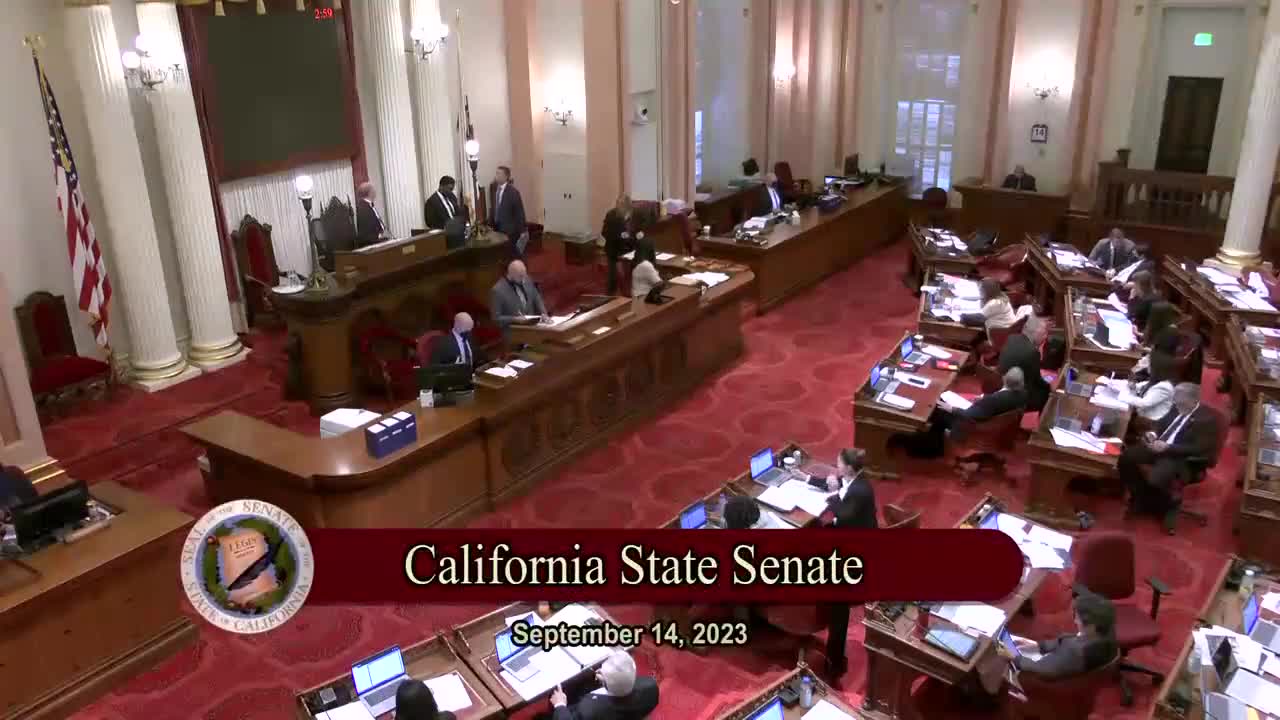

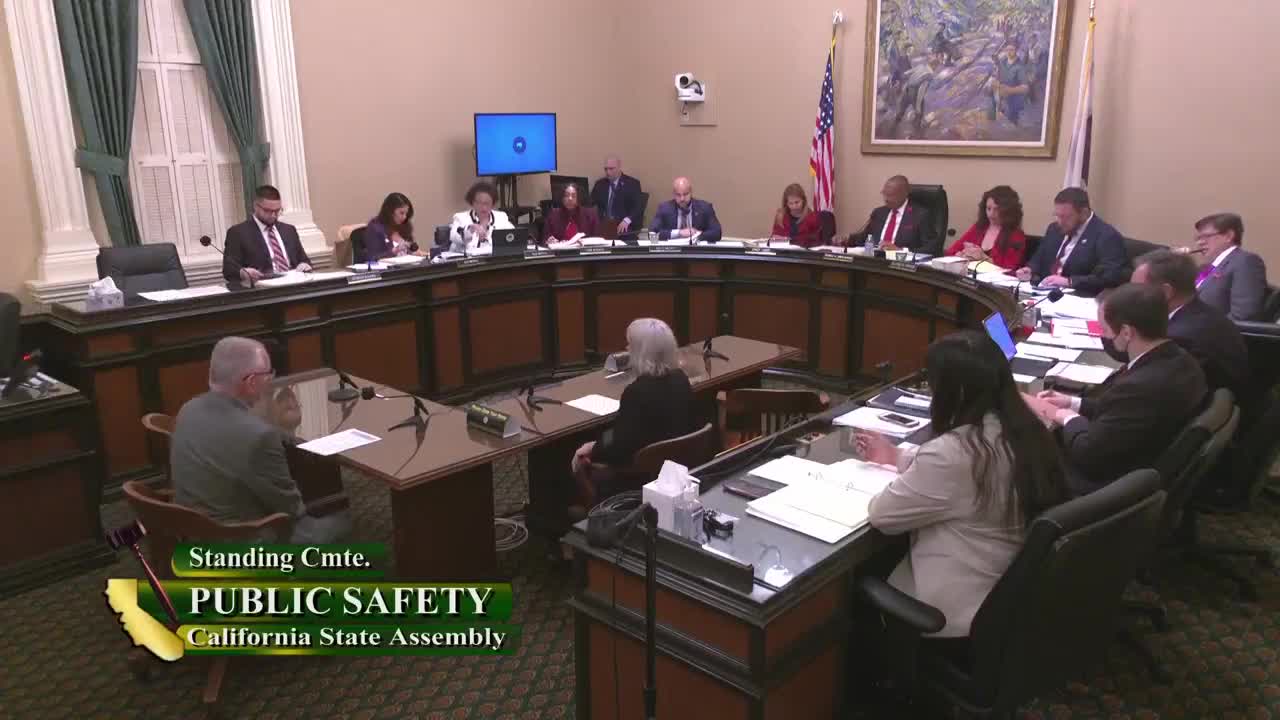
Bill Author