AB 881: Juror fees: pilot program.
- Session Year: 2023-2024
- House: Assembly
- Latest Version Date: 2023-09-11
Current Status:
Failed
(2024-01-29: Consideration of Governor's veto stricken from file.)
Introduced
In Committee
First Chamber
In Committee
Second Chamber
Enacted
What does this bill do?
The bill expands a San Francisco pilot that pays eligible low-income jurors $100 per day for criminal trials to include four additional counties chosen by the Judicial Council. Jurors qualify if their household income is below 80% of the county’s area median income and they receive no employer pay, lack pay for the trial’s estimated length, are self-employed, or are unemployed. The Judicial Council will oversee funding, collect jurors’ self‑reported race, ethnicity, and income data, and report on whether the higher pay leads to more economically and racially diverse juries.
The summary is provided by generative AI which can make mistakes. For original language, please view the details in the table below.
Existing law, the Trial Jury Selection and Management Act, requires all persons be selected for jury service at random, from a source or sources inclusive of a representative cross section of the population of the area served by the court. The act further requires a juror in a civil or criminal superior court case to be paid a fee of $15 a day for each days attendance as a juror after the first day, except as specified, plus reimbursement for mileage.
Existing law authorizes the Superior Court of San Francisco to conduct a pilot program until December 31, 2023, to analyze and determine whether paying certain low-income trial jurors $100 per day for each day they are required to report for service as a trial juror in a criminal case promotes a more economically and racially diverse trial jury panel that more accurately reflects the demographics of the community.
This bill would expand the above-described pilot program to include, upon appropriation for these purposes, the superior court in 4 additional counties selected by the Judicial Council that reflect urban and rural diversity. The bill would require the Judicial Council to administer funding for the pilot program court, and would authorize the Judicial Council to accept private or other funds for administration of the pilot program. The bill would authorize the Superior Court of San Francisco to operate the pilot program using local, state, or other funding regardless of whether an appropriation is made for this purpose. The bill would require the pilot program court to collect data self-reported by jurors who receive the increased fee and would require the Judicial Council to prepare an analysis and report of that data and conclusion about the pilot program. The bill would require the pilot program court to terminate the pilot program on or before December 31, 2025, or at any time it determines the increased financial reimbursement is causing prejudice to the rights of litigants or the interests of justice. The bill would repeal these provisions on January 1, 2027.
Existing law, the Trial Jury Selection and Management Act, requires all persons be selected for jury service at random, from a source or sources inclusive of a representative cross section of the population of the area served by the court. The act further requires a juror in a civil or criminal superior court case to be paid a fee of $15 a day for each days attendance as a juror after the first day, except as specified, plus reimbursement for mileage.
Existing law authorizes the Superior Court of San Francisco to conduct a pilot program until December 31, 2023, to analyze and determine whether paying certain low-income trial jurors $100 per day for each day they are required to report for service as a trial juror in a criminal case promotes a more economically and racially diverse trial jury panel that more accurately reflects the demographics of the community.
This bill would expand the above-described pilot program to include the Superior Courts of Alameda County, Kern County, Los Angeles County, Monterey County, and San Francisco. include, upon appropriation for these purposes, the superior court in 4 additional counties selected by the Judicial Council that reflect urban and rural diversity. The bill would require the Judicial Council to administer funding for the pilot program court, and would authorize the Judicial Council to accept private or other funds for administration of the pilot program. The bill would authorize the Superior Court of San Francisco to operate the pilot program using local, state, or other funding regardless of whether an appropriation is made for this purpose. The bill would require the pilot program court to collect data self-reported by jurors who receive the increased fee and would require the Judicial Council to prepare an analysis and report of that data and conclusion about the pilot program. The bill would require the pilot program court to terminate the pilot program on or before December 31, 2025, or at any time it determines the increased financial reimbursement is causing prejudice to the rights of litigants or the interests of justice. The bill would repeal these provisions on January 1, 2027.
Existing law, the Trial Jury Selection and Management Act, requires all persons be selected for jury service at random, from a source or sources inclusive of a representative cross section of the population of the area served by the court. The act further requires a juror in a civil or criminal superior court case to be paid a fee of $15 a day for each days attendance as a juror after the first day, except as specified, plus reimbursement for mileage.
Existing law authorizes the Superior Court of San Francisco to conduct a pilot program to analyze and determine whether paying certain low-income trial jurors $100 per day for each day they are required to report for service as a trial juror in a criminal case promotes a more economically and racially diverse trial jury panel that more accurately reflects the demographics of the community.
This bill would expand the above-described pilot program to include the Superior Courts of Alameda County, Kern County, Los Angeles County, Monterey County, and San Francisco. The bill would require the pilot program to fund the $100 fee using private or other funding, as specified. Judicial Council to administer funding for the pilot program court, and would authorize the Judicial Council to accept private or other funds for administration of the pilot program. The bill would require the pilot program court to collect data self-reported by jurors who receive the increased fee and would require the Judicial Council to prepare an analysis and report of that data and conclusion about the pilot program. The bill would require the pilot program court to terminate the pilot program on or before December 31, 2025, or at any time it determines the increased financial reimbursement is causing prejudice to the rights of litigants or the interests of justice. The bill would repeal these provisions on January 1, 2027.
Existing law, the Trial Jury Selection and Management Act, requires all persons be selected for jury service at random, from a source or sources inclusive of a representative cross section of the population of the area served by the court. The act further requires a juror in a civil or criminal superior court case to be paid a fee of $15 a day for each days attendance as a juror after the first day, except as specified, plus reimbursement for mileage. Existing law also establishes the Trial Court Trust Fund for the purpose of funding trial court operations. For purposes of those provisions, court operations are defined to include, among other things, juror expenses such as per diem fees and mileage.
Existing law authorizes the Superior Court of San Francisco to conduct a pilot program to analyze and determine whether paying certain low-income trial jurors $100 per day for each day they are required to report for service as a trial juror in a criminal case promotes a more economically and racially diverse trial jury panel that more accurately reflects the demographics of the community.
This bill would require a juror in a civil or criminal case to be paid a fee of not less than $15 a day for each days attendance as a juror after the first day, except as specified, but would increase the daily fee to $100 a day for qualifying low-income trial jurors for criminal cases in the superior court in all counties. expand the above-described pilot program to include the Superior Courts of Alameda County, Kern County, Los Angeles County, Monterey County, and San Francisco. The bill would require the pilot program to fund the $100 fee using private or other funding, as specified. The bill would require the pilot program court to collect data self-reported by jurors who receive the increased fee and would require the Judicial Council to prepare an analysis and report of that data and conclusion about the pilot program. The bill would require the pilot program court to terminate the pilot program on or before December 31, 2025, or at any time it determines the increased financial reimbursement is causing prejudice to the rights of litigants or the interests of justice. The bill would repeal these provisions on January 1, 2027.
Existing law, the Trial Jury Selection and Management Act, requires all persons be selected for jury service at random, from a source or sources inclusive of a representative cross section of the population of the area served by the court. The act further requires a juror in a civil or criminal superior court case to be paid a fee of $15 a day for each days attendance as a juror after the first day, except as specified, plus reimbursement for mileage. Existing law also establishes the Trial Court Trust Fund for the purpose of funding trial court operations. For purposes of those provisions, court operations are defined to include, among other things, juror expenses such as per diem fees and mileage.
Existing law authorizes the Superior Court of San Francisco to conduct a pilot program to analyze and determine whether paying certain low-income trial jurors $100 per day for each day they are required to report for service as a trial juror in a criminal case promotes a more economically and racially diverse trial jury panel that more accurately reflects the demographics of the community.
This bill would require a juror in a civil or criminal case to be paid a fee of not less than $15 a day for each days attendance as a juror after the first day, except as specified, but would increase the daily fee to $100 a day for qualifying low-income trial jurors for criminal cases in the superior court in all counties.
(a)Notwithstanding any other law, including Section 215, the Superior Court of San Francisco and, subject to an appropriation for these purposes, the superior court in four additional counties selected by the Judicial Council that reflect urban and rural diversity shall conduct a pilot program pursuant to the requirements of this section to analyze and determine whether paying certain low-income trial jurors an increased fee for service as a trial juror in a criminal case promotes a more economically and racially diverse trial jury panel that more accurately reflects the demographics of the community.
(b)The fee for service as a trial juror in a criminal case paid pursuant to the pilot program shall be as follows:
(1)Except as provided in paragraph (2), a trial juror in a criminal case shall be paid the fee required by Section 215.
(2)A trial juror in a criminal case shall be paid a fee of one hundred dollars ($100) per day for each day they are required to report for service as a trial juror if the trial jurors household income for the past 12 months is less than 80 percent of the area median income of the county in which the superior court is located and the trial juror meets one of the additional following criteria:
(A)The trial jurors employer does not compensate for any trial jury service.
(B)The trial jurors employer does not compensate for trial jury service for the estimated duration of the criminal jury trial.
(C)The trial juror is self-employed.
(D)The trial juror is unemployed.
(c)The pilot program court shall determine whether a trial juror is eligible for the one-hundred-dollar ($100) fee for service in a criminal jury trial pursuant to paragraph (2) of subdivision (b).
(d)The Judicial Council shall administer funding for the pilot program court. The Judicial Council may accept private or other funds for administration of the pilot program court. The Superior Court of San Francisco may operate the pilot program using local, state, or other funding regardless of whether an appropriation is made for this purpose.
(e)The pilot program court and court staff shall provide information about the pilot program whenever applicable under the circumstances. The pilot program court shall develop the materials and language to describe the pilot program to prospective jurors.
(f)The pilot program court shall implement a juror self-reporting data collection effort to collect data during the pilot program that allows a thorough analysis of whether paying certain low-income trial jurors an increased fee for service as a trial juror in a criminal case promotes a more economically and racially diverse trial jury panel that more accurately reflects the demographics of the community. The data collected shall include, to the maximum extent possible, the race, ethnicity, and income level of all trial jurors that receive the one-hundred-dollar ($100) fee for service as a trial juror. The Judicial Council shall design the self-reporting data collection survey and the pilot program court shall use existing resources and leverage technology to disseminate and collect surveys from jurors.
(g)The Judicial Council shall prepare a report of its analysis of the data and conclusion whether paying certain low-income trial jurors an increased fee for service as a trial juror in a criminal case promotes a more economically and racially diverse trial jury panel that more accurately reflects the demographics of the community. The Judicial Council shall transmit its report to the pilot program court and the Legislature, in compliance with Section 9795 of the Government Code, within six months of the conclusion of the pilot program.
(h)The pilot program court shall terminate the pilot program on or before December 31, 2025. The pilot program court shall terminate the pilot program if at any time it determines the increased financial reimbursement is causing prejudice to the rights of litigants or the interests of justice.
(i)For the purposes of this section only, pilot program court means the Superior Court of San Francisco and, subject to an appropriation for these purposes, the superior court in four additional counties selected by the Judicial Council that reflect urban and rural diversity.
(j)This section shall remain in effect only until January 1, 2027, and as of that date is repealed.
(a)Notwithstanding any other law, including Section 215, the Superior Courts of Alameda County, Kern County, Los Angeles County, Monterey County, and San Francisco shall Court of San Francisco and, subject to an appropriation for these purposes, the superior court in four additional counties selected by the Judicial Council that reflect urban and rural diversity shall conduct a pilot program pursuant to the requirements of this section to analyze and determine whether paying certain low-income trial jurors an increased fee for service as a trial juror in a criminal case promotes a more economically and racially diverse trial jury panel that more accurately reflects the demographics of the community.
(b)The fee for service as a trial juror in a criminal case paid pursuant to the pilot program shall be as follows:
(1)Except as provided in paragraph (2), a trial juror in a criminal case shall be paid the fee required by Section 215.
(2)A trial juror in a criminal case shall be paid a fee of one hundred dollars ($100) per day for each day they are required to report for service as a trial juror if the trial jurors household income for the past 12 months is less than 80 percent of the area median income of the county in which the superior court is located and the trial juror meets one of the additional following criteria:
(A)The trial jurors employer does not compensate for any trial jury service.
(B)The trial jurors employer does not compensate for trial jury service for the estimated duration of the criminal jury trial.
(C)The trial juror is self-employed.
(D)The trial juror is unemployed.
(c)The pilot program court shall determine whether a trial juror is eligible for the one-hundred-dollar ($100) fee for service in a criminal jury trial pursuant to paragraph (2) of subdivision (b).
(d)The Judicial Council shall administer funding for the pilot program court. The Judicial Council may accept private or other funds for administration of the pilot program court. The Superior Court of San Francisco may operate the pilot program using local, state, or other funding regardless of whether an appropriation is made for this purpose.
(e)The pilot program court shall provide information about the pilot program with every mailed jury summons and all information that is provided regarding excuse from jury service based on a hardship. The pilot program court and court staff shall also provide information about the pilot program whenever applicable under the circumstances. The pilot program court shall develop the materials and language to describe the pilot program to prospective jurors.
(f)The pilot program court shall implement a juror self-reporting data collection effort to collect data during the pilot program that allows a thorough analysis of whether paying certain low-income trial jurors an increased fee for service as a trial juror in a criminal case promotes a more economically and racially diverse trial jury panel that more accurately reflects the demographics of the community. The data collected shall include, to the maximum extent possible, the race, ethnicity, and income level of all trial jurors that receive the one-hundred-dollar ($100) fee for service as a trial juror. The Judicial Council shall design the self-reporting data collection survey and the pilot program court shall use existing resources and leverage technology to disseminate and collect surveys from jurors.
(g)The Judicial Council shall prepare a report of its analysis of the data and conclusion whether paying certain low-income trial jurors an increased fee for service as a trial juror in a criminal case promotes a more economically and racially diverse trial jury panel that more accurately reflects the demographics of the community. The Judicial Council shall transmit its report to the pilot program court and the Legislature, in compliance with Section 9795 of the Government Code, within six months of the conclusion of the pilot program.
(h)The pilot program court shall terminate the pilot program on or before December 31, 2025. The pilot program court shall terminate the pilot program if at any time it determines the increased financial reimbursement is causing prejudice to the rights of litigants or the interests of justice.
(i)For the purposes of this section only, pilot program court means the following superior courts: Superior Court of San Francisco and, subject to an appropriation for these purposes, the superior court in four additional counties selected by the Judicial Council that reflect urban and rural diversity.
(1)Superior Court of Alameda County.(2)Superior Court of Kern County.(3)Superior Court of Los Angeles County.(4)Superior Court of Monterey County.(5)Superior Court of San Francisco.(j)This section shall remain in effect only until January 1, 2027, and as of that date is repealed.
(a)Notwithstanding any other law, including Section 215, the Superior Courts of Alameda County, Kern County, Los Angeles County, Monterey County, and San Francisco shall conduct a pilot program pursuant to the requirements of this section to analyze and determine whether paying certain low-income trial jurors an increased fee for service as a trial juror in a criminal case promotes a more economically and racially diverse trial jury panel that more accurately reflects the demographics of the community.
(b)The fee for service as a trial juror in a criminal case paid pursuant to the pilot program shall be as follows:
(1)Except as provided in paragraph (2), a trial juror in a criminal case shall be paid the fee required by Section 215.
(2)A trial juror in a criminal case shall be paid a fee of one hundred dollars ($100) per day for each day they are required to report for service as a trial juror if the trial jurors household income for the past 12 months is less than 80 percent of the area median income of the county in which the superior court is located and the trial juror meets one of the additional following criteria:
(A)The trial jurors employer does not compensate for any trial jury service.
(B)The trial jurors employer does not compensate for trial jury service for the estimated duration of the criminal jury trial.
(C)The trial juror is self-employed.
(D)The trial juror is unemployed.
(c)The pilot program court shall determine whether a trial juror is eligible for the one-hundred-dollar ($100) fee for service in a criminal jury trial pursuant to paragraph (2) of subdivision (b).
(d)The pilot program court may fund the one-hundred-dollar ($100) fee to eligible trial jurors using private or other funding, including funding provided by The Financial Justice Project of the City and County of San Francisco. Judicial Council shall administer funding for the pilot program court. The Judicial Council may accept private or other funds for administration of the pilot program court.
(e)The pilot program court shall provide information about the pilot program with every mailed jury summons and all information that is provided regarding excuse from jury service based on a hardship. The pilot program court and court staff shall also provide information about the pilot program whenever applicable under the circumstances. The pilot program court shall develop the materials and language to describe the pilot program to prospective jurors.
(f)The pilot program court shall implement a juror self-reporting data collection effort to collect data during the pilot program that allows a thorough analysis of whether paying certain low-income trial jurors an increased fee for service as a trial juror in a criminal case promotes a more economically and racially diverse trial jury panel that more accurately reflects the demographics of the community. The data collected shall include, to the maximum extent possible, the race, ethnicity, and income level of all trial jurors that receive the one-hundred-dollar ($100) fee for service as a trial juror. The Judicial Council shall design the self-reporting data collection survey and the pilot program court shall use existing resources and leverage technology to disseminate and collect surveys from jurors.
(g)The Judicial Council shall prepare a report of its analysis of the data and conclusion whether paying certain low-income trial jurors an increased fee for service as a trial juror in a criminal case promotes a more economically and racially diverse trial jury panel that more accurately reflects the demographics of the community. The Judicial Council shall transmit its report to the pilot program court and the Legislature, in compliance with Section 9795 of the Government Code, within six months of the conclusion of the pilot program.
(h)The pilot program court shall terminate the pilot program on or before December 31, 2025. The pilot program court shall terminate the pilot program if at any time it determines the increased financial reimbursement is causing prejudice to the rights of litigants or the interests of justice.
(i)For the purposes of this section only, pilot program court means the following superior courts:
(1)Superior Court of Alameda County.
(2)Superior Court of Kern County.
(3)Superior Court of Los Angeles County.
(4)Superior Court of Monterey County.
(5)Superior Court of San Francisco.
(j)This section shall remain in effect only until January 1, 2027, and as of that date is repealed.
(a)Notwithstanding any other law, including Section 215, the Superior Court of San Francisco, in conjunction with the City and County of San Francisco and their justice partners, is authorized to Superior Courts of Alameda County, Kern County, Los Angeles County, Monterey County, and San Francisco shall conduct a pilot program pursuant to the requirements of this section to analyze and determine whether paying certain low-income trial jurors an increased fee for service as a trial juror in a criminal case promotes a more economically and racially diverse trial jury panel that more accurately reflects the demographics of the community. This pilot program shall be developed and implemented at no cost to the Superior Court of San Francisco.
(b)The fee for service as a trial juror in a criminal case paid pursuant to the pilot program shall be as follows:
(1)Except as provided in paragraph (2), a trial juror in a criminal case shall be paid the fee required by Section 215.
(2)A trial juror in a criminal case shall be paid a fee of one hundred dollars ($100) per day for each day they are required to report for service as a trial juror if the trial jurors household income for the past 12 months is less than 80 percent of the San Francisco Bay area median income of the county in which the superior court is located and the trial juror meets one of the additional following criteria:
(A)The trial jurors employer does not compensate for any trial jury service.
(B)The trial jurors employer does not compensate for trial jury service for the estimated duration of the criminal jury trial.
(C)The trial juror is self-employed.
(D)The trial juror is unemployed.
(c)The pilot program court shall determine whether a trial juror is eligible for the one-hundred-dollar ($100) fee for service in a criminal jury trial pursuant to paragraph (2) of subdivision (b).
(d)The pilot program court shall only may fund the one-hundred-dollar ($100) fee to eligible trial jurors using private or other funding, including funding provided by The Financial Justice Project of the City and County of San Francisco.
(e)The pilot program court shall provide information about the pilot program with every mailed jury summons and all information that is provided regarding excuse from jury service based on a hardship. The pilot program court and court staff shall also provide information about the pilot program whenever applicable under the circumstances. The justice partners pilot program court shall develop the materials and language to describe the pilot program to prospective jurors. There shall be no additional cost to the pilot program court to provide information about the pilot program, including all printing and mailing costs, which shall be covered through funds provided by The Financial Justice Project of the City and County of San Francisco.
(f)The pilot program court shall implement a juror self-reporting data collection effort to collect data during the pilot program that allows a thorough analysis of whether paying certain low-income trial jurors an increased fee for service as a trial juror in a criminal case promotes a more economically and racially diverse trial jury panel that more accurately reflects the demographics of the community. The data collected shall include, to the maximum extent possible, the race, ethnicity, and income level of all trial jurors that receive the one-hundred-dollar ($100) fee for service as a trial juror. The justice partners Judicial Council shall design the self-reporting data collection survey and the pilot program court shall use existing resources and leverage technology to disseminate and collect surveys from jurors, and shall not require additional funding to support this data collection effort. jurors.
(g)The pilot program court and the justice partners shall select a third-party entity to prepare an analysis and report of the data collected pursuant to subdivision (f) without any cost to the pilot program court. Any funding required to support the third-party entity shall be made available through funds provided by The Financial Justice Project of the City and County of San Francisco. The third-party entity Judicial Council shall prepare a report of its analysis of the data and conclusion whether paying certain low-income trial jurors an increased fee for service as a trial juror in a criminal case promotes a more economically and racially diverse trial jury panel that more accurately reflects the demographics of the community. The third-party entity Judicial Council shall transmit its report to the pilot program court and the Legislature, in compliance with Section 9795 of the Government Code, within six months of the conclusion of the pilot program.
(h)The pilot program court shall terminate the pilot program on or before December 31, 2023. 2025. The pilot program court shall terminate the pilot program if at any time it determines the increased financial reimbursement is causing prejudice to the rights of litigants or the interests of justice.
(i)For the purposes of this section only, pilot program court means the Superior Court of San Francisco. following superior courts:
(1)Superior Court of Alameda County.
(2)Superior Court of Kern County.
(3)Superior Court of Los Angeles County.
(4)Superior Court of Monterey County.
(5)Superior Court of San Francisco.
(j)For the purposes of this section only, justice partners means the San Francisco Financial Justice Project within the Treasurers Office, the San Francisco Public Defenders Office, the San Francisco District Attorneys Office, and the San Francisco Bar Association. (k)(j)This section shall remain in effect only until January 1, 2025, 2027, and as of that date is repealed.
SECTION 1.Section 215 of the Code of Civil Procedure is amended to read:215.(a)(1)Except as provided in paragraph (2), the fee for jurors in the superior court, in civil and criminal cases, is not less than fifteen dollars ($15) a day for each days attendance as a juror after the first day.(2)The fee for jurors in the superior court in criminal cases is one hundred dollars ($100) a day for each day the juror is required to report for service as a trial juror if the trial jurors household income for the past 12 months is less than 80 percent of the area median income of the county in which the superior court is located, and the trial juror meets one of the additional following criteria:(A)The trial jurors employer does not compensate for any trial jury service.(B)The trial jurors employer does not compensate for trial jury service for the estimated duration of the criminal jury trial.(C)The trial juror is self-employed.(D)The trial juror is unemployed.(b)Notwithstanding subdivision (a), a juror who is employed by a federal, state, or local government entity, or by any other public entity as defined in Section 481.200, and who receives regular compensation and benefits while performing jury service, shall not be paid the fee described in subdivision (a).(c)All jurors in the superior court, in civil and criminal cases, shall be reimbursed for mileage at the rate of thirty-four cents ($0.34) per mile for each mile actually traveled in attending and returning from court as a juror after the first day.(d)All jurors and prospective jurors who have been summoned shall be provided with access to existing public transit services at no cost utilizing one of the following options:(1)Courts may partner with public transit operators in their county to create new programs or continue existing public transit programs that provide no-cost service for jurors and prospective jurors who have been summoned.(2)A method of reimbursement determined by the court up to a daily maximum of twelve dollars ($12).(e)Subdivision (d) does not apply to a court in an area where a public transit operator does not provide existing service that is reasonably available to the court facility.(f)In determining whether transit service is reasonably available to the court facility, the court shall consider factors that include, but are not limited to, all of the following:(1)Proximity of transit service to the court location.(2)Hours of operation of transit service in the vicinity of the court location.(3)Frequency of operation of transit service in the vicinity of the court location.(4)Availability of transit access to all areas of the courts jurisdiction from which a potential juror may reside.(g)Prior to determining that transit service is not reasonably available to the court facility, the court shall contact the public transit operator to inquire whether new transit options may be implemented near the court.(a)(1)Except as provided in subdivision (b), on and after July 1, 2000, paragraph (2), the fee for jurors in the superior court, in civil and criminal cases, is not less than fifteen dollars ($15) a day for each days attendance as a juror after the first day.
(2)The fee for jurors in the superior court in criminal cases is one hundred dollars ($100) a day for each day the juror is required to report for service as a trial juror if the trial jurors household income for the past 12 months is less than 80 percent of the area median income of the county in which the superior court is located, and the trial juror meets one of the additional following criteria:
(A)The trial jurors employer does not compensate for any trial jury service.
(B)The trial jurors employer does not compensate for trial jury service for the estimated duration of the criminal jury trial.
(C)The trial juror is self-employed.
(D)The trial juror is unemployed.
(b)A Notwithstanding subdivision (a), a juror who is employed by a federal, state, or local government entity, or by any other public entity as defined in Section 481.200, and who receives regular compensation and benefits while performing jury service, shall not be paid the fee described in subdivision (a).
(c)All jurors in the superior court, in civil and criminal cases, shall be reimbursed for mileage at the rate of thirty-four cents ($0.34) per mile for each mile actually traveled in attending and returning from court as a juror after the first day.
(d)All jurors and prospective jurors who have been summoned shall be provided with access to existing public transit services at no cost utilizing one of the following options:
(1)Courts may partner with public transit operators in their county to create new programs or continue existing public transit programs that provide no-cost service for jurors and prospective jurors who have been summoned.
(2)A method of reimbursement determined by the court up to a daily maximum of twelve dollars ($12).
(e)Subdivision (d) does not apply to a court in an area where a public transit operator does not provide existing service that is reasonably available to the court facility.
(f)In determining whether transit service is reasonably available to the court facility, the court shall consider factors that include, but are not limited to, all of the following:
(1)Proximity of transit service to the court location.
(2)Hours of operation of transit service in the vicinity of the court location.
(3)Frequency of operation of transit service in the vicinity of the court location.
(4)Availability of transit access to all areas of the courts jurisdiction from which a potential juror may reside.
(g)Prior to determining that transit service is not reasonably available to the court facility, the court shall contact the public transit operator to inquire whether new transit options may be implemented near the court.
|
Date
|
Status
|
|---|---|
| Jan 29, 2024 | Consideration of Governor's veto stricken from file. |
| Jan 3, 2024 | Consideration of Governor's veto pending. |
| Oct 8, 2023 | Vetoed by Governor. |
| Sep 14, 2023 | Enrolled and presented to the Governor at 4:30 p.m. |
| Sep 7, 2023 | Senate amendments concurred in. To Engrossing and Enrolling. (Ayes 73. Noes 3. Page 3047.). |
| Sep 7, 2023 | Assembly Rule 77 suspended. (Page 3011.) |
| Sep 6, 2023 | In Assembly. Concurrence in Senate amendments pending. May be considered on or after September 8 pursuant to Assembly Rule 77. |
| Sep 6, 2023 | Read third time. Passed. Ordered to the Assembly. (Ayes 40. Noes 0. Page 2404.). |
| Sep 5, 2023 | Read second time. Ordered to third reading. |
| Sep 1, 2023 | Read second time and amended. Ordered returned to second reading. |
| Sep 1, 2023 | From committee: Amend, and do pass as amended. (Ayes 6. Noes 0.) (September 1). |
| Jul 3, 2023 | In committee: Referred to APPR suspense file. |
| Jun 20, 2023 | From committee: Do pass and re-refer to Com. on APPR. (Ayes 5. Noes 0.) (June 20). Re-referred to Com. on APPR. |
| Jun 7, 2023 | Referred to Com. on PUB S. |
| Jun 7, 2023 | From committee chair, with author's amendments: Amend, and re-refer to committee. Read second time, amended, and re-referred to Com. on PUB S. |
| May 31, 2023 | In Senate. Read first time. To Com. on RLS. for assignment. |
| May 30, 2023 | Read third time. Passed. Ordered to the Senate. (Ayes 67. Noes 7. Page 1920.) |
| May 22, 2023 | Read second time. Ordered to third reading. |
| May 18, 2023 | Read second time and amended. Ordered returned to second reading. |
| May 18, 2023 | From committee: Amend, and do pass as amended. (Ayes 11. Noes 3.) (May 18). |
| May 3, 2023 | In committee: Set, first hearing. Referred to APPR. suspense file. |
| Apr 26, 2023 | In committee: Hearing postponed by committee. |
| Mar 22, 2023 | From committee: Do pass and re-refer to Com. on APPR. (Ayes 7. Noes 1.) (March 21). Re-referred to Com. on APPR. |
| Feb 23, 2023 | Referred to Com. on PUB. S. |
| Feb 15, 2023 | From printer. May be heard in committee March 17. |
| Feb 14, 2023 | Read first time. To print. |
|
Date
|
Description
|
Location
|
Votes
|
|
|---|---|---|---|---|
| Sep 7, 2023 | AB 881 Ting Concurrence in Senate Amendments | Assembly Floor |
Passed |
|
| Sep 6, 2023 | Assembly 3rd Reading AB881 Ting By Wahab | Senate Floor |
Passed |
|
| Sep 1, 2023 | Do pass as amended | Senate Standing Committee on Appropriations |
Passed |
|
| Jul 3, 2023 | Placed on suspense file | Senate Standing Committee on Appropriations |
Passed |
|
| Jun 20, 2023 | Do pass, but first be re-referred to the Committee on [Appropriations] | Senate Standing Committee on Public Safety |
Passed |
|
| May 30, 2023 | AB 881 Ting Assembly Third Reading | Assembly Floor |
Passed |
|
| May 18, 2023 | Do pass as amended. | Assembly Standing Committee on Appropriations |
Passed |
|
| Mar 21, 2023 | Do pass and be re-referred to the Committee on [Appropriations] | Assembly Standing Committee on Public Safety |
Passed |
This list shows positions taken on this bill by organizations on the date displayed, which is linked to the original source.
Positions by individuals are not included.
|
Organization
|
Position
|
Date
|
|---|---|---|
| Aclu California Action | ** Support | |
| Alameda County Board of Supervisors | ** Support | |
| Asian Americans Advancing Justice Southern California | ** Support | |
| Board of Supervisors for the City and County of San Francisco | ** Support | |
| California Attorneys For Criminal Justice | ** Support | |
| California District Attorneys Association | ** Support | |
| California Public Defenders Association | ** Support | |
| Californians for Safety and Justice | ** Support | |
| Center on Juvenile and Criminal Justice | ** Support | |
| City & County of San Francisco | * Support | Jun 20, 2023 |
| City and County of San Francisco | * Support | Jun 20, 2023 |
| City Of Los Angeles | ** Support | |
| Coalition for Family Unity | * Support | Mar 21, 2023 |
| Coalition for Family Unity | * Support | Mar 21, 2023 |
| Coalition on Homelessness, San Francisco | ** Support | |
| Communities United for Restorative Youth Justice | ** Support | |
| Conference of California Bar Associations | ** Support | |
| Consumer Attorneys Of California | ** Support | |
| County of Los Angeles Board of Supervisors | ** Support | |
| Dignity and Power Now | ** Support | |
| Drug Policy Alliance | ** Support | |
| Ella Baker Center For Human Rights | ** Support | |
| Empowering Women Impacted by Incarceration | ** Support | |
| Fair Chance Project | ** Support | |
| Friends Committee On Legislation Of California | * Support | Jun 20, 2023 |
| Glide | ** Support | |
| health rate 360 | * Support | Jun 20, 2023 |
| HomeRise | * Support | Mar 21, 2023 |
| HomeRise San Francisco | * Support | Mar 21, 2023 |
| HomeRise San Francisco | ** Support | |
| Initiate Justice | ** Support | |
| Justice LA | ** Support | |
| Kern County Participatory Defense | ** Support | |
| LA Defensa | ** Support | |
| Lawyers Committee For Civil Rights Of The San Francisco Bay Area | * Support | Jun 20, 2023 |
| Lawyers' Committee for Civil Rights of the San Francisco Bay Area | ** Support | |
| Legal Services for Prisoners with Children | ** Support | |
| Los Angeles County District Attorney'S Office | ** Support | |
| Los Angeles County Public Defenders Local 148 | ** Support | |
| Los Angeles County Public Defenders Union Local 148 | ** Support | |
| Office of San Francisco District Attorney | * Support | Mar 21, 2023 |
| Peace and Freedom Party of California | ** Support | |
| Prosecutors Alliance California | ** Support | |
| Racial Justice Clinic | * Support | Mar 21, 2023 |
| Safe Return Project | ** Support | |
| San Francisco District Attorney Brooke Jenkins | * Support | Mar 21, 2023 |
| San Francisco District Attorney's Office | ** Support | |
| San Francisco Financial Justice Project | ** Support | |
| San Francisco Labor Council | ** Support | |
| San Francisco Public Defenders Office | ** Support | |
| Santa Cruz Barrios Unidos INC. | ** Support | |
| Sister Warriors Freedom Coalition | ** Support | |
| Stone Advocacy | * Support | Mar 21, 2023 |
| The Bar Association of San Francisco | ** Support | |
| The Glide Foundation | * Support | Mar 21, 2023 |
| University of San Francisco School of Law | Racial Justice Clinic | ** Support | |
| Young Women's Freedom Center | ** Support |
GOVERNOR'S VETO
GV Bill Id:AB 881
Author:(Ting)
As Enrolled Ver:September 11, 2023
2/3 vote
SUMMARY
Expands the existing pilot program authorizing the Superior Court of San Francisco to pay low-income trial jurors $100 per day for each day of service as a trial juror in a criminal case to four additional counties.
Senate Amendments
- Delete the provision allowing the pilot program court to fund the $100 fee to eligible trial jurors using private or other funding, and instead provide that the Judicial Council shall administer funding and may accept private or other funds for administration of the pilot program court.
- Remove the requirement that the courts of Alameda County, Kern County, Los Angeles County, and Monterey County participate in the pilot program, and instead allow the Judicial County to select four other counties that reflect urban and rural diversity.
Governor’s Veto Message
This bill extends the existing pilot program authorizing the Superior Court of San Francisco to pay low-income trial jurors $100 per day for each day of service as a trial juror in a criminal case and expands it to four additional courts as selected by Judicial Council.
While I appreciate the author's work to create a more equal justice system, this policy needs to be part of budget discussions. In partnership with the Legislature, we enacted a budget that closed a shortfall of more than $30 billion through balanced solutions that avoided deep program cuts and protected education, health care, climate, public safety, and social service programs that are relied on by millions of Californians. This year, however, the Legislature sent me bills outside of this budget process that, if all enacted, would add nearly $19 billion of unaccounted costs in the budget, of which $11 billion would be ongoing.
With our state facing continuing economic risk and revenue uncertainty, it is important to remain disciplined when considering bills with significant fiscal implications, such as this measure.
For this reason, I cannot sign this bill.
COMMENTS
As Passed by the Assembly: this bill expanded the existing pilot program authorizing the Superior Court of San Francisco to pay low-income trial jurors $100 per day for each day of service as a trial juror in a criminal case to the Superior Courts of Alameda County, Kern County, Los Angeles County, and Monterey County.
Major Provisions
- Allowed the pilot program to pay the $100 fee using private or other funding.
- Removed the requirement that a third party entity collect and report specified data related to the pilot program, and instead require the Judicial Council to collect data and prepare a report for the Legislature.
- Extended the date that the court shall terminate the pilot program from December 31, 2023, to December 31, 2025.
According to the Author
"In order to increase jury diversity in California, juror pay must be raised so that economic hardship is no longer a barrier to the fair delivery of justice. In 2021, Governor Newsom signed AB 1452 (Ting), which created the 'Be The Jury' pilot program at San Francisco Superior Court where jury pay for criminal cases was increased to $100 for low to moderate income San Franciscans. The results have produced more economically and racially diverse jury panels that more accurately reflected the City's demographics. Results have shown 60% of participants identified as people of color, and 81% said they couldn't have participated without this financial assistance. AB 881 would apply the 'Be The Jury' program statewide by increasing jury pay for criminal cases to $100 per day of jury service for low to moderate-income Californians. It also makes the $15 the base - not the cap - giving courts flexibility to increase pay for civil or criminal cases should they choose to."
Arguments in Support
According to the San Francisco Public Defender's Office, "Every individual juror has the ability to put aside the all-too-common presumption of guilt, to actually presume innocence, and to follow the law in a criminal case. However, the fairness of trials and jury deliberations goes down exponentially when we do not make efforts to make sure that we enable a wider cross-section of individuals to participate in the process. Every defense attorney has had countless conversations with people we represent who are very wary of going to trial, even if they are not guilty of the charges, because they fear that a jury lacking economic and racial diversity will simply not fairly decide the case. The general public does not want people pleading to charges they are not guilty of because of a fear that the trial will not be fair. This is not justice. On the contrary, these plea deals often lead to incarceration, devastating families and historically criminalized communities. We must do better, and Be the Jury California is a critical step in ensuring fair and representative juries across this state.
"The Constitution promises the right to a jury of your peers, which is at the core of our justice system. Serving as a juror is the most meaningful opportunity for true civic engagement, and one of the only ways everyday people actively participate in our criminal legal system. Concerningly, stakeholders agree that juries are increasingly less diverse due to the steep financial hardship facing potential jurors.
"Currently, California only requires employers to provide time off for employees who are summoned to jury duty. Employers are not required to pay employees who serve on a jury. If a juror's employer does not cover their salary, jurors earn nothing on their first day of service and only $15 per day after that. Because many low-income families cannot afford to forfeit days, weeks, or months of their salary, many minimum wage or low-income workers who file a claim of financial hardship are excused from service. Due to racial income inequality, low jury pay excludes many Black and Latinx community members from ever serving as jurors resulting in the criminal legal system shutting out their relevant life experiences.
"Be The Jury CA takes inspiration from the highly successful juror pay pilot program in San Francisco. In San Francisco's pilot program, jury pay for criminal cases was increased to $100 for low- to moderate-income San Franciscans. As a result, the diversity of program participants matched San Francisco's at large population where 63% of participants identified as "people of color;" the average household income for participants was under $40,000, significantly below the $97,000 area median household income in San Francisco; and 81% of participants said that they would not have been able to participate in jury duty without the financial assistance they received from the pilot program. […]
"The achievements of the pilot program clearly demonstrate that raising juror pay to $100 for low to moderate income jurors, significantly increases the socio-economic and racial diversity of jurors. This bill ensures that our juries reflect the diversity of people who experience harm witnesses, and accused persons whose lives are impacted by jurors' decisions. California must take this needed step to ensure that our legal system serves all people."
Arguments in Opposition
None Submitted.
FISCAL COMMENTS
According to the Senate Appropriations Committee, Cost pressures in the millions (General Fund). The Judicial Council of California (JCC) reported ongoing annual costs ranging from $4 to $9 million to provide the increased compensation for jurors until the program sunsets.
VOTES
ASM PUBLIC SAFETY: 7-1-0
YES: Jones-Sawyer, Alanis, Bonta, Bryan, Ortega, Santiago, Zbur
NO: Lackey
ASM APPROPRIATIONS: 11-3-2
YES: Holden, Bryan, Calderon, Wendy Carrillo, Mike Fong, Hart, Lowenthal, Papan, Pellerin, Weber, Ortega
NO: Megan Dahle, Dixon, Mathis
ABS, ABST OR NV: Robert Rivas, Sanchez
ASSEMBLY FLOOR: 67-7-6
YES: Addis, Aguiar-Curry, Alanis, Alvarez, Arambula, Bains, Bauer-Kahan, Bennett, Berman, Boerner, Bonta, Bryan, Calderon, Juan Carrillo, Wendy Carrillo, Cervantes, Connolly, Essayli, Mike Fong, Friedman, Gabriel, Garcia, Gipson, Grayson, Haney, Hart, Holden, Hoover, Irwin, Jackson, Jones-Sawyer, Kalra, Lee, Low, Lowenthal, Maienschein, McCarty, McKinnor, Muratsuchi, Stephanie Nguyen, Ortega, Pacheco, Papan, Pellerin, Petrie-Norris, Quirk-Silva, Ramos, Reyes, Luz Rivas, Robert Rivas, Rodriguez, Blanca Rubio, Santiago, Schiavo, Soria, Ting, Valencia, Villapudua, Waldron, Wallis, Ward, Weber, Wicks, Wilson, Wood, Zbur, Rendon
NO: Megan Dahle, Davies, Dixon, Vince Fong, Lackey, Mathis, Ta
ABS, ABST OR NV: Chen, Flora, Gallagher, Jim Patterson, Joe Patterson, Sanchez
SENATE FLOOR: 40-0-0
YES: Allen, Alvarado-Gil, Archuleta, Ashby, Atkins, Becker, Blakespear, Bradford, Caballero, Cortese, Dahle, Dodd, Durazo, Eggman, Glazer, Gonzalez, Grove, Hurtado, Jones, Laird, Limón, McGuire, Menjivar, Min, Newman, Nguyen, Niello, Ochoa Bogh, Padilla, Portantino, Roth, Rubio, Seyarto, Skinner, Smallwood-Cuevas, Stern, Umberg, Wahab, Wiener, Wilk
ASSEMBLY FLOOR: 73-3-4
YES: Addis, Aguiar-Curry, Alanis, Alvarez, Arambula, Bains, Bauer-Kahan, Bennett, Berman, Boerner, Bonta, Bryan, Calderon, Juan Carrillo, Wendy Carrillo, Cervantes, Chen, Connolly, Megan Dahle, Dixon, Mike Fong, Vince Fong, Friedman, Gabriel, Gallagher, Garcia, Gipson, Grayson, Haney, Hart, Holden, Hoover, Irwin, Jackson, Jones-Sawyer, Kalra, Lee, Low, Lowenthal, Maienschein, McCarty, McKinnor, Muratsuchi, Stephanie Nguyen, Ortega, Pacheco, Papan, Jim Patterson, Joe Patterson, Pellerin, Petrie-Norris, Quirk-Silva, Ramos, Rendon, Reyes, Luz Rivas, Rodriguez, Blanca Rubio, Santiago, Schiavo, Soria, Ting, Valencia, Villapudua, Waldron, Wallis, Ward, Weber, Wicks, Wilson, Wood, Zbur, Robert Rivas
NO: Davies, Lackey, Mathis
ABS, ABST OR NV: Essayli, Flora, Sanchez, Ta
UPDATED
VERSION: September 11, 2023
CONSULTANT: Liah Burnley / PUB. S. / (916) 319-3744 FN: 0002562
CONCURRENCE IN SENATE AMENDMENTS
CSA1 Bill Id:AB 881
Author:(Ting)
As Amended Ver:September 1, 2023
Majority vote
SUMMARY
Expands the existing pilot program authorizing the Superior Court of San Francisco to pay low-income trial jurors $100 per day for each day of service as a trial juror in a criminal case to four additional counties.
Senate Amendments
- Delete the provision allowing the pilot program court to fund the $100 fee to eligible trial jurors using private or other funding, and instead provide that the Judicial Council shall administer funding and may accept private or other funds for administration of the pilot program court.
- Remove the requirement that the courts of Alameda County, Kern County, Los Angeles County, and Monterey County participate in the pilot program, and instead allow the Judicial County to select four other counties that reflect urban and rural diversity.
COMMENTS
As Passed by the Assembly: this bill expanded the existing pilot program authorizing the Superior Court of San Francisco to pay low-income trial jurors $100 per day for each day of service as a trial juror in a criminal case to the Superior Courts of Alameda County, Kern County, Los Angeles County, and Monterey County.
Major Provisions
- Allowed the pilot program to pay the $100 fee using private or other funding.
- Removed the requirement that a third party entity collect and report specified data related to the pilot program, and instead require the Judicial Council to collect data and prepare a report for the Legislature.
- Extended the date that the court shall terminate the pilot program from December 31, 2023, to December 31, 2025.
- Changed the sunset date from January 1, 2025, to January 1, 2027.
According to the Author
"In order to increase jury diversity in California, juror pay must be raised so that economic hardship is no longer a barrier to the fair delivery of justice. In 2021, Governor Newsom signed AB 1452 (Ting), which created the 'Be The Jury' pilot program at San Francisco Superior Court where jury pay for criminal cases was increased to $100 for low to moderate income San Franciscans. The results have produced more economically and racially diverse jury panels that more accurately reflected the City's demographics. Results have shown 60% of participants identified as people of color, and 81% said they couldn't have participated without this financial assistance. AB 881 would apply the 'Be The Jury' program statewide by increasing jury pay for criminal cases to $100 per day of jury service for low to moderate-income Californians. It also makes the $15 the base - not the cap - giving courts flexibility to increase pay for civil or criminal cases should they choose to."
Arguments in Support
According to the San Francisco Public Defender's Office, "Every individual juror has the ability to put aside the all-too-common presumption of guilt, to actually presume innocence, and to follow the law in a criminal case. However, the fairness of trials and jury deliberations goes down exponentially when we do not make efforts to make sure that we enable a wider cross-section of individuals to participate in the process. Every defense attorney has had countless conversations with people we represent who are very wary of going to trial, even if they are not guilty of the charges, because they fear that a jury lacking economic and racial diversity will simply not fairly decide the case. The general public does not want people pleading to charges they are not guilty of because of a fear that the trial will not be fair. This is not justice. On the contrary, these plea deals often lead to incarceration, devastating families and historically criminalized communities. We must do better, and Be the Jury California is a critical step in ensuring fair and representative juries across this state.
"The Constitution promises the right to a jury of your peers, which is at the core of our justice system. Serving as a juror is the most meaningful opportunity for true civic engagement, and one of the only ways everyday people actively participate in our criminal legal system. Concerningly, stakeholders agree that juries are increasingly less diverse due to the steep financial hardship facing potential jurors.
"Currently, California only requires employers to provide time off for employees who are summoned to jury duty. Employers are not required to pay employees who serve on a jury. If a juror's employer does not cover their salary, jurors earn nothing on their first day of service and only $15 per day after that. Because many low-income families cannot afford to forfeit days, weeks, or months of their salary, many minimum wage or low-income workers who file a claim of financial hardship are excused from service. Due to racial income inequality, low jury pay excludes many Black and Latinx community members from ever serving as jurors resulting in the criminal legal system shutting out their relevant life experiences.
"Be The Jury CA takes inspiration from the highly successful juror pay pilot program in San Francisco. In San Francisco's pilot program, jury pay for criminal cases was increased to $100 for low- to moderate-income San Franciscans. As a result, the diversity of program participants matched San Francisco's at large population where 63% of participants identified as "people of color;" the average household income for participants was under $40,000, significantly below the $97,000 area median household income in San Francisco; and 81% of participants said that they would not have been able to participate in jury duty without the financial assistance they received from the pilot program. […]
"The achievements of the pilot program clearly demonstrate that raising juror pay to $100 for low to moderate income jurors, significantly increases the socio-economic and racial diversity of jurors. This bill ensures that our juries reflect the diversity of people who experience harm witnesses, and accused persons whose lives are impacted by jurors' decisions. California must take this needed step to ensure that our legal system serves all people."
Arguments in Opposition
None Submitted.
FISCAL COMMENTS
According to the Senate Appropriations Committee, Cost pressures in the millions (General Fund). The Judicial Council of California (JCC) reported ongoing annual costs ranging from $4 to $9 million to provide the increased compensation for jurors until the program sunsets.
VOTES:
ASM PUBLIC SAFETY: 7-1-0
YES: Jones-Sawyer, Alanis, Bonta, Bryan, Ortega, Santiago, Zbur
NO: Lackey
ASM APPROPRIATIONS: 11-3-2
YES: Holden, Bryan, Calderon, Wendy Carrillo, Mike Fong, Hart, Lowenthal, Papan, Pellerin, Weber, Ortega
NO: Megan Dahle, Dixon, Mathis
ABS, ABST OR NV: Robert Rivas, Sanchez
ASSEMBLY FLOOR: 67-7-6
YES: Addis, Aguiar-Curry, Alanis, Alvarez, Arambula, Bains, Bauer-Kahan, Bennett, Berman, Boerner, Bonta, Bryan, Calderon, Juan Carrillo, Wendy Carrillo, Cervantes, Connolly, Essayli, Mike Fong, Friedman, Gabriel, Garcia, Gipson, Grayson, Haney, Hart, Holden, Hoover, Irwin, Jackson, Jones-Sawyer, Kalra, Lee, Low, Lowenthal, Maienschein, McCarty, McKinnor, Muratsuchi, Stephanie Nguyen, Ortega, Pacheco, Papan, Pellerin, Petrie-Norris, Quirk-Silva, Ramos, Reyes, Luz Rivas, Robert Rivas, Rodriguez, Blanca Rubio, Santiago, Schiavo, Soria, Ting, Valencia, Villapudua, Waldron, Wallis, Ward, Weber, Wicks, Wilson, Wood, Zbur, Rendon
NO: Megan Dahle, Davies, Dixon, Vince Fong, Lackey, Mathis, Ta
ABS, ABST OR NV: Chen, Flora, Gallagher, Jim Patterson, Joe Patterson, Sanchez
SENATE FLOOR: 40-0-0
YES: Allen, Alvarado-Gil, Archuleta, Ashby, Atkins, Becker, Blakespear, Bradford, Caballero, Cortese, Dahle, Dodd, Durazo, Eggman, Glazer, Gonzalez, Grove, Hurtado, Jones, Laird, Limón, McGuire, Menjivar, Min, Newman, Nguyen, Niello, Ochoa Bogh, Padilla, Portantino, Roth, Rubio, Seyarto, Skinner, Smallwood-Cuevas, Stern, Umberg, Wahab, Wiener, Wilk
UPDATED
VERSION: September 1, 2023
CONSULTANT: Liah Burnley / PUB. S. / (916) 319-3744 FN: 0001777
SENATE RULES COMMITTEE Office of Senate Floor Analyses (916) 651-1520 Fax: (916) 327-4478 | AB 881 |
THIRD READING
Bill No: AB 881
Author: Ting (D)
Amended: 9/1/23 in Senate
Vote: 21
SENATE PUBLIC SAFETY COMMITTEE: 5-0, 6/20/23
AYES: Wahab, Ochoa Bogh, Bradford, Skinner, Wiener
SENATE APPROPRIATIONS COMMITTEE: 6-0, 9/1/23
AYES: Portantino, Jones, Ashby, Bradford, Wahab, Wiener
NO VOTE RECORDED: Seyarto
ASSEMBLY FLOOR: 67-7, 5/30/23 - See last page for vote
SUBJECT: Juror fees: pilot program
SOURCE: San Francisco Public Defender’s office
DIGEST:
This bill extends the existing pilot program authorizing the Superior Court of San Francisco to pay low-income trial jurors $100 per day for each day of service as a trial juror in a criminal case and expands it to four additional courts as selected by Judicial Council.
ANALYSIS:
Existing law:
- Guarantees the right of the accused, in all criminal prosecutions, to a speedy and public trial, by an impartial jury of the State and district where the crime was committed. (U.S. Const., 6th Amend.)
- Provides that a trial by jury is an inviolate right. (Cal. Const., art. I, § 16.)
- Establishes the Trial Jury Selection and Management Act, which applies to the selection of jurors, and the formation of trial juries, for both civil and criminal cases, in all trial courts of the State. (Code Civ. Proc., § 190 et seq.)
- States the policy of the State of California is that all persons selected for jury service must be selected at random from the population of the area served by the court; that all qualified persons have an equal opportunity to be considered for jury service in the state, as specified; that it is an obligation of all Californians to serve as jurors when summoned for that purpose; and that it is the responsibility of jury commissioners to manage all jury systems in an efficient, equitable, and cost-effective manner. (Code of Civil Procedure (CCP) § 191.)
- Provides that all persons selected for jury service shall be selected at random, from a source or sources inclusive of a representative cross section of the population of the area served by the court. (CCP § 197.)
- Provides that no eligible person shall be exempt from service as a trial juror because of their economic status. (CCP § 204.)
- Sets the fee for trial jurors in civil and criminal cases, at $15 a day for each day’s attendance as a juror after the first day. (CCP § 215.)
- Provides that a juror who is employed by a federal, state, or local government entity, or by any other public entity as defined, and who receives regular compensation and benefits while performing jury service, shall not be paid the fee. (Code Civ. Proc., § 215(b).)
- Requires the Judicial Council to sponsor a pilot program for two fiscal years to study whether increases in juror compensation and mileage reimbursement rates increase juror diversity and participation. No later than September 1, 2026, the Judicial Council shall provide a report to the Legislature describing the findings of the pilot program and providing information for promoting juror diversity. (CCP § 241.)
- Authorizes the Superior Court of San Francisco, to conduct a pilot program to analyze and determine whether paying certain low-income trial jurors $100 for each day they are required to report for service as a trial juror promotes a more economically and racially diverse trial jury panel. (CCP § 240.)
This bill:
- Extends the existing pilot program authorizing the Superior Court of San Francisco to pay low-income trial jurors $100 per day for each day of service as a trial juror in a criminal case subject to an appropriation.
- Expands the existing pilot project to four additional counties selected by Judicial Council to reflect urban and rural diversity.
- Requires Judicial Council to administer the funding for the pilot project and provides that Judicial Council may accept private or other funds for administration of the pilot program court.
- Provides the Superior Court of San Francisco may operate the pilot program using local, state, or other funding regardless of whether an appropriation is made for this purpose.
- Removes the requirement that a third party entity collect and report specified data related to the pilot program, and instead require the Judicial Council to collect data and prepare a report for the Legislature.
- Extends the date that the court shall terminate the pilot program from December 31, 2023, to December 31, 2025.
- Changes the sunset date from January 1, 2025, to January 1, 2027
Background
According to the author:
In order to increase jury diversity in California, juror pay must be raised so that economic hardship is no longer a barrier to the fair delivery of justice. In 2021, Governor Newsom signed AB 1452 (Ting), which created the “Be The Jury” pilot program at San Francisco Superior Court where jury pay for criminal cases was increased to $100 for low to moderate income San Franciscans. The results have produced more economically and racially diverse jury panels that more accurately reflected the City’s demographics. Results have shown 60% of participants identified as people of color, and 81% said they couldn’t have participated without this financial assistance. AB 881 would apply the “Be The Jury Pilot” in five counties: San Francisco, Alameda, Los Angeles, Monterey and Kern, by increasing jury pay for criminal cases to $100 per day of jury service for low to moderate-income Californians.
FISCAL EFFECT: Appropriation: No Fiscal Com.: Yes Local: No
According to the Senate Appropriations Committee, cost pressures in the millions (General Fund). The Judicial Council of California (JCC) reported ongoing annual costs ranging from $4 to $9 million to provide the increased compensation for jurors until the program sunsets.
SUPPORT: (Verified 9/1/23)
San Francisco Public Defender’s Office (source)
ACLU California Action
Alameda County Board of Supervisors
Asian Americans Advancing Justice-southern California
Board of Supervisors for the City and County of San Francisco
California Attorneys for Criminal Justice
California District Attorneys Association
California Public Defenders Association
Californians for Safety and Justice
Center on Juvenile and Criminal Justice
City of Los Angeles
Coalition on Homelessness, San Francisco
Communities United for Restorative Youth Justice
Conference of California Bar Associations
Consumer Attorneys of California
County of Los Angeles Board of Supervisors
Dignity and Power Now
Drug Policy Alliance
Ella Baker Center for Human Rights
Empowering Women Impacted by Incarceration
Fair Chance Project
Glide
Homerise San Francisco
Initiate Justice
Justice LA
Kern County Participatory Defense
LA Defensa
Lawyers' Committee for Civil Rights of The San Francisco Bay Area
Legal Services for Prisoners With Children
Los Angeles County District Attorney's Office
Los Angeles County Public Defenders Local 148
Los Angeles County Public Defenders Union Local 148
Peace and Freedom Party of California
Prosecutors Alliance California
Safe Return Project
San Francisco District Attorney's Office
San Francisco Financial Justice Project
San Francisco Labor Council
Santa Cruz Barrios Unidos Inc.
Sister Warriors Freedom Coalition
The Bar Association of San Francisco
University of San Francisco School of Law | Racial Justice Clinic
Young Women's Freedom Center
OPPOSITION: (Verified 9/1/23)
None received
ARGUMENTS IN SUPPORT: The California District Attorneys Association supports this bill stating:
Jurors are currently paid $15 per day of jury service after a civil or criminal trial begins. AB 881 allows jurors who make 80% of the area median income, and who satisfy additional qualifying criteria, to receive up to $100 per day of jury service after the first day of trial. San Francisco County recently piloted the “Be the Jury” program, implementing the proposed increased stipend for qualifying individuals. There, 81 percent of program participants said they could not have served without the $100 per day stipend.
By removing financial hardship barriers, AB 881 would allow a greater diversity in our juries, allowing them to be more representative of the communities they serve. When all Californians—regardless of income—can participate in the criminal justice process, our system can render better outcomes for all involved.
ASSEMBLY FLOOR: 67-7, 5/30/23
AYES: Addis, Aguiar-Curry, Alanis, Alvarez, Arambula, Bains, Bauer-Kahan, Bennett, Berman, Boerner, Bonta, Bryan, Calderon, Juan Carrillo, Wendy Carrillo, Cervantes, Connolly, Essayli, Mike Fong, Friedman, Gabriel, Garcia, Gipson, Grayson, Haney, Hart, Holden, Hoover, Irwin, Jackson, Jones-Sawyer, Kalra, Lee, Low, Lowenthal, Maienschein, McCarty, McKinnor, Muratsuchi, Stephanie Nguyen, Ortega, Pacheco, Papan, Pellerin, Petrie-Norris, Quirk-Silva, Ramos, Reyes, Luz Rivas, Robert Rivas, Rodriguez, Blanca Rubio, Santiago, Schiavo, Soria, Ting, Valencia, Villapudua, Waldron, Wallis, Ward, Weber, Wicks, Wilson, Wood, Zbur, Rendon
NOES: Megan Dahle, Davies, Dixon, Vince Fong, Lackey, Mathis, Ta
NO VOTE RECORDED: Chen, Flora, Gallagher, Jim Patterson, Joe Patterson, Sanchez
Prepared by: Mary Kennedy / PUB. S. /
9/2/23 9:51:45
**** END ****
SENATE COMMITTEE ON
Senator Anthony Portantino, Chair
2023 - 2024 Regular Session
AB 881 (Ting) - Juror fees: pilot program
Version: | Policy Vote: |
Urgency: | Mandate: |
Hearing Date: | Consultant: |
Bill Summary:
AB 881 would expand an existing pilot program authorizing the Superior Court of San Francisco to pay low-income trial jurors $100 per day for each day of service as a trial juror in a criminal case to the Superior Courts of Alameda, Kern, Los Angeles, and Monterey Counties.
*********** ANALYSIS ADDENDUM – SUSPENSE FILE ***********
The following information is revised to reflect amendments
adopted by the committee on September 1, 2023
Fiscal Impact:
Cost pressures in the millions (General Fund). The Judicial Council of California (JCC) reported ongoing annual costs ranging from $4 to $9 million to provide the increased compensation for jurors until the program sunsets.
Author Amendments:
- Make the implementation of the pilot program in counties other than San Francisco subject to an appropriation by the Legislature.
- Provide that the JCC may choose the additional four counties where the pilot program is operated.
- Eliminate the requirement that the JCC mail out information about the pilot program.
-- END --
SENATE COMMITTEE ON
Senator Anthony Portantino, Chair
2023 - 2024 Regular Session
AB 881 (Ting) - Juror fees: pilot program
Version: | Policy Vote: |
Urgency: | Mandate: |
Hearing Date: | Consultant: |
Bill Summary:
AB 881 would expand an existing pilot program authorizing the Superior Court of San Francisco to pay low-income trial jurors $100 per day for each day of service as a trial juror in a criminal case to the Superior Courts of Alameda, Kern, Los Angeles, and Monterey Counties.
Fiscal Impact:
Cost pressures in the low tens of millions (General Fund). The Judicial Council of California (JCC) reports ongoing annual costs ranging from $4 to $9 million to provide the increased compensation for jurors until the program sunsets and approximately $13 million to mail out supplemental information as required by the bill. The bill authorizes the JCC to accept and use private funds or other funds for administration of the pilot program. See Staff Comments for additional detail.
Background:
The Sixth Amendment to the United States Constitution states that in all criminal prosecutions, the accused shall enjoy the right to trial, by an impartial jury. Under existing law trial jurors are paid $15 per day and they are not compensated for the first day of service. Jurors who serve must often use sick, vacation, or paid leave. California’s current minimum juror payment of $15 per day was last adjusted in 2000, by AB 2866 (Migden), Chapter 127, Statutes of 2000. AB 2866 raised the minimum from $5 to $15. Prior to AB 2866, pay for trial jurors had not been raised since it was enacted in the 1950s. By comparison, 26 states receive higher jury compensation than Californians, and federal jurors receive $50 per day. California law does not require employers to pay employees for time lost from work due to jury service and, as a result, many jurors are forced to use paid leave during their jury service, or avoid service altogether.
Some research has shown that more diverse juries deliberate longer and consider a wider range of information than homogeneous groups. People on racially mixed juries appear to be more likely to respect different racial perspectives and to confront their own prejudice and stereotypes when such beliefs are recognized and addressed during deliberations. AB 1452 (Ting), Chapter 717, Statutes of 2021, authorized the Superior Court of San Francisco to conduct a pilot program to determine whether paying low-income trial jurors $100 per day in criminal cases promotes a more economically and racially diverse trial jury panel. AB 1452 required that the one-hundred-dollar ($100) fee to eligible trial jurors be provided by The Financial Justice Project of the City and County of San Francisco. According to the Financial Justice Project, the San Francisco pilot program is funded by philanthropic donors.
This bill would expand the “Be The Jury” program currently in San Francisco to four additional counties: Alameda, Los Angeles, Monterey and Kern by increasing the fee for jurors in criminal cases to $100 per day when their household income is less than 80 percent of the county’s median income for the past 12 months. To be eligible, the juror must also meet one of the following criteria: have an employer who does not compensate for any trial jury service, have an employer who does not compensate for trial jury service for the estimated duration of the criminal jury trial, is self-employed, or is unemployed. The bill would specify that a juror who does not qualify under these conditions is not to be paid less than the current $15 per day amount. The bill would also eliminate the role of the Financial Justice Project of the City and County of San Francisco, and instead require the JCC to administer funding for the pilot program, utilizing private funds or other funds.
Proposed Law:
- Expands the existing pilot program authorizing the Superior Court of San Francisco to pay low-income trial jurors $100 per day for each day of service as a trial juror in a criminal case to the Superior Courts of Alameda, Kern, Los Angeles, and Monterey Counties.
- Requires Judicial Council to administer the funding for the pilot project and provides that Judicial Council may accept private or other funds for administration of the pilot program court.
- Removes the requirement that a third party entity collect and report specified data related to the pilot program, and instead require the Judicial Council to collect data and prepare a report for the Legislature.
- Extends the date that the court shall terminate the pilot program from December 31, 2023, to December 31, 2025.
- Changes the sunset date for the pilot program from January 1, 2025, to January 1, 2027.
Related Legislation:
- AB 1981 (Lee) Chapter 326, Stats. of 2022, increased the amount of travel reimbursement that jurors can receive and required a report to the Legislature.
- AB 1452 (Ting), Chapter 717, Stats. 2021, created a pilot program in the San Francisco Superior Court, in conjunction with the City and County of San Francisco and their justice partners, to determine whether paying low-income jurors $100 a day for their service on a criminal jury would lead to a more diverse panel of jurors.
- AB 2866 (Migden), Chapter 127, Statutes of 2000, raised juror compensation from $5 to $15.
Staff Comments:
The range reported by the JCC depends upon the number of eligible low-income jurors that provide juror services and the number of days those services are provided. The estimate range is based on 2021-22 data, multiplies the total number of days served on juries in the specified counties (155,290) by 30 percent (low side of range) and 60 percent (high side of range), to get the number of days low-income jurors would be paid at the increased rate of $100. The estimate also includes associated administrative costs of $1.5 million for eligibility screening.
The JCC also reports that the provisions of the bill requiring the courts to provide information about the pilot program with every mailed jury summons and all information that is provided regarding excuse from jury service based on a hardship will incur additional costs of $13 million. This figure is based on the need for the information to be provided with the over three million annual summons within the five included county courts.
This bill may also result in potential cost avoidance in the mid to high hundreds of thousands since the increased juror compensation could potentially incentivize greater participation on juries, mitigating the need for courts to summon larger jury pools. In turn, this may decrease the number of jurors called for service and reduce the amount of days paid out for jury services. This is because those juries would be filled on the first day rather than unnecessarily paying prospective jurors for additional days of service they for which are not needed.
-- END --
SENATE COMMITTEE ON PUBLIC SAFETY
Senator Aisha Wahab, Chair
2023 - 2024 Regular
Bill No: AB 881 Hearing Date: June 20, 2023
Author: | Ting | ||
Version: | June 7, 2023 | ||
Urgency: | No | Fiscal: | Yes |
Consultant: | MK | ||
Subject: Juror fees: pilot program
HISTORY
Source: San Francisco Public Defender’s office
Prior Legislation: AB 1981 (Lee) Chapter 326, Stats. of 2022,
AB 1452 (Ting), Chapter 717, Stats. 2021
Support: ACLU California Action; Asian Americans Advancing Justice-Southern California; Board of Supervisors for The City and County of San Francisco; California Attorneys for Criminal Justice; California District Attorneys Association; California Public Defenders Association (CPDA); Californians for Safety and Justice; Coalition on Homelessness, San Francisco; Communities United for Restorative Youth Justice (CURYJ); Conference of California Bar Associations; Consumer Attorneys of California; Dignity and Power Now; Drug Policy Alliance; Ella Baker Center for Human Rights; Empowering Women Impacted by Incarceration; Fair Chance Project
Glide; Homerise San Francisco; Initiate Justice;; Justice LA; LA Defensa; Lawyers' Committee for Civil Rights of The San Francisco Bay Area; Legal Services for Prisoners With Children; Los Angeles County District Attorney's Office; Los Angeles County Public Defenders Union Local 148; Prosecutors Alliance California; Safe Return Project; San Francisco District Attorney's Office; San Francisco Financial Justice Project; San Francisco Labor Council; San Francisco Public Defender; Santa Cruz Barrios Unidos INC.; Sister Warriors Freedom Coalition; University of San Francisco School of Law | Racial Justice Clinic; Young Women's Freedom Center
Opposition: None known
Assembly Floor Vote: 67 - 7
PURPOSE
The purpose of this bill is to expand the existing pilot program authorizing the Superior Court of San Francisco to pay low-income trial jurors $100 per day for each day of service as a trial juror in a criminal case to the Superior Courts of Alameda, Kern, Los Angeles, and Monterey Counties.
Existing law guarantees the right of the accused, in all criminal prosecutions, to a speedy and public trial, by an impartial jury of the State and district where the crime was committed. (U.S. Const., 6th Amend.)
Existing law provides that a trial by jury is an inviolate right. (Cal. Const., art. I, § 16.)
Existing law establishes the Trial Jury Selection and Management Act, which applies to the selection of jurors, and the formation of trial juries, for both civil and criminal cases, in all trial courts of the State. (Code Civ. Proc., § 190 et seq.)
Existing law states the policy of the State of California is that all persons selected for jury service must be selected at random from the population of the area served by the court; that all qualified persons have an equal opportunity to be considered for jury service in the state, as specified; that it is an obligation of all Californians to serve as jurors when summoned for that purpose; and that it is the responsibility of jury commissioners to manage all jury systems in an efficient, equitable, and cost-effective manner. (Code of Civil Procedure (CCP) § 191.)
Existing law provides that all persons selected for jury service shall be selected at random, from a source or sources inclusive of a representative cross section of the population of the area served by the court. (CCP § 197.)
Existing law provides that no eligible person shall be exempt from service as a trial juror because of their economic status. (CCP § 204.)
Existing law sets the fee for trial jurors in civil and criminal cases, at $15 a day for each day’s attendance as a juror after the first day. (CCP § 215.)
Existing law provides that a juror who is employed by a federal, state, or local government entity, or by any other public entity as defined, and who receives regular compensation and benefits while performing jury service, shall not be paid the fee. (Code Civ. Proc., § 215(b).)
Existing law requires the Judicial Council to sponsor a pilot program for two fiscal years to study whether increases in juror compensation and mileage reimbursement rates increase juror diversity and participation. No later than September 1, 2026, the Judicial Council shall provide a report to the Legislature describing the findings of the pilot program and providing information for promoting juror diversity. (CCP § 241.)
Existing law authorizes the Superior Court of San Francisco, to conduct a pilot program to analyze and determine whether paying certain low-income trial jurors $100 for each day they are required to report for service as a trial juror promotes a more economically and racially diverse trial jury panel. (CCP § 240.)
This bill expands the existing pilot program authorizing the Superior Court of San Francisco to pay low-income trial jurors $100 per day for each day of service as a trial juror in a criminal case to the Superior Courts of Alameda, Kern, Los Angeles, and Monterey Counties.
This bill would require Judicial Council to administer the funding for the pilot project and provides that Judicial Council may accept private or other funds for administration of the pilot program court.
This bill removes the requirement that a third party entity collect and report specified data related to the pilot program, and instead require the Judicial Council to collect data and prepare a report for the Legislature.
This bill extends the date that the court shall terminate the pilot program from December 31, 2023, to December 31, 2025.
This bill changes the sunset date from January 1, 2025, to January 1, 2027
COMMENTS
1. Need for This Bill
According to the author:
In order to increase jury diversity in California, juror pay must be raised so that economic hardship is no longer a barrier to the fair delivery of justice. In 2021, Governor Newsom signed AB 1452 (Ting), which created the “Be The Jury” pilot program at San Francisco Superior Court where jury pay for criminal cases was increased to $100 for low to moderate income San Franciscans. The results have produced more economically and racially diverse jury panels that more accurately reflected the City’s demographics. Results have shown 60% of participants identified as people of color, and 81% said they couldn’t have participated without this financial assistance. AB 881 would apply the “Be The Jury Pilot” in five counties: San Francisco, Alameda, Los Angeles, Monterey and Kern, by increasing jury pay for criminal cases to $100 per day of jury service for low to moderate-income Californians.
2. Constitutional Right to a Representative Jury
The Sixth Amendment states that in all criminal prosecutions, the accused shall enjoy the right to trial, by an impartial jury. The Sixth Amendment right to an impartial jury is rooted in “the essential demands of fairness.” (Aldridge v. United States (1931) 283 U.S. 308, 310.)
In the landmark U.S. Supreme Court case Hernandez v. Texas (1954) 347 U.S. 475, the Court recognized the necessity of inclusion to achieve fairness in our criminal justice system when it held that the defendant, a Mexican-American migrant farm worker convicted for the murder of another man, did not get a fair trial in a county where non-whites, and specifically Mexican-Americans, were routinely prohibited from serving on the jury. The Supreme Court has since attempted to address these issues by requiring juries to be selected from a “fair cross-section” of society. “The selection of a petit jury from a representative cross section of the community is an essential component of the Sixth Amendment right to a jury trial. (Taylor v. Louisiana (1975) 419 U.S. 522, 533.) Jurors must be selected in a manner which does not systematically exclude, or substantially underrepresent, the members of any identifiable group in the community.” (People v. Newton (1970) 8 Cal.App.3d 359, 388.)
In Taylor v. Louisiana, the Supreme Court described the purpose of the fair cross-section requirement as (1) “guard[ing] against the exercise of arbitrary power” and ensuring that the “common sense judgment of the community” will act as “a hedge against the overzealous or mistaken prosecutor,” (2) preserving “public confidence in the fairness of the criminal justice system,” and (3) implementing our belief that “sharing in the administration of justice is a phase of civic responsibility.” (Taylor, supra, (1975) 419 U.S. at p. 530) Jury pools that result in underrepresentation due to systematic exclusion of a group in the jury-selection process violates the fair cross section guarantee. (Duren v. Missouri (1979) 439 U.S. 357, 364.)
Further, it is the policy of the State of California that all qualified persons have an equal opportunity to be considered for jury service in the state. (CCP § 191.) In order to prevent systemic exclusion of low-income jurors, and to facilitate the selection of diverse grand juries that represent the demographics of their counties.
3. Diverse Juries Make Better Decisions
Research shows that diverse juries “deliberated longer and considered a wider range of information than did homogeneous groups.” (Sommers, On Racial Diversity and Group Decision Making: Identifying Multiple Effects of Racial Composition on Jury Deliberations (2006) 90 J. Personality and Social Psychology 597, 606.) Being part of a diverse group seems to make people better jurors; for example, when white people were members of racially mixed juries, they “raised more case facts, made fewer factual errors, and were more amenable to discussion of race-related issues.” (Ibid.) People on racially mixed juries “are more likely to respect different racial perspectives and to confront their own prejudice and stereotypes when such beliefs are recognized and addressed during deliberations.” (Ramirez, Affirmative Jury Selection: A Proposal to Advance Both the Deliberative Ideal and Jury Diversity (1998) 7 Univ. Chicago Legal Forum 161, 164.) In addition, the decisions diverse juries render are more likely to be viewed as legitimate by the public. (Ibid.)
4. Service as a Trial Juror can be costly to many Californians
One factor contributing to systemic underrepresentation of diverse jurors is that jury service is cost-prohibitive for many low-income Californians. Under existing law trial jurors are paid $15 per day. (CCP § 215.) They are not compensated for the first day of service. (Ibid.) California law does not require employers to pay employees for time lost from work due to jury service. (People v. Kwee (1995) 39 Cal.App.4th 1, 4.) And, those compelled to serve often use sick, vacation, or paid leave. (Labor Code, § 230,(l).)
California’s current minimum of $15 per day was last adjusted in 2000, by AB 2866 (Migden), Chapter 127, Statutes of 2000. AB 2866 raised the minimum from $5 to $15. Prior to AB 2866, pay for trial jurors had not been raised since it was enacted in the 1950s. As measured by the Consumer Price Index (CPI), $15 in 2000 is worth over $26.59 today based on the CPI inflation calculator of the U.S. Bureau of Labor Statistics. Worse, the $5 jurors were paid for their service in the 1950s is worth over $63 today. In a 2004 Judicial Council report, the blue ribbon commission called the current $15 rate paid to California jurors for daily service “insulting.” (Judicial Council of California, Task Force on Jury System Improvements (April 2004) <https://www.courts.ca.gov/documents/tfjsi_final.pdf> [as of March 10, 2023].)
By comparison, federal jurors are paid $50 a day. While the majority of federal jury trials last less than a week, jurors can receive up to $60 a day after serving 10 days on a trial. (U.S. Courts, Juror Pay < https://www.uscourts.gov/services-forms/jury-service/juror-pay#:~:text=Petit%20Jury,in%20lieu%20of%20this%20fee> [as of March 10, 2023].)
Also, despite having one of the highest costs of living[1], California pays its jurors less than average compared to other states[2]:
California’s $15 current daily pay is pennies on the dollar compared to that could be earned at work— the total daily compensation for jury service is the minimum pay for one hour of work for most Californians,[3] and well below the daily equivalent of the poverty threshold. However, even though jurors are compensated far less than what they would earn for a day of work in California, the penalty for failing to serve is steep: the court may find the juror in contempt of court, punishable by fine, incarceration, or both. The monetary sanctions imposed range from $250 to $1,500. (Code Civ. Proc., § 209.)
5. Be The Jury Pilot Program
AB 1452 (Ting), Chapter 717, Statutes of 2021, authorized the Superior Court of San Francisco to conduct a pilot program to determine whether paying low-income trial jurors $100 per day in criminal cases promotes a more economically and racially diverse trial jury panel. (CCP § 240.)
In March 2022, the San Francisco Treasurer’s Financial Justice Project, in partnership with the San Francisco Superior Court, Public Defender’s Office, District Attorney’s Office, and Bar Association, launched “Be the Jury.” This first-of-its-kind pilot program in San Francisco increases the daily juror stipend from $15 per day to $100 per day for low- to moderate-income San Franciscans who are summoned to serve on juries but cannot serve because they would face a financial hardship. (The San Francisco Financial Justice Project, Preliminary Findings from First Six Months of Pilot Program (Nov. 2022) <https://sfgov.org/financialjustice/files/2022-11/Be%20the%20Jury%20Report_Final.pdf> [as of March 10, 2023].) The Be the Jury Pilot Program is funded through philanthropic funds raised by the San Francisco Financial Justice Project in the city’s Treasurer’s Office. (Ibid.)
“Through the pilot program, we want to learn if people who would have claimed a financial hardship would now be able to serve because of this program. We also want to learn if increased compensation for people with low incomes impacts the diversity of juries in a meaningful way.” (Preliminary Findings from First Six Months of Pilot Program, supra, at p. 2) After six months of the pilot program, preliminary data shows:
- Program participants have a household income of just under $40,000, on average. 93% of participants have a household income below $75,000. As a point of comparison, the area median income in San Francisco for a single household is $97,000.
- Program participants reflect the racial demographics of the broader San Francisco population. 63% of participants self-identified as people of color.
- 81% of participants reported that they could not have served without the $100 per day stipend. (Ibid.)
This bill expands this existing pilot project of include the Courts of the Counties of Alameda, Kern, Los Angeles, Monterey and San Francisco. It also clarifies that the Judicial Council shall administer funding for the programs and may accept private funds to fund the pilot programs. It also extends the sunset dates for the program.
6. Other looks at jury compensation
Last year, the Legislature passed AB 1981 (Lee) Chapter 326, Statutes of 2022, which requires the Judicial Council to sponsor a pilot program for two fiscal years to study whether increases in juror compensation and mileage reimbursement rates increase juror diversity and participation. The Judicial Council must select at least six trial courts, in counties with regional and geographic diversity, including the County of Alameda, to participate in the pilot program. As part of the pilot program, the participating pilot courts are required to collect demographic information, as reported by jurors. AB 1981, also instructed the Judicial Council to publish a report describing the findings of the pilot program and providing information for promoting juror diversity The report is due to the Legislature no later than September 1, 2026. (CCP § 241.)
7. Argument in Support
The California District Attorneys Association supports this bill stating:
Jurors are currently paid $15 per day of jury service after a civil or criminal trial begins. AB 881 allows jurors who make 80% of the area median income, and who satisfy additional qualifying criteria, to receive up to $100 per day of jury service after the first day of trial. San Francisco County recently piloted the “Be the Jury” program, implementing the proposed increased stipend for qualifying individuals. There, 81 percent of program participants said they could not have served without the $100 per day stipend.
By removing financial hardship barriers, AB 881 would allow a greater diversity in our juries, allowing them to be more representative of the communities they serve. When all Californians—regardless of income—can participate in the criminal justice process, our system can render better outcomes for all involved.
-- END –
California has the fourth highest cost of living, followed by Massachusetts, Washington D.C. and Hawaii, all of which pay their jurors at least double than the rate of California. (See Missouri Economic Research Center, Cost of Living Data Series <https://meric.mo.gov/data/cost-living-data-series> [as of March 10, 2023].)
↑This table was built from data from the National Center for State Courts (NCSC). (NCSC, Juror Compensation in the United States <https://www.ncsc-jurystudies.org/__data/assets/pdf_file/0024/76191/NCSC-Report-Juror-Compensation_P5.pdf> [as of March 10, 2023].)
↑As of January 1, 2023, California’s minimum wage is $15.50 per hour. (Department of Industrial Relations, Minimum Wage <https://www.dir.ca.gov/dlse/faq_minimumwage.htm> [as of March 10, 2023].) ↑
ASSEMBLY THIRD READING
ATR Bill Id:AB 881
Author:(Ting)
As Amended Ver:May 18, 2023
Majority vote
SUMMARY
Expands the existing pilot program authorizing the Superior Court of San Francisco to pay low-income trial jurors $100 per day for each day of service as a trial juror in a criminal case to the Superior Courts of Alameda County, Kern County, Los Angeles County, and Monterey County.
Major Provisions
- Allows the pilot program to pay the $100 fee using private or other funding.
- Removes the requirement that a third party entity collect and report specified data related to the pilot program, and instead require the Judicial Council to collect data and prepare a report for the Legislature.
- Extends the date that the court shall terminate the pilot program from December 31, 2023, to December 31, 2025.
- Changes the sunset date from January 1, 2025, to January 1, 2027.
COMMENTS
According to the Author
"In order to increase jury diversity in California, juror pay must be raised so that economic hardship is no longer a barrier to the fair delivery of justice. In 2021, Governor Newsom signed AB 1452 (Ting), which created the 'Be The Jury' pilot program at San Francisco Superior Court where jury pay for criminal cases was increased to $100 for low to moderate income San Franciscans. The results have produced more economically and racially diverse jury panels that more accurately reflected the City's demographics. Results have shown 60% of participants identified as people of color, and 81% said they couldn't have participated without this financial assistance. AB 881 would apply the 'Be The Jury' program statewide by increasing jury pay for criminal cases to $100 per day of jury service for low to moderate-income Californians. It also makes the $15 the base - not the cap - giving courts flexibility to increase pay for civil or criminal cases should they choose to."
Arguments in Support
According to the San Francisco Public Defender's Office, "Every individual juror has the ability to put aside the all-too-common presumption of guilt, to actually presume innocence, and to follow the law in a criminal case. However, the fairness of trials and jury deliberations goes down exponentially when we do not make efforts to make sure that we enable a wider cross-section of individuals to participate in the process. Every defense attorney has had countless conversations with people we represent who are very wary of going to trial, even if they are not guilty of the charges, because they fear that a jury lacking economic and racial diversity will simply not fairly decide the case. The general public does not want people pleading to charges they are not guilty of because of a fear that the trial will not be fair. This is not justice. On the contrary, these plea deals often lead to incarceration, devastating families and historically criminalized communities. We must do better, and Be the Jury California is a critical step in ensuring fair and representative juries across this state.
"The Constitution promises the right to a jury of your peers, which is at the core of our justice system. Serving as a juror is the most meaningful opportunity for true civic engagement, and one of the only ways everyday people actively participate in our criminal legal system. Concerningly, stakeholders agree that juries are increasingly less diverse due to the steep financial hardship facing potential jurors.
“Currently, California only requires employers to provide time off for employees who are summoned to jury duty. Employers are not required to pay employees who serve on a jury. If a juror's employer does not cover their salary, jurors earn nothing on their first day of service and only $15 per day after that. Because many low-income families cannot afford to forfeit days, weeks, or months of their salary, many minimum wage or low-income workers who file a claim of financial hardship are excused from service. Due to racial income inequality, low jury pay excludes many Black and Latinx community members from ever serving as jurors resulting in the criminal legal system shutting out their relevant life experiences.
"Be The Jury CA takes inspiration from the highly successful juror pay pilot program in San Francisco. In San Francisco's pilot program, jury pay for criminal cases was increased to $100 for low- to moderate-income San Franciscans. As a result, the diversity of program participants matched San Francisco's at large population where 63% of participants identified as "people of color;" the average household income for participants was under $40,000, significantly below the $97,000 area median household income in San Francisco; and 81% of participants said that they would not have been able to participate in jury duty without the financial assistance they received from the pilot program. […]
"The achievements of the pilot program clearly demonstrate that raising juror pay to $100 for low to moderate income jurors, significantly increases the socio-economic and racial diversity of jurors. This bill ensures that our juries reflect the diversity of people who experience harm witnesses, and accused persons whose lives are impacted by jurors' decisions. California must take this needed step to ensure that our legal system serves all people."
Arguments in Opposition
None Submitted.
FISCAL COMMENTS
According to the Assembly Appropriations Committee, "Costs in the millions of dollars annually (Trial Court Trust Fund, General Fund), likely ranging from $6.5 million dollars to $33 million dollars. Judicial Council reports that jurors served approximately 760,000 days on criminal juries statewide in 2021-22. Costs from this bill will depend on the number of criminal juror days served by individuals who qualify for increased compensation due to their income level:
- If 9%* of criminal juror days qualify for increased compensation, the additional cost of jury compensation stipends would be approximately $5.8 million.
- If 25% of criminal juror days qualify for increased compensation, the additional cost of jury compensation stipends would be approximately $16.2 million.
- If 50% of criminal juror days qualify for increased compensation, the additional cost of jury compensation stipends would be approximately $32.3 million.
Judicial Council reports $3 million in annual administrative costs to screen jurors to determine if they qualify for increased compensation. Judicial Council also reports potential cost avoidance of $2.3 million – increased compensation may incentivize juror participation so juries would be filled more quickly, reducing the overall number of jurors who need to be called and compensated to secure enough jurors to fill a jury.
*According to initial reports from the pilot program described below, about 9% of criminal juror days in San Francisco were eligible for increased juror payments like those proposed in this bill."
VOTES
ASM PUBLIC SAFETY: 7-1-0
YES: Jones-Sawyer, Alanis, Bonta, Bryan, Ortega, Santiago, Zbur
NO: Lackey
ASM APPROPRIATIONS: 11-3-2
YES: Holden, Bryan, Calderon, Wendy Carrillo, Mike Fong, Hart, Lowenthal, Papan, Pellerin, Weber, Ortega
NO: Megan Dahle, Dixon, Mathis
ABS, ABST OR NV: Robert Rivas, Sanchez
UPDATED
VERSION: May 18, 2023
CONSULTANT: Liah Burnley / PUB. S. / (916) 319-3744 FN: 0000910
Date of Hearing: May 3, 2023
ASSEMBLY COMMITTEE ON APPROPRIATIONS
Chris Holden, Chair
ABPCA Bill Id:AB 881
Author:(Ting) – As Introduced Ver:February 14, 2023
Policy Committee: | Public Safety | Vote: | 7 - 1 |
|
| ||
|
|
Urgency: No State Mandated Local Program: No Reimbursable: No
SUMMARY:
This bill would increase a juror’s pay for criminal cases from $15 to $100 per day if the juror’s household income for the past 12 months is less than 80% of the area median income and the juror is not otherwise compensated for their jury service, as specified.
FISCAL EFFECT:
Costs in the millions of dollars annually (Trial Court Trust Fund, General Fund), likely ranging from $6.5 million dollars to $33 million dollars. Judicial Council reports that jurors served approximately 760,000 days on criminal juries statewide in 2021-22. Costs from this bill will depend on the number of criminal juror days served by individuals who qualify for increased compensation due to their income level:
- If 9%* of criminal juror days qualify for increased compensation, the additional cost of jury compensation stipends would be approximately $5.8 million.
- If 25% of criminal juror days qualify for increased compensation, the additional cost of jury compensation stipends would be approximately $16.2 million.
- If 50% of criminal juror days qualify for increased compensation, the additional cost of jury compensation stipends would be approximately $32.3 million.
Judicial Council reports $3 million in annual administrative costs to screen jurors to determine if they qualify for increased compensation. Judicial Council also reports potential cost avoidance of $2.3 million – increased compensation may incentivize juror participation so juries would be filled more quickly, reducing the overall number of jurors who need to be called and compensated to secure enough jurors to fill a jury.
*According to initial reports from the pilot program described below, about 9% of criminal juror days in San Francisco were eligible for increased juror payments like those proposed in this bill.
COMMENTS:
- Author’s Statement. According to the author:
In order to increase jury diversity in California, juror pay must be raised so that economic hardship is no longer a barrier to the fair delivery of justice. In 2021, Governor Newsom signed AB 1452 (Ting), which created the ‘Be The Jury’ pilot program at San Francisco Superior Court where jury pay for criminal cases was increased to $100 for low to moderate income San Franciscans. The results have produced more economically and racially diverse jury panels that more accurately reflected the City’s demographics. Results have shown 60% of participants identified as people of color, and 81% said they couldn’t have participated without this financial assistance. AB 881 would apply the ‘Be The Jury’ program statewide by increasing jury pay for criminal cases to $100 per day of jury service for low to moderate-income Californians. It also makes the $15 the base - not the cap - giving courts flexibility to increase pay for civil or criminal cases should they choose to.
- Background. Compensation for Jury Service. Under existing law, jurors are entitled to compensation of $15 per day of jury service, though jurors are not paid for their first day of service. This rate has not been adjusted since 2000. By comparison, 26 states receive higher jury compensation than Californians, and federal jurors receive $50 per day. California law does not require employers to pay employees for time lost from work due to jury service and, as a result, many jurors are forced to use paid leave during their jury service, or avoid service altogether. As detailed in the analysis of this bill by the Assembly Committee on Public Safety, inadequate criminal juror compensation results in less diverse juries and undermines the ability of a defendant’s right to be tried by a jury of their peers.
This bill would raise a juror’s pay for criminal cases from $15 to $100 per day if the juror’s household income for the past 12 months is less than 80% of the area median income. To qualify for increased compensation under this bill, the juror must also certify that they are self-employed, they are unemployed, their employer will not compensate them for jury service, or their employer will not compensate them for the full duration of their jury service.
Pilot Program. AB 1452 (Ting), Chapter 717, Statutes of 2021, authorized a pilot program that allowed the Superior Court of San Francisco pay low-income trial jurors $100 per day in criminal cases. The goal of the pilot program was to determine whether increased compensation for low-income jurors promotes a more economically and racially diverse trial jury panel. The pilot program was paid for by private funds raised by the San Francisco Financial Justice Project in the San Francisco Treasurer’s Office. According to a report on the first six months of implementation of the pilot program, jurors paid by the pilot program reflected the demographic diversity of San Francisco and had overwhelmingly positive feedback about their jury service experience. 81% of pilot program participants reported they could not have served on a jury without the increased stipend. This bill would expand the low-income juror compensation standards used in the pilot program statewide.
- Organizations in Support. This bill is supported by, among others, the California District Attorneys Association, California Public Defenders Association, Prosecutor’s Alliance of California, and Californians for Safety and Justice.
Analysis Prepared by: Annika Carlson / APPR. / (916) 319-2081
Date of Hearing: March 21, 2023
Counsel: Liah Burnley
ASSEMBLY COMMITTEE ON
Reginald Byron Jones-Sawyer, Sr., Chair
ABPCA Bill Id:
Author:() – As Ver:
SUMMARY: Requires qualifying low-income trial jurors to be paid at least $100 a day in criminal cases.
Specifically, this bill: Provides that the fee for jurors in criminal cases is $100 a day for each day the juror is required to report for service if:
- The juror’s household income for the past 12 months is less than 80 percent of the area median income of the county in which the superior court is located; and
- The juror meets one of the additional following criteria:
- The juror’s employer does not compensate for any trial jury service;
- The juror’s employer does not compensate for trial jury service for the estimated duration of the criminal jury trial;
- The juror is self-employed; or,
- The juror is unemployed.
- The juror’s employer does not compensate for any trial jury service;
EXISTING FEDERAL LAW: Guarantees the right of the accused, in all criminal prosecutions, to a speedy and public trial, by an impartial jury of the State and district where the crime was committed. (U.S. Const., 6th Amend.)
EXISTING STATE LAW:
- Provides that a trial by jury is an inviolate right. (Cal. Const., art. I, § 16.)
- Establishes the Trial Jury Selection and Management Act, which applies to the selection of jurors, and the formation of trial juries, for both civil and criminal cases, in all trial courts of the State. (Code Civ. Proc., § 190 et seq.)
- States the policy of the State of California is that all persons selected for jury service must be selected at random from the population of the area served by the court; that all qualified persons have an equal opportunity to be considered for jury service in the state, as specified; that it is an obligation of all Californians to serve as jurors when summoned for that purpose; and that it is the responsibility of jury commissioners to manage all jury systems in an efficient, equitable, and cost-effective manner. (Code Civ. Proc., § 191.)
- Provides that all persons selected for jury service shall be selected at random, from a source or sources inclusive of a representative cross section of the population of the area served by the court. (Code Civ. Proc., § 197.)
- Provides that no eligible person shall be exempt from service as a trial juror because of their economic status. (Code Civ. Proc., § 204.)
- Sets the fee for trial jurors in civil and criminal cases, at $15 a day for each day’s attendance as a juror after the first day. (Code Civ. Proc., § 215.)
- Provides that a juror who is employed by a federal, state, or local government entity, or by any other public entity as defined, and who receives regular compensation and benefits while performing jury service, shall not be paid the fee. (Code Civ. Proc., § 215, subd. (b).)
- Requires the Judicial Council to sponsor a pilot program for two fiscal years to study whether increases in juror compensation and mileage reimbursement rates increase juror diversity and participation. No later than September 1, 2026, the Judicial Council shall provide a report to the Legislature describing the findings of the pilot program and providing information for promoting juror diversity. (Code Civ. Proc., § 241.)
- Authorizes the Superior Court of San Francisco, to conduct a pilot program to analyze and determine whether paying certain low-income trial jurors $100 for each day they are required to report for service as a trial juror promotes a more economically and racially diverse trial jury panel. (Code Civ. Proc., § 240.)
FISCAL EFFECT:
Unknown
COMMENTS:
- Author's Statement: According to the author, “In order to increase jury diversity in California, juror pay must be raised so that economic hardship is no longer a barrier to the fair delivery of justice. In 2021, Governor Newsom signed AB 1452 (Ting), which created the ‘Be The Jury’ pilot program at San Francisco Superior Court where jury pay for criminal cases was increased to $100 for low to moderate income San Franciscans. The results have produced more economically and racially diverse jury panels that more accurately reflected the City’s demographics. Results have shown 60% of participants identified as people of color, and 81% said they couldn’t have participated without this financial assistance. AB 881 would apply the ‘Be The Jury’ program statewide by increasing jury pay for criminal cases to $100 per day of jury service for low to moderate-income Californians. It also makes the $15 the base - not the cap - giving courts flexibility to increase pay for civil or criminal cases should they choose to.”
- Constitutional Right to a Representative Jury: The Sixth Amendment states that in all criminal prosecutions, the accused shall enjoy the right to trial, by an impartial jury. The Sixth Amendment right to an impartial jury is rooted in “the essential demands of fairness.” (Aldridge v. United States (1931) 283 U.S. 308, 310.)
In the landmark U.S. Supreme Court case Hernandez v. Texas (1954) 347 U.S. 475, the Court recognized the necessity of inclusion to achieve fairness in our criminal justice system when it held that the defendant, a Mexican-American migrant farm worker convicted for the murder of another man, did not get a fair trial in a county where non-whites, and specifically Mexican-Americans, were routinely prohibited from serving on the jury. The Supreme Court has since attempted to address these issues by requiring juries to be selected from a “fair cross-section” of society. “The selection of a petit jury from a representative cross section of the community is an essential component of the Sixth Amendment right to a jury trial. (Taylor v. Louisiana (1975) 419 U.S. 522, 533.) Jurors must be selected in a manner which does not systematically exclude, or substantially underrepresent, the members of any identifiable group in the community.” (People v. Newton (1970) 8 Cal.App.3d 359, 388.)
In Taylor v. Louisiana, the Supreme Court described the purpose of the fair cross-section requirement as (1) “guard[ing] against the exercise of arbitrary power” and ensuring that the “common sense judgment of the community” will act as “a hedge against the overzealous or mistaken prosecutor,” (2) preserving “public confidence in the fairness of the criminal justice system,” and (3) implementing our belief that “sharing in the administration of justice is a phase of civic responsibility.” (Taylor, supra, (1975) 419 U.S. at p. 530) Jury pools that result in underrepresentation due to systematic exclusion of a group in the jury-selection process violates the fair cross section guarantee. (Duren v. Missouri (1979) 439 U.S. 357, 364.)
Further, it is the policy of the State of California that all qualified persons have an equal opportunity to be considered for jury service in the state. (Code Civ. Proc., § 191.) In order to prevent systemic exclusion of low-income jurors, and to facilitate the selection of diverse grand juries that represent the demographics of their counties, this bill would require, in criminal trials only, that low-income jurors be paid $100 a day for each day they required to report for service. To qualify, the juror’s household income for the past year must be less than 80% of the median income of the county and, the juror’s employer cannot compensate for trial service, or the juror is unemployed or self-employed. Jurors who do not meet these requirements will continued to be paid not less than $15 per day for their service.
- Diverse Juries Make Better Decisions: Research shows that diverse juries “deliberated longer and considered a wider range of information than did homogeneous groups.” (Sommers, On Racial Diversity and Group Decision Making: Identifying Multiple Effects of Racial Composition on Jury Deliberations (2006) 90 J. Personality and Social Psychology 597, 606.) Being part of a diverse group seems to make people better jurors; for example, when white people were members of racially mixed juries, they “raised more case facts, made fewer factual errors, and were more amenable to discussion of race-related issues.” (Ibid.) People on racially mixed juries “are more likely to respect different racial perspectives and to confront their own prejudice and stereotypes when such beliefs are recognized and addressed during deliberations.” (Ramirez, Affirmative Jury Selection: A Proposal to Advance Both the Deliberative Ideal and Jury Diversity (1998) 7 Univ. Chicago Legal Forum 161, 164.) In addition, the decisions diverse juries render are more likely to be viewed as legitimate by the public. (Ibid.)
- Service as a Trial Juror is Cost Prohibitive for Many Californians: One factor contributing to systemic underrepresentation of diverse jurors is that jury service is cost-prohibitive for many low-income Californians. Under existing law trial jurors are paid $15 per day. (Code Civ. Proc., § 215.) They are not compensated for the first day of service. (Ibid.) California law does not require employers to pay employees for time lost from work due to jury service. (People v. Kwee (1995) 39 Cal.App.4th 1, 4.) And, those compelled to serve often use sick, vacation, or paid leave. (Lab. Code, § 230, subd. (l).)
California’s current minimum of $15 per day was last adjusted in 2000, by AB 2866 (Migden), Chapter 127, Statutes of 2000. AB 2866 raised the minimum from $5 to $15. Prior to AB 2866, pay for trial jurors had not been raised since it was enacted in the 1950s. As measured by the Consumer Price Index (CPI), $15 in 2000 is worth over $26.59 today based on the CPI inflation calculator of the U.S. Bureau of Labor Statistics. Worse, the $5 jurors were paid for their service in the 1950s is worth over $63 today. In a 2004 Judicial Council report, the blue ribbon commission called the current $15 rate paid to California jurors for daily service “insulting.” (Judicial Council of California, Task Force on Jury System Improvements (April 2004) <https://www.courts.ca.gov/documents/tfjsi_final.pdf> [as of March 10, 2023].)
By comparison, federal jurors are paid $50 a day. While the majority of federal jury trials last less than a week, jurors can receive up to $60 a day after serving 10 days on a trial. (U.S. Courts, Juror Pay < https://www.uscourts.gov/services-forms/jury-service/juror-pay#:~:text=Petit%20Jury,in%20lieu%20of%20this%20fee> [as of March 10, 2023].)
Also, despite having one of the highest costs of living[1], California pays its jurors less than average compared to other states[2]:
State | Rate | State | Rate | State | Rate | ||
Arkansas | $50 | Louisiana | $25 | Michigan | $12.50 | ||
Colorado | $50 | North Dakota | $25 | Arizona | $12 | ||
Connecticut | $50 | Pennsylvania | $25 | Idaho | $10 | ||
Georgia | $50 | Delaware | $20 | Kansas | $10 | ||
Massachusetts | $50 | Minnesota | $20 | New Hampshire | $10 | ||
South Dakota | $50 | Oklahoma | $20 | Ohio | $10 | ||
Alabama | $40 | Utah | $18.50 | Oregon | $10 | ||
Nevada | $40 | Wisconsin | $16 | Tennessee | $10 | ||
New York | $40 | California | $15 | Washington | $10 | ||
Nebraska | $35 | Indiana | $15 | New Mexico | $7.50 | ||
District of Columbia | $30 | Maine | $15 | Missouri | $6 | ||
Florida | $30 | Maryland | $15 | Texas | $6 | ||
Alaska | $25 | Rhode Island | $15 | Mississippi | $5 | ||
Hawaii | $30 | West Virginia | $15 | New Jersey | $5 | ||
Iowa | $30 | Montana | $12 | Illinois | $0 | ||
Vermont | $30 | North Carolina | $12 | South Carolina | $0 | ||
Virginia | $30 | Kentucky | $12.50 |
California’s $15 current daily pay is pennies on the dollar compared to that could be earned at work— the total daily compensation for jury service is the minimum pay for one hour of work for most Californians,[3] and well below the daily equivalent of the poverty threshold. As Californians have found it harder to make ends meet in light of inflation and increased costs of living, jury compensation has not progressed. Jurors sacrifice both their time and earnings in service of the justice system. The low compensation is felt especially by self-employed individuals, parents without the means to obtain childcare and part or fulltime workers who receive no compensation from their employers. As stated in the Assembly Floor Analysis for 1452 (Ting), Chapter 717 Statutes of 2021, “Because many low-income families cannot afford to forfeit days, weeks, or months of their salary, many minimum wage, low-income workers or workers file a claim of financial hardship and are excused from service. As a result, jury pools tend to be composed of people who can afford to serve unpaid or who have employers who’ll pay them while they’re serving.”
Even though jurors are compensated far less than what they would earn for a day of work in California, the penalty for failing to serve is steep: the court may find the juror in contempt of court, punishable by fine, incarceration, or both. The monetary sanctions imposed range from $250 to $1,500. (Code Civ. Proc., § 209.)
- Be The Jury Pilot Program: AB 1452 (Ting), Chapter 717, Statutes of 2021, authorized the Superior Court of San Francisco to conduct a pilot program to determine whether paying low-income trial jurors $100 per day in criminal cases promotes a more economically and racially diverse trial jury panel. (Code Civ. Proc., § 240.)
In March 2022, the San Francisco Treasurer’s Financial Justice Project, in partnership with the San Francisco Superior Court, Public Defender’s Office, District Attorney’s Office, and Bar Association, launched “Be the Jury.” This first-of-its-kind pilot program in San Francisco increases the daily juror stipend from $15 per day to $100 per day for low- to moderate-income San Franciscans who are summoned to serve on juries but cannot serve because they would face a financial hardship. (The San Francisco Financial Justice Project, Preliminary Findings from First Six Months of Pilot Program (Nov. 2022) <https://sfgov.org/financialjustice/files/2022-11/Be%20the%20Jury%20Report_Final.pdf> [as of March 10, 2023].) The Be the Jury Pilot Program is funded through philanthropic funds raised by the San Francisco Financial Justice Project in the city’s Treasurer’s Office. (Ibid.)
“Through the pilot program, we want to learn if people who would have claimed a financial hardship would now be able to serve because of this program. We also want to learn if increased compensation for people with low incomes impacts the diversity of juries in a meaningful way.” (Preliminary Findings from First Six Months of Pilot Program, supra, at p. 2) After six months of the pilot program, preliminary data shows:
- Program participants have a household income of just under $40,000, on average. 93% of participants have a household income below $75,000. As a point of comparison, the area median income in San Francisco for a single household is $97,000.
- Program participants reflect the racial demographics of the broader San Francisco population. 63% of participants self-identified as people of color.
- 81% of participants reported that they could not have served without the $100 per day stipend. (Ibid.)
- Judicial Council Pilot Program on Juror Compensation: Last year, the Legislature passed AB 1981 (Lee) Chapter 326, Statutes of 2022, which requires the Judicial Council to sponsor a pilot program for two fiscal years to study whether increases in juror compensation and mileage reimbursement rates increase juror diversity and participation. The Judicial Council must select at least six trial courts, in counties with regional and geographic diversity, including the County of Alameda, to participate in the pilot program. As part of the pilot program, the participating pilot courts are required to collect demographic information, as reported by jurors. AB 1981, also instructed the Judicial Council to publish a report describing the findings of the pilot program and providing information for promoting juror diversity The report is due to the Legislature no later than September 1, 2026. (Code Civ. Proc. § 241.)
- Argument in Support: According to the San Francisco Public Defender’s Office, “Every individual juror has the ability to put aside the all-too-common presumption of guilt, to actually presume innocence, and to follow the law in a criminal case. However, the fairness of trials and jury deliberations goes down exponentially when we do not make efforts to make sure that we enable a wider cross-section of individuals to participate in the process. Every defense attorney has had countless conversations with people we represent who are very wary of going to trial, even if they are not guilty of the charges, because they fear that a jury lacking economic and racial diversity will simply not fairly decide the case. The general public does not want people pleading to charges they are not guilty of because of a fear that the trial will not be fair. This is not justice. On the contrary, these plea deals often lead to incarceration, devastating families and historically criminalized communities. We must do better, and Be the Jury California is a critical step in ensuring fair and representative juries across this state.
“The Constitution promises the right to a jury of your peers, which is at the core of our justice system. Serving as a juror is the most meaningful opportunity for true civic engagement, and one of the only ways everyday people actively participate in our criminal legal system. Concerningly, stakeholders agree that juries are increasingly less diverse due to the steep financial hardship facing potential jurors.
“Currently, California only requires employers to provide time off for employees who are summoned to jury duty. Employers are not required to pay employees who serve on a jury. If a juror’s employer does not cover their salary, jurors earn nothing on their first day of service and only $15 per day after that. Because many low-income families cannot afford to forfeit days, weeks, or months of their salary, many minimum wage or low-income workers who file a claim of financial hardship are excused from service. Due to racial income inequality, low jury pay excludes many Black and Latinx community members from ever serving as jurors resulting in the criminal legal system shutting out their relevant life experiences.
“Be The Jury CA takes inspiration from the highly successful juror pay pilot program in San Francisco. In San Francisco’s pilot program, jury pay for criminal cases was increased to $100 for low- to moderate-income San Franciscans. As a result, the diversity of program participants matched San Francisco’s at large population where 63% of participants identified as “people of color;” the average household income for participants was under $40,000, significantly below the $97,000 area median household income in San Francisco; and 81% of participants said that they would not have been able to participate in jury duty without the financial assistance they received from the pilot program. […]
“The achievements of the pilot program clearly demonstrate that raising juror pay to $100 for low to moderate income jurors, significantly increases the socio-economic and racial diversity of jurors. This bill ensures that our juries reflect the diversity of people who experience harm witnesses, and accused persons whose lives are impacted by jurors’ decisions. California must take this needed step to ensure that our legal system serves all people.” - Related Legislation: AB 78 (Ward), would increase the compensation for individuals selected to serve as grand jurors and requires demographic data to be collected during the grand jury selection process. AB 78 is pending in Assembly Appropriations Committee.
- Prior Legislation:
- AB 1452 (Ting), Chapter 717, Statutes of 2021, authorized the Superior Court of San Francisco to conduct a pilot program to determine whether paying low-income trial jurors $100 per day in criminal cases promotes a more economically and racially diverse trial jury panel.
- AB 1972 (Ward), of the 2021-2022 Legislative Session, would have increased the compensation for individuals selected to serve as grand jurors. AB 1972 was held under submission in Senate Appropriations Committee.
- AB 1981 (Lee) Chapter 326, Statutes of 2022, increased mileage reimbursement for trial jurors and requires Judicial Council to sponsor a pilot program to study whether increases in juror compensation and mileage reimbursement rates increase juror diversity and participation.
- AB 2866 (Migden), Chapter 127, Statutes of 2000, increased the daily fees for jurors from $5 per day to $15 per day.
- AB 1452 (Ting), Chapter 717, Statutes of 2021, authorized the Superior Court of San Francisco to conduct a pilot program to determine whether paying low-income trial jurors $100 per day in criminal cases promotes a more economically and racially diverse trial jury panel.
REGISTERED SUPPORT / OPPOSITION:
Support
San Francisco District Attorney's Office (Co-Sponsor)
ACLU California Action
Asian Americans Advancing Justice-southern California
California District Attorneys Association
California Public Defenders Association (CPDA)
Californians for Safety and Justice
Coalition on Homelessness, San Francisco
Communities United for Restorative Youth Justice (CURYJ)
Conference of California Bar Associations
Consumer Attorneys of California
Drug Policy Alliance
Ella Baker Center for Human Rights
Empowering Women Impacted by Incarceration
Fair Chance Project
Glide
Homerise San Francisco
Initiate Justice
Lawyers' Committee for Civil Rights of The San Francisco Bay Area
Legal Services for Prisoners With Children
Prosecutors Alliance California
Safe Return Project
San Francisco Financial Justice Project
San Francisco Public Defender
Santa Cruz Barrios Unidos INC.
Sister Warriors Freedom Coalition
University of San Francisco School of Law | Racial Justice Clinic
Young Women's Freedom Center
Opposition
None submitted.
Analysis Prepared by:
California has the fourth highest cost of living, followed by Massachusetts, Washington D.C. and Hawaii, all of which pay their jurors at least double than the rate of California. (See Missouri Economic Research Center, Cost of Living Data Series <https://meric.mo.gov/data/cost-living-data-series> [as of March 10, 2023].)
↑This table was built from data from the National Center for State Courts (NCSC). (NCSC, Juror Compensation in the United States <https://www.ncsc-jurystudies.org/__data/assets/pdf_file/0024/76191/NCSC-Report-Juror-Compensation_P5.pdf> [as of March 10, 2023].)
↑As of January 1, 2023, California’s minimum wage is $15.50 per hour. (Department of Industrial Relations, Minimum Wage <https://www.dir.ca.gov/dlse/faq_minimumwage.htm> [as of March 10, 2023].) ↑
Discussed in Hearing
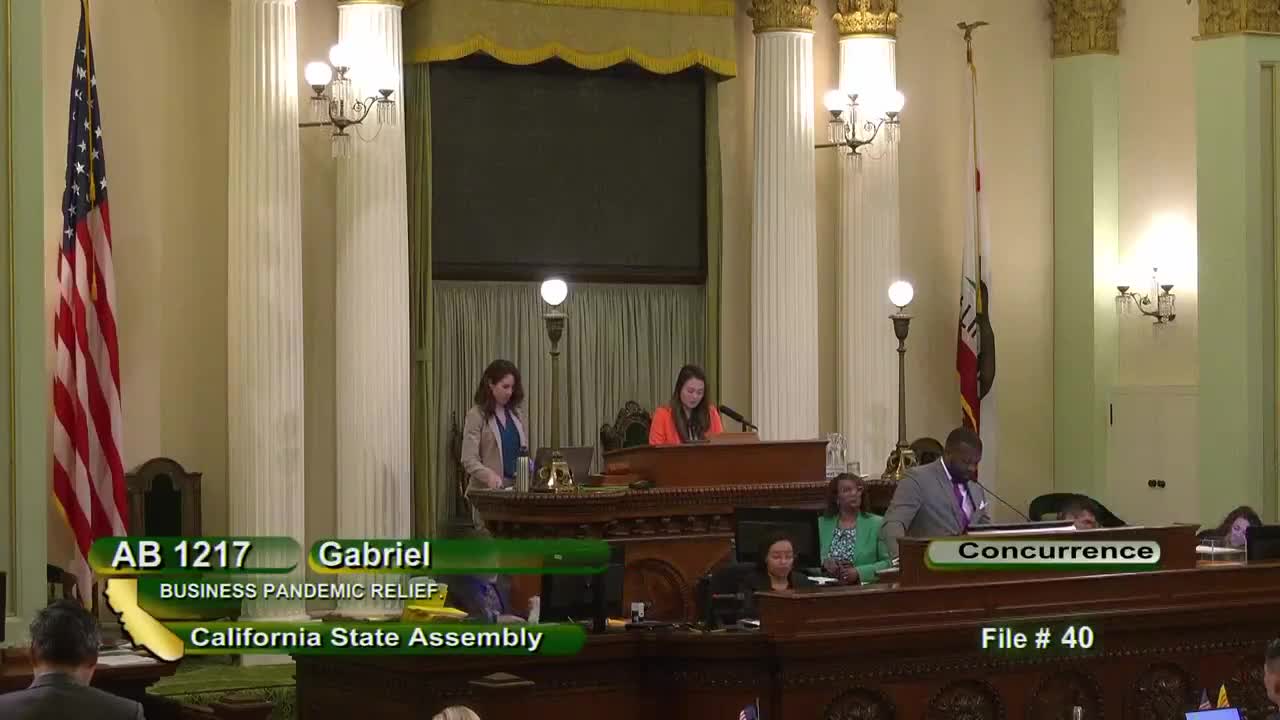 48SEC
Assembly Floor
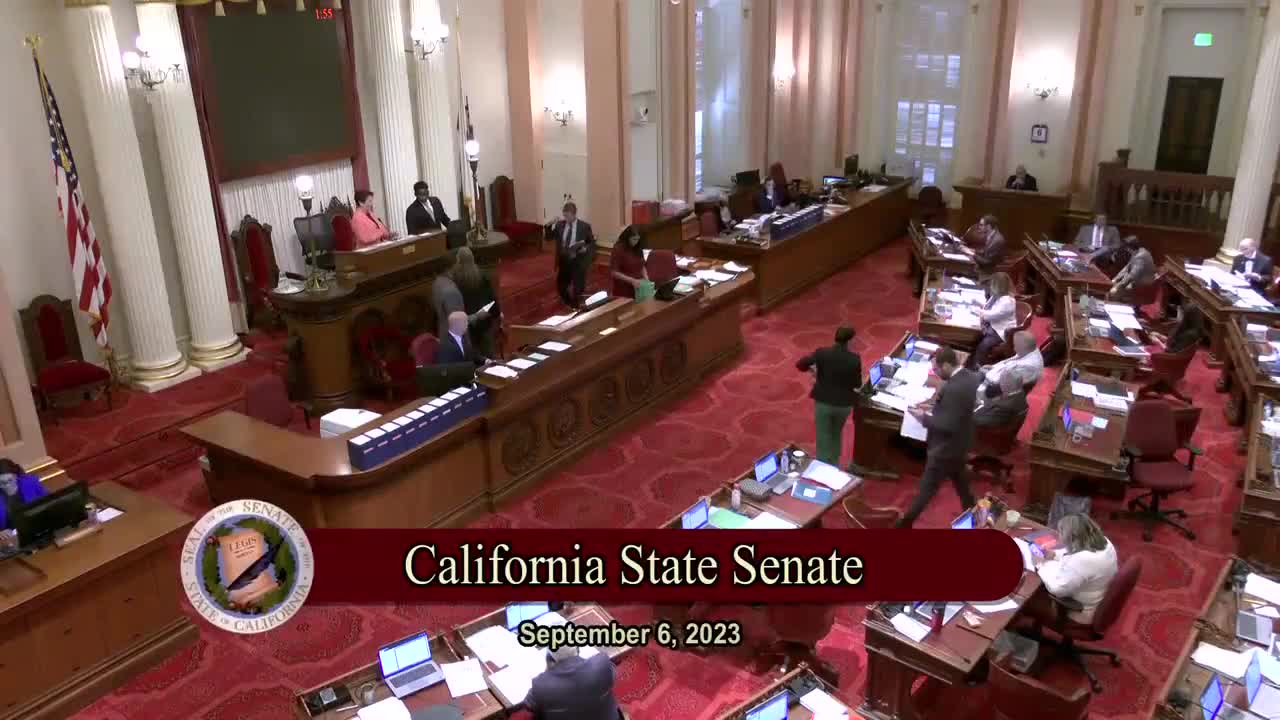 3MIN
Senate Floor
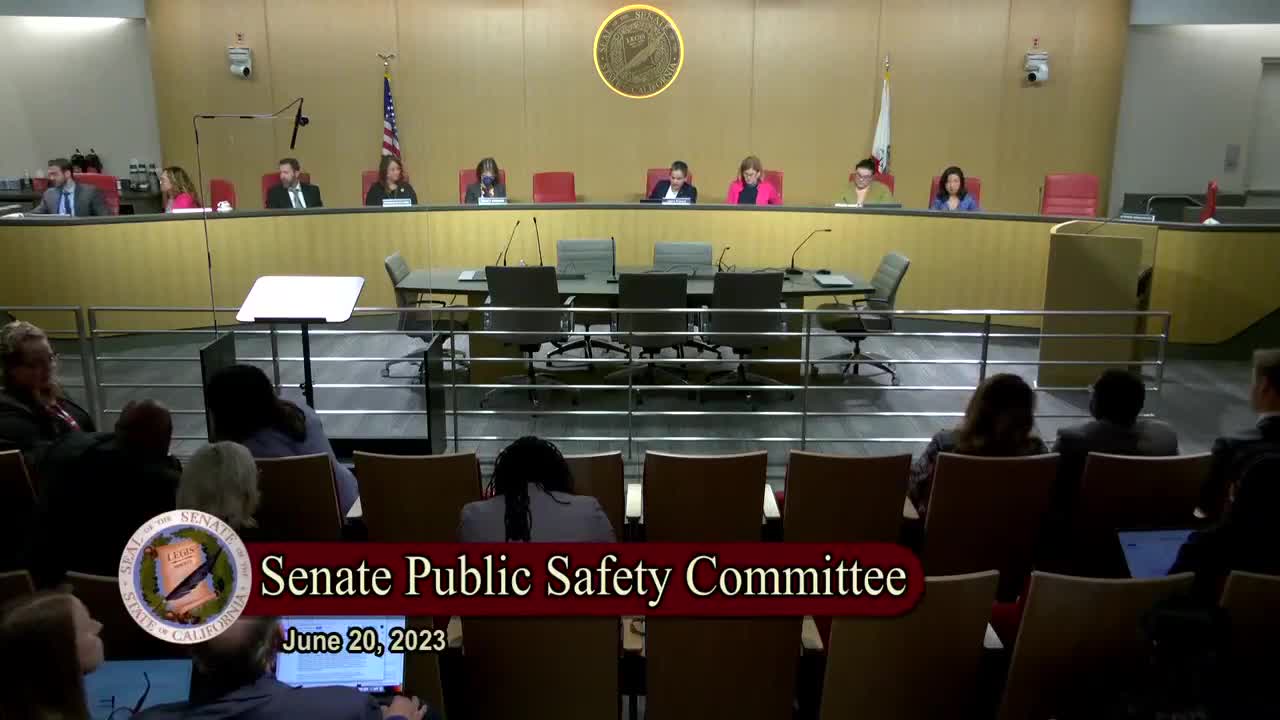 8MIN
Senate Standing Committee on Public Safety
 1MIN
Assembly Floor
 8MIN
Assembly Standing Committee on Public Safety
 8MIN
Assembly Standing Committee on Public Safety
Bill Author

Bill Co-Author(s):