AB 89: Parole hearings: attorney notice.
- Session Year: 2023-2024
- House: Assembly
- Latest Version Date: 2023-02-15
Current Status:
Failed
(2023-09-01: In committee: Held under submission.)
Introduced
In Committee
First Chamber
In Committee
Second Chamber
Enacted
What does this bill do?
The bill requires the district attorney’s office or the Attorney General’s office that prosecuted a case to give the parole board and the crime victim (or the victim’s next of kin or family) at least 45 days’ notice if that office will not send a representative to a parole suitability hearing. It says parole suitability hearings include youth offender and elderly parole hearings, and it prevents a hearing from being delayed or canceled just because the prosecutor failed to give that notice.
The summary is provided by generative AI which can make mistakes. For original language, please view the details in the table below.
Existing law requires the Board of Parole Hearings, among other responsibilities, to conduct parole suitability hearings and determine whether an inmate is suitable for parole. Existing law authorizes the victim, the victims next of kin, the victims family members, or 2 representatives designated by the victim or next of kin, to appear, personally or by counsel, at parole suitability hearings and to express their views concerning the inmate and the case.
This bill would require the district attorneys office or the Attorney Generals office that prosecuted the case to provide reasonable no less than 45 days notice to the board and to the crime victim, victims next of kin, or members of the victims family if they will not be sending a representative to a parole hearing, thereby creating a state-mandated local program.
The California Constitution requires the state to reimburse local agencies and school districts for certain costs mandated by the state. Statutory provisions establish procedures for making that reimbursement.
This bill would provide that, if the Commission on State Mandates determines that the bill contains costs mandated by the state, reimbursement for those costs shall be made pursuant to the statutory provisions noted above.
Existing law requires the Board of Parole Hearings, among other responsibilities, to conduct parole suitability hearings and determine whether an inmate is suitable for parole. Existing law authorizes the victim, the victims next of kin, the victims family members, or 2 representatives designated by the victim or next of kin, to appear, personally or by counsel, at parole suitability hearings and to express their views concerning the inmate and the case.
This bill would require the district attorneys office or the Attorney Generals office that prosecuted the case to provide reasonable notice to the board and to the crime victim, victims next of kin, or members of the victims family if they will not be sending a representative to a parole hearing, thereby creating a state-mandated local program.
The California Constitution requires the state to reimburse local agencies and school districts for certain costs mandated by the state. Statutory provisions establish procedures for making that reimbursement.
This bill would provide that, if the Commission on State Mandates determines that the bill contains costs mandated by the state, reimbursement for those costs shall be made pursuant to the statutory provisions noted above.
(a)The district attorneys office or the Attorney Generals office that prosecuted the case shall provide reasonable no less than 45 days notice to the board and to the crime victim, the victims next of kin, or members of the victims family that they will not be sending a representative to a parole suitability hearing, pursuant to Section 3041, if the office does not have a general policy to send a person to represent the interests of the victim at parole suitability hearings. 3041.
(b)For the purposes of this section, parole suitability hearing includes a youth offender parole hearing, elderly parole hearing, or a hearing pursuant to paragraph (1) of subdivision (a) of Section 32 of Article I of the California Constitution.
(c)A parole suitability hearing shall not be postponed, canceled, or continued as a result of the district attorneys office or the Attorney Generals failure to provide notice pursuant to this section.
SEC. 2.If the Commission on State Mandates determines that this act contains costs mandated by the state, reimbursement to local agencies and school districts for those costs shall be made pursuant to Part 7 (commencing with Section 17500) of Division 4 of Title 2 of the Government Code.
(a)The district attorneys office or the Attorney Generals office that prosecuted the case shall provide reasonable notice to the board and to the crime victim, the victims next of kin, or members of the victims family that they will not be sending a representative to a parole suitability hearing, pursuant to Section 3041, if the office does not have a general policy to send a person to represent the interests of the victim at parole suitability hearings.
(b)For the purposes of this section, parole suitability hearing includes a youth offender parole hearing, elderly parole hearing, or a hearing pursuant to paragraph (1) of subdivision (a) of Section 32 of Article I of the California Constitution.
SEC. 2.If the Commission on State Mandates determines that this act contains costs mandated by the state, reimbursement to local agencies and school districts for those costs shall be made pursuant to Part 7 (commencing with Section 17500) of Division 4 of Title 2 of the Government Code.
|
Date
|
Status
|
|---|---|
| Sep 1, 2023 | In committee: Held under submission. |
| Jul 3, 2023 | In committee: Referred to APPR suspense file. |
| Jun 20, 2023 | From committee: Do pass and re-refer to Com. on APPR. (Ayes 4. Noes 0.) (June 20). Re-referred to Com. on APPR. |
| Jun 7, 2023 | Referred to Com. on PUB S. |
| May 26, 2023 | In Senate. Read first time. To Com. on RLS. for assignment. |
| May 26, 2023 | Read third time. Passed. Ordered to the Senate. (Ayes 76. Noes 0. Page 1852.) |
| May 18, 2023 | From committee: Do pass. (Ayes 15. Noes 0.) (May 18). |
| May 18, 2023 | Read second time. Ordered to third reading. |
| Mar 22, 2023 | In committee: Set, first hearing. Referred to APPR. suspense file. |
| Feb 16, 2023 | Re-referred to Com. on APPR. |
| Feb 15, 2023 | Read second time and amended. |
| Feb 14, 2023 | From committee: Amend, and do pass as amended and re-refer to Com. on APPR. (Ayes 6. Noes 0.) (February 14). |
| Jan 26, 2023 | Referred to Com. on PUB. S. |
| Jan 5, 2023 | From printer. May be heard in committee February 4. |
| Jan 4, 2023 | Read first time. To print. |
|
Date
|
Description
|
Location
|
Votes
|
|
|---|---|---|---|---|
| Jul 3, 2023 | Placed on suspense file | Senate Standing Committee on Appropriations |
Passed |
|
| Jun 20, 2023 | Do pass, but first be re-referred to the Committee on [Appropriations] | Senate Standing Committee on Public Safety |
Passed |
|
| May 26, 2023 | AB 89 Sanchez Assembly Third Reading | Assembly Floor |
Passed |
|
| May 18, 2023 | Do pass. | Assembly Standing Committee on Appropriations |
Passed |
|
| Feb 14, 2023 | Do pass as amended and be re-referred to the Committee on [Appropriations] | Assembly Standing Committee on Public Safety |
Passed |
This list shows positions taken on this bill by organizations on the date displayed, which is linked to the original source.
Positions by individuals are not included.
|
Organization
|
Position
|
Date
|
|---|---|---|
| California Attorneys For Criminal Justice | ** Against | |
| California District Attorneys Association | * Support | Feb 14, 2023 |
| California Police Chief Association, Inc. | * Support | Feb 14, 2023 |
| Communities United for Restorative Youth Justice | ** Against | |
| Crime Survivors Resource Center | ** Support | |
| Crime Victims United | * Support | Feb 14, 2023 |
| Initiate Justice | ** Against | |
| Legal Services for Prisoners with Children | ** Against | |
| Orange County Sheriff's Department | ** Support | |
| Peace Officers Research Association Of California | ** Support | |
| Riverside County Sheriff's Office | * Support | Feb 14, 2023 |
| San Joaquin County District Attorney's Office | * Support | Feb 14, 2023 |
| Stone Advocacy | ** Support | Feb 14, 2023 |
SENATE COMMITTEE ON
Senator Anthony Portantino, Chair
2023 - 2024 Regular Session
AB 89 (Sanchez) - Parole hearings: attorney notice
Version: | Policy Vote: |
Urgency: | Mandate: |
Hearing Date: | Consultant: |
Bill Summary:
AB 89 would require the prosecutor of a case to provide no less than 45 days’ notice to the Board of Parole Hearings (BPH) and to the crime victim, victim’s next of kin, or members of the victim’s family if they will not be sending a representative to a parole hearing.
Fiscal Impact:
Unknown, potentially reimbursable costs to district attorney offices in order for them to notify victims and victims’ family members in cases where they choose not to participate in the parole suitability hearing (local funds, General Fund). Parole hearings may occur years and sometime decades, after a conviction; it is unclear whether county district attorney will have accurate contact information for victims and/or their families. Costs will depend on whether and how often district attorney offices must use investigators or other staff to locate victims or their families for purposes of notification. General Fund costs will depend on whether this bill creates a reimbursable state mandate, as determined by the Commission on State Mandates.
Background:
A parole suitability hearing is a hearing conducted by the BPH to determine if a person should be released from prison. The purpose of a parole suitability hearing is to determine if a person should be released from prison. Parole suitability hearings are usually conducted in-person at the prison where the offender is located. The parties present at a parole suitability hearing may include the incarcerated person, the person’s attorney, a representative from the district attorney’s office (or the Attorney General’s office) that prosecuted the offender, victims, and victim family members who have registered with the California Department of Corrections and Rehabilitation’s Office of Victim and Survivor Rights and Services. Victims and their family members may have the right to have a representative, support person, and an attorney attend the hearing.
The prosecutor of the incarcerated individual must be invited to attend the parole hearing to represent the interest of the people. BPH regulations permit, but do not require prosecutors to appear at the parole hearing. Prosecutors who attend parole hearings are authorized to comment on the facts of the case and present an opinion about the appropriate disposition. The prosecutor is allowed, but not required, to represent the views of the victim to BPH.
In December of 2020, the Los Angeles County District Attorney announced that its deputy district attorneys would not attend parole hearings as a matter of course. Furthermore, the office would support in writing the grant of parole for a person who had served their mandatory minimum period of incarceration with limited exceptions, that the office would continue to notify and advise victims as required under California law, and that the office remained committed to a process of healing and restorative justice for all victims.
Proposed Law:
- Requires the district attorney’s office that prosecuted the case or the Attorney General’s office to provide no less than 45 days’ notice to BPH, the crime victim, the victim’s next of kin, or members of the victim’s family that they will not be sending a representative to a parole suitability hearing.
- Provides that “parole suitability hearing” includes a youth offender parole hearing, elderly parole hearing, or a non-violent parole hearing.
- Prohibits a parole suitability hearing from being postponed, canceled, or continued as a result of the district attorney’s office or the Attorney General’s failure to provide the notice required under the provisions of this bill.
Related Legislation:
- AB 88 (Sanchez) states if a victim, or a designated victim representative, wishes to be heard at a re-sentencing hearing, the victim must notify the prosecution of their request to be heard within 15 days of receiving notice of re-sentencing and the court must provide an opportunity for the victim to be heard. AB 88 is pending in this committee.
- AB 1846 (Valladares), of the 2021-22 Legislative Session would have required the BPH, subject to appropriation, to provide a crime victim or crime victim’s next of kin or family member with an attorney for purposes of representation at an inmate’s parole suitability hearing when a district attorney (DA) or Attorney General (AG) representative is not present. AB 1846 was held on the Assembly Appropriations Committee’s suspense file.
-- END --
SENATE COMMITTEE ON PUBLIC SAFETY
Senator Aisha Wahab, Chair
2023 - 2024 Regular
Bill No: AB 89 Hearing Date: June 20, 2023
Author: | Sanchez | ||
Version: | February 15, 2023 | ||
Urgency: | No | Fiscal: | Yes |
Consultant: | SJ | ||
Subject: Parole hearings: attorney notice
HISTORY
Source: Author
Prior Legislation: AB 1846 (Valladares), held in Assembly Appropriations in 2022
Support: California District Attorneys Association; Peace Officers Research Association of California; San Francisco Police Officers Association
Opposition: None known
Assembly Floor Vote: 76 - 0
PURPOSE
The purpose of this bill is to require the district attorney’s office that prosecuted a case or the Attorney General’s office to provide no less than 45 days’ notice to the Board of Parole Hearings (BPH), the crime victim, victim’s next of kin, or members of the victim’s family if the office will not be sending a representative to a parole hearing.
Existing law authorizes BPH to determine whether people who are serving indeterminate sentences are suitable for release on parole once they reach their minimum eligible parole date. (Pen. Code, § 3041, subd. (a).)
Existing law provides that parole shall be granted unless it is determined that the gravity of the current convicted offense or offenses, or the timing and gravity of current or past convicted offenses, is such that consideration of the public safety requires a more lengthy period of incarceration. (Pen. Code, § 3041, subd. (b).)
Existing law requires, upon request to the Department of Corrections and Rehabilitation (CDCR) and verification of the identity of the requester, notice of any parole suitability hearing for any incarcerated individual by BPH at least 90 days before the hearing to any victim of any crime committed by the incarcerated individual, or to the next of kin of the victim if the victim has died. (Pen. Code, § 3043, subd. (a).)
Existing law provides that the victim, next of kin, members of the victim’s family and two designated representatives have the right to appear, personally or by counsel, at the hearing and to adequately and reasonably express their views concerning the person and the case. (Pen. Code, § 3043, subd. (b).)
Existing law requires BPH, in deciding whether to release the person on parole, to consider the statements of the victim or victims, next of kin, immediate family members of the victim, and the designated representatives of the victim or next of kin. (Pen. Code, § 3043, subd. (d).)
Existing law allows the prosecutor to represent the views of the victim, their family members, or next of kin to BPH. (Pen. Code, § 3043.2, subd. (c).)
Existing law provides that the victim, their representative or next of kin, or the prosecutor, when representing their views, has the right to speak last before BPH at the parole hearing. (Pen. Code, § 3043.6.)
Existing law entitles victims to be informed of all parole procedures, to participate in the parole process, to provide information to the parole authority to be considered before the parole of the offender, and to be notified, upon request, of the parole or other release of the offender. (Cal. Const., art. I, § 28(b)(15).)
This bill requires the district attorney’s office that prosecuted the case or the Attorney General’s office to provide no less than 45 days’ notice to BPH, the crime victim, the victim’s next of kin, or members of the victim’s family that they will not be sending a representative to a parole suitability hearing.
This bill provides that “parole suitability hearing” includes a youth offender parole hearing, elderly parole hearing, or a non-violent parole hearing.
This bill prohibits a parole suitability hearing from being postponed, canceled, or continued as a result of the district attorney’s office or the Attorney General’s failure to provide the notice required under the provisions of this bill.
COMMENTS
- Need For This Bill
According to the author:
AB 89 is a commonsense measure that will ensure that crime victims are aware of whether the district attorney’s office prosecuting the crime will be sending a representative to attend a parole hearing. Crime victims deserve to know whether a member of the prosecution will be present to make comments in connection to the crime that impacted them. It is common practice for district attorneys to send representatives to these hearings. But if they choose not to, it should be the responsibility of that office to notify the crime victims.
- Parole Hearings
Role of the Victim
Marsy’s Law entitles victims to be informed of all parole procedures, to participate in the parole process, to provide information to the parole authority to be considered before the parole of the offender, and to be notified, upon request, of the parole or other release of the offender. (Cal. Const., art. I, § 28(b)(15).)
Victims, next of kin, members of the victim’s family, and their representatives have the right to attend parole hearings and to appear, personally or by counsel, at the hearing and to adequately and reasonably express their views concerning the inmate and the case. (Pen. Code, § 3043.) Victims and victims’ next of kin who have registered with CDCR’s Office of Victim and Survivor Rights and Services (OVSRS) receive notice of parole hearings at least 90 days before the parole hearing. Notices identify whether the hearing is scheduled to be conducted in person or by videoconference. In deciding whether to release the person on parole, BPH must consider the statements of victims, their next of kin, their immediate family members, and designated representatives. (Pen. Code, § 3043, subd. (d).)
Role of the Prosecutor
The prosecutor or a representative of the county from which the incarcerated individual was committed must be invited to attend the parole hearing to represent the interest of the people. (Pen. Code, § 3041.7.) BPH regulations permit, but do not require prosecutors to appear at the parole hearing. (Cal. Code Regs., tit. 15, § 2030.) Prosecutors who attend parole hearings are authorized to comment on the facts of the case and present an opinion about the appropriate disposition. (Ibid.) The prosecutor is allowed, but not required, to represent the views of the victim to BPH. (Pen. Code, § 3043.2, subd. (c).) Prior to the hearing, CDCR will send the incarcerated individual, their counsel, the prosecutor, and BPH a “board packet.” The packet should include information from the inmate’s central file, including BPH reports, psychological reports, support letters, and records of any prior hearings.
- Los Angeles County District Attorney’s Policy on Attending Parole Hearings
In December of 2020, the Los Angeles County District Attorney announced a default policy that its deputy district attorneys would not attend parole hearings, that the office would support in writing the grant of parole for a person who had served their mandatory minimum period of incarceration with limited exceptions, that the office would continue to notify and advise victims as required under California law, and that the office remained committed to a process of healing and restorative justice for all victims. In doing so, the Los Angeles District Attorney justified the policy as follows:
We are not experts on rehabilitation. While we have information about the crime of conviction, the Board of Parole Hearings already has this information. Further, as the crime of conviction is of limited value in considering parole suitability years or decades later, the value of a prosecutor’s input in parole hearings is also limited. Finally, pursuant to Penal Code section 3041, there is a presumption that people shall be released on parole upon reaching the Minimum Eligible Parole Date (MEPD), their Youth Parole Eligible Date, (YEPD), or their Elderly Parole Date (EPD). Currently, sentences are being served that are much longer than the already lengthy mandatory minimum sentences imposed. Such sentences are constitutionally excessive.
(George Gascón, L.A. Cnty. Dist. Atty’s Off., Special Directive 20-14, at 8 (2020) <https://da.lacounty.gov/sites/default/files/pdf/SPECIAL-DIRECTIVE-20-14.pdf> [as of Jun. 13, 2023].)
- Argument in Support
The Peace Officers’ Research Association of California writes:
Current law requires the Board of Parole Hearings, among other responsibilities, to conduct parole suitability hearings and determine whether an inmate is suitable for parole. Current law authorizes the victim, the victim’s next of kin, the victim’s family members, or 2 representatives designated by the victim or next of kin, to appear, personally or by counsel, at parole suitability hearings and to express their views concerning the inmate and the case. Typically, district attorneys send a representative to appear at a parole hearing on behalf of crime victims to argue that an inmate is unsuitable for release, emphasize the seriousness of the inmate’s crimes, and rebut any inaccurate or misleading arguments made by the inmate or inmate’s attorney about the circumstances of the crime, legal issues in the case, or the seriousness of the offense.
This bill would require the district attorney’s office or the Attorney General’s office that prosecuted the case to provide reasonable notice to the board and to the crime victim, victim’s next of kin, or members of the victim’s family if they will not be sending a representative to a parole hearing, thereby creating a state-mandated local program.
PORAC is committed to ensuring that existing rights of crime victims are protected. PORAC believes that by providing adequate notice of whether a district attorney’s office will be supporting them at a parole hearing, crime victims have the opportunity to better prepare themselves for parole hearings.
-- END --
ASSEMBLY THIRD READING
ATR Bill Id:AB 89
Author:(Sanchez)
As Amended Ver:February 15, 2023
Majority vote
SUMMARY
Requires the prosecuting agency to give notice to the Board of Parole Hearings (BPH) and the victim, victim's next of kin, or members of the victim's family if they will not send a representative to a parole hearing.
Major Provisions
- Requires the prosecuting agency to give notice no less than 45 days' notice to the BPH, and the victim, victim's next of kin, or members of the victim's family if they will not send a representative to a parole hearing.
- Provides that the hearing cannot be postponed due the failure of the prosecuting agency to provide notice.
- Defines "parole suitability hearing" for purposes of this provision as including a youth offender parole hearing, and elderly parole hearing, and nonviolent offender parole hearing.
COMMENTS
According to the Author
"AB 89 is a commonsense measure that will ensure that crime victims are aware of whether the district attorney's office prosecuting the crime will be sending a representative to attend a parole hearing. Crime victims deserve to know whether a member of the prosecution will be present to make comments in connection to the crime that impacted them. It is common practice for district attorneys to send representatives to these hearings. But if they choose not to, it should be the responsibility of that office to notify the crime victims."
Arguments in Support
According to the Riverside County Sheriff’s Office, "AB 89 is straight forward and simple. It simply requires the original prosecuting agency to provide notice to the board and to the crime victim if they will not be sending a representative to the hearing. These specific government agencies represented the victim, their families, and the people of the state of California in those original criminal proceedings and are intimately familiar with the victims' concerns. If these government agencies choose not to send a representative to the hearing, like some agencies have unfortunately chosen to do, then crime victims are left disenfranchised and unrepresented in violation of their constitutional rights. Crime victims will then have the opportunity to speak for themselves, or have a representative speak for them, if the original prosecuting agencies does not.
"This measure ensures that victim voices are not disregarded and smothered by the incarcerated person's voice or that of their legal representative's voice."
Arguments in Opposition
According to Initiate Justice, "AB 89 (Sanchez) is an unnecessary measure. Under Marsy's Law, the prosecuting agency (either the county district attorney or state attorney general) is allowed to appear at parole hearings, but they appear as representatives of the prosecuting agency, not of the individual victims of any particular crime. Furthermore, their decision whether to participate in a hearing is likely based on whether their presence would add relevant information bearing on the parole applicant's current dangerousness beyond what is already reflected in their paper file (including programming records, disciplinary records, comprehensive risk assessment, parole plans, the parole applicant's written statements, etc.). Since there is no right to legal representation for victims in parole proceedings, and these hearings are administrative and non-adversarial, there is little value in notifying victims of non appearance since their presence isn't meant to relitigate the crime anyway.
"In order to properly support victims, the Legislature should invest in more healing resources and programs. According to California Crime Survivors Speak1, less than one in five California crime victims report receiving financial assistance, counseling, medical assistance and other types of healing services that can help someone recover and stabilize. Victims are being failed in so many ways, only one of which is by the discretionary parole process that has a 80-85% denial rate each year. Holistic care requires so much more than retraumatizing victims by sending notices of Parole hearings and potential non appearances."
FISCAL COMMENTS
According to the Assembly Appropriations Committee, "Possibly reimbursable costs (General Fund (GF) and local funds) in excess of $150,000 annually across all counties for district attorneys to notify victims of whether they plan to attend parole hearings. BPH already provides information about parole hearings to victims and generally maintains the best up-to-date contact information for victims or their family members. Parole hearings may occur years, even decades, after a conviction. It is unknown whether any county district attorney will have accurate contact information for victims or their families. Costs will depend on whether district attorney offices have to use investigators or clerical staff to locate victims or their families for purposes of notification. GF costs will depend on whether the Commission on State Mandates considers the duties this bill imposes on county probation departments a state reimbursable mandate."
VOTES
ASM PUBLIC SAFETY: 6-0-2
YES: Jones-Sawyer, Alanis, Lackey, Ortega, Santiago, Zbur
ABS, ABST OR NV: Bonta, Bryan
ASM APPROPRIATIONS: 15-0-1
YES: Holden, Megan Dahle, Bryan, Calderon, Wendy Carrillo, Dixon, Mike Fong, Hart, Lowenthal, Mathis, Papan, Pellerin, Sanchez, Weber, Ortega
ABS, ABST OR NV: Robert Rivas
UPDATED
VERSION: February 15, 2023
CONSULTANT: Liah Burnley / PUB. S. / (916) 319-3744 FN: 0000679
Date of Hearing: March 22, 2023
ASSEMBLY COMMITTEE ON APPROPRIATIONS
Chris Holden, Chair
ABPCA Bill Id:AB 89
Author:(Sanchez) – As Amended Ver:February 15, 2023
Policy Committee: | Public Safety | Vote: | 6 - 0 |
|
| ||
|
|
Urgency: No State Mandated Local Program: Yes Reimbursable: Yes
SUMMARY:
This bill requires any prosecuting agency to give no less than 45 days’ notice to the Board of Parole Hearings (BPH), and to the victim or victim representative, if the prosecuting agency does not plan to send a representative to a parole hearing.
FISCAL EFFECT:
Possibly reimbursable costs (General Fund (GF) and local funds) in excess of $150,000 annually across all counties for district attorneys to notify victims of whether they plan to attend parole hearings. BPH already provides information about parole hearings to victims and generally maintains the best up-to-date contact information for victims or their family members. Parole hearings may occur years, even decades, after a conviction. It is unknown whether any county district attorney will have accurate contact information for victims or their families. Costs will depend on whether district attorney offices have to use investigators or clerical staff to locate victims or their families for purposes of notification. GF costs will depend on whether the Commission on State Mandates considers the duties this bill imposes on county probation departments a state reimbursable mandate.
COMMENTS:
- Purpose. According to the author:
AB 89 is a commonsense measure that will ensure that crime victims are aware of whether the district attorney’s office prosecuting the crime will be sending a representative to attend a parole hearing. Crime victims deserve to know whether a member of the prosecution will be present to make comments in connection to the crime that impacted them. It is common practice for district attorneys to send representatives to these hearings. But if they choose not to, it should be the responsibility of that office to notify the crime victims.
- Parole Notification. Existing law provides the victim, next of kin, members of the victim's family and two designated representatives have the right to appear, personally or by counsel, at the parole hearing and express their views about the inmate and the case. Additionally, a victim may request BPH notify them of any parole suitability hearing or, if the victim is deceased, the victim’s next of kin may make the request for notification. An eligible party may request notification from BPH of any hearing to review or consider the parole suitability, or the setting of a parole date, for any person incarcerated in a state prison who has been convicted of the crime. No later than 14 days before the hearing, BPH must notify every person entitled to attend the hearing to confirm the date, time and place of the hearing.
- Related Legislation. AB 88 (Sanchez) states if a victim, or a designated victim representative, wishes to be heard at a re-sentencing hearing, the victim must notify the prosecution of their request to be heard within 15 days of receiving notice of re-sentencing and the court must provide an opportunity for the victim to be heard. AB 88 is pending in this committee.
- Prior Legislation.
- AB 1846 (Valladares), of the 2021-22 Legislative Session would have required the BPH, subject to appropriation, to provide a crime victim or crime victim’s next of kin or family member with an attorney for purposes of representation at an inmate’s parole suitability hearing when a district attorney (DA) or Attorney General (AG) representative is not present. AB 1846 was held on this committee’s suspense file.
- AB 1847 (Valladares), of the 2021-22 Legislative Session, would have required the court to hold a hearing on resentencing if the victim wishes to be heard, and limits to 15 days the amount of notice the victim and their family members must provide to attend a parole hearing.
Analysis Prepared by: Kimberly Horiuchi / APPR. / (916) 319-2081
Date of Hearing: February 14, 2023
Counsel: Liah Burnley
ASSEMBLY COMMITTEE ON
Reginald Byron Jones-Sawyer, Sr., Chair
ABPCA Bill Id:
Author:() – As Ver:
As Proposed To Be Amended In Committee
SUMMARY:
Requires the prosecuting agency to give notice to the Board of Parole Hearings (BPH) and the victim, victim’s next of kin, or members of the victim’s family if they will not send a representative to a parole hearing. Specifically, this bill:
- Requires the prosecuting agency to give notice no less than 45 days’ notice to the BPH, and the victim, victim’s next of kin, or members of the victim’s family if they will not send a representative to a parole hearing.
- Provides that the hearing cannot be postponed due the failure of the prosecuting agency to provide notice.
- Defines “parole suitability hearing” for purposes of this provision as including a youth offender parole hearing, and elderly parole hearing, and nonviolent offender parole hearing.
EXISTING LAW:
- Authorizes BPH to determine whether people who are serving indeterminate sentences are suitable for release on parole once they reach their minimum eligible parole date. (Pen. Code, § 3041, subd. (a).)
- Provides that parole shall be granted unless it is determined that the gravity of the current convicted offense or offenses, or the timing and gravity of current or past convicted offenses, is such that consideration of the public safety requires a more lengthy period of incarceration. (Pen. Code, § 3041, subd. (b).)
- Allows the victim of a crime to request that BPH notify them of any parole suitability hearing or, if the victim is deceased, the victim’s next of kin may make the request for notification. (Pen. Code, § 3043, subd. (a).)
- Provides that the victim, next of kin, members of the victim’s family and two designated representatives have the right to appear, personally or by counsel, at the hearing and to adequately and reasonably express their views concerning the inmate and the case. (Pen. Code, § 3043, subd. (b).)
- Provides that the BPH, in deciding whether to release the person on parole, must consider the statements of victims, their next of kin, their immediate family members, and designated representatives and include in its report a statement of whether the person would pose a threat to public safety if released on parole. (Pen. Code, § 3043, subd. (d).)
- Allows the prosecutor to represent the views of the victim, their family members, or next of kin to BPH. (Pen. Code, § 3043.2, subd. (c).)
- States that the victim, their representative or next of kin, or the prosecutor, when representing their views, has the right to speak last before BPH at the parole hearing. (Pen. Code, § 3043.6.)
- Entitles victims to be informed of all parole procedures, to participate in the parole process, to provide information to the parole authority to be considered before the parole of the offender, and to be notified, upon request, of the parole or other release of the offender. (Cal. Const., Art. I, § 28(b)(15) [Marsy’s Law].)
FISCAL EFFECT:
Unknown
COMMENTS:
- Author's Statement: According to the author, “AB 89 is a commonsense measure that will ensure that crime victims are aware of whether the district attorney’s office prosecuting the crime will be sending a representative to attend a parole hearing. Crime victims deserve to know whether a member of the prosecution will be present to make comments in connection to the crime that impacted them. It is common practice for district attorneys to send representatives to these hearings. But if they choose not to, it should be the responsibility of that office to notify the crime victims.”
- Role of the Victim at Parole Hearings: Marsy’s Law entitles victims to be informed of all parole procedures, to participate in the parole process, to provide information to the parole authority to be considered before the parole of the offender, and to be notified, upon request, of the parole or other release of the offender. (Cal. Const., Art. I, § 28(b)(15) [Marsy’s Law].)
Victims, next of kin, members of the victim’s family, and their representatives have the right to attend parole hearings and to appear, personally or by counsel, at the hearing and to adequately and reasonably express their views concerning the inmate and the case. (Pen. Code, § 3043.) Victims and victims’ next of kin who have registered with CDCR’s Office of Victim and Survivor Rights and Services (OVSRS) receive notice of parole hearings at least 90 days before the parole hearing. Notices identify whether the hearing is scheduled to be conducted in person or by videoconference. (CDCR, Fact Sheet – Proposed Regulations to Conduct Parole Hearings by Videconference (Aug. 2021) <https://www.cdcr.ca.gov/bph/wp-content/uploads/sites/161/2021/08/Fact-Sheet-Videoconference-Regs-8-16-2021.pdf> [as of Feb. 8, 2023].) In deciding whether to release the person on parole, BPH must consider the statements of victims, their next of kin, their immediate family members, and designated representatives. (Pen. Code, § 3043, subd. (d).)
- Role of the Prosecutor at Parole Hearings: The prosecutor or a representative of the county from which the inmate was committed must be invited to attend the parole hearing to represent the interest of the people. (Pen. Code, § 3041.7.) BPH regulations permit, but do not require prosecutors to appear at the parole hearing. (Cal. Code Regs., tit. 15, § 2030.) Prosecutors who attend parole hearings are authorized to comment on the facts of the case and present an option about the appropriate disposition. (Ibid.) The prosecutor is allowed, but not required, to represent the views of the victim to BPH. (Pen. Code, § 3043.2, subd. (c).) Prior to the hearing, CDCR will send the inmate, their counsel, the prosecutor, and BPH a “board packet.” (Cal. Crim. Law Procedure & Practice (2021) § 47.28, pp. 1580-1581 (CEB).) The packet should include information from the inmate’s central file (C-file), including BPH reports, psychological reports, support letters, and records of any prior hearings. (Id. at p. 1581.)
- Los Angeles County District Attorney’s Policy on Attending Parole Hearings: In December of 2020, the Los Angeles County District Attorney’s Office announced a default policy that they would not attend parole hearings, that the office would continue to notify and advise victims under California law, and remain committed to a process of healing and restorative justice for all victims. The Los Angeles District Attorney’s Office justified the parole policy on the grounds that:
We are not experts on rehabilitation. While we have information about the crime of conviction, the Board of Parole Hearings already has this information. Further, as the crime of conviction is of limited value in considering parole suitability years or decades later, the value of a prosecutor’s input in parole hearings is also limited. Finally, pursuant to Penal Code section 3041, there is a presumption that people shall be released on parole upon reaching the Minimum Eligible Parole Date (MEPD), their Youth Parole Eligible Date, (YEPD), or their Elderly Parole Date (EPD). Currently, sentences are being served that are much longer than the already lengthy mandatory minimum sentences imposed. Such sentences are constitutionally excessive.
(George Gascón, L.A. Cnty. Dist. Atty’s Off., Special Directive 20-14, at 8 (2020) <https://da.lacounty.gov/sites/default/files/pdf/SPECIAL-DIRECTIVE-20-14.pdf > [as of Feb. 8, 2023].) Some research has shown that excluding prosecutors from parole hearings could reduce the amount of unhelpful and unreliable evidence introduced at the hearing and could improve California’s parole system. (Murica, Prosecutors, Parole, and Evidence: Why Excluding Prosecutors from Parole Hearings Will Improve California's Parole Process (2022) 55 Loyola. L.A. L. Rev. 441, 450.)
- Proposed Amendments: As introduced, this bill would require the prosecuting agency to give “reasonable notice” if they will not be sending a representative to a parole hearing. The bill does not define “reasonable notice,” which could create confusion for prosecutors, victims, advocates and BPH. The proposed amendments clarify that the prosecuting agency must give no less than 45 days’ notice.
As introduced, this bill would only apply to prosecuting agencies that do not have a general policy to send a person to represent the interests of the victim at parole suitability hearings. This provision also lacks clarity because prosecutor’s role at the hearing is to represent “the People,” not to singularly represent the victim (Pen. Code, § 3041.7.) Accordingly, the proposed amendments remove this provision, so the prosecution agency must notify the victim if they do not intend to appear at the hearing, irrespective of the agency’s general internal policy on representing victims at parole hearings.
The proposed amendments also address concerns from advocates that the notice requirement could “postpone a hearing and significantly delay a parole applicant’s return to their community due to no fault of the parole applicant.” The proposed amendments provide that a hearing cannot be postponed due the failure of the prosecuting agency to provide notice.
- Argument in Support: According to the Riverside County Sheriff’s Office, “AB 89 is straight forward and simple. It simply requires the original prosecuting agency to provide notice to the board and to the crime victim if they will not be sending a representative to the hearing. These specific government agencies represented the victim, their families, and the people of the state of California in those original criminal proceedings and are intimately familiar with the victims’ concerns. If these government agencies choose not to send a representative to the hearing, like some agencies have unfortunately chosen to do, then crime victims are left disenfranchised and unrepresented in violation of their constitutional rights. Crime victims will then have the opportunity to speak for themselves, or have a representative speak for them, if the original prosecuting agencies does not.
“This measure ensures that victim voices are not disregarded and smothered by the incarcerated person’s voice or that of their legal representative’s voice.”
- Argument in Opposition: According to Initiate Justice, “AB 89 (Sanchez) is an unnecessary measure. Under Marsy’s Law, the prosecuting agency (either the county district attorney or state attorney general) is allowed to appear at parole hearings, but they appear as representatives of the prosecuting agency, not of the individual victims of any particular crime. Furthermore, their decision whether to participate in a hearing is likely based on whether their presence would add relevant information bearing on the parole applicant’s current dangerousness beyond what is already reflected in their paper file (including programming records, disciplinary records, comprehensive risk assessment, parole plans, the parole applicant’s written statements, etc.). Since there is no right to legal representation for victims in parole proceedings, and these hearings are administrative and non-adversarial, there is little value in notifying victims of non appearance since their presence isn’t meant to relitigate the crime anyway.
“In order to properly support victims, the Legislature should invest in more healing resources and programs. According to California Crime Survivors Speak1, less than one in five California crime victims report receiving financial assistance, counseling, medical assistance and other types of healing services that can help someone recover and stabilize. Victims are being failed in so many ways, only one of which is by the discretionary parole process that has a 80-85% denial rate each year. Holistic care requires so much more than retraumatizing victims by sending notices of Parole hearings and potential non appearances.” - Related Legislation: AB 88 (Sanchez), would limit the amount of notice victims must provide to attend a parole hearing. AB 88 will be heard in this Committee today.
- Prior Legislation:
- AB 1846 (Valladares), of the 2021-2022 Legislative Session, would have reimbursed a victim or their family member for the reasonable cost of attorneys’ fees up to $900 when the prosecutor will not appear at the parole hearing on their behalf. AB 1846 was held under submission in Assembly Appropriations Committee.
- AB 1847 (Valladares), of the 2021-2022 Legislative Session, would have limited the amount of notice victims must provide to attend a parole hearing. AB 1847 died on suspense file in Senate Appropriations.
- AB 2409 (Davies), of the 2021-2022 Legislative Session, would have required the district attorney to inform any victim of their right to request that BPH notify them of an inmate’s parole suitability hearing, and would allow the victims to request specified documents related to the inmate’s parole suitability and ask clarifying questions at the hearing. AB 2409 was held under submission in Assembly Appropriations Committee.
- AB 1846 (Valladares), of the 2021-2022 Legislative Session, would have reimbursed a victim or their family member for the reasonable cost of attorneys’ fees up to $900 when the prosecutor will not appear at the parole hearing on their behalf. AB 1846 was held under submission in Assembly Appropriations Committee.
REGISTERED SUPPORT / OPPOSITION:
Support
California District Attorneys Association
California Police Chiefs Association
Crime Survivors Resource Center
Orange County Sheriff's Department
Peace Officers Research Association of California (PORAC)
Riverside County Sheriff's Office
Opposition
California Attorneys for Criminal Justice
Communities United for Restorative Youth Justice (CURYJ)
Initiate Justice
Legal Services for Prisoners With Children
Analysis Prepared by:
Discussed in Hearing
 3MIN
Senate Standing Committee on Public Safety
 1MIN
Assembly Floor
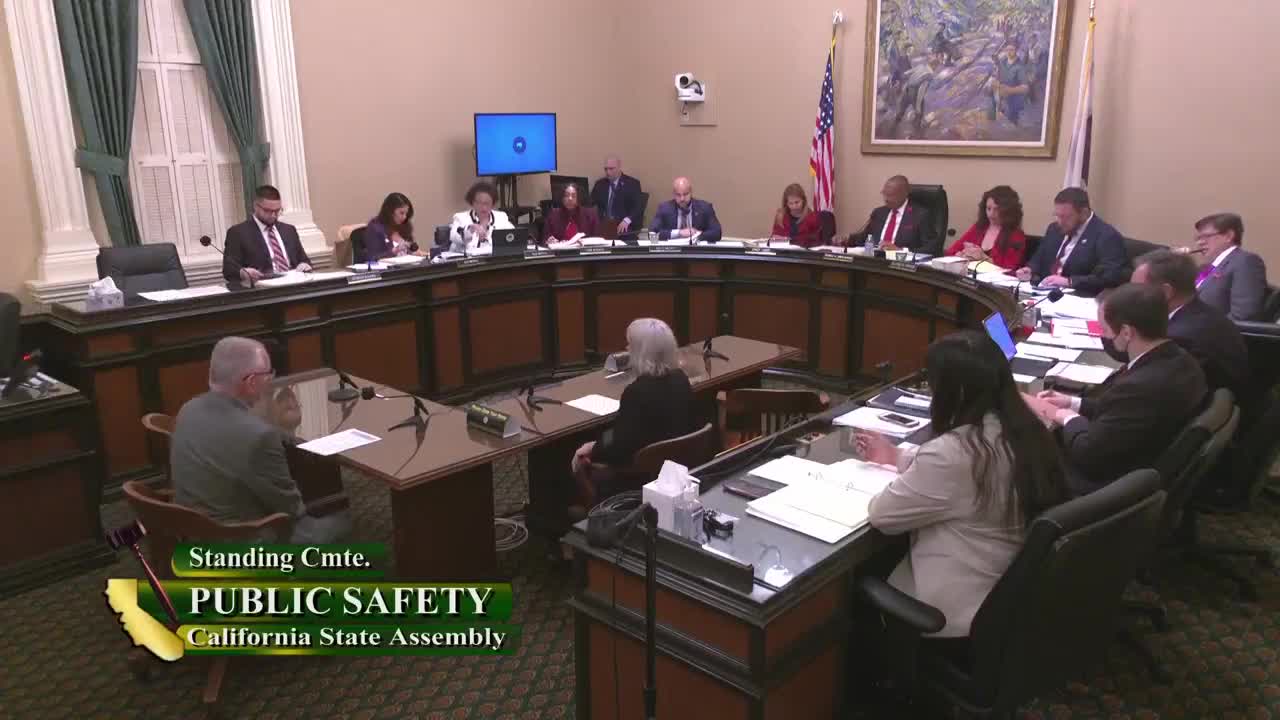 11MIN
Assembly Standing Committee on Public Safety
Bill Author

Bill Co-Author(s):