AB 900: Aquifer recharge.
- Session Year: 2023-2024
- House: Assembly
- Latest Version Date: 2023-04-12
Current Status:
Failed
(2024-02-01: From committee: Filed with the Chief Clerk pursuant to Joint Rule 56.)
Introduced
In Committee
First Chamber
In Committee
Second Chamber
Enacted
What does this bill do?
The bill adds aquifers to the state’s definition of natural infrastructure and directs the Department of Water Resources to produce a report on best practices for aquifer recharge (putting water back into underground aquifers) and to create a grant program to help carry out those practices. The report must include guidance for a streamlined permitting process, input from farmers, academics, nonprofits and local agencies, a review of projects done under Executive Order N‑4‑23, and a recommendation on whether that order should be made permanent.
The summary is provided by generative AI which can make mistakes. For original language, please view the details in the table below.
Existing law requires the Natural Resources Agency to update every 3 years the states climate adaptation strategy, known as the Safeguarding California Plan, and to coordinate with other state agencies to identify vulnerabilities to climate change by sectors and priority actions needed to reduce the risks in those sectors. Existing law requires, to address the vulnerabilities identified in the plan, state agencies to maximize specified objectives, including promoting the use of the plan to inform planning decisions and ensure that state investments consider climate change impacts, as well as promote the use of natural systems and natural infrastructure, when developing physical infrastructure to address adaptation.
This bill would add aquifers as part of the meaning of natural infrastructure.
Existing law establishes the Department of Water Resources in the Natural Resources Agency. Existing law authorizes the department to investigate any natural situation available for reservoirs or reservoir systems for gathering and distributing flood or other water not under beneficial use in any stream, stream system, lake, or other body of water. Existing law also authorizes the department to ascertain the feasibility of projects for those reservoirs or reservoir systems, the supply of water that may thereby be made available, and the extent and character of the areas that may be thereby irrigated, as well as the cost of those projects.
The bill would require the department to prepare and produce a report to the Legislature, by July 1, 2024, outlining best practices for aquifer recharge. The bill would require the report to include specified information, including, among other things, guidelines for a streamlined permitting process for aquifer recharge projects that implement the best practices outlined in the report. The bill would also require the department to create a grant program by July 1, 2025, to implement best practices in aquifer recharge, including a streamlined process for the issuance of a permit. grant funds.
Existing law establishes the Department of Water Resources in the Natural Resources Agency. Existing law authorizes the department to investigate any natural situation available for reservoirs or reservoir systems for gathering and distributing flood or other water not under beneficial use in any stream, stream system, lake, or other body of water. Existing law also authorizes the department to ascertain the feasibility of projects for those reservoirs or reservoir systems, the supply of water that may thereby be made available, and the extent and character of the areas that may be thereby irrigated, as well as the cost of those projects.
The bill would require the department to prepare and produce a report outlining best practices for aquifer recharge. The bill would require the report to include guidelines for a streamlined permitting process for aquifer recharge projects that implement the best practices outlined in the report. The bill would also require the department to create a grant program to implement best practices in aquifer recharge, including a streamlined process for the issuance of a permit.
To address the vulnerabilities identified in the plan, state agencies shall work to maximize, where applicable and feasible, all of the following objectives:
(a)Educating the public about the consequences of climate change, such as sea level rise, extreme weather events, the urban heat island effect, habitat loss, wildfire, drought, threats to infrastructure and agriculture, worsening air and water quality, and public health impacts.
(b)Ensuring there is a continued repository for scientific data on climate change and climate adaptation in the state in order to facilitate educated state and local policy decisions and to help identify primary risks from climate change to residents, property, communities, and natural systems across the state.
(c)(1)Promoting the use of the plan to inform planning decisions and ensure that state investments consider climate change impacts, as well as promote the use of natural systems and natural infrastructure, when developing physical infrastructure to address adaptation.
(2)When developing infrastructure to address adaptation, where feasible, a project alternative should be developed that uses existing natural features and ecosystem processes or the restoration of natural features and ecosystem processes to meet the projects goals.
(3)For purposes of this subdivision, natural infrastructure means using natural ecological systems or processes to reduce vulnerability to climate change related hazards, or other related climate change effects, while increasing the long-term adaptive capacity of coastal and inland areas by perpetuating or restoring ecosystem services. This includes, but is not limited to, the conservation, preservation, or sustainable management of any form of aquatic or terrestrial vegetated open space, such as beaches, dunes, tidal marshes, reefs, seagrass, aquifers, parks, rain gardens, and urban tree canopies. It also includes systems and practices that use or mimic natural processes, such as permeable pavements, bioswales, and other engineered systems, such as levees that are combined with restored natural systems, to provide clean water, conserve ecosystem values and functions, and provide a wide array of benefits to people and wildlife.
(d)Encouraging regional collaborative planning efforts to address regional climate change impacts and adaptation strategies.
(e)Promoting drought resiliency through an integrated water supply, delivery, and capture system that is coordinated and that can be resilient to a multiyear drought scenario while protecting water quality and public health. Establishing both drought preparation programs, which will help create sustainable water systems in the future, and immediate drought response programs, which will reduce water demand or increase supply within one to five years of any declared drought.
(f)Building resilient communities by developing urban greening projects that reduce air pollution and heat reflection in urban areas and create livable, sustainable communities in urban cores to promote infill development and reduce greenhouse gas emissions.
(g)Protecting and enhancing habitat, species strongholds, and wildlife corridors that are critical to the preservation of species that are at risk from the consequences of climate change.
(h)Promoting actions to ensure healthy soils and sustainable agriculture; inform reliable transportation planning; improve emergency management response across sectors; ensure sufficient, reliable, and safe energy; improve capacity to reduce and respond to public health threats; address the impacts of climate change on disadvantaged communities; and protect cultural resources from the impacts of climate change.
(i)Prioritizing equity by ensuring public expenditures that address climate change adaptation prioritize protecting vulnerable communities, rectifying intersectional and systemic inequities, and enhancing low-income and vulnerable communities abilities to weather the impacts of climate change.
SECTION 1.SEC. 2.Section 227.5 is added to the Water Code, to read:227.5.(a)(1)The department shall prepare and produce a report to the Legislature, by July 1, 2024, outlining best practices for aquifer recharge. The report shall include guidelines for a streamlined permitting process for aquifer recharge projects that implement the best practices outlined in the report.
(2)The department shall engage stakeholders, including academic institutions, farmers and ranchers, nongovernmental organizations, and local agencies, in order to receive input on best practices for aquifer recharge.
(3)The department shall include information in the report regarding the outcomes of implementation of Executive Order No. N-4-23, including the number of projects implemented, the amount of water recharged, the extent of flood threat reduction resulting from implementation, and any lessons learned.
(4)The report shall include recommendations to the Legislature on whether Executive Order No. N-4-23 needs to be made into a permanent program and, if so, what policy changes are necessary to accomplish this.
(b)(1)The department shall create a grant program to implement best practices in aquifer recharge, including a streamlined process for the issuance of a permit. grant funds.
(2)The grant program shall be implemented by July 1, 2025.
(c)(1)The requirement for submitting a report imposed under subdivision (a) is inoperative on January 1, 2028, pursuant to Section 10231.5 of the Government Code.
(2)A report to be submitted pursuant to subdivision (a) shall be submitted in compliance with Section 9795 of the Government Code.
(a)The department shall prepare and produce a report outlining best practices for aquifer recharge. The report shall include guidelines for a streamlined permitting process for aquifer recharge projects that implement the best practices outlined in the report.
(b)The department shall create a grant program to implement best practices in aquifer recharge, including a streamlined process for the issuance of a permit.
|
Date
|
Status
|
|---|---|
| Feb 1, 2024 | From committee: Filed with the Chief Clerk pursuant to Joint Rule 56. |
| Jan 31, 2024 | Died pursuant to Art. IV, Sec. 10(c) of the Constitution. |
| May 18, 2023 | In committee: Held under submission. |
| May 10, 2023 | In committee: Set, first hearing. Referred to APPR. suspense file. |
| May 3, 2023 | In committee: Hearing postponed by committee. |
| Apr 19, 2023 | From committee: Do pass and re-refer to Com. on APPR. (Ayes 14. Noes 0.) (April 18). Re-referred to Com. on APPR. |
| Apr 17, 2023 | Re-referred to Com. on W., P., & W. |
| Apr 12, 2023 | From committee chair, with author's amendments: Amend, and re-refer to Com. on W., P., & W. Read second time and amended. |
| Mar 22, 2023 | In committee: Hearing postponed by committee. |
| Feb 23, 2023 | Referred to Com. on W., P., & W. |
| Feb 15, 2023 | From printer. May be heard in committee March 17. |
| Feb 14, 2023 | Read first time. To print. |
|
Date
|
Description
|
Location
|
Votes
|
|
|---|---|---|---|---|
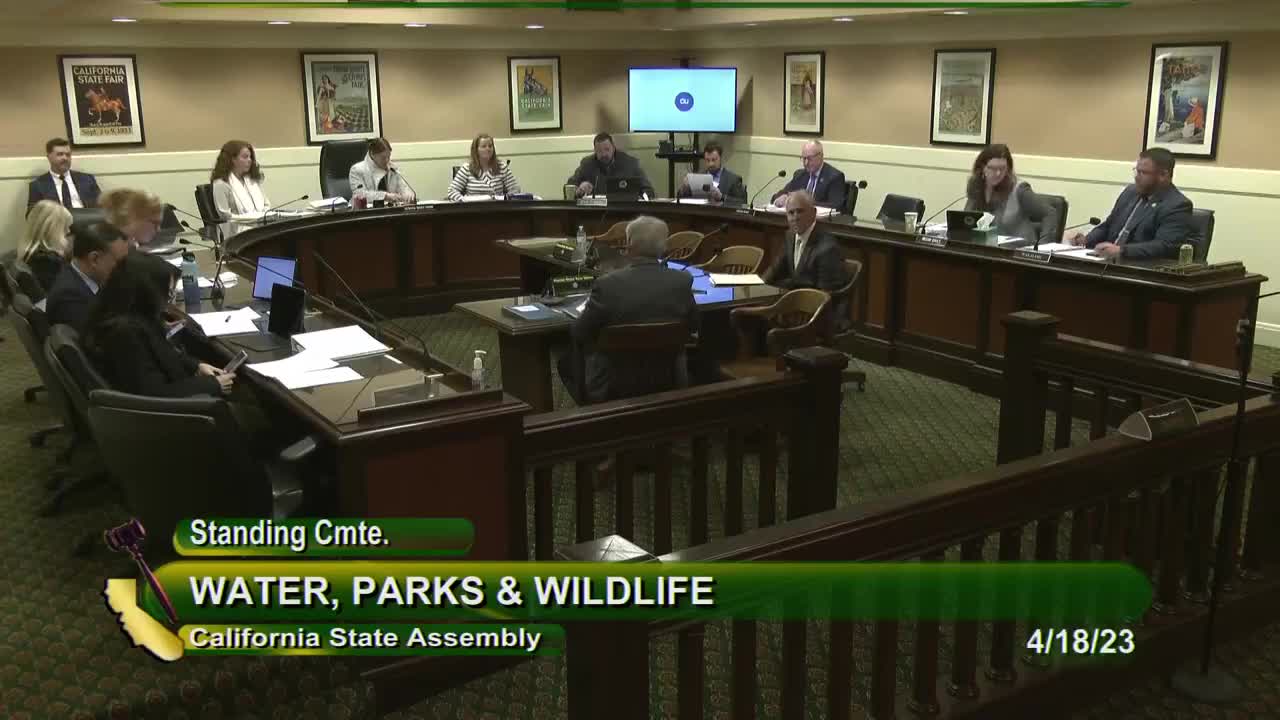
| Apr 18, 2023 | Do pass and be re-referred to the Committee on [Appropriations] | Assembly Standing Committee on Water, Parks, and Wildlife |
Passed |
This list shows positions taken on this bill by organizations on the date displayed, which is linked to the original source.
Positions by individuals are not included.
|
Organization
|
Position
|
Date
|
|---|---|---|
| Climate Reality Project, California State Coalition | ** Support | |
| Community Alliance With Family Farmers | * Neutral | Apr 18, 2023 |
Date of Hearing: May 10, 2023
ASSEMBLY COMMITTEE ON APPROPRIATIONS
Chris Holden, Chair
ABPCA Bill Id:AB 900
Author:(Bennett) – As Amended Ver:April 12, 2023
Policy Committee: | Water, Parks and Wildlife | Vote: | 14 - 0 |
|
| ||
|
|
Urgency: No State Mandated Local Program: No Reimbursable: No
SUMMARY:
This bill requires the Department of Water Resources (DWR) to submit a report to the Legislature outlining best practices for aquifer recharge and to implement a grant program to implement these best practices.
Specifically, this bill, among other things:
- Requires DWR, by July 1, 2024, to receive input from various stakeholders and produce a report for the Legislature outlining best practices for aquifer recharge and provides that the report shall include guidelines for a streamlined permitting process for aquifer recharge projects that implement the best practices outlined in the report.
- Requires DWR to include in its report information regarding specified outcomes of implementation of Executive Order (EO) N-4-23 as well as recommendations on whether the EO needs to be made into a permanent program and, if so, what policy changes are necessary to accomplish this.
- Requires DWR, by July 1, 2025, to implement a grant program to implement the report’s best practices, including a streamlined process for the issuance of grant funds.
FISCAL EFFECT:
1) Costs of an unknown but potentially significant amount, likely in the hundreds of thousands of dollars, for DWR to produce the required report, conduct stakeholder outreach, and create and administer the grant program (General Fund).
2) Costs of an unknown but significant amount, likely in the hundreds of thousands to low millions of dollars, for DWR to provide grants under the proposed program (General Fund).
COMMENTS:
1) Purpose. According to the author:
Even with the recent massive storms, California is still facing an unprecedented and severe drought. Recently, we have become increasingly dependent on our groundwater supply. Many of these groundwater basins have taken decades, if not centuries, to fill and we are draining the water far faster than we can replenish it. Improving groundwater recharge is a delicate balance between the need to maintain surface flows for the ecosystem and the value of capturing surplus stormwater flows to recharge basins.
2) Background. According to DWR, groundwater is a critical source of water for both farms and cities in California, supplying 40% of water in a typical year and as much as 60% in drought years. About 80% of Californians use groundwater for drinking or other household uses. Signed into law in 2014, after nearly a century of mismanagement of the state’s groundwater resources, the Sustainable Groundwater Management Act (SGMA) established a statewide framework to help protect groundwater resources over the long term. SGMA requires local agencies to form groundwater sustainability agencies (GSAs) for medium- and high-priority basins as designated by DWR. A GSA, which is made up of one or more local agencies overlying a groundwater basin, must develop and implement a groundwater sustainability plan (GSP). GSPs provide a roadmap for how groundwater basins will reach long-term sustainability without causing undesirable results, namely significant groundwater level declines, groundwater storage reductions, seawater intrusion, water quality degradation, land subsidence, and surface water depletions.
Groundwater basins can recharge naturally, through percolation of water into the land, but it happens slowly over time. Millions of acre-feet of water naturally collect in aquifers in years of abundant precipitation. Recharge also happens more directly, when people divert and convey water to specific areas, like percolation ponds. Managed recharge requires planning. Infrastructure must be built, and at times permits are needed to ensure that diversions from creeks and rivers do not harm fish and wildlife or other water users. Groundwater recharge is an important strategy to attain the goals of SGMA and virtually all the GSPs submitted to DWR to date include groundwater recharge as a management action. Despite the merits of groundwater recharge, various analyses have identified barriers to implementation of these projects. A white paper on “Flood-MAR” (managed aquifer recharge) completed by DWR in 2018 found that “complex technical, legal, and institutional barriers and challenges affect the planning and implementation of Flood-MAR.”
EO N-4-23. Issued on March 10, 2023, this broad and sweeping EO finds that “capturing and storing storm and snowpack runoff underground to recharge aquifers is an important strategy to help regions stabilize water supplies in the face of hydrologic extremes.” In an effort to streamline permitting requirements, the EO waives Lake and Streambed Alteration Agreement (LSAA), California Environmental Quality Act (CEQA), and water right permit requirements for water diversions for groundwater recharge projects that meet specified criteria. This bill requires DWR to report on implementation of the EO.
While this bill directs only DWR to submit the required report, current law requires a permit from the State Water Resources Control Board (State Water Board) and the Department of Fish and Wildlife (DFW) to pull water from the state’s rivers and canals for groundwater recharge. DWR will likely need to closely coordinate with the State Water Board and DFW to implement this bill. The author may wish to provide more clarity, detail, and direction to DWR regarding the proposed grant program.
Writing in a support-if-amended position, a coalition of environmental justice organizations contend that while groundwater recharge projects can benefit nearby communities if they are done in a thoughtful manner, they can also cause significant and irreparable harm to groundwater quality and sources of drinking water if done without proper analysis. The coalition offers amendments to ensure the development of best practices for aquifer recharge includes analysis and mapping of safe recharge sites.
Analysis Prepared by: Nikita Koraddi / APPR. / (916) 319-2081
Date of Hearing: April 18, 2023
ASSEMBLY COMMITTEE ON WATER, PARKS, AND WILDLIFE
Rebecca Bauer-Kahan, Chair
ABPCA Bill Id:AB 900 (
Author:Bennett) – As Amended Ver:April 12, 2023
SUBJECT: Aquifer recharge
SUMMARY: Requires the Department of Water Resources (DWR) to complete a report outlining best practices for groundwater recharge and other specified information as well as guidelines for a streamlined granting process for recharge projects that adhere to best practices. Specifically, this bill:
- Adds “aquifers” to the definition of “natural infrastructure” used for the Safeguarding California Plan.
- Requires DWR to produce a report outlining best practices for aquifer recharge by July 1, 2024, and provides that the report shall include guidelines for a streamlined permitting practices process based on the report.
- Requires DWR to engage stakeholders including academic institutions, farmers and ranchers, nongovernmental organizations, and local agencies to receive input on best practices for aquifer recharge.
- Requires the report to include information regarding implementation of Executive Order (EO) N-4-23 and recommendations to the Legislature for a permanent program.
- Requires DWR to create a grant program to implement the report’s best practices and streamlined process for issuance of grant funds by July 1, 2025.
EXISTING LAW:
- Provides the storing of water underground is a beneficial use of water so long as the water stored is subsequently applied to beneficial purposes (Water Code § 1242).
- Authorizes the State Water Resources Control Board (State Water Board) to issue a temporary permit to divert water if the applicant has an urgent need to do so. Prescribes a process for the issuance of a temporary permit and provides that a temporary permit expires after 180 days unless renewed for another 180-day period (Water Code § 1425 et seq.).
- Authorizes the State Water Board to issue a conditional temporary permit for diversion of surface water to groundwater storage to a groundwater sustainability agency (GSA) or local agency. Outlines an expedited permitting pathway for such permits and provides that they have a term of five years (Water Code § 1433 et seq.).
FISCAL EFFECT: Unknown. This bill is keyed fiscal.
COMMENTS:
- Purpose of this bill. According to the author, “even with the recent massive storms, California is still facing an unprecedented and severe drought. Recently, we have become increasingly dependent on our groundwater supply. Many of these groundwater basins have taken decades, if not centuries, to fill and we are draining the water far faster than we can replenish it. Improving groundwater recharge is a delicate balance between the need to maintain surface flows for the ecosystem and the value of capturing surplus stormwater flows to recharge basins.” The author asserts that this bill will help accelerate groundwater recharge by directing DWR to develop best practices, guidelines for streamlined issuance of grant funds, and a grant program to implement its recommendations.
- Background. According to DWR, groundwater supplies approximately 40 percent of California’s water supply in a “normal” year and as much as 60 percent in dry years. Many of California’s groundwater basins are “overdrafted,” a condition where more water is extracted in a given year than is recharged by rainfall or infiltration of surface waters. The overdrafting of groundwater basins was the main cause behind the enactment of the Sustainable Groundwater Management Act (SGMA) in 2014 that requires GSAs in overdrafted basins to develop a groundwater sustainability plan (GSP) to achieve sustainable groundwater management within 20 years. In 2017, the Public Policy Institute of California estimated that the average annual groundwater deficit in the San Joaquin Valley between 1988 and 2017 was 1.8 million acre-feet.
Groundwater recharge is an important strategy to reverse this trend and attain the goals of SGMA and virtually all of the GSPs that have been submitted to date include groundwater recharge as a management action. Despite the merits of groundwater recharge, various analyses have identified barriers to implementation of these projects. A white paper on “Flood-MAR” (managed aquifer recharge) completed by DWR in 2018 found that “complex technical, legal, and institutional barriers and challenges affect the planning and implementation of Flood-MAR.” According to the white paper, these challenges fall into the following categories: (1) cooperation and governance; (2) policy; (3) legal; and (4) implementation.
EO N-4-23. Issued on March 10, 2023, this broad and sweeping EO finds that “capturing and storing storm and snowpack runoff underground to recharge aquifers is an important strategy to help regions stabilize water supplies in the face of hydrologic extremes” and waives Lake and Streambed Alteration Agreement (LSAA), California Environmental Quality Act (CEQA), and water right permit requirements for water diversions for groundwater recharge projects that meet specified criteria. These criteria include: diversions between March 10, 2023 and June 1, 2023, occur after notice by a local agency, and water diverted cannot be applied to dairyland, any agricultural land where pesticide or fertilizer has been applied in the last 30 days, or any area that could damage levees or drinking water infrastructure. This bill requires DWR to report on implementation of this EO.
Safeguarding California Plan. This is a climate adaptation plan for the state authored by the California Natural Resources Agency. It establishes a vision to make the state more climate resilient and identifies principles, goals, and strategies to address ongoing and future impacts of climate change. The plan includes actions that could be taken by local agencies. The plan was most recently updated in 2018 and is anticipated to be updated every three years going forward. - Arguments in support. The Climate Reality Project, California State Coalition supports this bill arguing that “stormwater capture and storage in underground basins can help mitigate the effects of prolonged drought.” The Coalition contends that groundwater basins are an essential part of California’s water infrastructure and have the ability to store eight to twelve more times the water of surface storage. Finally, the Coalition maintains that “expedited permitting and grant funding will be essential to ensure that water storage goals are met.”
- Related legislation. AB 658 (Arambula), Chapter 678, Statutes of 2019, permits GSAs or other local agencies to apply to the State Water Board for a temporary five-year permit to divert surface water to groundwater storage during high-flow events.
REGISTERED SUPPORT / OPPOSITION:
Support
Climate Reality Project, California State Coalition
Opposition
None on file
Analysis Prepared by: Pablo Garza / W., P., & W. / (916) 319-2096
Discussed in Hearing
 4MIN
Assembly Standing Committee on Water, Parks, and Wildlife
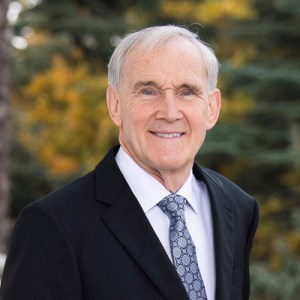
Bill Author
Bill Co-Author(s):