AB 97: Firearms: unserialized firearms.
- Session Year: 2023-2024
- House: Assembly
- Latest Version Date: 2023-09-26
Current Status:
Passed
(2023-09-26: Chaptered by Secretary of State - Chapter 233, Statutes of 2023.)
Introduced
In Committee
First Chamber
In Committee
Second Chamber
Enacted
Existing law requires a person that is manufacturing a firearm or assembling a firearm from unserialized components, to apply to the Department of Justice for a unique mark of identification and to affix that mark to the firearm, as specified. Existing law prohibits a person, corporation, or firm from knowingly manufacturing or assembling, or to knowingly cause, allow, facilitate, aid, or abet the manufacture or assembling of, a firearm that is not imprinted with a valid state or federal serial number or mark of identification. Under existing law, a person who knowingly possesses a firearm that does not have a valid state or federal serial number or mark of identification is guilty of a misdemeanor.
This bill would, until January 1, 2033, require the Department of Justice to collect and report specified information, including, among other things, the number and disposition of arrests made for violations of the provisions mentioned above, as specified. The bill would require the department to prepare and distribute a report, as specified, commencing on July 1, 2025, and annually thereafter, that includes the data collected.
Existing law requires a person that is manufacturing a firearm or assembling a firearm from unserialized components, to apply to the Department of Justice for a unique mark of identification and to affix that mark to the firearm, as specified. Existing law prohibits a person, corporation, or firm from knowingly manufacturing or assembling, or to knowingly cause, allow, facilitate, aid, or abet the manufacture or assembling of, a firearm that is not imprinted with a valid state or federal serial number or mark of identification. Under existing law, a person who knowingly possesses a firearm that does not have a valid state or federal serial number or mark of identification is guilty of a misdemeanor.
This bill would, until January 1, 2033, require the Department of Justice to collect and report specified information, including, among other things, the number and disposition of arrests pursuant to made for violations of the provisions mentioned above. above, as specified. The bill would require the department to issue a report to the Legislature, prepare and distribute a report, as specified, on or before January commencing on July 1, 2025, and annually thereafter, that includes the data collected.
Existing law requires a person that is manufacturing a firearm or assembling a firearm from unserialized components, to apply to the Department of Justice for a unique mark of identification and to affix that mark to the firearm, as specified. Existing law prohibits a person, corporation, or firm from knowingly manufacturing or assembling, or to knowingly cause, allow, facilitate, aid, or abet the manufacture or assembling of, a firearm that is not imprinted with a valid state or federal serial number or mark of identification. Under existing law, a person who knowingly possesses a firearm that does not have a valid state or federal serial number or mark of identification is guilty of a misdemeanor.
This bill would, until January 1, 2033, require the Department of Justice to collect and report specified information, including, among other things, the number of arrests pursuant to the provisions mentioned above. The bill would require the department to issue a report to the Legislature, as specified, on or before January 1, 2025, and annually thereafter, that includes the data collected.
Existing federal law requires a commercially produced firearm to be etched or otherwise inscribed by the manufacturer with a unique serial number. Existing state law prohibits the alteration, removal, or obliteration of that serial number. A violation of this prohibition is punishable as a felony. Existing law also prohibits the transfer or possession of a firearm with a serial number that has been altered, removed, or obliterated. A violation of this prohibition is punishable as a misdemeanor.Existing law requires a person, other than a licensed manufacturer, who assembles or manufactures a firearm, or any person who possesses an unserialized firearm, to obtain a unique serial number from the Department of Justice and to inscribe that serial number on the firearm, as specified. A violation of this requirement is punishable as a misdemeanor.This bill would make the possession of an unserialized firearm or possession of a firearm with an altered, removed, or obliterated serial number punishable as a felony. By increasing the punishment for these crimes, this bill would impose a state-mandated local program.The California Constitution requires the state to reimburse local agencies and school districts for certain costs mandated by the state. Statutory provisions establish procedures for making that reimbursement.This bill would provide that no reimbursement is required by this act for a specified reason.Existing federal law requires a commercially produced firearm to be etched or otherwise inscribed by the manufacturer with a unique serial number. Existing state law prohibits the alteration, removal, or obliteration of that serial number. A violation of this prohibition is punishable as a felony. Existing law also prohibits the transfer or possession of a firearm with a serial number that has been altered, removed, or obliterated. A violation of this prohibition is punishable as a misdemeanor.
Existing law requires a person, other than a licensed manufacturer, who assembles or manufactures a firearm, or any person who possesses an unserialized firearm, to obtain a unique serial number from the Department of Justice and to inscribe that serial number on the firearm, as specified. A violation of this requirement is punishable as a misdemeanor.
This bill would make the possession of an unserialized firearm or possession of a firearm with an altered, removed, or obliterated serial number punishable as a felony. By increasing the punishment for these crimes, this bill would impose a state-mandated local program.
The California Constitution requires the state to reimburse local agencies and school districts for certain costs mandated by the state. Statutory provisions establish procedures for making that reimbursement.
This bill would provide that no reimbursement is required by this act for a specified reason.
(a)The Department of Justice shall collect and report data on arrests made by law enforcement agencies for offenses related to firearms without a valid state or federal serial number. The department shall collect and report the following data:
(1)The number of arrests for violations of Section 23920.
(2)The number of arrests for violations of Section 29180.
(3)Until January 1, 2029, the disposition of violations of Sections 23920 and 29180, including, without limitation, the number of cases resulting in each of the following dispositions:
(A)An arrest was made, but the arresting law enforcement agency did not submit charges to the district attorney or other prosecuting agency.
(B)An arrest was made, but no charges were filed by the district attorney or other prosecuting agency.
(C)The case was dismissed after charging, either by the court or the district attorney.
(D)The defendant was acquitted.
(E)The defendant was convicted, whether by trial or by plea.
(4)Commencing on January 1, 2029, the disposition of violations of Sections 23920 and 29180 based on the information reported to the department pursuant to subdivision (e) of Section 13370, including, without limitation, the number of cases resulting in each of the following dispositions:
(A)An arrest was made, but the arresting law enforcement agency did not submit charges to the district attorney or other prosecuting agency.
(B)An arrest was made, but no charges were filed by the district attorney or other prosecuting agency.
(C)The case was dismissed after charging, either by the court or the district attorney.
(D)The defendant was acquitted by trial.
(E)The defendant was convicted by plea.
(F)The defendant was convicted by trial.
(b)Commencing on July 1, 2025, and annually thereafter, the department shall issue a report that includes the data collected pursuant to subdivision (a). This report shall be made available in the same manner as described in subdivision (g) of Section 13010.
(c)This section shall remain in effect until January 1, 2033, and as of that date is repealed.
(a)The Department of Justice shall collect and report data on arrests made by law enforcement agencies for offenses related to firearms without a valid state or federal serial number. The department shall collect and report the following data:
(1)The number of arrests pursuant to for violations of Section 23920.
(2)The number of arrests pursuant to for violations of Section 29180.
(3)The disposition of arrests pursuant to Section 23920 or 29180, including information about whether an arrestee was booked, cited, or released from custody.(3)Until January 1, 2029, the disposition of violations of Sections 23920 and 29180, including, without limitation, the number of cases resulting in each of the following dispositions:
(A)An arrest was made, but the arresting law enforcement agency did not submit charges to the district attorney or other prosecuting agency.
(B)An arrest was made, but no charges were filed by the district attorney or other prosecuting agency.
(C)The case was dismissed after charging, either by the court or the district attorney.
(D)The defendant was acquitted.
(E)The defendant was convicted, whether by trial or by plea.
(4)Starting Commencing on January 1, 2029, the disposition of prosecutions for violations of Sections 23920 or and 29180 based on the information reported to the department pursuant to subdivision (e) of Section 13370, including, but not limited to, whether the charges were dismissed, the defendant was acquitted or convicted, or whether the charges were resolved on other grounds, including as the result of a plea bargain. without limitation, the number of cases resulting in each of the following dispositions:
(A)An arrest was made, but the arresting law enforcement agency did not submit charges to the district attorney or other prosecuting agency.
(B)An arrest was made, but no charges were filed by the district attorney or other prosecuting agency.
(C)The case was dismissed after charging, either by the court or the district attorney.
(D)The defendant was acquitted by trial.
(E)The defendant was convicted by plea.
(F)The defendant was convicted by trial.
(b)The Commencing on July 1, 2025, and annually thereafter, the department shall issue a report to the Legislature on or before January 1, 2025, and annually thereafter, that includes the data collected pursuant to subdivision (a), except the data collected pursuant to paragraph (4) of subdivision (a) until the department begins reporting the data pursuant to paragraph (4) of subdivision (d) of Section 13370. (a). This report shall be made available in the same manner as described in subdivision (g) of Section 13010.
(c)The report submitted pursuant to subdivision (b) shall be submitted in compliance with Section 9795 of the Government Code.(d)(c)This section shall remain in effect until January 1, 2033, and as of that date is repealed.
(a)The Department of Justice shall collect and report data on arrests made by law enforcement agencies for offenses related to firearms without a valid state or federal serial number. The department shall collect and report the following data:
(1)The number of arrests pursuant to Section 23920.
(2)The number of arrests pursuant to Section 29180.
(3)The disposition of arrests pursuant to Section 23920 or 29180, including information about whether an arrestee was booked, cited, or released from custody.
(4)Starting on January 1, 2029, the disposition of prosecutions for violations of Sections 23920 or 29180 reported to the department pursuant to subdivision (e) of Section 13370, including, but not limited to, whether the charges were dismissed, the defendant was acquitted or convicted, or whether the charges were resolved on other grounds, including as the result of a plea bargain.
(b)The department shall issue a report to the Legislature on or before January 1, 2025, and annually thereafter, that includes the data collected pursuant to subdivision (a), except the data collected pursuant to paragraph (4) of subdivision (a) until the department begins reporting the data pursuant to paragraph (4) of subdivision (d) of Section 13370.
(c)The report submitted pursuant to subdivision (b) shall be submitted in compliance with Section 9795 of the Government Code.
(d)This section shall remain in effect until January 1, 2033, and as of that date is repealed.
SECTION 1.Section 23920 of the Penal Code is amended to read:23920.(a)Except as provided in Section 23925, any person who, with knowledge of any change, alteration, removal, or obliteration described in this section, buys, receives, disposes of, sells, offers for sale, or has in possession any pistol, revolver, or other firearm that has had the name of the maker or model, or the manufacturers number or other mark of identification, including any distinguishing number or mark assigned by the Department of Justice, changed, altered, removed, or obliterated, is guilty of a felony punishable by imprisonment pursuant to subdivision (h) of Section 1170.(b)Except as provided in Section 23925, any person who, on or after January 1, 2024, knowingly possesses any firearm that does not have a valid state or federal serial number or mark of identification is guilty of a felony punishable by imprisonment pursuant to subdivision (h) of Section 1170.SEC. 2.Section 29180 of the Penal Code is amended to read:29180.(a)For purposes of this chapter, manufacturing or assembling a firearm means to fabricate or construct a firearm, including through additive, subtractive, or other processes, or to fit together the component parts of a firearm to construct a firearm.(b)Before manufacturing or assembling a firearm, a person manufacturing or assembling the firearm shall, for any firearm that does not have a valid state or federal serial number or mark of identification imprinted on the frame or receiver, do all of the following:(1)(A)Apply to the Department of Justice for a unique serial number or other mark of identification pursuant to Section 29182.(B)Each application shall contain a description of the firearm that the applicant intends to assemble, the applicants full name, address, date of birth, and any other information that the department may deem appropriate.(2)(A)Within 10 days of manufacturing or assembling a firearm in accordance with paragraph (1), the unique serial number or other mark of identification provided by the department shall be engraved or permanently affixed to the firearm in a manner that meets or exceeds the requirements imposed on licensed importers and licensed manufacturers of firearms pursuant to subsection (i) of Section 923 of Title 18 of the United States Code and regulations issued pursuant thereto.(B)If the firearm is manufactured or assembled from polymer plastic, 3.7 ounces of material type 17-4 PH stainless steel shall be embedded within the plastic upon fabrication or construction with the unique serial number engraved or otherwise permanently affixed in a manner that meets or exceeds the requirements imposed on licensed importers and licensed manufacturers of firearms pursuant to subsection (i) of Section 923 of Title 18 of the United States Code and regulations issued pursuant thereto.(3)After the serial number provided by the department is engraved or otherwise permanently affixed to the firearm, the person shall notify the department of that fact in a manner and within a time period specified by the department, and with sufficient information to identify the owner of the firearm, the unique serial number or mark of identification provided by the department, and the firearm in a manner prescribed by the department.(c)Any person who owns a firearm or firearm precursor part that does not bear a valid state or federal serial number or mark of identification shall be deemed to be in compliance with subdivision (b) of Section 23920 if they comply with all of the following:(1)(A)By no later than January 1, 2024, or if a new resident of the state, within 60 days after arriving in the state with a firearm that does not have a valid state or federal serial number or mark of identification, apply to the Department of Justice for a unique serial number or other mark of identification pursuant to Section 29182.(B)An application to the department for a serial number or mark of identification for a firearm precursor part shall include, in a manner prescribed by the department, information identifying the applicant and a description of the firearm that the applicant intends to manufacture or assemble with the firearm precursor part, and any other information that the department may deem appropriate.(2)Within 10 days of receiving a unique serial number or other mark of identification from the department, engrave or permanently affix that serial number or mark of identification to the firearm in accordance with regulations prescribed by the department pursuant to Section 29182 and in a manner that meets or exceeds the requirements imposed on licensed importers and licensed manufacturers of firearms pursuant to subsection (i) of Section 923 of Title 18 of the United States Code and regulations issued pursuant thereto. If the firearm is manufactured or assembled from polymer plastic, 3.7 ounces of material type 17-4 PH stainless steel shall be embedded within the plastic upon fabrication or construction.(3)After the serial number provided by the department is engraved or otherwise permanently affixed to the firearm, notify the department of that fact in a manner and within a time period specified by the department and with sufficient information to identify the owner of the firearm, the unique serial number or mark of identification provided by the department, and the firearm in a manner prescribed by the department.(d)(1)Except by operation of law, a person, corporation, or firm that is not a federally licensed firearms manufacturer shall not sell or transfer ownership of a firearm, as defined in subdivision (g) of Section 16520, if any of the following are true:(A)That person, corporation, or firm manufactured or assembled the firearm.(B)That person, corporation, or firm knowingly caused the firearm to be manufactured or assembled by a person, corporation, or firm that is not a federally licensed firearms manufacturer.(C)That person, corporation, or firm is aware that the firearm was manufactured or assembled by a person, corporation, or firm that is not a federally licensed firearms manufacturer.(2)Paragraph (1) does not apply to the transfer, surrender, or sale of a firearm to a law enforcement agency.(3)Any firearms confiscated by law enforcement that do not bear an engraved serial number or other mark of identification pursuant to subdivision (b) or (c), or a firearm surrendered, transferred, or sold to a law enforcement agency pursuant to paragraph (2) shall be destroyed as provided in Section 18005.(4)Sections 26500 and 27545, and subdivision (a) of Section 31615, do not apply to the transfer, sale, or surrender of firearms to a law enforcement agency pursuant to paragraph (2).(e)A person, corporation, or firm shall not knowingly allow, facilitate, aid, or abet the manufacture or assembling of a firearm by a person who is within any of the classes identified by Chapter 2 (commencing with Section 29800) or Chapter 3 (commencing with Section 29900) of Division 9 of this code, or Section 8100 or 8103 of the Welfare and Institutions Code.(f)A person, corporation, or firm shall not knowingly manufacture or assemble, or knowingly cause, allow, facilitate, aid, or abet the manufacture or assembling of, a firearm that is not imprinted with a valid state or federal serial number or mark of identification.(g)A violation of this section is punishable by imprisonment pursuant to subdivision (h) of Section 1170. Each firearm found to be in violation of this section constitutes a distinct and separate offense. This section does not preclude prosecution under any other law providing for a greater penalty.SEC. 3.No reimbursement is required by this act pursuant to Section 6 of Article XIIIB of the California Constitution because the only costs that may be incurred by a local agency or school district will be incurred because this act creates a new crime or infraction, eliminates a crime or infraction, or changes the penalty for a crime or infraction, within the meaning of Section 17556 of the Government Code, or changes the definition of a crime within the meaning of Section 6 of Article XIIIB of the California Constitution.(a)Except as provided in Section 23925, any person who, with knowledge of any change, alteration, removal, or obliteration described in this section, buys, receives, disposes of, sells, offers for sale, or has in possession any pistol, revolver, or other firearm that has had the name of the maker or model, or the manufacturers number or other mark of identification, including any distinguishing number or mark assigned by the Department of Justice, changed, altered, removed, or obliterated, is guilty of a misdemeanor. felony punishable by imprisonment pursuant to subdivision (h) of Section 1170.
(b)Except as provided in Section 23925, any person who, on or after January 1, 2024, knowingly possesses any firearm that does not have a valid state or federal serial number or mark of identification is guilty of a misdemeanor. felony punishable by imprisonment pursuant to subdivision (h) of Section 1170.
SEC. 2.Section 29180 of the Penal Code is amended to read:29180.(a)For purposes of this chapter, manufacturing or assembling a firearm means to fabricate or construct a firearm, including through additive, subtractive, or other processes, or to fit together the component parts of a firearm to construct a firearm.
(b)Before manufacturing or assembling a firearm, a person manufacturing or assembling the firearm shall, for any firearm that does not have a valid state or federal serial number or mark of identification imprinted on the frame or receiver, do all of the following:
(1)(A)Apply to the Department of Justice for a unique serial number or other mark of identification pursuant to Section 29182.
(B)Each application shall contain a description of the firearm that the applicant intends to assemble, the applicants full name, address, date of birth, and any other information that the department may deem appropriate.
(2)(A)Within 10 days of manufacturing or assembling a firearm in accordance with paragraph (1), the unique serial number or other mark of identification provided by the department shall be engraved or permanently affixed to the firearm in a manner that meets or exceeds the requirements imposed on licensed importers and licensed manufacturers of firearms pursuant to subsection (i) of Section 923 of Title 18 of the United States Code and regulations issued pursuant thereto.
(B)If the firearm is manufactured or assembled from polymer plastic, 3.7 ounces of material type 17-4 PH stainless steel shall be embedded within the plastic upon fabrication or construction with the unique serial number engraved or otherwise permanently affixed in a manner that meets or exceeds the requirements imposed on licensed importers and licensed manufacturers of firearms pursuant to subsection (i) of Section 923 of Title 18 of the United States Code and regulations issued pursuant thereto.
(3)After the serial number provided by the department is engraved or otherwise permanently affixed to the firearm, the person shall notify the department of that fact in a manner and within a time period specified by the department, and with sufficient information to identify the owner of the firearm, the unique serial number or mark of identification provided by the department, and the firearm in a manner prescribed by the department.
(c)Any person who owns a firearm or firearm precursor part that does not bear a valid state or federal serial number or mark of identification shall be deemed to be in compliance with subdivision (b) of Section 23920 if they comply with all of the following:
(1)(A)By no later than January 1, 2024, or if a new resident of the state, within 60 days after arriving in the state with a firearm that does not have a valid state or federal serial number or mark of identification, apply to the Department of Justice for a unique serial number or other mark of identification pursuant to Section 29182.
(B)An application to the department for a serial number or mark of identification for a firearm precursor part shall include, in a manner prescribed by the department, information identifying the applicant and a description of the firearm that the applicant intends to manufacture or assemble with the firearm precursor part, and any other information that the department may deem appropriate.
(2)Within 10 days of receiving a unique serial number or other mark of identification from the department, engrave or permanently affix that serial number or mark of identification to the firearm in accordance with regulations prescribed by the department pursuant to Section 29182 and in a manner that meets or exceeds the requirements imposed on licensed importers and licensed manufacturers of firearms pursuant to subsection (i) of Section 923 of Title 18 of the United States Code and regulations issued pursuant thereto. If the firearm is manufactured or assembled from polymer plastic, 3.7 ounces of material type 17-4 PH stainless steel shall be embedded within the plastic upon fabrication or construction.
(3)After the serial number provided by the department is engraved or otherwise permanently affixed to the firearm, notify the department of that fact in a manner and within a time period specified by the department and with sufficient information to identify the owner of the firearm, the unique serial number or mark of identification provided by the department, and the firearm in a manner prescribed by the department.
(d)(1)Except by operation of law, a person, corporation, or firm that is not a federally licensed firearms manufacturer shall not sell or transfer ownership of a firearm, as defined in subdivision (g) of Section 16520, if any of the following are true:
(A)That person, corporation, or firm manufactured or assembled the firearm.
(B)That person, corporation, or firm knowingly caused the firearm to be manufactured or assembled by a person, corporation, or firm that is not a federally licensed firearms manufacturer.
(C)That person, corporation, or firm is aware that the firearm was manufactured or assembled by a person, corporation, or firm that is not a federally licensed firearms manufacturer.
(2)Paragraph (1) does not apply to the transfer, surrender, or sale of a firearm to a law enforcement agency.
(3)Any firearms confiscated by law enforcement that do not bear an engraved serial number or other mark of identification pursuant to subdivision (b) or (c), or a firearm surrendered, transferred, or sold to a law enforcement agency pursuant to paragraph (2) shall be destroyed as provided in Section 18005.
(4)Sections 26500 and 27545, and subdivision (a) of Section 31615, do not apply to the transfer, sale, or surrender of firearms to a law enforcement agency pursuant to paragraph (2).
(e)A person, corporation, or firm shall not knowingly allow, facilitate, aid, or abet the manufacture or assembling of a firearm by a person who is within any of the classes identified by Chapter 2 (commencing with Section 29800) or Chapter 3 (commencing with Section 29900) of Division 9 of this code, or Section 8100 or 8103 of the Welfare and Institutions Code.
(f)A person, corporation, or firm shall not knowingly manufacture or assemble, or knowingly cause, allow, facilitate, aid, or abet the manufacture or assembling of, a firearm that is not imprinted with a valid state or federal serial number or mark of identification.
(g)If the firearm is a handgun, a A violation of this section is punishable by imprisonment in a county jail not to exceed one year, or by a fine not to exceed one thousand dollars ($1,000), or by both that fine and imprisonment. For all other firearms, a violation of this section is punishable by imprisonment in a county jail not to exceed six months, or by a fine not to exceed one thousand dollars ($1,000), or by both that fine and imprisonment. pursuant to subdivision (h) of Section 1170. Each firearm found to be in violation of this section constitutes a distinct and separate offense. This section does not preclude prosecution under any other law providing for a greater penalty.
SEC. 3.No reimbursement is required by this act pursuant to Section 6 of Article XIIIB of the California Constitution because the only costs that may be incurred by a local agency or school district will be incurred because this act creates a new crime or infraction, eliminates a crime or infraction, or changes the penalty for a crime or infraction, within the meaning of Section 17556 of the Government Code, or changes the definition of a crime within the meaning of Section 6 of Article XIIIB of the California Constitution.
|
Date
|
Status
|
|---|---|
| Sep 26, 2023 | Chaptered by Secretary of State - Chapter 233, Statutes of 2023. |
| Sep 26, 2023 | Approved by the Governor. |
| Sep 15, 2023 | Enrolled and presented to the Governor at 4 p.m. |
| Sep 11, 2023 | Senate amendments concurred in. To Engrossing and Enrolling. (Ayes 80. Noes 0. Page 3174.). |
| Sep 7, 2023 | Assembly Rule 77 suspended. (Page 3011.) |
| Sep 6, 2023 | In Assembly. Concurrence in Senate amendments pending. May be considered on or after September 8 pursuant to Assembly Rule 77. |
| Sep 6, 2023 | Read third time. Passed. Ordered to the Assembly. (Ayes 39. Noes 0. Page 2435.). |
| Sep 5, 2023 | Read second time. Ordered to third reading. |
| Sep 1, 2023 | Read second time and amended. Ordered returned to second reading. |
| Sep 1, 2023 | From committee: Amend, and do pass as amended. (Ayes 6. Noes 0.) (September 1). |
| Jul 3, 2023 | In committee: Referred to APPR suspense file. |
| Jun 20, 2023 | From committee: Do pass and re-refer to Com. on APPR with recommendation: To Consent Calendar. (Ayes 5. Noes 0.) (June 20). Re-referred to Com. on APPR. |
| Jun 7, 2023 | Referred to Com. on PUB S. |
| May 26, 2023 | In Senate. Read first time. To Com. on RLS. for assignment. |
| May 25, 2023 | Read third time. Passed. Ordered to the Senate. (Ayes 77. Noes 0. Page 1748.) |
| May 18, 2023 | Read second time. Ordered to third reading. |
| May 18, 2023 | From committee: Do pass. (Ayes 15. Noes 0.) (May 18). |
| Mar 29, 2023 | In committee: Set, first hearing. Referred to APPR. suspense file. |
| Mar 9, 2023 | Re-referred to Com. on APPR. |
| Mar 8, 2023 | Read second time and amended. |
| Mar 7, 2023 | From committee: Amend, and do pass as amended and re-refer to Com. on APPR. (Ayes 8. Noes 0.) (March 7). |
| Feb 28, 2023 | In committee: Set, second hearing. Hearing canceled at the request of author. |
| Feb 14, 2023 | In committee: Set, first hearing. Hearing canceled at the request of author. |
| Jan 26, 2023 | Referred to Com. on PUB. S. |
| Jan 10, 2023 | From printer. May be heard in committee February 9. |
| Jan 9, 2023 | Read first time. To print. |
|
Date
|
Description
|
Location
|
Votes
|
|
|---|---|---|---|---|
| Sep 11, 2023 | AB 97 Rodriguez Concurrence in Senate Amendments | Assembly Floor |
Passed |
|
| Sep 6, 2023 | Assembly 3rd Reading AB97 Rodriguez | Senate Floor |
Passed |
|
| Sep 1, 2023 | Do pass as amended | Senate Standing Committee on Appropriations |
Passed |
|
| Jul 3, 2023 | Placed on suspense file | Senate Standing Committee on Appropriations |
Passed |
|
| Jun 20, 2023 | Do pass, but first be re-referred to the Committee on [Appropriations] with the recommendation: To Consent Calendar | Senate Standing Committee on Public Safety |
Passed |
|
| May 25, 2023 | AB 97 Rodriguez Assembly Third Reading | Assembly Floor |
Passed |
|
| May 18, 2023 | Do pass. | Assembly Standing Committee on Appropriations |
Passed |
|
| Mar 7, 2023 | Do pass as amended and be re-referred to the Committee on [Appropriations] | Assembly Standing Committee on Public Safety |
Passed |
This list shows positions taken on this bill by organizations on the date displayed, which is linked to the original source.
Positions by individuals are not included.
|
Organization
|
Position
|
Date
|
|---|---|---|
| Aclu California Action | * Against | Mar 7, 2023 |
| Arcadia Police Officers Association | * Support | Mar 7, 2023 |
| Burbank Police Officers' Association | * Support | Mar 7, 2023 |
| California Attorneys For Criminal Justice | ** Against | |
| California Coalition of School Safety Professionals | ** Support | |
| California District Attorneys Association | ** Support | |
| California Federation Of Teachers | ** Support | |
| California Peace Officers Association | ** Support | |
| California Police Chiefs Association | ** Support | |
| California Public Defenders Association | * Against | Mar 7, 2023 |
| California Reserve Peace Officers Association | ** Support | |
| California School Employees Association | ** Support | |
| Chino Police Department | ** Support | |
| City of Alameda | ** Support | |
| Claremont Peace Officers Association | ** Support | |
| Corona Police Officers Association | * Support | Mar 7, 2023 |
| Culver City Police Officers' Association | * Support | Mar 7, 2023 |
| Deputy Sheriffs Association of Monterey County | ** Support | |
| Fullerton Police Officers' Association | * Support | Mar 7, 2023 |
| Gun Owners Of California Inc | ** Against | |
| Inglewood Police Officers Association | * Support | Mar 7, 2023 |
| LA School Police Officers Assn. PAC (LASPA PAC) | * Support | Mar 7, 2023 |
| Los Angeles County District AttorneyS Office | ** Support | |
| Los Angeles County Professional Peace Officers Association | ** Support | |
| Los Angeles County Sheriff'S Department | ** Support | |
| MURRIETA POLICE OFFICERS ASSOCIATION | ** Support | |
| National Rifle Association - Institute For Legislative Action | ** Against | |
| Newport Beach Police Association | ** Support | |
| Novato Police Officers Association | ** Support | |
| Ontario Police Department | ** Support | |
| Orange County District Attorney | ** Support | |
| Palos Verdes Police Officers' Association | * Support | Mar 7, 2023 |
| PLACER COUNTY DEPUTY SHERIFFS ASSOCIATION | ** Support | |
| Pomona Police Officers Association | * Support | Mar 7, 2023 |
| Pomona Police Officers' Association | * Support | Mar 7, 2023 |
| RIVERSIDE POLICE OFFICERS ASSOCIATION | ** Support | |
| Riverside Sheriffs Association | ** Support | |
| San Bernardino County Sheriffs Association | ** Support | |
| San Francisco Public Defender | ** Against | |
| Santa Ana Police Officers Association | * Support | Mar 7, 2023 |
| Upland Police Officers Association | * Support | Mar 7, 2023 |
CONCURRENCE IN SENATE AMENDMENTS
CSA1 Bill Id:AB 97
Author:(Rodriguez)
As Amended Ver:September 1, 2023
Majority vote
SUMMARY
Requires the Department of Justice (DOJ) to report data on arrests and prosecutions of specified misdemeanor offenses related to unserialized firearms.
Senate Amendments
- Clarify that, until January 1, 2029, DOJ must collect and report data collected from courts on the disposition of specified misdemeanor offense related to unserialized firearms, including the number of cases resulting in each of the following dispositions:
- An arrest was made, but the arresting law enforcement agency did not submit charges to the district attorney or other prosecuting agency;
- An arrest was made, but no charges were filed by the district attorney or other prosecuting agency;
- The case was dismissed after charging, either by the court or other district attorney;
- The defendant was acquitted; or,
- The defendant was convicted, whether by trial or by plea.
- Clarify that, after January 1, 2029, DOJ must collect and report substantially the same data as above but using data compiled pursuant to the Justice Data Accountability and Transparency Act, which takes effect on January 1, 2029 and requires all state and local prosecutors offices to report specified data to DOJ.
- Make technical and conforming changes.
COMMENTS
As passed by the Assembly, this bill:
- Required DOJ to collect and report data on arrests made by law enforcement agencies for the following offenses related to firearms without a valid state or federal serial number:
The number of misdemeanor arrests for buying, selling, receiving, or possessing a firearm with a removed or altered serial number, or for possessing a firearm without a valid serial number; and - The number of misdemeanor arrests for failing to obtain a valid serial number for a manufactured or assembled firearm.
- Required DOJ to collect and report data on arrests made by law enforcement agencies for the following offenses related to firearms without a valid state or federal serial number:
- Required DOJ to collect and report the following data:
- The disposition of those arrests for the above misdemeanor offenses, including information about whether an arrestee was booked, cited, or released from custody; and
- Starting on January 1, 2029, the disposition of prosecutions for the above misdemeanor offenses reported to the department, as specified, including whether charges were dismissed, whether the defendant was acquitted or convicted, or whether the charges were resolved on other grounds, including as a result of plea bargaining.
- Required DOJ to issue a report to the Legislature by January 1, 2025, and annually thereafter, detailing the collected data.
- Sunset the reporting requirement on January 1, 2033.
According to the Author
AB 97 is an important public safety measure for the Legislature to gain a comprehensive picture of the proliferation of ghost guns in California and how criminals are being prosecuted. There are no records of existence for ghost guns – inhibiting law enforcement efforts to trace the firearm to the owner when used in a crime. That and the fact that these deadly weapons do not require a background check make ghost guns popular among criminals.
In the last several years, the number of ghost guns recovered has increased. In 2021, Los Angeles Police Department released a report stating ghost guns contributed to more than 100 violent crimes, including 24 murders, eight attempted homicides, and dozens of armed robberies and assaults. In the first six months of the year, the Department confiscated 863 ghost guns, nearly 300% over the previous year. Enough is enough. These firearms are being used to kill members of our community, including our law enforcement officers. By passing AB 97, the Legislature can get a clear picture of how many ghost guns law enforcement recovers annually to inform future policy.
Arguments in Support
According to the California Police Chiefs Association, "Gun violence has spiked across the state, homicide rates keep climbing, and officers continue to pull more and more illegal firearms off our streets. In 2021, Los Angeles Police Department cited a 400% increase in ghost gun seizures. Just last month, an East Palo Alto officer was shot and injured by a suspect with a fully automatic ghost gun. Despite this violence, possession of a ghost gun is often only chargeable as a misdemeanor. Given the gravity of issue, and potential harm caused by these illegal weapons, it is important our penalties match the threat. From our standpoint, it is completely clear that our laws are not deterring the massive proliferation of weapons…"
Arguments in Opposition
None on file.
FISCAL COMMENTS
According to the Senate Appropriations Committee, the DOJ reports costs of approximately $86,000 in 2023-24 and $150,000 annually thereafter in additional staff resources to order to analyze the data specified in the bill in the Automated Criminal History System, aggregate, and compile the report to the Legislature (General Fund).
VOTES:
ASM PUBLIC SAFETY: 8-0-0
YES: Jones-Sawyer, Alanis, Bonta, Bryan, Lackey, Ortega, Santiago, Zbur
ASM APPROPRIATIONS: 15-0-1
YES: Holden, Megan Dahle, Bryan, Calderon, Wendy Carrillo, Dixon, Mike Fong, Hart, Lowenthal, Mathis, Papan, Pellerin, Sanchez, Weber, Ortega
ABS, ABST OR NV: Robert Rivas
ASSEMBLY FLOOR: 77-0-3
YES: Addis, Alanis, Alvarez, Arambula, Bains, Bauer-Kahan, Bennett, Berman, Boerner, Bonta, Bryan, Calderon, Juan Carrillo, Wendy Carrillo, Cervantes, Chen, Connolly, Megan Dahle, Davies, Dixon, Essayli, Flora, Mike Fong, Vince Fong, Friedman, Gabriel, Gallagher, Garcia, Gipson, Grayson, Haney, Hart, Holden, Hoover, Irwin, Jackson, Jones‑Sawyer, Kalra, Lackey, Lee, Low, Lowenthal, Maienschein, McCarty, McKinnor, Muratsuchi, Stephanie Nguyen, Ortega, Pacheco, Papan, Jim Patterson, Pellerin, Petrie-Norris, Quirk-Silva, Ramos, Reyes, Luz Rivas, Robert Rivas, Rodriguez, Blanca Rubio, Sanchez, Santiago, Schiavo, Soria, Ta, Ting, Valencia, Villapudua, Waldron, Wallis, Ward, Weber, Wicks, Wilson, Wood, Zbur, Rendon
ABS, ABST OR NV: Aguiar-Curry, Mathis, Joe Patterson
SENATE FLOOR: 39-0-1
YES: Allen, Alvarado-Gil, Archuleta, Ashby, Atkins, Becker, Blakespear, Bradford, Caballero, Cortese, Dahle, Dodd, Durazo, Eggman, Glazer, Gonzalez, Grove, Hurtado, Jones, Laird, Limón, McGuire, Menjivar, Min, Newman, Nguyen, Niello, Ochoa Bogh, Padilla, Portantino, Roth, Rubio, Skinner, Smallwood-Cuevas, Stern, Umberg, Wahab, Wiener, Wilk
ABS, ABST OR NV: Seyarto
UPDATED
VERSION: September 1, 2023
CONSULTANT: Andrew Ironside / PUB. S. / (916) 319-3744 FN: 0001716
SENATE RULES COMMITTEE Office of Senate Floor Analyses (916) 651-1520 Fax: (916) 327-4478 | AB 97 |
THIRD READING
Bill No: AB 97
Author: Rodriguez (D)
Amended: 9/1/23 in Senate
Vote: 21
SENATE PUBLIC SAFETY COMMITTEE: 5-0, 6/20/23
AYES: Wahab, Ochoa Bogh, Bradford, Skinner, Wiener
SENATE APPROPRIATIONS COMMITTEE: 6-0, 9/1/23
AYES: Portantino, Jones, Ashby, Bradford, Wahab, Wiener
NO VOTE RECORDED: Seyarto
ASSEMBLY FLOOR: 77-0, 5/25/23 - See last page for vote
SUBJECT: Firearms: unserialized firearms
SOURCE: Author
DIGEST:
This bill requires the Department of Justice (DOJ) to collect and report data on arrest and prosecutions of specified misdemeanor offenses related to unserialized firearms.
ANALYSIS:
Existing law:
- Provides that any person who buys, sells, receives, or possesses a firearm knowing that the serial number or other mark of identification has been changed, altered, or removed, is guilty of a misdemeanor. (Pen. Code, § 23920, subd. (a).)
- Provides that, commencing January 1, 2024, any person who knowingly possesses any firearm that does not have a valid state or federal serial number or mark of identification is guilty of a misdemeanor. (Pen. Code, § 23920, subd. (b).)
- Requires a person manufacturing or assembling a firearm, prior to manufacturing or assembling that firearm, to apply to the DOJ for a unique serial number or other mark of identification for that firearm, and when that serial number is received, to affix it to the firearm within 10 days of the firearm’s manufacture or assembly (Pen. Code, § 29180, subd. (b)(1), (2).)
- Prohibits a person, corporation or firm that is not a federally licensed firearms manufacturer to sell or transfer ownership of a manufactured or assembled firearm under specified circumstances. (Pen. Code, § 29180, subd. (d).)
- Prohibits a person, corporation or firm from knowingly allowing, facilitating, aiding or abetting the manufacture or assembly of a firearm by a person who is a prohibited by law from possessing a firearm. (Pen. Code, § 29180, subd. (e).)
- Prohibits a person, corporation or firm from knowingly manufacturing or assembling, or knowingly allowing, facilitating, aiding or abetting the manufacture or assembly of a firearm that is not imprinted with a valid serial number. (Pen. Code, § 29180, subd. (f).)
- Provides that violation of Penal Code §29180 is punishable as a misdemeanor. (Pen. Code, § 29180, subd. (g).)
- Establishes the Justice Data Accountability and Transparency Act (JDATA), which generally requires state and local prosecution offices to collect and transmit data regarding criminal cases to the DOJ, which is required to aggregate, verify and publish the data. (Pen. Code, § 13370, et seq.)
- Declares the intent of the Legislature to create a workable system of criminal justice data transparency whereby law enforcement prosecution agencies will gather complete, accurate, and timely data in a uniform format, and make that data available to the public in a modern, open, electronic format that is machine-readable and readily accessible through an application program interface. (Pen. Code, § 13370, subd. (a)(1).)
- Sets forth a legislative finding that it is an important state interest to implement a data collection, aggregation, and publishing process for criminal prosecutions to promote criminal justice data transparency. This data is comprised of publishable statistics and other data from statewide prosecution offices. (Pen. Code, § 13370, subd. (a)(1).)
- Requires every state and local prosecutor office that prosecutes misdemeanors and felonies, beginning on March 1, 2027, to collect data, as specified, for cases in which a decision to reject charges or to initiate criminal proceedings by way of complaint or indictment has been made by that agency. (Pen. Code, § 13370, subd. (d)(1).)
- Requires prosecuting agencies, beginning on June 1, 2027, to begin transmitting required data to DOJ. (Pen. Code, § 13370, subd. (d)(2).)
- Requires DOJ, beginning June 1, 2027, to begin collecting data elements from all agencies statewide, as specified. (Pen. Code, § 13370, subd. (d)(3).)
- Requires DOJ to aggregate data elements for all agencies in order to publish the data from those agencies by June 1, 2028. (Pen. Code, § 13370, subd. (d)(3).)
- Provides that it shall be an express exception to any sealing of a case or expungement of a case, whether by court order or by operation of law, or any rule of confidentiality or rule otherwise prohibiting disclosure provided by law that all data shall be provided by the prosecuting agencies to the DOJ. (Pen. Code, § 13370, subd. (d)(4).)
- Specifies which particular data elements must be collected, transmitted and published for each case, and grants the DOJ discretion to resolve ambiguities consistent with the purposes of JDATA, including the development of uniform definitions for the data elements and the determination off the form and format in which data elements shall be captured and transmitted. (Pen. Code, § 13370, subd. (e).)
This bill:
- Requires DOJ to collect and report the following data on arrests made by law enforcement agencies for specified offenses related to firearms without a valid state or federal serial number:
- The number of misdemeanor arrests for buying, selling, receiving or possessing a firearm with a removed or altered serial number, or for possessing a firearm without a serial number.
- The number of misdemeanor arrests for failing to obtain a valid serial number for a manufactured or assembled firearm and for the unlawful transfer of a manufactured or assembled firearm.
- Until January 1, 2029, the disposition of violations of the above prohibitions, including, without limitation, the number of cases resulting in each of the following dispositions:
- An arrest was made, but no charges were filed by the district attorney or other prosecuting agency.
- The case was dismissed after charging, either by the court or the district attorney.
- The defendant was acquitted.
- The defendant was convicted, whether by trial or plea.
- Commencing on January 1, 2029 to collect and report the disposition of violations above based on information reported to the DOJ pursuant to JDATA, including, without limitation, the number of cases resulting in each of the following dispositions:
- An arrest was made, but the arresting law enforcement agency did not submit charges to the district attorney or other prosecuting agency.
- An arrest was made, but no charges were filed by the district attorney or other prosecuting agency.
- The case was dismissed after charging, either by the court or the district attorney.
- The defendant was acquitted by trial.
- The defendant was convicted by plea.
- The defendant was convicted by trial
- Requires DOJ to issue a report that includes the data collected pursuant to the above provisions, commencing on July 1, 2025, and annually thereafter.
- Provides that its provisions shall sunset on January 1, 2033.
Background
According to the author,
AB 97 is an important public safety measure for the Legislature to gain a comprehensive picture of the proliferation of ghost guns in California and how criminals are being prosecuted. There are no records of existence for ghost guns – inhibiting law enforcement efforts to trace the firearm to the owner when used in a crime. That and the fact that these deadly weapons allow criminal to avoid a background check make ghost guns popular among criminals.
In the last several years, the number of ghost guns recovered has increased. In 2021, Los Angeles Police Department released a report stating ghost guns contributed to more than 100 violent crimes, including 24 murders, 8 attempted homicides, and dozens of armed robberies and assaults. In the first six months of the year, the Department confiscated 863 ghost guns, nearly 300% over the previous year. Enough is enough. These firearms are being used to kill members of our community, including our law enforcement officers. By passing AB 97, the Legislature can get a clear picture of how many ghost guns law enforcement recovers annually to inform future policy.
Comments
The California Attorney General has the duty to collect, analyze, and report statistical data, which provide valid measures of crime and the criminal justice process to government and the citizens of California. DOJ’s Criminal Justice Statistics Center (CJSC) collects, analyzes, and develops statistical reports and information that provide valid measures of crime and the criminal justice process in California, as required by the Penal Code. The goal of the CJSC is to provide accurate, complete, and timely criminal statistical information to the public, local government, criminal justice administrators and planners, the Legislature, the Attorney General, the Governor, state agencies, federal agencies, and criminal justice researchers through a variety of publications and services. To provide these services and publications, the CJSC collects and compiles data from more than 1,000 city, county, and state criminal justice agencies in California.
California has long been a national leader on criminal justice reform and innovation, but only in the last several years has the state refocused its attention to aggregating and publishing crime data for the purposes of self-assessment and transparency. Recent efforts to modernize statewide systems of data collection and representation began in earnest with the DOJ’s creation of the OpenJustice portal in 2015, and the Legislature’s passage of the OpenJustice Data Act of 2016 (AB 2524 (Irwin, Chapter 418, Statutes of 2016)). These reforms leveraged statistical data maintained by the DOJ and other public datasets to create a dynamic, user-friendly dashboard that presented crime statistics in a more digestible format. In 2022, the Legislature passed AB 2418 (Kalra, Chapter 787, Statutes of 2022), also known as the Justice Data Accountability and Transparency Act (JDATA), which created a new framework for data collection and reporting by California’s criminal prosecution agencies. Under that measure, prosecuting agencies statewide are required to collect and report over 50 distinct data elements for each criminal case that is initiated, which the DOJ will aggregate and publish by 2028.
This bill builds on California’s recent efforts to enhance data collection and reporting. This bill requires DOJ to collect and report data on offenses related to firearms without a valid state or federal serial number, specifically, the number of arrests for buying, selling, or possessing a firearm with a removed or altered serial number or possessing a firearm without a valid serial number; and the number of arrests for failing to obtain a valid serial number for a manufactured or assembled firearm. The DOJ would also have to report the disposition of arrests for specified offenses related to firearms without a valid serial number, including information about whether an arrestee was booked, cited, or released from custody.
Additionally, the DOJ would be required to report data collected and reported by local prosecuting agencies pursuant to JDATA on the disposition of prosecutions for offenses related to unserialized firearms. The information must include data on whether charges were dismissed, whether the defendant was acquitted or convicted, or whether the charges were resolved on other grounds, including as a result of plea bargaining.
FISCAL EFFECT: Appropriation: No Fiscal Com.: Yes Local: No
According to the Senate Appropriations Committee, “The DOJ reports costs of approximately $86,000 in 2023-24 and $150,000 annually thereafter in additional staff resources to order to analyze the data specified in the bill in the Automated Criminal History System, aggregate, and compile the report to the Legislature (General Fund).”
SUPPORT: (Verified 9/1/23)
Arcadia Peace Officers Association
Burbank Peace Officers Association
California Federation of Teachers
California Reserve Peace Officers Association
California School Employees Association
Chino Police Department
City of Alameda
Claremont Peace Officers Association
Corona Peace Officers Association
Culver City Peace Officers Association
Deputy Sheriffs Association of Monterey County
Fullerton Peace Officers Association
Los Angeles County District Attorneys Office
Los Angeles County Professional Peace Officers Association
Murrieta Police Officers Association
Newport Beach Police Association
Novato Police Officers Association
Ontario Police Department
Palos Verdes Peace Officers Association
Placer County Deputy Sheriffs Association
Pomona Peace Officers Association
Riverside Police Officers Association
Riverside Sheriffs Association
San Bernardino County Sheriffs Association
Santa Ana Peace Officers Association
Upland Peace Officers Association
OPPOSITION: (Verified 9/1/23)
Gun Owners of California, Inc.
ASSEMBLY FLOOR: 77-0, 5/25/23
AYES: Addis, Alanis, Alvarez, Arambula, Bains, Bauer-Kahan, Bennett, Berman, Boerner, Bonta, Bryan, Calderon, Juan Carrillo, Wendy Carrillo, Cervantes, Chen, Connolly, Megan Dahle, Davies, Dixon, Essayli, Flora, Mike Fong, Vince Fong, Friedman, Gabriel, Gallagher, Garcia, Gipson, Grayson, Haney, Hart, Holden, Hoover, Irwin, Jackson, Jones-Sawyer, Kalra, Lackey, Lee, Low, Lowenthal, Maienschein, McCarty, McKinnor, Muratsuchi, Stephanie Nguyen, Ortega, Pacheco, Papan, Jim Patterson, Pellerin, Petrie-Norris, Quirk-Silva, Ramos, Reyes, Luz Rivas, Robert Rivas, Rodriguez, Blanca Rubio, Sanchez, Santiago, Schiavo, Soria, Ta, Ting, Valencia, Villapudua, Waldron, Wallis, Ward, Weber, Wicks, Wilson, Wood, Zbur, Rendon
NO VOTE RECORDED: Aguiar-Curry, Mathis, Joe Patterson
Prepared by: Alex Barnett / PUB. S. /
9/2/23 14:57:31
**** END ****
SENATE COMMITTEE ON
Senator Anthony Portantino, Chair
2023 - 2024 Regular Session
AB 97 (Rodriguez) - Firearms: unserialized firearms
Version: | Policy Vote: |
Urgency: | Mandate: |
Hearing Date: | Consultant: |
Bill Summary:
AB 97 would require the Department of Justice (DOJ) to report data on arrests and prosecutions of specified misdemeanor offenses related to firearms lacking valid state or federal serial numbers.
*********** ANALYSIS ADDENDUM – SUSPENSE FILE ***********
The following information is revised to reflect amendments
adopted by the committee on September 1, 2023
Fiscal Impact:
The DOJ reports costs of approximately $86,000 in 2023-24 and $150,000 annually thereafter in additional staff resources to order to analyze the data specified in the bill in the Automated Criminal History System, aggregate, and compile the report to the Legislature (General Fund).
Author Amendments:
Make technical changes.
-- END --
SENATE COMMITTEE ON
Senator Anthony Portantino, Chair
2023 - 2024 Regular Session
AB 97 (Rodriguez) - Firearms: unserialized firearms
Version: | Policy Vote: |
Urgency: | Mandate: |
Hearing Date: | Consultant: |
Bill Summary:
AB 97 would require the Department of Justice (DOJ) to report data on arrests and prosecutions of specified misdemeanor offenses related to firearms lacking valid state or federal serial numbers.
Fiscal Impact:
The DOJ reports costs of approximately $86,000 in 2023-24 and $150,000 annually thereafter in additional staff resources to order to analyze the data specified in the bill in the Automated Criminal History System, aggregate, and compile the report to the Legislature (General Fund).
Background:
Ghost guns are kits and privately made firearms that are untraceable by design, lacking serial numbers and other identifying markings. They are sometimes sold online as kits that can be assembled at home. Because they are sold as kits, ghost guns are accessible and enticing to those who cannot otherwise obtain a firearm due to their inability to pass a background check, due to previous offenses, a restraining order, or status as a minor.
Last year, the Legislature enacted and Governor Newsom signed AB 2418 (Kalra), Chapter 787, Statutes of 2022, which created the Justice Data Accountability and Transparency Act (J-DATA). J-DATA requires DOJ, beginning in 2027, to collect specific data on arrests and prosecutions from all state and local offices that prosecute misdemeanors and felonies, including district attorney offices, city attorney offices, and the DOJ. This bill seeks to gather information necessary to determine if courts are sufficiently imposing penalties on misdemeanor ghost gun possession cases. The Governor’s proposed 2023-24 budget proposes $2.8 million GF in 2023-24 and $1.2 million ongoing for DOJ to continue regulating the sale, transfer, possession, and manufacture of unserialized weapons.
Proposed Law:
- Requires DOJ to collect and report the following data on arrests made by law enforcement agencies for specified offenses related to firearms without a valid state or federal serial number:
- The number of misdemeanor arrests for buying, selling, receiving or possessing a firearm with a removed or altered serial number, or for possessing a firearm without a serial number.
- The number of misdemeanor arrests for failing to obtain a valid serial number for a manufactured or assembled firearm and for the unlawful transfer of a manufactured or assembled firearm.
- The disposition of arrests pursuant to the violations above, including information about whether an arrestee was booked, cited or released from custody.
- Requires the DOJ, commencing on January 1, 2029 to collect and report the disposition of prosecutions for the above violations reported to the DOJ pursuant to the Justice Data Accountability and Transparency Act (JDATA), including, but not limited to, whether the charges were dismissed, the defendant was acquitted or convicted, or whether the charges were resolved on other grounds, including as the result of a plea bargain.
- Requires DOJ to issue a report to the Legislature by January 1, 2025, and annually thereafter, that includes the data collected, except for data regarding the disposition of prosecutions reported to DOJ pursuant to JDATA, until other specified data is reported by DOJ pursuant to that law.
- Sunsets these provisions on January 1, 2033.
Related Legislation:
- AB 2418 (Kalra), Chapter 787, Statutes of 2022, enacts the Justice Data Accountability and Transparency Act, which, among other things, mandates the CJSC within DOJ to collect “data elements” as specified, from all state and local prosecutor offices that prosecute misdemeanors and felonies, including district attorney offices, city attorney offices, and the Attorney General’s Office.
- AB 857 (Cooper), Chapter 60, Statutes of 2016, requires a person to apply to and obtain from the DOJ a unique serial number or other mark of identification prior to manufacturing or assembling a firearm.
-- END --
SENATE COMMITTEE ON PUBLIC SAFETY
Senator Aisha Wahab, Chair
2023 - 2024 Regular
Bill No: AB 97 Hearing Date: June 20, 2023
Author: | Rodriguez | ||
Version: | March 8, 2023 | ||
Urgency: | No | Fiscal: | Yes |
Consultant: | AB | ||
Subject: Firearms: unserialized firearms
HISTORY
Source: Author
Prior Legislation: AB 2418 (Kalra, Ch. 787, Stats. of 2022)
AB 1621 (Gipson, Ch. 76, Stats. of 2022)
AB 2156 (Wicks, Ch. 142, Stats. of 2022)
AB 1688 (Fong, 2021), not heard in Assembly Public Safety
AB 857 (Cooper, Ch. 60, Stats. of 2016)
AB 1084 (Melendez, 2013) failed in Assembly Public Safety
SB 644 (Canella, 2013) held in Senate Appropriations
Support: California Federation of Teachers; California School Employees Association; City of Alameda; Los Angeles County District Attorney’s Office; Los Angeles County Professional Peace Officers Association
Opposition: None known
Assembly Floor Vote: 77 - 0
PURPOSE
The purpose of this bill is to require the Department of Justice to collect and report data on arrests and prosecutions of specified misdemeanor offenses related to unserialized firearms.
Existing law provides that any person who buys, sells, receives, or possesses a firearm knowing that the serial number or other mark of identification has been changed, altered, or removed, is guilty of a misdemeanor. (Pen. Code, § 23920, subd. (a).)
Existing law provides that, commencing January 1, 2024, any person who knowingly possesses any firearm that does not have a valid state or federal serial number or mark of identification is guilty of a misdemeanor. (Pen. Code, § 23920, subd. (b).)
Existing law requires a person manufacturing or assembling a firearm, prior to manufacturing or assembling that firearm, to apply to the DOJ for a unique serial number or other mark of identification for that firearm, and when that serial number is received, to affix it to the firearm within 10 days of the firearm’s manufacture or assembly (Pen. Code, § 29180, subd. (b)(1), (2).)
Existing law prohibits a person, corporation or firm that is not a federally licensed firearms manufacturer to sell or transfer ownership of a manufactured or assembled firearm under specified circumstances. (Pen. Code, § 29180, subd. (d).)
Existing law prohibits a person, corporation or firm from knowingly allowing, facilitating, aiding or abetting the manufacture or assembly of a firearm by a person who is a prohibited by law from possessing a firearm. (Pen. Code, § 29180, subd. (e).)
Existing law prohibits a person, corporation or firm from knowingly manufacturing or assembling, or knowingly allowing, facilitating, aiding or abetting the manufacture or assembly of a firearm that is not imprinted with a valid serial number. (Pen. Code, § 29180, subd. (f).)
Existing law provides that violation of Penal Code §29180 is punishable as a misdemeanor. (Pen. Code, § 29180, subd. (g).)
Existing law establishes the Justice Data Accountability and Transparency Act (JDATA), which generally requires state and local prosecution offices to collect and transmit data regarding criminal cases to the Department of Justice, which is required to aggregate, verify and publish the data. (Pen. Code, § 13370, et seq.)
Existing law declares the intent of the Legislature to create a workable system of criminal justice data transparency whereby law enforcement prosecution agencies will gather complete, accurate, and timely data in a uniform format, and make that data available to the public in a modern, open, electronic format that is machine-readable and readily accessible through an application program interface. (Pen. Code, § 13370, subd. (a)(1).)
Existing law sets forth a legislative finding that it is an important state interest to implement a data collection, aggregation, and publishing process for criminal prosecutions to promote criminal justice data transparency. This data would be comprised of publishable statistics and other data from statewide prosecution offices. (Pen. Code, § 13370, subd. (a)(1).)
Existing law requires every state and local prosecutor office that prosecutes misdemeanors and felonies, beginning on March 1, 2027, to collect data, as specified, for cases in which a decision to reject charges or to initiate criminal proceedings by way of complaint or indictment has been made by that agency. (Pen. Code, § 13370, subd. (d)(1).)
Existing law requires prosecuting agencies, beginning on June 1, 2027, to begin transmitting required data to DOJ. (Pen. Code, § 13370, subd. (d)(2).)
Existing law requires DOJ, beginning June 1, 2027, to begin collecting data elements from all agencies statewide, as specified. (Pen. Code, § 13370, subd. (d)(3).)
Existing law requires DOJ to aggregate data elements for all agencies in order to publish the data from those agencies by June 1, 2028. (Pen. Code, § 13370, subd. (d)(3).)
Existing law provides that it shall be an express exception to any sealing of a case or expungement of a case, whether by court order or by operation of law, or any rule of confidentiality or rule otherwise prohibiting disclosure provided by law that all data shall be provided by the prosecuting agencies to the DOJ. (Pen. Code, § 13370, subd. (d)(4).)
Existing law specifies which particular data elements must be collected, transmitted and published for each case, and grants the DOJ discretion to resolve ambiguities consistent with the purposes of JDATA, including the development of uniform definitions for the data elements and the determination off the form and format in which data elements shall be captured and transmitted. (Pen. Code, § 13370, subd. (e).)
This bill requires DOJ to collect and report the following data on arrests made by law enforcement agencies for specified offenses related to firearms without a valid state or federal serial number:
- The number of misdemeanor arrests for buying, selling, receiving or possessing a firearm with a removed or altered serial number, or for possessing a firearm without a serial number.
- The number of misdemeanor arrests for failing to obtain a valid serial number for a manufactured or assembled firearm and for the unlawful transfer of a manufactured or assembled firearm.
- The disposition of arrests pursuant to the violations above, including information about whether an arrestee was booked, cited or released from custody.
This bill requires the DOJ, commencing on January 1, 2029 to collect and report the disposition of prosecutions for the above violations reported to the DOJ pursuant to JDATA, including, but not limited to, whether the charges were dismissed, the defendant was acquitted or convicted, or whether the charges were resolved on other grounds, including as the result of a plea bargain.
This bill requires DOJ to issue a report to the Legislature by January 1, 2025, and annually thereafter, that includes the data collected, except for data regarding the disposition of prosecutions reported to DOJ pursuant to JDATA, until other specified data is reported by DOJ pursuant to that law.
This bill provides that its provisions shall sunset on January 1, 2033.
COMMENTS
- Need for This Bill
According to the Author:
AB 97 is an important public safety measure for the Legislature to gain a comprehensive picture of the proliferation of ghost guns in California and how criminals are being prosecuted. There are no records of existence for ghost guns – inhibiting law enforcement efforts to trace the firearm to the owner when used in a crime. That and the fact that these deadly weapons allow criminal to avoid a background check make ghost guns popular among criminals.
In the last several years, the number of ghost guns recovered has increased. In 2021, Los Angeles Police Department released a report stating ghost guns contributed to more than 100 violent crimes, including 24 murders, 8 attempted homicides, and dozens of armed robberies and assaults. In the first six months of the year, the Department confiscated 863 ghost guns, nearly 300% over the previous year. Enough is enough. These firearms are being used to kill members of our community, including our law enforcement officers. By passing AB 97, the Legislature can get a clear picture of how many ghost guns law enforcement recovers annually to inform future policy
- The Proliferation of Ghost Guns
In the United States, traditional firearms are produced by licensed manufacturers and sold through licensed gun dealers. Federal law requires all guns manufactured in the United States and imported from abroad to have serial numbers, typically displayed on the back of the frame. By contrast, “ghost guns” are manufactured in parts which can be acquired without a background check and can easily be assembled by an unlicensed buyer. Ghost guns are designed to avoid regulation by being sold in DIY kits containing their component parts, which, individually, are unregulated, but when assembled form a fully functional firearm. Ghost guns are also unserialized, meaning they cannot be traced by law enforcement. According to recent reporting by the New York Times:
The criminal underground has long relied on stolen weapons with filed-off serial numbers, but ghost guns represent a digital-age upgrade, and they are especially prevalent in coastal blue states with strict firearm laws. Nowhere is that truer than in California, where their proliferation has reached epidemic proportions […] Over the past 18 months, the officials said, ghost guns accounted for 25 to 50 percent of firearms recovered at crime scenes. The vast majority of suspects caught with them were legally prohibited from having guns.[1]
Advances in home firearm manufacturing technology and the general untraceability of ghost guns have made them the weapon of choice for those seeking to commit crime, and California remains at the epicenter of the ghost gun crisis: in Los Angeles alone, the LAPD recovered 1,921 ghost guns in 2021, more than double the amount recovered in 2020. Police in San Francisco seized 1,089 illegal firearms, about 20% of which were ghost guns, whereas just five years prior, ghost guns comprised less than 1% of firearm seizures.[2] In 2022, DOJ agents recovered 54 ghost guns as part of the Armed Prohibited Persons System Program, representing a 575% increase since 2018, when only 8 ghost guns were seized.[3]
On June 30, 2022, Governor Newsom signed AB 1621 (Gipson, Ch. 76, Stats. of 2022), a comprehensive measure aimed at curbing the ghost gun epidemic. AB 1621 enacted a host of reforms, most of which went into effect immediately (others take effect Jan 1, 2023) and which, taken together, render the sale, transfer and manufacture of both completed and unfinished frames and receivers (another way of referring to firearm precursor parts) subject to the same rules as fully assembled firearms. Among the changes enacted by AB 1621 is a prohibition, commencing Jan 1, 2024, of the knowing possession of any firearm that does not have a valid state or federal serial number or mark of identification.[4] AB 1621 also modified existing rules and restrictions regarding the serialization of manufactured and assembled firearms. Specifically, AB 1621 prohibited the sale or transfer of manufactured or assembled firearms by entities that are not federally licensed and prohibited any person or entity from knowingly manufacturing or assembly, or aiding and abetting the manufacture or assembly of a firearm that is not properly serialized.[5]
- Crime Data in California
The California Attorney General has the duty to collect, analyze, and report statistical data, which provide valid measures of crime and the criminal justice process to government and the citizens of California.[6] DOJ’s Criminal Justice Statistics Center (CJSC) collects, analyzes, and develops statistical reports and information that provide valid measures of crime and the criminal justice process in California, as required by the Penal Code. The goal of the CJSC is to provide accurate, complete, and timely criminal statistical information to the public, local government, criminal justice administrators and planners, the Legislature, the Attorney General, the Governor, state agencies, federal agencies, and criminal justice researchers through a variety of publications and services. To provide these services and publications, the CJSC collects and compiles data from more than 1,000 city, county, and state criminal justice agencies in California.
California has long been a national leader on criminal justice reform and innovation, but only in the last several years has the state refocused its attention to aggregating and publishing crime data for the purposes of self-assessment and transparency. Recent efforts to modernize statewide systems of data collection and representation began in earnest with the DOJ’s creation of the OpenJustice portal in 2015, and the Legislature’s passage of the OpenJustice Data Act of 2016 (AB 2524, Irwin, Ch. 418, Stats. of 2016).[7] These reforms leveraged statistical data maintained by the DOJ and other public datasets to create a dynamic, user-friendly dashboard that presented crime statistics in a more digestible format.[8] In 2022, the Legislature passed AB 2418 (Kalra, Ch. 787, Stats. of 2022), also known as the Justice Data Accountability and Transparency Act (JDATA), which created a new framework for data collection and reporting by California’s criminal prosecution agencies. Under that measure, prosecuting agencies statewide are required to collect and report over 50 distinct data elements for each criminal case that is initiated, which the DOJ will aggregate and publish by 2028.
This bill builds on California’s recent efforts to enhance data collection and reporting. The bill requires DOJ to collect and report data on offenses related to firearms without a valid state or federal serial number, specifically, the number of arrests for buying, selling, or possessing a firearm with a removed or altered serial number or possessing a firearm without a valid serial number; and the number of arrests for failing to obtain a valid serial number for a manufactured or assembled firearm. The DOJ would also have to report the disposition of arrests for specified offenses related to firearms without a valid serial number, including information about whether an arrestee was booked, cited, or released from custody.
Additionally, the DOJ would be required to report data collected and reported by local prosecuting agencies pursuant to JDATA on the disposition of prosecutions for offenses related to unserialized firearms. The information must include data on whether charges were dismissed, whether the defendant was acquitted or convicted, or whether the charges were resolved on other grounds, including as a result of plea bargaining.
- Argument in Support
According to the City of Alameda:
Despite the progress California has made towards enacting common-sense gun laws and policy, our nation continues to endure senseless acts of gun violence. In the last several years, the number of ghost guns recovered has drastically increased. In 2021, Los Angeles Police Department (LAPD) released a report asserting that ghost guns contributed to more than 100 violent crimes, including 24 murders, 8 attempted homicides, and dozens of armed robberies and assaults. In the first six months of the year, LAPD confiscated 863 ghost guns, close to a 300% increase over the previous year.
AB 97 will provide California lawmakers with data on the proliferation of ghost guns in California and how those in possession of ghost guns are being prosecuted. Currently there are no records of existence for ghost guns and the guns are acquired without a background check, making it impossible to trace the firearm to the owner when used in a crime.
-- END –
Thrush, Glenn. “’Ghost Guns’: Firearm Kits Bought Online Fuel Epidemic of Violence.” Originally published 14 November 2021; updated 26 January 2022. https://www.nytimes.com/2021/11/14/us/ghost-guns-homemade-firearms.html ↑
“Ghost Guns Recoveries and Shootings.” Published by Everytown for Gun Safety. Last Updated 8 April 2022. Ghost Guns Recoveries and Shootings | Everytown Research & Policy ↑
California Department of Justice Releases 2022 Armed and Prohibited Persons System Program Annual Report | State of California - Department of Justice - Office of the Attorney General ↑
Penal Code §23920(b). A similar prohibition is operative in existing law in PC §23920(a). ↑
Penal Code §29180(d), (f). ↑
The DOJ’s existing data-related requirements can be found at Penal Code §§13010 et seq. ↑
Existing law prior to these actions required DOJ to collect and present crime statistics from local jurisdictions to the Legislature (see Penal Code §§ 13010 et. seq), but many believed that differences in local data reporting and the static, point-in-time publication process rendered that framework inadequate. ↑
The portal can be accessed here: https://openjustice.doj.ca.gov/ ↑
ASSEMBLY THIRD READING
ATR Bill Id:AB 97
Author:(Rodriguez)
As Amended Ver:March 08, 2023
Majority vote
SUMMARY
Requires the Department of Justice (DOJ) to report data on arrests and prosecutions of specified misdemeanor offenses related to unserialized firearms.
Major Provisions
- Requires DOJ to collect and report data on arrests made by law enforcement agencies for the following offenses related to firearms without a valid state or federal serial number:
- The number of misdemeanor arrests for buying, selling, receiving, or possessing a firearm with a removed or altered serial number, or for possessing a firearm without a valid serial number; and
- The number of misdemeanor arrests for failing to obtain a valid serial number for a manufactured or assembled firearm.
- Requires DOJ to collect and report the following data:
- The disposition of those arrests for the above misdemeanor offenses, including information about whether an arrestee was booked, cited, or released from custody; and
- Starting on January 1, 2029, the disposition of prosecutions for the above misdemeanor offenses reported to the department, as specified, including whether charges were dismissed, whether the defendant was acquitted or convicted, or whether the charges were resolved on other grounds, including as a result of plea bargaining.
- Requires DOJ to issue a report to the Legislature by January 1, 2025, and annually thereafter, detailing the collected data.
- Sunsets the reporting requirement on January 1, 2033.
COMMENTS
Crime Data: "The California Attorney General has the duty to collect, analyze, and report statistical data, which provide valid measures of crime and the criminal justice process to government and the citizens of California." (https://www.oag.ca.gov/crime) DOJ's Criminal Justice Statistics Center (CJSC) collects, analyzes, and develops statistical reports and information that provide valid measures of crime and the criminal justice process in California, as required by the Penal Code. The goal of the CJSC is to provide accurate, complete, and timely criminal statistical information to the public, local government, criminal justice administrators and planners, the Legislature, the Attorney General, the Governor, state agencies, federal agencies, and criminal justice researchers through a variety of publications and services. To provide these services and publications, the CJSC collects and compiles data from more than 1,000 city, county, and state criminal justice agencies in California.
Currently, the DOJ publishes a yearly report titled Crime in California. It "contains the most comprehensive set of data on California crimes, arrests, and criminal justice actions. Crime in California contains information on crimes, arrests, adult felony arrest dispositions, adult corrections, criminal justice expenditures and personnel, citizens' complaints against peace officers, and domestic violence." (See https://oag.ca.gov/cjsc/pubs)
As proposed to be amended in committee, this bill would require DOJ to collect and report data on offenses related to firearms without a valid state or federal serial number. Specifically, DOJ would be charged with reporting the number of arrests for buying, selling, or possessing a firearm with a removed or altered serial number or possessing a firearm without a valid serial number; and the number of arrests for failing to obtain a valid serial number for a manufactured or assembled firearm. The DOJ would also have to report the disposition of arrests for specified offenses related to firearms without a valid serial number, including information about whether an arrestee was booked, cited, or released from custody. This information is not reflected in Crime in California because the offenses are misdemeanors.
Beginning June 1, 2027, the Justice Data Accountability and Transparency Act mandates DOJ to begin collecting data from all state and local prosecutor offices that prosecute misdemeanors and felonies, including district attorney offices, city attorney offices, and the Attorney General's Office. (Penal Code, Section 13370(d)(3).) DOJ must publish the data by June 1, 2028. (Ibid.)
Under the proposed amendments to this bill, the DOJ would have to report data collected pursuant to the Justice Data Accountability and Transparency Act on the disposition of prosecutions for offenses related to firearms without a valid serial number reported to the department. The information must include data on whether charges were dismissed, whether the defendant was acquitted or convicted, or whether the charges were resolved on other grounds, including as a result of plea bargaining.
According to the Author
AB 97 is an important public safety measure for the Legislature to gain a comprehensive picture of the proliferation of ghost guns in California and how criminals are being prosecuted. There are no records of existence for ghost guns – inhibiting law enforcement efforts to trace the firearm to the owner when used in a crime. That and the fact that these deadly weapons do not require a background check make ghost guns popular among criminals.
In the last several years, the number of ghost guns recovered has increased. In 2021, Los Angeles Police Department released a report stating ghost guns contributed to more than 100 violent crimes, including 24 murders, 8 attempted homicides, and dozens of armed robberies and assaults. In the first six months of the year, the Department confiscated 863 ghost guns, nearly 300% over the previous year. Enough is enough. These firearms are being used to kill members of our community, including our law enforcement officers. By passing AB 97, the Legislature can get a clear picture of how many ghost guns law enforcement recovers annually to inform future policy.
Arguments in Support
According to the California Police Chiefs Association, "Gun violence has spiked across the state, homicide rates keep climbing, and officers continue to pull more and more illegal firearms off our streets. In 2021, Los Angeles Police Department cited a 400% increase in ghost gun seizures. Just last month, an East Palo Alto officer was shot and injured by a suspect with a fully automatic ghost gun. Despite this violence, possession of a ghost gun is often only chargeable as a misdemeanor. Given the gravity of issue, and potential harm caused by these illegal weapons, it is important our penalties match the threat. From our standpoint, it is completely clear that our laws are not deterring the massive proliferation of weapons…"
Arguments in Opposition
No longer applicable.
FISCAL COMMENTS
According to the Assembly Appropriations Committee, "DOJ reports it would need $86,000 in 2023-24 and $154,000 annually thereafter (General Fund (GF)) to hire one permanent Associate Governmental Program Analyst (AGPA) to analyze the requested data from the Automated Criminal History System and compile the annual report required by this bill."
VOTES
ASM PUBLIC SAFETY: 8-0-0
YES: Jones-Sawyer, Alanis, Bonta, Bryan, Lackey, Ortega, Santiago, Zbur
ASM APPROPRIATIONS: 15-0-1
YES: Holden, Megan Dahle, Bryan, Calderon, Wendy Carrillo, Dixon, Mike Fong, Hart, Lowenthal, Mathis, Papan, Pellerin, Sanchez, Weber, Ortega
ABS, ABST OR NV: Robert Rivas
UPDATED
VERSION: March 08, 2023
CONSULTANT: Andrew Ironside / PUB. S. / (916) 319-3744 FN: 0000684
Date of Hearing: March 29, 2023
ASSEMBLY COMMITTEE ON APPROPRIATIONS
Chris Holden, Chair
ABPCA Bill Id:AB 97
Author:(Rodriguez) – As Amended Ver:March 8, 2023
Policy Committee: | Public Safety | Vote: | 8 - 0 |
|
| ||
|
|
Urgency: No State Mandated Local Program: No Reimbursable: No
SUMMARY:
This bill requires the Department of Justice (DOJ) to report data on arrests and prosecutions of specified misdemeanor offenses related to firearms lacking valid state or federal serial numbers, also known as “ghost guns.”
Specifically, this bill:
- Requires DOJ to collect and report the following data:
- The disposition of misdemeanor arrests for buying, selling, receiving, or possessing a ghost gun, or for failing to obtain a valid serial number, including information about whether an arrestee was booked, cited, or released from custody.
- Starting on January 1, 2029, the disposition of prosecutions for the above misdemeanor offenses reported to the DOJ, including whether charges were dismissed, whether the defendants were acquitted or convicted, or whether the charges were resolved on other grounds, including as a result of plea bargaining.
- Requires DOJ to issue a report detailing the collected data to the Legislature by January 1, 2025, and annually thereafter.
- Sunsets the reporting requirement on January 1, 2033.
FISCAL EFFECT:
DOJ reports it would need $86,000 in 2023-24 and $154,000 annually thereafter (General Fund (GF)) to hire one permanent Associate Governmental Program Analyst (AGPA) to analyze the requested data from the Automated Criminal History System and compile the annual report required by this bill.
COMMENTS:
- Purpose. According to the author:
In the last several years, the number of ghost guns recovered has increased. In 2021, Los Angeles Police Department released a report stating ghost guns contributed to more than 100 violent crimes, including 24 murders, 8 attempted homicides, and dozens of armed robberies and assaults. In the first six months of the year, the Department confiscated 863 ghost guns, nearly 300% over the previous year. Enough is enough. These firearms are being used to kill members of our community, including our law enforcement officers. By passing AB 97, the Legislature can get a clear picture of how many ghost guns law enforcement recovers annually to inform future policy.
- Justice Data Accountability. Last year, the Legislature enacted and Governor Newsom signed AB 2418 (Kalra), Chapter 787, Statutes of 2022, which created the Justice Data Accountability and Transparency Act (J-DATA). J-DATA requires DOJ, beginning in 2027, to collect specific data on arrests and prosecutions from all state and local offices that prosecute misdemeanors and felonies, including district attorney offices, city attorney offices, and the DOJ. This bill seeks to gather information necessary to determine if courts are sufficiently imposing penalties on misdemeanor ghost gun possession cases. The Governor’s proposed 2023-24 budget proposes $2.8 million GF in 2023-24 and $1.2 million ongoing for DOJ to continue regulating the sale, transfer, possession, and manufacture of unserialized weapons.
- Related Legislation. AB 327 (Jones-Sawyer) requires DOJ to complete the transition of all California’s crime statistics reporting to align with federal reporting requirements. AB 327 is pending in this committee.
- Prior Legislation.
- AB 857 (Cooper), Chapter 60, Statutes of 2016, requires a person to apply to and obtain from the DOJ a unique serial number or other mark of identification prior to manufacturing or assembling a firearm.
- AB 1688 (Fong), of the 2021-2022 Legislative Session, would have removed the requirement that a firearm be microstamped with an array of characters in order to be listed on the DOJ roster of “not unsafe” handguns approved for sale. At the author’s request, the Assembly Public Safety Committee did not hear AB 1688.
- AB 857 (Cooper), Chapter 60, Statutes of 2016, requires a person to apply to and obtain from the DOJ a unique serial number or other mark of identification prior to manufacturing or assembling a firearm.
Analysis Prepared by: Kimberly Horiuchi / APPR. / (916) 319-2081
Date of Hearing: March 7, 2023
Counsel: Andrew Ironside
ASSEMBLY COMMITTEE ON
Reginald Byron Jones-Sawyer, Sr., Chair
ABPCA Bill Id:
Author:() – As Ver:
As Proposed to be Amended in Committee
SUMMARY:
Requires the Department of Justice (DOJ) to report data on arrests and prosecutions of specified misdemeanor offenses related to unserialized firearms. Specifically, this bill:
- Requires DOJ to collect and report data on arrests made by law enforcement agencies for the following offenses related to firearms without a valid state or federal serial number:
- The number of misdemeanor arrests for buying, selling, receiving, or possessing a firearm with a removed or altered serial number, or for possessing a firearm without a valid serial number; and
- The number of misdemeanor arrests for failing to obtain a valid serial number for a manufactured or assembled firearm.
- The number of misdemeanor arrests for buying, selling, receiving, or possessing a firearm with a removed or altered serial number, or for possessing a firearm without a valid serial number; and
- Requires DOJ to collect and report the following data:
- The disposition of those arrests for the above misdemeanor offenses, including information about whether an arrestee was booked, cited, or released from custody; and
- Starting on January 1, 2029, the disposition of prosecutions for the above misdemeanor offenses reported to the department, as specified, including whether charges were dismissed, whether the defendant was acquitted or convicted, or whether the charges were resolved on other grounds, including as a result of plea bargaining.
- The disposition of those arrests for the above misdemeanor offenses, including information about whether an arrestee was booked, cited, or released from custody; and
- Requires DOJ to issue a report to the Legislature by January 1, 2025, and annually thereafter, detailing the collected data.
- Sunsets the reporting requirement on January 1, 2033.
EXISTING LAW:
- Provides that any person who buys, sells, receives, or possesses a firearm knowing that the serial number or other mark of identification has been changed, altered, or removed, is guilty of a misdemeanor. (Pen. Code, § 23920, subd. (a).)
- Provides that any person who knowingly possesses a firearm that do not have a valid serial number or mark of identification is guilty of a misdemeanor. (Pen. Code, § 23920, subd. (b).)
- Requires, beginning July 1, 2018, a person manufacturing or assembling a firearm to apply to the DOJ for a unique serial number or other mark of identification for that firearm. (Pen. Code, § 29180, subd. (b)(1).)
- Punishes the failure to obtain a serial number from DOJ as a misdemeanor, as specified. (Pen. Code, § 29180, subd. (g).)
- Mandates the Criminal Justice Statistics Center (CJSC) within the DOJ to collect “data elements,” as specified, from all state and local prosecutor offices that prosecute misdemeanors and felonies, including district attorney offices, city attorney offices, and the Attorney General’s Office. (Pen. Code, § 13370, et seq.)
- Requires every state and local prosecutor office that prosecutes misdemeanors and felonies, beginning on March 1, 2027, to collect data, as specified, for cases in which a decision to reject charges or to initiate criminal proceedings by way of complaint or indictment has been made by that agency. (Pen. Code, § 13370, subd. (d)(1).)
- Requires prosecuting agencies, beginning on June 1, 2027, to begin transmitting required data to DOJ. (Pen. Code, § 13370, subd. (d)(2).)
- Requires DOJ, beginning June 1, 2027, to begin collecting data elements from all agencies statewide, as specified. (Pen. Code, § 13370, subd. (d)(3).)
- Requires DOJ to aggregate data elements for all agencies in order to publish the data from those agencies by June 1, 2028. (Pen. Code, § 13370, subd. (d)(3).)
FISCAL EFFECT:
Unknown
COMMENTS:
- Author's Statement: According to the author, AB 97 is an important public safety measure for the Legislature to gain a comprehensive picture of the proliferation of ghost guns in California and how criminals are being prosecuted. There are no records of existence for ghost guns – inhibiting law enforcement efforts to trace the firearm to the owner when used in a crime. That and the fact that these deadly weapons do not require a background check make ghost guns popular among criminals.
In the last several years, the number of ghost guns recovered has increased. In 2021, Los Angeles Police Department released a report stating ghost guns contributed to more than 100 violent crimes, including 24 murders, 8 attempted homicides, and dozens of armed robberies and assaults. In the first six months of the year, the Department confiscated 863 ghost guns, nearly 300% over the previous year. Enough is enough. These firearms are being used to kill members of our community, including our law enforcement officers. By passing AB 97, the Legislature can get a clear picture of how many ghost guns law enforcement recovers annually to inform future policy. - Crime Data: “The California Attorney General has the duty to collect, analyze, and report statistical data, which provide valid measures of crime and the criminal justice process to government and the citizens of California.” (https://www.oag.ca.gov/crime) DOJ’s Criminal Justice Statistics Center (CJSC) collects, analyzes, and develops statistical reports and information that provide valid measures of crime and the criminal justice process in California, as required by the Penal Code. The goal of the CJSC is to provide accurate, complete, and timely criminal statistical information to the public, local government, criminal justice administrators and planners, the Legislature, the Attorney General, the Governor, state agencies, federal agencies, and criminal justice researchers through a variety of publications and services. To provide these services and publications, the CJSC collects and compiles data from more than 1,000 city, county, and state criminal justice agencies in California.
Currently, the DOJ publishes a yearly report titled Crime in California. It “contains the most comprehensive set of data on California crimes, arrests, and criminal justice actions. Crime in California contains information on crimes, arrests, adult felony arrest dispositions, adult corrections, criminal justice expenditures and personnel, citizens' complaints against peace officers, and domestic violence.” (See https://oag.ca.gov/cjsc/pubs)
As proposed to be amended in committee, this bill would require DOJ to collect and report data on offenses related to firearms without a valid state or federal serial number. Specifically, DOJ would be charged with reporting the number of arrests for buying, selling, or possessing a firearm with a removed or altered serial number or possessing a firearm without a valid serial number; and the number of arrests for failing to obtain a valid serial number for a manufactured or assembled firearm. The DOJ would also have to report the disposition of arrests for specified offenses related to firearms without a valid serial number, including information about whether an arrestee was booked, cited, or released from custody. This information is not reflected in Crime in California because the offenses are misdemeanors.
Beginning June 1, 2027, the Justice Data Accountability and Transparency Act mandates DOJ to begin collecting data from all state and local prosecutor offices that prosecute misdemeanors and felonies, including district attorney offices, city attorney offices, and the Attorney General’s Office. (Pen. Code, § 13370(d)(3).) DOJ must publish the data by June 1, 2028. (Ibid.)
Under the proposed amendments to this bill, the DOJ would have to report data collected pursuant to the Justice Data Accountability and Transparency Act on the disposition of prosecutions for offenses related to firearms without a valid serial number reported to the department. The information must include data on whether charges were dismissed, whether the defendant was acquitted or convicted, or whether the charges were resolved on other grounds, including as a result of plea bargaining. - Argument in Support: According to the California Police Chiefs Association, “Gun violence has spiked across the state, homicide rates keep climbing, and officers continue to pull more and more illegal firearms off our streets. In 2021, Los Angeles Police Department cited a 400% increase in ghost gun seizures. Just last month, an East Palo Alto officer was shot and injured by a suspect with a fully automatic ghost gun. Despite this violence, possession of a ghost gun is often only chargeable as a misdemeanor. Given the gravity of issue, and potential harm caused by these illegal weapons, it is important our penalties match the threat. From our standpoint, it is completely clear that our laws are not deterring the massive proliferation of weapons…”
- Argument in Opposition: According to the California Public Defenders Association, “Adopting a public health approach to the pandemic of guns in our state would be more cost effective and humane. California has reduced smoking by a combination of taxes on cigarettes, bans on smoking in public spaces and education. Such a multi-pronged strategy should be employed to reduce the number of ghost guns in California.
“Also, the Legislature should consider allowing individuals to bring public nuisance lawsuits against individuals and companies who manufacture ghost guns or ghost gun manufacturing equipment. Serious financial penalties are more likely to deter these individuals and their companies than criminal penalties against the unwitting individual who possesses such a weapon.” - Related Legislation: AB 327 (Jones-Sawyer), would require DOJ to complete the transition of all California’s crime statistics reporting so that it is in alignment with federal reporting requirements. AB 327 will be heard in this committee today.
- Prior Legislation:
- AB 2418 (Kalra), Chapter 787, Statutes of 2022, enacts the Justice Data Accountability and Transparency Act, which, among other things, mandates the CJSC within DOJ to collect “data elements” as specified, from all state and local prosecutor offices that prosecute misdemeanors and felonies, including district attorney offices, city attorney offices, and the Attorney General’s Office.
- AB 1621 (Gipson), Chapter 76, Statutes of 2022, redefines one of the definitions of “firearm” as including a precursor part, redefines “firearm precursor part” and prohibits a person from possessing or manufacturing a firearm precursor part without authorization.
- AB 1688 (Fong), of the 2021-2022 Legislative Session, would have removed the requirement that a firearm be microstamped with an array of characters in order to be listed on the DOJ roster of “not unsafe” handguns approved for sale. The hearing on AB 1688 in this Committee was cancelled at the request of the author.
- AB 2156 (Wicks), Chapter 142, Statutes of 2022, reduces the number firearms that a person, firm, or corporation may manufacture without having a state firearms manufacturing license from 49 to three.
- AB 857 (Cooper), Chapter 60, Statutes of 2016, requires a person to apply to and obtain from the DOJ a unique serial number or other mark of identification prior to manufacturing or assembling a firearm.
- AB 1084 (Melendez), of the 2013-2014 Legislative Session, would have increased the penalties for numerous offenses related to the illegal possession of firearms, and would have required that many related sentences be served in the state prison rather than county jail under realignment. AB 1084 failed passage in this committee.
- SB 644 (Canella), of the 2013-2014 Legislative Session, would have, in pertinent part, raised the sentence for a subsequent conviction of possession of a firearm by a convicted felon from a term of 16 months, 2 years or 3 years to a term of 4, 5, or 6 years. SB 644 was held in the Senate Appropriations Committee.
- AB 2418 (Kalra), Chapter 787, Statutes of 2022, enacts the Justice Data Accountability and Transparency Act, which, among other things, mandates the CJSC within DOJ to collect “data elements” as specified, from all state and local prosecutor offices that prosecute misdemeanors and felonies, including district attorney offices, city attorney offices, and the Attorney General’s Office.
REGISTERED SUPPORT / OPPOSITION:
Support
Arcadia Police Officers' Association
Burbank Police Officers' Association
California Coalition of School Safety Professionals
California District Attorneys Association
California Peace Officers Association
California Police Chiefs Association
California School Employees Association
Chino Police Department
Claremont Police Officers Association
Corona Police Officers Association
Culver City Police Officers' Association
Fullerton Police Officers' Association
Inglewood Police Officers Association
Los Angeles County Sheriff's Department
Los Angeles School Police Officers Association
Newport Beach Police Association
Ontario Police Department
Orange County District Attorney
Palos Verdes Police Officers Association
Placer County Deputy Sheriffs' Association
Pomona Police Officers' Association
Riverside Police Officers Association
Riverside Sheriffs' Association
Santa Ana Police Officers Association
Upland Police Officers Association
Opposition
ACLU California Action
California Attorneys for Criminal Justice
California Public Defenders Association
Gun Owners of California, INC.
National Rifle Association - Institute for Legislative Action
San Francisco Public Defender
1 Private Individual
Analysis Prepared by:
Date of Hearing: February 14, 2023
Counsel: Andrew Ironside
ASSEMBLY COMMITTEE ON
Reginald Byron Jones-Sawyer, Sr., Chair
ABPCA Bill Id:
Author:() – As Ver:
SUMMARY:
Increases the punishment from a misdemeanor to a felony for the crimes of buying, selling, or possessing a firearm with a removed or altered a serial number or possessing a firearm without a valid serial number, and for the crime of failing to obtain a serial number for an assembled firearm.
EXISTING LAW:
- Provides that any person who changes, alters, removes, or obliterates the name of the maker, model, manufacturer’s number, or other mark of identification, including any distinguishing number or mark assigned by the Department of Justice (DOJ), on any pistol, revolver, or any other firearm, without first having secured written permission from the department to make that change, alteration, or removal is guilty of a felony punishably by imprisonment in the county jail. (Pen. Code, § 23900.)
- Provides that any person who buys, sells, receives, or possesses a firearm knowing that the serial number or other mark of identification has been changed, altered, or removed, is guilty of a misdemeanor. (Pen. Code, § 23920.)
- Requires, beginning July 1, 2018, a person manufacturing or assembling a firearm to apply to the Department of Justice (DOJ) for a unique serial number or other mark of identification for that firearm. (Pen. Code, § 29180, subd. (b)(1).)
- Punishes the failure to obtain a serial number from DOJ as a misdemeanor, as specified. (Pen. Code, § 29180, subd. (g).)
- Provides that when the punishment for a felony with a sentence to be served in the county jail is not otherwise prescribed in the underlying offense, then it is punishable by a term of imprisonment in a county jail for 16 months, or two or three years. (Pen. Code, § 1170, subd. (h)(1).)
- Provides that when the punishment for a misdemeanor is not otherwise prescribed by law, then it is punishable by imprisonment in the county jail not exceeding six months, or by a fine of $1,000, or both. (Pen. Code, § 19.)
- Provides that an act or omission that is punishable in different ways by multiple provisions of law cannot be punished under more than one provision. (Pen. Code, § 654.)
FISCAL EFFECT:
Unknown
COMMENTS:
- Author's Statement: According to the author, “AB 97 is an important public safety measure needed to deter the public from owning unserialized firearms, also known as ghost guns. There are no records of existence for ghost guns – inhibiting law enforcement efforts to trace the firearm to the owner when used in a crime. That and the fact that these deadly weapons do not require a background check make ghost guns popular among criminals.
“In the last several years, the number of ghost guns recovered has increased exponentially. For example, last year, Los Angeles Police Department released a report stating ghost guns contributed to more than 100 violent crimes, including 24 murders, 8 attempted homicides, and dozens of armed robberies and assaults. In the first six months of the year, the Department confiscated 863 ghost guns, nearly 300% over the previous year. Enough is enough. These firearms are being used to kill members of our community, including our law enforcement officers. By passing AB 97, California can send a message to criminals thinking of using one of these deadly weapons.” - Need for this Bill: The stated need for the increased penalties proposed by this bill is the proliferation of ghost guns. However, it should be noted that changing, altering, removing, or obliterating the identification markers on a firearm, whether assigned by the DOJ or placed there by the manufacturer, is already a felony. (See (Pen. Code, § 23900.)
In the event that the firearm is not involved in the commission of a separate crime, a person who removes the identifying markers and then continues to possess that firearm, or transfers it to someone else, could likely only be punished for one of those offenses. The California Supreme Court’s opinion in People v. Jones (2012) 54 Cal.4th 350, is instructive on this point. In Jones, appellant was convicted of possession of a firearm by a convicted felon, carrying a readily accessible concealed and unregistered firearm, and carrying an unregistered loaded firearm in a public place. The three offenses stemmed from the same incident where the police searched a vehicle driven by appellant and found a loaded gun not registered to him in the door panel. The trial court sentenced appellant to three concurrent terms. (Id. at p. 352.) The Supreme Court reversed the sentence. The Supreme Court focused on the language of Penal Code section 654, which proscribes multiple punishment for a single act or omission made punishable by different statutes. The court held that “a single possession or carrying of a single firearm on a single occasion may be punished only once under section 654.” (Id. at p. 357.)
However, as the author and sponsor of this bill note, recovery of these firearms is usually in connection with the commission of another crime. Therefore, in the more likely event that the person who possesses a ghost gun used it in the commission of another crime, that person will already face punishment for that other, more serious, crime as well as likely face punishment for a gun-use enhancement. Therefore, the increased felony punishment for the three misdemeanors proposed by this bill (failing to get an identifying number from DOJ when assembling a firearm and being in possession of a ghost gun) is unlikely to send a message to criminals. - Harsher Punishment Unlikely to Deter Ghost Gun Possession: This bill’s author asserts that the penalty increases this bill proposes are needed to deter possession of ghost guns. According to the author, “[C]urrent law does not provide an adequate deterrent for those in possession [of ghost guns]. We must increase the current punishment to ensure the safety of our communities.” (Press Release, Assemblymember Rodriguez Introduces Critical Legislation to Help Crack Down on the Ongoing ‘Ghost Gun’ Epidemic (Jan. 9, 2023) <https://a53.asmdc.org/press-releases/20230109-assemblymember-rodriguez-introduces-critical-legislation-help-crack-down>) [last visited Feb. 2, 2023].)
However, increased criminal penalties for ghost gun possession are unlikely to have the desired impact. According the U.S. Department of Justice, “Laws and policies designed to deter crime by focusing mainly on increasing the severity of punishment are ineffective partly because criminals know little about the sanctions for specific crimes. More severe punishments do not ‘chasten’ individuals convicted of crimes, and prisons may exacerbate recidivism.” (National Institute of Justice, U.S. Department of Justice, Five Things About Deterrence (June 5, 2016) <https://nij.ojp.gov/topics/articles/five-things-about-deterrence> [last visited Feb. 2, 2023]) Moreover, as previously noted, ghost guns are typically recovered in connection to other crimes for which their use subjects the defendant to a gun-use enhancement. As such, increasing the penalty for ghost gun possession is unlikely to deter criminal conduct or reduce the prevalence of ghost guns in our communities. - Argument in Support: According to the California Police Chiefs Association, “Gun violence has spiked across the state, homicide rates keep climbing, and officers continue to pull more and more illegal firearms off our streets. In 2021, Los Angeles Police Department cited a 400% increase in ghost gun seizures. Just last month, an East Palo Alto officer was shot and injured by a suspect with a fully automatic ghost gun. Despite this violence, possession of a ghost gun is often only chargeable as a misdemeanor. Given the gravity of issue, and potential harm caused by these illegal weapons, it is important our penalties match the threat. From our standpoint, it is completely clear that our laws are not deterring the massive proliferation of weapons – this is the problem AB 97 seeks to fix.
“By increasing the penalty for possessing an unserialized firearm, or one with the removed serial number, the Legislature can directly aid law enforcement in going after the violent individuals causing so much harm to our communities – for there is no reason for someone to remove a serial number on a gun if they intend to use it for lawful purposes.
“Our laws are not strong enough, and it is hurting our ability to protect our communities. For that reason, we stand in very strong support of AB 97.” - Argument in Opposition: According to the California Public Defenders Association, “AB 97 would increase the penalty for possession of a firearm without a serial number or with an altered serial number from a misdemeanor to a felony.
“While eliminating so called “ghost guns” is a worthy endeavor, imprisoning more Californians is not the solution. We have already seen what mass incarceration has done to black and brown Californians and their families. Resources were diverted to imprison people, while California schools, health care and housing went wanting for adequate funding.
“Adopting a public health approach to the pandemic of guns in our state would be more cost effective and humane. California has reduced smoking by a combination of taxes on cigarettes, bans on smoking in public spaces and education. Such a multi-pronged strategy should be employed to reduce the number of ghost guns in California.
“Also, the Legislature should consider allowing individuals to bring public nuisance lawsuits against individuals and companies who manufacture ghost guns or ghost gun manufacturing equipment. Serious financial penalties are more likely to deter these individuals and their companies than criminal penalties against the unwitting individual who possesses such a weapon.
“AB 97 is not needed. There are already sufficient penalties for any individual who commits a crime while armed with any kind of firearm or using a firearm. These penalties range from an addition year in county jail or state prison to 25 years to life in state prison depending on the seriousness of the offense.” - Related Legislation:
- AB 27 (Ta), exempts specified firearm enhancements from the requirement that a court dismiss an enhancement if it is in the furtherance of justice and does not endanger public safety. AB 27 is currently pending in this committee.
- AB 328 (Essayli), prohibits the court from dismissing an enhancement for personal use of a firearm in the commission of certain violent crimes, except when the person did not personally use or discharge the firearm or when the firearm was unloaded. AB 328 is pending referral by the Assembly Rules Committee.
- AB 27 (Ta), exempts specified firearm enhancements from the requirement that a court dismiss an enhancement if it is in the furtherance of justice and does not endanger public safety. AB 27 is currently pending in this committee.
- Prior Legislation:
- AB 1869 (Rodriguez), of the 2021-2022 Legislative Session, is substantially similar to this bill. The bill failed passage in this committee.
- AB 1621 (Gipson), Chapter 76, Statutes of 2022, redefines one of the definitions of “firearm” as including a precursor part, redefines “firearm precursor part” and prohibits a person from possessing or manufacturing a firearm precursor part without authorization
- AB 1688 (Fong), of the 2021-2022 Legislative Session, would have removed the requirement that a firearm be microstamped with an array of characters in order to be listed on the DOJ roster of “not unsafe” handguns approved for sale. The hearing on AB 1688 in this Committee was cancelled at the request of the author.
- AB 2156 (Wicks), Chapter 142, Statutes of 2022, reduces the number firearms that a person, firm, or corporation may manufacture without having a state firearms manufacturing license from 49 to three.
- AB 857 (Cooper), Chapter 60, Statutes of 2016, requires a person to apply to and obtain from the DOJ a unique serial number or other mark of identification prior to manufacturing or assembling a firearm.
- AB 1084 (Melendez), of the 2013-2014 Legislative Session, would have increased the penalties for numerous offenses related to the illegal possession of firearms, and would have required that many related sentences be served in the state prison rather than county jail under realignment. AB 1084 failed passage in this committee.
- SB 644 (Canella), of the 2013-2014 Legislative Session, would have, in pertinent part, raised the sentence for a subsequent conviction of possession of a firearm by a convicted felon from a term of 16 months, 2 years or 3 years to a term of 4, 5, or 6 years. SB 644 was held in the Senate Appropriations Committee.
- AB 1869 (Rodriguez), of the 2021-2022 Legislative Session, is substantially similar to this bill. The bill failed passage in this committee.
REGISTERED SUPPORT / OPPOSITION:
Support
Arcadia Police Officers' Association
Burbank Police Officers' Association
California Coalition of School Safety Professionals
California District Attorneys Association
California Peace Officers Association
California Police Chiefs Association
Claremont Police Officers Association
Corona Police Officers Association
Culver City Police Officers' Association
Fullerton Police Officers' Association
Inglewood Police Officers Association
Los Angeles County Sheriff's Department
Los Angeles School Police Officers Association
Newport Beach Police Association
Palos Verdes Police Officers Association
Placer County Deputy Sheriffs' Assocation
Pomona Police Officers' Association
Riverside Police Officers Association
Riverside Sheriffs' Association
Santa Ana Police Officers Association
Upland Police Officers Association
Opposition
ACLU California Action
California Attorneys for Criminal Justice
California Public Defenders Association
National Rifle Association - Institute for Legislative Action
Analysis Prepared by:
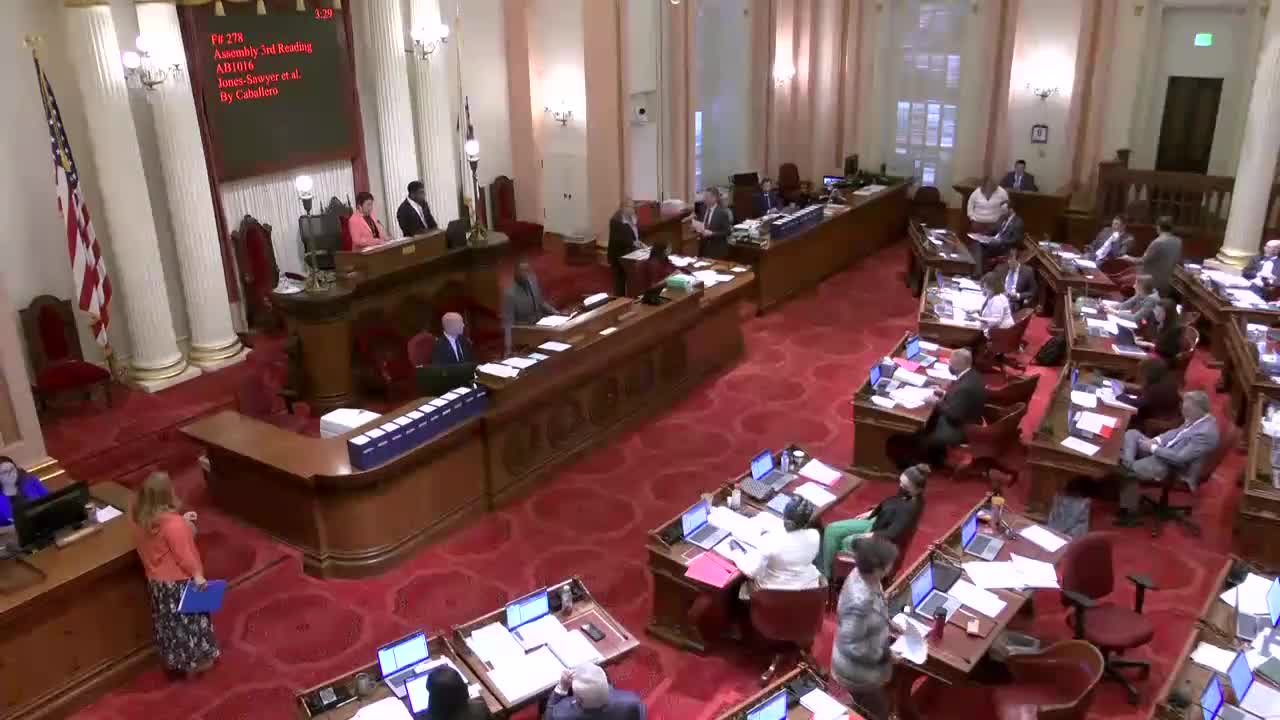
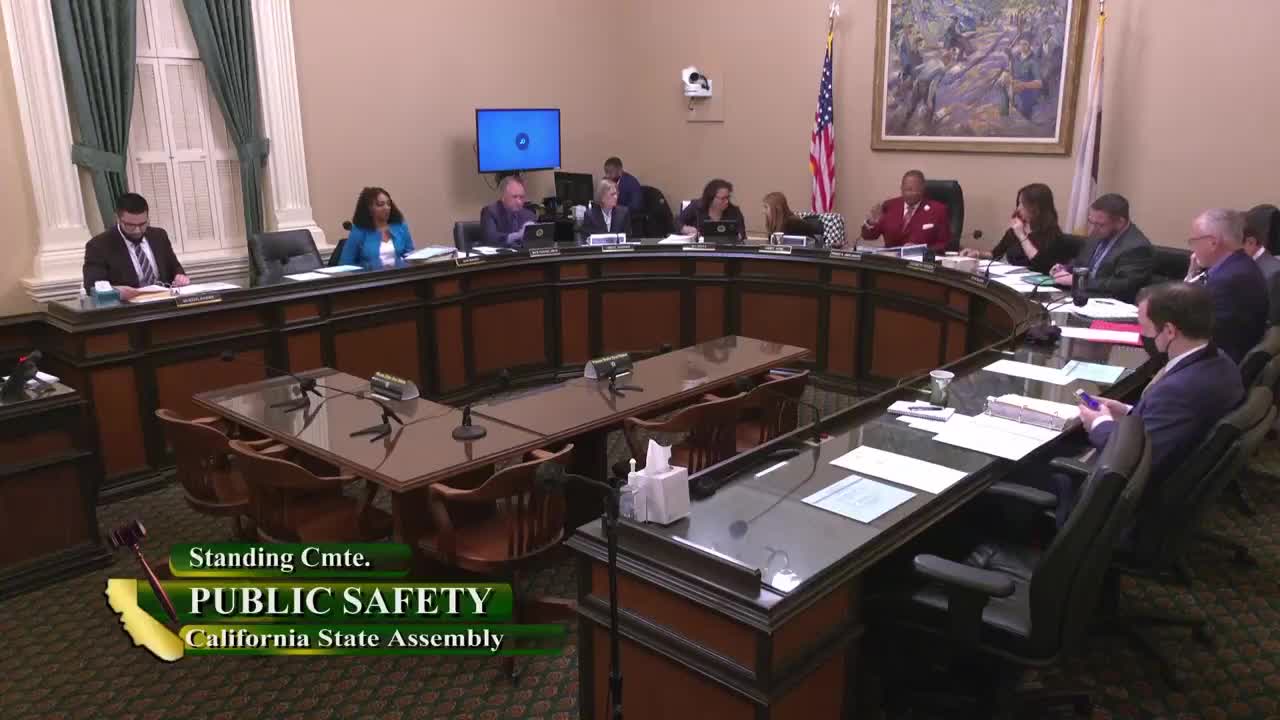
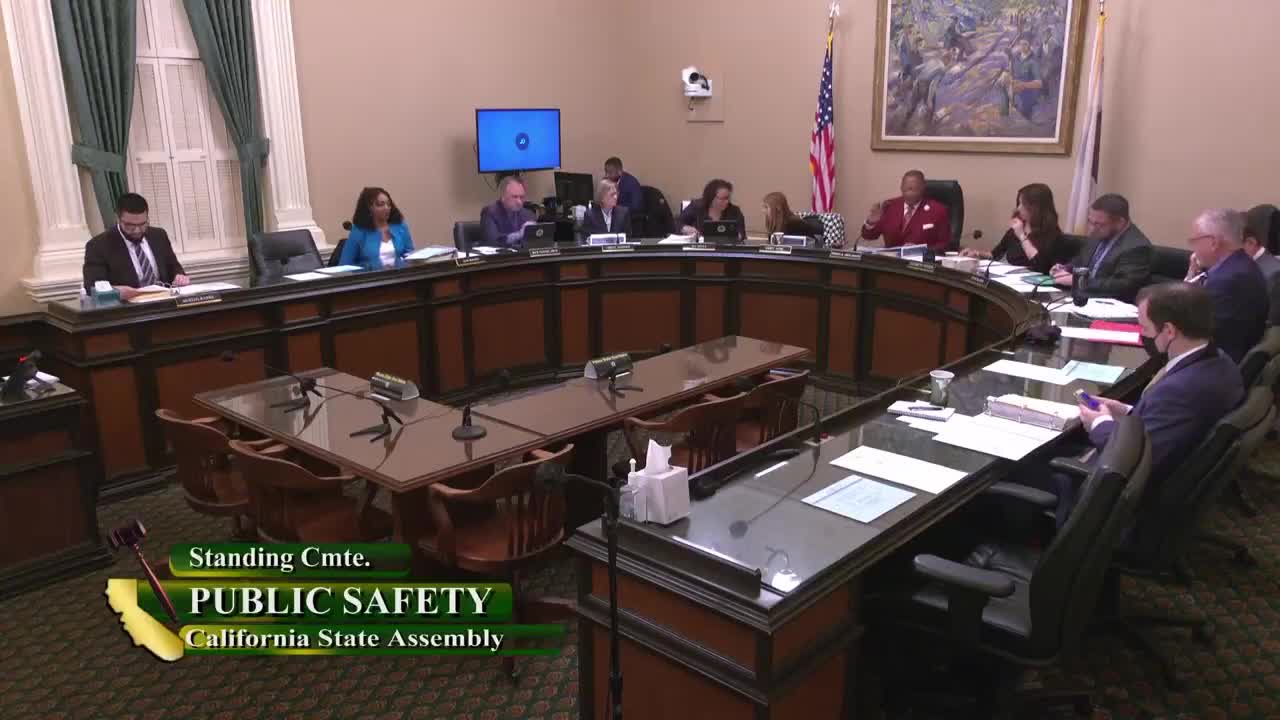
Bill Author

Bill Co-Author(s):