AB 971: Vehicles: transit-only traffic lanes.
- Session Year: 2023-2024
- House: Assembly
- Latest Version Date: 2023-10-10
Current Status:
Passed
(2023-10-10: Chaptered by Secretary of State - Chapter 672, Statutes of 2023.)
Introduced
In Committee
First Chamber
In Committee
Second Chamber
Enacted
Existing law prohibits a person from operating a motor vehicle, or stopping, parking, or leaving a vehicle standing, on a portion of the highway designated for the exclusive use of public transit buses, subject to specified exceptions. Existing law also requires a public transit agency, with the agreement of the agency with jurisdiction over the highway, to place and maintain signs and traffic control devices indicating that a portion of a highway is designated for the exclusive use of public transit buses, as specified.
This bill would instead make these provisions applicable to transit-only traffic lanes. The bill would define transit-only traffic lanes as any designated transit-only lane on which use is restricted to mass transit vehicles, or other designated vehicles including taxis and vanpools, during posted times. The bill would instead require the agency with jurisdiction over the highway or a public transit agency to place and maintain signs and traffic control devices indicating that a portion of highway is designated as a transit-only traffic lane and require a public transit agency placing and maintaining these signs and traffic control devices to do so with the agreement of the agency with jurisdiction over the highway.
Existing law prohibits a person from operating a motor vehicle, or stopping, parking, or leaving a vehicle standing, on a portion of the highway designated for the exclusive use of public transit buses, subject to specified exceptions. Existing law also requires a public transit agency, with the agreement of the agency with jurisdiction over the highway, to place and maintain signs and traffic control devices indicating that a portion of a highway is designated for the exclusive use of public transit buses, as specified.
This bill would instead make these provisions applicable to transit-only traffic lanes. The bill would define transit-only traffic lanes as any designated transit-only lane on which use is restricted to mass transit vehicles, or other designated vehicles including taxis and vanpools, during posted times. The bill would instead require a public transit agency or the agency with jurisdiction over the highway or a public transit agency to place and maintain signs and traffic control devices indicating that a portion of highway is designated as a transit-only traffic lane and require the a public transit agency and the agency with jurisdiction over the highway to develop placing and maintaining these signs and traffic control devices in coordination with one another. to do so with the agreement of the agency with jurisdiction over the highway.
Existing law prohibits a person from operating a motor vehicle, or stopping, parking, or leaving a vehicle standing, on a portion of the highway designated for the exclusive use of public transit buses, subject to specified exceptions. Existing law also requires a public transit agency agency, with the agreement of the agency with jurisdiction over the highway, to place and maintain signs and traffic control devices indicating that a portion of a highway is designated for the exclusive use of public transit buses, as specified.
This bill would instead make these provisions applicable to transit-only traffic lanes. The bill would define transit-only traffic lanes as any designated transit-only lane on which use is restricted to mass transit vehicles, or other designated vehicles including taxis and vanpools, during posted times. The bill would instead require a public transit agency or the agency with jurisdiction over the highway to place and maintain signs and traffic control devices indicating that a portion of highway is designated as a transit-only traffic lane and require the public transit agency and the agency with jurisdiction over the highway to develop these signs and traffic control devices in coordination with one another.
Existing law prohibits a person from operating a motor vehicle, or stopping, parking, or leaving a vehicle standing, on a portion of the highway designated for the exclusive use of public transit buses, subject to specified exceptions. Existing law also requires a public transit agency to place and maintain signs and traffic control devices indicating that a portion of a highway is designated for the exclusive use of public transit buses, as specified.
This bill would instead make these provisions applicable to transit-only traffic lanes. The bill would define transit-only traffic lanes as any designated transit-only lane on which use is restricted to mass transit vehicles, or other designated vehicles including taxis and vanpools, during posted times.
Existing law authorizes a local authority to permit a portion of any highway within its jurisdiction to be used exclusively for a public mass transit guideway.This bill would additionally authorize a local authority that has designated any such public mass transit guideway, to permit specified vehicles other than public mass transit vehicles, as authorized, to use the portion of the highway so designated.Existing law authorizes a local authority to permit a portion of any highway within its jurisdiction to be used exclusively for a public mass transit guideway.
This bill would additionally authorize a local authority that has designated any such public mass transit guideway, to permit specified vehicles other than public mass transit vehicles, as authorized, to use the portion of the highway so designated.
(a)A person shall not operate a motor vehicle on a portion of a highway that has been designated as a transit-only traffic lane except in compliance with the directions of a peace officer or official traffic control device.
(b)This section does not apply to a driver who is required to enter a lane designated as a transit-only traffic lane in order to make a right turn or a left turn in a location where there is no left-turn lane for motorists, or who is entering into or exiting from a highway, unless there are signs prohibiting turns across the lane or the lane is delineated by a physical separation, including, but not limited to, a curb, fence, landscaping, or other barrier.
(c)(1)The agency with jurisdiction over the highway or a public transit agency shall place and maintain, or cause to be placed and maintained, signs and other official traffic control devices, as necessary, indicating that a portion of a highway has been designated as a transit-only traffic lane for the exclusive use of public transit buses and other vehicles designated by a local authority or the Department of Transportation and to advise motorists of the hours of operation of the lane as a transit-only traffic lane.
(2)A public transit agency placing and maintaining signs and other official traffic control devices pursuant to paragraph (1) shall do so with the agreement of the agency with jurisdiction over the highway.
(d)For purposes of this section, transit-only traffic lane shall have the same meaning as that term is defined in Section 40240.
(a)A person shall not operate a motor vehicle on a portion of a highway that has been designated as a transit-only traffic lane except in compliance with the directions of a peace officer or official traffic control device.
(b)This section does not apply to a driver who is required to enter a lane designated as a transit-only traffic lane in order to make a right turn or a left turn in a location where there is no left-turn lane for motorists, or who is entering into or exiting from a highway, unless there are signs prohibiting turns across the lane or the lane is delineated by a physical separation, including, but not limited to, a curb, fence, landscaping, or other barrier.
(c)(1)A public transit agency or the agency The agency with jurisdiction over the highway or a public transit agency shall place and maintain, or cause to be placed and maintained, signs and other official traffic control devices, as necessary, indicating that a portion of a highway has been designated as a transit-only traffic lane for the exclusive use of public transit buses and other vehicles designated by a local authority or the Department of Transportation and to advise motorists of the hours of operation of the lane as a transit-only traffic lane.
(2)Signs and A public transit agency placing and maintaining signs and other official traffic control devices shall be developed in coordination with the public transit agency and pursuant to paragraph (1) shall do so with the agreement of the agency with jurisdiction over the highway.
(d)For purposes of this section, transit-only traffic lane shall have the same meaning as that term is defined in Section 40240.
(a)A person shall not operate a motor vehicle on a portion of a highway that has been designated as a transit-only traffic lane except in compliance with the directions of a peace officer or official traffic control device.
(b)This section does not apply to a driver who is required to enter a lane designated as a transit-only traffic lane in order to make a right turn or a left turn in a location where there is no left-turn lane for motorists, or who is entering into or exiting from a highway, unless there are signs prohibiting turns across the lane or the lane is delineated by a physical separation, including, but not limited to, a curb, fence, landscaping, or other barrier.
(c)(1)A public transit agency, with the agreement of agency or the agency with jurisdiction over the highway, highway shall place and maintain, or cause to be placed and maintained, signs and other official traffic control devices, as necessary, indicating that a portion of a highway has been designated as a transit-only traffic lane for the exclusive use of public transit buses and other vehicles designated by a local authority or the Department of Transportation and to advise motorists of the hours of operation of the lane as a transit-only traffic lane.
(2)Signs and other official traffic control devices shall be developed in coordination with the public transit agency and the agency with jurisdiction over the highway.
(d)For purposes of this section, transit-only traffic lane shall have the same meaning as that term is defined in Section 40240.
(a)A person shall not operate a motor vehicle on a portion of a highway that has been designated for the exclusive use of public transit buses, as a transit-only traffic lane except in compliance with the directions of a peace officer or official traffic control device.
(b)This section does not apply to a driver who is required to enter a lane designated for the exclusive use of public transit buses as a transit-only traffic lane in order to make a right turn or a left turn in a location where there is no left-turn lane for motorists, or who is entering into or exiting from a highway, unless there are signs prohibiting turns across the lane or the lane is delineated by a physical separation, including, but not limited to, a curb, fence, landscaping, or other barrier.
(c)A public transit agency, with the agreement of the agency with jurisdiction over the highway, shall place and maintain, or cause to be placed and maintained, signs and other official traffic control devices, as necessary, indicating that a portion of a highway is has been designated as a transit-only traffic lane for the exclusive use of public transit buses and other vehicles designated by a local authority or the Department of Transportation and to advise motorists of the hours of operation of the lane as an exclusive public transit bus a transit-only traffic lane.
(d)For purposes of this section, transit-only traffic lane shall have the same meaning as that term is defined in Section 40240.
SECTION 1.Section 21655.7 of the Vehicle Code is amended to read:21655.7.(a) Notwithstanding Section 21, a local authority, with respect to any highway under its jurisdiction, may authorize or permit a portion of the highway to be used exclusively for a public mass transit guideway.(b)A local authority that has designated a portion of the highway to be used exclusively for a public mass transit guideway, may also permit the operation of a high occupancy shared transportation vehicle on that portion of the highway.(c)As used in this section, the following terms are defined as follows:(1)High occupancy shared transportation vehicle means a passenger transportation vehicle or vanpool vehicle, as authorized by the local authority, that is operated as part of a vanpool or shuttle service and is carrying more than 10 passengers.(2)Public mass transit guideway means a roadway or designated lanes of a roadway that have been restricted at all times or during certain hours for the exclusive use of public mass transit vehicles.(a)A Notwithstanding Section 21, a local authority, with respect to any highway under its jurisdiction, may authorize or permit a portion of the highway to be used exclusively for a public mass transit guideway.
(b)A local authority that has designated a portion of the highway to be used exclusively for a public mass transit guideway, may also permit the operation of a high occupancy shared transportation vehicle on that portion of the highway.
(c)As used in this section, the following terms are defined as follows:
(1)High occupancy shared transportation vehicle means a passenger transportation vehicle or vanpool vehicle, as authorized by the local authority, that is operated as part of a vanpool or shuttle service and is carrying more than 10 passengers.
(2)Public mass transit guideway means a roadway or designated lanes of a roadway that have been restricted at all times or during certain hours for the exclusive use of public mass transit vehicles.
|
Date
|
Status
|
|---|---|
| Oct 10, 2023 | Chaptered by Secretary of State - Chapter 672, Statutes of 2023. |
| Oct 10, 2023 | Approved by the Governor. |
| Sep 14, 2023 | Enrolled and presented to the Governor at 4:30 p.m. |
| Sep 7, 2023 | Senate amendments concurred in. To Engrossing and Enrolling. (Ayes 79. Noes 0. Page 3026.). |
| Sep 5, 2023 | In Assembly. Concurrence in Senate amendments pending. May be considered on or after September 7 pursuant to Assembly Rule 77. |
| Sep 5, 2023 | Read third time. Passed. Ordered to the Assembly. (Ayes 39. Noes 0. Page 2360.). |
| Aug 21, 2023 | Read second time. Ordered to third reading. |
| Aug 17, 2023 | Read third time and amended. Ordered to second reading. |
| Aug 17, 2023 | Ordered to third reading. |
| Aug 17, 2023 | Action rescinded whereby the bill was read third time, passed, and to Assembly. |
| Jul 10, 2023 | In Senate. Held at Desk. |
| Jul 10, 2023 | Ordered to the Senate. |
| Jun 22, 2023 | In Assembly. Concurrence in Senate amendments pending. May be considered on or after June 24 pursuant to Assembly Rule 77. |
| Jun 22, 2023 | Read third time. Passed. Ordered to the Assembly. (Ayes 39. Noes 0. Page 1681.). |
| Jun 15, 2023 | Read second time. Ordered to Consent Calendar. |
| Jun 14, 2023 | From committee: Do pass. To Consent Calendar. (Ayes 16. Noes 0.) (June 13). |
| Jun 1, 2023 | From committee chair, with author's amendments: Amend, and re-refer to committee. Read second time, amended, and re-referred to Com. on TRANS. |
| May 3, 2023 | Referred to Com. on TRANS. |
| Apr 24, 2023 | In Senate. Read first time. To Com. on RLS. for assignment. |
| Apr 24, 2023 | Read third time. Passed. Ordered to the Senate. (Ayes 77. Noes 0. Page 1302.) |
| Apr 19, 2023 | Read second time. Ordered to Consent Calendar. |
| Apr 18, 2023 | From committee: Do pass. To Consent Calendar. (Ayes 15. Noes 0.) (April 17). |
| Apr 12, 2023 | Re-referred to Com. on TRANS. |
| Apr 11, 2023 | From committee chair, with author's amendments: Amend, and re-refer to Com. on TRANS. Read second time and amended. |
| Feb 23, 2023 | Referred to Com. on TRANS. |
| Feb 15, 2023 | From printer. May be heard in committee March 17. |
| Feb 14, 2023 | Read first time. To print. |
|
Date
|
Description
|
Location
|
Votes
|
|
|---|---|---|---|---|
| Sep 7, 2023 | AB 971 Lee Concurrence in Senate Amendments | Assembly Floor |
Passed |
|
| Sep 5, 2023 | Assembly 3rd Reading AB971 Lee By Becker | Senate Floor |
Passed |
|
| Jun 22, 2023 | Consent Calendar AB971 Lee | Senate Floor |
Passed |
|
| Jun 13, 2023 | Do pass and be ordered to the Consent Calendar | Senate Standing Committee on Transportation |
Passed |
|
| Apr 24, 2023 | AB 971 Lee Consent Calendar Second Day | Assembly Floor |
Passed |
|
| Apr 17, 2023 | Do pass. To Consent Calendar. | Assembly Standing Committee on Transportation |
Passed |
This list shows positions taken on this bill by organizations on the date displayed, which is linked to the original source.
Positions by individuals are not included.
|
Organization
|
Position
|
Date
|
|---|---|---|
| City of Fremont | ** Support | |
| City of Mountain View | ** Support | |
| City of Redwood City | ** Support | |
| City of San Jose | ** Support | |
| Streets for All | ** Support |
CONCURRENCE IN SENATE AMENDMENTS
CSA1 Bill Id:AB 971
Author:(Lee)
As Amended Ver:August 17, 2023
Majority vote
SUMMARY
Clarifies local authorities existing authority to permit other vehicles in transit-only traffic lanes.
Senate Amendments
Requires the agency with jurisdiction over the highway or a public transit agency to place and maintain signs and traffic control devices indicating that a portion of highway is designated as a transit-only traffic lane and requires the public transit agency with agreement from the agency with jurisdiction over the highway to develop the previously mentioned signs and traffic control devices.
COMMENTS
California's transportation sector accounts for about 50% of the state's greenhouse gas emissions, nearly 80% of nitrogen oxide pollution, and 90% of diesel particulate matter pollution. Transitioning the transportation sector to low-carbon fuels and zero and near-zero emission technologies is critical to achieving climate change goals and clean air standards. However, the State must also consider strategies for reducing sole-occupancy use of cars.
The utilization of mass transit is a major component of the state's strategy to reach its goal of carbon neutrality by 2045. According to the California Air Resource Board's (CARB) 2022 Scoping Plan, including the transition to cleaner vehicles and low-carbon fuels, the path to carbon neutrality by 2045 also depends on reducing the amount people drive or vehicle miles traveled (VMT). CARB identified the need to double the capacity and service frequencies of the existing local public transit networks by 2030, including having transit stops much closer to where people need to go and to provide reliable, shorter frequencies.
Bus Rapid Transit (BRT) is a high-capacity, lower-cost public transit service that effectively accommodates longer-distance passenger trips by designating a road or highway lane for the exclusive use of public transit buses. This strategy has gained in popularity due to its success in reducing the time transit buses spend stuck on congested roads. Several public transit agencies in California are currently operating or constructing BRT projects utilizing exclusive bus-only lanes, including the Alameda-Contra Costa Transit District (AC Transit), the Los Angeles County Metropolitan Transportation Authority, Omnitrans in San Bernardino County, the Sacramento Regional Transit District, the San Diego Metropolitan Transit System, and the Santa Clara Valley Transportation Authority (VTA).
According to Best Practices in Implementing Tactical Transit Lanes, a guide produced by UCLA ITS, transit-only lanes have been able to improve peak congestion travel times by 20-28%. These lanes can produce dramatic decreases in the variability of transit travel times. Research suggests that reducing the total amount of time it takes a transit rider to go door-to-door by 5-15% can increase urban peak ridership by 2-9%.
Similar to BRT, other types of mixed use lanes in dense urban areas and high-traffic streets can increase transit speeds, reduce congestion, increase ridership, and increase person throughput. These types of lanes sometimes are more permissive and will allow private buses, shuttles, bicycles, and taxis in the lanes. As an example, the city of San Francisco operates over 43 miles of dedicated transit lanes exclusive to public transit and taxi use.
For both BRT and mixed-use transit lanes, state law requires local authorities to place and maintain signs that inform drivers about which vehicles are permitted in the lanes and at what times. These lanes are enforced through traffic signs, local police departments, transit agencies, and sometimes cameras. The Manual for Traffic Control Devices has approved signage permitting the use of other vehicles in transit only lanes, including taxis.
According to the Author
Dedicated transit lanes incentivize people to use public transit by avoiding unnecessary traffic. Sustainable transportation utilization results in fewer cars on the road, less noise pollution, and healthier communities. California's Vehicle code definition of public mass transit leaves out modes of transportation that can help cities meet their sustainable transportation and traffic-reduction goals, such as services that do not charge a fee. AB 971 will authorize cities to implement and manage bus lanes on their local streets, as well as incentivize local shuttles provided on a fare-free basis, commuter shuttles provided by transportation management associations, and private employee commuter shuttles.
Arguments in Support
While the city of Mountain View, the sponsor of this bill, already has the authority to permit high occupancy vehicles in their transit only lanes, they believe additional clarity is necessary for existing law. They argue "To promote high-occupancy vehicle travel to meet sustainable transportation goals, cities like ours are undertaking projects to implement and expand dedicated mass-transit lanes. Mountain View is currently in the process of completing a dedicated reversible-transit lane that will allow for qualified operators of a transit bus to utilize this dedicated lane, which will change to accommodate heavy traffic moving in one direction at certain times of the day and the opposite direction at others."
Arguments in Opposition
None received
FISCAL COMMENTS
None.
VOTES:
ASM TRANSPORTATION: 15-0-0
YES: Friedman, Vince Fong, Berman, Juan Carrillo, Davies, Gipson, Hart, Jackson, Kalra, Lowenthal, Stephanie Nguyen, Sanchez, Wallis, Ward, Wicks
ASSEMBLY FLOOR: 77-0-3
YES: Addis, Aguiar-Curry, Alanis, Alvarez, Arambula, Bains, Bauer-Kahan, Bennett, Berman, Boerner, Bonta, Bryan, Calderon, Juan Carrillo, Wendy Carrillo, Cervantes, Connolly, Davies, Dixon, Essayli, Flora, Mike Fong, Vince Fong, Friedman, Gabriel, Gallagher, Garcia, Gipson, Grayson, Haney, Hart, Hoover, Irwin, Jackson, Jones-Sawyer, Kalra, Lackey, Lee, Low, Lowenthal, Maienschein, Mathis, McCarty, McKinnor, Muratsuchi, Stephanie Nguyen, Ortega, Pacheco, Papan, Jim Patterson, Joe Patterson, Pellerin, Petrie-Norris, Quirk-Silva, Ramos, Reyes, Luz Rivas, Robert Rivas, Rodriguez, Blanca Rubio, Sanchez, Santiago, Schiavo, Soria, Ta, Ting, Valencia, Villapudua, Waldron, Wallis, Ward, Weber, Wicks, Wilson, Wood, Zbur, Rendon
ABS, ABST OR NV: Chen, Megan Dahle, Holden
SENATE FLOOR: 39-0-1
YES: Allen, Alvarado-Gil, Archuleta, Ashby, Atkins, Becker, Blakespear, Bradford, Caballero, Cortese, Dahle, Dodd, Durazo, Eggman, Glazer, Gonzalez, Grove, Hurtado, Jones, Laird, Limón, McGuire, Menjivar, Min, Newman, Nguyen, Niello, Ochoa Bogh, Portantino, Roth, Rubio, Seyarto, Skinner, Smallwood-Cuevas, Stern, Umberg, Wahab, Wiener, Wilk
ABS, ABST OR NV: Padilla
SENATE FLOOR: 39-0-1
YES: Allen, Alvarado-Gil, Archuleta, Ashby, Atkins, Becker, Blakespear, Bradford, Caballero, Cortese, Dahle, Dodd, Durazo, Glazer, Gonzalez, Grove, Hurtado, Jones, Laird, Limón, McGuire, Menjivar, Min, Newman, Nguyen, Niello, Ochoa Bogh, Padilla, Portantino, Roth, Rubio, Seyarto, Skinner, Smallwood-Cuevas, Stern, Umberg, Wahab, Wiener, Wilk
ABS, ABST OR NV: Eggman
UPDATED
VERSION: August 17, 2023
CONSULTANT: Dirk Spencer / TRANS. / (916) 319-2093 FN: 0001281
SENATE RULES COMMITTEE Office of Senate Floor Analyses (916) 651-1520 Fax: (916) 327-4478 | AB 971 |
THIRD READING
Bill No: AB 971
Author: Lee (D)
Amended: 8/17/23 in Senate
Vote: 21
SENATE TRANSPORTATION COMMITTEE: 16-0, 6/13/23
AYES: Gonzalez, Niello, Allen, Archuleta, Becker, Blakespear, Cortese, Dahle, Dodd, Limón, McGuire, Newman, Nguyen, Seyarto, Umberg, Wahab
SENATE FLOOR: 39-0, 6/22/23 (Consent)
AYES: Allen, Alvarado-Gil, Archuleta, Ashby, Atkins, Becker, Blakespear, Bradford, Caballero, Cortese, Dahle, Dodd, Durazo, Glazer, Gonzalez, Grove, Hurtado, Jones, Laird, Limón, McGuire, Menjivar, Min, Newman, Nguyen, Niello, Ochoa Bogh, Padilla, Portantino, Roth, Rubio, Seyarto, Skinner, Smallwood-Cuevas, Stern, Umberg, Wahab, Wiener, Wilk
NO VOTE RECORDED: Eggman
ASSEMBLY FLOOR: 77-0, 4/24/23 (Consent) - See last page for vote
SUBJECT: Vehicles: transit-only traffic lanes
SOURCE: City of Mountain View
DIGEST:
This bill clarifies local authorities may permit other vehicles in transit only traffic lanes.
Senate Floor Amendments of 8/17/23 clarify that placing and maintaining signs designating a highway lane as a transit-only traffic lane must be done with agreement from the agency with jurisdiction over the highway.
ANALYSIS:
Existing law:
- Defines “transit-only traffic lane” as any designated transit-only lane on which use is restricted to mass transit vehicles or other designated vehicles, including taxis and vanpools, during posted times.
- Defines a “transit bus” to mean any bus owned or operated by a publically –owned or operated transit system, or operated under contract with a publicly owned or operated transit system, and used to provide to the general public, regularly scheduled transportation for which a fare is charged.
- Authorizes a local authority, with respect to any highway under its jurisdiction, to authorize or permit a portion of the highway to be used exclusively for a public mass transit guideway.
- Prohibits a person from operating a motor vehicle on a portion of the highway designated for the exclusive use of public transit buses, except in compliance with the directions of a peace officer or official traffic control device, with exceptions.
- Requires a public transit agency, with the agreement of the agency with jurisdiction over the highway, to place and maintain, or cause to be placed and maintained, signs and other official traffic control devices, as necessary, indicating that a portion of a highway is designated for the exclusive use of public transit buses and to advise motorists of the hours of operation of the lane as an exclusive public transit bus lane.
- Authorizes the California Department of Transportation (Caltrans) and local authorities to designate portions of highway within their jurisdiction for exclusive use by high occupancy vehicles (HOV).
- Requires Caltrans and local authorities to place and maintain or direct the placement or maintenance of signs and other official traffic control devices to designate the exclusive or preferential lanes to inform motorists of the applicable vehicle occupancy levels for highways within their jurisdiction.
This bill:
- Clarifies local authorities authority to authorize vehicles other than public transit buses in a transit-only traffic lanes.
- Updates certain references to “lanes designated for the exclusive use of public transit buses” to “transit-only traffic” lanes
- Requires the agency with jurisdiction over the highway or a public transit agency to place and maintain signs and traffic control devices indicating that a portion of highway is designated as a transit-only traffic lane and stipulates that a public transit agency placing and maintaining these signs and traffic control devices must do so with the agreement of the agency with jurisdiction over the highway.
Comments
- Purpose of the bill. According to the author, “Dedicated transit lanes incentivize people to use public transit by avoiding unnecessary traffic. Sustainable transportation utilization results in fewer cars on the road, less noise pollution, and healthier communities. California’s Vehicle code definition of public mass transit leaves out modes of transportation that can help cities meet their sustainable transportation and traffic-reduction goals, such as services that do not charge a fee. AB 971 will authorize cities to implement and manage bus lanes on their local streets, as well as incentivize local shuttles provided on a fare-free basis, commuter shuttles provided by transportation management associations, and private employee commuter shuttles.”
- Bus Rapid Transit (BRT) and dedicated transit-only lanes make trips faster. BRT is a high-capacity, lower-cost public transit service that effectively accommodates longer-distance passenger trips by designating a road or highway lane for the exclusive use of public transit buses. BRT may include dedicated lanes, busways, traffic signal priority, off-board fare collection, elevated platforms and enhanced stations. This strategy has gained in popularity due to its success in reducing the time transit buses spend stuck on congested roads. Several public transit agencies in California are currently operating or constructing BRT projects utilizing exclusive bus-only lanes, including the Alameda-Contra Costa Transit District, the Los Angeles County Metropolitan Transportation Authority, Omnitrans in San Bernardino County, the Sacramento Regional Transit District, the San Diego Metropolitan Transit System, and the Santa Clara Valley Transportation Authority (VTA).
According to Best Practices in Implementing Tactical Transit Lanes, a guide produced by UCLA Institute of Transportation Studies, dedicated transit-only lanes have been able to improve peak congestion travel times by 20-28%. These lanes can produce dramatic decreases in the variability of transit travel times. Research suggests that reducing total amount of time it take a transit rider to go door-to-door by 5-15% can increase urban pike ridership by 2-9%.
Similar to BRT, other types of mixed use lanes in dense urban areas and high-traffic streets can increase transit speeds, reduce congestion, increase ridership, and increase person throughput. These types of lanes sometimes are more permissive and will allow private buses, shuttles, bicycles, and taxis in the lanes. For example, the City of San Francisco operates over 43 miles of dedicated transit lanes exclusive to public transit and taxi use.
For both BRT and mixed-use transit lanes, state law requires local authorities and transit agencies to place and maintain signs that inform drivers about which vehicles are permitted in the lanes and at what times. These lanes are enforced through traffic signs, local police departments, transit agencies, and sometimes cameras. The Manual for Traffic Control Devices has approved signage permitting the use of other vehicles in transit only lanes, including taxis.
- This bill clarifies local authority to allow other types of vehicles in the lanes. Even though some California cities, such as San Francisco, currently allow vehicles other than public transit vehicles in its transit-only traffic lanes, there remains confusion over whether only public transit buses can utilize these lanes, or if local authorities can authorize other types of vehicles to also use the lane.
The City of Mountain View, the sponsor of this bill, would like to allow use of its planned dedicated transit lanes for public transit, free shuttle services provided by nonprofits, and high occupancy private shuttles in order to increase the use of these types of shared-ride services. The city is currently working on the Shoreline Boulevard Reversible Bus Lane project to ease commutes to and from the North Bayshore neighborhood, without adding any additional roadway capacity. The project will add a dedicated reversible bus lane in the median of Shoreline Boulevard, with traffic signals, median bus stops, and curb protected bike lanes.
Specifically, the City of Mountain View is planning to allow the use of the transit-only traffic lane by its various operators, including VTA buses; Mountain View Transportation Management Association’s MVGo shuttles, operated by the city; the Mountain View Community Shuttle, a free fare shuttle service; and private commute shuttles operated by Google and other North Bayshore companies. These private commute shuttles comprise 30% of Mountain View’s peak traffic along the Shoreline Boulevard corridor.
This bill updates references to the “exclusive use of public transit buses” to reflect the newer definition of “transit-only traffic lane,” which states that the lanes are restricted to mass transit vehicles, and other designated vehicles, including taxis and vanpools, during posted times. Additionally, this bill clarifies the requirements for the signage to be installed on the lanes, by a public transit agency or the agency with jurisdiction over the highway, such as a city or Caltrans.
Related/Prior Legislation
AB 917 (Bloom, Chapter 709, Statutes of 2021) authorized all public transit operators to install automated forward-facing parking control devices on transit vehicles for the purposes of enforcing parking violations occurring in transit-only traffic lanes and at transit stops and stations.
SB 998 (Wieckoski, Chapter 716, Statutes of 2016) prohibited an individual from operating, stopping, parking or leaving a motor vehicle in a portion of the highway designated exclusively for public transit buses, except in specific circumstances, and requires signs be erected to identify these lanes.
FISCAL EFFECT: Appropriation: No Fiscal Com.: No Local: No
SUPPORT: (Verified 8/16/23)
City of Mountain View (source)
City of Fremont
City of Redwood City
City of San Jose
Streets for All
OPPOSITION: (Verified 8/16/23)
None received
ARGUMENTS IN SUPPORT: According to Streets for All, “Dedicated transit lanes incentivize people to use public transit by avoiding unnecessary traffic. Sustainable transportation utilization results in fewer cars on the road, less noise pollution, and healthier communities. It is estimated that public transportation in the US saves 37 million metric tons of carbon dioxide annually.
“To incentivize high occupancy vehicle travel, cities are undertaking projects to implement and expand reversible dedicated transit lanes. These lanes allow traffic on multi-lane roads to be changed to accommodate heavy traffic moving in one direction at certain times and the opposite direction at others.
“This reform will authorize cities to implement and manage bus lanes on their local streets, as well as incentivize use of local shuttles provided on a fare-free basis, commuter shuttles provided by transportation management associations, and private employee commuter shuttles.”
ASSEMBLY FLOOR: 77-0, 4/24/23
AYES: Addis, Aguiar-Curry, Alanis, Alvarez, Arambula, Bains, Bauer-Kahan, Bennett, Berman, Boerner, Bonta, Bryan, Calderon, Juan Carrillo, Wendy Carrillo, Cervantes, Connolly, Davies, Dixon, Essayli, Flora, Mike Fong, Vince Fong, Friedman, Gabriel, Gallagher, Garcia, Gipson, Grayson, Haney, Hart, Hoover, Irwin, Jackson, Jones-Sawyer, Kalra, Lackey, Lee, Low, Lowenthal, Maienschein, Mathis, McCarty, McKinnor, Muratsuchi, Stephanie Nguyen, Ortega, Pacheco, Papan, Jim Patterson, Joe Patterson, Pellerin, Petrie-Norris, Quirk-Silva, Ramos, Reyes, Luz Rivas, Robert Rivas, Rodriguez, Blanca Rubio, Sanchez, Santiago, Schiavo, Soria, Ta, Ting, Valencia, Villapudua, Waldron, Wallis, Ward, Weber, Wicks, Wilson, Wood, Zbur, Rendon
NO VOTE RECORDED: Chen, Megan Dahle, Holden
Prepared by: Melissa White / TRANS. / (916) 651-4121
8/23/23 15:27:36
**** END ****
CONCURRENCE IN SENATE AMENDMENTS
CSA1 Bill Id:AB 971
Author:(Lee)
As Amended Ver:June 1, 2023
Majority vote
SUMMARY
Clarifies local authorities existing authority to permit other vehicles in transit-only traffic lanes.
Senate Amendments
Requires a public transit agency or the agency with jurisdiction over the highway to place and maintain signs and traffic control devices indicating that a portion of highway is designated as a transit-only traffic lane and requires the public transit agency and the agency with jurisdiction over the highway to develop these signs and traffic control devices in coordination.
COMMENTS
California's transportation sector accounts for about 50% of the state's greenhouse gas emissions, nearly 80% of nitrogen oxide pollution, and 90% of diesel particulate matter pollution. Transitioning the transportation sector to low-carbon fuels and zero and near-zero emission technologies is critical to achieving climate change goals and clean air standards. However, the State must also consider strategies for reducing sole-occupancy use of cars.
The utilization of mass transit is a major component of the state's strategy to reach its goal of carbon neutrality by 2045. According to the California Air Resource Board's (CARB) 2022 Scoping Plan, including the transition to cleaner vehicles and low-carbon fuels, the path to carbon neutrality by 2045 also depends on reducing the amount people drive or vehicle miles traveled (VMT). CARB identified the need to double the capacity and service frequencies of the existing local public transit networks by 2030, including having transit stops much closer to where people need to go and to provide reliable, shorter frequencies.
Bus Rapid Transit (BRT) is a high-capacity, lower-cost public transit service that effectively accommodates longer-distance passenger trips by designating a road or highway lane for the exclusive use of public transit buses. This strategy has gained in popularity due to its success in reducing the time transit buses spend stuck on congested roads. Several public transit agencies in California are currently operating or constructing BRT projects utilizing exclusive bus-only lanes, including the Alameda-Contra Costa Transit District (AC Transit), the Los Angeles County Metropolitan Transportation Authority, Omnitrans in San Bernardino County, the Sacramento Regional Transit District, the San Diego Metropolitan Transit System, and the Santa Clara Valley Transportation Authority (VTA).
According to Best Practices in Implementing Tactical Transit Lanes, a guide produced by UCLA ITS, transit-only lanes have been able to improve peak congestion travel times by 20% to 28%. These lanes can produce dramatic decreases in the variability of transit travel times. Research suggests that reducing the total amount of time it takes a transit rider to go door-to-door by 5% to15% can increase urban peak ridership by 2% to 9%.
Similar to BRT, other types of mixed use lanes in dense urban areas and high-traffic streets can increase transit speeds, reduce congestion, increase ridership, and increase person throughput. These types of lanes sometimes are more permissive and will allow private buses, shuttles, bicycles, and taxis in the lanes. As an example, the city of San Francisco operates over 43 miles of dedicated transit lanes exclusive to public transit and taxi use.
For both BRT and mixed-use transit lanes, state law requires local authorities to place and maintain signs that inform drivers about which vehicles are permitted in the lanes and at what times. These lanes are enforced through traffic signs, local police departments, transit agencies, and sometimes cameras. The Manual for Traffic Control Devices has approved signage permitting the use of other vehicles in transit only lanes, including taxis.
According to the Author
Dedicated transit lanes incentivize people to use public transit by avoiding unnecessary traffic. Sustainable transportation utilization results in fewer cars on the road, less noise pollution, and healthier communities. California's Vehicle code definition of public mass transit leaves out modes of transportation that can help cities meet their sustainable transportation and traffic-reduction goals, such as services that do not charge a fee. AB 971 will authorize cities to implement and manage bus lanes on their local streets, as well as incentivize local shuttles provided on a fare-free basis, commuter shuttles provided by transportation management associations, and private employee commuter shuttles.
Arguments in Support
While the city of Mountain View, the sponsor of this bill, already has the authority to permit high occupancy vehicles in their transit only lanes, they believe additional clarity is necessary for existing law. They argue "To promote high-occupancy vehicle travel to meet sustainable transportation goals, cities like ours are undertaking projects to implement and expand dedicated mass-transit lanes. Mountain View is currently in the process of completing a dedicated reversible-transit lane that will allow for qualified operators of a transit bus to utilize this dedicated lane, which will change to accommodate heavy traffic moving in one direction at certain times of the day and the opposite direction at others."
Arguments in Opposition
None received
FISCAL COMMENTS
None.
VOTES:
ASM TRANSPORTATION: 15-0-0
YES: Friedman, Vince Fong, Berman, Juan Carrillo, Davies, Gipson, Hart, Jackson, Kalra, Lowenthal, Stephanie Nguyen, Sanchez, Wallis, Ward, Wicks
ASSEMBLY FLOOR: 77-0-3
YES: Addis, Aguiar-Curry, Alanis, Alvarez, Arambula, Bains, Bauer-Kahan, Bennett, Berman, Boerner, Bonta, Bryan, Calderon, Juan Carrillo, Wendy Carrillo, Cervantes, Connolly, Davies, Dixon, Essayli, Flora, Mike Fong, Vince Fong, Friedman, Gabriel, Gallagher, Garcia, Gipson, Grayson, Haney, Hart, Hoover, Irwin, Jackson, Jones-Sawyer, Kalra, Lackey, Lee, Low, Lowenthal, Maienschein, Mathis, McCarty, McKinnor, Muratsuchi, Stephanie Nguyen, Ortega, Pacheco, Papan, Jim Patterson, Joe Patterson, Pellerin, Petrie-Norris, Quirk-Silva, Ramos, Reyes, Luz Rivas, Robert Rivas, Rodriguez, Blanca Rubio, Sanchez, Santiago, Schiavo, Soria, Ta, Ting, Valencia, Villapudua, Waldron, Wallis, Ward, Weber, Wicks, Wilson, Wood, Zbur, Rendon
ABS, ABST OR NV: Chen, Megan Dahle, Holden
SENATE FLOOR: 39-0-1
YES: Allen, Alvarado-Gil, Archuleta, Ashby, Atkins, Becker, Blakespear, Bradford, Caballero, Cortese, Dahle, Dodd, Durazo, Glazer, Gonzalez, Grove, Hurtado, Jones, Laird, Limón, McGuire, Menjivar, Min, Newman, Nguyen, Niello, Ochoa Bogh, Padilla, Portantino, Roth, Rubio, Seyarto, Skinner, Smallwood-Cuevas, Stern, Umberg, Wahab, Wiener, Wilk
ABS, ABST OR NV: Eggman
UPDATED
VERSION: June 1, 2023
CONSULTANT: Dirk Spencer / TRANS. / (916) 319-2093 FN: 0001095
SENATE COMMITTEE ON TRANSPORTATION
Senator Lena Gonzalez, Chair
2023 - 2024 Regular
Bill No: Hearing Date: 6/13/2023
Author: | Lee | ||
Version: | 6/1/2023 Amended | ||
Urgency: | No | Fiscal: | No |
Consultant: | Melissa White | ||
SUBJECT:
DIGEST: This bill clarifies local authorities may permit other vehicles in transit only traffic lanes.
ANALYSIS:
Existing law:
- Defines “transit-only traffic lane” as any designated transit-only lane on which use is restricted to mass transit vehicles or other designated vehicles, including taxis and vanpools, during posted times.
- Defines a “transit bus” to mean any bus owned or operated by a publically –owned or operated transit system, or operated under contract with a publicly owned or operated transit system, and used to provide to the general public, regularly scheduled transportation for which a fare is charged.
- Authorizes a local authority, with respect to any highway under its jurisdiction, to authorize or permit a portion of the highway to be used exclusively for a public mass transit guideway.
- Prohibits a person from operating a motor vehicle on a portion of the highway designated for the exclusive use of public transit buses, except in compliance with the directions of a peace officer or official traffic control device, with exceptions.
- Requires a public transit agency, with the agreement of the agency with jurisdiction over the highway, to place and maintain, or cause to be placed and maintained, signs and other official traffic control devices, as necessary, indicating that a portion of a highway is designated for the exclusive use of public transit buses and to advise motorists of the hours of operation of the lane as an exclusive public transit bus lane.
- Authorizes the California Department of Transportation (Caltrans) and local authorities to designate portions of highway within their jurisdiction for exclusive use by high occupancy vehicles (HOV).
- Requires Caltrans and local authorities to place and maintain or direct the placement or maintenance of signs and other official traffic control devices to designate the exclusive or preferential lanes to inform motorists of the applicable vehicle occupancy levels for highways within their jurisdiction.
This bill:
- Clarifies local authorities authority to authorize vehicles other than public transit buses in a transit-only traffic lanes.
- Updates certain references to “lanes designated for the exclusive use of public transit buses” to “transit-only traffic” lanes
- Requires a public transit agency or the agency with jurisdiction over the highway to place and maintain signs and traffic control devices indicating that a portion of highway is designated as a transit-only traffic lane and require the public transit agency and the agency with jurisdiction over the highway to develop these signs and traffic control devices in coordination.
COMMENTS:
- Purpose of the bill. According to the author, “Dedicated transit lanes incentivize people to use public transit by avoiding unnecessary traffic. Sustainable transportation utilization results in fewer cars on the road, less noise pollution, and healthier communities. California’s Vehicle code definition of public mass transit leaves out modes of transportation that can help cities meet their sustainable transportation and traffic-reduction goals, such as services that do not charge a fee. AB 971 will authorize cities to implement and manage bus lanes on their local streets, as well as incentivize local shuttles provided on a fare-free basis, commuter shuttles provided by transportation management associations, and private employee commuter shuttles.”
- Bus Rapid Transit (BRT) and dedicated transit-only lanes make trips faster. BRT is a high-capacity, lower-cost public transit service that effectively accommodates longer-distance passenger trips by designating a road or highway lane for the exclusive use of public transit buses. BRT may include dedicated lanes, busways, traffic signal priority, off-board fare collection, elevated platforms and enhanced stations. This strategy has gained in popularity due to its success in reducing the time transit buses spend stuck on congested roads. Several public transit agencies in California are currently operating or constructing BRT projects utilizing exclusive bus-only lanes, including the Alameda-Contra Costa Transit District (A-C Transit), the Los Angeles County Metropolitan Transportation Authority (LA Metro), Omnitrans in San Bernardino County, the Sacramento Regional Transit District (SacRT), the San Diego Metropolitan Transit System (MTS), and the Santa Clara Valley Transportation Authority (VTA).
According to Best Practices in Implementing Tactical Transit Lanes, a guide produced by UCLA Institute of Transportation Studies, dedicated transit-only lanes have been able to improve peak congestion travel times by 20-28%. These lanes can produce dramatic decreases in the variability of transit travel times. Research suggests that reducing total amount of time it take a transit rider to go door-to-door by 5-15% can increase urban pike ridership by 2-9%.
Similar to BRT, other types of mixed use lanes in dense urban areas and high-traffic streets can increase transit speeds, reduce congestion, increase ridership, and increase person throughput. These types of lanes sometimes are more permissive and will allow private buses, shuttles, bicycles, and taxis in the lanes. For example, the City of San Francisco operates over 43 miles of dedicated transit lanes exclusive to public transit and taxi use.
For both BRT and mixed-use transit lanes, state law requires local authorities and transit agencies to place and maintain signs that inform drivers about which vehicles are permitted in the lanes and at what times. These lanes are enforced through traffic signs, local police departments, transit agencies, and sometimes cameras. The Manual for Traffic Control Devices has approved signage permitting the use of other vehicles in transit only lanes, including taxis.
- AB 971 clarifies local authority to allow other types of vehicles in the lanes. Even though some California cities, such as San Francisco, currently allow vehicles other than public transit vehicles in its transit-only traffic lanes, there remains confusion over whether only public transit buses can utilize these lanes, or if local authorities can authorize other types of vehicles to also use the lane.
The City of Mountain View, the sponsor of AB 971, would like to allow use of its planned dedicated transit lanes for public transit, free shuttle services provided by nonprofits, and high occupancy private shuttles in order to increase the use of these types of shared-ride services. The city is currently working on the Shoreline Boulevard Reversible Bus Lane project to ease commutes to and from the North Bayshore neighborhood, without adding any additional roadway capacity. The project will add a dedicated reversible bus lane in the median of Shoreline Boulevard, with traffic signals, median bus stops, and curb protected bike lanes.
Specifically, Mountain View is planning to allow the use of the transit-only traffic lane by its various operators, including VTA buses; MVgo shuttles, operated by the city; the Mountain View Community Shuttle, a free fare shuttle service; and private commute shuttles operated by Google and other North Bayshore companies. These private commute shuttles comprise 30% of Mountain View’s peak traffic along the Shoreline Boulevard corridor.
AB 971 updates references to the “exclusive use of public transit buses” to reflect the newer definition of “transit-only traffic lane,” which states that the lanes are restricted to mass transit vehicles, and other designated vehicles, including taxis and vanpools, during posted times. Additionally, the bill updates the requirements for the signage to be installed on the lanes, to be developed in coordination with the public transit agency and the agency with jurisdiction over the highway, such as a city or Caltrans.
According to Streets for All, writing in support of the bill, “Dedicated transit lanes incentivize people to use public transit by avoiding unnecessary traffic.
Sustainable transportation utilization results in fewer cars on the road, less noise pollution, and healthier communities. It is estimated that public transportation in the US saves 37 million metric tons of carbon dioxide annually.
“To incentivize high occupancy vehicle travel, cities are undertaking projects to implement and expand reversible dedicated transit lanes. These lanes allow traffic on multi-lane roads to be changed to accommodate heavy traffic moving in one direction at certain times and the opposite direction at others.
“This reform will authorize cities to implement and manage bus lanes on their local streets, as well as incentivize use of local shuttles provided on a fare-free basis, commuter shuttles provided by transportation management associations, and private employee commuter shuttles.”
Related/PREVIOUS Legislation:
AB 917 (Bloom, Chapter 709, Statutes of 2021) -- Authorized all public transit operators to install automated forward-facing parking control devices on transit vehicles for the purposes of enforcing parking violations occurring in transit-only traffic lanes and at transit stops and stations.
SB 998 (Wieckoski, Chapter 716, Statutes of 2016) -- Prohibited an individual from operating, stopping, parking or leaving a motor vehicle in a portion of the highway designated exclusively for public transit buses, except in specific circumstances, and requires signs be erected to identify these lanes.
FISCAL EFFECT: Appropriation: No Fiscal Com.: No Local: No
POSITIONS: (Communicated to the committee before noon on Wednesday,
Wednesday, June 7, 2023.)
SUPPORT:
City of Mountain View (sponsor)
City of Fremont
City of Redwood City
City of San Jose
Streets for All
OPPOSITION:
None received
-- END --
Date of Hearing: April 17, 2023
ASSEMBLY COMMITTEE ON TRANSPORTATION
Laura Friedman, Chair
ABPCA Bill Id:AB 971 (
Author:Lee) – As Introduced Ver:February 14, 2023
SUBJECT: Vehicles: local ordinances
SUMMARY: Clarifies local authorities existing authority to permit other vehicles in transit only traffic lanes.
EXISTING LAW:
- Prohibits a person from operating a motor vehicle on a portion of the highway designated for the exclusive use of public transit buses, except in compliance with the directions of a peace officer or official traffic control device, with exceptions. (VEH 21655.1)
- Defines “Transit-only traffic lane” as any designated transit-only lane on which use is restricted to mass transit vehicles or other designated vehicles, including taxis and vanpools, during posted times. (VEH 40240)
- Authorizes Caltrans and local authorities to designate portions of highway within their jurisdiction for exclusive use by high occupancy vehicles (HOV). (Vehicle Code (VEH) 21655.5)
- Requires Caltrans and local authorities to place and maintain or direct the placement or maintenance of signs and other official traffic control devices to designate the exclusive or preferential lanes to inform motorists of the applicable vehicle occupancy levels for highways within their jurisdiction. (needs citation)
- Excluding metered ramps and bypass lanes regulated with the activation of traffic signals to advise motorists of the hours of HOV usage. (VEH 21655.5)
- Requires public transit agencies in agreement with Caltrans or local authorities with jurisdiction over the highway to place and maintain or direct the placement or maintenance of signs and official traffic control devices, as necessary, indicating that a portion of a highway is designated for the exclusive use of public transit buses and to advise motorists of the hours of operation of the lane as an exclusive public transit bus lane. (VEH 21655.1)
FISCAL EFFECT: Unknown
COMMENTS:
California’s transportation sector accounts for about 50% of the state’s greenhouse gas emissions, nearly 80% of nitrogen oxide pollution, and 90% of diesel particulate matter pollution. Transitioning the transportation sector to low-carbon fuels and zero and near-zero emission technologies is critical to achieving climate change goals and clean air standards. However, the State must also consider strategies for reducing sole-occupancy use of cars.
The utilization of mass transit is a major component of the state’s strategy to reach its goal of carbon neutrality by 2045. According to the California Air Resource Board’s (CARB) 2022 Scoping Plan, including the transition to cleaner vehicles and low-carbon fuels, the path to carbon neutrality by 2045 also depends on reducing the amount people drive or vehicle miles traveled (VMT). CARB identified the need to double the capacity and service frequencies of the existing local public transit networks by 2030, including having transit stops much closer to where people need to go and to provide reliable, shorter frequencies.
Bus Rapid Transit (BRT) is a high-capacity, lower-cost public transit service that effectively accommodates longer-distance passenger trips by designating a road or highway lane for the exclusive use of public transit buses. This strategy has gained in popularity due to its success in reducing the time transit buses spend stuck on congested roads. Several public transit agencies in California are currently operating or constructing BRT projects utilizing exclusive bus-only lanes, including the Alameda-Contra Costa Transit District (AC Transit), the Los Angeles County Metropolitan Transportation Authority, Omnitrans in San Bernardino County, the Sacramento Regional Transit District, the San Diego Metropolitan Transit System, and the Santa Clara Valley Transportation Authority (VTA).
According to Best Practices in Implementing Tactical Transit Lanes, a guide produced by UCLA ITS, transit-only lanes have been able to improve peak congestion travel times by 20-28%. These lanes can produce dramatic decreases in the variability of transit travel times. Research suggests that reducing the total amount of time it takes a transit rider to go door-to-door by 5-15% can increase urban peak ridership by 2-9%.
Similar to BRT, other types of mixed use lanes in dense urban areas and high-traffic streets can increase transit speeds, reduce congestion, increase ridership, and increase person throughput. These types of lanes sometimes are more permissive and will allow private buses, shuttles, bicycles, and taxis in the lanes. As an example, the city of San Francisco operates over 43 miles of dedicated transit lanes exclusive to public transit and taxi use.
For both BRT and mixed-use transit lanes, state law requires local authorities to place and maintain signs that inform drivers about which vehicles are permitted in the lanes and at what times. These lanes are enforced through traffic signs, local police departments, transit agencies, and sometimes cameras. The Manual for Traffic Control Devices has approved signage permitting the use of other vehicles in transit only lanes, including taxis.
According to the author, “Dedicated transit lanes incentivize people to use public transit by avoiding unnecessary traffic. Sustainable transportation utilization results in fewer cars on the road, less noise pollution, and healthier communities. California’s Vehicle code definition of public mass transit leaves out modes of transportation that can help cities meet their sustainable transportation and traffic-reduction goals, such as services that do not charge a fee. AB 971 will authorize cities to implement and manage bus lanes on their local streets, as well as incentivize local shuttles provided on a fare-free basis, commuter shuttles provided by transportation management associations, and private employee commuter shuttles”.
The City of Mountain View would like to create dedicated transit lanes exclusive to public transit, free shuttle services provided by nonprofits, and high occupancy private shuttles in order to increase the use of these types of shared-ride services. At this time, Mountain View is served by various transit operators, including VTA bus and light rail services, Caltrain commuter rail, MVgo shuttles, and the Mountain View Community Shuttle. In addition to private employee shuttles that comprise 30% of Mountain View’s peak traffic along shoreline boulevard. The Mountain View Community Shuttle is a free shuttle service created in partnership between the City of Mountain View and Google. With its five electric ADA-compliant vehicle fleet, the Mountain View Community Shuttle serves 50 stops and 220,000 to 175,000 riders seven days a week. An example of the kinds of solutions that supports the state’s climate goals.
While the city of Mountain View, the sponsor of this bill, already has the authority to permit high occupancy vehicles in their transit only lanes, they believe additional clarity is necessary for existing law. They argue “To promote high-occupancy vehicle travel to meet sustainable transportation goals, cities like ours are undertaking projects to implement and expand dedicated mass-transit lanes. Mountain View is currently in the process of completing a dedicated reversible-transit lane that will allow for qualified operators of a transit bus to utilize this dedicated lane, which will change to accommodate heavy traffic moving in one direction at certain times of the day and the opposite direction at others.”
Previous Legislation: SB 998 (Wieckoski) Chapter 716, Statutes of 2016, prohibits an individual from operating, stopping, parking or leaving a motor vehicle in a portion of the highway designated exclusively for public transit buses, except in specific circumstances, and requires signs be erected to identify these lanes.
AB 917 (Bloom) Chapter 709, Statutes of 2021, authorizes all public transit operators to install automated forward-facing parking control devices on transit vehicles for the purposes of enforcing parking violations occurring in transit-only traffic lanes and at transit stops and stations.
REGISTERED SUPPORT / OPPOSITION:
Support
City of Fremont
City of Mountain View
Streets for All
Opposition
None on file
Analysis Prepared by: Dirk Spencer / TRANS. / (916) 319-2093
Discussed in Hearing
View Older Hearings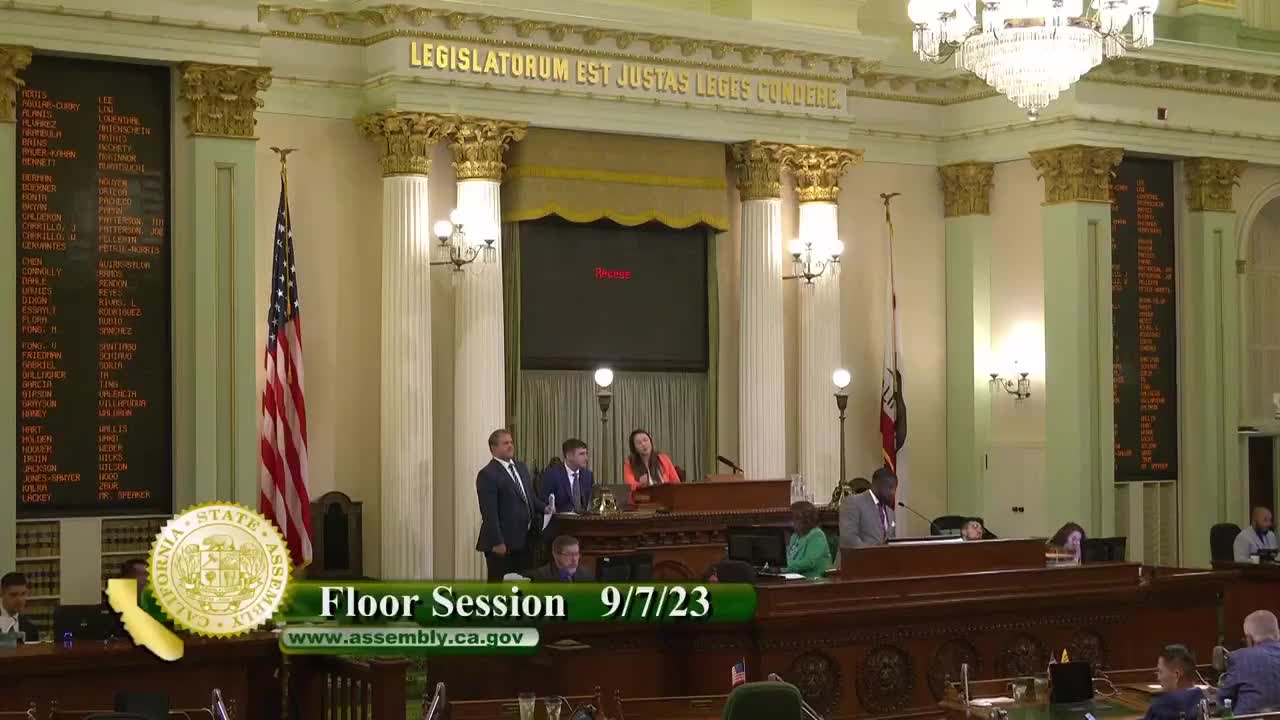
Bill Author

Bill Co-Author(s):