AB 974: Incarcerated persons: certified record of live birth.
- Session Year: 2023-2024
- House: Assembly
- Latest Version Date: 2023-02-14
Current Status:
Failed
(2024-02-01: From committee: Filed with the Chief Clerk pursuant to Joint Rule 56.)
Introduced
In Committee
First Chamber
In Committee
Second Chamber
Enacted
What does this bill do?
The bill requires local registrars, county recorders, or the state registrar to provide a certified birth record free of charge to any person who shows they are currently incarcerated in prison or a county jail, or to someone legally requesting it for that incarcerated person. It allows verification by inmate-locator websites, an envelope from the facility, a prison ID, a correctional staff signature, or similar proof, directs the Department of Public Health to create an affidavit form (a signed statement) for applicants, and limits the free issuance to one copy per year.
The summary is provided by generative AI which can make mistakes. For original language, please view the details in the table below.
Existing law establishes the State Department of Public Health and sets forth its powers and duties, including, but not limited to, the duties as State Registrar relating to the uniform administration of provisions relating to vital records and health statistics. Existing law requires the State Registrar, local registrar, or county recorder, upon request and payment of the required fee, to supply to an applicant a certified copy of the record of a birth, fetal death, death, marriage, or marriage dissolution registered with the official.
This bill would require the local registrar, county recorder, or State Registrar to issue, without a fee, a certified record of live birth to any person who demonstrates that they are currently incarcerated in prison or a county correctional facility. The bill would authorize the incarcerated person, or any person who is lawfully entitled to request that record on behalf of an incarcerated person, to make that request. The bill would specify methods for verification of an individuals incarcerated status, including, among other things, confirmation through a state or county inmate locator internet website. The bill would also require the department to develop an affidavit attesting to an applicants incarcerated status to be used by local registrars, county recorders, and the State Registrar.
By imposing a higher level of service on counties, the bill would impose a state-mandated local program.
The California Constitution requires the state to reimburse local agencies and school districts for certain costs mandated by the state. Statutory provisions establish procedures for making that reimbursement.
This bill would provide that, if the Commission on State Mandates determines that the bill contains costs mandated by the state, reimbursement for those costs shall be made pursuant to the statutory provisions noted above.
(a)The local registrar, county recorder, or the State Registrar, shall, without an issuance fee, issue a certified record of live birth to any person who attests that they are currently incarcerated in prison or a county correctional facility, on the affidavit described in subdivision (c), and whose status as an incarcerated person at the time of application can be verified. Incarceration status at the time of application shall be promptly verified by any of the following methods:
(1)Confirmation of active incarceration status through the Department of Corrections and Rehabilitation or county Inmate Locator internet website or other online or telephonic means.
(2)Indication on the envelope received that the attestation was sent from a prison or correctional institution.
(3)Inclusion of other evidence with the attestation that the person is incarcerated, including, but not limited to, a copy of a prison ID card.
(4)Signature on affidavit of any prison or correctional official or staff member confirming the current incarceration of the subject of the application.
(5)Another means for verifying a persons incarceration deemed adequate by the local registrar, county recorder, or State Registrar.
(b)In accordance with all other application requirements as set forth in Section 103526, a request for a certified record of live birth made pursuant to this section shall be made by an incarcerated person on behalf of themselves or by a person lawfully entitled to request a certified record of live birth on behalf of the incarcerated person. A person applying for a certified record of live birth under this section is entitled to one birth record, per application, for each eligible person verified as an incarcerated person. A person applying for a certified record of live birth under this section shall not be charged a fee for verification of their eligibility.
(c)The State Department of Public Health shall develop an affidavit attesting to the incarceration status of a person whose birth record is sought, which shall be used by local registrars, county recorders, and the State Registrar. The affidavit shall not be deemed complete unless it is signed by the person making a request for a certified record of live birth. The affidavit shall include a section with the option of an additional affidavit from a prison or correctional official, as one option for verifying current incarceration under paragraph (4) of subdivision (a).
(d)Notwithstanding the rulemaking provisions of the Administrative Procedure Act (Chapter 3.5 (commencing with Section 11340) of Part 1 of Division 3 of Title 2 of the Government Code), the department may implement and administer this section through an all-county letter or similar instructions from the director or State Registrar without taking regulatory action.
(e)The State Registrar shall provide one copy per year of a certified record to a requester pursuant to this section, and may provide additional copies at their discretion.
SEC. 2.If the Commission on State Mandates determines that this act contains costs mandated by the state, reimbursement to local agencies and school districts for those costs shall be made pursuant to Part 7 (commencing with Section 17500) of Division 4 of Title 2 of the Government Code.
REVISIONS: HeadingLine 2.|
Date
|
Status
|
|---|---|
| Feb 1, 2024 | From committee: Filed with the Chief Clerk pursuant to Joint Rule 56. |
| Jan 31, 2024 | Died pursuant to Art. IV, Sec. 10(c) of the Constitution. |
| May 18, 2023 | In committee: Held under submission. |
| Apr 19, 2023 | In committee: Set, first hearing. Referred to APPR. suspense file. |
| Mar 29, 2023 | Coauthors revised. |
| Mar 29, 2023 | From committee: Do pass and re-refer to Com. on APPR. (Ayes 12. Noes 0.) (March 28). Re-referred to Com. on APPR. |
| Feb 23, 2023 | Referred to Com. on HEALTH. |
| Feb 15, 2023 | From printer. May be heard in committee March 17. |
| Feb 14, 2023 | Read first time. To print. |
|
Date
|
Description
|
Location
|
Votes
|
|
|---|---|---|---|---|
| Mar 28, 2023 | Do pass and be re-referred to the Committee on [Appropriations] | Assembly Standing Committee on Health |
Passed |
This list shows positions taken on this bill by organizations on the date displayed, which is linked to the original source.
Positions by individuals are not included.
|
Organization
|
Position
|
Date
|
|---|---|---|
| 40 Tons | ** Support | |
| Ahimsa Collective | * Support | Mar 28, 2023 |
| alameda county public defender's office | ** Support | |
| Anti Recidivism Coalition | ** Support | |
| Because Black is Still Beautiful | ** Support | |
| Behavioral Health Services, INC. | ** Support | |
| California Coalition for Women Prisoners | ** Support | |
| Californians for Safety and Justice | ** Support | |
| Center for Employment Opportunities | ** Support | |
| Center for Living and Learning | ** Support | |
| Center on Juvenile and Criminal Justice | ** Support | |
| Choose Kindness Foundation | ** Support | |
| Chrysalis | ** Support | |
| Clare Matrix | ** Support | |
| Communities United for Restorative Youth Justice | ** Support | |
| Defy Ventures | ** Support | |
| Dolores Huerta Foundation | ** Support | |
| Ella Baker Center For Human Rights | ** Support | |
| Fred Brown Recovery Services | ** Support | |
| Fresno Barrios Unidos | ** Support | |
| Human Impact Partners | ** Support | |
| Initiate Justice | ** Support | |
| Instituto Familiar de la Raza | ** Support | |
| Jail Guitar Doors | ** Support | |
| Law Office of Laura R. Sheppard | ** Support | |
| Los Angeles Regional Reentry Partnership | ** Support | |
| Marin Shakespeare Company | ** Support | |
| National Black Women's Justice Institute | ** Support | |
| National Compadres Network | ** Support | |
| National Prevention Science Coalition to Improve Lives | ** Support | |
| Orange County Rapid Response Network | ** Support | |
| Our Road Prison Project | ** Support | |
| Paving the Way Foundation | ** Support | |
| PCS Family Services | ** Support | |
| People's Budget Orange County | ** Support | |
| Prison Yoga Project | ** Support | |
| Project ID Action Fund | * Support | Mar 28, 2023 |
| Project Return Peer Support Network | ** Support | |
| Reevolution | ** Support | |
| Rescue-a-Life Foundation | ** Support | |
| Roadmap to Peace Initiative | ** Support | |
| Root and Rebound | * Support | Mar 28, 2023 |
| Rubicon Programs | ** Support | |
| San Diego County District Attorney's Office | ** Support | |
| Sister Warriors Freedom Coalition | ** Support | |
| Successful Reentry, Llc | ** Support | |
| The Transformative In-prison Workgroup | ** Support | |
| transitions clinic network | ** Support | |
| Uncommon Law | ** Support | |
| Union Station Homeless Services | ** Support | |
| Urban Corps of San Diego County | ** Support | |
| Worker Education and Resource Center, INC | ** Support | |
| Young Women's Freedom Center | ** Support |
Date of Hearing: April 19, 2023
ASSEMBLY COMMITTEE ON APPROPRIATIONS
Chris Holden, Chair
ABPCA Bill Id:AB 974
Author:(McKinnor) – As Introduced Ver:February 14, 2023
Policy Committee: | Health | Vote: | 12 - 0 |
|
| ||
|
|
Urgency: No State Mandated Local Program: Yes Reimbursable: Yes
SUMMARY:
This bill requires a local registrar, county recorder, or the State Registrar to issue, without a fee, a certified record of live birth to any person who demonstrates they are currently incarcerated in prison or a county correctional facility. This bill also requires the Department of Public Health (DPH) to develop an affidavit attesting to the incarceration status of a person seeking a birth record, for use by a local registrar, county recorder, and the State Registrar, and authorizes DPH to implement this bill without taking regulatory action.
FISCAL EFFECT:
Costs to DPH are unknown, but are likely to exceed $150,000 per year (General Fund). There are 156,000 people who are incarcerated at any given time in California prisons and county jails. If every inmate requested a birth certificate every year, which this bill allows, the cost would be approximately $4,524,000 annually -- the highest possible cost to DPH.
According to DPH, approximately 31,000 people are released from prison or jail per year. It seems likely that an incarcerated person would be most interested in requesting a birth certificate as they approach release from prison. If every inmate requested a birth certificate only near the time of their release, the cost to DPH would be approximately $900,000 per year. If 25% of inmates requested a birth certificate near the time of their release, the cost would be approximately $225,000 per year.
Costs to local governments are also unknown. To the extent there are costs to local governments, the costs for DPH would likely be reduced. The state may be required to reimburse local governments for their costs to implement this bill, subject to a determination by the Commission on State Mandates.
The author has requested a one-time budget augmentation of $1.5 million to cover the costs associated with this bill.
COMMENTS:
- Purpose. According to the author:
There are approximately 156,000 incarcerated people in California prisons and county jails. Incarcerated people experience limited access to services, which can only be obtained through having specific forms of identification. Without identification, a person cannot rent an apartment, apply for a job, sign up for public benefits, or even cash a check. However, if an incarcerated person is unable to get the necessary underlying documentation, like a birth certificate, then they come home without a California identification card and will face numerous obstacles in getting …support…and services, and accomplishing their reentry goals. While the $29 fee for a California birth certificate may not seem high, for many people with few funds this can be a monumental barrier before they can get an ID and seek employment.
- Background. Experts say the first 72 hours after release are critical to determining whether a former inmate’s path will lead away from prison or to recidivism. An individual who served a sentence longer than six months in a California prison receives $200 at the time of release, and some of that money may be deducted for clothing and transportation costs.
- Department of Health Care Services (DHCS) Community Reentry Process. Currently, Medi-Cal services are generally available only after release from incarceration. Through a federal Medicaid 1115 demonstration waiver, DHCS will establish a coordinated community reentry process that will assist people leaving incarceration to connect to the physical and behavioral health services they need upon release. The goals are to increase and continue Medi-Cal coverage; improve coordination and communication among correctional systems, Medicaid systems, and community-based providers; and provide appropriate health care interventions at earlier opportunities to reduce acute services utilization and adverse health outcomes.
DHCS expects to begin providing pre-release services no sooner than April 2024. Effective January 1, 2023, AB 133 (Committee on Budget), Chapter 143, Statutes of 2021 directs all counties implementing Medi-Cal application processes in county jails and youth correctional facilities to “suspend” their status while an individual is in jail or prison, and easily “turn on” their status when they enter the community so they can access essential health care services immediately upon release.
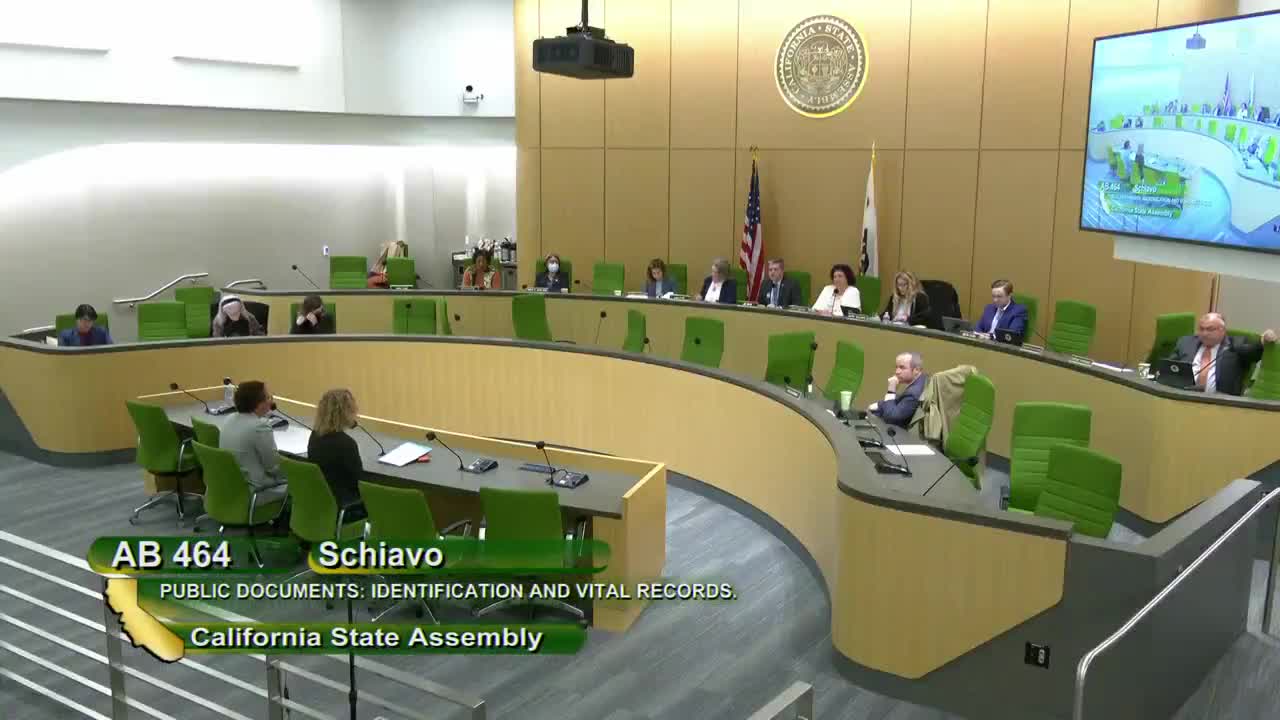
An individual applying for Medi-Cal is not required to have a birth certificate, however, a birth certificate can be used to verify citizenship, in the absence of other means of verification. - Related Legislation. AB 464 (Schiavo) exempts individuals who meet specified eligibility requirements for certain assistance programs from paying a fee for various vital records, drivers’ licenses, or identification cards. AB 464 is pending in the Assembly Committee on Transportation.
- Prior Legislation.
- AB 2490 (Chiu), Chapter 541, Statutes of 2018, requires the State Registrar, local registrar, and county recorder, to issue, without a fee, a birth certificate to a homeless person.
- AB 2308 (Stone), Chapter 607, Statutes of 2014, expands the Cal-ID program to ensure that every eligible person released from state prison is released with a Cal-ID.
- AB 1733 (Quirk-Silva, Atkins and Maienschein), Chapter 764, Statutes of 2014, requires a local registrar or county recorder to issue a birth certificate without a fee to a homeless person, prohibits the Department of Motor Vehicles from charging a fee for an identification card to any person who can verify their status as homeless, and requires DPH to develop an affidavit attesting to an applicant’s status as a homeless person.
- AB 717 (Stone), of the 2021-22 Legislative Session, as introduced, would have provided incarcerated people with birth certificates, social security cards, and a Cal-ID upon release from correctional facilities. AB 717 was held in Senate Appropriations Committee.
Analysis Prepared by: Allegra Kim / APPR. / (916) 319-2081
Date of Hearing: March 28, 2023
ASSEMBLY COMMITTEE ON HEALTH
Jim Wood, Chair
ABPCA Bill Id:AB 974
Author:(McKinnor) – As Introduced Ver:February 14, 2023
SUBJECT: Incarcerated persons: certified record of live birth.
SUMMARY: Requires a local registrar, county recorder, or the State Registrar to issue, without a fee, a certified record of live birth to any person who demonstrates that they are currently incarcerated in prison or a county correctional facility. Specifically, this bill:
- Requires the local registrar, county recorder, or the State Registrar to, without an issuance fee, issue a certified record of live birth to any person who attests that they are currently incarcerated in prison or a county correctional facility, on the affidavit described in 4) below, and whose status as an incarcerated person at the time of application can be verified.
- Requires incarceration status at the time of application to be promptly verified by any of the following methods:
- Confirmation of active incarceration status through the Department of Corrections and Rehabilitation (CDCR) or county “Inmate Locator” internet website or other online or telephonic means;
- Indication on the envelope received that the attestation was sent from a prison or correctional institution;
- Inclusion of other evidence with the attestation that the person is incarcerated, including, but not limited to, a copy of a prison ID card;
- Signature on affidavit of any prison or correctional official or staff member confirming the current incarceration of the subject of the application; or,
- Another means for verifying a person’s incarceration deemed adequate by the local registrar, county recorder, or State Registrar.
- Requires a request for a certified record of live birth made under this bill to be made by an incarcerated person on behalf of themselves or by a person lawfully entitled to request a certified record of live birth on behalf of the incarcerated person. Entitles a person applying for a certified record of live birth under this bill to one birth record, per application, for each eligible person verified as an incarcerated person. Prohibits a person applying for a certified record of live birth from being charged a fee for verification of their eligibility.
- Requires the State Department of Public Health (DPH) to develop an affidavit attesting to the incarceration status of a person whose birth record is sought, which will be used by local registrars, county recorders, and the State Registrar. Prohibits the affidavit from being deemed complete unless it is signed by the person making a request for a certified record of live birth, and requires the affidavit to include a section with the option of an additional affidavit from a prison or correctional official, as one option for verifying current incarceration.
- Authorizes DPH to implement and administer this bill through an all-county letter or similar instructions from the director or State Registrar without taking regulatory action.
- Requires the State Registrar to provide one copy per year of a certified record to a requester pursuant to this bill, and authorizes the State Registrar to provide additional copies at their discretion.
EXISTING LAW:
- Requires the State Registrar of Vital Statistics (the Director of DPH), a local registrar, or a county recorder, upon payment of a required fee, to supply applicants with a certified copy of birth, fetal death, death, marriage, or divorce records. [Health and Safety Code (HSC) 103525 et seq.]
- Sets the base fee for a certified birth, death, or fetal death record at twelve dollars, and allows jurisdictions to create local vital and health statistics trust funds to be collected by the applicable jurisdiction to defray administrative costs, modernization of vital records operations, and improved data collection and analysis. [HSC §103625 et seq.]
- Requires local registrars and county recorders to issue a certified record of live birth without a fee to any person who can verify their status as a homeless person. Requires a homeless services provider that has knowledge of a person’s housing status to verify that status for the purposes of applying for a certified record of live birth. Requires a request for a certified record of live birth to be made by a homeless person on behalf of themselves, or by any person lawfully entitled to request a certified record of live birth on behalf of a child, if the child has been verified as homeless. Prohibits a homeless person applying for a certified record of live birth from being charged a fee for verification of his or her eligibility. Requires DPH to develop an affidavit attesting to an applicant’s status as a homeless person, as specified. [HSC §103577]
- Sets the fee for an original or replacement identification card issued to a person who has been determined to have a current income level that meets the eligibility requirements for various public assistance programs at six dollars ($6). Requires the determination of eligibility to be made by a governmental or nonprofit entity, subject to regulations adopted by the Department of Motor Vehicles (DMV). [Vehicle Code 14902]
- Prohibits a fee from being charged for an original or replacement identification card issued to any person who can verify their status as a homeless person or homeless child or youth. Authorizes a homeless services provider that has knowledge of the person’s housing status to verify the person’s status. Requires a determination of eligibility to be subject to regulations adopted by the DMV. Prohibits a person applying for an identification card from being charged a fee for verification of their eligibility. [Id.]
- Sets the fee for a replacement identification card issued to an eligible inmate upon release from a federal correctional facility or a county jail facility is eight dollars ($8). Defines “eligible inmate” to mean an inmate who meets all of the following requirements:
- The inmate previously held a California driver’s license or identification card;
- The inmate has a usable photo on file with the department that is not more than 10 years old;
- The inmate has no outstanding fees due for a prior California identification card;
- The inmate has provided, and the DMV has verified, their true full name, date of birth, social security number, and legal presence in the United States; and,
- The inmate currently resides in a federal correctional facility or a county jail facility. [Id.]
FISCAL EFFECT: Unknown. This bill has not yet been analyzed by a fiscal committee.
COMMENTS:
- PURPOSE OF THIS BILL. According to the author, having access to a valid state identification is essential to people returning home from jails and prisons as identification plays a vital role in a person’s ability to secure housing, employment, enroll in education programs, sign up for public benefits, receive medical care, and even cash checks. The author states that this bill will ensure that individuals reentering society are equipped with the necessary tools to secure services and quickly stabilize.
- BACKGROUND. Roughly 600,000 people are released from federal and state prison each year, according to the Bureau of Justice Statistics. Experts often say the first 72 hours after release are critical to determining whether a former inmate’s path will lead away from prison or lead to recidivism. An individual released from state prison in California who served a sentence longer than six months receives $200. Part of that money may be deducted for clothing and transportation costs.
- Author’s budget request. The author of this bill is requesting a one-time General Fund Budget augmentation of $1.5 million to cover the costs associated with this bill. The author’s letter to the Assembly Budget Committee states, in part: “There are approximately 156,000 incarcerated people in California prisons and county jails. Incarcerated people experience limited access to services, which can only be obtained through having specific forms of identification. Without identification, a person cannot rent an apartment, apply for a job, sign up for public benefits, or even cash a check. However, if an incarcerated person is unable to get the necessary underlying documentation, like a birth certificate, then they come home without a California identification card and will face numerous obstacles in getting any of the support, and services, and accomplishing their reentry goals. While the $29 fee for a California birth certificate may not seem high, for many people with few funds this can be a monumental barrier before they can get an ID and seek employment.”
- Department of Health Care Services (DHCS) Community Reentry Process. Currently, Medi-Cal services are generally available only after release from incarceration. Through a federal Medicaid 1115 demonstration waiver, DHCS will establish a coordinated community reentry process that will assist people leaving incarceration to connect to the physical and behavioral health services they need upon release.
According to the DHCS press release from January 26, 2023, the goals of the waiver are to increase and continue Medi-Cal coverage; improve coordination and communication among correctional systems, Medicaid systems, and community-based providers; and provide appropriate health care interventions at earlier opportunities to reduce acute services utilization and adverse health outcomes, including, but not limited to, decompensation, suicide-related death, overdose, overdose-related death, and all-cause death. By providing pre-release and reentry services to individuals who are incarcerated, DHCS aims to improve health outcomes and reduce health disparities. Pre-release services will be anchored in comprehensive care management and include physical and behavioral clinical consultation, lab and radiology, Medication Assisted Treatment (MAT), community health worker services, and medications and durable medical equipment.
To help establish this ambitious initiative, DHCS has been working closely with its implementation partners, including the CDCR, county jails and probation, county behavioral health and social services, Medi-Cal managed care plans, and community-based providers. DHCS expects pre-release services to go-live no sooner than April 2024. Effective January 1, 2023, state statute (AB 133 (Committee on Budget), Chapter 143, Statutes of 2021) directs all counties implementing Medi-Cal application processes in county jails and youth correctional facilities to “suspend” their status while an individual is in jail or prison, and easily “turn on” when they enter the community so they can access essential health care services upon release. - DHCS data on incarcerated individuals. People of color are disproportionately incarcerated, including for mental health- and substance use disorder-related offenses. Approximately 29% of the state’s male prison population is Black, despite only making up 6% of the state’s male population, and many have considerable health care needs. More than one million adults and youth enter or are released from California prisons and jails annually, and at least 80% of these justice-involved individuals are eligible for Medi-Cal. Formerly incarcerated individuals are more likely to experience poor health outcomes and face disproportionately higher rates of physical and behavioral health diagnoses. They are also at higher risk for injury and death as a result of violence, overdose, and suicide compared to people who have never been incarcerated. Incarcerated individuals in California jails under active care for mental health issues rose by 63% over the last decade. Sixty-six percent of people in California jails and prisons have a moderate or high need for substance use disorder treatment. Overdose death rates are more than 100 times higher in the two weeks after release from incarceration than for the general population.
An individual who is applying for Medi-Cal is not required to have a birth certificate, however, a birth certificate can be used in order to verify citizenship if an individual does not have another means.
- Author’s budget request. The author of this bill is requesting a one-time General Fund Budget augmentation of $1.5 million to cover the costs associated with this bill. The author’s letter to the Assembly Budget Committee states, in part: “There are approximately 156,000 incarcerated people in California prisons and county jails. Incarcerated people experience limited access to services, which can only be obtained through having specific forms of identification. Without identification, a person cannot rent an apartment, apply for a job, sign up for public benefits, or even cash a check. However, if an incarcerated person is unable to get the necessary underlying documentation, like a birth certificate, then they come home without a California identification card and will face numerous obstacles in getting any of the support, and services, and accomplishing their reentry goals. While the $29 fee for a California birth certificate may not seem high, for many people with few funds this can be a monumental barrier before they can get an ID and seek employment.”
- SUPPORT. The Los Angeles Regional Reentry Partnership and Root & Rebound are the cosponsors of this bill and state that, currently, an incarcerated person leaving the CDCR can apply for a California identification (Cal-ID) card in hand. However, in order to obtain the identification card through this special in-prison program, the incarcerated person needs to be able to provide acceptable proof of their true full name, date of birth, Social Security number, legal presence in the United States, and California residency. A birth certificate, which is typically what is needed to prove the date of birth and legal presence, costs $29 in California. While the $29 fee may not seem high, for many people with limited funds this can be a monumental barrier before they can get a Cal-ID and seek employment. The cosponsors note that having a state identification card is essential for people returning home from jails and prisons. Without it, a person cannot rent an apartment, apply for a job, sign up for public benefits, or even cash a check. Currently, eligible people experiencing homelessness and foster youth are able to receive a fee-exempt copy of their birth certificates. However, there is no process in place for incarcerated people. If a person is not able to access the necessary underlying documentation, in this case, a birth certificate, they risk leaving prison without identification and will face obstacles in getting one after release. The cosponsors conclude that providing a fee-exempt copy of a birth certificate while a person is still incarcerated allows them to prepare for their reentry and reduces the risk of immediate and debilitating barriers to every opportunity and human need upon release.
- RELATED LEGISLATION. AB 464 (Schiavo) exempts individuals who meet specified eligibility requirements for certain assistance programs from paying a fee for various vital records, drivers’ licenses, or identification cards. Requires the determination of eligibility to be made by a governmental or nonprofit entity. AB 464 is pending in the Assembly Health Committee.
- PREVIOUS LEGISLATION.
- AB 1304 (Kamlager) of 2022 would have increased the amount of money an individual receives upon release from prison from $200 to $1,300. AB 1304 was vetoed by Governor Newsom, who stated, in part: “Financial constraints are a substantial barrier for individuals to successfully transition from prison to the community and I support efforts that aid these individuals in this transition. This year, the budget included funding for Returning Home Well, which provides housing to those who are recently released, as well as significant funding for community reentry programs.”
- AB 717 (Stone) from 2021, as introduced, would have provided incarcerated people with birth certificates, social security cards, and a Cal-ID upon release from facilities. AB 717 was held in the Senate Appropriations Committee.
- AB 2490 (Chiu), Chapter 541, Statutes of 2018, requires the State Registrar, in addition to the local registrar and county recorder, to issue a certified record of live birth without a fee to any person who can verify their status as a homeless person or a homeless child or youth.
- AB 1733 (Quirk-Silva, Atkins and Maienschein), Chapter 764, Statutes of 2014, requires local registrars or county recorders to issue a birth certificate without a fee to any person who can verify their status as a homeless person or a homeless child or youth; prohibits a fee from being charged for an original or replacement identification card issued by the DMV to any person who can verify their status as a homeless person or homeless child or youth; and, requires DPH to develop an affidavit attesting to an applicant’s status as a homeless person or homeless child or youth.
- POLICY COMMENT. As discussed in the background, DHCS is working to ensure that formerly incarcerated individuals have access to health care services upon release, which in some instances may require access to a birth certificate. As this bill moves forward, the author may wish to work with DHCS and DPH to determine the most appropriate time to provide an incarcerated individual with their birth certificate.
REGISTERED SUPPORT / OPPOSITION:
Support
Los Angeles Regional Reentry Partnership (cosponsor)
Root & Rebound (cosponsor)
40 Tons
Alameda County Public Defender's Office
Anti Recidivism Coalition
Because Black Is Still Beautiful
Behavioral Health Services, INC.
California Coalition for Women Prisoners
Californians for Safety and Justice
Center for Employment Opportunities
Center for Living and Learning
Center on Juvenile and Criminal Justice
Choose Kindness Foundation
Chrysalis
Clare Matrix
Communities United for Restorative Youth Justice (CURYJ)
Defy Ventures
Dolores Huerta Foundation
Ella Baker Center for Human Rights
Fred Brown Recovery Services
Fresno Barrios Unidos
Human Impact Partners
Initiate Justice
Instituto Familiar De La Raza
Jail Guitar Doors
Law Office of Laura R. Sheppard
Marin Shakespeare Company
National Black Women's Justice Institute
National Compadres Network
National Prevention Science Coalition to Improve Lives
Orange County Rapid Response Network
Our Road Prison Project
Paving the Way Foundation
PCS Family Services
People's Budget Orange County
Prison Yoga Project
Project Return Peer Support Network
ReEvolution
Rescue-a-Life Foundation
Roadmap to Peace Initiative
Rubicon Programs
San Diego County District Attorney's Office
Sister Warrior Freedom Coalition
Successful Reentry, LLC
The Transformative In-prison Workgroup
Transitions Clinic Network
Uncommon Law
Union Station Homeless Services
Urban Corps of San Diego County
Worker Education and Resource Center, INC
Young Women's Freedom Center
Opposition
None on file.
Analysis Prepared by: Lara Flynn / HEALTH / (916) 319-2097
Bill Author