SB 1001: Death penalty: intellectually disabled persons.
- Session Year: 2023-2024
- House: Senate
- Latest Version Date: 2024-09-28
Current Status:
Passed
(2024-09-28: Chaptered by Secretary of State. Chapter 908, Statutes of 2024.)
Introduced
In Committee
First Chamber
In Committee
Second Chamber
Enacted
What does this bill do?
This bill makes people with an intellectual disability ineligible for the death penalty and says “manifested before the end of the developmental period” means the deficits were present during development and do not require a formal diagnosis or test at that time. It says intellectual disability is a factual question that the parties can agree on, and the court must accept that agreement unless documentary evidence shows it is unsupported. The bill also limits when prosecutors can order their own testing to situations where they show a reasonable basis to doubt the defendant’s tests, requires basic safeguards during such testing, and directs the court to find a person ineligible for death if a jury deadlocks on the issue.
The summary is provided by generative AI which can make mistakes. For original language, please view the details in the table below.
Existing case law holds that execution of a mentally retarded person constitutes cruel and unusual punishment under the United States Constitution, rendering an individual with mental retardation ineligible for the death penalty. Existing law authorizes a defendant to apply, prior to the commencement of trial, for an order directing that a hearing to determine intellectual disability be conducted when the prosecution in a criminal case seeks the death penalty. Existing law defines intellectual disability for these purposes as the condition of significantly subaverage general intellectual functioning existing concurrently with deficits in adaptive behavior and manifested before the end of the developmental period, as defined by clinical standards. Existing law requires the court to order a hearing to determine whether the defendant has an intellectual disability upon the submission of a declaration by a qualified expert stating the experts opinion that the defendant is a person with an intellectual disability. Existing law requires a court to impanel a new jury to try the issue of intellectual disability if a jury panel was unable to reach a unanimous verdict that the defendant is a person with an intellectual disability.
This bill would define manifested before the end of the developmental period to mean that the deficits were present during the development period, and does not require a formal diagnosis, or tests of intellectual functioning in the intellectual disability range, before the end of the developmental period. The bill would codify case law by specifying that individuals with an intellectual disability are ineligible for the death penalty. The bill would specify that the question of intellectual disability is a question of fact that may be stipulated to by the parties, and would require the court to accept the stipulation, unless the court finds that the stipulation is not supported by documentary evidence that provides a factual basis for concluding by a preponderance of the evidence that the person has an intellectual disability. The bill would require the court to state its factual and legal rationale for declining to accept a stipulation of the parties.
This bill would authorize the court to order a defendant or petitioner to submit to testing by a qualified prosecution expert only if the prosecution presents a reasonable factual basis that the intellectual functioning testing presented by the defendant or petitioner is unreliable. If the court enters an order for the defendant or petitioner to submit to testing, the bill would require the prosecution to submit a proposed list of the tests its expert wishes to administer so that the defendant or petitioner may raise any objections before testing is ordered. The bill would require the court, in the event that a jury in unable to reach a unanimous verdict as to whether the defendant is a person with an intellectual disability, to enter a finding that the defendant is ineligible for the death penalty.
Existing case law holds that execution of a mentally retarded person constitutes cruel and unusual punishment under the United States Constitution, rendering an individual with mental retardation ineligible for the death penalty. Existing law authorizes a defendant to apply, prior to the commencement of trial, for an order directing that a hearing to determine intellectual disability be conducted when the prosecution in a criminal case seeks the death penalty. Existing law defines intellectual disability for these purposes as the condition of significantly subaverage general intellectual functioning existing concurrently with deficits in adaptive behavior and manifested before the end of the developmental period, as defined by clinical standards. Existing law requires the court to order a hearing to determine whether the defendant has an intellectual disability upon the submission of a declaration by a qualified expert stating the experts opinion that the defendant is a person with an intellectual disability. Existing law requires a court to impanel a new jury to try the issue of intellectual disability if a jury panel was unable to reach a unanimous verdict that the defendant is a person with an intellectual disability.
This bill would define manifested before the end of the developmental period to mean that the deficits were present during the development period, and does not require a formal diagnosis, or tests of intellectual functioning in the intellectual disability range, before the end of the developmental period. The bill would codify case law by specifying that individuals with an intellectual disability are ineligible for the death penalty. The bill would specify that the question of intellectual disability is a question of fact that may be stipulated to by the parties, and would require the court, within 30 days, to accept the stipulation and declare the defendant or petitioner ineligible for the death penalty. court to accept the stipulation, unless the court finds that the stipulation is not supported by documentary evidence that provides a factual basis for concluding by a preponderance of the evidence that the person has an intellectual disability. The bill would require the court to state its factual and legal rationale for declining to accept a stipulation of the parties.
This bill would authorize the court to order a defendant or petitioner to submit to testing by a qualified prosecution expert only if the prosecution presents a reasonable factual basis that the intellectual functioning testing presented by the defendant or petitioner is unreliable. If the court enters an order for the defendant or petitioner to submit to testing, the bill would require the prosecution to submit a proposed list of the tests its expert wishes to administer so that the defendant or petitioner may raise any objections before testing is ordered. The bill would require the court, in the event that a jury in unable to reach a unanimous verdict as to whether the defendant is a person with an intellectual disability, to enter a finding that the defendant is ineligible for the death penalty.
Existing case law holds that execution of a mentally retarded person constitutes cruel and unusual punishment under the United States Constitution, rendering an individual with mental retardation ineligible for the death penalty. Existing law authorizes a defendant to apply, prior to the commencement of trial, for an order directing that a hearing to determine intellectual disability be conducted when the prosecution in a criminal case seeks the death penalty. Existing law defines intellectual disability for these purposes as the condition of significantly subaverage general intellectual functioning existing concurrently with deficits in adaptive behavior and manifested before the end of the developmental period, as defined by clinical standards. Existing law requires the court to order a hearing to determine whether the defendant has an intellectual disability upon the submission of a declaration by a qualified expert stating the experts opinion that the defendant is a person with an intellectual disability. Existing law requires a court to impanel a new jury to try the issue of intellectual disability if a jury panel was unable to reach a unanimous verdict that the defendant is a person with an intellectual disability.
This bill would define manifested before the end of the developmental period to mean that the deficits were present during the development period, and does not require a formal diagnosis, or tests of intellectual functioning in the intellectual disability range, before the end of the developmental period. The bill would codify case law by specifying that individuals with an intellectual disability are ineligible for the death penalty. The bill would specify that the question of intellectual disability is a question of fact that may be stipulated to by the parties, and would require the court, within 30 days, to accept the stipulation and declare the defendant or petitioner ineligible for the death penalty.
This bill would authorize the court to order a defendant or petitioner to submit to testing by a qualified prosecution expert only if the prosecution presents a reasonable factual basis that the intellectual functioning testing presented by the defendant or petitioner is unreliable. If the court enters an order for the defendant or petitioner to submit to testing, the bill would require the prosecution to submit a proposed list of the tests its expert wishes to administer so that the defendant or petitioner may raise any objections before testing is ordered. The bill would require the court, in the event that a jury in unable to reach a unanimous verdict as to whether the defendant is a person with an intellectual disability, to enter a finding that the defendant is intelligible ineligible for the death penalty.
Existing case law holds that execution of a mentally retarded person constitutes cruel and unusual punishment under the United States Constitution, rendering an individual with mental retardation ineligible for the death penalty. Existing law authorizes a defendant to apply, prior to the commencement of trial, for an order directing that a hearing to determine intellectual disability be conducted when the prosecution in a criminal case seeks the death penalty. Existing law defines intellectual disability for these purposes as the condition of significantly subaverage general intellectual functioning existing concurrently with deficits in adaptive behavior and manifested before the end of the developmental period, as defined by clinical standards. Existing law requires the court to order a hearing to determine whether the defendant has an intellectual disability upon the submission of a declaration by a qualified expert stating the experts opinion that the defendant is a person with an intellectual disability. Existing law requires a court to impanel a new jury to try the issue of intellectual disability if a jury panel was unable to reach a unanimous verdict that the defendant is a person with an intellectual disability.
This bill would define manifested before the end of the developmental period to mean that the deficits were present during the development period, and does not require a formal diagnosis, or tests of intellectual functioning in the intellectual disability range, before the end of the developmental period. The bill would codify case law by specifying that individuals with an intellectual disability are ineligible for the death penalty. The bill would specify that the question of intellectual disability is a question of fact that may be stipulated to by the parties, and would require the court, within 30 days, to accept the stipulation and declare the defendant or petitioner ineligible for the death penalty.
This bill would authorize the court to order a defendant or petitioner to submit to testing by a qualified prosecution expert only if the prosecution presents a reasonable factual basis that the intellectual functioning testing presented by the defendant or petitioner is unreliable. If the court enters an order for the defendant or petitioner to submit to testing, the bill would require the prosecution to submit a proposed list of the tests its expert wishes to administer so that the defendant or petitioner may raise any objections before testing is ordered. The bill would require the court, in the event that a jury in unable to reach a unanimous verdict as to whether the defendant is a person with an intellectual disability, to enter a finding that the defendant is intelligible for the death penalty.
The Legislature finds and declares all of the following:
(a)It is the intent of the Legislature to codify and expand upon the Courts holding in Centeno v. Superior Court (2004) 117 Cal.App.4th 30.
(b)The Legislature takes seriously the United States Supreme Courts acknowledgment that persons with an intellectual disability face a special risk of wrongful execution. The Legislature does not wish to risk the execution of a person with an intellectual disability.
(c)As with Assembly Bill 2512 (201920 Regular Session), it is the intent of the Legislature to adopt the professional medical and psychological communitys definition and understanding of intellectual disability. Consistent with its public policy goals, the Legislature continues to urge courts to quickly and accurately identify persons with intellectual disability and avoid protracted and unnecessary litigation.
(d)As the United States Supreme Court has explained, the question for the finder of fact in a proceeding under this statute is whether a preponderance of the evidence establishes that the Eighth Amendment of the United States Constitution prohibits the persons execution, regardless of the facts or nature of the crime, any determinations about the persons future dangerousness, or any other factors irrelevant to the question of whether the person has an intellectual disability. Public policy favors exempting individuals who more likely than not have an intellectual disability from execution.
SEC. 2.Section 1376 of the Penal Code is amended to read:1376.(a)As used in this section, the following definitions shall apply:
(1)Intellectual disability means the condition of significantly subaverage general intellectual functioning existing concurrently with deficits in adaptive behavior and manifested before the end of the developmental period, as defined by clinical standards.
(2)Manifested before the end of the developmental period means that the deficits were present during the developmental period. It does not require a formal diagnosis of intellectual disability, or tests of intellectual functioning in the intellectual disability range, before the end of the developmental period.
(3)Prima facie showing of intellectual disability means that the defendants allegation of intellectual disability is based on the type of evidence typically relied on by a qualified expert in diagnosing intellectual disability, as defined in current clinical standards, or when a qualified expert provides a declaration diagnosing the defendant as a person with intellectual disability.
(4)The prosecution refers to the prosecuting agency at trial and to the respondent in a habeas corpus proceeding.
(b)A person with an intellectual disability is ineligible for the death penalty.
(c)(1)When the prosecution seeks the death penalty, the defendant may, at a reasonable time prior to the commencement of trial, apply for an order directing that a hearing to determine intellectual disability be conducted. Upon a prima facie showing that the defendant is a person with an intellectual disability, the court shall order a hearing to determine whether the defendant is a person with an intellectual disability. At the request of the defendant, the court shall conduct the hearing without a jury prior to the commencement of the trial. The defendants request for a court hearing prior to trial shall constitute a waiver of a jury hearing on the issue of intellectual disability. If the defendant does not request a court hearing, the court shall order a jury hearing to determine if the defendant is a person with an intellectual disability. The jury hearing on intellectual disability shall occur at the conclusion of the phase of the trial in which the jury has found the defendant guilty with a finding that one or more of the special circumstances enumerated in Section 190.2 are true. Except as provided in paragraph (3), the same jury shall make a finding that the defendant is a person with an intellectual disability or that the defendant does not have an intellectual disability.
(2)For the purposes of the procedures set forth in this section, the court or jury shall decide only the question of the defendants intellectual disability. The defendant shall present evidence in support of the claim that they are a person with an intellectual disability. The prosecution shall present its case regarding the issue of whether the defendant is a person with an intellectual disability. Each party may offer rebuttal evidence. The court, for good cause in furtherance of justice, may permit either party to reopen its case to present evidence in support of or opposition to the claim of intellectual disability. A statement made by the defendant during an examination ordered by the court shall not be admissible in the trial on the defendants guilt.
(3)At the close of evidence, the prosecution shall make its final argument, and the defendant shall conclude with their final argument. The burden of proof shall be on the defense to prove by a preponderance of the evidence that the defendant is a person with an intellectual disability. The jury shall return a verdict that either the defendant is a person with an intellectual disability or the defendant does not have an intellectual disability. The verdict of the jury shall be unanimous. When the jury is unable to reach a unanimous verdict that the defendant is a person with an intellectual disability, and does not reach a unanimous verdict that the defendant does not have an intellectual disability, the court shall dismiss the jury and enter a finding that the defendant is ineligible for the death penalty pursuant to this section.
(d)When the hearing is conducted before the court prior to the commencement of the trial, the following shall apply:
(1)If the court finds that the defendant is a person with an intellectual disability, the court shall preclude the death penalty and the criminal trial thereafter shall proceed as in any other case in which a sentence of death is not sought by the prosecution. If the defendant is found guilty of murder in the first degree, with a finding that one or more of the special circumstances enumerated in Section 190.2 are true, the court shall sentence the defendant to confinement in the state prison for life without the possibility of parole. The jury shall not be informed of the prior proceedings or the findings concerning the defendants claim of intellectual disability unless the defendant elects to present that information at trial.
(2)If the court finds that the defendant does not have an intellectual disability, the trial court shall proceed as in any other case in which a sentence of death is sought by the prosecution. The jury shall not be informed of the prior proceedings or the findings concerning the defendants claim of intellectual disability.
(e)When the hearing is conducted before the jury after the defendant is found guilty with a finding that one or more of the special circumstances enumerated in Section 190.2 are true, the following shall apply:
(1)If the jury finds that the defendant is a person with an intellectual disability, the court shall preclude the death penalty and shall sentence the defendant to confinement in the state prison for life without the possibility of parole.
(2)If the jury finds that the defendant does not have an intellectual disability, the trial shall proceed as in any other case in which a sentence of death is sought by the prosecution.
(f)When the defendant has not requested a court hearing as provided in subdivision (c), and has entered a plea of not guilty by reason of insanity under Sections 190.4 and 1026, the hearing on intellectual disability shall occur at the conclusion of the sanity trial if the defendant is found sane.
(g)A person in custody pursuant to a judgment of death may apply for an order directing that a hearing to determine intellectual disability be conducted as part of a petition for a writ of habeas corpus. When the claim of intellectual disability is raised in a petition for habeas corpus and a petitioner makes a prima facie showing of intellectual disability, the reviewing court shall issue an order to show cause if the petitioner has met the prima facie standard. The petitioner bears the burden of proving by a preponderance of the evidence that the petitioner is a person with an intellectual disability. The prosecution may present its case regarding the issue of whether the petitioner is a person with an intellectual disability. Each party may offer rebuttal evidence. During an evidentiary hearing under this subdivision, an expert may testify about the contents of out-of-court statements, including documentary evidence and statements from witnesses when those types of statements are accepted by the medical community as relevant to a diagnosis of intellectual disability if the expert relied upon these statements as the basis for their opinion.
(h)The results of a test measuring intellectual functioning shall not be changed or adjusted based on race, ethnicity, national origin, or socioeconomic status.
(i)(1)When a court has concluded a hearing under this section is necessary, that court may order a defendant or petitioner to submit to testing by a qualified prosecution expert only if the prosecution presents a reasonable factual basis that the intellectual functioning testing presented by the defendant or petitioner is unreliable. Any order requiring the defendant or petitioner to submit to testing by a qualified prosecution expert shall be limited to tests directly related to the determination of the defendant or petitioners intellectual functioning. Any such order shall also prohibit the expert from questioning the defendant or petitioner about the facts of the case, shall permit the defendant or petitioner to have their attorney nearby during the examination and to consult with their attorney during the examination if they choose, and shall, upon request by the defendant or petitioners counsel, require that the prosecution experts examination be recorded in a manner agreed upon by the parties and the court.
(2)The prosecution shall submit a proposed list of the tests its expert wishes to administer so that the defendant or petitioner may raise any objections before testing is ordered. The Legislature finds and declares that this paragraph is declaratory of existing law.
(j)Intellectual disability is a question of fact. The parties to a trial or habeas proceeding may stipulate that a defendant or petitioner is a person with intellectual disability as defined in clinical standards and in this section. After a prima facie showing of intellectual disability has been made, whenever the prosecution stipulates or concedes that the defendant or petitioner has an intellectual disability, the court shall accept the stipulation or concession unless it finds that the stipulation or concession is not supported by documentary evidence that provides a factual basis for concluding by a preponderance of the evidence that the person has an intellectual disability. If the court declines to accept a stipulation, it must state its factual and legal rationale for doing so on the record, and it may not rely upon facts or factors that are unrelated or irrelevant to the factual question of whether the defendant or petitioner has an intellectual disability.
The Legislature finds and declares all of the following:
(a)It is the intent of the Legislature to codify and expand upon the Courts holding in Centeno v. Superior Court (2004) 117 Cal.App.4th 30.
(b)The Legislature takes seriously the United States Supreme Courts acknowledgment that persons with an intellectual disability face a special risk of wrongful execution. The Legislature does not wish to risk the execution of a person with an intellectual disability.
(c)As with Assembly Bill 2512 (201920 Regular Session), it is the intent of the Legislature to adopt the professional medical and psychological communitys definition and understanding of intellectual disability. The Consistent with its public policy goals, the Legislature continues to urge courts to quickly and accurately identify persons with intellectual disability and avoid protracted and unnecessary litigation.
(d)As the United States Supreme Court has explained, the question for the finder of fact in a proceeding under this statute is whether a preponderance of the evidence establishes that the Eighth Amendment of the United States Constitution prohibits the persons execution, regardless of the facts or nature of the crime, any determinations about the persons future dangerousness, or any other factors irrelevant to the question of whether the person has an intellectual disability. Public policy favors exempting individuals who more likely than not have an intellectual disability from execution.
SEC. 2.Section 1376 of the Penal Code is amended to read:1376.(a)As used in this section, the following definitions shall apply:
(1)Intellectual disability means the condition of significantly subaverage general intellectual functioning existing concurrently with deficits in adaptive behavior and manifested before the end of the developmental period, as defined by clinical standards.
(2)Manifested before the end of the developmental period means that the deficits were present during the developmental period. It does not require a formal diagnosis of intellectual disability, or tests of intellectual functioning in the intellectual disability range, before the end of the developmental period.
(3)Prima facie showing of intellectual disability means that the defendants allegation of intellectual disability is based on the type of evidence typically relied on by a qualified expert in diagnosing intellectual disability, as defined in current clinical standards, or when a qualified expert provides a declaration diagnosing the defendant as a person with intellectual disability.
(4)The prosecution refers to the prosecuting agency at trial and to the respondent in a habeas corpus proceeding.
(b)A person with an intellectual disability is ineligible for the death penalty.
(c)(1)When the prosecution seeks the death penalty, the defendant may, at a reasonable time prior to the commencement of trial, apply for an order directing that a hearing to determine intellectual disability be conducted. Upon a prima facie showing that the defendant is a person with an intellectual disability, the court shall order a hearing to determine whether the defendant is a person with an intellectual disability. At the request of the defendant, the court shall conduct the hearing without a jury prior to the commencement of the trial. The defendants request for a court hearing prior to trial shall constitute a waiver of a jury hearing on the issue of intellectual disability. If the defendant does not request a court hearing, the court shall order a jury hearing to determine if the defendant is a person with an intellectual disability. The jury hearing on intellectual disability shall occur at the conclusion of the phase of the trial in which the jury has found the defendant guilty with a finding that one or more of the special circumstances enumerated in Section 190.2 are true. Except as provided in paragraph (3), the same jury shall make a finding that the defendant is a person with an intellectual disability or that the defendant does not have an intellectual disability.
(2)For the purposes of the procedures set forth in this section, the court or jury shall decide only the question of the defendants intellectual disability. The defendant shall present evidence in support of the claim that they are a person with an intellectual disability. The prosecution shall present its case regarding the issue of whether the defendant is a person with an intellectual disability. Each party may offer rebuttal evidence. The court, for good cause in furtherance of justice, may permit either party to reopen its case to present evidence in support of or opposition to the claim of intellectual disability. A statement made by the defendant during an examination ordered by the court shall not be admissible in the trial on the defendants guilt.
(3)At the close of evidence, the prosecution shall make its final argument, and the defendant shall conclude with their final argument. The burden of proof shall be on the defense to prove by a preponderance of the evidence that the defendant is a person with an intellectual disability. The jury shall return a verdict that either the defendant is a person with an intellectual disability or the defendant does not have an intellectual disability. The verdict of the jury shall be unanimous. When the jury is unable to reach a unanimous verdict that the defendant is a person with an intellectual disability, and does not reach a unanimous verdict that the defendant does not have an intellectual disability, the court shall dismiss the jury and enter a finding that the defendant is ineligible for the death penalty pursuant to this section.
(d)When the hearing is conducted before the court prior to the commencement of the trial, the following shall apply:
(1)If the court finds that the defendant is a person with an intellectual disability, the court shall preclude the death penalty and the criminal trial thereafter shall proceed as in any other case in which a sentence of death is not sought by the prosecution. If the defendant is found guilty of murder in the first degree, with a finding that one or more of the special circumstances enumerated in Section 190.2 are true, the court shall sentence the defendant to confinement in the state prison for life without the possibility of parole. The jury shall not be informed of the prior proceedings or the findings concerning the defendants claim of intellectual disability unless the defendant elects to present that information at trial.
(2)If the court finds that the defendant does not have an intellectual disability, the trial court shall proceed as in any other case in which a sentence of death is sought by the prosecution. The jury shall not be informed of the prior proceedings or the findings concerning the defendants claim of intellectual disability.
(e)When the hearing is conducted before the jury after the defendant is found guilty with a finding that one or more of the special circumstances enumerated in Section 190.2 are true, the following shall apply:
(1)If the jury finds that the defendant is a person with an intellectual disability, the court shall preclude the death penalty and shall sentence the defendant to confinement in the state prison for life without the possibility of parole.
(2)If the jury finds that the defendant does not have an intellectual disability, the trial shall proceed as in any other case in which a sentence of death is sought by the prosecution.
(f)When the defendant has not requested a court hearing as provided in subdivision (c), and has entered a plea of not guilty by reason of insanity under Sections 190.4 and 1026, the hearing on intellectual disability shall occur at the conclusion of the sanity trial if the defendant is found sane.
(g)A person in custody pursuant to a judgment of death may apply for an order directing that a hearing to determine intellectual disability be conducted as part of a petition for a writ of habeas corpus. When the claim of intellectual disability is raised in a petition for habeas corpus and a petitioner makes a prima facie showing of intellectual disability, the reviewing court shall issue an order to show cause if the petitioner has met the prima facie standard. The petitioner bears the burden of proving by a preponderance of the evidence that the petitioner is a person with an intellectual disability. The state prosecution may present its case regarding the issue of whether the petitioner is a person with an intellectual disability. Each party may offer rebuttal evidence. During an evidentiary hearing under this subdivision, an expert may testify about the contents of out-of-court statements, including documentary evidence and statements from witnesses when those types of statements are accepted by the medical community as relevant to a diagnosis of intellectual disability if the expert relied upon these statements as the basis for their opinion.
(h)The results of a test measuring intellectual functioning shall not be changed or adjusted based on race, ethnicity, national origin, or socioeconomic status.
(i)(1)When a court has concluded a hearing under this section is necessary, that court may order a defendant or petitioner to submit to testing by a qualified prosecution expert only if the prosecution presents a reasonable factual basis that the intellectual functioning testing presented by the defendant or petitioner is unreliable. Any order requiring the defendant or petitioner to submit to testing by a qualified prosecution expert shall be limited to tests directly related to the determination of the defendant or petitioners intellectual functioning. Any such order shall also prohibit the expert from questioning the defendant or petitioner about the facts of the case, shall permit the defendant or petitioner to have their attorney nearby during the examination and to consult with their attorney during the examination if they choose, and shall, upon request by the defendant or petitioners counsel, require that the prosecution experts examination be recorded in a manner agreed upon by the parties and the court.
(2)The prosecution shall submit a proposed list of the tests its expert wishes to administer so that the defendant or petitioner may raise any objections before testing is ordered. The Legislature finds and declares that this paragraph is declaratory of existing law.
(j)Intellectual disability is a question of fact. The parties to a trial or habeas proceeding may stipulate that a defendant or petitioner is a person with intellectual disability as defined in clinical standards and in this section. Whenever the parties so stipulate, or counsel representing the State concedes that the defendant or petitioner has an intellectual disability, the court shall, within 30 days, accept the stipulation or concession and declare the defendant or petitioner ineligible for the death penalty. After a prima facie showing of intellectual disability has been made, whenever the prosecution stipulates or concedes that the defendant or petitioner has an intellectual disability, the court shall accept the stipulation or concession unless it finds that the stipulation or concession is not supported by documentary evidence that provides a factual basis for concluding by a preponderance of the evidence that the person has an intellectual disability. If the court declines to accept a stipulation, it must state its factual and legal rationale for doing so on the record, and it may not rely upon facts or factors that are unrelated or irrelevant to the factual question of whether the defendant or petitioner has an intellectual disability.
The Legislature finds and declares all of the following:
(a)It is the intent of the Legislature to codify and expand upon the Courts holding in Centeno v. Superior Court (2004) 117 Cal.App.4th 30.
(b)The Legislature takes seriously the United States Supreme Courts acknowledgment that persons with an intellectual disability face a special risk of wrongful execution. The Legislature does not wish to risk the execution of a person with an intellectual disability.
(c)As with Assembly Bill 2512 (2019-2020 (201920 Regular Session), it is the intent of the Legislature to adopt the professional medical and psychological communitys definition and understanding of intellectual disability. The Legislature continues to urge courts to quickly and accurately identify persons with intellectual disability and avoid protracted and unnecessary litigation.
SEC. 2.Section 1376 of the Penal Code is amended to read:1376.(a)As used in this section, the following definitions shall apply:
(1)Intellectual disability means the condition of significantly subaverage general intellectual functioning existing concurrently with deficits in adaptive behavior and manifested before the end of the developmental period, as defined by clinical standards.
(2)Manifested before the end of the developmental period means that the deficits were present during the developmental period. It does not require a formal diagnosis of intellectual disability, or tests of intellectual functioning in the intellectual disability range, before the end of the developmental period.
(3)Prima facie showing of intellectual disability means that the defendants allegation of intellectual disability is based on the type of evidence typically relied on by a qualified expert in diagnosing intellectual disability, as defined in current clinical standards, or when a qualified expert provides a declaration diagnosing the defendant as a person with intellectual disability.
(b)A person with an intellectual disability is ineligible for the death penalty.
(c)(1)When the prosecution seeks the death penalty, the defendant may, at a reasonable time prior to the commencement of trial, apply for an order directing that a hearing to determine intellectual disability be conducted. Upon a prima facie showing that the defendant is a person with an intellectual disability, the court shall order a hearing to determine whether the defendant is a person with an intellectual disability. At the request of the defendant, the court shall conduct the hearing without a jury prior to the commencement of the trial. The defendants request for a court hearing prior to trial shall constitute a waiver of a jury hearing on the issue of intellectual disability. If the defendant does not request a court hearing, the court shall order a jury hearing to determine if the defendant is a person with an intellectual disability. The jury hearing on intellectual disability shall occur at the conclusion of the phase of the trial in which the jury has found the defendant guilty with a finding that one or more of the special circumstances enumerated in Section 190.2 are true. Except as provided in paragraph (3), the same jury shall make a finding that the defendant is a person with an intellectual disability or that the defendant does not have an intellectual disability.
(2)For the purposes of the procedures set forth in this section, the court or jury shall decide only the question of the defendants intellectual disability. The defendant shall present evidence in support of the claim that they are a person with an intellectual disability. The prosecution shall present its case regarding the issue of whether the defendant is a person with an intellectual disability. Each party may offer rebuttal evidence. The court, for good cause in furtherance of justice, may permit either party to reopen its case to present evidence in support of or opposition to the claim of intellectual disability. A statement made by the defendant during an examination ordered by the court shall not be admissible in the trial on the defendants guilt.
(3)At the close of evidence, the prosecution shall make its final argument, and the defendant shall conclude with their final argument. The burden of proof shall be on the defense to prove by a preponderance of the evidence that the defendant is a person with an intellectual disability. The jury shall return a verdict that either the defendant is a person with an intellectual disability or the defendant does not have an intellectual disability. The verdict of the jury shall be unanimous. When the jury is unable to reach a unanimous verdict that the defendant is a person with an intellectual disability, and does not reach a unanimous verdict that the defendant does not have an intellectual disability, the court shall dismiss the jury and enter a finding that the defendant is ineligible for the death penalty pursuant to this section.
(d)When the hearing is conducted before the court prior to the commencement of the trial, the following shall apply:
(1)If the court finds that the defendant is a person with an intellectual disability, the court shall preclude the death penalty and the criminal trial thereafter shall proceed as in any other case in which a sentence of death is not sought by the prosecution. If the defendant is found guilty of murder in the first degree, with a finding that one or more of the special circumstances enumerated in Section 190.2 are true, the court shall sentence the defendant to confinement in the state prison for life without the possibility of parole. The jury shall not be informed of the prior proceedings or the findings concerning the defendants claim of intellectual disability unless the defendant elects to present that information at trial.
(2)If the court finds that the defendant does not have an intellectual disability, the trial court shall proceed as in any other case in which a sentence of death is sought by the prosecution. The jury shall not be informed of the prior proceedings or the findings concerning the defendants claim of intellectual disability.
(e)When the hearing is conducted before the jury after the defendant is found guilty with a finding that one or more of the special circumstances enumerated in Section 190.2 are true, the following shall apply:
(1)If the jury finds that the defendant is a person with an intellectual disability, the court shall preclude the death penalty and shall sentence the defendant to confinement in the state prison for life without the possibility of parole.
(2)If the jury finds that the defendant does not have an intellectual disability, the trial shall proceed as in any other case in which a sentence of death is sought by the prosecution.
(f)When the defendant has not requested a court hearing as provided in subdivision (c), and has entered a plea of not guilty by reason of insanity under Sections 190.4 and 1026, the hearing on intellectual disability shall occur at the conclusion of the sanity trial if the defendant is found sane.
(g)A person in custody pursuant to a judgment of death may apply for an order directing that a hearing to determine intellectual disability be conducted as part of a petition for a writ of habeas corpus filed under Section 1473. corpus. When the claim of intellectual disability is raised in a petition for habeas corpus and a petitioner makes a prima facie showing of intellectual disability, the reviewing court shall issue an order to show cause if the petitioner has met the prima facie standard. The petitioner bears the burden of proving by a preponderance of the evidence that the petitioner is a person with an intellectual disability. The state may present its case regarding the issue of whether the petitioner is a person with an intellectual disability. Each party may offer rebuttal evidence. During an evidentiary hearing under this subdivision, an expert may testify about the contents of out-of-court statements, including documentary evidence and statements from witnesses when those types of statements are accepted by the medical community as relevant to a diagnosis of intellectual disability if the expert relied upon these statements as the basis for their opinion.
(h)The results of a test measuring intellectual functioning shall not be changed or adjusted based on race, ethnicity, national origin, or socioeconomic status.
(i)(1)When a court has concluded a hearing under this section is necessary, that court may order a defendant or petitioner to submit to testing by a qualified prosecution expert only if the prosecution presents a reasonable factual basis that the intellectual functioning testing presented by the defendant or petitioner is unreliable. Any order requiring the defendant or petitioner to submit to testing by a qualified prosecution expert shall be limited to tests directly related to the determination of the defendant or petitioners intellectual functioning. Any such order shall also prohibit the expert from questioning the defendant or petitioner about the facts of the case, shall permit the defendant or petitioner to have their attorney nearby during the examination and to consult with their attorney during the examination if they choose, and shall shall, upon request by the defendant or petitioners counsel, require that the prosecution experts examination be recorded in a manner agreed upon by the parties and the court.
(2)The prosecution shall submit a proposed list of the tests its expert wishes to administer so that the defendant or petitioner may raise any objections before testing is ordered. The Legislature finds and declares that this paragraph is declaratory of existing law.
(j)Intellectual disability is a question of fact. The parties to a trial or habeas proceeding may stipulate that a defendant or petitioner is a person with intellectual disability as defined in clinical standards and in this section. Whenever the parties so stipulate, or counsel representing the State concedes that the defendant or petitioner has an intellectual disability, the court shall, within 30 days, accept the stipulation or concession and declare the defendant or petitioner ineligible for the death penalty.
The Legislature finds and declares all of the following:
(a)It is the intent of the Legislature to codify and expand upon the Courts holding in Centeno v. Superior Court (2004) 117 Cal.App.4th 30.
(b)The Legislature takes seriously the United States Supreme Courts acknowledgment that persons with an intellectual disability face a special risk of wrongful execution. The Legislature does not wish to risk the execution of a person with an intellectual disability.
(c)As with Assembly Bill 2512 (2019-2020 Regular Session), it is the intent of the Legislature to adopt the professional medical and psychological communitys definition and understanding of intellectual disability. The Legislature continues to urge courts to quickly and accurately identify persons with intellectual disability and avoid protracted and unnecessary litigation.
SEC. 2.Section 1376 of the Penal Code is amended to read:1376.(a)As used in this section, the following definitions shall apply:
(1)Intellectual disability means the condition of significantly subaverage general intellectual functioning existing concurrently with deficits in adaptive behavior and manifested before the end of the developmental period, as defined by clinical standards.
(2)Manifested before the end of the developmental period means that the deficits were present during the developmental period. It does not require a formal diagnosis of intellectual disability, or tests of intellectual functioning in the intellectual disability range, before the end of the developmental period.
(2)(3)Prima facie showing of intellectual disability means that the defendants allegation of intellectual disability is based on the type of evidence typically relied on by a qualified expert in diagnosing intellectual disability, as defined in current clinical standards, or when a qualified expert provides a declaration diagnosing the defendant as intellectually disabled. a person with intellectual disability.
(b)A person with an intellectual disability is ineligible for the death penalty.
(b)(c)(1)When the prosecution seeks the death penalty, the defendant may, at a reasonable time prior to the commencement of trial, apply for an order directing that a hearing to determine intellectual disability be conducted. Upon a prima facie showing that the defendant is a person with an intellectual disability, the court shall order a hearing to determine whether the defendant is a person with an intellectual disability. At the request of the defendant, the court shall conduct the hearing without a jury prior to the commencement of the trial. The defendants request for a court hearing prior to trial shall constitute a waiver of a jury hearing on the issue of intellectual disability. If the defendant does not request a court hearing, the court shall order a jury hearing to determine if the defendant is a person with an intellectual disability. The jury hearing on intellectual disability shall occur at the conclusion of the phase of the trial in which the jury has found the defendant guilty with a finding that one or more of the special circumstances enumerated in Section 190.2 are true. Except as provided in paragraph (3), the same jury shall make a finding that the defendant is a person with an intellectual disability or that the defendant does not have an intellectual disability.
(2)For the purposes of the procedures set forth in this section, the court or jury shall decide only the question of the defendants intellectual disability. The defendant shall present evidence in support of the claim that they are a person with an intellectual disability. The prosecution shall present its case regarding the issue of whether the defendant is a person with an intellectual disability. Each party may offer rebuttal evidence. The court, for good cause in furtherance of justice, may permit either party to reopen its case to present evidence in support of or opposition to the claim of intellectual disability. Nothing in this section shall prohibit the court from making orders reasonably necessary to ensure the production of evidence sufficient to determine whether or not the defendant is a person with an intellectual disability, including, but not limited to, the appointment of, and examination of the defendant by, qualified experts. A statement made by the defendant during an examination ordered by the court shall not be admissible in the trial on the defendants guilt.
(3)At the close of evidence, the prosecution shall make its final argument, and the defendant shall conclude with their final argument. The burden of proof shall be on the defense to prove by a preponderance of the evidence that the defendant is a person with an intellectual disability. The jury shall return a verdict that either the defendant is a person with an intellectual disability or the defendant does not have an intellectual disability. The verdict of the jury shall be unanimous. When the jury is unable to reach a unanimous verdict that the defendant is a person with an intellectual disability, and does not reach a unanimous verdict that the defendant does not have an intellectual disability, the court shall dismiss the jury and order a new jury impaneled to try the issue of intellectual disability. The issue of guilt shall not be tried by the new jury. enter a finding that the defendant is ineligible for the death penalty pursuant to this section.
(c)(d)When the hearing is conducted before the court prior to the commencement of the trial, the following shall apply:
(1)If the court finds that the defendant is a person with an intellectual disability, the court shall preclude the death penalty and the criminal trial thereafter shall proceed as in any other case in which a sentence of death is not sought by the prosecution. If the defendant is found guilty of murder in the first degree, with a finding that one or more of the special circumstances enumerated in Section 190.2 are true, the court shall sentence the defendant to confinement in the state prison for life without the possibility of parole. The jury shall not be informed of the prior proceedings or the findings concerning the defendants claim of intellectual disability. disability unless the defendant elects to present that information at trial.
(2)If the court finds that the defendant does not have an intellectual disability, the trial court shall proceed as in any other case in which a sentence of death is sought by the prosecution. The jury shall not be informed of the prior proceedings or the findings concerning the defendants claim of intellectual disability.
(d)(e)When the hearing is conducted before the jury after the defendant is found guilty with a finding that one or more of the special circumstances enumerated in Section 190.2 are true, the following shall apply:
(1)If the jury finds that the defendant is a person with an intellectual disability, the court shall preclude the death penalty and shall sentence the defendant to confinement in the state prison for life without the possibility of parole.
(2)If the jury finds that the defendant does not have an intellectual disability, the trial shall proceed as in any other case in which a sentence of death is sought by the prosecution.
(e)(f)When the defendant has not requested a court hearing as provided in subdivision (b), (c), and has entered a plea of not guilty by reason of insanity under Sections 190.4 and 1026, the hearing on intellectual disability shall occur at the conclusion of the sanity trial if the defendant is found sane.
(f)(g)A person in custody pursuant to a judgment of death may apply for an order directing that a hearing to determine intellectual disability be conducted as part of a petition for a writ of habeas corpus. corpus filed under Section 1473. When the claim of intellectual disability is raised in a petition for habeas corpus and a petitioner makes a prima facie showing of intellectual disability, the reviewing court shall issue an order to show cause if the petitioner has met the prima facie standard. The petitioner bears the burden of proving by a preponderance of the evidence that the petitioner is a person with an intellectual disability. The state may present its case regarding the issue of whether the petitioner is a person with an intellectual disability. Each party may offer rebuttal evidence. During an evidentiary hearing under this subdivision, an expert may testify about the contents of out-of-court statements, including documentary evidence and statements from witnesses when those types of statements are accepted by the medical community as relevant to a diagnosis of intellectual disability if the expert relied upon these statements as the basis for their opinion.
(g)(h)The results of a test measuring intellectual functioning shall not be changed or adjusted based on race, ethnicity, national origin, or socioeconomic status.
(i)(1)When a court has concluded a hearing under this section is necessary, that court may order a defendant or petitioner to submit to testing by a qualified prosecution expert only if the prosecution presents a reasonable factual basis that the intellectual functioning testing presented by the defendant or petitioner is unreliable. Any order requiring the defendant or petitioner to submit to testing by a qualified prosecution expert shall be limited to tests directly related to the determination of the defendant or petitioners intellectual functioning. Any such order shall also prohibit the expert from questioning the defendant or petitioner about the facts of the case, shall permit the defendant or petitioner to have their attorney nearby during the examination and to consult with their attorney during the examination if they choose, and shall require that the prosecution experts examination be recorded in a manner agreed upon by the parties and the court.
(2)The prosecution shall submit a proposed list of the tests its expert wishes to administer so that the defendant or petitioner may raise any objections before testing is ordered. The Legislature finds and declares that this paragraph is declaratory of existing law.
(j)Intellectual disability is a question of fact. The parties to a trial or habeas proceeding may stipulate that a defendant or petitioner is a person with intellectual disability as defined in clinical standards and in this section. Whenever the parties so stipulate, or counsel representing the State concedes that the defendant or petitioner has an intellectual disability, the court shall, within 30 days, accept the stipulation or concession and declare the defendant or petitioner ineligible for the death penalty.
|
Date
|
Status
|
|---|---|
| Sep 28, 2024 | Chaptered by Secretary of State. Chapter 908, Statutes of 2024. |
| Sep 28, 2024 | Approved by the Governor. |
| Sep 3, 2024 | Enrolled and presented to the Governor at 3 p.m. |
| Aug 27, 2024 | Assembly amendments concurred in. (Ayes 30. Noes 9. Page 5507.) Ordered to engrossing and enrolling. |
| Aug 26, 2024 | In Senate. Concurrence in Assembly amendments pending. |
| Aug 26, 2024 | Read third time. Passed. (Ayes 57. Noes 12. Page 6507.) Ordered to the Senate. |
| Aug 20, 2024 | Read third time and amended. |
| Aug 20, 2024 | Ordered to third reading. |
| Aug 5, 2024 | Read second time. Ordered to third reading. |
| Jul 3, 2024 | From committee: Do pass. (Ayes 6. Noes 1.) (July 2). |
| Jun 25, 2024 | From committee with author's amendments. Read second time and amended. Re-referred to Com. on PUB. S. |
| Jun 3, 2024 | Referred to Com. on PUB. S. |
| May 22, 2024 | In Assembly. Read first time. Held at Desk. |
| May 21, 2024 | Read third time. Passed. (Ayes 28. Noes 8. Page 4047.) Ordered to the Assembly. |
| Mar 20, 2024 | Read second time. Ordered to third reading. |
| Mar 19, 2024 | From committee: Do pass. (Ayes 4. Noes 0. Page 3351.) (March 19). |
| Feb 23, 2024 | Set for hearing March 19. |
| Feb 14, 2024 | Referred to Com. on PUB S. |
| Feb 2, 2024 | From printer. May be acted upon on or after March 3. |
| Feb 1, 2024 | Introduced. Read first time. To Com. on RLS. for assignment. To print. |
|
Date
|
Description
|
Location
|
Votes
|
|
|---|---|---|---|---|
| Aug 27, 2024 | Unfinished Business SB1001 Skinner Concurrence | Senate Floor |
Passed |
|
| Aug 26, 2024 | SB 1001 Skinner Senate Third Reading By Grayson | Assembly Floor |
Passed |
|
| Jul 2, 2024 | Do pass. | Assembly Standing Committee on Public Safety |
Passed |
|
| May 21, 2024 | Senate 3rd Reading SB1001 Skinner | Senate Floor |
Passed |
|
| Mar 19, 2024 | Do pass | Senate Standing Committee on Public Safety |
Passed |
This list shows positions taken on this bill by organizations on the date displayed, which is linked to the original source.
Positions by individuals are not included.
|
Organization
|
Position
|
Date
|
|---|---|---|
| 8th Amendment Project | ** Support | |
| Aclu California Action | ** Support | |
| All of Us or None Los Angeles | ** Support | |
| Alliance for Boys and Men of Color | ** Support | |
| Amnesty International USA | ** Support | |
| Anti-Recidivism Coalition | ** Support | |
| Bend the Arc California | ** Support | |
| Bend the Arc: Jewish Action California | ** Support | |
| California Alliance for Youth and Community Justice | ** Support | |
| California Anti-Death Penalty Coalition | ** Support | |
| California Attorneys For Criminal Justice | ** Support | |
| California Catholic Conference | ** Support | |
| California District Attorneys Association | ** Against | |
| California Innocence Coalition | ** Support | |
| California Public Defenders Association | ** Support | |
| Californians for Safety and Justice | ** Support | |
| Californians United for a Responsible Budget | ** Support | |
| City and County of San Francisco | ** Support | |
| Communities United for Restorative Youth Justice | ** Support | |
| Community Healers | * Support | Jul 2, 2024 |
| Death Penalty Focus | ** Support | |
| Disability Rights California | ** Support | |
| Ella Baker Center For Human Rights | ** Support | |
| Faith in Action, East Bay | ** Support | |
| Felony Murder Elimination Project | ** Support | |
| Friends Committee On Legislation Of California | ** Support | |
| Full Picture Justice | ** Support | |
| Grip Training Institute | ** Support | |
| Habeas Corpus Resource Center | * Support | Jul 2, 2024 |
| Healthy Families for the California Catholic Conference | * Support | Jul 2, 2024 |
| Initiate Justice | ** Support | |
| Initiate Justice Action | ** Support | |
| LA Defensa | ** Support | |
| Lawyers' Committee for Civil Rights of the San Francisco Bay Area | ** Support | |
| League Of Women Voters Of California | ** Support | |
| Legal Services for Prisoners with Children | ** Support | |
| Los Angeles County District Attorney'S Office | ** Support | |
| NextGen California | ** Support | |
| Santa Cruz Barrios Unidos | ** Support | |
| Scdd | ** Support | |
| Sister Warriors Freedom Coalition | ** Support | |
| Smart Justice California, a project of Tides Advocacy | ** Support | |
| The Transformative In-prison Workgroup | ** Support | |
| Transformative Programming Works | ** Support | |
| Uncommon Law | ** Support | |
| Universidad Popular | ** Support | |
| University of San Francisco School of Law | Racial Justice Clinic | ** Support | |
| Young Women's Freedom Center | ** Support |
SENATE RULES COMMITTEE Office of Senate Floor Analyses (916) 651-1520 Fax: (916) 327-4478 | SB 1001 |
UNFINISHED BUSINESS
Bill No: SB 1001
Author: Skinner (D)
Amended: 8/20/24
Vote: 21
SENATE PUBLIC SAFETY COMMITTEE: 4-0, 3/19/24
AYES: Wahab, Bradford, Skinner, Wiener
NO VOTE RECORDED: Seyarto
SENATE FLOOR: 28-8, 5/21/24
AYES: Alvarado-Gil, Archuleta, Ashby, Atkins, Becker, Blakespear, Bradford, Caballero, Cortese, Dodd, Durazo, Eggman, Glazer, Gonzalez, Laird, Limón, McGuire, Menjivar, Newman, Padilla, Portantino, Rubio, Skinner, Smallwood-Cuevas, Stern, Umberg, Wahab, Wiener
NOES: Dahle, Grove, Jones, Nguyen, Niello, Ochoa Bogh, Seyarto, Wilk
NO VOTE RECORDED: Allen, Hurtado, Min, Roth
ASSEMBLY FLOOR: 57-12, 8/26/24 - See last page for vote
SUBJECT: Death penalty: intellectually disabled persons
SOURCE: California Anti-Death Penalty Coalition
DIGEST:
This bill makes technical amendments to existing law to ensure that people who were diagnosed with an intellectual disability as an adult but can show that they meet the diagnostic criteria for intellectual disability are protected from execution.
Assembly Amendments clarify that the court can decline to accept a stipulation regarding the defendant’s disability only under specified circumstances, makes an additional legislative finding regarding the United States Supreme Court on the Eighth Amendment’s prohibition of a executing a person with an intellectual disability; and make technical amendments.
ANALYSIS:
Existing law:
- Establishes court procedures during death penalty cases regarding the issue of intellectual disability. (Penal Code § 1376.)
- Defines “intellectual disability” as the condition of significantly subaverage general intellectual functioning existing concurrently with deficits in adaptive behavior and manifested before the end of the developmental period. (Penal Code § 1376 (a).)
- Authorizes a defendant to apply, prior to the commencement of trial, for an order directing that a hearing to determine intellectual disability be conducted when the prosecution in a criminal case seeks the death penalty. (Penal Code § 1376 (b)(1).)
- Provides that if the defendant does not request a court hearing, the court shall order a jury hearing to determine if the defendant is a person with an intellectual disability. (Penal Code § 1376 (b)(1).)
- Specifies that the jury hearing on intellectual disability shall occur at the conclusion of the guilt phase of the trial in which the jury has found the defendant guilty with a finding that one or more special circumstances, as specified, are true, making the penalty death or life imprisonment without possibility of parole (LWOP). (Penal Code, §§ 190.2; 1376 . (b)(1).)
- Provides that (a) the jury or court shall decide only the question of the defendant’s intellectual disability; (b) the defendant shall present evidence in support of the claim that they are a person with an intellectual disability; (c) the prosecution shall present its case regarding the issue of whether the defendant is a person with an intellectual disability; (d) each party may offer rebuttal evidence; (e) the court, for good cause in furtherance of justice, may permit either party to reopen its case to present evidence in support of or opposition to the claim of intellectual disability; (f) nothing prohibits the court from making orders reasonably necessary to ensure the production of evidence sufficient to determine whether or not the defendant is a person with an intellectual disability, including, but not limited to, the appointment of, and examination of the defendant by, qualified experts; and (g) a statement made by the defendant during an examination ordered by the court shall not be admissible in the trial on the defendant’s guilt. (Penal Code § 1376 (b)(2).)
- Provides that the burden of proof shall be on the defendant to prove by a preponderance of the evidence that they are a person with an intellectual disability. Provides that the jury verdict must be unanimous. (Penal Code § 1376 (b)(3).)
- Provides that if the jury is unable to reach a unanimous verdict that the defendant is a person with an intellectual disability the courts shall dismiss the jury and order a new jury impaneled to try the issue of intellectual disability. (Penal Code § 1376 (b)(3).)
- Provides that where the hearing is conducted before trial, the following shall apply:
- If the court finds that the defendant is a person with an intellectual disability, the court shall preclude the death penalty and the criminal trial shall proceed as in any other case in which a sentence of death is not sought by the prosecution. If the defendant is found guilty of first degree murder, with a true finding of one or more special circumstances, the court shall sentence the defendant to confinement in the state prison for LWOP. The jury shall not be informed of the prior proceedings or the finding concerning the defendant's claim of intellectual disability. (Penal Code § 1376 (c)(1).)
- If the court finds that the defendant is not a person with an intellectual disability, the trial court shall proceed as in any other case in which a sentence of death is sought by the prosecution. The jury shall not be informed of the prior proceedings or the finding concerning the defendant's claim of intellectual disability. (Penal Code § 1376 (c)(2).)
- Provides that when the hearing is conducted before the jury after the defendant is found guilty with a finding that one or more special circumstances is true, the following shall apply:
- If the jury finds that the defendant is a person with an intellectual disability, the court shall preclude the death penalty and sentence the defendant to confinement in the state prison for LWOP; or,
- If the jury finds that the defendant does not have an intellectual disability, the trial shall proceed as in any other case in which the death penalty is sought by the prosecution. (Penal Code § 1376 (d))
- States that in any case in which the defendant has not requested a court hearing prior to trial, and has entered a plea of not guilty by reason of insanity, as specified, the hearing on intellectual disability shall occur at the conclusion of the sanity trial if the defendant is found sane. (Penal Code, § 1376 (e).)
- Provides that the results of a test measuring intellectual functioning shall not be changed or adjusted based on race, ethnicity, national origin, or socioeconomic status. (Penal Code § 1376 (g))
This bill:
- Provides that “manifested before the end of the developmental period” means that the deficits were present during the developmental period. Provides that it does not require a formal diagnosis of intellectual disability, or tests of intellectual functioning in the intellectual disability range, before the end of the developmental period.
- States, in the Penal Code, that a person with an intellectual disability is ineligible for the death penalty.
- Deletes that provision saying that noting prohibits the court from making orders reasonably necessary to ensure the production of evidence to determine whether or not the defendant is a person with an intellectual disability including, but not limited to the appointment of and examination of the defendant by experts.
- Provides that if the jury can’t reach a unanimous verdict on whether the defendant has an intellectual disability, the court shall enter a fading that the defendant is ineligible for the death penalty.
- Clarifies that if the defendant elects to present information at trial regarding they claim of intellectual disability, the defendant may.
- Provides that when a court has concluded a hearing under this section is necessary, the court may order a defendant or petitioner to submit to testing by a qualified prosecution expert only if the prosecution presents a reasonable factual basis that the intellectual functioning testing presented by the defendant or petitioner is unreliable.
- Provides that any order requiring the defendant or petitioner to submit to testing by a qualified prosecution expert shall be limited to tests directly related to the determination of the defendant or petitioner’s intellectual functioning.
- Provides that any such order shall prohibit the expert from questioning the defendant or petitioner about the facts of the case, shall permit the defendant or petitioner to have the attorney nearby during the examination and to consult with their attorney during the examination if they choose, and shall, upon request by the defendant or petitioner’s counsel, require that the prosecutions expert’s examination be recorded in a manner agreed upon by the parties and the court.
- Provides that the prosecution shall submit a proposed list of the tests its expert wishes to administer so that the defendant or petitioner may raise any objections before testing is ordered. Provides that this is declaratory of existing law.
- Provides (a) that intellectual disability is a question of fact; (b) that the parties to a trial or habeas proceeding may stipulate that a defendant or petitioner is a person with intellectual disability as defined in the clinical standards and in this section; and (c) After a prima facie showing of intellectual disability has been made, whenever the prosecution stipulates or concedes that the defendant or petitioner has an intellectual disability, the court shall accept the stipulation or concession unless it finds that the stipulation or concession is not supported by documentary evidence that provides a factual bases for concluding by a preponderance of the evidence that the person has an intellectual disability. If the court declines to accept the stipulation, it must state its factual and legal rationale for doing so on the record, and it may not rely upon facts or other factors that are unrelated or irrelevant to the factual question of whether the defendant or petitioner has an intellectual disability.
- Makes the following legislative findings and declarations:
- It is the intent of the Legislature to codify and expand upon the Court’s holding in Centeno v. Superior Court (2—4) 117 Ca;. App. 4th 30.
- The Legislature takes seriously the United States Supreme Court’s acknowledgement that persons with intellectual disability face a special risk of wrongful execution. The Legislature does not wish to risk the execution of a person with an intellectual disability.
- As with AB 2512 (Mark Stone, Chapter 331, Statutes of 2020). It is the intent of the Legislature to adopt the professional medical and physiological community’s definition and understanding of intellectual disability. The Legislature continues to urge courts to quickly and accurately identify person with intellectual disability and avoid protracted and unnecessary.
- As the United States Supreme Court has explained, the question for the finder of fact in a proceeding under this statute is whether a preponderance of the evidence establishes that the Eighth Amendment of the United States Constitutions prohibits the person’s execution, regardless of the facts or nature of the crime, any determinations about the person’s future dangerousness, or any other factors irrelevant to the question of whether the person has an intellectual disability. Public policy favors exempting individuals who more likely than not have an intellectual
Comments
According the author:
While executions are not presently taking place, California’s death penalty law remains, as well as protections that apply to the implementation of the death penalty. One of those protections is a requirement of the 8th Amendment which prohibits cruel and unusual punishments, among such punishments are the execution of anyone who is intellectually disabled. SB 1001 enacts safeguard to help ensure that California does not execute people who are intellectually disabled. Specifically SB 1001 establishes a process that retains the requirement that intellectual disability be present during a person’s developmental stage but allows for the person to obtain a diagnosis of intellectual disability past that time period.
FISCAL EFFECT: Appropriation: No Fiscal Com.: Yes Local: No
SUPPORT: (Verified 8/26/24)
California Anti-Death Penalty Coalition (source)
8th Amendment Project
ACLU California Action
All of Us or None Los Angeles
Alliance for Boys and Men of Color
Amnesty International USA
Anti-recidivism Coalition (UNREG)
Bend the Arc California
Bend the Arc: Jewish Action California
California Alliance for Youth and Community Justice
California Attorneys for Criminal Justice
California Catholic Conference
California Innocence Coalition
California Public Defenders Association
Californians for Safety and Justice
Californians United for A Responsible Budget
City and County of San Francisco
Communities United for Restorative Youth Justice (CURYJ)
Death Penalty Focus
Disability Rights California
Ella Baker Center for Human Rights
Faith in Action East Bay
Felony Murder Elimination Project
Friends Committee on Legislation of California
Full Picture Justice
Grip Training Institute
Initiate Justice
Initiate Justice (UNREG)
Initiate Justice Action
LA Defensa
Lawyers' Committee for Civil Rights of The San Francisco Bay Area
League of Women Voters of California
Legal Services for Prisoner With Children
Legal Services for Prisoners With Children
Los Angeles County District Attorney's Office
Nextgen California
Santa Cruz Barrios Unidos
Scdd
Sister Warriors Freedom Coalition
Smart Justice California, a Project of Tides Advocacy
The Transformative In-prison Workgroup
Uncommon Law
Universidad Popular
University of San Francisco School of Law | Racial Justice Clinic
Young Women's Freedom Center
OPPOSITION: (Verified 8/26/24)
California District Attorneys Association
ARGUMENTS IN SUPPORT:
The California Alliance for Youth and Community Justice supports this bill:
In 2002, the United States Supreme Court held it is unconstitutional to execute a person with intellectual disability. The following year, the California Legislature added Penal Code section 1376 to implement this decision. Since it was enacted, this code section has been amended twice: first, in 2012, to change the term “mental retardation” to “intellectual disability,” and again in 2020 to modernize the statute and bring it in line with current clinical standards. SB 1001 makes further technical amendments to the statute that provide necessary and important safeguards to ensure that California is not engaging in cruel and unusual punishment by executing or sentencing to death people who are intellectually disabled.
The California District Attorneys Association opposes this bill stating:
This bill would create a de facto presumption in favor of a test by the defendant related to an intellectual disability specifically within death penalty cases. This presumption would exclude the people from even testing the defendant to confirm the intellectual disability unless the testing produced by the defendant could be shown to be unreliable. Forcing a party to show that a defendant’s mental test is unreliable before having the right to access that defendant to conduct an independent examination is a novel standard that has not been applied in other criminal settings. Once a defendant has put their mental state into dispute, the state has the legal right to independently assess and test a defendant.
Furthermore, even if the People could show the testing of a defendant for an intellectual disability was unreliable, this bill seeks to severely limit the ability to test a defendant. SB 1001 limits the testing of a defendant who has already presented unreliable tests. The People would be limited to tests directly related to the determination of the defendant’s intellectual functioning and would be prohibited from a discussion of the facts of the case even if that discussion was necessary to testing intellectual disability. The prosecution expert will be required to submit a proposed list of the tests prior to the evaluation so that they can be challenged by the defense in a manner that is inconsistent with current law.
ASSEMBLY FLOOR: 57-12, 8/26/24
AYES: Addis, Aguiar-Curry, Alvarez, Arambula, Bains, Bauer-Kahan, Bennett, Berman, Boerner, Bonta, Bryan, Calderon, Juan Carrillo, Wendy Carrillo, Connolly, Mike Fong, Friedman, Gabriel, Garcia, Gipson, Grayson, Haney, Hart, Holden, Irwin, Jackson, Jones-Sawyer, Kalra, Lee, Low, Lowenthal, Maienschein, Mathis, McCarty, McKinnor, Muratsuchi, Stephanie Nguyen, Papan, Jim Patterson, Pellerin, Petrie-Norris, Quirk-Silva, Rendon, Reyes, Luz Rivas, Blanca Rubio, Santiago, Schiavo, Soria, Ting, Ward, Weber, Wicks, Wilson, Wood, Zbur, Robert Rivas
NOES: Alanis, Megan Dahle, Davies, Dixon, Essayli, Flora, Gallagher, Hoover, Joe Patterson, Sanchez, Ta, Wallis
NO VOTE RECORDED: Cervantes, Chen, Lackey, Ortega, Pacheco, Ramos, Rodriguez, Valencia, Villapudua, Waldron
Prepared by: Mary Kennedy / PUB. S. /
8/26/24 21:34:24
**** END ****
SENATE THIRD READING
STR Bill Id:SB 1001
Author:(Skinner)
As Amended Ver:August 20, 2024
Majority vote
SUMMARY
Declares, in the Penal Code, that a person with an intellectual disability is ineligible for the death penalty and makes other clarifying changes to ensure persons with intellectual disabilities are not subject to the death penalty.
Major Provisions
- Deletes a provision that prohibits a court from making orders reasonably necessary to ensure the production of evidence to determine whether or not the defendant is a person with an intellectual disability including, but not limited to, the appointment of an examination of the defendant by experts.
- Requires the court, if the jury cannot reach a unanimous verdict on whether the defendant has an intellectual disability, to enter a finding that the defendant is ineligible for the death penalty.
- Clarifies that the jury may be informed of prior proceedings or the findings concerning the defendant's claim of intellectual disability only if the defendant elects to present that information at trial.
- Authorizes the court, when a court has concluded a hearing under this section is necessary, to order a defendant or petitioner to submit to testing by a qualified prosecution expert only if the prosecution presents a reasonable factual basis that the intellectual functioning testing presented by the defendant or petitioner is unreliable.
- Provides that any order requiring the defendant or petitioner to submit to testing by a qualified prosecution expert shall be limited to tests directly related to the determination of the defendant or petitioner's intellectual functioning.
- Provides that any such order shall prohibit the expert from questioning the defendant or petitioner about the facts of the case, shall permit the defendant or petitioner to have the attorney nearby during the examination and to consult with their attorney during the examination if they choose, and shall require that the prosecutions expert's examination be recorded in a manner agreed upon by the parties and the court.
- Provides that the prosecution must submit a proposed list of the tests its expert wishes to administer so that the defendant or petitioner may raise any objections before testing is ordered. Provides that this is declaratory of existing law.
- Provides that (a) intellectual disability is a question of fact; (b) the parties to a trial or habeas proceeding may stipulate that a defendant or petitioner is a person with intellectual disability as defined in the clinical standards and in this section; and (c) the court must accept a stipulation or concession that a defendant or petitioner is a person with an intellectual disability only after a prima facie showing of intellectual disability has been made, and upon the stipulation or concession of the prosecution, unless it finds that the stipulation or concession is not supported by documentary evidence that provides a factual basis for concluding by a preponderance of the evidence that the person has an intellectual disability.
- Require the court, if it declines to accept a stipulation, to state its factual and legal rationale for doing so on the record.
- Prohibit the court from relying upon facts or factors that are unrelated or irrelevant to the factual question of whether the defendant or petitioner has an intellectual disability.
- Defines "manifested before the end of the developmental period" to mean the deficits were present during the developmental period. Provides that it does not require a formal diagnosis of intellectual disability, or tests of intellectual functioning in the intellectual disability range, before the end of the developmental period.
- Define "the prosecution" as the prosecuting agency at trial and to the respondent in a habeas corpus proceeding.
- Makes findings and declarations.
- Makes a technical amendment.
COMMENTS
According to the Author
"While executions are not presently taking place, California's death penalty law remains, as well as protections that apply to the implementation of the death penalty. One of those protections is a requirement of the 8th Amendment which prohibits cruel and unusual punishments, among such punishments are the execution of anyone who is intellectually disabled. SB 1001 enacts safeguard to help ensure that California does not execute people who are intellectually disabled. Specifically SB 1001 establishes a process that retains the requirement that intellectual disability be present during a person's developmental stage but allows for the person to obtain a diagnosis of intellectual disability past that time period."
Arguments in Support
According to the California Innocence Coalition: The California Innocence Coalition consists of four Innocence Network member organizations in California, the Northern California Innocence Project, the Innocence Center, the Los Angeles Innocence Project, and the Loyola Project for the Innocent. The missions of our organizations are to protect the rights of the innocent by litigating their cases to bring them home and to promote a fair and effective criminal legal system by advocating for change in California laws and policy. Collectively, the California Innocence Coalition has won the freedom of over 70 wrongly imprisoned individuals who collectively lost over 800 years in prison for crimes they did not commit. In 2002, the United States Supreme Court held it is unconstitutional to execute a person with intellectual disability.
"The following year, the California Legislature added Penal Code section 1376 to implement this decision. Since it was enacted, this code section has been amended twice: first, in 2012, to change the term "mental retardation" to "intellectual disability," and again in 2020 to modernize the statute and bring it in line with current clinical standards. SB 1001 makes further technical amendments to the statute that provide necessary and important safeguards to ensure that California is not engaging in cruel and unusual punishment by executing or sentencing to death people who are intellectually disabled. SB 1001 (Skinner) will make five important amendments to Penal Code section 1376:
- It will expand the protections of the current statute to people who were diagnosed with an intellectual disability after childhood but meet the criteria for a diagnosis of intellectual disability.
- It will codify court rulings that define the procedures prosecutors must use when seeking testing of the person raising a claim of intellectual disability.
- It will provide for quick and efficient resolution of cases when the parties agree the person has an intellectual disability.
- It will codify the constitutional rule prohibiting people with an intellectual disability from being subjected to the death penalty.
It will ensure that California is not executing people who have an intellectual disability."
Arguments in Opposition
According to the California District Attorneys Association: "This bill would create a de facto presumption in favor of a test by the defendant related to an intellectual disability specifically within death penalty cases. This presumption would exclude the people from even testing the defendant to confirm the intellectual disability unless the testing produced by the defendant could be shown to be unreliable. Forcing a party to show that a defendant's mental test is unreliable before having the right to access that defendant to conduct an independent examination is a novel standard that has not been applied in other criminal settings. Once a defendant has put their mental state into dispute, the state has the legal right to independently assess and test a defendant.
"Furthermore, even if the People could show the testing of a defendant for an intellectual disability was unreliable, this bill seeks to severely limit the ability to test a defendant. SB 1001 limits the testing of a defendant who has already presented unreliable tests. The People would be limited to tests directly related to the determination of the defendant's intellectual functioning and would be prohibited from a discussion of the facts of the case even if that discussion was necessary to testing intellectual disability. The prosecution expert will be required to submit a proposed list of the tests prior to the evaluation so that they can be challenged by the defense in a manner that is inconsistent with current law."
FISCAL COMMENTS
Unknown. This bill is keyed non-fiscal by the Legislative Counsel.
VOTES
SENATE FLOOR: 28-8-4
YES: Alvarado-Gil, Archuleta, Ashby, Atkins, Becker, Blakespear, Bradford, Caballero, Cortese, Dodd, Durazo, Eggman, Glazer, Gonzalez, Laird, Limón, McGuire, Menjivar, Newman, Padilla, Portantino, Rubio, Skinner, Smallwood-Cuevas, Stern, Umberg, Wahab, Wiener
NO: Dahle, Grove, Jones, Nguyen, Niello, Ochoa Bogh, Seyarto, Wilk
ABS, ABST OR NV: Allen, Hurtado, Min, Roth
ASM PUBLIC SAFETY: 6-1-1
YES: McCarty, Stephanie Nguyen, Reyes, Ting, Wilson, Zbur
NO: Alanis
ABS, ABST OR NV: Lackey
UPDATED
VERSION: August 20, 2024
CONSULTANT: Kimberly Horiuchi / PUB. S. / (916) 319-3744 FN: 0004198
SENATE THIRD READING
STR Bill Id:SB 1001
Author:(Skinner)
As Amended Ver:June 25, 2024
Majority vote
SUMMARY
Declares, in the Penal Code, that a person with an intellectual disability is ineligible for the death penalty and makes other clarifying changes to ensure persons with intellectual disabilities are not subject to the death penalty.
Major Provisions
- Defines "manifested before the end of the developmental period" to mean the deficits were present during the developmental period. Provides that it does not require a formal diagnosis of intellectual disability, or tests of intellectual functioning in the intellectual disability range, before the end of the developmental period.
- Deletes a provision that allows nothing prohibits a court from making orders reasonably necessary to ensure the production of evidence to determine whether or not the defendant is a person with an intellectual disability including, but not limited to the appointment of an examination of the defendant by experts.
- Provides that if the jury cannot reach a unanimous verdict on whether the defendant has an intellectual disability, the court shall enter a finding that the defendant is ineligible for the death penalty.
- Clarifies that if a defendant may elect to present information at trial regarding a claim of intellectual disability.
- Provides that when a court has concluded a hearing under this section is necessary, the court may order a defendant or petitioner to submit to testing by a qualified prosecution expert only if the prosecution presents a reasonable factual basis that the intellectual functioning testing presented by the defendant or petitioner is unreliable.
- Provides that any order requiring the defendant or petitioner to submit to testing by a qualified prosecution expert shall be limited to tests directly related to the determination of the defendant or petitioner's intellectual functioning.
- Provides that any such order shall prohibit the expert from questioning the defendant or petitioner about the facts of the case, shall permit the defendant or petitioner to have the attorney nearby during the examination and to consult with their attorney during the examination if they choose, and shall require that the prosecutions expert's examination be recorded in a manner agreed upon by the parties and the court.
- Provides that the prosecution must submit a proposed list of the tests its expert wishes to administer so that the defendant or petitioner may raise any objections before testing is ordered. Provides that this is declaratory of existing law.
- Provides (a) that intellectual disability is a question of fact; (b) that the parties to a trial or habeas proceeding may stipulate that a defendant or petitioner is a person with intellectual disability as defined in the clinical standards and in this section; and (c) whenever the parties so stipulate, or counsel representing the State concedes that the defendant or petitioner has an intellectual disability, the court shall, within g30 days, accept the stipulation or concession and declare the defendant or petitioner ineligible for the death penalty.
- Makes findings and declarations.
COMMENTS
According to the Author
"While executions are not presently taking place, California's death penalty law remains, as well as protections that apply to the implementation of the death penalty. One of those protections is a requirement of the 8th Amendment which prohibits cruel and unusual punishments, among such punishments are the execution of anyone who is intellectually disabled. SB 1001 enacts safeguard to help ensure that California does not execute people who are intellectually disabled. Specifically SB 1001 establishes a process that retains the requirement that intellectual disability be present during a person's developmental stage but allows for the person to obtain a diagnosis of intellectual disability past that time period."
Arguments in Support
According to the California Innocence Coalition: The California Innocence Coalition consists of four Innocence Network member organizations in California, the Northern California Innocence Project, the Innocence Center, the Los Angeles Innocence Project, and the Loyola Project for the Innocent. The missions of our organizations are to protect the rights of the innocent by litigating their cases to bring them home and to promote a fair and effective criminal legal system by advocating for change in California laws and policy. Collectively, the California Innocence Coalition has won the freedom of over 70 wrongly imprisoned individuals who collectively lost over 800 years in prison for crimes they did not commit. In 2002, the United States Supreme Court held it is unconstitutional to execute a person with intellectual disability.
"The following year, the California Legislature added Penal Code section 1376 to implement this decision. Since it was enacted, this code section has been amended twice: first, in 2012, to change the term “mental retardation” to “intellectual disability,” and again in 2020 to modernize the statute and bring it in line with current clinical standards. SB 1001 makes further technical amendments to the statute that provide necessary and important safeguards to ensure that California is not engaging in cruel and unusual punishment by executing or sentencing to death people who are intellectually disabled. SB 1001 (Skinner) will make five important amendments to Penal Code section 1376:
- It will expand the protections of the current statute to people who were diagnosed with an intellectual disability after childhood but meet the criteria for a diagnosis of intellectual disability.
- It will codify court rulings that define the procedures prosecutors must use when seeking testing of the person raising a claim of intellectual disability.
- It will provide for quick and efficient resolution of cases when the parties agree the person has an intellectual disability.
- It will codify the constitutional rule prohibiting people with an intellectual disability from being subjected to the death penalty.
- It will ensure that California is not executing people who have an intellectual disability."
Arguments in Opposition
According to the California District Attorneys Association: "This bill would create a de facto presumption in favor of a test by the defendant related to an intellectual disability specifically within death penalty cases. This presumption would exclude the people from even testing the defendant to confirm the intellectual disability unless the testing produced by the defendant could be shown to be unreliable. Forcing a party to show that a defendant's mental test is unreliable before having the right to access that defendant to conduct an independent examination is a novel standard that has not been applied in other criminal settings. Once a defendant has put their mental state into dispute, the state has the legal right to independently assess and test a defendant.
"Furthermore, even if the People could show the testing of a defendant for an intellectual disability was unreliable, this bill seeks to severely limit the ability to test a defendant. SB 1001 limits the testing of a defendant who has already presented unreliable tests. The People would be limited to tests directly related to the determination of the defendant's intellectual functioning and would be prohibited from a discussion of the facts of the case even if that discussion was necessary to testing intellectual disability. The prosecution expert will be required to submit a proposed list of the tests prior to the evaluation so that they can be challenged by the defense in a manner that is inconsistent with current law."
FISCAL COMMENTS
Unknown. This bill is keyed non-fiscal by the Legislative Counsel.
VOTES
SENATE FLOOR: 28-8-4
YES: Alvarado-Gil, Archuleta, Ashby, Atkins, Becker, Blakespear, Bradford, Caballero, Cortese, Dodd, Durazo, Eggman, Glazer, Gonzalez, Laird, Limón, McGuire, Menjivar, Newman, Padilla, Portantino, Rubio, Skinner, Smallwood-Cuevas, Stern, Umberg, Wahab, Wiener
NO: Dahle, Grove, Jones, Nguyen, Niello, Ochoa Bogh, Seyarto, Wilk
ABS, ABST OR NV: Allen, Hurtado, Min, Roth
ASM PUBLIC SAFETY: 6-1-1
YES: McCarty, Stephanie Nguyen, Reyes, Ting, Wilson, Zbur
NO: Alanis
ABS, ABST OR NV: Lackey
UPDATED
VERSION: June 25, 2024
CONSULTANT: Kimberly Horiuchi / PUB. S. / (916) 319-3744 FN: 0003724
Date of Hearing: July 2, 2024
Counsel: Kimberly Horiuchi
ASSEMBLY COMMITTEE ON PUBLIC SAFETY
Kevin McCarty, Chair
SBPCA Bill Id:SB 1001
Author:(Skinner) – As Amended Ver:June 25, 2024
SUMMARY: Declares, in the Penal Code, that a person with an intellectual disability is ineligible for the death penalty and makes other clarifying changes to ensure persons with intellectual disabilities are not subject to the death penalty. Specifically, this bill:
- Defines “manifested before the end of the developmental period” to mean the deficits were present during the developmental period. Provides that it does not require a formal diagnosis of intellectual disability, or tests of intellectual functioning in the intellectual disability range, before the end of the developmental period.
- Deletes a provision that allows nothing prohibits a court from making orders reasonably necessary to ensure the production of evidence to determine whether or not the defendant is a person with an intellectual disability including, but not limited to the appointment of an examination of the defendant by experts.
- Provides that if the jury cannot reach a unanimous verdict on whether the defendant has an intellectual disability, the court shall enter a finding that the defendant is ineligible for the death penalty.
- Clarifies that if a defendant may elect to present information at trial regarding a claim of intellectual disability.
- Provides that when a court has concluded a hearing under this section is necessary, the court may order a defendant or petitioner to submit to testing by a qualified prosecution expert only if the prosecution presents a reasonable factual basis that the intellectual functioning testing presented by the defendant or petitioner is unreliable.
- Provides that any order requiring the defendant or petitioner to submit to testing by a qualified prosecution expert shall be limited to tests directly related to the determination of the defendant or petitioner’s intellectual functioning.
- Provides that any such order shall prohibit the expert from questioning the defendant or petitioner about the facts of the case, shall permit the defendant or petitioner to have the attorney nearby during the examination and to consult with their attorney during the examination if they choose, and shall require that the prosecutions expert’s examination be recorded in a manner agreed upon by the parties and the court.
- Provides that the prosecution must submit a proposed list of the tests its expert wishes to administer so that the defendant or petitioner may raise any objections before testing is ordered. Provides that this is declaratory of existing law.
- Provides (a) that intellectual disability is a question of fact; (b) that the parties to a trial or habeas proceeding may stipulate that a defendant or petitioner is a person with intellectual disability as defined in the clinical standards and in this section; and (c) whenever the parties so stipulate, or counsel representing the State concedes that the defendant or petitioner has an intellectual disability, the court shall, within g30 days, accept the stipulation or concession and declare the defendant or petitioner ineligible for the death penalty.
- Makes findings and declarations.
EXISTING LAW:
- Establishes court procedures during death penalty cases regarding the issue of intellectual disability. (Pen. Code, § 1376.)
- Defines “intellectual disability” as the condition of significantly below average general intellectual functioning existing concurrently with deficits in adaptive behavior and manifested before the end of the developmental period. (Pen. Code, § 1376, subd. (a).)
- Authorizes a defendant to apply, prior to the commencement of trial, for an order directing that a hearing to determine intellectual disability be conducted when the prosecution in a criminal case seeks the death penalty. (Pen. Code § 1376, subd. (b)(1).)
- Provides that if the defendant does not request a court hearing, the court shall order a jury hearing to determine if the defendant is a person with an intellectual disability. (Pen. Code § 1376, subd. (b)(1).)
- Specifies that the jury hearing on intellectual disability shall occur at the conclusion of the guilt phase of the trial in which the jury has found the defendant guilty with a finding that one or more special circumstances, as specified, are true, making the penalty death or life imprisonment without possibility of parole (LWOP). (Pen. Code, §§ 190.2; 1376, subd. (b)(1).)
- Provides that (a) the jury or court shall decide only the question of the defendant’s intellectual disability; (b) the defendant shall present evidence in support of the claim that they are a person with an intellectual disability; (c) the prosecution shall present its case regarding the issue of whether the defendant is a person with an intellectual disability; (d) each party may offer rebuttal evidence; (e) the court, for good cause in furtherance of justice, may permit either party to reopen its case to present evidence in support of or opposition to the claim of intellectual disability; (f) nothing prohibits the court from making orders reasonably necessary to ensure the production of evidence sufficient to determine whether or not the defendant is a person with an intellectual disability, including, but not limited to, the appointment of, and examination of the defendant by, qualified experts; and (g) a statement made by the defendant during an examination ordered by the court shall not be admissible in the trial on the defendant’s guilt. (Pen. Code § 1376, subd. (b)(2).)
- Provides that the burden of proof shall be on the defendant to prove by a preponderance of the evidence that they are a person with an intellectual disability. Provides that the jury verdict must be unanimous. (Pen. Code § 1376, subd. (b)(3).)
- Provides that if the jury is unable to reach a unanimous verdict that the defendant is a person with an intellectual disability the courts shall dismiss the jury and order a new jury impaneled to try the issue of intellectual disability. (Pen. Code, § 1376, subd. (b)(3).)
- Provides that where the hearing is conducted before trial, the following shall apply:
- If the court finds that the defendant is a person with an intellectual disability, the court shall preclude the death penalty and the criminal trial shall proceed as in any other case in which a sentence of death is not sought by the prosecution. If the defendant is found guilty of first degree murder, with a true finding of one or more special circumstances, the court shall sentence the defendant to confinement in the state prison for LWOP. The jury shall not be informed of the prior proceedings or the finding concerning the defendant's claim of intellectual disability. (Pen. Code § 1376, subd. (c)(1).)
- If the court finds that the defendant is not a person with an intellectual disability, the trial court shall proceed as in any other case in which a sentence of death is sought by the prosecution. The jury shall not be informed of the prior proceedings or the finding concerning the defendant's claim of intellectual disability. (Pen. Code § 1376, subd. (c)(2).)
- Provides that when the hearing is conducted before the jury after the defendant is found guilty with a finding that one or more special circumstances is true, the following shall apply:
- If the jury finds that the defendant is a person with an intellectual disability, the court shall preclude the death penalty and sentence the defendant to confinement in the state prison for LWOP; or,
- If the jury finds that the defendant does not have an intellectual disability, the trial shall proceed as in any other case in which the death penalty is sought by the prosecution. (Pen. Code, § 1376, subd. (d).)
- States that in any case in which the defendant has not requested a court hearing prior to trial, and has entered a plea of not guilty by reason of insanity, as specified, the hearing on intellectual disability shall occur at the conclusion of the sanity trial if the defendant is found sane. (Pen. Code, § 1376, subd. (e).)
- Provides that the results of a test measuring intellectual functioning shall not be changed or adjusted based on race, ethnicity, national origin, or socioeconomic status. (Pen. Code, § 1376, subd. (g).)
FISCAL EFFECT: Unknown.
COMMENTS:
- Author's Statement: According to the author, "While executions are not presently taking place, California’s death penalty law remains, as well as protections that apply to the implementation of the death penalty. One of those protections is a requirement of the 8th Amendment which prohibits cruel and unusual punishments, among such punishments are the execution of anyone who is intellectually disabled. SB 1001 enacts safeguard to help ensure that California does not execute people who are intellectually disabled. Specifically SB 1001 establishes a process that retains the requirement that intellectual disability be present during a person’s developmental stage but allows for the person to obtain a diagnosis of intellectual disability past that time period.
- Need for the Bill: According to information provided by the author: Since the United States Supreme Court held that it is unconstitutional to execute people with an intellectual disability in 2002 (Atkins v. Virginia), it is critical to ensure that California has legislation reflecting federal court mandates. Despite progress being made toward this issue in 2020, The Committee on the Revision of the Penal Code found in that 2021 that, “many people remain on California’s death row despite having been diagnosed with intellectual disabilities.”[1]
“This bill makes technical amendments to California’s existing law to help ensure that California does not sentence to death or execute a single person with an intellectual disability. This bill is necessary to ensure that people who were diagnosed with an intellectual disability as an adult but can show that they meet the diagnostic criteria for intellectual disability are protected from execution. This amendment to statute aligns California law with current clinical standards, which do not require a diagnosis to be made during the developmental period. This bill also codifies court rulings that clarify the procedures used when a prosecutor seeks additional testing of a person raising a claim of intellectual disability and that the issue of intellectual disability is a question of fact. The bill also makes amendments to the statute to provide for efficient resolution of cases and to eliminate any opportunities to prolong the proceedings when the parties agree that the individual has an intellectual disability.
“When the Legislature adopted Penal Code section 1376, and in subsequent amendments, the Legislature neglected to explicitly state that a person with an intellectual disability is ineligible for the death penalty. The United States Supreme Court first reached that conclusion in Atkins v. Virginia (2002) 536 U.S. 304. At that time, intellectual disability was referred to as “mental retardation. The bill remedies this deficiency by adding subdivision (b).
“In AB 2512 (Stone 2020), the Legislature modernized the statute and brought it in line with current clinical standards by amending the definition of intellectual disability, as reflected in subdivision (a)(1). Although the Legislature added the phrase “manifested before the end of the developmental period,” it did not further define that term. Experts have explained that clinical standards do not require a formal diagnosis of intellectual disability or the administration of tests of intellectual functioning before the end of the developmental period. Codifying this clinical definition will leave less room for error or misunderstanding by courts, who may not be familiar with current clinical standards.
“In Centeno v. Superior Court (2004) 117 Cal.App.4th 30, the California Supreme Court addressed and limited the scope of permissible testing by prosecution experts in capital cases in which intellectual disability is raised. The trial court in Centeno placed additional limitations on the prosecution expert’s examination of the defendant, which the California Supreme Court noted served to protect the defendant’s Fifth Amendment rights. Subdivision (i) codifies the holding in Centeno as well as the limitations the trial court in that case imposed and the California Supreme Court recognized helped protect the defendant’s Fifth Amendment privilege against self-incrimination.
“Intellectual disability is “a question of fact.” (In re Lewis (2018) 4 Cal.5th 1185, 1192, 1201; People v. Superior Court (Vidal) (2007) 40 Cal.4th 999, 1012; In re Hawthorne (2005) 35 Cal.4th 40, 49.) In at least one case, even after the parties stipulated to this question of fact, a court retained its own expert to assess whether the petitioner had an intellectual disability. Ultimately, the court’s expert agreed with the conclusions of both parties’ experts – that the petitioner was a person with intellectual disability, and the court found that the petitioner had an intellectual disability and vacated the petitioner’s death sentence. This cost the taxpayers thousands of dollars and took two years to resolve.
“There is no need for courts to waste taxpayer funds, court staff time, and attorney time extending litigation once both parties agree the person has an intellectual disability. The addition of subdivision (j) will help address this problem, avoid protracted litigation, and ensure that people who have an intellectual disability have their death sentence promptly vacated.
- Death Penalty and Individuals with Intellectual or Developmental Disabilities (I/DD): In 2002, the U.S. Supreme Court, in Atkins v. Virginia, 536 U.S. 304, invalided a death sentence of a Virginia man with an intellectual/developmental disability. In 1989, the U.S. Supreme Court upheld, on a 5-4 basis, the constitutionality of executing those with intellectual disability in Penry v. Lynaugh (1989) 492 U.S. 302. The Court said, using the parlance of the time, “mental retardation” should be a mitigating factor to be considered by the jury during sentencing.[2]
Writing for the majority, Justice Sandra Day O’Connor said that a “national consensus” had not developed against executing those with “mental retardation.” At the time, only two states, Maryland and Georgia, prohibited such executions. Between the Penry and Atkins decisions, 16 additional states enacted laws prohibiting the execution of people with I/DD. The federal death penalty statute also forbids such executions. Prior to Atkins v. Virginia, eighteen states plus the federal government prohibit executing a person with an I/DD.[3]
The California Supreme Court in In re Hawkins (2005) 35 Cal.4th 40, 51-52 held, “An inmate's evidentiary showing on petition for writ of habeas corpus, which included an expert's declaration describing him as a [person with an intellectual or developmental disability], based on an evaluation and his childhood history, was sufficient to meet the statutory threshold of Pen. Code, § 1376, entitling him to a hearing on the question of his mental retardation.”
AB 2512 (Stone), Chapter 331, Statutes of 2020, authorizes a defendant in a death penalty case to apply for an order directing that a hearing to determine intellectual disability be conducted as part of a habeas corpus petition, and revises the definition of intellectual disability to include conditions that manifest before the end of the developmental period and prohibit the results of a test measuring intellectual functioning to be changed or adjusted based on race, ethnicity, national origin, or socioeconomic status.
This bill seeks to codify and expand the holding of Centeno v. Superior Court (2004) 117 Cal.App.4th 30. The court in Centeno held that testing for I/DD in a criminal proceeding must be limited to information reasonably related to a determination of the accused's possible I/DD, to be determined after a hearing with evidence from experts for both parties. In Centeno, the examination delved in the facts of the actual crime and the People moved to admit that evidence at trial. The defendant argued that information obtained during the testing went beyond testing for I/DD. The court stated:
Thus, when mental retardation for Atkins purposes is the issue, the tests to be conducted by prosecution experts must be reasonably related to a determination of whether the defendant has a ‘significantly sub average general intellectual functioning existing concurrently with deficits in adaptive behavior and manifested before the age of 18.’ (See Pen. Code, § 1376, subd. (a); Atkins v. Virginia, supra, 536 U.S. 304.) The mental retardation examination must be limited in its scope to the question of mental retardation. (Baqleh v. Superior Court, supra, 100 Cal.App.4th at p. 492.) Therefore, if requested, the prosecution must, as it was required to do in this case, submit a list of proposed tests to be considered by the defendant so that any objections may be raised before testing begins. Then, upon a defense objection to specific proposed prosecution tests, the trial court must make a threshold determination that the tests bear some reasonable relation to measuring mental retardation, including factors that might confound or explain the testing, such as malingering. Otherwise, there is a danger that defendants will be improperly subjected to mental examinations beyond the scope of the precise issue they have tendered and their resulting waiver of constitutional rights. (Centeno, 117 Cal.App.4th at 45.)
This bill codifies this case by specifying that individuals with an I/DD are ineligible for the death penalty and the question of intellectual disability is a question of fact that may be stipulated to by the parties, and requires the court, within 30 days, to accept the stipulation and declare the defendant or petitioner ineligible for the death penalty. This bill also authorizes the court to order a defendant to submit to testing by a qualified prosecution expert only if the prosecution presents a reasonable factual basis that the intellectual functioning testing presented by the defendant or petitioner is unreliable.
This bill also states an intellectual disability is a “question of fact” for a jury or trier of fact. (In re Lewis (2018) 4 Cal.5th 1185, 1192, 1201; People v. Superior Court (Vidal) (2007) 40 Cal.4th 999, 1012; In re Hawthorne (2005) 35 Cal.4th 40, 49.). The bill makes it clear that the parties to a trial or habeas proceeding may stipulate that a defendant or petitioner is a person with intellectual disability, as defined. This will save wasted court time when all parties agree.
- Argument in Support: According to the California Innocence Coalition: The California Innocence Coalition consists of four Innocence Network member organizations in
California, the Northern California Innocence Project, the Innocence Center, the Los Angeles Innocence Project, and the Loyola Project for the Innocent. The missions of our organizations are to protect the rights of the innocent by litigating their cases to bring them home and to promote a fair and effective criminal legal system by advocating for change in California laws and policy. Collectively, the California Innocence Coalition has won the freedom of over 70 wrongly imprisoned individuals who collectively lost over 800 years in prison for crimes they did not commit. In 2002, the United States Supreme Court held it is unconstitutional to execute a person with intellectual disability.
The following year, the California Legislature added Penal Code section 1376 to implement this decision. Since it was enacted, this code section has been amended twice: first, in 2012, to change the term “mental retardation” to “intellectual disability,” and again in 2020 to modernize the statute and bring it in line with current clinical standards. SB 1001 makes further technical amendments to the statute that provide necessary and important safeguards to ensure that California is not engaging in cruel and unusual punishment by executing or sentencing to death people who are intellectually disabled. SB 1001 (Skinner) will make five important amendments to Penal Code section 1376:
1. It will expand the protections of the current statute to people who were diagnosed with an intellectual disability after childhood but meet the criteria for a diagnosis of intellectual disability.
2. It will codify court rulings that define the procedures prosecutors must use when seeking testing of the person raising a claim of intellectual disability.
3. It will provide for quick and efficient resolution of cases when the parties agree the person has an intellectual disability.
4. It will codify the constitutional rule prohibiting people with an intellectual disability from being subjected to the death penalty.
5. It will ensure that California is not executing people who have an intellectual disability.”
- Argument in Opposition: According to the California District Attorneys Association: “This bill would create a de facto presumption in favor of a test by the defendant related to an intellectual disability specifically within death penalty cases. This presumption would exclude the people from even testing the defendant to confirm the intellectual disability unless the testing produced by the defendant could be shown to be unreliable. Forcing a party to show that a defendant’s mental test is unreliable before having the right to access that defendant to conduct an independent examination is a novel standard that has not been applied in other criminal settings. Once a defendant has put their mental state into dispute, the state has the legal right to independently assess and test a defendant.
Furthermore, even if the People could show the testing of a defendant for an intellectual disability was unreliable, this bill seeks to severely limit the ability to test a defendant. SB 1001 limits the testing of a defendant who has already presented unreliable tests. The People would be limited to tests directly related to the determination of the defendant’s intellectual functioning and would be prohibited from a discussion of the facts of the case even if that discussion was necessary to testing intellectual disability. The prosecution expert will be required to submit a proposed list of the tests prior to the evaluation so that they can be challenged by the defense in a manner that is inconsistent with current law.”
- Related Legislation: SB 349 (Roth), would provide that a certificate of restoration for a defendant who was found incompetent to stand trial shall apply to all cases pending against the defendant at the time of restoration. SB 349 was referred to, but never heard in the Assembly Committee on Public Safety.
- Prior Legislation:
- AB 2512 (Stone), Chapter 331, Statutes of 2020, authorizes a defendant in a death penalty case to apply for an order directing that a hearing to determine intellectual disability be conducted as part of a habeas corpus petition, and revises the definition of intellectual disability.
- SB 1381 (Pavley), Chapter 457, Statutes of 2012, revised specified laws that referred to mental retardation or a mentally retarded person to refer instead to intellectual disability or a person with an intellectual disability.
- SB 3 (Burton), Chapter 700, Statutes of 2003, established standards regarding mental retardation for the purpose of death penalty cases as required by the United States Supreme Court.
- SB 51 (Morrow), of the 2003-2004 Legislative Session, would have set up standards regarding mental retardation for the purpose of death penalty cases as required by the US Supreme Court. SB 51 failed passage in the Senate Committee on Public Safety.
- AB 557 (Aroner), of the 2001-2002 Legislative Session, would have established court procedures in death penalty cases regarding the issue of mental retardation. AB 557 died in the Assembly pending concurrence in Senate amendments.
- AB 2512 (Stone), Chapter 331, Statutes of 2020, authorizes a defendant in a death penalty case to apply for an order directing that a hearing to determine intellectual disability be conducted as part of a habeas corpus petition, and revises the definition of intellectual disability.
REGISTERED SUPPORT / OPPOSITION:
Support
8th Amendment Project
ACLU California Action
All of Us or None Los Angeles
Alliance for Boys and Men of Color
Amnesty International USA
Anti-recidivism Coalition (UNREG)
Bend the Arc California
California Alliance for Youth and Community Justice
California Anti-death Penalty Coalition
California Attorneys for Criminal Justice
California Catholic Conference
California Innocence Coalition
California Public Defenders Association
Californians for Safety and Justice
Californians United for A Responsible Budget
City and County of San Francisco
Communities United for Restorative Youth Justice (CURYJ)
Death Penalty Focus
Disability Rights California
Ella Baker Center for Human Rights
Faith in Action East Bay
Felony Murder Elimination Project
Friends Committee on Legislation of California
Full Picture Justice
Grip Training Institute
Initiate Justice
Initiate Justice (UNREG)
Initiate Justice Action
LA Defensa
Lawyers' Committee for Civil Rights of The San Francisco Bay Area
League of Women Voters of California
Legal Services for Prisoner With Children
Legal Services for Prisoners With Children
Los Angeles County District Attorney's Office
Nextgen California
Santa Cruz Barrios Unidos
Scdd
Sister Warriors Freedom Coalition
Smart Justice California, a Project of Tides Advocacy
Transformative Programming Works (TPW)
Uncommon Law
Universidad Popular
University of San Francisco School of Law | Racial Justice Clinic
Young Women's Freedom Center
Oppose
California District Attorneys Association
Analysis Prepared by: Kimberly Horiuchi / PUB. S. / (916) 319-3744
(Committee on Revision of the Penal Code, Death Penalty Report, p. 28, <http://www.clrc.ca.gov/CRPC/Pub/Reports/CRPC_DPR.pdf>.) ↑
The characterization “retardation” has been wholly rejected by the medical community. (See https://www.ncbi.nlm.nih.gov/pmc/articles/PMC3188762/ [last visited June 17, 2024].) ↑
The states are: AZ, AR, CO, CT, FL, GA, IN, KS, KY, MD, MO, NE, NM, NY*, NC, SD, TN, WA, and U.S. (*except for murder by a prisoner. ↑
SENATE RULES COMMITTEE Office of Senate Floor Analyses (916) 651-1520 Fax: (916) 327-4478 | SB 1001 |
THIRD READING
Bill No: SB 1001
Author: Skinner (D)
Introduced: 2/1/24
Vote: 21
SENATE PUBLIC SAFETY COMMITTEE: 4-0, 3/19/24
AYES: Wahab, Bradford, Skinner, Wiener
NO VOTE RECORDED: Seyarto
SUBJECT: Death penalty: intellectually disabled persons
SOURCE: California Anti-Death Penalty Coalition
DIGEST:
This bill makes technical amendments to existing law to ensure that people who were diagnosed with an intellectual disability as an adult but can show that they meet the diagnostic criteria for intellectual disability are protected from execution.
ANALYSIS:
Existing law:
- Establishes court procedures during death penalty cases regarding the issue of intellectual disability. (Penal Code § 1376.)
- Defines “intellectual disability” as the condition of significantly subaverage general intellectual functioning existing concurrently with deficits in adaptive behavior and manifested before the end of the developmental period. (Penal Code § 1376 (a).)
- Authorizes a defendant to apply, prior to the commencement of trial, for an order directing that a hearing to determine intellectual disability be conducted when the prosecution in a criminal case seeks the death penalty. (Penal Code § 1376 (b)(1).)
- Provides that if the defendant does not request a court hearing, the court shall order a jury hearing to determine if the defendant is a person with an intellectual disability. (Penal Code § 1376 (b)(1).)
- Specifies that the jury hearing on intellectual disability shall occur at the conclusion of the guilt phase of the trial in which the jury has found the defendant guilty with a finding that one or more special circumstances, as specified, are true, making the penalty death or life imprisonment without possibility of parole (LWOP). (Penal Code, §§ 190.2; 1376 . (b)(1).)
- Provides that (a) the jury or court shall decide only the question of the defendant’s intellectual disability; (b) the defendant shall present evidence in support of the claim that they are a person with an intellectual disability; (c) the prosecution shall present its case regarding the issue of whether the defendant is a person with an intellectual disability; (d) each party may offer rebuttal evidence; (e) the court, for good cause in furtherance of justice, may permit either party to reopen its case to present evidence in support of or opposition to the claim of intellectual disability; (f) nothing prohibits the court from making orders reasonably necessary to ensure the production of evidence sufficient to determine whether or not the defendant is a person with an intellectual disability, including, but not limited to, the appointment of, and examination of the defendant by, qualified experts; and (g) a statement made by the defendant during an examination ordered by the court shall not be admissible in the trial on the defendant’s guilt. (Penal Code § 1376 (b)(2).)
- Provides that the burden of proof shall be on the defendant to prove by a preponderance of the evidence that they are a person with an intellectual disability. Provides that the jury verdict must be unanimous. (Penal Code § 1376 (b)(3).)
- Provides that if the jury is unable to reach a unanimous verdict that the defendant is a person with an intellectual disability the courts shall dismiss the jury and order a new jury impaneled to try the issue of intellectual disability. (Penal Code § 1376 (b)(3).)
- Provides that where the hearing is conducted before trial, the following shall apply:
- If the court finds that the defendant is a person with an intellectual disability, the court shall preclude the death penalty and the criminal trial shall proceed as in any other case in which a sentence of death is not sought by the prosecution. If the defendant is found guilty of first degree murder, with a true finding of one or more special circumstances, the court shall sentence the defendant to confinement in the state prison for LWOP. The jury shall not be informed of the prior proceedings or the finding concerning the defendant's claim of intellectual disability. (Penal Code § 1376 (c)(1).)
- If the court finds that the defendant is not a person with an intellectual disability, the trial court shall proceed as in any other case in which a sentence of death is sought by the prosecution. The jury shall not be informed of the prior proceedings or the finding concerning the defendant's claim of intellectual disability. (Penal Code § 1376 (c)(2).)
- Provides that when the hearing is conducted before the jury after the defendant is found guilty with a finding that one or more special circumstances is true, the following shall apply:
- If the jury finds that the defendant is a person with an intellectual disability, the court shall preclude the death penalty and sentence the defendant to confinement in the state prison for LWOP; or,
- If the jury finds that the defendant does not have an intellectual disability, the trial shall proceed as in any other case in which the death penalty is sought by the prosecution. (Penal Code § 1376 (d))
- States that in any case in which the defendant has not requested a court hearing prior to trial, and has entered a plea of not guilty by reason of insanity, as specified, the hearing on intellectual disability shall occur at the conclusion of the sanity trial if the defendant is found sane. (Penal Code, § 1376 (e).)
- Provides that the results of a test measuring intellectual functioning shall not be changed or adjusted based on race, ethnicity, national origin, or socioeconomic status. (Penal Code § 1376 (g))
This bill:
- Provides that “manifested before the end of the developmental period” means that the deficits were present during the developmental period. Provides that it does not require a formal diagnosis of intellectual disability, or tests of intellectual functioning in the intellectual disability range, before the end of the developmental period.
- States, in the Penal Code, that a person with an intellectual disability is ineligible for the death penalty.
- Deletes that provision saying that noting prohibits the court from making orders reasonably necessary to ensure the production of evidence to determine whether or not the defendant is a person with an intellectual disability including, but not limited to the appointment of and examination of the defendant by experts.
- Provides that if the jury can’t reach a unanimous verdict on whether the defendant has an intellectual disability, the court shall enter a fading that the defendant is ineligible for the death penalty.
- Clarifies that if the defendant elects to present information at trial regarding they claim of intellectual disability, the defendant may.
- Provides that when a court has concluded a hearing under this section is necessary, the court may order a defendant or petitioner to submit to testing by a qualified prosecution expert only if the prosecution presents a reasonable factual basis that the intellectual functioning testing presented by the defendant or petitioner is unreliable.
- Provides that any order requiring the defendant or petitioner to submit to testing by a qualified prosecution expert shall be limited to tests directly related to the determination of the defendant or petitioner’s intellectual functioning.
- Provides that any such order shall prohibit the expert from questioning the defendant or petitioner about the facts of the case, shall permit the defendant or petitioner to have the attorney nearby during the examination and to consult with their attorney during the examination if they choose, and shall require that the prosecutions expert’s examination be recorded in a manner agreed upon by the parties and the court.
- Provides that the prosecution shall submit a proposed list of the tests its expert wishes to administer so that the defendant or petitioner may raise any objections before testing is ordered. Provides that this is declaratory of existing law.
- Provides (a) that intellectual disability is a question of fact; (b) that the parties to a trial or habeas proceeding may stipulate that a defendant or petitioner is a person with intellectual disability as defined in the clinical standards and in this section; and (c) whenever the parties so stipulate, or counsel representing the State concedes that the defendant or petitioner has an intellectual disability, the court shall, within g30 days, accept the stipulation or concession and declare the defendant or petitioner ineligible for the death penalty.
- Makes the following legislative findings and declarations:
- It is the intent of the Legislature to codify and expand upon the Court’s holding in Centeno v. Superior Court (2—4) 117 Ca;. App. 4th 30.
- The Legislature takes seriously the United States Supreme Court’s acknowledgement that persons with intellectual disability face a special risk of wrongful execution. The Legislature does not wish to risk the execution of a person with an intellectual disability.
- As with AB 2512 (Mark Stone, Chapter 331, Statutes of 2020). It is the intent of the Legislature to adopt the professional medical and physiological community’s definition and understanding of intellectual disability. The Legislature continues to urge courts to quickly and accurately identify person with intellectual disability and avoid protracted and unnecessary.
Background
According the author:
While executions are not presently taking place, California’s death penalty law remains, as well as protections that apply to the implementation of the death penalty. One of those protections is a requirement of the 8th Amendment which prohibits cruel and unusual punishments, among such punishments are the execution of anyone who is intellectually disabled. SB 1001 enacts safeguard to help ensure that California does not execute people who are intellectually disabled. Specifically SB 1001 establishes a process that retains the requirement that intellectual disability be present during a person’s developmental stage but allows for the person to obtain a diagnosis of intellectual disability past that time period.
FISCAL EFFECT: Appropriation: No Fiscal Com.: No Local: No
SUPPORT: (Verified 3/19/24)
California Anti-Death Penalty Coalition (source)
8th Amendment Project
Alliance for Boys and Men of Color
Amnesty International USA
California Alliance for Youth and Community Justice
California Attorneys for Criminal Justice
California Catholic Conference
California Innocence Coalition
California Public Defenders Association
Californians for Safety and Justice
Californians United for A Responsible Budget
Communities United for Restorative Youth Justice
Death Penalty Focus
Disability Rights California
Ella Baker Center for Human Rights
Faith in Action East Bay
Felony Murder Elimination Project
Friends Committee on Legislation of California
Full Picture Justice
Grip Training Institute
Initiate Justice
Initiate Justice Action
LA Defensa
Lawyers' Committee for Civil Rights of the San Francisco Bay Area
Legal Services for Prisoner With Children
Nextgen California
Santa Cruz Barrios Unidos
Sister Warriors Freedom Coalition
Smart Justice California, a Project of Tides Advocacy
The Transformative In-prison Workgroup
Uncommon Law
University of San Francisco School of Law, Racial Justice Clinic
Young Women's Freedom Center
OPPOSITION: (Verified 3/19/24)
California District Attorneys Association
ARGUMENTS IN SUPPORT:
The California Alliance for Youth and Community Justice supports this bill:
In 2002, the United States Supreme Court held it is unconstitutional to execute a person with intellectual disability. The following year, the California Legislature added Penal Code section 1376 to implement this decision. Since it was enacted, this code section has been amended twice: first, in 2012, to change the term “mental retardation” to “intellectual disability,” and again in 2020 to modernize the statute and bring it in line with current clinical standards. SB 1001 makes further technical amendments to the statute that provide necessary and important safeguards to ensure that California is not engaging in cruel and unusual punishment by executing or sentencing to death people who are intellectually disabled.
ARGUMENTS IN OPPOSITION:
The California District Attorneys Association opposes this bill stating:
This bill would create a de facto presumption in favor of a test by the defendant related to an intellectual disability specifically within death penalty cases. This presumption would exclude the people from even testing the defendant to confirm the intellectual disability unless the testing produced by the defendant could be shown to be unreliable. Forcing a party to show that a defendant’s mental test is unreliable before having the right to access that defendant to conduct an independent examination is a novel standard that has not been applied in other criminal settings. Once a defendant has put their mental state into dispute, the state has the legal right to independently assess and test a defendant.
Furthermore, even if the People could show the testing of a defendant for an intellectual disability was unreliable, this bill seeks to severely limit the ability to test a defendant. SB 1001 limits the testing of a defendant who has already presented unreliable tests. The People would be limited to tests directly related to the determination of the defendant’s intellectual functioning and would be prohibited from a discussion of the facts of the case even if that discussion was necessary to testing intellectual disability. The prosecution expert will be required to submit a proposed list of the tests prior to the evaluation so that they can be challenged by the defense in a manner that is inconsistent with current law.
Prepared by: Mary Kennedy / PUB. S. /
3/20/24 16:38:02
**** END ****
SENATE COMMITTEE ON PUBLIC SAFETY
Senator Aisha Wahab, Chair
2023 - 2024 Regular
Bill No: SB 1001 Hearing Date: March 19, 2024
Author: | Skinner | ||
Version: | February 1, 2024 | ||
Urgency: | No | Fiscal: | No |
Consultant: | MK | ||
Subject: Death penalty: intellectually disabled persons
HISTORY
Source: California Anti-Death Penalty Coalition
Prior Legislation: AB 2512 (Stone) Chapter 331, Stats. 2020
SB 1381 (Pavley) Chapter 457, Stats.
SB 3 (Burton) Chapter 700, Stats. 2003
SB 51 (Morrow) 2003, Failed Senate Public Safety
AB 557 (Aroner) 2002; failed on Assembly Concurrence
AB 1512 (Aroner) 2001; not heard in Assembly Appropriations
AB 1455 (Isenberg) 1993-94; failed Assembly Floor
Support: 8th Amendment Project; Alliance for Boys and Men of Color; Amnesty International USA; California Alliance for Youth and Community Justice; California Anti-death Penalty Coalition; California Catholic Conference; Californians for Safety and Justice; California Innocence Coalition; Californians United for A Responsible Budget; Communities United for Restorative Youth Justice (CURYJ); Death Penalty Focus; Disability Rights California; Ella Baker Center for Human Rights; Felony Murder Elimination Project; Full Picture Justice; Initiate Justice (UNREG); Initiate Justice Action; LA Defensa; Lawyers' Committee for Civil Rights of The San Francisco Bay Area; NextGen California; Santa Cruz Barrios Unidos; Sister Warriors Freedom Coalition; Smart Justice California, a Project of Tides Advocacy; The Transformative In-prison Workgroup; Uncommon Law; University of San Francisco School of Law | Racial Justice Clinic; Young Women's Freedom Center
Opposition: California District Attorneys Association
PURPOSE
The purpose of this bill is to make technical amendments to existing law to ensure that people who were diagnosed with an intellectual disability as an adult but can show that they meet the diagnostic criteria for intellectual disability are protected from execution.
Existing law establishes court procedures during death penalty cases regarding the issue of intellectual disability. (Penal Code § 1376.)
Existing law defines “intellectual disability” as the condition of significantly subaverage general intellectual functioning existing concurrently with deficits in adaptive behavior and manifested before the end of the developmental period. (Penal Code § 1376 (a).)
This bill provides that “manifested before the end of the developmental period” means that the deficits were present during the developmental period. It does not require a formal diagnosis of intellectual disability, or tests of intellectual functioning in the intellectual disability range, before the end of the developmental period.
This bill states, in the Penal Code, that a person with an intellectual disability is ineligible for the death penalty.
Existing law authorizes a defendant to apply, prior to the commencement of trial, for an order directing that a hearing to determine intellectual disability be conducted when the prosecution in a criminal case seeks the death penalty. (Penal Code § 1376 (b)(1).)
Existing law provides that if the defendant does not request a court hearing, the court shall order a jury hearing to determine if the defendant is a person with an intellectual disability. (Penal Code § 1376 (b)(1).)
Existing law specifies that the jury hearing on intellectual disability shall occur at the conclusion of the guilt phase of the trial in which the jury has found the defendant guilty with a finding that one or more special circumstances, as specified, are true, making the penalty death or life imprisonment without possibility of parole (LWOP). (Penal Code, §§ 190.2; 1376 . (b)(1).)
Existing law provides that the jury or court shall decide only the question of the defendant’s intellectual disability. The defendant shall present evidence in support of the claim that they are a person with an intellectual disability. The prosecution shall present its case regarding the issue of whether the defendant is a person with an intellectual disability. Each party may offer rebuttal evidence. The court, for good cause in furtherance of justice, may permit either party to reopen its case to present evidence in support of or opposition to the claim of intellectual disability. Nothing prohibits the court from making orders reasonably necessary to ensure the production of evidence sufficient to determine whether or not the defendant is a person with an intellectual disability, including, but not limited to, the appointment of, and examination of the defendant by, qualified experts. A statement made by the defendant during an examination ordered by the court shall not be admissible in the trial on the defendant’s guilt. (Penal Code § 1376 (b)(2).)
This bill deletes that provision saying that noting prohibits the court from making orders reasonably necessary to ensure the production of evidence to determine whether or not the defendant is a person with an intellectual disability including, but not limited to the appointment of and examination of the defendant by experts.
Existing law provides that the burden of proof shall be on the defendant to prove by a preponderance of the evidence that they are a person with an intellectual disability. The jury verdict must be unanimous. (Penal Code § 1376 (b)(3).)
Existing law provides that if the jury is unable to reach a unanimous verdict that the defendant is a person with an intellectual disability the courts shall dismiss the jury and order a new jury impaneled to try the issue of intellectual disability. (Penal Code § 1376 (b)(3).)
This bill instead provides that if the jury can’t reach a unanimous verdict on whether the defendant has an intellectual disability, the court shall enter a fading that the defendant is ineligible for the death penalty.
Existing law provides that where the hearing is conducted before trial, the following shall apply:
- If the court finds that the defendant is a person with an intellectual disability, the court shall preclude the death penalty and the criminal trial shall proceed as in any other case in which a sentence of death is not sought by the prosecution. If the defendant is found guilty of first degree murder, with a true finding of one or more special circumstances, the court shall sentence the defendant to confinement in the state prison for LWOP. The jury shall not be informed of the prior proceedings or the finding concerning the defendant's claim of intellectual disability. (Penal Code § 1376 (c)(1).)
- If the court finds that the defendant is not a person with an intellectual disability, the trial court shall proceed as in any other case in which a sentence of death is sought by the prosecution. The jury shall not be informed of the prior proceedings or the finding concerning the defendant's claim of intellectual disability. (Penal Code § 1376 (c)(2).)
This bill clarifies that if the defendant elects to present information at trial regarding they claim of intellectual disability, the defendant may.
Existing law provides that when the hearing is conducted before the jury after the defendant is found guilty with a finding that one or more special circumstances is true, the following shall apply (Penal Code § 1376 (d)):
- If the jury finds that the defendant is a person with an intellectual disability, the court shall preclude the death penalty and sentence the defendant to confinement in the state prison for LWOP; or
- If the jury finds that the defendant does not have an intellectual disability, the trial shall proceed as in any other case in which the death penalty is sought by the prosecution.
Existing law states that in any case in which the defendant has not requested a court hearing prior to trial, and has entered a plea of not guilty by reason of insanity, as specified, the hearing on intellectual disability shall occur at the conclusion of the sanity trial if the defendant is found sane. (Penal Code, § 1376 (e).)
Existing law the results of a test measuring intellectual functioning shall not be changed or adjusted based on race, ethnicity, national origin, or socioeconomic status.. (Penal Code § 1376 (g))
This bill provides that when a court has concluded a hearing under this section is necessary, the court may order a defendant or petitioner to submit to testing by a qualified prosecution expert only if the prosecution presents a reasonable factual basis that the intellectual functioning testing presented by the defendant or petitioner is unreliable.
This bill provides that any order requiring the defendant or petitioner to submit to testing by a qualified prosecution expert shall be limited to tests directly related to the determination of the defendant or petitioner’s intellectual functioning
This bill provides that any such order shall prohibit the expert from questioning the defendant or petitioner about the facts of the case, shall permit the defendant or petitioner to have the attorney nearby during the examination and to consult with their attorney during the examination if they choose, and shall require that the prosecutions expert’s examination be recorded in a manner agreed upon by the parties and the court.
This bill provides that the prosecution shall submit a proposed list of the tests its expert wishes to administer so that the defendant or petitioner may raise any objections before testing is ordered. The bill provides that this is declaratory of existing law.
This bill provides that intellectual disability is a question of fact. That the parties to a trial or habeas proceeding may stipulate that a defendant or petitioner is a person with intellectual disability as defined in the clinical standards and in this section. Whenever the parties so stipulate, or counsel representing the State concedes that the defendant or petitioner has an intellectual disability, the court shall, within g30 days, accept the stipulation or concession and declare the defendant or petitioner ineligible for the death penalty.
This bill makes the following legislative findings and declarations:
- It is the intent of the Legislature to codify and expand upon the Court’s holding in Centeno v. Superior Court (2—4) 117 Ca;. App. 4th 30.
- The Legislature takes seriously the United States Supreme Court’s acknowledgement that persons with intellectual disability face a special risk of wrongful execution. The Legislature does not wish to risk the execution of a person with an intellectual disability.
- As with Assembly Bill 2512 (2109-2020 Regular Session). It is the intent of the Legislature to adopt the professional medical and physiological community’s definition and understanding of intellectual disability. The Legislature continues to urge courts to quickly and accurately identify person with intellectual disability and avoid protracted and unnecessary.
COMMENTS
1. Need for This Bill
According the author:
While executions are not presently taking place, California’s death penalty law remains, as well as protections that apply to the implementation of the death penalty. One of those protections is a requirement of the 8th Amendment which prohibits cruel and unusual punishments, among such punishments are the execution of anyone who is intellectually disabled. SB 1001 enacts safeguard to help ensure that California does not execute people who are intellectually disabled. Specifically SB 1001 establishes a process that retains the requirement that intellectual disability be present during a person’s developmental stage but allows for the person to obtain a diagnosis of intellectual disability past that time period.
2. Atkins v. Virginia
In Atkins v. Virginia (2002) 536 U.S. 304, 321 (Atkins), the United States Supreme Court held that the Eighth Amendment forbids the execution of an intellectually disabled defendant. It is cruel and unusual punishment to impose the death penalty on a defendant with intellectual disability, then referred to as “mentally retarded.” (Atkins, supra, 536 U.S. at p. 321; Hall v. Florida (2014) 572 U.S. 701.) “No legitimate penological purpose is served by executing the intellectually disabled.” (Hall v. Florida, supra, 572 U.S. at p. 708, citing Atkins, supra, 536 U.S. at p. 320.)
In defining intellectual disability, the Atkins court referenced two clinical definitions: The American Association on Mental Retardation (AAMR) [now the American Association of Intellectual and Developmental Disabilities (AAIDD)] defines mental retardation as follows: ‘Mental retardation refers to substantial limitations in present functioning. It is characterized by significantly subaverage intellectual functioning, existing concurrently with related limitations in two or more of the following applicable adaptive skill areas: communication, self-care, home living, social skills, community use, self-direction, health and safety, functional academics, leisure, and work. Mental retardation manifests before age 18.’ [Citation.] [¶] The American Psychiatric Association's definition is similar: ‘The essential feature of Mental Retardation is significantly subaverage general intellectual functioning (Criterion A) that is accompanied by significant limitations in adaptive functioning in at least two of the following skill areas: communication, self-care, home living, social/interpersonal skills, use of community resources, self-direction, functional academic skills, work, leisure, health, and safety (Criterion B). The onset must occur before age 18 years (Criterion C). Mental Retardation has many different etiologies and may be seen as a final common pathway of various pathological processes that affect the functioning of the central nervous system.’ [Citation.] ‘Mild’ mental retardation is typically used to describe people with an IQ level of 50–55 to approximately 70. [Citation.] (Atkins, supra, 536 U.S. at p. 308, fn. 3.) Atkins left it up to the states to “‘develop appropriate ways’” to ensure that intellectually disabled defendants are not sentenced to death. (Id. at p. 317.)
In response to Atkins, the California Legislature enacted Penal Code section 1376. (In re Hawthorne (2005) 35 Cal.4th 40, 44.) Section 1376 defines intellectual disability, formerly “mental retardation,” as “the condition of significantly subaverage general intellectual functioning existing concurrently with deficits in adaptive behavior and manifested before 18 years of age.” (Pen. Code, § 1376, subd. (a); see Stats. 2012, Chapter 448 [the Shriver “RWord” Act, which revised various statutes to replace references to “mental retardation” with the term “intellectual disability”], 457 [similarly replacing references to “mental retardation”].).)
3. Manifested before end of developmental period
Initially, intellectual disability, prohibiting capital punishment, was defined in Penal Code section 1376 as manifesting before age 18
The Legislature derived this standard from the two clinical definitions referenced by the high court in Atkins, supra, 536 U.S. at page 309, footnote 3. (In re Hawthorne (2005) 35 Cal.4th 40, 47-48.) However, one of the standards has since changed:
Intellectual disability has long been categorized as a developmental condition with an onset prior to the end of the developmental period. Although U.S. federal law (Developmental Disabilities Act of 2000; PL 106-402) has defined the end of the developmental period to be age 22 years for developmental disabilities, the end of the developmental period for intellectual disability had historically been set at age 18 years (see: Schalock et al., 2010; American Psychiatric Association, 2000). In its most recent revision of the Diagnostic and Statistical Manual for Mental Disorders, the American Psychiatric Association has left the chronological age of cut-off defining the “developmental period” up to the clinician and their clinical judgement (see: American Psychiatric Association, 2013). < https://www.apa.org/pi/disability/resources/publications/newsletter/2016/09/intellectualdisability > [as of March 31, 2020].)
AB 2512 (Stone) Chapter 331, Stats. 2020 updated the definition of “intellectual disability” to include conditions that manifest before the end of the developmental period, as defined by clinical standards. AB 2512 did not however define “manifested before the end of the developmental period” so this bill is defining that phrase as the deficits were present during the developmental period. It further states that it does not require a formal diagnosis of intellectual disability, or tests of intellectual function in in the intellectual disability range, before the end of the developmental period.
This bill makes a clear statement of law in the Penal Code that a person with an intellectual disability is ineligible for the death penalty
4. Centeno v. Superior Court
In Centeno v. Superior Court (2004) 117 Cal.App.4th 30, the California Supreme Court addressed and limited the scope of permissible testing by prosecution experts in capital cases in which intellectual disability is raised. The trial court in Centeno placed additional limitations on the prosecution expert’s examination of the defendant, which the California Supreme Court noted served to protect the defendant’s Fifth Amendment rights.
This bill codifies the holding in Centeno stating that the court may order a defendant or petitioner to submit to testing by a qualified prosecution expert only if the prosecution presents a reasonable factual basis that the intellectual functioning testing present by the defendant or petitioner is unreliable.
The bill restates existing law providing that the prosecutor to submit a list of proposed tests its expert will administer and the defendant or petitioner will have an opportunity to objections before testing is ordered.
5. Intellectual Disability is a Question of Fact
This bill states, as supported by caselaw, that intellectual disability is a “question of fact.” (In re Lewis (2018) 4 Cal.5th 1185, 1192, 1201; People v. Superior Court (Vidal) (2007) 40 Cal.4th 999, 1012; In re Hawthorne (2005) 35 Cal.4th 40, 49.). The bill makes it clear that the parties to a trial or habeas proceeding may stipulate that a defendant or petitioner is a person with intellectual disability as defined. And provides that if the parties do stipulate, or counsel representing the State concedes that the defendant or petitioner has an intellectual disability, the court shall, within 30 days accept the stipulation and declare the defendant ineligible for the death penalty.
This will save wasted court time when all parties agree. For example, according to the author:
In at least one case, even after the parties stipulated to this question of fact, a court retained its own expert to assess whether the petitioner had an intellectual disability. Ultimately, the court’s expert agreed with the conclusions of both parties’ experts – that the petitioner was a person with intellectual disability, and the court found that the petitioner had an intellectual disability and vacated the petitioner’s death sentence. This cost the taxpayers thousands of dollars and took two years to resolve. There is no need for courts to waste taxpayer funds, court staff time, and attorney time extending litigation once both parties agree the person has an intellectual disability.
6. Argument in Support
The California Alliance for Youth and Community Justice supports this bill:
In 2002, the United States Supreme Court held it is unconstitutional to execute a person with intellectual disability. The following year, the California Legislature added Penal Code section 1376 to implement this decision. Since it was enacted, this code section has been amended twice: first, in 2012, to change the term “mental retardation” to “intellectual disability,” and again in 2020 to modernize the statute and bring it in line with current clinical standards. SB 1001 makes further technical amendments to the statute that provide necessary and important safeguards to ensure that California is not engaging in cruel and unusual punishment by executing or sentencing to death people who are intellectually disabled.
7. Argument in Opposition
The California District Attorneys Association opposes this bill stating”
This bill would create a de facto presumption in favor of a test by the defendant related to an intellectual disability specifically within death penalty cases. This presumption would exclude the people from even testing the defendant to confirm the intellectual disability unless the testing produced by the defendant could be shown to be unreliable. Forcing a party to show that a defendant’s mental test is unreliable before having the right to access that defendant to conduct an independent examination is a novel standard that has not been applied in other criminal settings. Once a defendant has put their mental state into dispute, the state has the legal right to independently assess and test a defendant.
Furthermore, even if the People could show the testing of a defendant for an intellectual disability was unreliable, this bill seeks to severely limit the ability to test a defendant. SB 1001 limits the testing of a defendant who has already presented unreliable tests. The People would be limited to tests directly related to the determination of the defendant’s intellectual functioning and would be prohibited from a discussion of the facts of the case even if that discussion was necessary to testing intellectual disability. The prosecution expert will be required to submit a proposed list of the tests prior to the evaluation so that they can be challenged by the defense in a manner that is inconsistent with current law.
-- END –
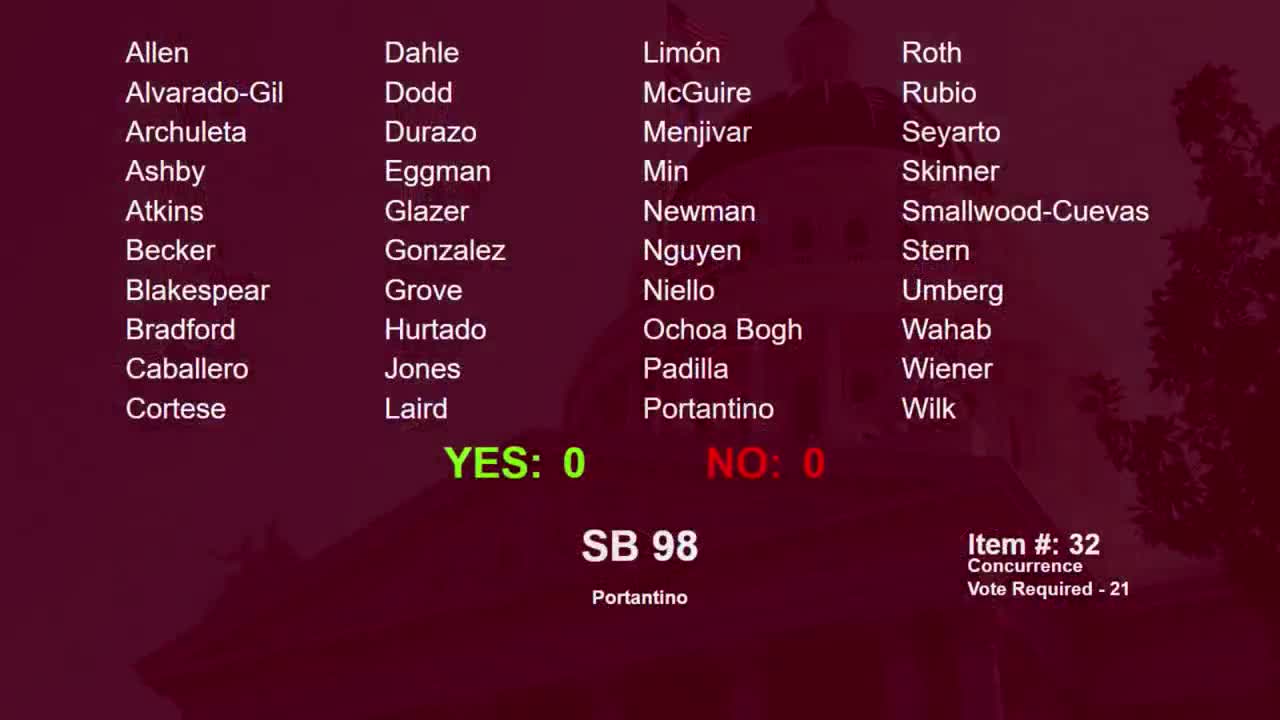


Bill Author

Bill Co-Author(s):