SB 1061: Consumer debt: medical debt.
- Session Year: 2023-2024
- House: Senate
- Latest Version Date: 2024-09-24
Current Status:
Passed
(2024-09-24: Chaptered by Secretary of State. Chapter 520, Statutes of 2024.)
Introduced
In Committee
First Chamber
In Committee
Second Chamber
Enacted
Existing law, the Consumer Credit Reporting Agencies Act, defines and regulates consumer credit reports and consumer credit reporting agencies. The act prohibits a consumer credit reporting agency from making any consumer credit report containing specified items of information, including accounts placed for collection or charged to profit and loss that antedate the report by more than 7 years. Existing law, the Investigative Consumer Reporting Agencies Act, defines and regulates investigative consumer reports and investigative consumer reporting agencies. The act prohibits an investigative consumer reporting agency from making or furnishing any investigative consumer report containing specified items of information, including accounts placed for collection or charged to profit and loss that antedate the report by more than 7 years.
This bill would prohibit a consumer credit reporting agency or an investigative consumer reporting agency from making a consumer credit report or an investigative consumer report containing information about medical debt, as defined. The bill would prohibit a person who uses a consumer credit report in connection with a credit transaction from using medical debt listed on the report as a negative factor when making a credit decision. The bill would prohibit a person from furnishing information regarding a medical debt to a consumer credit reporting agency, make a medical debt void and unenforceable if a person knowingly violates this provision by furnishing information regarding the medical debt to a consumer credit reporting agency, require a contract creating a medical debt entered into on or after July 1, 2025, to include a term describing these requirements, as specified, and make a violation of these provisions by a person holding a license or permit issued by the state to be deemed to be a violation of the law governing that license or permit. By providing that a violation of these provisions is deemed a violation of a licensing statute, and because the violation of some licensing statutes is a crime, this bill would impose a state-mandated local program.
Existing law requires the Department of Health Care Access and Information to review a hospitals policies regarding, among other things, charity care or debt collection for compliance with the law whenever a significant change is made and submitted to the department, as specified. Existing law, among other things, prohibits a hospital from selling patient debt to a specified debt buyer unless several conditions are met and requires a hospital to have a written policy concerning patient debt, as specified.
This bill would require a hospital to maintain all records relating to money owed to the hospital by a patient or a patients guarantor, as specified. The bill would require any contract entered into by a hospital related to the assignment or sale of medical debt to require the assignee or buyer and any subsequent assignee or buyer to maintain records related to litigation for 5 years.
Existing law provides for the regulation of health insurers by the Department of Insurance. Existing law authorizes a noncontracting individual health professional to advance to collections only the in-network cost-sharing amount that an insured has failed to pay, and prohibits reporting adverse information to a consumer credit reporting agency for a minimum of 150 days after the initial billing to the insured.
This bill would require a health insurer to send notices, with specified information, to an insured and provider if the insurer sends payment directly to the insured and not to the provider for services provided. If the provider does not receive the payment from the insured within 60 days of the notice to the insured, or within one year after initial billing for the service, whichever is later, the bill would authorize the insurers share of cost in possession of the insured that has not been paid to the provider to be reported to a credit reporting agency as medical debt.
This bill would incorporate additional changes to Section 1788.14 of the Civil Code proposed by SB 1286 to be operative only if this bill and SB 1286 are enacted and this bill is enacted last, and to Section 127425 of the Health and Safety Code proposed by AB 2297 to be operative only if this bill and AB 2297 are enacted and this bill is enacted last.
The California Constitution requires the state to reimburse local agencies and school districts for certain costs mandated by the state. Statutory provisions establish procedures for making that reimbursement.
This bill would provide that no reimbursement is required by this act for a specified reason.
Existing law, the Consumer Credit Reporting Agencies Act, defines and regulates consumer credit reports and consumer credit reporting agencies. The act prohibits a consumer credit reporting agency from making any consumer credit report containing specified items of information, including accounts placed for collection or charged to profit and loss that antedate the report by more than 7 years. Existing law, the Investigative Consumer Reporting Agencies Act, defines and regulates investigative consumer reports and investigative consumer reporting agencies. The act prohibits an investigative consumer reporting agency from making or furnishing any investigative consumer report containing specified items of information, including accounts placed for collection or charged to profit and loss that antedate the report by more than 7 years.
This bill would prohibit a consumer credit reporting agency or an investigative consumer reporting agency from making a consumer credit report or an investigative consumer report containing information about medical debt, as defined. The bill would prohibit a person who uses a consumer credit report in connection with a credit transaction from using medical debt listed on the report as a negative factor when making a credit decision. The bill would prohibit a person from furnishing information regarding a medical debt to a consumer credit reporting agency, make a medical debt void and unenforceable if a person knowingly violates this provision by furnishing information regarding the medical debt to a consumer credit reporting agency, require a contract creating a medical debt entered into on or after July 1, 2025, to include a term describing these requirements, as specified, and make a violation of these provisions by a person holding a license or permit issued by the state to be deemed to be a violation of the law governing that license or permit. By providing that a violation of these provisions is deemed a violation of a licensing statute, and because the violation of some licensing statutes is a crime, this bill would impose a state-mandated local program.
Existing law requires the Department of Health Care Access and Information to review a hospitals policies regarding, among other things, charity care or debt collection for compliance with the law whenever a significant change is made and submitted to the department, as specified. Existing law, among other things, prohibits a hospital from selling patient debt to a specified debt buyer unless several conditions are met and requires a hospital to have a written policy concerning patient debt, as specified.
This bill would require a hospital to maintain all records relating to money owed to the hospital by a patient or a patients guarantor, as specified. The bill would require any contract entered into by a hospital related to the assignment or sale of medical debt to require the assignee or buyer and any subsequent assignee or buyer to maintain records related to litigation for 5 years.
Existing law provides for the regulation of health insurers by the Department of Insurance. Existing law authorizes a noncontracting individual health professional to advance to collections only the in-network cost-sharing amount that an insured has failed to pay, and prohibits reporting adverse information to a consumer credit reporting agency for a minimum of 150 days after the initial billing to the insured.
This bill would require a health insurer to send notices, with specified information, to an insured and provider if the insurer sends payment directly to the insured and not to the provider for services provided. If the provider does not receive the payment from the insured within 60 days of the notice to the insured, or within one year after initial billing for the service, whichever is later, the bill would authorize the insurers share of cost in possession of the insured that has not been paid to the provider to be reported to a credit reporting agency as medical debt.
This bill would incorporate additional changes to Section 1788.14 of the Civil Code proposed by SB 1286 to be operative only if this bill and SB 1286 are enacted and this bill is enacted last, and to Section 127425 of the Health and Safety Code proposed by AB 2297 to be operative only if this bill and AB 2297 are enacted and this bill is enacted last.
The California Constitution requires the state to reimburse local agencies and school districts for certain costs mandated by the state. Statutory provisions establish procedures for making that reimbursement.
This bill would provide that no reimbursement is required by this act for a specified reason.
Existing law, the Consumer Credit Reporting Agencies Act, defines and regulates consumer credit reports and consumer credit reporting agencies. The act prohibits a consumer credit reporting agency from making any consumer credit report containing specified items of information, including accounts placed for collection or charged to profit and loss that antedate the report by more than 7 years. Existing law, the Investigative Consumer Reporting Agencies Act, defines and regulates investigative consumer reports and investigative consumer reporting agencies. The act prohibits an investigative consumer reporting agency from making or furnishing any investigative consumer report containing specified items of information, including accounts placed for collection or charged to profit and loss that antedate the report by more than 7 years.
This bill would prohibit a consumer credit reporting agency or an investigative consumer reporting agency from making a consumer credit report or an investigative consumer report containing information about medical debt, as defined. The bill would prohibit a person who uses a consumer credit report in connection with a credit transaction from using medical debt listed on the report as a negative factor when making a credit decision. The bill would prohibit a person from furnishing information regarding a medical debt to a consumer credit reporting agency, make a medical debt void and unenforceable if a person knowingly violates this provision by furnishing information regarding the medical debt to a consumer credit reporting agency, require a contract creating a medical debt entered into on or after July 1, 2025, to include a term describing these requirements, as specified, and make a violation of these provisions by a person holding a license or permit issued by the state to be deemed to be a violation of the law governing that license or permit. By providing that a violation of these provisions is deemed a violation of a licensing statute, and because the violation of some licensing statutes is a crime, this bill would impose a state-mandated local program.
Existing law requires the Department of Health Care Access and Information to review a hospitals policies regarding, among other things, charity care or debt collection for compliance with the law whenever a significant change is made and submitted to the department, as specified. Existing law, among other things, prohibits a hospital from selling patient debt to a specified debt buyer unless several conditions are met and requires a hospital to have a written policy concerning patient debt, as specified.
This bill would require a hospital to maintain all records relating to money owed to the hospital by a patient or a patients guarantor, as specified. The bill would require any contract entered into by a hospital related to the assignment or sale of medical debt to require the assignee or buyer and any subsequent assignee or buyer to maintain records related to litigation for 5 years.
Existing law provides for the regulation of health insurers by the Department of Insurance. Existing law authorizes a noncontracting individual health professional to advance to collections only the in-network cost-sharing amount that an insured has failed to pay, and prohibits reporting adverse information to a consumer credit reporting agency for a minimum of 150 days after the initial billing to the insured.
This bill would require a health insurer to send notices, with specified information, to an insured and provider if the insurer sends payment directly to the insured and not to the provider for services provided. If the provider does not receive the payment from the insured within 60 days of the notice to the insured, or within one year after initial billing for the service, whichever is later, the bill would authorize the insurers share of cost in possession of the insured that has not been paid to the provider to be reported to a credit reporting agency as medical debt.
This bill would incorporate additional changes to Section 1788.14 of the Civil Code proposed by SB 1286 to be operative only if this bill and SB 1286 are enacted and this bill is enacted last, and to Section 127425 of the Health and Safety Code proposed by AB 2297 to be operative only if this bill and AB 2297 are enacted and this bill is enacted last.
The California Constitution requires the state to reimburse local agencies and school districts for certain costs mandated by the state. Statutory provisions establish procedures for making that reimbursement.
This bill would provide that no reimbursement is required by this act for a specified reason.
Existing law, the Consumer Credit Reporting Agencies Act, defines and regulates consumer credit reports and consumer credit reporting agencies. The act prohibits a consumer credit reporting agency from making any consumer credit report containing specified items of information, including accounts placed for collection or charged to profit and loss that antedate the report by more than 7 years. Existing law, the Investigative Consumer Reporting Agencies Act, defines and regulates investigative consumer reports and investigative consumer reporting agencies. The act prohibits an investigative consumer reporting agency from making or furnishing any investigative consumer report containing specified items of information, including accounts placed for collection or charged to profit and loss that antedate the report by more than 7 years.
This bill would prohibit a consumer credit reporting agency or an investigative consumer reporting agency from making a consumer credit report or an investigative consumer report containing information about medical debt, as defined. The bill would prohibit a person who uses a consumer credit report in connection with a credit transaction from using medical debt listed on the report as a negative factor when making a credit decision. The bill would prohibit a person from furnishing information regarding a medical debt to a consumer credit reporting agency, make a medical debt void and unenforceable if a person knowingly violates this provision by furnishing information regarding the medical debt to a consumer credit reporting agency, require a contract creating a medical debt entered into on or after July 1, 2025, to include a term describing these requirements, as specified, and make a violation of these provisions by a person holding a license or permit issued by the state to be deemed to be a violation of the law governing that license or permit. By providing that a violation of these provisions is deemed a violation of a licensing statute, and because the violation of some licensing statutes is a crime, this bill would impose a state-mandated local program.
Existing law requires the Department of Health Care Access and Information to review a hospitals policies regarding, among other things, charity care or debt collection for compliance with the law whenever a significant change is made and submitted to the department, as specified. Existing law, among other things, prohibits a hospital from selling patient debt to a specified debt buyer unless several conditions are met and requires a hospital to have a written policy concerning patient debt, as specified.
This bill would require a hospital to maintain all records relating to money owed to the hospital by a patient or a patients guarantor, as specified. The bill would require any contract entered into by a hospital related to the assignment or sale of medical debt to require the assignee or buyer and any subsequent assignee or buyer to maintain records related to litigation for 5 years.
The California Constitution requires the state to reimburse local agencies and school districts for certain costs mandated by the state. Statutory provisions establish procedures for making that reimbursement.
This bill would provide that no reimbursement is required by this act for a specified reason.
Existing law, the Consumer Credit Reporting Agencies Act, defines and regulates consumer credit reports and consumer credit reporting agencies. The act prohibits a consumer credit reporting agency from making any consumer credit report containing specified items of information, including accounts placed for collection or charged to profit and loss that antedate the report by more than 7 years. Existing law, the Investigative Consumer Reporting Agencies Act, defines and regulates investigative consumer reports and investigative consumer reporting agencies. The act prohibits an investigative consumer reporting agency from making or furnishing any investigative consumer report containing specified items of information, including accounts placed for collection or charged to profit and loss that antedate the report by more than 7 years.
This bill would prohibit a consumer credit reporting agency or an investigative consumer reporting agency from making a consumer credit report or an investigative consumer report containing information about medical debt, as defined. The bill would prohibit a person who uses a consumer credit report in connection with a credit transaction from using medical debt listed on the report as a negative factor when making a credit decision. The bill would, except as specified, would prohibit a person from furnishing information regarding a medical debt to a consumer credit reporting agency, make a medical debt void and unenforceable if a person knowingly violates this provision by furnishing information regarding the medical debt to a consumer credit reporting agency, require a contract creating a medical debt entered into on or after July 1, 2025, to include a term describing these requirements, as specified, and make a violation of these provisions by a person holding a license or permit issued by the state to be deemed to be a violation of the law governing that license or permit. By providing that a violation of these provisions is deemed a violation of a licensing statute, and because the violation of some licensing statutes is a crime, this bill would impose a state-mandated local program.
Existing law requires the Department of Health Care Access and Information to review a hospitals policies regarding, among other things, charity care or debt collection for compliance with the law whenever a significant change is made and submitted to the department, as specified. Existing law, among other things, prohibits a hospital from selling patient debt to a specified debt buyer unless several conditions are met and requires a hospital to have a written policy concerning patient debt, as specified.
This bill would require a hospital to maintain all records relating to money owed to the hospital by a patient or a patients guarantor, as specified. The bill would require any contract entered into by a hospital related to the assignment or sale of medical debt to require the assignee or buyer and any subsequent assignee or buyer to maintain records related to litigation for 5 years.
The California Constitution requires the state to reimburse local agencies and school districts for certain costs mandated by the state. Statutory provisions establish procedures for making that reimbursement.
This bill would provide that no reimbursement is required by this act for a specified reason.
Existing law, the Consumer Credit Reporting Agencies Act, defines and regulates consumer credit reports and consumer credit reporting agencies. The act prohibits a consumer credit reporting agency from making any consumer credit report containing specified items of information, including accounts placed for collection or charged to profit and loss that antedate the report by more than 7 years. Existing law, the Investigative Consumer Reporting Agencies Act, defines and regulates investigative consumer reports and investigative consumer reporting agencies. The act prohibits an investigative consumer reporting agency from making or furnishing any investigative consumer report containing specified items of information, including accounts placed for collection or charged to profit and loss that antedate the report by more than 7 years.
This bill would prohibit a consumer credit reporting agency or an investigative consumer reporting agency from making a consumer credit report or an investigative consumer report containing information about medical debt, as defined. The bill would prohibit a person who uses a consumer credit report in connection with a credit transaction from using medical debt listed on the report as a negative factor when making a credit decision. The bill would would, except as specified, prohibit a person from furnishing information regarding a medical debt to a consumer credit reporting agency, make a medical debt void and unenforceable if a person knowingly violates this provision by furnishing information regarding the medical debt to a consumer credit reporting agency, require a contract creating a medical debt entered into on or after July 1, 2025, to include a term describing these requirements, as specified, and make a violation of these provisions by a person holding a license or permit issued by the state to be deemed to be a violation of the law governing that license or permit. By providing that a violation of these provisions is deemed a violation of a licensing statute, and because the violation of some licensing statutes is a crime, this bill would impose a state-mandated local program.
Existing law requires the Department of Health Care Access and Information to review a hospitals policies regarding, among other things, charity care or debt collection for compliance with the law whenever a significant change is made and submitted to the department, as specified. Existing law, among other things, prohibits a hospital from selling patient debt to a specified debt buyer unless several conditions are met and requires a hospital to have a written policy concerning patient debt, as specified.
This bill would require a hospital to maintain a database of all litigation resulting from all records relating to money owed to the hospital by a patient or a patients guarantor, as specified.
The California Constitution requires the state to reimburse local agencies and school districts for certain costs mandated by the state. Statutory provisions establish procedures for making that reimbursement.
This bill would provide that no reimbursement is required by this act for a specified reason.
Existing law, the Consumer Credit Reporting Agencies Act, defines and regulates consumer credit reports and consumer credit reporting agencies. The act prohibits a consumer credit reporting agency from making any consumer credit report containing specified items of information, including accounts placed for collection or charged to profit and loss that antedate the report by more than 7 years. Existing law, the Investigative Consumer Reporting Agencies Act, defines and regulates investigative consumer reports and investigative consumer reporting agencies. The act prohibits an investigative consumer reporting agency from making or furnishing any investigative consumer report containing specified items of information, including accounts placed for collection or charged to profit and loss that antedate the report by more than 7 years.
This bill would prohibit a consumer credit reporting agency or an investigative consumer reporting agency from making a consumer credit report or an investigative consumer report containing information about medical debt, as defined. The bill would prohibit a person who uses a consumer credit report in connection with a credit transaction from using medical debt listed on the report as a negative factor when making a credit decision. The bill would prohibit a person from furnishing information regarding a medical debt to a consumer credit reporting agency, make a medical debt void and unenforceable if a person knowingly violates this provision by furnishing information regarding the medical debt to a consumer credit reporting agency, require a contract creating a medical debt entered into on or after July 1, 2025, to include a term describing these requirements, as specified, and make a violation of these provisions by a person holding a license or permit issued by the state to be deemed to be a violation of the law governing that license or permit. By providing that a violation of these provisions is deemed a violation of a licensing statute, and because the violation of some licensing statutes is a crime, this bill would impose a state-mandated local program.
Existing law requires the Department of Health Care Access and Information to review a hospitals policies regarding, among other things, charity care or debt collection for compliance with the law whenever a significant change is made and submitted to the department, as specified. Existing law, among other things, prohibits a hospital from selling patient debt to a specified debt buyer unless several conditions are met and requires a hospital to have a written policy concerning patient debt, as specified.
This bill would require a hospital to maintain a database of all litigation resulting from money owed to the hospital by a patient or a patients guarantor, as specified.
The California Constitution requires the state to reimburse local agencies and school districts for certain costs mandated by the state. Statutory provisions establish procedures for making that reimbursement.
This bill would provide that no reimbursement is required by this act for a specified reason.
Existing law, the Consumer Credit Reporting Agencies Act, defines and regulates consumer credit reports and consumer credit reporting agencies. The act prohibits a consumer credit reporting agency from making any consumer credit report containing specified items of information, including accounts placed for collection or charged to profit and loss that antedate the report by more than 7 years.
This bill would prohibit a consumer credit reporting agency from making a consumer credit report containing information about medical debt, as defined. The bill would prohibit a holder of medical debt from furnishing any information regarding a patients medical debt to a consumer credit reporting agency. The bill would make conforming changes. The bill would prohibit a person who uses a consumer credit report in connection with a credit transaction from using medical debt listed on the report as a negative factor when making a credit decision. The bill would prohibit a person from furnishing information regarding a medical debt to a consumer credit reporting agency, make a medical debt void and unenforceable if a person knowingly violates this provision by furnishing information regarding the medical debt is furnished to a consumer credit reporting agency, require a contract creating a medical debt to include a term describing these requirements, as specified, and make a violation of these provisions by a person holding a license or permit issued by the state to be deemed to be a violation of the law governing that license or permit. By providing that a violation of these provisions is deemed a violation of a licensing statute, and because the violation of some licensing statutes is a crime, this bill would impose a state-mandated local program.
Existing law requires the Department of Health Care Access and Information to review a hospitals policies regarding, among other things, charity care or debt collection for compliance with the law whenever a significant change is made and submitted to the department, as specified. Existing law, among other things, prohibits a hospital from selling patient debt to a specified debt buyer unless several conditions are met and requires a hospital to have a written policy concerning patient debt, as specified.
This bill would require a hospital to maintain a database of all litigation resulting from money owed to the hospital by a patient or a patients guarantor, as specified.
The California Constitution requires the state to reimburse local agencies and school districts for certain costs mandated by the state. Statutory provisions establish procedures for making that reimbursement.
This bill would provide that no reimbursement is required by this act for a specified reason.
Existing law, the Consumer Credit Reporting Agencies Act, defines and regulates consumer credit reports and consumer credit reporting agencies. The act prohibits a consumer credit reporting agency from making any consumer credit report containing specified items of information, including accounts placed for collection or charged to profit and loss that antedate the report by more than 7 years.
This bill would prohibit a consumer credit reporting agency from making a consumer credit report containing information about medical debt. debt, as defined. The bill would prohibit a holder of medical debt from furnishing any information regarding a patients medical debt to a consumer credit reporting agency. The bill would make conforming changes. The bill would prohibit a person who uses a consumer credit report in connection with a credit transaction from using medical debt listed on the report as a negative factor when making a credit decision. The bill would prohibit a person from furnishing information regarding a medical debt to a consumer credit reporting agency, make a medical debt void and unenforceable if information regarding the medical debt is furnished to a consumer credit reporting agency, require a contract creating a medical debt to include a term describing these requirements, as specified, and make a violation of these provisions by a person holding a license or permit issued by the state to be deemed to be a violation of the law governing that license or permit. By providing that a violation of these provisions is deemed a violation of a licensing statute, and because the violation of some licensing statutes is a crime, this bill would impose a state-mandated local program.
Existing law requires the Department of Health Care Access and Information to review a hospitals policies regarding, among other things, charity care or debt collection for compliance with the law whenever a significant change is made and submitted to the department, as specified. Existing law, among other things, prohibits a hospital from selling patient debt to a specified debt buyer unless several conditions are met and requires a hospital to have a written policy concerning patient debt, as specified.
This bill would require a hospital to maintain a database of all litigation resulting from money owed to the hospital by a patient or a patients guarantor, as specified.
The California Constitution requires the state to reimburse local agencies and school districts for certain costs mandated by the state. Statutory provisions establish procedures for making that reimbursement.
This bill would provide that no reimbursement is required by this act for a specified reason.
Existing law, the Consumer Credit Reporting Agencies Act, defines and regulates consumer credit reports and consumer credit reporting agencies. The act prohibits a consumer credit reporting agency from making any consumer credit report containing specified items of information, including accounts placed for collection or charged to profit and loss that antedate the report by more than 7 years.
This bill would prohibit a consumer credit reporting agency from making a consumer credit report containing information about medical debt.
The following terms as used in this title have the meaning expressed in this section:
(a)Adverse action means a denial or revocation of credit, a change in the terms of an existing credit arrangement which is adverse to the interests of the consumer, or a refusal to grant credit in substantially the amount or on substantially the terms requested. Adverse action includes all of the following:
(1)Any denial of, increase in any charge for, or reduction in the amount of, insurance for personal, family, or household purposes made in connection with the underwriting of insurance.
(2)Any denial of employment or any other decision made for employment purposes which adversely affects any current or prospective employee.
(3)Any action taken, or determination made, with respect to a consumer (A) for an application for an extension of credit, or an application for the hiring of a dwelling unit, and (B) that is adverse to the interests of the consumer.
Adverse action does not include (A) a refusal to extend additional credit to a consumer under an existing credit arrangement if (i) the applicant is delinquent or otherwise in default under that credit arrangement or (ii) the additional credit would exceed a credit limit previously established for the consumer or (B) a refusal or failure to authorize an account transaction at a point of sale.
(b)Consumer means a natural individual.
(c)Consumer credit report means any written, oral, or other communication of any information by a consumer credit reporting agency bearing on a consumers credit worthiness, credit standing, or credit capacity, which is used or is expected to be used, or collected in whole or in part, for the purpose of serving as a factor in establishing the consumers eligibility for: (1) credit to be used primarily for personal, family, or household purposes, or (2) employment purposes, or (3) hiring of a dwelling unit, as defined in subdivision (c) of Section 1940, or (4) other purposes authorized in Section 1785.11.
The term does not include (1) any report containing information solely as to transactions or experiences between the consumer and the person making the report, (2) any communication of that information or information from a credit application by a consumer that is internal within the organization that is the person making the report or that is made to an entity owned by, or affiliated by corporate control with, that person; provided that the consumer is informed by means of a clear and conspicuous written disclosure that information contained in the credit application may be provided to these persons; however, where a credit application is taken by telephone, disclosure shall initially be given orally at the time the application is taken, and a clear and conspicuous written disclosure shall be made to the consumer in the first written communication to that consumer after the application is taken, (3) any authorization or approval of a specific extension of credit directly or indirectly by the issuer of a credit card or similar device, (4) any report by a person conveying a decision whether to make a specific extension of credit directly or indirectly to a consumer in response to a request by a third party, if the third party advises the consumer of the name and address of the person to whom the request was made and the person makes the disclosures to the consumer required under Section 1785.20, (5) any report containing information solely on a consumers character, general reputation, personal characteristics, or mode of living which is obtained through personal interviews with neighbors, friends, or associates of the consumer reported on, or others with whom the consumer is acquainted or who may have knowledge concerning those items of information, (6) any communication about a consumer in connection with a credit transaction which is not initiated by the consumer, between persons who are affiliated (as defined in Section 150 of the Corporations Code) by common ownership or common corporate control (as defined by Section 160 of the Corporations Code), if either of those persons has complied with paragraph (2) of subdivision (b) of Section 1785.20.1 with respect to a prequalifying report from which the information communicated is taken and provided the consumer has consented to the provision and use of the prequalifying report in writing, or (7) any consumer credit report furnished for use in connection with a transaction which consists of an extension of credit to be used solely for a commercial purpose.
(d)Consumer credit reporting agency means any person who, for monetary fees, dues, or on a cooperative nonprofit basis, regularly engages in whole or in part in the business of assembling or evaluating consumer credit information or other information on consumers for the purpose of furnishing consumer credit reports to third parties, but does not include any governmental agency whose records are maintained primarily for traffic safety, law enforcement, or licensing purposes.
(e)Credit transaction that is not initiated by the consumer does not include the use of a consumer credit report by an assignee for collection or by a person with which the consumer has an account for purposes of (1) reviewing the account or (2) collecting the account. For purposes of this subdivision, reviewing the account includes activities related to account maintenance and monitoring, credit line increases, and account upgrades and enhancements.
(f)Employment purposes, when used in connection with a consumer credit report, means a report used for the purpose of evaluating a consumer for employment, promotion, reassignment, or retention as an employee.
(g)File, when used in connection with information on any consumer, means all of the information on that consumer recorded and retained by a consumer credit reporting agency, regardless of how the information is stored.
(h)Firm offer of credit means any offer of credit to a consumer that will be honored if, based on information in a consumer credit report on the consumer and other information bearing on the creditworthiness of the consumer, the consumer is determined to meet the criteria used to select the consumer for the offer and the consumer is able to provide any real property collateral specified in the offer. For purposes of this subdivision, the phrase other information bearing on the creditworthiness of the consumer means information that the person making the offer is permitted to consider pursuant to any rule, regulation, or formal written policy statement relating to the federal Fair Credit Reporting Act, as amended (15 U.S.C. Sec. 1681 et seq.), promulgated by the Federal Trade Commission or any federal bank regulatory agency.
(i)Item of information means any of one or more informative entries in a credit report which causes a creditor to deny credit to an applicant or increase the cost of credit to an applicant or deny an applicant a checking account with a bank or other financial institution.
(j)(1)Medical debt means a debt owed by a consumer to a person whose primary business is providing medical services, products, or devices, or to the persons agent or assignee, for the provision of medical services, products, or devices. Medical debt includes, but is not limited to, medical bills that are not past due or that have been paid.
(2)For the purposes of this subdivision, medical service, product, or device does not include cosmetic surgery, as defined in Section 1367.63 of the Health and Safety Code, and includes, but is not limited to, all of the following:
(A)Any service, drug, medication, product, or device sold, offered, or provided to a patient by either of the following:
(i)A person or facility licensed under Division 2 (commencing with Section 1200) of the Health and Safety Code, except for Chapters 3.35 (commencing with Section 1596.60) to 3.65 (commencing with Section 1597.70), inclusive, of that division.
(ii)A person licensed under Division 2 (commencing with Section 500) of the Business and Professions Code, except for Chapter 11 (commencing with Section 4800) of that division.
(B)Initial or subsequent reconstructive surgeries, as defined in Section 1367.63 of the Health and Safety Code, and followup care deemed necessary by the attending physician and surgeon.
(C)Initial or subsequent prosthetic devices, as defined in Section 1367.635 of the Health and Safety Code, and followup care deemed necessary by the attending physician and surgeon.
(D)A mastectomy, as defined in Section 1367.635 of the Health and Safety Code.
(k)Person means any individual, partnership, corporation, trust, estate, cooperative, association, government or governmental subdivision or agency, or other entity.
(l)Prequalifying report means a report containing the limited information permitted under paragraph (2) of subdivision (b) of Section 1785.11.
(m)State or local child support enforcement agency means the Department of Child Support Services or local child support agency acting pursuant to Division 17 (commencing with Section 17000) of the Family Code to establish, enforce or modify child support obligations, and any state or local agency or official that succeeds to these responsibilities under a successor statute.
SEC. 2.Section 1785.13 of the Civil Code is amended to read:1785.13.(a)No consumer credit reporting agency shall make any consumer credit report containing any of the following items of information:
(1)Bankruptcies that, from the date of the order for relief, antedate the report by more than 10 years.
(2)Suits and judgments that, from the date of entry or renewal, antedate the report by more than seven years or until the governing statute of limitations has expired, whichever is the longer period.
(3)Unlawful detainer actions, unless the lessor was the prevailing party. For purposes of this paragraph, the lessor shall be deemed to be the prevailing party only if (A) final judgment was awarded to the lessor (i) upon entry of the tenants default, (ii) upon the granting of the lessors motion for summary judgment, or (iii) following trial, or (B) the action was resolved by a written settlement agreement between the parties that states that the unlawful detainer action may be reported. In any other instance in which the action is resolved by settlement agreement, the lessor shall not be deemed to be the prevailing party for purposes of this paragraph.
(4)Paid tax liens that, from the date of payment, antedate the report by more than seven years.
(5)Accounts placed for collection or charged to profit and loss that antedate the report by more than seven years.
(6)Records of arrest, indictment, information, misdemeanor complaint, or conviction of a crime that, from the date of disposition, release, or parole, antedate the report by more than seven years. These items of information shall no longer be reported if at any time it is learned that in the case of a conviction a full pardon has been granted, or in the case of an arrest, indictment, information, or misdemeanor complaint a conviction did not result.
(7)Medical debt.
(8)Any other adverse information that antedates the report by more than seven years.
(b)The seven-year period specified in paragraphs (5) and (8) of subdivision (a) shall commence to run, with respect to any account that is placed for collection (internally or by referral to a third party, whichever is earlier), charged to profit and loss, or subjected to any similar action, upon the expiration of the 180-day period beginning on the date of the commencement of the delinquency that immediately preceded the collection activity, charge to profit and loss, or similar action. Where more than one of these actions is taken with respect to a particular account, the seven-year period specified in paragraphs (5) and (8) shall commence concurrently for all these actions on the date of the first of these actions.
(c)Any consumer credit reporting agency that furnishes a consumer credit report containing information regarding any case involving a consumer arising under the bankruptcy provisions of Title 11 of the United States Code shall include an identification of the chapter of Title 11 of the United States Code under which the case arose if that can be ascertained from what was provided to the consumer credit reporting agency by the source of the information.
(d)A consumer credit report shall not include any adverse information concerning a consumer antedating the report by more than 10 years or that otherwise is prohibited from being included in a consumer credit report.
(e)If a consumer credit reporting agency is notified by a furnisher of credit information that an open-end credit account of the consumer has been closed by the consumer, any consumer credit report thereafter issued by the consumer credit reporting agency with respect to that consumer, and that includes information respecting that account, shall indicate the fact that the consumer has closed the account. For purposes of this subdivision, open-end credit account does not include any demand deposit account, such as a checking account, money market account, or share draft account.
(f)Consumer credit reporting agencies shall not include medical information in their files on consumers or furnish medical information for employment, insurance, or credit purposes in a consumer credit report without the consent of the consumer.
(g)A consumer credit reporting agency shall include in any consumer credit report information, if any, on the failure of the consumer to pay overdue child or spousal support, where the information either was provided to the consumer credit reporting agency pursuant to Section 4752 or has been provided to the consumer credit reporting agency and verified by another federal, state, or local governmental agency.
SEC. 3.Section 1785.20.6 is added to the Civil Code, to read:1785.20.6.A person who uses a consumer credit report in connection with a credit transaction shall not use a medical debt listed on the report as a negative factor when making a credit decision.
SEC. 4.Section 1785.27 is added to the Civil Code, to read:1785.27.(a)A person shall not furnish information regarding a medical debt to a consumer credit reporting agency.
(b)A medical debt is void and unenforceable if a person knowingly violates this section by furnishing information regarding the medical debt to a consumer credit reporting agency.
(c)(1)On or after July 1, 2025, it is unlawful to enter into a contract creating a medical debt that does not include the following term:
A holder of this medical debt contract is prohibited by Section 1785.27 of the Civil Code from furnishing any information related to this debt to a consumer credit reporting agency. In addition to any other penalties allowed by law, if a person knowingly violates that section by furnishing information regarding this debt to a consumer credit reporting agency, the debt shall be void and unenforceable.
(2)A contract entered into on or after July 1, 2025, that does not include the term described in paragraph (1) is void and unenforceable.
(d)A violation of this section by a person holding a license or permit issued by the state shall be deemed to be a violation of the law governing that license or permit.
SEC. 5.Section 1786.18 of the Civil Code is amended to read:1786.18.(a)Except as authorized under subdivision (b), an investigative consumer reporting agency may not make or furnish any investigative consumer report containing any of the following items of information:
(1)Bankruptcies that, from the date of the order for relief, antedate the report by more than 10 years.
(2)Suits that, from the date of filing, and satisfied judgments that, from the date of entry, antedate the report by more than seven years.
(3)Unsatisfied judgments that, from the date of entry, antedate the report by more than seven years.
(4)Unlawful detainer actions where the defendant was the prevailing party or where the action is resolved by settlement agreement.
(5)Paid tax liens that, from the date of payment, antedate the report by more than seven years.
(6)Accounts placed for collection or charged to profit and loss that antedate the report by more than seven years.
(7)Records of arrest, indictment, information, misdemeanor complaint, or conviction of a crime that, from the date of disposition, release, or parole, antedate the report by more than seven years. These items of information shall no longer be reported if at any time it is learned that, in the case of a conviction, a full pardon has been granted or, in the case of an arrest, indictment, information, or misdemeanor complaint, a conviction did not result; except that records of arrest, indictment, information, or misdemeanor complaints may be reported pending pronouncement of judgment on the particular subject matter of those records.
(8)Any other adverse information that antedates the report by more than seven years.
(9)Medical debt, as defined in Section 1785.3.
(b)The provisions of subdivision (a) are not applicable in either of the following circumstances:
(1)If the investigative consumer report is to be used in the underwriting of life insurance involving, or that may reasonably be expected to involve, an amount of two hundred fifty thousand dollars ($250,000) or more.
(2)If the investigative consumer report is to be used by an employer who is explicitly required by a governmental regulatory agency to check for records that are prohibited by subdivision (a) when the employer is reviewing a consumers qualification for employment.
(c)Except as otherwise provided in Section 1786.28, an investigative consumer reporting agency shall not furnish an investigative consumer report that includes information that is a matter of public record and that relates to an arrest, indictment, conviction, civil judicial action, tax lien, or outstanding judgment, unless the agency has verified the accuracy of the information during the 30-day period ending on the date on which the report is furnished.
(d)An investigative consumer reporting agency shall not prepare or furnish an investigative consumer report on a consumer that contains information that is adverse to the interest of the consumer and that is obtained through a personal interview with a neighbor, friend, or associate of the consumer or with another person with whom the consumer is acquainted or who has knowledge of the item of information, unless either (1) the investigative consumer reporting agency has followed reasonable procedures to obtain confirmation of the information, from an additional source that has independent and direct knowledge of the information, or (2) the person interviewed is the best possible source of the information.
SEC. 6.Section 1788.14 of the Civil Code is amended to read:1788.14.No debt collector shall collect or attempt to collect a consumer debt by means of the following practices:
(a)Obtaining an affirmation from a debtor of a consumer debt that has been discharged in bankruptcy, without clearly and conspicuously disclosing to the debtor, in writing, at the time the affirmation is sought, the fact that the debtor is not legally obligated to make an affirmation.
(b)Collecting or attempting to collect from the debtor the whole or any part of the debt collectors fee or charge for services rendered, or other expense incurred by the debt collector in the collection of the consumer debt, except as permitted by law.
(c)Initiating communications, other than statements of account, with the debtor with regard to the consumer debt, when the debt collector has been previously notified in writing by the debtors attorney that the debtor is represented by the attorney with respect to the consumer debt and the notice includes the attorneys name and address and a request by the attorney that all communications regarding the consumer debt be addressed to the attorney, unless the attorney fails to answer correspondence, return telephone calls, or discuss the obligation in question. This subdivision shall not apply if prior approval has been obtained from the debtors attorney, or if the communication is a response in the ordinary course of business to a debtors inquiry.
(d)Sending a written communication to a debtor in an attempt to collect a time-barred debt without providing the debtor with one of the following written notices:
(1)If the debt is not past the date for obsolescence set forth in Section 605(a) of the federal Fair Credit Reporting Act (15 U.S.C. Sec. 1681c), the following notice shall be included in the first written communication provided to the debtor after the debt has become time-barred:
The law limits how long you can be sued on a debt. Because of the age of your debt, we will not sue you for it. If you do not pay the debt, [insert name of debt collector] may [continue to] report it to the credit reporting agencies as unpaid for as long as the law permits this reporting.
(2)If the debt is past the date for obsolescence set forth in Section 605(a) of the federal Fair Credit Reporting Act (15 U.S.C. Sec. 1681c), the following notice shall be included in the first written communication provided to the debtor after the date for obsolescence:
The law limits how long you can be sued on a debt. Because of the age of your debt, we will not sue you for it, and we will not report it to any credit reporting agency.
(e)Collecting consumer debt that originated with a hospital licensed pursuant to subdivision (a) of Section 1250 of the Health and Safety Code without including in the first written communication to the debtor a copy of the notice required pursuant to subdivision (e) of Section 127425 of the Health and Safety Code and a statement that the debt collector will wait at least 180 days from the date the debtor was initially billed for the hospital services that are the basis of the debt before filing a lawsuit against the debtor.
(f)For purposes of this section, first written communication means the first communication sent to the debtor in writing or by facsimile, email, or other similar means.
SEC. 6.5.Section 1788.14 of the Civil Code is amended to read:1788.14.No debt collector shall collect or attempt to collect a covered debt by means of the following practices:
(a)Obtaining an affirmation from a debtor of a covered debt that has been discharged in bankruptcy, without clearly and conspicuously disclosing to the debtor, in writing, at the time the affirmation is sought, the fact that the debtor is not legally obligated to make an affirmation.
(b)Collecting or attempting to collect from the debtor the whole or any part of the debt collectors fee or charge for services rendered, or other expense incurred by the debt collector in the collection of the covered debt, except as permitted by law.
(c)Initiating communications, other than statements of account, with the debtor with regard to the covered debt, when the debt collector has been previously notified in writing by the debtors attorney that the debtor is represented by the attorney with respect to the covered debt and the notice includes the attorneys name and address and a request by the attorney that all communications regarding the covered debt be addressed to the attorney, unless the attorney fails to answer correspondence, return telephone calls, or discuss the obligation in question. This subdivision shall not apply if prior approval has been obtained from the debtors attorney, or if the communication is a response in the ordinary course of business to a debtors inquiry.
(d)Sending a written communication to a debtor in an attempt to collect a time-barred debt without providing the debtor with one of the following written notices:
(1)If the debt is not past the date for obsolescence set forth in Section 605(a) of the federal Fair Credit Reporting Act (15 U.S.C. Sec. 1681c), the following notice shall be included in the first written communication provided to the debtor after the debt has become time-barred:
The law limits how long you can be sued on a debt. Because of the age of your debt, we will not sue you for it. If you do not pay the debt, [insert name of debt collector] may [continue to] report it to the credit reporting agencies as unpaid for as long as the law permits this reporting.
(2)If the debt is past the date for obsolescence set forth in Section 605(a) of the federal Fair Credit Reporting Act (15 U.S.C. Sec. 1681c), the following notice shall be included in the first written communication provided to the debtor after the date for obsolescence:
The law limits how long you can be sued on a debt. Because of the age of your debt, we will not sue you for it, and we will not report it to any credit reporting agency.
(e)Collecting consumer debt that originated with a hospital licensed pursuant to subdivision (a) of Section 1250 of the Health and Safety Code without including in the first written communication to the debtor a copy of the notice required pursuant to subdivision (e) of Section 127425 of the Health and Safety Code and a statement that the debt collector will wait at least 180 days from the date the debtor was initially billed for the hospital services that are the basis of the debt before filing a lawsuit against the debtor.
(f)For purposes of this section, first written communication means the first communication sent to the debtor in writing or by facsimile, email, or other similar means.
SEC. 7.Section 1371.56 of the Health and Safety Code is amended to read:1371.56.(a)(1)Unless otherwise required by this chapter, a health care service plan contract issued, amended, or renewed on or after January 1, 2024, shall require an enrollee who receives covered services from a noncontracting ground ambulance provider to pay no more than the same cost-sharing amount that the enrollee would pay for the same covered services received from a contracting ground ambulance provider. This amount shall be referred to as the in-network cost-sharing amount.
(2)An enrollee shall not owe the noncontracting ground ambulance provider more than the in-network cost-sharing amount for services subject to this section. At the time of payment by the plan to the noncontracting provider, the plan shall inform the enrollee and the noncontracting provider of the in-network cost-sharing amount owed by the enrollee and shall disclose whether or not the enrollees coverage is regulated by the department or if the coverage is not state-regulated.
(b)(1)The in-network cost-sharing amount paid by the enrollee pursuant to this section shall count toward the limit on annual out-of-pocket expenses established under Section 1367.006.
(2)Cost sharing arising pursuant to this section shall count toward any deductible in the same manner as cost sharing would be attributed to a contracting provider.
(3)The in-network cost-sharing amount paid by the enrollee pursuant to this section shall satisfy the enrollees obligation to pay cost sharing for the health service.
(c)A noncontracting ground ambulance provider shall only advance to collections the in-network cost-sharing amount, as determined by the plan pursuant to subdivision (a), that the enrollee failed to pay.
(1)A noncontracting ground ambulance provider, or an entity acting on its behalf, including a debt buyer or assignee of the debt, shall not do either of the following:
(A)Report adverse information to a consumer credit reporting agency.
(B)Commence civil action against the enrollee for a minimum of 12 months after the initial billing regarding amounts owed by the enrollee pursuant to subdivision (a).
(2)With respect to an enrollee, a noncontracting ground ambulance provider, or an entity acting on its behalf, including an assignee of the debt, shall not use wage garnishments or liens on primary residences as a means of collecting unpaid bills pursuant to this section.
(d)(1)Unless otherwise agreed to by the noncontracting ground ambulance provider and the health care service plan, the plan shall directly reimburse a noncontracting ground ambulance provider for ground ambulance services the difference between the in-network cost-sharing amount and an amount described, as follows:
(A)If there is a rate established or approved by a local government, at the rate established or approved by the governing body of the local government having jurisdiction for that area or subarea, including an exclusive operating area pursuant to Section 1797.85.
(B)If the local government having jurisdiction where the service was provided does not have an established or approved rate for that service, the amount established by Section 1300.71 (a)(3)(B) of Title 28 of the California Code of Regulations.
(2)A local government has jurisdiction over the ground ambulance transport if either of the following applies:
(A)The ground ambulance transport is initiated within the boundaries of the local governments regulatory jurisdiction.
(B)In the case of ground ambulance transports provided on a mutual or automatic aid basis into another jurisdiction, the local government where the noncontracting ground ambulance provider is based.
(3)A payment made by the health care service plan to the noncontracting ground ambulance provider for services as required in subdivision (a), plus the applicable cost sharing owed by the enrollee, shall constitute payment in full for services rendered.
(4)Notwithstanding any other law, the amounts paid by a health care service plan for services under this section shall not constitute the prevailing or customary charges, the usual fees to the general public, or other charges for other payers for an individual ground ambulance provider.
(e)A health care service plan or a provider may seek relief in any appropriate court for the purpose of resolving a payment dispute. A ground ambulance provider may use a health care service plans existing dispute resolution processes.
(f)Ground ambulance service providers remain subject to the balance billing protections for Medi-Cal beneficiaries under Section 14019.4 of the Welfare and Institutions Code.
(g)This section does not apply to a Medi-Cal managed health care service plan or any entity that enters into a contract with the State Department of Health Care Services pursuant to Chapter 7 (commencing with Section 14000), Chapter 8 (commencing with Section 14200), and Chapter 8.75 (commencing with Section 14591) of Part 3 of Division 9 of the Welfare and Institutions Code.
SEC. 8.Section 1371.9 of the Health and Safety Code is amended to read:1371.9.(a)(1)Except as provided in subdivision (c), a health care service plan contract issued, amended, or renewed on or after July 1, 2017, shall provide that if an enrollee receives covered services from a contracting health facility at which, or as a result of which, the enrollee receives services provided by a noncontracting individual health professional, the enrollee shall pay no more than the same cost sharing that the enrollee would pay for the same covered services received from a contracting individual health professional. This amount shall be referred to as the in-network cost-sharing amount.
(2)An enrollee shall not owe the noncontracting individual health professional more than the in-network cost-sharing amount for services subject to this section. At the time of payment by the plan to the noncontracting individual health professional, the plan shall inform the enrollee and the noncontracting individual health professional of the in-network cost-sharing amount owed by the enrollee.
(3)A noncontracting individual health professional shall not bill or collect any amount from the enrollee for services subject to this section except for the in-network cost-sharing amount. Any communication from the noncontracting individual health professional to the enrollee prior to the receipt of information about the in-network cost-sharing amount pursuant to paragraph (2) shall include a notice in 12-point bold type stating that the communication is not a bill and informing the enrollee that the enrollee shall not pay until the enrollee is informed by the enrollees health care service plan of any applicable cost sharing.
(4)(A)If the noncontracting individual health professional has received more than the in-network cost-sharing amount from the enrollee for services subject to this section, the noncontracting individual health professional shall refund any overpayment to the enrollee within 30 calendar days after receiving payment from the enrollee.
(B)If the noncontracting individual health professional does not refund any overpayment to the enrollee within 30 calendar days after being informed of the enrollees in-network cost-sharing amount, interest shall accrue at the rate of 15 percent per annum beginning with the date payment was received from the enrollee.
(C)A noncontracting individual health professional shall automatically include in their refund to the enrollee all interest that has accrued pursuant to this section without requiring the enrollee to submit a request for the interest amount.
(b)Except for services subject to subdivision (c), the following shall apply:
(1)Any cost sharing paid by the enrollee for the services subject to this section shall count toward the limit on annual out-of-pocket expenses established under Section 1367.006.
(2)Cost sharing arising from services subject to this section shall be counted toward any deductible in the same manner as cost sharing would be attributed to a contracting individual health professional.
(3)The cost sharing paid by the enrollee pursuant to this section shall satisfy the enrollees obligation to pay cost sharing for the health service and shall constitute applicable cost sharing owed by the enrollee.
(c)For services subject to this section, if an enrollee has a health care service plan that includes coverage for out-of-network benefits, a noncontracting individual health professional may bill or collect from the enrollee the out-of-network cost sharing, if applicable, only when the enrollee consents in writing and that written consent demonstrates satisfaction of all the following criteria:
(1)At least 24 hours in advance of care, the enrollee shall consent in writing to receive services from the identified noncontracting individual health professional.
(2)The consent shall be obtained by the noncontracting individual health professional in a document that is separate from the document used to obtain the consent for any other part of the care or procedure. The consent shall not be obtained by the facility or any representative of the facility. The consent shall not be obtained at the time of admission or at any time when the enrollee is being prepared for surgery or any other procedure.
(3)At the time consent is provided, the noncontracting individual health professional shall give the enrollee a written estimate of the enrollees total out-of-pocket cost of care. The written estimate shall be based on the professionals billed charges for the service to be provided. The noncontracting individual health professional shall not attempt to collect more than the estimated amount without receiving separate written consent from the enrollee or the enrollees authorized representative, unless circumstances arise during delivery of services that were unforeseeable at the time the estimate was given that would require the provider to change the estimate.
(4)The consent shall advise the enrollee that the enrollee may elect to seek care from a contracted provider or may contact the enrollees health care service plan in order to arrange to receive the health service from a contracted provider for lower out-of-pocket costs.
(5)The consent and estimate shall be provided to the enrollee in the language spoken by the enrollee, if the language is a Medi-Cal threshold language, as defined in subdivision (d) of Section 128552.
(6)The consent shall also advise the enrollee that any costs incurred as a result of the enrollees use of the out-of-network benefit shall be in addition to in-network cost-sharing amounts and may not count toward the annual out-of-pocket maximum on in-network benefits or a deductible, if any, for in-network benefits.
(d)A noncontracting individual health professional who fails to comply with the requirements of subdivision (c) has not obtained written consent for purposes of this section. Under those circumstances, subdivisions (a) and (b) shall apply and subdivision (c) shall not apply.
(e)(1)A noncontracting individual health professional may advance to collections only the in-network cost-sharing amount, as determined by the plan pursuant to subdivision (a) or the out-of-network cost-sharing amount owed pursuant to subdivision (c), that the enrollee has failed to pay.
(2)The noncontracting individual health professional, or any entity acting on their behalf, including any assignee of the debt, shall not do either of the following:
(A)Report adverse information to a consumer credit reporting agency.
(B)Commence civil action against the enrollee for a minimum of 150 days after the initial billing regarding amounts owed by the enrollee under subdivision (a) or (c).
(3)With respect to an enrollee, the noncontracting individual health professional, or any entity acting on their behalf, including any assignee of the debt, shall not use wage garnishments or liens on primary residences as a means of collecting unpaid bills under this section.
(f)For purposes of this section and Sections 1371.30 and 1371.31, the following definitions shall apply:
(1)Contracting health facility means a health facility that is contracted with the enrollees health care service plan to provide services under the enrollees plan contract. A contracting health care facility includes, but is not limited to, the following providers:
(A)A licensed hospital.
(B)An ambulatory surgery or other outpatient setting, as described in subdivision (a), (d), (e), (g), or (h) of Section 1248.1.
(C)A laboratory.
(D)A radiology or imaging center.
(2)Cost sharing includes any copayment, coinsurance, or deductible, or any other form of cost sharing paid by the enrollee other than premium or share of premium.
(3)Individual health professional means a physician and surgeon or other professional who is licensed by this state to deliver or furnish health care services. For this purpose, an individual health professional shall not include a dentist, licensed pursuant to the Dental Practice Act (Chapter 4 (commencing with Section 1600) of Division 2 of the Business and Professions Code).
(4)In-network cost-sharing amount means an amount no more than the same cost sharing the enrollee would pay for the same covered service received from a contracting health professional. The in-network cost-sharing amount with respect to an enrollee with coinsurance shall be based on the amount paid by the plan pursuant to paragraph (1) of subdivision (a) of Section 1371.31.
(5)Noncontracting individual health professional means a physician and surgeon or other professional who is licensed by the state to deliver or furnish health care services and who is not contracted with the enrollees health care service product. For this purpose, a noncontracting individual health professional shall not include a dentist, licensed pursuant to the Dental Practice Act (Chapter 4 (commencing with Section 1600) of Division 2 of the Business and Professions Code). Application of this definition is not precluded by a noncontracting individual health professionals affiliation with a group.
(g)This section shall not be construed to require a health care service plan to cover services not required by law or by the terms and conditions of the health care service plan contract.
(h)This section shall not be construed to exempt a plan or provider from the requirements under Section 1371.4 or 1373.96, nor abrogate the holding in Prospect Medical Group, Inc. v. Northridge Emergency Medical Group (2009) 45 Cal.4th 497.
(i)If a health care service plan delegates payment functions to a contracted entity, including, but not limited to, a medical group or independent practice association, the delegated entity shall comply with this section.
(j)This section shall not apply to a Medi-Cal managed health care service plan or any other entity that enters into a contract with the State Department of Health Care Services pursuant to Chapter 7 (commencing with Section 14000), Chapter 8 (commencing with Section 14200), and Chapter 8.75 (commencing with Section 14591) of Part 3 of Division 9 of the Welfare and Institutions Code.
(k)This section shall not apply to emergency services and care, as defined in Section 1317.1.
SEC. 9.Section 1797.233 of the Health and Safety Code is amended to read:1797.233.(a)A ground ambulance provider shall not require an uninsured patient or self-pay patient to pay an amount more than the established payment by Medi-Cal or Medicare fee-for-service amount, whichever is greater.
(b)(1)A ground ambulance provider shall only advance to collections the Medicare or Medi-Cal payment amount, as determined pursuant to subdivision (a), that the uninsured or self-pay patient failed to pay.
(2)The ground ambulance provider, or an entity acting on its behalf, including a debt buyer or assignee of the debt, shall not do either of the following:
(A)Report adverse information to a consumer credit reporting agency.
(B)Commence civil action against the individual for a minimum of 12 months after the initial billing regarding amounts owed by the individual pursuant to subdivision (a).
(3)With respect to an uninsured patient or self-pay patient, the ground ambulance provider, or an entity acting on its behalf, including an assignee of the debt, shall not use wage garnishments or liens on primary residences as a means of collecting unpaid bills pursuant to this section.
(c)Ground ambulance service providers remain subject to balance billing protections for Medi-Cal beneficiaries under Section 14019.4 of the Welfare and Institutions Code.
SEC. 10.Section 127425 of the Health and Safety Code is amended to read:127425.(a)A hospital shall not sell patient debt to a debt buyer, as defined in Section 1788.50 of the Civil Code, unless all of the following apply:
(1)The hospital has found the patient ineligible for financial assistance or the patient has not responded to any attempts to bill or offer financial assistance for 180 days.
(2)The hospital includes contractual language in the sales agreement in which the debt buyer agrees to return, and the hospital agrees to accept, any account in which the balance has been determined to be incorrect due to the availability of a third-party payer, including a health plan or government health coverage program, or the patient is eligible for charity care or financial assistance.
(3)The debt buyer agrees to not resell or otherwise transfer the patient debt, except to the originating hospital or a tax-exempt organization described in Section 127444, or if the debt buyer is sold or merged with another entity.
(4)The debt buyer agrees not to charge interest or fees on the patient debt.
(5)The debt buyer is licensed as a debt collector by the Department of Financial Protection and Innovation.
(b)A hospital shall have a written policy about when and under whose authority patient debt is advanced for collection, whether the collection activity is conducted by the hospital, an affiliate or subsidiary of the hospital, or by an external collection agency, or debt buyer.
(c)A hospital shall establish a written policy defining standards and practices for the collection of debt, and shall obtain a written agreement from any agency that collects hospital receivables that it will adhere to the hospitals standards and scope of practices. This agreement shall require the affiliate, subsidiary, debt buyer, or external collection agency of the hospital that collects the debt to comply with the hospitals definition and application of a reasonable payment plan, as defined in subdivision (i) of Section 127400. The policy shall not conflict with other applicable laws and shall not be construed to create a joint venture between the hospital and the external entity, or otherwise to allow hospital governance of an external entity that collects hospital receivables. In determining the amount of a debt a hospital may seek to recover from patients who are eligible under the hospitals charity care policy or discount payment policy, the hospital may consider only income and monetary assets as limited by Section 127405.
(d)At time of billing, a hospital shall provide a written summary consistent with Section 127410, which includes the same information concerning services and charges provided to all other patients who receive care at the hospital.
(e)Before assigning a bill to collections, or selling patient debt to a debt buyer, a hospital shall send a patient a notice with all of the following information:
(1)The date or dates of service of the bill that is being assigned to collections or sold.
(2)The name of the entity the bill is being assigned or sold to.
(3)A statement informing the patient how to obtain an itemized hospital bill from the hospital.
(4)The name and plan type of the health coverage for the patient on record with the hospital at the time of services or a statement that the hospital does not have that information.
(5)An application for the hospitals charity care and financial assistance.
(6)The date or dates the patient was originally sent a notice about applying for financial assistance, the date or dates the patient was sent a financial assistance application, and, if applicable, the date a decision on the application was made.
(f)A hospital, any assignee of the hospital, or other owner of the patient debt, including a collection agency or debt buyer, shall not do either of the following:
(1)Report adverse information to a consumer credit reporting agency.
(2)Commence civil action against the patient for nonpayment before 180 days after initial billing.
(g)If a patient is attempting to qualify for eligibility under the hospitals charity care or discount payment policy and is attempting in good faith to settle an outstanding bill with the hospital by negotiating a reasonable payment plan or by making regular partial payments of a reasonable amount, the hospital shall not send the unpaid bill to any collection agency, debt buyer, or other assignee, unless that entity has agreed to comply with this article.
(h)(1)The hospital or other assignee that is an affiliate or subsidiary of the hospital shall not, in dealing with patients eligible under the hospitals charity care or discount payment policies, use wage garnishments or liens on primary residences as a means of collecting unpaid hospital bills.
(2)A collection agency, debt buyer, or other assignee that is not a subsidiary or affiliate of the hospital shall not, in dealing with any patient under the hospitals charity care or discount payment policies, use as a means of collecting unpaid hospital bills, any of the following:
(A)A wage garnishment, except by order of the court upon noticed motion, supported by a declaration filed by the movant identifying the basis for which it believes that the patient has the ability to make payments on the judgment under the wage garnishment, which the court shall consider in light of the size of the judgment and additional information provided by the patient prior to, or at, the hearing concerning the patients ability to pay, including information about probable future medical expenses based on the current condition of the patient and other obligations of the patient.
(B)Notice or conduct a sale of the patients primary residence during the life of the patient or the patients spouse, or during the period a child of the patient is a minor, or a child of the patient who has attained the age of majority is unable to take care of themselves and resides in the dwelling as their primary residence. In the event a person protected by this paragraph owns more than one dwelling, the primary residence shall be the dwelling that is the patients current homestead, as defined in Section 704.710 of the Code of Civil Procedure, or was the patients homestead at the time of the death of a person other than the patient who is asserting the protections of this paragraph.
(3)This requirement does not preclude a hospital, collection agency, debt buyer, or other assignee from pursuing reimbursement and any enforcement remedy or remedies from third-party liability settlements, tortfeasors, or other legally responsible parties.
(i)Extended payment plans offered by a hospital to assist patients eligible under the hospitals charity care policy, discount payment policy, or any other policy adopted by the hospital for assisting low-income patients with no insurance or high medical costs in settling outstanding past due hospital bills, shall be interest free. The hospital extended payment plan may be declared no longer operative after the patients failure to make all consecutive payments due during a 90-day period. Before declaring the hospital extended payment plan no longer operative, the hospital, collection agency, debt buyer, or assignee shall make a reasonable attempt to contact the patient by telephone and, to give notice in writing, that the extended payment plan may become inoperative, and of the opportunity to renegotiate the extended payment plan. Prior to the hospital extended payment plan being declared inoperative, the hospital, collection agency, debt buyer, or assignee shall attempt to renegotiate the terms of the defaulted extended payment plan, if requested by the patient. The hospital, collection agency, debt buyer, or assignee shall not commence a civil action against the patient or responsible party for nonpayment prior to the time the extended payment plan is declared to be no longer operative. For purposes of this section, the notice and telephone call to the patient may be made to the last known telephone number and address of the patient.
(j)(1)A hospital shall maintain all records relating to money owed to the hospital by a patient or a patients guarantor for five years, including, but not limited to, all of the following:
(A)Documents related to litigation filed by the hospital.
(B)A contract and significant related records by which a hospital assigns or sells medical debt to a third party.
(C)A list, updated at least annually, of every person, including the persons name and contact information, that meets at least one of the following criteria:
(i)The person is a debt collector to whom the hospital sold or assigned a debt that a patient of the hospital owed the hospital.
(ii)The person is retained by the hospital to pursue litigation for debts owed by patients on behalf of the hospital.
(2)Any contract entered into by a hospital related to the assignment or sale of medical debt shall require the assignee or buyer and any subsequent assignee or buyer to maintain records related to litigation for five years.
(3)For purposes of this subdivision, debt collector and person have the same meanings as defined in Section 1788.2 of the Civil Code.
(k)This section does not diminish or eliminate any protections consumers have under existing federal and state debt collection laws, or any other consumer protections available under state or federal law. If the patient fails to make all consecutive payments for 90 days and fails to renegotiate a payment plan, this subdivision does not limit or alter the obligation of the patient to make payments on the obligation owing to the hospital pursuant to any contract or applicable statute from the date that the extended payment plan is declared no longer operative, as set forth in subdivision (i).
SEC. 10.5.Section 127425 of the Health and Safety Code is amended to read:127425.(a)A hospital shall not sell patient debt to a debt buyer, as defined in Section 1788.50 of the Civil Code, unless all of the following apply:
(1)The hospital has found the patient ineligible for financial assistance or the patient has not responded to any attempts to bill or offer financial assistance for 180 days.
(2)The hospital includes contractual language in the sales agreement in which the debt buyer agrees to return, and the hospital agrees to accept, any account in which the balance has been determined to be incorrect due to the availability of a third-party payer, including a health plan or government health coverage program, or the patient is eligible for charity care or financial assistance.
(3)The debt buyer agrees to not resell or otherwise transfer the patient debt, except to the originating hospital or a tax-exempt organization described in Section 127444, or if the debt buyer is sold or merged with another entity.
(4)The debt buyer agrees not to charge interest or fees on the patient debt.
(5)The debt buyer is licensed as a debt collector by the Department of Financial Protection and Innovation.
(b)A hospital shall have a written policy about when and under whose authority patient debt is advanced for collection, whether the collection activity is conducted by the hospital, an affiliate or subsidiary of the hospital, or by an external collection agency, or debt buyer.
(c)A hospital shall establish a written policy defining standards and practices for the collection of debt, and shall obtain a written agreement from any agency that collects hospital receivables that it will adhere to the hospitals standards and scope of practices. This agreement shall require the affiliate, subsidiary, debt buyer, or external collection agency of the hospital that collects the debt to comply with the hospitals definition and application of a reasonable payment plan, as defined in subdivision (i) of Section 127400. The policy shall not conflict with other applicable laws and shall not be construed to create a joint venture between the hospital and the external entity, or otherwise to allow hospital governance of an external entity that collects hospital receivables. In determining the amount of a debt a hospital may seek to recover from patients who are eligible under the hospitals charity care policy or discount payment policy, the hospital may consider only income as limited by Section 127405.
(d)At time of billing, a hospital shall provide a written summary consistent with Section 127410, which includes the same information concerning services and charges provided to all other patients who receive care at the hospital.
(e)Before assigning a bill to collections, or selling patient debt to a debt buyer, a hospital shall send a patient a notice with all of the following information:
(1)The date or dates of service of the bill that is being assigned to collections or sold.
(2)The name of the entity the bill is being assigned or sold to.
(3)A statement informing the patient how to obtain an itemized hospital bill from the hospital.
(4)The name and plan type of the health coverage for the patient on record with the hospital at the time of services or a statement that the hospital does not have that information.
(5)An application for the hospitals charity care and financial assistance.
(6)The date or dates the patient was originally sent a notice about applying for financial assistance, the date or dates the patient was sent a financial assistance application, and, if applicable, the date a decision on the application was made.
(f)A hospital, any assignee of the hospital, or other owner of the patient debt, including a collection agency or debt buyer, shall not do either of the following:
(1)Report adverse information to a consumer credit reporting agency.
(2)Commence civil action against the patient for nonpayment before 180 days after initial billing.
(g)If a patient is attempting to qualify for eligibility under the hospitals charity care or discount payment policy and is attempting in good faith to settle an outstanding bill with the hospital by negotiating a reasonable payment plan or by making regular partial payments of a reasonable amount, the hospital shall not send the unpaid bill to any collection agency, debt buyer, or other assignee, unless that entity has agreed to comply with this article.
(h)(1)The hospital or other assignee that is an affiliate or subsidiary of the hospital shall not, in dealing with patients eligible under the hospitals charity care or discount payment policies, use wage garnishments or liens on any real property as a means of collecting unpaid hospital bills.
(2)A collection agency, debt buyer, or other assignee that is not a subsidiary or affiliate of the hospital shall not, in dealing with any patient under the hospitals charity care or discount payment policies, use as a means of collecting unpaid hospital bills, any of the following:
(A)A wage garnishment, except by order of the court upon noticed motion, supported by a declaration filed by the movant identifying the basis for which it believes that the patient has the ability to make payments on the judgment under the wage garnishment, which the court shall consider in light of the size of the judgment and additional information provided by the patient before or at the hearing concerning the patients ability to pay, including information about probable future medical expenses based on the current condition of the patient and other obligations of the patient.
(B)Notice or conduct a sale of any real property owned, in part or completely, by the patient.
(C)Liens on any real property.
(3)This requirement does not preclude a hospital, collection agency, debt buyer, or other assignee from pursuing reimbursement and any enforcement remedy or remedies from third-party liability settlements, tortfeasors, or other legally responsible parties.
(i)Extended payment plans offered by a hospital to assist patients eligible under the hospitals charity care policy, discount payment policy, or any other policy adopted by the hospital for assisting low-income patients with no insurance or high medical costs in settling outstanding past due hospital bills, shall be interest free. The hospital extended payment plan may be declared no longer operative after the patients failure to make all consecutive payments due during a 90-day period. Before declaring the hospital extended payment plan no longer operative, the hospital, collection agency, debt buyer, or assignee shall make a reasonable attempt to contact the patient by telephone and, to give notice in writing, that the extended payment plan may become inoperative, and of the opportunity to renegotiate the extended payment plan. Before the hospital extended payment plan being declared inoperative, the hospital, collection agency, debt buyer, or assignee shall attempt to renegotiate the terms of the defaulted extended payment plan, if requested by the patient. The hospital, collection agency, debt buyer, or assignee shall not commence a civil action against the patient or responsible party for nonpayment before the time the extended payment plan is declared to be no longer operative. For purposes of this section, the notice and telephone call to the patient may be made to the last known telephone number and address of the patient.
(j)(1)A hospital shall maintain all records relating to money owed to the hospital by a patient or a patients guarantor for five years, including, but not limited to, all of the following:
(A)Documents related to litigation filed by the hospital.
(B)A contract and significant related records by which a hospital assigns or sells medical debt to a third party.
(C)A list, updated at least annually, of every person, including the persons name and contact information, that meets at least one of the following criteria:
(i)The person is a debt collector to whom the hospital sold or assigned a debt that a patient of the hospital owed the hospital.
(ii)The person is retained by the hospital to pursue litigation for debts owed by patients on behalf of the hospital.
(2)Any contract entered into by a hospital related to the assignment or sale of medical debt shall require the assignee or buyer and any subsequent assignee or buyer to maintain records related to litigation for five years.
(3)For purposes of this subdivision, debt collector and person have the same meanings as defined in Section 1788.2 of the Civil Code.
(k)This section does not diminish or eliminate any protections consumers have under existing federal and state debt collection laws, or any other consumer protections available under state or federal law. If the patient fails to make all consecutive payments for 90 days and fails to renegotiate a payment plan, this subdivision does not limit or alter the obligation of the patient to make payments on the obligation owing to the hospital pursuant to any contract or applicable statute from the date that the extended payment plan is declared no longer operative, as set forth in subdivision (i).
SEC. 11.Section 10112.75 is added to the Insurance Code, to read:10112.75.(a)If a health insurer sends payment for services provided directly to the insured and not to the provider, the insurer shall send notice to the insured and the provider who provided the services that the insurer has sent payment to the insured.
(b)The notice sent to the insured pursuant to subdivision (a) shall include all of the following:
(1)The date the notice was sent and the name and address of the provider who billed for the service.
(2)A statement that if the insured has paid the full bill for the service, including both their cost-sharing and the insurer share of cost obligation, the actions described to collect the insurer obligated payment in paragraph (3) do not apply, and that this check is for reimbursement of the consumer for paying the insurer share of cost obligation.
(3)Information about action that may be taken if the insured does not send the insurers obligated payment to the provider, including all of the following:
(A)That an unpaid bill may be sent to collections and the insured may be subject to collections.
(B)That the provider or debt collector may pursue litigation against the insured to collect the bill.
(C)That the unpaid insurer share of cost obligation may be reported to a credit reporting agency as medical debt if the provider does not receive the payment within 60 days of the notice, or within one year after initial billing for the service, whichever is later.
(c)The required notice sent to the provider pursuant to subdivision (a) shall include the date that the notice to the insured was sent and the amount sent to the insured to reimburse the provider.
(d)If the provider does not receive the payment from the insured within 60 days of the notice to the insured, or within one year after initial billing for the service, whichever is later, the insurers share of cost in possession of the insured that has not been paid to the provider may be reported to a credit reporting agency as medical debt and shall not be considered medical debt for purposes of Sections 1785.13, 1785.20.6, 1785.27, and 1786.18 of the Civil Code if both of the following are true:
(1)The entity reporting the information has adequate documentation to substantiate that the insured actually received the funds from the insurer.
(2)The insured has not raised a dispute with the insurer, provider, or department as to whether the amount was received.
(e)This section does not limit existing requirements under this chapter protecting insureds from balance billing, including Sections 10112.8 and 10126.66.
(f)This section does not apply if the direct payment for services provided to the insured is a reimbursement from the insurer because the insured paid the insurers share of cost obligation.
SEC. 12.Section 10112.8 of the Insurance Code is amended to read:10112.8.(a)(1)Except as provided in subdivision (c), a health insurance policy issued, amended, or renewed on or after July 1, 2017, that provides benefits through contracts with providers at alternative rates of payment pursuant to Section 10133, shall provide that if an insured receives covered services from a contracting health facility at which, or as a result of which, the insured receives services provided by a noncontracting individual health professional, the insured shall pay no more than the same cost sharing that the insured would pay for the same covered services received from a contracting individual health professional. This amount shall be referred to as the in-network cost-sharing amount.
(2)Except as provided in subdivision (c), an insured shall not owe the noncontracting individual health professional more than the in-network cost-sharing amount for services subject to this section. At the time of payment by the insurer to the noncontracting individual health professional, the insurer shall inform the insured and the noncontracting individual health professional of the in-network cost-sharing amount owed by the insured.
(3)A noncontracting individual health professional shall not bill or collect any amount from the insured for services subject to this section except the in-network cost-sharing amount. Any communication from the noncontracting individual health professional to the insured prior to the receipt of information about the in-network cost-sharing amount pursuant to paragraph (2) shall include a notice in 12-point bold type stating that the communication is not a bill and informing the insured that the insured shall not pay until they are informed by their insurer of any applicable cost sharing.
(4)(A)If the noncontracting individual health professional has received more than the in-network cost-sharing amount from the insured for services subject to this section, the noncontracting individual health professional shall refund any overpayment to the insured within 30 calendar days after receiving payment from the insured.
(B)If the noncontracting individual health professional does not refund any overpayment to the insured within 30 calendar days after being informed of the insureds in-network cost-sharing amount, interest shall accrue at the rate of 15 percent per annum beginning with the date payment was received from the insured.
(C)A noncontracting individual health professional shall automatically include in their refund to the insured all interest that has accrued pursuant to this section without requiring the insured to submit a request for the interest amount.
(b)Except for services subject to subdivision (c), the following shall apply:
(1)Any cost sharing paid by the insured for the services subject to this section shall count toward the limit on annual out-of-pocket expenses established under Section 10112.28.
(2)Cost sharing arising from services subject to this section shall be counted toward any deductible in the same manner as cost sharing would be attributed to a contracting individual health professional.
(3)The cost sharing paid by the insured pursuant to this section shall satisfy the insureds obligation to pay cost sharing for the health service and shall constitute applicable cost sharing owed by the insured.
(c)For services subject to this section, if an insured has an insurance contract that includes coverage for out-of-network benefits, a noncontracting individual health professional may bill or collect from the insured the out-of-network cost sharing, if applicable, only when the insured consents in writing and that written consent demonstrates satisfaction of all the following criteria:
(1)At least 24 hours in advance of care, the insured shall consent in writing to receive services from the identified noncontracting individual health professional.
(2)The consent shall be obtained by the noncontracting individual health professional in a document that is separate from the document used to obtain the consent for any other part of the care or procedure. The consent shall not be obtained by the facility or any representative of the facility. The consent shall not be obtained at the time of admission or at any time when the enrollee is being prepared for surgery or any other procedure.
(3)At the time consent is provided the noncontracting individual health professional shall give the insured a written estimate of the insureds total out-of-pocket cost of care. The written estimate shall be based on the professionals billed charges for the service to be provided. The noncontracting individual health professional shall not attempt to collect more than the estimated amount without receiving separate written consent from the insured or the insureds authorized representative, unless circumstances arise during delivery of services that were unforeseeable at the time the estimate was given that would require the provider to change the estimate.
(4)The consent shall advise the insured that they may elect to seek care from a contracted provider or may contact the insureds insurer in order to arrange to receive the health service from a contracted provider for lower out-of-pocket costs.
(5)The consent and estimate shall be provided to the insured in the language spoken by the insured, if the language is a Medi-Cal threshold language, as defined in subdivision (d) of Section 128552 of the Health and Safety Code.
(6)The consent shall also advise the insured that any costs incurred as a result of the insureds use of the out-of-network benefit shall be in addition to in-network cost-sharing amounts and may not count toward the annual out-of-pocket maximum on in-network benefits or a deductible, if any, for in-network benefits.
(d)A noncontracting individual health professional who fails to comply with provisions of this subdivision has not obtained written consent for purposes of this section. Under those circumstances, subdivisions (a) and (b) shall apply and subdivision (c) shall not apply.
(e)(1)A noncontracting individual health professional may advance to collections only the in-network cost-sharing amount, as determined by the insurer pursuant to subdivision (a) or the out-of-network cost-sharing amount owed pursuant to subdivision (c), that the insured has failed to pay.
(2)The noncontracting individual health professional, or any entity acting on their behalf, including any assignee of the debt, shall not do either of the following:
(A)Report adverse information to a consumer credit reporting agency.
(B)Commence civil action against the insured for a minimum of 150 days after the initial billing regarding amounts owed by the insured under subdivision (a) or (c).
(3)With respect to an insured, a noncontracting individual health professional, or any entity acting on their behalf, including any assignee of the debt, shall not use wage garnishments or liens on primary residences as a means of collecting unpaid bills under this section.
(f)For purposes of this section and Sections 10112.81 and 10112.82, the following definitions shall apply:
(1)Contracting health facility means a health facility that is contracted with the insureds health insurer to provide services under the insureds policy. A contracting health care facility includes, but is not limited to, the following providers:
(A)A licensed hospital.
(B)An ambulatory surgery or other outpatient setting, as described in subdivision (a), (d), (e), (g), or (h) of Section 1248.1 of the Health and Safety Code.
(C)A laboratory.
(D)A radiology or imaging center.
(2)Cost sharing includes any copayment, coinsurance, or deductible, or any other form of cost sharing paid by the insured other than premium or share of premium.
(3)Individual health professional means a physician and surgeon or other professional who is licensed by the state to deliver or furnish health care services. For this purpose, an individual health professional shall not include a dentist, licensed pursuant to the Dental Practice Act (Chapter 4 (commencing with Section 1600) of Division 2 of the Business and Professions Code).
(4)In-network cost-sharing amount means an amount no more than the same cost sharing the insured would pay for the same covered service received from a contracting health professional. The in-network cost-sharing amount with respect to an insured with coinsurance shall be based on the amount paid by the insurer pursuant to paragraph (1) of subdivision (a) of Section 10112.82.
(5)Noncontracting individual health professional means a physician and surgeon or other professional who is licensed by the state to deliver or furnish health care services and who is not contracted with the insureds health insurance product. For this purpose, a noncontracting individual health professional shall not include a dentist, licensed pursuant to the Dental Practice Act (Chapter 4 (commencing with Section 1600) of Division 2 of the Business and Professions Code). Application of this definition is not precluded by a noncontracting individual health professionals affiliation with a group.
(g)This section shall not be construed to require an insurer to cover services not required by law or by the terms and conditions of the health insurance policy.
(h)If a health insurer delegates payment functions to a contracted entity, including, but not limited to, a medical group or independent practice association, the delegated entity shall comply with this section.
(i)This section shall not apply to emergency services and care, as defined in Section 1317.1 of the Health and Safety Code.
SEC. 13.Section 10126.66 of the Insurance Code is amended to read:10126.66.(a)(1)Unless otherwise required by this chapter, a health insurance policy issued, amended, or renewed on or after January 1, 2024, shall require an insured who receives covered services from a noncontracting ground ambulance provider to pay no more than the same cost-sharing amount that the insured would pay for the same covered services received from a contracting ground ambulance provider. This amount shall be referred to as the in-network cost-sharing amount.
(2)An insured shall not owe the noncontracting ground ambulance provider more than the in-network cost-sharing amount for services subject to this section. At the time of payment by the insurer to the noncontracting provider, the insurer shall inform the insured and the noncontracting provider of the in-network cost-sharing amount owed by the insured and shall disclose whether or not the insureds coverage is regulated by the department or if the coverage is not state-regulated.
(b)(1)The in-network cost-sharing amount paid by the insured pursuant to this section shall count toward the limit on annual out-of-pocket expenses established under Section 10112.28.
(2)Cost sharing arising pursuant to this section shall count toward any deductible in the same manner as cost sharing would be attributed to a contracting provider.
(3)The in-network cost-sharing amount paid by the insured pursuant to this section shall satisfy the insureds obligation to pay cost sharing for the health service.
(c)A noncontracting ground ambulance provider shall only advance to collections the in-network cost-sharing amount, as determined by the insurer pursuant to subdivision (a), that the insured failed to pay.
(1)A noncontracting ground ambulance provider, or an entity acting on its behalf, including a debt buyer or assignee of the debt, shall not do either of the following:
(A)Report adverse information to a consumer credit reporting agency.
(B)Commence civil action against the insured for a minimum of 12 months after the initial billing regarding amounts owed by the insured pursuant to subdivision (a).
(2)With respect to an insured, a noncontracting ground ambulance provider, or an entity acting on its behalf, including an assignee of the debt, shall not use wage garnishments or liens on primary residences as a means of collecting unpaid bills pursuant to this section.
(d)(1)Unless otherwise agreed to by the noncontracting ground ambulance provider and the health insurer, the insurer shall directly reimburse a noncontracting ground ambulance provider for ground ambulance services the difference between the in-network cost-sharing amount and an amount described, as follows:
(A)If there is a rate established or approved by a local government, at the rate established or approved by the governing body of the local government having jurisdiction for that area or subarea, including an exclusive operating area pursuant to Section 1797.85 of the Health and Safety Code.
(B)If the local government having jurisdiction where the service was provided does not have an established or approved rate for that service, the reasonable and customary value for the services rendered, based upon statistically credible information that is updated at least annually and takes into consideration all of the following:
(i)The ambulance providers training, qualifications, and length of time in practice.
(ii)The nature of the services provided.
(iii)The fees usually charged by the ambulance provider.
(iv)Prevailing ground ambulance provider rates charged in the general geographic areas in which the services were rendered.
(v)Other aspects of the economics of the ambulance providers practice that are relevant.
(vi)Any unusual circumstances in the case.
(2)A local government has jurisdiction over the ground ambulance transport if either of the following applies:
(A)The ground ambulance transport is initiated within the boundaries of the local governments regulatory jurisdiction.
(B)In the case of ground ambulance transports provided on a mutual or automatic aid basis into another jurisdiction, the local government where the noncontracting ground ambulance provider is based.
(3)A payment made by the health insurer to the noncontracting ground ambulance provider for services as required in subdivision (a), plus the applicable cost sharing owed by the insured, shall constitute payment in full for services rendered.
(4)Notwithstanding any other law, the amounts paid by a health insurer for services under this section shall not constitute the prevailing or customary charges, the usual fees to the general public, or other charges for other payers for an individual ground ambulance provider.
(e)A health insurer or ground ambulance provider may seek relief in any appropriate court for the purpose of resolving a payment dispute. A ground ambulance provider may use a health insurers existing dispute resolution process under Section 10123.137.
(f)This section does not affect the balance billing protections for Medi-Cal beneficiaries under Section 14019.4 of the Welfare and Institutions Code.
SEC. 14.(a)Section 6.5 of this bill incorporates amendments to Section 1788.14 of the Civil Code proposed by both this bill and Senate Bill 1286. That section of this bill shall only become operative if (1) both bills are enacted and become effective on or before January 1, 2025, (2) each bill amends Section 1788.14 of the Civil Code, and (3) this bill is enacted after Senate Bill 1286, in which case Section 6 of this bill shall not become operative.
(b)Section 10.5 of this bill incorporates amendments to Section 127425 of the Health and Safety Code proposed by both this bill and Assembly Bill 2297. That section of this bill shall only become operative if (1) both bills are enacted and become effective on or before January 1, 2025, (2) each bill amends Section 127425 of the Health and Safety Code, and (3) this bill is enacted after Assembly Bill 2297, in which case Section 10 of this bill shall not become operative.
SEC. 15.No reimbursement is required by this act pursuant to Section 6 of Article XIIIB of the California Constitution because the only costs that may be incurred by a local agency or school district will be incurred because this act creates a new crime or infraction, eliminates a crime or infraction, or changes the penalty for a crime or infraction, within the meaning of Section 17556 of the Government Code, or changes the definition of a crime within the meaning of Section 6 of Article XIIIB of the California Constitution.
The following terms as used in this title have the meaning expressed in this section:
(a)Adverse action means a denial or revocation of credit, a change in the terms of an existing credit arrangement which is adverse to the interests of the consumer, or a refusal to grant credit in substantially the amount or on substantially the terms requested. Adverse action includes all of the following:
(1)Any denial of, increase in any charge for, or reduction in the amount of, insurance for personal, family, or household purposes made in connection with the underwriting of insurance.
(2)Any denial of employment or any other decision made for employment purposes which adversely affects any current or prospective employee.
(3)Any action taken, or determination made, with respect to a consumer (A) for an application for an extension of credit, or an application for the hiring of a dwelling unit, and (B) that is adverse to the interests of the consumer.
Adverse action does not include (A) a refusal to extend additional credit to a consumer under an existing credit arrangement if (i) the applicant is delinquent or otherwise in default under that credit arrangement or (ii) the additional credit would exceed a credit limit previously established for the consumer or (B) a refusal or failure to authorize an account transaction at a point of sale.
(b)Consumer means a natural individual.
(c)Consumer credit report means any written, oral, or other communication of any information by a consumer credit reporting agency bearing on a consumers credit worthiness, credit standing, or credit capacity, which is used or is expected to be used, or collected in whole or in part, for the purpose of serving as a factor in establishing the consumers eligibility for: (1) credit to be used primarily for personal, family, or household purposes, or (2) employment purposes, or (3) hiring of a dwelling unit, as defined in subdivision (c) of Section 1940, or (4) other purposes authorized in Section 1785.11.
The term does not include (1) any report containing information solely as to transactions or experiences between the consumer and the person making the report, (2) any communication of that information or information from a credit application by a consumer that is internal within the organization that is the person making the report or that is made to an entity owned by, or affiliated by corporate control with, that person; provided that the consumer is informed by means of a clear and conspicuous written disclosure that information contained in the credit application may be provided to these persons; however, where a credit application is taken by telephone, disclosure shall initially be given orally at the time the application is taken, and a clear and conspicuous written disclosure shall be made to the consumer in the first written communication to that consumer after the application is taken, (3) any authorization or approval of a specific extension of credit directly or indirectly by the issuer of a credit card or similar device, (4) any report by a person conveying a decision whether to make a specific extension of credit directly or indirectly to a consumer in response to a request by a third party, if the third party advises the consumer of the name and address of the person to whom the request was made and the person makes the disclosures to the consumer required under Section 1785.20, (5) any report containing information solely on a consumers character, general reputation, personal characteristics, or mode of living which is obtained through personal interviews with neighbors, friends, or associates of the consumer reported on, or others with whom the consumer is acquainted or who may have knowledge concerning those items of information, (6) any communication about a consumer in connection with a credit transaction which is not initiated by the consumer, between persons who are affiliated (as defined in Section 150 of the Corporations Code) by common ownership or common corporate control (as defined by Section 160 of the Corporations Code), if either of those persons has complied with paragraph (2) of subdivision (b) of Section 1785.20.1 with respect to a prequalifying report from which the information communicated is taken and provided the consumer has consented to the provision and use of the prequalifying report in writing, or (7) any consumer credit report furnished for use in connection with a transaction which consists of an extension of credit to be used solely for a commercial purpose.
(d)Consumer credit reporting agency means any person who, for monetary fees, dues, or on a cooperative nonprofit basis, regularly engages in whole or in part in the business of assembling or evaluating consumer credit information or other information on consumers for the purpose of furnishing consumer credit reports to third parties, but does not include any governmental agency whose records are maintained primarily for traffic safety, law enforcement, or licensing purposes.
(e)Credit transaction that is not initiated by the consumer does not include the use of a consumer credit report by an assignee for collection or by a person with which the consumer has an account for purposes of (1) reviewing the account or (2) collecting the account. For purposes of this subdivision, reviewing the account includes activities related to account maintenance and monitoring, credit line increases, and account upgrades and enhancements.
(f)Employment purposes, when used in connection with a consumer credit report, means a report used for the purpose of evaluating a consumer for employment, promotion, reassignment, or retention as an employee.
(g)File, when used in connection with information on any consumer, means all of the information on that consumer recorded and retained by a consumer credit reporting agency, regardless of how the information is stored.
(h)Firm offer of credit means any offer of credit to a consumer that will be honored if, based on information in a consumer credit report on the consumer and other information bearing on the creditworthiness of the consumer, the consumer is determined to meet the criteria used to select the consumer for the offer and the consumer is able to provide any real property collateral specified in the offer. For purposes of this subdivision, the phrase other information bearing on the creditworthiness of the consumer means information that the person making the offer is permitted to consider pursuant to any rule, regulation, or formal written policy statement relating to the federal Fair Credit Reporting Act, as amended (15 U.S.C. Sec. 1681 et seq.), promulgated by the Federal Trade Commission or any federal bank regulatory agency.
(i)Item of information means any of one or more informative entries in a credit report which causes a creditor to deny credit to an applicant or increase the cost of credit to an applicant or deny an applicant a checking account with a bank or other financial institution.
(j)(1)Medical debt means a debt owed by a consumer to a person whose primary business is providing medical services, products, or devices, or to the persons agent or assignee, for the provision of medical services, products, or devices. Medical debt includes, but is not limited to, medical bills that are not past due or that have been paid.
(2)For the purposes of this subdivision, medical service, product, or device does not include cosmetic surgery, as defined in Section 1367.63 of the Health and Safety Code, and includes, but is not limited to, all of the following:
(A)Any service, drug, medication, product, or device sold, offered, or provided to a patient by either of the following:
(i)A person or facility licensed under Division 2 (commencing with Section 1200) of the Health and Safety Code, except for Chapters 3.35 (commencing with Section 1596.60) to 3.65 (commencing with Section 1597.70), inclusive, of that division.
(ii)A person licensed under Division 2 (commencing with Section 500) of the Business and Professions Code, except for Chapter 11 (commencing with Section 4800) of that division.
(B)Initial or subsequent reconstructive surgeries, as defined in Section 1367.63 of the Health and Safety Code, and followup care deemed necessary by the attending physician and surgeon.
(C)Initial or subsequent prosthetic devices, as defined in Section 1367.635 of the Health and Safety Code, and followup care deemed necessary by the attending physician and surgeon.
(D)A mastectomy, as defined in Section 1367.635 of the Health and Safety Code.
(k)Person means any individual, partnership, corporation, trust, estate, cooperative, association, government or governmental subdivision or agency, or other entity.
(l)Prequalifying report means a report containing the limited information permitted under paragraph (2) of subdivision (b) of Section 1785.11.
(m)State or local child support enforcement agency means the Department of Child Support Services or local child support agency acting pursuant to Division 17 (commencing with Section 17000) of the Family Code to establish, enforce or modify child support obligations, and any state or local agency or official that succeeds to these responsibilities under a successor statute.
SEC. 2.Section 1785.13 of the Civil Code is amended to read:1785.13.(a)No consumer credit reporting agency shall make any consumer credit report containing any of the following items of information:
(1)Bankruptcies that, from the date of the order for relief, antedate the report by more than 10 years.
(2)Suits and judgments that, from the date of entry or renewal, antedate the report by more than seven years or until the governing statute of limitations has expired, whichever is the longer period.
(3)Unlawful detainer actions, unless the lessor was the prevailing party. For purposes of this paragraph, the lessor shall be deemed to be the prevailing party only if (A) final judgment was awarded to the lessor (i) upon entry of the tenants default, (ii) upon the granting of the lessors motion for summary judgment, or (iii) following trial, or (B) the action was resolved by a written settlement agreement between the parties that states that the unlawful detainer action may be reported. In any other instance in which the action is resolved by settlement agreement, the lessor shall not be deemed to be the prevailing party for purposes of this paragraph.
(4)Paid tax liens that, from the date of payment, antedate the report by more than seven years.
(5)Accounts placed for collection or charged to profit and loss that antedate the report by more than seven years.
(6)Records of arrest, indictment, information, misdemeanor complaint, or conviction of a crime that, from the date of disposition, release, or parole, antedate the report by more than seven years. These items of information shall no longer be reported if at any time it is learned that in the case of a conviction a full pardon has been granted, or in the case of an arrest, indictment, information, or misdemeanor complaint a conviction did not result.
(7)Medical debt.
(8)Any other adverse information that antedates the report by more than seven years.
(b)The seven-year period specified in paragraphs (5) and (8) of subdivision (a) shall commence to run, with respect to any account that is placed for collection (internally or by referral to a third party, whichever is earlier), charged to profit and loss, or subjected to any similar action, upon the expiration of the 180-day period beginning on the date of the commencement of the delinquency that immediately preceded the collection activity, charge to profit and loss, or similar action. Where more than one of these actions is taken with respect to a particular account, the seven-year period specified in paragraphs (5) and (8) shall commence concurrently for all these actions on the date of the first of these actions.
(c)Any consumer credit reporting agency that furnishes a consumer credit report containing information regarding any case involving a consumer arising under the bankruptcy provisions of Title 11 of the United States Code shall include an identification of the chapter of Title 11 of the United States Code under which the case arose if that can be ascertained from what was provided to the consumer credit reporting agency by the source of the information.
(d)A consumer credit report shall not include any adverse information concerning a consumer antedating the report by more than 10 years or that otherwise is prohibited from being included in a consumer credit report.
(e)If a consumer credit reporting agency is notified by a furnisher of credit information that an open-end credit account of the consumer has been closed by the consumer, any consumer credit report thereafter issued by the consumer credit reporting agency with respect to that consumer, and that includes information respecting that account, shall indicate the fact that the consumer has closed the account. For purposes of this subdivision, open-end credit account does not include any demand deposit account, such as a checking account, money market account, or share draft account.
(f)Consumer credit reporting agencies shall not include medical information in their files on consumers or furnish medical information for employment, insurance, or credit purposes in a consumer credit report without the consent of the consumer.
(g)A consumer credit reporting agency shall include in any consumer credit report information, if any, on the failure of the consumer to pay overdue child or spousal support, where the information either was provided to the consumer credit reporting agency pursuant to Section 4752 or has been provided to the consumer credit reporting agency and verified by another federal, state, or local governmental agency.
SEC. 3.Section 1785.20.6 is added to the Civil Code, to read:1785.20.6.A person who uses a consumer credit report in connection with a credit transaction shall not use a medical debt listed on the report as a negative factor when making a credit decision.
SEC. 4.Section 1785.27 is added to the Civil Code, to read:1785.27.(a)A person shall not furnish information regarding a medical debt to a consumer credit reporting agency.
(b)A medical debt is void and unenforceable if a person knowingly violates this section by furnishing information regarding the medical debt to a consumer credit reporting agency.
(c)(1)On or after July 1, 2025, it is unlawful to enter into a contract creating a medical debt that does not include the following term:
A holder of this medical debt contract is prohibited by Section 1785.27 of the Civil Code from furnishing any information related to this debt to a consumer credit reporting agency. In addition to any other penalties allowed by law, if a person knowingly violates that section by furnishing information regarding this debt to a consumer credit reporting agency, the debt shall be void and unenforceable.
(2)A contract entered into on or after July 1, 2025, that does not include the term described in paragraph (1) is void and unenforceable.
(d)A violation of this section by a person holding a license or permit issued by the state shall be deemed to be a violation of the law governing that license or permit.
SEC. 5.Section 1786.18 of the Civil Code is amended to read:1786.18.(a)Except as authorized under subdivision (b), an investigative consumer reporting agency may not make or furnish any investigative consumer report containing any of the following items of information:
(1)Bankruptcies that, from the date of the order for relief, antedate the report by more than 10 years.
(2)Suits that, from the date of filing, and satisfied judgments that, from the date of entry, antedate the report by more than seven years.
(3)Unsatisfied judgments that, from the date of entry, antedate the report by more than seven years.
(4)Unlawful detainer actions where the defendant was the prevailing party or where the action is resolved by settlement agreement.
(5)Paid tax liens that, from the date of payment, antedate the report by more than seven years.
(6)Accounts placed for collection or charged to profit and loss that antedate the report by more than seven years.
(7)Records of arrest, indictment, information, misdemeanor complaint, or conviction of a crime that, from the date of disposition, release, or parole, antedate the report by more than seven years. These items of information shall no longer be reported if at any time it is learned that, in the case of a conviction, a full pardon has been granted or, in the case of an arrest, indictment, information, or misdemeanor complaint, a conviction did not result; except that records of arrest, indictment, information, or misdemeanor complaints may be reported pending pronouncement of judgment on the particular subject matter of those records.
(8)Any other adverse information that antedates the report by more than seven years.
(9)Medical debt, as defined in Section 1785.3.
(b)The provisions of subdivision (a) are not applicable in either of the following circumstances:
(1)If the investigative consumer report is to be used in the underwriting of life insurance involving, or that may reasonably be expected to involve, an amount of two hundred fifty thousand dollars ($250,000) or more.
(2)If the investigative consumer report is to be used by an employer who is explicitly required by a governmental regulatory agency to check for records that are prohibited by subdivision (a) when the employer is reviewing a consumers qualification for employment.
(c)Except as otherwise provided in Section 1786.28, an investigative consumer reporting agency shall not furnish an investigative consumer report that includes information that is a matter of public record and that relates to an arrest, indictment, conviction, civil judicial action, tax lien, or outstanding judgment, unless the agency has verified the accuracy of the information during the 30-day period ending on the date on which the report is furnished.
(d)An investigative consumer reporting agency shall not prepare or furnish an investigative consumer report on a consumer that contains information that is adverse to the interest of the consumer and that is obtained through a personal interview with a neighbor, friend, or associate of the consumer or with another person with whom the consumer is acquainted or who has knowledge of the item of information, unless either (1) the investigative consumer reporting agency has followed reasonable procedures to obtain confirmation of the information, from an additional source that has independent and direct knowledge of the information, or (2) the person interviewed is the best possible source of the information.
SEC. 6.Section 1788.14 of the Civil Code is amended to read:1788.14.No debt collector shall collect or attempt to collect a consumer debt by means of the following practices:
(a)Obtaining an affirmation from a debtor of a consumer debt that has been discharged in bankruptcy, without clearly and conspicuously disclosing to the debtor, in writing, at the time the affirmation is sought, the fact that the debtor is not legally obligated to make an affirmation.
(b)Collecting or attempting to collect from the debtor the whole or any part of the debt collectors fee or charge for services rendered, or other expense incurred by the debt collector in the collection of the consumer debt, except as permitted by law.
(c)Initiating communications, other than statements of account, with the debtor with regard to the consumer debt, when the debt collector has been previously notified in writing by the debtors attorney that the debtor is represented by the attorney with respect to the consumer debt and the notice includes the attorneys name and address and a request by the attorney that all communications regarding the consumer debt be addressed to the attorney, unless the attorney fails to answer correspondence, return telephone calls, or discuss the obligation in question. This subdivision shall not apply if prior approval has been obtained from the debtors attorney, or if the communication is a response in the ordinary course of business to a debtors inquiry.
(d)Sending a written communication to a debtor in an attempt to collect a time-barred debt without providing the debtor with one of the following written notices:
(1)If the debt is not past the date for obsolescence set forth in Section 605(a) of the federal Fair Credit Reporting Act (15 U.S.C. Sec. 1681c), the following notice shall be included in the first written communication provided to the debtor after the debt has become time-barred:
The law limits how long you can be sued on a debt. Because of the age of your debt, we will not sue you for it. If you do not pay the debt, [insert name of debt collector] may [continue to] report it to the credit reporting agencies as unpaid for as long as the law permits this reporting.
(2)If the debt is past the date for obsolescence set forth in Section 605(a) of the federal Fair Credit Reporting Act (15 U.S.C. Sec. 1681c), the following notice shall be included in the first written communication provided to the debtor after the date for obsolescence:
The law limits how long you can be sued on a debt. Because of the age of your debt, we will not sue you for it, and we will not report it to any credit reporting agency.
(e)Collecting consumer debt that originated with a hospital licensed pursuant to subdivision (a) of Section 1250 of the Health and Safety Code without including in the first written communication to the debtor a copy of the notice required pursuant to subdivision (e) of Section 127425 of the Health and Safety Code and a statement that the debt collector will wait at least 180 days from the date the debtor was initially billed for the hospital services that are the basis of the debt before filing a lawsuit against the debtor.
(f)For purposes of this section, first written communication means the first communication sent to the debtor in writing or by facsimile, email, or other similar means.
SEC. 6.5.Section 1788.14 of the Civil Code is amended to read:1788.14.No debt collector shall collect or attempt to collect a covered debt by means of the following practices:
(a)Obtaining an affirmation from a debtor of a covered debt that has been discharged in bankruptcy, without clearly and conspicuously disclosing to the debtor, in writing, at the time the affirmation is sought, the fact that the debtor is not legally obligated to make an affirmation.
(b)Collecting or attempting to collect from the debtor the whole or any part of the debt collectors fee or charge for services rendered, or other expense incurred by the debt collector in the collection of the covered debt, except as permitted by law.
(c)Initiating communications, other than statements of account, with the debtor with regard to the covered debt, when the debt collector has been previously notified in writing by the debtors attorney that the debtor is represented by the attorney with respect to the covered debt and the notice includes the attorneys name and address and a request by the attorney that all communications regarding the covered debt be addressed to the attorney, unless the attorney fails to answer correspondence, return telephone calls, or discuss the obligation in question. This subdivision shall not apply if prior approval has been obtained from the debtors attorney, or if the communication is a response in the ordinary course of business to a debtors inquiry.
(d)Sending a written communication to a debtor in an attempt to collect a time-barred debt without providing the debtor with one of the following written notices:
(1)If the debt is not past the date for obsolescence set forth in Section 605(a) of the federal Fair Credit Reporting Act (15 U.S.C. Sec. 1681c), the following notice shall be included in the first written communication provided to the debtor after the debt has become time-barred:
The law limits how long you can be sued on a debt. Because of the age of your debt, we will not sue you for it. If you do not pay the debt, [insert name of debt collector] may [continue to] report it to the credit reporting agencies as unpaid for as long as the law permits this reporting.
(2)If the debt is past the date for obsolescence set forth in Section 605(a) of the federal Fair Credit Reporting Act (15 U.S.C. Sec. 1681c), the following notice shall be included in the first written communication provided to the debtor after the date for obsolescence:
The law limits how long you can be sued on a debt. Because of the age of your debt, we will not sue you for it, and we will not report it to any credit reporting agency.
(e)Collecting consumer debt that originated with a hospital licensed pursuant to subdivision (a) of Section 1250 of the Health and Safety Code without including in the first written communication to the debtor a copy of the notice required pursuant to subdivision (e) of Section 127425 of the Health and Safety Code and a statement that the debt collector will wait at least 180 days from the date the debtor was initially billed for the hospital services that are the basis of the debt before filing a lawsuit against the debtor.
(f)For purposes of this section, first written communication means the first communication sent to the debtor in writing or by facsimile, email, or other similar means.
SEC. 7.Section 1371.56 of the Health and Safety Code is amended to read:1371.56.(a)(1)Unless otherwise required by this chapter, a health care service plan contract issued, amended, or renewed on or after January 1, 2024, shall require an enrollee who receives covered services from a noncontracting ground ambulance provider to pay no more than the same cost-sharing amount that the enrollee would pay for the same covered services received from a contracting ground ambulance provider. This amount shall be referred to as the in-network cost-sharing amount.
(2)An enrollee shall not owe the noncontracting ground ambulance provider more than the in-network cost-sharing amount for services subject to this section. At the time of payment by the plan to the noncontracting provider, the plan shall inform the enrollee and the noncontracting provider of the in-network cost-sharing amount owed by the enrollee and shall disclose whether or not the enrollees coverage is regulated by the department or if the coverage is not state-regulated.
(b)(1)The in-network cost-sharing amount paid by the enrollee pursuant to this section shall count toward the limit on annual out-of-pocket expenses established under Section 1367.006.
(2)Cost sharing arising pursuant to this section shall count toward any deductible in the same manner as cost sharing would be attributed to a contracting provider.
(3)The in-network cost-sharing amount paid by the enrollee pursuant to this section shall satisfy the enrollees obligation to pay cost sharing for the health service.
(c)A noncontracting ground ambulance provider shall only advance to collections the in-network cost-sharing amount, as determined by the plan pursuant to subdivision (a), that the enrollee failed to pay.
(1)A noncontracting ground ambulance provider, or an entity acting on its behalf, including a debt buyer or assignee of the debt, shall not do either of the following:
(A)Report adverse information to a consumer credit reporting agency.
(B)Commence civil action against the enrollee for a minimum of 12 months after the initial billing regarding amounts owed by the enrollee pursuant to subdivision (a).
(2)With respect to an enrollee, a noncontracting ground ambulance provider, or an entity acting on its behalf, including an assignee of the debt, shall not use wage garnishments or liens on primary residences as a means of collecting unpaid bills pursuant to this section.
(d)(1)Unless otherwise agreed to by the noncontracting ground ambulance provider and the health care service plan, the plan shall directly reimburse a noncontracting ground ambulance provider for ground ambulance services the difference between the in-network cost-sharing amount and an amount described, as follows:
(A)If there is a rate established or approved by a local government, at the rate established or approved by the governing body of the local government having jurisdiction for that area or subarea, including an exclusive operating area pursuant to Section 1797.85.
(B)If the local government having jurisdiction where the service was provided does not have an established or approved rate for that service, the amount established by Section 1300.71 (a)(3)(B) of Title 28 of the California Code of Regulations.
(2)A local government has jurisdiction over the ground ambulance transport if either of the following applies:
(A)The ground ambulance transport is initiated within the boundaries of the local governments regulatory jurisdiction.
(B)In the case of ground ambulance transports provided on a mutual or automatic aid basis into another jurisdiction, the local government where the noncontracting ground ambulance provider is based.
(3)A payment made by the health care service plan to the noncontracting ground ambulance provider for services as required in subdivision (a), plus the applicable cost sharing owed by the enrollee, shall constitute payment in full for services rendered.
(4)Notwithstanding any other law, the amounts paid by a health care service plan for services under this section shall not constitute the prevailing or customary charges, the usual fees to the general public, or other charges for other payers for an individual ground ambulance provider.
(e)A health care service plan or a provider may seek relief in any appropriate court for the purpose of resolving a payment dispute. A ground ambulance provider may use a health care service plans existing dispute resolution processes.
(f)Ground ambulance service providers remain subject to the balance billing protections for Medi-Cal beneficiaries under Section 14019.4 of the Welfare and Institutions Code.
(g)This section does not apply to a Medi-Cal managed health care service plan or any entity that enters into a contract with the State Department of Health Care Services pursuant to Chapter 7 (commencing with Section 14000), Chapter 8 (commencing with Section 14200), and Chapter 8.75 (commencing with Section 14591) of Part 3 of Division 9 of the Welfare and Institutions Code.
SEC. 8.Section 1371.9 of the Health and Safety Code is amended to read:1371.9.(a)(1)Except as provided in subdivision (c), a health care service plan contract issued, amended, or renewed on or after July 1, 2017, shall provide that if an enrollee receives covered services from a contracting health facility at which, or as a result of which, the enrollee receives services provided by a noncontracting individual health professional, the enrollee shall pay no more than the same cost sharing that the enrollee would pay for the same covered services received from a contracting individual health professional. This amount shall be referred to as the in-network cost-sharing amount.
(2)An enrollee shall not owe the noncontracting individual health professional more than the in-network cost-sharing amount for services subject to this section. At the time of payment by the plan to the noncontracting individual health professional, the plan shall inform the enrollee and the noncontracting individual health professional of the in-network cost-sharing amount owed by the enrollee.
(3)A noncontracting individual health professional shall not bill or collect any amount from the enrollee for services subject to this section except for the in-network cost-sharing amount. Any communication from the noncontracting individual health professional to the enrollee prior to the receipt of information about the in-network cost-sharing amount pursuant to paragraph (2) shall include a notice in 12-point bold type stating that the communication is not a bill and informing the enrollee that the enrollee shall not pay until the enrollee is informed by the enrollees health care service plan of any applicable cost sharing.
(4)(A)If the noncontracting individual health professional has received more than the in-network cost-sharing amount from the enrollee for services subject to this section, the noncontracting individual health professional shall refund any overpayment to the enrollee within 30 calendar days after receiving payment from the enrollee.
(B)If the noncontracting individual health professional does not refund any overpayment to the enrollee within 30 calendar days after being informed of the enrollees in-network cost-sharing amount, interest shall accrue at the rate of 15 percent per annum beginning with the date payment was received from the enrollee.
(C)A noncontracting individual health professional shall automatically include in their refund to the enrollee all interest that has accrued pursuant to this section without requiring the enrollee to submit a request for the interest amount.
(b)Except for services subject to subdivision (c), the following shall apply:
(1)Any cost sharing paid by the enrollee for the services subject to this section shall count toward the limit on annual out-of-pocket expenses established under Section 1367.006.
(2)Cost sharing arising from services subject to this section shall be counted toward any deductible in the same manner as cost sharing would be attributed to a contracting individual health professional.
(3)The cost sharing paid by the enrollee pursuant to this section shall satisfy the enrollees obligation to pay cost sharing for the health service and shall constitute applicable cost sharing owed by the enrollee.
(c)For services subject to this section, if an enrollee has a health care service plan that includes coverage for out-of-network benefits, a noncontracting individual health professional may bill or collect from the enrollee the out-of-network cost sharing, if applicable, only when the enrollee consents in writing and that written consent demonstrates satisfaction of all the following criteria:
(1)At least 24 hours in advance of care, the enrollee shall consent in writing to receive services from the identified noncontracting individual health professional.
(2)The consent shall be obtained by the noncontracting individual health professional in a document that is separate from the document used to obtain the consent for any other part of the care or procedure. The consent shall not be obtained by the facility or any representative of the facility. The consent shall not be obtained at the time of admission or at any time when the enrollee is being prepared for surgery or any other procedure.
(3)At the time consent is provided, the noncontracting individual health professional shall give the enrollee a written estimate of the enrollees total out-of-pocket cost of care. The written estimate shall be based on the professionals billed charges for the service to be provided. The noncontracting individual health professional shall not attempt to collect more than the estimated amount without receiving separate written consent from the enrollee or the enrollees authorized representative, unless circumstances arise during delivery of services that were unforeseeable at the time the estimate was given that would require the provider to change the estimate.
(4)The consent shall advise the enrollee that the enrollee may elect to seek care from a contracted provider or may contact the enrollees health care service plan in order to arrange to receive the health service from a contracted provider for lower out-of-pocket costs.
(5)The consent and estimate shall be provided to the enrollee in the language spoken by the enrollee, if the language is a Medi-Cal threshold language, as defined in subdivision (d) of Section 128552.
(6)The consent shall also advise the enrollee that any costs incurred as a result of the enrollees use of the out-of-network benefit shall be in addition to in-network cost-sharing amounts and may not count toward the annual out-of-pocket maximum on in-network benefits or a deductible, if any, for in-network benefits.
(d)A noncontracting individual health professional who fails to comply with the requirements of subdivision (c) has not obtained written consent for purposes of this section. Under those circumstances, subdivisions (a) and (b) shall apply and subdivision (c) shall not apply.
(e)(1)A noncontracting individual health professional may advance to collections only the in-network cost-sharing amount, as determined by the plan pursuant to subdivision (a) or the out-of-network cost-sharing amount owed pursuant to subdivision (c), that the enrollee has failed to pay.
(2)The noncontracting individual health professional, or any entity acting on their behalf, including any assignee of the debt, shall not do either of the following:
(A)Report adverse information to a consumer credit reporting agency.
(B)Commence civil action against the enrollee for a minimum of 150 days after the initial billing regarding amounts owed by the enrollee under subdivision (a) or (c).
(3)With respect to an enrollee, the noncontracting individual health professional, or any entity acting on their behalf, including any assignee of the debt, shall not use wage garnishments or liens on primary residences as a means of collecting unpaid bills under this section.
(f)For purposes of this section and Sections 1371.30 and 1371.31, the following definitions shall apply:
(1)Contracting health facility means a health facility that is contracted with the enrollees health care service plan to provide services under the enrollees plan contract. A contracting health care facility includes, but is not limited to, the following providers:
(A)A licensed hospital.
(B)An ambulatory surgery or other outpatient setting, as described in subdivision (a), (d), (e), (g), or (h) of Section 1248.1.
(C)A laboratory.
(D)A radiology or imaging center.
(2)Cost sharing includes any copayment, coinsurance, or deductible, or any other form of cost sharing paid by the enrollee other than premium or share of premium.
(3)Individual health professional means a physician and surgeon or other professional who is licensed by this state to deliver or furnish health care services. For this purpose, an individual health professional shall not include a dentist, licensed pursuant to the Dental Practice Act (Chapter 4 (commencing with Section 1600) of Division 2 of the Business and Professions Code).
(4)In-network cost-sharing amount means an amount no more than the same cost sharing the enrollee would pay for the same covered service received from a contracting health professional. The in-network cost-sharing amount with respect to an enrollee with coinsurance shall be based on the amount paid by the plan pursuant to paragraph (1) of subdivision (a) of Section 1371.31.
(5)Noncontracting individual health professional means a physician and surgeon or other professional who is licensed by the state to deliver or furnish health care services and who is not contracted with the enrollees health care service product. For this purpose, a noncontracting individual health professional shall not include a dentist, licensed pursuant to the Dental Practice Act (Chapter 4 (commencing with Section 1600) of Division 2 of the Business and Professions Code). Application of this definition is not precluded by a noncontracting individual health professionals affiliation with a group.
(g)This section shall not be construed to require a health care service plan to cover services not required by law or by the terms and conditions of the health care service plan contract.
(h)This section shall not be construed to exempt a plan or provider from the requirements under Section 1371.4 or 1373.96, nor abrogate the holding in Prospect Medical Group, Inc. v. Northridge Emergency Medical Group (2009) 45 Cal.4th 497.
(i)If a health care service plan delegates payment functions to a contracted entity, including, but not limited to, a medical group or independent practice association, the delegated entity shall comply with this section.
(j)This section shall not apply to a Medi-Cal managed health care service plan or any other entity that enters into a contract with the State Department of Health Care Services pursuant to Chapter 7 (commencing with Section 14000), Chapter 8 (commencing with Section 14200), and Chapter 8.75 (commencing with Section 14591) of Part 3 of Division 9 of the Welfare and Institutions Code.
(k)This section shall not apply to emergency services and care, as defined in Section 1317.1.
SEC. 9.Section 1797.233 of the Health and Safety Code is amended to read:1797.233.(a)A ground ambulance provider shall not require an uninsured patient or self-pay patient to pay an amount more than the established payment by Medi-Cal or Medicare fee-for-service amount, whichever is greater.
(b)(1)A ground ambulance provider shall only advance to collections the Medicare or Medi-Cal payment amount, as determined pursuant to subdivision (a), that the uninsured or self-pay patient failed to pay.
(2)The ground ambulance provider, or an entity acting on its behalf, including a debt buyer or assignee of the debt, shall not do either of the following:
(A)Report adverse information to a consumer credit reporting agency.
(B)Commence civil action against the individual for a minimum of 12 months after the initial billing regarding amounts owed by the individual pursuant to subdivision (a).
(3)With respect to an uninsured patient or self-pay patient, the ground ambulance provider, or an entity acting on its behalf, including an assignee of the debt, shall not use wage garnishments or liens on primary residences as a means of collecting unpaid bills pursuant to this section.
(c)Ground ambulance service providers remain subject to balance billing protections for Medi-Cal beneficiaries under Section 14019.4 of the Welfare and Institutions Code.
SEC. 10.Section 127425 of the Health and Safety Code is amended to read:127425.(a)A hospital shall not sell patient debt to a debt buyer, as defined in Section 1788.50 of the Civil Code, unless all of the following apply:
(1)The hospital has found the patient ineligible for financial assistance or the patient has not responded to any attempts to bill or offer financial assistance for 180 days.
(2)The hospital includes contractual language in the sales agreement in which the debt buyer agrees to return, and the hospital agrees to accept, any account in which the balance has been determined to be incorrect due to the availability of a third-party payer, including a health plan or government health coverage program, or the patient is eligible for charity care or financial assistance.
(3)The debt buyer agrees to not resell or otherwise transfer the patient debt, except to the originating hospital or a tax-exempt organization described in Section 127444, or if the debt buyer is sold or merged with another entity.
(4)The debt buyer agrees not to charge interest or fees on the patient debt.
(5)The debt buyer is licensed as a debt collector by the Department of Financial Protection and Innovation.
(b)A hospital shall have a written policy about when and under whose authority patient debt is advanced for collection, whether the collection activity is conducted by the hospital, an affiliate or subsidiary of the hospital, or by an external collection agency, or debt buyer.
(c)A hospital shall establish a written policy defining standards and practices for the collection of debt, and shall obtain a written agreement from any agency that collects hospital receivables that it will adhere to the hospitals standards and scope of practices. This agreement shall require the affiliate, subsidiary, debt buyer, or external collection agency of the hospital that collects the debt to comply with the hospitals definition and application of a reasonable payment plan, as defined in subdivision (i) of Section 127400. The policy shall not conflict with other applicable laws and shall not be construed to create a joint venture between the hospital and the external entity, or otherwise to allow hospital governance of an external entity that collects hospital receivables. In determining the amount of a debt a hospital may seek to recover from patients who are eligible under the hospitals charity care policy or discount payment policy, the hospital may consider only income and monetary assets as limited by Section 127405.
(d)At time of billing, a hospital shall provide a written summary consistent with Section 127410, which includes the same information concerning services and charges provided to all other patients who receive care at the hospital.
(e)Before assigning a bill to collections, or selling patient debt to a debt buyer, a hospital shall send a patient a notice with all of the following information:
(1)The date or dates of service of the bill that is being assigned to collections or sold.
(2)The name of the entity the bill is being assigned or sold to.
(3)A statement informing the patient how to obtain an itemized hospital bill from the hospital.
(4)The name and plan type of the health coverage for the patient on record with the hospital at the time of services or a statement that the hospital does not have that information.
(5)An application for the hospitals charity care and financial assistance.
(6)The date or dates the patient was originally sent a notice about applying for financial assistance, the date or dates the patient was sent a financial assistance application, and, if applicable, the date a decision on the application was made.
(f)A hospital, any assignee of the hospital, or other owner of the patient debt, including a collection agency or debt buyer, shall not do either of the following:
(1)Report adverse information to a consumer credit reporting agency.
(2)Commence civil action against the patient for nonpayment before 180 days after initial billing.
(g)If a patient is attempting to qualify for eligibility under the hospitals charity care or discount payment policy and is attempting in good faith to settle an outstanding bill with the hospital by negotiating a reasonable payment plan or by making regular partial payments of a reasonable amount, the hospital shall not send the unpaid bill to any collection agency, debt buyer, or other assignee, unless that entity has agreed to comply with this article.
(h)(1)The hospital or other assignee that is an affiliate or subsidiary of the hospital shall not, in dealing with patients eligible under the hospitals charity care or discount payment policies, use wage garnishments or liens on primary residences as a means of collecting unpaid hospital bills.
(2)A collection agency, debt buyer, or other assignee that is not a subsidiary or affiliate of the hospital shall not, in dealing with any patient under the hospitals charity care or discount payment policies, use as a means of collecting unpaid hospital bills, any of the following:
(A)A wage garnishment, except by order of the court upon noticed motion, supported by a declaration filed by the movant identifying the basis for which it believes that the patient has the ability to make payments on the judgment under the wage garnishment, which the court shall consider in light of the size of the judgment and additional information provided by the patient prior to, or at, the hearing concerning the patients ability to pay, including information about probable future medical expenses based on the current condition of the patient and other obligations of the patient.
(B)Notice or conduct a sale of the patients primary residence during the life of the patient or the patients spouse, or during the period a child of the patient is a minor, or a child of the patient who has attained the age of majority is unable to take care of themselves and resides in the dwelling as their primary residence. In the event a person protected by this paragraph owns more than one dwelling, the primary residence shall be the dwelling that is the patients current homestead, as defined in Section 704.710 of the Code of Civil Procedure, or was the patients homestead at the time of the death of a person other than the patient who is asserting the protections of this paragraph.
(3)This requirement does not preclude a hospital, collection agency, debt buyer, or other assignee from pursuing reimbursement and any enforcement remedy or remedies from third-party liability settlements, tortfeasors, or other legally responsible parties.
(i)Extended payment plans offered by a hospital to assist patients eligible under the hospitals charity care policy, discount payment policy, or any other policy adopted by the hospital for assisting low-income patients with no insurance or high medical costs in settling outstanding past due hospital bills, shall be interest free. The hospital extended payment plan may be declared no longer operative after the patients failure to make all consecutive payments due during a 90-day period. Before declaring the hospital extended payment plan no longer operative, the hospital, collection agency, debt buyer, or assignee shall make a reasonable attempt to contact the patient by telephone and, to give notice in writing, that the extended payment plan may become inoperative, and of the opportunity to renegotiate the extended payment plan. Prior to the hospital extended payment plan being declared inoperative, the hospital, collection agency, debt buyer, or assignee shall attempt to renegotiate the terms of the defaulted extended payment plan, if requested by the patient. The hospital, collection agency, debt buyer, or assignee shall not commence a civil action against the patient or responsible party for nonpayment prior to the time the extended payment plan is declared to be no longer operative. For purposes of this section, the notice and telephone call to the patient may be made to the last known telephone number and address of the patient.
(j)(1)A hospital shall maintain all records relating to money owed to the hospital by a patient or a patients guarantor for five years, including, but not limited to, all of the following:
(A)Documents related to litigation filed by the hospital.
(B)A contract and significant related records by which a hospital assigns or sells medical debt to a third party.
(C)A list, updated at least annually, of every person, including the persons name and contact information, that meets at least one of the following criteria:
(i)The person is a debt collector to whom the hospital sold or assigned a debt that a patient of the hospital owed the hospital.
(ii)The person is retained by the hospital to pursue litigation for debts owed by patients on behalf of the hospital.
(2)Any contract entered into by a hospital related to the assignment or sale of medical debt shall require the assignee or buyer and any subsequent assignee or buyer to maintain records related to litigation for five years.
(3)For purposes of this subdivision, debt collector and person have the same meanings as defined in Section 1788.2 of the Civil Code.
(k)This section does not diminish or eliminate any protections consumers have under existing federal and state debt collection laws, or any other consumer protections available under state or federal law. If the patient fails to make all consecutive payments for 90 days and fails to renegotiate a payment plan, this subdivision does not limit or alter the obligation of the patient to make payments on the obligation owing to the hospital pursuant to any contract or applicable statute from the date that the extended payment plan is declared no longer operative, as set forth in subdivision (i).
SEC. 10.5.Section 127425 of the Health and Safety Code is amended to read:127425.(a)A hospital shall not sell patient debt to a debt buyer, as defined in Section 1788.50 of the Civil Code, unless all of the following apply:
(1)The hospital has found the patient ineligible for financial assistance or the patient has not responded to any attempts to bill or offer financial assistance for 180 days.
(2)The hospital includes contractual language in the sales agreement in which the debt buyer agrees to return, and the hospital agrees to accept, any account in which the balance has been determined to be incorrect due to the availability of a third-party payer, including a health plan or government health coverage program, or the patient is eligible for charity care or financial assistance.
(3)The debt buyer agrees to not resell or otherwise transfer the patient debt, except to the originating hospital or a tax-exempt organization described in Section 127444, or if the debt buyer is sold or merged with another entity.
(4)The debt buyer agrees not to charge interest or fees on the patient debt.
(5)The debt buyer is licensed as a debt collector by the Department of Financial Protection and Innovation.
(b)A hospital shall have a written policy about when and under whose authority patient debt is advanced for collection, whether the collection activity is conducted by the hospital, an affiliate or subsidiary of the hospital, or by an external collection agency, or debt buyer.
(c)A hospital shall establish a written policy defining standards and practices for the collection of debt, and shall obtain a written agreement from any agency that collects hospital receivables that it will adhere to the hospitals standards and scope of practices. This agreement shall require the affiliate, subsidiary, debt buyer, or external collection agency of the hospital that collects the debt to comply with the hospitals definition and application of a reasonable payment plan, as defined in subdivision (i) of Section 127400. The policy shall not conflict with other applicable laws and shall not be construed to create a joint venture between the hospital and the external entity, or otherwise to allow hospital governance of an external entity that collects hospital receivables. In determining the amount of a debt a hospital may seek to recover from patients who are eligible under the hospitals charity care policy or discount payment policy, the hospital may consider only income as limited by Section 127405.
(d)At time of billing, a hospital shall provide a written summary consistent with Section 127410, which includes the same information concerning services and charges provided to all other patients who receive care at the hospital.
(e)Before assigning a bill to collections, or selling patient debt to a debt buyer, a hospital shall send a patient a notice with all of the following information:
(1)The date or dates of service of the bill that is being assigned to collections or sold.
(2)The name of the entity the bill is being assigned or sold to.
(3)A statement informing the patient how to obtain an itemized hospital bill from the hospital.
(4)The name and plan type of the health coverage for the patient on record with the hospital at the time of services or a statement that the hospital does not have that information.
(5)An application for the hospitals charity care and financial assistance.
(6)The date or dates the patient was originally sent a notice about applying for financial assistance, the date or dates the patient was sent a financial assistance application, and, if applicable, the date a decision on the application was made.
(f)A hospital, any assignee of the hospital, or other owner of the patient debt, including a collection agency or debt buyer, shall not do either of the following:
(1)Report adverse information to a consumer credit reporting agency.
(2)Commence civil action against the patient for nonpayment before 180 days after initial billing.
(g)If a patient is attempting to qualify for eligibility under the hospitals charity care or discount payment policy and is attempting in good faith to settle an outstanding bill with the hospital by negotiating a reasonable payment plan or by making regular partial payments of a reasonable amount, the hospital shall not send the unpaid bill to any collection agency, debt buyer, or other assignee, unless that entity has agreed to comply with this article.
(h)(1)The hospital or other assignee that is an affiliate or subsidiary of the hospital shall not, in dealing with patients eligible under the hospitals charity care or discount payment policies, use wage garnishments or liens on any real property as a means of collecting unpaid hospital bills.
(2)A collection agency, debt buyer, or other assignee that is not a subsidiary or affiliate of the hospital shall not, in dealing with any patient under the hospitals charity care or discount payment policies, use as a means of collecting unpaid hospital bills, any of the following:
(A)A wage garnishment, except by order of the court upon noticed motion, supported by a declaration filed by the movant identifying the basis for which it believes that the patient has the ability to make payments on the judgment under the wage garnishment, which the court shall consider in light of the size of the judgment and additional information provided by the patient before or at the hearing concerning the patients ability to pay, including information about probable future medical expenses based on the current condition of the patient and other obligations of the patient.
(B)Notice or conduct a sale of any real property owned, in part or completely, by the patient.
(C)Liens on any real property.
(3)This requirement does not preclude a hospital, collection agency, debt buyer, or other assignee from pursuing reimbursement and any enforcement remedy or remedies from third-party liability settlements, tortfeasors, or other legally responsible parties.
(i)Extended payment plans offered by a hospital to assist patients eligible under the hospitals charity care policy, discount payment policy, or any other policy adopted by the hospital for assisting low-income patients with no insurance or high medical costs in settling outstanding past due hospital bills, shall be interest free. The hospital extended payment plan may be declared no longer operative after the patients failure to make all consecutive payments due during a 90-day period. Before declaring the hospital extended payment plan no longer operative, the hospital, collection agency, debt buyer, or assignee shall make a reasonable attempt to contact the patient by telephone and, to give notice in writing, that the extended payment plan may become inoperative, and of the opportunity to renegotiate the extended payment plan. Before the hospital extended payment plan being declared inoperative, the hospital, collection agency, debt buyer, or assignee shall attempt to renegotiate the terms of the defaulted extended payment plan, if requested by the patient. The hospital, collection agency, debt buyer, or assignee shall not commence a civil action against the patient or responsible party for nonpayment before the time the extended payment plan is declared to be no longer operative. For purposes of this section, the notice and telephone call to the patient may be made to the last known telephone number and address of the patient.
(j)(1)A hospital shall maintain all records relating to money owed to the hospital by a patient or a patients guarantor for five years, including, but not limited to, all of the following:
(A)Documents related to litigation filed by the hospital.
(B)A contract and significant related records by which a hospital assigns or sells medical debt to a third party.
(C)A list, updated at least annually, of every person, including the persons name and contact information, that meets at least one of the following criteria:
(i)The person is a debt collector to whom the hospital sold or assigned a debt that a patient of the hospital owed the hospital.
(ii)The person is retained by the hospital to pursue litigation for debts owed by patients on behalf of the hospital.
(2)Any contract entered into by a hospital related to the assignment or sale of medical debt shall require the assignee or buyer and any subsequent assignee or buyer to maintain records related to litigation for five years.
(3)For purposes of this subdivision, debt collector and person have the same meanings as defined in Section 1788.2 of the Civil Code.
(k)This section does not diminish or eliminate any protections consumers have under existing federal and state debt collection laws, or any other consumer protections available under state or federal law. If the patient fails to make all consecutive payments for 90 days and fails to renegotiate a payment plan, this subdivision does not limit or alter the obligation of the patient to make payments on the obligation owing to the hospital pursuant to any contract or applicable statute from the date that the extended payment plan is declared no longer operative, as set forth in subdivision (i).
SEC. 11.Section 10112.75 is added to the Insurance Code, to read:10112.75.(a)If a health insurer sends payment for services provided directly to the insured and not to the provider, the insurer shall send notice to the insured and the provider who provided the services that the insurer has sent payment to the insured.
(b)The notice sent to the insured pursuant to subdivision (a) shall include all of the following:
(1)The date the notice was sent and the name and address of the provider who billed for the service.
(2)A statement that if the insured has paid the full bill for the service, including both their cost-sharing and the insurer share of cost obligation, the actions described to collect the insurer obligated payment in paragraph (3) do not apply, and that this check is for reimbursement of the consumer for paying the insurer share of cost obligation.
(3)Information about action that may be taken if the insured does not send the insurers obligated payment to the provider, including all of the following:
(A)That an unpaid bill may be sent to collections and the insured may be subject to collections.
(B)That the provider or debt collector may pursue litigation against the insured to collect the bill.
(C)That the unpaid insurer share of cost obligation may be reported to a credit reporting agency as medical debt if the provider does not receive the payment within 60 days of the notice, or within one year after initial billing for the service, whichever is later.
(c)The required notice sent to the provider pursuant to subdivision (a) shall include the date that the notice to the insured was sent and the amount sent to the insured to reimburse the provider.
(d)If the provider does not receive the payment from the insured within 60 days of the notice to the insured, or within one year after initial billing for the service, whichever is later, the insurers share of cost in possession of the insured that has not been paid to the provider may be reported to a credit reporting agency as medical debt and shall not be considered medical debt for purposes of Sections 1785.13, 1785.20.6, 1785.27, and 1786.18 of the Civil Code if both of the following are true:
(1)The entity reporting the information has adequate documentation to substantiate that the insured actually received the funds from the insurer.
(2)The insured has not raised a dispute with the insurer, provider, or department as to whether the amount was received.
(e)This section does not limit existing requirements under this chapter protecting insureds from balance billing, including Sections 10112.8 and 10126.66.
(f)This section does not apply if the direct payment for services provided to the insured is a reimbursement from the insurer because the insured paid the insurers share of cost obligation.
SEC. 12.Section 10112.8 of the Insurance Code is amended to read:10112.8.(a)(1)Except as provided in subdivision (c), a health insurance policy issued, amended, or renewed on or after July 1, 2017, that provides benefits through contracts with providers at alternative rates of payment pursuant to Section 10133, shall provide that if an insured receives covered services from a contracting health facility at which, or as a result of which, the insured receives services provided by a noncontracting individual health professional, the insured shall pay no more than the same cost sharing that the insured would pay for the same covered services received from a contracting individual health professional. This amount shall be referred to as the in-network cost-sharing amount.
(2)Except as provided in subdivision (c), an insured shall not owe the noncontracting individual health professional more than the in-network cost-sharing amount for services subject to this section. At the time of payment by the insurer to the noncontracting individual health professional, the insurer shall inform the insured and the noncontracting individual health professional of the in-network cost-sharing amount owed by the insured.
(3)A noncontracting individual health professional shall not bill or collect any amount from the insured for services subject to this section except the in-network cost-sharing amount. Any communication from the noncontracting individual health professional to the insured prior to the receipt of information about the in-network cost-sharing amount pursuant to paragraph (2) shall include a notice in 12-point bold type stating that the communication is not a bill and informing the insured that the insured shall not pay until they are informed by their insurer of any applicable cost sharing.
(4)(A)If the noncontracting individual health professional has received more than the in-network cost-sharing amount from the insured for services subject to this section, the noncontracting individual health professional shall refund any overpayment to the insured within 30 calendar days after receiving payment from the insured.
(B)If the noncontracting individual health professional does not refund any overpayment to the insured within 30 calendar days after being informed of the insureds in-network cost-sharing amount, interest shall accrue at the rate of 15 percent per annum beginning with the date payment was received from the insured.
(C)A noncontracting individual health professional shall automatically include in their refund to the insured all interest that has accrued pursuant to this section without requiring the insured to submit a request for the interest amount.
(b)Except for services subject to subdivision (c), the following shall apply:
(1)Any cost sharing paid by the insured for the services subject to this section shall count toward the limit on annual out-of-pocket expenses established under Section 10112.28.
(2)Cost sharing arising from services subject to this section shall be counted toward any deductible in the same manner as cost sharing would be attributed to a contracting individual health professional.
(3)The cost sharing paid by the insured pursuant to this section shall satisfy the insureds obligation to pay cost sharing for the health service and shall constitute applicable cost sharing owed by the insured.
(c)For services subject to this section, if an insured has an insurance contract that includes coverage for out-of-network benefits, a noncontracting individual health professional may bill or collect from the insured the out-of-network cost sharing, if applicable, only when the insured consents in writing and that written consent demonstrates satisfaction of all the following criteria:
(1)At least 24 hours in advance of care, the insured shall consent in writing to receive services from the identified noncontracting individual health professional.
(2)The consent shall be obtained by the noncontracting individual health professional in a document that is separate from the document used to obtain the consent for any other part of the care or procedure. The consent shall not be obtained by the facility or any representative of the facility. The consent shall not be obtained at the time of admission or at any time when the enrollee is being prepared for surgery or any other procedure.
(3)At the time consent is provided the noncontracting individual health professional shall give the insured a written estimate of the insureds total out-of-pocket cost of care. The written estimate shall be based on the professionals billed charges for the service to be provided. The noncontracting individual health professional shall not attempt to collect more than the estimated amount without receiving separate written consent from the insured or the insureds authorized representative, unless circumstances arise during delivery of services that were unforeseeable at the time the estimate was given that would require the provider to change the estimate.
(4)The consent shall advise the insured that they may elect to seek care from a contracted provider or may contact the insureds insurer in order to arrange to receive the health service from a contracted provider for lower out-of-pocket costs.
(5)The consent and estimate shall be provided to the insured in the language spoken by the insured, if the language is a Medi-Cal threshold language, as defined in subdivision (d) of Section 128552 of the Health and Safety Code.
(6)The consent shall also advise the insured that any costs incurred as a result of the insureds use of the out-of-network benefit shall be in addition to in-network cost-sharing amounts and may not count toward the annual out-of-pocket maximum on in-network benefits or a deductible, if any, for in-network benefits.
(d)A noncontracting individual health professional who fails to comply with provisions of this subdivision has not obtained written consent for purposes of this section. Under those circumstances, subdivisions (a) and (b) shall apply and subdivision (c) shall not apply.
(e)(1)A noncontracting individual health professional may advance to collections only the in-network cost-sharing amount, as determined by the insurer pursuant to subdivision (a) or the out-of-network cost-sharing amount owed pursuant to subdivision (c), that the insured has failed to pay.
(2)The noncontracting individual health professional, or any entity acting on their behalf, including any assignee of the debt, shall not do either of the following:
(A)Report adverse information to a consumer credit reporting agency.
(B)Commence civil action against the insured for a minimum of 150 days after the initial billing regarding amounts owed by the insured under subdivision (a) or (c).
(3)With respect to an insured, a noncontracting individual health professional, or any entity acting on their behalf, including any assignee of the debt, shall not use wage garnishments or liens on primary residences as a means of collecting unpaid bills under this section.
(f)For purposes of this section and Sections 10112.81 and 10112.82, the following definitions shall apply:
(1)Contracting health facility means a health facility that is contracted with the insureds health insurer to provide services under the insureds policy. A contracting health care facility includes, but is not limited to, the following providers:
(A)A licensed hospital.
(B)An ambulatory surgery or other outpatient setting, as described in subdivision (a), (d), (e), (g), or (h) of Section 1248.1 of the Health and Safety Code.
(C)A laboratory.
(D)A radiology or imaging center.
(2)Cost sharing includes any copayment, coinsurance, or deductible, or any other form of cost sharing paid by the insured other than premium or share of premium.
(3)Individual health professional means a physician and surgeon or other professional who is licensed by the state to deliver or furnish health care services. For this purpose, an individual health professional shall not include a dentist, licensed pursuant to the Dental Practice Act (Chapter 4 (commencing with Section 1600) of Division 2 of the Business and Professions Code).
(4)In-network cost-sharing amount means an amount no more than the same cost sharing the insured would pay for the same covered service received from a contracting health professional. The in-network cost-sharing amount with respect to an insured with coinsurance shall be based on the amount paid by the insurer pursuant to paragraph (1) of subdivision (a) of Section 10112.82.
(5)Noncontracting individual health professional means a physician and surgeon or other professional who is licensed by the state to deliver or furnish health care services and who is not contracted with the insureds health insurance product. For this purpose, a noncontracting individual health professional shall not include a dentist, licensed pursuant to the Dental Practice Act (Chapter 4 (commencing with Section 1600) of Division 2 of the Business and Professions Code). Application of this definition is not precluded by a noncontracting individual health professionals affiliation with a group.
(g)This section shall not be construed to require an insurer to cover services not required by law or by the terms and conditions of the health insurance policy.
(h)If a health insurer delegates payment functions to a contracted entity, including, but not limited to, a medical group or independent practice association, the delegated entity shall comply with this section.
(i)This section shall not apply to emergency services and care, as defined in Section 1317.1 of the Health and Safety Code.
SEC. 13.Section 10126.66 of the Insurance Code is amended to read:10126.66.(a)(1)Unless otherwise required by this chapter, a health insurance policy issued, amended, or renewed on or after January 1, 2024, shall require an insured who receives covered services from a noncontracting ground ambulance provider to pay no more than the same cost-sharing amount that the insured would pay for the same covered services received from a contracting ground ambulance provider. This amount shall be referred to as the in-network cost-sharing amount.
(2)An insured shall not owe the noncontracting ground ambulance provider more than the in-network cost-sharing amount for services subject to this section. At the time of payment by the insurer to the noncontracting provider, the insurer shall inform the insured and the noncontracting provider of the in-network cost-sharing amount owed by the insured and shall disclose whether or not the insureds coverage is regulated by the department or if the coverage is not state-regulated.
(b)(1)The in-network cost-sharing amount paid by the insured pursuant to this section shall count toward the limit on annual out-of-pocket expenses established under Section 10112.28.
(2)Cost sharing arising pursuant to this section shall count toward any deductible in the same manner as cost sharing would be attributed to a contracting provider.
(3)The in-network cost-sharing amount paid by the insured pursuant to this section shall satisfy the insureds obligation to pay cost sharing for the health service.
(c)A noncontracting ground ambulance provider shall only advance to collections the in-network cost-sharing amount, as determined by the insurer pursuant to subdivision (a), that the insured failed to pay.
(1)A noncontracting ground ambulance provider, or an entity acting on its behalf, including a debt buyer or assignee of the debt, shall not do either of the following:
(A)Report adverse information to a consumer credit reporting agency.
(B)Commence civil action against the insured for a minimum of 12 months after the initial billing regarding amounts owed by the insured pursuant to subdivision (a).
(2)With respect to an insured, a noncontracting ground ambulance provider, or an entity acting on its behalf, including an assignee of the debt, shall not use wage garnishments or liens on primary residences as a means of collecting unpaid bills pursuant to this section.
(d)(1)Unless otherwise agreed to by the noncontracting ground ambulance provider and the health insurer, the insurer shall directly reimburse a noncontracting ground ambulance provider for ground ambulance services the difference between the in-network cost-sharing amount and an amount described, as follows:
(A)If there is a rate established or approved by a local government, at the rate established or approved by the governing body of the local government having jurisdiction for that area or subarea, including an exclusive operating area pursuant to Section 1797.85 of the Health and Safety Code.
(B)If the local government having jurisdiction where the service was provided does not have an established or approved rate for that service, the reasonable and customary value for the services rendered, based upon statistically credible information that is updated at least annually and takes into consideration all of the following:
(i)The ambulance providers training, qualifications, and length of time in practice.
(ii)The nature of the services provided.
(iii)The fees usually charged by the ambulance provider.
(iv)Prevailing ground ambulance provider rates charged in the general geographic areas in which the services were rendered.
(v)Other aspects of the economics of the ambulance providers practice that are relevant.
(vi)Any unusual circumstances in the case.
(2)A local government has jurisdiction over the ground ambulance transport if either of the following applies:
(A)The ground ambulance transport is initiated within the boundaries of the local governments regulatory jurisdiction.
(B)In the case of ground ambulance transports provided on a mutual or automatic aid basis into another jurisdiction, the local government where the noncontracting ground ambulance provider is based.
(3)A payment made by the health insurer to the noncontracting ground ambulance provider for services as required in subdivision (a), plus the applicable cost sharing owed by the insured, shall constitute payment in full for services rendered.
(4)Notwithstanding any other law, the amounts paid by a health insurer for services under this section shall not constitute the prevailing or customary charges, the usual fees to the general public, or other charges for other payers for an individual ground ambulance provider.
(e)A health insurer or ground ambulance provider may seek relief in any appropriate court for the purpose of resolving a payment dispute. A ground ambulance provider may use a health insurers existing dispute resolution process under Section 10123.137.
(f)This section does not affect the balance billing protections for Medi-Cal beneficiaries under Section 14019.4 of the Welfare and Institutions Code.
SEC. 14.(a)Section 6.5 of this bill incorporates amendments to Section 1788.14 of the Civil Code proposed by both this bill and Senate Bill 1286. That section of this bill shall only become operative if (1) both bills are enacted and become effective on or before January 1, 2025, (2) each bill amends Section 1788.14 of the Civil Code, and (3) this bill is enacted after Senate Bill 1286, in which case Section 6 of this bill shall not become operative.
(b)Section 10.5 of this bill incorporates amendments to Section 127425 of the Health and Safety Code proposed by both this bill and Assembly Bill 2297. That section of this bill shall only become operative if (1) both bills are enacted and become effective on or before January 1, 2025, (2) each bill amends Section 127425 of the Health and Safety Code, and (3) this bill is enacted after Assembly Bill 2297, in which case Section 10 of this bill shall not become operative.
SEC. 15.No reimbursement is required by this act pursuant to Section 6 of Article XIIIB of the California Constitution because the only costs that may be incurred by a local agency or school district will be incurred because this act creates a new crime or infraction, eliminates a crime or infraction, or changes the penalty for a crime or infraction, within the meaning of Section 17556 of the Government Code, or changes the definition of a crime within the meaning of Section 6 of Article XIIIB of the California Constitution.
The following terms as used in this title have the meaning expressed in this section:
(a)Adverse action means a denial or revocation of credit, a change in the terms of an existing credit arrangement which is adverse to the interests of the consumer, or a refusal to grant credit in substantially the amount or on substantially the terms requested. Adverse action includes all of the following:
(1)Any denial of, increase in any charge for, or reduction in the amount of, insurance for personal, family, or household purposes made in connection with the underwriting of insurance.
(2)Any denial of employment or any other decision made for employment purposes which adversely affects any current or prospective employee.
(3)Any action taken, or determination made, with respect to a consumer (A) for an application for an extension of credit, or an application for the hiring of a dwelling unit, and (B) that is adverse to the interests of the consumer.
Adverse action does not include (A) a refusal to extend additional credit to a consumer under an existing credit arrangement if (i) the applicant is delinquent or otherwise in default under that credit arrangement or (ii) the additional credit would exceed a credit limit previously established for the consumer or (B) a refusal or failure to authorize an account transaction at a point of sale.
(b)Consumer means a natural individual.
(c)Consumer credit report means any written, oral, or other communication of any information by a consumer credit reporting agency bearing on a consumers credit worthiness, credit standing, or credit capacity, which is used or is expected to be used, or collected in whole or in part, for the purpose of serving as a factor in establishing the consumers eligibility for: (1) credit to be used primarily for personal, family, or household purposes, or (2) employment purposes, or (3) hiring of a dwelling unit, as defined in subdivision (c) of Section 1940, or (4) other purposes authorized in Section 1785.11.
The term does not include (1) any report containing information solely as to transactions or experiences between the consumer and the person making the report, (2) any communication of that information or information from a credit application by a consumer that is internal within the organization that is the person making the report or that is made to an entity owned by, or affiliated by corporate control with, that person; provided that the consumer is informed by means of a clear and conspicuous written disclosure that information contained in the credit application may be provided to these persons; however, where a credit application is taken by telephone, disclosure shall initially be given orally at the time the application is taken, and a clear and conspicuous written disclosure shall be made to the consumer in the first written communication to that consumer after the application is taken, (3) any authorization or approval of a specific extension of credit directly or indirectly by the issuer of a credit card or similar device, (4) any report by a person conveying a decision whether to make a specific extension of credit directly or indirectly to a consumer in response to a request by a third party, if the third party advises the consumer of the name and address of the person to whom the request was made and the person makes the disclosures to the consumer required under Section 1785.20, (5) any report containing information solely on a consumers character, general reputation, personal characteristics, or mode of living which is obtained through personal interviews with neighbors, friends, or associates of the consumer reported on, or others with whom the consumer is acquainted or who may have knowledge concerning those items of information, (6) any communication about a consumer in connection with a credit transaction which is not initiated by the consumer, between persons who are affiliated (as defined in Section 150 of the Corporations Code) by common ownership or common corporate control (as defined by Section 160 of the Corporations Code), if either of those persons has complied with paragraph (2) of subdivision (b) of Section 1785.20.1 with respect to a prequalifying report from which the information communicated is taken and provided the consumer has consented to the provision and use of the prequalifying report in writing, or (7) any consumer credit report furnished for use in connection with a transaction which consists of an extension of credit to be used solely for a commercial purpose.
(d)Consumer credit reporting agency means any person who, for monetary fees, dues, or on a cooperative nonprofit basis, regularly engages in whole or in part in the business of assembling or evaluating consumer credit information or other information on consumers for the purpose of furnishing consumer credit reports to third parties, but does not include any governmental agency whose records are maintained primarily for traffic safety, law enforcement, or licensing purposes.
(e)Credit transaction that is not initiated by the consumer does not include the use of a consumer credit report by an assignee for collection or by a person with which the consumer has an account for purposes of (1) reviewing the account or (2) collecting the account. For purposes of this subdivision, reviewing the account includes activities related to account maintenance and monitoring, credit line increases, and account upgrades and enhancements.
(f)Employment purposes, when used in connection with a consumer credit report, means a report used for the purpose of evaluating a consumer for employment, promotion, reassignment, or retention as an employee.
(g)File, when used in connection with information on any consumer, means all of the information on that consumer recorded and retained by a consumer credit reporting agency, regardless of how the information is stored.
(h)Firm offer of credit means any offer of credit to a consumer that will be honored if, based on information in a consumer credit report on the consumer and other information bearing on the creditworthiness of the consumer, the consumer is determined to meet the criteria used to select the consumer for the offer and the consumer is able to provide any real property collateral specified in the offer. For purposes of this subdivision, the phrase other information bearing on the creditworthiness of the consumer means information that the person making the offer is permitted to consider pursuant to any rule, regulation, or formal written policy statement relating to the federal Fair Credit Reporting Act, as amended (15 U.S.C. Sec. 1681 et seq.), promulgated by the Federal Trade Commission or any federal bank regulatory agency.
(i)Item of information means any of one or more informative entries in a credit report which causes a creditor to deny credit to an applicant or increase the cost of credit to an applicant or deny an applicant a checking account with a bank or other financial institution.
(j)(1)Medical debt means a debt owed by a consumer to a person whose primary business is providing medical services, products, or devices, or to the persons agent or assignee, for the provision of medical services, products, or devices. Medical debt includes, but is not limited to, medical bills that are not past due or that have been paid.
(2)For the purposes of this subdivision, medical service, product, or device does not include cosmetic surgery, as defined in Section 1367.63 of the Health and Safety Code, and includes, but is not limited to, all of the following:
(A)Any service, drug, medication, product, or device sold, offered, or provided to a patient by either of the following:
(i)A person or facility licensed under Division 2 (commencing with Section 1200) of the Health and Safety Code, except for Chapters 3.35 (commencing with Section 1596.60) to 3.65 (commencing with Section 1597.70), inclusive, of that division.
(ii)A person licensed under Division 2 (commencing with Section 500) of the Business and Professions Code, except for Chapter 11 (commencing with Section 4800) of that division.
(B)Initial or subsequent reconstructive surgeries, as defined in Section 1367.63 of the Health and Safety Code, and followup care deemed necessary by the attending physician and surgeon.
(C)Initial or subsequent prosthetic devices, as defined in Section 1367.635 of the Health and Safety Code, and followup care deemed necessary by the attending physician and surgeon.
(D)A mastectomy, as defined in Section 1367.635 of the Health and Safety Code.
(k)Person means any individual, partnership, corporation, trust, estate, cooperative, association, government or governmental subdivision or agency, or other entity.
(l)Prequalifying report means a report containing the limited information permitted under paragraph (2) of subdivision (b) of Section 1785.11.
(m)State or local child support enforcement agency means the Department of Child Support Services or local child support agency acting pursuant to Division 17 (commencing with Section 17000) of the Family Code to establish, enforce or modify child support obligations, and any state or local agency or official that succeeds to these responsibilities under a successor statute.
SEC. 2.Section 1785.13 of the Civil Code is amended to read:1785.13.(a)No consumer credit reporting agency shall make any consumer credit report containing any of the following items of information:
(1)Bankruptcies that, from the date of the order for relief, antedate the report by more than 10 years.
(2)Suits and judgments that, from the date of entry or renewal, antedate the report by more than seven years or until the governing statute of limitations has expired, whichever is the longer period.
(3)Unlawful detainer actions, unless the lessor was the prevailing party. For purposes of this paragraph, the lessor shall be deemed to be the prevailing party only if (A) final judgment was awarded to the lessor (i) upon entry of the tenants default, (ii) upon the granting of the lessors motion for summary judgment, or (iii) following trial, or (B) the action was resolved by a written settlement agreement between the parties that states that the unlawful detainer action may be reported. In any other instance in which the action is resolved by settlement agreement, the lessor shall not be deemed to be the prevailing party for purposes of this paragraph.
(4)Paid tax liens that, from the date of payment, antedate the report by more than seven years.
(5)Accounts placed for collection or charged to profit and loss that antedate the report by more than seven years.
(6)Records of arrest, indictment, information, misdemeanor complaint, or conviction of a crime that, from the date of disposition, release, or parole, antedate the report by more than seven years. These items of information shall no longer be reported if at any time it is learned that in the case of a conviction a full pardon has been granted, or in the case of an arrest, indictment, information, or misdemeanor complaint a conviction did not result.
(7)Medical debt.
(8)Any other adverse information that antedates the report by more than seven years.
(b)The seven-year period specified in paragraphs (5) and (8) of subdivision (a) shall commence to run, with respect to any account that is placed for collection (internally or by referral to a third party, whichever is earlier), charged to profit and loss, or subjected to any similar action, upon the expiration of the 180-day period beginning on the date of the commencement of the delinquency that immediately preceded the collection activity, charge to profit and loss, or similar action. Where more than one of these actions is taken with respect to a particular account, the seven-year period specified in paragraphs (5) and (8) shall commence concurrently for all these actions on the date of the first of these actions.
(c)Any consumer credit reporting agency that furnishes a consumer credit report containing information regarding any case involving a consumer arising under the bankruptcy provisions of Title 11 of the United States Code shall include an identification of the chapter of Title 11 of the United States Code under which the case arose if that can be ascertained from what was provided to the consumer credit reporting agency by the source of the information.
(d)A consumer credit report shall not include any adverse information concerning a consumer antedating the report by more than 10 years or that otherwise is prohibited from being included in a consumer credit report.
(e)If a consumer credit reporting agency is notified by a furnisher of credit information that an open-end credit account of the consumer has been closed by the consumer, any consumer credit report thereafter issued by the consumer credit reporting agency with respect to that consumer, and that includes information respecting that account, shall indicate the fact that the consumer has closed the account. For purposes of this subdivision, open-end credit account does not include any demand deposit account, such as a checking account, money market account, or share draft account.
(f)Consumer credit reporting agencies shall not include medical information in their files on consumers or furnish medical information for employment, insurance, or credit purposes in a consumer credit report without the consent of the consumer.
(g)A consumer credit reporting agency shall include in any consumer credit report information, if any, on the failure of the consumer to pay overdue child or spousal support, where the information either was provided to the consumer credit reporting agency pursuant to Section 4752 or has been provided to the consumer credit reporting agency and verified by another federal, state, or local governmental agency.
SEC. 3.Section 1785.20.6 is added to the Civil Code, to read:1785.20.6.A person who uses a consumer credit report in connection with a credit transaction shall not use a medical debt listed on the report as a negative factor when making a credit decision.
SEC. 4.Section 1785.27 is added to the Civil Code, to read:1785.27.(a)A person shall not furnish information regarding a medical debt to a consumer credit reporting agency.
(b)A medical debt is void and unenforceable if a person knowingly violates this section by furnishing information regarding the medical debt to a consumer credit reporting agency.
(c)(1)On or after July 1, 2025, it is unlawful to enter into a contract creating a medical debt that does not include the following term:
A holder of this medical debt contract is prohibited by Section 1785.27 of the Civil Code from furnishing any information related to this debt to a consumer credit reporting agency. In addition to any other penalties allowed by law, if a person knowingly violates that section by furnishing information regarding this debt to a consumer credit reporting agency, the debt shall be void and unenforceable.
(2)A contract entered into on or after July 1, 2025, that does not include the term described in paragraph (1) is void and unenforceable.
(d)A violation of this section by a person holding a license or permit issued by the state shall be deemed to be a violation of the law governing that license or permit.
SEC. 5.Section 1786.18 of the Civil Code is amended to read:1786.18.(a)Except as authorized under subdivision (b), an investigative consumer reporting agency may not make or furnish any investigative consumer report containing any of the following items of information:
(1)Bankruptcies that, from the date of the order for relief, antedate the report by more than 10 years.
(2)Suits that, from the date of filing, and satisfied judgments that, from the date of entry, antedate the report by more than seven years.
(3)Unsatisfied judgments that, from the date of entry, antedate the report by more than seven years.
(4)Unlawful detainer actions where the defendant was the prevailing party or where the action is resolved by settlement agreement.
(5)Paid tax liens that, from the date of payment, antedate the report by more than seven years.
(6)Accounts placed for collection or charged to profit and loss that antedate the report by more than seven years.
(7)Records of arrest, indictment, information, misdemeanor complaint, or conviction of a crime that, from the date of disposition, release, or parole, antedate the report by more than seven years. These items of information shall no longer be reported if at any time it is learned that, in the case of a conviction, a full pardon has been granted or, in the case of an arrest, indictment, information, or misdemeanor complaint, a conviction did not result; except that records of arrest, indictment, information, or misdemeanor complaints may be reported pending pronouncement of judgment on the particular subject matter of those records.
(8)Any other adverse information that antedates the report by more than seven years.
(9)Medical debt, as defined in Section 1785.3.
(b)The provisions of subdivision (a) are not applicable in either of the following circumstances:
(1)If the investigative consumer report is to be used in the underwriting of life insurance involving, or that may reasonably be expected to involve, an amount of two hundred fifty thousand dollars ($250,000) or more.
(2)If the investigative consumer report is to be used by an employer who is explicitly required by a governmental regulatory agency to check for records that are prohibited by subdivision (a) when the employer is reviewing a consumers qualification for employment.
(c)Except as otherwise provided in Section 1786.28, an investigative consumer reporting agency shall not furnish an investigative consumer report that includes information that is a matter of public record and that relates to an arrest, indictment, conviction, civil judicial action, tax lien, or outstanding judgment, unless the agency has verified the accuracy of the information during the 30-day period ending on the date on which the report is furnished.
(d)An investigative consumer reporting agency shall not prepare or furnish an investigative consumer report on a consumer that contains information that is adverse to the interest of the consumer and that is obtained through a personal interview with a neighbor, friend, or associate of the consumer or with another person with whom the consumer is acquainted or who has knowledge of the item of information, unless either (1) the investigative consumer reporting agency has followed reasonable procedures to obtain confirmation of the information, from an additional source that has independent and direct knowledge of the information, or (2) the person interviewed is the best possible source of the information.
SEC. 6.Section 1788.14 of the Civil Code is amended to read:1788.14.No debt collector shall collect or attempt to collect a consumer debt by means of the following practices:
(a)Obtaining an affirmation from a debtor of a consumer debt that has been discharged in bankruptcy, without clearly and conspicuously disclosing to the debtor, in writing, at the time the affirmation is sought, the fact that the debtor is not legally obligated to make an affirmation.
(b)Collecting or attempting to collect from the debtor the whole or any part of the debt collectors fee or charge for services rendered, or other expense incurred by the debt collector in the collection of the consumer debt, except as permitted by law.
(c)Initiating communications, other than statements of account, with the debtor with regard to the consumer debt, when the debt collector has been previously notified in writing by the debtors attorney that the debtor is represented by the attorney with respect to the consumer debt and the notice includes the attorneys name and address and a request by the attorney that all communications regarding the consumer debt be addressed to the attorney, unless the attorney fails to answer correspondence, return telephone calls, or discuss the obligation in question. This subdivision shall not apply if prior approval has been obtained from the debtors attorney, or if the communication is a response in the ordinary course of business to a debtors inquiry.
(d)Sending a written communication to a debtor in an attempt to collect a time-barred debt without providing the debtor with one of the following written notices:
(1)If the debt is not past the date for obsolescence set forth in Section 605(a) of the federal Fair Credit Reporting Act (15 U.S.C. Sec. 1681c), the following notice shall be included in the first written communication provided to the debtor after the debt has become time-barred:
The law limits how long you can be sued on a debt. Because of the age of your debt, we will not sue you for it. If you do not pay the debt, [insert name of debt collector] may [continue to] report it to the credit reporting agencies as unpaid for as long as the law permits this reporting.
(2)If the debt is past the date for obsolescence set forth in Section 605(a) of the federal Fair Credit Reporting Act (15 U.S.C. Sec. 1681c), the following notice shall be included in the first written communication provided to the debtor after the date for obsolescence:
The law limits how long you can be sued on a debt. Because of the age of your debt, we will not sue you for it, and we will not report it to any credit reporting agency.
(e)Collecting consumer debt that originated with a hospital licensed pursuant to subdivision (a) of Section 1250 of the Health and Safety Code without including in the first written communication to the debtor a copy of the notice required pursuant to subdivision (e) of Section 127425 of the Health and Safety Code and a statement that the debt collector will wait at least 180 days from the date the debtor was initially billed for the hospital services that are the basis of the debt before filing a lawsuit against the debtor.
(f)For purposes of this section, first written communication means the first communication sent to the debtor in writing or by facsimile, email, or other similar means.
SEC. 6.5.Section 1788.14 of the Civil Code is amended to read:1788.14.No debt collector shall collect or attempt to collect a consumer covered debt by means of the following practices:
(a)Obtaining an affirmation from a debtor of a consumer covered debt that has been discharged in bankruptcy, without clearly and conspicuously disclosing to the debtor, in writing, at the time the affirmation is sought, the fact that the debtor is not legally obligated to make an affirmation.
(b)Collecting or attempting to collect from the debtor the whole or any part of the debt collectors fee or charge for services rendered, or other expense incurred by the debt collector in the collection of the consumer covered debt, except as permitted by law.
(c)Initiating communications, other than statements of account, with the debtor with regard to the consumer covered debt, when the debt collector has been previously notified in writing by the debtors attorney that the debtor is represented by the attorney with respect to the consumer covered debt and the notice includes the attorneys name and address and a request by the attorney that all communications regarding the consumer covered debt be addressed to the attorney, unless the attorney fails to answer correspondence, return telephone calls, or discuss the obligation in question. This subdivision shall not apply if prior approval has been obtained from the debtors attorney, or if the communication is a response in the ordinary course of business to a debtors inquiry.
(d)Sending a written communication to a debtor in an attempt to collect a time-barred debt without providing the debtor with one of the following written notices:
(1)If the debt is not past the date for obsolescence set forth in Section 605(a) of the federal Fair Credit Reporting Act (15 U.S.C. Sec. 1681c), the following notice shall be included in the first written communication provided to the debtor after the debt has become time-barred:
The law limits how long you can be sued on a debt. Because of the age of your debt, we will not sue you for it. If you do not pay the debt, [insert name of debt collector] may [continue to] report it to the credit reporting agencies as unpaid for as long as the law permits this reporting.
(2)If the debt is past the date for obsolescence set forth in Section 605(a) of the federal Fair Credit Reporting Act (15 U.S.C. Sec. 1681c), the following notice shall be included in the first written communication provided to the debtor after the date for obsolescence:
The law limits how long you can be sued on a debt. Because of the age of your debt, we will not sue you for it, and we will not report it to any credit reporting agency.
(e)Collecting consumer debt that originated with a hospital licensed pursuant to subdivision (a) of Section 1250 of the Health and Safety Code without including in the first written communication to the debtor a copy of the notice required pursuant to subdivision (e) of Section 127425 of the Health and Safety Code and a statement that the debt collector will wait at least 180 days from the date the debtor was initially billed for the hospital services that are the basis of the debt before reporting adverse information to a credit reporting agency or filing a lawsuit against the debtor.
(f)For purposes of this section, first written communication means the first communication sent to the debtor in writing or by facsimile, email, or other similar means.
SEC. 7.Section 1371.56 of the Health and Safety Code is amended to read:1371.56.(a)(1)Unless otherwise required by this chapter, a health care service plan contract issued, amended, or renewed on or after January 1, 2024, shall require an enrollee who receives covered services from a noncontracting ground ambulance provider to pay no more than the same cost-sharing amount that the enrollee would pay for the same covered services received from a contracting ground ambulance provider. This amount shall be referred to as the in-network cost-sharing amount.
(2)An enrollee shall not owe the noncontracting ground ambulance provider more than the in-network cost-sharing amount for services subject to this section. At the time of payment by the plan to the noncontracting provider, the plan shall inform the enrollee and the noncontracting provider of the in-network cost-sharing amount owed by the enrollee and shall disclose whether or not the enrollees coverage is regulated by the department or if the coverage is not state-regulated.
(b)(1)The in-network cost-sharing amount paid by the enrollee pursuant to this section shall count toward the limit on annual out-of-pocket expenses established under Section 1367.006.
(2)Cost sharing arising pursuant to this section shall count toward any deductible in the same manner as cost sharing would be attributed to a contracting provider.
(3)The in-network cost-sharing amount paid by the enrollee pursuant to this section shall satisfy the enrollees obligation to pay cost sharing for the health service.
(c)A noncontracting ground ambulance provider shall only advance to collections the in-network cost-sharing amount, as determined by the plan pursuant to subdivision (a), that the enrollee failed to pay.
(1)A noncontracting ground ambulance provider, or an entity acting on its behalf, including a debt buyer or assignee of the debt, shall not do either of the following:
(A)Report adverse information to a consumer credit reporting agency.
(B)Commence civil action against the enrollee for a minimum of 12 months after the initial billing regarding amounts owed by the enrollee pursuant to subdivision (a).
(2)With respect to an enrollee, a noncontracting ground ambulance provider, or an entity acting on its behalf, including an assignee of the debt, shall not use wage garnishments or liens on primary residences as a means of collecting unpaid bills pursuant to this section.
(d)(1)Unless otherwise agreed to by the noncontracting ground ambulance provider and the health care service plan, the plan shall directly reimburse a noncontracting ground ambulance provider for ground ambulance services the difference between the in-network cost-sharing amount and an amount described, as follows:
(A)If there is a rate established or approved by a local government, at the rate established or approved by the governing body of the local government having jurisdiction for that area or subarea, including an exclusive operating area pursuant to Section 1797.85.
(B)If the local government having jurisdiction where the service was provided does not have an established or approved rate for that service, the amount established by Section 1300.71 (a)(3)(B) of Title 28 of the California Code of Regulations.
(2)A local government has jurisdiction over the ground ambulance transport if either of the following applies:
(A)The ground ambulance transport is initiated within the boundaries of the local governments regulatory jurisdiction.
(B)In the case of ground ambulance transports provided on a mutual or automatic aid basis into another jurisdiction, the local government where the noncontracting ground ambulance provider is based.
(3)A payment made by the health care service plan to the noncontracting ground ambulance provider for services as required in subdivision (a), plus the applicable cost sharing owed by the enrollee, shall constitute payment in full for services rendered.
(4)Notwithstanding any other law, the amounts paid by a health care service plan for services under this section shall not constitute the prevailing or customary charges, the usual fees to the general public, or other charges for other payers for an individual ground ambulance provider.
(e)A health care service plan or a provider may seek relief in any appropriate court for the purpose of resolving a payment dispute. A ground ambulance provider may use a health care service plans existing dispute resolution processes.
(f)Ground ambulance service providers remain subject to the balance billing protections for Medi-Cal beneficiaries under Section 14019.4 of the Welfare and Institutions Code.
(g)This section does not apply to a Medi-Cal managed health care service plan or any entity that enters into a contract with the State Department of Health Care Services pursuant to Chapter 7 (commencing with Section 14000), Chapter 8 (commencing with Section 14200), and Chapter 8.75 (commencing with Section 14591) of Part 3 of Division 9 of the Welfare and Institutions Code.
SEC. 8.Section 1371.9 of the Health and Safety Code is amended to read:1371.9.(a)(1)Except as provided in subdivision (c), a health care service plan contract issued, amended, or renewed on or after July 1, 2017, shall provide that if an enrollee receives covered services from a contracting health facility at which, or as a result of which, the enrollee receives services provided by a noncontracting individual health professional, the enrollee shall pay no more than the same cost sharing that the enrollee would pay for the same covered services received from a contracting individual health professional. This amount shall be referred to as the in-network cost-sharing amount.
(2)An enrollee shall not owe the noncontracting individual health professional more than the in-network cost-sharing amount for services subject to this section. At the time of payment by the plan to the noncontracting individual health professional, the plan shall inform the enrollee and the noncontracting individual health professional of the in-network cost-sharing amount owed by the enrollee.
(3)A noncontracting individual health professional shall not bill or collect any amount from the enrollee for services subject to this section except for the in-network cost-sharing amount. Any communication from the noncontracting individual health professional to the enrollee prior to the receipt of information about the in-network cost-sharing amount pursuant to paragraph (2) shall include a notice in 12-point bold type stating that the communication is not a bill and informing the enrollee that the enrollee shall not pay until the enrollee is informed by the enrollees health care service plan of any applicable cost sharing.
(4)(A)If the noncontracting individual health professional has received more than the in-network cost-sharing amount from the enrollee for services subject to this section, the noncontracting individual health professional shall refund any overpayment to the enrollee within 30 calendar days after receiving payment from the enrollee.
(B)If the noncontracting individual health professional does not refund any overpayment to the enrollee within 30 calendar days after being informed of the enrollees in-network cost-sharing amount, interest shall accrue at the rate of 15 percent per annum beginning with the date payment was received from the enrollee.
(C)A noncontracting individual health professional shall automatically include in their refund to the enrollee all interest that has accrued pursuant to this section without requiring the enrollee to submit a request for the interest amount.
(b)Except for services subject to subdivision (c), the following shall apply:
(1)Any cost sharing paid by the enrollee for the services subject to this section shall count toward the limit on annual out-of-pocket expenses established under Section 1367.006.
(2)Cost sharing arising from services subject to this section shall be counted toward any deductible in the same manner as cost sharing would be attributed to a contracting individual health professional.
(3)The cost sharing paid by the enrollee pursuant to this section shall satisfy the enrollees obligation to pay cost sharing for the health service and shall constitute applicable cost sharing owed by the enrollee.
(c)For services subject to this section, if an enrollee has a health care service plan that includes coverage for out-of-network benefits, a noncontracting individual health professional may bill or collect from the enrollee the out-of-network cost sharing, if applicable, only when the enrollee consents in writing and that written consent demonstrates satisfaction of all the following criteria:
(1)At least 24 hours in advance of care, the enrollee shall consent in writing to receive services from the identified noncontracting individual health professional.
(2)The consent shall be obtained by the noncontracting individual health professional in a document that is separate from the document used to obtain the consent for any other part of the care or procedure. The consent shall not be obtained by the facility or any representative of the facility. The consent shall not be obtained at the time of admission or at any time when the enrollee is being prepared for surgery or any other procedure.
(3)At the time consent is provided, the noncontracting individual health professional shall give the enrollee a written estimate of the enrollees total out-of-pocket cost of care. The written estimate shall be based on the professionals billed charges for the service to be provided. The noncontracting individual health professional shall not attempt to collect more than the estimated amount without receiving separate written consent from the enrollee or the enrollees authorized representative, unless circumstances arise during delivery of services that were unforeseeable at the time the estimate was given that would require the provider to change the estimate.
(4)The consent shall advise the enrollee that the enrollee may elect to seek care from a contracted provider or may contact the enrollees health care service plan in order to arrange to receive the health service from a contracted provider for lower out-of-pocket costs.
(5)The consent and estimate shall be provided to the enrollee in the language spoken by the enrollee, if the language is a Medi-Cal threshold language, as defined in subdivision (d) of Section 128552.
(6)The consent shall also advise the enrollee that any costs incurred as a result of the enrollees use of the out-of-network benefit shall be in addition to in-network cost-sharing amounts and may not count toward the annual out-of-pocket maximum on in-network benefits or a deductible, if any, for in-network benefits.
(d)A noncontracting individual health professional who fails to comply with the requirements of subdivision (c) has not obtained written consent for purposes of this section. Under those circumstances, subdivisions (a) and (b) shall apply and subdivision (c) shall not apply.
(e)(1)A noncontracting individual health professional may advance to collections only the in-network cost-sharing amount, as determined by the plan pursuant to subdivision (a) or the out-of-network cost-sharing amount owed pursuant to subdivision (c), that the enrollee has failed to pay.
(2)The noncontracting individual health professional, or any entity acting on their behalf, including any assignee of the debt, shall not do either of the following:
(A)Report adverse information to a consumer credit reporting agency.
(B)Commence civil action against the enrollee for a minimum of 150 days after the initial billing regarding amounts owed by the enrollee under subdivision (a) or (c).
(3)With respect to an enrollee, the noncontracting individual health professional, or any entity acting on their behalf, including any assignee of the debt, shall not use wage garnishments or liens on primary residences as a means of collecting unpaid bills under this section.
(f)For purposes of this section and Sections 1371.30 and 1371.31, the following definitions shall apply:
(1)Contracting health facility means a health facility that is contracted with the enrollees health care service plan to provide services under the enrollees plan contract. A contracting health care facility includes, but is not limited to, the following providers:
(A)A licensed hospital.
(B)An ambulatory surgery or other outpatient setting, as described in subdivision (a), (d), (e), (g), or (h) of Section 1248.1.
(C)A laboratory.
(D)A radiology or imaging center.
(2)Cost sharing includes any copayment, coinsurance, or deductible, or any other form of cost sharing paid by the enrollee other than premium or share of premium.
(3)Individual health professional means a physician and surgeon or other professional who is licensed by this state to deliver or furnish health care services. For this purpose, an individual health professional shall not include a dentist, licensed pursuant to the Dental Practice Act (Chapter 4 (commencing with Section 1600) of Division 2 of the Business and Professions Code).
(4)In-network cost-sharing amount means an amount no more than the same cost sharing the enrollee would pay for the same covered service received from a contracting health professional. The in-network cost-sharing amount with respect to an enrollee with coinsurance shall be based on the amount paid by the plan pursuant to paragraph (1) of subdivision (a) of Section 1371.31.
(5)Noncontracting individual health professional means a physician and surgeon or other professional who is licensed by the state to deliver or furnish health care services and who is not contracted with the enrollees health care service product. For this purpose, a noncontracting individual health professional shall not include a dentist, licensed pursuant to the Dental Practice Act (Chapter 4 (commencing with Section 1600) of Division 2 of the Business and Professions Code). Application of this definition is not precluded by a noncontracting individual health professionals affiliation with a group.
(g)This section shall not be construed to require a health care service plan to cover services not required by law or by the terms and conditions of the health care service plan contract.
(h)This section shall not be construed to exempt a plan or provider from the requirements under Section 1371.4 or 1373.96, nor abrogate the holding in Prospect Medical Group, Inc. v. Northridge Emergency Medical Group (2009) 45 Cal.4th 497.
(i)If a health care service plan delegates payment functions to a contracted entity, including, but not limited to, a medical group or independent practice association, the delegated entity shall comply with this section.
(j)This section shall not apply to a Medi-Cal managed health care service plan or any other entity that enters into a contract with the State Department of Health Care Services pursuant to Chapter 7 (commencing with Section 14000), Chapter 8 (commencing with Section 14200), and Chapter 8.75 (commencing with Section 14591) of Part 3 of Division 9 of the Welfare and Institutions Code.
(k)This section shall not apply to emergency services and care, as defined in Section 1317.1.
SEC. 9.Section 1797.233 of the Health and Safety Code is amended to read:1797.233.(a)A ground ambulance provider shall not require an uninsured patient or self-pay patient to pay an amount more than the established payment by Medi-Cal or Medicare fee-for-service amount, whichever is greater.
(b)(1)A ground ambulance provider shall only advance to collections the Medicare or Medi-Cal payment amount, as determined pursuant to subdivision (a), that the uninsured or self-pay patient failed to pay.
(2)The ground ambulance provider, or an entity acting on its behalf, including a debt buyer or assignee of the debt, shall not do either of the following:
(A)Report adverse information to a consumer credit reporting agency.
(B)Commence civil action against the individual for a minimum of 12 months after the initial billing regarding amounts owed by the individual pursuant to subdivision (a).
(3)With respect to an uninsured patient or self-pay patient, the ground ambulance provider, or an entity acting on its behalf, including an assignee of the debt, shall not use wage garnishments or liens on primary residences as a means of collecting unpaid bills pursuant to this section.
(c)Ground ambulance service providers remain subject to balance billing protections for Medi-Cal beneficiaries under Section 14019.4 of the Welfare and Institutions Code.
SEC. 10.Section 127425 of the Health and Safety Code is amended to read:127425.(a)A hospital shall not sell patient debt to a debt buyer, as defined in Section 1788.50 of the Civil Code, unless all of the following apply:
(1)The hospital has found the patient ineligible for financial assistance or the patient has not responded to any attempts to bill or offer financial assistance for 180 days.
(2)The hospital includes contractual language in the sales agreement in which the debt buyer agrees to return, and the hospital agrees to accept, any account in which the balance has been determined to be incorrect due to the availability of a third-party payer, including a health plan or government health coverage program, or the patient is eligible for charity care or financial assistance.
(3)The debt buyer agrees to not resell or otherwise transfer the patient debt, except to the originating hospital or a tax-exempt organization described in Section 127444, or if the debt buyer is sold or merged with another entity.
(4)The debt buyer agrees not to charge interest or fees on the patient debt.
(5)The debt buyer is licensed as a debt collector by the Department of Financial Protection and Innovation.
(b)A hospital shall have a written policy about when and under whose authority patient debt is advanced for collection, whether the collection activity is conducted by the hospital, an affiliate or subsidiary of the hospital, or by an external collection agency, or debt buyer.
(c)A hospital shall establish a written policy defining standards and practices for the collection of debt, and shall obtain a written agreement from any agency that collects hospital receivables that it will adhere to the hospitals standards and scope of practices. This agreement shall require the affiliate, subsidiary, debt buyer, or external collection agency of the hospital that collects the debt to comply with the hospitals definition and application of a reasonable payment plan, as defined in subdivision (i) of Section 127400. The policy shall not conflict with other applicable laws and shall not be construed to create a joint venture between the hospital and the external entity, or otherwise to allow hospital governance of an external entity that collects hospital receivables. In determining the amount of a debt a hospital may seek to recover from patients who are eligible under the hospitals charity care policy or discount payment policy, the hospital may consider only income and monetary assets as limited by Section 127405.
(d)At time of billing, a hospital shall provide a written summary consistent with Section 127410, which includes the same information concerning services and charges provided to all other patients who receive care at the hospital.
(e)Before assigning a bill to collections, or selling patient debt to a debt buyer, a hospital shall send a patient a notice with all of the following information:
(1)The date or dates of service of the bill that is being assigned to collections or sold.
(2)The name of the entity the bill is being assigned or sold to.
(3)A statement informing the patient how to obtain an itemized hospital bill from the hospital.
(4)The name and plan type of the health coverage for the patient on record with the hospital at the time of services or a statement that the hospital does not have that information.
(5)An application for the hospitals charity care and financial assistance.
(6)The date or dates the patient was originally sent a notice about applying for financial assistance, the date or dates the patient was sent a financial assistance application, and, if applicable, the date a decision on the application was made.
(f)A hospital, any assignee of the hospital, or other owner of the patient debt, including a collection agency or debt buyer, shall not do either of the following:
(1)Report adverse information to a consumer credit reporting agency.
(2)Commence civil action against the patient for nonpayment before 180 days after initial billing.
(g)If a patient is attempting to qualify for eligibility under the hospitals charity care or discount payment policy and is attempting in good faith to settle an outstanding bill with the hospital by negotiating a reasonable payment plan or by making regular partial payments of a reasonable amount, the hospital shall not send the unpaid bill to any collection agency, debt buyer, or other assignee, unless that entity has agreed to comply with this article.
(h)(1)The hospital or other assignee that is an affiliate or subsidiary of the hospital shall not, in dealing with patients eligible under the hospitals charity care or discount payment policies, use wage garnishments or liens on primary residences as a means of collecting unpaid hospital bills.
(2)A collection agency, debt buyer, or other assignee that is not a subsidiary or affiliate of the hospital shall not, in dealing with any patient under the hospitals charity care or discount payment policies, use as a means of collecting unpaid hospital bills, any of the following:
(A)A wage garnishment, except by order of the court upon noticed motion, supported by a declaration filed by the movant identifying the basis for which it believes that the patient has the ability to make payments on the judgment under the wage garnishment, which the court shall consider in light of the size of the judgment and additional information provided by the patient prior to, or at, the hearing concerning the patients ability to pay, including information about probable future medical expenses based on the current condition of the patient and other obligations of the patient.
(B)Notice or conduct a sale of the patients primary residence during the life of the patient or the patients spouse, or during the period a child of the patient is a minor, or a child of the patient who has attained the age of majority is unable to take care of themselves and resides in the dwelling as their primary residence. In the event a person protected by this paragraph owns more than one dwelling, the primary residence shall be the dwelling that is the patients current homestead, as defined in Section 704.710 of the Code of Civil Procedure, or was the patients homestead at the time of the death of a person other than the patient who is asserting the protections of this paragraph.
(3)This requirement does not preclude a hospital, collection agency, debt buyer, or other assignee from pursuing reimbursement and any enforcement remedy or remedies from third-party liability settlements, tortfeasors, or other legally responsible parties.
(i)Extended payment plans offered by a hospital to assist patients eligible under the hospitals charity care policy, discount payment policy, or any other policy adopted by the hospital for assisting low-income patients with no insurance or high medical costs in settling outstanding past due hospital bills, shall be interest free. The hospital extended payment plan may be declared no longer operative after the patients failure to make all consecutive payments due during a 90-day period. Before declaring the hospital extended payment plan no longer operative, the hospital, collection agency, debt buyer, or assignee shall make a reasonable attempt to contact the patient by telephone and, to give notice in writing, that the extended payment plan may become inoperative, and of the opportunity to renegotiate the extended payment plan. Prior to the hospital extended payment plan being declared inoperative, the hospital, collection agency, debt buyer, or assignee shall attempt to renegotiate the terms of the defaulted extended payment plan, if requested by the patient. The hospital, collection agency, debt buyer, or assignee shall not commence a civil action against the patient or responsible party for nonpayment prior to the time the extended payment plan is declared to be no longer operative. For purposes of this section, the notice and telephone call to the patient may be made to the last known telephone number and address of the patient.
(j)(1)A hospital shall maintain all records relating to money owed to the hospital by a patient or a patients guarantor for five years, including, but not limited to, all of the following:
(A)Documents related to litigation filed by the hospital.
(B)A contract and significant related records by which a hospital assigns or sells medical debt to a third party.
(C)A list, updated at least annually, of every person, including the persons name and contact information, that meets at least one of the following criteria:
(i)The person is a debt collector to whom the hospital sold or assigned a debt that a patient of the hospital owed the hospital.
(ii)The person is retained by the hospital to pursue litigation for debts owed by patients on behalf of the hospital.
(2)Any contract entered into by a hospital related to the assignment or sale of medical debt shall require the assignee or buyer and any subsequent assignee or buyer to maintain records related to litigation for five years.
(3)For purposes of this subdivision, debt collector and person have the same meanings as defined in Section 1788.2 of the Civil Code.
(k)This section does not diminish or eliminate any protections consumers have under existing federal and state debt collection laws, or any other consumer protections available under state or federal law. If the patient fails to make all consecutive payments for 90 days and fails to renegotiate a payment plan, this subdivision does not limit or alter the obligation of the patient to make payments on the obligation owing to the hospital pursuant to any contract or applicable statute from the date that the extended payment plan is declared no longer operative, as set forth in subdivision (i).
SEC. 10.5.Section 127425 of the Health and Safety Code is amended to read:127425.(a)A hospital shall not sell patient debt to a debt buyer, as defined in Section 1788.50 of the Civil Code, unless all of the following apply:
(1)The hospital has found the patient ineligible for financial assistance or the patient has not responded to any attempts to bill or offer financial assistance for 180 days.
(2)The hospital includes contractual language in the sales agreement in which the debt buyer agrees to return, and the hospital agrees to accept, any account in which the balance has been determined to be incorrect due to the availability of a third-party payer, including a health plan or government health coverage program, or the patient is eligible for charity care or financial assistance.
(3)The debt buyer agrees to not resell or otherwise transfer the patient debt, except to the originating hospital or a tax-exempt organization described in Section 127444, or if the debt buyer is sold or merged with another entity.
(4)The debt buyer agrees not to charge interest or fees on the patient debt.
(5)The debt buyer is licensed as a debt collector by the Department of Financial Protection and Innovation.
(b)A hospital shall have a written policy about when and under whose authority patient debt is advanced for collection, whether the collection activity is conducted by the hospital, an affiliate or subsidiary of the hospital, or by an external collection agency, or debt buyer.
(c)A hospital shall establish a written policy defining standards and practices for the collection of debt, and shall obtain a written agreement from any agency that collects hospital receivables that it will adhere to the hospitals standards and scope of practices. This agreement shall require the affiliate, subsidiary, debt buyer, or external collection agency of the hospital that collects the debt to comply with the hospitals definition and application of a reasonable payment plan, as defined in subdivision (i) of Section 127400. The policy shall not conflict with other applicable laws and shall not be construed to create a joint venture between the hospital and the external entity, or otherwise to allow hospital governance of an external entity that collects hospital receivables. In determining the amount of a debt a hospital may seek to recover from patients who are eligible under the hospitals charity care policy or discount payment policy, the hospital may consider only income and monetary assets as limited by Section 127405.
(d)At time of billing, a hospital shall provide a written summary consistent with Section 127410, which includes the same information concerning services and charges provided to all other patients who receive care at the hospital.
(e)Before assigning a bill to collections, or selling patient debt to a debt buyer, a hospital shall send a patient a notice with all of the following information:
(1)The date or dates of service of the bill that is being assigned to collections or sold.
(2)The name of the entity the bill is being assigned or sold to.
(3)A statement informing the patient how to obtain an itemized hospital bill from the hospital.
(4)The name and plan type of the health coverage for the patient on record with the hospital at the time of services or a statement that the hospital does not have that information.
(5)An application for the hospitals charity care and financial assistance.
(6)The date or dates the patient was originally sent a notice about applying for financial assistance, the date or dates the patient was sent a financial assistance application, and, if applicable, the date a decision on the application was made.
(f)A hospital, any assignee of the hospital, or other owner of the patient debt, including a collection agency or debt buyer, shall not report adverse information to a consumer credit reporting agency or commence civil action against the patient for nonpayment before 180 days after initial billing. do either of the following:
(1)Report adverse information to a consumer credit reporting agency.
(2)Commence civil action against the patient for nonpayment before 180 days after initial billing.
(g)If a patient is attempting to qualify for eligibility under the hospitals charity care or discount payment policy and is attempting in good faith to settle an outstanding bill with the hospital by negotiating a reasonable payment plan or by making regular partial payments of a reasonable amount, the hospital shall not send the unpaid bill to any collection agency, debt buyer, or other assignee, unless that entity has agreed to comply with this article.
(h)(1)The hospital or other assignee that is an affiliate or subsidiary of the hospital shall not, in dealing with patients eligible under the hospitals charity care or discount payment policies, use wage garnishments or liens on primary residences any real property as a means of collecting unpaid hospital bills.
(2)A collection agency, debt buyer, or other assignee that is not a subsidiary or affiliate of the hospital shall not, in dealing with any patient under the hospitals charity care or discount payment policies, use as a means of collecting unpaid hospital bills, any of the following:
(A)A wage garnishment, except by order of the court upon noticed motion, supported by a declaration filed by the movant identifying the basis for which it believes that the patient has the ability to make payments on the judgment under the wage garnishment, which the court shall consider in light of the size of the judgment and additional information provided by the patient prior to, before or at, at the hearing concerning the patients ability to pay, including information about probable future medical expenses based on the current condition of the patient and other obligations of the patient.
(B)Notice or conduct a sale of the patients primary residence during the life of the patient or the patients spouse, or during the period a child of the patient is a minor, or a child of the patient who has attained the age of majority is unable to take care of themselves and resides in the dwelling as their primary residence. In the event a person protected by this paragraph owns more than one dwelling, the primary residence shall be the dwelling that is the patients current homestead, as defined in Section 704.710 of the Code of Civil Procedure, or was the patients homestead at the time of the death of a person other than the patient who is asserting the protections of this paragraph. any real property owned, in part or completely, by the patient.
(C)Liens on any real property.
(3)This requirement does not preclude a hospital, collection agency, debt buyer, or other assignee from pursuing reimbursement and any enforcement remedy or remedies from third-party liability settlements, tortfeasors, or other legally responsible parties.
(i)Extended payment plans offered by a hospital to assist patients eligible under the hospitals charity care policy, discount payment policy, or any other policy adopted by the hospital for assisting low-income patients with no insurance or high medical costs in settling outstanding past due hospital bills, shall be interest free. The hospital extended payment plan may be declared no longer operative after the patients failure to make all consecutive payments due during a 90-day period. Before declaring the hospital extended payment plan no longer operative, the hospital, collection agency, debt buyer, or assignee shall make a reasonable attempt to contact the patient by telephone and, to give notice in writing, that the extended payment plan may become inoperative, and of the opportunity to renegotiate the extended payment plan. Prior to Before the hospital extended payment plan being declared inoperative, the hospital, collection agency, debt buyer, or assignee shall attempt to renegotiate the terms of the defaulted extended payment plan, if requested by the patient. The hospital, collection agency, debt buyer, or assignee shall not report adverse information to a consumer credit reporting agency or commence a civil action against the patient or responsible party for nonpayment prior to before the time the extended payment plan is declared to be no longer operative. For purposes of this section, the notice and telephone call to the patient may be made to the last known telephone number and address of the patient.
(j)(1)A hospital shall maintain all records relating to money owed to the hospital by a patient or a patients guarantor for five years, including, but not limited to, all of the following:
(A)Documents related to litigation filed by the hospital.
(B)A contract and significant related records by which a hospital assigns or sells medical debt to a third party.
(C)A list, updated at least annually, of every person, including the persons name and contact information, that meets at least one of the following criteria:
(i)The person is a debt collector to whom the hospital sold or assigned a debt that a patient of the hospital owed the hospital.
(ii)The person is retained by the hospital to pursue litigation for debts owed by patients on behalf of the hospital.
(2)Any contract entered into by a hospital related to the assignment or sale of medical debt shall require the assignee or buyer and any subsequent assignee or buyer to maintain records related to litigation for five years.
(3)For purposes of this subdivision, debt collector and person have the same meanings as defined in Section 1788.2 of the Civil Code.
(j)(k)This section does not diminish or eliminate any protections consumers have under existing federal and state debt collection laws, or any other consumer protections available under state or federal law. If the patient fails to make all consecutive payments for 90 days and fails to renegotiate a payment plan, this subdivision does not limit or alter the obligation of the patient to make payments on the obligation owing to the hospital pursuant to any contract or applicable statute from the date that the extended payment plan is declared no longer operative, as set forth in subdivision (i).
SEC. 11.Section 10112.75 is added to the Insurance Code, to read:10112.75.(a)If a health insurer sends payment for services provided directly to the insured and not to the provider, the insurer shall send notice to the insured and the provider who provided the services that the insurer has sent payment to the insured.
(b)The notice sent to the insured pursuant to subdivision (a) shall include all of the following:
(1)The date the notice was sent and the name and address of the provider who billed for the service.
(2)A statement that if the insured has paid the full bill for the service, including both their cost-sharing and the insurer share of cost obligation, the actions described to collect the insurer obligated payment in paragraph (3) do not apply, and that this check is for reimbursement of the consumer for paying the insurer share of cost obligation.
(3)Information about action that may be taken if the insured does not send the insurers obligated payment to the provider, including all of the following:
(A)That an unpaid bill may be sent to collections and the insured may be subject to collections.
(B)That the provider or debt collector may pursue litigation against the insured to collect the bill.
(C)That the unpaid insurer share of cost obligation may be reported to a credit reporting agency as medical debt if the provider does not receive the payment within 60 days of the notice, or within one year after initial billing for the service, whichever is later.
(c)The required notice sent to the provider pursuant to subdivision (a) shall include the date that the notice to the insured was sent and the amount sent to the insured to reimburse the provider.
(d)If the provider does not receive the payment from the insured within 60 days of the notice to the insured, or within one year after initial billing for the service, whichever is later, the insurers share of cost in possession of the insured that has not been paid to the provider may be reported to a credit reporting agency as medical debt and shall not be considered medical debt for purposes of Sections 1785.13, 1785.20.6, 1785.27, and 1786.18 of the Civil Code if both of the following are true:
(1)The entity reporting the information has adequate documentation to substantiate that the insured actually received the funds from the insurer.
(2)The insured has not raised a dispute with the insurer, provider, or department as to whether the amount was received.
(e)This section does not limit existing requirements under this chapter protecting insureds from balance billing, including Sections 10112.8 and 10126.66.
(f)This section does not apply if the direct payment for services provided to the insured is a reimbursement from the insurer because the insured paid the insurers share of cost obligation.
SEC. 11.SEC. 12.Section 10112.8 of the Insurance Code is amended to read:10112.8.(a)(1)Except as provided in subdivision (c), a health insurance policy issued, amended, or renewed on or after July 1, 2017, that provides benefits through contracts with providers at alternative rates of payment pursuant to Section 10133, shall provide that if an insured receives covered services from a contracting health facility at which, or as a result of which, the insured receives services provided by a noncontracting individual health professional, the insured shall pay no more than the same cost sharing that the insured would pay for the same covered services received from a contracting individual health professional. This amount shall be referred to as the in-network cost-sharing amount.
(2)Except as provided in subdivision (c), an insured shall not owe the noncontracting individual health professional more than the in-network cost-sharing amount for services subject to this section. At the time of payment by the insurer to the noncontracting individual health professional, the insurer shall inform the insured and the noncontracting individual health professional of the in-network cost-sharing amount owed by the insured.
(3)A noncontracting individual health professional shall not bill or collect any amount from the insured for services subject to this section except the in-network cost-sharing amount. Any communication from the noncontracting individual health professional to the insured prior to the receipt of information about the in-network cost-sharing amount pursuant to paragraph (2) shall include a notice in 12-point bold type stating that the communication is not a bill and informing the insured that the insured shall not pay until they are informed by their insurer of any applicable cost sharing.
(4)(A)If the noncontracting individual health professional has received more than the in-network cost-sharing amount from the insured for services subject to this section, the noncontracting individual health professional shall refund any overpayment to the insured within 30 calendar days after receiving payment from the insured.
(B)If the noncontracting individual health professional does not refund any overpayment to the insured within 30 calendar days after being informed of the insureds in-network cost-sharing amount, interest shall accrue at the rate of 15 percent per annum beginning with the date payment was received from the insured.
(C)A noncontracting individual health professional shall automatically include in their refund to the insured all interest that has accrued pursuant to this section without requiring the insured to submit a request for the interest amount.
(b)Except for services subject to subdivision (c), the following shall apply:
(1)Any cost sharing paid by the insured for the services subject to this section shall count toward the limit on annual out-of-pocket expenses established under Section 10112.28.
(2)Cost sharing arising from services subject to this section shall be counted toward any deductible in the same manner as cost sharing would be attributed to a contracting individual health professional.
(3)The cost sharing paid by the insured pursuant to this section shall satisfy the insureds obligation to pay cost sharing for the health service and shall constitute applicable cost sharing owed by the insured.
(c)For services subject to this section, if an insured has an insurance contract that includes coverage for out-of-network benefits, a noncontracting individual health professional may bill or collect from the insured the out-of-network cost sharing, if applicable, only when the insured consents in writing and that written consent demonstrates satisfaction of all the following criteria:
(1)At least 24 hours in advance of care, the insured shall consent in writing to receive services from the identified noncontracting individual health professional.
(2)The consent shall be obtained by the noncontracting individual health professional in a document that is separate from the document used to obtain the consent for any other part of the care or procedure. The consent shall not be obtained by the facility or any representative of the facility. The consent shall not be obtained at the time of admission or at any time when the enrollee is being prepared for surgery or any other procedure.
(3)At the time consent is provided the noncontracting individual health professional shall give the insured a written estimate of the insureds total out-of-pocket cost of care. The written estimate shall be based on the professionals billed charges for the service to be provided. The noncontracting individual health professional shall not attempt to collect more than the estimated amount without receiving separate written consent from the insured or the insureds authorized representative, unless circumstances arise during delivery of services that were unforeseeable at the time the estimate was given that would require the provider to change the estimate.
(4)The consent shall advise the insured that they may elect to seek care from a contracted provider or may contact the insureds insurer in order to arrange to receive the health service from a contracted provider for lower out-of-pocket costs.
(5)The consent and estimate shall be provided to the insured in the language spoken by the insured, if the language is a Medi-Cal threshold language, as defined in subdivision (d) of Section 128552 of the Health and Safety Code.
(6)The consent shall also advise the insured that any costs incurred as a result of the insureds use of the out-of-network benefit shall be in addition to in-network cost-sharing amounts and may not count toward the annual out-of-pocket maximum on in-network benefits or a deductible, if any, for in-network benefits.
(d)A noncontracting individual health professional who fails to comply with provisions of this subdivision has not obtained written consent for purposes of this section. Under those circumstances, subdivisions (a) and (b) shall apply and subdivision (c) shall not apply.
(e)(1)A noncontracting individual health professional may advance to collections only the in-network cost-sharing amount, as determined by the insurer pursuant to subdivision (a) or the out-of-network cost-sharing amount owed pursuant to subdivision (c), that the insured has failed to pay.
(2)The noncontracting individual health professional, or any entity acting on their behalf, including any assignee of the debt, shall not do either of the following:
(A)Report adverse information to a consumer credit reporting agency.
(B)Commence civil action against the insured for a minimum of 150 days after the initial billing regarding amounts owed by the insured under subdivision (a) or (c).
(3)With respect to an insured, a noncontracting individual health professional, or any entity acting on their behalf, including any assignee of the debt, shall not use wage garnishments or liens on primary residences as a means of collecting unpaid bills under this section.
(f)For purposes of this section and Sections 10112.81 and 10112.82, the following definitions shall apply:
(1)Contracting health facility means a health facility that is contracted with the insureds health insurer to provide services under the insureds policy. A contracting health care facility includes, but is not limited to, the following providers:
(A)A licensed hospital.
(B)An ambulatory surgery or other outpatient setting, as described in subdivision (a), (d), (e), (g), or (h) of Section 1248.1 of the Health and Safety Code.
(C)A laboratory.
(D)A radiology or imaging center.
(2)Cost sharing includes any copayment, coinsurance, or deductible, or any other form of cost sharing paid by the insured other than premium or share of premium.
(3)Individual health professional means a physician and surgeon or other professional who is licensed by the state to deliver or furnish health care services. For this purpose, an individual health professional shall not include a dentist, licensed pursuant to the Dental Practice Act (Chapter 4 (commencing with Section 1600) of Division 2 of the Business and Professions Code).
(4)In-network cost-sharing amount means an amount no more than the same cost sharing the insured would pay for the same covered service received from a contracting health professional. The in-network cost-sharing amount with respect to an insured with coinsurance shall be based on the amount paid by the insurer pursuant to paragraph (1) of subdivision (a) of Section 10112.82.
(5)Noncontracting individual health professional means a physician and surgeon or other professional who is licensed by the state to deliver or furnish health care services and who is not contracted with the insureds health insurance product. For this purpose, a noncontracting individual health professional shall not include a dentist, licensed pursuant to the Dental Practice Act (Chapter 4 (commencing with Section 1600) of Division 2 of the Business and Professions Code). Application of this definition is not precluded by a noncontracting individual health professionals affiliation with a group.
(g)This section shall not be construed to require an insurer to cover services not required by law or by the terms and conditions of the health insurance policy.
(h)If a health insurer delegates payment functions to a contracted entity, including, but not limited to, a medical group or independent practice association, the delegated entity shall comply with this section.
(i)This section shall not apply to emergency services and care, as defined in Section 1317.1 of the Health and Safety Code.
SEC. 12.SEC. 13.Section 10126.66 of the Insurance Code is amended to read:10126.66.(a)(1)Unless otherwise required by this chapter, a health insurance policy issued, amended, or renewed on or after January 1, 2024, shall require an insured who receives covered services from a noncontracting ground ambulance provider to pay no more than the same cost-sharing amount that the insured would pay for the same covered services received from a contracting ground ambulance provider. This amount shall be referred to as the in-network cost-sharing amount.
(2)An insured shall not owe the noncontracting ground ambulance provider more than the in-network cost-sharing amount for services subject to this section. At the time of payment by the insurer to the noncontracting provider, the insurer shall inform the insured and the noncontracting provider of the in-network cost-sharing amount owed by the insured and shall disclose whether or not the insureds coverage is regulated by the department or if the coverage is not state-regulated.
(b)(1)The in-network cost-sharing amount paid by the insured pursuant to this section shall count toward the limit on annual out-of-pocket expenses established under Section 10112.28.
(2)Cost sharing arising pursuant to this section shall count toward any deductible in the same manner as cost sharing would be attributed to a contracting provider.
(3)The in-network cost-sharing amount paid by the insured pursuant to this section shall satisfy the insureds obligation to pay cost sharing for the health service.
(c)A noncontracting ground ambulance provider shall only advance to collections the in-network cost-sharing amount, as determined by the insurer pursuant to subdivision (a), that the insured failed to pay.
(1)A noncontracting ground ambulance provider, or an entity acting on its behalf, including a debt buyer or assignee of the debt, shall not do either of the following:
(A)Report adverse information to a consumer credit reporting agency.
(B)Commence civil action against the insured for a minimum of 12 months after the initial billing regarding amounts owed by the insured pursuant to subdivision (a).
(2)With respect to an insured, a noncontracting ground ambulance provider, or an entity acting on its behalf, including an assignee of the debt, shall not use wage garnishments or liens on primary residences as a means of collecting unpaid bills pursuant to this section.
(d)(1)Unless otherwise agreed to by the noncontracting ground ambulance provider and the health insurer, the insurer shall directly reimburse a noncontracting ground ambulance provider for ground ambulance services the difference between the in-network cost-sharing amount and an amount described, as follows:
(A)If there is a rate established or approved by a local government, at the rate established or approved by the governing body of the local government having jurisdiction for that area or subarea, including an exclusive operating area pursuant to Section 1797.85 of the Health and Safety Code.
(B)If the local government having jurisdiction where the service was provided does not have an established or approved rate for that service, the reasonable and customary value for the services rendered, based upon statistically credible information that is updated at least annually and takes into consideration all of the following:
(i)The ambulance providers training, qualifications, and length of time in practice.
(ii)The nature of the services provided.
(iii)The fees usually charged by the ambulance provider.
(iv)Prevailing ground ambulance provider rates charged in the general geographic areas in which the services were rendered.
(v)Other aspects of the economics of the ambulance providers practice that are relevant.
(vi)Any unusual circumstances in the case.
(2)A local government has jurisdiction over the ground ambulance transport if either of the following applies:
(A)The ground ambulance transport is initiated within the boundaries of the local governments regulatory jurisdiction.
(B)In the case of ground ambulance transports provided on a mutual or automatic aid basis into another jurisdiction, the local government where the noncontracting ground ambulance provider is based.
(3)A payment made by the health insurer to the noncontracting ground ambulance provider for services as required in subdivision (a), plus the applicable cost sharing owed by the insured, shall constitute payment in full for services rendered.
(4)Notwithstanding any other law, the amounts paid by a health insurer for services under this section shall not constitute the prevailing or customary charges, the usual fees to the general public, or other charges for other payers for an individual ground ambulance provider.
(e)A health insurer or ground ambulance provider may seek relief in any appropriate court for the purpose of resolving a payment dispute. A ground ambulance provider may use a health insurers existing dispute resolution process under Section 10123.137.
(f)This section does not affect the balance billing protections for Medi-Cal beneficiaries under Section 14019.4 of the Welfare and Institutions Code.
SEC. 14.(a)Section 6.5 of this bill incorporates amendments to Section 1788.14 of the Civil Code proposed by both this bill and Senate Bill 1286. That section of this bill shall only become operative if (1) both bills are enacted and become effective on or before January 1, 2025, (2) each bill amends Section 1788.14 of the Civil Code, and (3) this bill is enacted after Senate Bill 1286, in which case Section 6 of this bill shall not become operative.
(b)Section 10.5 of this bill incorporates amendments to Section 127425 of the Health and Safety Code proposed by both this bill and Assembly Bill 2297. That section of this bill shall only become operative if (1) both bills are enacted and become effective on or before January 1, 2025, (2) each bill amends Section 127425 of the Health and Safety Code, and (3) this bill is enacted after Assembly Bill 2297, in which case Section 10 of this bill shall not become operative.
SEC. 13.SEC. 15.No reimbursement is required by this act pursuant to Section 6 of Article XIIIB of the California Constitution because the only costs that may be incurred by a local agency or school district will be incurred because this act creates a new crime or infraction, eliminates a crime or infraction, or changes the penalty for a crime or infraction, within the meaning of Section 17556 of the Government Code, or changes the definition of a crime within the meaning of Section 6 of Article XIIIB of the California Constitution.
The following terms as used in this title have the meaning expressed in this section:
(a)Adverse action means a denial or revocation of credit, a change in the terms of an existing credit arrangement which is adverse to the interests of the consumer, or a refusal to grant credit in substantially the amount or on substantially the terms requested. Adverse action includes all of the following:
(1)Any denial of, increase in any charge for, or reduction in the amount of, insurance for personal, family, or household purposes made in connection with the underwriting of insurance.
(2)Any denial of employment or any other decision made for employment purposes which adversely affects any current or prospective employee.
(3)Any action taken, or determination made, with respect to a consumer (A) for an application for an extension of credit, or an application for the hiring of a dwelling unit, and (B) that is adverse to the interests of the consumer.
Adverse action does not include (A) a refusal to extend additional credit to a consumer under an existing credit arrangement if (i) the applicant is delinquent or otherwise in default under that credit arrangement or (ii) the additional credit would exceed a credit limit previously established for the consumer or (B) a refusal or failure to authorize an account transaction at a point of sale.
(b)Consumer means a natural individual.
(c)Consumer credit report means any written, oral, or other communication of any information by a consumer credit reporting agency bearing on a consumers credit worthiness, credit standing, or credit capacity, which is used or is expected to be used, or collected in whole or in part, for the purpose of serving as a factor in establishing the consumers eligibility for: (1) credit to be used primarily for personal, family, or household purposes, or (2) employment purposes, or (3) hiring of a dwelling unit, as defined in subdivision (c) of Section 1940, or (4) other purposes authorized in Section 1785.11.
The term does not include (1) any report containing information solely as to transactions or experiences between the consumer and the person making the report, (2) any communication of that information or information from a credit application by a consumer that is internal within the organization that is the person making the report or that is made to an entity owned by, or affiliated by corporate control with, that person; provided that the consumer is informed by means of a clear and conspicuous written disclosure that information contained in the credit application may be provided to these persons; however, where a credit application is taken by telephone, disclosure shall initially be given orally at the time the application is taken, and a clear and conspicuous written disclosure shall be made to the consumer in the first written communication to that consumer after the application is taken, (3) any authorization or approval of a specific extension of credit directly or indirectly by the issuer of a credit card or similar device, (4) any report by a person conveying a decision whether to make a specific extension of credit directly or indirectly to a consumer in response to a request by a third party, if the third party advises the consumer of the name and address of the person to whom the request was made and the person makes the disclosures to the consumer required under Section 1785.20, (5) any report containing information solely on a consumers character, general reputation, personal characteristics, or mode of living which is obtained through personal interviews with neighbors, friends, or associates of the consumer reported on, or others with whom the consumer is acquainted or who may have knowledge concerning those items of information, (6) any communication about a consumer in connection with a credit transaction which is not initiated by the consumer, between persons who are affiliated (as defined in Section 150 of the Corporations Code) by common ownership or common corporate control (as defined by Section 160 of the Corporations Code), if either of those persons has complied with paragraph (2) of subdivision (b) of Section 1785.20.1 with respect to a prequalifying report from which the information communicated is taken and provided the consumer has consented to the provision and use of the prequalifying report in writing, or (7) any consumer credit report furnished for use in connection with a transaction which consists of an extension of credit to be used solely for a commercial purpose.
(d)Consumer credit reporting agency means any person who, for monetary fees, dues, or on a cooperative nonprofit basis, regularly engages in whole or in part in the business of assembling or evaluating consumer credit information or other information on consumers for the purpose of furnishing consumer credit reports to third parties, but does not include any governmental agency whose records are maintained primarily for traffic safety, law enforcement, or licensing purposes.
(e)Credit transaction that is not initiated by the consumer does not include the use of a consumer credit report by an assignee for collection or by a person with which the consumer has an account for purposes of (1) reviewing the account or (2) collecting the account. For purposes of this subdivision, reviewing the account includes activities related to account maintenance and monitoring, credit line increases, and account upgrades and enhancements.
(f)Employment purposes, when used in connection with a consumer credit report, means a report used for the purpose of evaluating a consumer for employment, promotion, reassignment, or retention as an employee.
(g)File, when used in connection with information on any consumer, means all of the information on that consumer recorded and retained by a consumer credit reporting agency, regardless of how the information is stored.
(h)Firm offer of credit means any offer of credit to a consumer that will be honored if, based on information in a consumer credit report on the consumer and other information bearing on the creditworthiness of the consumer, the consumer is determined to meet the criteria used to select the consumer for the offer and the consumer is able to provide any real property collateral specified in the offer. For purposes of this subdivision, the phrase other information bearing on the creditworthiness of the consumer means information that the person making the offer is permitted to consider pursuant to any rule, regulation, or formal written policy statement relating to the federal Fair Credit Reporting Act, as amended (15 U.S.C. Sec. 1681 et seq.), promulgated by the Federal Trade Commission or any federal bank regulatory agency.
(i)Item of information means any of one or more informative entries in a credit report which causes a creditor to deny credit to an applicant or increase the cost of credit to an applicant or deny an applicant a checking account with a bank or other financial institution.
(j)(1)Medical debt means a debt related to, in whole or in part, a transaction, account, or balance arising from a medical service, product, or device.(2)Medical debt does not include any of the following:(A)Debt charged to a credit card unless either of the following:(i)The credit card is issued under an open-end or closed-end plan offered specifically for the payment of medical services, products, or devices.(ii)The credit card allows for deferred interest purchases of a medical service, product, or device.(B)A loan secured by real property.(C)Debt charged to a general purpose line of credit.(D)A general purpose unsecured installment loan.(j)(1)Medical debt means a debt owed by a consumer to a person whose primary business is providing medical services, products, or devices, or to the persons agent or assignee, for the provision of medical services, products, or devices. Medical debt includes, but is not limited to, medical bills that are not past due or that have been paid.
(3)(2)For the purposes of this subdivision, medical service, product, or device does not include cosmetic surgery, as defined in Section 1367.63 of the Health and Safety Code, and includes, but is not limited to, all of the following:
(A)Any service, drug, medication, product, or device sold, offered, or provided to a patient by either of the following:
(i)A person or facility licensed under Division 2 (commencing with Section 1200) of the Health and Safety Code, except for Chapters 3.35 (commencing with Section 1596.60) to 3.65 (commencing with Section 1597.70), inclusive, of that division.
(ii)A person licensed under Division 2 (commencing with Section 500) of the Business and Professions Code, except for Chapter 11 (commencing with Section 4800) of that division.
(B)Initial or subsequent reconstructive surgeries, as defined in Section 1367.63 of the Health and Safety Code, and followup care deemed necessary by the attending physician and surgeon.
(C)Initial or subsequent prosthetic devices, as defined in Section 1367.635 of the Health and Safety Code, and followup care deemed necessary by the attending physician and surgeon.
(D)A mastectomy, as defined in Section 1367.635 of the Health and Safety Code.
(k)Person means any individual, partnership, corporation, trust, estate, cooperative, association, government or governmental subdivision or agency, or other entity.
(l)Prequalifying report means a report containing the limited information permitted under paragraph (2) of subdivision (b) of Section 1785.11.
(m)State or local child support enforcement agency means the Department of Child Support Services or local child support agency acting pursuant to Division 17 (commencing with Section 17000) of the Family Code to establish, enforce or modify child support obligations, and any state or local agency or official that succeeds to these responsibilities under a successor statute.
SEC. 2.Section 1785.13 of the Civil Code is amended to read:1785.13.(a)No consumer credit reporting agency shall make any consumer credit report containing any of the following items of information:
(1)Bankruptcies that, from the date of the order for relief, antedate the report by more than 10 years.
(2)Suits and judgments that, from the date of entry or renewal, antedate the report by more than seven years or until the governing statute of limitations has expired, whichever is the longer period.
(3)Unlawful detainer actions, unless the lessor was the prevailing party. For purposes of this paragraph, the lessor shall be deemed to be the prevailing party only if (A) final judgment was awarded to the lessor (i) upon entry of the tenants default, (ii) upon the granting of the lessors motion for summary judgment, or (iii) following trial, or (B) the action was resolved by a written settlement agreement between the parties that states that the unlawful detainer action may be reported. In any other instance in which the action is resolved by settlement agreement, the lessor shall not be deemed to be the prevailing party for purposes of this paragraph.
(4)Paid tax liens that, from the date of payment, antedate the report by more than seven years.
(5)Accounts placed for collection or charged to profit and loss that antedate the report by more than seven years.
(6)Records of arrest, indictment, information, misdemeanor complaint, or conviction of a crime that, from the date of disposition, release, or parole, antedate the report by more than seven years. These items of information shall no longer be reported if at any time it is learned that in the case of a conviction a full pardon has been granted, or in the case of an arrest, indictment, information, or misdemeanor complaint a conviction did not result.
(7)Medical debt.
(8)Any other adverse information that antedates the report by more than seven years.
(b)The seven-year period specified in paragraphs (5) and (8) of subdivision (a) shall commence to run, with respect to any account that is placed for collection (internally or by referral to a third party, whichever is earlier), charged to profit and loss, or subjected to any similar action, upon the expiration of the 180-day period beginning on the date of the commencement of the delinquency that immediately preceded the collection activity, charge to profit and loss, or similar action. Where more than one of these actions is taken with respect to a particular account, the seven-year period specified in paragraphs (5) and (8) shall commence concurrently for all these actions on the date of the first of these actions.
(c)Any consumer credit reporting agency that furnishes a consumer credit report containing information regarding any case involving a consumer arising under the bankruptcy provisions of Title 11 of the United States Code shall include an identification of the chapter of Title 11 of the United States Code under which the case arose if that can be ascertained from what was provided to the consumer credit reporting agency by the source of the information.
(d)A consumer credit report shall not include any adverse information concerning a consumer antedating the report by more than 10 years or that otherwise is prohibited from being included in a consumer credit report.
(e)If a consumer credit reporting agency is notified by a furnisher of credit information that an open-end credit account of the consumer has been closed by the consumer, any consumer credit report thereafter issued by the consumer credit reporting agency with respect to that consumer, and that includes information respecting that account, shall indicate the fact that the consumer has closed the account. For purposes of this subdivision, open-end credit account does not include any demand deposit account, such as a checking account, money market account, or share draft account.
(f)Consumer credit reporting agencies shall not include medical information in their files on consumers or furnish medical information for employment, insurance, or credit purposes in a consumer credit report without the consent of the consumer.
(g)A consumer credit reporting agency shall include in any consumer credit report information, if any, on the failure of the consumer to pay overdue child or spousal support, where the information either was provided to the consumer credit reporting agency pursuant to Section 4752 or has been provided to the consumer credit reporting agency and verified by another federal, state, or local governmental agency.
SEC. 3.Section 1785.20.6 is added to the Civil Code, to read:1785.20.6.A person who uses a consumer credit report in connection with a credit transaction shall not use a medical debt listed on the report as a negative factor when making a credit decision.
SEC. 4.Section 1785.27 is added to the Civil Code, to read:1785.27.(a)A person shall not furnish information regarding a medical debt to a consumer credit reporting agency.
(b)A medical debt is void and unenforceable if a person knowingly violates this section by furnishing information regarding the medical debt to a consumer credit reporting agency.
(c)(1)On or after July 1, 2025, it is unlawful to enter into a contract creating a medical debt that does not include the following term:
A holder of this medical debt contract is prohibited by Section 1785.27 of the Civil Code from furnishing any information related to this debt to a consumer credit reporting agency. In addition to any other penalties allowed by law, if a person knowingly violates that section by furnishing information regarding this debt to a consumer credit reporting agency, the debt shall be void and unenforceable.
(2)A contract entered into on or after July 1, 2025, that does not include the term described in paragraph (1) is void and unenforceable.
(d)A violation of this section by a person holding a license or permit issued by the state shall be deemed to be a violation of the law governing that license or permit.
SEC. 5.Section 1786.18 of the Civil Code is amended to read:1786.18.(a)Except as authorized under subdivision (b), an investigative consumer reporting agency may not make or furnish any investigative consumer report containing any of the following items of information:
(1)Bankruptcies that, from the date of the order for relief, antedate the report by more than 10 years.
(2)Suits that, from the date of filing, and satisfied judgments that, from the date of entry, antedate the report by more than seven years.
(3)Unsatisfied judgments that, from the date of entry, antedate the report by more than seven years.
(4)Unlawful detainer actions where the defendant was the prevailing party or where the action is resolved by settlement agreement.
(5)Paid tax liens that, from the date of payment, antedate the report by more than seven years.
(6)Accounts placed for collection or charged to profit and loss that antedate the report by more than seven years.
(7)Records of arrest, indictment, information, misdemeanor complaint, or conviction of a crime that, from the date of disposition, release, or parole, antedate the report by more than seven years. These items of information shall no longer be reported if at any time it is learned that, in the case of a conviction, a full pardon has been granted or, in the case of an arrest, indictment, information, or misdemeanor complaint, a conviction did not result; except that records of arrest, indictment, information, or misdemeanor complaints may be reported pending pronouncement of judgment on the particular subject matter of those records.
(8)Any other adverse information that antedates the report by more than seven years.
(9)Medical debt, as defined in Section 1785.3.
(b)The provisions of subdivision (a) are not applicable in either of the following circumstances:
(1)If the investigative consumer report is to be used in the underwriting of life insurance involving, or that may reasonably be expected to involve, an amount of two hundred fifty thousand dollars ($250,000) or more.
(2)If the investigative consumer report is to be used by an employer who is explicitly required by a governmental regulatory agency to check for records that are prohibited by subdivision (a) when the employer is reviewing a consumers qualification for employment.
(c)Except as otherwise provided in Section 1786.28, an investigative consumer reporting agency shall not furnish an investigative consumer report that includes information that is a matter of public record and that relates to an arrest, indictment, conviction, civil judicial action, tax lien, or outstanding judgment, unless the agency has verified the accuracy of the information during the 30-day period ending on the date on which the report is furnished.
(d)An investigative consumer reporting agency shall not prepare or furnish an investigative consumer report on a consumer that contains information that is adverse to the interest of the consumer and that is obtained through a personal interview with a neighbor, friend, or associate of the consumer or with another person with whom the consumer is acquainted or who has knowledge of the item of information, unless either (1) the investigative consumer reporting agency has followed reasonable procedures to obtain confirmation of the information, from an additional source that has independent and direct knowledge of the information, or (2) the person interviewed is the best possible source of the information.
SEC. 6.Section 1788.14 of the Civil Code is amended to read:1788.14.No debt collector shall collect or attempt to collect a consumer debt by means of the following practices:
(a)Obtaining an affirmation from a debtor of a consumer debt that has been discharged in bankruptcy, without clearly and conspicuously disclosing to the debtor, in writing, at the time the affirmation is sought, the fact that the debtor is not legally obligated to make an affirmation.
(b)Collecting or attempting to collect from the debtor the whole or any part of the debt collectors fee or charge for services rendered, or other expense incurred by the debt collector in the collection of the consumer debt, except as permitted by law.
(c)Initiating communications, other than statements of account, with the debtor with regard to the consumer debt, when the debt collector has been previously notified in writing by the debtors attorney that the debtor is represented by the attorney with respect to the consumer debt and the notice includes the attorneys name and address and a request by the attorney that all communications regarding the consumer debt be addressed to the attorney, unless the attorney fails to answer correspondence, return telephone calls, or discuss the obligation in question. This subdivision shall not apply if prior approval has been obtained from the debtors attorney, or if the communication is a response in the ordinary course of business to a debtors inquiry.
(d)Sending a written communication to a debtor in an attempt to collect a time-barred debt without providing the debtor with one of the following written notices:
(1)If the debt is not past the date for obsolescence set forth in Section 605(a) of the federal Fair Credit Reporting Act (15 U.S.C. Sec. 1681c), the following notice shall be included in the first written communication provided to the debtor after the debt has become time-barred:
The law limits how long you can be sued on a debt. Because of the age of your debt, we will not sue you for it. If you do not pay the debt, [insert name of debt collector] may [continue to] report it to the credit reporting agencies as unpaid for as long as the law permits this reporting.
(2)If the debt is past the date for obsolescence set forth in Section 605(a) of the federal Fair Credit Reporting Act (15 U.S.C. Sec. 1681c), the following notice shall be included in the first written communication provided to the debtor after the date for obsolescence:
The law limits how long you can be sued on a debt. Because of the age of your debt, we will not sue you for it, and we will not report it to any credit reporting agency.
(e)Collecting consumer debt that originated with a hospital licensed pursuant to subdivision (a) of Section 1250 of the Health and Safety Code without including in the first written communication to the debtor a copy of the notice required pursuant to subdivision (e) of Section 127425 of the Health and Safety Code and a statement that the debt collector will wait at least 180 days from the date the debtor was initially billed for the hospital services that are the basis of the debt before filing a lawsuit against the debtor.
(f)For purposes of this section, first written communication means the first communication sent to the debtor in writing or by facsimile, email, or other similar means.
SEC. 7.Section 1371.56 of the Health and Safety Code is amended to read:1371.56.(a)(1)Unless otherwise required by this chapter, a health care service plan contract issued, amended, or renewed on or after January 1, 2024, shall require an enrollee who receives covered services from a noncontracting ground ambulance provider to pay no more than the same cost-sharing amount that the enrollee would pay for the same covered services received from a contracting ground ambulance provider. This amount shall be referred to as the in-network cost-sharing amount.
(2)An enrollee shall not owe the noncontracting ground ambulance provider more than the in-network cost-sharing amount for services subject to this section. At the time of payment by the plan to the noncontracting provider, the plan shall inform the enrollee and the noncontracting provider of the in-network cost-sharing amount owed by the enrollee and shall disclose whether or not the enrollees coverage is regulated by the department or if the coverage is not state-regulated.
(b)(1)The in-network cost-sharing amount paid by the enrollee pursuant to this section shall count toward the limit on annual out-of-pocket expenses established under Section 1367.006.
(2)Cost sharing arising pursuant to this section shall count toward any deductible in the same manner as cost sharing would be attributed to a contracting provider.
(3)The in-network cost-sharing amount paid by the enrollee pursuant to this section shall satisfy the enrollees obligation to pay cost sharing for the health service.
(c)A noncontracting ground ambulance provider shall only advance to collections the in-network cost-sharing amount, as determined by the plan pursuant to subdivision (a), that the enrollee failed to pay.
(1)A noncontracting ground ambulance provider, or an entity acting on its behalf, including a debt buyer or assignee of the debt, shall not do either of the following:
(A)Report adverse information to a consumer credit reporting agency.
(B)Commence civil action against the enrollee for a minimum of 12 months after the initial billing regarding amounts owed by the enrollee pursuant to subdivision (a).
(2)With respect to an enrollee, a noncontracting ground ambulance provider, or an entity acting on its behalf, including an assignee of the debt, shall not use wage garnishments or liens on primary residences as a means of collecting unpaid bills pursuant to this section.
(d)(1)Unless otherwise agreed to by the noncontracting ground ambulance provider and the health care service plan, the plan shall directly reimburse a noncontracting ground ambulance provider for ground ambulance services the difference between the in-network cost-sharing amount and an amount described, as follows:
(A)If there is a rate established or approved by a local government, at the rate established or approved by the governing body of the local government having jurisdiction for that area or subarea, including an exclusive operating area pursuant to Section 1797.85.
(B)If the local government having jurisdiction where the service was provided does not have an established or approved rate for that service, the amount established by Section 1300.71 (a)(3)(B) of Title 28 of the California Code of Regulations.
(2)A local government has jurisdiction over the ground ambulance transport if either of the following applies:
(A)The ground ambulance transport is initiated within the boundaries of the local governments regulatory jurisdiction.
(B)In the case of ground ambulance transports provided on a mutual or automatic aid basis into another jurisdiction, the local government where the noncontracting ground ambulance provider is based.
(3)A payment made by the health care service plan to the noncontracting ground ambulance provider for services as required in subdivision (a), plus the applicable cost sharing owed by the enrollee, shall constitute payment in full for services rendered.
(4)Notwithstanding any other law, the amounts paid by a health care service plan for services under this section shall not constitute the prevailing or customary charges, the usual fees to the general public, or other charges for other payers for an individual ground ambulance provider.
(e)A health care service plan or a provider may seek relief in any appropriate court for the purpose of resolving a payment dispute. A ground ambulance provider may use a health care service plans existing dispute resolution processes.
(f)Ground ambulance service providers remain subject to the balance billing protections for Medi-Cal beneficiaries under Section 14019.4 of the Welfare and Institutions Code.
(g)This section does not apply to a Medi-Cal managed health care service plan or any entity that enters into a contract with the State Department of Health Care Services pursuant to Chapter 7 (commencing with Section 14000), Chapter 8 (commencing with Section 14200), and Chapter 8.75 (commencing with Section 14591) of Part 3 of Division 9 of the Welfare and Institutions Code.
SEC. 8.Section 1371.9 of the Health and Safety Code is amended to read:1371.9.(a)(1)Except as provided in subdivision (c), a health care service plan contract issued, amended, or renewed on or after July 1, 2017, shall provide that if an enrollee receives covered services from a contracting health facility at which, or as a result of which, the enrollee receives services provided by a noncontracting individual health professional, the enrollee shall pay no more than the same cost sharing that the enrollee would pay for the same covered services received from a contracting individual health professional. This amount shall be referred to as the in-network cost-sharing amount.
(2)An enrollee shall not owe the noncontracting individual health professional more than the in-network cost-sharing amount for services subject to this section. At the time of payment by the plan to the noncontracting individual health professional, the plan shall inform the enrollee and the noncontracting individual health professional of the in-network cost-sharing amount owed by the enrollee.
(3)A noncontracting individual health professional shall not bill or collect any amount from the enrollee for services subject to this section except for the in-network cost-sharing amount. Any communication from the noncontracting individual health professional to the enrollee prior to the receipt of information about the in-network cost-sharing amount pursuant to paragraph (2) shall include a notice in 12-point bold type stating that the communication is not a bill and informing the enrollee that the enrollee shall not pay until the enrollee is informed by the enrollees health care service plan of any applicable cost sharing.
(4)(A)If the noncontracting individual health professional has received more than the in-network cost-sharing amount from the enrollee for services subject to this section, the noncontracting individual health professional shall refund any overpayment to the enrollee within 30 calendar days after receiving payment from the enrollee.
(B)If the noncontracting individual health professional does not refund any overpayment to the enrollee within 30 calendar days after being informed of the enrollees in-network cost-sharing amount, interest shall accrue at the rate of 15 percent per annum beginning with the date payment was received from the enrollee.
(C)A noncontracting individual health professional shall automatically include in their refund to the enrollee all interest that has accrued pursuant to this section without requiring the enrollee to submit a request for the interest amount.
(b)Except for services subject to subdivision (c), the following shall apply:
(1)Any cost sharing paid by the enrollee for the services subject to this section shall count toward the limit on annual out-of-pocket expenses established under Section 1367.006.
(2)Cost sharing arising from services subject to this section shall be counted toward any deductible in the same manner as cost sharing would be attributed to a contracting individual health professional.
(3)The cost sharing paid by the enrollee pursuant to this section shall satisfy the enrollees obligation to pay cost sharing for the health service and shall constitute applicable cost sharing owed by the enrollee.
(c)For services subject to this section, if an enrollee has a health care service plan that includes coverage for out-of-network benefits, a noncontracting individual health professional may bill or collect from the enrollee the out-of-network cost sharing, if applicable, only when the enrollee consents in writing and that written consent demonstrates satisfaction of all the following criteria:
(1)At least 24 hours in advance of care, the enrollee shall consent in writing to receive services from the identified noncontracting individual health professional.
(2)The consent shall be obtained by the noncontracting individual health professional in a document that is separate from the document used to obtain the consent for any other part of the care or procedure. The consent shall not be obtained by the facility or any representative of the facility. The consent shall not be obtained at the time of admission or at any time when the enrollee is being prepared for surgery or any other procedure.
(3)At the time consent is provided, the noncontracting individual health professional shall give the enrollee a written estimate of the enrollees total out-of-pocket cost of care. The written estimate shall be based on the professionals billed charges for the service to be provided. The noncontracting individual health professional shall not attempt to collect more than the estimated amount without receiving separate written consent from the enrollee or the enrollees authorized representative, unless circumstances arise during delivery of services that were unforeseeable at the time the estimate was given that would require the provider to change the estimate.
(4)The consent shall advise the enrollee that the enrollee may elect to seek care from a contracted provider or may contact the enrollees health care service plan in order to arrange to receive the health service from a contracted provider for lower out-of-pocket costs.
(5)The consent and estimate shall be provided to the enrollee in the language spoken by the enrollee, if the language is a Medi-Cal threshold language, as defined in subdivision (d) of Section 128552.
(6)The consent shall also advise the enrollee that any costs incurred as a result of the enrollees use of the out-of-network benefit shall be in addition to in-network cost-sharing amounts and may not count toward the annual out-of-pocket maximum on in-network benefits or a deductible, if any, for in-network benefits.
(d)A noncontracting individual health professional who fails to comply with the requirements of subdivision (c) has not obtained written consent for purposes of this section. Under those circumstances, subdivisions (a) and (b) shall apply and subdivision (c) shall not apply.
(e)(1)A noncontracting individual health professional may advance to collections only the in-network cost-sharing amount, as determined by the plan pursuant to subdivision (a) or the out-of-network cost-sharing amount owed pursuant to subdivision (c), that the enrollee has failed to pay.
(2)The noncontracting individual health professional, or any entity acting on their behalf, including any assignee of the debt, shall not do either of the following:
(A)Report adverse information to a consumer credit reporting agency.
(B)Commence civil action against the enrollee for a minimum of 150 days after the initial billing regarding amounts owed by the enrollee under subdivision (a) or (c).
(3)With respect to an enrollee, the noncontracting individual health professional, or any entity acting on their behalf, including any assignee of the debt, shall not use wage garnishments or liens on primary residences as a means of collecting unpaid bills under this section.
(f)For purposes of this section and Sections 1371.30 and 1371.31, the following definitions shall apply:
(1)Contracting health facility means a health facility that is contracted with the enrollees health care service plan to provide services under the enrollees plan contract. A contracting health care facility includes, but is not limited to, the following providers:
(A)A licensed hospital.
(B)An ambulatory surgery or other outpatient setting, as described in subdivision (a), (d), (e), (g), or (h) of Section 1248.1.
(C)A laboratory.
(D)A radiology or imaging center.
(2)Cost sharing includes any copayment, coinsurance, or deductible, or any other form of cost sharing paid by the enrollee other than premium or share of premium.
(3)Individual health professional means a physician and surgeon or other professional who is licensed by this state to deliver or furnish health care services. For this purpose, an individual health professional shall not include a dentist, licensed pursuant to the Dental Practice Act (Chapter 4 (commencing with Section 1600) of Division 2 of the Business and Professions Code).
(4)In-network cost-sharing amount means an amount no more than the same cost sharing the enrollee would pay for the same covered service received from a contracting health professional. The in-network cost-sharing amount with respect to an enrollee with coinsurance shall be based on the amount paid by the plan pursuant to paragraph (1) of subdivision (a) of Section 1371.31.
(5)Noncontracting individual health professional means a physician and surgeon or other professional who is licensed by the state to deliver or furnish health care services and who is not contracted with the enrollees health care service product. For this purpose, a noncontracting individual health professional shall not include a dentist, licensed pursuant to the Dental Practice Act (Chapter 4 (commencing with Section 1600) of Division 2 of the Business and Professions Code). Application of this definition is not precluded by a noncontracting individual health professionals affiliation with a group.
(g)This section shall not be construed to require a health care service plan to cover services not required by law or by the terms and conditions of the health care service plan contract.
(h)This section shall not be construed to exempt a plan or provider from the requirements under Section 1371.4 or 1373.96, nor abrogate the holding in Prospect Medical Group, Inc. v. Northridge Emergency Medical Group (2009) 45 Cal.4th 497.
(i)If a health care service plan delegates payment functions to a contracted entity, including, but not limited to, a medical group or independent practice association, the delegated entity shall comply with this section.
(j)This section shall not apply to a Medi-Cal managed health care service plan or any other entity that enters into a contract with the State Department of Health Care Services pursuant to Chapter 7 (commencing with Section 14000), Chapter 8 (commencing with Section 14200), and Chapter 8.75 (commencing with Section 14591) of Part 3 of Division 9 of the Welfare and Institutions Code.
(k)This section shall not apply to emergency services and care, as defined in Section 1317.1.
SEC. 9.Section 1797.233 of the Health and Safety Code is amended to read:1797.233.(a)A ground ambulance provider shall not require an uninsured patient or self-pay patient to pay an amount more than the established payment by Medi-Cal or Medicare fee-for-service amount, whichever is greater.
(b)(1)A ground ambulance provider shall only advance to collections the Medicare or Medi-Cal payment amount, as determined pursuant to subdivision (a), that the uninsured or self-pay patient failed to pay.
(2)The ground ambulance provider, or an entity acting on its behalf, including a debt buyer or assignee of the debt, shall not do either of the following:
(A)Report adverse information to a consumer credit reporting agency.
(B)Commence civil action against the individual for a minimum of 12 months after the initial billing regarding amounts owed by the individual pursuant to subdivision (a).
(3)With respect to an uninsured patient or self-pay patient, the ground ambulance provider, or an entity acting on its behalf, including an assignee of the debt, shall not use wage garnishments or liens on primary residences as a means of collecting unpaid bills pursuant to this section.
(c)Ground ambulance service providers remain subject to balance billing protections for Medi-Cal beneficiaries under Section 14019.4 of the Welfare and Institutions Code.
SEC. 10.Section 127425 of the Health and Safety Code is amended to read:127425.(a)A hospital shall not sell patient debt to a debt buyer, as defined in Section 1788.50 of the Civil Code, unless all of the following apply:
(1)The hospital has found the patient ineligible for financial assistance or the patient has not responded to any attempts to bill or offer financial assistance for 180 days.
(2)The hospital includes contractual language in the sales agreement in which the debt buyer agrees to return, and the hospital agrees to accept, any account in which the balance has been determined to be incorrect due to the availability of a third-party payer, including a health plan or government health coverage program, or the patient is eligible for charity care or financial assistance.
(3)The debt buyer agrees to not resell or otherwise transfer the patient debt, except to the originating hospital or a tax-exempt organization described in Section 127444, or if the debt buyer is sold or merged with another entity.
(4)The debt buyer agrees not to charge interest or fees on the patient debt.
(5)The debt buyer is licensed as a debt collector by the Department of Financial Protection and Innovation.
(b)A hospital shall have a written policy about when and under whose authority patient debt is advanced for collection, whether the collection activity is conducted by the hospital, an affiliate or subsidiary of the hospital, or by an external collection agency, or debt buyer.
(c)A hospital shall establish a written policy defining standards and practices for the collection of debt, and shall obtain a written agreement from any agency that collects hospital receivables that it will adhere to the hospitals standards and scope of practices. This agreement shall require the affiliate, subsidiary, debt buyer, or external collection agency of the hospital that collects the debt to comply with the hospitals definition and application of a reasonable payment plan, as defined in subdivision (i) of Section 127400. The policy shall not conflict with other applicable laws and shall not be construed to create a joint venture between the hospital and the external entity, or otherwise to allow hospital governance of an external entity that collects hospital receivables. In determining the amount of a debt a hospital may seek to recover from patients who are eligible under the hospitals charity care policy or discount payment policy, the hospital may consider only income and monetary assets as limited by Section 127405.
(d)At time of billing, a hospital shall provide a written summary consistent with Section 127410, which includes the same information concerning services and charges provided to all other patients who receive care at the hospital.
(e)Before assigning a bill to collections, or selling patient debt to a debt buyer, a hospital shall send a patient a notice with all of the following information:
(1)The date or dates of service of the bill that is being assigned to collections or sold.
(2)The name of the entity the bill is being assigned or sold to.
(3)A statement informing the patient how to obtain an itemized hospital bill from the hospital.
(4)The name and plan type of the health coverage for the patient on record with the hospital at the time of services or a statement that the hospital does not have that information.
(5)An application for the hospitals charity care and financial assistance.
(6)The date or dates the patient was originally sent a notice about applying for financial assistance, the date or dates the patient was sent a financial assistance application, and, if applicable, the date a decision on the application was made.
(f)A hospital, any assignee of the hospital, or other owner of the patient debt, including a collection agency or debt buyer, shall not do either of the following:
(1)Report adverse information to a consumer credit reporting agency.
(2)Commence civil action against the patient for nonpayment before 180 days after initial billing.
(g)If a patient is attempting to qualify for eligibility under the hospitals charity care or discount payment policy and is attempting in good faith to settle an outstanding bill with the hospital by negotiating a reasonable payment plan or by making regular partial payments of a reasonable amount, the hospital shall not send the unpaid bill to any collection agency, debt buyer, or other assignee, unless that entity has agreed to comply with this article.
(h)(1)The hospital or other assignee that is an affiliate or subsidiary of the hospital shall not, in dealing with patients eligible under the hospitals charity care or discount payment policies, use wage garnishments or liens on primary residences as a means of collecting unpaid hospital bills.
(2)A collection agency, debt buyer, or other assignee that is not a subsidiary or affiliate of the hospital shall not, in dealing with any patient under the hospitals charity care or discount payment policies, use as a means of collecting unpaid hospital bills, any of the following:
(A)A wage garnishment, except by order of the court upon noticed motion, supported by a declaration filed by the movant identifying the basis for which it believes that the patient has the ability to make payments on the judgment under the wage garnishment, which the court shall consider in light of the size of the judgment and additional information provided by the patient prior to, or at, the hearing concerning the patients ability to pay, including information about probable future medical expenses based on the current condition of the patient and other obligations of the patient.
(B)Notice or conduct a sale of the patients primary residence during the life of the patient or the patients spouse, or during the period a child of the patient is a minor, or a child of the patient who has attained the age of majority is unable to take care of themselves and resides in the dwelling as their primary residence. In the event a person protected by this paragraph owns more than one dwelling, the primary residence shall be the dwelling that is the patients current homestead, as defined in Section 704.710 of the Code of Civil Procedure, or was the patients homestead at the time of the death of a person other than the patient who is asserting the protections of this paragraph.
(3)This requirement does not preclude a hospital, collection agency, debt buyer, or other assignee from pursuing reimbursement and any enforcement remedy or remedies from third-party liability settlements, tortfeasors, or other legally responsible parties.
(i)Extended payment plans offered by a hospital to assist patients eligible under the hospitals charity care policy, discount payment policy, or any other policy adopted by the hospital for assisting low-income patients with no insurance or high medical costs in settling outstanding past due hospital bills, shall be interest free. The hospital extended payment plan may be declared no longer operative after the patients failure to make all consecutive payments due during a 90-day period. Before declaring the hospital extended payment plan no longer operative, the hospital, collection agency, debt buyer, or assignee shall make a reasonable attempt to contact the patient by telephone and, to give notice in writing, that the extended payment plan may become inoperative, and of the opportunity to renegotiate the extended payment plan. Prior to the hospital extended payment plan being declared inoperative, the hospital, collection agency, debt buyer, or assignee shall attempt to renegotiate the terms of the defaulted extended payment plan, if requested by the patient. The hospital, collection agency, debt buyer, or assignee shall not commence a civil action against the patient or responsible party for nonpayment prior to the time the extended payment plan is declared to be no longer operative. For purposes of this section, the notice and telephone call to the patient may be made to the last known telephone number and address of the patient.
(j)(1)A hospital shall maintain all records relating to money owed to the hospital by a patient or a patients guarantor for five years, including, but not limited to, all of the following:
(A)Documents related to litigation filed by the hospital.
(B)A contract and significant related records by which a hospital assigns or sells medical debt to a third party.
(C)A list, updated at least annually, of every person, including the persons name and contact information, that meets at least one of the following criteria:
(i)The person is a debt collector to whom the hospital sold or assigned a debt that a patient of the hospital owed the hospital.
(ii)The person is retained by the hospital to pursue litigation for debts owed by patients on behalf of the hospital.
(2)Any contract entered into by a hospital related to the assignment or sale of medical debt shall require the assignee or buyer and any subsequent assignee or buyer to maintain records related to litigation for five years.
(3)For purposes of this subdivision, debt collector and person have the same meanings as defined in Section 1788.2 of the Civil Code.
(k)This section does not diminish or eliminate any protections consumers have under existing federal and state debt collection laws, or any other consumer protections available under state or federal law. If the patient fails to make all consecutive payments for 90 days and fails to renegotiate a payment plan, this subdivision does not limit or alter the obligation of the patient to make payments on the obligation owing to the hospital pursuant to any contract or applicable statute from the date that the extended payment plan is declared no longer operative, as set forth in subdivision (i).
SEC. 11.Section 10112.8 of the Insurance Code is amended to read:10112.8.(a)(1)Except as provided in subdivision (c), a health insurance policy issued, amended, or renewed on or after July 1, 2017, that provides benefits through contracts with providers at alternative rates of payment pursuant to Section 10133, shall provide that if an insured receives covered services from a contracting health facility at which, or as a result of which, the insured receives services provided by a noncontracting individual health professional, the insured shall pay no more than the same cost sharing that the insured would pay for the same covered services received from a contracting individual health professional. This amount shall be referred to as the in-network cost-sharing amount.
(2)Except as provided in subdivision (c), an insured shall not owe the noncontracting individual health professional more than the in-network cost-sharing amount for services subject to this section. At the time of payment by the insurer to the noncontracting individual health professional, the insurer shall inform the insured and the noncontracting individual health professional of the in-network cost-sharing amount owed by the insured.
(3)A noncontracting individual health professional shall not bill or collect any amount from the insured for services subject to this section except the in-network cost-sharing amount. Any communication from the noncontracting individual health professional to the insured prior to the receipt of information about the in-network cost-sharing amount pursuant to paragraph (2) shall include a notice in 12-point bold type stating that the communication is not a bill and informing the insured that the insured shall not pay until they are informed by their insurer of any applicable cost sharing.
(4)(A)If the noncontracting individual health professional has received more than the in-network cost-sharing amount from the insured for services subject to this section, the noncontracting individual health professional shall refund any overpayment to the insured within 30 calendar days after receiving payment from the insured.
(B)If the noncontracting individual health professional does not refund any overpayment to the insured within 30 calendar days after being informed of the insureds in-network cost-sharing amount, interest shall accrue at the rate of 15 percent per annum beginning with the date payment was received from the insured.
(C)A noncontracting individual health professional shall automatically include in their refund to the insured all interest that has accrued pursuant to this section without requiring the insured to submit a request for the interest amount.
(b)Except for services subject to subdivision (c), the following shall apply:
(1)Any cost sharing paid by the insured for the services subject to this section shall count toward the limit on annual out-of-pocket expenses established under Section 10112.28.
(2)Cost sharing arising from services subject to this section shall be counted toward any deductible in the same manner as cost sharing would be attributed to a contracting individual health professional.
(3)The cost sharing paid by the insured pursuant to this section shall satisfy the insureds obligation to pay cost sharing for the health service and shall constitute applicable cost sharing owed by the insured.
(c)For services subject to this section, if an insured has an insurance contract that includes coverage for out-of-network benefits, a noncontracting individual health professional may bill or collect from the insured the out-of-network cost sharing, if applicable, only when the insured consents in writing and that written consent demonstrates satisfaction of all the following criteria:
(1)At least 24 hours in advance of care, the insured shall consent in writing to receive services from the identified noncontracting individual health professional.
(2)The consent shall be obtained by the noncontracting individual health professional in a document that is separate from the document used to obtain the consent for any other part of the care or procedure. The consent shall not be obtained by the facility or any representative of the facility. The consent shall not be obtained at the time of admission or at any time when the enrollee is being prepared for surgery or any other procedure.
(3)At the time consent is provided the noncontracting individual health professional shall give the insured a written estimate of the insureds total out-of-pocket cost of care. The written estimate shall be based on the professionals billed charges for the service to be provided. The noncontracting individual health professional shall not attempt to collect more than the estimated amount without receiving separate written consent from the insured or the insureds authorized representative, unless circumstances arise during delivery of services that were unforeseeable at the time the estimate was given that would require the provider to change the estimate.
(4)The consent shall advise the insured that they may elect to seek care from a contracted provider or may contact the insureds insurer in order to arrange to receive the health service from a contracted provider for lower out-of-pocket costs.
(5)The consent and estimate shall be provided to the insured in the language spoken by the insured, if the language is a Medi-Cal threshold language, as defined in subdivision (d) of Section 128552 of the Health and Safety Code.
(6)The consent shall also advise the insured that any costs incurred as a result of the insureds use of the out-of-network benefit shall be in addition to in-network cost-sharing amounts and may not count toward the annual out-of-pocket maximum on in-network benefits or a deductible, if any, for in-network benefits.
(d)A noncontracting individual health professional who fails to comply with provisions of this subdivision has not obtained written consent for purposes of this section. Under those circumstances, subdivisions (a) and (b) shall apply and subdivision (c) shall not apply.
(e)(1)A noncontracting individual health professional may advance to collections only the in-network cost-sharing amount, as determined by the insurer pursuant to subdivision (a) or the out-of-network cost-sharing amount owed pursuant to subdivision (c), that the insured has failed to pay.
(2)The noncontracting individual health professional, or any entity acting on their behalf, including any assignee of the debt, shall not do either of the following:
(A)Report adverse information to a consumer credit reporting agency.
(B)Commence civil action against the insured for a minimum of 150 days after the initial billing regarding amounts owed by the insured under subdivision (a) or (c).
(3)With respect to an insured, a noncontracting individual health professional, or any entity acting on their behalf, including any assignee of the debt, shall not use wage garnishments or liens on primary residences as a means of collecting unpaid bills under this section.
(f)For purposes of this section and Sections 10112.81 and 10112.82, the following definitions shall apply:
(1)Contracting health facility means a health facility that is contracted with the insureds health insurer to provide services under the insureds policy. A contracting health care facility includes, but is not limited to, the following providers:
(A)A licensed hospital.
(B)An ambulatory surgery or other outpatient setting, as described in subdivision (a), (d), (e), (g), or (h) of Section 1248.1 of the Health and Safety Code.
(C)A laboratory.
(D)A radiology or imaging center.
(2)Cost sharing includes any copayment, coinsurance, or deductible, or any other form of cost sharing paid by the insured other than premium or share of premium.
(3)Individual health professional means a physician and surgeon or other professional who is licensed by the state to deliver or furnish health care services. For this purpose, an individual health professional shall not include a dentist, licensed pursuant to the Dental Practice Act (Chapter 4 (commencing with Section 1600) of Division 2 of the Business and Professions Code).
(4)In-network cost-sharing amount means an amount no more than the same cost sharing the insured would pay for the same covered service received from a contracting health professional. The in-network cost-sharing amount with respect to an insured with coinsurance shall be based on the amount paid by the insurer pursuant to paragraph (1) of subdivision (a) of Section 10112.82.
(5)Noncontracting individual health professional means a physician and surgeon or other professional who is licensed by the state to deliver or furnish health care services and who is not contracted with the insureds health insurance product. For this purpose, a noncontracting individual health professional shall not include a dentist, licensed pursuant to the Dental Practice Act (Chapter 4 (commencing with Section 1600) of Division 2 of the Business and Professions Code). Application of this definition is not precluded by a noncontracting individual health professionals affiliation with a group.
(g)This section shall not be construed to require an insurer to cover services not required by law or by the terms and conditions of the health insurance policy.
(h)If a health insurer delegates payment functions to a contracted entity, including, but not limited to, a medical group or independent practice association, the delegated entity shall comply with this section.
(i)This section shall not apply to emergency services and care, as defined in Section 1317.1 of the Health and Safety Code.
SEC. 12.Section 10126.66 of the Insurance Code is amended to read:10126.66.(a)(1)Unless otherwise required by this chapter, a health insurance policy issued, amended, or renewed on or after January 1, 2024, shall require an insured who receives covered services from a noncontracting ground ambulance provider to pay no more than the same cost-sharing amount that the insured would pay for the same covered services received from a contracting ground ambulance provider. This amount shall be referred to as the in-network cost-sharing amount.
(2)An insured shall not owe the noncontracting ground ambulance provider more than the in-network cost-sharing amount for services subject to this section. At the time of payment by the insurer to the noncontracting provider, the insurer shall inform the insured and the noncontracting provider of the in-network cost-sharing amount owed by the insured and shall disclose whether or not the insureds coverage is regulated by the department or if the coverage is not state-regulated.
(b)(1)The in-network cost-sharing amount paid by the insured pursuant to this section shall count toward the limit on annual out-of-pocket expenses established under Section 10112.28.
(2)Cost sharing arising pursuant to this section shall count toward any deductible in the same manner as cost sharing would be attributed to a contracting provider.
(3)The in-network cost-sharing amount paid by the insured pursuant to this section shall satisfy the insureds obligation to pay cost sharing for the health service.
(c)A noncontracting ground ambulance provider shall only advance to collections the in-network cost-sharing amount, as determined by the insurer pursuant to subdivision (a), that the insured failed to pay.
(1)A noncontracting ground ambulance provider, or an entity acting on its behalf, including a debt buyer or assignee of the debt, shall not do either of the following:
(A)Report adverse information to a consumer credit reporting agency.
(B)Commence civil action against the insured for a minimum of 12 months after the initial billing regarding amounts owed by the insured pursuant to subdivision (a).
(2)With respect to an insured, a noncontracting ground ambulance provider, or an entity acting on its behalf, including an assignee of the debt, shall not use wage garnishments or liens on primary residences as a means of collecting unpaid bills pursuant to this section.
(d)(1)Unless otherwise agreed to by the noncontracting ground ambulance provider and the health insurer, the insurer shall directly reimburse a noncontracting ground ambulance provider for ground ambulance services the difference between the in-network cost-sharing amount and an amount described, as follows:
(A)If there is a rate established or approved by a local government, at the rate established or approved by the governing body of the local government having jurisdiction for that area or subarea, including an exclusive operating area pursuant to Section 1797.85 of the Health and Safety Code.
(B)If the local government having jurisdiction where the service was provided does not have an established or approved rate for that service, the reasonable and customary value for the services rendered, based upon statistically credible information that is updated at least annually and takes into consideration all of the following:
(i)The ambulance providers training, qualifications, and length of time in practice.
(ii)The nature of the services provided.
(iii)The fees usually charged by the ambulance provider.
(iv)Prevailing ground ambulance provider rates charged in the general geographic areas in which the services were rendered.
(v)Other aspects of the economics of the ambulance providers practice that are relevant.
(vi)Any unusual circumstances in the case.
(2)A local government has jurisdiction over the ground ambulance transport if either of the following applies:
(A)The ground ambulance transport is initiated within the boundaries of the local governments regulatory jurisdiction.
(B)In the case of ground ambulance transports provided on a mutual or automatic aid basis into another jurisdiction, the local government where the noncontracting ground ambulance provider is based.
(3)A payment made by the health insurer to the noncontracting ground ambulance provider for services as required in subdivision (a), plus the applicable cost sharing owed by the insured, shall constitute payment in full for services rendered.
(4)Notwithstanding any other law, the amounts paid by a health insurer for services under this section shall not constitute the prevailing or customary charges, the usual fees to the general public, or other charges for other payers for an individual ground ambulance provider.
(e)A health insurer or ground ambulance provider may seek relief in any appropriate court for the purpose of resolving a payment dispute. A ground ambulance provider may use a health insurers existing dispute resolution process under Section 10123.137.
(f)This section does not affect the balance billing protections for Medi-Cal beneficiaries under Section 14019.4 of the Welfare and Institutions Code.
SEC. 13.No reimbursement is required by this act pursuant to Section 6 of Article XIIIB of the California Constitution because the only costs that may be incurred by a local agency or school district will be incurred because this act creates a new crime or infraction, eliminates a crime or infraction, or changes the penalty for a crime or infraction, within the meaning of Section 17556 of the Government Code, or changes the definition of a crime within the meaning of Section 6 of Article XIIIB of the California Constitution.
The following terms as used in this title have the meaning expressed in this section:
(a)Adverse action means a denial or revocation of credit, a change in the terms of an existing credit arrangement which is adverse to the interests of the consumer, or a refusal to grant credit in substantially the amount or on substantially the terms requested. Adverse action includes all of the following:
(1)Any denial of, increase in any charge for, or reduction in the amount of, insurance for personal, family, or household purposes made in connection with the underwriting of insurance.
(2)Any denial of employment or any other decision made for employment purposes which adversely affects any current or prospective employee.
(3)Any action taken, or determination made, with respect to a consumer (A) for an application for an extension of credit, or an application for the hiring of a dwelling unit, and (B) that is adverse to the interests of the consumer.
Adverse action does not include (A) a refusal to extend additional credit to a consumer under an existing credit arrangement if (i) the applicant is delinquent or otherwise in default under that credit arrangement or (ii) the additional credit would exceed a credit limit previously established for the consumer or (B) a refusal or failure to authorize an account transaction at a point of sale.
(b)Consumer means a natural individual.
(c)Consumer credit report means any written, oral, or other communication of any information by a consumer credit reporting agency bearing on a consumers credit worthiness, credit standing, or credit capacity, which is used or is expected to be used, or collected in whole or in part, for the purpose of serving as a factor in establishing the consumers eligibility for: (1) credit to be used primarily for personal, family, or household purposes, or (2) employment purposes, or (3) hiring of a dwelling unit, as defined in subdivision (c) of Section 1940, or (4) other purposes authorized in Section 1785.11.
The term does not include (1) any report containing information solely as to transactions or experiences between the consumer and the person making the report, (2) any communication of that information or information from a credit application by a consumer that is internal within the organization that is the person making the report or that is made to an entity owned by, or affiliated by corporate control with, that person; provided that the consumer is informed by means of a clear and conspicuous written disclosure that information contained in the credit application may be provided to these persons; however, where a credit application is taken by telephone, disclosure shall initially be given orally at the time the application is taken, and a clear and conspicuous written disclosure shall be made to the consumer in the first written communication to that consumer after the application is taken, (3) any authorization or approval of a specific extension of credit directly or indirectly by the issuer of a credit card or similar device, (4) any report by a person conveying a decision whether to make a specific extension of credit directly or indirectly to a consumer in response to a request by a third party, if the third party advises the consumer of the name and address of the person to whom the request was made and the person makes the disclosures to the consumer required under Section 1785.20, (5) any report containing information solely on a consumers character, general reputation, personal characteristics, or mode of living which is obtained through personal interviews with neighbors, friends, or associates of the consumer reported on, or others with whom the consumer is acquainted or who may have knowledge concerning those items of information, (6) any communication about a consumer in connection with a credit transaction which is not initiated by the consumer, between persons who are affiliated (as defined in Section 150 of the Corporations Code) by common ownership or common corporate control (as defined by Section 160 of the Corporations Code), if either of those persons has complied with paragraph (2) of subdivision (b) of Section 1785.20.1 with respect to a prequalifying report from which the information communicated is taken and provided the consumer has consented to the provision and use of the prequalifying report in writing, or (7) any consumer credit report furnished for use in connection with a transaction which consists of an extension of credit to be used solely for a commercial purpose.
(d)Consumer credit reporting agency means any person who, for monetary fees, dues, or on a cooperative nonprofit basis, regularly engages in whole or in part in the business of assembling or evaluating consumer credit information or other information on consumers for the purpose of furnishing consumer credit reports to third parties, but does not include any governmental agency whose records are maintained primarily for traffic safety, law enforcement, or licensing purposes.
(e)Credit transaction that is not initiated by the consumer does not include the use of a consumer credit report by an assignee for collection or by a person with which the consumer has an account for purposes of (1) reviewing the account or (2) collecting the account. For purposes of this subdivision, reviewing the account includes activities related to account maintenance and monitoring, credit line increases, and account upgrades and enhancements.
(f)Employment purposes, when used in connection with a consumer credit report, means a report used for the purpose of evaluating a consumer for employment, promotion, reassignment, or retention as an employee.
(g)File, when used in connection with information on any consumer, means all of the information on that consumer recorded and retained by a consumer credit reporting agency, regardless of how the information is stored.
(h)Firm offer of credit means any offer of credit to a consumer that will be honored if, based on information in a consumer credit report on the consumer and other information bearing on the creditworthiness of the consumer, the consumer is determined to meet the criteria used to select the consumer for the offer and the consumer is able to provide any real property collateral specified in the offer. For purposes of this subdivision, the phrase other information bearing on the creditworthiness of the consumer means information that the person making the offer is permitted to consider pursuant to any rule, regulation, or formal written policy statement relating to the federal Fair Credit Reporting Act, as amended (15 U.S.C. Sec. 1681 et seq.), promulgated by the Federal Trade Commission or any federal bank regulatory agency.
(i)Item of information means any of one or more informative entries in a credit report which causes a creditor to deny credit to an applicant or increase the cost of credit to an applicant or deny an applicant a checking account with a bank or other financial institution.
(j)(1)Medical debt means a debt related to, in whole or in part, a transaction, account, or balance arising from a medical service, product, or device.
(2)Medical debt does not include any of the following:
(A)Debt charged to a credit card unless either of the following:
(i)The credit card is issued under an open-end or closed-end plan offered specifically for the payment of medical services, products, or devices.
(ii)The credit card allows for deferred interest purchases of a medical service, product, or device.
(B)A loan secured by real property unless either of the following: property.
(i)The lender marketed the loan as being for the purpose of paying for a medical service, product, or device.(ii)At the time the loan was made, the lender had actual knowledge that the borrower intended to use the proceeds of the loan to pay for a medical service, product, or device.(C)Debt charged to a general purpose line of credit.
(D)A general purpose unsecured installment loan.
(3)For the purposes of this subdivision, medical service, product, or device does not include cosmetic surgery, as defined in Section 1367.63 of the Health and Safety Code, and includes, but is not limited to, all of the following:
(A)Any service, drug, medication, product, or device sold, offered, or provided to a patient by either of the following:
(i)A person or facility licensed under Division 2 (commencing with Section 1200) of the Health and Safety Code, except for Chapters 3.35 (commencing with Section 1596.60) to 3.65 (commencing with Section 1597.70), inclusive, of that division.
(ii)A person licensed under Division 2 (commencing with Section 500) of the Business and Professions Code, except for Chapter 11 (commencing with Section 4800) of that division.
(B)Initial or subsequent reconstructive surgeries, as defined in Section 1367.63 of the Health and Safety Code, and followup care deemed necessary by the attending physician and surgeon.
(C)Initial or subsequent prosthetic devices, as defined in Section 1367.635 of the Health and Safety Code, and followup care deemed necessary by the attending physician and surgeon.
(D)A mastectomy, as defined in Section 1367.635 of the Health and Safety Code.
(k)Person means any individual, partnership, corporation, trust, estate, cooperative, association, government or governmental subdivision or agency, or other entity.
(l)Prequalifying report means a report containing the limited information permitted under paragraph (2) of subdivision (b) of Section 1785.11.
(m)State or local child support enforcement agency means the Department of Child Support Services or local child support agency acting pursuant to Division 17 (commencing with Section 17000) of the Family Code to establish, enforce or modify child support obligations, and any state or local agency or official that succeeds to these responsibilities under a successor statute.
SEC. 2.Section 1785.13 of the Civil Code is amended to read:1785.13.(a)No consumer credit reporting agency shall make any consumer credit report containing any of the following items of information:
(1)Bankruptcies that, from the date of the order for relief, antedate the report by more than 10 years.
(2)Suits and judgments that, from the date of entry or renewal, antedate the report by more than seven years or until the governing statute of limitations has expired, whichever is the longer period.
(3)Unlawful detainer actions, unless the lessor was the prevailing party. For purposes of this paragraph, the lessor shall be deemed to be the prevailing party only if (A) final judgment was awarded to the lessor (i) upon entry of the tenants default, (ii) upon the granting of the lessors motion for summary judgment, or (iii) following trial, or (B) the action was resolved by a written settlement agreement between the parties that states that the unlawful detainer action may be reported. In any other instance in which the action is resolved by settlement agreement, the lessor shall not be deemed to be the prevailing party for purposes of this paragraph.
(4)Paid tax liens that, from the date of payment, antedate the report by more than seven years.
(5)Accounts placed for collection or charged to profit and loss that antedate the report by more than seven years.
(6)Records of arrest, indictment, information, misdemeanor complaint, or conviction of a crime that, from the date of disposition, release, or parole, antedate the report by more than seven years. These items of information shall no longer be reported if at any time it is learned that in the case of a conviction a full pardon has been granted, or in the case of an arrest, indictment, information, or misdemeanor complaint a conviction did not result.
(7)Medical debt.
(8)Any other adverse information that antedates the report by more than seven years.
(b)The seven-year period specified in paragraphs (5) and (8) of subdivision (a) shall commence to run, with respect to any account that is placed for collection (internally or by referral to a third party, whichever is earlier), charged to profit and loss, or subjected to any similar action, upon the expiration of the 180-day period beginning on the date of the commencement of the delinquency that immediately preceded the collection activity, charge to profit and loss, or similar action. Where more than one of these actions is taken with respect to a particular account, the seven-year period specified in paragraphs (5) and (8) shall commence concurrently for all these actions on the date of the first of these actions.
(c)Any consumer credit reporting agency that furnishes a consumer credit report containing information regarding any case involving a consumer arising under the bankruptcy provisions of Title 11 of the United States Code shall include an identification of the chapter of Title 11 of the United States Code under which the case arose if that can be ascertained from what was provided to the consumer credit reporting agency by the source of the information.
(d)A consumer credit report shall not include any adverse information concerning a consumer antedating the report by more than 10 years or that otherwise is prohibited from being included in a consumer credit report.
(e)If a consumer credit reporting agency is notified by a furnisher of credit information that an open-end credit account of the consumer has been closed by the consumer, any consumer credit report thereafter issued by the consumer credit reporting agency with respect to that consumer, and that includes information respecting that account, shall indicate the fact that the consumer has closed the account. For purposes of this subdivision, open-end credit account does not include any demand deposit account, such as a checking account, money market account, or share draft account.
(f)Consumer credit reporting agencies shall not include medical information in their files on consumers or furnish medical information for employment, insurance, or credit purposes in a consumer credit report without the consent of the consumer.
(g)A consumer credit reporting agency shall include in any consumer credit report information, if any, on the failure of the consumer to pay overdue child or spousal support, where the information either was provided to the consumer credit reporting agency pursuant to Section 4752 or has been provided to the consumer credit reporting agency and verified by another federal, state, or local governmental agency.
SEC. 3.Section 1785.20.6 is added to the Civil Code, to read:1785.20.6.A person who uses a consumer credit report in connection with a credit transaction shall not use a medical debt listed on the report as a negative factor when making a credit decision.
SEC. 4.Section 1785.27 is added to the Civil Code, to read:1785.27.(a)A person shall not furnish information regarding a medical debt to a consumer credit reporting agency.
(b)A medical debt is void and unenforceable if a person knowingly violates this section by furnishing information regarding the medical debt to a consumer credit reporting agency.
(c)(1)On or after July 1, 2025, it is unlawful to enter into a contract creating a medical debt that does not include the following term:
A holder of this medical debt contract is prohibited by Section 1785.27 of the Civil Code from furnishing any information related to this debt to a consumer credit reporting agency. In addition to any other penalties allowed by law, if a person knowingly violates that section by furnishing information regarding this debt to a consumer credit reporting agency, the debt shall be void and unenforceable.
(2)A contract entered into on or after July 1, 2025, that does not include the term described in paragraph (1) is void and unenforceable.
(d)A violation of this section by a person holding a license or permit issued by the state shall be deemed to be a violation of the law governing that license or permit.
(e)Subdivisions (b) and (c) do not apply to a debt secured by real property.SEC. 5.Section 1786.18 of the Civil Code is amended to read:1786.18.(a)Except as authorized under subdivision (b), an investigative consumer reporting agency may not make or furnish any investigative consumer report containing any of the following items of information:
(1)Bankruptcies that, from the date of the order for relief, antedate the report by more than 10 years.
(2)Suits that, from the date of filing, and satisfied judgments that, from the date of entry, antedate the report by more than seven years.
(3)Unsatisfied judgments that, from the date of entry, antedate the report by more than seven years.
(4)Unlawful detainer actions where the defendant was the prevailing party or where the action is resolved by settlement agreement.
(5)Paid tax liens that, from the date of payment, antedate the report by more than seven years.
(6)Accounts placed for collection or charged to profit and loss that antedate the report by more than seven years.
(7)Records of arrest, indictment, information, misdemeanor complaint, or conviction of a crime that, from the date of disposition, release, or parole, antedate the report by more than seven years. These items of information shall no longer be reported if at any time it is learned that, in the case of a conviction, a full pardon has been granted or, in the case of an arrest, indictment, information, or misdemeanor complaint, a conviction did not result; except that records of arrest, indictment, information, or misdemeanor complaints may be reported pending pronouncement of judgment on the particular subject matter of those records.
(8)Any other adverse information that antedates the report by more than seven years.
(9)Medical debt, as defined in Section 1785.3.
(b)The provisions of subdivision (a) are not applicable in either of the following circumstances:
(1)If the investigative consumer report is to be used in the underwriting of life insurance involving, or that may reasonably be expected to involve, an amount of two hundred fifty thousand dollars ($250,000) or more.
(2)If the investigative consumer report is to be used by an employer who is explicitly required by a governmental regulatory agency to check for records that are prohibited by subdivision (a) when the employer is reviewing a consumers qualification for employment.
(c)Except as otherwise provided in Section 1786.28, an investigative consumer reporting agency shall not furnish an investigative consumer report that includes information that is a matter of public record and that relates to an arrest, indictment, conviction, civil judicial action, tax lien, or outstanding judgment, unless the agency has verified the accuracy of the information during the 30-day period ending on the date on which the report is furnished.
(d)An investigative consumer reporting agency shall not prepare or furnish an investigative consumer report on a consumer that contains information that is adverse to the interest of the consumer and that is obtained through a personal interview with a neighbor, friend, or associate of the consumer or with another person with whom the consumer is acquainted or who has knowledge of the item of information, unless either (1) the investigative consumer reporting agency has followed reasonable procedures to obtain confirmation of the information, from an additional source that has independent and direct knowledge of the information, or (2) the person interviewed is the best possible source of the information.
SEC. 6.Section 1788.14 of the Civil Code is amended to read:1788.14.No debt collector shall collect or attempt to collect a consumer debt by means of the following practices:
(a)Obtaining an affirmation from a debtor of a consumer debt that has been discharged in bankruptcy, without clearly and conspicuously disclosing to the debtor, in writing, at the time the affirmation is sought, the fact that the debtor is not legally obligated to make an affirmation.
(b)Collecting or attempting to collect from the debtor the whole or any part of the debt collectors fee or charge for services rendered, or other expense incurred by the debt collector in the collection of the consumer debt, except as permitted by law.
(c)Initiating communications, other than statements of account, with the debtor with regard to the consumer debt, when the debt collector has been previously notified in writing by the debtors attorney that the debtor is represented by the attorney with respect to the consumer debt and the notice includes the attorneys name and address and a request by the attorney that all communications regarding the consumer debt be addressed to the attorney, unless the attorney fails to answer correspondence, return telephone calls, or discuss the obligation in question. This subdivision shall not apply if prior approval has been obtained from the debtors attorney, or if the communication is a response in the ordinary course of business to a debtors inquiry.
(d)Sending a written communication to a debtor in an attempt to collect a time-barred debt without providing the debtor with one of the following written notices:
(1)If the debt is not past the date for obsolescence set forth in Section 605(a) of the federal Fair Credit Reporting Act (15 U.S.C. Sec. 1681c), the following notice shall be included in the first written communication provided to the debtor after the debt has become time-barred:
The law limits how long you can be sued on a debt. Because of the age of your debt, we will not sue you for it. If you do not pay the debt, [insert name of debt collector] may [continue to] report it to the credit reporting agencies as unpaid for as long as the law permits this reporting.
(2)If the debt is past the date for obsolescence set forth in Section 605(a) of the federal Fair Credit Reporting Act (15 U.S.C. Sec. 1681c), the following notice shall be included in the first written communication provided to the debtor after the date for obsolescence:
The law limits how long you can be sued on a debt. Because of the age of your debt, we will not sue you for it, and we will not report it to any credit reporting agency.
(e)Collecting consumer debt that originated with a hospital licensed pursuant to subdivision (a) of Section 1250 of the Health and Safety Code without including in the first written communication to the debtor a copy of the notice required pursuant to subdivision (e) of Section 127425 of the Health and Safety Code and a statement that the debt collector will wait at least 180 days from the date the debtor was initially billed for the hospital services that are the basis of the debt before reporting adverse information to a credit reporting agency or filing a lawsuit against the debtor.
(f)For purposes of this section, first written communication means the first communication sent to the debtor in writing or by facsimile, email, or other similar means.
SEC. 6.SEC. 7.Section 1371.56 of the Health and Safety Code is amended to read:1371.56.(a)(1)Unless otherwise required by this chapter, a health care service plan contract issued, amended, or renewed on or after January 1, 2024, shall require an enrollee who receives covered services from a noncontracting ground ambulance provider to pay no more than the same cost-sharing amount that the enrollee would pay for the same covered services received from a contracting ground ambulance provider. This amount shall be referred to as the in-network cost-sharing amount.
(2)An enrollee shall not owe the noncontracting ground ambulance provider more than the in-network cost-sharing amount for services subject to this section. At the time of payment by the plan to the noncontracting provider, the plan shall inform the enrollee and the noncontracting provider of the in-network cost-sharing amount owed by the enrollee and shall disclose whether or not the enrollees coverage is regulated by the department or if the coverage is not state-regulated.
(b)(1)The in-network cost-sharing amount paid by the enrollee pursuant to this section shall count toward the limit on annual out-of-pocket expenses established under Section 1367.006.
(2)Cost sharing arising pursuant to this section shall count toward any deductible in the same manner as cost sharing would be attributed to a contracting provider.
(3)The in-network cost-sharing amount paid by the enrollee pursuant to this section shall satisfy the enrollees obligation to pay cost sharing for the health service.
(c)A noncontracting ground ambulance provider shall only advance to collections the in-network cost-sharing amount, as determined by the plan pursuant to subdivision (a), that the enrollee failed to pay.
(1)A noncontracting ground ambulance provider, or an entity acting on its behalf, including a debt buyer or assignee of the debt, shall not do either of the following:
(A)Report adverse information to a consumer credit reporting agency.
(B)Commence civil action against the enrollee for a minimum of 12 months after the initial billing regarding amounts owed by the enrollee pursuant to subdivision (a).
(2)With respect to an enrollee, a noncontracting ground ambulance provider, or an entity acting on its behalf, including an assignee of the debt, shall not use wage garnishments or liens on primary residences as a means of collecting unpaid bills pursuant to this section.
(d)(1)Unless otherwise agreed to by the noncontracting ground ambulance provider and the health care service plan, the plan shall directly reimburse a noncontracting ground ambulance provider for ground ambulance services the difference between the in-network cost-sharing amount and an amount described, as follows:
(A)If there is a rate established or approved by a local government, at the rate established or approved by the governing body of the local government having jurisdiction for that area or subarea, including an exclusive operating area pursuant to Section 1797.85.
(B)If the local government having jurisdiction where the service was provided does not have an established or approved rate for that service, the amount established by Section 1300.71 (a)(3)(B) of Title 28 of the California Code of Regulations.
(2)A local government has jurisdiction over the ground ambulance transport if either of the following applies:
(A)The ground ambulance transport is initiated within the boundaries of the local governments regulatory jurisdiction.
(B)In the case of ground ambulance transports provided on a mutual or automatic aid basis into another jurisdiction, the local government where the noncontracting ground ambulance provider is based.
(3)A payment made by the health care service plan to the noncontracting ground ambulance provider for services as required in subdivision (a), plus the applicable cost sharing owed by the enrollee, shall constitute payment in full for services rendered.
(4)Notwithstanding any other law, the amounts paid by a health care service plan for services under this section shall not constitute the prevailing or customary charges, the usual fees to the general public, or other charges for other payers for an individual ground ambulance provider.
(e)A health care service plan or a provider may seek relief in any appropriate court for the purpose of resolving a payment dispute. A ground ambulance provider may use a health care service plans existing dispute resolution processes.
(f)Ground ambulance service providers remain subject to the balance billing protections for Medi-Cal beneficiaries under Section 14019.4 of the Welfare and Institutions Code.
(g)This section does not apply to a Medi-Cal managed health care service plan or any entity that enters into a contract with the State Department of Health Care Services pursuant to Chapter 7 (commencing with Section 14000), Chapter 8 (commencing with Section 14200), and Chapter 8.75 (commencing with Section 14591) of Part 3 of Division 9 of the Welfare and Institutions Code.
SEC. 7.SEC. 8.Section 1371.9 of the Health and Safety Code is amended to read:1371.9.(a)(1)Except as provided in subdivision (c), a health care service plan contract issued, amended, or renewed on or after July 1, 2017, shall provide that if an enrollee receives covered services from a contracting health facility at which, or as a result of which, the enrollee receives services provided by a noncontracting individual health professional, the enrollee shall pay no more than the same cost sharing that the enrollee would pay for the same covered services received from a contracting individual health professional. This amount shall be referred to as the in-network cost-sharing amount.
(2)An enrollee shall not owe the noncontracting individual health professional more than the in-network cost-sharing amount for services subject to this section. At the time of payment by the plan to the noncontracting individual health professional, the plan shall inform the enrollee and the noncontracting individual health professional of the in-network cost-sharing amount owed by the enrollee.
(3)A noncontracting individual health professional shall not bill or collect any amount from the enrollee for services subject to this section except for the in-network cost-sharing amount. Any communication from the noncontracting individual health professional to the enrollee prior to the receipt of information about the in-network cost-sharing amount pursuant to paragraph (2) shall include a notice in 12-point bold type stating that the communication is not a bill and informing the enrollee that the enrollee shall not pay until the enrollee is informed by the enrollees health care service plan of any applicable cost sharing.
(4)(A)If the noncontracting individual health professional has received more than the in-network cost-sharing amount from the enrollee for services subject to this section, the noncontracting individual health professional shall refund any overpayment to the enrollee within 30 calendar days after receiving payment from the enrollee.
(B)If the noncontracting individual health professional does not refund any overpayment to the enrollee within 30 calendar days after being informed of the enrollees in-network cost-sharing amount, interest shall accrue at the rate of 15 percent per annum beginning with the date payment was received from the enrollee.
(C)A noncontracting individual health professional shall automatically include in their refund to the enrollee all interest that has accrued pursuant to this section without requiring the enrollee to submit a request for the interest amount.
(b)Except for services subject to subdivision (c), the following shall apply:
(1)Any cost sharing paid by the enrollee for the services subject to this section shall count toward the limit on annual out-of-pocket expenses established under Section 1367.006.
(2)Cost sharing arising from services subject to this section shall be counted toward any deductible in the same manner as cost sharing would be attributed to a contracting individual health professional.
(3)The cost sharing paid by the enrollee pursuant to this section shall satisfy the enrollees obligation to pay cost sharing for the health service and shall constitute applicable cost sharing owed by the enrollee.
(c)For services subject to this section, if an enrollee has a health care service plan that includes coverage for out-of-network benefits, a noncontracting individual health professional may bill or collect from the enrollee the out-of-network cost sharing, if applicable, only when the enrollee consents in writing and that written consent demonstrates satisfaction of all the following criteria:
(1)At least 24 hours in advance of care, the enrollee shall consent in writing to receive services from the identified noncontracting individual health professional.
(2)The consent shall be obtained by the noncontracting individual health professional in a document that is separate from the document used to obtain the consent for any other part of the care or procedure. The consent shall not be obtained by the facility or any representative of the facility. The consent shall not be obtained at the time of admission or at any time when the enrollee is being prepared for surgery or any other procedure.
(3)At the time consent is provided, the noncontracting individual health professional shall give the enrollee a written estimate of the enrollees total out-of-pocket cost of care. The written estimate shall be based on the professionals billed charges for the service to be provided. The noncontracting individual health professional shall not attempt to collect more than the estimated amount without receiving separate written consent from the enrollee or the enrollees authorized representative, unless circumstances arise during delivery of services that were unforeseeable at the time the estimate was given that would require the provider to change the estimate.
(4)The consent shall advise the enrollee that the enrollee may elect to seek care from a contracted provider or may contact the enrollees health care service plan in order to arrange to receive the health service from a contracted provider for lower out-of-pocket costs.
(5)The consent and estimate shall be provided to the enrollee in the language spoken by the enrollee, if the language is a Medi-Cal threshold language, as defined in subdivision (d) of Section 128552.
(6)The consent shall also advise the enrollee that any costs incurred as a result of the enrollees use of the out-of-network benefit shall be in addition to in-network cost-sharing amounts and may not count toward the annual out-of-pocket maximum on in-network benefits or a deductible, if any, for in-network benefits.
(d)A noncontracting individual health professional who fails to comply with the requirements of subdivision (c) has not obtained written consent for purposes of this section. Under those circumstances, subdivisions (a) and (b) shall apply and subdivision (c) shall not apply.
(e)(1)A noncontracting individual health professional may advance to collections only the in-network cost-sharing amount, as determined by the plan pursuant to subdivision (a) or the out-of-network cost-sharing amount owed pursuant to subdivision (c), that the enrollee has failed to pay.
(2)The noncontracting individual health professional, or any entity acting on their behalf, including any assignee of the debt, shall not do either of the following:
(A)Report adverse information to a consumer credit reporting agency.
(B)Commence civil action against the enrollee for a minimum of 150 days after the initial billing regarding amounts owed by the enrollee under subdivision (a) or (c).
(3)With respect to an enrollee, the noncontracting individual health professional, or any entity acting on their behalf, including any assignee of the debt, shall not use wage garnishments or liens on primary residences as a means of collecting unpaid bills under this section.
(f)For purposes of this section and Sections 1371.30 and 1371.31, the following definitions shall apply:
(1)Contracting health facility means a health facility that is contracted with the enrollees health care service plan to provide services under the enrollees plan contract. A contracting health care facility includes, but is not limited to, the following providers:
(A)A licensed hospital.
(B)An ambulatory surgery or other outpatient setting, as described in subdivision (a), (d), (e), (g), or (h) of Section 1248.1.
(C)A laboratory.
(D)A radiology or imaging center.
(2)Cost sharing includes any copayment, coinsurance, or deductible, or any other form of cost sharing paid by the enrollee other than premium or share of premium.
(3)Individual health professional means a physician and surgeon or other professional who is licensed by this state to deliver or furnish health care services. For this purpose, an individual health professional shall not include a dentist, licensed pursuant to the Dental Practice Act (Chapter 4 (commencing with Section 1600) of Division 2 of the Business and Professions Code).
(4)In-network cost-sharing amount means an amount no more than the same cost sharing the enrollee would pay for the same covered service received from a contracting health professional. The in-network cost-sharing amount with respect to an enrollee with coinsurance shall be based on the amount paid by the plan pursuant to paragraph (1) of subdivision (a) of Section 1371.31.
(5)Noncontracting individual health professional means a physician and surgeon or other professional who is licensed by the state to deliver or furnish health care services and who is not contracted with the enrollees health care service product. For this purpose, a noncontracting individual health professional shall not include a dentist, licensed pursuant to the Dental Practice Act (Chapter 4 (commencing with Section 1600) of Division 2 of the Business and Professions Code). Application of this definition is not precluded by a noncontracting individual health professionals affiliation with a group.
(g)This section shall not be construed to require a health care service plan to cover services not required by law or by the terms and conditions of the health care service plan contract.
(h)This section shall not be construed to exempt a plan or provider from the requirements under Section 1371.4 or 1373.96, nor abrogate the holding in Prospect Medical Group, Inc. v. Northridge Emergency Medical Group (2009) 45 Cal.4th 497.
(i)If a health care service plan delegates payment functions to a contracted entity, including, but not limited to, a medical group or independent practice association, the delegated entity shall comply with this section.
(j)This section shall not apply to a Medi-Cal managed health care service plan or any other entity that enters into a contract with the State Department of Health Care Services pursuant to Chapter 7 (commencing with Section 14000), Chapter 8 (commencing with Section 14200), and Chapter 8.75 (commencing with Section 14591) of Part 3 of Division 9 of the Welfare and Institutions Code.
(k)This section shall not apply to emergency services and care, as defined in Section 1317.1.
SEC. 8.SEC. 9.Section 1797.233 of the Health and Safety Code is amended to read:1797.233.(a)A ground ambulance provider shall not require an uninsured patient or self-pay patient to pay an amount more than the established payment by Medi-Cal or Medicare fee-for-service amount, whichever is greater.
(b)(1)A ground ambulance provider shall only advance to collections the Medicare or Medi-Cal payment amount, as determined pursuant to subdivision (a), that the uninsured or self-pay patient failed to pay.
(2)The ground ambulance provider, or an entity acting on its behalf, including a debt buyer or assignee of the debt, shall not do either of the following:
(A)Report adverse information to a consumer credit reporting agency.
(B)Commence civil action against the individual for a minimum of 12 months after the initial billing regarding amounts owed by the individual pursuant to subdivision (a).
(3)With respect to an uninsured patient or self-pay patient, the ground ambulance provider, or an entity acting on its behalf, including an assignee of the debt, shall not use wage garnishments or liens on primary residences as a means of collecting unpaid bills pursuant to this section.
(c)Ground ambulance service providers remain subject to balance billing protections for Medi-Cal beneficiaries under Section 14019.4 of the Welfare and Institutions Code.
SEC. 9.SEC. 10.Section 127425 of the Health and Safety Code is amended to read:127425.(a)A hospital shall not sell patient debt to a debt buyer, as defined in Section 1788.50 of the Civil Code, unless all of the following apply:
(1)The hospital has found the patient ineligible for financial assistance or the patient has not responded to any attempts to bill or offer financial assistance for 180 days.
(2)The hospital includes contractual language in the sales agreement in which the debt buyer agrees to return, and the hospital agrees to accept, any account in which the balance has been determined to be incorrect due to the availability of a third-party payer, including a health plan or government health coverage program, or the patient is eligible for charity care or financial assistance.
(3)The debt buyer agrees to not resell or otherwise transfer the patient debt, except to the originating hospital or a tax-exempt organization described in Section 127444, or if the debt buyer is sold or merged with another entity.
(4)The debt buyer agrees not to charge interest or fees on the patient debt.
(5)The debt buyer is licensed as a debt collector by the Department of Financial Protection and Innovation.
(b)A hospital shall have a written policy about when and under whose authority patient debt is advanced for collection, whether the collection activity is conducted by the hospital, an affiliate or subsidiary of the hospital, or by an external collection agency, or debt buyer.
(c)A hospital shall establish a written policy defining standards and practices for the collection of debt, and shall obtain a written agreement from any agency that collects hospital receivables that it will adhere to the hospitals standards and scope of practices. This agreement shall require the affiliate, subsidiary, debt buyer, or external collection agency of the hospital that collects the debt to comply with the hospitals definition and application of a reasonable payment plan, as defined in subdivision (i) of Section 127400. The policy shall not conflict with other applicable laws and shall not be construed to create a joint venture between the hospital and the external entity, or otherwise to allow hospital governance of an external entity that collects hospital receivables. In determining the amount of a debt a hospital may seek to recover from patients who are eligible under the hospitals charity care policy or discount payment policy, the hospital may consider only income and monetary assets as limited by Section 127405.
(d)At time of billing, a hospital shall provide a written summary consistent with Section 127410, which includes the same information concerning services and charges provided to all other patients who receive care at the hospital.
(e)Before assigning a bill to collections, or selling patient debt to a debt buyer, a hospital shall send a patient a notice with all of the following information:
(1)The date or dates of service of the bill that is being assigned to collections or sold.
(2)The name of the entity the bill is being assigned or sold to.
(3)A statement informing the patient how to obtain an itemized hospital bill from the hospital.
(4)The name and plan type of the health coverage for the patient on record with the hospital at the time of services or a statement that the hospital does not have that information.
(5)An application for the hospitals charity care and financial assistance.
(6)The date or dates the patient was originally sent a notice about applying for financial assistance, the date or dates the patient was sent a financial assistance application, and, if applicable, the date a decision on the application was made.
(f)A hospital, any assignee of the hospital, or other owner of the patient debt, including a collection agency or debt buyer, shall not do either of the following:
(1)Report adverse information to a consumer credit reporting agency.
(2)Commence civil action against the patient for nonpayment before 180 days after initial billing.
(g)If a patient is attempting to qualify for eligibility under the hospitals charity care or discount payment policy and is attempting in good faith to settle an outstanding bill with the hospital by negotiating a reasonable payment plan or by making regular partial payments of a reasonable amount, the hospital shall not send the unpaid bill to any collection agency, debt buyer, or other assignee, unless that entity has agreed to comply with this article.
(h)(1)The hospital or other assignee that is an affiliate or subsidiary of the hospital shall not, in dealing with patients eligible under the hospitals charity care or discount payment policies, use wage garnishments or liens on primary residences as a means of collecting unpaid hospital bills.
(2)A collection agency, debt buyer, or other assignee that is not a subsidiary or affiliate of the hospital shall not, in dealing with any patient under the hospitals charity care or discount payment policies, use as a means of collecting unpaid hospital bills, any of the following:
(A)A wage garnishment, except by order of the court upon noticed motion, supported by a declaration filed by the movant identifying the basis for which it believes that the patient has the ability to make payments on the judgment under the wage garnishment, which the court shall consider in light of the size of the judgment and additional information provided by the patient prior to, or at, the hearing concerning the patients ability to pay, including information about probable future medical expenses based on the current condition of the patient and other obligations of the patient.
(B)Notice or conduct a sale of the patients primary residence during the life of the patient or the patients spouse, or during the period a child of the patient is a minor, or a child of the patient who has attained the age of majority is unable to take care of themselves and resides in the dwelling as their primary residence. In the event a person protected by this paragraph owns more than one dwelling, the primary residence shall be the dwelling that is the patients current homestead, as defined in Section 704.710 of the Code of Civil Procedure, or was the patients homestead at the time of the death of a person other than the patient who is asserting the protections of this paragraph.
(3)This requirement does not preclude a hospital, collection agency, debt buyer, or other assignee from pursuing reimbursement and any enforcement remedy or remedies from third-party liability settlements, tortfeasors, or other legally responsible parties.
(i)Extended payment plans offered by a hospital to assist patients eligible under the hospitals charity care policy, discount payment policy, or any other policy adopted by the hospital for assisting low-income patients with no insurance or high medical costs in settling outstanding past due hospital bills, shall be interest free. The hospital extended payment plan may be declared no longer operative after the patients failure to make all consecutive payments due during a 90-day period. Before declaring the hospital extended payment plan no longer operative, the hospital, collection agency, debt buyer, or assignee shall make a reasonable attempt to contact the patient by telephone and, to give notice in writing, that the extended payment plan may become inoperative, and of the opportunity to renegotiate the extended payment plan. Prior to the hospital extended payment plan being declared inoperative, the hospital, collection agency, debt buyer, or assignee shall attempt to renegotiate the terms of the defaulted extended payment plan, if requested by the patient. The hospital, collection agency, debt buyer, or assignee shall not commence a civil action against the patient or responsible party for nonpayment prior to the time the extended payment plan is declared to be no longer operative. For purposes of this section, the notice and telephone call to the patient may be made to the last known telephone number and address of the patient.
(j)(1)A hospital shall maintain all records relating to money owed to the hospital by a patient or a patients guarantor for five years, including, but not limited to, all of the following:
(A)Documents related to litigation filed by or on behalf of the hospital or any subsequent holder of the debt, including, but not limited to, a debt buyer. the hospital.
(B)A contract and significant related records by which a hospital assigns or sells medical debt to a third party.
(C)A list, updated at least annually, of every person, including the persons name and contact information, that meets at least one of the following criteria:
(i)The person is a debt collector to whom the hospital sold or assigned a debt that a patient of the hospital owed the hospital.
(ii)The person is retained by the hospital to pursue litigation for debts owed by patients on behalf of the hospital.
(2)Any contract entered into by a hospital related to the assignment or sale of medical debt shall require the assignee or buyer and any subsequent assignee or buyer to maintain records related to litigation for five years.
(2)(3)For purposes of this subdivision, debt collector and person have the same meanings as defined in Section 1788.2 of the Civil Code.
(k)This section does not diminish or eliminate any protections consumers have under existing federal and state debt collection laws, or any other consumer protections available under state or federal law. If the patient fails to make all consecutive payments for 90 days and fails to renegotiate a payment plan, this subdivision does not limit or alter the obligation of the patient to make payments on the obligation owing to the hospital pursuant to any contract or applicable statute from the date that the extended payment plan is declared no longer operative, as set forth in subdivision (i).
SEC. 10.SEC. 11.Section 10112.8 of the Insurance Code is amended to read:10112.8.(a)(1)Except as provided in subdivision (c), a health insurance policy issued, amended, or renewed on or after July 1, 2017, that provides benefits through contracts with providers at alternative rates of payment pursuant to Section 10133, shall provide that if an insured receives covered services from a contracting health facility at which, or as a result of which, the insured receives services provided by a noncontracting individual health professional, the insured shall pay no more than the same cost sharing that the insured would pay for the same covered services received from a contracting individual health professional. This amount shall be referred to as the in-network cost-sharing amount.
(2)Except as provided in subdivision (c), an insured shall not owe the noncontracting individual health professional more than the in-network cost-sharing amount for services subject to this section. At the time of payment by the insurer to the noncontracting individual health professional, the insurer shall inform the insured and the noncontracting individual health professional of the in-network cost-sharing amount owed by the insured.
(3)A noncontracting individual health professional shall not bill or collect any amount from the insured for services subject to this section except the in-network cost-sharing amount. Any communication from the noncontracting individual health professional to the insured prior to the receipt of information about the in-network cost-sharing amount pursuant to paragraph (2) shall include a notice in 12-point bold type stating that the communication is not a bill and informing the insured that the insured shall not pay until they are informed by their insurer of any applicable cost sharing.
(4)(A)If the noncontracting individual health professional has received more than the in-network cost-sharing amount from the insured for services subject to this section, the noncontracting individual health professional shall refund any overpayment to the insured within 30 calendar days after receiving payment from the insured.
(B)If the noncontracting individual health professional does not refund any overpayment to the insured within 30 calendar days after being informed of the insureds in-network cost-sharing amount, interest shall accrue at the rate of 15 percent per annum beginning with the date payment was received from the insured.
(C)A noncontracting individual health professional shall automatically include in their refund to the insured all interest that has accrued pursuant to this section without requiring the insured to submit a request for the interest amount.
(b)Except for services subject to subdivision (c), the following shall apply:
(1)Any cost sharing paid by the insured for the services subject to this section shall count toward the limit on annual out-of-pocket expenses established under Section 10112.28.
(2)Cost sharing arising from services subject to this section shall be counted toward any deductible in the same manner as cost sharing would be attributed to a contracting individual health professional.
(3)The cost sharing paid by the insured pursuant to this section shall satisfy the insureds obligation to pay cost sharing for the health service and shall constitute applicable cost sharing owed by the insured.
(c)For services subject to this section, if an insured has an insurance contract that includes coverage for out-of-network benefits, a noncontracting individual health professional may bill or collect from the insured the out-of-network cost sharing, if applicable, only when the insured consents in writing and that written consent demonstrates satisfaction of all the following criteria:
(1)At least 24 hours in advance of care, the insured shall consent in writing to receive services from the identified noncontracting individual health professional.
(2)The consent shall be obtained by the noncontracting individual health professional in a document that is separate from the document used to obtain the consent for any other part of the care or procedure. The consent shall not be obtained by the facility or any representative of the facility. The consent shall not be obtained at the time of admission or at any time when the enrollee is being prepared for surgery or any other procedure.
(3)At the time consent is provided the noncontracting individual health professional shall give the insured a written estimate of the insureds total out-of-pocket cost of care. The written estimate shall be based on the professionals billed charges for the service to be provided. The noncontracting individual health professional shall not attempt to collect more than the estimated amount without receiving separate written consent from the insured or the insureds authorized representative, unless circumstances arise during delivery of services that were unforeseeable at the time the estimate was given that would require the provider to change the estimate.
(4)The consent shall advise the insured that they may elect to seek care from a contracted provider or may contact the insureds insurer in order to arrange to receive the health service from a contracted provider for lower out-of-pocket costs.
(5)The consent and estimate shall be provided to the insured in the language spoken by the insured, if the language is a Medi-Cal threshold language, as defined in subdivision (d) of Section 128552 of the Health and Safety Code.
(6)The consent shall also advise the insured that any costs incurred as a result of the insureds use of the out-of-network benefit shall be in addition to in-network cost-sharing amounts and may not count toward the annual out-of-pocket maximum on in-network benefits or a deductible, if any, for in-network benefits.
(d)A noncontracting individual health professional who fails to comply with provisions of this subdivision has not obtained written consent for purposes of this section. Under those circumstances, subdivisions (a) and (b) shall apply and subdivision (c) shall not apply.
(e)(1)A noncontracting individual health professional may advance to collections only the in-network cost-sharing amount, as determined by the insurer pursuant to subdivision (a) or the out-of-network cost-sharing amount owed pursuant to subdivision (c), that the insured has failed to pay.
(2)The noncontracting individual health professional, or any entity acting on their behalf, including any assignee of the debt, shall not do either of the following:
(A)Report adverse information to a consumer credit reporting agency.
(B)Commence civil action against the insured for a minimum of 150 days after the initial billing regarding amounts owed by the insured under subdivision (a) or (c).
(3)With respect to an insured, a noncontracting individual health professional, or any entity acting on their behalf, including any assignee of the debt, shall not use wage garnishments or liens on primary residences as a means of collecting unpaid bills under this section.
(f)For purposes of this section and Sections 10112.81 and 10112.82, the following definitions shall apply:
(1)Contracting health facility means a health facility that is contracted with the insureds health insurer to provide services under the insureds policy. A contracting health care facility includes, but is not limited to, the following providers:
(A)A licensed hospital.
(B)An ambulatory surgery or other outpatient setting, as described in subdivision (a), (d), (e), (g), or (h) of Section 1248.1 of the Health and Safety Code.
(C)A laboratory.
(D)A radiology or imaging center.
(2)Cost sharing includes any copayment, coinsurance, or deductible, or any other form of cost sharing paid by the insured other than premium or share of premium.
(3)Individual health professional means a physician and surgeon or other professional who is licensed by the state to deliver or furnish health care services. For this purpose, an individual health professional shall not include a dentist, licensed pursuant to the Dental Practice Act (Chapter 4 (commencing with Section 1600) of Division 2 of the Business and Professions Code).
(4)In-network cost-sharing amount means an amount no more than the same cost sharing the insured would pay for the same covered service received from a contracting health professional. The in-network cost-sharing amount with respect to an insured with coinsurance shall be based on the amount paid by the insurer pursuant to paragraph (1) of subdivision (a) of Section 10112.82.
(5)Noncontracting individual health professional means a physician and surgeon or other professional who is licensed by the state to deliver or furnish health care services and who is not contracted with the insureds health insurance product. For this purpose, a noncontracting individual health professional shall not include a dentist, licensed pursuant to the Dental Practice Act (Chapter 4 (commencing with Section 1600) of Division 2 of the Business and Professions Code). Application of this definition is not precluded by a noncontracting individual health professionals affiliation with a group.
(g)This section shall not be construed to require an insurer to cover services not required by law or by the terms and conditions of the health insurance policy.
(h)If a health insurer delegates payment functions to a contracted entity, including, but not limited to, a medical group or independent practice association, the delegated entity shall comply with this section.
(i)This section shall not apply to emergency services and care, as defined in Section 1317.1 of the Health and Safety Code.
SEC. 11.SEC. 12.Section 10126.66 of the Insurance Code is amended to read:10126.66.(a)(1)Unless otherwise required by this chapter, a health insurance policy issued, amended, or renewed on or after January 1, 2024, shall require an insured who receives covered services from a noncontracting ground ambulance provider to pay no more than the same cost-sharing amount that the insured would pay for the same covered services received from a contracting ground ambulance provider. This amount shall be referred to as the in-network cost-sharing amount.
(2)An insured shall not owe the noncontracting ground ambulance provider more than the in-network cost-sharing amount for services subject to this section. At the time of payment by the insurer to the noncontracting provider, the insurer shall inform the insured and the noncontracting provider of the in-network cost-sharing amount owed by the insured and shall disclose whether or not the insureds coverage is regulated by the department or if the coverage is not state-regulated.
(b)(1)The in-network cost-sharing amount paid by the insured pursuant to this section shall count toward the limit on annual out-of-pocket expenses established under Section 10112.28.
(2)Cost sharing arising pursuant to this section shall count toward any deductible in the same manner as cost sharing would be attributed to a contracting provider.
(3)The in-network cost-sharing amount paid by the insured pursuant to this section shall satisfy the insureds obligation to pay cost sharing for the health service.
(c)A noncontracting ground ambulance provider shall only advance to collections the in-network cost-sharing amount, as determined by the insurer pursuant to subdivision (a), that the insured failed to pay.
(1)A noncontracting ground ambulance provider, or an entity acting on its behalf, including a debt buyer or assignee of the debt, shall not do either of the following:
(A)Report adverse information to a consumer credit reporting agency.
(B)Commence civil action against the insured for a minimum of 12 months after the initial billing regarding amounts owed by the insured pursuant to subdivision (a).
(2)With respect to an insured, a noncontracting ground ambulance provider, or an entity acting on its behalf, including an assignee of the debt, shall not use wage garnishments or liens on primary residences as a means of collecting unpaid bills pursuant to this section.
(d)(1)Unless otherwise agreed to by the noncontracting ground ambulance provider and the health insurer, the insurer shall directly reimburse a noncontracting ground ambulance provider for ground ambulance services the difference between the in-network cost-sharing amount and an amount described, as follows:
(A)If there is a rate established or approved by a local government, at the rate established or approved by the governing body of the local government having jurisdiction for that area or subarea, including an exclusive operating area pursuant to Section 1797.85 of the Health and Safety Code.
(B)If the local government having jurisdiction where the service was provided does not have an established or approved rate for that service, the reasonable and customary value for the services rendered, based upon statistically credible information that is updated at least annually and takes into consideration all of the following:
(i)The ambulance providers training, qualifications, and length of time in practice.
(ii)The nature of the services provided.
(iii)The fees usually charged by the ambulance provider.
(iv)Prevailing ground ambulance provider rates charged in the general geographic areas in which the services were rendered.
(v)Other aspects of the economics of the ambulance providers practice that are relevant.
(vi)Any unusual circumstances in the case.
(2)A local government has jurisdiction over the ground ambulance transport if either of the following applies:
(A)The ground ambulance transport is initiated within the boundaries of the local governments regulatory jurisdiction.
(B)In the case of ground ambulance transports provided on a mutual or automatic aid basis into another jurisdiction, the local government where the noncontracting ground ambulance provider is based.
(3)A payment made by the health insurer to the noncontracting ground ambulance provider for services as required in subdivision (a), plus the applicable cost sharing owed by the insured, shall constitute payment in full for services rendered.
(4)Notwithstanding any other law, the amounts paid by a health insurer for services under this section shall not constitute the prevailing or customary charges, the usual fees to the general public, or other charges for other payers for an individual ground ambulance provider.
(e)A health insurer or ground ambulance provider may seek relief in any appropriate court for the purpose of resolving a payment dispute. A ground ambulance provider may use a health insurers existing dispute resolution process under Section 10123.137.
(f)This section does not affect the balance billing protections for Medi-Cal beneficiaries under Section 14019.4 of the Welfare and Institutions Code.
SEC. 12.SEC. 13.No reimbursement is required by this act pursuant to Section 6 of Article XIIIB of the California Constitution because the only costs that may be incurred by a local agency or school district will be incurred because this act creates a new crime or infraction, eliminates a crime or infraction, or changes the penalty for a crime or infraction, within the meaning of Section 17556 of the Government Code, or changes the definition of a crime within the meaning of Section 6 of Article XIIIB of the California Constitution.
The following terms as used in this title have the meaning expressed in this section:
(a)Adverse action means a denial or revocation of credit, a change in the terms of an existing credit arrangement which is adverse to the interests of the consumer, or a refusal to grant credit in substantially the amount or on substantially the terms requested. Adverse action includes all of the following:
(1)Any denial of, increase in any charge for, or reduction in the amount of, insurance for personal, family, or household purposes made in connection with the underwriting of insurance.
(2)Any denial of employment or any other decision made for employment purposes which adversely affects any current or prospective employee.
(3)Any action taken, or determination made, with respect to a consumer (A) for an application for an extension of credit, or an application for the hiring of a dwelling unit, and (B) that is adverse to the interests of the consumer.
Adverse action does not include (A) a refusal to extend additional credit to a consumer under an existing credit arrangement if (i) the applicant is delinquent or otherwise in default under that credit arrangement or (ii) the additional credit would exceed a credit limit previously established for the consumer or (B) a refusal or failure to authorize an account transaction at a point of sale.
(b)Consumer means a natural individual.
(c)Consumer credit report means any written, oral, or other communication of any information by a consumer credit reporting agency bearing on a consumers credit worthiness, credit standing, or credit capacity, which is used or is expected to be used, or collected in whole or in part, for the purpose of serving as a factor in establishing the consumers eligibility for: (1) credit to be used primarily for personal, family, or household purposes, or (2) employment purposes, or (3) hiring of a dwelling unit, as defined in subdivision (c) of Section 1940, or (4) other purposes authorized in Section 1785.11.
The term does not include (1) any report containing information solely as to transactions or experiences between the consumer and the person making the report, (2) any communication of that information or information from a credit application by a consumer that is internal within the organization that is the person making the report or that is made to an entity owned by, or affiliated by corporate control with, that person; provided that the consumer is informed by means of a clear and conspicuous written disclosure that information contained in the credit application may be provided to these persons; however, where a credit application is taken by telephone, disclosure shall initially be given orally at the time the application is taken, and a clear and conspicuous written disclosure shall be made to the consumer in the first written communication to that consumer after the application is taken, (3) any authorization or approval of a specific extension of credit directly or indirectly by the issuer of a credit card or similar device, (4) any report by a person conveying a decision whether to make a specific extension of credit directly or indirectly to a consumer in response to a request by a third party, if the third party advises the consumer of the name and address of the person to whom the request was made and the person makes the disclosures to the consumer required under Section 1785.20, (5) any report containing information solely on a consumers character, general reputation, personal characteristics, or mode of living which is obtained through personal interviews with neighbors, friends, or associates of the consumer reported on, or others with whom the consumer is acquainted or who may have knowledge concerning those items of information, (6) any communication about a consumer in connection with a credit transaction which is not initiated by the consumer, between persons who are affiliated (as defined in Section 150 of the Corporations Code) by common ownership or common corporate control (as defined by Section 160 of the Corporations Code), if either of those persons has complied with paragraph (2) of subdivision (b) of Section 1785.20.1 with respect to a prequalifying report from which the information communicated is taken and provided the consumer has consented to the provision and use of the prequalifying report in writing, or (7) any consumer credit report furnished for use in connection with a transaction which consists of an extension of credit to be used solely for a commercial purpose.
(d)Consumer credit reporting agency means any person who, for monetary fees, dues, or on a cooperative nonprofit basis, regularly engages in whole or in part in the business of assembling or evaluating consumer credit information or other information on consumers for the purpose of furnishing consumer credit reports to third parties, but does not include any governmental agency whose records are maintained primarily for traffic safety, law enforcement, or licensing purposes.
(e)Credit transaction that is not initiated by the consumer does not include the use of a consumer credit report by an assignee for collection or by a person with which the consumer has an account for purposes of (1) reviewing the account or (2) collecting the account. For purposes of this subdivision, reviewing the account includes activities related to account maintenance and monitoring, credit line increases, and account upgrades and enhancements.
(f)Employment purposes, when used in connection with a consumer credit report, means a report used for the purpose of evaluating a consumer for employment, promotion, reassignment, or retention as an employee.
(g)File, when used in connection with information on any consumer, means all of the information on that consumer recorded and retained by a consumer credit reporting agency, regardless of how the information is stored.
(h)Firm offer of credit means any offer of credit to a consumer that will be honored if, based on information in a consumer credit report on the consumer and other information bearing on the creditworthiness of the consumer, the consumer is determined to meet the criteria used to select the consumer for the offer and the consumer is able to provide any real property collateral specified in the offer. For purposes of this subdivision, the phrase other information bearing on the creditworthiness of the consumer means information that the person making the offer is permitted to consider pursuant to any rule, regulation, or formal written policy statement relating to the federal Fair Credit Reporting Act, as amended (15 U.S.C. Sec. 1681 et seq.), promulgated by the Federal Trade Commission or any federal bank regulatory agency.
(i)Item of information means any of one or more informative entries in a credit report which causes a creditor to deny credit to an applicant or increase the cost of credit to an applicant or deny an applicant a checking account with a bank or other financial institution.
(j)(1)Medical debt means a debt related to, in whole or in part, a transaction, account, or balance arising from a medical service, product, or device.
(2)Medical debt does not include any of the following:
(A)Debt charged to a credit card unless the either of the following:
(i)The credit card is issued under an open-end or closed-end plan offered specifically for the payment of medical services, products, or devices, unless that plan devices.
(ii)The credit card allows for deferred interest purchases of a medical service, product, or device.
(B)A loan secured by real property unless either of the following:
(i)The lender marketed the loan as being for the purpose of paying for a medical service, product, or device.
(ii)At the time the loan was made, the lender had actual knowledge that the borrower intended to use the proceeds of the loan to pay for a medical service, product, or device.
(3)For the purposes of this subdivision, medical service, product, or device does not include cosmetic surgery, as defined in Section 1367.63 of the Health and Safety Code, and includes, but is not limited to, all of the following:
(A)Any service, drug, medication, product, or device sold, offered, or provided to a patient by either of the following:
(i)A person or facility licensed under Division 2 (commencing with Section 1200) of the Health and Safety Code, except for Chapters 3.35 (commencing with Section 1596.60) to 3.65 (commencing with Section 1597.70), inclusive, of that division.
(ii)A person licensed under Division 2 (commencing with Section 500) of the Business and Professions Code, except for Chapter 11 (commencing with Section 4800) of that division.
(B)Initial or subsequent reconstructive surgeries, as defined in Section 1367.63 of the Health and Safety Code, and followup care deemed necessary by the attending physician and surgeon.
(C)Initial or subsequent prosthetic devices, as defined in Section 1367.635 of the Health and Safety Code, and followup care deemed necessary by the attending physician and surgeon.
(D)A mastectomy, as defined in Section 1367.635 of the Health and Safety Code.
(k)Person means any individual, partnership, corporation, trust, estate, cooperative, association, government or governmental subdivision or agency, or other entity.
(l)Prequalifying report means a report containing the limited information permitted under paragraph (2) of subdivision (b) of Section 1785.11.
(m)State or local child support enforcement agency means the Department of Child Support Services or local child support agency acting pursuant to Division 17 (commencing with Section 17000) of the Family Code to establish, enforce or modify child support obligations, and any state or local agency or official that succeeds to these responsibilities under a successor statute.
SEC. 2.Section 1785.13 of the Civil Code is amended to read:1785.13.(a)No consumer credit reporting agency shall make any consumer credit report containing any of the following items of information:
(1)Bankruptcies that, from the date of the order for relief, antedate the report by more than 10 years.
(2)Suits and judgments that, from the date of entry or renewal, antedate the report by more than seven years or until the governing statute of limitations has expired, whichever is the longer period.
(3)Unlawful detainer actions, unless the lessor was the prevailing party. For purposes of this paragraph, the lessor shall be deemed to be the prevailing party only if (A) final judgment was awarded to the lessor (i) upon entry of the tenants default, (ii) upon the granting of the lessors motion for summary judgment, or (iii) following trial, or (B) the action was resolved by a written settlement agreement between the parties that states that the unlawful detainer action may be reported. In any other instance in which the action is resolved by settlement agreement, the lessor shall not be deemed to be the prevailing party for purposes of this paragraph.
(4)Paid tax liens that, from the date of payment, antedate the report by more than seven years.
(5)Accounts placed for collection or charged to profit and loss that antedate the report by more than seven years.
(6)Records of arrest, indictment, information, misdemeanor complaint, or conviction of a crime that, from the date of disposition, release, or parole, antedate the report by more than seven years. These items of information shall no longer be reported if at any time it is learned that in the case of a conviction a full pardon has been granted, or in the case of an arrest, indictment, information, or misdemeanor complaint a conviction did not result.
(7)Medical debt.
(8)Any other adverse information that antedates the report by more than seven years.
(b)The seven-year period specified in paragraphs (5) and (8) of subdivision (a) shall commence to run, with respect to any account that is placed for collection (internally or by referral to a third party, whichever is earlier), charged to profit and loss, or subjected to any similar action, upon the expiration of the 180-day period beginning on the date of the commencement of the delinquency that immediately preceded the collection activity, charge to profit and loss, or similar action. Where more than one of these actions is taken with respect to a particular account, the seven-year period specified in paragraphs (5) and (8) shall commence concurrently for all these actions on the date of the first of these actions.
(c)Any consumer credit reporting agency that furnishes a consumer credit report containing information regarding any case involving a consumer arising under the bankruptcy provisions of Title 11 of the United States Code shall include an identification of the chapter of Title 11 of the United States Code under which the case arose if that can be ascertained from what was provided to the consumer credit reporting agency by the source of the information.
(d)A consumer credit report shall not include any adverse information concerning a consumer antedating the report by more than 10 years or that otherwise is prohibited from being included in a consumer credit report.
(e)If a consumer credit reporting agency is notified by a furnisher of credit information that an open-end credit account of the consumer has been closed by the consumer, any consumer credit report thereafter issued by the consumer credit reporting agency with respect to that consumer, and that includes information respecting that account, shall indicate the fact that the consumer has closed the account. For purposes of this subdivision, open-end credit account does not include any demand deposit account, such as a checking account, money market account, or share draft account.
(f)Consumer credit reporting agencies shall not include medical information in their files on consumers or furnish medical information for employment, insurance, or credit purposes in a consumer credit report without the consent of the consumer.
(g)A consumer credit reporting agency shall include in any consumer credit report information, if any, on the failure of the consumer to pay overdue child or spousal support, where the information either was provided to the consumer credit reporting agency pursuant to Section 4752 or has been provided to the consumer credit reporting agency and verified by another federal, state, or local governmental agency.
SEC. 3.Section 1785.20.6 is added to the Civil Code, to read:1785.20.6.A person who uses a consumer credit report in connection with a credit transaction shall not use a medical debt listed on the report as a negative factor when making a credit decision.
SEC. 4.Section 1785.27 is added to the Civil Code, to read:1785.27.(a)A person shall not furnish information regarding a medical debt to a consumer credit reporting agency.
(b)A medical debt is void and unenforceable if a person knowingly violates this section by furnishing information regarding the medical debt to a consumer credit reporting agency.
(c)(1)On or after July 1, 2025, it is unlawful to enter into a contract creating a medical debt that does not include the following term:
A holder of this medical debt contract is prohibited by Section 1785.27 of the Civil Code from furnishing any information related to this debt to a consumer credit reporting agency. In addition to any other penalties allowed by law, if a person knowingly violates that section by furnishing information regarding this debt to a consumer credit reporting agency, the debt shall be void and unenforceable.
(2)A contract entered into on or after July 1, 2025, that does not include the term described in paragraph (1) is void and unenforceable.
(d)A violation of this section by a person holding a license or permit issued by the state shall be deemed to be a violation of the law governing that license or permit.
(e)Subdivisions (b) and (c) do not apply to a debt secured by real property.
SEC. 5.Section 1786.18 of the Civil Code is amended to read:1786.18.(a)Except as authorized under subdivision (b), an investigative consumer reporting agency may not make or furnish any investigative consumer report containing any of the following items of information:
(1)Bankruptcies that, from the date of the order for relief, antedate the report by more than 10 years.
(2)Suits that, from the date of filing, and satisfied judgments that, from the date of entry, antedate the report by more than seven years.
(3)Unsatisfied judgments that, from the date of entry, antedate the report by more than seven years.
(4)Unlawful detainer actions where the defendant was the prevailing party or where the action is resolved by settlement agreement.
(5)Paid tax liens that, from the date of payment, antedate the report by more than seven years.
(6)Accounts placed for collection or charged to profit and loss that antedate the report by more than seven years.
(7)Records of arrest, indictment, information, misdemeanor complaint, or conviction of a crime that, from the date of disposition, release, or parole, antedate the report by more than seven years. These items of information shall no longer be reported if at any time it is learned that, in the case of a conviction, a full pardon has been granted or, in the case of an arrest, indictment, information, or misdemeanor complaint, a conviction did not result; except that records of arrest, indictment, information, or misdemeanor complaints may be reported pending pronouncement of judgment on the particular subject matter of those records.
(8)Any other adverse information that antedates the report by more than seven years.
(9)Medical debt, as defined in Section 1785.3.
(b)The provisions of subdivision (a) are not applicable in either of the following circumstances:
(1)If the investigative consumer report is to be used in the underwriting of life insurance involving, or that may reasonably be expected to involve, an amount of two hundred fifty thousand dollars ($250,000) or more.
(2)If the investigative consumer report is to be used by an employer who is explicitly required by a governmental regulatory agency to check for records that are prohibited by subdivision (a) when the employer is reviewing a consumers qualification for employment.
(c)Except as otherwise provided in Section 1786.28, an investigative consumer reporting agency shall not furnish an investigative consumer report that includes information that is a matter of public record and that relates to an arrest, indictment, conviction, civil judicial action, tax lien, or outstanding judgment, unless the agency has verified the accuracy of the information during the 30-day period ending on the date on which the report is furnished.
(d)An investigative consumer reporting agency shall not prepare or furnish an investigative consumer report on a consumer that contains information that is adverse to the interest of the consumer and that is obtained through a personal interview with a neighbor, friend, or associate of the consumer or with another person with whom the consumer is acquainted or who has knowledge of the item of information, unless either (1) the investigative consumer reporting agency has followed reasonable procedures to obtain confirmation of the information, from an additional source that has independent and direct knowledge of the information, or (2) the person interviewed is the best possible source of the information.
SEC. 6.Section 1371.56 of the Health and Safety Code is amended to read:1371.56.(a)(1)Unless otherwise required by this chapter, a health care service plan contract issued, amended, or renewed on or after January 1, 2024, shall require an enrollee who receives covered services from a noncontracting ground ambulance provider to pay no more than the same cost-sharing amount that the enrollee would pay for the same covered services received from a contracting ground ambulance provider. This amount shall be referred to as the in-network cost-sharing amount.
(2)An enrollee shall not owe the noncontracting ground ambulance provider more than the in-network cost-sharing amount for services subject to this section. At the time of payment by the plan to the noncontracting provider, the plan shall inform the enrollee and the noncontracting provider of the in-network cost-sharing amount owed by the enrollee and shall disclose whether or not the enrollees coverage is regulated by the department or if the coverage is not state-regulated.
(b)(1)The in-network cost-sharing amount paid by the enrollee pursuant to this section shall count toward the limit on annual out-of-pocket expenses established under Section 1367.006.
(2)Cost sharing arising pursuant to this section shall count toward any deductible in the same manner as cost sharing would be attributed to a contracting provider.
(3)The in-network cost-sharing amount paid by the enrollee pursuant to this section shall satisfy the enrollees obligation to pay cost sharing for the health service.
(c)A noncontracting ground ambulance provider shall only advance to collections the in-network cost-sharing amount, as determined by the plan pursuant to subdivision (a), that the enrollee failed to pay.
(1)A noncontracting ground ambulance provider, or an entity acting on its behalf, including a debt buyer or assignee of the debt, shall not do either of the following:
(A)Report adverse information to a consumer credit reporting agency.
(B)Commence civil action against the enrollee for a minimum of 12 months after the initial billing regarding amounts owed by the enrollee pursuant to subdivision (a).
(2)With respect to an enrollee, a noncontracting ground ambulance provider, or an entity acting on its behalf, including an assignee of the debt, shall not use wage garnishments or liens on primary residences as a means of collecting unpaid bills pursuant to this section.
(d)(1)Unless otherwise agreed to by the noncontracting ground ambulance provider and the health care service plan, the plan shall directly reimburse a noncontracting ground ambulance provider for ground ambulance services the difference between the in-network cost-sharing amount and an amount described, as follows:
(A)If there is a rate established or approved by a local government, at the rate established or approved by the governing body of the local government having jurisdiction for that area or subarea, including an exclusive operating area pursuant to Section 1797.85.
(B)If the local government having jurisdiction where the service was provided does not have an established or approved rate for that service, the amount established by Section 1300.71 (a)(3)(B) of Title 28 of the California Code of Regulations.
(2)A local government has jurisdiction over the ground ambulance transport if either of the following applies:
(A)The ground ambulance transport is initiated within the boundaries of the local governments regulatory jurisdiction.
(B)In the case of ground ambulance transports provided on a mutual or automatic aid basis into another jurisdiction, the local government where the noncontracting ground ambulance provider is based.
(3)A payment made by the health care service plan to the noncontracting ground ambulance provider for services as required in subdivision (a), plus the applicable cost sharing owed by the enrollee, shall constitute payment in full for services rendered.
(4)Notwithstanding any other law, the amounts paid by a health care service plan for services under this section shall not constitute the prevailing or customary charges, the usual fees to the general public, or other charges for other payers for an individual ground ambulance provider.
(e)A health care service plan or a provider may seek relief in any appropriate court for the purpose of resolving a payment dispute. A ground ambulance provider may use a health care service plans existing dispute resolution processes.
(f)Ground ambulance service providers remain subject to the balance billing protections for Medi-Cal beneficiaries under Section 14019.4 of the Welfare and Institutions Code.
(g)This section does not apply to a Medi-Cal managed health care service plan or any entity that enters into a contract with the State Department of Health Care Services pursuant to Chapter 7 (commencing with Section 14000), Chapter 8 (commencing with Section 14200), and Chapter 8.75 (commencing with Section 14591) of Part 3 of Division 9 of the Welfare and Institutions Code.
SEC. 7.Section 1371.9 of the Health and Safety Code is amended to read:1371.9.(a)(1)Except as provided in subdivision (c), a health care service plan contract issued, amended, or renewed on or after July 1, 2017, shall provide that if an enrollee receives covered services from a contracting health facility at which, or as a result of which, the enrollee receives services provided by a noncontracting individual health professional, the enrollee shall pay no more than the same cost sharing that the enrollee would pay for the same covered services received from a contracting individual health professional. This amount shall be referred to as the in-network cost-sharing amount.
(2)An enrollee shall not owe the noncontracting individual health professional more than the in-network cost-sharing amount for services subject to this section. At the time of payment by the plan to the noncontracting individual health professional, the plan shall inform the enrollee and the noncontracting individual health professional of the in-network cost-sharing amount owed by the enrollee.
(3)A noncontracting individual health professional shall not bill or collect any amount from the enrollee for services subject to this section except for the in-network cost-sharing amount. Any communication from the noncontracting individual health professional to the enrollee prior to the receipt of information about the in-network cost-sharing amount pursuant to paragraph (2) shall include a notice in 12-point bold type stating that the communication is not a bill and informing the enrollee that the enrollee shall not pay until the enrollee is informed by the enrollees health care service plan of any applicable cost sharing.
(4)(A)If the noncontracting individual health professional has received more than the in-network cost-sharing amount from the enrollee for services subject to this section, the noncontracting individual health professional shall refund any overpayment to the enrollee within 30 calendar days after receiving payment from the enrollee.
(B)If the noncontracting individual health professional does not refund any overpayment to the enrollee within 30 calendar days after being informed of the enrollees in-network cost-sharing amount, interest shall accrue at the rate of 15 percent per annum beginning with the date payment was received from the enrollee.
(C)A noncontracting individual health professional shall automatically include in their refund to the enrollee all interest that has accrued pursuant to this section without requiring the enrollee to submit a request for the interest amount.
(b)Except for services subject to subdivision (c), the following shall apply:
(1)Any cost sharing paid by the enrollee for the services subject to this section shall count toward the limit on annual out-of-pocket expenses established under Section 1367.006.
(2)Cost sharing arising from services subject to this section shall be counted toward any deductible in the same manner as cost sharing would be attributed to a contracting individual health professional.
(3)The cost sharing paid by the enrollee pursuant to this section shall satisfy the enrollees obligation to pay cost sharing for the health service and shall constitute applicable cost sharing owed by the enrollee.
(c)For services subject to this section, if an enrollee has a health care service plan that includes coverage for out-of-network benefits, a noncontracting individual health professional may bill or collect from the enrollee the out-of-network cost sharing, if applicable, only when the enrollee consents in writing and that written consent demonstrates satisfaction of all the following criteria:
(1)At least 24 hours in advance of care, the enrollee shall consent in writing to receive services from the identified noncontracting individual health professional.
(2)The consent shall be obtained by the noncontracting individual health professional in a document that is separate from the document used to obtain the consent for any other part of the care or procedure. The consent shall not be obtained by the facility or any representative of the facility. The consent shall not be obtained at the time of admission or at any time when the enrollee is being prepared for surgery or any other procedure.
(3)At the time consent is provided, the noncontracting individual health professional shall give the enrollee a written estimate of the enrollees total out-of-pocket cost of care. The written estimate shall be based on the professionals billed charges for the service to be provided. The noncontracting individual health professional shall not attempt to collect more than the estimated amount without receiving separate written consent from the enrollee or the enrollees authorized representative, unless circumstances arise during delivery of services that were unforeseeable at the time the estimate was given that would require the provider to change the estimate.
(4)The consent shall advise the enrollee that the enrollee may elect to seek care from a contracted provider or may contact the enrollees health care service plan in order to arrange to receive the health service from a contracted provider for lower out-of-pocket costs.
(5)The consent and estimate shall be provided to the enrollee in the language spoken by the enrollee, if the language is a Medi-Cal threshold language, as defined in subdivision (d) of Section 128552.
(6)The consent shall also advise the enrollee that any costs incurred as a result of the enrollees use of the out-of-network benefit shall be in addition to in-network cost-sharing amounts and may not count toward the annual out-of-pocket maximum on in-network benefits or a deductible, if any, for in-network benefits.
(d)A noncontracting individual health professional who fails to comply with the requirements of subdivision (c) has not obtained written consent for purposes of this section. Under those circumstances, subdivisions (a) and (b) shall apply and subdivision (c) shall not apply.
(e)(1)A noncontracting individual health professional may advance to collections only the in-network cost-sharing amount, as determined by the plan pursuant to subdivision (a) or the out-of-network cost-sharing amount owed pursuant to subdivision (c), that the enrollee has failed to pay.
(2)The noncontracting individual health professional, or any entity acting on their behalf, including any assignee of the debt, shall not do either of the following:
(A)Report adverse information to a consumer credit reporting agency.
(B)Commence civil action against the enrollee for a minimum of 150 days after the initial billing regarding amounts owed by the enrollee under subdivision (a) or (c).
(3)With respect to an enrollee, the noncontracting individual health professional, or any entity acting on their behalf, including any assignee of the debt, shall not use wage garnishments or liens on primary residences as a means of collecting unpaid bills under this section.
(f)For purposes of this section and Sections 1371.30 and 1371.31, the following definitions shall apply:
(1)Contracting health facility means a health facility that is contracted with the enrollees health care service plan to provide services under the enrollees plan contract. A contracting health care facility includes, but is not limited to, the following providers:
(A)A licensed hospital.
(B)An ambulatory surgery or other outpatient setting, as described in subdivision (a), (d), (e), (g), or (h) of Section 1248.1.
(C)A laboratory.
(D)A radiology or imaging center.
(2)Cost sharing includes any copayment, coinsurance, or deductible, or any other form of cost sharing paid by the enrollee other than premium or share of premium.
(3)Individual health professional means a physician and surgeon or other professional who is licensed by this state to deliver or furnish health care services. For this purpose, an individual health professional shall not include a dentist, licensed pursuant to the Dental Practice Act (Chapter 4 (commencing with Section 1600) of Division 2 of the Business and Professions Code).
(4)In-network cost-sharing amount means an amount no more than the same cost sharing the enrollee would pay for the same covered service received from a contracting health professional. The in-network cost-sharing amount with respect to an enrollee with coinsurance shall be based on the amount paid by the plan pursuant to paragraph (1) of subdivision (a) of Section 1371.31.
(5)Noncontracting individual health professional means a physician and surgeon or other professional who is licensed by the state to deliver or furnish health care services and who is not contracted with the enrollees health care service product. For this purpose, a noncontracting individual health professional shall not include a dentist, licensed pursuant to the Dental Practice Act (Chapter 4 (commencing with Section 1600) of Division 2 of the Business and Professions Code). Application of this definition is not precluded by a noncontracting individual health professionals affiliation with a group.
(g)This section shall not be construed to require a health care service plan to cover services not required by law or by the terms and conditions of the health care service plan contract.
(h)This section shall not be construed to exempt a plan or provider from the requirements under Section 1371.4 or 1373.96, nor abrogate the holding in Prospect Medical Group, Inc. v. Northridge Emergency Medical Group (2009) 45 Cal.4th 497.
(i)If a health care service plan delegates payment functions to a contracted entity, including, but not limited to, a medical group or independent practice association, the delegated entity shall comply with this section.
(j)This section shall not apply to a Medi-Cal managed health care service plan or any other entity that enters into a contract with the State Department of Health Care Services pursuant to Chapter 7 (commencing with Section 14000), Chapter 8 (commencing with Section 14200), and Chapter 8.75 (commencing with Section 14591) of Part 3 of Division 9 of the Welfare and Institutions Code.
(k)This section shall not apply to emergency services and care, as defined in Section 1317.1.
SEC. 8.Section 1797.233 of the Health and Safety Code is amended to read:1797.233.(a)A ground ambulance provider shall not require an uninsured patient or self-pay patient to pay an amount more than the established payment by Medi-Cal or Medicare fee-for-service amount, whichever is greater.
(b)(1)A ground ambulance provider shall only advance to collections the Medicare or Medi-Cal payment amount, as determined pursuant to subdivision (a), that the uninsured or self-pay patient failed to pay.
(2)The ground ambulance provider, or an entity acting on its behalf, including a debt buyer or assignee of the debt, shall not do either of the following:
(A)Report adverse information to a consumer credit reporting agency.
(B)Commence civil action against the individual for a minimum of 12 months after the initial billing regarding amounts owed by the individual pursuant to subdivision (a).
(3)With respect to an uninsured patient or self-pay patient, the ground ambulance provider, or an entity acting on its behalf, including an assignee of the debt, shall not use wage garnishments or liens on primary residences as a means of collecting unpaid bills pursuant to this section.
(c)Ground ambulance service providers remain subject to balance billing protections for Medi-Cal beneficiaries under Section 14019.4 of the Welfare and Institutions Code.
SEC. 9.Section 127425 of the Health and Safety Code is amended to read:127425.(a)A hospital shall not sell patient debt to a debt buyer, as defined in Section 1788.50 of the Civil Code, unless all of the following apply:
(1)The hospital has found the patient ineligible for financial assistance or the patient has not responded to any attempts to bill or offer financial assistance for 180 days.
(2)The hospital includes contractual language in the sales agreement in which the debt buyer agrees to return, and the hospital agrees to accept, any account in which the balance has been determined to be incorrect due to the availability of a third-party payer, including a health plan or government health coverage program, or the patient is eligible for charity care or financial assistance.
(3)The debt buyer agrees to not resell or otherwise transfer the patient debt, except to the originating hospital or a tax-exempt organization described in Section 127444, or if the debt buyer is sold or merged with another entity.
(4)The debt buyer agrees not to charge interest or fees on the patient debt.
(5)The debt buyer is licensed as a debt collector by the Department of Financial Protection and Innovation.
(b)A hospital shall have a written policy about when and under whose authority patient debt is advanced for collection, whether the collection activity is conducted by the hospital, an affiliate or subsidiary of the hospital, or by an external collection agency, or debt buyer.
(c)A hospital shall establish a written policy defining standards and practices for the collection of debt, and shall obtain a written agreement from any agency that collects hospital receivables that it will adhere to the hospitals standards and scope of practices. This agreement shall require the affiliate, subsidiary, debt buyer, or external collection agency of the hospital that collects the debt to comply with the hospitals definition and application of a reasonable payment plan, as defined in subdivision (i) of Section 127400. The policy shall not conflict with other applicable laws and shall not be construed to create a joint venture between the hospital and the external entity, or otherwise to allow hospital governance of an external entity that collects hospital receivables. In determining the amount of a debt a hospital may seek to recover from patients who are eligible under the hospitals charity care policy or discount payment policy, the hospital may consider only income and monetary assets as limited by Section 127405.
(d)At time of billing, a hospital shall provide a written summary consistent with Section 127410, which includes the same information concerning services and charges provided to all other patients who receive care at the hospital.
(e)Before assigning a bill to collections, or selling patient debt to a debt buyer, a hospital shall send a patient a notice with all of the following information:
(1)The date or dates of service of the bill that is being assigned to collections or sold.
(2)The name of the entity the bill is being assigned or sold to.
(3)A statement informing the patient how to obtain an itemized hospital bill from the hospital.
(4)The name and plan type of the health coverage for the patient on record with the hospital at the time of services or a statement that the hospital does not have that information.
(5)An application for the hospitals charity care and financial assistance.
(6)The date or dates the patient was originally sent a notice about applying for financial assistance, the date or dates the patient was sent a financial assistance application, and, if applicable, the date a decision on the application was made.
(f)A hospital, any assignee of the hospital, or other owner of the patient debt, including a collection agency or debt buyer, shall not do either of the following:
(1)Report adverse information to a consumer credit reporting agency.
(2)Commence civil action against the patient for nonpayment before 180 days after initial billing.
(g)If a patient is attempting to qualify for eligibility under the hospitals charity care or discount payment policy and is attempting in good faith to settle an outstanding bill with the hospital by negotiating a reasonable payment plan or by making regular partial payments of a reasonable amount, the hospital shall not send the unpaid bill to any collection agency, debt buyer, or other assignee, unless that entity has agreed to comply with this article.
(h)(1)The hospital or other assignee that is an affiliate or subsidiary of the hospital shall not, in dealing with patients eligible under the hospitals charity care or discount payment policies, use wage garnishments or liens on primary residences as a means of collecting unpaid hospital bills.
(2)A collection agency, debt buyer, or other assignee that is not a subsidiary or affiliate of the hospital shall not, in dealing with any patient under the hospitals charity care or discount payment policies, use as a means of collecting unpaid hospital bills, any of the following:
(A)A wage garnishment, except by order of the court upon noticed motion, supported by a declaration filed by the movant identifying the basis for which it believes that the patient has the ability to make payments on the judgment under the wage garnishment, which the court shall consider in light of the size of the judgment and additional information provided by the patient prior to, or at, the hearing concerning the patients ability to pay, including information about probable future medical expenses based on the current condition of the patient and other obligations of the patient.
(B)Notice or conduct a sale of the patients primary residence during the life of the patient or the patients spouse, or during the period a child of the patient is a minor, or a child of the patient who has attained the age of majority is unable to take care of themselves and resides in the dwelling as their primary residence. In the event a person protected by this paragraph owns more than one dwelling, the primary residence shall be the dwelling that is the patients current homestead, as defined in Section 704.710 of the Code of Civil Procedure, or was the patients homestead at the time of the death of a person other than the patient who is asserting the protections of this paragraph.
(3)This requirement does not preclude a hospital, collection agency, debt buyer, or other assignee from pursuing reimbursement and any enforcement remedy or remedies from third-party liability settlements, tortfeasors, or other legally responsible parties.
(i)Extended payment plans offered by a hospital to assist patients eligible under the hospitals charity care policy, discount payment policy, or any other policy adopted by the hospital for assisting low-income patients with no insurance or high medical costs in settling outstanding past due hospital bills, shall be interest free. The hospital extended payment plan may be declared no longer operative after the patients failure to make all consecutive payments due during a 90-day period. Before declaring the hospital extended payment plan no longer operative, the hospital, collection agency, debt buyer, or assignee shall make a reasonable attempt to contact the patient by telephone and, to give notice in writing, that the extended payment plan may become inoperative, and of the opportunity to renegotiate the extended payment plan. Prior to the hospital extended payment plan being declared inoperative, the hospital, collection agency, debt buyer, or assignee shall attempt to renegotiate the terms of the defaulted extended payment plan, if requested by the patient. The hospital, collection agency, debt buyer, or assignee shall not commence a civil action against the patient or responsible party for nonpayment prior to the time the extended payment plan is declared to be no longer operative. For purposes of this section, the notice and telephone call to the patient may be made to the last known telephone number and address of the patient.
(j)(1)A hospital shall maintain a database of all litigation resulting from all records relating to money owed to the hospital by a patient or a patients guarantor that includes for five years, including, but not limited to, all of the following:
(A)Litigation Documents related to litigation filed by or on behalf of the hospital or any subsequent holder of the debt, including, but not limited to, a debt buyer.(B)The name, case number, court, litigation status, ethnicity of any defendant and patient, and dollar amount of the litigation.(2)(B)A contract by which a hospital assigns or sells medical debt to a third party shall include a provision that requires the buyer to report litigation resulting from the debt to ensure the hospital continues to maintain the database. party.
(3)The hospital shall update the database required by paragraph (1) every three months.(C)A list, updated at least annually, of every person, including the persons name and contact information, that meets at least one of the following criteria:
(i)The person is a debt collector to whom the hospital sold or assigned a debt that a patient of the hospital owed the hospital.
(ii)The person is retained by the hospital to pursue litigation for debts owed by patients on behalf of the hospital.
(2)For purposes of this subdivision, debt collector and person have the same meanings as defined in Section 1788.2 of the Civil Code.
(k)This section does not diminish or eliminate any protections consumers have under existing federal and state debt collection laws, or any other consumer protections available under state or federal law. If the patient fails to make all consecutive payments for 90 days and fails to renegotiate a payment plan, this subdivision does not limit or alter the obligation of the patient to make payments on the obligation owing to the hospital pursuant to any contract or applicable statute from the date that the extended payment plan is declared no longer operative, as set forth in subdivision (i).
SEC. 10.Section 10112.8 of the Insurance Code is amended to read:10112.8.(a)(1)Except as provided in subdivision (c), a health insurance policy issued, amended, or renewed on or after July 1, 2017, that provides benefits through contracts with providers at alternative rates of payment pursuant to Section 10133, shall provide that if an insured receives covered services from a contracting health facility at which, or as a result of which, the insured receives services provided by a noncontracting individual health professional, the insured shall pay no more than the same cost sharing that the insured would pay for the same covered services received from a contracting individual health professional. This amount shall be referred to as the in-network cost-sharing amount.
(2)Except as provided in subdivision (c), an insured shall not owe the noncontracting individual health professional more than the in-network cost-sharing amount for services subject to this section. At the time of payment by the insurer to the noncontracting individual health professional, the insurer shall inform the insured and the noncontracting individual health professional of the in-network cost-sharing amount owed by the insured.
(3)A noncontracting individual health professional shall not bill or collect any amount from the insured for services subject to this section except the in-network cost-sharing amount. Any communication from the noncontracting individual health professional to the insured prior to the receipt of information about the in-network cost-sharing amount pursuant to paragraph (2) shall include a notice in 12-point bold type stating that the communication is not a bill and informing the insured that the insured shall not pay until they are informed by their insurer of any applicable cost sharing.
(4)(A)If the noncontracting individual health professional has received more than the in-network cost-sharing amount from the insured for services subject to this section, the noncontracting individual health professional shall refund any overpayment to the insured within 30 calendar days after receiving payment from the insured.
(B)If the noncontracting individual health professional does not refund any overpayment to the insured within 30 calendar days after being informed of the insureds in-network cost-sharing amount, interest shall accrue at the rate of 15 percent per annum beginning with the date payment was received from the insured.
(C)A noncontracting individual health professional shall automatically include in their refund to the insured all interest that has accrued pursuant to this section without requiring the insured to submit a request for the interest amount.
(b)Except for services subject to subdivision (c), the following shall apply:
(1)Any cost sharing paid by the insured for the services subject to this section shall count toward the limit on annual out-of-pocket expenses established under Section 10112.28.
(2)Cost sharing arising from services subject to this section shall be counted toward any deductible in the same manner as cost sharing would be attributed to a contracting individual health professional.
(3)The cost sharing paid by the insured pursuant to this section shall satisfy the insureds obligation to pay cost sharing for the health service and shall constitute applicable cost sharing owed by the insured.
(c)For services subject to this section, if an insured has an insurance contract that includes coverage for out-of-network benefits, a noncontracting individual health professional may bill or collect from the insured the out-of-network cost sharing, if applicable, only when the insured consents in writing and that written consent demonstrates satisfaction of all the following criteria:
(1)At least 24 hours in advance of care, the insured shall consent in writing to receive services from the identified noncontracting individual health professional.
(2)The consent shall be obtained by the noncontracting individual health professional in a document that is separate from the document used to obtain the consent for any other part of the care or procedure. The consent shall not be obtained by the facility or any representative of the facility. The consent shall not be obtained at the time of admission or at any time when the enrollee is being prepared for surgery or any other procedure.
(3)At the time consent is provided the noncontracting individual health professional shall give the insured a written estimate of the insureds total out-of-pocket cost of care. The written estimate shall be based on the professionals billed charges for the service to be provided. The noncontracting individual health professional shall not attempt to collect more than the estimated amount without receiving separate written consent from the insured or the insureds authorized representative, unless circumstances arise during delivery of services that were unforeseeable at the time the estimate was given that would require the provider to change the estimate.
(4)The consent shall advise the insured that they may elect to seek care from a contracted provider or may contact the insureds insurer in order to arrange to receive the health service from a contracted provider for lower out-of-pocket costs.
(5)The consent and estimate shall be provided to the insured in the language spoken by the insured, if the language is a Medi-Cal threshold language, as defined in subdivision (d) of Section 128552 of the Health and Safety Code.
(6)The consent shall also advise the insured that any costs incurred as a result of the insureds use of the out-of-network benefit shall be in addition to in-network cost-sharing amounts and may not count toward the annual out-of-pocket maximum on in-network benefits or a deductible, if any, for in-network benefits.
(d)A noncontracting individual health professional who fails to comply with provisions of this subdivision has not obtained written consent for purposes of this section. Under those circumstances, subdivisions (a) and (b) shall apply and subdivision (c) shall not apply.
(e)(1)A noncontracting individual health professional may advance to collections only the in-network cost-sharing amount, as determined by the insurer pursuant to subdivision (a) or the out-of-network cost-sharing amount owed pursuant to subdivision (c), that the insured has failed to pay.
(2)The noncontracting individual health professional, or any entity acting on their behalf, including any assignee of the debt, shall not do either of the following:
(A)Report adverse information to a consumer credit reporting agency.
(B)Commence civil action against the insured for a minimum of 150 days after the initial billing regarding amounts owed by the insured under subdivision (a) or (c).
(3)With respect to an insured, a noncontracting individual health professional, or any entity acting on their behalf, including any assignee of the debt, shall not use wage garnishments or liens on primary residences as a means of collecting unpaid bills under this section.
(f)For purposes of this section and Sections 10112.81 and 10112.82, the following definitions shall apply:
(1)Contracting health facility means a health facility that is contracted with the insureds health insurer to provide services under the insureds policy. A contracting health care facility includes, but is not limited to, the following providers:
(A)A licensed hospital.
(B)An ambulatory surgery or other outpatient setting, as described in subdivision (a), (d), (e), (g), or (h) of Section 1248.1 of the Health and Safety Code.
(C)A laboratory.
(D)A radiology or imaging center.
(2)Cost sharing includes any copayment, coinsurance, or deductible, or any other form of cost sharing paid by the insured other than premium or share of premium.
(3)Individual health professional means a physician and surgeon or other professional who is licensed by the state to deliver or furnish health care services. For this purpose, an individual health professional shall not include a dentist, licensed pursuant to the Dental Practice Act (Chapter 4 (commencing with Section 1600) of Division 2 of the Business and Professions Code).
(4)In-network cost-sharing amount means an amount no more than the same cost sharing the insured would pay for the same covered service received from a contracting health professional. The in-network cost-sharing amount with respect to an insured with coinsurance shall be based on the amount paid by the insurer pursuant to paragraph (1) of subdivision (a) of Section 10112.82.
(5)Noncontracting individual health professional means a physician and surgeon or other professional who is licensed by the state to deliver or furnish health care services and who is not contracted with the insureds health insurance product. For this purpose, a noncontracting individual health professional shall not include a dentist, licensed pursuant to the Dental Practice Act (Chapter 4 (commencing with Section 1600) of Division 2 of the Business and Professions Code). Application of this definition is not precluded by a noncontracting individual health professionals affiliation with a group.
(g)This section shall not be construed to require an insurer to cover services not required by law or by the terms and conditions of the health insurance policy.
(h)If a health insurer delegates payment functions to a contracted entity, including, but not limited to, a medical group or independent practice association, the delegated entity shall comply with this section.
(i)This section shall not apply to emergency services and care, as defined in Section 1317.1 of the Health and Safety Code.
SEC. 11.Section 10126.66 of the Insurance Code is amended to read:10126.66.(a)(1)Unless otherwise required by this chapter, a health insurance policy issued, amended, or renewed on or after January 1, 2024, shall require an insured who receives covered services from a noncontracting ground ambulance provider to pay no more than the same cost-sharing amount that the insured would pay for the same covered services received from a contracting ground ambulance provider. This amount shall be referred to as the in-network cost-sharing amount.
(2)An insured shall not owe the noncontracting ground ambulance provider more than the in-network cost-sharing amount for services subject to this section. At the time of payment by the insurer to the noncontracting provider, the insurer shall inform the insured and the noncontracting provider of the in-network cost-sharing amount owed by the insured and shall disclose whether or not the insureds coverage is regulated by the department or if the coverage is not state-regulated.
(b)(1)The in-network cost-sharing amount paid by the insured pursuant to this section shall count toward the limit on annual out-of-pocket expenses established under Section 10112.28.
(2)Cost sharing arising pursuant to this section shall count toward any deductible in the same manner as cost sharing would be attributed to a contracting provider.
(3)The in-network cost-sharing amount paid by the insured pursuant to this section shall satisfy the insureds obligation to pay cost sharing for the health service.
(c)A noncontracting ground ambulance provider shall only advance to collections the in-network cost-sharing amount, as determined by the insurer pursuant to subdivision (a), that the insured failed to pay.
(1)A noncontracting ground ambulance provider, or an entity acting on its behalf, including a debt buyer or assignee of the debt, shall not do either of the following:
(A)Report adverse information to a consumer credit reporting agency.
(B)Commence civil action against the insured for a minimum of 12 months after the initial billing regarding amounts owed by the insured pursuant to subdivision (a).
(2)With respect to an insured, a noncontracting ground ambulance provider, or an entity acting on its behalf, including an assignee of the debt, shall not use wage garnishments or liens on primary residences as a means of collecting unpaid bills pursuant to this section.
(d)(1)Unless otherwise agreed to by the noncontracting ground ambulance provider and the health insurer, the insurer shall directly reimburse a noncontracting ground ambulance provider for ground ambulance services the difference between the in-network cost-sharing amount and an amount described, as follows:
(A)If there is a rate established or approved by a local government, at the rate established or approved by the governing body of the local government having jurisdiction for that area or subarea, including an exclusive operating area pursuant to Section 1797.85 of the Health and Safety Code.
(B)If the local government having jurisdiction where the service was provided does not have an established or approved rate for that service, the reasonable and customary value for the services rendered, based upon statistically credible information that is updated at least annually and takes into consideration all of the following:
(i)The ambulance providers training, qualifications, and length of time in practice.
(ii)The nature of the services provided.
(iii)The fees usually charged by the ambulance provider.
(iv)Prevailing ground ambulance provider rates charged in the general geographic areas in which the services were rendered.
(v)Other aspects of the economics of the ambulance providers practice that are relevant.
(vi)Any unusual circumstances in the case.
(2)A local government has jurisdiction over the ground ambulance transport if either of the following applies:
(A)The ground ambulance transport is initiated within the boundaries of the local governments regulatory jurisdiction.
(B)In the case of ground ambulance transports provided on a mutual or automatic aid basis into another jurisdiction, the local government where the noncontracting ground ambulance provider is based.
(3)A payment made by the health insurer to the noncontracting ground ambulance provider for services as required in subdivision (a), plus the applicable cost sharing owed by the insured, shall constitute payment in full for services rendered.
(4)Notwithstanding any other law, the amounts paid by a health insurer for services under this section shall not constitute the prevailing or customary charges, the usual fees to the general public, or other charges for other payers for an individual ground ambulance provider.
(e)A health insurer or ground ambulance provider may seek relief in any appropriate court for the purpose of resolving a payment dispute. A ground ambulance provider may use a health insurers existing dispute resolution process under Section 10123.137.
(f)This section does not affect the balance billing protections for Medi-Cal beneficiaries under Section 14019.4 of the Welfare and Institutions Code.
SEC. 12.No reimbursement is required by this act pursuant to Section 6 of Article XIIIB of the California Constitution because the only costs that may be incurred by a local agency or school district will be incurred because this act creates a new crime or infraction, eliminates a crime or infraction, or changes the penalty for a crime or infraction, within the meaning of Section 17556 of the Government Code, or changes the definition of a crime within the meaning of Section 6 of Article XIIIB of the California Constitution.
The following terms as used in this title have the meaning expressed in this section:
(a)Adverse action means a denial or revocation of credit, a change in the terms of an existing credit arrangement which is adverse to the interests of the consumer, or a refusal to grant credit in substantially the amount or on substantially the terms requested. Adverse action includes all of the following:
(1)Any denial of, increase in any charge for, or reduction in the amount of, insurance for personal, family, or household purposes made in connection with the underwriting of insurance.
(2)Any denial of employment or any other decision made for employment purposes which adversely affects any current or prospective employee.
(3)Any action taken, or determination made, with respect to a consumer (A) for an application for an extension of credit, or an application for the hiring of a dwelling unit, and (B) that is adverse to the interests of the consumer.
Adverse action does not include (A) a refusal to extend additional credit to a consumer under an existing credit arrangement if (i) the applicant is delinquent or otherwise in default under that credit arrangement or (ii) the additional credit would exceed a credit limit previously established for the consumer or (B) a refusal or failure to authorize an account transaction at a point of sale.
(b)Consumer means a natural individual.
(c)Consumer credit report means any written, oral, or other communication of any information by a consumer credit reporting agency bearing on a consumers credit worthiness, credit standing, or credit capacity, which is used or is expected to be used, or collected in whole or in part, for the purpose of serving as a factor in establishing the consumers eligibility for: (1) credit to be used primarily for personal, family, or household purposes, or (2) employment purposes, or (3) hiring of a dwelling unit, as defined in subdivision (c) of Section 1940, or (4) other purposes authorized in Section 1785.11.
The term does not include (1) any report containing information solely as to transactions or experiences between the consumer and the person making the report, (2) any communication of that information or information from a credit application by a consumer that is internal within the organization that is the person making the report or that is made to an entity owned by, or affiliated by corporate control with, that person; provided that the consumer is informed by means of a clear and conspicuous written disclosure that information contained in the credit application may be provided to these persons; however, where a credit application is taken by telephone, disclosure shall initially be given orally at the time the application is taken, and a clear and conspicuous written disclosure shall be made to the consumer in the first written communication to that consumer after the application is taken, (3) any authorization or approval of a specific extension of credit directly or indirectly by the issuer of a credit card or similar device, (4) any report by a person conveying a decision whether to make a specific extension of credit directly or indirectly to a consumer in response to a request by a third party, if the third party advises the consumer of the name and address of the person to whom the request was made and the person makes the disclosures to the consumer required under Section 1785.20, (5) any report containing information solely on a consumers character, general reputation, personal characteristics, or mode of living which is obtained through personal interviews with neighbors, friends, or associates of the consumer reported on, or others with whom the consumer is acquainted or who may have knowledge concerning those items of information, (6) any communication about a consumer in connection with a credit transaction which is not initiated by the consumer, between persons who are affiliated (as defined in Section 150 of the Corporations Code) by common ownership or common corporate control (as defined by Section 160 of the Corporations Code), if either of those persons has complied with paragraph (2) of subdivision (b) of Section 1785.20.1 with respect to a prequalifying report from which the information communicated is taken and provided the consumer has consented to the provision and use of the prequalifying report in writing, or (7) any consumer credit report furnished for use in connection with a transaction which consists of an extension of credit to be used solely for a commercial purpose.
(d)Consumer credit reporting agency means any person who, for monetary fees, dues, or on a cooperative nonprofit basis, regularly engages in whole or in part in the business of assembling or evaluating consumer credit information or other information on consumers for the purpose of furnishing consumer credit reports to third parties, but does not include any governmental agency whose records are maintained primarily for traffic safety, law enforcement, or licensing purposes.
(e)Credit transaction that is not initiated by the consumer does not include the use of a consumer credit report by an assignee for collection or by a person with which the consumer has an account for purposes of (1) reviewing the account or (2) collecting the account. For purposes of this subdivision, reviewing the account includes activities related to account maintenance and monitoring, credit line increases, and account upgrades and enhancements.
(f)Employment purposes, when used in connection with a consumer credit report, means a report used for the purpose of evaluating a consumer for employment, promotion, reassignment, or retention as an employee.
(g)File, when used in connection with information on any consumer, means all of the information on that consumer recorded and retained by a consumer credit reporting agency, regardless of how the information is stored.
(h)Firm offer of credit means any offer of credit to a consumer that will be honored if, based on information in a consumer credit report on the consumer and other information bearing on the creditworthiness of the consumer, the consumer is determined to meet the criteria used to select the consumer for the offer and the consumer is able to provide any real property collateral specified in the offer. For purposes of this subdivision, the phrase other information bearing on the creditworthiness of the consumer means information that the person making the offer is permitted to consider pursuant to any rule, regulation, or formal written policy statement relating to the federal Fair Credit Reporting Act, as amended (15 U.S.C. Sec. 1681 et seq.), promulgated by the Federal Trade Commission or any federal bank regulatory agency.
(i)Item of information means any of one or more informative entries in a credit report which causes a creditor to deny credit to an applicant or increase the cost of credit to an applicant or deny an applicant a checking account with a bank or other financial institution.
(j)(1)Medical debt means a debt related to, in whole or in part, a transaction, account, or balance arising from a medical service, product, or device.
(2)Medical debt does not include debt any of the following:
(A)Debt charged to a credit card unless the credit card is issued under an open-end or closed-end plan offered specifically for the payment of medical services. services, products, or devices, unless that plan allows for deferred interest purchases of a medical service, product, or device.
(B)A loan secured by real property unless either of the following:
(i)The lender marketed the loan as being for the purpose of paying for a medical service, product, or device.
(ii)At the time the loan was made, the lender had actual knowledge that the borrower intended to use the proceeds of the loan to pay for a medical service, product, or device.
(3)For the purposes of this subdivision, medical service, product, or device does not include cosmetic surgery, as defined in Section 1367.63 of the Health and Safety Code, and includes, but is not limited to, any all of the following:
(A)Any service, drug, medication, product, or device sold, offered, or provided to a patient by either of the following:
(A)(i)A person or facility licensed under Division 2 (commencing with Section 1200) of the Health and Safety Code, except for Chapters 3.35 (commencing with Section 1596.60) to 3.65 (commencing with Section 1597.70), inclusive, of that division.
(B)(ii)A person licensed under Division 2 (commencing with Section 500) of the Business and Professions Code, except for Chapter 11 (commencing with Section 4800) of that division.
(B)Initial or subsequent reconstructive surgeries, as defined in Section 1367.63 of the Health and Safety Code, and followup care deemed necessary by the attending physician and surgeon.
(C)Initial or subsequent prosthetic devices, as defined in Section 1367.635 of the Health and Safety Code, and followup care deemed necessary by the attending physician and surgeon.
(D)A mastectomy, as defined in Section 1367.635 of the Health and Safety Code.
(k)Person means any individual, partnership, corporation, trust, estate, cooperative, association, government or governmental subdivision or agency, or other entity.
(l)Prequalifying report means a report containing the limited information permitted under paragraph (2) of subdivision (b) of Section 1785.11.
(m)State or local child support enforcement agency means the Department of Child Support Services or local child support agency acting pursuant to Division 17 (commencing with Section 17000) of the Family Code to establish, enforce or modify child support obligations, and any state or local agency or official that succeeds to these responsibilities under a successor statute.
SEC. 2.Section 1785.13 of the Civil Code is amended to read:1785.13.(a)No consumer credit reporting agency shall make any consumer credit report containing any of the following items of information:
(1)Bankruptcies that, from the date of the order for relief, antedate the report by more than 10 years.
(2)Suits and judgments that, from the date of entry or renewal, antedate the report by more than seven years or until the governing statute of limitations has expired, whichever is the longer period.
(3)Unlawful detainer actions, unless the lessor was the prevailing party. For purposes of this paragraph, the lessor shall be deemed to be the prevailing party only if (A) final judgment was awarded to the lessor (i) upon entry of the tenants default, (ii) upon the granting of the lessors motion for summary judgment, or (iii) following trial, or (B) the action was resolved by a written settlement agreement between the parties that states that the unlawful detainer action may be reported. In any other instance in which the action is resolved by settlement agreement, the lessor shall not be deemed to be the prevailing party for purposes of this paragraph.
(4)Paid tax liens that, from the date of payment, antedate the report by more than seven years.
(5)Accounts placed for collection or charged to profit and loss that antedate the report by more than seven years.
(6)Records of arrest, indictment, information, misdemeanor complaint, or conviction of a crime that, from the date of disposition, release, or parole, antedate the report by more than seven years. These items of information shall no longer be reported if at any time it is learned that in the case of a conviction a full pardon has been granted, or in the case of an arrest, indictment, information, or misdemeanor complaint a conviction did not result.
(7)Medical debt.
(8)Any other adverse information that antedates the report by more than seven years.
(b)The seven-year period specified in paragraphs (5) and (8) of subdivision (a) shall commence to run, with respect to any account that is placed for collection (internally or by referral to a third party, whichever is earlier), charged to profit and loss, or subjected to any similar action, upon the expiration of the 180-day period beginning on the date of the commencement of the delinquency that immediately preceded the collection activity, charge to profit and loss, or similar action. Where more than one of these actions is taken with respect to a particular account, the seven-year period specified in paragraphs (5) and (8) shall commence concurrently for all these actions on the date of the first of these actions.
(c)Any consumer credit reporting agency that furnishes a consumer credit report containing information regarding any case involving a consumer arising under the bankruptcy provisions of Title 11 of the United States Code shall include an identification of the chapter of Title 11 of the United States Code under which the case arose if that can be ascertained from what was provided to the consumer credit reporting agency by the source of the information.
(d)A consumer credit report shall not include any adverse information concerning a consumer antedating the report by more than 10 years or that otherwise is prohibited from being included in a consumer credit report.
(e)If a consumer credit reporting agency is notified by a furnisher of credit information that an open-end credit account of the consumer has been closed by the consumer, any consumer credit report thereafter issued by the consumer credit reporting agency with respect to that consumer, and that includes information respecting that account, shall indicate the fact that the consumer has closed the account. For purposes of this subdivision, open-end credit account does not include any demand deposit account, such as a checking account, money market account, or share draft account.
(f)Consumer credit reporting agencies shall not include medical information in their files on consumers or furnish medical information for employment, insurance, or credit purposes in a consumer credit report without the consent of the consumer.
(g)A consumer credit reporting agency shall include in any consumer credit report information, if any, on the failure of the consumer to pay overdue child or spousal support, where the information either was provided to the consumer credit reporting agency pursuant to Section 4752 or has been provided to the consumer credit reporting agency and verified by another federal, state, or local governmental agency.
SEC. 3.Section 1785.20.6 is added to the Civil Code, to read:1785.20.6.A person who uses a consumer credit report in connection with a credit transaction shall not use a medical debt listed on the report as a negative factor when making a credit decision.
SEC. 4.Section 1785.27 is added to the Civil Code, to read:1785.27.(a)A person shall not furnish information regarding a medical debt to a consumer credit reporting agency.
(b)A medical debt is void and unenforceable if a person knowingly violates this section by furnishing information regarding the medical debt to a consumer credit reporting agency.
(c)(1)It On or after July 1, 2025, it is unlawful to enter into a contract creating a medical debt that does not include the following term:
A holder of this medical debt contract is prohibited by Section 1785.27 of the Civil Code from furnishing any information related to this debt to a consumer credit reporting agency. In addition to any other penalties allowed by law, if a person knowingly violates that section by furnishing information regarding this debt to a consumer credit reporting agency, the debt shall be void and unenforceable.
(2)A contract entered into on or after July 1, 2025, that does not include the term described in paragraph (1) is void and unenforceable.
(d)A violation of this section by a person holding a license or permit issued by the state shall be deemed to be a violation of the law governing that license or permit.
SEC. 5.Section 1786.18 of the Civil Code is amended to read:1786.18.(a)Except as authorized under subdivision (b), an investigative consumer reporting agency may not make or furnish any investigative consumer report containing any of the following items of information:
(1)Bankruptcies that, from the date of the order for relief, antedate the report by more than 10 years.
(2)Suits that, from the date of filing, and satisfied judgments that, from the date of entry, antedate the report by more than seven years.
(3)Unsatisfied judgments that, from the date of entry, antedate the report by more than seven years.
(4)Unlawful detainer actions where the defendant was the prevailing party or where the action is resolved by settlement agreement.
(5)Paid tax liens that, from the date of payment, antedate the report by more than seven years.
(6)Accounts placed for collection or charged to profit and loss that antedate the report by more than seven years.
(7)Records of arrest, indictment, information, misdemeanor complaint, or conviction of a crime that, from the date of disposition, release, or parole, antedate the report by more than seven years. These items of information shall no longer be reported if at any time it is learned that, in the case of a conviction, a full pardon has been granted or, in the case of an arrest, indictment, information, or misdemeanor complaint, a conviction did not result; except that records of arrest, indictment, information, or misdemeanor complaints may be reported pending pronouncement of judgment on the particular subject matter of those records.
(8)Any other adverse information that antedates the report by more than seven years.
(9)Medical debt, as defined in Section 1785.3.
(b)The provisions of subdivision (a) are not applicable in either of the following circumstances:
(1)If the investigative consumer report is to be used in the underwriting of life insurance involving, or that may reasonably be expected to involve, an amount of two hundred fifty thousand dollars ($250,000) or more.
(2)If the investigative consumer report is to be used by an employer who is explicitly required by a governmental regulatory agency to check for records that are prohibited by subdivision (a) when the employer is reviewing a consumers qualification for employment.
(c)Except as otherwise provided in Section 1786.28, an investigative consumer reporting agency shall not furnish an investigative consumer report that includes information that is a matter of public record and that relates to an arrest, indictment, conviction, civil judicial action, tax lien, or outstanding judgment, unless the agency has verified the accuracy of the information during the 30-day period ending on the date on which the report is furnished.
(d)An investigative consumer reporting agency shall not prepare or furnish an investigative consumer report on a consumer that contains information that is adverse to the interest of the consumer and that is obtained through a personal interview with a neighbor, friend, or associate of the consumer or with another person with whom the consumer is acquainted or who has knowledge of the item of information, unless either (1) the investigative consumer reporting agency has followed reasonable procedures to obtain confirmation of the information, from an additional source that has independent and direct knowledge of the information, or (2) the person interviewed is the best possible source of the information.
SEC. 5.SEC. 6.Section 1371.56 of the Health and Safety Code is amended to read:1371.56.(a)(1)Unless otherwise required by this chapter, a health care service plan contract issued, amended, or renewed on or after January 1, 2024, shall require an enrollee who receives covered services from a noncontracting ground ambulance provider to pay no more than the same cost-sharing amount that the enrollee would pay for the same covered services received from a contracting ground ambulance provider. This amount shall be referred to as the in-network cost-sharing amount.
(2)An enrollee shall not owe the noncontracting ground ambulance provider more than the in-network cost-sharing amount for services subject to this section. At the time of payment by the plan to the noncontracting provider, the plan shall inform the enrollee and the noncontracting provider of the in-network cost-sharing amount owed by the enrollee and shall disclose whether or not the enrollees coverage is regulated by the department or if the coverage is not state-regulated.
(b)(1)The in-network cost-sharing amount paid by the enrollee pursuant to this section shall count toward the limit on annual out-of-pocket expenses established under Section 1367.006.
(2)Cost sharing arising pursuant to this section shall count toward any deductible in the same manner as cost sharing would be attributed to a contracting provider.
(3)The in-network cost-sharing amount paid by the enrollee pursuant to this section shall satisfy the enrollees obligation to pay cost sharing for the health service.
(c)A noncontracting ground ambulance provider shall only advance to collections the in-network cost-sharing amount, as determined by the plan pursuant to subdivision (a), that the enrollee failed to pay.
(1)A noncontracting ground ambulance provider, or an entity acting on its behalf, including a debt buyer or assignee of the debt, shall not do either of the following:
(A)Report adverse information to a consumer credit reporting agency.
(B)Commence civil action against the enrollee for a minimum of 12 months after the initial billing regarding amounts owed by the enrollee pursuant to subdivision (a).
(2)With respect to an enrollee, a noncontracting ground ambulance provider, or an entity acting on its behalf, including an assignee of the debt, shall not use wage garnishments or liens on primary residences as a means of collecting unpaid bills pursuant to this section.
(d)(1)Unless otherwise agreed to by the noncontracting ground ambulance provider and the health care service plan, the plan shall directly reimburse a noncontracting ground ambulance provider for ground ambulance services the difference between the in-network cost-sharing amount and an amount described, as follows:
(A)If there is a rate established or approved by a local government, at the rate established or approved by the governing body of the local government having jurisdiction for that area or subarea, including an exclusive operating area pursuant to Section 1797.85.
(B)If the local government having jurisdiction where the service was provided does not have an established or approved rate for that service, the amount established by Section 1300.71 (a)(3)(B) of Title 28 of the California Code of Regulations.
(2)A local government has jurisdiction over the ground ambulance transport if either of the following applies:
(A)The ground ambulance transport is initiated within the boundaries of the local governments regulatory jurisdiction.
(B)In the case of ground ambulance transports provided on a mutual or automatic aid basis into another jurisdiction, the local government where the noncontracting ground ambulance provider is based.
(3)A payment made by the health care service plan to the noncontracting ground ambulance provider for services as required in subdivision (a), plus the applicable cost sharing owed by the enrollee, shall constitute payment in full for services rendered.
(4)Notwithstanding any other law, the amounts paid by a health care service plan for services under this section shall not constitute the prevailing or customary charges, the usual fees to the general public, or other charges for other payers for an individual ground ambulance provider.
(e)A health care service plan or a provider may seek relief in any appropriate court for the purpose of resolving a payment dispute. A ground ambulance provider may use a health care service plans existing dispute resolution processes.
(f)Ground ambulance service providers remain subject to the balance billing protections for Medi-Cal beneficiaries under Section 14019.4 of the Welfare and Institutions Code.
(g)This section does not apply to a Medi-Cal managed health care service plan or any entity that enters into a contract with the State Department of Health Care Services pursuant to Chapter 7 (commencing with Section 14000), Chapter 8 (commencing with Section 14200), and Chapter 8.75 (commencing with Section 14591) of Part 3 of Division 9 of the Welfare and Institutions Code.
SEC. 6.SEC. 7.Section 1371.9 of the Health and Safety Code is amended to read:1371.9.(a)(1)Except as provided in subdivision (c), a health care service plan contract issued, amended, or renewed on or after July 1, 2017, shall provide that if an enrollee receives covered services from a contracting health facility at which, or as a result of which, the enrollee receives services provided by a noncontracting individual health professional, the enrollee shall pay no more than the same cost sharing that the enrollee would pay for the same covered services received from a contracting individual health professional. This amount shall be referred to as the in-network cost-sharing amount.
(2)An enrollee shall not owe the noncontracting individual health professional more than the in-network cost-sharing amount for services subject to this section. At the time of payment by the plan to the noncontracting individual health professional, the plan shall inform the enrollee and the noncontracting individual health professional of the in-network cost-sharing amount owed by the enrollee.
(3)A noncontracting individual health professional shall not bill or collect any amount from the enrollee for services subject to this section except for the in-network cost-sharing amount. Any communication from the noncontracting individual health professional to the enrollee prior to the receipt of information about the in-network cost-sharing amount pursuant to paragraph (2) shall include a notice in 12-point bold type stating that the communication is not a bill and informing the enrollee that the enrollee shall not pay until the enrollee is informed by the enrollees health care service plan of any applicable cost sharing.
(4)(A)If the noncontracting individual health professional has received more than the in-network cost-sharing amount from the enrollee for services subject to this section, the noncontracting individual health professional shall refund any overpayment to the enrollee within 30 calendar days after receiving payment from the enrollee.
(B)If the noncontracting individual health professional does not refund any overpayment to the enrollee within 30 calendar days after being informed of the enrollees in-network cost-sharing amount, interest shall accrue at the rate of 15 percent per annum beginning with the date payment was received from the enrollee.
(C)A noncontracting individual health professional shall automatically include in their refund to the enrollee all interest that has accrued pursuant to this section without requiring the enrollee to submit a request for the interest amount.
(b)Except for services subject to subdivision (c), the following shall apply:
(1)Any cost sharing paid by the enrollee for the services subject to this section shall count toward the limit on annual out-of-pocket expenses established under Section 1367.006.
(2)Cost sharing arising from services subject to this section shall be counted toward any deductible in the same manner as cost sharing would be attributed to a contracting individual health professional.
(3)The cost sharing paid by the enrollee pursuant to this section shall satisfy the enrollees obligation to pay cost sharing for the health service and shall constitute applicable cost sharing owed by the enrollee.
(c)For services subject to this section, if an enrollee has a health care service plan that includes coverage for out-of-network benefits, a noncontracting individual health professional may bill or collect from the enrollee the out-of-network cost sharing, if applicable, only when the enrollee consents in writing and that written consent demonstrates satisfaction of all the following criteria:
(1)At least 24 hours in advance of care, the enrollee shall consent in writing to receive services from the identified noncontracting individual health professional.
(2)The consent shall be obtained by the noncontracting individual health professional in a document that is separate from the document used to obtain the consent for any other part of the care or procedure. The consent shall not be obtained by the facility or any representative of the facility. The consent shall not be obtained at the time of admission or at any time when the enrollee is being prepared for surgery or any other procedure.
(3)At the time consent is provided, the noncontracting individual health professional shall give the enrollee a written estimate of the enrollees total out-of-pocket cost of care. The written estimate shall be based on the professionals billed charges for the service to be provided. The noncontracting individual health professional shall not attempt to collect more than the estimated amount without receiving separate written consent from the enrollee or the enrollees authorized representative, unless circumstances arise during delivery of services that were unforeseeable at the time the estimate was given that would require the provider to change the estimate.
(4)The consent shall advise the enrollee that the enrollee may elect to seek care from a contracted provider or may contact the enrollees health care service plan in order to arrange to receive the health service from a contracted provider for lower out-of-pocket costs.
(5)The consent and estimate shall be provided to the enrollee in the language spoken by the enrollee, if the language is a Medi-Cal threshold language, as defined in subdivision (d) of Section 128552.
(6)The consent shall also advise the enrollee that any costs incurred as a result of the enrollees use of the out-of-network benefit shall be in addition to in-network cost-sharing amounts and may not count toward the annual out-of-pocket maximum on in-network benefits or a deductible, if any, for in-network benefits.
(d)A noncontracting individual health professional who fails to comply with the requirements of subdivision (c) has not obtained written consent for purposes of this section. Under those circumstances, subdivisions (a) and (b) shall apply and subdivision (c) shall not apply.
(e)(1)A noncontracting individual health professional may advance to collections only the in-network cost-sharing amount, as determined by the plan pursuant to subdivision (a) or the out-of-network cost-sharing amount owed pursuant to subdivision (c), that the enrollee has failed to pay.
(2)The noncontracting individual health professional, or any entity acting on their behalf, including any assignee of the debt, shall not do either of the following:
(A)Report adverse information to a consumer credit reporting agency.
(B)Commence civil action against the enrollee for a minimum of 150 days after the initial billing regarding amounts owed by the enrollee under subdivision (a) or (c).
(3)With respect to an enrollee, the noncontracting individual health professional, or any entity acting on their behalf, including any assignee of the debt, shall not use wage garnishments or liens on primary residences as a means of collecting unpaid bills under this section.
(f)For purposes of this section and Sections 1371.30 and 1371.31, the following definitions shall apply:
(1)Contracting health facility means a health facility that is contracted with the enrollees health care service plan to provide services under the enrollees plan contract. A contracting health care facility includes, but is not limited to, the following providers:
(A)A licensed hospital.
(B)An ambulatory surgery or other outpatient setting, as described in subdivision (a), (d), (e), (g), or (h) of Section 1248.1.
(C)A laboratory.
(D)A radiology or imaging center.
(2)Cost sharing includes any copayment, coinsurance, or deductible, or any other form of cost sharing paid by the enrollee other than premium or share of premium.
(3)Individual health professional means a physician and surgeon or other professional who is licensed by this state to deliver or furnish health care services. For this purpose, an individual health professional shall not include a dentist, licensed pursuant to the Dental Practice Act (Chapter 4 (commencing with Section 1600) of Division 2 of the Business and Professions Code).
(4)In-network cost-sharing amount means an amount no more than the same cost sharing the enrollee would pay for the same covered service received from a contracting health professional. The in-network cost-sharing amount with respect to an enrollee with coinsurance shall be based on the amount paid by the plan pursuant to paragraph (1) of subdivision (a) of Section 1371.31.
(5)Noncontracting individual health professional means a physician and surgeon or other professional who is licensed by the state to deliver or furnish health care services and who is not contracted with the enrollees health care service product. For this purpose, a noncontracting individual health professional shall not include a dentist, licensed pursuant to the Dental Practice Act (Chapter 4 (commencing with Section 1600) of Division 2 of the Business and Professions Code). Application of this definition is not precluded by a noncontracting individual health professionals affiliation with a group.
(g)This section shall not be construed to require a health care service plan to cover services not required by law or by the terms and conditions of the health care service plan contract.
(h)This section shall not be construed to exempt a plan or provider from the requirements under Section 1371.4 or 1373.96, nor abrogate the holding in Prospect Medical Group, Inc. v. Northridge Emergency Medical Group (2009) 45 Cal.4th 497.
(i)If a health care service plan delegates payment functions to a contracted entity, including, but not limited to, a medical group or independent practice association, the delegated entity shall comply with this section.
(j)This section shall not apply to a Medi-Cal managed health care service plan or any other entity that enters into a contract with the State Department of Health Care Services pursuant to Chapter 7 (commencing with Section 14000), Chapter 8 (commencing with Section 14200), and Chapter 8.75 (commencing with Section 14591) of Part 3 of Division 9 of the Welfare and Institutions Code.
(k)This section shall not apply to emergency services and care, as defined in Section 1317.1.
SEC. 7.SEC. 8.Section 1797.233 of the Health and Safety Code is amended to read:1797.233.(a)A ground ambulance provider shall not require an uninsured patient or self-pay patient to pay an amount more than the established payment by Medi-Cal or Medicare fee-for-service amount, whichever is greater.
(b)(1)A ground ambulance provider shall only advance to collections the Medicare or Medi-Cal payment amount, as determined pursuant to subdivision (a), that the uninsured or self-pay patient failed to pay.
(2)The ground ambulance provider, or an entity acting on its behalf, including a debt buyer or assignee of the debt, shall not do either of the following:
(A)Report adverse information to a consumer credit reporting agency.
(B)Commence civil action against the individual for a minimum of 12 months after the initial billing regarding amounts owed by the individual pursuant to subdivision (a).
(3)With respect to an uninsured patient or self-pay patient, the ground ambulance provider, or an entity acting on its behalf, including an assignee of the debt, shall not use wage garnishments or liens on primary residences as a means of collecting unpaid bills pursuant to this section.
(c)Ground ambulance service providers remain subject to balance billing protections for Medi-Cal beneficiaries under Section 14019.4 of the Welfare and Institutions Code.
SEC. 8.SEC. 9.Section 127425 of the Health and Safety Code is amended to read:127425.(a)A hospital shall not sell patient debt to a debt buyer, as defined in Section 1788.50 of the Civil Code, unless all of the following apply:
(1)The hospital has found the patient ineligible for financial assistance or the patient has not responded to any attempts to bill or offer financial assistance for 180 days.
(2)The hospital includes contractual language in the sales agreement in which the debt buyer agrees to return, and the hospital agrees to accept, any account in which the balance has been determined to be incorrect due to the availability of a third-party payer, including a health plan or government health coverage program, or the patient is eligible for charity care or financial assistance.
(3)The debt buyer agrees to not resell or otherwise transfer the patient debt, except to the originating hospital or a tax-exempt organization described in Section 127444, or if the debt buyer is sold or merged with another entity.
(4)The debt buyer agrees not to charge interest or fees on the patient debt.
(5)The debt buyer is licensed as a debt collector by the Department of Financial Protection and Innovation.
(b)A hospital shall have a written policy about when and under whose authority patient debt is advanced for collection, whether the collection activity is conducted by the hospital, an affiliate or subsidiary of the hospital, or by an external collection agency, or debt buyer.
(c)A hospital shall establish a written policy defining standards and practices for the collection of debt, and shall obtain a written agreement from any agency that collects hospital receivables that it will adhere to the hospitals standards and scope of practices. This agreement shall require the affiliate, subsidiary, debt buyer, or external collection agency of the hospital that collects the debt to comply with the hospitals definition and application of a reasonable payment plan, as defined in subdivision (i) of Section 127400. The policy shall not conflict with other applicable laws and shall not be construed to create a joint venture between the hospital and the external entity, or otherwise to allow hospital governance of an external entity that collects hospital receivables. In determining the amount of a debt a hospital may seek to recover from patients who are eligible under the hospitals charity care policy or discount payment policy, the hospital may consider only income and monetary assets as limited by Section 127405.
(d)At time of billing, a hospital shall provide a written summary consistent with Section 127410, which includes the same information concerning services and charges provided to all other patients who receive care at the hospital.
(e)Before assigning a bill to collections, or selling patient debt to a debt buyer, a hospital shall send a patient a notice with all of the following information:
(1)The date or dates of service of the bill that is being assigned to collections or sold.
(2)The name of the entity the bill is being assigned or sold to.
(3)A statement informing the patient how to obtain an itemized hospital bill from the hospital.
(4)The name and plan type of the health coverage for the patient on record with the hospital at the time of services or a statement that the hospital does not have that information.
(5)An application for the hospitals charity care and financial assistance.
(6)The date or dates the patient was originally sent a notice about applying for financial assistance, the date or dates the patient was sent a financial assistance application, and, if applicable, the date a decision on the application was made.
(f)A hospital, any assignee of the hospital, or other owner of the patient debt, including a collection agency or debt buyer, shall not commence do either of the following:
(1)Report adverse information to a consumer credit reporting agency.
(2)Commence civil action against the patient for nonpayment before 180 days after initial billing.
(g)If a patient is attempting to qualify for eligibility under the hospitals charity care or discount payment policy and is attempting in good faith to settle an outstanding bill with the hospital by negotiating a reasonable payment plan or by making regular partial payments of a reasonable amount, the hospital shall not send the unpaid bill to any collection agency, debt buyer, or other assignee, unless that entity has agreed to comply with this article.
(h)(1)The hospital or other assignee that is an affiliate or subsidiary of the hospital shall not, in dealing with patients eligible under the hospitals charity care or discount payment policies, use wage garnishments or liens on primary residences as a means of collecting unpaid hospital bills.
(2)A collection agency, debt buyer, or other assignee that is not a subsidiary or affiliate of the hospital shall not, in dealing with any patient under the hospitals charity care or discount payment policies, use as a means of collecting unpaid hospital bills, any of the following:
(A)A wage garnishment, except by order of the court upon noticed motion, supported by a declaration filed by the movant identifying the basis for which it believes that the patient has the ability to make payments on the judgment under the wage garnishment, which the court shall consider in light of the size of the judgment and additional information provided by the patient prior to, or at, the hearing concerning the patients ability to pay, including information about probable future medical expenses based on the current condition of the patient and other obligations of the patient.
(B)Notice or conduct a sale of the patients primary residence during the life of the patient or the patients spouse, or during the period a child of the patient is a minor, or a child of the patient who has attained the age of majority is unable to take care of themselves and resides in the dwelling as their primary residence. In the event a person protected by this paragraph owns more than one dwelling, the primary residence shall be the dwelling that is the patients current homestead, as defined in Section 704.710 of the Code of Civil Procedure, or was the patients homestead at the time of the death of a person other than the patient who is asserting the protections of this paragraph.
(3)This requirement does not preclude a hospital, collection agency, debt buyer, or other assignee from pursuing reimbursement and any enforcement remedy or remedies from third-party liability settlements, tortfeasors, or other legally responsible parties.
(i)Extended payment plans offered by a hospital to assist patients eligible under the hospitals charity care policy, discount payment policy, or any other policy adopted by the hospital for assisting low-income patients with no insurance or high medical costs in settling outstanding past due hospital bills, shall be interest free. The hospital extended payment plan may be declared no longer operative after the patients failure to make all consecutive payments due during a 90-day period. Before declaring the hospital extended payment plan no longer operative, the hospital, collection agency, debt buyer, or assignee shall make a reasonable attempt to contact the patient by telephone and, to give notice in writing, that the extended payment plan may become inoperative, and of the opportunity to renegotiate the extended payment plan. Prior to the hospital extended payment plan being declared inoperative, the hospital, collection agency, debt buyer, or assignee shall attempt to renegotiate the terms of the defaulted extended payment plan, if requested by the patient. The hospital, collection agency, debt buyer, or assignee shall not commence a civil action against the patient or responsible party for nonpayment prior to the time the extended payment plan is declared to be no longer operative. For purposes of this section, the notice and telephone call to the patient may be made to the last known telephone number and address of the patient.
(j)(1)A hospital shall maintain a database of all litigation resulting from money owed to the hospital by a patient or a patients guarantor that includes all of the following:
(A)Litigation filed by or on behalf of the hospital or any subsequent holder of the debt, including, but not limited to, a debt buyer.
(B)The name, case number, court, litigation status, ethnicity of any defendant and patient, and dollar amount of the litigation.
(2)A contract by which a hospital sells medical debt to a third party shall include a provision that requires the buyer to report litigation resulting from the debt to ensure the hospital continues to maintain the database.
(3)The hospital shall update the database required by paragraph (1) every three months.
(k)This section does not diminish or eliminate any protections consumers have under existing federal and state debt collection laws, or any other consumer protections available under state or federal law. If the patient fails to make all consecutive payments for 90 days and fails to renegotiate a payment plan, this subdivision does not limit or alter the obligation of the patient to make payments on the obligation owing to the hospital pursuant to any contract or applicable statute from the date that the extended payment plan is declared no longer operative, as set forth in subdivision (i).
SEC. 10.Section 10112.8 of the Insurance Code is amended to read:10112.8.(a)(1)Except as provided in subdivision (c), a health insurance policy issued, amended, or renewed on or after July 1, 2017, that provides benefits through contracts with providers at alternative rates of payment pursuant to Section 10133, shall provide that if an insured receives covered services from a contracting health facility at which, or as a result of which, the insured receives services provided by a noncontracting individual health professional, the insured shall pay no more than the same cost sharing that the insured would pay for the same covered services received from a contracting individual health professional. This amount shall be referred to as the in-network cost-sharing amount.
(2)Except as provided in subdivision (c), an insured shall not owe the noncontracting individual health professional more than the in-network cost-sharing amount for services subject to this section. At the time of payment by the insurer to the noncontracting individual health professional, the insurer shall inform the insured and the noncontracting individual health professional of the in-network cost-sharing amount owed by the insured.
(3)A noncontracting individual health professional shall not bill or collect any amount from the insured for services subject to this section except the in-network cost-sharing amount. Any communication from the noncontracting individual health professional to the insured prior to the receipt of information about the in-network cost-sharing amount pursuant to paragraph (2) shall include a notice in 12-point bold type stating that the communication is not a bill and informing the insured that the insured shall not pay until he or she is they are informed by his or her their insurer of any applicable cost sharing.
(4)(A)If the noncontracting individual health professional has received more than the in-network cost-sharing amount from the insured for services subject to this section, the noncontracting individual health professional shall refund any overpayment to the insured within 30 calendar days after receiving payment from the insured.
(B)If the noncontracting individual health professional does not refund any overpayment to the insured within 30 calendar days after being informed of the insureds in-network cost-sharing amount, interest shall accrue at the rate of 15 percent per annum beginning with the date payment was received from the insured.
(C)A noncontracting individual health professional shall automatically include in his or her their refund to the insured all interest that has accrued pursuant to this section without requiring the insured to submit a request for the interest amount.
(b)Except for services subject to subdivision (c), the following shall apply:
(1)Any cost sharing paid by the insured for the services subject to this section shall count toward the limit on annual out-of-pocket expenses established under Section 10112.28.
(2)Cost sharing arising from services subject to this section shall be counted toward any deductible in the same manner as cost sharing would be attributed to a contracting individual health professional.
(3)The cost sharing paid by the insured pursuant to this section shall satisfy the insureds obligation to pay cost sharing for the health service and shall constitute applicable cost sharing owed by the insured.
(c)For services subject to this section, if an insured has an insurance contract that includes coverage for out-of-network benefits, a noncontracting individual health professional may bill or collect from the insured the out-of-network cost sharing, if applicable, only when the insured consents in writing and that written consent demonstrates satisfaction of all the following criteria:
(1)At least 24 hours in advance of care, the insured shall consent in writing to receive services from the identified noncontracting individual health professional.
(2)The consent shall be obtained by the noncontracting individual health professional in a document that is separate from the document used to obtain the consent for any other part of the care or procedure. The consent shall not be obtained by the facility or any representative of the facility. The consent shall not be obtained at the time of admission or at any time when the enrollee is being prepared for surgery or any other procedure.
(3)At the time consent is provided the noncontracting individual health professional shall give the insured a written estimate of the insureds total out-of-pocket cost of care. The written estimate shall be based on the professionals billed charges for the service to be provided. The noncontracting individual health professional shall not attempt to collect more than the estimated amount without receiving separate written consent from the insured or the insureds authorized representative, unless circumstances arise during delivery of services that were unforeseeable at the time the estimate was given that would require the provider to change the estimate.
(4)The consent shall advise the insured that he or she they may elect to seek care from a contracted provider or may contact the insureds insurer in order to arrange to receive the health service from a contracted provider for lower out-of-pocket costs.
(5)The consent and estimate shall be provided to the insured in the language spoken by the insured, if the language is a Medi-Cal threshold language, as defined in subdivision (d) of Section 128552 of the Health and Safety Code.
(6)The consent shall also advise the insured that any costs incurred as a result of the insureds use of the out-of-network benefit shall be in addition to in-network cost-sharing amounts and may not count toward the annual out-of-pocket maximum on in-network benefits or a deductible, if any, for in-network benefits.
(d)A noncontracting individual health professional who fails to comply with provisions of this subdivision has not obtained written consent for purposes of this section. Under those circumstances, subdivisions (a) and (b) shall apply and subdivision (c) shall not apply.
(e)(1)A noncontracting individual health professional may advance to collections only the in-network cost-sharing amount, as determined by the insurer pursuant to subdivision (a) or the out-of-network cost-sharing amount owed pursuant to subdivision (c), that the insured has failed to pay.
(2)The noncontracting individual health professional, or any entity acting on his or her their behalf, including any assignee of the debt, shall not report do either of the following:
(A)Report adverse information to a consumer credit reporting agency or commence agency.
(B)Commence civil action against the insured for a minimum of 150 days after the initial billing regarding amounts owed by the insured under subdivision (a) or (c).
(3)With respect to an insured, a noncontracting individual health professional, or any entity acting on his or her their behalf, including any assignee of the debt, shall not use wage garnishments or liens on primary residences as a means of collecting unpaid bills under this section.
(f)For purposes of this section and Sections 10112.81 and 10112.82, the following definitions shall apply:
(1)Contracting health facility means a health facility that is contracted with the insureds health insurer to provide services under the insureds policy. A contracting health care facility includes, but is not limited to, the following providers:
(A)A licensed hospital.
(B)An ambulatory surgery or other outpatient setting, as described in subdivision (a), (d), (e), (g), or (h) of Section 1248.1 of the Health and Safety Code.
(C)A laboratory.
(D)A radiology or imaging center.
(2)Cost sharing includes any copayment, coinsurance, or deductible, or any other form of cost sharing paid by the insured other than premium or share of premium.
(3)Individual health professional means a physician and surgeon or other professional who is licensed by the state to deliver or furnish health care services. For this purpose, an individual health professional shall not include a dentist, licensed pursuant to the Dental Practice Act (Chapter 4 (commencing with Section 1600) of Division 2 of the Business and Professions Code).
(4)In-network cost-sharing amount means an amount no more than the same cost sharing the insured would pay for the same covered service received from a contracting health professional. The in-network cost-sharing amount with respect to an insured with coinsurance shall be based on the amount paid by the insurer pursuant to paragraph (1) of subdivision (a) of Section 10112.82.
(5)Noncontracting individual health professional means a physician and surgeon or other professional who is licensed by the state to deliver or furnish health care services and who is not contracted with the insureds health insurance product. For this purpose, a noncontracting individual health professional shall not include a dentist, licensed pursuant to the Dental Practice Act (Chapter 4 (commencing with Section 1600) of Division 2 of the Business and Professions Code). Application of this definition is not precluded by a noncontracting individual health professionals affiliation with a group.
(g)This section shall not be construed to require an insurer to cover services not required by law or by the terms and conditions of the health insurance policy.
(h)If a health insurer delegates payment functions to a contracted entity, including, but not limited to, a medical group or independent practice association, the delegated entity shall comply with this section.
(i)This section shall not apply to emergency services and care, as defined in Section 1317.1 of the Health and Safety Code.
SEC. 9.SEC. 11.Section 10126.66 of the Insurance Code is amended to read:10126.66.(a)(1)Unless otherwise required by this chapter, a health insurance policy issued, amended, or renewed on or after January 1, 2024, shall require an insured who receives covered services from a noncontracting ground ambulance provider to pay no more than the same cost-sharing amount that the insured would pay for the same covered services received from a contracting ground ambulance provider. This amount shall be referred to as the in-network cost-sharing amount.
(2)An insured shall not owe the noncontracting ground ambulance provider more than the in-network cost-sharing amount for services subject to this section. At the time of payment by the insurer to the noncontracting provider, the insurer shall inform the insured and the noncontracting provider of the in-network cost-sharing amount owed by the insured and shall disclose whether or not the insureds coverage is regulated by the department or if the coverage is not state-regulated.
(b)(1)The in-network cost-sharing amount paid by the insured pursuant to this section shall count toward the limit on annual out-of-pocket expenses established under Section 10112.28.
(2)Cost sharing arising pursuant to this section shall count toward any deductible in the same manner as cost sharing would be attributed to a contracting provider.
(3)The in-network cost-sharing amount paid by the insured pursuant to this section shall satisfy the insureds obligation to pay cost sharing for the health service.
(c)A noncontracting ground ambulance provider shall only advance to collections the in-network cost-sharing amount, as determined by the insurer pursuant to subdivision (a), that the insured failed to pay.
(1)A noncontracting ground ambulance provider, or an entity acting on its behalf, including a debt buyer or assignee of the debt, shall not do either of the following:
(A)Report adverse information to a consumer credit reporting agency.
(B)Commence civil action against the insured for a minimum of 12 months after the initial billing regarding amounts owed by the insured pursuant to subdivision (a).
(2)With respect to an insured, a noncontracting ground ambulance provider, or an entity acting on its behalf, including an assignee of the debt, shall not use wage garnishments or liens on primary residences as a means of collecting unpaid bills pursuant to this section.
(d)(1)Unless otherwise agreed to by the noncontracting ground ambulance provider and the health insurer, the insurer shall directly reimburse a noncontracting ground ambulance provider for ground ambulance services the difference between the in-network cost-sharing amount and an amount described, as follows:
(A)If there is a rate established or approved by a local government, at the rate established or approved by the governing body of the local government having jurisdiction for that area or subarea, including an exclusive operating area pursuant to Section 1797.85 of the Health and Safety Code.
(B)If the local government having jurisdiction where the service was provided does not have an established or approved rate for that service, the reasonable and customary value for the services rendered, based upon statistically credible information that is updated at least annually and takes into consideration all of the following:
(i)The ambulance providers training, qualifications, and length of time in practice.
(ii)The nature of the services provided.
(iii)The fees usually charged by the ambulance provider.
(iv)Prevailing ground ambulance provider rates charged in the general geographic areas in which the services were rendered.
(v)Other aspects of the economics of the ambulance providers practice that are relevant.
(vi)Any unusual circumstances in the case.
(2)A local government has jurisdiction over the ground ambulance transport if either of the following applies:
(A)The ground ambulance transport is initiated within the boundaries of the local governments regulatory jurisdiction.
(B)In the case of ground ambulance transports provided on a mutual or automatic aid basis into another jurisdiction, the local government where the noncontracting ground ambulance provider is based.
(3)A payment made by the health insurer to the noncontracting ground ambulance provider for services as required in subdivision (a), plus the applicable cost sharing owed by the insured, shall constitute payment in full for services rendered.
(4)Notwithstanding any other law, the amounts paid by a health insurer for services under this section shall not constitute the prevailing or customary charges, the usual fees to the general public, or other charges for other payers for an individual ground ambulance provider.
(e)A health insurer or ground ambulance provider may seek relief in any appropriate court for the purpose of resolving a payment dispute. A ground ambulance provider may use a health insurers existing dispute resolution process under Section 10123.137.
(f)This section does not affect the balance billing protections for Medi-Cal beneficiaries under Section 14019.4 of the Welfare and Institutions Code.
SEC. 10.SEC. 12.No reimbursement is required by this act pursuant to Section 6 of Article XIIIB of the California Constitution because the only costs that may be incurred by a local agency or school district will be incurred because this act creates a new crime or infraction, eliminates a crime or infraction, or changes the penalty for a crime or infraction, within the meaning of Section 17556 of the Government Code, or changes the definition of a crime within the meaning of Section 6 of Article XIIIB of the California Constitution.
The following terms as used in this title have the meaning expressed in this section:
(a)Adverse action means a denial or revocation of credit, a change in the terms of an existing credit arrangement which is adverse to the interests of the consumer, or a refusal to grant credit in substantially the amount or on substantially the terms requested. Adverse action includes all of the following:
(1)Any denial of, increase in any charge for, or reduction in the amount of, insurance for personal, family, or household purposes made in connection with the underwriting of insurance.
(2)Any denial of employment or any other decision made for employment purposes which adversely affects any current or prospective employee.
(3)Any action taken, or determination made, with respect to a consumer (A) for an application for an extension of credit, or an application for the hiring of a dwelling unit, and (B) that is adverse to the interests of the consumer.
Adverse action does not include (A) a refusal to extend additional credit to a consumer under an existing credit arrangement if (i) the applicant is delinquent or otherwise in default under that credit arrangement or (ii) the additional credit would exceed a credit limit previously established for the consumer or (B) a refusal or failure to authorize an account transaction at a point of sale.
(b)Consumer means a natural individual.
(c)Consumer credit report means any written, oral, or other communication of any information by a consumer credit reporting agency bearing on a consumers credit worthiness, credit standing, or credit capacity, which is used or is expected to be used, or collected in whole or in part, for the purpose of serving as a factor in establishing the consumers eligibility for: (1) credit to be used primarily for personal, family, or household purposes, or (2) employment purposes, or (3) hiring of a dwelling unit, as defined in subdivision (c) of Section 1940, or (4) other purposes authorized in Section 1785.11.
The term does not include (1) any report containing information solely as to transactions or experiences between the consumer and the person making the report, (2) any communication of that information or information from a credit application by a consumer that is internal within the organization that is the person making the report or that is made to an entity owned by, or affiliated by corporate control with, that person; provided that the consumer is informed by means of a clear and conspicuous written disclosure that information contained in the credit application may be provided to these persons; however, where a credit application is taken by telephone, disclosure shall initially be given orally at the time the application is taken, and a clear and conspicuous written disclosure shall be made to the consumer in the first written communication to that consumer after the application is taken, (3) any authorization or approval of a specific extension of credit directly or indirectly by the issuer of a credit card or similar device, (4) any report by a person conveying a decision whether to make a specific extension of credit directly or indirectly to a consumer in response to a request by a third party, if the third party advises the consumer of the name and address of the person to whom the request was made and the person makes the disclosures to the consumer required under Section 1785.20, (5) any report containing information solely on a consumers character, general reputation, personal characteristics, or mode of living which is obtained through personal interviews with neighbors, friends, or associates of the consumer reported on, or others with whom the consumer is acquainted or who may have knowledge concerning those items of information, (6) any communication about a consumer in connection with a credit transaction which is not initiated by the consumer, between persons who are affiliated (as defined in Section 150 of the Corporations Code) by common ownership or common corporate control (as defined by Section 160 of the Corporations Code), if either of those persons has complied with paragraph (2) of subdivision (b) of Section 1785.20.1 with respect to a prequalifying report from which the information communicated is taken and provided the consumer has consented to the provision and use of the prequalifying report in writing, or (7) any consumer credit report furnished for use in connection with a transaction which consists of an extension of credit to be used solely for a commercial purpose.
(d)Consumer credit reporting agency means any person who, for monetary fees, dues, or on a cooperative nonprofit basis, regularly engages in whole or in part in the business of assembling or evaluating consumer credit information or other information on consumers for the purpose of furnishing consumer credit reports to third parties, but does not include any governmental agency whose records are maintained primarily for traffic safety, law enforcement, or licensing purposes.
(e)Credit transaction that is not initiated by the consumer does not include the use of a consumer credit report by an assignee for collection or by a person with which the consumer has an account for purposes of (1) reviewing the account or (2) collecting the account. For purposes of this subdivision, reviewing the account includes activities related to account maintenance and monitoring, credit line increases, and account upgrades and enhancements.
(f)Employment purposes, when used in connection with a consumer credit report, means a report used for the purpose of evaluating a consumer for employment, promotion, reassignment, or retention as an employee.
(g)File, when used in connection with information on any consumer, means all of the information on that consumer recorded and retained by a consumer credit reporting agency, regardless of how the information is stored.
(h)Firm offer of credit means any offer of credit to a consumer that will be honored if, based on information in a consumer credit report on the consumer and other information bearing on the creditworthiness of the consumer, the consumer is determined to meet the criteria used to select the consumer for the offer and the consumer is able to provide any real property collateral specified in the offer. For purposes of this subdivision, the phrase other information bearing on the creditworthiness of the consumer means information that the person making the offer is permitted to consider pursuant to any rule, regulation, or formal written policy statement relating to the federal Fair Credit Reporting Act, as amended (15 U.S.C. Sec. 1681 et seq.), promulgated by the Federal Trade Commission or any federal bank regulatory agency.
(i)Item of information means any of one or more informative entries in a credit report which causes a creditor to deny credit to an applicant or increase the cost of credit to an applicant or deny an applicant a checking account with a bank or other financial institution.
(j)(1)Medical debt means a debt related to, in whole or in part, a transaction, account, or balance arising from a medical service, product, or device.
(2)Medical debt does not include debt charged to a credit card unless the credit card is issued under an open-end or closed-end plan offered specifically for the payment of medical services.
(3)For the purposes of this subdivision, medical service, product, or device includes, but is not limited to, any service, drug, medication, product, or device sold, offered, or provided to a patient by either of the following:
(A)A person or facility licensed under Division 2 (commencing with Section 1200) of the Health and Safety Code, except for Chapters 3.35 (commencing with Section 1596.60) to 3.65 (commencing with Section 1597.70), inclusive, of that division.
(B)A person licensed under Division 2 (commencing with Section 500) of the Business and Professions Code, except for Chapter 11 (commencing with Section 4800) of that division.
(k)Person means any individual, partnership, corporation, trust, estate, cooperative, association, government or governmental subdivision or agency, or other entity.
(l)Prequalifying report means a report containing the limited information permitted under paragraph (2) of subdivision (b) of Section 1785.11.
(m)State or local child support enforcement agency means the Department of Child Support Services or local child support agency acting pursuant to Division 17 (commencing with Section 17000) of the Family Code to establish, enforce or modify child support obligations, and any state or local agency or official that succeeds to these responsibilities under a successor statute.
SEC. 2.Section 1785.13 of the Civil Code is amended to read:1785.13.(a)No consumer credit reporting agency shall make any consumer credit report containing any of the following items of information:
(1)Bankruptcies that, from the date of the order for relief, antedate the report by more than 10 years.
(2)Suits and judgments that, from the date of entry or renewal, antedate the report by more than seven years or until the governing statute of limitations has expired, whichever is the longer period.
(3)Unlawful detainer actions, unless the lessor was the prevailing party. For purposes of this paragraph, the lessor shall be deemed to be the prevailing party only if (A) final judgment was awarded to the lessor (i) upon entry of the tenants default, (ii) upon the granting of the lessors motion for summary judgment, or (iii) following trial, or (B) the action was resolved by a written settlement agreement between the parties that states that the unlawful detainer action may be reported. In any other instance in which the action is resolved by settlement agreement, the lessor shall not be deemed to be the prevailing party for purposes of this paragraph.
(4)Paid tax liens that, from the date of payment, antedate the report by more than seven years.
(5)Accounts placed for collection or charged to profit and loss that antedate the report by more than seven years.
(6)Records of arrest, indictment, information, misdemeanor complaint, or conviction of a crime that, from the date of disposition, release, or parole, antedate the report by more than seven years. These items of information shall no longer be reported if at any time it is learned that in the case of a conviction a full pardon has been granted, or in the case of an arrest, indictment, information, or misdemeanor complaint a conviction did not result.
(7)Medical debt.
(8)Any other adverse information that antedates the report by more than seven years.
(b)The seven-year period specified in paragraphs (5) and (7) (8) of subdivision (a) shall commence to run, with respect to any account that is placed for collection (internally or by referral to a third party, whichever is earlier), charged to profit and loss, or subjected to any similar action, upon the expiration of the 180-day period beginning on the date of the commencement of the delinquency that immediately preceded the collection activity, charge to profit and loss, or similar action. Where more than one of these actions is taken with respect to a particular account, the seven-year period specified in paragraphs (5) and (7) (8) shall commence concurrently for all these actions on the date of the first of these actions.
(c)Any consumer credit reporting agency that furnishes a consumer credit report containing information regarding any case involving a consumer arising under the bankruptcy provisions of Title 11 of the United States Code shall include an identification of the chapter of Title 11 of the United States Code under which the case arose if that can be ascertained from what was provided to the consumer credit reporting agency by the source of the information.
(d)A consumer credit report shall not include any adverse information concerning a consumer antedating the report by more than 10 years or that otherwise is prohibited from being included in a consumer credit report.
(e)If a consumer credit reporting agency is notified by a furnisher of credit information that an open-end credit account of the consumer has been closed by the consumer, any consumer credit report thereafter issued by the consumer credit reporting agency with respect to that consumer, and that includes information respecting that account, shall indicate the fact that the consumer has closed the account. For purposes of this subdivision, open-end credit account does not include any demand deposit account, such as a checking account, money market account, or share draft account.
(f)Consumer credit reporting agencies shall not include medical information in their files on consumers or furnish medical information for employment, insurance, or credit purposes in a consumer credit report without the consent of the consumer.
(g)A consumer credit reporting agency shall include in any consumer credit report information, if any, on the failure of the consumer to pay overdue child or spousal support, where the information either was provided to the consumer credit reporting agency pursuant to Section 4752 or has been provided to the consumer credit reporting agency and verified by another federal, state, or local governmental agency.
SEC. 3.Section 1785.20.6 is added to the Civil Code, to read:1785.20.6.A person who uses a consumer credit report in connection with a credit transaction shall not use a medical debt listed on the report as a negative factor when making a credit decision.
SEC. 4.Section 1785.27 is added to the Civil Code, to read:1785.27.(a)A person shall not furnish information regarding a medical debt to a consumer credit reporting agency.
(b)A medical debt is void and unenforceable if a person knowingly violates this section by furnishing information regarding the medical debt is furnished to a consumer credit reporting agency.
(c)(1)It is unlawful to enter into a contract creating a medical debt that does not include the following term:
A holder of this medical debt contract is prohibited by Section 1785.27 of the Civil Code from furnishing any information related to this debt to a consumer credit reporting agency. In addition to any other penalties allowed by law, if any a person knowingly violates that section by furnishing information related to regarding this debt is furnished to a consumer credit reporting agency, the debt shall be void and unenforceable.
(2)A contract that does not include the term described in paragraph (1) is void and unenforceable.
(d)A violation of this section by a person holding a license or permit issued by the state shall be deemed to be a violation of the law governing that license or permit.
SEC. 5.Section 1371.56 of the Health and Safety Code is amended to read:1371.56.(a)(1)Unless otherwise required by this chapter, a health care service plan contract issued, amended, or renewed on or after January 1, 2024, shall require an enrollee who receives covered services from a noncontracting ground ambulance provider to pay no more than the same cost-sharing amount that the enrollee would pay for the same covered services received from a contracting ground ambulance provider. This amount shall be referred to as the in-network cost-sharing amount.
(2)An enrollee shall not owe the noncontracting ground ambulance provider more than the in-network cost-sharing amount for services subject to this section. At the time of payment by the plan to the noncontracting provider, the plan shall inform the enrollee and the noncontracting provider of the in-network cost-sharing amount owed by the enrollee and shall disclose whether or not the enrollees coverage is regulated by the department or if the coverage is not state-regulated.
(b)(1)The in-network cost-sharing amount paid by the enrollee pursuant to this section shall count toward the limit on annual out-of-pocket expenses established under Section 1367.006.
(2)Cost sharing arising pursuant to this section shall count toward any deductible in the same manner as cost sharing would be attributed to a contracting provider.
(3)The in-network cost-sharing amount paid by the enrollee pursuant to this section shall satisfy the enrollees obligation to pay cost sharing for the health service.
(c)A noncontracting ground ambulance provider shall only advance to collections the in-network cost-sharing amount, as determined by the plan pursuant to subdivision (a), that the enrollee failed to pay.
(1)A noncontracting ground ambulance provider, or an entity acting on its behalf, including a debt buyer or assignee of the debt, shall not do either of the following:
(A)Report adverse information to a consumer credit reporting agency.
(B)Commence civil action against the enrollee for a minimum of 12 months after the initial billing regarding amounts owed by the enrollee pursuant to subdivision (a).
(2)With respect to an enrollee, a noncontracting ground ambulance provider, or an entity acting on its behalf, including an assignee of the debt, shall not use wage garnishments or liens on primary residences as a means of collecting unpaid bills pursuant to this section.
(d)(1)Unless otherwise agreed to by the noncontracting ground ambulance provider and the health care service plan, the plan shall directly reimburse a noncontracting ground ambulance provider for ground ambulance services the difference between the in-network cost-sharing amount and an amount described, as follows:
(A)If there is a rate established or approved by a local government, at the rate established or approved by the governing body of the local government having jurisdiction for that area or subarea, including an exclusive operating area pursuant to Section 1797.85.
(B)If the local government having jurisdiction where the service was provided does not have an established or approved rate for that service, the amount established by Section 1300.71 (a)(3)(B) of Title 28 of the California Code of Regulations.
(2)A local government has jurisdiction over the ground ambulance transport if either of the following applies:
(A)The ground ambulance transport is initiated within the boundaries of the local governments regulatory jurisdiction.
(B)In the case of ground ambulance transports provided on a mutual or automatic aid basis into another jurisdiction, the local government where the noncontracting ground ambulance provider is based.
(3)A payment made by the health care service plan to the noncontracting ground ambulance provider for services as required in subdivision (a), plus the applicable cost sharing owed by the enrollee, shall constitute payment in full for services rendered.
(4)Notwithstanding any other law, the amounts paid by a health care service plan for services under this section shall not constitute the prevailing or customary charges, the usual fees to the general public, or other charges for other payers for an individual ground ambulance provider.
(e)A health care service plan or a provider may seek relief in any appropriate court for the purpose of resolving a payment dispute. A ground ambulance provider may use a health care service plans existing dispute resolution processes.
(f)Ground ambulance service providers remain subject to the balance billing protections for Medi-Cal beneficiaries under Section 14019.4 of the Welfare and Institutions Code.
(g)This section does not apply to a Medi-Cal managed health care service plan or any entity that enters into a contract with the State Department of Health Care Services pursuant to Chapter 7 (commencing with Section 14000), Chapter 8 (commencing with Section 14200), and Chapter 8.75 (commencing with Section 14591) of Part 3 of Division 9 of the Welfare and Institutions Code.
SEC. 6.Section 1371.9 of the Health and Safety Code is amended to read:1371.9.(a)(1)Except as provided in subdivision (c), a health care service plan contract issued, amended, or renewed on or after July 1, 2017, shall provide that if an enrollee receives covered services from a contracting health facility at which, or as a result of which, the enrollee receives services provided by a noncontracting individual health professional, the enrollee shall pay no more than the same cost sharing that the enrollee would pay for the same covered services received from a contracting individual health professional. This amount shall be referred to as the in-network cost-sharing amount.
(2)An enrollee shall not owe the noncontracting individual health professional more than the in-network cost-sharing amount for services subject to this section. At the time of payment by the plan to the noncontracting individual health professional, the plan shall inform the enrollee and the noncontracting individual health professional of the in-network cost-sharing amount owed by the enrollee.
(3)A noncontracting individual health professional shall not bill or collect any amount from the enrollee for services subject to this section except for the in-network cost-sharing amount. Any communication from the noncontracting individual health professional to the enrollee prior to the receipt of information about the in-network cost-sharing amount pursuant to paragraph (2) shall include a notice in 12-point bold type stating that the communication is not a bill and informing the enrollee that the enrollee shall not pay until the enrollee is informed by the enrollees health care service plan of any applicable cost sharing.
(4)(A)If the noncontracting individual health professional has received more than the in-network cost-sharing amount from the enrollee for services subject to this section, the noncontracting individual health professional shall refund any overpayment to the enrollee within 30 calendar days after receiving payment from the enrollee.
(B)If the noncontracting individual health professional does not refund any overpayment to the enrollee within 30 calendar days after being informed of the enrollees in-network cost-sharing amount, interest shall accrue at the rate of 15 percent per annum beginning with the date payment was received from the enrollee.
(C)A noncontracting individual health professional shall automatically include in their refund to the enrollee all interest that has accrued pursuant to this section without requiring the enrollee to submit a request for the interest amount.
(b)Except for services subject to subdivision (c), the following shall apply:
(1)Any cost sharing paid by the enrollee for the services subject to this section shall count toward the limit on annual out-of-pocket expenses established under Section 1367.006.
(2)Cost sharing arising from services subject to this section shall be counted toward any deductible in the same manner as cost sharing would be attributed to a contracting individual health professional.
(3)The cost sharing paid by the enrollee pursuant to this section shall satisfy the enrollees obligation to pay cost sharing for the health service and shall constitute applicable cost sharing owed by the enrollee.
(c)For services subject to this section, if an enrollee has a health care service plan that includes coverage for out-of-network benefits, a noncontracting individual health professional may bill or collect from the enrollee the out-of-network cost sharing, if applicable, only when the enrollee consents in writing and that written consent demonstrates satisfaction of all the following criteria:
(1)At least 24 hours in advance of care, the enrollee shall consent in writing to receive services from the identified noncontracting individual health professional.
(2)The consent shall be obtained by the noncontracting individual health professional in a document that is separate from the document used to obtain the consent for any other part of the care or procedure. The consent shall not be obtained by the facility or any representative of the facility. The consent shall not be obtained at the time of admission or at any time when the enrollee is being prepared for surgery or any other procedure.
(3)At the time consent is provided, the noncontracting individual health professional shall give the enrollee a written estimate of the enrollees total out-of-pocket cost of care. The written estimate shall be based on the professionals billed charges for the service to be provided. The noncontracting individual health professional shall not attempt to collect more than the estimated amount without receiving separate written consent from the enrollee or the enrollees authorized representative, unless circumstances arise during delivery of services that were unforeseeable at the time the estimate was given that would require the provider to change the estimate.
(4)The consent shall advise the enrollee that the enrollee may elect to seek care from a contracted provider or may contact the enrollees health care service plan in order to arrange to receive the health service from a contracted provider for lower out-of-pocket costs.
(5)The consent and estimate shall be provided to the enrollee in the language spoken by the enrollee, if the language is a Medi-Cal threshold language, as defined in subdivision (d) of Section 128552.
(6)The consent shall also advise the enrollee that any costs incurred as a result of the enrollees use of the out-of-network benefit shall be in addition to in-network cost-sharing amounts and may not count toward the annual out-of-pocket maximum on in-network benefits or a deductible, if any, for in-network benefits.
(d)A noncontracting individual health professional who fails to comply with the requirements of subdivision (c) has not obtained written consent for purposes of this section. Under those circumstances, subdivisions (a) and (b) shall apply and subdivision (c) shall not apply.
(e)(1)A noncontracting individual health professional may advance to collections only the in-network cost-sharing amount, as determined by the plan pursuant to subdivision (a) or the out-of-network cost-sharing amount owed pursuant to subdivision (c), that the enrollee has failed to pay.
(2)The noncontracting individual health professional, or any entity acting on their behalf, including any assignee of the debt, shall not do either of the following:
(A)Report adverse information to a consumer credit reporting agency.
(B)Commence civil action against the enrollee for a minimum of 150 days after the initial billing regarding amounts owed by the enrollee under subdivision (a) or (c).
(3)With respect to an enrollee, the noncontracting individual health professional, or any entity acting on their behalf, including any assignee of the debt, shall not use wage garnishments or liens on primary residences as a means of collecting unpaid bills under this section.
(f)For purposes of this section and Sections 1371.30 and 1371.31, the following definitions shall apply:
(1)Contracting health facility means a health facility that is contracted with the enrollees health care service plan to provide services under the enrollees plan contract. A contracting health care facility includes, but is not limited to, the following providers:
(A)A licensed hospital.
(B)An ambulatory surgery or other outpatient setting, as described in subdivision (a), (d), (e), (g), or (h) of Section 1248.1.
(C)A laboratory.
(D)A radiology or imaging center.
(2)Cost sharing includes any copayment, coinsurance, or deductible, or any other form of cost sharing paid by the enrollee other than premium or share of premium.
(3)Individual health professional means a physician and surgeon or other professional who is licensed by this state to deliver or furnish health care services. For this purpose, an individual health professional shall not include a dentist, licensed pursuant to the Dental Practice Act (Chapter 4 (commencing with Section 1600) of Division 2 of the Business and Professions Code).
(4)In-network cost-sharing amount means an amount no more than the same cost sharing the enrollee would pay for the same covered service received from a contracting health professional. The in-network cost-sharing amount with respect to an enrollee with coinsurance shall be based on the amount paid by the plan pursuant to paragraph (1) of subdivision (a) of Section 1371.31.
(5)Noncontracting individual health professional means a physician and surgeon or other professional who is licensed by the state to deliver or furnish health care services and who is not contracted with the enrollees health care service product. For this purpose, a noncontracting individual health professional shall not include a dentist, licensed pursuant to the Dental Practice Act (Chapter 4 (commencing with Section 1600) of Division 2 of the Business and Professions Code). Application of this definition is not precluded by a noncontracting individual health professionals affiliation with a group.
(g)This section shall not be construed to require a health care service plan to cover services not required by law or by the terms and conditions of the health care service plan contract.
(h)This section shall not be construed to exempt a plan or provider from the requirements under Section 1371.4 or 1373.96, nor abrogate the holding in Prospect Medical Group, Inc. v. Northridge Emergency Medical Group (2009) 45 Cal.4th 497.
(i)If a health care service plan delegates payment functions to a contracted entity, including, but not limited to, a medical group or independent practice association, the delegated entity shall comply with this section.
(j)This section shall not apply to a Medi-Cal managed health care service plan or any other entity that enters into a contract with the State Department of Health Care Services pursuant to Chapter 7 (commencing with Section 14000), Chapter 8 (commencing with Section 14200), and Chapter 8.75 (commencing with Section 14591) of Part 3 of Division 9 of the Welfare and Institutions Code.
(k)This section shall not apply to emergency services and care, as defined in Section 1317.1.
SEC. 7.Section 1797.233 of the Health and Safety Code is amended to read:1797.233.(a)A ground ambulance provider shall not require an uninsured patient or self-pay patient to pay an amount more than the established payment by Medi-Cal or Medicare fee-for-service amount, whichever is greater.
(b)(1)A ground ambulance provider shall only advance to collections the Medicare or Medi-Cal payment amount, as determined pursuant to subdivision (a), that the uninsured or self-pay patient failed to pay.
(2)The ground ambulance provider, or an entity acting on its behalf, including a debt buyer or assignee of the debt, shall not do either of the following:
(A)Report adverse information to a consumer credit reporting agency.
(B)Commence civil action against the individual for a minimum of 12 months after the initial billing regarding amounts owed by the individual pursuant to subdivision (a).
(3)With respect to an uninsured patient or self-pay patient, the ground ambulance provider, or an entity acting on its behalf, including an assignee of the debt, shall not use wage garnishments or liens on primary residences as a means of collecting unpaid bills pursuant to this section.
(c)Ground ambulance service providers remain subject to balance billing protections for Medi-Cal beneficiaries under Section 14019.4 of the Welfare and Institutions Code.
SEC. 8.Section 127425 of the Health and Safety Code is amended to read:127425.(a)A hospital shall not sell patient debt to a debt buyer, as defined in Section 1788.50 of the Civil Code, unless all of the following apply:
(1)The hospital has found the patient ineligible for financial assistance or the patient has not responded to any attempts to bill or offer financial assistance for 180 days.
(2)The hospital includes contractual language in the sales agreement in which the debt buyer agrees to return, and the hospital agrees to accept, any account in which the balance has been determined to be incorrect due to the availability of a third-party payer, including a health plan or government health coverage program, or the patient is eligible for charity care or financial assistance.
(3)The debt buyer agrees to not resell or otherwise transfer the patient debt, except to the originating hospital or a tax-exempt organization described in Section 127444, or if the debt buyer is sold or merged with another entity.
(4)The debt buyer agrees not to charge interest or fees on the patient debt.
(5)The debt buyer is licensed as a debt collector by the Department of Financial Protection and Innovation.
(b)A hospital shall have a written policy about when and under whose authority patient debt is advanced for collection, whether the collection activity is conducted by the hospital, an affiliate or subsidiary of the hospital, or by an external collection agency, or debt buyer.
(c)A hospital shall establish a written policy defining standards and practices for the collection of debt, and shall obtain a written agreement from any agency that collects hospital receivables that it will adhere to the hospitals standards and scope of practices. This agreement shall require the affiliate, subsidiary, debt buyer, or external collection agency of the hospital that collects the debt to comply with the hospitals definition and application of a reasonable payment plan, as defined in subdivision (i) of Section 127400. The policy shall not conflict with other applicable laws and shall not be construed to create a joint venture between the hospital and the external entity, or otherwise to allow hospital governance of an external entity that collects hospital receivables. In determining the amount of a debt a hospital may seek to recover from patients who are eligible under the hospitals charity care policy or discount payment policy, the hospital may consider only income and monetary assets as limited by Section 127405.
(d)At time of billing, a hospital shall provide a written summary consistent with Section 127410, which includes the same information concerning services and charges provided to all other patients who receive care at the hospital.
(e)Before assigning a bill to collections, or selling patient debt to a debt buyer, a hospital shall send a patient a notice with all of the following information:
(1)The date or dates of service of the bill that is being assigned to collections or sold.
(2)The name of the entity the bill is being assigned or sold to.
(3)A statement informing the patient how to obtain an itemized hospital bill from the hospital.
(4)The name and plan type of the health coverage for the patient on record with the hospital at the time of services or a statement that the hospital does not have that information.
(5)An application for the hospitals charity care and financial assistance.
(6)The date or dates the patient was originally sent a notice about applying for financial assistance, the date or dates the patient was sent a financial assistance application, and, if applicable, the date a decision on the application was made.
(f)A hospital, any assignee of the hospital, or other owner of the patient debt, including a collection agency or debt buyer, shall not commence civil action against the patient for nonpayment before 180 days after initial billing.
(g)If a patient is attempting to qualify for eligibility under the hospitals charity care or discount payment policy and is attempting in good faith to settle an outstanding bill with the hospital by negotiating a reasonable payment plan or by making regular partial payments of a reasonable amount, the hospital shall not send the unpaid bill to any collection agency, debt buyer, or other assignee, unless that entity has agreed to comply with this article.
(h)(1)The hospital or other assignee that is an affiliate or subsidiary of the hospital shall not, in dealing with patients eligible under the hospitals charity care or discount payment policies, use wage garnishments or liens on primary residences as a means of collecting unpaid hospital bills.
(2)A collection agency, debt buyer, or other assignee that is not a subsidiary or affiliate of the hospital shall not, in dealing with any patient under the hospitals charity care or discount payment policies, use as a means of collecting unpaid hospital bills, any of the following:
(A)A wage garnishment, except by order of the court upon noticed motion, supported by a declaration filed by the movant identifying the basis for which it believes that the patient has the ability to make payments on the judgment under the wage garnishment, which the court shall consider in light of the size of the judgment and additional information provided by the patient prior to, or at, the hearing concerning the patients ability to pay, including information about probable future medical expenses based on the current condition of the patient and other obligations of the patient.
(B)Notice or conduct a sale of the patients primary residence during the life of the patient or the patients spouse, or during the period a child of the patient is a minor, or a child of the patient who has attained the age of majority is unable to take care of themselves and resides in the dwelling as their primary residence. In the event a person protected by this paragraph owns more than one dwelling, the primary residence shall be the dwelling that is the patients current homestead, as defined in Section 704.710 of the Code of Civil Procedure, or was the patients homestead at the time of the death of a person other than the patient who is asserting the protections of this paragraph.
(3)This requirement does not preclude a hospital, collection agency, debt buyer, or other assignee from pursuing reimbursement and any enforcement remedy or remedies from third-party liability settlements, tortfeasors, or other legally responsible parties.
(i)Extended payment plans offered by a hospital to assist patients eligible under the hospitals charity care policy, discount payment policy, or any other policy adopted by the hospital for assisting low-income patients with no insurance or high medical costs in settling outstanding past due hospital bills, shall be interest free. The hospital extended payment plan may be declared no longer operative after the patients failure to make all consecutive payments due during a 90-day period. Before declaring the hospital extended payment plan no longer operative, the hospital, collection agency, debt buyer, or assignee shall make a reasonable attempt to contact the patient by telephone and, to give notice in writing, that the extended payment plan may become inoperative, and of the opportunity to renegotiate the extended payment plan. Prior to the hospital extended payment plan being declared inoperative, the hospital, collection agency, debt buyer, or assignee shall attempt to renegotiate the terms of the defaulted extended payment plan, if requested by the patient. The hospital, collection agency, debt buyer, or assignee shall not commence a civil action against the patient or responsible party for nonpayment prior to the time the extended payment plan is declared to be no longer operative. For purposes of this section, the notice and telephone call to the patient may be made to the last known telephone number and address of the patient.
(j)(1)A hospital shall maintain a database of all litigation resulting from money owed to the hospital by a patient or a patients guarantor that includes all of the following:
(A)Litigation filed by or on behalf of the hospital or any subsequent holder of the debt, including, but not limited to, a debt buyer.
(B)The name, case number, court, litigation status, ethnicity of any defendant and patient, and dollar amount of the litigation.
(2)A contract by which a hospital sells medical debt to a third party shall include a provision that requires the buyer to report litigation resulting from the debt to ensure the hospital continues to maintain the database.
(3)The hospital shall update the database required by paragraph (1) every three months.
(k)This section does not diminish or eliminate any protections consumers have under existing federal and state debt collection laws, or any other consumer protections available under state or federal law. If the patient fails to make all consecutive payments for 90 days and fails to renegotiate a payment plan, this subdivision does not limit or alter the obligation of the patient to make payments on the obligation owing to the hospital pursuant to any contract or applicable statute from the date that the extended payment plan is declared no longer operative, as set forth in subdivision (i).
SEC. 9.Section 10126.66 of the Insurance Code is amended to read:10126.66.(a)(1)Unless otherwise required by this chapter, a health insurance policy issued, amended, or renewed on or after January 1, 2024, shall require an insured who receives covered services from a noncontracting ground ambulance provider to pay no more than the same cost-sharing amount that the insured would pay for the same covered services received from a contracting ground ambulance provider. This amount shall be referred to as the in-network cost-sharing amount.
(2)An insured shall not owe the noncontracting ground ambulance provider more than the in-network cost-sharing amount for services subject to this section. At the time of payment by the insurer to the noncontracting provider, the insurer shall inform the insured and the noncontracting provider of the in-network cost-sharing amount owed by the insured and shall disclose whether or not the insureds coverage is regulated by the department or if the coverage is not state-regulated.
(b)(1)The in-network cost-sharing amount paid by the insured pursuant to this section shall count toward the limit on annual out-of-pocket expenses established under Section 10112.28.
(2)Cost sharing arising pursuant to this section shall count toward any deductible in the same manner as cost sharing would be attributed to a contracting provider.
(3)The in-network cost-sharing amount paid by the insured pursuant to this section shall satisfy the insureds obligation to pay cost sharing for the health service.
(c)A noncontracting ground ambulance provider shall only advance to collections the in-network cost-sharing amount, as determined by the insurer pursuant to subdivision (a), that the insured failed to pay.
(1)A noncontracting ground ambulance provider, or an entity acting on its behalf, including a debt buyer or assignee of the debt, shall not do either of the following:
(A)Report adverse information to a consumer credit reporting agency.
(B)Commence civil action against the insured for a minimum of 12 months after the initial billing regarding amounts owed by the insured pursuant to subdivision (a).
(2)With respect to an insured, a noncontracting ground ambulance provider, or an entity acting on its behalf, including an assignee of the debt, shall not use wage garnishments or liens on primary residences as a means of collecting unpaid bills pursuant to this section.
(d)(1)Unless otherwise agreed to by the noncontracting ground ambulance provider and the health insurer, the insurer shall directly reimburse a noncontracting ground ambulance provider for ground ambulance services the difference between the in-network cost-sharing amount and an amount described, as follows:
(A)If there is a rate established or approved by a local government, at the rate established or approved by the governing body of the local government having jurisdiction for that area or subarea, including an exclusive operating area pursuant to Section 1797.85 of the Health and Safety Code.
(B)If the local government having jurisdiction where the service was provided does not have an established or approved rate for that service, the reasonable and customary value for the services rendered, based upon statistically credible information that is updated at least annually and takes into consideration all of the following:
(i)The ambulance providers training, qualifications, and length of time in practice.
(ii)The nature of the services provided.
(iii)The fees usually charged by the ambulance provider.
(iv)Prevailing ground ambulance provider rates charged in the general geographic areas in which the services were rendered.
(v)Other aspects of the economics of the ambulance providers practice that are relevant.
(vi)Any unusual circumstances in the case.
(2)A local government has jurisdiction over the ground ambulance transport if either of the following applies:
(A)The ground ambulance transport is initiated within the boundaries of the local governments regulatory jurisdiction.
(B)In the case of ground ambulance transports provided on a mutual or automatic aid basis into another jurisdiction, the local government where the noncontracting ground ambulance provider is based.
(3)A payment made by the health insurer to the noncontracting ground ambulance provider for services as required in subdivision (a), plus the applicable cost sharing owed by the insured, shall constitute payment in full for services rendered.
(4)Notwithstanding any other law, the amounts paid by a health insurer for services under this section shall not constitute the prevailing or customary charges, the usual fees to the general public, or other charges for other payers for an individual ground ambulance provider.
(e)A health insurer or ground ambulance provider may seek relief in any appropriate court for the purpose of resolving a payment dispute. A ground ambulance provider may use a health insurers existing dispute resolution process under Section 10123.137.
(f)This section does not affect the balance billing protections for Medi-Cal beneficiaries under Section 14019.4 of the Welfare and Institutions Code.
SEC. 10.No reimbursement is required by this act pursuant to Section 6 of Article XIIIB of the California Constitution because the only costs that may be incurred by a local agency or school district will be incurred because this act creates a new crime or infraction, eliminates a crime or infraction, or changes the penalty for a crime or infraction, within the meaning of Section 17556 of the Government Code, or changes the definition of a crime within the meaning of Section 6 of Article XIIIB of the California Constitution.
The following terms as used in this title have the meaning expressed in this section:
(a)Adverse action means a denial or revocation of credit, a change in the terms of an existing credit arrangement which is adverse to the interests of the consumer, or a refusal to grant credit in substantially the amount or on substantially the terms requested. Adverse action includes all of the following:
(1)Any denial of, increase in any charge for, or reduction in the amount of, insurance for personal, family, or household purposes made in connection with the underwriting of insurance.
(2)Any denial of employment or any other decision made for employment purposes which adversely affects any current or prospective employee.
(3)Any action taken, or determination made, with respect to a consumer (A) for an application for an extension of credit, or an application for the hiring of a dwelling unit, and (B) that is adverse to the interests of the consumer.
Adverse action does not include (A) a refusal to extend additional credit to a consumer under an existing credit arrangement if (i) the applicant is delinquent or otherwise in default under that credit arrangement or (ii) the additional credit would exceed a credit limit previously established for the consumer or (B) a refusal or failure to authorize an account transaction at a point of sale.
(b)Consumer means a natural individual.
(c)Consumer credit report means any written, oral, or other communication of any information by a consumer credit reporting agency bearing on a consumers credit worthiness, credit standing, or credit capacity, which is used or is expected to be used, or collected in whole or in part, for the purpose of serving as a factor in establishing the consumers eligibility for: (1) credit to be used primarily for personal, family, or household purposes, or (2) employment purposes, or (3) hiring of a dwelling unit, as defined in subdivision (c) of Section 1940, or (4) other purposes authorized in Section 1785.11.
The term does not include (1) any report containing information solely as to transactions or experiences between the consumer and the person making the report, (2) any communication of that information or information from a credit application by a consumer that is internal within the organization that is the person making the report or that is made to an entity owned by, or affiliated by corporate control with, that person; provided that the consumer is informed by means of a clear and conspicuous written disclosure that information contained in the credit application may be provided to these persons; however, where a credit application is taken by telephone, disclosure shall initially be given orally at the time the application is taken, and a clear and conspicuous written disclosure shall be made to the consumer in the first written communication to that consumer after the application is taken, (3) any authorization or approval of a specific extension of credit directly or indirectly by the issuer of a credit card or similar device, (4) any report by a person conveying a decision whether to make a specific extension of credit directly or indirectly to a consumer in response to a request by a third party, if the third party advises the consumer of the name and address of the person to whom the request was made and the person makes the disclosures to the consumer required under Section 1785.20, (5) any report containing information solely on a consumers character, general reputation, personal characteristics, or mode of living which is obtained through personal interviews with neighbors, friends, or associates of the consumer reported on, or others with whom he the consumer is acquainted or who may have knowledge concerning those items of information, (6) any communication about a consumer in connection with a credit transaction which is not initiated by the consumer, between persons who are affiliated (as defined in Section 150 of the Corporations Code) by common ownership or common corporate control (as defined by Section 160 of the Corporations Code), if either of those persons has complied with paragraph (2) of subdivision (b) of Section 1785.20.1 with respect to a prequalifying report from which the information communicated is taken and provided the consumer has consented to the provision and use of the prequalifying report in writing, or (7) any consumer credit report furnished for use in connection with a transaction which consists of an extension of credit to be used solely for a commercial purpose.
(d)Consumer credit reporting agency means any person who, for monetary fees, dues, or on a cooperative nonprofit basis, regularly engages in whole or in part in the business of assembling or evaluating consumer credit information or other information on consumers for the purpose of furnishing consumer credit reports to third parties, but does not include any governmental agency whose records are maintained primarily for traffic safety, law enforcement, or licensing purposes.
(e)Credit transaction that is not initiated by the consumer does not include the use of a consumer credit report by an assignee for collection or by a person with which the consumer has an account for purposes of (1) reviewing the account or (2) collecting the account. For purposes of this subdivision, reviewing the account includes activities related to account maintenance and monitoring, credit line increases, and account upgrades and enhancements.
(f)Employment purposes, when used in connection with a consumer credit report, means a report used for the purpose of evaluating a consumer for employment, promotion, reassignment, or retention as an employee.
(g)File, when used in connection with information on any consumer, means all of the information on that consumer recorded and retained by a consumer credit reporting agency, regardless of how the information is stored.
(h)Firm offer of credit means any offer of credit to a consumer that will be honored if, based on information in a consumer credit report on the consumer and other information bearing on the creditworthiness of the consumer, the consumer is determined to meet the criteria used to select the consumer for the offer and the consumer is able to provide any real property collateral specified in the offer. For purposes of this subdivision, the phrase other information bearing on the creditworthiness of the consumer means information that the person making the offer is permitted to consider pursuant to any rule, regulation, or formal written policy statement relating to the federal Fair Credit Reporting Act, as amended (15 U.S.C. Sec. 1681 et seq.), promulgated by the Federal Trade Commission or any federal bank regulatory agency.
(i)Item of information means any of one or more informative entries in a credit report which causes a creditor to deny credit to an applicant or increase the cost of credit to an applicant or deny an applicant a checking account with a bank or other financial institution.
(j)(1)Medical debt means a debt related to, in whole or in part, a transaction, account, or balance arising from a medical service, product, or device.
(2)Medical debt does not include debt charged to a credit card unless the credit card is issued under an open-end or closed-end plan offered specifically for the payment of medical services.
(3)For the purposes of this subdivision, medical service, product, or device includes, but is not limited to, any service, drug, medication, product, or device sold, offered, or provided to a patient by either of the following:
(A)A person or facility licensed under Division 2 (commencing with Section 1200) of the Health and Safety Code, except for Chapters 3.35 (commencing with Section 1596.60) to 3.65 (commencing with Section 1597.70), inclusive, of that division.
(B)A person licensed under Division 2 (commencing with Section 500) of the Business and Professions Code, except for Chapter 11 (commencing with Section 4800) of that division.
(j)(k)Person means any individual, partnership, corporation, trust, estate, cooperative, association, government or governmental subdivision or agency, or other entity.
(k)(l)Prequalifying report means a report containing the limited information permitted under paragraph (2) of subdivision (b) of Section 1785.11.
(l)(m)State or local child support enforcement agency means the Department of Child Support Services or local child support agency acting pursuant to Division 17 (commencing with Section 17000) of the Family Code to establish, enforce or modify child support obligations, and any state or local agency or official that succeeds to these responsibilities under a successor statute.
SECTION 1.SEC. 2.Section 1785.13 of the Civil Code is amended to read:1785.13.(a)No consumer credit reporting agency shall make any consumer credit report containing any of the following items of information:
(1)Bankruptcies that, from the date of the order for relief, antedate the report by more than 10 years.
(2)Suits and judgments that, from the date of entry or renewal, antedate the report by more than seven years or until the governing statute of limitations has expired, whichever is the longer period.
(3)Unlawful detainer actions, unless the lessor was the prevailing party. For purposes of this paragraph, the lessor shall be deemed to be the prevailing party only if (A) final judgment was awarded to the lessor (i) upon entry of the tenants default, (ii) upon the granting of the lessors motion for summary judgment, or (iii) following trial, or (B) the action was resolved by a written settlement agreement between the parties that states that the unlawful detainer action may be reported. In any other instance in which the action is resolved by settlement agreement, the lessor shall not be deemed to be the prevailing party for purposes of this paragraph.
(4)Paid tax liens that, from the date of payment, antedate the report by more than seven years.
(5)Accounts placed for collection or charged to profit and loss that antedate the report by more than seven years.
(6)Records of arrest, indictment, information, misdemeanor complaint, or conviction of a crime that, from the date of disposition, release, or parole, antedate the report by more than seven years. These items of information shall no longer be reported if at any time it is learned that in the case of a conviction a full pardon has been granted, or in the case of an arrest, indictment, information, or misdemeanor complaint a conviction did not result.
(7)Medical debt.
(8)Any other adverse information that antedates the report by more than seven years.
(b)The seven-year period specified in paragraphs (5) and (7) of subdivision (a) shall commence to run, with respect to any account that is placed for collection (internally or by referral to a third party, whichever is earlier), charged to profit and loss, or subjected to any similar action, upon the expiration of the 180-day period beginning on the date of the commencement of the delinquency that immediately preceded the collection activity, charge to profit and loss, or similar action. Where more than one of these actions is taken with respect to a particular account, the seven-year period specified in paragraphs (5) and (7) shall commence concurrently for all these actions on the date of the first of these actions.
(c)Any consumer credit reporting agency that furnishes a consumer credit report containing information regarding any case involving a consumer arising under the bankruptcy provisions of Title 11 of the United States Code shall include an identification of the chapter of Title 11 of the United States Code under which the case arose if that can be ascertained from what was provided to the consumer credit reporting agency by the source of the information.
(d)A consumer credit report shall not include any adverse information concerning a consumer antedating the report by more than 10 years or that otherwise is prohibited from being included in a consumer credit report.
(e)If a consumer credit reporting agency is notified by a furnisher of credit information that an open-end credit account of the consumer has been closed by the consumer, any consumer credit report thereafter issued by the consumer credit reporting agency with respect to that consumer, and that includes information respecting that account, shall indicate the fact that the consumer has closed the account. For purposes of this subdivision, open-end credit account does not include any demand deposit account, such as a checking account, money market account, or share draft account.
(f)Consumer credit reporting agencies shall not include medical information in their files on consumers or furnish medical information for employment, insurance, or credit purposes in a consumer credit report without the consent of the consumer.
(g)A consumer credit reporting agency shall include in any consumer credit report information, if any, on the failure of the consumer to pay overdue child or spousal support, where the information either was provided to the consumer credit reporting agency pursuant to Section 4752 or has been provided to the consumer credit reporting agency and verified by another federal, state, or local governmental agency.
SEC. 3.Section 1785.20.6 is added to the Civil Code, to read:1785.20.6.A person who uses a consumer credit report in connection with a credit transaction shall not use a medical debt listed on the report as a negative factor when making a credit decision.
SEC. 4.Section 1785.27 is added to the Civil Code, to read:1785.27.(a)A person shall not furnish information regarding a medical debt to a consumer credit reporting agency.
(b)A medical debt is void and unenforceable if information regarding the medical debt is furnished to a consumer credit reporting agency.
(c)(1)It is unlawful to enter into a contract creating a medical debt that does not include the following term:
A holder of this medical debt contract is prohibited from furnishing any information related to this debt to a consumer credit reporting agency. In addition to any other penalties allowed by law, if any information related to this debt is furnished to a consumer credit reporting agency, the debt shall be void and unenforceable.
(2)A contract that does not include the term described in paragraph (1) is void and unenforceable.
(d)A violation of this section by a person holding a license or permit issued by the state shall be deemed to be a violation of the law governing that license or permit.
SEC. 5.Section 1371.56 of the Health and Safety Code is amended to read:1371.56.(a)(1)Unless otherwise required by this chapter, a health care service plan contract issued, amended, or renewed on or after January 1, 2024, shall require an enrollee who receives covered services from a noncontracting ground ambulance provider to pay no more than the same cost-sharing amount that the enrollee would pay for the same covered services received from a contracting ground ambulance provider. This amount shall be referred to as the in-network cost-sharing amount.
(2)An enrollee shall not owe the noncontracting ground ambulance provider more than the in-network cost-sharing amount for services subject to this section. At the time of payment by the plan to the noncontracting provider, the plan shall inform the enrollee and the noncontracting provider of the in-network cost-sharing amount owed by the enrollee and shall disclose whether or not the enrollees coverage is regulated by the department or if the coverage is not state-regulated.
(b)(1)The in-network cost-sharing amount paid by the enrollee pursuant to this section shall count toward the limit on annual out-of-pocket expenses established under Section 1367.006.
(2)Cost sharing arising pursuant to this section shall count toward any deductible in the same manner as cost sharing would be attributed to a contracting provider.
(3)The in-network cost-sharing amount paid by the enrollee pursuant to this section shall satisfy the enrollees obligation to pay cost sharing for the health service.
(c)A noncontracting ground ambulance provider shall only advance to collections the in-network cost-sharing amount, as determined by the plan pursuant to subdivision (a), that the enrollee failed to pay.
(1)A noncontracting ground ambulance provider, or an entity acting on its behalf, including a debt buyer or assignee of the debt, shall not report do either of the following:
(A)Report adverse information to a consumer credit reporting agency or commence agency.
(B)Commence civil action against the enrollee for a minimum of 12 months after the initial billing regarding amounts owed by the enrollee pursuant to subdivision (a).
(2)With respect to an enrollee, a noncontracting ground ambulance provider, or an entity acting on its behalf, including an assignee of the debt, shall not use wage garnishments or liens on primary residences as a means of collecting unpaid bills pursuant to this section.
(d)(1)Unless otherwise agreed to by the noncontracting ground ambulance provider and the health care service plan, the plan shall directly reimburse a noncontracting ground ambulance provider for ground ambulance services the difference between the in-network cost-sharing amount and an amount described, as follows:
(A)If there is a rate established or approved by a local government, at the rate established or approved by the governing body of the local government having jurisdiction for that area or subarea, including an exclusive operating area pursuant to Section 1797.85.
(B)If the local government having jurisdiction where the service was provided does not have an established or approved rate for that service, the amount established by Section 1300.71 (a)(3)(B) of Title 28 of the California Code of Regulations.
(2)A local government has jurisdiction over the ground ambulance transport if either of the following applies:
(A)The ground ambulance transport is initiated within the boundaries of the local governments regulatory jurisdiction.
(B)In the case of ground ambulance transports provided on a mutual or automatic aid basis into another jurisdiction, the local government where the noncontracting ground ambulance provider is based.
(3)A payment made by the health care service plan to the noncontracting ground ambulance provider for services as required in subdivision (a), plus the applicable cost sharing owed by the enrollee, shall constitute payment in full for services rendered.
(4)Notwithstanding any other law, the amounts paid by a health care service plan for services under this section shall not constitute the prevailing or customary charges, the usual fees to the general public, or other charges for other payers for an individual ground ambulance provider.
(e)A health care service plan or a provider may seek relief in any appropriate court for the purpose of resolving a payment dispute. A ground ambulance provider may use a health care service plans existing dispute resolution processes.
(f)Ground ambulance service providers remain subject to the balance billing protections for Medi-Cal beneficiaries under Section 14019.4 of the Welfare and Institutions Code.
(g)This section does not apply to a Medi-Cal managed health care service plan or any entity that enters into a contract with the State Department of Health Care Services pursuant to Chapter 7 (commencing with Section 14000), Chapter 8 (commencing with Section 14200), and Chapter 8.75 (commencing with Section 14591) of Part 3 of Division 9 of the Welfare and Institutions Code.
SEC. 6.Section 1371.9 of the Health and Safety Code is amended to read:1371.9.(a)(1)Except as provided in subdivision (c), a health care service plan contract issued, amended, or renewed on or after July 1, 2017, shall provide that if an enrollee receives covered services from a contracting health facility at which, or as a result of which, the enrollee receives services provided by a noncontracting individual health professional, the enrollee shall pay no more than the same cost sharing that the enrollee would pay for the same covered services received from a contracting individual health professional. This amount shall be referred to as the in-network cost-sharing amount.
(2)An enrollee shall not owe the noncontracting individual health professional more than the in-network cost-sharing amount for services subject to this section. At the time of payment by the plan to the noncontracting individual health professional, the plan shall inform the enrollee and the noncontracting individual health professional of the in-network cost-sharing amount owed by the enrollee.
(3)A noncontracting individual health professional shall not bill or collect any amount from the enrollee for services subject to this section except for the in-network cost-sharing amount. Any communication from the noncontracting individual health professional to the enrollee prior to the receipt of information about the in-network cost-sharing amount pursuant to paragraph (2) shall include a notice in 12-point bold type stating that the communication is not a bill and informing the enrollee that the enrollee shall not pay until he or she the enrollee is informed by his or her the enrollees health care service plan of any applicable cost sharing.
(4)(A)If the noncontracting individual health professional has received more than the in-network cost-sharing amount from the enrollee for services subject to this section, the noncontracting individual health professional shall refund any overpayment to the enrollee within 30 calendar days after receiving payment from the enrollee.
(B)If the noncontracting individual health professional does not refund any overpayment to the enrollee within 30 calendar days after being informed of the enrollees in-network cost-sharing amount, interest shall accrue at the rate of 15 percent per annum beginning with the date payment was received from the enrollee.
(C)A noncontracting individual health professional shall automatically include in his or her their refund to the enrollee all interest that has accrued pursuant to this section without requiring the enrollee to submit a request for the interest amount.
(b)Except for services subject to subdivision (c), the following shall apply:
(1)Any cost sharing paid by the enrollee for the services subject to this section shall count toward the limit on annual out-of-pocket expenses established under Section 1367.006.
(2)Cost sharing arising from services subject to this section shall be counted toward any deductible in the same manner as cost sharing would be attributed to a contracting individual health professional.
(3)The cost sharing paid by the enrollee pursuant to this section shall satisfy the enrollees obligation to pay cost sharing for the health service and shall constitute applicable cost sharing owed by the enrollee.
(c)For services subject to this section, if an enrollee has a health care service plan that includes coverage for out-of-network benefits, a noncontracting individual health professional may bill or collect from the enrollee the out-of-network cost sharing, if applicable, only when the enrollee consents in writing and that written consent demonstrates satisfaction of all the following criteria:
(1)At least 24 hours in advance of care, the enrollee shall consent in writing to receive services from the identified noncontracting individual health professional.
(2)The consent shall be obtained by the noncontracting individual health professional in a document that is separate from the document used to obtain the consent for any other part of the care or procedure. The consent shall not be obtained by the facility or any representative of the facility. The consent shall not be obtained at the time of admission or at any time when the enrollee is being prepared for surgery or any other procedure.
(3)At the time consent is provided, the noncontracting individual health professional shall give the enrollee a written estimate of the enrollees total out-of-pocket cost of care. The written estimate shall be based on the professionals billed charges for the service to be provided. The noncontracting individual health professional shall not attempt to collect more than the estimated amount without receiving separate written consent from the enrollee or the enrollees authorized representative, unless circumstances arise during delivery of services that were unforeseeable at the time the estimate was given that would require the provider to change the estimate.
(4)The consent shall advise the enrollee that he or she the enrollee may elect to seek care from a contracted provider or may contact the enrollees health care service plan in order to arrange to receive the health service from a contracted provider for lower out-of-pocket costs.
(5)The consent and estimate shall be provided to the enrollee in the language spoken by the enrollee, if the language is a Medi-Cal threshold language, as defined in subdivision (d) of Section 128552.
(6)The consent shall also advise the enrollee that any costs incurred as a result of the enrollees use of the out-of-network benefit shall be in addition to in-network cost-sharing amounts and may not count toward the annual out-of-pocket maximum on in-network benefits or a deductible, if any, for in-network benefits.
(d)A noncontracting individual health professional who fails to comply with the requirements of subdivision (c) has not obtained written consent for purposes of this section. Under those circumstances, subdivisions (a) and (b) shall apply and subdivision (c) shall not apply.
(e)(1)A noncontracting individual health professional may advance to collections only the in-network cost-sharing amount, as determined by the plan pursuant to subdivision (a) or the out-of-network cost-sharing amount owed pursuant to subdivision (c), that the enrollee has failed to pay.
(2)The noncontracting individual health professional, or any entity acting on his or her their behalf, including any assignee of the debt, shall not report do either of the following:
(A)Report adverse information to a consumer credit reporting agency or commence agency.
(B)Commence civil action against the enrollee for a minimum of 150 days after the initial billing regarding amounts owed by the enrollee under subdivision (a) or (c).
(3)With respect to an enrollee, the noncontracting individual health professional, or any entity acting on his or her their behalf, including any assignee of the debt, shall not use wage garnishments or liens on primary residences as a means of collecting unpaid bills under this section.
(f)For purposes of this section and Sections 1371.30 and 1371.31, the following definitions shall apply:
(1)Contracting health facility means a health facility that is contracted with the enrollees health care service plan to provide services under the enrollees plan contract. A contracting health care facility includes, but is not limited to, the following providers:
(A)A licensed hospital.
(B)An ambulatory surgery or other outpatient setting, as described in subdivision (a), (d), (e), (g), or (h) of Section 1248.1.
(C)A laboratory.
(D)A radiology or imaging center.
(2)Cost sharing includes any copayment, coinsurance, or deductible, or any other form of cost sharing paid by the enrollee other than premium or share of premium.
(3)Individual health professional means a physician and surgeon or other professional who is licensed by this state to deliver or furnish health care services. For this purpose, an individual health professional shall not include a dentist, licensed pursuant to the Dental Practice Act (Chapter 4 (commencing with Section 1600) of Division 2 of the Business and Professions Code).
(4)In-network cost-sharing amount means an amount no more than the same cost sharing the enrollee would pay for the same covered service received from a contracting health professional. The in-network cost-sharing amount with respect to an enrollee with coinsurance shall be based on the amount paid by the plan pursuant to paragraph (1) of subdivision (a) of Section 1371.31.
(5)Noncontracting individual health professional means a physician and surgeon or other professional who is licensed by the state to deliver or furnish health care services and who is not contracted with the enrollees health care service product. For this purpose, a noncontracting individual health professional shall not include a dentist, licensed pursuant to the Dental Practice Act (Chapter 4 (commencing with Section 1600) of Division 2 of the Business and Professions Code). Application of this definition is not precluded by a noncontracting individual health professionals affiliation with a group.
(g)This section shall not be construed to require a health care service plan to cover services not required by law or by the terms and conditions of the health care service plan contract.
(h)This section shall not be construed to exempt a plan or provider from the requirements under Section 1371.4 or 1373.96, nor abrogate the holding in Prospect Medical Group, Inc. v. Northridge Emergency Medical Group (2009) 45 Cal.4th 497.
(i)If a health care service plan delegates payment functions to a contracted entity, including, but not limited to, a medical group or independent practice association, the delegated entity shall comply with this section.
(j)This section shall not apply to a Medi-Cal managed health care service plan or any other entity that enters into a contract with the State Department of Health Care Services pursuant to Chapter 7 (commencing with Section 14000), Chapter 8 (commencing with Section 14200), and Chapter 8.75 (commencing with Section 14591) of Part 3 of Division 9 of the Welfare and Institutions Code.
(k)This section shall not apply to emergency services and care, as defined in Section 1317.1.
SEC. 7.Section 1797.233 of the Health and Safety Code is amended to read:1797.233.(a)A ground ambulance provider shall not require an uninsured patient or self-pay patient to pay an amount more than the established payment by Medi-Cal or Medicare fee-for-service amount, whichever is greater.
(b)(1)A ground ambulance provider shall only advance to collections the Medicare or Medi-Cal payment amount, as determined pursuant to subdivision (a), that the uninsured or self-pay patient failed to pay.
(2)The ground ambulance provider, or an entity acting on its behalf, including a debt buyer or assignee of the debt, shall not report do either of the following:
(A)Report adverse information to a consumer credit reporting agency or commence agency.
(B)Commence civil action against the individual for a minimum of 12 months after the initial billing regarding amounts owed by the individual pursuant to subdivision (a).
(3)With respect to an uninsured patient or self-pay patient, the ground ambulance provider, or an entity acting on its behalf, including an assignee of the debt, shall not use wage garnishments or liens on primary residences as a means of collecting unpaid bills pursuant to this section.
(c)Ground ambulance service providers remain subject to balance billing protections for Medi-Cal beneficiaries under Section 14019.4 of the Welfare and Institutions Code.
SEC. 8.Section 127425 of the Health and Safety Code is amended to read:127425.(a)A hospital shall not sell patient debt to a debt buyer, as defined in Section 1788.50 of the Civil Code, unless all of the following apply:
(1)The hospital has found the patient ineligible for financial assistance or the patient has not responded to any attempts to bill or offer financial assistance for 180 days.
(2)The hospital includes contractual language in the sales agreement in which the debt buyer agrees to return, and the hospital agrees to accept, any account in which the balance has been determined to be incorrect due to the availability of a third-party payer, including a health plan or government health coverage program, or the patient is eligible for charity care or financial assistance.
(3)The debt buyer agrees to not resell or otherwise transfer the patient debt, except to the originating hospital or a tax-exempt organization described in Section 127444, or if the debt buyer is sold or merged with another entity.
(4)The debt buyer agrees not to charge interest or fees on the patient debt.
(5)The debt buyer is licensed as a debt collector by the Department of Financial Protection and Innovation.
(b)A hospital shall have a written policy about when and under whose authority patient debt is advanced for collection, whether the collection activity is conducted by the hospital, an affiliate or subsidiary of the hospital, or by an external collection agency, or debt buyer.
(c)A hospital shall establish a written policy defining standards and practices for the collection of debt, and shall obtain a written agreement from any agency that collects hospital receivables that it will adhere to the hospitals standards and scope of practices. This agreement shall require the affiliate, subsidiary, debt buyer, or external collection agency of the hospital that collects the debt to comply with the hospitals definition and application of a reasonable payment plan, as defined in subdivision (i) of Section 127400. The policy shall not conflict with other applicable laws and shall not be construed to create a joint venture between the hospital and the external entity, or otherwise to allow hospital governance of an external entity that collects hospital receivables. In determining the amount of a debt a hospital may seek to recover from patients who are eligible under the hospitals charity care policy or discount payment policy, the hospital may consider only income and monetary assets as limited by Section 127405.
(d)At time of billing, a hospital shall provide a written summary consistent with Section 127410, which includes the same information concerning services and charges provided to all other patients who receive care at the hospital.
(e)Before assigning a bill to collections, or selling patient debt to a debt buyer, a hospital shall send a patient a notice with all of the following information:
(1)The date or dates of service of the bill that is being assigned to collections or sold.
(2)The name of the entity the bill is being assigned or sold to.
(3)A statement informing the patient how to obtain an itemized hospital bill from the hospital.
(4)The name and plan type of the health coverage for the patient on record with the hospital at the time of services or a statement that the hospital does not have that information.
(5)An application for the hospitals charity care and financial assistance.
(6)The date or dates the patient was originally sent a notice about applying for financial assistance, the date or dates the patient was sent a financial assistance application, and, if applicable, the date a decision on the application was made.
(f)A hospital, any assignee of the hospital, or other owner of the patient debt, including a collection agency or debt buyer, shall not report adverse information to a consumer credit reporting agency or commence civil action against the patient for nonpayment before 180 days after initial billing.
(g)If a patient is attempting to qualify for eligibility under the hospitals charity care or discount payment policy and is attempting in good faith to settle an outstanding bill with the hospital by negotiating a reasonable payment plan or by making regular partial payments of a reasonable amount, the hospital shall not send the unpaid bill to any collection agency, debt buyer, or other assignee, unless that entity has agreed to comply with this article.
(h)(1)The hospital or other assignee that is an affiliate or subsidiary of the hospital shall not, in dealing with patients eligible under the hospitals charity care or discount payment policies, use wage garnishments or liens on primary residences as a means of collecting unpaid hospital bills.
(2)A collection agency, debt buyer, or other assignee that is not a subsidiary or affiliate of the hospital shall not, in dealing with any patient under the hospitals charity care or discount payment policies, use as a means of collecting unpaid hospital bills, any of the following:
(A)A wage garnishment, except by order of the court upon noticed motion, supported by a declaration filed by the movant identifying the basis for which it believes that the patient has the ability to make payments on the judgment under the wage garnishment, which the court shall consider in light of the size of the judgment and additional information provided by the patient prior to, or at, the hearing concerning the patients ability to pay, including information about probable future medical expenses based on the current condition of the patient and other obligations of the patient.
(B)Notice or conduct a sale of the patients primary residence during the life of the patient or the patients spouse, or during the period a child of the patient is a minor, or a child of the patient who has attained the age of majority is unable to take care of themselves and resides in the dwelling as their primary residence. In the event a person protected by this paragraph owns more than one dwelling, the primary residence shall be the dwelling that is the patients current homestead, as defined in Section 704.710 of the Code of Civil Procedure, or was the patients homestead at the time of the death of a person other than the patient who is asserting the protections of this paragraph.
(3)This requirement does not preclude a hospital, collection agency, debt buyer, or other assignee from pursuing reimbursement and any enforcement remedy or remedies from third-party liability settlements, tortfeasors, or other legally responsible parties.
(i)Extended payment plans offered by a hospital to assist patients eligible under the hospitals charity care policy, discount payment policy, or any other policy adopted by the hospital for assisting low-income patients with no insurance or high medical costs in settling outstanding past due hospital bills, shall be interest free. The hospital extended payment plan may be declared no longer operative after the patients failure to make all consecutive payments due during a 90-day period. Before declaring the hospital extended payment plan no longer operative, the hospital, collection agency, debt buyer, or assignee shall make a reasonable attempt to contact the patient by telephone and, to give notice in writing, that the extended payment plan may become inoperative, and of the opportunity to renegotiate the extended payment plan. Prior to the hospital extended payment plan being declared inoperative, the hospital, collection agency, debt buyer, or assignee shall attempt to renegotiate the terms of the defaulted extended payment plan, if requested by the patient. The hospital, collection agency, debt buyer, or assignee shall not report adverse information to a consumer credit reporting agency or commence a civil action against the patient or responsible party for nonpayment prior to the time the extended payment plan is declared to be no longer operative. For purposes of this section, the notice and telephone call to the patient may be made to the last known telephone number and address of the patient.
(j)(1)A hospital shall maintain a database of all litigation resulting from money owed to the hospital by a patient or a patients guarantor that includes all of the following:
(A)Litigation filed by or on behalf of the hospital or any subsequent holder of the debt, including, but not limited to, a debt buyer.
(B)The name, case number, court, litigation status, ethnicity of any defendant and patient, and dollar amount of the litigation.
(2)A contract by which a hospital sells medical debt to a third party shall include a provision that requires the buyer to report litigation resulting from the debt to ensure the hospital continues to maintain the database.
(3)The hospital shall update the database required by paragraph (1) every three months.
(j)(k)This section does not diminish or eliminate any protections consumers have under existing federal and state debt collection laws, or any other consumer protections available under state or federal law. If the patient fails to make all consecutive payments for 90 days and fails to renegotiate a payment plan, this subdivision does not limit or alter the obligation of the patient to make payments on the obligation owing to the hospital pursuant to any contract or applicable statute from the date that the extended payment plan is declared no longer operative, as set forth in subdivision (i).
SEC. 9.Section 10126.66 of the Insurance Code is amended to read:10126.66.(a)(1)Unless otherwise required by this chapter, a health insurance policy issued, amended, or renewed on or after January 1, 2024, shall require an insured who receives covered services from a noncontracting ground ambulance provider to pay no more than the same cost-sharing amount that the insured would pay for the same covered services received from a contracting ground ambulance provider. This amount shall be referred to as the in-network cost-sharing amount.
(2)An insured shall not owe the noncontracting ground ambulance provider more than the in-network cost-sharing amount for services subject to this section. At the time of payment by the insurer to the noncontracting provider, the insurer shall inform the insured and the noncontracting provider of the in-network cost-sharing amount owed by the insured and shall disclose whether or not the insureds coverage is regulated by the department or if the coverage is not state-regulated.
(b)(1)The in-network cost-sharing amount paid by the insured pursuant to this section shall count toward the limit on annual out-of-pocket expenses established under Section 10112.28.
(2)Cost sharing arising pursuant to this section shall count toward any deductible in the same manner as cost sharing would be attributed to a contracting provider.
(3)The in-network cost-sharing amount paid by the insured pursuant to this section shall satisfy the insureds obligation to pay cost sharing for the health service.
(c)A noncontracting ground ambulance provider shall only advance to collections the in-network cost-sharing amount, as determined by the insurer pursuant to subdivision (a), that the insured failed to pay.
(1)A noncontracting ground ambulance provider, or an entity acting on its behalf, including a debt buyer or assignee of the debt, shall not report do either of the following:
(A)Report adverse information to a consumer credit reporting agency or commence agency.
(B)Commence civil action against the insured for a minimum of 12 months after the initial billing regarding amounts owed by the insured pursuant to subdivision (a).
(2)With respect to an insured, a noncontracting ground ambulance provider, or an entity acting on its behalf, including an assignee of the debt, shall not use wage garnishments or liens on primary residences as a means of collecting unpaid bills pursuant to this section.
(d)(1)Unless otherwise agreed to by the noncontracting ground ambulance provider and the health insurer, the insurer shall directly reimburse a noncontracting ground ambulance provider for ground ambulance services the difference between the in-network cost-sharing amount and an amount described, as follows:
(A)If there is a rate established or approved by a local government, at the rate established or approved by the governing body of the local government having jurisdiction for that area or subarea, including an exclusive operating area pursuant to Section 1797.85 of the Health and Safety Code.
(B)If the local government having jurisdiction where the service was provided does not have an established or approved rate for that service, the reasonable and customary value for the services rendered, based upon statistically credible information that is updated at least annually and takes into consideration all of the following:
(i)The ambulance providers training, qualifications, and length of time in practice.
(ii)The nature of the services provided.
(iii)The fees usually charged by the ambulance provider.
(iv)Prevailing ground ambulance provider rates charged in the general geographic areas in which the services were rendered.
(v)Other aspects of the economics of the ambulance providers practice that are relevant.
(vi)Any unusual circumstances in the case.
(2)A local government has jurisdiction over the ground ambulance transport if either of the following applies:
(A)The ground ambulance transport is initiated within the boundaries of the local governments regulatory jurisdiction.
(B)In the case of ground ambulance transports provided on a mutual or automatic aid basis into another jurisdiction, the local government where the noncontracting ground ambulance provider is based.
(3)A payment made by the health insurer to the noncontracting ground ambulance provider for services as required in subdivision (a), plus the applicable cost sharing owed by the insured, shall constitute payment in full for services rendered.
(4)Notwithstanding any other law, the amounts paid by a health insurer for services under this section shall not constitute the prevailing or customary charges, the usual fees to the general public, or other charges for other payers for an individual ground ambulance provider.
(e)A health insurer or ground ambulance provider may seek relief in any appropriate court for the purpose of resolving a payment dispute. A ground ambulance provider may use a health insurers existing dispute resolution process under Section 10123.137.
(f)This section does not affect the balance billing protections for Medi-Cal beneficiaries under Section 14019.4 of the Welfare and Institutions Code.
SEC. 10.No reimbursement is required by this act pursuant to Section 6 of Article XIIIB of the California Constitution because the only costs that may be incurred by a local agency or school district will be incurred because this act creates a new crime or infraction, eliminates a crime or infraction, or changes the penalty for a crime or infraction, within the meaning of Section 17556 of the Government Code, or changes the definition of a crime within the meaning of Section 6 of Article XIIIB of the California Constitution.
(a)No consumer credit reporting agency shall make any consumer credit report containing any of the following items of information:
(1)Bankruptcies that, from the date of the order for relief, antedate the report by more than 10 years.
(2)Suits and judgments that, from the date of entry or renewal, antedate the report by more than seven years or until the governing statute of limitations has expired, whichever is the longer period.
(3)Unlawful detainer actions, unless the lessor was the prevailing party. For purposes of this paragraph, the lessor shall be deemed to be the prevailing party only if (A) final judgment was awarded to the lessor (i) upon entry of the tenants default, (ii) upon the granting of the lessors motion for summary judgment, or (iii) following trial, or (B) the action was resolved by a written settlement agreement between the parties that states that the unlawful detainer action may be reported. In any other instance in which the action is resolved by settlement agreement, the lessor shall not be deemed to be the prevailing party for purposes of this paragraph.
(4)Paid tax liens that, from the date of payment, antedate the report by more than seven years.
(5)Accounts placed for collection or charged to profit and loss that antedate the report by more than seven years.
(6)Records of arrest, indictment, information, misdemeanor complaint, or conviction of a crime that, from the date of disposition, release, or parole, antedate the report by more than seven years. These items of information shall no longer be reported if at any time it is learned that in the case of a conviction a full pardon has been granted, or in the case of an arrest, indictment, information, or misdemeanor complaint a conviction did not result.
(7)Medical debt.
(7)(8)Any other adverse information that antedates the report by more than seven years.
(b)The seven-year period specified in paragraphs (5) and (7) of subdivision (a) shall commence to run, with respect to any account that is placed for collection (internally or by referral to a third party, whichever is earlier), charged to profit and loss, or subjected to any similar action, upon the expiration of the 180-day period beginning on the date of the commencement of the delinquency that immediately preceded the collection activity, charge to profit and loss, or similar action. Where more than one of these actions is taken with respect to a particular account, the seven-year period specified in paragraphs (5) and (7) shall commence concurrently for all these actions on the date of the first of these actions.
(c)Any consumer credit reporting agency that furnishes a consumer credit report containing information regarding any case involving a consumer arising under the bankruptcy provisions of Title 11 of the United States Code shall include an identification of the chapter of Title 11 of the United States Code under which the case arose if that can be ascertained from what was provided to the consumer credit reporting agency by the source of the information.
(d)A consumer credit report shall not include any adverse information concerning a consumer antedating the report by more than 10 years or that otherwise is prohibited from being included in a consumer credit report.
(e)If a consumer credit reporting agency is notified by a furnisher of credit information that an open-end credit account of the consumer has been closed by the consumer, any consumer credit report thereafter issued by the consumer credit reporting agency with respect to that consumer, and that includes information respecting that account, shall indicate the fact that the consumer has closed the account. For purposes of this subdivision, open-end credit account does not include any demand deposit account, such as a checking account, money market account, or share draft account.
(f)Consumer credit reporting agencies shall not include medical information in their files on consumers or furnish medical information for employment, insurance, or credit purposes in a consumer credit report without the consent of the consumer.
(g)A consumer credit reporting agency shall include in any consumer credit report information, if any, on the failure of the consumer to pay overdue child or spousal support, where the information either was provided to the consumer credit reporting agency pursuant to Section 4752 or has been provided to the consumer credit reporting agency and verified by another federal, state, or local governmental agency.
|
Date
|
Status
|
|---|---|
| Sep 24, 2024 | Chaptered by Secretary of State. Chapter 520, Statutes of 2024. |
| Sep 24, 2024 | Approved by the Governor. |
| Sep 4, 2024 | Enrolled and presented to the Governor at 4 p.m. |
| Aug 28, 2024 | Assembly amendments concurred in. (Ayes 31. Noes 8. Page 5531.) Ordered to engrossing and enrolling. |
| Aug 26, 2024 | In Senate. Concurrence in Assembly amendments pending. |
| Aug 26, 2024 | Read third time. Passed. (Ayes 58. Noes 9. Page 6552.) Ordered to the Senate. |
| Aug 22, 2024 | Read third time and amended. |
| Aug 22, 2024 | Ordered to third reading. |
| Aug 20, 2024 | Read second time. Ordered to third reading. |
| Aug 19, 2024 | Read second time and amended. Ordered to second reading. |
| Aug 15, 2024 | From committee: Do pass as amended. (Ayes 11. Noes 3.) (August 15). |
| Aug 7, 2024 | August 7 set for first hearing. Placed on suspense file. |
| Jul 3, 2024 | Read second time and amended. Re-referred to Com. on APPR. |
| Jul 2, 2024 | From committee: Do pass as amended and re-refer to Com. on APPR. (Ayes 7. Noes 1.) (July 1). |
| Jun 26, 2024 | From committee: Do pass and re-refer to Com. on B. & F. (Ayes 12. Noes 2.) (June 25). Re-referred to Com. on B. & F. |
| Jun 19, 2024 | Read second time and amended. Re-referred to Com. on HEALTH. |
| Jun 18, 2024 | From committee: Do pass as amended and re-refer to Com. on HEALTH. (Ayes 8. Noes 1.) (June 18). |
| Jun 6, 2024 | June 11 hearing postponed by committee. |
| Jun 3, 2024 | Referred to Coms. on JUD. and HEALTH. |
| May 22, 2024 | In Assembly. Read first time. Held at Desk. |
| May 21, 2024 | Read third time. Passed. (Ayes 31. Noes 8. Page 4097.) Ordered to the Assembly. |
| May 16, 2024 | Read second time. Ordered to third reading. |
| May 16, 2024 | From committee: Do pass. (Ayes 5. Noes 2. Page 3969.) (May 16). |
| May 10, 2024 | Set for hearing May 16. |
| May 6, 2024 | May 6 hearing: Placed on APPR suspense file. |
| Apr 30, 2024 | Set for hearing May 6. |
| Apr 29, 2024 | Read second time and amended. Re-referred to Com. on APPR. |
| Apr 25, 2024 | From committee: Do pass as amended and re-refer to Com. on APPR. (Ayes 9. Noes 0. Page 3755.) (April 24). |
| Apr 11, 2024 | Set for hearing April 24. |
| Apr 10, 2024 | Re-referred to Com. on HEALTH. |
| Apr 8, 2024 | Read second time and amended. Re-referred to Com. on RLS. |
| Apr 4, 2024 | From committee: Do pass as amended and re-refer to Com. on RLS. (Ayes 9. Noes 2. Page 3447.) (April 2). |
| Mar 11, 2024 | From committee with author's amendments. Read second time and amended. Re-referred to Com. on JUD. |
| Mar 5, 2024 | Set for hearing April 2. |
| Feb 21, 2024 | Referred to Coms. on JUD. and B. & F.I. |
| Feb 9, 2024 | From printer. May be acted upon on or after March 10. |
| Feb 8, 2024 | Introduced. Read first time. To Com. on RLS. for assignment. To print. |
|
Date
|
Description
|
Location
|
Votes
|
|
|---|---|---|---|---|
| Aug 28, 2024 | Unfinished Business SB1061 Limón et al. Concurrence | Senate Floor |
Passed |
|
| Aug 26, 2024 | SB 1061 Limón Senate Third Reading By Friedman | Assembly Floor |
Passed |
|
| Aug 15, 2024 | Do pass as amended. | Assembly Standing Committee on Appropriations |
Passed |
|
| Jul 1, 2024 | Do pass as amended and be re-referred to the Committee on [Appropriations] | Assembly Standing Committee on Banking and Finance |
Passed |
|
| Jun 25, 2024 | Do pass and be re-referred to the Committee on [Banking and Finance] | Assembly Standing Committee on Health |
Passed |
|
| Jun 18, 2024 | Do pass as amended and be re-referred to the Committee on [Health] | Assembly Standing Committee on Judiciary |
Passed |
|
| May 21, 2024 | Senate 3rd Reading SB1061 Limón | Senate Floor |
Passed |
|
| May 16, 2024 | Do pass | Senate Standing Committee on Appropriations |
Passed |
|
| May 6, 2024 | Placed on suspense file | Senate Standing Committee on Appropriations |
Passed |
|
| Apr 24, 2024 | Do pass as amended, but first amend, and re-refer to the Committee on [Appropriations] | Senate Standing Committee on Health |
Passed |
|
| Apr 2, 2024 | Do pass as amended, but first amend, and re-refer to the Committee on [Rules] | Senate Standing Committee on Judiciary |
Passed |
This list shows positions taken on this bill by organizations on the date displayed, which is linked to the original source.
Positions by individuals are not included.
|
Organization
|
Position
|
Date
|
|---|---|---|
| AARP | ** Support | |
| Aclu California Action | * Support | Jul 1, 2024 |
| Afscme CA | ** Support | |
| ALS Association | * Support | Apr 24, 2024 |
| American Cancer Society Cancer Action Network | ** Support | |
| American Financial Services Association | * Against | Jul 1, 2024 |
| American Financial Services Association | ** Against | |
| AmericaS Physician Groups | ** Against | |
| Asian Resources, Inc | ** Support | |
| Attorney General Rob Bonta | ** Support | |
| California Association for Micro Enterprise Opportunity | ** Support | |
| California Association of Collectors, Inc. | ** Against | |
| California Bankers Association | * Against | Jul 1, 2024 |
| California Chamber Of Commerce | * Against | Jul 1, 2024 |
| California Department of Justice | ** Support | |
| California Financial Services Association | * Against | Jul 1, 2024 |
| California Hospital Association | * Against | Jul 1, 2024 |
| California Labor Federation, Afl-Cio | ** Support | |
| california low income consumer coalition | * Support | Jul 1, 2024 |
| California Mortgage Association | ** Against | |
| California Mortgage Bankers Association | * Against | Jul 1, 2024 |
| California Nurses Association | ** Support | |
| California Pan-Ethnic Health Network | ** Support | |
| California State Council of Service Employees International Union | ** Support | |
| CALPERG | * Support | Jun 18, 2024 |
| CALPERG | * Support | Apr 24, 2024 |
| CalPERS | * Support | Jul 1, 2024 |
| CALPIRG | ** Support | |
| Cameo - California Association for Micro Enterprise Opportunity | ** Support | |
| Card Coalition | ** Against | |
| Centers For Public Interest LawConsumer Protection Policy Center ChildrenS Advocacy InstituteUsd | * Support | Apr 2, 2024 |
| City of Santa Monica | * Support | Jun 25, 2024 |
| Consumer Attorneys Of California | ** Support | |
| Consumer Data Industry Association | ** Against | |
| Consumer Federation Of California | ** Support | |
| Consumer Financial Protection Bureau | ** Support | |
| Consumer Protection Policy Center/USD School of Law | ** Support | |
| Consumer Reports | ** Support | |
| County Of Los Angeles | * Support | Jul 1, 2024 |
| County of Los Angeles Board of Supervisors | ** Support | |
| County of Santa Clara | ** Support | |
| Courage California | ** Support | |
| East Bay Community Law Center | ** Support | |
| Elderly Care Everywhere | ** Support | |
| Electronic Transactions Association | ** Against | |
| Freefrom | ** Support | |
| Friends Committee On Legislation Of California | ** Support | |
| Health Access California | ** Support | |
| Los Angeles County Department of Public Health | ** Support | |
| Lutheran Office Of Public Policy California | * Support | Apr 2, 2024 |
| Mesa Verde Group | * Support | Jun 18, 2024 |
| National Consumer Law Center | ** Support | |
| National Multiple Sclerosis Society | ** Support | |
| NextGen California | ** Support | |
| PRA Group | * Against Unless Amend | Jul 1, 2024 |
| Public Law Center | ** Support | |
| Receivables Management Association International Rmai | * Against | Jul 1, 2024 |
| Rising Communities | ** Support | |
| Santa Clara County Board of Supervisors | * Support | Jul 1, 2024 |
| Small Business Majority | ** Support | |
| The Leukemia & Lymphoma Society | ** Support | |
| The Weideman Group | * Support | Apr 2, 2024 |
| Western Center on Law & Poverty, INC. | ** Support |
SENATE RULES COMMITTEE Office of Senate Floor Analyses (916) 651-1520 Fax: (916) 327-4478 | SB 1061 |
UNFINISHED BUSINESS
Bill No: SB 1061
Author: Limón (D), et al.
Amended: 8/22/24
Vote: 21
SENATE JUDICIARY COMMITTEE: 9-2, 4/2/24
AYES: Umberg, Allen, Ashby, Caballero, Durazo, Laird, Min, Stern, Wahab
NOES: Wilk, Niello
SENATE HEALTH COMMITTEE: 9-0, 4/24/24
AYES: Roth, Glazer, Gonzalez, Hurtado, Limón, Menjivar, Rubio, Smallwood-Cuevas, Wiener
NO VOTE RECORDED: Nguyen, Grove
SENATE APPROPRIATIONS COMMITTEE: 5-2, 5/16/24
AYES: Caballero, Ashby, Becker, Bradford, Wahab
NOES: Jones, Seyarto
SENATE FLOOR: 31-8, 5/21/24
AYES: Alvarado-Gil, Archuleta, Ashby, Atkins, Becker, Blakespear, Bradford, Caballero, Cortese, Dodd, Durazo, Eggman, Glazer, Gonzalez, Hurtado, Laird, Limón, McGuire, Menjivar, Min, Newman, Padilla, Portantino, Roth, Rubio, Skinner, Smallwood-Cuevas, Stern, Umberg, Wahab, Wiener
NOES: Dahle, Grove, Jones, Nguyen, Niello, Ochoa Bogh, Seyarto, Wilk
NO VOTE RECORDED: Allen
ASSEMBLY FLOOR: 58-9, 8/26/24 - See last page for vote
SUBJECT: Consumer debt: medical debt
SOURCE: Attorney General Rob Bonta
California Nurses Association
CALPIRG
Consumer Federation of California
Health Access California
National Consumer Law Center
DIGEST:
This bill prohibits reporting medical debt to consumer credit reporting agencies (CRAs), those agencies from including it in their reports, and others from relying on medical debt that appears. The bill requires hospitals to maintain a specified records and prohibits debt collectors from engaging in certain practices.
Assembly Amendments
narrow the definition of “medical debt,” prohibit certain collection practices, and rework several other provisions.
ANALYSIS:
Existing law:
- Establishes the Consumer Credit Reporting Agencies Act (the Act). The Act defines “consumer credit report” as any written, oral, or other communication of any information by a consumer credit reporting agency bearing on a consumer’s credit worthiness, credit standing, or credit capacity, which is used or is expected to be used, or collected in whole or in part, for the purpose of serving as a factor in establishing the consumer’s eligibility for: (a) credit to be used primarily for personal, family, or household purposes, or (b) employment purposes, or (c) hiring of a dwelling unit, or (d) other authorized purposes. (Civ. Code § 1785.3.)
- Prohibits CRAs from making any consumer credit report containing specified items of information. (Civ. Code § 1785.13.)
This bill:
- Prohibits a CRA from making any consumer credit report containing medical debt.
- Prohibits an investigative consumer reporting agency from making or furnishing any investigative consumer report containing medical debt.
- Defines “medical debt” to mean a debt owed by a consumer to a person whose primary business is providing medical services, products, or devices, or to the person’s agent or assignee, for the provision of medical services, products, or devices. Medical debt includes, but is not limited to, medical bills that are not past due or that have been paid.
- Prohibits a person who uses a consumer credit report in connection with a credit transaction from using a medical debt listed on the report as a negative factor when making a credit decision.
- Prohibits a person from furnishing information regarding a medical debt to a CRA. A medical debt is void and unenforceable if a person knowingly violates this law by furnishing such information to a CRA.
- Makes it unlawful, on or after July 1, 2025, to enter into a contract creating a medical debt that does not include the following term: “A holder of this medical debt contract is prohibited by Section 1785.27 of the Civil Code from furnishing any information related to this debt to a consumer credit reporting agency. In addition to any other penalties allowed by law, if a person knowingly violates that section by furnishing information regarding this debt to a consumer credit reporting agency, the debt shall be void and unenforceable.” If the contract entered into on or after July 1, 2025, does not include this term, it is void and unenforceable. A violation by a person holding a license or permit issued by the state shall be deemed to be a violation of the law governing that license or permit.
- Requires a hospital to maintain specified records relating to money owed to the hospital by a patient or a patient’s guarantor for five years.
- Mandates a contract by which a hospital sells medical debt to a third party include a provision that requires the buyer to report litigation resulting from the debt to ensure the hospital continues to maintain the database.
- Requires a health insurer to send notice to an insured and the provider where they have sent payment for services, as provided.
- Makes conforming changes to additional statutes to comply with these changes to law, including those provisions governing debt owed to ground ambulance providers, health professionals, and hospitals.
- Prohibits debt collectors from collecting or attempting to collect consumer debt by specified means.
Background
Medical debt can be devastating to families in California and can come without warning. In fact, estimates find that over 40 percent of American adults are saddled with medical bills they are unable to pay. For years, medical debt constituted most of the debt in collections on consumer credit reports. This is despite the fact that medical debt is a poor predictor of a person’s credit risk but rather reflects problems navigating complex health care billing and insurance reimbursement processes. The effects of this unpaid debt can keep individuals and families from finding housing, from securing good jobs, obtaining insurance, and other life necessities. While recent changes in reporting have helped those households with smaller medical debt loads, those most in need of relief are still forced to live in the shadow of sometimes crushing medical debt.
This bill prohibits anyone from reporting medical debt to CRAs and the CRAs and investigative consumer reporting agencies from including it on their reports. Medical debt that is reported to CRAs in knowing violation of this law is void and unenforceable and contracts for such debt entered into on or after July 1, 2025, must include notice of this provision. To track the processing of such debt more transparently, the bill also requires hospitals to maintain certain relevant records.
This bill is sponsored by Attorney General Rob Bonta and five other organizations. It is supported by various groups. It is opposed by industry associations, including the California Association of Collectors. For a more thorough assessment of the bill, please see the Senate Judiciary Committee analysis.
Comments
According to the author:
Removing medical debt from consumer credit reports will improve the lives of millions of Californians dealing with purported past-due medical expenses. Medical debt differs from other categories of consumer debt in several ways. First, medical debt is often non-discretionary – consumers have limited or no choice in the nature and timing of medical services they require to support their health and well-being. Second, the amounts of medical debt reported to credit bureaus contain inaccuracies at significantly higher rates than other forms of consumer debt, often driven by mistakes in billings, reimbursements, or insurance disputes. And, third, medical debt is less predictive of a consumer’s willingness and ability to pay future credit obligations than other forms of consumer debt. We also know that medical debt disproportionately affects low-income consumers, Black and Latino communities, and young people, all of whom already face structural barriers to achieving financial well-being.
This bill will not relieve many burdens associated with medical debt. The bill does not forgive debts, nor does it restrict collection practices related to medical debt. But the bill will help to lift the credit scores of people who have been inaccurately and unfairly saddled with medical debts on their credit reports, opening opportunities for access to healthier financial products, better housing, and more employment opportunities. Without a robust health care system that covers necessary and often lifesaving medical expenses in a timely, accurate and comprehensive manner, medical debt should not be included on consumer credit reports.
FISCAL EFFECT: Appropriation: No Fiscal Com.: Yes Local: Yes
According to the Senate Appropriations Committee:
- The California Department of Justice estimates ongoing costs of $394,000 for state staffing resources (Unfair Competition Law Fund).
- Unknown, potential ongoing General Fund costs for the Department of Financial Protection and Innovation (DFPI) for state administration.
- The Department of Health Care Access and Information (HCAI) anticipates no fiscal impact.
According to the Assembly Appropriations Committee:
- Cost pressures (Trial Court Trust Fund, General Fund) of an unknown amount to the courts to adjudicate civil cases alleging violations of the bill’s provisions. This bill expands the Consumer Credit Reporting Agencies Act, which authorizes any consumer who suffers damage as a result of a violation to file a civil lawsuit, and permits civil enforcement of violations by the Department of Justice (DOJ). Actual costs will depend on the number of cases filed and the amount of court time needed to resolve each case. Although courts are not funded on the basis of workload, increased pressure on the Trial Court Trust Fund may create a need for increased funding for courts from the General Fund. The 2024-25 state budget provides $37.3 million ongoing General Fund to backfill declining revenue to the Trial Court Trust Fund.
- Costs (Unfair Competition Law Fund) to DOJ for additional staffing. DOJ reports costs of $261,000 in fiscal year 2024-25 and $394,000 annually thereafter for an additional deputy attorney general and legal secretary in its Healthcare Rights and Access section.
- The Department of Financial Protection and Innovation reports minor and absorbable costs to update its policy manuals and exams to reflect the bill’s provisions.
- The Department of Health Care Access and Information anticipates no fiscal impact.
SUPPORT: (Verified 8/27/24)
Attorney General Rob Bonta (co-source)
California Nurses Association (co-source)
CALPIRG (co-source)
Consumer Federation of California (co-source)
Health Access California (co-source)
National Consumer Law Center (co-source)
AARP
AFSCME CA
American Cancer Society Cancer Action Network
Asian Resources, INC
California Labor Federation, AFL-CIO
California Pan-ethnic Health Network
California State Council of Service Employees International Union (SEIU California)
CAMEO - California Association for Micro Enterprise Opportunity
Consumer Attorneys of California
Consumer Financial Protection Bureau
Consumer Protection Policy Center/USD School of Law
Consumer Reports
County of Santa Clara
Courage California
East Bay Community Law Center
Friends Committee on Legislation of California
National Multiple Sclerosis Society
NextGen California
Public Law Center
Rising Communities (formerly Community Health Councils)
Small Business Majority
The Leukemia & Lymphoma Society
Western Center on Law & Poverty, Inc.
OPPOSITION: (Verified 8/27/24)
America’s Physician Groups
California Association of Collectors, Inc.
Consumer Data Industry Association
ARGUMENTS IN SUPPORT: The sponsors of this bill, including the National Consumer Law Center, explain the need for the bill:
Medical debt information on credit reports wreaks havoc on the financial lives of millions of Californians. These blemishes on a credit report (which employers and landlords as well as creditors may see) and the resulting lower credit scores can compromise a family’s long-term financial stability by blocking access to mainstream credit, housing, and even employment. The fear of medical debt harming their credit scores also creates a barrier to Californians seeking the health care they need, causes people to skip or postpone needed care, and leads to worse health outcomes.
More than 1 in 5 Californians report that they have medical debt they are paying off to providers. Health care costs in California have been increasing at a rate outpacing the nation and inflation, taking up more and more of consumer income. In 2002, one third of Californians had deductibles, now nearly 80% have deductibles and the median deductible is nearly $4,000. That means when Californians seek health care services beyond a doctor’s visit, like an emergency room visit, a hospital stay, cancer treatment, a heart attack, an MRI, or a broken bone, they are likely to incur medical debt.
ARGUMENTS IN OPPOSITION: The California Association of Collectors and the Receivable Management Association International argue:
SB 1061, if implemented, would create major disruptions in the reporting, processing, and collection of various types of debts to the detriment of consumers, medical providers, and business community. While the bill exempts general purpose credit cards from SB 1061’s ban on credit reporting of medical debt, the definition of medical debt is so broadly written that it runs the risk of reclassifying other loan products, including home equity loans and banking lines of credit, as medical debt based on consumer action. Furthermore, it pulls into the definition of medical debt specialty health-based credit cards that are issued to consumers with prime credit ratings that are primarily used for the purchase of cosmetic, veterinary, and personal fitness products. It is our understanding that the purpose of this bill is to protect lower socio-economic consumers who might be struggling with paying medically necessitated medical debt and its impact on their credit reports. These are not those consumers.
Moreover, SB 1061 also seeks to automatically void any medical debt that is credit reported to the credit reporting bureaus. This is a major concern which is only magnified by the potential for this bill to reclassify other loan products as medical debt. The solution should not be a punitive penalty stemming from administrative errors or by the lack of knowledge that a loan product was reclassified as medical debt by consumer action, but rather simply having a requirement to remove the item from the credit report. The voiding of debt is a tremendous overreach and would amount to an improper taking.
ASSEMBLY FLOOR: 58-9, 8/26/24
AYES: Addis, Aguiar-Curry, Alvarez, Arambula, Bains, Bauer-Kahan, Bennett, Berman, Boerner, Bonta, Bryan, Calderon, Juan Carrillo, Wendy Carrillo, Connolly, Mike Fong, Friedman, Gabriel, Garcia, Gipson, Grayson, Haney, Hart, Holden, Irwin, Jackson, Jones-Sawyer, Kalra, Lee, Low, Lowenthal, Maienschein, McCarty, McKinnor, Muratsuchi, Pacheco, Papan, Pellerin, Petrie-Norris, Quirk-Silva, Ramos, Rendon, Reyes, Luz Rivas, Rodriguez, Blanca Rubio, Santiago, Schiavo, Soria, Ting, Valencia, Ward, Weber, Wicks, Wilson, Wood, Zbur, Robert Rivas
NOES: Alanis, Megan Dahle, Davies, Dixon, Gallagher, Hoover, Mathis, Jim Patterson, Joe Patterson
NO VOTE RECORDED: Cervantes, Chen, Essayli, Flora, Lackey, Stephanie Nguyen, Ortega, Sanchez, Ta, Villapudua, Waldron, Wallis
Prepared by: Christian Kurpiewski / JUD. / (916) 651-4113
8/27/24 12:23:15
**** END ****
SENATE THIRD READING
STR Bill Id:SB 1061
Author:(Limón)
As Amended Ver:August 22, 2024
Majority vote
SUMMARY
Prohibits furnishing medical debt to consumer credit reporting agencies (CRAs), CRAs from reporting medical debt, and others from relying on medical debt in making credit determinations.
Major Provisions
1) Prohibits a CRA from making any consumer credit report containing medical debt.
2) Prohibits an investigative consumer reporting agency from making or furnishing any investigative consumer report containing medical debt, as provided.
3) Defines "medical debt" as a debt owed by a consumer to a person whose primary business is providing medical services, products, or devices, or to the person's agent or assignee, for the provision of medical services, products, or devices. Medical debt includes, but is not limited to, medical bills that are not past due or that have been paid.
4) Excludes cosmetic surgery, as provided, from the definition of "medical service, product, or device."
5) Prohibits a person who uses a consumer credit report in connection with a credit transaction from using a medical debt listed on the report as a negative factor when making a credit decision.
6) Prohibits a person from furnishing information regarding a medical debt to a CRA.
- Establishes that a medical debt is void and unenforceable if a person knowingly furnishes medical debt information to a CRA.
- Makes it unlawful, on or after July 1, 2025, to enter into a contract creating a medical debt that does not include the following term:
"A holder of this medical debt contract is prohibited by Section 1785.27 of the Civil Code from furnishing any information related to this debt to a consumer credit reporting agency. In addition to any other penalties allowed by law, if a person knowingly violates that section by furnishing information regarding this debt to a consumer credit reporting agency, the debt shall be void and unenforceable."
- Establishes that any contract entered into on or after July 1, 2025, that does not include the term in 8) above, is void and unenforceable.
- Establishes that any person who holds a license or permit issued by the state who knowingly furnishes medical debt information to a CRA or fails to provide the disclosure required in 8), above, is deemed to be a violation of the law governing that license or permit.
- Requires a hospital to maintain all records relating to money owed to the hospital by a patient or a patient's guarantor for a period of five years, including, but not limited to, all of the following:
- Documents related to litigation filed by the hospital.
- Any contract and significant related records by which a hospital assigns or sells medical debt to a third party; and
- A list, updated at least annually, including the name and contact information, of every debt collector, as defined, who has assigned or sold a debt by the hospital, or was retained by the hospital to pursue litigation for debts owed to the hospital by patients.
- Requires any contract entered into by a hospital related to the assignment or sale of medical debt to require the assignee or buyer and any subsequent assignee or buyer to maintain records related to litigation for five years.
- Makes conforming changes to additional statutes to comply with these changes to law, including those provisions governing debt owed to ground ambulance providers, health professionals, and hospitals.
- Prohibits a collection agency, debt buyer, or other assignee who is not a subsidiary or affiliate of a hospital from placing a lien or noticing or conducting a sale of real property owned by the patient as a means of collecting unpaid hospital bills.
- Clarifies that if a health insurer sends payments for services provided directly to the insured, and not to the provider, the insurer is required to send notice of payment to the insured to both the insured and the provider.
- Clarifies that the required notice in 15) above must include an itemized bill for service, and information about the provider who billed for the service, the service provided and the amount owed, as specified. The notice must also include information about the action that may be taken if the insured does not provide the payment to the provider, such as the debt being sent to collection and reporting to a credit reporting agency.
- Clarifies that if a provider does not receive payment from the insured within the later of one year after initial billing for service or 60 days after receiving the notice in 15) above, the debt may be reported to a credit reporting agency as medical debt, if certain conditions are met.
- Clarifies that existing law related to balance billing remains unchanged by this measure.
- Makes clarifying and conforming changes.
- Makes chaptering amendments to resolve conflicts with AB 2297 and SB 1286.
COMMENTS
Over a third (38%) of Californians report having medical debt, which disproportionately impacts Black, Latino/x, and low-income people. While it sometimes is argued that consumer debt is discretionary because of credit card spending (although many such charges are for necessities of life, such as clothing and food), one type of consumer debt—medical debt—almost always is involuntary and unexpected. Due to the complexity of medical billing, information about medical debt is often riddled with inaccuracies and errors. According to a 2022 survey by the Kaiser Family Foundation, 43% of all adults and 53% of adults with medical debt in a nationally representative survey believed they had received a medical or dental bill that included an error. (Karen Pollitz & Kaye Pestaina, Kaiser Fam. Found., Could Consumer Assistance Be Helpful to People Facing Medical Debt? (July 14, 2022), available at: https://www.kff.org/policy-watch/could-consumer-assistance-be-helpful-to-people-facing-medical-debt/.)
What this bill does. First, the bill defines medical debt. Second, the bill prohibits anyone from furnishing medical debt to a consumer reporting agency (CRA), a CRA from reporting medical debt, and anyone from relying on medical debt in making a credit determination. Third, the bill voids any unsecured medical debt that is knowingly reported. Finally, the bill requires hospitals to maintain documents related to debt collection for a period of five years. Each of these provisions will be discussed in greater detail below.
Definition of medical debt. The definition mirrors the "medical debt" definition in the Consumer Financial Protection Bureau's June 11, 2024 proposed rule, which bans medical bills from credit reports. The federal definition is adapted from the Fair Credit Reporting Act section 623(a)(9), which defines the term "medical information furnisher" as a person whose primary business is providing medical services, products, or devices, or the person's agent or assignee, who furnishes information to a consumer reporting agency on a consumer. Like the federal proposed rule, this bill's definition includes debt owed to a health care provider's agent or assignee. By including agents and assignees in the medical debt information definition, "medical debt" includes debt that has been purchased by a debt buyer or that is being collected by a third-party debt collector. In other words, medical debt that is sold to a debt buyer or otherwise assigned to a third-party debt collector is considered tantamount to debt directly owed to the health care provider that provided the health care at issue. Notably, this bill's definition is much narrower than the broader definition in prior versions of the bill, which was meant to capture all possible iterations of medical debt, including debts owed to lenders that issue medical credit cards or installment loans. "Medical debt," as currently defined in the bill, would not include this type of debt, which would continue to be reportable.
Prohibition on furnishing, reporting, or relying on medical debt. The bill prohibits a person who used a consumer credit report in connection with a credit transaction from using a medical debt to make a credit decision. It also prohibits anyone from furnishing information regarding medical debt to a CRA, and prohibits a CRA from reporting any such debt. By targeting the furnishers, reporters, and consumers of credit reports, the bill ensures that everyone in the process is required to comply, leaving less opportunity for anything to fall through the cracks.
Document retention requirement. The bill requires hospitals to maintain records related to debt collection, including any contracts with debt collectors and a list of debt collectors with whom they work.
How this bill will be enforced. The Consumer Credit Reporting Agencies Act, which this measure amends, provides a private right of action to any consumer who suffers damages as a result of a violation of the Act. (Civil Code Section 1785.31.) A violation of the Act would now also include entering into a contract for collection of medical debt that does not include the required disclosure language. Available relief under existing law includes actual damages, court costs, attorney's fees, punitive damages and injunctive relief. This measure adds to the existing enforcement mechanism in several important ways.
First, any state license holder, including a debt collector, who does not comply with the medical debt reporting ban would be deemed to have violated the law governing their license or permit. Additionally, and most significantly, this measure voids any medical debt that is knowingly reported to a CRA. Opponents of the measure argue that this remedy is overly punitive, and would unjustly punish creditors for "mistakes." This concern appears overblown. The voidability provision is triggered only by a "knowing" violation. Under California law, such an actual knowledge standard requires that "circumstances are such that the defendant 'must have known' and not 'should have known' of a violation." (Romero v. Superior Court (2001) 89 Cal.App.4th 1068, 1082.) A mistake or clerical error by a debt collector would not trigger the voidability provision. Voiding of contracts, while punitive, is not uncommon. California codes are replete with examples of contracts that are voidable for violations of law, ranging from violations of prohibited restraints on competition (Business and Professions Code Section 16722) to violations of the Automobile Dealers Anti-Coercion Act (Business and Professions Code Section 18409).
What this bill does not do. As explained by the author, SB 1061 will not alter collection practices: "The bill does not forgive debts, nor does it restrict collection practices related to medical debt." Consumers would remain responsible for their unpaid medical debts. For patients with ongoing relationships with providers, health care providers would continue to be permitted to require payment for past-due bills at subsequent appointments. Health care providers and debt collectors could continue to use methods other than furnishing medical debt to CRAs, such as litigation, to pursue debt collection. Notably, it also appears that a judgment entered against a medical debtor would still be reported to CRAs as judgment debt.
According to the Author
Medical debt differs from other categories of consumer debt in several ways. First, medical debt is often non-discretionary – consumers have limited or no choice in the nature and timing of medical services they require to support their health and well-being. Second, the amounts of medical debt reported to credit bureaus contain inaccuracies at significantly higher rates than other forms of consumer debt, often driven by mistakes in billings, reimbursements, or insurance disputes. And, third, medical debt is less predictive of a consumer's willingness and ability to pay future credit obligations than other forms of consumer debt. We also know that medical debt disproportionately affects low-income consumers, Black and Latino communities, and young people, all of whom already face structural barriers to achieving financial well-being.
Arguments in Support
Labor, health access, and consumer advocacy groups co-sponsoring this measure explain why medical debt does not belong on credit reports:
More than 1 in 5 Californians report that they have medical debt they are paying off to providers. Health care costs in California have been increasing at a rate outpacing inflation, taking up more and more of consumer income. In 2002, one third of Californians had deductibles; today nearly 80% have deductibles and the median deductible is nearly $4,000. That means when Californians seek health care services beyond a doctor's appointment, like an emergency room visit, a hospital stay, cancer treatment, a heart attack, an MRI, or a broken bone, they are likely to incur medical debt.
While the three big nationwide credit bureaus voluntarily stopped reporting unpaid medical debts under $500 in 2023, that simply is not enough to protect Californians. Only 20% of Californians that have medical debts owe under $500, and one-third of Californians with medical debt owe $2,500 or more. In reference to the removal of medical debts under $500 from credit reports, the Consumer Financial Protection Bureau (CFPB) noted: "Fifty percent of those with medical collections on their credit report will continue to have medical collections on their credit report and so may experience limited benefits from the change." And of course, what the big three credit bureaus voluntarily did in 2023, they can voluntarily reverse in 2025, unless the protections are enshrined in law.
…California can protect its consumers from all of these negative effects of medical debt by adopting SB 1061. The CFPB has made clear that states have the authority to enact this type of critical consumer protection. The Biden Administration has recognized the impact that unpaid medical debt has on credit and the CFPB is in the process of rulemaking in the area. But these regulations are far from being finalized and could face challenges in court or Congress. States need to act now to protect consumers.
SB 1061 specifically prohibits credit reporting agencies (CRAs) from including medical debt on credit reports and requires that medical debt contracts include provisions preventing medical debt information from being shared with credit reporting agencies (CRAs). To enforce the exclusion of medical debt on credit reports, this bill makes medical debt void if it is knowingly shared with a CRA.
Several other groups support this bill for substantially similar reasons.
The National Multiple Sclerosis Society explains why this measure is particularly important to those living with chronic medical conditions:
People living with MS have very high medical expenses and are at high risk for medical debt. They make frequent health care visits and rely on expensive prescription medications and medical equipment to help manage their disease. MS disease-modifying therapies (DMTs) are essential for many people with MS, but their prices have skyrocketed. As of July 2023, the median brand price of MS DMTs was over $103,000. Generic alternatives can also be costly and people with MS do not get to choose which generic is used to fill their prescription.
The impact of medical debt on people living with a chronic and expensive disease is significant. Reports have emerged that healthcare systems are denying people appointments or care due to unpaid bills, even very small amounts. Medical debt is leading many people to delay or avoid getting care or filling prescriptions and research has demonstrated that when people delay care or delay accessing prescriptions, it makes their health condition worse.
Arguments in Opposition
The Consumer Data Industry Association continue to this oppose this measure, stating:
A safe and sound credit economy needs a reliable credit reporting system. Suppression of credit reporting leads to increased inaccurate credit files, reduces the reliability of credit scores, and adds greater risk and uncertainty into the lending process. This is why Congress included language in the federal Fair Credit Reporting Act 15 U.S.C.Section 1681t(b)(1)(F) which preempts “any subject matter regulated under…15 U.S.C .Section 1681s-2, relating to the responsibilities of persons who furnish information to consumer reporting agencies…" The FCRA imposes obligations on companies ("furnishers”) that provide ("furnish") information to consumer reporting agencies ("CRAs"). These obligations are in 15 U.S. Code Section 1681s–2, responsibilities of furnishers of information to consumer reporting agencies. The FCRA has extensive preemption provisions that prohibit state regulation in many areas of law relating to consumer reporting, including provisions that impact furnishing requirements.
We support your goal to assist consumers, and we believe the existing tools that are in place enable individuals to protect and control their credit health. We are committed to working with consumers, the California legislature, and all stakeholders to protect consumers and safeguard the stability of the financial system. It is with this in mind, that we respectfully ask the committee to oppose this legislation that would prohibit reporting of medical debt to credit reporting agencies.
The California Association of Collectors likewise oppose the bill, arguing that the voidability provision is an overreach:
Moreover, SB 1061 also seeks to automatically void any medical debt that is credit reported to the credit reporting bureaus. This is a major concern which is only magnified by the potential for this bill to reclassify other loan products as medical debt. The solution should not be a punitive penalty stemming from administrative errors or by the lack of knowledge that a loan product was reclassified as medical debt by consumer action, but rather simply requiring that the reporting of the subject debt be removed from the consumer’s credit report. The voiding of debt is a tremendous overreach and would amount to an improper taking.
FISCAL COMMENTS
According to the Assembly Appropriations analysis:
- Cost pressures (Trial Court Trust Fund, General Fund) of an unknown amount to the courts to adjudicate civil cases alleging violations of the bill's provisions. This bill expands the Consumer Credit Reporting Agencies Act, which authorizes any consumer who suffers damage as a result of a violation to file a civil lawsuit, and permits civil enforcement of violations by the Department of Justice (DOJ). Actual costs will depend on the number of cases filed and the amount of court time needed to resolve each case. Although courts are not funded on the basis of workload, increased pressure on the Trial Court Trust Fund may create a need for increased funding for courts from the General Fund. The 2024-25 state budget provides $37.3 million ongoing General Fund to backfill declining revenue to the Trial Court Trust Fund.
- Costs (Unfair Competition Law Fund) to DOJ for additional staffing. DOJ reports costs of $261,000 in fiscal year 2024-25 and $394,000 annually thereafter for an additional deputy attorney general and legal secretary in its Healthcare Rights and Access section.
- The Department of Financial Protection and Innovation reports minor and absorbable costs to update its policy manuals and exams to reflect the bill's provisions.
- The Department of Health Care Access and Information anticipates no fiscal impact.
VOTES
SENATE FLOOR: 31-8-1
YES: Alvarado-Gil, Archuleta, Ashby, Atkins, Becker, Blakespear, Bradford, Caballero, Cortese, Dodd, Durazo, Eggman, Glazer, Gonzalez, Hurtado, Laird, Limón, McGuire, Menjivar, Min, Newman, Padilla, Portantino, Roth, Rubio, Skinner, Smallwood-Cuevas, Stern, Umberg, Wahab, Wiener
NO: Dahle, Grove, Jones, Nguyen, Niello, Ochoa Bogh, Seyarto, Wilk
ABS, ABST OR NV: Allen
ASM JUDICIARY: 8-1-3
YES: Kalra, Bryan, Connolly, Haney, Maienschein, McKinnor, Pacheco, Reyes
NO: Sanchez
ABS, ABST OR NV: Dixon, Bauer-Kahan, Joe Patterson
ASM HEALTH: 12-2-2
YES: Bonta, Aguiar-Curry, Arambula, Wendy Carrillo, Haney, Wood, Jackson, McCarty, Rodriguez, Santiago, Schiavo, Weber
NO: Joe Patterson, Sanchez
ABS, ABST OR NV: Waldron, Flora
ASM BANKING AND FINANCE: 7-1-1
YES: Grayson, Kalra, Mike Fong, Maienschein, Petrie-Norris, Blanca Rubio, Soria
NO: Dixon
ABS, ABST OR NV: Chen
ASM APPROPRIATIONS: 11-3-1
YES: Wicks, Arambula, Bryan, Calderon, Wendy Carrillo, Mike Fong, Grayson, Haney, Hart, Pellerin, Villapudua
NO: Sanchez, Dixon, Ta
ABS, ABST OR NV: Jim Patterson
UPDATED
VERSION: August 22, 2024
CONSULTANT: Shiran Zohar / JUD. / (916) 319-2334 FN: 0004568
SENATE THIRD READING
STR Bill Id:SB 1061
Author:(Limón)
As Amended Ver:August 19, 2024
Majority vote
SUMMARY
Prohibits furnishing medical debt to consumer credit reporting agencies (CRAs), CRAs from reporting medical debt, and others from relying on medical debt in making credit determinations.
Major Provisions
1) Prohibits a CRA from making any consumer credit report containing medical debt.
2) Prohibits an investigative consumer reporting agency from making or furnishing any investigative consumer report containing medical debt, as provided.
3) Defines "medical debt" as a debt owed by a consumer to a person whose primary business is providing medical services, products, or devices, or to the person's agent or assignee, for the provision of medical services, products, or devices. Medical debt includes, but is not limited to, medical bills that are not past due or that have been paid.
4) Excludes cosmetic surgery, as provided, from the definition of "medical service, product, or device."
5) Prohibits a person who uses a consumer credit report in connection with a credit transaction from using a medical debt listed on the report as a negative factor when making a credit decision.
6) Prohibits a person from furnishing information regarding a medical debt to a CRA.
- Establishes that a medical debt is void and unenforceable if a person knowingly furnishes medical debt information to a CRA.
- Makes it unlawful, on or after July 1, 2025, to enter into a contract creating a medical debt that does not include the following term:
"A holder of this medical debt contract is prohibited by Section 1785.27 of the Civil Code from furnishing any information related to this debt to a consumer credit reporting agency. In addition to any other penalties allowed by law, if a person knowingly violates that section by furnishing information regarding this debt to a consumer credit reporting agency, the debt shall be void and unenforceable."
- Establishes that any contract entered into on or after July 1, 2025, that does not include the term in 8) above, is void and unenforceable.
- Establishes that any person who holds a license or permit issued by the state who knowingly furnishes medical debt information to a CRA or fails to provide the disclosure required in 8), above,is deemed to be a violation of the law governing that license or permit.
- Requires a hospital to maintain all records relating to money owed to the hospital by a patient or a patient's guarantor for a period of five years, including, but not limited to, all of the following:
- Documents related to litigation filed by the hospital.
- Any contract and significant related records by which a hospital assigns or sells medical debt to a third party; and
- A list, updated at least annually, including the name and contact information, of every debt collector, as defined, who has assigned or sold a debt by the hospital, or was retained by the hospital to pursue litigation for debts owed to the hospital by patients.
- Requires any contract entered into by a hospital related to the assignment or sale of medical debt to require the assignee or buyer and any subsequent assignee or buyer to maintain records related to litigation for five years.
- Makes conforming changes to additional statutes to comply with these changes to law, including those provisions governing debt owed to ground ambulance providers, health professionals, and hospitals.
COMMENTS
Over a third (38%) of Californians report having medical debt, which disproportionately impacts Black, Latino/x, and low-income people. While it sometimes is argued that consumer debt is discretionary because of credit card spending (although many such charges are for necessities of life, such as clothing and food), one type of consumer debt—medical debt—almost always is involuntary and unexpected. Due to the complexity of medical billing, information about medical debt is often riddled with inaccuracies and errors. According to a 2022 survey by the Kaiser Family Foundation, 43% of all adults and 53% of adults with medical debt in a nationally representative survey believed they had received a medical or dental bill that included an error. (Karen Pollitz & Kaye Pestaina, Kaiser Fam. Found., Could Consumer Assistance Be Helpful to People Facing Medical Debt? (July 14, 2022), available at: https://www.kff.org/policy-watch/could-consumer-assistance-be-helpful-to-people-facing-medical-debt/.)
What this bill does. First, the bill defines medical debt. Second, the bill prohibits anyone from furnishing medical debt to a consumer reporting agency (CRA), a CRA from reporting medical debt, and anyone from relying on medical debt in making a credit determination. Third, the bill voids any unsecured medical debt that is knowingly reported. Finally, the bill requires hospitals to maintain documents related to debt collection for a period of five years. Each of these provisions will be discussed in greater detail below.
Definition of medical debt. The definition mirrors the "medical debt" definition in the Consumer Financial Protection Bureau's June 11, 2024 proposed rule, which bans medical bills from credit reports. The federal definition is adapted from the Fair Credit Reporting Act section 623(a)(9), which defines the term "medical information furnisher" as a person whose primary business is providing medical services, products, or devices, or the person's agent or assignee, who furnishes information to a consumer reporting agency on a consumer. Like the federal proposed rule, SB 1061's definition includes debt owed to a health care provider's agent or assignee. By including agents and assignees in the medical debt information definition, "medical debt" includes debt that has been purchased by a debt buyer or that is being collected by a third-party debt collector. In other words, medical debt that is sold to a debt buyer or otherwise assigned to a third-party debt collector is considered tantamount to debt directly owed to the health care provider that provided the health care at issue. Notably, SB 1061's definition is much narrower than the broader definition in prior versions of the bill, which was meant to capture all possible iterations of medical debt, including debts owed to lenders that issue medical credit cards or installment loans. "Medical debt," as currently defined in the bill, would not include this type of debt, which would continue to be reportable.
Prohibition on furnishing, reporting, or relying on medical debt. The bill prohibits a person who used a consumer credit report in connection with a credit transaction from using a medical debt to make a credit decision. It also prohibits anyone from furnishing information regarding medical debt to a CRA, and prohibits a CRA from reporting any such debt. By targeting the furnishers, reporters, and consumers of credit reports, the bill ensures that everyone in the process is required to comply, leaving less opportunity for anything to fall through the cracks.
Document retention requirement. The bill requires hospitals to maintain records related to debt collection, including any contracts with debt collectors and a list of debt collectors with whom they work.
How this bill will be enforced. The Consumer Credit Reporting Agencies Act, which this measure amends, provides a private right of action to any consumer who suffers damages as a result of a violation of the Act. (Civil Code Section 1785.31.) A violation of the Act would now also include entering into a contract for collection of medical debt that does not include the required disclosure language. Available relief under existing law includes actual damages, court costs, attorney's fees, punitive damages and injunctive relief. This measure adds to the existing enforcement mechanism in several important ways.
First, any state license holder, including a debt collector, who does not comply with the medical debt reporting ban would be deemed to have violated the law governing their license or permit. Additionally, and most significantly, this measure voids any medical debt that is knowingly reported to a CRA. Opponents of the measure argue that this remedy is overly punitive, and would unjustly punish creditors for "mistakes." This concern appears overblown. The voidability provision is triggered only by a "knowing" violation. Under California law, such an actual knowledge standard requires that "circumstances are such that the defendant 'must have known' and not 'should have known' of a violation." (Romero v. Superior Court (2001) 89 Cal.App.4th 1068, 1082.) A mistake or clerical error by a debt collector would not trigger the voidability provision. Voiding of contracts, while punitive, is not uncommon. California codes are replete with examples of contracts that are voidable for violations of law, ranging from violations of prohibited restraints on competition (Business and Professions Code Section 16722) to violations of the Automobile Dealers Anti-Coercion Act (Business and Professions Code Section 18409).
What this bill does not do. As explained by the author, SB 1061 will not alter collection practices: "The bill does not forgive debts, nor does it restrict collection practices related to medical debt." Consumers would remain responsible for their unpaid medical debts. For patients with ongoing relationships with providers, health care providers would continue to be permitted to require payment for past-due bills at subsequent appointments. Health care providers and debt collectors could continue to use methods other than furnishing medical debt to CRAs, such as litigation, to pursue debt collection. Notably, it also appears that a judgment entered against a medical debtor would still be reported to CRAs as judgment debt.
According to the Author
Medical debt differs from other categories of consumer debt in several ways. First, medical debt is often non-discretionary – consumers have limited or no choice in the nature and timing of medical services they require to support their health and well-being. Second, the amounts of medical debt reported to credit bureaus contain inaccuracies at significantly higher rates than other forms of consumer debt, often driven by mistakes in billings, reimbursements, or insurance disputes. And, third, medical debt is less predictive of a consumer's willingness and ability to pay future credit obligations than other forms of consumer debt. We also know that medical debt disproportionately affects low-income consumers, Black and Latino communities, and young people, all of whom already face structural barriers to achieving financial well-being.
Arguments in Support
Labor, health access, and consumer advocacy groups co-sponsoring this measure explain why medical debt does not belong on credit reports:
More than 1 in 5 Californians report that they have medical debt they are paying off to providers. Health care costs in California have been increasing at a rate outpacing inflation, taking up more and more of consumer income. In 2002, one third of Californians had deductibles; today nearly 80% have deductibles and the median deductible is nearly $4,000. That means when Californians seek health care services beyond a doctor's appointment, like an emergency room visit, a hospital stay, cancer treatment, a heart attack, an MRI, or a broken bone, they are likely to incur medical debt.
While the three big nationwide credit bureaus voluntarily stopped reporting unpaid medical debts under $500 in 2023, that simply is not enough to protect Californians. Only 20% of Californians that have medical debts owe under $500, and one-third of Californians with medical debt owe $2,500 or more. In reference to the removal of medical debts under $500 from credit reports, the Consumer Financial Protection Bureau (CFPB) noted: "Fifty percent of those with medical collections on their credit report will continue to have medical collections on their credit report and so may experience limited benefits from the change." And of course, what the big three credit bureaus voluntarily did in 2023, they can voluntarily reverse in 2025, unless the protections are enshrined in law.
…California can protect its consumers from all of these negative effects of medical debt by adopting SB 1061. The CFPB has made clear that states have the authority to enact this type of critical consumer protection. The Biden Administration has recognized the impact that unpaid medical debt has on credit and the CFPB is in the process of rulemaking in the area. But these regulations are far from being finalized and could face challenges in court or Congress. States need to act now to protect consumers.
SB 1061 specifically prohibits credit reporting agencies (CRAs) from including medical debt on credit reports and requires that medical debt contracts include provisions preventing medical debt information from being shared with credit reporting agencies (CRAs). To enforce the exclusion of medical debt on credit reports, this bill makes medical debt void if it is knowingly shared with a CRA.
Several other groups support this bill for substantially similar reasons.
The National Multiple Sclerosis Society explains why this measure is particularly important to those living with chronic medical conditions:
People living with MS have very high medical expenses and are at high risk for medical debt. They make frequent health care visits and rely on expensive prescription medications and medical equipment to help manage their disease. MS disease-modifying therapies (DMTs) are essential for many people with MS, but their prices have skyrocketed. As of July 2023, the median brand price of MS DMTs was over $103,000. Generic alternatives can also be costly and people with MS do not get to choose which generic is used to fill their prescription.
The impact of medical debt on people living with a chronic and expensive disease is significant. Reports have emerged that healthcare systems are denying people appointments or care due to unpaid bills, even very small amounts. Medical debt is leading many people to delay or avoid getting care or filling prescriptions and research has demonstrated that when people delay care or delay accessing prescriptions, it makes their health condition worse.
Arguments in Opposition
The Chamber of Commerce, along with a coalition of original lenders doing business in California, explain their concerns with the bill's broad scope:
By including debts beyond those owed directly to a medical provider or medical facility, SB 1061 is not in alignment with the Consumer Financial Protection Bureau's proposal, which would prohibit reporting of medical debts to credit reporting agencies on the basis that medical debt is an unwanted and unexpected expense with no time to compare prices before seeking treatment in emergency situations1. The California Department of Financial Protection & Innovation (DFPI) takes a similar view, stating "medical debt is a debt that arises from a visit or interaction with a health care provider, such as a hospital, clinic, doctor, or nurse … Unlike many other consumer debts, people rarely plan to take on medical debt."
According to both entities, it is those emergency debts that are less indicative of a consumer's creditworthiness.3 By including credit cards and secured debts – which a consumer proactively opts into during non-emergency scenarios which are more indicative of a consumer's creditworthiness and ability to repay future debts – SB 1061 is a drastic departure from the CFPB's and DFPI's studies and statements on the topic. We agree with the author's statement that "medical debt differs from other categories of consumer debt [and] is often non-discretionary," and we believe that the language of SB 1061 should reflect those assertions.
…Under SB 1061, significant non-medical debts are likely to be hidden from subsequent lenders as a result of the combination of Section 3(j)(1)'s language stating that medical debt is a "debt related to, in whole or in part, a transaction, account, or balance arising from a medical service, product, or device,' and because a financial institution cannot ascertain which transactions or portions thereof are for medical purposes nor is it the case that financial institutions can ascertain medical necessity based on credit card transaction data. In other words, any debt containing, even in part, a transaction that could be medical-related is likely to fall within SB 1061's scope and therefore not be reported to a credit reporting agency. This is because retailers and card networks transmit limited data to credit card issuers when a transaction ensues. This data is typically limited to the amount of the transaction, and the time and date the transaction was processed. While an issuer may also receive data relative to the category of merchant retailer, the issuer does not have insight into specific products that are purchased. A credit card company may know that a purchase was made at a particular retailer, such as a drug store, but it would not know whether the purchased product was or was not related to a medical service, medical product, or device. As drafted, 1785.3(j)(2) would require an issuer of a card marketed for medical products and services, but that is also used for general purposes, to refrain from reporting all debt to avoid violating the measure's provisions, which propose to void debts that are reported; that standard is reliant on a clear definition of the term "medical debt" and compliance parameters are that achievable for financial institutions, both of which this measure currently lacks.
The California Hospital Association raised several concerns with the measure, including the database requirement, which has been amended to be largely a document retention requirement. It is unclear whether this amendment has assuaged all their concerns.
FISCAL COMMENTS
According to the Assembly Appropriations analysis:
- Cost pressures (Trial Court Trust Fund, General Fund) of an unknown amount to the courts to adjudicate civil cases alleging violations of the bill's provisions. This bill expands the Consumer Credit Reporting Agencies Act, which authorizes any consumer who suffers damage as a result of a violation to file a civil lawsuit, and permits civil enforcement of violations by the Department of Justice (DOJ). Actual costs will depend on the number of cases filed and the amount of court time needed to resolve each case. Although courts are not funded on the basis of workload, increased pressure on the Trial Court Trust Fund may create a need for increased funding for courts from the General Fund. The 2024-25 state budget provides $37.3 million ongoing General Fund to backfill declining revenue to the Trial Court Trust Fund.
- Costs (Unfair Competition Law Fund) to DOJ for additional staffing. DOJ reports costs of $261,000 in fiscal year 2024-25 and $394,000 annually thereafter for an additional deputy attorney general and legal secretary in its Healthcare Rights and Access section.
- The Department of Financial Protection and Innovation reports minor and absorbable costs to update its policy manuals and exams to reflect the bill's provisions.
- The Department of Health Care Access and Information anticipates no fiscal impact.
VOTES
SENATE FLOOR: 31-8-1
YES: Alvarado-Gil, Archuleta, Ashby, Atkins, Becker, Blakespear, Bradford, Caballero, Cortese, Dodd, Durazo, Eggman, Glazer, Gonzalez, Hurtado, Laird, Limón, McGuire, Menjivar, Min, Newman, Padilla, Portantino, Roth, Rubio, Skinner, Smallwood-Cuevas, Stern, Umberg, Wahab, Wiener
NO: Dahle, Grove, Jones, Nguyen, Niello, Ochoa Bogh, Seyarto, Wilk
ABS, ABST OR NV: Allen
ASM JUDICIARY: 8-1-3
YES: Kalra, Bryan, Connolly, Haney, Maienschein, McKinnor, Pacheco, Reyes
NO: Sanchez
ABS, ABST OR NV: Dixon, Bauer-Kahan, Joe Patterson
ASM HEALTH: 12-2-2
YES: Bonta, Aguiar-Curry, Arambula, Wendy Carrillo, Haney, Wood, Jackson, McCarty, Rodriguez, Santiago, Schiavo, Weber
NO: Joe Patterson, Sanchez
ABS, ABST OR NV: Waldron, Flora
ASM BANKING AND FINANCE: 7-1-1
YES: Grayson, Kalra, Mike Fong, Maienschein, Petrie-Norris, Blanca Rubio, Soria
NO: Dixon
ABS, ABST OR NV: Chen
ASM APPROPRIATIONS: 11-3-1
YES: Wicks, Arambula, Bryan, Calderon, Wendy Carrillo, Mike Fong, Grayson, Haney, Hart, Pellerin, Villapudua
NO: Sanchez, Dixon, Ta
ABS, ABST OR NV: Jim Patterson
UPDATED
VERSION: August 19, 2024
CONSULTANT: Shiran Zohar / JUD. / (916) 319-2334 FN: 0003956
Date of Hearing: August 7, 2024
ASSEMBLY COMMITTEE ON APPROPRIATIONS
Buffy Wicks, Chair
SBPCA Bill Id:SB 1061
Author:(Limón) – As Amended Ver:July 3, 2024
Policy Committee: | Judiciary | Vote: | 8 - 1 |
Health | 12 - 2 | ||
Banking and Finance | 7 - 1 |
Urgency: No State Mandated Local Program: Yes Reimbursable: No
SUMMARY:
This bill prohibits a consumer credit reporting agency from making a consumer credit report containing information about medical debt.
Specifically, among other provisions, this bill:
- Defines “medical debt” as a debt related to, in whole or in part, a transaction, account, or balance arising from a medical service, product, or device. Under the bill, “medical debt” does not include a debt charged to a general-purpose credit card or a loan secured by real property.
- Prohibits a credit reporting agency from making any consumer credit report containing medical debt.
- Prohibits a person who uses a consumer credit report in connection with a credit transaction from using a medical debt listed on the report as a negative factor when making a credit decision.
- Prohibits a person from furnishing information regarding a medical debt to a credit reporting agency, including a noncontracting ground ambulance provider, a noncontracting individual health professional a hospital, any assignee of the hospital, or other owner of a patient debt.
- Provides that a medical debt is void and unenforceable if a person knowingly violates the provisions of the bill by furnishing information regarding the medical debt to a consumer credit reporting agency, and requires, beginning July 1, 2025, each contract creating a medical debt to include terms relating to violations of the bill’s prohibitions.
- Deems a violation of this bill by a person holding a license or permit issued by the state to be a violation of the law governing that license or permit.
- Requires a hospital to maintain all records relating to money owed to the hospital by a patient or a patient’s guarantor for five years, as specified.
FISCAL EFFECT:
- Cost pressures (Trial Court Trust Fund, General Fund) of an unknown amount to the courts to adjudicate civil cases alleging violations of the bill’s provisions. This bill expands the Consumer Credit Reporting Agencies Act, which authorizes any consumer who suffers damage as a result of a violation to file a civil lawsuit, and permits civil enforcement of violations by the Department of Justice (DOJ). Actual costs will depend on the number of cases filed and the amount of court time needed to resolve each case. Although courts are not funded on the basis of workload, increased pressure on the Trial Court Trust Fund may create a need for increased funding for courts from the General Fund. The 2024-25 state budget provides $37.3 million ongoing General Fund to backfill declining revenue to the Trial Court Trust Fund.
- Costs (Unfair Competition Law Fund) to DOJ for additional staffing. DOJ reports costs of $261,000 in fiscal year 2024-25 and $394,000 annually thereafter for an additional deputy attorney general and legal secretary in its Healthcare Rights and Access section.
- The Department of Financial Protection and Innovation reports minor and absorbable costs to update its policy manuals and exams to reflect the bill’s provisions.
- The Department of Health Care Access and Information anticipates no fiscal impact.
COMMENTS:
- Purpose. This bill is co-sponsored by a number of entities including the California Department of Justice, California Low-income Consumer Coalition, the National Consumer Law Center, Health Access California, the Consumer Federation of California, and CalPIRG. According to the author:
This bill will not relieve many burdens associated with medical debt. The bill does not forgive debts, nor does it restrict collection practices related to medical debt. But the bill will help to lift the credit scores of people who have been inaccurately and unfairly saddled with medical debts on their credit reports, opening opportunities for access to healthier financial products, better housing, and more employment opportunities. Without a robust health care system that covers necessary and often lifesaving medical expenses in a timely, accurate and comprehensive manner, medical debt should not be included on consumer credit reports.
- Background. A credit report is a detailed statement of information about a person’s history of managing and repaying debt. A credit report is compiled by a consumer credit reporting agency, which collects a person’s personal and financial information from creditors. Although the inclusion or exclusion of certain credit information is required by law, a consumer credit reporting agency has some discretion over what to include in a credit report and how to weigh the information in the report in rating a person’s overall creditworthiness. Lenders typically use a person’s credit report to decide whether to lend them money and what interest rate to charge them. Credit reports are also used by insurers, landlords, utility companies, and other businesses to assess a person’s ability to pay for services or goods.
Medical debt makes up a significant portion of debt owed by consumers in the United States. Unlike other types of consumer debt, medical debt is arguably not discretionary – no one chooses to need emergency surgery or chemotherapy in the same way they choose to buy a new boat or go on an expensive vacation. It is also not clear to what extent medical debt is predictive of a consumer’s ability to manage and pay off other debts. Accordingly, advocates have encouraged the exclusion of medical debt from consumer credit reporting, under the theory that its inclusion in credit reports disadvantages consumers who accrue medical debt through no fault of their own.
As detailed in the analysis of this bill by the Assembly Committee on Banking, several other states have passed laws limiting medical debt reporting to consumer reporting agencies. The Consumer Financial Protection Bureau has also issued a proposed federal rule that would ban the inclusion of medical bills from most credit reports. Although some states and the federal government appear to agree that medical debt should be treated differently than other debt for the purposes of credit reporting, there is no consensus on a common definition of “medical debt” or enforcement scheme for this change.
This bill prohibits use of certain medical debts in consumer credit reporting in California. Under the bill’s definition, “medical debt” includes any debt related to, in whole or in part, a transaction, account, or balance arising from a medical service, product, or device. The bill’s definition excludes debt charged to a general purpose credit card (like a medical bill paid with a consumer’s regular Visa card) and debts secured by real property (like a second mortgage taken out by a consumer to finance their surgery). The bill’s prohibitions are enforceable through civil litigation by DOJ, and any person with a state-issued license or permit who violates the bill’s provisions may also be penalized under the law governing their license or permit.
Analysis Prepared by: Annika Carlson / APPR. / (916) 319-2081
Date of Hearing: July 1, 2024
ASSEMBLY COMMITTEE ON BANKING AND FINANCE
Timothy Grayson, Chair
SBPCA Bill Id:SB 1061
Author:(Limón) – As Amended Ver:June 19, 2024
SENATE VOTE: 31-8
SUBJECT: Consumer debt: medical debt
SUMMARY: Prohibits a consumer credit reporting agency (CRA) from making a consumer credit report containing information about medical debt, as defined. Prohibits a person who uses a consumer credit report in connection with a credit transaction from using medical debt listed on the report as a negative factor when making a credit decision.
Specifically, this bill:
- Defines “medical debt” as a debt related to, in whole or in part, a transaction, account, or balance arising from a medical service, product, or device. Medical debt does not include:
- Debt charged to a credit card, unless either the credit card is issued under an open-end or closed-end plan offered specifically for the payment of medical services, products, or devices or the credit card allows for deferred interest purchases of a medical service, product, or device.
- A loan secured by real property unless either the lender marketed the loan as being for the purpose of paying for a medical service, product, or device, or at the time the loan was made, the lender had actual knowledge that the borrower intended to use the proceeds of the loan to pay for a medical service, product, or device.
- Prohibits a CRA from making any consumer credit report containing medical debt.
- Prohibits a person who uses a consumer credit report in connection with a credit transaction from using a medical debt listed on the report as a negative factor when making a credit decision.
- Prohibits a person from furnishing information regarding a medical debt to a CRA.
- Specifies that a medical debt is void and unenforceable if a person knowingly violates the provisions of this bill by furnishing information regarding the medical debt to a consumer credit reporting agency.
- Declares that on or after July 1, 2025, it is unlawful to enter into a contract creating a medical debt that does not include the following term: “A holder of this medical debt contract is prohibited by Section 1785.27 of the Civil Code (CIV) from furnishing any information related to this debt to a consumer credit reporting agency. In addition to any other penalties allowed by law, if a person knowingly violates that section by furnishing information regarding this debt to a consumer credit reporting agency, the debt shall be void and unenforceable.”
- Deems a contract entered into on or after July 1, 2025, that does not include the term described in 6) above as void and unenforceable.
- Deems a violation of this bill by a person holding a license or permit issued by the state to be a violation of the law governing that license or permit.
- Prohibits a noncontracting ground ambulance provider (or a ground ambulance provider of an uninsured patient or self-pay patient), or an entity acting on its behalf, including a debt buyer or assignee of the debt, from reporting adverse information to a CRA.
- Prohibits a noncontracting individual health professional, or any entity acting on their behalf, including any assignee of the debt, from reporting adverse information to a CRA.
- Prohibits a hospital, any assignee of the hospital, or other owner of the patient debt, including a collection agency or debt buyer, from doing either of the following:
- Reporting adverse information to a CRA; or,
- Commencing civil action against the patient for nonpayment before 180 days after initial billing has elapsed.
- Requires a hospital to maintain all records relating to money owed to the hospital by a patient or a patient’s guarantor for five years, including, but not limited to, the following:
- Documents related to litigation filed by or on behalf of the hospital or any subsequent holder of the debt, including, but not limited to, a debt buyer;
- A contract by which a hospital assigns or sells medical debt to a third party; and,
- A list, updated at least annually, of every person, including the person’s name and contact information, that meets at least one of the following criteria:
- The person is a debt collector to whom the hospital sold or assigned a debt that a patient of the hospital owed the hospital; or,
- The person is retained by the hospital to pursue litigation for debts owed by patients on behalf of the hospital.
EXISTING LAW:
- Establishes the Consumer Credit Reporting Agencies Act (CCRA). The Act defines “consumer credit report” as any written, oral, or other communication of any information by a consumer credit reporting agency bearing on a consumer’s credit worthiness, credit standing, or credit capacity, which is used or is expected to be used, or collected in whole or in part, for the purpose of serving as a factor in establishing the consumer’s eligibility for specified purpose. (Civil Code Section 1785.3.)
- Prohibits CRAs from making any consumer credit report containing specified items of information, including:
- Bankruptcies that, from the date of the order for relief, antedate the report by more than 10 years.
- Suits and judgments that, from the date of entry or renewal, antedate the report by more than seven years or until the governing statute of limitations has expired, whichever is the longer period.
- Paid tax liens that, from the date of payment, antedate the report by more than seven years.
- Accounts placed for collection or charged to profit and loss that antedate the report by more than seven years.
- Records of arrest, indictment, information, misdemeanor complaint, or conviction of a crime that, from the date of disposition, release, or parole, antedate the report by more than seven years. These items of information shall no longer be reported if at any time it is learned that in the case of a conviction a full pardon has been granted, or in the case of an arrest, indictment, information, or misdemeanor complaint a conviction did not result.
- Any other adverse information that antedates the report by more than seven years. (Civ. Code § 1785.13.)
FISCAL EFFECT: Unknown. This bill is keyed Fiscal by Legislative Counsel.
COMMENTS:
- Purpose.
According to the author:
Removing medical debt from consumer credit reports will improve the lives of millions of Californians dealing with purported past-due medical expenses. Medical debt differs from other categories of consumer debt in several ways. First, medical debt is often non-discretionary – consumers have limited or no choice in the nature and timing of medical services they require to support their health and well-being. Second, the amounts of medical debt reported to credit bureaus contain inaccuracies at significantly higher rates than other forms of consumer debt, often driven by mistakes in billings, reimbursements, or insurance disputes. And, third, medical debt is less predictive of a consumer’s willingness and ability to pay future credit obligations than other forms of consumer debt. We also know that medical debt disproportionately affects low-income consumers, Black and Latino communities, and young people, all of whom already face structural barriers to achieving financial well-being.
This bill will not relieve many burdens associated with medical debt. The bill does not forgive debts, nor does it restrict collection practices related to medical debt. But the bill will help to lift the credit scores of people who have been inaccurately and unfairly saddled with medical debts on their credit reports, opening opportunities for access to healthier financial products, better housing, and more employment opportunities. Without a robust health care system that covers necessary and often lifesaving medical expenses in a timely, accurate and comprehensive manner, medical debt should not be included on consumer credit reports
- Background: How consumer credit reporting is regulated
Consumer credit reporting is regulated at both the federal and state level. The Federal Credit Reporting Act (FCRA) was enacted in 1970 to “ensure fair and accurate credit reporting, promote efficiency in the banking system, and protect consumer privacy.” FCRA establishes how credit reports can be used and establishes limits for what kind of information can be included in a credit report. At the state level, the CCRA, enacted in 1975, regulates CRAs to ensure the agencies “exercise their grave responsibilities with fairness, impartiality, and a respect for the consumer’s right to privacy.”
FCRA partially preempts California state law. The 2018 Economic Growth, Regulatory Relief, and Consumer Protection Act amended FCRA to create new requirements on CRAs while constraining states' ability to legislate on certain topics covered by federal law. Specifically, FCRA now preempts specific categories of state laws, while those not inconsistent with FCRA generally are not preempted.
Relevant to this bill, a 2022 interpretive rule issued by the Consumer Financial Protection Bureau (CFPB) delineates what is preempted by FCRA and what is not. The CFPB guidance authorizes states to pursue legislation on certain topics, such as the inclusion of information in credit reports:
States therefore retain substantial flexibility to pass laws involving consumer reporting to reflect emerging problems affecting their local economies and citizens. For example, if a State law were to forbid consumer reporting agencies from including information about medical debt, evictions, arrest records, or rental arrears in a consumer report (or from including such information for a certain period of time), such a law would generally not be preempted. Likewise, if a State law were to prohibit furnishers from furnishing such information to consumer reporting agencies, such a law would also not generally be preempted.
- Background: Medical debt and credit scores
Comment #3 is from the Assembly Judiciary Committee’s SB 1061 committee analysis:
Medical debt makes up a significant portion of debt owed by U.S. consumers. According to the 2024 California Health Care Foundation Survey, medical debt is a significant driver of bankruptcy, poverty, and racial inequities. According to a 2021 investigation by National Public Radio, more than 100 million people in the United States, including 41 percent of adults, are burdened by medical debt.[1]
While it sometimes is argued that consumer debt is discretionary because of credit card spending (although many such charges are for necessities of life, such as clothing and food), one type of consumer debt—medical debt—almost always is involuntary and unexpected. No one chooses to need ambulance transportation to a hospital because of a heart attack, for example. Consumers are rarely informed of the costs of medical treatment in advance, and because of price opacity and the urgent need for care, consumers have limited to no ability to engage in price comparison.
- Prone to inaccuracies. Due to the complexity of medical billing, information about medical debt is often riddled with inaccuracies and errors. Third-party reimbursement processes, and debt collectors’ practices for furnishing information on consumers’ debts to consumer reporting agencies, can contribute to the prevalence of errors and consumer confusion about their medical bills.
According to a 2022 survey by the Kaiser Family Foundation, 43 percent of all adults and 53 percent of adults with medical debt in a nationally representative survey believed they had received a medical or dental bill that included an error. [2]Because of the importance of credit scores, medical debt can be used as leverage by debt collectors to coerce consumers to pay medical bills they may not owe.[3]
- Poor proxy for creditworthiness. Information about medical debt is used in different ways in the financial system. Consumer reporting agencies play a key role in assembling and evaluating consumer credit and other information on consumers—including information about a consumer’s medical debt—and in providing consumer reports to other companies for employment, housing, insurance, and other decisions. Medical debt information on a consumer report can increase the cost and reduce the availability of credit, and can even reduce access to employment and housing.[4]
But research suggests that medical debt, as opposed to general consumer debt, has limited predictive value for credit underwriting purposes.[5]
The industry seemingly agrees: consumer reporting agencies have removed certain medical debts from consumer reports. And major credit scoring companies have accorded less weight to, or excluded entirely, medical debt information in their newer models. For example the CEO of VantageScore was quoted as saying that having medical debt is not necessarily reflective of a consumer’s ability to pay back a loan.[6] Similarly, some creditors have adjusted how their underwriting standards treat medical debt information.
- CFPB’s proposed rule.
On June 11, 2024, the CFPB proposed a new rule that would ban medical bills from most credit reports. The CFPB defines “medical debt” as “medical information that pertains to a debt owed by a consumer to a person whose primary business is providing medical services, products, or devices, or to such person’s agent or assignee, for the provision of such medical services, products, or devices.”
Under CFPB’s proposed rule, a creditor would not be able to obtain or use medical information related to debts, expenses, assets, or collateral, in connection with a credit eligibility determination, unless there’s a specific exemption. And a consumer reporting agency generally would be prohibited from furnishing to a creditor a consumer report containing medical debt information in connection with a credit eligibility determination.
- What does SB 1061 do?
SB 1061 enacts protections for consumers with medical debt through three core protections:
- Prohibiting anyone from furnishing medical debt to a CRA.
- Prohibiting a CRA from reporting medical debt.
- Prohibiting anyone from relying on medical debt in making a credit determination.
This bill defines medical debt as “a debt related to, in whole or in part, a transaction, account, or balance arising from a medical service, product, or device,” and contains exemption for general purpose credit cards and debt secured by real property, though there are exemptions to these exemptions in an attempt to capture certain credit card or secured loan products meant for medical expenses. This bill’s definition is explored in greater detail in Comments #6 and #7 because it remains the primary source of opposition to the bill.
In addition to the enforcement options allowed under CCRA, SB 1061 specifies that a medical debt is void and unenforceable if a person knowingly violates the bill’s provisions by furnishing medical debt information to a CRA, and deems a violation of this bill by a person holding a license or permit issued by the state to be a violation of the law governing that license or permit.
SB 1061 also contains provisions outside the scope of this committee’s jurisdiction, such as data retention requirements for hospitals.
- Third-party medical financial services
SB 1061 treats specialized credit cards and personal loans designed to pay for medical services the same as more traditional forms of medical debt. The author’s office points to a May 2023 CFPB report as a justification for including any debt incurred from these products in SB 1061’s definition of “medical debt.” In its report, CFPB contends that these products are being rolled out as a replacement for payment plans offered by medical providers. CFPB writes:
Financial companies market these products to healthcare providers, who are encouraged to promote them to patients. These medical credit cards and installment loans have largely replaced the low- or no-cost informal payment plans offered to patients directly by their medical providers. The growing promotion and use of medical cards and installment loans can increase the financial burden on patients who may pay more than they otherwise would pay and may compromise medical outcomes.
The CFPB also goes into detail into how these products can work and the ways they can cause consumer harm:
- Medical credit cards are specialized credit cards designed or marketed to cover the costs of medical services or procedures, including preventive and emergency care. These cards, which include Synchony’s Care Credit and Comenity’s Alphaeon Credit Card, sometimes restrict charges to providers in their network and often include “deferred interest” promotions that allow zero or low interest for a set period of time. The use of medical credit cards has grown significantly in recent years: Between 2013 and 2023, the number of CareCredit cardholders increased from 4.4 million to 11.7 million.
The CFPB is not shy about its distrust of medical credit cards. The agency writes that “many patients—specifically those who are unable to pay off a deferred interest product during the promotional period—can pay significantly more than they would otherwise pay. Many people who sign up for medical financing in doctor’s offices and hospitals may otherwise be eligible to receive financial assistance or charity care that medical providers may offer or otherwise be required to offer under federal, state, or local law.”
However, some medical credit cards allow a user to purchase non-medical items from an approved provider. For example, Walgreens Pharmacy is an approved provider for CareCredit, so a consumer with a CareCredit card can use the card to purchase a prescription medication and other non-medical items available at Walgreens. CareCredit cannot distinguish between medical and non-medical items within a transaction and may not know which transactions would be considered medical debt under SB 1061, complicating implementation of this bill.
- Medical installment loans are unsecured loans offered before a treatment that is authorized to be used only to pay for that treatment. These installment loans have been increasingly common and CFPB reports they have started to replace payment plans offered by medical providers.
Medical loans are often originated in partnership with health care providers and vary in many ways. Some medical loans target patients with low credit scores, whereas others are specific to certain types of procedures, such as fertility treatments. In some cases, the provider is paid by the lender up front, whereas in other cases the lender pays the provider over time as customer payments come in.
- How should “medical debt” be defined?
Opponents argue that SB 1061’s definition of “medical debt” is overly expansive and should instead be defined as debt directly owed to a health care provider or a medical facility. The rationale for this requested change is that it would better reflect debt taken on in the kinds of emergency situations that justify removing medical debt from credit reports. Opponents also point to statements from CFPB and the Department of Financial Protection and Innovation arguing that medical debt should be thought of as a debt owed directly to a medical provider that the consumer did not plan to take on.
In considering this request, the committee may wish to consider the following issues:
- Compliance challenges
One advantage of narrowing this bill’s definition of “medical debt” to debt owed to providers or facilities is that the simplicity of a narrower definition would make compliance more straightforward. Opponents argue that SB 1061’s broad definition would pose significant compliance challenges and legal uncertainty for lenders offering “general purpose” loan products such as unsecured loans or lines of credit. These products, which are not explicitly intended for medical expenses, in theory, could be covered by this bill if the lender knows a consumer used them to purchase medical services or products. Amendments described in Comment #10 would help address this problem.
Compliance will also be challenging for specialized medical financial products like CareCredit, which may be used to purchase of non-medical products from approved providers. It remains unclear how a furnisher like CareCredit would know which purchases are medical and which are not, and SB 1061 could result in a range of possible outcomes, such as widespread furnishing errors, a retooling or narrowing of the product, or the product’s removal from the California market altogether. Committee staff received mixed and contradictory feedback on how medical credit card companies would respond to this bill.
- Impact on the consumer
One disadvantage of narrowing SB 1061’s definition, as requested by the opposition, is that genuine medical debt would still be reported to the CRAs, which directly undermines the goal of this bill. A debt that is owed directly to a health provider or facility can just as easily be owed to a medical credit card company or a specialized lender, and there is no practical difference from the consumer’s perspective. For example: A patient who receives a procedure is presented with two options: receive a bill from the provider or pay for the procedure upfront using a medical personal loan. The consumer might not see a difference between these two options, but a narrow definition of medical debt would mean the consumer’s choice could have a significant impact on their future credit. If the patient falls behind on payments, it is unfair that the late payments can harm the patient’s credit in one situation (medical loan) but not the other (provider payment plan).
Moreover, adopting the proposed narrower definition could further push patients toward alternative financial products. Medical providers may believe that the lack of credit reporting could hinder their ability to collect directly from a patient and respond by connecting their patients to medical credit cards or medical personal loans. These products may result in higher costs for the consumer, a worse outcome overall.
Notably, the author has already exempted general purpose credit cards in recognition of the practical challenge of applying SB 1061 to financial products with unrestricted use. This exemption is significant because many people pay for medical care with a regular credit card. According to the Urban Institute, roughly 24% of adults with past-due medical bills reported paying some of those bills on credit cards and being unable to make subsequent minimum credit card payments.[7] Further narrowing the bill’s scope would continue to erode its efficacy as a consumer protection measure.
- Other states have different definitions of “medical debt.”
Six other states have passed laws limiting medical debt reporting to CRAs, and they have defined “medical debt” differently. While the opposition argues there is a shared understanding of what should constitute “medical debt,” there is no uniform definition across the states for California to adopt.
As an example, Illinois defines medical debt as a debt arising from the receipt of health care services, products, or devices, similar to SB 1061. But unlike SB 1061, the exemption for credit card debt is defined more broadly and may exclude debt accrued via medical credit card products. Alternatively, Maine defines medical debt as debt incurred primarily for medically necessary health treatment or services, which is a definition that is both narrower and more subjective. Meanwhile, New York defines medical debt as an obligation to pay any amount related to the receipt of health care services, products, or devices provided by a hospital, health care professional, or ambulance service. It is unclear if these definitions are any clearer for furnishers and CRAs than what is being proposed under SB 1061.
For its part, the CFPB does not appear bothered by different state definitions. The CFPB has clearly communicated over the last year that states should pursue medical debt-related legislation as they wish. CFPB’s rule states the agency “intends for the proposed intervention to operate alongside Federal and State-level efforts to increase consumer protections around medical debt consumer reporting.”[8]
We do not yet know how the laws in other states will fare in terms of compliance and consumer protections. At this point, there is no rigorously tested example for California to follow. Thus, the Legislature must make its own determination as to what the appropriate scope for medical debt credit reporting should be.
- Support
A coalition that includes co-sponsors California Low-income Consumer Coalition, the National Consumer Law Center, Health Access California, the Consumer Federation of California, and CalPIRG write the following:
Medical debt information on credit reports wreaks havoc on the financial lives of millions of Californians. These blemishes on a credit report (which employers and landlords as well as creditors may see) and the resulting lower credit scores can compromise a family’s long-term financial stability by blocking access to mainstream credit, housing, and even employment. The fear of medical debt harming their credit scores also creates a barrier to Californians seeking the health care they need, causes people to skip or postpone needed care, and leads to worse health outcomes.
The California Department of Justice, also a co-sponsor, writes in support:
Despite evidence that it is not an adequate indicator of financial risk, medical debt can sink a patient’s credit rating, leaving them unable to purchase a car, rent an apartment, or make other purchases as they heal and rebuild. People with medical debt are more likely to say the debt has caused them to be turned down for a rental or a mortgage than people with student loans or credit card debt. This increases their risk of homelessness or being forced to live in substandard housing. Medical debt can also create barriers to finding employment, as employers often use credit reports as a basis for hiring decisions. Challenges to finding work make it even more difficult to pay off medical debt, creating a dangerous feedback loop.
- Opposition
A coalition of organizations that represent lenders, including the California Mortgage Bankers Association, Card Coalition, and the California Bankers Association, oppose SB 1061 unless amended to narrow the definition of “medical debt” to debt owed directly to medical providers and medical facilities, as described in Comment #7. The coalition letter argues:
According to both the CFPB and the California DFPI, it is those emergency debts that are less indicative of a consumer’s creditworthiness and therefore should not be reported to a credit reporting agency. By including other lending products, like credit card products and secured debts – which are financial products and services that a consumer proactively opts into during non-emergency scenarios and which are more indicative of a consumer’s creditworthiness and ability to repay future debts – SB 1061 is a drastic departure from the CFPB’s and DFPI’s studies and statements on the topic as well as the proponent’s stated reasons for the measure: that medical debts should not be reported to credit reporting agencies because they are less likely to indicate an individual’s ability to pay future debts due to the unique and complex nature of medical billing, insurance coverage, and emergency scenarios.
The California Association of Collectors (CAC) and the Receivables Management Association International (RMAI) also write in opposition, arguing:
While the bill exempts general purpose credit cards from SB 1061’s ban on the credit reporting of medical debt, the definition of medical debt is so broadly written that it runs the risk of reclassifying other loan products, including home equity loans, lines of credit and refinancing loans, as medical debt based on consumer action.
CAC and RMAI also express concern about provisions in SB 1061 that would void any medical debt that is reported to the CRAs. They write:
This is a major concern which is only magnified by the potential for this bill to reclassify other loan products as medical debt. The solution should not be a punitive penalty stemming from administrative errors or by the lack of knowledge that a loan product was reclassified as medical debt by consumer action, but rather simply requiring that the reporting of the subject debt be removed from the consumer’s credit report. The voiding of debt is a tremendous overreach and would amount to an improper taking.
- Amendments.
The committee recommends the below amendments to clarify the scope of SB 1061’s protections and to provide greater clarity to industry stakeholders.
- Fully exempt from the definition of “medical debt” a loan secured by real property, debt charged to a general purpose line of credit, and a general purpose unsecured installment loan. These amendments are intended to address compliance challenges while keeping products like unsecured medical loans, described in Comment #6, within the scope of this bill. Specifically, amend Section 1785.3 (j)(1) as follows:
(2) “Medical debt” does not include any of the following:
(A) Debt charged to a credit card unless either of the following:
(i) The credit card is issued under an open-end or closed-end plan offered specifically for the payment of medical services, products, or devices.
(ii) The credit card allows for deferred interest purchases of a medical service, product, or device.
(B) A loan secured by real property. unless either of the following:
(i) The lender marketed the loan as being for the purpose of paying for a medical service, product, or device.
(ii) At the time the loan was made, the lender had actual knowledge that the borrower intended to use the proceeds of the loan to pay for a medical service, product, or device.
(C) Debt charged to a general purpose line of credit.
(D) A general purpose unsecured installment loan.
- In light of the more simplified exemption for loans secured by real property, delete Civ. Code Section 1785.27(e) as follows:
(e) Subdivisions (b) and (c) do not apply to a debt secured by real property.
- Incorporate amendments agreed to in Assembly Health Committee by amending Health and Safety Code Section 127425 (j)(1) as follows:
(j) (1) A hospital shall maintain all records relating to money owed to the hospital by a patient or a patient’s guarantor for five years, including, but not limited to, all of the following:
(A) Documents related to litigation filed by or on behalf of the hospital or any subsequent holder of the debt, including, but not limited to, a debt buyer.
(B) A contract and significant related records by which a hospital assigns or sells medical debt to a third party.
(C) A list, updated at least annually, of every person, including the person’s name and contact information, that meets at least one of the following criteria:
(i) The person is a debt collector to whom the hospital sold or assigned a debt that a patient of the hospital owed the hospital.
(ii) The person is retained by the hospital to pursue litigation for debts owed by patients on behalf of the hospital.
(2) Any contract entered into by a hospital related to the assignment or sale of medical debt shall require the assignee or buyer and any subsequent assignee or buyer to maintain records related to litigation for five years.
(23) For purposes of this subdivision, “debt collector” and “person” have the same meanings as defined in Section 1788.2 of the Civil Code.
(k) This section does not diminish or eliminate any protections consumers have under existing federal and state debt collection laws, or any other consumer protections available under state or federal law. If the patient fails to make all consecutive payments for 90 days and fails to renegotiate a payment plan, this subdivision does not limit or alter the obligation of the patient to make payments on the obligation owing to the hospital pursuant to any contract or applicable statute from the date that the extended payment plan is declared no longer operative, as set forth in subdivision (i).
- Add the following amendment to Civ Code Section 1788.14(e)
(e) Collecting consumer debt that originated with a hospital licensed pursuant to subdivision (a) of Section 1250 of the Health and Safety Code without including in the first written communication to the debtor a copy of the notice required pursuant to subdivision (e) of Section 127425 of the Health and Safety Code and a statement that the debt collector will wait at least 180 days from the date the debtor was initially billed for the hospital services that are the basis of the debt before reporting adverse information to a credit reporting agency or filing a lawsuit against the debtor.
REGISTERED SUPPORT / OPPOSITION:
Support
Asian Resources, INC (Co-Sponsor)
California Department of Justice (Co-Sponsor)
California Low-income Consumer Coalition (Co-Sponsor)
California Nurses Association (Co-Sponsor)
California Pan-ethnic Health Network (Co-Sponsor)
CALPIRG (Co-Sponsor)
Cameo - California Association for Micro Enterprise Opportunity (Co-Sponsor)
Consumer Federation of California (Co-Sponsor)
Courage California (Co-Sponsor)
East Bay Community Law Center (Co-Sponsor)
Friends Committee on Legislation of California (Co-Sponsor)
Health Access California (Co-Sponsor)
National Consumer Law Center, INC. (Co-Sponsor)
National Multiple Sclerosis Society (Co-Sponsor)
Nextgen California (Co-Sponsor)
Public Law Center (Co-Sponsor)
Rising Communities (Co-Sponsor)
Small Business Majority (Co-Sponsor)
American Federation of State, County and Municipal Employees, AFL-CIO
California Labor Federation, AFL-CIO
California State Council of Service Employees International Union (SEIU California)
County of Los Angeles Board of Supervisors
County of Santa Clara
Elderly Care Everywhere
Los Angeles County Department of Public Health
The Leukemia & Lymphoma Society
Western Center on Law & Poverty, INC.
Oppose
California Association of Collectors, INC
Receivables Management Association International
Oppose Unless Amended
American Financial Services Association
California Bankers Association
California Chamber of Commerce
California Financial Services Association
California Mortgage Association
California Mortgage Bankers Association
Card Coalition
Electronic Transactions Association
Analysis Prepared by: Luke Reidenbach / B. & F. / (916) 319-3081
https://kffhealthnews.org/news/article/diagnosis-debt-investigation-100-million-americans-hidden-medical-debt/. ↑
https://www.kff.org/policy-watch/could-consumer-assistance-be-helpful-to-people-facing-medical-debt/ ↑
https://files.consumerfinance.gov/f/documents/cfpb_fdcpa-annual-report_2023-11.pdf ↑
https://files.consumerfinance.gov/f/documents/cfpb_consumer-credit-removal-medical-collections-from-credit-reports_2023-04.pdf. ↑
See Kenneth P. Brevoort & Michelle Kambara, Data Point: Medical Debt and Credit Scores, Consumer Fin. Prot. Bureau (May 2014.) ↑
https://www.fico.com/blogs/impact-medical-debt-ficor-scores ↑
https://www.urban.org/research/publication/how-many-adults-have-past-due-medical-bills-credit-cards ↑
https://files.consumerfinance.gov/f/documents/cfpb_fcra-med-debt-proposed-rule_2024-06.pdf ↑
Date of Hearing: June 25, 2024
ASSEMBLY COMMITTEE ON HEALTH
Mia Bonta, Chair
SBPCA Bill Id:SB 1061
Author:(Limón) – As Amended Ver:June 19, 2024
SENATE VOTE: 31-8
SUBJECT: Consumer debt: medical debt.
SUMMARY: Prohibits a consumer credit reporting agency or an investigative consumer reporting agency from making a consumer credit report or an investigative consumer report containing information about medical debt, as defined. Prohibits a person who uses a consumer credit report in connection with a credit transaction from using medical debt listed on the report as a negative factor when making a credit decision. Requires a hospital to maintain all records relating to money owed to the hospital by a patient or a patient’s guarantor, as specified. Specifically, this bill:
- Prohibits a consumer credit reporting agency from making any consumer credit report containing medical debt.
- Prohibits a person who uses a consumer credit report in connection with a credit transaction from using a medical debt listed on the report as a negative factor when making a credit decision.
- Prohibits a person from furnishing information regarding a medical debt to a consumer credit reporting agency.
- Specifies that a medical debt is void and unenforceable if a person knowingly violates the provisions of this bill by furnishing information regarding the medical debt to a consumer credit reporting agency.
- Declares that on or after July 1, 2025, it is unlawful to enter into a contract creating a medical debt that does not include the following term: “A holder of this medical debt contract is prohibited by Section 1785.27 of the Civil Code (CIV) from furnishing any information related to this debt to a consumer credit reporting agency. In addition to any other penalties allowed by law, if a person knowingly violates that section by furnishing information regarding this debt to a consumer credit reporting agency, the debt shall be void and unenforceable.”
- Deems a contract entered into on or after July 1, 2025, that does not include the term described in 5) above as void and unenforceable.
- Deems a violation of this bill by a person holding a license or permit issued by the state to be a violation of the law governing that license or permit.
- Specifies that 4) and 5) above not apply to a debt secured by real property.
- Prohibits an investigative consumer reporting agency from making or furnishing any investigative consumer report containing medical debt.
- Prohibits a noncontracting ground ambulance provider (or a ground ambulance provider of an uninsured patient or self-pay patient), or an entity acting on its behalf, including a debt buyer or assignee of the debt, from reporting adverse information to a consumer credit reporting agency, in addition to starting a civil action against the enrollee for a minimum of 12 months after the initial billing regarding amounts owed by the enrollee or insured, pursuant to 9) of existing law below.
- Prohibits a noncontracting individual health professional, or any entity acting on their behalf, including any assignee of the debt, from reporting adverse information to a consumer credit reporting agency, in addition to starting civil action against the enrollee or insured for a minimum of 150 days after the initial billing regarding amounts owed by the enrollee or insured, pursuant to 6) of existing law below.
- Prohibits a hospital, any assignee of the hospital, or other owner of the patient debt, including a collection agency or debt buyer, from doing either of the following:
- Reporting adverse information to a consumer credit reporting agency; or,
- Commencing civil action against the patient for nonpayment before 180 days after initial billing.
- Requires a hospital to maintain all records relating to money owed to the hospital by a patient or a patient’s guarantor for five years, including, but not limited to, all of the following:
- Documents related to litigation filed by or on behalf of the hospital or any subsequent holder of the debt, including, but not limited to, a debt buyer;
- A contract by which a hospital assigns or sells medical debt to a third party; and,
- A list, updated at least annually, of every person, including the person’s name and contact information, that meets at least one of the following criteria:
- The person is a debt collector to whom the hospital sold or assigned a debt that a patient of the hospital owed the hospital; or,
- The person is retained by the hospital to pursue litigation for debts owed by patients on behalf of the hospital.
- Defines the following for purposes of this bill:
- Medical debt as a debt related to, in whole or in part, a transaction, account, or balance arising from a medical service, product, or device.
- Medical debt does not include any of the following:
- Debt charged to a credit card unless either of the following applies:
- The credit card is issued under an open-end or closed-end plan offered specifically for the payment of medical services, products, or devices; or,
- The credit card allows for deferred interest purchases of a medical service, product, or device.
- A loan secured by real property unless either of the following applies:
- The lender marketed the loan as being for the purpose of paying for a medical service, product, or device; or,
- At the time the loan was made, the lender had actual knowledge that the borrower intended to use the proceeds of the loan to pay for a medical service, product, or device.
- Debt charged to a credit card unless either of the following applies:
- Medical service, product, or device, for purposes of this bill, does not include cosmetic surgery, as defined, and includes, but is not limited to, all of the following:
- Any service, drug, medication, product, or device sold, offered, or provided to a patient by either of the following:
- A person or facility licensed under the Health and Safety Code (HSC), as specified; or,
- A person licensed under Business and Professions Code, as specified;
- Initial or subsequent reconstructive surgeries, as defined, and followup care deemed necessary by the attending physician and surgeon;
- Initial or subsequent prosthetic devices, as defined, and followup care deemed necessary by the attending physician and surgeon; and,
- A mastectomy, as defined.
- Any service, drug, medication, product, or device sold, offered, or provided to a patient by either of the following:
EXISTING LAW:
- Establishes the Department of Managed Health Care to regulate health plans and the California Department of Insurance to regulate health insurance. [Health and Safety Code (HSC) § 1340, et seq. and Insurance Code (INS) § 106, et seq.]
- Requires health plans and health insurers to provide basic health care services, including: physician services; hospital inpatient and ambulatory care services; diagnostic laboratory and diagnostic and therapeutic radiologic services; home health services; preventive health services; emergency health care services; including ambulance and ambulance transport services and out of area coverage; and, hospice care. [HSC § 1345, INS § 10112.281]
- Establishes as California's essential health benefits (EHBs) benchmark under the federal Patient Protection and Affordable Care Act (ACA), the Kaiser Small Group Health Maintenance Organization, existing California health insurance mandates, and the 10 ACA mandated benefits. [HSC § 1367.005 and INS § 10112.27]
- Requires health plans to ensure that all services be readily available at reasonable times to each enrollee consistent with good professional practice, and to the extent feasible, a health plan to make all services readily accessible to all enrollees consistent with existing law on timely access to health care services. [HSC § 1367]
- Requires contracts between providers and health plans to be in writing and prohibits, except for applicable copayments and deductibles, a contracted provider from invoicing or balance billing a health plan’s enrollee for the difference between the provider’s billed charges and the reimbursement paid by the health plan or the health plan’s capitated provider for any covered benefit. Prohibits a provider, in the event that a contract has not been reduced to writing, or does not contain the prohibition above, from collecting or attempting to collect from the subscriber or enrollee sums owed by the health plan. Prohibits a contracting provider, agent, trustee, or assignee from taking an action against a subscriber or enrollee to collect sums owed by the health plan. [HSC § 1367.03]
- Requires a health plan contract or health insurance policy issued, amended, or renewed on or after July 1, 2017, to provide that if an enrollee or insured receives covered services from a contracting health facility, as defined, at which, or as a result of which, the enrollee or insured receives covered services provided by a noncontracting individual health professional, as defined, the enrollee or insured would be required to pay the noncontracting individual health professional only the same cost sharing required if the services were provided by a contracting individual health professional, which would be referred to as the “in-network cost-sharing amount.” Prohibits an enrollee or insured from owing the noncontracting individual health professional at the contracting health facility more than the in-network cost-sharing amount if the noncontracting individual health professional receives reimbursement for services provided to the enrollee or insured at a contracting health facility from the health care service plan or health insurer. [HSC § 1371.9 and INS § 10112.8]
- Establishes, pursuant to 6) above, a payment rate for covered services provided by noncontracting health professionals at contracting facilities, which is the greater of the average of a health plan or health insurer’s contracted rate, as specified, or 125% of the amount Medicare reimburses for the same or similar services. [HSC § 1371.31 and INS § 10112.82]
- Requires a health plan contract or a health insurance policy issued, amended, or renewed on or after January 1, 2024, to require an enrollee or insured who receives covered services from a noncontracting ground ambulance provider to pay no more than the same cost-sharing amount that the enrollee or insured would pay for the same covered services received from a contracting ground ambulance provider. Prohibits a noncontracting ground ambulance provider from billing or sending to collections a higher amount, and prohibits a ground ambulance provider from billing an uninsured or self-pay patient more than the established payment by Medi-Cal or Medicare fee-for-service amount, whichever is greater. Requires a plan or insurer to reimburse for ground ambulance services at the rate established or approved by the governing board of the local government having jurisdiction for that area or subarea, including an exclusive operating area, as specified. [HSC § 1371.56 and INS § 10126.66]
- Requires a noncontracting ground ambulance provider to only advance to collections the in-network cost-sharing amount, as determined by the plan or insurer, that the enrollee failed to pay. Prohibits a noncontracting ground ambulance provider, or an entity acting on its behalf, including a debt buyer or assignee of the debt, from reporting adverse information to a consumer credit reporting agency or commence civil action against the enrollee or insured for a minimum of 12 months after the initial billing regarding amounts owed by the enrollee or insured. Prohibits a noncontracting ground ambulance provider, or an entity acting on its behalf, including an assignee of the debt, from using wage garnishments or liens on primary residences as a means of collecting unpaid bills. [HSC § 1371.56(c) and INS § 10126.66(c)]
- Establishes the Consumer Credit Reporting Agencies Act, which regulates consumer credit reports and consumer credit reporting agencies. Prohibits a consumer credit reporting agency from making any consumer credit report containing any of the following items of information, including bankruptcies; suits and judgments; unlawful detainer actions; paid tax liens; accounts placed for collection; and, records of arrest, indictment, information, misdemeanor complaint, or conviction of a crime, as specified. Prohibits these items of information from being reported if at any time it is learned that in the case of a conviction a full pardon has been granted, or in the case of an arrest, indictment, information, or misdemeanor complaint a conviction did not result. [CIV § 1785.13]
- Prohibits an investigative consumer reporting agency from making or furnishing any investigative consumer report containing specified items of information, similar to 10) above. [CIV § 1786.18]
- Establishes the Department of Health Care Access and Information (HCAI) to, among other things, collect health information to help make health care more effective and affordable. [HSC §127000]
- Prohibits a hospital from selling patient debt to a debt buyer, as defined, unless all of the following apply:
- The hospital has found the patient ineligible for financial assistance or the patient has not responded to any attempts to bill or offer financial assistance for 180 days;
- The hospital includes contractual language in the sales agreement in which the debt buyer agrees to return, and the hospital agrees to accept, any account in which the balance has been determined to be incorrect due to the availability of a third-party payer, including a health plan or government health coverage program, or the patient is eligible for charity care or financial assistance;
- The debt buyer agrees to not resell or otherwise transfer the patient debt, except to the originating hospital or a tax-exempt organization, as described, or if the debt buyer is sold or merged with another entity;
- The debt buyer agrees not to charge interest or fees on the patient debt; and,
- The debt buyer is licensed as a debt collector by the Department of Financial Protection and Innovation (DFPI). [Health and Safety Code §127425]
- Requires a hospital to have a written policy about when and under whose authority patient debt is advanced for collection, whether the collection activity is conducted by the hospital, an affiliate or subsidiary of the hospital, or by an external collection agency, or debt buyer. [Ibid.]
- Requires a hospital to establish a written policy defining standards and practices for the collection of debt, and to obtain a written agreement from any agency that collects hospital receivables that it will adhere to the hospital’s standards and scope of practices. Authorizes the hospital to consider only income and monetary assets, in determining the amount of a debt a hospital may seek to recover from patients who are eligible under the hospital’s charity care policy or discount payment policy. [Ibid.]
- Requires a hospital to, at time of billing, provide a written summary, which includes the same information concerning services and charges provided to all other patients who receive care at the hospital. [Ibid.]
- Requires a hospital to send a patient a notice with all of the following information before assigning a bill to collections:
- The date or dates of service of the bill that is being assigned to collections or sold;
- The name of the entity the bill is being assigned or sold to;
- A statement informing the patient how to obtain an itemized hospital bill from the hospital;
- The name and plan type of the health coverage for the patient on record with the hospital at the time of services or a statement that the hospital does not have that information;
- An application for the hospital’s charity care and financial assistance; and,
- The date or dates the patient was originally sent a notice about applying for financial assistance, the date or dates the patient was sent a financial assistance application, and, if applicable, the date a decision on the application was made. [Ibid.]
FISCAL EFFECT: According to the Senate Appropriations Committee, the Department of Justice estimates ongoing costs of $394,000 for state staffing resources (Unfair Competition Law Fund). Unknown, potential ongoing General Fund costs for the DFPI for state administration. HCAI anticipates no fiscal impact.
COMMENTS:
- PURPOSE OF THIS BILL. According to the author, removing medical debt from consumer credit reports will improve the lives of millions of Californians dealing with purported past-due medical expenses. Medical debt differs from other categories of consumer debt in several ways. First, medical debt is often non-discretionary – consumers have limited or no choice in the nature and timing of medical services they require to support their health and well-being. Second, the amounts of medical debt reported to credit bureaus contain inaccuracies at significantly higher rates than other forms of consumer debt, often driven by mistakes in billings, reimbursements, or insurance disputes. And, third, medical debt is less predictive of a consumer’s willingness and ability to pay future credit obligations than other forms of consumer debt. The author also states that medical debt disproportionately affects low-income consumers, Black and Latino communities, and young people, all of whom already face structural barriers to achieving financial well-being.
According to the author, this bill will not relieve many burdens associated with medical debt. This bill does not forgive debts, nor does it restrict collection practices related to medical debt. But this bill will help to lift the credit scores of people who have been inaccurately and unfairly saddled with medical debts on their credit reports, opening opportunities for access to healthier financial products, better housing, and more employment opportunities. The author concludes that without a robust health care system that covers necessary and often lifesaving medical expenses in a timely, accurate and comprehensive manner, medical debt should not be included on consumer credit reports.
- BACKGROUND. A 2021 Study on the “Impact of Financial Assistance Programs on Health Care Utilization,” found that almost half of individuals with medical debt intentionally avoided seeking care. According to the United States Census Bureau, medical debt means that households have less money to spend on other essential items, such as food and housing. People with medical debt, or at risk of accumulating medical debt, may also forgo needed medical care or treatment. Medical debt can also lead to bankruptcy.
- Health Care Affordability. A February 2024 CalMatters article writes that health care spending in California reached $405 billion in 2020 and $10,299 per person, according to federal data. According to the Office of Health Care Affordability (OHCA), between 2015 and 2020, per capital health spending grew each year an average of 5.2%, outpacing wages. The UC Berkeley Labor Center states that health care affordability has deteriorated over the past two decades in California due to rising premiums along with increasingly common and increasingly large deductibles for job-based coverage. Taken together, these trends in premium and deductible growth result in health care taking up a larger and larger share of household income. This has consequences for Californians’ health and financial well-being: a significant portion of California adults, with any type of insurance including those without insurance, reported that in the last 12 months they or a family member had delayed or postponed care due to cost (52%), had problems paying or couldn’t pay any medical bills (27%), or had some type of medical debt (36%).
In February 2024, the California Health Care Foundation (CHCF) reported that nearly four in 10 Californians (38%) report having any kind of medical debt. Californians who report any kind of medical debt (78%) are more likely to report skipping care due to cost than Californians who report no medical debt (38%). Californians with low incomes (52%) are more likely to report any type of medical debt than those with higher incomes (34%). Black (53%) and Latino/x Californians (46%) are more likely to report debt than white (33%) or Asian Californians (28%). Californians who speak Spanish (59%) are more likely to say they have medical debt than those who speak English (38%) or Chinese (20%). Californians with low incomes are more likely to have each type of medical debt than Californians with higher incomes. The most often reported type of medical debt for Californians overall and across income groups is medical or dental bills that they have put on a credit card and are paying off. Among Californians who report medical debt, 18% owe $5,000 or more, with 10% reporting $5,000 to $10,000, 4% reporting $10,000 to $25,000, and 4% reporting $25,000 or more. According to CHCF, the amount of medical debt owed was similar across Californians by income, race/ethnicity, and language spoken.
- Medical Credit Cards. A May 2023 Consumer Financial Protection Bureau report describes how financial institutions are generating a growing number of financing mechanisms for families and individuals struggling to pay their out-of-pocket healthcare expenses. The report provides an overview of medical credit cards and loans used for services and procedures for basic medical treatment and emergency health care and key findings include:
- Medical credit cards and loans used to be restricted to paying for elective procedures. In recent years, these products have been also offered for basic medical treatment and emergency health care and are growing in scope. These products are often offered by a trusted doctor or nurse in doctor’s offices or hospitals when their patients are under significant stress;
- Medical financing companies market their products to healthcare providers by touting their products’ cost-saving features and that patients can pay for more expensive medical care that may not be covered by their insurance. However, when these products are offered by medical providers, patients appear not to fully understand the terms of the products and sometimes end up with credit they are unable to afford;
- Many medical credit cards offer people deferred interest, or springing interest, terms for a time period of between six and eighteen months. If someone has a remaining balance after the designated promotional period, they are charged all the interest that would have accrued since their original purchase date. These products are typically more expensive than other forms of payment due to the higher interest payments; and,
- Patients who should be eligible to receive reduced or free care through a financial assistance program or their insurance plan may instead be signed up for a medical card or loan. Many people would be better off without these products for two reasons:
- The financial burden can be higher and their ability to challenge an inaccurate bill is complicated when they are working through a third party financial institution; and,
- The terms of credit for medical credit cards and financing plans can vary greatly in terms of annual percentage rates (APRs), length of the special financing period, and other terms. The APR of the typical medical credit card is 26.99%; currently, the mean APR for all general purpose credit cards is approximately 16%.
- Medical Credit Cards. A May 2023 Consumer Financial Protection Bureau report describes how financial institutions are generating a growing number of financing mechanisms for families and individuals struggling to pay their out-of-pocket healthcare expenses. The report provides an overview of medical credit cards and loans used for services and procedures for basic medical treatment and emergency health care and key findings include:
- SUPPORT. The Attorney General, California Low-Income Consumer Coalition, Consumer Federation of CA, CALPIRG, California Nurses Association, Health Access California, and the National Consumer Law Center (cosponsors) write that medical debt does not belong on credit reports at all. Medical bills are often unexpected, overwhelming, and incomprehensible. Medical debt is not like other types of debt, and is often incurred involuntarily and inadvertently by people who need health care. Medical debt may also be riddled with problems such as billing errors and disputes with insurers over liability for accounts. California can protect its consumers from all of these negative effects of medical debt by adopting this bill. This bill specifically prohibits credit reporting agencies from including medical debt on credit reports and requires that medical debt contracts include provisions preventing medical debt information from being shared with credit reporting agencies. To enforce the exclusion of medical debt on credit reports, this bill makes medical debt void if it is knowingly shared with a credit reporting agency. Despite the large portion of Californians with medical debt, and the increasing number of debt collection lawsuits by hospitals, there is little data about the number of and type of lawsuits or the demographics of the patients the lawsuits are against. According to the cosponsors, this bill will improve information collection as well as our understanding about these lawsuits and the patients being sued, and help to inform policymaking.
- OPPOSE UNLESS AMENDED. The California Hospital Association (CHA) seeks amendments to the provisions of this bill as it relates to “litigation documents related to litigation” and “or any subsequent holder of the debt” for clarity as CHA is unclear of what documents should be included and notes that hospitals are no longer in ownership over debt once a debt is sold. Various organizations representing original lenders doing business in California, including the California Chamber of Commerce and California Bankers Association, seek an amendment to define medical debt as debt that is owed directly to a medical provider or facility based on the Consumer Financial Protection Bureau. The lenders write that by including credit card products and secured debts in this bill, this bill is likely to result in significant non-medical debts being hidden from lenders, therefore causing lenders to provide more credit, and more debt, to consumers who cannot afford it.
- OPPOSITION. The Consumer Data Industry Association (CDIA) writes that suppressing medical debt from a credit report will likely cause greater risk to a consumer’s credit history, will increase risk to lenders and creditors, and has the potential to result in less credit or higher interest rates to the consumers in California. In addition, language requiring non-reporting to credit reporting agencies is preempted by the Federal Fair Credit Reporting Act. CDIA states that any legislation which attempts to suppress the reporting of this information in its entirety, could have severe unintended consequences. Failure to include medical debt in its entirety means that credit reports are less accurate and therefore less reliable for scoring models. A safe and sound credit economy needs a reliable credit reporting system. CDIA states that suppression of credit reporting leads to increased inaccurate credit files, reduces the reliability of credit scores, and adds greater risk and uncertainty into the lending process.
- TRIPLE REFERRAL. This bill is triple referred; it passed the Assembly Committee on Judiciary June 18, 2024 by an 8-1 vote and upon passage in this Committee it will be referred to the Assembly Committee on Banking and Finance.
- PREVIOUS LEGISLATION.
- AB 716 (Boerner), Chapter 454, Statutes of 2023, requires an enrollee or insured who receives covered services from a noncontracting ground ambulance provider to pay no more than the same cost-sharing amount that the enrollee or insured would pay for the same covered services received from a contracting ground ambulance provider. Prohibits a noncontracting ground ambulance provider from billing or sending to collections a higher amount, and prohibits a ground ambulance provider from billing an uninsured or self-pay patient more than the established payment by Medi-Cal or Medicare fee-for-service amount, whichever is greater. Requires a plan or insurer to reimburse for ground ambulance services at a rate established or approved by the governing board of the local government having jurisdiction for that area or subarea, including an exclusive operating area, as specified.
- SB 184 (Committee on Budget and Fiscal Review), Chapter 47, Statutes of 2022, establishes OHCA within HCAI. Identifies OHCAs three primary responsibilities: managing spending targets, monitoring system performance, and assessing market consolidation. Requires OHCA to collect, analyze, and publicly report data on total health care expenditures, and enforce spending targets set by a Health Care Affordability Board.
- AMENDMENTS. As this bill moves forwarded, the author is committed to amending this bill as follows:
- Clarify that a hospital maintain documents related to litigation filed by the hospital itself and require that a hospital include a provision in any contract with a debt collector that requires the debt collector to maintain documents and records related to litigation for five years; and,
- Exempt from “medical debt” instances when a health insurer makes a payment directly to the insured, and require the health insurer to provide a specified notice to the insured related to the conditions that make the debt reportable to a consumer credit reporting agency.
REGISTERED SUPPORT / OPPOSITION:
Support
Attorney General Rob Bonta (cosponsor)
California Low-Income Consumer Coalition (cosponsor)
Consumer Federation of CA (cosponsor)
CALPIRG (cosponsor)
California Nurses Association (cosponsor)
Health Access CA (cosponsor)
National Consumer Law Center (cosponsor)
AARP
ACLU California Action
American Cancer Society Cancer Action Network INC.
Asian Resources, INC
California Labor Federation
California Low-income Consumer Coalition
California Pan-Ethnic Health Network
California State Council of Service Employees International Union (SEIU California)
CAMEO - California Association for Micro Enterprise Opportunity
Consumer Federation of America
Consumer Protection Policy Center/USD School of Law
County of Santa Clara
Courage California
East Bay Community Law Center
Friends Committee on Legislation of California
Los Angeles County Department of Public Health
Maternal and Child Health Access
National Health Law Program
National Multiple Sclerosis Society
NextGen California
Public Law Center
Rising Communities (formerly Community Health Councils)
Small Business Majority
Solano County Democratic Central Committee
The Leukemia & Lymphoma Society
Opposition
Consumer Data Industry Association
Analysis Prepared by: Kristene Mapile / HEALTH / (916) 319-2097
Date of Hearing: June 18, 2024
ASSEMBLY COMMITTEE ON JUDICIARY
Ash Kalra, Chair
SBPCA Bill Id:SB 1061
Author:(Limón) – As Amended Ver:April 29, 2024
As Proposed to be Amended
SENATE VOTE: 31-8
SUBJECT: Consumer debt: medical debt
KEY ISSUE: SHOULD MEDICAL DEBT BE BANNED FROM inclusion in CONSUMER credit REPORTS, AND SHOULD VIOLATING THIS BAN VOID THE MEDICAL DEBT?
SYNOPSIS
For millions of California consumers, medical debt is an unexpected and unwanted expense that can lead to financial hardships. Those financial hardships are exacerbated when the credit reporting system unjustly punishes people for getting sick, adversely affecting their opportunities to obtain employment, housing, insurance, and other necessities. This ambitious and worthy measure would, among other things, ban medical debt from inclusion in consumer credit reports, thereby opening opportunities for access to better financial products, improved housing, and more employment opportunities. SB 1061 does not extinguish medical debt or alter collection practices. Rather, this bill prohibits anyone from furnishing medical debt to a consumer reporting agency (CRA), a CRA from reporting medical debt, and anyone from relying on medical debt in making a credit determination. The measure broadly defines medical debt as debt arising from a medical service, product, or device, subject to certain exceptions. This definition reflects an effort to capture all possible iterations of medical debt, especially with the emerging ecosystem of medical financial products available to consumers. Knowingly violating this reporting ban would void the medical debt.
As currently in print, both the “medical debt” definition and voidability provisions raise concerns with banking groups, original lenders, collection agencies, medical credit card issuers, and the Chamber of Commerce, among others. As proposed to be amended, secured debt would be exempt from the voidability provision, which should assuage some of the opposition’s concerns. The California Hospital Association has raised concerns about this bill, including a provision in the bill in print requiring hospitals to maintain databases with information regarding their debt collection activity. Author’s amendments that will be taken in this Committee will remove the database requirement, replacing it with a document retention mandate. It is unclear whether those amendments resolve all of opposition’s concerns on that issue. All author’s amendments are discussed in the analysis and incorporated into the SUMMARY below. This measure is co-sponsored by a broad coalition headed by the Attorney General, and including labor groups such as the California Nurses Association, Health Access California, and consumer advocacy groups, including CALPIRG, CLICC, and the National Consumer Law Center. Should the bill be approved by this Committee it would be referred to the Assembly Health Committee.
SUMMARY: Prohibits furnishing medical debt to consumer credit reporting agencies (CRAs), CRAs from reporting medical debt, and others from relying on medical debt in making credit determinations. Specifically, this bill:
1) Prohibits a CRA from making any consumer credit report containing medical debt.
2) Prohibits an investigative consumer reporting agency from making or furnishing any investigative consumer report containing medical debt, as provided.
3) Defines “medical debt” as debt related to, in whole or in part, a transaction, account, or balance arising from a medical service, product, or device.
4) Excludes from the definition of “medical debt” any debt charged to a credit card unless:
- The credit card is issued under an open-end or closed-end plan offered specifically for the payment of medical services, products, or devices; or
- The credit card allows for deferred interest purchases of medical services, products, or devices.
5) Excludes from the definition of “medical debt” a loan secured by real property unless:
a) The loan was marketed by the lender as being for the purpose of paying for a medical service, product or device; or
b) The lender had actual knowledge that the borrower intended to use the proceeds of the loan to pay for a medical service, product, or device when the loan was made.
6) Excludes cosmetic surgery, as provided, from the definition of “medical service, product, or device.”
- Prohibits a person who uses a consumer credit report in connection with a credit transaction from using a medical debt listed on the report as a negative factor when making a credit decision.
- Prohibits a person from furnishing information regarding a medical debt to a CRA.
- Establishes that a medical debt, other than medical debt secured by real property, is void and unenforceable if a person knowingly furnishes medical debt information to a CRA.
- Makes it unlawful, on or after July 1, 2025, to enter into a contract creating a medical debt that does not include the following term:
“A holder of this medical debt contract is prohibited by Section 1785.27 of the Civil Code from furnishing any information related to this debt to a consumer credit reporting agency. In addition to any other penalties allowed by law, if a person knowingly violates that section by furnishing information regarding this debt to a consumer credit reporting agency, the debt shall be void and unenforceable.”
- Establishes that any contract entered into on or after July 1, 2025, that does not include the term in 10), is void and unenforceable.
- Establishes that any person who holds a license or permit issued by the state who knowingly furnishes medical debt information to a CRA or fails to provide the disclosure required in 10) is deemed to be a violation of the law governing that license or permit.
- Requires a hospital to maintain all records relating to money owed to the hospital by a patient or a patient’s guarantor for a period of 5 years, including, but not limited to, all of the following:
- Documents related to litigation filed by or on behalf of the hospital or any subsequent holder of the debt, including, but not limited to, a debt buyer;
- Any contract by which a hospital assigns or sells medical debt to a third party; and
- A list, updated at least annually, including the name and contact information, of every debt collector, as defined, who has assigned or sold a debt by the hospital, or was retained by the hospital to pursue litigation for debts owed to the hospital by patients.
- Makes conforming changes to additional statutes to comply with these changes to law, including those provisions governing debt owed to ground ambulance providers, health professionals, and hospitals.
EXISTING LAW:
- Establishes the Consumer Credit Reporting Agencies Act. (Civil Code Section 1785.1 et seq.)
- Defines “consumer credit report” as any written, oral, or other communication of any information by a consumer credit reporting agency bearing on a consumer’s credit worthiness, credit standing, or credit capacity, which is used or is expected to be used, or collected in whole or in part, for the purpose of serving as a factor in establishing the consumer’s eligibility for: (1) credit to be used primarily for personal, family, or household purposes, or (2) employment purposes, or (3) hiring of a dwelling unit, or (4) other authorized purposes. (Civil Code Section 1785.3.)
- Defines “adverse action” as a denial or revocation of credit, a change in the terms of an existing credit arrangement which is adverse to the interests of the consumer, or a refusal to grant credit in substantially the amount or on substantially the terms requested, as provided. (Ibid.)
- Defines “consumer credit reporting agency” as any person who, for monetary fees, dues, or on a cooperative nonprofit basis, regularly engages in whole or in part in the business of assembling or evaluating consumer credit information or other information on consumers for the purpose of furnishing consumer credit reports to third parties. (Ibid.)
- Prohibits credit reporting agencies, including investigative credit reporting agencies, from making any consumer credit report containing specified items of information, including:
a) Bankruptcies that, from the date of the order for relief, antedate the report by more than 10 years.
b) Suits and judgments that, from the date of entry or renewal, antedate the report by more than seven years or until the governing statute of limitations has expired, whichever is the longer period.
c) Paid tax liens that, from the date of payment, antedate the report by more than seven years.
d) Accounts placed for collection or charged to profit and loss that antedate the report by more than seven years.
e) Records of arrest, indictment, information, misdemeanor complaint, or conviction of a crime that, from the date of disposition, release, or parole, antedate the report by more than seven years. These items of information shall no longer be reported if at any time it is learned that in the case of a conviction a full pardon has been granted, or in the case of an arrest, indictment, information, or misdemeanor complaint a conviction did not result.
f) Any other adverse information that antedates the report by more than seven years. (Civil Code Sections 1785.13, 1786.18.)
- Prohibits a hospital, any assignee of the hospital, or other owner of the patient debt from reporting adverse information to a consumer credit reporting agency or commencing civil action at any time prior to 180 days after initial billing. (Health and Safety Code Section 127425 (f).)
- Permits a noncontracting ground ambulance provider to only advance to collections the in-network cost-sharing amount, as specified, that the enrollee failed to pay. Prohibits ground ambulance providers, or an entity acting on its behalf, including a buyer or assignee of the debt, from reporting to an agency or commencing a civil action against an enrollee or insured for a minimum of 12 months after the initial billing, regarding amounts owed as specified. (Health and Safety Code Section 1371.56 and Insurance Code Section 10126.66.)
- Prohibits a ground ambulance provider from requiring an uninsured patient or self-pay patient to pay an amount more than the greater of the Medi-Cal or Medicare fee-for-service rate. Requires a ground ambulance provider to only advance to collections the Medicare or Medi-Cal payment amount, and prohibits the provider or entity acting on its behalf, including a debt buyer or assignee of the debt, from reporting adverse information to a consumer credit reporting agency or commencing civil action for the individual for a minimum of 12 months after the initial billing. (Health and Safety Code Section 1797.233.)
- Permits a noncontracting individual health professional to advance to collections specified amounts that the enrollee has failed to pay. Prohibits the noncontracting individual health professional, or any entity acting on their behalf, including any assignee of the debt, from reporting adverse information to a consumer credit reporting agency or commencing civil action against the enrollee for a minimum of 150 days after the initial billing of these specified amounts. (Health and Safety Code Section 1371.9 and Insurance Code Section 10112.8.)
- Establishes the Department of Health Care Access and Information (HCAI) to, among other things, collect health information to help make health care more effective and affordable. (Health and Safety Code Section 127000 et seq.)
- Permits a hospital to sell patient debt to a debt buyer, as defined, prvided that certain requirements are met, including that the debt buyer is licensed through the state, the buyer agrees not to charge interest or fees on the debt, and the debtor is otherwise ineligible for financial assistance. (Health and Safety Code Section 127425 (a).)
- Requires hospitals to provide a copy of their debt collection policies to HCAI. Requires HCAI to review a hospital’s policy for compliance by January 1, 2023, and whenever a significant change is made. Requires HCAI to make hospital discount payment policies, charity care policies, eligibility procedures, and applications, as well as debt collection policies, available to the public on its website. (Health and Safety Code Section 127435.)
- Provides for licensure, regulation, and oversight of debt collectors by the Commissioner of Business Oversight. (Financial Code Section 100000 et seq.)
- Limits the circumstances under which consumer reporting agencies can provide consumer reports containing medical information for credit, employment, or insurance purposes, and requires consumer reporting agencies to restrict or code contact information for medical information furnishers. (15 United States Code Sections 1681b (g)(1), 1681c (a)(6).)
- Defines “person” as a natural person, partnership, corporation, limited liability company, trust, estate, cooperative, association, or other similar entity. (Civil Code Section 1788.2 (g).)
- Defines “debt collector” as any person who, in the ordinary course of business, regularly, on behalf of that person or others, engages in debt collection. The term includes any person who composes and sells, or offers to compose and sell, forms, letters, and other collection media used or intended to be used for debt collection. (Civil Code Section 1788.2 (c).)
- Provides a private right of action to any consumer who suffers damages as a result of a violation of the Consumer Credit Reporting Agencies Act. (Civil Code Section 1785.31.)
FISCAL EFFECT: As currently in print this bill is keyed fiscal.
COMMENTS: For millions of California consumers, medical debt is an unexpected and unwanted expense that can lead to financial hardships. Those financial hardships are exacerbated when the credit reporting system unjustly punishes people for getting sick. This ambitious and worthy measure would, among other things, ban medical bills from credit reports.
The author acknowledges that this bill will not relieve many of the burdens associated with medical debt, but that it will “help to lift the credit scores of people who have been inaccurately and unfairly saddled with medical debts on their credit reports, opening opportunities for access to healthier financial products, better housing, and more employment opportunities.” The author explains how this measure will make a significant positive impact on Californians with medical debt:
Medical debt differs from other categories of consumer debt in several ways. First, medical debt is often non-discretionary – consumers have limited or no choice in the nature and timing of medical services they require to support their health and well-being. Second, the amounts of medical debt reported to credit bureaus contain inaccuracies at significantly higher rates than other forms of consumer debt, often driven by mistakes in billings, reimbursements, or insurance disputes. And, third, medical debt is less predictive of a consumer’s willingness and ability to pay future credit obligations than other forms of consumer debt. We also know that medical debt disproportionately affects low-income consumers, Black and Latino communities, and young people, all of whom already face structural barriers to achieving financial well-being.
Consumers and medical debt. Medical debt makes up a significant portion of debt owed by U.S. consumers. According to the 2024 California Health Care Foundation Survey, medical debt is a significant driver of bankruptcy, poverty, and racial inequities. According to a 2021 investigation by National Public Radio, more than 100 million people in the United States, including 41 percent of adults, are burdened by medical debt. (Levey, 100 Million People in American Are Saddled With Health Care Debt, KFF Health News (Jun. 16, 2022), available at: https://kffhealthnews.org/news/article/diagnosis-debt-investigation-100-million-americans-hidden-medical-debt/.)
Over a third (38%) of Californians report having medical debt, which disproportionately impacts Black, Latino/x, and low-income people. According to a 2023 Urban Institute Issue Brief, “Most Adults with Past-due Medical Debt Owe Money to Hospitals,” as hospital debt makes up over 70% of medical debt, and hospital bills are generally much larger than other types of medical bills. According to the American Bankruptcy Institute, medical debt is the second leading cause of bankruptcy (after job loss). (See American Bankruptcy Institute, “The 3 Most Common Reasons Why People File Bankruptcy,” available at: https://www.abi.org/feed-item/the-3-most-common-reasons-why-people-file-bankruptcy.) A recent study from the Los Angeles County Department of Public Health found that about 810,000 (or one in ten) Los Angeles County adults together owed more than $2.6 billion in medical debt as of 2021. (Work, Personal Medical Debt in Los Angeles County Tops $2.6 Billion, Report Finds. California Healthline (Jun. 7, 2023), available at: https://californiahealthline.org/news/article/la-county-california-medical-debt-burden-report/.)
The unique problems with medical debt. While it sometimes is argued that consumer debt is discretionary because of credit card spending (although many such charges are for necessities of life, such as clothing and food), one type of consumer debt—medical debt—almost always is involuntary and unexpected. No one chooses to need ambulance transportation to a hospital because of a heart attack, for example. Consumers are rarely informed of the costs of medical treatment in advance, and because of price opacity and the urgent need for care, consumers have limited to no ability to engage in price comparison.
Prone to inaccuracies. Due to the complexity of medical billing, information about medical debt is often riddled with inaccuracies and errors. Third-party reimbursement processes, and debt collectors’ practices for furnishing information on consumers’ debts to consumer reporting agencies, can contribute to the prevalence of errors and consumer confusion about their medical bills. (See Consumer Fin. Prot. Bureau, Consumer credit reports: A study of medical and non-medical collections, at 15-16, 38-49 (Dec. 2014), available at: https://files.consumerfinance.gov/f/201412_cfpb_reports_consumer-credit-medical-and-non-medical-collections.pdf.)
According to a 2022 survey by the Kaiser Family Foundation, 43 percent of all adults and 53 percent of adults with medical debt in a nationally representative survey believed they had received a medical or dental bill that included an error. (Karen Pollitz & Kaye Pestaina, Kaiser Fam. Found., Could Consumer Assistance Be Helpful to People Facing Medical Debt? (July 14, 2022), available at: https://www.kff.org/policy-watch/could-consumer-assistance-be-helpful-to-people-facing-medical-debt/ (analyzing results of 2022 Kaiser Family Foundation Health Care Debt Survey).) Because of the importance of credit scores, medical debt can be used as leverage by debt collectors to coerce consumers to pay medical bills they may not owe. (See, e.g., Consumer Fin. Prot. Bureau, Fair Debt Collection Practices Act: CFPB Annual Report 2023, at 2-5 (Nov. 2023), https://files.consumerfinance.gov/f/documents/cfpb_fdcpa-annual-report_2023-11.pdf (describing consumer medical collection complaints received by the CFPB).)
Poor proxy for creditworthiness. Information about medical debt is used in different ways in the financial system. Consumer reporting agencies play a key role in assembling and evaluating consumer credit and other information on consumers—including information about a consumer’s medical debt—and in providing consumer reports to other companies for employment, housing, insurance, and other decisions. (See Consumer Fin. Prot. Bureau, Medical Debt Burden in the United States, at 26 n.117 (Feb. 2022), https://files.consumerfinance.gov/f/documents/cfpb_medical-debt-burden-in-the-united-states_report_2022-03.pdf.) Medical debt information on a consumer report can increase the cost and reduce the availability of credit, and can even reduce access to employment and housing. (See Consumer Fin. Prot. Bureau, Data Point: Consumer Credit and the Removal of Medical Collections from Credit Reports, at 2 (Apr. 2023), https://files.consumerfinance.gov/f/documents/cfpb_consumer-credit-removal-medical-collections-from-credit-reports_2023-04.pdf.)
But research suggests that medical debt, as opposed to general consumer debt, has limited predictive value for credit underwriting purposes. (See Kenneth P. Brevoort & Michelle Kambara, Data Point: Medical Debt and Credit Scores, Consumer Fin. Prot. Bureau (May 2014.)
The industry seemingly agrees: consumer reporting agencies have removed certain medical debts from consumer reports. (See, e.g., Business Wire, Equifax, Experian, and TransUnion Support US Consumers With Changes to Medical Collection Debt Reporting (Mar. 18, 2022), available at: https://www.businesswire.com/news/home/20220318005244/en/Equifax-Experian-and-TransUnion-Support-U.S.-Consumers-With-Changes-to-Medical-Collection-Debt-Reporting.) And major credit scoring companies have accorded less weight to, or excluded entirely, medical debt information in their newer models. (See AnnaMaria Andriotis, Major Credit-Score Provider to Exclude Medical Debts, Wall St. J. (Aug. 10, 2022), available at: https://www.wsj.com/articles/major-credit-score-provider-to-exclude-medical-debts-11660102729.) For example the CEO of VantageScore was quoted as saying that having medical debt is not necessarily reflective of a consumer’s ability to pay back a loan.(Ethan Dornhelm, The Impact of Medical Debt on FICO Scores, FICO Blog(July 13, 2015), available at: https://www.fico.com/blogs/impact-medical-debt-ficor-scores.) Similarly, some creditors have adjusted how their underwriting standards treat medical debt information. (See, e.g., Fed. Nat’l Mortg. Ass’n, Single Family Selling Guide, B3-2-03(2021), available at: https://selling-guide.fanniemae.com/#Public.20Records.2C.20Foreclosures.2C.20and.20Collection.20Accounts
The broad coalition of opposition to this measure likewise agrees that “emergency [medical] debts …are less indicative of a consumer’s creditworthiness.” They therefore argue, as discussed further below, that the broad definition of “medical debt” adopted in this bill extends beyond the unpredictable, unavoidable debt that this bill should be targeting to non-emergency medical purchases with credit cards and secured debts. Notably, opposition to SB 1061 is largely focused on the details, such as the definitions and enforcement options. Creditors, providers, and consumer reporting agencies generally agree that reporting and relying on medical debt can be problematic and counterproductive for consumers and creditors alike.
What this bill does. First, the bill defines medical debt. Second, the bill prohibits anyone from furnishing medical debt to a consumer reporting agency (CRA), a CRA from reporting medical debt, and anyone from relying on medical debt in making a credit determination. Third, the bill voids any unsecured medical debt that is knowingly reported. Finally, the bill requires hospitals to maintain documents related to debt collection for a period of 5 years. Each of these provisions will be discussed in greater detail below.
Definition of medical debt. The author has intentionally adopted a broad definition of medical debt, erring on over-inclusivity: “a debt related to, in whole or in part, a transaction, account, or balance arising from a medical service, product, or device.” This is an effort to capture all possible iterations of medical debt, especially with the emerging ecosystem of medical financial products available to consumers. This broad definition is similar to the definition adopted by New York (Article 49-A Section 4925) and Colorado (Colorado Revised Statutes 5-18-103) in their recent passage of similar measures.
SB 1061 excludes debt charged to a credit card and debts secured by real property from its wide net. The justification for these exemptions is that a general purpose credit card issuer offers credit for an infinite number of vendors, products, and services, making it impossibly challenging to delineate medical debt from non-medical debt. Furthermore, the author recognizes that a consumer’s decision to take out secured debt such as a Home Equity Line of Credit (HELOC) to pay for their medical debt should fall outside the definition of “medical debt.”
The author has placed reasonable limitations on these exemptions, however, in recognition of market realities. First, while secured loans are generally exempt, if a particular secured financial product (i.e., where it is collaterized by real property) was marketed for the purpose of paying off medical debt, then it would still be subject to the medical debt reporting ban. Furthermore, if at the time the loan was made, the lender had actual knowledge that the borrower intended to use the loan for medical debt, the exception likewise would not apply. The author may wish to consider removing the “actual knowledge” limitation, and instead define “marketed” to better capture the actors who are intentionally targeting customers with secured loan options for the specific purpose of paying for a medical service, product, or device.
Second, as proposed to be amended, medical debt charged to credit cards would not be reportable unless the credit card is offered specifically for the payment of a medical service, product, or devices or is a credit card that allows for deferred interest purchases of a medical service, product, or devices or credit card. In other words, if the card is offered to a consumer and specifically mentions paying for medical expenses as a particular use case or selling point of the card, then medical debt on that card would fall within the scope of this bill, and could not be reported.
Opponents of this limitation argue that medical credit cards can be used to pay for goods or services that are not considered medical services, products, or devices, and point to the scores of wellness providers, veterinary clinics, and retail establishments such as CVS that accept these cards as a form of payment. Given the broad scope of purchasing options, the opposition to this bill contends that the logic behind exempting general purpose credit cards should apply in equal force to their products. The author disagrees, pointing to medical credit cards’ marketing and use as evidence to the contrary. Medical financing companies that offer credit cards rely heavily on medical service providers’ promotion of lending products to their patients. Financial institutions market these products to providers by emphasizing delivering payments to the medical provider within a few days, reducing the administrative burden associated with collecting bills or negotiating with insurance, and providing a way to minimize financial risk.
Available data show significant growth in this industry over the last several years. For example, CareCredit grew from 4.4 million cardholders and 177,000 participating providers in 2013 to 11.7 million cardholders and over 250,000 enrolled healthcare providers in 2023. (CareCredit, one of the issuers of medical credit cards, advertises more than 250,000 locations that accept their products. See “Locations that Accept Care Credit,” CareCredit, available at: https://www.carecredit.com/find-a-location/, at p.1.)
The deferred interest component of these cards can be especially problematic. The Consumer Financial Protection Bureau concludes that “many patients—specifically those who are unable to pay off a deferred interest product during the promotional period—can pay significantly more than they would otherwise pay. Many people who sign up for medical financing in doctor’s offices and hospitals may otherwise be eligible to receive financial assistance or charity care that medical providers may offer or otherwise be required to offer under federal, state, or local law.” (CFPB, Medical Credit Cards and Financing Plans (May 2, 2023), available at: https://files.consumerfinance.gov/f/documents/cfpb_medical-credit-cards-and-financing-plans_2023-05.pdf, at p. 18.)
Prohibition on furnishing, reporting, or relying on medical debt. The bill prohibits a person who used a consumer credit report in connection with a credit transaction from using a medical debt to make a credit decision. It also prohibits anyone from furnishing information regarding medical debt to a CRA, and prohibits a CRA from reporting any such debt. By targeting the furnishers, reporters, and consumers of credit reports, the bill ensures that everyone in the process is required to comply, leaving less opportunity for anything to fall through the cracks.
Document retention requirement. Sponsors of this measure point out that despite the large portion of Californians with medical debt, and the increasing number of debt collection lawsuits by hospitals, there is little data about the number of and type of lawsuits or the demographics of the patients the lawsuits are against. (California Health Care Foundation. The 2024 CHCF California Health Policy Survey, Jan. 2024, at 34, available at: https://www.chcf.org/wp-content/uploads/2024/01/2024CHCFCAHealthPolicySurvey.pdf.) As proposed to be amended, the bill requires hospitals to maintain records related to debt collection, including any contracts with debt collectors, a list of debt collectors with whom they work, and any documents related to debt collection litigation pursued on their behalf. These debt collection-related documents would need to be retained for 5 years, with the vendor list updated monthly.
The author may wish to limit the litigation-related document retention requirement to litigation filed by the hospital itself or its affiliates, as it is unclear whether a hospital would have possession over litigation documents filed on their behalf. The author may wish to add a document retention requirement for debt collectors and debt buyers relating to medical debt, including any litigation filed related to the medical debt.
How this bill will be enforced. The Consumer Credit Reporting Agencies Act, which this measure amends, provides a private right of action to any consumer who suffers damages as a result of a violation of the Act. (Civil Code Section 1785.31.) A violation of the Act would now also include entering into a contract for collection of medical debt that does not include the required disclosure language. Available relief under existing law includes actual damages, court costs, attorney’s fees, punitive damages and injunctive relief. This measure adds to the existing enforcement mechanism in several important ways.
First, any state license holder, including a debt collector, who does not comply with the medical debt reporting ban would be deemed to have violated the law governing their license or permit. Losing one’s professional license is a serious consequence, and therefore the author may wish to add a “knowing” requirement, or alternatively, change the “shall” to “may” to allow for discretion depending on the circumstances.
Additionally, and most significantly, this measure voids any medical debt that is knowingly reported to a CRA. Opponents of the measure argue that this remedy is overly punitive, and would unjustly punish creditors for “mistakes.” This concern appears overblown. As proposed to be amended, any secured debt—even secured debt that would otherwise be subject to this bill—would be exempt from the voidability provision. This amendment was taken in response to concerns that if, for example, a consumer takes out a second mortgage to pay for an elective cosmetic procedure, a medical service, a family vacation, and a boat, in accordance with the bill in print an issuer would refrain from reporting the entire secured debt to avoid violating the measure’s provisions.
Furthermore, the voidability provision is triggered only by a “knowing” violation. Under California law, such an actual knowledge standard requires that “circumstances are such that the defendant ‘must have known’ and not ‘should have known’ of a violation.” (Romero v. Superior Court (2001) 89 Cal.App.4th 1068, 1082.) A mistake or clerical error by a debt collector would not trigger the voidability provision. Voiding of contracts, while punitive, is not uncommon. California codes are replete with examples of contracts that are voidable for violations of law, ranging from violations of prohibited restraints on competition (Business and Professions Code Section 16722) to violations of the Automobile Dealers Anti-Coercion Act (Business and Professions Code Section 18409).
What this bill does not do. As explained by the author, SB 1061 will not alter collection practices: “The bill does not forgive debts, nor does it restrict collection practices related to medical debt.” Consumers would remain responsible for their unpaid medical debts. For patients with ongoing relationships with providers, health care providers would continue to be permitted to require payment for past-due bills at subsequent appointments. Health care providers and debt collectors could continue to use methods other than furnishing medical debt to CRAs, such as litigation, to pursue debt collection. Notably, it also appears that a judgment entered against a medical debtor would still be reported to CRAs as judgment debt.
How does the bill fit with President Biden’s proposed rule to ban medical debt from credit reports? On June 11, 2024, the Biden Administration’s Consumer Financial Protection Bureau (CFPB) proposed a rule that would ban medical bills from most credit reports. While similar in purpose, the proposed rule differs from SB 1061 in several key ways. The proposed rule’s definition of “medical debt” is significantly narrower:
“medical information that pertains to a debt owed by a consumer to a person whose primary business is providing medical services, products, or devices, or to such person’s agent or assignee, for the provision of such medical services, products, or devices. Medical debt information includes but is not limited to medical bills that are not past due or that have been paid.” (Proposed Rule - CFR 1022.3(j).)
The proposed rule also includes additional protections that would prohibit lenders from taking medical devices as collateral for a loan, and ban lenders from repossessing medical devices—like wheelchairs or prosthetic limbs—if people are unable to repay the loan. The proposed federal regulation does not contain a voidability provision, nor do they include a document retention provision. In its proposed rulemaking, the CFPB positively commented on states’ recent efforts to ban medical debt reporting, noting that it was not aware of evidence that state actions affected creditors’ underwriting standards or that creditors have materially curtailed access to credit or tightened credit terms in those states. (Notice of Proposed Rulemaking, Consumer Financial Protection Bureau, 12 C.F.R. Part 1022, at p. 42.)
The federal government previously clarified that “[s]tate laws that are not ‘inconsistent’ with the FCRA—including State laws that are more protective of consumers than the FCRA—are generally not preempted.” (CFPB, The Fair Credit Reporting Act’s Limited Preemption of State Laws, 87 Fed. Reg. 41,042 (July 11, 2022).) And it specifically noted that if a state law were to forbid consumer reporting agencies from including information about medical debt, evictions, arrest records, or rental arrears in a consumer report (or from including such information for a certain period of time), such a law would generally not be preempted. (Id.)
Author’s amendments clarifying exceptions to the definition of medical debt.
1785.3((j) (1) “Medical debt” means a debt related to, in whole or in part, a transaction, account, or balance arising from a medical service, product, or device.
(2) “Medical debt” does not include any of the following:
(A) Debt charged to a credit card unless the either of the following:
(i) The credit card is issued under an open-end or closed-end plan offered specifically for the payment of medical services, products, or devices, unless that plan devices.
(ii) The credit card allows for deferred interest purchases of a medical service, product, or device.
Author’s amendments clarifying that the voidability provision does not apply to secured medical debt.
1785.27. (a) A person shall not furnish information regarding a medical debt to a consumer credit reporting agency.
(b) A medical debt is void and unenforceable if a person knowingly violates this section by furnishing information regarding the medical debt to a consumer credit reporting agency.
(c) (1) On or after July 1, 2025, it is unlawful to enter into a contract creating a medical debt that does not include the following term:
“A holder of this medical debt contract is prohibited by Section 1785.27 of the Civil Code from furnishing any information related to this debt to a consumer credit reporting agency. In addition to any other penalties allowed by law, if a person knowingly violates that section by furnishing information regarding this debt to a consumer credit reporting agency, the debt shall be void and unenforceable.”
(2) A contract entered into on or after July 1, 2025, that does not include the term described in paragraph (1) is void and unenforceable.
(d) A violation of this section by a person holding a license or permit issued by the state shall be deemed to be a violation of the law governing that license or permit.
(e) Subdivisions (b) and (c) do not apply to a debt secured by real property.
Author’s amendments imposing, in lieu of database requirement, a document retention requirement.
(j) (1) A hospital shall maintain a database of all litigation resulting from all records relating to money owed to the hospital by a patient or a patient’s guarantor that includes for five years, including, but not limited to, all of the following:
(A) Litigation Documents related to litigation filed by or on behalf of the hospital or any subsequent holder of the debt, including, but not limited to, a debt buyer.
(B) The name, case number, court, litigation status, ethnicity of any defendant and patient, and dollar amount of the litigation.
(2)
(B) A contract by which a hospital assigns or sells medical debt to a third party shall include a provision that requires the buyer to report litigation resulting from the debt to ensure the hospital continues to maintain the database. party.
(3) The hospital shall update the database required by paragraph (1) every three months.
(C) A list, updated at least annually, of every person, including the person’s name and contact information, that meets at least one of the following criteria:
(i) The person is a debt collector to whom the hospital sold or assigned a debt that a patient of the hospital owed the hospital.
(ii) The person is retained by the hospital to pursue litigation for debts owed by patients on behalf of the hospital.
(2) For purposes of this subdivision, “debt collector” and “person” have the same meanings as defined in Section 1788.2 of the Civil Code.
ARGUMENTS IN SUPPORT: Labor, health access, and consumer advocacy groups co-sponsoring this measure explain why medical debt does not belong on credit reports:
More than 1 in 5 Californians report that they have medical debt they are paying off to providers.1 Health care costs in California have been increasing at a rate outpacing inflation, taking up more and more of consumer income. In 2002, one third of Californians had deductibles; today nearly 80% have deductibles and the median deductible is nearly $4,000. That means when Californians seek health care services beyond a doctor’s appointment, like an emergency room visit, a hospital stay, cancer treatment, a heart attack, an MRI, or a broken bone, they are likely to incur medical debt.
While the three big nationwide credit bureaus voluntarily stopped reporting unpaid medical debts under $500 in 2023, that simply is not enough to protect Californians. Only 20% of Californians that have medical debts owe under $500, and one-third of Californians with medical debt owe $2,500 or more. In reference to the removal of medical debts under $500 from credit reports, the Consumer Financial Protection Bureau (CFPB) noted: “Fifty percent of those with medical collections on their credit report will continue to have medical collections on their credit report and so may experience limited benefits from the change.” And of course, what the big three credit bureaus voluntarily did in 2023, they can voluntarily reverse in 2025, unless the protections are enshrined in law.
…
California can protect its consumers from all of these negative effects of medical debt by adopting SB 1061. The CFPB has made clear that states have the authority to enact this type of critical consumer protection. The Biden Administration has recognized the impact that unpaid medical debt has on credit and the CFPB is in the process of rulemaking in the area. But these regulations are far from being finalized and could face challenges in court or Congress. States need to act now to protect consumers.
SB 1061 specifically prohibits credit reporting agencies (CRAs) from including medical debt on credit reports and requires that medical debt contracts include provisions preventing medical debt information from being shared with credit reporting agencies (CRAs). To enforce the exclusion of medical debt on credit reports, this bill makes medical debt void if it is knowingly shared with a CRA.
Several other groups support this bill for substantially similar reasons.
The National Multiple Sclerosis Society explains why this measure is particularly important to those living with chronic medical conditions:
People living with MS have very high medical expenses and are at high risk for medical debt. They make frequent health care visits and rely on expensive prescription medications and medical equipment to help manage their disease. MS disease-modifying therapies (DMTs) are essential for many people with MS, but their prices have skyrocketed. As of July 2023, the median brand price of MS DMTs was over $103,000. Generic alternatives can also be costly and people with MS do not get to choose which generic is used to fill their prescription.
The impact of medical debt on people living with a chronic and expensive disease is significant. Reports have emerged that healthcare systems are denying people appointments or care due to unpaid bills, even very small amounts. Medical debt is leading many people to delay or avoid getting care or filling prescriptions and research has demonstrated that when people delay care or delay accessing prescriptions, it makes their health condition worse.
ARGUMENTS IN OPPOSITION: The Chamber of Commerce, along with a coalition of original lenders doing business in California, explain their concerns with the bill’s broad scope:
By including debts beyond those owed directly to a medical provider or medical facility, SB 1061 is not in alignment with the Consumer Financial Protection Bureau’s proposal, which would prohibit reporting of medical debts to credit reporting agencies on the basis that medical debt is an unwanted and unexpected expense with no time to compare prices before seeking treatment in emergency situations1. The California Department of Financial Protection & Innovation (DFPI) takes a similar view, stating “medical debt is a debt that arises from a visit or interaction with a health care provider, such as a hospital, clinic, doctor, or nurse … Unlike many other consumer debts, people rarely plan to take on medical debt.”
According to both entities, it is those emergency debts that are less indicative of a consumer’s creditworthiness.3 By including credit cards and secured debts – which a consumer proactively opts into during non-emergency scenarios which are more indicative of a consumer’s creditworthiness and ability to repay future debts – SB 1061 is a drastic departure from the CFPB’s and DFPI’s studies and statements on the topic. We agree with the author’s statement that “medical debt differs from other categories of consumer debt [and] is often non-discretionary,” and we believe that the language of SB 1061 should reflect those assertions.
…
Under SB 1061, significant non-medical debts are likely to be hidden from subsequent lenders as a result of the combination of Section 3(j)(1)’s language stating that medical debt is a “debt related to, in whole or in part, a transaction, account, or balance arising from a medical service, product, or device,’ and because a financial institution cannot ascertain which transactions or portions thereof are for medical purposes nor is it the case that financial institutions can ascertain medical necessity based on credit card transaction data. In other words, any debt containing, even in part, a transaction that could be medical-related is likely to fall within SB 1061’s scope and therefore not be reported to a credit reporting agency. This is because retailers and card networks transmit limited data to credit card issuers when a transaction ensues. This data is typically limited to the amount of the transaction, and the time and date the transaction was processed. While an issuer may also receive data relative to the category of merchant retailer, the issuer does not have insight into specific products that are purchased. A credit card company may know that a purchase was made at a particular retailer, such as a drug store, but it would not know whether the purchased product was or was not related to a medical service, medical product, or device. As drafted, 1785.3(j)(2) would require an issuer of a card marketed for medical products and services, but that is also used for general purposes, to refrain from reporting all debt to avoid violating the measure’s provisions, which propose to void debts that are reported; that standard is reliant on a clear definition of the term “medical debt” and compliance parameters are that achievable for financial institutions, both of which this measure currently lacks.
The California Hospital Association raised several concerns with the measure, including the database requirement, which has been amended to be largely a document retention requirement. It is unclear whether this amendment has assuaged all their concerns.
REGISTERED SUPPORT / OPPOSITION:
Support
AARP
ACLU California Action
Alliance of Californians for Community Empowerment (ACCE) Action
American Cancer Society Cancer Action Network INC.
American Federation of State, County and Municipal Employees, AFL-CIO
Asian Resources, INC
California Department of Justice
California Labor Federation, AFL-CIO
California Low-Income Consumer Coalition
California Nurses Association
California Pan - Ethnic Health Network
California State Council of Service Employees International Union (SEIU California)
CalPIRG
Cameo - California Association for Micro Enterprise Opportunity
Consumer Federation of America
Consumer Protection Policy Center
County of Los Angeles Board of Supervisors
County of Santa Clara
Courage California
East Bay Community Law Center
Elderly Care Everywhere
Friends Committee on Legislation of California
Health Access California
Los Angeles County Department of Public Health
Maternal and Child Health Access
National Consumer Law Center, INC.
National Health Law Program
National Multiple Sclerosis Society
NextGen California
Public Law Center
Rising Communities (formerly Community Health Councils)
Small Business Majority
The Leukemia & Lymphoma Society
Western Center on Law & Poverty, INC.
Opposition
Consumer Data Industry Association
Opposition Unless Amended
American Financial Services Association
California Association of Collectors, INC
California Bankers Association
California Chamber of Commerce
California Financial Services Association
California Hospital Association (Concerns)
California Mortgage Association
California Mortgage Bankers Association
Card Coalition
Electronic Transactions Association
Receivables Management Association International
Analysis Prepared by: Shiran Zohar / JUD. / (916) 319-2334
SENATE RULES COMMITTEE Office of Senate Floor Analyses (916) 651-1520 Fax: (916) 327-4478 | SB 1061 |
THIRD READING
Bill No: SB 1061
Author: Limón (D)
Amended: 4/29/24
Vote: 21
SENATE JUDICIARY COMMITTEE: 9-2, 4/2/24
AYES: Umberg, Allen, Ashby, Caballero, Durazo, Laird, Min, Stern, Wahab
NOES: Wilk, Niello
SENATE HEALTH COMMITTEE: 9-0, 4/24/24
AYES: Roth, Glazer, Gonzalez, Hurtado, Limón, Menjivar, Rubio, Smallwood-Cuevas, Wiener
NO VOTE RECORDED: Nguyen, Grove
SENATE APPROPRIATIONS COMMITTEE: 5-2, 5/16/24
AYES: Caballero, Ashby, Becker, Bradford, Wahab
NOES: Jones, Seyarto
SUBJECT: Consumer debt: medical debt
SOURCE: Attorney General Rob Bonta
California Low-income Consumer Coalition
California Nurses Association
CALPIRG
Consumer Federation of California
Health Access California
National Consumer Law Center
DIGEST:
This bill prohibits reporting medical debt to consumer credit reporting agencies (CRAs), those agencies from including it in their reports, and others from relying on medical debt that appears. The bill requires hospitals to maintain a database of litigation arising from medical debt.
ANALYSIS:
Existing law:
- Establishes the Consumer Credit Reporting Agencies Act (the Act). The Act defines “consumer credit report” as any written, oral, or other communication of any information by a consumer credit reporting agency bearing on a consumer’s credit worthiness, credit standing, or credit capacity, which is used or is expected to be used, or collected in whole or in part, for the purpose of serving as a factor in establishing the consumer’s eligibility for: (a) credit to be used primarily for personal, family, or household purposes, or (b) employment purposes, or (c) hiring of a dwelling unit, or (d) other authorized purposes. (Civ. Code § 1785.3.)
- Prohibits CRAs from making any consumer credit report containing specified items of information. (Civ. Code § 1785.13.)
This bill:
- Prohibits a CRA from making any consumer credit report containing medical debt.
- Prohibits an investigative consumer reporting agency from making or furnishing any investigative consumer report containing medical debt.
- Defines “medical debt” to mean a debt related to, in whole or in part, a transaction, account, or balance arising from a medical service, product, or device, as provided. It does not include debt charged to a credit card unless the credit card is issued under an open-end or closed-end plan offered specifically for the payment of medical services, products, or devices, unless that plan allows for deferred interest purchases of them.
- Prohibits a person who uses a consumer credit report in connection with a credit transaction from using a medical debt listed on the report as a negative factor when making a credit decision.
- Prohibits a person from furnishing information regarding a medical debt to a CRA. A medical debt is void and unenforceable if a person knowingly violates this law by furnishing such information to a CRA.
- Makes it unlawful, on or after July 1, 2025, to enter into a contract creating a medical debt that does not include the following term: “A holder of this medical debt contract is prohibited by Section 1785.27 of the Civil Code from furnishing any information related to this debt to a consumer credit reporting agency. In addition to any other penalties allowed by law, if a person knowingly violates that section by furnishing information regarding this debt to a consumer credit reporting agency, the debt shall be void and unenforceable.” If the contract entered into on or after July 1, 2025, does not include this term, it is void and unenforceable. A violation by a person holding a license or permit issued by the state shall be deemed to be a violation of the law governing that license or permit.
- Requires a hospital to maintain a database, and to update it every three months, of all litigation resulting from money owed to the hospital by a patient or a patient’s guarantor that includes all of the following:
- Litigation filed by or on behalf of the hospital or any subsequent holder of the debt, including, but not limited to, a debt buyer.
- The name, case number, court, litigation status, ethnicity of any defendant and patient, and dollar amount of the litigation.
- Mandates a contract by which a hospital sells medical debt to a third party include a provision that requires the buyer to report litigation resulting from the debt to ensure the hospital continues to maintain the database.
- Makes conforming changes to additional statutes to comply with these changes to law, including those provisions governing debt owed to ground ambulance providers, health professionals, and hospitals.
Background
Medical debt can be devastating to families in California and can come without warning. In fact, estimates find that over 40 percent of American adults are saddled with medical bills they are unable to pay. For years, medical debt constituted most of the debt in collections on consumer credit reports. This is despite the fact that medical debt is a poor predictor of a person’s credit risk but rather reflects problems navigating complex health care billing and insurance reimbursement processes. The effects of this unpaid debt can keep individuals and families from finding housing, from securing good jobs, obtaining insurance, and other life necessities. While recent changes in reporting have helped those households with smaller medical debt loads, those most in need of relief are still forced to live in the shadow of sometimes crushing medical debt.
This bill prohibits anyone from reporting medical debt to CRAs and the CRAs and investigative consumer reporting agencies from including it on their reports. Medical debt that is reported to CRAs in knowing violation of this law is void and unenforceable and contracts for such debt entered into on or after July 1, 2025, must include notice of this provision. To track the processing of such debt more transparently, the bill also requires hospitals to maintain a database of all litigation involving debt incurred by patients.
This bill is sponsored by Attorney General Rob Bonta and six other organizations. It is supported by various groups. It is opposed by industry associations, including the California Association of Collectors. For a more thorough assessment of the bill, please see the Senate Judiciary Committee analysis.
Comments
According to the author:
Removing medical debt from consumer credit reports will improve the lives of millions of Californians dealing with purported past-due medical expenses. Medical debt differs from other categories of consumer debt in several ways. First, medical debt is often non-discretionary – consumers have limited or no choice in the nature and timing of medical services they require to support their health and well-being. Second, the amounts of medical debt reported to credit bureaus contain inaccuracies at significantly higher rates than other forms of consumer debt, often driven by mistakes in billings, reimbursements, or insurance disputes. And, third, medical debt is less predictive of a consumer’s willingness and ability to pay future credit obligations than other forms of consumer debt. We also know that medical debt disproportionately affects low-income consumers, Black and Latino communities, and young people, all of whom already face structural barriers to achieving financial well-being.
This bill will not relieve many burdens associated with medical debt. The bill does not forgive debts, nor does it restrict collection practices related to medical debt. But the bill will help to lift the credit scores of people who have been inaccurately and unfairly saddled with medical debts on their credit reports, opening opportunities for access to healthier financial products, better housing, and more employment opportunities. Without a robust health care system that covers necessary and often lifesaving medical expenses in a timely, accurate and comprehensive manner, medical debt should not be included on consumer credit reports.
Removing medical debt from consumer credit reports
In order to respond to the hardships faced by many Californians, this bill prohibits reporting medical debt to CRAs and restricts the CRAs and investigative consumer reporting agencies from placing it on their reports. Where medical debt still appears on a credit report, the bill prohibits a person using that report from considering it a negative factor. To ensure compliance on the part of creditors, including debt collectors and buyers, the bill provides that any medical debt is void and unenforceable if information regarding it is knowingly furnished to a CRA in violation of the law. To spread awareness, the bill requires a disclosure of these provisions to be included in contracts creating medical debts as of July 1, 2025.
This follows similar action being taken at the federal level by the Consumer Financial Protection Bureau (CFPB):
The [CFPB] announced it is beginning a rulemaking process to remove medical bills from Americans’ credit reports. The CFPB outlined proposals under consideration that would help families financially recover from medical crises, stop debt collectors from coercing people into paying bills they may not even owe, and ensure that creditors are not relying on data that is often plagued with inaccuracies and mistakes.[1]
The CFPB specifically writes in support of this bill:
The purpose of the credit reporting system is to assess credit risk, not to coerce people to pay debts they may not owe. Unfortunately, the CFPB has heard from consumers across the country, including in California, that many people do not find out that they have an erroneous medical bill in collections until they apply for a mortgage or car loan. They are then forced to choose between a protracted fight to address the inaccuracy or to pay it without ample time to review, which is not an option for many. Debt collectors have many other legal remedies to collect legitimate medical bills without resorting to coercive credit reporting. . . .
SB1061 would cement important protections against medical bill credit reporting into California law and provide state regulators with additional authority to prevent the inclusion of medical bills in credit reports. This legislation would join a recent wave of efforts by states to protect consumers against medical credit reporting. Last year, Colorado and New York passed legislation to bar medical bills from appearing on consumer credit reports, and many other states are currently considering similar legislation.
New York has recently passed legislation that prohibits medical debt from being collected by a consumer reporting agency or included in a consumer report and prohibits medical service providers from reporting medical debt directly or indirectly to a consumer reporting agency.[2] Medical debt that is furnished is void.
FISCAL EFFECT: Appropriation: No Fiscal Com.: Yes Local: Yes
According to the Senate Appropriations Committee:
- The California Department of Justice estimates ongoing costs of $394,000 for state staffing resources (Unfair Competition Law Fund).
- Unknown, potential ongoing General Fund costs for the Department of Financial Protection and Innovation (DFPI) for state administration.
- The Department of Health Care Access and Information (HCAI) anticipates no fiscal impact.
SUPPORT: (Verified 5/16/24)
Attorney General Rob Bonta (co-source)
California Low-income Consumer Coalition (co-source)
California Nurses Association (co-source)
CALPIRG (co-source)
Consumer Federation of California (co-source)
Health Access California (co-source)
National Consumer Law Center (co-source)
AARP
AFSCME CA
American Cancer Society Cancer Action Network
Asian Resources, INC
California Labor Federation, AFL-CIO
California Pan-ethnic Health Network
California State Council of Service Employees International Union (SEIU California)
CAMEO - California Association for Micro Enterprise Opportunity
Consumer Attorneys of California
Consumer Financial Protection Bureau
Consumer Protection Policy Center/USD School of Law
Consumer Reports
County of Santa Clara
Courage California
East Bay Community Law Center
Friends Committee on Legislation of California
National Multiple Sclerosis Society
NextGen California
Public Law Center
Rising Communities (formerly Community Health Councils)
Small Business Majority
The Leukemia & Lymphoma Society
Western Center on Law & Poverty, Inc.
OPPOSITION: (Verified 5/16/24)
America’s Physician Groups
California Association of Collectors, Inc.
Consumer Data Industry Association
Receivables Management Association International
ARGUMENTS IN SUPPORT: The sponsors of this bill, including the National Consumer Law Center, explain the need for the bill:
Medical debt information on credit reports wreaks havoc on the financial lives of millions of Californians. These blemishes on a credit report (which employers and landlords as well as creditors may see) and the resulting lower credit scores can compromise a family’s long-term financial stability by blocking access to mainstream credit, housing, and even employment. The fear of medical debt harming their credit scores also creates a barrier to Californians seeking the health care they need, causes people to skip or postpone needed care, and leads to worse health outcomes.
More than 1 in 5 Californians report that they have medical debt they are paying off to providers. Health care costs in California have been increasing at a rate outpacing the nation and inflation, taking up more and more of consumer income. In 2002, one third of Californians had deductibles, now nearly 80% have deductibles and the median deductible is nearly $4,000. That means when Californians seek health care services beyond a doctor’s visit, like an emergency room visit, a hospital stay, cancer treatment, a heart attack, an MRI, or a broken bone, they are likely to incur medical debt.
ARGUMENTS IN OPPOSITION: The California Association of Collectors and the Receivable Management Association International argue:
SB 1061, if implemented, would create major disruptions in the reporting, processing, and collection of various types of debts to the detriment of consumers, medical providers, and business community. While the bill exempts general purpose credit cards from SB 1061’s ban on credit reporting of medical debt, the definition of medical debt is so broadly written that it runs the risk of reclassifying other loan products, including home equity loans and banking lines of credit, as medical debt based on consumer action. Furthermore, it pulls into the definition of medical debt specialty health-based credit cards that are issued to consumers with prime credit ratings that are primarily used for the purchase of cosmetic, veterinary, and personal fitness products. It is our understanding that the purpose of this bill is to protect lower socio-economic consumers who might be struggling with paying medically necessitated medical debt and its impact on their credit reports. These are not those consumers.
Moreover, SB 1061 also seeks to automatically void any medical debt that is credit reported to the credit reporting bureaus. This is a major concern which is only magnified by the potential for this bill to reclassify other loan products as medical debt. The solution should not be a punitive penalty stemming from administrative errors or by the lack of knowledge that a loan product was reclassified as medical debt by consumer action, but rather simply having a requirement to remove the item from the credit report. The voiding of debt is a tremendous overreach and would amount to an improper taking.
Prepared by: Christian Kurpiewski / JUD. / (916) 651-4113
5/17/24 10:09:20
CFPB Kicks Off Rulemaking to Remove Medical Bills from Credit Reports (September 21, 2023) CFPB, https://www.consumerfinance.gov/about-us/newsroom/cfpb-kicks-off-rulemaking-to-remove-medical-bills-from-credit-reports/. ↑
N.Y. Pub. Health Law § 4925 et al. ↑
SENATE COMMITTEE ON
Senator Anna Caballero, Chair
2023 - 2024 Regular Session
SB 1061 (Limón) - Consumer debt: medical debt
Version: | Policy Vote: |
Urgency: | Mandate: |
Hearing Date: | Consultant: |
Bill Summary:
SB 1061 would prohibit a consumer credit reporting agency from making any consumer credit report containing medical debt, as defined; and prohibit a person from furnishing information regarding a medical debt to a consumer credit reporting agency, as specified.
Fiscal Impact:
- The California Department of Justice estimates ongoing costs of $394,000 for state staffing resources (Unfair Competition Law Fund).
- Unknown, potential ongoing General Fund costs for the Department of Financial Protection and Innovation (DFPI) for state administration.
- The Department of Health Care Access and Information (HCAI) anticipates no fiscal impact.
Background:
State law establishes the Consumer Credit Reporting Agencies Act to regulate consumer credit reports and consumer credit reporting agencies (CRAs). The law defines “consumer credit report” as any written, oral, or other communication of any information by a consumer credit reporting agency bearing on a consumer’s credit worthiness, credit standing, or credit capacity, which is used or is expected to be used, or collected in whole or in part, for the purpose of serving as a factor in establishing the consumer’s eligibility for: credit to be used primarily for personal, family, household purposes; employment purposes; hiring of a dwelling unit or other authorized purposes.
Current law prohibits CRAs from making any consumer credit report containing specified items of information, including:
- Bankruptcies that, from the date of the order for relief, antedate the report by more than 10 years.
- Suits and judgments that, from the date of entry or renewal, antedate the report by more than seven years or until the governing statute of limitations has expired, whichever is the longer period.
- Unlawful detainer actions, unless the lessor was the prevailing party.
- Paid tax liens that, from the date of payment, antedate the report by more than seven years.
- Accounts placed for collection or charged to profit and loss that antedate the report by more than seven years.
- Records of arrest, indictment, information, misdemeanor complaint, or conviction of a crime that, from the date of disposition, release, or parole, antedate the report by more than seven years. These items of information can no longer be reported if at any time it is learned that in the case of a conviction a full pardon has been granted, or in the case of an arrest, indictment, information, or misdemeanor complaint a conviction did not result.
- Any other adverse information that antedates the report by more than seven years.
The federal Consumer Financial Protection Bureau (CFPB) issued a report in 2022 raising concerns about medical debt collection and reporting in the United States:
“Medical debt is the most common collection tradeline reported on consumer credit records. People also report being contacted by debt collectors about medical debt more than any other type of debt. . . . Unlike many other consumer debts, people rarely plan to take on medical debt. Two-thirds of medical debts are the result of a one-time or short-term medical expense arising from an acute medical need. Medical debt is also unique in that people have less ability to shop around for medical services. Choice of medical services is limited due to price opacity, restrictive insurance networks, constraints on provider availability, and in some cases, emergency need. Nonetheless, medical debt is the debt which is most frequently reported to consumer reporting companies. Some communities have higher rates of medical debt than the national average. In particular, young adults, people with low incomes, and Black and Hispanic people, are disproportionately likely to have medical debt. Veterans and older adults are also significantly impacted by medical debt.”
Current law requires hospitals to provide a copy of their debt collection policies to HCAI. HCAI must make hospital discount payment policies, charity care policies, eligibility procedures, and applications, as well as debt collection policies, available to the public on its website. Current law requires a hospital to have a written policy about when and under whose authority patient debt is advanced for collection, whether the collection activity is conducted by the hospital, an affiliate or subsidiary of the hospital, or by an external collection agency, or debt buyer.
Proposed Law:
Specific provisions of the bill would:
- Prohibit a consumer credit reporting agency from making any consumer credit report containing medical debt, as defined; and prohibit, except as provided, an investigative consumer reporting agency from making or furnishing any investigative consumer report containing medical debt, as defined.
- Prohibit a person from furnishing information regarding a medical debt to a consumer credit reporting agency and provide that a medical debt is void and unenforceable if a person knowingly violates this provision; provide that it is unlawful to enter into a contract creating a medical debt that does not include a term, as specified, that explains this provision and that a contract that does not include this term is void and unenforceable; and provide that a violation of this provision by a person holding a license or permit issued by the state is deemed to be a violation of the law governing that license or permit.
- Require a hospital to maintain a database of all litigation resulting from money owed to the hospital by a patient or a patient’s guarantor, as specified; and require that a contract by which a hospital sells medical debt to a third party must include a provision that requires the buyer to report litigation resulting from the debt to ensure the hospital continues to maintain the database.
-- END --
SENATE COMMITTEE ON HEALTH
Senator Richard Roth, Chair
BILL NO: SB 1061
AUTHOR: | Limón | ||
VERSION: | April 8, 2024 | ||
HEARING DATE: | April 24, 2024 | ||
CONSULTANT: | Teri Boughton | ||
SUBJECT: Consumer debt: medical debt
SUMMARY:
Prohibits medical debt from being furnished to a consumer credit reporting agency, and, prohibits a person who uses a consumer credit report in connection with a credit transaction from using medical debt as a negative factor when making a credit decision.
Existing law:
- Establishes the Consumer Credit Reporting Agencies Act, which regulates consumer credit reports and consumer credit reporting agencies. Prohibits a consumer credit reporting agency from making any consumer credit report containing specified items of information, including accounts placed for collection or charged to profit and loss that antedate the report by more than seven years. [CIV §1785.13]
- Prohibits an out-of-network provider who provides COVID-19 diagnostic screening testing, and health care services related to testing, immunizations, and therapeutics from reporting adverse information to a consumer credit reporting agency or commencing civil action against an enrollee or insured, related to costs beyond payment provided by health plans and insurers, as specified, except in-network cost-sharing, if any. [HSC §1342.2 and INS §101107]
- Prohibits a hospital, any assignee of the hospital, or other owner of the patient debt from reporting adverse information to a consumer credit reporting agency or commencing civil action at any time prior to 180 days after initial billing. [HSC §127425]
- Permits a noncontracting ground ambulance provider to only advance to collections the in-network cost-sharing amount, as specified, that the enrollee failed to pay. Prohibits ground ambulance providers, or an entity acting on its behalf, including a buyer or assignee of the debt, from reporting to agency or commencing a civil action against an enrollee or insured for a minimum of 12 months after the initial billing, regarding amounts owed as specified. [HSC §1371.56 and INS§ 10126.66]
- Prohibits a ground ambulance provider from requiring an uninsured patient or self-pay patient to pay an amount more than the greater of the Medi-Cal or Medicare fee-for-service rate. Requires a ground ambulance provider to only advance to collections the Medicare or Medi-Cal payment amount, and prohibits the provider or entity acting on its behalf, including a debt buyer or assignee of the debt, from reporting adverse information to a consumer credit reporting agency or commencing civil action for the individual for a minimum of 12 months after the initial billing. [HSC §1797.233]
- Permits a noncontracting individual health professional to advance to collections specified amounts that the enrollee has failed to pay. Prohibits the noncontracting individual health professional, or any entity acting on their behalf, including any assignee of the debt, from reporting adverse information to a consumer credit reporting agency or commencing civil action against the enrollee for a minimum of 150 days after the initial billing of these specified amounts. [HSC §1371.9 and INS §10112.8]
- Establishes the Department of Health Care Access and Information (HCAI) to, among other things, collect health information to help make health care more effective and affordable. [HSC §127000]
- Requires hospitals to provide a copy of their debt collection policies to HCAI. Requires HCAI to review a hospital’s policy for compliance by January 1, 2023, and whenever a significant change is made. Requires HCAI to make hospital discount payment policies, charity care policies, eligibility procedures, and applications, as well as debt collection policies, available to the public on its website. [HSC §127435]
- Requires, upon promulgation of regulations, no later than January 1, 2024, HCAI to impose an administrative penalty for each violation against a hospital that fails to comply with hospital fair pricing policies in the billing of a patient, unless the requirement is waived. Requires HCAI to review patient eligibility and hospital compliance after receiving a patient complaint, and establishes a process for hospital response and for administrative penalties up to $40,000, adjusted every five years. Requires HCAI to promulgate regulations to determine the amount of penalty, including minimum criteria and hospital appeal process, and permits HCAI to reduce or waive a penalty due to factors beyond a hospital’s control. [HSC §127436]
- Establishes the Office of Health Care Affordability in HCAI which is responsible for analyzing the health care market for cost trends and drivers of spending, developing data-informed policies for lowering heath care costs for consumers and purchasers, creating state strategy for controlling the cost of health care and ensuring affordability for consumers and purchasers, and enforcing cost targets. [HSC §127501]
This bill:
- Prohibits a person who uses a consumer credit report in connection with a credit transaction from using a medical debt listed on the report as a negative factor when making a credit decision.
- Prohibits a person from furnishing information regarding a medical debt to a consumer credit reporting agency. Makes a medical debt void and unenforceable if a person knowingly violates this bill by furnishing information regarding the medical debt to a consumer credit reporting agency.
- Makes it unlawful to enter into a contract creating a medical debt that does not include the following: “A holder of this medical debt is prohibited by Section 1785.27 of the Civil Code from furnishing any information related to this debt to a consumer credit reporting agency. In addition to any other penalties allowed by law, if a person knowingly violates that section by furnishing information regarding this debt to a consumer credit reporting agency, the debt shall be unenforceable.” Makes any contract that does not include this statement void and unenforceable.
- Requires a violation of this bill by a person holding a license or permit issued by the state to be deemed a violation of the law governing that license or permit.
- Defines “medical debt” as a debt related to, in whole or in part, a transaction, account, or balance arising from a medical service, product or device; and not debt charged to a credit card unless the credit card is issued under an open-end plan offered specifically for the payment of medical services.
- Includes as “medical service, product, or device” any service, drug, medication, product, or device sold, offered, or provided to a patient by either of the following:
- A licensed facility, such as clinics, health facilities, health plans, community care facilities, residential care facilities, and others; or,
- A licensed health professional, such as physicians, nurses, and other health care practitioners.
- Prohibits ground ambulance providers, and specified noncontracting individual health professionals, from reporting adverse information to a consumer credit report agency.
- Requires a hospital to maintain a database of all litigation resulting from money owed to the hospital by a patient or a patient’s guarantor that includes the following:
- Litigation filed by or on behalf of the hospital or any subsequent holder of debt, including, but not limited to, a debt buyer; and,
- The name, case number, court, litigation status, ethnicity of any defendant and patient, and dollar amount of the litigation.
- Requires a contract by which a hospital sells medical debt to a third party to include a provision that requires the buyer to report litigation resulting from the debt to ensure the hospital continues to maintain the database. Requires the hospital to update the database every three months.
FISCAL EFFECT:
This bill has not yet been analyzed by a fiscal committee.
COMMENTS:
- Author’s statement. According to the author, removing medical debt from consumer credit reports will improve the lives of millions of Californians dealing with purported past-due medical expenses. Medical debt differs from other categories of consumer debt in several ways. First, medical debt is often non-discretionary – consumers have limited or no choice in obtaining the medical services they require to support their well-being. Second, medical debt reported to credit bureaus contain inaccuracies at significantly higher rates than other forms of consumer debt, often driven by mistakes in billings, reimbursements, or insurance disputes. And, third, medical debt is less predictive of a consumer’s ability to pay future credit obligations than other forms of consumer debt. We also know that medical debt disproportionately affects low-income consumers, Black and Latino communities, and young people, all of whom already face structural barriers to achieving financial well-being.
This bill will not relieve many burdens associated with medical debt; it neither forgives debts, nor restricts collection practices related to medical debt. But the bill will help to lift the credit scores of people who have been inaccurately and unfairly saddled with medical debts on their credit reports, opening opportunities for access to healthier financial products, better housing, and more employment opportunities.
- Consumer Financial Protection Bureau (CFPB). The CFBP is a federal agency dedicated to making sure consumers are treated fairly by banks, lenders and other financial institutions. In a February 2022 report, CFBP showed the highest percentages of adults with medical debt who reported low or very low levels of financial well-being were in age groups between 18 and 44, were Black or Hispanic, had income of $50,000 and lower, and did not have health insurance. Based on a 2019 CFPB report, medical debt is the most common third-party collections accounts on credit reports. Required delays in medical debt reporting allow time for insurance companies to process and render payments. CFPB’s research has found that medical collections are less predictive of future consumer credit performance than nonmedical collections. CFPB finds that medical debt can have a compounding impact in reducing future access to credit, housing and employment for populations who already face financial exclusion, including communities of color, low-income individuals, uninsured or underinsured individuals.
- Medical credit cards. A May 2023 CFPB report indicates financial institutions and fintech (financial and technology) companies are generating a growing number of financing mechanisms for families and individuals struggling to pay their out-of-pocket healthcare expenses. Traditionally these cards have been used for elective procedures but in recent years they are being offered for basic medical care and emergency care. They are offered in doctor’s offices or hospitals while patients are under stress to pay for expenses not covered by insurance. These cards offer deferred interest, or springing interest, terms for a time period of between six and eighteen months. If there is a remaining balance after the designated promotional period, all the interest that would have accrued since the original purchase date is charged. These products are typically more expensive than other forms of payment due to the higher interest payments. CFBP found that there was $1 billion in deferred interest payments for these healthcare charges from 2018-2020. People used cards or loans with deferred interest terms to pay for almost $23 billion in healthcare expenses, and over 17 million medical purchases, from 2018 to 2020.
- Medical debt impact on health status. A March 2024 Journal of the American Medical Association (JAMA) network open article cross-sectional study of 2,943 US counties, including in California, found that a higher share of the population with medical debt was associated with more days of poor physical and mental health, more years of life lost, and higher mortality rates for all-cause and leading causes of death following a dose response. Medical debt is associated with worse population health. The author suggests policies increasing access to affordable health may improve population health.
- Fair Credit Reporting Act’s (FCRA) preemption of state saws. According to the CFPB interpretive rule of FCRA, states play an important role in the regulation of consumer reporting. State laws that are not “inconsistent” with the FCRA are generally not preempted by that statute. FCRA also expressly preempts certain categories of state laws. This interpretive rule clarifies that FCRA’s express preemption provisions have a narrow and targeted scope. States therefore retain substantial flexibility to pass laws involving consumer reporting to reflect emerging problems affecting their local economies and citizens. For example, if a state law were to forbid consumer reporting agencies from including information about medical debt, evictions, arrest records, or rental arrears in a consumer report (or from including such information for a certain period of time), such a law would generally not be preempted. Likewise, if a state law were to prohibit furnishers from furnishing such information to consumer reporting agencies, such a law would also not generally be preempted.
- Double referral. This bill was heard in the Senate Judiciary Committee on April 2, 2024 and passed on a vote of 9-2.
- Prior legislation. AB 1020 (Friedman, Chapter 473, Statutes of 2021) increases the income threshold for qualifying for hospital charity care and discount programs to 400% of the federal poverty level ($51,552 for an individual), transfers oversight of hospital fair pricing policies to HCAI, adds requirements on debt collectors and debt buyers (including increasing time before unpaid hospital debt can be reported to credit agencies), and makes other changes to help inform patients about charity care and discount payment requirements and avoid debt collection litigation.
- Support. This bill’s sponsors write that in the U.S., $88 billion of outstanding medical bills are currently in collections. According to the 2024 California Health Policy Survey by the California HealthCare Foundation, one in five Californians (21%) reported having medical or dental debt they are paying off over time, directly to a provider. Medical debt is the most common collection type reported on consumer credit records, and consumers report being contacted by debt collectors about medical debt more than any other type of debt. Reporting or threatening to report medical debt to credit agencies is a common collection tactic used by hospitals to induce patients to pay their medical bills. Debt collectors use the credit reporting system as leverage to pressure consumers into paying questionable debts. Credit reports are meant to be used as an indicator of an individual’s credit risk and ability to repay future debts. However, recent research by the CFPB has found that “medical debt is not a good predictor of a consumer’s likelihood of paying a debt, as was previously believed.” Because of medical debt, people are also sometimes forced to postpone important medical care, leading to a spiral of sickness and poor finances that can be almost impossible to escape. More than half of Californians (53%) say they skipped or postponed care due to cost in the last year — and among low-income Californians the proportion is almost three out of every four individuals (74%). Unfortunately, this leads to worse health outcomes, as more than half of those who skipped care (54%) say their condition got worse as a result. Low-income, Black, and Latino consumers are much more likely to have medical debt on their credit reports, exacerbating existing health disparities and the likelihood of having to forgo needed medical care. Sponsors also write that reporting medical debt on credit reports exacerbates existing disparities in health, and access to credit, health care, housing, employment, and other opportunities. Consumers with a disability are disproportionately impacted by medical debt: According to the Kaiser Family Foundation’s Burden of Medical Debt report, adults with a disability are more than twice as likely as those without a disability to report owing over $250 in medical debt (13% vs. 6%). Consumers with a disability already face significant barriers in obtaining employment and housing. Medical debts on a credit report might be what tips an already tentative employer or housing provider from hiring a disabled consumer or renting an apartment to them. While such actions violate federal and state anti-discrimination laws, illegal activity does happen. Removing medical debts from credit reports is one way to reduce the potential for such violations. CFPB writes based on CFPB complaints, more than four in ten consumers with medical debt have received an inaccurate bill, and nearly seven in ten were asked to pay a bill that their insurance company should have covered. Providers often send unpaid bills to debt collectors with little or no supporting documentation, which creates an opportunity for unscrupulous collectors to collect debts without knowing if they are valid or accurate. The purpose of the credit reporting system is to assess credit risk, not to coerce people to pay debts they may not owe. Unfortunately, the CFPB has heard from consumers across the country, including in California that many people do not find out that they have an erroneous medical bill in collections until they apply for a mortgage or car loan. They are then forced to choose between a protracted fight to address the inaccuracy or to pay it without ample time to review, which is not an option for many. Debt collectors have many other legal remedies to collect legitimate medical bills without resorting to coercive credit reporting. Sponsors write that the appearance of multiple medical debts, especially in larger dollar amounts, may indicate to an employer or housing provider that the consumer has a chronic health condition. This may result in rejections by less-than-upstanding employers worried that the consumer will require frequent sick leave or result in higher health insurance premiums. Housing providers may reject applicants they believe are sick and require some sort of accommodation.
- Concerns. The California Hospital Association (CHA) writes the requirement to maintain a litigation database would divert finite, valuable health care resources from patient care into a redundant and unnecessary administrative process. The language in this bill that would void all medical debt for even a minor, technical, or accidental violation of the law is unnecessary and should be removed. This bill should be revised to clarify that its provisions apply to medical debt resulting from services rendered on or after January 1, 2026, as this will give hospitals and other health care providers time to comply with its provisions. Without a delayed effective date, all medical debt would become void upon enactment of this bill, because the contract that created the medical debt (such as a hospital’s Conditions of Admission form) would not include the new, specified language required by the bill. Additionally, CHA writes that CFPB has announced a rulemaking process to remove medical bills from credit reports. This bill should be revised to clarify that if federal law prohibits the reporting of medical debt to a credit reporting agency, the federal law prevails over state law. The California Bankers Association, California Chamber of Commerce, California Mortgage Bankers Association, and the California Mortgage Association request that secure debts be excluded from the definition of medical debt, suggest a standard similar to Massachusetts law, expressly stating that medical debt is owed directly to a provider or debt buyer, and they object to voiding debt and are concerned that medical debts will be hidden from lenders causing lenders to provide more credit and debt.
- Oppose unless amended. America’s Physician’s Group writes that this bill does not recognize the ability of the patient to pay. A patient with the clear ability to pay could refuse to pay and the physician organization would be forced to take more expensive means of recovery through litigation, rather than credit reporting. Where the debt is not reported and is not visible on their record, they would be free to move onto other providers and repeat the same process. This bill is well-intentioned, but this omission is significant and has a very real probability of undermining provider solvency in the long run, which leads to greater cost throughout the health care system to make up for the revenue shortfall.
- Opposition. Consumer Data Industry Association writes suppressing medical debt from a credit report will likely cause greater risk to a consumer’s credit history, will increase risk to lenders and creditors and has the potential to result in less credit or higher interest rates to the consumers in California. In addition, language requiring non-reporting to credit reporting agencies is preempted by the FCRA. California Association of Collectors and Receivables Management Association International writes this bill would create major disruptions in the reporting, processing, and collection of various types of debts to the detriment of consumers, medical providers, and the business community. While the bill exempts general-purpose credit cards from this bill’s ban on credit reporting of medical debt, the definition of medical debt is so broadly written that it runs the risk of reclassifying other loan products, including home equity loans and banking lines of credit, as medical debt based on consumer action. Furthermore, it pulls into the definition of medical debt specialty health-based credit cards that are issued to consumers with prime credit ratings that are primarily used for the purchase of cosmetic, veterinary, and personal fitness products. It is these opponents understanding that the purpose of this bill is to protect lower socio-economic consumers who might be struggling with paying medically necessitated medical debt and its impact on their credit reports. These are not those consumers. This bill also seeks to automatically void any medical debt that is reported to the credit reporting bureaus. This is a major concern, which is only magnified by the potential for this bill to reclassify other loan products as medical debt. The solution should not be a punitive penalty stemming from administrative errors or by the lack of knowledge that a loan product was reclassified as medical debt by consumer action, but rather simply having a requirement to remove the item from the credit report. The voiding of debt is a tremendous overreach and would amount to an improper taking.
- Amendments. This bill needs some technical and conforming amendments described below:
- Need to add Insurance Code 10112.8 re noncontracting health professional.
- HSC 127425 (f) A hospital, any assignee of the hospital, or other owner of the patient debt, including a collection agency or debt buyer, shall not do either of the following:
- Report adverse information to a consumer credit reporting agency; or,
- Commence civil action against the patient for nonpayment before 180 days after initial billing.
- The author is requesting the committee adopt the following amendments:
- To include in “medical debt” debt charged to a credit card that allows for deferred interest purchases of a medical service, product, or device; and, exclude a loan secured by real property unless either of the following is true:
- The lender of the loan marketed the loan as being for the purpose of paying for a medical service, product, or device; or,
- At the time the loan was made, the lender had actual knowledge that the borrower intended to use the proceeds of the loan to pay for a medical service, product, or device.
- To include as a “medical service, product or device,” reconstructive surgery as defined in HSC 1367.63 and 1367.635, and exclude cosmetic surgery as defined in 1367.63.
- Clarify that on or after July 1, 2025, it is unlawful to enter into a contract creating a medical debt that does not include a specified disclosure; and, that a contract entered into on or after July 1, 2025, that does not include the disclosure is void and unenforceable.
- To include in “medical debt” debt charged to a credit card that allows for deferred interest purchases of a medical service, product, or device; and, exclude a loan secured by real property unless either of the following is true:
SUPPORT AND OPPOSITION:
Support: Attorney General Rob Bonta (cosponsor)
California Low-Income Consumer Coalition (cosponsor)
California Nurses Association (cosponsor)
California Public Interest Research Group (cosponsor)
Consumer Federation of California (cosponsor)
Health Access California (cosponsor)
National Consumer Law Center (cosponsor)
AARP California
American Federation of State, County, and Municipal Employees
Asian Resources, Inc.
California Association for Micro Enterprise Opportunity
California Labor Federation
California Pan-Ethnic Health Network
California State Council of Service Employees International Union
Consumer Attorneys of California
Consumer Financial Protection Bureau
Consumer Protection Policy Center
Consumer Reports
Courage California
East Bay Community Law Clinic
Friends Committee on Legislation of California
FreeFrom
National Multiple Sclerosis Society
NextGen California
Public Law Center
Rising Communities
The Leukemia & Lymphoma Society
Western Center on Law & Poverty, Inc.
One individual
Oppose: America’s Physician Groups (unless amended)
California Association of Collectors, Inc.
Consumer Data Industry Association
Receivables Management Association International
-- END --
Senator Thomas Umberg, Chair
2023-2024 Regular Session
Bill No: SB 1061 (Author:Limón)
Version: March 11, 2024
Hearing Date: April 2, 2024
Fiscal: Yes
Urgency: No
Consultant: CK
SUBJECT
Consumer debt: medical debt
DIGEST
This bill prohibits reporting medical debt to credit reporting agencies, those agencies from including it in their reports, and others from relying on medical debt that appears. The bill requires hospitals to maintain a database of litigation arising from medical debt.
EXECUTIVE SUMMARY
Medical debt can be devastating to families in California and can come without warning. In fact, estimates find that over 40 percent of American adults are saddled with medical bills they are unable to pay. For years, medical debt constituted most of the debt in collections on consumer credit reports. This is despite the fact that medical debt is a poor predictor of a person’s credit risk but rather reflects problems navigating complex health care billing and insurance reimbursement processes. The effects of this unpaid debt can keep individuals and families from finding housing, from securing good jobs, obtaining insurance, and other life necessities. While recent changes in reporting have helped those households with smaller medical debt loads, those most in need of relief are still forced to live in the shadow of sometimes crushing medical debt.
This bill prohibits anyone from reporting medical debt to consumer credit reporting agencies (CRAs) and the CRAs from including it on their reports. Medical debt that is reported to CRAs is void and unenforceable and contracts for such debt must include notice of this provision. To track the processing of such debt more transparently, the bill also requires hospitals to maintain a database of all litigation involving debt incurred by patients.
The bill is sponsored by Attorney General Rob Bonta and six other organizations. It is supported by various groups. It is opposed by industry associations, including the California Association of Collectors.
PROPOSED CHANGES TO THE LAW
Existing law:
- Establishes the Consumer Credit Reporting Agencies Act (the Act). The Act defines “consumer credit report” as any written, oral, or other communication of any information by a consumer credit reporting agency bearing on a consumer’s credit worthiness, credit standing, or credit capacity, which is used or is expected to be used, or collected in whole or in part, for the purpose of serving as a factor in establishing the consumer’s eligibility for: (1) credit to be used primarily for personal, family, or household purposes, or (2) employment purposes, or (3) hiring of a dwelling unit, or (4) other authorized purposes. (Civ. Code § 1785.3.)
- Prohibits CRAs from making any consumer credit report containing specified items of information, including:
- Bankruptcies that, from the date of the order for relief, antedate the report by more than 10 years.
- Suits and judgments that, from the date of entry or renewal, antedate the report by more than seven years or until the governing statute of limitations has expired, whichever is the longer period.
- Paid tax liens that, from the date of payment, antedate the report by more than seven years.
- Accounts placed for collection or charged to profit and loss that antedate the report by more than seven years.
- Records of arrest, indictment, information, misdemeanor complaint, or conviction of a crime that, from the date of disposition, release, or parole, antedate the report by more than seven years. These items of information shall no longer be reported if at any time it is learned that in the case of a conviction a full pardon has been granted, or in the case of an arrest, indictment, information, or misdemeanor complaint a conviction did not result.
- Any other adverse information that antedates the report by more than seven years. (Civ. Code § 1785.13.)
This bill:
- Prohibits a CRA from making any consumer credit report containing medical debt.
- Defines “medical debt” to mean a debt related to, in whole or in part, a transaction, account, or balance arising from a medical service, product, or device. It does not include debt charged to a credit card unless the credit card is issued under an open-end or closed-end plan offered specifically for the payment of medical services.
- Prohibits a person who uses a consumer credit report in connection with a credit transaction from using a medical debt listed on the report as a negative factor when making a credit decision.
- Prohibits a person from furnishing information regarding a medical debt to a CRA. A medical debt is void and unenforceable if information regarding it is furnished to a CRA.
- Makes it unlawful to enter into a contract creating a medical debt that does not include the following term: “A holder of this medical debt contract is prohibited from furnishing any information related to this debt to a consumer credit reporting agency. In addition to any other penalties allowed by law, if any information related to this debt is furnished to a consumer credit reporting agency, the debt shall be void and unenforceable.” If the contract does not include this term, it is void and unenforceable. A violation by a person holding a license or permit issued by the state shall be deemed to be a violation of the law governing that license or permit.
- Requires a hospital to maintain a database, and to update it every three months, of all litigation resulting from money owed to the hospital by a patient or a patient’s guarantor that includes all of the following:
- Litigation filed by or on behalf of the hospital or any subsequent holder of the debt, including, but not limited to, a debt buyer.
- The name, case number, court, litigation status, ethnicity of any defendant and patient, and dollar amount of the litigation.
- Mandates a contract by which a hospital sells medical debt to a third party include a provision that requires the buyer to report litigation resulting from the debt to ensure the hospital continues to maintain the database.
- Makes conforming changes to additional statutes to comply with these changes to law, including those provisions governing debt owed to ground ambulance providers, health professionals, and hospitals.
COMMENTS
- The medical debt debacle
According to a KFF Health News investigation with NPR and CBS News, more than 100 million people in America are saddled with medical bills they cannot pay; the “project exposed that medical debt — rather than fighting disease — is now a defining feature of the nation’s health care system.”[1]
The Consumer Financial Protection Bureau (CFPB) issued a report in 2022 raising concerns about medical debt collection and reporting in the United States:
Medical debt is the most common collection tradeline reported on consumer credit records. People also report being contacted by debt collectors about medical debt more than any other type of debt. . . . Unlike many other consumer debts, people rarely plan to take on medical debt. Two-thirds of medical debts are the result of a one-time or short-term medical expense arising from an acute medical need. Medical debt is also unique in that people have less ability to shop around for medical services. Choice of medical services is limited due to price opacity, restrictive insurance networks, constraints on provider availability, and in some cases, emergency need. Nonetheless, medical debt is the debt which is most frequently reported to consumer reporting companies.
Some communities have higher rates of medical debt than the national average. In particular, young adults, people with low incomes, and Black and Hispanic people, are disproportionately likely to have medical debt. Veterans and older adults are also significantly impacted by medical debt. . . .
Medical billing and collections practices can be confusing and difficult to navigate. Prices for the same services are usually higher for uninsured and out-of-network patients than for in-network patients. Even in-network prices can vary substantially between different facilities or different departments. After billing, providers often send unpaid accounts to third-party collections agencies. These agencies have little access to providers’ records. This can make it difficult for people to confirm that the medical debts that collectors contact them about are valid and accurate.
Once medical bills enter collections, they are often reported to consumer reporting companies. Medical debt collections on an individual’s credit report can impact their ability to buy or rent a home, raise the price they pay for a car or for insurance, and make it more difficult to find a job. This impact is particularly pronounced when lenders, insurers, landlords, and others rely on outdated credit scoring models that fail to take into account that medical collections are less predictive than nonmedical collections of future credit performance.
Medical debt can also lead people to avoid medical care, develop physical and mental health problems, and face adverse financial consequences like lawsuits, wage and bank account garnishment, home liens, and bankruptcy.[2]
There have been responses in the face of this crisis.[3] In 2022, the major CRAs removed paid medical collections from credit reports and stopped reporting unpaid medical collections until those debts were one year old, extending the previous six-month grace period. That same year, one of the most widely used credit-scoring models indicated medical debt in collections would no longer be used in their credit scoring. As of April 2023, the major CRAs agreed to no longer report on medical collections under $500.
However, the problem is still real for many Americans:
In the past five years, more than half of U.S. adults report they've gone into debt because of medical or dental bills, the KFF poll found.
A quarter of adults with health care debt owe more than $5,000. And about 1 in 5 with any amount of debt said they don't expect to ever pay it off.
"Debt is no longer just a bug in our system. It is one of the main products," said Dr. Rishi Manchanda, who has worked with low-income patients in California for more than a decade and served on the board of the nonprofit RIP Medical Debt. "We have a health care system almost perfectly designed to create debt."
The burden is forcing families to cut spending on food and other essentials. Millions are being driven from their homes or into bankruptcy, the poll found.[4]
- Removing medical debt from consumer credit reports
In order to respond to the hardships faced by many Californians, this bill prohibits reporting medical debt to CRAs and restricts the CRAs from placing it on credit reports. Where medical debt still appears on a credit report, the bill prohibits a person using that report from considering it a negative factor. To ensure compliance on the part of creditors, including debt collectors and buyers, the bill provides that any medical debt is void and unenforceable if information regarding it is furnished to a CRA. To spread awareness, the bill requires a disclosure of these provisions to be included in contracts creating medical debts.
This follows similar action being taken at the federal level by the CFPB:
The [CFPB] announced it is beginning a rulemaking process to remove medical bills from Americans’ credit reports. The CFPB outlined proposals under consideration that would help families financially recover from medical crises, stop debt collectors from coercing people into paying bills they may not even owe, and ensure that creditors are not relying on data that is often plagued with inaccuracies and mistakes.
“Research shows that medical bills have little predictive value in credit decisions, yet tens of millions of American households are dealing with medical debt on their credit reports,” said CFPB Director Rohit Chopra. “When someone gets sick, they should be able to focus on getting better, rather than fighting debt collectors trying to extort them into paying bills they may not even owe.”[5]
The CFPB specifically writes in support of this bill:
The purpose of the credit reporting system is to assess credit risk, not to coerce people to pay debts they may not owe. Unfortunately, the CFPB has heard from consumers across the country, including in California, that many people do not find out that they have an erroneous medical bill in collections until they apply for a mortgage or car loan. They are then forced to choose between a protracted fight to address the inaccuracy or to pay it without ample time to review, which is not an option for many. Debt collectors have many other legal remedies to collect legitimate medical bills without resorting to coercive credit reporting. . . .
SB1061 would cement important protections against medical bill credit reporting into California law and provide state regulators with additional authority to prevent the inclusion of medical bills in credit reports. This legislation would join a recent wave of efforts by states to protect consumers against medical credit reporting. Last year, Colorado and New York passed legislation to bar medical bills from appearing on consumer credit reports, and many other states are currently considering similar legislation.
The bill defines “medical debt” as debt related to, in whole or in part, a transaction, account, or balance arising from a medical service, product, or device. It does not include debt charged to a credit card unless the credit card is issued under an open-end or closed-end plan offered specifically for the payment of medical services. These types of medical credit cards have come under increased scrutiny in recent years:
[T]he Consumer Financial Protection Bureau (CFPB) published a report on high-cost specialty financial products, such as medical credit cards, that are sold to patients as a way to alleviate the growing costs of medical care. Patients are typically offered these products in a medical provider’s office even when their insurance may cover the procedure or they qualify for a hospital’s reduced or no-cost financial assistance program. The report finds that these specialty products are typically more expensive for patients than other forms of payment, including conventional credit cards, with interest rates often reaching above 25%. These products can add, instead of remove, the financial stress that comes with medical bills, including decreased access to credit, costly and lengthy collection litigation, and an increased likelihood of bankruptcy.
“Fintechs and other lending outfits are designing costly loan products to peddle to patients looking to make ends meet on their medical bills,” said CFPB Director Rohit Chopra. “These new forms of medical debt can create financial ruin for individuals who get sick.”
Financial institutions and financial technology companies are generating a growing number of financing products for patients and their families. According to available public information, the financing terms for medical credit cards and medical installment loans include interest rates significantly higher than traditional consumer credit cards, 26.99% to 16%, respectively. These products often have deferred interest plans, with all accrued interest potentially becoming due at the end of a defined period, which can prove especially expensive and unaffordable for patients.
People used specialty medical credit cards or loans with deferred interest periods to pay for almost $23 billion in healthcare expenses for more than 17 million medical purchases from 2018 to 2020. They also paid $1 billion in deferred interest.[6]
As pointed out, New York has recently passed legislation that prohibits medical debt from being collected by a consumer reporting agency or included in a consumer report and prohibits medical service providers from reporting medical debt directly or indirectly to a consumer reporting agency.[7] Under that law, medical debt that is furnished to a CRA is void.
The bill also requires hospitals to maintain and update a database of all litigation resulting from money owed to the hospital by patients. This includes litigation filed by or on behalf of the hospital or any subsequent holder of the debt, including debt buyers. Hospitals will have to include a provision in contracts selling the debt to third parties that requires the buyer to report litigation resulting from the debt back to the hospital to ensure the hospital continues to maintain the database.
According to the author:
Removing medical debt from consumer credit reports will improve the lives of millions of Californians dealing with purported past-due medical expenses. Medical debt differs from other categories of consumer debt in several ways. First, medical debt is often non-discretionary – consumers have limited or no choice in the nature and timing of medical services they require to support their health and well-being. Second, the amounts of medical debt reported to credit bureaus contain inaccuracies at significantly higher rates than other forms of consumer debt, often driven by mistakes in billings, reimbursements, or insurance disputes. And, third, medical debt is less predictive of a consumer’s willingness and ability to pay future credit obligations than other forms of consumer debt. We also know that medical debt disproportionately affects low-income consumers, Black and Latino communities, and young people, all of whom already face structural barriers to achieving financial well-being.
This bill will not relieve many burdens associated with medical debt. The bill does not forgive debts, nor does it restrict collection practices related to medical debt. But the bill will help to lift the credit scores of people who have been inaccurately and unfairly saddled with medical debts on their credit reports, opening opportunities for access to healthier financial products, better housing, and more employment opportunities. Without a robust health care system that covers necessary and often lifesaving medical expenses in a timely, accurate and comprehensive manner, medical debt should not be included on consumer credit reports.
- Stakeholder positions
The sponsors of this bill, including the National Consumer Law Center, explain the need for the bill:
Medical debt information on credit reports wreaks havoc on the financial lives of millions of Californians. These blemishes on a credit report (which employers and landlords as well as creditors may see) and the resulting lower credit scores can compromise a family’s long-term financial stability by blocking access to mainstream credit, housing, and even employment. The fear of medical debt harming their credit scores also creates a barrier to Californians seeking the health care they need, causes people to skip or postpone needed care, and leads to worse health outcomes.
More than 1 in 5 Californians report that they have medical debt they are paying off to providers. Health care costs in California have been increasing at a rate outpacing the nation and inflation, taking up more and more of consumer income. In 2002, one third of Californians had deductibles, now nearly 80% have deductibles and the median deductible is nearly $4,000. That means when Californians seek health care services beyond a doctor’s visit, like an emergency room visit, a hospital stay, cancer treatment, a heart attack, an MRI, or a broken bone, they are likely to incur medical debt.
Writing in support, AFSCME states:
While the three national credit unions, Experian, TransUnion and Equifax have relaxed their rules when it comes to medical debts of $500 or lower, those with significant debt still could have their credit scores negatively affected by medical debt. This is not an equitable way to solve the problem. Those with medical debts of $500 or more should not be penalized because their illnesses or injuries were more extensive.
Having a bad credit score can negatively impact the lives of AFSCME members and all California workers. A negative credit score limits career opportunities, makes housing less affordable, and can make car insurance more expensive. Negative credit scores disproportionately affect marginalized communities. To combat this problem, the state already bans reports from containing eviction reports if the tenant won the case and criminal convictions at least seven years in the past. The state should do the same with medical debt.
The National Multiple Sclerosis Society states the need for the bill:
People living with MS have very high medical expenses and are at high risk for medical debt. They make frequent health care visits and rely on expensive prescription medications and medical equipment to help manage their disease. MS disease-modifying therapies (DMTs) are essential for many people with MS, but their prices have skyrocketed. As of July 2023, the median brand price of MS DMTs was over $103,000. Generic alternatives can also be costly and people with MS do not get to choose which generic is used to fill their prescription.
The impact of medical debt on people living with a chronic and expensive disease is significant. Reports have emerged that healthcare systems are denying people appointments or care due to unpaid bills, even very small amounts. Medical debt is leading many people to delay or avoid getting care or filling prescriptions and research has demonstrated that when people delay care or delay accessing prescriptions, it makes their health condition worse.
It is critical that accrued debt does not prevent access to care. SB 1061 will be an important step in that direction.
The California Labor Federation writes in support:
Californians need a fair credit system that does not punish them for seeking medical care when they need it. The credit of working-class and low-income Californians should not be destroyed when they are simply trying to make ends meet and seek care. SB 1061 will protect countless patients by prohibiting consumer reporting agencies from including medical debt on credit reports and ending this exploitative practice. SB 1061 provides millions of Californians with a pathway towards a just recovery.
Writing in opposition, the California Association of Collectors and the Receivable Management Association International argue:
SB 1061, if implemented, would create major disruptions in the reporting, processing, and collection of various types of debts to the detriment of consumers, medical providers, and business community. While the bill exempts general purpose credit cards from SB 1061’s ban on credit reporting of medical debt, the definition of medical debt is so broadly written that it runs the risk of reclassifying other loan products, including home equity loans and banking lines of credit, as medical debt based on consumer action. Furthermore, it pulls into the definition of medical debt specialty health-based credit cards that are issued to consumers with prime credit ratings that are primarily used for the purchase of cosmetic, veterinary, and personal fitness products. It is our understanding that the purpose of this bill is to protect lower socio-economic consumers who might be struggling with paying medically necessitated medical debt and its impact on their credit reports. These are not those consumers.
Moreover, SB 1061 also seeks to automatically void any medical debt that is credit reported to the credit reporting bureaus. This is a major concern which is only magnified by the potential for this bill to reclassify other loan products as medical debt. The solution should not be a punitive penalty stemming from administrative errors or by the lack of knowledge that a loan product was reclassified as medical debt by consumer action, but rather simply having a requirement to remove the item from the credit report. The voiding of debt is a tremendous overreach and would amount to an improper taking.
In response to concerns about the harshness of voiding debt upon a violation, the author has agreed to amend the bill so that debts become void only as a result of a knowing violation.
SUPPORT
Attorney General Rob Bonta (co-sponsor)
California Low-income Consumer Coalition (co-sponsor)
California Nurses Association (co-sponsor)
CALPIRG (co-sponsor)
Consumer Federation of California (co-sponsor)
Health Access California (co-sponsor)
National Consumer Law Center (co-sponsor)
AARP
American Federation of State, County, and Municipal Employees
Asian Resources, Inc.
California Association for Micro Enterprise Opportunity
California Labor Federation, AFL-CIO
California Pan-Ethnic Health Network
California State Council of Service Employees International Union
Consumer Attorneys of California
Consumer Financial Protection Bureau
Consumer Protection Policy Center/USD School of Law
Courage California
East Bay Community Law Center
Friends Committee on Legislation in California
Leukemia & Lymphoma Society
National Multiple Sclerosis Society, MS-CAN
NextGen California
Public Law Center
Rising Communities
Small Business Majority
Western Center on Law and Poverty
OPPOSITION
California Association of Collectors, Inc.
Consumer Data Industry Association
Receivables Management Association International
RELATED LEGISLATION
Pending Legislation: None known.
Prior Legislation: SB 975 (Min, Ch. 989, Stats. 2022) created a non-judicial process for addressing a debt incurred in the name of a debtor through duress, intimidation, threat, force, or fraud of the debtor’s resources or personal information for personal gain. SB 975 authorizes a cause of action through which a debtor can enjoin a creditor from holding the debtor personally liable for such “coerced debts” and a cause of action against the perpetrator in favor of the claimant.
**************
Noam Levey, Sick and struggling to pay, 100 million people in the U.S. live with medical debt (June 16, 2022) NPR, https://www.npr.org/sections/health-shots/2022/06/16/1104679219/medical-bills-debt-investigation; Diagnosis: Debt, KFF Health News, https://kffhealthnews.org/diagnosis-debt/#:~:text=More%20than%20100%20million%20people,the%20nation's%20health%20care%20system. ↑
Medical Debt Burden in the United States (February 2022) Consumer Financial Protection Bureau, https://files.consumerfinance.gov/f/documents/cfpb_medical-debt-burden-in-the-united-states_report_2022-03.pdf. All internet citations are current as of March 19, 2024. ↑
Fredric Blavin, Breno Braga & Michael Karpman, Medical Debt Was Erased from Credit Records for Most Consumers, Potentially Improving Many Americans' Lives (November 2, 2023) Urban Institute, https://www.urban.org/urban-wire/medical-debt-was-erased-credit-records-most-consumers-potentially-improving-many#:~:text=In%20August%202022%2C%20it%20was,appear%20on%20consumer%20credit%20reports. ↑
See fn 1. ↑
CFPB Kicks Off Rulemaking to Remove Medical Bills from Credit Reports (September 21, 2023) CFPB, https://www.consumerfinance.gov/about-us/newsroom/cfpb-kicks-off-rulemaking-to-remove-medical-bills-from-credit-reports/. ↑
CFPB Report Highlights Costly Credit Cards and Loans Pushed on Patients (May 4, 2023) CFPB, https://www.consumerfinance.gov/about-us/newsroom/cfpb-report-highlights-costly-credit-cards-and-loans-pushed-on-patients/. ↑
N.Y. Pub. Health Law § 4925 et al. ↑
Discussed in Hearing
 2MIN
Senate Floor
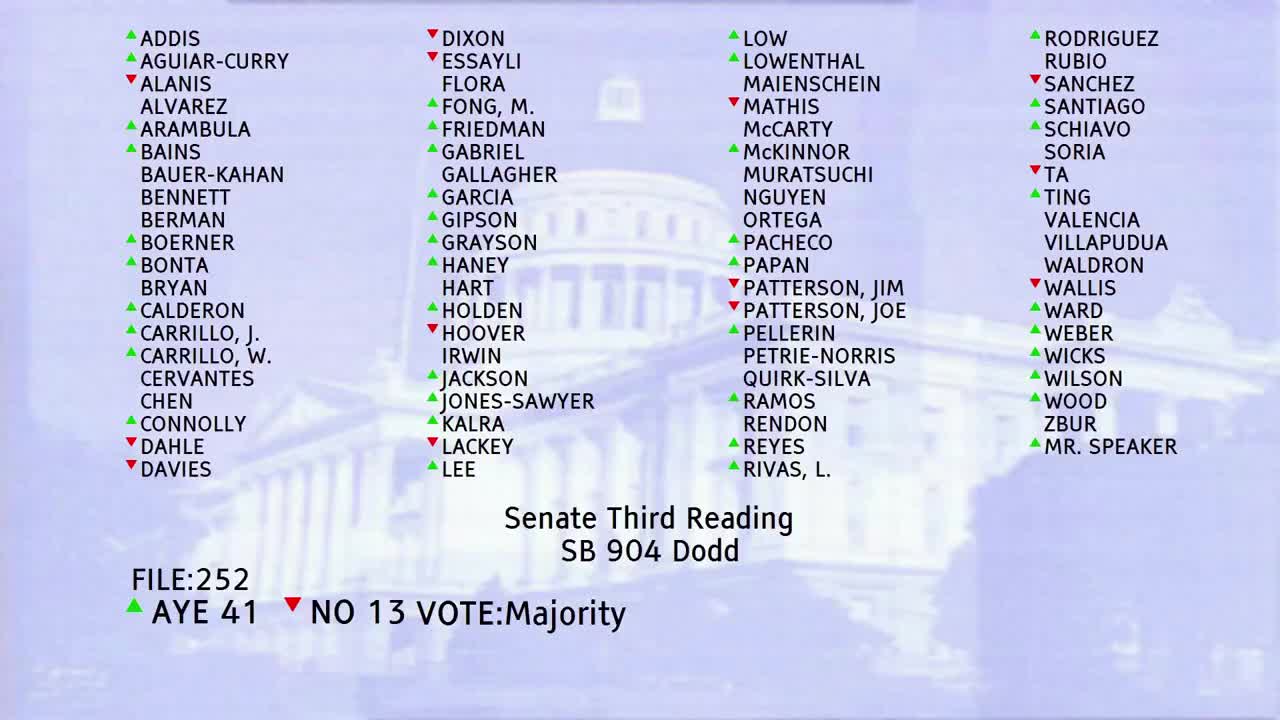 4MIN
Assembly Floor
 18MIN
Assembly Standing Committee on Banking and Finance
 19MIN
Assembly Standing Committee on Health
 42MIN
Assembly Standing Committee on Judiciary
 2MIN
Senate Floor
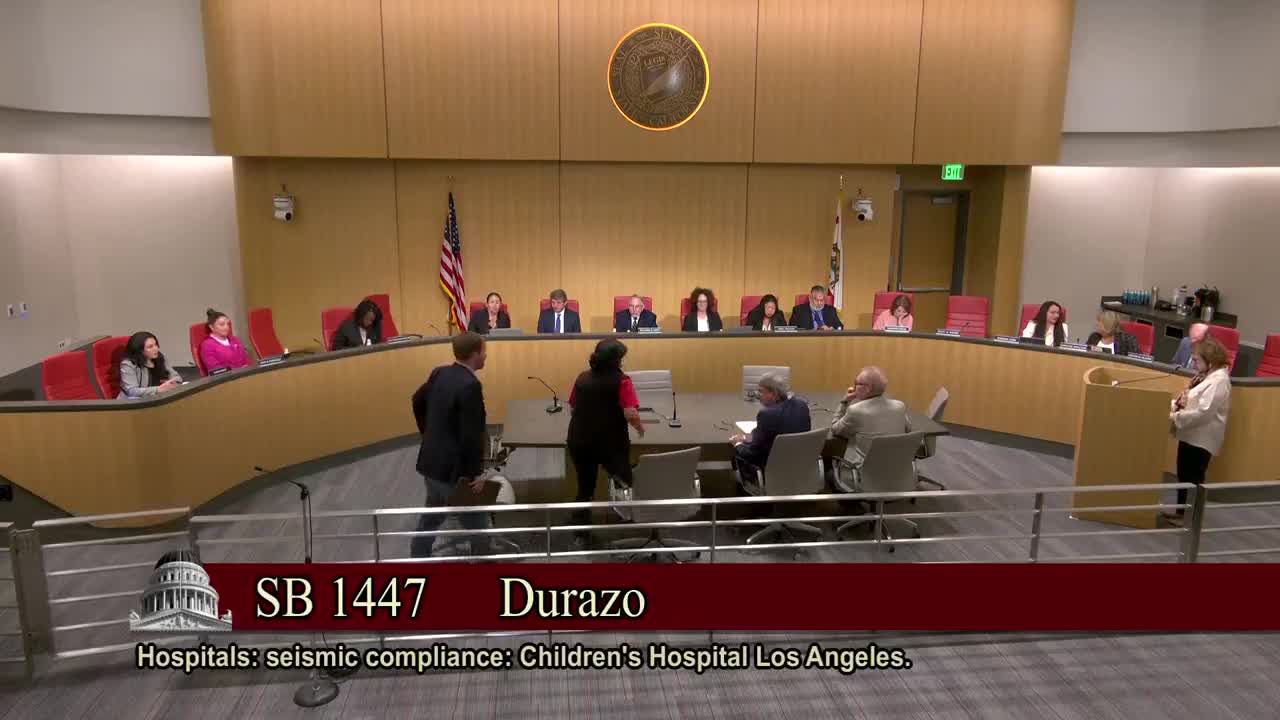 24MIN
Senate Standing Committee on Health
 20MIN
Senate Standing Committee on Judiciary
Bill Author

Bill Co-Author(s):