SB 1066: Hazardous waste: marine flares: manufacturer responsibility.
- Session Year: 2023-2024
- House: Senate
- Latest Version Date: 2024-09-03
Current Status:
Failed
(2024-09-29: In Senate. Consideration of Governor's veto pending.)
Introduced
In Committee
First Chamber
In Committee
Second Chamber
Enacted
What does this bill do?
This bill requires manufacturers who sell, import, or distribute marine pyrotechnic distress flares in California to create and run plans to collect, transport, and safely manage used flares. Plans must meet state performance standards, include consumer education and annual public reports, manufacturers must pay the state’s review costs into a new Marine Flare Recovery Fund, and the bill bans selling flares that contain perchlorate.
The summary is provided by generative AI which can make mistakes. For original language, please view the details in the table below.
(1)Under existing law, as part of the hazardous waste control laws, the Department of Toxic Substances Control (DTSC) generally regulates the management and handling of hazardous waste and hazardous materials. Except as specified, a violation of the hazardous waste control laws is a crime.
This bill would create a manufacturer responsibility program for the safe and proper management of marine flares. The bill would define covered product to include certain pyrotechnic devices that meet the criteria for household hazardous waste and that are used in conjunction with recreational activities. The bill would require a manufacturer of a covered product to develop and implement a manufacturer responsibility plan for the collection, transportation, and the safe and proper management of covered products, as specified. The bill would establish a process and timeline for DTSC to review and approve, disapprove, or conditionally approve a plan and for the implementation of an approved plan. The bill would require that an approved plan be published on DTSCs internet website, except for specified manufacturer data that would not be open to public inspection. The bill would prohibit DTSC from adopting regulations to implement the act with an effective date earlier than July 1, 2028.
This bill would require a manufacturer to prepare and submit to DTSC and make publicly available an annual report describing the activities carried out pursuant to the plan. The bill would require the annual report to include an application for renewal of the manufacturers responsibility plan. The bill would require all reports and records provided to DTSC pursuant to the act to be provided under the penalty of perjury. By expanding the scope of a crime, the bill would impose a state-mandated local program.
This bill would require a manufacturer to pay DTSC the actual cost for DTSC to review its plan, annual report, and application to renew. The bill would establish the Marine Flare Recovery Fund in the State Treasury and would require the charges collected by DTSC to be deposited into that account for expenditure by DTSC, upon appropriation by the Legislature, to cover DTSCs cost to implement and enforce the act.
This bill would prohibit a manufacturer, retailer, dealer, importer, or distributor from selling, distributing, offering for sale, or importing a covered product in or into the state that contains perchlorate.
By adding new requirements to the hazardous waste control laws, this bill would expand the scope of a crime and would impose a state-mandated local program.
(2)Existing constitutional provisions require that a statute that limits the right of access to the meetings of public bodies or the writings of public officials and agencies be adopted with findings demonstrating the interest protected by the limitation and the need for protecting that interest.
This bill would make legislative findings to that effect.
(3)The California Constitution requires the state to reimburse local agencies and school districts for certain costs mandated by the state. Statutory provisions establish procedures for making that reimbursement.
This bill would provide that no reimbursement is required by this act for a specified reason.
(1)Under existing law, as part of the hazardous waste control laws, the Department of Toxic Substances Control (DTSC) generally regulates the management and handling of hazardous waste and hazardous materials. Except as specified, a violation of the hazardous waste control laws is a crime.
This bill would create a manufacturer responsibility program for the safe and proper management of marine flares. The bill would define covered product to mean a pyrotechnic device that produces a brilliant light or a plume of colorful smoke as a visual distress signal, such as on a marine vessel, to attract attention and pinpoint a persons location in an emergency. include certain pyrotechnic devices that meet the criteria for household hazardous waste and that are used in conjunction with recreational activities. The bill would require a manufacturer of a covered product to develop and implement a manufacturer responsibility plan for the collection, transportation, and the safe and proper management of covered products, as specified. The bill would establish a process and timeline for DTSC to review and approve, disapprove, or conditionally approve a plan and for the implementation of an approved plan. The bill would require that an approved plan be published on DTSCs internet website, except for specified manufacturer data that would not be open to public inspection. The bill would prohibit DTSC from adopting regulations to implement the act with an effective date earlier than July 1, 2028.
This bill would require a manufacturer to prepare and submit to DTSC and make publicly available an annual report describing the activities carried out pursuant to the plan. The bill would require the annual report to include an application for renewal of the manufacturers responsibility plan. The bill would require all reports and records provided to DTSC pursuant to the act to be provided under the penalty of perjury. By expanding the scope of a crime, the bill would impose a state-mandated local program.
This bill would require a manufacturer to pay DTSC the actual cost for DTSC to review its plan, annual report, and application to renew. The bill would establish the Marine Flare Recovery Fund in the State Treasury and would require the charges collected by DTSC to be deposited into that account for expenditure by DTSC, upon appropriation by the Legislature, to cover DTSCs cost to implement and enforce the act.
This bill would prohibit a manufacturer, retailer, dealer, importer, or distributor from selling, distributing, offering for sale, or importing a covered product in or into the state that contains perchlorate. The bill would authorize a local agency to refuse to accept from or to charge for the collection of a covered product from a person who does not reside in the state.
By adding new requirements to the hazardous waste control laws, this bill would expand the scope of a crime and would impose a state-mandated local program.
(2)Existing constitutional provisions require that a statute that limits the right of access to the meetings of public bodies or the writings of public officials and agencies be adopted with findings demonstrating the interest protected by the limitation and the need for protecting that interest.
This bill would make legislative findings to that effect.
(3)The California Constitution requires the state to reimburse local agencies and school districts for certain costs mandated by the state. Statutory provisions establish procedures for making that reimbursement.
This bill would provide that no reimbursement is required by this act for a specified reason.
(1)Under existing law, as part of the hazardous waste control laws, the Department of Toxic Substances Control (DTSC) generally regulates the management and handling of hazardous waste and hazardous materials. Except as specified, a violation of the hazardous waste control laws is a crime.
This bill would create a producer manufacturer responsibility program for the safe and proper management of marine flares. The bill would define covered product to mean a pyrotechnic device that produces a brilliant light or a plume of colorful smoke as a visual distress signal on marine vessels signal, such as on a marine vessel, to attract attention and pinpoint a boaters persons location in an emergency. The bill would require a producer manufacturer of a covered product to register with a producer responsibility organization (PRO), which would be required to develop and implement a producer manufacturer responsibility plan for the collection, transportation, and the safe and proper management of covered products. products, as specified. The bill would establish a process and timeline for DTSC to review and approve, disapprove, or conditionally approve a plan and for the implementation of an approved plan. The bill would require that an approved plan be published on DTSCs internet website, except for specified manufacturer data that would not be open to public inspection. The bill would require DTSC to adopt prohibit DTSC from adopting regulations to implement the act with an effective date no earlier than July 1, 2027. 2028.
This bill would require, on or before January 1, 2027, DTSC to approve a PRO that meets the requirements of the bill. The bill would require, within 9 months of the effective date of the regulations, a PRO to prepare and submit a producer responsibility plan to DTSC. The bill would require the plan to include specified elements, including a funding mechanism that provides sufficient funding to carry out the plan. The bill would require, within 90 days of receipt of the plan, DTSC to approve, approve in part, or disapprove the plan, as provided. The bill would require a PRO to resubmit a plan if its plan is not fully approved.This bill would require a PRO to implement its plan within 90 days of approval. The bill would require the plan to be fully funded in a manner that equitably distributes the plans costs among participant producers that reflects sales volumes and the cost to manage the covered products that a producer produces.This bill would require the PRO a manufacturer to prepare and submit to DTSC and make publicly available an annual report describing the activities carried out pursuant to the plan. The bill would require the PRO to retain specified documents, annually audit its accounting books, and make documents available to DTSC for review, as specified. The bill would require the annual report to include an application for renewal of the manufacturers responsibility plan. The bill would require all reports and records provided to DTSC pursuant to the act to be provided under the penalty of perjury. By expanding the scope of a crime, the bill would impose a state-mandated local program.
The bill would require a participant producer, through the PRO, to pay DTSC, on an unspecified schedule, an annual administrative charge, as determined by DTSC. The bill would require the charge be set at an amount that is adequate to cover DTSCs full costs of administering and enforcing the act. The bill would provide for the imposition of administrative civil penalties upon any person who violates the act. TheThis bill would require a manufacturer to pay DTSC the actual cost for DTSC to review its plan, annual report, and application to renew. The bill would establish the Marine Flare Recovery Fund in the State Treasury and would require the administrative the charges collected by DTSC to be deposited into that account for expenditure by DTSC, upon appropriation by the Legislature, to cover DTSCs cost to implement and enforce the act. The bill would also establish the Marine Flare Recovery Penalty Account in the Marie Flare Recovery Fund and would require that the civil penalties collected by DTSC pursuant to the act be deposited in that account, for expenditure by DTSC, upon appropriation by the Legislature, on activities related to the collection and safe and proper management of covered products, grants for related purposes, and the administration and enforcement of the act.
This bill would prohibit a retailer, dealer, importer, or distributor from selling, distributing, offering for sale, or importing a covered product in or into the state that contains perchlorate. The bill would authorize a local agency to refuse to accept from or to charge for the collection of a covered product from a person who does not reside in the state.
By adding new requirements to the hazardous waste control laws, this bill would expand the scope of a crime and would impose a state-mandated local program.
(2)Existing constitutional provisions require that a statute that limits the right of access to the meetings of public bodies or the writings of public officials and agencies be adopted with findings demonstrating the interest protected by the limitation and the need for protecting that interest.
This bill would make legislative findings to that effect.
(3)The California Constitution requires the state to reimburse local agencies and school districts for certain costs mandated by the state. Statutory provisions establish procedures for making that reimbursement.
This bill would provide that no reimbursement is required by this act for a specified reason.
(1)Under existing law, as part of the hazardous waste control laws, the Department of Toxic Substances Control (DTSC) generally regulates the management and handling of hazardous waste and hazardous materials.
This bill would create a producer responsibility program for marine flares. The bill would define covered product to mean a pyrotechnic device that produces a brilliant light or a plume of colorful smoke as a visual distress signal on marine vessels to attract attention and pinpoint a boaters location in an emergency. The bill would require a producer of a covered product to register with a product responsibility organization, producer responsibility organization (PRO), which would be required to develop and implement a producer responsibility plan for the collection, transportation, and the safe and proper management of covered products. The bill would require DTSC to adopt regulations to implement the act with an effective date no earlier than January July 1, 2027.
This bill would require, on or before January 1, 2027, DTSC to approve a PRO that meets the requirements of the bill. The bill would require, within 9 months of the effective date of the regulations, a PRO to prepare and submit a product producer responsibility plan to DTSC. The bill would require the plan to include specified elements, including a funding mechanism that provides sufficient funding to carry out the plan. The bill would require, within 90 days of receipt of the plan, DTSC to approve, approve in part, or disapprove the plan, as provided. The bill would require a PRO to resubmit a plan if its plan is not fully approved.
This bill would require a PRO to implement its plan within 90 days of approval. The bill would require the plan to be fully funded in a manner that equitably distributes the plans costs among participant producers that reflects sales volumes and the cost to manage the covered products that a producer produces.
This bill would require the PRO to prepare and submit to DTSC and make publicly available an annual report describing the activities carried out pursuant to the plan. The bill would require the PRO to retain specified documents, annually audit its accounting books, and make documents available to DTSC for review, as specified. The bill would require all reports and records provided to DTSC pursuant to the act to be provided under the penalty of perjury. By expanding the scope of a crime, the bill would impose a state-mandated local program.
The bill would require a participant producer, through the PRO, to pay DTSC, on an unspecified schedule, an annual administrative charge, as determined by DTSC. The bill would require the charge be set at an amount that is adequate to cover DTSCs full costs of administering and enforcing the act. The bill would provide for the imposition of administrative civil penalties upon any person who violates the act. The bill would establish the Marine Flare Recovery Fund in the State Treasury and would require the administrative charges collected by DTSC to be deposited into that account for expenditure by DTSC, upon appropriation by the Legislature, to cover DTSCs cost to implement and enforce the act. The bill would also establish the Marine Flare Recovery Penalty Account in the Marie Flare Recovery Fund and would require that the civil penalties collected by DTSC pursuant to the act be deposited in that account, for expenditure by DTSC, upon appropriation by the Legislature, on activities related to the collection, reuse, collection and safe and proper management of covered products, grants for related purposes, and the administration and enforcement of the act.
(2)Existing constitutional provisions require that a statute that limits the right of access to the meetings of public bodies or the writings of public officials and agencies be adopted with findings demonstrating the interest protected by the limitation and the need for protecting that interest.
This bill would make legislative findings to that effect.
(3)The California Constitution requires the state to reimburse local agencies and school districts for certain costs mandated by the state. Statutory provisions establish procedures for making that reimbursement.
This bill would provide that no reimbursement is required by this act for a specified reason.
(1)Under existing law, as part of the hazardous waste control laws, the Department of Toxic Substances Control (DTSC) generally regulates the management and handling of hazardous waste and hazardous materials.
This bill would create a producer responsibility program for marine flares. The bill would define covered product to mean a pyrotechnic device that produces a brilliant light or a plume of colorful smoke as a visual distress signal on marine vessels to attract attention and pinpoint a boaters location in an emergency. The bill would require a producer of a covered product to register with a product responsibility organization, which would be required to develop and implement a producer responsibility plan for the collection, transportation, and the safe and proper management of covered products. The bill would require DTSC to adopt regulations to implement the act with an effective date no earlier than January 1, 2027.
This bill would require, within 9 months of the effective date of the regulations, a PRO to prepare and submit a product responsibility plan to DTSC. The bill would require the plan to include specified elements, including a funding mechanism that provides sufficient funding to carry out the plan. The bill would require, within 90 days of receipt of the plan, DTSC to approve, approve in part, or disapprove the plan, as provided. The bill would require a PRO to resubmit a plan if its plan is not fully approved.
This bill would require a PRO to implement its plan within 90 days of approval. The bill would require the plan to be fully funded in a manner that equitably distributes the plans costs among participant producers that reflects sales volumes and the cost to manage the covered products that a producer produces.
This bill would require the PRO to prepare and submit to DTSC and make publicly available an annual report describing the activities carried out pursuant to the plan. The bill would require the PRO to retain specified documents, annually audit its accounting books, and make documents available to DTSC for review, as specified. The bill would require all reports and records provided to DTSC pursuant to the act to be provided under the penalty of perjury. By expanding the scope of a crime, the bill would impose a state-mandated local program.
The bill would require a participant producer, through the PRO, to pay DTSC, on an unspecified schedule, an annual administrative charge, as determined by DTSC. The bill would require the charge be set at an amount that is adequate to cover DTSCs full costs of administering and enforcing the act. The bill would provide for the imposition of administrative civil penalties upon any person who violates the act. The bill would establish the Marine Flare Recovery Fund in the State Treasury and would require the administrative charges collected by DTSC to be deposited into that account for expenditure by DTSC, upon appropriation by the Legislature, to cover DTSCs cost to implement and enforce the act. The bill would also establish the Marine Flare Recovery Penalty Account in the Marie Flare Recovery Fund and would require that the civil penalties collected by DTSC pursuant to the act be deposited in that account, for expenditure by DTSC, upon appropriation by the Legislature, on activities related to the collection, reuse, and safe and proper management of covered products, grants for related purposes, and the administration and enforcement of the act.
(2)Existing constitutional provisions require that a statute that limits the right of access to the meetings of public bodies or the writings of public officials and agencies be adopted with findings demonstrating the interest protected by the limitation and the need for protecting that interest.
This bill would make legislative findings to that effect.
(3)The California Constitution requires the state to reimburse local agencies and school districts for certain costs mandated by the state. Statutory provisions establish procedures for making that reimbursement.
This bill would provide that no reimbursement is required by this act for a specified reason.
(a)This article shall be known, and may be cited, as the Marine Flare Manufacturer Responsibility Act of 2024.
(b)The purpose of this article is to provide for the safe and proper management of pyrotechnic marine flares, which pose significant threats to health and safety and may cause significant and costly damage to the environment when managed improperly.
25258.26.The department may adopt, amend, or repeal, in accordance with the Administrative Procedure Act (Chapter 3.5 (commencing with Section 11340) of Part 1 of Division 3 of Title 2 of the Government Code), regulations to implement this article. The department shall not adopt regulations to implement this article with an effective date earlier than July 1, 2028.
25258.27.For purposes of this article, the following definitions apply:
(a)(1)Approved manufacturer responsibility plan means a manufacturer responsibility plan that has been approved by the department pursuant to Section 25258.29 and that has not been subsequently disapproved by the department pursuant to Section 25258.32.
(2)A conditionally approved manufacturer responsibility plan is an approved manufacturer responsibility plan, except as used in Section 25258.29.
(3)A partially approved manufacturer responsibility plan is not an approved manufacturer responsibility plan.
(b)Brand means a trademark, including both a registered trademark and an unregistered trademark, a logo, a name, a symbol, a word, an identifier, or a traceable mark that identifies a covered product and identifies the owner or licensee of the brand.
(c)Collection site means a permanent or temporary location where a covered product is collected and prepared for transport in accordance with the requirements of this article.
(d)Consumer means a person who owns a covered product and includes the ultimate purchaser, owner, or lessee of a covered product, who is not, as to that covered product, the distributor, importer, manufacturer, retailer, or treatment facility.
(e)Contact information means name, physical address, mailing address, email address, and telephone number.
(f)Covered product means a pyrotechnic device that does all of the following:
(1)Produces a brilliant light or a plume of colorful smoke as a visual distress signal, such as on a marine vessel, to attract attention and pinpoint a persons location in an emergency.
(2)At the time of disposal, meets the criteria for household hazardous waste, as defined by Section 25218.1.
(3)Is used in conjunction with recreational activities.
(g)Distributor means a person that has a contractual relationship with one or more manufacturers to market and sell covered products to retailers.
(h)Importer means either of the following:
(1)A person qualifying as an importer of record for purposes of Section 1484(a)(2)(B) of Title 19 of the United States Code regarding the import of a covered product that is sold, distributed for sale, or offered for sale in or into the state that was manufactured or assembled by a company outside of the United States.
(2)A person importing into the state for sale, distributing for sale, or offering for sale in the state a covered product that was manufactured or assembled by a company physically located outside of the state.
(i)(1)Manufacturer means a person who manufactures a covered product and who sells, offers for sale, or distributes a covered product into the state under the persons own name or brand.
(2)If there is no person in the state who is the manufacturer for purposes of paragraph (1), the manufacturer of the covered product is the owner or exclusive licensee of a brand under which the covered product is sold or distributed into the state. For purposes of this subdivision, an exclusive licensee is a person holding the exclusive right to use a brand in the state in connection with the manufacture, sale, or distribution for sale in or into the state of the covered product.
(3)If there is no person in the state who is the manufacturer for purposes of paragraph (1) or (2), the manufacturer of the covered product is the person that imports the covered product into the state for sale, distribution, or installation.
(4)If there is no person in the state who is the manufacturer for purposes of paragraph (1), (2), or (3), the manufacturer of the covered product is the distributor, retailer, dealer, or wholesaler who sells the product in or into the state.
(5)For purposes of this article, the sale of a covered product shall be deemed to occur in the state if the covered product is delivered to the consumer in the state.
(j)Manufacturer responsibility plan means the plan developed by a manufacturer for the collection, transportation, and the safe and proper management of covered products pursuant to this article.
(k)Retailer means a person who sells or offers for sale a covered product in or into the state to a person through any means, including, but not limited to, sales outlets, catalogs, the telephone, the internet, or any electronic means.
25258.28.(a)On and after January 1, 2026, a manufacturer that sells, offers for sale, imports, or distributes a covered product in the state shall submit to the department a manufacturer responsibility plan.
(b)A manufacturer, retailer, dealer, importer, or distributor shall not sell, distribute, offer for sale, or import a covered product in or into the state that contains perchlorate, as defined in Section 25210.5.
25258.29.(a)The department shall review a manufacturer responsibility plan for compliance with this article. As part of the review of a manufacturer responsibility plan, the department shall include a discussion of the manufacturer responsibility plan on an agenda for a regularly scheduled department board meeting. Within 90 calendar days of receipt of the manufacturer responsibility plan from a manufacturer, the department shall respond with an approval, disapproval, conditional approval, request for additional information, or timeline for a decision on approval or disapproval.
(b)If the department approves a manufacturer responsibility plan, a revised manufacturer responsibility plan, or a conditionally approved manufacturer responsibility plan, then the department shall notify the manufacturer of the approval. The manufacturer shall implement the approved manufacturer responsibility plan within 90 days of receipt of the notice of approval, or as otherwise agreed to by the department.
(c)If the department conditionally approves the manufacturer responsibility plan, then the department shall explain, in writing, how the manufacturer responsibility plan or parts of the manufacturer responsibility plan do not comply with this article, and the manufacturer shall ensure the conditions are met.
(d)If the department disapproves the manufacturer responsibility plan, the department shall explain, in writing, how the manufacturer responsibility plan does not comply with this article, and the manufacturer shall submit a revised manufacturer responsibility plan to the department within 45 days of receipt of the disapproval. The department shall have 15 days, from receipt, to review a revised manufacturer responsibility plan. If the department does not approve or conditionally approve the revised manufacturer responsibility plan, then manufacturer is not in compliance with this article.
(e)An approved manufacturer responsibility plan shall be a public record published on the departments internet website, except that financial, production, or sales data reported by the manufacturer to the department for purposes of the California Public Records Act (Division 10 (commencing with Section 7920.000) of Title 1 of the Government Code) shall not be open to public inspection. The department may release financial or sales data in summary form only so the information cannot be attributable to a specific entity.
(f)A manufacturer shall implement its approved manufacturer responsibility plan.
(g)Notwithstanding Article 8 (commencing with Section 25180), a manufacturer shall not be subject to penalties for noncompliance with this article before July 1, 2028.
25258.30.(a)A manufacturer responsibility plan shall include all of the following:
(1)The manufacturers contact information.
(2)A list of covered products and brands of covered products that the manufacturer sells, distributes for sale, imports for sale, or offers for sale in or into the state.
(3)An explanation of how the manufacturer has and will engage with stakeholders in the state to develop and implement the manufacturer responsibility plan.
(4)A detailed plan to meet performance standards with associated metrics, and the dates by which the performance standards will be achieved for the performance standards categories identified in Section 25258.31.
(5)A detailed plan for the management of collection sites, including all of the following:
(A)How the manufacturer will provide a free and convenient collection system for covered products, which may include permanent collection sites and shall include temporary collection sites.
(B)How the manufacturer will provide the collection sites, at no cost to consumers or other entities involved in the collection, the appropriate training, signage, safety guidance, educational materials, and any other items or information necessary for the safe collection and temporary storage of covered materials.
(C)The process by which the manufacturer will provide for the transport of covered products from the collection sites, including transportation costs, the entities involved in transportation, and the final destination of covered products.
(D)A list of all proposed rules, conditions, and requirements for collection sites and treatment facilities, including a template proposed agreement for each of those types of entities as applicable.
(E)A schedule for collection events at temporary collection sites, including both the following:
(i)One collection event in each coastal county each year until January 1, 2028.
(ii)One collection event in each county bordering Lake Tahoe each year until January 1, 2028.
(6)An explanation of the process by which collected covered products will be handled and managed following collection, including all of the following:
(A)An explanation of how covered products will be handled and managed according to the waste management practices specified in Section 40051 of the Public Resources Code, including an explanation of how the manufacturer will use the best available management technologies.
(B)An explanation of the annual assessment the manufacturer will conduct and the metrics it will use to determine how collection, sorting, transportation, and management outcomes aligned with projections.
(C)An explanation of how the manufacturer will achieve an equitable and circular system that improves the collection, processing, and management operations for covered products, including, but not limited to, pilot programs to test new processes, methods, or equipment.
(D)An explanation of criteria for the reuse of a collected covered product.
(7)A description of a comprehensive statewide education and outreach program designed to educate consumers and promote participation in the program offered by the manufacturer. A manufacturer is encouraged to work with existing education and outreach materials from the Division of Boating and Waterways and other relevant agencies. The comprehensive statewide education and outreach program shall do all of the following:
(A)Promote the safe and proper management of covered products and shall not promote the disposal of covered products in a manner inconsistent with the services offered by the manufacturer responsibility plan.
(B)Include information for consumers on how to avoid improper disposal of covered products.
(C)Include a description of the education and outreach efforts to various audiences, including, but not limited to, consumers, to promote their participation in achieving the purposes of the manufacturer responsibility plan. These education and outreach materials shall include, but not be limited to, all of the following:
(i)An internet website that publicizes the entire process for collection, including collection location sites, in addition to any other information necessary to consumers for the safe collection and handling of covered products.
(ii)Signage at point of sale and in marinas that is prominently displayed and easily visible.
(iii)All signage and material required for collection sites by the manufacturer, and the method by which the collection sites can access replacement materials at no cost to the collection site.
(iv)Promotional materials, activities, or both that explain the purpose of the manufacturer responsibility plan and the means by which the manufacturer is managing covered products.
(v)A description of strategies, goals, and metrics the manufacturer will use to annually assess and evaluate the efficacy of the comprehensive statewide education and outreach program.
(8)Written certification by an authorized representative of the manufacturer that states that, at the time of submission to the department, all aspects of the manufacturer responsibility plan are in compliance with all applicable state and federal laws and regulations.
(b)A manufacturer responsibility plan shall be developed to accept and manage covered products at the end of their useful life. An expiration date on a covered product shall be determinative of its useful life.
(c)A manufacturer shall not be required to accept or manage a covered product for which it is not the manufacturer.
25258.31.(a)The department shall establish performance standards for a manufacturer plan.
(b)Performance standards categories shall include, but not be limited to, collection of the covered product.
(c)The performance standards shall specify dates for compliance.
(d)The department may adjust performance standards and compliance dates based on information included in a manufacturer responsibility plan and annual reports, other information provided by a manufacturer, department waste characterization studies, economic information, and any other relevant information.
(e)Performance standards published by the department pursuant to this section shall not be subject to the requirements of Chapter 3.5 (commencing with Section 11340) of Part 1 of Division 3 of Title 2 of the Government Code.
(f)A manufacturer shall meet the performance standards established by the department.
25258.32.(a)On or before March 1, 2027, and on or before March 1 of each year thereafter, a manufacturer shall submit to the department, and make publicly available, an annual report that includes all of the following information for the preceding calendar year:
(1)Any proposed changes to the manufacturers approved manufacturer responsibility plan and an explanation for those proposed changes.
(2)An estimate of the number of covered products sold in or into the state by the manufacturer, as determined by the best available commercial data.
(3)The number of collection sites, listed by name, location, and type, from which covered products were collected.
(4)The number, by brand, of covered products collected from each collection site and the total number, by brand, of covered products collected.
(5)The number, by brand and location, of covered products that the manufacturer did not accept for collection because it was not the manufacturer of those covered products.
(6)A complete accounting of the ultimate disposition of all covered products collected by the manufacturer, including the total weight of materials that were disposed of.
(7)Metrics and a description of the progress toward attaining the performance standards included in the approved manufacturer responsibility plan.
(8)An evaluation of the effectiveness of methods and processes used to achieve the performance goals of the approved manufacturer responsibility plan.
(9)A description of methods used to collect, transport, and manage covered products by the manufacturer, including a description of both of the following:
(A)How the manufacturer handled and managed covered products according to the waste management practices hierarchy described in Section 40051 of the Public Resources Code.
(B)Results of the manufacturers assessment of the efficacy of the collection and transportation process pursuant to paragraph (6) of subdivision (a) of Section 25258.30.
(10)A description of how the manufacturer improved the convenience of collection and improved processing operations for covered products, including, but not limited to, pilot programs to test new processes, methods, or equipment.
(11)A summary of the public education used to promote consumer knowledge of the program, including the manufacturers evaluation of the efficacy of the comprehensive statewide education and outreach program pursuant to paragraph (7) of subdivision (a) of Section 25258.30.
(12)Any other information required by regulation.
(b)(1)No later than 90 days after receipt of an annual report, the department shall include discussion of the annual report on an agenda for a regularly scheduled department board meeting.
(2)No later than 120 days after receipt of an annual report, and after completion of the department board meeting described in paragraph (1), the department shall notify the manufacturer if the annual report is compliant or noncompliant with subdivision (a).
(3)If the department determines that the annual report is noncompliant due to failure to meet the requirements of subdivision (a), the department may require the resubmittal of the annual report and may take enforcement action pursuant to Article 8 (commencing with Section 25180).
(4)The department may consult with or submit the annual report to a state agency or department if it determines it is necessary for making a determination of compliance or noncompliance of an annual report. The duration of time the department takes for this consultation shall not be included in the time allotted to the department for review pursuant to paragraph (1).
(c)(1)The annual report shall also include an application to renew an approved manufacturer responsibility plan. The application shall include a manufacturer responsibility plan that meets the requirements of Section 25258.30 and shall include the changes proposed in the manufacturers annual report. Section 25258.29 shall apply to the review of the application as if the application were a manufacturer responsibility plan.
(2)A manufacturer shall continue to comply with its approved manufacturer responsibility plan until the department approves or conditionally approves the manufacturers application.
(3)If the department disapproves a manufacturers application, then the manufacturer shall not be in compliance with this article until the department subsequently approves or conditionally approves a manufacturer responsibility plan submitted by the manufacturer.
25258.33.(a)A manufacturer shall pay the department the actual cost for the review of its manufacturer responsibility plan, annual report, and application to renew an approved manufacturer responsibility plan.
(b)The department shall deposit all moneys received from a manufacturer pursuant to this section into the Marine Flare Recovery Fund, which is hereby established in the State Treasury.
(c)Upon appropriation by the Legislature, moneys in the Marine Flare Recovery Fund shall be expended by the department to implement and enforce this article.
(d)The moneys in the Marine Flare Recovery Fund shall only be expended for purposes described in subdivision (c).
25258.34.(a)A manufacturer shall do both of the following:
(1)Upon request, provide the department with reasonable and timely access, as determined by the department, to its facilities and operations, as necessary to determine compliance with this article.
(2)Upon request, within 14 days, provide the department with relevant records, as determined by the department, necessary to determine compliance with this article.
(b)All reports and records provided to the department pursuant to this article shall be provided under penalty of perjury.
(c)The department may impose administrative civil penalties pursuant to Article 8 (commencing with Section 25180) on a manufacturer that fails to provide the department with the access required pursuant to this section.
SEC. 2.The Legislature finds and declares that Section 1 of this act, which adds Section 25258.29 to the Health and Safety Code, imposes a limitation on the publics right of access to the meetings of public bodies or the writings of public officials and agencies within the meaning of Section 3 of Article I of the California Constitution. Pursuant to that constitutional provision, the Legislature makes the following findings to demonstrate the interest protected by this limitation and the need for protecting that interest:
In order to ensure the effective hazardous waste management of, and viable markets for, marine flares, it is necessary to protect the proprietary information of producers, retailers, wholesalers, and solid waste enterprises by keeping confidential the financial, production, and sales data reported by those entities under Section 1 of this act.
SEC. 3.No reimbursement is required by this act pursuant to Section 6 of Article XIIIB of the California Constitution because the only costs that may be incurred by a local agency or school district will be incurred because this act creates a new crime or infraction, eliminates a crime or infraction, or changes the penalty for a crime or infraction, within the meaning of Section 17556 of the Government Code, or changes the definition of a crime within the meaning of Section 6 of Article XIIIB of the California Constitution.
(a)This article shall be known, and may be cited, as the Marine Flare Manufacturer Responsibility Act of 2024.
(b)The purpose of this article is to provide for the safe and proper management of pyrotechnic marine flares, which pose significant threats to health and safety and may cause significant and costly damage to the environment when managed improperly.
25258.1.25258.26.The department may adopt, amend, or repeal, in accordance with the Administrative Procedure Act (Chapter 3.5 (commencing with Section 11340) of Part 1 of Division 3 of Title 2 of the Government Code), regulations to implement this article. The department shall not adopt regulations to implement this article with an effective date earlier than July 1, 2028.
25258.2.25258.27.For purposes of this article, the following definitions apply:
(a)(1)Approved manufacturer responsibility plan means a manufacturer responsibility plan that has been approved by the department pursuant to Section 25258.4 25258.29 and that has not been subsequently disapproved by the department pursuant to Section 25258.7. 25258.32.
(2)A conditionally approved manufacturer responsibility plan is an approved manufacturer responsibility plan, except as used in Section 25258.4. 25258.29.
(3)A partially approved manufacturer responsibility plan is not an approved manufacturer responsibility plan.
(b)Brand means a trademark, including both a registered trademark and an unregistered trademark, a logo, a name, a symbol, a word, an identifier, or a traceable mark that identifies a covered product and identifies the owner or licensee of the brand.
(c)Collection site means a permanent or temporary location where a covered product is collected and prepared for transport in accordance with the requirements of this article.
(d)Consumer means a person who owns a covered product and includes the ultimate purchaser, owner, or lessee of a covered product, who is not, as to that covered product, the distributor, importer, manufacturer, retailer, or treatment facility.
(e)Contact information means name, physical address, mailing address, email address, and telephone number.
(f)Covered product means a pyrotechnic device that produces does all of the following:
(1)Produces a brilliant light or a plume of colorful smoke as a visual distress signal, such as on a marine vessel, to attract attention and pinpoint a persons location in an emergency.
(2)At the time of disposal, meets the criteria for household hazardous waste, as defined by Section 25218.1.
(3)Is used in conjunction with recreational activities.
(g)Distributor means a person that has a contractual relationship with one or more manufacturers to market and sell covered products to retailers.
(h)Importer means either of the following:
(1)A person qualifying as an importer of record for purposes of Section 1484(a)(2)(B) of Title 19 of the United States Code regarding the import of a covered product that is sold, distributed for sale, or offered for sale in or into the state that was manufactured or assembled by a company outside of the United States.
(2)A person importing into the state for sale, distributing for sale, or offering for sale in the state a covered product that was manufactured or assembled by a company physically located outside of the state.
(i)(1)Manufacturer means a person who manufactures a covered product and who sells, offers for sale, or distributes a covered product into the state under the persons own name or brand.
(2)If there is no person in the state who is the manufacturer for purposes of paragraph (1), the manufacturer of the covered product is the owner or exclusive licensee of a brand under which the covered product is sold or distributed into the state. For purposes of this subdivision, an exclusive licensee is a person holding the exclusive right to use a brand in the state in connection with the manufacture, sale, or distribution for sale in or into the state of the covered product.
(3)If there is no person in the state who is the manufacturer for purposes of paragraph (1) or (2), the manufacturer of the covered product is the person that imports the covered product into the state for sale, distribution, or installation.
(4)If there is no person in the state who is the manufacturer for purposes of paragraph (1), (2), or (3), the manufacturer of the covered product is the distributor, retailer, dealer, or wholesaler who sells the product in or into the state.
(5)For purposes of this article, the sale of a covered product shall be deemed to occur in the state if the covered product is delivered to the consumer in the state.
(j)Manufacturer responsibility plan means the plan developed by a manufacturer for the collection, transportation, and the safe and proper management of covered products pursuant to this article.
(k)Retailer means a person who sells or offers for sale a covered product in or into the state to a person through any means, including, but not limited to, sales outlets, catalogs, the telephone, the internet, or any electronic means.
25258.3.25258.28.(a)On and after January 1, 2026, a manufacturer that sells, offers for sale, imports, or distributes a covered product in the state shall submit to the department a manufacturer responsibility plan.
(b)A manufacturer, retailer, dealer, importer, or distributor shall not sell, distribute, offer for sale, or import a covered product in or into the state that contains perchlorate, as defined in Section 25210.5.
25258.4.25258.29.(a)The department shall review a manufacturer responsibility plan for compliance with this article. As part of the review of a manufacturer responsibility plan, the department shall include a discussion of the manufacturer responsibility plan on an agenda for a regularly scheduled department board meeting. Within 90 calendar days of receipt of the manufacturer responsibility plan from a manufacturer, the department shall respond with an approval, disapproval, conditional approval, request for additional information, or timeline for a decision on approval or disapproval.
(b)If the department approves a manufacturer responsibility plan, a revised manufacturer responsibility plan, or a conditionally approved manufacturer responsibility plan, then the department shall notify the manufacturer of the approval. The manufacturer shall implement the approved manufacturer responsibility plan within 90 days of receipt of the notice of approval, or as otherwise agreed to by the department.
(c)If the department conditionally approves the manufacturer responsibility plan, then the department shall explain, in writing, how the manufacturer responsibility plan or parts of the manufacturer responsibility plan do not comply with this article, and the manufacturer shall ensure the conditions are met.
(d)If the department disapproves the manufacturer responsibility plan, the department shall explain, in writing, how the manufacturer responsibility plan does not comply with this article, and the manufacturer shall submit a revised manufacturer responsibility plan to the department within 45 days of receipt of the disapproval. The department shall have 15 days, from receipt, to review a revised manufacturer responsibility plan. If the department does not approve or conditionally approve the revised manufacturer responsibility plan, then manufacturer is not in compliance with this article.
(e)An approved manufacturer responsibility plan shall be a public record published on the departments internet website, except that financial, production, or sales data reported by the manufacturer to the department for purposes of the California Public Records Act (Division 10 (commencing with Section 7920.000) of Title 1 of the Government Code) shall not be open to public inspection. The department may release financial or sales data in summary form only so the information cannot be attributable to a specific entity.
(f)A manufacturer shall implement its approved manufacturer responsibility plan.
(g)Notwithstanding Article 8 (commencing with Section 25180), a manufacturer shall not be subject to penalties for noncompliance with this article before July 1, 2028.
25258.5.25258.30.(a)A manufacturer responsibility plan shall include all of the following:
(1)The manufacturers contact information.
(2)A list of covered products and brands of covered products that the manufacturer sells, distributes for sale, imports for sale, or offers for sale in or into the state.
(3)An explanation of how the manufacturer has and will engage with stakeholders in the state to develop and implement the manufacturer responsibility plan.
(4)A detailed plan to meet performance standards with associated metrics, and the dates by which the performance standards will be achieved for the performance standards categories identified in Section 25258.6. 25258.31.
(5)A detailed plan for the management of collection sites, including all of the following:
(A)How the manufacturer will provide a free and convenient collection system for covered products, which may include permanent collection sites and shall include temporary collection sites.
(B)How the manufacturer will provide the collection sites, at no cost to consumers, consumers or other entities involved in the collection, the appropriate training, signage, safety guidance, educational materials, and any other items or information necessary for the safe collection and temporary storage of covered materials.
(C)The process by which the manufacturer will provide for the transport of covered products from the collection sites, including transportation costs, the entities involved in transportation, and the final destination of covered products.
(D)A list of all proposed rules, conditions, and requirements for collection sites and treatment facilities, including a template proposed agreement for each of those types of entities as applicable.
(E)A schedule for collection events at temporary collection sites, including both the following:
(i)One collection event in each coastal county each year until January 1, 2028.
(ii)One collection event in each county bordering Lake Tahoe each year until January 1, 2028.
(6)An explanation of the process by which collected covered products will be handled and managed following collection, including all of the following:
(A)An explanation of how covered products will be handled and managed according to the waste management practices specified in Section 40051 of the Public Resources Code, including an explanation of how the manufacturer will use the best available management technologies.
(B)An explanation of the annual assessment the manufacturer will conduct and the metrics it will use to determine how collection, sorting, transportation, and management outcomes aligned with projections.
(C)An explanation of how the manufacturer will achieve an equitable and circular system that improves the collection, processing, and management operations for covered products, including, but not limited to, pilot programs to test new processes, methods, or equipment.
(D)An explanation of criteria for the reuse of a collected covered product.
(7)A description of a comprehensive statewide education and outreach program designed to educate consumers and promote participation in the program offered by the manufacturer. A manufacturer is encouraged to work with existing education and outreach materials from the Division of Boating and Waterways and other relevant agencies. The comprehensive statewide education and outreach program shall do all of the following:
(A)Promote the safe and proper management of covered products and shall not promote the disposal of covered products in a manner inconsistent with the services offered by the manufacturer responsibility plan.
(B)Include information for consumers on how to avoid improper disposal of covered products.
(C)Include a description of the education and outreach efforts to various audiences, including, but not limited to, consumers, to promote their participation in achieving the purposes of the manufacturer responsibility plan. These education and outreach materials shall include, but not be limited to, all of the following:
(i)An internet website that publicizes the entire process for collection, including collection location sites, in addition to any other information necessary to consumers for the safe collection and handling of covered products.
(ii)Signage at point of sale and in marinas that is prominently displayed and easily visible.
(iii)All signage and material required for collection sites by the manufacturer, and the method by which the collection sites can access replacement materials at no cost to the collection site.
(iv)Promotional materials, activities, or both that explain the purpose of the manufacturer responsibility plan and the means by which the manufacturer is managing covered products.
(v)A description of strategies, goals, and metrics the manufacturer will use to annually assess and evaluate the efficacy of the comprehensive statewide education and outreach program.
(8)Written certification by an authorized representative of the manufacturer that states that, at the time of submission to the department, all aspects of the manufacturer responsibility plan are in compliance with all applicable state and federal laws and regulations.
(b)A manufacturer responsibility plan shall be developed to accept and manage covered products at the end of their useful life. An expiration date on a covered product shall be determinative of its useful life.
(c)A manufacturer shall not be required to accept or manage a covered product for which it is not the manufacturer.
25258.6.25258.31.(a)The department shall establish performance standards for a manufacturer plan.
(b)Performance standards categories shall include, but not be limited to, collection of the covered product.
(c)The performance standards shall specify dates for compliance.
(d)The department may adjust performance standards and compliance dates based on information included in a manufacturer responsibility plan and annual reports, other information provided by a manufacturer, department waste characterization studies, economic information, and any other relevant information.
(e)Performance standards published by the department pursuant to this section shall not be subject to the requirements of Chapter 3.5 (commencing with Section 11340) of Part 1 of Division 3 of Title 2 of the Government Code.
(f)A manufacturer shall meet the performance standards established by the department.
25258.7.25258.32.(a)On or before March 1, 2027, and on or before March 1 of each year thereafter, a manufacturer shall submit to the department, and make publicly available, an annual report that includes all of the following information for the preceding calendar year:
(1)Any proposed changes to the manufacturers approved manufacturer responsibility plan and an explanation for those proposed changes.
(2)An estimate of the number of covered products sold in or into the state by the manufacturer, as determined by the best available commercial data.
(3)The number of collection sites, listed by name, location, and type, from which covered products were collected.
(4)The number, by brand, of covered products collected from each collection site and the total number, by brand, of covered products collected.
(5)The number, by brand and location, of covered products that the manufacturer did not accept for collection because it was not the manufacturer of those covered products.
(6)A complete accounting of the ultimate disposition of all covered products collected by the manufacturer, including the total weight of materials that were disposed of.
(7)Metrics and a description of the progress toward attaining the performance standards included in the approved manufacturer responsibility plan.
(8)An evaluation of the effectiveness of methods and processes used to achieve the performance goals of the approved manufacturer responsibility plan.
(9)A description of methods used to collect, transport, and manage covered products by the manufacturer, including a description of both of the following:
(A)How the manufacturer handled and managed covered products according to the waste management practices hierarchy described in Section 40051 of the Public Resources Code.
(B)Results of the manufacturers assessment of the efficacy of the collection and transportation process pursuant to paragraph (6) of subdivision (a) of Section 25258.5. 25258.30.
(10)A description of how the manufacturer improved the convenience of collection and improved processing operations for covered products, including, but not limited to, pilot programs to test new processes, methods, or equipment.
(11)A summary of the public education used to promote consumer knowledge of the program, including the manufacturers evaluation of the efficacy of the comprehensive statewide education and outreach program pursuant to paragraph (7) of subdivision (a) of Section 25258.5. 25258.30.
(12)Any other information required by regulation.
(b)(1)No later than 90 days after receipt of an annual report, the department shall include discussion of the annual report on an agenda for a regularly scheduled department board meeting.
(2)No later than 120 days after receipt of an annual report, and after completion of the department board meeting described in paragraph (1), the department shall notify the manufacturer if the annual report is compliant or noncompliant with subdivision (a).
(3)If the department determines that the annual report is noncompliant due to failure to meet the requirements of subdivision (a), the department may require the resubmittal of the annual report and may take enforcement action pursuant to Article 8 (commencing with Section 25180).
(4)The department may consult with or submit the annual report to a state agency or department if it determines it is necessary for making a determination of compliance or noncompliance of an annual report. The duration of time the department takes for this consultation shall not be included in the time allotted to the department for review pursuant to paragraph (1).
(c)(1)The annual report shall also include an application to renew an approved manufacturer responsibility plan. The application shall include a manufacturer responsibility plan that meets the requirements of Section 25258.5 25258.30 and shall include the changes proposed in the manufacturers annual report. Section 25258.4 25258.29 shall apply to the review of the application as if the application were a manufacturer responsibility plan.
(2)A manufacturer shall continue to comply with its approved manufacturer responsibility plan until the department approves or conditionally approves the manufacturers application.
(3)If the department disapproves a manufacturers application, then the manufacturer shall not be in compliance with this article until the department subsequently approves or conditionally approves a manufacturer responsibility plan submitted by the manufacturer.
25258.8.25258.33.(a)A manufacturer shall pay the department the actual cost for the review of its manufacturer responsibility plan, annual report, and application to renew an approved manufacturer responsibility plan.
(b)The department shall deposit all moneys received from a manufacturer pursuant to this section into the Marine Flare Recovery Fund, which is hereby established in the State Treasury.
(c)Upon appropriation by the Legislature, moneys in the Marine Flare Recovery Fund shall be expended by the department to implement and enforce this article.
(d)The moneys in the Marine Flare Recovery Fund shall only be expended for purposes described in subdivision (c).
25258.9.(a)A local agency may refuse to accept a covered product from a person who does not reside in the state.(b)A local agency may charge for the collection of a covered product from a person who does not reside in the state.25258.10.25258.34.(a)A manufacturer shall do both of the following:
(1)Upon request, provide the department with reasonable and timely access, as determined by the department, to its facilities and operations, as necessary to determine compliance with this article.
(2)Upon request, within 14 days, provide the department with relevant records, as determined by the department, necessary to determine compliance with this article.
(b)All reports and records provided to the department pursuant to this article shall be provided under penalty of perjury.
(c)The department may impose administrative civil penalties pursuant to Article 8 (commencing with Section 25180) on a manufacturer that fails to provide the department with the access required pursuant to this section.
SEC. 2.The Legislature finds and declares that Section 1 of this act, which adds Section 25258.4 25258.29 to the Health and Safety Code, imposes a limitation on the publics right of access to the meetings of public bodies or the writings of public officials and agencies within the meaning of Section 3 of Article I of the California Constitution. Pursuant to that constitutional provision, the Legislature makes the following findings to demonstrate the interest protected by this limitation and the need for protecting that interest:
In order to ensure the effective hazardous waste management of, and viable markets for, marine flares, it is necessary to protect the proprietary information of producers, retailers, wholesalers, and solid waste enterprises by keeping confidential the financial, production, and sales data reported by those entities under Section 1 of this act.
SEC. 3.No reimbursement is required by this act pursuant to Section 6 of Article XIIIB of the California Constitution because the only costs that may be incurred by a local agency or school district will be incurred because this act creates a new crime or infraction, eliminates a crime or infraction, or changes the penalty for a crime or infraction, within the meaning of Section 17556 of the Government Code, or changes the definition of a crime within the meaning of Section 6 of Article XIIIB of the California Constitution.
(a)This article shall be known, and may be cited, as the Marine Flare Manufacturer Responsibility Act of 2024.
(b)The purpose of this article is to provide for the safe and proper management of pyrotechnic marine flares, which pose significant threats to health and safety and may cause significant and costly damage to the environment when managed improperly.
25258.1.The department may adopt, amend, or repeal, in accordance with the Administrative Procedure Act (Chapter 3.5 (commencing with Section 11340) of Part 1 of Division 3 of Title 2 of the Government Code), regulations to implement this article. The department shall not adopt regulations to implement this article with an effective date earlier than July 1, 2028.
25258.2.For purposes of this article, the following definitions apply:
(a)(1)Approved manufacturer responsibility plan means a manufacturer responsibility plan that has been approved by the department pursuant to Section 25258.4 and that has not been subsequently disapproved by the department pursuant to Section 25258.7.
(2)A conditionally approved manufacturer responsibility plan is an approved manufacturer responsibility plan, except as used in Section 25258.4.
(3)A partially approved manufacturer responsibility plan is not an approved manufacturer responsibility plan.
(b)Brand means a trademark, including both a registered trademark and an unregistered trademark, a logo, a name, a symbol, a word, an identifier, or a traceable mark that identifies a covered product and identifies the owner or licensee of the brand.
(c)Collection site means a permanent or temporary location where a covered product is collected and prepared for transport in accordance with the requirements of this article.
(d)Consumer means a person who owns a covered product and includes the ultimate purchaser, owner, or lessee of a covered product, who is not, as to that covered product, the distributor, importer, manufacturer, retailer, or treatment facility.
(e)Contact information means name, physical address, mailing address, email address, and telephone number.
(f)Covered product means a pyrotechnic device that produces a brilliant light or a plume of colorful smoke as a visual distress signal, such as on a marine vessel, to attract attention and pinpoint a persons location in an emergency.
(g)Distributor means a person that has a contractual relationship with one or more manufacturers to market and sell covered products to retailers.
(h)Importer means either of the following:
(1)A person qualifying as an importer of record for purposes of Section 1484(a)(2)(B) of Title 19 of the United States Code regarding the import of a covered product that is sold, distributed for sale, or offered for sale in or into the state that was manufactured or assembled by a company outside of the United States.
(2)A person importing into the state for sale, distributing for sale, or offering for sale in the state a covered product that was manufactured or assembled by a company physically located outside of the state.
(i)(1)Manufacturer means a person who manufactures a covered product and who sells, offers for sale, or distributes a covered product into the state under the persons own name or brand.
(2)If there is no person in the state who is the manufacturer for purposes of paragraph (1), the manufacturer of the covered product is the owner or exclusive licensee of a brand under which the covered product is sold or distributed into the state. For purposes of this subdivision, an exclusive licensee is a person holding the exclusive right to use a brand in the state in connection with the manufacture, sale, or distribution for sale in or into the state of the covered product.
(3)If there is no person in the state who is the manufacturer for purposes of paragraph (1) or (2), the manufacturer of the covered product is the person that imports the covered product into the state for sale, distribution, or installation.
(4)If there is no person in the state who is the manufacturer for purposes of paragraph (1), (2), or (3), the manufacturer of the covered product is the distributor, retailer, dealer, or wholesaler who sells the product in or into the state.
(5)For purposes of this article, the sale of a covered product shall be deemed to occur in the state if the covered product is delivered to the consumer in the state.
(j)Manufacturer responsibility plan means the plan developed by a manufacturer for the collection, transportation, and the safe and proper management of covered products pursuant to this article.
(k)Retailer means a person who sells or offers for sale a covered product in or into the state to a person through any means, including, but not limited to, sales outlets, catalogs, the telephone, the internet, or any electronic means.
25258.3.(a)On and after January 1, 2026, a manufacturer that sells, offers for sale, imports, or distributes a covered product in the state shall submit to the department a manufacturer responsibility plan.
(b)A manufacturer, retailer, dealer, importer, or distributor shall not sell, distribute, offer for sale, or import a covered product in or into the state that contains perchlorate, as defined in Section 25210.5.
25258.4.(a)The department shall review a manufacturer responsibility plan for compliance with this article. As part of the review of a manufacturer responsibility plan, the department shall include a discussion of the manufacturer responsibility plan on an agenda for a regularly scheduled department board meeting. Within 90 calendar days of receipt of the manufacturer responsibility plan from a manufacturer, the department shall respond with an approval, disapproval, conditional approval, request for additional information, or timeline for a decision on approval or disapproval.
(b)If the department approves a manufacturer responsibility plan, a revised manufacturer responsibility plan, or a conditionally approved manufacturer responsibility plan, then the department shall notify the manufacturer of the approval. The manufacturer shall implement the approved manufacturer responsibility plan within 90 days of receipt of the notice of approval, or as otherwise agreed to by the department.
(c)If the department conditionally approves the manufacturer responsibility plan, then the department shall explain, in writing, how the manufacturer responsibility plan or parts of the manufacturer responsibility plan do not comply with this article, and the manufacturer shall ensure the conditions are met.
(d)If the department disapproves the manufacturer responsibility plan, the department shall explain, in writing, how the manufacturer responsibility plan does not comply with this article, and the manufacturer shall submit a revised manufacturer responsibility plan to the department within 45 days of receipt of the disapproval. The department shall have 15 days, from receipt, to review a revised manufacturer responsibility plan. If the department does not approve or conditionally approve the revised manufacturer responsibility plan, then manufacturer is not in compliance with this article.
(e)An approved manufacturer responsibility plan shall be a public record published on the departments internet website, except that financial, production, or sales data reported by the manufacturer to the department for purposes of the California Public Records Act (Division 10 (commencing with Section 7920.000) of Title 1 of the Government Code) shall not be open to public inspection. The department may release financial or sales data in summary form only so the information cannot be attributable to a specific entity.
(f)A manufacturer shall implement its approved manufacturer responsibility plan.
(g)Notwithstanding Article 8 (commencing with Section 25180), a manufacturer shall not be subject to penalties for noncompliance with this article before July 1, 2028.
25258.5.(a)A manufacturer responsibility plan shall include all of the following:
(1)The manufacturers contact information.
(2)A list of covered products and brands of covered products that the manufacturer sells, distributes for sale, imports for sale, or offers for sale in or into the state.
(3)An explanation of how the manufacturer has and will engage with stakeholders in the state to develop and implement the manufacturer responsibility plan.
(4)A detailed plan to meet performance standards with associated metrics, and the dates by which the performance standards will be achieved for the performance standards categories identified in Section 25258.6.
(5)A detailed plan for the management of collection sites, including all of the following:
(A)How the manufacturer will provide a free and convenient collection system for covered products, which may include permanent collection sites and shall include temporary collection sites.
(B)How the manufacturer will provide the collection sites, at no cost to consumers, the appropriate training, signage, safety guidance, educational materials, and any other items or information necessary for the safe collection and temporary storage of covered materials.
(C)The process by which the manufacturer will provide for the transport of covered products from the collection sites, including transportation costs, the entities involved in transportation, and the final destination of covered products.
(D)A list of all proposed rules, conditions, and requirements for collection sites and treatment facilities, including a template proposed agreement for each of those types of entities as applicable.
(E)A schedule for collection events at temporary collection sites, including both the following:
(i)One collection event in each coastal county each year until January 1, 2028.
(ii)One collection event in each county bordering Lake Tahoe each year until January 1, 2028.
(6)An explanation of the process by which collected covered products will be handled and managed following collection, including all of the following:
(A)An explanation of how covered products will be handled and managed according to the waste management practices specified in Section 40051 of the Public Resources Code, including an explanation of how the manufacturer will use the best available management technologies.
(B)An explanation of the annual assessment the manufacturer will conduct and the metrics it will use to determine how collection, sorting, transportation, and management outcomes aligned with projections.
(C)An explanation of how the manufacturer will achieve an equitable and circular system that improves the collection, processing, and management operations for covered products, including, but not limited to, pilot programs to test new processes, methods, or equipment.
(D)An explanation of criteria for the reuse of a collected covered product.
(7)A description of a comprehensive statewide education and outreach program designed to educate consumers and promote participation in the program offered by the manufacturer. A manufacturer is encouraged to work with existing education and outreach materials from the Division of Boating and Waterways and other relevant agencies. The comprehensive statewide education and outreach program shall do all of the following:
(A)Promote the safe and proper management of covered products and shall not promote the disposal of covered products in a manner inconsistent with the services offered by the manufacturer responsibility plan.
(B)Include information for consumers on how to avoid improper disposal of covered products.
(C)Include a description of the education and outreach efforts to various audiences, including, but not limited to, consumers, to promote their participation in achieving the purposes of the manufacturer responsibility plan. These education and outreach materials shall include, but not be limited to, all of the following:
(i)An internet website that publicizes the entire process for collection, including collection location sites, in addition to any other information necessary to consumers for the safe collection and handling of covered products.
(ii)Signage at point of sale and in marinas that is prominently displayed and easily visible.
(iii)All signage and material required for collection sites by the manufacturer, and the method by which the collection sites can access replacement materials at no cost to the collection site.
(iv)Promotional materials, activities, or both that explain the purpose of the manufacturer responsibility plan and the means by which the manufacturer is managing covered products.
(v)A description of strategies, goals, and metrics the manufacturer will use to annually assess and evaluate the efficacy of the comprehensive statewide education and outreach program.
(8)Written certification by an authorized representative of the manufacturer that states that, at the time of submission to the department, all aspects of the manufacturer responsibility plan are in compliance with all applicable state and federal laws and regulations.
(b)A manufacturer responsibility plan shall be developed to accept and manage covered products at the end of their useful life. An expiration date on a covered product shall be determinative of its useful life.
(c)A manufacturer shall not be required to accept or manage a covered product for which it is not the manufacturer.
25258.6.(a)The department shall establish performance standards for a manufacturer plan.
(b)Performance standards categories shall include, but not be limited to, collection of the covered product.
(c)The performance standards shall specify dates for compliance.
(d)The department may adjust performance standards and compliance dates based on information included in a manufacturer responsibility plan and annual reports, other information provided by a manufacturer, department waste characterization studies, economic information, and any other relevant information.
(e)Performance standards published by the department pursuant to this section shall not be subject to the requirements of Chapter 3.5 (commencing with Section 11340) of Part 1 of Division 3 of Title 2 of the Government Code.
(f)A manufacturer shall meet the performance standards established by the department.
25258.7.(a)On or before March 1, 2027, and on or before March 1 of each year thereafter, a manufacturer shall submit to the department, and make publicly available, an annual report that includes all of the following information for the preceding calendar year:
(1)Any proposed changes to the manufacturers approved manufacturer responsibility plan and an explanation for those proposed changes.
(2)An estimate of the number of covered products sold in or into the state by the manufacturer, as determined by the best available commercial data.
(3)The number of collection sites, listed by name, location, and type, from which covered products were collected.
(4)The number, by brand, of covered products collected from each collection site and the total number, by brand, of covered products collected.
(5)The number, by brand and location, of covered products that the manufacturer did not accept for collection because it was not the manufacturer of those covered products.
(6)A complete accounting of the ultimate disposition of all covered products collected by the manufacturer, including the total weight of materials that were disposed of.
(7)Metrics and a description of the progress toward attaining the performance standards included in the approved manufacturer responsibility plan.
(8)An evaluation of the effectiveness of methods and processes used to achieve the performance goals of the approved manufacturer responsibility plan.
(9)A description of methods used to collect, transport, and manage covered products by the manufacturer, including a description of both of the following:
(A)How the manufacturer handled and managed covered products according to the waste management practices hierarchy described in Section 40051 of the Public Resources Code.
(B)Results of the manufacturers assessment of the efficacy of the collection and transportation process pursuant to paragraph (6) of subdivision (a) of Section 25258.5.
(10)A description of how the manufacturer improved the convenience of collection and improved processing operations for covered products, including, but not limited to, pilot programs to test new processes, methods, or equipment.
(11)A summary of the public education used to promote consumer knowledge of the program, including the manufacturers evaluation of the efficacy of the comprehensive statewide education and outreach program pursuant to paragraph (7) of subdivision (a) of Section 25258.5.
(12)Any other information required by regulation.
(b)(1)No later than 90 days after receipt of an annual report, the department shall include discussion of the annual report on an agenda for a regularly scheduled department board meeting.
(2)No later than 120 days after receipt of an annual report, and after completion of the department board meeting described in paragraph (1), the department shall notify the manufacturer if the annual report is compliant or noncompliant with subdivision (a).
(3)If the department determines that the annual report is noncompliant due to failure to meet the requirements of subdivision (a), the department may require the resubmittal of the annual report and may take enforcement action pursuant to Article 8 (commencing with Section 25180).
(4)The department may consult with or submit the annual report to a state agency or department if it determines it is necessary for making a determination of compliance or noncompliance of an annual report. The duration of time the department takes for this consultation shall not be included in the time allotted to the department for review pursuant to paragraph (1).
(c)(1)The annual report shall also include an application to renew an approved manufacturer responsibility plan. The application shall include a manufacturer responsibility plan that meets the requirements of Section 25258.5 and shall include the changes proposed in the manufacturers annual report. Section 25258.4 shall apply to the review of the application as if the application were a manufacturer responsibility plan.
(2)A manufacturer shall continue to comply with its approved manufacturer responsibility plan until the department approves or conditionally approves the manufacturers application.
(3)If the department disapproves a manufacturers application, then the manufacturer shall not be in compliance with this article until the department subsequently approves or conditionally approves a manufacturer responsibility plan submitted by the manufacturer.
25258.8.(a)A manufacturer shall pay the department the actual cost for the review of its manufacturer responsibility plan, annual report, and application to renew an approved manufacturer responsibility plan.
(b)The department shall deposit all moneys received from a manufacturer pursuant to this section into the Marine Flare Recovery Fund, which is hereby established in the State Treasury.
(c)Upon appropriation by the Legislature, moneys in the Marine Flare Recovery Fund shall be expended by the department to implement and enforce this article.
(d)The moneys in the Marine Flare Recovery Fund shall only be expended for purposes described in subdivision (c).
25258.9.(a)A local agency may refuse to accept a covered product from a person who does not reside in the state.
(b)A local agency may charge for the collection of a covered product from a person who does not reside in the state.
25258.10.(a)A manufacturer shall do both of the following:
(1)Upon request, provide the department with reasonable and timely access, as determined by the department, to its facilities and operations, as necessary to determine compliance with this article.
(2)Upon request, within 14 days, provide the department with relevant records, as determined by the department, necessary to determine compliance with this article.
(b)All reports and records provided to the department pursuant to this article shall be provided under penalty of perjury.
(c)The department may impose administrative civil penalties pursuant to Article 8 (commencing with Section 25180) on a manufacturer that fails to provide the department with the access required pursuant to this section.
SEC. 2.The Legislature finds and declares that Section 1 of this act, which adds Section 25258.4 to the Health and Safety Code, imposes a limitation on the publics right of access to the meetings of public bodies or the writings of public officials and agencies within the meaning of Section 3 of Article I of the California Constitution. Pursuant to that constitutional provision, the Legislature makes the following findings to demonstrate the interest protected by this limitation and the need for protecting that interest:
In order to ensure the effective hazardous waste management of, and viable markets for, marine flares, it is necessary to protect the proprietary information of producers, retailers, wholesalers, and solid waste enterprises by keeping confidential the financial, production, and sales data reported by those entities under Section 1 of this act.
SEC. 3.No reimbursement is required by this act pursuant to Section 6 of Article XIIIB of the California Constitution because the only costs that may be incurred by a local agency or school district will be incurred because this act creates a new crime or infraction, eliminates a crime or infraction, or changes the penalty for a crime or infraction, within the meaning of Section 17556 of the Government Code, or changes the definition of a crime within the meaning of Section 6 of Article XIIIB of the California Constitution.
SECTION 1.Chapter 6 (commencing with Section 25000) is added to Division 20 of the Health and Safety Code, to read:6.Marine Flares1.Purpose and General Provisions25000.(a)This chapter shall be known, and may be cited, as the Marine Flare Producer Responsibility Act of 2024.(b)The purpose of this chapter is to provide for the safe and proper management of pyrotechnic marine flares, which pose significant threats to health and safety and may cause significant and costly damage to the environment when managed improperly.25001.Except as provided in Section 25014, the department shall adopt, amend, or repeal, in accordance with the Administrative Procedure Act (Chapter 3.5 (commencing with Section 11340) of Part 1 of Division 3 of Title 2 of the Government Code), regulations to implement this chapter. The department shall not adopt regulations pursuant to this section with an effective date earlier than July 1, 2027.2.Definitions25005.For purposes of this chapter, the following definitions apply:(a)(1)Approved plan means a producer responsibility plan that has been approved by the department pursuant to Section 25020 and that has not been revoked by the department pursuant to Section 25052.(2)A conditionally approved plan is an approved plan, except as used in Section 25020.(3)A partially approved plan is not an approved plan.(b)Brand means a trademark, including both a registered trademark and an unregistered trademark, a logo, a name, a symbol, a word, an identifier, or a traceable mark that identifies a covered product and identifies the owner or licensee of the brand.(c)Collection site means a permanent or temporary location where a covered product is collected and prepared for transport in accordance with the requirements of this chapter.(d)Consumer means a person who owns a covered product and includes the ultimate purchaser, owner, or lessee of a covered product, who is not, as to that covered product, the distributor, importer, producer, recycler, retailer, or stewardship organization.(e)Contact information means name, physical address, mailing address, email address, and telephone number.(f)Covered product means a pyrotechnic device that produces a brilliant light or a plume of colorful smoke as a visual distress signal on marine vessels to attract attention and pinpoint a boaters location in an emergency.(g)Department means the Department of Toxic Substances Control.(h)Distributor means a person that has a contractual relationship with one or more producers to market and sell covered products to retailers.(i)Importer means either of the following:(1)A person qualifying as an importer of record for purposes of Section 1484(a)(2)(B) of Title 19 of the United States Code regarding the import of a covered product that is sold, distributed for sale, or offered for sale in or into the state that was manufactured or assembled by a company outside of the United States.(2)A person importing into the state for sale, distributing for sale, or offering for sale in the state a covered product that was manufactured or assembled by a company physically located outside of the state.(j)(1)Producer means a person who manufactures a covered product and who sells, offers for sale, or distributes a covered product into the state under the persons own name or brand.(2)If there is no person in the state who is the producer for purposes of paragraph (1), the producer of the covered product is the owner or licensee of a brand under which the covered product is sold or distributed into the state. For purposes of this subdivision, an exclusive licensee is a person holding the exclusive right to use a brand in the state in connection with the manufacture, sale, or distribution for sale in or into the state of the covered product.(3)If there is no person in the state who is the producer for purposes of paragraph (1) or (2), the producer of the covered product is the person that imports the covered product into the state for sale, distribution, or installation.(4)If there is no person in the state who is the producer for purpose of paragraph (1), (2), or (3), the producer of the covered product is the distributor, retailer, dealer, or wholesaler who sells the product in or into the state.(5)For purposes of this chapter, the sale of a covered product shall be deemed to occur in the state if the covered product is delivered to the consumer in the state.(k)Producer responsibility organization or PRO means an organization that is exempt from taxation under Section 501(c)(3) of the federal Internal Revenue Code of 1986 that is appointed by one or more producers to act as an agent on behalf of all producers to design, submit, and administer a producer responsibility plan pursuant to this chapter.(l)Producer responsibility plan or plan means the plan developed by a PRO for the collection, transportation, and the safe and proper management of covered products pursuant to Article 4 (commencing with Section 25020) and submitted to the department for approval pursuant to Section 25020.(m)Retailer means a person who sells or offers for sale a covered product in or into the state to a person through any means, including, but not limited to, sales outlets, catalogs, the telephone, the internet, or any electronic means.(n)Stewardship program means a program established by a program operator pursuant to this chapter for free at drop off, convenient, and safe collection, transportation, and proper management of covered products.3.Producer Responsibility Organization25010.(a)On or before January 1, 2027, the department shall approve a PRO that meets the requirements of this chapter.(b)All producers shall register with a single PRO to develop and implement a plan on behalf of all producers. Subject to subdivision (c) of Section 25013 and Section 25055, there shall be only one PRO.(c)No later than 90 days after the departments approval of the PRO, pursuant to subdivision (a), a producer shall register with the PRO.(d)No later than 30 days after the effective date of the regulations described in Section 25001, a producer shall notify the department electronically that the producer has registered with the PRO to develop and implement a plan on its behalf and to identify the PRO.(e)A producer shall register with the PRO in accordance with the procedures and requirements established by the PRO.(f)A producer shall not sell, offer for sale, import, or distribute a covered product in the state unless all the following are met:(1)The producer has registered with the PRO.(2)The covered product is accounted for in the plan.(3)The department has approved the PROs plan.(g)A producer shall provide notice of its intent to comply with the requirements of this chapter to all persons through which it sells, distributes, imports, or offers for sale a covered product in or into the state. A producer shall provide this notice no later than 180 days after the effective date of this chapter.(h)If an entity does not meet the definition of producer and is not subject to this chapter but, at any point, meets the definition of a producer, that entity shall be deemed a producer and shall register with the PRO and otherwise comply with the requirements of this chapter before beginning to sell, offer for sale, import, or distribute covered products in the state.25011.(a)No later than 30 days after the effective date of the regulations described in Section 25001, a producer shall provide to the department, in a form and manner established by the department, the following:(1)The producers contact information.(2)A list of covered products and brands of covered products that the producer sells, distributes for sale, imports for sale, or offers for sale in or into the state.(b)A producer shall provide to the department updates to the information described in subdivision (a) on or before January 15 of each year, within 30 days of changes to the information, and upon the departments request.25012.A PRO shall notify the department within 30 calendar days of any of the following:(a)The end of a three-month period in which the PRO unsuccessfully attempted to obtain a fee, records, or information from a producer registered with the PRO.(b)The date that a producer no longer participates in the PROs approved plan.(c)Any instance of noncompliance by a participant producer.25013.(a)A PRO shall demonstrate in its plan that it has adequate financial responsibility and financial controls in place, including fraud prevention measures and an audit schedule, to ensure proper management of funds.(b)The activities of the PRO shall be limited to carrying out the requirements of this chapter.(c)In the event that the department determines that the PRO no longer meets the requirements of this chapter or fails to implement or administer an approved plan in a manner that effectuates the purposes of this chapter, the department may revoke its approval of the plan and may approve an alternative plan submitted by another PRO pursuant to Section 25055.25014.(a)The department shall establish performance standards for the PRO.(b)Performance standards categories shall include, but not be limited to, collection of the covered product.(c)The performance standards shall specify dates for compliance.(d)The department may adjust performance standards and compliance dates based on information included in the plan and annual reports, other information provided by the PRO, department waste characterization studies, economic information, and any other relevant information.(e)Performance standards published by the department pursuant to this subdivision shall not be subject to the requirements of Chapter 3.5 (commencing with Section 11340) of Part 1 of Division 3 of Title 2 of the Government Code.(f)The PRO shall meet the performance standards described in subdivision (a).25015.The PRO shall implement its approved plan.4.Producer Responsibility Plans25020.(a)Within nine months of the effective date of the regulations described in Section 25001, a PRO shall develop and submit a proposed plan to the department, in a form and manner determined by the department.(b)The department shall review the plan for compliance with this chapter. Within 90 calendar days of receipt of the plan from the PRO, the department shall respond with an approval, disapproval, conditional approval, request for additional information, or timeline for a decision on approval or disapproval.(c)The department shall approve, approve in part, or deny a proposed plan after providing a 30-day public comment period.(d)If the department approves a proposed plan, a revised plan, or a conditionally approved plan, then the department shall notify the PRO of the approval. The PRO shall implement the approved plan within 90 days of receipt of the notice of approval, or as otherwise agreed to by the department.(e)If the department conditionally approves the plan, then the department shall explain, in writing, how the plan or parts of the plan does not comply with this chapter, and the PRO shall ensure the conditions are met and resubmit a revised plan within 12 months.(f)If the department disapproves the plan, the department shall explain, in writing, how the plan does not comply with this chapter, and the PRO shall resubmit a plan to the department. If the department finds that the plan resubmitted by the PRO does not comply with the requirements of this chapter, the PRO shall not be deemed in compliance with this chapter until the organization submits a plan that the department finds complies with the requirements of this chapter.(g)An approved plan shall be public record published on the departments internet website, except that financial, production, or sales data reported by the PRO to the department for purposes of the California Public Records Act (Division 10 (commencing with Section 7920.000) of Title 1 of the Government Code) and shall not be open to public inspection. The department may release financial or sales data in summary form only so the information cannot be attributable to a specific entity.25021.A plan shall do all of the following:(a)(1)Be developed to accept and manage all covered products at the end of their useful life. An expiration date on a covered product shall be determinative of its useful life.(2)A plan shall include all covered products and shall not exclude covered products on the basis that the covered products are not from a producer registered with the PRO.(b)Include the contact information of each producer registered with the PRO and covered by the plan.(c)Demonstrate how the PRO will comply with Section 25030, including a five-year budget that demonstrates how the PRO will comply with subdivision (b) of Section 25030.(d)Describe how collection sites will be managed, including all of the following:(1)How the PRO will provide a free and convenient collection system for covered products, which shall include permanent collections sites and may include temporary collections sites.(2)A description of how the PRO will provide to the collection sites, at no cost to consumers or other entities involved in the collection, the appropriate training, signage, safety guidance, educational materials, and any other items or information necessary for the safe collection and temporary storage of covered materials.(3)An explanation of the process by which the PRO will provide for the transport of covered products from the collection sites.(4)A list of all proposed rules, conditions, and requirements for collection sites and recyclers.(5)A list of all proposed rules, conditions, and requirements for collection sites and recyclers, including a template proposed agreement for each of those types of entities as applicable.(e)Describe how the PRO will meet performance standards with associated metrics, and the dates by which the performance standards will be achieved for the performance standards categories identified in Section 25014.(f)Describe the process by which collected covered products will be handled and managed following collection, including all of the following:(1)A description of how covered products will be handled and managed according to the waste management practices specified in Section 40051 of the Public Resources Code, including a description of how the PRO will use the best available management technologies.(2)A description of the annual assessment the PRO will conduct and the metrics it will use to determine how collection, sorting, transportation, and management outcomes aligned with projections.(3)A description of how the PRO will achieve an equitable and circular system that improves the collection, processing, and management operations for covered products, including, but not limited to, pilot programs to test new processes, methods, or equipment.(g)Include a contingency plan in the event the plan expires or is revoked. The contingency plan shall guarantee that all the contracts, financial data, and any other necessary authority and assets to operate the program shall vest in a trustee approved by the department. The trustee shall operate the most recently approved plan, subject to the direction of the department, until the time a new plan is approved. Upon plan expiration or revocation of the plan, the balance of the PROs operating reserves collected shall be transferred to the control of the trustee within five calendar days. All documents, digital records, contracts, and files related to the operation of the plan shall be transferred to the control of the trustee within five calendar days.25022.A plan shall include a section describing a comprehensive statewide education and outreach program designed to educate consumers and promote participation in the program offered by the PRO. The comprehensive statewide education and outreach program shall do all of the following:(a)Promote the safe and proper management of covered products and shall not promote the disposal of covered products in a manner inconsistent with the services offered by the plan.(b)Include information for consumers on how to avoid improper disposal of covered products.(c)Include a description of the education and outreach efforts to various audiences, including, but not limited to, consumers to promote their participation in achieving the purposes of the plan. These education and outreach materials shall include, but not be limited to, all of the following:(1)An internet website that publicizes the entire process for collection, including collection location sites in addition to any other information necessary to consumers for the safe collection and handling of covered products.(2)Signage at point of sale and in marinas that is prominently displayed and easily visible.(3)All signage and material required for collection sites by the PRO, and the method by which the collection sites can access replacement materials at no cost to the collection site.(4)Promotional materials, activities, or both that explain the purpose of the PRO and the means by which it is managing covered products.(5)A description of strategies, goals, and metrics the PRO will use to annually assess and evaluate the efficacy of the comprehensive statewide education and outreach program.25023.(a)The PRO shall review its approved plan at least every five years and determine whether revisions are necessary.(b)If the PRO determines that revisions to its approved plan are necessary, the PRO shall submit to the department a revised plan for review and approval using the procedures set forth in Section 25020. The PRO shall submit the revised plan to the department pursuant to this subdivision at least 12 months before the review deadline outlined in subdivision (a). The revised plan shall include a cover letter that summarizes the revisions to the plan.(c)If the PRO determines that no revisions to the plan are necessary, the PRO shall send a letter to the department, 12 months before the review deadline outlined in subdivision (a) explaining that the PRO has reviewed the plan and determined that no revisions are needed. The department may, after hearing public input, disapprove the PROs determination within 30 days of receipt of the letter if the department concludes that the PRO cannot implement the objectives of this chapter without revising the plan. In the event the department disapproves the PROs determination, the department may indicate to the PRO which sections, at minimum, of the plan need revision, and the PRO shall submit to the department a revised plan, or plan sections, for review and approval, following the procedures set forth in Section 25020. The PRO shall submit the revised plan pursuant to this subdivision within 60 days of receipt of the departments disapproval.(d)The department may consult with or submit the revised plan to another state agency or department if the department determines it is necessary for making its determination. The duration of time the department takes for this consultation is not included in the time allotted to the department for review pursuant to this section.5.Financial Provisions25030.The PRO shall do all of the following:(a)Establish a method for fully funding its plan in a manner that equitably distributes the plans costs among participating producers that reflects sales volumes and the cost to manage the covered products the producer produces.(b)(1)Operate on a budget that establishes a funding level sufficient to operate the PRO in a prudent and responsible manner. The budget shall demonstrate how the PROs estimated revenues cover all the PROs budgeted costs for each cost category. Budgeted costs shall include, but not be limited to, administrative costs, capital costs, and a reserve.(2)Administrative costs shall include the departments actual and reasonable regulatory costs, which include full personnel costs, to implement and enforce this chapter, as the criteria for all costs are defined in the regulations described in Section 25001. For purposes of this paragraph, PRO implementation begins once the department approves the PROs plan, except the departments costs shall include actual regulatory development costs and other startup costs incurred prior to plan submittal and approval.(3)The reserve shall include funds to operate the PRO should there be unexpected events, losses of income, or large unbudgeted expenses. It shall also protect the infrastructure the PRO relies on in its plan during any lapse in producer participation during the life of the program. The reserve cost category shall include a reserve level amount description justifying the reserve level amount indicated. The PRO shall maintain reserve funds sufficient to operate the plan for not less than six months. In the event that a new PRO is approved by the department, the PRO shall establish its reserve and maintain the required reserve fund balance by the end of the second year of plan operation. In the event the PROs plan expires or is revoked, the reserve balance shall be transferred to a successor PRO or a trustee pursuant to the portion of the plan described in subdivision (g) of Section 25021.(c)On a schedule determined by the department, pay the department fees to cover the departments reasonable regulatory cost as described in Section 25032.(d)Establish a process by which the financial activities of the PRO that are related to implementation of the plan will be subject to an independent audit consistent with generally accepted accounting principles (GAAP) and pursuant to Section 25042. Written certification by an authorized representative of the PROthat, at the time of submission to the department, all aspects of the plan are in compliance with all applicable state and federal laws and regulations.25031.Each producer shall, through the PRO, pay all administrative and operation costs associated with establishing and implementing the PROs approved plan, including the cost of collection, transportation, and the safe and proper management of covered products.25032.(a)Within four months of the effective date of the regulations described in Section 25001, the department shall notify the PRO of the estimated regulatory costs and the criteria for the costs specified in the regulations. Those costs shall include the costs associated with developing the regulations and other department activities that occur before plan submittal and approval, including, but not limited to, full personnel costs related to implementing and enforcing this chapter. The costs shall not exceed the departments reasonable regulatory costs to implement and enforce this chapter.(b)The department shall deposit all moneys received from the PRO pursuant to this section into the Marine Flare Recovery Fund, which is hereby established in the State Treasury.(c)Upon appropriation by the Legislature, moneys in the Marine Flare Recovery Fund shall be expended by the department to implement and enforce this chapter, as well as to reimburse any standing loans made from other funds used to finance regulation development, and startup costs of the departments activities pursuant to this chapter.(d)The moneys in the Marine Flare Recovery Fund shall only be expended for purposes described in subdivision (c).25033.(a)(1)A PRO, as part of its plan, shall set up a trust fund or an escrow account, into which it shall deposit all unexpended funds and ongoing consumer assessments, for use in accordance with this section in the event that the plan terminates or is revoked.(2)For purposes of this subdivision, unexpended funds means assessment moneys in the PROs accounts that the PRO is not already obligated to pay pursuant to a contract, claim, or similar mechanism.(b)If a plan terminates or is revoked, the trustee or escrow agent of a trust fund or escrow account set up pursuant to subdivision (a) shall do both of the following, starting within 30 days:(1)Accept payments directly from producers into the trust fund or escrow account that would have been made to the PRO prior to the plans termination or revocation.(2)Make payments from the trust fund or escrow account as the department shall direct, in writing, to implement the most recently approved plan.(c)If a new plan has not been approved by the department within one year after termination or revocation, the department may make modifications to the previously approved plan, as it deems necessary, and continue to direct payments from the trust fund or escrow account in accordance with paragraph (2) of subdivision (b) to implement the modified plan.(d)A trustee or escrow agent in possession of assessment funds shall, as directed by the department, transfer those funds to a successor PRO with an approved plan.6.Records, Audits, and Reports25040.(a)The PRO shall keep board minutes, books, and records that clearly reflect the activities and transactions of the PRO. Each producer or PRO with an approved plan shall maintain all records relating to the approved plan for a period of not less than five years.(b)The department may audit the PRO annually.(c)The failure of the PRO, a producer, or their respective agent who holds records to produce documents or data that is requested by the department, required to be collected or generated to carry out operation of the plan in the form and manner determined by the department as part of a department audit, or review of a third-party audit, shall constitute a violation of this chapter.25041.(a)A producer, PRO, manufacturer, distributor, retailer, dealer, or importer shall do both of the following:(1)Upon request, provide the department with reasonable and timely access, as determined by the department, to its facilities and operations, as necessary to determine compliance with this chapter.(2)Upon request, within 14 days, provide the department with relevant records, as determined by the department, necessary to determine compliance with this chapter.(b)All reports and records provided to the department pursuant to this chapter shall be provided under penalty of perjury.(c)The department may impose administrative civil penalties pursuant to Article 7 (commencing with Section 25050) on a producer, PRO, manufacturer, distributor, retailer, dealer, or importer that fails to provide the department with the access required pursuant to this section.25042.(a)The PRO shall retain an independent public accountant, certified in the United States, to annually audit the accounting books of the PRO. The department shall review the independent certified public accountant audit for compliance with this chapter and consistency with the PROs approved plan and the annual report required by Section 25043. After the department conducts its own audit, the department shall notify the PRO of any conduct or practice that does not comply with this chapter or of any inconsistencies identified in the audit. The PRO may obtain copies of the departments audit, including proprietary information contained in the departments audit, upon request. The producer or PRO may request the department withhold from disclosure confidential proprietary information to the extent allowed under Section 1040 of the Evidence Code and the California Public Records Act (Division 10 (commencing with Section 7920.000) of Title 1 of the Government Code). The items submitted to the department as part of the independent audit shall include:(1)Financial statements audited in accordance with generally accepted accounting principles (GAAP).(2)An audit of the PROs compliance with this chapter.(3)An audit of the PROs adherence to, execution of, and consistency with its approved plan.(b)The PRO shall include the independent audit in its annual report submitted to the department pursuant to Section 25043 commencing within 18 months of plan approval by the department. The department shall review the audit for compliance with this chapter and consistency with the PROs approved plan.25043.On or before January 1 of each year, the PRO shall submit to the department, and make publicly available, an annual report, in a format prescribed by the department, that includes, at minimum, all of the following information for the preceding calendar year, unless otherwise specified:(a)The PROs costs, according to the cost categories established in the plan, and revenues.(b)A summary of any anticipated changes to allocations in cost categories for the next calendar year.(c)Any changes to the distribution of costs to the producers registered with the PRO.(d)The names and updated contact information for the producers registered with the PRO.(e)An estimate of the quantity of covered products sold in or into the state by the producers registered with the PRO, as determined by the best available commercial data.(f)The number of collection sites, listed by name, location, and type, from which the covered products were picked up.(g)The total number of covered products collected.(h)The number of covered products picked up from each collection site.(i)A complete accounting of the ultimate disposition of all covered products collected by the PRO, including the total weight of materials that were disposed of.(j)Metrics and a description of the progress towards attaining the performance standards included in the approved plan.(k)An evaluation of the effectiveness of methods and processes used to achieve the performance goals of the program.(l)A description of methods used to collect, transport, and manage covered products by the PRO, including a description of both of the following:(1)How the PRO handled and managed covered products according to the waste hierarchy as defined in Section 40051 of the Public Resources Code.(2)Results of the PROs assessment of the efficacy of the collection and transportation process pursuant to subdivision (f) of Section 25021.(m)A description of how the PRO improved the convenience of collection and improved processing operations for covered products, including, but not limited to, pilot programs to test new processes, methods, or equipment.(n)A summary of the public education used to promote consumer knowledge of the program, including the PROs evaluation of the efficacy of the comprehensive statewide education and outreach program pursuant to Section 25022.(o)Recommendations for any future proposed substantial changes to the program that may submitted for the departments approval pursuant to Section 25020, if applicable.(p)Any other information required by regulations adopted pursuant to Section 25001.25044.(a)No later than 90 days of receipt of an annual report, the department shall start a 30-day public comment period regarding an annual report.(b)No later than 120 days after receipt of an annual report, and after completion of the public comment period required by subdivision (a), the department shall notify the PRO if the annual report is compliant or noncompliant.(c)If the department determines that the annual report is noncompliant due to failure to meet the requirements of this chapter, the department may require the resubmittal of the annual report and take enforcement action.(d)The department may consult with or submit the annual report to a state agency or department if it determines it is necessary for making a determination of compliance or noncompliance of an annual report. The duration of time the department takes for this consultation shall not be included in the time allotted to the department for review pursuant to subdivision (a).7.Enforcement25050.A retailer, dealer, importer, or distributor shall not sell, distribute, offer for sale, or import a covered product in or into the state unless the producer of the covered product is listed as a compliant producer pursuant to Section 25051 or received a certification letter described in subdivision (e) of Section 25051.25051.(a)Within 12 months of the effective date of the regulations described in Section 25001, and on or before July 1 of each year thereafter, the department shall publish on the departments internet website, a list of the names of producers that are compliant with this chapter. The department shall list, as appropriate, the reported brands of covered products for each producer.(b)A retailer, importer, or distributor shall monitor the departments internet website to determine if a producer, brand, or covered product is in compliance with this chapter for that brand.(c)Notwithstanding any other provision of this chapter, upon identification of a producer that is not registered with the PRO with an approved plan, the department shall issue a notice of noncompliance to the producer.(d)If the department determines a producer is not in compliance with this chapter, the department shall remove the producer, along with its brands of covered products, from the compliance list.(e)A producer that is not listed on the departments internet website pursuant to subdivision (b) that demonstrates compliance with this chapter before the next list is posted by the department may either be added to the internet website or be provided a certification letter from the department stating that the producer of a covered product is in compliance with this chapter.25052.(a)A civil penalty up to the following amounts may be administratively imposed by the department on any person who is in violation of any provision of this chapter:(1)Ten thousand dollars ($10,000) per day.(2)Fifty thousand dollars ($50,000) per day if the violation is intentional or knowing.(b)In assessing or reviewing the amount of a civil penalty imposed pursuant to subdivision (a) or (b) for a violation of this chapter, the department or the court shall consider all of the following:(1)The nature and extent of the violation.(2)The number and severity of the violation or violations.(3)The economic effect of the penalty on the violator.(4)Whether the violation took good faith measures to comply with this chapter and the period of time over which these measures were taken.(5)The willfulness of the violators misconduct.(6)The deterrent effect that the imposition of the penalty would have on both the violator and the regulated community.(7)Any other factor that justice may require.(c)Upon written finding that a PRO, producer, importer, distributor, or any other party regulated has not met a material requirement of this chapter, in addition to any other penalties authorized under this chapter, the department may take one or both of the following actions to ensure compliance with the requirements of this chapter, after affording the PRO, producer, importer, distributor, or any other party regulated, an opportunity to respond to or rebut the finding:(1)Revoke the PROs plan approval or require the PRO to resubmit the plan or plan section.(2)Require additional reporting relating to compliance with the material requirements of this chapter that were not met.(d)The department shall deposit all penalties collected pursuant to this section into the Marine Flare Recovery Penalty Account, which is hereby created in the Marine Flare Recovery Fund. Upon appropriation by the Legislature, moneys in the Marine Flare Recovery Penalty Account shall be available for expenditure by the department on activities related to the collection and safe and proper management of covered products, grants for related purposes, and the administration and enforcement of this chapter.(e)The Administrative Adjudication Bill of Rights as set forth in Article 6 (commencing with Section 11425.10) of Chapter 4.5 of Part 1 of Division 3 of Title 2 of the Government Code, applies to hearings conducted under this chapter and mandates minimum due process.25053.(a)After the time for judicial review under Section 11523 of the Government Code has expired, the department may apply to the small claims court or superior court, depending on the jurisdictional amount and any other remedy sought, in the county where the penalties, restitution, or other remedy was imposed by the department, for a judgment to collect any unpaid civil penalties or restitution or to enforce any other remedy provided by this chapter. The application, which shall include a certified copy of the final agency order or decision, shall constitute a sufficient showing to warrant the issuance of the judgment. The court clerk shall enter the judgment immediately in conformity with the application. The judgment so entered shall have the same force and effect as and shall be subject to all the provisions of law relating to a judgment in a civil action and may be enforced in the same manner as any other judgment of the court. The court shall make enforcement of the judgment a priority.(b)If a person has engaged in or is about to engage in an act, practice, or omission that constitutes, or will constitute, a violation of this chapter, the Attorney General may, at the request of the director, or upon the Attorney Generals own determination, bring an action in the superior court for an order enjoining the act, practice, or omission. The order may require remedial measures and direct compliance with this chapter. Upon a showing that the person has engaged in or is about to engage in that act, practice, or omission, the superior court may issue a permanent or temporary injunction, restraining order, or other order, as appropriate.25054.A producer shall not be subject to penalties pursuant to this article for noncompliance with subdivision (f) of Section 25010 until two years from the effective date of the regulations described in Section 25001.25055.(a)A PRO that violates this chapter three or more times shall be ineligible to act as an agent on behalf of a manufacturer to design, submit, and administer a plan pursuant to this chapter.(b)If a PRO becomes ineligible pursuant to subdivision (a) to operate as a PRO under this chapter, the successor provisions in subdivisions (b), (c), and (d) of Section 25033 shall apply.8.Antitrust Immunity25060.(a)Except as provided in subdivision (b), an action that is taken by a producer or producer responsibility organization, is not a violation of the Cartwright Act (Chapter 2 (commencing with Section 16700) of Part 2 of Division 7 of the Business and Professions Code), the Unfair Practices Act (Chapter 4 (commencing with Section 17000) of Part 2 of Division 7 of the Business and Professions Code), or the Unfair Competition Law (Chapter 5 (commencing with Section 17200) of Part 2 of Division 7 of the Business and Professions Code) to the extent the producer or producer responsibility organization, is exercising authority pursuant to this chapter.(b)Subdivision (a) applies to all of the following actions taken by the PRO:(1)The creation, implementation, or management of a plan approved or conditionally approved by the department pursuant to this chapter and the determination of the types or quantities of covered products recycled or otherwise managed pursuant to a plan.(2)The determination of the cost and structure of an approved plan.(3)The establishment, administration, collection, or disbursement of a charge associated with funding the implementation of this chapter.(c)Subdivision (a) does not apply to an agreement that does any of the following:(1)Fixes a price of or for covered products.(2)Fixes the output or production of covered products.(3)Restricts the geographic area in which, or customers to whom, covered products will be sold.SEC. 2.The Legislature finds and declares that Section 1 of this act, which adds Section 25020 to the Health and Safety Code, imposes a limitation on the publics right of access to the meetings of public bodies or the writings of public officials and agencies within the meaning of Section 3 of Article I of the California Constitution. Pursuant to that constitutional provision, the Legislature makes the following findings to demonstrate the interest protected by this limitation and the need for protecting that interest:In order to ensure the effective hazardous waste management of, and viable markets for, marine flares, it is necessary to protect the proprietary information of producers, retailers, wholesalers, and solid waste enterprises by keeping confidential the financial, production, and sales data reported by those entities under Section 1 of this act.SEC. 3.No reimbursement is required by this act pursuant to Section 6 of Article XIIIB of the California Constitution because the only costs that may be incurred by a local agency or school district will be incurred because this act creates a new crime or infraction, eliminates a crime or infraction, or changes the penalty for a crime or infraction, within the meaning of Section 17556 of the Government Code, or changes the definition of a crime within the meaning of Section 6 of Article XIIIB of the California Constitution.(a)This chapter shall be known, and may be cited, as the Marine Flare Producer Responsibility Act of 2024.
(b)The purpose of this chapter is to provide for the safe and proper management of pyrotechnic marine flares, which pose significant threats to health and safety and may cause significant and costly damage to the environment when managed improperly.
25001.Except as provided in Section 25014, the department shall adopt, amend, or repeal, in accordance with the Administrative Procedure Act (Chapter 3.5 (commencing with Section 11340) of Part 1 of Division 3 of Title 2 of the Government Code), regulations to implement this chapter. The department shall not adopt regulations pursuant to this section with an effective date earlier than January July 1, 2027.
2.Definitions25005.For purposes of this chapter, the following definitions apply:
(a)(1)Approved plan means a producer responsibility plan that has been approved by the department pursuant to Section 25020 and that has not been revoked by the department pursuant to Section 25052.
(2)A conditionally approved plan is an approved plan, except as used in Section 25020.
(3)A partially approved plan is not an approved plan.
(b)Brand means a trademark, including both a registered trademark and an unregistered trademark, a logo, a name, a symbol, a word, an identifier, or a traceable mark that identifies a covered product and identifies the owner or licensee of the brand.
(c)Collection site means a permanent or temporary location where a covered product is collected and prepared for transport in accordance with the requirements of this chapter.
(d)Consumer means a person who owns a covered product and includes the ultimate purchaser, owner, or lessee of a covered product, who is not, as to that covered product, the distributor, importer, producer, recycler, retailer, or stewardship organization.
(e)Contact information means name, physical address, mailing address, email address, and telephone number.
(f)Covered product means a pyrotechnic device that produces a brilliant light or a plume of colorful smoke as a visual distress signal on marine vessels to attract attention and pinpoint a boaters location in an emergency.
(g)Department means the Department of Toxic Substances Control.
(h)Distributor means a person that has a contractual relationship with one or more producers to market and sell covered products to retailers.
(i)Importer means either of the following:
(1)A person qualifying as an importer of record for purposes of Section 1484(a)(2)(B) of Title 19 of the United States Code regarding the import of a covered product that is sold, distributed for sale, or offered for sale in or into the state that was manufactured or assembled by a company outside of the United States.
(2)A person importing into the state for sale, distributing for sale, or offering for sale in the state a covered product that was manufactured or assembled by a company physically located outside of the state.
(j)(1)Producer means a person who manufactures a covered product and who sells, offers for sale, or distributes a covered product into the state under the persons own name or brand.
(2)If there is no person in the state who is the producer for purposes of paragraph (1), the producer of the covered product is the owner or licensee of a brand under which the covered product is sold or distributed into the state. For purposes of this subdivision, an exclusive licensee is a person holding the exclusive right to use a brand in the state in connection with the manufacture, sale, or distribution for sale in or into the state of the covered product.
(3)If there is no person in the state who is the producer for purposes of paragraph (1) or (2), the producer of the covered product is the person that imports the covered product into the state for sale, distribution, or installation.
(4)If there is no person in the state who is the producer for purpose of paragraph (1), (2), or (3), the producer of the covered product is the distributor, retailer, dealer, or wholesaler who sells the product in or into the state.
(5)For purposes of this chapter, the sale of a covered product shall be deemed to occur in the state if the covered product is delivered to the consumer in the state.
(k)Producer responsibility organization or PRO means an organization that is exempt from taxation under Section 501(c)(3) of the federal Internal Revenue Code of 1986 that is appointed by one or more producers to act as an agent on behalf of all producers to design, submit, and administer a producer responsibility plan pursuant to this chapter.
(l)Producer responsibility plan or plan means the plan developed by a PRO for the collection, transportation, and the safe and proper management of covered products pursuant to Article 4 (commencing with Section 25020) and submitted to the department for approval pursuant to Section 25020.
(m)Retailer means a person who sells or offers for sale a covered product in or into the state to a person through any means, including, but not limited to, sales outlets, catalogs, the telephone, the internet, or any electronic means.
(n)Stewardship program means a program established by a program operator pursuant to this chapter for free at drop off, convenient, and safe collection, transportation, and proper management of covered products.
3.Producer Responsibility Organization25010.(a)On or before January 1, 2027, the department shall approve a PRO that meets the requirements of this chapter.
(a)(b)All producers shall register with a single PRO to develop and implement a plan on behalf of all producers. Subject to subdivision (c) of Section 25013 and Section 25055, there shall be only one PRO.
(c)No later than 90 days after the departments approval of the PRO, pursuant to subdivision (a), a producer shall register with the PRO.
(b)(d)No later than 30 days after the effective date of the regulations described in Section 25001, a producer shall notify the department electronically that the producer has registered with the PRO to develop and implement a plan on its behalf and to identify the PRO.
(c)(e)A producer shall register with the PRO in accordance with the procedures and requirements established by the PRO.
(d)(f)A producer shall not sell, offer for sale, import, or distribute a covered product in the state unless all the following are met:
(1)The producer has registered with the PRO.
(2)The covered product is accounted for in the plan.
(3)The department has approved the PROs plan.
(e)(g)A producer shall provide notice of its intent to comply with the requirements of this chapter to all persons through which it sells, distributes, imports, or offers for sale a covered product in or into the state. A producer shall provide this notice no later than 180 days after the effective date of this chapter.
(f)(h)If an entity does not meet the definition of producer and is not subject to this chapter but, at any point, meets the definition of a producer, that entity shall be deemed a producer and shall register with the PRO and otherwise comply with the requirements of this chapter before beginning to sell, offer for sale, import, or distribute covered products in the state.
25011.(a)No later than 30 days after the effective date of the regulations described in Section 25001, a producer shall provide to the department, in a form and manner established by the department, the following:
(1)The producers contact information.
(2)A list of covered products and brands of covered products that the producer sells, distributes for sale, imports for sale, or offers for sale in or into the state.
(b)A producer shall provide to the department updates to the information described in subdivision (a) on or before January 15 of each year, within 30 days of changes to the information, and upon the departments request.
25012.A PRO shall notify the department within 30 calendar days of any of the following:
(a)The end of a three-month period in which the PRO unsuccessfully attempted to obtain a fee, records, or information from a producer registered with the PRO.
(b)The date that a producer no longer participates in the PROs approved plan.
(c)Any instance of noncompliance by a participant producer.
25013.(a)A PRO shall demonstrate in its plan that it has adequate financial responsibility and financial controls in place, including fraud prevention measures and an audit schedule, to ensure proper management of funds.
(b)The activities of the PRO shall be limited to carrying out the requirements of this chapter.
(c)In the event that the department determines that the PRO no longer meets the requirements of this chapter or fails to implement or administer an approved plan in a manner that effectuates the purposes of this chapter, the department may revoke its approval of the plan and may approve an alternative plan submitted by another PRO pursuant to Section 25055.
25014.(a)The department shall establish performance standards for the PRO.
(b)Performance standards categories shall include, but not be limited to, collection of the covered product.
(c)The performance standards shall specify dates for compliance.
(d)The department may adjust performance standards and compliance dates based on information included in the plan and annual reports, other information provided by the PRO, department waste characterization studies, economic information, and any other relevant information.
(e)Performance standards published by the department pursuant to this subdivision shall not be subject to the requirements of Chapter 3.5 (commencing with Section 11340) of Part 1 of Division 3 of Title 2 of the Government Code.
(f)The PRO shall meet the performance standards described in subdivision (a).
25015.The PRO shall implement its approved plan.
4.Producer Responsibility Plans25020.(a)Within nine months of the effective date of the regulations described in Section 25001, a PRO shall develop and submit a proposed plan to the department, in a form and manner determined by the department.
(b)The department shall review the plan for compliance with this chapter. Within 90 calendar days of receipt of the plan from the PRO, the department shall respond with an approval, disapproval, conditional approval, request for additional information, or timeline for a decision on approval or disapproval.
(c)The department shall approve, approve in part, or deny a proposed plan after providing a 30-day public comment period.
(d)If the department approves a proposed plan, a revised plan, or a conditionally approved plan, then the department shall notify the PRO of the approval. The PRO shall implement the approved plan within 90 days of receipt of the notice of approval, or as otherwise agreed to by the department.
(e)If the department conditionally approves the plan, then the department shall explain, in writing, how the plan or parts of the plan does not comply with this chapter, and the PRO shall ensure the conditions are met and resubmit a revised plan within 12 months.
(f)If the department disapproves the plan, the department shall explain, in writing, how the plan does not comply with this chapter, and the PRO shall resubmit a plan to the department. If the department finds that the plan resubmitted by the PRO does not comply with the requirements of this chapter, the PRO shall not be deemed in compliance with this chapter until the organization submits a plan that the department finds complies with the requirements of this chapter.
(g)An approved plan shall be public record published on the departments internet website, except that financial, production, or sales data reported by the PRO to the department for purposes of the California Public Records Act (Division 10 (commencing with Section 7920.000) of Title 1 of the Government Code) and shall not be open to public inspection. The department may release financial or sales data in summary form only so the information cannot be attributable to a specific entity.
25021.A plan shall do all of the following:
(a)(1)Be developed to accept and manage all covered products at the end of their useful life. An expiration date on a covered product shall be determinative of its useful life.
(2)A plan shall include all covered products and shall not exclude covered products on the basis that the covered products are not from a producer registered with the PRO.
(b)Include the contact information of each producer registered with the PRO and covered by the plan.
(c)Demonstrate how the PRO will comply with Section 25030, including a five-year budget that demonstrates how the PRO will comply with subdivision (b) of Section 25030.
(d)Describe how collection sites will be managed, including all of the following:
(1)How the PRO will provide a free and convenient collection system for covered products, which shall include permanent collections sites and may include temporary collections sites.
(2)A description of how the PRO will provide to the collection sites, at no cost to consumers or other entities involved in the collection, the appropriate training, signage, safety guidance, educational materials, and any other items or information necessary for the safe collection and temporary storage of covered materials.
(3)An explanation of the process by which the PRO will provide for the transport of covered products from the collection sites.
(4)A list of all proposed rules, conditions, and requirements for collection sites and recyclers.
(5)A list of all proposed rules, conditions, and requirements for collection sites and recyclers, including a template proposed agreement for each of those types of entities as applicable.
(e)Describe how the PRO will meet performance standards with associated metrics, and the dates by which the performance standards will be achieved for the performance standards categories identified in Section 25014.
(f)Describe the process by which collected covered products will be handled and managed following collection, including all of the following:
(1)A description of how covered products will be handled and managed according to the waste management practices specified in Section 40051 of the Public Resources Code, including a description of how the PRO will use the best available management technologies.
(2)A description of the annual assessment the PRO will conduct and the metrics it will use to determine how collection, sorting, transportation, and management outcomes aligned with projections.
(3)A description of how the PRO will achieve an equitable and circular system that improves the collection, processing, and management operations for covered products, including, but not limited to, pilot programs to test new processes, methods, or equipment.
(g)Include a contingency plan in the event the plan expires or is revoked. The contingency plan shall guarantee that all the contracts, financial data, and any other necessary authority and assets to operate the program shall vest in a trustee approved by the department. The trustee shall operate the most recently approved plan, subject to the direction of the department, until the time a new plan is approved. Upon plan expiration or revocation of the plan, the balance of the PROs operating reserves collected shall be transferred to the control of the trustee within five calendar days. All documents, digital records, contracts, and files related to the operation of the plan shall be transferred to the control of the trustee within five calendar days.
25022.A plan shall include a section describing a comprehensive statewide education and outreach program designed to educate consumers and promote participation in the program offered by the PRO. The comprehensive statewide education and outreach program shall do all of the following:
(a)Promote the safe and proper management of covered products and shall not promote the disposal of covered products in a manner inconsistent with the services offered by the plan.
(b)Include information for consumers on how to avoid improper disposal of covered products.
(c)Include a description of the education and outreach efforts to various audiences, including, but not limited to, consumers to promote their participation in achieving the purposes of the plan. These education and outreach materials shall include, but not be limited to, all of the following:
(1)An internet website that publicizes the entire process for collection, including collection location sites in addition to any other information necessary to consumers for the safe collection and handling of covered products.
(2)Signage at point of sale and in marinas that is prominently displayed and easily visible.
(3)All signage and material required for collection sites by the PRO, and the method by which the collection sites can access replacement materials at no cost to the collection site.
(4)Promotional materials, activities, or both that explain the purpose of the PRO and the means by which it is managing covered products.
(5)A description of strategies, goals, and metrics the PRO will use to annually assess and evaluate the efficacy of the comprehensive statewide education and outreach program.
25023.(a)The PRO shall review its approved plan at least every five years and determine whether revisions are necessary.
(b)If the PRO determines that revisions to its approved plan are necessary, the PRO shall submit to the department a revised plan for review and approval using the procedures set forth in Section 25020. The PRO shall submit the revised plan to the department pursuant to this subdivision at least 12 months before the review deadline outlined in subdivision (a). The revised plan shall include a cover letter that summarizes the revisions to the plan.
(c)If the PRO determines that no revisions to the plan are necessary, the PRO shall send a letter to the department, 12 months before the review deadline outlined in subdivision (a) explaining that the PRO has reviewed the plan and determined that no revisions are needed. The department may, after hearing public input, disapprove the PROs determination within 30 days of receipt of the letter if the department concludes that the PRO cannot implement the objectives of this chapter without revising the plan. In the event the department disapproves the PROs determination, the department may indicate to the PRO which sections, at minimum, of the plan need revision, and the PRO shall submit to the department a revised plan, or plan sections, for review and approval, following the procedures set forth in Section 25020. The PRO shall submit the revised plan pursuant to this subdivision within 60 days of receipt of the departments disapproval.
(d)The department may consult with or submit the revised plan to another state agency or department if the department determines it is necessary for making its determination. The duration of time the department takes for this consultation is not included in the time allotted to the department for review pursuant to this section.
5.Financial Provisions25030.The PRO shall do all of the following:
(a)Establish a method for fully funding its plan in a manner that equitably distributes the plans costs among participating producers that reflects sales volumes and the cost to manage the covered products the producer produces.
(b)(1)Operate on a budget that establishes a funding level sufficient to operate the PRO in a prudent and responsible manner. The budget shall demonstrate how the PROs estimated revenues cover all the PROs budgeted costs for each cost category. Budgeted costs shall include, but not be limited to, administrative costs, capital costs, and a reserve.
(2)Administrative costs shall include the departments actual and reasonable regulatory costs, which include full personnel costs, to implement and enforce this chapter, as the criteria for all costs are defined in the regulations described in Section 25001. For purposes of this paragraph, PRO implementation begins once the department approves the PROs plan, except the departments costs shall include actual regulatory development costs and other startup costs incurred prior to plan submittal and approval.
(3)The reserve shall include funds to operate the PRO should there be unexpected events, losses of income, or large unbudgeted expenses. It shall also protect the infrastructure the PRO relies on in its plan during any lapse in producer participation during the life of the program. The reserve cost category shall include a reserve level amount description justifying the reserve level amount indicated. The PRO shall maintain reserve funds sufficient to operate the plan for not less than six months. In the event that a new PRO is approved by the department, the PRO shall establish its reserve and maintain the required reserve fund balance by the end of the second year of plan operation. In the event the PROs plan expires or is revoked, the reserve balance shall be transferred to a successor PRO or a trustee pursuant to the portion of the plan described in subdivision (g) of Section 25021.
(c)On a schedule determined by the department, pay the department fees to cover the departments reasonable regulatory cost as described in Section 25032.
(d)Establish a process by which the financial activities of the PRO that are related to implementation of the plan will be subject to an independent audit consistent with generally accepted accounting principles (GAAP) and pursuant to Section 25042. Written certification by an authorized representative of the PRO that, at the time of submission to the department, all aspects of the plan are in compliance with all applicable state and federal laws and regulations.
25031.Each producer shall, through the PRO, pay all administrative and operation costs associated with establishing and implementing the PROs approved plan, including the cost of collection, transportation, and the safe and proper management of covered products.
25032.(a)Within four months of the effective date of the regulations described in Section 25001, the department shall notify the PRO of the estimated regulatory costs and the criteria for the costs specified in the regulations. Those costs shall include the costs associated with developing the regulations and other department activities that occur before plan submittal and approval, including, but not limited to, full personnel costs related to implementing and enforcing this chapter. The costs shall not exceed the departments reasonable regulatory costs to implement and enforce this chapter.
(b)The department shall deposit all moneys received from the PRO pursuant to this section into the Marine Flare Recovery Fund, which is hereby established in the State Treasury.
(c)Upon appropriation by the Legislature, moneys in the Marine Flare Recovery Fund shall be expended by the department to implement and enforce this chapter, as well as to reimburse any standing loans made from other funds used to finance regulation development, and startup costs of the departments activities pursuant to this chapter.
(d)The moneys in the Marine Flare Recovery Fund shall only be expended for purposes described in subdivision (c).
25033.(a)(1)A PRO, as part of its plan, shall set up a trust fund or an escrow account, into which it shall deposit all unexpended funds and ongoing consumer assessments, for use in accordance with this section in the event that the plan terminates or is revoked.
(2)For purposes of this subdivision, unexpended funds means assessment moneys in the PROs accounts that the PRO is not already obligated to pay pursuant to a contract, claim, or similar mechanism.
(b)If a plan terminates or is revoked, the trustee or escrow agent of a trust fund or escrow account set up pursuant to subdivision (a) shall do both of the following, starting within 30 days:
(1)Accept payments directly from producers into the trust fund or escrow account that would have been made to the PRO prior to the plans termination or revocation.
(2)Make payments from the trust fund or escrow account as the department shall direct, in writing, to implement the most recently approved plan.
(c)If a new plan has not been approved by the department within one year after termination or revocation, the department may make modifications to the previously approved plan, as it deems necessary, and continue to direct payments from the trust fund or escrow account in accordance with paragraph (2) of subdivision (b) to implement the modified plan.
(d)A trustee or escrow agent in possession of assessment funds shall, as directed by the department, transfer those funds to a successor PRO with an approved plan.
6.Records, Audits, and Reports25040.(a)The PRO shall keep board minutes, books, and records that clearly reflect the activities and transactions of the PRO. Each producer or PRO with an approved plan shall maintain all records relating to the approved plan for a period of not less than five years.
(b)The department may audit the PRO annually.
(c)The failure of the PRO, a producer, or their respective agent who holds records to produce documents or data that is requested by the department, required to be collected or generated to carry out operation of the plan in the form and manner determined by the department as part of a department audit, or review of a third-party audit, shall constitute a violation of this chapter.
25041.(a)A producer, PRO, manufacturer, distributor, retailer, dealer, or importer shall do both of the following:
(1)Upon request, provide the department with reasonable and timely access, as determined by the department, to its facilities and operations, as necessary to determine compliance with this chapter.
(2)Upon request, within 14 days, provide the department with relevant records, as determined by the department, necessary to determine compliance with this chapter.
(b)All reports and records provided to the department pursuant to this chapter shall be provided under penalty of perjury.
(c)The department may impose administrative civil penalties pursuant to Article 7 (commencing with Section 25050) on a producer, PRO, manufacturer, distributor, retailer, dealer, or importer that fails to provide the department with the access required pursuant to this section.
25042.(a)The PRO shall retain an independent public accountant, certified in the United States, to annually audit the accounting books of the PRO. The department shall review the independent certified public accountant audit for compliance with this chapter and consistency with the PROs approved plan and the annual report required by Section 25043. After the department conducts its own audit, the department shall notify the PRO of any conduct or practice that does not comply with this chapter or of any inconsistencies identified in the audit. The PRO may obtain copies of the departments audit, including proprietary information contained in the departments audit, upon request. The producer or PRO may request the department withhold from disclosure confidential proprietary information to the extent allowed under Section 1040 of the Evidence Code and the California Public Records Act (Division 10 (commencing with Section 7920.000) of Title 1 of the Government Code). The items submitted to the department as part of the independent audit shall include:
(1)Financial statements audited in accordance with generally accepted accounting principles (GAAP).
(2)An audit of the PROs compliance with this chapter.
(3)An audit of the PROs adherence to, execution of, and consistency with its approved plan.
(b)The PRO shall include the independent audit in its annual report submitted to the department pursuant to Section 25043 commencing within 18 months of plan approval by the department. The department shall review the audit for compliance with this chapter and consistency with the PROs approved plan.
25043.On or before January 1 of each year, the PRO shall submit to the department, and make publicly available, an annual report, in a format prescribed by the department, that includes, at minimum, all of the following information for the preceding calendar year, unless otherwise specified:
(a)The PROs costs, according to the cost categories established in the plan, and revenues.
(b)A summary of any anticipated changes to allocations in cost categories for the next calendar year.
(c)Any changes to the distribution of costs to the producers registered with the PRO.
(d)The names and updated contact information for the producers registered with the PRO.
(e)An estimate of the quantity of covered products sold in or into the state by the producers registered with the PRO, as determined by the best available commercial data.
(f)The number of collection sites, listed by name, location, and type, from which the covered products were picked up.
(g)The total number of covered products collected.
(h)The number of covered products picked up from each collection site.
(i)A complete accounting of the ultimate disposition of all covered products collected by the PRO, including the total weight of materials that were disposed of.
(j)Metrics and a description of the progress towards attaining the performance standards included in the approved plan.
(k)An evaluation of the effectiveness of methods and processes used to achieve the performance goals of the program.
(l)A description of methods used to collect, transport, and manage covered products by the PRO, including a description of all both of the following:
(1)How the PRO handled and managed covered products according to the waste hierarchy as defined in Section 40051 of the Public Resources Code.
(2)Results of the PROs assessment of the efficacy of the collection and transportation process pursuant to subdivision (f) of Section 25021.
(m)A description of how the PRO improved the convenience of collection and improved processing operations for covered products, including, but not limited to, pilot programs to test new processes, methods, or equipment.
(n)A summary of the public education used to promote consumer knowledge of the program, including the PROs evaluation of the efficacy of the comprehensive statewide education and outreach program pursuant to Section 25022.
(o)Recommendations for any future proposed substantial changes to the program that may submitted for the departments approval pursuant to Section 25020, if applicable.
(p)Any other information required by regulations adopted pursuant to Section 25001.
25044.(a)No later than 90 days of receipt of an annual report, the department shall start a 30-day public comment period regarding an annual report.
(b)No later than 120 days after receipt of an annual report, and after completion of the public comment period required by subdivision (a), the department shall notify the PRO if the annual report is compliant or noncompliant.
(c)If the department determines that the annual report is noncompliant due to failure to meet the requirements of this chapter, the department may require the resubmittal of the annual report and take enforcement action.
(d)The department may consult with or submit the annual report to a state agency or department if it determines it is necessary for making a determination of compliance or noncompliance of an annual report. The duration of time the department takes for this consultation shall not be included in the time allotted to the department for review pursuant to subdivision (a).
7.Enforcement25050.A retailer, dealer, importer, or distributor shall not sell, distribute, offer for sale, or import a covered product in or into the state unless the producer of the covered product is listed as a compliant producer pursuant to Section 25051 or received a certification letter described in subdivision (e) of Section 25051.
25051.(a)Within 12 months of the effective date of the regulations described in Section 25001, and on or before July 1 of each year thereafter, the department shall publish on the departments internet website, a list of the names of producers that are compliant with this chapter. The department shall list, as appropriate, the reported brands of covered products for each producer.
(b)A retailer, importer, or distributor shall monitor the departments internet website to determine if a producer, brand, or covered product is in compliance with this chapter for that brand.
(c)Notwithstanding any other provision of this chapter, upon identification of a producer that is not registered with the PRO with an approved plan, the department shall issue a notice of noncompliance to the producer.
(d)If the department determines a producer is not in compliance with this chapter, the department shall remove the producer, along with its brands of covered products, from the compliance list.
(e)A producer that is not listed on the departments internet website pursuant to subdivision (b) that demonstrates compliance with this chapter before the next list is posted by the department may either be added to the internet website or be provided a certification letter from the department stating that the producer of a covered product is in compliance with this chapter.
25052.(a)A civil penalty up to the following amounts may be administratively imposed by the department on any person who is in violation of any provision of this chapter:
(1)Ten thousand dollars ($10,000) per day.
(2)Fifty thousand dollars ($50,000) per day if the violation is intentional or knowing.
(b)In assessing or reviewing the amount of a civil penalty imposed pursuant to subdivision (a) or (b) for a violation of this chapter, the department or the court shall consider all of the following:
(1)The nature and extent of the violation.
(2)The number and severity of the violation or violations.
(3)The economic effect of the penalty on the violator.
(4)Whether the violation took good faith measures to comply with this chapter and the period of time over which these measures were taken.
(5)The willfulness of the violators violators misconduct.
(6)The deterrent effect that the imposition of the penalty would have on both the violator and the regulated community.
(7)Any other factor that justice may require.
(c)Upon written finding that a PRO, producer, importer, distributor, or any other party regulated has not met a material requirement of this chapter, in addition to any other penalties authorized under this chapter, the department may take one or both of the following actions to ensure compliance with the requirements of this chapter, after affording the PRO, producer, importer, distributor, or any other party regulated, an opportunity to respond to or rebut the finding:
(1)Revoke the PROs plan approval or require the PRO to resubmit the plan or plan section.
(2)Require additional reporting relating to compliance with the material requirements of this chapter that were not met.
(d)The department shall deposit all penalties collected pursuant to this section into the Marine Flare Recovery Penalty Account, which is hereby created in the Marine Flare Recovery Fund. Upon appropriation by the Legislature, moneys in the Marine Flare Recovery Penalty Account shall be available for expenditure by the department on activities related to the collection, reuse, collection and safe and proper management of covered products, grants for related purposes, and the administration and enforcement of this chapter.
(e)The Administrative Adjudication Bill of Rights as set forth in Article 6 (commencing with Section 11425.10) of Chapter 4.5 of Part 1 of Division 3 of Title 2 of the Government Code, applies to hearings conducted under this chapter and mandates minimum due process.
25053.(a)After the time for judicial review under Section 11523 of the Government Code has expired, the department may apply to the small claims court or superior court, depending on the jurisdictional amount and any other remedy sought, in the county where the penalties, restitution, or other remedy was imposed by the department, for a judgment to collect any unpaid civil penalties or restitution or to enforce any other remedy provided by this chapter. The application, which shall include a certified copy of the final agency order or decision, shall constitute a sufficient showing to warrant the issuance of the judgment. The court clerk shall enter the judgment immediately in conformity with the application. The judgment so entered shall have the same force and effect as and shall be subject to all the provisions of law relating to a judgment in a civil action and may be enforced in the same manner as any other judgment of the court. The court shall make enforcement of the judgment a priority.
(b)If, in the judgment of the Director of Toxic Substances Control, If a person has engaged in or is about to engage in an act, practice, or omission that constitutes, or will constitute, a violation of this chapter, the Attorney General may, at the request of the director, or upon the Attorney Generals own determination, bring an action in the superior court for an order enjoining the act, practice, or omission. The order may require remedial measures and direct compliance with this chapter. Upon a showing by the director that the person has engaged in or is about to engage in that act, practice, or omission, the superior court may issue a permanent or temporary injunction, restraining order, or other order, as appropriate.
(c)An action brought by the Attorney General pursuant to this section shall have precedence in respect to the order of trial over all other civil actions not brought by or on behalf of the state, except actions regarding probate bonds.25054.A producer shall not be subject to penalties pursuant to this article for noncompliance with subdivision (d) (f) of Section 25010 until two years from the effective date of the regulations described in Section 25001.
25055.(a)A PRO that violates this chapter three or more times shall be ineligible to act as an agent on behalf of a manufacturer to design, submit, and administer a plan pursuant to this chapter.
(b)If a PRO becomes ineligible pursuant to subdivision (a) to operate as a PRO under this chapter, the successor provisions in subdivisions (b), (c), and (d) of Section 25033 shall apply.
8.Antitrust Immunity25060.(a)Except as provided in subdivision (b), an action that is taken by a producer or producer responsibility organization, is not a violation of the Cartwright Act (Chapter 2 (commencing with Section 16700) of Part 2 of Division 7 of the Business and Professions Code), the Unfair Practices Act (Chapter 4 (commencing with Section 17000) of Part 2 of Division 7 of the Business and Professions Code), or the Unfair Competition Law (Chapter 5 (commencing with Section 17200) of Part 2 of Division 7 of the Business and Professions Code) to the extent the producer or producer responsibility organization, is exercising authority pursuant to this chapter.
(b)Subdivision (a) applies to all of the following actions taken by the PRO:
(1)The creation, implementation, or management of a plan approved or conditionally approved by the department pursuant to this chapter and the determination of the types or quantities of covered products recycled or otherwise managed pursuant to a plan.
(2)The determination of the cost and structure of an approved plan.
(3)The establishment, administration, collection, or disbursement of a charge associated with funding the implementation of this chapter.
(c)Subdivision (a) does not apply to an agreement that does any of the following:
(1)Fixes a price of or for covered products.
(2)Fixes the output or production of covered products.
(3)Restricts the geographic area in which, or customers to whom, covered products will be sold.
SEC. 2.The Legislature finds and declares that Section 1 of this act, which adds Section 25020 to the Health and Safety Code, imposes a limitation on the publics right of access to the meetings of public bodies or the writings of public officials and agencies within the meaning of Section 3 of Article I of the California Constitution. Pursuant to that constitutional provision, the Legislature makes the following findings to demonstrate the interest protected by this limitation and the need for protecting that interest:
In order to ensure the effective hazardous waste management of, and viable markets for, marine flares, it is necessary to protect the proprietary information of producers, retailers, wholesalers, and solid waste enterprises by keeping confidential the financial, production, and sales data reported by those entities under Section 1 of this act.
SEC. 3.No reimbursement is required by this act pursuant to Section 6 of Article XIIIB of the California Constitution because the only costs that may be incurred by a local agency or school district will be incurred because this act creates a new crime or infraction, eliminates a crime or infraction, or changes the penalty for a crime or infraction, within the meaning of Section 17556 of the Government Code, or changes the definition of a crime within the meaning of Section 6 of Article XIIIB of the California Constitution.
(a)This chapter shall be known, and may be cited, as the Marine Flare Producer Responsibility Act of 2024.
(b)The purpose of this chapter is to provide for the safe and proper management of pyrotechnic marine flares, which pose significant threats to health and safety and may cause significant and costly damage to the environment when managed improperly.
25001.Except as provided in Section 25014, the department shall adopt, amend, or repeal, in accordance with the Administrative Procedure Act (Chapter 3.5 (commencing with Section 11340) of Part 1 of Division 3 of Title 2 of the Government Code), regulations to implement this chapter. The department shall not adopt regulations pursuant to this section with an effective date earlier than January 1, 2027.
2.Definitions25005.For purposes of this chapter, the following definitions apply:
(a)(1)Approved plan means a producer responsibility plan that has been approved by the department pursuant to Section 25020 and that has not been revoked by the department pursuant to Section 25052.
(2)A conditionally approved plan is an approved plan, except as used in Section 25020.
(3)A partially approved plan is not an approved plan.
(b)Brand means a trademark, including both a registered trademark and an unregistered trademark, a logo, a name, a symbol, a word, an identifier, or a traceable mark that identifies a covered product and identifies the owner or licensee of the brand.
(c)Collection site means a permanent or temporary location where a covered product is collected and prepared for transport in accordance with the requirements of this chapter.
(d)Consumer means a person who owns a covered product and includes the ultimate purchaser, owner, or lessee of a covered product, who is not, as to that covered product, the distributor, importer, producer, recycler, retailer, or stewardship organization.
(e)Contact information means name, physical address, mailing address, email address, and telephone number.
(f)Covered product means a pyrotechnic device that produces a brilliant light or a plume of colorful smoke as a visual distress signal on marine vessels to attract attention and pinpoint a boaters location in an emergency.
(g)Department means the Department of Toxic Substances Control.
(h)Distributor means a person that has a contractual relationship with one or more producers to market and sell covered products to retailers.
(i)Importer means either of the following:
(1)A person qualifying as an importer of record for purposes of Section 1484(a)(2)(B) of Title 19 of the United States Code regarding the import of a covered product that is sold, distributed for sale, or offered for sale in or into the state that was manufactured or assembled by a company outside of the United States.
(2)A person importing into the state for sale, distributing for sale, or offering for sale in the state a covered product that was manufactured or assembled by a company physically located outside of the state.
(j)(1)Producer means a person who manufactures a covered product and who sells, offers for sale, or distributes a covered product into the state under the persons own name or brand.
(2)If there is no person in the state who is the producer for purposes of paragraph (1), the producer of the covered product is the owner or licensee of a brand under which the covered product is sold or distributed into the state. For purposes of this subdivision, an exclusive licensee is a person holding the exclusive right to use a brand in the state in connection with the manufacture, sale, or distribution for sale in or into the state of the covered product.
(3)If there is no person in the state who is the producer for purposes of paragraph (1) or (2), the producer of the covered product is the person that imports the covered product into the state for sale, distribution, or installation.
(4)If there is no person in the state who is the producer for purpose of paragraph (1), (2), or (3), the producer of the covered product is the distributor, retailer, dealer, or wholesaler who sells the product in or into the state.
(5)For purposes of this chapter, the sale of a covered product shall be deemed to occur in the state if the covered product is delivered to the consumer in the state.
(k)Producer responsibility organization or PRO means an organization that is exempt from taxation under Section 501(c)(3) of the federal Internal Revenue Code of 1986 that is appointed by one or more producers to act as an agent on behalf of all producers to design, submit, and administer a producer responsibility plan pursuant to this chapter.
(l)Producer responsibility plan or plan means the plan developed by a PRO for the collection, transportation, and the safe and proper management of covered products pursuant to Article 4 (commencing with Section 25020) and submitted to the department for approval pursuant to Section 25020.
(m)Retailer means a person who sells or offers for sale a covered product in or into the state to a person through any means, including, but not limited to, sales outlets, catalogs, the telephone, the internet, or any electronic means.
(n)Stewardship program means a program established by a program operator pursuant to this chapter for free at drop off, convenient, and safe collection, transportation, and proper management of covered products.
3.Producer Responsibility Organization25010.(a)All producers shall register with a single PRO to develop and implement a plan on behalf of all producers. Subject to subdivision (c) of Section 25013 and Section 25055, there shall be only one PRO.
(b)No later than 30 days after the effective date of the regulations described in Section 25001, a producer shall notify the department electronically that the producer has registered with the PRO to develop and implement a plan on its behalf and to identify the PRO.
(c)A producer shall register with the PRO in accordance with the procedures and requirements established by the PRO.
(d)A producer shall not sell, offer for sale, import, or distribute a covered product in the state unless all the following are met:
(1)The producer has registered with the PRO.
(2)The covered product is accounted for in the plan.
(3)The department has approved the PROs plan.
(e)A producer shall provide notice of its intent to comply with the requirements of this chapter to all persons through which it sells, distributes, imports, or offers for sale a covered product in or into the state. A producer shall provide this notice no later than 180 days after the effective date of this chapter.
(f)If an entity does not meet the definition of producer and is not subject to this chapter but, at any point, meets the definition of a producer, that entity shall be deemed a producer and shall register with the PRO and otherwise comply with the requirements of this chapter before beginning to sell, offer for sale, import, or distribute covered products in the state.
25011.(a)No later than 30 days after the effective date of the regulations described in Section 25001, a producer shall provide to the department, in a form and manner established by the department, the following:
(1)The producers contact information.
(2)A list of covered products and brands of covered products that the producer sells, distributes for sale, imports for sale, or offers for sale in or into the state.
(b)A producer shall provide to the department updates to the information described in subdivision (a) on or before January 15 of each year, within 30 days of changes to the information, and upon the departments request.
25012.A PRO shall notify the department within 30 calendar days of any of the following:
(a)The end of a three-month period in which the PRO unsuccessfully attempted to obtain a fee, records, or information from a producer registered with the PRO.
(b)The date that a producer no longer participates in the PROs approved plan.
(c)Any instance of noncompliance by a participant producer.
25013.(a)A PRO shall demonstrate in its plan that it has adequate financial responsibility and financial controls in place, including fraud prevention measures and an audit schedule, to ensure proper management of funds.
(b)The activities of the PRO shall be limited to carrying out the requirements of this chapter.
(c)In the event that the department determines that the PRO no longer meets the requirements of this chapter or fails to implement or administer an approved plan in a manner that effectuates the purposes of this chapter, the department may revoke its approval of the plan and may approve an alternative plan submitted by another PRO pursuant to Section 25055.
25014.(a)The department shall establish performance standards for the PRO.
(b)Performance standards categories shall include, but not be limited to, collection of the covered product.
(c)The performance standards shall specify dates for compliance.
(d)The department may adjust performance standards and compliance dates based on information included in the plan and annual reports, other information provided by the PRO, department waste characterization studies, economic information, and any other relevant information.
(e)Performance standards published by the department pursuant to this subdivision shall not be subject to the requirements of Chapter 3.5 (commencing with Section 11340) of Part 1 of Division 3 of Title 2 of the Government Code.
(f)The PRO shall meet the performance standards described in subdivision (a).
25015.The PRO shall implement its approved plan.
4.Producer Responsibility Plans25020.(a)Within nine months of the effective date of the regulations described in Section 25001, a PRO shall develop and submit a proposed plan to the department, in a form and manner determined by the department.
(b)The department shall review the plan for compliance with this chapter. Within 90 calendar days of receipt of the plan from the PRO, the department shall respond with an approval, disapproval, conditional approval, request for additional information, or timeline for a decision on approval or disapproval.
(c)The department shall approve, approve in part, or deny a proposed plan after providing a 30-day public comment period.
(d)If the department approves a proposed plan, a revised plan, or a conditionally approved plan, then the department shall notify the PRO of the approval. The PRO shall implement the approved plan within 90 days of receipt of the notice of approval, or as otherwise agreed to by the department.
(e)If the department conditionally approves the plan, then the department shall explain, in writing, how the plan or parts of the plan does not comply with this chapter, and the PRO shall ensure the conditions are met and resubmit a revised plan within 12 months.
(f)If the department disapproves the plan, the department shall explain, in writing, how the plan does not comply with this chapter, and the PRO shall resubmit a plan to the department. If the department finds that the plan resubmitted by the PRO does not comply with the requirements of this chapter, the PRO shall not be deemed in compliance with this chapter until the organization submits a plan that the department finds complies with the requirements of this chapter.
(g)An approved plan shall be public record published on the departments internet website, except that financial, production, or sales data reported by the PRO to the department for purposes of the California Public Records Act (Division 10 (commencing with Section 7920.000) of Title 1 of the Government Code) and shall not be open to public inspection. The department may release financial or sales data in summary form only so the information cannot be attributable to a specific entity.
25021.A plan shall do all of the following:
(a)(1)Be developed to accept and manage all covered products at the end of their useful life. An expiration date on a covered product shall be determinative of its useful life.
(2)A plan shall include all covered products and shall not exclude covered products on the basis that the covered products are not from a producer registered with the PRO.
(b)Include the contact information of each producer registered with the PRO and covered by the plan.
(c)Demonstrate how the PRO will comply with Section 25030, including a five-year budget that demonstrates how the PRO will comply with subdivision (b) of Section 25030.
(d)Describe how collection sites will be managed, including all of the following:
(1)How the PRO will provide a free and convenient collection system for covered products, which shall include permanent collections sites and may include temporary collections sites.
(2)A description of how the PRO will provide to the collection sites, at no cost to consumers or other entities involved in the collection, the appropriate training, signage, safety guidance, educational materials, and any other items or information necessary for the safe collection and temporary storage of covered materials.
(3)An explanation of the process by which the PRO will provide for the transport of covered products from the collection sites.
(4)A list of all proposed rules, conditions, and requirements for collection sites and recyclers.
(5)A list of all proposed rules, conditions, and requirements for collection sites and recyclers, including a template proposed agreement for each of those types of entities as applicable.
(e)Describe how the PRO will meet performance standards with associated metrics, and the dates by which the performance standards will be achieved for the performance standards categories identified in Section 25014.
(f)Describe the process by which collected covered products will be handled and managed following collection, including all of the following:
(1)A description of how covered products will be handled and managed according to the waste management practices specified in Section 40051 of the Public Resources Code, including a description of how the PRO will use the best available management technologies.
(2)A description of the annual assessment the PRO will conduct and the metrics it will use to determine how collection, sorting, transportation, and management outcomes aligned with projections.
(3)A description of how the PRO will achieve an equitable and circular system that improves the collection, processing, and management operations for covered products, including, but not limited to, pilot programs to test new processes, methods, or equipment.
(g)Include a contingency plan in the event the plan expires or is revoked. The contingency plan shall guarantee that all the contracts, financial data, and any other necessary authority and assets to operate the program shall vest in a trustee approved by the department. The trustee shall operate the most recently approved plan, subject to the direction of the department, until the time a new plan is approved. Upon plan expiration or revocation of the plan, the balance of the PROs operating reserves collected shall be transferred to the control of the trustee within five calendar days. All documents, digital records, contracts, and files related to the operation of the plan shall be transferred to the control of the trustee within five calendar days.
25022.A plan shall include a section describing a comprehensive statewide education and outreach program designed to educate consumers and promote participation in the program offered by the PRO. The comprehensive statewide education and outreach program shall do all of the following:
(a)Promote the safe and proper management of covered products and shall not promote the disposal of covered products in a manner inconsistent with the services offered by the plan.
(b)Include information for consumers on how to avoid improper disposal of covered products.
(c)Include a description of the education and outreach efforts to various audiences, including, but not limited to, consumers to promote their participation in achieving the purposes of the plan. These education and outreach materials shall include, but not be limited to, all of the following:
(1)An internet website that publicizes the entire process for collection, including collection location sites in addition to any other information necessary to consumers for the safe collection and handling of covered products.
(2)Signage at point of sale and in marinas that is prominently displayed and easily visible.
(3)All signage and material required for collection sites by the PRO, and the method by which the collection sites can access replacement materials at no cost to the collection site.
(4)Promotional materials, activities, or both that explain the purpose of the PRO and the means by which it is managing covered products.
(5)A description of strategies, goals, and metrics the PRO will use to annually assess and evaluate the efficacy of the comprehensive statewide education and outreach program.
25023.(a)The PRO shall review its approved plan at least every five years and determine whether revisions are necessary.
(b)If the PRO determines that revisions to its approved plan are necessary, the PRO shall submit to the department a revised plan for review and approval using the procedures set forth in Section 25020. The PRO shall submit the revised plan to the department pursuant to this subdivision at least 12 months before the review deadline outlined in subdivision (a). The revised plan shall include a cover letter that summarizes the revisions to the plan.
(c)If the PRO determines that no revisions to the plan are necessary, the PRO shall send a letter to the department, 12 months before the review deadline outlined in subdivision (a) explaining that the PRO has reviewed the plan and determined that no revisions are needed. The department may, after hearing public input, disapprove the PROs determination within 30 days of receipt of the letter if the department concludes that the PRO cannot implement the objectives of this chapter without revising the plan. In the event the department disapproves the PROs determination, the department may indicate to the PRO which sections, at minimum, of the plan need revision, and the PRO shall submit to the department a revised plan, or plan sections, for review and approval, following the procedures set forth in Section 25020. The PRO shall submit the revised plan pursuant to this subdivision within 60 days of receipt of the departments disapproval.
(d)The department may consult with or submit the revised plan to another state agency or department if the department determines it is necessary for making its determination. The duration of time the department takes for this consultation is not included in the time allotted to the department for review pursuant to this section.
5.Financial Provisions25030.The PRO shall do all of the following:
(a)Establish a method for fully funding its plan in a manner that equitably distributes the plans costs among participating producers that reflects sales volumes and the cost to manage the covered products the producer produces.
(b)(1)Operate on a budget that establishes a funding level sufficient to operate the PRO in a prudent and responsible manner. The budget shall demonstrate how the PROs estimated revenues cover all the PROs budgeted costs for each cost category. Budgeted costs shall include, but not be limited to, administrative costs, capital costs, and a reserve.
(2)Administrative costs shall include the departments actual and reasonable regulatory costs, which include full personnel costs, to implement and enforce this chapter, as the criteria for all costs are defined in the regulations described in Section 25001. For purposes of this paragraph, PRO implementation begins once the department approves the PROs plan, except the departments costs shall include actual regulatory development costs and other startup costs incurred prior to plan submittal and approval.
(3)The reserve shall include funds to operate the PRO should there be unexpected events, losses of income, or large unbudgeted expenses. It shall also protect the infrastructure the PRO relies on in its plan during any lapse in producer participation during the life of the program. The reserve cost category shall include a reserve level amount description justifying the reserve level amount indicated. The PRO shall maintain reserve funds sufficient to operate the plan for not less than six months. In the event that a new PRO is approved by the department, the PRO shall establish its reserve and maintain the required reserve fund balance by the end of the second year of plan operation. In the event the PROs plan expires or is revoked, the reserve balance shall be transferred to a successor PRO or a trustee pursuant to the portion of the plan described in subdivision (g) of Section 25021.
(c)On a schedule determined by the department, pay the department fees to cover the departments reasonable regulatory cost as described in Section 25032.
(d)Establish a process by which the financial activities of the PRO that are related to implementation of the plan will be subject to an independent audit consistent with generally accepted accounting principles (GAAP) and pursuant to Section 25042. Written certification by an authorized representative of the PRO that, at the time of submission to the department, all aspects of the plan are in compliance with all applicable state and federal laws and regulations.
25031.Each producer shall, through the PRO, pay all administrative and operation costs associated with establishing and implementing the PROs approved plan, including the cost of collection, transportation, and the safe and proper management of covered products.
25032.(a)Within four months of the effective date of the regulations described in Section 25001, the department shall notify the PRO of the estimated regulatory costs and the criteria for the costs specified in the regulations. Those costs shall include the costs associated with developing the regulations and other department activities that occur before plan submittal and approval, including, but not limited to, full personnel costs related to implementing and enforcing this chapter. The costs shall not exceed the departments reasonable regulatory costs to implement and enforce this chapter.
(b)The department shall deposit all moneys received from the PRO pursuant to this section into the Marine Flare Recovery Fund, which is hereby established in the State Treasury.
(c)Upon appropriation by the Legislature, moneys in the Marine Flare Recovery Fund shall be expended by the department to implement and enforce this chapter, as well as to reimburse any standing loans made from other funds used to finance regulation development, and startup costs of the departments activities pursuant to this chapter.
(d)The moneys in the Marine Flare Recovery Fund shall only be expended for purposes described in subdivision (c).
25033.(a)(1)A PRO, as part of its plan, shall set up a trust fund or an escrow account, into which it shall deposit all unexpended funds and ongoing consumer assessments, for use in accordance with this section in the event that the plan terminates or is revoked.
(2)For purposes of this subdivision, unexpended funds means assessment moneys in the PROs accounts that the PRO is not already obligated to pay pursuant to a contract, claim, or similar mechanism.
(b)If a plan terminates or is revoked, the trustee or escrow agent of a trust fund or escrow account set up pursuant to subdivision (a) shall do both of the following, starting within 30 days:
(1)Accept payments directly from producers into the trust fund or escrow account that would have been made to the PRO prior to the plans termination or revocation.
(2)Make payments from the trust fund or escrow account as the department shall direct, in writing, to implement the most recently approved plan.
(c)If a new plan has not been approved by the department within one year after termination or revocation, the department may make modifications to the previously approved plan, as it deems necessary, and continue to direct payments from the trust fund or escrow account in accordance with paragraph (2) of subdivision (b) to implement the modified plan.
(d)A trustee or escrow agent in possession of assessment funds shall, as directed by the department, transfer those funds to a successor PRO with an approved plan.
6.Records, Audits, and Reports25040.(a)The PRO shall keep board minutes, books, and records that clearly reflect the activities and transactions of the PRO. Each producer or PRO with an approved plan shall maintain all records relating to the approved plan for a period of not less than five years.
(b)The department may audit the PRO annually.
(c)The failure of the PRO, a producer, or their respective agent who holds records to produce documents or data that is requested by the department, required to be collected or generated to carry out operation of the plan in the form and manner determined by the department as part of a department audit, or review of a third-party audit, shall constitute a violation of this chapter.
25041.(a)A producer, PRO, manufacturer, distributor, retailer, dealer, or importer shall do both of the following:
(1)Upon request, provide the department with reasonable and timely access, as determined by the department, to its facilities and operations, as necessary to determine compliance with this chapter.
(2)Upon request, within 14 days, provide the department with relevant records, as determined by the department, necessary to determine compliance with this chapter.
(b)All reports and records provided to the department pursuant to this chapter shall be provided under penalty of perjury.
(c)The department may impose administrative civil penalties pursuant to Article 7 (commencing with Section 25050) on a producer, PRO, manufacturer, distributor, retailer, dealer, or importer that fails to provide the department with the access required pursuant to this section.
25042.(a)The PRO shall retain an independent public accountant, certified in the United States, to annually audit the accounting books of the PRO. The department shall review the independent certified public accountant audit for compliance with this chapter and consistency with the PROs approved plan and the annual report required by Section 25043. After the department conducts its own audit, the department shall notify the PRO of any conduct or practice that does not comply with this chapter or of any inconsistencies identified in the audit. The PRO may obtain copies of the departments audit, including proprietary information contained in the departments audit, upon request. The producer or PRO may withhold from disclosure confidential proprietary information to the extent allowed under Section 1040 of the Evidence Code and the California Public Records Act (Division 10 (commencing with Section 7920.000) of Title 1 of the Government Code). The items submitted to the department as part of the independent audit shall include:
(1)Financial statements audited in accordance with generally accepted accounting principles (GAAP).
(2)An audit of the PROs compliance with this chapter.
(3)An audit of the PROs adherence to, execution of, and consistency with its approved plan.
(b)The PRO shall include the independent audit in its annual report submitted to the department pursuant to Section 25043 commencing within 18 months of plan approval by the department. The department shall review the audit for compliance with this chapter and consistency with the PROs approved plan.
25043.On or before January 1 of each year, the PRO shall submit to the department, and make publicly available, an annual report, in a format prescribed by the department, that includes, at minimum, all of the following information for the preceding calendar year, unless otherwise specified:
(a)The PROs costs, according to the cost categories established in the plan, and revenues.
(b)A summary of any anticipated changes to allocations in cost categories for the next calendar year.
(c)Any changes to the distribution of costs to the producers registered with the PRO.
(d)The names and updated contact information for the producers registered with the PRO.
(e)An estimate of the quantity of covered products sold in or into the state by the producers registered with the PRO, as determined by the best available commercial data.
(f)The number of collection sites, listed by name, location, and type, from which the covered products were picked up.
(g)The total number of covered products collected.
(h)The number of covered products picked up from each collection site.
(i)A complete accounting of the ultimate disposition of all covered products collected by the PRO, including the total weight of materials that were disposed of.
(j)Metrics and a description of the progress towards attaining the performance standards included in the approved plan.
(k)An evaluation of the effectiveness of methods and processes used to achieve the performance goals of the program.
(l)A description of methods used to collect, transport, and manage covered products by the PRO, including a description of all of the following:
(1)How the PRO handled and managed covered products according to the waste hierarchy as defined in Section 40051 of the Public Resources Code.
(2)Results of the PROs assessment of the efficacy of the collection and transportation process pursuant to subdivision (f) of Section 25021.
(m)A description of how the PRO improved the convenience of collection and improved processing operations for covered products, including, but not limited to, pilot programs to test new processes, methods, or equipment.
(n)A summary of the public education used to promote consumer knowledge of the program, including the PROs evaluation of the efficacy of the comprehensive statewide education and outreach program pursuant to Section 25022.
(o)Recommendations for any future proposed substantial changes to the program that may submitted for the departments approval pursuant to Section 25020, if applicable.
(p)Any other information required by regulations adopted pursuant to Section 25001.
25044.(a)No later than 90 days of receipt of an annual report, the department shall start a 30-day public comment period regarding an annual report.
(b)No later than 120 days after receipt of an annual report, and after completion of the public comment period required by subdivision (a), the department shall notify the PRO if the annual report is compliant or noncompliant.
(c)If the department determines that the annual report is noncompliant due to failure to meet the requirements of this chapter, the department may require the resubmittal of the annual report and take enforcement action.
(d)The department may consult with or submit the annual report to a state agency or department if it determines it is necessary for making a determination of compliance or noncompliance of an annual report. The duration of time the department takes for this consultation shall not be included in the time allotted to the department for review pursuant to subdivision (a).
7.Enforcement25050.A retailer, dealer, importer, or distributor shall not sell, distribute, offer for sale, or import a covered product in or into the state unless the producer of the covered product is listed as a compliant producer pursuant to Section 25051 or received a certification letter described in subdivision (e) of Section 25051.
25051.(a)Within 12 months of the effective date of the regulations described in Section 25001, and on or before July 1 of each year thereafter, the department shall publish on the departments internet website, a list of the names of producers that are compliant with this chapter. The department shall list, as appropriate, the reported brands of covered products for each producer.
(b)A retailer, importer, or distributor shall monitor the departments internet website to determine if a producer, brand, or covered product is in compliance with this chapter for that brand.
(c)Notwithstanding any other provision of this chapter, upon identification of a producer that is not registered with the PRO with an approved plan, the department shall issue a notice of noncompliance to the producer.
(d)If the department determines a producer is not in compliance with this chapter, the department shall remove the producer, along with its brands of covered products, from the compliance list.
(e)A producer that is not listed on the departments internet website pursuant to subdivision (b) that demonstrates compliance with this chapter before the next list is posted by the department may either be added to the internet website or be provided a certification letter from the department stating that the producer of a covered product is in compliance with this chapter.
25052.(a)A civil penalty up to the following amounts may be administratively imposed by the department on any person who is in violation of any provision of this chapter:
(1)Ten thousand dollars ($10,000) per day.
(2)Fifty thousand dollars ($50,000) per day if the violation is intentional or knowing.
(b)In assessing or reviewing the amount of a civil penalty imposed pursuant to subdivision (a) or (b) for a violation of this chapter, the department or the court shall consider all of the following:
(1)The nature and extent of the violation.
(2)The number and severity of the violation or violations.
(3)The economic effect of the penalty on the violator.
(4)Whether the violation took good faith measures to comply with this chapter and the period of time over which these measures were taken.
(5)The willfulness of the violators misconduct.
(6)The deterrent effect that the imposition of the penalty would have on both the violator and the regulated community.
(7)Any other factor that justice may require.
(c)Upon written finding that a PRO, producer, importer, distributor, or any other party regulated has not met a material requirement of this chapter, in addition to any other penalties authorized under this chapter, the department may take one or both of the following actions to ensure compliance with the requirements of this chapter, after affording the PRO, producer, importer, distributor, or any other party regulated, an opportunity to respond to or rebut the finding:
(1)Revoke the PROs plan approval or require the PRO to resubmit the plan or plan section.
(2)Require additional reporting relating to compliance with the material requirements of this chapter that were not met.
(d)The department shall deposit all penalties collected pursuant to this section into the Marine Flare Recovery Penalty Account, which is hereby created in the Marine Flare Recovery Fund. Upon appropriation by the Legislature, moneys in the Marine Flare Recovery Penalty Account shall be available for expenditure by the department on activities related to the collection, reuse, and safe and proper management of covered products, grants for related purposes, and the administration and enforcement of this chapter.
(e)The Administrative Adjudication Bill of Rights as set forth in Article 6 (commencing with Section 11425.10) of Chapter 4.5 of Part 1 of Division 3 of Title 2 of the Government Code, applies to hearings conducted under this chapter and mandates minimum due process.
25053.(a)After the time for judicial review under Section 11523 of the Government Code has expired, the department may apply to the small claims court or superior court, depending on the jurisdictional amount and any other remedy sought, in the county where the penalties, restitution, or other remedy was imposed by the department, for a judgment to collect any unpaid civil penalties or restitution or to enforce any other remedy provided by this chapter. The application, which shall include a certified copy of the final agency order or decision, shall constitute a sufficient showing to warrant the issuance of the judgment. The court clerk shall enter the judgment immediately in conformity with the application. The judgment so entered shall have the same force and effect as and shall be subject to all the provisions of law relating to a judgment in a civil action and may be enforced in the same manner as any other judgment of the court. The court shall make enforcement of the judgment a priority.
(b)If, in the judgment of the Director of Toxic Substances Control, a person has engaged in or is about to engage in an act, practice, or omission that constitutes, or will constitute, a violation of this chapter, the Attorney General may, at the request of the director, bring an action in the superior court for an order enjoining the act, practice, or omission. The order may require remedial measures and direct compliance with this chapter. Upon a showing by the director that the person has engaged in or is about to engage in that act, practice, or omission, the superior court may issue a permanent or temporary injunction, restraining order, or other order, as appropriate.
(c)An action brought by the Attorney General pursuant to this section shall have precedence in respect to the order of trial over all other civil actions not brought by or on behalf of the state, except actions regarding probate bonds.
25054.A producer shall not be subject to penalties pursuant to this article for noncompliance with subdivision (d) of Section 25010 until two years from the effective date of the regulations described in Section 25001.
25055.(a)A PRO that violates this chapter three or more times shall be ineligible to act as an agent on behalf of a manufacturer to design, submit, and administer a plan pursuant to this chapter.
(b)If a PRO becomes ineligible pursuant to subdivision (a) to operate as a PRO under this chapter, the successor provisions in subdivisions (b), (c), and (d) of Section 25033 shall apply.
8.Antitrust Immunity25060.(a)Except as provided in subdivision (b), an action that is taken by a producer or producer responsibility organization, is not a violation of the Cartwright Act (Chapter 2 (commencing with Section 16700) of Part 2 of Division 7 of the Business and Professions Code), the Unfair Practices Act (Chapter 4 (commencing with Section 17000) of Part 2 of Division 7 of the Business and Professions Code), or the Unfair Competition Law (Chapter 5 (commencing with Section 17200) of Part 2 of Division 7 of the Business and Professions Code) to the extent the producer or producer responsibility organization, is exercising authority pursuant to this chapter.
(b)Subdivision (a) applies to all of the following actions taken by the PRO:
(1) The creation, implementation, or management of a plan approved or conditionally approved by the department pursuant to this chapter and the determination of the types or quantities of covered products recycled or otherwise managed pursuant to a plan.
(2)The determination of the cost and structure of an approved plan.
(3)The establishment, administration, collection, or disbursement of a charge associated with funding the implementation of this chapter.
(c)Subdivision (a) does not apply to an agreement that does any of the following:
(1)Fixes a price of or for covered products.
(2)Fixes the output or production of covered products.
(3)Restricts the geographic area in which, or customers to whom, covered products will be sold.
SEC. 2.The Legislature finds and declares that Section 1 of this act, which adds Section 25020 to the Health and Safety Code, imposes a limitation on the publics right of access to the meetings of public bodies or the writings of public officials and agencies within the meaning of Section 3 of Article I of the California Constitution. Pursuant to that constitutional provision, the Legislature makes the following findings to demonstrate the interest protected by this limitation and the need for protecting that interest:
In order to ensure the effective hazardous waste management of, and viable markets for, marine flares, it is necessary to protect the proprietary information of producers, retailers, wholesalers, and solid waste enterprises by keeping confidential the financial, production, and sales data reported by those entities under Section 1 of this act.
SEC. 3.No reimbursement is required by this act pursuant to Section 6 of Article XIIIB of the California Constitution because the only costs that may be incurred by a local agency or school district will be incurred because this act creates a new crime or infraction, eliminates a crime or infraction, or changes the penalty for a crime or infraction, within the meaning of Section 17556 of the Government Code, or changes the definition of a crime within the meaning of Section 6 of Article XIIIB of the California Constitution.
|
Date
|
Status
|
|---|---|
| Sep 29, 2024 | In Senate. Consideration of Governor's veto pending. |
| Sep 29, 2024 | Vetoed by the Governor. |
| Sep 9, 2024 | Enrolled and presented to the Governor at 3 p.m. |
| Aug 29, 2024 | Assembly amendments concurred in. (Ayes 40. Noes 0. Page 5675.) Ordered to engrossing and enrolling. |
| Aug 28, 2024 | In Senate. Concurrence in Assembly amendments pending. |
| Aug 28, 2024 | Read third time. Passed. (Ayes 67. Noes 2. Page 6787.) Ordered to the Senate. |
| Aug 22, 2024 | Read third time and amended. |
| Aug 22, 2024 | Ordered to third reading. |
| Aug 20, 2024 | Read second time. Ordered to third reading. |
| Aug 19, 2024 | Read second time and amended. Ordered to second reading. |
| Aug 15, 2024 | From committee: Do pass as amended. (Ayes 11. Noes 0.) (August 15). |
| Aug 7, 2024 | August 7 set for first hearing. Placed on suspense file. |
| Jun 26, 2024 | From committee: Do pass and re-refer to Com. on APPR. (Ayes 6. Noes 0.) (June 25). Re-referred to Com. on APPR. |
| Jun 3, 2024 | Referred to Com. on E.S. & T.M. |
| May 22, 2024 | In Assembly. Read first time. Held at Desk. |
| May 21, 2024 | Read third time. Passed. (Ayes 39. Noes 0. Page 4084.) Ordered to the Assembly. |
| May 16, 2024 | Read second time. Ordered to third reading. |
| May 16, 2024 | From committee: Do pass. (Ayes 7. Noes 0. Page 3970.) (May 16). |
| May 10, 2024 | Set for hearing May 16. |
| Apr 29, 2024 | April 29 hearing: Placed on APPR suspense file. |
| Apr 23, 2024 | Set for hearing April 29. |
| Apr 18, 2024 | Read second time and amended. Re-referred to Com. on APPR. |
| Apr 17, 2024 | From committee: Do pass as amended and re-refer to Com. on APPR. (Ayes 11. Noes 0. Page 3635.) (April 16). |
| Apr 5, 2024 | Set for hearing April 16. |
| Apr 4, 2024 | From committee: Do pass and re-refer to Com. on JUD. (Ayes 7. Noes 0. Page 3467.) (April 3). Re-referred to Com. on JUD. |
| Mar 8, 2024 | Set for hearing April 3. |
| Feb 21, 2024 | Referred to Coms. on E.Q. and JUD. |
| Feb 13, 2024 | From printer. May be acted upon on or after March 14. |
| Feb 12, 2024 | Introduced. Read first time. To Com. on RLS. for assignment. To print. |
|
Date
|
Description
|
Location
|
Votes
|
|
|---|---|---|---|---|
| Aug 29, 2024 | Unfinished Business SB1066 Blakespear Concurrence | Senate Floor |
Passed |
|
| Aug 28, 2024 | SB 1066 Blakespear Senate Third Reading By Connolly | Assembly Floor |
Passed |
|
| Aug 15, 2024 | Do pass as amended. | Assembly Standing Committee on Appropriations |
Passed |
|
| Jun 25, 2024 | Do pass and be re-referred to the Committee on [Appropriations] | Assembly Standing Committee on Environmental Safety and Toxic Materials |
Passed |
|
| May 21, 2024 | Senate 3rd Reading SB1066 Blakespear | Senate Floor |
Passed |
|
| May 16, 2024 | Do pass | Senate Standing Committee on Appropriations |
Passed |
|
| Apr 29, 2024 | Placed on suspense file | Senate Standing Committee on Appropriations |
Passed |
|
| Apr 16, 2024 | Do pass as amended, but first amend, and re-refer to the Committee on [Appropriations] | Senate Standing Committee on Judiciary |
Passed |
|
| Apr 3, 2024 | Do pass, but first be re-referred to the Committee on [Judiciary] | Senate Standing Committee on Environmental Quality |
Passed |
This list shows positions taken on this bill by organizations on the date displayed, which is linked to the original source.
Positions by individuals are not included.
|
Organization
|
Position
|
Date
|
|---|---|---|
| 350 Sacramento | * Support | Apr 3, 2024 |
| 5 Gyres Institute | ** Support | |
| 7th Generation Advisors | ** Support | |
| Association of California Recycling Industries | ** Support | |
| Ban SUP | ** Support | |
| BoatSafe Northwest | * Support | Apr 3, 2024 |
| Boatsafe Nw | ** Support | |
| California Association of Environmental Health Administrators | ** Support | |
| California Nurses for Environmental Health and Justice | * Support | Apr 3, 2024 |
| California Product Stewardship Council | * Support | Apr 3, 2024 |
| California Professional Firefighters | * Support | Apr 16, 2024 |
| California Retailers Association | ** Support | |
| California State Association Of Counties | ** Support | |
| California Teamsters Public Affairs Council | ** Support | |
| California Waste Haulers Council | ** Support | |
| Californians Against Waste | ** Support | |
| Center For Biological Diversity | ** Support | |
| Center For Environmental Health | ** Support | |
| City of Santa Barbara | ** Support | |
| City Of South Lake Tahoe | ** Support | |
| Clean Water Action | ** Support | |
| cleanearth4kids.org | ** Support | |
| County of Humboldt | ** Support | |
| County of San Mateo | ** Support | |
| County of Santa Barbara | * Support | Apr 16, 2024 |
| Delta Diablo | ** Support | |
| Environmental Health Association | * Support | Apr 3, 2024 |
| Environmental Working Group | ** Support | |
| Facts | * Support | Apr 3, 2024 |
| Grandparents in Action | * Support | Apr 3, 2024 |
| Heal The Bay | ** Support | |
| Intrepid Landing | ** Support | |
| League Of California Cities | ** Support | |
| Marin Sanitary Service | ** Support | |
| marine recreation association | ** Against | |
| Maritime Institute | ** Support | |
| Monterey Regional Waste Management District | * Support | Apr 3, 2024 |
| Napa Recycling and Waste Services | ** Support | |
| National Marine Manufacturers Association | ** Against | |
| National Stewardship Action Council | ** Support | |
| National Stewardship Council and Zero Waste Sonoma | ** Support | |
| NCCA | * Support | Apr 3, 2024 |
| North American Hazardous Materials Management Association | * Support | Apr 16, 2024 |
| North American Hazardous Materials Management Association | ** Support | |
| North County Equity and Justice | * Support | Apr 3, 2024 |
| Northern California Recycling Association | * Support | Apr 16, 2024 |
| Orion Safety Products | * Against | Jun 25, 2024 |
| Orion Safety Products | * Against | Apr 16, 2024 |
| Plastic Pollution Coalition | ** Support | |
| Recology | * Support | Jun 27, 2024 |
| Recreational Boaters Of California | ** Against | |
| ReGen Monterey | ** Support | |
| Republic Services - Western Region | ** Support | |
| Republic Services Inc. | ** Support | |
| Resource Recovery Coalition Of California | ** Support | |
| Rethink Waste | * Support | Jun 27, 2024 |
| Rethinkwaste | ** Support | |
| Rural County Representatives of California | ** Support | |
| San Francisco Baykeeper | ** Support | |
| San Mateo County Harbor District | ** Support | |
| San Rafael Fire Department | ** Support | |
| Santa Clara County Recycling and Waste Reduction Commission | ** Support | |
| Santa Cruz County Board of Supervisors | ** Support | |
| Save Our Shores | ** Support | |
| Sea Hugger | * Support | Apr 16, 2024 |
| Seabreeze Books and Charts | ** Support | |
| Sirius Signal | * Support | Apr 3, 2024 |
| Sirius Signal LLC | ** Support | |
| Solid Waste Association of North America Legislative Task Force | * Support | Apr 3, 2024 |
| Somaliland Community Action Network | ** Support | |
| Sonoma County Fire District | ** Support | |
| Sonoma County Regional Parks Department | ** Support | |
| Standard Fusee Corporation DBA Orion Safety Products | ** Against | |
| Stop Waste | * Support | Apr 3, 2024 |
| The Last Plastic Straw | ** Support | |
| Truckee; Town Of | ** Support | |
| Turtle Island Restoration Network | ** Support | |
| Waste Connections Inc | * Support | Apr 16, 2024 |
| Waste Management | * Support | Jun 27, 2024 |
| Western Placer Waste Management Authority | ** Support | |
| Zero Waste Marin Joint Powers Authority | ** Support | |
| Zero Waste Sonoma | ** Support |
SENATE RULES COMMITTEE Office of Senate Floor Analyses (916) 651-1520 Fax: (916) 327-4478 | SB 1066 |
VETO
Bill No: SB 1066
Author: Blakespear (D)
Enrolled: 9/3/24
Vote: 27
SENATE ENVIRONMENTAL QUALITY COMMITTEE: 7-0, 4/3/24
AYES: Allen, Dahle, Gonzalez, Hurtado, Menjivar, Nguyen, Skinner
SENATE JUDICIARY COMMITTEE: 11-0, 4/16/24
AYES: Umberg, Wilk, Allen, Ashby, Caballero, Durazo, Laird, Min, Niello, Stern, Wahab
SENATE APPROPRIATIONS COMMITTEE: 7-0, 5/16/24
AYES: Caballero, Jones, Ashby, Becker, Bradford, Seyarto, Wahab
SENATE FLOOR: 39-0, 5/21/24
AYES: Alvarado-Gil, Archuleta, Ashby, Atkins, Becker, Blakespear, Bradford, Caballero, Cortese, Dahle, Dodd, Durazo, Eggman, Glazer, Gonzalez, Grove, Hurtado, Jones, Laird, Limón, McGuire, Menjivar, Min, Newman, Nguyen, Niello, Ochoa Bogh, Padilla, Portantino, Roth, Rubio, Seyarto, Skinner, Smallwood-Cuevas, Stern, Umberg, Wahab, Wiener, Wilk
NO VOTE RECORDED: Allen
SENATE FLOOR: 40-0, 8/29/24
AYES: Allen, Alvarado-Gil, Archuleta, Ashby, Atkins, Becker, Blakespear, Bradford, Caballero, Cortese, Dahle, Dodd, Durazo, Eggman, Glazer, Gonzalez, Grove, Hurtado, Jones, Laird, Limón, McGuire, Menjivar, Min, Newman, Nguyen, Niello, Ochoa Bogh, Padilla, Portantino, Roth, Rubio, Seyarto, Skinner, Smallwood-Cuevas, Stern, Umberg, Wahab, Wiener, Wilk
ASSEMBLY FLOOR: 67-2, 8/28/24 - See last page for vote
SUBJECT: Hazardous waste: marine flares: manufacturer responsibility
SOURCE: National Stewardship Council and Zero Waste Sonoma
DIGEST:
This bill establishes the Marine Flare Manufacturer Responsibility Act of 2024; requires on and after January 1, 2026, a manufacturer, as defined, that sells, offers for sale, imports, or distributes a covered product, as defined, in the state to submit to the Department of Toxic Substances (DTSC) a manufacturer responsibility plan (MRP) for approval by DTSC; requires manufacturers to implement their approved MRP and to annually submit a publicly available report, as specified, on or before March 1; and, establishes the Marine Flare Recovery Fund.
ANALYSIS:
Existing federal law requires boats operating in coastal waters or bodies of water directly connected to coastal waters to be equipped with distress signals. Specifies boaters carry three in-service flares approved for daytime and nighttime use and that each signal is in serviceable condition and has not expired. (Title 33 Code of Federal Regulations (CFR) §175.1100 & 175.125)
Existing state law:
- The California Integrated Waste Management Act (IWMA) of 1989, administered by the Department of Resources Recycling and Recovery (CalRecycle), generally regulates the disposal, management, and recycling of solid waste. The act establishes Extended Producer Responsibility (EPR) programs for various products, including, carpet, mattresses, batteries, pharmaceutical and sharps waste, and single-use plastic and packaging. (Public Resources Code (PRC) § 40000 et. seq.)
- As part of the hazardous waste control laws, the Department of Toxic Substances Control (DTSC) generally regulates the management and handling of hazardous waste and hazardous materials.
- Establishes procedures for managing hazardous waste as universal waste. (California Code of Regulations (CCR) Title 22, Division 4.5, Chapter 23)
- Defines a "household hazardous waste (HHW)" as hazardous waste generated incidental to owning or maintaining a place of residence, but does not include waste generated in the course of operating a business at a residence. (Health and Safety Code (HSC) § 25218.1(e))
- Requires counties and cities to ensure HHW is collected and requires the state to provide an expedited and streamlined regulatory structure directing the locals on how to dispose of the HHW. (HSC § 25218)
This bill:
- Defines "manufacturer" as a person who manufactures a covered product and who sells, offers for sale, or distributes a covered product into the state under the person's own name or brand.
- Defines "covered product" as a pyrotechnic device that produces a brilliant light or a plum of colorful smoke as a visual distress signal, such as on a marine vessel, to attract attention and pinpoint a person's location in an emergency.
- Defines "manufacturer responsibility plan" (MRP) as the plan developed by a manufacturer for the collection, transportation and the safe and proper management of covered products pursuant to this bill.
- Defines "approved manufacturer responsibility plan" as an MRP that has been approved by DTSC, as specified in the provisions of the bill, and has not been subsequently disapproved by the department as specified in the provisions of this bill. An approved MRP must be published on DTSC's website, as specified.
- Specifies components of a MRP including a schedule for collection events at temporary collection sites in each coastal county each year until January 1, 2028, and one collection event in each county bordering Lake Tahoe each year until January 1, 2028.
- Prohibits DTSC from adopting regulations to implement the provisions of this bill for the first two years (until July 1, 2028).
- Requires, on or before March 1, 2027, and on or before March 1 of each year, the manufacturer to submit an annual report, as specified, to DTSC and make publicly available.
- Requires a manufacturer to reimburse DTSC for the review of its MRP, annual report and renewal application.
- Authorizes DTSC to impose administrative civil penalties on a manufacturer that does not comply with the provisions of this bill.
- Establishes the Marine Flare Recovery Fund for DTSC to deposit all moneys received from a manufacturer.
Background
- Extended producer responsibility (EPR). To advance California’s recycling goals, the Legislature has directed CalRecycle to establish several EPR programs. EPR is a strategy that places shared responsibility for end-of-life product management on producers and all entities involved in the product chain, instead of on the general public and local governments. EPR programs rely on industry, often via a Product Responsibility Organization (PRO), to develop and implement approaches to create a circular economy with oversight and enforcement provided by the government. EPR programs have traditionally been used to improve the recapture and recycling rate for challenging-to-recycle materials that can pose a risk to the waste stream, like pharmaceuticals and sharps, paints, and batteries. The state also oversees EPR programs for high-volume products including mattresses, carpets, and packaging.
There are several key elements to any EPR program that should be carefully evaluated to develop a working EPR program that avoids loopholes. These elements are part of CalRecycle’s “EPR checklist” and include considerations of (a) the scope of the program: what and who is captured in the covered product and PRO universe; (b) requirements for the stewardship organization; (c) funding for the program; and (d) oversight for the program.
- Universal waste and HHW. Many common household items contain hazardous materials that pose a threat to the health of humans, animals, and the environment if these products are incorrectly disposed of. These common items may be categorized as universal waste or HHW. Universal waste – such as batteries – can be handled, transported, and recycled following the simple requirements set forth in the universal waste regulations, while HHW – such as flammables, poisons, pesticides, and latex paint – are more hazardous and must be handled by specified local agencies. Neither universal waste nor HHW can simply be tossed out in the garbage bin.
- What are marine flares? A marine flare is a type of pyrotechnic device that produces a brilliant light or a plume of colorful smoke as a visual distress signal to attract attention in an emergency, and to help pinpoint the boater’s exact location. Handheld flares (which operate on the ground) and rocket flares (which are fired into the air) are the two most-used visual distress signals because they can be used for daytime or nighttime.
- What type of boaters need to carry onboard marine flares? The U.S. Coast Guard (USCG) requires vessels longer than 16 feet operating on coastal waters to carry approved visual distress signals, such as pyrotechnic flares. Boaters are required to carry three in-service flares approved for daytime and nighttime use. According to USCG regulations, the average shelf life for pyrotechnic flares is between 36 and 42 months from the manufacture date because the effectiveness of the chemicals can break down over time. This requires boaters to replace flares approximately every three years. Failure to have flares or having expired flares could result in a $1,100 fine. The US Coast Guard may inspect boaters on a random basis.
- Why are marine flares hazardous? DTSC classifies pyrotechnic flares that will no longer be used for their intended purpose as hazardous waste because they are toxic, reactive, and ignitable as defined by state and federal hazardous waste regulations. According to the California State Parks, Division of Boating and Waterways (Division), common ingredients in various types of pyrotechnic flares include: strontium nitrate and strontium peroxide (listed on the EPA’s Toxic Substance Control Act Inventory List); potassium perchlorate and potassium nitrate (known irritants), magnesium, and black powder (a mixture of sulfur, charcoal, and potassium nitrate).
According to the Division, pyrotechnic flares contain toxic metals and pollutants such as perchlorate which is recognized as a water and health pollutant that can impact our waterways and can impair thyroid function. - Why are expired marine flares an issue in our state? According to the Division, an estimated 174,000 outdated flares are generated each year by recreational vessels in California. Expired marine flares must be transported as explosives and disposed of at a hazardous waste facility permitted by the U.S. EPA to manage explosives. Currently, there are no permitted facilities in California that can accept, treat and/or dispose of non-military explosives waste streams.
There are only three permitted facilities in the U.S. that accept and treat/dispose of explosive wastes streams, like pyrotechnic marine flares (two facilities treat in incinerators (UT and LA), the other does open burning (MO)). According to the Division, it costs approximately $7 to $50 per flare to be properly disposed of at an out-of-state permitted facility. However, Zero Waste Sonoma, in 2023, states it cost an estimated $185 to properly dispose of one unwanted marine flare, when partnering with nearby jurisdictions to help share the cost of transportation.
- What are the current disposal options for expired marine flares? According to information provided by the author, less than five percent of HHW facilities in the state currently accept expired marine flares. This is likely due both to the significant packaging, disposal, and transportation costs involved with safe disposal of these explosive waste streams and the need for special permits and equipment to handle explosives. While some counties have pursued grants from CalRecycle to conduct temporary marine flare collection events, safe disposal options for boaters are extremely limited, resulting in some stockpiling or illegal disposal in trash or waterways, according to the author.
Best management practices recommended by the Division of Boating and Waterways include boaters purchasing approved electronic visual distress signals to replace old pyrotechnic flares. Electronic visual distress signals are reusable alternatives that do not release chemicals when used, do not expire, and are safe to use. - Statewide Commission on Recycling Markets and Curbside Recycling opines on marine flares. The Legislature and Governor created California’s Statewide Commission on Recycling Markets and Curbside Recycling (Commission) to provide advice to CalRecycle, the Legislature, and other State or Federal agencies regarding the state’s ambitious recycling and organic materials recovery goals from the perspective of professionals working in many aspects of this complicated industry. In its June 30, 2022, Policy Recommendations Report 4, the Commission stated that marine flares are, “a 100-year-old technology, have polluted water, and are a chronic problem for boaters to dispose of safely and expire every 3 years and have no management plan. Now that less hazardous and more reliable electronic signals are an option…[we] recommend that California consider banning the sale of products that are toxic and unnecessary in that there are safer alternatives that are often less expensive.”
- This bill. This bill shifts the cost burden of marine flare disposal from the public and government agencies to manufacturers. The provisions of this bill require manufacturers to have an approved MRP with DTSC oversight. The MRP requires, among other things, for multiple collection events for proper disposal for marine flares, addressing the frustration of residents that are confused on disposal options.
Comments
Purpose of the Bill. According to the author, “The U.S. Coastguard requires boats operating in coastal waters to have approved visual distress signals. To meet this requirement, many boaters carry marine flares—a pyrotechnic device that produces bright light or colorful smoke to attract attention in an emergency. These flares need to be replaced about every three years, amounting to 174,000 flares expiring each year in California.
“Properly disposing of flares is extremely difficult because they are hazardous waste and cannot be disposed of in waterways or the trash. Flares are also reactive and ignitable, meaning they must be handled and transported as explosive devices. Moreover, only three facilities in the U.S. are permitted to accept and dispose of non-military explosive waste and none are in California. Occasionally some counties will temporarily collect marine flares, but this can be expensive. Zero Waste Sonoma recently disposed of flares at a cost of $185 each (new flares sell for about $13). This included transporting the flares around 2000 miles to reach a facility in Missouri. “Boaters in coastal communities across California are frustrated by the lack of disposal options for flares, with some stockpiling them or illegally disposing of them in trash or waterways. This bill will solve the marine flare management crisis for boaters while protecting California’s water quality.”
FISCAL EFFECT: Appropriation: No Fiscal Com.: Yes Local: Yes
According to Assembly Appropriations Committee, ongoing costs to DTSC of an unknown but potentially significant amount to review and publish manufacturer responsibility plans and for any enforcement activities. The bill provides for DTSC's costs to be reimbursable by required deposits into the Marine Flare Recovery Fund, which would not occur for several years. DTSC may need additional General Fund resources to cover any start-up costs the department incurs before funds are available from the Vehicle Traction Battery Recovery Fund.
SUPPORT: (Verified 10/10/24)
National Stewardship Council and Zero Waste Sonoma (source)
Association of California Recycling Industries
Ban Sup
Boatsafe Nw
California Association of Environmental Health Administrators
California Retailers Association
California State Association of Counties
California Teamsters Public Affairs Council
California Waste Haulers Council
Californians Against Waste
Center for Biological Diversity
City of Santa Barbara
City of South Lake Tahoe
Clean Water Action
Cleanearth4kids.org
County of Humboldt
Delta Diablo
Heal the Bay
League of California Cities
Marin Sanitary Service
Napa Recycling and Waste Services
National Stewardship Action Council
North American Hazardous Materials Management Association
Plastic Pollution Coalition
Regen Monterey
Republic Services - Western Region
Republic Services INC.
Resource Recovery Coalition of California
Rethinkwaste
Rural County Representatives of California
San Francisco Baykeeper
San Rafael Fire Department
Santa Clara County Recycling and Waste Reduction Commission
Santa Cruz County Board of Supervisors
Save Our Shores
Sirius Signal LLC
Somaliland Community Action Network
Sonoma County Fire District
Sonoma County Regional Parks Department
The Last Plastic Straw
Truckee; Town of
Western Placer Waste Management Authority
Zero Waste Marin Joint Powers Authority
Zero Waste Sonoma
OPPOSITION: (Verified 10/10/24)
Marine Recreation Association
National Marine Manufacturers Association
Recreational Boaters of California
Standard Fusee Corporation Dba Orion Safety Products
GOVERNOR'S VETO MESSAGE:
I am returning Senate Bill 1066 without my signature.
This bill would establish the Marine Flare Manufacturer Responsibility Act of 2024 and would require manufacturers of covered products to submit for approval a "manufacturer responsibility plan" to the Department of Toxic Substances Control (DTSC) by January 1, 2026.
While I support the author's goal to provide boaters with a safe and responsible method to dispose of their marine flares, this bill lacks a comprehensive program scope to effectively achieve the goal of protecting human and environmental health and would not cover implementation costs incurred by DTSC. Additionally, this bill falls short in providing DTSC with the appropriate enforcement authority to effectively ensure compliance.
I encourage the author and stakeholders to work with DTSC next year to craft a more comprehensive framework that will ensure these products are managed responsibly and provide sufficient oversight for DTSC.
For these reasons, I cannot sign this bill.
ASSEMBLY FLOOR: 67-2, 8/28/24
AYES: Addis, Aguiar-Curry, Alanis, Alvarez, Arambula, Bains, Bauer-Kahan, Bennett, Berman, Boerner, Bonta, Bryan, Calderon, Juan Carrillo, Wendy Carrillo, Chen, Connolly, Megan Dahle, Mike Fong, Friedman, Gabriel, Garcia, Gipson, Grayson, Haney, Hart, Holden, Hoover, Irwin, Jackson, Jones-Sawyer, Kalra, Lackey, Lee, Low, Lowenthal, Maienschein, McCarty, Muratsuchi, Stephanie Nguyen, Pacheco, Papan, Joe Patterson, Pellerin, Petrie-Norris, Quirk-Silva, Ramos, Rendon, Reyes, Luz Rivas, Rodriguez, Blanca Rubio, Santiago, Schiavo, Soria, Ting, Valencia, Villapudua, Waldron, Wallis, Ward, Weber, Wicks, Wilson, Wood, Zbur, Robert Rivas
NOES: Dixon, Essayli
NO VOTE RECORDED: Cervantes, Davies, Flora, Gallagher, Mathis, McKinnor, Ortega, Jim Patterson, Sanchez, Ta
Prepared by: Gabrielle Meindl / E.Q. / (916) 651-4108
10/11/24 9:58:57
**** END ****
SENATE RULES COMMITTEE Office of Senate Floor Analyses (916) 651-1520 Fax: (916) 327-4478 | SB 1066 |
UNFINISHED BUSINESS
Bill No: SB 1066
Author: Blakespear (D)
Amended: 8/22/24
Vote: 21
SENATE ENVIRONMENTAL QUALITY COMMITTEE: 7-0, 4/3/24
AYES: Allen, Dahle, Gonzalez, Hurtado, Menjivar, Nguyen, Skinner
SENATE JUDICIARY COMMITTEE: 11-0, 4/16/24
AYES: Umberg, Wilk, Allen, Ashby, Caballero, Durazo, Laird, Min, Niello, Stern, Wahab
SENATE APPROPRIATIONS COMMITTEE: 7-0, 5/16/24
AYES: Caballero, Jones, Ashby, Becker, Bradford, Seyarto, Wahab
SENATE FLOOR: 39-0, 5/21/24
AYES: Alvarado-Gil, Archuleta, Ashby, Atkins, Becker, Blakespear, Bradford, Caballero, Cortese, Dahle, Dodd, Durazo, Eggman, Glazer, Gonzalez, Grove, Hurtado, Jones, Laird, Limón, McGuire, Menjivar, Min, Newman, Nguyen, Niello, Ochoa Bogh, Padilla, Portantino, Roth, Rubio, Seyarto, Skinner, Smallwood-Cuevas, Stern, Umberg, Wahab, Wiener, Wilk
NO VOTE RECORDED: Allen
ASSEMBLY FLOOR: 67-2, 8/28/24 - See last page for vote
SUBJECT: Hazardous waste: marine flares: manufacturer responsibility
SOURCE: National Stewardship Council
Zero Waste Sonoma
DIGEST:
This bill establishes the Marine Flare Manufacturer Responsibility Act of 2024; requires on and after January 1, 2026, a manufacturer, as defined, that sells, offers for sale, imports, or distributes a covered product, as defined, in the state to submit to the Department of Toxic Substances (DTSC) a manufacturer responsibility plan (MRP) for approval by DTSC; requires manufacturers to implement their approved MRP and to annually submit a publicly available report, as specified, on or before March 1; and, establishes the Marine Flare Recovery Fund.
Assembly Amendments
recast the bill from a producer responsibility program for marine flares to instead create a manufacturer responsibility program for the safe and proper management of marine flares. Specifically, the amendments revise the definition of “covered product;” require a manufacturer of a covered product to develop and implement a manufacturer responsibility plan (MRP) for the collection, transportation, and the safe and proper management of covered products; establish a process and timeline for DTSC to review and approve, disapprove, or conditionally approve a plan; require that an approved plan be published on DTSC’s internet website; and prohibit DTSC from adopting regulations to implement the act with an effective date earlier than July 1, 2028. Additionally, the amendments prohibit a manufacturer, retailer, dealer, importer, or distributor for selling, distribution, or importing a covered product in the state that contains perchlorate and specifies components of a MRP including a schedule for collection events at temporary collection sites in each coastal county each year until January 1, 2028, and one collection event in each county bordering Lake Tahoe each year until January 1, 2028.
ANALYSIS:
Existing federal law requires boats operating in coastal waters or bodies of water directly connected to coastal waters to be equipped with distress signals. Specifies boaters carry three in-service flares approved for daytime and nighttime use and that each signal is in serviceable condition and has not expired. (33 Code of Federal Regulations (CFR) 175.1100 & 175.125)
Existing state law:
- The California Integrated Waste Management Act (IWMA) of 1989, administered by the Department of Resources Recycling and Recovery (CalRecycle), generally regulates the disposal, management, and recycling of solid waste. The act establishes Extended Producer Responsibility (EPR) programs for various products, including, carpet, mattresses, batteries, pharmaceutical and sharps waste, and single-use plastic and packaging. (Public Resources Code (PRC) § 40000 et. seq.)
- As part of the hazardous waste control laws, the Department of Toxic Substances Control (DTSC) generally regulates the management and handling of hazardous waste and hazardous materials.
- Establishes procedures for managing hazardous waste as universal waste. (California Code of Regulations (CCR) Title 22, Division 4.5, Chapter 23)
- Defines a "household hazardous waste (HHW)" as hazardous waste generated incidental to owning or maintaining a place of residence, but does not include waste generated in the course of operating a business at a residence. (HSC § 25218.1(e))
- Requires counties and cities to ensure HHW is collected and requires the state to provide an expedited and streamlined regulatory structure directing the locals on how to dispose of the HHW. (HSC § 25218)
This bill:
- Defines "manufacturer" as a person who manufactures a covered product and who sells, offers for sale, or distributes a covered product into the state under the person's own name or brand.
- Defines "covered product" as a pyrotechnic device that produces a brilliant light or a plum of colorful smoke as a visual distress signal, such as on a marine vessel, to attract attention and pinpoint a person's location in an emergency.
- Defines "manufacturer responsibility plan" (MRP) as the plan developed by a manufacturer for the collection, transportation and the safe and proper management of covered products pursuant to this bill.
- Defines "approved manufacturer responsibility plan" as a MRP that has been approved by DTSC, as specified in the provisions of the bill, and has not been subsequently disapproved by the department as specified in the provisions of the bill. An approved MRP must be published on DTSC's website, as specified.
- Specifies components of a MRP including a schedule for collection events at temporary collection sites in each coastal county each year until January 1, 2028, and one collection event in each county bordering Lake Tahoe each year until January 1, 2028.
- Prohibits DTSC from adopting regulations to implement the provisions of this bill for the first two years (until July 1, 2028).
- Requires, on or before March 1, 2027, and on or before March 1 of each year, the manufacturer to submit an annual report, as specified, to DTSC and make publicly available.
- Requires a manufacturer to reimburse DTSC for the review of its MRP, annual report and renewal application.
- Authorizes DTSC to impose administrative civil penalties on a manufacturer that does not comply with the provisions of this bill.
- Establishes the Marine Flare Recovery Fund for DTSC to deposit all moneys received from a manufacturer.
Background
- Extended producer responsibility (EPR). To advance California’s recycling goals, the Legislature has directed CalRecycle to establish several EPR programs. EPR is a strategy that places shared responsibility for end-of-life product management on producers and all entities involved in the product chain, instead of on the general public and local governments. EPR programs rely on industry, often via a PRO, to develop and implement approaches to create a circular economy with oversight and enforcement provided by the government. EPR programs have traditionally been used to improve the recapture and recycling rate for challenging-to-recycle materials that can pose a risk to the waste stream, like pharmaceuticals and sharps, paints, and batteries. The state also oversees EPR programs for high-volume products including mattresses, carpets, and packaging.
There are several key elements to any EPR program that should be carefully evaluated to develop a working EPR program that avoids loopholes. These elements are part of CalRecycle’s “EPR checklist” and include considerations of (1) the scope of the program: what and who is captured in the covered product and PRO universe; (2) requirements for the stewardship organization; (3) funding for the program; and (4) oversight for the program.
- Universal waste and HHW. Many common household items contain hazardous materials that pose a threat to the health of humans, animals, and the environment if these products are incorrectly disposed of. These common items may be categorized as universal waste or HHW. Universal waste – such as batteries – can be handled, transported, and recycled following the simple requirements set forth in the universal waste regulations, while HHW – such as flammables, poisons, pesticides, and latex paint – are more hazardous and must be handled by specified local agencies. Neither universal waste nor HHW can simply be tossed out in the garbage bin.
- What are marine flares? A marine flare is a type of pyrotechnic device that produces a brilliant light or a plume of colorful smoke as a visual distress signal to attract attention in an emergency, and to help pinpoint the boater’s exact location. Handheld flares (which operate on the ground) and rocket flares (which are fired into the air) are the two most-used visual distress signals because they can be used for daytime or nighttime.
- What type of boaters need to carry onboard marine flares? The U.S. Coast Guard (USCG) requires vessels longer than 16 feet operating on coastal waters to carry approved visual distress signals, such as pyrotechnic flares. Boaters are required to carry three in-service flares approved for daytime and nighttime use. According to USCG regulations, the average shelf life for pyrotechnic flares is between 36 and 42 months from the manufacture date because the effectiveness of the chemicals can break down over time. This requires boaters to replace flares approximately every three years. Failure to have flares or having expired flares could result in a $1,100 fine. The US Coast Guard may inspect boaters on a random basis.
- Why are marine flares hazardous? DTSC classifies pyrotechnic flares that will no longer be used for their intended purpose as hazardous waste because they are toxic, reactive, and ignitable as defined by state and federal hazardous waste regulations. According to the California State Parks, Division of Boating and Waterways (Division), common ingredients in various types of pyrotechnic flares include: strontium nitrate and strontium peroxide (listed on the EPA’s Toxic Substance Control Act Inventory List); potassium perchlorate and potassium nitrate (known irritants), magnesium, and black powder (a mixture of sulfur, charcoal, and potassium nitrate).
According to the Division, pyrotechnic flares contain toxic metals and pollutants such as perchlorate which is recognized as a water and health pollutant that can impact our waterways and can impair thyroid function. - Why are expired marine flares an issue in our state? According to the Division, an estimated 174,000 outdated flares are generated each year by recreational vessels in California. Expired marine flares must be transported as explosives and disposed of at a hazardous waste facility permitted by the U.S. EPA to manage explosives. Currently, there are no permitted facilities in California that can accept, treat and/or dispose of non-military explosives waste streams.
There are only three permitted facilities in the U.S. that accept and treat/dispose of explosive wastes streams, like pyrotechnic marine flares (two facilities treat in incinerators (UT and LA), the other does open burning (MO)). According to the Division, it costs approximately $7 to $50 per flare to be properly disposed of at an out-of-state permitted facility. However, Zero Waste Sonoma, in 2023, states it cost an estimated $185 to properly dispose of one unwanted marine flare, when partnering with nearby jurisdictions to help share the cost of transportation.
- What are the current disposal options for expired marine flares? According to information provided by the author, less than five percent of HHW facilities in the state currently accept expired marine flares. This is likely due both to the significant packaging, disposal, and transportation costs involved with safe disposal of these explosive waste streams and the need for special permits and equipment to handle explosives. While some counties have pursued grants from CalRecycle to conduct temporary marine flare collection events, safe disposal options for boaters are extremely limited, resulting in some stockpiling or illegal disposal in trash or waterways, according to the author.
Best management practices recommended by the Division of Boating and Waterways include boaters purchasing approved electronic visual distress signals to replace old pyrotechnic flares. Electronic visual distress signals are reusable alternatives that do not release chemicals when used, do not expire, and are safe to use. - Statewide Commission on Recycling Markets and Curbside Recycling opines on marine flares. The Legislature and Governor created California’s Statewide Commission on Recycling Markets and Curbside Recycling (Commission) to provide advice to CalRecycle, the Legislature, and other State or Federal agencies regarding the state’s ambitious recycling and organic materials recovery goals from the perspective of professionals working in many aspects of this complicated industry. In its June 30, 2022, Policy Recommendations Report 4, the Commission stated that marine flares are, “a 100-year-old technology, have polluted water, and are a chronic problem for boaters to dispose of safely and expire every 3 years and have no management plan. Now that less hazardous and more reliable electronic signals are an option…[we] recommend that California consider banning the sale of products that are toxic and unnecessary in that there are safer alternatives that are often less expensive.”
- This bill. SB 1066 shifts the cost burden of marine flare disposal from the public and government agencies to manufacturers. The provisions of this bill require manufacturers to have an approved MRP with DTSC oversight. The MRP requires, among other things, for multiple collection events for proper disposal for marine flares, addressing the frustration of residents that are confused on disposal options.
Comments
Purpose of the Bill. According to the author, “The U.S. Coastguard requires boats operating in coastal waters to have approved visual distress signals. To meet this requirement, many boaters carry marine flares—a pyrotechnic device that produces bright light or colorful smoke to attract attention in an emergency. These flares need to be replaced about every three years, amounting to 174,000 flares expiring each year in California.
“Properly disposing of flares is extremely difficult because they are hazardous waste and cannot be disposed of in waterways or the trash. Flares are also reactive and ignitable, meaning they must be handled and transported as explosive devices. Moreover, only three facilities in the U.S. are permitted to accept and dispose of non-military explosive waste and none are in California. Occasionally some counties will temporarily collect marine flares, but this can be expensive. Zero Waste Sonoma recently disposed of flares at a cost of $185 each (new flares sell for about $13). This included transporting the flares around 2000 miles to reach a facility in Missouri. “Boaters in coastal communities across California are frustrated by the lack of disposal options for flares, with some stockpiling them or illegally disposing of them in trash or waterways. This bill will solve the marine flare management crisis for boaters while protecting California’s water quality.”
FISCAL EFFECT: Appropriation: No Fiscal Com.: Yes Local: Yes
According to Assembly Appropriations Committee, ongoing costs to DTSC of an unknown but potentially significant amount to review and publish manufacturer responsibility plans and for any enforcement activities. The bill provides for DTSC's costs to be reimbursable by required deposits into the Marine Flare Recovery Fund, which would not occur for several years. DTSC may need additional General Fund resources to cover any start-up costs the department incurs before funds are available from the Vehicle Traction Battery Recovery Fund.
SUPPORT: (Verified 8/27/24)
National Stewardship Council (co-source)
Zero Waste Sonoma (co-source)
Association of California Recycling Industries
Ban Sup
Boatsafe Nw
California Association of Environmental Health Administrators
California Retailers Association
California State Association of Counties
California Teamsters Public Affairs Council
California Waste Haulers Council
Californians Against Waste
Center for Biological Diversity
City of Santa Barbara
City of South Lake Tahoe
Clean Water Action
Cleanearth4kids.org
County of Humboldt
Delta Diablo
Heal the Bay
League of California Cities
Marin Sanitary Service
Napa Recycling and Waste Services
National Stewardship Action Council
North American Hazardous Materials Management Association
Plastic Pollution Coalition
Regen Monterey
Republic Services - Western Region
Republic Services INC.
Resource Recovery Coalition of California
Rethinkwaste
Rural County Representatives of California
San Francisco Baykeeper
San Rafael Fire Department
Santa Clara County Recycling and Waste Reduction Commission
Santa Cruz County Board of Supervisors
Save Our Shores
Sirius Signal LLC
Somaliland Community Action Network
Sonoma County Fire District
Sonoma County Regional Parks Department
The Last Plastic Straw
Truckee; Town of
Western Placer Waste Management Authority
Zero Waste Marin Joint Powers Authority
OPPOSITION: (Verified 8/27/24)
National Marine Manufacturers Association
Recreational Boaters of California
Standard Fusee Corporation Dba Orion Safety Products
ARGUMENTS IN SUPPORT: According to the National Stewardship Action Council and Zero Waste Sonoma on a previous version of this bill:
"A lack of convenient disposal options has created a significant EOL management problem, with most household hazardous waste (HHW) facilities unable to accept them. Managing household hazardous waste (HHW) is one of the core responsibilities of Zero Waste Sonoma, which has one of the most comprehensive HHW programs in the country. Sonoma County is also home to 76 miles of coastline and has a large recreational boater population. Despite these facts, there are no disposal options in Sonoma County for expired marine flares. The HHW programs are not equipped to safely handle explosives. One marine flare can cost $11 to $185 to properly manage but can be purchased for approximately $13 each."
ARGUMENTS IN OPPOSITION: According to Standard Fusee Corporation Dba Orion Safety Products:
"The entire emergency marine signal market in California was $450,000 in 2023 with approximately 54,000 flares sold. Orion has virtually 100% of the California recreational boater market, thus is the sole producer subject to the bill.
Orion has offered repeatedly to participate in collection events and remove flares from California at their cost, which have a useful life after their expiration date. We have also urged this issue be studied to ensure a program is developed that is appropriate for this commodity that has limited consumer market penetration. The Assembly policy committee analysis also suggests more study is warranted. These suggestions have been declined by the author and sponsors.
ASSEMBLY FLOOR: 67-2, 8/28/24
AYES: Addis, Aguiar-Curry, Alanis, Alvarez, Arambula, Bains, Bauer-Kahan, Bennett, Berman, Boerner, Bonta, Bryan, Calderon, Juan Carrillo, Wendy Carrillo, Chen, Connolly, Megan Dahle, Mike Fong, Friedman, Gabriel, Garcia, Gipson, Grayson, Haney, Hart, Holden, Hoover, Irwin, Jackson, Jones-Sawyer, Kalra, Lackey, Lee, Low, Lowenthal, Maienschein, McCarty, Muratsuchi, Stephanie Nguyen, Pacheco, Papan, Joe Patterson, Pellerin, Petrie-Norris, Quirk-Silva, Ramos, Rendon, Reyes, Luz Rivas, Rodriguez, Blanca Rubio, Santiago, Schiavo, Soria, Ting, Valencia, Villapudua, Waldron, Wallis, Ward, Weber, Wicks, Wilson, Wood, Zbur, Robert Rivas
NOES: Dixon, Essayli
NO VOTE RECORDED: Cervantes, Davies, Flora, Gallagher, Mathis, McKinnor, Ortega, Jim Patterson, Sanchez, Ta
Prepared by: Gabrielle Meindl / E.Q. / (916) 651-4108
8/28/24 22:39:38
SENATE THIRD READING
STR Bill Id:SB 1066
Author:(Blakespear)
As Amended Ver:August 22, 2024
Majority vote
SUMMARY
Establishes the Marine Flare Manufacturer Responsibility Act of 2024; requires on and after January 1, 2026, a manufacturer, as defined, that sells, offers for sale, imports, or distributes a covered product, as defined, in the state to submit to the Department of Toxic Substances (DTSC) a manufacturer responsibility plan (MRP) for approval by DTSC; requires manufacturers to implement their approved MRP and to annually submit a publicly available report, as specified, on or before March 1; and, establishes the Marine Flare Recovery Fund.
Major Provisions
- Defines "manufacturer" as a person who manufactures a covered product and who sells, offers for sale, or distributes a covered product into the state under the person's own name or brand.
- Defines "covered product" as a pyrotechnic device that does all of the following: produces a brilliant light or a plume of colorful smoke as a visual distress signal, such as on a marine vessel, to attract attention and pinpoint a person's location in an emergency; at the time of disposal, meets the criteria for household hazardous waste, as defined in statute; and, is used in conjunction with recreational activities.
- Defines "manufacturer responsibility plan" (MRP) as the plan developed by a manufacturer for the collection, transportation and the safe and proper management of covered products pursuant to this bill.
4) Specifies components of a MRP including a schedule for collection events at temporary collection sites in each coastal county each year until January 1, 2028 and one collection event in each county bordering Lake Tahoe each year until January 1, 2028.
5) Prohibits DTSC from adopting regulations to implement the provisions of this bill for the first two years (until July 1, 2028).
6) Requires, on or before March 1, 2027, and on or before March 1 of each year, the manufacturer to submit an annual report, as specified, to DTSC and make publicly available.
7) Requires a manufacturer to reimburse DTSC for the review of its MRP, annual report and renewal application.
8) Authorizes DTSC to impose administrative civil penalties on a manufacturer that does not comply with the provisions of this bill.
9) Establishes the Marine Flare Recovery Fund for DTSC to deposit all moneys received from a manufacturer.
COMMENTS
California Hazardous Waste Control Law (HWCL): The HWCL is the state's program that implements and enforces federal hazardous waste law in California and directs DTSC to oversee and implement the state's hazardous waste laws and regulations. Any person who stores, treats, or disposes of hazardous waste must obtain a permit from DTSC, under HWCL. The HWCL covers the entire management of hazardous waste, including hazardous waste generation, management, transportation, and ultimately disposal into a state or federal authorized facility.
Universal Waste and Household Hazardous Waste (HHW) Facilities: Households and businesses often have items that are composed of materials that can pose a threat to humans, animals or the environment and cannot be tossed into the regular trash. Instead, these materials require proper facilities to dispose of them accordingly. Universal waste includes electronic devices, batteries, and mercury thermostats. HHW includes flammables, poisons, pesticides, and latex paint which require specific handling and disposal. Most HHW facilities don't meet the building requirements to hold a permit for managing explosives like marine flares.
Marine flares and their use: A marine flare is a pyrotechnic device that produces a brilliant light or plume of colorful smoke as a visual distress signal to signify an emergency. The signal helps pinpoint the exact location of the boater in distress. Handheld flares (which operate on the ground) and rocket flares (which are fired into the air) are the two most-used visual distress signals because they can be used for daytime or nighttime. They are also preferred (by boaters) due to their visibility range up to an estimated 10 miles during daylight and 40 miles at night time.
According to a factsheet available on the California State Parks Division of Boating and Waterways' (Division) website, the United States Coast Guard (USCG) requires vessels longer than 16 feet operating on coastal waters, and other specified waterways, to carry USCG approved visual distress signals. Boats that meet a specified criteria are exempted from the daytime signals requirement, but must carry nighttime distress signals when operating from sunset to sunrise. Marine flares and other visual distress signals must comply with USCG regulations by being readily accessible, carried in the number set by regulations (three flares), properly labeled, and not expired. Marine flares expire every 36 to 42 months from the manufacture date.
Marine flares contain hazardous material: Marines flares are a safety hazard because they are combustible and reactive. Common marine flare ingredients include strontium nitrate, sulfur, potassium perchlorate, potassium chlorate, magnesium, strontium peroxide, and black powder (a mixture of sulfur, charcoal, and potassium nitrate). California's Code of Regulations list of chemical names and common names for hazardous waste and hazardous materials list strontium nitrate, potassium perchlorate, magnesium, strontium peroxide and potassium nitrate on the basis of their ignitable and reactive hazardous characteristics. Both strontium nitrate and potassium perchlorate are also listed as toxic. Strontium nitrate and strontium peroxide are also listed on the United States Environmental Protection Agency's Toxic Substances Control Act Inventory List.
As stated on DTSC's website, a "waste" is a material that has been used or has otherwise served its intended purpose and, for whatever reason, can or will no longer be used. Also, a waste is defined as any discarded material. A material is considered to be discarded if it is:
- Relinquished (disposed of; burned or incinerated; accumulated, stored or treated, but not recycled, before, or instead of, being disposed of, burned or incinerated); or,
- Recycled (accumulated, stored or treated before recycling by being used in a manner constituting disposal [placed on land], burned for energy recovery, reclaimed, or accumulated speculatively); or,
- Inherently waste-like when it is recycled.
Materials are also considered discarded if they pose a threat to human health or the environment and are either mislabeled or inadequately labeled, unless the label is corrected within 10 days. They are also considered discarded if the container is deteriorated or damaged, unless the container is repackaged within 96 hours.
Marine flares after their expiration date cannot be used for their intended purpose as they have expired and don't meet USCG regulations. Additionally, expired flares may end up being accumulated in homes or boats with no further use.
Removal of perchlorate: Perchlorate is both a naturally occurring and man-made contaminate (due to its application in solid fuel for rockets and missiles, pyrotechnics, explosives, etc.) that is increasingly found in groundwater, surface water, and soil. Perchlorate interferes with the body's ability to produce thyroid hormone causing serious health issues. The primary marine flare manufacturer that sells their product in California stated that their marine flares are made without perchlorate as of late 2022. While most new flares sold in the state no longer contain perchlorate salts, an unknown number of expired and not expired marine flares in the state likely do.
Collection events for expired marine flares: The Department of Resources Recycling and Recovery (CalRecycle) has a grant application cycle to provide opportunities for local governments to implement safe HHW programs for the collection, source reduction, reuse, and/or recycling of, and public education surrounding, HHW. Grant funding applications must fall within the specified categories of fundable projects. One of the categories includes set-up and operation of temporary or mobile collection programs for one-day or multi-day collection events for materials such as marine flares. Eligible applicants include cities, counties, regional or local sanitation agencies and waste agencies, and qualifying tribal entities. Nine collection events for marine flares to date have occurred through this grant and they are as follows: City and County of San Francisco- April 19, 2019; Alameda County- October 18, 2020; Del Norte County –November 5, 2022 and September 16, 2023; Contra Costa County, Delta Diablo HHW collection facility- three events August-September 2023; West Contra Costa County-date unknown; and, City of Oceanside- September 9, 2023. These nine events resulted in approximately 4,500 flares collected. Regional applications allow for partnerships between jurisdictional applications and other eligible applicants. Applicants are permitted to submit applications year after year. However, after three funding cycles priority is given to other applicants. Typically, these events are restricted to county residents or members affiliated with event partners. Additionally, the California Product Stewardship Council reports leading 10 publicly funded marine flare pilot programs to remove single-use pyrotechnic marine flares by hosting collection events and promoting reusable alternatives. It is not clear how many of those events are through a CalReycle grant.
The author's office shared that there are only three permitted facilities in the country that can accept, treat, or dispose of explosive wastes streams like marine flares. There are two incinerator locations, one located in Utah and another in Illinois. One facility in Missouri does open burning. Furthermore, information shared by the author's office from the U.S. Department of Transportation (DOT) states that six DOT-SP 20599 permits have been granted to different counties and organizations in the state to authorize the transportation of certain marine signal devices collected from recreation vessels for disposal.
The Division's website, estimates that 174,000 outdated flares are generated each year by recreational vessels (based on data from 2011). Opponents have stated that based on sales and other factors, a reasonable number of aerial flares expiring annually is closer to 41,000. By comparing all these numbers, several questions remain; the number of collection events outside of CalRecycle's funding that happen throughout the state; whether individuals are discarding flares into the ocean; whether individuals are burning flares at home or throwing them in the regular trash; and, the number of expired flares in need of disposal throughout the state.
The cost burden and frustrated Californians: The Division's website states that the packaging, disposal and transportation costs involved with the safe disposal of explosive waste streams are a huge cost burden for the public and governmental agencies. It costs approximately $7 to $50 to properly dispose each flare at an out-of-state permitted facility. However, Zero Waste Sonoma states that in 2023, their cost to dispose of one marine flare, with help from nearby jurisdictions, was an estimated $187.
Statewide Commission on Recycling Markets and Curbside Recycling (SCRMCR) opines on marine flares: The Legislature and Governor created California's SCRMCR to provide advice to CalRecycle, the Legislature, and other State or Federal agencies regarding the state's ambitious recycling and organic materials recovery goals from the perspective of professionals working in many aspects of this complicated industry. In its June 30, 2022 Policy Recommendations Report 4, SCRMCR stated that marine flares are "a 100-year-old technology, have polluted water, and are a chronic problem for boaters to dispose of safely and …have no management plan. Now that less hazardous and more reliable electronic signals are an option…[we] recommend that California consider banning the sale of products that are toxic and unnecessary in that there are safer alternatives that are often less expensive."
The USCG's Daytime Distress Signal Effectiveness: The Coast Guard Research and Development Center (RDC) conducted field-testing of existing daytime distress signals and the light emitting diode (LED) signal characteristic. They conclude that "a combination of signals may provide a better visual detection paradigm. RDC recommends stakeholders use these results to increase public and responder awareness that generally accepted distress signals when used in combination, both electronic and visual, may yield more-predictable results." The USCG's conclusion of using a combination of signals for a better visual detection paradigm gives validity to some of the concerns raised with the provisions of this bill: An increase in the cost of the covered products could result in recreational boaters opting for alternative products affecting their likelihood of being spotted in case of an emergency.
This bill: SB 1066 shifts the cost burden of marine flare disposal from the public and government agencies to manufacturers. The provisions of this bill require manufacturers of a covered product, as defined, to have an approved MRP with DTSC oversight. The MRP requires, among other things, for multiple collection events for proper disposal for marine flares, addressing the frustration of residents that are confused on disposal options.
According to the Author
"The U.S. Coast Guard requires boats operating in coastal waters to have approved visual distress signals. To meet this requirement, many boaters carry three marine flares—a pyrotechnic device that produces bright light or colorful smoke to attract attention in an emergency. These flares expire 42 months after manufacture, amounting to 174,000 flares expiring each year in California.
Properly disposing of flares is extremely difficult. The California Department of Toxic Substances Control (DTSC) and the Environmental Protection Agency classify expired marine flares as hazardous waste that cannot be disposed of in waterways or the trash. Flares are also reactive and ignitable, meaning they must be handled and transported as explosive devices. Only three facilities in the U.S. are permitted to accept and dispose of non-military explosive waste, such as marine flares, and none are in California.
Occasionally some counties will temporarily collect marine flares, but this can be expensive. Zero Waste Sonoma recently disposed of flares at a cost of $185 each (new flares sell for about $13). This included transporting the flares to a facility in Missouri.
Boaters in coastal communities across California are frustrated by the lack of disposal options, with some stockpiling them or illegally disposing of them in trash or waterways. SB 1066 addresses this management crisis by requiring a manufacturer responsibility program for the safe collection and proper disposal of marine flares. There is one primary manufacturer selling in California, and I have worked extensively with them and DTSC to create a cost-effective, streamlined, and workable solution that protects California's water quality."
Arguments in Support
According to the National Stewardship Action Council and Zero Waste Sonoma on a previous version of this bill
"A lack of convenient disposal options has created a significant EOL management problem, with most household hazardous waste (HHW) facilities unable to accept them. Managing household hazardous waste (HHW) is one of the core responsibilities of Zero Waste Sonoma, which has one of the most comprehensive HHW programs in the country. Sonoma County is also home to 76 miles of coastline and has a large recreational boater population. Despite these facts, there are no disposal options in Sonoma County for expired marine flares. The HHW programs are not equipped to safely handle explosives. One marine flare can cost $11 to $185 to properly manage but can be purchased for approximately $13 each."
Furthermore, according to California Professional Firefighters on a previous version of this bill:
"When consumers do not have a reasonable manner in which to dispose of these flares, they have turned to leaving unused flares at fire stations that are not equipped to handle them, creating serious safety concerns for the firefighters who live and work there. The burden and expense of disposal is then also given to the fire department. Expired, unused flares can also be stored in the home when a consumer has no other avenue of disposal, creating a significant hazard for firefighters should there be a fire."
Arguments in Opposition
According to the National Marine Manufacturers Association on a previous version of this bill:
"NMMA remains concerned that the EPR for pyrotechnic flares proposed under SB 1066 will inevitably drive-up costs to consumers and force consumers to choose less effective safety equipment. The average boater in the U.S. makes $75,000 or less and a cost increase to boaters could also become a disincentive to continue replacing expired marine flares.
NMMA's marine businesses are committed to ensuring that all boaters continue to have access to a full array of affordable safety equipment. Unfortunately, SB 1066 will increase costs and limit the safety options available to the boating community. For these reasons we are respectfully opposed to SB 1066."
Lastly, according to Standard Fusee Corporation Dba Orion Safety Products:
"The entire emergency marine signal market in California was $450,000 in 2023 with approximately 54,000 flares sold. Orion has virtually 100% of the California recreational boater market, thus is the sole producer subject to the bill.
Orion has offered repeatedly to participate in collection events and remove flares from California at their cost, which have a useful life after their expiration date. We have also urged this issue be studied to ensure a program is developed that is appropriate for this commodity that has limited consumer market penetration. The Assembly policy committee analysis also suggests more study is warranted. These suggestions have been declined by the author and sponsors.
Orion is willing to work with the sponsors, DTSC and other stakeholders to develop a program that is 'right-sized' for marine flares and we oppose the stated intent of the author and sponsors to enact a program and fix it later. This course of action will give Orion no choice but to leave the California marketplace, which would be counterproductive and a detriment to California boater safety."
FISCAL COMMENTS
According to Assembly Appropriations Committee, enactment of this bill would result in unknown ongoing costs but potentially significant amount for DTSC to review and publish manufacturer responsibility plans and for any enforcement activities. The bill provides for DTSC's costs to be reimbursable by required deposits into the Marine Flare Recovery Fund, which would not occur for several years. DTSC may need additional General Fund resources to cover any start-up costs the department incurs before funds are available from the Marine Flare Recovery Fund.
VOTES
SENATE FLOOR: 39-0-1
YES: Alvarado-Gil, Archuleta, Ashby, Atkins, Becker, Blakespear, Bradford, Caballero, Cortese, Dahle, Dodd, Durazo, Eggman, Glazer, Gonzalez, Grove, Hurtado, Jones, Laird, Limón, McGuire, Menjivar, Min, Newman, Nguyen, Niello, Ochoa Bogh, Padilla, Portantino, Roth, Rubio, Seyarto, Skinner, Smallwood-Cuevas, Stern, Umberg, Wahab, Wiener, Wilk
ABS, ABST OR NV: Allen
ASM ENVIRONMENTAL SAFETY AND TOXIC MATERIALS: 6-0-1
YES: Garcia, Hoover, Connolly, McKinnor, Papan, Reyes
ABS, ABST OR NV: Ta
ASM APPROPRIATIONS: 11-0-4
YES: Wicks, Arambula, Bryan, Calderon, Wendy Carrillo, Mike Fong, Grayson, Haney, Hart, Pellerin, Villapudua
ABS, ABST OR NV: Sanchez, Dixon, Jim Patterson, Ta
UPDATED
VERSION: August 22, 2024
CONSULTANT: Brenda Cisneros-Larios / E.S. & T.M. / (916) 319-3965 FN: 0004545
SENATE THIRD READING
STR Bill Id:SB 1066
Author:(Blakespear)
As Amended Ver:August 19, 2024
Majority vote
SUMMARY
Establishes the Marine Flare Manufacturer Responsibility Act of 2024; requires on and after January 1, 2026, a manufacturer, as defined, that sells, offers for sale, imports, or distributes a covered product, as defined, in the state to submit to the Department of Toxic Substances (DTSC) a manufacturer responsibility plan (MRP) for approval by DTSC; requires manufacturers to implement their approved MRP and to annually submit a publicly available report, as specified, on or before March 1; and, establishes the Marine Flare Recovery Fund.
Major Provisions
- Defines "manufacturer" as a person who manufactures a covered product and who sells, offers for sale, or distributes a covered product into the state under the person's own name or brand.
- Defines "covered product" as a pyrotechnic device that produces a brilliant light or a plum of colorful smoke as a visual distress signal, such as on a marine vessel, to attract attention and pinpoint a person's location in an emergency.
- Defines "manufacturer responsibility plan" (MRP) as the plan developed by a manufacturer for the collection, transportation and the safe and proper management of covered products pursuant to this bill.
- Defines "approved manufacturer responsibility plan" as a MRP that has been approved by DTSC, as specified in the provisions of the bill, and has not been subsequently disapproved by the department as specified in the provisions of the bill. An approved MRP must be published on DTSC's website, as specified.
- Specifies components of a MRP including a schedule for collection events at temporary collection sites in each coastal county each year until January 1, 2028 and one collection event in each county bordering Lake Tahoe each year until January 1, 2028.
- Prohibits DTSC from adopting regulations to implement the provisions of this bill for the first two years (until July 1, 2028).
- Requires, on or before March 1, 2027, and on or before March 1 of each year, the manufacturer to submit an annual report, as specified, to DTSC and make publicly available.
- Requires a manufacturer to reimburse DTSC for the review of its MRP, annual report and renewal application.
- Authorizes DTSC to impose administrative civil penalties on a manufacturer that does not comply with the provisions of this bill.
- Establishes the Marine Flare Recovery Fund for DTSC to deposit all moneys received from a manufacturer.
COMMENTS
California Hazardous Waste Control Law (HWCL): The HWCL is the state's program that implements and enforces federal hazardous waste law in California and directs DTSC to oversee and implement the state's hazardous waste laws and regulations. Any person who stores, treats, or disposes of hazardous waste must obtain a permit from DTSC, under HWCL. The HWCL covers the entire management of hazardous waste, including hazardous waste generation, management, transportation, and ultimately disposal into a state or federal authorized facility.
Universal Waste and Household Hazardous Waste (HHW) Facilities: Households and businesses often have items that are composed of materials that can pose a threat to humans, animals or the environment and cannot be tossed into the regular trash. Instead, these materials require proper facilities to dispose of them accordingly. Universal waste includes electronic devices, batteries, and mercury thermostats. HHW includes flammables, poisons, pesticides, and latex paint which require specific handling and disposal. Most HHW facilities don't meet the building requirements to hold a permit for managing explosives like marine flares.
Marine flares and their use: A marine flare is a pyrotechnic device that produces a brilliant light or plume of colorful smoke as a visual distress signal to signify an emergency. The signal helps pinpoint the exact location of the boater in distress. Handheld flares (which operate on the ground) and rocket flares (which are fired into the air) are the two most-used visual distress signals because they can be used for daytime or nighttime. They are also preferred (by boaters) due to their visibility range up to an estimated 10 miles during daylight and 40 miles at night time.
According to a factsheet available on the California State Parks Division of Boating and Waterways' (Division) website, the United States Coast Guard (USCG) requires vessels longer than 16 feet operating on coastal waters, and other specified waterways, to carry USCG approved visual distress signals. Boats that meet a specified criteria are exempted from the daytime signals requirement, but must carry nighttime distress signals when operating from sunset to sunrise. Marine flares and other visual distress signals must comply with USCG regulations by being readily accessible, carried in the number set by regulations (three flares), properly labeled, and not expired. Marine flares expire every 36 to 42 months from the manufacture date.
Marine flares contain hazardous material: Marines flares are a safety hazard because they are combustible and reactive. Common marine flare ingredients include strontium nitrate, sulfur, potassium perchlorate, potassium chlorate, magnesium, strontium peroxide, and black powder (a mixture of sulfur, charcoal, and potassium nitrate). California's Code of Regulations list of chemical names and common names for hazardous waste and hazardous materials list strontium nitrate, potassium perchlorate, magnesium, strontium peroxide and potassium nitrate on the basis of their ignitable and reactive hazardous characteristics. Both strontium nitrate and potassium perchlorate are also listed as toxic. Strontium nitrate and strontium peroxide are also listed on the United States Environmental Protection Agency's Toxic Substances Control Act Inventory List.
As stated on DTSC's website, a "waste" is a material that has been used or has otherwise served its intended purpose and, for whatever reason, can or will no longer be used. Also, a waste is defined as any discarded material. A material is considered to be discarded if it is:
- Relinquished (disposed of; burned or incinerated; accumulated, stored or treated, but not recycled, before, or instead of, being disposed of, burned or incinerated); or,
- Recycled (accumulated, stored or treated before recycling by being used in a manner constituting disposal [placed on land], burned for energy recovery, reclaimed, or accumulated speculatively); or,
- Inherently waste-like when it is recycled.
Materials are also considered discarded if they pose a threat to human health or the environment and are either mislabeled or inadequately labeled, unless the label is corrected within 10 days. They are also considered discarded if the container is deteriorated or damaged, unless the container is repackaged within 96 hours.
Marine flares after their expiration date cannot be used for their intended purpose as they have expired and don't meet USCG regulations. Additionally, expired flares may end up being accumulated in homes or boats with no further use.
Removal of perchlorate: Perchlorate is both a naturally occurring and man-made contaminate (due to its application in solid fuel for rockets and missiles, pyrotechnics, explosives, etc.) that is increasingly found in groundwater, surface water, and soil. Perchlorate interferes with the body's ability to produce thyroid hormone causing serious health issues. The primary marine flare manufacturer that sells their product in California stated that their marine flares are made without perchlorate as of late 2022. While most new flares sold in the state no longer contain perchlorate salts, an unknown number of expired and not expired marine flares in the state likely do.
Collection events for expired marine flares: The Department of Resources Recycling and Recovery (CalRecycle) has a grant application cycle to provide opportunities for local governments to implement safe HHW programs for the collection, source reduction, reuse, and/or recycling of, and public education surrounding, HHW. Grant funding applications must fall within the specified categories of fundable projects. One of the categories includes set-up and operation of temporary or mobile collection programs for one-day or multi-day collection events for materials such as marine flares. Eligible applicants include cities, counties, regional or local sanitation agencies and waste agencies, and qualifying tribal entities. Nine collection events for marine flares to date have occurred through this grant and they are as follows: City and County of San Francisco- April 19, 2019; Alameda County- October 18, 2020; Del Norte County –November 5, 2022 and September 16, 2023; Contra Costa County, Delta Diablo HHW collection facility- three events August-September 2023; West Contra Costa County-date unknown; and, City of Oceanside- September 9, 2023. These nine events resulted in approximately 4,500 flares collected. Regional applications allow for partnerships between jurisdictional applications and other eligible applicants. Applicants are permitted to submit applications year after year. However, after 3 funding cycles priority is given to other applicants. Typically, these events are restricted to county residents or members affiliated with event partners. Additionally, the California Product Stewardship Council reports leading 10 publicly funded marine flare pilot programs to remove single-use pyrotechnic marine flares by hosting collection events and promoting reusable alternatives. It is not clear how many of those events are through a CalReycle grant.
The author's office shared that there are only three permitted facilities in the country that can accept, treat, or dispose of explosive wastes streams like marine flares. There are two incinerator locations, one located in Utah and another in Illinois. One facility in Missouri does open burning. Furthermore, information shared by the author's office from the U.S. Department of Transportation (DOT) states that six DOT-SP 20599 permits have been granted to different counties and organizations in the state to authorize the transportation of certain marine signal devices collected from recreation vessels for disposal.
The Division's website, estimates that 174,000 outdated flares are generated each year by recreational vessels (based on data from 2011). Opponents have stated that based on sales and other factors, a reasonable number of aerial flares expiring annually is closer to 41,000. By comparing all these numbers, several questions remain; the number of collection events outside of CalRecycle's funding that happen throughout the state; whether individuals are discarding flares into the ocean; whether individuals are burning flares at home or throwing them in the regular trash; and, the number of expired flares in need of disposal throughout the state.
The cost burden and frustrated Californians: The Division's website states that the packaging, disposal and transportation costs involved with the safe disposal of explosive waste streams are a huge cost burden for the public and governmental agencies. It costs approximately $7 to $50 to properly dispose each flare at an out-of-state permitted facility. However, Zero Waste Sonoma states that in 2023, their cost to dispose of one marine flare, with help from nearby jurisdictions, was an estimated $187.
Statewide Commission on Recycling Markets and Curbside Recycling (SCRMCR) opines on marine flares: The Legislature and Governor created California's SCRMCR to provide advice to CalRecycle, the Legislature, and other State or Federal agencies regarding the state's ambitious recycling and organic materials recovery goals from the perspective of professionals working in many aspects of this complicated industry. In its June 30, 2022 Policy Recommendations Report 4, SCRMCR stated that marine flares are "a 100-year-old technology, have polluted water, and are a chronic problem for boaters to dispose of safely and …have no management plan. Now that less hazardous and more reliable electronic signals are an option…[we] recommend that California consider banning the sale of products that are toxic and unnecessary in that there are safer alternatives that are often less expensive."
The USCG's Daytime Distress Signal Effectiveness: The Coast Guard Research and Development Center (RDC) conducted field-testing of existing daytime distress signals and the light emitting diode (LED) signal characteristic. They conclude that "a combination of signals may provide a better visual detection paradigm. RDC recommends stakeholders use these results to increase public and responder awareness that generally accepted distress signals when used in combination, both electronic and visual, may yield more-predictable results." The USCG's conclusion of using a combination of signals for a better visual detection paradigm gives validity to some of the concerns raised with the provisions of this bill: An increase in the cost of the covered products could result in recreational boaters opting for alternative products affecting their likelihood of being spotted in case of an emergency.
This bill: SB 1066 shifts the cost burden of marine flare disposal from the public and government agencies to manufacturers. The provisions of this bill require manufacturers to have an approved MRP with DTSC oversight. The MRP requires, among other things, for multiple collection events for proper disposal for marine flares, addressing the frustration of residents that are confused on disposal options.
According to the Author
"The U.S. Coast Guard requires boats operating in coastal waters to have approved visual distress signals. To meet this requirement, many boaters carry three marine flares—a pyrotechnic device that produces bright light or colorful smoke to attract attention in an emergency. These flares need to be replaced about every three years, amounting to 174,000 flares expiring each year in California.
Properly disposing of flares is extremely difficult. The California Department of Toxic Substances Control and the Environmental Protection Agency classify unwanted and/or expired marine flares as hazardous waste that cannot be disposed of in waterways or the trash. They contain toxic metals and other pollutants that can contaminate water and impair thyroid function.
Flares are also reactive and ignitable, meaning they must be handled and transported as explosive devices. The Bureau of Alcohol, Tobacco, Firearms and Explosives requires flares be transported by a licensed hazardous waste authorized driver and stored in a Class 4 magazine. Moreover, only three facilities in the U.S. are permitted to accept and dispose of non-military explosive waste and none are in California.
Occasionally some counties will temporarily collect marine flares, but this can be expensive. Zero Waste Sonoma recently disposed of flares at a cost of $185 each (new flares sell for about $13). This includes transporting the flares around 2000 miles to reach a facility in Missouri.
Boaters in coastal communities across California are frustrated by the lack of disposal options for flares, with some stockpiling them or illegally disposing of them in trash or waterways.
SB 1066 will solve the marine flare management crisis for boaters while protecting California's water quality."
Arguments in Support
According to the National Stewardship Action Council and Zero Waste Sonoma on a previous version of this bill
"A lack of convenient disposal options has created a significant EOL management problem, with most household hazardous waste (HHW) facilities unable to accept them. Managing household hazardous waste (HHW) is one of the core responsibilities of Zero Waste Sonoma, which has one of the most comprehensive HHW programs in the country. Sonoma County is also home to 76 miles of coastline and has a large recreational boater population. Despite these facts, there are no disposal options in Sonoma County for expired marine flares. The HHW programs are not equipped to safely handle explosives. One marine flare can cost $11 to $185 to properly manage but can be purchased for approximately $13 each."
Furthermore, according to California Professional Firefighters on a previous version of this bill:
"When consumers do not have a reasonable manner in which to dispose of these flares, they have turned to leaving unused flares at fire stations that are not equipped to handle them, creating serious safety concerns for the firefighters who live and work there. The burden and expense of disposal is then also given to the fire department. Expired, unused flares can also be stored in the home when a consumer has no other avenue of disposal, creating a significant hazard for firefighters should there be a fire."
Arguments in Opposition
According to the National Marine Manufacturers Association on a previous version of this bill:
"NMMA remains concerned that the EPR for pyrotechnic flares proposed under SB 1066 will inevitably drive-up costs to consumers and force consumers to choose less effective safety equipment. The average boater in the U.S. makes $75,000 or less and a cost increase to boaters could also become a disincentive to continue replacing expired marine flares.
NMMA's marine businesses are committed to ensuring that all boaters continue to have access to a full array of affordable safety equipment. Unfortunately, SB 1066 will increase costs and limit the safety options available to the boating community. For these reasons we are respectfully opposed to SB 1066."
Lastly, according to Standard Fusee Corporation Dba Orion Safety Products:
"The entire emergency marine signal market in California was $450,000 in 2023 with approximately 54,000 flares sold. Orion has virtually 100% of the California recreational boater market, thus is the sole producer subject to the bill.
Orion has offered repeatedly to participate in collection events and remove flares from California at their cost, which have a useful life after their expiration date. We have also urged this issue be studied to ensure a program is developed that is appropriate for this commodity that has limited consumer market penetration. The Assembly policy committee analysis also suggests more study is warranted. These suggestions have been declined by the author and sponsors.
Orion is willing to work with the sponsors, DTSC and other stakeholders to develop a program that is 'right-sized' for marine flares and we oppose the stated intent of the author and sponsors to enact a program and fix it later. This course of action will give Orion no choice but to leave the California marketplace, which would be counterproductive and a detriment to California boater safety."
FISCAL COMMENTS
According to Assembly Appropriations Committee, Ongoing costs to DTSC of an unknown but potentially significant amount to review and publish manufacturer responsibility plans and for any enforcement activities. The bill provides for DTSC's costs to be reimbursable by required deposits into the Marine Flare Recovery Fund, which would not occur for several years. DTSC may need additional General Fund resources to cover any start-up costs the department incurs before funds are available from the Vehicle Traction Battery Recovery Fund.
VOTES
SENATE FLOOR: 39-0-1
YES: Alvarado-Gil, Archuleta, Ashby, Atkins, Becker, Blakespear, Bradford, Caballero, Cortese, Dahle, Dodd, Durazo, Eggman, Glazer, Gonzalez, Grove, Hurtado, Jones, Laird, Limón, McGuire, Menjivar, Min, Newman, Nguyen, Niello, Ochoa Bogh, Padilla, Portantino, Roth, Rubio, Seyarto, Skinner, Smallwood-Cuevas, Stern, Umberg, Wahab, Wiener, Wilk
ABS, ABST OR NV: Allen
ASM ENVIRONMENTAL SAFETY AND TOXIC MATERIALS: 6-0-1
YES: Garcia, Hoover, Connolly, McKinnor, Papan, Reyes
ABS, ABST OR NV: Ta
ASM APPROPRIATIONS: 11-0-4
YES: Wicks, Arambula, Bryan, Calderon, Wendy Carrillo, Mike Fong, Grayson, Haney, Hart, Pellerin, Villapudua
ABS, ABST OR NV: Sanchez, Dixon, Jim Patterson, Ta
UPDATED
VERSION: August 19, 2024
CONSULTANT: Brenda Cisneros-Larios / E.S. & T.M. / (916) 319-3965 FN: 0004114
Date of Hearing: August 7, 2024
ASSEMBLY COMMITTEE ON APPROPRIATIONS
Buffy Wicks, Chair
SBPCA Bill Id:SB 1066
Author:(Blakespear) – As Amended Ver:April 18, 2024
Policy Committee: | Environmental Safety and Toxic Materials | Vote: | 6 - 0 |
|
| ||
|
|
Urgency: No State Mandated Local Program: Yes Reimbursable: No
SUMMARY:
This bill enacts the Marine Flare Producer Responsibility Act of 2024 to establish an extended producer responsibility (EPR) program for marine flares with oversight by the Department of Toxic Substances Control (DTSC).
Specifically, this bill, among other things:
- Requires DTSC to adopt regulations to implement the provisions of this bill to be effective no earlier than July 1, 2027.
- Applies to any producer that sells, offers for sale, or distributes in California a pyrotechnic device that produces a brilliant light or a plume of colorful smoke as a visual distress signal on marine vessels to attract attention and pinpoint a boater’s location in an emergency, commonly known as marine flares.
- Requires DTSC, by January 1, 2027, to approve a producer responsibility organization (PRO) as a 501(c)(3) organization appointed by marine flare producers to develop a producer responsibility plan, and requires a producer to register with the PRO no later than 90 days after DTSC approves the PRO.
- Requires a producer to notify DTSC within 30 days of the effective date of DTSC's regulations that it has registered with a PRO and prohibits a producer from selling, offering for sale, importing or distributing a marine flare unless it has registered with a PRO, its product is accounted for in the plan, and DTSC has approved the PRO's plan.
- Requires a PRO, within nine months of the regulations taking effect, to submit to DTSC a product responsibility plan including a financial plan to pay DTSC’s costs and other details such as a statewide education program to promote consumer participation, with DTSC required to approve, approve in part, or disapprove the plan within 90 days of submission.
- Establishes the Marine Flare Recovery Fund in the State Treasury and requires fees paid by the PRO to be deposited into that account to cover DTSC’s cost to implement this bill.
- Authorizes DTSC to assess civil penalties of up to $10,000 per day for violations, or $50,000 per day for intentional or knowing violations, for deposit in the Marine Flare Recovery Penalty Account in the Marie Flare Recovery Fund for expenditure by DTSC on activities related to collection, reuse, and safe and proper management of covered products, grants for related purposes, and administration and enforcement of this bill.
FISCAL EFFECT:
DTSC estimates costs of $457,000 annually in fiscal years 2025-26 and 2026-27 for 2.5 permanent full-time positions to start up the program and support adoption of regulations, increasing to $532,000 for fiscal year 2027-28 annually and ongoing for 2.5 permanent full-time positions (including $75,000 Office of the Attorney General costs) to review and approve PRO plans, perform compliance activities, and take enforcement actions, as necessary.
This bill provides for DTSC’s costs to be reimbursable by required PRO deposits into the Marine Flare Recovery Fund, which would not occur for several years. Thus, with no other funding source for initial start-up costs identified, this bill creates cost pressure on the General Fund.
According to the Legislative Analyst’s Office, the General Fund faces a structural deficit in the tens of billions of dollars over the next several fiscal years.
COMMENTS:
- Purpose. According to the author:
The U.S. Coast Guard requires boats operating in coastal waters to have approved visual distress signals. To meet this requirement, many boaters carry three marine flares—a pyrotechnic device that produces bright light or colorful smoke to attract attention in an emergency. These flares need to be replaced about every three years, amounting to 174,000 flares expiring each year in California.
Properly disposing of flares is extremely difficult. [DTSC] and the Environmental Protection Agency classify unwanted and/or expired marine flares as hazardous waste that cannot be disposed of in waterways or the trash. They contain toxic metals and other pollutants that can contaminate water and impair thyroid function…Occasionally some counties will temporarily collect marine flares, but this can be expensive. Zero Waste Sonoma recently disposed of flares at a cost of $185 each (new flares sell for about $13). This includes transporting the flares around 2000 miles to reach a facility in Missouri. Boaters in coastal communities across California are frustrated by the lack of disposal options for flares, with some stockpiling them or illegally disposing of them in trash or waterways.
- Background. EPR is an environmental policy approach that holds producers responsible for product management throughout the product's lifecycle. EPR supports recycling and materials management goals that contribute to a circular economy and can also encourage product design changes that minimize environmental impacts. An EPR program is intended to reduce recycling costs for local governments, make recycling convenient for consumers, and is run by a PRO. Typically, PROs establish material collection sites, educate the public on how to use the EPR program, and ensure that products make it to a responsible end market. EPRs are intended for products that are difficult to recycle and can include products that are dangerous or expensive to manage in the waste stream. General requirements of a PRO include equitable participation by individual producers, being a 501(c)(3) nonprofit industry group formed by the regulated business, and state agency oversight of the PRO.
This bill establishes a PRO for marine flares, following PRO programs already established in California for carpet, paint, pharmaceuticals, household batteries, and mattresses. Opponents claim this bill will increase the cost of a product that is required for safety. Orion, the company that sells about 95% of marine flares in California, states that this bill may drive the company from the market and proposes industry-led voluntary efforts for marine flare collection activities as an alternative to this bill.
- Related Legislation. SB 1143 (Allen), of the current legislative session, establishes an EPR for household hazardous waste. SB 1143 is pending in this committee.
SB 615 (Allen), of the current legislative session, requires producers of electric vehicle (EV) batteries to be responsible for the recapture, repair, reuse, or recycling of EV batteries. SB 615 is pending in this committee.
SB 707 (Newman), of the current legislative session, establishes an EPR for textiles. SB 707 is pending in this committee.
Analysis Prepared by: Jacqueline Kinney / APPR. / (916) 319-2081
Date of Hearing: June 25, 2024
ASSEMBLY COMMITTEE ON ENVIRONMENTAL SAFETY AND TOXIC MATERIALS
Eduardo Garcia, Chair
SBPCA Bill Id:SB 1066
Author:(Blakespear) – As Amended Ver:April 18, 2024
SENATE VOTE: 39-0
SUBJECT: Hazardous waste: marine flares: producer responsibility
SUMMARY: Creates a producer responsibility program for marine flares with oversight from the Department of Toxic Substances Control (DTSC); defines specified terms; and, requires DTSC to adopt regulations to implement the provisions of this bill with an effective date no later than January 1, 2027. Specifically, this bill:
- Establishes the Marine Flare Producer Responsibility Act (Act) of 2024 by creating a producer responsibility program for marine flares.
- Defines several terms, including:
- "Approved plan" as a producer responsibility plan that has been approved DTSC, as specified, and that has not been revoked by DTSC as specified. A conditionally approved plan is an approved plan, except as specified. A partially approved plan is not an approved plan;
- "Collection site" as a permanent or temporary location where a covered product, as defined, is collected and prepared for transport in accordance with the provisions of this bill;
- "Covered product" as a pyrotechnic device that produces a brilliant light or a plume of colorful smoke as a visual distress signal on marine vessels to attract attention and pinpoint a boater’s location in an emergency;
- "Distributor" as a person that has a contractual relationship with one or more producers to market and sell covered products to retailers;
- "Importer" as either of the following: a person qualified as an importer of record, per federal law, for a covered product that is sold, distributed for sale, or offered for sale in or into the state that was manufactured or assembled by a company outside of the United States or a person importing into the state for sale, distributing for sale, or offering for sale in the state a covered product that was manufactured or assembled by a company physically located outside of the state;
- "Producer" as a person who manufactures a covered product and who sells, offers for sale, or distributes a covered product into the state under the person's own name or brand;
- "Producer responsibility organization (PRO)" as a 501(c)(3) exempt organization that is appointed by one or more producers to act as an agent on behalf of all producers to design, submit, and administer a producer responsibility plan for covered products;
- "Producer responsibility plan" or "plan" as the plan developed by a PRO for the collection, transportation, and the safe and proper management of covered products, as specified, and submitted to DTSC for approval;
- "Stewardship program" as a program, established by a program operator pursuant to the provisions of this bill, for free drop off, convenient, and safe collection, transportation, and proper management of covered products.
- Provides alternative definitions for producer if there is no manufacturer of a covered product in the state.
- Requires DTSC to adopt regulations to implement the provisions of this bill with an effective date no earlier than July 1, 2027.
- Requires a producer of a covered product to register with a PRO.
- Requires a producer to notify DTSC within 30 days of the effective date of DTSC's regulations that they have registered with a PRO.
- Prohibits a producer from selling, offering for sale, importing or distributing a covered product unless they have registered with a PRO, the covered product is accounted in the plan, and DTSC has approved the PRO's plan.
- Authorizes DTSC to establish performance standards for the PRO.
- Requires a PRO, within 9 months of the effective date of the regulations, to prepare and submit a product responsibility plan to DTSC. Requires the plan to include specified elements, including a funding mechanism that provides sufficient funding to carry out the plan and a comprehensive statewide education and outreach program designed to educate consumers and promote participation in the program offered by the PRO.
- Requires, within 90 days of receipt of the plan, DTSC to approve, approve in part, or disapprove the plan, as provided. Requires a PRO to resubmit a plan if its plan is not fully approved.
- Requires a PRO to implement the approved plan within 90 days of approval of the plan by DTSC. Requires the plan to be fully funded in a manner that equitably distributes the plan’s costs among participant producers that reflects sales volumes and the cost to manage the covered products that a producer produces.
- Requires a PRO to review the approved plan every 5 years and make revisions if necessary.
- Requires the PRO to retain specified documents, annually audit its accounting books, and make documents available to DTSC for review, as specified. Requires all reports and records provided to DTSC under the provisions of this bill to be provided under the penalty of perjury.
- Requires a participant producer, through the PRO, to pay DTSC, on an unspecified schedule, an annual administrative charge, as determined by DTSC. Specifies the charge be set at an amount that is adequate to cover DTSC’s full costs of administering and enforcing the provisions of this bill.
- Provides for the imposition of administrative civil penalties upon any person who violates the provisions of this bill: $10,000 per day or $50,000 per day if the violation is intentional or knowing.
- Establishes the Marine Flare Recovery Fund in the State Treasury and requires the administrative charges collected by DTSC to be deposited into that account for expenditure by DTSC, upon appropriation by the Legislature, to cover DTSC’s cost to implement and enforce the provisions of this bill.
- Establishes the Marine Flare Recovery Penalty Account in the Marie Flare Recovery Fund and requires that the civil penalties collected by DTSC pursuant to the Act be deposited in that account, for expenditure by DTSC, upon appropriation by the Legislature, on activities related to the collection, reuse, and safe and proper management of covered products, grants for related purposes, and the administration and enforcement of the provisions of this bill.
- Includes antitrust immunity by stating that an action that is taken by a producer or producer responsibility organization is not a violation of the Cartwright Act, the Unfair Practices Act, or the Unfair Competition Law to the extent the producer or producer responsibility organization is exercising authority pursuant to the provisions of this bill.
EXISTING LAW:
- Establishes the federal Resource Conservation and Recovery Act (RCRA) to authorize the United States Environmental Protection Agency (US EPA) to manage hazardous and non-hazardous wastes throughout their life cycles. (42 United States Code (U.S.C.) § 6901 et seq.)
- Establishes the Hazardous Waste Control Law (HWCL) to authorize DTSC to regulate the management of hazardous wastes in California. (Health and Safety Code (HSC) § 25100 et seq.)
- Defines "waste" as any solid, liquid, semisolid, or contained gaseous discarded material. (HSC § 25124)
- Requires DTSC to prepare, adopt and revise when appropriate, a listing of the wastes that are determined to be hazardous, and a listing of the wastes that are determined to be extremely hazardous. Requires DTSC, when identifying such wastes, to consider, but not be limited to, the immediate or persistent toxic effects to humans and wildlife and the resistance to natural degradation or detoxification of the wastes. (HSC § 25140)
- Defines a "hazardous waste" as waste, that, because of its quantity, concentration, or physical, chemical, or infectious characteristics:
- Causes, or significantly contributes to an increase in mortality or an increase in serious irreversible, or incapacitating reversible, illness; or,
- Poses a substantial present or potential hazard to human health or the environment, due to factors including, but not limited to, carcinogenicity, acute toxicity, chronic toxicity, bio accumulative properties, or persistence in the environment, when improperly treated, stored, transported, disposed of, or otherwise managed. (HSC § 25141(b))
- Prohibits the disposal of any hazardous waste when the disposal is at a facility that does not have a permit from DTSC. (HSC § 25189.5)
- Prohibits the owner or operator of a storage facility, treatment facility, transfer facility, resource recovery facility, or disposal site from accepting, treating, storing, or disposing of hazardous waste at the facility, area, or site, unless the owner or operator holds a hazardous waste facility permit or other grant of authorization from DTSC. (HSC § 25201)
Under federal regulation:
- States that no person may use a boat unless each signal required by the regulation on visual distress signals is in serviceable condition and the service life of the signal, if indicated by a date marked on the signal, has not expired. (33 Code of Federal Regulations (CFR) 175.125)
- Establishes that no person may use a boat 16 feet or more in length, or any boat operating as an uninspected passenger vessel subject to specified requirements, unless visual distress signals from a specified list or the alternatives list, in the number required, are onboard. Devices suitable for day use and devices suitable for night use, or devices suitable for both day and night use, must be carried. (33 CFR 175.110 (a))
- Requires that between sunset and sunrise, no person may use a boat less than 16 feet in length unless visual distress signals suitable for night use, selected from a specified list, in the number required, are on board. (33 CFR 175.110(b))
- States that any of the following signals, when carried in the number required, can be used to meet the requirements of visual distress signals. States that any combination of signal devices selected, when carried in the number required, may be used to meet both day and night requirements:
- An electric distress light meeting specified standards. One is required to meet the night only requirement.
- An orange flag meeting specified standards. One is required to meet the day only requirement.
- Pyrotechnics meeting specified standards. (33 CFR 175.130(a)(b))
- Requires that if pyrotechnics are used to meet the visual distress requirements, 3 are carried at minimum, as specified. (33 CFR 175.130 (table))
- An individual who knowingly and willfully communicates a false distress message to the United States Coast Guard (USCG) or causes the USCG to attempt to save lives and property when no help is needed is guilty of a class D felony; subject to a civil penalty of not more than $5,000; and, liable for all costs the USCG incurs as a result of the individual's action. (14 USC 88)
FISCAL EFFECT: Unknown
COMMENTS:
Need for bill: According to the author:
"The U.S. Coast Guard requires boats operating in coastal waters to have approved visual distress signals. To meet this requirement, many boaters carry three marine flares—a pyrotechnic device that produces bright light or colorful smoke to attract attention in an emergency. These flares need to be replaced about every three years, amounting to 174,000 flares expiring each year in California.
Properly disposing of flares is extremely difficult. The California Department of Toxic Substances Control and the Environmental Protection Agency classify unwanted and/or expired marine flares as hazardous waste that cannot be disposed of in waterways or the trash. They contain toxic metals and other pollutants that can contaminate water and impair thyroid function.
Flares are also reactive and ignitable, meaning they must be handled and transported as explosive devices. The Bureau of Alcohol, Tobacco, Firearms and Explosives requires flares be transported by a licensed hazardous waste authorized driver and stored in a Class 4 magazine. Moreover, only three facilities in the U.S. are permitted to accept and dispose of non-military explosive waste and none are in California.
Occasionally some counties will temporarily collect marine flares, but this can be expensive. Zero Waste Sonoma recently disposed of flares at a cost of $185 each (new flares sell for about $13). This includes transporting the flares around 2000 miles to reach a facility in Missouri.
Boaters in coastal communities across California are frustrated by the lack of disposal options for flares, with some stockpiling them or illegally disposing of them in trash or waterways.
SB 1066 will require producers of marine flares to create an extended producer responsibility (EPR) program that establishes a free and convenient statewide collection program to properly dispose of marine flares. This bill will solve the marine flare management crisis for boaters while protecting California’s water quality."
California Hazardous Waste Control Law (HWCL): The HWCL is the state's program that implements and enforces federal hazardous waste law in California and directs DTSC to oversee and implement the state's hazardous waste laws and regulations. Any person who stores, treats, or disposes of hazardous waste must obtain a permit from DTSC, under HWCL. The HWCL covers the entire management of hazardous waste, including hazardous waste generation, management, transportation, and ultimately disposal into a state or federal authorized facility.
DTSC's hazardous waste management permitting program: DTSC is responsible for administering the hazardous waste facility permitting program established under the HWCL and the federal RCRA. The core activities of the permitting program include: review of RCRA and non-RCRA hazardous waste permit applications to ensure safe design and operation; issuance and denial of operating permits; issuance of post-closure permits; approval and denial of permit modifications; issuance and denial of emergency permits; review and approval of closure plans; oversight of approved closure plans; and, ensuring a public process on the permitting of hazardous waste facilities.
Extended producer responsibility (EPR): The Department of Resources Recycling and Recovery's (CalRecycle's) website describes EPR as an environmental policy approach that holds producers responsible for product management throughout the product's lifecycle. EPR supports recycling and materials management goals that contribute to a circular economy and can also encourage product design changes that minimize environmental impacts. An EPR program is intended to reduce recycling costs for local governments, make recycling convenient for consumers, and is run by a PRO. Typically, PROs establish material collection sites, educate the public on how to use the EPR program, and ensure that products make it to a responsible end market. EPRs are intended for products that are difficult to recycle and can include products that are dangerous or expensive to manage in the waste stream. General requirements of a PRO include; equitable participation by individual producers; being a 501 (c)(3) nonprofit industry group formed by the regulated business; and, state agency oversight of the PRO.
In general, the PRO is responsible for:
- Education and outreach;
- Collecting, transporting, and processing materials;
- Creating incentives for reuse or design innovations;
- Reimbursing the state agency for administration, enforcement, and oversight costs;
- Keeping a record of the program data and making it available to the state agency overseeing the program; and,
- Developing a plan that must be submitted and approved by the state agency according to regulations set to meet requirements of statute.
There are six listed EPR programs on CalRecycle's website, the first of which were established in 2010 for carpet and paint. Then, an EPR program pharmaceuticals and sharps followed by one for used mattresses. The two most recent programs cover single use packaging and plastic single-use food service ware and household batteries. CalRecycle's website includes annual reporting that provides a list of compliant manufacturers, distributors, or brands. CalRecycle's data dashboards available online include; the number of drop off locations in the state; the percent of Californian's with convenient access; the percent of items diverted from landfill; the pounds of materials diverted; and, the items collected since the program was started. Most of these EPR programs have many registered manufacturers responsible for the costs of the program. For example, the California Stewardship Paint Program has 220 registered manufacturers as of June 4, 2024.
Universal Waste and Household Hazardous Waste (HHW) Facilities: Households and businesses often have items that are composed of materials that can pose a threat to humans, animals or the environment and cannot be tossed into the regular trash. Instead, these materials require proper facilities to dispose of them accordingly. Universal waste includes electronic devices, batteries, mercury thermostats, and fluorescent lamps. Hazardous waste includes flammables, poisons, pesticides, and latex paint which require specific handling and disposal. These facilities provide members of the community with a way to safely dispose of items they use at home. Most HHW facilities don’t meet the building requirements to hold a permit for managing explosives like marine flares.
Marine flares and their use: A marine flare is a pyrotechnic device that produces a brilliant light or plume of colorful smoke as a visual distress signal to signify an emergency. The signal helps pinpoint the exact location of the boater in distress. Handheld flares (which operate on the ground) and rocket flares (which are fired into the air) are the two most-used visual distress signals because they can be used for daytime or nighttime. These visual distress signals are also preferred due to their visibility range up to an estimated 10 miles during daylight and 40 miles at night time.
According to a factsheet available on the California State Parks Division of Boating and Waterways' (Division) website, the USCG requires vessels longer than 16 feet operating on coastal waters, and other specified waterways, to carry USCG approved visual distress signals. Recreational boats less than 16 feet in length, open sailboats less than 26 feet in length and not equipped with propulsion machinery, and manually propelled boats are exempted from the daytime signals requirement, but must carry nighttime distress signals when operating from sunset to sunrise. A violation of this regulation can result in a fine of $1,100. Marine flares and other visual distress signals must comply with USCG regulations by being readily accessible, carried in the number set by regulations (3 flares), properly labeled, and not expired. According to USCG regulations, marine flares expire every 36 to 42 months from the manufacture date. Flares past their expiration date are less effective because chemical ingredients breakdown over time.
Marine flares contain hazardous material: Marines flares are pyrotechnic flares and they are a safety hazard because they are combustible and reactive. A standard safety data sheet for marine flares can commonly list strontium nitrate, sulfur, potassium perchlorate, potassium chlorate, magnesium, strontium peroxide, and black powder (a mixture of sulfur, charcoal, and potassium nitrate). California Code of Regulations has a list of chemical names and common names for hazardous waste and hazardous materials (Title 22, Division 4.5, Chapter 11, Appendix X).
Strontium nitrate, potassium perchlorate, magnesium, strontium peroxide and potassium nitrate are listed on the basis of their ignitable and reactive hazardous characteristics. Both strontium nitrate and potassium perchlorate are also listed as toxic. Strontium nitrate and strontium peroxide are also listed on the EPA's Toxic Substances Control Act Inventory List.
As stated on DTSC's website, a "waste" is a material that has been used or has otherwise served its intended purpose and, for whatever reason, can or will no longer be used. Also a waste is defined as any discarded material. A material is considered to be discarded if it is:
- Relinquished (disposed of; burned or incinerated; accumulated, stored or treated, but not recycled, before, or instead of, being disposed of, burned or incinerated); or,
- Recycled (accumulated, stored or treated before recycling by being used in a manner constituting disposal [placed on land], burned for energy recovery, reclaimed, or accumulated speculatively); or,
- Inherently waste-like when it is recycled.
Materials are also considered discarded if they pose a threat to human health or the environment and are either mislabeled or inadequately labeled, unless the label is corrected within 10 days. They are also considered discarded if the container is deteriorated or damaged, unless the container is repackaged within 96 hours.
As stated previously, marine flares expire every 36 to 42 months from manufacture date. Marine flares after that date cannot be used for their intended purpose as they have expired and don’t meet USCG regulations. Additionally, expired flares may end up being accumulated in homes or boats with no further use.
Removal of perchlorate: Perchlorate is both a naturally occurring and man-made contaminate that is increasingly found in groundwater, surface water, and soil. Perchlorate contamination has been reported in at least 20 states due to its application in solid fuel for rockets and missiles, highway safety flares, fireworks, matches, pyrotechnics, explosives, and other items. Perchlorate interferes with the body's ability to produce thyroid hormone by interfering with iodine uptake into the thyroid gland.
Information provided by a representative of the primary marine flare manufacturer that sells their product in the state of California and an online product search for marine flares states that their marine flares are made with an "environmentally friendly formulation contain[ing] no-perchlorate". While most new flares sold in the state no longer contain perchlorate salts as of late 2022, there is an unknown number of expired marine flares in the state that likely contain perchlorate salts and an unknown number of marine flares that have not reached their expiration date and contain perchlorate since they were manufactured and sold between 2020-2022, prior to the reformulation.
The author's office may wish to consider adding language to address a phase-out of perchlorate in covered products.
Collection events for expired marine flares: CalRecycle has a grant application cycle to provide opportunities for local governments to implement safe HHW programs for the collection, source reduction, reuse, and/or recycling of, and public education surrounding, HHW. Grant funding applications must fall within the specified categories of fundable projects. One of the categories includes set-up and operation of temporary or mobile collection programs for one-day or multi-day collection events for materials such as marine flares, propane gas cylinders up to 5 gallons, solar panels, and common household hazardous waste materials and universal waste. Eligible applicants include cities, counties, regional or local sanitation agencies and waste agencies, and qualifying tribal entities. The application cycle for fiscal year 2023-2024 included $1,000,000 for maximum of $50,000 per grant award. Specified applicants can receive $100,000.
Information provided to the committee on this grant program states that nine collection events to date have occurred and they are as follows:
- City and County of San Francisco- April 19, 2019;
- Alameda County- October 18, 2020;
- Del Norte County –November 5, 2022 and September 16, 2023;
- Contra Costa County, Delta Diablo HHW collection facility- three events August-September 2023;
- West Contra Costa County-date unknown; and,
- City of Oceanside- September 9, 2023.
Regional applications allow for partnerships between jurisdictional applications and other eligible applicants. Applicants are permitted repeated applications, but after 3 funding cycles priority is given to other applicants. These nine events resulted in approximately 4,500 flares collected. Typically, these events are restricted to county residents or members affiliated with event partners. Interestingly, for reasons unknown, most of these events have concentrated in the northern California region.
Additionally, the California Product Stewardship Council reports leading 10 publicly funded marine flare pilot programs to remove single-use pyrotechnic marine flares from communities by hosting collection events and promoting reusable alternatives. It is not clear how many of those events are through a CalReycle grant.
According to information provided by the author's office, there are only three permitted facilities in the country that can accept, treat, or dispose of explosive wastes streams like marine flares. There are two incinerator locations, one located in Utah and another in Illinois. One facility in Missouri does open burning. The author's office recently learned that the Louisiana facility, cited in a previous analysis, no longer accepts marine flares. Furthermore, information shared by the author's office from the U.S. Department of Transportation (DOT) states that six DOT-SP 20599 permits have been granted to different counties and organizations in the state to authorize the transportation of certain marine signal devices collected from recreation vessels for disposal.
Information provided by the author's office, and also stated on the Division's website, estimates that 174,000 outdated flares are generated each year by recreational vessels. This number is based on information gathered in 2011. Information provided by a representative of the main manufacturer states that based on sales and other factors, a reasonable number of aerial flares expiring annually is closer to 41,000. By comparing all these numbers, several questions remain; the number of collection events, outside of CalRecycle's funding, that happen throughout the state; whether individuals are discarding flares into the ocean; whether individuals are burning flares at home or throwing them in the regular trash; and, the number of expired flares in need of disposal throughout the state.
The cost burden: The Division's website states that the packaging, disposal and transportation costs involved with the safe disposal of explosive waste streams are a huge cost burden for the public and governmental agencies. It costs approximately $7 to $50 to be properly dispose each flare at an out-of-state permitted facility. However, Zero Waste Sonoma states that in 2023, their cost to dispose of one marine flare, with help from nearby jurisdictions, was an estimated $187. An EPR program shifts the cost burden to manufacturers. The cost burden of handling the end of life of the product is shared equitably among the PRO members.
Statewide Commission on Recycling Markets and Curbside Recycling opines on marine flares: The Legislature and Governor created California’s Statewide Commission on Recycling Markets and Curbside Recycling (Commission) to provide advice to CalRecycle, the Legislature, and other State or Federal agencies regarding the state’s ambitious recycling and organic materials recovery goals from the perspective of professionals working in many aspects of this complicated industry. In its June 30, 2022 Policy Recommendations Report 4, the Commission stated that marine flares are "a 100-year-old technology, have polluted water, and are a chronic problem for boaters to dispose of safely and expire every 3 years and have no management plan. Now that less hazardous and more reliable electronic signals are an option…[we] recommend that California consider banning the sale of products that are toxic and unnecessary in that there are safer alternatives that are often less expensive."
The USCG's Daytime Distress Signal Effectiveness: The Coast Guard Research and Development Center (RDC) conducted field-testing of existing daytime distress signals and the light emitting diode (LED) signal characteristic. Researchers compared daytime visibility of the SOS flashing LED signal with that of hand-held flares and an orange distress flag along with commonly recognized signaling methods, a signal mirror and human hand-waving, at various ranges. Full-scale tests at one-half mile range were assessed, as follows:
"Testing included 759 human subject observations and ratings of distress signal visibility. In all conditions, observers rated a rigid, orange distress flag and an orange smoke signal as far more easy to see than either the LED signal or the 500 cd red hand flare. While tested in only sunny conditions, observers unanimously rated both a SOLAS hand flare and a signal mirror as "easy to see."
Analysis indicated a statistically-significant difference in ratings between the SOS flashing LED signal and 500 cd red hand flare during combined, sunny or overcast daytime conditions, at ½ mile range. In all cases, observers could clearly see the signal boat, and knew exactly where they could expect to see the signal. Observer responses indicated that neither the 500 cd red hand flare nor the 50 cd flashing SOS signal were attention-getting during sunny conditions. Observers generally rated the two as "hard to see" or "can’t see at all" during sunny conditions. In cloudy conditions, there was no statistically-significant difference in ratings between the SOS flashing LED signal and 500 cd red hand flare.
The results of this project show that certain daytime distress signals are only effective at relative close range, and under certain conditions. A combination of signals may provide a better visual detection paradigm. RDC recommends stakeholders use these results to increase public and responder awareness that generally accepted distress signals when used in combination, both electronic and visual, may yield more-predictable results."
The USCG's conclusion of using a combination of signals for a better visual detection paradigm gives validity to some of the concerns raised with the provisions of this bill. Concerns raised include an increase in the cost of the covered products possibly resulting in recreational boaters opting for alternative products comprising their likelihood of being spotted in case of an emergency.
Frustrated Californians and the need for a permanent solution: It is clear from the letters of support received from different organizations, cities, and counties across the state that a permanent solution for managing expired flares is needed. Calls from confused Californians are a common occurrence for household hazardous waste facilities, police stations, and fire stations. Callers seek information on proper disposal for marine flares and the current options are limited.
EPR alternatives: Alternatives to an EPR program have been discussed as pilot programs. Because marine flares are purchased by boat owners that are required to carry them, it is reasonable to assume that coastal cities/districts will likely have the largest need for proper disposal. A well designed and advertised pilot program can provide information to guide expansion. Road flares share similar ingredients to marine flares, and they are also deemed hazardous and/or reactive. In developing a strategy for marine flares, the author may wish to consult with DTSC to determine other hazardous wastes that can potentially be grouped for disposal purposes.
This bill: SB 1066 would create a producer responsibility program for marine flares. Manufacturers would be responsible for end-of-life management that would require approval from DTSC. SB 1066 defines several terms, including covered products; requires a producer of a covered product to register with a PRO; authorizes DTSC to develop regulations based on the provisions in this bill and to approve the PRO plan; requires a PRO to implement the plan and evaluate the plan every five years; and, provides for the imposition of administrative civil penalties upon any person who violates the provisions of this bill.
Considerations: As this bill moves forward, the author may wish to engage with stakeholders and agencies to determine the appropriate scale for a producer responsibility program for marine flares. There is no conclusive data available to know how many outstanding expired flares are in the state, but it is clear that proper disposal sites are needed.
Arguments in support: According to the National Stewardship Action Council and Zero Waste Sonoma:
"A lack of convenient disposal options has created a significant EOL management problem, with most household hazardous waste (HHW) facilities unable to accept them. Managing household hazardous waste (HHW) is one of the core responsibilities of Zero Waste Sonoma, which has one of the most comprehensive HHW programs in the country. Sonoma County is also home to 76 miles of coastline and has a large recreational boater population. Despite these facts, there are no disposal options in Sonoma County for expired marine flares. The HHW programs are not equipped to safely handle explosives. One marine flare can cost $11 to $185 to properly manage but can be purchased for approximately $13 each.
The California Commission on Recycling Markets and Curbside Recycling, which represented materials management companies, local governments, unions, and NGOs and chaired by our Executive Director Heidi Sanborn, unanimously recommended that the legislature, "establish Extended Producer Responsibility (EPR) programs for the product categories below to reduce known fire and operational hazards". This included projectile or explosive marine flares."
Furthermore, according to California Professional Firefighters:
"Federal law requires recreational boats to carry U.S. Coast Guard (USCG) approved visual distress signals in case of emergencies to help pinpoint the boater’s exact location. An estimated 174,000 outdated flares are generated each year by recreational vessels in the state. In California, marine flares cost an estimated $185 to properly manage. They can be purchased new for approximately $13 each.
When consumers do not have a reasonable manner in which to dispose of these flares, they have turned to leaving unused flares at fire stations that are not equipped to handle them, creating serious safety concerns for the firefighters who live and work there. The burden and expense of disposal is then also given to the fire department. Expired, unused flares can also be stored in the home when a consumer has no other avenue of disposal, creating a significant hazard for firefighters should there be a fire.
Similar to the producer responsibility programs for the manufacturers of other hazardous materials, it should be incumbent upon the producers of these explosive devices to manage their safe disposal. SB 1066 will ensure that both consumers and first responders are kept safe, and for these reasons, we are pleased to support this important measure."
Lastly, the Orange County Fire Authority states:
"The OCFA fully supports this common-sense measure that will put an end to the improper disposal of this dangerous material in the trash or at local police and fire stations, which are not equipped to dispose of them properly, putting first responders at risk. Flares contain toxic metals and pollutants that render them hazardous and they are classified as explosive devices, requiring special equipment and permits to accept and store flares safely. This has created a significant end-of-life management problem, with many household hazardous waste facilities unable to accept them.
Currently, there are no permitted facilities in California that can accept, treat, and dispose of non-military explosives waste streams. The Bureau of Alcohol, Tobacco, Firearms, and Explosives requires collected flares be stored and transported in a Type 4 magazine shipped out of state to Missouri, where the only facility still accepting high-hazard flares in the U.S. is located. Boaters in coastal communities across California are frustrated by the lack of disposal options for flares, with some stockpiling them or illegally dumping them in trash or waterways. For these reasons, we strongly support SB 1066 (Blakespear)."
Arguments in opposition: According to the National Marine Manufacturers Association:
"The bill as proposed would create an EPR for pyrotechnic marine flares that produce smoke or brilliant light. A 2019 study by the U.S. Coast Guard evaluated the daytime distress signal effectiveness and found there were substantial visibility differences in the various signals available to boaters, with smoke signals being the easiest to observe across over 700 human subject observations in different lighting and backgrounds. Observer ratings in sunny conditions, when most recreational boaters are on the water, also ranked hand flares, both SOLAS and 500 cd, as easier to spot than LED signals. Moreover, the report concluded that one type of signal may not suffice for illuminance conditions that vary from dawn to dusk, under cloudy skies or in clear conditions. Considering these facts, NMMA supports keeping an array of marine flare options open to California boaters.
NMMA remains concerned that the EPR for pyrotechnic flares proposed under SB 1066 will inevitably drive-up costs to consumers and force consumers to choose less effective safety equipment. The average boater in the U.S. makes $75,000 or less and a cost increase to boaters could also become a disincentive to continue replacing expired marine flares.
NMMA’s marine businesses are committed to ensuring that all boaters continue to have access to a full array of affordable safety equipment. Unfortunately, SB 1066 will increase costs and limit the safety options available to the boating community. For these reasons we are respectfully opposed to SB 1066."
Lastly, according to Standard Fusee Corporation Dba Orion Safety Products, in an oppose unless amended letter:
"The most sound public policy in this instance is to study the most financially efficient options to alleviate the problems associated with unwanted marine flares. If we allow ourselves time, we would be able to thoughtfully examine data from multiple collection events at the Port of Los Angeles and the upcoming one-day collection event being held in Orange County in partnership with the Department of Boating and Waterways, among others.
As an alternative to the current version of SB 1066, we would suggest a limited pilot program that consists of several similar one-day collection events along the California coast under which Orion would take possession of any collected Orion-manufactured products. More specifically, Orion personnel would be in attendance at 5 collection events during 2024 and the first six months of 2025 and Orion would cover the costs to package and transport all collected Orion marine flares back to Orion's manufacturing facility in Indiana, as there is an aftermarket for flares beyond 42 months. Based on the data generated from these events, maximum flexibility should be afforded to determine the frequency and locations of future collection events.
With transportation and disposal as the most significant cost elements associated with the disposition of unwanted marine flares, Orion is willing to assume that responsibility for the pilot program, rather than a state-managed process with zero cost controls, but only if SB 1066 is withdrawn or amended to become a flexible study bill allowing for data collection and analysis to drive to an economically sustainable solution for all parties while protecting boater safety.
We welcome the opportunity to discuss the practicality of study and data analysis to ensure a successful pilot program and how we can create the latitude and flexibility to test the most effective approaches to marine flare collection and disposal for California boaters while retaining the ability of such boaters to utilize affordable pyrotechnic flares to satisfy the USCG visual distress signal requirements for day and nighttime signaling."
Related Legislation:
- SB 1143 (Allen, 2024). Creates a producer responsibility program for products containing household hazardous waste and requires a PRO to provide a free and convenient collection and management system for covered products. SB 1143 will be heard in this committee on June 25, 2024.
- SB 615 (Allen, 2023). Requires producers of electric vehicle (EV) batteries to be responsible for the recapture, repair, reuse, or recycling of EV batteries. SB 615 will be heard in this committee on June 25, 2024.
- SB 707 (Newman, 2023). Establishes an Extended Producer Responsibility (EPR) program for textiles with oversight from CalRecycle. SB 707 is pending in the Assembly Natural Resources Committee.
- SB 54 (Allen, Chapter 75, Statutes of 2022). Established the Plastic Pollution Prevention and Packaging Producer Responsibility Act and established a producer responsibility program designed to ensure that producers of single-use packaging and food service ware covered by that program take responsibility for the costs associated with the end-of-life management of that material and ensure that the material is recyclable or compostable.
- AB 2240 (Irwin, Chapter 351, Statutes of 2022). Enacts the Responsible Battery Recycling Act of 2022, which requires producers of covered (household) batteries to establish a stewardship program for the collection and recycling of covered batteries.
- AB 187 (Garcia, Chapter 673, Statutes of 2019). Established an EPR program for used mattresses.
- SB 212 (Jackson, Chapter 1004, Statutes of 2018). Established an EPR program for pharmaceutical and sharps waste, with oversight from CalRecycle.
- AB 1343 (Huffman, Chapter 420, Statutes of 2010). Established an EPR program for paint.
- AB 2398 (Perez, Chapter 681, Statutes of 2010). Established an EPR program for carpet.
REGISTERED SUPPORT / OPPOSITION:
Support
National Stewardship Action Council (CO-SPONSOR)
Zero Waste Sonoma (CO-SPONSOR)
5 Gyres Institute
7th Generation Advisors
Ban Single Use Plastic (SUP)
Boat Safe North West
California Association of Environmental Health Administrators (CAEHA)
California Product Stewardship Council
California Professional Firefighters
California State Association of Counties (CSAC)
Californians Against Waste
Center for Biological Diversity, INC.
Center for Environmental Health
City of Thousand Oaks
Clean Water Action
Cleanearth4kids.org
County of Northampton Department of Public Works
Delta Diablo
Elders Climate Action (ECA) Northern California (NORCAL) and Southern California (SOCAL) Chapters
Environmental Working Group
Junior Philanthropists Foundation
League of California Cities
Los Angeles County Sanitation Districts
Marin Sanitary Service
Napa Recycling & Waste Services
North American Hazardous Materials Management Association
Northern California Recycling Association
Orange County Fire Authority
Pacific Manta Research Group
Plastic Free Future
Plastic Pollution Coalition
Recology
Regen Monterey
Republic Services - Western Region
Republic Services INC.
Resource Recovery Coalition of California
Rethinkwaste
Rural County Representatives of California (RCRC)
Sacramento Splash
San Francisco Baykeeper
San Francisco Environment Department
San Mateo County Harbor District
Santa Barbara County Board of Supervisors
Santa Clara County Recycling and Waste Reduction Commission
Save Our Shores
Sea Hugger
Sirius Signal LLC
Somaliland Community Action Network
Sonoma County Regional Parks Department
Stopwaste
Surfrider Foundation
Sustainable Mill Valley
The Last Plastic Straw
Turtle Island Restoration Network
West Contra Costa Integrated Waste Management Authority
Western Placer Waste Management Authority (WPWMA)
WM
Zero Waste Marin Joint Powers Authority
Zero Waste USA
Opposition
National Marine Manufacturers Association
Standard Fusee Corporation Dba Orion Safety Products
Analysis Prepared by: Brenda Cisneros-Larios / E.S. & T.M. /
SENATE RULES COMMITTEE Office of Senate Floor Analyses (916) 651-1520 Fax: (916) 327-4478 | SB 1066 |
THIRD READING
Bill No: SB 1066
Author: Blakespear (D)
Amended: 4/18/24
Vote: 21
SENATE ENVIRONMENTAL QUALITY COMMITTEE: 7-0, 4/3/24
AYES: Allen, Dahle, Gonzalez, Hurtado, Menjivar, Nguyen, Skinner
SENATE JUDICIARY COMMITTEE: 11-0, 4/16/24
AYES: Umberg, Wilk, Allen, Ashby, Caballero, Durazo, Laird, Min, Niello, Stern, Wahab
SENATE APPROPRIATIONS COMMITTEE: 7-0, 5/16/24
AYES: Caballero, Jones, Ashby, Becker, Bradford, Seyarto, Wahab
SUBJECT: Hazardous waste: marine flares: producer responsibility
SOURCE: National Stewardship Council and Zero Waste Sonoma
DIGEST:
This bill creates a producer responsibility program for marine flares with oversight from DTSC.
ANALYSIS:
Existing law:
- The California Integrated Waste Management Act (IWMA) of 1989, administered by the Department of Resources Recycling and Recovery (CalRecycle), generally regulates the disposal, management, and recycling of solid waste. The act establishes Extended Producer Responsibility (EPR) programs for various products, including, carpet, mattresses, batteries, pharmaceutical and sharps waste, and single-use plastic and packaging. (Public Resources Code (PRC) § 40000 et. seq.)
- As part of the hazardous waste control laws, the Department of Toxic Substances Control (DTSC) generally regulates the management and handling of hazardous waste and hazardous materials.
- Establishes procedures for managing hazardous waste as universal waste. (California Code of Regulations (CCR) Title 22, Division 4.5, Chapter 23)
- Defines a "household hazardous waste (HHW)" as hazardous waste generated incidental to owning or maintaining a place of residence, but does not include waste generated in the course of operating a business at a residence. (HSC § 25218.1(e))
- Requires counties and cities to ensure HHW is collected and requires the state to provide an expedited and streamlined regulatory structure directing the locals on how to dispose of the HHW. (HSC § 25218)
Existing federal regulation:
Requires boats operating in coastal waters or bodies of water directly connected to coastal waters to be equipped with distress signals. Specifies boaters carry three in-service flares approved for daytime and nighttime use and that each signal is in serviceable condition and has not expired. (33 Code of Federal Regulations (CFR) 175.1100 & 175.125)
This bill:
- Creates a producer responsibility program for marine flares with oversight from DTSC.
- Defines “covered product” to mean a pyrotechnic device that produces a brilliant light or a plume of colorful smoke as a visual distress signal on marine vessels to attract attention and pinpoint a boater’s location in an emergency.
- Requires a producer of a covered product to register with a product responsibility organization (PRO), which would be required to develop and implement a producer responsibility plan for the collection, transportation, and the safe and proper management of covered products.
- Requires DTSC to adopt regulations to implement the act with an effective date no earlier than July 1, 2027.
- Requires DTSC, on or before January 1, 2027, to approve a PRO that meets the requirements of the bill. Require a producer to register with the PRO no later than 90 days after the department’s approval of the PRO.
- Within 9 months of the effective date of the regulations, requires a PRO to prepare and submit a product responsibility plan to DTSC. Specifies the plan to include specified elements, including a funding mechanism that provides sufficient funding to carry out the plan.
- Requires, within 90 days of receipt of the plan, DTSC to approve, approve in part, or disapprove the plan, as provided. The bill would require a PRO to resubmit a plan if its plan is not fully approved.
- Requires a PRO to implement its plan within 90 days of approval. Specifies the plan to be fully funded in a manner that equitably distributes the plan’s costs among participant producers that reflects sales volumes and the cost to manage the covered products that a producer produces.
- Requires the PRO to prepare and submit to DTSC and make publicly available an annual report describing the activities carried out pursuant to the plan.
- Requires the PRO to retain specified documents, annually audit its accounting books, and make documents available to DTSC for review, as specified. Requires all reports and records provided to DTSC pursuant to the act to be provided under the penalty of perjury.
- Requires a participant producer, through the PRO, to pay DTSC, on an unspecified schedule, an annual administrative charge, as determined by DTSC. Specifies the charge be set at an amount that is adequate to cover DTSC’s full costs of administering and enforcing the act.
- Provides for the imposition of administrative civil penalties upon any person who violates the act.
- Establishes the Marine Flare Recovery Fund in the State Treasury and would require the administrative charges collected by DTSC to be deposited into that account for expenditure by DTSC, upon appropriation by the Legislature, to cover DTSC’s cost to implement and enforce the act.
- Establishes the Marine Flare Recovery Penalty Account in the Marie Flare Recovery Fund and requires that the civil penalties collected by DTSC pursuant to the act be deposited in that account, for expenditure by DTSC, upon appropriation by the Legislature, on activities related to the collection and safe and proper management of covered products, grants for related purposes, and the administration and enforcement of the act.
Background
- Extended producer responsibility (EPR). To advance California’s recycling goals, the Legislature has directed CalRecycle to establish several EPR programs. EPR is a strategy that places shared responsibility for end-of-life product management on producers and all entities involved in the product chain, instead of on the general public and local governments. EPR programs rely on industry, often via a PRO, to develop and implement approaches to create a circular economy with oversight and enforcement provided by the government. EPR programs have traditionally been used to improve the recapture and recycling rate for challenging-to-recycle materials that can pose a risk to the waste stream, like pharmaceuticals and sharps, paints, and batteries. The state also oversees EPR programs for high-volume products including mattresses, carpets, and packaging.
There are several key elements to any EPR program that should be carefully evaluated to develop a working EPR program that avoids loopholes. These elements are part of CalRecycle’s “EPR checklist” and include considerations of (1) the scope of the program: what and who is captured in the covered product and PRO universe; (2) requirements for the stewardship organization; (3) funding for the program; and (4) oversight for the program.
- Universal waste and HHW. Many common household items contain hazardous materials that pose a threat to the health of humans, animals, and the environment if these products are incorrectly disposed of. These common items may be categorized as universal waste or HHW. Universal waste – such as batteries – can be handled, transported, and recycled following the simple requirements set forth in the universal waste regulations, while HHW – such as flammables, poisons, pesticides, and latex paint – are more hazardous and must be handled by specified local agencies. Neither universal waste nor HHW can simply be tossed out in the garbage bin.
- What are marine flares? A marine flare is a type of pyrotechnic device that produces a brilliant light or a plume of colorful smoke as a visual distress signal to attract attention in an emergency, and to help pinpoint the boater’s exact location. Handheld flares (which operate on the ground) and rocket flares (which are fired into the air) are the two most-used visual distress signals because they can be used for daytime or nighttime.
- What type of boaters need to carry onboard marine flares? The U.S. Coast Guard (USCG) requires vessels longer than 16 feet operating on coastal waters to carry approved visual distress signals, such as pyrotechnic flares. Boaters are required to carry three in-service flares approved for daytime and nighttime use. According to USCG regulations, the average shelf life for pyrotechnic flares is between 36 and 42 months from the manufacture date because the effectiveness of the chemicals can break down over time. This requires boaters to replace flares approximately every three years. Failure to have flares or having expired flares could result in a $1,100 fine. The US Coast Guard may inspect boaters on a random basis.
- Why are marine flares hazardous? DTSC classifies pyrotechnic flares that will no longer be used for their intended purpose as hazardous waste because they are toxic, reactive, and ignitable as defined by state and federal hazardous waste regulations. According to the California State Parks, Division of Boating and Waterways (Division), common ingredients in various types of pyrotechnic flares include: strontium nitrate and strontium peroxide (listed on the EPA’s Toxic Substance Control Act Inventory List); potassium perchlorate and potassium nitrate (known irritants), magnesium, and black powder (a mixture of sulfur, charcoal, and potassium nitrate).
According to the Division, pyrotechnic flares contain toxic metals and pollutants such as perchlorate which is recognized as a water and health pollutant that can impact our waterways and can impair thyroid’s function. - Why are expired marine flares an issue in our state? According to the Division, an estimated 174,000 outdated flares are generated each year by recreational vessels in California. Expired marine flares must be transported as explosives and disposed of at a hazardous waste facility permitted by the U.S. EPA to manage explosives. Currently, there are no permitted facilities in California that can accept, treat and/or dispose of non-military explosives waste streams.
There are only three permitted facilities in the U.S. that accept and treat/dispose of explosive wastes streams, like pyrotechnic marine flares (two facilities treat in incinerators (UT and LA), the other does open burning (MO)). According to the Division, it costs approximately $7 to $50 per flare to be properly disposed of at an out-of-state permitted facility. However, Zero Waste Sonoma, in 2023, states it cost an estimated $185 to properly dispose of one unwanted marine flare, when partnering with nearby jurisdictions to help share the cost of transportation. - What are the current disposal options for expired marine flares? According to information provided by the author, less than five percent of HHW facilities in the state currently accept expired marine flares. This is likely due both to the significant packaging, disposal, and transportation costs involved with safe disposal of these explosive waste streams and the need for special permits and equipment to handle explosives. While some counties have pursued grants from CalRecycle to conduct temporary marine flare collection events, safe disposal options for boaters are extremely limited, resulting in some stockpiling or illegal disposal in trash or waterways, according to the author.
Best management practices recommended by the Division of Boating and Waterways include boaters purchasing approved electronic visual distress signals to replace old pyrotechnic flares. Electronic visual distress signals are reusable alternatives that do not release chemicals when used, do not expire, and are safe to use. - Statewide Commission on Recycling Markets and Curbside Recycling opines on marine flares. The Legislature and Governor created California’s Statewide Commission on Recycling Markets and Curbside Recycling (Commission) to provide advice to CalRecycle, the Legislature, and other State or Federal agencies regarding the state’s ambitious recycling and organic materials recovery goals from the perspective of professionals working in many aspects of this complicated industry. In its June 30, 2022 Policy Recommendations Report 4, the Commission stated that marine flares are, “a 100-year-old technology, have polluted water, and are a chronic problem for boaters to dispose of safely and expire every 3 years and have no management plan. Now that less hazardous and more reliable electronic signals are an option…[we] recommend that California consider banning the sale of products that are toxic and unnecessary in that there are safer alternatives that are often less expensive.”
Comments
Purpose of the Bill. According to the author, “The U.S. Coastguard requires boats operating in coastal waters to have approved visual distress signals. To meet this requirement, many boaters carry marine flares—a pyrotechnic device that produces bright light or colorful smoke to attract attention in an emergency. These flares need to be replaced about every three years, amounting to 174,000 flares expiring each year in California.
“Properly disposing of flares is extremely difficult because they are hazardous waste and cannot be disposed of in waterways or the trash. Flares are also reactive and ignitable, meaning they must be handled and transported as explosive devices. Moreover, only three facilities in the U.S. are permitted to accept and dispose of non-military explosive waste and none are in California. Occasionally some counties will temporarily collect marine flares, but this can be expensive. Zero Waste Sonoma recently disposed of flares at a cost of $185 each (new flares sell for about $13). This included transporting the flares around 2000 miles to reach a facility in Missouri.
“Boaters in coastal communities across California are frustrated by the lack of disposal options for flares, with some stockpiling them or illegally disposing of them in trash or waterways. This bill will solve the marine flare management crisis for boaters while protecting California’s water quality.”
FISCAL EFFECT: Appropriation: No Fiscal Com.: Yes Local: Yes
According to the Senate Appropriations Committee, the fiscal impact is “Unknown but significant ongoing costs, potentially up to $1 million annually (special fund) for DTSC to develop and administer the marine flare program. DTSC notes that the magnitude of this bill is currently unknown, but the department anticipates it would require additional staff and up to $1 million in permanent and ongoing funding to sufficiently implement this bill as currently written.”
SUPPORT: (Verified 5/16/24)
Association of California Recycling Industries
Ban Sup (single Use Plastic)
Boatsafe Nw
California Association of Environmental Health Administrators (CAEHA)
California Retailers Association
California State Association of Counties (CSAC)
California Teamsters Public Affairs Council
California Waste Haulers Council
Californians Against Waste
Center for Biological Diversity
City of Santa Barbara
City of South Lake Tahoe
Clean Water Action
Cleanearth4kids.org
County of Humboldt
Delta Diablo
Heal the Bay
League of California Cities
Marin Sanitary Service
Napa Recycling and Waste Services
National Stewardship Action Council
North American Hazardous Materials Management Association
Plastic Pollution Coalition
Regen Monterey
Republic Services - Western Region
Republic Services INC.
Resource Recovery Coalition of California
Rethinkwaste
Rural County Representatives of California (RCRC)
San Francisco Baykeeper
San Rafael Fire Department
Santa Clara County Recycling and Waste Reduction Commission
Santa Cruz County Board of Supervisors
Save Our Shores
Sirius Signal LLC
Somaliland Community Action Network
Sonoma County Fire District
Sonoma County Regional Parks Department
The Last Plastic Straw
Truckee; Town of
Western Placer Waste Management Authority (WPWMA)
Zero Waste Marin Joint Powers Authority
Zero Waste Sonoma
OPPOSITION: (Verified 5/16/24)
National Marine Manufacturers Association
Recreational Boaters of California
Standard Fusee Corporation Dba Orion Safety Products
ARGUMENTS IN SUPPORT: According to the National Stewardship Action Council (NSCA), “A lack of convenient disposal options has created a significant EOL management problem, with many household hazardous waste (HHW) facilities unable to accept them due to their not having permits or equipment to safely handle explosives, as well as the exorbitant costs to properly manage them…The California Commission on Recycling Markets and Curbside Recycling, which our Executive Director Heidi Sanborn chaired and was comprised of 16 experts representing materials management companies, local governments, unions, and NGOs, unanimously recommended that the legislature, “establish Extended Producer Responsibility (EPR) programs for the product categories below to reduce known fire and operational hazards”, which included projectile or explosive marine flares. For these reasons, we are proud to co-sponsor SB 1066 and respectfully urge your Aye vote when it is heard in the Senate Environmental Quality Committee.”
ARGUMENTS IN OPPOSITION: According to Orion Safety Products (Orion), “Orion is the leading manufacturer and distributor of United States Coast Guard (USCG) approved visual distress signals (VOS) in the United States and has attempted to address the challenges related to the disposal of marine flares for many years. We have cooperated with many organizations, including the USCG; Sea Tow (an organization that provides on-water assistance and other services to boaters); the city of Juneau, Alaska; Ocean County, New Jersey and Maine to name a few, all seeking a solution. To our knowledge, these initiatives have not resulted in long-term success primarily due to regulatory hurdles - restrictions on shipping, air permitting requirements, and accumulation and storage issues. We have also sought relief from the United States Department of Transportation to facilitate the return of expired flares, but that initiative also did not move forward. The bottom line is that this is a complex issue and not one that can be solved by money alone or simply designating a private entity to fix it.”
Prepared by: Gabrielle Meindl / E.Q. / (916) 651-4108
5/17/24 15:28:57
**** END ****
SENATE COMMITTEE ON
Senator Anna Caballero, Chair
2023 - 2024 Regular Session
SB 1066 (Blakespear) - Hazardous waste: marine flares: producer responsibility
Version: | Policy Vote: |
Urgency: | Mandate: |
Hearing Date: | Consultant: |
Bill Summary:
This bill would create a producer responsibility program for marine flares with oversight from the Department of Toxic Substances Control (DTSC).
Fiscal Impact:
- Unknown but significant ongoing costs, potentially up to $1 million annually (special fund) for DTSC to develop and administer the marine flare program. DTSC notes that the magnitude of this bill is currently unknown, but the department anticipates it would require additional staff and up to $1 million in permanent and ongoing funding to sufficiently implement this bill as currently written.
Background:
Extended producer responsibility (EPR). EPR refers to a waste management strategy that makes the manufacturer of a product responsible for the products’ entire life–cycle costs including its end–of–life costs associated with recycling or disposal. These costs have traditionally been borne by local governments (and ultimately tax payers) through municipal waste disposal programs. This traditional structure results in an “externality” or a situation where the costs of recycling or disposal are not paid by the buyer or seller of the product, but rather by a third party (such as tax payers). EPR shifts the costs of managing a product at its end of life from waste disposal programs to the manufacturer of the product. By requiring manufacturers to cover end–of–life costs, these costs are incorporated or “internalized” into the total cost of the product when it is sold. Therefore, the price that consumers pay reflects the entire cost of the product—its production and disposal. This means that the people making and using the product cover all of its costs, rather than local governments and taxpayers covering a share of disposal costs. Moreover, manufacturers have a financial incentive to design products that are inexpensive to recycle. In California, EPR is already used for carpet, mattresses, and paint.
Mixed results for California EPR programs. To date, the Legislature has enacted four EPR programs of which CalRecycle has enforcement authority – paint, carpet, mattresses, and pharmaceutical and sharps waste – showing varying degrees of success. While CalRecycle does not appear to have oversight issues with the paint stewardship program, CalRecycle was subject to an audit for its oversight of the mattress recycling program. The carpet recycling program has encountered the most challenges of the EPR programs with the enforcement history of the carpet stewardship organization being extensive and complicated. Only enacted in 2018, the pharmaceutical and sharps waste program is still in development.
Universal waste and HHW. Many common household items contain hazardous materials that pose a threat to the health of humans, animals, and the environment if these products are incorrectly disposed of. These common items may be categorized as universal waste or HHW. Universal waste – such as batteries – can be handled, transported, and recycled following the simple requirements set forth in the universal waste regulations, while HHW – such as flammables, poisons, pesticides, and latex paint – are more hazardous and must be handled by specified local agencies. Neither universal waste nor HHW can simply be tossed out in the garbage bin.
What are marine flares? A marine flare is a type of pyrotechnic device that produces a brilliant light or a plume of colorful smoke as a visual distress signal to attract attention in an emergency, and to help pinpoint the boater’s exact location. Handheld flares (which operate on the ground) and rocket flares (which are fired into the air) are the two most-used visual distress signals because they can be used for daytime or nighttime.
What type of boaters need to carry onboard marine flares? The U.S. Coast Guard (USCG) requires vessels longer than 16 feet operating on coastal waters to carry approved visual distress signals, such as pyrotechnic flares. Boaters are required to carry three in-service flares approved for daytime and nighttime use. According to USCG regulations, the average shelf life for pyrotechnic flares is between 36 and 42 months from the manufacture date because the effectiveness of the chemicals can break down over time. This requires boaters to replace flares approximately every three years. Failure to have flares or having expired flares could result in a $1,100 fine. The US Coast Guard may inspect boaters on a random basis.
Why are marine flares hazardous? DTSC classifies pyrotechnic flares that will no longer be used for their intended purpose as hazardous waste because they are toxic, reactive, and ignitable as defined by state and federal hazardous waste regulations. According to the California State Parks, Division of Boating and Waterways (Division), common ingredients in various types of pyrotechnic flares include: strontium nitrate and strontium peroxide (listed on the EPA’s Toxic Substance Control Act Inventory List); potassium perchlorate and potassium nitrate (known irritants), magnesium, and black powder (a mixture of sulfur, charcoal, and potassium nitrate).
According to the Division, pyrotechnic flares contain toxic metals and pollutants such as perchlorate which is recognized as a water and health pollutant that can impact our waterways and can impair thyroid’s function.
Why are expired marine flares an issue in our state? According to the Division, an estimated 174,000 outdated flares are generated each year by recreational vessels in California. Expired marine flares must be transported as explosives and disposed of at a hazardous waste facility permitted by the U.S. EPA to manage explosives. Currently there are no permitted facilities in California that can accept, treat and/or dispose of non-military explosives waste streams.
There are only three permitted facilities in the U.S. that accept and treat/dispose of explosive wastes streams, like pyrotechnic marine flares (two facilities treat in incinerators (UT and LA), the other does open burning (MO)). According to the Division, it costs approximately $7 to $50 per flare to be properly disposed of at an out-of-state permitted facility. However, Zero Waste Sonoma, in 2023, states it cost an estimated $185 to properly dispose of one unwanted marine flare, when partnering with nearby jurisdictions to help share the cost of transportation.
What are the current disposal options for expired marine flares? According to information provided by the author, less than five percent of HHW facility in the state currently accepts expired marine flares. This is likely due both to the significant packaging, disposal, and transportation costs involved with safe disposal of these explosive waste streams and the need for special permits and equipment to handle explosives. While some counties have pursued grants from CalRecycle to conduct temporary marine flare collection events, safe disposal options for boaters are extremely limited, resulting in some stockpiling or illegal disposal in trash or waterways, according to the author.
Best management practices recommended by the Division of Boating and Waterways include boaters purchasing approved electronic visual distress signals to replace old pyrotechnic flares. Electronic visual distress signal are reusable alternatives that do not release chemicals when used, do not expire, and are safe to use.
Statewide Commission on Recycling Markets and Curbside Recycling opines on marine flares. The Legislature and Governor created California’s Statewide Commission on Recycling Markets and Curbside Recycling (Commission) to provide advice to CalRecycle, the Legislature, and other State or Federal agencies regarding the state’s ambitious recycling and organic materials recovery goals from the perspective of professionals working in many aspects of this complicated industry. In its June 30, 2022 Policy Recommendations Report 4, the Commission stated that marine flares are “a 100-year-old technology, have polluted water, and are a chronic problem for boaters to dispose of safely and expire every 3 years and have no management plan. Now that less hazardous and more reliable electronic signals are an option…[we] recommend that California consider banning the sale of products that are toxic and unnecessary in that there are safer alternatives that are often less expensive.”
Proposed Law:
This bill would create a producer responsibility program for marine flares with oversight from DTSC. Specifically, this bill would:
- Create a producer responsibility program for marine flares.
- Define “covered product” to mean a pyrotechnic device that produces a brilliant light or a plume of colorful smoke as a visual distress signal on marine vessels to attract attention and pinpoint a boater’s location in an emergency.
- Require a producer of a covered product to register with a product responsibility organization (PRO), which would be required to develop and implement a producer responsibility plan for the collection, transportation, and the safe and proper management of covered products.
- Require DTSC to adopt regulations to implement the act with an effective date no earlier than July 1, 2027.
- Require DTSC, on or before January 1, 2027, to approve a PRO that meets the requirements of the bill. Require a producer to register with the PRO no later than 90 days after the department’s approval of the PRO.
- Within 9 months of the effective date of the regulations, require a PRO to prepare and submit a product responsibility plan to DTSC. Specifies the plan to include specified elements, including a funding mechanism that provides sufficient funding to carry out the plan.
- Require, within 90 days of receipt of the plan, DTSC to approve, approve in part, or disapprove the plan, as provided. The bill would require a PRO to resubmit a plan if its plan is not fully approved.
- Require a PRO to implement its plan within 90 days of approval. Specifies the plan to be fully funded in a manner that equitably distributes the plan’s costs among participant producers that reflects sales volumes and the cost to manage the covered products that a producer produces.
- Require the PRO to prepare and submit to DTSC and make publicly available an annual report describing the activities carried out pursuant to the plan.
- Require the PRO to retain specified documents, annually audit its accounting books, and make documents available to DTSC for review, as specified. Requires all reports and records provided to DTSC pursuant to the act to be provided under the penalty of perjury.
- Require a participant producer, through the PRO, to pay DTSC, on an unspecified schedule, an annual administrative charge, as determined by DTSC. Specifies the charge be set at an amount that is adequate to cover DTSC’s full costs of administering and enforcing the act.
- Provide for the imposition of administrative civil penalties upon any person who violates the act.
- Establish the Marine Flare Recovery Fund in the State Treasury and would require the administrative charges collected by DTSC to be deposited into that account for expenditure by DTSC, upon appropriation by the Legislature, to cover DTSC’s cost to implement and enforce the act.
- Establish the Marine Flare Recovery Penalty Account in the Marie Flare Recovery Fund and requires that the civil penalties collected by DTSC pursuant to the act be deposited in that account, for expenditure by DTSC, upon appropriation by the Legislature, on activities related to the collection and safe and proper management of covered products, grants for related purposes, and the administration and enforcement of the act.
Related Legislation:
SB 1143 (Allen, 2024) would create a producer responsibility program for products containing household hazardous waste and require a PRO to provide a free and convenient collection and management system for covered products.
SB 615 (Allen, 2023) would require producers of electric vehicle (EV) batteries to be responsible for the recapture, repair, reuse, or recycling of EV batteries.
SB 707 (Newman, 2023) would establish an EPR program for textiles with oversight from CalRecycle.
SB 54 (Allen, Chapter 75, Statutes of 2022) the Plastic Pollution Prevention and Packaging Producer Responsibility Act, establishes a producer responsibility program designed to ensure that producers of single-use packaging and food service ware covered by that program take responsibility for the costs associated with the end-of-life management of that material and ensure that the material is recyclable or compostable.
SB 212 (Jackson, Chapter 1004, Statutes of 2018) established an EPR program for pharmaceutical and sharps waste, with oversight from CalRecycle.
-- END --
Senator Thomas Umberg, Chair
2023-2024 Regular Session
Bill No: SB 1066 (Author:Blakespear)
Version: February 12, 2024
Hearing Date: April 16, 2024
Fiscal: Yes
Urgency: No
Consultant: AM
SUBJECT
Hazardous waste: marine flares: producer responsibility
DIGEST
This bill requires producers of marine flares to establish an extended producer responsibility (EPR) or stewardship program for the collection, transportation, recycling, and the safe and proper management of marine flares in California.
EXECUTIVE SUMMARY
Federal regulations require vessels longer than 16 feet operating on coastal waters to carry visual distress signals that are specifically approved for day use or night use, or for use during both day and night. (33 C.F.R. § 175.110 & 175.130.) Carrying three pyrotechnic flares that are not expired per the manufacturer meet the regulation requirements. (33 C.F.R. § 175.103.). The average shelf life of pyrotechnic flares is between 36 and 42 months as the chemicals in them can break down over time. Failure to meet these federal requirements can result in a fine and pose safety hazards for boaters. Once pyrotechnic flares can no longer be used as intended, they are classified as hazardous waste by the California Department of Toxic Substances Control (DTSC) and the federal Environmental Protection Agency due to the fact they are toxic, reactive, and ignitable.[1] This bill seeks to enact an EPR program for the safe and proper management of marine flares in California within DTSC. The bill is sponsored by the National Stewardship Action Council and Zero Waste Sonoma. The bill is supported by numerous environmental organizations and associations representing California retailers, waste haulers, and environmental health administrators. The bill is opposed by Orion Safety Products, the leading manufacturer and distributor of marine flares, and Recreational Boaters of California. The bill passed the Senate Environmental Quality Committee on a vote of 7 to 0.
PROPOSED CHANGES TO THE LAW
Existing federal law requires any boat operating in coastal waters or bodies of water directly connected to coastal waters to be equipped with distress signals, and specifies that three in-service flares approved for daytime and nighttime use must be carried and that each signal is in serviceable condition and has not expired. (33 C.F.R. § 175.110 & 175.125.)
Existing state law:
- Regulates the disposal, management, and recycling of solid waste under the California Integrated Waste Management Act (IWMA) of 1989, and establishes EPR programs for various products, including, carpet, mattresses, batteries, pharmaceutical and sharps waste, and single-use plastic and packaging. (Pub. Res. Code § 40000 et. seq.)
- Regulates the management and handling of hazardous waste and hazardous materials by the Department of Toxic Substances and Control (DTSC).
- Defines “household hazardous waste (HHW)" as hazardous waste generated incidental to owning or maintaining a place of residence, but does not include waste generated in the course of operating a business at a residence. (Health & Saf. Code § 25218.1(e))
- Requires counties and cities to ensure HHW is collected and requires the state to provide an expedited and streamlined regulatory structure directing locals how to properly dispose of HHW. (Health & Saf. Code § 25218 et. seq.)
This bill:
- Establishes the Marine Flare Producer Responsibility Act of 2024 (Act), which creates an EPR program for a covered product (marine flare), and states that the purpose of this Act is to provide for the safe and proper management of pyrotechnic marine flares, which pose significant threats to health and safety and may cause significant and costly damage to the environment when managed improperly.
- Defines “covered product” to mean a pyrotechnic device that produces a brilliant light or a plume of colorful smoke as a visual distress signal on marine vessels to attract attention and pinpoint a boater’s location in an emergency.
- Requires the Department of Toxic Substance Control (DTSC) to adopt regulations to implement this chapter that will be effective no earlier than January 1, 2027.
- Requires all producers to register with a single producer responsibility organization (PRO) to develop and implement a producer responsibility plan for the collection, transportation, and the safe and proper management of covered products on behalf of all producers.
- DTSC must review the plan and approve, disprove, or conditionally approve the plan.
- Requires a producer to notify DTSC electronically it has registered with the PRO no later than 30 days after the effective date of the regulations in 3) above become effective.
- Requires the PRO to retain specified documents, annually audit its accounting books, and make documents available to DTSC for review, as specified. Requires all reports and records provided to DTSC pursuant to the act to be provided under the penalty of perjury.
- Requires the stewardship program to submit an annual report to the department, under penalty of perjury, and requires the department to post online a list of producers that are in compliance with the program requirements.
- Prohibits a producer from selling, distributing, or importing covered products into the state unless the producer has:
- registered with the PRO;
- the covered product is accounted for in the plan; and
- DTSC has approved the PRO’s plan.
- Authorizes DTSC to impose an administrative civil penalty on a producer, PRO, or importer manufacturer, distributor, or retailer that does not meet the requirements of the Act. The administrative civil penalty cannot exceed $10,000 per day, but if the violation is intentional, knowing, or reckless the penalty cannot exceed $50,000 per day.
- Specifies that the Administrative Adjudication Bill of Rights (Article 6 (commencing with Section 11425.10) of Chapter 4.5 of Part 1 of Division 3 of Title 2 of the Government Code) applies to hearings conducted under the Act and mandates minimum due process.
- Authorizes DTSC to apply to the small claims court or superior court, depending on the jurisdictional amount and any other remedy sought, in the county where the penalties, restitution, or other remedy was imposed by the department, for a judgment to collect any unpaid civil penalties or restitution or to enforce any other remedy provided by the Act after the time for judicial review.
- Authorizes the Attorney General (AG), at the request of the Director of DTSC, to bring an action in the superior court for an order enjoining the act, practice, or omission if, in the judgment of the director, a person has engaged in or is about to engage in an act, practice, or omission that constitutes, or will constitute, a violation of the Act.
- The order may require remedial measures and direct compliance with the Act.
- An action brought by the Attorney General (AG) is to have precedence in respect to the order of trial over all other civil actions not brought by or on behalf of the state, except actions regarding probate bonds.
COMMENTS
- Stated need for the bill
The author writes:
The U.S. Coastguard requires boats operating in coastal waters to have approved visual distress signals. To meet this requirement, many boaters carry three marine flares—a pyrotechnic device that produces bright light or colorful smoke to attract attention in an emergency. These flares need to be replaced about every three years, amounting to 174,000 flares expiring each year in California.
Properly disposing of flares is extremely difficult. The California Department of Toxic Substances Control and the Environmental Protection Agency classify unwanted and/or expired marine flares as hazardous waste that cannot be disposed of in waterways or the trash. They contain toxic metals and other pollutants that can contaminate water and impair thyroid function.
Flares are also reactive and ignitable, meaning they must be handled and transported as explosive devices. The Bureau of Alcohol, Tobacco, Firearms and Explosives requires flares be transported by a licensed hazardous waste authorized driver and stored in a Class 4 magazine. Moreover, only three facilities in the U.S. are permitted to accept and dispose of non-military explosive waste and none are in California.
Occasionally some counties will temporarily collect marine flares, but this can be expensive. Zero Waste Sonoma recently disposed of flares at a cost of $185 each (new flares sell for about $13). This includes transporting the flares around 2000 miles to reach a facility in Missouri. Boaters in coastal communities across California are frustrated by the lack of disposal options for flares, with some stockpiling them or illegally disposing of them in trash or waterways. SB 1066 will require producers of marine flares to create an extended producer responsibility (EPR) program that establishes a free and convenient statewide collection program to properly dispose of marine flares. This bill will solve the marine flare management crisis for boaters while protecting California’s water quality.
- This bill establishes the Marine Flare Producer Responsibility Act of 2024
This bill intends to address the difficulty and environmental and health and safety hazards of disposing of marine flares in California.
- Extended producer responsibility (EPR) programs
The Senate Environmental Quality Committee’s analysis of this bill provides useful background on extended producer responsibility (EPR) programs, which is at the heart of this bill:
To advance California’s recycling goals, the Legislature has directed CalRecycle to establish several EPR programs. EPR is a strategy that places shared responsibility for end-of-life product management on producers and all entities involved in the product chain, instead of on the general public and local governments. EPR programs rely on industry, often via a product stewardship organization (PRO), to develop and implement approaches to create a circular economy with oversight and enforcement provided by the government. EPR programs have traditionally been used to improve the recapture and recycling rate for challenging-to-recycle materials that can pose a risk to the waste stream, like pharmaceuticals and sharps, paints, and batteries. The state also oversees EPR programs for high-volume products including mattresses, carpets, and packaging.
There are several key elements to any EPR program that should be carefully evaluated to develop a working EPR program that avoids loopholes. These elements are part of CalRecycle’s “EPR checklist” and include considerations of (1) the scope of the program: what and who is captured in the covered product and PRO universe; (2) requirements for the stewardship organization; (3) funding for the program; and (4) oversight for the program.[2]
California currently has several statewide EPR programs for paint, carpet, mattresses, pharmaceutical and sharps waste, batteries, and single-use plastic and packaging items, though these are all overseen by CalRecycle.[3]
- Environmental and safety hazards of disposing of marine flares
According to the Division of Boating and Waterways of the California State Parks Department (Division), “a marine flare is a type of pyrotechnic device that produces a brilliant light or a plume of colorful smoke as a visual distress signal to attract attention in an emergency, and to help pinpoint the boater’s exact location. Handheld flares (which operate on the ground) and rocket flares (which are fired into the air) are the two most-used visual distress signals because they can be used for daytime or nighttime.” [4]
The Senate Environmental Quality Committee’s analysis of this bill explores the problem of disposing of marine flares, noting that DTSC classifies pyrotechnic flares that will no longer be used as hazardous waste because they are toxic, reactive, and ignitable as defined by state and federal hazardous waste regulations.[5]
The analysis also states that according to the Division:
- common ingredients in various types of pyrotechnic flares include: strontium nitrate and strontium peroxide (listed on the EPA’s Toxic Substance Control Act Inventory List); potassium perchlorate and potassium nitrate (known irritants), magnesium, and black powder (a mixture of sulfur, charcoal, and potassium nitrate);
- pyrotechnic flares contain toxic metals and pollutants such as perchlorate which is recognized as a water and health pollutant that can impact our waterways and can impair thyroid function;
- an estimated 174,000 outdated flares are generated each year by recreational vessels in California;
- expired marine flares must be transported as explosives and disposed of at a hazardous waste facility permitted by the U.S. EPA to manage explosives, and that currently there are no permitted facilities in California that can accept, treat and/or dispose of non-military explosives waste streams;
- it costs approximately $7 to $50 per flare to be properly disposed of at an out-of-state permitted facility; however, Zero Waste Sonoma states it cost an estimated $185 to properly dispose of one unwanted marine flare in 2023, when partnering with nearby jurisdictions to help share the cost of transportation.[6]
The California’s Statewide Commission on Recycling Markets and Curbside Recycling stated in its 2022 policy recommendations to the Legislature that marine flares are “a 100-year-old technology, have polluted water, and are a chronic problem for boaters to dispose of safely and expire every 3 years and have no management plan. Now that less hazardous and more reliable electronic signals are an option, these flares should be banned from sale.”[7]
The Senate Environmental Quality Committee analysis concluded that:
A lack of convenient disposal options has created a significant end-of-life management problem for expired marine flares. Most HHW facilities are unable to accept flares due both to not having the necessary permits or equipment to safely handle explosives and the significant costs to properly manage them. SB 1066 establishes a well-crafted EPR program for expired or unwanted marine flares that includes considerations of all the essential elements on CalRecycle’s “EPR checklist,” developed and refined over the past decade through its experience with overseeing numerous other EPR programs.[8]
- The Dormant Commerce Clause
Section 8 of Article I of the United States Constitution grants the United States Congress the power to regulate interstate commerce.[9] The converse proposition—that states may not usurp Congress’s express power to regulate interstate commerce—is known as the Dormant Commerce Clause—“the [Commerce] Clause also contains a further, negative command, one effectively forbidding the enforcement of certain state economic regulations even when Congress has failed to legislate on the subject.”[10] The United States Supreme Court recently affirmed that the dormant Commerce Clause generally does not prohibit a state from regulating commerce within its borders, even if the prohibition affects out-of-state sellers, unless the prohibition acts to discriminate against out-of-state interests for the benefit of in-state commerce.[11] The Court has held that “[s]tate laws that ‘regulat[e] even-handedly [across all in-state and out-of-state businesses] to effectuate a legitimate local public interest…will be upheld unless the burden imposed upon such commerce is clearly excessive in relation to the putative local benefits.’ ”[12] This bill’s provisions apply equally to producers who manufacture a covered product and who owns or is the licensee of the brand or trademark under which that covered product is sold, offered for sale, or distributed for sale in or into the state. As such, the bill does not favor in-state businesses over out-of-state businesses.
A statute may also violate the dormant Commerce Clause, even if it "regulates even handedly to effectuate a legitimate local public interest, and its effects on interstate commerce are only incidental" and the burden imposed on commerce “is clearly excessive in relation to the putative local benefits" or substantially burdens interstate commerce.[13] (Pike v. Bruce Church, Inc. (1970) 397 U.S. 137, 142.) As this bill’s provisions are intended to address the serious environmental and health concerns posed by covered products, this bill would likely not be found to substantially burden interstate commerce in violation of the Dormant Commerce Clause.
- Access to records
Under the California Public Records Act (CPRA), public records are open to inspection by the public at all times during the office hours of the agency, unless exempted from disclosure. (Gov. Cod § 7922.252.) A public record is defined as any writing containing information relating to the conduct of the public’s business that is prepared, owned, used, or retained by any public agency regardless of physical form or characteristics. (Gov. Code § 7920.530.) This bill expressly provides that an approved plan is a public record under the CPRA; however, it exempts from disclosure financial, production, or sales data reported to DTSC by the program operator. The bill authorizes DTSC to release this data in summary form only, so it cannot be attributable to a specific entity. Under the bill, producers and stewardship organizations are required to make their annual reports publicly available free of charge; however, the bill specifies that a producer or PRO may withhold from disclosure any confidential proprietary information (i.e. trade secrets or confidential information) as specified under existing provisions of the Evidence Code or the CPRA. As these provisions imposes a limitation on the public’s right of access to a public record, the bill provides the following justification for the limitation: “In order to ensure the effective hazardous waste management of, and viable markets for, marine flares, it is necessary to protect the proprietary information of producers, retailers, wholesalers, and solid waste enterprises by keeping confidential the financial, production, and sales data reported by those entities.”
- Antitrust immunity
As with most of the EPR schemes provided for in California law, this bill includes express exemptions from various laws regulating anticompetitive behavior and unfair competition and practices. The bill provides that certain activities engaged in by producers and stewardship organizations, including the creation, implementation, management, cost assessments, and structuring of a stewardship plan and the establishment, administration, collection, or disbursement of a charge associated with funding the implementation of this bill are categorically exempt from being considered violations of the Cartwright Act (California’s primary antitrust law), the Unfair Practices Act, or the Unfair Competition Law.
Concerns have been raised about the monopolistic possibilities inherent in stewardship programs, and strong government oversight is critical to ensure this regulatory scheme is operated in an evenhanded manner and results in the ambitious goals it sets out to accomplish. These laws are extremely important to ensuring consumers are protected and free and fair competition is fostered. Mitigating these concerns to an extent, the bill specifically provides that the exemptions do not apply to an agreement that does the following:
- fixes a price of or for covered products, except for an agreement related to costs or charges associated with participation in a stewardship plan approved or conditionally approved by the department and otherwise in accordance with the Act;
- fixes the output or production of covered products; or
- restricts the geographic area in which, or customers to whom, covered products will be sold.
This language is also similar to that found in other EPR programs.
- Enforcement provisions
The bill authorizes DTSC to impose an administrative civil penalty on a producer, PRO, or importer manufacturer, distributor, or retailer that fails meet the requirements of the Act. The administrative civil penalty cannot exceed $10,000 per day; however, if the violation is intentional, knowing, or reckless the penalty cannot exceed $50,000 per day. The bill specifies that DTSC may apply to the small claims court or the superior court, depending on the remedy sought, for a judgment to collect any unpaid civil penalties, restitution, or to enforce any other remedy authorized by the Act. The bill provides that the AG may, at the request of the Director of DTSC, bring an action in the superior court for an order enjoining an act, practice, or omission that constitutes, or will constitute, a violation of the Act. The court order may require remedial measures and direct compliance with the Act. Additionally, upon a showing by the director that the person has engaged in (or is about to engage in) that act, practice, or omission, the superior court may issue a permanent or temporary injunction, restraining order, or other order, as appropriate. Lastly, the bill specifies that an action brought by the AG under the Act is to have precedence in respect to the order of trial over all other civil actions not brought by or on behalf of the state, except actions regarding probate bonds.
- Proposed amendments
In regards to the enforcement provisions in the bill, the provision granting an action by the AG under the act precedence to the order of trial is not present in any other existing EPR program and could negatively impact the already overly burdened civil dockets of state courts, which was only exacerbated by the COVID-19 pandemic.[14] In light of this, the Author may wish to remove this provision from the bill.
The Author may also wish to make clarifying amendments to the bill that:
- specify the AG may bring an action to enforce the Act upon their own accord, not just upon a request of the Director of DTSC; and
- clarify that a producer or PRO may request DTSC to withhold confidential proprietary information from disclosure to the public as allowed pursuant to the Evidence Code and CPRA.
The Author has also proposed the following amendments to clarify provisions in the bill:
- push the date for which regulations must be promulgated by to July 1, 2027;
- clarify that DTSC is to approve a PRO by January 1, 2027; and
- specify that a producer is required to register with a PRO no later than 90 days after DTSC approves the PRO.
A mock-up of the proposed amendments in context is attached to the analysis.[15] The proposed amendments also include several nonsubstantive changes.
- Statements in support
A coalition of organizations, including the sponsors of the bill, write in support stating:
There are very few, if any, disposal options for marine flares statewide, which has created significant stress for boaters and an EOL management problem. Most of the Household Hazardous Waste (HHW) facilities are unable to accept marine flares due to lack of the ability to obtain permits to handle explosives and the exorbitant costs necessary to properly manage them. Marine flares can cost up to $185 each to properly manage and can be purchased for $13 each.
The California Commission on Recycling Markets and Curbside Recycling, which was comprised of 16 experts representing materials management companies, local governments, unions, and NGOs, unanimously recommended that the legislature, “establish Extended Producer Responsibility (EPR) programs for the product categories below to reduce known fire and operational hazards”, which included projectile or explosive marine flares.
Flares, when improperly disposed, can be dangerous for workers in the waste and recycling industry further increasing bodily harm, fires, and dangerous chemicals ending up in landfill leachate.
- Statements in opposition
Orion Safety Products, the leading manufacturer and distributor of marine flares approved for use as a visual distress signal, writes in opposition to the bill. They express several concerns with the bill. One of their main concerns is that this bill could lead to less compliance with federal regulations regarding carrying distress signals, which could lead to safety concerns for California boaters. They state that electronic beacons are “demonstrably less effective, battery dependent, breakable,” three times as expensive as marine flares, and are only approved for night use under federal regulations. According to Orion, electronic beacons have limited sighting distance (to the horizon, which is roughly 3 miles) compared to aerial flares, which have sighting distances of up to 41 miles.
They also note that Orion aerial flares have never contained potassium percholate and that their handheld flares stopped being manufactured with potassium percholate in 2022. Additionally, they note that their flares are exempt from ATF storage regulations that require collected flares to be stored in a Class 4 magazine before being shipped. They also believe that the number of outdated flares generated each year is being overestimated by the Division and is closer to 41,000 not 174,000.
They feel that the bill is inequitable as the bulk of responsibility and cost of the EPR program will fall mostly on Orion. In conversations with Committee staff, they stated that their total sales in California in 2023 were about $463,000 and that they are the largest provider of marine flares in the state selling roughly 105,000 flares annually. They acknowledge that EPR programs may make sense for products that are used ubiquitously by consumers (such as batteries) and that have numerous producers and manufactures, but note that marine flares are different. They fear that the costs alone of operating a PRO could force them to no longer distribute their marine flares in the state should this bill become law. They cite to their own past experiences with collection efforts of marine flares and state that they believe a local, community-oriented solutions is better than an expansive state-wide one.
The Recreational Boaters of California write in opposition stating that they do not believe the bill takes into account the essential safety function of marine flares. They fear that the bill will place a significant cost on producers of marine flares, which in turn will be passed on to boasters or drive marine flares out of the California marketplace. They state:
flares are mandatory [because] they may be the only way for a boater whose craft is disabled to be found by a rescue attempt. This is a health and safety issue itself. If a mayday call is made, the rescuer still must locate the craft; and often that search and rescue operation takes place over large fields of open water in the dark. Many of today's electronic beacons are barely visible in those conditions. [This] legislation is likely to cause boaters to turn to electronic alternatives due to the significant cost increases for traditional flares, even when they are ineffective. The legislation does not address this issue.
SUPPORT
National Stewardship Action Council (sponsor)
Zero Waste Sonoma (sponsor)
5 Gyres Institute
7th Generation Advisors
Ban Single Use Plastic
BoatSafe NW
California Association of Environmental Health Administrators
California Retailers Association
California Waste Haulers Council
Californians Against Waste
Center for Biological Diversity
Center for Environmental Health
Clean Water Action
County of Humboldt
County of San Mateo
County of Santa Barbara
Delta Diablo
Environmental Working Group
Heal the Bay
Intrepid Landing
League of California Cities
Marin Sanitary Service
Maritime Institute
Napa Recycling and Waste Services
National Stewardship Action Council
North American Hazardous Materials Management Association
Plastic Pollution Coalition
Regen Monterey
Republic Services - Western Region
Republic Services Inc.
Resource Recovery Coalition of California
ReThink waste
San Francisco Baykeeper
San Mateo County Harbor District
Santa Clara County Recycling and Waste Reduction Commission
Santa Cruz County Board of Supervisors
Save Our Shores
Sea Hugger
Seabreeze Books and Charts
Sirius Signal LLC
Somaliland Community Action Network
Sonoma County Regional Parks Department
The Last Plastic Straw
Truckee; Town of
Turtle Island Restoration Network
Western Placer Waste Management Authority (WPWMA)
Waste Management
Zero Waste Marin Joint Powers Authority
Zero Waste Sonoma
Zero Waste USA
OPPOSITION
Recreational Boaters of California
Standard Fusee Corporation dba Orion Safety Products
RELATED LEGISLATION
Pending Legislation:
SB 1143 (Allen, 2024) would establish an EPR or stewardship program for the collection, transportation, recycling, and the safe and proper management of products containing household hazardous waste in California. This bill is pending in this Committee and is set to be heard on the same day as SB 1066.
Prior Legislation:
SB 54 (Allen, Ch. 75, Stats. 2022) enacted the Plastic Pollution Prevention and Packaging Producer Responsibility Act, which established an EPR program for single-use packaging and food service ware, as specified.
SB 212 (Jackson, Ch. 1004, Stats. 2018) established an EPR program for pharmaceutical and sharps waste.
PRIOR VOTES
Senate Environmental Quality Committee (7 Ayes, 0 Noes)
**************
MOCK-UP OF PROPoSED AMENDMENTS:
SECTION 1. Chapter 6 (commencing with Section 25000) is added to Division 20 of the Health and Safety Code, to read:
CHAPTER 6. Marine Flares
Article 1. Purpose and General Provisions
25000. (a) This chapter shall be known, and may be cited, as the Marine Flare Producer Responsibility Act of 2024.
(b) The purpose of this chapter is to provide for the safe and proper management of pyrotechnic marine flares, which pose significant threats to health and safety and may cause significant and costly damage to the environment when managed improperly.
25001. Except as provided in Section 25014, the department shall adopt, amend, or repeal, in accordance with the Administrative Procedure Act (Chapter 3.5 (commencing with Section 11340) of Part 1 of Division 3 of Title 2 of the Government Code), regulations to implement this chapter. The department shall not adopt regulations pursuant to this section with an effective date earlier than January July 1, 2027.
Article 2. Definitions
25005. For purposes of this chapter, the following definitions apply:
(a) (1) “Approved plan” means a producer responsibility plan that has been approved by the department pursuant to Section 25020 and that has not been revoked by the department pursuant to Section 25052.
(2) A conditionally approved plan is an approved plan, except as used in Section 25020.
(3) A partially approved plan is not an approved plan.
(b) “Brand” means a trademark, including both a registered trademark and an unregistered trademark, a logo, a name, a symbol, a word, an identifier, or a traceable mark that identifies a covered product and identifies the owner or licensee of the brand.
(c) “Collection site” means a permanent or temporary location where a covered product is collected and prepared for transport in accordance with the requirements of this chapter.
(d) “Consumer” means a person who owns a covered product and includes the ultimate purchaser, owner, or lessee of a covered product, who is not, as to that covered product, the distributor, importer, producer, recycler, retailer, or stewardship organization.
(e) “Contact information” means name, physical address, mailing address, email address, and telephone number.
(f) “Covered product” means a pyrotechnic device that produces a brilliant light or a plume of colorful smoke as a visual distress signal on marine vessels to attract attention and pinpoint a boater’s location in an emergency.
(g) “Department” means the Department of Toxic Substances Control.
(h) “Distributor” means a person that has a contractual relationship with one or more producers to market and sell covered products to retailers.
(i) “Importer” means either of the following:
(1) A person qualifying as an importer of record for purposes of Section 1484(a)(2)(B) of Title 19 of the United States Code regarding the import of a covered product that is sold, distributed for sale, or offered for sale in or into the state that was manufactured or assembled by a company outside of the United States.
(2) A person importing into the state for sale, distributing for sale, or offering for sale in the state a covered product that was manufactured or assembled by a company physically located outside of the state.
(j) (1) “Producer” means a person who manufactures a covered product and who sells, offers for sale, or distributes a covered product into the state under the person’s own name or brand.
(2) If there is no person in the state who is the producer for purposes of paragraph (1), the producer of the covered product is the owner or licensee of a brand under which the covered product is sold or distributed into the state. For purposes of this subdivision, an exclusive licensee is a person holding the exclusive right to use a brand in the state in connection with the manufacture, sale, or distribution for sale in or into the state of the covered product.
(3) If there is no person in the state who is the producer for purposes of paragraph (1) or (2), the producer of the covered product is the person that imports the covered product into the state for sale, distribution, or installation.
(4) If there is no person in the state who is the producer for purpose of paragraph (1), (2), or (3), the producer of the covered product is the distributor, retailer, dealer, or wholesaler who sells the product in or into the state.
(5) For purposes of this chapter, the sale of a covered product shall be deemed to occur in the state if the covered product is delivered to the consumer in the state.
(k) “Producer responsibility organization” or “PRO” means an organization that is exempt from taxation under Section 501(c)(3) of the federal Internal Revenue Code of 1986 that is appointed by one or more producers to act as an agent on behalf of all producers to design, submit, and administer a producer responsibility plan pursuant to this chapter.
(l) “Producer responsibility plan” or “plan” means the plan developed by a PRO for the collection, transportation, and the safe and proper management of covered products pursuant to Article 4 (commencing with Section 25020) and submitted to the department for approval pursuant to Section 25020.
(m) “Retailer” means a person who sells or offers for sale a covered product in or into the state to a person through any means, including, but not limited to, sales outlets, catalogs, the telephone, the internet, or any electronic means.
(n) “Stewardship program” means a program established by a program operator pursuant to this chapter for free at drop off, convenient, and safe collection, transportation, and proper management of covered products.
Article 3. Producer Responsibility Organization
25010. (a) On or before January 1, 2027, the department shall approve a PRO that meets the requirements of this chapter.
(b) All producers shall register with a single PRO to develop and implement a plan on behalf of all producers. Subject to subdivision (c) of Section 25013 and Section 25055, there shall be only one PRO.
(c) No later than 90 days after the department’s approval of the PRO, pursuant to subdivision (a), a producer shall register with the PRO.
(b) (d) No later than 30 days after the effective date of the regulations described in Section 25001, a producer shall notify the department electronically that the producer has registered with the PRO to develop and implement a plan on its behalf and to identify the PRO.
(c) (e) A producer shall register with the PRO in accordance with the procedures and requirements established by the PRO.
(d) (f) A producer shall not sell, offer for sale, import, or distribute a covered product in the state unless all the following are met:
(1) The producer has registered with the PRO.
(2) The covered product is accounted for in the plan.
(3) The department has approved the PRO’s plan.
(e) (g) A producer shall provide notice of its intent to comply with the requirements of this chapter to all persons through which it sells, distributes, imports, or offers for sale a covered product in or into the state. A producer shall provide this notice no later than 180 days after the effective date of this chapter.
(f) (h) If an entity does not meet the definition of producer and is not subject to this chapter but, at any point, meets the definition of a producer, that entity shall be deemed a producer and shall register with the PRO and otherwise comply with the requirements of this chapter before beginning to sell, offer for sale, import, or distribute covered products in the state.
25011. (a) No later than 30 days after the effective date of the regulations described in Section 25001, a producer shall provide to the department, in a form and manner established by the department, the following:
(1) The producer’s contact information.
(2) A list of covered products and brands of covered products that the producer sells, distributes for sale, imports for sale, or offers for sale in or into the state.
(b) A producer shall provide to the department updates to the information described in subdivision (a) on or before January 15 of each year, within 30 days of changes to the information, and upon the department’s request.
25012. A PRO shall notify the department within 30 calendar days of any of the following:
(a) The end of a three-month period in which the PRO unsuccessfully attempted to obtain a fee, records, or information from a producer registered with the PRO.
(b) The date that a producer no longer participates in the PRO’s approved plan.
(c) Any instance of noncompliance by a participant producer.
25013. (a) A PRO shall demonstrate in its plan that it has adequate financial responsibility and financial controls in place, including fraud prevention measures and an audit schedule, to ensure proper management of funds.
(b) The activities of the PRO shall be limited to carrying out the requirements of this chapter.
(c) In the event that the department determines that the PRO no longer meets the requirements of this chapter or fails to implement or administer an approved plan in a manner that effectuates the purposes of this chapter, the department may revoke its approval of the plan and may approve an alternative plan submitted by another PRO pursuant to Section 25055.
25014. (a) The department shall establish performance standards for the PRO.
(b) Performance standards categories shall include, but not be limited to, collection of the covered product.
(c) The performance standards shall specify dates for compliance.
(d) The department may adjust performance standards and compliance dates based on information included in the plan and annual reports, other information provided by the PRO, department waste characterization studies, economic information, and any other relevant information.
(e) Performance standards published by the department pursuant to this subdivision shall not be subject to the requirements of Chapter 3.5 (commencing with Section 11340) of Part 1 of Division 3 of Title 2 of the Government Code.
(f) The PRO shall meet the performance standards described in subdivision (a).
25015. The PRO shall implement its approved plan.
Article 4. Producer Responsibility Plans
25020. (a) Within nine months of the effective date of the regulations described in Section 25001, a PRO shall develop and submit a proposed plan to the department, in a form and manner determined by the department.
(b) The department shall review the plan for compliance with this chapter. Within 90 calendar days of receipt of the plan from the PRO, the department shall respond with an approval, disapproval, conditional approval, request for additional information, or timeline for a decision on approval or disapproval.
(c) The department shall approve, approve in part, or deny a proposed plan after providing a 30-day public comment period.
(d) If the department approves a proposed plan, a revised plan, or a conditionally approved plan, then the department shall notify the PRO of the approval. The PRO shall implement the approved plan within 90 days of receipt of the notice of approval, or as otherwise agreed to by the department.
(e) If the department conditionally approves the plan, then the department shall explain, in writing, how the plan or parts of the plan does not comply with this chapter, and the PRO shall ensure the conditions are met and resubmit a revised plan within 12 months.
(f) If the department disapproves the plan, the department shall explain, in writing, how the plan does not comply with this chapter, and the PRO shall resubmit a plan to the department. If the department finds that the plan resubmitted by the PRO does not comply with the requirements of this chapter, the PRO shall not be deemed in compliance with this chapter until the organization submits a plan that the department finds complies with the requirements of this chapter.
(g) An approved plan shall be public record published on the department’s internet website, except that financial, production, or sales data reported by the PRO to the department for purposes of the California Public Records Act (Division 10 (commencing with Section 7920.000) of Title 1 of the Government Code) and shall not be open to public inspection. The department may release financial or sales data in summary form only so the information cannot be attributable to a specific entity.
25021. A plan shall do all of the following:
(a) (1) Be developed to accept and manage all covered products at the end of their useful life. An expiration date on a covered product shall be determinative of its useful life.
(2) A plan shall include all covered products and shall not exclude covered products on the basis that the covered products are not from a producer registered with the PRO.
(b) Include the contact information of each producer registered with the PRO and covered by the plan.
(c) Demonstrate how the PRO will comply with Section 25030, including a five-year budget that demonstrates how the PRO will comply with subdivision (b) of Section 25030.
(d) Describe how collection sites will be managed, including all of the following:
(1) How the PRO will provide a free and convenient collection system for covered products, which shall include permanent collections sites and may include temporary collections sites.
(2) A description of how the PRO will provide to the collection sites, at no cost to consumers or other entities involved in the collection, the appropriate training, signage, safety guidance, educational materials, and any other items or information necessary for the safe collection and temporary storage of covered materials.
(3) An explanation of the process by which the PRO will provide for the transport of covered products from the collection sites.
(4) A list of all proposed rules, conditions, and requirements for collection sites and recyclers.
(5) A list of all proposed rules, conditions, and requirements for collection sites and recyclers, including a template proposed agreement for each of those types of entities as applicable.
(e) Describe how the PRO will meet performance standards with associated metrics, and the dates by which the performance standards will be achieved for the performance standards categories identified in Section 25014.
(f) Describe the process by which collected covered products will be handled and managed following collection, including all of the following:
(1) A description of how covered products will be handled and managed according to the waste management practices specified in Section 40051 of the Public Resources Code, including a description of how the PRO will use the best available management technologies.
(2) A description of the annual assessment the PRO will conduct and the metrics it will use to determine how collection, sorting, transportation, and management outcomes aligned with projections.
(3) A description of how the PRO will achieve an equitable and circular system that improves the collection, processing, and management operations for covered products, including, but not limited to, pilot programs to test new processes, methods, or equipment.
(g) Include a contingency plan in the event the plan expires or is revoked. The contingency plan shall guarantee that all the contracts, financial data, and any other necessary authority and assets to operate the program shall vest in a trustee approved by the department. The trustee shall operate the most recently approved plan, subject to the direction of the department, until the time a new plan is approved. Upon plan expiration or revocation of the plan, the balance of the PRO’s operating reserves collected shall be transferred to the control of the trustee within five calendar days. All documents, digital records, contracts, and files related to the operation of the plan shall be transferred to the control of the trustee within five calendar days.
25022. A plan shall include a section describing a comprehensive statewide education and outreach program designed to educate consumers and promote participation in the program offered by the PRO. The comprehensive statewide education and outreach program shall do all of the following:
(a) Promote the safe and proper management of covered products and shall not promote the disposal of covered products in a manner inconsistent with the services offered by the plan.
(b) Include information for consumers on how to avoid improper disposal of covered products.
(c) Include a description of the education and outreach efforts to various audiences, including, but not limited to, consumers to promote their participation in achieving the purposes of the plan. These education and outreach materials shall include, but not be limited to, all of the following:
(1) An internet website that publicizes the entire process for collection, including collection location sites in addition to any other information necessary to consumers for the safe collection and handling of covered products.
(2) Signage at point of sale and in marinas that is prominently displayed and easily visible.
(3) All signage and material required for collection sites by the PRO, and the method by which the collection sites can access replacement materials at no cost to the collection site.
(4) Promotional materials, activities, or both that explain the purpose of the PRO and the means by which it is managing covered products.
(5) A description of strategies, goals, and metrics the PRO will use to annually assess and evaluate the efficacy of the comprehensive statewide education and outreach program.
25023. (a) The PRO shall review its approved plan at least every five years and determine whether revisions are necessary.
(b) If the PRO determines that revisions to its approved plan are necessary, the PRO shall submit to the department a revised plan for review and approval using the procedures set forth in Section 25020. The PRO shall submit the revised plan to the department pursuant to this subdivision at least 12 months before the review deadline outlined in subdivision (a). The revised plan shall include a cover letter that summarizes the revisions to the plan.
(c) If the PRO determines that no revisions to the plan are necessary, the PRO shall send a letter to the department, 12 months before the review deadline outlined in subdivision (a) explaining that the PRO has reviewed the plan and determined that no revisions are needed. The department may, after hearing public input, disapprove the PRO’s determination within 30 days of receipt of the letter if the department concludes that the PRO cannot implement the objectives of this chapter without revising the plan. In the event the department disapproves the PRO’s determination, the department may indicate to the PRO which sections, at minimum, of the plan need revision, and the PRO shall submit to the department a revised plan, or plan sections, for review and approval, following the procedures set forth in Section 25020. The PRO shall submit the revised plan pursuant to this subdivision within 60 days of receipt of the department’s disapproval.
(d) The department may consult with or submit the revised plan to another state agency or department if the department determines it is necessary for making its determination. The duration of time the department takes for this consultation is not included in the time allotted to the department for review pursuant to this section.
Article 5. Financial Provisions
25030. The PRO shall do all of the following:
(a) Establish a method for fully funding its plan in a manner that equitably distributes the plan’s costs among participating producers that reflects sales volumes and the cost to manage the covered products the producer produces.
(b) (1) Operate on a budget that establishes a funding level sufficient to operate the PRO in a prudent and responsible manner. The budget shall demonstrate how the PRO’s estimated revenues cover all the PRO’s budgeted costs for each cost category. Budgeted costs shall include, but not be limited to, administrative costs, capital costs, and a reserve.
(2) Administrative costs shall include the department’s actual and reasonable regulatory costs, which include full personnel costs, to implement and enforce this chapter, as the criteria for all costs are defined in the regulations described in Section 25001. For purposes of this paragraph, PRO implementation begins once the department approves the PRO’s plan, except the department’s costs shall include actual regulatory development costs and other startup costs incurred prior to plan submittal and approval.
(3) The reserve shall include funds to operate the PRO should there be unexpected events, losses of income, or large unbudgeted expenses. It shall also protect the infrastructure the PRO relies on in its plan during any lapse in producer participation during the life of the program. The reserve cost category shall include a reserve level amount description justifying the reserve level amount indicated. The PRO shall maintain reserve funds sufficient to operate the plan for not less than six months. In the event that a new PRO is approved by the department, the PRO shall establish its reserve and maintain the required reserve fund balance by the end of the second year of plan operation. In the event the PRO’s plan expires or is revoked, the reserve balance shall be transferred to a successor PRO or a trustee pursuant to the portion of the plan described in subdivision (g) of Section 25021.
(c) On a schedule determined by the department, pay the department fees to cover the department’s reasonable regulatory cost as described in Section 25032.
(d) Establish a process by which the financial activities of the PRO that are related to implementation of the plan will be subject to an independent audit consistent with generally accepted accounting principles (GAAP) and pursuant to Section 25042. Written certification by an authorized representative of the PRO that, at the time of submission to the department, all aspects of the plan are in compliance with all applicable state and federal laws and regulations.
25031. Each producer shall, through the PRO, pay all administrative and operation costs associated with establishing and implementing the PRO’s approved plan, including the cost of collection, transportation, and the safe and proper management of covered products.
25032. (a) Within four months of the effective date of the regulations described in Section 25001, the department shall notify the PRO of the estimated regulatory costs and the criteria for the costs specified in the regulations. Those costs shall include the costs associated with developing the regulations and other department activities that occur before plan submittal and approval, including, but not limited to, full personnel costs related to implementing and enforcing this chapter. The costs shall not exceed the department’s reasonable regulatory costs to implement and enforce this chapter.
(b) The department shall deposit all moneys received from the PRO pursuant to this section into the Marine Flare Recovery Fund, which is hereby established in the State Treasury.
(c) Upon appropriation by the Legislature, moneys in the Marine Flare Recovery Fund shall be expended by the department to implement and enforce this chapter, as well as to reimburse any standing loans made from other funds used to finance regulation development, and startup costs of the department’s activities pursuant to this chapter.
(d) The moneys in the Marine Flare Recovery Fund shall only be expended for purposes described in subdivision (c).
25033. (a) (1) A PRO, as part of its plan, shall set up a trust fund or an escrow account, into which it shall deposit all unexpended funds and ongoing consumer assessments, for use in accordance with this section in the event that the plan terminates or is revoked.
(2) For purposes of this subdivision, “unexpended funds” means assessment moneys in the PRO’s accounts that the PRO is not already obligated to pay pursuant to a contract, claim, or similar mechanism.
(b) If a plan terminates or is revoked, the trustee or escrow agent of a trust fund or escrow account set up pursuant to subdivision (a) shall do both of the following, starting within 30 days:
(1) Accept payments directly from producers into the trust fund or escrow account that would have been made to the PRO prior to the plan’s termination or revocation.
(2) Make payments from the trust fund or escrow account as the department shall direct, in writing, to implement the most recently approved plan.
(c) If a new plan has not been approved by the department within one year after termination or revocation, the department may make modifications to the previously approved plan, as it deems necessary, and continue to direct payments from the trust fund or escrow account in accordance with paragraph (2) of subdivision (b) to implement the modified plan.
(d) A trustee or escrow agent in possession of assessment funds shall, as directed by the department, transfer those funds to a successor PRO with an approved plan.
Article 6. Records, Audits, and Reports
25040. (a) The PRO shall keep board minutes, books, and records that clearly reflect the activities and transactions of the PRO. Each producer or PRO with an approved plan shall maintain all records relating to the approved plan for a period of not less than five years.
(b) The department may audit the PRO annually.
(c) The failure of the PRO, a producer, or their respective agent who holds records to produce documents or data that is requested by the department, required to be collected or generated to carry out operation of the plan in the form and manner determined by the department as part of a department audit, or review of a third-party audit, shall constitute a violation of this chapter.
25041. (a) A producer, PRO, manufacturer, distributor, retailer, dealer, or importer shall do both of the following:
(1) Upon request, provide the department with reasonable and timely access, as determined by the department, to its facilities and operations, as necessary to determine compliance with this chapter.
(2) Upon request, within 14 days, provide the department with relevant records, as determined by the department, necessary to determine compliance with this chapter.
(b) All reports and records provided to the department pursuant to this chapter shall be provided under penalty of perjury.
(c) The department may impose administrative civil penalties pursuant to Article 7 (commencing with Section 25050) on a producer, PRO, manufacturer, distributor, retailer, dealer, or importer that fails to provide the department with the access required pursuant to this section.
25042. (a) The PRO shall retain an independent public accountant, certified in the United States, to annually audit the accounting books of the PRO. The department shall review the independent certified public accountant audit for compliance with this chapter and consistency with the PRO’s approved plan and the annual report required by Section 25043. After the department conducts its own audit, the department shall notify the PRO of any conduct or practice that does not comply with this chapter or of any inconsistencies identified in the audit. The PRO may obtain copies of the department’s audit, including proprietary information contained in the department’s audit, upon request. The producer or PRO may request the department withhold from disclosure confidential proprietary information to the extent allowed under Section 1040 of the Evidence Code and the California Public Records Act (Division 10 (commencing with Section 7920.000) of Title 1 of the Government Code). The items submitted to the department as part of the independent audit shall include:
(1) Financial statements audited in accordance with generally accepted accounting principles (GAAP).
(2) An audit of the PRO’s compliance with this chapter.
(3) An audit of the PRO’s adherence to, execution of, and consistency with its approved plan.
(b) The PRO shall include the independent audit in its annual report submitted to the department pursuant to Section 25043 commencing within 18 months of plan approval by the department. The department shall review the audit for compliance with this chapter and consistency with the PRO’s approved plan.
25043. On or before January 1 of each year, the PRO shall submit to the department, and make publicly available, an annual report, in a format prescribed by the department, that includes, at minimum, all of the following information for the preceding calendar year, unless otherwise specified:
(a) The PRO’s costs, according to the cost categories established in the plan, and revenues.
(b) A summary of any anticipated changes to allocations in cost categories for the next calendar year.
(c) Any changes to the distribution of costs to the producers registered with the PRO.
(d) The names and updated contact information for the producers registered with the PRO.
(e) An estimate of the quantity of covered products sold in or into the state by the producers registered with the PRO, as determined by the best available commercial data.
(f) The number of collection sites, listed by name, location, and type, from which the covered products were picked up.
(g) The total number of covered products collected.
(h) The number of covered products picked up from each collection site.
(i) A complete accounting of the ultimate disposition of all covered products collected by the PRO, including the total weight of materials that were disposed of.
(j) Metrics and a description of the progress towards attaining the performance standards included in the approved plan.
(k) An evaluation of the effectiveness of methods and processes used to achieve the performance goals of the program.
(l) A description of methods used to collect, transport, and manage covered products by the PRO, including a description of all both of the following:
(1) How the PRO handled and managed covered products according to the waste hierarchy as defined in Section 40051 of the Public Resources Code.
(2) Results of the PRO’s assessment of the efficacy of the collection and transportation process pursuant to subdivision (f) of Section 25021.
(m) A description of how the PRO improved the convenience of collection and improved processing operations for covered products, including, but not limited to, pilot programs to test new processes, methods, or equipment.
(n) A summary of the public education used to promote consumer knowledge of the program, including the PRO’s evaluation of the efficacy of the comprehensive statewide education and outreach program pursuant to Section 25022.
(o) Recommendations for any future proposed substantial changes to the program that may submitted for the department’s approval pursuant to Section 25020, if applicable.
(p) Any other information required by regulations adopted pursuant to Section 25001.
25044. (a) No later than 90 days of receipt of an annual report, the department shall start a 30-day public comment period regarding an annual report.
(b) No later than 120 days after receipt of an annual report, and after completion of the public comment period required by subdivision (a), the department shall notify the PRO if the annual report is compliant or noncompliant.
(c) If the department determines that the annual report is noncompliant due to failure to meet the requirements of this chapter, the department may require the resubmittal of the annual report and take enforcement action.
(d) The department may consult with or submit the annual report to a state agency or department if it determines it is necessary for making a determination of compliance or noncompliance of an annual report. The duration of time the department takes for this consultation shall not be included in the time allotted to the department for review pursuant to subdivision (a).
Article 7. Enforcement
25050. A retailer, dealer, importer, or distributor shall not sell, distribute, offer for sale, or import a covered product in or into the state unless the producer of the covered product is listed as a compliant producer pursuant to Section 25051 or received a certification letter described in subdivision (e) of Section 25051.
25051. (a) Within 12 months of the effective date of the regulations described in Section 25001, and on or before July 1 of each year thereafter, the department shall publish on the department’s internet website, a list of the names of producers that are compliant with this chapter. The department shall list, as appropriate, the reported brands of covered products for each producer.
(b) A retailer, importer, or distributor shall monitor the department’s internet website to determine if a producer, brand, or covered product is in compliance with this chapter for that brand.
(c) Notwithstanding any other provision of this chapter, upon identification of a producer that is not registered with the PRO with an approved plan, the department shall issue a notice of noncompliance to the producer.
(d) If the department determines a producer is not in compliance with this chapter, the department shall remove the producer, along with its brands of covered products, from the compliance list.
(e) A producer that is not listed on the department’s internet website pursuant to subdivision (b) that demonstrates compliance with this chapter before the next list is posted by the department may either be added to the internet website or be provided a certification letter from the department stating that the producer of a covered product is in compliance with this chapter.
25052. (a) A civil penalty up to the following amounts may be administratively imposed by the department on any person who is in violation of any provision of this chapter:
(1) Ten thousand dollars ($10,000) per day.
(2) Fifty thousand dollars ($50,000) per day if the violation is intentional or knowing.
(b) In assessing or reviewing the amount of a civil penalty imposed pursuant to subdivision (a) or (b) for a violation of this chapter, the department or the court shall consider all of the following:
(1) The nature and extent of the violation.
(2) The number and severity of the violation or violations.
(3) The economic effect of the penalty on the violator.
(4) Whether the violation took good faith measures to comply with this chapter and the period of time over which these measures were taken.
(5) The willfulness of the violators violator’s misconduct.
(6) The deterrent effect that the imposition of the penalty would have on both the violator and the regulated community.
(7) Any other factor that justice may require.
(c) Upon written finding that a PRO, producer, importer, distributor, or any other party regulated has not met a material requirement of this chapter, in addition to any other penalties authorized under this chapter, the department may take one or both of the following actions to ensure compliance with the requirements of this chapter, after affording the PRO, producer, importer, distributor, or any other party regulated, an opportunity to respond to or rebut the finding:
(1) Revoke the PRO’s plan approval or require the PRO to resubmit the plan or plan section.
(2) Require additional reporting relating to compliance with the material requirements of this chapter that were not met.
(d) The department shall deposit all penalties collected pursuant to this section into the Marine Flare Recovery Penalty Account, which is hereby created in the Marine Flare Recovery Fund. Upon appropriation by the Legislature, moneys in the Marine Flare Recovery Penalty Account shall be available for expenditure by the department on activities related to the collection, reuse, reuse and safe and proper management of covered products, grants for related purposes, and the administration and enforcement of this chapter.
(e) The Administrative Adjudication Bill of Rights as set forth in Article 6 (commencing with Section 11425.10) of Chapter 4.5 of Part 1 of Division 3 of Title 2 of the Government Code, applies to hearings conducted under this chapter and mandates minimum due process.
25053. (a) After the time for judicial review under Section 11523 of the Government Code has expired, the department may apply to the small claims court or superior court, depending on the jurisdictional amount and any other remedy sought, in the county where the penalties, restitution, or other remedy was imposed by the department, for a judgment to collect any unpaid civil penalties or restitution or to enforce any other remedy provided by this chapter. The application, which shall include a certified copy of the final agency order or decision, shall constitute a sufficient showing to warrant the issuance of the judgment. The court clerk shall enter the judgment immediately in conformity with the application. The judgment so entered shall have the same force and effect as and shall be subject to all the provisions of law relating to a judgment in a civil action and may be enforced in the same manner as any other judgment of the court. The court shall make enforcement of the judgment a priority.
(b) If, in the judgment of the Director of Toxic Substances Control, If a person has engaged in or is about to engage in an act, practice, or omission that constitutes, or will constitute, a violation of this chapter, the Attorney General may, at the request of the director, or upon the Attorney General’s own determination, bring an action in the superior court for an order enjoining the act, practice, or omission. The order may require remedial measures and direct compliance with this chapter. Upon a showing by the director that the person has engaged in or is about to engage in that act, practice, or omission, the superior court may issue a permanent or temporary injunction, restraining order, or other order, as appropriate.
(c) An action brought by the Attorney General pursuant to this section shall have precedence in respect to the order of trial over all other civil actions not brought by or on behalf of the state, except actions regarding probate bonds.
25054. A producer shall not be subject to penalties pursuant to this article for noncompliance with subdivision (d) (f) of Section 25010 until two years from the effective date of the regulations described in Section 25001.
25055. (a) A PRO that violates this chapter three or more times shall be ineligible to act as an agent on behalf of a manufacturer to design, submit, and administer a plan pursuant to this chapter.
(b) If a PRO becomes ineligible pursuant to subdivision (a) to operate as a PRO under this chapter, the successor provisions in subdivisions (b), (c), and (d) of Section 25033 shall apply.
Article 8. Antitrust Immunity
25060. (a) Except as provided in subdivision (b), an action that is taken by a producer or producer responsibility organization, is not a violation of the Cartwright Act (Chapter 2 (commencing with Section 16700) of Part 2 of Division 7 of the Business and Professions Code), the Unfair Practices Act (Chapter 4 (commencing with Section 17000) of Part 2 of Division 7 of the Business and Professions Code), or the Unfair Competition Law (Chapter 5 (commencing with Section 17200) of Part 2 of Division 7 of the Business and Professions Code) to the extent the producer or producer responsibility organization, is exercising authority pursuant to this chapter.
(b) Subdivision (a) applies to all of the following actions taken by the PRO:
(1) The creation, implementation, or management of a plan approved or conditionally approved by the department pursuant to this chapter and the determination of the types or quantities of covered products recycled or otherwise managed pursuant to a plan.
(2) The determination of the cost and structure of an approved plan.
(3) The establishment, administration, collection, or disbursement of a charge associated with funding the implementation of this chapter.
(c) Subdivision (a) does not apply to an agreement that does any of the following:
(1) Fixes a price of or for covered products.
(2) Fixes the output or production of covered products.
(3) Restricts the geographic area in which, or customers to whom, covered products will be sold.
Disposal of Expired Marine Flares in California, Cal. State Parks, Div. of Boating and Waterways, https://dbw.parks.ca.gov/?page_id=31166#:~:text=These%20flares%20must%20be%20in,can%20break%20down%20over%20time. ↑
Sen. Environmental Quality Comm. analysis of SB 1066 (2023-24 reg. sess.) as introduced Feb. 12, 2024 at p. 4. ↑
Extended Producer Responsibility (EPR), CalRecycle, https://calrecycle.ca.gov/epr/. ↑
Disposal of Expired Marine Flares in California, Div. Of Boating and Waterways, Cal. Parks Dept., https://dbw.parks.ca.gov/?page_id=31166. ↑
Sen. Environmental Quality Comm. analysis of SB 1066 (2023-24 reg. sess.) as introduced Feb. 12, 2024 at p. 4. ↑
Ibid. at pp. 4-6. ↑
Policy Recommendations Report 4, Cal. Statewide Comm. on Recycling Markets and Curbside Recycling, (Jun. 30, 2022) at p. 46, https://www2.calrecycle.ca.gov/Docs/Web/121911. ↑
Sen. Environmental Quality Comm. analysis of SB 1066 (2023-24 reg. sess.) as introduced Feb. 12, 2024 at p. 7. ↑
U.S. Const., art. I, § 8, cl. 3. ↑
National Pork Producers Council v. Ross (2023) 143 S.Ct. 1142, 1152 (internal quotation marks and alterations omitted). ↑
Id. at pp. 1152-1153. ↑
South Dakota v. Wayfair, Inc. (2018) 138 S.Ct. 2080, 2091. ↑
Pike v. Bruce Church, Inc. (1970) 397 U.S. 137, 142; National Pork Producers Council supra at fn. 6 at pp. 1162-1163. ↑
See COVID and the Courts: Assessing the Impact on Access to Justice, Identifying Best Practices, and Plotting the Path Forward (Feb. 23, 2021), Joint Informational Hearing Senate Judiciary Comm. and Asm. Judiciary Comm. ↑
The amendments may also include technical, nonsubstantive changes recommended by the Office of Legislative Counsel. ↑
SENATE COMMITTEE ON ENVIRONMENTAL QUALITY
Senator Allen, Chair
2023 - 2024 Regular
Bill No: SB 1066
Author: | Blakespear | ||
Version: | 2/12/2024 | Hearing Date: | 4/3/2024 |
Urgency: | No | Fiscal: | Yes |
Consultant: | Gabrielle Meindl | ||
SUBJECT: Hazardous waste: marine flares: producer responsibility
DIGEST: Creates a producer responsibility program for marine flares with oversight from the Department of Toxic Substances Control.
ANALYSIS:
Existing law:
- The California Integrated Waste Management Act (IWMA) of 1989, administered by the Department of Resources Recycling and Recovery (CalRecycle), generally regulates the disposal, management, and recycling of solid waste. The act establishes Extended Producer Responsibility (EPR) programs for various products, including, carpet, mattresses, batteries, pharmaceutical and sharps waste, and single-use plastic and packaging. (Public Resources Code (PRC) § 40000 et. seq.)
- As part of the hazardous waste control laws, the Department of Toxic Substances Control (DTSC) generally regulates the management and handling of hazardous waste and hazardous materials.
- Establishes procedures for managing hazardous waste as universal waste. (California Code of Regulations (CCR) Title 22, Division 4.5, Chapter 23)
- Defines a "household hazardous waste (HHW)" as hazardous waste generated incidental to owning or maintaining a place of residence, but does not include waste generated in the course of operating a business at a residence. (HSC § 25218.1(e))
- Requires counties and cities to ensure HHW is collected and requires the state to provide an expedited and streamlined regulatory structure directing the locals how to dispose of the HHW. (HSC § 25218)
Existing federal regulation:
- Requires boats operating in coastal waters or bodies of water directly connected to coastal waters to be equipped with distress signals. Specifies boaters carry three in-service flares approved for daytime and nighttime use and that each signal is in serviceable condition and has not expired. (33 Code of Federal Regulations (CFR) 175.1100 & 175.125)
This bill:
- Creates a producer responsibility program for marine flares.
- Defines “covered product” to mean a pyrotechnic device that produces a brilliant light or a plume of colorful smoke as a visual distress signal on marine vessels to attract attention and pinpoint a boater’s location in an emergency.
- Requires a producer of a covered product to register with a product responsibility organization (PRO), which would be required to develop and implement a producer responsibility plan for the collection, transportation, and the safe and proper management of covered products.
- Requires DTSC to adopt regulations to implement the act with an effective date no earlier than January 1, 2027.
- Within 9 months of the effective date of the regulations, requires a PRO to prepare and submit a product responsibility plan to DTSC. Specifies the plan to include specified elements, including a funding mechanism that provides sufficient funding to carry out the plan.
- Requires, within 90 days of receipt of the plan, DTSC to approve, approve in part, or disapprove the plan, as provided. The bill would require a PRO to resubmit a plan if its plan is not fully approved.
- Requires a PRO to implement its plan within 90 days of approval. Specifies the plan to be fully funded in a manner that equitably distributes the plan’s costs among participant producers that reflects sales volumes and the cost to manage the covered products that a producer produces.
- Requires the PRO to prepare and submit to DTSC and make publicly available an annual report describing the activities carried out pursuant to the plan.
- Requires the PRO to retain specified documents, annually audit its accounting books, and make documents available to DTSC for review, as specified. Requires all reports and records provided to DTSC pursuant to the act to be provided under the penalty of perjury.
- Requires a participant producer, through the PRO, to pay DTSC, on an unspecified schedule, an annual administrative charge, as determined by DTSC. Specifies the charge be set at an amount that is adequate to cover DTSC’s full costs of administering and enforcing the act.
- Provides for the imposition of administrative civil penalties upon any person who violates the act.
- Establishes the Marine Flare Recovery Fund in the State Treasury and would require the administrative charges collected by DTSC to be deposited into that account for expenditure by DTSC, upon appropriation by the Legislature, to cover DTSC’s cost to implement and enforce the act.
- Establishes the Marine Flare Recovery Penalty Account in the Marie Flare Recovery Fund and requires that the civil penalties collected by DTSC pursuant to the act be deposited in that account, for expenditure by DTSC, upon appropriation by the Legislature, on activities related to the collection, reuse, and safe and proper management of covered products, grants for related purposes, and the administration and enforcement of the act.
Background
- California’s waste goals and EPR. Under the IWMA, CalRecycle is tasked with reducing the amount of waste that gets landfilled in California. The IWMA establishes a goal that 75% of solid waste generated in the state be diverted from landfills through source reduction, recycling, and composting by 2020. However, in 2022, the state’s recycling rate was just 41%, falling far short of state’s goal.
To advance California’s recycling goals, the Legislature has directed CalRecycle to establish several EPR programs. EPR is a strategy that places shared responsibility for end-of-life product management on producers and all entities involved in the product chain, instead of on the general public and local governments. EPR programs rely on industry, often via a product stewardship organization (PRO), to develop and implement approaches to create a circular economy with oversight and enforcement provided by the government. EPR programs have traditionally been used to improve the recapture and recycling rate for challenging-to-recycle materials that can pose a risk to the waste stream, like pharmaceuticals and sharps, paints, and batteries. The state also oversees EPR programs for high-volume products including mattresses, carpets, and packaging.
There are several key elements to any EPR program that should be carefully evaluated to develop a working EPR program that avoids loopholes. These elements are part of CalRecycle’s “EPR checklist” and include considerations of (1) the scope of the program: what and who is captured in the covered product and PRO universe; (2) requirements for the stewardship organization; (3) funding for the program; and (4) oversight for the program.
- Universal waste and HHW. Many common household items contain hazardous materials that pose a threat to the health of humans, animals, and the environment if these products are incorrectly disposed of. These common items may be categorized as universal waste or HHW. Universal waste – such as batteries – can be handled, transported, and recycled following the simple requirements set forth in the universal waste regulations, while HHW – such as flammables, poisons, pesticides, and latex paint – are more hazardous and must be handled by specified local agencies. Neither universal waste nor HHW can simply be tossed out in the garbage bin.
- What are marine flares? A marine flare is a type of pyrotechnic device that produces a brilliant light or a plume of colorful smoke as a visual distress signal to attract attention in an emergency, and to help pinpoint the boater’s exact location. Handheld flares (which operate on the ground) and rocket flares (which are fired into the air) are the two most-used visual distress signals because they can be used for daytime or nighttime.
- What type of boaters need to carry onboard marine flares? The U.S. Coast Guard (USCG) requires vessels longer than 16 feet operating on coastal waters to carry approved visual distress signals, such as pyrotechnic flares. Boaters are required to carry three in-service flares approved for daytime and nighttime use. According to USCG regulations, the average shelf life for pyrotechnic flares is between 36 and 42 months from the manufacture date because the effectiveness of the chemicals can break down over time. This requires boaters to replace flares approximately every three years. Failure to have flares or having expired flares could result in a $1,100 fine. The US Coast Guard may inspect boaters on a random basis.
- Why are marine flares hazardous? DTSC classifies pyrotechnic flares that will no longer be used for their intended purpose as hazardous waste because they are toxic, reactive, and ignitable as defined by state and federal hazardous waste regulations. According to the California State Parks, Division of Boating and Waterways (Division), common ingredients in various types of pyrotechnic flares include: strontium nitrate and strontium peroxide (listed on the EPA’s Toxic Substance Control Act Inventory List); potassium perchlorate and potassium nitrate (known irritants), magnesium, and black powder (a mixture of sulfur, charcoal, and potassium nitrate).
According to the Division, pyrotechnic flares contain toxic metals and pollutants such as perchlorate which is recognized as a water and health pollutant that can impact our waterways and can impair thyroid’s function. - Why are expired marine flares an issue in our state? According to the Division, an estimated 174,000 outdated flares are generated each year by recreational vessels in California. Expired marine flares must be transported as explosives and disposed of at a hazardous waste facility permitted by the U.S. EPA to manage explosives. Currently there are no permitted facilities in California that can accept, treat and/or dispose of non-military explosives waste streams.
There are only three permitted facilities in the U.S. that accept and treat/dispose of explosive wastes streams, like pyrotechnic marine flares (two facilities treat in incinerators (UT and LA), the other does open burning (MO)). According to the Division, it costs approximately $7 to $50 per flare to be properly disposed of at an out-of-state permitted facility. However, Zero Waste Sonoma, in 2023, states it cost an estimated $185 to properly dispose of one unwanted marine flare, when partnering with nearby jurisdictions to help share the cost of transportation. - What are the current disposal options for expired marine flares? According to information provided by the author, less than five percent of HHW facility in the state currently accepts expired marine flares. This is likely due both to the significant packaging, disposal, and transportation costs involved with safe disposal of these explosive waste streams and the need for special permits and equipment to handle explosives. While some counties have pursued grants from CalRecycle to conduct temporary marine flare collection events, safe disposal options for boaters are extremely limited, resulting in some stockpiling or illegal disposal in trash or waterways, according to the author.
Best management practices recommended by the Division of Boating and Waterways include boaters purchasing approved electronic visual distress signals to replace old pyrotechnic flares. Electronic visual distress signal are reusable alternatives that do not release chemicals when used, do not expire, and are safe to use. - Statewide Commission on Recycling Markets and Curbside Recycling opines on marine flares. The Legislature and Governor created California’s Statewide Commission on Recycling Markets and Curbside Recycling (Commission) to provide advice to CalRecycle, the Legislature, and other State or Federal agencies regarding the state’s ambitious recycling and organic materials recovery goals from the perspective of professionals working in many aspects of this complicated industry. In its June 30, 2022 Policy Recommendations Report 4, the Commission stated that marine flares are “a 100-year-old technology, have polluted water, and are a chronic problem for boaters to dispose of safely and expire every 3 years and have no management plan. Now that less hazardous and more reliable electronic signals are an option…[we] recommend that California consider banning the sale of products that are toxic and unnecessary in that there are safer alternatives that are often less expensive.”
Comments
- Purpose of Bill. According to the author, “The U.S. Coastguard requires boats operating in coastal waters to have approved visual distress signals. To meet this requirement, many boaters carry marine flares—a pyrotechnic device that produces bright light or colorful smoke to attract attention in an emergency. These flares need to be replaced about every three years, amounting to 174,000 flares expiring each year in California.
“Properly disposing of flares is extremely difficult because they are hazardous waste and cannot be disposed of in waterways or the trash. Flares are also reactive and ignitable, meaning they must be handled and transported as explosive devices. Moreover, only three facilities in the U.S. are permitted to accept and dispose of non-military explosive waste and none are in California. Occasionally some counties will temporarily collect marine flares, but this can be expensive. Zero Waste Sonoma recently disposed of flares at a cost of $185 each (new flares sell for about $13). This included transporting the flares around 2000 miles to reach a facility in Missouri.
“Boaters in coastal communities across California are frustrated by the lack of disposal options for flares, with some stockpiling them or illegally disposing of them in trash or waterways. This bill will solve the marine flare management crisis for boaters while protecting California’s water quality.”
- A well-crafted EPR program. A lack of convenient disposal options has created a significant end-of-life management problem for expired marine flares. Most HHW facilities are unable to accept flares due both to not having the necessary permits or equipment to safely handle explosives and the significant costs to properly manage them. SB 1066 establishes a well-crafted EPR program for expired or unwanted marine flares that includes considerations of all the essential elements on CalRecycle’s “EPR checklist,” developed and refined over the past decade through its experience with overseeing numerous other EPR programs.
SB 1066 requires producers of marine flares to fund and operate a convenient collection system, with appropriate oversight from DTSC, to manage expired or unwanted flares. This could help ensure that these flares are disposed of in a manner that is protective of the environment and public health while appropriately shifting the costs of managing this product from cities and counties to the producers/users.
DOUBLE REFERRAL
If this measure is approved by the Senate Environmental Quality Committee, the do pass motion must include the action to re-refer the bill to the Senate Judiciary Committee.
Related/Prior Legislation
SB 1143 (Allen, 2024) creates a producer responsibility program for products containing household hazardous waste and require a PRO to provide a free and convenient collection and management system for covered products. SB 1143 is pending before this committee.
SB 615 (Allen, 2023) requires producers of electric vehicle (EV) batteries to be responsible for the recapture, repair, reuse, or recycling of EV batteries. SB 615 is pending in the Assembly Environmental Safety and Toxic Materials Committee.
SB 707 (Newman, 2023) establishes an Extended Producer Responsibility (EPR) program for textiles with oversight from CalRecycle. SB 707 is pending in the Assembly Natural Resources Committee.
SB 54 (Allen, Chapter 75, Statutes of 2022) the Plastic Pollution Prevention and Packaging Producer Responsibility Act, establishes a producer responsibility program designed to ensure that producers of single-use packaging and food service ware covered by that program take responsibility for the costs associated with the end-of-life management of that material and ensure that the material is recyclable or compostable.
SB 212 (Jackson, Chapter 1004, Statutes of 2018) established an EPR program for pharmaceutical and sharps waste, with oversight from CalRecycle.
SOURCE:
National Stewardship Council and Zero Waste Sonoma
SUPPORT:
Ban Sup (single Use Plastic)
Boatsafe Nw
California Association of Environmental Health Administrators (CAEHA)
California Retailers Association
California State Association of Counties (CSAC)
California Teamsters Public Affairs Council
California Waste Haulers Council
Californians Against Waste
Center for Biological Diversity
City of Santa Barbara
City of South Lake Tahoe
Clean Water Action
Delta Diablo
Heal the Bay
League of California Cities
Marin Sanitary Service
Napa Recycling and Waste Services
National Stewardship Action Council
North American Hazardous Materials Management Association
Plastic Pollution Coalition
Regen Monterey
Republic Services - Western Region
Republic Services INC.
Resource Recovery Coalition of California
Rethinkwaste
Rural County Representatives of California (RCRC)
San Francisco Baykeeper
San Rafael Fire Department
Santa Clara County Recycling and Waste Reduction Commission
Save Our Shores
Sirius Signal LLC
Somaliland Community Action Network
Sonoma County Fire District
Sonoma County Regional Parks Department
The Last Plastic Straw
Truckee; Town of
Western Placer Waste Management Authority (WPWMA)
Zero Waste Marin Joint Powers Authority
Zero Waste Sonoma
OPPOSITION:
Standard Fusee Corporation Dba Orion Safety Products
ARGUMENTS IN SUPPORT:
According to the National Stewardship Action Council (NSCA), “A lack of convenient disposal options has created a significant EOL management problem, with many household hazardous waste (HHW) facilities unable to accept them due to their not having permits or equipment to safely handle explosives, as well as the exorbitant costs to properly manage them. One marine flare can cost up to $185 to properly manage but can be purchased for approximately $13 each.
“The California Commission on Recycling Markets and Curbside Recycling, which our Executive Director Heidi Sanborn chaired and was comprised of 16 experts representing materials management companies, local governments, unions, and NGOs, unanimously recommended that the legislature, “establish Extended Producer Responsibility (EPR) programs for the product categories below to reduce known fire and operational hazards”, which included projectile or explosive marine flares. For these reasons, we are proud to co-sponsor SB 1066 and respectfully urge your Aye vote when it is heard in the Senate Environmental Quality Committee.”
ARGUMENTS IN OPPOSITION:
According to Orion Safety Products (Orion), “Orion is the leading manufacturer and distributor of United States Coast Guard (USCG) approved visual distress signals (VOS) in the United States and has attempted to address the challenges related to the disposal of marine flares for many years. We have cooperated with many organizations, including the USCG; Sea Tow (an organization that provides on-water assistance and other services to boaters); the city of Juneau, Alaska; Ocean County, New Jersey and Maine to name a few, all seeking a solution. To our knowledge, these initiatives have not resulted in long-term success primarily due to regulatory hurdles - restrictions on shipping, air permitting requirements, and accumulation and storage issues. We have also sought relief from the United States Department of Transportation to facilitate the return of expired flares, but that initiative also did not move forward.
“The bottom line is that this is a complex issue and not one that can be solved by money alone or simply designating a private entity to fix it. Orion has attempted to facilitate a solution in multiple forums and wants a seat at the table to identify a viable solution, but it may well require State and Federal regulatory assistance and/or a local/county focus to accomplish this goal.”
-- END --
Discussed in Hearing
 2MIN
Senate Floor
 1MIN
Assembly Floor
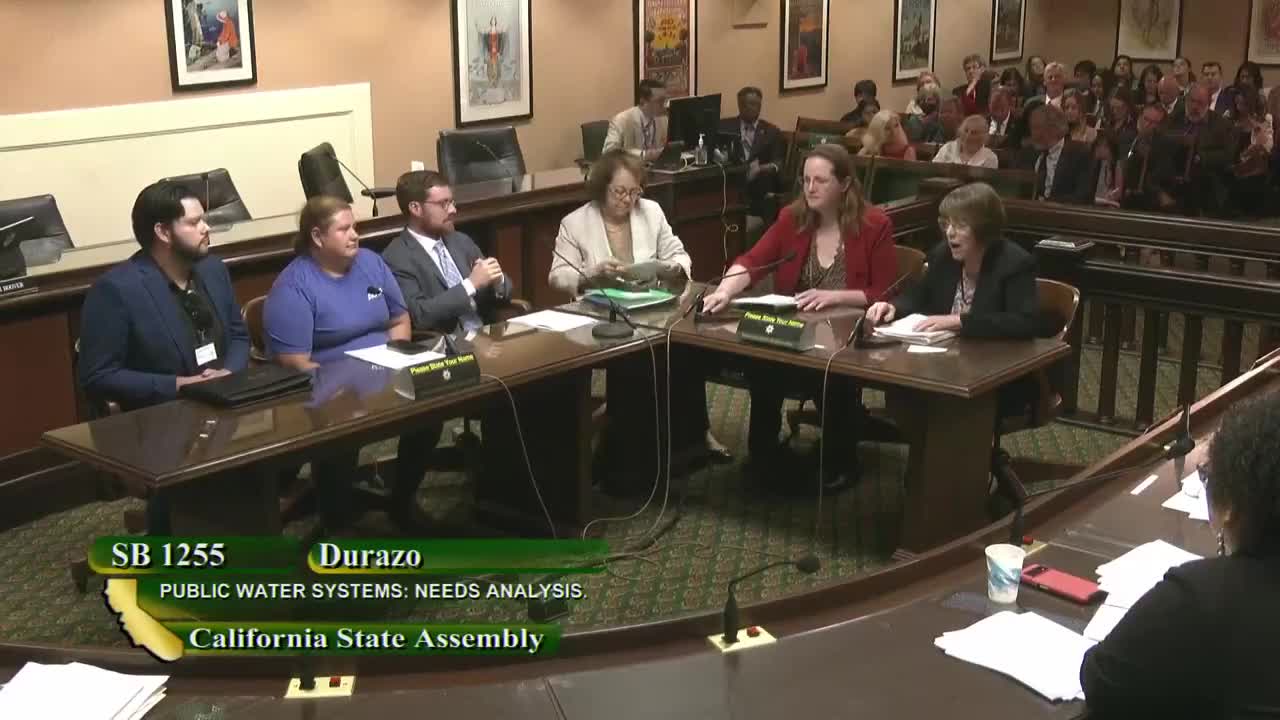 35MIN
Assembly Standing Committee on Environmental Safety and Toxic Materials
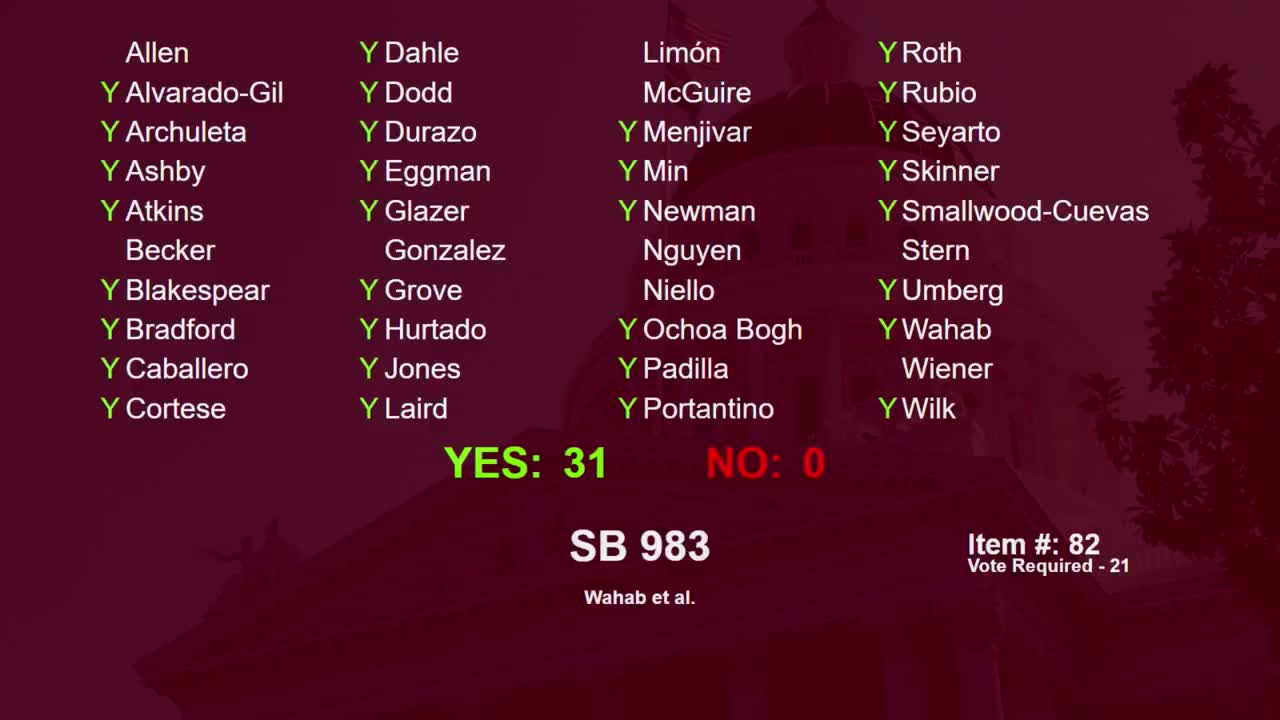 2MIN
Senate Floor
 16MIN
Senate Standing Committee on Judiciary
 25MIN
Senate Standing Committee on Environmental Quality
Bill Author

Bill Co-Author(s):