SB 1088: Office of Emergency Services: state matching funds: water system infrastructure improvements.
- Session Year: 2023-2024
- House: Senate
- Latest Version Date: 2024-06-18
Current Status:
Failed
(2024-08-15: August 15 hearing: Held in committee and under submission.)
Introduced
In Committee
First Chamber
In Committee
Second Chamber
Enacted
Existing law establishes, within the office of the Governor, the Office of Emergency Services (OES), under the direction of the Director of Emergency Services. Existing law charges the OES with coordinating various emergency activities within the state. The California Emergency Services Act, contingent upon an appropriation by the Legislature, requires the OES to enter into a joint powers agreement pursuant to the Joint Exercise of Powers Act with the Department of Forestry and Fire Protection to develop and administer a comprehensive wildfire mitigation program relating to structure hardening and retrofitting and prescribed fuel modification activities. Existing law authorizes the joint powers authority to establish financial assistance limits and matching funding or other recipient contribution requirements for the program, as provided.
This bill would, contingent on funding being appropriated pursuant to a bond act, as specified, establish the Rural and Small Community Fire Resilience Water Infrastructure for Community Wildfire Protection Program within the OES for the distribution of state matching funds to communities within the Wildland Urban Interface in designated high fire hazard severity zones or very high fire hazard severity zones to improve water system infrastructure, as prescribed. The bill would require the OES to work in coordination with the Department of Water Resources, the State Water Resources Control Board, the Office of the State Fire Marshal, and other state entities as the office determines to be appropriate, to achieve the purposes of the program. The bill would require the office to develop criteria and a scoring methodology to prioritize the distribution of state matching funds provided under the program to rural communities based upon specified criteria.
Existing law establishes, within the office of the Governor, the Office of Emergency Services (OES), under the direction of the Director of Emergency Services. Existing law charges the OES with coordinating various emergency activities within the state. The California Emergency Services Act, contingent upon an appropriation by the Legislature, requires the OES to enter into a joint powers agreement pursuant to the Joint Exercise of Powers Act with the Department of Forestry and Fire Protection to develop and administer a comprehensive wildfire mitigation program relating to structure hardening and retrofitting and prescribed fuel modification activities. Existing law authorizes the joint powers authority to establish financial assistance limits and matching funding or other recipient contribution requirements for the program, as provided.
This bill would state the intent of the Legislature to establish a Rural and Small Community Fire Resilience Program within the office to work in coordination with the Department of Water Resources, the State Water Resources Control Board, and other appropriate state entities to develop a program for the distribution of state matching funds to communities within the Wildland Urban Interface, or WUI, to improve water system infrastructure, as prescribed.This bill would, contingent on funding being appropriated pursuant to a bond act, as specified, establish the Rural and Small Community Fire Resilience Program within the OES for the distribution of state matching funds to communities within the Wildland Urban Interface to improve water system infrastructure, as prescribed. The bill would require the OES to work in coordination with the Department of Water Resources, the State Water Resources Control Board, the Office of the State Fire Marshal, and other state entities as the office determines to be appropriate, to achieve the purposes of the program.
Existing law establishes, within the office of the Governor, the Office of Emergency Services (OES), under the direction of the Director of Emergency Services. Existing law charges the OES with coordinating various emergency activities within the state. The California Emergency Services Act, contingent upon an appropriation by the Legislature, requires the OES to enter into a joint powers agreement pursuant to the Joint Exercise of Powers Act with the Department of Forestry and Fire Protection to develop and administer a comprehensive wildfire mitigation program relating to structure hardening and retrofitting and prescribed fuel modification activities. Existing law authorizes the joint powers authority to establish financial assistance limits and matching funding or other recipient contribution requirements for the program, as provided.
This bill would state the intent of the Legislature to establish a Rural and Small Community Fire Resilience Program within the office to work in coordination with the Department of Water Resources, the State Water Resources Control Board, and other appropriate state entities to develop a program for the distribution of state matching funds to communities within the Wildland Urban Interface, or WUI, to improve water system infrastructure, as prescribed.
The Legislature finds and declares all of the following:
(a)Californias rural landscapes and communities have been ground zero for large-scale environmental and economic devastation during the past decades by virtue of the Angora, Caldor, Camp, August Complex, and Dixie fires.
(b)Aging water infrastructures, combined with insufficient resources to prepare for adequate wildfire response, have left many rural communities at high risk for future unchecked fire activity.
(c)More than 2,000,000 California households, approximately one in four residential structures in California, are located within or in wildfire movement proximity to high or very high fire hazard severity zones identified on maps created by the Department of Forestry and Fire Protection.
(c)(d)Postfire costs associated with the destruction inflicted upon communities such as Grizzly Flats, Paradise, and Greenville have been in the tens of billions of dollars.
(d)(e)Congress has taken affirmative fiscal action by budgeting for funding last year and is poised to repeat that action this year, as evidenced in House Report 117-400, to invest in fire prevention activities in the Tahoe Basin and elsewhere through projects such as water delivery system improvements for expanded water flow and fire hydrant installation.
(e)(f)While California is taking the necessary actions to mitigate the intensity and frequency of fire in the rural parts of the state, local governments need state support for necessary water infrastructure investments to prepare for fire suppression capacity.
SEC. 2.Section 8586.10 is added to the Government Code, immediately following Section 8586.9, to read:8586.10.(a)As used in this section:
(1)Office means the Office of Emergency Services.
(2)Rural and Small Community Fire Resilience Water Infrastructure for Community Wildfire Protection Program or program means the Rural and Small Community Fire Resilience Water Infrastructure for Community Wildfire Protection Program established in subdivision (b).
(b)The Rural and Small Community Fire Resilience Water Infrastructure for Community Wildfire Protection Program is hereby established within the office for the distribution of state matching funds to communities within the Wildland Urban Interface in high fire hazard severity zones or very high fire hazard severity zones designated by the State Fire Marshal pursuant to Article 9 (commencing with Section 4201) of Chapter 1 of Part 2 of Division 4 of the Public Resources Code or by a local agency pursuant to Chapter 6.8 (commencing with Section 51175) of Part 1 of Division 1 of Title 5, to improve water system infrastructure infrastructure, for purposes consistent with the services described in Section 53750.5, as follows:
(1)Upgrading and upsizing waterlines.
(2)Installing additional fire hydrants of connected to water systems.
(3)Enhancing water system delivery and distribution capacity to ensure adequate water flow for community fire prevention and fire suppression activities.
(4)Creating interconnections between water systems for the purpose of improving water delivery and distribution capacity for fire suppression activities.
(c)The office shall work in coordination with the Department of Water Resources, the State Water Resources Control Board, the Office of the State Fire Marshal, and other state entities as the office determines to be appropriate, to achieve the purposes of the program.
(d)The office shall develop criteria and a scoring methodology to prioritize the distribution of state matching funds provided under the program to rural communities based upon criteria that include, but are not limited to, both of the following:
(1)Community water systems that maintain 15,000 water service connections or fewer.
(2)Water infrastructure for fire suppression improvements and projects that are identified in, and consistent with one or more of, the following plans:
(A)A community wildfire protection plan, a California Fire Safe Council action plan, a National Fire Protection Associations Firewise USA Community Wildfire Risk Assessment, a local hazard mitigation plan, or other local plan that addresses the hazards and risks from wildfire.
(B)A community water system master plan, hydraulic modeling, or professional engineering reports showing the need for and impact of proposed improvements.
SEC. 3.The operation of this act is contingent upon funding being appropriated by the Legislature to the Office of Emergency Services pursuant to a bond act approved by the voters on or after the statewide general election scheduled for November 5, 2024, including, but not limited to, a climate or natural resources bond, for purposes consistent with the Rural and Small Community Fire Resilience Water Infrastructure for Community Wildfire Protection Program authorized in Section 2 of this act.
The Legislature finds and declares all of the following:
(a)Californias rural landscapes and communities have been ground zero for large-scale environmental and economic devastation during the past decades by virtue of the Angora, Caldor, Camp, August Complex, and Dixie fires.
(b)Aging water infrastructures, combined with insufficient resources to prepare for adequate wildfire response, have left many rural communities at high risk for future unchecked fire activity.
(c)Postfire costs associated with the destruction inflicted upon communities such as Grizzly Flats, Paradise, and Greenville have been in the tens of billions of dollars.
(d)Congress has taken affirmative fiscal action by budgeting for funding last year and is poised to repeat that action this year, as evidenced in House Report 117-400, to invest in fire prevention activities in the Tahoe Basin and elsewhere through projects such as water delivery system improvements for expanded water flow and fire hydrant installation.
(e)While California is taking the necessary actions to mitigate the intensity and frequency of fire in the rural parts of the state, local governments need state support for necessary water infrastructure investments to prepare for fire suppression capacity.
SEC. 2.It is the intent of the Legislature to establish a Rural and Small Community Fire Resilience Program within the Office of Emergency Services to work in coordination with the Department of Water Resources, the State Water Resources Control Board, and other appropriate state entities to develop a program for the distribution of state matching funds to communities within the Wildland Urban Interface, or WUI, to improve water system infrastructure, including upgrading and upsizing waterlines, installing additional fire hydrants of water systems, and enhancing water system delivery to ensure adequate water flow for fire prevention and suppression activities.SEC. 2.Section 8586.10 is added to the Government Code, immediately following Section 8586.9, to read:8586.10.(a)As used in this section:
(1)Office means the Office of Emergency Services.
(2)Rural and Small Community Fire Resilience Program or program means the Rural and Small Community Fire Resilience Program established in subdivision (b).
(b)The Rural and Small Community Fire Resilience Program is hereby established within the office for the distribution of state matching funds to communities within the Wildland Urban Interface to improve water system infrastructure as follows:
(1)Upgrading and upsizing waterlines.
(2)Installing additional fire hydrants of water systems.
(3)Enhancing water system delivery to ensure adequate water flow for fire prevention and suppression activities.
(c)The office shall work in coordination with the Department of Water Resources, the State Water Resources Control Board, the Office of the State Fire Marshal, and other state entities as the office determines to be appropriate, to achieve the purposes of the program.
SEC. 3.The operation of this act is contingent upon funding being appropriated by the Legislature to the Office of Emergency Services pursuant to a bond act approved by the voters on or after the statewide general election scheduled for November 5, 2024, including, but not limited to, a climate or natural resources bond, for purposes consistent with the Rural and Small Community Fire Resilience Program authorized in Section 2 of this act.
The Legislature finds and declares all of the following:
(a)Californias rural landscapes and communities have been ground zero for large-scale environmental and economic devastation during the past decades by virtue of the Angora, Caldor, Camp, August Complex, and Dixie fires.
(b)Aging water infrastructures, combined with insufficient resources to prepare for adequate wildfire response, have left many rural communities at high risk for future unchecked fire activity.
(c)Postfire costs associated with the destruction inflicted upon communities such as Grizzly Flats, Paradise, and Greenville have been in the tens of billions of dollars.
(d)Congress has taken affirmative fiscal action by budgeting for funding last year and is poised to repeat that action this year, as evidenced in House Report 117-400, to invest in fire prevention activities in the Tahoe Basin and elsewhere through projects such as water delivery system improvements for expanded water flow and fire hydrant installation.
(e)While California is taking the necessary actions to mitigate the intensity and frequency of fire in the rural parts of the state, local governments need state support for necessary water infrastructure investments to prepare for fire suppression capacity.
SEC. 2.It is the intent of the Legislature to establish a Rural and Small Community Fire Resilience Program within the Office of Emergency Services to work in coordination with the Department of Water Resources, the State Water Resources Control Board, and other appropriate state entities to develop a program for the distribution of state matching funds to communities within the Wildland Urban Interface, or WUI, to improve water system infrastructure, including upgrading and upsizing waterlines, installing additional fire hydrants of water systems, and enhancing water system delivery to ensure adequate water flow for fire prevention and suppression activities.
|
Date
|
Status
|
|---|---|
| Aug 15, 2024 | August 15 hearing: Held in committee and under submission. |
| Aug 7, 2024 | August 7 set for first hearing. Placed on suspense file. |
| Jun 25, 2024 | From committee: Do pass and re-refer to Com. on APPR. (Ayes 8. Noes 0.) (June 24). Re-referred to Com. on APPR. |
| Jun 18, 2024 | From committee with author's amendments. Read second time and amended. Re-referred to Com. on E.M. |
| Jun 3, 2024 | Referred to Com. on E.M. |
| May 24, 2024 | In Assembly. Read first time. Held at Desk. |
| May 23, 2024 | Read third time. Passed. (Ayes 37. Noes 0. Page 4179.) Ordered to the Assembly. |
| May 20, 2024 | Ordered to special consent calendar. |
| May 16, 2024 | Read second time. Ordered to third reading. |
| May 16, 2024 | From committee: Do pass. (Ayes 7. Noes 0. Page 3971.) (May 16). |
| May 10, 2024 | Set for hearing May 16. |
| May 6, 2024 | May 6 hearing: Placed on APPR suspense file. |
| Apr 26, 2024 | Set for hearing May 6. |
| Apr 23, 2024 | From committee: Do pass and re-refer to Com. on APPR with recommendation: To consent calendar. (Ayes 11. Noes 0. Page 3728.) (April 23). Re-referred to Com. on APPR. |
| Apr 11, 2024 | Set for hearing April 23. |
| Apr 9, 2024 | From committee: Do pass and re-refer to Com. on N.R. & W. (Ayes 14. Noes 0. Page 3528.) (April 9). Re-referred to Com. on N.R. & W. |
| Apr 4, 2024 | Set for hearing April 9. |
| Apr 3, 2024 | Re-referred to Coms. on G.O. and N.R. & W. |
| Mar 18, 2024 | From committee with author's amendments. Read second time and amended. Re-referred to Com. on RLS. |
| Feb 21, 2024 | Referred to Com. on RLS. |
| Feb 13, 2024 | From printer. May be acted upon on or after March 14. |
| Feb 12, 2024 | Introduced. Read first time. To Com. on RLS. for assignment. To print. |
|
Date
|
Description
|
Location
|
Votes
|
|
|---|---|---|---|---|
| Jun 24, 2024 | Do pass and be re-referred to the Committee on [Appropriations] | Assembly Standing Committee on Emergency Management |
Passed |
|
| May 23, 2024 | Special Consent SB1088 Alvarado-Gil | Senate Floor |
Passed |
|
| May 16, 2024 | Do pass | Senate Standing Committee on Appropriations |
Passed |
|
| May 6, 2024 | Placed on suspense file | Senate Standing Committee on Appropriations |
Passed |
|
| Apr 23, 2024 | Do pass, but first be re-referred to the Committee on [Appropriations] with the recommendation: To Consent Calendar | Senate Standing Committee on Natural Resources and Water |
Passed |
|
| Apr 9, 2024 | Do pass, but first be re-referred to the Committee on [Natural Resources and Water] | Senate Standing Committee on Governmental Organization |
Passed |
This list shows positions taken on this bill by organizations on the date displayed, which is linked to the original source.
Positions by individuals are not included.
|
Organization
|
Position
|
Date
|
|---|---|---|
| Bear Yuba Land Trust | ** Support | |
| California Tahoe Alliance | ** Support | |
| County of Nevada | ** Support | |
| County Of Placer | ** Support | |
| County of Santa Cruz | * Support | Jun 25, 2024 |
| CR Business Council | * Support | Jun 24, 2024 |
| CR Business Council | ** Support | Jun 25, 2024 |
| Eastern Sierra Land Trust | ** Support | |
| Feather River Land Trust | ** Support | |
| Mountain Counties Water Resources Association | ** Support | |
| North Tahoe Public Utility District | * Support | Jun 24, 2024 |
| Placer Land Trust | ** Support | |
| Sierra Business Council | ** Support | |
| Sierra Consortium | ** Support | |
| Sierra County Land Trust | ** Support | |
| Sierra Foothill Conservancy | ** Support | |
| Sierra Nevada Alliance | ** Support | |
| South Tahoe Public Utility District | ** Support | |
| Tahoe City Public Utility District | ** Support | |
| Tahoe Water for Fire Suppression Partnership | ** Support | |
| Truckee Donner Land Trust | ** Support |
Date of Hearing: August 7, 2024
ASSEMBLY COMMITTEE ON APPROPRIATIONS
Buffy Wicks, Chair
SBPCA Bill Id:SB 1088
Author:(Alvarado-Gil) – As Amended Ver:June 18, 2024
Policy Committee: | Emergency Management | Vote: | 8 - 0 |
|
| ||
|
|
Urgency: No State Mandated Local Program: No Reimbursable: No
SUMMARY:
This bill establishes the Rural Water Infrastructure for Community Wildfire Protection Program (Program) within the Office of Emergency Services (OES).
Specifically, this bill:
- Establishes, contingent on a bond act appropriation, the Program within OES to distribute state matching funds to communities within the Wildland Urban Interface (WUI) in high fire hazard severity zones for water system infrastructure improvement. OES must develop a scoring methodology to prioritize distribution of funds to rural communities meeting certain criteria.
- Requires OES to coordinate with the Department of Water Resources (DWR), State Water Resources Control Board (SWRCB), Office of the State Fire Marshal (SFM), and other state entities to achieve Program purposes.
- Provides that operation of the Program is contingent upon funding being appropriated by the Legislature to OES pursuant to a bond act approved by the voters on or after the November 5, 2024, election.
FISCAL EFFECT:
- Ongoing cost pressures of approximately $621,000 to OES establish the Program, coordinate with other state agencies, and develop specified criteria and scoring methodology (bond funds). Additionally, cost pressures of an unknown amount, up to $135 million, to appropriate funding for the Program instead of other eligible grant program projects (bond funds).
SB 867 (Allen), Chapter 83, Statutes of 2024, enacts, if approved by voters at the November 5, 2024, election, the Safe Drinking Water, Wildfire Prevention, Drought Preparedness, and Clean Air Bond Act of 2024. SB 867 requires $135 million be available, upon appropriation by the Legislature, to OES for a wildfire mitigation grant program. Eligible grant program projects include grants to local agencies for water delivery system improvements for purposes of fire suppression, for communities in very high or high fire hazard areas. Thus, the author contends the Program would be an eligible use of bond funds.
- Costs of an unknown amount to SWRCB to issue permits for water system infrastructure improvements and conduct related oversight and enforcement (Safe Drinking Water Account and Waste Discharge Permit Fund). SWRCB estimates that for every $25 million in total grant funds appropriated, assuming a per grant amount of less than $5 million, SWRCB would incur costs of approximately $900,000 to $1.1 million. SWRCB notes that smaller maximum grant amounts result in a proportionately higher number of grants per appropriation, thus increasing staff resources needed to issue a greater number of permits and engage in oversight activities.
- Minor and absorbable costs to DWR, SWRCB, and SFM to coordinate with OES.
COMMENTS:
- Purpose. According to the author:
Robust water infrastructure for fire suppression plays a key role in protecting these neighborhoods, especially in the WUI. California’s rural communities have been ground zero for large-scale environmental and economic devastation during the past decade due to wildfires. Aging infrastructure, combined with insufficient resources to prepare for adequate wildfire response, has left many rural communities at high risk for further unchecked fire activity. Water systems in these communities are incapable of providing water flowrates and capacities to meet firefighting requirements to protect communities during catastrophic wildfire events.
This bill is sponsored by the Tahoe Water for Fire Suppression Partnership and supported by regional utility districts and associations, the California Special Districts Association, and Union of Concerned Scientists.
- Water Infrastructure in Rural Communities. A 2021 report by DWR noted that most water systems under 1,000 connections have difficulty ensuring water supply during natural disaster events, regardless of emergency planning efforts, due to such systems’ inherent lack of economies of scale to finance costly, needed infrastructure improvements. According to the Department of Forestry and Fire Protection (CAL FIRE), water delivery infrastructure poses a challenge for some communities in CAL FIRE service areas, as some hydrant systems cannot support fire operations at the required flow rate and volume. Additionally, using an older hydrant has caused water pipes to collapse, which can cut off water delivery to a neighborhood in the aftermath of a fire. This bill establishes, upon appropriation, a grant program administered by OES to distribute state matching funds to WUI communities in high fire hazard severity zones to support water system infrastructure improvement.
Analysis Prepared by: Irene Ho / APPR. / (916) 319-2081
Date of Hearing: June 24, 2024
ASSEMBLY COMMITTEE ON EMERGENCY MANAGEMENT
Freddie Rodriguez, Chair
SBPCA Bill Id:SB 1088
Author:(Alvarado-Gil) – As Amended Ver:June 18, 2024
SENATE VOTE: 37-0
SUBJECT: Office of Emergency Services: state matching funds: water system infrastructure improvements
SUMMARY: Would, contingent on funding being appropriated pursuant to a bond act, establish the Rural Water Infrastructure for Community Wildfire Protection Program within the California Office of Emergency Services (Cal OES) for the distribution of state matching funds to communities within the Wildland Urban Interface in designated high fire severity zones or very high fire hazard severity zones to improve water system infrastructure. Specifically, this bill:
- Establishes the Rural Water Infrastructure for Community Wildfire Protection Program within Cal OES for the distribution of state matching funds to communities within the Wildland Urban Interface in designated high fire severity zones or very high fire hazard severity zones to improve water system infrastructure by the following:
(a) upgrading and upsizing water lines;
(b) installing additional fire hydrants connected to water systems;
(c) enhancing water system delivery and distribution capacity to ensure adequate water flow for community fire prevention and fire suppression activities; and/or
(d) creating interconnections between water systems for the purpose of improving water delivery and distribution capacity for fire suppression activities.
- Requires funds distributed to communities under the Rural Water Infrastructure for Community Wildfire Protection Program be consistent with Government Code Section 53750.5, which describes the distinctions between the fire service and water service with respect to hydrants, as specified.
- Requires Cal OES to work in coordination with the Department of Water Resources (DWR), the State Water Resources Control Board, the Office of the State Fire Marshal, and others as specified for the purposes of the Rural and Small Community Fire Resilience Program.
- Provides the establishment of the Rural Water Infrastructure for Community Wildfire Protection Program is contingent upon funding being appropriated by the Legislature to Cal OES pursuant to a bond act approved by the voters on or after the statewide general election scheduled for November 5, 2024, as specified.
- Makes legislative findings and declarations related to devastating fires in rural landscapes and communities, the vulnerability of aging water infrastructure to fires in rural communities, the vast number of California households located in high or very high fire hazard severity zones, postfire costs in the tens of billions of dollars inflicted upon the communities of Grizzly Flats, Paradise, and Greenville, recent Congressional action to improve water delivery system improvements, and how local governments need state support for necessary water infrastructure investments to prepare for fire suppression capacity.
EXISTING LAW:
- Establishes the California Office of Emergency Services (Cal OES) within the office of the Governor and makes Cal OES responsible for the state’s emergency and disaster response services for natural, technological, or manmade disasters and emergencies. (Government Code Section 8550)
- Authorizes the Governor to proclaim a state of emergency and local officials and local governments to proclaim a local emergency, when specified conditions of disaster or extreme peril to the safety of persons and property exist, and authorizes the Governor or the appropriate local government to exercise certain powers in response to that emergency. (Government Code Section 8558)
- Establishes DWR within the Natural Resources Agency and sets forth its powers and duties relating to water resources (Water Code Section 120)
- Requires the State Fire Marshal to classify lands within state responsibility areas into fire hazard severity zones and requires that local agencies also designate fire hazard severity zones in their jurisdiction after receiving recommendations from the State Fire Marshal. These classifications shall be based on fuel loading, slope, fire weather, and other relevant factors (Public Resource Code Section 4204, Government Code Sections 51178)
- Directs a city or county, upon the next revision of the housing element of a general plan on or after January 1, 2014, to include a set of feasible implementation measures designed to carry out specified goals, policies, and objectives, including designing adequate infrastructure if a new development is located in a state responsibility area or in a very high fire hazard severity zone, including water supplies for structural fire suppression (Government Code Section 65302).
- Defines “hydrants” as hydrants and other infrastructure used to distribute water that aids in the protection of property from fire, as specified, and makes legislative finding and declarations of existing laws describing the purposes of hydrants and how hydrants are used by fire and water services. (Government Code Section 53750.5)
FISCAL EFFECT: According to the Senate Committee on Appropriations, “Cal OES anticipates ongoing costs of approximately $621,000 for administrative workload (General Fund or bond fund). The Office of the State Fire Marshal (SFM) does not anticipate a fiscal impact.
Unknown fiscal impact to the Department of Water Resources (DWR) and State Water Resources Control Board (SWRCB). To the extent that DWR and the SWRCB have extensive roles in coordinating with OES to distribute funds to communities in the WUI for water system infrastructure improvement, they may have costs. Unknown likely significant General Fund and bond fund cost pressures, to the extent that bond funds are not appropriated for the purposes outlined in this bill, or if the bond funds appropriated are insufficient to support the program.”
COMMENTS:
Equity impact: Committee staff notes disasters have a disproportionate impact on vulnerable individuals and communities. Efforts to mitigate risks and hazards, such as wildfires, may make these individuals and communities more resilient.
Purpose of the bill: According to the author, “SB 1088 would establish the Rural and Small Community Fire Resilience Program within the Governor’s Office of Emergency Services (Cal OES) to work in coordination with the Department of Water Resources and the State Water Resources Control Board to develop a program for the distribution of state matching funds to communities within the Wildland Urban Interface (WUI) to improve water system infrastructure. The WUI is the zone of transition between unoccupied land and human development. It is the line, area, or zone where structures and other human development meet or intermingle with undeveloped wildland or vegetative fuels.”
Additionally, the author adds, “Robust water infrastructure for fire suppression plays a key role in protecting these neighborhoods, especially in the WUI. California’s rural communities have been ground zero for large-scale environmental and economic devastation during the past decade due to wildfires. Aging infrastructure, combined with insufficient resources to prepare for adequate wildfire response, has left many rural communities at high risk for further unchecked fire activity. Water systems in these communities are incapable of providing water flowrates and capacities to meet firefighting requirements to protect communities during catastrophic wildfire events. SB 1088 would provide more state matching funds for wildfire defense and protect rural communities by establishing the Rural and Small Community Fire Resilience Program within Cal OES for the purpose of improving water infrastructure.”
Background
Climate change and wildfires in California: Climate change, especially rising temperatures and periodic droughts, have made substantial contributions to the area burned in wildfires in California. According to most climatologists, the planet is starting to experience shifts in climate patterns and an increased frequency of extreme weather events. Wildfires that threaten thousands of homes are now an annual occurrence, as autumn days with severe fire-weather prone weather have more than doubled in California since the 1980s. Over the last four decades, the wildfires have increased in size and intensity with five of the six largest fires in California history occurring in 2020 alone. California’s Fourth Climate Change Assessment projects that by 2100, if climate change continues on this trajectory, the frequency of extreme wildfires would increase, and the average area burned statewide would increase by 77 percent.
Wildfires are a severe and growing threat to lives, property, and infrastructure in California. The confluence of a changing climate, urbanization, and constraints on forest management has added urgency to the need to enhance our strategy to address this threat. The 2021 and 2022 Budget Acts committed $2.8 billion over four years to continue strengthening forest and wildfire resilience statewide to mitigate the ongoing impact of climate change on California’s wildlands continues to drive critically dry fuel conditions and longer, more severe fire seasons. In Cal FIRE’s 2020 Fire Siege Report, the Director states, “at the end of 2020, we closed the book on, arguably, the worst fire year ever experienced on the west coast, and specifically in California. Since 2015, the term “unprecedented” has been used year over year as conditions have worsened, and the operational reality of a changing climate sets in. In California, the 2020 Fire Siege claimed the lives of 28 civilians and three firefighters, destroyed 9,248 structures and consumed 4.2 million acres.
Small water suppliers and rural communities: Pursuant to AB 1668 (Friedman, Chapter 15, Statutes of 2018), DWR issued the Small Water Systems and Rural Communities Drought and Water Shortage Contingency Planning and Risk Assessment in 2021. This report, released in two parts, identified small water systems and rural communities at risk of drought and water shortage vulnerability (Part II) and made recommendations for improving drought contingency planning for those areas (Part I).
DWR examined the relative risk of drought and water shortage for 2,419 small water suppliers in the report. The results show that a vast majority of the state’s counties (47 of the 58 counties) have small water suppliers in the top 10% of risk scores (240 suppliers) for water shortage. Of those in the top 10%, over half (61% or 149 suppliers) are located in high or very high fire hazard severity zones. In other words, there are many small and rural communities across the state that are at high risk of running out of water during a drought or other disaster. Also, many communities located in areas with a high risk for wildfire are at high risk of water shortage, which could impact their capacity to suppress fires when they occur.
The report recommended that the state support small community water systems to install additional infrastructure to improve drought and water shortage preparedness and response. The report noted that most water systems under 1,000 connections have difficulty ensuring water supplies during natural disaster events, regardless of the development of planning materials, due to their inherent lack of economies of scale to finance needed infrastructure improvements and the high cost of emergency response activities. The minimum infrastructure resiliency measures to help ensure sustainable water supplies include, among others, having source and distribution system capacity to meet wildfire flow requirements.
According to CAL FIRE, water delivery infrastructure does pose a challenge for some of the communities in CAL FIRE service areas, as some hydrant systems cannot support fire operations at the required flow rate and volume. In some cases, using an older hydrant has caused water pipes to collapse, which can cutoff water delivery to that specific neighborhood in the aftermath of an incident.
Status of climate resilience bonds: Several bond acts are currently before the Legislature that would provide additional funding for water infrastructure used for fire suppression, if approved by voters. SB 867 (Allen) would authorize the state to issue $15.5 billion in general obligation bonds that would include funding for wildfire risk reduction, pre-hazard mitigation, safe and clean drinking water, and infrastructure upgrades, and similarly AB 1567 (Garcia) proposes nearly $16 billion in general obligation bonds for, among other things, safe drinking water, wildfire prevention, and pre-hazard mitigation. As noted above, the implantation of this bill is contingent upon the funding being appropriated by the Legislature to Cal OES pursuant to a bond act approved by the voters on or after the statewide general election scheduled for November 5, 2024, as specified.
Arguments in support: The Tahoe Water for Fire Suppression Partnership writes in support, “This bill addresses a funding gap for water infrastructure projects that improve wildfire resiliency in rural communities. Water infrastructure for fire suppression has historically been overlooked as a critical component that can protect communities in the Wildland Urban Interface (WUI) from catastrophic wildfires.
This bill will develop a program for the distribution of state matching funds to WUI communities located in designated “High” and “Very High” Fire Hazard Severity Zones (as classified by the State Fire Marshal), to improve and upgrade rural water systems infrastructure and accelerate the installation of resilient water infrastructure to address community wildfire suppression needs.”
The California Tahoe Alliance adds, “The Caldor fire demonstrated the need for water infrastructure capable of supporting fire hydrants. The Tahoe Region’s multijurisdictional approach to prioritizing and implementing fuel thinning projects played a key role in helping firefighters protect structures within the Tahoe Basin during the Caldor Fire. Another key component of this success was the availability of adequate water supply to maintain defensible lines. However, significant portions of the Lake Tahoe Basin have water systems incapable of providing water capacities to meet firefighting requirements. SB 1088 recognizes that adequate water infrastructure is critical in supporting community wildfire preparedness and fire resilience.”
Related/Prior Legislation: AB 1567 (Garcia, of this Session) would enact a new bond act, which if approved by the voters, would authorize the issuance of nearly $16 billion in general obligation bonds for various purposes, including safe drinking water, wildfire prevention, and drought preparation. (Pending before the Senate Natural Resources and Water Committee)
SB 1014 (Dodd, of this Session) requires the Deputy Director of Community Wildfire Preparedness and Mitigation to prepare a Wildfire Risk Mitigation Planning Framework, a Wildfire Risk Baseline and Forecast, and a Wildfire Mitigation Scenarios Report, as specified. (Pending in the Assembly Committee on Appropriations)
SB 867 (Allen, of this Session) authorizes a $15.5 billion climate resilience bond to be placed before voters at an unspecified election, as specified. (Pending in the Assembly Natural Resources Committee)
SB 470 (Alvarado-Gil, of this Session) would have codified the Urban Water Community Drought Relief program and the Small Community Drought Relief program at DWR and would have authorized the programs, upon appropriation, to fund projects that provide benefits in addition to drought relief including projects that reduce the risk of wildfires for communities through water delivery system improvements for fire suppression purposes in high- and very high-fire hazard severity zones, as specified. (Vetoed by Governor Newsom)
AB 2387 (Garcia, of the 2021-22 Session) would have enacted a new bond act, which if approved by the voters, would have authorized the issuance of over $7 billion in bonds for various purposes, including $300 million for a pre-hazard mitigation grant program that may fund, among other eligible project types, grants for water delivery system improvements for fire suppression purposes for specified communities. (Held in Assembly Appropriations Committee)
REGISTERED SUPPORT / OPPOSITION:
Support
Tahoe Water for Fire Suppression Partnership (sponsor)
California Special Districts Association
California Tahoe Alliance
County of Santa Cruz
Mountain Counties Water Resources Association
North Tahoe Public Utility District
Sierra Consortium
South Tahoe Public Utility District
Tahoe City Public Utility District
Union of Concerned Scientists
Opposition
None on file.
Analysis Prepared by: Mike Dayton / E.M. / (916) 319-3802
SENATE RULES COMMITTEE Office of Senate Floor Analyses (916) 651-1520 Fax: (916) 327-4478 | SB 1088 |
THIRD READING
Bill No: SB 1088
Author: Alvarado-Gil (D)
Amended: 3/18/24
Vote: 21
SENATE GOVERNMENTAL ORG. COMMITTEE: 14-0, 4/9/24
AYES: Dodd, Wilk, Alvarado-Gil, Archuleta, Bradford, Glazer, Jones, Nguyen, Ochoa Bogh, Padilla, Portantino, Rubio, Seyarto, Smallwood-Cuevas
NO VOTE RECORDED: Ashby, Roth
SENATE NATURAL RES. & WATER COMMITTEE: 11-0, 4/23/24
AYES: Min, Seyarto, Allen, Dahle, Eggman, Grove, Hurtado, Laird, Limón, Menjivar, Padilla
SENATE APPROPRIATIONS COMMITTEE: 7-0, 5/16/24
AYES: Caballero, Jones, Ashby, Becker, Bradford, Seyarto, Wahab
SUBJECT: Office of Emergency Services: state matching funds: water system infrastructure improvements
SOURCE: Tahoe Water for Fire Suppression Partnership
DIGEST:
This bill establishes, contingent upon funding appropriated pursuant to a future bond act, the Rural and Small Community Fire Resilience Program, within the Office of Emergency Services (OES), for the distribution of state matching funds to communities within the Wildland Urban Interface (WUI) to improve water system infrastructure, as specified.
ANALYSIS:
Existing law:
- Establishes, within the office of the Governor, OES to coordinate various emergency activities within the state.
- The Emergency Services Act (ESA), contingent upon an appropriation by the Legislature, requires OES to enter into a joint powers agreement (JPA) with the Department of Forestry and Fire Protection (Cal FIRE) to develop and administer a comprehensive wildfire mitigation program relating to structure hardening and retrofitting, and prescribed fuel modification activities.
- Authorizes the above JPA to establish financial assistance limits and matching funding or other recipient contribution requirements for the program, as specified.
This bill:
- Establishes the Rural and Small Community Fire Resilience Program, within OES, for the distribution of state matching funds to communities within the WUI to improve water system infrastructure as follows:
- Upgrading and upsizing waterlines.
- Installing additional fire hydrants of water systems.
- Enhancing water system delivery to ensure adequate water flow for fire prevention and suppression activities.
- Requires OES to work in coordination with the Department of Water Resources (DWR), the State Water Resources Control Board, the Office of the State Fire Marshal, and other state entities as the office determines to be appropriate, to achieve the purposes of the program.
- Provides that the operation of this act is contingent upon funding being appropriated by the Legislature to OES pursuant to a bond act approved by the voters on or after the statewide general election scheduled for November 5, 2024, including, but not limited to, a climate or natural resources bond, for purposes consistent with the Rural and Small Community Fire Resilience Program.
- Includes related legislative findings and declarations.
Background
Author Statement. According to the author’s office, “SB 1088 would establish the Rural and Small Community Fire Resilience Program within [OES] to work in coordination with the Department of Water Resources and the State Water Resources Control Board to develop a program for the distribution of state matching funds to communities within the Wildland Urban Interface (WUI) to improve water system infrastructure. The WUI is the zone of transition between unoccupied land and human development. It is the line, area, or zone where structures and other human development meet or intermingle with undeveloped wildland or vegetative fuels.”
Further, “robust water infrastructure for fire suppression plays a key role in protecting these neighborhoods, especially in the WUI. California’s rural communities have been ground zero for large-scale environmental and economic devastation during the past decade due to wildfires. Aging infrastructure, combined with insufficient resources to prepare for adequate wildfire response, has left many rural communities at high risk for further unchecked fire activity. Water systems in these communities are incapable of providing water flowrates and capacities to meet firefighting requirements to protect communities during catastrophic wildfire events. SB 1088 would provide more state matching funds for wildfire defense and protect rural communities by establishing the Rural and Small Community Fire Resilience Program within OES for the purpose of improving water infrastructure.”
California’s Wildfire Reality. The State of California has the main responsibility for wildfire response activities on about one-third of California’s land area. With over 39 million residents, the State of California is the most populous state in the nation and has the third largest land area among the states (163,695 square miles). OES serves as the state’s leadership hub during all major emergencies and disasters. This includes responding, directing, and coordinating state and federal resources and mutual aid assets across all regions to support the diverse communities across the state.
Cal FIRE works to safeguard California through fire prevention and protection, emergency response, and stewardship of natural resource systems. Wildfire response activities help limit the spread of large wildfires and stop them from damaging communities and harming residents. The state also runs programs to reduce the chances that wildfires will start and to limit the damage they cause when they do occur—also known as wildfire prevention and mitigation.
In the years leading up to and during the early stages of the COVID-19 pandemic, California faced an alarming increase in destructive wildfires. A majority of the largest and most devastating wildfires have occurred within the last decade, culminating in a particularly severe outbreak between 2016 and 2021. This five-year period witnessed some of the worst wildfires in the state's recorded history.
For example, the 2017 Tubbs Fire, at the time the most destructive wildfire in California history, killed 22 people, while 5,000 homes burned down. The 2018 wildfire season included the Camp Fire in Butte County, which became the single most destructive wildfire in state history with nearly 19,000 structures destroyed and 85 fatalities, including the near-total destruction of the town of Paradise. A few key factors have contributed to the recent increase in destructive wildfires including: climate change, poor forest and land management practices, and increased development in fire-prone areas.
Apart from the destructive power of the flames, prolonged exposure to wildfire smoke can lead to an array of health issues, particularly for vulnerable populations such as children, the elderly, and individuals with pre-existing respiratory conditions. The economic impact of wildfires can be devastating, as they often result in the destruction of homes, businesses, and critical infrastructure, leading to significant financial burdens on affected communities and the state.
Additionally, the loss of natural resources and damage to ecosystems caused by wildfires can have lasting environmental consequences, such as increased soil erosion, impaired water quality, and loss of habitat for plant and animal species. As wildfires become more frequent and severe, understanding and addressing these interconnected consequences is vital for the long-term resilience and well-being of Californians.
Further, UCLA’s Luskin Center for Innovation briefing paper from December 2021, Wildfire & Water Supply in California, states that the “linkages between wildfire and water are numerous, and many of them are relatively well researched, such as the effects of wildfire on riparian areas. However, in recent years, a newer issue has emerged: the relationship between wildfire and water supply. Some aspects of this topic are well understood, such as how higher elevation wildfires might impact water storage reservoirs through siltation. Other aspects are less understood, such as how wildfires lead to drinking water contamination.”
Small Water Suppliers and Rural Communities. Pursuant to AB 1668 (Friedman, Chapter 15, Statutes of 2018), DWR issued Small Water Systems and Rural Communities Drought and Water Shortage Contingency Planning and Risk Assessment in 2021. This report, released in two parts, identified small water systems and rural communities at risk of drought and water shortage vulnerability (Part II) and made recommendations for improving drought contingency planning for those areas (Part I).
DWR examined the relative risk of drought and water shortage for 2,419 small water suppliers in the report. The results show that a vast majority of the state’s counties (47 of the 58 counties) have small water suppliers in the top 10 percent of risk scores (240 suppliers) for water shortage. Of those in the top 10 percent, over half (61 percent or 149 suppliers) are located in high or very high fire hazard severity zones. In other words, there are many small and rural communities across the state that are at high risk of running out of water during a drought or other disaster. Also, many communities located in areas with a high risk for wildfire are at high risk of water shortage, which could impact their capacity to suppress fires when they occur.
The report recommended that the state support small community water systems to install additional infrastructure to improve drought and water shortage preparedness and response. The report noted that most water systems under 1,000 connections have difficulty ensuring water supplies during natural disaster events, regardless of the development of planning materials, due to their inherent lack of economies of scale to finance needed infrastructure improvements and the high cost of emergency response activities. The minimum infrastructure resiliency measures to help ensure sustainable water supplies include, among others, having source and distribution system capacity to meet wildfire flow requirements.
The Drought, Flood, and Water Resilience, Wildfire and Forest Resilience, Coastal Resilience, Extreme Heat Mitigation, Biodiversity and Nature-Based Climate Solutions, Climate Smart Agriculture, Park Creation and Outdoor Access, and Clean Energy Bond Act of 2024. SB 867 (Allen, 2023) proposes a $15.5 billion climate resilience bond to be placed before voters at an unspecified future general election. Typically, general obligation bonds are used to pay for the public benefits derived from planning, constructing, and renovating infrastructure including dams, bridges, prisons, parks, schools, and buildings. SB 867 (Allen, 2023) is currently pending in the Assembly Committee on Natural Resources.
SB 867 (Allen, 2023) requires that $3 billion be made available, upon appropriation by the Legislature, for wildfire prevention, including reducing community wildfire risk and restoring health and resilience of forests. Specifically, if approved by the Legislature and the voters, SB 867 (Allen, 2023) makes $275 million available to OES for a pre-hazard mitigation grant program.
The grant program contemplated in SB 867 (Allen, 2023) requires local and state agencies to leverage additional funds, including matching grants from federal agencies, to provide loans, rebates, direct assistance, and matching funds for projects that prevent wildfires, increase resilience, reduce the risk of wildfires to communities, or increases community hardening. Eligible projects include, but are not limited to, grants to local agencies and joint power authorities for water delivery system improvements for fire suppression purposes for communities in high fire hazard severity zones or very high fire hazard severity zones.
SB 867 (Allen, 2023) includes contingent enactment language, specifying that the bill would become operative only if SB 638 (Eggman, 2023) is enacted and takes effect on or before January 1, 2024. SB 638 (Eggman, 2023) was not enacted and did not take effect by the stipulated timeline, leaving the future of each of those bonds uncertain.
Rural and Small Community Fire Resilience Program. This bill establishes, contingent upon legislative appropriation pursuant to a bond act approved by the voters, the Rural and Small Community Fire Resilience Program for the distribution of state matching funds to communities within the WUI to improve water system infrastructure. Specifically, this bill requires the program to: (1) upgrade and upsize waterlines; (2) install additional fire hydrants of water systems; and (3) enhance water system delivery to ensure adequate water flow for fire prevention and suppression activities.
Additionally, this bill requires OES to work in coordination with DWR, the State Water Resources Control Board, the Office of the State Fire Marshal, and other state entities as OES determines to be appropriate, to achieve the purposes of the program.
Supporters argue that California’s rural communities have been ground zero for large-scale environmental and economic devastation during the past decade due to wildfires. Many of these communities are located in high- and very high-severity fire hazard zones and lack adequate water system resources to defend against the threat of catastrophic wildfire. Further, the author’s office states that, “the infrastructure investments required to upgrade these rural water systems in California are beyond what can be financed through local ratepayer revenue alone due to the rural, low-density nature of the communities.”
Related/Prior Legislation
SB 1014 (Dodd, 2024) requires the Deputy Director of Community Wildfire Preparedness and Mitigation to prepare a Wildfire Risk Mitigation Planning Framework, a Wildfire Risk Baseline and Forecast, and a Wildfire Mitigation Scenarios Report, as specified. (Pending on the Senate Floor)
SB 867 (Allen, 2023) authorizes a $15.5 billion climate resilience bond to be placed before voters at an unspecified election, as specified. (Pending in the Assembly Natural Resources Committee)
SB 470 (Alvarado-Gil, 2023) would have codified the Urban Water Community Drought Relief program and the Small Community Drought Relief program at DWR and would have authorized the programs, upon appropriation, to fund projects that provide benefits in addition to drought relief including projects that reduce the risk of wildfires for communities through water delivery system improvements for fire suppression purposes in high- and very high-fire hazard severity zones, as specified. (Vetoed by Governor Newsom)
FISCAL EFFECT: Appropriation: No Fiscal Com.: Yes Local: No
According to the Senate Appropriations Committee:
- OES anticipates ongoing costs of approximately $621,000 for administrative workload (General Fund or bond fund).
- The Office of the State Fire Marshal does not anticipate a fiscal impact.
- Unknown fiscal impact to the DWR and the State Water Resources Control Board (SWRCB). To the extent that DWR and the SWRCB have extensive roles in coordinating with OES to distribute funds to communities in the WUI for water system infrastructure improvement, they may have costs.
- Unknown likely significant General Fund and bond fund cost pressures, to the extent that bond funds are not appropriated for the purposes outlined in this bill, or if the bond funds appropriated are insufficient to support the program.
SUPPORT: (Verified 5/16/24)
Tahoe Water for Fire Suppression Partnership (source)
California Tahoe Alliance
County of Santa Cruz
Mountain Counties Water Resources Association
North Tahoe Public Utility District
Sierra Consortium
South Tahoe Public Utility District
Tahoe City Public Utility District
OPPOSITION: (Verified 5/16/24)
None received
ARGUMENTS IN SUPPORT: In support of the bill, the Tahoe Water for Fire Suppression Partnership writes that this bill “develop a program for the distribution of state matching funds to WUI communities located in designated ‘High’ and ‘Very High’ Fire Hazard Severity Zones (as classified by the State Fire Marshal), to improve and upgrade rural water systems infrastructure and accelerate the installation of resilient water infrastructure to address community wildfire suppression needs.”
Further, “[t]he Caldor Fire in 2021 illustrated that robust water infrastructure serves a vital purpose to protect the environment, economy, and people against catastrophic wildfire. Investments made by the Partnership over the past decade, in combination with forest fuel reduction activities, demonstrated just how vital these combined efforts were in protecting lives and property in the Tahoe Basin – as not a single home was lost in South Lake Tahoe. Importantly, the past investments in water infrastructure provided sufficient supply water for firefighters to fight this fire. If the fire had hit a deficient part of the water system, a different outcome would likely have occurred.”
Prepared by: Brian Duke / G.O. / (916) 651-1530
5/17/24 17:19:19
**** END ****
SENATE COMMITTEE ON APPROPRIATIONS
Senator Anna Caballero, Chair
2023 - 2024 Regular Session
SB 1088 (Alvarado-Gil) - Office of Emergency Services: state matching funds: water system infrastructure improvements
Version: March 18, 2024 | Policy Vote: G.O. 14 - 0, N.R. & W. 11 - 0 |
Urgency: No | Mandate: No |
Hearing Date: May 6, 2024 | Consultant: Janelle Miyashiro |
Bill Summary:
SB 1088, contingent upon funding appropriated pursuant to a future bond act, establishes the Rural and Small Community Fire Resilience Program within the Office of Emergency Services (OES) for the distribution of state matching funds to communities within the Wildland Urban Interface (WUI) to improve water system infrastructure.
Fiscal Impact:
- OES anticipates ongoing costs of approximately $621,000 for administrative workload (General Fund or bond fund).
- The Office of the State Fire Marshal (SFM) does not anticipate a fiscal impact.
- Unknown fiscal impact to the Department of Water Resources (DWR) and State Water Resources Control Board (SWRCB). To the extent that DWR and the SWRCB have extensive roles in coordinating with OES to distribute funds to communities in the WUI for water system infrastructure improvement, they may have costs.
- Unknown likely significant General Fund and bond fund cost pressures, to the extent that bond funds are not appropriated for the purposes outlined in this bill, or if the bond funds appropriated are insufficient to support the program.
Background:
Pursuant to AB 1668 (Friedman, Chapter 15, Statutes of 2018), DWR issued a Small Water Systems and Rural Communities Drought and Water Shortage Contingency Planning and Risk Assessment in 2021. This report, released in two parts, identified small water systems and rural communities at risk of drought and water shortage vulnerability and made recommendations for improving drought contingency planning for those areas.
DWR examined the relative risk of drought and water shortage for 2,419 small water suppliers in the report. The results show that a vast majority of the state’s counties (47 of the 58 counties) have small water suppliers in the top 10 percent of risk scores (240 suppliers) for water shortage. Of those in the top 10 percent, over half (61 percent or 149 suppliers) are located in high or very high fire hazard severity zones.
The report recommended that the state support small community water systems to install additional infrastructure to improve drought and water shortage preparedness and response. The report noted that most water systems under 1,000 connections have difficulty ensuring water supplies during natural disaster events, regardless of the development of planning materials, due to their inherent lack of economies of scale to finance needed infrastructure improvements and the high cost of emergency response activities. The minimum infrastructure resiliency measures to help ensure sustainable water supplies include, among others, having source and distribution system capacity to meet wildfire flow requirements.
The Drought, Flood, and Water Resilience, Wildfire and Forest Resilience, Coastal Resilience, Extreme Heat Mitigation, Biodiversity and Nature-Based Climate Solutions, Climate Smart Agriculture, Park Creation and Outdoor Access, and Clean Energy Bond Act of 2024. Typically, general obligation bonds are used to pay for the public benefits derived from planning, constructing, and renovating infrastructure including dams, bridges, prisons, parks, schools, and buildings. SB 867 (Allen, 2023) proposes a $15.5 billion climate resilience bond to be placed before voters at an unspecified future general election. SB 867 would require that $3 billion be made available, upon appropriation by the Legislature, for wildfire prevention, including reducing community wildfire risk and restoring health and resilience of forests. Specifically, if approved by the Legislature and the voters, SB 867 would makes $275 million available to OES for a pre-hazard mitigation grant program. SB 867 (Allen, 2023) is currently pending in the Assembly Committee on Natural Resources.
The grant program contemplated in SB 867 requires local and state agencies to leverage additional funds, including matching grants from federal agencies, to provide loans, rebates, direct assistance, and matching funds for projects that prevent wildfires, increase resilience, reduce the risk of wildfires to communities, or increases community hardening. Eligible projects include, but are not limited to, grants to local agencies and joint power authorities for water delivery system improvements for fire suppression purposes for communities in high or very high fire hazard severity zones.
SB 867 includes contingent enactment language, specifying that SB 867 would become operative only if SB 638 (Eggman, 2023) is enacted and takes effect on or before January 1, 2024. SB 638 was not enacted and did not take effect by the stipulated timeline, leaving the future of each of those bonds uncertain.
Proposed Law:
- Establishes the Rural and Small Community Fire Resilience Program within OES for the distribution of state matching funds to communities within the Wildland Urban Interface to improve water system infrastructure by:
- Upgrading and upsizing waterlines, installing additional fire hydrants of water systems, and enhancing water system delivery to ensure adequate water flow for fire prevention and suppression activities.
- Requires OES to work in coordination with DWR, SWRCB, and the Office of the SFM, and other state entities determined to be necessary to implement the program.
- States the operation of the program is contingent upon funding being appropriated by the Legislature pursuant to a bond act approved by the voters after the statewide November 5, 2024 general election.
- States legislative findings and declarations.
-- END --
SENATE COMMITTEE ON NATURAL RESOURCES AND WATER
Senator Dave Min, Chair
2023 - 2024 Regular
Bill No: SB Hearing Date: April 23, 2024
Author: | Alvarado-Gil | ||
Version: | March 18, 2024 Amended | ||
Urgency: | No | Fiscal: | Yes |
Consultant: | Catherine Baxter | ||
Subject: Office of Emergency Services: state matching funds: water system infrastructure improvements
SUMMARY
This bill would, contingent upon funding appropriated pursuant to a future bond act, establish the Rural and Small Community Fire Resilience Program within the Governor’s Office of Emergency Services (OES) for the distribution of state matching funds to communities within the Wildland Urban Interface to improve water system infrastructure, as specified.
BACKGROUND AND EXISTING LAW
Background
Small water suppliers and rural communities. Pursuant to AB 1668 (Friedman, Chapter 15, Statutes of 2018), the Department of Water Resources (DWR) issued Small Water Systems and Rural Communities Drought and Water Shortage Contingency Planning and Risk Assessment in 2021. This report, released in two parts, identified small water systems and rural communities at risk of drought and water shortage vulnerability (Part II) and made recommendations for improving drought contingency planning for those areas (Part I).
DWR examined the relative risk of drought and water shortage for 2,419 small water suppliers in the report. The results show that a vast majority of the state’s counties (47 of the 58 counties) have small water suppliers in the top 10 percent of risk scores (240 suppliers) for water shortage. Of those in the top 10 percent, over half (61 percent or 149 suppliers) are located in high or very high fire hazard severity zones. In other words, there are many small and rural communities across the state that are at high risk of running out of water during a drought or other disaster. Also, many communities located in areas with a high risk for wildfire are at high risk of water shortage, which could impact their capacity to suppress fires when they occur.
The report recommended that the state support small community water systems to install additional infrastructure to improve drought and water shortage preparedness and response. The report noted that most water systems under 1,000 connections have difficulty ensuring water supplies during natural disaster events, regardless of the development of planning materials, due to their inherent lack of economies of scale to finance needed infrastructure improvements and the high cost of emergency response activities. The minimum infrastructure resiliency measures to help ensure sustainable water supplies include, among others, having source and distribution system capacity to meet wildfire flow requirements.
In 2021, the University of California (UC) Division of Agriculture and Natural Resources and the UC Los Angeles, Luskin Center for Innovation released Wildfire & Water Supply in California: Advancing a Research & Policy Agenda, which noted the following on this issue:
“Wildfires bring new challenges to water system planners. The challenges include protecting infrastructure, treating increased contamination loads post-fire, cleaning water reservoirs, rebuilding destroyed infrastructure, and maintaining power and water access during a fire to, among other things, provide critical support to fire fighters… Wildfire is one of several climate threats that water utility planners are expected to account for, and the approximately 2,800 community water systems in the state have vastly different planning and operational capacities. Wildfire may threaten the processes to secure, store, treat, and deliver reliable water supplies to first responders and communities. The scale of the problem is evident in a recent Department of Water Resources estimate that “over half of the top at-risk [water] suppliers are in high or very high-risk zones for wildfire, as defined by CalFire” (2020 Water Resilience Portfolio). This is a water equity issue that leaves (often already vulnerable) communities to deal with compounding disasters.”
Further, this report notes that policy does not support water suppliers’ direct and indirect financing of firefighting activities, although it often represents an outsized portion of water supplier budgets. The paper recommends, among other things, further investing in targeted support for water systems’ continuous service in wildfire events.
Prepare California Initiative. OES administers this initiative, which provides funding to build community resilience in areas most susceptible to natural disasters. It seeks to reduce long-term risks from natural disasters, such as flooding, earthquakes, wildfires, landslides, extreme heat, and drought, by investing in local capacity building and mitigation projects designed to protect communities. The initiative offers matching funding for the non-federal cost share for the federal Building Resilient Infrastructure and Communities program. This includes funding actions to reduce or eliminate long-term risk to life and property from natural hazards and their effects, such as retrofits of buildings or structures to protect them from a hazard or removal of structures from a hazard area.
Existing law:
- Establishes OES within the Governor’s Office under the supervision of the OES director. Government Code (GOV) §8585.
- OES is responsible for the state’s emergency and disaster response services for natural, technological, or man-made disasters and emergencies, including responsibility for activities necessary to prevent, respond to, recover from, and mitigate the effects of emergencies and disasters to people and property. GOV §8585.
- Establishes DWR in the California Natural Resources Agency (CNRA) under the control of the DWR director. Water Code §120.
- DWR is responsible for the State Water Project, as well as drought planning, statewide water resources planning, dam safety, flood planning and management, overseeing sustainable groundwater management, and water use efficiency. Various Water Code sections.
- Establishes the Department of Forestry and Fire Protection (CalFire) in CNRA under the control of the CalFire director. Public Resources Code (PRC) §701.
- CalFire is responsible for the fire protection, fire prevention, maintenance, and enhancement of the state’s forest, range, and brushland resources, contract fire protection, associated emergency services, and assistance in civil disasters and other nonfire emergencies. PRC §713.
- Directs a city or county, upon the next revision of the housing element of a general plan on or after January 1, 2014, to include a set of feasible implementation measures designed to carry out specified goals, policies, and objectives, including designing adequate infrastructure if a new development is located in a state responsibility area or in a very high fire hazard severity zone, including water supplies for structural fire suppression. GOV §65302.
PROPOSED LAW
This bill would:
- Establish the Rural and Small Community Fire Resilience Program within OES for the distribution of state matching funds to communities within the Wildland Urban Interface to improve water system infrastructure as follows:
- Upgrading and upsizing waterlines.
- Installing additional fire hydrants of water systems.
- Enhancing water system delivery to ensure adequate water flow for fire prevention and suppression activities.
- Provide that the operation of this bill is contingent upon funding being appropriated by the Legislature to OES pursuant to a bond act approved by the voters on or after the statewide general election scheduled for November 5, 2024, as specified.
- Direct OES to work in coordination with DWR, the State Water Resources Control Board, the Office of the State Fire Marshal, and others, as specified.
- Define terms.
- Making findings and declarations, including:
- Aging water infrastructures, combined with insufficient resources to prepare for adequate wildfire response, have left many rural communities at high risk for future unchecked fire activity.
- Congress has taken affirmative fiscal action by budgeting for funding last year and is poised to repeat that action this year to invest in fire prevention activities in the Tahoe Basin and elsewhere through projects such as water delivery system improvements for expanded water flow and fire hydrant installation.
ARGUMENTS IN SUPPORT
According to the author, “SB 1088 would establish the Rural and Small Community Fire Resilience Program within the [OES] to work in coordination with the Department of Water Resources and the State Water Resources Control Board to develop a program for the distribution of state matching funds to communities within the Wildland Urban Interface (WUI) to improve water system infrastructure. The WUI is the zone of transition between unoccupied land and human development. It is the line, area, or zone where structures and other human development meet or intermingle with undeveloped wildland or vegetative fuels.”
“Robust water infrastructure for fire suppression plays a key role in protecting these neighborhoods, especially in the WUI. California’s rural communities have been ground zero for large-scale environmental and economic devastation during the past decade due to wildfires. Aging infrastructure, combined with insufficient resources to prepare for adequate wildfire response, has left many rural communities at high risk for further unchecked fire activity.”
“Water systems in these communities are incapable of providing water flowrates and capacities to meet firefighting requirements to protect communities during catastrophic wildfire events. SB 1088 would provide more state matching funds for wildfire defense and protect rural communities by establishing the Rural and Small Community Fire Resilience Program within Cal OES for the purpose of improving water infrastructure.”
According to the sponsor, the Tahoe Water for Fire Suppression Partnership, “This bill addresses a funding gap for water infrastructure projects that improve wildfire resiliency in rural communities. Water infrastructure for fire suppression has historically been overlooked as a critical component that can protect communities in the Wildland Urban Interface (WUI) from catastrophic wildfires.”
Further, the sponsor writes, “Over the next five years, the [Tahoe Water for Fire Suppression Partnership] expects an additional investment of $120 million is needed to protect Lake Tahoe communities from wildfire by improving the capacity of water availability and fire flows for firefighters. The cost is more than can be financed through rate payer revenue alone, and this bill provides a pathway for local water providers to seek state funding to accelerate the installation of these important water system improvements while also keeping water rates affordable for customers.”
ARGUMENTS IN OPPOSITION
None received.
COMMENTS
Dual referral. This bill was referred to the Senate Governmental Organization Committee and this Committee. The former Committee passed the bill 14-0 on April 9, 2024, without amendments. Elements of the bill under that Committee’s jurisdiction were discussed before that Committee and are included here for completeness and context only.
Need for the bill. This bill seeks to address a growing recognition that aging and outdated municipal water infrastructure in rural communities at risk of catastrophic wildfire is incapable of providing the required water flowrates, water storage capacities, and fire hydrant coverage to meet modern firefighting standards. Further, the infrastructure investments required to upgrade these rural water systems are beyond what can be financed through local ratepayer revenue alone due to the rural, low-density nature of these communities. While there are state programs to fund water infrastructure at DWR and wildfire prevention and response at CalFire, there are no programs that are specifically designed to ensure water infrastructure can meet wildfire response needs.
This bill would create a program at OES to do so. Specifically, the program would fund upgrading and upsizing waterlines, installing additional fire hydrants of water systems, and enhancing water system delivery to ensure adequate water flow for fire prevention and suppression activities.
Looks familiar? This Committee passed SB 470 (Alvarado-Gil, 2023) last year on consent. The bill would have codified DWR’s Urban Water Community Drought Relief program and the Small Community Drought Relief program. Further, this bill would have authorized these programs, upon appropriation, to fund projects that provide benefits in addition to drought relief, including projects that reduce the risk of wildfires for communities through water delivery system improvements for fire suppression purposes in high- and very high-fire hazard severity zones, among other things.
The bill passed the Legislature but was vetoed by the Governor, who stated:
“I thank the author for the commitment to support under-resourced communities most at risk of wildfire, and the intent of this bill is in line with work currently underway within my Administration. The California Governor's Office of Emergency Services (CalOES) recently launched the Prepare California Initiative, a grant program focused on building community resilience amongst vulnerable individuals living in high hazard risk communities. However, the two programs this bill seeks to expand have exhausted all funding appropriated in the 2021 Budget and as such, it is unnecessary to formally establish the programs in statute.”
The author addresses these concerns in this bill by establishing the program at OES and making it contingent on bond funding. Should the bill move forward, the author may wish to consider integrating the proposed program into the Prepare California Initiative.
Related/prior legislation
SB 470 (Alvarado-Gil, 2023) would have authorized certain programs at DWR, upon appropriation, to fund projects that provide benefits in addition to drought relief, including projects that reduce the risk of wildfires for communities through water delivery system improvements for fire suppression purposes in high- and very high-fire hazard severity zones, among other things. This bill was vetoed by the Governor.
SB 867 (Allen, 2023) would enact a new bond act, which if approved by the voters, would authorize the issuance of $15.5 billion in bonds for various purposes, including $275 million for a prehazard mitigation grant program that may fund, among other eligible project types, grants for water delivery system improvements for fire suppression purposes for specified communities. This bill is pending before the Assembly Natural Resources Committee.
AB 1567 (Garcia, 2023) would enact a new bond act, which if approved by the voters, would authorize the issuance almost $16 billion in bonds for various purposes, including $325 million for a prehazard mitigation grant program that may fund, among other eligible project types, grants for water delivery system improvements for fire suppression purposes for specified communities. This bill is pending before this Committee.
AB 1668 (Friedman, Chapter 15, Statutes of 2018), among other things, required DWR, by January 1, 2020, to identify small water suppliers and rural communities that may be at risk of drought and water shortage vulnerability.
SUPPORT
Tahoe Water for Fire Suppression Partnership (sponsor)
Bear Yuba Land Trust
County of Nevada
County of Placer
Eastern Sierra Land Trust
Feather River Land Trust
North Tahoe Public Utility District
Placer Land Trust
Sierra Business Council
Sierra Consortium
Sierra County Land Trust
Sierra Foothill Conservancy
Sierra Nevada Alliance
South Tahoe Public Utility District
Tahoe City Public Utility District
Truckee Donner Land Trust
OPPOSITION
None Received
-- END --
SENATE COMMITTEE ON GOVERNMENTAL ORGANIZATION
Senator Bill Dodd
Chair
2023 - 2024 Regular
Bill No: SB Hearing Date: 4/9/2024
Author: | Alvarado-Gil | ||
Version: | Amended | ||
Urgency: | Fiscal: | ||
Consultant: | |||
SUBJECT:
DIGEST: This bill, contingent upon funding appropriated pursuant to a future bond act, establishes the Rural and Small Community Fire Resilience Program, within the Office of Emergency Services (OES), for the distribution of state matching funds to communities within the Wildland Urban Interface (WUI) to improve water system infrastructure, as specified.
ANALYSIS:
Existing law:
- Establishes, within the office of the Governor, OES to coordinate various emergency activities within the state.
- The Emergency Services Act (ESA), contingent upon an appropriation by the Legislature, requires OES to enter into a joint powers agreement (JPA) with the Department of Forestry and Fire Protection (Cal FIRE) to develop and administer a comprehensive wildfire mitigation program relating to structure hardening and retrofitting, and prescribed fuel modification activities.
- Authorizes the above JPA to establish financial assistance limits and matching funding or other recipient contribution requirements for the program, as specified.
This bill:
- Establishes the Rural and Small Community Fire Resilience Program, within OES, for the distribution of state matching funds to communities within the WUI to improve water system infrastructure as follows:
- Upgrading and upsizing waterlines.
- Installing additional fire hydrants of water systems.
- Enhancing water system delivery to ensure adequate water flow for fire prevention and suppression activities.
- Requires OES to work in coordination with the Department of Water Resources (DWR), the State Water Resources Control Board, the Office of the State Fire Marshal, and other state entities as the office determines to be appropriate, to achieve the purposes of the program.
- Provides that the operation of this act is contingent upon funding being appropriated by the Legislature to OES pursuant to a bond act approved by the voters on or after the statewide general election scheduled for November 5, 2024, including, but not limited to, a climate or natural resources bond, for purposes consistent with the Rural and Small Community Fire Resilience Program.
- Includes related legislative findings and declarations.
Background
Author Statement. According to the author’s office, “SB 1088 would establish the Rural and Small Community Fire Resilience Program within [OES] to work in coordination with the Department of Water Resources and the State Water Resources Control Board to develop a program for the distribution of state matching funds to communities within the Wildland Urban Interface (WUI) to improve water system infrastructure. The WUI is the zone of transition between unoccupied land and human development. It is the line, area, or zone where structures and other human development meet or intermingle with undeveloped wildland or vegetative fuels.”
Further, “robust water infrastructure for fire suppression plays a key role in protecting these neighborhoods, especially in the WUI. California’s rural communities have been ground zero for large-scale environmental and economic devastation during the past decade due to wildfires. Aging infrastructure, combined with insufficient resources to prepare for adequate wildfire response, has left many rural communities at high risk for further unchecked fire activity. Water systems in these communities are incapable of providing water flowrates and capacities to meet firefighting requirements to protect communities during catastrophic wildfire events. SB 1088 would provide more state matching funds for wildfire defense and protect rural communities by establishing the Rural and Small Community Fire Resilience Program within OES for the purpose of improving water infrastructure.”
California’s Wildfire Reality. The State of California has the main responsibility for wildfire response activities on about one-third of California’s land area. With over 39 million residents, the State of California is the most populous state in the nation and has the third largest land area among the states (163,695 square miles). OES serves as the state’s leadership hub during all major emergencies and disasters. This includes responding, directing, and coordinating state and federal resources and mutual aid assets across all regions to support the diverse communities across the state.
Cal FIRE works to safeguard California through fire prevention and protection, emergency response, and stewardship of natural resource systems. Wildfire response activities help limit the spread of large wildfires and stop them from damaging communities and harming residents. The state also runs programs to reduce the chances that wildfires will start and to limit the damage they cause when they do occur—also known as wildfire prevention and mitigation.
In the years leading up to and during the early stages of the COVID-19 pandemic, California faced an alarming increase in destructive wildfires. A majority of the largest and most devastating wildfires have occurred within the last decade, culminating in a particularly severe outbreak between 2016 and 2021. This five-year period witnessed some of the worst wildfires in the state's recorded history.
For example, the 2017 Tubbs Fire, at the time the most destructive wildfire in California history, killed 22 people, while 5,000 homes burned down. The 2018 wildfire season included the Camp Fire in Butte County, which became the single most destructive wildfire in state history with nearly 19,000 structures destroyed and 85 fatalities, including the near-total destruction of the town of Paradise. A few key factors have contributed to the recent increase in destructive wildfires including: climate change, poor forest and land management practices, and increased development in fire-prone areas.
Apart from the destructive power of the flames, prolonged exposure to wildfire smoke can lead to an array of health issues, particularly for vulnerable populations such as children, the elderly, and individuals with pre-existing respiratory conditions. The economic impact of wildfires can be devastating, as they often result in the destruction of homes, businesses, and critical infrastructure, leading to significant financial burdens on affected communities and the state.
Additionally, the loss of natural resources and damage to ecosystems caused by wildfires can have lasting environmental consequences, such as increased soil erosion, impaired water quality, and loss of habitat for plant and animal species. As wildfires become more frequent and severe, understanding and addressing these interconnected consequences is vital for the long-term resilience and well-being of Californians.
Further, UCLA’s Luskin Center for Innovation briefing paper from December 2021, Wildfire & Water Supply in California, states that the “linkages between wildfire and water are numerous, and many of them are relatively well researched, such as the effects of wildfire on riparian areas. However, in recent years, a newer issue has emerged: the relationship between wildfire and water supply. Some aspects of this topic are well understood, such as how higher elevation wildfires might impact water storage reservoirs through siltation. Other aspects are less understood, such as how wildfires lead to drinking water contamination.”
Small Water Suppliers and Rural Communities. Pursuant to AB 1668 (Friedman, Chapter 15, Statutes of 2018), DWR issued Small Water Systems and Rural Communities Drought and Water Shortage Contingency Planning and Risk Assessment in 2021. This report, released in two parts, identified small water systems and rural communities at risk of drought and water shortage vulnerability (Part II) and made recommendations for improving drought contingency planning for those areas (Part I).
DWR examined the relative risk of drought and water shortage for 2,419 small water suppliers in the report. The results show that a vast majority of the state’s counties (47 of the 58 counties) have small water suppliers in the top 10 percent of risk scores (240 suppliers) for water shortage. Of those in the top 10 percent, over half (61 percent or 149 suppliers) are located in high or very high fire hazard severity zones. In other words, there are many small and rural communities across the state that are at high risk of running out of water during a drought or other disaster. Also, many communities located in areas with a high risk for wildfire are at high risk of water shortage, which could impact their capacity to suppress fires when they occur.
The report recommended that the state support small community water systems to install additional infrastructure to improve drought and water shortage preparedness and response. The report noted that most water systems under 1,000 connections have difficulty ensuring water supplies during natural disaster events, regardless of the development of planning materials, due to their inherent lack of economies of scale to finance needed infrastructure improvements and the high cost of emergency response activities. The minimum infrastructure resiliency measures to help ensure sustainable water supplies include, among others, having source and distribution system capacity to meet wildfire flow requirements.
The Drought, Flood, and Water Resilience, Wildfire and Forest Resilience, Coastal Resilience, Extreme Heat Mitigation, Biodiversity and Nature-Based Climate Solutions, Climate Smart Agriculture, Park Creation and Outdoor Access, and Clean Energy Bond Act of 2024. SB 867 (Allen, 2023) proposes a $15.5 billion climate resilience bond to be placed before voters at an unspecified future general election. Typically, general obligation bonds are used to pay for the public benefits derived from planning, constructing, and renovating infrastructure including dams, bridges, prisons, parks, schools, and buildings. SB 867 (Allen, 2023) is currently pending in the Assembly Committee on Natural Resources.
SB 867 (Allen, 2023) requires that $3 billion be made available, upon appropriation by the Legislature, for wildfire prevention, including reducing community wildfire risk and restoring health and resilience of forests. Specifically, if approved by the Legislature and the voters, SB 867 (Allen, 2023) makes $275 million available to OES for a pre-hazard mitigation grant program.
The grant program contemplated in SB 867 (Allen, 2023) requires local and state agencies to leverage additional funds, including matching grants from federal agencies, to provide loans, rebates, direct assistance, and matching funds for projects that prevent wildfires, increase resilience, reduce the risk of wildfires to communities, or increases community hardening. Eligible projects include, but are not limited to, grants to local agencies and joint power authorities for water delivery system improvements for fire suppression purposes for communities in high fire hazard severity zones or very high fire hazard severity zones.
SB 867 (Allen, 2023) includes contingent enactment language, specifying that the bill would become operative only if SB 638 (Eggman, 2023) is enacted and takes effect on or before January 1, 2024. SB 638 (Eggman, 2023) was not enacted and did not take effect by the stipulated timeline, leaving the future of each of those bonds uncertain.
Rural and Small Community Fire Resilience Program. This bill establishes, contingent upon legislative appropriation pursuant to a bond act approved by the voters, the Rural and Small Community Fire Resilience Program for the distribution of state matching funds to communities within the WUI to improve water system infrastructure. Specifically, this bill requires the program to: upgrade and upsize waterlines; install additional fire hydrants of water systems; and enhance water system delivery to ensure adequate water flow for fire prevention and suppression activities.
Additionally, this bill requires OES to work in coordination with DWR, the State Water Resources Control Board, the Office of the State Fire Marshal, and other state entities as OES determines to be appropriate, to achieve the purposes of the program.
Supporters argue that California’s rural communities have been ground zero for large-scale environmental and economic devastation during the past decade due to wildfires. Many of these communities are located in high- and very high-severity fire hazard zones and lack adequate water system resources to defend against the threat of catastrophic wildfire. Further, the author’s office states that, “the infrastructure investments required to upgrade these rural water systems in California are beyond what can be financed through local ratepayer revenue alone due to the rural, low-density nature of the communities.”
Prior/Related Legislation
SB 1014 (Dodd, 2024) requires the Deputy Director of Community Wildfire Preparedness and Mitigation to prepare a Wildfire Risk Mitigation Planning Framework, a Wildfire Risk Baseline and Forecast, and a Wildfire Mitigation Scenarios Report, as specified. (Pending in the Senate Natural Resources and Water Committee)
SB 1101 (Limon, 2024) among other things, requires Cal FIRE to identify and map a comprehensive network of potential operational delineations that can be used for strategic wildfire response or the proactive use of prescribed fire, as specified. (Pending in the Senate Natural Resources and Water Committee)
SB 1215 (Governmental Organization, 2024) authorizes ex officio members of the State Board of Fire Services (Board) to assign a designee to serve as a proxy on the Board, increases the minimum number of Board members required for a quorum, and makes other conforming changes. (Pending in the Senate Governmental Organization Committee)
AB 3150 (Quirk-Silva, 2024) revises and recasts specified provisions of existing law applicable to fire hazard severity zones in state responsibility areas and in areas that are not state responsibility areas, and requires the SFM to provide an opportunity to the public to review and comment on the fire hazard severity zone maps, as specified. (Pending in the Assembly Natural Resources Committee)
SB 470 (Alvarado-Gil, 2023) would have codified the Urban Water Community Drought Relief program and the Small Community Drought Relief program at DWR and would have authorized the programs, upon appropriation, to fund projects that provide benefits in addition to drought relief including projects that reduce the risk of wildfires for communities through water delivery system improvements for fire suppression purposes in high- and very high-fire hazard severity zones, as specified. (Vetoed by Governor Newsom)
SB 610 (Wiener, 2023) among other things, requires a local agency to make a finding of necessity supported by substantial evidence in the record when including, as a moderate or high fire severity zone, a zone not so identified by the SFM and eliminates the prohibition on local agencies from decreasing the level of fire hazard severity zone as identified by the SFM, as specified. (Pending in the Assembly Natural Resources Committee)
SB 867 (Allen, 2023) authorizes a $15.5 billion climate resilience bond to be placed before voters at an unspecified election, as specified. (Pending in the Assembly Natural Resources Committee)
AB 788 (Petrie-Norris, 2023) would have required the California Wildfire and Forest Resilience Task Force to compile and post on its internet website specified information relating to certain state and federal grant programs related to fire prevention, as specified. (Held on the Senate Appropriations Committee Suspense File)
FISCAL EFFECT: Appropriation: No Fiscal Com.: Yes Local: No
SUPPORT:
Tahoe Water for Fire Suppression Partnership (Co-source)
North Tahoe Public Utility District
Sierra Consortium
South Tahoe Public Utility District
Tahoe City Public Utility District
OPPOSITION:
None received
ARGUMENTS IN SUPPORT: In support of the bill, the sponsors write that this bill “will develop a program for the distribution of state matching funds to WUI communities located in designated “High” and “Very High” Fire Hazard Severity Zones (as classified by the State Fire Marshal), to improve and upgrade rural water systems infrastructure and accelerate the installation of resilient water infrastructure to address community wildfire suppression needs.”
Further, the “Caldor Fire in 2021 illustrated that robust water infrastructure serves a vital purpose to protect the environment, economy, and people against catastrophic wildfire. Investments made by the Partnership over the past decade, in combination with forest fuel reduction activities, demonstrated just how vital these combined efforts were in protecting lives and property in the Tahoe Basin – as not a single home was lost in South Lake Tahoe. Importantly, the past investments in water infrastructure provided sufficient supply water for firefighters to fight this fire. If the fire had hit a deficient part of the water system, a different outcome would likely have occurred.”
Finally, the coalition of sponsors state that, “[o]ver the next five years, the Partnership expects an additional investment of $120 million is needed to protect Lake Tahoe communities from wildfire by improving the capacity of water availability and fire flows for firefighters. The cost is more than can be financed through rate payer revenue alone, and this bill provides a pathway for local water providers to seek state funding to accelerate the installation of these important water system improvements while also keeping water rates affordable for customers.”
DUAL REFERRAL: Senate Governmental Organization Committee &
Senate Natural Resources & Water Committee
Discussed in Hearing
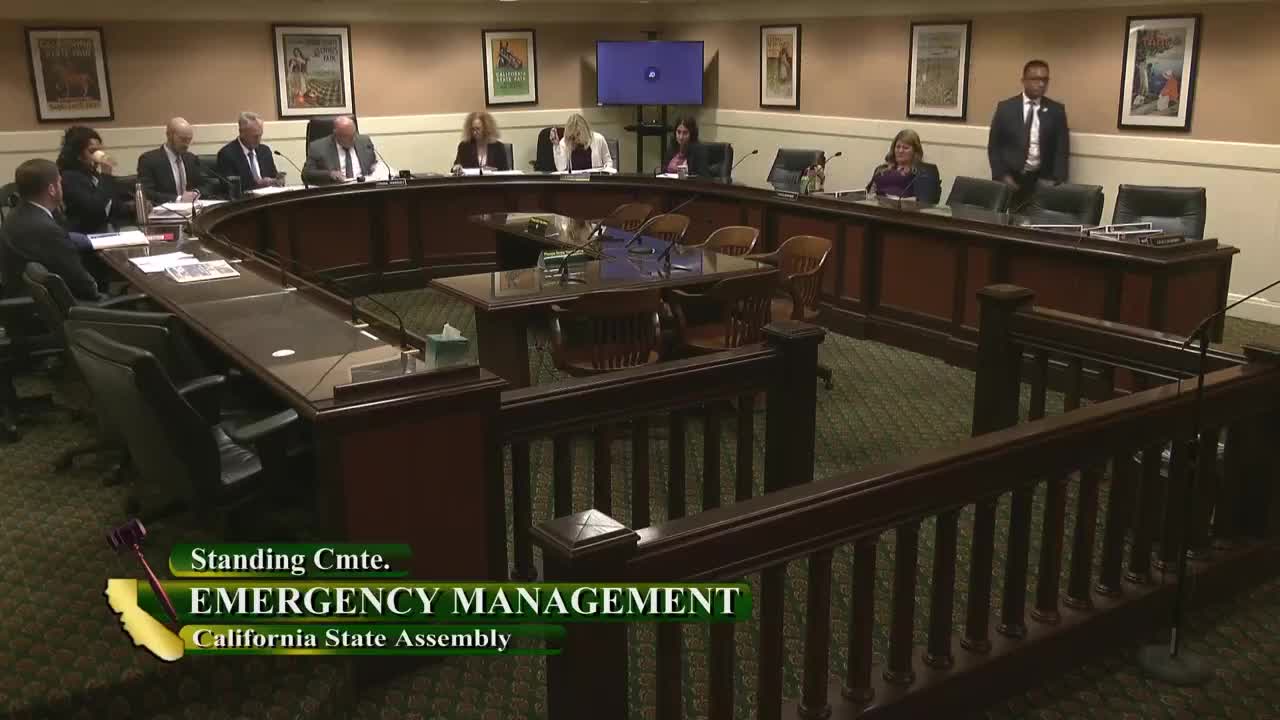 5MIN
Assembly Standing Committee on Emergency Management
 49SEC
Senate Standing Committee on Natural Resources and Water
 38SEC
Senate Standing Committee on Natural Resources and Water
31SEC
Senate Standing Committee on Natural Resources and Water
 7MIN
Senate Standing Committee on Governmental Organization
Bill Author

Bill Co-Author(s):