SB 1101: Fire prevention: prescribed fire: state contracts: maps.
- Session Year: 2023-2024
- House: Senate
- Latest Version Date: 2024-09-27
Current Status:
Passed
(2024-09-27: Chaptered by Secretary of State. Chapter 778, Statutes of 2024.)
Introduced
In Committee
First Chamber
In Committee
Second Chamber
Enacted
What does this bill do?
The bill lets CAL FIRE use streamlined contracts for logistical support of large prescribed fire operations—such as meals, lodging, hired equipment, and land-use agreements—without the usual Department of General Services approval or the normal three-bid requirement. It also directs CAL FIRE to map a network of operational boundaries for wildfire response and prescribed burns, publish annual burn-severity maps, and review recent fires each year to find priority areas for prescribed fire, coordinating with federal, tribal, local, and private partners and assessing tribal and environmental impacts.
The summary is provided by generative AI which can make mistakes. For original language, please view the details in the table below.
(1)Existing law requires all contracts entered into by a state agency for the acquisition of goods or services, as specified, to be void unless and until approved by the Department of General Services. Existing law requires a state agency to secure at least 3 competitive bids or proposals for each contract. Existing law establishes exceptions to these requirements for specified contracts.
This bill would include in the list of exceptions a contract entered into by the Department of Forestry and Fire Protection for the purpose of providing logistical support for large-scale prescribed fire operations, as provided.
(2)Existing law requires the Department of Forestry and Fire Protection to do certain things with respect to fires, including provide fire prevention and firefighting implements and apparatus, organize fire crews and patrols, and establish observation stations and other necessary structures.
This bill would require the department, on or before January 1, 2026, to identify and map a comprehensive network of potential operational delineations that can be used for strategic wildfire response or the proactive use of prescribed fire, as provided. The bill would require the Fire and Resource Assessment Program in the department, on or before July 1, 2025, and updated annually thereafter, to develop maps of the severity of impacts from wildfires, as provided. The bill would also require the department to annually review the effects of recent fires in the context of community safety and ecological restoration goals to identify priority opportunities for prescribed fire that can further manage hazardous fuel conditions.
(1)Existing law requires all contracts entered into by a state agency for the acquisition of goods or services, as specified, to be void unless and until approved by the Department of General Services. Existing law requires a state agency to secure at least 3 competitive bids or proposals for each contract. Existing law establishes exceptions to these requirements for specified contracts.
This bill would include in the list of exceptions a contract entered into by the Department of Forestry and Fire Protection for the purpose of providing logistical support for large-scale prescribed fire operations, as provided.
(2)Existing law requires the Department of Forestry and Fire Protection to do certain things with respect to fires, including provide fire prevention and firefighting implements and apparatus, organize fire crew and patrols, and establish observation stations and other necessary structures.
This bill would require the department, on or before January 1, 2026, to identify and map a comprehensive network of potential operational boundaries delineations that can be used for strategic wildfire response, hazardous fuels management, and response or the proactive use of prescribed fire, as provided. The bill would require the department, on or before July 1, 2025, and updated annually thereafter, to develop spatial mapping maps of the severity of impacts from wildfires, as provided. The bill would also require the department to annually review the effects of recent fires in the context of community safety and ecological restoration goals to identify priority opportunities for prescribed fire that can further manage hazardous fuel conditions.
(1)Existing law requires all contracts entered into by a state agency for the acquisition of goods or services, as specified, to be void unless and until approved by the Department of General Services. Existing law requires a state agency to secure at least 3 competitive bids or proposals for each contract. Existing law establishes exceptions to these requirements for specified contracts.
This bill would include in the list of exceptions a contract entered into by the Department of Forestry and Fire Protection for the purpose of providing logistical support for large-scale prescribed fire operations, as provided.
(2)Existing law requires the Department of Forestry and Fire Protection to do certain things with respect to fires, including provide fire prevention and firefighting implements and apparatus, organize fire crew and patrols, and establish observation stations and other necessary structures.
This bill would require the department, on or before January 1, 2026, to identify and map a comprehensive network of potential operational boundaries that can be used for strategic wildfire response, hazardous fuels management, and prescribed fire, as provided. The bill would require the department, on or before July 1, 2025, and updated annually thereafter, to develop spatial mapping of the severity of impacts from wildfires, as provided. The bill would also require the department to annually review the effects of recent fires in the context of community safety and ecological restoration goals to identify priority opportunities for prescribed fire that can further manage hazardous fuel conditions.
The Legislature finds and declares all of the following:
(a)Californias plants and iconic landscapes evolved in conjunction with fire. Fire is as essential of a natural process as is rain. California, and its Mediterranean climate, is one of the most naturally fire-prone landscapes on Earth.
(b)A century of fire suppression has changed our landscapes. Areas that evolved with frequent low and mixed intensity fire have not seen fire in generations and have become unnaturally dense with vegetation, creating the conditions for extreme fire behavior. Native biodiversity suffers as plants that depend on fire to maintain appropriate conditions are overtaken by species that thrive in the absence of fire.
(c)While Californias forests and rangelands generally suffer from having too little fire, some ecosystems, such as the shrublands in densely populated southern California, have frequent human ignitions, and therefore unnaturally frequent fires. Managing fire across Californias diverse landscapes requires knowing where we need more frequent fire, and where fires are already too frequent.
(d)In many cases, prescribed fire is the only restoration and mitigation tool available, and is broadly understood to be the most ecologically appropriate and cost-effective way to address the unnatural landscape condition.
(e)The Department of Forestry and Fire Protection (CAL-FIRE) is the largest fire agency in California, with responsibility for nearly one-third of California. CAL-FIRE could achieve dramatically more fuel reduction through prescribed fire if it could be more nimble and use favorable weather conditions. Currently, nonemergency contracting, procurement, and travel requirements preclude many good opportunities for these risk reduction projects.
(f)Proactive planning and increased use of beneficial fire will improve the resilience of landscapes and the safety of communities and will help moderate the costs and outcomes of future wildfires. Engaging in collaborative planning with communities will help build a shared understanding of how to manage the risk from wildfire.
SEC. 2.Section 10295 of the Public Contract Code is amended to read:10295.(a)All contracts entered into by any state agency for (1) the acquisition of goods or elementary school textbooks, (2) services, whether or not the services involve the furnishing or use of goods or are performed by an independent contractor, (3) the construction, alteration, improvement, repair, or maintenance of property, real or personal, or (4) the performance of work or services by the state agency for or in cooperation with any person, or public body, are void unless and until approved by the department. Every contract shall be transmitted with all papers, estimates, and recommendations concerning it to the department and, if approved by the department, shall be effective from the date of the approval.
(b)This section applies to a state agency that by general or specific statute is expressly or impliedly authorized to enter into transactions referred to in this section.
(c)This section does not apply to any of the following:
(1)A transaction entered into by the Trustees of the California State University, by the Board of Governors of the California Community Colleges, or by a department under the State Contract Act or the California State University Contract Law.
(2)A contract of a type specifically mentioned and authorized to be entered into by the Department of Transportation under Section 14035 or 14035.5 of the Government Code, Sections 99316 to 99319, inclusive, of the Public Utilities Code, or the Streets and Highways Code.
(3)A contract entered into by the Department of Transportation that is not funded by money derived by state tax sources but, rather, is funded by money derived from federal or local tax sources.
(4)A contract entered into by the Department of Human Resources for state employee benefits, occupational health and safety, training services, or combination thereof.
(5)A contract let by the Legislature.
(6)A contract entered into under the authority of Chapter 4 (commencing with Section 11770) of Part 3 of Division 2 of the Insurance Code.
(7)A contract entered into by the Department of Forestry and Fire Protection for the purpose of providing logistical support for large-scale prescribed fire operations, including, but not limited to, meals, lodging, hired equipment, onsite preparatory efforts, and land use agreements, or any related subcontract.
SEC. 3.Section 10340 of the Public Contract Code is amended to read:10340.(a)Except as provided by subdivision (b), a state agency shall secure at least three competitive bids or proposals for each contract.
(b)Three competitive bids or proposals are not required in any of the following cases:
(1)In cases of an emergency where a contract is necessary for the immediate preservation of the public health, welfare, or safety, or protection of state property.
(2)When the state agency awarding the contract has advertised the contract in the California State Contracts Register and has solicited all potential contractors known to the state agency, but has received less than three bids or proposals.
(3)(A)The contract is with another state agency, a local governmental entity, an auxiliary organization of the California State University, an auxiliary organization of a California community college, a foundation organized to support the Board of Governors of the California Community Colleges, or an auxiliary organization of the Student Aid Commission established pursuant to Section 69522 of the Education Code. These contracts, however, shall not be used to circumvent the competitive bidding requirements of this article.
(B)Notwithstanding subparagraph (A), until January 1, 2020, an interagency agreement that is in effect pursuant to an amount appropriated to the California Initiative to Advance Precision Medicine, including a contract with the Regents of the University of California or an auxiliary organization of the California State University, may include a subcontract not subject to any competitive bidding requirements of this article for the limited purpose of researching or developing precision medicine.
(4)The contract meets the conditions prescribed by the department pursuant to subdivision (a) of Section 10348.
(5)The contract has been awarded without advertising and calling for bids pursuant to Section 19404 of the Welfare and Institutions Code.
(6)A contract entered into pursuant to Section 14838.5 of the Government Code.
(7)A contract for the development, maintenance, administration, or use of licensing or proficiency testing examinations.
(8)The contract is for services for the operation, maintenance, repair, or replacement of specialized equipment at facilities of the State Water Resources Development System, as defined in Section 12931 of the Water Code, and meets the conditions established by the Department of Water Resources for those contracts.
(9)The contract meets the conditions prescribed by the Department of Water Resources for contracts subject to Section 10295.6.
(10)A contract entered into by the Commission on Peace Officer Standards and Training or the Office of Emergency Services solely for the services of instructors for public safety training. For the purpose of this paragraph, public safety training includes, but is not limited to, training related to law enforcement, emergency medical response, emergency volunteers, and fire responders.
(11)A contract entered into by the Department of Forestry and Fire Protection for the purpose of providing logistical support for large-scale prescribed fire operations, including, but not limited to, meals, lodging, hired equipment, and land use agreements, or any related subcontract.
(c)A state agency that has received less than three bids or proposals on a contract shall document, in a manner prescribed by the department, the names and addresses of the firms or individuals it solicited for bids or proposals.
SEC. 4.Section 4114.4 is added to the Public Resources Code, to read:4114.4.(a)(1)On or before January 1, 2026, the department, in coordination with the United States Forest Service and other relevant state, federal, tribal, local, and private cooperators, shall identify and map a comprehensive network of potential operational delineations that can be used for strategic wildfire response or the proactive use of prescribed fire. This effort shall use existing tools, including, but not limited to, open-source tools, and build on existing plans, including, but not limited to, community wildfire protection plans, CAL-FIRE unit fire plans, and potential operational delineations for wildfires of the United States Forest Service.
(2)The map described in paragraph (1) shall comply with both of the following:
(A)Be included in outreach efforts for state programs related to fire planning and community engagement efforts, such as, but not limited to, the Regional Forest and Fire Capacity Program (Article 11 (commencing with Section 4208)).
(B)Be assessed for potential impacts on tribal cultural resources and sensitive species in areas where there will be significant ground disturbance. The department, through local units of the department, shall engage with and consult tribal entities in the region for input on the potential network of delineations described in paragraph (1). Tribal leadership in this process shall be supported and engaged with to the extent feasible. If an appropriation by the Legislature has been made for these purposes, state resources may be used to support tribal engagement in developing, reviewing, and assessing proposed locations. This subparagraph does not alter any duty by the department to consult with tribal governments during a wildfire event.
(b)(1)In order to provide a nuanced understanding of postfire conditions, on or before July 1, 2025, and updated annually thereafter, the Fire and Resource Assessment Program in the department shall develop maps of the severity of impacts from wildfires that includes fires of significant size across all land ownerships. To the extent feasible, in developing the maps described in this paragraph, the department shall collaborate with the United States Forest Service, the United States Geological Survey, and other relevant parties, and shall, where appropriate, use data from existing sources, including from the Burn Severity Portal maintained by the United States Geological Survey. For purposes of complying with this paragraph, the department may contract with a third party.
(2)The department shall make the maps described in paragraph (1) available to the public on its internet website.
(c)The department shall annually review the effects of recent fires in the context of community safety and ecological restoration goals to identify priority opportunities for prescribed fire that can further manage hazardous fuel conditions.
The Legislature finds and declares all of the following:
(a)Californias plants and iconic landscapes evolved in conjunction with fire. Fire is as essential of a natural process as is rain. California, and its Mediterranean climate, is one of the most naturally fire-prone landscapes on Earth.
(b)A century of fire suppression has changed our landscapes. Areas that evolved with frequent low and mixed intensity fire have not seen fire in generations and have become unnaturally dense with vegetation, creating the conditions for extreme fire behavior. Native biodiversity suffers as plants that depend on fire to maintain appropriate conditions are overtaken by species that thrive in the absence of fire.
(c)While Californias forests and rangelands generally suffer from having too little fire, some ecosystems, such as the shrublands in densely populated southern California, have frequent human ignitions, and therefore unnaturally frequent fires. Managing fire across Californias diverse landscapes requires knowing where we need more frequent fire, and where fires are already too frequent.
(d)In many cases, prescribed fire is the only restoration and mitigation tool available, and is broadly understood to be the most ecologically appropriate and cost-effective way to address the unnatural landscape condition.
(e)The Department of Forestry and Fire Protection (CAL-FIRE) is the largest fire agency in California, with responsibility for nearly one-third of California. CAL-FIRE could achieve dramatically more fuel reduction through prescribed fire if it could be more nimble and use favorable weather conditions. Currently, nonemergency contracting, procurement, and travel requirements preclude many good opportunities for these risk reduction projects.
(f)Proactive planning and increased use of beneficial fire will improve the resilience of landscapes and the safety of communities and will help moderate the costs and outcomes of future wildfires. Engaging in collaborative planning with communities will help build a shared understanding of how to manage the risk from wildfire.
SEC. 2.Section 10295 of the Public Contract Code is amended to read:10295.(a)All contracts entered into by any state agency for (1) the acquisition of goods or elementary school textbooks, (2) services, whether or not the services involve the furnishing or use of goods or are performed by an independent contractor, (3) the construction, alteration, improvement, repair, or maintenance of property, real or personal, or (4) the performance of work or services by the state agency for or in cooperation with any person, or public body, are void unless and until approved by the department. Every contract shall be transmitted with all papers, estimates, and recommendations concerning it to the department and, if approved by the department, shall be effective from the date of the approval.
(b)This section applies to a state agency that by general or specific statute is expressly or impliedly authorized to enter into transactions referred to in this section.
(c)This section does not apply to any of the following:
(1)A transaction entered into by the Trustees of the California State University, by the Board of Governors of the California Community Colleges, or by a department under the State Contract Act or the California State University Contract Law.
(2)A contract of a type specifically mentioned and authorized to be entered into by the Department of Transportation under Section 14035 or 14035.5 of the Government Code, Sections 99316 to 99319, inclusive, of the Public Utilities Code, or the Streets and Highways Code.
(3)A contract entered into by the Department of Transportation that is not funded by money derived by state tax sources but, rather, is funded by money derived from federal or local tax sources.
(4)A contract entered into by the Department of Human Resources for state employee benefits, occupational health and safety, training services, or combination thereof.
(5)A contract let by the Legislature.
(6)A contract entered into under the authority of Chapter 4 (commencing with Section 11770) of Part 3 of Division 2 of the Insurance Code.
(7)A contract entered into by the Department of Forestry and Fire Protection for the purpose of providing logistical support for large-scale prescribed fire operations, including, but not limited to, meals, lodging, hired equipment, onsite preparatory efforts, and land use agreements, or any related subcontract.
SEC. 3.Section 10340 of the Public Contract Code is amended to read:10340.(a)Except as provided by subdivision (b), a state agency shall secure at least three competitive bids or proposals for each contract.(b)Three competitive bids or proposals are not required in any of the following cases:(1)In cases of an emergency where a contract is necessary for the immediate preservation of the public health, welfare, or safety, or protection of state property.(2)When the state agency awarding the contract has advertised the contract in the California State Contracts Register and has solicited all potential contractors known to the state agency, but has received less than three bids or proposals.(3)(A)The contract is with another state agency, a local governmental entity, an auxiliary organization of the California State University, an auxiliary organization of a California community college, a foundation organized to support the Board of Governors of the California Community Colleges, or an auxiliary organization of the Student Aid Commission established pursuant to Section 69522 of the Education Code. These contracts, however, shall not be used to circumvent the competitive bidding requirements of this article.(B)Notwithstanding subparagraph (A), until January 1, 2020, an interagency agreement that is in effect pursuant to an amount appropriated to the Office of Planning and Research for precision medicine, including a contract between the Office of Planning and Research, the Regents of the University of California, or an auxiliary organization of the California State University, may include a subcontract not subject to any competitive bidding requirements of this article for the limited purpose of researching or developing precision medicine.(4)The contract meets the conditions prescribed by the department pursuant to subdivision (a) of Section 10348.(5)The contract has been awarded without advertising and calling for bids pursuant to Section 19404 of the Welfare and Institutions Code.(6)Contracts entered into pursuant to Section 14838.5 of the Government Code.(7)Contracts for the development, maintenance, administration, or use of licensing or proficiency testing examinations.(8)The contract is for services for the operation, maintenance, repair, or replacement of specialized equipment at facilities of the State Water Resources Development System, as defined in Section 12931 of the Water Code, and meets the conditions established by the Department of Water Resources for those contracts.(9)The contract meets the conditions prescribed by the Department of Water Resources for contracts subject to Section 10295.6.(10)A contract entered into by the Commission on Peace Officer Standards and Training or the Office of Emergency Services solely for the services of instructors for public safety training. For the purpose of this paragraph, public safety training includes, but is not limited to, training related to law enforcement, emergency medical response, emergency volunteers, and fire responders.(11)A contract entered into by the Department of Forestry and Fire Protection for the purpose of providing logistical support for large-scale prescribed fire operations, including, but not limited to, meals, lodging, hired equipment, and land use agreements, or any related subcontract.(c)A state agency that has received less than three bids or proposals on a contract shall document, in a manner prescribed by the department, the names and addresses of the firms or individuals it solicited for bids or proposals.SEC. 3.Section 10340 of the Public Contract Code is amended to read:10340.(a)Except as provided by subdivision (b), a state agencies agency shall secure at least three competitive bids or proposals for each contract.
(b)Three competitive bids or proposals are not required in any of the following cases:
(1)In cases of an emergency where a contract is necessary for the immediate preservation of the public health, welfare, or safety, or protection of state property.
(2)When the state agency awarding the contract has advertised the contract in the California State Contracts Register and has solicited all potential contractors known to the state agency, but has received less than three bids or proposals.
(3)(A)The contract is with another state agency, a local governmental entity, an auxiliary organization of the California State University, an auxiliary organization of a California community college, a foundation organized to support the Board of Governors of the California Community Colleges, or an auxiliary organization of the Student Aid Commission established pursuant to Section 69522 of the Education Code. These contracts, however, shall not be used to circumvent the competitive bidding requirements of this article.
(B)Notwithstanding subparagraph (A), until January 1, 2020, an interagency agreement that is in effect pursuant to an amount appropriated to the California Initiative to Advance Precision Medicine, including a contract with the Regents of the University of California or an auxiliary organization of the California State University, may include a subcontract not subject to any competitive bidding requirements of this article for the limited purpose of researching or developing precision medicine.
(4)The contract meets the conditions prescribed by the department pursuant to subdivision (a) of Section 10348.
(5)The contract has been awarded without advertising and calling for bids pursuant to Section 19404 of the Welfare and Institutions Code.
(6)Contracts A contract entered into pursuant to Section 14838.5 of the Government Code.
(7)Contracts A contract for the development, maintenance, administration, or use of licensing or proficiency testing examinations.
(8)The contract is for services for the operation, maintenance, repair, or replacement of specialized equipment at facilities of the State Water Resources Development System, as defined in Section 12931 of the Water Code, and meets the conditions established by the Department of Water Resources for those contracts.
(9)The contract meets the conditions prescribed by the Department of Water Resources for contracts subject to Section 10295.6.
(10)Contracts A contract entered into by the Commission on Peace Officer Standards and Training or the Office of Emergency Services solely for the services of instructors for public safety training. For the purpose of this paragraph, public safety training includes, but is not limited to, training related to law enforcement, emergency medical response, emergency volunteers, and fire responders.
(11)A contract entered into by the Department of Forestry and Fire Protection for the purpose of providing logistical support for large-scale prescribed fire operations, including, but not limited to, meals, lodging, hired equipment, and land use agreements, or any related subcontract.
(c)Any A state agency that has received less than three bids or proposals on a contract shall document, in a manner prescribed by the department, the names and addresses of the firms or individuals it solicited for bids or proposals.
SEC. 4.Section 4114.4 is added to the Public Resources Code, to read:4114.4.(a)(1)On or before January 1, 2026, the department, in coordination with the United States Forest Service and other relevant state, federal, tribal, local, and private cooperators, shall identify and map a comprehensive network of potential operational delineations that can be used for strategic wildfire response or the proactive use of prescribed fire. This effort shall use existing tools, including, but not limited to, open-source tools, and build on existing plans, including, but not limited to, community wildfire protection plans, CAL-FIRE unit fire plans, and potential operational delineations for wildfires of the United States Forest Service.
(2)The map described in paragraph (1) shall comply with both of the following:
(A)Be included in outreach efforts for state programs related to fire planning and community engagement efforts, such as, but not limited to, the Regional Forest and Fire Capacity Program (Article 11 (commencing with Section 4208)).
(B)Be assessed for potential impacts on tribal cultural resources and sensitive species in areas where there will be significant ground disturbance. The department, through local units of the department, shall engage with and consult tribal entities in the region for input on the potential network of delineations described in paragraph (1). Tribal leadership in this process shall be supported and engaged with to the extent feasible. If an appropriation by the Legislature has been made for these purposes, state resources may be used to support tribal engagement in developing, reviewing, and assessing proposed locations. This subparagraph does not alter any duty by the department to consult with tribal governments during a wildfire event.
(b)(1)In order to provide a nuanced understanding of postfire conditions, on or before July 1, 2025, and updated annually thereafter, the Fire and Resource Assessment Program in the department shall develop maps of the severity of impacts from wildfires that includes fires of significant size across all land ownerships. To the extent feasible, in developing the maps described in this paragraph, the department shall collaborate with the United States Forest Service, the United States Geological Survey, and other relevant parties, and shall, where appropriate, use data from existing sources, including from the Burn Severity Portal maintained by the United States Geological Survey. For purposes of complying with this paragraph, the department may contract with a third party.
(2)The department shall make the maps described in paragraph (1) available to the public on its internet website.
(c)The department shall annually review the effects of recent fires in the context of community safety and ecological restoration goals to identify priority opportunities for prescribed fire that can further manage hazardous fuel conditions.
The Legislature finds and declares all of the following:
(a)Californias plants and iconic landscapes evolved in conjunction with fire. Fire is as essential of a natural process as is rain. California, and its Mediterranean climate, is one of the most naturally fire-prone landscapes on Earth.
(b)A century of fire suppression has changed our landscapes. Areas that evolved with frequent low and mixed intensity fire have not seen fire in generations and have become unnaturally dense with vegetation, creating the conditions for extreme fire behavior. Native biodiversity suffers as plants that depend on fire to maintain appropriate conditions are overtaken by species that thrive in the absence of fire.
(c)While Californias forests and rangelands generally suffer from having too little fire, some ecosystems, such as the shrublands in densely populated southern California, have frequent human ignitions, and therefore unnaturally frequent fires. Managing fire across Californias diverse landscapes requires knowing where we need more frequent fire, and where fires are already too frequent.
(d)In many cases, prescribed fire is the only restoration and mitigation tool available, and is broadly understood to be the most ecologically appropriate and cost-effective way to address the unnatural landscape condition.
(e)The Department of Forestry and Fire Protection (CAL-FIRE) is the largest fire agency in California, with responsibility for nearly one-third of California. CAL-FIRE could achieve dramatically more fuel reduction through prescribed fire if it could be more nimble and use favorable weather conditions. Currently, nonemergency contracting, procurement, and travel requirements preclude many good opportunities for these risk reduction projects.
(f)Proactive planning and increased use of beneficial fire will improve the resilience of landscapes and the safety of communities and will help moderate the costs and outcomes of future wildfires. Engaging in collaborative planning with communities will help build a shared understanding of how to manage the risk from wildfire.
SEC. 2.Section 10295 of the Public Contract Code is amended to read:10295.(a)All contracts entered into by any state agency for (1) the acquisition of goods or elementary school textbooks, (2) services, whether or not the services involve the furnishing or use of goods or are performed by an independent contractor, (3) the construction, alteration, improvement, repair, or maintenance of property, real or personal, or (4) the performance of work or services by the state agency for or in cooperation with any person, or public body, are void unless and until approved by the department. Every contract shall be transmitted with all papers, estimates, and recommendations concerning it to the department and, if approved by the department, shall be effective from the date of the approval.
(b)This section applies to a state agency that by general or specific statute is expressly or impliedly authorized to enter into transactions referred to in this section.
(c)This section does not apply to any of the following:
(1)A transaction entered into by the Trustees of the California State University, by the Board of Governors of the California Community Colleges, or by a department under the State Contract Act or the California State University Contract Law.
(2)A contract of a type specifically mentioned and authorized to be entered into by the Department of Transportation under Section 14035 or 14035.5 of the Government Code, Sections 99316 to 99319, inclusive, of the Public Utilities Code, or the Streets and Highways Code.
(3)A contract entered into by the Department of Transportation that is not funded by money derived by state tax sources but, rather, is funded by money derived from federal or local tax sources.
(4)A contract entered into by the Department of Human Resources for state employee benefits, occupational health and safety, training services, or combination thereof.
(5)A contract let by the Legislature.
(6)A contract entered into under the authority of Chapter 4 (commencing with Section 11770) of Part 3 of Division 2 of the Insurance Code.
(7)A contract entered into by the Department of Forestry and Fire Protection for the purpose of providing logistical support for large-scale prescribed fire operations, including, but not limited to, meals, lodging, hired equipment, onsite preparatory efforts, and land use agreements, or any related subcontract.
SEC. 3.Section 10340 of the Public Contract Code is amended to read:10340.(a)Except as provided by subdivision (b), a state agency shall secure at least three competitive bids or proposals for each contract.
(b)Three competitive bids or proposals are not required in any of the following cases:
(1)In cases of an emergency where a contract is necessary for the immediate preservation of the public health, welfare, or safety, or protection of state property.
(2)When the state agency awarding the contract has advertised the contract in the California State Contracts Register and has solicited all potential contractors known to the state agency, but has received less than three bids or proposals.
(3)(A)The contract is with another state agency, a local governmental entity, an auxiliary organization of the California State University, an auxiliary organization of a California community college, a foundation organized to support the Board of Governors of the California Community Colleges, or an auxiliary organization of the Student Aid Commission established pursuant to Section 69522 of the Education Code. These contracts, however, shall not be used to circumvent the competitive bidding requirements of this article.
(B)Notwithstanding subparagraph (A), until January 1, 2020, an interagency agreement that is in effect pursuant to an amount appropriated to the Office of Planning and Research for precision medicine, including a contract between the Office of Planning and Research, the Regents of the University of California, or an auxiliary organization of the California State University, may include a subcontract not subject to any competitive bidding requirements of this article for the limited purpose of researching or developing precision medicine.
(4)The contract meets the conditions prescribed by the department pursuant to subdivision (a) of Section 10348.
(5)The contract has been awarded without advertising and calling for bids pursuant to Section 19404 of the Welfare and Institutions Code.
(6)Contracts entered into pursuant to Section 14838.5 of the Government Code.
(7)Contracts for the development, maintenance, administration, or use of licensing or proficiency testing examinations.
(8)The contract is for services for the operation, maintenance, repair, or replacement of specialized equipment at facilities of the State Water Resources Development System, as defined in Section 12931 of the Water Code, and meets the conditions established by the Department of Water Resources for those contracts.
(9)The contract meets the conditions prescribed by the Department of Water Resources for contracts subject to Section 10295.6.
(10)A contract entered into by the Commission on Peace Officer Standards and Training or the Office of Emergency Services solely for the services of instructors for public safety training. For the purpose of this paragraph, public safety training includes, but is not limited to, training related to law enforcement, emergency medical response, emergency volunteers, and fire responders.
(11)A contract entered into by the Department of Forestry and Fire Protection for the purpose of providing logistical support for large-scale prescribed fire operations, including, but not limited to, meals, lodging, hired equipment, and land use agreements, or any related subcontract.
(c)A state agency that has received less than three bids or proposals on a contract shall document, in a manner prescribed by the department, the names and addresses of the firms or individuals it solicited for bids or proposals.
SEC. 4.Section 4114.4 is added to the Public Resources Code, to read:4114.4.(a)(1)On or before January 1, 2026, the department, in coordination with the United States Forest Service and other relevant state, federal, tribal, local, and private cooperators, shall identify and map a comprehensive network of potential operational delineations that can be used for strategic wildfire response or the proactive use of prescribed fire. This effort shall use existing tools, including, but not limited to, the open-source tool known as Planscape, tools, and build on existing plans, including, but not limited to, community wildfire protection plans, CAL-FIRE unit fire plans, and potential operational delineations for wildfires of the United States Forest Service.
(2)The map described in paragraph (1) shall comply with both of the following:
(A)Be included in outreach efforts for state programs related to fire planning and community engagement efforts, such as, but not limited to, the Regional Forest and Fire Capacity Program (Article 11 (commencing with Section 4208)).
(B)Be assessed for potential impacts on tribal cultural resources and sensitive species in areas where there will be significant ground disturbance. The department, through local units of the department, shall engage with and consult tribal entities in the region for input on the potential network of delineations described in paragraph (1). Tribal leadership in this process shall be supported and engaged with to the extent feasible. If an appropriation by the Legislature has been made for these purposes, state resources may be used to support tribal engagement in developing, reviewing, and assessing proposed locations. This subparagraph does not alter any duty by the department to consult with tribal governments during a wildfire event.
(b)(1)In order to provide a nuanced understanding of postfire conditions, on or before July 1, 2025, and updated annually thereafter, the Fire and Resource Assessment Program in the department shall develop maps of the severity of impacts from wildfires that includes fires of significant size across all land ownerships. To the extent feasible, in developing the maps described in this paragraph, the department shall collaborate with the United States Forest Service, the United States Geological Survey, and other relevant parties, and shall, where appropriate, use data from existing sources, including from the Burn Severity Portal maintained by the United States Geological Survey. For purposes of complying with this paragraph, the department may contract with a third party.
(2)The department shall make the maps described in paragraph (1) available to the public on its internet website.
(c)The department shall annually review the effects of recent fires in the context of community safety and ecological restoration goals to identify priority opportunities for prescribed fire that can further manage hazardous fuel conditions.
The Legislature finds and declares all of the following:
(a)Californias plants and iconic landscapes evolved in conjunction with fire. Fire is as essential of a natural process as is rain. California, and its Mediterranean climate, is one of the most naturally fire-prone landscapes on Earth.
(b)A century of fire suppression has changed our landscapes. Areas that evolved with frequent low and mixed intensity fire have not seen fire in generations and have become unnaturally dense with vegetation, creating the conditions for extreme fire behavior. Native biodiversity suffers as plants that depend on fire to maintain appropriate conditions are overtaken by species that thrive in the absence of fire.
(c)While Californias forests and rangelands generally suffer from having too little fire, some ecosystems, such as the shrublands in densely populated southern California, have frequent human ignitions, and therefore unnaturally frequent fires. Managing fire across Californias diverse landscapes requires knowing where we need more frequent fire, and where fires are already too frequent.
(d)In many cases, prescribed fire is the only restoration and mitigation tool available, and is broadly understood to be the most ecologically appropriate and cost-effective way to address the unnatural landscape condition.
(e)The Department of Forestry and Fire Protection (CAL-FIRE) is the largest fire agency in California, with responsibility for nearly one-third of California. CAL-FIRE could achieve dramatically more fuel reduction through prescribed fire if it could be more nimble and use favorable weather conditions. Currently, nonemergency contracting, procurement, and travel requirements preclude many good opportunities for these risk reduction projects.
(f)Proactive planning and increased use of beneficial fire will improve the resilience of landscapes and the safety of communities and will help moderate the costs and outcomes of future wildfires. Engaging in collaborative planning with communities will help build a shared understanding of how to manage the risk from wildfire.
SEC. 2.Section 10295 of the Public Contract Code is amended to read:10295.(a)All contracts entered into by any state agency for (1) the acquisition of goods or elementary school textbooks, (2) services, whether or not the services involve the furnishing or use of goods or are performed by an independent contractor, (3) the construction, alteration, improvement, repair, or maintenance of property, real or personal, or (4) the performance of work or services by the state agency for or in cooperation with any person, or public body, are void unless and until approved by the department. Every contract shall be transmitted with all papers, estimates, and recommendations concerning it to the department and, if approved by the department, shall be effective from the date of the approval.
(b)This section applies to a state agency that by general or specific statute is expressly or impliedly authorized to enter into transactions referred to in this section.
(c)This section does not apply to any of the following:
(1)A transaction entered into by the Trustees of the California State University, by the Board of Governors of the California Community Colleges, or by a department under the State Contract Act or the California State University Contract Law.
(2)A contract of a type specifically mentioned and authorized to be entered into by the Department of Transportation under Section 14035 or 14035.5 of the Government Code, Sections 99316 to 99319, inclusive, of the Public Utilities Code, or the Streets and Highways Code.
(3)A contract entered into by the Department of Transportation that is not funded by money derived by state tax sources but, rather, is funded by money derived from federal or local tax sources.
(4)A contract entered into by the Department of Human Resources for state employee benefits, occupational health and safety, training services, or combination thereof.
(5)A contract let by the Legislature.
(6)A contract entered into under the authority of Chapter 4 (commencing with Section 11770) of Part 3 of Division 2 of the Insurance Code.
(7)A contract entered into by the Department of Forestry and Fire Protection for the purpose of providing logistical support for large-scale prescribed fire operations, including, but not limited to, meals, lodging, hired equipment, and land use agreements, or any related subcontract.
SEC. 3.Section 10340 of the Public Contract Code is amended to read:10340.(a)Except as provided by subdivision (b), a state agency shall secure at least three competitive bids or proposals for each contract.
(b)Three competitive bids or proposals are not required in any of the following cases:
(1)In cases of an emergency where a contract is necessary for the immediate preservation of the public health, welfare, or safety, or protection of state property.
(2)When the state agency awarding the contract has advertised the contract in the California State Contracts Register and has solicited all potential contractors known to the state agency, but has received less than three bids or proposals.
(3)(A)The contract is with another state agency, a local governmental entity, an auxiliary organization of the California State University, an auxiliary organization of a California community college, a foundation organized to support the Board of Governors of the California Community Colleges, or an auxiliary organization of the Student Aid Commission established pursuant to Section 69522 of the Education Code. These contracts, however, shall not be used to circumvent the competitive bidding requirements of this article.
(B)Notwithstanding subparagraph (A), until January 1, 2020, an interagency agreement that is in effect pursuant to an amount appropriated to the Office of Planning and Research for precision medicine, including a contract between the Office of Planning and Research, the Regents of the University of California, or an auxiliary organization of the California State University, may include a subcontract not subject to any competitive bidding requirements of this article for the limited purpose of researching or developing precision medicine.
(4)The contract meets the conditions prescribed by the department pursuant to subdivision (a) of Section 10348.
(5)The contract has been awarded without advertising and calling for bids pursuant to Section 19404 of the Welfare and Institutions Code.
(6)Contracts entered into pursuant to Section 14838.5 of the Government Code.
(7)Contracts for the development, maintenance, administration, or use of licensing or proficiency testing examinations.
(8)The contract is for services for the operation, maintenance, repair, or replacement of specialized equipment at facilities of the State Water Resources Development System, as defined in Section 12931 of the Water Code, and meets the conditions established by the Department of Water Resources for those contracts.
(9)The contract meets the conditions prescribed by the Department of Water Resources for contracts subject to Section 10295.6.
(10)A contract entered into by the Commission on Peace Officer Standards and Training or the Office of Emergency Services solely for the services of instructors for public safety training. For the purpose of this paragraph, public safety training includes, but is not limited to, training related to law enforcement, emergency medical response, emergency volunteers, and fire responders.
(11)A contract entered into by the Department of Forestry and Fire Protection for the purpose of providing logistical support for large-scale prescribed fire operations, including, but not limited to, meals, lodging, hired equipment, and land use agreements, or any related subcontract.
(c)A state agency that has received less than three bids or proposals on a contract shall document, in a manner prescribed by the department, the names and addresses of the firms or individuals it solicited for bids or proposals.
SEC. 4.Section 4114.4 is added to the Public Resources Code, to read:4114.4.(a)(1)On or before January 1, 2026, the department, in coordination with the United States Forest Service and other relevant state, federal, tribal, local, and private cooperators, shall identify and map a comprehensive network of potential operational delineations that can be used for strategic wildfire response or the proactive use of prescribed fire. This effort shall use existing tools, including, but not limited to, the open-source tool known as Planscape, and build on existing plans, including, but not limited to, community wildfire protection plans, CAL-FIRE unit fire plans, and potential operational delineations for wildfires of the United States Forest Service.
(2)The map described in paragraph (1) shall comply with both of the following:
(A)Be included in outreach efforts for state programs related to fire planning and community engagement efforts, such as, but not limited to, the Regional Forest and Fire Capacity Program (Article 11 (commencing with Section 4208)).
(B)Be assessed for potential impacts on tribal cultural resources and sensitive species in areas where there will be significant ground disturbance. The department, through local units of the department, shall engage with and consult tribal entities in the region for input on the potential network of delineations described in paragraph (1). Tribal leadership in this process shall be supported and engaged with to the extent feasible. If an appropriation by the Legislature has been made for these purposes, state resources may be used to support tribal engagement in developing, reviewing, and assessing proposed locations. This subparagraph does not alter any duty by the department to consult with tribal governments during a wildfire event.
(b)(1)In order to provide a nuanced understanding of postfire conditions, on or before July 1, 2025, and updated annually thereafter, the Fire and Resource Assessment Program in the department shall develop maps of the severity of impacts from wildfires that includes fires of significant size across all land ownerships. To the extent feasible, in developing the maps described in this paragraph, the department shall collaborate with the United States Forest Service Service, the United States Geological Survey, and other relevant parties. parties, and shall, where appropriate, use data from existing sources, including from the Burn Severity Portal maintained by the United States Geological Survey. For purposes of complying with this paragraph, the department may contract with a third party.
(2)The department shall make the maps described in paragraph (1) available to the public on its internet website.
(c)The department shall annually review the effects of recent fires in the context of community safety and ecological restoration goals to identify priority opportunities for prescribed fire that can further manage hazardous fuel conditions.
The Legislature finds and declares all of the following:
(a)Californias plants and iconic landscapes evolved in conjunction with fire. Fire is as essential of a natural process as is rain. California, and its Mediterranean climate, is one of the most naturally fire-prone landscapes on Earth.
(b)A century of fire suppression has changed our landscapes. Areas that evolved with frequent low and mixed intensity fire have not seen fire in generations and have become unnaturally dense with vegetation, creating the conditions for extreme fire behavior. Native biodiversity suffers as plants that depend on fire to maintain appropriate conditions are overtaken by species that thrive in the absence of fire.
(c)While Californias forests and rangelands generally suffer from having too little fire, some ecosystems, such as the shrublands in densely populated southern California, have frequent human ignitions, and therefore unnaturally frequent fires. Managing fire across Californias diverse landscapes requires knowing where we need more frequent fire, and where fires are already too frequent.
(c)(d)In many cases, prescribed fire is the only restoration and mitigation tool available, and is broadly understood to be the most ecologically appropriate and cost-effective way to address the unnatural landscape condition.
(d)(e)The Department of Forestry and Fire Protection (CAL-FIRE) is the largest fire agency in California, with responsibility for nearly one-third of California. CAL-FIRE could achieve dramatically more fuel reduction through prescribed fire if it could be more nimble and use favorable weather conditions. Currently, nonemergency contracting, procurement, and travel requirements preclude many good opportunities for these risk reduction projects.
(e)(f)Proactive planning and increased use of beneficial fire will improve the resilience of landscapes and the safety of communities and will help moderate the costs and outcomes of future wildfires. Engaging in collaborative planning with communities will help build a shared understanding of how to manage the risk from wildfire.
SEC. 2.Section 10295 of the Public Contract Code is amended to read:10295.(a)All contracts entered into by any state agency for (1) the acquisition of goods or elementary school textbooks, (2) services, whether or not the services involve the furnishing or use of goods or are performed by an independent contractor, (3) the construction, alteration, improvement, repair, or maintenance of property, real or personal, or (4) the performance of work or services by the state agency for or in cooperation with any person, or public body, are void unless and until approved by the department. Every contract shall be transmitted with all papers, estimates, and recommendations concerning it to the department and, if approved by the department, shall be effective from the date of the approval.
(b)This section applies to a state agency that by general or specific statute is expressly or impliedly authorized to enter into transactions referred to in this section.
(c)This section does not apply to any of the following:
(1)A transaction entered into by the Trustees of the California State University, by the Board of Governors of the California Community Colleges, or by a department under the State Contract Act or the California State University Contract Law.
(2)A contract of a type specifically mentioned and authorized to be entered into by the Department of Transportation under Section 14035 or 14035.5 of the Government Code, Sections 99316 to 99319, inclusive, of the Public Utilities Code, or the Streets and Highways Code.
(3)A contract entered into by the Department of Transportation that is not funded by money derived by state tax sources but, rather, is funded by money derived from federal or local tax sources.
(4)A contract entered into by the Department of Human Resources for state employee benefits, occupational health and safety, training services, or combination thereof.
(5)A contract let by the Legislature.
(6)A contract entered into under the authority of Chapter 4 (commencing with Section 11770) of Part 3 of Division 2 of the Insurance Code.
(7)A contract entered into by the Department of Forestry and Fire Protection for the purpose of providing logistical support for large-scale prescribed fire operations, including, but not limited to, meals, lodging, hired equipment, and land use agreements, or any related subcontract.
SEC. 3.Section 10340 of the Public Contract Code is amended to read:10340.(a)Except as provided by subdivision (b), a state agency shall secure at least three competitive bids or proposals for each contract.
(b)Three competitive bids or proposals are not required in any of the following cases:
(1)In cases of an emergency where a contract is necessary for the immediate preservation of the public health, welfare, or safety, or protection of state property.
(2)When the state agency awarding the contract has advertised the contract in the California State Contracts Register and has solicited all potential contractors known to the state agency, but has received less than three bids or proposals.
(3)(A)The contract is with another state agency, a local governmental entity, an auxiliary organization of the California State University, an auxiliary organization of a California community college, a foundation organized to support the Board of Governors of the California Community Colleges, or an auxiliary organization of the Student Aid Commission established pursuant to Section 69522 of the Education Code. These contracts, however, shall not be used to circumvent the competitive bidding requirements of this article.
(B)Notwithstanding subparagraph (A), until January 1, 2020, an interagency agreement that is in effect pursuant to an amount appropriated to the Office of Planning and Research for precision medicine, including a contract between the Office of Planning and Research, the Regents of the University of California, or an auxiliary organization of the California State University, may include a subcontract not subject to any competitive bidding requirements of this article for the limited purpose of researching or developing precision medicine.
(4)The contract meets the conditions prescribed by the department pursuant to subdivision (a) of Section 10348.
(5)The contract has been awarded without advertising and calling for bids pursuant to Section 19404 of the Welfare and Institutions Code.
(6)Contracts entered into pursuant to Section 14838.5 of the Government Code.
(7)Contracts for the development, maintenance, administration, or use of licensing or proficiency testing examinations.
(8)The contract is for services for the operation, maintenance, repair, or replacement of specialized equipment at facilities of the State Water Resources Development System, as defined in Section 12931 of the Water Code, and meets the conditions established by the Department of Water Resources for those contracts.
(9)The contract meets the conditions prescribed by the Department of Water Resources for contracts subject to Section 10295.6.
(10)A contract entered into by the Commission on Peace Officer Standards and Training or the Office of Emergency Services solely for the services of instructors for public safety training. For the purpose of this paragraph, public safety training includes, but is not limited to, training related to law enforcement, emergency medical response, emergency volunteers, and fire responders.
(11)A contract entered into by the Department of Forestry and Fire Protection for the purpose of providing logistical support for large-scale prescribed fire operations, including, but not limited to, meals, lodging, hired equipment, and land use agreements, or any related subcontract.
(c)A state agency that has received less than three bids or proposals on a contract shall document, in a manner prescribed by the department, the names and addresses of the firms or individuals it solicited for bids or proposals.
SEC. 4.Section 4114.4 is added to the Public Resources Code, to read:4114.4.(a)(1)On or before January 1, 2026, the department, in coordination with the United States Forest Service and other relevant state, federal, tribal, local, and private cooperators, shall identify and map a comprehensive network of potential operational boundaries delineations that can be used for strategic wildfire response, hazardous fuels management, and response or the proactive use of prescribed fire. This effort shall build on existing plans, including, but not limited to, community wildfire protection plans, CAL-FIRE unit fire plans, and potential operational delineations for wildfires of the United States Forest Service.
(2)The map described in paragraph (1) shall comply with both of the following:
(A)Be included in outreach efforts for state programs related to fire planning and community engagement efforts, such as, but not limited to, the Regional Forest and Fire Capacity Program (Article 11 (commencing with Section 4208)).
(B)Be assessed for potential impacts on tribal cultural resources and sensitive species in areas where there will be significant ground disturbance. The department, through local units of the department, shall engage with and consult tribal entities in the region for input on the potential network of delineations described in paragraph (1). Tribal leadership in this process shall be supported and engaged with to the extent feasible. If an appropriation by the Legislature has been made for these purposes, state resources may be used to support tribal engagement in developing, reviewing, and assessing proposed locations. This subparagraph does not alter any duty by the department to consult with tribal governments during a wildfire event.
(b)(1)In order to provide a nuanced understanding of postfire conditions, on or before July 1, 2025, and updated annually thereafter, the department shall develop spatial mapping maps of the severity of impacts from wildfires that includes fires of significant size across all land ownerships. To the extent feasible, in developing spatial mapping, the maps described in this paragraph, the department shall collaborate with the United States Forest Service and other relevant parties. For purposes of complying with this paragraph, the department may contract with a third party.
(2)The department shall make the spatial mapping maps described in paragraph (1) available to the public on its internet website.
(c)The department shall annually review the effects of recent fires in the context of community safety and ecological restoration goals to identify priority opportunities for prescribed fire that can further manage hazardous fuel conditions.
The Legislature finds and declares all of the following:
(a)Californias plants and iconic landscapes evolved in conjunction with fire. Fire is as essential of a natural process as is rain.
(b)A century of fire suppression has changed our landscapes. Areas that evolved with frequent low intensity fire have not seen fire in generations and have become unnaturally dense with vegetation, creating the conditions for extreme fire behavior. Native biodiversity suffers as plants that depend on fire to maintain appropriate conditions are overtaken by species that thrive in the absence of fire.
(c)In many cases, prescribed fire is the only restoration and mitigation tool available, and is broadly understood to be the most ecologically appropriate and cost-effective way to address the unnatural landscape condition.
(d)The Department of Forestry and Fire Protection (CAL-FIRE) is the largest fire agency in California, with responsibility for nearly one-third of California. CAL-FIRE could achieve dramatically more fuel reduction through prescribed fire if it could be more nimble and use favorable weather conditions. Currently, nonemergency contracting, procurement, and travel requirements preclude many good opportunities for these risk reduction projects.
(e)Proactive planning and increased use of beneficial fire will improve the resilience of landscapes and the safety of communities and will help moderate the costs and outcomes of future wildfires.
SEC. 2.Section 10295 of the Public Contract Code is amended to read:10295.(a)All contracts entered into by any state agency for (1) the acquisition of goods or elementary school textbooks, (2) services, whether or not the services involve the furnishing or use of goods or are performed by an independent contractor, (3) the construction, alteration, improvement, repair, or maintenance of property, real or personal, or (4) the performance of work or services by the state agency for or in cooperation with any person, or public body, are void unless and until approved by the department. Every contract shall be transmitted with all papers, estimates, and recommendations concerning it to the department and, if approved by the department, shall be effective from the date of the approval.
(b)This section applies to any a state agency that by general or specific statute is expressly or impliedly authorized to enter into transactions referred to in this section.
(c)This section does not apply to any of the following:
(1)Any A transaction entered into by the Trustees of the California State University, by the Board of Governors of the California Community Colleges, or by a department under the State Contract Act or the California State University Contract Law.
(2)Any A contract of a type specifically mentioned and authorized to be entered into by the Department of Transportation under Section 14035 or 14035.5 of the Government Code, Sections 99316 to 99319, inclusive, of the Public Utilities Code, or the Streets and Highways Code.
(3)Any A contract entered into by the Department of Transportation that is not funded by money derived by state tax sources but, rather, is funded by money derived from federal or local tax sources.
(4)Any A contract entered into by the Department of Human Resources for state employee benefits, occupational health and safety, training services, or combination thereof.
(5)Any A contract let by the Legislature.
(6)Any A contract entered into under the authority of Chapter 4 (commencing with Section 11770) of Part 3 of Division 2 of the Insurance Code.
(7)A contract entered into by the Department of Forestry and Fire Protection for the purpose of providing logistical support for large-scale prescribed fire operations, including, but not limited to, meals, lodging, hired equipment, and land use agreements, or any related subcontract.
SEC. 3.Section 10340 of the Public Contract Code is amended to read:10340.(a)Except as provided by subdivision (b), state agencies a state agency shall secure at least three competitive bids or proposals for each contract.
(b)Three competitive bids or proposals are not required in any of the following cases:
(1)In cases of an emergency where a contract is necessary for the immediate preservation of the public health, welfare, or safety, or protection of state property.
(2)When the state agency awarding the contract has advertised the contract in the California State Contracts Register and has solicited all potential contractors known to the state agency, but has received less than three bids or proposals.
(3)(A)The contract is with another state agency, a local governmental entity, an auxiliary organization of the California State University, an auxiliary organization of a California community college, a foundation organized to support the Board of Governors of the California Community Colleges, or an auxiliary organization of the Student Aid Commission established pursuant to Section 69522 of the Education Code. These contracts, however, shall not be used to circumvent the competitive bidding requirements of this article.
(B)Notwithstanding subparagraph (A), until January 1, 2020, an interagency agreement that is in effect pursuant to an amount appropriated to the Office of Planning and Research for precision medicine, including a contract between the Office of Planning and Research, the Regents of the University of California, or an auxiliary organization of the California State University, may include a subcontract not subject to any competitive bidding requirements of this article for the limited purpose of researching or developing precision medicine.
(4)The contract meets the conditions prescribed by the department pursuant to subdivision (a) of Section 10348.
(5)The contract has been awarded without advertising and calling for bids pursuant to Section 19404 of the Welfare and Institutions Code.
(6)Contracts entered into pursuant to Section 14838.5 of the Government Code.
(7)Contracts for the development, maintenance, administration, or use of licensing or proficiency testing examinations.
(8)The contract is for services for the operation, maintenance, repair, or replacement of specialized equipment at facilities of the State Water Resources Development System, as defined in Section 12931 of the Water Code, and meets the conditions established by the Department of Water Resources for those contracts.
(9)The contract meets the conditions prescribed by the Department of Water Resources for contracts subject to Section 10295.6.
(10)Contracts A contract entered into by the Commission on Peace Officer Standards and Training or the Office of Emergency Services solely for the services of instructors for public safety training. For the purpose of this paragraph, public safety training includes, but is not limited to, training related to law enforcement, emergency medical response, emergency volunteers, and fire responders.
(11)A contract entered into by the Department of Forestry and Fire Protection for the purpose of providing logistical support for large-scale prescribed fire operations, including, but not limited to, meals, lodging, hired equipment, and land use agreements, or any related subcontract.
(c)Any A state agency that has received less than three bids or proposals on a contract shall document, in a manner prescribed by the department, the names and addresses of the firms or individuals it solicited for bids or proposals.
SEC. 4.Section 4114.4 is added to the Public Resources Code, to read:4114.4.(a)(1)On or before January 1, 2026, the department, in coordination with the United States Forest Service and other relevant state, federal, tribal, local, and private cooperators, shall identify and map a comprehensive network of potential operational boundaries that can be used for strategic wildfire response, hazardous fuels management, and prescribed fire. This effort shall build on existing plans, including, but not limited to, community wildfire protection plans, CAL-FIRE unit fire plans, and potential operational delineations for wildfires of the United States Forest Service.
(2)The map described in paragraph (1) shall comply with both of the following:
(A)Be included in state programs related to fire planning and community engagement efforts, such as, but not limited to, the Regional Forest and Fire Capacity Program (Article 11 (commencing with Section 4208)).
(B)Be assessed for potential impacts on tribal cultural resources and sensitive species in areas where there will be significant ground disturbance. If an appropriation by the Legislature has been made for these purposes, state resources may be used to support tribal engagement in developing, reviewing, and assessing proposed locations.
(b)(1)In order to provide a nuanced understanding of postfire conditions, on or before July 1, 2025, and updated annually thereafter, the department shall develop spatial mapping of the severity of impacts from wildfires that includes fires of significant size across all land ownerships. To the extent feasible, in developing spatial mapping, the department shall collaborate with the United States Forest Service and other relevant parties. For purposes of complying with this paragraph, the department may contract with a third party.
(2)The department shall make the spatial mapping described in paragraph (1) available to the public on its internet website.
(c)The department shall annually review the effects of recent fires in the context of community safety and ecological restoration goals to identify priority opportunities for prescribed fire that can further manage hazardous fuel conditions.
|
Date
|
Status
|
|---|---|
| Sep 27, 2024 | Chaptered by Secretary of State. Chapter 778, Statutes of 2024. |
| Sep 27, 2024 | Approved by the Governor. |
| Sep 4, 2024 | Enrolled and presented to the Governor at 4 p.m. |
| Aug 28, 2024 | Assembly amendments concurred in. (Ayes 39. Noes 0. Page 5613.) Ordered to engrossing and enrolling. |
| Aug 27, 2024 | Ordered to special consent calendar. |
| Aug 26, 2024 | In Senate. Concurrence in Assembly amendments pending. |
| Aug 26, 2024 | Read third time. Passed. (Ayes 77. Noes 0. Page 6526.) Ordered to the Senate. |
| Aug 22, 2024 | Ordered to third reading. |
| Aug 22, 2024 | Read third time and amended. |
| Aug 19, 2024 | Read second time. Ordered to third reading. |
| Aug 15, 2024 | From committee: Do pass. (Ayes 14. Noes 0.) (August 15). |
| Jul 2, 2024 | July 2 set for first hearing. Placed on suspense file. |
| Jun 25, 2024 | From committee: Do pass and re-refer to Com. on APPR. with recommendation: To consent calendar. (Ayes 8. Noes 0.) (June 24). Re-referred to Com. on APPR. |
| Jun 18, 2024 | From committee: Do pass and re-refer to Com. on E.M. with recommendation: To consent calendar. (Ayes 10. Noes 0.) (June 17). Re-referred to Com. on E.M. |
| Jun 10, 2024 | From committee with author's amendments. Read second time and amended. Re-referred to Com. on NAT. RES. |
| Jun 3, 2024 | Referred to Coms. on NAT. RES. and E.M. |
| May 24, 2024 | In Assembly. Read first time. Held at Desk. |
| May 24, 2024 | Read third time. Passed. (Ayes 38. Noes 0. Page 4209.) Ordered to the Assembly. |
| May 22, 2024 | Ordered to special consent calendar. |
| May 20, 2024 | Read second time. Ordered to third reading. |
| May 16, 2024 | Read second time and amended. Ordered to second reading. |
| May 16, 2024 | From committee: Do pass as amended. (Ayes 7. Noes 0. Page 3971.) (May 16). |
| May 10, 2024 | Set for hearing May 16. |
| May 6, 2024 | May 6 hearing: Placed on APPR suspense file. |
| Apr 26, 2024 | Set for hearing May 6. |
| Apr 23, 2024 | From committee: Do pass and re-refer to Com. on APPR with recommendation: To consent calendar. (Ayes 16. Noes 0. Page 3721.) (April 23). Re-referred to Com. on APPR. |
| Apr 16, 2024 | Set for hearing April 23. |
| Apr 9, 2024 | From committee: Do pass and re-refer to Com. on G.O. (Ayes 11. Noes 0. Page 3532.) (April 9). Re-referred to Com. on G.O. |
| Apr 1, 2024 | From committee with author's amendments. Read second time and amended. Re-referred to Com. on N.R. & W. |
| Mar 1, 2024 | Set for hearing April 9. |
| Feb 21, 2024 | Referred to Coms. on N.R. & W. and G.O. |
| Feb 14, 2024 | From printer. May be acted upon on or after March 15. |
| Feb 13, 2024 | Introduced. Read first time. To Com. on RLS. for assignment. To print. |
|
Date
|
Description
|
Location
|
Votes
|
|
|---|---|---|---|---|
| Aug 28, 2024 | Special Consent SB1101 Limón | Senate Floor |
Passed |
|
| Aug 26, 2024 | SB 1101 Limón Senate Third Reading By Flora | Assembly Floor |
Passed |
|
| Aug 15, 2024 | Do pass. | Assembly Standing Committee on Appropriations |
Passed |
|
| Jun 24, 2024 | Do pass and be re-referred to the Committee on [Appropriations] with recommendation: To Consent Calendar | Assembly Standing Committee on Emergency Management |
Passed |
|
| Jun 17, 2024 | Do pass and be re-referred to the Committee on [Emergency Management] with recommendation: To Consent Calendar | Assembly Standing Committee on Natural Resources |
Passed |
|
| May 24, 2024 | Special Consent SB1101 Limón | Senate Floor |
Passed |
|
| May 16, 2024 | Do pass as amended | Senate Standing Committee on Appropriations |
Passed |
|
| May 6, 2024 | Placed on suspense file | Senate Standing Committee on Appropriations |
Passed |
|
| Apr 23, 2024 | Do pass, but first be re-referred to the Committee on [Appropriations] with the recommendation: To Consent Calendar | Senate Standing Committee on Governmental Organization |
Passed |
|
| Apr 9, 2024 | Do pass, but first be re-referred to the Committee on [Governmental Organization] | Senate Standing Committee on Natural Resources and Water |
Passed |
This list shows positions taken on this bill by organizations on the date displayed, which is linked to the original source.
Positions by individuals are not included.
|
Organization
|
Position
|
Date
|
|---|---|---|
| Active San Gabriel Valley | ** Support | |
| American Lung Association in California | ** Support | |
| Association Of California Water Agencies | ** Support | |
| Audubon | * Support | Apr 9, 2024 |
| Audubon California | ** Support | |
| Bear Yuba Land Trust | ** Support | |
| California Association Of Resource Conservation Districts | ** Support | |
| California Cattlemen'S Association | ** Support | |
| California Climate & Agriculture Network | ** Support | |
| California Council Of Land Trusts | ** Support | |
| California Environmental Voters | ** Support | |
| California Farm Bureau Federation | ** Support | |
| California Forestry Association | ** Support | |
| California Licensed Foresters Association | ** Support | |
| California Native Plant Society | ** Support | |
| California Special Districts Association | ** Support | |
| California State Association Of Counties | ** Support | |
| California Tahoe Alliance | ** Support | |
| California Tahoe Alliance, which includes | ** Support | |
| California Wilderness Coalition | ** Support | |
| Central California Environmental Justice Network | ** Support | |
| Central Valley Air Quality Coalition | ** Support | |
| City of Goleta | ** Support | |
| City of Santa Rosa | ** Support | |
| City Of South Lake Tahoe | ** Support | |
| Coalition For Clean Air | ** Support | |
| Community Alliance With Family Farmers | ** Support | |
| County of El Dorado | ** Support | |
| County of Nevada | ** Support | |
| County Of Placer | ** Support | |
| County of Santa Barbara | ** Support | |
| Cultural Fire Management Council | ** Support | |
| Defenders Of Wildlife | ** Support | |
| Eastern Sierra Land Trust | ** Support | |
| Environmental Defense Fund | ** Support | |
| Feather River Land Trust | ** Support | |
| Forest Landowners Of California | ** Support | |
| Hispanic Access Foundation | ** Support | |
| Humboldt Redwood Company | * Support | Apr 9, 2024 |
| Inland Empire Community Foundation | ** Support | |
| Lake Tahoe Community College | ** Support | |
| League To Save Lake Tahoe | ** Support | |
| Lone Pine Tree Farm | ** Support | |
| Marin Wildfire Prevention Authority | ** Support | |
| Mendocino Redwood Company | * Support | Apr 9, 2024 |
| Montecito Fire Protection District | ** Support | |
| North Tahoe Public Utility District | ** Support | |
| Pacific Forest Trust | ** Support | |
| Placer Land Trust | ** Support | |
| Planning And Conservation League | ** Support | |
| Rural County Representatives of California | ** Support | |
| Santa Barbara County Fire Department | ** Support | |
| Santa Barbara County Fire Safe Council | ** Support | |
| Santa Barbara County Range Improvement Association | ** Support | |
| Sierra Business Council | ** Support | |
| Sierra Consortium | ** Support | |
| Sierra County Land Trust | ** Support | |
| Sierra Foothill Conservancy | ** Support | |
| Sierra Forest Legacy | * Support | Apr 9, 2024 |
| Sierra Institute for Community and Environment | * Support | Apr 9, 2024 |
| Sierra Nevada Alliance | ** Support | |
| South Tahoe Public Utility District | ** Support | |
| Tahoe City Public Utility District | ** Support | |
| Tahoe Fund | ** Support | |
| Tahoe Regional Planning Agency | ** Support | |
| Tahoe Resource Conservation District | ** Support | |
| Ted Chamberlin Ranch | ** Support | |
| The Climate Center | ** Support | |
| The Nature Conservancy | ** Support | |
| Truckee Donner Land Trust | ** Support | |
| Union Of Concerned Scientists | ** Support | |
| Ventura County Resource Conservation District | ** Support | |
| Worksafe | ** Support |
SENATE RULES COMMITTEE Office of Senate Floor Analyses (916) 651-1520 Fax: (916) 327-4478 | SB 1101 |
UNFINISHED BUSINESS
Bill No: SB 1101
Author: Limón (D)
Amended: 8/22/24
Vote: 21
SENATE NATURAL RES. & WATER COMMITTEE: 11-0, 4/9/24
AYES: Min, Seyarto, Allen, Dahle, Eggman, Grove, Hurtado, Laird, Limón, Padilla, Stern
SENATE GOVERNMENTAL ORG. COMMITTEE: 16-0, 4/23/24
AYES: Dodd, Wilk, Alvarado-Gil, Archuleta, Ashby, Bradford, Glazer, Jones, Nguyen, Ochoa Bogh, Padilla, Portantino, Roth, Rubio, Seyarto, Smallwood-Cuevas
SENATE APPROPRIATIONS COMMITTEE: 7-0, 5/16/24
AYES: Caballero, Jones, Ashby, Becker, Bradford, Seyarto, Wahab
SENATE FLOOR: 38-0, 5/24/24
AYES: Alvarado-Gil, Ashby, Atkins, Becker, Blakespear, Bradford, Caballero, Cortese, Dahle, Dodd, Durazo, Eggman, Glazer, Gonzalez, Grove, Hurtado, Jones, Laird, Limón, McGuire, Menjivar, Min, Newman, Nguyen, Niello, Ochoa Bogh, Padilla, Portantino, Roth, Rubio, Seyarto, Skinner, Smallwood-Cuevas, Stern, Umberg, Wahab, Wiener, Wilk
NO VOTE RECORDED: Allen, Archuleta
ASSEMBLY FLOOR: 77-0, 8/26/24 - See last page for vote
SUBJECT: Fire prevention: prescribed fire: state contracts: maps
SOURCE: Pacific Forest Trust
DIGEST:
This bill streamlines contracting requirements for the provision of logistical support for large-scale prescribed fire operations by the Department of Forestry and Fire Prevention (CalFire). Further, the bill requires CalFire to map a comprehensive network of potential operational delineations for strategic wildfire response or the proactive use of prescribed fire, and map the severity of wildfire impacts.
Assembly Amendments
expanded examples of providing logistical support for large-scale prescribed fire operations to include onsite preparatory efforts and made other minor, technical, and non-substantial changes.
ANALYSIS:
Existing law:
- Provides, generally, that all contracts entered into by any state agency for certain goods and services are void unless approved by the Department of General Services (DGS). (Public Contract Code (PCC) §10295.)
- Requires, generally, a state agency to secure at least three competitive bids or proposals for each contract. (PCC §10340.)
- Establishes CalFire in the California Natural Resources Agency (CNRA) under the control of the director and establishes the Office of the State Fire Marshal (OSFM) within CalFire under the control of the State Fire Marshal (SFM). (Public Resources Code (PRC) §701 and §702, respectively.)
- Directs the Wildfire and Forest Resilience Task Force (Task Force) to develop a comprehensive implementation strategy to track and ensure the achievement of the goals and key actions identified in the state’s “Wildfire and Forest Resilience Action Plan.” This must include, among others, a strategic plan to expand the use of prescribed fire. (PRC §4771.)
- Authorizes CalFire to enter into cooperative agreements with specified entities under such terms as CalFire deems advisable for the prevention and suppression of forest fires. (PRC §4141.)
- Authorizes the CalFire director to enter into agreements for the following:
- With any person to conduct prescribed burning operations and joint prescribed burning operations that serve the public interest and are beneficial to the state. (PRC §4475.)
- With specified entities in any area of the state where there are substantially more requests for prescribed burning operations than can be conducted directly by CalFire in a single fiscal year to plan a prescribed burning operation, prepare the site, and conduct the prescribed burn. (PRC §4480.)
- With the owner or any other person who has legal control of any property, any public agency with regulatory or natural resource management authority over any property that is included within any wildland, or any nonprofit organization to conduct joint prescribed burning operations that serve the public interest and are beneficial to the state. (PRC 4497.)
- Authorizes a person, firm, or corporation that owns or controls brush-covered land, forest lands, woodland, grassland, or shrubland within a state responsibility area to apply to CalFire for permission to utilize prescribed burning for specified public purposes. (PRC §4492.)
- Establishes, through January 1, 2028, the Prescribed Fire Liability Pilot Program, administered by CalFire, to increase the pace and scale of the use of prescribed fire and cultural burning and to reduce barriers for conducting prescribed fires and cultural burning by creating a fund to support coverage for losses from prescribed fires and cultural burning by specified entities. (PRC §4500 and §4503.)
- Directs OSFM to establish a local assistance grant program for fire prevention and home hardening education activities in California, including prescribed burns. (PRC §4124.5 and §4124.8.)
- Directs the SFM to develop a proposal to establish a prescribed fire training center and a certification program for burn bosses who may engage in prescribed burning operations. (PRC §4477.)
- Requires the CalFire director to appoint a cultural burning liaison who, among other responsibilities, works with unit chiefs across the state to ensure prescribed fire and cultural burning objectives are understood and supported by CalFire. (PRC §703.)
- Provides that the State Board of Forestry and Fire Prevention’s Vegetation Treatment Program Programmatic Environmental Impact Report shall serve, to the extent feasible, as the programmatic environmental document for prescribed fires initiated by a third party for a public purpose, as specified. (PRC §4483.)
- Exempts from CEQA prescribed fire projects, among others, on federal lands that have been reviewed under the federal National Environmental Policy Act if certain conditions have been met. (PRC §4799.05.)
This bill:
- Exempts a contract entered into by CalFire to provide logistical support for large-scale prescribed fire operations, as specified, or any related subcontract, from requiring DGS’ approval or three competitive bids or proposals.
- Requires CalFire, by January 1, 2026, in coordination with specified entities, to identify and map a comprehensive network of potential operational delineations that can be used for strategic wildfire response or the proactive use of prescribed fire. Further:
- Requires the effort to utilize existing tools, like open-source tools, and build on existing plans, like CalFire unit fire plans, as specified.
- Requires the map to be included in outreach efforts for state programs related to fire planning and community engagement efforts, like the Regional Forest and Fire Capacity Program.
- Requires the map to be assessed for potential impacts on tribal cultural resources and sensitive species in areas where there will be significant ground disturbance. Further:
- Directs CalFire to engage with and consult tribal entities for input on the potential network of delineations, as specified.
- Authorizes state resources to be used to support tribal engagement in developing, reviewing, and assessing proposed locations if the Legislature makes an appropriation for these purposes.
- Specifies that these requirements do not alter any duty by CalFire to consult with tribal governments during a wildfire event.
- Requires CalFire’s Fire and Resource Assessment Program, by July 1, 2025, and annually thereafter, to develop maps of the severity of impacts from wildfires that includes fires of significant size across all land ownerships. Further:
- Requires, to the extent feasible, in developing the maps, CalFire to collaborate with the U.S. Forest Service, the U.S. Geological Survey, and other relevant parties, and, where appropriate, to use data from existing sources, like the Burn Severity Portal maintained by the U.S. Geological Survey.
- Authorizes CalFire to contract with a third party to develop the maps.
- Requires CalFire to make these available to the public on its internet website.
- Directs CalFire to annually review the effects of recent fires in the context of community safety and ecological restoration goals to identify priority opportunities for prescribed fire that can further manage hazardous fuel conditions.
- Makes findings and declarations.
- Makes other nonsubstantive changes.
Comments
Need for the bill. California has set a goal to expand beneficial fire to 400,000 acres annually by 2025, with 300,000 acres coming from prescribed fire and cultural burning. The State Air Resources Board (ARB) estimates that approximately 125,000 acres of wildlands are treated annually with prescribed fire. CalFire is responsible for 50,000 acres of prescribed fire per year yet has only burned at most 36,000 acres per year. To reach the 400,000 acre beneficial fire goal, California must significantly increase prescribed burns.
An expert advisory committee associated with AB 1757 (Cristina Garcia, Chapter 341, Statutes of 2022), which requires CNRA to determine an ambitious range of targets for natural carbon sequestration, released recommendations in 2023 calling for, among others, scaling and speeding up implementation of CalFire’s prescribed fire operations by utilizing the same systems and authorizations for prescribed and managed fire as for fire suppression. For reference, existing law authorizes CalFire to enter into cooperative agreements with specified entities under such terms as CalFire deems advisable for the suppression of forest fires. This bill seeks to implement the AB 1757 expert advisory committee’s recommendation by streamlining contracting requirements for CalFire’s provision of logistical support for large-scale prescribed fire operations, including meals, lodging, hired equipment, and land use agreements, or any related subcontract.
FISCAL EFFECT: Appropriation: No Fiscal Com.: Yes Local: No
According to the Assembly Appropriations Committee, Cal Fire reports costs from the Greenhouse Gas Reduction Fund (special fund) as follows:
- $475,000 in year one, $559,000 in year two, and $543,000 in year three and ongoing for two new full-time positions:
- A Senior Environmental Scientist (Specialist) to work under direction of the Fire and Resource Assessment Program’s (FRAP) Risk Assessment Senior Environmental Scientist Supervisor to oversee hazard and risk modeling related to both PODs analytics and update the baseline conditions related to wildfire burn severity. This position would provide GIS support for data analysis and mapping of burn severity.
- An Environmental Scientist to provide data management, GIS support, and spatial modeling coding skills to support review of PODs maps and updates reflecting recent wildfires. This position would serve as technical mapping expert, leading workshops to review baseline risk surface and POD impacts to expected losses. This position would facilitate development of large prescribed fire opportunity plans. This position would provide GIS support for data analysis and mapping of burn severity.
- $114,000 in year one and $23,000 in year two and ongoing for one sports utility vehicle (SUV) for the Senior Environmental Scientist (Specialist) and unknown costs for a long-term vehicle lease until DGS approves purchase of a SUV.
- $150,000 in year one and ongoing for a contract to support data acquisition and mapping of statewide burn severity including provision of a digital environment to secure state, federal, tribal, local, and private datasets for creating maps of PODs and wildfire perimeters with burn severity.
SUPPORT: (Verified 8/26/24)
Pacific Forest Trust (source)
Active San Gabriel Valley
American Lung Association in California
Association of California Water Agencies
Audubon California
Bear Yuba Land Trust
California Association of Resource Conservation Districts
California Cattlemen's Association
California Climate & Agriculture Network
California Council of Land Trusts
California Environmental Voters
California Farm Bureau Federation
California Forestry Association
California Licensed Foresters Association
California Native Plant Society
California Special Districts Association
California State Association of Counties
California Tahoe Alliance
California Wilderness Coalition
Central California Environmental Justice Network
Central Valley Air Quality Coalition
City of Goleta
City of Santa Rosa
Coalition for Clean Air
Community Alliance with Family Farmers
County of Nevada
County of Placer
County of Santa Barbara
Cultural Fire Management Council
Defenders of Wildlife
Eastern Sierra Land Trust
Environmental Defense Fund
Feather River Land Trust
Forest Landowners of California
Hispanic Access Foundation
Inland Empire Community Foundation
Lone Pine Tree Farm
Marin Wildfire Prevention Authority
Montecito Fire Protection District
Placer Land Trust
Planning and Conservation League
Rural County Representatives of California
Santa Barbara County Fire Department
Santa Barbara County Fire Safe Council
Santa Barbara County Range Improvement Association
Sierra Business Council
Sierra Consortium
Sierra County Land Trust
Sierra Foothill Conservancy
Sierra Nevada Alliance
Ted Chamberlin Ranch
The Climate Center
The Nature Conservancy
Truckee Donner Land Trust
Union of Concerned Scientists
Ventura County Resource Conservation District
Worksafe
1 Individual
OPPOSITION: (Verified 8/26/24)
None received
ARGUMENTS IN SUPPORT: According to the author, “This bill will allow the state to be more proactive in addressing the threats of catastrophic wildfire by streamlining the contracting and procurement process for beneficial fire through [CalFire]. It will also expand pre-fire planning to support wildfire management and controlled burns, and it requires mapping of fire severity to improve understanding of the effects of fires.”
ASSEMBLY FLOOR: 77-0, 8/26/24
AYES: Addis, Aguiar-Curry, Alanis, Alvarez, Arambula, Bains, Bauer-Kahan, Bennett, Berman, Boerner, Bonta, Bryan, Calderon, Juan Carrillo, Wendy Carrillo, Chen, Connolly, Megan Dahle, Davies, Dixon, Essayli, Flora, Mike Fong, Friedman, Gabriel, Gallagher, Garcia, Gipson, Grayson, Haney, Hart, Holden, Hoover, Irwin, Jackson, Jones-Sawyer, Kalra, Lackey, Lee, Low, Lowenthal, Maienschein, Mathis, McCarty, McKinnor, Muratsuchi, Stephanie Nguyen, Pacheco, Papan, Jim Patterson, Joe Patterson, Pellerin, Petrie-Norris, Quirk-Silva, Ramos, Rendon, Reyes, Luz Rivas, Rodriguez, Blanca Rubio, Sanchez, Santiago, Schiavo, Soria, Ta, Ting, Valencia, Villapudua, Waldron, Wallis, Ward, Weber, Wicks, Wilson, Wood, Zbur, Robert Rivas
NO VOTE RECORDED: Cervantes, Ortega
Prepared by: Catherine Baxter / N.R. & W. / (916) 651-4116
8/27/24 12:23:18
**** END ****
SENATE THIRD READING
STR Bill Id:SB 1101
Author:(Limón)
As Amended Ver:August 22, 2024
Majority vote
SUMMARY
Requires the Department of Forestry and Fire Protection (CAL FIRE), on or before January 1, 2026, to identify and map a comprehensive network of potential operational delineations (PODs) that can be used for strategic wildfire response or the proactive use of prescribed fire.
Major Provisions
- Exempts from the Department of General Services' (DGS) approval a contract entered into by CAL FIRE for the purpose of providing logistical support for large-scale prescribed fire operations, including, but not limited to, meals, lodging, hired equipment, onsite preparatory equipment, and land use agreements, or any related subcontract.
- Exempts from the three-bid minimum contract requirement a contract entered into by CAL FIRE for the purpose of providing logistical support for large-scale prescribed fire operations, including, but not limited to, meals, lodging, hired equipment, and land use agreements, or any related subcontract.
- Requires, on or before January 1, 2026, CAL FIRE, in coordination with the United States Forest Service (USFS) and other relevant state, federal, tribal, local, and private cooperators, to identify and map a comprehensive network of PODs that can be used for strategic wildfire response or the proactive use of prescribed fire. Requires this effort to use existing tools, including, but not limited to, open-source tools, and to build on existing plans, including, but not limited to, community wildfire protection plans, CAL-FIRE unit fire plans, and PODs for wildfires of the USFS.
- Requires, in order to provide a nuanced understanding of post-fire conditions, on or before July 1, 2025, and updated annually thereafter, the Fire and Resource Assessment Program in CAL FIRE to develop maps of the severity of impacts from wildfires that includes fires of significant size across all land ownerships. Requires, to the extent feasible, in developing the maps, CAL FIRE to collaborate with the USFS, the United States Geological Survey (USGS), and other relevant
- Requires CAL FIRE to make the maps available to the public on its internet website.
- Requires CAL FIRE to annually review the effects of recent fires in the context of community safety and ecological restoration goals to identify priority opportunities for prescribed fire that can further manage hazardous fuel conditions.
COMMENTS
California possesses vast and valuable forest resources that include a wide range of climates, topographies, habitats, geological features, vegetation conditions, and is home to thousands of species of trees, plants, fish, and wildlife, all making the state's forest resources incredibly diverse, ecologically rich, and important to protect and manage carefully. Wildfires challenge the state's ability to protect those forest resources and efforts for sustainable forest health management. Decades of fire suppression, coupled with the increasing impacts of climate change, have dramatically increased wildfires' size and intensity throughout the state.
Since fires don't obey human-made jurisdictional boundaries, coordination between the various state, local, and federal (and private) entities is essential. Currently, California and the USFS have a Shared Stewardship Agreement whereby both agree to develop shared tools, coordinated processes, and innovative approaches to increase the pace, scale, and effectiveness of forest and rangeland stewardship in California.
The combination of the PODs and fire severity mapping can be used to further community and ecological restoration goals. PODs function as a pre-suppression planning tool that use complex modeling, informed by fire risk, to devise a tactical response to fires. PODs are built using a spatial risk model developed from a baseline surface of expected impacts to all measured highly valued resources and assets, such as homes, community infrastructure, watersheds, and wildlife habitats. PODs have boundaries defined by potential control features that can be leveraged for fire containment during a wildfire or prescribed fire. When paired with risk assessments, PODs can be used to quantify and summarize risk into strategic response zones that provide the starting point for strategic planning of incident response. An important aspect of PODs is fostering collaborative, cross-boundary planning and prioritization, and supporting the shared stewardship for fire.
SB 1101 requires CAL FIRE, in coordination with USFS and other relevant state, federal, tribal, local, and private cooperators, to identify and map a comprehensive network of PODs that can be used for strategic wildfire response or the proactive use of prescribed fire.
According to the Author
This bill will allow the state to be more proactive in addressing the threats of catastrophic wildfire by streamlining the contracting and procurement process for beneficial fire through CAL FIRE. It will also expand pre-fire planning to support wildfire management and controlled burns, and it requires mapping of fire severity to improve understanding of the effects of fires.
Arguments in Support
A coalition of environmental stakeholders write that proactively using beneficial fire to remove excess vegetation helps create more natural conditions which reduces intensity, frequency, and harm from fire. Carefully planned, less-intense fires can produce less smoke and reduce the negative air quality impacts from large-scale wildfires. Fire is an inevitable part of life in California, but we can take control of our destiny and choose conditions where fire is safe and restorative rather than destructive. Unfortunately, the State's existing use of beneficial fire is nowhere near the scale needed to ensure landscape resilience and community safety. SB 1101 would help California meet the scale of the need.
Arguments in Opposition
None on file.
FISCAL COMMENTS
According to the Assembly Appropriations Committee, this bill will result in costs to CAL FIRE from the Greenhouse Gas Reduction Fund (special fund) as follows:
- $475,000 in year one, $559,000 in year two, and $543,000 in year three and ongoing for two new full-time positions.
- $114,000 in year one and $23,000 in year two and ongoing for one sports utility vehicle (SUV) for the Senior Environmental Scientist and unknown costs for a long-term vehicle lease until DGS approves purchase of a SUV.
- $150,000 in year one and ongoing for a contract to support data acquisition and mapping of statewide burn severity including provision of a digital environment to secure state, federal, tribal, local, and private datasets for creating maps of PODs and wildfire perimeters with burn severity.
VOTES
SENATE FLOOR: 38-0-2
YES: Alvarado-Gil, Ashby, Atkins, Becker, Blakespear, Bradford, Caballero, Cortese, Dahle, Dodd, Durazo, Eggman, Glazer, Gonzalez, Grove, Hurtado, Jones, Laird, Limón, McGuire, Menjivar, Min, Newman, Nguyen, Niello, Ochoa Bogh, Padilla, Portantino, Roth, Rubio, Seyarto, Skinner, Smallwood-Cuevas, Stern, Umberg, Wahab, Wiener, Wilk
ABS, ABST OR NV: Allen, Archuleta
ASM NATURAL RESOURCES: 10-0-1
YES: Bryan, Flora, Bauer-Kahan, Friedman, Hoover, Kalra, Lackey, Muratsuchi, Pellerin, Wicks
ABS, ABST OR NV: Wood
ASM EMERGENCY MANAGEMENT: 8-0-0
YES: Rodriguez, Davies, Arambula, Bennett, Boerner, Calderon, Wendy Carrillo, Waldron
ASM APPROPRIATIONS: 14-0-1
YES: Wicks, Sanchez, Arambula, Bryan, Calderon, Wendy Carrillo, Dixon, Mike Fong, Grayson, Haney, Hart, Pellerin, Ta, Villapudua
ABS, ABST OR NV: Jim Patterson
UPDATED
VERSION: August 22, 2024
CONSULTANT: Paige Brokaw / NAT. RES. / (916) 319-2092 FN: 0004531
SENATE THIRD READING
STR Bill Id:SB 1101
Author:(Limón)
As Amended Ver:June 10, 2024
Majority vote
SUMMARY
Requires the Department of Forestry and Fire Protection (CAL FIRE), on or before January 1, 2026, to identify and map a comprehensive network of potential operational delineations (PODs) that can be used for strategic wildfire response or the proactive use of prescribed fire.
Major Provisions
- Exempts from the Department of General Services' (DGS) approval a contract entered into by CAL FIRE for the purpose of providing logistical support for large-scale prescribed fire operations, including, but not limited to, meals, lodging, hired equipment, onsite preparatory equipment, and land use agreements, or any related subcontract.
- Exempts from the three-bid minimum contract requirement a contract entered into by CAL FIRE for the purpose of providing logistical support for large-scale prescribed fire operations, including, but not limited to, meals, lodging, hired equipment, and land use agreements, or any related subcontract.
- Requires, on or before January 1, 2026, CAL FIRE, in coordination with the United States Forest Service (USFS) and other relevant state, federal, tribal, local, and private cooperators, to identify and map a comprehensive network of PODs that can be used for strategic wildfire response or the proactive use of prescribed fire. Requires this effort to use existing tools, including, but not limited to, open-source tools, and to build on existing plans, including, but not limited to, community wildfire protection plans, CAL-FIRE unit fire plans, and PODs for wildfires of the USFS.
- Requires, in order to provide a nuanced understanding of post-fire conditions, on or before July 1, 2025, and updated annually thereafter, the Fire and Resource Assessment Program in CAL FIRE to develop maps of the severity of impacts from wildfires that includes fires of significant size across all land ownerships. Requires, to the extent feasible, in developing the maps, CAL FIRE to collaborate with the USFS, the United States Geological Survey (USGS), and other relevant
- Requires CAL FIRE to make the maps available to the public on its internet website.
- Requires CAL FIRE to annually review the effects of recent fires in the context of community safety and ecological restoration goals to identify priority opportunities for prescribed fire that can further manage hazardous fuel conditions.
COMMENTS
California possesses vast and valuable forest resources that include a wide range of climates, topographies, habitats, geological features, vegetation conditions, and is home to thousands of species of trees, plants, fish, and wildlife, all making the state's forest resources incredibly diverse, ecologically rich, and important to protect and manage carefully. Wildfires challenge the state's ability to protect those forest resources and efforts for sustainable forest health management. Decades of fire suppression, coupled with the increasing impacts of climate change, have dramatically increased wildfires' size and intensity throughout the state.
Since fires don't obey human-made jurisdictional boundaries, coordination between the various state, local, and federal (and private) entities is essential. Currently, California and the USFS have a Shared Stewardship Agreement whereby both agree to develop shared tools, coordinated processes, and innovative approaches to increase the pace, scale, and effectiveness of forest and rangeland stewardship in California.
The combination of the PODs and fire severity mapping can be used to further community and ecological restoration goals. PODs function as a pre-suppression planning tool that use complex modeling, informed by fire risk, to devise a tactical response to fires. PODs are built using a spatial risk model developed from a baseline surface of expected impacts to all measured highly valued resources and assets, such as homes, community infrastructure, watersheds, and wildlife habitats. PODs have boundaries defined by potential control features that can be leveraged for fire containment during a wildfire or prescribed fire. When paired with risk assessments, PODs can be used to quantify and summarize risk into strategic response zones that provide the starting point for strategic planning of incident response. An important aspect of PODs is fostering collaborative, cross-boundary planning and prioritization, and supporting the shared stewardship for fire.
This bill requires CAL FIRE, in coordination with USFS and other relevant state, federal, tribal, local, and private cooperators, to identify and map a comprehensive network of PODs that can be used for strategic wildfire response or the proactive use of prescribed fire.
According to the Author
This bill will allow the state to be more proactive in addressing the threats of catastrophic wildfire by streamlining the contracting and procurement process for beneficial fire through CAL FIRE. It will also expand pre-fire planning to support wildfire management and controlled burns, and it requires mapping of fire severity to improve understanding of the effects of fires.
Arguments in Support
A coalition of environmental stakeholders write that proactively using beneficial fire to remove excess vegetation helps create more natural conditions which reduces intensity, frequency, and harm from fire. Carefully planned, less-intense fires can produce less smoke and reduce the negative air quality impacts from large-scale wildfires. Fire is an inevitable part of life in California, but we can take control of our destiny and choose conditions where fire is safe and restorative rather than destructive. Unfortunately, the State's existing use of beneficial fire is nowhere near the scale needed to ensure landscape resilience and community safety. SB 1101 would help California meet the scale of the need.
Arguments in Opposition
None on file
FISCAL COMMENTS
According to the Assembly Appropriations Committee, this bill will result in costs to CAL FIRE from the Greenhouse Gas Reduction Fund (special fund) as follows:
- $475,000 in year one, $559,000 in year two, and $543,000 in year three and ongoing for two new full-time positions.
- $114,000 in year one and $23,000 in year two and ongoing for one sports utility vehicle (SUV) for the Senior Environmental Scientist and unknown costs for a long-term vehicle lease until DGS approves purchase of a SUV.
- $150,000 in year one and ongoing for a contract to support data acquisition and mapping of statewide burn severity including provision of a digital environment to secure state, federal, tribal, local, and private datasets for creating maps of PODs and wildfire perimeters with burn severity.
VOTES
SENATE FLOOR: 38-0-2
YES: Alvarado-Gil, Ashby, Atkins, Becker, Blakespear, Bradford, Caballero, Cortese, Dahle, Dodd, Durazo, Eggman, Glazer, Gonzalez, Grove, Hurtado, Jones, Laird, Limón, McGuire, Menjivar, Min, Newman, Nguyen, Niello, Ochoa Bogh, Padilla, Portantino, Roth, Rubio, Seyarto, Skinner, Smallwood-Cuevas, Stern, Umberg, Wahab, Wiener, Wilk
ABS, ABST OR NV: Allen, Archuleta
ASM NATURAL RESOURCES: 10-0-1
YES: Bryan, Flora, Bauer-Kahan, Friedman, Hoover, Kalra, Lackey, Muratsuchi, Pellerin, Wicks
ABS, ABST OR NV: Wood
ASM EMERGENCY MANAGEMENT: 8-0-0
YES: Rodriguez, Davies, Arambula, Bennett, Boerner, Calderon, Wendy Carrillo, Waldron
ASM APPROPRIATIONS: 14-0-1
YES: Wicks, Sanchez, Arambula, Bryan, Calderon, Wendy Carrillo, Dixon, Mike Fong, Grayson, Haney, Hart, Pellerin, Ta, Villapudua
ABS, ABST OR NV: Jim Patterson
UPDATED
VERSION: June 10, 2024
CONSULTANT: Paige Brokaw / NAT. RES. / (916) 319-2092 FN: 0004071
Date of Hearing: July 2, 2024
ASSEMBLY COMMITTEE ON APPROPRIATIONS
Buffy Wicks, Chair
SBPCA Bill Id:SB 1101
Author:(Limón) – As Amended Ver:June 10, 2024
Policy Committee: | Natural Resources | Vote: | 10 - 0 |
Emergency Management | 8 - 0 | ||
|
|
Urgency: No State Mandated Local Program: No Reimbursable: >
SUMMARY:
This bill requires the Department of Forestry and Fire Protection (CAL FIRE) to identify and map a comprehensive network of potential operational delineations (PODs), a tool for strategic wildfire response or proactive use of prescribed fire, and exempts CAL FIRE contracts related to prescribed fires from certain public contracting requirements.
Specifically, this bill:
- Requires CAL FIRE, by January 1, 2026, in coordination with the United States Forest Service (USFS) and other relevant state, federal, tribal, local, and private cooperators, to identify and map a comprehensive network of PODs using existing tools such as open-source tools and building on existing wildfire prevention and protection plans.
- Requires CAL FIRE, by July 1, 2025, to develop and update annually maps of the severity of impacts from wildfires and make the maps available on its internet website.
- Requires CAL FIRE to annually review the effects of recent fires to identify priority opportunities for prescribed fires that can further manage hazardous fuel conditions.
- Exempts from Department of General Services’ approval and three-bid minimum requirement a CAL FIRE contract for logistical support for large-scale prescribed fire operations, such as meals, lodging, equipment, and land use agreements.
FISCAL EFFECT:
Cal Fire reports costs from the Greenhouse Gas Reduction Fund (special fund) as follows:
- $475,000 in year one, $559,000 in year two, and $543,000 in year three and ongoing for two new full-time positions:
- A Senior Environmental Scientist (Specialist) to work under direction of the Fire and Resource Assessment Program’s (FRAP) Risk Assessment Senior Environmental Scientist Supervisor to oversee hazard and risk modeling related to both PODs analytics and update the baseline conditions related to wildfire burn severity. This position would provide GIS support for data analysis and mapping of burn severity.
- An Environmental Scientist to provide data management, GIS support, and spatial modeling coding skills to support review of PODs maps and updates reflecting recent wildfires. This position would serve as technical mapping expert, leading workshops to review baseline risk surface and POD impacts to expected losses. This position would facilitate development of large prescribed fire opportunity plans. This position would provide GIS support for data analysis and mapping of burn severity.
- $114,000 in year one and $23,000 in year two and ongoing for one sports utility vehicle (SUV) for the Senior Environmental Scientist (Specialist) and unknown costs for a long-term vehicle lease until DGS approves purchase of a SUV.
- $150,000 in year one and ongoing for a contract to support data acquisition and mapping of statewide burn severity including provision of a digital environment to secure state, federal, tribal, local, and private datasets for creating maps of PODs and wildfire perimeters with burn severity.
COMMENTS:
- Purpose. According to the author:
This bill will allow the state to be more proactive in addressing the threats of catastrophic wildfire by streamlining the contracting and procurement process for beneficial fire through CAL FIRE. It will also expand pre-fire planning to support wildfire management and controlled burns, and it requires mapping of fire severity to improve understanding of the effects of fires.
- Background. According to CAL FIRE, the demand to increase the pace and scale of fuel reduction including prescribed burns across California has grown in urgency in the current era of catastrophic wildfires. About 125,000 acres of state wildlands are treated each year with prescribed burns. CAL FIRE, in partnership with the USFS, is seeking to aggressively scale up prescribed burns and to develop shared tools, processes and innovative approaches to increase the pace, scale and effectiveness of fire prevention and forest stewardship. They are developing a long-range plan and map with input from tribal governments, local governments, other state and federal agencies, nonprofits and other stakeholders.
PODs function as a planning tool that uses complex modeling, informed by fire risk, to devise a tactical response to fires. PODs are built using a spatial risk model developed from a baseline surface of expected impacts to all highly valued resources and assets, such as homes, community infrastructure, watersheds, and wildlife habitats. Fire severity mapping can be used as part of the same spatial risk model and include updates to reflect changes from wildfires. The combination of the PODs and fire severity mapping can be used to further community and ecological restoration goals. CAL FIRE planned to introduce use of PODs in 2020 but the pandemic delayed the effort. This bill requires use of PODs and associated fire severity maps. The contract exemption provisions of this bill are aimed at enabling CAL FIRE to more quickly obtain logistical support for large-scale prescribed fire operations.
Analysis Prepared by: Jacqueline Kinney / APPR. / (916) 319-2081
Date of Hearing: June 24, 2024
ASSEMBLY COMMITTEE ON EMERGENCY MANAGEMENT
Freddie Rodriguez, Chair
SBPCA Bill Id:SB 1101
Author:(Limón) – As Amended Ver:June 10, 2024
SENATE VOTE: 38-0
SUBJECT: Fire prevention: prescribed fire: state contracts: maps
SUMMARY: Requires the Department of Forestry and Fire Protection (Cal FIRE), on or before January 1, 2026, to identify and map a comprehensive network of potential operational delineations that can be used for strategic wildfire response or the proactive use of prescribed fire. Specifically, this bill:
- Amends the public contract code to allow Cal FIRE to enter into contracts related to large-scale prescribed fire operations, including, but not limited to, meals lodging, hired equipment, onsite preparatory efforts, and land use agreements, or any related subcontract, without the approval of the Department of General Services.
- Amends the public contract code to allow Cal FIRE to enter into contracts related to large-scale prescribed fire operations, including, but not limited to, meals lodging, hired equipment, onsite preparatory efforts, and land use agreements, or any related subcontract, without securing at least three competitive bids.
- Requires on or before January 1, 2026, Cal FIRE, in coordination with the United States Forest Service and other cooperators, to identify and map a comprehensive network of potential operational delineations that can be used for strategic wildfire response or the proactive use of prescribed fire.
- Requires this identifying and mapping effort to use existing tools and build on existing plans, as specified.
- Requires such map be included in outreach efforts for state program related to fire planning and community engagement efforts and be assessed for potential impacts on tribal cultural resources and sensitive species in areas where there will be significant ground disturbance, as specified.
- Requires the Fire and Resource Assessment Program within Cal FIRE to, on or before July 1, 2025 and annually thereafter, develop maps of the severity of impacts from wildfires that includes fires of significant size across all land ownerships to provide a nuanced understanding of postfire conditions, as specified.
- Provides the Fire and Resource Assessment Program shall, in the development of these maps, collaborate with relevant parties and may contract with a third party.
- Provides Cal FIRE shall make the maps developed by the Fire and Resource Assessment Program available to the public on its internet website.
- Requires Cal FIRE to annually review the effects of recent fires in the context of community safety and ecological restoration goals to identify priority opportunities for prescribed fire that can further manage hazardous fuel conditions.
- Makes legislative findings and declarations regarding California’s fire-fire prone landscapes, strains on biodiversity due to the absence of fire, forests and rangelands that have suffered from too little fire, the need to increase knowledge of where we need more frequent fire to better manage fire, and how Cal FIRE could achieve dramatically more fuel reduction and be more nimble if they weren’t stymied by nonemergency contracting, procurement, and travel requirements.
EXISTING LAW:
- Requires all contracts entered into by any state agency for the acquisition of goods or elementary school textbooks; services, whether or not the services involve the furnishing or use of goods or are performed by an independent contractor; the construction, alteration, improvement, repair, or maintenance of property, real or personal; or, the performance of work or services by the state agency for or in cooperation with any person, or public body, are void unless and until approved by the Department of General Services (DGS). Provides specified exemptions to this requirement. (Public Contract Code 10295)
- Requires a state agency to secure at least three competitive bids or proposals for each contract. Provides specified exemptions to the three-bid minimum requirement. (Public Contract Code 10340)
- Establishes Cal FIRE within the California Natural Resources Agency, and establishes various programs for the prevention and suppression of wildfires at CAL FIRE, as provided. (Public Resources Code 701)
- Authorizes CAL FIRE to enter into cooperative agreements with specified entities under such terms as CAL FIRE deems advisable for the prevention and suppression of forest fires. (Public Resources Code 4141)
- Establishes the Regional Forest and Fire Capacity Program (Public Resources Code 4208)
FISCAL EFFECT: According to the Senate Appropriations Committee, “Cal FIRE estimates, for an earlier version of the bill as it was introduced, ongoing costs of $475,000 in the first year, $559,000 in the second year, and $543,000 annually thereafter (General Fund) for the mapping as required by the bill. This bill was subsequently amended on 4/1. However, staff do not expect that the amendments would significantly alter costs, and estimate that the bill in its current version would cost about the same.”
COMMENTS:
Equity Impact: According to the author’s staff, “Catastrophic wildfires have greatly harmed Californians, contributing an average of $117 billion in economic damages annually, including loss of life and property damage, from 2017-2021. These fires have also caused health impacts which can include serious respiratory, cardiovascular, and eye effects, and even premature death. These impacts disproportionately burden communities of color, low-income families, outdoor workers, unsheltered residents, people with disabilities, and rural communities. Proactively using beneficial fire to clear excess brush and mitigate the conditions that fuel catastrophic wildfires reduces the intensity, frequency, and harm from fire. Carefully planned, less-intense fires can produce less smoke and reduce the negative air quality impacts from large-scale wildfires.”
Purpose of the bill: According to the author, “This bill will allow the state to be more proactive in addressing the threats of catastrophic wildfire by streamlining the contracting and procurement process for beneficial fire through CAL FIRE. It will also expand pre-fire planning to support wildfire management and controlled burns, and it requires mapping of fire severity to improve understanding of the effects of fires.”
Background
Climate change and wildfires in California: Climate change, especially rising temperatures and periodic droughts, have made substantial contributions to the area burned in wildfires in California. According to most climatologists, the planet is starting to experience shifts in climate patterns and an increased frequency of extreme weather events. Wildfires that threaten thousands of homes are now an annual occurrence, as autumn days with severe fire-weather prone weather have more than doubled in California since the 1980s. Over the last four decades, the wildfires have increased in size and intensity with five of the six largest fires in California history occurred in 2020 alone. California’s Fourth Climate Change Assessment projects that by 2100, if climate change continues on this trajectory, the frequency of extreme wildfires would increase, and the average area burned statewide would increase by 77 percent.
Wildfires are a severe and growing threat to lives, property, and infrastructure in California. The confluence of a changing climate, urbanization, and constraints on forest management has added urgency to the need to enhance our strategy to address this threat. The 2021 and 2022 Budget Acts committed $2.8 billion over four years to continue strengthening forest and wildfire resilience statewide to mitigate the ongoing impact of climate change on California’s wildlands continues to drive critically dry fuel conditions and longer, more severe fire seasons. In Cal FIRE’s 2020 Fire Siege Report, the Director states, “at the end of 2020, we closed the book on, arguably, the worst fire year ever experienced on the west coast, and specifically in California. Since 2015, the term “unprecedented” has been used year over year as conditions have worsened, and the operational reality of a changing climate sets in. In California, the 2020 Fire Siege claimed the lives of 28 civilians and three firefighters, destroyed 9,248 structures and consumed 4.2 million acres.
The California Forest Management Task Force (Task Force): The Task Force was established in 2018 to introduce a more holistic, integrated approach toward effective forest management. The Task Force’s purpose has been to develop a framework for establishing healthy and resilient forests that can withstand and adapt to wildfire, drought and a changing climate. The Task Force grew out of the state’s Tree Mortality Task Force, which was established during California’s recent drought in response to the massive die-off of trees across the state.
January 2021 - California’s Wildfire and Forest Resilience Action Plan (Action Plan): In January of 2021, the Governor’s Forest Management Task Force (Task Force) issued recommendations in the Action Plan. According to the Task Force, “California is facing a growing forest and wildfire crisis. Decades of fire suppression, coupled with the increasing impacts of climate change, have dramatically increased wildfires’ size and intensity throughout the state. The 2020 fire season broke numerous records. Five of California’s six largest fires in modern history burned at the same time, destroying thousands of buildings, forcing hundreds of thousands of people to flee their homes, and exposing millions of residents to dangerously unhealthy air. More than 4 million acres burned across the state, double the previous record.”
The Action Plan included the following goals:
- Increase the Pace and Scale of Forest Health Projects
- Strengthen Protection of Communities
- Manage Forests to Achieve the State’s Economic and Environmental Goals
- Drive Innovation and Measure Progress
As part of the first goal to enhance forest health, the Action Plan committed to significantly expanding the use of prescribed fire across the state and stated Cal FIRE would expand its fuels reduction and prescribed fire programs to treat up to 100,000 acres by 2025, and the California Department of Parks and Recreation (State Parks) and other state agencies will also increase the use of prescribed fire on high-risk state lands.
March, 2022 – California’s Strategic Plan for Expanding the Use of Beneficial Fire: In March of 2022, the California Wildfire and Forest Resilience Task Force issued a Strategic Plan for Expanding the Use of Beneficial Fire to expand the use of prescribed fire and cultural burning to build forest and community resilience statewide – efforts critical to forest management and wildfire mitigation. By expanding the use of beneficial fire, the state can utilize smart burning tactics on brush and other fuels to help both prevent the start of fires and mitigate the spread of wildfires.
Based on a collaborative effort of the state’s leading fire experts and managers, the Strategic Plan sets a target of expanding beneficial fire to 400,000 acres annually by 2025, a shared goal between state, federal, tribal, and local entities – part of an overall goal to treat 1 million acres annually in California by 2025. Cal FIRE has jurisdiction over 31 million acres of State Responsibility Area (SRA), which means they will need to implement, or support, a huge portion of this work. Currently, CARB estimates that approximately 125,000 acres of wildlands are treated annually with prescribed fire. In a very successful year, CALFIRE has been able to treat nearly 38,000 acres. The author’s office notes, “to get anywhere near our state goals of 400,000 acres a year, California must make some changes.”
Double referral: This bill was heard and passed by the Assembly Committee on Natural Resources on June 17, 2024.
Arguments in support: The Pacific Forest Trust writes in support, “We must proactively plan for managing unwanted wildfires as well as increasing beneficial fire. SB 1101 directs CAL FIRE to work with relevant partners to identify and map a network of potential fire boundaries across state/federal jurisdictions to support both fire response and proactive use. This alignment and refinement of plans from federal, tribal, state, local, and private parties will result in a comprehensive awareness of potential fire boundaries. This improved understanding of where we can control wildfire, and proactively burn when conditions allow, will be a valuable tool to increase community understanding of and engagement in fire planning.”
The Nature Conservancy adds in support, “We must streamline CAL FIRE’s ability to quickly and nimbly implement prescribed fire projects. As the State’s lead fire agency, CAL FIRE is responsible for fire response and mitigation on over 31 million acres of California’s wildlands – nearly a third of the state. The proposed legislation would allow CAL FIRE to implement prescribed fire projects using contracting and logistical support procedures similar to those currently used for emergency response. Prescribed fire projects are currently subject to standard state contracting rules, which include months of lead-time before the project. This prevents the Department from using burning opportunities that present during unexpected favorable weather conditions, such as a dry spell in January. These unforeseen opportunities are becoming more common due to climate change. SB 1101 would reduce these barriers.”
The State Association of Counties concludes, “Finally, this legislation would improve our understanding of wildfire impacts and outcomes. The bill would require CAL FIRE to collaborate with federal agencies to create maps that include fire severity (low, moderate, or severe burn intensity) instead of just acres burned. This will increase awareness that not every acre of fire is bad. It will also help inform how prior years of fire can be leveraged to implement more beneficial fire projects for community safety and landscape resilience.”
REGISTERED SUPPORT / OPPOSITION:
Support
Pacific Forest Trust (sponsor)
Active San Gabriel Valley
Advocate Association of California Water Agencies
American Lung Association in California
Association of California Water Agencies
Audubon California
Bear Yuba Land Trust
California Association of Resource Conservation Districts
California Cattlemen's Association
California Climate & Agriculture Network
California Council of Land Trusts
California Environmental Voters
California Farm Bureau Federation
California Forestry Association
California Licensed Foresters Association
California Native Plant Society
California Special Districts Association
California State Association of Counties
California Tahoe Alliance
California Wilderness Coalition
Central California Environmental Justice Network
Central Valley Air Quality Coalition
City of Santa Rosa
Coalition for Clean Air
Community Alliance With Family Farmers
County of Placer
County of Santa Barbara
Cultural Fire Management Council
Defenders of Wildlife
Eastern Sierra Land Trust
Environmental Defense Fund
Feather River Land Trust
Forest Landowners of California
Goleta; City of
Hispanic Access Foundation
Inland Empire Community Foundation
Lone Pine Tree Farm
Marin Wildfire Prevention Authority
Montecito Fire Protection District
Nature Conservancy - California, the
Nevada; County of
Placer Land Trust
Rural County Representatives of California (RCRC)
Santa Barbara County Fire Department
Santa Barbara County Fire Safe Council
Santa Barbara County Range Improvement Association
Sierra Business Council
Sierra Consortium
Sierra County Land Trust
Sierra Foothill Conservancy
Sierra Nevada Alliance
Ted Chamberlin Ranch
The Climate Center
Truckee Donner Land Trust
Union of Concerned Scientists
Ventura County Resource Conservation District
Worksafe
Opposition
None on file.
Analysis Prepared by: Mike Dayton / E.M. / (916) 319-3802
Date of Hearing: June 17, 2024
ASSEMBLY COMMITTEE ON NATURAL RESOURCES
Isaac G. Bryan, Chair
SBPCA Bill Id:SB 1101
Author:(Limón) – As Amended Ver:June 10, 2024
SENATE VOTE: 38-0
SUBJECT: Fire prevention: prescribed fire: state contracts: maps.
SUMMARY: Requires the Department of Forestry and Fire Protection (CAL FIRE), on or before January 1, 2026, to identify and map a comprehensive network of potential operational delineations (PODs) that can be used for strategic wildfire response or the proactive use of prescribed fire.
EXISTING LAW:
- Requires all contracts entered into by any state agency for the acquisition of goods or elementary school textbooks; services, whether or not the services involve the furnishing or use of goods or are performed by an independent contractor; the construction, alteration, improvement, repair, or maintenance of property, real or personal; or, the performance of work or services by the state agency for or in cooperation with any person, or public body, are void unless and until approved by the Department of General Services (DGS). Provides specified exemptions to this requirement. (Public Contract Code (PCC) 10295)
- Requires a state agency to secure at least three competitive bids or proposals for each contract. Provides specified exemptions to the three-bid minimum requirement. (PCC 10340)
- Establishes CAL FIRE within the California Natural Resources Agency, and establishes various programs for the prevention and suppression of wildfires at CAL FIRE, as provided. (Public Resources Code (PRC) 701)
- Authorizes CAL FIRE to enter into cooperative agreements with specified entities under such terms as CAL FIRE deems advisable for the prevention and suppression of forest fires. (PRC 4141)
THIS BILL:
- Exempts from DGS approval a contract entered into by CAL FIRE for the purpose of providing logistical support for large-scale prescribed fire operations, including, but not limited to, meals, lodging, hired equipment, onsite preparatory equipment, and land use agreements, or any related subcontract.
- Exempts from the three-bid minimum contract requirement a contract entered into by CAL FIRE for the purpose of providing logistical support for large-scale prescribed fire operations, including, but not limited to, meals, lodging, hired equipment, and land use agreements, or any related subcontract.
- Requires, on or before January 1, 2026, CAL FIRE, in coordination with the United States Forest Service (USFS) and other relevant state, federal, tribal, local, and private cooperators, to identify and map a comprehensive network of PODs that can be used for strategic wildfire response or the proactive use of prescribed fire. Requires this effort to use existing tools, including, but not limited to, open-source tools, and to build on existing plans, including, but not limited to, community wildfire protection plans, CAL-FIRE unit fire plans, and PODs for wildfires of the USFS.
- Requires the map to comply with both of the following:
- Be included in outreach efforts for state programs related to fire planning and community engagement efforts, such as, but not limited to, the Regional Forest and Fire Capacity Program; and,
- Be assessed for potential impacts on tribal cultural resources and sensitive species in areas where there will be significant ground disturbance. Requires CAL FIRE, through local units of the department, to engage with and consult tribal entities in the region for input on the potential network of delineations. Tribal leadership in this process shall be supported and engaged with to the extent feasible. Authorizes, if an appropriation by the Legislature has been made for these purposes, state resources to be used to support tribal engagement in developing, reviewing, and assessing proposed locations.
- Requires, in order to provide a nuanced understanding of post-fire conditions, on or before July 1, 2025, and updated annually thereafter, the Fire and Resource Assessment Program in CAL FIRE to develop maps of the severity of impacts from wildfires that includes fires of significant size across all land ownerships. Requires, to the extent feasible, in developing the maps, CAL FIRE to collaborate with the USFS, the United States Geological Survey (USGS), and other relevant
- Requires CAL FIRE to make the maps available to the public on its internet website.
- Requires CAL FIRE to annually review the effects of recent fires in the context of community safety and ecological restoration goals to identify priority opportunities for prescribed fire that can further manage hazardous fuel conditions.
FISCAL EFFECT: According to the Senate Appropriations Committee, CAL FIRE estimates, for an earlier version of the bill as it was introduced, ongoing costs of $475,000 in the first year, $559,000 in the second year, and $543,000 annually thereafter (General Fund) for the mapping as required by the bill. This bill was subsequently amended on 4/1. However, staff do not expect that the amendments would significantly alter costs, and estimate that the bill in its current version would cost about the same.
COMMENTS:
- Author’s statement:
This bill will allow the state to be more proactive in addressing the threats of catastrophic wildfire by streamlining the contracting and procurement process for beneficial fire through CAL FIRE. It will also expand pre-fire planning to support wildfire management and controlled burns, and it requires mapping of fire severity to improve understanding of the effects of fires.
- Prescribed burning. California’s landscapes are among the most naturally fire-dependent on Earth. One study suggests that prior to 1800, approximately 4.5 million acres of the state burned annually. Native Americans were likely responsible for a significant portion of this acreage. With colonization, many of these practices were significantly reduced or eliminated, fundamentally altering fire scope and intensity across the state.
Science strongly points to the need to re-establish more frequent fire across a significant part of the state. In significant parts of California, reintroduction of fire in controlled circumstances can limit the scope of catastrophic wildfire and improve ecosystem resilience. In many ecosystems, beneficial fire may be the only restoration tool available.
Prescribed burning is the controlled application of fire to the land to reduce wildfire hazards, clear downed trees, control plant diseases, improve rangeland and wildlife habitats, and restore natural ecosystems. Prescribed fires are typically conducted in compliance with a written prescribed fire plan that outlines the conditions necessary for the burn to be “within prescription.”
Approximately 125,000 acres of wildlands are treated each year in California using prescribed burning, and the rate of treatment is expected to rise as this tool is used more frequently to reduce the risk of catastrophic wildfires. Current estimates indicate that between 10 and 30 million acres in California would benefit from some form of fuel reduction treatment.
In August 2020, California and the USFS agreed to scale up vegetation treatment and maintenance to one million acres of federal, state, and private forest and wildlands annually by 2025. CAL FIRE is expanding its fuels reduction and prescribed fire programs to treat up to 100,000 acres on its 13.3 million acre jurisdiction by 2025.
- Wildfire operational mapping. California possesses vast and valuable forest resources that include a wide range of climates, topographies, habitats, geological features, vegetation conditions, and is home to thousands of species of trees, plants, fish, and wildlife, all making the state’s forest resources incredibly diverse, ecologically rich, and important to protect and manage carefully.
Wildfires challenge the state’s ability to protect those forest resources and efforts for sustainable forest health management. Decades of fire suppression, coupled with the increasing impacts of climate change, have dramatically increased wildfires’ size and intensity throughout the state. The 2020 fire season broke numerous records. Five of California’s six largest fires in modern history burned at the same time. More than four million acres burned across the state, double the previous record.
Complicating forest management and wildfire prevention and suppression is the patchwork of local, state, and federal jurisdiction. More than 47% of California’s forests are overseen by the federal government, 39% are under private ownership, and approximately 13% (33 million acres) are managed by the state.
Since fires don’t obey human-made jurisdictional boundaries, coordination between the various state, local, and federal (and private) entities is essential. Currently, California and the USFS have a Shared Stewardship Agreement whereby both agree to develop shared tools, coordinated processes, and innovative approaches to increase the pace, scale, and effectiveness of forest and rangeland stewardship in California. This coordination includes the development of a coordinated, statewide, 20-year project plan for forest and vegetation management. This plan is based on landscape level analysis, risk assessment and other relevant methods and will be updated at five-year intervals. This plan is captured on a master map that includes recently completed, ongoing and planned vegetation management and forest thinning projects across all landowners. The state and USFS consult with, and seek input from, tribal governments, local governments, other state and federal agencies, nonprofits and other stakeholders in developing and updating this map. This map will be shared publicly to foster coordinated planning, dialogue and feedback among community and environmental stakeholders.
- Potential Operational Delineations. The combination of the PODs and fire severity mapping can be used to further community and ecological restoration goals. PODs function as a pre-suppression planning tool that use complex modeling, informed by fire risk, to devise a tactical response to fires. PODs are built using a spatial risk model developed from a baseline surface of expected impacts to all measured highly valued resources and assets, such as homes, community infrastructure, watersheds, and wildlife habitats. Fire severity mapping can be used as part of the same spatial risk model and include updates to reflect changes from wildfires, which would require realignment of the pre-fire baseline risk framework. PODs have boundaries defined by potential control features that can be leveraged for fire containment during a wildfire or prescribed fire. When paired with risk assessments, PODs can be used to quantify and summarize risk into strategic response zones that provide the starting point for strategic planning of incident response. An important aspect of PODs is fostering collaborative, cross-boundary planning and prioritization, and supporting the shared stewardship for fire.
SB 1101 requires CAL FIRE, in coordination with USFS and other relevant state, federal, tribal, local, and private cooperators, to identify and map a comprehensive network of PODs that can be used for strategic wildfire response or the proactive use of prescribed fire.
- Contracting exemptions. The state’s contracting code requires state agencies to meet certain criteria, including DGS review of state contracts, and obtaining a minimum of three bids to maximize effective implementation as cost-effectively as possible. Meeting these requirements necessitates additional time for review before the contract can be executed, so the Legislature has approved a number of exemptions to expedite contracting, such as in emergency situations.
This bill would exempt from both of those contracting requirements a contract entered into with CAL FIRE for providing logistical support for large-scale prescribed fire operations, including, but not limited to, meals, lodging, hired equipment, and land use agreements, or any related subcontract. According to the author, this will enable CAL FIRE to implement prescribed fire projects more quickly by working from a list of approved contractors.
- Double referral. This bill is also referred to the Assembly Emergency Management Committee.
REGISTERED SUPPORT / OPPOSITION:
Support
Active San Gabriel Valley
Advocate Association of California Water Agencies
American Lung Association in California
Association of California Water Agencies
Audubon California
Bear Yuba Land Trust
California Association of Resource Conservation Districts
California Cattlemen's Association
California Climate & Agriculture Network
California Council of Land Trusts
California Environmental Voters
California Farm Bureau
California Forestry Association
California Licensed Foresters Association
California Native Plant Society
California Special Districts Association
California State Association of Counties
California Wilderness Coalition
Central California Environmental Justice Network
City of Santa Rosa
Coalition for Clean Air
Community Alliance With Family Farmers
County of Placer
County of Santa Barbara
Cultural Fire Management Council
Defenders of Wildlife
Eastern Sierra Land Trust
Environmental Defense Fund
Feather River Land Trust
Forest Landowners of California
Hispanic Access Foundation
Inland Empire Community Foundation
Lone Pine Tree Farm
Marin Wildfire Prevention Authority
Montecito Fire Protection District
Nature Conservancy - California, the
Nevada; County of
Pacific Forest Trust
Placer Land Trust
Rural County Representatives of California
Santa Barbara County Fire Department
Santa Barbara County Fire Safe Council
Santa Barbara County Range Improvement Association
Sierra Business Council
Sierra Consortium
Sierra County Land Trust
Sierra Foothill Conservancy
Sierra Nevada Alliance
Ted Chamberlin Ranch
The Climate Center
Truckee Donner Land Trust
Union of Concerned Scientists
Ventura County Resource Conservation District
Worksafe
Opposition
None on file
Analysis Prepared by: Paige Brokaw / NAT. RES. /
SENATE RULES COMMITTEE Office of Senate Floor Analyses (916) 651-1520 Fax: (916) 327-4478 | SB 1101 |
THIRD READING
Bill No: SB 1101
Author: Limón (D)
Amended: 5/16/24
Vote: 21
SENATE NATURAL RES. & WATER COMMITTEE: 11-0, 4/9/24
AYES: Min, Seyarto, Allen, Dahle, Eggman, Grove, Hurtado, Laird, Limón, Padilla, Stern
SENATE GOVERNMENTAL ORG. COMMITTEE: 16-0, 4/23/24
AYES: Dodd, Wilk, Alvarado-Gil, Archuleta, Ashby, Bradford, Glazer, Jones, Nguyen, Ochoa Bogh, Padilla, Portantino, Roth, Rubio, Seyarto, Smallwood-Cuevas
SENATE APPROPRIATIONS COMMITTEE: 7-0, 5/16/24
AYES: Caballero, Jones, Ashby, Becker, Bradford, Seyarto, Wahab
SUBJECT: Fire prevention: prescribed fire: state contracts: maps
SOURCE: Pacific Forest Trust
DIGEST:
This bill streamlines contracting requirements for the provision of logistical support for large-scale prescribed fire operations by the Department of Forestry and Fire Prevention (CalFire). Further, the bill requires CalFire to map a comprehensive network of potential operational delineations for strategic wildfire response or the proactive use of prescribed fire, and map the severity of wildfire impacts.
ANALYSIS:
Existing law:
- Provides, generally, that all contracts entered into by any state agency for certain goods and services are void unless approved by the Department of General Services (DGS). (Public Contract Code (PCC) §10295.)
- Requires, generally, a state agency to secure at least three competitive bids or proposals for each contract. (PCC §10340.)
- Establishes CalFire in the California Natural Resources Agency (CNRA) under the control of the director and establishes the Office of the State Fire Marshal (OSFM) within CalFire under the control of the State Fire Marshal (SFM). (Public Resources Code (PRC) §701 and §702, respectively.)
- Directs the Wildfire and Forest Resilience Task Force (Task Force) to develop a comprehensive implementation strategy to track and ensure the achievement of the goals and key actions identified in the state’s “Wildfire and Forest Resilience Action Plan.” This must include, among others, a strategic plan to expand the use of prescribed fire. (PRC §4771.)
- Authorizes CalFire to enter into cooperative agreements with specified entities under such terms as CalFire deems advisable for the prevention and suppression of forest fires. (PRC §4141.)
- Authorizes the CalFire director to enter into agreements for the following:
- With any person to conduct prescribed burning operations and joint prescribed burning operations that serve the public interest and are beneficial to the state. (PRC §4475.)
- With specified entities in any area of the state where there are substantially more requests for prescribed burning operations than can be conducted directly by CalFire in a single fiscal year to plan a prescribed burning operation, prepare the site, and conduct the prescribed burn. (PRC §4480.)
- With the owner or any other person who has legal control of any property, any public agency with regulatory or natural resource management authority over any property that is included within any wildland, or any nonprofit organization to conduct joint prescribed burning operations that serve the public interest and are beneficial to the state. (PRC 4497.)
- Authorizes a person, firm, or corporation that owns or controls brush-covered land, forest lands, woodland, grassland, or shrubland within a state responsibility area to apply to CalFire for permission to utilize prescribed burning for specified public purposes. (PRC §4492.)
- Establishes, through January 1, 2028, the Prescribed Fire Liability Pilot Program, administered by CalFire, to increase the pace and scale of the use of prescribed fire and cultural burning and to reduce barriers for conducting prescribed fires and cultural burning by creating a fund to support coverage for losses from prescribed fires and cultural burning by specified entities. (PRC §4500 and §4503.)
- Directs OSFM to establish a local assistance grant program for fire prevention and home hardening education activities in California, including prescribed burns. (PRC §4124.5 and §4124.8.)
- Directs the SFM to develop a proposal to establish a prescribed fire training center and a certification program for burn bosses who may engage in prescribed burning operations. (PRC §4477.)
- Requires the CalFire director to appoint a cultural burning liaison who, among other responsibilities, works with unit chiefs across the state to ensure prescribed fire and cultural burning objectives are understood and supported by CalFire. (PRC §703.)
- Provides that the State Board of Forestry and Fire Prevention’s Vegetation Treatment Program Programmatic Environmental Impact Report shall serve, to the extent feasible, as the programmatic environmental document for prescribed fires initiated by a third party for a public purpose, as specified. (PRC §4483.)
- Exempts from CEQA prescribed fire projects, among others, on federal lands that have been reviewed under the federal National Environmental Policy Act if certain conditions have been met. (PRC §4799.05.)
This bill:
- Exempts a contract entered into by CalFire to provide logistical support for large-scale prescribed fire operations, as specified, or any related subcontract, from needing DGS’ approval and three competitive bids or proposals.
- Requires CalFire, by January 1, 2026, in coordination with specified entities, to identify and map a comprehensive network of potential operational delineations that can be used for strategic wildfire response or the proactive use of prescribed fire. Further:
- Requires the effort to utilize existing tools, like Planscape, and build on existing plans, like CalFire unit fire plans, as specified.
- Requires the map to be included in outreach efforts for state programs related to fire planning and community engagement efforts, like the Regional Forest and Fire Capacity Program.
- Requires the map to be assessed for potential impacts on tribal cultural resources and sensitive species in areas where there will be significant ground disturbance. Further:
- Directs CalFire to engage with and consult tribal entities for input on the potential network of delineations, as specified.
- Authorizes state resources to be used to support tribal engagement in developing, reviewing, and assessing proposed locations if the Legislature makes an appropriation for these purposes.
- Specifies that these requirements do not alter any duty by CalFire to consult with tribal governments during a wildfire event.
- Requires CalFire’s Fire and Resource Assessment Program, by July 1, 2025, and annually thereafter, to develop maps of the severity of impacts from wildfires that includes fires of significant size across all land ownerships. Further:
- Requires, to the extent feasible, in developing the maps, CalFire to collaborate with the U.S. Forest Service, the U.S. Geological Survey, and other relevant parties, and, where appropriate, to use data from existing sources, like the Burn Severity Portal maintained by the U.S. Geological Survey.
- Authorizes CalFire to contract with a third party to develop the maps.
- Requires CalFire to make these available to the public on its internet website.
- Directs CalFire to annually review the effects of recent fires in the context of community safety and ecological restoration goals to identify priority opportunities for prescribed fire that can further manage hazardous fuel conditions.
- Makes findings and declarations.
- Makes other nonsubstantive changes.
Background
Catastrophic and devastating wildfires have occurred repeatedly in the state in recent years. Nine of the 20 largest and seven of the 20 most destructive wildland fires in state history occurred in 2020 and 2021 when almost seven million acres burned. The 2020 August Complex Fire in northern California – the largest fire in California’s modern history – burned over one million acres, and the 2021 Dixie Fire was almost one million acres. Two wildland fires in recent years burned over the crest of the Sierras, which had not been previously observed. In the last several years, tens of thousands of structures – almost entirely homes – have been destroyed from wildland fire, insured losses incurred are in the billions of dollars, prime habitat has been destroyed or damaged, and, tragically, hundreds of lives have been lost. In addition, millions of Californians have been exposed to unhealthy air quality due to the wildfires.
California’s landscapes are among the most naturally fire-dependent on Earth. Their fire regimes were established by eons of geological, climatic, biological, and human influences, including both lightning and Native American cultural burning. One study suggests that prior to 1800, approximately 4.5 million acres burned annually in the state. In many California ecosystems, biodiversity, carbon stability, and overall ecological resilience are dependent on the regular occurrence of fire. Science strongly points to the need to re-establish more frequent fire across a significant part of the state. Re-establishing fire regimes will not only restore ecosystem resilience, but will be critical to reducing the extreme costs of catastrophic wildfire, including direct loss of life and property, significant resource damage, and an increasing public health threat from wildfire smoke.
The use of beneficial fire is one strategy to add fire back to the land that can reduce the risk of catastrophic wildfire. California’s Strategic Plan for Expanding the Use of Beneficial Fire (Strategic Plan), released in 2022, defines “beneficial fire” to collectively refer to prescribed fire, cultural burning, and fire managed for resource benefits. These terms are defined, in part, as follows:
- Prescribed fire is “the intentional application of fire to land for wildland management goals including the prevention of high intensity wildland fires, watershed management, range improvement, vegetation management, forest improvement, wildlife habitat improvement, restoring ecological integrity and resilience, community wildfire protection, carbon resilience, enhancement of cultural important resources, and maintenance of air quality.” Prescribed fires are typically conducted in compliance with a written prescribed fire plan that describes the necessary conditions for the fire.
- Cultural burning means “the intentional application of fire to land by California Native American tribes, tribal organizations, or cultural fire practitioners to achieve cultural goals or objectives, including for subsistence, ceremonial activities, biodiversity, or other benefits. Cultural burning can differ from prescribed fire in terms of size, seasonality, timing, prepping/planning, and post-fire treatment.”
- Fire managed for resource benefit means “the strategic choice to manage unplanned ignitions to achieve management objectives, such as ecosystem restoration or hazard reduction.” Wilderness areas and national parks are some of the locations where these fires are allowed to occur.
Regular application of beneficial fire promotes the resiliency and health of forested lands, and is increasingly recognized as a necessary and important part of forest management in many parts of the state. The Legislature has passed multiple bills in recent years that recognize the value of and promote the use of prescribed burning, including SB 926 (Dodd, Chapter 606, Statutes of 2022), SB 332 (Dodd, Chapter 600, Statutes of 2021), AB 642 (Friedman, Chapter 375, Statutes of 2021), SB 901 (Dodd, Chapter 626, Statutes of 2018), and SB 1260 (Jackson, Chapter 624, Statutes of 2018).
Estimates suggest that between 10 million and 30 million acres of the state may benefit from some form of fuel reduction treatment, including beneficial fire. In 2020, the state entered into a shared stewardship agreement with the federal government, committing to treat one-million acres of California’s forests and rangelands per year, including through the expanded use of prescribed fire. The Strategic Plan adopts a goal to expand beneficial fire to 400,000 acres annually by 2025, with 300,000 acres coming from prescribed fire and cultural burning. This is a shared goal between state, federal, tribal, and local entities with CalFire responsible for 50,000 acres of prescribed fire per year.
Comments
Need for the bill. As noted in the Background, California set a goal in the Strategic Plan to expand beneficial fire to 400,000 acres annually by 2025, with 300,000 acres coming from prescribed fire and cultural burning. The State Air Resources Board (ARB) estimates that approximately 125,000 acres of wildlands are treated annually with prescribed fire. CalFire is responsible for 50,000 acres of prescribed fire per year yet has only burned at most 36,000 acres per year. To reach the 400,000 acre beneficial fire goal identified in the Strategic Plan by 2025, California must significantly increase prescribed burns.
An expert advisory committee associated with AB 1757 (Cristina Garcia, Chapter 341, Statutes of 2022), which requires CNRA to determine an ambitious range of targets for natural carbon sequestration, released recommendations in 2023 calling for, among others, scaling and speeding up implementation of CalFire’s prescribed fire operations by utilizing the same systems and authorizations for prescribed and managed fire as for fire suppression. For reference, existing law authorizes CalFire to enter into cooperative agreements with specified entities under such terms as CalFire deems advisable for the suppression of forest fires. This bill seeks to implement the AB 1757 expert advisory committee’s recommendation by streamlining contracting requirements for CalFire’s provision of logistical support for large-scale prescribed fire operations, including meals, lodging, hired equipment, and land use agreements, or any related subcontract.
FISCAL EFFECT: Appropriation: No Fiscal Com.: Yes Local: No
According to the Senate Appropriations Committee:
Ongoing costs of an unknown amount, potentially in the hundreds of thousands of dollars annually but possibly less (General Fund), for CalFire to add and integrate the mapping requirements in this bill to its existing mapping efforts.
SUPPORT: (Verified 5/16/24)
Pacific Forest Trust (source)
Active San Gabriel Valley
American Lung Association in California
Bear Yuba Land Trust
California Cattlemen's Association
California Climate & Agriculture Network
California Environmental Voters
California Farm Bureau Federation (if amended)
California Forestry Association
California Licensed Foresters Association
California State Association of Counties
California Tahoe Alliance
Central California Environmental Justice Network
Central Valley Air Quality Coalition
Coalition for Clean Air
Community Alliance with Family Farmers
County of Nevada
County of Placer
County of Santa Barbara
Cultural Fire Management Council
Defenders of Wildlife
Eastern Sierra Land Trust
Environmental Defense Fund
Feather River Land Trust
Forest Landowners of California
Hispanic Access Foundation
Inland Empire Community Foundation
Marin Wildfire Prevention Authority
Montecito Fire Protection District
Placer Land Trust
Rural County Representatives of California
Santa Barbara County Fire Department
Santa Barbara County Fire Safe Council
Santa Barbara County Range Improvement Association
Sierra Business Council
Sierra Consortium
Sierra County Land Trust
Sierra Foothill Conservancy
Sierra Nevada Alliance
Ted Chamberlin Ranch
The Climate Center
Truckee Donner Land Trust
Ventura County Resource Conservation District
Worksafe
1 Individual
OPPOSITION: (Verified 5/16/24)
None received
ARGUMENTS IN SUPPORT: According to the author, “This bill will allow the state to be more proactive in addressing the threats of catastrophic wildfire by streamlining the contracting and procurement process for beneficial fire through [CalFire]. It will also expand pre-fire planning to support wildfire management and controlled burns, and it requires mapping of fire severity to improve understanding of the effects of fires.”
Prepared by: Catherine Baxter / N.R. & W. / (916) 651-4116
5/18/24 14:48:52
**** END ****
SENATE COMMITTEE ON
Senator Anna Caballero, Chair
2023 - 2024 Regular Session
SB 1101 (Limón) - Fire prevention: prescribed fire: state contracts: maps
Version: | Policy Vote: |
Urgency: | Mandate: |
Hearing Date: | Consultant: |
Bill Summary:
This bill would streamline contracting requirements for the provision of logistical support for large-scale prescribed fire operations by the Department of Forestry and Fire Prevention (CalFire). Further, the bill would require CalFire to map a comprehensive network of potential operational delineations for strategic wildfire response or the proactive use of prescribed fire, and map the severity of wildfire impacts.
*********** ANALYSIS ADDENDUM – SUSPENSE FILE ***********
The following information is revised to reflect amendments
adopted by the committee on May 16, 2024
Fiscal Impact:
- Ongoing costs of an unknown amount, potentially in the hundreds of thousands of dollars annually but possibly less (General Fund), for CalFire to add and integrate the mapping requirements in this bill to its existing mapping efforts.
Committee Amendments:
These amendments would specify that the requirement for CalFire, in coordination with other relevant organization, to identify and map a comprehensive network shall use existing tools, including, but not limited to, the open-source tool known as Planscape, and build on existing plans, including, but not limited to, community wildfire protection plans, CalFire unit fire plans, and potential operational delineations for wildfires of the United States Forest Service.
-- END --
SENATE COMMITTEE ON
Senator Anna Caballero, Chair
2023 - 2024 Regular Session
SB 1101 (Limón) - Fire prevention: prescribed fire: state contracts: maps
Version: | Policy Vote: |
Urgency: | Mandate: |
Hearing Date: | Consultant: |
Bill Summary:
This bill would streamline contracting requirements for the provision of logistical support for large-scale prescribed fire operations by the Department of Forestry and Fire Prevention (CalFire). Further, the bill would require CalFire to map a comprehensive network of potential operational delineations for strategic wildfire response or the proactive use of prescribed fire, and map the severity of wildfire impacts.
Fiscal Impact:
- CalFire estimates, for an earlier version of the bill as it was introduced, ongoing costs of $475,000 in the first year, $559,000 in the second year, and $543,000 annually thereafter (General Fund) for the mapping as required by the bill. This bill was subsequently amended on 4/1. However, staff do not expect that the amendments would significantly alter costs, and estimate that the bill in its current version would cost about the same.
Background:
Roughly one‑third of California is forested, including the majority of the watersheds that serve as the key originating water source for millions of people across the state. These forests also provide critical air, wildlife, climate, and recreational benefits. However, a combination of factors have resulted in poor conditions across these forests and watersheds, including excessive vegetation density and an overabundance of small trees and brush. Such conditions have contributed to more prevalent and severe wildfires and unprecedented tree mortality in recent years, and experts are concerned these trends will continue if steps are not taken to significantly improve the health of the state’s forests.
Catastrophic and devastating wildfires have occurred repeatedly in the state in recent years. Nine of the 20 largest and seven of the 20 most destructive wildland fires in state history occurred in 2020 and 2021 when almost seven million acres burned. The 2020 August Complex Fire in northern California – the largest fire in California’s modern history – burned over one million acres, and the 2021 Dixie Fire was almost one million acres. Two wildland fires in recent years burned over the crest of the Sierras, which had not been previously observed. In the last several years, tens of thousands of structures – almost entirely homes – have been destroyed from wildland fire, insured losses incurred are in the billions of dollars, prime habitat has been destroyed or damaged, and, tragically, hundreds of lives have been lost. In addition, millions of Californians have been exposed to unhealthy air quality due to the wildfires.
California’s landscapes are among the most naturally fire-dependent on Earth. Their fire regimes were established by eons of geological, climatic, biological, and human influences, including both lightning and Native American cultural burning. One study suggests that prior to 1800, approximately 4.5 million acres burned annually in the state. In many California ecosystems, biodiversity, carbon stability, and overall ecological resilience are dependent on the regular occurrence of fire. Science strongly points to the need to re-establish more frequent fire across a significant part of the state. Re-establishing fire regimes will not only restore ecosystem resilience, but will be critical to reducing the extreme costs of catastrophic wildfire, including direct loss of life and property, significant resource damage, and an increasing public health threat from wildfire smoke.
The use of beneficial fire is one strategy to add fire back to the land that can reduce the risk of catastrophic wildfire. Regular application of beneficial fire promotes the resiliency and health of forested lands, and is increasingly recognized as a necessary and important part of forest management in many parts of the state. The Legislature has passed multiple bills in recent years that recognize the value of and promote the use of prescribed burning, including SB 926 (Dodd, Chapter 606, Statutes of 2022), SB 332 (Dodd, Chapter 600, Statutes of 2021), AB 642 (Friedman, Chapter 375, Statutes of 2021), SB 901 (Dodd, Chapter 626, Statutes of 2018), and SB 1260 (Jackson, Chapter 624, Statutes of 2018).
Estimates suggest that between 10 million and 30 million acres of the state may benefit from some form of fuel reduction treatment, including beneficial fire. In 2020, the state entered into a shared stewardship agreement with the federal government, committing to treat one-million acres of California’s forests and rangelands per year, including through the expanded use of prescribed fire. The Strategic Plan adopts a goal to expand beneficial fire to 400,000 acres annually by 2025, with 300,000 acres coming from prescribed fire and cultural burning. This is a shared goal between state, federal, tribal, and local entities with CalFire responsible for 50,000 acres of prescribed fire per year.
CalFire Mapping. Potential Operational Delineations (PODs) function as a pre-suppression planning tool that uses complex modeling, informed by fire risk, to devise a tactical response to fires. CalFire planned to introduce PODs to the Department in 2020 with a 3-day workshop in the Yosemite National Park/Stanislaus National Forest, with adjacent CalFire Units in attendance. The workshop was canceled due to COVID-19 and has only reemerged sporadically at local level work, such as the North Coast Regional Partnership, a recent USFS sponsored workshop in Santa Barbara.
PODs are built using a spatial risk model developed from a baseline surface of expected impacts to all measured highly valued resources and assets, such as homes, community infrastructure, watersheds, and wildlife habitats. Fire severity mapping can be used as part of the same spatial risk model and include updates to reflect changes from wildfires, which would require realignment of the pre-fire baseline risk framework. The combination of the PODs and fire severity mapping can be used to further community and ecological restoration goals.
Proposed Law:
This bill would streamline contracting requirements for the provision of logistical support for large-scale prescribed fire operations by CalFire and require CalFire to map a comprehensive network of potential operational delineations for strategic wildfire response or the proactive use of prescribed fire as well as the severity of wildfire impacts. Specifically, this bill would:
- Exempt a contract entered into by CalFire to provide logistical support for large-scale prescribed fire operations, as specified, or any related subcontract, from needing DGS’ approval and three competitive bids or proposals.
- Require CalFire, by January 1, 2025, in coordination with specified entities, to identify and map a comprehensive network of potential operational delineations that can be used for strategic wildfire response or the proactive use of prescribed fire. Further:
- Require the effort to build on existing plans, like CalFire unit fire plans.
- Require the map to be included in outreach efforts for state programs related to fire planning and community engagement efforts, like the Regional Forest and Fire Capacity Program.
- Require the map to be assessed for potential impacts on tribal cultural resources and sensitive species in areas where there will be significant ground disturbance. Further:
- Direct CalFire to engage with and consult tribal entities for input on the potential network of delineations, as specified.
- Authorize state resources to be used to support tribal engagement in developing, reviewing, and assessing proposed locations if the Legislature makes an appropriation for these purposes.
- Specify that these requirements do not alter any duty by CalFire to consult with tribal governments during a wildfire event.
- Require CalFire, by July 1, 2025, and annually thereafter, to develop maps of the severity of impacts from wildfires that includes fires of significant size across all land ownerships. Further:
- Authorize CalFire to contract with a third party to develop the maps.
- Require CalFire to collaborate, to the extent feasible, with the U.S. Forest Service and other relevant parties in developing the maps and to make these available to the public on its internet website.
- Direct CalFire to annually review the effects of recent fires in the context of community safety and ecological restoration goals to identify priority opportunities for prescribed fire that can further manage hazardous fuel conditions.
- Make findings and declarations, including that proactive planning and increased use of beneficial fire will improve landscape resilience and community safety, and will help moderate the costs and outcomes of future wildfires.
- Make other nonsubstantive changes.
Related Legislation:
SB 1014 (Dodd, 2024) would require the OSFM’s Deputy Director of Community Wildfire Preparedness and Mitigation to prepare a wildfire risk mitigation planning framework every three years to quantitatively evaluate wildfire risk mitigation actions, a wildfire risk baseline and forecast for the state delineated on a statewide level and by county every three years, and a wildfire mitigation scenarios report every year.
SB 310 (Dodd, 2023) would provide a process whereby federally recognized tribal governments and CNRA could enter into agreements to waive various state regulatory requirements for cultural burns.
AB 1554 (Joe Patterson, 2023) would create a CEQA exemption for a project for the reduction of fuels in areas within moderate, high, and very high fire hazard severity zones in the local responsibility area, including for the removal or reduction of overgrown vegetation through the use of prescribed fire, among others. This bill did not receive a vote in its first policy committee.
SB 926 (Dodd, Chapter 606, Statutes of 2022) establishes the Prescribed Fire Liability Pilot Program to increase the pace and scale of prescribed fire and cultural burning by creating the Prescribed Fire Claims Fund to support coverage for losses from prescribed fires and cultural burning.
SB 332 (Dodd, Chapter 600, Statutes of 2021) provides that a burn boss and a private landowner upon whose property a burn boss carries out a prescribed burn are immune from liability for damages or injuries to persons or property as the result of a prescribed burn, unless the burn was conducted in a grossly negligent manner.
AB 642 (Friedman, Chapter 375, Statutes of 2021) is an omnibus fire prevention bill that makes various changes to support cultural and prescribed fire.
SB 901 (Dodd, Chapter 626, Statutes of 2018) addresses numerous issues concerning wildfire prevention, response and recovery, including funding for mutual aid, fuel reduction and forestry policies, and wildfire mitigation plans by electric utilities, among other things.
SB 1260 (Jackson, Chapter 624, Statutes of 2018) includes multiple provisions to promoted long-term forest health and improve wildfire resiliency, including related to prescribed fire.
-- END --
SENATE COMMITTEE ON GOVERNMENTAL ORGANIZATION
Senator Bill Dodd
Chair
2023 - 2024 Regular
Bill No: SB Hearing Date: 4/23/2024
Author: | Limón | ||
Version: | Amended | ||
Urgency: | Fiscal: | ||
Consultant: | |||
SUBJECT:
DIGEST: This bill requires the California Department of Forestry and Fire Protection (Cal FIRE) to identify and map a comprehensive network of potential operational delineations that can be used for strategic wildfire response or the proactive use of prescribed fire, as specified; to develop maps of the severity of impacts from wildfires, as specified; and exempts certain contracts entered into by Cal FIRE from state contracting law, as specified.
ANALYSIS:
Existing law:
- Requires all contracts entered into by a state agency for the acquisition of goods or services, as specified, to be void unless and until approved by the Department of General Services (DGS), and requires a state agency to secure at least three competitive bids or proposals for each contract, as specified.
- Establishes exceptions to the above requirements for specified contracts.
- Requires Cal FIRE to do certain things with respect to fires, including provide fire prevention and firefighting instruments and apparatus, organize fire crew and patrols, and establish observation stations and other necessary structures.
This bill:
- Exempts a contract entered into by Cal FIRE for the purpose of providing logistical support for large-scale prescribed fire operations, including, but not limited to, meals, lodging, hired equipment, and land use agreements, or any related subcontract from the requirement that all contracts are void unless and until approved by DGS and the requirement to secure at least three competitive bids or proposals for each contract.
- Requires, on or before January 1, 2026, Cal FIRE, in coordination with the United States Forest Service and other relevant state, federal, tribal, local, and private cooperators, to identify and map a comprehensive network of potential operational delineations that can be used for strategic wildfire response or the proactive use of prescribed fire.
- Requires this effort to build on existing plans, including, but not limited to, community wildfire protection plans, Cal FIRE unit fire plans, and potential operational delineations for wildfires of the United States Forest Service.
- Requires the map to be included in outreach efforts for state programs related to fire planning and community engagement efforts, such as, but not limited to, the Regional Forest and Fire Capacity Program, as specified.
- Requires the map to be assessed for potential impacts on tribal cultural resources and sensitive species in areas where there will be significant ground disturbance and requires Cal FIRE, through local units of the department, to engage with and consult tribal entities in the region for input on the potential network of delineations, as specified.
- Authorizes, if an appropriation by the Legislature has been made for these purposes, state resources to be used to support tribal engagement in developing, reviewing, and assessing proposed locations, as specified.
- Requires Cal FIRE, on or before July 1, 2025, and updated annually thereafter, to develop maps of the severity impacts from wildfires that includes fires of significant size across all land ownership.
- Requires Cal FIRE, to the extent feasible, in developing the maps described above, to collaborate with the United States Forest Service and other relevant parties and authorizes Cal FIRE to contract with a third party for the purposes of complying with this bill.
- Requires Cal FIRE to make the maps described above available to the public on its internet website.
- Requires Cal FIRE to annually review the effects of recent fires in the context of community safety and ecological restoration goals to identify priority opportunities for prescribed fie that can further manage hazardous fuel conditions.
- Includes related legislative findings and declarations, as specified.
Background
Author Statement. According to the author’s office, “SB 1101 will allow the state to become more proactive in addressing the threats of catastrophic wildfire by streamlining contracting and procurement processes for beneficial fire for Cal FIRE. Decades of fire suppression combined with more severe weather due to climate change has led to a growth in devastating wildfires. For generations, Indigenous communities used beneficial fire practices to manage vegetation, revitalize grazing lands, and manage forest floors but for the last few decades, much of the state has not seen this type of management. This bill presents an opportunity for our state agencies to expand our use of fire and partner with federal, tribal, local, and private actors to plan fire boundaries that respect key natural and cultural resources.”
California’s Wildfire Reality. Catastrophic and devastating wildfires have occurred repeatedly in California in recent years. Nine of the 20 largest and seven of the 20 most destructive wildland fires in state history occurred in 2020 and 2021 when almost seven million acres burned. The 2020 August Complex Fire in northern California – the largest fire in California’s modern history – burned over one million acres, and the 2021 Dixie Fire was almost one million acres. Two wildland fires in recent years burned over the crest of the Sierras, which had not been previously observed. Tens of thousands of structures – almost entirely homes – have been destroyed from wildland fire, insured losses incurred are in the billions of dollars, prime habitat has been destroyed or damaged, and, tragically, hundreds of lives have been lost. In addition, millions of Californians have been exposed to unhealthy air quality due to the wildfires.
California’s landscapes are among the most naturally fire-dependent on Earth. Their fire regimes were established by eons of geological, climatic, biological, and human influences, including both lightning and Native American cultural burning. One study suggests that prior to 1800, approximately 4.5 million acres burned annually in the state. In many California ecosystems, biodiversity, carbon stability, and overall ecological resilience are dependent on the regular occurrence of fire. Science strongly points to the need to re-establish more frequent fire across a significant part of the state.
The use of beneficial fire is one strategy to add fire back to the land that can reduce the risk of catastrophic wildfire. California’s Strategic Plan for Expanding the Use of Beneficial Fire (Strategic Plan), released in 2022, defines “beneficial fire” to collectively refer to prescribed fire, cultural burning, and fire managed for resource benefits. These terms are defined, in part, as follows:
- Prescribed fire is “the intentional application of fire to land for wildland management goals including the prevention of high intensity wildland fires, watershed management, range improvement, vegetation management, forest improvement, wildlife habitat improvement, restoring ecological integrity and resilience, community wildfire protection, carbon resilience, enhancement of cultural important resources, and maintenance of air quality.” Prescribed fires are typically conducted in compliance with a written prescribed fire plan that describes the necessary conditions for the fire.
- Cultural burning means “the intentional application of fire to land by California Native American tribes, tribal organizations, or cultural fire practitioners to achieve cultural goals or objectives, including for subsistence, ceremonial activities, biodiversity, or other benefits. Cultural burning can differ from prescribed fire in terms of size, seasonality, timing, prepping/planning, and post-fire treatment.”
- Fire managed for resource benefit means “the strategic choice to manage unplanned ignitions to achieve management objectives, such as ecosystem restoration or hazard reduction.” Wilderness areas and national parks are some of the locations where these fires are allowed to occur.
Regular application of beneficial fire promotes the resiliency and health of forested lands, and is increasingly recognized as a necessary and important part of forest management in many parts of the state. The Legislature has passed multiple bills in recent years that recognize the value of and promote the use of prescribed burning, including SB 926 (Dodd, Chapter 606, Statutes of 2022), SB 332 (Dodd, Chapter 600, Statutes of 2021), AB 642 (Friedman, Chapter 375, Statutes of 2021), SB 901 (Dodd, Chapter 626, Statutes of 2018), and SB 1260 (Jackson, Chapter 624, Statutes of 2018).
Estimates suggest that between 10 million and 30 million acres of the state may benefit from some form of fuel reduction treatment, including beneficial fire. In 2020, the state entered into a shared stewardship agreement with the federal government, committing to treat one-million acres of California’s forests and rangelands per year, including through the expanded use of prescribed fire. The Strategic Plan adopts a goal to expand beneficial fire to 400,000 acres annually by 2025, with 300,000 acres coming from prescribed fire and cultural burning. This is a shared goal between state, federal, tribal, and local entities with Cal FIRE responsible for 50,000 acres of prescribed fire per year.
Prescribed Fire is not a One Size Fits All Approach. While much of the state has seen too little fire from a century of fire suppression, certain areas of the state are threatened by too frequent and/or severe fires. Studies have found that much of southern California, with ecosystems dominated by chaparral and coastal sage scrub, is experiencing too frequent fires, in part from increased ignition risks, population pressures, the spread of invasive species, and climatic influences. In these areas, wildfire risk reduction strategies should focus on ignition reductions, home hardening, and careful land use planning, with less focus on fuel reduction. This bill recognizes this nuance, noting the following in the findings and declarations:
“While California’s forests and rangelands generally suffer from having too little fire, some ecosystems, such as the shrublands in densely populated southern California, have frequent human ignitions, and therefore unnaturally frequent fires. Managing fire across California’s diverse landscapes requires knowing where we need more frequent fire, and where fires are already too frequent.”
Federal Model. This bill directs Cal FIRE, in coordination with others, including the U.S. Forest Service, to identify and map potential operational delineations that can be used for strategic wildfire response or the proactive use of prescribed fire. This is modeled after a federal initiative called Potential Operational Delineations (PODs). PODs provides a framework for cross-boundary, collaborative, and integrative fire planning that can support place-based implementation of the National Cohesive Wildland Fire Management Strategy.
Specifically, under this framework, the federal government will bring together multiple jurisdictions, partners, and stakeholders to identify a POD, or a landscape area delineated by potential wildfire control features, such as roads and ridge tops, prioritizing identifying those areas with high fire risk.
Through the POD process, the team will summarize relevant information in the identified area, including forest conditions, ecology, and fire potential. PODs then combine local fire knowledge with advanced spatial analytics to help managers develop a common understanding of risks, management opportunities, and desired outcomes to determine fire management objectives. This allows the team to better prepare for and improve fire response, including suppression where it is warranted to protect life and property, as well as to support the management of wildfires for beneficial and restorative outcomes. The PODs framework also lends itself to planning and prioritizing fuel and vegetation management projects, as well as outreach and communication efforts. The PODs pre-planning framework supports a “shared stewardship for fire” and has been applied on over 40 national forests, often including adjacent landowners and jurisdictions for cross-boundary planning.
State Contracting Law Exemption. State contracting law generally requires any contract entered into by a state agency for the acquisition of specified goods or services to be void unless and until approved by DGS. Additionally, existing law requires state agencies to secure at least three competitive proposals for each contract, subject to specified exemptions.
This bill would exempt from both of those requirements, any contract entered into by Cal FIRE for the purpose of providing logistical support for large-scale prescribed fire operations, including, but not limited to, meals, lodging, hired equipment, and land use agreements, or any related subcontract.
This Bill is a Work in Progress. As noted in the analysis for this bill by the Senate Natural Resources Committee, should the bill move forward, the author may wish to consider and address the following:
- Limit or prioritize areas to identify operational delineations. The bill directs Cal FIRE to identify and map a comprehensive network of these delineations by January 1, 2026. This represents a significant effort that could encompass hundreds or thousands of areas throughout the state, potentially including federal lands given the direction to coordinate with federal agencies. The author may wish to consider targeting specific areas for these delineations or phasing in the requirement to identify and map these areas over time.
- Specify requirements for potential operational delineations. Identifying and mapping these areas is a good first step. However, the author may wish to consider clarifying requirements for this effort, including, for example, adding requirements to summarize forest conditions and ecology, identify hazards and risks, and/or prioritize forest and fuels management projects.
- Specify requirements for wildfire impact severity maps. The bill directs Cal FIRE to do this annually for fires of significant size across all land ownerships. The author may wish to consider clarifying what qualifies as a fire of significant size and what types of impacts Cal FIRE should map.
Prior/Related Legislation
SB 1014 (Dodd, 2024) requires the State Fire Marshal’s Deputy Director of Community Wildfire Preparedness and Mitigation to prepare a wildfire risk mitigation planning framework every three years to quantitatively evaluate wildfire risk mitigation actions, a wildfire risk baseline and forecast for the state delineated on a statewide level and by county every three years, and a wildfire mitigation scenarios report every year. (Pending in the Senate Appropriations Committee)
SB 310 (Dodd, 2023) provides a process whereby federally recognized tribal governments and the California Natural Resources Agency could enter into agreements to waive various state regulatory requirements for cultural burns. (Pending in the Assembly Appropriations Committee)
AB 1554 (Joe Patterson, 2023) creates a California Environmental Quality Act exemption for a project for the reduction of fuels in areas within moderate, high, and very high fire hazard severity zones in the local responsibility area, including for the removal or reduction of overgrown vegetation through the use of prescribed fire, among others. (Died in the Assembly Natural Resources Committee for lack of a motion)
SB 926 (Dodd, Chapter 606, Statutes of 2022) establishes the Prescribed Fire Liability Pilot Program to increase the pace and scale of prescribed fire and cultural burning by creating the Prescribed Fire Claims Fund to support coverage for losses from prescribed fires and cultural burning.
SB 332 (Dodd, Chapter 600, Statutes of 2021) provides that a burn boss and a private landowner upon whose property a burn boss carries out a prescribed burn are immune from liability for damages or injuries to persons or property as the result of a prescribed burn, unless the burn was conducted in a grossly negligent manner.
AB 642 (Friedman, Chapter 375, Statutes of 2021) is an omnibus fire prevention bill that makes various changes to support cultural and prescribed fire.
SB 901 (Dodd, Chapter 626, Statutes of 2018) addresses numerous issues concerning wildfire prevention, response and recovery, including funding for mutual aid, fuel reduction and forestry policies, and wildfire mitigation plans by electric utilities, among other things.
SB 1260 (Jackson, Chapter 624, Statutes of 2018) includes multiple provisions to promoted long-term forest health and improve wildfire resiliency, including related to prescribed fire.
FISCAL EFFECT: Appropriation: No Fiscal Com.: Yes Local: No
SUPPORT:
Pacific Forest Trust (Source)
Active San Gabriel Valley
American Lung Association in California
Audobon California
Bear Yuba Land Trust
California Cattlemen's Association
California Climate & Agriculture Network
California Environmental Voters
California Forestry Association
California Licensed Foresters Association
California Native Plant Society
California State Association of Counties
California Tahoe Alliance
Central California Environmental Justice Network
Central Valley Air Quality Coalition
Coalition for Clean Air
Community Alliance With Family Farmers
County of Nevada
County of Placer
County of Santa Barbara
Cultural Fire Management Council
Defenders of Wildlife
Eastern Sierra Land Trust
Environmental Defense Fund
Feather River Land Trust
Hispanic Access Foundation
Inland Empire Community Foundation
Marin Wildfire Prevention Authority
Montecito Fire Protection District
Nature Conservancy
Placer Land Trust
Rural Counties Representatives of California
Santa Barbara County Fire Department
Santa Barbara County Fire Safe Council
Santa Barbara County Range Improvement Association
Sierra Business Council
Sierra County Land Trust
Sierra Foothill Conservancy
Sierra Nevada Alliance
Ted Chamberlin Ranch
The Climate Center
Truckee Donner Land Trust
Ventura County Resource Conservation District
Worksafe
OPPOSITION:
None received
ARGUMENTS IN SUPPORT: Supporters of the bill write that, “SB 1101 directs CAL FIRE to work with relevant partners to identify and map a network of potential fire boundaries across state/federal jurisdictions to support both fire response and proactive use. This alignment and refinement of plans from federal, tribal, state, local, and private parties will result in a comprehensive awareness of potential fire boundaries. This coherent understanding of where we can control wildfire, and proactively burn when conditions allow, will be a valuable tool to increase community understanding of and engagement in fire planning.”
Further, “[w]e must streamline CAL FIRE’s ability to quickly and nimbly implement prescribed fire projects. As the State’s lead fire agency, CAL FIRE is responsible for fire response and mitigation on over 31 million acres of California’s wildlands – nearly a third of the state. The proposed legislation would allow CAL FIRE to implement prescribed fire projects using contracting and logistical support procedures similar to those currently used for emergency response. Prescribed fire projects are currently subject to standard state contracting rules, which include months of lead-time before the project. This prevents the Department from using burning opportunities that present during unexpected favorable weather conditions, such as a dry spell in January. These unforeseen opportunities are becoming more common due to climate change. SB 1101 would reduce these barriers.”
Finally, “this legislation would improve our understanding of wildfire impacts and outcomes. The bill would require CAL FIRE to collaborate with the US Forest Service to create maps that include fire severity (low, moderate, or severe burn intensity), instead of just acres burned. This will increase awareness that not every acre of fire is bad. It will also help inform how prior years of fire can be leveraged to implement more beneficial fire projects for community safety and landscape resilience.”
DUAL REFERRAL: Senate Natural Resources and Water Committee (11-0) & Senate Governmental Organization Committee
SENATE COMMITTEE ON NATURAL RESOURCES AND WATER
Senator Dave Min, Chair
2023 - 2024 Regular
Bill No: SB 1101 Hearing Date: April 9, 2024
Author: | |||
Version: | Amended | ||
Urgency: | Fiscal: | ||
Consultant: | |||
Subject: Fire prevention: prescribed fire: state contracts: maps
SUMMARY
This bill would streamline contracting requirements for the provision of logistical support for large-scale prescribed fire operations by the Department of Forestry and Fire Prevention (CalFire). Further, the bill would require CalFire to map a comprehensive network of potential operational delineations for strategic wildfire response or the proactive use of prescribed fire, and map the severity of wildfire impacts.
BACKGROUND AND EXISTING LAW
Background:
Catastrophic and devastating wildfires have occurred repeatedly in the state in recent years. Nine of the 20 largest and seven of the 20 most destructive wildland fires in state history occurred in 2020 and 2021 when almost seven million acres burned. The 2020 August Complex Fire in northern California – the largest fire in California’s modern history – burned over one million acres, and the 2021 Dixie Fire was almost one million acres. Two wildland fires in recent years burned over the crest of the Sierras, which had not been previously observed. In the last several years, tens of thousands of structures – almost entirely homes – have been destroyed from wildland fire, insured losses incurred are in the billions of dollars, prime habitat has been destroyed or damaged, and, tragically, hundreds of lives have been lost. In addition, millions of Californians have been exposed to unhealthy air quality due to the wildfires.
California’s landscapes are among the most naturally fire-dependent on Earth. Their fire regimes were established by eons of geological, climatic, biological, and human influences, including both lightning and Native American cultural burning. One study suggests that prior to 1800, approximately 4.5 million acres burned annually in the state. In many California ecosystems, biodiversity, carbon stability, and overall ecological resilience are dependent on the regular occurrence of fire. Science strongly points to the need to re-establish more frequent fire across a significant part of the state. Re-establishing fire regimes will not only restore ecosystem resilience, but will be critical to reducing the extreme costs of catastrophic wildfire, including direct loss of life and property, significant resource damage, and an increasing public health threat from wildfire smoke.
The use of beneficial fire is one strategy to add fire back to the land that can reduce the risk of catastrophic wildfire. California’s Strategic Plan for Expanding the Use of Beneficial Fire (Strategic Plan), released in 2022, defines “beneficial fire” to collectively refer to prescribed fire, cultural burning, and fire managed for resource benefits. These terms are defined, in part, as follows:
- Prescribed fire is “the intentional application of fire to land for wildland management goals including the prevention of high intensity wildland fires, watershed management, range improvement, vegetation management, forest improvement, wildlife habitat improvement, restoring ecological integrity and resilience, community wildfire protection, carbon resilience, enhancement of cultural important resources, and maintenance of air quality.” Prescribed fires are typically conducted in compliance with a written prescribed fire plan that describes the necessary conditions for the fire.
- Cultural burning means “the intentional application of fire to land by California Native American tribes, tribal organizations, or cultural fire practitioners to achieve cultural goals or objectives, including for subsistence, ceremonial activities, biodiversity, or other benefits. Cultural burning can differ from prescribed fire in terms of size, seasonality, timing, prepping/planning, and post-fire treatment.”
- Fire managed for resource benefit means “the strategic choice to manage unplanned ignitions to achieve management objectives, such as ecosystem restoration or hazard reduction.” Wilderness areas and national parks are some of the locations where these fires are allowed to occur.
Regular application of beneficial fire promotes the resiliency and health of forested lands, and is increasingly recognized as a necessary and important part of forest management in many parts of the state. The Legislature has passed multiple bills in recent years that recognize the value of and promote the use of prescribed burning, including SB 926 (Dodd, Chapter 606, Statutes of 2022), SB 332 (Dodd, Chapter 600, Statutes of 2021), AB 642 (Friedman, Chapter 375, Statutes of 2021), SB 901 (Dodd, Chapter 626, Statutes of 2018), and SB 1260 (Jackson, Chapter 624, Statutes of 2018).
Estimates suggest that between 10 million and 30 million acres of the state may benefit from some form of fuel reduction treatment, including beneficial fire. In 2020, the state entered into a shared stewardship agreement with the federal government, committing to treat one-million acres of California’s forests and rangelands per year, including through the expanded use of prescribed fire. The Strategic Plan adopts a goal to expand beneficial fire to 400,000 acres annually by 2025, with 300,000 acres coming from prescribed fire and cultural burning. This is a shared goal between state, federal, tribal, and local entities with CalFire responsible for 50,000 acres of prescribed fire per year.
Existing law:
- Generally provides that all contracts entered into by any state agency for certain goods and services are void unless approved by the Department of General Services (DGS). Public Contract Code (PCC) §10295.
- Generally requires a state agency to secure at least three competitive bids or proposals for each contract. PCC §10340.
- Establishes CalFire in the California Natural Resources Agency (CNRA) under the control of the director and establishes the Office of the State Fire Marshal (OSFM) within CalFire under the control of the State Fire Marshal (SFM). Public Resources Code (PRC) §701 and §702, respectively.
- Directs the Wildfire and Forest Resilience Task Force (Task Force) to develop a comprehensive implementation strategy to track and ensure the achievement of the goals and key actions identified in the state’s “Wildfire and Forest Resilience Action Plan.” This must include, among others, a strategic plan to expand the use of prescribed fire. PRC §4771.
- Authorizes CalFire to enter into cooperative agreements with specified entities under such terms as CalFire deems advisable for the prevention and suppression of forest fires. PRC §4141.
- Authorizes the CalFire director to enter into agreements for the following:
- With any person to conduct prescribed burning operations and joint prescribed burning operations that serve the public interest and are beneficial to the state. PRC §4475.
- With specified entities in any area of the state where there are substantially more requests for prescribed burning operations than can be conducted directly by CalFire in a single fiscal year to plan a prescribed burning operation, prepare the site, and conduct the prescribed burn. PRC §4480.
- With the owner or any other person who has legal control of any property, any public agency with regulatory or natural resource management authority over any property that is included within any wildland, or any nonprofit organization to conduct joint prescribed burning operations that serve the public interest and are beneficial to the state. PRC 4497.
- Authorizes a person, firm, or corporation that owns or controls brush-covered land, forest lands, woodland, grassland, or shrubland within a state responsibility area to apply to CalFire for permission to utilize prescribed burning for specified public purposes. PRC §4492.
- Establishes, through January 1, 2028, the Prescribed Fire Liability Pilot Program, administered by CalFire, to increase the pace and scale of the use of prescribed fire and cultural burning and to reduce barriers for conducting prescribed fires and cultural burning by creating a fund to support coverage for losses from prescribed fires and cultural burning by specified entities. PRC §4500 and §4503.
- Directs OSFM to establish a local assistance grant program for fire prevention and home hardening education activities in California, including prescribed burns. PRC §4124.5 and §4124.8.
- Directs the SFM to develop a proposal to establish a prescribed fire training center and a certification program for burn bosses who may engage in prescribed burning operations. PRC §4477.
- Requires the CalFire director to appoint a cultural burning liaison who, among other responsibilities, works with unit chiefs across the state to ensure prescribed fire and cultural burning objectives are understood and supported by CalFire. PRC §703.
- Provides that the State Board of Forestry and Fire Prevention’s Vegetation Treatment Program Programmatic Environmental Impact Report shall serve, to the extent feasible, as the programmatic environmental document for prescribed fires initiated by a third party for a public purpose, as specified. PRC §4483.
- Exempts from CEQA prescribed fire projects, among others, on federal lands that have been reviewed under the federal National Environmental Policy Act if certain conditions have been met. PRC §4799.05.
PROPOSED LAW
This bill would:
- Exempt a contract entered into by CalFire to provide logistical support for large-scale prescribed fire operations, as specified, or any related subcontract, from needing DGS’ approval and three competitive bids or proposals.
- Require CalFire, by January 1, 2025, in coordination with specified entities, to identify and map a comprehensive network of potential operational delineations that can be used for strategic wildfire response or the proactive use of prescribed fire. Further:
- Require the effort to build on existing plans, like CalFire unit fire plans.
- Require the map to be included in outreach efforts for state programs related to fire planning and community engagement efforts, like the Regional Forest and Fire Capacity Program.
- Require the map to be assessed for potential impacts on tribal cultural resources and sensitive species in areas where there will be significant ground disturbance. Further:
- Direct CalFire to engage with and consult tribal entities for input on the potential network of delineations, as specified.
- Authorize state resources to be used to support tribal engagement in developing, reviewing, and assessing proposed locations if the Legislature makes an appropriation for these purposes.
- Specify that these requirements do not alter any duty by CalFire to consult with tribal governments during a wildfire event.
- Require CalFire, by July 1, 2025, and annually thereafter, to develop maps of the severity of impacts from wildfires that includes fires of significant size across all land ownerships. Further:
- Authorize CalFire to contract with a third party to develop the maps.
- Require CalFire to collaborate, to the extent feasible, with the U.S. Forest Service and other relevant parties in developing the maps and to make these available to the public on its internet website.
- Direct CalFire to annually review the effects of recent fires in the context of community safety and ecological restoration goals to identify priority opportunities for prescribed fire that can further manage hazardous fuel conditions.
- Make findings and declarations, including that proactive planning and increased use of beneficial fire will improve landscape resilience and community safety, and will help moderate the costs and outcomes of future wildfires.
- Make other nonsubstantive changes.
ARGUMENTS IN SUPPORT
According to the author, “This bill will allow the state to be more proactive in addressing the threats of catastrophic wildfire by streamlining the contracting and procurement process for beneficial fire through [CalFire]. It will also expand pre-fire planning to support wildfire management and controlled burns, and it requires mapping of fire severity to improve understanding of the effects of fires.”
ARGUMENTS IN OPPOSITION
None received.
COMMENTS
Dual referral. This bill is referred to this Committee and the Senate Governmental Organization Committee. Elements of the bill under the latter Committee’s jurisdiction will be discussed before that Committee and are included here for completeness and context only.
Need for the bill. As noted in the Background, California set a goal in the Strategic Plan to expand beneficial fire to 400,000 acres annually by 2025, with 300,000 acres coming from prescribed fire and cultural burning. The State Air Resources Board (ARB) estimates that approximately 125,000 acres of wildlands are treated annually with prescribed fire. CalFire is responsible for 50,000 acres of prescribed fire per year yet has only burned at most 36,000 acres per year. To reach the 400,000 acre beneficial fire goal identified in the Strategic Plan by 2025, California must significantly increase prescribed burns.
An expert advisory committee associated with AB 1757 (Cristina Garcia, Chapter 341, Statutes of 2022), which requires CNRA to determine an ambitious range of targets for natural carbon sequestration, released recommendations in 2023 calling for, among others, scaling and speeding up implementation of CalFire’s prescribed fire operations by utilizing the same systems and authorizations for prescribed and managed fire as for fire suppression. For reference, existing law authorizes CalFire to enter into cooperative agreements with specified entities under such terms as CalFire deems advisable for the suppression of forest fires. This bill seeks to implement the AB 1757 expert advisory committee’s recommendation by streamlining contracting requirements for CalFire’s provision of logistical support for large-scale prescribed fire operations, including meals, lodging, hired equipment, and land use agreements, or any related subcontract.
Prescribed fire is not a one size fits all approach. While much of the state has seen too little fire from a century of fire suppression, certain areas of the state are threatened by too frequent and/or severe fire. Studies have found that much of southern California, with ecosystems dominated by chaparral and coastal sage scrub, is experiencing too frequent fire, in part from increased ignition risks, population pressures, the spread of invasive species, and climatic influences. In these areas, wildfire risk reduction strategies should focus on ignition reductions, home hardening, and careful land use planning, with less focus on fuel reduction. This bill recognizes this nuance, noting the following in the findings and declarations:
“While California’s forests and rangelands generally suffer from having too little fire, some ecosystems, such as the shrublands in densely populated southern California, have frequent human ignitions, and therefore unnaturally frequent fires. Managing fire across California’s diverse landscapes requires knowing where we need more frequent fire, and where fires are already too frequent.”
Federal model. This bill would direct CalFire, in coordination with others, including the U.S. Forest Service, to identify and map potential operational delineations that can be used for strategic wildfire response or the proactive use of prescribed fire. This is modeled after a federal initiative called Potential Operational Delineations (PODs). PODs provides a framework for cross-boundary, collaborative, and integrative fire planning that can support place-based implementation of the National Cohesive Wildland Fire Management Strategy. Specifically, under this framework, the federal government will bring together multiple jurisdictions, partners, and stakeholders to identify a POD, or a landscape area delineated by potential wildfire control features, such as roads and ridge tops, prioritizing identifying those areas with high fire risk.
Through the POD process, the team will summarize relevant information in the identified area, including forest conditions, ecology, and fire potential. PODs then combine local fire knowledge with advanced spatial analytics to help managers develop a common understanding of risks, management opportunities, and desired outcomes to determine fire management objectives. This allows the team to better prepare for and improve fire response, including suppression where it is warranted to protect life and property, as well as to support the management of wildfires for beneficial and restorative outcomes. The PODs framework also lends itself to planning and prioritizing fuel and vegetation management projects, as well as outreach and communication efforts. The PODs pre-planning framework supports a “shared stewardship for fire” and has been applied on over 40 national forests, often including adjacent landowners and jurisdictions for cross-boundary planning.
Wildfire impacts: acres vs severity. There are many ways to measure a wildfire’s impact. Historically, the state has measured and reported acreage burned (and, relatedly, acreage treated to measure and report wildfire prevention efforts). However, measuring fire (or burn) severity can be equally important in assessing the impact of a wildfire.
Burn severity is the effect of fire on the environment. It measures changes in vegetation and soils after a fire. Fire severity is typically divided into unburned, low severity, moderate severity, and high severity classes. Burn severity is different from, but related to, fire intensity, which describes the amount of energy released from a fire. Fire severity can be linked to tree mortality: the higher the severity, the more overstory trees are killed by a fire. For instance, a single high severity fire in 2020 destroyed 10 percent of the world’s mature giant sequoias.
The degree of burn severity can have long-lasting implications for what types of vegetation regenerate after fire and, therefore, the wildlife species that will use an area post-fire. It can also have long-lasting impacts on carbon and nutrient cycling. High severity fire impacts on soil carbon and microbe respiration can last decades, and a single high severity fire event can produce post-fire erosion and stream sedimentation rates that exceed 1,000 years of background (unburned) rates. High severity fire can also affect cultural, recreational, economic, and social values.
Measuring fire severity can have significant nuance. For example, a fire can burn at low severity in some areas and high severity in others, creating a patchwork effect. Additionally, not all high severity burns are necessarily negative for the ecosystem as a whole. A wildfire with mixed levels of severity, including patches of high severity, can create variability in forest structure. This patchwork impact can create microclimates and habitats, allowing for greater biodiversity.
In addition to measuring acreage or fire severity, there are still other ways to measure impact, including by assessing impacts to specific species and habitats, rivers and streams, infrastructure, property, and public health and safety. Measuring a wildfire’s impact beyond acreage burned provides land managers with a better understanding of whether the fire was beneficial and better informs future action on the landscape.
This bill would direct CalFire to annually develop maps of the severity of impacts from wildfires for fires of significant size across all land ownerships. It would further require CalFire to review the effects of recent fires in the context of community safety and ecological restoration goals to identify priority opportunities for prescribed fire that can further manage hazardous fuel conditions.
This bill is a work in progress. Should the bill move forward, the author may wish to consider and address the following:
- Limit or prioritize areas to identify potential operational delineations. The bill directs CalFire to identify and map a comprehensive network of these delineations by January 1, 2026. This represents a significant effort that could encompass hundreds or thousands of areas throughout the state, potentially including federal lands given the direction to coordinate with federal agencies. The author may wish to consider targeting specific areas for these delineations or phasing in the requirement to identify and map these areas over time.
- Specify requirements for potential operational delineations. Identifying and mapping these areas is a good first step. However, the author may wish to consider clarifying requirements for this effort, including, for example, adding requirements to summarize forest conditions and ecology, identify hazards and risks, and/or prioritize forest and fuels management projects.
- Specify requirements for wildfire impact severity maps. The bill directs CalFire to do this annually for fires of significant size across all land ownerships. The author may wish to consider clarifying what qualifies as a fire of a significant size and what types of impacts CalFire should map.
Related legislation.
SB 1014 (Dodd, 2024) would require the OSFM’s Deputy Director of Community Wildfire Preparedness and Mitigation to prepare a wildfire risk mitigation planning framework every three years to quantitatively evaluate wildfire risk mitigation actions, a wildfire risk baseline and forecast for the state delineated on a statewide level and by county every three years, and a wildfire mitigation scenarios report every year. This bill is pending before this Committee.
SB 310 (Dodd, 2023) would provide a process whereby federally recognized tribal governments and CNRA could enter into agreements to waive various state regulatory requirements for cultural burns. This bill is on the suspense file in the Assembly Appropriations Committee.
AB 1554 (Joe Patterson, 2023) would create a CEQA exemption for a project for the reduction of fuels in areas within moderate, high, and very high fire hazard severity zones in the local responsibility area, including for the removal or reduction of overgrown vegetation through the use of prescribed fire, among others. This bill did not receive a vote in its first policy committee.
SB 926 (Dodd, Chapter 606, Statutes of 2022) establishes the Prescribed Fire Liability Pilot Program to increase the pace and scale of prescribed fire and cultural burning by creating the Prescribed Fire Claims Fund to support coverage for losses from prescribed fires and cultural burning.
SB 332 (Dodd, Chapter 600, Statutes of 2021) provides that a burn boss and a private landowner upon whose property a burn boss carries out a prescribed burn are immune from liability for damages or injuries to persons or property as the result of a prescribed burn, unless the burn was conducted in a grossly negligent manner.
AB 642 (Friedman, Chapter 375, Statutes of 2021) is an omnibus fire prevention bill that makes various changes to support cultural and prescribed fire.
SB 901 (Dodd, Chapter 626, Statutes of 2018) addresses numerous issues concerning wildfire prevention, response and recovery, including funding for mutual aid, fuel reduction and forestry policies, and wildfire mitigation plans by electric utilities, among other things.
SB 1260 (Jackson, Chapter 624, Statutes of 2018) includes multiple provisions to promoted long-term forest health and improve wildfire resiliency, including related to prescribed fire.
SUPPORT
Pacific Forest Trust (sponsor)
Active San Gabriel Valley
Bear Yuba Land Trust
California Cattlemen's Association
California Climate and Agriculture Network
California Environmental Voters
California Forestry Association
California Licensed Foresters Association
California State Association of Counties
California Tahoe Alliance, which includes:
- City of South Lake Tahoe
- County of El Dorado
- County of Placer
- Lake Tahoe Community College
- League to Save Lake Tahoe
- North Tahoe Public Utility District
- South Tahoe Public Utility District
- Tahoe City Public Utility District
- Tahoe Fund
- Tahoe Regional Planning Agency
- Tahoe Resource Conservation District
Central California Environmental Justice Network
Central Valley Air Quality Coalition
Coalition for Clean Air
Community Alliance with Family Farmers
County of Nevada
County of Placer
County of Santa Barbara
Cultural Fire Management Council
Defenders of Wildlife
Eastern Sierra Land Trust
Environmental Defense Fund
Feather River Land Trust
Forest Landowners of California
Hispanic Access Foundation
Inland Empire Community Foundation
Marin Wildfire Prevention Authority
Montecito Fire Protection District
Placer Land Trust
Rural County Representatives of California
Santa Barbara County Fire Department
Santa Barbara County Fire Safe Council
Santa Barbara County Range Improvement Association
Sierra Business Council
Sierra County Land Trust
Sierra Foothill Conservancy
Sierra Nevada Alliance
Ted Chamberlin Ranch
The Climate Center
Truckee Donner Land Trust
Ventura County Resource Conservation District
Worksafe
One individual
OPPOSITION
None received.
-- END --
Discussed in Hearing
 1MIN
Assembly Floor
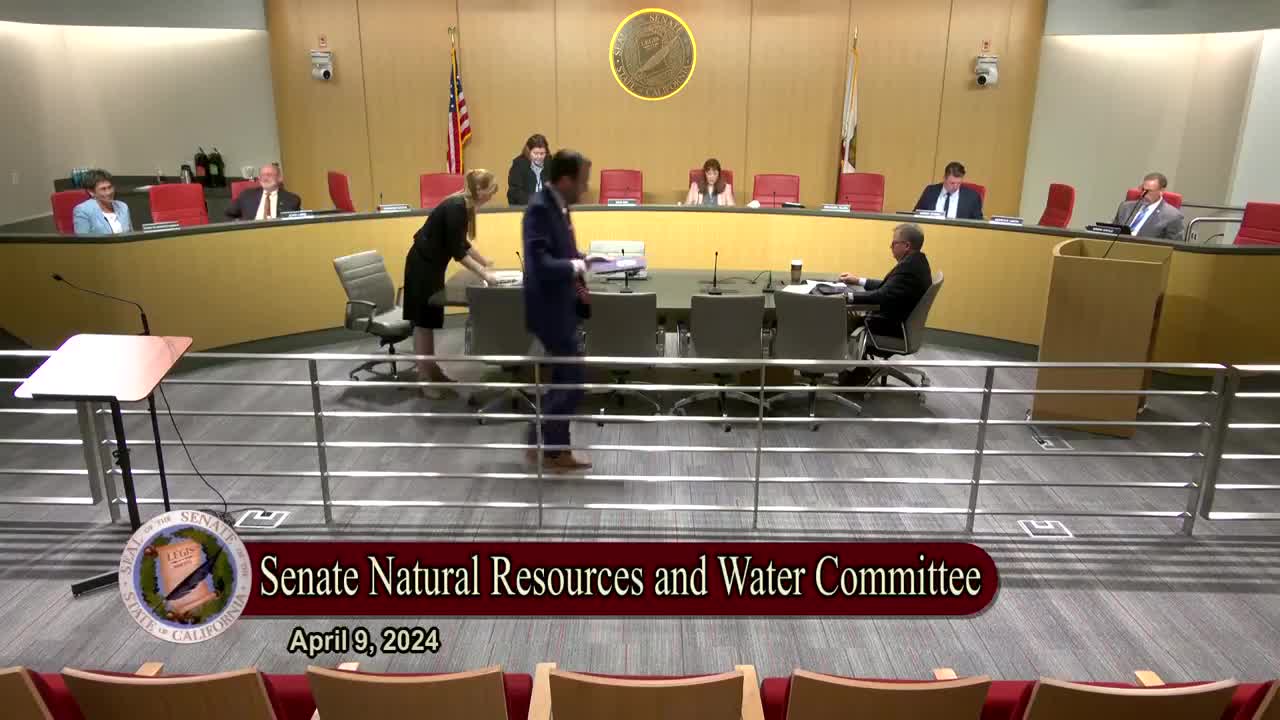 9MIN
Senate Standing Committee on Natural Resources and Water
Bill Author

Bill Co-Author(s):