SB 1106: The Kasem-Nichols-Rooney Law.
- Session Year: 2023-2024
- House: Senate
- Latest Version Date: 2024-09-22
Current Status:
Passed
(2024-09-22: Chaptered by Secretary of State. Chapter 455, Statutes of 2024.)
Introduced
In Committee
First Chamber
In Committee
Second Chamber
Enacted
The Guardianship-Conservatorship Law generally establishes the powers and duties of a guardian or conservator of a person, an estate, or both. Existing law authorizes a conservator to establish the residence of a conservatee within and outside of California, as prescribed, and requires the conservator to select the least restrictive appropriate residence that is available, which existing law presumes to be the personal residence of the conservatee. Existing law requires the conservator to file a notice of change of residence with the court within 30 days of the date of the change, and requires the conservator to deliver a copy of the notice to the spouse or registered domestic partner of the conservatee, if any, and to the relatives named in the petition for appointment of the conservator, as specified, and to file proof of delivery of that notice with the court. If the conservator proposes to remove the conservatee from their personal residence, existing law requires the conservator to provide notice to those persons at least 15 days before the proposed removal of the conservatee, except as specified. Existing law, at any time after issuance of letters of guardianship or conservatorship, authorizes specified individuals, including an interested person, to file with the court clerk a written request for special notice.
This bill, the Kasem-Nichols-Rooney Law, would additionally require the conservator to provide notice if the conservator proposes to remove the conservatee from their current residence. The bill also would require the conservator to provide notice under the above circumstances to a person who has requested special notice of the matter, and would define interested person for these purposes. When the conservator is removing the conservatee from their current residence or personal residence, the bill would require the conservator to provide notice to the designated persons at least 20 days before the proposed removal of the conservatee, except as specified.
Existing law requires a conservator to provide notice of a conservatees death by delivering a copy of the notice to specified persons and by filing a proof of delivery with the court, unless otherwise ordered by the court.
This bill additionally would require the conservator to provide notice to the above-specified persons of the date, time, and location of any funeral, burial, or memorial arrangements for the conservatee, if the conservator makes those arrangements. The bill would require that notice to be delivered electronically whenever possible.
This bill would define interested person for these purposes.
The Guardianship-Conservatorship Law generally establishes the powers and duties of a guardian or conservator of a person, an estate, or both. Existing law authorizes a conservator to establish the residence of a conservatee within and outside of California, as prescribed, and requires the conservator to select the least restrictive appropriate residence that is available, which existing law presumes to be the personal residence of the conservatee. Existing law requires the conservator to file a notice of change of residence with the court within 30 days of the date of the change, and requires the conservator to deliver a copy of the notice to the spouse or registered domestic partner of the conservatee, if any, and to the relatives named in the petition for appointment of the conservator, as specified, and to file proof of delivery of that notice with the court. If the conservator proposes to remove the conservatee from their personal residence, existing law requires the conservator to provide notice to those persons at least 15 days before the proposed removal of the conservatee, except as specified. Existing law, at any time after issuance of letters of guardianship or conservatorship, authorizes specified individuals, including an interested person, to file with the court clerk a written request for special notice.
This bill bill, the Kasem-Nichols-Rooney Law, would additionally require the conservator to provide notice if the conservator proposes to remove the conservatee from their current residence. The bill also would require the conservator to provide notice under the above circumstances to a person who has requested special notice of the matter, and would define interested person for these purposes. When the conservator is removing the conservatee from their current residence or personal residence, the bill would require the conservator to provide notice to the designated persons at least 20 days before the proposed removal of the conservatee, except as specified.
Existing law requires a conservator to provide notice of a conservatees death by delivering a copy of the notice to specified persons and by filing a proof of delivery with the court, unless otherwise ordered by the court.
This bill additionally would require the conservator to provide notice to the above-specified persons of the date, time, and location of any funeral, burial, or memorial arrangements for the conservatee, if the conservator makes those arrangements. The bill would require that notice to be delivered electronically whenever possible.
This bill would define interested person for these purposes.
The Guardianship-Conservatorship Law generally establishes the powers and duties of a guardian or conservator of a person, an estate, or both. Existing law authorizes a conservator to establish the residence of a conservatee within and outside of California, as prescribed, and requires the conservator to select the least restrictive appropriate residence that is available, which existing law presumes to be the personal residence of the conservatee. Existing law requires the conservator to file a notice of change of residence with the court within 30 days of the date of the change, and requires the conservator to deliver a copy of the notice to the spouse or registered domestic partner of the conservatee, if any, and to the relatives named in the petition for appointment of the conservator, as specified, and to file proof of delivery of that notice with the court. If the conservator proposes to remove the conservatee from their personal residence, existing law requires the conservator to provide notice to those persons at least 15 days before the proposed removal of the conservatee, except as specified. Existing law, at any time after issuance of letters of guardianship or conservatorship, authorizes specified individuals, including an interested person, to file with the court clerk a written request for special notice.
This bill would additionally require the conservator to provide notice if the conservator proposes to remove the conservatee from their current residence or location where they are staying for an extended period of time. residence. The bill also would require the conservator to provide notice under the above circumstances to a person who has requested special notice of the matter, and would define interested person for these purposes. When the conservator is removing the conservatee from their current residence or location, personal residence, the bill would require the conservator to provide notice to the designated persons at least 20 days before the proposed removal of the conservatee, except as specified.
Existing law requires a conservator to provide notice of a conservatees death by delivering a copy of the notice to specified persons and by filing a proof of delivery with the court, unless otherwise ordered by the court.
This bill additionally would require the conservator to provide notice to the above-specified persons of the date, time, and location of any funeral, burial, or memorial arrangements for the conservatee, if the conservator makes those arrangements. The bill would require that notice to be delivered electronically whenever possible.
This bill would define interested person for these purposes.
The Guardianship-Conservatorship Law generally establishes the powers and duties of a guardian or conservator of a person, an estate, or both. Existing law authorizes a conservator to establish the residence of a conservatee within and outside of California, as prescribed, and requires the conservator to select the least restrictive appropriate residence that is available, which existing law presumes to be the personal residence of the conservatee. Existing law requires the conservator to file a notice of change of residence with the court within 30 days of the date of the change, and requires the conservator to deliver a copy of the notice to the spouse or registered domestic partner of the conservatee, if any, and to the relatives named in the petition for appointment of the conservator, as specified, and to file proof of delivery of that notice with the court. If the conservator proposes to remove the conservatee from their personal residence, existing law requires the conservator to provide notice to those persons at least 15 days before the proposed removal of the conservatee, except as specified. Existing law, at any time after issuance of letters of guardianship or conservatorship, authorizes specified individuals, including an interested person, to file with the court clerk a written request for special notice.
This bill would require the conservator to provide notice if the conservator proposes to remove the conservatee from their current residence or location where they are staying for an extended period of time. The bill also would require the conservator to provide notice under the above circumstances to a person who has requested special notice of the matter, pursuant to a specified provision. and would define interested person for these purposes. When the conservator is removing the conservatee from their personal residence, current residence or location, the bill would require the conservator to provide notice to the designated persons at least 20 days before the proposed removal of the conservatee, except as specified.
Existing law requires a conservator to provide notice of a conservatees death by delivering a copy of the notice to specified persons and by filing a proof of delivery with the court, unless otherwise ordered by the court.
This bill additionally would require the conservator to provide notice to the above-specified persons of the date, time, and location of any funeral, burial, or memorial arrangements for the conservatee. conservatee, if the conservator makes those arrangements. The bill would require that notice to be delivered electronically whenever possible.
This bill would define interested person for these purposes.
The Guardianship-Conservatorship Law generally establishes the powers and duties of a guardian or conservator of a person, an estate, or both. Existing law authorizes a conservator to establish the residence of a conservatee within and outside of California, as prescribed, and requires the conservator to select the least restrictive appropriate residence that is available, which existing law presumes to be the personal residence of the conservatee. Existing law requires the conservator to file a notice of change of residence with the court within 30 days of the date of the change, and requires the conservator to deliver a copy of the notice to the spouse or registered domestic partner of the conservatee, if any, and to the relatives named in the petition for appointment of the conservator, as specified, and to file proof of delivery of that notice with the court. If the conservator proposes to remove the conservatee from their personal residence, existing law requires the conservator to provide notice to those persons at least 15 days before the proposed removal of the conservatee, except as specified.
This bill also would require the conservator to provide notice under the above circumstances to a person who has requested special notice of the matter, pursuant to a specified provision. When the conservator is removing the conservatee from their personal residence, the bill would require the conservator to provide notice to the designated persons at least 20 days before the proposed removal of the conservatee, except as specified.
Existing law requires a conservator to provide notice of a conservatees death by delivering a copy of the notice to specified persons and by filing a proof of delivery with the court, unless otherwise ordered by the court.
This bill additionally would require the conservator to provide notice to the above-specified persons of the date, time, and location of any funeral, burial, or memorial arrangements for the conservatee. The bill would require that notice to be delivered electronically whenever possible.
Existing law establishes procedures for a conservatorship of the person or estate of an adult, or of a minor who is married or whose marriage has been dissolved. Existing law declares the intent of the Legislature in establishing these procedures, among other purposes, to protect the rights of persons who are placed under conservatorship, to provide that the health and psychosocial needs of the proposed conservatee are met, and to ensure, to the greatest possible extent, that the conservatee is able to understand, make, and communicate their own, informed, choices while under conservatorship.This bill would declare the intent of the Legislature to enact legislation to ensure that the rights of older adults who have been placed under a probate conservatorship are not unduly restricted.Existing law establishes procedures for a conservatorship of the person or estate of an adult, or of a minor who is married or whose marriage has been dissolved. Existing law declares the intent of the Legislature in establishing these procedures, among other purposes, to protect the rights of persons who are placed under conservatorship, to provide that the health and psychosocial needs of the proposed conservatee are met, and to ensure, to the greatest possible extent, that the conservatee is able to understand, make, and communicate their own, informed, choices while under conservatorship.
This bill would declare the intent of the Legislature to enact legislation to ensure that the rights of older adults who have been placed under a probate conservatorship are not unduly restricted.
This act shall be known, and may be cited, as the Kasem-Nichols-Rooney Law.
SEC. 2.Section 2352 of the Probate Code is amended to read:2352.(a)The guardian may establish the residence of the ward at any place within this state without the permission of the court. The guardian shall select the least restrictive appropriate residence that is available and necessary to meet the needs of the ward, and that is in the best interests of the ward.
(b)The conservator may establish the residence of the conservatee at any place within this state without the permission of the court. The conservator shall select the least restrictive appropriate residence, as described in Section 2352.5, that is available and necessary to meet the needs of the conservatee, and that is in the best interests of the conservatee.
(c)If permission of the court is first obtained, a guardian or conservator may establish the residence of a ward or conservatee at a place not within this state. Notice of the hearing on the petition to establish the residence of the ward or conservatee out of state, together with a copy of the petition, shall be given in the manner required by subdivision (a) of Section 1460 to all persons entitled to notice under subdivision (b) of Section 1511 or subdivision (b) of Section 1822.
(d)(1)An order under subdivision (c) relating to a ward shall require the guardian either to return the ward to this state, or to cause a guardianship proceeding or its equivalent to be commenced in the place of the new residence, when the ward has resided in the place of new residence for a period of four months or a longer or shorter period specified in the order.
(2)An order under subdivision (c) relating to a conservatee shall require the conservator to do one of the following when the conservatee has resided in the other state for a period of four months or a longer or shorter period specified in the order:
(A)Return the conservatee to this state.
(B)Petition for transfer of the conservatorship to the other state under Article 3 (commencing with Section 2001) of Chapter 8 of Part 3 and corresponding law of the other state.
(C)Cause a conservatorship proceeding or its equivalent to be commenced in the other state.
(e)(1)The guardian or conservator shall file a notice of change of residence with the court within 30 days of the date of the change. The guardian or conservator shall include in the notice of change of residence a declaration stating that the wards or conservatees change of residence is consistent with the standard described in subdivision (b).
(2)(A)The guardian or conservator shall deliver pursuant to Section 1215 a copy of the notice to all persons entitled to notice under subdivision (b) of Section 1511 or subdivision (b) of Section 1822 and shall file proof of delivery of the notice with the court. The court may, for good cause, waive the delivery requirement pursuant to this paragraph in order to prevent harm to the conservatee or ward.
(B)A conservator also shall provide notice pursuant to subparagraph (A) to any person who has requested special notice of the matter pursuant to Section 2700.
(3)If the guardian or conservator proposes to remove the ward or conservatee from their current residence or personal residence, except as provided by subdivision (c), the guardian or conservator shall deliver pursuant to Section 1215 a notice of their intention to change the residence of the ward or conservatee to all persons entitled to notice under subdivision (b) of Section 1511 and subdivision (b) of Section 1822, and any person who has requested special notice of the matter, pursuant to Section 2700. In the absence of an emergency, that notice shall be delivered at least 15 days before the proposed removal of the ward, or at least 20 days of the conservatee, from their current residence or personal residence. If the notice is delivered less than 15 or 20 days before the proposed removal of the ward or conservatee, as applicable, the guardian or conservator shall set forth the basis for the emergency in the notice. The guardian or conservator shall file proof of delivery of that notice with the court.
(f)This section does not apply when the court has made an order under Section 2351 pursuant to which the conservatee retains the right to establish their own residence.
(g)As used in this section, guardian or conservator includes a proposed guardian or proposed conservator and ward or conservatee includes a proposed ward or proposed conservatee.
(h)This section does not apply to a person with developmental disabilities for whom the Director of Developmental Services or a regional center, established pursuant to Chapter 5 (commencing with Section 4620) of Division 4.5 of the Welfare and Institutions Code, acts as the conservator.
SEC. 3.Section 2361 of the Probate Code is amended to read:2361.(a)A conservator shall provide notice of a conservatees death by delivering pursuant to Section 1215 a copy of the notice to all persons entitled to notice under Section 1460, including, but not limited to, a person who has requested special notice of the matter, as provided in Section 2700, and by filing a proof of delivery with the court, unless otherwise ordered by the court.
(b)A conservator also shall provide notice, as specified in subdivision (a), of the date, time, and location of any funeral, burial, or memorial arrangements for the conservatee, if the conservator makes those arrangements. Notice pursuant to this subdivision shall be delivered electronically whenever possible.
SEC. 4.Section 2700 of the Probate Code is amended to read:2700.(a)(1)At any time after the issuance of letters of guardianship or conservatorship, the ward, if over 14 years of age or the conservatee, the spouse of the ward or the spouse or domestic partner of the conservatee, any relative or creditor of the ward or conservatee, or any other interested person, in person or by attorney, may file with the court clerk a written request for special notice.
(2)An interested person may include, but is not limited to, a family member of the conservatee not included in Section 1460 or a friend of the conservatee.
(b)The request for special notice shall be so entitled and shall set forth the name of the person and the address to which notices shall be delivered pursuant to Section 1215.
(c)Special notice may be requested of any one or more of the following matters:
(1)Petitions filed in the guardianship or conservatorship proceeding.
(2)Inventories and appraisals of property in the estate, including any supplemental inventories and appraisals.
(3)Accounts of the guardian or conservator.
(4)Proceedings for the final termination of the guardianship or conservatorship proceeding.
(d)Special notice may be requested of:
(1)Any one or more of the matters in subdivision (c) by describing the matter or matters.
(2)All the matters in subdivision (c) by referring generally to the matters described in subdivision (c) of Section 2700 of the Probate Code or by using words of similar meaning.
(e)A copy of the request shall be delivered pursuant to Section 1215 to the guardian or conservator or to the attorney for the guardian or conservator. If personally delivered, the request is effective when it is delivered. If mailed or electronically delivered, the request is effective when it is received.
(f)If the original of the request is filed with the court clerk, it shall be accompanied by a written admission or proof of service.
This act shall be known, and may be cited, as the Kasem-Nichols-Rooney Law.
SECTION 1.SEC. 2.Section 2352 of the Probate Code is amended to read:2352.(a)The guardian may establish the residence of the ward at any place within this state without the permission of the court. The guardian shall select the least restrictive appropriate residence that is available and necessary to meet the needs of the ward, and that is in the best interests of the ward.
(b)The conservator may establish the residence of the conservatee at any place within this state without the permission of the court. The conservator shall select the least restrictive appropriate residence, as described in Section 2352.5, that is available and necessary to meet the needs of the conservatee, and that is in the best interests of the conservatee.
(c)If permission of the court is first obtained, a guardian or conservator may establish the residence of a ward or conservatee at a place not within this state. Notice of the hearing on the petition to establish the residence of the ward or conservatee out of state, together with a copy of the petition, shall be given in the manner required by subdivision (a) of Section 1460 to all persons entitled to notice under subdivision (b) of Section 1511 or subdivision (b) of Section 1822.
(d)(1)An order under subdivision (c) relating to a ward shall require the guardian either to return the ward to this state, or to cause a guardianship proceeding or its equivalent to be commenced in the place of the new residence, when the ward has resided in the place of new residence for a period of four months or a longer or shorter period specified in the order.
(2)An order under subdivision (c) relating to a conservatee shall require the conservator to do one of the following when the conservatee has resided in the other state for a period of four months or a longer or shorter period specified in the order:
(A)Return the conservatee to this state.
(B)Petition for transfer of the conservatorship to the other state under Article 3 (commencing with Section 2001) of Chapter 8 of Part 3 and corresponding law of the other state.
(C)Cause a conservatorship proceeding or its equivalent to be commenced in the other state.
(e)(1)The guardian or conservator shall file a notice of change of residence with the court within 30 days of the date of the change. The guardian or conservator shall include in the notice of change of residence a declaration stating that the wards or conservatees change of residence is consistent with the standard described in subdivision (b).
(2)(A)The guardian or conservator shall deliver pursuant to Section 1215 a copy of the notice to all persons entitled to notice under subdivision (b) of Section 1511 or subdivision (b) of Section 1822 and shall file proof of delivery of the notice with the court. The court may, for good cause, waive the delivery requirement pursuant to this paragraph in order to prevent harm to the conservatee or ward.
(B)A conservator also shall provide notice pursuant to subparagraph (A) to any person who has requested special notice of the matter pursuant to Section 2700.
(3)If the guardian or conservator proposes to remove the ward or conservatee from their current residence or personal residence, except as provided by subdivision (c), the guardian or conservator shall deliver pursuant to Section 1215 a notice of their intention to change the residence of the ward or conservatee to all persons entitled to notice under subdivision (b) of Section 1511 and subdivision (b) of Section 1822, and any person who has requested special notice of the matter, pursuant to Section 2700. In the absence of an emergency, that notice shall be delivered at least 15 days before the proposed removal of the ward, or at least 20 days of the conservatee, from their current residence or personal residence. If the notice is delivered less than 15 or 20 days before the proposed removal of the ward or conservatee, as applicable, the guardian or conservator shall set forth the basis for the emergency in the notice. The guardian or conservator shall file proof of delivery of that notice with the court.
(f)This section does not apply when the court has made an order under Section 2351 pursuant to which the conservatee retains the right to establish their own residence.
(g)As used in this section, guardian or conservator includes a proposed guardian or proposed conservator and ward or conservatee includes a proposed ward or proposed conservatee.
(h)This section does not apply to a person with developmental disabilities for whom the Director of Developmental Services or a regional center, established pursuant to Chapter 5 (commencing with Section 4620) of Division 4.5 of the Welfare and Institutions Code, acts as the conservator.
SEC. 2.SEC. 3.Section 2361 of the Probate Code is amended to read:2361.(a)A conservator shall provide notice of a conservatees death by delivering pursuant to Section 1215 a copy of the notice to all persons entitled to notice under Section 1460, including, but not limited to, a person who has requested special notice of the matter, as provided in Section 2700, and by filing a proof of delivery with the court, unless otherwise ordered by the court.
(b)A conservator also shall provide notice, as specified in subdivision (a), of the date, time, and location of any funeral, burial, or memorial arrangements for the conservatee, if the conservator makes those arrangements. Notice pursuant to this subdivision shall be delivered electronically whenever possible.
SEC. 3.SEC. 4.Section 2700 of the Probate Code is amended to read:2700.(a)(1)At any time after the issuance of letters of guardianship or conservatorship, the ward, if over 14 years of age or the conservatee, the spouse of the ward or the spouse or domestic partner of the conservatee, any relative or creditor of the ward or conservatee, or any other interested person, in person or by attorney, may file with the court clerk a written request for special notice.
(2)An interested person may include, but is not limited to, a family member of the conservatee not included in Section 1460 or a friend of the conservatee.
(b)The request for special notice shall be so entitled and shall set forth the name of the person and the address to which notices shall be delivered pursuant to Section 1215.
(c)Special notice may be requested of any one or more of the following matters:
(1)Petitions filed in the guardianship or conservatorship proceeding.
(2)Inventories and appraisals of property in the estate, including any supplemental inventories and appraisals.
(3)Accounts of the guardian or conservator.
(4)Proceedings for the final termination of the guardianship or conservatorship proceeding.
(d)Special notice may be requested of:
(1)Any one or more of the matters in subdivision (c) by describing the matter or matters.
(2)All the matters in subdivision (c) by referring generally to the matters described in subdivision (c) of Section 2700 of the Probate Code or by using words of similar meaning.
(e)A copy of the request shall be delivered pursuant to Section 1215 to the guardian or conservator or to the attorney for the guardian or conservator. If personally delivered, the request is effective when it is delivered. If mailed or electronically delivered, the request is effective when it is received.
(f)If the original of the request is filed with the court clerk, it shall be accompanied by a written admission or proof of service.
(a)The guardian may establish the residence of the ward at any place within this state without the permission of the court. The guardian shall select the least restrictive appropriate residence that is available and necessary to meet the needs of the ward, and that is in the best interests of the ward.
(b)The conservator may establish the residence of the conservatee at any place within this state without the permission of the court. The conservator shall select the least restrictive appropriate residence, as described in Section 2352.5, that is available and necessary to meet the needs of the conservatee, and that is in the best interests of the conservatee.
(c)If permission of the court is first obtained, a guardian or conservator may establish the residence of a ward or conservatee at a place not within this state. Notice of the hearing on the petition to establish the residence of the ward or conservatee out of state, together with a copy of the petition, shall be given in the manner required by subdivision (a) of Section 1460 to all persons entitled to notice under subdivision (b) of Section 1511 or subdivision (b) of Section 1822.
(d)(1)An order under subdivision (c) relating to a ward shall require the guardian either to return the ward to this state, or to cause a guardianship proceeding or its equivalent to be commenced in the place of the new residence, when the ward has resided in the place of new residence for a period of four months or a longer or shorter period specified in the order.
(2)An order under subdivision (c) relating to a conservatee shall require the conservator to do one of the following when the conservatee has resided in the other state for a period of four months or a longer or shorter period specified in the order:
(A)Return the conservatee to this state.
(B)Petition for transfer of the conservatorship to the other state under Article 3 (commencing with Section 2001) of Chapter 8 of Part 3 and corresponding law of the other state.
(C)Cause a conservatorship proceeding or its equivalent to be commenced in the other state.
(e)(1)The guardian or conservator shall file a notice of change of residence with the court within 30 days of the date of the change. The guardian or conservator shall include in the notice of change of residence a declaration stating that the wards or conservatees change of residence is consistent with the standard described in subdivision (b).
(2)(A)The guardian or conservator shall deliver pursuant to Section 1215 a copy of the notice to all persons entitled to notice under subdivision (b) of Section 1511 or subdivision (b) of Section 1822 and shall file proof of delivery of the notice with the court. The court may, for good cause, waive the delivery requirement pursuant to this paragraph in order to prevent harm to the conservatee or ward.
(B)A conservator also shall provide notice pursuant to subparagraph (A) to any person who has requested special notice of the matter pursuant to Section 2700.
(3)If the guardian or conservator proposes to remove the ward or conservatee from their current residence or location where the conservatee is staying for an extended period of time, personal residence, except as provided by subdivision (c), the guardian or conservator shall deliver pursuant to Section 1215 a notice of their intention to change the residence of the ward or conservatee to all persons entitled to notice under subdivision (b) of Section 1511 and subdivision (b) of Section 1822, and any person who has requested special notice of the matter, pursuant to Section 2700. In the absence of an emergency, that notice shall be delivered at least 15 days before the proposed removal of the ward, or at least 20 days of the conservatee, from their current residence or location where the conservatee is staying for an extended period of time. personal residence. If the notice is delivered less than 15 or 20 days before the proposed removal of the ward or conservatee, as applicable, the guardian or conservator shall set forth the basis for the emergency in the notice. The guardian or conservator shall file proof of delivery of that notice with the court.
(f)This section does not apply when the court has made an order under Section 2351 pursuant to which the conservatee retains the right to establish their own residence.
(g)As used in this section, guardian or conservator includes a proposed guardian or proposed conservator and ward or conservatee includes a proposed ward or proposed conservatee.
(h)This section does not apply to a person with developmental disabilities for whom the Director of Developmental Services or a regional center, established pursuant to Chapter 5 (commencing with Section 4620) of Division 4.5 of the Welfare and Institutions Code, acts as the conservator.
SEC. 2.Section 2361 of the Probate Code is amended to read:2361.(a)A conservator shall provide notice of a conservatees death by delivering pursuant to Section 1215 a copy of the notice to all persons entitled to notice under Section 1460, including, but not limited to, a person who has requested special notice of the matter, as provided in Section 2700, and by filing a proof of delivery with the court, unless otherwise ordered by the court.
(b)A conservator also shall provide notice, as specified in subdivision (a), of the date, time, and location of any funeral, burial, or memorial arrangements for the conservatee, if the conservator makes those arrangements. Notice pursuant to this subdivision shall be delivered electronically whenever possible.
SEC. 3.Section 2700 of the Probate Code is amended to read:2700.(a)(1)At any time after the issuance of letters of guardianship or conservatorship, the ward, if over 14 years of age or the conservatee, the spouse of the ward or the spouse or domestic partner of the conservatee, any relative or creditor of the ward or conservatee, or any other interested person, in person or by attorney, may file with the court clerk a written request for special notice.
(2)An interested person may include, but is not limited to, a family member of the conservatee not included in Section 1460 or a friend of the conservatee.
(b)The request for special notice shall be so entitled and shall set forth the name of the person and the address to which notices shall be delivered pursuant to Section 1215.
(c)Special notice may be requested of any one or more of the following matters:
(1)Petitions filed in the guardianship or conservatorship proceeding.
(2)Inventories and appraisals of property in the estate, including any supplemental inventories and appraisals.
(3)Accounts of the guardian or conservator.
(4)Proceedings for the final termination of the guardianship or conservatorship proceeding.
(d)Special notice may be requested of:
(1)Any one or more of the matters in subdivision (c) by describing the matter or matters.
(2)All the matters in subdivision (c) by referring generally to the matters described in subdivision (c) of Section 2700 of the Probate Code or by using words of similar meaning.
(e)A copy of the request shall be delivered pursuant to Section 1215 to the guardian or conservator or to the attorney for the guardian or conservator. If personally delivered, the request is effective when it is delivered. If mailed or electronically delivered, the request is effective when it is received.
(f)If the original of the request is filed with the court clerk, it shall be accompanied by a written admission or proof of service.
(a)The guardian may establish the residence of the ward at any place within this state without the permission of the court. The guardian shall select the least restrictive appropriate residence that is available and necessary to meet the needs of the ward, and that is in the best interests of the ward.
(b)The conservator may establish the residence of the conservatee at any place within this state without the permission of the court. The conservator shall select the least restrictive appropriate residence, as described in Section 2352.5, that is available and necessary to meet the needs of the conservatee, and that is in the best interests of the conservatee.
(c)If permission of the court is first obtained, a guardian or conservator may establish the residence of a ward or conservatee at a place not within this state. Notice of the hearing on the petition to establish the residence of the ward or conservatee out of state, together with a copy of the petition, shall be given in the manner required by subdivision (a) of Section 1460 to all persons entitled to notice under subdivision (b) of Section 1511 or subdivision (b) of Section 1822.
(d)(1)An order under subdivision (c) relating to a ward shall require the guardian either to return the ward to this state, or to cause a guardianship proceeding or its equivalent to be commenced in the place of the new residence, when the ward has resided in the place of new residence for a period of four months or a longer or shorter period specified in the order.
(2)An order under subdivision (c) relating to a conservatee shall require the conservator to do one of the following when the conservatee has resided in the other state for a period of four months or a longer or shorter period specified in the order:
(A)Return the conservatee to this state.
(B)Petition for transfer of the conservatorship to the other state under Article 3 (commencing with Section 2001) of Chapter 8 of Part 3 and corresponding law of the other state.
(C)Cause a conservatorship proceeding or its equivalent to be commenced in the other state.
(e)(1)The guardian or conservator shall file a notice of change of residence with the court within 30 days of the date of the change. The guardian or conservator shall include in the notice of change of residence a declaration stating that the wards or conservatees change of residence is consistent with the standard described in subdivision (b).
(2)(A)The guardian or conservator shall deliver pursuant to Section 1215 a copy of the notice to all persons entitled to notice under subdivision (b) of Section 1511 or subdivision (b) of Section 1822 and shall file proof of delivery of the notice with the court. The court may, for good cause, waive the delivery requirement pursuant to this paragraph in order to prevent harm to the conservatee or ward.
(B)A conservator also shall provide notice pursuant to subparagraph (A) to any person who has requested special notice of the matter pursuant to Section 2700.
(3)If the guardian or conservator proposes to remove the ward or conservatee from their personal residence, current residence or location where the conservatee is staying for an extended period of time, except as provided by subdivision (c), the guardian or conservator shall deliver pursuant to Section 1215 a notice of their intention to change the residence of the ward or conservatee to all persons entitled to notice under subdivision (b) of Section 1511 and subdivision (b) of Section 1822, and any person who has requested special notice of the matter, pursuant to Section 2700. In the absence of an emergency, that notice shall be delivered at least 15 days before the proposed removal of the ward, or at least 20 days of the conservatee, from their personal residence. current residence or location where the conservatee is staying for an extended period of time. If the notice is delivered less than 15 or 20 days before the proposed removal of the ward or conservatee, as applicable, the guardian or conservator shall set forth the basis for the emergency in the notice. The guardian or conservator shall file proof of delivery of that notice with the court.
(f)This section does not apply when the court has made an order under Section 2351 pursuant to which the conservatee retains the right to establish their own residence.
(g)As used in this section, guardian or conservator includes a proposed guardian or proposed conservator and ward or conservatee includes a proposed ward or proposed conservatee.
(h)This section does not apply to a person with developmental disabilities for whom the Director of Developmental Services or a regional center, established pursuant to Chapter 5 (commencing with Section 4620) of Division 4.5 of the Welfare and Institutions Code, acts as the conservator.
SEC. 2.Section 2361 of the Probate Code is amended to read:2361.(a)A conservator shall provide notice of a conservatees death by delivering pursuant to Section 1215 a copy of the notice to all persons entitled to notice under Section 1460, including, but not limited to, a person who has requested special notice of the matter, as provided in Section 2700, and by filing a proof of delivery with the court, unless otherwise ordered by the court.
(b)A conservator also shall provide notice, as specified in subdivision (a), of the date, time, and location of any funeral, burial, or memorial arrangements for the conservatee. conservatee, if the conservator makes those arrangements. Notice pursuant to this subdivision shall be delivered electronically whenever possible.
SEC. 3.Section 2700 of the Probate Code is amended to read:2700.(a)(1)At any time after the issuance of letters of guardianship or conservatorship, the ward, if over 14 years of age or the conservatee, the spouse of the ward or the spouse or domestic partner of the conservatee, any relative or creditor of the ward or conservatee, or any other interested person, in person or by attorney, may file with the court clerk a written request for special notice.
(2)An interested person may include, but is not limited to, a family member of the conservatee not included in Section 1460 or a friend of the conservatee.
(b)The request for special notice shall be so entitled and shall set forth the name of the person and the address to which notices shall be delivered pursuant to Section 1215.
(c)Special notice may be requested of any one or more of the following matters:
(1)Petitions filed in the guardianship or conservatorship proceeding.
(2)Inventories and appraisals of property in the estate, including any supplemental inventories and appraisals.
(3)Accounts of the guardian or conservator.
(4)Proceedings for the final termination of the guardianship or conservatorship proceeding.
(d)Special notice may be requested of:
(1)Any one or more of the matters in subdivision (c) by describing the matter or matters.
(2)All the matters in subdivision (c) by referring generally to the matters described in subdivision (c) of Section 2700 of the Probate Code or by using words of similar meaning.
(e)A copy of the request shall be delivered pursuant to Section 1215 to the guardian or conservator or to the attorney for the guardian or conservator. If personally delivered, the request is effective when it is delivered. If mailed or electronically delivered, the request is effective when it is received.
(f)If the original of the request is filed with the court clerk, it shall be accompanied by a written admission or proof of service.
(a)The guardian may establish the residence of the ward at any place within this state without the permission of the court. The guardian shall select the least restrictive appropriate residence that is available and necessary to meet the needs of the ward, and that is in the best interests of the ward.
(b)The conservator may establish the residence of the conservatee at any place within this state without the permission of the court. The conservator shall select the least restrictive appropriate residence, as described in Section 2352.5, that is available and necessary to meet the needs of the conservatee, and that is in the best interests of the conservatee.
(c)If permission of the court is first obtained, a guardian or conservator may establish the residence of a ward or conservatee at a place not within this state. Notice of the hearing on the petition to establish the residence of the ward or conservatee out of state, together with a copy of the petition, shall be given in the manner required by subdivision (a) of Section 1460 to all persons entitled to notice under subdivision (b) of Section 1511 or subdivision (b) of Section 1822.
(d)(1)An order under subdivision (c) relating to a ward shall require the guardian either to return the ward to this state, or to cause a guardianship proceeding or its equivalent to be commenced in the place of the new residence, when the ward has resided in the place of new residence for a period of four months or a longer or shorter period specified in the order.
(2)An order under subdivision (c) relating to a conservatee shall require the conservator to do one of the following when the conservatee has resided in the other state for a period of four months or a longer or shorter period specified in the order:
(A)Return the conservatee to this state.
(B)Petition for transfer of the conservatorship to the other state under Article 3 (commencing with Section 2001) of Chapter 8 of Part 3 and corresponding law of the other state.
(C)Cause a conservatorship proceeding or its equivalent to be commenced in the other state.
(e)(1)The guardian or conservator shall file a notice of change of residence with the court within 30 days of the date of the change. The guardian or conservator shall include in the notice of change of residence a declaration stating that the wards or conservatees change of residence is consistent with the standard described in subdivision (b).
(2)(A)The guardian or conservator shall deliver pursuant to Section 1215 a copy of the notice to all persons entitled to notice under subdivision (b) of Section 1511 or subdivision (b) of Section 1822 and shall file proof of delivery of the notice with the court. The court may, for good cause, waive the delivery requirement pursuant to this paragraph in order to prevent harm to the conservatee or ward.
(B)A conservator also shall provide notice pursuant to subparagraph (A) to any person who has requested special notice of the matter pursuant to Section 2700.
(3)If the guardian or conservator proposes to remove the ward or conservatee from his or her their personal residence, except as provided by subdivision (c), the guardian or conservator shall deliver pursuant to Section 1215 a notice of his or her their intention to change the residence of the ward or conservatee to all persons entitled to notice under subdivision (b) of Section 1511 and subdivision (b) of Section 1822. 1822, and any person who has requested special notice of the matter, pursuant to Section 2700. In the absence of an emergency, that notice shall be delivered at least 15 days before the proposed removal of the ward or conservatee from his or her ward, or at least 20 days of the conservatee, from their personal residence. If the notice is delivered less than 15 or 20 days before the proposed removal of the ward or conservatee, as applicable, the guardian or conservator shall set forth the basis for the emergency in the notice. The guardian or conservator shall file proof of delivery of that notice with the court.
(f)This section does not apply where when the court has made an order under Section 2351 pursuant to which the conservatee retains the right to establish his or her their own residence.
(g)As used in this section, guardian or conservator includes a proposed guardian or proposed conservator and ward or conservatee includes a proposed ward or proposed conservatee.
(h)This section does not apply to a person with developmental disabilities for whom the Director of Developmental Services or a regional center, established pursuant to Chapter 5 (commencing with Section 4620) of Division 4.5 of the Welfare and Institutions Code, acts as the conservator.
SEC. 2.Section 2361 of the Probate Code is amended to read:2361.(a)A conservator shall provide notice of a conservatees death by delivering pursuant to Section 1215 a copy of the notice to all persons entitled to notice under Section 1460 1460, including, but not limited to, a person who has requested special notice of the matter, as provided in Section 2700, and by filing a proof of delivery with the court, unless otherwise ordered by the court.
(b)A conservator also shall provide notice, as specified in subdivision (a), of the date, time, and location of any funeral, burial, or memorial arrangements for the conservatee. Notice pursuant to this subdivision shall be delivered electronically whenever possible.
SECTION 1.It is the intent of the Legislature to enact legislation to ensure that the rights of older adults who have been placed under a probate conservatorship are not unduly restricted.It is the intent of the Legislature to enact legislation to ensure that the rights of older adults who have been placed under a probate conservatorship are not unduly restricted.
|
Date
|
Status
|
|---|---|
| Sep 22, 2024 | Chaptered by Secretary of State. Chapter 455, Statutes of 2024. |
| Sep 22, 2024 | Approved by the Governor. |
| Aug 22, 2024 | Enrolled and presented to the Governor at 2 p.m. |
| Aug 15, 2024 | Assembly amendments concurred in. (Ayes 37. Noes 0. Page 5082.) Ordered to engrossing and enrolling. |
| Aug 13, 2024 | Ordered to special consent calendar. |
| Aug 8, 2024 | In Senate. Concurrence in Assembly amendments pending. |
| Aug 8, 2024 | Read third time. Passed. (Ayes 73. Noes 0. Page 6247.) Ordered to the Senate. |
| Jul 3, 2024 | In Assembly. Held at Desk. |
| Jul 3, 2024 | Action rescinded whereby bill was read third time, passed, and ordered to the Senate. |
| Jul 3, 2024 | Ordered to the Assembly. |
| Jul 1, 2024 | In Senate. Concurrence in Assembly amendments pending. |
| Jul 1, 2024 | Read third time. Passed. (Ayes 72. Noes 0. Page 6117.) Ordered to the Senate. |
| Jun 26, 2024 | Read second time. Ordered to consent calendar. |
| Jun 25, 2024 | From committee: Do pass. Ordered to consent calendar. (Ayes 11. Noes 0.) (June 25). |
| Jun 17, 2024 | From committee with author's amendments. Read second time and amended. Re-referred to Com. on JUD. |
| Jun 5, 2024 | June 11 set for first hearing canceled at the request of author. |
| May 28, 2024 | Referred to Com. on JUD. |
| May 21, 2024 | In Assembly. Read first time. Held at Desk. |
| May 20, 2024 | Read third time. Passed. (Ayes 39. Noes 0. Page 4017.) Ordered to the Assembly. |
| May 2, 2024 | Read second time and amended. Ordered to third reading. |
| May 1, 2024 | From committee: Do pass as amended. (Ayes 11. Noes 0. Page 3820.) (April 30). |
| Apr 18, 2024 | From committee with author's amendments. Read second time and amended. Re-referred to Com. on JUD. |
| Apr 5, 2024 | Set for hearing April 30. |
| Apr 3, 2024 | Re-referred to Com. on JUD. |
| Mar 20, 2024 | From committee with author's amendments. Read second time and amended. Re-referred to Com. on RLS. |
| Feb 21, 2024 | Referred to Com. on RLS. |
| Feb 14, 2024 | From printer. May be acted upon on or after March 15. |
| Feb 13, 2024 | Introduced. Read first time. To Com. on RLS. for assignment. To print. |
|
Date
|
Description
|
Location
|
Votes
|
|
|---|---|---|---|---|
| Aug 15, 2024 | Special Consent SB1106 Rubio | Senate Floor |
Passed |
|
| Aug 8, 2024 | SB 1106 Rubio Senate Third Reading By Low | Assembly Floor |
Passed |
|
| Jul 1, 2024 | SB 1106 Rubio Consent Calendar Second Day Regular Session | Assembly Floor |
Passed |
|
| Jun 25, 2024 | Do pass. To Consent Calendar. | Assembly Standing Committee on Judiciary |
Passed |
|
| May 20, 2024 | Senate 3rd Reading SB1106 Rubio | Senate Floor |
Passed |
|
| Apr 30, 2024 | Do pass as amended | Senate Standing Committee on Judiciary |
Passed |
This list shows positions taken on this bill by organizations on the date displayed, which is linked to the original source.
Positions by individuals are not included.
|
Organization
|
Position
|
Date
|
|---|---|---|
| Archangel Films LA | * Support | Apr 30, 2024 |
| CEAR | * Support | Apr 30, 2024 |
| Center for Estate Administration Reform | * Support | Apr 30, 2024 |
| Center for Estate Administration Reform | * Support | Apr 30, 2024 |
| Center for Estate Administration Reform | * Support | Apr 30, 2024 |
| Elderly Lives Matter USA | ** Support | |
| Elderly Lives Matter USA | * Support | Apr 30, 2024 |
| Foundation Aiding the Elderly | ** Support | |
| Kasem Cares | ** Support | |
| ONSTAGELOSANGELES | ** Support | |
| The Kasem Cares Foundation | * Support | Apr 30, 2024 |
SENATE RULES COMMITTEE Office of Senate Floor Analyses (916) 651-1520 Fax: (916) 327-4478 | SB 1106 |
UNFINISHED BUSINESS
Bill No: SB 1106
Author: Rubio (D)
Amended: 6/17/24
Vote: 21
SENATE JUDICIARY COMMITTEE: 11-0, 4/30/24
AYES: Umberg, Wilk, Allen, Blakespear, Caballero, Dodd, Durazo, Laird, Min, Niello, Wiener
SENATE FLOOR: 39-0, 5/20/24
AYES: Allen, Alvarado-Gil, Archuleta, Ashby, Atkins, Becker, Blakespear, Bradford, Caballero, Cortese, Dahle, Dodd, Durazo, Eggman, Glazer, Gonzalez, Grove, Hurtado, Jones, Laird, Limón, McGuire, Menjivar, Newman, Nguyen, Niello, Ochoa Bogh, Padilla, Portantino, Roth, Rubio, Seyarto, Skinner, Smallwood-Cuevas, Stern, Umberg, Wahab, Wiener, Wilk
NO VOTE RECORDED: Min
ASSEMBLY FLOOR: 72-0, 7/1/24 (Consent) - See last page for vote
SUBJECT: The Kasem-Nichols-Rooney Law
SOURCE: Kasem Cares Foundation
DIGEST:
This bill (1) clarifies who may receive special notice about a conservatorship; (2) requires persons who have requested special notice to be notified when a conservator is moving the conservatee’s place of residence, as specified; (3) extends the timeframe for when a conservator must provide a notice of intent to move the conservatee from their personal residence, from 15 days to 20 days; (4) requires a conservator to give advanced notice of their intent to move a conservatee from their current residence under the same procedures as the notice to move a conservatee from their personal residence; and (5) requires a conservator to provide specified persons with notice of a conservatee’s burial or funeral arrangements, as specified, where the conservator made those arrangements.
Assembly Amendments
name the bill the Kasem-Nichols-Rooney Law.
ANALYSIS:
Existing law:
- Authorizes a court to appoint a conservator of the person or estate of an adult, or both, where the court makes an express finding that the granting of the conservatorship is the least restrictive alternative needed for the protection of the conservatee. (Prob. Code, § 1800.3(a), (b).)
- Provides that a conservator of the person may be appointed for a person who is unable to provide properly for their personal needs for physical health, food, clothing, or shelter; and a conservator of the estate may be appointed for a person who is substantially unable to manage their own financial resources or resist fraud or undue influence. A conservator of the person and estate may be appointed if both sets of criteria are met. (Prob. Code, § 1801(c).)
- Provides that a conservatee retains the rights to do all of the following under the conservatorship, unless the court expressly withholds those rights:
- Directly receive and control their own salary.
- Make or change their will.
- Get married.
- Receive mail.
- Have visits from family and friends.
- Hire a lawyer.
- Ask a judge to change conservators.
- Ask a judge to end the conservatorship.
- Vote, unless expressly withheld by the court.
- Control personal spending money if a judge permits an allowance to be paid directly to the conservatee.
- Make their own health care decisions.
- Enter into business transactions to provide for the conservatee’s basic needs and those of their children.
- Participate in other activities the court allows when the conservator is appointed, or when the court order later grants that right at the conservatee’s request. (Prob. Code, §§ 1835.5, 1871, 1880, 1900, 1901, 1910.)
- Requires, within 120 days of appointment by the court and no later than 10 days before a hearing to determine the continuation or termination of an existing conservatorship, a conservator to file with the court a plan for the care, custody, and control of the conservatee, including the following relevant factors:
- A description of the current living arrangement for the conservatee and any plans to modify this living arrangement within the next 12 months.
- A description of the normal activities of the conservatee, including outings and social and recreational activities.
- A description of any special problems raised by the court investigator, the court, or any other interested person, and a description of how the conservator has addressed or intends to address those problems. (Prob. Code, § 2351.2.)[1]
- Provides that a conservator has the care, custody, and control of the conservatee; but this control does not extend to personal rights retained by the conservatee, including, but not limited to, the right to receive visitors, telephone calls, and personal mail, unless specifically limited by court order.
- The court may issue an order that specifically grants the conservator the power to enforce the conservatee’s rights to receive visitors, telephone calls, and personal mail, or that directs the conservator to allow those visitors, telephone calls, and personal mail.
- Where the court determines that it is appropriate in the circumstances of a particular conservatee, the court, in its discretion, may limit the powers and duties that a conservator would otherwise have by stating the specific powers that the conservator does not have, reserving those powers to the conservatee; or by stating the specific powers the conservator has, reserving the remaining rights to the conservatee. (Prob. Code, § 2351.)
- Provides that a conservator may establish the residence of the conservatee at any place within this State without the permission of the court, which is the least restrictive appropriate residence that is available and necessary to meet the needs of the conservatee and that is in the best interests of the conservatee. (Prob. Code, § 2352(b).)
- Provides that there is a presumption that the conservatee’s personal residence at the time of the commencement of the proceeding is the least restrictive appropriate residence; the presumption may be overcome by clear and convincing evidence. (Prob. Code, § 2352.5.)
- Requires, if a conservator intends to change the conservatee’s residence, the conservator to file a notice of change of residence with the court within 30 days of the change
- The notice must include a declaration stating that the conservatee’s change of residence is consistent with 6).
- The notice must be delivered to the conservatee’s spouse or domestic partner, if any, and any relatives named in the petition, at their addresses stated in the petition. The court may, for good cause, waive the delivery requirement to prevent harm to the conservatee. (Prob. Code, § 2352(e)(1), (2).)
- If the conservator intends to remove the conservatee from their personal residence, the notice of intention must be delivered to the persons in 8)(b) at least 15 days before the proposed removal, unless there is an emergency that the conservator sets forth in the notice. (Prob. Code, § 2352(e)(3).)
- Permits, at any time after the establishment of a conservatorship, the spouse or domestic partner of the conservatee, any relative or creditor of the conservatee, or any other interested person to file with the court a written request for special notice.
- The request may seek special notice of any or specified matters, including a range of financial matters, petitions filed in the conservatorship proceeding, or proceedings for the termination of the conservatorship.
- A copy of the request shall be delivered to the conservator and is effective upon receipt.
- Unless the court has issued an order dispensing with the notice, any person filing a petition or other filing in the matter shall give written notice, along with the filing and the time and place set for the hearing, to the person named in the request at least 15 days before the time set for the hearing. (Prob. Code, §§ 2700, 2702.)
- Requires a conservator, upon the death of a conservatee, to provide notice of the death by delivering a copy of the notice to the conservatee’s spouse or domestic partner, if any, and any person who has requested special notice under 8) unless the court, for good cause, dispenses with the notice requirement. (Prob. Code, §§ 1460, 2361.)
This bill:
- Establishes the Kasem-Nichols-Rooney Law.
- Requires a conservator, when they file a notice of change of residence for the conservatee, to provide notice to any person who has requested special notice in the matter.
- Requires a conservator, when they propose to remove the conservatee from their personal residence, to provide the notice of intention to change the residence to any person who has requested special notice in the matter.
- Expands, for conservatees but not wards, the time prior to the removal of a conservatee from their personal residence before which a conservator must provide the notice of the removal to eligible persons, from 15 days to 20 days.
- Extends the obligations in 3)-4) to circumstances where the conservator proposes to remove the conservatee from their current residence.
- Requires a conservator, upon the death of a conservatee, to provide notice of the date, time, and location of any funeral, burial, or memorial arrangements for the conservatee to all persons entitled to receive notice of the death, if the conservator makes those arrangements; the notice must be delivered electronically whenever possible.
- Clarifies that an “interested person” who may file a request for special notice in a conservatorship matter includes, but is not limited to, a family member or a friend of the conservatee.
Comments
Following a 2005 Los Angeles Times investigative series that exposed numerous abuses by probate conservators, a major reform effort was undertaken. While some important changes were made, the Great Recession scuttled much of the effort’s momentum, leaving numerous potential reforms unrealized. Subsequent journalistic investigations into the problems with conservatorships, as well as public attention to the conservatorship of pop star Britney Spears, resulted in renewed Legislative attention to conservatorship reforms over the past few years.
This bill is intended to close gaps in the conservatorship system that may prevent individuals who care about a conservatee from staying in touch with the conservatee and potentially learning about mistreatment by the conservator. Specifically, this bill clarifies that a conservator’s family and friends may request special notice of the conservatorship proceedings as interested persons, and adds provisions requiring notice regarding the conservatee’s change of residence and any funeral or burial arrangements to be provided to family members and interested persons, as specified.
FISCAL EFFECT: Appropriation: No Fiscal Com.: No Local: No
SUPPORT: (Verified 8/8/24)
Kasem Cares (source)
Elderly Lives Matter USA
Foundation Aiding the Elderly
ONSTAGELOSANGELES
Eight individuals
OPPOSITION: (Verified 8/8/24)
None received
ARGUMENTS IN SUPPORT: According to the Foundation Aiding the Elderly:
According to the National Council on Aging, approximately one in ten Americans aged 60+ have experienced some form of elder abuse. One study estimated that only one in 24 cases of elder abuse is reported to authorities. There is an alarming rate of those with mental impairment that experience abuse or neglect. Social isolation and mental impairment are two critical factors that make an older adult vulnerable to abuse, as they are unable to seek support and resources from close family members and friends.
One prominent instance is the late Casey Kasem, the iconic radio personality who suffered with Dementia with Lew Bodies (DLB), the second most common type of dementia after Alzheimer’s disease. His spouse at the time became his primary caregiver and blocked his children from his first marriage from seeing or speaking to him, and knowing his whereabouts as he was transported to different facilities, states, and even out of the country. This is one of countless instances [of older adults] who experience isolation and neglect by their caretaker. Close family members and friends of conservatees must protect ailing relatives whose lives are being controlled by someone who restricts access to them.
This bill is an important step in strengthening protections for vulnerable adults who are unable to care for themselves.
ASSEMBLY FLOOR: 72-0, 7/1/24
AYES: Addis, Aguiar-Curry, Alanis, Alvarez, Arambula, Bains, Bauer-Kahan, Bennett, Berman, Boerner, Bonta, Bryan, Calderon, Juan Carrillo, Wendy Carrillo, Chen, Connolly, Megan Dahle, Davies, Dixon, Essayli, Flora, Mike Fong, Friedman, Gabriel, Gallagher, Garcia, Gipson, Grayson, Haney, Hart, Holden, Hoover, Irwin, Jackson, Kalra, Lackey, Lee, Low, Lowenthal, Maienschein, McKinnor, Muratsuchi, Stephanie Nguyen, Ortega, Pacheco, Papan, Jim Patterson, Joe Patterson, Pellerin, Petrie-Norris, Quirk-Silva, Ramos, Reyes, Luz Rivas, Rodriguez, Blanca Rubio, Sanchez, Santiago, Schiavo, Soria, Ta, Ting, Valencia, Villapudua, Wallis, Ward, Wicks, Wilson, Wood, Zbur, Robert Rivas
NO VOTE RECORDED: Cervantes, Jones-Sawyer, Mathis, McCarty, Rendon, Waldron, Weber
Prepared by: Allison Whitt Meredith / JUD. / (916) 651-4113
8/9/24 16:38:04
**** END ****
For the most part, the requirements set forth in 4)-9) for conservators and conservatees also apply to guardians and wards. This analysis incorporates those terms into “conservator” and “conservatee,” respectively, except where there is a legal distinction that needs to be specifically mentioned. ↑
SENATE THIRD READING
STR Bill Id:SB 1106
Author:(Rubio)
As Amended Ver:June 17, 2024
Majority vote
SUMMARY
Enhances the procedures related to conservatorships, focusing on strengthening and streamlining notification and communication rights of the conservatee and for interested parties of a conservatorship.
Major Provisions
- Requires persons who have requested special notice to be notified when a conservator is moving, or proposes to move, the conservatee's place of residence, as specified.
- Extends the timeframe for when a conservator must provide a notice of intent to move the conservatee from their personal residence, from 15 days to 20 days.
- Requires a conservator, upon the death of a conservatee, to provide notice of the date, time, and location of any funeral, burial, or memorial arrangements for the conservatee to all persons entitled to receive notice of the death, if the conservator makes those arrangements; the notice must be delivered electronically whenever possible.
- Clarifies that an "interested person" who may file a request for special notice in a conservatorship matter includes, but is not limited to, a family member or a friend of the conservatee.
- Provides that the provisions of the bill are to be known as the Kasem-Nichols-Rooney Law.
COMMENTS
This bill, known as the Kasem-Nichols-Rooney Law, aims to strengthen visitation and communication rights for loved ones of conservatees. The bill addresses issues raised in high-profile cases where conservatees were isolated from their families. The bill builds on previous reforms to protect conservatees' personal rights, aligning with ongoing efforts to improve the conservatorship system. By simplifying and streamlining the notice process, this bill addresses barriers such as complexity, time, and cost that currently deter family members from taking action.
Existing law allows any "interested" individual, such as spouses, relatives, creditors, or others with a vested interest, to request special notice of conservatorship matters. These matters include notifications about specific issues like petitions or inventories of the estate. In 2015, the passage of AB 1085 (Gatto) Chapter 92, Statutes of 2015, mandated that conservators notify the conservatee's spouse or domestic partner and any person who requested special notice about the conservatee's death. This ensures that family members remain informed about significant events concerning the conservatee.
This bill aims to improve the current process for family members challenging a conservator's isolation of a conservatee by addressing each step involved. First, it would encourage more thorough documentation of concerns by providing clearer guidelines on what constitutes a violation of visitation rights and helping family members gather precise evidence. For reviewing conservatorship orders, the bill would clarify the conservatee's rights, making it easier to identify violations- by simplifying the petition preparation process, reducing complexity and errors, and making it easier for the court to process and review the petition efficiently.
In terms of serving notice, this bill includes guidelines to make this requirement clearer and simpler, preventing delays from incorrect service. During court hearings, clearer guidelines would lead to more focused and efficient proceedings, facilitating quicker resolutions. Finally, the bill ensures that the court has all relevant information organized, leading to more informed decisions and consistent protection of the conservatee's rights across different cases.
According to the Author
Improving the quality of life and care for the elderly has always been a top priority for me. They are among the most vulnerable groups who are abused and taken advantage of far too often. Under a conservatorship, they may be at risk of being in the care of someone who does not have their best interests in mind, and could even hurt them. Isolation from loved ones only causes more harm. One way we can help conservatees—who are often senior citizens—is by allowing loved ones to request special notice of important developments such as when they are removed from their personal residency, when the conservatee passes away, and details of funeral/memorial/burial arrangements if the conservator makes these arrangements. Notifying loved ones of this information, upon their request, is crucial in ensuring conservators are not trying to isolate conservatees or preventing them from knowing about this important information.
Arguments in Support
The California Assisted Living Association (CALA), representing Residential Care Facilities for the Elderly (RCFEs) and Continuing Care Retirement Communities (CCRCs), jointly write the following in support of this bill:
SB 1106 aims to strengthen protections for conserved individuals by requiring conservators to notify loved ones of important developments, such as when they are moved from their residence, when they pass away, and details of the conservatee's funeral/memorial/burial services if the conservator arranges them. This bill will help strengthen protections for conserved older adults, and for these reasons CALA supports SB 1106.
Elderly Lives Matter USA, also writes in support of this bill as follows:
Approximately one in ten Americans aged 60+ have experienced some form of elder abuse. One study estimated that only one in 24 cases of elder abuse are reported to authorities. There is an alarming rate of those with mental impairment that experience abuse or neglect. Social isolation and mental impairment are two critical factors that make an older adult vulnerable to abuse, as they are unable to seek support and resources from close family members and friends. This bill is an important step in strengthening protections for vulnerable adults who are unable to care for themselves.
Arguments in Opposition
No opposition on file.
FISCAL COMMENTS
None.
VOTES
SENATE FLOOR: 39-0-1
YES: Allen, Alvarado-Gil, Archuleta, Ashby, Atkins, Becker, Blakespear, Bradford, Caballero, Cortese, Dahle, Dodd, Durazo, Eggman, Glazer, Gonzalez, Grove, Hurtado, Jones, Laird, Limón, McGuire, Menjivar, Newman, Nguyen, Niello, Ochoa Bogh, Padilla, Portantino, Roth, Rubio, Seyarto, Skinner, Smallwood-Cuevas, Stern, Umberg, Wahab, Wiener, Wilk
ABS, ABST OR NV: Min
ASM JUDICIARY: 11-0-1
YES: Kalra, Dixon, Bauer-Kahan, Bryan, Connolly, Haney, Maienschein, McKinnor, Pacheco, Reyes, Sanchez
ABS, ABST OR NV: Joe Patterson
ASSEMBLY FLOOR: 72-0-7
YES: Addis, Aguiar-Curry, Alanis, Alvarez, Arambula, Bains, Bauer-Kahan, Bennett, Berman, Boerner, Bonta, Bryan, Calderon, Juan Carrillo, Wendy Carrillo, Chen, Connolly, Megan Dahle, Davies, Dixon, Essayli, Flora, Mike Fong, Friedman, Gabriel, Gallagher, Garcia, Gipson, Grayson, Haney, Hart, Holden, Hoover, Irwin, Jackson, Kalra, Lackey, Lee, Low, Lowenthal, Maienschein, McKinnor, Muratsuchi, Stephanie Nguyen, Ortega, Pacheco, Papan, Jim Patterson, Joe Patterson, Pellerin, Petrie-Norris, Quirk-Silva, Ramos, Reyes, Luz Rivas, Rodriguez, Blanca Rubio, Sanchez, Santiago, Schiavo, Soria, Ta, Ting, Valencia, Villapudua, Wallis, Ward, Wicks, Wilson, Wood, Zbur, Robert Rivas
ABS, ABST OR NV: Cervantes, Jones-Sawyer, Mathis, McCarty, Rendon, Waldron, Weber
UPDATED
VERSION: June 17, 2024
CONSULTANT: Nicole Larson and Alison Merrilees / JUD. / (916) 319-2334 FN: 0003718
SENATE RULES COMMITTEE Office of Senate Floor Analyses (916) 651-1520 Fax: (916) 327-4478 | SB 1106 |
UNFINISHED BUSINESS
Bill No: SB 1106
Author: Rubio (D)
Amended: 6/17/24
Vote: 21
SENATE JUDICIARY COMMITTEE: 11-0, 4/30/24
AYES: Umberg, Wilk, Allen, Blakespear, Caballero, Dodd, Durazo, Laird, Min, Niello, Wiener
SENATE FLOOR: 39-0, 5/20/24
AYES: Allen, Alvarado-Gil, Archuleta, Ashby, Atkins, Becker, Blakespear, Bradford, Caballero, Cortese, Dahle, Dodd, Durazo, Eggman, Glazer, Gonzalez, Grove, Hurtado, Jones, Laird, Limón, McGuire, Menjivar, Newman, Nguyen, Niello, Ochoa Bogh, Padilla, Portantino, Roth, Rubio, Seyarto, Skinner, Smallwood-Cuevas, Stern, Umberg, Wahab, Wiener, Wilk
NO VOTE RECORDED: Min
ASSEMBLY FLOOR: 72-0, 7/1/24 (Consent) - See last page for vote
SUBJECT: The Kasem-Nichols-Rooney Law
SOURCE: Kasem Cares Foundation
DIGEST:
This bill (1) clarifies who may receive special notice about a conservatorship; (2) requires persons who have requested special notice to be notified when a conservator is moving the conservatee’s place of residence, as specified; (3) extends the timeframe for when a conservator must provide a notice of intent to move the conservatee from their personal residence, from 15 days to 20 days; (4) requires a conservator to give advanced notice of their intent to move a conservatee from their current residence under the same procedures as the notice to move a conservatee from their personal residence; and (5) requires a conservator to provide specified persons with notice of a conservatee’s burial or funeral arrangements, as specified, where the conservator made those arrangements.
Assembly Amendments
name the bill the Kasem-Nichols-Rooney Law.
ANALYSIS:
Existing law:
- Authorizes a court to appoint a conservator of the person or estate of an adult, or both, where the court makes an express finding that the granting of the conservatorship is the least restrictive alternative needed for the protection of the conservatee. (Prob. Code, § 1800.3(a), (b).)
- Provides that a conservator of the person may be appointed for a person who is unable to provide properly for their personal needs for physical health, food, clothing, or shelter; and a conservator of the estate may be appointed for a person who is substantially unable to manage their own financial resources or resist fraud or undue influence. A conservator of the person and estate may be appointed if both sets of criteria are met. (Prob. Code, § 1801(c).)
- Provides that a conservatee retains the rights to do all of the following under the conservatorship, unless the court expressly withholds those rights:
- Directly receive and control their own salary.
- Make or change their will.
- Get married.
- Receive mail.
- Have visits from family and friends.
- Hire a lawyer.
- Ask a judge to change conservators.
- Ask a judge to end the conservatorship.
- Vote, unless expressly withheld by the court.
- Control personal spending money if a judge permits an allowance to be paid directly to the conservatee.
- Make their own health care decisions.
- Enter into business transactions to provide for the conservatee’s basic needs and those of their children.
- Participate in other activities the court allows when the conservator is appointed, or when the court order later grants that right at the conservatee’s request. (Prob. Code, §§ 1835.5, 1871, 1880, 1900, 1901, 1910.)
- Requires, within 120 days of appointment by the court and no later than 10 days before a hearing to determine the continuation or termination of an existing conservatorship, a conservator to file with the court a plan for the care, custody, and control of the conservatee, including the following relevant factors:
- A description of the current living arrangement for the conservatee and any plans to modify this living arrangement within the next 12 months.
- A description of the normal activities of the conservatee, including outings and social and recreational activities.
- A description of any special problems raised by the court investigator, the court, or any other interested person, and a description of how the conservator has addressed or intends to address those problems. (Prob. Code, § 2351.2.)[1]
- Provides that a conservator has the care, custody, and control of the conservatee; but this control does not extend to personal rights retained by the conservatee, including, but not limited to, the right to receive visitors, telephone calls, and personal mail, unless specifically limited by court order.
- The court may issue an order that specifically grants the conservator the power to enforce the conservatee’s rights to receive visitors, telephone calls, and personal mail, or that directs the conservator to allow those visitors, telephone calls, and personal mail.
- Where the court determines that it is appropriate in the circumstances of a particular conservatee, the court, in its discretion, may limit the powers and duties that a conservator would otherwise have by stating the specific powers that the conservator does not have, reserving those powers to the conservatee; or by stating the specific powers the conservator has, reserving the remaining rights to the conservatee. (Prob. Code, § 2351.)
- Provides that a conservator may establish the residence of the conservatee at any place within this State without the permission of the court, which is the least restrictive appropriate residence that is available and necessary to meet the needs of the conservatee and that is in the best interests of the conservatee. (Prob. Code, § 2352(b).)
- Provides that there is a presumption that the conservatee’s personal residence at the time of the commencement of the proceeding is the least restrictive appropriate residence; the presumption may be overcome by clear and convincing evidence. (Prob. Code, § 2352.5.)
- Requires, if a conservator intends to change the conservatee’s residence, the conservator to file a notice of change of residence with the court within 30 days of the change
- The notice must include a declaration stating that the conservatee’s change of residence is consistent with 6).
- The notice must be delivered to the conservatee’s spouse or domestic partner, if any, and any relatives named in the petition, at their addresses stated in the petition. The court may, for good cause, waive the delivery requirement to prevent harm to the conservatee. (Prob. Code, § 2352(e)(1), (2).)
- If the conservator intends to remove the conservatee from their personal residence, the notice of intention must be delivered to the persons in 8)(b) at least 15 days before the proposed removal, unless there is an emergency that the conservator sets forth in the notice. (Prob. Code, § 2352(e)(3).)
- Permits, at any time after the establishment of a conservatorship, the spouse or domestic partner of the conservatee, any relative or creditor of the conservatee, or any other interested person to file with the court a written request for special notice.
- The request may seek special notice of any or specified matters, including a range of financial matters, petitions filed in the conservatorship proceeding, or proceedings for the termination of the conservatorship.
- A copy of the request shall be delivered to the conservator and is effective upon receipt.
- Unless the court has issued an order dispensing with the notice, any person filing a petition or other filing in the matter shall give written notice, along with the filing and the time and place set for the hearing, to the person named in the request at least 15 days before the time set for the hearing. (Prob. Code, §§ 2700, 2702.)
- Requires a conservator, upon the death of a conservatee, to provide notice of the death by delivering a copy of the notice to the conservatee’s spouse or domestic partner, if any, and any person who has requested special notice under 8) unless the court, for good cause, dispenses with the notice requirement. (Prob. Code, §§ 1460, 2361.)
This bill:
- Establishes the Kasem-Nichols-Rooney Law.
- Requires a conservator, when they file a notice of change of residence for the conservatee, to provide notice to any person who has requested special notice in the matter.
- Requires a conservator, when they propose to remove the conservatee from their personal residence, to provide the notice of intention to change the residence to any person who has requested special notice in the matter.
- Expands, for conservatees but not wards, the time prior to the removal of a conservatee from their personal residence before which a conservator must provide the notice of the removal to eligible persons, from 15 days to 20 days.
- Extends the obligations in 3)-4) to circumstances where the conservator proposes to remove the conservatee from their current residence.
- Requires a conservator, upon the death of a conservatee, to provide notice of the date, time, and location of any funeral, burial, or memorial arrangements for the conservatee to all persons entitled to receive notice of the death, if the conservator makes those arrangements; the notice must be delivered electronically whenever possible.
- Clarifies that an “interested person” who may file a request for special notice in a conservatorship matter includes, but is not limited to, a family member or a friend of the conservatee.
Comments
Following a 2005 Los Angeles Times investigative series that exposed numerous abuses by probate conservators, a major reform effort was undertaken. While some important changes were made, the Great Recession scuttled much of the effort’s momentum, leaving numerous potential reforms unrealized. Subsequent journalistic investigations into the problems with conservatorships, as well as public attention to the conservatorship of pop star Britney Spears, resulted in renewed Legislative attention to conservatorship reforms over the past few years.
This bill is intended to close gaps in the conservatorship system that may prevent individuals who care about a conservatee from staying in touch with the conservatee and potentially learning about mistreatment by the conservator. Specifically, this bill clarifies that a conservator’s family and friends may request special notice of the conservatorship proceedings as interested persons, and adds provisions requiring notice regarding the conservatee’s change of residence and any funeral or burial arrangements to be provided to family members and interested persons, as specified.
FISCAL EFFECT: Appropriation: No Fiscal Com.: No Local: No
SUPPORT: (Verified 7/2/24)
Kasem Cares (source)
Elderly Lives Matter USA
Foundation Aiding the Elderly
ONSTAGELOSANGELES
Eight individuals
OPPOSITION: (Verified 7/2/24)
None received
ARGUMENTS IN SUPPORT: According to the Foundation Aiding the Elderly:
According to the National Council on Aging, approximately one in ten Americans aged 60+ have experienced some form of elder abuse. One study estimated that only one in 24 cases of elder abuse is reported to authorities. There is an alarming rate of those with mental impairment that experience abuse or neglect. Social isolation and mental impairment are two critical factors that make an older adult vulnerable to abuse, as they are unable to seek support and resources from close family members and friends.
One prominent instance is the late Casey Kasem, the iconic radio personality who suffered with Dementia with Lew Bodies (DLB), the second most common type of dementia after Alzheimer’s disease. His spouse at the time became his primary caregiver and blocked his children from his first marriage from seeing or speaking to him, and knowing his whereabouts as he was transported to different facilities, states, and even out of the country. This is one of countless instances [of older adults] who experience isolation and neglect by their caretaker. Close family members and friends of conservatees must protect ailing relatives whose lives are being controlled by someone who restricts access to them.
This bill is an important step in strengthening protections for vulnerable adults who are unable to care for themselves.
ASSEMBLY FLOOR: 72-0, 7/1/24
AYES: Addis, Aguiar-Curry, Alanis, Alvarez, Arambula, Bains, Bauer-Kahan, Bennett, Berman, Boerner, Bonta, Bryan, Calderon, Juan Carrillo, Wendy Carrillo, Chen, Connolly, Megan Dahle, Davies, Dixon, Essayli, Flora, Mike Fong, Friedman, Gabriel, Gallagher, Garcia, Gipson, Grayson, Haney, Hart, Holden, Hoover, Irwin, Jackson, Kalra, Lackey, Lee, Low, Lowenthal, Maienschein, McKinnor, Muratsuchi, Stephanie Nguyen, Ortega, Pacheco, Papan, Jim Patterson, Joe Patterson, Pellerin, Petrie-Norris, Quirk-Silva, Ramos, Reyes, Luz Rivas, Rodriguez, Blanca Rubio, Sanchez, Santiago, Schiavo, Soria, Ta, Ting, Valencia, Villapudua, Wallis, Ward, Wicks, Wilson, Wood, Zbur, Robert Rivas
NO VOTE RECORDED: Cervantes, Jones-Sawyer, Mathis, McCarty, Rendon, Waldron, Weber
Prepared by: Allison Whitt Meredith / JUD. / (916) 651-4113
7/2/24 15:16:54
**** END ****
For the most part, the requirements set forth in 4)-9) for conservators and conservatees also apply to guardians and wards. This analysis incorporates those terms into “conservator” and “conservatee,” respectively, except where there is a legal distinction that needs to be specifically mentioned. ↑
Date of Hearing: June 25, 2024
ASSEMBLY COMMITTEE ON JUDICIARY
Ash Kalra, Chair
SBPCA Bill Id:SB 1106
Author:(Rubio) – As Amended Ver:June 17, 2024
PROPOSED CONSENT
SENATE VOTE: 39-0
SUBJECT: THE KASEM-NICHOLS-ROONEY LAW
KEY ISSUE: SHOULD the notice requirements related to a conservator’s decision to move the physical residence of a conservatee be enhanced?
SYNOPSIS
Following a series of scandals in the mid-2000s related to the abuse of power by private, for hire, conservators, the Legislature instituted a series of reforms to better protect conservatees. Unfortunately, the subsequent budget crisis brought about by the Great Recession effectively undermined these reform efforts. Not until the Britney Spears conservatorship scandal broke in the late 2010s did the Legislature and advocates renew their focus on protecting conservatees from the abuses of private conservators. Although significant reforms have been enacted by the Legislature, notably, AB 1194 (Low) Chap. 417, Stats, 2021, additional safeguards can help protect the interests of conservatees and their families.
This bill, now known as the Kasem-Nichols-Rooney Law, aims to enhance and clarify procedures within the Probate Code for guardianships and conservatorships, particularly in relation to visitation and communication rights for loved ones of conservatees. The bill would require the conservator to provide notice if the conservator proposes to remove the conservatee from their current residence. This notice must be transmitted to the conservatee’s family members and specified interested parties. By simplifying and streamlining the notice process, this bill aims to reduce barriers such as complexity, time, and cost that currently deter family members from taking action if they believe the conservator’s planned actions violate the conservatee’s rights or may not be in their best interest. The bill also clarifies who may receive special notice about a conservatorship and mandates conservators to provide timely notifications of significant changes regarding the conservatee’s status, including the conservatee’s passing, along with funeral and memorial details. These changes aim to improve transparency and ensure the best interests of conservatees are prioritized in guardianship and conservatorship proceedings.
This noncontroversial bill is supported by multiple advocacy groups for the elderly and those with disabilities. This bill has no registered opposition.
SUMMARY: Enhances the procedures related to conservatorships, focusing on strengthening and streamlining notification and communication rights of the conservatee and for interested parties of a conservatorship. Specifically, this bill:
- Requires persons who have requested special notice to be notified when a conservator is moving, or proposes to move, the conservatee’s place of residence, as specified.
- Extends the timeframe for when a conservator must provide a notice of intent to move the conservatee from their personal residence, from 15 days to 20 days.
- Requires a conservator, upon the death of a conservatee, to provide notice of the date, time, and location of any funeral, burial, or memorial arrangements for the conservatee to all persons entitled to receive notice of the death, if the conservator makes those arrangements; the notice must be delivered electronically whenever possible.
- Clarifies that an “interested person” who may file a request for special notice in a conservatorship matter includes, but is not limited to, a family member or a friend of the conservatee.
- Provides that the provisions of the bill are to be known as the Kasem-Nichols-Rooney Law.
EXISTING LAW:
- Authorizes a court to appoint a conservator of the person or estate of an adult, or both, where the court makes an express finding that the granting of the conservatorship is the least restrictive alternative needed for the protection of the conservatee. (Probate Code Section 1800.3.)
- Provides that a conservator of the person may be appointed for a person who is unable to provide properly for their personal needs for physical health, food, clothing, or shelter; and a conservator of the estate may be appointed for a person who is substantially unable to manage their own financial resources or resist fraud or undue influence. A conservator of the person and estate may be appointed if both sets of criteria are met. (Probate Code Section 1801 (c).)
- Provides that a conservatee retains the rights to do all of the following under the conservatorship, unless the court expressly withholds those rights:
- Directly receive and control their own salary;
- Make or change their will;
- Get married;
- Receive mail;
- Have visits from family and friends;
- Hire a lawyer;
- Ask a judge to change conservators;
- Ask a judge to end the conservatorship;
- Vote, unless expressly withheld by the court;
- Control personal spending money if a judge permits an allowance to be paid directly to the conservatee;
- Make their own health care decisions;
- Enter into business transactions to provide for the conservatee’s basic needs and those of their children; and
- Participate in other activities the court allows when the conservator is appointed, or when the court order later grants that right at the conservatee’s request. (Probate Code Sections 1835.5, 1871, 1880, 1900, 1901, 1910.)
- Requires, within 120 days of appointment by the court and no later than 10 days before a hearing to determine the continuation or termination of an existing conservatorship, a conservator to file with the court a plan for the care, custody, and control of the conservatee, including the following relevant factors:
- A description of the current living arrangement for the conservatee and any plans to modify this living arrangement within the next 12 months;
- A description of the normal activities of the conservatee, including outings and social and recreational activities; and
- A description of any special problems raised by the court investigator, the court, or any other interested person, and a description of how the conservator has addressed or intends to address those problems. (Probate Code Section 2351.2.)
- Where the court determines that it is appropriate in the circumstances of a particular conservatee, the court, in its discretion, may limit the powers and duties that a conservator would otherwise have by stating the specific powers that the conservator does not have, reserving those powers to the conservatee; or by stating the specific powers the conservator has, reserving the remaining rights to the conservatee. (Probate Code Section 2351.)
- Provides that a conservator may establish the residence of the conservatee at any place within this State without the permission of the court, which is the least restrictive appropriate residence that is available and necessary to meet the needs of the conservatee and that is in the best interests of the conservatee. (Probate Code Section 2352 (b).)
- Provides that there is a presumption that the conservatee’s personal residence at the time of the commencement of the proceeding is the least restrictive appropriate residence; the presumption may be overcome by clear and convincing evidence. (Probate Code Section 2352.5.)
- Requires, if a conservator intends to change the conservatee’s residence, the conservator to file a notice of change of residence with the court within 30 days of the change that includes a declaration stating that the conservatee’s change of residence is consistent with existing law and be delivered to the conservatee’s spouse or domestic partner, if any, and any relatives named in the petition, at their addresses stated in the petition. The court may, for good cause, waive the delivery requirement to prevent harm to the conservatee. (Probate Code Section 2352 (e)(1), (2).)
- Permits, at any time after the establishment of a conservatorship, the spouse or domestic partner of the conservatee, any relative or creditor of the conservatee, or any other interested person to file with the court a written request for special notice as follows:
- The request may seek special notice of any or specified matters, including a range of financial matters, petitions filed in the conservatorship proceeding, or proceedings for the termination of the conservatorship;
- A copy of the request must be delivered to the conservator and is effective upon receipt; and
- Unless the court has issued an order dispensing with the notice, any person filing a petition or other filing in the matter shall give written notice, along with the filing and the time and place set for the hearing, to the person named in the request at least 15 days before the time set for the hearing. (Probate Code Sections 2700, 2702.)
- Requires a conservator, upon the death of a conservatee, to provide notice of the death by delivering a copy of the notice to the conservatee’s spouse or domestic partner, if any, and any person who has requested special notice under 9) unless the court, for good cause, dispenses with the notice requirement. (Probate Code Sections 1460, 2361.)
FISCAL EFFECT: As currently in print this bill is keyed non-fiscal.
COMMENTS: This bill, now known as the Kasem-Nichols-Rooney Law, aims to strengthen visitation and communication rights for loved ones of conservatees. The bill addresses issues raised in high-profile cases where conservatees were isolated from their families. The bill builds on previous reforms to protect conservatees' personal rights, aligning with ongoing efforts to improve the conservatorship system. By simplifying and streamlining the notice process, this bill addresses barriers such as complexity, time, and cost that currently deter family members from taking action. In support of this measure to improve the conservatorship system, the author states:
Improving the quality of life and care for the elderly has always been a top priority for me. They are among the most vulnerable groups who are abused and taken advantage of far too often. Under a conservatorship, they may be at risk of being in the care of someone who does not have their best interests in mind, and could even hurt them. Isolation from loved ones only causes more harm. One way we can help conservatees—who are often senior citizens—is by allowing loved ones to request special notice of important developments such as when they are removed from their personal residency, when the conservatee passes away, and details of funeral/memorial/burial arrangements if the conservator makes these arrangements. Notifying loved ones of this information, upon their request, is crucial in ensuring conservators are not trying to isolate conservatees or preventing them from knowing about this important information.
Prior attempts to reform the conservatorship system in California have stalled. In 2005, the Los Angeles Times published an investigative series that brought to light significant issues within California's conservatorship system. The series uncovered cases where private conservators were exploiting the system to improperly gain control over conservatees, and mismanaging or stealing conservatees' assets. Public guardians, on the other hand, often lacked the resources to adequately support vulnerable individuals, and probate courts were found to be insufficiently equipped to oversee these cases effectively, leaving many without recourse. This exposé prompted the Legislature to pass the Omnibus Conservatorship and Guardianship Reform Act of 2006, aimed at addressing these systemic flaws. Additionally, then-Chief Justice Ron George established a Probate Conservatorship Task Force, which provided 85 recommendations for reform in its 2007 report, addressing funding, legislative changes, and the need for improved court procedures. (Los Angeles Times, Investigative Series on Conservatorship Abuses (2005); CalMatters, Beyond Britney Spears: How California Conservatorship Works, CalMatters (2021).)
Despite these efforts, subsequent reports revealed persistent problems. A 2012 investigation by the Mercury News highlighted issues with exorbitant and questionable fees charged by court-appointed managers, which threatened the financial stability of vulnerable conservatees. In 2018, the Orange County Register reported ongoing neglect and financial exploitation by professional conservators, exacerbated by inadequate judicial oversight. The high-profile case of Britney Spears further underscored these issues, demonstrating the difficulty conservatees face in regaining autonomy even when their circumstances improve. (Mercury News, Conservatorship Abuse: High Fees and Financial Exploitation, Mercury News (2012); Orange County Register, "Neglect and Financial Exploitation by Conservators," Orange County Register (2018); In re Conservatorship of Britney Jean Spears, Los Angeles Superior Court, Case No. BP108870.)
The financial constraints imposed by the Great Recession further hampered reform efforts. In fact, SB 78 (Committee on Budget & Fiscal Review) Chap. 10, Stats. 2011, suspended many of the new duties assigned to superior courts until appropriate funding could be secured. The recession-era suspension of the reform efforts left some of the original abuses unaddressed due to insufficient oversight resources. Recognizing the continued need for reform, recent legislative actions including the aforementioned AB 1194, mandating a Judicial Council review of conservatorship cases, and SB 280 (Laird) Chap. 705, Stats. 2023, requiring conservators to file regular care plans for conservatees have begun to refocus attention on reforming the conservatorship system.
A conservator in California is responsible for the care, custody, and control of the conservatee, but this authority has limits. Under existing law, a person may be entered into a conservatorship if they are unable to fully care for themselves. In such a case, the court determines the specific rights retained by the conservatee and those transferred to the conservator. Unless restricted by a court order, a conservatee retains significant rights, including the right to vote, make medical decisions, and receive visitors, telephone calls, and personal mail.
Nonetheless, the conservator can establish the conservatee's residence anywhere in the state without a court order, provided it is the least restrictive option appropriate to the conservatee's needs. The conservatee's original personal residence is presumed to be the least restrictive, but this can be contested with clear and convincing evidence. When changing the conservatee's residence, the conservator must file a notice within 30 days and declare that the new residence meets the least restrictive requirement. If the conservator plans to remove the conservatee from their personal residence, they must provide at least 15 days' notice, unless it's an emergency. Notices must be sent to the conservatee’s spouse or domestic partner and any listed relatives unless waived by the court for good cause.
The law allows any "interested" individual, such as spouses, relatives, creditors, or others with a vested interest, to request special notice of conservatorship matters. These matters include notifications about specific issues like petitions or inventories of the estate. In 2015, the passage of AB 1085 (Gatto) Chap. 92, Stats. 2015, mandated that conservators notify the conservatee’s spouse or domestic partner and any person who requested special notice about the conservatee’s death. This ensures that family members remain informed about significant events concerning the conservatee.
Currently if a loved one believes that a conservator is illegally isolating a conservatee, they must follow a detailed legal process to be heard by the court. In the event the loved ones of a person subject to a conservatorship believes the conservator is abusing the conservatee, existing law requires these parties to engage in a lengthy legal process. First, the family member needs to document any evidence of the conservator's actions that suggest isolation, such as communication records or witness statements. Next, they should review the existing conservatorship order to understand the rights retained by the conservatee which can be unique to a conservatee’s situation. Consulting with an attorney who specializes in conservatorship law is often beneficial for legal guidance and document preparation. Then, the family member, or their attorney, must draft a petition outlining the specific concerns and evidence, requesting court intervention to protect the conservatee’s rights, which may include appointing a new conservator or modifying the current one’s powers. This petition must be filed with the probate court overseeing the conservatorship, along with any required forms and fees. The petitioner must also serve notice of the petition to the conservator and other relevant parties, typically by delivering copies of the petition and hearing notice. At the scheduled court hearing, the petitioner presents their evidence and arguments, while the conservator has a chance to respond. After reviewing the case, the judge will make a decision, potentially ordering the conservator to enforce the conservatee’s visitation and communication rights, modifying the conservator’s powers, or appointing a new conservator if necessary.
This bill aims to improve the current process for family members challenging a conservator’s isolation of a conservatee by addressing each step involved. First, it would encourage more thorough documentation of concerns by providing clearer guidelines on what constitutes a violation of visitation rights and helping family members gather precise evidence. For reviewing conservatorship orders, the bill would clarify the conservatee’s rights, making it easier to identify violations- by simplifying the petition preparation process, reducing complexity and errors, and making it easier for the court to process and review the petition efficiently.
In terms of serving notice, this bill includes guidelines to make this requirement clearer and simpler, preventing delays from incorrect service. During court hearings, clearer guidelines would lead to more focused and efficient proceedings, facilitating quicker resolutions. Finally, the bill ensures that the court has all relevant information organized, leading to more informed decisions and consistent protection of the conservatee’s rights across different cases.
While this bill is a helpful and needed improvement, the Legislature might consider implementing a similar ex parte mechanism for conservatorship cases to further reduce barriers and ensure timely protection for conservatees. Requiring notice in conservatorship cases can be a significant barrier for concerned loved ones. The process is often complex, time-consuming, and may require legal assistance, which can be costly, deterring timely action to protect the conservatee's rights. In contrast, lawmakers have recognized these barriers in the context of domestic violence restraining orders. California law allows for ex parte restraining orders, which can be granted without notice to the other party if there is an immediate threat of harm. This mechanism provides rapid protection to the victim without the delays associated with serving notice and waiting for a court hearing. To this end, the author may wish to consider creating a specific form, created by the California Judicial Council, for these conservatorship situations to alleviate the costs, time, and daunting court procedures for interested parties, providing an easily accessible and easy-to-prepare form without requiring an attorney to gain contact with their loved one. This would acknowledge the urgent need for swift and accessible legal recourse in situations where the conservatee's well-being is at immediate risk.
ARGUMENTS IN SUPPORT: The California Assisted Living Association (CALA), representing Residential Care Facilities for the Elderly (RCFEs) and Continuing Care Retirement Communities (CCRCs), jointly write the following in support of this bill:
SB 1106 aims to strengthen protections for conserved individuals by requiring conservators to notify loved ones of important developments, such as when they are moved from their residence, when they pass away, and details of the conservatee’s funeral/memorial/burial services if the conservator arranges them. This bill will help strengthen protections for conserved older adults, and for these reasons CALA supports SB 1106.
Elderly Lives Matter USA, also writes in support of this bill as follows:
Approximately one in ten Americans aged 60+ have experienced some form of elder abuse. One study estimated that only one in 24 cases of elder abuse are reported to authorities. There is an alarming rate of those with mental impairment that experience abuse or neglect. Social isolation and mental impairment are two critical factors that make an older adult vulnerable to abuse, as they are unable to seek support and resources from close family members and friends. This bill is an important step in strengthening protections for vulnerable adults who are unable to care for themselves.
REGISTERED SUPPORT / OPPOSITION:
Support
California Assisted Living Association
Elderly Care Everywhere
Elderly Lives Matter USA
Protect Our Loved Ones
Opposition
None on file
Analysis Prepared by: Nicole Larson and Alison Merrilees / JUD. / (916) 319-2334
SENATE RULES COMMITTEE Office of Senate Floor Analyses (916) 651-1520 Fax: (916) 327-4478 | SB 1106 |
THIRD READING
Bill No: SB 1106
Author: Rubio (D)
Amended: 4/18/24
Vote: 21
SENATE JUDICIARY COMMITTEE: 11-0, 4/30/24
AYES: Umberg, Wilk, Allen, Blakespear, Caballero, Dodd, Durazo, Laird, Min, Niello, Wiener
SUBJECT: Conservators: required notices
SOURCE: Kasem Cares
DIGEST:
This bill (1) clarifies who may receive special notice about a conservatorship; (2) requires persons who have requested special notice to be notified when a conservator is moving the conservatee’s place of residence, as specified; (3) extends the timeframe for when a conservator must provide a notice of intent to move the conservatee from their personal residence, from 15 days to 20 days; (4) requires a conservator to give advanced notice of their intent to move a conservatee from their current residence under the same procedures as the notice to move a conservatee from their personal residence; and (5) requires a conservator to provide specified persons with notice of a conservatee’s burial or funeral arrangements, as specified, where the conservator made those arrangements.
ANALYSIS:
Existing law:
- Authorizes a court to appoint a conservator of the person or estate of an adult, or both, where the court makes an express finding that the granting of the conservatorship is the least restrictive alternative needed for the protection of the conservatee. (Probate Code (Prob. Code) § 1800.3(a)(b))
- Provides that a conservator of the person may be appointed for a person who is unable to provide properly for their personal needs for physical health, food, clothing, or shelter; and a conservator of the estate may be appointed for a person who is substantially unable to manage their own financial resources or resist fraud or undue influence. A conservator of the person and estate may be appointed if both sets of criteria are met. (Prob. Code § 1801(c))
- Provides that a conservatee retains the rights to do all of the following under the conservatorship, unless the court expressly withholds those rights:
- Directly receive and control their own salary.
- Make or change their will.
- Get married.
- Receive mail.
- Have visits from family and friends.
- Hire a lawyer.
- Ask a judge to change conservators.
- Ask a judge to end the conservatorship.
- Vote, unless expressly withheld by the court.
- Control personal spending money if a judge permits an allowance to be paid directly to the conservatee.
- Make their own health care decisions.
- Enter into business transactions to provide for the conservatee’s basic needs and those of their children.
- Participate in other activities the court allows when the conservator is appointed, or when the court order later grants that right at the conservatee’s request. (Prob. Code §§ 1835.5, 1871, 1880, 1900, 1901, 1910)
- Requires, within 120 days of appointment by the court and no later than 10 days before a hearing to determine the continuation or termination of an existing conservatorship, a conservator to file with the court a plan for the care, custody, and control of the conservatee, including the following relevant factors:
- A description of the current living arrangement for the conservatee and any plans to modify this living arrangement within the next 12 months.
- A description of the normal activities of the conservatee, including outings and social and recreational activities.
- A description of any special problems raised by the court investigator, the court, or any other interested person, and a description of how the conservator has addressed or intends to address those problems. (Prob. Code § 2351.2)[1]
- Provides that a conservator has the care, custody, and control of the conservatee; but this control does not extend to personal rights retained by the conservatee, including, but not limited to, the right to receive visitors, telephone calls, and personal mail, unless specifically limited by court order:
- The court may issue an order that specifically grants the conservator the power to enforce the conservatee’s rights to receive visitors, telephone calls, and personal mail, or that directs the conservator to allow those visitors, telephone calls, and personal mail.
- Where the court determines that it is appropriate in the circumstances of a particular conservatee, the court, in its discretion, may limit the powers and duties that a conservator would otherwise have by stating the specific powers that the conservator does not have, reserving those powers to the conservatee; or by stating the specific powers the conservator has, reserving the remaining rights to the conservatee. (Prob. Code § 2351)
- Provides that a conservator may establish the residence of the conservatee at any place within this State without the permission of the court, which is the least restrictive appropriate residence that is available and necessary to meet the needs of the conservatee and that is in the best interests of the conservatee. (Prob. Code § 2352(b))
- Provides that there is a presumption that the conservatee’s personal residence at the time of the commencement of the proceeding is the least restrictive appropriate residence; the presumption may be overcome by clear and convincing evidence. (Prob. Code § 2352.5)
- Requires, if a conservator intends to change the conservatee’s residence, the conservator to file a notice of change of residence with the court within 30 days of the change:
- The notice must include a declaration stating that the conservatee’s change of residence is consistent with 6).
- The notice must be delivered to the conservatee’s spouse or domestic partner, if any, and any relatives named in the petition, at their addresses stated in the petition. The court may, for good cause, waive the delivery requirement to prevent harm to the conservatee. (Prob. Code § 2352(e)(1)(2))
- If the conservator intends to remove the conservatee from their personal residence, the notice of intention must be delivered to the persons in 8)(b) at least 15 days before the proposed removal, unless there is an emergency that the conservator sets forth in the notice. (Prob. Code § 2352(e)(3))
- Permits, at any time after the establishment of a conservatorship, the spouse or domestic partner of the conservatee, any relative or creditor of the conservatee, or any other interested person to file with the court a written request for special notice:
- The request may seek special notice of any or specified matters, including a range of financial matters, petitions filed in the conservatorship proceeding, or proceedings for the termination of the conservatorship.
- A copy of the request shall be delivered to the conservator and is effective upon receipt.
- Unless the court has issued an order dispensing with the notice, any person filing a petition or other filing in the matter shall give written notice, along with the filing and the time and place set for the hearing, to the person named in the request at least 15 days before the time set for the hearing. (Prob. Code §§ 2700, 2702)
- Requires a conservator, upon the death of a conservatee, to provide notice of the death by delivering a copy of the notice to the conservatee’s spouse or domestic partner, if any, and any person who has requested special notice under 8) unless the court, for good cause, dispenses with the notice requirement. (Prob. Code §§ 1460, 2361)
This bill:
- Requires a conservator, when they file a notice of change of residence for the conservatee, to provide notice to any person who has requested special notice in the matter.
- Requires a conservator, when they propose to remove the conservatee from their personal residence, to provide the notice of intention to change the residence to any person who has requested special notice in the matter.
- Expands, for conservatees but not wards, the time prior to the removal of a conservatee from their personal residence before which a conservator must provide the notice of the removal to eligible persons, from 15 days to 20 days.
- Extends the obligations in 2)-3) to circumstances where the conservator proposes to remove the conservatee from their current residence.
- Requires a conservator, upon the death of a conservatee, to provide notice of the date, time, and location of any funeral, burial, or memorial arrangements for the conservatee to all persons entitled to receive notice of the death, if the conservator makes those arrangements; the notice must be delivered electronically whenever possible.
- Clarifies that an “interested person” who may file a request for special notice in a conservatorship matter includes, but is not limited to, a family member or a friend of the conservatee.
Comments
Following a 2005 Los Angeles Times investigative series that exposed numerous abuses by probate conservators, a major reform effort was undertaken. While some important changes were made, the Great Recession scuttled much of the effort’s momentum, leaving numerous potential reforms unrealized. Subsequent journalistic investigations into the problems with conservatorships, as well as public attention to the conservatorship of pop star Britney Spears, resulted in renewed Legislative attention to conservatorship reforms over the past few years.
This bill is intended to close gaps in the conservatorship system that may prevent individuals who care about a conservatee from staying in touch with the conservatee and potentially learning about mistreatment by the conservator. Specifically, this bill clarifies that a conservator’s family and friends may request special notice of the conservatorship proceedings as interested persons, and adds provisions requiring notice regarding the conservatee’s change of residence and any funeral or burial arrangements to be provided to family members and interested persons, as specified.
FISCAL EFFECT: Appropriation: No Fiscal Com.: No Local: No
SUPPORT: (Verified 5/1/24)
Kasem Cares (source)
Elderly Lives Matter USA
Foundation Aiding the Elderly
ONSTAGELOSANGELES
8 individuals
OPPOSITION: (Verified 5/1/24)
None received
ARGUMENTS IN SUPPORT: According to the Foundation Aiding the Elderly:
According to the National Council on Aging, approximately one in ten Americans aged 60+ have experienced some form of elder abuse. One study estimated that only one in 24 cases of elder abuse is reported to authorities. There is an alarming rate of those with mental impairment that experience abuse or neglect. Social isolation and mental impairment are two critical factors that make an older adult vulnerable to abuse, as they are unable to seek support and resources from close family members and friends.
One prominent instance is the late Casey Kasem, the iconic radio personality who suffered with Dementia with Lew Bodies (DLB), the second most common type of dementia after Alzheimer’s disease. His spouse at the time became his primary caregiver and blocked his children from his first marriage from seeing or speaking to him, and knowing his whereabouts as he was transported to different facilities, states, and even out of the country. This is one of countless instances [of older adults] who experience isolation and neglect by their caretaker. Close family members and friends of conservatees must protect ailing relatives whose lives are being controlled by someone who restricts access to them.
This bill is an important step in strengthening protections for vulnerable adults who are unable to care for themselves.
Prepared by: Allison Whitt Meredith / JUD. / (916) 651-4113
5/2/24 15:58:59
For the most part, the requirements set forth in 4)-9) for conservators and conservatees also apply to guardians and wards. This analysis incorporates those terms into “conservator” and “conservatee,” respectively, except where there is a legal distinction that needs to be specifically mentioned. ↑
Senator Thomas Umberg, Chair
2023-2024 Regular Session
Bill No: SB 1106 (Author:Rubio)
Version: April 18, 2024
Hearing Date: April 30, 2024
Fiscal: No
Urgency: No
Consultant: AWM
SUBJECT
Conservators: required notices
DIGEST
This bill clarifies who may receive special notice about a conservatorship; requires persons who have requested special notice to be notified when a conservator is moving the conservatee’s place of residence, as specified; and extends the timeframe for when a conservator must provide a notice of intent to move the conservatee from their personal residence, from 15 days to 20 days.
EXECUTIVE SUMMARY
Following a 2005 Los Angeles Times investigative series that exposed numerous abuses by probate conservators, a major reform effort was undertaken. While some important changes were made, the Great Recession scuttled much of the effort’s momentum, leaving numerous potential reforms unrealized. Subsequent journalistic investigations into the problems with conservatorships, as well as public attention to the conservatorship of pop star Britney Spears, resulted in renewed Legislative attention to conservatorship reforms over the past few years.
This bill is intended to close gaps in the conservatorship system that may prevent individuals who care about a conservatee from staying in touch with the conservatee and potentially learning about mistreatment by the conservator. Specifically, this bill clarifies that a conservator’s family and friends may request special notice of the conservatorship proceedings as interested persons, and adds provisions requiring notice regarding the conservatee’s change of residence and any funeral or burial arrangements to be provided to family members and interested persons, as specified. The author has agreed to amendments to remove an unclear term relating to the conservatee’s change of residence.
This bill is sponsored by the Kasem Cares Foundation and is supported by Elderly Lives Matter USA, the Foundation Aiding the Elderly, ONSTAGELOSANGELES, and eight individuals. The Committee has not received timely opposition to this bill.
PROPOSED CHANGES TO THE LAW
Existing law:
- Authorizes a court to appoint a conservator of the person or estate of an adult, or both, where the court makes an express finding that the granting of the conservatorship is the least restrictive alternative needed for the protection of the conservatee. (Prob. Code, § 1800.3(a), (b).)
- Provides that a conservator of the person may be appointed for a person who is unable to provide properly for their personal needs for physical health, food, clothing, or shelter; and a conservator of the estate may be appointed for a person who is substantially unable to manage their own financial resources or resist fraud or undue influence. A conservator of the person and estate may be appointed if both sets of criteria are met. (Prob. Code, § 1801(c).)
- Provides that a conservatee retains the rights to do all of the following under the conservatorship, unless the court expressly withholds those rights:
- Directly receive and control their own salary.
- Make or change their will.
- Get married.
- Receive mail.
- Have visits from family and friends.
- Hire a lawyer.
- Ask a judge to change conservators.
- Ask a judge to end the conservatorship.
- Vote, unless expressly withheld by the court.
- Control personal spending money if a judge permits an allowance to be paid directly to the conservatee.
- Make their own health care decisions.
- Enter into business transactions to provide for the conservatee’s basic needs and those of their children.
- Participate in other activities the court allows when the conservator is appointed, or when the court order later grants that right at the conservatee’s request. (Prob. Code, §§ 1835.5, 1871, 1880, 1900, 1901, 1910.)
- Requires, within 120 days of appointment by the court and no later than 10 days before a hearing to determine the continuation or termination of an existing conservatorship, a conservator to file with the court a plan for the care, custody, and control of the conservatee, including the following relevant factors:
- A description of the current living arrangement for the conservatee and any plans to modify this living arrangement within the next 12 months.
- A description of the normal activities of the conservatee, including outings and social and recreational activities.
- A description of any special problems raised by the court investigator, the court, or any other interested person, and a description of how the conservator has addressed or intends to address those problems. (Prob. Code, § 2351.2.)[1]
- Provides that a conservator has the care, custody, and control of the conservatee; but this control does not extend to personal rights retained by the conservatee, including, but not limited to, the right to receive visitors, telephone calls, and personal mail, unless specifically limited by court order.
- The court may issue an order that specifically grants the conservator the power to enforce the conservatee’s rights to receive visitors, telephone calls, and personal mail, or that directs the conservator to allow those visitors, telephone calls, and personal mail.
- Where the court determines that it is appropriate in the circumstances of a particular conservatee, the court, in its discretion, may limit the powers and duties that a conservator would otherwise have by stating the specific powers that the conservator does not have, reserving those powers to the conservatee; or by stating the specific powers the conservator has, reserving the remaining rights to the conservatee. (Prob. Code, § 2351.)
- Provides that a conservator may establish the residence of the conservatee at any place within this State without the permission of the court, which is the least restrictive appropriate residence that is available and necessary to meet the needs of the conservatee and that is in the best interests of the conservatee. (Prob. Code, § 2352(b).)
- Provides that there is a presumption that the conservatee’s personal residence at the time of the commencement of the proceeding is the least restrictive appropriate residence; the presumption may be overcome by clear and convincing evidence. (Prob. Code, § 2352.5.)
- Requires, if a conservator intends to change the conservatee’s residence, the conservator to file a notice of change of residence with the court within 30 days of the change
- The notice must include a declaration stating that the conservatee’s change of residence is consistent with 6).
- The notice must be delivered to the conservatee’s spouse or domestic partner, if any, and any relatives named in the petition, at their addresses stated in the petition. The court may, for good cause, waive the delivery requirement to prevent harm to the conservatee. (Prob. Code, § 2352(e)(1), (2).)
- If the conservator intends to remove the conservatee from their personal residence, the notice of intention must be delivered to the persons in 8)(b) at least 15 days before the proposed removal, unless there is an emergency that the conservator sets forth in the notice.
- Permits, at any time after the establishment of a conservatorship, the spouse or domestic partner of the conservatee, any relative or creditor of the conservatee, or any other interested person to file with the court a written request for special notice.
- The request may seek special notice of any or specified matters, including a range of financial matters, petitions filed in the conservatorship proceeding, or proceedings for the termination of the conservatorship.
- A copy of the request shall be delivered to the conservator and is effective upon receipt.
- Unless the court has issued an order dispensing with the notice, any person filing a petition or other filing in the matter shall give written notice, along with the filing and the time and place set for the hearing, to the person named in the request at least 15 days before the time set for the hearing. (Prob. Code, §§ 2700, 2702.)
- Requires a conservator, upon the death of a conservatee, to provide notice of the death by delivering a copy of the notice to the conservatee’s spouse or domestic partner, if any, and any person who has requested special notice under 8) unless the court, for good cause, dispenses with the notice requirement. (Prob. Code, §§ 1460, 2361.)
This bill:
- Requires a conservator, when they file a notice of change of residence for the conservatee, to provide notice to any person who has requested special notice in the matter.
- Requires a conservator, when they propose to remove the conservator from their personal residence, to provide the notice of intention to change the residence to any person who has requested special notice in the matter.
- Expands, for conservatee’s but not wards, the time prior to the removal of a conservatee from their personal residence before which a conservator must provide the notice of the removal to eligible persons, from 15 days to 20 days.
- Extends the obligations in 2)-3) to circumstances where the conservator proposes to remove the conservatee from a location where the conservatee is staying for an extended period of time.
- Requires a conservator, upon the death of a conservatee, to provide notice of the date, time, and location of any funeral, burial, or memorial arrangements for the conservatee to all persons entitled to receive notice of the death, if the conservator makes those arrangements; the notice must be delivered electronically whenever possible.
- Clarifies that an “interested person” who may file a request for special notice in a conservatorship matter includes, but is not limited to, a family member or a friend of the conservatee.
COMMENTS
- Author’s comment
According to the author:
Improving the quality of life and care for the elderly has always been a top priority for me. They are among the most vulnerable groups who are abused and taken advantage of far too often. Under a conservatorship, they may be at risk of being in the care of someone who does not have their best interests in mind, and could even hurt them. Isolation from loved ones only causes more harm. One way we can help conservatees—who are often senior citizens—is by allowing loved ones to request special notice of important developments such as when they are removed from their personal residency, when the conservatee passes away, and details of funeral/memorial/burial arrangements if the conservator makes these arrangements. Notifying loved ones of this information, upon their request, is crucial in ensuring conservators are not trying to isolate conservatees or preventing them from knowing about this important information.
2. Recent reforms and attempted reforms to the conservatorship system[2]
In 2005, the Los Angeles Times published an award-winning series of articles highlighting flaws in California’s conservatorship system.[3] The Times articles included stories of private conservators who misused the system to get appointed inappropriately and then either steal or mismanage conservatee assets; public guardians who did not have the resources to help vulnerable individuals in need of assistance; probate courts that lacked sufficient resources to provide adequate oversight to catch the abuses; and a system that provided no recourse for those who needed help. The Times editorial that ran at the end of the series exhorted courts and elected officials to “turn this abusive system into the honest guardianship it was meant to be.”[4]
In response to the series, the Legislature passed the Omnibus Conservatorship and Guardianship Reform Act of 2006, a package of bills to reform the conservatorship system. In the same year, then-Chief Justice Ron George appointed a Probate Conservatorship Task Force to evaluate the court’s role in the conservatorship system and to make recommendations for reform, if necessary.[5] The Task Force released its final report in October of 2007 and detailed 85 recommendations and included items that needed further review, additional funding, changes in legislation or rules of court, and preparation of training materials and guidelines for the courts. In 2008, the Task Force reported that 22 of its recommendations had been implemented through various means, including the Omnibus Act described above.[6]
Unfortunately, the reforms failed to resolve the problems with the conservatorship system. A 2012 Mercury News series exposed problems with exorbitant fee petitions. The article reported that “a six-month investigation by this newspaper found a small group of [Santa Clara] [C]ounty’s court-appointed personal and estate managers are handing out costly and questionable bills—and charging even more if they are challenged. The troubling trend is enriching these private professionals—working as conservators and trustees—and their attorneys, with eye-popping rates that threaten to force their vulnerable clients onto government assistance to survive.”[7] And in 2018, the Orange County Register reported on the lack of judicial oversight into conservatorships, abandoning vulnerable seniors to the care of professional conservators who neglect their charges while making off with their life savings.[8] The now-terminated conservatorship of iconic pop star Britney Spears called attention to the lack of oversight into conservatorships after they are established, and how difficult it is for a conservatee to emerge from the system after their circumstances have changed and they are able to care for themselves again.
Part of the problem was a lack of funding: when the Great Recession hit, however, SB 78 (Committee on Budget and Fiscal Review, Ch. 10, Stats. 2011) was enacted to suspend superior court duties added by the 2006 reforms until the Legislature makes an appropriation for these purposes, which to date has not occurred. Thus, it is possible that some of the same abuses that took place before the 2006 reforms could still be occurring today and that courts simply lack the oversight resources to detect these abuses. Another part of the problem was that not all of the Task Force’s recommendations were implemented.
In the 2020s, the Legislature has taken additional steps to reform the conservatorship system. In 2021, the Legislature enacted AB 1194 (Low, Ch. 1194, Stats. 2021), which included a requirement that the Judicial Council report to the Legislature, by January 1, 2024, the results of a three-court review of the use of Probate Code conservatorships that must include caseload statistics, information about compliance with statutory timeframes, and the operational differences between courts.[9] And in 2023, the Legislature enacted SB 280 (Laird, Ch. 705, Stats. 2023), which implemented the Task Force’s recommendation of requiring conservators to file care plans for conservatees at specified intervals.
3. A conservatee’s rights and a conservator’s obligation to provide notice of certain events
A conservator has the care, custody, and control of the conservatee, but that authority does not automatically extend to any and all decisions about the conservatee’s life.[10] Instead, the boundaries of the rights transferred to the conservator and the rights retained by the conservatee are set by the court.[11] Absent a court order to the contrary, a conservatee retains a number of rights, including the right to vote, the right to make medical decisions, and the right to receive visitors, telephone calls, and personal mail.[12]
A conservator is also authorized to establish the residence of the conservatee anywhere in the state without a court order, absent a court order reserving that right to the conservatee.[13] This power is tempered by the requirement that the conservator choose the least restrictive residence appropriate for the conservatee that is available and meets the conservatee’s needs.[14] There is a rebuttable presumption that the conservatee’s personal residence at the time the conservatorship proceeding commences is the least restrictive appropriate residence; the conservator can overcome that presumption only with clear and convincing evidence to the contrary.[15] Additionally, a conservator must undertake certain steps when they change the conservatee’s residence to another location within the state:
- A conservator must file a notice of change of residence within 30 days of the date of the change, and include with the notice a declaration that the new residence satisfies the least restrictive alternative requirement.
- If, however, the conservator proposes to remove the conservatee from their personal residence, the conservator must provide a notice of intention at least 15 days before the proposed removal, absent emergency circumstances.
- The notices must be delivered to the conservatee’s spouse or domestic partner, if any, and any relatives named in the petition, at their addresses listed in the petition, unless the court waives the notice requirement for good cause.[16]
The Probate Code also permits “interested” individuals to file a request to receive notice of matters pertaining to a conservatorship.[17] There are no restrictions on who qualifies as an interested person; the statute specifically lists the conservatee’s spouse or domestic partner, relatives, and creditors, but also extends the right to request special notice to “any other interested person.”[18] The request for special notice may request notice on specific topics—such as petitions filed or inventories and appraisals of the estate’s property—or all matters for which notice can be provided.[19]
In 2015, the Legislature passed AB 1085 (Gatto, Ch. 92, Stats. 2015), which, among other things, added a requirement that a conservator provide notice of a conservatee’s death to the conservatee’s spouse or domestic partner, if any, and any person who has requested special notice in the matter.[20] This provision was added to ensure that family members are not left in the dark when a loved one passes away.[21]
4. This bill modifies conservatorship laws to provide more information about the conservatee to family members and other interested persons
This bill is intended to close gaps and provide greater clarity with respect to who may receive notice regarding a conservatee, and also to increase the notice provided when a conservator changes the conservatee’s personal residence. The author and sponsor are concerned that existing law fails to adequately protect conservatees whose conservators may be attempting to isolate them from friends and family against the conservatees’ wishes.
First, the bill adds a requirement that a conservator notify persons entitled to special notice about the conservatee when the conservator is changing the conservatee’s personal residence. This new requirement applies both to the post-move notice required for moves in general, and the pre-move notice of intent required when the conservator intends to move the conservatee from their personal residence.
Second, the bill extends the timeframe in which a conservator must provide a notice of intent before moving a conservatee from their personal residence, from 15 days before the removal to 20 days before the removal. The bill leaves the 15-day notice window for wards as-is.
Third, this bill adds a requirement that a conservator provide a notice of intention when the conservator proposes to remove the conservatee from their “current residence or location where the conservatee is staying for an extended period of time.” This provision does not directly contradict current law, which requires only that a conservator notify the court of a change of residence only within 30 days of a change of residence, unless the residence is the conservatee’s personal residence. It does, however, seem to render the current 30-day post facto notice provision[22] moot: if the court and interested persons are given advance notice of every change of residence, the second, post hoc notice will serve little purpose.
The bill also does not define what constitutes “an extended period of time” for purposes of determining what other locations might require a notice. Because this requirement is ambiguous, the author has agreed to amend the bill to remove this provision and to continue working with stakeholders on how to ensure adequate notice is provided whenever a conservator changes the conservatee’s residence.
Finally, this bill requires a conservator to provide notice of the date, time, and location of any funeral, burial, or memorial arrangements for the conservatee, if the conservator makes those arrangements, to the conservatee’s spouse or domestic partner, and any person who has requested special notice. The bill requires this notice to be provided electronically wherever possible.
5. Amendments
As noted above, the author has agreed to amend the bill to remove an ambiguous term. The amendments are as follows, subject to any nonsubstantive changes the Office of Legislative Counsel may make:
Amendment 1
At page 4, in lines 2-4, delete “or location where the conservatee is staying for an extended period of time”
Amendment 2
At page 4, in lines 13-14, delete “or location where the conservatee is staying for an extended period of time”
SUPPORT
Kasem Cares (sponsor)
Elderly Lives Matter USA
Foundation Aiding the Elderly
ONSTAGELOSANGELES
Eight individuals
OPPOSITION
None received
RELATED LEGISLATION
Pending Legislation: None known.
Prior Legislation:
SB 280 (Laird, Ch. 705, Stats. 2023) required probate conservators to submit, at specified points, comprehensive care plans for the care of conservatees and the management of their estates. This bill is discussed further in Part 2 of this analysis.
SB 602 (Laird, 2021) was substantially similar to SB 280, except that it would have required the initial care plan to be filed 90 days following the establishment of a conservatorship, and required care plans to include more detailed information. SB 602 died in the Assembly Appropriations Committee.
AB 1194 (Low, Ch. 417, Stats. 2021) with respect to guardians and conservators, enhanced oversight and investigations, augmented remedies and penalties for misconduct, and imposed certain restrictions on fees and compensation, with some measures conditioned on an appropriation for the specific purpose. The bill also required the Judicial Council, by January 1, 2024, to conduct a study regarding conservatorship cases. This bill is discussed further in Part 2 of this analysis.
AB 1062 (Mathis, 2021) would have required guardians and conservators to provide notice to certain individuals before disposing of valueless property, and would authorize those individuals to petition a court to resolve a dispute over the property. The bill is pending in this Committee. AB 1062 died in this Committee.
AB 1085 (Gatto, Ch. 92, Stats. 2015) authorized a court to issue an order that specifically grants a conservator the power to enforce the conservatee’s rights to receive visitors, telephone calls, and personal mail, or that directs the conservator to allow those visitors, telephone calls, and personal mail; and requires a conservator to provide notice of a conservatee’s death by mailing a copy of the notice to all persons entitled to notice, as specified, and by filing a proof of service with the court, unless otherwise ordered by the court. This bill is discussed further in Part 3 of this analysis.
**************
For the most part, the requirements set forth in 4)-9) for conservators and conservatees also apply to guardians and wards. This analysis incorporates those terms into “conservator” and “conservatee,” respectively, except where there is a legal distinction that needs to be specifically mentioned. ↑
This bill addresses conservatorships established under the Probate Code for adults unable to care for themselves generally, which are distinct from conservatorships established under the Lanterman-Petris-Short Act for persons gravely disabled as a result of a mental health disorder or impairment due to chronic alcoholism. (See generally Welf. & Inst. Code, div. 5, pt. 1.) ↑
Robin Fields, Evelyn Larrubia, and Jack Leonard, Guardians for Profit series (Nov. 13-17, 2005) Los Angeles Times. ↑
Deserving of Care (Nov. 17, 2005) Los Angeles Times, https://www.latimes.com/archives/la-xpm-2005-nov-17-ed-conservators17-story.html. All links in this analysis are current as of April 25, 2024. ↑
Judicial Council of California, Probate Conservatorship Task Force, Final Report of the Probate Conservatorship Task Force (Oct. 26, 2007) https://www.courts.ca.gov/documents/102607itemD.pdf. ↑
Judicial Council of California, Probate Conservatorship Task Force, Probate Conservatorship Task Force Recommendations to the Judicial Council: Status of Implementation (Dec. 9, 2008) https://www.courts.ca.gov/documents/120908item10.pdf. ↑
de Sá, Santa Clara County’s court-appointed personal and estate managers are handing out costly and questionable bills, Mercury News (Jun. 30, 2012). ↑
Saavedra, Money-draining probate system “like a plague on our senior citizens,” Orange County Register (Sept. 23, 2018). ↑
Prob. Code, § 1498. ↑
Prob. Code, §§ 1835.5, 2351. ↑
Id., § 1835.5. ↑
Id., §§ 1880, 1910, 2351. ↑
Id., § 2351. ↑
Id., §§ 2352, 2352.5. There is a separate procedure for moving the conservatee out of the state, which requires a noticed hearing and a court order. (Id., § 2352(c).) ↑
Id., § 2352.5. ↑
Id., § 2352.5(e). ↑
Id., § 2700. ↑
Ibid. ↑
Ibid. ↑
See Prob. Code, §§ 1460, 2361. ↑
See Sen. Com. on Judiciary, Analysis of AB 1085 (Reg. Sess. 2015-2016) as amended May 5, 2015, p. 5. ↑
Welf. & Inst. Code, § 2352(e)(1), (2). ↑
Discussed in Hearing
 48SEC
Assembly Floor
 1MIN
Senate Floor
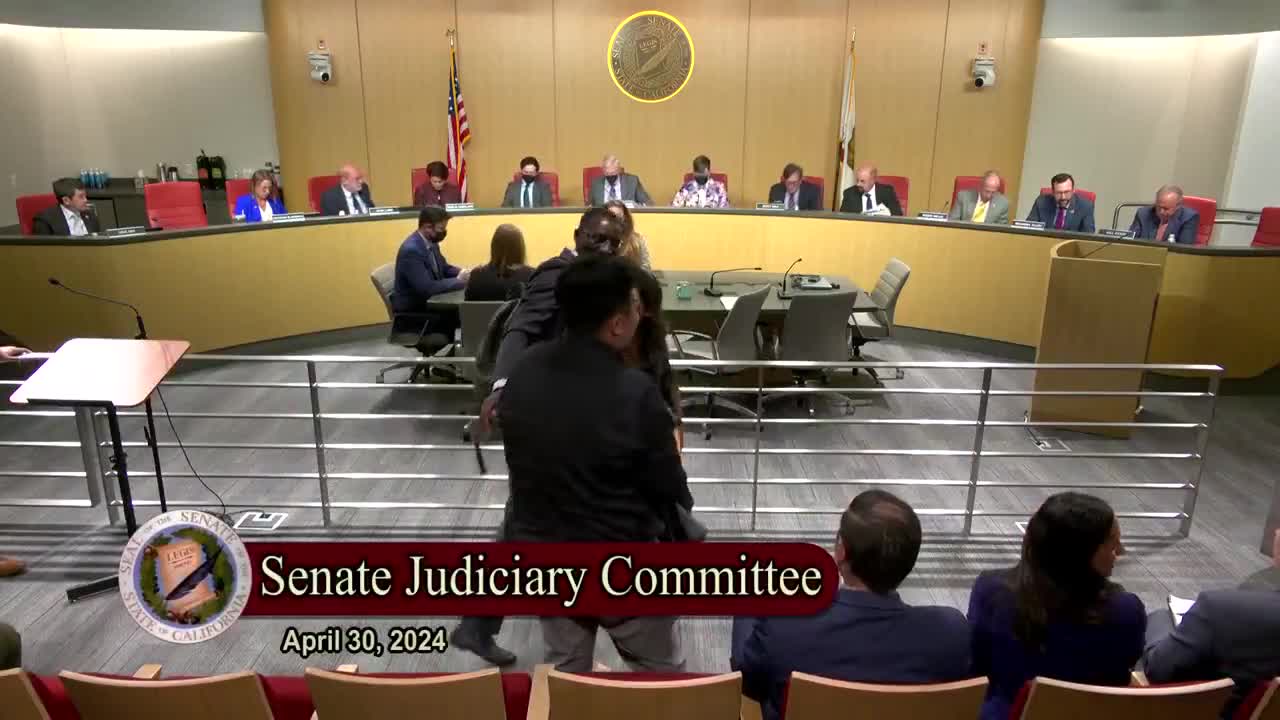 19MIN
Senate Standing Committee on Judiciary
Bill Author

Bill Co-Author(s):