SB 1178: California Water Quality and Public Health Protection Act.
- Session Year: 2023-2024
- House: Senate
- Latest Version Date: 2024-06-17
Current Status:
Failed
(2024-08-15: August 15 hearing: Held in committee and under submission.)
Introduced
In Committee
First Chamber
In Committee
Second Chamber
Enacted
Under existing law, the State Water Resources Control Board and the 9 California regional water quality control boards regulate water quality and prescribe waste discharge requirements in accordance with the federal national pollutant discharge elimination system permit program established by the federal Clean Water Act and the Porter-Cologne Water Quality Control Act.
This bill would require the board to, on or before August 1, 2025, establish regulations governing annual reporting by compliance entities, as defined, regarding waste discharges, as provided. The bill would require compliance entities to submit a report to the board by June 1, 2026, and annually thereafter on waste discharges and their locations, as provided. The bill would require the board to quantify the cost of mitigating contamination, if any, caused by those reported waste discharges and would require the board to notify the compliance entities of the cost of mitigating their contamination. The bill would authorize the compliance entity to elect to mitigate the contamination caused by the entitys reported waste discharges, or to have the board impose a surcharge for the cost of mitigating the compliance entitys contamination. The bill would create the California Water Quality and Public Health Impact Fund for receipt of revenue from the surcharge. The bill would require, within 3 months of reporting to the board waste discharges that affect the quality of the water of the state within any region, any nonexempt compliance entity to prominently label any product sold in California whose production resulted in waste discharge contaminating Californias water quality with a warning label, as specified. The bill would authorize the board to adopt regulations to seek administrative penalties for nonfiling, late filing, or other failures to meet the requirements of these provisions, and would require these penalties to be deposited into the California Water Quality and Public Health Impact Fund, which the bill would create. The bill would require the moneys in the fund to be used exclusively to mitigate the impacts of the contamination on waters of the state caused by the reported waste discharges. The bill would authorize the board to charge compliance entities a reasonable fee necessary to cover the boards reasonable costs of administering and implementing these provisions and to impose noncompliance penalties, not to exceed $1,000,000. The bill would exempt from these provisions certain discharge requirements prescribed by the state board or a regional board and permits issued by a state in accordance with a program approved by the United States Environmental Protection Agency pursuant to the federal Clean Water Act.
Under existing law, the State Water Resources Control Board and the 9 California regional water quality control boards regulate water quality and prescribe waste discharge requirements in accordance with the federal national pollutant discharge elimination system permit program established by the federal Clean Water Act and the Porter-Cologne Water Quality Control Act.
This bill would require the board to, on or before August 1, 2025, establish regulations governing annual reporting by compliance entities, as defined, regarding water waste discharges, as provided. The bill would require compliance entities to submit a report to the board by June 1, 2026, and annually thereafter on water waste discharges and their locations, as provided. The bill would require the board to quantify the cost of mitigating contamination, if any, caused by those reported water waste discharges and would require the board to notify the compliance entities of the cost of mitigating their contamination. The bill would authorize the compliance entity to elect to mitigate the contamination caused by the entitys reported water waste discharges, or to have the board impose a surcharge for the cost of mitigating the compliance entitys contamination. The bill would create the California Water Quality and Public Health Impact Fund for receipt of revenue from the surcharge. The bill would require the moneys in the fund to be used exclusively to mitigate the impacts of the contamination on waters of the state caused by the reported water waste discharges. The bill would authorize the board to charge compliance entities a reasonable fee necessary to cover the boards reasonable costs of administering and implementing these provisions and to impose noncompliance penalties, not to exceed $1,000,000. The bill would exempt from these provisions certain discharge requirements prescribed by the state board or a regional board and permits issued by a state in accordance with a program approved by the United States Environmental Protection Agency pursuant to the federal Clean Water Act.
Under existing law, the State Water Resources Control Board and the 9 California regional water quality control boards regulate water quality and prescribe waste discharge requirements in accordance with the federal national pollutant discharge elimination system permit program established by the federal Clean Water Act and the Porter-Cologne Water Quality Control Act.
This bill would require the board to, on or before August 1, 2025, establish regulations governing annual reporting by compliance entities, as defined, regarding water discharges, as provided. The bill would require compliance entities to submit a report to the board by June 1, 2026, and annually thereafter on water discharges and their locations, as provided. The bill would require the board to quantify the cost of mitigating contamination, if any, caused by those reported water discharges and would require the board to notify the compliance entities of the cost of mitigating their contamination. The bill would authorize the compliance entity to elect to mitigate the contamination caused by the entitys reported water discharges, or to have the board, in coordination with the Franchise Tax Board, impose, on the reporting compliance entitys annual tax bill, board impose a surcharge for the cost of mitigating the compliance entitys contamination. The bill would create the California Water Quality and Public Health Impact Fund for receipt of revenue from the surcharge. The bill would require the moneys in the fund to be used exclusively to mitigate the impacts of the contamination on waters of the state caused by the reported water discharges. The bill would authorize the board to charge compliance entities a reasonable fee necessary to cover the boards reasonable costs of administering and implementing these provisions and to impose noncompliance penalties, not to exceed $1,000,000.
Under existing law, the State Water Resources Control Board and the 9 California regional water quality control boards regulate water quality and prescribe waste discharge requirements in accordance with the federal national pollutant discharge elimination system permit program established by the federal Clean Water Act and the Porter-Cologne Water Quality Control Act.
This bill would state the intent of the Legislature to enact legislation relating to pollution in the Tijuana River.This bill would require the board to, on or before August 1, 2025, establish regulations governing annual reporting by compliance entities, as defined, regarding water discharges, as provided. The bill would require compliance entities to submit a report to the board by June 1, 2026, and annually thereafter on water discharges and their locations, as provided. The bill would require the board to quantify the cost of mitigating contamination, if any, caused by those reported water discharges and would require the board to notify the compliance entities of the cost of mitigating their contamination. The bill would authorize the compliance entity to elect to mitigate the contamination caused by the entitys reported water discharges, or to have the board, in coordination with the Franchise Tax Board, impose, on the reporting compliance entitys annual tax bill, a surcharge for the cost of mitigating the compliance entitys contamination. The bill would create the California Water Quality and Public Health Impact Fund for receipt of revenue from the surcharge. The bill would require the moneys in the fund to be used exclusively to mitigate the impacts of the contamination on waters of the state caused by the reported water discharges. The bill would authorize the board to charge compliance entities a reasonable fee necessary to cover the boards reasonable costs of administering and implementing these provisions and to impose noncompliance penalties, not to exceed $1,000,000.
Under existing law, the State Water Resources Control Board and the 9 California regional water quality control boards regulate water quality and prescribe waste discharge requirements in accordance with the federal national pollutant discharge elimination system permit program established by the federal Clean Water Act and the Porter-Cologne Water Quality Control Act.
This bill would state the intent of the Legislature to enact legislation relating to pollution in the Tijuana River.
This chapter shall be known, and may be cited, as the California Water Quality and Public Health Protection Act.
16151.For purposes of this chapter:
(a)Compliance entity means any partnership, corporation, limited liability company, or other business entity formed under the laws of this state, the laws of any other state of the United States or the District of Columbia, or under the act of Congress with a minimum of 2,500 employees and that conducts business in California.
(b)Reported waste discharges means those waste discharges included in the reports to the board by compliance entities pursuant to Section 16152.
16152.(a)On or before August 1, 2025, the board shall establish regulations governing annual reporting by compliance entities regarding the waste discharges potentially impacting Californias water quality and public health. specified in paragraph (2) of subdivision (a) of Section 13260.
(b)The board shall establish boundaries governing reporting by compliance entities of location of waste discharges that the board determines may impact the water quality of waters of the state, not to exceed 50 miles from the California border.(c)(b)(1)Compliance entities shall submit a report to the board by June 1, 2026, and annually thereafter, on waste discharges pursuant to the regulations established in subdivision (a) and disclose the locations of those waste discharges.
(2)The report shall include the compliance entitys name and any fictitious names, trade names, assumed names, and logos used by that entity.
(3)The board shall regularly post reports filed pursuant to this subdivision on its internet website and make them publicly available in a format designed to clearly inform the public of the waste discharges affecting their communities.
(d)(c)The board may charge compliance entities a reasonable fee necessary to cover the boards reasonable costs of administering and implementing this chapter.
16153.The board shall quantify the cost of mitigating the contamination, if any, caused by the reported waste discharges of each compliance entity. The board shall notify each compliance entity of the cost of mitigating their contamination and inform the compliance entity that it can elect to do one of the following:(a)(1)Have the board impose a surcharge for the cost of mitigating the compliance entitys contamination.(2)Revenues from the surcharge shall be deposited into the California Water Quality and Public Health Impact Fund, which is hereby created in the State Treasury. The moneys in the fund shall be used exclusively to mitigate the impacts of the contamination on waters of the state caused by the reported waste discharges.(b)(1)Mitigate the contamination caused by the entitys reported waste discharges.(2)If the compliance entity chooses to mitigate the contamination, the compliance entity shall submit a separate report to the board outlining the mitigation work completed and when the work was completed.16153.Within three months of reporting to the board waste discharges that affect the quality of the water of the state within any region, any compliance entity not exempt under Section 16155 shall prominently label any product sold in California whose production resulted in waste discharge contaminating Californias water quality with the following warning label that is at least 14 inch in height: Warning: The creation of this product contributed to the contamination of California water quality potentially threatening the health and safety of its residents.
16154.(a)The board may adopt regulations that authorize the board to seek administrative penalties for nonfiling, late filing, or other failures to meet the requirements of this chapter. The administrative penalties authorized by this section shall be imposed by the board. board and deposited into the California Water Quality and Public Health Impact Fund, which is hereby created in the State Treasury. The moneys in the fund shall be used exclusively to mitigate the impacts of the contamination on waters of the state caused by the waste discharge.
(b)Penalties for noncompliance shall not exceed one million dollars ($1,000,000) in a reporting year. In imposing noncompliance penalties, the board shall consider all relevant circumstances and avoid maximum penalties for good faith errors.
16155.This chapter does not apply to any discharge requirements prescribed by the state board or regional board pursuant to Article 4 (commencing with Section 13260) of Chapter 4 or Chapter 5.5 (commencing with Section 13370) or a permit issued by a state in accordance with a program approved by the United States Environmental Protection Agency pursuant to Section 402 (33 U.S.C. Sec. 1342) of the federal Clean Water Act (33 U.S.C. Sec. 1251 et seq.).
This chapter shall be known, and may be cited, as the California Water Quality and Public Health Protection Act.
16151.For purposes of this chapter:
(a)Compliance entity means any partnership, corporation, limited liability company, or other business entity formed under the laws of this state, the laws of any other state of the United States or the District of Columbia, or under the act of Congress with a minimum of 2,500 employees and that conducts business in California.
(b)Reported water waste discharges means those water waste discharges included in the reports to the board by compliance entities pursuant to Section 16152.
16152.(a)On or before August 1, 2025, the board shall establish regulations governing annual reporting by compliance entities regarding water waste discharges potentially impacting Californias water quality and public health.
(b)The board shall establish boundaries governing reporting by compliance entities of location of water waste discharges that the board determines may impact the water quality of waters of the state, not to exceed 50 miles from the California border.
(c)(1)Compliance entities shall submit a report to the board by June 1, 2026, and annually thereafter, on water waste discharges pursuant to the regulations established in subdivision (a) and disclose the locations of those water waste discharges.
(2)The report shall include the compliance entitys name and any fictitious names, trade names, assumed names, and logos used by that entity.
(d)The board may charge compliance entities a reasonable fee necessary to cover the boards reasonable costs of administering and implementing this chapter.
16153.The board shall quantify the cost of mitigating the contamination, if any, caused by the reported water waste discharges of each compliance entity. The board shall notify each compliance entity of the cost of mitigating their contamination and inform the compliance entity that it can elect to do one of the following:
(a)(1)Have the board impose a surcharge for the cost of mitigating the compliance entitys contamination.
(2)Revenues from the surcharge shall be deposited into the California Water Quality and Public Health Impact Fund, which is hereby created in the State Treasury. The moneys in the fund shall be used exclusively to mitigate the impacts of the contamination on waters of the state caused by the reported water waste discharges.
(b)(1)Mitigate the contamination caused by the entitys reported water waste discharges.
(2)If the compliance entity chooses to mitigate the contamination, the compliance entity shall submit a separate report to the board outlining the mitigation work completed and when the work was completed.
16154.(a)The board may adopt regulations that authorize the board to seek administrative penalties for nonfiling, late filing, or other failures to meet the requirements of this chapter. The administrative penalties authorized by this section shall be imposed by the board.
(b)Penalties for noncompliance shall not exceed one million dollars ($1,000,000) in a reporting year. In imposing noncompliance penalties, the board shall consider all relevant circumstances and avoid maximum penalties for good faith errors.
16155.This chapter does not apply to any discharge requirements prescribed by the state board or regional board pursuant to Article 4 (commencing with Section 13260) of Chapter 4 or Chapter 5.5 (commencing with Section 13370) or a permit issued by a state in accordance with a program approved by the United States Environmental Protection Agency pursuant to Section 402 (33 U.S.C. Sec. 1342) of the federal Clean Water Act (33 U.S.C. Sec. 1251 et seq.).
This chapter shall be known, and may be cited, as the California Water Quality and Public Health Protection Act.
16151.For purposes of this chapter:
(a)Compliance entity means any partnership, corporation, limited liability company, or other business entity formed under the laws of this state, the laws of any other state of the United States or the District of Columbia, or under the act of Congress with a minimum of 2,500 employees and that conducts business in California.
(b)Reported water discharges means those water discharges included in the reports to the board by compliance entities pursuant to Section 16152.
16152.(a)On or before August 1, 2025, the board shall establish regulations governing annual reporting by compliance entities regarding water discharges potentially impacting Californias water quality and public health.
(b)The board shall establish boundaries governing reporting by compliance entities of location of water discharges that the board determines may impact the water quality of waters of the state, not to exceed 50 miles from the California border.
(c)(1)Compliance entities shall submit a report to the board by June 1, 2026, and annually thereafter, on water discharges pursuant to the regulations established in subdivision (a) and disclose the locations of those water discharges.
(2)The report shall include the compliance entitys name and any fictitious names, trade names, assumed names, and logos used by that entity.
(d)The board may charge compliance entities a reasonable fee necessary to cover the boards reasonable costs of administering and implementing this chapter.
16153.The board shall quantify the cost of mitigating the contamination, if any, caused by the reported water discharges of each compliance entity. The board shall notify each compliance entity of the cost of mitigating their contamination and inform the compliance entity that it can elect to do one of the following:
(a)(1)Have the board, in coordination with the Franchise Tax Board, impose, on the reporting compliance entitys annual tax bill, board impose a surcharge for the cost of mitigating the compliance entitys contamination.
(2)Revenues from the surcharge shall be deposited into the California Water Quality and Public Health Impact Fund, which is hereby created in the State Treasury. The moneys in the fund shall be used exclusively to mitigate the impacts of the contamination on waters of the state caused by the reported water discharges.
(b)(1)Mitigate the contamination caused by the entitys reported water discharges.
(2)If the compliance entity chooses to mitigate the contamination, the compliance entity shall submit a separate report to the board outlining the mitigation work completed and when the work was completed.
16154.(a)The board may adopt regulations that authorize the board to seek administrative penalties for nonfiling, late filing, or other failures to meet the requirements of this chapter. The administrative penalties authorized by this section shall be imposed by the board and recovered by the Franchise Tax Board. board.
(b)Penalties for noncompliance shall not exceed one million dollars ($1,000,000) in a reporting year. In imposing noncompliance penalties, the board shall consider all relevant circumstances and avoid maximum penalties for good faith errors.
This chapter shall be known, and may be cited, as the California Water Quality and Public Health Protection Act.
16151.For purposes of this chapter:
(a)Compliance entity means any partnership, corporation, limited liability company, or other business entity formed under the laws of this state, the laws of any other state of the United States or the District of Columbia, or under the act of Congress with a minimum of 2,500 employees and that conducts business in California.
(b)Reported water discharges means those water discharges included in the reports to the board by compliance entities pursuant to Section 16152.
16152.(a)On or before August 1, 2025, the board shall establish regulations governing annual reporting by compliance entities regarding water discharges potentially impacting Californias water quality and public health.
(b)The board shall establish boundaries governing reporting by compliance entities of location of water discharges that the board determines may impact the water quality of waters of the state, not to exceed 50 miles from the California border.
(c)(1)Compliance entities shall submit a report to the board by June 1, 2026, and annually thereafter, on water discharges pursuant to the regulations established in subdivision (a) and disclose the locations of those water discharges.
(2)The report shall include the compliance entitys name and any fictitious names, trade names, assumed names, and logos used by that entity.
(d)The board may charge compliance entities a reasonable fee necessary to cover the boards reasonable costs of administering and implementing this chapter.
16153.The board shall quantify the cost of mitigating the contamination, if any, caused by the reported water discharges of each compliance entity. The board shall notify each compliance entity of the cost of mitigating their contamination and inform the compliance entity that it can elect to do one of the following:
(a)(1)Have the board, in coordination with the Franchise Tax Board, impose, on the reporting compliance entitys annual tax bill, a surcharge for the cost of mitigating the compliance entitys contamination.
(2)Revenues from the surcharge shall be deposited into the California Water Quality and Public Health Impact Fund, which is hereby created in the State Treasury. The moneys in the fund shall be used exclusively to mitigate the impacts of the contamination on waters of the state caused by the reported water discharges.
(b)(1)Mitigate the contamination caused by the entitys reported water discharges.
(2)If the compliance entity chooses to mitigate the contamination, the compliance entity shall submit a separate report to the board outlining the mitigation work completed and when the work was completed.
16154.(a)The board may adopt regulations that authorize the board to seek administrative penalties for nonfiling, late filing, or other failures to meet the requirements of this chapter. The administrative penalties authorized by this section shall be imposed by the board and recovered by the Franchise Tax Board.
(b)Penalties for noncompliance shall not exceed one million dollars ($1,000,000) in a reporting year. In imposing noncompliance penalties, the board shall consider all relevant circumstances and avoid maximum penalties for good faith errors.
SECTION 1.It is the intent of the Legislature to enact legislation relating to pollution in the Tijuana River.It is the intent of the Legislature to enact legislation relating to pollution in the Tijuana River.
|
Date
|
Status
|
|---|---|
| Aug 15, 2024 | August 15 hearing: Held in committee and under submission. |
| Aug 7, 2024 | August 7 set for first hearing. Placed on suspense file. |
| Jun 26, 2024 | From committee: Do pass and re-refer to Com. on APPR. (Ayes 5. Noes 2.) (June 25). Re-referred to Com. on APPR. |
| Jun 17, 2024 | From committee with author's amendments. Read second time and amended. Re-referred to Com. on E.S. & T.M. |
| May 28, 2024 | Referred to Com. on E.S. & T.M. |
| May 22, 2024 | In Assembly. Read first time. Held at Desk. |
| May 21, 2024 | Read third time. Passed. (Ayes 31. Noes 8. Page 4086.) Ordered to the Assembly. |
| May 16, 2024 | Read second time. Ordered to third reading. |
| May 16, 2024 | From committee: Do pass. (Ayes 5. Noes 2. Page 3974.) (May 16). |
| May 14, 2024 | Set for hearing May 16. |
| May 13, 2024 | May 13 hearing: Placed on APPR suspense file. |
| May 3, 2024 | Set for hearing May 13. |
| Apr 29, 2024 | Withdrawn from committee. |
| Apr 29, 2024 | Read second time and amended. Re-referred to Com. on REV. & TAX. |
| Apr 29, 2024 | Re-referred to Com. on APPR. |
| Apr 25, 2024 | From committee: Do pass as amended and re-refer to Com. on REV. & TAX. (Ayes 5. Noes 2. Page 3753.) (April 24). |
| Apr 11, 2024 | Set for hearing April 24. |
| Apr 9, 2024 | April 17 set for first hearing canceled at the request of author. |
| Apr 5, 2024 | Set for hearing April 17. |
| Apr 4, 2024 | From committee with author's amendments. Read second time and amended. Re-referred to Com. on E.Q. |
| Apr 3, 2024 | Re-referred to Coms. on E.Q. and REV. & TAX. |
| Mar 18, 2024 | From committee with author's amendments. Read second time and amended. Re-referred to Com. on RLS. |
| Feb 21, 2024 | Referred to Com. on RLS. |
| Feb 15, 2024 | From printer. May be acted upon on or after March 16. |
| Feb 14, 2024 | Introduced. Read first time. To Com. on RLS. for assignment. To print. |
|
Date
|
Description
|
Location
|
Votes
|
|
|---|---|---|---|---|
| Jun 25, 2024 | Do pass and be re-referred to the Committee on [Appropriations] | Assembly Standing Committee on Environmental Safety and Toxic Materials |
Passed |
|
| May 21, 2024 | Senate 3rd Reading SB1178 Padilla et al. | Senate Floor |
Passed |
|
| May 16, 2024 | Do pass | Senate Standing Committee on Appropriations |
Passed |
|
| May 13, 2024 | Placed on suspense file | Senate Standing Committee on Appropriations |
Passed |
|
| Apr 24, 2024 | Do pass as amended, but first amend, and re-refer to the Committee on [Revenue and Taxation] | Senate Standing Committee on Environmental Quality |
Passed |
This list shows positions taken on this bill by organizations on the date displayed, which is linked to the original source.
Positions by individuals are not included.
|
Organization
|
Position
|
Date
|
|---|---|---|
| Activists San Diego | * Support | Jun 25, 2024 |
| Alliance San Diego | ** Support | |
| Azul | * Support | Jun 25, 2024 |
| California Chamber Of Commerce | * Against Unless Amend | Jun 27, 2024 |
| California Coast Keeper Alliance | * Support | Jun 25, 2024 |
| California Enviromental Voters | * Support | Jun 25, 2024 |
| California Food Producers | ** Against | |
| California Manufacturers and Technology Associations | * Against Unless Amend | Jun 27, 2024 |
| California Taxpayers Association | ** Against | |
| Change Begins With Me Indivisible Group | ** Support | |
| City Of Chula Vista | * Support | Jun 27, 2024 |
| City of National City | ** Support | |
| Clean Earth 4 Kids | * Support | Jun 25, 2024 |
| Climate Action Campaign | ** Support | |
| Community Water Center | * Support | Jun 25, 2024 |
| County Of San Diego | * Support | Jun 25, 2024 |
| Defenders Of Wildlife | ** Support | |
| Eco-Sustainability Peeps | * Support | Jun 25, 2024 |
| Endangered Habitats League | ** Support | |
| NCCCA | * Support | Jun 25, 2024 |
| North County Equity & Justice | * Support | Jun 25, 2024 |
| Port Of San Diego | * Support | Apr 24, 2024 |
| San Diego Audubon Society | ** Support | |
| San Diego Coastkeeper | ** Support | |
| San Diego County Of | ** Support | |
| San Diego Green Building Council | ** Support | |
| San Diego State University | ** Support | |
| San Diego Unified Port District | ** Support | |
| Surfrider Foundation San Diego Chapter | ** Support | |
| Sweetwater Authority | ** Support | |
| Sweetwater Union High School District | ** Support | |
| Water Innovations INC. | ** Support | |
| YMCA of San Diego County | ** Support |
Date of Hearing: August 7, 2024
ASSEMBLY COMMITTEE ON APPROPRIATIONS
Buffy Wicks, Chair
SBPCA Bill Id:SB 1178
Author:(Padilla) – As Amended Ver:June 17, 2024
Policy Committee: | Environmental Safety and Toxic Materials | Vote: | 5 - 2 |
|
| ||
|
|
Urgency: No State Mandated Local Program: No Reimbursable: No
SUMMARY:
This bill requires the State Water Resources Control Board (SWRCB) to adopt regulations requiring businesses operating in California to annually report on waste discharges and requires a warning label on products sold in California if discharges affect water quality, with penalties for noncompliance deposited in a California Water Quality and Public Health Impact Fund (Fund).
Specifically, this bill:
- Defines "compliance entity" to mean any business lawfully formed and conducting business in California with a minimum of 2,500 employees, which SWRCB is authorized to charge a fee to cover the reasonable costs of implementing this bill.
- Requires SWRCB, by August 1, 2025, to adopt regulations requiring annual reporting starting June 1, 2026, by compliance entities regarding waste discharges outside the boundaries of the state in a manner that could affect the quality of waters of the state, including location of those discharges, unless discharges are exempt, as specified.
- Requires the SWRCB to post waste discharge reports on its website and make them publicly available in a format to clearly inform the public of discharges affecting their communities.
- Requires a compliance entity, within three months of reporting waste discharges, to prominently label any product it sells in California if its production resulted in a waste discharge contaminating California's water quality with the following warning: "Warning: The creation of this product contributed to the contamination of California water quality potentially threatening the health and safety of its residents."
- Authorizes administrative penalties, not to exceed $1 million, for nonfiling, late filing, or other failures to meet the requirements of this bill, to be deposited into the Fund, and requires the Fund to be used exclusively to mitigate California water contamination.
FISCAL EFFECT:
SWRCB reports estimated annual costs of $10,350,000 for SWRCB and Regional Water Boards to implement this bill, with upfront costs from the Waste Discharge Permit Fund and some from the General Fund to supplement costs for an unknown period until penalties accrue in the new Fund. Staff is needed to establish reporting regulations, collect fees, identify compliance entities with discharges outside of California that could affect California water quality, issue waste discharge requirements, review annual reports, issue noncompliance notices and penalty invoices, take enforcement actions, make reports American with Disabilities Act compliant, and post reports and make them publicly available to inform the public of discharges affecting their communities.
According to the Legislative Analyst’s Office, the General Fund faces a structural deficit in the tens of billions of dollars over the next several fiscal years.
COMMENTS:
- Purpose. According to the author:
Billions of gallons of contamination, pollution, and wastewater, stemming from failing infrastructure, are ravaging California’s southern border communities and its coastline. With the explosion of manufacturing plants in Tijuana resulting from free trade agreements, the amount of pollution coming from those facilities has overwhelmed local and international sewage treatment facilities resulting in billions of gallons of raw sewage washing up on the streets of South San Diego County and the bacteria from that pollution has created a public health emergency. Meanwhile large multi-national corporations who rely on California’s marketplace to sell their products are taking advantage of lax to nonexistent environmental standards in Mexico, giving them an unfair competitive advantage over California manufacturers and creating a public health epidemic inside California. SB 1178 is necessary to protect the health and safety of California residents who cannot breathe without risking serious bacterial infections and other airborne illnesses.
- Background. This bill aims to tackle longstanding, severe problems with transboundary water pollution that have been impacting communities near the California-Mexico border for decades. This bill establishes reporting and product labeling requirements for entities discharging waste outside of California that could affect water quality in the state, which presumably include entities such as Mexico and other states.
In support of the bill, pointing to a crisis on the Tijuana River, the California Coastkeeper Alliance and Defenders of Wildlife state that this bill is “necessary to hold large, international corporations…accountable for their polluted discharges [and] it is necessary to ensure that no parties profit from pollution.”
A coalition including the California Chamber of Commerce and other business associations argue that this bill is an unconstitutional state foray into foreign policy that will guarantee endless costly litigation and that the new labelling requirement would confuse both companies attempting to comply and consumers.
The SWRCB states that it is unknown whether this bill and penalties deposited into the newly created Fund would significantly contribute to improvements in water quality.
Analysis Prepared by: Jay Dickenson / APPR. / (916) 319-2081
Date of Hearing: June 25, 2024
ASSEMBLY COMMITTEE ON ENVIRONMENTAL SAFETY AND TOXIC MATERIALS
Eduardo Garcia, Chair
SBPCA Bill Id:SB 1178
Author:(Padilla) – As Amended Ver:June 17, 2024
SENATE VOTE: 31-8
SUBJECT: California Water Quality and Public Health Protection Act
SUMMARY: Requires the State Water Resources Control Board (State Water Board) to establish regulations for compliance entities, as defined, that govern annual reporting of waste discharges, as specified; requires compliance entities to place a warning label on products sold in California; establishes the California Water Quality and Public Health Impact Fund (Fund); and requires administrative penalties authorized under SB 1178 to be deposited into the Fund. Specifically, this bill:
- Defines "compliance entity" to mean any partnership, corporation, limited liability company, or other business entity formed under the laws of this state, the laws of any other state of the United States (U.S.) or the District of Columbia, or under the act of Congress, with a minimum of 2,500 employees and that conducts business in California.
- Defines "reported waste discharges" to mean waste discharges included in reports by compliance entities to the State Water Board, as required by SB 1178.
- Requires, on or before August 1, 2025, the State Water Board to establish regulations governing annual reporting by compliance entities regarding the waste discharges specified in Water Code (WC) § 13260(a)(2) (relating to the discharge of waste outside the boundaries of the state in a manner that could affect the quality of waters of the state).
- Requires, by June 1, 2026 and annually thereafter, compliance entities to submit a report to the State Water Board on waste discharges, pursuant to the regulations required under SB 1178, and the locations of those waste discharges; requires the report to include the compliance entity's name and any fictitious names, trade names, assumed names, and logos used by that entity.
- Requires the State Water Board to regularly post reports filed by compliance entities pursuant to SB 1178 on its internet website and to make the reports publicly available, in a format designed to clearly inform the public of the waste discharges affecting their communities.
- Authorizes the State Water Board to charge compliance entities a reasonable fee necessary to cover the reasonable costs of administering and implementing the provisions of SB 1178.
- Requires, within three months of reporting to the State Water Board on waste discharges that affect the quality of waters of the state within any region, any compliance entity not exempt from the requirements of SB 1178 to prominently label any product sold in California, the production of which resulted in a waste discharge contaminating California's water quality, with the following warning label: "Warning: The creation of this product contributed to the contamination of California water quality potentially threatening the health and safety of its residents."
- Authorizes the State Water Board to adopt regulations that authorize it to seek administrative penalties for nonfiling, late filing, or other failures to meet the requirements of SB 1178.
- Establishes the Fund, requires administrative penalties authorized under SB 1178 to be deposited into the Fund, and requires moneys in the Fund to be used exclusively to mitigate the impacts of contamination on waters of the state caused by waste discharge.
- Prohibits penalties for noncompliance from exceeding $1 million in a reporting year; requires the State Water Board, in imposing noncompliance penalties, to consider all relevant circumstances and to avoid maximum penalties for good faith errors.
- Provides that the requirements of SB 1178 do not apply to any discharge requirements prescribed by the State Water Board or a Regional Water Quality Control Board (Regional Water Board) pursuant to Waste Discharge Requirements (WDRs) issued under the state's Porter-Cologne Water Quality Control Act (Porter-Cologne), or a National Pollutant Discharge Elimination System (NPDES) permit issued by a state in accordance with a program approved by the United States Environmental Protection Agency (US EPA) under the federal Clean Water Act (CWA).
EXISTING LAW:
- Establishes, under the CWA, the NPDES Permit Program to prescribe requirements for the discharge of any pollutant, or any combination of pollutants, into waters of the U.S.; authorizes states to administer their own NPDES Permit Programs if specified conditions are met. (33 United States Code § 1342)
- Declares, under Porter-Cologne, that the health, safety, and welfare of people require there to be a statewide program for water quality control and that the statewide program for water quality control can be most effectively administered regionally, within a framework of statewide coordination and policy. (WC § 13000)
- Establishes the State Water Board and Regional Water Boards to preserve, enhance, and restore the quality of California’s water resources and drinking water for the protection of the environment, public health, and all beneficial uses, and to ensure proper water resource allocation and efficient use, for the benefit of present and future generations. (WC § 13100, et. seq.)
- Requires each Regional Water Board to formulate and adopt water quality control plans for all areas within the region, with specified plan elements, including:
- A requirement for water quality control plans to include water quality objectives, to ensure the reasonable protection of beneficial uses and the prevention of nuisance; and,
- An authorization for water quality control plans to specify certain conditions or areas where the discharge of waste, or certain types of waste, will not be permitted. (WC § 13240, et seq.)
- Prohibits the discharge of waste or pollutants to surface and ground waters unless the discharger obtains a permit from the State Water Board or a Regional Water Board. (WC § 13260, et seq.)
- Requires specified persons to file a report of waste discharges with the appropriate Regional Water Board; specified persons include a person who is a citizen, domiciliary, or political agency or entity of this state discharging waste, or proposing to discharge waste, outside the boundaries of the state in a manner that could affect the quality of the waters of the state within any region. (WC § 13260(a)(2))
- Defines "person" under Porter-Cologne to mean any city, county, district, the state, and the U.S., to the extent authorized by federal law. (WC § 13050(c))
- Defines "citizen or domiciliary of the state" under Porter-Cologne to include a foreign corporation having substantial business contacts in the state or which is subject to service of process in California. (WC § 13050(o))
FISCAL EFFECT: Unknown.
COMMENTS:
Need for the bill: According to the author:
"Billions of gallons of contamination, pollution, and wastewater, stemming from failing infrastructure, are ravaging California’s southern border communities and its coastline. With the explosion of manufacturing plants in Tijuana resulting from free trade agreements, the amount of pollution coming from those facilities has overwhelmed local and international sewage treatment facilities resulting in billions of gallons of raw sewage washing up on the streets of South San Diego County and the bacteria from that pollution has created a public health emergency. Meanwhile large multi-national corporations who rely on California’s marketplace to sell their products are taking advantage of lax to nonexistent environmental standards in Mexico, giving them an unfair competitive advantage over California manufacturers and creating a public health epidemic inside California. SB 1178 is necessary to protect the health and safety of California residents who cannot breathe without risking serious bacterial infections and other airborne illnesses."
The NPDES Permit Program: In 1972, amendments to the Federal Water Pollution Control Act of 1948—the first major U.S. law to address water pollution—created what is commonly known today as the CWA. The federal CWA establishes the basic structure for regulating discharges of pollutants into waters of the U.S. and regulating quality standards for surface waters. Under the CWA, the US EPA implements pollution control programs that include setting water quality standards for all contaminants in surface waters. The CWA made it unlawful to discharge any pollutant from a point source into navigable waters without a permit.
As authorized by the federal CWA, the NPDES Permit Program controls water pollution by regulating point sources—or discrete conveyances such as pipes, or human-made ditches—that discharge pollutants into waters of the U.S. Examples of pollutants include, but are not limited to, rock, sand, dirt, and agricultural, industrial, and municipal waste. Industrial, municipal, and other facilities must obtain an NPDES permit to discharge into surface water.
In California, implementation of the federal NPDES Permit Program has been delegated to the State Water Board and nine Regional Water Boards, which maintain regional jurisdiction within boundaries that are based on major watersheds. The State Water Board oversees implementation of the NPDES Permit Program throughout the state and, as such, coordinates with and supports Regional Water Board efforts, and reviews Regional Water Board actions. While the State Water Board has issued some NPDES permits, the Regional Water Boards issue the vast majority of NPDES permits in the state and ensure compliance with their permits through compliance inspections, monitoring report reviews, and enforcement actions. In California, NPDES permits are also referred to as waste discharge requirements (WDRs) that regulate discharges to waters of the U.S.
The Tijuana River watershed and transboundary pollution: According to the San Diego Regional Water Quality Control Board, the Tijuana River watershed is a large binational watershed of approximately 1,750 square miles that lies across the California-Mexico border. A large portion of the watershed (approximately 75%) is within Mexico and encompasses the densely urbanized city of Tijuana, Mexico. The watershed drains into the Tijuana River Estuary in the U.S. and ultimately to the Pacific Ocean in the city of Imperial Beach.
Land uses in the watershed are diverse, from largely undeveloped open space in the upper watershed to highly-urbanized, residential, commercial, military, and industrial areas in the lower watershed. Over the past 30 years, Tijuana, Mexico has experienced tremendous population and industrial growth, along with rapid urbanization, which has strained the aging Mexican sewage infrastructure. Emerging sewage infrastructure inadequacies have created recurring pollution problems on both sides of the California-Mexico border. At times, sewage generated on the Mexico side of the watershed travels north into California through the Tijuana River or other cross-border canyon tributaries in the Tijuana River Valley. The sewage flows degrade water quality in the Tijuana River Estuary and adjacent coastal waters, and also pose a significant public health risk to residents and visitors along both sides of the border.
While significant improvements in wastewater treatment have, in recent years, improved water quality on both sides of the border, stormwater flows continue to bring substantial amounts of sediment, trash, and other contaminants into the valley, which impairs water quality, jeopardizes public health, threatens life and property from flooding, degrades valuable habitats, and impacts recreational opportunities for residents and visitors.
Human health and environmental costs of transboundary pollution. The "Clean Water Report," released by the Surfrider Foundation in 2024, details findings from tests conducted on water samples collected from coastal sites across the U.S. According to the report, Imperial Beach in the San Diego region is one among ten beaches in the country that consistently have high bacteria levels, with 100% of samples collected from Imperial Beach in 2023 failing to meet state health standards for bacteria in recreational waters. The report also states:
"Every day, millions of gallons of contaminated water carrying stormwater runoff, raw sewage, harmful chemicals, and trash traverse the U.S./Mexico border through the Tijuana River Watershed and flow out into the Pacific Ocean in Imperial Beach. Additionally, the San Antonio de los Buenos Wastewater Treatment Plant just south of the border discharges approximately 35 million gallons of untreated sewage into the Pacific Ocean each day. Currents associated with the Southern California Bight carry this pollution up the coast during the summer, causing widespread illnesses on both sides of the border and forcing beach closures throughout South San Diego County…This public health and environmental justice emergency has been going on for decades and it’s only getting worse, especially with climate change-related storm events further stressing the already inadequate and failing regional wastewater infrastructure."
In coverage of the Surfrider Foundation's report, a 2024 Los Angeles Times article entitled, "California beach is most polluted seen in new study. People are 'getting sick left and right,'" states the following:
"[Imperial Beach] has been closed for more than two years because of toxic water from the Tijuana River Watershed flowing into the ocean, said Mayor Paloma Aguirre of the city of Imperial Beach…'People in my community are getting sick left and right,' she said Tuesday of the effects of the sewage pollution on the water as well as the air. 'We cannot afford to continue to punt the responsibility across the border because we have a dire situation here on United States soil, on California soil, that is harming California constituents.'"
The International Boundary and Water Commission (IBWC) and the South Bay International Wastewater Treatment Plant (SBIWTP): Bi-national concerns about Tijuana River water quality date back to 1934, when the U.S. and Mexican governments instructed the International Boundary Commission (predecessor to the IBWC) to prepare a report on the Tijuana sewage problem. When the U.S. and Mexico signed the Water Treaty of 1944, Article III made the use of cross-border waters subject to "sanitary measures or works." The two governments also agreed to give preferential attention to the solution of all border sanitation problems.
In 1990, the IBWC authorized construction of the SBIWTP, a treatment plant on the Tijuana River, north of the border. This treatment plant is capable of treating 25 million gallons per day (MGD), but has an expansion capability of up to 100 MGD. Once treated, water from the plant flows through a pipe leading to the South Bay Ocean Outfall. The SBIWTP is not designed to treat all discharges originating in Tijuana, such as stormwater or transboundary flows from canyon collectors.
SBIWTP damages, weather events, and federal action. The SBIWTP has been in dire need of updates and repairs. Major storm events have caused an influx of water that exceeded the plant's capacity, resulting in untreated sewage and stormwater discharges into the South Bay Ocean Outfall and directly to the ocean.
Tropical Storm Hilary in 2023 accelerated damage to the already strained plant. The recovery plan to restore the SBIWTP's ability to fully treat 25 MGD of wastewater and restore compliance with discharge water quality permit parameters has been estimated to cost $8 million.
U.S.-Mexico-Canada Agreement: When Congress approved the U.S.-Mexico-Canada Agreement in 2019, California Congressional representatives succeeded in adding $300 million to identify infrastructure solutions to address the significant negative impacts of water pollution in cross-border rivers on water quality, public health, and the environment. In 2020, the U.S. government committed funding to the US EPA to be used to address Tijuana River water quality problems. In fall 2021, the US EPA completed an evaluation of the problem and developed a set of project proposals known as the Comprehensive Infrastructure Solution. The estimated costs of the plan were $627 million and approximately $26 million for annual operations and maintenance. The Comprehensive Infrastructure Solution has yet to be completed.
On March 21, 2024, U.S. Senator Alex Padilla announced that over $103 million in additional funding for the IBWC had been secured in the bipartisan FY 2024 appropriations package. The funding will help repair the SBIWTP to address trans-border water pollution.
California Legislature’s work on border river water quality: The California Legislature has been working to address water quality in its border rivers for the last 20 years. It has passed bills to support state agency projects to improve water quality and held informational hearings on efforts to improve border river water quality. State budgets since 2017 have included appropriations for border river water quality, as follows:
- 2017: Reappropriated $2.1 million from the 2014 California Wildlife, Coastal, and Park Land Conservation Fund of 1988 for acquisition of lands in the Tijuana River Valley;
- 2019: Appropriated $15 million for Tijuana River pollution control;
- 2020: Appropriated $18 million from the General Fund and $10 million from Proposition 68 water bond funds for the New River Project;
- 2021: Appropriated $20 million to improve water quality in border rivers; and,
- 2022: Appropriated $15 million for border rivers cleanup.
Stakeholders point to potential Constitutional and jurisdictional issues. As noted below under "Arguments in opposition," some stakeholders express agreement with the author that transboundary pollution via the Tijuana River is a serious problem, while raising concerns that the approach taken in SB 1178 poses Constitutional and jurisdictional issues. SB 1178 establishes reporting and product labeling requirements for entities discharging waste outside of California's borders, if the waste is discharged in a manner that could affect the quality of waters in the state. This would presumably include entities discharging on the other side of any border with California (including Mexico and other states), if those discharges could affect water quality within California.
In relation to the above concerns, it is worth noting that existing law under Porter-Cologne requires a person who discharges waste, or proposes to discharge waste, outside the boundaries of the state in a manner that could affect the quality of the waters of the state to file a discharge report with the appropriate Regional Water Board. This statute appears to grant the State Water Board and Regional Water Boards the ability to regulate discharges outside of California's borders (if those discharges could affect the state's waters), at least with respect to requiring reporting. However, the extent to which this provision has been used or tested previously in California or elsewhere is unclear.
This bill: SB 1178 aims to tackle longstanding, severe problems with transboundary water pollution that have been impacting communities near the California-Mexico border for decades. Four primary features of the bill's approach include: 1) SB 1178 focuses on waste discharges produced by entities that conduct business in California and have a minimum of 2,500 employees; 2) SB 1178 would regulate reporting by these entities on waste discharges occurring outside California, that could affect water quality within the state; 3) SB 1178 would require entities to include an on-product label stating that the product contributed to the contamination of California water quality; and, 4) SB 1178 would establish a new Fund, where penalties for noncompliance would be deposited and used to mitigate the impacts of waste discharges on state waters.
Arguments in support: According to the California Coastkeeper Alliance and Defenders of Wildlife:
"…we write to support SB 1178 (Padilla), which will direct the State Water Board to establish regulations necessary to hold large, international corporations already subject to California law accountable for their polluted discharges which impact waters of the state. As California continues to make strides toward swimmable, fishable, and drinkable waters for all, it is necessary to ensure that no parties profit from pollution.
There is a crisis on the Tijuana River. A lack of infrastructure has allowed for over 100 billion gallons of untreated sewage, industrial waste, and urban runoff to run into the Tijuana Estuary and the Pacific Ocean over the last five years. Like much of California’s pollution, this issue is multi-pronged. A lack of sewage infrastructure has overflowed the U.S. International Boundary and Water Commission (USIBWC’s) South Bay International Wastewater Treatment Plant near San Diego, and now much of the raw sewage simply bypasses this plant. While a lack of sewage infrastructure is an important component of the transboundary pollution, studies have additionally found that stormwater runoff from Mexico also contains things like pesticides and heavy metals, likely from industrial waste. This industrial waste heavily contributes to transboundary pollution, is entirely controllable, and is something which SB 1178 could mitigate.
Under the bill as amended, polluters will no longer be able to hide their impacts to California’s waterways and the public will be able to hold them accountable for their discharges. Moreover, this bill is consistent with existing California law. For example, California Water Code section 13260(a)(2) notes that any person who is a citizen, domiciliary or political entity of the state that discharges or proposes to discharge into waters of the state 'outside the boundaries of the state in a manner that could affect the quality of the waters of the state within the region,' must report their discharges. Moreover, 'citizen or domiciliary' is defined in statute as including 'a foreign corporation having substantial business contacts in the state or which is subject to service of process in this state.' SB 1178 seeks to build on this existing framework and ensure that large polluters who are already subjected to California law and whose discharges affect waters of the state are held accountable for their pollution."
Arguments in opposition: A coalition—comprised of the California Chamber of Commerce, California Manufacturers and Technology Association, Agricultural Council of California, California Food Producers, Can Manufacturers Institute, and American Chemistry Council—writing in an opposed-unless-amended position states:
"We understand the goal of SB 1178 is to address continued sewage contamination in the Tijuana River…This is a serious problem, and several of the members of this coalition have supported previous and ongoing efforts to address this issue…We are interested in finding effective means of addressing and improving water quality in the Tijuana River that does not result in unworkable regulation…
Our first concern with the bill's attempt to address actions that occur outside of California’s boundaries is that California does not have the legal jurisdiction to control actions that occur internationally…The US Constitution and decades of Supreme Court precedent make clear that only the federal government can set foreign policy. The Commerce Clause expressly states that it is the federal government that is tasked with setting foreign policy and regulating commerce with other nations, and this has since been interpreted to prohibit state laws that (1) facially discriminate against foreign commerce, (2) impede the ability for the federal government to 'speak with one voice' as to other nations, and/or (3) attempt to regulate conduct beyond state borders…
The June 17, 2024 amendments introduce a new labelling requirement that will confuse both companies attempting to comply and consumers…The warning component in this bill would stand alone as a moral warning rather than one aimed at protecting users…There are also compliance concerns with regard to the labeling requirement. First, this bill merely states that the submission of a report of waste discharge would trigger the warning label, but this does not consider whether the respective discharge actually negatively impacts water quality…Finally, the labelling requirement is expressly discriminatory against out-of-state (especially out of US) commerce, as the intention of the bill is that facilities in California would not be subject to these requirements…
…Passing such a bill would subject the [State Water Board] and [Regional Water Boards] to nearly guaranteed litigation contesting the authority to regulate out-of-state discharges in this way, which translates to significant state costs to cover defense and court resources…Setting aside the challenges that will come as a result of this bill, the [State Water Board] and [Regional Water Boards] will incur significant workload in order to comply with the bill…This is a substantial amount of staff effort that would be expended outside of the state and would divert resources away from administering the state's own program within its own borders."
Related legislation:
- AJR 12 (Alvarez, 2024). Urges the U.S. Congress and President Joseph R. Biden to fully fund the US EPA's Comprehensive Infrastructure Solution for the Tijuana River due to the ongoing impacts to public health, the environment, and the local economy caused by cross-border pollution; urges President Joseph R. Biden to declare a national emergency due to those ongoing impacts; and urges President Joseph R. Biden and the U.S. Congress to provide funding to address ongoing cross-border pollution impacting the New River. This bill is pending action on the Assembly floor.
- AB 1567 (E. Garcia, 2023). Enacts the Safe Drinking Water, Wildfire Prevention, Drought Preparation, Flood Protection, Extreme Heat Mitigation, and Workforce Development Bond Act of 2024, which, if approved by the voters, would authorize the issuance of $15.1 billion in bonds to finance safe drinking water, wildfire prevention, drought preparation, flood protection, extreme heat mitigation, and workforce development program projects. At least $50 million each would be made available for the Tijuana River Border Pollution Control Project and the New River Water Quality, Public Health, and River Parkway Development Program. This bill is pending action before the Senate Natural Resources and Water Committee.
- SB 253 (Wiener, Chapter 382, Statutes of 2023). Requires any partnership, corporation, limited liability company, or other U.S. business entity with total annual revenues in excess of $1 billion and that does business in California to publicly report their annual greenhouse gas emissions, as specified by the California Air Resources Board.
- AB 2248 (E. Garcia, Ward, 2022). Would have provided $100 million to the State Water Board from the state's General Fund, upon appropriation by the Legislature, for grants and direct expenditures to address water quality problems arising in California-Mexico cross-border rivers. This bill was vetoed by Governor Newsom.
- SJR 22 (Hueso, Chapter 241, Statutes of 2018). Urges the federal government and the U.S. Section of the IBWC to take immediate action to adequately address cross-border pollution in the Tijuana River Valley.
- SB 507 (Hueso, Chapter 542, Statutes of 2017). Authorizes funds granted to the County of San Diego in the 2014 Budget Act to be available for development, improvement, rehabilitation, protection, restoration, and studies of natural and park lands in the Tijuana River Valley.
- AB 1059 (E. Garcia, Chapter 584, Statutes of 2015). Requires the Office of Environmental Health Hazard Assessment to update its CalEnviroScreen 2.0 tool by using any relevant environmental data relating to known impacts of air pollution, water pollution, and toxic sites on the environmental quality of the communities in the California-Mexico border region.
- AB 965 (E. Garcia, Chapter 668, Statutes of 2015). Requires the California-Mexico Border Relations Council to establish the New River Water Quality, Public Health, and River Parkway Development Program to coordinate funding for, and the implementation of, recommendations from the New River Strategic Plan. Provides the Border Relations Council with a consultative and coordinating role on the development, implementation, and funding of specified border-related projects.
- SCR 90 (Hueso, Chapter 80, Statutes of 2014). Declared the Legislature’s intent to work with the Tijuana River Valley Recovery Team to take various actions to protect and preserve the Tijuana River Valley; to encourage collaboration with the team to protect and enhance natural resources through improved management of sediment and trash, flood control, ecosystem management, and recreation and education; and, to promote bilateral ties with Mexico.
- AB 1079 (V. M. Pérez, Chapter 382, Statutes of 2009). Required the Border Relations Council to create a strategic plan to study, monitor, remediate, and enhance the New River’s water quality to protect human health and develop a river parkway suitable for public use and enjoyment.
- AB 3021 (Núñez, Chapter 621, Statutes of 2006). Establishes the Border Relations Council to serve as the central organizing body for overseeing and collaborating on California- Mexico border issues.
REGISTERED SUPPORT / OPPOSITION:
Support
California Coastkeeper Alliance
California Environmental Voters (formerly CLCV)
City of Chula Vista
Cleanearth4kids.org
Defenders of Wildlife
Junior Philanthropists Foundation
San Diego Unified Port District
San Diego; County of
Opposition
Agricultural Council of California
American Chemistry Council
California Manufacturers and Technology Association
California Chamber of Commerce
California Food Producers
Can Manufacturers Institute
Analysis Prepared by: Naomi Ondrasek / E.S. & T.M. /
SENATE RULES COMMITTEE Office of Senate Floor Analyses (916) 651-1520 Fax: (916) 327-4478 | SB 1178 |
THIRD READING
Bill No: SB 1178
Author: Padilla (D), et al.
Amended: 4/29/24
Vote: 21
SENATE ENVIRONMENTAL QUALITY COMMITTEE: 5-2, 4/24/24
AYES: Allen, Gonzalez, Hurtado, Menjivar, Skinner
NOES: Dahle, Nguyen
SENATE APPROPRIATIONS COMMITTEE: 5-2, 5/16/24
AYES: Caballero, Ashby, Becker, Bradford, Wahab
NOES: Jones, Seyarto
SUBJECT: California Water Quality and Public Health Protection Act
SOURCE: Author
DIGEST: This bill requires the State Water Resources Control Board (State Water Board) to establish new regulations for compliance entities, as defined, governing annual reporting of waste discharges potentially impacting state water quality and public health, not to exceed 50 miles from the California border.
ANALYSIS:
Existing federal law:
- Under the Clean Water Act (CWA):
- Provides that the National Pollutant Discharge Elimination System (NPDES) permit program controls discharges. Point sources are discrete conveyances such as pipes or man-made ditches. (Individual homes that are connected to a municipal system, use a septic system, or do not have a surface discharge generally do not need an NPDES permit; however, industrial, municipal, and other facilities must obtain permits if their discharges go directly or indirectly to surface waters.)
- Authorizes states to implement and enforce the NPDES permit program as long as the state’s provisions are as stringent as the federal requirements.
- In California, the State Water Resources Control Board (State Water Board) and the nine regional water quality control boards are the delegate agencies responsible for implementing the NPDES permit program. (Water Code (WC) §13160, 13377)
- Gives Congress the authority to regulate commerce with foreign nations and between states. (U.S. Const. art. I, § 8.)
Existing law:
- Under the Porter-Cologne Water Quality Control Act (Porter- Cologne):
- Establishes the State Water Board and regional water quality control boards (regional boards) to preserve, enhance, and restore the quality of California’s water resources and drinking water for the protection of the environment, public health, and all beneficial uses, and to ensure proper water resource allocation and efficient use, for the benefit of present and future generations. (WC §§13100 et. seq.)
- Prohibits the discharge of waste or pollutants to surface and ground waters unless the discharge obtains a permit from the State Water Board or regional water board. (WC §13260 et seq.)
- Establishes the State Water Board and regional water quality control boards (regional boards) to preserve, enhance, and restore the quality of California’s water resources and drinking water for the protection of the environment, public health, and all beneficial uses, and to ensure proper water resource allocation and efficient use, for the benefit of present and future generations. (WC §§13100 et. seq.)
This bill:
- Requires the State Water Board to, on or before August 1, 2025, establish regulations governing annual reporting by compliance entities, as defined, regarding waste discharges potentially impacting California’s water quality and public health.
- Defines “compliance entity” to mean any partnership, corporation, limited liability company, or other business entity formed under the laws of this state, the laws of any other state of the U.S. or the District of Columbia, or under the act of Congress with a minimum of 2,500 employees and that conducts business in California.
- Requires the State Water Board to establish boundaries governing reporting by compliance entities of location of waste discharges that the Board determines may impact the water quality of waters of the state, not to exceed 50 miles from the California border.
- Requires compliance entities to submit a report to the State Water Board by June 1, 2026, and annually thereafter on waste discharges and their locations, as provided.
- Requires the State Water Board to quantify the cost of mitigating contamination, if any, caused by those reported waste discharges and would require the State Water Board to notify the compliance entities of the cost of mitigating their contamination.
- Authorizes the compliance entity to elect to mitigate the contamination caused by the entity’s reported waste discharges, or to have the State Water Board impose a surcharge for the cost of mitigating the compliance entity’s contamination.
- Creates the California Water Quality and Public Health Impact Fund for receipt of revenue from the surcharge. Requires the moneys in the fund to be used exclusively to mitigate the impacts of the contamination on waters of the state caused by the reported waste discharges.
- Authorizes the State Water Board to charge compliance entities a reasonable fee necessary to cover the board’s reasonable costs of administering and implementing these provisions.
- Authorizes the State Water Board impose noncompliance penalties, not to exceed $1,000,000 in a reporting year. Requires the State Water Board to consider all relevant circumstances and avoid maximum penalties for good faith errors when imposing noncompliance penalties.
- Exempts from these provisions certain discharge requirements prescribed by the State Water Board or a regional board and permits issued by a state in accordance with a program approved by the U.S. Environmental Protection Agency pursuant to the federal CWA.
Background
- National Pollutant Discharge Elimination System (NPDES). If you discharge pollutants from a point source to a water of the U.S. you need an NPDES permit. As authorized by the Clean Water Act, the NPDES Permit Program controls water pollution by regulating point sources that discharge pollutants into waters of the U.S. Point sources are discrete conveyances such as pipes or man-made ditches. Examples of pollutants include, but are not limited to, rock, sand, dirt, and agricultural, industrial, and municipal waste discharged into waters of the U.S.
The NPDES Program is a federal program which has been delegated to the state for implementation through the State Water Board and the nine Regional Water Boards, collectively the Water Boards. In California, NPDES permits are also referred to as waste discharge requirements (WDRs) that regulate discharges to waters of the U.S.
- NPDES permitting process. An individual permit is a permit specifically tailored to an individual entity or multiple named entities for a facility or types of discharges. After receipt of a complete application, the permitting authority develops a permit for a particular facility or type of discharge based on the information contained in the application (e.g., type of activity, nature of discharge, receiving water quality). The permitting authority issues the permit to the entity/entities for a period not to exceed five years. The discharger must reapply at least 180 days prior to the expiration date. The Regional Water Boards issue most of the NPDES permits in California.
The process begins when a discharger submits an application to the appropriate Water Board. Among other things, the application must describe the wastes to be discharged, the setting for the discharge, and the method of treatment or containment. Once the application is deemed complete, the Water Board staff will draft a permit for public review and comment, which must then be adopted by the Water Board before any discharge can occur. The permit issuance process takes approximately six months, but may take longer depending upon the nature of the discharge. An NPDES permit is issued under both state and federal laws. Applicants are also required to submit a fee with the application forms. - Tijuana River pollution. In the past 30 years, the City of Tijuana, Baja California, Mexico has experienced tremendous population and industrial growth, along with rapid urbanization. This rapid growth has put a strain on aging Mexican sewage infrastructure causing massive flows of untreated sewage affecting the Tijuana River Estuary and adjacent beach coastal waters in South San Diego County.
The pollution in the Tijuana River has impacted beaches, businesses, and is a major public health threat in San Diego County. Shorelines in South San Diego County have been closed due to bacteria levels exceeding health standards. Recent studies have shown that bacteria from the raw, untreated sewage can be airborne and affect people living in close proximity to coastal waters. The U.S. Naval Special Warfare Command and Federal Homeland Security agents assigned to the region have also been affected by the billions of gallons of untreated wastewater that enters San Diego County coastal waters.
- The International Boundary and Water Commission (IBWC) and the South Bay International Wastewater Treatment Plant (SBIWTP). The IBWC is responsible for implementing the rights and obligations of boundary and water treaties between the U.S. and Mexico. The SBIWTP is located in the City of San Ysidro and is funded by the U.S. It is owned and administered by the U.S. component of the IBWC. According to the San Diego Water Board, the SBIWTP treats an average daily flow of 25 million gallons of sewage and other wastewater flows originating from Tijuana. The SBIWTP is not designed to treat all discharges originating in Tijuana, such as stormwater or transboundary flows from canyon collectors.
- SBIWTP damages, weather events, and federal action. The SBIWTP has been in dire need of updates and repairs. Major storm events have caused an influx of water that exceeded the plant's capacity causing untreated sewage and stormwater discharge in the South Bay Ocean Outfall and directly to the ocean.
Tropical Storm Hilary in 2023 accelerated damage to the already strained plant. The recovery plan to bring back the SBIWTP's ability to fully treat 25 million gallons a day of wastewater and be in compliance with discharge water quality permit parameters was estimated to cost $8 million.
- U.S.-Mexico-Canada Agreement. In 2019, the U.S.-Mexico and Canada trade agreement was signed and it included $300 million for the Border Water Infrastructure Program to address the cross-border pollution issue. In 2020, the U.S. government committed funding to the U.S. Environmental Protection Agency (U.S. EPA) to be used to address Tijuana River pollution. In fall 2021, U.S. EPA completed an evaluation of the problem and developed a set of project proposals known as the Comprehensive Infrastructure Solution. The estimated costs of the plan were $627 million and approximately $26 million for annual operations and maintenance. The Comprehensive Infrastructure Solution has yet to be completed.
On March 21, 2024, U.S. Senator Alex Padilla announced that over $103 million in additional funding for the IBWC had been secured in the bipartisan FY 2024 appropriations package. The funding will help repair the SBIWTP to address trans-border water pollution.
Comments
- Purpose of the Bill. According to the author, “For decades, billions of gallons of contamination, pollution, and wastewater, stemming from failing infrastructure, have ravaged California’s southern coastline. Generation after generation of Californians are suffering from the health, economic, and environmental impacts of this continued poison. We need to hold the corporations exacerbating this issue accountable. If you’re going to do business in California, you’re going to answer to the public when you pollute and poison our water.”
- Broad scope of the bill does not match justification for the proposal provided by the author. The background material and author statement (above) provided to the Senate Environmental Quality Committee focus on cross-border pollution coming from Mexico into California through the Tijuana River. According to the author’s fact sheet, “The vast increases in sewage flows into South San Diego follows years of explosive economic growth in Tijuana where many large multi-national corporations have set up manufacturing to take advantage of cheap labor costs and lax environmental protections. Those manufacturers are producing product in Mexico to sell in California.” The author also states that the “bill is needed to find out which multi-national corporations are discharging waste and affecting California water quality as well as finding the costs associated with that damage and requiring the company to remedy the issue itself or pay a fee to mitigate the impact of the discharge.” This bill, however, does not limit its application to entities operating and discharging from Mexico and, consequently, would have broader implications. This bill requires large corporations of 2,500 or more employees doing business in California to report and mitigate waste discharges that “can impact contamination of California watersheds.”
This bill requires the State Water Board to establish new regulations for “compliance entities” governing waste discharges to state waters, “not to exceed 50 miles from the state border.” It is not clear whether it is intended to cover 50 miles from the border inside California or 50 miles from the border outside California. If “from the border” means outside California’s borders, it could arguably apply to any border of the state (i.e., Oregon, Nevada, Arizona, or Mexico). More clarity is needed on the intended geographic scope of the bill. - Challenge of quantifying costs of mitigating contamination. This bill requires the Water Boards to “quantify the cost of mitigating the contamination, if any, caused by the reported waste discharges of each compliance entity.” If this bill were to be amended to clarify that if applies to entities outside of California’s borders, implementation of such a measure would be difficult. The language seems to require the Water Boards to allocate liability and responsibility for potentially comingled discharges between various dischargers (including residential, municipal, and other industrial dischargers) and compliance entities. Without additional data about other comingled sources, this task could prove challenging, as the Board cannot directly monitor entity discharges across state lines.
FISCAL EFFECT: Appropriation: No Fiscal Com.: Yes Local: No
According to the Senate Appropriations Committee, “The State Water Board estimates ongoing of approximately $1.8 million annually (Waste Discharge Permit Fund) for the State Water Board and Regional Water Quality Control Boards to quantify and impose mitigation surcharges and to administer the imposition and collection of fees and penalties on compliance entities within 50 miles of all California borders. These costs may increase depending on the number of compliance entities that are ultimately covered under the bill’s provisions. Unknown, potentially significant revenue increases from the collection of mitigation surcharges, fees, and penalties (special fund).”
SUPPORT: (Verified 5/16/24)
Alliance San Diego
California Coastkeeper Alliance
California Environmental Voters (formerly Clcv)
Change Begins With Me Indivisible Group
City of National City
Cleanearth4kids.org
Climate Action Campaign
Defenders of Wildlife
Endangered Habitats League
San Diego Audubon Society
San Diego Coastkeeper
San Diego Green Building Council
San Diego State University
San Diego Unified Port District
San Diego; County of
Surfrider Foundation San Diego Chapter
Sweetwater Authority
Sweetwater Union High School District
Water Innovations INC.
YMCA of San Diego County
1 individual
OPPOSITION: (Verified 5/16/24)
California Chamber of Commerce
California Food Producers
California Taxpayers Association (CALTAX)
ARGUMENTS IN SUPPORT: According to the California Coastkeeper Alliance and Defenders of Wildlife, “we write to support SB 1178 (Padilla), which will direct the State Water Board to establish regulations necessary to hold large, international corporations already subject to California law accountable for their polluted discharges which impact waters of the state. As California continues to make strides toward swimmable, fishable, and drinkable waters for all, it is necessary to ensure that no parties profit from pollution.
“There is a crisis on the Tijuana River. A lack of infrastructure has allowed for over 100 billion gallons of untreated sewage, industrial waste, and urban runoff to run into the Tijuana Estuary and the Pacific Ocean over the last five years. Like much of California’s pollution, this issue is multi-pronged. A lack of sewage infrastructure has overflowed the U.S. International Boundary and Water Commission (USIBWC’s) South Bay International Wastewater Treatment Plant near San Diego, and now much of the raw sewage simply bypasses this plant.2 While a lack of sewage infrastructure is an important component of the transboundary pollution, studies have additionally found that stormwater runoff from Mexico also contains things like pesticides and heavy metals, likely from industrial waste. This industrial waste heavily contributes to transboundary pollution, is entirely controllable, and is something which SB 1178 could mitigate.”
ARGUMENTS IN OPPOSITION: According to a coalition letter from business groups, “the proposed bill would ultimately be unenforceable or invalid due to California’s lack of jurisdiction to control actions outside of the state or country. Passing such a bill would subject the SWRCB and RWQCBs to nearly guaranteed litigation contesting the authority to regulate out-of-state discharges in this way, which translates to significant state costs to cover defense and court resources.
“Setting aside the challenges that will come as a result of this bill, the SWRCB and RWQCBs will incur significant workload in order to comply with the bill. The Water Boards will have to study and investigate current uses of out-of-state stream segments and determine the appropriate water quality objectives for dozens of constituents. This all must be done before the Water Boards can consider and establish effluent limitations for the out-of-state facilities that would be regulated under this bill. This is a substantial workload. In state determinations of beneficial uses and assignment of corresponding water quality objectives can take years and requires significant study. Then, creating a new type of permit for these out-of-state facilities will require additional staff time. Even after developing a permit, the Water Boards must inspect and enforce these terms. This is a substantial amount of staff effort that would be expended outside of the state and would divert resources away from administering the state’s own program within its own borders. Coupled with the lack of jurisdiction, this would tie up significant state funds for a program that ultimately would not withstand constitutional challenge.”
Prepared by: Gabrielle Meindl / E.Q. / (916) 651-4108
5/17/24 15:28:59
**** END ****
SENATE COMMITTEE ON
Senator Anna Caballero, Chair
2023 - 2024 Regular Session
SB 1178 (Padilla) - California Water Quality and Public Health Protection Act
Version: | Policy Vote: |
Urgency: | Mandate: |
Hearing Date: | Consultant: |
Bill Summary:
This bill would require the State Water Resources Control Board (State Water Board) to establish new regulations for compliance entities, as defined, governing annual reporting of waste discharges potentially impacting state water quality and public health, not to exceed 50 miles from the California border.
Fiscal Impact:
- The State Water Board estimates ongoing of approximately $1.8 million annually (Waste Discharge Permit Fund) for the State Water Board and Regional Water Quality Control Boards to quantify and impose mitigation surcharges and to administer the imposition and collection of fees and penalties on compliance entities within 50 miles of all California borders. These costs may increase depending on the number of compliance entities that are ultimately covered under the bill’s provisions.
- Unknown, potentially significant revenue increases from the collection of mitigation surcharges, fees, and penalties (special fund).
Background:
National Pollutant Discharge Elimination System (NPDES). If you discharge pollutants from a point source to a water of the U.S. you need an NPDES permit. As authorized by the Clean Water Act, the NPDES Permit Program controls water pollution by regulating point sources that discharge pollutants into waters of the U.S. Point sources are discrete conveyances such as pipes or man-made ditches. Examples of pollutants include, but are not limited to, rock, sand, dirt, and agricultural, industrial, and municipal waste discharged into waters of the U.S.
The NPDES Program is a federal program which has been delegated to the state for implementation through the State Water Board and the nine Regional Water Boards, collectively the Water Boards. In California, NPDES permits are also referred to as waste discharge requirements (WDRs) that regulate discharges to waters of the U.S.
NPDES permitting process. An individual permit is a permit specifically tailored to an individual entity or multiple named entities for a facility or types of discharges. After receipt of a complete application, the permitting authority develops a permit for a particular facility or type of discharge based on the information contained in the application (e.g., type of activity, nature of discharge, receiving water quality). The permitting authority issues the permit to the entity/entities for a period not to exceed five years. The discharger must reapply at least 180 days prior to the expiration date. The Regional Water Boards issue most of the NPDES permits in California.
The process begins when a discharger submits an application to the appropriate Water Board. Among other things, the application must describe the wastes to be discharged, the setting for the discharge, and the method of treatment or containment. Once the application is deemed complete, the Water Board staff will draft a permit for public review and comment, which must then be adopted by the Water Board before any discharge can occur.
The permit issuance process takes approximately six months, but may take longer depending upon the nature of the discharge. An NPDES permit is issued under both state and federal laws. Applicants are also required to submit a fee with the application forms.
Tijuana River watershed. According to the San Diego Regional Water Quality Control Board (San Diego Water Board), the Tijuana River watershed is a large binational watershed of approximately 1,750 square miles that lies across the California-Mexico border.
Tijuana River pollution. In the past 30 years, the City of Tijuana, Baja California, Mexico has experienced tremendous population and industrial growth, along with rapid urbanization. This rapid growth has put a strain on aging Mexican sewage infrastructure causing massive flows of untreated sewage affecting the Tijuana River Estuary and adjacent beach coastal waters in South San Diego County.
The pollution in the Tijuana River has impacted beaches, businesses, and is a major public health threat in San Diego County. Shorelines in South San Diego County have been closed due to bacteria levels exceeding health standards. Recent studies have shown that bacteria from the raw, untreated sewage can be airborne and affect people living in close proximity to coastal waters. The U.S. Naval Special Warfare Command and Federal Homeland Security agents assigned to the region have also been affected by the billions of gallons of untreated wastewater that enters San Diego County coastal waters.
The International Boundary and Water Commission (IBWC) and the South Bay International Wastewater Treatment Plant (SBIWTP). The IBWC is responsible for implementing the rights and obligations of boundary and water treaties between the U.S. and Mexico. The SBIWTP is located in the City of San Ysidro and is funded by the U.S. It is owned and administered by the U.S. component of the IBWC. According to the San Diego Water Board, the SBIWTP treats an average daily flow of 25 million gallons of sewage and other wastewater flows originating from Tijuana. The SBIWTP is not designed to treat all discharges originating in Tijuana, such as stormwater or transboundary flows from canyon collectors.
SBIWTP damages, weather events, and federal action. The SBIWTP has been in dire need of updates and repairs. Major storm events have caused an influx of water that exceeded the plant's capacity causing untreated sewage and stormwater discharge in the South Bay Ocean Outfall and directly to the ocean.
Tropical Storm Hilary in 2023 accelerated damage to the already strained plant. The recovery plan to bring back the SBIWTP's ability to fully treat 25 million gallons a day of wastewater and be in compliance with discharge water quality permit parameters was estimated to cost $8 million.
U.S.-Mexico-Canada Agreement. In 2019, the U.S.-Mexico and Canada trade agreement was signed and it included $300 million for the Border Water Infrastructure Program to address the cross-border pollution issue. In 2020, the U.S. government committed funding to the U.S. Environmental Protection Agency (U.S. EPA) to be used to address Tijuana River pollution. In fall 2021, U.S. EPA completed an evaluation of the problem and developed a set of project proposals known as the Comprehensive Infrastructure Solution. The estimated costs of the plan were $627 million and approximately $26 million for annual operations and maintenance. The Comprehensive Infrastructure Solution has yet to be completed.
On March 21, 2024, U.S. Senator Alex Padilla announced that over $103 million in additional funding for the IBWC had been secured in the bipartisan FY 2024 appropriations package. The funding will help repair the SBIWTP to address trans-border water pollution.
Proposed Law:
This bill would require the State Water Board to establish new regulations for compliance entities, as defined, governing annual reporting of waste discharges potentially impacting state water quality and public health, not to exceed 50 miles from the California border. Specifically, this bill would:
- Require the State Water Board to, on or before August 1, 2025, establish regulations governing annual reporting by compliance entities, as defined, regarding waste discharges potentially impacting California’s water quality and public health.
- Define “compliance entity” to mean any partnership, corporation, limited liability company, or other business entity formed under the laws of this state, the laws of any other state of the U.S. or the District of Columbia, or under the act of Congress with a minimum of 2,500 employees and that conducts business in California.
- Require the State Water Board to establish boundaries governing reporting by compliance entities of location of waste discharges that the Board determines may impact the water quality of waters of the state, not to exceed 50 miles from the California border.
- Require compliance entities to submit a report to the State Water Board by June 1, 2026, and annually thereafter on waste discharges and their locations, as provided.
- Require the State Water Board to quantify the cost of mitigating contamination, if any, caused by those reported waste discharges and would require the State Water Board to notify the compliance entities of the cost of mitigating their contamination.
- Authorize the compliance entity to elect to mitigate the contamination caused by the entity’s reported waste discharges, or to have the State Water Board impose a surcharge for the cost of mitigating the compliance entity’s contamination.
- Create the California Water Quality and Public Health Impact Fund for receipt of revenue from the surcharge. Requires the moneys in the fund to be used exclusively to mitigate the impacts of the contamination on waters of the state caused by the reported waste discharges.
- Authorize the State Water Board to charge compliance entities a reasonable fee necessary to cover the board’s reasonable costs of administering and implementing these provisions.
- Authorize the State Water Board impose noncompliance penalties, not to exceed $1,000,000 in a reporting year. Requires the State Water Board to consider all relevant circumstances and avoid maximum penalties for good faith errors when imposing noncompliance penalties.
- Exempt from these provisions certain discharge requirements prescribed by the state board or a regional board and permits issued by a state in accordance with a program approved by the United States Environmental Protection Agency pursuant to the federal Clean Water Act.
Related Legislation:
AJR 12 (Alvarez, 2024) would urge the U.S. Congress to support President Joseph R. Biden’s $310,000,000 supplemental funding request for the U.S. Section of the International Boundary and Water Commission due to the ongoing impacts to public health, the environment, and the local economy caused by cross-border pollution in the Tijuana River Valley and would urge President Joseph R. Biden to declare a national emergency due to those ongoing impacts.
AB 1597 (Alvarez, 2023) would appropriate $50 million to the North American Development Bank for loans, grants, and direct expenditures that address water quality problems of the California-Mexico cross-border rivers, including the New and Tijuana Rivers; authorizes appropriation of funds to recipients that are authorized to work in Mexico, if recipients are, or consent to be, subject to the jurisdiction of the California courts for enforcement purposes, and if the project will provide water quality benefits to California.
AB 1567 (Garcia, 2023) would enact the Safe Drinking Water, Wildfire Prevention, Drought Preparation, Flood Protection, Extreme Heat Mitigation, and Workforce Development Bond Act of 2024, which, if approved by the voters, would authorize the issuance of $15.1 billion in bonds to finance safe drinking water, wildfire prevention, drought preparation, flood protection, extreme heat mitigation, and workforce development program projects. At least $50 million each would be made available for the Tijuana River Border Pollution Control Project and the New River Water Quality, Public Health, and River Parkway Development Program.
AB 253 (Wiener, Chapter 382, Statutes of 2023) requires any partnership, corporation, limited liability company, or other U.S. business entity with total annual revenues in excess of $1 billion and that does business in California to publicly report their annual greenhouse gas emissions, as specified by the California Air Resources Board.
AB 2248 (E. Garcia, Ward, 2022) would have provided $100 million to the State Water Board from the state's General Fund, upon appropriation by the Legislature, for grants and direct expenditures to address water quality problems arising in California-Mexico cross-border rivers. This bill was vetoed by Governor Newsom.
SJR 22 (Hueso, Chapter 241, Statutes of 2018) urges the federal government and the U.S. Section of the IBWC to take immediate action to adequately address cross-border pollution in the Tijuana River Valley.
-- END --
SBIWPENATE COMMITTEE ON ENVIRONMENTAL QUALITY
Senator Allen, Chair
2023 - 2024 Regular
Bill No. | SB 1178 | Hearing Date: | 4/24/2024 |
Author: | Padilla | ||
Version: | 4/4/2024 | ||
Urgency: | No | Fiscal: | Yes |
Consultant: | Gabrielle Meindl | ||
SUBJECT: California Water Quality and Public Health Protection Act
DIGEST: Requires the State Water Resources Control Board (State Water Board) to establish new regulations for compliance entities, as defined, governing annual reporting of water discharges potentially impacting state water quality and public health, not to exceed 50 miles from the California border.
ANALYSIS:
Existing federal law:
- Under the Clean Water Act (CWA):
- Establishes the structure for regulating discharges of pollutants into the waters of the United States (U.S.) and implementing water quality standards for waters of the U.S.
- Makes it unlawful to discharge any pollutant from a point source into navigable waters, unless a permit is obtained.
- Provides that the National Pollutant Discharge Elimination System (NPDES) permit program controls discharges. Point sources are discrete conveyances such as pipes or man-made ditches. (Individual homes that are connected to a municipal system, use a septic system, or do not have a surface discharge generally do not need an NPDES permit; however, industrial, municipal, and other facilities must obtain permits if their discharges go directly or indirectly to surface waters.)
- Authorizes states to implement and enforce the NPDES permit program as long as the state’s provisions are as stringent as the federal requirements.
- In California, the State Water Resources Control Board (State Water Board) and the nine regional water quality control boards are the delegate agencies responsible for implementing the NPDES permit program. (Water Code (WC) §13160, 13377)
- Establishes the International Boundary Commission. (Treaty Series 241, Convention between the U.S. of America and Mexico, 1889). Renames the IBC the International Boundary and Water Commission (IBWC) and entrusts the IBWC to give preferential attention to the solution of all border sanitation problems. (Treaty Series 944, Treaty between the U.S. of America and Mexico, 1944)
- Gives Congress the authority to regulate commerce with foreign nations and between states. (U.S. Const. art. I, § 8.)
Existing state law:
- Under the Porter-Cologne Water Quality Control Act (Porter- Cologne):
- Establishes the State Water Board and regional water quality control boards (regional boards) to preserve, enhance, and restore the quality of California’s water resources and drinking water for the protection of the environment, public health, and all beneficial uses, and to ensure proper water resource allocation and efficient use, for the benefit of present and future generations. (WC §§13100 et. seq.)
- Requires State Water Board to formulate and adopt state policy for water quality control and each regional board to formulate and adopt water quality control plans (aka basin plans) for all areas within the region that ensure the reasonable protection of beneficial uses and the prevention of nuisance as specified. (WC §13140, 13240, 13241)
- Prohibits the discharge of waste or pollutants to surface and ground waters unless the discharge obtains a permit from the State Water Board or regional water board. (WC §13260 et seq.)
- Requires a person or entity of this state discharging waste, or proposing to discharge waste, outside the boundaries of the state in a manner that could affect the quality of the waters of the state within any region to file a report with the appropriate regional water board of the discharge. (WC §13260 (a)(2))
This bill:
- Requires the State Water Board to, on or before August 1, 2025, establish regulations governing annual reporting by compliance entities, as defined, regarding water discharges potentially impacting California’s water quality and public health.
- Defines “compliance entity” to mean any partnership, corporation, limited liability company, or other business entity formed under the laws of this state, the laws of any other state of the U.S. or the District of Columbia, or under the act of Congress with a minimum of 2,500 employees and that conducts business in California.
- Requires the State Water Board to establish boundaries governing reporting by compliance entities of location of water discharges that the Board determines may impact the water quality of waters of the state, not to exceed 50 miles from the California border.
- Requires compliance entities to submit a report to the State Water Board by June 1, 2026, and annually thereafter on water discharges and their locations, as provided.
- Requires the State Water Board to quantify the cost of mitigating contamination, if any, caused by those reported water discharges and would require the State Water Board to notify the compliance entities of the cost of mitigating their contamination.
- Authorizes the compliance entity to elect to mitigate the contamination caused by the entity’s reported water discharges, or to have the State Water Board impose a surcharge for the cost of mitigating the compliance entity’s contamination.
- Creates the California Water Quality and Public Health Impact Fund for receipt of revenue from the surcharge. Requires the moneys in the fund to be used exclusively to mitigate the impacts of the contamination on waters of the state caused by the reported water discharges.
- Authorizes the State Water Board to charge compliance entities a reasonable fee necessary to cover the board’s reasonable costs of administering and implementing these provisions.
- Authorizes the State Water Board impose noncompliance penalties, not to exceed $1,000,000 in a reporting year. Requires the State Water Board to consider all relevant circumstances and avoid maximum penalties for good faith errors when imposing noncompliance penalties.
Background
- National Pollutant Discharge Elimination System (NPDES). If you discharge pollutants from a point source to a water of the U.S. you need an NPDES permit. As authorized by the Clean Water Act, the NPDES Permit Program controls water pollution by regulating point sources that discharge pollutants into waters of the U.S. Point sources are discrete conveyances such as pipes or man-made ditches. Examples of pollutants include, but are not limited to, rock, sand, dirt, and agricultural, industrial, and municipal waste discharged into waters of the U.S.
The NPDES Program is a federal program which has been delegated to the state for implementation through the State Water Board and the nine Regional Water Boards, collectively the Water Boards. In California, NPDES permits are also referred to as waste discharge requirements (WDRs) that regulate discharges to waters of the U.S.
- NPDES permitting process. An individual permit is a permit specifically tailored to an individual entity or multiple named entities for a facility or types of discharges. After receipt of a complete application, the permitting authority develops a permit for a particular facility or type of discharge based on the information contained in the application (e.g., type of activity, nature of discharge, receiving water quality). The permitting authority issues the permit to the entity/entities for a period not to exceed five years. The discharger must reapply at least 180 days prior to the expiration date. The Regional Water Boards issue most of the NPDES permits in California.
The process begins when a discharger submits an application to the appropriate Water Board. Among other things, the application must describe the wastes to be discharged, the setting for the discharge, and the method of treatment or containment. Once the application is deemed complete, the Water Board staff will draft a permit for public review and comment, which must then be adopted by the Water Board before any discharge can occur.
The specific steps to obtain an NPDES permit are as follows:
- File the appropriate NPDES application forms with the Water Board.
- Water Board staff reviews the application for completeness and may request additional information.
- Staff determines if the discharge is to be permitted or prohibited. If a permit is needed and the application is deemed complete, staff prepares a draft and sends out a notice for a 30-day public review and comment period.
- The Water Board holds a public hearing after the 30-day public notification. The Water Board may adopt the permit as proposed or with modification, or not adopt it at all. A majority vote of the Water Board members present is required to adopt the permit. U.S. EPA has 30 days to object to the adopted permit. The Water Board must address the objection before the permit becomes effective on the specified effective date.
The permit issuance process takes approximately six months, but may take longer depending upon the nature of the discharge. An NPDES permit is issued under both state and federal laws. Applicants are also required to submit a fee with the application forms.
- Tijuana River watershed. According to the San Diego Regional Water Quality Control Board (San Diego Water Board), the Tijuana River watershed is a large binational watershed of approximately 1,750 square miles that lies across the California-Mexico border.
- Tijuana River pollution. In the past 30 years, the City of Tijuana, Baja California, Mexico has experienced tremendous population and industrial growth, along with rapid urbanization. This rapid growth has put a strain on aging Mexican sewage infrastructure causing massive flows of untreated sewage affecting the Tijuana River Estuary and adjacent beach coastal waters in South San Diego County.
The pollution in the Tijuana River has impacted beaches, businesses, and is a major public health threat in San Diego County. Shorelines in South San Diego County have been closed due to bacteria levels exceeding health standards. Recent studies have shown that bacteria from the raw, untreated sewage can be airborne and affect people living in close proximity to coastal waters. The U.S. Naval Special Warfare Command and Federal Homeland Security agents assigned to the region have also been affected by the billions of gallons of untreated wastewater that enters San Diego County coastal waters.
- The International Boundary and Water Commission (IBWC) and the South Bay International Wastewater Treatment Plant (SBIWTP). The IBWC is responsible for implementing the rights and obligations of boundary and water treaties between the U.S. and Mexico. The SBIWTP is located in the City of San Ysidro and is funded by the U.S. It is owned and administered by the U.S. component of the IBWC. According to the San Diego Water Board, the SBIWTP treats an average daily flow of 25 million gallons of sewage and other wastewater flows originating from Tijuana. The SBIWTP is not designed to treat all discharges originating in Tijuana, such as stormwater or transboundary flows from canyon collectors.
- SBIWTP damages, weather events, and federal action. The SBIWTP has been in dire need of updates and repairs. Major storm events have caused an influx of water that exceeded the plant's capacity causing untreated sewage and stormwater discharge in the South Bay Ocean Outfall and directly to the ocean.
Tropical Storm Hilary in 2023 accelerated damage to the already strained plant. The recovery plan to bring back the SBIWTP's ability to fully treat 25 million gallons a day of wastewater and be in compliance with discharge water quality permit parameters was estimated to cost $8 million.
- U.S.-Mexico-Canada Agreement. In 2019, the U.S.-Mexico and Canada trade agreement was signed and it included $300 million for the Border Water Infrastructure Program to address the cross-border pollution issue. In 2020, the U.S. government committed funding to the U.S. Environmental Protection Agency (U.S. EPA) to be used to address Tijuana River pollution. In fall 2021, U.S. EPA completed an evaluation of the problem and developed a set of project proposals known as the Comprehensive Infrastructure Solution. The estimated costs of the plan were $627 million and approximately $26 million for annual operations and maintenance. The Comprehensive Infrastructure Solution has yet to be completed.
On March 21, 2024, U.S. Senator Alex Padilla announced that over $103 million in additional funding for the IBWC had been secured in the bipartisan FY 2024 appropriations package. The funding will help repair the SBIWTP to address trans-border water pollution.
Comments
- Purpose of Bill. According to the author, “For decades, billions of gallons of contamination, pollution, and wastewater, stemming from failing infrastructure, have ravaged California’s southern coastline. Generation after generation of Californians are suffering from the health, economic, and environmental impacts of this continued poison. We need to hold the corporations exacerbating this issue accountable. If you’re going to do business in California, you’re going to answer to the public when you pollute and poison our water.”
- Broad scope of the bill does not match justification for the proposal provided by the author. The background material and author statement (above) provided to the committee focus on cross-border pollution coming from Mexico into California through the Tijuana River. According to the author’s fact sheet, “The vast increases in sewage flows into South San Diego follows years of explosive economic growth in Tijuana where many large multi-national corporations have set up manufacturing to take advantage of cheap labor costs and lax environmental protections. Those manufacturers are producing product in Mexico to sell in California.” The author also states that the “bill is needed to find out which multi-national corporations are discharging waste and affecting California water quality as well as finding the costs associated with that damage and requiring the company to remedy the issue itself or pay a fee to mitigate the impact of the discharge.” This bill, however, does not limit its application to entities operating and discharging from Mexico and, consequently, would have broader implications on in-state entities. SB 1178 requires large corporations of 2,500 or more employees doing business in California to report and mitigate waste discharges that “can impact contamination of California watersheds.”
The bill would require the State Water Board to establish new regulations for “compliance entities” governing water discharges to state waters, “not to exceed 50 miles from the state border.” It is not clear whether it is intended to cover 50 miles from the border inside California or 50 miles from the border outside California. If “from the border” means outside California’s borders, it could arguably apply to any border of the state (i.e., Oregon, Nevada, Arizona, or Mexico). More clarity is needed on the intended geographic scope of the bill. - Duplicative requirements for in-state compliance entities? The regulations proposed by this bill may be duplicative of current WDRs already in place for in-state entities. Providing the State Water Board with the authority to establish regulations for annual monitoring is unnecessary to the extent the “compliance entity” has already been issued WDRs for their discharges. Most permits issued for waste discharges already require substantial monitoring, including quarterly and sometimes annually as well. Most of the “water discharges potentially impacting California’s water quality and public health” are already, or should be, covered by WDRs.
If the committee wishes to advance this proposal, to avoid any regulatory duplication, the committee and author may wish to consider clarifying that the bill’s provisions do not apply to any discharge requirements prescribed by the Water Boards pursuant to Chapter 3, Article 4, Sections 13260-13276, or Chapter 5.5, Sections 13370-13389, of the Water Code, or a permit issued by a state in accordance with a program approved by the U.S. Environmental Protection Agency under section 402 of the Clean Water Act. - Challenge of quantifying costs of mitigating contamination. The bill would require the Water Boards to “quantify the cost of mitigating the contamination, if any, caused by the reported water discharges of each compliance entity.” If this bill were to be amended to clarify that if applies to entities outside of California’s borders, implementation of such a measure would be difficult. The language seems to require the Water Boards to allocate liability and responsibility for potentially comingled discharges between various dischargers (including residential, municipal, and other industrial dischargers) and compliance entities. Without additional data about other comingled sources, this task could prove challenging, as the Board cannot directly monitor entity discharges across state lines.
- Rationale for the 2,500 employee threshold. The rationale for specifying that the bill only apply to corporations with at least 2,500 employees is unclear. There is no direct link between an entity’s number of employees and pollution. For example, small industries (e.g., auto dismantlers with only a dozen employees) have been found to be more polluting while larger ones (e.g., Solar Turbines with >9,000 employees) are often less so. Moving forward, the author should consider revisiting this threshold to ensure it captures the most polluting entities.
- Proposal could raise Constitutional and jurisdictional issues. As noted previously, the Constitution gives Congress the authority to regulate commerce with foreign nations and between states. While outside of the jurisdiction of this committee, it is worth noting that, to the extent this bill would apply outside of California, it could raise Constitutional and jurisdictional issues.
That said, the Legislature passed and the Governor signed SB 253 (Wiener, 2023), which uses a somewhat similar reporting approach to SB 1178. SB 253 requires any partnership, corporation, limited liability company, or other U.S. business entity with total annual revenues in excess of $1 billion and that does business in California to publicly report their annual greenhouse gas emissions, as specified by the California Air Resources Board. According to the Senate Judiciary Committee analysis of SB 253, the bill did not present clear dormant interstate Commerce Clause issues because the bill did not grant favoritism for in-state companies:
“Section 8 of Article I of the United States Constitution grants the United States Congress the power to regulate interstate commerce. Since the early nineteenth century, the Supreme Court has held that obverse proposition—that states may not usurp Congress’s express power to regulate interstate commerce—must also be true. This rule against state interference in interstate commerce, sometimes known as the dormant Commerce Clause, serves as an absolute bar to regulations that discriminate against interstate commerce, i.e., by favoring in-state businesses or excluding out-of-state businesses. But when a state passes a law that “ ‘regulat[es] even-handedly [across all in-state and out-of-state businesses] to effectuate a legitimate local public interest,’ ” that law “ ‘will be upheld unless the burden imposed upon such commerce is clearly excessive in relation to the putative local benefits.’ ”
“There is no facial dormant Commerce Clause issue here. This bill grants no favoritism for in-state companies—all U.S.-based companies doing business in California with annual gross revenues in excess of $1 billion are subject to the bill’s reporting requirement.”
While, arguably, the reporting requirements of SB 1178 are somewhat analogous to those contained in AB 253, SB 1178 would require more than just reporting. As mentioned previously, the bill would require the State Water Board to quantify the cost of mitigating any contamination, authorizing the Board to impose a surcharge for the cost of mitigating the compliance entity's contamination, charge administering fees, and impose noncompliance penalties, not to exceed $1,000,000 in a reporting year.
The author points to existing state law which requires entities of the state to report to the appropriate regional water boards on discharges “outside the boundaries of the state in a manner that could affect the quality of waters of the state.” However, it is unclear whether this authority has ever been used outside California and additional questions regarding investigatory, enforcement, and related jurisdictional and constitutional issues should be considered.
- Technical amendment. Technical amendments are needed to change the term “water” discharge to “waste” discharge throughout the bill to properly align with the definitions in the Porter Cologne Act.
- Committee amendments. Staff recommends the committee adopt the bolded amendments contained in comments 3 and 7 above.
DOUBLE REFERRAL:
If this measure is approved by the Senate Environmental Quality Committee, the do pass motion must include the action to re-refer the bill to the Senate Revenue and Taxation Committee.
Related/Prior Legislation
AJR 12 (Alvarez, 2024) urges the U.S. Congress to support President Joseph R. Biden’s $310,000,000 supplemental funding request for the U.S. Section of the International Boundary and Water Commission due to the ongoing impacts to public health, the environment, and the local economy caused by cross-border pollution in the Tijuana River Valley and would urge President Joseph R. Biden to declare a national emergency due to those ongoing impacts. This bill is currently pending before this committee.
AB 1597 (Alvarez, 2023) appropriates $50 million to the North American Development Bank for loans, grants, and direct expenditures that address water quality problems of the California-Mexico cross-border rivers, including the New and Tijuana Rivers; authorizes appropriation of funds to recipients that are authorized to work in Mexico, if recipients are, or consent to be, subject to the jurisdiction of the California courts for enforcement purposes, and if the project will provide water quality benefits to California. This bill is pending before this committee.
AB 1567 (Garcia, 2023) enacts the Safe Drinking Water, Wildfire Prevention, Drought Preparation, Flood Protection, Extreme Heat Mitigation, and Workforce Development Bond Act of 2024, which, if approved by the voters, would authorize the issuance of $15.1 billion in bonds to finance safe drinking water, wildfire prevention, drought preparation, flood protection, extreme heat mitigation, and workforce development program projects. At least $50 million each would be made available for the Tijuana River Border Pollution Control Project and the New River Water Quality, Public Health, and River Parkway Development Program. This bill is pending action before the Senate Natural Resources and Water Committee.
AB 253 (Wiener, Chapter 382, Statutes of 2023) requires any partnership, corporation, limited liability company, or other U.S. business entity with total annual revenues in excess of $1 billion and that does business in California to publicly report their annual greenhouse gas emissions, as specified by the California Air Resources Board.
AB 2248 (E. Garcia, Ward, 2022) would have provided $100 million to the State Water Board from the state's General Fund, upon appropriation by the Legislature, for grants and direct expenditures to address water quality problems arising in California-Mexico cross-border rivers. This bill was vetoed by Governor Newsom.
SJR 22 (Hueso, Chapter 241, Statutes of 2018) urges the federal government and the U.S. Section of the IBWC to take immediate action to adequately address cross-border pollution in the Tijuana River Valley.
SOURCE:
Author
SUPPORT:
Alliance San Diego
California Coastkeeper Alliance
California Environmental Voters (formerly Clcv)
Change Begins With Me Indivisible Group
Cleanearth4kids.org
Climate Action Campaign
Defenders of Wildlife
Endangered Habitats League
San Diego Audubon Society
San Diego Coastkeeper
San Diego Green Building Council
San Diego State University
San Diego Unified Port District
San Diego; County of
Surfrider Foundation San Diego Chapter
Sweetwater Authority
Sweetwater Union High School District
Water Innovations INC.
1 Individual
OPPOSITION:
California Chamber of Commerce
California Food Producers
California Taxpayers Association (CALTAX)
ARGUMENTS IN SUPPORT:
According to the California Coastkeeper Alliance and Defenders of Wildlife, “we write to support SB 1178 (Padilla), which will direct the State Water Board to establish regulations necessary to hold large, international corporations already subject to California law accountable for their polluted discharges which impact waters of the state. As California continues to make strides toward swimmable, fishable, and drinkable waters for all, it is necessary to ensure that no parties profit from pollution.
“There is a crisis on the Tijuana River. A lack of infrastructure has allowed for over 100 billion gallons of untreated sewage, industrial waste, and urban runoff to run into the Tijuana Estuary and the Pacific Ocean over the last five years. Like much of California’s pollution, this issue is multi-pronged. A lack of sewage infrastructure has overflowed the U.S. International Boundary and Water Commission (USIBWC’s) South Bay International Wastewater Treatment Plant near San Diego, and now much of the raw sewage simply bypasses this plant.2 While a lack of sewage infrastructure is an important component of the transboundary pollution, studies have additionally found that stormwater runoff from Mexico also contains things like pesticides and heavy metals, likely from industrial waste. This industrial waste heavily contributes to transboundary pollution, is entirely controllable, and is something which SB 1178 could mitigate.”
ARGUMENTS IN OPPOSITION:
According to a coalition letter from business groups, “Our first concern with the bill’s attempt to address actions that occur outside of California’s boundaries is that California does not have the legal jurisdiction to control actions that occur internationally. As stated previously, we recognize that the sewage issue in the Tijuana River is real and critical, but the seriousness of the issue does not change the fact that California has no real authority to dictate actions that occur in another country.
“SB 1178 will create a new reporting requirement for entities that discharge to water that potentially impact California’s water quality and public health and are located within 50 miles of the California border. However, facilities located in California have a longstanding duty to report discharges of waste to water under both state and federal law. The Porter-Cologne Water Quality Control Act (Water Code section 13000, et seq.) has governed the discharges of “waste,” as defined, to waters of the state since 1969, and the federal Clean Water Act has regulated the discharge of pollutants to waters of the United States through a point source since it was signed into law in 1972. In particular, state law in Water Code section 13260 already requires persons proposing to discharge waste to file a report describing the proposed discharge to the relevant RWQCB. There is no exception language or other language in SB 1178 that would allow for existing discharges to simply use their current requirements under state law to comply with this section. In this sense, because the bill applies to all discharges inside the state and within 50 miles of a border, any discharges currently taking place in the state would be subject to secondary and duplicative reporting requirement. This bill would also doubly assess fees and require mitigation on top of the discharger’s existing permit conditions.”
-- END --
Discussed in Hearing
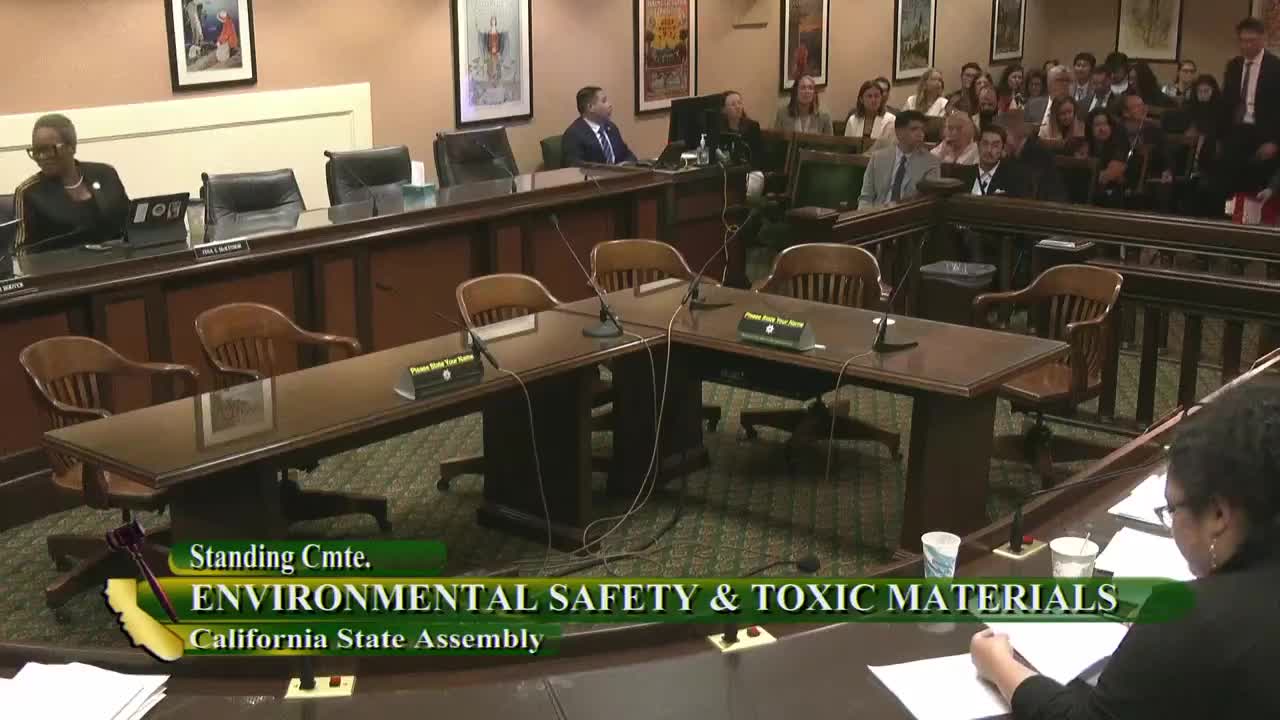 21MIN
Assembly Standing Committee on Environmental Safety and Toxic Materials
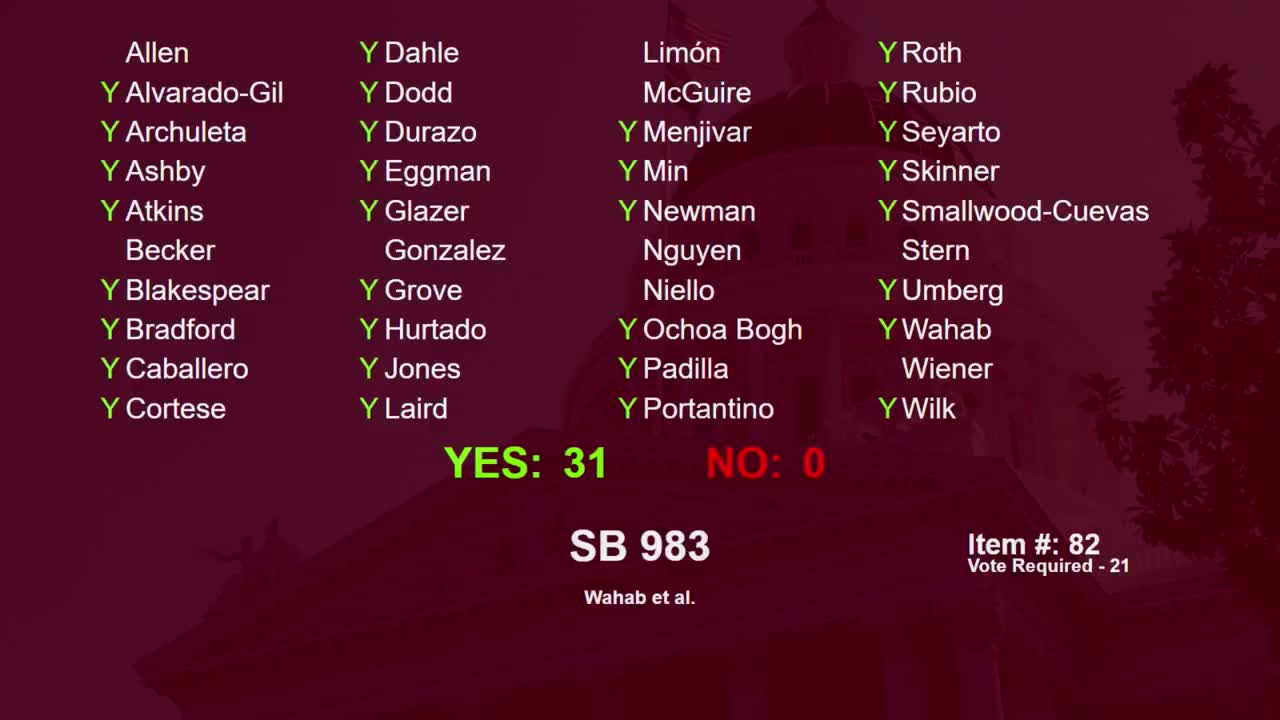 5MIN
Senate Floor
 18MIN
Senate Standing Committee on Environmental Quality
 42SEC
Senate Standing Committee on Environmental Quality
Bill Author

Bill Co-Author(s):
