SB 1218: Water: emergency water supplies.
- Session Year: 2023-2024
- House: Senate
- Latest Version Date: 2024-06-18
Current Status:
Failed
(2024-08-15: August 15 hearing: Held in committee and under submission.)
Introduced
In Committee
First Chamber
In Committee
Second Chamber
Enacted
What does this bill do?
This bill makes it state policy to encourage but not require public and private water suppliers to develop emergency water supplies and to support using them during droughts or unplanned service or supply disruptions. It defines emergency water supplies as water identified in a water shortage or drought plan that add to a supplier’s normal supplies to increase reliability. It also says suppliers are not forced to change operations or to alter water rights or contractual arrangements.
The summary is provided by generative AI which can make mistakes. For original language, please view the details in the table below.
Existing law, the Urban Water Management Planning Act, requires every public and private urban water supplier that directly or indirectly provides water for municipal purposes to prepare and adopt an urban water management plan. The act requires an urban water management plan to include a water shortage contingency plan, as provided.
This bill would declare that it is the established policy of the state to encourage, but not mandate, the development of emergency water supplies, and to support their use during times of water shortage. drought or unplanned service or supply disruption, as provided.
Existing law, the Urban Water Management Planning Act, requires every public and private urban water supplier that directly or indirectly provides water for municipal purposes to prepare and adopt an urban water management plan. The act requires an urban water management plan to include a water shortage contingency plan, as provided.
This bill would declare that it is the established policy of the state to encourage and incentivize, encourage, but not mandate, the development of emergency water supplies, and to support their use during times of water shortage.
Existing law, the Urban Water Management Planning Act, requires every public and private urban water supplier that directly or indirectly provides water for municipal purposes to prepare and adopt an urban water management plan. The act requires an urban water management plan to include a water shortage contingency plan, as provided.
This bill would declare that it is the established policy of the state to encourage and incentivize, but not mandate, the development of emergency water supplies, and to support their use during times of water shortage.
The Legislature hereby finds and declares all of the following:
(a)California has a climate that cycles between periods of large amounts of precipitation and times of drought.
(b)Californias weather cycles are already affecting water resources throughout the state, which in turn negatively impact ecosystems, economies, and communities.
(c)In addition to enhancing water efficiency, California can and should take action to build water resilience into its water resource management and planning that accounts for these changes, allowing the state to better adapt to and mitigate the impacts of climate change on water supplies and watersheds.
(d)With climate change likely bringing more frequent and intense droughts to California, the state needs to evaluate how it will ensure sufficient water supplies during times of shortage.
(e)An emergency water supply is one way the state can ensure sufficient water supplies during times of drought, and the development of emergency water supplies can aid the state in mitigating the impacts of more frequent droughts.
(f)Despite this, few water suppliers have made an investment in emergency water supplies.
(g)Establishing as state policy a role for emergency water supplies can help encourage and incentivize greater investment and development of those supplies across the state.
SEC. 2.Section 106.6 is added to the Water Code, to read:106.6.(a)It is hereby declared to be the established policy of this state to encourage, but not mandate, the development of emergency water supplies, and to support their use during times of water shortage. drought or unplanned service or supply disruption.
(b)For purposes of this section, emergency water supplies means water supplies identified in a water shortage contingency plan or drought plan that has have been developed to increase a water suppliers water supply reliability during times of shortage, including, but not limited to, during a drought or unplanned service disruption, or supply disruption and that are in addition to the baseline water supplies the water supplier draws on during nonshortage times to meet water demands within its service area.
(c)This section does not require a water supplier to add or modify any operation or demand management plan, or to interfere with any water right or contractual right related to water exchange, conveyance, or storage.
The Legislature hereby finds and declares all of the following:
(a)California has a climate that cycles between periods of large amounts of precipitation and times of drought.
(b)Californias weather cycles are already affecting water resources throughout the state, which in turn negatively impact ecosystems, economies, and communities.
(c)In addition to enhancing water efficiency, California can and should take action to build water resilience into its water resource management and planning that accounts for these changes, allowing the state to better adapt to and mitigate the impacts of climate change on water supplies and watersheds.
(d)With climate change likely bringing more frequent and intense droughts to California, the state needs to evaluate how it will ensure sufficient water supplies during times of shortage.
(e)An emergency water supply is one way the state can ensure sufficient water supplies during times of drought, and the development of emergency water supplies can aid the state in mitigating the impacts of more frequent droughts.
(f)Despite this, few water suppliers have made an investment in emergency water supplies.
(g)Establishing as state policy a role for emergency water supplies can help encourage and incentivize greater investment and development of those supplies across the state.
SEC. 2.Section 106.6 is added to the Water Code, to read:106.6.(a)It is hereby declared to be the established policy of this state to encourage and incentivize, encourage, but not mandate, the development of emergency water supplies, and to support their use during times of water shortage.
(b)For purposes of this section, emergency water supplies means water supplies identified in a water shortage contingency plan that has been developed to increase a water suppliers water supply reliability during times of shortage, including, but not limited to, during a drought or unplanned service disruption, and that are in addition to the baseline water supplies the water supplier draws on during nonshortage times to meet water demands within its service area.
The Legislature hereby finds and declares all of the following:
(a)California has a climate that cycles between periods of large amounts of precipitation and times of drought.
(b)Californias weather cycles are already affecting water resources throughout the state, which in turn negatively impact ecosystems, economies, and communities.
(c)In addition to enhancing water efficiency, California can and should take action to build water resilience into its water resource management and planning that accounts for these changes, allowing the state to better adapt to and mitigate the impacts of climate change on water supplies and watersheds.
(d)With climate change likely bringing more frequent and intense droughts to California, the state needs to evaluate how it will ensure sufficient water supplies during times of shortage.
(e)An emergency water supply is one way the state can ensure sufficient water supplies during times of drought, and the development of emergency water supplies can aid the state in mitigating the impacts of more frequent droughts.
(f)Despite this, few water suppliers have made an investment in emergency water supplies.
(g)Establishing as state policy a role for emergency water supplies can help encourage and incentivize greater investment and development of those supplies across the state.
SEC. 2.Section 106.6 is added to the Water Code, to read:106.6.(a)It is hereby declared to be the established policy of this state to encourage and incentivize, but not mandate, the development of emergency water supplies, and to support their use during times of water shortage.
(b)For purposes of this section, emergency water supplies means water supplies identified in a water shortage contingency plan that has been developed to increase a water suppliers water supply reliability during times of shortage, including, but not limited to, during a drought or unplanned service disruption, and that are in addition to the baseline water supplies the water supplier draws on during nonshortage times to meet water demands within its service area.
|
Date
|
Status
|
|---|---|
| Aug 15, 2024 | August 15 hearing: Held in committee and under submission. |
| Aug 7, 2024 | August 7 set for first hearing. Placed on suspense file. |
| Jun 25, 2024 | From committee: Do pass and re-refer to Com. on APPR. with recommendation: To consent calendar. (Ayes 13. Noes 0.) (June 25). Re-referred to Com. on APPR. |
| Jun 18, 2024 | From committee with author's amendments. Read second time and amended. Re-referred to Com. on W., P., & W. |
| Jun 3, 2024 | Referred to Com. on W., P., & W. |
| May 24, 2024 | In Assembly. Read first time. Held at Desk. |
| May 24, 2024 | Read third time. Passed. (Ayes 38. Noes 0. Page 4210.) Ordered to the Assembly. |
| May 22, 2024 | Ordered to special consent calendar. |
| May 20, 2024 | Read second time. Ordered to third reading. |
| May 16, 2024 | Read second time and amended. Ordered to second reading. |
| May 16, 2024 | From committee: Do pass as amended. (Ayes 7. Noes 0. Page 3976.) (May 16). |
| May 10, 2024 | Set for hearing May 16. |
| May 6, 2024 | May 6 hearing: Placed on APPR suspense file. |
| Apr 26, 2024 | Set for hearing May 6. |
| Apr 23, 2024 | From committee: Do pass and re-refer to Com. on APPR with recommendation: To consent calendar. (Ayes 11. Noes 0. Page 3729.) (April 23). Re-referred to Com. on APPR. |
| Apr 2, 2024 | Set for hearing April 23. |
| Feb 29, 2024 | Referred to Com. on N.R. & W. |
| Feb 16, 2024 | From printer. May be acted upon on or after March 17. |
| Feb 15, 2024 | Introduced. Read first time. To Com. on RLS. for assignment. To print. |
|
Date
|
Description
|
Location
|
Votes
|
|
|---|---|---|---|---|
| Jun 25, 2024 | Do pass and be re-referred to the Committee on [Appropriations] with recommendation: To Consent Calendar | Assembly Standing Committee on Water, Parks, and Wildlife |
Passed |
|
| May 24, 2024 | Special Consent SB1218 Newman | Senate Floor |
Passed |
|
| May 16, 2024 | Do pass as amended | Senate Standing Committee on Appropriations |
Passed |
|
| May 6, 2024 | Placed on suspense file | Senate Standing Committee on Appropriations |
Passed |
|
| Apr 23, 2024 | Do pass, but first be re-referred to the Committee on [Appropriations] with the recommendation: To Consent Calendar | Senate Standing Committee on Natural Resources and Water |
Passed |
This list shows positions taken on this bill by organizations on the date displayed, which is linked to the original source.
Positions by individuals are not included.
|
Organization
|
Position
|
Date
|
|---|---|---|
| Association of California Cities Orange County | ** Support | |
| Association Of California Water Agencies | ** Support | |
| California Council for Economic and Environmental Balance | ** Support | |
| California Municipal Utilities Association | ** Support | |
| California Special Districts Association | ** Support | |
| City Of Garden Grove | ** Support | |
| City of Newport Beach Utilities Department | ** Support | |
| East Orange County Water District | ** Support | |
| Eastern Municipal Water District | ** Support | |
| El Toro Water District | ** Support | |
| Elsinore Valley Municipal Water District | ** Support | |
| Greater Irvine Chamber of Commerce | ** Support | |
| Inland Empire Utilities Agency | ** Support | |
| Irvine Ranch Water District | ** Support | |
| Laguna Beach County Water District | ** Support | |
| Las Virgenes Municipal Water District | ** Support | |
| Municipal Water District Of Orange County | ** Support | |
| Northern California Water Association | ** Support | |
| Olivenhain Municipal Water District | ** Support | |
| Orange County Business Council | ** Support | |
| Rancho Water | ** Support | |
| Regional Water Authority | ** Support | |
| Rosedale-Rio Bravo Water Storage District | ** Support | |
| San Diego County Water Authority | ** Support | |
| Santa Margarita Water District | ** Support | |
| South Coast Water District | ** Support | |
| South Orange County Economic Coalition | ** Support | |
| Southern California Water Coalition | ** Support | |
| The Honorable Katie Valenzuela, Sacramento City Councilmember | ** Support | |
| Three Valleys Municipal Water District | ** Support | |
| Trabuco Canyon Water District | ** Support | |
| Turlock Irrigation District | ** Support | |
| Western Municipal Water District | ** Support |
Date of Hearing: August 7, 2024
ASSEMBLY COMMITTEE ON APPROPRIATIONS
Buffy Wicks, Chair
SBPCA Bill Id:SB 1218
Author:(Newman) – As Amended Ver:June 18, 2024
Policy Committee: | Water, Parks and Wildlife | Vote: | 13 - 0 |
|
| ||
|
|
Urgency: No State Mandated Local Program: No Reimbursable: No
SUMMARY:
This bill declares it is state policy to encourage development of emergency water supplies and support their use during times of drought or unplanned service or supply disruption.
Specifically, this bill:
- Defines “emergency water supplies” as supplies identified in a water shortage contingency plan or drought plan that have been developed to increase a water supplier’s water supply reliability during a drought or unplanned service or supply disruption and that are in addition to baseline water supplies that supplier uses during drought or unplanned service or supply disruption.
- States that this bill does not require a water supplier to add or modify any operation or demand management plan, or to interfere with any water right or contractual right related to water exchange, conveyance or storage.
- Makes findings regarding California’s climate and need to develop backup water supplies.
FISCAL EFFECT:
The State Water Resources Control Board (SWRCB) reports no fiscal impact with the following statement:
This bill, as written, remains vague and needs to be further clarified to determine if water suppliers include only drinking water suppliers and/or also includes irrigation and other uses; whether the bill is duplicating or modifying existing water shortage contingency plans; and whether it is subject to appropriation. As written, the bill’s vague language and lack of clear role provides no fiscal impact to the Water Boards.
Nonetheless, this bill creates cost pressure on the General Fund and special funds of an unknown amount, potentially in the millions of dollars, for state entities to develop emergency water supplies and support their use during water supply disruptions.
According to the Legislative Analyst’s Office, the General Fund faces a structural deficit in the tens of billions of dollars over the next several fiscal years.
COMMENTS:
- Purpose. According to the author:
The provisions of [this bill] will better enable water providers, and the communities they serve, to better withstand an increasingly volatile climate in California that oscillates between drought and flood, thereby ensuring safe, reliable, and affordable water supplies for residents, businesses, agriculture, and the environment.
- Background. Existing law establishes multiple state policies with respect to the state’s water resources including that the state’s water resources be put to beneficial use to the fullest extent possible, all water in the state is the property of the people, the use of water for domestic purposes is the highest use of water and the next highest use is for irrigation, and every human being has the right to safe, clean, affordable, and accessible water adequate for human consumption, cooking, and sanitary purposes. In addition, the Urban Water Management Planning Act requires every public and private urban water supplier providing water for municipal purposes to prepare and adopt an urban water management plan including a water shortage contingency plan identifying sources of water supply. In August 2022, in response to recent droughts and increasing likelihood of droughts from climate change, the Newsom administration released “California’s Water Supply Strategy, Adapting to a Hotter, Drier Future, which aims to address a projected 10% decrease in water supply (6 million acre-feet to 9 million acre-feet of water) by 2040 due to climate change.
The action this bill encourages – to develop emergency water supplies and support their use during times of drought or unplanned service or supply disruption – appears to be directed at “water suppliers,” although this term is not defined. The SWRCB claims the bill does not make clear whether “water suppliers” include only drinking water suppliers, suppliers of water for irrigation and other uses, or both. It also is unclear if the action this bill encourages would duplicate or modify existing water shortage contingency plans or otherwise intersect with state water policies in existing law and with the administration’s recent state water supply strategy document.
- Related Legislation. AB 754 (Papan), of the 2023-24 Legislative Session, requires a water shortage contingency plan to include specified information regarding reservoir operations to determine when shortages may occur. AB 754 was held in the Senate Appropriations Committee on the suspense file.
Analysis Prepared by: Jacqueline Kinney / APPR. / (916) 319-2081
Date of Hearing: June 25, 2024
ASSEMBLY COMMITTEE ON WATER, PARKS, AND WILDLIFE
Diane Papan, Chair
SBPCA Bill Id:SB 1218
Author:(Newman) – As Amended Ver:June 18, 2024
SENATE VOTE: 38-0
SUBJECT: Water: emergency water supplies
SUMMARY: Declares it is state policy to encourage the development of emergency water supplies to be used during times of drought or unplanned service or supply disruption. Specifically, this bill:
- Declares that it is state policy to encourage, but not mandate, the development of emergency water supplies to be used during times of drought or unplanned service or supply disruption.
- Defines “emergency water supplies” as supplies identified in a water shortage contingency plan or drought plan that have been developed to increase a water supplier’s water supply reliability during a drought or unplanned service or supply disruption and that are in addition to baseline water supplies used by said water supplier during nonshortage times.
- Includes a savings clause to clarify that this bill does not require a water supplier to add or modify any operation or demand management plan, or to interfere with any water right or contractual right.
- Makes findings and declarations regarding California’s climate and the need to develop backup water supplies.
EXISTING LAW:
- Establishes the five member State Water Board in the California Environmental Protection Agency to provide for the orderly and efficient administration of the state’s water resources (Water Code § 174, § 175).
- Establishes multiple state policies with respect to the state’s water resources including: that the state’s water resources be put to beneficial use to the fullest extent possible (Water Code, § 100); all water in the state is the property of the people (Water Code, § 102); the use of water for domestic purposes is the highest use of water and that the next highest use is for irrigation (Water Code § 106); and every human being has the right to safe, clean, affordable, and accessible water adequate for human consumption, cooking, and sanitary purposes (Water Code § 106.3).
- Requires, under the Urban Water Management Planning Act, every public and private urban water supplier that directly or indirectly provides water for municipal purposes to prepare and adopt an urban water management plan (Water Code §§ 10610 et seq.).
- Requires each urban water management plan to include a water shortage contingency plan that includes the identification of sources of water supply (Water Code § 10631).
FISCAL EFFECT: Unknown. This bill is keyed fiscal.
COMMENTS:
- Purpose of this bill. According to the author, “the provisions of [this bill] will better enable water providers, and the communities they serve, to better withstand an increasingly volatile climate in California that oscillates between drought and flood, thereby ensuring safe, reliable, and affordable water supplies for residents, businesses, agriculture, and the environment.”
- Background. California has experienced two severe droughts in the past decade. The 2020-22 drought began less than five years after California experienced its worst drought on record from 2012 through 2016. Climate modeling indicates that droughts will become more severe and frequent going forward. In addition, research published in February 2022 indicates that Southwestern North America is currently experiencing the worst “megadrought” in the last 1200 years. This research estimates (based on climate models) that climate change accounts for 42% of this megadrought’s severity and that the current megadrought would not be a ‘megadrought’ but for climate change (Williams, Cook, and Smerdon, 2022). In response to the 2020-22 drought and growing awareness of the ways in which climate change will further challenge water management in California, the Newsom administration released a strategy (“California’s Water Supply Strategy, Adapting to a Hotter, Drier Future”) in August 2022. The strategy aims to address a projected 10% decrease in water supply (6 million acre-feet to 9 million acre-feet of water) by 2040 due to climate change.
- Arguments in support. The Irvine Ranch Water District (IRWD) is the sponsor of this bill arguing that “it is crucial to build greater water resilience into the state’s water resource management and planning” and that by recognizing emergency water supplies and encouraging their development, this bill will “help mitigate the impacts of climate change ecosystems, economies, and communities.” IRWD notes that it has developed such emergency water supplies through groundwater banking arrangements with other water agencies in Kern County. IRWD asserts that these agreements have benefitted both agricultural communities in Kern County as well as the communities in its service territory; however, IRWD indicates that access to these emergency supplies during recent droughts has been uncertain at times when the state has mandated cutbacks. IRWD contends this bill will help to make such supplies more reliable and provide an incentive for other agencies to develop their own emergency water supplies.
- Related legislation. AB 754 (Papan) of 2023 would have required a water shortage contingency plan to include specified information regarding reservoir operations to determine when shortages may occur. AB 754 was held in the Senate Appropriations Committee on the suspense file.
SB 552 (Hertzberg), Chapter 245, Statutes of 2021, enacts many of the recommendations in the final “Small Water Systems and Rural Communities Drought and Water Shortage Contingency Planning and Risk Assessment” report.
SB 971 (Hertzberg) of 2020 would have required small water suppliers, as defined, to take certain measures related to water shortages, including contingency planning. SB 971 died in the Senate Natural Resources and Water Committee.
REGISTERED SUPPORT / OPPOSITION:
Support
Irvine Ranch Water District (sponsor)
Association of California Cities - Orange County
Association of California Water Agencies
California Municipal Utilities Association
California Special Districts Association
Cucamonga Valley Water District
East Orange County Water District
Eastern Municipal Water District
El Toro Water District
Elsinore Valley Municipal Water District
Garden Grove, City of
Greater Irvine Chamber of Commerce
Inland Empire Utilities Agency
Laguna Beach County Water District
Las Virgenes Municipal Water District
Municipal Water District of Orange County
Newport Beach Utilities Department, City of
Northern California Water Association
Olivenhain Municipal Water District
Orange County Business Council
Rancho Water
Regional Water Authority
Rosedale-Rio Bravo Water Storage District
Roseville, City of
Sacramento, City of
Santa Margarita Water District
South Coast Water District
South Orange County Economic Coalition
Southern California Water Coalition
Three Valleys Muncipal Water District
Trabuco Canyon Water District
Turlock Irrigation District
Upper San Gabriel Valley Municipal Water District
Valley Water
Western Municipal Water District
Opposition
None on file
Analysis Prepared by: Pablo Garza / W., P., & W. / (916) 319-2096
SENATE RULES COMMITTEE Office of Senate Floor Analyses (916) 651-1520 Fax: (916) 327-4478 | SB 1218 |
THIRD READING
Bill No: SB 1218
Author: Newman (D)
Amended: 5/16/24
Vote: 21
SENATE NATURAL RES. & WATER COMMITTEE: 11-0, 4/23/24
AYES: Min, Seyarto, Allen, Dahle, Eggman, Grove, Hurtado, Laird, Limón, Menjivar, Padilla
SENATE APPROPRIATIONS COMMITTEE: 7-0, 5/16/24
AYES: Caballero, Jones, Ashby, Becker, Bradford, Seyarto, Wahab
SUBJECT: Water: emergency water supplies
SOURCE: Irvine Ranch Water District
DIGEST:
This bill declares that it is the established policy of the state to encourage, but not mandate, the development of emergency water supplies, and to support their use during times of water shortage.
ANALYSIS:
Existing law:
- Establishes the California Department of Water Resources (DWR) in the California Natural Resources Agency. (Water Code (WAT) §120). According to its web-page, DWR manages California’s water resources, systems, and infrastructure, including the State Water Project, in a responsible, sustainable way.
- Establishes the five member State Water Resources Control Board (SWRCB) in the California Environmental Protection Agency (WAT §175). The SWRCB’s mission statement is “to preserve, enhance, and restore the quality of California's water resources and drinking water for the protection of the environment, public health, and all beneficial uses, and to ensure proper water resource allocation and efficient use, for the benefit of present and future generations.”
- Establishes multiple state policies with respect to the state’s water resources including that the state’s water resources be put to beneficial use to the fullest extent possible, as provided (WAT §100), that the use of water for domestic purposes is the highest use of water and that the next highest use is for irrigation (WAT §106), and that every human being has the right to safe, clean, affordable, and accessible water adequate for human consumption, cooking, and sanitary purposes, as provided. (WAT §106.3).
- Requires, under the Urban Water Management Planning Act (WAT §§10610 et seq.), every public and private urban water supplier that directly or indirectly provides water for municipal purposes to prepare and adopt an urban water management plan (plan). (WAT §10620).
- Requires each plan to include a simple description of how much water the agency has on a reliable basis, how much it needs for the foreseeable future, what the agency’s strategy is for meeting its water needs, the challenges facing the agency, and any other information necessary to provide a general understanding of the agency’s plan, as provided. (WAT §10630.5).
- Requires the identification and quantification of existing and planned sources of water available to the supplier, including a detailed discussion of anticipated supply availability under a normal water year, single dry year, and droughts lasting at least five years, as provided. (WAT §10631).
- Requires each plan to include a water shortage contingency plan, as provided, that includes the identification of sources of water supply. (WAT §10631).
- Requires the use of six standard water shortage levels corresponding to up to 10%, 20%, 30%, 40%, 50%, and greater than 50% shortage, and shortage response actions. Provides for reevaluation and improvement procedures for systematically monitoring and evaluating the functionality of the water shortage contingency plan. (WAT §10632).
- Requires an urban water supplier to conduct an annual water supply and demand assessment, as provided, including providing an annual water shortage assessment report to DWR. (WAT §10632.1).
- Requires an urban water supplier to follow the prescribed procedures and implement determined shortage response actions in its water shortage contingency plan. (WAT §10632.2).
- States legislative intent that if a state of emergency for drought is declared that the SWRCB defer to implementation of locally adopted water shortage contingency plans to the extent practicable. (WAT §10632.3).
This bill declares that it is the established policy of the state to encourage, but not mandate, the development of emergency water supplies, and to support their use during times of water shortage. Specifically, this bill:
- Declares the established state policy to encourage, but not mandate, the development of emergency water supplies and to support their use during times of water shortage, as provided.
- Defines emergency water supplies to mean water supplies identified in a water shortage contingency plan developed to increase water supply reliability during times of shortage, as specified.
- Makes extensive relevant legislative findings and declarations.
Background
According to the US Department of Agriculture’s California Climate Hub, less than three percent of California is currently experiencing “abnormally dry” conditions in two areas near the borders with Oregon and Arizona, respectively. This is in sharp contrast to this time last year when one third of the state experienced drought conditions.
Drought is a recurring feature of the state’s climate, according to DWR. Recent significant drought events occurred from 2020 – 2022, 2012 – 2016, 2007 – 2009, 1987 – 1992, and 1976 – 1977. Paleoclimate records suggest there were many extended dry periods – sometimes up to a decade in length – in the state. Climate change is expected to affect the frequency and duration of droughts in the state. Achieving climate resiliency will require water supply resiliency.
Droughts cause adverse environmental, public health and safety, social equity, and economic impacts. For example, during a drought, wildfire risk increases, agricultural lands may be fallowed, fishery habitat degraded, water supply wells become dry, and many may need drinking water supplied via bottled water. In order to provide for drought planning and response, the state has taken numerous steps, including the development of urban water management plans by urban water suppliers.
(NOTE: Additional information regarding this bill may be found in the Senate Natural Resources and Water Committee’s bill analysis)
FISCAL EFFECT: Appropriation: No Fiscal Com.: Yes Local: No
According to the Senate Appropriations Committee, the bill’s fiscal impact is:
- Unknown but potentially significant cost pressure (General Fund or special fund) to the State Water Resources Control Board (SWRCB), which anticipates that it could incur potentially significant costs associated with creating emergency water supplies on a large statewide scale.
- Unknown but potentially significant cost pressure (General Fund or special fund) to various state agencies and departments to provide funds for greater investment and development of emergency water supplies.
SUPPORT: (Verified 5/15/24)
Irvine Ranch Water District (source)
Association of California Cities – Orange County
Association of California Water Agencies
California Council for Economic and Environmental Balance
California Municipal Utilities Association
California Special Districts Association
City of Garden Grove
City of Newport Beach Utilities Department
East Orange County Water District
Eastern Municipal Water District
El Toro Water District
Elsinore Valley Municipal Water District
Greater Irvine Chamber of Commerce
Inland Empire Utilities Agency
Laguna Beach County Water District
Las Virgenes Municipal Water District
Municipal Water District of Orange County
Northern California Water Association
Olivenhain Municipal Water District
Orange County Business Council
Rancho Water
Regional Water Authority
Rosedale-Rio Bravo Water Storage District
San Diego County Water Authority
Santa Margarita Water District
South Coast Water District
South Orange County Economic Coalition
Southern California Water Coalition
The Honorable Katie Valenzuela, Sacramento City Councilmember
Three Valleys Municipal Water District
Turlock Irrigation District
Trabuco Canyon Water District
Western Municipal Water District
OPPOSITION: (Verified 5/15/24)
None received
ARGUMENTS IN SUPPORT: According to the author, “SB 1218 will incentivize greater investment and development of emergency water supplies by adding an explicit policy statement to the California Water Code stating that it shall be the policy of the state to encourage and incentivize, but not mandate, the development of emergency water supplies, and to support their use during times of water shortage. The bill would define ‘emergency water supplies’ as water supplies developed to increase a water supplier’s supply reliability during times of shortage, and which are in addition to the baseline water supplies the supplier draws upon under non-shortage conditions.
“The provisions of SB 1218 will better enable water providers, and the communities they serve, to better withstand an increasingly volatile climate in California that oscillates between drought and flood, thereby ensuring safe, reliable, and affordable water supplies for residents, businesses, agriculture, and the environment.”
The Association of California Water Agencies, in a joint sign-on letter in support writes, “While adherence to feasible water use efficiency standards will continue to play an important role in the face of climate change, water resilience for the future will also require California to maximize various innovative approaches to ensure sufficient water for the state’s ecosystem, urban, and agriculture needs in times of
shortage.” ACWA also notes their hope that this bill “will encourage and incentivize greater investment in and development of emergency supplies.”
Prepared by: Katharine Moore / N.R. & W. / (916) 651-4116
5/19/24 9:00:00
**** END ****
SENATE COMMITTEE ON
Senator Anna Caballero, Chair
2023 - 2024 Regular Session
SB 1218 (Newman) - Water: emergency water supplies
Version: | Policy Vote: |
Urgency: | Mandate: |
Hearing Date: | Consultant: |
Bill Summary:
This bill would declare that it is the established policy of the state to encourage and incentivize, but not mandate, the development of emergency water supplies, and to support their use during times of water shortage.
*********** ANALYSIS ADDENDUM – SUSPENSE FILE ***********
The following information is revised to reflect amendments
adopted by the committee on May 16, 2024
Fiscal Impact:
- Unknown but potentially significant cost pressure (General Fund or special fund) to the State Water Resources Control Board (SWRCB), which anticipates that it could incur potentially significant costs associated with creating emergency water supplies on a large statewide scale.
- Unknown but potentially significant cost pressure (General Fund or special fund) to various state agencies and departments to provide funds for greater investment and development of emergency water supplies.
Author Amendments:
These amendments would strike the word “incentivize.”
-- END --
SENATE COMMITTEE ON
Senator Anna Caballero, Chair
2023 - 2024 Regular Session
SB 1218 (Newman) - Water: emergency water supplies
Version: | Policy Vote: |
Urgency: | Mandate: |
Hearing Date: | Consultant: |
Bill Summary:
This bill would declare that it is the established policy of the state to encourage and incentivize, but not mandate, the development of emergency water supplies, and to support their use during times of water shortage.
Fiscal Impact:
- Unknown but potentially significant cost pressure (General Fund or special fund) to the State Water Resources Control Board (SWRCB), which anticipates that it could incur potentially significant costs associated with creating emergency water supplies on a large statewide scale.
- Unknown but potentially significant cost pressure (General Fund or special fund) to various state agencies and departments to provide funds for greater investment and development of emergency water supplies.
Background:
According to the US Department of Agriculture’s California Climate Hub, less than three percent of California is currently experiencing “abnormally dry” conditions in two areas near the borders with Oregon and Arizona, respectively. This is in sharp contrast to this time last year when one third of the state experienced drought conditions.
Drought is a recurring feature of the state’s climate, according to the California Department of Water Resources (DWR). Recent significant drought events occurred from 2020 – 2022, 2012 – 2016, 2007 – 2009, 1987 – 1992, and 1976 – 1977. Paleoclimate records suggest there were many extended dry periods – sometimes up to a decade in length – in the state. Climate change is expected to affect the frequency and duration of droughts in the state. Achieving climate resiliency will require water supply resiliency.
Droughts cause adverse environmental, public health and safety, social equity, and economic impacts. For example, during a drought, wildfire risk increases, agricultural lands may be fallowed, fishery habitat degraded, water supply wells become dry, and many may need drinking water supplied via bottled water. In order to provide for drought planning and response, the state has taken numerous steps, including the development of urban water management plans by urban water suppliers.
Proposed Law:
This bill would declare that it is the established policy of the state to encourage and incentivize, but not mandate, the development of emergency water supplies, and to support their use during times of water shortage. Specifically, this bill would:
- Declare the established state policy to encourage and incentivize, but not mandate, the development of emergency water supplies and to support their use during times of water shortage, as provided.
- Define emergency water supplies to mean water supplies identified in a water shortage contingency plan developed to increase water supply reliability during times of shortage, as specified.
- Make extensive relevant legislative findings and declarations.
Related Legislation:
SB 470 (Alvarado-Gill, 2023) would have, among other provisions, codified the Urban Water Community Drought Relief program and the Small Community Drought Relief program at DWR. (This bill was vetoed by Governor Newsom.)
AB 754 (Papan, 2023) would require a water shortage contingency plan to include, if, based on a description and quantification of each source of water supply, a single reservoir constitutes at least 50% of the total water supply, an identification of the dam and description of existing reservoir management operations, as specified, and if the reservoir is owned and operated by the urban water supplier, a description of operational practices and approaches, as specified. (This bill was held on the Suspense File in this committee.)
SB 552 (Hertzberg, Chapter 245, Statutes of 2021) enacts many of the recommendations in the final “Small Water Systems and Rural Communities Drought and Water Shortage Contingency Planning and Risk Assessment” report.
SB 971 (Hertzberg, 2020) would have required small water suppliers, as defined, to take certain measures related to water shortages, including contingency planning.
-- END --
SENATE COMMITTEE ON NATURAL RESOURCES AND WATER
Senator Dave Min, Chair
2023 - 2024 Regular
Bill No: SB 1218 Hearing Date: April 23, 2024
Author: | |||
Version: | Introduced | ||
Urgency: | Fiscal: | ||
Consultant: | |||
Subject: Water: emergency water supplies
SUMMARY
This bill would declare that it is the established policy of the state to encourage and incentivize, but not mandate, the development of emergency water supplies, and to support their use during times of water shortage.
BACKGROUND AND EXISTING LAW
According to the US Department of Agriculture’s California Climate Hub, less than three percent of California is currently experiencing “abnormally dry” conditions in two areas near the borders with Oregon and Arizona, respectively. This is in sharp contrast to this time last year when one third of the state experienced drought conditions.
Drought is a recurring feature of the state’s climate, according to the California Department of Water Resources (DWR). Recent significant drought events occurred from 2020 – 2022, 2012 – 2016, 2007 – 2009, 1987 – 1992, and 1976 – 1977. Paleoclimate records suggest there were many extended dry periods – sometimes up to a decade in length – in the state. Climate change is expected to affect the frequency and duration of droughts in the state. Achieving climate resiliency will require water supply resiliency.
Droughts cause adverse environmental, public health and safety, social equity, and economic impacts. For example, during a drought, wildfire risk increases, agricultural lands may be fallowed, fishery habitat degraded, water supply wells become dry, and many may need drinking water supplied via bottled water. In order to provide for drought planning and response, the state has taken numerous steps, including the development of urban water management plans by urban water suppliers.
Existing law:
- Establishes DWR in the California Natural Resources Agency. (Water Code (WAT) §120). According to its web-page, DWR manages California’s water resources, systems, and infrastructure, including the State Water Project, in a responsible, sustainable way.
- Establishes the five member State Water Resources Control Board (SWRCB) in the California Environmental Protection Agency (WAT §175). The SWRCB’s mission statement is “to preserve, enhance, and restore the quality of California's water resources and drinking water for the protection of the environment, public health, and all beneficial uses, and to ensure proper water resource allocation and efficient use, for the benefit of present and future generations.”
- Establishes multiple state policies with respect to the state’s water resources including that the state’s water resources be put to beneficial use to the fullest extent possible, as provided (WAT §100), that the use of water for domestic purposes is the highest use of water and that the next highest use is for irrigation (WAT §106), and that every human being has the right to safe, clean, affordable, and accessible water adequate for human consumption, cooking, and sanitary purposes, as provided. (WAT §106.3).
- Under the Urban Water Management Planning Act (WAT §§10610 et seq.), requires every public and private urban water supplier that directly or indirectly provides water for municipal purposes to prepare and adopt an urban water management plan (plan) (WAT §10620).
- Requires each plan to include a simple description of how much water the agency has on a reliable basis, how much it needs for the foreseeable future, what the agency’s strategy is for meeting its water needs, the challenges facing the agency, and any other information necessary to provide a general understanding of the agency’s plan, as provided (WAT §10630.5).
- Requires the identification and quantification of existing and planned sources of water available to the supplier, including a detailed discussion of anticipated supply availability under a normal water year, single dry year, and droughts lasting at least five years, as provided (WAT §10631).
- Requires each plan to include a water shortage contingency plan, as provided, that includes the identification of sources of water supply (WAT §10631).
- Requires the use of six standard water shortage levels corresponding to up to 10%, 20%, 30%, 40%, 50%, and greater than 50% shortage, and shortage response actions. Provides for reevaluation and improvement procedures for systematically monitoring and evaluating the functionality of the water shortage contingency plan (WAT §10632).
- Requires an urban water supplier to conduct an annual water supply and demand assessment, as provided, including providing an annual water shortage assessment report to DWR (WAT §10632.1).
- Requires an urban water supplier to follow the prescribed procedures and implement determined shortage response actions in its water shortage contingency plan (WAT §10632.2).
- States legislative intent that if a state of emergency for drought is declared that the SWRCB defer to implementation of locally adopted water shortage contingency plans to the extent practicable (WAT §10632.3).
PROPOSED LAW
This bill would declare that it is the established policy of the state to encourage and incentivize, but not mandate, the development of emergency water supplies, and to support their use during times of water shortage. Specifically, this bill would:
- Declare the established state policy to encourage and incentivize, but not mandate, the development of emergency water supplies and to support their use during times of water shortage, as provided.
- Define emergency water supplies to mean water supplies identified in a water shortage contingency plan developed to increase water supply reliability during times of shortage, as specified.
- Make extensive relevant legislative findings and declarations.
ARGUMENTS IN SUPPORT
According to the author, “SB 1218 will incentivize greater investment and development of emergency water supplies by adding an explicit policy statement to the California Water Code stating that it shall be the policy of the state to encourage and incentivize, but not mandate, the development of emergency water supplies, and to support their use during times of water shortage. The bill would define ‘emergency water supplies’ as water supplies developed to increase a water supplier’s supply reliability during times of shortage, and which are in addition to the baseline water supplies the supplier draws upon under non-shortage conditions.”
“The provisions of SB 1218 will better enable water providers, and the communities they serve, to better withstand an increasingly volatile climate in California that oscillates between drought and flood, thereby ensuring safe, reliable, and affordable water supplies for residents, businesses, agriculture, and the environment.”
The Association of California Water Agencies, in a joint sign-on letter in support writes, “While adherence to feasible water use efficiency standards will continue to play an important role in the face of climate change, water resilience for the future will also require California to maximize various innovative approaches to ensure sufficient water for the state’s ecosystem, urban, and agriculture needs in times of shortage.” ACWA also notes their hope that this bill “will encourage and incentivize greater investment in and development of emergency supplies.”
ARGUMENTS IN OPPOSITION
None received
COMMENTS
Whose “emergency”? According to materials supplied by the author’s office and the sponsor, the sponsor spent considerable resources developing an emergency water supply – more specifically a groundwater bank – outside its service area which the sponsor could use to obtain water, when needed, through operating and exchange agreements with other water suppliers. During the 2011 – 2017 drought, the conservation methods implemented meant that accessing the banked water supply would have resulted in the sponsor not meeting the state’s mandatory conservation requirements.
It is a fair point that – while the required drought contingency planning requires identifying where water supply will come from – it is unknown how state-mandated requirements in a drought would affect the availability of each source or how the use of each source would affect compliance with any imposed mandates. It is unknown how nuanced a conservation mandate during a drought would need to be in order to incorporate the broad range of sources likely identified in drought contingency plans statewide, and what efforts have been taken in order to address this for future droughts.
State policy. The impact of a declaration of state policy in statute can vary considerably depending upon circumstances.
As the bill moves forward, the author may wish to consider adding explicit statutory direction related to emergency water supplies in order to ensure the author’s goals are met. This could include incorporating emergency water supplies, as defined, within the existing drought contingency planning framework.
In addition, the author may wish to clarify whether the use of the term “emergency” restricts the use or emergency water supplies, as defined, to when a state of emergency is declared, and how the mandate to identify water sources in the water shortage contingency plan interacts with the “but not mandate” language included in the proposed state policy.
Recent related legislation.
SB 470 (Alvarado-Gill, 2023) would have, among other provisions, codified the Urban Water Community Drought Relief program and the Small Community Drought Relief program at DWR. This bill was vetoed by Governor Newsom.)
AB 754 (Papan, 2023) would require a water shortage contingency plan to include, if, based on a description and quantification of each source of water supply, a single reservoir constitutes at least 50% of the total water supply, an identification of the dam and description of existing reservoir management operations, as specified, and if the reservoir is owned and operated by the urban water supplier, a description of operational practices and approaches, as specified. (This bill was held in the Senate Appropriations Committee on the suspense file.)
SB 552 (Hertzberg, Chapter 245, Statutes of 2021) enacts many of the recommendations in the final “Small Water Systems and Rural Communities Drought and Water Shortage Contingency Planning and Risk Assessment” report.
SB 971 (Hertzberg, 2020) would have required small water suppliers, as defined, to take certain measures related to water shortages, including contingency planning. (This bill was held in this Committee.)
SUGGESTED AMENDMENTS: none
SUPPORT
Irvine Ranch Water District (sponsor)
Association of California Cities – Orange County
Association of California Water Agencies
California Council for Economic and Environmental Balance
California Municipal Utilities Association
California Special Districts Association
City of Garden Grove
City of Newport Beach Utilities Department
East Orange County Water District
Eastern Municipal Water District
El Toro Water District
Elsinore Valley Municipal Water District
Greater Irvine Chamber of Commerce
Inland Empire Utilities Agency
Laguna Beach County Water District
Las Virgenes Municipal Water District
Municipal Water District of Orange County
Northern California Water Association
Olivenhain Municipal Water District
Orange County Business Council
Rancho Water
Regional Water Authority
Rosedale-Rio Bravo Water Storage District
San Diego County Water Authority
Santa Margarita Water District
South Coast Water District
South Orange County Economic Coalition
Southern California Water Coalition
The Honorable Katie Valenzuela, Sacramento City Councilmember
Three Valleys Municipal Water District
Turlock Irrigation District
Trabuco Canyon Water District
Western Municipal Water District
OPPOSITION
None received
-- END --
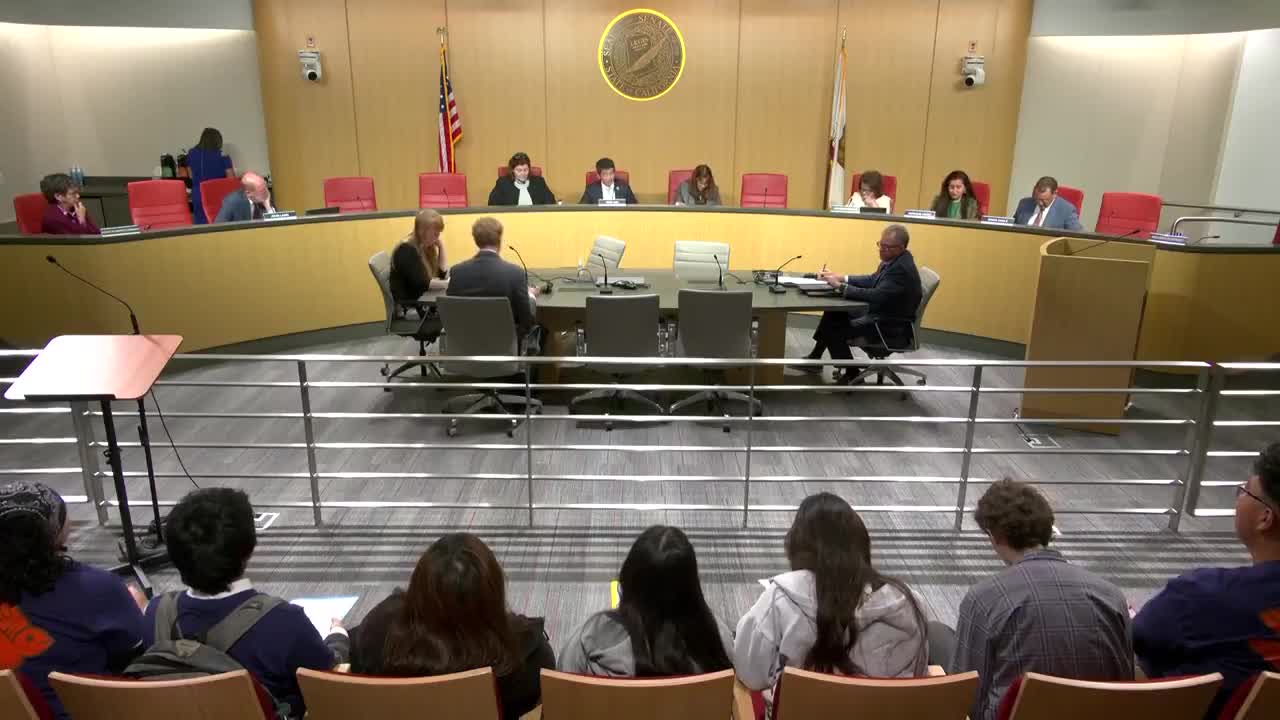
Discussed in Hearing
 19SEC
Senate Standing Committee on Natural Resources and Water
Bill Author

Bill Co-Author(s):