SB 1229: Insurance disclosures.
- Session Year: 2023-2024
- House: Senate
- Latest Version Date: 2024-04-17
Current Status:
Failed
(2024-04-24: April 24 set for first hearing. Failed passage in committee. (Ayes 1. Noes 3. Page 3757.))
Introduced
In Committee
First Chamber
In Committee
Second Chamber
Enacted
What does this bill do?
Requires property and casualty insurers to tell applicants and policyholders when they use artificial intelligence to make or affect decisions on home or auto insurance applications or on claims. Insurers must give that notice at the time of application or once a year in their annual disclosures, and the bill defines terms like artificial intelligence, AI systems, generative AI, and machine learning for this purpose.
The summary is provided by generative AI which can make mistakes. For original language, please view the details in the table below.
Existing law generally regulates the rules governing insurance and insurance contracts. Existing law sets minimum standards of training, experience, skill, and compensation for claims reviewers and adjusters in specified insurance fields.
This bill would would, until January 1, 2030, require a property and casualty insurer to disclose to an applicant or insured when it has used if it uses artificial intelligence intelligence, as defined, to make decisions on, or make decisions that affect, applications and claims review, as specified.
This bill would declare that it is to take effect immediately as an urgency statute.
Existing law generally regulates the rules governing insurance and insurance contracts. Existing law sets minimum standards of training, experience, skill, and compensation for claims reviewers and adjusters in specified insurance fields.
This bill would require a property and casualty insurer to disclose to an applicant or insured when it has used artificial intelligence to make decisions on, or make decisions that affect, applications and claims review, as specified.
This bill would declare that it is to take effect immediately as an urgency statute.
(a)A property and casualty insurer shall disclose to an applicant or insured when it has used if it uses artificial intelligence to make decisions on, or make decisions that affect, either of the following:
(a)(1)Applications for residential property insurance or automobile insurance.
(b)(2)Claims review or other coverage of losses.
(b)A property and casualty insurer shall provide this disclosure at the time of application for coverage or once annually in a property and casualty insurers annual disclosures.
(c)For purposes of this section, the following definitions apply:
(1)(A)Artificial intelligence (AI) refers to a branch of computer science that uses data processing systems that perform functions normally associated with human intelligence, such as reasoning, learning, and self-improvement, or the capability of a device to perform functions that are normally associated with human intelligence, such as reasoning, learning, and self-improvement. This definition considers machine learning to be a subset of artificial intelligence.
(B)AI includes an AI system, generative artificial intelligence, and machine learning when used by insurers to make decisions regarding consumer applications or claims.
(2)AI system is a machine-based system that can, for a given set of objectives, generate outputs, such as predictions, recommendations, or content, such as text, images, videos, or sounds, or other output-influencing decisions made in real or virtual environments. AI systems are designed to operate with varying levels of autonomy.
(3)Generative artificial intelligence refers to a class of AI systems that generate content in the form of data, text, images, sounds, or video that is similar to, but not a direct copy of, preexisting data or content.
(4)Machine learning refers to a field within AI that focuses on the ability of computers to learn from provided data without being explicitly programmed.
12131.This chapter shall become inoperative on January 1, 2030, and as of that date is repealed.
SEC. 2.This act is an urgency statute necessary for the immediate preservation of the public peace, health, or safety within the meaning of Article IV of the California Constitution and shall go into immediate effect. The facts constituting the necessity are:
Artificial intelligence (AI) is a rapidly developing technology for which many consumers are unaware of the potential impacts upon decisions affecting their everyday lives and purchasing decisions. To ensure consumers receive information about the use of AI in applications and claims decisions as soon as possible, it is necessary for this act to take effect immediately.
A property and casualty insurer shall disclose to an applicant or insured when it has used artificial intelligence to make decisions on, or make decisions that affect, either of the following:
(a)Applications for residential property insurance or automobile insurance.
(b)Claims review or other coverage of losses.
SEC. 2.This act is an urgency statute necessary for the immediate preservation of the public peace, health, or safety within the meaning of Article IV of the California Constitution and shall go into immediate effect. The facts constituting the necessity are:
Artificial intelligence (AI) is a rapidly developing technology for which many consumers are unaware of the potential impacts upon decisions affecting their everyday lives and purchasing decisions. To ensure consumers receive information about the use of AI in applications and claims decisions as soon as possible, it is necessary for this act to take effect immediately.
|
Date
|
Status
|
|---|---|
| Apr 24, 2024 | April 24 set for first hearing. Failed passage in committee. (Ayes 1. Noes 3. Page 3757.) |
| Apr 17, 2024 | From committee with author's amendments. Read second time and amended. Re-referred to Com. on INS. |
| Apr 12, 2024 | Set for hearing April 24. |
| Feb 29, 2024 | Referred to Com. on INS. |
| Feb 16, 2024 | From printer. May be acted upon on or after March 17. |
| Feb 15, 2024 | Introduced. Read first time. To Com. on RLS. for assignment. To print. |
|
Date
|
Description
|
Location
|
Votes
|
|
|---|---|---|---|---|
| Apr 24, 2024 | Do pass as amended, but first amend, and re-refer to the Committee on [Appropriations] | Senate Standing Committee on Insurance |
Failed |
This list shows positions taken on this bill by organizations on the date displayed, which is linked to the original source.
Positions by individuals are not included.
|
Organization
|
Position
|
Date
|
|---|---|---|
| American Property Casualty Insurance Association | * Against | Apr 24, 2024 |
| National Association of Mutual Insurance Companies | * Against | Apr 24, 2024 |
| Pacific Association Of Domestic Insurance Companies | * Against | Apr 24, 2024 |
| Personal Insurance Federation Of California | * Against | Apr 24, 2024 |
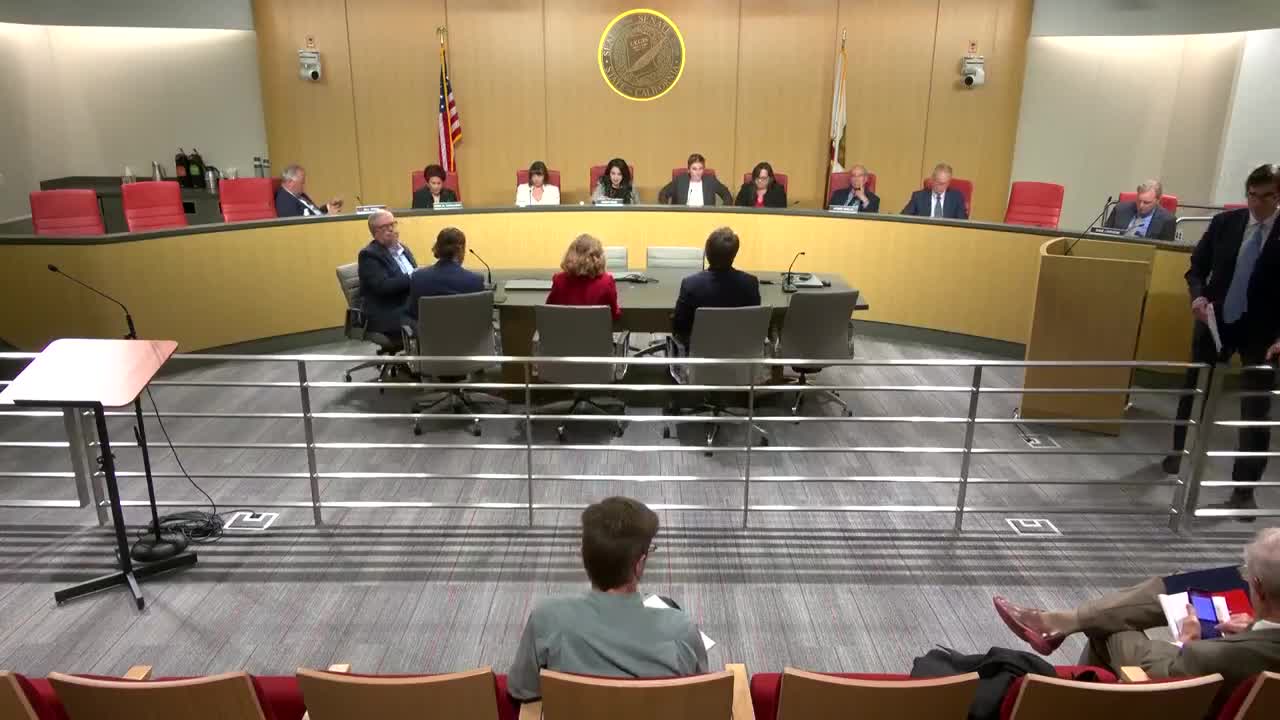
SENATE COMMITTEE ON INSURANCE
Senator Susan Rubio, Chair
2023 - 2024 Regular
Bill No: SB 1229 Hearing Date: April 24, 2024
Author: | Nguyen | ||
Version: | April 17, 2024 Amended | ||
Urgency: | Yes | Fiscal: | Yes |
Consultant: | Jill N. Rice | ||
SUBJECT: Insurance disclosures
DIGEST:
This bill will require a property and casualty insurer to disclose to an applicant or insured when it has used artificial intelligence to make decisions on, or make decisions that affect, applications and claims review, as specified.
This bill will declare that it is to take effect immediately as an urgency statute. Makes this chapter inoperative on January 1, 2030 and repeals it as of that date.
ANALYSIS:
This bill:
- Requires a property and casualty insurer to notify an applicant or insured if it uses artificial intelligence to make decisions that affect either:
- An application for residential property insurance or automobile insurance or;
b) A claims review or other coverage of losses.
- Requires a property and casualty insurer to provide this notice at the time of application for coverage or once annually in a property and casualty insurer’s annual notifications.
- Defines the following terms:
- “AI System”
- “Artificial Intelligence (AI)”
- “Generative Artificial Intelligence (Generative AI)”
- “Machine Learning (ML)”
- Makes this chapter inoperative on January 1, 2030 and repeals it as of that date.
- Declares this act is an urgency statute.
Background (Author’s Statement)
We all know technology advances much faster than regulations, and states are scrambling to get ahead of the use of Artificial Intelligence (AI) in insurance. AI is a rapidly developing technology for which many consumers are unaware of the potential impacts upon decisions affecting their everyday lives and purchasing decisions. SB 1229 will ensure consumers receive information about the use of AI in decisions in their applications and claims. Recent polling data shows consumers are increasingly concerned about AI, yet policymakers are behind the curve. AI is a rapidly developing field, which holds great promise, yet consumer concerns cannot be dismissed or ignored. As AI develops, and policymakers take time to develop appropriate regulations concerning AI’s use, at a minimum consumers should know when decisions affecting their lives, including their insurance coverage, are made with AI.
Comments
AI has been making significant strides in the property and casualty insurance industry, especially in applications or claims reviews. It is being used to automate claims processing. For example, AI algorithms can automatically categorize claims based on severity and complexity. This helps in prioritizing claims and assigning them to the appropriate adjusters or processing pathways. Additionally, it can detect fraud as machine learning models can identify suspicious patterns or anomalies in claims data, flagging potential fraudulent claims for further investigation. AI is being used with Natural Language Processing (NLP) as these tools can analyze insurance policies to understand coverage details and obligations. This ensures that claims are processed accurately according to policy terms. Additionally, chatbots and virtual assistants powered by NLP can handle customer inquiries, provide claim status updates, or assist with policy-related questions, improving customer service and efficiency. Overall, automation and efficiency can be improved with the use of AI-based Optical Character Recognition (OCR) which can extract information from documents like accident reports by reducing manual data entry and errors. Further, AI can optimize claims processing workflows by automating routine tasks, reducing bottlenecks, and improving overall efficiency. AI can also use algorithms and analyze customer data to offer personalized insurance product recommendations or coverage options. By analyzing customer behavior and preferences, AI can help insurers identify opportunities to enhance customer satisfaction and loyalty.
The National Association of Insurance Commissioners (NAIC) is the U.S. standard-setting and regulatory support organization created and governed by the chief insurance regulators from the 50 states, the District of Columbia, and five U.S. territories. The NAIC provides resources, research, and guidance to insurance regulators, including model laws, regulations, and bulletins. The NAIC's model Bulletin on the Use of Artificial Intelligence Systems by Insurers is a guideline designed to address the use of AI in the insurance industry. While the specific details and requirements may vary by jurisdiction, the model bulletin covers the following six key areas:
Transparency and Explainability
Disclosure Requirements: Insurers should disclose to regulators and policyholders when AI or machine learning models are used in underwriting, claims handling, or other decision-making processes.
Explainability: Insurers should ensure that AI systems are transparent and explainable, allowing stakeholders to understand how decisions are made.
Fairness and Non-Discrimination
Fair Treatment: AI systems should not be used in a manner that results in unfair discrimination or disparate impact on protected classes of individuals.
Data Quality and Bias: Insurers should ensure that AI models are trained on high-quality, unbiased data to minimize the risk of discriminatory outcomes.
Data Privacy and Security
Data Protection: Insurers must comply with applicable data protection laws and regulations, ensuring that AI systems handle personal and sensitive data securely.
Data Governance: Insurers should establish robust data governance policies and practices to manage and protect data used in AI systems.
Model Validation and Testing
Model Accuracy: Insurers should regularly validate and test AI models to ensure accuracy, reliability, and compliance with regulatory requirements.
Ongoing Monitoring: Insurers should implement ongoing monitoring and auditing processes to detect and address issues or biases in AI systems.
Ethical Considerations:
Ethical Use of AI: Insurers should adhere to ethical principles and guidelines when developing and deploying AI systems, considering the potential societal impact and ethical implications.
Human Oversight: Insurers should maintain human oversight and control over AI systems, especially in critical decision-making processes, to ensure accountability and ethical use.
Regulatory Compliance:
Compliance with Laws and Regulations: Insurers should ensure that the use of AI complies with all applicable federal and state laws, regulations, and regulatory guidance.
Regulatory Reporting: Insurers may be required to report to regulators on the use of AI systems, including details on model development, validation, testing, and outcomes.
This bill is narrowly crafted to only address the disclosure requirements of this model bulletin. The broader issues of AI will necessitate regulations by the California Department of Insurance or additional legislation to implement the rest of the NAIC's model Bulletin on the Use of Artificial Intelligence Systems by Insurers if so desired.
Suggested Amendments
Amendment 1
On page 2, lines 12 - 14
Strike 12130(b) “A property and casualty insurer shall provide this disclosure at the time of application for coverage or once annually in a property and casualty insurer’s annual disclosures.”
and add
12130(b) “A notice required pursuant to this section shall comply with the informational practice notice requirements as described in Insurance Code Section 791.04.”
This amendment ensures there is no need for a separate notice rather that this notice can be combined with the existing informational practice notice requirements. This is consistent with the Legislature’s recent efforts to streamline the notification process by insurers.
ARGUMENTS IN OPPOSITION:
American Property Casualty Insurance Association (APCIA), National Association of Mutual Insurance Companies (NAMIC), Pacific Association of Domestic Insurance Companies (PADIC), and Personal Insurance Federation of California (PIFC) collectively oppose this bill. They have concerns with increased disclosure especially as it runs contrary to the gains made under SB 793 (Glazer 2023) that decreased notice requirements for insurers due to lost information. The issue of defining AI is an incomplete issue in the legislature as well as other agencies. They point to the fact that there are two regulatory agencies that are considering technology-oriented rules dealing with technology, automated decision making (ADMT), and AI. The California Privacy Protection Agency has announced that they will be doing formal rule making on ADMT, cybersecurity audits, and risk assessment later this summer. The insurance industry has been grappling with those regulations to determine what constitutes “AI” and what appropriate and legitimate use looks like. They also contend that SB 1229 leaves a broad definition of AI which will lead to over-disclosure issues.
SUPPORT:
None received
OPPOSITION:
American Property Casualty Insurance Association |
National Association of Mutual Insurance Companies |
Pacific Association of Domestic Insurance Companies |
Personal Insurance Federation of California |
-- END --
Bill Author

Bill Co-Author(s):