SB 1232: Organic waste: collection requirements: exemption.
- Session Year: 2023-2024
- House: Senate
- Latest Version Date: 2024-03-18
Current Status:
Failed
(2024-04-17: April 17 set for first hearing. Failed passage in committee. (Ayes 2. Noes 4. Page 3663.) Reconsideration granted.)
Introduced
In Committee
First Chamber
In Committee
Second Chamber
Enacted
What does this bill do?
The bill allows a county to exempt part of the county from state requirements to collect organic waste (like food and yard waste). The exemption applies when the county proposed a fee to pay for that collection in that area but a majority of the affected property owners protested and the fee was not imposed.
The summary is provided by generative AI which can make mistakes. For original language, please view the details in the table below.
Existing law requires the State Air Resources Board to complete, approve, and implement a comprehensive strategy to reduce emissions of short-lived climate pollutants in the state to reduce the statewide methane emissions by 40% below 2013 levels by 2030. Existing law requires methane emissions reduction goals to include specified targets to reduce the landfill disposal of organics. Existing law requires the Department of Resources Recycling and Recovery, in consultation with the state board, to adopt regulations that achieve those targets for reducing organic waste in landfills, as provided. The departments organic waste regulations provide different organic waste procurement targets for local jurisdictions based on population and provide waivers and exemptions from collection and procurement requirements for, among other things, low-population jurisdictions.
This bill would authorize the department to issue, upon request by a jurisdiction that does not otherwise qualify for a low population waiver, a waiver from a requirement to separate and recover food waste and food-soiled paper for all or part of a rural jurisdiction where there is low population density and limited waste collection.Articles XIIIC and XIIID of the California Constitution generally require that assessments, fees, and charges be submitted to property owners for approval or rejection after the provision of written notice and the holding of a public hearing. Existing law, the Proposition 218 Omnibus Implementation Act, prescribes specific procedures and parameters for local jurisdictions to comply with Articles XIIIC and XIIID of the California Constitution. Existing statutory law provides notice, protest, and hearing procedures for the levying of new or increased fees or charges by local government agencies pursuant to Article XIIID of the California Constitution.
This bill would exempt a portion of a county from the prescribed organic waste collection requirements if the county proposed a fee for the collection of organic waste in that portion of that county and the county did not impose the fee in that portion of that county because, when submitted to property owners for approval, it was rejected.
Existing law requires the State Air Resources Board to complete, approve, and implement a comprehensive strategy to reduce emissions of short-lived climate pollutants in the state to reduce the statewide methane emissions by 40% below 2013 levels by 2030. Existing law requires methane emissions reduction goals to include specified targets to reduce the landfill disposal of organics. Existing law requires the Department of Resources Recycling and Recovery, in consultation with the state board, to adopt regulations that achieve those targets for reducing organic waste in landfills, as provided. The departments organic waste regulations provide different organic waste procurement targets for local jurisdictions based on population and provide waivers and exemptions from collection and procurement requirements for, among other things, low-population jurisdictions.
This bill would authorize the department to issue, upon request by a jurisdiction that does not otherwise qualify for a low population waiver, a waiver from a requirement to separate and recover food waste and food-soiled paper for all or part of a rural jurisdiction where there is low population density and limited waste collection.
A portion of a county shall be exempt from the organic waste collection requirements of Section 42652.5 if the county proposed a fee for the collection of organic waste in that portion of that county and, pursuant to Article XIIID of the California Constitution, the county did not impose the fee in that portion of that county because a majority of owners of the parcels that would have been affected by the fee protested.
SECTION 1.Section 42652.5 of the Public Resources Code is amended to read:42652.5.(a)The department, in consultation with the State Air Resources Board, shall adopt regulations to achieve the organic waste reduction goals for 2020 and 2025 established in Section 39730.6 of the Health and Safety Code. The regulations shall comply with all of the following:(1)May require local jurisdictions to impose requirements on generators or other relevant entities within their jurisdiction and may authorize local jurisdictions to impose penalties on generators for noncompliance.(2)Shall include requirements intended to meet the goal that not less than 20 percent of edible food that is currently disposed of is recovered for human consumption by 2025.(3)Shall not establish a numeric organic waste disposal limit for individual landfills.(4)May include different levels of requirements for local jurisdictions and phased timelines based upon their progress in meeting the organic waste reduction goals for 2020 and 2025 established in Section 39730.6 of the Health and Safety Code. The department shall base its determination of progress on relevant factors, including, but not limited to, reviews conducted pursuant to Section 41825, the amount of organic waste disposed compared to the 2014 level, per capita disposal rates, the review required by Section 42653, and other relevant information provided by a local jurisdiction.(5)(A)May include penalties to be imposed by the department for noncompliance. If penalties are included, they shall not exceed the amount authorized pursuant to Section 41850.(B)Notwithstanding any other law, administrative civil penalties for a local jurisdiction that fails to procure a quantity of recovered organic waste products that meets or exceeds its recovered organic waste product procurement target established by the department pursuant to Section 18993.1 of Title 14 of the California Code of Regulations shall be imposed pursuant to the following schedule:(i)On or after January 1, 2023, each jurisdiction shall procure a quantity of recovered organic waste products that meets or exceeds 30 percent of its recovered organic waste product procurement target.(ii)On or after January 1, 2024, each jurisdiction shall procure a quantity of recovered organic waste products that meets or exceeds 65 percent of its recovered organic waste product procurement target.(iii)On or after January 1, 2025, each jurisdiction shall procure a quantity of recovered organic waste products that meets or exceeds 100 percent of its recovered organic waste product procurement target.(6)Shall take effect on or after January 1, 2022, except the imposition of penalties pursuant to paragraph (1) shall not take effect until two years after the effective date of the regulations.(7)Jurisdictions in possession of a rural exemption pursuant to subdivision (c) of Section 18984.12 of Title 14 of the California Code of Regulations, as that section read on January 1, 2022, are exempt from the procurement requirement of this subdivision until December 31, 2026. Beginning January 1, 2027, the department may, in its discretion, provide rural counties and jurisdictions located within rural counties that are exempt from organic waste collection requirements an extended recovered organic waste product procurement target schedule similar to the schedule set forth in this subdivision, which shall be exempt from the Administrative Procedure Act (Chapter 3.5 (commencing with Section 11340) of Part 1 of Division 3 of Title 2 of the Government Code).(8)The department may, in its discretion, create an adjusted recovered organic waste product procurement target schedule, not to exceed the requirements of the schedule set forth in this subdivision, which shall be exempt from the Administrative Procedure Act (Chapter 3.5 (commencing with Section 11340) of Part 1 of Division 3 of Title 2 of the Government Code).(9)Upon request by a local jurisdiction for an area that does not otherwise qualify for a low population waiver pursuant to subdivision (a) of Section 18984.12 of Title 14 of the California Code of Regulations, the department may issue a waiver from a requirement to separate and recover food waste and food-soiled paper for all or part of a rural jurisdiction where there is low population density and limited waste collection.(b)A local jurisdiction may charge and collect fees to recover the local jurisdictions costs incurred in complying with the regulations adopted pursuant to this section.(c)A local jurisdiction facing continuing violations of the regulations adopted pursuant to subdivision (a) that commence during the 2022 calendar year may submit to the department a notification of intent to comply, as described in this section. Upon approval by the department, and implementation by the local jurisdiction, of a notification of intent to comply that meets the requirements of subdivision (e), a local jurisdiction may be eligible for both of the following:(1)Administrative civil penalty relief for the 2022 calendar year pursuant to subdivision (d).(2)A corrective action plan pursuant to Section 18996.2 of Title 14 of the California Code of Regulations.(d)(1)For violations of the regulations that are disclosed in a notification of intent to comply that is approved by the department as meeting the requirements of subdivision (e), the department shall waive administrative civil penalties under paragraph (5) of subdivision (a) during the 2022 calendar year if, and administrative civil penalties shall not accrue under paragraph (5) of subdivision (a) during the 2022 calendar year if, the local jurisdiction implements the proposed actions according to the schedule proposed pursuant to paragraph (4) of subdivision (e).(2)For violations that commence during the 2022 calendar year and continue into the 2023 calendar year, administrative civil penalties may begin accruing as of January 1, 2023. Those administrative civil penalties accruing on and after January 1, 2023, shall be waived upon complete compliance with the terms of a corrective action plan pursuant to Section 18996.2 of Title 14 of the California Code of Regulations.(3)If a local jurisdiction fails to adhere to the proposed actions and schedule described in a notification of intent to comply pursuant to paragraph (4) of subdivision (e), the department may revoke its approval of the notification of intent to comply and impose administrative civil penalties for violations occurring during the 2022 calendar year retroactive to the date of violation.(4)Notwithstanding any proposed actions and schedule provided by a local jurisdiction in an approved notification of intent to comply pursuant to paragraph (4) of subdivision (e), the department may instead address through a corrective action plan any violations disclosed in that notification that may take more than 180 days to correct. Under those circumstances, the proposed actions and schedule provided pursuant to an approved notification of intent to comply pursuant to paragraph (4) of subdivision (e) shall control until a corrective action plan is finalized.(e)The department shall approve a notification of intent to comply if the department determines the notification meets the requirements of this subdivision. A notification of intent to comply shall be in writing, adopted by formal resolution by the governing body of the local jurisdiction, and filed with the department no later than March 1, 2022. The notification of intent to comply shall include, at a minimum, all of the following:(1)A description, with specificity, of the continuing violations.(2)A detailed explanation of the reasons, supported by documentation, why the local jurisdiction is unable to comply.(3)A description of the impacts of the COVID-19 pandemic on compliance.(4)A description of the proposed actions the local jurisdiction will take to remedy the violations within the timelines established in Section 18996.2 of Title 14 of the California Code of Regulations with a proposed schedule for doing so. The proposed actions shall be tailored to remedy the violations in a timely manner.(f)The department shall respond in writing to a local jurisdiction within 45 business days of receiving a notification of intent to comply with an approval, disapproval, request for additional information, or timeline for a decision on approval or disapproval. If the department disapproves the notification of intent to comply due to the notification not meeting the requirements of subdivision (e), the department shall include in the response a justification for the disapproval.(g)Notwithstanding Section 18996.2 of Title 14 of the California Code of Regulations, the department may establish any maximum compliance deadline in a corrective action plan that it determines to be necessary and appropriate under the circumstances for the correction of a violation of the regulations adopted pursuant to subdivision (a).(h)(1)The department may adopt regulations it determines to be necessary to implement and enforce the changes made to this section by Chapter 508 of the Statutes of 2021 as emergency regulations.(2)Emergency regulations adopted pursuant to paragraph (1) shall be adopted in accordance with Chapter 3.5 (commencing with Section 11340) of Part 1 of Division 3 of Title 2 of the Government Code, and for purposes of that chapter, including Section 11349.6 of the Government Code, the adoption of these regulations is an emergency and shall be considered by the Office of Administrative Law as necessary for the immediate preservation of the public peace, health, safety, and general welfare. Notwithstanding Chapter 3.5 (commencing with Section 11340) of Part 1 of Division 3 of Title 2 of the Government Code, emergency regulations adopted by the department pursuant to paragraph (1) shall be filed with, but not be repealed by, the Office of Administrative Law and shall remain in effect until January 1, 2024.(a)The department, in consultation with the State Air Resources Board, shall adopt regulations to achieve the organic waste reduction goals for 2020 and 2025 established in Section 39730.6 of the Health and Safety Code. The regulations shall comply with all of the following:
(1)May require local jurisdictions to impose requirements on generators or other relevant entities within their jurisdiction and may authorize local jurisdictions to impose penalties on generators for noncompliance.
(2)Shall include requirements intended to meet the goal that not less than 20 percent of edible food that is currently disposed of is recovered for human consumption by 2025.
(3)Shall not establish a numeric organic waste disposal limit for individual landfills.
(4)May include different levels of requirements for local jurisdictions and phased timelines based upon their progress in meeting the organic waste reduction goals for 2020 and 2025 established in Section 39730.6 of the Health and Safety Code. The department shall base its determination of progress on relevant factors, including, but not limited to, reviews conducted pursuant to Section 41825, the amount of organic waste disposed compared to the 2014 level, per capita disposal rates, the review required by Section 42653, and other relevant information provided by a local jurisdiction.
(5)(A)May include penalties to be imposed by the department for noncompliance. If penalties are included, they shall not exceed the amount authorized pursuant to Section 41850.
(B)Notwithstanding any other law, administrative civil penalties for a local jurisdiction that fails to procure a quantity of recovered organic waste products that meets or exceeds its recovered organic waste product procurement target established by the department pursuant to Section 18993.1 of Title 14 of the California Code of Regulations shall be imposed pursuant to the following schedule:
(i)On or after January 1, 2023, each jurisdiction shall procure a quantity of recovered organic waste products that meets or exceeds 30 percent of its recovered organic waste product procurement target.
(ii)On or after January 1, 2024, each jurisdiction shall procure a quantity of recovered organic waste products that meets or exceeds 65 percent of its recovered organic waste product procurement target.
(iii)On or after January 1, 2025, each jurisdiction shall procure a quantity of recovered organic waste products that meets or exceeds 100 percent of its recovered organic waste product procurement target.
(6)Shall take effect on or after January 1, 2022, except the imposition of penalties pursuant to paragraph (1) shall not take effect until two years after the effective date of the regulations.
(7)Jurisdictions in possession of a rural exemption pursuant to subdivision (c) of Section 18984.12 of Title 14 of the California Code of Regulations, as that section read on January 1, 2022, are exempt from the procurement requirement of this subdivision until December 31, 2026. Beginning January 1, 2027, the department may, in its discretion, provide rural counties and jurisdictions located within rural counties that are exempt from organic waste collection requirements an extended recovered organic waste product procurement target schedule similar to the schedule set forth in this subdivision, which shall be exempt from the Administrative Procedure Act (Chapter 3.5 (commencing with Section 11340) of Part 1 of Division 3 of Title 2 of the Government Code).
(8)The department may, in its discretion, create an adjusted recovered organic waste product procurement target schedule, not to exceed the requirements of the schedule set forth in this subdivision, which shall be exempt from the Administrative Procedure Act (Chapter 3.5 (commencing with Section 11340) of Part 1 of Division 3 of Title 2 of the Government Code).
(9)Upon request by a local jurisdiction for an area that does not otherwise qualify for a low population waiver pursuant to subdivision (a) of Section 18984.12 of Title 14 of the California Code of Regulations, the department may issue a waiver from a requirement to separate and recover food waste and food-soiled paper for all or part of a rural jurisdiction where there is low population density and limited waste collection.
(b)A local jurisdiction may charge and collect fees to recover the local jurisdictions costs incurred in complying with the regulations adopted pursuant to this section.
(c)A local jurisdiction facing continuing violations of the regulations adopted pursuant to subdivision (a) that commence during the 2022 calendar year may submit to the department a notification of intent to comply, as described in this section. Upon approval by the department, and implementation by the local jurisdiction, of a notification of intent to comply that meets the requirements of subdivision (e), a local jurisdiction may be eligible for both of the following:
(1)Administrative civil penalty relief for the 2022 calendar year pursuant to subdivision (d).
(2)A corrective action plan pursuant to Section 18996.2 of Title 14 of the California Code of Regulations.
(d)(1)For violations of the regulations that are disclosed in a notification of intent to comply that is approved by the department as meeting the requirements of subdivision (e), the department shall waive administrative civil penalties under paragraph (5) of subdivision (a) during the 2022 calendar year if, and administrative civil penalties shall not accrue under paragraph (5) of subdivision (a) during the 2022 calendar year if, the local jurisdiction implements the proposed actions according to the schedule proposed pursuant to paragraph (4) of subdivision (e).
(2)For violations that commence during the 2022 calendar year and continue into the 2023 calendar year, administrative civil penalties may begin accruing as of January 1, 2023. Those administrative civil penalties accruing on and after January 1, 2023, shall be waived upon complete compliance with the terms of a corrective action plan pursuant to Section 18996.2 of Title 14 of the California Code of Regulations.
(3)If a local jurisdiction fails to adhere to the proposed actions and schedule described in a notification of intent to comply pursuant to paragraph (4) of subdivision (e), the department may revoke its approval of the notification of intent to comply and impose administrative civil penalties for violations occurring during the 2022 calendar year retroactive to the date of violation.
(4)Notwithstanding any proposed actions and schedule provided by a local jurisdiction in an approved notification of intent to comply pursuant to paragraph (4) of subdivision (e), the department may instead address through a corrective action plan any violations disclosed in that notification that may take more than 180 days to correct. Under those circumstances, the proposed actions and schedule provided pursuant to an approved notification of intent to comply pursuant to paragraph (4) of subdivision (e) shall control until a corrective action plan is finalized.
(e)The department shall approve a notification of intent to comply if the department determines the notification meets the requirements of this subdivision. A notification of intent to comply shall be in writing, adopted by formal resolution by the governing body of the local jurisdiction, and filed with the department no later than March 1, 2022. The notification of intent to comply shall include, at a minimum, all of the following:
(1)A description, with specificity, of the continuing violations.
(2)A detailed explanation of the reasons, supported by documentation, why the local jurisdiction is unable to comply.
(3)A description of the impacts of the COVID-19 pandemic on compliance.
(4)A description of the proposed actions the local jurisdiction will take to remedy the violations within the timelines established in Section 18996.2 of Title 14 of the California Code of Regulations with a proposed schedule for doing so. The proposed actions shall be tailored to remedy the violations in a timely manner.
(f)The department shall respond in writing to a local jurisdiction within 45 business days of receiving a notification of intent to comply with an approval, disapproval, request for additional information, or timeline for a decision on approval or disapproval. If the department disapproves the notification of intent to comply due to the notification not meeting the requirements of subdivision (e), the department shall include in the response a justification for the disapproval.
(g)Notwithstanding Section 18996.2 of Title 14 of the California Code of Regulations, the department may establish any maximum compliance deadline in a corrective action plan that it determines to be necessary and appropriate under the circumstances for the correction of a violation of the regulations adopted pursuant to subdivision (a).
(h)(1)The department may adopt regulations it determines to be necessary to implement and enforce the changes made to this section by Chapter 508 of the Statutes of 2021 as emergency regulations.
(2)Emergency regulations adopted pursuant to paragraph (1) shall be adopted in accordance with Chapter 3.5 (commencing with Section 11340) of Part 1 of Division 3 of Title 2 of the Government Code, and for purposes of that chapter, including Section 11349.6 of the Government Code, the adoption of these regulations is an emergency and shall be considered by the Office of Administrative Law as necessary for the immediate preservation of the public peace, health, safety, and general welfare. Notwithstanding Chapter 3.5 (commencing with Section 11340) of Part 1 of Division 3 of Title 2 of the Government Code, emergency regulations adopted by the department pursuant to paragraph (1) shall be filed with, but not be repealed by, the Office of Administrative Law and shall remain in effect until January 1, 2024.
|
Date
|
Status
|
|---|---|
| Apr 17, 2024 | April 17 set for first hearing. Failed passage in committee. (Ayes 2. Noes 4. Page 3663.) Reconsideration granted. |
| Apr 17, 2024 | Set for hearing April 24 in E.Q. pending receipt. |
| Apr 5, 2024 | Set for hearing April 17. |
| Apr 3, 2024 | Re-referred to Coms. on L. GOV. and E.Q. |
| Apr 1, 2024 | April 17 hearing postponed by committee. |
| Apr 1, 2024 | Re-referred to Com. on RLS. |
| Apr 1, 2024 | Withdrawn from committee. |
| Mar 18, 2024 | From committee with author's amendments. Read second time and amended. Re-referred to Com. on E.Q. |
| Mar 15, 2024 | Set for hearing April 17. |
| Mar 14, 2024 | April 3 set for first hearing canceled at the request of author. |
| Mar 8, 2024 | Set for hearing April 3. |
| Feb 29, 2024 | Referred to Com. on E.Q. |
| Feb 16, 2024 | From printer. May be acted upon on or after March 17. |
| Feb 15, 2024 | Introduced. Read first time. To Com. on RLS. for assignment. To print. |
|
Date
|
Description
|
Location
|
Votes
|
|
|---|---|---|---|---|
| Apr 17, 2024 | [First] hearing set for [04-17-2024]: Failed passage in Committee. Reconsideration granted | Senate Standing Committee on Local Government |
Passed |
|
| Apr 17, 2024 | Do pass, but first be re-referred to the Committee on [Environmental Quality] | Senate Standing Committee on Local Government |
Failed |
This list shows positions taken on this bill by organizations on the date displayed, which is linked to the original source.
Positions by individuals are not included.
|
Organization
|
Position
|
Date
|
|---|---|---|
| California Against Waste | ** Against | |
| california coalition for clean air | ** Against | |
| California Compost Coalition | * Against | Apr 17, 2024 |
| Kern County | * Support | Apr 17, 2024 |
| Natural Resources Defense Council | ** Against | |
| Republic Services Inc. | ** Against | |
| Waste Management | ** Against |
SENATE COMMITTEE ON LOCAL GOVERNMENT
Senator María Elena Durazo, Chair
2023 - 2024 Regular
Bill No: | SB 1232 | Hearing Date: | 4/17/24 |
Author: | Grove | Fiscal: | Yes |
Version: | 3/18/24 | Consultant: | Peterson |
Organic waste: collection requirements: exemption
Exempts portions of a county from the state’s organic waste collection requirements if a majority of property owners protest organic waste collection fees under Proposition 218.
Background
Proposition 218. The California Constitution requires voter approval for taxes and many other fees and charges. Proposition 218 (1996) added Article XIIID to the California Constitution, which imposed voter approval requirements for most “property-related fees”—any levy other than an ad valorem tax, a special tax, or an assessment imposed by an agency on a parcel or on a person as an incident of property ownership, including a user fee or charge for a property-related service.
Before a local government can charge a new property-related fee, or increase an existing one, Proposition 218 requires local officials to:
- Identify the parcels to be charged.
- Calculate the fee for each parcel.
- Notify the parcels’ owners in writing about the fees and the hearing.
- Hold a public hearing to consider and count protests.
- Abandon the fees if a majority of the parcels’ owners protest.
New, increased, or extended property-related fees generally require voter approval by one of the following: a majority-vote of the affected property owners; two-thirds registered voter approval; or weighted ballot approval by the affected property owners.
Fees or charges for property related services cannot exceed the proportional cost of providing service to the parcel and must be used only for the purposes for which they were collected. Property-related fees must also only fund services actually used by or immediately available to the property owner, not based on potential or future use. Finally, Proposition 218 prohibits local governments from imposing fees or charges for general governmental services—including fire, police, ambulance, or library services—if the service is available to the public at large in substantially the same manner as it is to property owners.
Water, sewer, and refuse collection services are exempt from Proposition 218’s voter approval requirements, but must meet all other procedural and substantive requirements in Proposition 218, including the requirement to hold a protest hearing not less than 45 days after mailing a notice of new or increased rates to affected property owners. If a majority protest the fee, based on the proportional obligation of the affected property, then the local agency cannot impose the fee.
Organic waste. Organic material accounts for more than a third of California’s waste stream: food waste accounts for approximately 18 percent of landfilled material, and yard waste accounts for another seven percent of the total waste stream. According to the Department of Resources Recycling and Recovery (CalRecycle), methane emissions from decomposing organic waste in landfills account for approximately 20 percent of the State’s total methane emissions. Methane is a climate “super pollutant” that is 84 times more potent than carbon dioxide over a 20-year timescale.
SB 1383 regulations. In 2016, the Legislature enacted SB 1383 (Lara, 2016), which established emission reduction targets for short-lived climate pollutants, including hydrofluorocarbon gasses, anthropogenic black carbon, and methane. Among other requirements, SB 1383 directed the California Air Resources Board to approve and implement a comprehensive short-lived climate pollutant strategy that included a 2030 target of reducing methane emissions by 40 percent relative to 2014 levels. To achieve these reductions in methane emissions, SB 1383 set a goal of reducing landfill disposal of organic waste 50 percent by 2020 and 75 percent by 2025 from 2014 levels, and to redirect at least 20 percent of currently disposed of surplus food for meals by 2025. SB 1383 gave CalRecycle the authority to adopt regulations that would achieve these organic waste reduction requirements, which were finalized in November 2020 and became effective on January 1, 2022.
City and county responsibilities under SB 1383. Local governments play a key role in achieving the SB 1383 targets. The SB 1383 regulations require cities, counties, and special districts that provide solid waste collection services to take a variety of actions, including the following, among others:
- Establish an organic waste collection program, including mandatory curbside collections for certain waste generators, that require sorting of organic waste into proper containers;
- Enforce organic waste collection requirements by monitoring and inspecting commercial businesses and reviewing waste routes for compliance, notifying entities in violation, providing a deadline to comply, and if necessary, assessing penalties and fines for continuous violations; and
- Plan for adequate capacity to ensure there are sufficient facilities for processing the organic waste collected.
Local governments that do not comply with the SB 1383 regulations are subject to fines ranging from $500 to $10,000 per day, depending on the severity of the violation. However, CalRecycle must first attempt to work with local governments to bring them into compliance. Additionally, a local government may be eligible for an exemption or temporary waiver from some portions of the SB 1383 regulations if they have small populations, are located in rural areas or at high elevations, or generate small amounts of waste.
Organic waste recycling facilities. SB 1383 requires local governments to divert organic waste from landfills to other facilities to process that waste in accordance with the law. These facilities can include composting, mulching, biomass energy plans, and anerobic digestion facilities that break organic waste down and recycle it into usable products. The state currently does not possess sufficient capacity to process the amount of waste that needs to be diverted from landfills to meet the SB 1383 goals. Specifically, the Little Hoover Commission, in a June 2023 report on the status of SB 1383 implementation, noted that the state currently only has the capacity to process a little over half of the estimated 18 million tons of organic waste that will need to be diverted to organic waste recycling facilities in 2025. According to CalRecycle, “…the state needs approximately 50-100 new or expanded facilities to annually recycle the additional 20-25 million tons of organic waste that will be collected from residents and commercial businesses with the successful implementation of SB 1383.”
Recent issues with meeting these requirements. Some local agencies have had difficulty raising the funds necessary to meet SB 1383’s requirements. Kern County developed a plan to comply with SB 1383 that relied upon 14 different collection areas adopting annual fees between $369 for areas in the City of Bakersfield and $560 for outlaying areas that would be added onto property tax bills. Under this plan, each household would have three bins: one each for household waste, organics, and recycling. In December 2023, 6 of the 14 collection areas successfully protested these rate under Proposition 218. This means Kern County cannot impose the new fees in these areas. Not collecting organic waste in these areas will require the County to make up the difference in other parts of the county, fund collection efforts by another means, or face fines under SB 1383. Kern County submitted a request to CalRecycle for an extension to come into compliance with SB 1383 due to delays caused by the successful Proposition 218 protests, which CalRecycle is reviewing. This extension request included alternative compliance measures, including the County distributing organic collection bins to customers.
The author wants to exempt areas of a county that successfully protest organic waste collection fees from SB 1383’s requirements so a county can avoid penalties for not complying with SB 1383’s requirements.
Proposed Law
SB 1232 exempts portions of a county from the state’s organic waste collection requirements if the majority of property owners protest organic waste collection fees under Proposition 218.
Comments
1. Purpose of the bill. According to the author, “As more mandates are created regarding the collection of organic waste, the rights of residents who are affected by these mandates also need to be taken into consideration. SB 1232 clarifies that areas that have held a successful Prop 218 protest are exempt from implementing organic waste collection fees.”
2. “The lady doth protest too much, methinks.” The Legislature enacted SB 1383 to meaningfully reduce the organic waste that ends up in landfills throughout the state and reduce greenhouse gas emissions. While its requirements apply statewide, SB 1232 would enable property owners to use the Proposition 218 protest process to decide whether they want to pay for organic collection and comply with state law. Additionally, without restrictions on the portion of a county that could exempt itself, it would appear possible for an entire county, or at least a significant portion, to exempt itself from SB 1383 without any input from CalRecycle. Finally, the exemption would also be permanent, unless the county passed a subsequent fee without protest. Should property owners have the ability to exempt themselves from SB 1383’s requirements using the Proposition 218 protest process? While Proposition 218 gives property owners the authority to protest organic waste collection fees a county seeks to impose, a successful protest should not absolve the county from identifying other ways to ensure compliance with the state’s organic waste collection requirements. This measure would also give counties an incentive to encourage protests, either by proposing unnecessarily expansive programs to be funded by fees, or other means. While SB 1232 only applies to organic waste collection requirements, it sets a precedent for enacting laws that allow counties and property owners to use the Proposition 218 protest process to decide which state laws they want to follow and which ones they do not.
3. Back to the drawing board. Now that property owners have protested organic waste collection fees, Kern County is left with a difficult situation. It still has to comply with SB 1383’s requirements, but not all its residents have allowed the county to impose fees sufficient for it to do so. What options does the County have to comply with SB 1383? One option is to ask CalRecycle to approve alternative compliance measures. Kern County has already submitted a set of alternative compliance measures to the department, which is still under review. If CalRecycle rejects the plan, then the county could look into whether allowing residents to self-haul their waste would be an option. That would require CalRecycle approval, and according to the County may not save residents money compared to having trucks collect the materials. If self-haul is not option, then the County may have to consider whether it can shift resources away from other expenditures to fund SB 1383 compliance. Alternatively, it could look to other options to increase revenues to pay for organic waste collection, such as a special tax, which would require a 2/3 vote. On the one hand, none of these options are easy to implement. On the other hand, the Legislature made organic waste collection a requirement for a reason: to reduce waste that ends up in landfills and reduce greenhouse gas emissions. The rest of the state has had to make these same difficult choices to do their part to help address this part of climate crisis, so why should some places receive an exemption outside of the exemptions the Legislature has already approved?
4. Related legislation. The Senate Local Government Committee has been referred two additional bills regarding organic waste recycling and SB 1383 compliance, including:
- SB 1045 (Blakespear, 2024) requires the Office of Planning and Research (OPR) to develop a technical advisory on best practices for facilitating the siting of compost facilities; requires cities and counties to consider the technical advisory; and establishes timelines for review of permits for compost facilities. The measure is also scheduled for the Committee’s April 17th meeting.
- SB 1426 (Blakespear, 2024) prohibits an exclusive franchise, contract, license, or permit to provide services for diversion from exceeding the services performed under the exclusive authorization. Additionally, it authorizes other persons to collect undiscarded organic material from nonresidential customers if local agencies do not offer collection programs for these materials. This measure is currently pending in the Senate Environmental Quality Committee; should it advance, it will be re-referred to this Committee.
Additionally, the Legislature is considering several additional measures on the same subject:
- SB 972 (Min, 2024) requires CalRecycle, the Air Resources Board, and the California Environmental Protection Agency to hold at least two joint meetings each calendar year to coordinate the implementation of policies that affect organic waste reduction targets. The measure is currently pending in the Senate Environmental Quality Committee.
- SB 1175 (Ochoa Bogh, 2024) directs CalRecycle to consider alternatives in addition to census tracts when deciding on the boundaries of low-population and elevation waivers from SB 1383 organics waste diversion goals. The measure is currently pending in the Senate Appropriations Committee.
- AB 2346 (Lee, 2024) authorizes local jurisdictions to be credited for the procurement of recovered organic waste products through contracts with direct service providers, and authorizes jurisdictions to receive procurement credit for investments made in projects that increase organic waste recycling capacity. The measure is currently pending in the Assembly Appropriations Committee.
- AB 2514 (Aguiar-Curry, 2024) exempts small counties with a population under 70,000 from the state’s organic waste reduction requirements. This bill also requires CalRecycle to include hydrogen and pipeline biomethane converted from organic waste as eligible for procurement credit by local jurisdictions and requires CalRecycle to consider “life-cycle carbon intensity” when providing incentives to facilitate progress toward the organic waste reduction targets. The measure is currently pending in the Assembly Appropriations Committee.
- AB 2577 (Bryan, 2024) requires the regulations CalRecycle adopts to meet the state’s edible food recovery goal to include product labeling requirements that reduce food waste. The measure is currently pending in the Assembly Appropriations Committee.
- AB 2658 (Bains, 2024) exempts food processing establishments that do not “divert organic waste to landfills” from the state’s organic waste diversion targets. The measure is currently pending in the Assembly Natural Resources Committee.
- AB 2902 (Wood, 2024) makes permanent the exemption for small rural counties with a population below 70,000 from the state’s organic waste reduction requirements, and provides additional compliance flexibility for small counties that produce less than 200,000 tons of solid waste annually. The measure is currently pending in the Assembly Appropriations Committee.
5. Coming and going. The Senate Rules Committee has ordered a double referral of SB 1232: first to the Senate Local Government Committee to hear issues related to local government, and second to the Senate Environmental Quality Committee.
Support and Opposition
(4/12/24)
Support: County of Kern
Opposition: California Against Waste
California Coalition for Clean Air
California Compost Coalition
Natural Resources Defense Council (NRDC)
Republic Services INC.
Waste Management
-- END --
Discussed in Hearing
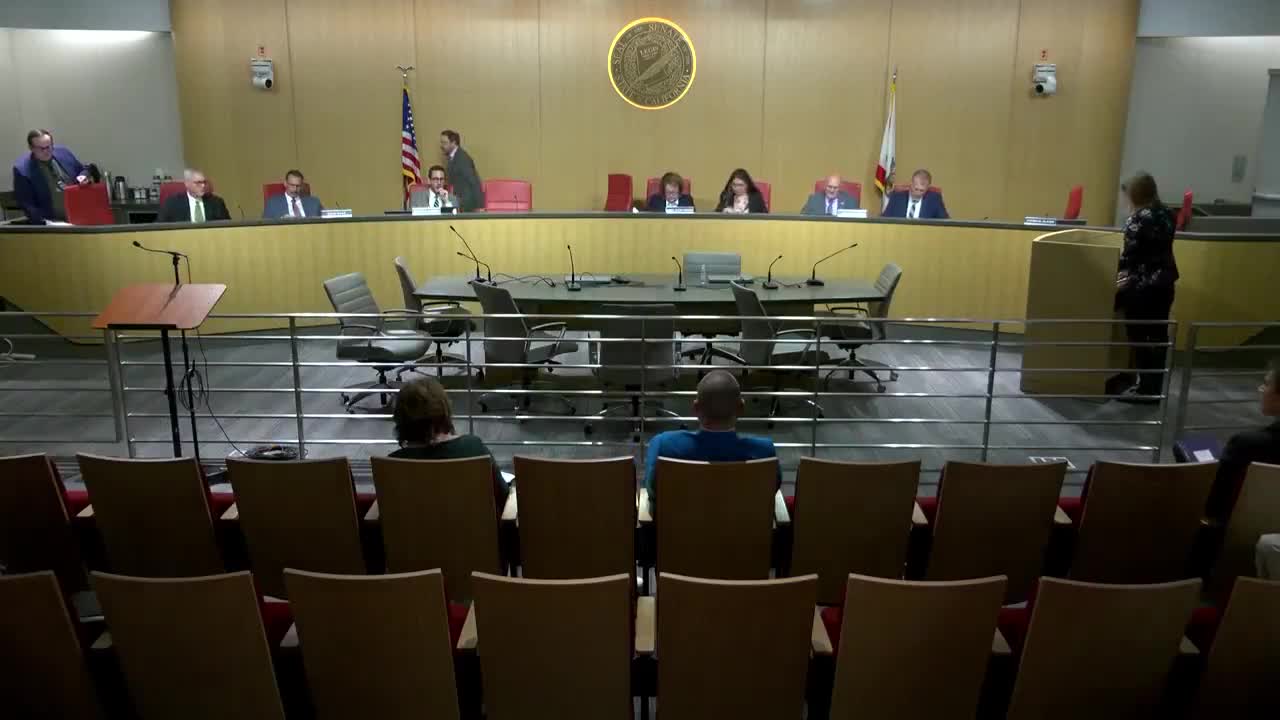 17MIN
Senate Standing Committee on Local Government
Bill Author

Bill Co-Author(s):