SB 1252: California Mosquito Surveillance and Research Program.
- Session Year: 2023-2024
- House: Senate
- Latest Version Date: 2024-06-20
Current Status:
Failed
(2024-08-15: August 15 hearing: Held in committee and under submission.)
Introduced
In Committee
First Chamber
In Committee
Second Chamber
Enacted
Existing law establishes the California Mosquito Surveillance and Research Program, which is administered by the University of California, Davis, and requires the university to maintain an interactive internet website for management and dissemination of data on mosquitoborne virus and surveillance control and coordinate with the State Department of Public Health, among other functions, to the extent the program receives federal, state, or private funding for those purposes, as specified.
This bill would require the program to consult with partners at the University of California and the California State University about the most up-to-date research pertaining to mosquito abatement, as specified. including sustainable pest management, as defined.
Existing law establishes the California Mosquito Surveillance and Research Program, which is administered by the University of California, Davis, and requires the university to maintain an interactive internet website for management and dissemination of data on mosquitoborne virus and surveillance control and coordinate with the State Department of Public Health, among other functions, to the extent the program receives federal, state, or private funding for those purposes, as specified.
This bill would require the program to consult with partners at the University of California and the California State University about the most up-to-date research pertaining to mosquito abatement. abatement, as specified.
Existing law establishes the California Mosquito Surveillance and Research Program, which is administered by the University of California, Davis, and requires the university to maintain an interactive internet website for management and dissemination of data on mosquitoborne virus and surveillance control and coordinate with the State Department of Public Health, among other functions, to the extent the program receives federal, state, or private funding for those purposes, as specified.
This bill would require the program to consult with partners at the University of California and the California State University about the most up-to-date research pertaining to mosquito abatement.
(a)There is hereby established the California Mosquito Surveillance and Research Program to be administered by the University of California, Davis, which shall perform all of the following functions:
(1)Maintain an interactive internet website for management and dissemination of data on mosquitoborne virus and surveillance control.
(2)Work in conjunction with local mosquito abatement and vector control districts to conduct research on arbovirus surveillance, transmission of vectorborne diseases, and mosquito ecology and control.
(3)Coordinate with the Mosquito and Vector Control Association of California, State Department of Public Health, local mosquito abatement and vector control districts, local governments, and other affected stakeholders to share information.
(4)Consult with partners at the University of California and the California State University about the most up-to-date research pertaining to mosquito abatement, including, but not limited to, nature-based solutions. sustainable pest management.
(b)The program established by this section shall perform the functions described in subdivision (a) to the extent the program receives federal or state grants or private donations or grants made for those purposes.
(c)For the purposes of this section, the following definitions apply:
(1)Integrated pest management means an ecosystem-based strategy that focuses on long-term prevention of pests or their damage through a combination of techniques such as biological control, habitat manipulation, modification of cultural practices, and use of resistant varieties. Pesticides are used only after monitoring indicates they are needed according to established guidelines, and treatments are made with the goal of removing only the target organism. Pest control materials are selected and applied in a manner that minimizes risks to human health, beneficial and nontarget organisms, and the environment.
(2)Sustainable pest management means a holistic, whole-system approach applicable to agricultural and other managed ecosystems and urban and rural communities that builds on the concept of integrated pest management to include the wider context of the three sustainability pillars: human health and social equity, environmental protection, and economic vitality.
(d)For the purposes of this section, biological control includes, but is not limited to, bats as pest suppressors, dragonfly preservation and restoration, and controls that address invasive crayfish species.
(a)There is hereby established the California Mosquito Surveillance and Research Program to be administered by the University of California, Davis, which shall perform all of the following functions:
(1)Maintain an interactive internet website for management and dissemination of data on mosquitoborne virus and surveillance control.
(2)Work in conjunction with local mosquito abatement and vector control districts to conduct research on arbovirus surveillance, transmission of vectorborne diseases, and mosquito ecology and control.
(3)Coordinate with the Mosquito and Vector Control Association of California, State Department of Public Health, local mosquito abatement and vector control districts, local governments, and other affected stakeholders to share information.
(4)Consult with partners at the University of California and the California State University about the most up-to-date research pertaining to mosquito abatement. abatement, including, but not limited to, nature-based solutions.
(b)The program established by this section shall perform the functions described in subdivision (a) to the extent the program receives federal or state grants or private donations or grants made for those purposes.
(a)There is hereby established the California Mosquito Surveillance and Research Program to be administered by the University of California, Davis, which shall perform all of the following functions:
(1)Maintain an interactive internet website for management and dissemination of data on mosquitoborne virus and surveillance control.
(2)Work in conjunction with local mosquito abatement and vector control districts to conduct research on arbovirus surveillance, transmission of vectorborne diseases, and mosquito ecology and control.
(3)Coordinate with the Mosquito and Vector Control Association of California, State Department of Public Health, local mosquito abatement and vector control districts, local governments, and other affected stakeholders to share information.
(4)Consult with partners at the University of California and the California State University about the most up-to-date research pertaining to mosquito abatement.
(b)The program established by this section shall perform the functions described in subdivision (a) to the extent the program receives federal or state grants or private donations or grants made for those purposes.
|
Date
|
Status
|
|---|---|
| Aug 15, 2024 | August 15 hearing: Held in committee and under submission. |
| Aug 7, 2024 | August 7 set for first hearing. Placed on suspense file. |
| Jul 3, 2024 | From committee: Do pass and re-refer to Com. on APPR. (Ayes 11. Noes 0.) (July 2). Re-referred to Com. on APPR. |
| Jun 26, 2024 | From committee: Do pass and re-refer to Com. on HIGHER ED. with recommendation: To consent calendar. (Ayes 7. Noes 0.) (June 25). Re-referred to Com. on HIGHER ED. |
| Jun 20, 2024 | From committee with author's amendments. Read second time and amended. Re-referred to Com. on E.S. & T.M. |
| Jun 6, 2024 | From committee with author's amendments. Read second time and amended. Re-referred to Com. on E.S. & T.M. |
| Jun 3, 2024 | Referred to Coms. on E.S. & T.M. and HIGHER ED. |
| May 9, 2024 | In Assembly. Read first time. Held at Desk. |
| May 9, 2024 | Read third time. Passed. (Ayes 37. Noes 0. Page 3873.) Ordered to the Assembly. |
| May 7, 2024 | Read second time. Ordered to consent calendar. |
| May 6, 2024 | From committee: Be ordered to second reading pursuant to Senate Rule 28.8 and ordered to consent calendar. |
| Apr 26, 2024 | Set for hearing May 6. |
| Apr 24, 2024 | From committee: Do pass and re-refer to Com. on APPR with recommendation: To consent calendar. (Ayes 7. Noes 0. Page 3751.) (April 24). Re-referred to Com. on APPR. |
| Apr 12, 2024 | Set for hearing April 24. |
| Apr 11, 2024 | From committee: Do pass and re-refer to Com. on ED. with recommendation: To consent calendar. (Ayes 11. Noes 0. Page 3561.) (April 10). Re-referred to Com. on ED. |
| Apr 8, 2024 | Set for hearing April 10. |
| Apr 4, 2024 | April 24 hearing postponed by committee. |
| Apr 3, 2024 | Set for hearing April 24. |
| Apr 2, 2024 | April 10 set for first hearing canceled at the request of author. |
| Mar 26, 2024 | Set for hearing April 10. |
| Feb 29, 2024 | Referred to Coms. on HEALTH and ED. |
| Feb 16, 2024 | From printer. May be acted upon on or after March 17. |
| Feb 15, 2024 | Introduced. Read first time. To Com. on RLS. for assignment. To print. |
|
Date
|
Description
|
Location
|
Votes
|
|
|---|---|---|---|---|
| Jul 2, 2024 | Do pass and be re-referred to the Committee on [Appropriations] | Assembly Standing Committee on Higher Education |
Passed |
|
| Jun 25, 2024 | Do pass and be re-referred to the Committee on [Higher Education] with recommendation: To Consent Calendar | Assembly Standing Committee on Environmental Safety and Toxic Materials |
Passed |
|
| May 9, 2024 | Consent Calendar 2nd SB1252 Stern | Senate Floor |
Passed |
|
| Apr 24, 2024 | Do pass, but first be re-referred to the Committee on [Appropriations] with the recommendation: To Consent Calendar | Senate Standing Committee on Education |
Passed |
|
| Apr 10, 2024 | Do pass, but first be re-referred to the Committee on [Education] with the recommendation: To Consent Calendar | Senate Standing Committee on Health |
Passed |
This list shows positions taken on this bill by organizations on the date displayed, which is linked to the original source.
Positions by individuals are not included.
|
Organization
|
Position
|
Date
|
|---|---|---|
| UC Davis | * Support | Jul 2, 2024 |
Date of Hearing: August 7, 2024
ASSEMBLY COMMITTEE ON APPROPRIATIONS
Buffy Wicks, Chair
SBPCA Bill Id:SB 1252
Author:(Stern) – As Amended Ver:June 20, 2024
Policy Committee: | Environmental Safety and Toxic Materials | Vote: | 7 - 0 |
Higher Education | 11 - 0 | ||
|
|
Urgency: No State Mandated Local Program: No Reimbursable: No
SUMMARY:
This bill requires the California Mosquito Surveillance and Research Program (Program) to consult with partners at each of the University of California (UC) and the California State University (CSU) campuses about the most up-to-date research pertaining to mosquito abatement, including sustainable pest management, as defined.
Specifically, this bill:
- Requires the Program to consult with partners at UC and CSU about the most up-to-date research pertaining to mosquito abatement, including, but not limited to, sustainable pest management.
- Defines "sustainable pest management" as a holistic, whole-system approach applicable to agricultural and other managed ecosystems and urban and rural communities that builds on the concept of integrated pest management to include the wider context of the three sustainability pillars: human health and social equity, environmental protection, and economic vitality.
- Defines "integrated pest management" as an ecosystem-based strategy that focuses on long-term prevention of pests or their damage through a combination of techniques such as biological control, habitat manipulation, modification of cultural practices, and use of resistant varieties. Pesticides are used only after monitoring indicates they are needed according to established guidelines, and treatments are made with the goal of removing only the target organism. Pest control materials are selected and applied in a manner that minimizes risks to human health, beneficial and nontarget organisms, and the environment.
- Declares that for the Program, biological control includes, but is not limited to, bats as pest suppressors, dragonfly preservation and restoration, and controls that address invasive crayfish species.
FISCAL EFFECT:
UC reports that costs of implementing this bill are minor and absorbable.
CSU reports that costs of implementing this bill are absorbable, but notes that it offers CSU campuses an opportunity to elevate their research profiles.
Nonetheless, by including expansive definitions of topics the Program is required to consult on with each of the 32 UC and CSU campuses, this bill creates General Fund cost pressure of an unknown amount, potentially exceeding $150,000.
According to the Legislative Analyst’s Office, the General Fund faces a structural deficit in the tens of billions of dollars over the next several fiscal years.
COMMENTS:
- Purpose. According to the author:
Mosquitoes pose significant public health risks, with invasive species of mosquitoes exacerbating the state's issue with the flying pests. As the author of SB 1252, I know the immediate need for this bill to address the escalating threat of mosquito-borne illnesses in California. By mandating the California Mosquito Surveillance and Research Program to consult with ALL University of California and California State University campuses, we ensure access to the latest research on mosquito abatement throughout the entire state. This collaborative approach fosters comprehensive strategies and leverages the expertise of our academic institutions. SB 1252 empowers our state to stay ahead of emerging challenges, safeguarding public health and promoting effective mosquito control efforts statewide.
- Background. AB 320 (Quirk), Chapter 422, Statutes of 2019, established the Program and required UC Davis, as administrator, to do the following, to the extent the Program receives federal or state grants or private donations or grants:
- Maintain an interactive internet website for management and dissemination of data on mosquito-borne virus and surveillance control.
- Work in conjunction with local mosquito abatement and vector control districts to conduct research on arbovirus surveillance, transmission of vector-borne diseases, and mosquito ecology and control.
- Coordinate with the Mosquito and Vector Control Association of California (MVCAC), the California Department of Public Health (CDPH), local mosquito abatement and vector control districts, local governments, and other affected stakeholders to share information.
Accordingly, UC Davis established the California Vectorborne Disease Surveillance Gateway (CalSurv), the statewide surveillance database that assists with preventing the spread of mosquito-borne diseases. CalSurv curates local and statewide data to enable mosquito and vector control and public health agencies to make informed decisions on public health interventions. Although SB 320 specifies that the Program is to be funded by grants or private donations, the state budget of 2021 appropriated $1 million on an ongoing basis to support CalSurv.
Regarding the other Program duties, current law already requires the Program to “coordinate” and “share information” with stakeholders. This bill appears to expand this scope in two significant ways. First, it requires the Program to consult with all the UC and CSU campuses about mosquito abatement -- 32 total, including nine UC campuses and 23 CSU campuses. Second, it specifies that “mosquito abatement,” through new cross-referencing definitions, includes “bats as pest suppressors, dragonfly preservation and restoration, and controls that address invasive crayfish species,” as well as broad concepts such as “modification of cultural practices.” The Assembly Committee on Higher Education stated the following about this language:
Committee Staff understands that, while most bats as pest suppressors, dragonfly preservation and restoration, and controls that address invasive crayfish species typically are not around areas prevalent with mosquitos and mosquito larvae, invasive red swamp crayfish continue to pose a serious threat and problem in the Santa Monica Mountains and other parts of Southern California. In fact, the Western Ecological Research Center ties the presence of invasive crayfish to higher numbers of mosquito larvae within the Santa Monica Mountains.
Moving forward, the author may wish to work with the Lab and other appropriate stakeholders in order to determine if the current definition of “biological control” is broad or narrow enough to capture all relevant aspects of the desired outcomes as established in this measure.
This bill retains existing law specifying that the Program’s duties are mandated to the extent it receives grants or private funding.
- Prior Legislation. SB 129 (Skinner), Chapter 69, Statutes of 2021, appropriated $1 million on an ongoing basis to support CalSurv.
Analysis Prepared by: Jacqueline Kinney / APPR. / (916) 319-2081
Date of Hearing: July 2, 2024
ASSEMBLY COMMITTEE ON HIGHER EDUCATION
Mike Fong, Chair
SBPCA Bill Id:SB 1252
Author:(Stern) – As Amended Ver:June 20, 2024
SENATE VOTE: 37-0
SUBJECT: California Mosquito Surveillance and Research Program.
SUMMARY: Requires the California Mosquito Surveillance and Research Program (Program) to consult with partners at the University of California (UC) and the California State University (CSU) about the most up-to-date research pertaining to mosquito abatement, including sustainable pest management. Specifically, this bill:
- Requires the Program to consult with partners at UC and CSU about the most up-to-date research pertaining to mosquito abatement, including, but not limited to, sustainable pest management.
- Defines "integrated pest management" as an ecosystem-based strategy that focuses on long-term prevention of pests or their damage through a combination of techniques such as biological control, habitat manipulation, modification of cultural practices, and use of resistant varieties. Pesticides are used only after monitoring indicates they are needed according to established guidelines, and treatments are made with the goal of removing only the target organism. Pest control materials are selected and applied in a manner that minimizes risks to human health, beneficial and nontarget organisms, and the environment.
- Defines "sustainable pest management" as a holistic, whole-system approach applicable to agricultural and other managed ecosystems and urban and rural communities that builds on the concept of integrated pest management to include the wider context of the three sustainability pillars: human health and social equity, environmental protection, and economic vitality.
- Declares that for the Program, biological control includes, but is not limited to, bats as pest suppressors, dragonfly preservation and restoration, and controls that address invasive crayfish species.
EXISTING LAW:
- Establishes the Mosquito Abatement and Vector Control District Law, which authorizes the establishment of mosquito abatement and vector control districts, as specified (Health and Safety Code (HSC) Section 2000, et seq.).
- Requires the Department of Public Health (DPH) to maintain a program of vector biology and control, including providing consultation and assistance to local vector control agencies; providing surveillance of vectors and vector-borne diseases; coordinating and conducting emergency vector control; training and certifying government agency vector control technicians; and, disseminating information to the public regarding protection from vectors and vector-borne diseases (HSC Section 116110).
- Establishes the California Mosquito Surveillance and Research Program administered by UC Davis, to perform all of the following functions:
- Maintain an interactive internet website for management and dissemination of data on mosquitoborne virus and surveillance control;
- Work in conjunction with local mosquito abatement and vector control districts to conduct research on arbovirus surveillance, transmission of vectorborne diseases, and mosquito ecology and control; and,
- Coordinate with the Mosquito and Vector Control Association of California, California Department of Public Health (CDPH), local mosquito abatement and vector control districts, local governments, and other affected stakeholders to share information.
- Requires the California Mosquito Surveillance and Research Program to perform these functions to the extent the program receives federal or state grants or private donations or grants made for those purposes (HSC Section 2101).
FISCAL EFFECT: According to the Senate Appropriations Committee, pursuant to Senate Rule 28.8, negligible state costs.
COMMENTS: Double referral. This measure was heard by and passed out of the Committee on Environmental Safety and Toxic Materials on June 25, 2024 with a 7-0 vote.
Need for the measure. According to the author, “mosquitoes pose significant public health risks, with invasive species of mosquitoes exacerbating the state's issue with the flying pests. As the author of SB 1252, I know the immediate need for this bill to address the escalating threat of mosquito-borne illnesses in California.”
The author contends that, “by mandating the California Mosquito Surveillance and Research Program to consult with all University of California and California State University campuses, we ensure access to the latest research on mosquito abatement throughout the entire state. This collaborative approach fosters comprehensive strategies and leverages the expertise of our academic institutions and collaborative research efforts from our states public universities will strengthen the ability and readiness of mosquito vector control districts and public health agencies in their efforts to combat invasive mosquito populations and the disease they bring to vulnerable communities.”
Further, the author states that, “SB 1252 empowers our state to stay ahead of emerging challenges, safeguarding public health and promoting effective mosquito control efforts statewide.”
California Vectorborne Disease Surveillance System (CalSurv). The CalSurv was formally established in statute by AB 320 (Quirk), Chapter 422, Statutes of 2019. Prior to AB 320, CalSurv functioned without a mandate in law. The CalSurv is a program jointly operated by UC Davis, CDPH, and the California Mosquito and Vector Control Association (which represents more than 50 local mosquito and vector control agencies). While the system primarily focuses on mosquitoes and mosquito-borne viruses, it also supports surveillance for ticks and tick-borne diseases.
The CalSurv provides an online portal through which organizations from across the state are able to provide real-time reporting through surveillance maps of potentially dangerous mosquito risks and share solutions. This portal acts as a statewide database of California-specific vectorborne disease surveillance results and related information which is used to track mosquito migration patterns and rate of infection, and prevent the spread of mosquito borne viruses like Zika and West Nile. More information on CalSurv can be found here: https://calsurv.org/.
Barker Lab at UC Davis. The Barker Lab at UC Davis (Lab), serves as California’s central surveillance laboratory for arboviruses, where the Lab tests mosquitoes and deceased birds for arboviruses from local agencies throughout the state. The Lab also maintains the CalSurv Gateway website, data systems, maps, and servers that facilitate reporting and exchange of California’s arbovirus surveillance data.
According to the UC, the surveillance, data systems, and relationships with stakeholders are critical for the Lab’s research; and the Lab has been an integral part of California’s response to the emergence of Zika virus this year.
Public-health priorities continue to shape the Lab’s research and service, especially the interests of California stakeholders, including CDPH and local mosquito and vector control agencies throughout the state. Much of the Lab’s work aims to answer timely, policy-relevant questions that inform public-health decisions, and the Lab works closely with public-health partners to evaluate California’s surveillance program for arboviruses and to develop response guidelines and risk models.
Further, according to the Lab, the spread and establishment of West Nile Virus (WNV) across the U.S. since 1999 highlights the difficulty of containing zoonotic pathogens, and WNV continues to cause human disease in California every year. Mosquito control is the primary method for limiting transmission risk, but better analytic methods are needed for understanding the collective impact of pesticide applications and other control treatments at the population scale.
The Lab is building on its surveillance and pesticide application databases and new statistical approaches, and consistently conducts research to quantify the impacts of current mosquito control practices and to inform future development of adaptive strategies that can reduce reliance on pesticides and better target control.
More information on the Lab can be found here: (https://barkerlab.ucdavis.edu/home/).
Committee comments. As amended on June 20, 2024, this measure states that, “for the purposes of this section [measure], biological control includes, but is not limited to, bats as pest suppressors, dragonfly preservation and restoration, and controls that address invasive crayfish species.”
Committee Staff understands that, while most bats as pest suppressors, dragonfly preservation and restoration, and controls that address invasive crayfish species typically are not around areas prevalent with mosquitos and mosquito larvae, invasive red swamp crayfish continue to pose a serious threat and problem in the Santa Monica Mountains and other parts of Southern California. In fact, the Western Ecological Research Center ties the presence of invasive crayfish to higher numbers of mosquito larvae within the Santa Monica Mountains.
Moving forward, the author may wish to work with the Lab and other appropriate stakeholders in order to determine if the current definition of “biological control” is broad or narrow enough to capture all relevant aspects of the desired outcomes as established in this measure.
Related legislation. SB 1251 (Stern), which, at the time this analysis was published, was scheduled to be heard by the Assembly Committee on Utilities and Energy on July 1, 2024, in part, requires an electrical corporation to enter into a vector management agreement with a mosquito abatement district, vector control district, or city or county health department within 180 days of receiving a request from the district or department.
Prior legislation. AB 320 (Quirk), Chapter 422, Statutes of 2019, established CalSurv in statute.
AB 2892 (Quirk) of 2018, which was held on the Senate Committee on Appropriations Suspense File, was similar to AB 320 (Quirk), as referenced above, but would have housed CalSurv at CDPH.
SB 382 (Pan) of 2017, which was held on the Senate Committee on Appropriations Suspense File, would have created the California Mosquito Surveillance and Research Program Account to fund CalSurv and research grants to help mitigate the effects of increasing vector populations.
REGISTERED SUPPORT / OPPOSITION:
Support
None on file.
Opposition
None on file.
Analysis Prepared by: Jeanice Warden / HIGHER ED. / (916) 319-3960
Date of Hearing: June 25, 2024
ASSEMBLY COMMITTEE ON ENVIRONMENTAL SAFETY AND TOXIC MATERIALS
Eduardo Garcia, Chair
SBPCA Bill Id:SB 1252
Author:(Stern) – As Amended Ver:June 6, 2024
SENATE VOTE: 37-0
SUBJECT: California Mosquito Surveillance and Research Program
SUMMARY: Requires the California Mosquito Surveillance and Research Program (Program) to consult with partners at the University of California (UC) and California State University (CSU) about the most up-to-date research pertaining to mosquito abatement, including, but not limited to, sustainable pest management. Specifically, this bill:
- Requires the Program to consult with partners at UC and CSU about the most up-to-date research pertaining to mosquito abatement, including, but not limited to, sustainable pest management.
- Defines "sustainable pest management" as a holistic, whole-system approach applicable to agricultural and other managed ecosystems and urban and rural communities that builds on the concept of integrated pest management to include the wider context of the three sustainability pillars: human health and social equity, environmental protection, and economic vitality.
- Defines "integrated pest management" as an ecosystem-based strategy that focuses on long-term prevention of pests or their damage through a combination of techniques such as biological control, habitat manipulation, modification of cultural practices, and use of resistant varieties. Pesticides are used only after monitoring indicates they are needed according to established guidelines, and treatments are made with the goal of removing only the target organism. Pest control materials are selected and applied in a manner that minimizes risks to human health, beneficial and nontarget organisms, and the environment.
- Declares that for the Program, biological control includes, but is not limited to, bats as pest suppressors, dragonfly preservation and restoration, and controls that address invasive crayfish species.
EXISTING LAW:
- Establishes the Mosquito Abatement and Vector Control District Law, which authorizes the establishment of mosquito abatement and vector control districts, each governed by a board of trustees. (Health and Safety Code (HSC) § 2000 et seq.)
- Establishes the Program, administered by UC Davis, and requires it to perform all of the following functions:
- Maintain an interactive internet website for management and dissemination of data on mosquito-borne virus and surveillance control;
- Work in conjunction with local mosquito abatement and vector control districts to conduct research on arbovirus surveillance, transmission of vector-borne diseases, and mosquito ecology and control; and,
- Coordinate with the Mosquito and Vector Control Association of California (MVCAC), the California Department of Public Health (CDPH), local mosquito abatement and vector control districts, local governments, and other affected stakeholders to share information. (HSC § 2101(a))
- Requires the Program to perform the functions described above to the extent that the Program receives federal or state grants or private donations or grants made for those purposes. (HSC § 2101(b))
- Requires CDPH to maintain a program of vector biology and control including providing consultation and assistance to local vector control agencies; providing surveillance of vectors and vector-borne diseases; coordinating and conducting emergency vector control; training and certifying government agency vector control technicians; and, disseminating information to the public regarding protection from vectors and vector-borne diseases. (HSC § 116110)
FISCAL EFFECT: Unknown.
COMMENTS:
Need for the bill: According to the author, "Mosquitoes pose significant public health risks, with invasive species of mosquitoes exacerbating the state's issue with the flying pests. As the author of SB 1252, I know the immediate need for this bill to address the escalating threat of mosquito-borne illnesses in California. By mandating the California Mosquito Surveillance and Research Program to consult with ALL University of California and California State University campuses, we ensure access to the latest research on mosquito abatement throughout the entire state. This collaborative approach fosters comprehensive strategies and leverages the expertise of our academic institutions. SB 1252 empowers our state to stay ahead of emerging challenges, safeguarding public health and promoting effective mosquito control efforts statewide"
Mosquitos in California: The UC Statewide Integrated Pest Management program (UC IPM) states that more than 50 species of mosquitoes live in California, with habitats ranging from deserts at or below sea level, to mountain meadows at elevations of 10,000 feet or more. While many species of California mosquitoes are relatively uncommon and seldom pose a threat to humans, some species can transmit microbial organisms through their bites that cause serious diseases. The mosquitoes that are of most concern in California belong to the genera Culex, Aedes, and Anopheles. Other species of mosquitoes transmit diseases to livestock or pets.
According to the May 2024 California Mosquito-Borne Virus Surveillance and Response Plan, published by CDPH, MVCAC, and UC, there are 15 known mosquito-borne viruses in California; however, only West Nile virus, St. Louis encephalitis virus, and western equine encephalitis virus have caused significant human disease. Of those, West Nile virus is the most prevalent and serious disease transmitted by mosquitoes in California. There is no human vaccine for West Nile virus, which can cause debilitating cases of meningitis and encephalitis, and even death. Other diseases that are spread by mosquitoes to people include Zika virus, chikungunya virus, dengue, and malaria.
According to UC IPM, mosquitoes are best managed on an area wide basis by public agencies organized specifically for mosquito control. In California, more than 50 mosquito and vector control districts provide this service.
The California Mosquito Surveillance and Research Program (Program): According to the May 2024 California Mosquito-Borne Virus Surveillance and Response Plan, California has had a comprehensive mosquito-borne disease surveillance, prevention, and control program since 1969. Previously, guidelines for mosquito surveillance and interagency responses were published by CDPH (1987) and MVCAC (1995). In 2019, the legislature passed and Governor Gavin Newsom signed, AB 320 (Quirk, Chapter 422, Statutes of 2019), to establish the Program in statute. AB 320 requires UC Davis, in administering the Program, to maintain an interactive internet website for the management and dissemination of data on mosquito-borne virus and surveillance control, and to coordinate with CDPH, MVCAC, local mosquito abatement and vector control districts, local governments, and other affected stakeholders to share information and conduct research on vector-borne diseases and mosquito control, to the extent the Program receives funding for those purposes.
In response to enactment of AB 320, staff at UC Davis established the California Vectorborne Disease Surveillance Gateway (CalSurv), the statewide surveillance database that assists with preventing the spread of mosquito-borne diseases. CalSurv curates local and statewide data to enable mosquito and vector control and public health agencies to make informed decisions on public health interventions.
MVCAC argues that CalSurv is an important part of controlling invasive mosquitoes because it helps identify pesticide resistance and visualize disease outbreak risks. MVCAC describes the current functions of CalSurv as including the following:
- Track the spread of invasive mosquitoes;
- Enable real-time control decisions based on surveillance data to prevent the spread of vector-borne diseases;
- Provide data that supports research to enhance surveillance and control strategies and predict new disease outbreaks;
- Provide data on mosquito abundance, mosquito infection rates, dead birds, sentinel chickens, and weather, which CDPH uses to provide statewide reports and assess transmission risk for vector-borne diseases; and,
- Provide a software solution for surveillance data in smaller rural communities that have a higher risk of arbovirus transmission but limited vector control resources.
Funding for the Program: According to MVCAC, historically funding for CalSurv was provided through research grants and collaborative projects with partners such as CDPH, MVCAC, the National Oceanic and Atmospheric Administration (NOAA), and the National Aeronautics and Space Administration (NASA). In 2018, the California state legislature allocated $500,000 to the Program, and in 2021, SB 129 (Skinner, Chapter 69, Statutes of 2021), appropriated $1 million on an ongoing basis to support CalSurv. According to MVCAC, the state’s ongoing support for this online interactive platform is critical as it enables real-time collection, visualization, and analysis of data on vector-borne diseases
This bill: This bill requires staff at the Program to consult with partners at UC and CSU about the most up-to-date research pertaining to mosquito abatement, including, but not limited to, sustainable pest management. It also establishes definitions for sustainable pest management and integrated pest management that are consistent with the definitions of those terms in California’s January 2023 Accelerating Sustainable Pest Management: A Roadmap for California, and with the UC IPM definition of integrated pest management.
The author argues, "The California Department of Pesticide Regulation (DPR), California Environmental Protection Agency (CalEPA), and California Department of Food and Agriculture (CDFA) jointly initiated the Sustainable Pest Management (SPM) Work Group. This group published a roadmap for accelerating Sustainable Pest Management in California in 2023. In that 97-page document, the word 'research' appears 163 times. The importance of developing alternatives to high-risk pesticides cannot be overstated. Furthermore, this roadmap recommends that in supporting public research, the State of California create guiding requirements to ensure institutions advance a strong framework for sustainable pest management. This bill establishes new guiding requirements for the [Program] that align with the roadmap and will shift the focus of research to safer alternatives to pest management. These alternatives may include utilizing bats as pest suppressors, preserving and restoring dragonfly populations, and building on research that focuses on biological controls and habitat management strategies specifically designed to address invasive crayfish species."
Related legislation:
AB 320 (Quirk, Chapter 422, Statutes of 2019). Codifies the Program in statute and requires it to, among other functions, maintain an interactive internet website for the management and dissemination of data on mosquito-borne virus and surveillance control.
AB 2892 (Quirk, 2018). Would have codified the Program in statute, similar to AB 320 (2019), but would have housed the Program at CDPH instead of UC Davis. AB 2892 was held on the Senate Appropriations Committee suspense file.
SB 382 (Pan, 2017). Would have created the California Mosquito Surveillance and Research Program Account to fund California-based surveillance and research on mosquitoes. Would have appropriated $2 million from the General Fund to the account, and would have required that $1.5 million of that money be used to fund CalSurv to perform specified functions. SB 382 was held on the Senate Appropriations Committee suspense file.
Double referral. This bill is double-referred. Should it pass out of the Assembly Committee on Environmental Safety and Toxic Materials, it will be referred to the Assembly Committee on Higher Education.
REGISTERED SUPPORT / OPPOSITION:
Support
None on file.
Opposition
None on file.
Analysis Prepared by: Shannon McKinney / E.S. & T.M. /
SENATE RULES COMMITTEE Office of Senate Floor Analyses (916) 651-1520 Fax: (916) 327-4478 | SB 1252 |
CONSENT
Bill No: SB 1252
Author: Stern (D)
Introduced: 2/15/24
Vote: 21
SENATE HEALTH COMMITTEE: 11-0, 4/10/24
AYES: Roth, Nguyen, Glazer, Gonzalez, Grove, Hurtado, Limón, Menjivar, Rubio, Smallwood-Cuevas, Wiener
SENATE EDUCATION COMMITTEE: 7-0, 4/24/24
AYES: Newman, Ochoa Bogh, Cortese, Glazer, Gonzalez, Smallwood-Cuevas, Wilk
SENATE APPROPRIATIONS COMMITTEE: Senate Rule 28.8
SUBJECT: California Mosquito Surveillance and Research Program
SOURCE: Author
DIGEST:
Requires the California Mosquito Surveillance and Research Program to consult with partners at the University of California and the California State University regarding the most up-to-date research on mosquito abatement.
ANALYSIS:
Existing law:
- Establishes the Mosquito Abatement and Vector Control District Law, which authorizes the establishment of mosquito abatement and vector control districts, as specified. [HSC §2000]
- Requires the California Department of Public Health (CDPH) to maintain a program of vector biology and control, including providing consultation and assistance to local vector control agencies; providing surveillance of vectors and vector-borne diseases; coordinating and conducting emergency vector control; training and certifying government agency vector control technicians; and, disseminating information to the public regarding protection from vectors and vector-borne diseases. [HSC §116110]
- Establishes the California Mosquito Surveillance and Research Program (CalSurv), administered by the University of California (UC), Davis. Requires CalSurv to:
- Maintain an interactive internet website for management and dissemination of data on mosquito-borne virus and surveillance control;
- Work in conjunction with local mosquito abatement and vector control districts to conduct research on arbovirus surveillance, transmission of vector-borne diseases, and mosquito ecology and control; and,
- Coordinate with the Mosquito and Vector Control Association of California, CDPH, local mosquito abatement and vector control districts, local governments, and other affected stakeholders to share information. [HSC §2101]
This bill: requires CalSurv, administered by the UC Davis, to consult with partners at UC and the California State University (CSU) on the most updated research pertaining to mosquito abatement.
Comments
Author’s statement. According to the author, “mosquitoes pose significant public health risks, with invasive species of mosquitoes exacerbating the state's issue with the flying pests. As the author of this bill, I know the immediate need to address the escalating threat of mosquito-borne illnesses in California. By mandating the CalSurv to consult with ALL UC and CSU campuses, we ensure access to the latest research on mosquito abatement throughout the entire state. This collaborative approach fosters comprehensive strategies and leverages the expertise of our academic institutions. This bill empowers our state to stay ahead of emerging challenges, safeguarding public health and promoting effective mosquito control efforts statewide.”
Background
According to the Centers for Disease Control and Prevention (CDC), some mosquitoes can spread viruses and parasites that make humans sick through an infected bite. The CDC even refers to mosquitoes as one of the “world’s deadliest animal[s],” as they kill more people than any other creature in the world. Some mosquito-borne viruses found in California include: chikungunya, dengue, malaria, West Nile virus, St. Louis encephalitis virus, and Zika. As state and federal agencies work to eliminate the global burden of mosquito-borne viruses, the World Health Organization (WHO) warns that climate change, deforestation, and urbanization have caused a surge in the number of outbreaks of these viruses around the world in spite of these efforts. Increased precipitation, higher temperatures, and higher humidity have created conditions under which mosquitos thrive and multiply. In fact, UC Santa Barbara Bren School of Environmental Science & Management asserts that as climate change alters the landscapes of California, it allows invasive, or non-native, mosquitoes such as the Aedes aegypti and the Aedes albopictus to establish themselves in California; thereby posing more health risks. The two invasive mosquito species can transmit several viruses to humans that were not previously common across the state. These pressing concerns regarding the growing presence of mosquito-borne disease raise the continued need for surveillance and control of mosquitoes.
CalSurv. CalSurv was formally established in statue by AB 320 (Quirk, Chapter 422, Statutes of 2019). Prior to the bill, CalSurv functioned without a mandate in law. The California Mosquito and Vector Control Association (which represents more than 50 local mosquito and vector control agencies), CDPH, and the Center for Vector-borne Diseases at UC Davis jointly manage CalSurv. The CalSurv website disseminates California-specific vector-borne disease surveillance results and related information. Through CalSurv’s online portal, organizations from across the state can provide real-time reporting through surveillance maps of potentially dangerous mosquito risks as well as share potential solutions. While the system primarily focuses on mosquitoes and mosquito-borne viruses, it also supports surveillance for ticks and tick-borne diseases. Users at CDPH and all mosquito control agencies have login credentials to the CalSurv website and use it regularly for reporting, managing, and analyzing data. Funding for CalSurv has historically been limited and has come entirely from grants, leading to uncertainty for the future of the program until the implementation of AB 320. A NASA-funded research grant to UC Davis supported one programmer position starting in 2015. In 2017, the program received one-time Zika-related funding from the CDC for $300,000, which supported two programmers. The 2018-19 Annual Budget Act provided $500,000 to support CalSurv. Unused funding ($204,000) was re-appropriated in the 2019-20 budget bill. The 2021 Budget Act provided $1 million ongoing to support CalSurv. This is the latest information available on the program’s funding.
Related/Prior Legislation
SB 1251 (Stern) requires an electrical corporation to enter into a vector management agreement with a mosquito abatement or vector control district or city or county health department within 180 days of a request to do so. The bill is pending in the Senate Appropriations Committee.
AB 320 (Quirk, Chapter 422, Statutes of 2019) establishes CalSurv.
AB 2892 (Quirk of 2018) was similar to AB 320 (2019), but would have housed CalSurv at CDPH. AB 2892 was held on the Senate Appropriations Committee suspense file.
SB 382 (Pan of 2017) would have created the California Mosquito Surveillance and Research Program Account to fund the California Vector-borne Disease Surveillance System and research grants to help mitigate the effects of increasing vector populations. SB 382 was held on the Senate Appropriations Committee suspense file.
FISCAL EFFECT: Appropriation: No Fiscal Com.: Yes Local: No
SUPPORT: (Verified 5/7/24)
None received
OPPOSITION: (Verified 5/7/24)
None received
Prepared by: Margarita Niemann / HEALTH / (916) 651-4111
5/7/24 11:57:53
**** END ****
SENATE COMMITTEE ON EDUCATION
Senator Josh Newman, Chair
2023 - 2024 Regular
Bill No: Hearing Date: April 24, 2024
Author: | Stern | ||
Version: |
| ||
Urgency: | Fiscal: | ||
Consultant: | |||
Subject: .
SUMMARY
This bill requires the California Mosquito Surveillance and Research Program to consult with partners at the University of California (UC) and the California State University (CSU) about the most up-to-date research pertaining to mosquito abatement.
BACKGROUND
Existing law:
- Establishes the Mosquito Abatement and Vector Control District Law, which authorizes the establishment of mosquito abatement and vector control districts, as specified. (Health and Safety Code (HSC) § 2000 et seq)
- Requires the Department of Public Health (DPH) to maintain a program of vector biology and control, including providing consultation and assistance to local vector control agencies; providing surveillance of vectors and vector-borne diseases; coordinating and conducting emergency vector control; training and certifying government agency vector control technicians; and, disseminating information to the public regarding protection from vectors and vector-borne diseases. (HSC § 116110)
- Establishes the California Mosquito Surveillance and Research Program administered by UC Davis, to perform all of the following functions:
- Maintain an interactive internet website for management and dissemination of data on mosquitoborne virus and surveillance control.
- Work in conjunction with local mosquito abatement and vector control districts to conduct research on arbovirus surveillance, transmission of vectorborne diseases, and mosquito ecology and control.
- Coordinate with the Mosquito and Vector Control Association of California, California Department of Public Health (CDPH), local mosquito abatement and vector control districts, local governments, and other affected stakeholders to share information.
- Maintain an interactive internet website for management and dissemination of data on mosquitoborne virus and surveillance control.
- Requires the California Mosquito Surveillance and Research Program to perform these functions to the extent the program receives federal or state grants or private donations or grants made for those purposes. (HSC § 2101)
ANALYSIS
This bill requires the California Mosquito Surveillance and Research Program to consult with partners at UC and CSU about the most up-to-date research pertaining to mosquito abatement.
STAFF COMMENTS
- Need for the bill. According to the author, “Mosquitoes pose significant public health risks, with invasive species of mosquitoes exacerbating the state's issue with the flying pests. As the author of this bill, I know the immediate need to address the escalating threat of mosquito-borne illnesses in California. By mandating the CalSurv to consult with ALL UC and CSU campuses, we ensure access to the latest research on mosquito abatement throughout the entire state. This collaborative approach fosters comprehensive strategies and leverages the expertise of our academic institutions. This bill empowers our state to stay ahead of emerging challenges, safeguarding public health and promoting effective mosquito control efforts statewide.”
- California Vectorborne Disease Surveillance System (CalSurv). CalSurv was formally established in statute by AB 320 (Quirk, Chapter 422, Statutes of 2019). Prior to AB 320, CalSurv functioned without a mandate in law. CalSurv is a program jointly operated by UC Davis, CDPH, and the California Mosquito and Vector Control Association (which represents more than 50 local mosquito and vector control agencies). While the system primarily focuses on mosquitoes and mosquito-borne viruses, it also supports surveillance for ticks and tick-borne diseases. CalSurv provides an online portal through which organizations from across the state are able to provide real-time reporting through surveillance maps of potentially dangerous mosquito risks and share solutions. This portal acts as a statewide database of California-specific vectorborne disease surveillance results and related information which is used to track mosquito migration patterns and rate of infection, and prevent the spread of mosquito borne viruses like Zika and West Nile. https://calsurv.org/
- Related legislation.
SB 1251 (Stern, 2024) would require an electrical corporation to enter into a vector management agreement with a mosquito abatement or vector control district or city or county health department within 180 days of a request to do so. SB 1251 is scheduled to be heard in the Senate Energy, Utilities and Communications Committee on April 22. - Prior legislation.
AB 320 (Quirk, Chapter 422, Statutes of 2019) established CalSurv in statute.
AB 2892 (Quirk, 2018) was similar to AB 320 (2019), but would have housed CalSurv at CDPH. AB 2892 was held on the Senate Appropriations Committee suspense file.
SB 382 (Pan, 2017) would have created the California Mosquito Surveillance and Research Program Account to fund CalSurv and research grants to help mitigate the effects of increasing vector populations. SB 382 was held on the Senate Appropriations Committee suspense file.
SUPPORT
None received
OPPOSITION
None received
-- END --
SENATE COMMITTEE ON HEALTH
Senator Richard Roth, Chair
BILL NO: SB 1252
AUTHOR: | Stern | ||
VERSION: | February 15, 2024 | ||
HEARING DATE: | April 10, 2024 | ||
CONSULTANT: | Margarita Niemann | ||
SUBJECT: California Mosquito Surveillance and Research Program
SUMMARY:
Requires the California Mosquito Surveillance and Research Program to consult with partners at the University of California and the California State University regarding the most up-to-date research on mosquito abatement.
Existing law:
- Establishes the Mosquito Abatement and Vector Control District Law, which authorizes the establishment of mosquito abatement and vector control districts, as specified. [HSC §2000]
- Requires the California Department of Public Health (CDPH) to maintain a program of vector biology and control, including providing consultation and assistance to local vector control agencies; providing surveillance of vectors and vector-borne diseases; coordinating and conducting emergency vector control; training and certifying government agency vector control technicians; and, disseminating information to the public regarding protection from vectors and vector-borne diseases. [HSC §116110]
- Establishes the California Mosquito Surveillance and Research Program (CalSurv), administered by the University of California (UC), Davis. Requires CalSurv to:
- Maintain an interactive internet website for management and dissemination of data on mosquito-borne virus and surveillance control;
- Work in conjunction with local mosquito abatement and vector control districts to conduct research on arbovirus surveillance, transmission of vector-borne diseases, and mosquito ecology and control; and,
- Coordinate with the Mosquito and Vector Control Association of California, CDPH, local mosquito abatement and vector control districts, local governments, and other affected stakeholders to share information. [HSC §2101]
This bill: Requires CalSurv, administered by the UC Davis, to consult with partners at UC and the California State University (CSU) on the most updated research pertaining to mosquito abatement.
FISCAL EFFECT:
This bill has not been analyzed by a fiscal committee.
COMMENTS:
- Author’s statement. According to the author, mosquitoes pose significant public health risks, with invasive species of mosquitoes exacerbating the state's issue with the flying pests. As the author of this bill, I know the immediate need to address the escalating threat of mosquito-borne illnesses in California. By mandating the CalSurv to consult with ALL UC and CSU campuses, we ensure access to the latest research on mosquito abatement throughout the entire state. This collaborative approach fosters comprehensive strategies and leverages the expertise of our academic institutions. This bill empowers our state to stay ahead of emerging challenges, safeguarding public health and promoting effective mosquito control efforts statewide.
- Background. According to the Centers for Disease Control and Prevention (CDC), some mosquitoes can spread viruses and parasites that make humans sick through an infected bite. The CDC even refers to mosquitoes as one of the “world’s deadliest animal[s],” as they kill more people than any other creature in the world. Some mosquito-borne viruses found in California include: chikungunya, dengue, malaria, West Nile virus, St. Louis encephalitis virus, and Zika. As state and federal agencies work to eliminate the global burden of mosquito-borne viruses, the World Health Organization (WHO) warns that climate change, deforestation, and urbanization have caused a surge in the number of outbreaks of these viruses around the world in spite of these efforts. Increased precipitation, higher temperatures, and higher humidity have created conditions under which mosquitos thrive and multiply. In fact, UC Santa Barbara Bren School of Environmental Science & Management asserts that as climate change alters the landscapes of California, it allows invasive, or non-native, mosquitoes such as the Aedes aegypti and the Aedes albopictus to establish themselves in California; thereby posing more health risks. The two invasive mosquito species can transmit several viruses to humans that were not previously common across the state. These pressing concerns regarding the growing presence of mosquito-borne disease raise the continued need for surveillance and control of mosquitoes.
- CalSurv. CalSurv was formally established in statue by AB 320 (Quirk, Chapter 422, Statutes of 2019). Prior to AB 320, CalSurv functioned without a mandate in law. The California Mosquito and Vector Control Association (which represents more than 50 local mosquito and vector control agencies), CDPH, and the Center for Vector-borne Diseases at UC Davis jointly manage CalSurv. The CalSurv website disseminates California-specific vector-borne disease surveillance results and related information. Through CalSurv’s online portal, organizations from across the state can provide real-time reporting through surveillance maps of potentially dangerous mosquito risks as well as share potential solutions. While the system primarily focuses on mosquitoes and mosquito-borne viruses, it also supports surveillance for ticks and tick-borne diseases. Users at CDPH and all mosquito control agencies have login credentials to the CalSurv website and use it regularly for reporting, managing, and analyzing data. Funding for CalSurv has historically been limited and has come entirely from grants, leading to uncertainty for the future of the program until the implementation of AB 320. A NASA-funded research grant to UC Davis supported one programmer position starting in 2015. In 2017, the program received one-time Zika-related funding from the CDC for $300,000, which supported two programmers. The 2018-19 Annual Budget Act provided $500,000 to support CalSurv. Unused funding ($204,000) was re-appropriated in the 2019-20 budget bill. The 2021 Budget Act provided $1 million ongoing to support CalSurv. This is the latest information available on the program’s funding.
- Double referral. This bill is double referred. Should it pass out of this Committee, it will be referred to the Senate Committee on Education.
- Related legislation. SB 1251 (Stern) requires an electrical corporation to enter into a vector management agreement with a mosquito abatement or vector control district or city or county health department within 180 days of a request to do so. SB 1251 is pending in Senate Energy, Utilities, and Communications Committee.
- Prior legislation. AB 320 (Quirk, Chapter 422, Statutes of 2019) establishes CalSurv.
AB 2892 (Quirk of 2018) was similar to AB 320 (2019), but would have housed CalSurv at CDPH. AB 2892 was held on the Senate Appropriations Committee suspense file.
SB 382 (Pan of 2017) would have created the California Mosquito Surveillance and Research Program Account to fund the California Vector-borne Disease Surveillance System and research grants to help mitigate the effects of increasing vector populations. SB 382 was held on the Senate Appropriations Committee suspense file.
SUPPORT AND OPPOSITION:
Support: None received
Oppose: None received
-- END --
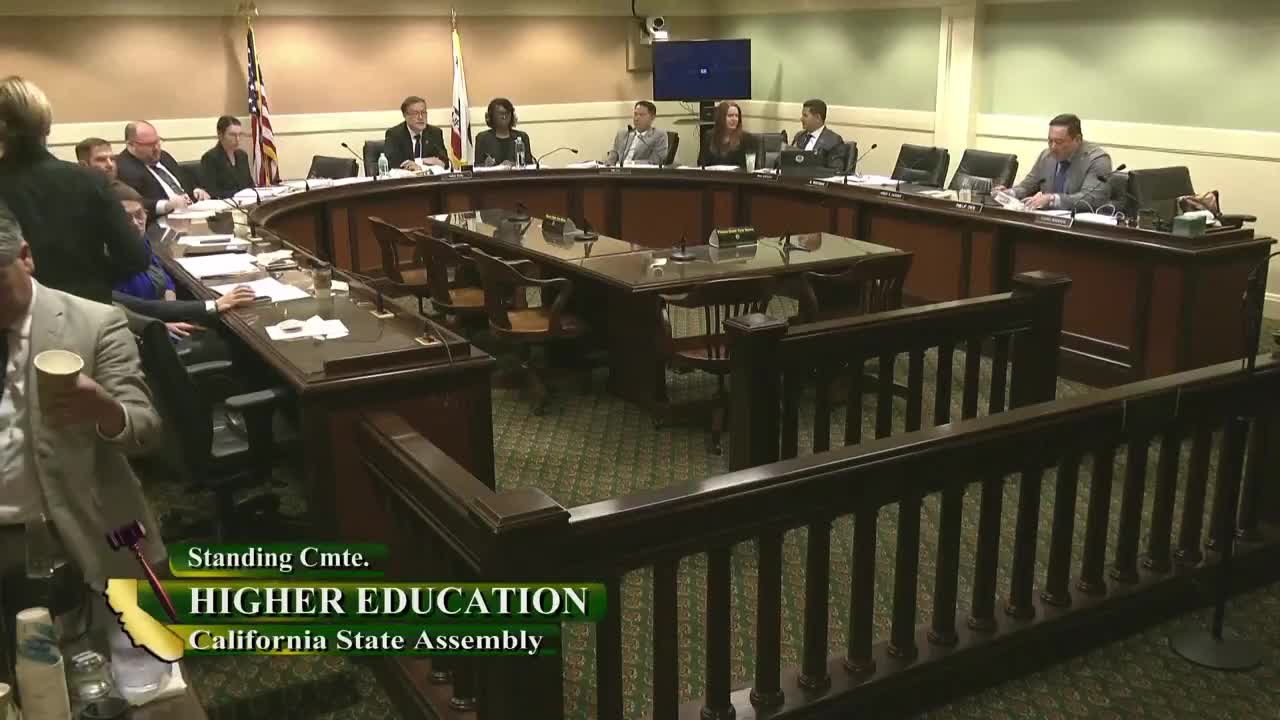
Discussed in Hearing
 10MIN
Assembly Standing Committee on Higher Education
Bill Author

Bill Co-Author(s):