SB 1264: Employment discrimination: cannabis use.
- Session Year: 2023-2024
- House: Senate
- Latest Version Date: 2024-06-17
Current Status:
Failed
(2024-06-19: June 19 set for first hearing. Failed passage in committee. (Ayes 3. Noes 2.) Reconsideration granted.)
Introduced
In Committee
First Chamber
In Committee
Second Chamber
Enacted
What does this bill do?
Until January 1, 2028, the bill creates an exception allowing employers to refuse to hire or otherwise penalize applicants and employees in sworn law‑enforcement roles who do duties like arresting or jailing suspects, civil enforcement, handling evidence, managing records, or coroner functions, when the action is based on off‑duty cannabis use or a drug test that finds non‑psychoactive cannabis metabolites. Otherwise, it leaves in place the current rule that generally bars employers from using off‑duty cannabis use or such metabolite test results to make hiring or employment decisions.
The summary is provided by generative AI which can make mistakes. For original language, please view the details in the table below.
Existing law prohibits an employer from discriminating against a person in hiring, termination, or a term or condition of employment, or otherwise penalizing a person because of the persons use of cannabis off the job and away from the workplace or an employer-required drug screening test that has found the person to have nonpsychoactive cannabis metabolites in their hair, blood, urine, or other bodily fluids. Existing law exempts certain applicants and employees from those provisions, including applicants and employees hired for positions that require a federal government background investigation or security clearance, as specified.
This bill bill, until January 1, 2028, would exempt from the provision prohibiting employers from discriminating against a person for use of cannabis off the job and away from the workplace applicants and employees in sworn positions within law enforcement agencies who have certain functions, including functions related civil enforcement matters or coroner functions.
Existing law prohibits an employer from discriminating against a person in hiring, termination, or a term or condition of employment, or otherwise penalizing a person because of the persons use of cannabis off the job and away from the workplace or an employer-required drug screening test that has found the person to have nonpsychoactive cannabis metabolites in their hair, blood, urine, or other bodily fluids. Existing law exempts certain applicants and employees from those provisions, including applicants and employees hired for positions that require a federal government background investigation or security clearance, as specified.
This bill would also exempt from those provisions specified other the provision prohibiting employers from discriminating against a person for use of cannabis off the job and away from the workplace applicants and employees in sworn or nonsworn positions within law enforcement agencies, including applicants and employees agencies who have certain functions, including functions related to civil enforcement matters, animal control, matters or coroner functions.
Existing law prohibits an employer from discriminating against a person in hiring, termination, or a term or condition of employment, or otherwise penalizing a person because of the persons use of cannabis off the job and away from the workplace or an employer-required drug screening test that has found the person to have nonpsychoactive cannabis metabolites in their hair, blood, urine, or other bodily fluids. Existing law exempts certain applicants and employees from those provisions, including applicants and employees hired for positions that require a federal government background investigation or security clearance, as specified.
This bill would also exempt from those provisions specified other applicants and employees in sworn or nonsworn positions within law enforcement agencies, including applicants and employees who have functions related to civil enforcement matters, animal control, or coroner functions.
Existing law prohibits an employer from discriminating against a person in hiring, termination, or a term or condition of employment, or otherwise penalizing a person because of the persons use of cannabis off the job and away from the workplace or an employer-required drug screening test that has found the person to have nonpsychoactive cannabis metabolites in their hair, blood, urine, or other bodily fluids, except as specified. fluids. Existing law exempts certain applicants and employees from those provisions, including applicants and employees hired for positions that require a federal government background investigation or security clearance, as specified.
This bill would make a nonsubstantive change to these provisions. also exempt from those provisions specified other applicants and employees in sworn or nonsworn positions within law enforcement agencies, including applicants and employees who have functions related to civil enforcement matters, animal control, or coroner functions.
Existing law prohibits an employer from discriminating against a person in hiring, termination, or a term or condition of employment, or otherwise penalizing a person because of the persons use of cannabis off the job and away from the workplace or an employer-required drug screening test that has found the person to have nonpsychoactive cannabis metabolites in their hair, blood, urine, or other bodily fluids, except as specified.
This bill would make a nonsubstantive change to these provisions.
(a)(1)Except as specified in subdivision (c), it is unlawful for an employer to discriminate against a person in hiring, termination, or any term or condition of employment, or otherwise penalizing a person, if the discrimination is based upon any of the following:
(A)The persons use of cannabis off the job and away from the workplace. This paragraph does not prohibit an employer from discriminating in hiring, or any term or condition of employment, or otherwise penalize a person based on scientifically valid preemployment drug screening conducted through methods that do not screen for nonpsychoactive cannabis metabolites.
(B)An employer-required drug screening test that has found the person to have nonpsychoactive cannabis metabolites in their hair, blood, urine, or other bodily fluids.
(2)This subdivision does not apply to an employee in the building and construction trades.
(3)Subparagraph (A) of paragraph (1) does not apply to applicants to, or employees in, sworn positions within law enforcement who have or would have functions or activities related to any of the following:
(A)The apprehension, incarceration, or correction of criminal offenders.
(B)Civil enforcement matters.
(C)Evidence gathering and processing.
(D)Law enforcement records.
(E)Coroner functions.
(b)Except as specified in subdivision (c), it is unlawful for an employer to request information from an applicant for employment relating to the applicants prior use of cannabis.
(c)Information about a persons prior cannabis use obtained from the persons criminal history is subject to subdivisions (a) and (b), unless the employer is permitted to consider or inquire about that information under Section 12952 or other state or federal law.
(d)This section does not permit an employee to possess, to be impaired by, or to use, cannabis on the job, or affect the rights or obligations of an employer to maintain a drug- and alcohol-free workplace, as specified in Section 11362.45 of the Health and Safety Code, or any other rights or obligations of an employer specified by state or federal law or regulation.
(e)This section does not preempt state or federal laws requiring applicants or employees to be tested for controlled substances, including laws and regulations requiring applicants or employees to be tested, or the manner in which they are tested, as a condition of employment, receiving federal funding or federal licensing-related benefits, or entering into a federal contract.
(f)This section does not apply to applicants or employees hired for positions that require a federal government background investigation or security clearance in accordance with regulations issued by the United States Department of Defense pursuant to Part 117 of Title 32 of the Code of Federal Regulations, or equivalent regulations applicable to other agencies.
(g)This section shall remain in effect only until January 1, 2028, and as of that date is repealed.
SEC. 2.Section 12954 is added to the Government Code, to read:12954.(a)(1)Except as specified in subdivision (c), it is unlawful for an employer to discriminate against a person in hiring, termination, or any term or condition of employment, or otherwise penalizing a person, if the discrimination is based upon any of the following:
(A)The persons use of cannabis off the job and away from the workplace. This paragraph does not prohibit an employer from discriminating in hiring, or any term or condition of employment, or otherwise penalize a person based on scientifically valid preemployment drug screening conducted through methods that do not screen for nonpsychoactive cannabis metabolites.
(B)An employer-required drug screening test that has found the person to have nonpsychoactive cannabis metabolites in their hair, blood, urine, or other bodily fluids.
(2)This subdivision does not apply to an employee in the building and construction trades.
(b)Except as specified in subdivision (c), it is unlawful for an employer to request information from an applicant for employment relating to the applicants prior use of cannabis.
(c)Information about a persons prior cannabis use obtained from the persons criminal history is subject to subdivisions (a) and (b), unless the employer is permitted to consider or inquire about that information under Section 12952 or other state or federal law.
(d)This section does not permit an employee to possess, to be impaired by, or to use, cannabis on the job, or affect the rights or obligations of an employer to maintain a drug- and alcohol-free workplace, as specified in Section 11362.45 of the Health and Safety Code, or any other rights or obligations of an employer specified by state or federal law or regulation.
(e)This section does not preempt state or federal laws requiring applicants or employees to be tested for controlled substances, including laws and regulations requiring applicants or employees to be tested, or the manner in which they are tested, as a condition of employment, receiving federal funding or federal licensing-related benefits, or entering into a federal contract.
(f)This section does not apply to applicants or employees hired for positions that require a federal government background investigation or security clearance in accordance with regulations issued by the United States Department of Defense pursuant to Part 117 of Title 32 of the Code of Federal Regulations, or equivalent regulations applicable to other agencies.
(g)This section shall become operative on January 1, 2028.
(a)(1)Except as specified in subdivision (c), it is unlawful for an employer to discriminate against a person in hiring, termination, or any term or condition of employment, or otherwise penalizing a person, if the discrimination is based upon any of the following:
(A)The persons use of cannabis off the job and away from the workplace. This paragraph does not prohibit an employer from discriminating in hiring, or any term or condition of employment, or otherwise penalize a person based on scientifically valid preemployment drug screening conducted through methods that do not screen for nonpsychoactive cannabis metabolites.
(B)An employer-required drug screening test that has found the person to have nonpsychoactive cannabis metabolites in their hair, blood, urine, or other bodily fluids.
(2)This subdivision does not apply to: to an employee in the building and construction trades.
(A)An employee in the building and construction trades. (B)Applicants to, or(3)Subparagraph (A) of paragraph (1) does not apply to applicants to, or employees in, sworn or unsworn positions within law enforcement who have or would have functions or activities related to any of the following:
(i)(A)The apprehension, incarceration, or correction of criminal offenders.
(ii)(B)Civil enforcement matters.
(iii)Dispatch and other public safety communications. (iv)(C)Evidence gathering and processing.
(v)(D)Law enforcement records.
(vi)Animal control.(vii)Community service duties.(viii)Public administrator or public guardian duties.(ix)(E)Coroner functions.
(b)Except as specified in subdivision (c), it is unlawful for an employer to request information from an applicant for employment relating to the applicants prior use of cannabis.
(c)Information about a persons prior cannabis use obtained from the persons criminal history is subject to subdivisions (a) and (b), unless the employer is permitted to consider or inquire about that information under Section 12952 or other state or federal law.
(d)This section does not permit an employee to possess, to be impaired by, or to use, cannabis on the job, or affect the rights or obligations of an employer to maintain a drug- and alcohol-free workplace, as specified in Section 11362.45 of the Health and Safety Code, or any other rights or obligations of an employer specified by state or federal law or regulation.
(e)This section does not preempt state or federal laws requiring applicants or employees to be tested for controlled substances, including laws and regulations requiring applicants or employees to be tested, or the manner in which they are tested, as a condition of employment, receiving federal funding or federal licensing-related benefits, or entering into a federal contract.
(f)This section does not apply to applicants or employees hired for positions that require a federal government background investigation or security clearance in accordance with regulations issued by the United States Department of Defense pursuant to Part 117 of Title 32 of the Code of Federal Regulations, or equivalent regulations applicable to other agencies.
(a)(1)Except as specified in subdivision (c), it is unlawful for an employer to discriminate against a person in hiring, termination, or any term or condition of employment, or otherwise penalizing a person, if the discrimination is based upon any of the following:
(A)The persons use of cannabis off the job and away from the workplace. This paragraph does not prohibit an employer from discriminating in hiring, or any term or condition of employment, or otherwise penalize a person based on scientifically valid preemployment drug screening conducted through methods that do not screen for nonpsychoactive cannabis metabolites.
(B)An employer-required drug screening test that has found the person to have nonpsychoactive cannabis metabolites in their hair, blood, urine, or other bodily fluids.
(2)This subdivision does not apply to an to:
(A)An employee in the building and construction trades.
(B)Applicants to, or employees in, sworn or unsworn positions within law enforcement who have or would have functions or activities related to any of the following:
(i)The apprehension, incarceration, or correction of criminal offenders.
(ii)Civil enforcement matters.
(iii)Dispatch and other public safety communications.
(iv)Evidence gathering and processing.
(v)Law enforcement records.
(vi)Animal control.
(vii)Community service duties.
(viii)Public administrator or public guardian duties.
(ix)Coroner functions.
(b)Except as specified in subdivision (c), it is unlawful for an employer to request information from an applicant for employment relating to the applicants prior use of cannabis.
(c)Information about a persons prior cannabis use obtained from the persons criminal history is subject to subdivisions (a) and (b), unless the employer is permitted to consider or inquire about that information under Section 12952 or other state or federal law.
(d)This section does not permit an employee to possess, to be impaired by, or to use, cannabis on the job, or affect the rights or obligations of an employer to maintain a drug- and alcohol-free workplace, as specified in Section 11362.45 of the Health and Safety Code, or any other rights or obligations of an employer specified by state or federal law or regulation.
(e)This section does not preempt state or federal laws requiring applicants or employees to be tested for controlled substances, including laws and regulations requiring applicants or employees to be tested, or the manner in which they are tested, as a condition of employment, receiving federal funding or federal licensing-related benefits, or entering into a federal contract.
(f)This section does not apply to applicants or employees hired for positions that require a federal government background investigation or security clearance in accordance with regulations issued by the United States Department of Defense pursuant to Part 117 of Title 32 of the Code of Federal Regulations, or equivalent regulations applicable to other agencies.
(g)This section does not apply to applicants to or employees in sworn or nonsworn positions within law enforcement agencies who have or would have functions or activities related to any of the following:(1)The apprehension, incarceration, or correction of criminal offenders.(2)Civil enforcement matters.(3)Dispatch and other public safety communications.(4)Evidence gathering and processing.(5)Law enforcement records.(6)Animal control.(7)Community services duties.(8)Public administrator or public guardian duties.(9)Coroner functions.(a)(1)Except as specified in subdivision (c), it is unlawful for an employer to discriminate against a person in hiring, termination, or any term or condition of employment, or otherwise penalizing a person, if the discrimination is based upon any of the following:
(A)The persons use of cannabis off the job and away from the workplace. This paragraph does not prohibit an employer from discriminating in hiring, or any term or condition of employment, or otherwise penalize a person based on scientifically valid preemployment drug screening conducted through methods that do not screen for nonpsychoactive cannabis metabolites.
(B)An employer-required drug screening test that has found the person to have nonpsychoactive cannabis metabolites in their hair, blood, urine, or other bodily fluids.
(2)This subdivision does not apply to any an employee in the building and construction trades.
(b)Except as specified in subdivision (c), it is unlawful for an employer to request information from an applicant for employment relating to the applicants prior use of cannabis.
(c)Information about a persons prior cannabis use obtained from the persons criminal history is subject to subdivisions (a) and (b), unless the employer is permitted to consider or inquire about that information under Section 12952 or other state or federal law.
(d)This section does not permit an employee to possess, to be impaired by, or to use, cannabis on the job, or affect the rights or obligations of an employer to maintain a drug- and alcohol-free workplace, as specified in Section 11362.45 of the Health and Safety Code, or any other rights or obligations of an employer specified by state or federal law or regulation.
(e)This section does not preempt state or federal laws requiring applicants or employees to be tested for controlled substances, including laws and regulations requiring applicants or employees to be tested, or the manner in which they are tested, as a condition of employment, receiving federal funding or federal licensing-related benefits, or entering into a federal contract.
(f)This section does not apply to applicants or employees hired for positions that require a federal government background investigation or security clearance in accordance with regulations issued by the United States Department of Defense pursuant to Part 117 of Title 32 of the Code of Federal Regulations, or equivalent regulations applicable to other agencies.
(g)This section shall become operative on January 1, 2024.(g)This section does not apply to applicants to or employees in sworn or nonsworn positions within law enforcement agencies who have or would have functions or activities related to any of the following:
(1)The apprehension, incarceration, or correction of criminal offenders.
(2)Civil enforcement matters.
(3)Dispatch and other public safety communications.
(4)Evidence gathering and processing.
(5)Law enforcement records.
(6)Animal control.
(7)Community services duties.
(8)Public administrator or public guardian duties.
(9)Coroner functions.
(a)(1)Except as specified in subdivision (c), it is unlawful for an employer to discriminate against a person in hiring, termination, or any term or condition of employment, or otherwise penalizing a person, if the discrimination is based upon any of the following:
(A)The persons use of cannabis off the job and away from the workplace. This paragraph does not prohibit an employer from discriminating in hiring, or any term or condition of employment, or otherwise penalize a person based on scientifically valid preemployment drug screening conducted through methods that do not screen for nonpsychoactive cannabis metabolites.
(B)An employer-required drug screening test that has found the person to have nonpsychoactive cannabis metabolites in their hair, blood, urine, or other bodily fluids.
(2)This subdivision does not apply to an any employee in the building and construction trades.
(b)Except as specified in subdivision (c), it is unlawful for an employer to request information from an applicant for employment relating to the applicants prior use of cannabis.
(c)Information about a persons prior cannabis use obtained from the persons criminal history is subject to subdivisions (a) and (b), unless the employer is permitted to consider or inquire about that information under Section 12952 or other state or federal law.
(d)This section does not permit an employee to possess, to be impaired by, or to use, cannabis on the job, or affect the rights or obligations of an employer to maintain a drug- and alcohol-free workplace, as specified in Section 11362.45 of the Health and Safety Code, or any other rights or obligations of an employer specified by state or federal law or regulation.
(e)This section does not preempt state or federal laws requiring applicants or employees to be tested for controlled substances, including laws and regulations requiring applicants or employees to be tested, or the manner in which they are tested, as a condition of employment, receiving federal funding or federal licensing-related benefits, or entering into a federal contract.
(f)This section does not apply to applicants or employees hired for positions that require a federal government background investigation or security clearance in accordance with regulations issued by the United States Department of Defense pursuant to Part 117 of Title 32 of the Code of Federal Regulations, or equivalent regulations applicable to other agencies.
(g)This section shall become operative on January 1, 2024.
|
Date
|
Status
|
|---|---|
| Jun 19, 2024 | June 19 set for first hearing. Failed passage in committee. (Ayes 3. Noes 2.) Reconsideration granted. |
| Jun 17, 2024 | From committee with author's amendments. Read second time and amended. Re-referred to Com. on L. & E. |
| Jun 3, 2024 | Referred to Coms. on L. & E. and JUD. |
| May 23, 2024 | In Assembly. Read first time. Held at Desk. |
| May 22, 2024 | Read third time. Passed. (Ayes 31. Noes 3. Page 4140.) Ordered to the Assembly. |
| May 16, 2024 | Read second time. Ordered to third reading. |
| May 16, 2024 | From committee: Do pass. (Ayes 7. Noes 0. Page 3978.) (May 16). |
| May 14, 2024 | Set for hearing May 16. |
| May 13, 2024 | May 13 hearing: Placed on APPR suspense file. |
| May 3, 2024 | Set for hearing May 13. |
| Apr 29, 2024 | Read second time and amended. Re-referred to Com. on APPR. |
| Apr 25, 2024 | From committee: Do pass as amended and re-refer to Com. on APPR. (Ayes 3. Noes 1. Page 3758.) (April 24). |
| Apr 18, 2024 | Read second time and amended. Re-referred to Com. on L., P.E. & R. |
| Apr 17, 2024 | From committee: Do pass as amended and re-refer to Com. on L., P.E. & R. (Ayes 10. Noes 0. Page 3636.) (April 16). |
| Apr 16, 2024 | Set for hearing April 24 in L., P.E. & R. pending receipt. |
| Apr 9, 2024 | Set for hearing April 16. |
| Apr 3, 2024 | Re-referred to Coms. on JUD. and L., P.E. & R. |
| Mar 19, 2024 | From committee with author's amendments. Read second time and amended. Re-referred to Com. on RLS. |
| Feb 29, 2024 | Referred to Com. on RLS. |
| Feb 16, 2024 | From printer. May be acted upon on or after March 17. |
| Feb 15, 2024 | Introduced. Read first time. To Com. on RLS. for assignment. To print. |
|
Date
|
Description
|
Location
|
Votes
|
|
|---|---|---|---|---|
| Jun 19, 2024 | Reconsideration. | Assembly Standing Committee on Labor and Employment |
Passed |
|
| Jun 19, 2024 | Do pass and be re-referred to the Committee on [Judiciary] | Assembly Standing Committee on Labor and Employment |
Failed |
|
| May 22, 2024 | Senate 3rd Reading SB1264 Grove | Senate Floor |
Passed |
|
| May 16, 2024 | Do pass | Senate Standing Committee on Appropriations |
Passed |
|
| May 13, 2024 | Placed on suspense file | Senate Standing Committee on Appropriations |
Passed |
|
| Apr 24, 2024 | Do pass as amended, but first amend, and re-refer to the Committee on [Appropriations] | Senate Standing Committee on Labor, Public Employment and Retirement |
Passed |
|
| Apr 16, 2024 | Do pass as amended, but first amend, and re-refer to the Committee on [Labor, Public Employment and Retirement ] | Senate Standing Committee on Judiciary |
Passed |
This list shows positions taken on this bill by organizations on the date displayed, which is linked to the original source.
Positions by individuals are not included.
|
Organization
|
Position
|
Date
|
|---|---|---|
| American Alliance for Medical Cannabis | * Against | Apr 24, 2024 |
| American Federation of State County Municipal Employees | * Against | Apr 24, 2024 |
| Asthma California | * Against | Jun 19, 2024 |
| California Cannabis Industry Association | * Against | Jun 19, 2024 |
| California Drug Policy Alliance | * Against | Jun 19, 2024 |
| California Employment Lawyers Association | * Against | Jun 19, 2024 |
| California Normal | * Against | Jun 19, 2024 |
| California Normal Original | * Against | Apr 24, 2024 |
| California Police Chiefs Association | * Support | Jun 21, 2024 |
| California School Employees Association | * Against | Jun 19, 2024 |
| California State Sheriff's Association | * Support | Jun 21, 2024 |
| Californians United for a Responsible Budget | ** Against | |
| Individual | ** Against | |
| Los Angeles Police Protective League | ** Support | |
| San Diego County SheriffS Department | ** Support | |
| SEIU California | * Against | Jun 19, 2024 |
| Supernova Women | ** Against | |
| Ufcw Western States Council | * Against | Jun 19, 2024 |
| United Cannabis Business Association | * Against | Apr 24, 2024 |
Date of Hearing: June 19, 2024
ASSEMBLY COMMITTEE ON LABOR AND EMPLOYMENT
Liz Ortega, Chair
SBPCA Bill Id:SB 1264
Author:(Grove) – As Amended Ver:June 17, 2024
SENATE VOTE: 31-3
SUBJECT: Employment discrimination: cannabis use
SUMMARY: Exempts from the Fair Housing and Employment Act’s (FEHA) prohibition on employment discrimination on the basis of a person’s off-the-job cannabis use, until January 1, 2028, applicants to and employees in sworn positions within law enforcement agencies who have or would have certain functions or activities. Specifically, this bill:
- Exempts from the FEHA provision prohibiting employers from discriminating against a person for use of cannabis off the job and away from the workplace, until January 1, 2028, applicants to and employees in sworn positions within law enforcement agencies who have or would have certain functions or activities related to any of the following:
- The apprehension, incarceration, or correction of criminal offenders.
- Civil enforcement matters.
- Evidence gathering and processing.
- Law enforcement records.
- Coroner functions.
EXISTING LAW:
- Establishes the Compassionate Use Act of 1996, which protects patients and their primary caregivers from criminal prosecution or sanction for obtaining and using marijuana for medical purposes upon the recommendation of a physician, as specified. Health and Safety Code § 11362.5.
- Authorizes, pursuant to Proposition 16 and subsequent legislative measures, persons aged 21 and older to possess specified quantities of cannabis, products containing cannabis, and cannabis plants for personal use. Health and Safety Code § 11362.1 et seq.
- Provides that 2) above does not override laws prohibiting the operation of a vehicle while impaired by a controlled substance, laws prohibiting the use of cannabis while within a prison or other carceral facility, laws establishing that it would constitute professional malpractice or negligence to undertake any task while impaired, or laws allowing any state or local entity or private individual to prohibit or restrict the use of cannabis on their property. Health and Safety Code § 11362.45.
- Makes it an unlawful employment practice, under the FEHA, for an employer to discriminate against a person in hiring, termination, or a term or condition of employment, or otherwise penalizing a person because of:
- The person’s use of cannabis off the job and away from the workplace. This provision does not prohibit an employer from discriminating in hiring, or any term or condition of employment, or otherwise penalizing a person based on scientifically valid preemployment drug screening conducted through methods that do not screen for nonpsychoactive cannabis metabolites.
- An employer-required drug screening test that has found the person to have nonpsychoactive cannabis metabolites in their hair, blood, urine, or other bodily fluids. Government Code § 12954(a)(1).
- Exempts from 4) above employees in the building and construction trades. Government Code § 12954(a)(2).
- Makes it unlawful for an employer to request information from an applicant for employment relating to the applicant’s prior use of cannabis, except as specified in 7) below. Government Code § 12954(b).
- Makes it unlawful for an employer to discriminate on the basis of information about a person’s past cannabis use obtained from the person’s criminal history, unless the employer is permitted to consider or inquire about that information under other state or federal laws. Government Code § 12954(c).
- Provides that (4)-(7) above do not permit an employee to possess, be impaired by, or use cannabis on the job, or affect the rights or obligations of an employer to maintain a drug- and alcohol-free workplace as specified under existing state or federal laws. Government Code § 12954(d).
- Provides that (4)-(7) above do not preempt state or federal laws requiring applicants or employees to be tested for controlled substances, including laws and regulations requiring applicants or employees to be tested, or the manner in which they are tested, as a condition of employment, receiving federal funding or federal licensing-related benefits, or entering into a federal contract. Government Code § 12954(e).
- Provides that (4)-(7) above do not apply to applicants or employees hired for positions that require a federal government background investigation or security clearance in accordance with federal regulations. Government Code § 12954(f).
FISCAL EFFECT: According to the Senate Appropriations Committee, the California Civil Rights Department (CRD) indicates that it would incur costs of $104,000 in 2025-26, and $101,000 annually thereafter, to implement the provisions of the bill (General Fund).
COMMENTS: This bill is double referred to the Assembly Judiciary Committee upon passage out of this Committee.
California legalized cannabis for medical purposes in 1996 and for recreational purposes in 2016. In 2022, the Legislature passed and the governor signed AB 2188 (Quirk), which established employment protections for Californians who use cannabis as permitted by state law. AB 2188 made it an unlawful employment practice under FEHA for an employer to discriminate against a person in hiring, termination, or terms and conditions of employment because of the person’s off-the-job cannabis usage, or a drug-screening test that found nonpsychoactive cannabis metabolites in the person’s system.
The following year, the Legislature passed and governor signed SB 700 (Bradford), which made it unlawful for an employer to request information from an applicant for employment relating to the applicant’s prior use of cannabis, as specified, but exempted from this prohibition information about a person’s prior cannabis use obtained from the person’s criminal history if the employer is permitted to consider or inquire about that information under a specified provision of the FEHA or other state or federal law.
Under both AB 2188 and SB 700, employers can still maintain strict drug-free workplace policies. Employers are permitted to conduct tests for recent cannabis use using methods such as oral swabs, blood tests, breath tests, or performance evaluations that detect impairment. However, they may not conduct urine or hair tests that detect non-psychoactive metabolites of THC that can remain in the body for extended periods, long after impairment has passed.
This bill would, until January 1, 2028, exempt from FEHA’s prohibition on employment discrimination on the basis of a person’s off-the-job cannabis use applicants to and employees in sworn positions within law enforcement agencies who have or would have certain functions or activities including: the apprehension, incarceration, or correction of criminal offenders; civil enforcement matters; evidence gathering and processing; law enforcement records; and coroner functions.
Should this bill become law, for three years law enforcement employers may take adverse action against these specified types of applicants and employees if they use cannabis off the job.
Under current law, law enforcement agencies may drug test applicants and employees using methods such as oral swabs, blood tests, breath tests, or performance evaluations that detect impairment. However, they may not request information from an applicant about prior use unless that use is discovered through a criminal history check as allowed under existing law, and they may not use urine or hair tests that detect non-psychoactive metabolites of THC.
According to the author, “Starting this year, most employers are not allowed to test for cannabis use in an employee’s off hours. However, knowledge of cannabis use is particularly important with members of law enforcement where a mistake can result in tragic consequences. Law enforcement officers generally maintain their authority even while they are not in uniform, including the ability to carry their firearm. It makes sense that we should hold law enforcement employees to the same standards as, for example, those who operate heavy machinery.”
Arguments in Support
The California State Sheriffs’ Association, sponsor of this bill, states “As AB 2188 (Quirk) of 2022 was being considered by the Legislature, it was generally presumed that, by virtue of language in that bill, law enforcement agencies were not included in the bill’s reach. In the wake of the bill’s passage and more refined legal analysis, it is less clear that such is the case. SB 1264 eliminates uncertainty in this regard with a targeted exemption for law enforcement applicants and employees who would be or are undertaking duties directly related to law enforcement.”
Arguments in Opposition
Service Employees International Union California (SEIU California) is in opposition and states that, “If passed, employees will again work in an environment of fear worried that off-the-job cannabis consumption will lead to harmful disciplinary actions including loss of pay or benefits, demotion, denied opportunities for promotions or transfer, and even termination. For law enforcement staff that are part of broad county-wide multi-agency bargaining unit, a policy dichotomy and tension will be created with this bill. Eventually, this bill will adversely affect retention, recruitment, and hiring in positions short of staffing.”
Prior Legislation
AB 2188 (Quirk) Chapter 392, Statutes of 2022 provided, with certain exceptions, that it is unlawful for an employer to discriminate against a person in hiring, termination, or terms and conditions of employment based on a drug screening test finding the presence of nonpsychoactive cannabis metabolites in their system or for the person's off-the-job use of cannabis.
SB 700 (Bradford) Chapter 408, Statutes of 2023 made it unlawful for an employer to request information from an applicant for employment relating to the applicant’s prior use of cannabis, as specified, but exempted from this prohibition information about a person’s prior cannabis use obtained from the person’s criminal history if the employer is permitted to consider or inquire about that information under a specified provision of the FEHA or other state or federal law.
REGISTERED SUPPORT / OPPOSITION:
Support
California State Sheriffs' Association (Sponsor)
California Police Chiefs Association
Los Angeles Police Protective League
San Diego County Sheriff's Department
Opposition
California Employment Lawyers Association
California Norml
California School Employees Association
SEIU California
UFCW - Western States Council
Analysis Prepared by: Erin Hickey / L. & E. /
SENATE RULES COMMITTEE Office of Senate Floor Analyses (916) 651-1520 Fax: (916) 327-4478 | SB 1264 |
THIRD READING
Bill No: SB 1264
Author: Grove (R)
Amended: 4/29/24
Vote: 21
SENATE JUDICIARY COMMITTEE: 10-0, 4/16/24
AYES: Umberg, Wilk, Allen, Ashby, Caballero, Laird, Min, Niello, Stern, Wahab
NO VOTE RECORDED: Durazo
SENATE LABOR, PUB. EMP. & RET. COMMITTEE: 3-1, 4/24/24
AYES: Smallwood-Cuevas, Wilk, Laird
NOES: Cortese
NO VOTE RECORDED: Durazo
SENATE APPROPRIATIONS COMMITTEE: 7-0, 5/16/24
AYES: Caballero, Jones, Ashby, Becker, Bradford, Seyarto, Wahab
SUBJECT: Employment discrimination: cannabis use
SOURCE: California State Sheriffs’ Association
DIGEST:
This bill exempts, from the Fair Housing and Employment Act (FEHA) prohibition on employment discrimination on the basis of an employee’s or potential employee’s cannabis use, applicants to or employees of law enforcement agencies performing specified tasks or roles in sworn positions.
ANALYSIS:
Existing law:
- Provides, pursuant to the California Constitution, that all people have inalienable rights, including the right to pursue and obtain privacy. (Cal. Const., article I, § 1.)
- Establishes the Compassionate Use Act (CUA) of 1996, also known as Proposition 215, which protects patients and their primary caregivers from criminal prosecution or sanction for obtaining and using marijuana for medical purposes upon the recommendation of a physician, with the goal of ensuring that seriously ill Californians have the right to obtain and use marijuana for medical purposes where the medical use is deemed appropriate and has been recommended by a physician, as specified. (Health & Saf. Code, § 11362.5.)
- Authorizes, pursuant to Proposition 16 and subsequent Legislative measures, persons aged 21 and older to possess specified quantities of cannabis, products containing cannabis, and cannabis plants for personal use. (Health & Saf. Code, §§ 11362.1.)
- Provides that 3) does not override laws prohibiting the operation of a vehicle while impaired by a controlled substance, laws prohibiting the use of cannabis while within a prison or other carceral facility, laws establishing that it would constitute professional malpractice or negligence to undertake any task while impaired, or laws allowing any state or local entity or private individual to prohibit or restrict the use of cannabis on their property. (Health & Saf. Code, § 11362.45.)
- Makes it an unlawful employment practice, under the FEHA, for an employer to discriminate against a person in hiring, termination, or any term or condition of employment, or otherwise penalizing a person, if the discrimination is based on any of the following:
- The person’s use of cannabis off the job and away from the workplace. This provision does not prohibit an employer from discriminating in hiring, or any term or condition of employment, or otherwise penalize a person based on scientifically valid preemployment drug screening conducted through methods that do not screen for nonpsychoactive metabolites.
- An employer-required drug screening test that has found the person to have nonpsychoactive cannabis metabolites in their hair, blood, urine, or other bodily fluids. (Gov. Code, § 12954(a)(1).)
- Provides that 5) does not apply to any employee in the building and construction trades. (Gov. Code, § 12954(a)(2).)
- Makes it unlawful for an employer to request information from an applicant for employment relating to the applicant’s prior use of cannabis, and for an employer to discriminate on the basis of past cannabis use, unless the information about a person’s prior cannabis use is obtained from a person’s criminal history and the employer is permitted to consider or inquire about that information under other state or federal laws. (Gov. Code, § 12954(b), (c).)
- Provides exceptions and clarifications to 5)-7), as follows:
- Provides that 5)-7) do not permit an employee to possess, to be impaired by, or to use, cannabis on the job, or affects the rights or obligations of an employer to maintain a drug- and alcohol-free workplace as specified under existing law.
.
- Provides that 5-7) do not apply to applicants or employees hired for positions that require a federal government background investigation or security clearance in accordance with federal regulations.
- Provides that 5)-7) do not preempt state or federal laws requiring applicants or employees to be tested for controlled substances, including laws and regulations requiring applicants or employees to be tested, or the manner in which they are tested, as a condition of employment, receiving federal funding or federal licensing-related benefits, or entering into a federal contract. (Gov. Code, § 12954(d)-(f).)
This bill:
- Exempts, from the prohibition on an employer’s discrimination on the basis of a person’s use of cannabis off the job away from the workplace, applicants to, or employees in, sworn positions within law enforcement who have or would have functions or activities related to any of the following:
- The apprehension, incarceration, or correction of criminal offenders.
- Civil enforcement matters.
- Evidence for gathering and processing.
- Law enforcement records.
- Coroner functions.
Comments
Cannabis has been legal in this state for medical purposes since 1996 and for recreational purposes since 2016. Until this year, however, California law permitted employers, under some circumstances, to refuse to hire someone, or to discipline or fire an employee, for their off-the-job cannabis use or past cannabis use, even when the cannabis use was not on the job site, did not jeopardize safety, and did not affect the employee’s job performance. To prevent adverse employment outcomes from being taken against Californians who used cannabis as permitted by state law, the Legislature enacted AB 2188 (Quirk, Chapter 392, Statutes of. 2022) and SB 700 (Bradford, Chapter 408, Statutes of 2023), which made it unlawful under FEHA for an employer: to discriminate against a person in hiring, termination, or terms and conditions of employment because of (1) the person’s off-the-job cannabis usage, or (2) a drug-screening test that found nonpsychoactive cannabis metabolites in the person’s system; or to inquire about past cannabis use. This bill contains exceptions for circumstances where existing federal or state law require drug testing or other more stringent anti-cannabis measures, including a provision that employees in the building and construction trades may suffer adverse employment actions for off-the-job cannabis use and may be required to drug test, as specified.
The FEHA statute does not, however, expressly exempt employees of law enforcement agencies. According to stakeholders, law enforcement agencies believed, when AB 2188 and SB 700 were passed, that they were already covered by exemptions for employers subject to more stringent state and federal laws. But at some point in the process, a question was raised about the certainty of the exemption, and now some law enforcement agencies are no longer confident that they can continue activities such as drug testing current employees.
This bill exempts, from AB 2188’s prohibition on discrimination on the basis of current cannabis use, law enforcement employers, with respect to applicants to or employees in sworn positions within law enforcement who have or would have functions related to specified functions or activities, including: the apprehension, incarceration, or correction of criminal offenders; civil enforcement matters; evidence gathering and processing; law enforcement records; and coroner functions.
FISCAL EFFECT: Appropriation: No Fiscal Com.: Yes Local: No
According to the Senate Appropriations Committee, the California Civil Rights Department (CRD) indicates that it would incur costs of $104,000 in 2025-26, and $101,000 annually thereafter, to implement the provisions of the bill (General Fund).
SUPPORT: (Verified 5/14/24)
California State Sheriffs’ Association (source)
California Police Chiefs Association
Los Angeles Police Protective League
San Diego County Sheriff’s Department
OPPOSITION: (Verified 5/14/24)
California Cannabis Industry Association
California Employment Lawyers Association
California NORML
California School Employees Association, AFL-CIO
Californians United for a Responsible Budget
Drug Policy Alliance
SEIU California
Supernova Women
United Food and Commercial Workers Western States Council
ARGUMENTS IN SUPPORT: According to the California State Sheriffs’ Association:
Existing law prohibits making certain employment decisions and asking certain questions about off-duty or prior cannabis use. As these bills were being considered by the Legislature, it was generally presumed that by virtue of language in those bills, law enforcement agencies were not included in the bills’ reach. In the wake of the bills’ passage and more refined legal analysis, it is less clear that such is the case. SB 1264 eliminates any uncertainty in this regard with a targeted exemption for law enforcement applicants and employees who would be or are undertaking duties directly related to law enforcement.
Additionally, employees in the building trades were exempted from the original bill. We agree with this exemption and argue that it supports the case for a law enforcement exemption. The work of both professions has public-facing implications for safety and responsibility. Further, though impaired persons could still be subject to testing and discipline, the work of law enforcement is rarely constrained to clear times of being on- or off-duty and the long-term impacts of cannabis use on emotional processes and decision-making are, at best, not fully understood.
ARGUMENTS IN OPPOSITION: According to SEIU California:
AB 2188 did not end workplace drug policies or the right of employers to test. Employers, including law enforcement agencies, are free to test for recent use of cannabis by means of oral swab, or blood or breath tests, which detect recent exposure to THC, the psychoactive ingredient in cannabis, or by performance tests that detect actual impairment. The only thing they may not do is use urine or hair tests that report non-psychoactive metabolites of THC, which remain detectable for days and weeks after any impairment is passed.
SB 1264 is excessively broad…[w]ith these exemptions, staff will again work in an environment of rear worried that off-the-job cannabis consumption will lead to harmful disciplinary actions including loss of pay or benefits, demotion, denied opportunities for promotion or transfer, and even termination. For law enforcement staff that are part of broad county-wide multi-agency bargaining units, a policy dichotomy and tension will be created with this bill. Eventually, this bill will adversely affect retention, recruitment, and hiring in positions short of staffing.
Prepared by: Allison Whitt Meredith / JUD. / (916) 651-4113
5/17/24 10:09:30
**** END ****
SENATE COMMITTEE ON APPROPRIATIONS
Senator Anna Caballero, Chair
2023 - 2024 Regular Session
SB 1264 (Grove) - Employment discrimination: cannabis use
Version: April 29, 2024 | Policy Vote: JUD. 10 - 0, L., P.E. & R. 3 - 1 |
Urgency: No | Mandate: No |
Hearing Date: May 13, 2024 | Consultant: Robert Ingenito |
Bill Summary:
SB 1264 would add specified law enforcement employees to existing cannabis testing exemptions.
Fiscal Impact:
The California Civil Rights Department (CRD) indicates that it would incur costs of $104,000 in 2025-26, and $101,000 annually thereafter, to implement the provisions of the bill (General Fund).
Background:
Beginning this year, employers are prohibited under the Fair Employment and Housing Act (FEHA) from discriminating against employees or applicants on the basis of their use of cannabis off the job and away from the workplace. Employees in the building and construction trades are exempt from these protections.
The same FEHA statute prohibits employers from inquiring about an employee or applicant’s prior cannabis use and from discriminating on the basis of past cannabis use. An employer may, however, consider an employee or applicant’s past cannabis use if it was uncovered through a criminal history and the employer is permitted to consider or inquire about that information under existing state or federal law. The building and construction trades are not expressly exempt from this limitation, though they may be exempt through the application of other state and federal laws.
Proposed Law:
This bill would exempt from the current-law provision prohibiting employers from discriminating against a person for use of cannabis off the job and away from the workplace applicants and employees in sworn positions within law enforcement agencies who have specified functions, including (1) the apprehension, incarceration, or correction of criminal offenders, (2) civil enforcement matters, (3) evidence gathering and processing, (4) law enforcement records, and (5) coroner functions.
Related Legislation:
- SB 700 (Bradford, Chapter 408, Statutes of 2023) added, to the FEHA prohibition on employment discrimination on the basis of an employee’s or potential employee’s cannabis use, the prohibition on an employer requesting information about an applicant’s past cannabis use, subject to specified exceptions.
- AB 2188 (Quirk, Chapter 392, Statutes of 2022) made it unlawful, with certain exceptions, for an employer to discriminate against a person in hiring, termination, or terms and conditions of employment based on a drug screening test finding the presence of non-psychoactive cannabis metabolites in their system or for the person's off-the-job use of cannabis.
- AB 1256 (Quirk, 2021) would have prohibited employers from discriminating against an applicant or employee based on the result of a drug screening test that has found the person to have non-psychoactive cannabis metabolites in their urine, hair, or bodily fluids. The bill died in the Assembly Labor and Employment Committee.
- AB 2355 (Bonta, 2020) would have prohibited employers from discriminating against applicants or employees for medicinal cannabis use that can be reasonably accommodated. The bill died in the Assembly Labor and Employment Committee.
- AB 2069 (Bonta, 2018) was substantially similar to AB 2355, and was held under submission on the Suspense File of the Assembly Appropriations Committee.
Staff Comments:
CRD anticipates receiving additional workload related to requests for clarification and assistance resulting from the new exemptions under this bill. The Department indicates that it would require one position to accommodate the anticipated workload.
-- END --
SENATE COMMITTEE ON LABOR, PUBLIC EMPLOYMENT AND RETIREMENT
Senator Lola Smallwood-Cuevas, Chair
2023 - 2024 Regular
Bill No: SB 1264 Hearing Date: April 24, 2024
Author: | Grove | ||
Version: | April 18, 2024 | ||
Urgency: | No | Fiscal: | Yes |
Consultant: | Glenn Miles | ||
SUBJECT: Employment discrimination: cannabis use
KEY ISSUE
This bill provides that, in addition to not applying to an employee in the building and construction trades, the Fair Employment and Housing Act (FEHA) provision prohibiting employment discrimination for specified cannabis use also does not apply to applicants to, or employees in, sworn or unsworn positions within law enforcement who have or would have specified functions or activities.
ANALYSIS
Existing law:
- Authorizes, pursuant to Proposition 64 and subsequent Legislative measures, persons age 21 and older to possess specified quantities of cannabis, products containing cannabis, and cannabis plants for personal use. (Health and Safety Code (HSC) §11362.1 et seq.)
- Provides that HSC §11362.1 does not override laws prohibiting the operation of a vehicle while impaired by a controlled substance, laws prohibiting the use of cannabis while incarcerated, laws establishing that it would constitute professional malpractice or negligence to undertake any task while impaired, or laws allowing any state or local entity or private individual to prohibit or restrict the use of cannabis on their property. (HSC §11362.45)
- Makes it an unlawful employment practice, under the Fair Employment and Housing Act (FEHA), for an employer to refuse to hire, discharge from employment, or otherwise discriminate against a person in compensation or in the terms, conditions, or privileges of employment on account of that person’s race, religious creed, color, national origin, ancestry, physical disability, mental disability, medical condition, genetic information, marital status, sex, gender, gender identity, gender expression, age, sexual orientation, or veteran or military status. (Government Code (GC) §12940(a))
- Defines employer under FEHA to mean any person regularly employing five or more persons, or any person acting as an agent of an employer, directly or indirectly, the state or any political or civil subdivision of the state, and cities except a religious organization or a corporation not organized for private profit. (GC §12926)
- Makes it an unlawful employment practice under FEHA for an employer to discriminate against a person in hiring, termination, or any term or condition of employment, or otherwise penalizing a person, if the discrimination is based upon any of the following:
- The person’s use of cannabis off the job and away from the workplace; this provision does not prevent an employer from engaging in an employment action based on a scientifically valid pre-employment drug screening conducted through methods that do not screen for non-psychoactive cannabis metabolites.
- An employer-required drug screening test that has found the person to have non-psychoactive cannabis metabolites in their hair, blood, urine, or other bodily fluids. (GC §12954)
- Provides that FEHA’s cannabis use discrimination prohibition does not do any of the following:
- Apply to an employee in the building and construction trades.
- Permit an employee to possess, to be impaired by, or to use, cannabis on the job, or affect the rights or obligations of an employer to maintain a drug- and alcohol-free workplace as specified under existing law.
- Apply to applicants or employees hired for positions that require a federal government background investigation or security clearance in accordance with federal regulations.
- Preempt state or federal laws requiring applicants or employees to be tested for controlled substances, including laws and regulations requiring applicants or employees to be tested, or the manner in which they are tested, as a condition of employment, receiving federal funding or federal licensing-related benefits, or entering into a federal contract. (GC §12954(b)-(e))
This bill:
Provides that, in addition to not applying to an employee in the building and construction trades, the FEHA provision prohibiting employment discrimination for specified cannabis use also does not apply to applicants to, or employees in, sworn or unsworn positions within law enforcement who have or would have functions or activities related to any of the following:
- The apprehension, incarceration, or correction of criminal offenders.
- Civil enforcement matters.
- Dispatch and other public safety communications.
- Evidence gathering and processing.
- Law enforcement records.
- Animal control.
- Community service duties.
- Public administrator or public guardian duties.
- Coroner functions.
COMMENTS
1. Need for this bill?
According to the author:
“Pre-employment testing is a necessary component of maintaining a drug-free workplace, ensuring both the safety of employees and the public. Without pre-employment drug testing, there is no way the employer can protect against a new employee bringing impairment and danger into their workplace. This testing protects other employees, the workplace’s equipment, and members of the public.”
“This is particularly important with members of law enforcement where a mistake can result in tragic consequences. Law enforcement officers generally maintain their authority even while not in uniform, including the ability to carry their firearm. It makes sense that we should hold law enforcement employees to the same standards as, for example, those who operate heavy machinery.”
2. Committee Concerns
This bill invokes several competing policy interests amidst a dynamic, evolving state and federal legal background that leaves any genuine resolution hazy and more than a little disorienting. From this committee’s remit, our lens focuses on the rights of employees in general, but in certain cases, particularly on the rights and responsibilities of public employees and the fiscal and organizational health of public employers to ensure continuity of promised deferred benefits.
This bill seeks to exempt some public employees from recently-won FEHA employment protections regarding off-the-job cannabis use. The bill’s supporters argue that public employers, for public safety reasons, must be able to ascertain that certain law enforcement personnel, both sworn and non-sworn, who perform specified job functions are free from impairment that can result from ongoing cannabis use and that the testing that FEHA does allow is insufficient for that purpose.
Opponents argue persuasively that law enforcement personnel have every right in California to enjoy their time off the job just like every other fellow Californian and that FEHA, as recently amended, still allows public safety employers to test employees in ways that ensure they are not impaired on the job.
The committee must not only weigh the competing interests of public safety management and rank and file employees. It must also decide whether this bill or recently enacted state law improves or worsens public safety employment conditions or subjects both public employers and public employees to unforeseen liability.
State law enforcement personnel must interact with federal jurisdictions in numerous ways while at the same time federal law still prohibits cannabis use. One might argue it would be better to conform to federal law and not put our public safety employees in legal jeopardy. If that is not our choice, than messaging to our public safety employees must be clear. FEHA will not protect you from federal violations and potential consequences to your employment and liberty that could arise from those violations.
Additionally, we are confronted with the fact that FEHA is no defense against civil lawsuits where a plaintiff alleges a public safety employee’s actions caused great harm to a civilian; that ongoing off-the-job cannabis use proximately caused that harm; and that a public employer should have known and prevented that use or prevented the employee from engaging in the activity that caused the plaintiff’s harm. Thus, despite qualified immunity protections, both our public safety and local agencies are vulnerable to substantial monetary judgements that harm their ability to maintain staffing levels, recruit new employees, and secure fiscal health.
Counterbalancing that concern is the possibility that off-the-job cannabis use can alleviate, for some employees, the inherent stress that seems to be part of law enforcement work, potentially resulting in fewer explosive interactions with civilians and fewer civil suits.
Finally, we note the supporters’ point that law enforcement, especially sworn personnel, are never really off the job and have to be ready at any moment to respond to emergencies. However, we also note opponents’ retort that the same concern has not led us to prohibit public safety employees’ off-the-job alcohol use.
What is certain is that, these and other related issues will continue to provoke complicated reviews of and conflicts over our public employment policies.
3. Recommended Committee Amendments
The committee recommends the following amendments to limit the scope of the exemption to sworn employees with direct law enforcement functions:
The people of the State of California do enact as follows:
SECTION 1. Section 12954 of the Government Code is amended to read:
12954. (a) (1) Except as specified in subdivision (c), it is unlawful for an employer to discriminate against a person in hiring, termination, or any term or condition of employment, or otherwise penalizing a person, if the discrimination is based upon any of the following:
(A) The person’s use of cannabis off the job and away from the workplace. This paragraph does not prohibit an employer from discriminating in hiring, or any term or condition of employment, or otherwise penalize a person based on scientifically valid preemployment drug screening conducted through methods that do not screen for nonpsychoactive cannabis metabolites.
(B) An employer-required drug screening test that has found the person to have nonpsychoactive cannabis metabolites in their hair, blood, urine, or other bodily fluids.
(2) This subdivision does not apply to:
(A) An employee in the building and construction trades.
(B) Applicants (3) Paragraph (A) of this subdivision does not apply to applicants to, or employees in, sworn or unsworn positions within law enforcement who have or would have functions or activities related to any of the following:
(i) The apprehension, incarceration, or correction of criminal offenders.
(ii) Civil enforcement matters.
(iii) Dispatch and other public safety communications.
(iv) (iii) Evidence gathering and processing.
(v) (iv) Law enforcement records.
(vi) Animal control.
(vii) Community service duties.
(viii) Public administrator or public guardian duties.
(ix) (iv) Coroner functions.
(b) Except as specified in subdivision (c), it is unlawful for an employer to request information from an applicant for employment relating to the applicant’s prior use of cannabis.
(c) Information about a person’s prior cannabis use obtained from the person’s criminal history is subject to subdivisions (a) and (b), unless the employer is permitted to consider or inquire about that information under Section 12952 or other state or federal law.
(d) This section does not permit an employee to possess, to be impaired by, or to use, cannabis on the job, or affect the rights or obligations of an employer to maintain a drug- and alcohol-free workplace, as specified in Section 11362.45 of the Health and Safety Code, or any other rights or obligations of an employer specified by state or federal law or regulation.
(e) This section does not preempt state or federal laws requiring applicants or employees to be tested for controlled substances, including laws and regulations requiring applicants or employees to be tested, or the manner in which they are tested, as a condition of employment, receiving federal funding or federal licensing-related benefits, or entering into a federal contract.
(f) This section does not apply to applicants or employees hired for positions that require a federal government background investigation or security clearance in accordance with regulations issued by the United States Department of Defense pursuant to Part 117 of Title 32 of the Code of Federal Regulations, or equivalent regulations applicable to other agencies.
4. Proponent Arguments
According to the San Diego County Sheriff’s Department:
“The recent enactment of AB 2188 and SB 700 expanded the list of protected classes under the FEHA by granting employees the right to use marijuana off duty. However, the legislation carved out and exempted the building and construction trades from such protections. I believe that law enforcement personnel, both sworn and non-sworn, should be exempted as well.”
“Employees who use cannabis face the inherent risk of tetrahydrocannabinol (THC) remaining active in their system even when they no longer experience its effects. Under the new laws in place, both sworn and non-sworn personnel must exercise extreme caution if using marijuana as they may become subjects to legal proceedings, both civil and criminal, which could raise questions about cognitive impairment.”
According to the California Police Chiefs Association:
“The adverse health impacts of habitual cannabis use are well documented. According to the California Department of Public Health, ‘smoking cannabis on a regular basis has been linked to chronic bronchitis, wheezing, exercise-induced shortness of breath, chest tightness, cough, and mucus production.’ Our peace officers are required to overcome intense physical resistance and make split-second decisions in life and death situations, and those responsibilities are incompatible with the effects of consistent use of cannabis.”
5. Opponent Arguments:
According to the Service Employees International Union, California:
“AB 2188 did not end workplace drug policies or the right of employers to test. Employers, including law enforcement agencies, are free to test for recent use of cannabis by means of oral swab, blood or breath tests, which detect recent exposure to THC, the psychoactive ingredient in cannabis, or by performance tests that detect actual impairment. The only thing they may not do is use urine or hair tests that report non-psychoactive metabolites of THC, which remain detectable for days and weeks after any impairment is passed.”
“SB 1264 is excessively broad, embracing a host of nonsworn, civilian positions with no enforcement duties. With these exemptions, staff will again work in an environment of fear worried that off-the-job cannabis consumption will lead to harmful disciplinary actions including loss of pay or benefits, demotion, denied opportunities for promotions or transfer, and even termination.”
According to the California Cannabis Industry Association:
“SB 1264 would grant employers in law enforcement the authority to discriminate against employees or job applicants based on legal, off-duty, or prior cannabis use. This provision undermines public trust in law enforcement by suggesting that individuals in these positions cannot be relied upon to use cannabis responsibly outside of work.”
“Furthermore, SB 1264 reinstates a barrier between law enforcement and the cannabis community that California voters dismantled when they approved Proposition 64 in 2016. It is crucial to recognize that existing law allows law enforcement agencies to maintain strict drug-free workplace policies. Under existing law, employers retain the ability to conduct tests for recent cannabis use using methods such as oral swabs, blood tests, breath tests, or performance evaluations that detect impairment. The restriction on urine or hair tests, which detect non-psychoactive metabolites of THC that can remain in the body for extended periods, is a sensible protection against unjust discrimination.”
6. Dual Referral:
The Senate Rules Committee referred this bill to the Senate Judiciary Committee and the Senate Labor, Public Employment and Retirement Committee.
7. Prior Legislation:
SB 700 (Bradford, Chapter 408, Statutes of 2023) added, to the FEHA prohibition on employment discrimination on the basis of an employee’s or potential employee’s cannabis use, the prohibition on an employer requesting information about an applicant’s past cannabis use, subject to specified exceptions.
AB 2188 (Quirk, Chapter 392, Statutes of 2022) made it unlawful, with certain exceptions, for an employer to discriminate against a person in hiring, termination, or terms and conditions of employment based on a drug screening test finding the presence of non-psychoactive cannabis metabolites in their system or for the person's off-the-job use of cannabis.
AB 1256 (Quirk, 2021) would have prohibited employers from discriminating against an applicant or employee based on the result of a drug screening test that has found the person to have non-psychoactive cannabis metabolites in their urine, hair, or bodily fluids. AB 1256 died in the Assembly Labor and Employment Committee.
AB 2355 (Bonta, 2020) would have prohibited employers from discriminating against applicants or employees for medicinal cannabis use that can be reasonably accommodated. AB 2355 died in the Assembly Labor and Employment Committee.
AB 2069 (Bonta, 2018) was substantially similar to AB 2355. AB 2069 died in the Assembly Appropriations Committee.
SUPPORT
California State Sheriffs' Association (Sponsor)
California Police Chiefs Association
Los Angeles Police Protective League
San Diego County Sheriff's Department
OPPOSITION
California Cannabis Industry Association
California Norml
California School Employees Association
California State Council of Service Employees International Union (SEIU California)
Californians United for A Responsible Budget
Supernova Women
UFCW - Western States Council
Individual (1)
-- END --
Senator Thomas Umberg, Chair
2023-2024 Regular Session
Bill No: SB 1264 (Author:Grove)
Version: March 19, 2024
Hearing Date: April 16, 2024
Fiscal: Yes
Urgency: No
AWMConsultant: AWM
SUBJECT
Employment discrimination: cannabis use
DIGEST
This bill exempts, from the prohibitions under the Fair Housing and Employment Act (FEHA) on employment discrimination on the basis of an employee’s or potential employee’s past or present cannabis use, applicants to or employees of law enforcement agencies performing specified tasks or roles.
EXECUTIVE SUMMARY
Cannabis has been legal in this state for medical purposes since 1996 and for recreational purposes since 2016. Until this year, however, California law permitted employers, under some circumstances, to refuse to hire someone, or to discipline or fire an employee, for their off-the-job cannabis use or past cannabis use, even when the cannabis use was not on the job site, did not jeopardize safety, and did not affect the employee’s job performance. To prevent adverse employment outcomes from being taken against Californians who used cannabis as permitted by state law, the Legislature enacted AB 2188 (Quirk, Ch. 392, Stats. 2022) and SB 700 (Bradford, Ch. 408, Stats. 2023), which made it unlawful under FEHA for an employer: to discriminate against a person in hiring, termination, or terms and conditions of employment because of (1) the person’s off-the-job cannabis usage, or (2) a drug-screening test that found nonpsychoactive cannabis metabolites in the person’s system; or to inquire about past cannabis use. The bill contains exceptions for circumstances where existing federal or state law require drug testing or other more stringent anti-cannabis measures, including a provision that employees in the building and construction trades may suffer adverse employment actions for off-the-job cannabis use and may be required to drug test, as specified.
The FEHA statute does not, however, expressly exempt employees of law enforcement agencies. According to stakeholders, law enforcement agencies believed, when AB 2188 and SB 700 were passed, that they were already covered by exemptions for employers subject to more stringent state and federal laws. But at some point in the process, a question was raised about the certainty of the exemption, and now some law enforcement agencies are no longer confident that they can continue activities such as drug testing current employees.
This bill exempts law enforcement agency employees performing a wide range of tasks—including criminal enforcement, civil enforcement, evidence gathering and processing, animal control, community service duties, and coroner functions—from all of the FEHA cannabis antidiscrimination provisions set forth above. Under this bill, law enforcement would be allowed to drug test covered employees, to require them not to use cannabis while off the job, and to inquire about employees’ and applicants’ past cannabis use and take negative employment actions on the basis of that past use. The author has agreed to eliminate the exemption for past use, so that the law enforcement exemption is the same as the exemption for the building and construction trades.
This bill is sponsored by the California State Sheriffs’ Association and is supported by California Police Chiefs Association the Los Angeles Police Protective League. This bill is opposed by California NORML. If this Committee passes this bill, it will then be heard by the Senate Labor, Public Employment and Retirement Committee.
PROPOSED CHANGES TO THE LAW
Existing law:
- Provides, pursuant to the California Constitution, that all people have inalienable rights, including the right to pursue and obtain privacy. (Cal. Const., article I, § 1.)
- Establishes the Compassionate Use Act (CUA) of 1996, also known as Proposition 215, which protects patients and their primary caregivers from criminal prosecution or sanction for obtaining and using marijuana for medical purposes upon the recommendation of a physician, with the goal of ensuring that seriously ill Californians have the right to obtain and use marijuana for medical purposes where the medical use is deemed appropriate and has been recommended by a physician, as specified. (Health & Saf. Code, § 11362.5.)
- Authorizes, pursuant to Proposition 16 and subsequent Legislative measures, persons aged 21 and older to possess specified quantities of cannabis, products containing cannabis, and cannabis plants for personal use. (Health & Saf. Code, §§ 11362.1.)
- Provides that 3) does not override laws prohibiting the operation of a vehicle while impaired by a controlled substance, laws prohibiting the use of cannabis while within a prison or other carceral facility, laws establishing that it would constitute professional malpractice or negligence to undertake any task while impaired, or laws allowing any state or local entity or private individual to prohibit or restrict the use of cannabis on their property. (Health & Saf. Code, § 11362.45.)
- Makes it an unlawful employment practice, under the FEHA, for an employer to discriminate against a person in hiring, termination, or any term or condition of employment, or otherwise penalizing a person, if the discrimination is based on any of the following:
- The person’s use of cannabis off the job and away from the workplace. This provision does not prohibit an employer from discriminating in hiring, or any term or condition of employment, or otherwise penalize a person based on scientifically valid preemployment drug screening conducted through methods that do not screen for nonpsychoactive metabolites.
- An employer-required drug screening test that has found the person to have nonpsychoactive cannabis metabolites in their hair, blood, urine, or other bodily fluids. (Gov. Code, § 12954(a)(1).)
- Provides that 5) does not apply to any employee in the building and construction trades. (Gov. Code, § 12954(a)(2).)
- Makes it unlawful for an employer to request information from an applicant for employment relating to the applicant’s prior use of cannabis, and for an employer to discriminate on the basis of past cannabis use, unless the information about a person’s prior cannabis use is obtained from a person’s criminal history and the employer is permitted to consider or inquire about that information under other state or federal laws. (Gov. Code, § 12954(b), (c).)
- Provides exceptions and clarifications to 5)-7), as follows:
- Provides that 5)-7) do not permit an employee to possess, to be impaired by, or to use, cannabis on the job, or affects the rights or obligations of an employer to maintain a drug- and alcohol-free workplace as specified under existing law.
- Provides that 5-7) do not apply to applicants or employees hired for positions that require a federal government background investigation or security clearance in accordance with federal regulations.
- Provides that 5)-7) do not preempt state or federal laws requiring applicants or employees to be tested for controlled substances, including laws and regulations requiring applicants or employees to be tested, or the manner in which they are tested, as a condition of employment, receiving federal funding or federal licensing-related benefits, or entering into a federal contract. (Gov. Code, § 12954(d)-(f).)
This bill:
- Exempts, from the discrimination provisions in 5)-7), above, applicants to, or employees in, sworn and nonsworn positions within law enforcement agencies who have or would have functions or activities related to any of the following:
- The apprehension, incarceration, or correction of criminal offenders.
- Civil enforcement matters.
- Dispatch and other public safety communications.
- Evidence gathering and processing.
- Law enforcement records.
- Animal control.
- Community service duties.
- Public administrator or public guardian duties.
- Coroner functions.
COMMENTS
- Author’s comment
According to the author:
Starting this year, most employers are not allowed to ask an employee about their cannabis use prior to employment, and they are not allowed to test for cannabis use in an employee’s off hours. However, knowledge of cannabis use is particularly important with members of law enforcement where a mistake can result in tragic consequences. Law enforcement officers generally maintain their authority even while they are not in uniform, including the ability to carry their firearm. It makes sense that we should hold law enforcement employees to the same standards as, for example, those who operate heavy machinery, and exempt them from Government Code Section 12954.
2. Current law prohibits an employer from discriminating on the basis of off-the-job or past cannabis use, subject to exceptions
Beginning this year, employers are prohibited under FEHA from discriminating against employees or applicants on the basis of their use of cannabis off the job and away from the workplace.[1] This prohibition includes discrimination on the basis of employer-required drug tests that find nonpsychoactive cannabis metabolites in the person’s hair, blood, urine, or other bodily fluids, but does not prohibit an employer from discriminating on the basis of preemployment drug screening that do not screen for nonpsychoactive cannabis metabolites.[2] Employees in the building and construction trades are exempt from these protections.[3]
The same FEHA statute prohibits employers from inquiring about an employee or applicant’s prior cannabis use and from discriminating on the basis of past cannabis use.[4] An employer may, however, consider an employee or applicant’s past cannabis use if it was uncovered through a criminal history and the employer is permitted to consider or inquire about that information under existing state or federal law.[5] The building and construction trades are not expressly exempt from this limitation, though they may be exempt through the application of other state and federal laws.
These provisions protecting off-the-job cannabis use come with several caveats. First, the antidiscrimination provisions do not permit an employee to possess, to be impaired, or to use cannabis on the job, and do not prevent an employer from maintaining an alcohol- and drug-free workplace.[6] The statute also exempts from its scope positions that, pursuant to state or federal law, require testing for controlled substances as a condition of employment, receiving federal funding or federal licensing-related benefits, or entering into a federal contract;[7] as well applicants or employees hired for positions that require a federal background check or security clearance, as specified.[8]
California has permitted medical cannabis use since 1996, when the voters approved Proposition 215.[9] Adult recreational cannabis use was approved by the voters in 2016,[10] and the Legislature subsequently enacted the Medical and Adult Use Cannabis Regulation and Safety Act (MAUCRSA) to streamline and synthesize the licensing and regulatory regimes for medical and recreational cannabis.[11] The antidiscrimination provisions described above are intended to ensure that employers do not discriminate against applicants or employees who engage in legal cannabis activities on their own time, away from work, unless there is a compelling reason for a stricter standard.
3. This bill exempts a broad list of persons employed by law enforcement agencies from any of FEHA’s cannabis antidiscrimination provisions
As noted above, employees in the building and construction trades are exempted from the FEHA provisions that prohibit employers from discriminating on the basis of off-the-job cannabis use, including where the use was discovered by an employer-required drug screening test that has found nonpsychoactive cannabis metabolites in the employee’s hair, blood, urine, or other bodily fluid. This exemption was included in AB 2188 (Quirk, Ch. 392, Stats. 2022), which added the original cannabis antidiscrimination provisions to FEHA. The exemption was generally understood to be a sub-category of the exemption granted to employers covered by federal regulations, because building and construction activity is frequently subject to a variety of federal regulations.[12]
According to the sponsor of this bill, the California State Sheriffs’ Association, law enforcement agencies had believed, while AB 2188 was pending in the Legislature, that the bill’s exemptions for entities authorized to drug test under state or federal law would apply to them as well. On that basis, they and other law enforcement stakeholders did not oppose AB 2188. Now, apparently, they are not so sanguine about their eligibility for an exemption.
This bill grants employees of law enforcement agencies who perform a wide range of functions a full exemption from the FEHA cannabis antidiscrimination statute—a broader exemption than that granted to building and construction trade employers. Specifically, the bill allows law enforcement employers to not only test employees and applicants for cannabis use and prohibit them from using cannabis off the job, but also to inquire about, and discriminate on the basis of, past cannabis use.
The rationale behind allowing law enforcement to test employees for cannabis use and impose negative consequences for a positive test is straightforward: members of law enforcement often carry guns, drive cars, or generally have duties that increase the risk of harm when an employee comes to work impaired. Granting law enforcement the same exemption granted to the building and construction trades, therefore, seems logical.
Less clear, however, is why law enforcement employers would need to inquire about, and discriminate on the basis of, all past cannabis use. Law enforcement agencies are already allowed to consider past cannabis use if it shows up on a criminal background check,[13] so this bill would extend only to past cannabis use that did not result in law enforcement involvement. Given that half of all Americans have used marijuana at least once,[14] granting a blanket exemption to discriminate on the basis of any past cannabis use seems impractical, and inviting the potential for using past cannabis use as a justification for less-defensible employment decisions. The author has, therefore, agreed to amend the bill to align the law enforcement exemption with that established for the building and construction trades.
4. Amendments
As noted above, the author has agreed to amend the bill to delete the full exemption set forth in subdivision (g) and replace it with a partial exemption, consistent with the exemption for the building and construction trades, which will be set forth in a new paragraph within subdivision (a) or a new subparagraph within paragraph (2) of subdivision (a).
5. Arguments in support
According to the sponsor of the bill, the California State Sheriffs’ Association:
Existing law prohibits making certain employment decisions and asking certain questions about off-duty or prior cannabis use. As these bills were being considered by the Legislature, it was generally presumed that by virtue of language in those bills, law enforcement agencies were not included in the bills’ reach. In the wake of the bills’ passage and more refined legal analysis, it is less clear that such is the case. SB 1264 eliminates any uncertainty in this regard with a targeted exemption for law enforcement applicants and employees who would be or are undertaking duties directly related to law enforcement.
Additionally, employees in the building trades were exempted from the original bill. We agree with this exemption and argue that it supports the case for a law enforcement exemption. The work of both professions has public-facing implications for safety and responsibility. Further, though impaired persons could still be subject to testing and discipline, the work of law enforcement is rarely constrained to clear times of being on- or off-duty and the long-term impacts of cannabis use on emotional processes and decision-making are, at best, not fully understood.
6. Arguments in opposition
According to California NORML:
SB 1264 would undermine confidence in law enforcement. It suggests that unlike the general public, law enforcement can’t be trusted to use cannabis responsibly off the job. It re-establishes a wall between law enforcement and the cannabis community that had been built up by years of legal repression but was legally removed by California voters in approving the Adult Use of Marijuana Act of 2016.
Nothing in current law prevents law enforcement from maintaining a strict drug-free workplace policy. Under AB 1288, employers are free to test for recent use of cannabis by means of oral swab, blood or breath tests, which detect recent exposure to THC, the psychoactive ingredient in cannabis, or by performance tests that detect actual impairment. The only thing they may not do is use urine or hair tests that report non-psychoactive metabolites of THC, which remain detectable for days and weeks after any impairment is passed.
SB 1264 is excessively broad, embracing a host of civilian positions with no enforcement duties such as communications, recordkeeping, animal control, coroner and public administration.
SUPPORT
California State Sheriffs’ Association (sponsor)
California Police Chiefs Association
Los Angeles Police Protective League
OPPOSITION
California NORML
RELATED LEGISLATION
Pending Legislation: None known.
Prior Legislation:
SB 700 (Bradford, Ch. 408, Stats. 2023) added, to the FEHA prohibition on employment discrimination on the basis of an employee’s or potential employee’s cannabis use, the prohibition on an employer requesting information about an applicant’s past cannabis use, subject to specified exceptions.
AB 2188 (Quirk, Ch. 392, Stats. 2022) made it unlawful, with certain exceptions, for an employer to discriminate against a person in hiring, termination, or terms and conditions of employment based on a drug screening test finding the presence of nonpsychoactive cannabis metabolites in their system or for the person's off-the-job use of cannabis.
AB 1256 (Quirk, 2021) would have prohibited employers from discriminating against an applicant or employee based on the result of a drug screening test that has found the person to have nonpsychoactive cannabis metabolites in their urine, hair, or bodily fluids. AB 1256 died in the Assembly Labor and Employment Committee.
AB 2355 (Bonta, 2020) would have prohibited employers from discriminating against applicants or employees for medicinal cannabis use that can be reasonably accommodated. AB 1256 died in the Assembly Labor and Employment Committee.
AB 2069 (Bonta, 2018) was substantially similar to AB 2355. AB 2069 died in the Assembly Appropriations Committee.
**************
Gov. Code, § 12954(a)(1). ↑
Ibid. ↑
Id., § 12954(a)(2). ↑
Id., § 12954(b), (c). ↑
Id., § 12954(c). ↑
Id., § 12954(d). ↑
Id., § 12954(e).) ↑
Id., § 12954(f). ↑
Compassionate Use Act (Prop. 215), as approved by voters, Gen. Elec. (Nov. 5, 1996). ↑
The Control, Regulate, and Tax Adult Use of Marijuana Act (Prop. 64), as approved by voters, Gen. Elec. (Nov. 8, 20216). ↑
SB 94 (Senate Committee on Budget and Fiscal Review, Ch. 27, Stats. 2017). ↑
See, e.g., Sen. Com. on Judiciary, Analysis of Assem. Bill No. 2188 (2021-2022 Reg. Sess.) as amended Jun. 13, 2022, p. 5. ↑
Gov. Code, §§ 12952(d), 12954(c). ↑
McCarthy, Fully Half of Americans Have Tried Marijuana, GALLUP (Aug. 10, 2023), https://news.gallup.com/poll/509399/fully-half-americans-tried-marijuana.aspx (link current as of April 11, 2024). ↑
Discussed in Hearing
 19MIN
Assembly Standing Committee on Labor and Employment
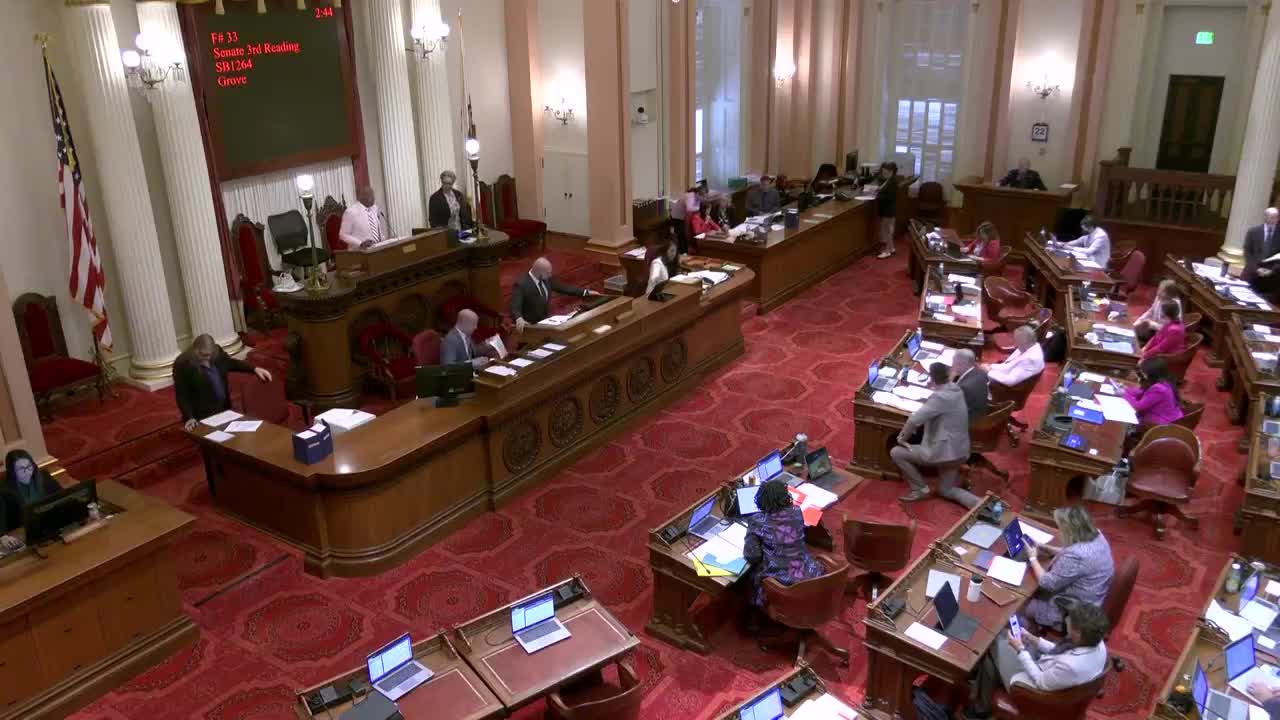 3MIN
Senate Floor
 15MIN
Senate Standing Committee on Labor, Public Employment and Retirement
 17MIN
Senate Standing Committee on Judiciary
Bill Author

Bill Co-Author(s):