SB 1266: Product safety: bisphenol.
- Session Year: 2023-2024
- House: Senate
- Latest Version Date: 2024-09-27
Current Status:
Passed
(2024-09-27: Chaptered by Secretary of State. Chapter 790, Statutes of 2024.)
Introduced
In Committee
First Chamber
In Committee
Second Chamber
Enacted
Existing law, part of the hazardous waste control law, requires the Department of Toxic Substances Control to adopt regulations to establish a process by which chemicals or chemical ingredients in products may be identified and prioritized for consideration as being chemicals of concern and to adopt regulations to establish a process by which chemicals of concern may be evaluated. Existing law prohibits the manufacture, sale, or distribution in commerce of any bottle or cup that contains bisphenol A, as specified, if the bottle or cup is designed or intended to be filled with any liquid, food, or beverage intended primarily for consumption by children 3 years of age or younger. The prohibition above does not apply to a product subject to a regulatory response by the department as of the date that the department posts a prescribed notice regarding the departments adoption of the regulatory response. Existing law additionally requires manufacturers to use the least toxic alternative when replacing bisphenol A in containers and prohibits manufacturers from replacing bisphenol A with chemicals known to cause cancer or reproductive harm, as specified.
This bill would, on and after January 1, 2026, instead apply the above prohibitions and requirements to any juveniles feeding product or juveniles sucking or teething product, as defined, that contains any form of bisphenol, as defined, at a detectable level above the practical quantitation limit, as determined by the department. The bill would authorize the department to establish standards for the juveniles products above that are more protective of public health, sensitive populations, or the environment than the standards established by the bill, and would authorize the department or the Attorney General to enforce the prohibitions and requirements, as specified. The bill would additionally prohibit manufacturers from replacing any form of bisphenol with any chemical identified by the department as a Candidate Chemical, as specified.
Existing law, part of the hazardous waste control law, requires the Department of Toxic Substances Control to adopt regulations to establish a process by which chemicals or chemical ingredients in products may be identified and prioritized for consideration as being chemicals of concern and to adopt regulations to establish a process by which chemicals of concern may be evaluated. Existing law prohibits the manufacture, sale, or distribution in commerce of any bottle or cup that contains bisphenol A, as specified, if the bottle or cup is designed or intended to be filled with any liquid, food, or beverage intended primarily for consumption by children 3 years of age or younger. The prohibition above does not apply to a product subject to a regulatory response by the department as of the date that the department posts a prescribed notice regarding the departments adoption of the regulatory response. Existing law additionally requires manufacturers to use the least toxic alternative when replacing bisphenol A in containers and prohibits manufacturers from replacing bisphenol A with chemicals known to cause cancer or reproductive harm, as specified.
This bill would, on and after January 1, 2026, instead apply the above prohibitions and requirements to any juveniles feeding product or juveniles sucking or teething product, as defined, that contains any form of bisphenol, as defined, at a detectable level above 0.1 parts per billion. the practical quantitation limit, as determined by the department. The bill would authorize the department to establish standards for the juveniles products above that are more protective of public health, sensitive populations, or the environment than the standards established by the bill, and would authorize the department or the Attorney General to enforce the prohibitions and requirements. requirements, as specified. The bill would additionally prohibit manufacturers from replacing any form of bisphenol with any chemical identified by the department as a Candidate Chemical, as specified.
Existing law, part of the hazardous waste control law, requires the Department of Toxic Substances Control to adopt regulations to establish a process by which chemicals or chemical ingredients in products may be identified and prioritized for consideration as being chemicals of concern and to adopt regulations to establish a process by which chemicals of concern may be evaluated. Existing law prohibits the manufacture, sale, or distribution in commerce of any bottle or cup that contains bisphenol A, as specified, if the bottle or cup is designed or intended to be filled with any liquid, food, or beverage intended primarily for consumption by children 3 years of age or younger. The prohibition above does not apply to a product subject to a regulatory response by the department as of the date that the department posts a prescribed notice regarding the departments adoption of the regulatory response. Existing law additionally requires manufacturers to use the least toxic alternative when replacing bisphenol A in containers and prohibits manufacturers from replacing bisphenol A with chemicals known to cause cancer or reproductive harm, as specified.
This bill would, on and after January 1, 2026, instead apply the above prohibitions and requirements to any juveniles feeding product or juveniles sucking or teething product, as defined, that contains any form of bisphenol, as defined, at a detectable level above 0.1 parts per billion. The bill would authorize the department to establish standards for the juveniles products above that are more protective of public health, sensitive populations, or the environment than the standards established by the bill. bill, and would authorize the department to enforce the prohibitions and requirements. The bill would additionally prohibit manufacturers from replacing any form of bisphenol with any chemical identified by the department as a Candidate Chemical, as specified.
Existing law, part of the hazardous waste control law, requires the Department of Toxic Substances Control to adopt regulations to establish a process by which chemicals or chemical ingredients in products may be identified and prioritized for consideration as being chemicals of concern and to adopt regulations to establish a process by which chemicals of concern may be evaluated. Existing law prohibits the manufacture, sale, or distribution in commerce of any bottle or cup that contains bisphenol A, as specified, if the bottle or cup is designed or intended to be filled with any liquid, food, or beverage intended primarily for consumption by children 3 years of age or younger. The prohibition above does not apply to a product subject to a regulatory response by the department as of the date that the department posts a prescribed notice regarding the departments adoption of the regulatory response. Existing law additionally requires manufacturers to use the least toxic alternative when replacing bisphenol A in containers and prohibits manufacturers from replacing bisphenol A with chemicals known to cause cancer or reproductive harm, as specified.
This bill would, on and after January 1, 2026, apply the above prohibitions and requirements to any childrens juveniles feeding product or childrens juveniles sucking or teething product, as defined, that contains any form of bisphenol, as defined, at a detectable level above 0.1 parts per billion. The bill would authorize the department to establish standards for the childrens juveniles products above that are more protective of public health, sensitive populations, or the environment than the standards established by the bill. The bill would additionally prohibit manufacturers from replacing any form of bisphenol with any chemical identified by the department as a Candidate Chemical, as specified.
Existing law, part of the hazardous waste control law, requires the Department of Toxic Substances Control to adopt regulations to establish a process by which chemicals or chemical ingredients in products may be identified and prioritized for consideration as being chemicals of concern and to adopt regulations to establish a process by which chemicals of concern may be evaluated. Existing law prohibits the manufacture, sale, or distribution in commerce of any bottle or cup that contains bisphenol A, as specified, if the bottle or cup is designed or intended to be filled with any liquid, food, or beverage intended primarily for consumption by children 3 years of age or younger. The prohibition above does not apply to a product subject to a regulatory response by the department as of the date that the department posts a prescribed notice regarding the departments adoption of the regulatory response. Existing law additionally requires manufacturers to use the least toxic alternative when replacing bisphenol A in containers, as specified. containers and prohibits manufacturers from replacing bisphenol A with chemicals known to cause cancer or reproductive harm, as specified.
This bill would would, on and after January 1, 2026, apply the above prohibitions and requirements to all forms any childrens feeding product or childrens sucking or teething product, as defined, that contains any form of bisphenol and to perfluoroalkyl and polyfluoroalkyl substances, as defined, unless they are temporarily essential chemicals, as defined. bisphenol, as defined, at a detectable level above 0.1 parts per billion. The bill would authorize the department to establish standards for the childrens products above that are more protective of public health, sensitive populations, or the environment than the standards established by the bill. The bill would additionally prohibit manufacturers from replacing any form of bisphenol with any chemical identified by the department as a Candidate Chemical, as specified.
Existing law, part of the hazardous waste control law, requires the Department of Toxic Substances Control to adopt regulations to establish a process by which chemicals or chemical ingredients in products may be identified and prioritized for consideration as being chemicals of concern and to adopt regulations to establish a process by which chemicals of concern may be evaluated. Existing law prohibits the manufacture, sale, or distribution in commerce of any bottle or cup that contains bisphenol A, as specified, if the bottle or cup is designed or intended to be filled with any liquid, food, or beverage intended primarily for consumption by children 3 years of age or younger. The prohibition above does not apply to a product subject to a regulatory response by the department as of the date that the department posts a prescribed notice regarding the departments adoption of the regulatory response. Existing law additionally requires manufacturers to use the least toxic alternative when replacing bisphenol A in containers, as specified.
This bill would apply the above prohibitions and requirements to all forms of bisphenol and to perfluoroalkyl and polyfluoroalkyl substances, as defined, unless they are temporarily essential chemicals, as defined. The bill would authorize the department to establish standards for the childrens products above that are more protective of public health, sensitive populations, or the environment than the standards established by the bill.
(a)On and after January 1, 2026, no person shall manufacture, sell, or distribute in commerce any juveniles feeding product or juveniles sucking or teething product that contains any form of bisphenol above the practical quantitation limit (PQL), to be determined by the Department of Toxic Substances Control.
(b)Subdivision (a) shall not apply to medical devices, as defined in Section 109920, or to food and beverage containers designed or intended primarily to contain liquid, food, or beverages for consumption by the general population.
(c)The Department of Toxic Substances Control may establish standards for any juveniles feeding product or juveniles sucking or teething product that are more protective of public health, sensitive populations, or the environment than the standards established pursuant to subdivision (a).
(d)Notwithstanding subdivision (a), if the Department of Toxic Substances Control adopts a regulatory response described in Section 25253 regarding the use of any form of bisphenol in a product that is prohibited by this section, the prohibition of this section shall not apply to that product upon the date that the Department of Toxic Substances Control posts a notice on its internet website that it has adopted the response.
(e)Notwithstanding subdivisions (b) and (c) of Section 25257.1, this section shall not be construed to prohibit or restrict the authority of the Department of Toxic Substances Control to prioritize or take action on any products containing any form of bisphenol in order to limit exposure to or reduce the level of hazard posed by any form of bisphenol.
(f)(1)The Department of Toxic Substances Control or the Attorney General may enforce this chapter.
(2)A violation of this chapter shall be punishable by an administrative or civil penalty not to exceed five thousand dollars ($5,000) for a first violation, and not to exceed ten thousand dollars ($10,000) for each subsequent violation.
(3)Penalties may be assessed for each violation or, for continuing violations, for each day that violation continues.
(g)The Department of Toxic Substances Control may adopt regulations to implement, enforce, interpret, or make specific this chapter.
(h)Upon appropriation by the Legislature, funds in the Toxic Substances Control Account may be used by the Department of Toxic Substances Control to implement this chapter.
SEC. 3.Section 108941 of the Health and Safety Code is amended to read:108941.(a)Manufacturers shall use the least toxic alternative when replacing any form of bisphenol in a juveniles feeding product or juveniles sucking or teething product in accordance with this chapter.
(b)Manufacturers shall not replace any form of bisphenol pursuant to this chapter with chemicals classified by the United States Environmental Protection Agency as carcinogenic to humans, likely to be carcinogenic to humans, or for which there is suggestive evidence of carcinogenic potential, or identified by the state to cause cancer as listed in the Safe Drinking Water and Toxic Enforcement Act of 1986 (Chapter 6.6 (commencing with Section 25249.5) of Division 20) list of chemicals known to cause cancer or reproductive toxicity.
(c)Manufacturers shall not replace any form of bisphenol pursuant to this chapter with reproductive toxicants that cause birth defects, reproductive harm, or developmental harm as identified by the United States Environmental Protection Agency or listed in the Safe Drinking Water and Toxic Enforcement Act of 1986 (Chapter 6.6 (commencing with Section 25249.5) of Division 20) list of chemicals known to cause cancer or reproductive toxicity.
(d)Manufacturers shall not replace any form of bisphenol pursuant to this chapter with any chemical identified by the Department of Toxic Substances Control as a Candidate Chemical pursuant to Section 69502.2 of Title 22 of the California Code of Regulations.
SEC. 4.Section 108942 is added to the Health and Safety Code, to read:108942.For purposes of this chapter, the following terms have the following meanings:
(a)Bisphenol means a chemical with two phenol rings connected by a single linker atom. The linker atom and phenol rings may have additional substituents.
(b)Juvenile means an individual or individuals younger than 12 years of age.
(c)Juveniles feeding product means any consumer product, marketed for use by, marketed to, sold, offered for sale, or distributed to juveniles in the State of California that is designed or intended by the manufacturer to be filled with any liquid, food, or beverage intended primarily for consumption from that bottle or cup by a juvenile.
(d)Juveniles sucking or teething product means any consumer product, marketed for use by, marketed to, sold, offered for sale, or distributed to juveniles in the State of California that is designed or intended by the manufacturer to help a juvenile with sucking or teething in order to facilitate sleep or relaxation.
(a)On and after January 1, 2026, no person shall manufacture, sell, or distribute in commerce any juveniles feeding product or juveniles sucking or teething product that contains any form of bisphenol at a detectable level above 0.1 parts per billion. above the practical quantitation limit (PQL), to be determined by the Department of Toxic Substances Control.
(b)Subdivision (a) shall not apply to medical devices, as defined in Section 109920, or to food and beverage containers designed or intended primarily to contain liquid, food, or beverages for consumption by the general population.
(c)The Department of Toxic Substances Control may establish standards for any juveniles feeding product or juveniles sucking or teething product that are more protective of public health, sensitive populations, or the environment than the standards established pursuant to subdivision (a).
(d)Notwithstanding subdivision (a), if the Department of Toxic Substances Control adopts a regulatory response described in Section 25253 regarding the use of any form of bisphenol in a product that is prohibited by this section, the prohibition of this section shall not apply to that product upon the date that the department Department of Toxic Substances Control posts a notice on its internet website that it has adopted the response.
(e)Notwithstanding subdivisions (b) and (c) of Section 25257.1, this section shall not be construed to prohibit or restrict the authority of the Department of Toxic Substances Control to prioritize or take action on any products containing any form of bisphenol in order to limit exposure to or reduce the level of hazard posed by any form of bisphenol.
(f)(1)The Department of Toxic Substances Control may enforce this chapter. or the Attorney General may enforce this chapter.
(2)A violation of this chapter shall be punishable by an administrative or civil penalty not to exceed five thousand dollars ($5,000) for a first violation, and not to exceed ten thousand dollars ($10,000) for each subsequent violation.
(3)Penalties may be assessed for each violation or, for continuing violations, for each day that violation continues.
(g)The Department of Toxic Substances Control may adopt regulations to implement, enforce, interpret, or make specific this chapter.
(h)Upon appropriation by the Legislature, funds in the Toxic Substances Control Account may be used by the Department of Toxic Substances Control to implement this chapter.
SEC. 3.Section 108941 of the Health and Safety Code is amended to read:108941.(a)Manufacturers shall use the least toxic alternative when replacing any form of bisphenol in a juveniles feeding product or juveniles sucking or teething product in accordance with this chapter.
(b)Manufacturers shall not replace any form of bisphenol pursuant to this chapter with chemicals classified by the United States Environmental Protection Agency as carcinogenic to humans, likely to be carcinogenic to humans, or for which there is suggestive evidence of carcinogenic potential, or identified by the state to cause cancer as listed in the Safe Drinking Water and Toxic Enforcement Act of 1986 (Chapter 6.6 (commencing with Section 25249.5) of Division 20) list of chemicals known to cause cancer or reproductive toxicity.
(c)Manufacturers shall not replace any form of bisphenol pursuant to this chapter with reproductive toxicants that cause birth defects, reproductive harm, or developmental harm as identified by the United States Environmental Protection Agency or listed in the Safe Drinking Water and Toxic Enforcement Act of 1986 (Chapter 6.6 (commencing with Section 25249.5) of Division 20) list of chemicals known to cause cancer or reproductive toxicity.
(d)Manufacturers shall not replace any form of bisphenol pursuant to this chapter with any chemical identified by the Department of Toxic Substances Control as a Candidate Chemical pursuant to Section 69502.2 of Title 22 of the California Code of Regulations.
SEC. 4.Section 108942 is added to the Health and Safety Code, to read:108942.For purposes of this chapter, the following terms have the following meanings:
(a)Bisphenol means a chemical with two phenol rings connected by a single linker atom. The linker atom and phenol rings may have additional substituents.
(b)Juvenile means an individual or individuals younger than 12 years of age.
(c)Juveniles feeding product means any consumer product, marketed for use by, marketed to, sold, offered for sale, or distributed to juveniles in the State of California that is designed or intended by the manufacturer to be filled with any liquid, food, or beverage intended primarily for consumption from that bottle or cup by a juvenile.
(d)Juveniles sucking or teething product means any consumer product, marketed for use by, marketed to, sold, offered for sale, or distributed to juveniles in the State of California that is designed or intended by the manufacturer to help a juvenile with sucking or teething in order to facilitate sleep or relaxation.
(a)On and after January 1, 2026, no person shall manufacture, sell, or distribute in commerce any juveniles feeding product or juveniles sucking or teething product that contains any form of bisphenol at a detectable level above 0.1 parts per billion.
(b)Subdivision (a) shall not apply to medical devices, as defined in Section 109920, or to food and beverage containers designed or intended primarily to contain liquid, food, or beverages for consumption by the general population.
(c)The Department of Toxic Substances Control may establish standards for any juveniles feeding product or juveniles sucking or teething product that are more protective of public health, sensitive populations, or the environment than the standards established pursuant to subdivision (a).
(d)Notwithstanding subdivision (a), if the Department of Toxic Substances Control adopts a regulatory response described in Section 25253 regarding the use of any form of bisphenol in a product that is prohibited by this section, the prohibition of this section shall not apply to that product upon the date that the department posts a notice on its internet website that it has adopted the response.
(e)Notwithstanding subdivisions (b) and (c) of Section 25257.1, this section shall not be construed to prohibit or restrict the authority of the Department of Toxic Substances Control to prioritize or take action on any products containing any form of bisphenol in order to limit exposure to or reduce the level of hazard posed by any form of bisphenol.
(f)The Department of Toxic Substances Control may enforce this chapter.
SEC. 3.Section 108941 of the Health and Safety Code is amended to read:108941.(a)Manufacturers shall use the least toxic alternative when replacing any form of bisphenol in containers a juveniles feeding product or juveniles sucking or teething product in accordance with this chapter.
(b)Manufacturers shall not replace any form of bisphenol pursuant to this chapter with chemicals classified by the United States Environmental Protection Agency as carcinogenic to humans, likely to be carcinogenic to humans, or for which there is suggestive evidence of carcinogenic potential, or identified by the state to cause cancer as listed in the Safe Drinking Water and Toxic Enforcement Act of 1986 (Chapter 6.6 (commencing with Section 25249.5) of Division 20) list of chemicals known to cause cancer or reproductive toxicity.
(c)Manufacturers shall not replace any form of bisphenol pursuant to this chapter with reproductive toxicants that cause birth defects, reproductive harm, or developmental harm as identified by the United States Environmental Protection Agency or listed in the Safe Drinking Water and Toxic Enforcement Act of 1986 (Chapter 6.6 (commencing with Section 25249.5) of Division 20) list of chemicals known to cause cancer or reproductive toxicity.
(d)Manufacturers shall not replace any form of bisphenol pursuant to this chapter with any chemical identified by the Department of Toxic Substances Control as a Candidate Chemical pursuant to Section 69502.2 of Title 22 of the California Code of Regulations.
SEC. 4.Section 108942 is added to the Health and Safety Code, to read:108942.For purposes of this chapter, the following terms have the following meanings:
(a)Bisphenol means a chemical with two phenol rings connected by a single linker atom. The linker atom and phenol rings may have additional substituents.
(b)Juvenile means an individual or individuals younger than 12 years of age.
(c)Juveniles feeding product means any consumer product, marketed for use by, marketed to, sold, offered for sale, or distributed to juveniles in the State of California that is designed or intended by the manufacturer to be filled with any liquid, food, or beverage intended primarily for consumption from that bottle or cup by a juvenile.
(d)Juveniles sucking or teething product means any consumer product, marketed for use by, marketed to, sold, offered for sale, or distributed to juveniles in the State of California that is designed or intended by the manufacturer to help a juvenile with sucking or teething in order to facilitate sleep or relaxation.
(a)On and after January 1, 2026, no person shall manufacture, sell, or distribute in commerce any childrens juveniles feeding product or childrens juveniles sucking or teething product that contains any form of bisphenol at a detectable level above 0.1 parts per billion.
(b)Subdivision (a) shall not apply to medical devices, as defined in Section 109920, or to food and beverage containers designed or intended primarily to contain liquid, food, or beverages for consumption by the general population.
(c)The Department of Toxic Substances Control may establish standards for any childrens juveniles feeding product or childrens juveniles sucking or teething product that are more protective of public health, sensitive populations, or the environment than the standards established pursuant to subdivision (a).
(d)Notwithstanding subdivision (a), if the Department of Toxic Substances Control adopts a regulatory response described in Section 25253 regarding the use of any form of bisphenol in a product that is prohibited by this section, the prohibition of this section shall not apply to that product upon the date that the department posts a notice on its internet website that it has adopted the response.
(e)Notwithstanding subdivisions (b) and (c) of Section 25257.1, this section shall not be construed to prohibit or restrict the authority of the Department of Toxic Substances Control to prioritize or take action on any products containing any form of bisphenol in order to limit exposure to or reduce the level of hazard posed by any form of bisphenol.
SEC. 3.Section 108941 of the Health and Safety Code is amended to read:108941.(a)Manufacturers shall use the least toxic alternative when replacing any form of bisphenol in containers in accordance with this chapter.
(b)Manufacturers shall not replace any form of bisphenol pursuant to this chapter with chemicals classified by the United States Environmental Protection Agency as carcinogenic to humans, likely to be carcinogenic to humans, or for which there is suggestive evidence of carcinogenic potential, or identified by the state to cause cancer as listed in the Safe Drinking Water and Toxic Enforcement Act of 1986 (Chapter 6.6 (commencing with Section 25249.5) of Division 20) list of chemicals known to cause cancer or reproductive toxicity.
(c)Manufacturers shall not replace any form of bisphenol pursuant to this chapter with reproductive toxicants that cause birth defects, reproductive harm, or developmental harm as identified by the United States Environmental Protection Agency or listed in the Safe Drinking Water and Toxic Enforcement Act of 1986 (Chapter 6.6 (commencing with Section 25249.5) of Division 20) list of chemicals known to cause cancer or reproductive toxicity.
(d)Manufacturers shall not replace any form of bisphenol pursuant to this chapter with any chemical identified by the Department of Toxic Substances Control as a Candidate Chemical pursuant to Section 69502.2 of Title 22 of the California Code of Regulations.
SEC. 4.Section 108942 is added to the Health and Safety Code, to read:108942.For purposes of this chapter, the following terms have the following meanings:
(a)Bisphenol means a chemical with two phenol rings connected by a single linker atom. The linker atom and phenol rings may have additional substituents.
(b)Child or children Juvenile means an individual or individuals younger than 12 years of age.
(c)Childrens Juveniles feeding product means any consumer product, marketed for use by, marketed to, sold, offered for sale, or distributed to children juveniles in the State of California that is designed or intended by the manufacturer to be filled with any liquid, food, or beverage intended primarily for consumption from that bottle or cup by children. a juvenile.
(d)Childrens Juveniles sucking or teething product means any consumer product, marketed for use by, marketed to, sold, offered for sale, or distributed to children juveniles in the State of California that is designed or intended by the manufacturer to help a child juvenile with sucking or teething in order to facilitate sleep or relaxation.
(a)On and after January 1, 2025, 2026, no person shall manufacture, sell, or distribute in commerce any childrens feeding product or childrens sucking or teething product that contains any form of bisphenol or perfluoroalkyl or polyfluoroalkyl substances unless the bisphenol or perfluoroalkyl or polyfluoroalkyl substance is a temporarily essential chemical. at a detectable level above 0.1 parts per billion.
(b)Subdivision (a) shall not apply to medical devices, as defined in Section 109920, or to food and beverage containers designed or intended primarily to contain liquid, food, or beverages for consumption by the general population.
(c)The Department of Toxic Substances Control may establish standards for any childrens feeding product or childrens sucking or teething product that are more protective of public health, sensitive populations, or the environment than the standards established pursuant to subdivision (a).
(d)Notwithstanding subdivision (a), if the Department of Toxic Substances Control adopts a regulatory response described in Section 25253 regarding the use of any form of bisphenol or perfluoroalkyl or polyfluoroalkyl substances in a product that is prohibited by this section, the prohibition of this section shall not apply to that product upon the date that the department posts a notice on its internet website that it has adopted the response.
(e)Notwithstanding subdivisions (b) and (c) of Section 25257.1, this section shall not be construed to prohibit or restrict the authority of the Department of Toxic Substances Control to prioritize or take action on any products containing any form of bisphenol or perfluoroalkyl or polyfluoroalkyl substances in order to limit exposure to or reduce the level of hazard posed by any form of bisphenol or perfluoroalkyl or polyfluoroalkyl substances. bisphenol.
SEC. 2.SEC. 3.Section 108941 of the Health and Safety Code is amended to read:108941.(a)Manufacturers shall use the least toxic alternative when replacing any form of bisphenol or perfluoroalkyl or polyfluoroalkyl substances in containers in accordance with this chapter.
(b)Manufacturers shall not replace any form of bisphenol or perfluoroalkyl or polyfluoroalkyl substances pursuant to this chapter with chemicals classified by the United States Environmental Protection Agency as carcinogenic to humans, likely to be carcinogenic to humans, or for which there is suggestive evidence of carcinogenic potential, or identified by the state to cause cancer as listed in the Safe Drinking Water and Toxic Enforcement Act of 1986 (Chapter 6.6 (commencing with Section 25249.5) of Division 20) list of chemicals known to cause cancer or reproductive toxicity.
(c)Manufacturers shall not replace any form of bisphenol or perfluoroalkyl or polyfluoroalkyl substances pursuant to this chapter with reproductive toxicants that cause birth defects, reproductive harm, or developmental harm as identified by the United States Environmental Protection Agency or listed in the Safe Drinking Water and Toxic Enforcement Act of 1986 (Chapter 6.6 (commencing with Section 25249.5) of Division 20) list of chemicals known to cause cancer or reproductive toxicity.
(d)Manufacturers shall not replace any form of bisphenol pursuant to this chapter with any chemical identified by the Department of Toxic Substances Control as a Candidate Chemical pursuant to Section 69502.2 of Title 22 of the California Code of Regulations.
SEC. 3.SEC. 4.Section 108942 is added to the Health and Safety Code, to read:108942.For purposes of this chapter, the following terms have the following meanings:
(a)Bisphenol means a chemical with two phenol rings connected by a single linker atom. The linker atom and phenol rings may have additional substituents.
(a)(b)Child or children means an individual or individuals younger than 12 years of age.
(b)(c)Childrens feeding product means any consumer product, marketed for use by, marketed to, sold, offered for sale, or distributed to children in the State of California that is designed or intended by the manufacturer to be filled with any liquid, food, or beverage intended primarily for consumption from that bottle or cup by children.
(c)(d)Childrens sucking or teething product means any consumer product, marketed for use by, marketed to, sold, offered for sale, or distributed to children in the State of California that is designed or intended by the manufacturer to help a child with sucking or teething in order to facilitate sleep or relaxation.
(d)Perfluoroalkyl or polyfluoroalkyl substances means substances that are members of a class of fluorinated organic chemicals that contain at least one fully fluorinated carbon atom.(e)Temporarily essential chemical means a chemical for which all of the following are true:(1)There are no safer alternatives to the chemical available.(2)The chemical is necessary for the product to work as intended.(3)The chemical is being used in a product that is critical for the health, safety, or function of society.(a)On and after July 1, 2013, January 1, 2025, no person shall manufacture, sell, or distribute in commerce any bottle or cup that contains bisphenol A, at a detectable level above 0.1 parts per billion (ppb), if the bottle or cup is designed or intended to be filled with any liquid, food, or beverage intended primarily for consumption from that bottle or cup by children three years of age or younger. childrens feeding product or childrens sucking or teething product that contains any form of bisphenol or perfluoroalkyl or polyfluoroalkyl substances unless the bisphenol or perfluoroalkyl or polyfluoroalkyl substance is a temporarily essential chemical.
(b)Subdivision (a) shall not apply to medical devices, as defined in Section 109920, or to food and beverage containers designed or intended primarily to contain liquid, food, or beverages for consumption by the general population.
(c)The Department of Toxic Substances Control may establish standards for any childrens feeding product or childrens sucking or teething product that are more protective of public health, sensitive populations, or the environment than the standards established pursuant to subdivision (a).
(c)(d)Notwithstanding subdivision (a), if the Department of Toxic Substances Control adopts a regulatory response described in Section 25253 regarding the use of bisphenol A any form of bisphenol or perfluoroalkyl or polyfluoroalkyl substances in a product that is prohibited by this section, the prohibition of this section shall not apply to that product upon the date that the department posts a notice on its Internet Web site internet website that it has adopted the response.
(d)(e)Notwithstanding subdivisions (b) and (c) of Section 25257.1, this section shall not be construed to prohibit or restrict the authority of the Department of Toxic Substances Control to prioritize or take action on any products containing bisphenol A any form of bisphenol or perfluoroalkyl or polyfluoroalkyl substances in order to limit exposure to or reduce the level of hazard posed by bisphenol A. any form of bisphenol or perfluoroalkyl or polyfluoroalkyl substances.
SEC. 2.Section 108941 of the Health and Safety Code is amended to read:108941.(a)Manufacturers shall use the least toxic alternative when replacing bisphenol A any form of bisphenol or perfluoroalkyl or polyfluoroalkyl substances in containers in accordance with this chapter.
(b)Manufacturers shall not replace bisphenol A, any form of bisphenol or perfluoroalkyl or polyfluoroalkyl substances pursuant to this chapter, chapter with chemicals classified by the United States Environmental Protection Agency as carcinogenic to humans, likely to be carcinogenic to humans, or for which there is suggestive evidence of carcinogenic potential, or identified by the state to cause cancer as listed in the Safe Drinking Water and Toxic Enforcement Act of 1986 (Chapter 6.6 (commencing with Section 25249.5) of Division 20) list of chemicals known to cause cancer or reproductive toxicity.
(c)Manufacturers shall not replace bisphenol A, any form of bisphenol or perfluoroalkyl or polyfluoroalkyl substances pursuant to this chapter, chapter with reproductive toxicants that cause birth defects, reproductive harm, or developmental harm as identified by the United States Environmental Protection Agency or listed in the Safe Drinking Water and Toxic Enforcement Act of 1986 (Chapter 6.6 (commencing with Section 25249.5) of Division 20) list of chemicals known to cause cancer or reproductive toxicity.
SEC. 3.Section 108942 is added to the Health and Safety Code, to read:108942.For purposes of this chapter, the following terms have the following meanings:
(a)Child or children means an individual or individuals younger than 12 years of age.
(b)Childrens feeding product means any consumer product, marketed for use by, marketed to, sold, offered for sale, or distributed to children in the State of California that is designed or intended by the manufacturer to be filled with any liquid, food, or beverage intended primarily for consumption from that bottle or cup by children.
(c)Childrens sucking or teething product means any consumer product, marketed for use by, marketed to, sold, offered for sale, or distributed to children in the State of California that is designed or intended by the manufacturer to help a child with sucking or teething in order to facilitate sleep or relaxation.
(d)Perfluoroalkyl or polyfluoroalkyl substances means substances that are members of a class of fluorinated organic chemicals that contain at least one fully fluorinated carbon atom.
(e)Temporarily essential chemical means a chemical for which all of the following are true:
(1)There are no safer alternatives to the chemical available.
(2)The chemical is necessary for the product to work as intended.
(3)The chemical is being used in a product that is critical for the health, safety, or function of society.
|
Date
|
Status
|
|---|---|
| Sep 27, 2024 | Chaptered by Secretary of State. Chapter 790, Statutes of 2024. |
| Sep 27, 2024 | Approved by the Governor. |
| Sep 10, 2024 | Enrolled and presented to the Governor at 4 p.m. |
| Aug 30, 2024 | Assembly amendments concurred in. (Ayes 40. Noes 0. Page 5737.) Ordered to engrossing and enrolling. |
| Aug 29, 2024 | From committee: That the Assembly amendments be concurred in. (Ayes 9. Noes 0. Page 5699.) |
| Aug 28, 2024 | From committee: Be re-referred to Com. on JUD. pursuant to Senate Rule 29.10(d). (Ayes 5. Noes 0. Page 5566.) Re-referred to Com. on JUD. |
| Aug 28, 2024 | Re-referred to Com. on RLS pursuant to Senate Rule 29.10(d). |
| Aug 28, 2024 | In Senate. Concurrence in Assembly amendments pending. |
| Aug 28, 2024 | Read third time. Passed. (Ayes 77. Noes 0. Page 6702.) Ordered to the Senate. |
| Aug 22, 2024 | Read third time and amended. |
| Aug 22, 2024 | Ordered to third reading. |
| Aug 19, 2024 | Read second time. Ordered to third reading. |
| Aug 15, 2024 | From committee: Do pass. (Ayes 14. Noes 0.) (August 15). |
| Aug 7, 2024 | August 7 set for first hearing. Placed on suspense file. |
| Jun 26, 2024 | From committee: Do pass and re-refer to Com. on APPR. (Ayes 7. Noes 0.) (June 25). Re-referred to Com. on APPR. |
| Jun 19, 2024 | From committee: Do pass and re-refer to Com. on E.S. & T.M. (Ayes 16. Noes 0.) (June 18). Re-referred to Com. on E.S. & T.M. |
| Jun 19, 2024 | From committee with author's amendments. Read second time and amended. Re-referred to Com. on E.S. & T.M. |
| Jun 6, 2024 | Re-referred to Coms. on HEALTH and E.S. & T.M. pursuant to Assembly Rule 96. |
| Jun 3, 2024 | Referred to Coms. on E.S. & T.M. and HEALTH. |
| May 21, 2024 | In Assembly. Read first time. Held at Desk. |
| May 20, 2024 | Read third time. Passed. (Ayes 39. Noes 0. Page 4020.) Ordered to the Assembly. |
| May 14, 2024 | Read second time. Ordered to third reading. |
| May 13, 2024 | From committee: Be ordered to second reading pursuant to Senate Rule 28.8. |
| May 3, 2024 | Set for hearing May 13. |
| Apr 24, 2024 | Read second time and amended. Re-referred to Com. on APPR. |
| Apr 23, 2024 | From committee: Do pass as amended and re-refer to Com. on APPR. (Ayes 11. Noes 0. Page 3702.) (April 22). |
| Apr 18, 2024 | Set for hearing April 22. |
| Apr 18, 2024 | April 24 hearing postponed by committee. |
| Apr 11, 2024 | Set for hearing April 24. |
| Apr 8, 2024 | Read second time and amended. Re-referred to Com. on HEALTH. |
| Apr 4, 2024 | From committee: Do pass as amended and re-refer to Com. on HEALTH. (Ayes 7. Noes 0. Page 3467.) (April 3). |
| Mar 8, 2024 | Set for hearing April 3. |
| Feb 29, 2024 | Referred to Coms. on E.Q. and HEALTH. |
| Feb 16, 2024 | From printer. May be acted upon on or after March 17. |
| Feb 15, 2024 | Introduced. Read first time. To Com. on RLS. for assignment. To print. |
|
Date
|
Description
|
Location
|
Votes
|
|
|---|---|---|---|---|
| Aug 30, 2024 | Unfinished Business SB1266 Limón Concurrence | Senate Floor |
Passed |
|
| Aug 29, 2024 | That the Assembly amendments be concurred in | Senate Standing Committee on Judiciary |
Passed |
|
| Aug 28, 2024 | SB 1266 Limón Senate Third Reading By Boerner | Assembly Floor |
Passed |
|
| Aug 15, 2024 | Do pass. | Assembly Standing Committee on Appropriations |
Passed |
|
| Jun 25, 2024 | Do pass and be re-referred to the Committee on [Appropriations] | Assembly Standing Committee on Environmental Safety and Toxic Materials |
Passed |
|
| Jun 18, 2024 | Do pass and be re-referred to the Committee on [Environmental Safety and Toxic Materials] | Assembly Standing Committee on Health |
Passed |
|
| May 20, 2024 | Senate 3rd Reading SB1266 Limón | Senate Floor |
Passed |
|
| Apr 22, 2024 | Do pass as amended, but first amend, and re-refer to the Committee on [Appropriations] | Senate Standing Committee on Health |
Passed |
|
| Apr 3, 2024 | Do pass as amended, but first amend, and re-refer to the Committee on [Health] | Senate Standing Committee on Environmental Quality |
Passed |
This list shows positions taken on this bill by organizations on the date displayed, which is linked to the original source.
Positions by individuals are not included.
|
Organization
|
Position
|
Date
|
|---|---|---|
| A Voice for Choice Advocacy | ** Support | |
| American College Of Obstetricians And Gynecologists District Ix | ** Support | |
| Arts District Community Council LA | ** Support | |
| Breast Cancer Prevention Partners | ** Support | |
| California Climate Action | * Support | Apr 3, 2024 |
| California Health Coalition Advocacy | ** Support | |
| California Nurses For Environmental Health | * Support | Apr 3, 2024 |
| California Nurses for Environmental Health Justice | * Support | Apr 3, 2024 |
| California Water Association | ** Support | |
| Californians Against Waste | ** Support | |
| Center For Food Safety | * Support | Apr 3, 2024 |
| Clean Water Action | ** Support | |
| cleanearth4kids.org | ** Support | |
| Educate. Advocate. | ** Support | |
| Environmental Working Group | ** Support | |
| Facts | * Support | Apr 3, 2024 |
| Grandparents in Action | * Support | Apr 3, 2024 |
| Interfaith Coalition for Environmental Justice | * Support | Apr 3, 2024 |
| Los Angeles County Sanitation Districts | ** Support | |
| Mamas | * Support | Apr 3, 2024 |
| National Stewardship Action Council | ** Support | |
| Natural Resources Defense Council | ** Support | |
| NCCCA | * Support | Apr 3, 2024 |
| North County Equity and Justice | * Support | Apr 3, 2024 |
| Pesticide Action Network | * Support | Apr 3, 2024 |
| Sacramento 350 | * Support | Apr 3, 2024 |
| Stand Up California | * Support | Apr 3, 2024 |
| The Toy Association | * Neutral | Apr 3, 2024 |
SENATE RULES COMMITTEE Office of Senate Floor Analyses (916) 651-1520 Fax: (916) 327-4478 | SB 1266 |
UNFINISHED BUSINESS
Bill No: SB 1266
Author: Limón (D)
Amended: 8/22/24
Vote: 21
SENATE ENVIRONMENTAL QUALITY COMMITTEE: 7-0, 4/3/24
AYES: Allen, Dahle, Gonzalez, Hurtado, Menjivar, Nguyen, Skinner
SENATE HEALTH COMMITTEE: 11-0, 4/22/24
AYES: Roth, Nguyen, Glazer, Gonzalez, Grove, Hurtado, Limón, Menjivar, Rubio, Smallwood-Cuevas, Wiener
SENATE APPROPRIATIONS COMMITTEE: Senate Rule 28.8
SENATE FLOOR: 39-0, 5/20/24
AYES: Allen, Alvarado-Gil, Archuleta, Ashby, Atkins, Becker, Blakespear, Bradford, Caballero, Cortese, Dahle, Dodd, Durazo, Eggman, Glazer, Gonzalez, Grove, Hurtado, Jones, Laird, Limón, McGuire, Menjivar, Newman, Nguyen, Niello, Ochoa Bogh, Padilla, Portantino, Roth, Rubio, Seyarto, Skinner, Smallwood-Cuevas, Stern, Umberg, Wahab, Wiener, Wilk
NO VOTE RECORDED: Min
ASSEMBLY FLOOR: 77-0, 8/28/24 - See last page for vote
SUBJECT: Product safety: bisphenol
SOURCE: Author
DIGEST:
This bill prohibits, beginning January 1, 2026, a person from manufacturing, selling, or distributing in commerce a juvenile’s product, as specified, that contains any form of bisphenol, as defined, above the practical quantitation limit (PQL), to be determined by the Department of Toxic Substances Control (DTSC). Authorizes DTSC to enforce the provisions of this bill. Imposes administrative or civil penalties, for violations of the provisions of this bill.
Assembly Amendments
change the statutory threshold for bisphenol in specified juvenile’s products from 0.1 parts per billion to a PQL limit determined by DTSC; authorize DTSC and the Attorney General to enforce the prohibition; authorize DTSC to adopt regulations to implement the bill.
ANALYSIS:
Existing law:
- Prohibits, on and after July 1, 2013, a person from manufacturing, selling, or distributing in commerce in this state any bottle or cup intended to be filled with any liquid, food, or beverage intended primarily for consumption by children three years of age or younger that contains any bisphenol A at a detectable level above 0.1 parts per billion (ppb). (Health and Safety Code (HSC) § 108940)
- Under the Safer Consumer Products (Green Chemistry) statutes (HSC § 25252 et seq.):
- Requires the Department of Toxic Substances Control (DTSC) to adopt regulations to establish a process to identify and prioritize chemicals or chemical ingredients in consumer products that may be considered chemicals of concern, as specified.
- Requires DTSC to adopt regulations to establish a process to evaluate chemicals of concern in consumer products, and their potential alternatives, to determine how to best limit exposure or to reduce the level of hazard posed by a chemical of concern.
- Specifies, but does not limit, regulatory responses that DTSC can take following the completion of an alternatives analysis, ranging from no action, to a prohibition of the chemical in the product.
This bill:
- Expands the prohibition in existing law against children’s bottles and cups containing BPA to instead prohibit any form of BP in juvenile’s feeding, sucking, or teething products above a PQL determined by DTSC; and
- Authorizes DTSC to adopt regulations to implement, enforce, interpret, or make specific this bill; and
- Authorizes DTSC and the Attorney General to enforce the prohibition; and
- Prohibits a manufacturer from replacing any form of BP in a product under 1) above with any chemical identified by DTSC as a Candidate Chemical under the Green Chemistry program.
- Authorizes DTSC and the AG to enforce these provisions and makes a violation punishable by an administrative or civil penalty not to exceed $5,000 for a first violation, and not to exceed $10,000 for each subsequent violation. Specifies that penalties may be assessed for each violation or, for continuing violations, for each day that violation continues.
Background
- Bisphenol. Bisphenols (BPs) represent a large class of phenolic organic chemical compounds. BPA, the most well-known and well-studied of the bisphenols, is produced in large quantities for use in the production of polycarbonate plastics and epoxy resins. It is found in various products such as beverage bottles and food containers. BPA has been known to leach into food and beverage containers during use, which can have negative impacts on human health. As a result of these health concerns, BPA has been banned in certain products, including a California ban on BPA in baby bottles or cups (HSC § 108940). Following these and other stringent regulations on the production and usage of BPA, structurally similar substitutes such as Bisphenol-S (BPS) and Bisphenol-F (BPF) have been produced for various applications as replacements for BPA. At the time of substitution, there was little to no data on the health impacts of other BPs. However, these BP structural analogs have since been shown to exhibit similar endocrine disrupting effects and reproductive toxicity to BPA, resulting in what has been termed a “regrettable substitution.”
- Candidate Chemicals. DTSC maintains an informational list of Candidate Chemicals based on established authoritative lists of chemicals that have been identified as known to be harmful to human health. A Candidate Chemical is a chemical that exhibits a “hazard trait and/or an environmental or toxicological endpoint.” Hazard traits are intrinsic properties of a chemical that may contribute to adverse effects in humans, animals, or in ecological communities. Under DTSC’s Safer Consumer Products Program, 14 BPs are “Candidate Chemicals” because they exhibit specified hazard traits.
Comments
- Purpose of Bill. According to the author, “Bisphenols, commonly referenced as BPA or BPS, is a chemical compound that is used in a variety of industrial and consumer products – ranging from automobile parts to food containers. BPA is considered an endocrine disruptor, which means it can interfere with the hormone system in the body and is associated with harmful health outcomes such as asthma, cardiovascular disease, and obesity. Children, in particular infants, are even more susceptible to the harms of BPA and can have adverse health impacts upon exposure. Recognizing this harm, in 2012, the U.S. Food and Drug Administration (FDA) banned BPA from baby bottles and sippy cups. Although manufacturers have eliminated BPA from these products, they have shifted to using alternative chemicals to replace it – such as BPS and BPF – which have been found to be even more harmful than BPA. This poses a serious health concern amongst children and parents that must be addressed. SB 1266 prohibits the manufacture, sale, or distribution of any juvenile feeding, sucking, or teething product that contains bisphenol. Additionally, it requires the Department of Toxic Substances Control to enforce and establish health and environmental standards on juvenile products.”
- Heightened risks to infants and children. According to the CDC, children below the age of 12 are at an increased risk of adverse health impacts from exposures to chemicals because of their increased exposures per kilogram body weight compared to adults. Additionally, childhood is a critical period for rapid growth and development, thus exposure to environmental contaminants can be disrupted by chemicals. PFAS and BP can migrate into food and beverages from containers containing the chemical, such as in the feeding, sucking, or teething products specified in this bill, thus creating an acute exposure source for an already vulnerable population.
- Avoiding regrettable substitution. Bisphenols (BP) are a large classes of chemicals, making it challenging to regulate each individual chemical. Efforts to regulate individual chemicals, such as the U.S. FDA’s regulation on BPA in baby bottles, sippy cups, and infant formula packaging, have led to “regrettable substitutions,” with BPA analogs such as BPS and BPF that have similar health concerns. Given the particular susceptibility of young children to adverse health impacts from exposure to chemicals, this bill rightfully treats both PFAS and BP as classes of chemicals with the precautionary principle in mind.
However, it is equally essential that any other alternatives utilized are also not toxic. To ensure that the alternatives used are not regrettable substitutes, the bill specifies that manufacturers shall use the least toxic alternative when replacing bisphenol and prohibits the use of chemicals on DTSC’s Candidate Chemical list. This is to ensure that any substitutes used do not have adverse health impacts across a variety of hazard metrics, including carcinogenicity, reproductive toxicity, or endocrine disrupting behavior.
- Departmental oversight. This bill authorizes DTSC to set a PQL limit above which BPs are prohibited. The PQL is defined in regulations as the lowest concentration of a chemical that can be reliably measured within specified limits of precision and accuracy using routine laboratory operating procedures. (22 Cal. Code. Regs. § 69501.1(a)(52).) This will ensure that the scientific experts are responsible for setting a health-protective and practical threshold, rather than by statutory mandate. Furthermore, the bill authorizes DTSC to adopt regulations to implement this bill, and DTSC and the Attorney General to enforce this bill. This will ensure that this bill has appropriate departmental oversight to ensure compliance with the bill and protect consumers.
FISCAL EFFECT: Appropriation: No Fiscal Com.: Yes Local: No
According to the Assembly Appropriations Committee, enactment of this bill would result in costs of $1.3 million for DTSC in 2025-26, to research and develop sampling and testing methodology. Beginning in 2026-27, DTSC would have ongoing costs of $2.6 million, to conduct sampling and product testing, promulgate regulations, and conduct enforcement response activities
SUPPORT: (Verified 8/27/24)
A Voice for Choice Advocacy
American College of Obstetricians and Gynecologists District Ix
Arts District Community Council LA
California Health Coalition Advocacy
California Water Association
Cleanearth4kids.org
Educate. Advocate.
Los Angeles County Sanitation Districts
National Stewardship Action Council
OPPOSITION: (Verified 8/27/24)
ASSEMBLY FLOOR: 77-0
Ayes: Addis, Aguiar-Curry, Alanis, Alvarez, Arambula, Bains, Bauer-Kahan, Bennett, Berman, Boerner, Bonta, Bryan, Calderon, Juan Carrillo, Wendy Carrillo, Chen, Connolly, Megan Dahle, Davies, Dixon, Essayli, Flora, Mike Fong, Friedman, Gabriel, Gallagher, Garcia, Gipson, Grayson, Haney, Hart, Holden, Hoover, Irwin, Jackson, Jones-Sawyer, Kalra, Lackey, Lee, Low, Lowenthal, Maienschein, Mathis, McCarty, McKinnor, Muratsuchi, Stephanie Nguyen, Pacheco, Papan, Jim Patterson, Joe Patterson, Pellerin, Petrie-Norris, Quirk-Silva, Ramos, Rendon, Reyes, Luz Rivas, Rodriguez, Blanca Rubio, Sanchez, Santiago, Schiavo, Soria, Ta, Ting, Valencia, Villapudua, Waldron, Wallis, Ward, Weber, Wicks, Wilson, Wood, Zbur, Robert Rivas
Noes:
No Vote Recorded: Cervantes, Ortega
Prepared by: Holly Rudel / E.Q. / (916) 651-4108
8/29/24 10:21:39
**** END ****
Senator Thomas Umberg, Chair
2023-2024 Regular Session
Bill No: SB 1266 (Author:Limón)
Version: August 22, 2024
Hearing Date: August 29, 2024
Fiscal: Yes
Urgency: No
Consultant: AM
PURSUANT TO SENATE RULE 29.10(d)
SUBJECT
Product safety: bisphenol
DIGEST
This bill expands the existing prohibition against children’s bottles and cups containing Bisphenol A (BPA) to instead prohibit any Bisphenols (BPs) in a juvenile’s feeding product or sucking or teething products above the practical quantitation limit (PQL), to be determined by the Department of Toxic Substances Control (DTSC). The bill provides that these provisions may be enforced by DTSC or the Attorney General (AG) and that a violation is subject to an administrative or civil penalty of $5,000 for a first violation and not to exceed $10,000 for each subsequent violation.
EXECUTIVE SUMMARY
This bill seeks to build upon the exiting ban on BPA in children’s bottles and cups by expanding the ban to any BPs in a juvenile’s feeding product or sucking or teething products above the practical quantitation limit (PQL), which is to be determined by DTSC. The bill also seeks to add a specific enforcement authority to DTSC or the AG and provides for administrative or civil penalties for any violation. The bill is author sponsored and supported by various environmental and health advocacy organizations. No timely opposition was received by the Committee. The bill passed the Senate Environmental Quality Committee on a vote of 7 to 0 and the Senate Health Committee on a vote of 11 to 0.
PROPOSED CHANGES TO THE LAW
Existing law:
- Prohibits a person from manufacturing, selling, or distributing in commerce in this state any bottle or cup intended to be filled with any liquid, food, or beverage intended primarily for consumption by children three years of age or younger that contains any bisphenol A at a detectable level above 0.1 parts per billion (ppb). (Health and Saf. Code § 108940.)
- Prohibits a person, including, but not limited to, a manufacturer, from selling or distributing in commerce in this state any new, not previously owned, juvenile product, as defined, that contains intentionally added PFAS or PFAS at or above 100 parts per million (ppm), as measured in total organic fluorine. (Health and Saf. Code § 108946.)
- Requires, under the Safer Consumer Products (Green Chemistry) statutes, that DTSC adopt regulations to establish a process to identify and prioritize chemicals or chemical ingredients in consumer products that may be considered chemicals of concern, as specified. (Health and Saf. Code § 25252 et seq.)
- Requires DTSC to adopt regulations to establish a process to identify and prioritize chemicals or chemical ingredients in consumer products that may be considered chemicals of concern, as specified.
- Requires DTSC to adopt regulations to establish a process to evaluate chemicals of concern in consumer products, and their potential alternatives, to determine how to best limit exposure or to reduce the level of hazard posed by a chemical of concern.
- Specifies, but does not limit, regulatory responses that DTSC can take following the completion of an alternatives analysis, ranging from no action, to a prohibition of the chemical in the product.
This bill:
- Revises the existing prohibition on BPA in a bottle or cup to instead prohibit the sale of any juvenile’s feeding product or juvenile’s sucking or teething product that contains any form of BP above the practical quantitation limit (PQL), to be determined by the DTSC.
- Authorizes DTSC to establish standards that are more protective of public health, sensitive populations, or the environment than the standards in 1) above.
- Prohibits a manufacturer from replacing any form of BP in a product under 1) above with any chemical identified by DTSC as a Candidate Chemical under the Green Chemistry program.
- Defines various terms for these purposes.
- “Bisphenol” means a chemical with two phenol rings connected by a single linker atom. The linker atom and phenol rings may have additional substituents.
- “Juvenile” means an individual or individuals younger than 12 years of age.
- “Juvenile’s feeding product” means any consumer product, marketed for use by, marketed to, sold, offered for sale, or distributed to juveniles in the State of California that is designed or intended by the manufacturer to be filled with any liquid, food, or beverage intended primarily for consumption from that bottle or cup by a juvenile.
- “Juvenile’s sucking or teething product” means any consumer product, marketed for use by, marketed to, sold, offered for sale, or distributed to juveniles in the State of California that is designed or intended by the manufacturer to help a juvenile with sucking or teething in order to facilitate sleep or relaxation.
- Authorizes DTSC and the AG to enforce these provisions and makes a violation punishable by an administrative or civil penalty not to exceed $5,000 for a first violation, and not to exceed $10,000 for each subsequent violation. Specifies that penalties may be assessed for each violation or, for continuing violations, for each day that violation continues.
- Authorizes DTSC to enforce these provisions and adopt regulations to implement, enforce, interpret, or make specific these provisions.
COMMENTS
- Stated need for the bill
The author writes:
Bisphenols, commonly referenced as BPA or BPS, is a chemical compound that is used in a variety of industrial and consumer products – ranging from automobile parts to food containers.
BPA is considered an endocrine disruptor, which means it can interfere with the hormone system in the body and is associated with harmful health outcomes such as asthma, cardiovascular disease, and obesity.
Children, in particular infants, are even more susceptible to the harms of BPA and can have adverse health impacts upon exposure. Recognizing this harm, in 2012, the U.S. Food and Drug Administration (FDA) banned BPA from baby bottles and sippy cups.
Although manufacturers have eliminated BPA from these products, they have shifted to using alternative chemicals to replace it – such as BPS and BPF – which have been found to be even more harmful than BPA. This poses a serious health concern amongst children and parents that must be addressed.
SB 1266 prohibits the manufacture, sale, or distribution of any juvenile feeding, sucking, or teething product that contains any form of bisphenol. Additionally, it requires the Department of Toxic Substances Control to enforce and establish health and environmental standards on juvenile products.
- Background
AB 1319 (Butler, Ch. 467, Stats. 2011) enacted the original prohibition on the manufacture, sale, or distribution of any bottle or cup containing BPA at a detectable level above 0.1 parts per billion (ppb) if the bottle or cup was designed or intended to be filled with any liquid, food, or beverage that is intended primarily for consumption by children 3 years of age or younger. This bill seeks to update existing law by expanding the ban to include not only bottles or cups but any product designed to feed a juvenile or any sucking or teething product. Additionally, the bill seeks to extend the ban to all BPs, not just BPA. Recent amendments to the bill changed the standard from 0.1 parts ppb to the practical quantitation limit (PQL), to be determined by the Department of Toxic Substances Control. The PQL is defined in regulations as the lowest concentration of a chemical that can be reliably measured within specified limits of precision and accuracy using routine laboratory operating procedures. (22 Cal. Code. Regs. § 69501.1(a)(52).)
BPs represent a large class of phenolic organic chemical compounds. BPA is generally used in the production of polycarbonate plastics. The Senate Health Committee analysis of this bill provides detailed information on the harms of BPs:
BPA leaches into food and beverages, which can have negative impacts on human health. As a result of these health concerns, BPA has been banned in certain products, including an FDA and California ban for baby bottles and sippy cups. Following these and other regulations on the production and usage of BPA, structurally similar substitutes such as Bisphenol-S (BPS) and Bisphenol-F (BPF) have been used as a replacement for BPA. […]
Environmental Research and Public Health, BPS and BPF are structurally and chemically similar to BPA; and they are expected to promote adverse effects by acting as endocrine disrupters. Over the last decade, BPS and BPF have been widely used by manufacturers as a substitute for BPA; they are present in a wide range of products such as food products, cleaning agents, thermal papers, dental sealants, and personal care products. High concentrations of BPF were found in different vegetable and seafood products in China. In thermal paper receipt samples, BPS was detected in 62% of samples from Italy and all samples from the U.S., Japan, Korea, and Vietnam. Furthermore, BPS and BPF were detected in 89.4% and 66.5% of urinary samples from U.S. adults and children, respectively. The review stated that as a large population is exposed to BPA substitutes at a relatively high level, the safety of BP substitutes has been questioned over the last few years.[1]
The bill, in order to avoid, BPs being replaced in covered juvenile products with other potentially harmful chemicals prevents a manufacturer from replacing any form of BP in a covered product with any chemical identified by DTSC as a Candidate Chemical under the Green Chemistry program. A Candidate Chemical is one that has a “hazard trait and/or an environmental or toxicological endpoint.”[2] “Hazard traits are intrinsic properties of a chemical that may contribute to adverse effects in humans, animals, or in ecological communities.”[3]
- Enforcement
Many existing chemical bans in certain products do not contain specific enforcement provisions, such as the various statutes that ban perfluoroalkyl and polyfluoroalkyl substances (PFAS) in specified consumer products[4] and the statutes banning BPA in children’s cups or bottles that this bill is amending. In light of this, these statutes have sometimes been referred to as the orphan codes. Enforcement of these orphan codes would have to be through other existing statutory frameworks, such as the Unfair Competition Law (UCL). (Bus. & Prof. Code § 17200 et seq.) Last year, Governor Newsom vetoed three single-product chemical ban bills noting the lack of regulatory enforcement. In his veto message of AB 246 (Papan, 2023) he wrote:
This is one of three single-product chemical bans passed by the Legislature this year that attempt to address serious concerns with the presence of PFAS in consumer products. These bills do not identify or require any regulatory agency to determine compliance with, or enforce, the proposed statute.
While I strongly support the author's intent and have signed similar legislation in the past, I am concerned that this bill falls short of providing enhanced protection to California consumers due to lack of regulatory oversight. Previously enacted single-product chemical bans, which also lack oversight, are proving challenging to implement, with inconsistent interpretations and confusion among manufacturers about how to comply with the restrictions.
In order to instill consumer confidence and effectively address public health and environmental concerns, I am directing the Department of Toxic Substances Control to engage with the author and the Legislature and consider alternative approaches to regulating the use of these harmful chemicals in consumer products.
Seeking to be responsive to the Governor’s veto message, AB 347 (Ting, 2023) would provide a regulatory framework for the various existing PFAS ban statutes by placing oversight within DTSC and providing specific enforcement provisions. Similarly, the most recent amendments to this bill provide specific regulatory enforcement by DTSC and additionally authorize enforcement by the AG. Lastly, the amendments provide for the imposition of civil or administrative penalties not to exceed $5,000 for a first violation, and not to exceed $10,000 for each subsequent violation. Penalties may be assessed for each day that a violation continues.
SUPPORT
A Voice for Choice Advocacy
American College of Obstetricians and Gynecologists District IX
Arts District Community Council LA
Breast Cancer Prevention Partners
Californians Against Waste
California Health Coalition Advocacy
California Water Association
Cleanearth4kids.org
Clean Water Action
Educate. Advocate.
Environmental Working Group
Natural Resources Defense Council
OPPOSITION
None received
RELATED LEGISLATION
Pending Legislation:
AB 2244 (Ting, 2024) prohibits a proof of purchase provided to a consumer from containing BPA on or after January 1, 2025, or any BP on and after January 1, 2026. AB 2244 was held in the Senate Appropriations Committee.
AB 2515 (Papan, 2024) prohibits a person or entity from manufacturing, selling, delivering, holding, or offering for sale in commerce any cosmetic product that contains intentionally added perfluoroalkyl and polyfluoroalkyl substances (PFAS), as defined.
AB 347 (Ting, 2023), among other things, requires DTSC to enforce and ensure compliance with PFAS prohibitions under existing law, requires manufacturers to register with the DTSC, and authorizes DTSC to assess administrative penalties against manufacturers in violation of existing PFAS prohibitions. AB 347 is pending on the Senate Floor.
Prior Legislation:
AB 246 (Papan, 2023) would have prohibited, commencing January 1, 2025, a person from manufacturing, distributing, selling, or offering for sale in the state any menstrual products that contain intentionally added PFAS, or, commencing January 1, 2027, concentrations of PFAS above 10 parts per million. This bill was vetoed by the Governor. (See Comment 3 for Governor’s veto message).
AB 1347 (Ting, 2023) would have, among other things, prohibited a proof of purchase provided to a consumer from containing BPA on or after January 1, 2024, or any BP on and after January 1, 2025. AB 1347 was held in the Senate Appropriations Committee.
AB 161 (Ting, 2019) would have, among other things, prohibited a proof of purchase provided to a consumer from containing BPA of bisphenol S on or after January 1, 2022. AB 161 was held in the Senate Appropriations Committee.
AB 1319 (Butler, Ch. 467, Stats. 2011) prohibited the manufacture, sale, or distribution in commerce of any bottle or cup that contains BPA at a detectable level above 0.1 parts per billion (ppb) if the bottle or cup is designed or intended to be filled with any liquid, food, or beverage that is intended primarily for consumption by children 3 years of age or younger.
PRIOR VOTES
Assembly Appropriations Committee (Ayes 14, Noes 0)
Assembly Environmental Safety and Toxic Materials Committee (Ayes 7, Noes 0)
Assembly Health Committee (Ayes 16, Noes 0)
Senate Floor (Ayes 39, Noes 0)
Senate Health Committee (Ayes 11, Noes 0)
Senate Environmental Quality Committee (Ayes 7, Noes 0)
**************
Sen. Health Comm. analysis SB 1266 (2023-24 reg. sess.) as amended April 8, 2024 at pp. 3-4. ↑
DTSC, Candidate Chemicals (2024), available at https://dtsc.ca.gov/scp/candidate-chemicals-list/. ↑
Ibid. ↑
See e.g. AB 1817 (Ting, Ch. 762, Stats. of 2022), AB 1200 (Ting, Ch. 503, Stats. 2021), and AB 652 (Freidman, Ch. 500, Stats. 2021). ↑
SENATE RULES COMMITTEE Office of Senate Floor Analyses (916) 651-1520 Fax: (916) 327-4478 | SB 1266 |
UNFINISHED BUSINESS
Bill No: SB 1266
Author: Limón (D)
Amended: 8/22/24
Vote: 21
SENATE ENVIRONMENTAL QUALITY COMMITTEE: 7-0, 4/3/24
AYES: Allen, Dahle, Gonzalez, Hurtado, Menjivar, Nguyen, Skinner
SENATE HEALTH COMMITTEE: 11-0, 4/22/24
AYES: Roth, Nguyen, Glazer, Gonzalez, Grove, Hurtado, Limón, Menjivar, Rubio, Smallwood-Cuevas, Wiener
SENATE APPROPRIATIONS COMMITTEE: Senate Rule 28.8
SENATE FLOOR: 39-0, 5/20/24
AYES: Allen, Alvarado-Gil, Archuleta, Ashby, Atkins, Becker, Blakespear, Bradford, Caballero, Cortese, Dahle, Dodd, Durazo, Eggman, Glazer, Gonzalez, Grove, Hurtado, Jones, Laird, Limón, McGuire, Menjivar, Newman, Nguyen, Niello, Ochoa Bogh, Padilla, Portantino, Roth, Rubio, Seyarto, Skinner, Smallwood-Cuevas, Stern, Umberg, Wahab, Wiener, Wilk
NO VOTE RECORDED: Min
ASSEMBLY FLOOR: 56-0, 8/28/24 – Roll call vote not available
SUBJECT: Product safety: bisphenol
SOURCE: Author
DIGEST:
This bill prohibits, beginning January 1, 2026, a person from manufacturing, selling, or distributing in commerce a juvenile’s product, as specified, that contains any form of bisphenol, as defined, above the practical quantitation limit (PQL), to be determined by the Department of Toxic Substances Control (DTSC). Authorizes DTSC to enforce the provisions of this bill. Imposes administrative or civil penalties, for violations of the provisions of this bill.
Assembly Amendments
change the statutory threshold for bisphenol in specified juvenile’s products from 0.1 parts per billion to a PQL limit determined by DTSC; authorize DTSC and the Attorney General to enforce the prohibition; authorize DTSC to adopt regulations to implement the bill.
ANALYSIS:
Existing law:
- Prohibits, on and after July 1, 2013, a person from manufacturing, selling, or distributing in commerce in this state any bottle or cup intended to be filled with any liquid, food, or beverage intended primarily for consumption by children three years of age or younger that contains any bisphenol A at a detectable level above 0.1 parts per billion (ppb). (Health and Safety Code (HSC) § 108940)
- Under the Safer Consumer Products (Green Chemistry) statutes (HSC § 25252 et seq.):
- Requires the Department of Toxic Substances Control (DTSC) to adopt regulations to establish a process to identify and prioritize chemicals or chemical ingredients in consumer products that may be considered chemicals of concern, as specified.
- Requires DTSC to adopt regulations to establish a process to evaluate chemicals of concern in consumer products, and their potential alternatives, to determine how to best limit exposure or to reduce the level of hazard posed by a chemical of concern.
- Specifies, but does not limit, regulatory responses that DTSC can take following the completion of an alternatives analysis, ranging from no action, to a prohibition of the chemical in the product.
This bill:
- Expands the prohibition in existing law against children’s bottles and cups containing BPA to instead prohibit any form of BP in juvenile’s feeding, sucking, or teething products above a PQL determined by DTSC; and
- Authorizes DTSC to adopt regulations to implement, enforce, interpret, or make specific this bill; and
- Authorizes DTSC and the Attorney General to enforce the prohibition; and
- Prohibits a manufacturer from replacing any form of BP in a product under 1) above with any chemical identified by DTSC as a Candidate Chemical under the Green Chemistry program.
- Authorizes DTSC and the AG to enforce these provisions and makes a violation punishable by an administrative or civil penalty not to exceed $5,000 for a first violation, and not to exceed $10,000 for each subsequent violation. Specifies that penalties may be assessed for each violation or, for continuing violations, for each day that violation continues.
Background
- Bisphenol. Bisphenols (BPs) represent a large class of phenolic organic chemical compounds. BPA, the most well-known and well-studied of the bisphenols, is produced in large quantities for use in the production of polycarbonate plastics and epoxy resins. It is found in various products such as beverage bottles and food containers. BPA has been known to leach into food and beverage containers during use, which can have negative impacts on human health. As a result of these health concerns, BPA has been banned in certain products, including a California ban on BPA in baby bottles or cups (HSC § 108940). Following these and other stringent regulations on the production and usage of BPA, structurally similar substitutes such as Bisphenol-S (BPS) and Bisphenol-F (BPF) have been produced for various applications as replacements for BPA. At the time of substitution, there was little to no data on the health impacts of other BPs. However, these BP structural analogs have since been shown to exhibit similar endocrine disrupting effects and reproductive toxicity to BPA, resulting in what has been termed a “regrettable substitution.”
- Candidate Chemicals. DTSC maintains an informational list of Candidate Chemicals based on established authoritative lists of chemicals that have been identified as known to be harmful to human health. A Candidate Chemical is a chemical that exhibits a “hazard trait and/or an environmental or toxicological endpoint.” Hazard traits are intrinsic properties of a chemical that may contribute to adverse effects in humans, animals, or in ecological communities. Under DTSC’s Safer Consumer Products Program, 14 BPs are “Candidate Chemicals” because they exhibit specified hazard traits.
Comments
- Purpose of Bill. According to the author, “Bisphenols, commonly referenced as BPA or BPS, is a chemical compound that is used in a variety of industrial and consumer products – ranging from automobile parts to food containers. BPA is considered an endocrine disruptor, which means it can interfere with the hormone system in the body and is associated with harmful health outcomes such as asthma, cardiovascular disease, and obesity. Children, in particular infants, are even more susceptible to the harms of BPA and can have adverse health impacts upon exposure. Recognizing this harm, in 2012, the U.S. Food and Drug Administration (FDA) banned BPA from baby bottles and sippy cups. Although manufacturers have eliminated BPA from these products, they have shifted to using alternative chemicals to replace it – such as BPS and BPF – which have been found to be even more harmful than BPA. This poses a serious health concern amongst children and parents that must be addressed. SB 1266 prohibits the manufacture, sale, or distribution of any juvenile feeding, sucking, or teething product that contains bisphenol. Additionally, it requires the Department of Toxic Substances Control to enforce and establish health and environmental standards on juvenile products.”
- Heightened risks to infants and children. According to the CDC, children below the age of 12 are at an increased risk of adverse health impacts from exposures to chemicals because of their increased exposures per kilogram body weight compared to adults. Additionally, childhood is a critical period for rapid growth and development, thus exposure to environmental contaminants can be disrupted by chemicals. PFAS and BP can migrate into food and beverages from containers containing the chemical, such as in the feeding, sucking, or teething products specified in this bill, thus creating an acute exposure source for an already vulnerable population.
- Avoiding regrettable substitution. Bisphenols (BP) are a large classes of chemicals, making it challenging to regulate each individual chemical. Efforts to regulate individual chemicals, such as the U.S. FDA’s regulation on BPA in baby bottles, sippy cups, and infant formula packaging, have led to “regrettable substitutions,” with BPA analogs such as BPS and BPF that have similar health concerns. Given the particular susceptibility of young children to adverse health impacts from exposure to chemicals, this bill rightfully treats both PFAS and BP as classes of chemicals with the precautionary principle in mind.
However, it is equally essential that any other alternatives utilized are also not toxic. To ensure that the alternatives used are not regrettable substitutes, the bill specifies that manufacturers shall use the least toxic alternative when replacing bisphenol and prohibits the use of chemicals on DTSC’s Candidate Chemical list. This is to ensure that any substitutes used do not have adverse health impacts across a variety of hazard metrics, including carcinogenicity, reproductive toxicity, or endocrine disrupting behavior.
- Departmental oversight. This bill authorizes DTSC to set a PQL limit above which BPs are prohibited. The PQL is defined in regulations as the lowest concentration of a chemical that can be reliably measured within specified limits of precision and accuracy using routine laboratory operating procedures. (22 Cal. Code. Regs. § 69501.1(a)(52).) This will ensure that the scientific experts are responsible for setting a health-protective and practical threshold, rather than by statutory mandate. Furthermore, the bill authorizes DTSC to adopt regulations to implement this bill, and DTSC and the Attorney General to enforce this bill. This will ensure that this bill has appropriate departmental oversight to ensure compliance with the bill and protect consumers.
FISCAL EFFECT: Appropriation: No Fiscal Com.: Yes Local: No
According to the Assembly Appropriations Committee, enactment of this bill would result in costs of $1.3 million for DTSC in 2025-26, to research and develop sampling and testing methodology. Beginning in 2026-27, DTSC would have ongoing costs of $2.6 million, to conduct sampling and product testing, promulgate regulations, and conduct enforcement response activities
SUPPORT: (Verified 8/27/24)
A Voice for Choice Advocacy
American College of Obstetricians and Gynecologists District Ix
Arts District Community Council LA
California Health Coalition Advocacy
California Water Association
Cleanearth4kids.org
Educate. Advocate.
Los Angeles County Sanitation Districts
National Stewardship Action Council
OPPOSITION: (Verified 8/27/24)
Prepared by: Holly Rudel / E.Q. / (916) 651-4108
8/28/24 22:09:26
**** END ****
SENATE THIRD READING
STR Bill Id:SB 1266
Author:(Limón)
As Amended Ver:August 22, 2024
Majority vote
SUMMARY
Prohibits, beginning January 1, 2026, a person from manufacturing, selling, or distributing in commerce any juvenile's feeding product, juvenile's sucking product, or juvenile's teething product, as defined, that contains any form of bisphenol, as defined, above the practical quantitation limit (PQL), to be determined by the Department of Toxic Substances Control (DTSC). Authorizes DTSC to enforce the provisions of this bill. Imposes administrative or civil penalties, for violations of the provisions of this bill.
Major Provisions
COMMENTS
Proposition 65: Proposition 65, officially known as the Safe and Drinking Water and Toxic Enforcement Act of 1986, was enacted as a ballot initiative in November 1986. Proposition 65 requires the state to maintain and update a list of chemicals known to the state to cause cancer or reproductive toxicity; protects the state's drinking water sources from being contaminated with chemicals known to cause cancer, birth defects, and other reproductive harm; and requires businesses to inform Californians about exposure to such chemicals. OEHHA is the lead agency for implementation of Proposition 65 and has the authority to adopt and modify regulations as necessary. OEHHA listed bisphenol A (BPA) on May 11, 2015 on the Proposition 65 list for causing reproductive toxicity and on December 18, 2020 for causing developmental toxicity. Bisphenol S (BPS) was listed on December 29, 2023 for causing reproductive toxicity. OEHHA considered, but did not list BPA as a carcinogen. The literature review behind this decision covered epidemiological studies in humans and studies in animals.
Green Chemistry in California: In 2008, the California legislature recognized the principle of Green Chemistry by enacting two landmark pieces of legislation, AB 1879 (Feuer and Huffman, Chapter 559, Statutes of 2008) and SB 509 (Simitian, Chapter 560, Statutes of 2008). These bills lay the statutory foundation for the state's Green Chemistry program and intend to establish a comprehensive approach to chemicals policy. The structure for regulatory action required by the Green Chemistry legislation is broad and general. Rather than specifying particular chemicals or explicit regulatory action on those chemicals, the statutes authorize state agencies, primarily DTSC, to set up a process to identify and evaluate chemicals of concern and the products in which they are found, and to impose appropriate regulatory action for those chemicals and products in order to protect people and the environment.
Statutory requirements for the California Green Chemistry regulations: The bulk of the statutory requirements for establishing regulations governing the Green Chemistry program was included in AB 1879 (Feuer and Huffman, Chapter 559, Statutes of 2008). Its companion bill, SB 509 (Simitian, Chapter 560, Statutes of 2008), also includes provisions related to the regulations. AB 1879 requires DTSC to adopt regulations that fulfill two major requirements: 1) establish a process to identify and prioritize chemicals or chemical ingredients in consumer products that may be considered a chemical of concern; and, 2) establish a process for evaluating chemicals of concern in consumer products, and their potential alternatives, to determine how best to limit exposure or to reduce the level of hazard posed by the chemical.
The Safer Consumer Products regulatory process: To implement the Green Chemistry statutes, DTSC created what it called a "four-step continuous, science-based, iterative" regulatory process, which it deemed the "Safer Consumer Products" (SCP) regulations. The SCP regulations were adopted October 2013, and follow the process below:
- Candidate Chemicals – The regulations establish a list of "candidate chemicals" based on the work already done by other authoritative organizations, and specify a process for DTSC to identify additional chemicals as candidate chemicals;
- Priority Products –DTSC evaluates and prioritize product/candidate chemical combinations to develop a list of "priority products" for which alternatives analyses must be conducted. A candidate chemical that is the basis for a product being listed as a priority product is designated as a chemical of concern for that product and any alternative considered or selected to replace that product;
- Alternatives Analysis – The regulations require responsible entities (manufacturers, importers, assemblers, and retailers) to notify DTSC when their product is listed as a priority product. DTSC will post this information on its website. Manufacturers (or other responsible entities) of a product listed as a priority product must perform an alternatives analysis for the product and the chemicals of concern in the product to determine how best to limit exposures to, or reduce the level of adverse public health and environmental impacts posed by, the chemicals of concern in the product; and,
- Regulatory Responses – The regulations require DTSC to identify and implement regulatory responses designed to protect public health and/or the environment, and maximize the use of acceptable and feasible alternatives of least concern. DTSC may require regulatory responses for a priority product (if the manufacturer decides to retain the priority product), or for an alternative product selected to replace the priority product.
Challenges with implementation: In the almost 16 years since the passage of the original Green Chemistry legislation, DTSC has only adopted seven priority products and has three more priority products currently undergoing the regulatory process. Additionally, DTSC's SCP Program only allows it to list a priority product for one chemical-product combination. Under recent staffing improvements, DTSC has indicated a likely average of five priority product regulations per year going forward.
Uses of Bisphenols: Bisphenols are phenolic organic compounds that are widely used in various products such as in the creation of plastics, epoxy resins, and thermal paper. Kitchen utensils, food and drink containers and toys are just some of the products that can contain bisphenols. The diverse uses and applications of plastic in today's society has resulted in many sources of exposure for humans, animals, and the environment. BPA was the most widely used bisphenol. Today, industry has transitioned to using BPS or other types of bisphenols for their products or other types of bisphenols. Some manufacturers, like those developing thermal paper, state that they have developed, or are in process of developing, products that are bisphenol free altogether.
Exposure and toxicity: Children are in a critical age of development where their body systems are undergoing rapid changes and growth. The human body needs hormones to control many biological functions like sleep, energy, growth, and fertility. Bisphenols are classified as endocrine disruptive chemicals (EDCs). EDCs, as defined by the National Institutes of Health, are natural or human-made chemicals that may mimic, block, or interfere with the body's endocrine system (i.e., the body's hormone systems). EDCs are of interest in research due to their potential for negative developmental and biological effects in humans. According to the Endocrine Society, there are an estimated 85,000 human made chemicals in the world and about 1,000 or more have the potential to be EDCs due to their unique properties (chemical structure, ability to bind to proteins in our body, etc.). The most common and well-studied EDCs are atrazine, BPA, dioxins, perchlorate, per- and polyfluoroalkyl substances (PFAS), phthalates, phytoestrogens, polybrominated diphenyl ethers, polybrominated biphenyls, and triclosan. California has implemented several laws regulating or prohibiting the use of some of these EDCs. Additionally, DTSC's Green Chemistry program, through their candidate chemical list, has also identified these chemicals as having specified hazards traits.
OEHHA published a report in 2009 titled, "Evidence on the Developmental and Reproductive Toxicity of Bisphenol A." The authors state that while there are limitations and considerations for the studies reviewed, overall the findings point to BPA disrupting the endocrine (hormone) system through multiple pathways. For example, BPA can change the way estrogen, progesterone, insulin, and thyroid hormones act in the body. More recently, OEHHA published a report in 2023 titled, "Evidence on the Female Reproductive Toxicity of Bisphenol S." The authors reported that BPS exhibits key characteristics of female reproductive toxicity; for example, BPS alters the function of reproductive hormone systems, including receptor signaling and hormone production.
Emphasizing the need to protect children from chemical exposures, the Agency for Toxic Substances and Disease Registry, housed in the Centers for Disease Control and Prevention, states:
"Children are at increased risk because of their increased exposures and increased vulnerability. Examples of increased exposures include children's physiologic needs for more food, water, and air per kilogram of body weight compared with adults.
These needs result in a greater exposure per kilogram to toxicants. Increased exposures also arise from children's normal development, such as the hand-mouth and hand-object behavior exhibited by toddlers. Increased vulnerability results from children's rapidly growing and developing organ systems, such as the central nervous system and lung which, compared with adults are especially susceptible to toxic insults.
Exposure to the same chemical may cause different health outcomes in children compared with adults. A well-known example is the effect of lead on young children's developing nervous systems. Lead does have effects on the nervous systems of adult workers, which result in peripheral neuropathies. For children, however, intellectual development is exquisitely sensitive to even small amounts of lead; this sensitivity is not seen in adults."
Presumably, the wide use of BPA in plastic food and beverage containers resulted in widespread exposure to the chemical, since research shows that BPA can leach out of containers and into the food or beverages being consumed. Research has also shown detectable levels of bisphenols and other EDCs in children's teething products.
In 2011, AB 1319 (Butler, Chapter 467) was signed by Governor Jerry Brown to protect children from the harmful effects of BPA. The law took effect in 2013 and prohibits the sale, manufacture, or distribution of any bottle or cup that contains BPA at a detectable level above 0.1 ppb, if the bottle or cup is designed or intended to be filled with any liquid, food, or beverage intended primarily for consumption by children three years of age or younger. In 2012, the federal Food and Drug Administration banned the use of BPA in baby bottles and cups. Increased public health concerns led to a gradual shift from BPA to other alternatives, like BPS. As described in OEHHA's report, BPS is also an EDC. Research on other bisphenols is increasingly becoming available showing similar negative impacts on health as BPA and BPS. Numerous scientific studies have shown that BPA exposure in childhood is associated with higher levels of anxiety, depression, hyperactivity, and adverse behavioral outcomes. There is emerging scientific evidence that other bisphenols, such as bisphenol F and BPS, have similar adverse neurological and behavioral effects on children. The provisions of this bill expand on existing law in the state of California. This bill aims to reduce the exposure to bisphenols in juvenile products, as defined, by expanding the protection of juveniles from a whole class of chemicals in various juvenile products.
Regulating bisphenols as a class: California has passed legislation that regulates perfluoroalkyl and polyfluoroalkyl (PFAS) chemicals as a class. The state of Washington passed rules prohibiting bisphenols as an entire class of chemicals in several products. Using this approach, they bypass the standard risk assessment, chemical-by-chemical method that can be slow and costly, and result in regrettable substitutions ultimately failing to protect public health. In the case of bisphenols, we have a clear example of a regrettable substitution: BPA to BPS. California would not be the first state to take this class approach with bisphenols.
This bill: SB 1266 would expand the prohibitions set forth by AB 1319 (Butler, Chapter 467, Statutes of 2011). It would prohibit, beginning January 1, 2026, a person from manufacturing, selling, or distributing in commerce, any juvenile's feeding product, juvenile's sucking product, or juvenile's teething product that contains any form of bisphenol above the practical quantitation limit (PQL), to be determined by DTSC. SB 1266 also reduces the risk of regrettable substitutes by prohibiting manufacturers from using other bisphenols, any chemicals designated by DTSC as a candidate chemical, which are recognized to be carcinogens or reproductive toxicants, and by requiring manufacturers to use the least toxic alternative. This bill also gives DTSC the authority to establish standards, for all the covered products, that are more protective for public health than the standards set by this bill and to enforce the provisions of this bill. Lastly, this bill imposes administrative or civil penalties, for violations of the provisions of this bill.
According to the Author
"Bisphenols, commonly referenced as BPA or BPS, is a chemical compound that is used in a variety of industrial and consumer products – ranging from automobile parts to food containers. BPA is considered an endocrine disruptor, which means it can interfere with the hormone system in the body and is associated with harmful health outcomes such as asthma, cardiovascular disease, and obesity.
Children, in particular infants, are even more susceptible to the harms of BPA and can have adverse health impacts upon exposure. Recognizing this harm, in 2012, the U.S. Food and Drug Administration (FDA) banned BPA from baby bottles and sippy cups. Although manufacturers have eliminated BPA from these products, they have shifted to using alternative chemicals to replace it – such as BPS and BPF – which have been found to be even more harmful than BPA. This poses a serious health concern amongst children and parents that must be addressed.
SB 1266 prohibits the manufacture, sale, or distribution of any juvenile feeding, sucking, or teething product that contains bisphenol. Additionally, it requires the Department of Toxic Substances Control to enforce and establish health and environmental standards on juvenile products."
Arguments in Support
According to a coalition of health advocates and environmental organizations:
"Our exposure to bisphenols is ubiquitous and continuous. According to CDC data, approximately 90% of Americans have BPA and BPS in our bodies. They disrupt the very sensitive balance of our hormones and have profoundly negative impacts at very low levels. Banning these chemicals in children's products is critically important because early life exposures are particularly concerning. This developmental period is when endocrine disrupting chemicals have their biggest and longest-lasting impacts.
Many of our organizations supported AB 1319 (Butler-2011) which banned BPA from baby bottles and sippy cups as of July, 2013. Unfortunately, all too often BPA was replaced with an array of bisphenol substitutes, for instance BPS, BPF, or BPAF. While these substitutes are often less well studied, the initial science is indicating that the entire class of [bisphenols] has implications for our health, including increased risk of asthma and hyperactivity in children, and cardiovascular disease, fertility problems, obesity, diabetes, and an increased risk of breast and prostate cancers in adults. BPA and BPS are listed on CA's Prop 65 as reproductive toxicants. And Washington State has designated BPA, BPS, and BPF as Chemicals of High Concern for Children. Banning bisphenols as a class of chemicals, as SB 1266 does, is critical to prevent toxic, 'regrettable' substitutions in the future."
Arguments in Opposition
None on file.
FISCAL COMMENTS
According to the Assembly Appropriations Committee, enactment of this bill would result in costs of $1.3 million for DTSC in 2025-26, to research and develop sampling and testing methodology. Beginning in 2026-27, DTSC would have ongoing costs of $2.6 million, to conduct sampling and product testing, promulgate regulations, and conduct enforcement response activities.
VOTES
SENATE FLOOR: 39-0-1
YES: Allen, Alvarado-Gil, Archuleta, Ashby, Atkins, Becker, Blakespear, Bradford, Caballero, Cortese, Dahle, Dodd, Durazo, Eggman, Glazer, Gonzalez, Grove, Hurtado, Jones, Laird, Limón, McGuire, Menjivar, Newman, Nguyen, Niello, Ochoa Bogh, Padilla, Portantino, Roth, Rubio, Seyarto, Skinner, Smallwood-Cuevas, Stern, Umberg, Wahab, Wiener, Wilk
ABS, ABST OR NV: Min
ASM HEALTH: 16-0-0
YES: Bonta, Waldron, Aguiar-Curry, Arambula, Jackson, Flora, Haney, Jones-Sawyer, Maienschein, McCarty, Joe Patterson, Rodriguez, Sanchez, Santiago, Schiavo, Weber
ASM ENVIRONMENTAL SAFETY AND TOXIC MATERIALS: 7-0-0
YES: Garcia, Hoover, Connolly, McKinnor, Papan, Reyes, Ta
ASM APPROPRIATIONS: 14-0-1
YES: Wicks, Sanchez, Arambula, Bryan, Calderon, Wendy Carrillo, Dixon, Mike Fong, Grayson, Haney, Hart, Pellerin, Ta, Villapudua
ABS, ABST OR NV: Jim Patterson
UPDATED
VERSION: August 22, 2024
CONSULTANT: Brenda Cisneros-Larios / E.S. & T.M. / (916) 319-3965 FN: 0004499
SENATE THIRD READING
STR Bill Id:SB 1266
Author:(Limón)
As Amended Ver:June 19, 2024
Majority vote
SUMMARY
Prohibits, beginning January 1, 2026, a person from manufacturing, selling, or distributing in commerce any juvenile's feeding product, juvenile's sucking product, or juvenile's teething product, as defined, that contains any form of bisphenol, as defined, at a detectable level above 0.1 parts per billion (ppb).
Major Provisions
COMMENTS
Proposition 65: Proposition 65, officially known as the Safe and Drinking Water and Toxic Enforcement Act of 1986, was enacted as a ballot initiative in November 1986. Proposition 65 requires the state to maintain and update a list of chemicals known to the state to cause cancer or reproductive toxicity; protects the state's drinking water sources from being contaminated with chemicals known to cause cancer, birth defects, and other reproductive harm; and requires businesses to inform Californians about exposure to such chemicals. OEHHA is the lead agency for implementation of Proposition 65 and has the authority to adopt and modify regulations as necessary. OEHHA listed bisphenol A (BPA) on May 11, 2015 on the Proposition 65 list for causing reproductive toxicity and on December 18, 2020 for causing developmental toxicity. Bisphenol S (BPS) was listed on December 29, 2023 for causing reproductive toxicity. OEHHA considered, but did not list BPA as a carcinogen. The literature review behind this decision covered epidemiological studies in humans and studies in animals.
Green Chemistry in California: In 2008, the California legislature recognized the principle of Green Chemistry by enacting two landmark pieces of legislation, AB 1879 (Feuer and Huffman), Chapter 559, Statutes of 2008 and SB 509 (Simitian), Chapter 560, Statutes of 2008. These bills lay the statutory foundation for the state's Green Chemistry program and intend to establish a comprehensive approach to chemicals policy. The structure for regulatory action required by the Green Chemistry legislation is broad and general. Rather than specifying particular chemicals or explicit regulatory action on those chemicals, the statutes authorize state agencies, primarily the Department of Toxic Substances Control (DTSC), to set up a process to identify and evaluate chemicals of concern and the products in which they are found, and to impose appropriate regulatory action for those chemicals and products in order to protect people and the environment.
Statutory requirements for the California Green Chemistry regulations: The bulk of the statutory requirements for establishing regulations governing the Green Chemistry program was included in AB 1879 (Feuer and Huffman), Chapter 559, Statutes of 2008. Its companion bill, SB 509 (Simitian), Chapter 560, Statutes of 2008, also includes provisions related to the regulations. AB 1879 requires DTSC to adopt regulations that fulfill two major requirements: 1) establish a process to identify and prioritize chemicals or chemical ingredients in consumer products that may be considered a chemical of concern; and, 2) establish a process for evaluating chemicals of concern in consumer products, and their potential alternatives, to determine how best to limit exposure or to reduce the level of hazard posed by the chemical.
The Safer Consumer Products regulatory process: To implement the Green Chemistry statutes, DTSC created what it called a "four-step continuous, science-based, iterative" regulatory process, which it deemed the "Safer Consumer Products" (SCP) regulations. The SCP regulations were adopted October 2013, and follow the process below:
- Candidate Chemicals – The regulations establish a list of "candidate chemicals" based on the work already done by other authoritative organizations, and specify a process for DTSC to identify additional chemicals as candidate chemicals;
- Priority Products –DTSC evaluates and prioritize product/candidate chemical combinations to develop a list of "priority products" for which alternatives analyses must be conducted. A candidate chemical that is the basis for a product being listed as a priority product is designated as a chemical of concern for that product and any alternative considered or selected to replace that product;
- Alternatives Analysis – The regulations require responsible entities (manufacturers, importers, assemblers, and retailers) to notify DTSC when their product is listed as a priority product. DTSC will post this information on its website. Manufacturers (or other responsible entities) of a product listed as a priority product must perform an alternatives analysis for the product and the chemicals of concern in the product to determine how best to limit exposures to, or reduce the level of adverse public health and environmental impacts posed by, the chemicals of concern in the product; and,
- Regulatory Responses – The regulations require DTSC to identify and implement regulatory responses designed to protect public health and/or the environment, and maximize the use of acceptable and feasible alternatives of least concern. DTSC may require regulatory responses for a priority product (if the manufacturer decides to retain the priority product), or for an alternative product selected to replace the priority product.
Challenges with implementation: In the almost 16 years since the passage of the original Green Chemistry legislation, DTSC has only adopted seven priority products and has three more priority products currently undergoing the regulatory process. Additionally, DTSC's SCP Program only allows it to list a priority product for one chemical-product combination. Under recent staffing improvements, DTSC has indicated a likely average of five priority product regulations per year going forward.
Uses of Bisphenols: Bisphenols are phenolic organic compounds that are widely used in various products such as in the creation of plastics, epoxy resins, and thermal paper. Kitchen utensils, food and drink containers and toys are just some of the products that can contain bisphenols. The diverse uses and applications of plastic in today's society has resulted in many sources of exposure for humans, animals, and the environment. BPA was the most widely used bisphenol. Today, industry has transitioned to using BPS or other types of bisphenols for their products or other types of bisphenols. Some manufacturers, like those developing thermal paper, state that they have developed, or are in process of developing, products that are bisphenol free altogether.
Exposure and toxicity: Children are in a critical age of development where their body systems are undergoing rapid changes and growth. The human body needs hormones to control many biological functions like sleep, energy, growth, and fertility. Bisphenols are classified as endocrine disruptive chemicals (EDCs). EDCs, as defined by the National Institutes of Health, are natural or human-made chemicals that may mimic, block, or interfere with the body's endocrine system (i.e., the body's hormone systems). EDCs are of interest in research due to their potential for negative developmental and biological effects in humans. According to the Endocrine Society, there are an estimated 85,000 human made chemicals in the world and about 1,000 or more have the potential to be EDCs due to their unique properties (chemical structure, ability to bind to proteins in our body, etc.). The most common and well-studied EDCs are atrazine, BPA, dioxins, perchlorate, per- and polyfluoroalkyl substances (PFAS), phthalates, phytoestrogens, polybrominated diphenyl ethers, polybrominated biphenyls, and triclosan. California has implemented several laws regulating or prohibiting the use of some of these EDCs. Additionally, DTSC's Green Chemistry program, through their candidate chemical list, has also identified these chemicals as having specified hazards traits.
OEHHA published a report in 2009 titled, "Evidence on the Developmental and Reproductive Toxicity of Bisphenol A." The authors state that while there are limitations and considerations for the studies reviewed, overall the findings point to BPA disrupting the endocrine (hormone) system through multiple pathways. For example, BPA can change the way estrogen, progesterone, insulin, and thyroid hormones act in the body. More recently, OEHHA published a report in 2023 titled, "Evidence on the Female Reproductive Toxicity of Bisphenol S." The authors reported that BPS exhibits key characteristics of female reproductive toxicity; for example, BPS alters the function of reproductive hormone systems, including receptor signaling and hormone production.
Emphasizing the need to protect children from chemical exposures, the Agency for Toxic Substances and Disease Registry, housed in the Centers for Disease Control and Prevention, states:
"Children are at increased risk because of their increased exposures and increased vulnerability. Examples of increased exposures include children's physiologic needs for more food, water, and air per kilogram of body weight compared with adults.
These needs result in a greater exposure per kilogram to toxicants. Increased exposures also arise from children's normal development, such as the hand-mouth and hand-object behavior exhibited by toddlers. Increased vulnerability results from children's rapidly growing and developing organ systems, such as the central nervous system and lung which, compared with adults are especially susceptible to toxic insults.
Exposure to the same chemical may cause different health outcomes in children compared with adults. A well-known example is the effect of lead on young children's developing nervous systems. Lead does have effects on the nervous systems of adult workers, which result in peripheral neuropathies. For children, however, intellectual development is exquisitely sensitive to even small amounts of lead; this sensitivity is not seen in adults."
Presumably, the wide use of BPA in plastic food and beverage containers resulted in widespread exposure to the chemical, since research shows that BPA can leach out of containers and into the food or beverages being consumed. Research has also shown detectable levels of bisphenols and other EDCs in children's teething products.
In 2011, AB 1319 (Butler, Chapter 467) was signed by Governor Jerry Brown to protect children from the harmful effects of BPA. The law took effect in 2013 and prohibits the sale, manufacture, or distribution of any bottle or cup that contains BPA at a detectable level above 0.1 ppb, if the bottle or cup is designed or intended to be filled with any liquid, food, or beverage intended primarily for consumption by children three years of age or younger. In 2012, the federal Food and Drug Administration banned the use of BPA in baby bottles and cups. Increased public health concerns led to a gradual shift from BPA to other alternatives, like BPS. As described in OEHHA's report, BPS is also an EDC. Research on other bisphenols is increasingly becoming available showing similar negative impacts on health as BPA and BPS. Numerous scientific studies have shown that BPA exposure in childhood is associated with higher levels of anxiety, depression, hyperactivity, and adverse behavioral outcomes. There is emerging scientific evidence that other bisphenols, such as bisphenol F and BPS, have similar adverse neurological and behavioral effects on children. The provisions of this bill expand on existing law in the state of California. This bill aims to reduce the exposure to bisphenols in juvenile products, as defined, by expanding the protection of juveniles from a whole class of chemicals in various juvenile products.
Regulating bisphenols as a class: California has passed legislation that regulates perfluoroalkyl and polyfluoroalkyl (PFAS) chemicals as a class. The state of Washington passed rules prohibiting bisphenols as an entire class of chemicals in several products. Using this approach, they bypass the standard risk assessment, chemical-by-chemical method that can be slow and costly, and result in regrettable substitutions ultimately failing to protect public health. In the case of bisphenols, we have a clear example of a regrettable substitution: BPA to BPS. California would not be the first state to take this class approach with bisphenols.
This bill: SB 1266 would expand the prohibitions set forth by AB 1319 (Butler, Chapter 467, Statutes of 2011). It would prohibit, beginning January 1, 2026, a person from manufacturing, selling, or distributing in commerce, any children's feeding product, children's sucking product, or children's teething product that contains any form of bisphenol at a detectable level above 0.1 ppb. SB1266 follows existing statute on BPA by keeping a 0.01 ppb threshold. SB 1266 also reduces the risk of regrettable substitutes by prohibiting manufacturers from using other bisphenols, any chemicals designated by DTSC as a candidate chemical, which are recognized to be carcinogens or reproductive toxicants, and by requiring manufacturers to use the least toxic alternative. This bill also gives DTSC the authority to develop thresholds, for all the covered products, that are more protective for public health than the thresholds set by the bill. Lastly, this bill gives DTSC authority to enforce the provisions of the bill.
According to the Author
"Bisphenols, commonly referenced as BPA or BPS, is a chemical compound that is used in a variety of industrial and consumer products – ranging from automobile parts to food containers. BPA is considered an endocrine disruptor, which means it can interfere with the hormone system in the body and is associated with harmful health outcomes such as asthma, cardiovascular disease, and obesity.
Children, in particular infants, are even more susceptible to the harms of BPA and can have adverse health impacts upon exposure. Recognizing this harm, in 2012, the U.S. Food and Drug Administration (FDA) banned BPA from baby bottles and sippy cups. Although manufacturers have eliminated BPA from these products, they have shifted to using alternative chemicals to replace it – such as BPS and BPF – which have been found to be even more harmful than BPA. This poses a serious health concern amongst children and parents that must be addressed.
SB 1266 prohibits the manufacture, sale, or distribution of any feeding, sucking, or teething product that contains bisphenol at a detectable level above 0.1 parts per billion. Additionally, it requires the Department of Toxic Substances Control to establish health and environmental standards on children products."
Arguments in Support
According to a coalition of health advocates and environmental organizations:
"Our exposure to bisphenols is ubiquitous and continuous. According to CDC data, approximately 90% of Americans have BPA and BPS in our bodies. They disrupt the very sensitive balance of our hormones and have profoundly negative impacts at very low levels. Banning these chemicals in children's products is critically important because early life exposures are particularly concerning. This developmental period is when endocrine disrupting chemicals have their biggest and longest-lasting impacts.
Many of our organizations supported AB 1319 (Butler-2011) which banned BPA from baby bottles and sippy cups as of July, 2013. Unfortunately, all too often BPA was replaced with an array of bisphenol substitutes, for instance BPS, BPF, or BPAF. While these substitutes are often less well studied, the initial science is indicating that the entire class of [bisphenols] has implications for our health, including increased risk of asthma and hyperactivity in children, and cardiovascular disease, fertility problems, obesity, diabetes, and an increased risk of breast and prostate cancers in adults. BPA and BPS are listed on CA's Prop 65 as reproductive toxicants. And Washington State has designated BPA, BPS, and BPF as Chemicals of High Concern for Children. Banning bisphenols as a class of chemicals, as SB 1266 does, is critical to prevent toxic, 'regrettable' substitutions in the future."
Arguments in Opposition
None on file.
FISCAL COMMENTS
According to the Assembly Appropriations Committee, enactment of this bill would result in costs of $1.3 million for DTSC in 2025-26, to research and develop sampling and testing methodology. Beginning in 2026-27, DTSC would have ongoing costs of$2.6 million, to conduct sampling and product testing, promulgate regulations, and conduct enforcement response activities.
VOTES
SENATE FLOOR: 39-0-1
YES: Allen, Alvarado-Gil, Archuleta, Ashby, Atkins, Becker, Blakespear, Bradford, Caballero, Cortese, Dahle, Dodd, Durazo, Eggman, Glazer, Gonzalez, Grove, Hurtado, Jones, Laird, Limón, McGuire, Menjivar, Newman, Nguyen, Niello, Ochoa Bogh, Padilla, Portantino, Roth, Rubio, Seyarto, Skinner, Smallwood-Cuevas, Stern, Umberg, Wahab, Wiener, Wilk
ABS, ABST OR NV: Min
ASM HEALTH: 16-0-0
YES: Bonta, Waldron, Aguiar-Curry, Arambula, Jackson, Flora, Haney, Jones-Sawyer, Maienschein, McCarty, Joe Patterson, Rodriguez, Sanchez, Santiago, Schiavo, Weber
ASM ENVIRONMENTAL SAFETY AND TOXIC MATERIALS: 7-0-0
YES: Garcia, Hoover, Connolly, McKinnor, Papan, Reyes, Ta
ASM APPROPRIATIONS: 14-0-1
YES: Wicks, Sanchez, Arambula, Bryan, Calderon, Wendy Carrillo, Dixon, Mike Fong, Grayson, Haney, Hart, Pellerin, Ta, Villapudua
ABS, ABST OR NV: Jim Patterson
UPDATED
VERSION: June 19, 2024
CONSULTANT: Brenda Cisneros-Larios / E.S. & T.M. / (916) 319-3965 FN: 0003913
Date of Hearing: August 7, 2024
ASSEMBLY COMMITTEE ON APPROPRIATIONS
Buffy Wicks, Chair
SBPCA Bill Id:SB 1266
Author:(Limón) – As Amended Ver:June 19, 2024
Policy Committee: | Health | Vote: | 16 - 0 |
Environmental Safety and Toxic Materials | 7 - 0 | ||
|
|
Urgency: No State Mandated Local Program: No Reimbursable: No
SUMMARY:
This bill expands the existing prohibition on children’s bottles and cups containing bisphenol A (BPA) to prohibit any form of bisphenol at a level above 0.1 parts per billion in a juvenile’s feeding, sucking, or teething product.
Specifically, this bill:
- Prohibits, beginning January 1, 2026, a person from manufacturing, selling, or distributing in commerce a juvenile’s feeding, sucking, or teething product that contains any form of bisphenol at a detectable level above 0.1 parts per billion.
- Exempts medical devices, as defined, and food and beverage containers designed or intended primarily to contain liquid, food, or beverages for consumption by the general population.
- Authorizes the Department of Toxic Substances (DTSC) to establish standards for a juvenile’s feeding, sucking, or teething product that are more protective of public health, sensitive populations, and the environment than the provisions of this bill.
- Provides that, if DTSC adopts a regulatory response under the Safer Consumer Products (SCP) statutes to the use of bisphenol in a product that is prohibited by the provisions of this bill, then the provisions of this bill will not apply when DTSC posts a notice of the response.
- Clarifies that this bill does not prohibit or restrict DTSC's authority to prioritize or take action on any products containing any form of bisphenol.
- Authorizes DTSC to enforce the provisions of this bill.
- Requires manufacturers to use the least toxic alternatives when replacing bisphenol in a juvenile’s feeding, sucking, or teething product.
- Prohibits manufacturers from replacing bisphenols with any of the following:
- Chemicals classified as carcinogenic to humans, likely to be carcinogenic to humans, or for which there is suggestive evidence of carcinogenic potential, by the U.S. Environmental Protection Agency (EPA).
- Chemicals listed by the state to cause cancer under the Safe Drinking Water and Toxic Enforcement Act of 1986 (Proposition 65).
- Reproductive toxicants as identified by the EPA or by Proposition 65.
- Any chemical identified by DTSC as a candidate chemical.
- Defines "bisphenol" as a chemical with two phenol rings connected by a single linker atom. The linker atom and phenol rings may have additional substituents.
- Defines "juvenile" as an individual or individuals younger than 12 years of age.
FISCAL EFFECT:
DTSC states it would need 10 additional staff and equipment, as follows:
- Two permanent staff positions and $1.3 million in fiscal year (FY) 2025-26 to research and develop sampling and testing methodology and to secure the testing equipment.
- Beginning in FY 2026-27, DTSC states it would require eight additional permanent positions and $2.6 million ongoing to conduct sampling and product testing, promulgate regulations, and conduct enforcement response activities. DTSC notes the need to survey, sample, and test will continue as new products enter the market.
The costs to implement this bill would be borne by the Toxic Substance Control Account (TSCA), which funds the Safer Consumer Products program via the Environmental Fee. DTSC estimates the Environmental Fee would need to be increased by approximately 1.1% in FY 2025-26 and an additional 1% in FY 2026-27.
COMMENTS:
- Purpose. According to the author:
Children, in particular infants, are…susceptible to the harms of BPA and can have adverse health impacts upon exposure. Recognizing this harm, in 2012, the U.S. Food and Drug Administration (FDA) banned BPA from baby bottles and sippy cups.
Although manufacturers have eliminated BPA from these products, they have shifted to using alternative chemicals to replace it – such as BPS and BPF – which have been found to be even more harmful than BPA. This poses a serious health concern amongst children and parents that must be addressed.
- Background.
Bisphenols. Bisphenols are a group of chemical compounds commonly used in the production of plastics to make them strong, durable, and clear. The most well-known bisphenol, BPA, is produced in large quantities for use primarily in the production of polycarbonate plastics. It is found in various products including shatterproof windows, eyewear, water bottles, and epoxy resins that coat some metal food cans, bottle tops, and water supply pipes. BPA leaches into food and beverages, which can have negative impacts on human health. BPA has been banned in certain products, including baby bottles and sippy cups. Following regulations on the production and usage of BPA, structurally similar substitutes such as BPS and BPF have been used as a replacement for BPA. Exposure to BPF, a common substitute for BPA, is associated with higher risk of obesity in children and adolescents. BPS and BPF are structurally and chemically similar to BPA and are expected to promote adverse effects by acting as endocrine disrupters. Over the last decade, BPS and BPF have been widely used as a substitute for BPA in a wide range of products such as food products, cleaning agents, thermal papers, dental sealants, and personal care products.
Safer Consumer Products Program. In 2008, the California Legislature enacted two landmark pieces of legislation, AB 1879 (Feuer and Huffman), Chapter 559, Statutes of 2008 and SB 509 (Simitian), Chapter 560, Statutes of 2008. AB 1879 and SB 509 authorize state agencies – primarily DTSC – to set up a process to identify and evaluate chemicals of concern and the products in which the chemicals are found, and to impose appropriate regulatory action to protect people and the environment. AB 1879 requires DTSC to 1) establish a process to identify and prioritize chemicals of concern; and, 2) establish a process for evaluating chemicals of concern in consumer products and potential alternatives to chemicals of concern, to determine how best to limit exposure or to reduce the level of hazard posed by the chemicals.
In response, in 2013, DTSC adopted the "Safer Consumer Products" (SCP) regulations, which DTSC describes as a "four-step continuous, science-based, iterative" regulatory process of (1) identifying candidate chemicals; (2) prioritizing products and candidate chemical combinations that require alternatives analyses; (3) alternatives analysis by responsible entities (manufacturers, importers, assemblers, and retailers) to determine how to limit exposures to, or reduce the level of adverse public health and environmental consequences posed by, the chemicals of concern in the product; and (4) regulatory responses DTSC must identify and implement to protect public health and the environment.
DTSC has adopted only seven priority products and has three more priority products undergoing the regulatory process. DTSC's SCP program allows it to list a priority product for one chemical-product combination. With recent staffing additions, DTSC has indicated a likely average of five priority product regulations per year going forward.
This bill bypasses the process DTSC established pursuant to AB 1879 and SB 509.
Analysis Prepared by: Allegra Kim / APPR. / (916) 319-2081
Date of Hearing: June 25, 2024
ASSEMBLY COMMITTEE ON ENVIRONMENTAL SAFETY AND TOXIC MATERIALS
Eduardo Garcia, Chair
SBPCA Bill Id:SB 1266
Author:(Limón) – As Amended Ver:June 19, 2024
SENATE VOTE: 39-0
SUBJECT: Product safety: bisphenol
SUMMARY: Prohibits, beginning January 1, 2026, a person from manufacturing, selling, or distributing in commerce, any juvenile’s feeding product, juvenile’s sucking product, or juvenile’s teething product, as defined, that contains any form of bisphenol, as defined, at a detectable level above 0.1 parts per billion. Specifically, this bill:
- Prohibits, beginning January 1, 2026, a person from manufacturing, selling, or distributing in commerce any juvenile's feeding products or juvenile's sucking or teething product that contains any form of bisphenol at a detectable level above 0.1 parts per billion.
- Exempts medical devices, as defined in statute, and food and beverage containers designed or intended primarily to contain liquid, food, or beverages for consumption by the general population.
- Authorizes the Department of Toxic Substances (DTSC) to establish standards for any juvenile's feeding product or juvenile's sucking or teething product that are more protective of peoples health and the environment than the provisions of this bill.
- Provides that if DTSC adopts a regulatory response, under the Safer Consumer Products (SCP) statutes, to the use of any form of bisphenol in a product that is prohibited by the provisions of this bill, then the provisions of this bill will not apply starting on the date that the department posts a notice on their website that they adopted a response.
- Provides that the provisions of this bill are not intended to prohibit or restrict DTSC's authority to prioritize or take action on any products containing any form of bisphenol in order to limit exposure to or reduce the level of hazard posed by any form of bisphenol.
- Authorizes DTSC to enforce the provisions of this bill.
- Requires manufactures to use the least toxic alternatives when replacing any form of bisphenol for products covered under the provisions of this bill.
- Prohibits manufacturers from replacing bisphenols, pursuant to the provisions of this bill, with chemicals classified as carcinogenic to humans, likely to be carcinogen to humans, or for which there is suggestive evidence of carcinogenic potential, by the United States Environmental Protection Agency (U.S. EPA) or are listed by the state to cause cancer under the Safe Drinking Water and Toxic Enforcement Act of 1986 (Proposition 65).
- Prohibits manufacturers from replacing bisphenols, pursuant to the provisions of this bill, with reproductive toxicants as identified by the U.S. EPA or by Proposition 65.
- Prohibits manufacturers from replacing bisphenols, pursuant to the provisions of this bill, with any chemical identified by DTSC as a candidate chemical.
- Defines "bisphenol" as a chemical with two phenol rings connected by a single linker atom. The linker atom and phenol rings may have additional substituents.
- Defines "juvenile" as an individual or individuals younger than 12 years of age.
- Defines "juvenile’s feeding product" as any consumer product, marketed for use by, marketed to, sold, offered for sale, or distributed to juveniles in the state that is designed or intended by the manufacturer to be filled with any liquid, food, or beverage intended primarily for consumption from that bottle or cup by a juvenile.
- Defines "juvenile’s sucking or teething product" as any consumer product, marketed for use by, marketed to, sold, offered for sale, or distributed to juveniles in the state that is designed or intended by the manufacturer to help a juvenile with sucking or teething in order to facilitate sleep or relaxation.
EXISTING LAW:
- Defines "person" as any person, firm, association, organization, partnership, business trust, corporation, limited liability company, or company. (Health and Safety Code (HSC) § 19)
- Prohibits, commencing on July 1, 2013, the sale, manufacture, or distribution of any bottle or cup that contains bisphenol A (BPA), at a detectable level above 0.1 parts per billion (ppb), if the bottle or cup is designed or intended to be filled with any liquid, food or beverage intended primarily for consumption from that bottle or cup by children three years of age or younger. (HSC § 108940)
- Prohibits, a person, including a manufacturer, from selling or distributing in commerce in this state any new, not previously owned, juvenile product, as specified, that contains regulated perfluoroalkyl and polyfluoroalkyl substances (PFAS); and, requires a manufacturer to use the least toxic alternative when replacing PFAS chemicals in a juvenile product. (HSC § 108945, § 108946)
- Prohibits the manufacture, sale, or distribution in commerce of any toy or child care article that contains di-(2-ethylhexyl) phthalate (DEHP), dibutyl phthalate (DBP), or benzyl butyl phthalate (BBP), in concentrations exceeding 0.1 percent; prohibits the manufacture, sale, or distribution in commerce of any toy or child care article intended for use by a child under three years of age if that product can be placed in the child’s mouth and contains diisononyl phthalate (DINP), diisodecyl phthalate (DIDP), or di-n-octyl phthalate (DnOP), in concentrations exceeding 0.1 percent; and, requires manufacturers to use the least toxic alternative. (HSC § 108937)
Under the SCP (Green Chemistry) statues:
- Requires DTSC to adopt regulations to establish a process to identify and prioritize chemicals or chemical ingredients in consumer products that may be considered chemicals of concern, as specified. (HSC § 25252)
- Requires DTSC to adopt regulations to establish a process to evaluate chemicals of concern in consumer products, and their potential alternatives, to determine how to best limit exposure or to reduce the level of hazard posed by a chemical of concern. (HSC § 25253 (a))
- Specifies, but does not limit, regulatory responses that DTSC can take following the completion of an alternatives analysis, ranging from no action, to a prohibition of the chemical in the product. (HSC § 25253)
Under the California Safe Drinking Water and Toxic Enforcement Act of 1986 (Proposition 65):
- Prohibits, a person, in the course of doing business, from knowingly and intentionally exposing any individual to a chemical known to the state to cause cancer or reproductive toxicity without first giving clear and reasonable warning to such individual. (HSC § 25249.6)
- Requires the Governor, on or before March 1, 1987, to publish a list of chemicals known to the state to cause cancer or reproductive toxicity and to revise and republish in light of additional knowledge at least once per year thereafter. The Office of Environmental Health Hazard Assessment (OEHHA) listed BPA on May 11th, 2015 as a chemical known to the state to cause developmental and reproductive toxicity. Bisphenol S (BPS) was listed on December 29, 2023 as a chemical known to the state to cause reproductive toxicity. (HSC § 25249.8)
FISCAL EFFECT: Unknown
COMMENTS:
Need for bill: According to the author:
"Bisphenols, commonly referenced as BPA or BPS, is a chemical compound that is used in a variety of industrial and consumer products – ranging from automobile parts to food containers. BPA is considered an endocrine disruptor, which means it can interfere with the hormone system in the body and is associated with harmful health outcomes such as asthma, cardiovascular disease, and obesity.
Children, in particular infants, are even more susceptible to the harms of BPA and can have adverse health impacts upon exposure. Recognizing this harm, in 2012, the U.S. Food and Drug Administration (FDA) banned BPA from baby bottles and sippy cups. Although manufacturers have eliminated BPA from these products, they have shifted to using alternative chemicals to replace it – such as BPS and BPF – which have been found to be even more harmful than BPA. This poses a serious health concern amongst children and parents that must be addressed.
SB 1266 prohibits the manufacture, sale, or distribution of any feeding, sucking, or teething product that contains bisphenol at a detectable level above 0.1 parts per billion. Additionally, it requires the Department of Toxic Substances Control to establish health and environmental standards on children products."
Proposition 65: Proposition 65, officially known as the Safe and Drinking Water and Toxic Enforcement Act of 1986, was enacted as a ballot initiative in November 1986. Proposition 65 requires the state to maintain and update a list of chemicals known to the state to cause cancer or reproductive toxicity; protects the state's drinking water sources from being contaminated with chemicals known to cause cancer, birth defects, and other reproductive harm; and requires businesses to inform Californians about exposure to such chemicals. OEHHA is the lead agency for implementation of Proposition 65 and has the authority to adopt and modify regulations as necessary. According to the Office of Environmental OEHHA, the Proposition 65 list contains a wide range of naturally occurring and synthetic chemicals including additives or ingredients in pesticides, common household products, food, drugs, dyes, or solvents.
OEHHA listed BPA on May 11, 2015 on the Proposition 65 list for causing reproductive toxicity and on December 18, 2020 for causing developmental toxicity. BPS was listed on December 29, 2023 for causing reproductive toxicity. OEHHA considered, but did not list BPA as a carcinogen. The literature review behind this decision covered epidemiological studies in humans and studies in animals. It is titled "Evidence on the Carcinogenicity of Bisphenol A (BPA)," published on September of 2022, and is available on OEHHA's website.
Green Chemistry: Green Chemistry, as defined in Green Chemistry: Theory and Practice, is "the utilization of a set of principles that reduces or eliminates the use or generation of hazardous substances in the design, manufacture and application of chemical products." For the last century, environmental and public health protection has concentrated on capturing and storing hazardous waste. Green Chemistry is a fundamentally different approach to environmental and public health protection, transitioning away from managing hazardous chemicals to reducing or eliminating their use in products or processes altogether. Green Chemistry encourages cleaner and less-polluting industrial processes, while creating new economic opportunities in the design and use of chemicals, materials, products, and processes.
Green Chemistry in California: In 2008, the California legislature recognized the principle of Green Chemistry by enacting two landmark pieces of legislation, AB 1879 (Feuer and Huffman, Chapter 559, Statutes of 2008) and SB 509 (Simitian, Chapter 560, Statutes of 2008). These bills lay the statutory foundation for the state's Green Chemistry program and intend to establish a comprehensive approach to chemicals policy.
The structure for regulatory action required by the Green Chemistry legislation is broad and general. Rather than specifying particular chemicals or explicit regulatory action on those chemicals, the statutes authorize state agencies, primarily DTSC, to set up a process to identify and evaluate chemicals of concern and the products in which they are found, and to impose appropriate regulatory action for those chemicals and products in order to protect people and the environment. This unique statutory approach anticipated state agencies playing a greater role in developing strategies and policies designed to meet the general objectives of the statute.
Statutory requirements for the California Green Chemistry regulations: The bulk of the statutory requirements for establishing regulations governing the Green Chemistry program was included in AB 1879 (Feuer and Huffman, Chapter 559, Statutes of 2008). Its companion bill, SB 509 (Simitian, Chapter 560, Statutes of 2008), also includes provisions related to the regulations. AB 1879 requires DTSC to adopt regulations that fulfill two major requirements: 1) establish a process to identify and prioritize chemicals or chemical ingredients in consumer products that may be considered a chemical of concern; and, 2) establish a process for evaluating chemicals of concern in consumer products, and their potential alternatives, to determine how best to limit exposure or to reduce the level of hazard posed by the chemical.
The Safer Consumer Products regulatory process: To implement the Green Chemistry statutes, DTSC created what it called a "four-step continuous, science-based, iterative" regulatory process, which it deemed the "Safer Consumer Products" (SCP) regulations. The SCP regulations were adopted October 2013, and follow the process below:
- Candidate Chemicals – The regulations establish a list of "candidate chemicals" based on the work already done by other authoritative organizations, and specify a process for DTSC to identify additional chemicals as candidate chemicals;
- Priority Products – The regulations require DTSC to evaluate and prioritize product/candidate chemical combinations to develop a list of "priority products" for which alternatives analyses must be conducted. A candidate chemical that is the basis for a product being listed as a priority product is designated as a chemical of concern for that product and any alternative considered or selected to replace that product;
- Alternatives Analysis – The regulations require responsible entities (manufacturers, importers, assemblers, and retailers) to notify DTSC when their product is listed as a priority product. DTSC will post this information on its website. Manufacturers (or other responsible entities) of a product listed as a priority product must perform an alternatives analysis for the product and the chemicals of concern in the product to determine how best to limit exposures to, or reduce the level of adverse public health and environmental impacts posed by, the chemicals of concern in the product; and,
- Regulatory Responses – The regulations require DTSC to identify and implement regulatory responses designed to protect public health and/or the environment, and maximize the use of acceptable and feasible alternatives of least concern. DTSC may require regulatory responses for a priority product (if the manufacturer decides to retain the priority product), or for an alternative product selected to replace the priority product.
Challenges with implementation: In October 2018, the Public Health Institute, an independent non-profit organization, released a report, California’s Green Chemistry Initiative at Age 10: An Evaluation of its Progress and Promise, evaluating the Green Chemistry program in California. The report noted that while the Green Chemistry program is an innovative program with the potential to drive the market for safer chemicals and products, and while it includes many of the attributes of a successful chemicals policy, it has failed to achieve its full potential in several ways. According to the report, "the pace of implementation of the SCP Program has been slow and DTSC has unclear authority to collect necessary information on chemicals in products. California’s overall efforts and investment have not been sufficient to foster robust research and development of safer product chemistry. The SCP’s Candidate Chemical List needs to be updated over time to capture chemicals with Hazard Traits consistent with breast cancer-causing chemicals and other potential health threats. And, the Toxics Information Clearinghouse currently provides no useful information but could be repurposed for more effective use."
In the almost 16 years since the passage of the original Green Chemistry legislation, DTSC has only adopted seven priority products and has three more priority products currently undergoing the regulatory process. Additionally, DTSC's SCP Program only allows it to list a priority product for one chemical-product combination. Under recent staffing improvements DTSC has indicated a likely average of 5 priority product regulations per year going forward.
Uses of Bisphenols: Bisphenols are phenolic organic compounds that are widely used in various products such as in the creation of plastics, epoxy resins and thermal paper. Kitchen utensils, food and drink containers and toys are just some of the products that can contain bisphenols. Unlike plasticizers, bisphenols are used to harden plastic. The diverse uses and applications of plastic in today's society has resulted in many sources of exposure for humans, animals and the environment. BPA was the most widely used bisphenol. Today, industry has transitioned to using BPS for their products or other types of bisphenols. Some manufactures, like those developing thermal paper, state they have developed, or are in process of developing, products that are bisphenol free altogether.
Exposure and toxicity: Juveniles, as defined by this bill, are in a critical age of development where their body systems are undergoing rapid changes and growth. The human body needs hormones to control many biological functions like sleep, body energy, growth and fertility. Bisphenols are classified as endocrine disruptive chemicals (EDCs). EDCs, as defined by the National Institute of Health, are natural or human-made chemicals that may mimic, block, or interfere with the body's endocrine system. EDCs are an interest in research due to their potential for negative developmental and biological effects in humans. According to the Endocrine Society, there are an estimated 85,000 human made chemicals in the world and about 1,000 or more have the potential to be EDCs due to their unique properties (chemical structure, ability to bind to proteins in our body etc.). The most common and well-studied EDCs are atrazine, bisphenol A, dioxins, perchlorate, per and polyfluoroalkyl substances (PFAS), phthalates, phytoestrogens, polybrominated diphenyl ethers, polybrominated biphenyls and triclosan. The state of California has implemented several laws regulating or prohibiting the use of some of these EDCs. Additionally, DTSC's Green Chemistry program, through their candidate chemical list, has also acknowledged these chemicals due to their specified hazards traits.
OEHHA published a report in 2009 titled, "Evidence on the Developmental and Reproductive Toxicity of Bisphenol A." The authors of this report state that "there are few epidemiologic studies, mostly of cross-sectional design. The human BPA studies are thus of limited usefulness for evaluating causal relationships. In contrast, there are extensive data from animal studies on the developmental, female reproductive and male reproductive toxicity of BPA." While there are limitations and considerations for these studies, overall the findings point to BPA disrupting the endocrine (hormone) system through multiple pathways. For example, BPA can change the way, estrogen, progesterone, insulin and thyroid hormones act in the body. More recently, OEHHA published a report in 2023 titled, "Evidence on the Female Reproductive Toxicity of Bisphenol S." The authors reported that BPS exhibits key characteristics of female reproductive toxicants; for example, BPS alters the function of reproductive hormone systems, including receptor signaling and hormone production.
In emphasizing the need to protect children from chemical exposures, below is an excerpt taken from the Agency for Toxic Substances and Disease Registry under the Centers for Disease Control and Prevention:
"The differing susceptibility of children to harm from environmental exposures results from their development—a dynamic process with many physiologic, metabolic, and behavioral aspects. Children are at increased risk because of their increased exposures and increased vulnerability. Examples of increased exposures include children’s physiologic needs for more
- food,
- water, and
- air per kilogram of body weight compared with adults.
These needs result in a greater exposure per kilogram to toxicants. Increased exposures also arise from children’s normal development, such as the hand-mouth and hand-object behavior exhibited by toddlers. Increased vulnerability results from children’s rapidly growing and developing organ systems, such as the central nervous system and lung which, compared with adults are especially susceptible to toxic insults.
Exposure to the same chemical may cause different health outcomes in children compared with adults. A well-known example is the effect of lead on young children’s developing nervous systems. Lead does have effects on the nervous systems of adult workers, which result in peripheral neuropathies. For children, however, intellectual development is exquisitely sensitive to even small amounts of lead; this sensitivity is not seen in adults."
The wide use of BPA in plastic containers designed to hold food and beverages resulted in widespread exposure to the chemical since research was able to show that BPA could leach out of containers and into the food or beverages being consumed. In 2011, AB 1319 (Butler, Chapter 467) was signed by Governor Jerry Brown to protect children from the harmful effects of BPA. The law took effect in 2013 and it prohibited the sale, manufacture, or distribution of any bottle or cup that contains bisphenol A (BPA), at a detectable level above 0.1 parts per billion (ppb), if the bottle or cup is designed or intended to be filled with any liquid, food or beverage intended primarily for consumption from that bottle or cup by children three years of age or younger. In 2012, the United States Food and Drug Administration (US FDA) banned the use of BPA in baby bottles and cups. Increased public health concerns led to a gradual shift from BPA to other alternatives, like BPS. As described in OEHHA's report, BPS is also an EDC. Research on other bisphenols is increasingly becoming available showing similar negative impacts on health as BPA and BPS. Numerous scientific studies have shown that BPA exposure in childhood is associated with higher levels of anxiety, depression, hyperactivity, and adverse behavioral outcomes. There is emerging scientific evidence that other bisphenols, such as bisphenol F and BPS, have similar adverse neurological and behavioral effects on children. The provisions of this bill expand on existing law in the state of California. This bill aims to reduce the exposure to bisphenols in juvenile products, as defined, by expanding the protection of juveniles from a whole class of chemicals in various juvenile products.
Juvenile teething products: Since identifying BPA as an EDC, our store aisles contain many products whose packaging assure us they are BPA-free. Products ranging from baby food plates, cups to adult water bottles and household food storage containers. A Washington Post article, shared by the author's office from 2016, titled "Some baby teething toys may contain hormone-disrupting chemicals" discusses findings from a research article reporting the presence of EDCs in baby teething toys. Although more research is needed to better understand these finding, the research article reports detectable levels of bisphenols and other EDCs in teething products. They detected the presence of 8 types of bisphenols with BPA being detected even in products labeled "BPA free." The article was published in Environmental Science and Technology, titled, "Migration of Parabens, Bisphenols, Benzophenone-Type UV Filters, Triclosan, and Triclocarban from Teethers and Its Implications for Infant Exposure."
Regulating bisphenols as a class: California has passed legislation that regulates perfluoroalkyl and polyfluoroalkyl (PFAS) chemicals as a class. Scientists from the SCP Program under DTSC state in a publication, titled "Regulating PFAS as a Chemical Class under the California Safer Consumer Products Program, " that in the case of PFAS, "all members of the class have a potential for significant and widespread adverse impacts due to their extremely high environmental persistence, coupled with growing evidence for human and ecological health hazards for impurities, metabolites and degradation products of the subset commonly used in consumer products."
The state of Washington passed rules prohibiting bisphenols as an entire class of chemicals in several products. Using this approach, they bypass the standard risk assessment chemical-by-chemical method that can be slow, costly and can result in regrettable substitutions ultimately failing to protect public health. In the case of bisphenols, we have a clear example of a regrettable substitution: BPA to BPS. California would not be the first state to take this class approach with bisphenols.
Enforcement: The author is engaged in conversations to clarify and modify the enforcement language on this bill. As this bill moves through the legislative process, the author is encouraged to discuss enforcement with DTSC.
Regrettable substitutes: BPS became widely used as an alternative to BPA after research identified BPA to be toxic or hazardous to human health. BPS was discovered to have similar negative health impacts, and has thus become a regrettable substitution. The provisions of this bill prevent other bisphenols from becoming the next regrettable substitute. They also reduce the risk of regrettable substitutes by prohibiting manufacturers from using any chemicals under DTSC candidate chemicals list, chemicals recognized to be carcinogens or reproductive toxicants and for manufacturers to use the least toxic alternative.
The threshold: The bill follows existing statute on BPA by keeping a 0.01 ppb threshold for all bisphenols in covered products. The bill also gives DTSC the authority to develop thresholds for all the covered products that are more protective for public health than the thresholds set by the bill. As this bill moves forward, the author may wish to continue to continue conversations regarding this provision of the bill in more detail and to ensure that testing technology is aligned with this threshold.
This bill: SB 1266 would expand the prohibitions set forth by AB 1319 (Butler, Chapter 467, Statutes of 2011). It would prohibit, beginning January 1, 2026, a person from manufacturing, selling, or distributing in commerce, any children’s feeding product, children’s sucking product, or children’s teething product that contains any form of bisphenol at a detectable level above 0.1 parts per billion.
Arguments in support: According to a coalition of health advocates and environmental organizations:
"Our exposure to bisphenols is ubiquitous and continuous. According to CDC data, approximately 90% of Americans have BPA and BPS in our bodies. They disrupt the very sensitive balance of our hormones and have profoundly negative impacts at very low levels. Banning these chemicals in children’s products is critically important because early life exposures are particularly concerning. This developmental period is when endocrine disrupting chemicals have their biggest and longest-lasting impacts.
Many of our organizations supported AB 1319 (Butler-2011) which banned BPA from baby bottles and sippy cups as of July, 2013. Unfortunately, all too often BPA was replaced with an array of bisphenol substitutes, for instance BPS, BPF, or BPAF. While these substitutes are often less well studied, the initial science is indicating that the entire class of has implications for our health, including increased risk of asthma and hyperactivity in children, and cardiovascular disease, fertility problems, obesity, diabetes, and an increased risk of breast and prostate cancers in adults. BPA and BPS are listed on CA’s Prop 65 as reproductive toxicants. And Washington State has designated BPA, BPS, and BPF as Chemicals of High Concern for Children. Banning bisphenols as a class of chemicals, as SB 1266 does, is critical to prevent toxic, "regrettable" substitutions in the future.
SB 1266 expands the ban on BPA in baby bottle and sippy cups to the entire class of bisphenol chemicals in all children’s feeding, sucking, or teething products."
Arguments in opposition: None on file
Related Legislation:
- AB 2244 (Ting, 2024). Would prohibit, beginning on January 1, 2025 a paper proof of purchase (receipt), provided to a consumer by a business or created by a manufacturer, from containing bisphenol A (BPA) and would prohibit, beginning January 1, 2026, a paper proof of purchase, provided to a consumer by a business or created by a manufacturer, from containing any bisphenols. This bill is pending action in the Senate Judiciary Committee.
- AB 1347 (Ting, 2023). Would have required a business to provide a consumer with the option to receive or not receive a proof of purchase. Would have prohibited a business from printing a paper proof of purchase if the consumer opts to not receive a proof of purchase. Would have also prohibited a paper proof of purchase provided to a consumer by a business from containing BPA and at a later date from containing any bisphenols. This bill was held in the Senate Appropriations Committee.
- AB 418 (Gabriel, Chapter 17, Statutes of 2023). Prohibits, commencing January 1, 2027, a person or entity from manufacturing, selling, delivering, distributing, holding, or offering for sale, in commerce a food product for human consumption that contains any of the following: brominated vegetable oil, potassium bromate, propylparaben, and red dye 3.
- AB 652 (Friendman, Chapter 500, 2021). Prohibits, a person, including a manufacturer, from selling or distributing in commerce in this state any new, not previously owned, juvenile product, as specified, that contains regulated perfluoroalkyl and polyfluoroalkyl substances (PFAS). Requires a manufacturer to use the least toxic alternative when replacing PFAS chemicals in a juvenile product.
- AB 1319 (Butler, Chapter 467, Statutes of 2011). Prohibits the sale, manufacture, or distribution of any bottle or cup that contains BPA, at a detectable level above 0.1 parts per billion (ppb), if the bottle or cup is designed or intended to be filled with any liquid, food or beverage intended primarily for consumption from that bottle or cup by children three years of age or younger.
- AB 1108 (Ma, Chapter 11, Statutes of 2007). Prohibits the manufacture, sale, or distribution in commerce of any toy or child care article that contains di-(2-ethylhexyl) phthalate (DEHP), dibutyl phthalate (DBP), or benzyl butyl phthalate (BBP), in concentrations exceeding 0.1 percent. Prohibits the manufacture, sale, or distribution in commerce of any toy or child care article intended for use by a child under three years of age if that product can be placed in the child’s mouth and contains diisononyl phthalate (DINP), diisodecyl phthalate (DIDP), or di-n-octyl phthalate (DnOP), in concentrations exceeding 0.1 percent. Requires manufacturers to use the least toxic alternative.
REGISTERED SUPPORT / OPPOSITION:
Support
A Voice for Choice Advocacy
American College of Obstetricians and Gynecologists District IX
Arts District Community Council LA
Breast Cancer Prevention Partners
California Health Coalition Advocacy
Californians Against Waste
Clean Water Action
Cleanearth4kids.org
Educate. Advocate.
Environmental Working Group
National Stewardship Action Council
Natural Resources Defense Council (NRDC)
Opposition
None on file.
Analysis Prepared by: Brenda Cisneros-Larios / E.S. & T.M. /
Date of Hearing: June 18, 2024
ASSEMBLY COMMITTEE ON HEALTH
Mia Bonta, Chair
SBPCA Bill Id:SB 1266
Author:(Limón) – As Amended Ver:April 24, 2024
SENATE VOTE: 39-0
SUBJECT: Product safety: bisphenol.
SUMMARY: Expands the prohibition in existing law against children’s bottles and cups containing bisphenol A (BPA) to instead prohibit any form of bisphenol (BP) in juvenile’s feeding, sucking, or teething products. Specifically, this bill:
- Prohibits the manufacture, sale, or distribution into a commerce any juvenile’s feeding product or juvenile’s sucking or teething products that contain any form of BP at a detectable level above 0.1 parts per billion (ppb).
- Authorizes the Department of Toxic Substances Control (DTSC) to establish standards for any juvenile’s feeding product or juvenile’s sucking or teething product that are more protective of public health, sensitive populations, or the environment.
- Prohibits manufacturers from replacing any form of BP with any chemical identified by DTSC as a Candidate Chemical.
- Prohibits manufacturers from replacing any form of BP with chemicals classified by the United States Environmental Protection Agency (EPA) as carcinogenic to humans, likely to be carcinogenic to humans, or for which there is suggestive evidence of carcinogenic potential, or identified by the state to cause cancer as listed in the Safe Drinking Water and Toxic Enforcement Act of 1986 (Proposition or Prop 65) list of chemicals known to cause cancer or reproductive toxicity.
- Prohibits manufacturers from replacing any form of BP with reproductive toxicants that cause birth defects, reproductive harm, or developmental harm as identified by the EPA or listed in Prop 65 list of chemicals known to cause cancer or reproductive toxicity.
- Establishes the following terms:
- “Bisphenol” means a chemical with two phenol rings connected by a single linker atom. The linker atom and phenol rings may have additional substituents.
- “Juvenile” means an individual or individuals younger than 12 years of age.
- “Juvenile’s feeding product” means any consumer product, marketed for use by, marketed to, sold, offered for sale, or distributed to juveniles in the State of California that is designed or intended by the manufacturer to be filled with any liquid, food, or beverage intended primarily for consumption from that bottle or cup by a juvenile.
- “Juvenile’s sucking or teething product” means any consumer product, marketed for use by, marketed to, sold, offered for sale, or distributed to juveniles in the State of California that is designed or intended by the manufacturer to help a juvenile with sucking or teething in order to facilitate sleep or relaxation.
EXISTING LAW:
- Prohibits the manufacture, sale, or distribution of any bottle or cup that contains BPA, at a detectable level above 0.1 ppb, if it is designed or intended to be filled with liquid, food, or beverage intended primarily for consumption by children three years of age or younger. [Health and Safety Code (HSC) §108940 (a)]
- Specifies, if DTSC adopts regulations regarding the use of BPA in one of these products that the prohibition does not apply to that product upon the date that DTSC posts a notice on its website. [HSC §108940 (c)]
- Requires manufacturers to use the least toxic alternative when replacing BPA in containers. Prohibits manufacturers from replacing BPA with chemicals classified by the EPA as carcinogenic to humans, likely to be carcinogenic to humans, or for which there is suggestive evidence of carcinogenic potential, or identified by the state to cause cancer as listed in Prop 65’s list of chemicals known to cause cancer or reproductive toxicity. Prohibits manufacturers from replacing BPA with reproductive toxicants that cause birth defects, reproductive harm, or developmental harm as identified by the EPA or listed in Prop 65’s list of chemicals known to cause cancer or reproductive toxicity. [HSC §108941]
FISCAL EFFECT: According to the Senate Appropriations Committee, pursuant to Senate Rule 28.8, negligible state costs.
COMMENTS:
- PURPOSE OF THIS BILL. According to the author, BPs are chemical compounds that are used in a variety of industrial and consumer products – ranging from automobile parts to food containers. BPA is considered an endocrine disruptor, which means it can interfere with the hormone system in the body and is associated with harmful health outcomes such as asthma, cardiovascular disease, and obesity. Children, in particular infants, are even more susceptible to the harms of BPA and can have adverse health impacts upon exposure. The author notes that recognizing this harm, in 2012, the U.S. Food and Drug Administration (FDA) banned BPA from baby bottles and sippy cups. Although manufacturers have eliminated BPA from these products, they have shifted to using alternative chemicals to replace it – such as bisphenol S (BPS) and bisphenol F (BPF) – which have been found to be even more harmful than BPA. The author contends that this poses a serious health concern amongst children and parents that must be addressed. The author concludes that this bill prohibits the manufacture, sale, or distribution of any feeding, sucking, or teething product that contains BP at a detectable level above 0.1 ppb. Additionally, it requires DTSC to establish health and environmental standards on children’s products.
- BACKGROUND.
- Background on BPs. BPs represent a large class of phenolic organic chemical compounds. BPs are a group of chemical compounds commonly used in the production of plastics to make them strong, durable, and clear.
- BPA. The most well-known BP, BPA, is widely used in the manufacture of plastic resins that line food and beverage cans. According to the National Institute of Environmental Health Sciences, BPA is a chemical produced in large quantities for use primarily in the production of polycarbonate plastics. It is found in various products including shatterproof windows, eyewear, water bottles, and epoxy resins that coat some metal food cans, bottle tops, and water supply pipes. BPA leaches into food and beverages, which can have negative impacts on human health. A 2017 list in the Comparative Toxicogenetics Database showed BPA as associated with 202 diseases. BPA has been banned in certain products, including an FDA and California ban for baby bottles and sippy cups. Following these and other regulations on the production and usage of BPA, structurally similar substitutes such as BPS and BPF have been used as a replacement for BPA.
- Other BPs and their health impacts. According to a February 2019 article in Diabetes & Metabolism Journal, BPA substitutes-based products are consumed under the label of “BPA-free.” This term gives the impression that the products are safe, but the safety of the substitutes is not fully verified. Research suggests that structurally similar alternatives also show endocrine disruption effects like BPA, and many studies on adverse health effects of these alternatives are being reported.
Another 2019 article in the Diabetes & Metabolism Journal showed that exposure to BPF, a commonly used substitute for BPA, was positively associated with higher risk of obesity in children and adolescents. The association of BPA and BPF with general and abdominal obesity was primarily observed in boys.
According to a review published in December 2022 in the International Journal of Environmental Research and Public Health, BPS and BPF are structurally and chemically similar to BPA; and they are expected to promote adverse effects by acting as endocrine disrupters. Over the last decade, BPS and BPF have been widely used by manufacturers as a substitute for BPA; they are present in a wide range of products such as food products, cleaning agents, thermal papers, dental sealants, and personal care products. High concentrations of BPF were found in different vegetable and seafood products in China. In thermal paper receipt samples, BPS was detected in 62% of samples from Italy and all samples from the U.S., Japan, Korea, and Vietnam. Furthermore, BPS and BPF were detected in 89.4% and 66.5% of urinary samples from U.S. adults and children, respectively. The review stated that as a large population is exposed to BPA substitutes at a relatively high level, the safety of BP substitutes has been questioned over the last few years.
In recognition of the potential adverse health outcomes associated with BP analogs, this bill prohibits the use of all BPs in juvenile sucking, teething, and feeding products and further prohibits the replacement of these BPs with chemicals identified by DTSC as a candidate chemical, or chemical which exhibits a “hazard trait which may contribute to adverse effects in humans, animals or ecological communities. This bill further prohibits manufacturers from replacing any form of BP with chemicals classified by the EPA as carcinogenic to humans, likely to be carcinogenic to humans, or for which there is suggestive evidence of carcinogenic potential, or identified by the state to cause cancer as listed in Prop 65’s list of chemicals known to cause cancer or reproductive toxicity. This bill further prohibits manufacturers from replacing any form of BP with reproductive toxicants that cause birth defects, reproductive harm, or developmental harm as identified by the EPA or listed in Prop 65’s list of chemicals known to cause cancer or reproductive toxicity.
- SUPPORT. California Health Coalition Advocacy (CHCA) writes in support of this bill, California has been a leader in banning BPA in bottles and sippy cups but, unfortunately, many manufacturers just replaced BPA with other types of BPs, such as BPS or BPF. CHCA states that BPs have been linked to a myriad of adverse health outcomes, including: developmental disorders; reproductive abnormalities; disruption of hormone function, leading to neurobehavioral problems; learning disabilities and attention deficits in children; and, increased risk of obesity, diabetes, and cardiovascular diseases. CHCA concludes that BPs also have the ability to leach out of plastic products and contaminate the food and beverages children consume making it all the more important for the health and well-being of our youngest generation to expand current statute to remove all BPs, not BPA.
- PREVIOUS LEGISLATION.
- AB 1347 (Ting) of 2023 would have required a business to offer a consumer the option to receive or not receive a proof of purchase and would prohibit a paper proof of purchase from containing BP. AB 1347 was held in Senate Appropriations Committee.
- AB 1319 (Butler), Chapter 797, Statutes of 2011, enacts the Toxin-Free Infants and Toddlers Act, which prohibits the manufacture, sale, or distribution of any bottle or cup that contains BPA, at a detectable level above 0.1 ppb, if the bottle or cup is designed or intended to be filled with liquid, food, or beverage intended primarily for consumption by infants or children three years of age or younger.
- SB 797 (Pavley) of 2010 was substantially similar to AB 1319. SB 797 failed concurrence on the Senate Floor.
- SB 1713 (Migden) of 2008 contained provisions similar AB 1319 which would have prohibited the sale, manufacture of food containers for children that contain BPA above a 0.1 ppb. SB 1713 failed passage on the Assembly Floor.
- DOUBLE REFERRAL. This bill is double referred; upon passage in this Committee, this bill will be referred to the Assembly Environmental Safety and Toxic Materials Committee.
REGISTERED SUPPORT / OPPOSITION:
Support
A Voice for Choice Advocacy
American College of Obstetricians and Gynecologists District IX
Arts District Community Council LA
Breast Cancer Prevention Partners
California Health Coalition Advocacy
California Water Association
Californians Against Waste
Clean Water Action
CleanEarth4Kids.org
Educate. Advocate.
Environmental Working Group
National Stewardship Action Council
Opposition
None on file.
Analysis Prepared by: Eliza Brooks / HEALTH / (916) 319-2097
SENATE RULES COMMITTEE Office of Senate Floor Analyses (916) 651-1520 Fax: (916) 327-4478 | SB 1266 |
THIRD READING
Bill No: SB 1266
Author: Limón (D)
Amended: 4/24/24
Vote: 21
SENATE ENVIRONMENTAL QUALITY COMMITTEE: 7-0, 4/3/24
AYES: Allen, Dahle, Gonzalez, Hurtado, Menjivar, Nguyen, Skinner
SENATE HEALTH COMMITTEE: 11-0, 4/22/24
AYES: Roth, Nguyen, Glazer, Gonzalez, Grove, Hurtado, Limón, Menjivar, Rubio, Smallwood-Cuevas, Wiener
SENATE APPROPRIATIONS COMMITTEE: Senate Rule 28.8
SUBJECT: Product safety: bisphenol
SOURCE: Author
DIGEST:
This bill expands the prohibition in existing law against children’s bottles and cups containing Bisphenol A (BPA) to instead prohibit any form of Bisphenol (BP) in juvenile’s feeding, sucking, or teething products at a detectable level above 0.1 parts per billion.
ANALYSIS:
Existing law:
- Prohibits, on and after July 1, 2013, a person from manufacturing, selling, or distributing in commerce in this state any bottle or cup intended to be filled with any liquid, food, or beverage intended primarily for consumption by children three years of age or younger that contains any bisphenol A at a detectable level above 0.1 parts per billion (ppb). (Health and Safety Code (HSC) § 108940)
- Under the Safer Consumer Products (Green Chemistry) statutes (HSC § 25252 et seq.):
- Requires the Department of Toxic Substances Control (DTSC) to adopt regulations to establish a process to identify and prioritize chemicals or chemical ingredients in consumer products that may be considered chemicals of concern, as specified.
- Requires DTSC to adopt regulations to establish a process to evaluate chemicals of concern in consumer products, and their potential alternatives, to determine how to best limit exposure or to reduce the level of hazard posed by a chemical of concern.
- Specifies, but does not limit, regulatory responses that DTSC can take following the completion of an alternatives analysis, ranging from no action, to a prohibition of the chemical in the product.
This bill expands the prohibition in existing law against children’s bottles and cups containing BPA to instead prohibit any form of BP in juvenile’s feeding, sucking, or teething products at a detectable level above 0.1 parts per billion.
Background
- Bisphenol. Bisphenols (BPs) represent a large class of phenolic organic chemical compounds that contain two hydroxyphenyl functionalities within the molecule. BPA, the most well-known and well-studied of the bisphenols, is produced in large quantities for use in the production of polycarbonate plastics and epoxy resins. It is found in various products such as beverage bottles and food containers. BPA has been known to leach into food and beverage containers during use, which can have negative impacts on human health. A 2017 list in the Comparative Toxicogenetics Database showed BPA as associated with 202 diseases, including reproductive endocrine disorders and neurobehavioral problems. As a result of these health concerns, BPA has been banned in certain products, including a U.S. Food and Drug Administration (U.S. FDA) ban in baby bottles and sippy cups and a California ban on BPA in baby bottles or cups (HSC § 108940). Following these and other stringent regulations on the production and usage of BPA, structurally similar substitutes such as Bisphenol-S (BPS) and Bisphenol-F (BPF) have been produced for various applications as replacements for BPA. At the time of substitution, there was little to no data on the health impacts of other BPs. However, these BP structural analogs have since been shown to exhibit similar endocrine disrupting effects and reproductive toxicity to BPA, resulting in what has been termed a “regrettable substitution.”
- Candidate Chemicals. DTSC maintains an informational list of Candidate Chemicals based on established authoritative lists of chemicals that have been identified as known to be harmful to human health. A Candidate Chemical is a chemical that exhibits a “hazard trait and/or an environmental or toxicological endpoint.” Hazard traits are intrinsic properties of a chemical that may contribute to adverse effects in humans, animals, or in ecological communities. Under DTSC’s Safer Consumer Products Program, 14 BPs are “Candidate Chemicals” because they exhibit specified hazard traits.
Comments
- Purpose of Bill. According to the author, “Bisphenols, commonly referenced as BPA or BPS, is a chemical compound that is used in a variety of industrial and consumer products – ranging from automobile parts to food containers. BPA is considered an endocrine disruptor, which means it can interfere with the hormone system in the body and is associated with harmful health outcomes such as asthma, cardiovascular disease, and obesity. Children, in particular infants, are even more susceptible to the harms of BPA and can have adverse health impacts upon exposure. Recognizing this harm, in 2012, the U.S. Food and Drug Administration (FDA) banned BPA from baby bottles and sippy cups. Although manufacturers have eliminated BPA from these products, they have shifted to using alternative chemicals to replace it – such as BPS and BPF – which have been found to be even more harmful than BPA. This poses a serious health concern amongst children and parents that must be addressed. SB 1266 prohibits the manufacture, sale, or distribution of any feeding, sucking, or teething product that contains bisphenol at a detectable level above 0.1 parts per billion. Additionally, it requires the Department of Toxic Substances Control to establish health and environmental standards for children’s products.”
- Heightened risks to infants and children. According to the CDC, children below the age of 12 are at an increased risk of adverse health impacts from exposures to chemicals because of their increased exposures per kilogram body weight compared to adults. Additionally, childhood is a critical period for rapid growth and development, thus exposure to environmental contaminants can be disrupted by chemicals. PFAS and BP can migrate into food and beverages from containers containing the chemical, such as in the feeding, sucking, or teething products specified in this bill, thus creating an acute exposure source for an already vulnerable population.
- Avoiding regrettable substitution. Bisphenols (BP) are a large classes of chemicals, making it challenging to regulate each individual chemical. Efforts to regulate individual chemicals, such as the U.S. FDA’s regulation on BPA in baby bottles, sippy cups, and infant formula packaging, have led to “regrettable substitutions,” with BPA analogs such as BPS and BPF that have similar health concerns. Given the particular susceptibility of young children to adverse health impacts from exposure to chemicals, this bill rightfully treats both PFAS and BP as classes of chemicals with the precautionary principle in mind.
However, it is equally essential that any other alternatives utilized are also not toxic. To ensure that the alternatives used are not regrettable substitutes, the bill specifies that manufacturers shall use the least toxic alternative when replacing bisphenol and prohibits the use of chemicals on DTSC’s Candidate Chemical list. This is to ensure that any substitutes used do not have adverse health impacts across a variety of hazard metrics, including carcinogenicity, reproductive toxicity, or endocrine disrupting behavior.
- Who is in charge? Many of the chemical prohibition bills of the past are placed in a unique location in the California Codes, sometimes referred to as the "orphan codes" (see the Related Legislation section of this analysis). In these code sections, no state agency is designated to provide oversight of the provisions of the law. As a result, there is no direct enforcement, no compliance program, no guidance for manufacturers seeking to comply with these laws, and no related information for consumers. This means there are no regulations or public guidance documents clarifying the intent of the law and no state entity investigating complaints, testing affected products for compliance, or bringing enforcement actions against violators. Because of these deficiencies, it can be challenging for manufacturers to comply and difficult or impossible to know if any manufacturers are out of compliance with the requirements of the law. In fact, in the analysis of AB 1319, which was the original language prohibiting BPA that this bill is seeking to expand, the Assembly Committee on Environmental Safety and Toxic Materials highlighted the issue of enforcement and recommended providing enforcement authority to an agency, such as DTSC.
In his veto message for three PFAS prohibition bills in 2023, Governor Newsom said that “Previously enacted single-product chemical bans, which also lack oversight, are proving challenging to implement, with inconsistent interpretations and confusion among manufacturers about how to comply with the restrictions.” Furthermore, without a regulatory agency in charge, it may be challenging to evaluate whether manufacturers are, in fact, using the “least toxic alternative” when replacing BP and/or PFAS. The provisions of this bill are placed “orphan code” section, potentially creating similar oversight and enforcement challenges. To mitigate enforcement issues and provide clarity for responsible manufacturing/selling entities, the author may wish to consider authorizing DTSC oversight and enforcement of the provisions of this bill.
Related/Prior Legislation
AB 1319 (Butler, Chapter 467, Statutes of 2011) prohibited, beginning July 1, 2013, the manufacture, sale, or distribution in commerce of bottle or cup intended primarily for consumption from that bottle or cup by children three years or younger that contains bisphenol A at a detectable level above 0.1 ppb.
AB 347 (Ting, 2023) requires DTSC to enforce and ensure compliance with PFAS prohibitions and require DTSC to test at least 200 juvenile products and 200 food packaging samples by January 1, 2025. It authorizes DTSC to assess fines against manufacturers in violation of the PFAS prohibitions. This bill is pending on the Senate Inactive file.
AB 727 (Weber, 2023) would have prohibited, beginning January 1, 2026, a person from manufacturing, selling, delivering, distributing, holding, or offering for sale, a cleaning product that contains intentionally-added PFAS or PFAS at or above 50 ppm, on January 1, 2027, a cleaning product that contains PFAS at or above 25 ppm, and on January 1, 2028, at or above 10 ppm. This bill was vetoed by the Governor.
AB 1423 (Schiavo, 2023) would have prohibited, commencing January 1, 2024, a public entity and certain educational institutions from purchasing or installing a covered surface that contains intentionally added PFAS or PFAS at a concentration at or above 1 ppm, and commencing January 1, 2025, would have prohibited a person or entity from manufacturing, distributing, selling, or offering for sale in the state any covered surface that contains intentionally added PFAS or PFAS at a concentration at or above 1 ppm. This bill was vetoed by the Governor.
AB 246 (Papan, 2023) would have prohibited, commencing January 1, 2025, a person from manufacturing, distributing, selling, or offering for sale in the state any menstrual products that contain intentionally added PFAS, or, commencing January 1, 2027, concentrations of PFAS above 10 parts per million. This bill was vetoed by the Governor.
FISCAL EFFECT: Appropriation: No Fiscal Com.: Yes Local: No
SUPPORT: (Verified 5/14/24)
A Voice for Choice Advocacy
American College of Obstetricians and Gynecologists District Ix
California Health Coalition Advocacy
California Water Association
Cleanearth4kids.org
Educate. Advocate.
Los Angeles County Sanitation Districts
National Stewardship Action Council
OPPOSITION: (Verified 5/14/24)
None received
ARGUMENTS IN SUPPORT: According to the California Health Coalition Advocacy, “Bisphenols also have the ability to leach out of plastic products and contaminate the food and beverages children consume making it all the more important for the health and well-being of our youngest generation to expand current statute to remove all bisphenols, not just Bisphenol-A or BPA.”
Prepared by: Holly Rudel / E.Q. / (916) 651-4108
5/15/24 9:58:04
**** END ****
SENATE COMMITTEE ON HEALTH
Senator Richard Roth, Chair
BILL NO: SB 1266
AUTHOR: | Limón | ||
VERSION: | April 8, 2024 | ||
HEARING DATE: | April 22, 2024 | ||
CONSULTANT: | Melanie Moreno | ||
SUBJECT: Product safety: bisphenol
SUMMARY:
Expands the prohibition in existing law against children’s bottles and cups containing bisphenol A to instead prohibit any form of bisphenol in children’s feeding, sucking, or teething products.
Existing law:
- Prohibits the manufacture, sale, or distribution of any bottle or cup that contains bisphenol A (BPA), at a detectable level above 0.1 parts per billion (ppb), if it is designed or intended to be filled with liquid, food, or beverage intended primarily for consumption by children three years of age or younger. [HSC §108940 (a)]
- Specifies, if the Department of Toxic Substances Control (DTSC) adopts regulations regarding the use of BPA in one of these products that the prohibition does not apply to that product upon the date that DTSC posts a notice on its website. [HSC §108940 (c)]
- Requires manufacturers to use the least toxic alternative when replacing BPA in containers. Prohibits manufacturers from replacing BPA with chemicals classified by the U.S. Environmental Protection Agency (EPA) as carcinogenic to humans, likely to be carcinogenic to humans, or for which there is suggestive evidence of carcinogenic potential, or identified by the state to cause cancer as listed in the Safe Drinking Water and Toxic Enforcement Act of 1986 (Prop 65) list of chemicals known to cause cancer or reproductive toxicity. Prohibits manufacturers from replacing BPA with reproductive toxicants that cause birth defects, reproductive harm, or developmental harm as identified by the EPA or listed in Prop 65’s list of chemicals known to cause cancer or reproductive toxicity. [HSC §108941]
This bill:
- Expands the prohibition in existing law against children’s bottles and cups containing BPA to instead prohibit any form of bisphenol in children’s feeding, sucking, or teething products, after January 1, 2026. Permits DTSC to establish standards for children’s feeding, sucking, or teething products that are more protective of public health, sensitive populations, or the environment than the standard in this bill.
- Prohibits manufacturers from replacing any form of bisphenol with any chemical identified by DTSC as a Candidate Chemical.
- Establishes the following definitions:
- “Bisphenol” means a chemical with two phenol rings connected by a single linker atom. The linker atom and phenol rings may have additional substituents;
- “Child” or “children” means an individual or individuals younger than 12 years of age;
- “Children’s feeding product” means any consumer product, marketed for use by, marketed to, sold, offered for sale, or distributed to children in the State of California that is designed or intended by the manufacturer to be filled with any liquid, food, or beverage intended primarily for consumption from that bottle or cup by children; and,
- “Children’s sucking or teething product” means any consumer product, marketed for use by, marketed to, sold, offered for sale, or distributed to children in the State of California that is designed or intended by the manufacturer to help a child with sucking or teething in order to facilitate sleep or relaxation.
FISCAL EFFECT:
This bill has not been analyzed by a fiscal committee.
COMMENTS:
- Author’s statement. According to the author, bisphenols, commonly referenced as BPA or BPS, is a chemical compound that is used in a variety of industrial and consumer products – ranging from automobile parts to food containers. BPA is considered an endocrine disruptor, which means it can interfere with the hormone system in the body and is associated with harmful health outcomes such as asthma, cardiovascular disease, and obesity. Children, in particular infants, are even more susceptible to the harms of BPA and can have adverse health impacts upon exposure. Recognizing this harm, in 2012, the U.S. Food and Drug Administration (FDA) banned BPA from baby bottles and sippy cups. Although manufacturers have eliminated BPA from these products, they have shifted to using alternative chemicals to replace it – such as BPS and BPF – which have been found to be even more harmful than BPA. This poses a serious health concern amongst children and parents that must be addressed. This bill prohibits the manufacture, sale, or distribution of any feeding, sucking, or teething product that contains bisphenol at a detectable level above 0.1 parts per billion. Additionally, it requires DTSC to establish health and environmental standards on children products.
- Background. Bisphenols (BPs) represent a large class of phenolic organic chemical compounds. According to the National Institute of Environmental Health Sciences, BPA is a chemical produced in large quantities for use primarily in the production of polycarbonate plastics. It is found in various products including shatterproof windows, eyewear, water bottles, and epoxy resins that coat some metal food cans, bottle tops, and water supply pipes. BPA leaches into food and beverages, which can have negative impacts on human health. As a result of these health concerns, BPA has been banned in certain products, including an FDA and California ban for baby bottles and sippy cups. Following these and other regulations on the production and usage of BPA, structurally similar substitutes such as Bisphenol-S (BPS) and Bisphenol-F (BPF) have been used as a replacement for BPA. A 2017 list in the Comparative Toxicogenetics Database showed BPA as associated with 202 diseases. However, other BPs, including BPS, BPF, BPAP, BPAF, BPZ, and BPB have also been shown to have endocrine disrupting effects similar to or worse than BPA. According to a February 2019 article in Diabetes & Metabolism Journal, BPA substitutes-based products are consumed under the label of “BPA-free.” This term gives the impression that the products are safe, but the safety of the substitutes is not fully verified. Because of structural similarities with BPA, these BP alternatives also show endocrine disruption effects like BPA, and many studies on adverse health effects of these alternatives are being reported.
According to a review published in December 2022 in the International Journal of Environmental Research and Public Health, BPS and BPF are structurally and chemically similar to BPA; and they are expected to promote adverse effects by acting as endocrine disrupters. Over the last decade, BPS and BPF have been widely used by manufacturers as a substitute for BPA; they are present in a wide range of products such as food products, cleaning agents, thermal papers, dental sealants, and personal care products. High concentrations of BPF were found in different vegetable and seafood products in China. In thermal paper receipt samples, BPS was detected in 62% of samples from Italy and all samples from the U.S., Japan, Korea, and Vietnam. Furthermore, BPS and BPF were detected in 89.4% and 66.5% of urinary samples from U.S. adults and children, respectively. The review stated that as a large population is exposed to BPA substitutes at a relatively high level, the safety of BP substitutes has been questioned over the last few years.
- Candidate Chemicals. DTSC maintains an informational list of Candidate Chemicals based on established authoritative lists of chemicals that have been identified as known to be harmful to human health. A Candidate Chemical is a chemical that exhibits a “hazard trait and/or an environmental or toxicological endpoint.” Hazard traits are intrinsic properties of a chemical that may contribute to adverse effects in humans, animals, or in ecological communities. Under DTSC’s Safer Consumer Products Program, 14 BPs are “Candidate Chemicals” because they exhibit specified hazard traits.
- Double referral. This bill was heard in the Senate Environmental Quality Committee on April 4, 2024, and passed with a 7-0 vote.
- Prior legislation. AB 1319 (Butler, Chapter 797, Statutes of 2011) Enacts the Toxin-Free Infants and Toddlers Act, which prohibits the manufacture, sale, or distribution of any bottle or cup that contains BPA, at a detectable level above 0.1 ppb, if the bottle or cup is designed or intended to be filled with liquid, food, or beverage intended primarily for consumption by infants or children three years of age or younger.
SB 797 (Pavley of 2010) was substantially similar to AB 1319. SB 797 failed concurrence on the Senate Floor.
SB 1713 (Migden of 2008) contained provisions similar AB 1319 which would have prohibited the sale, manufacture of food containers for children that contain BPA above a 0.1 ppb. SB 1713 failed passage on the Assembly Floor.
- Support. According to the American College of Obstetricians and Gynecologists District IX, there are many different types of endocrine disruptors, including BPs. Exposure to BPs, such as BPA, has been linked to neurodevelopmental issues, such changes in behavior and increased anxiety and depression among children. Given the harmful effects of BP, California has been focused on removing the toxins from our products, and this bill continues this progress. California Health Coalition Advocacy writes that BPs have the ability to leach out of plastic products and contaminate the food and beverages children consume making it all the more important for the health and well-being of our youngest generation to expand current statute to remove all BPs, not just BPA.
- Amendments. The author is requesting the Committee approve amendments to replace the words “child” and “children” with “juvenile.”
SUPPORT AND OPPOSITION:
Support: A Voice for Choice Advocacy
American College of Obstetricians and Gynecologists District IX
California Health Coalition Advocacy
Clearnearth4kids.org
Educate. Advocate.
One individual
Oppose: None received
-- END --
SENATE COMMITTEE ON ENVIRONMENTAL QUALITY
Senator Allen, Chair
2023 - 2024 Regular
Bill No: SB 1266
Author: | Limón | ||
Version: | 2/15/2024 | Hearing Date: | 4/3/2024 |
Urgency: | No | Fiscal: | Yes |
Consultant: | Holly Rudel | ||
SUBJECT: Product safety: perfluoroalkyl and polyfluoroalkyl substances
DIGEST: Prohibits, commencing January 1, 2025, a person from manufacturing, selling, or distributing in commerce, any children’s feeding product, children’s sucking product, or children’s teething product that contains perfluoroalkyl and polyfluoroalkyl substances (PFAS) or any form of bisphenol unless the use is a temporarily essential chemical, as defined.
ANALYSIS:
Existing law:
- Prohibits, on and after July 1, 2013, a person from manufacturing, selling, or distributing in commerce in this state any bottle or cup intended to be filled with any liquid, food, or beverage intended primarily for consumption by children three years of age or younger that contains any bisphenol A at a detectable level above 0.1 parts per billion (ppb). (Health and Safety Code (HSC) § 108940)
- Prohibits, on and after July 1, 2023, a person, including, but not limited to, a manufacturer, from selling or distributing in commerce in this state any new, not previously owned, juvenile product, as defined, that contains intentionally added PFAS or PFAS at or above 100 parts per million (ppm), as measured in total organic fluorine. (HSC § 108946)
- Prohibits, on or after January 1, 2025, a person from manufacturing, distributing, selling, or offering for sale in the state any new, not previously used, textile articles that contain intentionally added PFAS, or PFAS at or above 100 ppm, and on or after January 1, 2027, 50 ppm, as measured in total organic fluorine. (HSC § 108971)
- Prohibits, commencing January 1, 2025, a person or entity from manufacturing, selling, delivering, holding, or offering for sale, in commerce any cosmetic product that contains any specified intentionally added ingredients, including some PFAS chemicals. (HSC § 108980 (a))
- Prohibits, commencing on January 1, 2023, a person from distributing, selling, or offering for sale in the state any food packaging that contains that contains intentionally added PFAS or PFAS at or above 100 ppm, as measured in total organic fluorine. (HSC § 109000)
- Under the Safer Consumer Products (Green Chemistry) statutes (HSC § 25252 et seq.):
- Requires the Department of Toxic Substances Control (DTSC) to adopt regulations to establish a process to identify and prioritize chemicals or chemical ingredients in consumer products that may be considered chemicals of concern, as specified.
- Requires DTSC to adopt regulations to establish a process to evaluate chemicals of concern in consumer products, and their potential alternatives, to determine how to best limit exposure or to reduce the level of hazard posed by a chemical of concern.
- Specifies, but does not limit, regulatory responses that DTSC can take following the completion of an alternatives analysis, ranging from no action, to a prohibition of the chemical in the product.
Background
- Bisphenol. Bisphenols (BPs) represent a large class of phenolic organic chemical compounds that contain two hydroxyphenyl functionalities within the molecule. Bisphenol-A (BPA), the most well-known and well-studied of the bisphenols, is produced in large quantities for use in the production of polycarbonate plastics and epoxy resins. It is found in various products such as beverage bottles and food containers. BPA has been known to leach into food and beverage containers during use, which can have negative impacts on human health. As a result of these health concerns, BPA has been banned in certain products, including a U.S. Food and Drug Administration (U.S. FDA) ban in baby bottles and sippy cups and a California ban on BPA in baby bottles or cups (HSC § 108940). Following these and other stringent regulations on the production and usage of BPA, structurally similar substitutes such as Bisphenol-S (BPS) and Bisphenol-F (BPF) have been produced for various applications as replacements for BPA. At the time of substitution, there was little to no data on the health impacts of other BPs. However, these BP structural analogs have since been shown to exhibit similar endocrine disrupting effects and reproductive toxicity to BPA, resulting in what has been termed a “regrettable substitution.”
- Perfluoroalkyl and polyfluoroalkyl substances (PFAS). Per- and polyfluorinated substances (PFASs) are a large group (nearly 15,000 according to the U.S. Environmental Protection Agency (U.S. EPA) ) of synthetic substances that have been widely used in industrial and consumer applications for their heat, water, and oil resistance properties for over seven decades. As a result, PFAS are used extensively in a variety of products designed to be waterproof; grease, heat, stain resistant; or non-stick. PFAS chemicals are used in children’s products primarily as a surface coating to make products water and dirt resistant.
Due to the strength and stability of the carbon-fluorine bond, PFAS are long-lasting chemicals that are exceedingly difficult to destroy, making them highly persistent in the environment and resulting in their classification as “forever chemicals”. PFAS can migrate into the soil, water, and air at all stages of their lifecycle, from production, to use, to disposal. Because of their ubiquity and their persistence in the environment, many PFAS are found in indoor and outdoor environments, plants, soil, food, drinking water, wildlife, companion animals, production animals, and humans at locations across the nation and around the globe.
- Hazards of PFAS and BP. According to DTSC, all PFAS display at least one of the hazard traits identified in California's Safer Consumer Products (Green Chemistry) Hazard Traits Regulations (22 C.C.R § 69401 et seq.). Several PFAS bioaccumulate significantly in animals or plants and emerging evidence points to their phytotoxicity, aquatic toxicity, and terrestrial ecotoxicity. DTSC also contends that exposure to PFAS can lead to adverse health outcomes in humans.
Bisphenol-A (BPA) is the most studied of the BPs and is known to be an endocrine disrupting chemical that mimics or blocks hormones and disrupts the body’s normal functioning. Science has shown that exposure to BPA can result in human health effects, including reproductive endocrine disorders and neurobehavioral problems. A 2017 list in the Comparative Toxicogenetics Database showed BPA as associated with 202 diseases. Other bisphenols, including BPS, BPF, BPAP, BPAF, BPZ, and BPB have also been shown to have endocrine disrupting effects similar or worse than BPA.
Multiple studies have found significant associations between PFAS exposure and adverse immune outcomes specifically in children, including decreased immune response to vaccines and negative impacts on thyroid function resulting in increased risk for metabolic disorders. There is also evidence for positive associations between prenatal and/or childhood exposure to PFAS and adverse health effects in children that include dyslipidemia (abnormally elevated cholesterol or fats in the blood), suppressed immune system response, impaired kidney function, and delayed onset of menstruation. Numerous scientific studies have also shown that BPA exposure in childhood is associated with higher levels of anxiety, depression, hyperactivity, and adverse behavioral outcomes. There is emerging scientific evidence that other BPs, such as BPF and BPS, have similar adverse neurological and behavioral effects on children.
Under DTSC’s Safer Consumer Products Program, all PFAS chemicals as well as fourteen bisphenol chemicals are “Candidate Chemicals” because they exhibit specified hazard traits. OEHHA, under the Safe Drinking Water and Toxic Enforcement Act of 1986 (Proposition 65), listed PFOA, PFOS, Tetrabromobisphenol A, BPS, and BPA as chemicals known to the state to cause reproductive toxicity.
Comments
- Purpose of Bill. According to the author, “Per-and polyfluoroalkyl (PFAS), also known as “forever chemicals,” are highly toxic and pervasive – remaining in the environment for an unknown period of time – and can take many years to leave the body. A report by the Centers for Disease Control and Prevention found that the chemical is present in the blood of 97% of Americans.
“Children, in particular infants, are even more susceptible to the harms of PFAS and can have adverse health impacts upon exposure. Research from the University Of Southern California Keck School Of Medicine found that PFAS and other synthetic chemicals found in consumer products altered critical biological processes, including thyroid hormone function and metabolism, amongst children and young adults.
“Baby products such as teethers, bottles, and sippy cups are still being manufactured using highly toxic chemicals. This poses a serious health concern amongst children and parents that must be addressed. SB 1266 prohibits the manufacture, sale, or distribution of any feeding, sucking, or teething product that contains BP or PFAS Additionally, it requires the Department of Toxic Substances Control (DTSC) to establish health and environmental standards on children products.”
- Heightened risks to infants and children. According to the CDC, children below the age of 12 are at an increased risk of adverse health impacts from exposures to chemicals because of their increased exposures per kilogram body weight compared to adults. Additionally, childhood is a critical period for rapid growth and development, thus exposure to environmental contaminants can be disrupted by chemicals. PFAS and BP can migrate into food and beverages from containers containing the chemical, such as in the feeding, sucking, or teething products specified in this bill, thus creating an acute exposure source for an already vulnerable population.
- In a class of their own. Per- and poly-fluoroalkyl substances (PFAS) and bisphenols (BP) are both large classes of chemicals, making it challenging to regulate each individual chemical. Efforts to regulate individual chemicals, such as the FDA’s regulation on BPA in baby bottles, sippy cups, and infant formula packaging, have led to “regrettable substitutions,” with BPA analogs such as BPS and BPF that have similar health concerns. Similarly, with increasing public pressure about the health effects of PFOA and PFOS, industry agreed to voluntarily phase them out in the early 2000s, but replaced them with alternative, often shorter chain versions of PFAS chemicals such as GenX and PFBS, chemicals with now increasing evidence for negative health consequences. Given the particular susceptibility of young children to adverse health impacts from exposure to chemicals, this bill rightfully treats both PFAS and BP as classes of chemicals with the precautionary principle in mind.
- Avoiding regrettable substitution. SB 1266, as written, includes some protection to prevent substituting PFAS and BP chemicals with chemicals that will have the same toxic effects. Prohibiting BP and PFAS as a class, rather than individual chemicals, is beneficial because if only one chemical is banned, it could just be replaced by one that is chemically similar that has the same health impacts (such as the substitution of BPA for BPS). However, it is equally essential that any other alternatives utilized are also not toxic.
To prevent regrettable substitutions, the author specifies that manufacturers should use the “least toxic alternative” and prohibits the use of alternatives that are known carcinogens or reproductive toxicants as identified by the U.S. EPA or listed under Proposition 65 (which only applies to chemicals that cause cancer, birth defects, or other reproductive harm). However well-intentioned, it was this language that failed to prevent the regrettable substitution of BPA for other BPs in the first place (AB 1319, banning BPA in these children’s products used the same phrasing). The health impacts of PFAS and BP chemicals are not limited to reproductive toxicity and carcinogenicity; in fact, larger concerns arise from their endocrine-disrupting behavior. By focusing only on carcinogenic and reproductive toxicity and not including other health impacts or exposure hazards for BP and PFAS replacements, the language of this bill may inadvertently cause more “regrettable substitutions.”
The committee may wish to consider amending the bill to prohibit the use of chemicals identified on DTSC’s Candidate Chemicals list, which includes any chemicals that exhibit a “hazard trait and/or an environmental or toxicological endpoint” found on 23 authoritative lists (including Proposition 65).
- Building upon existing statutes. AB 652 (Friedman, 2021) prohibits a person, beginning July 1, 2023, from selling, manufacturing, or distributing in commerce, any new juvenile product that contains regulated PFAS chemicals. This statute, while providing exemptions for electronic products, medical devices, an internal component of a product that would not come into direct contact with a child’s skin or mouth, and adult mattresses, would seemingly apply to the feeding, sucking, and teething products specified in this bill. However, in the text of AB 652, examples of “juvenile products” listed focus primarily on textiles and furniture (e.g. crib mattress, bassinet, changing table), leaving uncertainty about whether other products, including the sucking, teething, and feeding products identified in SB 1266, fall into this prohibition.
SB 1266 would build upon the contents of AB 652 by explicitly prohibiting PFAS in children’s sucking, teething, and feeding products, an inclusion that is perhaps warranted given the direct exposure and ingestion of PFAS these products provide. However, SB 1266 provides an avenue for manufacturers to apply for a “temporarily essential chemical” exemption, potentially coming into conflict with the provisions of AB 652, which do not allow for such exemptions. The author may wish to instead focus future efforts on explicitly expanding the scope of the covered products under AB 652, rather than in the contents of this bill.
Additionally, when AB 1319 (Butler, 2011) was signed into law, it was a strong commitment to the protection of young children from hazardous chemicals. That bill prohibited BPA in the same children’s sucking, teething, and feeding products identified in SB 1266. While AB 1319 had a carve-out from the prohibition for medical devices, it did not provide an avenue for manufacturers to submit information for a “temporarily essential chemical” exemption. SB 1266 is an important expansion of AB 1319 to include all bisphenols, but providing an avenue for manufacturers to seek exemption could be perceived as weakening the strong stance set forth by AB 1319. To signal that California is strengthening our existing commitment to protecting children from harmful chemicals, it may be important to remove this exemption process
The committee may wish to amend the prohibition in this bill to focus on BP and remove the “temporarily essential chemical” provision.
- Adjusting timeline for implementation. SB 1266 is admirably ambitious in seeking to remove hazardous PFAS and BP from children’s feeding, sucking, and teething as soon as possible (January 1, 2025). However, given the timeline of the legislative process, this could give manufacturers only a few months’ notice that their products contain a prohibited substance. The manufacturing of products happens well in advance of their selling date, so it may be important to allow producers enough lead time to phase the chemicals out of their processes.
The committee may wish to amend the date of the prohibition to be January 1, 2026.
- Setting a threshold level. The exposure to hazardous chemicals in the children’s feeding, sucking, or teething products identified in SB 1266 constitutes a significant acute health risk because of the direct ingestion route. SB 1266 seeks to build upon this by expanding the prohibition to all forms of BP. Setting a concentration threshold can both protect public health and ensure regulatory certain for manufacturers seeking to comply. AB 1319 (Butler, 2011) set a threshold level for BPA prohibition of 0.1 ppb in any bottle or cup intended for children, a level that can be used as a reasonable benchmark for the class of BP chemicals.
The committee may wish to amend the bill to add a threshold concentration of 0.1 parts per billion (ppb).
- A definition for bisphenol. Though SB 1266 prohibits the use of any form of bisphenol in children’s sucking, teething, and feeding products, it does not offer a definition. In May 2023, Washington adopted a new rule, Safer Products Restrictions and Reporting, which implements a regulatory program to reduce toxic chemicals in consumer products. In that rule, they define bisphenol as “a chemical with two phenol rings connected by a single linker atom. The linker atom and phenol rings may have additional substituents.” This may serve as a helpful model for defining bisphenol in SB 1266.
The committee may wish to amend the bill to add a definition for bisphenol.
- Who is in charge? Many of the chemical prohibition bills of the past are placed in a unique location in the California Codes, sometimes referred to as the "orphan codes" (see the Related Legislation section of this analysis). In these code sections, no state agency is designated to provide oversight of the provisions of the law. As a result, there is no direct enforcement, no compliance program, no guidance for manufacturers seeking to comply with these laws, and no related information for consumers. This means there are no regulations or public guidance documents clarifying the intent of the law and no state entity investigating complaints, testing affected products for compliance, or bringing enforcement actions against violators. Because of these deficiencies, it can be challenging for manufacturers to comply and difficult or impossible to know if any manufacturers are out of compliance with the requirements of the law. In fact, in the analysis of AB 1319, which was the original language prohibiting BPA that SB 1266 is seeking to expand, the Assembly ESTM committee highlighted the issue of enforcement and recommended providing enforcement authority to an agency, such as DTSC.
In his veto message for three PFAS prohibition bills in 2023, Governor Newsom said that “Previously enacted single-product chemical bans, which also lack oversight, are proving challenging to implement, with inconsistent interpretations and confusion among manufacturers about how to comply with the restrictions.” Furthermore, without a regulatory agency in charge, it may be challenging to evaluate whether manufacturers are, in fact, using the “least toxic alternative” when replacing BP and/or PFAS. The provisions of SB 1266 are placed “orphan code” section, potentially creating similar oversight and enforcement challenges. To mitigate enforcement issues and provide clarity for responsible manufacturing/selling entities, the author may wish to consider moving the sections of this bill into the section of the Health & Safety Code that gives DTSC oversight capabilities (HSC, Division 20, Chapter 6.5).
- Committee amendments. Staff recommends the committee adopt the suggested amendment bolded in (4), (5), (6), (7), and (8) above.
Related/Prior Legislation
SB 903 (Skinner, 2024) prohibits, beginning January 1, 2030, any person from distributing, selling, or offering for sale a product that contains intentionally added PFAS, except for in the cases of “temporarily unavoidable use.” This bill is set to be heard in Senate Environmental Quality committee on April 3, 2024.
AB 1319 (Butler, Chapter 467, Statutes of 2011) prohibits, beginning July 1, 2013, the manufacture, sale, or distribution in commerce of bottle or cup intended primarily for consumption from that bottle or cup by children three years or younger that contains bisphenol A at a detectable level above 0.1 ppb.
AB 652 (Friedman, Chapter 500, Statutes of 2021) prohibits, on or after July 1, 2023, a person from selling or distributing in commerce any new juvenile products that contain intentionally added PFAS or PFAS at or above 100 ppm.
AB 727 (Weber, 2023) would have prohibited, beginning January 1, 2026, a person from manufacturing, selling, delivering, distributing, holding, or offering for sale, a cleaning product that contains intentionally-added PFAS or PFAS at or above 50 ppm, on January 1, 2027, a cleaning product that contains PFAS at or above 25 ppm, and on January 1, 2028, at or above 10 ppm. This bill was vetoed by the Governor.
AB 1423 (Schiavo, 2023) would have prohibited, commencing January 1, 2024, a public entity and certain educational institutions from purchasing or installing a covered surface that contains intentionally added PFAS or PFAS at a concentration at or above 1 ppm, and commencing January 1, 2025, would have prohibited a person or entity from manufacturing, distributing, selling, or offering for sale in the state any covered surface that contains intentionally added PFAS or PFAS at a concentration at or above 1 ppm. This bill was vetoed by the Governor.
AB 246 (Papan, 2023) would have prohibited, commencing January 1, 2025, a person from manufacturing, distributing, selling, or offering for sale in the state any menstrual products that contain intentionally added PFAS, or, commencing January 1, 2027, concentrations of PFAS above 10 parts per million. This bill was vetoed by the Governor.
AB 347 (Ting, 2023) requires DTSC to enforce and ensure compliance with PFAS prohibitions and require DTSC to test at least 200 juvenile products and 200 food packaging samples by January 1, 2025. It authorizes DTSC to assess fines against manufacturers in violation of the PFAS prohibitions. This bill is pending on the Senate Inactive file.
AB 1817 (Ting, Chapter 762, Statutes of 2022) prohibits, beginning January 1, 2024, a person from distributing, selling, or offering for sale in the state a textile article, as defined, that contains intentionally added PFAS, or starting January 1, 2025, any PFAS at concentrations of 100 ppm or more, or starting January 1, 2027, 50 ppm or more.
DOUBLE REFERRAL:
If this measure is approved by the Senate Environmental Quality Committee, the do pass motion must include the action to re-refer the bill to the Senate Health Committee.
SOURCE:
Author
SUPPORT:
A Voice for Choice Advocacy
American College of Obstetricians and Gynecologists District Ix
California Health Coalition Advocacy
California Water Association
Educate. Advocate.
National Stewardship Action Council
OPPOSITION:
None received
ARGUMENTS IN SUPPORT:
According to the National Stewardship Action Council, “PFAS are toxic, cancer causing “forever” chemicals that persist in the environment and do not break down, posing a very dangerous threat to public health and the environment right now and for generations to come. There is nothing about PFAS that supports an equitable, circular economy and therefore they must be removed from commerce as quickly as possible.”
-- END --
Discussed in Hearing
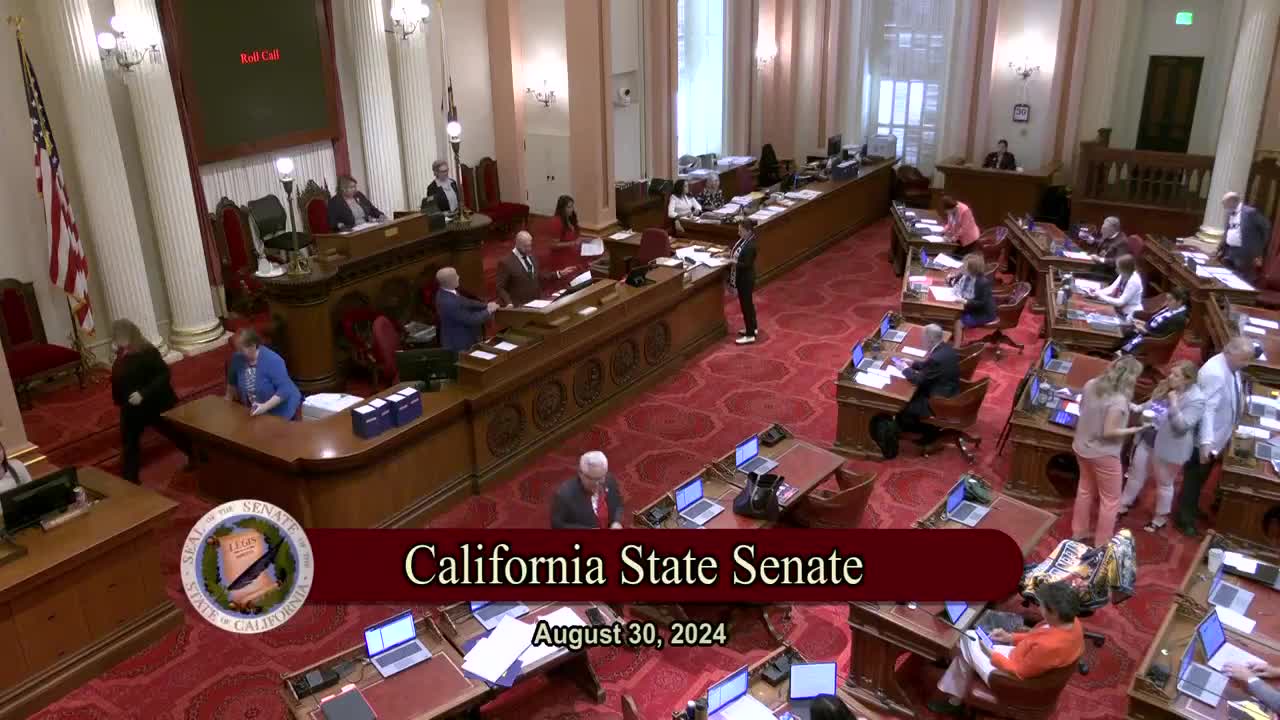 1MIN
Senate Floor
 11MIN
Senate Standing Committee on Judiciary
 1MIN
Assembly Floor
 6MIN
Assembly Standing Committee on Health
 1MIN
Senate Floor
 4MIN
Senate Standing Committee on Health
27SEC
Senate Standing Committee on Health
 7MIN
Senate Standing Committee on Environmental Quality
Bill Author

Bill Co-Author(s):